EP3206121A1 - Verfahren und vorrichtungen zur handhabung visueller virtueller realitätsinhalte - Google Patents
Verfahren und vorrichtungen zur handhabung visueller virtueller realitätsinhalte Download PDFInfo
- Publication number
- EP3206121A1 EP3206121A1 EP16154749.2A EP16154749A EP3206121A1 EP 3206121 A1 EP3206121 A1 EP 3206121A1 EP 16154749 A EP16154749 A EP 16154749A EP 3206121 A1 EP3206121 A1 EP 3206121A1
- Authority
- EP
- European Patent Office
- Prior art keywords
- virtual reality
- gesture
- user
- visual virtual
- reality content
- Prior art date
- Legal status (The legal status is an assumption and is not a legal conclusion. Google has not performed a legal analysis and makes no representation as to the accuracy of the status listed.)
- Ceased
Links
Images



Classifications
-
- G—PHYSICS
- G06—COMPUTING OR CALCULATING; COUNTING
- G06F—ELECTRIC DIGITAL DATA PROCESSING
- G06F3/00—Input arrangements for transferring data to be processed into a form capable of being handled by the computer; Output arrangements for transferring data from processing unit to output unit, e.g. interface arrangements
- G06F3/14—Digital output to display device ; Cooperation and interconnection of the display device with other functional units
- G06F3/1423—Digital output to display device ; Cooperation and interconnection of the display device with other functional units controlling a plurality of local displays, e.g. CRT and flat panel display
-
- G—PHYSICS
- G02—OPTICS
- G02B—OPTICAL ELEMENTS, SYSTEMS OR APPARATUS
- G02B27/00—Optical systems or apparatus not provided for by any of the groups G02B1/00 - G02B26/00, G02B30/00
- G02B27/01—Head-up displays
- G02B27/017—Head mounted
-
- G—PHYSICS
- G06—COMPUTING OR CALCULATING; COUNTING
- G06F—ELECTRIC DIGITAL DATA PROCESSING
- G06F3/00—Input arrangements for transferring data to be processed into a form capable of being handled by the computer; Output arrangements for transferring data from processing unit to output unit, e.g. interface arrangements
- G06F3/01—Input arrangements or combined input and output arrangements for interaction between user and computer
- G06F3/011—Arrangements for interaction with the human body, e.g. for user immersion in virtual reality
-
- G—PHYSICS
- G06—COMPUTING OR CALCULATING; COUNTING
- G06F—ELECTRIC DIGITAL DATA PROCESSING
- G06F3/00—Input arrangements for transferring data to be processed into a form capable of being handled by the computer; Output arrangements for transferring data from processing unit to output unit, e.g. interface arrangements
- G06F3/01—Input arrangements or combined input and output arrangements for interaction between user and computer
- G06F3/017—Gesture based interaction, e.g. based on a set of recognized hand gestures
-
- G—PHYSICS
- G06—COMPUTING OR CALCULATING; COUNTING
- G06F—ELECTRIC DIGITAL DATA PROCESSING
- G06F3/00—Input arrangements for transferring data to be processed into a form capable of being handled by the computer; Output arrangements for transferring data from processing unit to output unit, e.g. interface arrangements
- G06F3/14—Digital output to display device ; Cooperation and interconnection of the display device with other functional units
-
- G—PHYSICS
- G09—EDUCATION; CRYPTOGRAPHY; DISPLAY; ADVERTISING; SEALS
- G09G—ARRANGEMENTS OR CIRCUITS FOR CONTROL OF INDICATING DEVICES USING STATIC MEANS TO PRESENT VARIABLE INFORMATION
- G09G3/00—Control arrangements or circuits, of interest only in connection with visual indicators other than cathode-ray tubes
- G09G3/001—Control arrangements or circuits, of interest only in connection with visual indicators other than cathode-ray tubes using specific devices not provided for in groups G09G3/02 - G09G3/36, e.g. using an intermediate record carrier such as a film slide; Projection systems; Display of non-alphanumerical information, solely or in combination with alphanumerical information, e.g. digital display on projected diapositive as background
-
- G—PHYSICS
- G09—EDUCATION; CRYPTOGRAPHY; DISPLAY; ADVERTISING; SEALS
- G09G—ARRANGEMENTS OR CIRCUITS FOR CONTROL OF INDICATING DEVICES USING STATIC MEANS TO PRESENT VARIABLE INFORMATION
- G09G3/00—Control arrangements or circuits, of interest only in connection with visual indicators other than cathode-ray tubes
- G09G3/001—Control arrangements or circuits, of interest only in connection with visual indicators other than cathode-ray tubes using specific devices not provided for in groups G09G3/02 - G09G3/36, e.g. using an intermediate record carrier such as a film slide; Projection systems; Display of non-alphanumerical information, solely or in combination with alphanumerical information, e.g. digital display on projected diapositive as background
- G09G3/003—Control arrangements or circuits, of interest only in connection with visual indicators other than cathode-ray tubes using specific devices not provided for in groups G09G3/02 - G09G3/36, e.g. using an intermediate record carrier such as a film slide; Projection systems; Display of non-alphanumerical information, solely or in combination with alphanumerical information, e.g. digital display on projected diapositive as background to produce spatial visual effects
-
- G—PHYSICS
- G02—OPTICS
- G02B—OPTICAL ELEMENTS, SYSTEMS OR APPARATUS
- G02B27/00—Optical systems or apparatus not provided for by any of the groups G02B1/00 - G02B26/00, G02B30/00
- G02B27/01—Head-up displays
- G02B27/0179—Display position adjusting means not related to the information to be displayed
- G02B2027/0187—Display position adjusting means not related to the information to be displayed slaved to motion of at least a part of the body of the user, e.g. head, eye
-
- G—PHYSICS
- G09—EDUCATION; CRYPTOGRAPHY; DISPLAY; ADVERTISING; SEALS
- G09G—ARRANGEMENTS OR CIRCUITS FOR CONTROL OF INDICATING DEVICES USING STATIC MEANS TO PRESENT VARIABLE INFORMATION
- G09G2370/00—Aspects of data communication
- G09G2370/16—Use of wireless transmission of display information
Definitions
- This specification relates to the handling of visual virtual reality content.
- this specification describes a method comprising responding to a first gesture by a first user delimiting a visual virtual reality content portion from visual virtual reality content being consumed by the first user via a first head-mounted display by selecting the delimited visual virtual reality content portion, responding to a second gesture by the first user directed towards a content consumption device associated with a second user by identifying the content consumption device as a recipient of the selected visual virtual reality content portion, and causing the selected visual virtual reality content portion to be provided to the content consumption device for consumption by the second user.
- Causing the selected visual virtual reality content portion to be provided to the content consumption device may comprise: causing a notification to be sent to the content consumption device, the notification indicating that the content consumption device has been identified as a recipient of the selected visual virtual reality content portion, and responding to a signal indicative of a user input by the second user indicating acceptance of the selected visual virtual reality content portion by causing the selected visual virtual reality content portion to be provided to the content consumption device for consumption by the second user.
- the user input by the second user indicating acceptance of the selected visual virtual reality content portion may comprise a gesture by the second user towards the first head-mounted display.
- the method may further comprise responding to a gesture by the first user away from the content consumption device or a gesture by the second user away from the first head-mounted display by causing the visual virtual reality content portion to be removed from the content consumption device.
- the method may further comprise responding to a third gesture by the first user adjusting the delimitation of the selected visual virtual reality content portion by causing the adjusted selected visual virtual reality content portion to be provided to the content consumption device.
- the selected visual virtual reality content portion provided to the content consumption device may comprise current visual virtual reality content currently being consumed by the first user via the first head-mounted display.
- the selected visual virtual reality content portion provided to the content consumption device may comprise previously-consumed visual virtual reality content which has previously been consumed by the first user via the first head-mounted display.
- the method may further comprise rewinding content in the selected visual virtual reality content portion based on the second gesture thereby to enable the previously-consumed visual virtual reality content to be provided via the content consumption device.
- the amount by which the content is rewound may be based on the speed of the second gesture.
- a lower speed of the second gesture may cause more rewinding and a higher speed of the second gesture may cause less rewinding.
- the method may further comprise responding to one or more of: the second gesture, the gesture by the second user towards the first head-mounted display, a gesture by the first user away from the content consumption device, a gesture by the second user away from the first head-mounted display, and the third gesture, by causing rotation of the visual virtual reality content provided to the user performing the gesture.
- One or more of the gestures may comprise a touchless gesture.
- the first gesture may comprise a two-handed gesture in which a position of each hand defines an edge of the visual virtual reality content portion.
- the content consumption device may be a second head-mounted display.
- this specification describes apparatus configured to perform any method as described with reference to the first aspect.
- this specification describes computer-readable instructions which, when executed by computing apparatus, cause the computing apparatus to perform any method as described with reference to the first aspect.
- this specification describes apparatus comprising at least one processor and at least one memory including computer program code, which when executed by the at least one processor, causes the apparatus to respond to a first gesture by a first user delimiting a visual virtual reality content portion from visual virtual reality content being consumed by the first user via a first head-mounted display by selecting the delimited visual virtual reality content portion, respond to a second gesture by the first user directed towards a content consumption device associated with a second user by identifying the content consumption device as a recipient of the selected visual virtual reality content portion, and cause the selected visual virtual reality content portion to be provided to the content consumption device for consumption by the second user.
- the computer program code when executed by the at least one processor may cause the apparatus to cause the selected visual virtual reality content portion to be provided to the content consumption device by: causing a notification to be sent to the content consumption device, the notification indicating that the content consumption device has been identified as a recipient of the selected visual virtual reality content portion, and responding to a signal indicative of a user input by the second user indicating acceptance of the selected visual virtual reality content portion by causing the selected visual virtual reality content portion to be provided to the content consumption device for consumption by the second user.
- the user input by the second user indicating acceptance of the selected visual virtual reality content portion may comprise a gesture by the second user towards the first head-mounted display.
- the computer program code when executed by the at least one processor may cause the apparatus to respond to a gesture by the first user away from the content consumption device or a gesture by the second user away from the first head-mounted display by causing the visual virtual reality content portion to be removed from the content consumption device.
- the computer program code when executed by the at least one processor may cause the apparatus to respond to a third gesture by the first user adjusting the delimitation of the selected visual virtual reality content portion by causing the adjusted selected visual virtual reality content portion to be provided to the content consumption device.
- the selected visual virtual reality content portion provided to the content consumption device may comprise current visual virtual reality content currently being consumed by the first user via the first head-mounted display.
- the selected visual virtual reality content portion provided to the content consumption device may comprise previously-consumed visual virtual reality content which has previously been consumed by the first user via the first head-mounted display.
- the computer program code when executed by the at least one processor may cause the apparatus to rewind content in the selected visual virtual reality content portion based on the second gesture thereby to enable the previously-consumed visual virtual reality content to be provided via the content consumption device.
- the amount by which the content is rewound may be based on the speed of the second gesture.
- a lower speed of the second gesture may cause more rewinding and a higher speed of the second gesture may cause less rewinding.
- the computer program code when executed by the at least one processor may cause the apparatus to respond to one or more of: the second gesture, the gesture by the second user towards the first head-mounted display, a gesture by the first user away from the content consumption device, a gesture by the second user away from the first head-mounted display, and the third gesture, by causing rotation of the visual virtual reality content provided to the user performing the gesture.
- One or more of the gestures may comprise a touchless gesture.
- the first gesture may comprise a two-handed gesture in which a position of each hand defines an edge of the visual virtual reality content portion.
- the content consumption device may be a second head-mounted display.
- this specification describes a computer-readable medium having computer-readable code stored thereon, the computer-readable code, when executed by at least one processor, cause performance of at least: responding to a first gesture by a first user delimiting a visual virtual reality content portion from visual virtual reality content being consumed by the first user via a first head-mounted display by selecting the delimited visual virtual reality content portion, responding to a second gesture by the first user directed towards a content consumption device associated with a second user by identifying the content consumption device as a recipient of the selected visual virtual reality content portion, and causing the selected visual virtual reality content portion to be provided to the content consumption device for consumption by the second user.
- the computer-readable code stored on the medium of the fifth aspect may further cause performance of any of the operations described with reference to the method of the first aspect.
- this specification describes apparatus comprising means for responding to a first gesture by a first user delimiting a visual virtual reality content portion from visual virtual reality content being consumed by the first user via a first head-mounted display by selecting the delimited visual virtual reality content portion, means for responding to a second gesture by the first user directed towards a content consumption device associated with a second user by identifying the content consumption device as a recipient of the selected visual virtual reality content portion, and means for causing the selected visual virtual reality content portion to be provided to the content consumption device for consumption by the second user.
- the apparatus of the sixth aspect may further comprise means for causing performance of any of the operations described with reference to the method of the first aspect.
- this specification describes a method comprising receiving a visual virtual reality content portion delimited from visual virtual reality content being consumed by a first user via a head-mounted display, and displaying the visual virtual reality content portion to a second user via a content consumption device.
- Receiving a visual virtual reality content portion delimited from visual virtual reality content being consumed by a first user via a first head-mounted display may comprise receiving a notification indicating that the content consumption device has been identified as a recipient of the visual virtual reality content portion, and responding to a signal indicative of a user input by the second user indicating acceptance of the visual virtual reality content portion by receiving the visual virtual reality content portion.
- the user input may comprise a gesture by the second user towards the head-mounted display.
- the method may further comprise responding to a gesture by the first user away from the content consumption device or a gesture by the second user away from the first head-mounted display by removing the visual virtual reality content portion from the content consumption device.
- the method may further comprise responding to a gesture by the first user adjusting the delimitation of the visual virtual reality content portion by receiving and displaying the adjusted visual virtual reality content portion.
- this specification describes apparatus configured to perform any method as described with reference to the seventh aspect.
- this specification describes computer-readable instructions which, when executed by computing apparatus, cause the computing apparatus to perform any method as described with reference to the seventh aspect.
- this specification describes apparatus comprising at least one processor and at least one memory including computer program code, which when executed by the at least one processor, causes the apparatus to perform any method as described with reference to the seventh aspect.
- this specification describes a computer-readable medium having computer-readable code stored thereon, the computer readable code, when executed by at least one processor, cause performance of any method as described with reference to the seventh aspect.
- this specification describes apparatus comprising means for performing any method as described with reference to the seventh aspect.
- Figure 1 illustrates an example of a system 1 for enabling content to be consumed by multiple users.
- the system 1 comprises control apparatus 100 configured to control various operations of the system to enable the content to be consumed by the users.
- the control apparatus 100 may in general be any apparatus or device capable of performing the functions described below.
- the control apparatus 100 may be a general purpose computer with the appropriate programs installed.
- the system 1 further comprises a plurality of content consumption devices 110 associated with respective users for enabling the users to consume content provided to the content consumption devices 110.
- the content consumption devices 110 may be any type of display suitable for consuming multimedia content.
- the content consumption devices 110 may comprise a head-mounted display (e.g. a near-eye display such as virtual reality glasses, a virtual reality headset, or a smartphone currently configured to output immersive VR content such as when used with a head-mounting arrangement such as a Gear VR headset).
- the content provided to the content consumption devices 110 may be content stored in the control apparatus 100.
- the content may be transmitted in (near) real-time to the control apparatus 100 from one or more content capture apparatuses (not shown) and then relayed to the content consumption devices 110.
- the system 1 further comprises gesture detection apparatus 120 configured to detect gestures by users of the content consumption devices 110.
- the control apparatus 100 may be configured to respond to various gestures detected by the gesture detection apparatus 120 in various ways to enable interactive content consumption, as will be described in more detail below.
- control apparatus 100 is configured to be able to bi-directionally communicate with the content consumption devices 110 and gesture detection apparatus 120.
- Such communication may be wired communication or wireless communication.
- Wireless communication may be implemented for example with Bluetooth or other suitable wireless communication methods.
- control apparatus 100 and gesture detection apparatus 120 may each be provided in separate physical units. In other examples, however, the control apparatus 100 and gesture detection apparatus 120 may be provided in a single physical unit. In yet other examples, the gesture detection apparatus 120 may be provided in each of the content consumption devices 110 such that each content consumption device includes gesture detection apparatus 120 for detecting gestures by the user of that content consumption device 110.
- the content consumption devices 110 may each comprise a head-mounted display.
- this specification will describe various functions and operations with reference to the content consumption devices 110 being head-mounted displays.
- one or more of the head-mounted displays referred to below may be a content consumption device of any suitable type.
- one or more of the head-mounted displays referred to below may be any type of content consumption device suitable for the functions and operations described.
- Such suitable types of device may include, but are not limited to mobile phones and tablet computers.
- a first content consumption device may be a head-mounted display while a second content consumption device may be a content consumption device of any type.
- both content consumption devices may be head-mounted displays.
- the content provided to each of the head-mounted displays 110a, 110b may be visual virtual reality content.
- this may include, for example, a stream of visual data or a stream of audio-visual (AV) data.
- AV audio-visual
- the virtual environment may correspond to a real world environment captured by one or more content capture apparatuses (e.g. video captured by one or more cameras, such as Nokia's OZO camera).
- the virtual environment may be computer generated (e.g. a virtual environment in a computer game).
- the visual virtual reality content may cover a wide range of angles surrounding the user in one or more planes. Content provided in a single plane may be referred to as “circular” or “partly-circular” content, whereas content provide in plural planes may be referred to as “spherical” or “partly-spherical” content.
- the visual virtual reality content may cover a three hundred and sixty degree view of a virtual environment. Such content is commonly referred to as three hundred and sixty degree content or spherical content.
- a user when multiple users consume content at the same time, the users may be able to interact with each other while consuming the content. For example, when a group of friends watch video content together on a television, they are able to interact with each other while watching the video content.
- a user consumes visual virtual reality content via a head-mounted display
- interaction between the user using a head-mounted display and another user may be different due to the visual (and possibly audio) isolation of the user using a head-mounted display.
- the user using a head-mounted display in this scenario may not be able to see or hear another user due to their wearing of a head-mounted display (which may include headphones).
- One way to address the above use case is to detect gestures made by a user 200a of a head-mounted display 110a and controlling the operation of the head-mounted display 110a in response to the detected gestures.
- a user 200a of a head-mounted display 110a may interact with another user 200b by making gestures.
- a user 200a of a head-mounted display 110a may wish to interact with another user 200b by sharing the visual virtual reality content they are consuming with the other user 200b.
- a user 200b may be able to access a wider range of visual virtual reality content, since a user 200a of a head-mounted display 110a is able to share their visual virtual reality content.
- Gesture detection and/or gesture recognition may be achieved in various ways.
- a user 200a, 200b may wear motion-sensing devices around the wrists or hands.
- using visual-based gesture detection a user 200a, 200b may be continuously monitored by a visual camera, and gestures are detected by visual analysis (for example by using machine learning techniques).
- using depth-based gesture detection a user 20a, 200b may be continuously monitored by depth-sensing devices, and gestures are detected by the analysis of depth data. It will be appreciated that a combination of any or all of the above approaches may be used, which may achieve higher robustness and accuracy of gesture detection compared to using a single approach.
- the control apparatus 100 may be configured to cause visual virtual reality content to be provided to the first and second head-mounted displays 110a, 110b worn respectively by first and second users 200a, 200b.
- the head-mounted displays may be a virtual reality headset.
- the head-mounted displays 110a, 110b are not limited as such and may be any type of head-mounted display configured to provide immersive visual virtual reality content to a user.
- the visual virtual reality content provided to the first head-mounted display 110a may be the same as the visual virtual reality content provided to the second head-mounted display 110b.
- the visual virtual reality content provided to the first head-mounted display 110a and the visual virtual reality content provided to the second head-mounted display 110b may be the same content but with different timing (e.g., temporally shifted, played-back using different playback speeds, etc.).
- the first and second head-mounted displays 110a, 110b may be provided with different visual virtual reality content.
- the visual virtual reality content is a video recording
- the first and second head-mounted displays may be provided with the same or different video recordings.
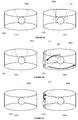
- control apparatus 100 may be configured to respond to a signal indicative of provision of a first gesture by a first user 200a, the first gesture delimiting a visual virtual reality content portion 310 from visual virtual reality content 300a being consumed by the first user 200a via a first head-mounted display 110a, by selecting the delimited visual virtual reality content portion 310.
- the delimitation of a visual virtual reality content portion 310 in this context means the delimitation of a spatial portion of the field of view (the field of view is indicated by dashed lines in Figures 3A-3C ) of the first user 200a within the virtual environment of the visual virtual reality content 300a being consumed via the first head-mounted display 110a.
- the first gesture may comprise a two-handed gesture in which a position of each hand defines an edge of the visual virtual reality content portion 310 which is delimited.
- the first gesture may comprise the first user 200a raising their hands and performing a grabbing motion with both hands.
- the portion of visual virtual reality content 310 delimited by the first gesture may depend on the relative positioning of the hands during the grabbing motion.
- the positions of the first user's hands during the grabbing motion may delimit the vertical sides of a portion of visual virtual reality content 310.
- the gesture detection apparatus 120 may detect the first gesture and send signals to the control apparatus 100 to indicate to the control apparatus 100 that the first gesture has been detected. Based on these signals from the gesture detection apparatus 120, the control apparatus 100 may then select the portion of visual virtual reality content 310 delimited by the first gesture.
- the control apparatus 100 may be further configured to respond to a signal indicative of provision of a second gesture by the first user 200a, the second gesture being directed towards a second head-mounted display 110b (as shown by arrow 350 in Figure 3B ), by identifying the second head-mounted display 100b as a recipient of the selected visual virtual reality content portion 310.
- the first user 200a may be provided with information indicating the direction to one or more users in the vicinity (such as the second user 200b).
- the direction towards the second head-mounted display 110b may be indicated to the first user 200a by a visual indication overlaid on the visual virtual reality content 300a being consumed by the first user 200a.
- the visual indication may be overlaid on a portion of the visual virtual reality content 300a corresponding to the direction towards the second head-mounted display 110b. In other examples, no indication may be provided - the first user 200a may instead simply recall the location(s) of the other users. In other examples, when the first head-mounted display 110a is directed towards another user, an indication of this, for instance along with an identifier of the other user, may be provided via the first head-mounted display 110a.
- the second gesture by the first user 200a towards the second head-mounted display 110b worn by the second user 200b may indicate that the second head-mounted display 110b is the intended recipient of the selected visual virtual reality content portion 310.
- the gesture detection apparatus 120 may detect the second gesture and send signals to the control apparatus 100 to indicate to the control apparatus 100 that the second gesture has been detected. Based on these signals from the gesture detection apparatus 120, the control apparatus 100 may then identify the second head-mounted display 110b as a recipient of the selected visual virtual reality content portion 310. For example, the control apparatus 100 may use data indicating the locations of the first and second head-mounted displays 110a, 110b (e.g. stored or received). In this instance, the control apparatus 100 may determine that the second head-mounted display 110b is to be identified as a recipient based on the positions of the first and second head-mounted displays 110a, 110b and the signals from the gesture detection apparatus 120 indicative of the direction of the gesture.
- the second gesture may comprise the first user 200a moving their hands towards the second head-mounted display 110b.
- the second gesture may cause the visual virtual reality content 300a being consumed by the first user 200a to be rotated.
- the virtual environment of the visual virtual reality content 300a being consumed by the first user 200a may be rotated about the first user 200a.
- the whole immersive content provided to the first user 200a may be rotated about the first user 200a. This rotation may be such that the whole immersive content provided to the first user is rotated such that the selected, delimited content portion 310 faces towards the second head-mounted display 110b, as illustrated in Figure 3B .
- the gesture detection apparatus 120 may detect the second gesture and indicate to the control apparatus 100 that the second gesture has been detected.
- the control apparatus 100 may then identify the second head-mounted display 110b as a recipient of the selected visual virtual reality content portion 310.
- the first gesture may be maintained by the first user 200a while performing the second gesture. For instance, the first user 200a may maintain the "grabbing" position with their hands while also performing the rotation of second gesture.
- the control apparatus 100 may be further configured to cause the selected visual virtual reality content portion 310 to be provided to the second head-mounted display 110b for consumption by a second user 200b. In some examples, the control apparatus 100 may achieve this by transmitting the selected visual virtual reality content portion 310 to the second head-mounted display 110b. Once provided to the second-head mounted display 110b, the selected visual virtual reality content portion 310 may be displayed to the second user 200b instead of a portion of visual virtual reality content that the second user 200b was originally viewing. The selected visual virtual reality content portion 310 may be displayed to the second user 200b from a direction corresponding to the position of first user 200a.
- the selected visual virtual reality content portion 310 may be overlaid on top of the visual virtual reality content 300b that the second user 200b was originally viewing as a window.
- the visual virtual reality content 300b that the second user 200b was originally viewing may be paused while the selected visual virtual reality content portion 310 is displayed to the second user 200b.
- the visual virtual reality content 300b that the second user 200b was originally viewing may not be paused.
- a first user 200a is able to share content with a second user 200b while both the first and second users are wearing head-mounted displays 110a, 110b.
- Causing the selected visual virtual reality content portion 310 to be provided to the second head-mounted display 110b may comprise causing a notification to be sent to the second head-mounted display 110b, the notification indicating that the second head-mounted display 110b has been identified as a recipient of the selected visual virtual reality content portion 310.
- Causing the selected visual virtual reality content portion 310 to be provided to the second head-mounted display 110b may further comprise responding to a user input by the second user 200b indicating acceptance of the selected visual virtual reality content portion 310 by causing the selected visual virtual reality content portion 310 to be provided to the second head-mounted display 110b for consumption by the second user 200b.
- the selected visual virtual reality content portion 310 may not be immediately provided to the second head-mounted display 110b. Instead, a notification may first be sent to the second-head mounted display which alerts the second user 200b that the selected visual virtual reality content portion 310 may be provided to the second head-mounted display 110b.
- the selected visual virtual reality content portion 310 may only be provided to the second head-mounted display 110b if the second user 200b accepts the selected visual virtual reality content portion 310 through a user input. In this way, the second user 200b may be given the choice of whether or not to consume the content that the first user 200a wishes to share. Alternatively, these operations may be omitted and the selected visual virtual reality content portion 310 may be provided to the second head-mounted display regardless of whether or not the second user 200b wishes to accept the selected visual virtual reality content portion 310.
- the user input by the second user 200b indicating acceptance of the selected visual virtual reality content portion 310 may comprise a gesture by the second user 200b towards the first head-mounted display 110a.
- this gesture may comprise the second user 200b raising their hands, performing a grabbing motion and moving their hands towards the first head-mounted display 110a.
- this gesture may be similar to a combination of the first and second gestures described above with respect to the first user 200a, but may be directed towards the first head-mounted display 110a.
- the gesture by the second user 200b towards the first head-mounted display 110a may cause the visual virtual reality content being consumed by the second user 200b to be rotated.
- the virtual environment of the visual virtual reality content being consumed by the second user 200b may be rotated about the second user 200b. This rotation may be such that content in the field of view of the second user 200b is rotated to face towards the first head-mounted display 110a.
- the notification provided to the second user 200b via the second head-mounted display 110b may indicate the direction towards and/or the location of the first head-mounted display 110a (e.g. via an arrow).
- the control apparatus in response to detection of the first gesture by the first user (i.e. that for delimiting the content portion), the control apparatus may cause an indicator to be displayed (e.g. an arrow) which indicates the direction towards and/or the location of the second head-mounted display 110b.
- the control apparatus 100 may be further configured to respond to a signal indicative of a gesture by the first user away from the second head-mounted display or a gesture by the second user away from the first head-mounted display by causing the visual virtual reality content portion to be removed from the second head-mounted display.
- a gesture by either of the first and second users 200a, 200b which is directed away from the head-mounted display of the other user may cause the visual virtual reality content portion 310 to be removed from the second head-mounted display 110b.
- the gesture by either of the first and second users 200a, 200b away from the head-mounted display of the other user may comprise either of the first and second users 200a, 200b raising their hands, performing a grabbing motion and moving their hands away from the head-mounted display of the other user.
- the gesture by either of the first and second users 200a, 200b away from the head-mounted display of the other user may cause the visual virtual reality content being consumed by the user performing the gesture to be rotated. In other words, the entire three hundred and sixty degree view of the virtual environment of the visual virtual reality content being consumed by the user performing the gesture is rotated about the user performing the gesture.
- This rotation may be such that content in the field of view of the user performing the gesture is rotated to face away from the head-mounted display of the other user.
- the sharing of content may be terminated by either the first user 200a or the second user 200b.
- the selected visual virtual reality content may only be removed from the second head-mounted display 110b if the gesture by first or second user rotates the content in their field of view a sufficient distance away from other user.
- the selected visual virtual reality content may only be removed if the gesture by the first or second user rotates the content in their field of view beyond a threshold angle (e.g. back to its original orientation).
- the control apparatus 100 may be further configured to respond to a signal indicative of third gesture by the first user 200a adjusting the delimitation of the selected visual virtual reality content portion 310 by causing the adjusted selected visual virtual reality content portion to be provided to the second head-mounted display 110b.
- this gesture may comprise the first user 200a raising their hands, performing a grabbing motion and moving their hands left or right.
- the third gesture may cause the visual virtual reality content being consumed by the first user 200a to be rotated, as illustrated by Figure 3C . In other words, the entire three hundred and sixty degree view of the virtual environment of the visual virtual reality content being consumed by the first user 200a may be rotated about the first user 200a.
- the first user may perform a third gesture to adjust the content that falls within the delimitation of the selected visual virtual reality content portion 310. For example, if a region of interest moves out of the selected visual virtual reality content portion, the first user may perform the third gesture to keep the region of interest within the selected visual virtual reality content portion.
- the selected visual virtual reality content portion 310 provided to the second head-mounted display 110b may comprise current visual virtual reality content currently being consumed by the first user 200a via the first head-mounted display 110a.
- the selected visual virtual reality content portion 310 provided to the second head-mounted display 110b may comprise previously-consumed visual virtual reality content which has already been consumed by the first user 200a via the first head-mounted display 110a.
- the previously-consumed visual virtual reality content may be a video portion which has been provided to the first head-mounted display 110a and has already consumed by the first user 200a.
- control apparatus 100 may be further configured to rewind content in the selected visual virtual reality content portion 310 based on the second gesture to provide the past visual virtual reality content. For example, if the previously-consumed visual virtual reality content is a video portion which has already been provided to the first head-mounted display 110a, the control apparatus 100 may rewind the selected visual virtual reality content portion according to the second gesture such that the previously-consumed content can then be played back to the second user.
- the amount of rewinding may be displayed to the first user 200a.
- the amount of rewinding may be displayed as relative time compared to the current time of the visual virtual reality content which has not been rewound (e.g. -10 seconds, -20 seconds etc.).
- the amount by which the content is rewound may be based on the speed of the second gesture (e.g. a rate of rotation). In such examples, a lower speed may cause more rewinding to be performed and a higher speed may cause less rewinding to be performed. In other words, the slower the second gesture is performed, the more the previously consumed content will be rewound. In this way, the first user 200a may control how much rewinding occurs by the speed with which the second gesture is performed.
- the rate of rewinding may be constant. In other examples, the rate of rewinding may depend on the speed of the second gesture (e.g.
- a higher speed of the second gesture may result in a lower rate of rewinding, and vice versa. Or it may be another way, i.e. higher speed of the second gesture may result in a higher rate of rewinding, and lower speed of the second gesture may result in a lower rate of rewinding).
- whether or not the content is rewound by the second gesture by the first user towards the second user occurs may depend on, for instance, whether or not the speed of the second gesture (e.g. rate of rotation) is above a threshold. For instance, if the rate of rotation is above a threshold, the content may not be re-wound, whereas if the rate of rotation is below the threshold, rewinding may be performed. In other examples, whether or not rewinding is performed may depend on one or more characteristic of one of the first and second gestures (e.g. the type of gesture performed). For instance, if the first user performs a "grabbing" gesture (e.g.
- control apparatus 100 may not rewind the content when the second gesture is performed, whereas, if the user performs a "pinching" gesture (e.g. with just a finger and thumb), the control apparatus may rewind the content.
- a "pinching" gesture e.g. with just a finger and thumb
- one or more of the second gesture, the gesture by the second user 200b towards the first head-mounted display 110a, the gesture by the first user 200a away from the second head-mounted display, the gesture by the second user 200b away from the first head-mounted display, and the third gesture may be a gesture causing rotation of the visual virtual reality content 300 provided to the user performing the gesture.
- the visual virtual reality content provided to the head-mounted display of the user performing the gesture may be rotated.
- one or more of the gestures described above may comprise a touchless gesture.
- any one of or any combination of the gestures described above may be a gesture in the air by a user 200a, 200b.
- the gestures are not limited as such and may comprise a touch gesture, for example on a touch-sensitive device associated with each user which may provide the gesture detection functionality.
- the visual virtual reality content 300 may comprise three hundred and sixty degree video content.
- the visual virtual reality content 300 described above may cover a three hundred and sixty degree field of view of a virtual environment.
- the visual virtual reality content 300 may cover less than a three hundred and sixty degree field of view of a virtual environment.
- each of the gestures described above may be any type of gesture suitable for the causing the desired function (e.g. delimiting and sharing) to be achieved.
- the gesture by the second user 200b towards the first head-mounted display 110a indicating acceptance of the selected visual virtual reality content portion may comprise a gesture directing the relevant content consumption device towards the first head-mounted display 110a.
- a gesture by the second user 200b away from the first head-mounted display 110a causing the visual virtual reality content portion to be removed may comprise a gesture directing the relevant content consumption device away from the first head-mounted display 110a.
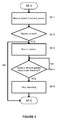
- Figure 4 is a flowchart showing examples of various operations which may be performed by the control apparatus 100 of Figure 1 .
- the control apparatus 100 may receive visual virtual reality content.
- the visual virtual reality content may be received from one or more content capture apparatuses in the form of one or more live streams.
- the visual virtual reality content may be received in the form of one or more files transferred from one or more content capture apparatuses. It will be appreciated that the above examples are not limiting and that, in general, the visual virtual reality content may be received by the control apparatus from any appropriate source. Alternatively, this step may be omitted altogether and the virtual reality content may instead be generated by the control apparatus 100.
- control apparatus 100 may cause visual virtual reality content to be provided to the head-mounted displays.
- each head-mounted display is provided with its own visual virtual reality content.
- the visual virtual reality content provided to each head-mounted display may be the same content or different content.
- the control apparatus 100 may monitor whether or not a first gesture is detected.
- the first gesture is a gesture delimiting a visual virtual reality content portion 310 from visual virtual reality content 300 being consumed by a first user 200a via a first head-mounted display 110a. If the first gesture is detected (YES), then the control apparatus proceeds to operation S4.4. In operation S4.4, the control apparatus 100 selects the visual virtual reality content delimited by the first gesture. If the first gesture has not been detected (NO), the control apparatus returns to operation S4.3 and continues to monitor whether or not the first gesture is detected.
- the control apparatus 100 may monitor whether or not a second gesture is detected.
- the second gesture is a gesture by the first user 200a towards a second head-mounted display 110b. If the second gesture is detected (YES), then the control apparatus 100 proceeds to operation S4.6.
- the control apparatus 100 identifies the second head-mounted display 110b (to which the gesture is towards) as a recipient of the selected visual virtual reality content 310. If the second gesture has not been detected (NO), the control apparatus 100 returns to operation S4.5 and continues to monitor whether or not the second gesture is detected.
- the control apparatus 100 may cause a notification to be sent to the second head-mounted display 110b.
- the notification indicates that the second head-mounted display 110b has been identified as a recipient of the selected visual virtual reality content portion 310.
- the notification may also include an indication regarding a direction towards and/or location of the first user 200a.
- control apparatus 100 may monitor whether or not the selected visual virtual reality content portion is accepted by the user of the second head-mounted display 110b. If the selected visual virtual reality content portion is accepted (YES), then the control apparatus 100 proceeds to operation S4.9. In operation S4.9, the control apparatus 100 causes the selected visual virtual reality content portion 310 to be provided to the second head-mounted display 110b. If the selected visual virtual reality content portion has not been accepted (NO) (or, put another way, is declined), the control apparatus 100 returns to one of operations S4.3 and S4.8 and continues to monitor for the first gesture/whether or not the selected visual virtual reality content portion is accepted.
- Figure 5 is a flowchart illustrating examples of various operations relating to the rewinding of content which may in some examples be performed by the control apparatus 100 in addition to various operations from the flow chart of Figure 4 .
- the control apparatus 100 may monitor the speed of the second gesture (e.g. a rate of rotation of the second gesture).
- the control apparatus 100 may determine and monitor the speed of the second gesture based on signals received from the gesture detection apparatus 120.
- the control apparatus 100 may determine whether or not to rewind content in the selected visual virtual reality content portion. As described above, whether or not the content is rewound by the second gesture may depend on one or more characteristics (for instance, the speed or type of gesture) of one of the first and second gestures. As such, operation S5.2 may include determining whether the rate of rotation of the second gesture is above or below a threshold. In other examples, operation S5.2 may include determining whether the type of the first or second gestures is of a particular type.
- control apparatus 100 determines that content is not to be rewound (NO) (e.g. because the rate of rotation of the second gesture is above a threshold), then no rewinding is performed and the control apparatus 100 proceeds to operation S4.6. If the control apparatus determines that content is to be rewound (YES) (e.g. because the rate of rotation of the second gesture is below a threshold), it proceeds to operation S5.3.
- the control apparatus rewinds content in the selected visual virtual reality content portion.
- the amount of rewinding may depend on the speed of the second gesture. A lower speed (e.g. lower rate of rotation) may cause more rewinding to be performed and a higher speed (e.g. higher rate of rotation) may cause less rewinding to be performed.
- the control apparatus may monitor whether or not the speed of the second gesture (e.g. rate of rotation) is below a lower threshold to determine whether or not to continue rewinding. If the speed of the second gesture is not below a lower threshold (NO), the control apparatus may continue to rewind the content and continue to perform operations S5.3 and S5.4. If the speed of the second gesture is below a lower threshold (YES), the control apparatus may proceed to operation S5.5 and stop rewinding. For instance, the control apparatus may continue to rewind the content for as long as the rotation performed (e.g. the speed of the second gesture is above zero). In such examples, when the rotation stops, the control apparatus may respond by stopping the rewind operation.
- the speed of the second gesture e.g. rate of rotation
- control apparatus 100 proceeds to operation S4.6.
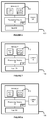
- FIG 6 is a schematic block diagram of an example configuration of the control apparatus 100 such as described above with reference to Figures 1 to 5 .
- the control apparatus 100 may comprise memory 61, processing circuitry 62, an input 63, and an output 64.
- the memory 61 may comprise read-only memory 612 (ROM) and random access memory 611 (RAM).
- the processing circuitry 62 may be configured to process data to carry out the operations of the control apparatus 100 described above.
- the input 63 may be configured to receive signals, for example signals from the gesture detection apparatus 120.
- the signals from the gesture detection apparatus 120 may be at least one of the following signal types: a signal indicating whether or not a gesture has been detected, a camera signal, a gyro sensor signal, an accelerometer signal, a magnetometer signal, an optical sensor signal, a sound signal and a motion sensor signal.
- the output 64 may be configured to provide signals to the first and second head-mounted displays 110a, 110b.
- the output 64 may be configured to provide signals containing visual virtual reality content to one or both of the head-mounted displays 110a, 110b.
- FIG. 7 is a schematic block diagram of an example configuration of a head-mounted display 110a, 110b such as described above with reference to Figures 1 to 5 .
- the head-mounted display 110a, 110b may comprise memory 71, processing circuitry 72, an input 73 and an output 74.
- the memory 71 may comprise read-only memory 712 (ROM) and random access memory 711 (RAM).
- the input 73 may be configured to receive signals, for example signals containing visual virtual reality content from the control apparatus 100.
- the input 73 may be further configured to receive at least one of the following signal types: a camera signal, a gyro sensor signal, an accelerometer signal, a magnetometer signal, an optical sensor signal, a sound signal and a motion sensor signal.
- the processing circuitry 72 may be configured to process the signals containing visual virtual reality content and provide the visual virtual reality content to the output 74 for consumption by a user of the head-mounted display.
- the output 74 may comprise display apparatus (e.g. one or more display screens) configured to display visual content to the eyes of a user.
- the output 74 may comprise audio output apparatus (e.g. headphones) configured to provide audio content to the ears of a user.
- FIG 8 is a schematic block diagram of an example configuration of gesture detection apparatus 120 such as described with reference to Figures 1 to 5 .
- the gesture detection apparatus 120 may comprise memory 81, processing circuitry 82, an input 83 and an output 84.
- the memory 71 may comprise read-only memory 812 (ROM) and random access memory 811 (RAM).
- the input 83 may comprise one or more sensors configured to receive various signals for gesture detection.
- the one or more sensors may comprise one or more movement sensors (e.g. a gyro sensor, accelerometer, magnetometer, motion sensor etc.), and/or one or more optical sensors, and/or one or more cameras for detecting the movement of various body parts of a user.
- the processing circuitry 82 may be configured to process the signals received by the input to determine that a gesture has been detected.
- the output 84 may be configured to send signals indicating whether or not a gesture has been detected to the control apparatus 100.
- the raw data provided by sensors may be provided to the control apparatus 100 and the control apparatus may perform the gesture recognition functionality.
- the memory 61, 71, 81 described with reference to Figures 6, 7 and 8 may have computer readable instructions 612A, 712A, 812A stored thereon, which when executed by the processing circuitry 62, 72, 82 causes the processing circuitry 62, 72, 82 to cause performance of various ones of the operations described above.
- the processing circuitry 62, 72, 82 described above with reference to Figures 6, 7 and 8 may be of any suitable composition and may include one or more processors 62A, 72A, 82A of any suitable type or suitable combination of types.
- the processing circuitry 62, 72, 82 may be a programmable processor that interprets computer program instructions and processes data.
- the processing circuitry 62, 72, 82 may include plural programmable processors.
- processing circuitry 62, 72, 82 may be, for example, programmable hardware with embedded firmware.
- the processing circuitry 62, 72, 82 may be termed processing means.
- the processing circuitry 62, 72, 82 may alternatively or additionally include one or more Application Specific Integrated Circuits (ASICs).
- ASICs Application Specific Integrated Circuits
- processing circuitry 62, 72, 82 may be referred to as computing apparatus.
- the processing circuitry 62, 72, 82 described with reference to Figures 6, 7 and 8 is coupled to the respective memory 61, 71, 81 (or one or more storage devices) and is operable to read/write data to/from the memory 61, 71, 81.
- the memory 61, 71, 81 may comprise a single memory unit or a plurality of memory units 611, 612, 711, 712, 811, 812 upon which the computer readable instructions 612A, 712A, 812A (or code) is stored.
- the memory 61, 71, 81 may comprise both volatile memory 611, 711, 811 and non-volatile memory 612, 712, 812.
- the computer readable instructions 612A, 712A, 812A may be stored in the non-volatile memory 612, 712, 812 and may be executed by the processing circuitry 62, 72, 82 using the volatile memory 611, 711, 811 for temporary storage of data or data and instructions.
- volatile memory examples include RAM, DRAM, and SDRAM etc.
- non-volatile memory examples include ROM, PROM, EEPROM, flash memory, optical storage, magnetic storage, etc.
- the memories 61, 71, 81 in general may be referred to as non-transitory computer readable memory media.
- the term 'memory' in addition to covering memory comprising both non-volatile memory and volatile memory, may also cover one or more volatile memories only, one or more non-volatile memories only, or one or more volatile memories and one or more non-volatile memories.
- the computer readable instructions 612A, 712A, 812A described herein with reference to Figures 6, 7 and 8 may be pre-programmed into the control apparatus 100, the head-mounted display 110a, 110b and the gesture detection apparatus 120.
- the computer readable instructions 612A, 712A, 812A may arrive at the control apparatus 100, the head-mounted display 110a, 110b and the gesture detection apparatus 120 via an electromagnetic carrier signal or may be copied from a physical entity such as a computer program product, a memory device or a record medium such as a CD-ROM or DVD.
- the computer readable instructions 612A, 712A, 812A may provide the logic and routines that enable the control apparatus 100, the head-mounted display 110a, 110b and the gesture detection apparatus 120 to perform the functionalities described above.
- the combination of computer-readable instructions stored on memory (of any of the types described above) may be referred to as a computer program product.
- Figure 9 illustrates an example of a computer-readable medium 900 with computer-readable instructions (code) stored thereon.
- the computer-readable instructions (code) when executed by a processor, may cause any one of or any combination of the operations described above to be performed.
- wireless communication capability of the apparatuses/devices 100, 110, 120 may be provided by a single integrated circuit. It may alternatively be provided by a set of integrated circuits (i.e. a chipset). The wireless communication capability may alternatively be provided by a hardwired, application-specific integrated circuit (ASIC). Communication between the apparatuses/devices may be provided using any suitable protocol, including but not limited to a Bluetooth protocol (for instance, in accordance or backwards compatible with Bluetooth Core Specification Version 4.2) or a IEEE 802.11 protocol such as WiFi.
- Bluetooth protocol for instance, in accordance or backwards compatible with Bluetooth Core Specification Version 4.2
- IEEE 802.11 protocol such as WiFi.
- control apparatus 100 the head-mounted display 110a, 110b and the gesture detection apparatus 120 described herein may include various hardware components which have may not been shown in the Figures since they may not have direct interaction with embodiments of the invention.
- Embodiments of the present invention may be implemented in software, hardware, application logic or a combination of software, hardware and application logic.
- the software, application logic and/or hardware may reside on memory, or any computer media.
- the application logic, software or an instruction set is maintained on any one of various conventional computer-readable media.
- a "memory" or “computer-readable medium” may be any media or means that can contain, store, communicate, propagate or transport the instructions for use by or in connection with an instruction execution system, apparatus, or device, such as a computer.
- references to, where relevant, "computer-readable storage medium”, “computer program product”, “tangibly embodied computer program” etc., or a “processor” or “processing circuitry” etc. should be understood to encompass not only computers having differing architectures such as single/multi-processor architectures and sequencers/parallel architectures, but also specialised circuits such as field programmable gate arrays FPGA, application specify circuits ASIC, signal processing devices and other devices.
- References to computer program, instructions, code etc. should be understood to express software for a programmable processor firmware such as the programmable content of a hardware device as instructions for a processor or configured or configuration settings for a fixed function device, gate array, programmable logic device, etc.
- circuitry refers to all of the following: (a) hardware-only circuit implementations (such as implementations in only analogue and/or digital circuitry) and (b) to combinations of circuits and software (and/or firmware), such as (as applicable): (i) to a combination of processor(s) or (ii) to portions of processor(s)/software (including digital signal processor(s)), software, and memory(ies) that work together to cause an apparatus, such as a mobile phone or server, to perform various functions) and (c) to circuits, such as a microprocessor(s) or a portion of a microprocessor(s), that require software or firmware for operation, even if the software or firmware is not physically present.
- circuitry would also cover an implementation of merely a processor (or multiple processors) or portion of a processor and its (or their) accompanying software and/or firmware.
- circuitry would also cover, for example and if applicable to the particular claim element, a baseband integrated circuit or applications processor integrated circuit for a mobile phone or a similar integrated circuit in server, a cellular network device, or other network device.
- control apparatus 100 may be performed by one or both of the head-mounted displays 110a, 110b.
- control apparatus 100 may be incorporated in one or both of the head-mounted displays 110a, 110b.
- VR content may cover, but is not limited to, computer-generated VR content, content captured by a presence capture device such as Nokia's OZO camera or the Ricoh's Theta, and a combination of computer-generated and presence-device captured content.
- VR content may cover any type or combination of types of immersive media (or multimedia) content.
Landscapes
- Engineering & Computer Science (AREA)
- Theoretical Computer Science (AREA)
- General Engineering & Computer Science (AREA)
- Physics & Mathematics (AREA)
- General Physics & Mathematics (AREA)
- Human Computer Interaction (AREA)
- Computer Hardware Design (AREA)
- Optics & Photonics (AREA)
- User Interface Of Digital Computer (AREA)
Priority Applications (3)
| Application Number | Priority Date | Filing Date | Title |
|---|---|---|---|
| EP16154749.2A EP3206121A1 (de) | 2016-02-09 | 2016-02-09 | Verfahren und vorrichtungen zur handhabung visueller virtueller realitätsinhalte |
| PCT/FI2017/050054 WO2017137658A1 (en) | 2016-02-09 | 2017-02-02 | Methods and apparatuses relating to the handling of visual virtual reality content |
| US16/076,139 US11347302B2 (en) | 2016-02-09 | 2017-02-02 | Methods and apparatuses relating to the handling of visual virtual reality content |
Applications Claiming Priority (1)
| Application Number | Priority Date | Filing Date | Title |
|---|---|---|---|
| EP16154749.2A EP3206121A1 (de) | 2016-02-09 | 2016-02-09 | Verfahren und vorrichtungen zur handhabung visueller virtueller realitätsinhalte |
Publications (1)
| Publication Number | Publication Date |
|---|---|
| EP3206121A1 true EP3206121A1 (de) | 2017-08-16 |
Family
ID=55409689
Family Applications (1)
| Application Number | Title | Priority Date | Filing Date |
|---|---|---|---|
| EP16154749.2A Ceased EP3206121A1 (de) | 2016-02-09 | 2016-02-09 | Verfahren und vorrichtungen zur handhabung visueller virtueller realitätsinhalte |
Country Status (3)
| Country | Link |
|---|---|
| US (1) | US11347302B2 (de) |
| EP (1) | EP3206121A1 (de) |
| WO (1) | WO2017137658A1 (de) |
Cited By (2)
| Publication number | Priority date | Publication date | Assignee | Title |
|---|---|---|---|---|
| WO2020176965A1 (en) * | 2019-03-01 | 2020-09-10 | Scorched Ice Inc. | Systems and methods for recreating or augmenting real-time events using sensor-based virtual reality, augmented reality, or extended reality |
| EP3794437A1 (de) * | 2018-06-19 | 2021-03-24 | InterDigital CE Patent Holdings | Teilen von virtuellen inhalten in einer gemischten realitätsszene |
Families Citing this family (1)
| Publication number | Priority date | Publication date | Assignee | Title |
|---|---|---|---|---|
| CN112292726B (zh) | 2019-05-22 | 2022-02-22 | 谷歌有限责任公司 | 用于沉浸式环境中对象分组和操纵的方法、系统和介质 |
Citations (7)
| Publication number | Priority date | Publication date | Assignee | Title |
|---|---|---|---|---|
| US20120249416A1 (en) * | 2011-03-29 | 2012-10-04 | Giuliano Maciocci | Modular mobile connected pico projectors for a local multi-user collaboration |
| US20130083173A1 (en) * | 2011-09-30 | 2013-04-04 | Kevin A. Geisner | Virtual spectator experience with a personal audio/visual apparatus |
| US20130141419A1 (en) * | 2011-12-01 | 2013-06-06 | Brian Mount | Augmented reality with realistic occlusion |
| US20130201214A1 (en) * | 2012-02-02 | 2013-08-08 | Nokia Corporation | Methods, Apparatuses, and Computer-Readable Storage Media for Providing Interactive Navigational Assistance Using Movable Guidance Markers |
| US20150193187A1 (en) * | 2014-01-08 | 2015-07-09 | Samsung Electronics Co., Ltd. | Method and apparatus for screen sharing |
| WO2015125066A1 (en) * | 2014-02-19 | 2015-08-27 | Fieldbit Ltd. | System and method for facilitating equipment maintenance using smartglasses |
| WO2015192117A1 (en) * | 2014-06-14 | 2015-12-17 | Magic Leap, Inc. | Methods and systems for creating virtual and augmented reality |
Family Cites Families (13)
| Publication number | Priority date | Publication date | Assignee | Title |
|---|---|---|---|---|
| US8593398B2 (en) | 2010-06-25 | 2013-11-26 | Nokia Corporation | Apparatus and method for proximity based input |
| US20130103814A1 (en) | 2011-10-25 | 2013-04-25 | Cbs Interactive Inc. | System and Method for a Shared Media Experience |
| US9497501B2 (en) | 2011-12-06 | 2016-11-15 | Microsoft Technology Licensing, Llc | Augmented reality virtual monitor |
| US9529439B2 (en) | 2012-11-27 | 2016-12-27 | Qualcomm Incorporated | Multi device pairing and sharing via gestures |
| US20140229858A1 (en) | 2013-02-13 | 2014-08-14 | International Business Machines Corporation | Enabling gesture driven content sharing between proximate computing devices |
| US9438543B2 (en) * | 2013-03-04 | 2016-09-06 | Google Technology Holdings LLC | Gesture-based content sharing |
| KR101786541B1 (ko) | 2013-05-13 | 2017-10-18 | 엠파이어 테크놀로지 디벨롭먼트 엘엘씨 | 시선 개시형 핸드셰이크 |
| US9226137B2 (en) | 2013-09-30 | 2015-12-29 | Qualcomm Incorporated | Method and apparatus for real-time sharing of multimedia content between wireless devices |
| US10466858B2 (en) | 2013-12-01 | 2019-11-05 | Upskill, Inc. | Systems and methods for interacting with a virtual menu |
| US9818225B2 (en) * | 2014-09-30 | 2017-11-14 | Sony Interactive Entertainment Inc. | Synchronizing multiple head-mounted displays to a unified space and correlating movement of objects in the unified space |
| US9898864B2 (en) * | 2015-05-28 | 2018-02-20 | Microsoft Technology Licensing, Llc | Shared tactile interaction and user safety in shared space multi-person immersive virtual reality |
| EP3131064B1 (de) | 2015-08-13 | 2017-11-08 | Nokia Technologies Oy | Suchen von bildinhalt |
| EP3190503B1 (de) | 2016-01-08 | 2019-07-24 | Nokia Technologies Oy | Vorrichtung und entsprechende verfahren |
-
2016
- 2016-02-09 EP EP16154749.2A patent/EP3206121A1/de not_active Ceased
-
2017
- 2017-02-02 US US16/076,139 patent/US11347302B2/en active Active
- 2017-02-02 WO PCT/FI2017/050054 patent/WO2017137658A1/en not_active Ceased
Patent Citations (7)
| Publication number | Priority date | Publication date | Assignee | Title |
|---|---|---|---|---|
| US20120249416A1 (en) * | 2011-03-29 | 2012-10-04 | Giuliano Maciocci | Modular mobile connected pico projectors for a local multi-user collaboration |
| US20130083173A1 (en) * | 2011-09-30 | 2013-04-04 | Kevin A. Geisner | Virtual spectator experience with a personal audio/visual apparatus |
| US20130141419A1 (en) * | 2011-12-01 | 2013-06-06 | Brian Mount | Augmented reality with realistic occlusion |
| US20130201214A1 (en) * | 2012-02-02 | 2013-08-08 | Nokia Corporation | Methods, Apparatuses, and Computer-Readable Storage Media for Providing Interactive Navigational Assistance Using Movable Guidance Markers |
| US20150193187A1 (en) * | 2014-01-08 | 2015-07-09 | Samsung Electronics Co., Ltd. | Method and apparatus for screen sharing |
| WO2015125066A1 (en) * | 2014-02-19 | 2015-08-27 | Fieldbit Ltd. | System and method for facilitating equipment maintenance using smartglasses |
| WO2015192117A1 (en) * | 2014-06-14 | 2015-12-17 | Magic Leap, Inc. | Methods and systems for creating virtual and augmented reality |
Non-Patent Citations (1)
| Title |
|---|
| SALZMANN H ET AL: "The Two-User Seating Buck: Enabling Face-to-Face Discussions of Novel Car Interface Concepts", VIRTUAL REALITY CONFERENCE, 2008. VR '08. IEEE, IEEE, PISCATAWAY, NJ, USA, 8 March 2008 (2008-03-08), pages 75 - 82, XP031340002, ISBN: 978-1-4244-1971-5 * |
Cited By (5)
| Publication number | Priority date | Publication date | Assignee | Title |
|---|---|---|---|---|
| EP3794437A1 (de) * | 2018-06-19 | 2021-03-24 | InterDigital CE Patent Holdings | Teilen von virtuellen inhalten in einer gemischten realitätsszene |
| US11651576B2 (en) | 2018-06-19 | 2023-05-16 | Interdigital Ce Patent Holdings | Sharing virtual content in a mixed reality scene |
| US12190461B2 (en) | 2018-06-19 | 2025-01-07 | Interdigital Ce Patent Holdings | Sharing virtual content in a mixed reality scene |
| EP3794437B1 (de) * | 2018-06-19 | 2025-08-27 | InterDigital CE Patent Holdings | Teilen virtuellen inhalt in einer realitätsszene |
| WO2020176965A1 (en) * | 2019-03-01 | 2020-09-10 | Scorched Ice Inc. | Systems and methods for recreating or augmenting real-time events using sensor-based virtual reality, augmented reality, or extended reality |
Also Published As
| Publication number | Publication date |
|---|---|
| WO2017137658A1 (en) | 2017-08-17 |
| US11347302B2 (en) | 2022-05-31 |
| US20210191505A1 (en) | 2021-06-24 |
Similar Documents
| Publication | Publication Date | Title |
|---|---|---|
| US11231827B2 (en) | Computing device and extended reality integration | |
| US11636644B2 (en) | Output of virtual content | |
| JP7109553B2 (ja) | 追加オブジェクトの表示方法及びその、装置、コンピュータ装置並びに記憶媒体 | |
| US20250056068A1 (en) | Live broadcasting comment presentation method and apparatus, and device, program product and medium | |
| WO2021008456A1 (zh) | 图像处理方法、装置、电子设备及存储介质 | |
| CN111010510A (zh) | 一种拍摄控制方法、装置及电子设备 | |
| EP3506082B1 (de) | Audiowiedergabe für erweiterte realität | |
| CN109407821B (zh) | 与虚拟现实视频的协作交互 | |
| US9535250B2 (en) | Head mounted display device and method for controlling the same | |
| CN109522426A (zh) | 多媒体数据推荐方法、装置、设备及计算机可读存储介质 | |
| CN112084811A (zh) | 身份信息的确定方法、装置及存储介质 | |
| CN107908929A (zh) | 播放音频数据的方法和装置 | |
| CN112749590B (zh) | 目标检测方法、装置、计算机设备和计算机可读存储介质 | |
| WO2014185885A1 (en) | Line of sight initiated handshake | |
| US11076121B2 (en) | Apparatus and associated methods for video presentation | |
| CN111459363A (zh) | 信息展示方法、装置、设备及存储介质 | |
| CN110839128A (zh) | 拍照行为检测方法、装置及存储介质 | |
| US11347302B2 (en) | Methods and apparatuses relating to the handling of visual virtual reality content | |
| US20240422437A1 (en) | Systems and methods for stabilizing videos | |
| US20180307352A1 (en) | Systems and methods for generating custom views of videos | |
| US20190058861A1 (en) | Apparatus and associated methods | |
| US11647350B2 (en) | Audio processing | |
| US20190164349A1 (en) | Method and device for processing image, and recording medium | |
| CN110134305B (zh) | 一种语速调节方法、装置和用于语速调节的装置 | |
| CN111432254A (zh) | 视频信息显示方法及装置 |
Legal Events
| Date | Code | Title | Description |
|---|---|---|---|
| PUAI | Public reference made under article 153(3) epc to a published international application that has entered the european phase |
Free format text: ORIGINAL CODE: 0009012 |
|
| STAA | Information on the status of an ep patent application or granted ep patent |
Free format text: STATUS: THE APPLICATION HAS BEEN PUBLISHED |
|
| AK | Designated contracting states |
Kind code of ref document: A1 Designated state(s): AL AT BE BG CH CY CZ DE DK EE ES FI FR GB GR HR HU IE IS IT LI LT LU LV MC MK MT NL NO PL PT RO RS SE SI SK SM TR |
|
| AX | Request for extension of the european patent |
Extension state: BA ME |
|
| STAA | Information on the status of an ep patent application or granted ep patent |
Free format text: STATUS: REQUEST FOR EXAMINATION WAS MADE |
|
| 17P | Request for examination filed |
Effective date: 20180205 |
|
| RBV | Designated contracting states (corrected) |
Designated state(s): AL AT BE BG CH CY CZ DE DK EE ES FI FR GB GR HR HU IE IS IT LI LT LU LV MC MK MT NL NO PL PT RO RS SE SI SK SM TR |
|
| STAA | Information on the status of an ep patent application or granted ep patent |
Free format text: STATUS: EXAMINATION IS IN PROGRESS |
|
| 17Q | First examination report despatched |
Effective date: 20180806 |
|
| RAP1 | Party data changed (applicant data changed or rights of an application transferred) |
Owner name: NOKIA TECHNOLOGIES OY |
|
| STAA | Information on the status of an ep patent application or granted ep patent |
Free format text: STATUS: THE APPLICATION HAS BEEN REFUSED |
|
| 18R | Application refused |
Effective date: 20201221 |