EP3206145A1 - Procédé de production d'une formulation dermique topique pour une utilisation cosmétique - Google Patents
Procédé de production d'une formulation dermique topique pour une utilisation cosmétique Download PDFInfo
- Publication number
- EP3206145A1 EP3206145A1 EP16154837.5A EP16154837A EP3206145A1 EP 3206145 A1 EP3206145 A1 EP 3206145A1 EP 16154837 A EP16154837 A EP 16154837A EP 3206145 A1 EP3206145 A1 EP 3206145A1
- Authority
- EP
- European Patent Office
- Prior art keywords
- given
- ingredient
- formulation
- ingredients
- value
- Prior art date
- Legal status (The legal status is an assumption and is not a legal conclusion. Google has not performed a legal analysis and makes no representation as to the accuracy of the status listed.)
- Withdrawn
Links
Images



Classifications
-
- A—HUMAN NECESSITIES
- A61—MEDICAL OR VETERINARY SCIENCE; HYGIENE
- A61Q—SPECIFIC USE OF COSMETICS OR SIMILAR TOILETRY PREPARATIONS
- A61Q19/00—Preparations for care of the skin
-
- A—HUMAN NECESSITIES
- A61—MEDICAL OR VETERINARY SCIENCE; HYGIENE
- A61K—PREPARATIONS FOR MEDICAL, DENTAL OR TOILETRY PURPOSES
- A61K8/00—Cosmetics or similar toiletry preparations
- A61K8/18—Cosmetics or similar toiletry preparations characterised by the composition
- A61K8/30—Cosmetics or similar toiletry preparations characterised by the composition containing organic compounds
- A61K8/33—Cosmetics or similar toiletry preparations characterised by the composition containing organic compounds containing oxygen
- A61K8/34—Alcohols
- A61K8/342—Alcohols having more than seven atoms in an unbroken chain
-
- A—HUMAN NECESSITIES
- A61—MEDICAL OR VETERINARY SCIENCE; HYGIENE
- A61K—PREPARATIONS FOR MEDICAL, DENTAL OR TOILETRY PURPOSES
- A61K8/00—Cosmetics or similar toiletry preparations
- A61K8/18—Cosmetics or similar toiletry preparations characterised by the composition
- A61K8/30—Cosmetics or similar toiletry preparations characterised by the composition containing organic compounds
- A61K8/33—Cosmetics or similar toiletry preparations characterised by the composition containing organic compounds containing oxygen
- A61K8/36—Carboxylic acids; Salts or anhydrides thereof
- A61K8/361—Carboxylic acids having more than seven carbon atoms in an unbroken chain; Salts or anhydrides thereof
-
- A—HUMAN NECESSITIES
- A61—MEDICAL OR VETERINARY SCIENCE; HYGIENE
- A61K—PREPARATIONS FOR MEDICAL, DENTAL OR TOILETRY PURPOSES
- A61K8/00—Cosmetics or similar toiletry preparations
- A61K8/18—Cosmetics or similar toiletry preparations characterised by the composition
- A61K8/30—Cosmetics or similar toiletry preparations characterised by the composition containing organic compounds
- A61K8/40—Cosmetics or similar toiletry preparations characterised by the composition containing organic compounds containing nitrogen
- A61K8/42—Amides
-
- A—HUMAN NECESSITIES
- A61—MEDICAL OR VETERINARY SCIENCE; HYGIENE
- A61K—PREPARATIONS FOR MEDICAL, DENTAL OR TOILETRY PURPOSES
- A61K8/00—Cosmetics or similar toiletry preparations
- A61K8/18—Cosmetics or similar toiletry preparations characterised by the composition
- A61K8/30—Cosmetics or similar toiletry preparations characterised by the composition containing organic compounds
- A61K8/49—Cosmetics or similar toiletry preparations characterised by the composition containing organic compounds containing heterocyclic compounds
- A61K8/4973—Cosmetics or similar toiletry preparations characterised by the composition containing organic compounds containing heterocyclic compounds with oxygen as the only hetero atom
- A61K8/498—Cosmetics or similar toiletry preparations characterised by the composition containing organic compounds containing heterocyclic compounds with oxygen as the only hetero atom having 6-membered rings or their condensed derivatives, e.g. coumarin
-
- A—HUMAN NECESSITIES
- A61—MEDICAL OR VETERINARY SCIENCE; HYGIENE
- A61K—PREPARATIONS FOR MEDICAL, DENTAL OR TOILETRY PURPOSES
- A61K8/00—Cosmetics or similar toiletry preparations
- A61K8/18—Cosmetics or similar toiletry preparations characterised by the composition
- A61K8/30—Cosmetics or similar toiletry preparations characterised by the composition containing organic compounds
- A61K8/63—Steroids; Derivatives thereof
-
- G—PHYSICS
- G16—INFORMATION AND COMMUNICATION TECHNOLOGY [ICT] SPECIALLY ADAPTED FOR SPECIFIC APPLICATION FIELDS
- G16C—COMPUTATIONAL CHEMISTRY; CHEMOINFORMATICS; COMPUTATIONAL MATERIALS SCIENCE
- G16C20/00—Chemoinformatics, i.e. ICT specially adapted for the handling of physicochemical or structural data of chemical particles, elements, compounds or mixtures
- G16C20/50—Molecular design, e.g. of drugs
-
- A—HUMAN NECESSITIES
- A61—MEDICAL OR VETERINARY SCIENCE; HYGIENE
- A61K—PREPARATIONS FOR MEDICAL, DENTAL OR TOILETRY PURPOSES
- A61K2800/00—Properties of cosmetic compositions or active ingredients thereof or formulation aids used therein and process related aspects
- A61K2800/80—Process related aspects concerning the preparation of the cosmetic composition or the storage or application thereof
- A61K2800/805—Corresponding aspects not provided for by any of codes A61K2800/81 - A61K2800/95
-
- G—PHYSICS
- G16—INFORMATION AND COMMUNICATION TECHNOLOGY [ICT] SPECIALLY ADAPTED FOR SPECIFIC APPLICATION FIELDS
- G16C—COMPUTATIONAL CHEMISTRY; CHEMOINFORMATICS; COMPUTATIONAL MATERIALS SCIENCE
- G16C20/00—Chemoinformatics, i.e. ICT specially adapted for the handling of physicochemical or structural data of chemical particles, elements, compounds or mixtures
- G16C20/70—Machine learning, data mining or chemometrics
Definitions
- Coptis provides the Coptis Lab tool which uses a cosmetic ingredients database that includes regulatory affairs corresponding to the legal frames of the major markets for the cosmetics industry.
- Another example is the tool provided by BASF for the calculation of the sun protection factor (SPF) for formulations proposed by the user using ingredients supplied by BASF.
- SPF sun protection factor
- said method preferably provides a whole activity profile against all targets within a given platform, rather than necessitating an application-specific confirmatory assay, and provides maximum biological activity against the intended biological targets, thereby providing optimal efficacy for a given cosmetic application.
- the present invention relates to a method for producing at least one topical dermal formulation for a given cosmetic use, comprising the following steps:
- a topical dermal formulation for cosmetic use is a formulation or composition (dermocosmetic product) for topical application to the skin, wherein said formulation comprises two or more ingredients (wherein each ingredient is a compound or composition) which each exhibit biological activity against at least one target and thus effect at least one cosmetic use.
- the method of the present invention comprises the steps (a) to (e).
- Step (a) comprises determining the IC 50 of ingredients which exhibit antagonistic biological activity against at least one target, and/or determining the EC 50 of ingredients which exhibit agonistic biological activity against at least one target, preferably in an experimental skin model as defined herein.
- said target is inhibited through antagonistic biological activity and/or when said target is activated through agonistic biological activity, it effects a cosmetic use. Therefore, by selecting at least one cosmetic use for which the topical dermal formulation produced by the present invention is intended, this defines which said at least one target and, hence, which biological activity or biological activities against said at least one target should be determined.
- said at least one target of the present invention and said biological activity referred to throughout the method of the present invention are the same. Consequently, the same target(s) and the associated biological activity giving rise to a given use in a cosmetic formulation is referred to throughout, meaning that it is not the case that, for example, the concentration at the IC 50 against one target is used in, e.g. step (c2ci), but a different biological activity (e.g . against a different target or agonistic biological activity) is referred to in, e.g . step (c3).
- Said cosmetic use is preferably selected from an anti-cellulitis use, an anti-aging [preferably anti-chronological (intrinsic) ageing] use, an anti-rhytid (anti-wrinkle) use, an atopic skin care use, a dark circles attenuation use, a hair growth stimulation use, a moisturizing use, a tissue refirming [preferably anti-laxity (anti-sagging)] use, a sensitive skin care use, a skin repair use, a skin whitening or sun block/sun care [preferably selected from anti-sunburn, anti-solar elastosis (anti-yellowing), anti-photosensitivity, anti-photodermatitis or anti-photo (extrinsic) ageing, more preferably anti-sunburn] use.
- the first step in the method of the present invention consists of the experimental assessment of the activity of any given ingredient against a pool of biological targets related to the main cosmetic use or uses of interest.
- said quantitative characteristic is selected from an IC 50 or EC 50 value of said given ingredient determined in step (a), a skin permeability value of said given ingredient, a cost per unit weight of said given ingredient, a quantitative chemical property of said given ingredient (e.g . number of dissociable protons), or a quantitative physical property of said given ingredient (e.g . pH or degree of UVA absorption).
- the quantitative characteristic is a value associated with the extent of said quantitative characteristic for a given ingredient or for a given ingredient at a given concentration.
- It may be a measured value, an assigned value based on said measured value (for example, a value of 0 may be assigned to the ingredient for a specific target when it is not induced at any of three concentrations in vitro, a value of 1 may be assigned when induction is observed at the highest of said three concentrations of the ingredient relative to a given pre-determined value, 2 may be assigned when induction is observed at the intermediate concentration of said three concentrations of said ingredient and 3 may be assigned when induction is observed at the lowest of said three concentrations of said ingredient) or a value which is expressed as a percentage or fraction of said measured value or said assigned value relative to a given pre-determined value.
- a value of 0 may be assigned to the ingredient for a specific target when it is not induced at any of three concentrations in vitro
- a value of 1 may be assigned when induction is observed at the highest of said three concentrations of the ingredient relative to a given pre-determined value
- 2 may be assigned when induction is observed at the intermediate concentration of said three concentrations of said ingredient
- Said qualitative characteristics and said quantitative characteristics that are compiled in said database may be user-defined, whether by virtue of the intended cosmetic use of the topical dermal formulation that is to be produced by the method of the invention, or based on the requirements of the user and/or based on the availability of said information.
- said characteristics may be compiled by the user, the producers of said ingredients and/or derived from the public domain (e.g. from databases such as PubMed or CAS).
- a skin permeability value of an ingredient refers to a measure of the absorption of said ingredient through the skin.
- said skin permeability is measured according to percutaneous penetration studies using in vitro methods [ e.g . using static diffusion cells (Franz cells) or flow-through diffusion cells (Bronaugh cells)] or in silico methods [ e.g . Quantitative Structure to Property Relationship analysis].
- the concentration of ingredient applied the volume of the dose comprising said ingredient applied to the skin, the amount of ingredient applied per unit area of skin, the vehicle, exposure time, temperature and, in the case of in silico methods, the algorithm used to establish the structure to property correlation, the mean assignment error and, within the in silico methods, in the case of supervised machine learning methods, the size and the value range of the training sample set, the size and the value range of the testing sample set, the learning error and the training error are all specified.
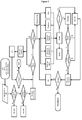
- Step (c) of the present invention comprises two alternative sets of steps, namely steps (c1) to (c8) or (c9) to (c17). Steps (c1) to (c8) correspond to the algorithm which is disclosed in Unified Modelling Language (UML) notation in Figure 3 .
- UML Unified Modelling Language
- step (c1) comprises identifying those ingredients which have data encoding at least one first given qualitative characteristic of said ingredients in said ingredient database, wherein said first given qualitative characteristic is selected from a presence or absence of a given qualitative chemical property, a presence or absence of a given qualitative physical property, a presence or absence of a given organoleptic property, the provenance or not from a given supplier, or a presence or absence of passing a given dermatological test performed.
- Said first given qualitative characteristic is a qualitative characteristic that is selected by the user of the method of the present invention according to the requirements that the topical dermal formulation for cosmetic use must fulfil.
- said first given qualitative characteristic may be a requirement that the topical dermal formulation only comprises ingredients that are produced by a given supplier or which have passed a given dermatological test.
- Step (c2) comprises:
- the experimental skin model may be any skin model used for clinical testing of products to be applied to the external skin surface.
- the experimental skin model is an in vitro skin cell model comprising at least one cell type selected from keratinocytes, melanocytes, Langerhans cells, dermal fibroblasts, dermal dendritic cells, skin resident T-cells or endothelial cells.
- said second given qualitative characteristic is a qualitative characteristic other than a first given qualitative characteristic that is selected by the user of the method of the present invention according to the requirements that the topical dermal formulation for cosmetic use must fulfil.
- said topical dermal formulation only comprises ingredients that have passed a given dermatological test or that are produced by a given supplier
- said second given qualitative characteristic may be that said ingredients must show a given organoleptic property.
- said ingredients must have a given cost per unit weight that is less than a user-defined amount.
- Step (c2d) comprises synchronously repeating steps (c2b) and (c2d) n times to make n random selections of two or more ingredients identified in step (c1) for combination into n respective formulations, wherein n is a whole number less than 100 by default, or a user-defined number of variants. Preferably n is a whole number between 2 and 50, more preferably a whole number between 5 and 20.
- Step (c3) comprises determining the score of said random selection of two or more ingredients for combination into said formulation, wherein said score is determined by:
- Each quantitative characteristic used in scoring, as determined in step (c3) but also that determined in steps (c5c) and (c13c), below, is a value associated with the extent of said quantitative characteristic for a given ingredient or for a given ingredient at a given concentration, or for a given formulation.
- a measured value an assigned value based on said measured value (for example, a value of 0 may be assigned to the ingredient for a specific target when it is not induced at any of three concentrations in vitro, a value of 1 may be assigned when induction is observed at the highest of said three concentrations of the ingredient relative to a given pre-determined value, a value of 2 may be assigned when induction is observed at the intermediate concentration of said three concentrations of said ingredient and a value of 3 may be assigned when induction is observed at the lowest of said three concentrations of said ingredient) or a value which is expressed as a percentage or fraction of said measured value or said assigned value relative to a given pre-determined value.
- a value of 0 may be assigned to the ingredient for a specific target when it is not induced at any of three concentrations in vitro
- a value of 1 may be assigned when induction is observed at the highest of said three concentrations of the ingredient relative to a given pre-determined value
- a value of 2 may be assigned when induction is observed at the intermediate concentration
- each quantitative characteristic used in scoring is a value which is expressed as a percentage or fraction of a measured value or an assigned value based on said measured value, relative to a given pre-determined value.
- a predetermined value of a quantitative characteristic refers to a value that is predetermined (or preestablished) as a reference value against which the corresponding measured value of at least one quantitative characteristic of a given ingredient or formulation may be compared.
- the mean score for any given ingredient for combination into a formulation is preferably determined by averaging the following parameters:
- each of said parameters used to determine the scores in steps (c3), (c5c) and (c13c) is optionally independently weighted by a value between 0 and 1.
- each parameter is weighted equally by a value between 0.1 and 1. Weighting is carried out by multiplying each parameter by said given weight, wherein the resulting weighted parameters are averaged to calculate said score.
- each parameter used to determine the scores in steps (c3), (c5c) and (c13c) is weighted equally.
- Step (c4) comprises compiling a formulation database comprising data on said random selection made in steps (c2), wherein said data encodes:
- Step (c5) comprises:
- Step (c6) comprises replacing the data on said random selection in said formulation database with the corresponding data on said new random selection if:
- Step (c8) comprises optionally repeating steps (c2) to (c7) S times to afford S random selections of two or more of said ingredients for combination into S respective formulations, wherein S is a whole number less than 1000, preferably less than 500, more preferably less than 100.
- Steps (c1) to (c8) were conceived as a light algorithm to work with databases including a low number of compounds and/or compositions, usually below 200 entries, as per step (b).
- a list of said compounds and/or compositions is not encoded in step (b), but instead directly stored at the memory stack as object instances including all their features, which allows the method of the present invention to be performed by using the internal methods of the class used to simulate the ingredients.
- said compounds and/or compositions are subjected to a filtering process, which allows those compounds and/or compositions that, for example, are not dermatologically proven or that do not fit some commercial requirements to be discarded, as per step (c1).
- Step (c2) of the method of the present invention therefore starts by creating random selections of compounds and/or compositions which are also passed through further primary filters until one random selection fitting a formulation having, for example, a given total cost per unit weight, is identified.
- This random selection corresponds to "successful" formulations, which are so-called “germinal formulations”, in that they are used as starting points from which new enhanced formulations are obtained.
- the number of attempts, n, to obtain a germinal formulation is set by the user and is stored at the so-called "laps" variable.
- New enhanced formulations are subsequently obtained from each germinal formulation by, for example, replacing, removing or adding some ingredients over a user-defined number of iterations, as per step (c5).
- the resulting new random selection corresponding to a new formulation is scored and replaces the previous formula if it has a higher score and overcomes all the primary filters, as per step (c6). If a random selection corresponding to a new formulation having higher score is obtained, the random selection corresponding to said new formulation is addressed to a further iteration(s) in order to improve its composition.
- the number of attempts to improve the formulation is also defined by laps, whereby after a number of iterations set by the user, the method of the present invention provides the highest scored random selection or a percentage of random selections, M, having the highest score, for making into a formulation or formulations.
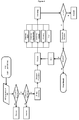
- steps (c9) to (c17) correspond to the algorithm disclosed in UML notation in Figure 4 .
- step (c9) comprises identifying those ingredients which have data encoding at least one given qualitative characteristic of said ingredients in said ingredient database wherein, for a given ingredient, said given qualitative characteristic is selected from a presence or absence of a given qualitative chemical property of said given ingredient, a presence or absence of a given qualitative physical property of said given ingredient, a presence or absence of a given organoleptic property of said given ingredient or the provenance or not from a given supplier of said given ingredient;
- Each given qualitative characteristic is a characteristic that is selected by the user of the method of the present invention according to the requirements that the topical dermal formulation for cosmetic use must fulfil.
- said given qualitative characteristic may be a requirement that the topical dermal formulation only comprises ingredients that have passed a given dermatological test or that are produced by a given supplier.
- Step (c10) comprises generating 2 T binary sequences, wherein each binary sequence reads from left to right and comprises a tuple, T, of bits, wherein T is calculated by rounding up to the nearest whole number the result of log 2 (NI), wherein NI is the number of ingredients identified in step (c9), wherein each bit is additionally assigned a value between 0 and 0.1 corresponding to the probability that said bit changes.
- a tuple of bits is a finite, ordered list of bits (each bit having a value of 0 or 1). The probability that said bit changes refers to the probability that said bit changes when seeking to achieve an improved score. In a preferred embodiment, each bit is additionally assigned a value of 0.02 corresponding to the probability that said bit changes.
- Step (c13) comprises, for each composite binary sequence:
- each quantitative characteristic used in scoring is a value associated with the extent of said quantitative characteristic for a given ingredient or for a given ingredient at a given concentration, or for a given formulation.
- it may be a measured value, an assigned value based on said measured value (for example, a value of 0 may be assigned to the ingredient for a specific target when it is not induced at any of three concentrations in vitro, a value of 1 may be assigned when induction is observed at the highest of said three concentrations of the ingredient relative to a given pre-determined value, a value of 2 may be assigned when induction is observed at the intermediate concentration of said three concentrations of said ingredient and a value of 3 may be assigned when induction is observed at the lowest of said three concentrations of said ingredient) or a value which is expressed as a percentage or fraction of said measured value or said assigned value relative to a given pre-determined value.
- each quantitative characteristic used in scoring is a value which is expressed as a percentage or fraction of a measured value or
- the mean score for any given ingredient for combination into a formulation, as determined in step (c13c), is preferably determined by averaging the following parameters:
- the score for any given formulation, as determined in step (c13c) is preferably determined by calculating:
- each of said parameters used to determine the scores in step (c13c) is optionally independently weighted by a value between 0 and 1.
- each parameter is weighted equally by a value between 0.1 and 1. Weighting is carried out by multiplying each parameter by said given weight, wherein the resulting weighted parameters are averaged to calculate said score.
- each parameter used to determine the scores in step (c13c) is weighted equally.
- Step (c14) comprises compiling a composite binary sequences database comprising data on each of the composite binary sequences in said population of S composite binary sequences, wherein, for any given composite binary sequence, said data encodes
- step (c15) comprises a "selection of the fittest", whereby the lower-scored half of the population of n random selections (and the data related thereto) is iteratively replaced by a set of "genetically varied” random selections (and the data related thereto) derived from the upper-scored half of the population of n random selections by varying the value of any single bit in each of the binary references encoding the data for each random selection in said upper-scored half of the population of n random selections.
- Step (c16) comprises repeating steps (c13) and (c14) for the new population of S composite binary sequences generated in step (c15).
- Step (c17) comprises repeating steps (c15) and (c16) K times, wherein K is a whole number less than 1000 by default, or until the average score of the formulations encoded by said composite binary sequence is not increased between consecutive repetitions of steps (c15) and (c16). K is preferably a whole number less than 500, more preferably less than 100.
- steps (c9) to (c17) form a genetic algorithm (GA).
- GA genetic algorithm
- the lists of compounds and/or compositions are encoded as binary sequences that are optimized to match all the requested cosmetic uses over the iterative stages. Said algorithm is illustrated by Figure 4 wherein, once primary filters have been applied as per step (c9), a binary encoded reference is assigned to the compounds and/or compositions overcoming this stage, as per steps (c10) and (c11).
- Said binary encoded references are tuples of bits whose size depend on the amount of ingredients to be encoded and are calculated according to the Kolmogorov algorithm complexity theory. Then, a random population of binary sequences (chromosomes) encoding lists of compounds and/or compositions is created, as per step (c12). The chromosome size depends on the size of the tuples and the maximal amount of compounds and/or compositions per formulation. First, to evaluate these formulations, chromosomes are decoded to obtain their lists of ingredients and then, they are scored, attending to their cost, biological activity and applicability of the final formulation, as per step (c13), and the resulting score is stored in the database of step (c14) as the fitness variable.
- chromosomes are ranked according to their fitness by the crowding operator, and the lowest scored half of the population is discarded, whereby chromosomes overcoming the previous stage amplify the population up to its initial size with new sequences arising from combinations among the surviving sequences by the crossover operator, as per step (c15). At this point, diversification is increased in the population by the mutation operator, which randomly changes the value of any bit within the chromosome sequence.
- new chromosomes are evaluated and the process is iteratively repeated as per steps (c16) and (c17), preferably until the system reaches convergence. Convergence may be established when the average fitness in the population remains stable during a critical number of iterations, following which the binary sequence(s) encoding the formula or formulas having the greatest score is output.
- the method of the present invention may use one of two alternative algorithms to create novel formulations:
- Simulated Annealing is a stochastic method. It is based on statistical mechanics and its goal is to find a global minimum within a system showing several local minima.
- a search engine based on Simulated Annealing for design of cosmetic formulations may be implemented as follows. First, a random list of ingredients is encoded in a binary sequence in a similar way as in the method of steps (c9) to (c17). Second, a probability ( ⁇ ) of changing a single bit value is established. Thus, every bit shows a probability ⁇ , greater than 0 and less than 1, to change its value.
- a binary sequence is iteratively subjected to random changes according to the ⁇ probability.
- ⁇ value is established in the upper half of the range from 0 to 1 ( i.e. 0,1), thus the encoded formulation will undergo considerable changes.
- the ⁇ value will decrease in an exponential way, leading to a reduced rate of change for each new iteration over the previous one.
- the corresponding new formulation encoded by the new binary sequence is scored as in the (evolutive) algorithms of steps (c9) to (c17) and, if it has an improved score over its precursor, said new formula and, hence, the new binary sequence, will replace the old one.
- the method will output the binary sequence encoding the formulation having the greatest score.
- Step (d) of the present invention comprises:
- Step (e) of the present invention comprises making said at least one topical dermal formulation for cosmetic use. This is achieved by mixing the ingredients:
- M is a whole number from 1 to 20, S is less than 100, P is less than or equal to 10, the terminal F% of bits is between the terminal 50% and terminal 1% of bits, n is 50 and N is 50.
- step (f) comprises:
- M' is a whole number from 1 to 20, S is less than 100, P is less than or equal to 8, the terminal F% of bits is between the terminal 10% and terminal 1% of bits, n is 20, N is 20 and M is from 1 to 20.
- the M percent of random selections in step (d) that have the highest scores, or the M' percent of formulations in step (f) that have the lowest IC 50 and/or the EC 50 against said target, as determined in step (f1) is that percent of each population that exhibits synergistic cosmetic effects.
- the formulation(s) made in step (e) or the formulation(s) selected in step (f) may be made using different concentrations of each individual ingredient, before determining the IC 50 and/or the EC 50 of said new formulations against the target referred to in steps (c2b) or (c13b), according to the procedure in step (a). The formula showing the best activity in vitro or in vivo would then be reported.
- the invention provides an automated method for a rational design of formulas that involves a reduction in cost and time invested in the product development. Moreover, since a whole activity profile for all the biological targets within the system is performed for every single ingredient, instead of an application-specific confirmatory assay as usual in another approaches, an unexpected result may be achieved.
- the cell lines HaCaT (keratinocytes), HaCaT-KBF-Luc, NIH-3T3-KBF-Luc, 3T3-L1 (adipocytes) 293T, 293T-TRPV-1, 293T-CB1, 293T-CB2, are included in the SimDerma platform and maintained in supplemented DMEM medium containing 10% FBS and 1% antibiotics penicillin/streptomycin (DMEM complete medium) at 37 °C in a humidified atmosphere of 5% CO 2 .
- DMEM complete medium containing 10% FBS and 1% antibiotics penicillin/streptomycin
- the cytotoxic effect of the test substances is investigated by the MTT (3-[4,5-dimethylthiazol-2-yl]-2,5-diphenyltetrazolium bromide) assay. Briefly, NHDFs and HaCaT cells are seeded at a density of 10 4 cells/well in 96-well plates (100 ⁇ L cell suspension per well). After 24 hours the cells are treated with increasing concentrations of the test substances for 24 hours. Subsequently, 50 ⁇ L of MTT (5 mg/mL) from a mixture solution of MTT: DMEM (1:2) is added to each well and incubated for 4 hours at 37 °C in darkness.
- MTT 3-[4,5-dimethylthiazol-2-yl]-2,5-diphenyltetrazolium bromide
- Example 1 Production of novel and bioactive formulations for treating atopic dermatitis.
- Atopic dermatitis is an itchy, chronic, and/or chronically relapsing, inflammatory dermatosis, its rash is characterized by itchy papules, occasionally vesicles which become excoriated and lichenified, and typically have a flexural distribution.
- etiopathogenic factors are not completely understood, immunologic, genetic and environmental factors are interrelated to produce a skin barrier disturbance as well as an immunologic dysregulation.
- the goal standards for the management of atopic skin treatment include the maintenance of epidermal barrier integrity and the treatment of inflammation and itching.
- the disruption of epidermal barrier can be treated with PPAR ⁇ agonists and prevented with moisturizing and antioxidants agents.
- the inflammation associated with AD is mediated by activation of the dermal immune system and immune-suppressors such as corticoids and tacrolimus are approved therapies for the treatment of AD.
- Skin itching is a very complex pathological condition and so far no effective treatments have been developed for its use in atopic skin. It has been shown recently that the ionotropic sensory receptors TRPA1 and TRPV-1 are involved in the physiopathology of pruritus. Thus, TRPA1 or TRPV-1 antagonists may be developed as anti-itching agents.
- atopic skin care was parameterized according to the following requirements related to the experimental targets:
- the resulting formulation (F01) obtained according to the method of the present invention consist of a mixture of four ingredients each comprising the biologically-active compounds shown in Table 1.
- Media comprising said formulation were prepared at two different concentrations thereof: 1/10 and 1/100, wherein 1/10 refers to one part (by volume) of solute in nine parts of solvent and 1/100 refers to one part (by volume) of solute in ninety-nine parts of solvent, said solute being the formulation of ingredients and said solvent the culture medium in which the reaction was performed.
- Table 1/10 refers to one part (by volume) of solute in nine parts of solvent
- 1/100 refers to one part (by volume) of solute in ninety-nine parts of solvent
- Scores for each of the ingredients of said formulation F01 were established as follows: if no biological activity is found at any concentration against a given target, a value 0 is assigned; if activity is found only at the highest concentration (50 ⁇ M) against said given target, a value 1 is assigned; if activity is found at the intermediate concentration (25 ⁇ M) against said given target but not at the lowest concentration (10 ⁇ M), a value 2 is assigned; and if activity is found at the lowest concentration (10 ⁇ M) against said given target, a value 3 is assigned. For each ingredient a mean score was established by averaging the scores against all targets tested (see Table 2).
- Composition B Composition C Composition D Total antioxidant capacity 2 1 1 PPAR ⁇ activation 3 PPAR ⁇ activation 3 1 1 Glucose uptake 3 1 1 Nrf2 induction 2 3 Cannabinoid receptor CB2 activation 1 1 NFkB (keratinocyte) (HaCaT) 1 1 3 TRPV1 agonism 2 2 NFkB (fibroblast) 1 3 Collagen type I ⁇ induction 1 Nrf2 antagonism 1 STAT3 1 3 TRPV1 antagonism 1 Melanogenesis 1 Mean score 2 2 1 2 Percentage of maximum score 66.7 66.7 33.3 66.7
- skin barrier enhancement PPAR ⁇ agonism, Example 2
- NF- ⁇ B inhibition anti-inflammatory activity
- ROS inhibition anti-oxidant capacity
- TRPV-1-antagonism Example 5
- Example 2 PPAR ⁇ agonistic activity.
- PPAR ⁇ transactivation assays were performed in NIH-3T3 fibroblasts cells in order to determine the biological activity of formulation F01 on PPAR ⁇ transcription.
- NIH-3T3 cells were transiently co-transfected with the expression vector GAL4-PPAR ⁇ and the luciferase reporter vector GAL4-Luc using Roti ⁇ -Fect (Carl Roth, Düsseldorf, Germany) following manufacturer's instructions. 24 hours after transfection the cells are treated for 12 hours with increasing concentrations of formulation F01.
- NIH-3T3-KBF-luc ( Figure 6A ) and HaCaT-KBF-luc cells ( Figure 6B ) were stably transfected with the plasmid KBF-Luc plasmid, which contains three copies of NF- ⁇ B binding site (from major histocompatibility complex promoter), fused to a minimal simian virus 40 promoter driving the luciferase gene.
- Cells (15 x 10 4 cells/mL) were seeded the day before the assay. Then the cells were treated with increasing concentrations of formulation F01 for 15 minutes and then stimulated with TNF ⁇ (30 ng/mL).
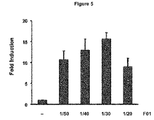
- the acetate groups on DCFH-DA are removed by an intracellular esterase, trapping the probe inside the HaCaT cells. The cells were then washed with warm PBS buffer. The production of ROS was measured by changes in fluorescence due to the intracellular accumulation of DCF caused by the oxidation of DCFH. Intracellular ROS, as indicated by DCF fluorescence, were detected using a TECAN Pro plate reader (excitation, 485 nm; emission, 530 nm) and the results were represented, as shown in Figure 7 , as a fold induction of fluorescence (y-axis) taking the control sample (-) as a reference. Data are expressed as mean ⁇ S.D. of at least three independent experiments.
- 293T-TRPV-1 cells are stably transfected cells which over-express the human TRPV-1 receptor.
- 2 x 10 4 293T-VR1 cells (or parental 293T cells as control) were cultured in triplicate in 96-well microtiter plates (Costar, Cambridge, MA) in 200 ⁇ L of complete medium. Cells in separate wells were incubated with the formulation F01 (1/10 and 1/20 vol./vol.) or with capsazepine (CPZ, as the positive control of TRPV-1 antagonism) for 30 minutes and then stimulated with the TRPV-1 agonist capsaicin (3 ⁇ M) for 6 hours in order to allow the entry of extracellular calcium inside the cells. Subsequently, the cellular viability was measured by the MTT method as described above.
- Fura2 Ca 2+ imaging experiments were performed on a BD Pathway 855 High Content Imaging System (Becton Dickinson Biosciences, Heidelberg, Germany). 293T-TRPV1 cells were seeded in 96-well imaging plate (Becton Dickinson Bioscience) the day before the experiment in a density of 5000 cells/well and loaded with 5 ⁇ M Fura2-AM (Molecular Probes, Darmstadt, Germany) in buffer containing 135 mM NaCl, 3 mM KCI, 10 mM HEPES, 15 mM D-glucose, 2 mM MgSO 4 and 2 mM CaCl 2 for 30 minutes before the experiment.
- Fura2-AM Molecular Probes, Darmstadt, Germany
Landscapes
- Health & Medical Sciences (AREA)
- Life Sciences & Earth Sciences (AREA)
- General Health & Medical Sciences (AREA)
- Animal Behavior & Ethology (AREA)
- Public Health (AREA)
- Veterinary Medicine (AREA)
- Epidemiology (AREA)
- Birds (AREA)
- Bioinformatics & Cheminformatics (AREA)
- Engineering & Computer Science (AREA)
- Chemical & Material Sciences (AREA)
- Emergency Medicine (AREA)
- Bioinformatics & Computational Biology (AREA)
- Spectroscopy & Molecular Physics (AREA)
- Crystallography & Structural Chemistry (AREA)
- Pharmacology & Pharmacy (AREA)
- Computing Systems (AREA)
- Theoretical Computer Science (AREA)
- Physics & Mathematics (AREA)
- Dermatology (AREA)
- Medicinal Chemistry (AREA)
- Cosmetics (AREA)
Priority Applications (1)
| Application Number | Priority Date | Filing Date | Title |
|---|---|---|---|
| EP16154837.5A EP3206145A1 (fr) | 2016-02-09 | 2016-02-09 | Procédé de production d'une formulation dermique topique pour une utilisation cosmétique |
Applications Claiming Priority (1)
| Application Number | Priority Date | Filing Date | Title |
|---|---|---|---|
| EP16154837.5A EP3206145A1 (fr) | 2016-02-09 | 2016-02-09 | Procédé de production d'une formulation dermique topique pour une utilisation cosmétique |
Publications (1)
| Publication Number | Publication Date |
|---|---|
| EP3206145A1 true EP3206145A1 (fr) | 2017-08-16 |
Family
ID=55411178
Family Applications (1)
| Application Number | Title | Priority Date | Filing Date |
|---|---|---|---|
| EP16154837.5A Withdrawn EP3206145A1 (fr) | 2016-02-09 | 2016-02-09 | Procédé de production d'une formulation dermique topique pour une utilisation cosmétique |
Country Status (1)
| Country | Link |
|---|---|
| EP (1) | EP3206145A1 (fr) |
Cited By (4)
| Publication number | Priority date | Publication date | Assignee | Title |
|---|---|---|---|---|
| US10515715B1 (en) | 2019-06-25 | 2019-12-24 | Colgate-Palmolive Company | Systems and methods for evaluating compositions |
| CN111937335A (zh) * | 2018-04-12 | 2020-11-13 | 高通股份有限公司 | 对单个下行链路控制信息多传送接收点传输的速率匹配 |
| JP2021163491A (ja) * | 2020-03-30 | 2021-10-11 | ディーエスエム アイピー アセッツ ビー.ブイ.Dsm Ip Assets B.V. | 複数のuvフィルタ物質を含む日焼け止め組成物を決定するためのコンピュータベースの方法 |
| WO2023066860A1 (fr) * | 2021-10-18 | 2023-04-27 | Firmenich Sa | Procédé de construction de base de données de composés chimiques, prédiction de composition et procédés d'assemblage et parfums obtenus présentant un effet hydratant |
Citations (1)
| Publication number | Priority date | Publication date | Assignee | Title |
|---|---|---|---|---|
| WO2002033596A2 (fr) * | 2000-10-17 | 2002-04-25 | Applied Research Systems Ars Holding N.V. | Procede d'activation d'un systeme informatique permettant d'effectuer une analyse de substrat discrete |
-
2016
- 2016-02-09 EP EP16154837.5A patent/EP3206145A1/fr not_active Withdrawn
Patent Citations (1)
| Publication number | Priority date | Publication date | Assignee | Title |
|---|---|---|---|---|
| WO2002033596A2 (fr) * | 2000-10-17 | 2002-04-25 | Applied Research Systems Ars Holding N.V. | Procede d'activation d'un systeme informatique permettant d'effectuer une analyse de substrat discrete |
Non-Patent Citations (3)
| Title |
|---|
| BALFAGÓN A. C. ET AL: "Comparative study of neural networks and least mean square algorithm applied to the optimization of cosmetic formulations", INTERNATIONAL JOURNAL OF COSMETIC SCIENCE., vol. 32, no. 5, 1 September 2010 (2010-09-01), NL, pages 376 - 386, XP055291766, ISSN: 0142-5463, DOI: 10.1111/j.1468-2494.2009.00565.x * |
| LANE M. E. ET AL: "Rational formulation design", INTERNATIONAL JOURNAL OF COSMETIC SCIENCE., vol. 34, no. 6, 1 September 2012 (2012-09-01), NL, pages 496 - 501, XP055291518, ISSN: 0142-5463, DOI: 10.1111/j.1468-2494.2012.00747.x * |
| SCHWARTZ J. B.: "Optimization techniques in product formulation", J. SOC. COSMET. CHEM., vol. 32, 22 March 1981 (1981-03-22), pages 287 - 301, XP055291765 * |
Cited By (13)
| Publication number | Priority date | Publication date | Assignee | Title |
|---|---|---|---|---|
| CN111937335B (zh) * | 2018-04-12 | 2023-10-17 | 高通股份有限公司 | 对单个下行链路控制信息多传送接收点传输的速率匹配 |
| CN111937335A (zh) * | 2018-04-12 | 2020-11-13 | 高通股份有限公司 | 对单个下行链路控制信息多传送接收点传输的速率匹配 |
| US11315663B2 (en) | 2019-06-25 | 2022-04-26 | Colgate-Palmolive Company | Systems and methods for producing personal care products |
| US10839942B1 (en) | 2019-06-25 | 2020-11-17 | Colgate-Palmolive Company | Systems and methods for preparing a product |
| US10861588B1 (en) | 2019-06-25 | 2020-12-08 | Colgate-Palmolive Company | Systems and methods for preparing compositions |
| US10515715B1 (en) | 2019-06-25 | 2019-12-24 | Colgate-Palmolive Company | Systems and methods for evaluating compositions |
| US11342049B2 (en) | 2019-06-25 | 2022-05-24 | Colgate-Palmolive Company | Systems and methods for preparing a product |
| US11728012B2 (en) | 2019-06-25 | 2023-08-15 | Colgate-Palmolive Company | Systems and methods for preparing a product |
| US10839941B1 (en) | 2019-06-25 | 2020-11-17 | Colgate-Palmolive Company | Systems and methods for evaluating compositions |
| US12165749B2 (en) | 2019-06-25 | 2024-12-10 | Colgate-Palmolive Company | Systems and methods for preparing compositions |
| JP2021163491A (ja) * | 2020-03-30 | 2021-10-11 | ディーエスエム アイピー アセッツ ビー.ブイ.Dsm Ip Assets B.V. | 複数のuvフィルタ物質を含む日焼け止め組成物を決定するためのコンピュータベースの方法 |
| JP7819838B2 (ja) | 2020-03-30 | 2026-02-25 | ディーエスエム アイピー アセッツ ビー.ブイ. | 複数のuvフィルタ物質を含む日焼け止め組成物を決定するためのコンピュータベースの方法 |
| WO2023066860A1 (fr) * | 2021-10-18 | 2023-04-27 | Firmenich Sa | Procédé de construction de base de données de composés chimiques, prédiction de composition et procédés d'assemblage et parfums obtenus présentant un effet hydratant |
Similar Documents
| Publication | Publication Date | Title |
|---|---|---|
| Thangamani et al. | Ebselen exerts antifungal activity by regulating glutathione (GSH) and reactive oxygen species (ROS) production in fungal cells | |
| EP3206145A1 (fr) | Procédé de production d'une formulation dermique topique pour une utilisation cosmétique | |
| Ishii et al. | A human intermediate conductance calcium-activated potassium channel | |
| Massiot et al. | Continuous clinical improvement of mild‐to‐moderate seborrheic dermatitis and rebalancing of the scalp microbiome using a selenium disulfide–based shampoo after an initial treatment with ketoconazole | |
| Koch et al. | Quantitative proteomics identifies reduced NRF2 activity and mitochondrial dysfunction in atopic dermatitis | |
| US20090163545A1 (en) | Method For Altering The Lifespan Of Eukaryotic Organisms | |
| Zeng et al. | Effects of nicotine on proliferation and survival in human umbilical cord mesenchymal stem cells | |
| Dean et al. | Molecular response of Anabaena flos‐aquae to differing concentrations of phosphorus: A combined Fourier transform infrared and X‐ray microanalytical study | |
| Mangiacotti et al. | Protein–lipid association in lizard chemical signals | |
| Ergin et al. | Evaluation of novel cosmetic shampoo formulations against Malassezia species: preliminary results of anti‐dandruff shampoo formulations | |
| Schwarz et al. | A peculiar cell cycle arrest at g2/m stage during the stationary phase of growth in the wine yeast Hanseniaspora vineae. | |
| Maître et al. | Characterization of the forehead skin microbiome in the early phase of acne | |
| Ishii et al. | Aging-associated decline of epidermal PSMD8 contributes to impaired skin function | |
| CN118791563A (zh) | 一种酵母多肽提取物及其制备方法和应用 | |
| Siebert et al. | Parasitoid wasp venom elevates sorbitol and alters expression of metabolic genes in human kidney cells | |
| Sanderson et al. | Phylogenomics reveals patterns of ancient hybridization and differential diversification contributing to phylogenetic conflict in Populus L. and Salix L | |
| US10907208B2 (en) | Method for screening agents promoting skin barrier function and method for evaluating skin barrier function taking epidermal serine racemase and/or D-serine level as indicator | |
| Li et al. | Multi-omics and functional validation reveal that fermentation filtratet of Clavispora lusitaniae P8 attenuates UVA-induced photoaging by modulating the IL-17/NF-κB axis | |
| Breitenbach et al. | The use of genetically engineered model systems for research on human aging | |
| Shiota et al. | 404 Novel glycerin compounds improve skin health | |
| Tedeschi et al. | Dynamic characterization of KCNQ1 and its regulatory subunits revealed by fluorescence fluctuation techniques | |
| Jeong et al. | Integrative assessment of mixture toxicity of household chemicals using the toxic unit approach and mode of action | |
| Solá et al. | Local IL-17 orchestrates skin aging | |
| Pease et al. | Transcriptomic and epigenetic assessment of ageing male skin identifies disruption of Ca2+ homeostasis; exacerbated by smoking and UV exposure | |
| Shan et al. | Investigations into the biological activity of avobenzone as part of a Next Generation Risk Assessment |
Legal Events
| Date | Code | Title | Description |
|---|---|---|---|
| PUAI | Public reference made under article 153(3) epc to a published international application that has entered the european phase |
Free format text: ORIGINAL CODE: 0009012 |
|
| STAA | Information on the status of an ep patent application or granted ep patent |
Free format text: STATUS: THE APPLICATION HAS BEEN PUBLISHED |
|
| AK | Designated contracting states |
Kind code of ref document: A1 Designated state(s): AL AT BE BG CH CY CZ DE DK EE ES FI FR GB GR HR HU IE IS IT LI LT LU LV MC MK MT NL NO PL PT RO RS SE SI SK SM TR |
|
| AX | Request for extension of the european patent |
Extension state: BA ME |
|
| STAA | Information on the status of an ep patent application or granted ep patent |
Free format text: STATUS: THE APPLICATION IS DEEMED TO BE WITHDRAWN |
|
| 18D | Application deemed to be withdrawn |
Effective date: 20180217 |