EP3206413A1 - Ohrhörersteuerungsverfahren, ohrhörersteuerungssystem und ohrhörer - Google Patents
Ohrhörersteuerungsverfahren, ohrhörersteuerungssystem und ohrhörer Download PDFInfo
- Publication number
- EP3206413A1 EP3206413A1 EP16798070.5A EP16798070A EP3206413A1 EP 3206413 A1 EP3206413 A1 EP 3206413A1 EP 16798070 A EP16798070 A EP 16798070A EP 3206413 A1 EP3206413 A1 EP 3206413A1
- Authority
- EP
- European Patent Office
- Prior art keywords
- alert
- earphone
- motion state
- judgement parameter
- state judgement
- Prior art date
- Legal status (The legal status is an assumption and is not a legal conclusion. Google has not performed a legal analysis and makes no representation as to the accuracy of the status listed.)
- Ceased
Links
Images

Classifications
-
- H—ELECTRICITY
- H04—ELECTRIC COMMUNICATION TECHNIQUE
- H04R—LOUDSPEAKERS, MICROPHONES, GRAMOPHONE PICK-UPS OR LIKE ACOUSTIC ELECTROMECHANICAL TRANSDUCERS; ELECTRIC HEARING AIDS; PUBLIC ADDRESS SYSTEMS
- H04R1/00—Details of transducers, loudspeakers or microphones
- H04R1/10—Earpieces; Attachments therefor ; Earphones; Monophonic headphones
- H04R1/1041—Mechanical or electronic switches, or control elements
-
- G—PHYSICS
- G08—SIGNALLING
- G08B—SIGNALLING SYSTEMS, e.g. PERSONAL CALLING SYSTEMS; ORDER TELEGRAPHS; ALARM SYSTEMS
- G08B21/00—Alarms responsive to a single specified undesired or abnormal condition and not otherwise provided for
- G08B21/18—Status alarms
- G08B21/182—Level alarms, e.g. alarms responsive to variables exceeding a threshold
-
- G—PHYSICS
- G10—MUSICAL INSTRUMENTS; ACOUSTICS
- G10K—SOUND-PRODUCING DEVICES; METHODS OR DEVICES FOR PROTECTING AGAINST, OR FOR DAMPING, NOISE OR OTHER ACOUSTIC WAVES IN GENERAL; ACOUSTICS NOT OTHERWISE PROVIDED FOR
- G10K11/00—Methods or devices for transmitting, conducting or directing sound in general; Methods or devices for protecting against, or for damping, noise or other acoustic waves in general
- G10K11/16—Methods or devices for protecting against, or for damping, noise or other acoustic waves in general
- G10K11/175—Methods or devices for protecting against, or for damping, noise or other acoustic waves in general using interference effects; Masking sound
- G10K11/178—Methods or devices for protecting against, or for damping, noise or other acoustic waves in general using interference effects; Masking sound by electro-acoustically regenerating the original acoustic waves in anti-phase
-
- H—ELECTRICITY
- H04—ELECTRIC COMMUNICATION TECHNIQUE
- H04R—LOUDSPEAKERS, MICROPHONES, GRAMOPHONE PICK-UPS OR LIKE ACOUSTIC ELECTROMECHANICAL TRANSDUCERS; ELECTRIC HEARING AIDS; PUBLIC ADDRESS SYSTEMS
- H04R1/00—Details of transducers, loudspeakers or microphones
- H04R1/10—Earpieces; Attachments therefor ; Earphones; Monophonic headphones
- H04R1/1083—Reduction of ambient noise
-
- H—ELECTRICITY
- H04—ELECTRIC COMMUNICATION TECHNIQUE
- H04R—LOUDSPEAKERS, MICROPHONES, GRAMOPHONE PICK-UPS OR LIKE ACOUSTIC ELECTROMECHANICAL TRANSDUCERS; ELECTRIC HEARING AIDS; PUBLIC ADDRESS SYSTEMS
- H04R3/00—Circuits for transducers
-
- G—PHYSICS
- G10—MUSICAL INSTRUMENTS; ACOUSTICS
- G10K—SOUND-PRODUCING DEVICES; METHODS OR DEVICES FOR PROTECTING AGAINST, OR FOR DAMPING, NOISE OR OTHER ACOUSTIC WAVES IN GENERAL; ACOUSTICS NOT OTHERWISE PROVIDED FOR
- G10K2210/00—Details of active noise control [ANC] covered by G10K11/178 but not provided for in any of its subgroups
- G10K2210/10—Applications
- G10K2210/108—Communication systems, e.g. where useful sound is kept and noise is cancelled
- G10K2210/1081—Earphones, e.g. for telephones, ear protectors or headsets
-
- H—ELECTRICITY
- H04—ELECTRIC COMMUNICATION TECHNIQUE
- H04R—LOUDSPEAKERS, MICROPHONES, GRAMOPHONE PICK-UPS OR LIKE ACOUSTIC ELECTROMECHANICAL TRANSDUCERS; ELECTRIC HEARING AIDS; PUBLIC ADDRESS SYSTEMS
- H04R2420/00—Details of connection covered by H04R, not provided for in its groups
- H04R2420/07—Applications of wireless loudspeakers or wireless microphones
-
- H—ELECTRICITY
- H04—ELECTRIC COMMUNICATION TECHNIQUE
- H04R—LOUDSPEAKERS, MICROPHONES, GRAMOPHONE PICK-UPS OR LIKE ACOUSTIC ELECTROMECHANICAL TRANSDUCERS; ELECTRIC HEARING AIDS; PUBLIC ADDRESS SYSTEMS
- H04R2430/00—Signal processing covered by H04R, not provided for in its groups
- H04R2430/01—Aspects of volume control, not necessarily automatic, in sound systems
-
- H—ELECTRICITY
- H04—ELECTRIC COMMUNICATION TECHNIQUE
- H04R—LOUDSPEAKERS, MICROPHONES, GRAMOPHONE PICK-UPS OR LIKE ACOUSTIC ELECTROMECHANICAL TRANSDUCERS; ELECTRIC HEARING AIDS; PUBLIC ADDRESS SYSTEMS
- H04R2460/00—Details of hearing devices, i.e. of ear- or headphones covered by H04R1/10 or H04R5/033 but not provided for in any of their subgroups, or of hearing aids covered by H04R25/00 but not provided for in any of its subgroups
- H04R2460/01—Hearing devices using active noise cancellation
-
- H—ELECTRICITY
- H04—ELECTRIC COMMUNICATION TECHNIQUE
- H04R—LOUDSPEAKERS, MICROPHONES, GRAMOPHONE PICK-UPS OR LIKE ACOUSTIC ELECTROMECHANICAL TRANSDUCERS; ELECTRIC HEARING AIDS; PUBLIC ADDRESS SYSTEMS
- H04R2460/00—Details of hearing devices, i.e. of ear- or headphones covered by H04R1/10 or H04R5/033 but not provided for in any of their subgroups, or of hearing aids covered by H04R25/00 but not provided for in any of its subgroups
- H04R2460/07—Use of position data from wide-area or local-area positioning systems in hearing devices, e.g. program or information selection
Definitions
- the present disclosure relates to the technical field of earphone, and particularly, to an earphone control method, an earphone control system and an earphone.
- an earphone such as an Active Noise Cancellation (ANC) earphone
- the user hears low environmental noises due to the strong noise cancellation function of the ANC earphone, and thus the user is not so sensitive to alert sounds (e.g., automobile horn honking) in the external environment, and alerts are identified more visually.
- alert sounds e.g., automobile horn honking
- the wearer is quickly walking, running or violently acting, his ability to visually identify alerts is weakened, which may bring dangers to the wearer.
- the embodiments of the present disclosure provide an earphone control method, so as to solve the problem that the existing earphones may bring dangers to the user in some application scenes because the user hears too low environmental sounds.
- the present disclosure provides an earphone to which the control method of the present disclosure is applied and an earphone control system.
- an earphone control method comprising:
- an earphone wherein an acceleration sensor or Global Positioning System (GPS) positioner is disposed at a position on the earphone contacting a wearer's head, and the earphone further comprises: an alert judgement unit connected to the acceleration sensor or GPS positioner, and an alert execution unit connected to the alert judgement unit; the acceleration sensor or GPS positioner real-timely monitors and acquires behavior data of an earphone wearer; the alert judgement unit calculates a selected motion state judgement parameter by using the acquired behavior data to obtain a motion state judgement parameter value, judges whether or not the motion state judgement parameter value satisfies a preset alert condition, and outputs a judgement result to the alert execution unit; and the alert execution unit determines to enter an earphone alert state and controls to perform corresponding alert operation on the earphone according to the judgement result, when the motion state judgement parameter value satisfies the alert condition.
- GPS Global Positioning System
- an earphone control system comprising na earphone and a wearable device wirelessly connected to the earphone; the wearable device is provided with an acceleration sensor or Global Positioning System (GPS) positioner; and further comprises a processor connected to the acceleration sensor or GPS positioner, and a wireless communication unit connected to the processor; the acceleration sensor or GPS positioner real-timely monitors and acquires behavior data of the earphone wearer, and outputs the behavior data to the processor; the processor calculates a selected motion state judgement parameter by using the acquired behavior data to obtain a motion state judgement parameter value, judges whether or not the motion state judgement parameter value satisfies a preset alert condition, and when the motion state judgement parameter value satisfies the alert condition, determines to enter an earphone alert state, and sends an instruction of performing corresponding alert operation to the earphone while outputting reminder information to the earphone wearer; and the earphone receives the instruction of performing corresponding alert operation, and performs corresponding
- GPS Global Positioning System
- the earphone control method in the embodiments of the present disclosure selects a motion state judgement parameter of a wearer for controlling an earphone, sets an alert condition according to the selected motion state judgement parameter, and determines to enter an earphone alert state and controls to perform corresponding alert operation on the earphone if the wearer determines that the current motion state judgement parameter value satisfies the alert condition.
- the earphone is controlled to perform corresponding alert operation according to the change of the user's motion state, so that the earphone wearer can be reminded or the hearable environment sound can be enhanced when the earphone wearer is in a distractive dangerous environment (e.g., fast running), thereby improving the user's ability to identify dangers in the environment, solving the problem in the prior art that the earphone may bring dangers to the wearer in some application scenes, enriching the functions of the earphone, making the earphone more intelligent, ensuring the security of the wearer, and improving the user's usage experience.
- a distractive dangerous environment e.g., fast running
- the embodiments of the present disclosure further provide an earphone, which judges whether or not to perform an alert operation according to the wearer's current motion state, and determines whether or not to enter the earphone alert state and control to perform corresponding alert operation on the earphone, thereby improving the security when the user wears the earphone.
- the present disclosure provides an earphone control system which controls to take corresponding alert operation, thereby enhancing the earphone wearer's ability to identify any danger in the environment, and preventing the occurrence of dangers.
- the design concept of the present disclosure is made with respect to the problem that in the prior art, the wearer of the earphone is not sensitive to the external environmental sounds on specific use occasions, and potential safety hazards may be brought to the wearer.
- the earphone wearer's ability to identify dangers in the environment is enhanced, the occurrence of danger is prevented, and the user's usage experience is improved.
- this solution can in time detect and switch to the alert state when the motion state of the earphone wearer is changed, and achieve good accuracy and real-time capability.
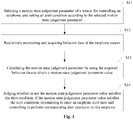
- Fig. 1 is a flow diagram of an earphone control method in an embodiment of the present disclosure. Referring to Fig. 1 , the method comprises Step S11 to Step S14:
- Steps S11 to S 14 can be carried out in the same device such as a smart earphone, or carried out in a smart watch or a smart bracelet which controls the earphone to perform the alert operation.
- Steps S11 to S 14 can also be carried out in different devices.
- Steps S11 to S13 are carried out in a smart watch, which transfers the obtained motion state judgement parameter value to the earphone, so that the earphone performs Step S14.
- the manner specifically adopted may be adjusted based on the actual scene, and is not strictly limited herein.
- the corresponding alert operation in Step S14 includes one or more of the following alert operations:
- the method as illustrated in Fig. 1 real-timely monitors and acquires behavior data of the earphone wearer, calculates according to those behavior data to obtain a motion state judgement parameter value, compares the motion state judgement parameter value with an alert condition, and if the motion state judgement parameter value satisfies the alert condition, determines to enter an earphone alert state, and controls to perform corresponding alert operation on the earphone, so as to improve the earphone wearer's ability to identify the danger alert information in the environment on specific occasions (e.g., occasions such as running and violent motion which are not sensitive to dangers), and prevent the occurrence of dangers.
- specific occasions e.g., occasions such as running and violent motion which are not sensitive to dangers
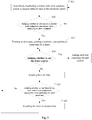
- Fig. 2 is a flow diagram of an earphone control method in another embodiment of the present disclosure.
- an earphone control method in this embodiment comprises Step S21 to Step S26:
- the real-timely monitoring and acquiring behavior data of the earphone wearer may be implemented in two manners.
- the first manner is to real-timely monitor and acquire tri-axial acceleration data of motion behaviors of the earphone wearer through a tri-axial acceleration sensor.
- the second manner is to real-timely monitor and acquire displacement data of the earphone wearer through a Global Positioning System (GPS) positioner.
- GPS Global Positioning System
- a tri-axial acceleration sensor is disposed on the earphone to acquire the acceleration data by the tri-axial acceleration sensor.
- the acceleration sensor is disposed at a position on the earphone contacting the user's head, such as the position of a speaker of an earphone or the position of an earmuff of a headphone, but not limited thereto.
- the tri-axial acceleration sensor may be disposed on other parts of the wearer's body, such as in the smart watch, or on the wearer's wrist, which is not limited.
- the motion state judgement parameter value is calculated according to the tri-axial acceleration data acquired in Step S21; and next, the motion state judgement parameter value is compared with the alert condition to judge whether or not there is a motion state judgement parameter value satisfying an alert condition.
- the motion state judgement parameters include one or more of step speed, step frequency, step length and signal energy.
- An alert threshold is set for each selected motion state judgement parameter.
- the generally principle of alert condition setting is setting the alert condition as that the motion state judgement parameter value is larger than the alert threshold.
- the method may calculate a step number of the wearer by using the tri-axial acceleration data acquired in Step S21, or X axis and Y axis acceleration data in the tri-axial acceleration data, calculate an average walking cycle of the wearer according to the step number and a signal sampling time duration, and calculate a first step frequency value according to the average walking cycle; obtain a second step frequency value by calculating the step number within a selected time duration by using the acquired tri-axial acceleration data or the X axis and Y axis acceleration data in the tri-axial acceleration data; and next, compare the first step frequency value and the second step frequency value, and take a smaller one of the first step frequency value and the second step frequency value as a step frequency motion state judgement parameter value.
- the calculating a step number of the wearer by using the X axis and Y axis acceleration data in the tri-axial acceleration data, calculating an average walking cycle of the wearer according to the step number and a signal sampling time duration, and calculating a first step frequency value according to the average walking cycle comprises:
- the calculating the second step frequency value by calculating the step number within a selected time duration by using the X axis and Y axis acceleration data in the tri-axial acceleration data comprises:
- Two walking frequency values (i.e., the first step frequency value and the second step frequency value) are obtained by the above two methods. Next, the two walking frequency values are compared with each other, and the smaller one is selected as the step frequency motion state judgement parameter value. That is, this embodiment takes the lower limit to ensure the accuracy of the step frequency value.
- the calculation of the step number according to the acquired tri-axial acceleration data is the prior art, and any feasible technical means in the prior art may be adopted, which is omitted in this embodiment.
- this embodiment makes an optimization.
- the X axis and Y axis acceleration data in the tri-axial acceleration data are preferably used to calculate the step number.
- the step number even can be calculated by using the single-axial acceleration data rather than the tri-axial acceleration data, because by analyses the inventor finds that different from the situation that a wrist motion reflects the human body's motion state, the human body is usually in a violent motion state when the head motion is violent, and the component energy of a stride of the head motion is obviously less than that of a step.
- the required step counting effect can be achieved in this embodiment just by using the modulus of the signals of the X axis and the Y axis in the tri-axis acceleration signals as the input of the step counting module, and the Z-axis signal, which has a higher stride frequency component, is no longer used, so as to reduce the computation burden and improve the processing speed.
- the method after obtaining the step frequency motion state judgement parameter value, compares the step frequency motion state judgement parameter value with the alert condition, and judges whether or not there is a motion state judgement parameter value satisfying the alert condition.
- the processing logic of this embodiment is determining to enter the alert state when the action state of the earphone wearer presents some features related to high-speed walking or violent motion.
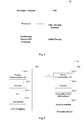
- Fig. 3 is a schematic diagram of a change process of an alert state in an embodiment of the present disclosure.
- the change of the alert state includes entering alert 31, keeping alert 32 and exiting alert 33.
- the alert condition varies with the selected motion state judgement parameter.
- a single judgement logic may be set by using any one of the step speed, the step frequency, the step length and the signal energy. If the step frequency judgement is adopted, it is determined to enter alert when the step frequency motion state judgement parameter value is higher than a preset frequency threshold (e.g., an average step frequency 2Hz of natural walking); if the step speed judgement is adopted, it is determined to enter alert when the step speed motion state judgement parameter value is higher than a preset step speed threshold (e.g., an average step speed 5Km/h of natural walking); and if the signal energy judgement is adopted, it is determined to enter alert when the signal energy is higher than a preset energy threshold (e.g., an average signal energy of natural walking; for instance, with regard to an acceleration sensor, when 0 dB is marked as the square of the gravity acceleration, the average signal energy of the acceleration sensor during natural walking is -28 dB).
- a maker "Enter Alert" e.g., an average step frequency 2
- Step S23 If there is a motion state judgement parameter value satisfying the alert condition, Step S23 will be performed.
- the earphone in Fig. 3 enters the alert state at the moment of 10s. But in practical application, the judgement of needing to enter the alert state may be made before the moment of 10s, but certain response time may be required from making a judgement to the successful control of the earphone to execute an alert. It should be appreciated that the length of the response time is not limited to 10s herein, and it can be reduced as far as possible by adjusting the performance of the whole system.
- Step S24 the judging whether or not the timer expires specifically comprises: comparing the current alert time length obtained in Step S23 with a preset time threshold; if the current alert time length is larger than or equal to the time threshold, determining to exit the earphone alert state and cancelling corresponding alert operation; and if the current alert time length is less than the time threshold, keeping the alert state and performing Step S25.
- the function of the timer is to balance the normal use of the earphone and the alert execution. If the marker "Enter Alert” does not occur within a continuous period of time, it means that the wearer is in a relatively safe environment during the period of time, and thus the alert may be exited temporarily and the normal use of the earphone can be recovered.
- Step S25 if it is determined that there is a new motion state judgement parameter value satisfying the alert condition, it means that at least one marker "Enter Alert” occurs within a continuous period of time, and the wearer is still in a relatively dangerous environment, so the method recounts time from a current alert time point; or otherwise, returns to Step S24 to compare the current alert time length with the preset time threshold.
- the change process of the alert state is: entering alert if there is a motion state judgement parameter value satisfying the alert condition; keeping the alert state if at least one marker "Enter Alert” occurs within a continuous period of time; and exiting the alert if the marker "Enter Alert” does not occur within a continuous period of time.
- emphases are laid on the alert condition classification and the judgement process for each level. Please refer to other embodiments of the present disclosure for other contents.
- the danger level varies with the motion state, and thus it may be considered to set different levels for the alert conditions according to the motion states of the earphone wearer, so as to further optimize the user's usage experience.
- the method may set a plurality of different alert thresholds for each of the motion state judgement parameters, and set alert conditions of different levels according to the different alert thresholds. For example, a first-level alert threshold and a second-level alert threshold are set for the motion state judgement parameters, the alert condition includes a first-level alert condition and a second-level alert condition, a motion state parameter value in the first-level alert condition is set to be larger than the first-level alert threshold and less than the second-level alert threshold, and a motion state parameter value in the second-level alert condition is set to be larger than the second-level alert threshold. If the motion state judgement parameter value satisfies the alert condition, the method determines to enter the earphone alert state and controls to perform corresponding alert operation on the earphone.
- the signal energy and the step frequency are both obviously higher than those in the walking state.
- two motion state judgement parameters i.e., the step frequency and the signal energy, are used to distinguish the running state from the walking state, and alert conditions of corresponding levels are set respectively, so that the judgement of the alert state is more elaborate and accurate.
- running is set as the second-level alert
- fast walking is set as the first-level alert.
- the step frequency judgement it is determined to enter the first-level alert when the step frequency of the wearer is higher than a walking frequency threshold and lower than a running frequency threshold
- it is determined to enter the second-level alert when the step frequency of the wearer is higher than the running frequency threshold.
- the alert operation may also be adaptive to the alert level.
- the gain of Talk Through can be adjusted continuously and smoothly varied with the entered alert level:
- the earphone control method in this embodiment is more elaborate and accurate, thereby improving the user's usage experience.
- This embodiment is described through a solution which makes a joint judgement by using a plurality of motion state judgement parameters and a plurality of levels of alert thresholds. Please refer to other embodiments of the present disclosure for other contents.
- the joint judgement can be made by using two or more motion state judgement parameters simultaneously, and two or more levels of alert thresholds are set for each of the motion state judgement parameters.
- Fig. 4 is a principle diagram of a joint judgement that is made by selecting a step frequency as a first motion state judgement parameter and signal energy as a second motion state judgement parameter in another embodiment of the present disclosure.
- a first-level alert threshold and a second-level alert threshold are set for a step frequency motion state judgement parameter and a signal energy motion state judgement parameter respectively.
- the signal energy is equal to the quadratic sum of a signal.
- x(t) is the X-axial acceleration signal at the moment t
- y(t) is the Y-axial acceleration signal at the moment t.
- the first alert condition is set as that the step frequency motion state judgement parameter value is larger than the step frequency second-level alert threshold, and the signal energy motion state judgement parameter value is larger than the signal energy first-level alert threshold; and the second alert condition is set as that the step frequency motion state judgement parameter value is larger than the step frequency first-level alert threshold, and the signal energy motion state judgement parameter value is larger than the signal energy second-level alert threshold; wherein the second-level alert threshold of the step frequency motion state judgement parameter is larger than the first-level alert threshold of the step frequency motion state judgement parameter, and the second-level alert threshold of the signal energy motion state judgement parameter is larger than the first-level alert threshold of the signal energy motion state judgement parameter.
- the condition for judging whether or not to enter the alert state is: if the step frequency motion state judgement parameter value and the signal energy motion state judgement parameter value satisfy the first alert condition or the second alert condition, determining to enter the earphone alert state and controlling to perform corresponding alert operation on the earphone.
- the first alert condition is that the step frequency motion state judgement parameter value is higher than the step frequency second-level alert threshold F_th2, and the signal energy motion state judgement parameter value is higher than the signal energy first-level alert threshold P_th1;
- the second alert condition is that the step frequency motion state judgement parameter value is higher than the step frequency first-level alert threshold F_th1, and the signal energy motion state judgement parameter value is higher than the signal energy second-level alert threshold P_th2; and if either of the two alert conditions is satisfied, it is determined to enter the earphone alert state; that is, if the current values of the two motion state judgement parameters, i.e., the step frequency of the earphone wearer and the signal energy, fall within the black shadow area denoted as 41 in Fig. 4 , it is determined to enter the earphone alert state.
- the signal energy thresholds P_th1 and P_th2, and the frequency thresholds F_th1 and F_th2 are all empirical values and can be obtained statistically.
- the joint judgement also improves the accuracy of the earphone control method in this embodiment, and when the signal energy and the step frequency parameter values exceed their respective alert thresholds, a detection can be made in time and the alert state can be switched into.
- Experimental results show that the false alarm and the miss alarm are both very small (the miss alarm is less than 10%), and no false detection or missed detection will occur in the regions where the motion speed of the wearer is larger than 6 km/h and less than 3 km/h.
- Fig. 4 just illustrates an example of the joint judgement logic, and the joint judgement logic is not limited thereto.
- a signal energy third-level alert threshold P_th3 and a frequency third-level alert threshold F_th3 may be set, and an alert state of adaptive level is determined with reference to the level judgement process introduced in Embodiment 3.
- the joint judgement using the motion state judgement parameters is also not limited to the combination of the step frequency and the signal energy, and a joint judgement using other motion state judgement parameters may also be made, which can be specifically selected upon demand in practical application, which will not be in detail described
- Fig. 5 is a structural block diagram of an earphone in another embodiment of the present disclosure.
- the earphone 50 is an ANC earphone.
- the earphone 50 comprises an acceleration sensor or a Global Positioning System (GPS) positioner disposed at a position on the earphone contacting the wearer's head, an alert judgement unit connected to the acceleration sensor or GPS positioner, and an alert execution unit connected to the alert judgement unit.
- GPS Global Positioning System
- the acceleration sensor or GPS positioner real-timely monitors and acquires behavior data of the earphone wearer; the alert judgement unit calculates a selected motion state judgement parameter by using the behavior data acquired by the acceleration sensor to obtain a motion state judgement parameter value, judges whether or not the motion state judgement parameter value satisfies a preset alert condition, and outputs a judgement result to the alert execution unit; and the alert execution unit determines to enter an earphone alert state and controls to perform corresponding alert operation on the earphone according to the judgement result, when the motion state judgement parameter value satisfies the alert condition.
- Fig. 5 illustrates several alert operations which can be performed: for example, lowering the noise cancellation level of ANC; or adjusting the gain of Talk Through, such as increasing the gain from 0 (dB) (i.e., activating Talk Through); or controlling the audio play function in the earphone, e.g., decreasing the volume of the played audio; or controlling the reminder function in the earphone to output reminder information to the wearer, etc.
- those alert operations herein may be in the relationship of logic AND, i.e., they can be performed simultaneously if there is no confliction, so as to enhance the user's ability to sense dangers and improve the security of earphone wearing.
- FIG. 6 is a structural block diagram of an earphone control system in another embodiment of the present disclosure.
- an earphone control system 60 comprises an earphone 601 and a wearable device 602 wirelessly connected to the earphone.
- the wearable device 602 is provided with an acceleration sensor or GPS positioner 6023.
- the wearable device 602 may be a smart watch, in which the acceleration sensor 6023 is disposed, and which is worn at the user's wrist.
- the wearable device 602 further comprises a processor 6022 connected to the acceleration sensor or GPS positioner 6023, and a wireless communication unit 6021 connected to the processor 6022; the acceleration sensor or GPS positioner 6023 real-timely monitors and acquires behavior data of the earphone wearer, and outputs the behavior data to the processor 6022; the processor 6022 calculates a selected motion state judgement parameter by using the acquired behavior data to obtain a motion state judgement parameter value, judges whether or not the motion state judgement parameter value satisfies a preset alert condition, and when the motion state judgement parameter value satisfies the alert condition, determines to enter an earphone alert state, and sends an instruction of performing corresponding alert operation to the earphone 601 while outputting reminder information to the earphone wearer; and the earphone 601 receives the instruction of performing corresponding alert operation, and performs corresponding alert operation according to the instruction.
- the acceleration sensor or GPS positioner 6023 real-timely monitors and acquires behavior data of the earphone wearer, and outputs the
- the earphone 601 is an Active Noise Cancellation ANC earphone, which is provided with a wireless communication unit 6011, an ANC function 6013 and a Talk Through function 6014, wherein the wireless communication unit 6011 is connected to the wireless communication unit 6021 in the wearable device 602 to perform wireless data communications.
- the working process of the earphone control system 60 is that: if the smart watch determines that the current motion state judgement parameter value of the earphone wearer satisfies the alert condition according to the behavior data acquired by the tri-axial acceleration sensor or GPS positioner 6023, and after enters the earphone alert state, the smart watch sends a control instruction to the earphone 601 through the wireless communication unit 6021, and simultaneously controls a reminder function 6024 in the smart watch to work, so as to output reminder information to the wearer of the smart watch. For example, reminder information indicating that the earphone enters the alert state may be output onto a user interface of the smart watch, or reminder information may be output to the wearer of the smart watch by intensifying the vibration alert or ring alert of the smart watch. Thus, by improving the alert ability of the wearer of the smart watch adaptive to the earphone, the occurrence of danger is reduced.
- the processor 6022 of the earphone After the earphone 601 wirelessly communicated with the smart watch receives the control instruction from the smart watch, the processor 6022 of the earphone lowers the noise cancellation level of the ANC function 6013 in the earphone 601, and/or increases the gain of the Talk Though function 6014 of the earphone 601, and/or decreases the volume of the audio played in the earphone.
- the processor 6022 is specifically configured to select one or more of step speed, step frequency, step length and signal energy of the wearer as the motion state judgement parameters, set an alert threshold for each of the selected motion state judgement parameters, and set the alert condition as that the motion state judgement parameter value is larger than the alert threshold.
- the processor 6022 is further configured to set a plurality of different alert thresholds for each motion state judgement parameter, and set alert conditions of different levels according to the different alert thresholds, wherein, a first-level alert threshold and a second-level alert threshold are set for the motion state judgement parameter, the alert condition includes a first-level alert condition and a second-level alert condition, a motion state parameter value in the first-level alert condition is set to be larger than the first-level alert threshold and less than the second-level alert threshold, and a motion state parameter value in the second-level alert condition is set to be larger than the second-level alert threshold; the processor 6022, if determining that the motion state judgement parameter value satisfies the first-level alert condition, determines to enter the first-level alert state, and sends an instruction of performing corresponding alert operation to the earphone 601 while outputting reminder information to the earphone wearer; and the processor 6022, if determining that the motion state judgement parameter value satisfies the second-level alert condition, determines to enter the second
- the processor 6022 is specifically configured to set a first-level alert threshold and a second-level alert threshold for a first motion state judgement parameter and a second motion state judgement parameter respectively; set a first alert condition as that a first motion state judgement parameter value is larger than a second-level alert threshold, and a second motion state judgement parameter value is larger than the first-level alert threshold; and set a second alert condition as that the first motion state judgement parameter value is larger than the first-level alert threshold and the second motion state judgement parameter value is larger than the second-level alert threshold; wherein the second-level alert threshold of the first motion state judgement parameter is larger than the first-level alert threshold of the first motion state judgement parameter, and the second-level alert threshold of the second motion state judgement parameter is larger than the first-level alert threshold of the second motion state judgement parameter; and the processor 6022, if determining that the first motion state judgement parameter value and the second motion state judgement parameter value satisfy the first alert condition or the second alert condition, determines to enter the earphone alert state, and sends an instruction of performing corresponding
- the earphone control system in this embodiment is corresponding to the earphone control method in the aforementioned embodiments.
- the descriptions of related portions in the aforementioned embodiments for the detailed working process of the earphone control system in this embodiment, which will not be in detail described.
- the earphone control method in the embodiment of the present disclosure selects a motion state judgement parameter for controlling an earphone wearer, and sets an alert condition according to the selected motion state judgement parameter; and determines to enter a earphone alert state and controls to perform corresponding alert operation on the earphone if the wearer determines that the current motion state judgement parameter value satisfies the alert condition.
- the earphone is controlled according to the change of the user's motion state, so that the alert operation is performed when the user is under a relatively dangerous environment, thereby improving the user's ability to identify dangers in the environment, solving the problem in the prior art that dangers may be brought to the wearer when the earphone is used, and improving the user's usage experience.
- the embodiments of the present disclosure further provide an earphone, which achieves the beneficial effect of judging whether or not to perform an alert operation according to the wearer's current motion state, and improves the security when the user wears the earphone.
- the embodiments of the present disclosure provide an earphone control system which outputs reminder information from the wearable device to the wearer to remind the user, and outputs a control instruction to the earphone so that the earphone takes corresponding alert operation, thereby greatly enhancing the user's ability to identify any danger in the environment, and preventing the occurrence of dangers.
Landscapes
- Physics & Mathematics (AREA)
- Engineering & Computer Science (AREA)
- Acoustics & Sound (AREA)
- Signal Processing (AREA)
- Multimedia (AREA)
- Business, Economics & Management (AREA)
- Emergency Management (AREA)
- General Physics & Mathematics (AREA)
- Telephone Function (AREA)
- Measurement Of The Respiration, Hearing Ability, Form, And Blood Characteristics Of Living Organisms (AREA)
- Headphones And Earphones (AREA)
- Emergency Alarm Devices (AREA)
Applications Claiming Priority (2)
| Application Number | Priority Date | Filing Date | Title |
|---|---|---|---|
| CN201511022273.7A CN105611443B (zh) | 2015-12-29 | 2015-12-29 | 一种耳机的控制方法、控制系统和耳机 |
| PCT/CN2016/090873 WO2017113768A1 (zh) | 2015-12-29 | 2016-07-21 | 一种耳机的控制方法、控制系统和耳机 |
Publications (3)
| Publication Number | Publication Date |
|---|---|
| EP3206413A1 true EP3206413A1 (de) | 2017-08-16 |
| EP3206413A4 EP3206413A4 (de) | 2017-11-15 |
| EP3206413A8 EP3206413A8 (de) | 2017-12-13 |
Family
ID=55990925
Family Applications (1)
| Application Number | Title | Priority Date | Filing Date |
|---|---|---|---|
| EP16798070.5A Ceased EP3206413A4 (de) | 2015-12-29 | 2016-07-21 | Ohrhörersteuerungsverfahren, ohrhörersteuerungssystem und ohrhörer |
Country Status (4)
| Country | Link |
|---|---|
| US (1) | US10034077B2 (de) |
| EP (1) | EP3206413A4 (de) |
| CN (1) | CN105611443B (de) |
| WO (1) | WO2017113768A1 (de) |
Cited By (2)
| Publication number | Priority date | Publication date | Assignee | Title |
|---|---|---|---|---|
| CN112351557A (zh) * | 2020-09-25 | 2021-02-09 | 深圳星标科技股份有限公司 | 目视助航设备告警方法、装置、计算机设备及其存储介质 |
| EP3672274A4 (de) * | 2018-01-17 | 2021-05-05 | Beijing Xiaoniao Tingting Technology Co., Ltd | Vorrichtung und verfahren zur adaptiven audiosteuerung auf basis von szenarioidentifizierung |
Families Citing this family (33)
| Publication number | Priority date | Publication date | Assignee | Title |
|---|---|---|---|---|
| CN105611443B (zh) * | 2015-12-29 | 2019-07-19 | 歌尔股份有限公司 | 一种耳机的控制方法、控制系统和耳机 |
| US10291975B2 (en) | 2016-09-06 | 2019-05-14 | Apple Inc. | Wireless ear buds |
| CN106254995A (zh) * | 2016-09-27 | 2016-12-21 | 乐视控股(北京)有限公司 | 一种耳机控制方法及装置 |
| CN106412788B (zh) * | 2016-10-31 | 2019-08-02 | 歌尔科技有限公司 | 一种前馈主动降噪耳机的测试方法和测试系统 |
| CN106343996A (zh) * | 2016-11-14 | 2017-01-25 | 佳禾智能科技股份有限公司 | 一种心率计步耳机及其实现方法 |
| CN107493531B (zh) * | 2017-08-04 | 2019-11-08 | 歌尔科技有限公司 | 一种头部姿态检测方法、装置和耳机 |
| CN108008151A (zh) * | 2017-11-09 | 2018-05-08 | 惠州市德赛工业研究院有限公司 | 一种基于三轴加速度传感器的运动状态识别方法及系统 |
| US10979814B2 (en) | 2018-01-17 | 2021-04-13 | Beijing Xiaoniao Tingling Technology Co., LTD | Adaptive audio control device and method based on scenario identification |
| CN110297615A (zh) * | 2018-03-22 | 2019-10-01 | 深圳富泰宏精密工业有限公司 | 便携式电子装置及音频播放方法 |
| CN109511034B (zh) * | 2018-12-13 | 2020-11-20 | 歌尔股份有限公司 | 一种耳机的佩戴检测方法、装置及耳机 |
| CN109672958A (zh) * | 2018-12-14 | 2019-04-23 | 歌尔科技有限公司 | 播放控制方法以及设备 |
| US10638210B1 (en) * | 2019-03-29 | 2020-04-28 | Sonova Ag | Accelerometer-based walking detection parameter optimization for a hearing device user |
| CN110830862A (zh) * | 2019-10-10 | 2020-02-21 | 广东思派康电子科技有限公司 | 一种自适应降噪的降噪耳机 |
| CN111491231B (zh) * | 2020-03-16 | 2021-12-31 | 深圳市多亲科技有限公司 | 一种耳机播放告警提示音的方法、装置和移动终端 |
| CN111447523B (zh) * | 2020-03-31 | 2022-02-18 | 歌尔科技有限公司 | 耳机及其降噪方法、计算机可读存储介质 |
| CN111741405B (zh) * | 2020-06-05 | 2021-12-21 | 北京搜狗智能科技有限公司 | 一种提醒方法、装置、耳机和服务器 |
| CN111698602A (zh) * | 2020-06-19 | 2020-09-22 | 青岛歌尔智能传感器有限公司 | 耳机及其耳机控制方法、控制装置和可读存储介质 |
| CN111754740A (zh) * | 2020-07-30 | 2020-10-09 | 江苏紫米电子技术有限公司 | 一种耳机提示配件、方法及耳机系统 |
| CN112188350B (zh) * | 2020-10-30 | 2025-06-13 | 深圳市中科蓝讯科技股份有限公司 | 一种耳机降噪电路和耳机设备 |
| CN112822600B (zh) * | 2021-01-27 | 2022-11-25 | 歌尔科技有限公司 | 耳机计步方法、耳机及存储介质 |
| EP4367897A1 (de) * | 2021-07-06 | 2024-05-15 | Starkey Laboratories, Inc. | Kontextbasierte benutzerverfügbarkeit für benachrichtigungen |
| CN114363299B (zh) * | 2021-12-11 | 2024-10-18 | 新线科技有限公司 | 网络会议控制方法、装置、电子设备及存储介质 |
| CN114267152B (zh) * | 2021-12-17 | 2024-11-05 | 歌尔科技有限公司 | 防摔提醒方法、设备及计算机可读存储介质 |
| CN116416769A (zh) * | 2021-12-31 | 2023-07-11 | 北京荣耀终端有限公司 | 一种运动提醒方法及电子设备 |
| WO2023159582A1 (zh) * | 2022-02-28 | 2023-08-31 | 华为技术有限公司 | 耳机控制方法、耳机、装置及存储介质 |
| CN115243140A (zh) * | 2022-06-29 | 2022-10-25 | 歌尔股份有限公司 | 耳机的控制方法、装置、耳机及介质 |
| CN115756379A (zh) * | 2022-11-22 | 2023-03-07 | 西安Tcl软件开发有限公司 | 耳机的控制方法、耳机及音频通讯系统 |
| CN118175475B (zh) * | 2024-02-26 | 2024-11-01 | 深圳市华玟科技有限公司 | 一种用于智能蓝牙耳机的人机交互系统 |
| US12613674B2 (en) | 2024-04-24 | 2026-04-28 | Motorola Mobility Llc | Ending audio playback based on a trigger word |
| US12596524B2 (en) * | 2024-04-24 | 2026-04-07 | Motorola Mobility Llc | Ending active noise cancellation based on a detected audio source |
| US12614551B2 (en) | 2024-04-24 | 2026-04-28 | Motorola Mobility Llc | Presenting relevant audio data |
| CN118433605B (zh) * | 2024-07-05 | 2024-10-11 | 歌尔股份有限公司 | 耳机设备的控制方法、充电盒、存储介质及计算机产品 |
| WO2026044484A1 (zh) * | 2024-08-27 | 2026-03-05 | 深圳市韶音科技有限公司 | 耳机的佩戴位置检测方法、耳机、以及电子设备 |
Family Cites Families (41)
| Publication number | Priority date | Publication date | Assignee | Title |
|---|---|---|---|---|
| US5388992A (en) | 1991-06-19 | 1995-02-14 | Audiological Engineering Corporation | Method and apparatus for tactile transduction of acoustic signals from television receivers |
| US5610848A (en) | 1994-05-13 | 1997-03-11 | Hughes Aircraft Company | Robust resonance reduction using staggered posicast filters |
| US20030040361A1 (en) | 1994-09-21 | 2003-02-27 | Craig Thorner | Method and apparatus for generating tactile feedback via relatively low-burden and/or zero burden telemetry |
| JP3809880B2 (ja) | 1997-02-27 | 2006-08-16 | 株式会社ミツトヨ | 振動制御系における伝達関数の短時間内取得方法および装置 |
| JP4590081B2 (ja) | 2000-09-26 | 2010-12-01 | オリンパス株式会社 | アクチュエータ駆動装置 |
| US7346172B1 (en) * | 2001-03-28 | 2008-03-18 | The United States Of America As Represented By The United States National Aeronautics And Space Administration | Auditory alert systems with enhanced detectability |
| JP2002292337A (ja) | 2001-03-30 | 2002-10-08 | Ykk Corp | パーツフィーダの制御方法と装置 |
| US8672852B2 (en) * | 2002-12-13 | 2014-03-18 | Intercure Ltd. | Apparatus and method for beneficial modification of biorhythmic activity |
| US6850151B1 (en) * | 2003-02-26 | 2005-02-01 | Ricky R. Calhoun | Devices for locating/keeping track of objects, animals or persons |
| KR101298781B1 (ko) | 2004-11-30 | 2013-08-22 | 임머숀 코퍼레이션 | 진동촉각 햅틱 효과를 발생시키는 공진 디바이스를 제어하기 위한 시스템 및 방법 |
| JP4832808B2 (ja) | 2004-12-28 | 2011-12-07 | 東海ゴム工業株式会社 | 能動型防振装置 |
| US9764357B2 (en) | 2005-06-27 | 2017-09-19 | General Vibration Corporation | Synchronized array of vibration actuators in an integrated module |
| GB2434017A (en) * | 2005-09-09 | 2007-07-11 | Rotrack Ltd | Visual scan training and monitoring apparatus |
| US8270629B2 (en) * | 2005-10-24 | 2012-09-18 | Broadcom Corporation | System and method allowing for safe use of a headset |
| JP5889519B2 (ja) | 2010-06-30 | 2016-03-22 | 京セラ株式会社 | 触感呈示装置および触感呈示装置の制御方法 |
| US8686839B2 (en) | 2011-11-01 | 2014-04-01 | Texas Instruments Incorporated | Closed-loop haptic or other tactile feedback system for mobile devices, touch screen devices, and other devices |
| US9183822B2 (en) * | 2012-05-23 | 2015-11-10 | Google Inc. | Music selection and adaptation for exercising |
| US20140028547A1 (en) | 2012-07-26 | 2014-01-30 | Stmicroelectronics, Inc. | Simple user interface device and chipset implementation combination for consumer interaction with any screen based interface |
| US9274602B2 (en) | 2012-10-30 | 2016-03-01 | Texas Instruments Incorporated | Haptic actuator controller |
| CN102973275B (zh) * | 2012-11-14 | 2015-05-27 | 无锡智感星际科技有限公司 | 一种人体运动状态的采集系统及采集方法 |
| WO2014104452A1 (ko) | 2012-12-31 | 2014-07-03 | 엘지전자 주식회사 | 진동 발생 장치 및 방법 |
| US9098991B2 (en) * | 2013-01-15 | 2015-08-04 | Fitbit, Inc. | Portable monitoring devices and methods of operating the same |
| CN103196460B (zh) * | 2013-03-18 | 2015-12-02 | 北京邮电大学 | 一种估计步长的方法和装置 |
| JP6032362B2 (ja) | 2013-06-26 | 2016-11-24 | 富士通株式会社 | 駆動装置、電子機器及び駆動制御プログラム |
| WO2014207855A1 (ja) | 2013-06-26 | 2014-12-31 | 富士通株式会社 | 駆動装置、電子機器及び駆動制御プログラム |
| US10425717B2 (en) * | 2014-02-06 | 2019-09-24 | Sr Homedics, Llc | Awareness intelligence headphone |
| JP2015173369A (ja) * | 2014-03-12 | 2015-10-01 | ソニー株式会社 | 信号処理装置、信号処理方法、およびプログラム |
| US20160100244A1 (en) * | 2014-05-16 | 2016-04-07 | T+Ink, Inc. | Devices and techniques relating to touch sensitive control device |
| US10390755B2 (en) | 2014-07-17 | 2019-08-27 | Elwha Llc | Monitoring body movement or condition according to motion regimen with conformal electronics |
| CN204131682U (zh) * | 2014-08-20 | 2015-01-28 | 中兴通讯股份有限公司 | 具有语音提醒功能的耳机及终端 |
| US9648412B2 (en) | 2015-02-06 | 2017-05-09 | Skullcandy, Inc. | Speakers and headphones related to vibrations in an audio system, and methods for operating same |
| CN204377107U (zh) * | 2015-02-09 | 2015-06-03 | 东莞市瀛通电线有限公司 | 一种根据运动状态自动调节音量的运动耳机 |
| CN104771171B (zh) * | 2015-02-10 | 2019-02-05 | 惠州Tcl移动通信有限公司 | 一种运动过程中协调呼吸和运动状态的方法及系统 |
| US9779554B2 (en) | 2015-04-10 | 2017-10-03 | Sony Interactive Entertainment Inc. | Filtering and parental control methods for restricting visual activity on a head mounted display |
| CN104954566A (zh) * | 2015-06-12 | 2015-09-30 | 上海卓易科技股份有限公司 | 自动切换语音方法及系统 |
| CN204760039U (zh) | 2015-07-24 | 2015-11-11 | 广东科技学院 | 一种基于忆阻器的三维结构存储器 |
| US9918154B2 (en) | 2015-07-30 | 2018-03-13 | Skullcandy, Inc. | Tactile vibration drivers for use in audio systems, and methods for operating same |
| US9769557B2 (en) * | 2015-12-24 | 2017-09-19 | Intel Corporation | Proximity sensing headphones |
| CN105611443B (zh) * | 2015-12-29 | 2019-07-19 | 歌尔股份有限公司 | 一种耳机的控制方法、控制系统和耳机 |
| CN205581671U (zh) | 2015-12-31 | 2016-09-14 | 歌尔股份有限公司 | 一种智能终端的触觉振动控制系统 |
| CN205485661U (zh) | 2015-12-31 | 2016-08-17 | 歌尔声学股份有限公司 | 一种智能终端的触觉振动控制系统 |
-
2015
- 2015-12-29 CN CN201511022273.7A patent/CN105611443B/zh active Active
-
2016
- 2016-07-21 US US15/312,435 patent/US10034077B2/en active Active
- 2016-07-21 EP EP16798070.5A patent/EP3206413A4/de not_active Ceased
- 2016-07-21 WO PCT/CN2016/090873 patent/WO2017113768A1/zh not_active Ceased
Cited By (3)
| Publication number | Priority date | Publication date | Assignee | Title |
|---|---|---|---|---|
| EP3672274A4 (de) * | 2018-01-17 | 2021-05-05 | Beijing Xiaoniao Tingting Technology Co., Ltd | Vorrichtung und verfahren zur adaptiven audiosteuerung auf basis von szenarioidentifizierung |
| CN112351557A (zh) * | 2020-09-25 | 2021-02-09 | 深圳星标科技股份有限公司 | 目视助航设备告警方法、装置、计算机设备及其存储介质 |
| CN112351557B (zh) * | 2020-09-25 | 2023-05-30 | 深圳星标科技股份有限公司 | 目视助航设备告警方法、装置、计算机设备及其存储介质 |
Also Published As
| Publication number | Publication date |
|---|---|
| US20180091886A1 (en) | 2018-03-29 |
| CN105611443A (zh) | 2016-05-25 |
| WO2017113768A1 (zh) | 2017-07-06 |
| EP3206413A4 (de) | 2017-11-15 |
| US10034077B2 (en) | 2018-07-24 |
| CN105611443B (zh) | 2019-07-19 |
| EP3206413A8 (de) | 2017-12-13 |
Similar Documents
| Publication | Publication Date | Title |
|---|---|---|
| US10034077B2 (en) | Earphone control method, earphone control system and earphone | |
| Sharma et al. | IoT based car accident detection and notification algorithm for general road accidents. | |
| CN111586519B (zh) | 一种无线耳机丢失报警方法、装置、无线耳机及存储介质 | |
| US20200111345A1 (en) | User behavior monitoring method and wearable device | |
| EP3329844A1 (de) | Sensorgestützter mundschutz mit konfiguration zur ermöglichung der überwachung von kopfaufpralldaten über mehrere beschleunigungsmesser sowie datenverarbeitungsverfahren mit konfiguration zur analyse von daten aus mehreren von einem sensorgestützten mundschutz getragenen beschleunigungsmessern | |
| CN105139584A (zh) | 一种疲劳驾驶处理方法及装置 | |
| US20180154242A1 (en) | Methods, devices and technology frameworks configured to enable real-time monitoring of head impact data for participants in contact sports | |
| CN109254754B (zh) | 一种提示方法、装置、耳机及计算机可读存储介质 | |
| CN109559487A (zh) | 车辆状态提示系统、车辆、终端装置以及车辆状态提示方法 | |
| CN110677807B (zh) | Tws双无线耳机搜寻方法、系统及tws双无线耳机 | |
| CN112822600A (zh) | 耳机计步方法、耳机及存储介质 | |
| CN110958678A (zh) | 一种应用于移动设备的定位模块控制方法及装置 | |
| CN112438721A (zh) | 状态判断方法、电子设备以及计算机存储介质 | |
| JP6442336B2 (ja) | 異常検知端末及びプログラム | |
| US20220019924A1 (en) | Methods and systems of accessing sensor-based driving data | |
| CN115294724B (zh) | 儿童防走丢监测示警方法、装置、设备以及可读存储介质 | |
| JP6491504B2 (ja) | 転倒検知端末およびプログラム | |
| JP6560512B2 (ja) | 異常検出端末及びプログラム | |
| KR101767316B1 (ko) | 졸음 경고 방법 및 장치 | |
| JP6456202B2 (ja) | 転倒検知端末およびプログラム | |
| CN116935874A (zh) | 头盔降噪方法、装置、头盔及计算机可读存储介质 | |
| JP6461658B2 (ja) | 転倒検知端末およびプログラム | |
| JP2016177397A (ja) | 転倒検知端末およびプログラム | |
| JP6490461B2 (ja) | 異常検出端末及びプログラム | |
| CN120708362A (zh) | 摔倒监测方法、装置、存储介质及电子设备 |
Legal Events
| Date | Code | Title | Description |
|---|---|---|---|
| STAA | Information on the status of an ep patent application or granted ep patent |
Free format text: STATUS: UNKNOWN |
|
| STAA | Information on the status of an ep patent application or granted ep patent |
Free format text: STATUS: THE INTERNATIONAL PUBLICATION HAS BEEN MADE |
|
| PUAI | Public reference made under article 153(3) epc to a published international application that has entered the european phase |
Free format text: ORIGINAL CODE: 0009012 |
|
| STAA | Information on the status of an ep patent application or granted ep patent |
Free format text: STATUS: REQUEST FOR EXAMINATION WAS MADE |
|
| 17P | Request for examination filed |
Effective date: 20161129 |
|
| AK | Designated contracting states |
Kind code of ref document: A1 Designated state(s): AL AT BE BG CH CY CZ DE DK EE ES FI FR GB GR HR HU IE IS IT LI LT LU LV MC MK MT NL NO PL PT RO RS SE SI SK SM TR |
|
| AX | Request for extension of the european patent |
Extension state: BA ME |
|
| RIC1 | Information provided on ipc code assigned before grant |
Ipc: H04R 1/10 20060101AFI20170811BHEP |
|
| RIN1 | Information on inventor provided before grant (corrected) |
Inventor name: LI, BO Inventor name: LIU, SONG Inventor name: LOU, SHASHA Inventor name: QI, HUI |
|
| A4 | Supplementary search report drawn up and despatched |
Effective date: 20171016 |
|
| RIC1 | Information provided on ipc code assigned before grant |
Ipc: H04R 3/00 20060101ALI20171011BHEP Ipc: H04R 1/10 20060101AFI20171011BHEP |
|
| STAA | Information on the status of an ep patent application or granted ep patent |
Free format text: STATUS: EXAMINATION IS IN PROGRESS |
|
| 17Q | First examination report despatched |
Effective date: 20180111 |
|
| DAV | Request for validation of the european patent (deleted) | ||
| DAX | Request for extension of the european patent (deleted) | ||
| REG | Reference to a national code |
Ref country code: DE Ref legal event code: R003 |
|
| STAA | Information on the status of an ep patent application or granted ep patent |
Free format text: STATUS: THE APPLICATION HAS BEEN REFUSED |
|
| 18R | Application refused |
Effective date: 20191024 |