EP3206473B1 - System zur dormanzkontrolle bei pflanzen - Google Patents
System zur dormanzkontrolle bei pflanzen Download PDFInfo
- Publication number
- EP3206473B1 EP3206473B1 EP15850209.6A EP15850209A EP3206473B1 EP 3206473 B1 EP3206473 B1 EP 3206473B1 EP 15850209 A EP15850209 A EP 15850209A EP 3206473 B1 EP3206473 B1 EP 3206473B1
- Authority
- EP
- European Patent Office
- Prior art keywords
- plant
- control system
- support cable
- dormancy
- shade
- Prior art date
- Legal status (The legal status is an assumption and is not a legal conclusion. Google has not performed a legal analysis and makes no representation as to the accuracy of the status listed.)
- Active
Links
Images



Classifications
-
- A—HUMAN NECESSITIES
- A01—AGRICULTURE; FORESTRY; ANIMAL HUSBANDRY; HUNTING; TRAPPING; FISHING
- A01G—HORTICULTURE; CULTIVATION OF VEGETABLES, FLOWERS, RICE, FRUIT, VINES, HOPS OR SEAWEED; FORESTRY; WATERING
- A01G17/00—Cultivation of hops, vines, fruit trees, or like trees
- A01G17/005—Cultivation methods
-
- A—HUMAN NECESSITIES
- A01—AGRICULTURE; FORESTRY; ANIMAL HUSBANDRY; HUNTING; TRAPPING; FISHING
- A01G—HORTICULTURE; CULTIVATION OF VEGETABLES, FLOWERS, RICE, FRUIT, VINES, HOPS OR SEAWEED; FORESTRY; WATERING
- A01G13/00—Protection of plants
-
- A—HUMAN NECESSITIES
- A01—AGRICULTURE; FORESTRY; ANIMAL HUSBANDRY; HUNTING; TRAPPING; FISHING
- A01G—HORTICULTURE; CULTIVATION OF VEGETABLES, FLOWERS, RICE, FRUIT, VINES, HOPS OR SEAWEED; FORESTRY; WATERING
- A01G13/00—Protection of plants
- A01G13/20—Protective coverings for plants
- A01G13/21—Protective coverings for plants providing overhead protection, i.e. canopies
-
- A—HUMAN NECESSITIES
- A01—AGRICULTURE; FORESTRY; ANIMAL HUSBANDRY; HUNTING; TRAPPING; FISHING
- A01G—HORTICULTURE; CULTIVATION OF VEGETABLES, FLOWERS, RICE, FRUIT, VINES, HOPS OR SEAWEED; FORESTRY; WATERING
- A01G17/00—Cultivation of hops, vines, fruit trees, or like trees
-
- A—HUMAN NECESSITIES
- A01—AGRICULTURE; FORESTRY; ANIMAL HUSBANDRY; HUNTING; TRAPPING; FISHING
- A01G—HORTICULTURE; CULTIVATION OF VEGETABLES, FLOWERS, RICE, FRUIT, VINES, HOPS OR SEAWEED; FORESTRY; WATERING
- A01G22/00—Cultivation of specific crops or plants not otherwise provided for
-
- A—HUMAN NECESSITIES
- A01—AGRICULTURE; FORESTRY; ANIMAL HUSBANDRY; HUNTING; TRAPPING; FISHING
- A01G—HORTICULTURE; CULTIVATION OF VEGETABLES, FLOWERS, RICE, FRUIT, VINES, HOPS OR SEAWEED; FORESTRY; WATERING
- A01G7/00—Botany in general
-
- Y—GENERAL TAGGING OF NEW TECHNOLOGICAL DEVELOPMENTS; GENERAL TAGGING OF CROSS-SECTIONAL TECHNOLOGIES SPANNING OVER SEVERAL SECTIONS OF THE IPC; TECHNICAL SUBJECTS COVERED BY FORMER USPC CROSS-REFERENCE ART COLLECTIONS [XRACs] AND DIGESTS
- Y02—TECHNOLOGIES OR APPLICATIONS FOR MITIGATION OR ADAPTATION AGAINST CLIMATE CHANGE
- Y02A—TECHNOLOGIES FOR ADAPTATION TO CLIMATE CHANGE
- Y02A40/00—Adaptation technologies in agriculture, forestry, livestock or agroalimentary production
- Y02A40/10—Adaptation technologies in agriculture, forestry, livestock or agroalimentary production in agriculture
- Y02A40/28—Adaptation technologies in agriculture, forestry, livestock or agroalimentary production in agriculture specially adapted for farming
Definitions
- the invention relates to a dormancy control system according to claim 1.
- the invention pertains to the use of vertical shade structures according to claim 6 to control the dormancy of plants such as fruit trees, nut trees, and perennial berry bush crops, optionally coupled with orchard planting directional orientation, the use of evaporative cooling systems, and the use of various chemical and hormone based spray applications.
- Cherries in particular, present a good example of the effects of a mismatch between dormancy requirements and planting locations. Cherries grow very well in warm areas during their main growing season. But, even with low-chill cherry varieties, it is difficult and sometimes impossible in those warm areas to obtain the minimum required chill units or to have a healthy dormancy period.
- growers of fruit trees, nut trees, and perennial berries use evaporative cooling systems (including overhead water sprinklers as one example) in their orchards and fields to help keep plant bud temperatures at or below the required minimum chill temperature for the required number of hours (chill units).
- evaporative cooling systems including overhead water sprinklers as one example
- These growers also use several chemical or hormone based sprays to help induce, maintain, break, or otherwise affect plant bud dormancy.
- Some growers use both evaporative cooling and chemical/hormone sprays in their efforts to improve the quality and duration of plant bud dormancy in these warm areas.
- FR1562872A describes a windbreak that comprises two supports, immobilized with respect to the ground, between which are fixed elongated elements, such as ribbons, thongs, braids, etc.
- the elements are fixed between two auxiliary supports, parallel to the ground, which are themselves assembled to the supports.
- the elements are made of natural, synthetic or artificial materials, or a combination of these materials. When they are made of plastic material, the elements can be transparent, translucent or opaque depending on whether the items to be protected, located in the immediate vicinity of the windbreak, must be sunny or shaded.
- FIGs. 1 through 7 show the plant dormancy control system 10, according to certain preferred embodiments of the present invention.
- the plant dormancy control system is for use in a commercial planting 11 of cherry trees, which may be referred to herein simply as the "orchard.”
- the commercial planting includes a multiple of plants 12 that produce fruit 14.
- the plants 12 can be referred to simply as "cherry trees”
- the fruit 14 can be referred to simply as 'cherries
- the commercial planting of cherry trees can be referred to as a ⁇ cherry orchard.'
- the plant dormancy control system is for use in a commercial planting 11 of blueberries, which may be referred to herein simply as the "blueberry field.”
- the commercial planting includes a multiple of plants 12 that produce fruit 14.
- the plants 12 can be referred to simply as “blueberry bushes”
- the fruit 14 can be referred to simply as 'blueberries
- the commercial planting of blueberry bushes can be referred to as a 'blueberry field.'
- All of the preferred embodiments for plant dormancy control system 10 that are disclosed herein can be used alternatively with any variety of fruit tree, nut tree, or perennial berry bushes that requires dormancy, or that will tolerate extended or induced dormancy. All varieties of stone fruit varieties, pome fruit varieties, nut varieties, and many perennial berry varieties require dormancy periods and each have their own specific minimum chilling requirements. Additionally, there are no-chill ever-bearing varieties of plants that will nevertheless tolerate an induced dormant or semi-dormant period of time for the purpose of concentrating the harvest time period for those varieties.
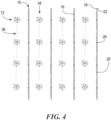
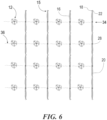
- the plant dormancy control system 10 of the present invention includes a vertical shade structure 15 which includes vertical supports 18 in the form of wood, metal, plastic, or concrete poles that support shade fabric 16, which can be deployed (shown in FIGs 1 , 5 , and 7 ) or retracted (shown in FIGs 2 , 3 , 4 , and 6 ), with the vertical shade structure 15 oriented in-line with plant rows 34 that run approximately in an East-West direction (E-W), as shown in FIGs 4 and 5 , or a vertical shade structure 15 oriented transversely across plant rows 34 that run approximately in a North-South direction (N-S), as shown in FIGs 6 and 7 .
- E-W East-West direction
- N-S North-South direction
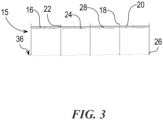
- a most preferred plant dormancy control system 10 consists of vertical shade structures 15 that are installed in a commercial planting 11 directionally oriented in-line with plant rows 34 that run approximately E-W, and includes vertical supports 18 and shade fabric 16 that is attached to an upper support cable 20 and a lower support cable 24, with upper support cable 20 attached to each vertical support 18 by upper support cable attachment 22, and lower support cable 24 attached to each vertical support 18 by lower support cable attachment 26, as shown in the perspective views of FIGs. 1 and 2 , the side view of FIG. 3 .
- shade fabric 16 When shade fabric 16 is vertically deployed, vertical shade structure 18 produces shade 32 during daylight hours by blocking direct solar radiation 42 produced by the sun 40 from reaching plants 12, as shown in FIGs 1 , 5 , 7 .
- vertical shade structures 15 are preferably placed to create a shaded area 30 during daylight hours in the form of a triangular prism that substantially encompasses plants 12 in each plant row 34, and which substantially blocks direct solar radiation 42 from reaching plants 12, as shown in FIGs 1 , 5 , and 7 .
- the triangular prism of shaded area 30 consists of a triangular shaded area with three legs (ground leg 38, vertical leg 37, and shade leg 39 ) created by vertical shade structure 18 and that extends the full length of plant row 34.
- the ground leg 38 extends from the base of the vertical support structure 18 to shade edge 32.
- the vertical leg 37 extends from the base of the vertical support structure 18 to top of shade fabric 16 where it is attached to upper support cable 20.
- the shade leg 39 extends from the top of the shade fabric 16 where it is attached to upper support cable 20 down to shade edge 32.
- the vertical shade structure 15 for the plant dormancy control system 10 also includes a shade fabric 16 that extends vertically approximately four to six meters from the ground surface 36 for plants 12 that are fruit or nut trees, or that extends vertically approximately two to three meters from the ground surface 36 for plants 12 that are perennial berry bushes like blueberries.
- the shade fabric 16 is held in a substantially vertical position by upper support cable 20 and a lower support cable 24, as shown in FIGs. 1, 2 , and 3 , and held up by vertical shade structure 15, and stretches along each plant row 34 (or transversely across all plant rows 34 ) of commercial planting 11.
- the shade fabric is made of EXTENDAY brand of nonreflective shade fabrics, as manufactured by Extenday Advanced Horticultural Fabrics, of Auckland, New Zealand.
- the shade fabric 16 serves to absorb much of or substantially all of the direct solar radiation 42 from the orchard, while reflecting much of or substantially all of the direct solar radiation 42 from the orchard.
- the shade fabric serves to absorb approximately 90% or more of the direct solar radiation from the orchard, while reflecting approximately 10% or less of the direct solar radiation from the orchard.
- the substantially low reflectivity of shade fabric is necessary in order to substantially avoid reflecting part of the blocked direct solar radiation back onto the plants 12 that are located on the sun 40 side of each vertical shade structure 15.
- the shade fabric 16 is substantially nonreflective and has a large surface area, it disperses most of the absorbed heat generated from direct solar radiation 42 during the day, and then at night rapidly radiates any residual heat vertically up out of the commercial planting 11.
- the most preferred embodiment of the plant dormancy control system 10 also includes the ability to retract shade fabric 16 to stop creating shade for dormancy control, as shown in FIGs 2 , 3 , 4 , and 6 .
- the lower support cable attachments 26 on vertical supports 18 are opened or removed, and lower support cable 24 is used to lift shade fabric 16 to approximately the same height as upper support cable 20.
- upper support cable 20, shade fabric 16, and lower support cable 24 are all temporarily bound together with shade fabric gathering tie 28 during the time that shade fabric 16 is retracted.
- the plant dormancy control system 10 has been installed in cherry orchards to test the degree of plant dormancy control that can be achieved.
- the use of vertical shade structure 15 was evaluated in terms of controlling cherry bud temperatures during the cherry tree dormancy period, with a maximum ambient temperature of 25 °C during the dormancy period, on typical sunny days. This data was collected between the hours of 10am to 4pm. The results of that experiment are set forth in Table 1 below: Table 1 Control Temp. Vert. Shade Temp. Vert. Shade + Evap. Cool.
- vertical shade structures 15 can be installed in commercial plantings 11 of plants 12 that are cherry trees to provide adequate dormancy in locations where there are not sufficient natural chilling units available.
- the plant dormancy control system is used to solve the problem presented by planting a low chill cherry variety in a warm location that does not naturally have adequate chilling units.
- vertical shade structures 15 can be installed in commercial plantings 11 of plants 12 that are low chill cherry trees to induce early dormancy in a warm location before the natural climatic conditions would have naturally induced a dormant condition in the cherry trees. Because of the low minimum chilling units required by low chill cherry varieties, inducing early dormancy of those cherry trees in a warm location using the plant dormancy control system would result in cherries being available for harvest much earlier than the same variety of low chill cherries grown in the same location under natural conditions. In this preferred embodiment, the dormancy requirements for those cherry trees would be met much earlier than under natural conditions without the use of the plant dormancy control system 10. In this preferred embodiment, the plant dormancy control system is used to advance the harvest date of cherries, while still achieving adequate dormancy and thus maintaining commercial quantities and quality for the harvested cherries.
- vertical shade structures 15 can be installed in commercial plantings 11 of plants 12 that are high chill cherry trees to extend dormancy in a cold location for longer than the natural climatic conditions would have naturally have maintained dormancy. Because high chill cherry varieties can tolerate higher numbers of chilling units, it is possible to extend dormancy of those cherry trees in a cold location using the plant dormancy control system in order to avoid the dangers of spring frost and to create cherry harvest dates much later than for the same variety of high chill cherries grown in the same location under natural conditions. In this preferred embodiment, the dormancy requirements for those cherry trees would be extended much longer than under natural conditions without the use of the plant dormancy control system 10. In this preferred embodiment, the plant dormancy control system is used to delay both the bloom date and harvest date of cherry trees, thus protecting the cherry trees from the dangers of spring frost and still maintaining commercial quantities and quality for the harvested cherries.
- vertical shade structures 15 can be installed in commercial plantings 11 of plants 12 that are blueberry bushes to provide adequate dormancy in locations where there are not sufficient natural chilling units available.
- the plant dormancy control system is used to solve the problem presented by planting a low chill blueberry variety in a warm location that does not naturally have adequate chilling units.
- vertical shade structures 15 can be installed in commercial plantings 11 of plants 12 that are low chill blueberry bushes to induce early dormancy in a warm location before the natural climatic conditions would have naturally induced a dormant condition in the blueberry bushes. Because of the low minimum chilling units required by low chill blueberry varieties, inducing early dormancy of those blueberry bushes in a warm location using the plant dormancy control system would result in blueberries being available for harvest much earlier than the same variety of low chill blueberries grown in the same location under natural conditions. In this preferred embodiment, the dormancy requirements for those blueberry bushes would be met much earlier than under natural conditions without the use of the plant dormancy control system 10. In this preferred embodiment, the plant dormancy control system is used to advance the harvest date of blueberries, while still achieving adequate dormancy and thus maintaining commercial quantities and quality for the harvested blueberries.
- vertical shade structures 15 can be installed in commercial plantings 11 of plants 12 that are high chill blueberry bushes to extend dormancy in a cold location for longer than the natural climatic conditions would have naturally have maintained dormancy. Because high chill blueberry varieties can tolerate higher numbers of chilling units, it is possible to extend dormancy of those blueberry trees in a cold location using the plant dormancy control system in order to avoid the dangers of spring frost and to create blueberry harvest dates much later than for the same variety of high chill blueberries grown in the same location under natural conditions. In this preferred embodiment, the dormancy requirements for those blueberry bushes would be extended much longer than under natural conditions without the use of the plant dormancy control system. In this preferred embodiment, the plant dormancy control system 10 is used to delay the bloom date and harvest date of blueberry bushes, thus protecting the cherry trees from the dangers of spring frost and still maintaining commercial quantities and quality for the harvested blueberries.
- vertical shade structures 15 can be installed in commercial plantings 11 of plants 12 that are no-chill ever-bearing blueberry bushes to induce dormancy in a warm location for the purpose of concentrating the harvest of blueberries into a harvest time frame that is only a several months long, instead of the normal continuous harvest that continues throughout the entire year under natural conditions. While no-chill ever-bearing blueberry varieties do not have any minimum chill requirements, it is possible to use the plant dormancy control system 10 to put those no-chill ever-bearing blueberry varieties into a dormant or semi-dormant state for a period of time, even when natural conditions would not induce a dormant or semi-dormant state.
- the shade fabric 16 is retracted, and the blueberry plants are allowed to bloom. Because there has been an induced state of dormancy or semi-dormancy, these no-chill ever-bearing blueberry varieties bloom heavily and produce a large number of blueberries over a period of several months.
- the no-chill ever-bearing blueberry varieties subjected to an induced dormant or semi-dormant state thus have their harvest window concentrated into a relatively short period of time, and that period of time can start whenever desired by the grower depending on when the plant dormancy control system 10 is deployed in the commercial planting 11.
- All of the preferred embodiments for plant dormancy control system 10 that are disclosed herein can be used alternatively with any variety of fruit tree, nut tree, or perennial berry bushes that requires dormancy, or that will tolerate extended or induced dormancy.
- all varieties of stone fruit varieties, pome fruit varieties, nut varieties, and many perennial berry varieties require dormancy periods and each have their own specific minimum chilling requirements.
- there are no-chill ever-bearing varieties of plants that will nevertheless tolerate an induced dormant or semi-dormant period of time for the purpose of concentrating the harvest time period for those varieties.
Landscapes
- Life Sciences & Earth Sciences (AREA)
- Environmental Sciences (AREA)
- Botany (AREA)
- Health & Medical Sciences (AREA)
- General Health & Medical Sciences (AREA)
- Toxicology (AREA)
- Biodiversity & Conservation Biology (AREA)
- Ecology (AREA)
- Forests & Forestry (AREA)
- Cultivation Of Plants (AREA)
Claims (6)
- - System zur dormanzkontrolle bei Pflanzen, das eine vertikale Schattenstruktur (15) umfasst, die vertikale Stützen (18) in Form von Holz-, Metall-, Kunststoff- oder Betonstangen umfasst, die ein Beschattungsgewebe (16) tragen, wobei die vertikale Schattenstruktur in einer gewerblichen Bepflanzung (11) mit mehreren Pflanzen (12) in Pflanzenreihen (34) installiert ist, wobei das system zur dormanzkontrolle bei pflanzen ferner ein oberes Stützkabel (20), das an jeder vertikalen Stütze (18) durch eine obere Stützkabelbefestigung (22) befestigt ist, und ein unteres Stützkabel (24), das an jeder vertikalen Stütze (18) durch eine untere Stützkabelbefestigung (26) befestigt ist, umfasst, wobei das Beschattungsgewebe (16) an dem oberen Stützkabel (20) und an dem unteren Stützkabel (24) befestigt ist,wobei eine vertikale Beschattungsstruktur (18) angeordnet ist, um während der Tageslichtstunden einen verschatteten Bereich (30) in Form eines dreieckigen Prismas zu schaffen, das Pflanzen (12) in jeder Pflanzenreihe (34) im Wesentlichen umschließt, und die direkte Sonnenstrahlung (42) im Wesentlichen daran hindert, Pflanzen (12) zu erreichen,dadurch gekennzeichnet dass das Beschattungsgewebe (16) etwa 90% oder mehr der direkten Sonnenstrahlung von 550 nm bis 850 nm absorbiert, während es etwa 10% oder weniger der direkten Sonnenstrahlung reflektiert.
- - System zur dormanzkontrolle bei Pflanzen nach Anspruch 1, dadurch gekennzeichnet dass das Beschattungsgewebe (16) entfalt- und einziehbar ist
- - System zur dormanzkontrolle bei Pflanzen nach Anspruch 2, dadurch gekennzeichnet dass das untere Stützkabel (24) angehoben werden kann, bis das Beschattungsgewebe (16) ungefähr die gleiche Höhe wie das obere Stützkabel (20) hat (Seite 9, 3 letzte Zeilen), und dass es Beschattungsgewebe -Sammelbinder (28) (Seite 10, Zeile 2) (in Anspruch 1 enthalten) umfasst, wobei die unteren Stützkabelbefestigung (26) geöffnet oder entfernt werden können (Seite 9, vorletzte Zeile).
- - System zur dormanzkontrolle bei Pflanzen nach einem der Ansprüche 2 oder 3, dadurch gekennzeichnet dass sich das Beschattungsgewebe (16), einmal angesetzt, vertikal etwa zwischen zwei bis drei Metern von der Bodenoberfläche für Pflanzen, die mehrjährige Beerensträucher sind, oder zwischen vier und sechs Metern von der Bodenoberfläche für Pflanzen, die Obst- oder Nussbäume sind, erstreckt
- - System zur dormanzkontrolle bei Pflanzen nach einem der Ansprüche 2 bis 4 (vorheriger Tippfehler), dadurch gekennzeichnet dass das Beschattungsgewebe (16) durch oberes Stützkabel (20) und unteres Stützkabel (24) in einer im Wesentlichen senkrechten Position gehalten wird.
- - Verwendung eines System zur dormanzkontrolle bei Pflanzen nach einem der Ansprüche 1 bis 5 in gewerblichen Umgebungen von Obstbäumen, Nussbäumen oder mehrjährigen Beerensträuchern.
Applications Claiming Priority (2)
| Application Number | Priority Date | Filing Date | Title |
|---|---|---|---|
| US201462064423P | 2014-10-15 | 2014-10-15 | |
| PCT/US2015/055100 WO2016060981A1 (en) | 2014-10-15 | 2015-10-12 | Plant dormancy control system |
Publications (3)
| Publication Number | Publication Date |
|---|---|
| EP3206473A1 EP3206473A1 (de) | 2017-08-23 |
| EP3206473A4 EP3206473A4 (de) | 2018-05-30 |
| EP3206473B1 true EP3206473B1 (de) | 2023-08-09 |
Family
ID=55747179
Family Applications (1)
| Application Number | Title | Priority Date | Filing Date |
|---|---|---|---|
| EP15850209.6A Active EP3206473B1 (de) | 2014-10-15 | 2015-10-12 | System zur dormanzkontrolle bei pflanzen |
Country Status (12)
| Country | Link |
|---|---|
| US (1) | US10779480B2 (de) |
| EP (1) | EP3206473B1 (de) |
| CN (1) | CN107105619B (de) |
| AU (1) | AU2015333812B2 (de) |
| CL (1) | CL2017000828A1 (de) |
| ES (1) | ES2962438T3 (de) |
| IL (1) | IL251757B (de) |
| MA (1) | MA41155B1 (de) |
| MX (1) | MX384197B (de) |
| PE (1) | PE20170854A1 (de) |
| WO (1) | WO2016060981A1 (de) |
| ZA (1) | ZA201702774B (de) |
Families Citing this family (15)
| Publication number | Priority date | Publication date | Assignee | Title |
|---|---|---|---|---|
| JP2017143769A (ja) * | 2016-02-16 | 2017-08-24 | 住友ゴム工業株式会社 | キク科に属する植物の栽培方法 |
| US10492382B2 (en) * | 2016-06-17 | 2019-12-03 | Luis A. Scattini & Sons, LP | Methods for the production of perennial artichoke plants |
| USPP32120P3 (en) | 2018-03-30 | 2020-08-25 | Luis A. Scattini & Sons, LP | Artichoke plant named ‘PAGA G-1’ |
| USPP32119P3 (en) | 2018-03-30 | 2020-08-25 | Luis A. Scattini & Sons, LP | Artichoke plant named ‘PAGA 13-1’ |
| USPP32088P3 (en) | 2018-03-30 | 2020-08-18 | Luis A. Scattini & Sons, LP | Artichoke plant named ‘PAGA 15-1’ |
| CN114554835A (zh) * | 2019-07-30 | 2022-05-27 | 奥普提-哈维斯特公司 | 用于阳光递送、枝条定位和冠层划分的棚架面板 |
| JP2021040533A (ja) * | 2019-09-10 | 2021-03-18 | 日本ワイドクロス株式会社 | 果樹栽培方法 |
| CN111527977A (zh) * | 2020-05-27 | 2020-08-14 | 青岛沙北头农业科技有限公司 | 一种不受地域限制可定制上市时间的浆果培育方法 |
| CN113016470B (zh) * | 2021-02-24 | 2024-02-23 | 谭海燕 | 一种车厘子热带及亚热带的种植方法及设施 |
| US20230094416A1 (en) * | 2021-09-28 | 2023-03-30 | Canna Construction Co LLP | Agricultural protection structure |
| CN113767807B (zh) * | 2021-09-30 | 2023-08-04 | 保山市林业和草原技术推广站(保山市林业和草原科学研究所) | 一种余甘子栽培方法 |
| CN114631470B (zh) * | 2022-02-25 | 2023-08-25 | 中国热带农业科学院热带作物品种资源研究所 | 一种诱导澳洲睡莲大田休眠的方法 |
| JP2024082199A (ja) * | 2022-12-07 | 2024-06-19 | 春雄 若林 | アスパラガスの栽培方法 |
| US12144291B2 (en) * | 2022-12-07 | 2024-11-19 | Paul Eric Hurt | Trellising system constituting integrated dual layer structural units for growing crops |
| CN117099585A (zh) * | 2023-09-22 | 2023-11-24 | 山东惠德节能环保科技有限公司 | 一种大棚水果降温休眠系统 |
Citations (3)
| Publication number | Priority date | Publication date | Assignee | Title |
|---|---|---|---|---|
| FR1562872A (de) * | 1966-12-21 | 1969-04-11 | ||
| GR1003863B (el) * | 2001-03-13 | 2002-04-11 | Πλαστικο αμπελοπανο | |
| EP1439748B1 (de) * | 2001-10-31 | 2008-08-20 | Reinhard Vöhringer | Wetterschutzvorrichtung zum schutz von nässeempfindlichen sonderkulturen des pflanzenbaus |
Family Cites Families (28)
| Publication number | Priority date | Publication date | Assignee | Title |
|---|---|---|---|---|
| US893441A (en) | 1907-11-08 | 1908-07-14 | Martha J Caruthers | Plant-protector. |
| US1106624A (en) * | 1913-03-10 | 1914-08-11 | Lewis T Cadwallader | Protective covering for orchards. |
| US1916868A (en) | 1932-01-20 | 1933-07-04 | Starks Zeston | Protector and supporter for plants |
| US2015471A (en) | 1934-07-25 | 1935-09-24 | California Fruit Wrapping Mill | Plant protector |
| US3051185A (en) | 1959-09-10 | 1962-08-28 | Reynolds John Edward | Arched shelter structure |
| US3537688A (en) | 1968-12-16 | 1970-11-03 | Bertha Stein | Convertible windbreak |
| US5179798A (en) | 1990-12-11 | 1993-01-19 | Henry Sonagere | Portable greenhouse |
| US5265373A (en) | 1991-01-15 | 1993-11-30 | Cravo Equipment Ltd. | Curtain system |
| US5519965A (en) * | 1994-03-24 | 1996-05-28 | Robinson; Michael D. | Protective canopy |
| CN2404332Y (zh) * | 1999-12-14 | 2000-11-08 | 焕坤企业股份有限公司 | 农用遮光通风网 |
| US6578316B2 (en) | 2000-08-04 | 2003-06-17 | Temple Products Llc | Adjustable row crop enclosure system |
| US6796083B2 (en) | 2002-07-25 | 2004-09-28 | Biotechnet Ltd. | Barrier, enclosure and method for protecting crops including a light reflecting screen |
| US20040049976A1 (en) | 2002-09-13 | 2004-03-18 | Maffei James Anthony | Plant protection device and method |
| US7461479B2 (en) | 2005-06-01 | 2008-12-09 | Gaudet Sr Donald J | Plant protection system |
| ES2356874B1 (es) * | 2007-11-26 | 2012-03-07 | Viña Solorca, S.L. | Protector climatológico integral para frutales y viñas. |
| ES2347750B1 (es) * | 2008-11-28 | 2011-10-24 | Viña Solorca, S.L. | Sistema protector climatologico para cultivos. |
| US8136292B2 (en) * | 2009-11-13 | 2012-03-20 | Wayne Steven Morgan | Device and method for support of sheet material |
| US20120067388A1 (en) * | 2010-09-17 | 2012-03-22 | Zummach Thomas M | On-shore sail shade |
| CN201878587U (zh) * | 2010-10-20 | 2011-06-29 | 福建省金草生物科技有限公司 | 金线莲专用三角形种植大棚 |
| CN102204496A (zh) * | 2011-04-01 | 2011-10-05 | 宽甸田丰蓝莓科技发展有限公司 | 蓝莓植株安全越冬装置 |
| CN202179008U (zh) * | 2011-07-22 | 2012-04-04 | 山东省农业科学院蔬菜研究所 | 一种生姜立式遮阳网装置 |
| CN102379228A (zh) * | 2011-08-05 | 2012-03-21 | 昆明理工大学 | 一种葡萄遮阴栽培技术 |
| JP5893334B2 (ja) * | 2011-10-20 | 2016-03-23 | 株式会社Adeka | 近赤外線吸収性合成樹脂組成物 |
| CN202738573U (zh) * | 2012-08-21 | 2013-02-20 | 中国水产科学研究院东海水产研究所 | 简易遮阳装置 |
| ITMI20121761A1 (it) * | 2012-10-18 | 2014-04-19 | Tessitura Boscato Srl | Impianto antigrandine ed antiinsetto monofilare, ad apertura e chiusura rapida, per la protezione di coltivazioni di piante disposte in filari. |
| CN103329764A (zh) * | 2013-04-06 | 2013-10-02 | 李尚喜 | 果树阳面的花期短光日照管理措施 |
| WO2016151520A1 (en) | 2015-03-26 | 2016-09-29 | Nine Ip Limited | Chill shade materials |
| US20180310491A1 (en) * | 2017-04-28 | 2018-11-01 | Michael Anthony Cunial | Crop Protection System |
-
2015
- 2015-10-12 ES ES15850209T patent/ES2962438T3/es active Active
- 2015-10-12 MA MA41155A patent/MA41155B1/fr unknown
- 2015-10-12 WO PCT/US2015/055100 patent/WO2016060981A1/en not_active Ceased
- 2015-10-12 CN CN201580056496.7A patent/CN107105619B/zh active Active
- 2015-10-12 EP EP15850209.6A patent/EP3206473B1/de active Active
- 2015-10-12 MX MX2017004951A patent/MX384197B/es unknown
- 2015-10-12 PE PE2017000708A patent/PE20170854A1/es unknown
- 2015-10-12 AU AU2015333812A patent/AU2015333812B2/en active Active
-
2017
- 2017-04-05 CL CL2017000828A patent/CL2017000828A1/es unknown
- 2017-04-17 US US15/489,032 patent/US10779480B2/en active Active
- 2017-04-18 IL IL251757A patent/IL251757B/en unknown
- 2017-04-19 ZA ZA2017/02774A patent/ZA201702774B/en unknown
Patent Citations (3)
| Publication number | Priority date | Publication date | Assignee | Title |
|---|---|---|---|---|
| FR1562872A (de) * | 1966-12-21 | 1969-04-11 | ||
| GR1003863B (el) * | 2001-03-13 | 2002-04-11 | Πλαστικο αμπελοπανο | |
| EP1439748B1 (de) * | 2001-10-31 | 2008-08-20 | Reinhard Vöhringer | Wetterschutzvorrichtung zum schutz von nässeempfindlichen sonderkulturen des pflanzenbaus |
Also Published As
| Publication number | Publication date |
|---|---|
| ES2962438T3 (es) | 2024-03-19 |
| MA41155A (fr) | 2017-10-17 |
| IL251757B (en) | 2022-04-01 |
| ZA201702774B (en) | 2019-02-27 |
| CL2017000828A1 (es) | 2017-12-15 |
| EP3206473A4 (de) | 2018-05-30 |
| AU2015333812A1 (en) | 2017-04-27 |
| US10779480B2 (en) | 2020-09-22 |
| IL251757A0 (en) | 2017-06-29 |
| MX384197B (es) | 2025-03-14 |
| US20170215353A1 (en) | 2017-08-03 |
| AU2015333812B2 (en) | 2019-03-07 |
| MX2017004951A (es) | 2017-12-07 |
| EP3206473A1 (de) | 2017-08-23 |
| PE20170854A1 (es) | 2017-07-05 |
| WO2016060981A1 (en) | 2016-04-21 |
| CN107105619A (zh) | 2017-08-29 |
| CN107105619B (zh) | 2020-11-13 |
| MA41155B1 (fr) | 2023-11-30 |
Similar Documents
| Publication | Publication Date | Title |
|---|---|---|
| EP3206473B1 (de) | System zur dormanzkontrolle bei pflanzen | |
| Shahak et al. | Improving solar energy utilization, productivity and fruit quality in orchards and vineyards by photoselective netting | |
| JP6693961B2 (ja) | 再構成可能なソーラーアレイ、ソーラーアレイを使用する作物収量の管理方法 | |
| US10631471B2 (en) | Method and system for increasing days for the cultivation of particular fruit bearing vines in unfavourable climatic regions | |
| CN103907498B (zh) | 一种适合高寒区葡萄水平连棚架栽培的方法 | |
| JP6840311B2 (ja) | 果樹の育成方法およびその育成方法で育成した果実 | |
| WO2016151520A1 (en) | Chill shade materials | |
| Maughan et al. | Using shade for fruit and vegetable production | |
| RU2479986C1 (ru) | Способ создания условий для выращивания теплолюбивых овощных культур в условиях открытого грунта и устройство для его реализации | |
| Hall et al. | Climatic requirements. | |
| Brar et al. | Effect of spacing on canopy microclimate, vegetative growth and yield attributes in guava (Psidium guajava L.) | |
| CN109121992B (zh) | 一种低纬高原地区灾害规避型果树温室栽培方法 | |
| KR20240020724A (ko) | 원예작물의 서리피해, 일소 현상 및 우박 피해를 방지할 수 있는 차폐 기구 | |
| JP4782493B2 (ja) | 防霜ファンを利用する作物の栽培方法 | |
| CN105613059A (zh) | 李子的嫁接方法 | |
| CN101095392A (zh) | 日光温室越冬茄子无公害栽培方法 | |
| Kratky | Plastic-covered rainshelters for vegetable production in the tropics | |
| Larson et al. | Optimizing strawberry production and fruit quality with use of protected culture in southern California | |
| Edmisten et al. | Developing a management strategy: Short-season timeliness | |
| Rouse et al. | Hedging, topping and skirting trees in the citrus canker era | |
| US20040020112A1 (en) | Weed barriers and control methods | |
| US12144291B2 (en) | Trellising system constituting integrated dual layer structural units for growing crops | |
| Martinson et al. | Frontenac training trial | |
| CN118511776A (zh) | 一种脆蜜金桔防日灼、防裂果的高效种植方法 | |
| Ingram et al. | Cold protection of ornamental plants |
Legal Events
| Date | Code | Title | Description |
|---|---|---|---|
| STAA | Information on the status of an ep patent application or granted ep patent |
Free format text: STATUS: THE INTERNATIONAL PUBLICATION HAS BEEN MADE |
|
| PUAI | Public reference made under article 153(3) epc to a published international application that has entered the european phase |
Free format text: ORIGINAL CODE: 0009012 |
|
| STAA | Information on the status of an ep patent application or granted ep patent |
Free format text: STATUS: REQUEST FOR EXAMINATION WAS MADE |
|
| 17P | Request for examination filed |
Effective date: 20170505 |
|
| AK | Designated contracting states |
Kind code of ref document: A1 Designated state(s): AL AT BE BG CH CY CZ DE DK EE ES FI FR GB GR HR HU IE IS IT LI LT LU LV MC MK MT NL NO PL PT RO RS SE SI SK SM TR |
|
| AX | Request for extension of the european patent |
Extension state: BA ME |
|
| RAP1 | Party data changed (applicant data changed or rights of an application transferred) |
Owner name: S&W INGENIERIA AGRICOLA Y PROPIEDAD INTELECTUAL SP |
|
| DAX | Request for extension of the european patent (deleted) | ||
| A4 | Supplementary search report drawn up and despatched |
Effective date: 20180502 |
|
| RIC1 | Information provided on ipc code assigned before grant |
Ipc: A01G 13/02 20060101AFI20180423BHEP |
|
| STAA | Information on the status of an ep patent application or granted ep patent |
Free format text: STATUS: EXAMINATION IS IN PROGRESS |
|
| 17Q | First examination report despatched |
Effective date: 20200206 |
|
| GRAP | Despatch of communication of intention to grant a patent |
Free format text: ORIGINAL CODE: EPIDOSNIGR1 |
|
| STAA | Information on the status of an ep patent application or granted ep patent |
Free format text: STATUS: GRANT OF PATENT IS INTENDED |
|
| INTG | Intention to grant announced |
Effective date: 20230216 |
|
| TPAC | Observations filed by third parties |
Free format text: ORIGINAL CODE: EPIDOSNTIPA |
|
| GRAC | Information related to communication of intention to grant a patent modified |
Free format text: ORIGINAL CODE: EPIDOSCIGR1 |
|
| GRAJ | Information related to disapproval of communication of intention to grant by the applicant or resumption of examination proceedings by the epo deleted |
Free format text: ORIGINAL CODE: EPIDOSDIGR1 |
|
| GRAP | Despatch of communication of intention to grant a patent |
Free format text: ORIGINAL CODE: EPIDOSNIGR1 |
|
| GRAS | Grant fee paid |
Free format text: ORIGINAL CODE: EPIDOSNIGR3 |
|
| GRAA | (expected) grant |
Free format text: ORIGINAL CODE: 0009210 |
|
| STAA | Information on the status of an ep patent application or granted ep patent |
Free format text: STATUS: THE PATENT HAS BEEN GRANTED |
|
| INTG | Intention to grant announced |
Effective date: 20230216 |
|
| AK | Designated contracting states |
Kind code of ref document: B1 Designated state(s): AL AT BE BG CH CY CZ DE DK EE ES FI FR GB GR HR HU IE IS IT LI LT LU LV MC MK MT NL NO PL PT RO RS SE SI SK SM TR |
|
| REG | Reference to a national code |
Ref country code: GB Ref legal event code: FG4D |
|
| REG | Reference to a national code |
Ref country code: CH Ref legal event code: EP |
|
| REG | Reference to a national code |
Ref country code: IE Ref legal event code: FG4D |
|
| REG | Reference to a national code |
Ref country code: DE Ref legal event code: R096 Ref document number: 602015085080 Country of ref document: DE |
|
| REG | Reference to a national code |
Ref country code: LT Ref legal event code: MG9D |
|
| REG | Reference to a national code |
Ref country code: MA Ref legal event code: VAGR Ref document number: 41155 Country of ref document: MA Kind code of ref document: B1 |
|
| REG | Reference to a national code |
Ref country code: NL Ref legal event code: MP Effective date: 20230809 |
|
| REG | Reference to a national code |
Ref country code: AT Ref legal event code: MK05 Ref document number: 1596386 Country of ref document: AT Kind code of ref document: T Effective date: 20230809 |
|
| PG25 | Lapsed in a contracting state [announced via postgrant information from national office to epo] |
Ref country code: GR Free format text: LAPSE BECAUSE OF FAILURE TO SUBMIT A TRANSLATION OF THE DESCRIPTION OR TO PAY THE FEE WITHIN THE PRESCRIBED TIME-LIMIT Effective date: 20231110 |
|
| PG25 | Lapsed in a contracting state [announced via postgrant information from national office to epo] |
Ref country code: IS Free format text: LAPSE BECAUSE OF FAILURE TO SUBMIT A TRANSLATION OF THE DESCRIPTION OR TO PAY THE FEE WITHIN THE PRESCRIBED TIME-LIMIT Effective date: 20231209 |
|
| PG25 | Lapsed in a contracting state [announced via postgrant information from national office to epo] |
Ref country code: SE Free format text: LAPSE BECAUSE OF FAILURE TO SUBMIT A TRANSLATION OF THE DESCRIPTION OR TO PAY THE FEE WITHIN THE PRESCRIBED TIME-LIMIT Effective date: 20230809 Ref country code: RS Free format text: LAPSE BECAUSE OF FAILURE TO SUBMIT A TRANSLATION OF THE DESCRIPTION OR TO PAY THE FEE WITHIN THE PRESCRIBED TIME-LIMIT Effective date: 20230809 Ref country code: PT Free format text: LAPSE BECAUSE OF FAILURE TO SUBMIT A TRANSLATION OF THE DESCRIPTION OR TO PAY THE FEE WITHIN THE PRESCRIBED TIME-LIMIT Effective date: 20231211 Ref country code: NO Free format text: LAPSE BECAUSE OF FAILURE TO SUBMIT A TRANSLATION OF THE DESCRIPTION OR TO PAY THE FEE WITHIN THE PRESCRIBED TIME-LIMIT Effective date: 20231109 Ref country code: NL Free format text: LAPSE BECAUSE OF FAILURE TO SUBMIT A TRANSLATION OF THE DESCRIPTION OR TO PAY THE FEE WITHIN THE PRESCRIBED TIME-LIMIT Effective date: 20230809 Ref country code: LV Free format text: LAPSE BECAUSE OF FAILURE TO SUBMIT A TRANSLATION OF THE DESCRIPTION OR TO PAY THE FEE WITHIN THE PRESCRIBED TIME-LIMIT Effective date: 20230809 Ref country code: LT Free format text: LAPSE BECAUSE OF FAILURE TO SUBMIT A TRANSLATION OF THE DESCRIPTION OR TO PAY THE FEE WITHIN THE PRESCRIBED TIME-LIMIT Effective date: 20230809 Ref country code: IS Free format text: LAPSE BECAUSE OF FAILURE TO SUBMIT A TRANSLATION OF THE DESCRIPTION OR TO PAY THE FEE WITHIN THE PRESCRIBED TIME-LIMIT Effective date: 20231209 Ref country code: HR Free format text: LAPSE BECAUSE OF FAILURE TO SUBMIT A TRANSLATION OF THE DESCRIPTION OR TO PAY THE FEE WITHIN THE PRESCRIBED TIME-LIMIT Effective date: 20230809 Ref country code: GR Free format text: LAPSE BECAUSE OF FAILURE TO SUBMIT A TRANSLATION OF THE DESCRIPTION OR TO PAY THE FEE WITHIN THE PRESCRIBED TIME-LIMIT Effective date: 20231110 Ref country code: FI Free format text: LAPSE BECAUSE OF FAILURE TO SUBMIT A TRANSLATION OF THE DESCRIPTION OR TO PAY THE FEE WITHIN THE PRESCRIBED TIME-LIMIT Effective date: 20230809 Ref country code: AT Free format text: LAPSE BECAUSE OF FAILURE TO SUBMIT A TRANSLATION OF THE DESCRIPTION OR TO PAY THE FEE WITHIN THE PRESCRIBED TIME-LIMIT Effective date: 20230809 |
|
| PG25 | Lapsed in a contracting state [announced via postgrant information from national office to epo] |
Ref country code: PL Free format text: LAPSE BECAUSE OF FAILURE TO SUBMIT A TRANSLATION OF THE DESCRIPTION OR TO PAY THE FEE WITHIN THE PRESCRIBED TIME-LIMIT Effective date: 20230809 |
|
| REG | Reference to a national code |
Ref country code: ES Ref legal event code: FG2A Ref document number: 2962438 Country of ref document: ES Kind code of ref document: T3 Effective date: 20240319 |
|
| PG25 | Lapsed in a contracting state [announced via postgrant information from national office to epo] |
Ref country code: SM Free format text: LAPSE BECAUSE OF FAILURE TO SUBMIT A TRANSLATION OF THE DESCRIPTION OR TO PAY THE FEE WITHIN THE PRESCRIBED TIME-LIMIT Effective date: 20230809 Ref country code: RO Free format text: LAPSE BECAUSE OF FAILURE TO SUBMIT A TRANSLATION OF THE DESCRIPTION OR TO PAY THE FEE WITHIN THE PRESCRIBED TIME-LIMIT Effective date: 20230809 Ref country code: EE Free format text: LAPSE BECAUSE OF FAILURE TO SUBMIT A TRANSLATION OF THE DESCRIPTION OR TO PAY THE FEE WITHIN THE PRESCRIBED TIME-LIMIT Effective date: 20230809 Ref country code: DK Free format text: LAPSE BECAUSE OF FAILURE TO SUBMIT A TRANSLATION OF THE DESCRIPTION OR TO PAY THE FEE WITHIN THE PRESCRIBED TIME-LIMIT Effective date: 20230809 Ref country code: CZ Free format text: LAPSE BECAUSE OF FAILURE TO SUBMIT A TRANSLATION OF THE DESCRIPTION OR TO PAY THE FEE WITHIN THE PRESCRIBED TIME-LIMIT Effective date: 20230809 Ref country code: SK Free format text: LAPSE BECAUSE OF FAILURE TO SUBMIT A TRANSLATION OF THE DESCRIPTION OR TO PAY THE FEE WITHIN THE PRESCRIBED TIME-LIMIT Effective date: 20230809 |
|
| REG | Reference to a national code |
Ref country code: DE Ref legal event code: R119 Ref document number: 602015085080 Country of ref document: DE |
|
| PG25 | Lapsed in a contracting state [announced via postgrant information from national office to epo] |
Ref country code: MC Free format text: LAPSE BECAUSE OF FAILURE TO SUBMIT A TRANSLATION OF THE DESCRIPTION OR TO PAY THE FEE WITHIN THE PRESCRIBED TIME-LIMIT Effective date: 20230809 |
|
| REG | Reference to a national code |
Ref country code: CH Ref legal event code: PL |
|
| PLBE | No opposition filed within time limit |
Free format text: ORIGINAL CODE: 0009261 |
|
| STAA | Information on the status of an ep patent application or granted ep patent |
Free format text: STATUS: NO OPPOSITION FILED WITHIN TIME LIMIT |
|
| REG | Reference to a national code |
Ref country code: BE Ref legal event code: MM Effective date: 20231031 |
|
| PG25 | Lapsed in a contracting state [announced via postgrant information from national office to epo] |
Ref country code: LU Free format text: LAPSE BECAUSE OF NON-PAYMENT OF DUE FEES Effective date: 20231012 |
|
| PG25 | Lapsed in a contracting state [announced via postgrant information from national office to epo] |
Ref country code: LU Free format text: LAPSE BECAUSE OF NON-PAYMENT OF DUE FEES Effective date: 20231012 |
|
| 26N | No opposition filed |
Effective date: 20240513 |
|
| PG25 | Lapsed in a contracting state [announced via postgrant information from national office to epo] |
Ref country code: CH Free format text: LAPSE BECAUSE OF NON-PAYMENT OF DUE FEES Effective date: 20231031 |
|
| GBPC | Gb: european patent ceased through non-payment of renewal fee |
Effective date: 20231109 |
|
| PG25 | Lapsed in a contracting state [announced via postgrant information from national office to epo] |
Ref country code: FR Free format text: LAPSE BECAUSE OF NON-PAYMENT OF DUE FEES Effective date: 20231031 Ref country code: DE Free format text: LAPSE BECAUSE OF NON-PAYMENT OF DUE FEES Effective date: 20240501 Ref country code: CH Free format text: LAPSE BECAUSE OF NON-PAYMENT OF DUE FEES Effective date: 20231031 Ref country code: SI Free format text: LAPSE BECAUSE OF FAILURE TO SUBMIT A TRANSLATION OF THE DESCRIPTION OR TO PAY THE FEE WITHIN THE PRESCRIBED TIME-LIMIT Effective date: 20230809 |
|
| PG25 | Lapsed in a contracting state [announced via postgrant information from national office to epo] |
Ref country code: BE Free format text: LAPSE BECAUSE OF NON-PAYMENT OF DUE FEES Effective date: 20231031 |
|
| PG25 | Lapsed in a contracting state [announced via postgrant information from national office to epo] |
Ref country code: IE Free format text: LAPSE BECAUSE OF NON-PAYMENT OF DUE FEES Effective date: 20231012 |
|
| PG25 | Lapsed in a contracting state [announced via postgrant information from national office to epo] |
Ref country code: GB Free format text: LAPSE BECAUSE OF NON-PAYMENT OF DUE FEES Effective date: 20231109 |
|
| PG25 | Lapsed in a contracting state [announced via postgrant information from national office to epo] |
Ref country code: IE Free format text: LAPSE BECAUSE OF NON-PAYMENT OF DUE FEES Effective date: 20231012 Ref country code: GB Free format text: LAPSE BECAUSE OF NON-PAYMENT OF DUE FEES Effective date: 20231109 |
|
| PG25 | Lapsed in a contracting state [announced via postgrant information from national office to epo] |
Ref country code: BG Free format text: LAPSE BECAUSE OF FAILURE TO SUBMIT A TRANSLATION OF THE DESCRIPTION OR TO PAY THE FEE WITHIN THE PRESCRIBED TIME-LIMIT Effective date: 20230809 |
|
| PG25 | Lapsed in a contracting state [announced via postgrant information from national office to epo] |
Ref country code: BG Free format text: LAPSE BECAUSE OF FAILURE TO SUBMIT A TRANSLATION OF THE DESCRIPTION OR TO PAY THE FEE WITHIN THE PRESCRIBED TIME-LIMIT Effective date: 20230809 |
|
| PG25 | Lapsed in a contracting state [announced via postgrant information from national office to epo] |
Ref country code: CY Free format text: LAPSE BECAUSE OF FAILURE TO SUBMIT A TRANSLATION OF THE DESCRIPTION OR TO PAY THE FEE WITHIN THE PRESCRIBED TIME-LIMIT; INVALID AB INITIO Effective date: 20151012 |
|
| PG25 | Lapsed in a contracting state [announced via postgrant information from national office to epo] |
Ref country code: HU Free format text: LAPSE BECAUSE OF FAILURE TO SUBMIT A TRANSLATION OF THE DESCRIPTION OR TO PAY THE FEE WITHIN THE PRESCRIBED TIME-LIMIT; INVALID AB INITIO Effective date: 20151012 |
|
| VSFP | Annual fee paid to validation state [announced via postgrant information from national office to epo] |
Ref country code: MA Payment date: 20231101 Year of fee payment: 9 |
|
| VSFP | Annual fee paid to validation state [announced via postgrant information from national office to epo] |
Ref country code: MA Payment date: 20241015 Year of fee payment: 10 Ref country code: MA Payment date: 20251016 Year of fee payment: 11 |
|
| PGFP | Annual fee paid to national office [announced via postgrant information from national office to epo] |
Ref country code: IT Payment date: 20251022 Year of fee payment: 11 |
|
| PGFP | Annual fee paid to national office [announced via postgrant information from national office to epo] |
Ref country code: TR Payment date: 20251007 Year of fee payment: 11 |
|
| PGFP | Annual fee paid to national office [announced via postgrant information from national office to epo] |
Ref country code: ES Payment date: 20251103 Year of fee payment: 11 |