EP3206477B1 - Entbastungsverfahren - Google Patents
Entbastungsverfahren Download PDFInfo
- Publication number
- EP3206477B1 EP3206477B1 EP15778346.5A EP15778346A EP3206477B1 EP 3206477 B1 EP3206477 B1 EP 3206477B1 EP 15778346 A EP15778346 A EP 15778346A EP 3206477 B1 EP3206477 B1 EP 3206477B1
- Authority
- EP
- European Patent Office
- Prior art keywords
- polysaccharides
- membrane
- treatment
- organism
- extraction
- Prior art date
- Legal status (The legal status is an assumption and is not a legal conclusion. Google has not performed a legal analysis and makes no representation as to the accuracy of the status listed.)
- Active
Links
Images

Classifications
-
- A—HUMAN NECESSITIES
- A23—FOODS OR FOODSTUFFS; TREATMENT THEREOF, NOT COVERED BY OTHER CLASSES
- A23L—FOODS, FOODSTUFFS OR NON-ALCOHOLIC BEVERAGES, NOT OTHERWISE PROVIDED FOR; PREPARATION OR TREATMENT THEREOF
- A23L29/00—Foods or foodstuffs containing additives; Preparation or treatment thereof
- A23L29/20—Foods or foodstuffs containing additives; Preparation or treatment thereof containing gelling or thickening agents
- A23L29/269—Foods or foodstuffs containing additives; Preparation or treatment thereof containing gelling or thickening agents of microbial origin, e.g. xanthan or dextran
-
- A—HUMAN NECESSITIES
- A61—MEDICAL OR VETERINARY SCIENCE; HYGIENE
- A61K—PREPARATIONS FOR MEDICAL, DENTAL OR TOILETRY PURPOSES
- A61K8/00—Cosmetics or similar toiletry preparations
- A61K8/18—Cosmetics or similar toiletry preparations characterised by the composition
- A61K8/72—Cosmetics or similar toiletry preparations characterised by the composition containing organic macromolecular compounds
- A61K8/73—Polysaccharides
-
- A—HUMAN NECESSITIES
- A61—MEDICAL OR VETERINARY SCIENCE; HYGIENE
- A61K—PREPARATIONS FOR MEDICAL, DENTAL OR TOILETRY PURPOSES
- A61K8/00—Cosmetics or similar toiletry preparations
- A61K8/18—Cosmetics or similar toiletry preparations characterised by the composition
- A61K8/96—Cosmetics or similar toiletry preparations characterised by the composition containing materials, or derivatives thereof of undetermined constitution
- A61K8/97—Cosmetics or similar toiletry preparations characterised by the composition containing materials, or derivatives thereof of undetermined constitution from algae, fungi, lichens or plants; from derivatives thereof
- A61K8/9706—Algae
- A61K8/9717—Rhodophycota or Rhodophyta [red algae], e.g. Porphyra
-
- A—HUMAN NECESSITIES
- A61—MEDICAL OR VETERINARY SCIENCE; HYGIENE
- A61K—PREPARATIONS FOR MEDICAL, DENTAL OR TOILETRY PURPOSES
- A61K8/00—Cosmetics or similar toiletry preparations
- A61K8/18—Cosmetics or similar toiletry preparations characterised by the composition
- A61K8/96—Cosmetics or similar toiletry preparations characterised by the composition containing materials, or derivatives thereof of undetermined constitution
- A61K8/97—Cosmetics or similar toiletry preparations characterised by the composition containing materials, or derivatives thereof of undetermined constitution from algae, fungi, lichens or plants; from derivatives thereof
- A61K8/9706—Algae
- A61K8/9722—Chlorophycota or Chlorophyta [green algae], e.g. Chlorella
-
- A—HUMAN NECESSITIES
- A61—MEDICAL OR VETERINARY SCIENCE; HYGIENE
- A61K—PREPARATIONS FOR MEDICAL, DENTAL OR TOILETRY PURPOSES
- A61K8/00—Cosmetics or similar toiletry preparations
- A61K8/18—Cosmetics or similar toiletry preparations characterised by the composition
- A61K8/96—Cosmetics or similar toiletry preparations characterised by the composition containing materials, or derivatives thereof of undetermined constitution
- A61K8/97—Cosmetics or similar toiletry preparations characterised by the composition containing materials, or derivatives thereof of undetermined constitution from algae, fungi, lichens or plants; from derivatives thereof
- A61K8/9728—Fungi, e.g. yeasts
-
- A—HUMAN NECESSITIES
- A61—MEDICAL OR VETERINARY SCIENCE; HYGIENE
- A61Q—SPECIFIC USE OF COSMETICS OR SIMILAR TOILETRY PREPARATIONS
- A61Q19/00—Preparations for care of the skin
-
- C—CHEMISTRY; METALLURGY
- C08—ORGANIC MACROMOLECULAR COMPOUNDS; THEIR PREPARATION OR CHEMICAL WORKING-UP; COMPOSITIONS BASED THEREON
- C08B—POLYSACCHARIDES; DERIVATIVES THEREOF
- C08B37/00—Preparation of polysaccharides not provided for in groups C08B1/00 - C08B35/00; Derivatives thereof
- C08B37/0003—General processes for their isolation or fractionation, e.g. purification or extraction from biomass
-
- C—CHEMISTRY; METALLURGY
- C12—BIOCHEMISTRY; BEER; SPIRITS; WINE; VINEGAR; MICROBIOLOGY; ENZYMOLOGY; MUTATION OR GENETIC ENGINEERING
- C12N—MICROORGANISMS OR ENZYMES; COMPOSITIONS THEREOF; PROPAGATING, PRESERVING, OR MAINTAINING MICROORGANISMS; MUTATION OR GENETIC ENGINEERING; CULTURE MEDIA
- C12N1/00—Microorganisms; Compositions thereof; Processes of propagating, maintaining or preserving microorganisms or compositions thereof; Processes of preparing or isolating a composition containing a microorganism; Culture media therefor
- C12N1/06—Lysis of microorganisms
- C12N1/066—Lysis of microorganisms by physical processes
-
- C—CHEMISTRY; METALLURGY
- C12—BIOCHEMISTRY; BEER; SPIRITS; WINE; VINEGAR; MICROBIOLOGY; ENZYMOLOGY; MUTATION OR GENETIC ENGINEERING
- C12N—MICROORGANISMS OR ENZYMES; COMPOSITIONS THEREOF; PROPAGATING, PRESERVING, OR MAINTAINING MICROORGANISMS; MUTATION OR GENETIC ENGINEERING; CULTURE MEDIA
- C12N1/00—Microorganisms; Compositions thereof; Processes of propagating, maintaining or preserving microorganisms or compositions thereof; Processes of preparing or isolating a composition containing a microorganism; Culture media therefor
- C12N1/12—Unicellular algae; Culture media therefor
-
- C—CHEMISTRY; METALLURGY
- C12—BIOCHEMISTRY; BEER; SPIRITS; WINE; VINEGAR; MICROBIOLOGY; ENZYMOLOGY; MUTATION OR GENETIC ENGINEERING
- C12N—MICROORGANISMS OR ENZYMES; COMPOSITIONS THEREOF; PROPAGATING, PRESERVING, OR MAINTAINING MICROORGANISMS; MUTATION OR GENETIC ENGINEERING; CULTURE MEDIA
- C12N13/00—Treatment of microorganisms or enzymes with electrical or wave energy, e.g. magnetism, sonic waves
-
- C—CHEMISTRY; METALLURGY
- C12—BIOCHEMISTRY; BEER; SPIRITS; WINE; VINEGAR; MICROBIOLOGY; ENZYMOLOGY; MUTATION OR GENETIC ENGINEERING
- C12P—FERMENTATION OR ENZYME-USING PROCESSES TO SYNTHESISE A DESIRED CHEMICAL COMPOUND OR COMPOSITION OR TO SEPARATE OPTICAL ISOMERS FROM A RACEMIC MIXTURE
- C12P19/00—Preparation of compounds containing saccharide radicals
- C12P19/04—Polysaccharides, i.e. compounds containing more than five saccharide radicals attached to each other by glycosidic bonds
-
- A—HUMAN NECESSITIES
- A61—MEDICAL OR VETERINARY SCIENCE; HYGIENE
- A61K—PREPARATIONS FOR MEDICAL, DENTAL OR TOILETRY PURPOSES
- A61K2800/00—Properties of cosmetic compositions or active ingredients thereof or formulation aids used therein and process related aspects
- A61K2800/10—General cosmetic use
-
- A—HUMAN NECESSITIES
- A61—MEDICAL OR VETERINARY SCIENCE; HYGIENE
- A61K—PREPARATIONS FOR MEDICAL, DENTAL OR TOILETRY PURPOSES
- A61K2800/00—Properties of cosmetic compositions or active ingredients thereof or formulation aids used therein and process related aspects
- A61K2800/80—Process related aspects concerning the preparation of the cosmetic composition or the storage or application thereof
- A61K2800/805—Corresponding aspects not provided for by any of codes A61K2800/81 - A61K2800/95
Definitions
- the present invention relates to the field of the valorization of biomass in particular of algal biomass, more precisely the present invention relates to a process for extracting polysaccharides obtained from microorganisms in particular from cyanobacteria, microalgae, bacteria, photosynthetic microorganisms as well. than filamentous fungi,
- Microalgae are eukaryotic organisms, most of the time unicellular, delimited by a plasma membrane and a wall.
- the composition and the structure of this wall can be variable depending on the microalga considered.
- microalgae such as Chlorella
- it consists of cellulose and has a high rigidity resulting in a high resistance of the alga vis-à-vis mechanical stresses.
- the wall also called the frustule, is made up of crystallized silica.
- the latter is more brittle than that of Chlorella.
- the main metabolites are polysaccharides, proteins, and pigments.
- microorganisms targeted more particularly by the invention comprise several kinds of polysaccharides: intracellular polysaccharides and extracellular polysaccharides called membrane polysaccharides.
- microorganisms more particularly targeted by the invention are preferably unicellular.
- bound membrane polysaccharides are estimated to constitute about 50% of all membrane polysaccharides.
- the problem posed at the origin of the present application lies in the difficulty of selectively extracting the membrane polysaccharides, that is to say of extracting not only the free membrane polysaccharides but also to release the membrane polysaccharides bound in the medium without causing cell lysis.
- the problem posed at the origin of the present application lies in the difficulty of extracting the membrane polysaccharides bound in the medium without causing cell lysis.
- cell lysis leads to the release into the medium of all or part of the constituents of the cell, which leads to complexifying the purification of the various metabolites and in particular of the membrane polysaccharides.
- EP 0311 496 describes a process for the production and extraction, by chemical route, of peri- and exocellular polysaccharides implementing a step of precipitation of the polysaccharides in particular with cetyl-pyridium.
- WO 83/03738 describes a process for cultivating microalgae of the Porphyridium cruentum strain and a process for extracting membrane polysaccharides implementing steps of basifying the solution by means of a concentrated sodium hydroxide solution, heating, cold addition hydrochloric acid solution. This hydrolysis is followed by precipitation of the polysaccharides by means of an organic solvent, in particular by adding 2 to 3 volumes of ethanol.
- This process allows the extraction of intra and extracellular polysaccharides.
- the method according to the invention allows the extraction of bound membrane polysaccharides.
- the process according to the invention thus allows the extraction of membrane polysaccharides in a high yield with a reduced rate of cell lysis.
- the invention relates to the extraction of polysaccharides derived from microalgae, cyanobacteria, bacteria, filamentous fungi, photosynthetic microorganisms.
- this method is aimed at obtaining bound membrane polysaccharides.
- the target organisms are more particularly chosen from microorganisms, unicellular organisms and filamentous fungi.
- Said mechanical or physical treatment can be implemented by any other technique making it possible to generate sufficiently controlled mechanical stress on the cell. Mention may in particular be made of the cavitation in a pipe which consists in generating sufficient depression in the circulating culture to create the appearance of bubbles generating a vibration wave having the desired mechanical effect.
- a second object described relates to the uses of the fraction of soluble polysaccharides obtained.
- This process allows the extraction of bound membrane polysaccharides.
- the step of extracting said membrane polysaccharides is not accompanied by extraction of the soluble proteins.
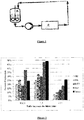
- this method is implemented in circuit mode.
- reduced extraction of soluble proteins within the meaning of the present invention, it is meant that the selectivity of the extraction, defined as the ratio of the protein extraction yield to the EPS extraction yield, is less than 0, 7.
- the circuit mode makes it possible to treat a volume in “ batch ” on a continuous device in a simple way.
- the medium to be treated is placed in the feed container (A) where it is subjected to stirring and then sent to the reactor (R) where it is subjected to a treatment capable of increasing the concentration of soluble polysaccharides in this medium without increasing the concentration of soluble proteins in this medium to such a high degree.
- the medium is returned to the feed container where it is subjected to agitation.
- the medium to be treated is introduced N times into the reactor in order to be treated there, which corresponds to the number of passages.
- the dosage of the various metabolites produced during the treatment takes place in the feed container either at the end of the N treatments, or after each passage.
- the dosage of the different metabolites is carried out after each passage, as long as the concentration of polysaccharides in the reaction medium increases, said medium is returned to the reactor.
- the number of passages in the reactor is generally between 1 and 10, limits included.
- the residence time of the composition corresponds to all of the passages of the composition in the reactor.
- the method according to the invention makes it possible to erode the cells and consequently to release the fraction of bound membrane polysaccharides (or EPS) without significantly altering the integrity of the cells.
- This treatment is also called a degumming.
- the process according to the present invention makes it possible, on the one hand, to increase the efficiency of extraction of the polysaccharides compared with the processes of the prior art and, on the other hand, to facilitate the subsequent operations of purification of the polysaccharides.
- the polysaccharide extraction yield could in fact be increased so as to extract up to 90% by weight of membrane polysaccharides relative to the total weight of membrane polysaccharides.
- the method according to the invention insofar as it only moderately affects cell integrity, makes it possible to prevent other water-soluble constituents of the cell, for example water-soluble proteins, too much chlorophyll is released into the medium. It thus has the advantage of leading to a reaction product which is less viscous than the products obtained by the methods of the prior art leading to cell lysis.
- the process according to the invention makes it possible to increase the recovery yield and the purity of the water-soluble polysaccharides in the medium at the end of the reaction.
- the component purification operations are facilitated in particular because of the reduced proportion of proteins in the recovered medium containing the polysaccharides, or else because of the removal of the polysaccharides from the cells, thus facilitating the downstream stages of recovery of other cellular compounds liable to become complex with the polysaccharides.
- the process according to the invention should be considered as allowing a targeted and almost total recovery of free and bound membrane polysaccharides.
- Another advantage of the process according to the invention is that it can be carried out directly on the culture medium of organisms, in particular unicellular organisms, in particular on a suspension of microalgae at the outlet of production, which contributes to reducing the volumes. of water used to implement said process.
- this process also makes it possible to avoid the implementation of a drying step, a step by definition long and expensive, both in terms of energy and financially.
- the mechanical or physical treatment step is followed by a step of measuring the quantity of membrane polysaccharides extracted.
- the method according to the invention can comprise a plurality of processing steps, advantageously from 2 to 10 processing steps.
- the method can also comprise at least one treatment step, mechanical or physical, followed by a step of measuring the amount of membrane polysaccharides extracted.
- the determination of the polysaccharides is carried out by the colorimetric method using phenol and sulfuric acid ( Dubois M, Gilles KA, Hamilton JK, Rebers PA, Smith F. Colorimetric method for determination of sugars and related substances. Anal. Chem. 1956; 28: 350-356 ).
- the method according to the invention can also comprise a plurality of treatment steps, with at least two treatment steps which are each followed by a step of measuring the quantity of membrane polysaccharides which have been extracted.
- said method can be interrupted when the quantity of membrane polysaccharides measured at the end of a treatment step N is substantially identical to the quantity of membrane polysaccharides measured at the end. of a processing step NX.
- X being a number of treatments less than the total number of treatments N, in particular X is equal to 1.
- the method according to the invention comprises a step consisting in extracting the fraction of soluble polysaccharides from said medium.
- the step of extracting the membrane polysaccharides is followed by a step of purifying said polysaccharides.
- the step of extracting the membrane polysaccharides can be followed by a step of purifying said polysaccharides.
- this process will be chosen by the methods by pH change, the methods by precipitation with ethanol; physical separations using a membrane.
- the method for extracting polysaccharides according to the invention can be implemented from any organism, preferably microorganism, preferably, it is implemented from cyanobacteria, microalgae, bacteria, filamentous fungi.
- the method according to the invention is implemented during the stationary phase of the microalga, that is to say in an intermediate or mature physiological state, at the end or after the so-called exponential growth phase.
- the organism is chosen from: the division of Rhodophytes and more specifically from the genera Porphyridium and Rhodella, Spirulina and Dunaliella, and preferably from the following strains Porphyridium cruentum, Arthospira platensis, Botryococcus braunii, Cryptecodinium conhii, Chlorella autotrophica , Navicula uncerta and Rhodosorusmarinus.
- the method according to the invention comprises a step during which a ball mill is used.
- Ball mills are conventionally used for the homogenization of viscous products such as paints and also for crushing minerals.
- Ball mills comprise an enclosure, for example a bowl closed by a cover, intended to receive the composition to be treated, said enclosure being supplied via a pump with the composition to be treated.
- the filling rate, corresponding to the percentage of the volume of the bowl occupied by the balls, of the ball mill ranges from 50% to 80%, preferably from 65% to 80%.
- the contents of the enclosure excluding the beads, essentially comprise the unicellular organism or the suspension to be treated.
- the degree of filling can be adapted in particular according to the nature of the balls used. In fact, in certain cases, an agglomeration of the beads between the blades of the agitator could be observed.
- the degree of filling of the mill with balls advantageously varies from 60% to 80% and preferably from 65% to 80% volume / volume.
- the feed rate of the composition to the mill generally ranges from 150 ml / min to 200 ml / min. It is also within the competence of those skilled in the art to select the feed rate suitable for the medium to be treated.
- the treatment with a ball mill is generally carried out at a temperature ranging from 18 to 40 ° C, preferably ranging from 18 to 25 ° C.
- the treated composition is recovered and then the polysaccharides present in said composition are extracted and optionally purified.
- a single ball milling step is performed.
- the treatment in a ball mill is repeated at least twice, preferably between two and ten times and advantageously between three and four times.
- the treatment in a ball mill is carried out for a residence time ranging from 2 to 50 minutes, preferably 10 to 40 minutes.
- the medium to be treated is pumped through the ultrasonic reactor within which it will be subjected to the ultrasonic treatment.
- the treated composition is recovered and then the polysaccharides present in said composition are extracted and optionally purified.
- the mechanical ultrasound treatment is carried out for a period varying from 5 to 30 seconds.
- the present description also relates to the uses of the fraction of soluble polysaccharides obtained according to the process according to the invention, said process comprising a step consisting in extracting the fraction of soluble polysaccharides from said medium, optionally followed by a step of purification of said polysaccharides.
- Said fraction of membrane polysaccharides is used in chemical, food, cosmetic or pharmaceutical compositions.
- Said fraction of membrane polysaccharides exhibits interesting properties, in particular texturing properties.
- compositions and more particularly as emulsions can be used as thickening agents, gelling agents, surfactants or even stabilizers in compositions and more particularly as emulsions.
- Said fraction of membrane polysaccharides can also be used as materials, in particular glues.
- the membrane polysaccharides obtained according to the invention can also be fractionated into oligosaccharides.
- the oligosaccharides thus obtained are advantageously used as reagents in fine chemistry.
- a culture medium of Porphyridium cruentum is used. This biomass was cultivated in a 10 L tubular photobioreactor.
- the proteins are measured by absorbance at 280 nm, a measurement possibly supplemented by an assay of the proteins carried out according to the BCA protocol in order to verify the accuracy of the spectrophotometric measurements.
- the quantification of the pigments is carried out by spectrometry at 678 nm and 416 nm respectively.
- B-Phycoerythrin (denoted B-PE in the figures) is assayed by the Bermejo protocol.
- Sonitube® Type SM 35/3 supplied by SYNETUDE. This is an ultrasonic tunnel with a maximum power of 400W, the working frequency of which is 35kHz
- the suspension is pumped through the Sonitube, in which it will be subjected to the ultrasound treatment (volume of 70 mL of treatment volume).
- the operating parameters are therefore the feed rate as well as the ultrasound power (200 W-400 W).
- the temperature of the suspension will be monitored, so that it does not exceed 30 ° C.
- centrifugation is performed (13,000 xg, 10 min).
- Biochemical protein assays were carried out in order to overcome the potential bias that there could be on the extraction factor calculated from the A 280 .
- the culture was at 3.7 gMS / L including 1.5 g / L of bound membrane polysaccharides and 0.3 g / L of solubilized membrane polysaccharides.
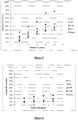
- the follow-up during successive passes is presented in figure 4 .
- the ultrasound treatment makes it possible to achieve a release of more than 50% of the bound membrane polysaccharides, with a release of proteins of the order of 40%.
- the physiological state of the cells means that degumming occurs on a relatively small amount of bound membrane polysaccharides (1.5 g / L).
- the culture was 4.5 gMS / L including 1.7 g / L of bound membrane polysaccharides and 0.4 g / L of solubilized membrane polysaccharides.
- the follow-up during successive passes is presented in Figure 5 .
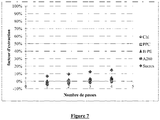
- the culture was at 6.4 gMS / L including 3.2 g / L of bound membrane polysaccharides and 0.44 g / L of solubilized membrane polysaccharides.
- the minimum and maximum working powers were tested, namely 200 W and 400 W.
- the follow-ups during the successive passes are presented in Figures 6 and 7 .
Landscapes
- Life Sciences & Earth Sciences (AREA)
- Health & Medical Sciences (AREA)
- Engineering & Computer Science (AREA)
- Chemical & Material Sciences (AREA)
- Biotechnology (AREA)
- Organic Chemistry (AREA)
- General Health & Medical Sciences (AREA)
- Wood Science & Technology (AREA)
- Zoology (AREA)
- Microbiology (AREA)
- Bioinformatics & Cheminformatics (AREA)
- Genetics & Genomics (AREA)
- Public Health (AREA)
- Veterinary Medicine (AREA)
- Animal Behavior & Ethology (AREA)
- Mycology (AREA)
- Biochemistry (AREA)
- General Engineering & Computer Science (AREA)
- Birds (AREA)
- Botany (AREA)
- Epidemiology (AREA)
- Biomedical Technology (AREA)
- Medicinal Chemistry (AREA)
- Virology (AREA)
- Tropical Medicine & Parasitology (AREA)
- Chemical Kinetics & Catalysis (AREA)
- Polymers & Plastics (AREA)
- Dispersion Chemistry (AREA)
- General Chemical & Material Sciences (AREA)
- Cell Biology (AREA)
- Food Science & Technology (AREA)
- Nutrition Science (AREA)
- Dermatology (AREA)
- Materials Engineering (AREA)
- Molecular Biology (AREA)
- Sustainable Development (AREA)
- Polysaccharides And Polysaccharide Derivatives (AREA)
- Preparation Of Compounds By Using Micro-Organisms (AREA)
- Micro-Organisms Or Cultivation Processes Thereof (AREA)
- Medicinal Preparation (AREA)
Claims (9)
- Verfahren zur Gewinnung von Membranpolysacchariden aus einem Organismus, ausgewählt aus Cyanobakterien, Mikroalgen, Bakterien und filamentösen Pilzen, wobei das Verfahren mindestens einen Schritt der Extraktion der Membranpolysaccharide, begleitet von einer verringerten Extraktion löslicher Proteine, durch mechanische Behandlung des Organismus in eine Kugelmühle oder durch physikalische Behandlung des Organismus mithilfe von Ultraschall umfasst, wobei:- das Verfahren durch mechanische Behandlung mit einer Kugelmühle mit einem Füllungsgrad von 50% bis 80% Volumen/Volumen bei einer Temperatur von 18 bis 40°C durchgeführt wird, wobei der mittlere Durchmesser der Kugeln (dGM) von 1,5 10-3 bis 2,5 10-3 m variiert und die Rührgeschwindigkeit an der Schaufelspitze von 5 bis 20 m.s-1 variiert,
oder- das Verfahren durch physikalische Behandlung des Organismus mittels Ultraschall unter den folgenden Bedingungen durchgeführt wird:- die Energie variiert von 500 bis 5000 J,- die Leistung variiert von 200 bis 400 W und- die Beschickungsrate des Reaktors variiert von 0,150 l/min bis 3 l/min. - Verfahren nach Anspruch 1, wobei die mechanische Behandlung in einer Kugelmühle für eine Dauer von 2 bis 50 Minuten, vorzugsweise von 10 bis 40 Minuten, durchgeführt wird.
- Verfahren nach einem der Ansprüche 1 und 2, wobei der Kugelfüllungsgrad der Mühle von 60% bis 80% und vorzugsweise von 65% bis 80% Volumen/Volumen variiert.
- Verfahren nach Anspruch 1, wobei die Ultraschallbehandlung für eine Dauer von 5 bis 30 Sekunden durchgeführt wird.
- Verfahren nach einem der Ansprüche 1 bis 4, wobei auf den Schritt der mechanischen oder physikalischen Behandlung ein Schritt der Messung der Menge der extrahierten Membranpolysaccharide folgt.
- Verfahren nach einem der Ansprüche 1 bis 5, wobei auf mindestens einen Behandlungsschritt ein Schritt der Messung der Menge der Membranpolysaccharide, die extrahiert worden sind, folgt.
- Verfahren nach einem der Ansprüche 1 bis 8, wobei der Organismus ausgewählt ist aus: der Abteilung Rotalgen und insbesondere aus den Gattungen Porphyridium und Rhodella, Spirulina und Dunaliella und vorzugsweise aus den folgenden Stämmen Porphyridium cruentum, Arthospira platensis, Botryococcus braunii, Cryptecodinium conhii, Chlorella autotrophica, Navicula incerta und Rhodosorus marinus.
- Verfahren nach einem der Ansprüche 1 bis 9, umfassend einen Schritt, bei dem man die Fraktion der löslichen Polysaccharide aus dem Medium extrahiert.
- Verfahren nach einem der Ansprüche 1 bis 10, wobei auf den Schritt der Extraktion der Membranpolysaccharide ein Schritt der Reinigung der Polysaccharide folgt.
Applications Claiming Priority (2)
| Application Number | Priority Date | Filing Date | Title |
|---|---|---|---|
| FR1459796A FR3027031B1 (fr) | 2014-10-13 | 2014-10-13 | Procede de demucilagination |
| PCT/EP2015/073689 WO2016059058A1 (fr) | 2014-10-13 | 2015-10-13 | Procede de demucilagination |
Publications (2)
| Publication Number | Publication Date |
|---|---|
| EP3206477A1 EP3206477A1 (de) | 2017-08-23 |
| EP3206477B1 true EP3206477B1 (de) | 2020-08-12 |
Family
ID=52627289
Family Applications (1)
| Application Number | Title | Priority Date | Filing Date |
|---|---|---|---|
| EP15778346.5A Active EP3206477B1 (de) | 2014-10-13 | 2015-10-13 | Entbastungsverfahren |
Country Status (5)
| Country | Link |
|---|---|
| US (1) | US10611854B2 (de) |
| EP (1) | EP3206477B1 (de) |
| JP (1) | JP2017534722A (de) |
| FR (1) | FR3027031B1 (de) |
| WO (1) | WO2016059058A1 (de) |
Cited By (1)
| Publication number | Priority date | Publication date | Assignee | Title |
|---|---|---|---|---|
| FR3130558A1 (fr) | 2021-12-21 | 2023-06-23 | Algosource | Composition comprenant des exopolysaccharides extraits de Porphyridium sp pour le traitement et/ou la prévention d’infections par les parasites du phylum Apicomplexa. |
Families Citing this family (1)
| Publication number | Priority date | Publication date | Assignee | Title |
|---|---|---|---|---|
| US10485253B2 (en) * | 2017-08-21 | 2019-11-26 | Mustapha Benmoussa | Method of microalgal biomass processing for high-value chemicals production, the resulting composition of butyrogenic algal slowly fermenting dietary fiber, and a way to improve colon health using a slowly fermenting butyrogenic algal dietary fiber |
Family Cites Families (4)
| Publication number | Priority date | Publication date | Assignee | Title |
|---|---|---|---|---|
| US4417415A (en) | 1982-04-26 | 1983-11-29 | Battelle Development Corporation | Process for culturing a microalga, and extracting a polysaccharide therefrom |
| FR2621327B1 (fr) * | 1987-10-06 | 1990-01-05 | Commissariat Energie Atomique | Procede de production et d'extraction de polysaccharides a partir d'une culture de porphyridium cruentum et dispositif pour la mise en oeuvre du procede |
| US4960697A (en) | 1989-01-06 | 1990-10-02 | The Standard Oil Company | Recovery of polysaccharides by employing a divalent cation with a water miscible organic solvent |
| US8927522B2 (en) * | 2008-10-14 | 2015-01-06 | Solazyme, Inc. | Microalgal polysaccharide compositions |
-
2014
- 2014-10-13 FR FR1459796A patent/FR3027031B1/fr not_active Expired - Fee Related
-
2015
- 2015-10-13 JP JP2017519630A patent/JP2017534722A/ja active Pending
- 2015-10-13 WO PCT/EP2015/073689 patent/WO2016059058A1/fr not_active Ceased
- 2015-10-13 US US15/518,926 patent/US10611854B2/en not_active Expired - Fee Related
- 2015-10-13 EP EP15778346.5A patent/EP3206477B1/de active Active
Non-Patent Citations (1)
| Title |
|---|
| None * |
Cited By (2)
| Publication number | Priority date | Publication date | Assignee | Title |
|---|---|---|---|---|
| FR3130558A1 (fr) | 2021-12-21 | 2023-06-23 | Algosource | Composition comprenant des exopolysaccharides extraits de Porphyridium sp pour le traitement et/ou la prévention d’infections par les parasites du phylum Apicomplexa. |
| EP4201485A1 (de) | 2021-12-21 | 2023-06-28 | Algosource | Zusammensetzung mit exopolysacchariden aus porphyridium sp zur behandlung und/oder prävention von parasitären infektionen des apicomplexa phyllums |
Also Published As
| Publication number | Publication date |
|---|---|
| EP3206477A1 (de) | 2017-08-23 |
| WO2016059058A1 (fr) | 2016-04-21 |
| US20170233499A1 (en) | 2017-08-17 |
| FR3027031A1 (fr) | 2016-04-15 |
| FR3027031B1 (fr) | 2018-10-05 |
| US10611854B2 (en) | 2020-04-07 |
| JP2017534722A (ja) | 2017-11-24 |
Similar Documents
| Publication | Publication Date | Title |
|---|---|---|
| CA2835027C (fr) | Procede d'extraction du squalene a partir de microalgues | |
| Safi et al. | Understanding the effect of cell disruption methods on the diffusion of Chlorella vulgaris proteins and pigments in the aqueous phase | |
| EP3022289B1 (de) | Optimiertes verfahren zum brechen von chlorella-zellwänden durch homogenisierung unter sehr hohem druck | |
| EP3638054B1 (de) | Verfahren zur extraktion von wasserlöslichen verbindungen aus mikroalgen und / oder cyanobakterien | |
| EP3169696A1 (de) | Verfahren zur extraktion von löslichen proteinen aus mikroalgenbiomasse | |
| FR2797187A1 (fr) | Extrait d'algues laminaria, procede de preparation et compositions cosmetiques ou pharmaceutiques le contenant | |
| FR2933870A1 (fr) | Procede d'obtention d'extraits d'algue et utilisation de ces extraits | |
| CA2835072A1 (fr) | Procede de preparation et d'extraction du squalene a partir de microalgues | |
| EP3206477B1 (de) | Entbastungsverfahren | |
| EP3169695A1 (de) | Verfahren zur extraktion von löslichen proteinen aus mikroalgenbiomasse | |
| KR20170105498A (ko) | 지질이 풍부한 분쇄 미세조류 가루를 제조하는 방법 | |
| WO2015140467A1 (fr) | Procédé de perméabilisation thermique d'une biomasse de microalgues | |
| KR20160008921A (ko) | 세포 재분화를 이용하여 미세조류로부터 아스타잔틴을 효율적으로 추출하는 방법 | |
| CN103930556B (zh) | 从丝状菌生产有用代谢产物的方法 | |
| FR3122808A1 (fr) | Co-extraction de composés actifs à caractères hydrophiles et hydrophobes issus de microalgues et macroalgues | |
| JP2017029052A (ja) | 藻類の破砕方法 | |
| EP4407017A1 (de) | Verfahren zur nassextraktion von lipidkomponenten aus mikroorganismen | |
| FR3134290A1 (fr) | Extraction non destructive de composés d’intérêt alimentaire issus d’algues vivantes | |
| Obeid | Ecodesign process for microalgae fractionation: use of supercritical CO2, membrane technology and low frequency ultrasounds | |
| EP3156474A1 (de) | Verfahren zur aufbereitung von lipiden mittels einer kugelmühle | |
| TWI618794B (zh) | Method for extracting oil from wet biomass | |
| EP4587480A1 (de) | Klare wasserlösliche pflanzenfraktion | |
| EP3924462A1 (de) | Verfahren zur herstellung einer mit blauem pigment angereicherten wässrigen lösung | |
| Hanupurti et al. | THE EXTRACTION OF OIL FROM Nannochloropsis sp. MICROALGAE USING ULTRASONIC AND FERMENTATION AS CELL DISRUPTION | |
| CN110643597A (zh) | 促进角质代谢及淡斑的酵母dna原料制法 |
Legal Events
| Date | Code | Title | Description |
|---|---|---|---|
| STAA | Information on the status of an ep patent application or granted ep patent |
Free format text: STATUS: THE INTERNATIONAL PUBLICATION HAS BEEN MADE |
|
| PUAI | Public reference made under article 153(3) epc to a published international application that has entered the european phase |
Free format text: ORIGINAL CODE: 0009012 |
|
| STAA | Information on the status of an ep patent application or granted ep patent |
Free format text: STATUS: REQUEST FOR EXAMINATION WAS MADE |
|
| 17P | Request for examination filed |
Effective date: 20170515 |
|
| AK | Designated contracting states |
Kind code of ref document: A1 Designated state(s): AL AT BE BG CH CY CZ DE DK EE ES FI FR GB GR HR HU IE IS IT LI LT LU LV MC MK MT NL NO PL PT RO RS SE SI SK SM TR |
|
| AX | Request for extension of the european patent |
Extension state: BA ME |
|
| RIN1 | Information on inventor provided before grant (corrected) |
Inventor name: FLEURENCE, JOEL Inventor name: JUBEAU, SEBASTIEN Inventor name: MARCHAL, LUC Inventor name: PRUVOST, JEREMY Inventor name: JAOUEN, PASCAL |
|
| DAV | Request for validation of the european patent (deleted) | ||
| DAX | Request for extension of the european patent (deleted) | ||
| STAA | Information on the status of an ep patent application or granted ep patent |
Free format text: STATUS: EXAMINATION IS IN PROGRESS |
|
| 17Q | First examination report despatched |
Effective date: 20180405 |
|
| GRAP | Despatch of communication of intention to grant a patent |
Free format text: ORIGINAL CODE: EPIDOSNIGR1 |
|
| STAA | Information on the status of an ep patent application or granted ep patent |
Free format text: STATUS: GRANT OF PATENT IS INTENDED |
|
| INTG | Intention to grant announced |
Effective date: 20200313 |
|
| GRAS | Grant fee paid |
Free format text: ORIGINAL CODE: EPIDOSNIGR3 |
|
| GRAA | (expected) grant |
Free format text: ORIGINAL CODE: 0009210 |
|
| STAA | Information on the status of an ep patent application or granted ep patent |
Free format text: STATUS: THE PATENT HAS BEEN GRANTED |
|
| AK | Designated contracting states |
Kind code of ref document: B1 Designated state(s): AL AT BE BG CH CY CZ DE DK EE ES FI FR GB GR HR HU IE IS IT LI LT LU LV MC MK MT NL NO PL PT RO RS SE SI SK SM TR |
|
| REG | Reference to a national code |
Ref country code: CH Ref legal event code: EP |
|
| REG | Reference to a national code |
Ref country code: IE Ref legal event code: FG4D Free format text: LANGUAGE OF EP DOCUMENT: FRENCH |
|
| REG | Reference to a national code |
Ref country code: DE Ref legal event code: R096 Ref document number: 602015057391 Country of ref document: DE |
|
| REG | Reference to a national code |
Ref country code: AT Ref legal event code: REF Ref document number: 1300610 Country of ref document: AT Kind code of ref document: T Effective date: 20200915 |
|
| REG | Reference to a national code |
Ref country code: LT Ref legal event code: MG4D |
|
| REG | Reference to a national code |
Ref country code: NL Ref legal event code: MP Effective date: 20200812 |
|
| PG25 | Lapsed in a contracting state [announced via postgrant information from national office to epo] |
Ref country code: BG Free format text: LAPSE BECAUSE OF FAILURE TO SUBMIT A TRANSLATION OF THE DESCRIPTION OR TO PAY THE FEE WITHIN THE PRESCRIBED TIME-LIMIT Effective date: 20201112 Ref country code: GR Free format text: LAPSE BECAUSE OF FAILURE TO SUBMIT A TRANSLATION OF THE DESCRIPTION OR TO PAY THE FEE WITHIN THE PRESCRIBED TIME-LIMIT Effective date: 20201113 Ref country code: NO Free format text: LAPSE BECAUSE OF FAILURE TO SUBMIT A TRANSLATION OF THE DESCRIPTION OR TO PAY THE FEE WITHIN THE PRESCRIBED TIME-LIMIT Effective date: 20201112 Ref country code: LT Free format text: LAPSE BECAUSE OF FAILURE TO SUBMIT A TRANSLATION OF THE DESCRIPTION OR TO PAY THE FEE WITHIN THE PRESCRIBED TIME-LIMIT Effective date: 20200812 Ref country code: FI Free format text: LAPSE BECAUSE OF FAILURE TO SUBMIT A TRANSLATION OF THE DESCRIPTION OR TO PAY THE FEE WITHIN THE PRESCRIBED TIME-LIMIT Effective date: 20200812 Ref country code: SE Free format text: LAPSE BECAUSE OF FAILURE TO SUBMIT A TRANSLATION OF THE DESCRIPTION OR TO PAY THE FEE WITHIN THE PRESCRIBED TIME-LIMIT Effective date: 20200812 Ref country code: HR Free format text: LAPSE BECAUSE OF FAILURE TO SUBMIT A TRANSLATION OF THE DESCRIPTION OR TO PAY THE FEE WITHIN THE PRESCRIBED TIME-LIMIT Effective date: 20200812 |
|
| REG | Reference to a national code |
Ref country code: AT Ref legal event code: MK05 Ref document number: 1300610 Country of ref document: AT Kind code of ref document: T Effective date: 20200812 |
|
| PG25 | Lapsed in a contracting state [announced via postgrant information from national office to epo] |
Ref country code: LV Free format text: LAPSE BECAUSE OF FAILURE TO SUBMIT A TRANSLATION OF THE DESCRIPTION OR TO PAY THE FEE WITHIN THE PRESCRIBED TIME-LIMIT Effective date: 20200812 Ref country code: PL Free format text: LAPSE BECAUSE OF FAILURE TO SUBMIT A TRANSLATION OF THE DESCRIPTION OR TO PAY THE FEE WITHIN THE PRESCRIBED TIME-LIMIT Effective date: 20200812 Ref country code: RS Free format text: LAPSE BECAUSE OF FAILURE TO SUBMIT A TRANSLATION OF THE DESCRIPTION OR TO PAY THE FEE WITHIN THE PRESCRIBED TIME-LIMIT Effective date: 20200812 Ref country code: NL Free format text: LAPSE BECAUSE OF FAILURE TO SUBMIT A TRANSLATION OF THE DESCRIPTION OR TO PAY THE FEE WITHIN THE PRESCRIBED TIME-LIMIT Effective date: 20200812 Ref country code: IS Free format text: LAPSE BECAUSE OF FAILURE TO SUBMIT A TRANSLATION OF THE DESCRIPTION OR TO PAY THE FEE WITHIN THE PRESCRIBED TIME-LIMIT Effective date: 20201212 |
|
| PG25 | Lapsed in a contracting state [announced via postgrant information from national office to epo] |
Ref country code: CZ Free format text: LAPSE BECAUSE OF FAILURE TO SUBMIT A TRANSLATION OF THE DESCRIPTION OR TO PAY THE FEE WITHIN THE PRESCRIBED TIME-LIMIT Effective date: 20200812 Ref country code: DK Free format text: LAPSE BECAUSE OF FAILURE TO SUBMIT A TRANSLATION OF THE DESCRIPTION OR TO PAY THE FEE WITHIN THE PRESCRIBED TIME-LIMIT Effective date: 20200812 Ref country code: SM Free format text: LAPSE BECAUSE OF FAILURE TO SUBMIT A TRANSLATION OF THE DESCRIPTION OR TO PAY THE FEE WITHIN THE PRESCRIBED TIME-LIMIT Effective date: 20200812 Ref country code: RO Free format text: LAPSE BECAUSE OF FAILURE TO SUBMIT A TRANSLATION OF THE DESCRIPTION OR TO PAY THE FEE WITHIN THE PRESCRIBED TIME-LIMIT Effective date: 20200812 Ref country code: EE Free format text: LAPSE BECAUSE OF FAILURE TO SUBMIT A TRANSLATION OF THE DESCRIPTION OR TO PAY THE FEE WITHIN THE PRESCRIBED TIME-LIMIT Effective date: 20200812 |
|
| REG | Reference to a national code |
Ref country code: DE Ref legal event code: R097 Ref document number: 602015057391 Country of ref document: DE |
|
| PG25 | Lapsed in a contracting state [announced via postgrant information from national office to epo] |
Ref country code: ES Free format text: LAPSE BECAUSE OF FAILURE TO SUBMIT A TRANSLATION OF THE DESCRIPTION OR TO PAY THE FEE WITHIN THE PRESCRIBED TIME-LIMIT Effective date: 20200812 Ref country code: AT Free format text: LAPSE BECAUSE OF FAILURE TO SUBMIT A TRANSLATION OF THE DESCRIPTION OR TO PAY THE FEE WITHIN THE PRESCRIBED TIME-LIMIT Effective date: 20200812 Ref country code: AL Free format text: LAPSE BECAUSE OF FAILURE TO SUBMIT A TRANSLATION OF THE DESCRIPTION OR TO PAY THE FEE WITHIN THE PRESCRIBED TIME-LIMIT Effective date: 20200812 |
|
| PLBE | No opposition filed within time limit |
Free format text: ORIGINAL CODE: 0009261 |
|
| STAA | Information on the status of an ep patent application or granted ep patent |
Free format text: STATUS: NO OPPOSITION FILED WITHIN TIME LIMIT |
|
| PG25 | Lapsed in a contracting state [announced via postgrant information from national office to epo] |
Ref country code: LU Free format text: LAPSE BECAUSE OF NON-PAYMENT OF DUE FEES Effective date: 20201013 Ref country code: MC Free format text: LAPSE BECAUSE OF FAILURE TO SUBMIT A TRANSLATION OF THE DESCRIPTION OR TO PAY THE FEE WITHIN THE PRESCRIBED TIME-LIMIT Effective date: 20200812 Ref country code: SK Free format text: LAPSE BECAUSE OF FAILURE TO SUBMIT A TRANSLATION OF THE DESCRIPTION OR TO PAY THE FEE WITHIN THE PRESCRIBED TIME-LIMIT Effective date: 20200812 |
|
| REG | Reference to a national code |
Ref country code: BE Ref legal event code: MM Effective date: 20201031 |
|
| 26N | No opposition filed |
Effective date: 20210514 |
|
| PG25 | Lapsed in a contracting state [announced via postgrant information from national office to epo] |
Ref country code: IT Free format text: LAPSE BECAUSE OF FAILURE TO SUBMIT A TRANSLATION OF THE DESCRIPTION OR TO PAY THE FEE WITHIN THE PRESCRIBED TIME-LIMIT Effective date: 20200812 |
|
| PG25 | Lapsed in a contracting state [announced via postgrant information from national office to epo] |
Ref country code: SI Free format text: LAPSE BECAUSE OF FAILURE TO SUBMIT A TRANSLATION OF THE DESCRIPTION OR TO PAY THE FEE WITHIN THE PRESCRIBED TIME-LIMIT Effective date: 20200812 Ref country code: BE Free format text: LAPSE BECAUSE OF NON-PAYMENT OF DUE FEES Effective date: 20201031 |
|
| PG25 | Lapsed in a contracting state [announced via postgrant information from national office to epo] |
Ref country code: IE Free format text: LAPSE BECAUSE OF NON-PAYMENT OF DUE FEES Effective date: 20201013 |
|
| PG25 | Lapsed in a contracting state [announced via postgrant information from national office to epo] |
Ref country code: TR Free format text: LAPSE BECAUSE OF FAILURE TO SUBMIT A TRANSLATION OF THE DESCRIPTION OR TO PAY THE FEE WITHIN THE PRESCRIBED TIME-LIMIT Effective date: 20200812 Ref country code: MT Free format text: LAPSE BECAUSE OF FAILURE TO SUBMIT A TRANSLATION OF THE DESCRIPTION OR TO PAY THE FEE WITHIN THE PRESCRIBED TIME-LIMIT Effective date: 20200812 Ref country code: CY Free format text: LAPSE BECAUSE OF FAILURE TO SUBMIT A TRANSLATION OF THE DESCRIPTION OR TO PAY THE FEE WITHIN THE PRESCRIBED TIME-LIMIT Effective date: 20200812 |
|
| PG25 | Lapsed in a contracting state [announced via postgrant information from national office to epo] |
Ref country code: MK Free format text: LAPSE BECAUSE OF FAILURE TO SUBMIT A TRANSLATION OF THE DESCRIPTION OR TO PAY THE FEE WITHIN THE PRESCRIBED TIME-LIMIT Effective date: 20200812 |
|
| PG25 | Lapsed in a contracting state [announced via postgrant information from national office to epo] |
Ref country code: PT Free format text: LAPSE BECAUSE OF FAILURE TO SUBMIT A TRANSLATION OF THE DESCRIPTION OR TO PAY THE FEE WITHIN THE PRESCRIBED TIME-LIMIT Effective date: 20200812 |
|
| PGFP | Annual fee paid to national office [announced via postgrant information from national office to epo] |
Ref country code: FR Payment date: 20221031 Year of fee payment: 8 |
|
| PGFP | Annual fee paid to national office [announced via postgrant information from national office to epo] |
Ref country code: GB Payment date: 20221020 Year of fee payment: 8 Ref country code: DE Payment date: 20221019 Year of fee payment: 8 |
|
| PGFP | Annual fee paid to national office [announced via postgrant information from national office to epo] |
Ref country code: CH Payment date: 20221026 Year of fee payment: 8 |
|
| REG | Reference to a national code |
Ref country code: DE Ref legal event code: R119 Ref document number: 602015057391 Country of ref document: DE |
|
| REG | Reference to a national code |
Ref country code: CH Ref legal event code: PL |
|
| GBPC | Gb: european patent ceased through non-payment of renewal fee |
Effective date: 20231013 |
|
| PG25 | Lapsed in a contracting state [announced via postgrant information from national office to epo] |
Ref country code: GB Free format text: LAPSE BECAUSE OF NON-PAYMENT OF DUE FEES Effective date: 20231013 |
|
| PG25 | Lapsed in a contracting state [announced via postgrant information from national office to epo] |
Ref country code: CH Free format text: LAPSE BECAUSE OF NON-PAYMENT OF DUE FEES Effective date: 20231031 |
|
| PG25 | Lapsed in a contracting state [announced via postgrant information from national office to epo] |
Ref country code: GB Free format text: LAPSE BECAUSE OF NON-PAYMENT OF DUE FEES Effective date: 20231013 Ref country code: FR Free format text: LAPSE BECAUSE OF NON-PAYMENT OF DUE FEES Effective date: 20231031 Ref country code: DE Free format text: LAPSE BECAUSE OF NON-PAYMENT OF DUE FEES Effective date: 20240501 Ref country code: CH Free format text: LAPSE BECAUSE OF NON-PAYMENT OF DUE FEES Effective date: 20231031 |