EP3207046B1 - Acyclische cucurbit(n)uril-molekularbehälter zur behandlung von intoxikation und verringerung der rückfallrate bei drogenabhängigkeitserkrankungen - Google Patents
Acyclische cucurbit(n)uril-molekularbehälter zur behandlung von intoxikation und verringerung der rückfallrate bei drogenabhängigkeitserkrankungen Download PDFInfo
- Publication number
- EP3207046B1 EP3207046B1 EP15850784.8A EP15850784A EP3207046B1 EP 3207046 B1 EP3207046 B1 EP 3207046B1 EP 15850784 A EP15850784 A EP 15850784A EP 3207046 B1 EP3207046 B1 EP 3207046B1
- Authority
- EP
- European Patent Office
- Prior art keywords
- group
- compound
- ketamine
- calabadion
- motor1
- Prior art date
- Legal status (The legal status is an assumption and is not a legal conclusion. Google has not performed a legal analysis and makes no representation as to the accuracy of the status listed.)
- Active
Links
Images
























Classifications
-
- A—HUMAN NECESSITIES
- A61—MEDICAL OR VETERINARY SCIENCE; HYGIENE
- A61K—PREPARATIONS FOR MEDICAL, DENTAL OR TOILETRY PURPOSES
- A61K31/00—Medicinal preparations containing organic active ingredients
- A61K31/33—Heterocyclic compounds
- A61K31/395—Heterocyclic compounds having nitrogen as a ring hetero atom, e.g. guanethidine or rifamycins
- A61K31/55—Heterocyclic compounds having nitrogen as a ring hetero atom, e.g. guanethidine or rifamycins having seven-membered rings, e.g. azelastine, pentylenetetrazole
- A61K31/551—Heterocyclic compounds having nitrogen as a ring hetero atom, e.g. guanethidine or rifamycins having seven-membered rings, e.g. azelastine, pentylenetetrazole having two nitrogen atoms, e.g. dilazep
-
- A—HUMAN NECESSITIES
- A61—MEDICAL OR VETERINARY SCIENCE; HYGIENE
- A61K—PREPARATIONS FOR MEDICAL, DENTAL OR TOILETRY PURPOSES
- A61K31/00—Medicinal preparations containing organic active ingredients
- A61K31/33—Heterocyclic compounds
- A61K31/395—Heterocyclic compounds having nitrogen as a ring hetero atom, e.g. guanethidine or rifamycins
- A61K31/41—Heterocyclic compounds having nitrogen as a ring hetero atom, e.g. guanethidine or rifamycins having five-membered rings with two or more ring hetero atoms, at least one of which being nitrogen, e.g. tetrazole
- A61K31/4164—1,3-Diazoles
- A61K31/4188—1,3-Diazoles condensed with other heterocyclic ring systems, e.g. biotin, sorbinil
-
- A—HUMAN NECESSITIES
- A61—MEDICAL OR VETERINARY SCIENCE; HYGIENE
- A61K—PREPARATIONS FOR MEDICAL, DENTAL OR TOILETRY PURPOSES
- A61K31/00—Medicinal preparations containing organic active ingredients
- A61K31/74—Synthetic polymeric materials
- A61K31/785—Polymers containing nitrogen
- A61K31/787—Polymers containing nitrogen containing heterocyclic rings having nitrogen as a ring hetero atom
-
- A—HUMAN NECESSITIES
- A61—MEDICAL OR VETERINARY SCIENCE; HYGIENE
- A61K—PREPARATIONS FOR MEDICAL, DENTAL OR TOILETRY PURPOSES
- A61K47/00—Medicinal preparations characterised by the non-active ingredients used, e.g. carriers or inert additives; Targeting or modifying agents chemically bound to the active ingredient
- A61K47/50—Medicinal preparations characterised by the non-active ingredients used, e.g. carriers or inert additives; Targeting or modifying agents chemically bound to the active ingredient the non-active ingredient being chemically bound to the active ingredient, e.g. polymer-drug conjugates
- A61K47/51—Medicinal preparations characterised by the non-active ingredients used, e.g. carriers or inert additives; Targeting or modifying agents chemically bound to the active ingredient the non-active ingredient being chemically bound to the active ingredient, e.g. polymer-drug conjugates the non-active ingredient being a modifying agent
- A61K47/56—Medicinal preparations characterised by the non-active ingredients used, e.g. carriers or inert additives; Targeting or modifying agents chemically bound to the active ingredient the non-active ingredient being chemically bound to the active ingredient, e.g. polymer-drug conjugates the non-active ingredient being a modifying agent the modifying agent being an organic macromolecular compound, e.g. an oligomeric, polymeric or dendrimeric molecule
- A61K47/59—Medicinal preparations characterised by the non-active ingredients used, e.g. carriers or inert additives; Targeting or modifying agents chemically bound to the active ingredient the non-active ingredient being chemically bound to the active ingredient, e.g. polymer-drug conjugates the non-active ingredient being a modifying agent the modifying agent being an organic macromolecular compound, e.g. an oligomeric, polymeric or dendrimeric molecule obtained otherwise than by reactions only involving carbon-to-carbon unsaturated bonds, e.g. polyureas or polyurethanes
- A61K47/60—Medicinal preparations characterised by the non-active ingredients used, e.g. carriers or inert additives; Targeting or modifying agents chemically bound to the active ingredient the non-active ingredient being chemically bound to the active ingredient, e.g. polymer-drug conjugates the non-active ingredient being a modifying agent the modifying agent being an organic macromolecular compound, e.g. an oligomeric, polymeric or dendrimeric molecule obtained otherwise than by reactions only involving carbon-to-carbon unsaturated bonds, e.g. polyureas or polyurethanes the organic macromolecular compound being a polyoxyalkylene oligomer, polymer or dendrimer, e.g. PEG, PPG, PEO or polyglycerol
-
- A—HUMAN NECESSITIES
- A61—MEDICAL OR VETERINARY SCIENCE; HYGIENE
- A61P—SPECIFIC THERAPEUTIC ACTIVITY OF CHEMICAL COMPOUNDS OR MEDICINAL PREPARATIONS
- A61P25/00—Drugs for disorders of the nervous system
- A61P25/30—Drugs for disorders of the nervous system for treating abuse or dependence
-
- A—HUMAN NECESSITIES
- A61—MEDICAL OR VETERINARY SCIENCE; HYGIENE
- A61P—SPECIFIC THERAPEUTIC ACTIVITY OF CHEMICAL COMPOUNDS OR MEDICINAL PREPARATIONS
- A61P25/00—Drugs for disorders of the nervous system
- A61P25/30—Drugs for disorders of the nervous system for treating abuse or dependence
- A61P25/36—Opioid-abuse
Definitions
- the present disclosure relates generally to reversal of the effects of agents which cause intoxication and/or dependency.
- the present disclosure provides a use of the claimed compounds in a method for reversal of the effects of intoxication agents.
- the use comprises administering a composition comprising a compound of the disclosure to an individual in need thereof such that the effects of the agent(s) are partially or fully reduced.
- the compositions used in the present disclosure contain compound(s) having the following structure: where each R is independently hydrogen, C 1 to C 20 alkyl group, C 3 to C 20 carbocyclic group, C 1 to C 20 heterocyclic group, carboxylic acid group, ester group, amide group, hydroxy, or ether group.
- adjacent R groups form a C 3 to C 20 carbocyclic ring or heterocyclic ring.
- Each is independently a C 5 to C 20 carbocyclic ring system or C 2 to C 20 heterocyclic ring system, having one of the following structures: wherein, at each occurrence of R 1 to R 16 is independently hydrogen, C 1 to C 20 alkyl group, halo group, hydroxyl group, nitro group, carboxylic acid group, ester group, amide group, ether group, C 3 to C 20 carbocyclic group, or C 1 to C 20 heterocyclic group, provided that at least one of R 1 to R 16 in the compound has the following structure: wherein each i is 1 to 20; and X is a solubilizing group selected from sulfonic acid, sulfonate salt, phosphonic acid, phosphonate salt, and polyethylene glycol.
- n 1 to 5.
- the use of the compounds of this disclosure comprises administering to an individual an effective amount of a compound of this disclosure such that one or more of the effects of an intoxicating agent in the individual is reduced.
- the individual is in need of a reduction of the effect of cocaine, fentanyl, methamphetamine, or any combination thereof.
- the disclosure includes a proviso that the individual is not in need of reversal of ketamine.
- compositions that are further described below for reversal of the effects of intoxicating agents, as well as for reversal of the effects of other agents that are more fully described herein.
- the disclosure is suitable for use in reversal of drug-induced neuromuscular block, or for reversal of anesthesia, or for reversal of the effects of ingestion of a drug of abuse, or an antidepressant or other agents which will be apparent to those skilled in the art given the benefit of the present specification.
- the disclosure includes reversing the effect of one or more agents which include but are not limited to cocaine, an amphetamine, ketamine, methamphetamine, phencyclidine [PCP]), a drug used in inperioperative medicine, including but not necessarily limited to local anesthetics, beta-blockers, neurolepts, anticholinergic agents, or a combination of any of said agents.
- the reversal is achieved by administering to the individual a composition comprising Calabadion 1 or Calabadion 2 which are further described below.
- the use encompasses reversal of intoxication by cocaine, fentanyl, or methamphetamine, or any combination thereof.
- a composition comprising one or a combination of compounds described herein is administered to an individual in need of treatment due to ingestion of at least one of cocaine, fentanyl, or methamphetamine. While certain aspects of the disclosure are illustrated usking ketamine, the disclosure includes a proviso that the individual to which a composition of this disclosure is administered is not in need for a reduction of the effect of ketamine, or for other anesthetic agents generally. In this regard, it will be evident to those skilled in the art that ketamine is a general anesthetic meaning it suppresses central nervous system activity and results in unconsciousness and lack of sensation.
- NMDA N-methyl-D-aspartate
- Ketamine is typically injected either intravenously or intramuscularly. At low doses, ketamine can induce systemic analgesia, and also has an antidepressant effect. Ketamine can also produce hallucinations. Thus, in one example, the disclosure is not used to treat an individual in need of treatment for ingestion of an NMDA receptor antagonist.
- methamphetamine and cocaine belong to the broad class of drugs called psychostimulants that also includes amphetamine and methylphenidate. The two drugs often are compared to each other because they produce similar mood-altering effects and both have a high potential for abuse and dependence.
- the present disclosure also provides for reversal of the effects of fentanyl. This is in contrast to the demonstration that compounds of this disclosure are not effective in reversing the effects of morphine (e.g., see Figure 77 ), and thus the disclosure presents unexpected results.
- the disclosure provides for partial or full reversal of the effects of the agents.
- the degree of reversal of the effect of any particular agent can be determined, for instance, for any particular dosage or time point using techniques known to the skilled artisan.
- Neuromuscular blocking agents the effects of which can be reversed by the disclosure, can be divided into two categories that relate to their mechanism of action on certain cellular receptors. These categories are depolarizing NMBA and non-depolarizing NMBAs.
- depolarizing NMBAs are considered to act by binding to nicotinic acetylcholine receptors (nAChRs) at the neuromuscular junction, which results in an initial opening of the ion channel associated with the particular nAChR.
- nAChRs nicotinic acetylcholine receptors
- depolarizing NMBAs mimic the activity of acetylcholine, which is an endogenously produced neurotransmitter.
- depolarizing NMBAs are metabolized relatively slowly by cholinesterase enzymes, which stands in contrast to the rapid hydrolysis of endogenous acetylcholine by acetylcholinesterases.
- depolarizing NMBAs bind to nAChRs for a much longer time period than acetylcholine. Consequently they effect a persistent depolarization of the plasma membrane of skeletal muscle fiber, which makes the muscle fiber resistant to further stimulation by acetylcholine, which in turn results in a neuromuscular block.
- non-depolarizing NMBAs are competitive inhibitors of nAChRs which do not activate the ion channel when bound to the nAChR. Instead, they block the activation of the channel by acetylcholine and thereby prevent cell membrane depolarization. This results in flaccid muscle tissue.
- the disclosure facilitates reversal of neuromuscular block induced by an NMBA that is a competitive inhibitor of nAChRs (which prevents the physiological agonist, acetylcholine, from depolarizing the skeletal muscles). Consequently, the disclosure will restore the skeletal muscle function in various embodiments within a few seconds.
- NMBAs Most clinically-used NMBAs belong to the non-depolarizing category. These include but are not necessarily limited to steroidal and benzylisoquinoline-type neuromuscular blocking agents. Those skilled in the art will readily recognize the structures of commercially available non-depolarizing NMBAs, the effects of any of which can be reversed by the use of the compounds of the disclosure. Such NMBAs include but are not necessarily limited to those agents which are generally referred to in the art as rocuronium, tubocurarine, atracurium, atracurium besylate, cisatracurium, mivacurium, gallamine, pancuronium, vecuronium, doxacurium, metocurine, and rapacuronium. Therefore, the disclosure is suitable for reversing the effects of each of the compounds individually, or the effects of combinations of these compounds. Illustrative structures of each of these compounds are as follows:
- the compound for which the effects are reversed according to the use of the disclosure is provided in a form according to the foregoing structures, and includes salts, partial salts, hydrates, polymorphs, stereoisomers or a mixtures thereof.
- Each compound can be provided as a racemic mixture, a single enantiomer, a single diastereomer, mixture of enantiomers, or mixture of diastereomers.
- the present disclosure comprises administering a composition comprising a compound of the disclosure to an individual who is in need of reversal of a chemically induced muscular block.
- the compounds of the disclosure can be considered to be NMBA reversal agents, or NMBA sequestrants.
- the present disclosure also includes a use of the claimed compounds in a method for reversing the activity of certain anesthetic agents and other intoxicating agents as described further in Example 6.
- anesthesia-related patient injuries are death or permanent brain damage, which frequently results from adverse effects of anesthetics on breathing.
- anesthetics decrease respiratory drive and place the upper airway at risk for collapse.
- skilled anesthesiologists can artificially ventilate the patient in a situation where the patient is unable to breathe because of adverse effects of anesthetics and neuromuscular blocking agents.
- artificial ventilation is difficult or impossible because the patient has an airway anatomy that does not allow inflation of the lung.
- NMDA N-methyl D-aspartate
- ketamine N-methyl D-aspartate
- NMDA N-methyl D-aspartate
- ketamine is primarily used for the induction and maintenance of general anesthesia. It is also used for monitored anesthesia care, also known as conscious sedation, and as an analgesic, both in humans and in veterinary medicine.
- conscious sedation also known as conscious sedation
- an analgesic both in humans and in veterinary medicine.
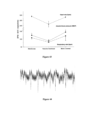
- the effects of Motor2 induced reversal of ketamine anesthesia are striking: the rat woke up within 2 minutes following injection of Motor2 (200 mg).
- an electroencephalogram showed wakefulness-like electrical activity.
- the individual in which a reversal of the effects of an NMBA or an anesthetic agent can be a human or a non-human animal, and includes but is not necessarily limited to any mammal.
- the animal in need of a composition of the disclosure is a human, a feline, a canine, an equine or a bovine animal.
- the disclosure has broad applicability in a variety of medical interventions and across various species.
- the disclosure is also useful for reversing the effects of short acting anesthetics, such as etomidate.
- Etomidate similar to ketamine, is a short acting anesthetic agent which is typically administered intravenously for the induction of general anesthesia for medical procedures which can be performed in relatively short time frames, such as for correction of dislocated joints.
- Extracorporal application of the compositions of the disclosure is also contemplated.
- compounds of the disclosure could be used by mixing the compositions with a biological fluid from an individual, such as during dialysis or during plasmapheresis. Therefore, in various embodiments, the disclosure provides an extracorporal composition comprising a compound of the disclosure.
- the extracorporal composition to the extent it contains a biological fluid that has been transiently separated from the body, can be considered an isolated composition according to the disclosure.
- the extracorporal composition can in various embodiments can comprise or consist of blood, urine or plasma (in addition to a compound provided by the disclosure).
- the disclosure provides for formation of a guest-host complex comprising a non-covalently associated complex of a compound of the disclosure and an NMBA.
- the guest-host complex can therefore be considered to be an organized chemical entity resulting from the association of two or more components of the NMBA and the host held together by non-covalent intermolecular forces.
- This unique pharmacokinetic-pharmakodynamic constellation has important implications for clinical anesthesia, critical care medicine and emergency medicine where respiratory side effects of anesthetics and neuromuscular blocking agents need to be reversed in due time in order to restore breathing and cardiovascular function.
- compositions described herein can be administered as pharmaceutical preparations.
- they can be provided in a variety of solutions of various compositions, and can be combined with one or more standard pharmaceutically acceptable carriers.
- pharmaceutically acceptable carriers can be found in: Remington: The Science and Practice of Pharmacy (2005) 21st Edition, Philadelphia, PA. Lippincott Williams & Wilkins .
- compositions of the disclosure may be administered intravenously.
- the composition can be provided as a liquid, a solution, or a solid, and may be provided in combination with any suitable delivery form or vehicle, examples of which include but are not limited to caplets, capsules, tablets, an inhalant or aerosol, etc.
- the dose of the composition to be used will necessarily be dependent upon the needs of the individual to whom the composition of the disclosure is to be administered.
- a composition comprising one or more compounds of this disclosure is administered in an amount effective to reduce the effects of the intoxicating agent.
- the amount of a compound of this disclosure administered to an individual is from 0.1 mg/kg to 1000 mg/kg inclusive, and including all integers to the first decimal point there between.
- the effective amount comprises a compound of this disclosure in mg/kg of 0.1, 0.2, 0.3, 0.4, 0.5, 0.6, 0.7, 0.8, 0.9, 1, 2, 3, 4, 5, 6, 7, 8, 9, 10, 11, 12, 13, 14, 15, 16, 17, 18, 19, 20, 21, 22, 23, 24, 25, 26, 27, 28, 29, 30, 31, 32, 33, 34, 35, 36, 37, 38, 39, 40, 41, 42, 43, 44, 45, 46, 47, 48, 49, 50, 51, 52, 53, 54, 55, 56, 57, 58, 59, 60, 61, 62, 63, 64, 65, 66, 67, 68, 69, 70, 71, 72, 73, 74, 75, 76, 77, 78, 79, 80, 81, 82, 83, 84, 85, 86, 87, 88, 89, 90, 91, 92, 93, 94, 95, 96, 97, 98, 99, 100, 101, 102, 103,
- the effective amount comprises 10, 20, 30, 40, 50, 60, 70, 80, 90, 100, 110, 120, 130, 140, 150, 160, 170, 180, 190, 200, 210, 220, 230, 240 or 250 mg/kg.
- the dosage is at least or is 100 mg/kg.
- the effective amount is at least or is 100 mg/kg.
- the effective amount is between and 100 mg/kg to 200 mg/kg, inclusive.
- the effective amount is from 65 mg/kg to 130 mg/kg.
- An effective amount can be administered once in a single dose, or can be administered over time, and/or in successive dosages with differing, i.e., increasing or decreasing amounts of the compound such that the intoxication is reversed.
- the disclosure includes complete and partial reversal of intoxication.
- composition comprising a compound of the disclosure is administered to the individual as detailed above.
- the compounds used in the method are acyclic CB[n]-type compounds.
- kits for prophylaxis and/or therapy for drug intoxication can comprise one or more compounds of this disclosure in, for example, a pharmaceutical formulation comprising a suitable buffer and pharmaceutically acceptable excipients, carriers and the like.
- the compositions can be included on or more sterile containers, such as vials, ampules, tubes, a bolus, etc.
- the kits may comprise, for example, a needle suitable for administration of a composition of this disclosure to and individual, and a syringe, and/or other components for use in administration.
- the kits can comprise printed material, such as instructions, and/or an indication that the kit is for use in treating an individual intoxicated with a drug of abuse, including but not necessarily limited to cocaine, fentanyl, methamphetamine, or a combination thereof.
- rats were anesthetized (isoflurane 5% induction, 1,5% maintenance, in 70% N 2 O/30% O 2 ) and tracheotomized. Spontaneous breathing was maintained during surgery and if possible according to normal protocol. Rats lay in the supine position with the head supported in a neutral position in the midline on a soft piece of tissue. The left femoral vein and artery were cannulated for drug infusion and blood sampling. Arterial blood gases and pH were measured every 10 or 30 minutes (Corning 178; Corning, NY, USA) and continuous measurement of blood pressure (PowerLab; ADInstruments, Colorado Springs, MO) and heart rate were performed.
- PowerLab ADInstruments, Colorado Springs, MO
- the right leg was shaved and the femoral nerve was stimulated supramaximally with subcutaneous needle electrodes, and the evoked response of the quadriceps femoris muscle was measured by accelerometry, with the TOF-Watch SX Monitor (Organon Ireland Ltd, a part of Schering-Plough Corporation, Dublin, Ireland), as described previously ( Fassbender et al, Anesthesiology 2007 ).
- the transducer was fixed to the skin ventromedially at the proximal end of the thigh, next to the tibial tuberosity (insertion point of the patellar ligament).
- Endpoints included time to recovery of spontaneous breathing, twitch height as well as TOF-ratio.
- Arterial pressure and heart rate were measured continuously, and arterial blood gas was measured directly before application of Motor1 and 30 minutes later.
- Arterial blood samples were collected at baseline, 2, 5, 10, 15, 20 and 60 minutes and subsequently processed for plasma samples which were stored at -80°C until analyzed. At 60 min after the injection of Motor1 urine was collected and stored at -80°C until analysis.
- Two screw electrodes (Plastics One Inc., Roanoke, VA) were inserted into holes drilled into the skull, one approximately 1.0 mm anterior and one approximately 3 mm posterior to the bregma and approximately 1 mm lateral to the midline. The free ends of the leads were connected to an amplifier and EEG activity was filtered by a low-pass (100 Hz) filter.
- EEG activity was filtered by a low-pass (100 Hz) filter.
- Motor2 200 mg was administered 60 minutes after discontinuation of isoflurane under steady state ketamine anesthesia while ketamine infusion was still running at a constant rate.
- Motor2 reverses ketamine anesthesia: increase in heart rate, blood pressure and respiratory rate to pre-anesthesia values, movements, spontaneous urination, and distress calls.
- Motor1 and Motor 1 as used herein are interchangeable.
- Motor2 and Motor 2 and used herein are also interchangeable.
- alkyl group refers to branched or unbranched hydrocarbons. Examples of such alkyl groups include methyl groups, ethyl groups, butyl groups, nonyl groups, neopentyl groups, and the like.
- the alkyl group can be a C 1 to C 20 alkyl group, including all integer numbers of carbons and ranges of numbers of carbons therebetween.
- carbocyclic group refers to a cyclic compound having a ring or multiple rings in which all of the atoms forming the ring(s) are carbon atoms.
- the rings of the carbocyclic group can be aromatic or nonaromatic, and include compounds that are saturated and partially unsaturated, and fully unsaturated. Examples of such groups include benzene, naphthalene, 1,2-dihydronaphthalene, cyclohexane, cyclopentene, and the like.
- the carbocyclic group can be a C 3 to C 20 carbocyclic group, including all integer numbers of carbons and ranges of numbers of carbons therebetween.
- heterocyclic group refers to a cyclic compound having a ring or multiple rings where at least one of the atoms forming the ring(s) is a heteroatom (e.g., oxygen, nitrogen, sulfur, etc.).
- the rings of the heterocyclic group can be aromatic or nonaromatic, and include compounds that are saturated, partially unsaturated, and fully unsaturated. Examples of such groups include imidazolidin-2-one, pyridine, quinoline, decahydroquinoline, tetrahydrofuran, pyrrolidine, pyrrolidone, and the like.
- the heterocyclic group can be a C 1 to C 20 heterocyclic group, including all integer numbers of carbons and ranges of numbers of carbons therebetween.
- carbocyclic ring system refers to a cyclic compound having a ring or multiple rings in which all of the atoms forming the ring(s) are carbon atoms. Examples of such groups include benzene, naphthalene, 1,2-dihydronaphthalene, cyclohexane, cyclopentene, and the like.
- the rings of the carbocyclic ring system or heterocyclic ring system can be aromatic or nonaromatic, and include compounds that are saturated, partially unsaturated, and fully unsaturated.
- the carbocyclic ring system can be a C 3 to C 20 carbocyclic group, including all integer numbers of carbons and ranges of numbers of carbons therebetween.
- the carbocyclic ring system can be a phenyl group or naphthyl group.
- the phenyl group or naphthyl group is attached to the compound via adjacent carbons of the phenyl group or naphthyl group.
- heterocyclic ring system refers to a cyclic compound having a ring or multiple rings in which at least one of the atoms forming the ring(s) is a heteroatom (e.g., oxygen, nitrogen, sulfur, etc.).
- the rings of the carbocyclic ring system or heterocyclic ring system can be aromatic or nonaromatic, and include compounds that are saturated, and fully unsaturated.
- Examples of the heterocyclic ring system include imidazolidin-2-one, pyridine, quinoline, decahydroquinoline, tetrahydrofuran, pyrrolidine, pyrrolidone, and the like.
- the heterocyclic ring system can be a C 1 to C 20 heterocyclic group, including all integer numbers of carbons and ranges of numbers of carbons therebetween.
- any of these groups and/or rings may each be substituted with alkyl groups and other substituents such as, for example, nitro, cyano, keto, carboxy, alkoxy, hydroxyl, amine, amide, halide (e.g., bromide, chloride, fluoride, and iodide), and alkoxy groups.
- the alkyl groups or aryl groups may be further substituted.
- the alkyl group can be halide substituted (e.g., a 2-chloroethyl group).
- a carbocyclic group can be cyano substituted (e.g., 3-cyano naphthalene).
- the present disclosure provides acyclic CB[n]-type compounds having the following structure:
- Each R is independently hydrogen, C 1 to C 20 alkyl group, C 3 to C 20 carbocyclic group, C 1 to C 20 heterocyclic group, carboxylic acid group, ester group, amide group, hydroxyl, or ether group.
- the carboxylic acid, ester, amide, and ether groups can have from 1 to 20 carbons, including all integer values and ranges therebetween.
- adjacent R groups form a C 3 to C 20 carbocyclic ring or heterocyclic ring, where the carbocyclic ring is a ring in which all of the atoms forming the ring(s) are carbon atoms and the heterocyclic ring is a ring where at least one of the atoms forming the ring(s) is a heteroatom (e.g., oxygen, nitrogen, sulfur, etc.).
- These rings may each be substituted with alkyl groups and other substituents such as, for example, nitro, cyano, keto, carboxy, alkoxy, hydroxyl, amine, amide, halide (e.g., bromide, chloride, fluoride, and iodide), and alkoxy groups.
- Each is independently a C 5 to C 20 carbocyclic ring system or C 2 to C 20 heterocyclic ring system.
- At least one of the compound has at least one solubilizing group. In an embodiment, both s of the compound have at least one solubilizing group. In an embodiment, one of the compound has at least one solubilizing group.
- the ring system has 1, 2, 3, 4, 5, or 6 solubilizing groups.
- the ring system has a targeting group.
- the value of n is 1 to 5, including all integer values therebetween. In an embodiment, the groups are the same.
- the compound is a salt, a partial salt, a hydrate, a polymorph, a stereoisomer or a mixture thereof.
- the compounds can have stereoisomers.
- the compound can be present as a racemic mixture, a single enantiomer, a single diastereomer, mixture of enantiomers, or mixture of diastereomers.
- the solubilizing group (or groups) increase (or impart) solubility of compounds in water or aqueous solvent systems.
- the solubilizing group can be a functional group that can be deprotonated over a broad pH range.
- the solubilizing group can have a cationic (e.g., ammonium and sulfonium groups), anionic (e.g., sulfate, sulfonate, phosphate, and phosphonate groups) or neutral group (e.g., sulfonic acids, phosphonic acids, polyethylene glycol (PEG) ethers (including PEG ether oligomers), crown ethers, and cyclam groups).
- PEG polyethylene glycol
- a neutral solubilizing group is a zwitterionic group (e.g., a group with both an ammonium group and a sulfonate group), where both ionic groups are covalently bonded to the compound. It is desirable that cationic solubilizing groups not interact with cavity of the compound.
- the compound can have mixtures of solubilizing groups.
- the solubilizing group selected from sulfonic acid, sulfonate salt, phosphonic acid, phosphonate salt, and polyethylene glycol.
- the solubilizing group can be connected to the linking group though a heteroatom, such as oxygen or sulfur.
- the PEG group can be connected to the compound through a sulfur atom forming a thioether moiety.
- the polyethylene glycol group can have a molecular weight of from 107 to 100,000, including all integer values and ranges therebetween.
- the solubilizing group or groups are not carboxylic acids or carboxylic acid salts. In one embodiment, at least one of the solubilizing groups is not a carboxylic acid or carboxylic acid salt.
- the targeting group is a moiety that interacts with, for example, a cell.
- a targeting group (TG) is a moiety that targets, for example, tumor cells by either passive or active targeting by methods known in the art. Examples of targeting groups include dendrons, dendrimers, PEG groups, peptides, polypeptides, folates, amidines, antibodies, proteins, steroids, mono or oligosaccharides, and the like.
- each of the compound is independently a C 5 to C 20 carbocyclic ring system having one of the following structures:
- R 1 to R 16 is independently hydrogen, C 1 to C 20 alkyl group, halo group, hydroxyl group, nitro group, carboxylic acid group, ester group, amide group, ether group, C 3 to C 20 carbocyclic group, or C 1 to C 20 heterocyclic group.
- the carboxylic acid group, ester group, amide group, and ether groups can have from 1 to 20 carbons, including all integer values and ranges therebetween.
- At least one of R 1 to R 16 in the compound has the following structure: LG is a linking group and X is the solubilizing group.
- one or more adjacent R 1 to R 16 groups are connected forming a carbocyclic or heterocyclic ring, and the ring can be substituted or unsubstituted.
- adjacent refers to groups attached through 2 or 3 carbons as depicted by, for example, in the structures: It is contemplated that groups can be attached through any two adjacent carbons.
- a linking group (LG) is a group that connects with a solubilizing group (X) or a targeting group (TG).
- the linking group can be, for example, an alkoxy moiety or an alkyl moiety.
- the linking group can have independently at each occurrence a thioether linkage, ether linkage, amino linkage, amide linkage, ester linkage, triazole ring linkage, or a combination thereof. For example, these linkages can join the linking group and solubilizing group or targeting group.
- the linking group, LG is a 1-substituted triazole.
- each i is independently 1 to 20, including all integer values therebetween.
- At least one of the R 1 to R 16 groups in the compound has the following structure: LG is a linking group and TG is a targeting group.
- the compound has one of the following structures: wherein Z is PEG group.
- the PEG group has a molecular weight of 200 to 10,000, including all integers and ranges therebetween.
- the PEG group has a molecular weight of 350 (PEG350), 750 (PEG750), 1900 (PEG1900), or 5000 (PEG5000).
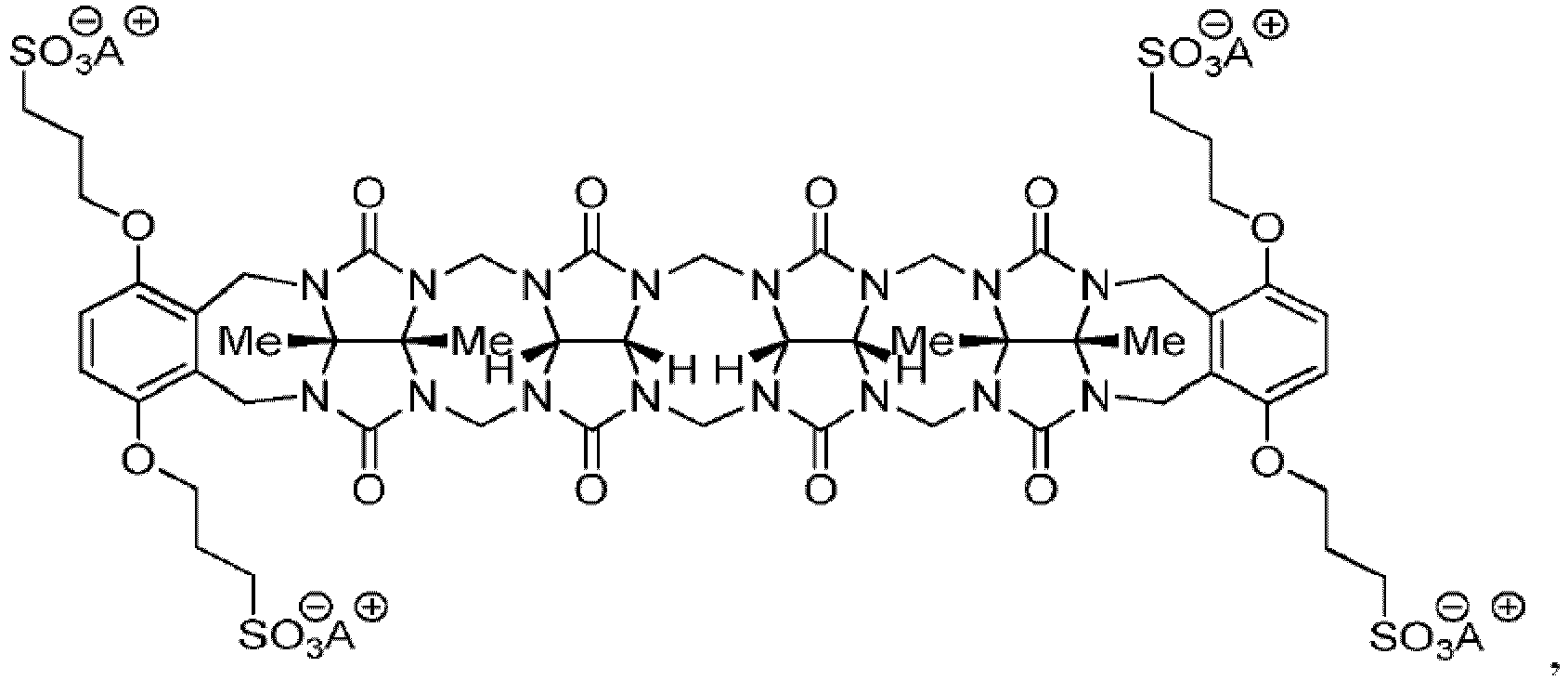
- the compounds have the following structures: (referred to herein as Motor1 ), (referred to herein as Motor2), where j is, for example, 1 to 2250, including all integer values and ranges therebetween, and R in this example is hydrogen or an alkyl group, and where A + can be H + , Na + , K + , Ca 2+ , Mg 2+ , Zn 2+ , H 4 N + , Et 3 NH + , Me 4 N + , (HOCH 2 CH 2 ) 3 NH + , or a cationic form of ethylenediamine, piperazine, and trishydroxymethyl aminomethane (TRIS).
- Motor1 Motor1
- Motor2 referred to herein as Motor2
- R in this example is hydrogen or an alkyl group
- a + can be H + , Na + , K + , Ca 2+ , Mg 2+ , Zn 2+ , H 4 N + , Et 3 NH + , Me 4 N + , (HOCH 2 CH 2
- one of the building block compounds can be derivatized to form a compound of the present disclosure.
- an alkyl bromide component of one of the building block compounds can be reacted with a PEGylated thiol to make a compound with a PEG solubilizing group.
- each R 1 to R 16 is independently hydrogen, C 1 to C 20 alkyl group, halo group, hydroxyl group, nitro group, carboxylic acid group, ester group, amide group, ether group, C 3 to C 20 carbocyclic group, or C 1 to C 20 heterocyclic group.
- the carboxylic acid group, ester group, amide group, and ether groups can have from 1 to 20 carbons, including all integer values and ranges therebetween.
- At least one of the R 1 to R 16 groups in the structure has the following structure: where LG is the linking group and wherein X is the solubilizing group. In an embodiment, LG can have the formula: where each i is 1 to 20.
- R 1 to R 16 groups are connected forming a carbocyclic or heterocyclic ring, and the ring can be substituted or unsubstituted.
- at least one of the R 1 to R 16 groups in the structure has the following structure: where LG is a linking group and wherein TG is the targeting group.
- the group is an aromatic ring having at least one alkyl ether moiety.
- reaction conditions e.g., solvent, reaction time and reaction temperature
- solvent e.g., TFA, HCl, H 2 SO 4 , TsOH, HBr, MeSO 3 H, and mixtures thereof.
- acetic anhydride it may be desirable to add acetic anhydride as a co-solvent.
- Reaction time can vary. Generally, a reaction time of 3 hours is sufficient to provide a desired extent of reaction.
- reaction temperatures of 25°C to 100°C can be used.
- the compounds can be made from building block compounds (i.e., intermediates).
- the building block compounds have functional groups (e.g., halogen (e.g., fluoro, chloro, bromo, or iodo), hydroxy, carboxylic acid, alkenyl, alkynyl, nitro, cyano, keto, amino, amido, thioether, thioate and triazole groups) that can be reacted to form solubilizing groups or targeting groups.
- functional groups e.g., halogen (e.g., fluoro, chloro, bromo, or iodo)
- hydroxy carboxylic acid
- alkenyl alkynyl
- nitro, cyano keto
- building block compounds include: and
- the tetra propargyl compound can be reacted with azides to form for example a triazole compound.
- Glycoluril Dimer A mixture of glycoluril (500 g, 3.51 mol) and paraformaldehyde (105 g, 3.51 mol) in HCl (8 M, 70 mL) was heated at 50 °C for 48 h. The reaction mixture was cooled and filtered. The solid was washed with water (500 mL) and then recrystallized with TFA (1.5 L) to yield Glycoluril Dimer as a white solid (334 g, 62 %).
- Dimethyl glycoluril Into a solution of urea (1140 g, 19.0 mol) in HCl (0.3 M, 2.8 L), 2, 3-butanedione (500 g, 5.8 mol) was added. The solution was stirred at RT for 12 h. The reaction mixture was filtered and the solid was washed with water (2.0 L ⁇ 2) and then ethanol (2.0 L) to yield Dimethyl glycoluril as a white solid (749 g, 76%).
- Dimethyl glycoluril bis(cyclic ether) Dimethyl glycoluril bis(cyclic ether).
- a mixture of Dimethyl glycoluril (749 g, 4.4 mol) and paraformaldehyde (650 g, 21.7 mol) in HCl (9 M, 3.8 L) was stirred for 24 h.
- Water (14.0 L) was added and the mixture was stirred for an additional 12 h.
- the mixture was then filtered and washed with water (2 L) and ethanol (2 L) to yield Dimethyl glycoluril bis(cyclic ether) as a white solid (719 g, 65%).
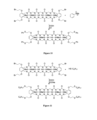
- 1,4-Naphthalene propanesulfonate wall ( figure 2 ).
- Ethanesulfonate Wall ( figure 4 ). 1,4-bis(2-bromoethoxy)benzene (2.00 g, 6.13 mmol) and sodium sulfite (3.10 g, 24.5 mmol) were mixed and dissolved in DMF (20 mL). The mixture was stirred at 100°C under N 2 for 12 h and then water (20 mL) was added. The mixture was allowed to cool to RT and the product precipitated as white crystals. The solid was collected by filtration and then purified by recrystallization from water. Drying under high vacuum gave Sodium 2,2'-(1,4-phenylenebis(oxy))diethanesulfonate as a white solid (2.01 g, 88%).
- Butanesulfonate Wall ( figure 5 ).
- a solution of butanesultone (24.5 g, 200 mmol) in 1,4-dioxane (160 mL) was added into a solution of hydroquinone (8.80 g, 80.0 mmol) in aqueous NaOH solution (10 wt%, 120 mL).
- the mixture was stirred at RT for 12 h then filtered to collect the crude solid.
- the solid was stirred with acetone (200 mL) then dried under high vacuum to yield Sodium 4,4'-(1,4-phenylenebis(oxy))dibutane-1-sulfonate as a white solid (25.1 g, 80%).
- 2,7-Naphthalenesulfonate Wall ( figure 6 ).
- a solution of propanesultone (38.0 g, 300 mmol) in 1,4-dioxane (240 mL) was added into a solution of naphthalene-2,7-diol (20.0 g, 124 mmol) in NaOH (10 wt%, 160 mL). This solution was stirred at RT for 12 h. After filtration, the solid was collected and then dissolved in H 2 O (100 mL) and then was precipitated by the addition of CH 3 CN (600 mL). The solid was collected by filtration and then dried under high vacuum to yield a pale green solid (23.2 g, 41%).
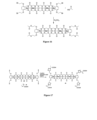
- Butanesulfonate Host b ( figure 7 ).
- Sodium 4,4'-(1,4-phenylenebis(oxy))bis(butane-1-sulfonate) (6.50 g, 15.4 mmol) was added into a solution of methyl tetramer (3.00 g, 3.84 mmol) in TFA (30 mL).
- the mixture was stirred and heated at 70 °C for 4 h.
- the solvent was removed under reduced pressure and the solid was further dried under high vacuum.
- IR (ATR, cm -1 ): 3000br, 1704m, 1456m, 1311m, 1225s, 1177s, 1080s, 966m, 922m, 818m, 794s, 754m, 666m.
- Tetrathiophenyl Host ( figure 10 ). Sodium benzenethiolate (48 mg, 0.36 mmol) was dissolved in EtOH (2 mL). Tetrabromohost (100 mg, 0.072 mmol) was added and the reaction mixture was stirred at RT for 12 h. The reaction mixture was centrifuged to collect the crude product. The solid was washed with EtOH (10 mL) and then H 2 O (10 mL). A pale yellow solid was obtained after drying under high vacuum (63 mg, 58%).
- Tetra Octanethioether Host ( figure 11 ). Octane-1-thiol (53 mg, 0.36 mmol) was dissolved in EtOH (2 mL). Tetrabromohost (100 mg, 0.072 mmol) was added and the reaction mixture was stirred at RT for 3 h. The reaction mixture was centrifuged to collect crude solid. The solid was washed with EtOH (10 mL) and then H 2 O (10 mL). A white solid was obtained after drying under high vacuum (103 mg, 72%).
- PEG 350 Host ( figure 12 ).
- PEG 350 (176 mg, 0.43 mmol) and NaOEt (29 mg, 0.43 mmol) was dissolved in ethylene glycol (2 mL).
- Tetrabromo Host 100 mg, 0.072 mmol was added and the reaction mixture was stirred and heated at 50 °C for 12 h.
- the reaction mixture was centrifuged to remove insoluble material and the clear solution was concentrated and poured into diethyl ether (10 mL). The white precipitate was collected by centrifugation. A dark yellow gel was obtained after drying under high vacuum (150 mg, 82%).
- PEG 750 Host ( figure 12 ).
- PEG 750 (349 mg, 0.43 mmol) and NaOEt (29 mg, 0.43 mmol) was dissolved in ethylene glycol (2 mL).
- Tetrabromo Host 100 mg, 0.072 mmol was added and the reaction mixture was stirred and heated at 70 °C for 12 h.
- the reaction mixture was centrifuged to remove insoluble material and a mixture of CH 2 Cl 2 and MeOH (5 mL, 4:1) was added to the supernatant.
- Diethyl ether (10 mL) was added and then the mixture was centrifuged to isolate a white precipitate. A pale yellow solid was obtained after drying under high vacuum (172 mg, 58%).
- PEG 1900 Host ( figure 12 ).
- PEG 1900 (823 mg, 0.43 mmol) and NaOEt (29 mg, 0.43 mmol) was dissolved in ethylene glycol (2 mL).
- Tetrabromo Host 100 mg, 0.072 mmol was added and the reaction mixture was stirred and heated at 70 °C for 12 h.
- the reaction mixture was centrifuged to remove insoluble material and a mixture of CH 2 Cl 2 and MeOH (5 mL, 4:1) was added to the supernatant.
- Diethyl ether (10 mL) was added and then the mixture was centrifuged to isolate a white precipitate.
- the product was further purified by GPC using Sephadex-G25.
- PEG 5000 Host ( figure 12 ).
- PEG 5000 (2.16 g, 0.43 mmol) and NaOEt (29 mg, 0.43 mmol) was dissolved in ethylene glycol (4 mL).
- Tetrabromo Host (100 mg, 0.072 mmol) was added and the reaction mixture was stirred and heated at 70 °C for 12 h.
- the reaction mixture was centrifuged to remove insoluble material and a mixture of CH 2 Cl 2 and MeOH (5 mL, 4:1) was added to the supernatant. Diethyl ether (10 mL) was added and then the mixture was centrifuged to isolate a white precipitate.
- the product was further purified by GPC using Sephadex-G25.
- Tetra Hydroxy Host ( figure 15 ). Tetra Ester Host (0.400 g, 0.305 mmol) was added into an aqueous solution of LiOH (2.5 M, 7.5 mL). The mixture was stirred at 50 °C for 0.5h and then the solid was collected by filtration. The solid was wash with 0.1 M HCl to neutral and then stirred with EtOH (30 mL), and water (30 mL). After drying under high vacuum, a white solid was obtained (0.234 g, 67%).
- Tetrathioacetate Host ( figure 16 ). K 2 CO 3 (99 mg, 0.43mmol) and thiolacetic acid (55 mg, 0.43 mmol) was added into DMF (2 mL) and was stirred at RT for 15 min under N 2 . Tetrabromo Host (100 mg, 0.072 mmol) was added as a solid. The mixture was stirred at 50 °C for 12 h and then was poured into H 2 O (6 mL). The solid was collected by filtration and was then washed with H 2 O (5 mL) and acetone (5 mL). A beige solid was obtained after drying under high vacuum (73 mg, 74%).
- Tetra Triazole Host ( figure 17 ). Ascorbic acid (7 mg, 0.04mmol), NaOH (2 mg, 0.04 mmol) and CuSO 4 (2 mg, 0.01 mmol) was mixed and then dissolved in a mixture of H 2 O and EtOH (1 mL, 1:1). Alkyne Host (26 mg, 0.024 mmol) and (R)-2-azidopropanoic acid (22 mg, 0.19 mmol) was added as solid. The mixture was heated with microwave at 80°C for 30 min, and then solvent was removed under reduced pressure. The crude solid was washed with MeOH (2 mL). A yellowish solid was obtained after drying under high vacuum (15 mg, 40%).
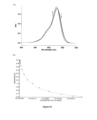
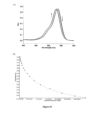
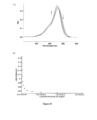
- Rhodamine 6G was used as an indicator to perform a competition experiment to determine the binding constant.
- the absorbances of the solution at 550 nm were monitored by UV-VIS spectroscopy, and then used to calculate the binding constant.
- Ketamine Etomidate Motor 1 39020 M -1 35318 M -1
- Erythromycin is a commercially available drug widely used to treat bacterial infections. Erythromycin estolate, however, is a derivative with high toxicity. Erythromycin, with an EC 50 value of 594 ( ⁇ 194) ⁇ M is significantly less toxic compared to erythromycin estolate, which has an EC 50 of 109 ( ⁇ 7) ⁇ M. These two drugs were chosen specifically to serve as a point of comparison for the levels of cytotoxicity resulting from Motor1.
- the MTS assay conducted on the HEK293 ( Figure 27A ) cell line showed high cell survival in the all concentrations of Motor1 at 92, 96, 89 and 79% cell viability. However, cell populations treated with distilled water (0.2%), 1 mM of erythromycin (47%) and erythromycin estolate (11%) showed significant decrease in cell viability.
- the AK assay ( Figure 27B ) performed on this cell line reflected these results. Percent cell death observed in the cells treated with 1 mM erythromycin and erythromycin estolate were 25 and 49% respectively. However, cell death in the untreated population and all concentrations of Motor1 was below 5%.
- a hemolysis assay ( Figure 29 ) was conducted to assess any toxic effects of Motor1 on human erythrocytes. These assays used pooled blood from two healthy donors from which red blood cells were isolated through centrifugation. Erythrocytes were exposed to phosphate buffered saline (PBS), distilled water, and increasing concentrations of Motor1 (1) (0.01, 0.1, 1 and 10 mM). The erythrocytes were incubated shaking at 37 °C for 3 h following treatment. The release of hemoglobin from damaged red blood cells was quantified by measuring the relative absorbance of the samples at 405 nm. Data collected was converted to percent hemolysis by setting the cell population treated with distilled water at a 100% hemolysis.
- PBS phosphate buffered saline
- Motor1 Motor1
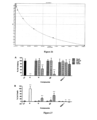
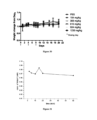
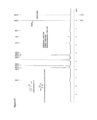
- Figure 30 shows Motor1 is well tolerated in mice. Indicated amounts of Motor1 were injected into the tail vein of outbred Swiss Webster mice at day 0, 4 and 8. The weight of each mouse was monitored over time and there were 5 mice per experimental group.
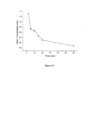
- Rat 10 For Plasma samples, four rats in total have been tested: Rat 10, Rat 17, Rat 11, Rat 21.
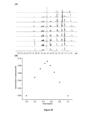
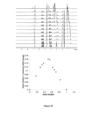
- 10 ⁇ L of plasma was taken and dried under high vacuum. Excess amount of probe solution was added (495 ⁇ L of 38 ⁇ M p-xylenediamine) to dissolve the residue and then the reference (5 ⁇ L of 600 ⁇ M benzene-1,3,5-tricarboxylic acid) was added.
- NMR spectra was taken with water suppression and the concentration of Motor1 was calculated from the ratio between the integrations of the peaks for the reference (8.2 ppm, 3H) and Motor1 (6.5 ppm, 4H).
- benzene-1,3,5-tricarboxylic acid was not used , but p-xylenediamine was used as the reference ( Figures 31-34 ).
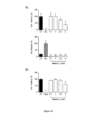
- Figure 35 shows toxicology using Motor2. Varying concentrations of Motor2 were incubated with THP-1 (A) and HEK 293 (B) cells over a 48 hr period resulted in high cell survival up to 5 mM.
- Two complementary assays were used to analyze toxicology: an MTS and an AK release assay for the THP-1 cells.
- the AK release assay was conducted using 20 ul of supernatant from each sample studied using the MTS assay.
- the Vialight assay was used to assess cell viability in the HEK 293 cells.
- U Untreated
- Stx Staurosporine
- this Example includes in vitro and in vitro data demonstrating utility of compounds of the present disclosure for reversal of the effects of a variety of drugs and includes in vitro and in vivo data supporting this utility.
- use of molecular containers of the present disclosure as reversal agent to reverse toxic effects of drugs of abuse (cocaine or any other opiate, amphetamines, ketamine, methamphetamine, phencyclidine [PCP]) as well as drugs used in perioperative medicine (local anesthetics, beta-blockers, neurolepts, anticholinergic agents), as well as antidepressants will be apparent. It is expected this approach will have life-saving properties as far as toxicology is concerned in acute care settings.
- the compound(s) will be used as a drug that will significantly decrease the relapse rate in addiction.
- a reversal agent to reverse toxic effects of drugs of abuse including but not necessarily limited to cocaine, amphetamines, ketamine, methamphetamine, phencyclidine [PCP]
- drugs of abuse including but not necessarily limited to cocaine, amphetamines, ketamine, methamphetamine, phencyclidine [PCP]
- drugs used in perioperative medicine local anesthetics, beta-blockers, neuroleptics, anticholinergic agents, opioids
- Compounds of this disclosure will be administered in acute care settings to treat the effect of acute intoxication.
- the compound in a chronic setting, can be used as treatment for cocaine, methamphetamine and other substance use disorders (SUD), as by rapidly inactivating the drug from the bloodstream, it will significantly decrease the relapse rate in addiction disorders, therefore leading to significant beneficial health-care economic implications.
- SUV substance use disorders
- one or more compounds of the disclosure and/or compositions are suitable for use in reversal of acute intoxication from agents including but not necessarily limited to cocaine, amphetamines, ketamine, ecstasy, propranolol, atropine, lidocaine, bupivacaine, other local anesthetics, tricyclics antidepressant, and from intoxication by any members of the classes of drugs into which the foregoing compounds fall.
- tricyclic antidepressants Use in the treatment of suicide attempts or accidental overdoses by drugs such as tricyclic antidepressants, beta-blockers, and opioids. Cardiovascular and neurological symptoms of tricyclic antidepressants include arterial hypotension, cardiac arrhythmia, hallucinations, and seizures, and apnea. Sometimes, a combination of these drugs is given which can all be reversed by compounds of this disclosure which will be administered by paramedics and in the emergency departments.
- Opioids induce a respiratory depression and often, opioids and cocaine are administered in the same patient.
- the new drug will be administer as rapid antidote for the acute intoxication even in absence of clear information about which drugs were taken by the patient, or in case of suspected intoxication presented with acute psychotic symptoms.
- Cocaine/amphetamine relapse prevention According to SAHMSA (substance Abuse and Mental Health Services Administration) in 2010 there were in US approximately 1.5 million of cocaine users and half million of metamphetamine users. Currently there is no treatment that is FDA-approved for the treatment of those addiction disorders. Compounds of this disclosure will be administered chronically to patients seeking treatment for their substance use disorder, and it will rapidly inactivate cocaine or metamphetamine such that the user does not experience the desired psychotropic effects, therefore reducing the drug addicting potential for the subject. There is experimental evidence suggesting that decreasing the amplitude and the rate of rise of a cocaine 'spike' substantially decreases the self-administration of the addictive substance Neuropsychopharmacology (2014) 39, 1538-1546 .
- ACCBs calabadion 1 and 2 were administered to more than 200 tracheostomized, mechanically ventilated rats, which reversed complete atonia of all skeletal muscles within 10-60 seconds (after administration of 5 mg/kg), and in a dose-dependent fashion (see Hoffmann et al;, Anesthesiology. 2013 Aug;119(2):317-25 , Angew Chem Int Ed Engl. 2012 Nov 5;51(45):11358-62 ).
- ACCB did not have any side effects on: arterial blood-gas analysis, EKG, arterial blood pressure, and heart rate.
- calabadion 2 clinically reverses the effects of ketamine.
- ketamine 20mg/kg bolus was given followed by an infusion of calabadion versus placebo.
- Calabadion 2 reducfed the time to recovery of righting reflex by more than 40 per cent.
- Motor1 also referred to herein as Calabadion 1; and Motor2 also referred to herein as Calabadion 2; cucurbit[7]uril, sulfonated calix[4]arene, and hexyl capped Motor1 to bind to five important drugs of abuse namely cocaine hydrochloride, methamphetamine hydrochloride, and phencyclidine hydrochloride, ketamine hydrochloride , and morphine sulfate to assess their potential use.
- K a Determination of K a between Hosts Motor 1 and Motor 2 with drugs (cocaine, methamphetamine, phencyclidine, ketamine, morphine) (using UV/Vis spectroscopy.
- the change in UV/Vis absorbance as a function of guest concentration was fitted to a competitive binding model which allowed determination of the K a values.
- the known K a values between Motor 2•rhodamine 6G (2.3 ⁇ 10 6 M -1 ) and Motor 1•rhodamine 6G (4.8 ⁇ 10 5 M -1 ) were used as inputs in the competitive binding model. 1 Table 5 .
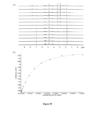
- K a Determination of K a between Hosts CB[7] and 4-sulfo calix[4]arene and guests cocaine and methamphetamine using 1 H NMR.
- a direct titration was performed between the host and guest.
- the concentration of the host was kept constant while varying the concentration of the guest and the change in chemical shift of a selected host signal was measured.
- the change in chemical shift as a function of guest concentration was fitted to a 1:1 binding model to determine the K a .
- the concentration of guest was fixed and host concentration was varied, depending on the availability of a suitable 1 H NMR peak whose chemical shift change could be easily monitored.
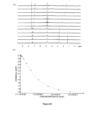
- Equation 1 was used to determine K rel for the interaction of TMSP and methamphetamine for CB[7].
- a solution containing CB[7] (500.2 ⁇ M), TMSP (600.6 ⁇ M), and methamphetamine (598.7 ⁇ M) was prepared and allowed to reach equilibrium ( Figure 67 ).
- the relative concentrations of TMSP free and CB[7]•methamphetamine were determined by integration of the appropriate resonances in the 1 H NMR spectrum ( Figure 67 : TMSP free : -0.005 ppm; CB[7]•TMSP: -0.700 ppm).
- Binding constants (K a , M -1 ) between Motor 2 and selected drugs measured in pH 7.4 sodium phosphate buffered water at room temperature. Table 6.
- This Example provides a demonstrations of cocaine and methamphetamine reversal.
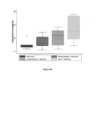
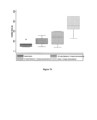
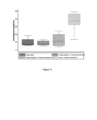
- Calabadion2 reverses behavioral effects of cocaine and methamphetamine dose-dependently in rats.
- This Example provides a demonstration of ketamine reversal. Animals. All studies on rats (adult male Sprague-Dawley rats, strain code 400; 294 ⁇ 61g) were conducted in accordance with the Subcommittee on Research Animal Care at Massachusetts General Hospital, Boston, MA (Protocol 2011N00181).
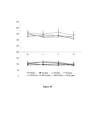
- Calabadion 2 Effects of Calabadion 2 on electrographic metrics of unconsciousness during constant anesthetic infusion. Calabadion 2's effects on ketamine evoked unconsciousness were investigated by analyzing changes in electrical brain activity, using an epidural EEG-electrode in 13 chronically instrumented rats.
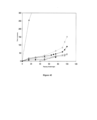
- the median dose of Calabadion 2 required to achieve the described accelerated recovery from LORR with a 50% probability (ED50) was 983.5mg/kg [95%CI 976.1-991.3] and 166.6mg/kg [95%CI 160.9-172.9] for the reversal of a 4mg/kg i.v. etomidate bolus and a 30mg/kg i.v. bolus of ketamine, respectively.
- This Example provides a demonstration of reversal of the effects of an opioid.
- Male Sprague-Dawley rats were used and were obtained from Charles River Laboratories (Wilmington, MA) and housed in the Massachusetts General Hospital Center for Comparative Medicine Animal Facility.
- Femoral artery catheters were preimplanted by the vendor in some animals.
- Drugs were administered through a 24G lateral tail vein catheter.
- Calabadion 2 was solubilized in sterile distilled deionized H2O (100 mg/ml) with gentle warming.
- Fentanyl citrate and naloxone were obtained from McKesson Medical-Surgical (Richmond, VA).
- Fentanyl was given by infusion (KDS model 200 series infusion pump; KDScientific).
- Rat Arterial Blood Gas Studies Rats were restrained in an acrylic chamber (3 inch diameter). The chamber had multiple perforations for room air exchange and was flushed, additionally, via a luer port with 2 liters/min air. Following tail vein catheterization under brief isoflurane anesthesia (3 to 5%) and at least 15 minutes recovery and chamber acclimation, calabadion 2 was injected. A baseline arterial blood sample ( ⁇ 100 microliters) in a heparinized syringe was take for arterial blood gas analysis. Fentanyl citrate (50 mcg/kg, IV) was administered by infusion over 15 mins. On completion of the infusion, a second arterial blood sample was taken. Rats were repeat studied and recovered at least 3 days between study sessions. Arterial blood was analyzed promptly using CG4+ cartridges in a Vetscan iStat 1 (Abaxis, Union City, CA) blood gas analyzer
- Rat Breathing Studies Studies were conducted in anesthetized rats spontaneously breathing 1.5% isoflurane in air. Following intubation and tail vein catheterization, baseline breathing was measured for at least 15 minutes. Fentanyl citrate (25 mcg/kg IV) was infused over 30 minutes. 15 minutes into the fentanyl infusion, Calabadion 2 (100 mg/kg IV bolus) was administered; 5 minutes later naloxone (1 mg/kg IV bolus) was administered.
- rats were orally, endotracheally intubated with a 14G angiocatheter, which was connected by T-piece to tubing continuously flushed (1 l/min) with air using a mass flow controller valve (Model GE50A, MKS Instruments Inc., Andover, MA). Changes in gas flow induced by rat breathing were detected using a heated pneumotachometer (Model 8420; Hans Rudolph Inc., Shawnee, KS). Gas flow was converted to an analog signal with a differential pressure transducer and a demodulator (Models CD15 and MP45-14- 871; Validyne Engineering, Northridge, CA). The system was calibrated using a rodent ventilator (Harvard Apparatus, Model 683).
Landscapes
- Health & Medical Sciences (AREA)
- Public Health (AREA)
- Veterinary Medicine (AREA)
- Chemical & Material Sciences (AREA)
- Medicinal Chemistry (AREA)
- Pharmacology & Pharmacy (AREA)
- Life Sciences & Earth Sciences (AREA)
- Animal Behavior & Ethology (AREA)
- General Health & Medical Sciences (AREA)
- Epidemiology (AREA)
- Engineering & Computer Science (AREA)
- Bioinformatics & Cheminformatics (AREA)
- Addiction (AREA)
- Psychiatry (AREA)
- Biomedical Technology (AREA)
- Neurology (AREA)
- Neurosurgery (AREA)
- Chemical Kinetics & Catalysis (AREA)
- General Chemical & Material Sciences (AREA)
- Nuclear Medicine, Radiotherapy & Molecular Imaging (AREA)
- Organic Chemistry (AREA)
- Acyclic And Carbocyclic Compounds In Medicinal Compositions (AREA)
- Pharmaceuticals Containing Other Organic And Inorganic Compounds (AREA)
Claims (9)
- Verbindung für die Verwendung in einem Verfahren zur Behandlung eines Individuums, das eine Behandlung bei Vergiftung durch Einnahme eines Arzneimittels/einer Droge benötigt, wobei das Arzneimittel/die Droge aus der Gruppe ausgewählt ist, die aus Kokain, Fentanyl, Methamphetamin und Kombinationen davon besteht, wobei die Verwendung eine Verabreichung an das Individuum einer Zusammensetzung umfasst, die Folgendes umfasst: die Verbindung, die die folgende Struktur aufweist, oder ein Salz davon, ein Teilsalz davon, ein Hydrat davon, ein Polymorph oder eine Mischung davon, ein Stereoisomer davon oder Kombinationen davon:
 wobei jedes R unabhängig Folgendes ist: Wasserstoff, C1- bis C20-Alkylgruppe, C3- bis C20-carbocyclische Gruppe, C1- bis C20-heterocyclische Gruppe, Carbonsäuregruppe, Estergruppe, Amidgruppe, Hydroxygruppe oder Ethergruppe;wobei optional benachbarte R-Gruppen einen C3- bis C20-carbocyclischen Ring oder heterocyclischen Ring bilden,wobei jedes
 wobei bei jedem Auftreten von
 vorausgesetzt, dass mindestens eines von R1 bis R16 in der Verbindung die folgende Struktur aufweist:
 wobei jedes i 1 bis 20 ist; und X eine solubilisierende Gruppe ist, die aus Folgenden ausgewählt ist: Sulfonsäuregruppe, Sulfonatsalzgruppe, Phosphonsäuregruppe, Phosphonatsalzgruppe und Polyethylenglycolgruppe; und wobei n 1 bis 5 ist.
 - Verbindung für die Verwendung nach Anspruch 1, wobei die

- Verbindung für die Verwendung nach Anspruch 1, wobei die Verbindung eine der folgenden Strukturen aufweist:


- Verbindung für die Verwendung nach Anspruch 1, wobei die Verbindung eine der folgenden Strukturen aufweist:


- Verbindung für die Verwendung nach Anspruch 1, wobei das Individuum eine Behandlung von Einnahme von Kokain benötigt.
- Verbindung für die Verwendung nach Anspruch 1, wobei das Individuum eine Behandlung von Einnahme von Fentanyl benötigt.
- Verbindung für die Verwendung nach Anspruch 1, wobei das Individuum eine Behandlung von Einnahme von Methamphetamin benötigt.
- Verbindung für die Verwendung nach Anspruch 1, wobei das bedürftige Individuum ein Mensch ist.
- Verbindung für die Verwendung nach Anspruch 1, wobei das bedürftige Individuum ein nicht-menschlicher Säuger ist.
Applications Claiming Priority (2)
| Application Number | Priority Date | Filing Date | Title |
|---|---|---|---|
| US201462065627P | 2014-10-18 | 2014-10-18 | |
| PCT/US2015/056192 WO2016061571A1 (en) | 2014-10-18 | 2015-10-19 | Acyclic cucurbit(n)uril type molecular containers to treat intoxication and decrease relapse rate in substance abuse disorders |
Publications (3)
| Publication Number | Publication Date |
|---|---|
| EP3207046A1 EP3207046A1 (de) | 2017-08-23 |
| EP3207046A4 EP3207046A4 (de) | 2018-06-13 |
| EP3207046B1 true EP3207046B1 (de) | 2024-09-25 |
Family
ID=55747475
Family Applications (1)
| Application Number | Title | Priority Date | Filing Date |
|---|---|---|---|
| EP15850784.8A Active EP3207046B1 (de) | 2014-10-18 | 2015-10-19 | Acyclische cucurbit(n)uril-molekularbehälter zur behandlung von intoxikation und verringerung der rückfallrate bei drogenabhängigkeitserkrankungen |
Country Status (4)
| Country | Link |
|---|---|
| US (1) | US9956229B2 (de) |
| EP (1) | EP3207046B1 (de) |
| ES (1) | ES3000668T3 (de) |
| WO (1) | WO2016061571A1 (de) |
Families Citing this family (10)
| Publication number | Priority date | Publication date | Assignee | Title |
|---|---|---|---|---|
| EP2627657B1 (de) * | 2010-10-13 | 2016-02-03 | University of Maryland, College Park | CUCURBIT[n]URIL-ARTIGE MOLEKULARE CONTAINER SOWIE VERFAHREN ZU IHRER HERSTELLUNG UND VERWENDUNG |
| CN108003198B (zh) * | 2017-11-15 | 2021-06-18 | 昆明理工大学 | 一种d-半乳糖键接的开环葫芦脲及应用 |
| CN108101915B (zh) * | 2017-11-15 | 2020-07-10 | 昆明理工大学 | 一类聚胺衍生化的开环葫芦脲及应用 |
| WO2021155310A1 (en) * | 2020-01-31 | 2021-08-05 | Definitive Biotechnologies Llc | Overdose diagnostic and treatment device and method |
| EP4139311A4 (de) * | 2020-04-21 | 2023-10-25 | University of Maryland, College Park | Acyclische cucurbiturile, verfahren zur herstellung davon und verwendungen davon |
| US20210379099A1 (en) * | 2020-05-29 | 2021-12-09 | University Of Maryland, College Park | Cucurbituril molecular containers and methods of using same |
| AU2023364716A1 (en) * | 2022-10-20 | 2025-05-15 | Clear Scientific, Inc. | Methods of synthesis for cucurbituril compounds |
| AU2023378470A1 (en) * | 2022-11-11 | 2025-06-05 | Jiangsu Hengrui Pharmaceuticals Co., Ltd. | Cucurbituril compound and medical use thereof |
| CN119613419A (zh) * | 2023-09-13 | 2025-03-14 | 中国科学院上海有机化学研究所 | 氘代的二芳基甘脲四聚体化合物及其用途 |
| CN121045193B (zh) * | 2025-10-29 | 2026-02-13 | 川北医学院 | 用于毒品检测的葫芦脲衍生物及其制备方法和应用 |
Family Cites Families (3)
| Publication number | Priority date | Publication date | Assignee | Title |
|---|---|---|---|---|
| AUPQ023299A0 (en) * | 1999-05-07 | 1999-06-03 | Unisearch Limited | Cucurbiturils and method for synthesis |
| US7335768B2 (en) * | 2003-09-04 | 2008-02-26 | University Of Maryland | Cucurbit [n] uril compounds and analogs, and methods of making and using the same |
| EP2627657B1 (de) * | 2010-10-13 | 2016-02-03 | University of Maryland, College Park | CUCURBIT[n]URIL-ARTIGE MOLEKULARE CONTAINER SOWIE VERFAHREN ZU IHRER HERSTELLUNG UND VERWENDUNG |
-
2015
- 2015-10-19 WO PCT/US2015/056192 patent/WO2016061571A1/en not_active Ceased
- 2015-10-19 ES ES15850784T patent/ES3000668T3/es active Active
- 2015-10-19 US US15/519,330 patent/US9956229B2/en active Active
- 2015-10-19 EP EP15850784.8A patent/EP3207046B1/de active Active
Also Published As
| Publication number | Publication date |
|---|---|
| ES3000668T3 (en) | 2025-03-03 |
| US9956229B2 (en) | 2018-05-01 |
| US20170246180A1 (en) | 2017-08-31 |
| WO2016061571A1 (en) | 2016-04-21 |
| EP3207046A4 (de) | 2018-06-13 |
| EP3207046A1 (de) | 2017-08-23 |
Similar Documents
| Publication | Publication Date | Title |
|---|---|---|
| US9956229B2 (en) | Acyclic cucurbit[n]uril type molecular containers to treat intoxication and decrease relapse rate in substance abuse disorders | |
| US9469648B2 (en) | Reversal of drug-induced neuromuscular block using novel molecular containers | |
| US11723589B2 (en) | Reversal of general anesthesia by administration of methylphenidate, amphetamine, modafinil, amantadine, and/or caffeine | |
| Hasselström et al. | Morphine pharmacokinetics and metabolism in humans: enterohepatic cycling and relative contribution of metabolites to active opioid concentrations | |
| ES2260959T3 (es) | Formulacion a base de exo-s-mecamilamina y su utilizacion en tratamientos medicos. | |
| US10342800B2 (en) | Dosing regimen for sedation with CNS 7056 (Remimazolam) | |
| CN113166060B (zh) | 用丙酮酸激酶激活化合物治疗镰状细胞病 | |
| Zhang et al. | Supramolecular therapeutics to treat the side effects induced by a depolarizing neuromuscular blocking agent | |
| CN107922420B (zh) | 用于治疗社交障碍和药物使用障碍的治疗性化合物和组合物 | |
| US20120270848A1 (en) | Novel Compositions and Therapeutic Methods Using Same | |
| CN101896205A (zh) | 使用nmda拮抗剂用于获得麻醉剂节约效果的组合物和方法 | |
| WO2023186827A1 (en) | 5-methoxy-n,n-dimethyltryptamine for the treatment of postpartum depression | |
| Benzer et al. | Case 40-2013: a 36-year-old man with agitation and paranoia | |
| CN108250143A (zh) | 一类苄基异喹啉化合物、制备方法和用途 | |
| Li et al. | Remimazolam tosilate infusion has a lower incidence of hypotension than propofol infusion during painless colonoscopy | |
| Bobyrov et al. | Pharmacology | |
| AU2014337355A1 (en) | Catalytic scavengers of organophosphates to potentiate butyrylcholinesterase (BChE) as a catalytic bioscavenger and methods for making and using them | |
| JP6691135B2 (ja) | ジアリールメチリデンピペリジン誘導体およびデルタオピオイド受容体アゴニストとしてそれらの使用 | |
| SREE | BUTORPHANOL-DIAZEPAM/MIDAZOLAM AS | |
| JP2023111092A (ja) | 潜在抑制機能障害を呈する疾患の予防又は治療剤 | |
| AU2023242438A1 (en) | 5-methoxy-n,n-dimethyltryptamine for the treatment of postpartum depression | |
| Sullivan et al. | Toxic ingestions | |
| YADAV | STUDIES ON SPARING EFFECT OF BUTORPHANOL AND KETAMINE FOR XYLAZINE/DEXMEDETOMIDINE INDUCTION ON ISOFLURANE ANAESTHESIA FOR ELECTIVE OVARIOHYSTERECTOMY IN DOGS | |
| CA3157364A1 (en) | Prophylaxis and reversal of stimulant and opioid/opiate overdose and/or toxic exposure | |
| bin Ahmad Bahuri | COMPARISON OF THE EFFECTS OF PROPOFOL-KETAMINE |
Legal Events
| Date | Code | Title | Description |
|---|---|---|---|
| STAA | Information on the status of an ep patent application or granted ep patent |
Free format text: STATUS: THE INTERNATIONAL PUBLICATION HAS BEEN MADE |
|
| PUAI | Public reference made under article 153(3) epc to a published international application that has entered the european phase |
Free format text: ORIGINAL CODE: 0009012 |
|
| STAA | Information on the status of an ep patent application or granted ep patent |
Free format text: STATUS: REQUEST FOR EXAMINATION WAS MADE |
|
| 17P | Request for examination filed |
Effective date: 20170511 |
|
| AK | Designated contracting states |
Kind code of ref document: A1 Designated state(s): AL AT BE BG CH CY CZ DE DK EE ES FI FR GB GR HR HU IE IS IT LI LT LU LV MC MK MT NL NO PL PT RO RS SE SI SK SM TR |
|
| AX | Request for extension of the european patent |
Extension state: BA ME |
|
| DAV | Request for validation of the european patent (deleted) | ||
| DAX | Request for extension of the european patent (deleted) | ||
| A4 | Supplementary search report drawn up and despatched |
Effective date: 20180516 |
|
| RIC1 | Information provided on ipc code assigned before grant |
Ipc: A61K 31/4188 20060101ALI20180509BHEP Ipc: C07D 487/14 20060101ALI20180509BHEP Ipc: A61K 31/551 20060101ALI20180509BHEP Ipc: A61P 25/30 20060101ALI20180509BHEP Ipc: A61K 31/787 20060101ALI20180509BHEP Ipc: A61K 47/60 20170101ALI20180509BHEP Ipc: A61P 25/36 20060101ALI20180509BHEP Ipc: C07D 487/22 20060101AFI20180509BHEP |
|
| STAA | Information on the status of an ep patent application or granted ep patent |
Free format text: STATUS: EXAMINATION IS IN PROGRESS |
|
| 17Q | First examination report despatched |
Effective date: 20200108 |
|
| GRAP | Despatch of communication of intention to grant a patent |
Free format text: ORIGINAL CODE: EPIDOSNIGR1 |
|
| STAA | Information on the status of an ep patent application or granted ep patent |
Free format text: STATUS: GRANT OF PATENT IS INTENDED |
|
| INTG | Intention to grant announced |
Effective date: 20240419 |
|
| GRAS | Grant fee paid |
Free format text: ORIGINAL CODE: EPIDOSNIGR3 |
|
| GRAA | (expected) grant |
Free format text: ORIGINAL CODE: 0009210 |
|
| STAA | Information on the status of an ep patent application or granted ep patent |
Free format text: STATUS: THE PATENT HAS BEEN GRANTED |
|
| RAP3 | Party data changed (applicant data changed or rights of an application transferred) |
Owner name: THE GENERAL HOSPITAL CORPORATION Owner name: UNIVERSITY OF MARYLAND, COLLEGE PARK |
|
| AK | Designated contracting states |
Kind code of ref document: B1 Designated state(s): AL AT BE BG CH CY CZ DE DK EE ES FI FR GB GR HR HU IE IS IT LI LT LU LV MC MK MT NL NO PL PT RO RS SE SI SK SM TR |
|
| REG | Reference to a national code |
Ref country code: GB Ref legal event code: FG4D |
|
| REG | Reference to a national code |
Ref country code: CH Ref legal event code: EP |
|
| REG | Reference to a national code |
Ref country code: DE Ref legal event code: R096 Ref document number: 602015089996 Country of ref document: DE |
|
| REG | Reference to a national code |
Ref country code: IE Ref legal event code: FG4D |
|
| REG | Reference to a national code |
Ref country code: NL Ref legal event code: FP |
|
| REG | Reference to a national code |
Ref country code: LT Ref legal event code: MG9D |
|
| PG25 | Lapsed in a contracting state [announced via postgrant information from national office to epo] |
Ref country code: NO Free format text: LAPSE BECAUSE OF FAILURE TO SUBMIT A TRANSLATION OF THE DESCRIPTION OR TO PAY THE FEE WITHIN THE PRESCRIBED TIME-LIMIT Effective date: 20241225 |
|
| PG25 | Lapsed in a contracting state [announced via postgrant information from national office to epo] |
Ref country code: GR Free format text: LAPSE BECAUSE OF FAILURE TO SUBMIT A TRANSLATION OF THE DESCRIPTION OR TO PAY THE FEE WITHIN THE PRESCRIBED TIME-LIMIT Effective date: 20241226 Ref country code: FI Free format text: LAPSE BECAUSE OF FAILURE TO SUBMIT A TRANSLATION OF THE DESCRIPTION OR TO PAY THE FEE WITHIN THE PRESCRIBED TIME-LIMIT Effective date: 20240925 |
|
| PG25 | Lapsed in a contracting state [announced via postgrant information from national office to epo] |
Ref country code: BG Free format text: LAPSE BECAUSE OF FAILURE TO SUBMIT A TRANSLATION OF THE DESCRIPTION OR TO PAY THE FEE WITHIN THE PRESCRIBED TIME-LIMIT Effective date: 20240925 |
|
| PG25 | Lapsed in a contracting state [announced via postgrant information from national office to epo] |
Ref country code: LV Free format text: LAPSE BECAUSE OF FAILURE TO SUBMIT A TRANSLATION OF THE DESCRIPTION OR TO PAY THE FEE WITHIN THE PRESCRIBED TIME-LIMIT Effective date: 20240925 |
|
| PG25 | Lapsed in a contracting state [announced via postgrant information from national office to epo] |
Ref country code: RS Free format text: LAPSE BECAUSE OF FAILURE TO SUBMIT A TRANSLATION OF THE DESCRIPTION OR TO PAY THE FEE WITHIN THE PRESCRIBED TIME-LIMIT Effective date: 20241225 |
|
| PG25 | Lapsed in a contracting state [announced via postgrant information from national office to epo] |
Ref country code: RS Free format text: LAPSE BECAUSE OF FAILURE TO SUBMIT A TRANSLATION OF THE DESCRIPTION OR TO PAY THE FEE WITHIN THE PRESCRIBED TIME-LIMIT Effective date: 20241225 Ref country code: NO Free format text: LAPSE BECAUSE OF FAILURE TO SUBMIT A TRANSLATION OF THE DESCRIPTION OR TO PAY THE FEE WITHIN THE PRESCRIBED TIME-LIMIT Effective date: 20241225 Ref country code: LV Free format text: LAPSE BECAUSE OF FAILURE TO SUBMIT A TRANSLATION OF THE DESCRIPTION OR TO PAY THE FEE WITHIN THE PRESCRIBED TIME-LIMIT Effective date: 20240925 Ref country code: GR Free format text: LAPSE BECAUSE OF FAILURE TO SUBMIT A TRANSLATION OF THE DESCRIPTION OR TO PAY THE FEE WITHIN THE PRESCRIBED TIME-LIMIT Effective date: 20241226 Ref country code: FI Free format text: LAPSE BECAUSE OF FAILURE TO SUBMIT A TRANSLATION OF THE DESCRIPTION OR TO PAY THE FEE WITHIN THE PRESCRIBED TIME-LIMIT Effective date: 20240925 Ref country code: BG Free format text: LAPSE BECAUSE OF FAILURE TO SUBMIT A TRANSLATION OF THE DESCRIPTION OR TO PAY THE FEE WITHIN THE PRESCRIBED TIME-LIMIT Effective date: 20240925 |
|
| REG | Reference to a national code |
Ref country code: AT Ref legal event code: MK05 Ref document number: 1726575 Country of ref document: AT Kind code of ref document: T Effective date: 20240925 |
|
| REG | Reference to a national code |
Ref country code: ES Ref legal event code: FG2A Ref document number: 3000668 Country of ref document: ES Kind code of ref document: T3 Effective date: 20250303 |
|
| PG25 | Lapsed in a contracting state [announced via postgrant information from national office to epo] |
Ref country code: IS Free format text: LAPSE BECAUSE OF FAILURE TO SUBMIT A TRANSLATION OF THE DESCRIPTION OR TO PAY THE FEE WITHIN THE PRESCRIBED TIME-LIMIT Effective date: 20250125 Ref country code: PT Free format text: LAPSE BECAUSE OF FAILURE TO SUBMIT A TRANSLATION OF THE DESCRIPTION OR TO PAY THE FEE WITHIN THE PRESCRIBED TIME-LIMIT Effective date: 20250127 |
|
| PG25 | Lapsed in a contracting state [announced via postgrant information from national office to epo] |
Ref country code: RO Free format text: LAPSE BECAUSE OF FAILURE TO SUBMIT A TRANSLATION OF THE DESCRIPTION OR TO PAY THE FEE WITHIN THE PRESCRIBED TIME-LIMIT Effective date: 20240925 Ref country code: SM Free format text: LAPSE BECAUSE OF FAILURE TO SUBMIT A TRANSLATION OF THE DESCRIPTION OR TO PAY THE FEE WITHIN THE PRESCRIBED TIME-LIMIT Effective date: 20240925 |
|
| PG25 | Lapsed in a contracting state [announced via postgrant information from national office to epo] |
Ref country code: EE Free format text: LAPSE BECAUSE OF FAILURE TO SUBMIT A TRANSLATION OF THE DESCRIPTION OR TO PAY THE FEE WITHIN THE PRESCRIBED TIME-LIMIT Effective date: 20240925 Ref country code: AT Free format text: LAPSE BECAUSE OF FAILURE TO SUBMIT A TRANSLATION OF THE DESCRIPTION OR TO PAY THE FEE WITHIN THE PRESCRIBED TIME-LIMIT Effective date: 20240925 |
|
| PG25 | Lapsed in a contracting state [announced via postgrant information from national office to epo] |
Ref country code: CZ Free format text: LAPSE BECAUSE OF FAILURE TO SUBMIT A TRANSLATION OF THE DESCRIPTION OR TO PAY THE FEE WITHIN THE PRESCRIBED TIME-LIMIT Effective date: 20240925 Ref country code: PL Free format text: LAPSE BECAUSE OF FAILURE TO SUBMIT A TRANSLATION OF THE DESCRIPTION OR TO PAY THE FEE WITHIN THE PRESCRIBED TIME-LIMIT Effective date: 20240925 |
|
| PG25 | Lapsed in a contracting state [announced via postgrant information from national office to epo] |
Ref country code: SK Free format text: LAPSE BECAUSE OF FAILURE TO SUBMIT A TRANSLATION OF THE DESCRIPTION OR TO PAY THE FEE WITHIN THE PRESCRIBED TIME-LIMIT Effective date: 20240925 |
|
| REG | Reference to a national code |
Ref country code: DE Ref legal event code: R119 Ref document number: 602015089996 Country of ref document: DE |
|
| PG25 | Lapsed in a contracting state [announced via postgrant information from national office to epo] |
Ref country code: MC Free format text: LAPSE BECAUSE OF FAILURE TO SUBMIT A TRANSLATION OF THE DESCRIPTION OR TO PAY THE FEE WITHIN THE PRESCRIBED TIME-LIMIT Effective date: 20240925 |
|
| P01 | Opt-out of the competence of the unified patent court (upc) registered |
Free format text: CASE NUMBER: APP_25904/2025 Effective date: 20250530 |
|
| PG25 | Lapsed in a contracting state [announced via postgrant information from national office to epo] |
Ref country code: DE Free format text: LAPSE BECAUSE OF NON-PAYMENT OF DUE FEES Effective date: 20250501 |
|
| PG25 | Lapsed in a contracting state [announced via postgrant information from national office to epo] |
Ref country code: DK Free format text: LAPSE BECAUSE OF FAILURE TO SUBMIT A TRANSLATION OF THE DESCRIPTION OR TO PAY THE FEE WITHIN THE PRESCRIBED TIME-LIMIT Effective date: 20240925 |
|
| PG25 | Lapsed in a contracting state [announced via postgrant information from national office to epo] |
Ref country code: LU Free format text: LAPSE BECAUSE OF NON-PAYMENT OF DUE FEES Effective date: 20241019 Ref country code: BE Free format text: LAPSE BECAUSE OF NON-PAYMENT OF DUE FEES Effective date: 20241031 |
|
| PLBE | No opposition filed within time limit |
Free format text: ORIGINAL CODE: 0009261 |
|
| STAA | Information on the status of an ep patent application or granted ep patent |
Free format text: STATUS: NO OPPOSITION FILED WITHIN TIME LIMIT |
|
| REG | Reference to a national code |
Ref country code: BE Ref legal event code: MM Effective date: 20241031 |
|
| 26N | No opposition filed |
Effective date: 20250626 |
|
| PG25 | Lapsed in a contracting state [announced via postgrant information from national office to epo] |
Ref country code: SE Free format text: LAPSE BECAUSE OF FAILURE TO SUBMIT A TRANSLATION OF THE DESCRIPTION OR TO PAY THE FEE WITHIN THE PRESCRIBED TIME-LIMIT Effective date: 20240925 |
|
| PG25 | Lapsed in a contracting state [announced via postgrant information from national office to epo] |
Ref country code: IE Free format text: LAPSE BECAUSE OF NON-PAYMENT OF DUE FEES Effective date: 20241019 |
|
| REG | Reference to a national code |
Ref country code: CH Ref legal event code: U11 Free format text: ST27 STATUS EVENT CODE: U-0-0-U10-U11 (AS PROVIDED BY THE NATIONAL OFFICE) Effective date: 20251101 |
|
| PGFP | Annual fee paid to national office [announced via postgrant information from national office to epo] |
Ref country code: NL Payment date: 20251023 Year of fee payment: 11 |
|
| PGFP | Annual fee paid to national office [announced via postgrant information from national office to epo] |
Ref country code: GB Payment date: 20251014 Year of fee payment: 11 |
|
| PGFP | Annual fee paid to national office [announced via postgrant information from national office to epo] |
Ref country code: IT Payment date: 20251031 Year of fee payment: 11 |
|
| PG25 | Lapsed in a contracting state [announced via postgrant information from national office to epo] |
Ref country code: HR Free format text: LAPSE BECAUSE OF FAILURE TO SUBMIT A TRANSLATION OF THE DESCRIPTION OR TO PAY THE FEE WITHIN THE PRESCRIBED TIME-LIMIT Effective date: 20240925 |
|
| PGFP | Annual fee paid to national office [announced via postgrant information from national office to epo] |
Ref country code: FR Payment date: 20251027 Year of fee payment: 11 |
|
| PGFP | Annual fee paid to national office [announced via postgrant information from national office to epo] |
Ref country code: CH Payment date: 20251101 Year of fee payment: 11 |
|
| PG25 | Lapsed in a contracting state [announced via postgrant information from national office to epo] |
Ref country code: CY Free format text: LAPSE BECAUSE OF FAILURE TO SUBMIT A TRANSLATION OF THE DESCRIPTION OR TO PAY THE FEE WITHIN THE PRESCRIBED TIME-LIMIT; INVALID AB INITIO Effective date: 20151019 |
|
| PGFP | Annual fee paid to national office [announced via postgrant information from national office to epo] |
Ref country code: ES Payment date: 20251114 Year of fee payment: 11 |
|
| PG25 | Lapsed in a contracting state [announced via postgrant information from national office to epo] |
Ref country code: HU Free format text: LAPSE BECAUSE OF FAILURE TO SUBMIT A TRANSLATION OF THE DESCRIPTION OR TO PAY THE FEE WITHIN THE PRESCRIBED TIME-LIMIT; INVALID AB INITIO Effective date: 20151019 |