EP3207741B1 - Procédé et appareil d'utilisation d'un équipement d'utilisateur en tant que petit noeud b évolué pour petite cellule - Google Patents
Procédé et appareil d'utilisation d'un équipement d'utilisateur en tant que petit noeud b évolué pour petite cellule Download PDFInfo
- Publication number
- EP3207741B1 EP3207741B1 EP14904158.4A EP14904158A EP3207741B1 EP 3207741 B1 EP3207741 B1 EP 3207741B1 EP 14904158 A EP14904158 A EP 14904158A EP 3207741 B1 EP3207741 B1 EP 3207741B1
- Authority
- EP
- European Patent Office
- Prior art keywords
- lte
- lte packet
- packet
- master
- time period
- Prior art date
- Legal status (The legal status is an assumption and is not a legal conclusion. Google has not performed a legal analysis and makes no representation as to the accuracy of the status listed.)
- Active
Links
Images


Classifications
-
- H—ELECTRICITY
- H04—ELECTRIC COMMUNICATION TECHNIQUE
- H04L—TRANSMISSION OF DIGITAL INFORMATION, e.g. TELEGRAPHIC COMMUNICATION
- H04L69/00—Network arrangements, protocols or services independent of the application payload and not provided for in the other groups of this subclass
- H04L69/08—Protocols for interworking; Protocol conversion
-
- H—ELECTRICITY
- H04—ELECTRIC COMMUNICATION TECHNIQUE
- H04L—TRANSMISSION OF DIGITAL INFORMATION, e.g. TELEGRAPHIC COMMUNICATION
- H04L12/00—Data switching networks
- H04L12/02—Details
- H04L12/14—Charging, metering or billing arrangements specially adapted for data communications, e.g. authentication, authorisation and accounting [AAA] framework
- H04L12/1432—Metric aspects
- H04L12/1435—Metric aspects volume-based
-
- H—ELECTRICITY
- H04—ELECTRIC COMMUNICATION TECHNIQUE
- H04L—TRANSMISSION OF DIGITAL INFORMATION, e.g. TELEGRAPHIC COMMUNICATION
- H04L5/00—Arrangements affording multiple use of the transmission path
- H04L5/0001—Arrangements for dividing the transmission path
- H04L5/0003—Two-dimensional division
- H04L5/0005—Time-frequency
- H04L5/0007—Time-frequency the frequencies being orthogonal, e.g. OFDM(A) or DMT
- H04L5/001—Time-frequency the frequencies being orthogonal, e.g. OFDM(A) or DMT the frequencies being arranged in component carriers
-
- H—ELECTRICITY
- H04—ELECTRIC COMMUNICATION TECHNIQUE
- H04L—TRANSMISSION OF DIGITAL INFORMATION, e.g. TELEGRAPHIC COMMUNICATION
- H04L69/00—Network arrangements, protocols or services independent of the application payload and not provided for in the other groups of this subclass
- H04L69/16—Implementation or adaptation of Internet protocol [IP], of transmission control protocol [TCP] or of user datagram protocol [UDP]
- H04L69/167—Adaptation for transition between two IP versions, e.g. between IPv4 and IPv6
-
- H—ELECTRICITY
- H04—ELECTRIC COMMUNICATION TECHNIQUE
- H04W—WIRELESS COMMUNICATION NETWORKS
- H04W4/00—Services specially adapted for wireless communication networks; Facilities therefor
- H04W4/24—Accounting or billing
-
- H—ELECTRICITY
- H04—ELECTRIC COMMUNICATION TECHNIQUE
- H04W—WIRELESS COMMUNICATION NETWORKS
- H04W76/00—Connection management
- H04W76/20—Manipulation of established connections
- H04W76/27—Transitions between radio resource control [RRC] states
-
- H—ELECTRICITY
- H04—ELECTRIC COMMUNICATION TECHNIQUE
- H04W—WIRELESS COMMUNICATION NETWORKS
- H04W8/00—Network data management
- H04W8/18—Processing of user or subscriber data, e.g. subscribed services, user preferences or user profiles; Transfer of user or subscriber data
- H04W8/20—Transfer of user or subscriber data
- H04W8/205—Transfer to or from user equipment or user record carrier
-
- H—ELECTRICITY
- H04—ELECTRIC COMMUNICATION TECHNIQUE
- H04W—WIRELESS COMMUNICATION NETWORKS
- H04W88/00—Devices specially adapted for wireless communication networks, e.g. terminals, base stations or access point devices
- H04W88/02—Terminal devices
- H04W88/04—Terminal devices adapted for relaying to or from another terminal or user
-
- H—ELECTRICITY
- H04—ELECTRIC COMMUNICATION TECHNIQUE
- H04W—WIRELESS COMMUNICATION NETWORKS
- H04W84/00—Network topologies
- H04W84/18—Self-organising networks, e.g. ad-hoc networks or sensor networks
- H04W84/20—Leader-follower arrangements
-
- H—ELECTRICITY
- H04—ELECTRIC COMMUNICATION TECHNIQUE
- H04W—WIRELESS COMMUNICATION NETWORKS
- H04W84/00—Network topologies
- H04W84/18—Self-organising networks, e.g. ad-hoc networks or sensor networks
- H04W84/22—Self-organising networks, e.g. ad-hoc networks or sensor networks with access to wired networks
Definitions
- User device to device communications may be used to enhance communications between the user devices with no or minimum assistance from a wireless network, especially, in compliance with the Long Term Evolution (LTE) standards of 3rd Generation Partnership Project along with any amendments, updates and/or revisions.
- LTE Long Term Evolution
- the user device such as a user equipment (UE) with LTE communication module may be used as a small evolved NodeB (SeNB) for a small cell (alternatively, called as a pico cell or a femto cell), to communicate with other UEs.
- a small evolved NodeB SeNB
- a small cell alternatively, called as a pico cell or a femto cell
- WO 2004/040938 A1 relates to a portable, low power base station which is configured to convey wireless traffic between a mobile station and a conventional wireless network via the Internet.
- the base station is configured to connect to the Internet at a user-selected location and establishes a small area of wireless coverage within a greater macrocell network. The user sets the operating parameters of the base station.
- US 2013/0115947 A1 relates to a method for integrating UE functions to a femtocell.
- the femtocell with a subscriber identity module (SIM) is activated.
- the femtocell reads the information of the SIM.
- the femtocell registers to a core network via an Internet.
- the femtocell having successfully registered to the core network provides SMS service, MMS service or Call service.
- US 2014/0029513 A1 relates to a mobile terminal that includes: an LTE wireless processing unit having an LTE communication function; a wireless LAN processing unit having a wireless LAN communication function; and a terminal control unit that determines whether to use the LTE wireless processing unit or the wireless LAN processing unit and controls a function as a wireless terminal.
- the mobile terminal includes a base station functional unit having a communication protocol processing function of an LTE base station. Based on control of the terminal control unit, a signal generated at the base station functional unit, the signal being based on the communication protocol of the LTE base station, is stored in a wireless LAN frame, and the signal is sent to a device in the LTE core network via a wireless LAN base station.
- WO 2013/103754 A1 provides an apparatus for employing relaying devices, such as Long Term Evolution (LTE) user equipment (UE) relays, having a licensed wireless or wired backhaul link and an unlicensed access link.
- LTE Long Term Evolution
- UE user equipment
- One method generally includes receiving, at a first device, data from a first apparatus via a first carrier frequency in a licensed spectrum, wherein the first device comprises a relaying device, and relaying the data to a second apparatus via a second carrier frequency in an unlicensed spectrum.
- wireless communication systems with relaying devices may achieve better spectral efficiency in unlicensed access links.
- US 2013/0260810 A1 relates to the re-establishment of suspended RRC connections.
- the mobile device sends a connection re-establishment request message to the RAN to have the suspended RRC connection re-established.
- the RAN node may need to attempt to retrieve the RRC connection data (either from memory or if from another network element if stored elsewhere/if the RRC connection was suspended by another RAN node) and verifies whether the RRC connection is valid.
- the mobile device receives, in response to the message, a connection re-establishment command message from the RAN.
- the mobile device In response to the message, the mobile device re-establishes the RRC connection with the RAN, using the stored RRC connection information, and sends a connection re-establishment complete message to the RAN.
- the mobile device and RAN may then resume user plane data communication with each other.
- E-UTRA Evolved Universal Terrestrial Radio Access
- E-UTRAN Evolved Universal Terrestrial Radio Access Network
- Stage 2 Version 12.3.0, September 2014
- HeNBs Home evolved Node Bs
- RNs relay nodes
- 3G TS 29.060 "GPRS Tunnelling Protocol (GTP) across the Gn and Gp Interface", Version 3.0.0, May 1999 is the first available specification of the Gn and Gp interfaces for the General Packet Radio Service (GPRS) and the use of GTP via those interfaces. While this earlier version suggested the use of TCP for tunneling on the Gn and Gp interfaces, the use of TCP was no longer allowed from March 2000 onward with the updated version 3.4.0 of 3G TS 29.060 .
- GTP General Packet Radio Service
- 3GPP TR 36.806 "Relay architectures for E-UTRA (LTE-Advanced)", Version 9.0.0, March 2010 , describes relay architectures being discussed for E-UTRA (LTE-Advanced).
- Illustrative embodiments of the present disclosure include, but are not limited to, methods, systems, and apparatuses for handling in-device coexistence interference in a wireless network.
- the phrase "in one embodiment” is used repeatedly. The phrase generally does not refer to the same embodiment; however, it may.
- the terms "comprising,” “having,” and “including” are synonymous, unless the context dictates otherwise.
- the phrase “A/B” means “A or B”.
- the phrase “A and/or B” means “(A), (B), or (A and B)”.
- the phrase “at least one of A, B and C” means "(A), (B), (C), (A and B), (A and C), (B and C) or (A, B and C)".
- the phrase “(A) B” means "(B) or (A B)", that is, A is optional.
- module may refer to, be part of, or include an Application Specific Integrated Circuit (ASIC), an electronic circuit, a programmable logic, a processor (shared, dedicated, or group) and/or memory (shared, dedicated, or group) that execute one or more software or firmware programs, a combinational logic circuit, and/or other suitable components that provide the described functionality.
- ASIC Application Specific Integrated Circuit
- processor shared, dedicated, or group
- memory shared, dedicated, or group
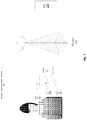
- FIG. 1 schematically illustrates a first wireless communication system 100 in accordance with various embodiments.
- the first wireless communication system 100 may comprise a master user equipment (UE) 101, a plurality of slave UEs 102a-102c, a personal computer (PC) 103, a local area network (LAN) router 104, an Internet cloud 105, a billing server 106 and an evolved packet core (EPC) 107, and/or others.
- UE master user equipment
- PC personal computer
- LAN local area network
- EPC evolved packet core
- the master UE 101 may be embodied as, without limitation, a smart phone, a cellular telephone, a tablet, a consumer electronic device, a laptop computer, a notebook computer, a mobile computing system, a processor-based system, and/or any other mobile communication device configured to be used as a small evolved Node B (eNB) for a small cell.
- eNB small evolved Node B
- Any of the slave UE 102a-102c may be embodied as, without limitation, a smart phone, a cellular telephone, a tablet, a consumer electronic device, a laptop computer, a notebook computer, a mobile computing system, a processor-based system, and/or any other mobile communication device configured to be served by the master UE.
- the master UE 101 may be an advanced UE equipped with multiple communication modules, such as a Long Term Evolution (LTE) module in compliance with the Long Term Evolution (LTE) standards of 3rd Generation Partnership Project along with any amendments, updates and/or revisions, a WiFi module in compliance with IEEE 802.11 specifications, and/or others. That the advanced UE acts as the master UE means that the master UE 101 may be configured with abilities of serving the slave UEs 102a-102c as a small eNB for transmitting/receiving LTE packets to/from the slave UEs 102a-102c.
- LTE Long Term Evolution
- LTE Long Term Evolution
- WiFi in compliance with IEEE 802.11 specifications
- the master UE which supports Frequency Division Duplex (FDD) may be configured with ability of converting its transmission/receiving frequencies of one carrier (namely, transmission frequency 1.9GHz and receiving frequency 2GHz) as receiving/transmission frequency (namely, receiving frequency 1.9GHz and transmission frequency 2GHz), ability of sending broadcasting, synchronization, paging and so on, ability of switching transmission protocol from uplink transmission protocol, such as single carrier, to downlink transmission protocol, such as orthogonal frequency division multiplexing (OFDM), and/or others.
- a user interface of the master UE 101 may provide a method, such as a button, for the user to select ON/OFF of switching between the master UE mode and normal UE mode.
- the master UE 101 and the slave UEs 102a-102c may detect existence of each other in proximity, before establishing a LTE connection between them.
- the master UE 101 may receive a LTE packet from a slave UE (e.g., a slave UE 102a).
- the master UE 101 may convert the LTE packet into a transmission control protocol/Internet protocol (TCP/IP) packet.
- TCP/IP transmission control protocol/Internet protocol
- the master UE 101 may retrieve payload data from the LTE packet and encapsulate the payload data into a TCP/IP packet based on the TCP/IP tunneling protocol, such as adding TCP/IP header including the IP address of EPC to the payload and so on.
- the master UE may further transmit the TCP/IP packet to the Internet cloud 105 via a local area network including the PC 103 which may be connected with the master UE 101 via an input/output (I/O) port (e.g., an universal serial bus (USB) port), a LAN router 104 which may connect the PC to the Internet, and/or others.
- the Internet cloud 105 may further route the TCP/IP packet to the EPC.
- the EPC will remove the TCP/IP header added by the master UE and forward the encapsulated data to its real destination.
- the EPC 107 may comprise a mobility management entity (MME), a serving-gateway (S-GW), a packet data network-gateway (PDN-GW), a serving GPRS support node (SGSN), etc.
- MME mobility management entity
- S-GW serving-gateway
- PDN-GW packet data network-gateway
- SGSN serving GPRS support node
- the master UE 101 may convert the LTE packet into a TCP/IP packet by removing the LTE MAC header.
- the master UE may send the TCP/IP packet originated from the slave UEs 102a-102c directly to its destination (e.g., an internet server) without routing through the EPC 107.
- the master UE may further send control information including served data volume to the EPC 107 or billing server 106 using TCP/IP protocol. EPC/billing server may use these control information for statistics or billing purposes.
- the Internet cloud 105 may further connect to the billing server 106, which may record the billing rate for the data transmission between the slave UEs 102a-102c and the Internet and also add remaining bytes into Master UE's data plan.
- the first wireless communication system 100 as illustrated may be useful for indoor LTE network coverage, especially, when quality of the indoor LTE network coverage is poor.
- the small cell may be deployed to provide additional coverage where there is limited or no LTE coverage from the slave UEs' operator. Even if the slave UEs' operator may have coverage, master UE may be able to offer much higher throughput because the same bandwidth is shared by much smaller number of UEs
- FIG. 2 schematically illustrates a second wireless communication system in accordance with various embodiments.
- the second wireless communication system 200 may comprise a master UE 201, a plurality of slave UEs 202a-202c, a LTE eNB 203, and/or others.
- the master UE 201 may be embodied as, without limitation, a smart phone, a cellular telephone, a tablet, a consumer electronic device, a laptop computer, a notebook computer, a mobile computing system, a processor-based system, and/or any other mobile communication device configured to be used as a small evolved Node B (eNB) for a small cell covering the slave UEs 102a-102c.
- eNB small evolved Node B
- any of the slave UEs 102a-102c may be embodied as, without limitation, a low power sensor configured to be served by the master UE to transmit/receive data to/from the LTE eNB 203, such as a meter to measure body temperature, blood pressure, and/or other features of the user,
- the slave UEs 102a-102c may be embodies as, without limitation, a smart phone, a cellular telephone, a tablet, a consumer electronic device, a laptop computer, a notebook computer, a mobile computing system, a processor-based system, and/or any other mobile communication device configured to be served by the master UE.
- the LTE eNB 203 may be a base station bridging between the master UE 201 and the EPC 204 under the LTE standards of 3rd Generation Partnership Project along with any amendments, updates and/or revisions.
- the EPC 204 may comprise a mobility management entity (MME), a serving-gateway (S-GW), a packet data network-gateway (PDN-GW), a serving GPRS support node (SGSN), etc.
- MME mobility management entity
- S-GW serving-gateway
- PDN-GW packet data network-gateway
- SGSN serving GPRS support node
- the master UE 201 may be configured with abilities of serving the slave UEs 202a-202c as a small eNB for transmitting/receiving LTE packets to/from the slave UEs 102a-102c.
- the master UE which supports frequency division duplex (FDD)
- FDD frequency division duplex
- the master UE which supports frequency division duplex (FDD)
- a user interface of the master UE 101 may provide a method, such as a button, for the user to select ON/OFF of switching between normal UE mode and master UE mode.
- the master UE 201 may receive a LTE packet from a slave UE 102a over the small cell.
- the master UE 201 may modify the LTE packet in order to make it suitable for transmission from the master UE 201 to the LTE eNB 203.
- the master UE 201 may replace an old header of the LTE packet which is related to the slave UE 202a with a new header which is related to the master UE 201.
- the master UE 201 may record the relationship between an IP address and a MAC address for each slave UE.
- the master UE 201 may replace the IP address and MAC address of a source slave UE (e.g., the slave UE 202 a) with its own IP address and MAC address before forwarding the LTE packet from the source slave UE to the LTE eNB 203 and vice versa Then, the LTE eNB 203 may further transfer the LTE packet to the EPC 204.
- a source slave UE e.g., the slave UE 202 a
- the LTE eNB 203 may further transfer the LTE packet to the EPC 204.
- the master UE 201 may receive a LTE packet call from the LTE eNB 203. In order to handle the LTE packet call, it may be difficult for the master UE 201 to continue serving the slave UEs 202a-202c. In an embodiment, the slave UEs 202a-202c may declare a radio link failure in response that the master UE 201 stops functioning for a predetermined time period. In order to continue serving the slave UEs 202a-202c when the master UE 201 completes its own LTE packet call, the master UE 201 may need to reestablish a radio resource connection (RRC) for communicating LTE packets from/to the slave UEs.
- RRC radio resource connection
- the master UE 201 may send a radio resource connection (RRC) suspend request to the slave UEs 202a-202c, which may indicate a RRC suspend type and time period.
- RRC radio resource connection
- the slave UEs 202a-202c may enter long DRX cycle to avoid declaring the radio link failure during the master UE service absence. If the LTE packet call is not finished before the RRC suspend timer expires, the master UE 201 may send additional RRC suspend message to the slave UEs to extend the RRC suspend time in the ON duration of the slave UEs' DRX cycle.
- the slave UE may declare radio link failure if it does not receive any new RRC suspend message which may be used to extend the RRC suspend time period before the last RRC suspend timer expires.
- the master UE may continue serving the slave UEs without a need of reestablishing the RRC connection with the slave UEs.
- RRC suspend request in technical standard (TS) 36.331 may to be proposed as below by broadcasting the information using one of the system information message e.g. SIB2 Signallingradiobearer: N/A RLC-SAP:TM Logicalchannel: BCCH Direction: E-UTRAN to UE
- Figure 3 schematically illustrates a method of handling communication in the first wireless communication system 100 in accordance with various embodiments.
- the master UE 101 may be switched from an advance UE and configured with ability of serving the plurality of slave UEs 102a-102c, including abilities of serving the slave UEs 102a-102c as the small eNB for transmitting/receiving LTE packets to/from the slave UEs 102a-102c.
- the master UE may be configured with ability of converting its transmission/receiving frequencies (namely, transmission frequency 1.9GHz and receiving frequency 2GHz) as receiving/transmission frequency (namely, receiving frequency 1.9GHz and transmission frequency 2GHz), ability of sending broadcasting, synchronization, paging and so on, ability of switching transmission protocol from uplink transmission protocol, such as single carrier, to downlink transmission protocol, such as orthogonal frequency division multiplexing (OFDM), and/or others.
- a user interface of the master UE 101 may provide a method, such as a button, for the user to select ON/OFF of switching between the master UE and the advance UE.
- the master UE 101 may register at the Internet cloud 105 by providing information of identity, address, and/or others.
- the master UE 101 may further connect to the billing server 106 via the Internet cloud 105 to transmit control and billing information related to the data plan of the slave UEs and the master UE, the billing server 106 may record the total number of bytes for the data transmission between the slave UEs 102a-102c and the Internet which is served via the Mater UE.
- the master UE 101 may convert the LTE packet to a TCP/IP packet. For an instance, the master UE 101 may retrieve payload data from the LTE packet and encapsulate the payload data into the TCP/IP packet based on the TCP/IP protocol, such as adding TCP/IP header and address to the payload and so on.
- the master UE may further transmit the TCP/IP packet to the Internet cloud 105 via a local area network including the PC 103 connected with the master UE 101 via an input/output (I/O) port (e.g., an universal serial bus (USB) port), a LAN router 104 connecting the PC 103 to the Internet, and/or others.
- the Internet cloud 105 may further forward the TCP/IP packet to the EPC 107 which may remove the TCP/IP header added by the master UE and send the original packet (i.e., the data payload) to its final destination.
- I/O input/output
- USB universal serial bus
- Figure 4 schematically illustrates a method of handling communications in the second wireless communication system 200 in accordance with various embodiments.
- the master UE 201 is configured with ability of acting as the SeNB for a personal area network comprising the plurality of slave UEs 102a-102c which are located in proximity to the master UE 201 for transmitting LTE packets between the slave UEs 102a-102c and the LTE eNB 203.
- the master UE 201 may be configured with ability of converting its transmission/receiving frequencies (namely, transmission frequency 1.9GHz and receiving frequency 2GHz) as receiving/transmission frequency (namely, receiving frequency 1.9GB and transmission frequency 2GB), ability of sending broadcasting, synchronization, paging and so on, ability of switching the transmission protocol from uplink transmission protocol, such as single carrier to downlink transmission protocol, such as orthogonal frequency division multiplexing (OFDM), and/or others.
- a user interface of the master UE 201 may provide a method, such as a button, for the user to select ON/OFF of switching between an ordinary UE to the master UE.
- the master UE 201 may receive a LTE packet from the slave UE 102a over the small cell.
- the master UE 201 may modify the LTE packet in order to make it suitable for transmission from the master UE 201 to the LTE eNB 203.
- the master UE 201 may replace an old header of the LTE packet associated with the slave UE 202a with a new header associated with the master UE 201
- the master UE may record the relationship between an IP address of and a MAC address for each slave UE..
- the master UE 201 may replace the IP address and MAC address of a source slave UE (e.g., the slave UE 202 a) with its own IP address and MAC address before forwarding the LTE packet from the source slave UE to the LTE eNB 203 and vice versa. Then, the LTE eNB 203 may further transfer the LTE packet to the EPC 204. It should be understood that although the data transmission between the slave UEs 102a-102c and the EPC 107 has been described in the above, the same or similar concept should be able to be adoptable for the data transmission from the EPC 107 to the slave UEs 102a-102c.
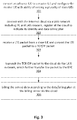
- Figure 5 schematically illustrates a method of handling communications in the second wireless communication system 200 in accordance with various embodiments.
- the master UE 201 may receive a LTE packet call from the LTE eNB 203. In order to handle the LTE packet call, it may be difficult for the master UE 201 to continue serving the slave UEs 202a-202c.
- the master UE 201 may send a radio resource connection (RRC) suspend request to the slave UEs 202a-202c, which may indicate a RRC suspend type and time period.
- RRC radio resource connection
- the master UE 201 may handle the packet call within the time period.
- the master UE may continue serving the slave UEs without a need of reestablishing the RRC connection with the slave UEs.
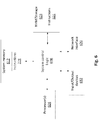
- Figure 6 schematically illustrates an example system in accordance with various embodiments.
- the system 600 may comprise one or more processor(s) 604, system control logic 608 coupled with at least one of the processor(s) 604, system memory 612 coupled with system control logic 608, non-volatile memory (NVM)/storage 616 coupled with system control logic 608, and a network interface 620 coupled with system control logic 608.
- processor(s) 604 system control logic 608 coupled with at least one of the processor(s) 604, system memory 612 coupled with system control logic 608, non-volatile memory (NVM)/storage 616 coupled with system control logic 608, and a network interface 620 coupled with system control logic 608.
- NVM non-volatile memory
- Processor(s) 604 may include one or more single-core or multi-core processors.
- Processor(s) 604 may include any combination of general-purpose processors and dedicated processors (e.g., graphics processors, application processors, baseband processors, etc.).
- processors(s) 604 may be configured to execute one or more embodiment(s) as illustrated in Figures 1 and 3 in accordance with various embodiments.
- processors(s) 604 may be configured to execute one or more embodiment(s) as illustrated in Figures 2 , 4 and 5 in accordance with various embodiments.
- System control logic 608 may include any suitable interface controllers to provide for any suitable interface to at least one of the processor(s) 604 and/or to any suitable device or component in communication with system control logic 608.
- System control logic 608 may include one or more memory controller(s) to provide an interface to system memory 612.
- System memory 612 may be used to load and store data and/or instructions, for example, for system 600.
- System memory 612 for one embodiment may include any suitable volatile memory, such as suitable dynamic random access memory (DRAM), for example.
- DRAM dynamic random access memory
- NVM/storage 616 may include one or more tangible, non-transitory computer-readable media used to store data and/or instructions, for example.
- NVM/storage 616 may include any suitable non-volatile memory, such as flash memory, for example, and/or may include any suitable non-volatile storage device(s), such as one or more hard disk drive(s) (HDD(s)), one or more compact disk (CD) drive(s), and/or one or more digital versatile disk (DVD) drive(s), for example.
- HDD hard disk drive
- CD compact disk
- DVD digital versatile disk
- the NVM/storage 616 may include a storage resource physically part of a device on which the system 600 is installed or it may be accessible by, but not necessarily a part of, the device.
- the NVM/storage 616 may be accessed over a network via the network interface 620.
- System memory 612 and NVM/storage 616 may respectively include, in particular, temporal and persistent copies of instructions 624.
- Instructions 624 may include instructions that when executed by at least one of the processor(s) 604 result in the system 600 implementing the method as described with reference to Figure 6 .
- instructions 624, or hardware, firmware, and/or software components thereof, may additionally/alternatively be located in the system control logic 608, the network interface 620, and/or the processor(s) 604.
- Network interface 620 may include a radio frequency module (RF module), a baseband module, a LTE module, a WiFi module, and so on to provide a radio interface for system 600 to communicate over one or more network(s) and/or with any other suitable device.
- the network interface 620 may be integrated with other components of system 600.
- the network interface may include a processor of the processor(s) 604, memory of the system memory 612, NVM/Storage of NVM/Storage 616, and/or a firmware device (not being illustrated) having instructions that when executed by at least one of the processor(s) 604 result in the system 600 implementing the method as described with reference to Figure 6 .
- Network interface 620 may further include any suitable hardware and/or firmware, such as a plurality of antennas to provide a multiple input, multiple output radio interface.
- Network interface 620 for one embodiment may be, for example, a network adapter, a wireless network adapter, a telephone modem, and/or a wireless modem.
- At least one of the processor(s) 604 may be packaged together with logic for one or more controller(s) of system control logic 608.
- at least one of the processor(s) 604 may be packaged together with logic for one or more controllers of system control logic 608 to form a System in Package (SiP).
- SiP System in Package
- at least one of the processor(s) 604 may be integrated on the same die with logic for one or more controller(s) of system control logic 608.
- at least one of the processor(s) 604 may be integrated on the same die with logic for one or more controller(s) of system control logic 608 to form a System on Chip (SoC).
- SoC System on Chip
- the system 600 may further include input/output (I/O) devices 632.
- I/O devices 632 may include user interfaces designed to enable user interaction with the system 600, peripheral component interfaces designed to enable peripheral component interaction with the system 600, and/or sensors designed to determine environmental conditions and/or location information related to the system 600.
- the user interfaces could include, but are not limited to, a display (e.g., a liquid crystal display, a touch screen display, etc.), a speaker, a microphone, one or more cameras (e.g., a still camera and/or a video camera), a flashlight (e.g., a light emitting diode flash), and a keyboard.
- a display e.g., a liquid crystal display, a touch screen display, etc.
- a speaker e.g., a microphone
- one or more cameras e.g., a still camera and/or a video camera
- a flashlight e.g., a light emitting diode flash
- the peripheral component interfaces may include, but are not limited to, a non-volatile memory port, an audio jack, and a power supply interface.
- the sensors may include, but are not limited to, a gyro sensor, an accelerometer, a proximity sensor, an ambient light sensor, and a positioning unit.
- the positioning unit may also be part of, or interact with, the network interface 620 to communicate with components of a positioning network, e.g., a global positioning system (GPS) satellite.
- GPS global positioning system
- the disclosure may include various example embodiments disclosed below.
- a method for using a first user equipment (UE) as a small evolved NodeB (eNB) for a small cell may comprise receiving a first long term evolution (LTE) packet from a second UE over the small cell; converting the first LTE packet into a first transmission control protocol/Internet protocol (TCP/IP) packet, wherein the converting includes retrieving payload data from the first LTE packet and encapsulating the payload data into the first TCP/IP packet by adding a TCP/IP header to the payload data, and wherein the TCP/IP header includes an IP address of an Evolved Packet Core (EPC) network associated to Internet based on a TCP/IP tunneling protocol; and transmitting the first TCP/IP packet to an Internet destination via the EPC connected with the first UE through an Internet server over a local area network (LAN).
- LTE long term evolution
- TCP/IP transmission control protocol/Internet protocol
- EPC Evolved Packet Core
- the method according to the example embodiment 1 may comprise receiving a second TCP/IP packet from the Internet server over the LAN, wherein the second TCP/IP packet was either forwarded from the EPC network or directly from the Internet destination; converting the second TCP/IP packet into a second LTE packet; and transmitting the second LTE packet to the second UE over the small cell.
- the method according to any of the example embodiments 1-2 may comprise configuring the UE with ability of converting transmission/receiving frequencies of one LTE component carrier, in order to transmit/receive the first LTE packet or the second LTE packet to/from the slave UE.
- the method according to any of the example embodiments 1-3 may comprise registering at the EPC network via the Internet server by providing an identity and a data plan associated with the first UE, and/or an identify and a data plan associated with the second UE; and charging, to a billing server connected with the Internet cloud, for transmitting the first and second LTE packets from the second UE to the EPC and/or receiving the first and second TCP/IP packet, based on the data plan associated with the second UE.
- the method according to any of the example embodiments 1-4, the first TCP/IP packet may be transmitted to the Internet server via a computer connected with the UE.
- the master UE may be a mobile device equipped with a modem having a LTE module and a LAN module.
- a first user equipment (UE) used as a small evolved NodeB (eNB) for a small cell may comprise a processor; and one or more machine readable media having instructions stored there on that, when being executed by the one or more processors, cause the master UE to perform the method of: receiving a first long term evolution (LTE) packet from a second UE over the small cell; converting the first LTE packet into a first transmission control protocol/Internet protocol (TCP/IP) packet, wherein the converting includes retrieving payload data from the first LTE packet and encapsulating the payload data into the first TCP/IP packet by adding a TCP/IP header to the payload data, and wherein the TCP/IP header includes an IP address of an Evolved Packet Core (EPC) network associated to Internet based on a TCP/IP tunneling protocol; and transmitting the first TCP/IP packet to an Internet destination via the EPC connected with the first UE through an Internet server over a local area network (LAN).
- LTE long term evolution
- the instructions according to the example embodiment 7 may further cause the master UE to perform the method of: configuring the UE with ability of converting transmission/receiving frequencies of one component carrier, in order to transmit/receive the first LTE packet or the second LTE packet to/from the second UE.
- the instructions according to any of the example embodiment 7-8 may further comprise registering at the EPC network via the Internet cloud by providing an identity and a data plan associated with the first UE, and/or an identify and a data plan associated with the second UE; and charging, to a billing server connected with the Internet server, for transmitting the first and second LTE packets from the second UE to the EPC and/or receiving the first and second TCP/IP packet, based on the data plan associated with the second UE.
- the first TCP/IP packet according to any of example embodiments 7-9 may be transmitted to the Internet server via a computer connected with the UE.
- the first UE may be a mobile device equipped with a modem having a LTE module and a LAN module.
- a method employed by a first user equipment (UE) used as a small evolved NodeB (eNB) for a small cell may comprise receiving a first long term evolution (LTE) packet from a second UE over the small cell; converting the first LTE packet into a second LTE packet, wherein a header of the first LTE packet which is associated to the second UE is replaced with a header of the second LTE packet associated to the first UE, wherein the header of the first LTE packet comprises an internet protocol (IP) address and a media access control (MAC) address associated with the second UE, and the header of the second LTE packet comprises an IP address and a MAC address associated with the first UE; and transmitting the second LTE packet to a first eNB over a macro cell.
- IP internet protocol
- MAC media access control
- the method according to example embodiment 12 may further comprise receiving a LTE packet call from the macro eNB; and transmitting, in response to the LTE packet call, a first radio resource control (RRC) connection suspend request to the second UE, to inform that the first UE is not available for a first time period indicated in the RRC connection suspend request.
- RRC radio resource control
- the method according to any of example embodiments 12-13 may further comprise continuing serving the second UE after the first time period expires, without reestablishing the RRC connection.
- the method according to any of example embodiments 12-14 may further comprise handling the LTE packet call during the time period.
- a method according to any of example embodiments 12-15 may further comprise in response that the LTE packet call cannot be finished within the first time period indicated in the first RRC connection suspend request, transmitting a second radio resource control (RRC) connection suspend request to the second UE, to inform that the master UE is not available for a second time period indicated in the second RRC connection suspend request.
- RRC radio resource control
- a first user equipment (UE) used as a small evolved NodeB (eNB) for a small cell may comprise a processor; and one or more machine readable media having instructions stored there on that, when being executed by the one or more processors, cause the first UE to perform the method of: receiving a first long term evolution (LTE) packet from a second UE over the small cell; converting the first LTE packet into a second LTE packet, wherein a header of the first LTE packet which is associated to the second UE is replace with a header of the second LTE packet associated to the master UE, wherein the header of the first LTE packet comprises an internet protocol (IP) address and a media access control (MAC) address associated with the second UE, and the header of the second LTE packet comprises an IP address and a MAC address associated with the first UE; and transmitting the second LTE packet to a macro eNB over a macro cell.
- LTE long term evolution
- the instruction according to example embodiment 17 may further cause the first UE to receive a LTE packet call from the macro eNB; transmit, in response to the LTE packet call, a first radio resource control (RRC) connection suspend request to the second UE, to inform that the first UE is not available for a first time period indicated in the RRC connection suspend request.
- RRC radio resource control
- the instruction according to any of example embodiments 17-18 may further cause the master UE to: continue serving the second UE after the first time period expires, without reestablishing the RRC connection.
- the instruction according to any of example embodiments 17-19 may further cause the first UE to: handle the LTE packet call during the first time period.
- the instruction according to any of example embodiments 17-20 may further cause the first UE to: in response that the LTE packet call cannot be finished within the first time period indicated in the first RRC connection suspend request, transmitting a second radio resource control (RRC) connection suspend request to the second UE, to inform that the first UE is not available for a second time period indicated in the second RRC connection suspend request.
- RRC radio resource control
Landscapes
- Engineering & Computer Science (AREA)
- Signal Processing (AREA)
- Computer Networks & Wireless Communication (AREA)
- Computer Security & Cryptography (AREA)
- Databases & Information Systems (AREA)
- Business, Economics & Management (AREA)
- Accounting & Taxation (AREA)
- Mobile Radio Communication Systems (AREA)
- Telephonic Communication Services (AREA)
Claims (6)
- Un procédé mis en œuvre par un premier équipement utilisateur, UE (201), utilisé comme petit nœud B évolué, eNB, pour une petite cellule, comprenant :la réception d'un premier paquet Évolution à long terme, LTE, provenant d'un second UE (202) sur la petite cellule ; la conversion du premier paquet LTE en second paquet LTE, dans lequel un en-tête du premier paquet LTE qui est associé au second UE (202) est remplacé par un en-tête du second paquet LTE associé au premier UE (201), dans lequel l'en-tête du premier paquet LTE comprend une adresse en protocole Internet, IP, et une adresse de contrôle d'accès au support, MAC, associées au second UE (202), et l'en-tête du second paquet LTE comprend une adresse IP et une adresse MAC associées au premier UE (201) ; etla transmission du second paquet LTE à un macro eNB (203) sur une macrocellule ;la réception d'un appel de paquet LTE provenant de l'eNB macro (203) ; etla transmission, en réponse à l'appel de paquet LTE, d'une première requête de suspension de connexion de contrôle des ressources radio, RRC, au second UE (102, 202) pour informer que le premier UE (101, 201) n'est pas disponible pendant une première période de temps indiquée dans la requête de suspension de connexion RRC ;la poursuite de la desserte du second UE (202) après que la première période de temps a expiré, sans rétablir la connexion RRC.
- Le procédé selon la revendication 1, comprenant en outre :
la gestion de l'appel de paquet LTE durant la période de temps. - Le procédé selon la revendication 1 ou 2, dans lequel en réponse à l'impossibilité de mettre fin à l'appel de paquet LTE au cours de la première période de temps indiquée dans la première requête de suspension de connexion RRC, la transmission d'une seconde requête de suspension de connexion de contrôle des ressources radio, RRC, au second UE (202), pour informer que le premier UE (201) n'est pas disponible pendant une seconde période de temps indiquée dans la seconde requête de suspension de connexion RRC.
- Un premier équipement utilisateur, UE (201), utilisé comme petit nœud B évolué, eNB, pour une petite cellule, comprenant :
un ou plusieurs supports lisibles par dispositif ayant stockées dessus des instructions qui, lorsqu'elles sont exécutées par les un ou plusieurs processeurs, amènent le premier UE (201) à effectuer :la réception d'un premier paquet Évolution à long terme, LTE, provenant d'un second UE (202) sur la petite cellule ; la conversion du premier paquet LTE en second paquet LTE, dans lequel un en-tête du premier paquet LTE qui est associé au second UE (202) est remplacé par un en-tête du second paquet LTE associé au premier UE (201), dans lequel l'en-tête du premier paquet LTE comprend une adresse en protocole Internet, IP, et une adresse de contrôle d'accès au support, MAC, associées au second UE (202), et l'en-tête du second paquet LTE comprend une adresse IP et une adresse MAC associées au premier UE (201) ; etla transmission du second paquet LTE à un macro eNB (203) sur une macrocellule ;la réception d'un appel de paquet LTE provenant de l'eNB macro (203) ;la transmission, en réponse à l'appel de paquet LTE, d'une première requête de suspension de connexion de contrôle des ressources radio, RRC, au second UE (202), pour informer que le premier UE (201) n'est pas disponible pendant une première période de temps indiquée dans la requête de suspension de connexion RRC ; etla poursuite de la desserte du second UE après que la première période de temps a expiré, sans rétablir la connexion RRC. - Le premier UE (201) selon la revendication 4, dans lequel les instructions amènent en outre le premier UE à : gérer l'appel de paquet LTE durant la première période de temps.
- Le premier UE (201) selon la revendication 4 ou 5, dans lequel les instructions amènent en outre le premier UE (201) à :
en réponse à l'impossibilité de mettre fin à l'appel de paquet LTE au cours de la première période de temps indiquée dans la première requête de suspension de connexion RRC, transmettre une seconde requête de suspension de connexion de contrôle des ressources radio, RRC, au second UE (202), pour informer que l'UE (201) maître n'est pas disponible pendant une seconde période de temps indiquée dans la seconde requête de suspension de connexion RRC.
Applications Claiming Priority (1)
| Application Number | Priority Date | Filing Date | Title |
|---|---|---|---|
| PCT/CN2014/088741 WO2016058161A1 (fr) | 2014-10-16 | 2014-10-16 | Procédé, appareil, et système d'utilisation d'un équipement d'utilisateur en tant que petit nœud b évolué pour petite cellule |
Publications (3)
| Publication Number | Publication Date |
|---|---|
| EP3207741A1 EP3207741A1 (fr) | 2017-08-23 |
| EP3207741A4 EP3207741A4 (fr) | 2018-05-23 |
| EP3207741B1 true EP3207741B1 (fr) | 2020-07-22 |
Family
ID=55745973
Family Applications (1)
| Application Number | Title | Priority Date | Filing Date |
|---|---|---|---|
| EP14904158.4A Active EP3207741B1 (fr) | 2014-10-16 | 2014-10-16 | Procédé et appareil d'utilisation d'un équipement d'utilisateur en tant que petit noeud b évolué pour petite cellule |
Country Status (5)
| Country | Link |
|---|---|
| US (1) | US10244083B2 (fr) |
| EP (1) | EP3207741B1 (fr) |
| JP (1) | JP6404463B2 (fr) |
| CN (1) | CN106688276A (fr) |
| WO (1) | WO2016058161A1 (fr) |
Family Cites Families (18)
| Publication number | Priority date | Publication date | Assignee | Title |
|---|---|---|---|---|
| US7117015B2 (en) * | 2002-10-25 | 2006-10-03 | Intel Corporation, Inc | Internet base station |
| DE202005021930U1 (de) * | 2005-08-01 | 2011-08-08 | Corning Cable Systems Llc | Faseroptische Auskoppelkabel und vorverbundene Baugruppen mit Toning-Teilen |
| CN101150418B (zh) * | 2007-10-17 | 2011-01-05 | 中兴通讯股份有限公司 | 一种策略计费控制服务器的选择方法 |
| US8638790B2 (en) | 2008-06-23 | 2014-01-28 | Qualcomm Incorporated | Method and apparatus for managing data services in a multi-processor computing environment |
| US20110249609A1 (en) | 2010-04-08 | 2011-10-13 | Alec Brusilovsky | Secure Relay Node in Communication System |
| JP5466656B2 (ja) * | 2011-02-14 | 2014-04-09 | 株式会社Nttドコモ | 無線通信システム、無線基地局、ユーザ端末及び通信制御方法 |
| CN103096521A (zh) * | 2011-11-07 | 2013-05-08 | 中怡(苏州)科技有限公司 | 微型基站集成用户设备功能的方法 |
| JP5728377B2 (ja) * | 2011-12-20 | 2015-06-03 | 株式会社日立製作所 | 無線通信システムおよび無線通信方法、ならびに移動端末 |
| CN102523598B (zh) * | 2011-12-21 | 2015-06-03 | 华为技术有限公司 | 一种基于小基站空口进行维护的方法及用户设备 |
| CN102546403B (zh) * | 2011-12-27 | 2014-12-10 | 华为技术有限公司 | 一种报文转发的方法与小基站 |
| US10588101B2 (en) * | 2012-01-06 | 2020-03-10 | Qualcomm Incorporated | Long term evoluton (LTE) user equipment relays having a licensed wireless or wired backhaul link and an unlicensed access link |
| US9155121B2 (en) * | 2012-03-27 | 2015-10-06 | Blackberry Limited | Re-establishment of suspended RRC connection at a different eNB |
| US9369398B2 (en) * | 2012-10-25 | 2016-06-14 | Pismo Labs Technology Limited | Method, device, and system to prioritize encapsulating packets in a plurality of logical network connections |
| US9686677B2 (en) * | 2013-01-17 | 2017-06-20 | Intel IP Corporation | Techniques for deploying small cells as secondary cells for user equipment |
| CN105075388B (zh) * | 2013-03-29 | 2019-07-16 | 英特尔Ip公司 | 用于辅助双连通性的技术 |
| US10581583B2 (en) * | 2013-12-23 | 2020-03-03 | Apple Inc. | VoLTE call establishment in TD and FDD LTE networks |
| JP2015138996A (ja) * | 2014-01-20 | 2015-07-30 | 堅一 前 | 通信装置、通信プログラム、通信システム、および通信方法 |
| US10039019B2 (en) * | 2014-07-24 | 2018-07-31 | T-Mobile Usa, Inc. | Telecommunications network non-establishment response |
-
2014
- 2014-10-16 JP JP2017516881A patent/JP6404463B2/ja not_active Expired - Fee Related
- 2014-10-16 EP EP14904158.4A patent/EP3207741B1/fr active Active
- 2014-10-16 WO PCT/CN2014/088741 patent/WO2016058161A1/fr not_active Ceased
- 2014-10-16 US US15/511,571 patent/US10244083B2/en not_active Expired - Fee Related
- 2014-10-16 CN CN201480081882.7A patent/CN106688276A/zh active Pending
Non-Patent Citations (1)
| Title |
|---|
| None * |
Also Published As
| Publication number | Publication date |
|---|---|
| US10244083B2 (en) | 2019-03-26 |
| WO2016058161A1 (fr) | 2016-04-21 |
| US20170302763A1 (en) | 2017-10-19 |
| JP2017530640A (ja) | 2017-10-12 |
| EP3207741A1 (fr) | 2017-08-23 |
| CN106688276A (zh) | 2017-05-17 |
| JP6404463B2 (ja) | 2018-10-10 |
| EP3207741A4 (fr) | 2018-05-23 |
Similar Documents
| Publication | Publication Date | Title |
|---|---|---|
| EP3780879B1 (fr) | Procédé et appareil de communication | |
| CN107113907B (zh) | 用于双连接管理的方法和装置 | |
| EP3459277B1 (fr) | Procédés de reprise d'un support radio, et terminaux sans fil et n uds de réseau associés | |
| US10772144B2 (en) | Switching of flow separation for new radio in dual connectivity | |
| CN108184249B (zh) | 回程链路的信息传输方法及系统、代理设备、接入设备 | |
| WO2018165996A1 (fr) | Procédé et appareil de commutation | |
| EP3711356A1 (fr) | Gestion de changement de version de pdcp | |
| EP2947954A1 (fr) | Système de communication sans fil, station de base, station mobile, procédé de commande de communication et support lisible par ordinateur non transitoire | |
| US9992692B2 (en) | Network node, a mobility management node and methods therein for handling GTP tunnel failures in a radio communications network | |
| US10433284B2 (en) | Bearer management for prose direct discovery | |
| WO2017128350A1 (fr) | Dispositif terminal, dispositif réseau et procédé de transmission de données | |
| US11445345B2 (en) | Mobile communication system, MME, terminals and method for communication | |
| US20160150513A1 (en) | Method and device for host configuration | |
| CN110651530A (zh) | 在低活动性状态期间支持移动性 | |
| WO2017211166A1 (fr) | Procédé et appareil pour configurer un support radio d'un dispositif pouvant être porté | |
| WO2022006863A1 (fr) | Procédé de communication sans fil, dispositif terminal et dispositif de réseau | |
| CN116210322A (zh) | 数据传输方法和终端设备 | |
| WO2021258262A1 (fr) | Procédé de communication sans fil, dispositif terminal et dispositif de réseau | |
| EP3158796A1 (fr) | Appareils et procédés correspondants pour relayer une session de données en cours | |
| EP3207741B1 (fr) | Procédé et appareil d'utilisation d'un équipement d'utilisateur en tant que petit noeud b évolué pour petite cellule | |
| CN110582993B (zh) | 通过局域网连接进行通信的方法和装置 | |
| WO2021253417A1 (fr) | Procédé de transmission de données et dispositif de réseau | |
| HK1235975A1 (en) | Method, apparatus and system for using user equipment as small evolved nodeb for small cell | |
| HK1248441B (zh) | 使用组演进分组系统(eps)承载的越区切换 | |
| JP2016005242A (ja) | 無線通信システム、基地局、通信方法、プログラム |
Legal Events
| Date | Code | Title | Description |
|---|---|---|---|
| STAA | Information on the status of an ep patent application or granted ep patent |
Free format text: STATUS: THE INTERNATIONAL PUBLICATION HAS BEEN MADE |
|
| PUAI | Public reference made under article 153(3) epc to a published international application that has entered the european phase |
Free format text: ORIGINAL CODE: 0009012 |
|
| STAA | Information on the status of an ep patent application or granted ep patent |
Free format text: STATUS: REQUEST FOR EXAMINATION WAS MADE |
|
| 17P | Request for examination filed |
Effective date: 20170316 |
|
| AK | Designated contracting states |
Kind code of ref document: A1 Designated state(s): AL AT BE BG CH CY CZ DE DK EE ES FI FR GB GR HR HU IE IS IT LI LT LU LV MC MK MT NL NO PL PT RO RS SE SI SK SM TR |
|
| AX | Request for extension of the european patent |
Extension state: BA ME |
|
| DAX | Request for extension of the european patent (deleted) | ||
| A4 | Supplementary search report drawn up and despatched |
Effective date: 20180419 |
|
| RIC1 | Information provided on ipc code assigned before grant |
Ipc: H04W 36/36 20090101AFI20180413BHEP |
|
| STAA | Information on the status of an ep patent application or granted ep patent |
Free format text: STATUS: EXAMINATION IS IN PROGRESS |
|
| 17Q | First examination report despatched |
Effective date: 20190529 |
|
| GRAP | Despatch of communication of intention to grant a patent |
Free format text: ORIGINAL CODE: EPIDOSNIGR1 |
|
| STAA | Information on the status of an ep patent application or granted ep patent |
Free format text: STATUS: GRANT OF PATENT IS INTENDED |
|
| INTG | Intention to grant announced |
Effective date: 20200205 |
|
| GRAS | Grant fee paid |
Free format text: ORIGINAL CODE: EPIDOSNIGR3 |
|
| GRAA | (expected) grant |
Free format text: ORIGINAL CODE: 0009210 |
|
| STAA | Information on the status of an ep patent application or granted ep patent |
Free format text: STATUS: THE PATENT HAS BEEN GRANTED |
|
| AK | Designated contracting states |
Kind code of ref document: B1 Designated state(s): AL AT BE BG CH CY CZ DE DK EE ES FI FR GB GR HR HU IE IS IT LI LT LU LV MC MK MT NL NO PL PT RO RS SE SI SK SM TR |
|
| REG | Reference to a national code |
Ref country code: GB Ref legal event code: FG4D |
|
| REG | Reference to a national code |
Ref country code: CH Ref legal event code: EP |
|
| REG | Reference to a national code |
Ref country code: DE Ref legal event code: R096 Ref document number: 602014068175 Country of ref document: DE |
|
| REG | Reference to a national code |
Ref country code: AT Ref legal event code: REF Ref document number: 1294615 Country of ref document: AT Kind code of ref document: T Effective date: 20200815 |
|
| REG | Reference to a national code |
Ref country code: IE Ref legal event code: FG4D |
|
| REG | Reference to a national code |
Ref country code: LT Ref legal event code: MG4D |
|
| RAP2 | Party data changed (patent owner data changed or rights of a patent transferred) |
Owner name: APPLE INC. |
|
| REG | Reference to a national code |
Ref country code: AT Ref legal event code: MK05 Ref document number: 1294615 Country of ref document: AT Kind code of ref document: T Effective date: 20200722 |
|
| PG25 | Lapsed in a contracting state [announced via postgrant information from national office to epo] |
Ref country code: FI Free format text: LAPSE BECAUSE OF FAILURE TO SUBMIT A TRANSLATION OF THE DESCRIPTION OR TO PAY THE FEE WITHIN THE PRESCRIBED TIME-LIMIT Effective date: 20200722 Ref country code: GR Free format text: LAPSE BECAUSE OF FAILURE TO SUBMIT A TRANSLATION OF THE DESCRIPTION OR TO PAY THE FEE WITHIN THE PRESCRIBED TIME-LIMIT Effective date: 20201023 Ref country code: NO Free format text: LAPSE BECAUSE OF FAILURE TO SUBMIT A TRANSLATION OF THE DESCRIPTION OR TO PAY THE FEE WITHIN THE PRESCRIBED TIME-LIMIT Effective date: 20201022 Ref country code: BG Free format text: LAPSE BECAUSE OF FAILURE TO SUBMIT A TRANSLATION OF THE DESCRIPTION OR TO PAY THE FEE WITHIN THE PRESCRIBED TIME-LIMIT Effective date: 20201022 Ref country code: AT Free format text: LAPSE BECAUSE OF FAILURE TO SUBMIT A TRANSLATION OF THE DESCRIPTION OR TO PAY THE FEE WITHIN THE PRESCRIBED TIME-LIMIT Effective date: 20200722 Ref country code: PT Free format text: LAPSE BECAUSE OF FAILURE TO SUBMIT A TRANSLATION OF THE DESCRIPTION OR TO PAY THE FEE WITHIN THE PRESCRIBED TIME-LIMIT Effective date: 20201123 Ref country code: SE Free format text: LAPSE BECAUSE OF FAILURE TO SUBMIT A TRANSLATION OF THE DESCRIPTION OR TO PAY THE FEE WITHIN THE PRESCRIBED TIME-LIMIT Effective date: 20200722 Ref country code: LT Free format text: LAPSE BECAUSE OF FAILURE TO SUBMIT A TRANSLATION OF THE DESCRIPTION OR TO PAY THE FEE WITHIN THE PRESCRIBED TIME-LIMIT Effective date: 20200722 Ref country code: ES Free format text: LAPSE BECAUSE OF FAILURE TO SUBMIT A TRANSLATION OF THE DESCRIPTION OR TO PAY THE FEE WITHIN THE PRESCRIBED TIME-LIMIT Effective date: 20200722 Ref country code: HR Free format text: LAPSE BECAUSE OF FAILURE TO SUBMIT A TRANSLATION OF THE DESCRIPTION OR TO PAY THE FEE WITHIN THE PRESCRIBED TIME-LIMIT Effective date: 20200722 |
|
| PGFP | Annual fee paid to national office [announced via postgrant information from national office to epo] |
Ref country code: GB Payment date: 20201022 Year of fee payment: 7 Ref country code: DE Payment date: 20201022 Year of fee payment: 7 |
|
| PG25 | Lapsed in a contracting state [announced via postgrant information from national office to epo] |
Ref country code: PL Free format text: LAPSE BECAUSE OF FAILURE TO SUBMIT A TRANSLATION OF THE DESCRIPTION OR TO PAY THE FEE WITHIN THE PRESCRIBED TIME-LIMIT Effective date: 20200722 Ref country code: LV Free format text: LAPSE BECAUSE OF FAILURE TO SUBMIT A TRANSLATION OF THE DESCRIPTION OR TO PAY THE FEE WITHIN THE PRESCRIBED TIME-LIMIT Effective date: 20200722 Ref country code: RS Free format text: LAPSE BECAUSE OF FAILURE TO SUBMIT A TRANSLATION OF THE DESCRIPTION OR TO PAY THE FEE WITHIN THE PRESCRIBED TIME-LIMIT Effective date: 20200722 Ref country code: IS Free format text: LAPSE BECAUSE OF FAILURE TO SUBMIT A TRANSLATION OF THE DESCRIPTION OR TO PAY THE FEE WITHIN THE PRESCRIBED TIME-LIMIT Effective date: 20201122 |
|
| PG25 | Lapsed in a contracting state [announced via postgrant information from national office to epo] |
Ref country code: NL Free format text: LAPSE BECAUSE OF FAILURE TO SUBMIT A TRANSLATION OF THE DESCRIPTION OR TO PAY THE FEE WITHIN THE PRESCRIBED TIME-LIMIT Effective date: 20200722 |
|
| REG | Reference to a national code |
Ref country code: DE Ref legal event code: R097 Ref document number: 602014068175 Country of ref document: DE |
|
| PG25 | Lapsed in a contracting state [announced via postgrant information from national office to epo] |
Ref country code: IT Free format text: LAPSE BECAUSE OF FAILURE TO SUBMIT A TRANSLATION OF THE DESCRIPTION OR TO PAY THE FEE WITHIN THE PRESCRIBED TIME-LIMIT Effective date: 20200722 Ref country code: CZ Free format text: LAPSE BECAUSE OF FAILURE TO SUBMIT A TRANSLATION OF THE DESCRIPTION OR TO PAY THE FEE WITHIN THE PRESCRIBED TIME-LIMIT Effective date: 20200722 Ref country code: DK Free format text: LAPSE BECAUSE OF FAILURE TO SUBMIT A TRANSLATION OF THE DESCRIPTION OR TO PAY THE FEE WITHIN THE PRESCRIBED TIME-LIMIT Effective date: 20200722 Ref country code: EE Free format text: LAPSE BECAUSE OF FAILURE TO SUBMIT A TRANSLATION OF THE DESCRIPTION OR TO PAY THE FEE WITHIN THE PRESCRIBED TIME-LIMIT Effective date: 20200722 Ref country code: RO Free format text: LAPSE BECAUSE OF FAILURE TO SUBMIT A TRANSLATION OF THE DESCRIPTION OR TO PAY THE FEE WITHIN THE PRESCRIBED TIME-LIMIT Effective date: 20200722 Ref country code: SM Free format text: LAPSE BECAUSE OF FAILURE TO SUBMIT A TRANSLATION OF THE DESCRIPTION OR TO PAY THE FEE WITHIN THE PRESCRIBED TIME-LIMIT Effective date: 20200722 |
|
| PLBE | No opposition filed within time limit |
Free format text: ORIGINAL CODE: 0009261 |
|
| STAA | Information on the status of an ep patent application or granted ep patent |
Free format text: STATUS: NO OPPOSITION FILED WITHIN TIME LIMIT |
|
| PG25 | Lapsed in a contracting state [announced via postgrant information from national office to epo] |
Ref country code: AL Free format text: LAPSE BECAUSE OF FAILURE TO SUBMIT A TRANSLATION OF THE DESCRIPTION OR TO PAY THE FEE WITHIN THE PRESCRIBED TIME-LIMIT Effective date: 20200722 |
|
| REG | Reference to a national code |
Ref country code: CH Ref legal event code: PL |
|
| 26N | No opposition filed |
Effective date: 20210423 |
|
| PG25 | Lapsed in a contracting state [announced via postgrant information from national office to epo] |
Ref country code: MC Free format text: LAPSE BECAUSE OF FAILURE TO SUBMIT A TRANSLATION OF THE DESCRIPTION OR TO PAY THE FEE WITHIN THE PRESCRIBED TIME-LIMIT Effective date: 20200722 Ref country code: LU Free format text: LAPSE BECAUSE OF NON-PAYMENT OF DUE FEES Effective date: 20201016 Ref country code: SK Free format text: LAPSE BECAUSE OF FAILURE TO SUBMIT A TRANSLATION OF THE DESCRIPTION OR TO PAY THE FEE WITHIN THE PRESCRIBED TIME-LIMIT Effective date: 20200722 |
|
| REG | Reference to a national code |
Ref country code: BE Ref legal event code: MM Effective date: 20201031 |
|
| PG25 | Lapsed in a contracting state [announced via postgrant information from national office to epo] |
Ref country code: FR Free format text: LAPSE BECAUSE OF NON-PAYMENT OF DUE FEES Effective date: 20201031 |
|
| PG25 | Lapsed in a contracting state [announced via postgrant information from national office to epo] |
Ref country code: BE Free format text: LAPSE BECAUSE OF NON-PAYMENT OF DUE FEES Effective date: 20201031 Ref country code: CH Free format text: LAPSE BECAUSE OF NON-PAYMENT OF DUE FEES Effective date: 20201031 Ref country code: SI Free format text: LAPSE BECAUSE OF FAILURE TO SUBMIT A TRANSLATION OF THE DESCRIPTION OR TO PAY THE FEE WITHIN THE PRESCRIBED TIME-LIMIT Effective date: 20200722 Ref country code: LI Free format text: LAPSE BECAUSE OF NON-PAYMENT OF DUE FEES Effective date: 20201031 |
|
| REG | Reference to a national code |
Ref country code: NL Ref legal event code: MP Effective date: 20200722 |
|
| PG25 | Lapsed in a contracting state [announced via postgrant information from national office to epo] |
Ref country code: IE Free format text: LAPSE BECAUSE OF NON-PAYMENT OF DUE FEES Effective date: 20201016 |
|
| REG | Reference to a national code |
Ref country code: DE Ref legal event code: R119 Ref document number: 602014068175 Country of ref document: DE |
|
| PG25 | Lapsed in a contracting state [announced via postgrant information from national office to epo] |
Ref country code: TR Free format text: LAPSE BECAUSE OF FAILURE TO SUBMIT A TRANSLATION OF THE DESCRIPTION OR TO PAY THE FEE WITHIN THE PRESCRIBED TIME-LIMIT Effective date: 20200722 Ref country code: MT Free format text: LAPSE BECAUSE OF FAILURE TO SUBMIT A TRANSLATION OF THE DESCRIPTION OR TO PAY THE FEE WITHIN THE PRESCRIBED TIME-LIMIT Effective date: 20200722 Ref country code: CY Free format text: LAPSE BECAUSE OF FAILURE TO SUBMIT A TRANSLATION OF THE DESCRIPTION OR TO PAY THE FEE WITHIN THE PRESCRIBED TIME-LIMIT Effective date: 20200722 |
|
| GBPC | Gb: european patent ceased through non-payment of renewal fee |
Effective date: 20211016 |
|
| PG25 | Lapsed in a contracting state [announced via postgrant information from national office to epo] |
Ref country code: MK Free format text: LAPSE BECAUSE OF FAILURE TO SUBMIT A TRANSLATION OF THE DESCRIPTION OR TO PAY THE FEE WITHIN THE PRESCRIBED TIME-LIMIT Effective date: 20200722 |
|
| PG25 | Lapsed in a contracting state [announced via postgrant information from national office to epo] |
Ref country code: GB Free format text: LAPSE BECAUSE OF NON-PAYMENT OF DUE FEES Effective date: 20211016 Ref country code: DE Free format text: LAPSE BECAUSE OF NON-PAYMENT OF DUE FEES Effective date: 20220503 |