EP3208319A1 - Amphiphile copolymere mit gemischten funktionalitäten - Google Patents
Amphiphile copolymere mit gemischten funktionalitäten Download PDFInfo
- Publication number
- EP3208319A1 EP3208319A1 EP16156508.0A EP16156508A EP3208319A1 EP 3208319 A1 EP3208319 A1 EP 3208319A1 EP 16156508 A EP16156508 A EP 16156508A EP 3208319 A1 EP3208319 A1 EP 3208319A1
- Authority
- EP
- European Patent Office
- Prior art keywords
- groups
- group
- carbon atoms
- amphiphilic copolymer
- monomeric units
- Prior art date
- Legal status (The legal status is an assumption and is not a legal conclusion. Google has not performed a legal analysis and makes no representation as to the accuracy of the status listed.)
- Withdrawn
Links
- 229920001577 copolymer Polymers 0.000 title claims description 137
- 125000004432 carbon atom Chemical group C* 0.000 claims description 81
- YCKRFDGAMUMZLT-UHFFFAOYSA-N Fluorine atom Chemical compound [F] YCKRFDGAMUMZLT-UHFFFAOYSA-N 0.000 claims description 69
- 229910052731 fluorine Inorganic materials 0.000 claims description 69
- 239000011737 fluorine Substances 0.000 claims description 69
- 239000000203 mixture Substances 0.000 claims description 67
- 239000011253 protective coating Substances 0.000 claims description 53
- -1 alkoxysilane groups Chemical group 0.000 claims description 45
- XLYOFNOQVPJJNP-UHFFFAOYSA-N water Substances O XLYOFNOQVPJJNP-UHFFFAOYSA-N 0.000 claims description 42
- 229910001868 water Inorganic materials 0.000 claims description 41
- 125000005842 heteroatom Chemical group 0.000 claims description 37
- 239000002904 solvent Substances 0.000 claims description 34
- 125000001273 sulfonato group Chemical group [O-]S(*)(=O)=O 0.000 claims description 34
- 125000000524 functional group Chemical group 0.000 claims description 33
- 239000008199 coating composition Substances 0.000 claims description 29
- 125000002467 phosphate group Chemical group [H]OP(=O)(O[H])O[*] 0.000 claims description 28
- 125000002947 alkylene group Chemical group 0.000 claims description 27
- 239000011521 glass Substances 0.000 claims description 26
- 125000000217 alkyl group Chemical group 0.000 claims description 25
- 125000001453 quaternary ammonium group Chemical group 0.000 claims description 23
- ABLZXFCXXLZCGV-UHFFFAOYSA-N Phosphorous acid Chemical group OP(O)=O ABLZXFCXXLZCGV-UHFFFAOYSA-N 0.000 claims description 22
- 238000000034 method Methods 0.000 claims description 22
- IJGRMHOSHXDMSA-UHFFFAOYSA-N Atomic nitrogen Chemical compound N#N IJGRMHOSHXDMSA-UHFFFAOYSA-N 0.000 claims description 20
- 150000007942 carboxylates Chemical group 0.000 claims description 19
- 238000004519 manufacturing process Methods 0.000 claims description 14
- 239000000463 material Substances 0.000 claims description 12
- 239000002184 metal Substances 0.000 claims description 11
- 125000005702 oxyalkylene group Chemical group 0.000 claims description 11
- 229910052757 nitrogen Inorganic materials 0.000 claims description 10
- QVGXLLKOCUKJST-UHFFFAOYSA-N atomic oxygen Chemical compound [O] QVGXLLKOCUKJST-UHFFFAOYSA-N 0.000 claims description 9
- 239000003960 organic solvent Substances 0.000 claims description 9
- 125000005010 perfluoroalkyl group Chemical group 0.000 claims description 9
- 125000001495 ethyl group Chemical group [H]C([H])([H])C([H])([H])* 0.000 claims description 8
- 125000002496 methyl group Chemical group [H]C([H])([H])* 0.000 claims description 8
- 125000005496 phosphonium group Chemical group 0.000 claims description 8
- QAOWNCQODCNURD-UHFFFAOYSA-L sulfate group Chemical group S(=O)(=O)([O-])[O-] QAOWNCQODCNURD-UHFFFAOYSA-L 0.000 claims description 8
- RWSOTUBLDIXVET-UHFFFAOYSA-O sulfonium group Chemical group [SH3+] RWSOTUBLDIXVET-UHFFFAOYSA-O 0.000 claims description 8
- 150000003512 tertiary amines Chemical class 0.000 claims description 8
- 229910052760 oxygen Inorganic materials 0.000 claims description 7
- 239000001301 oxygen Substances 0.000 claims description 7
- 150000008053 sultones Chemical class 0.000 claims description 7
- 125000005647 linker group Chemical group 0.000 claims description 6
- NINIDFKCEFEMDL-UHFFFAOYSA-N Sulfur Chemical compound [S] NINIDFKCEFEMDL-UHFFFAOYSA-N 0.000 claims description 5
- 125000003709 fluoroalkyl group Chemical group 0.000 claims description 5
- 239000011593 sulfur Substances 0.000 claims description 5
- 229910052717 sulfur Inorganic materials 0.000 claims description 5
- OAICVXFJPJFONN-UHFFFAOYSA-N Phosphorus Chemical compound [P] OAICVXFJPJFONN-UHFFFAOYSA-N 0.000 claims description 3
- 125000006551 perfluoro alkylene group Chemical group 0.000 claims description 3
- 229910052698 phosphorus Inorganic materials 0.000 claims description 3
- 239000011574 phosphorus Substances 0.000 claims description 3
- WYURNTSHIVDZCO-UHFFFAOYSA-N Tetrahydrofuran Chemical compound C1CCOC1 WYURNTSHIVDZCO-UHFFFAOYSA-N 0.000 description 28
- OZAIFHULBGXAKX-UHFFFAOYSA-N 2-(2-cyanopropan-2-yldiazenyl)-2-methylpropanenitrile Chemical compound N#CC(C)(C)N=NC(C)(C)C#N OZAIFHULBGXAKX-UHFFFAOYSA-N 0.000 description 22
- DCAYPVUWAIABOU-UHFFFAOYSA-N hexadecane Chemical compound CCCCCCCCCCCCCCCC DCAYPVUWAIABOU-UHFFFAOYSA-N 0.000 description 18
- LFQSCWFLJHTTHZ-UHFFFAOYSA-N Ethanol Chemical compound CCO LFQSCWFLJHTTHZ-UHFFFAOYSA-N 0.000 description 17
- 238000005299 abrasion Methods 0.000 description 17
- OKKJLVBELUTLKV-UHFFFAOYSA-N Methanol Chemical compound OC OKKJLVBELUTLKV-UHFFFAOYSA-N 0.000 description 15
- 239000000243 solution Substances 0.000 description 14
- 239000000758 substrate Substances 0.000 description 14
- YLQBMQCUIZJEEH-UHFFFAOYSA-N tetrahydrofuran Natural products C=1C=COC=1 YLQBMQCUIZJEEH-UHFFFAOYSA-N 0.000 description 14
- 230000003068 static effect Effects 0.000 description 13
- 239000002023 wood Substances 0.000 description 12
- KFZMGEQAYNKOFK-UHFFFAOYSA-N Isopropanol Chemical compound CC(C)O KFZMGEQAYNKOFK-UHFFFAOYSA-N 0.000 description 9
- 238000000576 coating method Methods 0.000 description 9
- 230000003670 easy-to-clean Effects 0.000 description 9
- 239000011248 coating agent Substances 0.000 description 8
- 239000010410 layer Substances 0.000 description 8
- MHYFEEDKONKGEB-UHFFFAOYSA-N oxathiane 2,2-dioxide Chemical compound O=S1(=O)CCCCO1 MHYFEEDKONKGEB-UHFFFAOYSA-N 0.000 description 8
- 229920000642 polymer Polymers 0.000 description 8
- 239000003999 initiator Substances 0.000 description 7
- 238000010998 test method Methods 0.000 description 7
- JIGUQPWFLRLWPJ-UHFFFAOYSA-N Ethyl acrylate Chemical compound CCOC(=O)C=C JIGUQPWFLRLWPJ-UHFFFAOYSA-N 0.000 description 6
- 238000001035 drying Methods 0.000 description 6
- 125000004435 hydrogen atom Chemical group [H]* 0.000 description 6
- 239000000178 monomer Substances 0.000 description 6
- PNJWIWWMYCMZRO-UHFFFAOYSA-N pent‐4‐en‐2‐one Natural products CC(=O)CC=C PNJWIWWMYCMZRO-UHFFFAOYSA-N 0.000 description 6
- 238000003756 stirring Methods 0.000 description 6
- 238000012360 testing method Methods 0.000 description 6
- RTZKZFJDLAIYFH-UHFFFAOYSA-N Diethyl ether Chemical compound CCOCC RTZKZFJDLAIYFH-UHFFFAOYSA-N 0.000 description 5
- 229910052799 carbon Inorganic materials 0.000 description 5
- 125000001153 fluoro group Chemical group F* 0.000 description 5
- ZSZRUEAFVQITHH-UHFFFAOYSA-N 2-(2-methylprop-2-enoyloxy)ethyl 2-(trimethylazaniumyl)ethyl phosphate Chemical compound CC(=C)C(=O)OCCOP([O-])(=O)OCC[N+](C)(C)C ZSZRUEAFVQITHH-UHFFFAOYSA-N 0.000 description 4
- 239000000654 additive Substances 0.000 description 4
- 150000001298 alcohols Chemical class 0.000 description 4
- QGZKDVFQNNGYKY-UHFFFAOYSA-O ammonium group Chemical group [NH4+] QGZKDVFQNNGYKY-UHFFFAOYSA-O 0.000 description 4
- 239000000919 ceramic Substances 0.000 description 4
- 239000011247 coating layer Substances 0.000 description 4
- 150000002170 ethers Chemical class 0.000 description 4
- 238000000691 measurement method Methods 0.000 description 4
- 239000012299 nitrogen atmosphere Substances 0.000 description 4
- KAVGMUDTWQVPDF-UHFFFAOYSA-N perflubutane Chemical compound FC(F)(F)C(F)(F)C(F)(F)C(F)(F)F KAVGMUDTWQVPDF-UHFFFAOYSA-N 0.000 description 4
- 229950003332 perflubutane Drugs 0.000 description 4
- 229920002635 polyurethane Polymers 0.000 description 4
- 239000004814 polyurethane Substances 0.000 description 4
- 238000002360 preparation method Methods 0.000 description 4
- 238000010926 purge Methods 0.000 description 4
- 125000000467 secondary amino group Chemical class [H]N([*:1])[*:2] 0.000 description 4
- ZWEHNKRNPOVVGH-UHFFFAOYSA-N 2-Butanone Chemical compound CCC(C)=O ZWEHNKRNPOVVGH-UHFFFAOYSA-N 0.000 description 3
- XDLMVUHYZWKMMD-UHFFFAOYSA-N 3-trimethoxysilylpropyl 2-methylprop-2-enoate Chemical compound CO[Si](OC)(OC)CCCOC(=O)C(C)=C XDLMVUHYZWKMMD-UHFFFAOYSA-N 0.000 description 3
- CSCPPACGZOOCGX-UHFFFAOYSA-N Acetone Chemical compound CC(C)=O CSCPPACGZOOCGX-UHFFFAOYSA-N 0.000 description 3
- OKTJSMMVPCPJKN-UHFFFAOYSA-N Carbon Chemical compound [C] OKTJSMMVPCPJKN-UHFFFAOYSA-N 0.000 description 3
- 239000004215 Carbon black (E152) Substances 0.000 description 3
- XEKOWRVHYACXOJ-UHFFFAOYSA-N Ethyl acetate Chemical compound CCOC(C)=O XEKOWRVHYACXOJ-UHFFFAOYSA-N 0.000 description 3
- 238000004873 anchoring Methods 0.000 description 3
- 238000004132 cross linking Methods 0.000 description 3
- SBZXBUIDTXKZTM-UHFFFAOYSA-N diglyme Chemical compound COCCOCCOC SBZXBUIDTXKZTM-UHFFFAOYSA-N 0.000 description 3
- 239000006185 dispersion Substances 0.000 description 3
- JAVDBENFVJKFOG-UHFFFAOYSA-N ethyl prop-2-enoate 1,1,2,2,3,3,4,4,4-nonafluoro-N-methylbutane-1-sulfonamide Chemical compound CCOC(=O)C=C.CNS(=O)(=O)C(F)(F)C(F)(F)C(F)(F)C(F)(F)F JAVDBENFVJKFOG-UHFFFAOYSA-N 0.000 description 3
- 229930195733 hydrocarbon Natural products 0.000 description 3
- 150000002430 hydrocarbons Chemical class 0.000 description 3
- 238000005259 measurement Methods 0.000 description 3
- 125000005429 oxyalkyl group Chemical group 0.000 description 3
- 238000006116 polymerization reaction Methods 0.000 description 3
- BDERNNFJNOPAEC-UHFFFAOYSA-N propan-1-ol Chemical compound CCCO BDERNNFJNOPAEC-UHFFFAOYSA-N 0.000 description 3
- 239000011541 reaction mixture Substances 0.000 description 3
- 239000013557 residual solvent Substances 0.000 description 3
- 229920006395 saturated elastomer Polymers 0.000 description 3
- 239000000126 substance Substances 0.000 description 3
- GETTZEONDQJALK-UHFFFAOYSA-N (trifluoromethyl)benzene Chemical compound FC(F)(F)C1=CC=CC=C1 GETTZEONDQJALK-UHFFFAOYSA-N 0.000 description 2
- FSSPGSAQUIYDCN-UHFFFAOYSA-N 1,3-Propane sultone Chemical compound O=S1(=O)CCCO1 FSSPGSAQUIYDCN-UHFFFAOYSA-N 0.000 description 2
- DPBJAVGHACCNRL-UHFFFAOYSA-N 2-(dimethylamino)ethyl prop-2-enoate Chemical compound CN(C)CCOC(=O)C=C DPBJAVGHACCNRL-UHFFFAOYSA-N 0.000 description 2
- QCAHUFWKIQLBNB-UHFFFAOYSA-N 3-(3-methoxypropoxy)propan-1-ol Chemical compound COCCCOCCCO QCAHUFWKIQLBNB-UHFFFAOYSA-N 0.000 description 2
- SHLSSLVZXJBVHE-UHFFFAOYSA-N 3-sulfanylpropan-1-ol Chemical compound OCCCS SHLSSLVZXJBVHE-UHFFFAOYSA-N 0.000 description 2
- RWSOTUBLDIXVET-UHFFFAOYSA-N Dihydrogen sulfide Chemical class S RWSOTUBLDIXVET-UHFFFAOYSA-N 0.000 description 2
- AMQJEAYHLZJPGS-UHFFFAOYSA-N N-Pentanol Chemical compound CCCCCO AMQJEAYHLZJPGS-UHFFFAOYSA-N 0.000 description 2
- 125000003545 alkoxy group Chemical group 0.000 description 2
- 239000007864 aqueous solution Substances 0.000 description 2
- 239000003054 catalyst Substances 0.000 description 2
- 238000006243 chemical reaction Methods 0.000 description 2
- 239000003795 chemical substances by application Substances 0.000 description 2
- 238000004140 cleaning Methods 0.000 description 2
- 230000000052 comparative effect Effects 0.000 description 2
- 238000001816 cooling Methods 0.000 description 2
- 150000004292 cyclic ethers Chemical class 0.000 description 2
- 239000008367 deionised water Substances 0.000 description 2
- 229910021641 deionized water Inorganic materials 0.000 description 2
- 239000004744 fabric Substances 0.000 description 2
- ZSIAUFGUXNUGDI-UHFFFAOYSA-N hexan-1-ol Chemical compound CCCCCCO ZSIAUFGUXNUGDI-UHFFFAOYSA-N 0.000 description 2
- PJUIMOJAAPLTRJ-UHFFFAOYSA-N monothioglycerol Chemical compound OCC(O)CS PJUIMOJAAPLTRJ-UHFFFAOYSA-N 0.000 description 2
- QYSGYZVSCZSLHT-UHFFFAOYSA-N octafluoropropane Chemical compound FC(F)(F)C(F)(F)C(F)(F)F QYSGYZVSCZSLHT-UHFFFAOYSA-N 0.000 description 2
- 125000004430 oxygen atom Chemical group O* 0.000 description 2
- 229960004065 perflutren Drugs 0.000 description 2
- 150000003141 primary amines Chemical class 0.000 description 2
- 238000010526 radical polymerization reaction Methods 0.000 description 2
- 238000000926 separation method Methods 0.000 description 2
- 239000002689 soil Substances 0.000 description 2
- 238000012546 transfer Methods 0.000 description 2
- 238000011179 visual inspection Methods 0.000 description 2
- DGVVWUTYPXICAM-UHFFFAOYSA-N β‐Mercaptoethanol Chemical compound OCCS DGVVWUTYPXICAM-UHFFFAOYSA-N 0.000 description 2
- UOCLXMDMGBRAIB-UHFFFAOYSA-N 1,1,1-trichloroethane Chemical compound CC(Cl)(Cl)Cl UOCLXMDMGBRAIB-UHFFFAOYSA-N 0.000 description 1
- AJDIZQLSFPQPEY-UHFFFAOYSA-N 1,1,2-Trichlorotrifluoroethane Chemical compound FC(F)(Cl)C(F)(Cl)Cl AJDIZQLSFPQPEY-UHFFFAOYSA-N 0.000 description 1
- FETFXNFGOYOOSP-UHFFFAOYSA-N 1-sulfanylpropan-2-ol Chemical compound CC(O)CS FETFXNFGOYOOSP-UHFFFAOYSA-N 0.000 description 1
- SEILKFZTLVMHRR-UHFFFAOYSA-L 2-(2-methylprop-2-enoyloxy)ethyl phosphate Chemical compound CC(=C)C(=O)OCCOP([O-])([O-])=O SEILKFZTLVMHRR-UHFFFAOYSA-L 0.000 description 1
- KSJBMDCFYZKAFH-UHFFFAOYSA-N 2-(2-sulfanylethylsulfanyl)ethanethiol Chemical compound SCCSCCS KSJBMDCFYZKAFH-UHFFFAOYSA-N 0.000 description 1
- MJQWABQELVFQJL-UHFFFAOYSA-N 3-Mercapto-2-butanol Chemical compound CC(O)C(C)S MJQWABQELVFQJL-UHFFFAOYSA-N 0.000 description 1
- DKIDEFUBRARXTE-UHFFFAOYSA-N 3-mercaptopropanoic acid Chemical compound OC(=O)CCS DKIDEFUBRARXTE-UHFFFAOYSA-N 0.000 description 1
- NIXOWILDQLNWCW-UHFFFAOYSA-M Acrylate Chemical compound [O-]C(=O)C=C NIXOWILDQLNWCW-UHFFFAOYSA-M 0.000 description 1
- DKPFZGUDAPQIHT-UHFFFAOYSA-N Butyl acetate Natural products CCCCOC(C)=O DKPFZGUDAPQIHT-UHFFFAOYSA-N 0.000 description 1
- KEMCLRGAIUJRAN-UHFFFAOYSA-N CN(CCOC(C=C)=O)S(C(C(C(C(F)(F)F)(F)F)(F)F)(F)F)(=O)=O Chemical compound CN(CCOC(C=C)=O)S(C(C(C(C(F)(F)F)(F)F)(F)F)(F)F)(=O)=O KEMCLRGAIUJRAN-UHFFFAOYSA-N 0.000 description 1
- 229920000742 Cotton Polymers 0.000 description 1
- ZAFNJMIOTHYJRJ-UHFFFAOYSA-N Diisopropyl ether Chemical compound CC(C)OC(C)C ZAFNJMIOTHYJRJ-UHFFFAOYSA-N 0.000 description 1
- XTHFKEDIFFGKHM-UHFFFAOYSA-N Dimethoxyethane Chemical compound COCCOC XTHFKEDIFFGKHM-UHFFFAOYSA-N 0.000 description 1
- 102000004190 Enzymes Human genes 0.000 description 1
- 108090000790 Enzymes Proteins 0.000 description 1
- NTIZESTWPVYFNL-UHFFFAOYSA-N Methyl isobutyl ketone Chemical compound CC(C)CC(C)=O NTIZESTWPVYFNL-UHFFFAOYSA-N 0.000 description 1
- UIHCLUNTQKBZGK-UHFFFAOYSA-N Methyl isobutyl ketone Natural products CCC(C)C(C)=O UIHCLUNTQKBZGK-UHFFFAOYSA-N 0.000 description 1
- XSTXAVWGXDQKEL-UHFFFAOYSA-N Trichloroethylene Chemical group ClC=C(Cl)Cl XSTXAVWGXDQKEL-UHFFFAOYSA-N 0.000 description 1
- 239000000443 aerosol Substances 0.000 description 1
- 125000000129 anionic group Chemical group 0.000 description 1
- 230000009286 beneficial effect Effects 0.000 description 1
- 230000015572 biosynthetic process Effects 0.000 description 1
- QNCMDFVHPFYZNK-UHFFFAOYSA-N butan-1-ol;2-methylpropan-1-ol Chemical compound CCCCO.CC(C)CO QNCMDFVHPFYZNK-UHFFFAOYSA-N 0.000 description 1
- 125000002091 cationic group Chemical group 0.000 description 1
- 239000012986 chain transfer agent Substances 0.000 description 1
- 239000002738 chelating agent Substances 0.000 description 1
- 239000003153 chemical reaction reagent Substances 0.000 description 1
- 238000004040 coloring Methods 0.000 description 1
- 239000008139 complexing agent Substances 0.000 description 1
- 150000001875 compounds Chemical class 0.000 description 1
- 239000000356 contaminant Substances 0.000 description 1
- 238000011109 contamination Methods 0.000 description 1
- 238000007796 conventional method Methods 0.000 description 1
- 238000005260 corrosion Methods 0.000 description 1
- 230000007797 corrosion Effects 0.000 description 1
- 125000004122 cyclic group Chemical group 0.000 description 1
- HPXRVTGHNJAIIH-UHFFFAOYSA-N cyclohexanol Chemical compound OC1CCCCC1 HPXRVTGHNJAIIH-UHFFFAOYSA-N 0.000 description 1
- UFULAYFCSOUIOV-UHFFFAOYSA-N cysteamine Chemical compound NCCS UFULAYFCSOUIOV-UHFFFAOYSA-N 0.000 description 1
- 230000002950 deficient Effects 0.000 description 1
- 230000008021 deposition Effects 0.000 description 1
- 239000003599 detergent Substances 0.000 description 1
- 238000007598 dipping method Methods 0.000 description 1
- 239000002270 dispersing agent Substances 0.000 description 1
- 238000009826 distribution Methods 0.000 description 1
- WNAHIZMDSQCWRP-UHFFFAOYSA-N dodecane-1-thiol Chemical compound CCCCCCCCCCCCS WNAHIZMDSQCWRP-UHFFFAOYSA-N 0.000 description 1
- 239000000975 dye Substances 0.000 description 1
- 239000000839 emulsion Substances 0.000 description 1
- 150000002148 esters Chemical class 0.000 description 1
- XBSVWZGULSYIEG-UHFFFAOYSA-N ethenyl hypofluorite Chemical group FOC=C XBSVWZGULSYIEG-UHFFFAOYSA-N 0.000 description 1
- 238000002474 experimental method Methods 0.000 description 1
- 238000009472 formulation Methods 0.000 description 1
- 239000004519 grease Substances 0.000 description 1
- FUZZWVXGSFPDMH-UHFFFAOYSA-N hexanoic acid Chemical compound CCCCCC(O)=O FUZZWVXGSFPDMH-UHFFFAOYSA-N 0.000 description 1
- 239000001257 hydrogen Substances 0.000 description 1
- 229910052739 hydrogen Inorganic materials 0.000 description 1
- 201000006747 infectious mononucleosis Diseases 0.000 description 1
- 239000003112 inhibitor Substances 0.000 description 1
- 150000002576 ketones Chemical class 0.000 description 1
- 239000007788 liquid Substances 0.000 description 1
- 238000003760 magnetic stirring Methods 0.000 description 1
- 229960003151 mercaptamine Drugs 0.000 description 1
- LDTLDBDUBGAEDT-UHFFFAOYSA-N methyl 3-sulfanylpropanoate Chemical compound COC(=O)CCS LDTLDBDUBGAEDT-UHFFFAOYSA-N 0.000 description 1
- 239000013580 millipore water Substances 0.000 description 1
- 238000012986 modification Methods 0.000 description 1
- QJAOYSPHSNGHNC-UHFFFAOYSA-N octadecane-1-thiol Chemical compound CCCCCCCCCCCCCCCCCCS QJAOYSPHSNGHNC-UHFFFAOYSA-N 0.000 description 1
- KZCOBXFFBQJQHH-UHFFFAOYSA-N octane-1-thiol Chemical compound CCCCCCCCS KZCOBXFFBQJQHH-UHFFFAOYSA-N 0.000 description 1
- 238000005580 one pot reaction Methods 0.000 description 1
- 125000000962 organic group Chemical group 0.000 description 1
- 125000005824 oxyalkoxy group Chemical group 0.000 description 1
- 238000010422 painting Methods 0.000 description 1
- 239000002304 perfume Substances 0.000 description 1
- 150000002978 peroxides Chemical class 0.000 description 1
- 239000000049 pigment Substances 0.000 description 1
- 239000003755 preservative agent Substances 0.000 description 1
- 230000001681 protective effect Effects 0.000 description 1
- 238000007348 radical reaction Methods 0.000 description 1
- 239000002994 raw material Substances 0.000 description 1
- 239000012429 reaction media Substances 0.000 description 1
- 230000002940 repellent Effects 0.000 description 1
- 239000005871 repellent Substances 0.000 description 1
- 238000005507 spraying Methods 0.000 description 1
- 239000003381 stabilizer Substances 0.000 description 1
- 229910001220 stainless steel Inorganic materials 0.000 description 1
- 239000010935 stainless steel Substances 0.000 description 1
- 150000005846 sugar alcohols Polymers 0.000 description 1
- 239000000725 suspension Substances 0.000 description 1
- 238000003786 synthesis reaction Methods 0.000 description 1
- 229940035024 thioglycerol Drugs 0.000 description 1
- UBOXGVDOUJQMTN-UHFFFAOYSA-N trichloroethylene Natural products ClCC(Cl)Cl UBOXGVDOUJQMTN-UHFFFAOYSA-N 0.000 description 1
- PZJJKWKADRNWSW-UHFFFAOYSA-N trimethoxysilicon Chemical group CO[Si](OC)OC PZJJKWKADRNWSW-UHFFFAOYSA-N 0.000 description 1
Images
Classifications
-
- C—CHEMISTRY; METALLURGY
- C08—ORGANIC MACROMOLECULAR COMPOUNDS; THEIR PREPARATION OR CHEMICAL WORKING-UP; COMPOSITIONS BASED THEREON
- C08F—MACROMOLECULAR COMPOUNDS OBTAINED BY REACTIONS ONLY INVOLVING CARBON-TO-CARBON UNSATURATED BONDS
- C08F230/00—Copolymers of compounds having one or more unsaturated aliphatic radicals, each having only one carbon-to-carbon double bond, and containing phosphorus, selenium, tellurium or a metal
- C08F230/02—Copolymers of compounds having one or more unsaturated aliphatic radicals, each having only one carbon-to-carbon double bond, and containing phosphorus, selenium, tellurium or a metal containing phosphorus
-
- C—CHEMISTRY; METALLURGY
- C08—ORGANIC MACROMOLECULAR COMPOUNDS; THEIR PREPARATION OR CHEMICAL WORKING-UP; COMPOSITIONS BASED THEREON
- C08L—COMPOSITIONS OF MACROMOLECULAR COMPOUNDS
- C08L101/00—Compositions of unspecified macromolecular compounds
- C08L101/02—Compositions of unspecified macromolecular compounds characterised by the presence of specified groups, e.g. terminal or pendant functional groups
- C08L101/025—Compositions of unspecified macromolecular compounds characterised by the presence of specified groups, e.g. terminal or pendant functional groups containing nitrogen atoms
-
- C—CHEMISTRY; METALLURGY
- C08—ORGANIC MACROMOLECULAR COMPOUNDS; THEIR PREPARATION OR CHEMICAL WORKING-UP; COMPOSITIONS BASED THEREON
- C08L—COMPOSITIONS OF MACROMOLECULAR COMPOUNDS
- C08L101/00—Compositions of unspecified macromolecular compounds
- C08L101/02—Compositions of unspecified macromolecular compounds characterised by the presence of specified groups, e.g. terminal or pendant functional groups
- C08L101/04—Compositions of unspecified macromolecular compounds characterised by the presence of specified groups, e.g. terminal or pendant functional groups containing halogen atoms
-
- C—CHEMISTRY; METALLURGY
- C08—ORGANIC MACROMOLECULAR COMPOUNDS; THEIR PREPARATION OR CHEMICAL WORKING-UP; COMPOSITIONS BASED THEREON
- C08L—COMPOSITIONS OF MACROMOLECULAR COMPOUNDS
- C08L101/00—Compositions of unspecified macromolecular compounds
- C08L101/02—Compositions of unspecified macromolecular compounds characterised by the presence of specified groups, e.g. terminal or pendant functional groups
- C08L101/06—Compositions of unspecified macromolecular compounds characterised by the presence of specified groups, e.g. terminal or pendant functional groups containing oxygen atoms
- C08L101/08—Carboxyl groups
-
- C—CHEMISTRY; METALLURGY
- C08—ORGANIC MACROMOLECULAR COMPOUNDS; THEIR PREPARATION OR CHEMICAL WORKING-UP; COMPOSITIONS BASED THEREON
- C08L—COMPOSITIONS OF MACROMOLECULAR COMPOUNDS
- C08L101/00—Compositions of unspecified macromolecular compounds
- C08L101/02—Compositions of unspecified macromolecular compounds characterised by the presence of specified groups, e.g. terminal or pendant functional groups
- C08L101/10—Compositions of unspecified macromolecular compounds characterised by the presence of specified groups, e.g. terminal or pendant functional groups containing hydrolysable silane groups
-
- C—CHEMISTRY; METALLURGY
- C08—ORGANIC MACROMOLECULAR COMPOUNDS; THEIR PREPARATION OR CHEMICAL WORKING-UP; COMPOSITIONS BASED THEREON
- C08L—COMPOSITIONS OF MACROMOLECULAR COMPOUNDS
- C08L101/00—Compositions of unspecified macromolecular compounds
- C08L101/12—Compositions of unspecified macromolecular compounds characterised by physical features, e.g. anisotropy, viscosity or electrical conductivity
- C08L101/14—Compositions of unspecified macromolecular compounds characterised by physical features, e.g. anisotropy, viscosity or electrical conductivity the macromolecular compounds being water soluble or water swellable, e.g. aqueous gels
-
- C—CHEMISTRY; METALLURGY
- C09—DYES; PAINTS; POLISHES; NATURAL RESINS; ADHESIVES; COMPOSITIONS NOT OTHERWISE PROVIDED FOR; APPLICATIONS OF MATERIALS NOT OTHERWISE PROVIDED FOR
- C09D—COATING COMPOSITIONS, e.g. PAINTS, VARNISHES OR LACQUERS; FILLING PASTES; CHEMICAL PAINT OR INK REMOVERS; INKS; CORRECTING FLUIDS; WOODSTAINS; PASTES OR SOLIDS FOR COLOURING OR PRINTING; USE OF MATERIALS THEREFOR
- C09D133/00—Coating compositions based on homopolymers or copolymers of compounds having one or more unsaturated aliphatic radicals, each having only one carbon-to-carbon double bond, and at least one being terminated by only one carboxyl radical, or of salts, anhydrides, esters, amides, imides, or nitriles thereof; Coating compositions based on derivatives of such polymers
- C09D133/04—Homopolymers or copolymers of esters
- C09D133/14—Homopolymers or copolymers of esters of esters containing halogen, nitrogen, sulfur or oxygen atoms in addition to the carboxy oxygen
- C09D133/16—Homopolymers or copolymers of esters containing halogen atoms
-
- C—CHEMISTRY; METALLURGY
- C08—ORGANIC MACROMOLECULAR COMPOUNDS; THEIR PREPARATION OR CHEMICAL WORKING-UP; COMPOSITIONS BASED THEREON
- C08L—COMPOSITIONS OF MACROMOLECULAR COMPOUNDS
- C08L2201/00—Properties
- C08L2201/54—Aqueous solutions or dispersions
Definitions
- the present disclosure relates to amphiphilic copolymers and protective and functional coatings derived therefrom, which are useful for protecting surfaces, in particular hard surfaces.
- the present disclosure also relates to a method of treating a hard surface.
- the present disclosure relates to an amphiphilic copolymer comprising:
- the present disclosure is directed to a protective coating composition
- a protective coating composition comprising:
- the present disclosure is directed to a method of manufacturing a copolymer comprising pendant zwitterionic moieties and pendant groups comprising a fluorine-containing group and at least one heteroatom, wherein the zwitterionic moiety comprises a positively charged group selected from quaternary ammonium groups, and a negatively charged group selected from sulfonate groups, and wherein the method comprises the steps of:
- the present disclosure relates to the use of an amphiphilic copolymer or a protective coating composition as described above for protecting a hard surface, in particular for imparting easy-to-clean properties to the hard surface.
- the present disclosure relates to an amphiphilic copolymer comprising:
- an amphiphilic copolymer as described above provides excellent easy-to-clean and anti-fogging properties when used to treat a surface, in particular a hard surface.
- these excellent easy-to-clean and anti-fogging properties are due to the specific combination of oleophobic and hydrophilic properties provided respectively by the pendant groups comprising a fluorine-containing group and the pendant zwitterionic moieties. Still without being bound by theory, it is believed that due to the respective functional groups of the repeating monomer units being present as pendant groups (as opposed to present in the backbone of the copolymer), advantageous surface anchoring is provided with the treated surface, which in turn translates into enhanced oleophobic and hydrophilic properties.
- the term "pendant group” is meant to refer to an offshoot, which is neither oligomeric nor polymeric, from a polymeric chain.
- amphiphilic copolymers as described above are able to provide protective coatings provided with excellent durability, in particular wet mechanical abrasion resistance.
- zwitterionic moiety is meant to designate a moiety comprising both cationic and anionic groups, or corresponding simultaneously ionizable groups.
- the term “oleophobic” is meant to designate the ability to repel or to not combine with oil or grease.
- hydrophilic is meant to designate the ability to have high affinity with water (e.g. the tendency to bind or attract water.
- the amphiphilic copolymers of the present disclosure are able to provide protective coating compositions which are outstandingly suitable for reducing oily and soil contamination from the treated surface.
- the protective coating compositions of the present disclosure are particularly suited for imparting "easy-to-clean” or “easy soil removal” properties to a surface, in particular cleaning or removal with water or aqueous cleaning compositions. Due to the particular combination of hydrophilic and oleophobic surface properties, the protective coating compositions of the present disclosure are suitable for various other applications such as anti-fog, water-oil separation, just to name a few. While non-polar substances are repelled form the surface by the oleophobicity, polar substances such as water can spread on the surface and underneath the non-polar contaminants. Thereby, the substances with different polarity may be separated or non-polar components may be removed easily by rinsing with water.
- the protective coating compositions of the present disclosure may find utility as protective coating for various metallic and non-metallic surfaces encountered in a large variety of articles including those present in home or commercial kitchens, in decorative household appliances and lighting, glassware, buildings, in bathrooms, or in automotive vehicles.
- the amphiphilic copolymer of the present disclosure comprises, as a first technical feature, repeating monomeric units comprising a pendant zwitterionic moiety.
- Zwitterionic moieties for use herein are not particularly limited. Any zwitterionic moiety known in the art may be used in the context of the present disclosure. Suitable zwitterionic moieties for use herein will be easily identified by those skilled in the art, in the light of the present description.
- the zwitterionic moiety for use herein comprises functional groups selected from the group consisting of sulfonate groups, sulfate groups, phosphonate groups, phosphate groups, carboxylate groups, quaternary ammonium groups, sulfonium groups, phosphonium groups, and any combinations thereof.
- the zwitterionic moiety for use herein comprises a positively charged group selected from quaternary ammonium groups, sulfonium groups, phosphonium groups; and a negatively charged group selected from sulfonate groups, sulfate groups, phosphonate groups, phosphate groups, carboxylate groups.
- the zwitterionic moiety comprises a positively charged group selected from quaternary ammonium groups, and a negatively charged group selected from sulfonate groups and phosphate groups.
- the zwitterionic moiety for use herein comprises a positively charged group selected from quaternary ammonium groups, and a negatively charged group selected from sulfonate groups.
- the zwitterionic moiety for use herein comprises a positively charged group selected from quaternary ammonium groups, and a negatively charged group selected from phosphate groups.
- the monomeric units comprising a pendant zwitterionic moiety for use herein have the general formula (I): X-A-Y-B-Z (I) wherein:
- the monomeric units comprising a pendant zwitterionic moiety for use herein have the general formula (I), wherein:
- the monomeric units comprising a pendant zwitterionic moiety for use herein have the general formula (I), wherein:
- the monomeric units comprising a pendant zwitterionic moiety for use herein have the general formula (I), wherein:
- the monomeric units comprising a pendant zwitterionic moiety for use herein have the general formula (I), wherein:
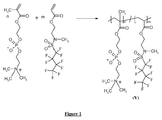
- the monomeric units comprising a pendant zwitterionic moiety is selected from the group consisting of 2-(N-3-sulfopropyl-N,N-dialkylammonium) ethyl acrylate, 2-(N-3-sulfobutyl-N,N-dialkylammonium) ethyl acrylate and 2-methacryloyloxyethyl phosphorylcholine.
- the monomeric units comprising a pendant zwitterionic moiety is selected from the group consisting of 2-(N-3-sulfopropyl-N,N-dimethylammonium) ethyl acrylate and 2-methacryloyloxyethyl phosphorylcholine.
- One exemplary monomeric unit comprising a pendant zwitterionic moiety has formula (II) below:
- the monomeric units comprising a pendant zwitterionic moiety are free of fluorine-containing groups.
- amphiphilic copolymer of the present disclosure comprises, as a second technical feature, repeating monomeric units comprising a pendant group comprising a fluorine-containing group and at least one heteroatom.
- the presence of at least one heteroatom in the repeating monomeric units having a pendant group comprising a fluorine-containing group beneficially impact the overall hydrophilic/oleophobic properties of the surfaces treated with coating compositions comprising the amphiphilic copolymers of the present disclosure.
- the heteroatom(s) present in the repeating monomeric units having a pendant group comprising a fluorine-containing group provide more hydrophilic character to the fluorinated pendant group, yet maintaining oleophobic features. This is counter-intuitive as the skilled person would normally not introduce any hydrophilic character to the fluorinated pendant group which is supposed to solely provide oleophobic properties to the amphiphilic copolymer.
- the at least one heteroatom comprised in the repeating monomeric units comprising a pendant group comprising a fluorine-containing group are selected from the group consisting of oxygen, nitrogen, sulfur, phosphorus, and any combinations thereof.
- the at least one heteroatom is selected from the group consisting of oxygen, nitrogen, sulfur, and any combinations thereof.
- the at least one heteroatom comprised in the repeating monomeric units comprising a pendant group comprising a fluorine-containing group is part of a functional group which is preferably a nonionic functional group.
- the at least one heteroatom comprised in the repeating monomeric units comprising a pendant group comprising a fluorine-containing group is part of a functional group selected from the group consisting of oxyalkylene groups, -O-, -S-, -SO 2 -; primary amines, secondary amines or tertiary amines.
- the at least one heteroatom comprised in the repeating monomeric units comprising a pendant group comprising a fluorine-containing group is part of a functional group selected from the group consisting of -SO 2 -; secondary amines; tertiary amines; and any combinations thereof. More preferably, the at least one heteroatom comprised in the repeating monomeric units comprising a pendant group comprising a fluorine-containing group, is part of a functional group selected from the group consisting of -SO 2 - or -NR 1 -, wherein R 1 is H or an alkyl group, in particular methyl or ethyl.
- Fluorine-containing groups for use herein are not particularly limited. Any fluorine-containing group known in the art may be used in the context of the present disclosure. Suitable fluorine-containing groups for use herein will be easily identified by those skilled in the art, in the light of the present description.
- the fluorine-containing group for use herein is selected from the group consisting of fluoroalkyl groups, perfluoroalkyl groups, fluorooxyalkyl groups, perfluorooxyalkyl groups, fluoroalkylene groups, perfluoroalkylene groups, fluorooxyalkylene groups, perfluorooxyalkylene groups, and any combinations thereof.
- the fluorine-containing group for use herein is selected from the group consisting of fluoroalkyl groups, perfluoroalkyl groups, and any combinations thereof.
- the fluorine-containing group for use herein is selected from the group consisting of fluorooxyalkyl groups, perfluorooxyalkyl groups, and any combinations thereof.
- the fluorine-containing group for use herein is selected from perfluorooxyalkylene oligomeric moieties, in particular perfluorooxypropylene oligomeric moieties, perfluorooxyethylene oligomeric moieties, and any combinations thereof.
- the fluorine-containing group for use herein comprises a linear or branched alkyl group comprising no greater than 12 carbon atoms, no greater than 10 carbon atoms, no greater than 8 carbon atoms, no greater than 6 carbon atoms, or even no greater than 5 carbon atoms.
- the fluorine-containing group for use herein comprises a linear or branched alkyl group comprising from 1 to 12 carbon atoms, from 1 to 10 carbon atoms, from 1 to 8 carbon atoms, from 1 to 6 carbon atoms, or even from 1 to 5 carbon atoms.
- the fluorine-containing group for use herein comprises a linear or branched alkyl group comprising from 1 to 8 carbon atoms, from 2 to 8 carbon atoms, from 2 to 6 carbon atoms, or even from 2 to 4 carbon atoms.
- the fluorine-containing group is selected from the group of perfluoropropane and perfluorobutane. More preferably, the fluorine-containing group is selected to be perfluorobutane.
- amphiphilic copolymers comprising repeating monomeric units having a pendant group comprising a fluorine-containing group and at least one heteroatom, wherein the fluorine-containing group comprises a linear or branched alkyl group comprising no greater than 12 carbon atoms, no greater than 10 carbon atoms, no greater than 8 carbon atoms, no greater than 6 carbon atoms, or even no greater than 5 carbon atoms, provide advantageous oleophobic properties to the treated surface whilst fully preserving the hydrophilic properties provided by the repeating monomeric units comprising a pendant zwitterionic moiety.
- fluorine-containing groups comprising a linear or branched alkyl group comprising more than 12 carbon atoms is more likely to detrimentally affect the hydrophilic properties provided by the repeating monomeric units comprising a pendant zwitterionic moiety due to disadvantageous steric hindrance.
- the monomeric units comprising a pendant group comprising a fluorine-containing group and at least one heteroatom have the general formula (III): U-C-V-D-Rf (III) wherein:
- the monomeric units comprising a pendant group comprising a fluorine-containing group and at least one heteroatom for use herein have the general formula (III), wherein:
- the monomeric units comprising a pendant group comprising a fluorine-containing group and at least one heteroatom are selected to be N-methyl-perfluorobutane-1-sulfonamide ethyl acrylate.
- the monomeric units comprising a pendant group comprising a fluorine-containing group and at least one heteroatom are free of zwitterionic moieties.
- One exemplary monomeric unit comprising a pendant group comprising a fluorine-containing group and at least one heteroatom has formula (IV) below:
- the amphiphilic copolymer may, optionally, comprise secondary repeating monomeric units comprising a pendant group comprising a functional group selected from the group consisting of phosphate groups, phosphonate groups, sulfonate groups, alkoxysilane groups, carboxylate groups, and any combinations thereof.
- the presence of these secondary repeating monomeric units in the amphiphilic copolymer has been found to beneficially improve the durability of the resulting protective coating applied onto the treated surface, in particular the wet mechanical abrasion resistance.
- the repeating pendant functional groups selected from the group consisting of phosphate groups, phosphonate groups, sulfonate groups, alkoxysilane groups and carboxylate groups, provide anchoring groups which advantageously improve the surface anchoring with the treated substrate.
- the optional secondary repeating monomeric units comprising pendant groups comprising a functional group selected from the group consisting of phosphate groups and alkoxysilane groups.
- alkoxysilane groups for use herein include, but are not limited to, those having the formula Si(OR) 3 , wherein R is independently hydrogen or an alkyl group having 1 to 4 carbon atoms.
- R is independently hydrogen or an alkyl group having 1 to 4 carbon atoms.
- the alkoxysilane groups for use herein are selected from the group of trimethoxysilyl and triethoxysilyl.
- the secondary repeating monomeric unit comprising a pendant group comprising a functional group is selected to be 3-(trimethoxysilyl)propylmethacrylate.
- the secondary repeating monomeric unit comprising a pendant group comprising a functional group is selected to be 2-(methacryloyloxy)ethyl phosphate.
- the amphiphilic copolymer of the present disclosure are further characterized in that the repeating monomeric units of the amphiphilic copolymer independently comprise an ethylenically unsaturated polymerizable group selected from the group of (meth)acrylate ester containing groups.
- the repeating monomeric units of the amphiphilic copolymer independently comprise an ethylenically unsaturated polymerizable group selected from the group of acrylate ester containing groups.
- the ethylenically unsaturated polymerizable groups of the repeating monomeric units are designed to form the backbone of the amphiphilic copolymer upon suitable polymerization reaction.
- the amphiphilic copolymer of the present disclosure is non-crosslinked.
- crosslinking of the amphiphilic copolymer is not required for it to provide the beneficial oleophobic and hydrophilic properties to the treated surface.
- the amphiphilic copolymer of the present disclosure is free of any crosslinking monomeric units.
- Amphiphilic copolymers described herein may generally be prepared according any conventional method, well known to those skilled in the art.
- the amphiphilic copolymers may be prepared by reacting a mixture containing the two (optional, three) types of monomers typically in the presence of an initiator and optionally, a chain transfer agent (i.e., catalyst).
- a chain transfer agent i.e., catalyst
- reacting it is meant forming a composition that includes at least one identifiable structural element due to each of the monomeric units.
- an oligomer or polymer may be formed.
- the polymer or oligomer has a distribution of molecular weights and compositions.
- Polymerization conditions can be readily determined by those skilled in the art in the light of the present description.
- the polymerization can be carried out at a wide variety of temperatures suitable for conducting an organic free-radical reaction.
- Temperature and solvent for a particular use can be selected by those skilled in the art based on considerations such as the solubility of reagents, temperature required for the use of a particular initiator, and desired molecular weight. While it is not practical to enumerate a particular temperature suitable for all initiators and all solvents, generally suitable temperatures are in a range of 30°C to 200°C, 30°C to 150°C, or even 50°C to 120°C.
- Free-radical polymerizations may be carried out in the presence of chain transfer agents.
- Typical chain transfer agents that may be used in the preparation of compositions described herein include hydroxyl-substituted mercaptans (e.g., 2-mercaptoethanol, 3-mercapto-2-butanol, 3-mercapto-2-propanol, 3-mercapto-1-propanol, and 3-mercapto-1,2-propanediol (i.e., thioglycerol)); amino-substituted mercaptans (e.g., 2-mercaptoethylamine); difunctional mercaptans (e.g., di(2-mercaptoethyl)sulfide); and aliphatic mercaptans (e.g., octylmercaptan, dodecylmercaptan, and octadecylmercaptan). Others include methylmercaptopropionate and mercapto
- Free-radical polymerizations may be carried out in the presence of initiators (i.e., catalysts).
- initiators i.e., catalysts.
- Typical initiators that may be used in the preparation of compositions described herein include radical-generating initiators including peroxide-based initiators.
- An example includes azobisisobutyronitrile (AIBN) commercially available from Sigma-Aldrich.
- the reaction is carried out in one or more organic solvents.
- the components may be present in the reaction medium at any suitable concentration (e.g., from 5 percent to 80 percent by weight based on the total weight of the reaction mixture).
- suitable solvents include ethers (e.g., tetrahydrofuran, diethyl ether, glyme, diglyme, and diisopropyl ether), esters (e.g., ethyl acetate and butyl acetate), alcohols (e.g., ethanol and isopropyl alcohol), ketones (e.g., acetone, methyl ethyl ketone and methyl isobutyl ketone), halogenated solvents (e.g., methylchloroform, 1,1,2-trichloro-1,2,2-trifluoroethane, trichloroethylene, and trifluorotoluene), and mixtures thereof.
- ethers e.g., te
- the present disclosure is directed to a protective coating composition
- a protective coating composition comprising:
- the protective coating composition of the present disclosure comprises, besides the amphiphilic copolymer as described above, a solvent comprising water.
- Solvents for use herein are not particularly limited. Any solvent comprising water commonly known in the art may be used in the context of the present disclosure. Suitable water-comprising solvents for use herein will be easily identified by those skilled in the art, in the light of the present description.
- suitable water-comprising solvents for use herein include solvents comprising water and optionally also water-miscible solvents.
- suitable water-miscible solvents are primary or secondary mono- or polyalcohols having 1 to 6 carbon atoms, such as e.g. methanol, ethanol, propanol, isopropanol, n-butanol isobutanol, pentanol, hexanol or cyclohexanol.
- Other suitable water-miscible solvents include watersoluble ethers, such as tetrahydrofuran (THF), dipropyleneglycol monomethylether (DPM) or diethylene glycol dimethylether (Diglyme).
- the solvent for use herein comprises a combination of water and an organic solvent, in particular an ether or an alcohol.
- suitable alcohols for use herein include, but are not limited to, methanol, ethanol, propanol and isopropanol.
- suitable water-comprising solvents for use herein include solvent combinations of water and alcohols such as e.g. water/methanol, water/ethanol, water/propanol or water/isopropanol.
- the solvent comprises a combination of water and an organic solvent, and wherein the solvent is selected from the group consisting of ethers, more in particular a cyclic ether.
- the solvent comprises a combination of water and tetrahydrofuran or water and ethanol.
- the protective coating composition according to the present disclosure comprises an amphiphilic copolymer in an amount of at least 0.01 wt%, at least 0.05 wt%, at least 0.1 wt%, at least 0.3 wt%, at least 0.5 wt%, at least 0.8, or even at least 1wt%, based on the weight of the overall coating composition.
- the protective coating composition according to the present disclosure comprises an amphiphilic copolymer in an amount of at least 0.8 wt%, at least 1 wt%, at least 1.5 wt%, at least 2 wt%, at least 2.5 wt%, or even at least 3 wt%, based on the weight of the overall coating composition.
- the protective coating composition comprises an amphiphilic copolymer in an amount of less than 10 wt%, less than 8 wt%, less than 6 wt%, or even less than 5 wt%, based on the weight of the overall coating composition.
- the protective coating composition comprises an amphiphilic copolymer in an amount comprised between 0.05 wt% and 10 wt%, between 0.1 wt% and 10 wt%, between 0.1 wt% and 8 wt%, between 0.2 wt% and 6 wt%, between 0.3 wt% and 5 wt%, between 0.5 wt% and 5 wt%, between 0.5 wt% and 4 wt%, or even between 1.0 wt% and 3.0 wt%, based on the weight of the overall coating composition.
- the protective coating composition of the present disclosure may further comprise optional additives commonly known in the field. Suitable additives will be typically selected depending on the targeted application. Exemplary additives include, but are not limited to, surface-active compounds, corrosion inhibitors, preservatives, complexing agents, galvanization assistants, coating additives, coloring pigments, chelating agents, detergents, stabilizers, dispersants, enzymes, dyes or perfumes.
- the protective coating compositions of the present disclosure may be in the form of a solution, emulsion, suspension, dispersion or aerosol, depending on the targeted application.
- the coating composition is in the form of an aqueous solution or dispersion of an amphiphilic copolymer as described above.
- the protective coating compositions may be designed in any suitable form, depending again on the intended application.
- the protective coating composition may be in a sprayable form, or alternatively, in a wipable or dippable form.
- the protective coating composition can be applied using any of a variety of liquid coating techniques (e.g., spraying, dipping, painting, etc.). It can be simply dried at room temperature to remove at least a portion of the water or organic solvent that may be included. If desired, the coating composition can be heated, after coating, to a temperature above room temperature (typically between 50°C and 150°C) for improved performance through e.g. curing.
- liquid coating techniques e.g., spraying, dipping, painting, etc.
- the present disclosure is directed to a method of treating a hard surface comprising the steps of:
- the treated hard surface comprises a material selected from the group consisting of metal, wood, wood laminate, polyurethane-coated wood, glass, ceramic, and any combinations thereof.
- the hard surface comprises a material selected from the group consisting metal and glass, in particular glass.
- the protective coating composition of the present disclosure are particularly suitable for imparting easy-to-clean properties to hard surfaces.
- the drying/curing step in particular the curing step, is performed at temperatures comprised between 20°C and 35°C, or even between 20°C and 30°C.
- the drying/curing step in particular the curing step, is performed at temperatures typically comprised between 60°C and 200°C, between 60°C and 150°C, or even between 80°C and 120°C.
- the present disclosure is directed to a method of manufacturing an amphiphilic copolymer comprising pendant zwitterionic moieties and pendant groups comprising a fluorine-containing group, wherein the zwitterionic moiety comprises a positively charged group selected from quaternary ammonium groups, and a negatively charged group selected from sulfonate groups.
- monomeric units comprising pendant groups comprising a fluorine-containing group and at least one heteroatom may not be solubilized in a same solvent (even at elevated temperature).
- This incompatibility issue rendered the manufacturing of the corresponding amphiphilic copolymer particularly challenging. It is besides a recognized synthetic challenge in the art to copolymerize directly monomeric units comprising a zwitterionic moiety and monomeric units comprising a fluorine-containing group, in particular acrylate based monomeric units.
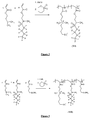
- the method of manufacturing comprises the steps of:
- the sultone is selected from the group consisting of 1,4 butane sultone, 1,3-propane sultone, and any combinations thereof.
- the step of copolymerizing the repeating monomeric units of steps a) and b) is performed in a monomer molar ratio comprised between 1:2 and 2:1, in particular in a monomer molar ratio of 1:1.
- the step of copolymerizing the repeating monomeric units of steps a), b) and optionally c), is performed at temperatures typically comprised between 40°C and 100°C, between 50°C and 90°C, or even between 60°C and 80°C.
- amphiphilic copolymer and the protective coating composition as described above are fully applicable to the description of the method of treating a hard surface and to the method of manufacturing an amphiphilic copolymer, as described above.
- the present disclosure is directed to a coated article comprising a substrate and a coating layer adjacent to at least part of the surface of the substrate, wherein the coating layer comprises a layer of the protective coating composition, as described above, which has been dried and/or cured onto the surface of the substrate.
- the substrate is a hard surface comprising typically a material selected from the group consisting of metal, wood, wood laminate, polyurethane-coated wood, glass, ceramic, and any combinations thereof. More advantageously, the hard surface comprises a material selected from the group consisting of metal and glass, in particular glass.
- the coated article of the present disclosure has a static water contact angle of less than 50°, less than 40°, less than 30°, less than 20°, less than 15°, or even less than 10°, when measured according to the static water contact angle measurement method described in the experimental section.
- the coated article of the present disclosure has a static water contact angle of less than 50°, less than 40°, less than 30°, less than 20°, less than 15°, or even less than 10°, after 10 wet mechanical abrasion cycles when measured according to the wet abrasion test method described in the experimental section.
- the coated article of the present disclosure has a static hexadecane contact angle of more than 40°, more than 45°, more than 50°, more than 55°, more than 60°, or even more than 65°, when measured according to the static hexadecane contact angle measurement method described in the experimental section.
- the coated article of the present disclosure has a static hexadecane contact angle of more than 40°, more than 45°, more than 50°, more than 55°, or even more than 60°, after 10 wet mechanical abrasion cycles when measured according to the wet abrasion test method described in the experimental section.
- the present disclosure relates to the use of an amphiphilic copolymer or a protective coating composition as described above for protecting a hard surface which typically comprises a material selected from the group consisting of metal and glass, in particular glass.
- the present disclosure relates to the use of an amphiphilic copolymer or a protective coating composition as described above for imparting easy-to-clean properties to a hard surface, in particular a glass substrate.
- amphiphilic copolymer the protective coating composition, the methods and the coated article as described above, are fully applicable to the description of the uses of the present disclosure, as described above.
- Static contact angle measurements are performed using Millipore water (WCA) or hexadecane (HCA, analytical grade) with a Krüss DSA100 contact angle analyzer. Contact angle is measured on sessile drop (3 ⁇ L) and is measured 30 sec after deposition. The values reported are the average of at least 3 (HCA) or 4 (WCA) separate measurements.
- Abrasion tests are performed on a 5900 Reciprocating Abraser (available from Taber Industries) by employing a 5N force and a velocity of 60 cycles/minutes (500 g weight).
- the cloth used for the abrasion cycles is a 13.5 crockmeter cloth (crockmeter squares, 100% cotton) wetted with deionized water.
- Poly(SDE) 1g (0.007 mol) of DAA is dissolved in 9g of THF. After purging the solution with nitrogen, 0.010g of AIBN is added and the reaction mixture is stirred at 80°C for 3 hours under nitrogen atmosphere. After the addition of 0.9g (0.007 mol) of 1,4-butane sultone, the mixture is stirred for 2 hours at 80°C, allowed to cool to room temperature and stirred overnight, before the solvent is removed under vacuum.
- Poly(SDE-co-MPS-co-TPM) 0.72 g (0.005 mol) of DAA, 1.89g of (0.005 mol) MPS and 0.25 g (0.001 mol) of TPM are dissolved in 7.7 g of THF. The solution is purged with nitrogen for 5 min and 0.03g of AIBN are added. The mixture is heated to 70°C and stirred at this temperature for 2 hours. 0.7g (0.005 mol) of 1,4-butane sultone are added and the mixture is allowed to stir for another 3 hours at 70°C and at room temperature overnight. The residual solvent is removed under vacuum.
- 0.5 g (1.7 mmol) of 2MP are dissolved in a 1:1 mixture of THF and Methanol.
- 0.05g (0.06 mmol) of AIBN is added and oxygen is removed by purging the solution for 5 min with N 2 .
- the apparatus is closed under N 2 atmosphere and refluxed for 3h at 90°C. After cooling to room temperature, the solution is allowed to stir overnight at room temperature before the solvent is removed in vacuum.
- the coating compositions are simply prepared by adding the appropriate amount of polymer into a THF/water mixture and dissolved by stirring for at least 10 minutes at 20°C using a magnetic stirring bar, so as to achieve the suitable concentration (0.5 wt%, 1 wt% or 2wt%).
- Typical formulations are prepared with a total weight of 10g (polymer + solvent).
- One drop of the corresponding solution is put onto the glass substrate (10x10cm, obtained by Rocholl GmbH, Germany) and distributed with a paper towel (KimWipe available from Kimberly Clark) by wiping.
- the sample is allowed to dry on air for at least 2 hours, while for curing at 100°C, the sample is immediately placed in an oven after coating for 10 sec.
- Examples 1 to 4 and comparative examples C1 to C4 Oleophobic and hydrophilic properties.
- Examples 1 to 3 use protective coating compositions comprising amphiphilic copolymers according to the disclosure.
- Example 4 is making use of a coating composition comprising an amphiphilic copolymer having secondary repeating monomeric units.
- Examples C1 to C4 are comparative examples. The coating formulations used in the experiments are applied on a glass plate. The data presented in Table 1 reflect the oleophobic and hydrophilic properties of the various coating compositions.
- protective coating compositions according to the present disclosure combine both excellent oleophobic properties (HCA > 50°) and excellent hydrophilic properties (WCA ⁇ 10°). In contrast, coating compositions not according to the disclosure are deficient in either hydrophilic or oleophobic properties.
- Table 2 Composition Polymer Wet mechanical abrasion Hexadecane contact angle [°] Water contact angle [°](*)
- Example 1 Poly(SDE-co-MPS) 5N, 10x, 60 c/min 26 22
- Example 4 Poly(SDE-co-MPS-co-TPM) 64 10 (*) measured after wet mechanical abrasion followed by one rinsing step of the coating with deionized water.
- protective coating compositions according to the present disclosure comprising an amphiphilic copolymer comprising secondary repeating monomeric units comprising a pendant group comprising a functional group selected from the group of alkoxysilane groups (Example 4) have improved durability of the resulting protective coating applied onto the treated surface, in particular the wet mechanical abrasion resistance, when compared to a protective coating composition comprising an amphiphilic copolymer not comprising secondary repeating monomeric units comprising a pendant group comprising a functional group selected from the group of alkoxysilane groups (Example 1).
- the uncoated glass panel gives a "Poor” assessment, meaning that even after a period of 60 seconds after exposing the sample to steam, fogging is still visually observed.
- glass panels coated with a coating composition according to the present disclosure gives a "Good” rating, meaning after a period of 30 seconds after exposing the sample to steam, only slight fogging is still visually observed.
Landscapes
- Chemical & Material Sciences (AREA)
- Organic Chemistry (AREA)
- Health & Medical Sciences (AREA)
- Chemical Kinetics & Catalysis (AREA)
- Medicinal Chemistry (AREA)
- Polymers & Plastics (AREA)
- Life Sciences & Earth Sciences (AREA)
- Engineering & Computer Science (AREA)
- Materials Engineering (AREA)
- Wood Science & Technology (AREA)
- Dispersion Chemistry (AREA)
- Addition Polymer Or Copolymer, Post-Treatments, Or Chemical Modifications (AREA)
- Paints Or Removers (AREA)
Priority Applications (5)
| Application Number | Priority Date | Filing Date | Title |
|---|---|---|---|
| EP16156508.0A EP3208319A1 (de) | 2016-02-19 | 2016-02-19 | Amphiphile copolymere mit gemischten funktionalitäten |
| US16/076,383 US20190040260A1 (en) | 2016-02-19 | 2017-02-10 | Amphiphilic copolymers with mixed functionalities |
| CN201780012122.4A CN108699381A (zh) | 2016-02-19 | 2017-02-10 | 具有混合官能团的两亲性共聚物 |
| PCT/US2017/017350 WO2017142802A1 (en) | 2016-02-19 | 2017-02-10 | Amphiphilic copolymers with mixed functionalities |
| EP17705548.0A EP3417021A1 (de) | 2016-02-19 | 2017-02-10 | Amphiphile copolymere mit gemischten funktionalitäten |
Applications Claiming Priority (1)
| Application Number | Priority Date | Filing Date | Title |
|---|---|---|---|
| EP16156508.0A EP3208319A1 (de) | 2016-02-19 | 2016-02-19 | Amphiphile copolymere mit gemischten funktionalitäten |
Publications (1)
| Publication Number | Publication Date |
|---|---|
| EP3208319A1 true EP3208319A1 (de) | 2017-08-23 |
Family
ID=55409750
Family Applications (2)
| Application Number | Title | Priority Date | Filing Date |
|---|---|---|---|
| EP16156508.0A Withdrawn EP3208319A1 (de) | 2016-02-19 | 2016-02-19 | Amphiphile copolymere mit gemischten funktionalitäten |
| EP17705548.0A Withdrawn EP3417021A1 (de) | 2016-02-19 | 2017-02-10 | Amphiphile copolymere mit gemischten funktionalitäten |
Family Applications After (1)
| Application Number | Title | Priority Date | Filing Date |
|---|---|---|---|
| EP17705548.0A Withdrawn EP3417021A1 (de) | 2016-02-19 | 2017-02-10 | Amphiphile copolymere mit gemischten funktionalitäten |
Country Status (4)
| Country | Link |
|---|---|
| US (1) | US20190040260A1 (de) |
| EP (2) | EP3208319A1 (de) |
| CN (1) | CN108699381A (de) |
| WO (1) | WO2017142802A1 (de) |
Families Citing this family (4)
| Publication number | Priority date | Publication date | Assignee | Title |
|---|---|---|---|---|
| CN108884332B (zh) | 2016-03-18 | 2021-03-23 | 3M创新有限公司 | 用于涂覆金属表面的含两性离子聚合物的组合物、方法和制品 |
| US11634525B2 (en) * | 2018-12-19 | 2023-04-25 | 3M Innovative Properties Company | Zwitterionic copolymers, coating compositions, articles, and coating methods |
| CN110172123B (zh) * | 2019-05-27 | 2021-05-18 | 苏州大学 | 亲水疏油性多孔聚合物及其制备方法 |
| US12522685B2 (en) | 2019-12-19 | 2026-01-13 | Solventum Intellectual Properties Company | Block copolymers with a fluorinated block and a phosphorus-containing block |
Citations (6)
| Publication number | Priority date | Publication date | Assignee | Title |
|---|---|---|---|---|
| JPS60262870A (ja) * | 1984-06-12 | 1985-12-26 | Dainippon Ink & Chem Inc | 表面処理剤 |
| WO2008154279A1 (en) * | 2007-06-06 | 2008-12-18 | 3M Innovative Properties Company | Fluorinated compositions and surface treatments made therefrom |
| US20080319153A1 (en) | 2007-06-20 | 2008-12-25 | 3M Innovative Properties Company | Fluorochemical urethane compounds and aqueous compositions thereof |
| US20090111344A1 (en) * | 2007-10-29 | 2009-04-30 | Peter Michael Murphy | Fluorinated water soluble copolymers |
| US20140048478A1 (en) | 2011-04-28 | 2014-02-20 | Renbi Bai | Highly hydrophilic and highly oleophobic membrane for oil-water separation |
| WO2016028499A1 (en) * | 2014-08-19 | 2016-02-25 | 3M Innovative Properties Company | Amphiphilic polymers, coating compositions, and methods |
-
2016
- 2016-02-19 EP EP16156508.0A patent/EP3208319A1/de not_active Withdrawn
-
2017
- 2017-02-10 EP EP17705548.0A patent/EP3417021A1/de not_active Withdrawn
- 2017-02-10 CN CN201780012122.4A patent/CN108699381A/zh not_active Withdrawn
- 2017-02-10 WO PCT/US2017/017350 patent/WO2017142802A1/en not_active Ceased
- 2017-02-10 US US16/076,383 patent/US20190040260A1/en not_active Abandoned
Patent Citations (6)
| Publication number | Priority date | Publication date | Assignee | Title |
|---|---|---|---|---|
| JPS60262870A (ja) * | 1984-06-12 | 1985-12-26 | Dainippon Ink & Chem Inc | 表面処理剤 |
| WO2008154279A1 (en) * | 2007-06-06 | 2008-12-18 | 3M Innovative Properties Company | Fluorinated compositions and surface treatments made therefrom |
| US20080319153A1 (en) | 2007-06-20 | 2008-12-25 | 3M Innovative Properties Company | Fluorochemical urethane compounds and aqueous compositions thereof |
| US20090111344A1 (en) * | 2007-10-29 | 2009-04-30 | Peter Michael Murphy | Fluorinated water soluble copolymers |
| US20140048478A1 (en) | 2011-04-28 | 2014-02-20 | Renbi Bai | Highly hydrophilic and highly oleophobic membrane for oil-water separation |
| WO2016028499A1 (en) * | 2014-08-19 | 2016-02-25 | 3M Innovative Properties Company | Amphiphilic polymers, coating compositions, and methods |
Also Published As
| Publication number | Publication date |
|---|---|
| WO2017142802A1 (en) | 2017-08-24 |
| CN108699381A (zh) | 2018-10-23 |
| EP3417021A1 (de) | 2018-12-26 |
| US20190040260A1 (en) | 2019-02-07 |
Similar Documents
| Publication | Publication Date | Title |
|---|---|---|
| DE60216137T2 (de) | Partiell kondensierte fluorochemische polyether-silane enthaltende beschichtungszusammensetzung und deren verwendung | |
| CN101679548B (zh) | 氟化组合物以及由其制备的表面处理剂 | |
| CN101679569A (zh) | 氟化醚组合物以及使用该组合物的方法 | |
| CN107709508B (zh) | 拒水剂组合物、拒水剂组合物的制造方法及物品 | |
| US8679636B2 (en) | Fluorinated composition comprising phosphorus-containing acid group and alkoxy silane group | |
| EP3417021A1 (de) | Amphiphile copolymere mit gemischten funktionalitäten | |
| WO2017188330A1 (ja) | 組成物 | |
| KR20190020330A (ko) | 불소 함유 중합체 | |
| JP2013185072A (ja) | 滑水性表面処理剤 | |
| US10093822B2 (en) | Amphiphilic polymers, coating compositions, and methods | |
| EP2576716B1 (de) | Fluorpolymerzusatz für beschichtungen | |
| CA2707677A1 (en) | Cationic polymeric fluorinated ether silane compositions and methods of use | |
| JPWO2013115197A1 (ja) | 含フッ素共重合体およびその製造方法、ならびに撥水撥油剤組成物 | |
| CN106164102B (zh) | 利用亲水性链转移剂制得的用于建筑涂料的氟化聚合物添加剂 | |
| US20100041819A1 (en) | Fluorinated surfactants and method of making the same | |
| JP2010506978A5 (de) | ||
| US20200347259A1 (en) | Amphiphilic copolymer-based protective coating composition for metal surfaces | |
| US4925906A (en) | Stain-resistant polymers derived from the itaconic acid useful as coatings for fibers | |
| US8669319B2 (en) | Cationic polymeric fluorinated ether silane compositions and methods of use | |
| HK1228936A1 (en) | Fluorinated polymer additives derived using hydrophilic chain transfer agents for architectural coatings | |
| HK1228936B (zh) | 利用亲水性链转移剂制得的用於建筑涂料的氟化聚合物添加剂 |
Legal Events
| Date | Code | Title | Description |
|---|---|---|---|
| PUAI | Public reference made under article 153(3) epc to a published international application that has entered the european phase |
Free format text: ORIGINAL CODE: 0009012 |
|
| STAA | Information on the status of an ep patent application or granted ep patent |
Free format text: STATUS: THE APPLICATION HAS BEEN PUBLISHED |
|
| AK | Designated contracting states |
Kind code of ref document: A1 Designated state(s): AL AT BE BG CH CY CZ DE DK EE ES FI FR GB GR HR HU IE IS IT LI LT LU LV MC MK MT NL NO PL PT RO RS SE SI SK SM TR |
|
| AX | Request for extension of the european patent |
Extension state: BA ME |
|
| STAA | Information on the status of an ep patent application or granted ep patent |
Free format text: STATUS: REQUEST FOR EXAMINATION WAS MADE |
|
| 17P | Request for examination filed |
Effective date: 20180223 |
|
| RBV | Designated contracting states (corrected) |
Designated state(s): AL AT BE BG CH CY CZ DE DK EE ES FI FR GB GR HR HU IE IS IT LI LT LU LV MC MK MT NL NO PL PT RO RS SE SI SK SM TR |
|
| GRAP | Despatch of communication of intention to grant a patent |
Free format text: ORIGINAL CODE: EPIDOSNIGR1 |
|
| STAA | Information on the status of an ep patent application or granted ep patent |
Free format text: STATUS: GRANT OF PATENT IS INTENDED |
|
| INTG | Intention to grant announced |
Effective date: 20181011 |
|
| STAA | Information on the status of an ep patent application or granted ep patent |
Free format text: STATUS: THE APPLICATION IS DEEMED TO BE WITHDRAWN |
|
| 18D | Application deemed to be withdrawn |
Effective date: 20190222 |