EP3209081B1 - Procédé d'ordonnancement de service, dispositif et support de stockage - Google Patents
Procédé d'ordonnancement de service, dispositif et support de stockage Download PDFInfo
- Publication number
- EP3209081B1 EP3209081B1 EP14884423.6A EP14884423A EP3209081B1 EP 3209081 B1 EP3209081 B1 EP 3209081B1 EP 14884423 A EP14884423 A EP 14884423A EP 3209081 B1 EP3209081 B1 EP 3209081B1
- Authority
- EP
- European Patent Office
- Prior art keywords
- service
- services
- access
- attribute parameter
- group
- Prior art date
- Legal status (The legal status is an assumption and is not a legal conclusion. Google has not performed a legal analysis and makes no representation as to the accuracy of the status listed.)
- Active
Links
Images


Classifications
-
- H—ELECTRICITY
- H04—ELECTRIC COMMUNICATION TECHNIQUE
- H04W—WIRELESS COMMUNICATION NETWORKS
- H04W72/00—Local resource management
- H04W72/50—Allocation or scheduling criteria for wireless resources
- H04W72/54—Allocation or scheduling criteria for wireless resources based on quality criteria
- H04W72/543—Allocation or scheduling criteria for wireless resources based on quality criteria based on requested quality, e.g. QoS
Definitions
- the disclosure relates to mobile communications, and more particularly to a service scheduling method and device and storage medium in a wireless communication technology.
- a current 3rd Generation Partnership Project (3GPP) protocol services are divided into different types according to different attributes, and each type of service is represented by a Quality of Service (QoS) Class Identifier (QCI).
- QoS Quality of Service
- QCI Class Identifier
- the current 3GPP protocol presents 9 types of QCI services and each type of QCIs presents at least one example of the service.
- the current 3GPP protocol specifies attributes of resource type, priority, Packet Delay Budget (PDB) and Packet Error Loss Rate (PER) of the type of services.
- PDB Packet Delay Budget
- PER Packet Error Loss Rate
- scheduling of access services in a cell mainly includes unified sequencing of all the services and unified resource allocation.
- scheduling of access services in a cell mainly includes unified sequencing of all the services and unified resource allocation.
- complexity in unified sequencing is progressively increased by square times, which may cause huge pressure on a processing capability of a base station. Therefore, this unified sequencing algorithm may not be adapted to the requirement of service extension in the future communication system.
- embodiments of the disclosure are intended to provide a service scheduling method and device and a storage medium, which may alleviate pressure of multiple service objects on a processing capability of a base station, ensure service scheduling performance and also maximally achieve adaptability to a requirement of service extension in a future communication system.
- the embodiments of the disclosure provide a service scheduling method implemented by a base station.
- a service attribute parameter of an access service is acquired.
- the access service is put into a service group according to the acquired service attribute parameter and a preset service grouping rule. Services in each service group are sequentially scheduled by turns according to a grouping result.
- the service attribute parameter according to which service grouping is currently performed is the service resource type or a QCI type
- the service resource type or QCI type of the access service is determined according to the acquired service attribute parameter, and the access service is added into a service group including a smallest number of services with the same service resource type or QCI type as the access service.
- a value of the service attribute parameter according to which service grouping is performed is determined according to the acquired service attribute parameter.
- the access service is added into a service group including a smallest number of services with values of service attribute parameters the same as the value of the service attribute parameter according to which service grouping is performed.
- the service attribute parameter according to which service grouping is currently performed includes a first attribute parameter and a second attribute parameter, the first attribute parameter including the GBR and/or the MBR and the second attribute parameter including the PBR and/or the AMBR, and when it is determined that the service resource type of the access service is a GBR type according to the acquired service attribute parameter, the value(s) of the GBR and/or MBR of the access service are/is determined according to the acquired service attribute parameter.
- the access service is added into a service group with the smallest sum of GBRs of all services, or the access service is added into a service group with the smallest sum of MBRs of all services, or the access service is added into a service group with the smallest sum of GBRs+MBRs of all services.
- the value(s) of the PBR and/or AMBR of the access service are/is determined according to the acquired service attribute parameter, and the access service is added into a service group with the smallest sum of PBRs of all services, or the access service is added into a service group with the smallest sum of AMBRs of all services, or the access service is added into a service group with the smallest sum of PBRs+AMBRs of all services.
- priorities of the service attribute parameters according to which service grouping is performed are determined, and grouping is performed according to the service attribute parameter with the highest priority.
- the service attribute parameter may include one or more of a service resource type, a QCI, a PDB, a PER, a Guaranteed Bit Rate (GBR), a Maximum Bit Rate (MBR), an Aggregate Maximum Bit Rate (AMBR), a Priority Bit Rate (PBR) and an Allocation Retention Priority (ARP).
- a service resource type a QCI, a PDB, a PER, a Guaranteed Bit Rate (GBR), a Maximum Bit Rate (MBR), an Aggregate Maximum Bit Rate (AMBR), a Priority Bit Rate (PBR) and an Allocation Retention Priority (ARP).
- the method may further include that when it is determined that the service group in which the number of services does not reach the upper limit does not currently exist, a new service group is created, and the access service is added into the new service group, or access of the access service is denied.
- the operation that it is determined that the service group in which the number of services does not reach the upper limit currently exists may include that: all service groups are screened, service groups in which the number of services reaches the upper limit in the service groups are removed from a queue to be grouped, and if the queue to be grouped after removal is not empty, the service group in which the number of services does not reach the upper limit exists.
- the embodiments of the disclosure further provide a service scheduling device including an acquisition module, a grouping module and a scheduling module.
- the acquisition module is arranged to acquire a service attribute parameter of an access service.
- the grouping module is arranged to, when it is determined that a service group in which the number of services does not reach an upper limit currently exists, put the access service into a service group according to the acquired service attribute parameter and a preset service grouping rule.
- the scheduling module is arranged to sequentially schedule services in each service group by turns according to a grouping result.
- the grouping module is further arranged to, when it is determined that the service attribute parameter according to which service grouping is currently performed is the service resource type or a QCI type, determine the service resource type or QCI type of the access service according to the acquired service attribute parameter, and add the access service into a service group including a smallest number of services with the same service resource type or QCI type as the access service.
- the grouping module determines a value of the service attribute parameter according to which service grouping is performed according to the acquired service attribute parameter, and adds the access service into a service group including a smallest number of services with values of service attribute parameters the same as the value of the service attribute parameter according to which service grouping is performed.
- the grouping module determines the value(s) of the GBR and/or MBR of the access service according to the acquired service attribute parameter, and adds the access service into a service group with the smallest sum of GBRs of all services, or adds the access service into a service group with the smallest sum of MBRs of all services, or adds the access service into a service group with the smallest sum of GBRs+MBRs of all services.
- the grouping module determines the value(s) of the PBR and/or AMBR of the access service according to the acquired service attribute parameter, and adds the access service into a service group with the smallest sum of PBRs of all services, or adds the access service into a service group with the smallest sum of AMBRs of all services, or adds the access service into a service group with the smallest sum of PBRs+AMBRs of all services.
- the grouping module determines priorities of the service attribute parameters according to which service grouping is performed, and performs grouping according to the service attribute parameter with the highest priority.
- the service attribute parameter may include one or more of a service resource type, a QCI, a PDB, a PER, a GBR, an MBR, an AMBR, a PBR and an ARP.
- the device may further include a creation module, arranged to, when it is determined that the service group in which the number of services does not reach the upper limit does not currently exist, create a new service group, and add the access service into the new service group, or deny access of the access service.
- a creation module arranged to, when it is determined that the service group in which the number of services does not reach the upper limit does not currently exist, create a new service group, and add the access service into the new service group, or deny access of the access service.
- the grouping module may be arranged to screen all the service groups, remove service groups in which the number of services reach the upper limit in the service groups from a queue to be grouped, and if the queue to be grouped after removal is not empty, determine that the service group in which the number of services does not reach the upper limit exists.
- the embodiments of the disclosure further provide a computer storage medium storing a computer program.
- the computer program is arranged to execute the service scheduling method of the embodiments of the disclosure.
- the service attribute parameter of the access service is acquired.
- the access service is grouped according to the acquired service attribute parameter and the preset service grouping rule.
- the services in each service group are sequentially scheduled by turns according to the grouping result. Therefore, a scheduling order and timeliness are ensured. Scheduling fairness is also combined. Processing objects of a base station at each scheduling time are reduced and pressure of multiple service objects on a processing capability of the base station is greatly alleviated. Service scheduling performance is ensured. Adaptability to a requirement of service extension in a future communication system is also maximally achieved.
- a service attribute parameter of an access service is acquired.
- the access service is grouped according to the acquired service attribute parameter and a preset service grouping rule. Services in each service group are sequentially scheduled by turns according to a grouping result.
- Fig. 1 is a flowchart showing a service scheduling method according to Embodiment One of the disclosure. As shown in Fig. 1 , a flow of the service scheduling method of the embodiment includes the following steps.
- Step 101 a service attribute parameter of an access service is acquired.
- the step that the service attribute parameter of the access service is acquired is that a base station acquires a service attribute parameter of a terminal access service in a serving cell.
- the service attribute parameter includes one or more of a service resource type, a QCI, a PDB, a PER, a GBR, an MBR, an AMBR, a PBR and an ARP.
- the service resource type, the QCI, the PDB and the PER may be acquired through a QCI index searching 3GPP protocol.
- the GBR, the MBR, the AMBR and the ARP may be acquired through interaction between the base station and a core network after establishment of the terminal service.
- the PBR may be acquired by searching for configuration information of the base station.
- the service resource type includes a GBR type and a NonGBR type.
- the access service is grouped according to the acquired service attribute parameter and a preset service grouping rule.
- the upper limit of the number of services included in a service group may be preset according to a processing capability of the base station and practical conditions.
- the operation that it is determined that the service group in which the number of services does not reach the upper limit currently exists includes that all service groups are screened, service groups in which the number of services reaches the upper limit are removed from a queue to be grouped, and if the queue to be grouped after removal is not empty, a service group in which the number of services does not reach the upper limit exists.
- the queue to be grouped initially includes all the service groups. For example, there are totally 5 service groups, i.e. a service group 1, a service group 2, a service group 3, a service group 4, a service group 5 respectively, and the queue to be grouped initially includes the 5 service groups.
- the step that the access service is grouped according to the acquired service attribute parameter and the preset service grouping rule includes that when it is determined that the service attribute parameter according to which service grouping is currently performed is the service resource type or a QCI type, the service resource type or QCI type of the access service is determined according to the acquired service attribute parameter, and the access service is added into a service group including a smallest number of services with the same service resource type or QCI type with the access service.
- the service resource type of the service is determined to be the GBR type according to the acquired service attribute parameter, and the service is added into a service group including a smallest number of services of the GBR type. Performing grouping according to the service resource type or the QCI type ensures that the number of services in different service groups is kept substantially consistent.
- one of service groups is randomly selected as a home group of the access service and the access service is added into the home group.
- a value of the service attribute parameter according to which service grouping is performed is determined according to the acquired service attribute parameter, and the access service is added into a service group including a smallest number of services of which values of service attribute parameters are the same as the value of the service attribute parameter according to which service grouping is performed.
- the service attribute parameter according to which service grouping is currently performed is the PER
- a value of the PER of the access service is determined to be 10 -2 according to the acquired service attribute parameter, and the access service is added into a service group with a smallest number of services of which values of PERs are 10 -2 .
- one of service groups is randomly selected as a home group of the access service, and the access service is added into the home group.
- performing grouping according to the PDB or the PER ensures that numbers of services with different PDB and PER requirements between different service groups are substantially consistent.
- Performing grouping according to the ARP ensures that the number of services with the same ARP level between different service groups is substantially consistent.
- Performing grouping according to the ARP also ensures that distribution of gold, silver and copper users between different service groups are substantially consistent because gold, silver and copper attributes of users are usually distinguished by virtue of ARPs of services.
- the 3GPP protocol specifies totally 4 PDBs, i.e. 50ms, 100ms, 150ms and 300ms respectively, and totally 3 PERs, i.e. 10 -2 , 10 -3 and 10 -6 respectively.
- the service attribute parameter according to which service grouping is currently performed includes a first attribute parameter and a second attribute parameter, the first attribute parameter including the GBR and/or the MBR and the second attribute parameter including the PBR and/or the AMBR, and when it is determined that the service resource type of the access service is a GBR type according to the acquired service attribute parameter, the value(s) of the GBR and/or MBR of the access service are/is determined according to the acquired service attribute parameter, and the access service is added into a service group in which a sum of GBRs of all services is smallest, or the access service is added into a service group in which a sum of MBRs of all services is smallest, or the access service is added into a service group in which a sum of GBRs+MBRs of all services is smallest.
- the value(s) of the PBR and/or AMBR of the access service are/is determined according to the acquired service attribute parameter, and the access service is added into a service group in which a sum of PBRs of all services is smallest, or the access service is added into a service group in which a sum of AMBRs of all services is smallest, or the access service is added into a service group in which a sum of PBRs+AMBRs of all services is smallest.
- one of service groups is randomly selected as a home group of the access service, and the access service is added into the home group.
- one of service groups is randomly selected as a home group of the access service, and the access service is added into the home group.
- a sum of GBRs+MBRs of all services in each service group is calculated, and the access service is added into the service group in which the sum of the GBRs+MBRs is smallest.
- priorities of the service attribute parameters according to which service grouping is performed are determined, and grouping is performed according to the service attribute parameter with the highest priority.
- service attribute parameters according to which service grouping is performed are the service resource type and the ARP. If a maximum difference value of numbers of services with the same ARP between different service groups is within a certain range, grouping is preferably performed according to the service resource type. Otherwise, grouping is preferably performed according to the ARP.
- a range of the maximum difference value of the numbers of the services with the same ARP between different service groups may be set according to a practical condition.
- ensuring QoS of a base station side is mainly embodied by ensuring GBR of a GBR service.
- the manners for performing grouping according to the service resource type and the GBR and/or the MBR all consider ensuring the GBR service and thus substantially ensure that the number of GBR service between different service groups or the rate sums between different service groups is consistent.
- the manners for performing grouping according to the PDB, the PER, the ARP and the like do not consider balance between GBR services.
- the manners for performing grouping according to the PDB, the PER, the ARP and the like may be combined with the manners for performing grouping according to the service resource type and the GBR and/or the MBR.
- At least two service attribute parameters may be determined for service grouping. Therefore, service attribute balance is ensured, and meanwhile, GBRs of GBR services between different service groups are also ensured.
- a new service group is created, and the access service is added into the new service group, or access of the access service is denied.
- the base station still has a storage space and the processing capability of the base station is sufficient, the new service group is created, otherwise access of the terminal service is denied.
- Step 103 services in each service group are sequentially scheduled by turns according to a grouping result.
- the services in only one service group are scheduled in each scheduling opportunity of the base station, and the scheduling opportunities are obtained by turns by different service groups. That is, at a current scheduling time, the base station only schedules the services in the service group currently required to be scheduled and then sequentially schedules the services in the other service groups, thereby scheduling the services in different service groups by turns.
- the step that the services in each service group are scheduled includes that sequencing and resource allocation are performed on the services in each service group according to a scheduling algorithm.
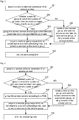
- Fig. 2 is a flowchart showing a service scheduling method according to Embodiment Two of the disclosure. As shown in Fig. 2 , the service scheduling method of Embodiment Two of the disclosure includes the following steps.
- Step 201 a service attribute parameter of an access service is acquired.
- Step 202 it is determined whether a service group in which the number of services does not reach an upper limit currently exists or not, Step 203 is executed if YES, and Step 205 is executed if NO.
- the step includes that all service groups are screened, service groups in which the number of services reaches the upper limit in the service groups are removed, and if a queue to be grouped after removal is not empty, the service group in which the number of services does not reach the upper limit exists; and if the queue to be grouped after removal is empty, the service group in which the number of services does not reach the upper limit does not exist.
- the queue to be grouped initially includes all the service groups.
- the upper limit of the number of services included in a service group is preset according to a processing capability of a base station and practical conditions. In the embodiment of the disclosure, the upper limit of the number of services included in each service group is 100.
- the access service is grouped according to a QCI type.
- One of the service groups is randomly selected for addition.
- the UE access service is added into the group 2.
- Step 204 a service group required to be scheduled at a current scheduling time is acquired, and services in the service group are scheduled.
- the service group required to be scheduled at the current scheduling time is the service group 2.
- the operation that the services in each service group are scheduled includes that sequencing and resource allocation are performed on the services in each service group according to a scheduling algorithm.
- Step 205 a new service group is created, and the access service is added into the new service group, or access of the access service is denied, and then Step 204 is executed.
- the new service group is created. Otherwise, access of the terminal service is denied.
- Step 206 this processing flow is ended.
- Fig. 3 is a flowchart showing a service scheduling method according to Embodiment Three of the disclosure. As shown in Fig. 3 , the service scheduling method of Embodiment Three of the disclosure includes the following steps.
- Step 301 a service attribute parameter of an access service is acquired.
- Step 302 it is determined whether a service group in which the number of services does not reach an upper limit currently exists or not, Step 303 is executed if YES, and Step 305 is executed if NO.
- the step includes that all service groups are screened, service groups in which the number of services reaches the upper limit in the service groups are removed, and if a queue to be grouped after removal is not empty, the service group in which the number of services does not reach the upper limit exists. If the queue to be grouped after removal is empty, the service group in which the number of services does not reach the upper limit does not exist.
- the queue to be grouped initially includes all the service groups.
- the upper limit of the number of services included in a service group is preset according to a processing capability of the base station and practical conditions. In the embodiment of the disclosure, the upper limit of the number of services included in each service group is 100.
- the access service is grouped according to a first attribute parameter and a second attribute parameter.
- the first attribute parameter is a GBR and the second attribute parameter is a PBR.
- the service group in which the sum of the GBRs of all the services is determined to be a service group 2, so that the access service is added into the service group 2.
- Step 304 a service group required to be scheduled at a current scheduling time is acquired, and services in the service group are scheduled.
- the service group required to be scheduled at the current scheduling time is the service group 2.
- the operation that the services in each service group are scheduled includes that sequencing and resource allocation are performed on the services in each service group according to a scheduling algorithm.
- Step 305 a new service group is created, and the access service is added into the new service group, or access of the access service is denied, and then Step 304 is executed.
- the new service group is created. Otherwise, access of the terminal service is denied.
- Fig. 4 is a flowchart showing a service scheduling method according to Embodiment Four of the disclosure. As shown in Fig. 4 , the service scheduling method of Embodiment Four of the disclosure includes the following steps.
- Step 401 a service attribute parameter of an access service is acquired.
- Step 402 it is determined whether a service group in which the number of services does not reach an upper limit currently exists or not, Step 403 is executed if YES, and Step 405 is executed if NO.
- the step includes that: all service groups are screened, service groups in which the number of services reaches the upper limit are removed, and if a queue to be grouped after removal is not empty, the service group in which the number of services does not reach the upper limit exists. If the queue to be grouped after removal is empty, the service group in which the number of services does not reach the upper limit does not exist.
- the queue to be grouped initially includes all the service groups.
- the upper limit of the number of services included in a service group is preset according to a processing capability of the base station and practical conditions. In the embodiment of the disclosure, the upper limit of the number of services included in each service group is 100.
- the access service is grouped according to a PDB.
- the step includes that it is determined that the PDB of the access service is 150ms according to the acquired service attribute parameter, all the service groups are compared to determine a service group including a smallest number of services with the PDB of 150ms.
- the service group including the smallest number of services with the PDB of 150ms is a service group 3 in the embodiment of the disclosure, and the access service is added into the service group 3.
- Step 404 a service group required to be scheduled at a current scheduling time is acquired, and services in the service group are scheduled.
- the service group required to be scheduled at the current scheduling time is a service group 2.
- the operation that the services in each service group are scheduled includes that sequencing and resource allocation are performed on the services in each service group according to a scheduling algorithm.
- Step 405 a new service group is created, and the access service is added into the new service group, or access of the access service is denied, and then Step 404 is executed.
- the new service group is created. Otherwise, access of the terminal service is denied.
- Fig. 5 is a flowchart showing a service scheduling method according to Embodiment Five of the disclosure. As shown in Fig. 5 , the service scheduling method of Embodiment Five of the disclosure includes the following steps.
- Step 501 a service attribute parameter of an access service is acquired.
- Step 502 it is determined whether a service group in which the number of services does not reach an upper limit currently exists or not, Step 503 is executed if YES, and Step 507 is executed if NO.
- the step includes that all service groups are screened, service groups in which the number of services reaches the upper limit in the service groups are removed, and if a queue to be grouped after removal is not empty, the service group in which the number of services does not reach the upper limit exists. If the queue to be grouped after removal is empty, the service group in which the number of services does not reach the upper limit does not exist.
- the queue to be grouped initially includes all the service groups.
- the upper limit of the number of services included in a service group is preset according to a processing capability of the base station and practical conditions. In the embodiment of the disclosure, the upper limit of the number of services included in each service group is 100.
- Step 503 a maximum difference value of numbers of services with the same ARP as the access service between different service groups is acquired according to the acquired service attribute parameter, it is determined whether the maximum difference value is smaller than a preset threshold value or not, Step 505 is executed if it is smaller than the preset threshold value, otherwise Step 504 is executed.
- the preset threshold value is 10, and may be set according to the practical condition.
- the access service is grouped according to the ARP.
- the access service is grouped according to a service resource type and the ARP.
- the access service is preferably grouped according to the ARP.
- the access service is preferably grouped according to the service resource type.
- Step 505 the access service is grouped according to a service resource type, and Step 506 is executed.
- the step includes that: it is determined that the service resource type of the access service is a GBR type according to the acquired service attribute parameter, the access is added into a service group including a smallest number of services of the GBR type. It is determined whether there is only one service group including the smallest number of services of the GBR type or not. If multiple service groups including the smallest number of services of the GBR type exist, one is randomly selected as a home group of the current access service, and the access service is added into the home group. If only one service group including the smallest number of services of the GBR type exists, the access service is directly added into the service group.
- Step 506 a service group required to be scheduled at a current scheduling time is acquired, services in the service group are scheduled, and Step 508 is executed.
- the service group required to be scheduled at the current scheduling time is a service group 2.
- the operation that the services in each service group are scheduled includes that sequencing and resource allocation are performed on the services in each service group according to a scheduling algorithm.
- Step 507 a new service group is created, and the access service is added into the new service group, or access of the access service is denied, and then Step 506 is executed.
- the new service group is created. Otherwise, access of the terminal service is denied.
- Fig. 6 is a structure diagram illustrating a service scheduling device according to an embodiment of the disclosure.
- the service scheduling device of the embodiment of the disclosure includes an acquisition module 61, a grouping module 62 and a scheduling module 63.
- the acquisition module 61 is arranged to acquire a service attribute parameter of an access service.
- the grouping module 62 is arranged to, when it is determined that a service group in which the number of services does not reach an upper limit currently exists, group the access service according to the acquired service attribute parameter and a preset service grouping rule.
- the scheduling module 63 is arranged to sequentially schedule services in each service group by turns according to a grouping result.
- the service attribute parameter includes one or more of a service resource type, a QCI, a PDB, a PER, a GBR, an MBR, an AMBR, a PBR and an ARP.
- the operation that the acquisition module 61 acquires the service attribute parameter of the access service includes that the acquisition module 61 acquires the service resource type, the QCI, the PDB and the PER through a QCI index searching 3GPP protocol, acquires the GBR, the MBR, the AMBR and the ARP by interaction with a core network, and acquires the PBR by searching for configuration information of a base station.
- the operation that the grouping module 62 determines that the service group in which the number of services does not reach the upper limit currently exists includes that: the grouping module 62 screens all the service groups, removes service groups in which the number of services reaches the upper limit in the service groups from a queue to be grouped. If the queue to be grouped after removal is not empty, the grouping module 62 determines that the service group in which the number of services does not reach the upper limit exists.
- the device further includes a creation module 64, arranged to, when it is determined that the service group in which the number of services does not reach the upper limit does not currently exist, create a new service group, and add the access service into the new service group, or deny access of the access service.
- a creation module 64 arranged to, when it is determined that the service group in which the number of services does not reach the upper limit does not currently exist, create a new service group, and add the access service into the new service group, or deny access of the access service.
- the operation that the grouping module 62 groups the access service according to the acquired service attribute parameter and the preset service grouping rule includes that: the grouping module 62, when it is determined that the service attribute parameter according to which service grouping is currently performed is the service resource type or a QCI type, determines the service resource type or QCI type of the access service according to the acquired service attribute parameter, and adds the access service into a service group including a smallest number of services with the same service resource type or QCI type with the access service.
- the grouping module 62 determines a value of the service attribute parameter according to which service grouping is performed according to the acquired service attribute parameter, and adds the access service into a service group including a smallest number of services of which values of service attribute parameters are the same as the value of the service attribute parameter according to which service grouping is performed.
- the grouping module 62 determines that the service attribute parameter according to which service grouping is currently performed includes a first attribute parameter and a second attribute parameter, the first attribute parameter including the GBR and/or the MBR and the second attribute parameter including the PBR and/or the AMBR.
- the grouping module 62 determines the value(s) of the GBR and/or MBR of the access service according to the acquired service attribute parameter, and adds the access service into a service group in which a sum of GBRs of all services is smallest, or adds the access service into a service group in which a sum of MBRs of all services is smallest, or adds the access service into a service group in which a sum of GBRs+MBRs of all services is smallest.
- the grouping module 62 determines the value(s) of the PBR and/or AMBR of the access service according to the acquired service attribute parameter, and adds the access service into a service group in which a sum of PBRs of all services is smallest, or adds the access service into a service group in which a sum of AMBRs of all services is smallest, or adds the access service into a service group in which a sum of PBRs+AMBRs of all services is smallest.
- the grouping module 62 determines priorities of the service attribute parameters according to which service grouping is performed, and performs grouping according to the service attribute parameter with the highest priority.
- the operation that the scheduling module 63 schedules the services in each service group includes that the scheduling module 63 performs sequencing and resource allocation on the services in each service group according to a scheduling algorithm.
- the acquisition module, grouping module, scheduling module and creation module in the service scheduling device disclosed in the embodiment of the disclosure may all be implemented by a processor, and of course, may also be implemented by a specific logical circuit.
- the processor may be a processor on a mobile terminal or a server. In practice, the processor may be a Central Processing Unit (CPU), a Micro Processing Unit (MPU), a Digital Signal Processor (DSP), a Field-Programmable Gate Array (FPGA) or the like.
- the service scheduling method may also be stored in a computer-readable storage medium.
- the technical solutions of the embodiments of the disclosure substantially or parts making contributions to a conventional art may be embodied in form of software product, and the computer software product is stored in a storage medium, including a plurality of instructions arranged to enable a piece of computer equipment (which may be a personal computer, a server, network equipment or the like) to execute all or part of the method in each embodiment of the disclosure.
- the abovementioned storage medium includes various media capable of storing program codes such as a U disk, a mobile hard disk, a Read-Only Memory (ROM), a magnetic disk or an optical disk. Therefore, the embodiments of the disclosure are not limited to any specific hardware and software combination.
- the embodiments of the disclosure further provide a computer storage medium having a computer program stored thereon, the computer program being arranged to execute the service scheduling method according to the embodiments of the disclosure.
Landscapes
- Engineering & Computer Science (AREA)
- Quality & Reliability (AREA)
- Computer Networks & Wireless Communication (AREA)
- Signal Processing (AREA)
- Mobile Radio Communication Systems (AREA)
- Data Exchanges In Wide-Area Networks (AREA)
Claims (9)
- Procédé d'ordonnancement de services mis en oeuvre par une station de base, comprenant les étapes ci-dessous consistant à :acquérir (101) un paramètre d'attribut de service d'un service d'accès ;placer le service d'accès dans un groupe de services selon le paramètre d'attribut de service acquis et une règle de regroupement de services prédéfinie, lorsqu'il est déterminé qu'il existe actuellement un groupe de services dans lequel le nombre de services n'atteint pas une limite supérieure (102) ; etordonnancer séquentiellement des services dans chaque groupe de services, à tour de rôle, selon un résultat de regroupement (103) ;dans lequel l'étape consistant à placer les services d'accès dans le groupe de services selon le paramètre d'attribut de service acquis et la règle de regroupement de services prédéfinie (102) comprend les étapes ci-dessous consistant à :lorsqu'il est déterminé que le paramètre d'attribut de service selon lequel le regroupement de services est actuellement mis en oeuvre correspond à un type de ressources de service ou à un type d'identificateur QCI, déterminer (203) le type de ressources de service ou le type d'identificateur QCI du service d'accès selon le paramètre d'attribut de service acquis, et ajouter le service d'accès dans un groupe de services comprenant un nombre le plus petit de services présentant le même type de ressources de service ou le même type d'identificateur QCI que le service d'accès ;lorsqu'il est déterminé que le paramètre d'attribut de service selon lequel le regroupement de services est actuellement mis en oeuvre correspond à un budget PDB, à un taux PER ou à une priorité ARP, déterminer (403) une valeur du paramètre d'attribut de service selon lequel le regroupement de services est mis en oeuvre selon le paramètre d'attribut de service acquis, et ajouter le service d'accès dans un groupe de services comprenant un nombre le plus petit de services présentant des valeurs de paramètres d'attribut de service identiques à la valeur du paramètre d'attribut de service selon lequel le regroupement de services est mis en oeuvre ;lorsqu'il est déterminé que le paramètre d'attribut de service selon lequel le regroupement de services est actuellement mis en oeuvre comprend un premier paramètre d'attribut et un second paramètre d'attribut, le premier paramètre d'attribut comprenant un débit binaire GBR et/ou un débit binaire MBR, et le second paramètre d'attribut comprenant un débit binaire PBR et/ou un débit binaire AMBR, et lorsqu'il est déterminé que le type de ressources de service du service d'accès correspond à un type de débit binaire GBR selon le paramètre d'attribut de service acquis, déterminer (303) une ou plusieurs valeurs du débit binaire GBR et/ou du débit binaire MBR du service d'accès selon le paramètre d'attribut de service acquis, et ajouter le service d'accès dans un groupe de services présentant la plus petite somme de débits binaires GBR de tous les services, ou ajouter le service d'accès dans un groupe de services présentant la plus petite somme de débits binaires MBR de tous les services, ou ajouter le service d'accès dans un groupe de services présentant la plus petite somme de débits binaires GBR + MBR de tous les services ; ou,lorsqu'il est déterminé que le type de ressources de service du service d'accès correspond à un type de débit binaire non garanti, Non-GBR, selon le paramètre d'attribut de service acquis, déterminer une ou plusieurs valeurs du débit binaire PBR et/ou du débit binaire AMBR du service d'accès selon le paramètre d'attribut de service acquis, et ajouter le service d'accès dans un groupe de services présentant la plus petite somme de débits binaires PBR de tous les services, ou ajouter le service d'accès dans un groupe de services présentant la plus petite somme de débits binaires AMBR de tous les services, ou ajouter le service d'accès dans un groupe de services présentant la plus petite somme de débits binaires PBR + AMBR de tous les services ; etlorsqu'il existe deux paramètres d'attribut de service ou plus selon lesquels le regroupement de services est mis en oeuvre, déterminer des priorités des paramètres d'attribut de service selon lesquels le regroupement de services est mis en oeuvre, et mettre en oeuvre un regroupement selon le paramètre d'attribut de service présentant la priorité la plus élevée.
- Procédé selon la revendication 1, dans lequel le paramètre d'attribut de service comprend : un ou plusieurs éléments parmi un type de ressources de service, un identificateur de classe de qualité de service, QoS, QCI, un budget de retard de paquets, PDB, un taux d'erreur sur les paquets, PER, un débit binaire garanti, GBR, un débit binaire maximum, MBR, un débit binaire maximum agrégé, AMBR, un débit binaire prioritaire, PBR, et une priorité d'allocation et de rétention, ARP.
- Procédé selon la revendication 1 ou 2, comprenant en outre l'étape ci-dessous consistant à :
créer un nouveau groupe de services, et ajouter le service d'accès dans le nouveau groupe de services, ou refuser l'accès au service d'accès lorsqu'il est déterminé qu'il n'existe actuellement aucun groupe de services dans lequel le nombre de services n'atteint pas la limite supérieure (205, 305, 405, 507). - Procédé selon la revendication 1 ou 2, dans lequel l'étape consistant à déterminer qu'il existe actuellement le groupe de services dans lequel le nombre de services n'atteint pas la limite supérieure comprend les étapes ci-dessous consistant à :
filtrer tous les groupes de services, supprimer les groupes de services dans lesquels le nombre de services atteint la limite supérieure, dans tous les groupes de services, d'une file d'attente à regrouper et, si la file d'attente à regrouper, suite à la suppression, n'est pas vide, déterminer qu'il existe le groupe de services dans lequel le nombre de services n'atteint pas la limite supérieure. - Dispositif d'ordonnancement de services, comprenant : un module d'acquisition (61), un module de regroupement (62) et un module d'ordonnancement (63), dans lequel :le module d'acquisition (61) est agencé de manière à acquérir un paramètre d'attribut de service d'un service d'accès ;le module de regroupement (62) est agencé de manière à, lorsqu'il est déterminé qu'il existe actuellement un groupe de services dans lequel le nombre de services n'atteint pas une limite supérieure, placer le service d'accès dans un groupe de services selon le paramètre d'attribut de service acquis et une règle de regroupement de services prédéfinie ; etle module d'ordonnancement (63) est agencé de manière à ordonnancer séquentiellement des services dans chaque groupe de services, à tour de rôle, selon un résultat de regroupement ;dans lequel le module de regroupement (62) est en outre agencé de manière à :lorsqu'il est déterminé que le paramètre d'attribut de service selon lequel le regroupement de services est actuellement mis en oeuvre correspond à un type de ressources de service ou à un type d'identificateur QCI, déterminer le type de ressources de service ou le type d'identificateur QCI du service d'accès selon le paramètre d'attribut de service acquis, et ajouter le service d'accès dans un groupe de services comprenant un nombre le plus petit de services présentant le même type de ressources de service ou le même type d'identificateur QCI que le service d'accès ;lorsqu'il est déterminé que le paramètre d'attribut de service selon lequel le regroupement de services est actuellement mis en oeuvre correspond à un budget PDB, à un taux PER ou à une priorité ARP, déterminer une valeur du paramètre d'attribut de service selon lequel le regroupement de services est mis en oeuvre selon le paramètre d'attribut de service acquis, et ajouter le service d'accès dans un groupe de services comprenant un nombre le plus petit de services présentant des valeurs de paramètres d'attribut de service identiques à la valeur du paramètre d'attribut de service selon lequel le regroupement de services est mis en oeuvre ;lorsqu'il est déterminé que le paramètre d'attribut de service selon lequel le regroupement de services est actuellement mis en oeuvre comprend un premier paramètre d'attribut et un second paramètre d'attribut, le premier paramètre d'attribut comprenant un débit binaire GBR et/ou un débit binaire MBR, et le second paramètre d'attribut comprenant un débit binaire PBR et/ou un débit binaire AMBR, et lorsqu'il est déterminé que le type de ressources de service du service d'accès correspond à un type de débit binaire GBR selon le paramètre d'attribut de service acquis, déterminer une ou plusieurs valeurs du débit binaire GBR et/ou du débit binaire MBR du service d'accès selon le paramètre d'attribut de service acquis, et ajouter le service d'accès dans un groupe de services présentant la plus petite somme de débits binaires GBR de tous les services, ou ajouter le service d'accès dans un groupe de services présentant la plus petite somme de débits binaires MBR de tous les services, ou ajouter le service d'accès dans un groupe de services présentant la plus petite somme de débits binaires GBR + MBR de tous les services ; ou,lorsqu'il est déterminé que le type de ressources de service du service d'accès correspond à un type de débit binaire non garanti, « Non-GBR », selon le paramètre d'attribut de service acquis, déterminer une ou plusieurs valeurs du débit binaire PBR et/ou du débit binaire AMBR du service d'accès selon le paramètre d'attribut de service acquis, et ajouter le service d'accès dans un groupe de services présentant la plus petite somme de débits binaires PBR de tous les services, ou ajouter le service d'accès dans un groupe de services présentant la plus petite somme de débits binaires AMBR de tous les services, ou ajouter le service d'accès dans un groupe de services présentant la plus petite somme de débits binaires PBR + AMBR de tous les services ; etlorsqu'il existe deux paramètres d'attribut de service ou plus selon lesquels le regroupement de services est mis en oeuvre, déterminer des priorités des paramètres d'attribut de service selon lesquels le regroupement de services est mis en oeuvre, et mettre en oeuvre un regroupement selon le paramètre d'attribut de service présentant la priorité la plus élevée.
- Dispositif selon la revendication 5, dans lequel le paramètre d'attribut de service comprend : un ou plusieurs éléments parmi un type de ressources de service, un identificateur de classe de qualité de service, QoS, QCI, un budget de retard de paquets, PDB, un taux d'erreur sur les paquets, PER, un débit binaire garanti, GBR, un débit binaire maximum, MBR, un débit binaire maximum agrégé, AMBR, un débit binaire prioritaire, PBR, et une priorité d'allocation et de rétention, ARP.
- Dispositif selon la revendication 5 ou 6, comprenant en outre : un module de création (64), agencé de manière à, lorsqu'il est déterminé qu'il n'existe actuellement aucun groupe de services dans lequel le nombre de services n'atteint pas la limite supérieure, créer un nouveau groupe de services, et ajouter le service d'accès dans le nouveau groupe de services, ou refuser l'accès au service d'accès.
- Dispositif selon la revendication 5 ou 6, dans lequel le module de regroupement (62) est agencé de manière à filtrer tous les groupes de services, supprimer les groupes de services dans lesquels le nombre de services atteint la limite supérieure, dans tous les groupes de services, d'une file d'attente à regrouper, et déterminer qu'il existe le groupe de services dans lequel le nombre de services n'atteint pas la limite supérieure dans le cas où la file d'attente à regrouper, suite à la suppression, n'est pas vide.
- Support de stockage informatique dans lequel sont stockées des instructions exécutables par ordinateur, les instructions exécutables par ordinateur étant agencées de manière à exécuter le procédé d'ordonnancement de services selon l'une quelconque des revendications 1 à 4.
Applications Claiming Priority (2)
| Application Number | Priority Date | Filing Date | Title |
|---|---|---|---|
| CN201410545738.6A CN105578606B (zh) | 2014-10-15 | 2014-10-15 | 一种业务调度方法及装置 |
| PCT/CN2014/094125 WO2015131610A1 (fr) | 2014-10-15 | 2014-12-17 | Procédé d'ordonnancement de service, dispositif et support de stockage |
Publications (3)
| Publication Number | Publication Date |
|---|---|
| EP3209081A1 EP3209081A1 (fr) | 2017-08-23 |
| EP3209081A4 EP3209081A4 (fr) | 2017-11-01 |
| EP3209081B1 true EP3209081B1 (fr) | 2019-06-19 |
Family
ID=54054482
Family Applications (1)
| Application Number | Title | Priority Date | Filing Date |
|---|---|---|---|
| EP14884423.6A Active EP3209081B1 (fr) | 2014-10-15 | 2014-12-17 | Procédé d'ordonnancement de service, dispositif et support de stockage |
Country Status (4)
| Country | Link |
|---|---|
| EP (1) | EP3209081B1 (fr) |
| JP (1) | JP6441474B2 (fr) |
| CN (1) | CN105578606B (fr) |
| WO (1) | WO2015131610A1 (fr) |
Family Cites Families (11)
| Publication number | Priority date | Publication date | Assignee | Title |
|---|---|---|---|---|
| US6940824B2 (en) * | 2001-04-05 | 2005-09-06 | Ntt Docomo, Inc. | Slot assignment algorithm |
| EP2283620B1 (fr) * | 2008-05-20 | 2017-11-08 | Telefonaktiebolaget LM Ericsson (publ) | Entité de partitionnement et procédé de partitionnement de capacité |
| CN101350787B (zh) * | 2008-08-25 | 2011-04-20 | 中兴通讯股份有限公司 | 一种网络资源的分配方法 |
| CN101765144B (zh) * | 2008-12-25 | 2013-04-03 | 电信科学技术研究院 | 一种处理业务接入的方法和装置 |
| US9398559B2 (en) * | 2011-11-04 | 2016-07-19 | Intel Corporation | Link adaptation in coordinated multipoint system |
| ES2429663B1 (es) * | 2012-02-28 | 2015-04-13 | Telefónica, S.A. | Método y sistema para planificar el enlace descendente en redes de evolución a largo plazo (lte) basándose en calidad de servicio (qos) |
| EP2763485B1 (fr) * | 2012-03-28 | 2021-07-28 | Telefónica Germany GmbH & Co. OHG | Procédé de planifications dans un système de télécommunications mobile |
| CN103428870B (zh) * | 2012-05-22 | 2017-04-12 | 中兴通讯股份有限公司 | 接入业务优先级确定方法及装置 |
| CN102752870B (zh) * | 2012-07-09 | 2015-03-25 | 北京北方烽火科技有限公司 | 一种lte系统中实用型最大载干比调度度量值计算方法及装置 |
| WO2014047912A1 (fr) * | 2012-09-28 | 2014-04-03 | 华为技术有限公司 | Procédé et appareil de regroupement d'utilisateurs |
| CN103442391A (zh) * | 2013-09-12 | 2013-12-11 | 华为终端有限公司 | 一种数据传输的方法及用户终端、系统 |
-
2014
- 2014-10-15 CN CN201410545738.6A patent/CN105578606B/zh active Active
- 2014-12-17 EP EP14884423.6A patent/EP3209081B1/fr active Active
- 2014-12-17 JP JP2017519690A patent/JP6441474B2/ja active Active
- 2014-12-17 WO PCT/CN2014/094125 patent/WO2015131610A1/fr not_active Ceased
Non-Patent Citations (1)
| Title |
|---|
| None * |
Also Published As
| Publication number | Publication date |
|---|---|
| CN105578606B (zh) | 2020-12-18 |
| EP3209081A1 (fr) | 2017-08-23 |
| CN105578606A (zh) | 2016-05-11 |
| WO2015131610A1 (fr) | 2015-09-11 |
| JP2017531400A (ja) | 2017-10-19 |
| EP3209081A4 (fr) | 2017-11-01 |
| JP6441474B2 (ja) | 2018-12-19 |
Similar Documents
| Publication | Publication Date | Title |
|---|---|---|
| US9807773B2 (en) | Tier-based admission control for user equipment | |
| CN104918283B (zh) | 一种拥塞控制方法及设备 | |
| CN102761933B (zh) | Eab处理方法及装置、接入处理方法、装置及系统 | |
| CN112203336B (zh) | 无线接入控制方法、装置及系统 | |
| US20230072593A1 (en) | Traffic Control Method, Network Device, and Communication System | |
| KR102275579B1 (ko) | 이동 통신 시스템에서 전송 차별화를 제공하는 방법 및 장치 | |
| CN103229580B (zh) | 资源调度的方法和装置 | |
| CN103650614B (zh) | 资源分配方法、装置、网络侧设备和终端 | |
| EP3128778B1 (fr) | Procédé et appareil de partage de réseau, et support de stockage informatique | |
| CN112203330A (zh) | QoS流的控制方法及通信装置 | |
| CN101959252A (zh) | 服务质量控制、策略配置方法和装置 | |
| CN104185213B (zh) | 数据流传输控制方法和装置 | |
| CN103237299B (zh) | 一种基于网络共享的计费控制、策略控制方法和设备 | |
| WO2024260120A1 (fr) | Procédé et appareil de traitement de ressources de puissance informatique | |
| KR101749200B1 (ko) | 무선 통신 네트워크의 허용 제어를 위한 방법 및 장치 | |
| EP3310093B1 (fr) | Procédé et appareil d'aiguillage de trafic | |
| CN102469504A (zh) | 一种无线通信系统的网络拥塞判决方法和设备 | |
| CN103731919A (zh) | 一种基于优先级的寻呼方法和设备 | |
| CN113906783A (zh) | 通信方法、装置及系统 | |
| WO2019195958A1 (fr) | Mise en application dynamique du volume de rafale de données maximale dans un équipement utilisateur | |
| CN103907323A (zh) | 缓解网络拥塞的方法、核心网设备和接入网设备 | |
| EP2763485B1 (fr) | Procédé de planifications dans un système de télécommunications mobile | |
| CN104283693A (zh) | 策略控制方法及网元 | |
| EP3209081A1 (fr) | Procédé d'ordonnancement de service, dispositif et support de stockage | |
| CN112996126B (zh) | 业务处理方法和5g基站 |
Legal Events
| Date | Code | Title | Description |
|---|---|---|---|
| STAA | Information on the status of an ep patent application or granted ep patent |
Free format text: STATUS: THE INTERNATIONAL PUBLICATION HAS BEEN MADE |
|
| PUAI | Public reference made under article 153(3) epc to a published international application that has entered the european phase |
Free format text: ORIGINAL CODE: 0009012 |
|
| STAA | Information on the status of an ep patent application or granted ep patent |
Free format text: STATUS: REQUEST FOR EXAMINATION WAS MADE |
|
| 17P | Request for examination filed |
Effective date: 20170512 |
|
| AK | Designated contracting states |
Kind code of ref document: A1 Designated state(s): AL AT BE BG CH CY CZ DE DK EE ES FI FR GB GR HR HU IE IS IT LI LT LU LV MC MK MT NL NO PL PT RO RS SE SI SK SM TR |
|
| AX | Request for extension of the european patent |
Extension state: BA ME |
|
| A4 | Supplementary search report drawn up and despatched |
Effective date: 20170928 |
|
| RIC1 | Information provided on ipc code assigned before grant |
Ipc: H04W 72/12 20090101AFI20170922BHEP |
|
| DAX | Request for extension of the european patent (deleted) | ||
| GRAP | Despatch of communication of intention to grant a patent |
Free format text: ORIGINAL CODE: EPIDOSNIGR1 |
|
| STAA | Information on the status of an ep patent application or granted ep patent |
Free format text: STATUS: GRANT OF PATENT IS INTENDED |
|
| INTG | Intention to grant announced |
Effective date: 20190219 |
|
| GRAS | Grant fee paid |
Free format text: ORIGINAL CODE: EPIDOSNIGR3 |
|
| GRAA | (expected) grant |
Free format text: ORIGINAL CODE: 0009210 |
|
| STAA | Information on the status of an ep patent application or granted ep patent |
Free format text: STATUS: THE PATENT HAS BEEN GRANTED |
|
| AK | Designated contracting states |
Kind code of ref document: B1 Designated state(s): AL AT BE BG CH CY CZ DE DK EE ES FI FR GB GR HR HU IE IS IT LI LT LU LV MC MK MT NL NO PL PT RO RS SE SI SK SM TR |
|
| REG | Reference to a national code |
Ref country code: GB Ref legal event code: FG4D |
|
| REG | Reference to a national code |
Ref country code: CH Ref legal event code: EP |
|
| REG | Reference to a national code |
Ref country code: IE Ref legal event code: FG4D |
|
| REG | Reference to a national code |
Ref country code: AT Ref legal event code: REF Ref document number: 1147151 Country of ref document: AT Kind code of ref document: T Effective date: 20190715 |
|
| REG | Reference to a national code |
Ref country code: DE Ref legal event code: R096 Ref document number: 602014048877 Country of ref document: DE |
|
| REG | Reference to a national code |
Ref country code: NL Ref legal event code: MP Effective date: 20190619 |
|
| PG25 | Lapsed in a contracting state [announced via postgrant information from national office to epo] |
Ref country code: FI Free format text: LAPSE BECAUSE OF FAILURE TO SUBMIT A TRANSLATION OF THE DESCRIPTION OR TO PAY THE FEE WITHIN THE PRESCRIBED TIME-LIMIT Effective date: 20190619 Ref country code: NO Free format text: LAPSE BECAUSE OF FAILURE TO SUBMIT A TRANSLATION OF THE DESCRIPTION OR TO PAY THE FEE WITHIN THE PRESCRIBED TIME-LIMIT Effective date: 20190919 Ref country code: HR Free format text: LAPSE BECAUSE OF FAILURE TO SUBMIT A TRANSLATION OF THE DESCRIPTION OR TO PAY THE FEE WITHIN THE PRESCRIBED TIME-LIMIT Effective date: 20190619 Ref country code: LT Free format text: LAPSE BECAUSE OF FAILURE TO SUBMIT A TRANSLATION OF THE DESCRIPTION OR TO PAY THE FEE WITHIN THE PRESCRIBED TIME-LIMIT Effective date: 20190619 Ref country code: SE Free format text: LAPSE BECAUSE OF FAILURE TO SUBMIT A TRANSLATION OF THE DESCRIPTION OR TO PAY THE FEE WITHIN THE PRESCRIBED TIME-LIMIT Effective date: 20190619 Ref country code: AL Free format text: LAPSE BECAUSE OF FAILURE TO SUBMIT A TRANSLATION OF THE DESCRIPTION OR TO PAY THE FEE WITHIN THE PRESCRIBED TIME-LIMIT Effective date: 20190619 |
|
| REG | Reference to a national code |
Ref country code: LT Ref legal event code: MG4D |
|
| PG25 | Lapsed in a contracting state [announced via postgrant information from national office to epo] |
Ref country code: GR Free format text: LAPSE BECAUSE OF FAILURE TO SUBMIT A TRANSLATION OF THE DESCRIPTION OR TO PAY THE FEE WITHIN THE PRESCRIBED TIME-LIMIT Effective date: 20190920 Ref country code: BG Free format text: LAPSE BECAUSE OF FAILURE TO SUBMIT A TRANSLATION OF THE DESCRIPTION OR TO PAY THE FEE WITHIN THE PRESCRIBED TIME-LIMIT Effective date: 20190919 Ref country code: LV Free format text: LAPSE BECAUSE OF FAILURE TO SUBMIT A TRANSLATION OF THE DESCRIPTION OR TO PAY THE FEE WITHIN THE PRESCRIBED TIME-LIMIT Effective date: 20190619 Ref country code: RS Free format text: LAPSE BECAUSE OF FAILURE TO SUBMIT A TRANSLATION OF THE DESCRIPTION OR TO PAY THE FEE WITHIN THE PRESCRIBED TIME-LIMIT Effective date: 20190619 |
|
| REG | Reference to a national code |
Ref country code: AT Ref legal event code: MK05 Ref document number: 1147151 Country of ref document: AT Kind code of ref document: T Effective date: 20190619 |
|
| PG25 | Lapsed in a contracting state [announced via postgrant information from national office to epo] |
Ref country code: SK Free format text: LAPSE BECAUSE OF FAILURE TO SUBMIT A TRANSLATION OF THE DESCRIPTION OR TO PAY THE FEE WITHIN THE PRESCRIBED TIME-LIMIT Effective date: 20190619 Ref country code: RO Free format text: LAPSE BECAUSE OF FAILURE TO SUBMIT A TRANSLATION OF THE DESCRIPTION OR TO PAY THE FEE WITHIN THE PRESCRIBED TIME-LIMIT Effective date: 20190619 Ref country code: AT Free format text: LAPSE BECAUSE OF FAILURE TO SUBMIT A TRANSLATION OF THE DESCRIPTION OR TO PAY THE FEE WITHIN THE PRESCRIBED TIME-LIMIT Effective date: 20190619 Ref country code: PT Free format text: LAPSE BECAUSE OF FAILURE TO SUBMIT A TRANSLATION OF THE DESCRIPTION OR TO PAY THE FEE WITHIN THE PRESCRIBED TIME-LIMIT Effective date: 20191021 Ref country code: EE Free format text: LAPSE BECAUSE OF FAILURE TO SUBMIT A TRANSLATION OF THE DESCRIPTION OR TO PAY THE FEE WITHIN THE PRESCRIBED TIME-LIMIT Effective date: 20190619 Ref country code: CZ Free format text: LAPSE BECAUSE OF FAILURE TO SUBMIT A TRANSLATION OF THE DESCRIPTION OR TO PAY THE FEE WITHIN THE PRESCRIBED TIME-LIMIT Effective date: 20190619 Ref country code: NL Free format text: LAPSE BECAUSE OF FAILURE TO SUBMIT A TRANSLATION OF THE DESCRIPTION OR TO PAY THE FEE WITHIN THE PRESCRIBED TIME-LIMIT Effective date: 20190619 |
|
| PG25 | Lapsed in a contracting state [announced via postgrant information from national office to epo] |
Ref country code: ES Free format text: LAPSE BECAUSE OF FAILURE TO SUBMIT A TRANSLATION OF THE DESCRIPTION OR TO PAY THE FEE WITHIN THE PRESCRIBED TIME-LIMIT Effective date: 20190619 Ref country code: IT Free format text: LAPSE BECAUSE OF FAILURE TO SUBMIT A TRANSLATION OF THE DESCRIPTION OR TO PAY THE FEE WITHIN THE PRESCRIBED TIME-LIMIT Effective date: 20190619 Ref country code: SM Free format text: LAPSE BECAUSE OF FAILURE TO SUBMIT A TRANSLATION OF THE DESCRIPTION OR TO PAY THE FEE WITHIN THE PRESCRIBED TIME-LIMIT Effective date: 20190619 Ref country code: IS Free format text: LAPSE BECAUSE OF FAILURE TO SUBMIT A TRANSLATION OF THE DESCRIPTION OR TO PAY THE FEE WITHIN THE PRESCRIBED TIME-LIMIT Effective date: 20191019 |
|
| PG25 | Lapsed in a contracting state [announced via postgrant information from national office to epo] |
Ref country code: TR Free format text: LAPSE BECAUSE OF FAILURE TO SUBMIT A TRANSLATION OF THE DESCRIPTION OR TO PAY THE FEE WITHIN THE PRESCRIBED TIME-LIMIT Effective date: 20190619 |
|
| PG25 | Lapsed in a contracting state [announced via postgrant information from national office to epo] |
Ref country code: PL Free format text: LAPSE BECAUSE OF FAILURE TO SUBMIT A TRANSLATION OF THE DESCRIPTION OR TO PAY THE FEE WITHIN THE PRESCRIBED TIME-LIMIT Effective date: 20190619 Ref country code: DK Free format text: LAPSE BECAUSE OF FAILURE TO SUBMIT A TRANSLATION OF THE DESCRIPTION OR TO PAY THE FEE WITHIN THE PRESCRIBED TIME-LIMIT Effective date: 20190619 |
|
| PG25 | Lapsed in a contracting state [announced via postgrant information from national office to epo] |
Ref country code: IS Free format text: LAPSE BECAUSE OF FAILURE TO SUBMIT A TRANSLATION OF THE DESCRIPTION OR TO PAY THE FEE WITHIN THE PRESCRIBED TIME-LIMIT Effective date: 20200224 |
|
| REG | Reference to a national code |
Ref country code: DE Ref legal event code: R097 Ref document number: 602014048877 Country of ref document: DE |
|
| PLBE | No opposition filed within time limit |
Free format text: ORIGINAL CODE: 0009261 |
|
| STAA | Information on the status of an ep patent application or granted ep patent |
Free format text: STATUS: NO OPPOSITION FILED WITHIN TIME LIMIT |
|
| PG2D | Information on lapse in contracting state deleted |
Ref country code: IS |
|
| REG | Reference to a national code |
Ref country code: CH Ref legal event code: PL |
|
| 26N | No opposition filed |
Effective date: 20200603 |
|
| REG | Reference to a national code |
Ref country code: BE Ref legal event code: MM Effective date: 20191231 |
|
| PG25 | Lapsed in a contracting state [announced via postgrant information from national office to epo] |
Ref country code: MC Free format text: LAPSE BECAUSE OF FAILURE TO SUBMIT A TRANSLATION OF THE DESCRIPTION OR TO PAY THE FEE WITHIN THE PRESCRIBED TIME-LIMIT Effective date: 20190619 Ref country code: SI Free format text: LAPSE BECAUSE OF FAILURE TO SUBMIT A TRANSLATION OF THE DESCRIPTION OR TO PAY THE FEE WITHIN THE PRESCRIBED TIME-LIMIT Effective date: 20190619 |
|
| PG25 | Lapsed in a contracting state [announced via postgrant information from national office to epo] |
Ref country code: LU Free format text: LAPSE BECAUSE OF NON-PAYMENT OF DUE FEES Effective date: 20191217 Ref country code: IE Free format text: LAPSE BECAUSE OF NON-PAYMENT OF DUE FEES Effective date: 20191217 |
|
| PG25 | Lapsed in a contracting state [announced via postgrant information from national office to epo] |
Ref country code: BE Free format text: LAPSE BECAUSE OF NON-PAYMENT OF DUE FEES Effective date: 20191231 Ref country code: CH Free format text: LAPSE BECAUSE OF NON-PAYMENT OF DUE FEES Effective date: 20191231 Ref country code: LI Free format text: LAPSE BECAUSE OF NON-PAYMENT OF DUE FEES Effective date: 20191231 |
|
| PG25 | Lapsed in a contracting state [announced via postgrant information from national office to epo] |
Ref country code: CY Free format text: LAPSE BECAUSE OF FAILURE TO SUBMIT A TRANSLATION OF THE DESCRIPTION OR TO PAY THE FEE WITHIN THE PRESCRIBED TIME-LIMIT Effective date: 20190619 |
|
| PG25 | Lapsed in a contracting state [announced via postgrant information from national office to epo] |
Ref country code: MT Free format text: LAPSE BECAUSE OF FAILURE TO SUBMIT A TRANSLATION OF THE DESCRIPTION OR TO PAY THE FEE WITHIN THE PRESCRIBED TIME-LIMIT Effective date: 20190619 Ref country code: HU Free format text: LAPSE BECAUSE OF FAILURE TO SUBMIT A TRANSLATION OF THE DESCRIPTION OR TO PAY THE FEE WITHIN THE PRESCRIBED TIME-LIMIT; INVALID AB INITIO Effective date: 20141217 |
|
| PG25 | Lapsed in a contracting state [announced via postgrant information from national office to epo] |
Ref country code: MK Free format text: LAPSE BECAUSE OF FAILURE TO SUBMIT A TRANSLATION OF THE DESCRIPTION OR TO PAY THE FEE WITHIN THE PRESCRIBED TIME-LIMIT Effective date: 20190619 |
|
| PGFP | Annual fee paid to national office [announced via postgrant information from national office to epo] |
Ref country code: DE Payment date: 20250930 Year of fee payment: 12 |
|
| PGFP | Annual fee paid to national office [announced via postgrant information from national office to epo] |
Ref country code: GB Payment date: 20251001 Year of fee payment: 12 |
|
| PGFP | Annual fee paid to national office [announced via postgrant information from national office to epo] |
Ref country code: FR Payment date: 20251008 Year of fee payment: 12 |