EP3209640B1 - Produits d'addition phénylhydrazine/anhydride et compositions durcissables par voie anaérobie mettant en oeuvre ces produits - Google Patents
Produits d'addition phénylhydrazine/anhydride et compositions durcissables par voie anaérobie mettant en oeuvre ces produits Download PDFInfo
- Publication number
- EP3209640B1 EP3209640B1 EP15851676.5A EP15851676A EP3209640B1 EP 3209640 B1 EP3209640 B1 EP 3209640B1 EP 15851676 A EP15851676 A EP 15851676A EP 3209640 B1 EP3209640 B1 EP 3209640B1
- Authority
- EP
- European Patent Office
- Prior art keywords
- meth
- acrylates
- anaerobic
- composition
- cure
- Prior art date
- Legal status (The legal status is an assumption and is not a legal conclusion. Google has not performed a legal analysis and makes no representation as to the accuracy of the status listed.)
- Active
Links
- 0 CC1(C2)/C2=C(/C2*C=NC)\C2(C2)C2CCC1 Chemical compound CC1(C2)/C2=C(/C2*C=NC)\C2(C2)C2CCC1 0.000 description 3
- NMSRALOLNIBERV-UHFFFAOYSA-N O=C(C1C2CCC1)OC2=O Chemical compound O=C(C1C2CCC1)OC2=O NMSRALOLNIBERV-UHFFFAOYSA-N 0.000 description 1
- DJARZCAVXWAWHZ-UHFFFAOYSA-N OC(C(CCC1)C1C(NNC1=CCCC=C1)=O)=O Chemical compound OC(C(CCC1)C1C(NNC1=CCCC=C1)=O)=O DJARZCAVXWAWHZ-UHFFFAOYSA-N 0.000 description 1
Images



Classifications
-
- C—CHEMISTRY; METALLURGY
- C07—ORGANIC CHEMISTRY
- C07C—ACYCLIC OR CARBOCYCLIC COMPOUNDS
- C07C243/00—Compounds containing chains of nitrogen atoms singly-bound to each other, e.g. hydrazines, triazanes
- C07C243/24—Hydrazines having nitrogen atoms of hydrazine groups acylated by carboxylic acids
- C07C243/36—Hydrazines having nitrogen atoms of hydrazine groups acylated by carboxylic acids with acylating carboxyl groups bound to carbon atoms of rings other than six-membered aromatic rings
-
- C—CHEMISTRY; METALLURGY
- C08—ORGANIC MACROMOLECULAR COMPOUNDS; THEIR PREPARATION OR CHEMICAL WORKING-UP; COMPOSITIONS BASED THEREON
- C08F—MACROMOLECULAR COMPOUNDS OBTAINED BY REACTIONS ONLY INVOLVING CARBON-TO-CARBON UNSATURATED BONDS
- C08F20/00—Homopolymers and copolymers of compounds having one or more unsaturated aliphatic radicals, each having only one carbon-to-carbon double bond, and only one being terminated by only one carboxyl radical or a salt, anhydride, ester, amide, imide or nitrile thereof
- C08F20/02—Monocarboxylic acids having less than ten carbon atoms, Derivatives thereof
- C08F20/10—Esters
- C08F20/12—Esters of monohydric alcohols or phenols
- C08F20/16—Esters of monohydric alcohols or phenols of phenols or of alcohols containing two or more carbon atoms
- C08F20/18—Esters of monohydric alcohols or phenols of phenols or of alcohols containing two or more carbon atoms with acrylic or methacrylic acids
-
- C—CHEMISTRY; METALLURGY
- C08—ORGANIC MACROMOLECULAR COMPOUNDS; THEIR PREPARATION OR CHEMICAL WORKING-UP; COMPOSITIONS BASED THEREON
- C08F—MACROMOLECULAR COMPOUNDS OBTAINED BY REACTIONS ONLY INVOLVING CARBON-TO-CARBON UNSATURATED BONDS
- C08F20/00—Homopolymers and copolymers of compounds having one or more unsaturated aliphatic radicals, each having only one carbon-to-carbon double bond, and only one being terminated by only one carboxyl radical or a salt, anhydride, ester, amide, imide or nitrile thereof
- C08F20/02—Monocarboxylic acids having less than ten carbon atoms, Derivatives thereof
- C08F20/10—Esters
- C08F20/26—Esters containing oxygen in addition to the carboxy oxygen
-
- C—CHEMISTRY; METALLURGY
- C08—ORGANIC MACROMOLECULAR COMPOUNDS; THEIR PREPARATION OR CHEMICAL WORKING-UP; COMPOSITIONS BASED THEREON
- C08F—MACROMOLECULAR COMPOUNDS OBTAINED BY REACTIONS ONLY INVOLVING CARBON-TO-CARBON UNSATURATED BONDS
- C08F20/00—Homopolymers and copolymers of compounds having one or more unsaturated aliphatic radicals, each having only one carbon-to-carbon double bond, and only one being terminated by only one carboxyl radical or a salt, anhydride, ester, amide, imide or nitrile thereof
- C08F20/02—Monocarboxylic acids having less than ten carbon atoms, Derivatives thereof
- C08F20/10—Esters
- C08F20/26—Esters containing oxygen in addition to the carboxy oxygen
- C08F20/28—Esters containing oxygen in addition to the carboxy oxygen containing no aromatic rings in the alcohol moiety
-
- C—CHEMISTRY; METALLURGY
- C08—ORGANIC MACROMOLECULAR COMPOUNDS; THEIR PREPARATION OR CHEMICAL WORKING-UP; COMPOSITIONS BASED THEREON
- C08K—Use of inorganic or non-macromolecular organic substances as compounding ingredients
- C08K5/00—Use of organic ingredients
- C08K5/16—Nitrogen-containing compounds
- C08K5/22—Compounds containing nitrogen bound to another nitrogen atom
- C08K5/24—Derivatives of hydrazine
- C08K5/25—Carboxylic acid hydrazides
-
- C—CHEMISTRY; METALLURGY
- C09—DYES; PAINTS; POLISHES; NATURAL RESINS; ADHESIVES; COMPOSITIONS NOT OTHERWISE PROVIDED FOR; APPLICATIONS OF MATERIALS NOT OTHERWISE PROVIDED FOR
- C09J—ADHESIVES; NON-MECHANICAL ASPECTS OF ADHESIVE PROCESSES IN GENERAL; ADHESIVE PROCESSES NOT PROVIDED FOR ELSEWHERE; USE OF MATERIALS AS ADHESIVES
- C09J11/00—Features of adhesives not provided for in group C09J9/00, e.g. additives
- C09J11/02—Non-macromolecular additives
- C09J11/06—Non-macromolecular additives organic
-
- C—CHEMISTRY; METALLURGY
- C09—DYES; PAINTS; POLISHES; NATURAL RESINS; ADHESIVES; COMPOSITIONS NOT OTHERWISE PROVIDED FOR; APPLICATIONS OF MATERIALS NOT OTHERWISE PROVIDED FOR
- C09J—ADHESIVES; NON-MECHANICAL ASPECTS OF ADHESIVE PROCESSES IN GENERAL; ADHESIVE PROCESSES NOT PROVIDED FOR ELSEWHERE; USE OF MATERIALS AS ADHESIVES
- C09J133/00—Adhesives based on homopolymers or copolymers of compounds having one or more unsaturated aliphatic radicals, each having only one carbon-to-carbon double bond, and at least one being terminated by only one carboxyl radical, or of salts, anhydrides, esters, amides, imides, or nitriles thereof; Adhesives based on derivatives of such polymers
- C09J133/04—Homopolymers or copolymers of esters
- C09J133/06—Homopolymers or copolymers of esters of esters containing only carbon, hydrogen and oxygen, the oxygen atom being present only as part of the carboxyl radical
- C09J133/10—Homopolymers or copolymers of methacrylic acid esters
-
- C—CHEMISTRY; METALLURGY
- C09—DYES; PAINTS; POLISHES; NATURAL RESINS; ADHESIVES; COMPOSITIONS NOT OTHERWISE PROVIDED FOR; APPLICATIONS OF MATERIALS NOT OTHERWISE PROVIDED FOR
- C09K—MATERIALS FOR MISCELLANEOUS APPLICATIONS, NOT PROVIDED FOR ELSEWHERE
- C09K3/00—Materials not provided for elsewhere
- C09K3/10—Materials in mouldable or extrudable form for sealing or packing joints or covers
- C09K3/1006—Materials in mouldable or extrudable form for sealing or packing joints or covers characterised by the chemical nature of one of its constituents
-
- C—CHEMISTRY; METALLURGY
- C07—ORGANIC CHEMISTRY
- C07C—ACYCLIC OR CARBOCYCLIC COMPOUNDS
- C07C2601/00—Systems containing only non-condensed rings
- C07C2601/12—Systems containing only non-condensed rings with a six-membered ring
- C07C2601/14—The ring being saturated
-
- C—CHEMISTRY; METALLURGY
- C07—ORGANIC CHEMISTRY
- C07C—ACYCLIC OR CARBOCYCLIC COMPOUNDS
- C07C2601/00—Systems containing only non-condensed rings
- C07C2601/12—Systems containing only non-condensed rings with a six-membered ring
- C07C2601/16—Systems containing only non-condensed rings with a six-membered ring the ring being unsaturated
-
- C—CHEMISTRY; METALLURGY
- C07—ORGANIC CHEMISTRY
- C07C—ACYCLIC OR CARBOCYCLIC COMPOUNDS
- C07C2602/00—Systems containing two condensed rings
- C07C2602/36—Systems containing two condensed rings the rings having more than two atoms in common
- C07C2602/42—Systems containing two condensed rings the rings having more than two atoms in common the bicyclo ring system containing seven carbon atoms
-
- C—CHEMISTRY; METALLURGY
- C09—DYES; PAINTS; POLISHES; NATURAL RESINS; ADHESIVES; COMPOSITIONS NOT OTHERWISE PROVIDED FOR; APPLICATIONS OF MATERIALS NOT OTHERWISE PROVIDED FOR
- C09K—MATERIALS FOR MISCELLANEOUS APPLICATIONS, NOT PROVIDED FOR ELSEWHERE
- C09K3/00—Materials not provided for elsewhere
- C09K3/10—Materials in mouldable or extrudable form for sealing or packing joints or covers
- C09K2003/1034—Materials or components characterised by specific properties
- C09K2003/1065—Anaerobically hardenable materials
-
- C—CHEMISTRY; METALLURGY
- C09—DYES; PAINTS; POLISHES; NATURAL RESINS; ADHESIVES; COMPOSITIONS NOT OTHERWISE PROVIDED FOR; APPLICATIONS OF MATERIALS NOT OTHERWISE PROVIDED FOR
- C09K—MATERIALS FOR MISCELLANEOUS APPLICATIONS, NOT PROVIDED FOR ELSEWHERE
- C09K2200/00—Chemical nature of materials in mouldable or extrudable form for sealing or packing joints or covers
- C09K2200/06—Macromolecular organic compounds, e.g. prepolymers
- C09K2200/0615—Macromolecular organic compounds, e.g. prepolymers obtained by reactions only involving carbon-to-carbon unsaturated bonds
- C09K2200/0625—Polyacrylic esters or derivatives thereof
Definitions
- Phenylhydrazine/anhydride adducts and anaerobic curable compositions using these adducts are provided.
- the compositions are particularly useful as adhesives and sealants.
- Anaerobic adhesive compositions generally are well-known. See e.g. R.D. Rich, "Anaerobic Adhesives” in Handbook of Adhesive Technology, 29, 467-79, A. Pizzi and K. L. Mittal, eds., Marcel Dekker, Inc., New York (1994 ), and references cited therein. Their uses are legion and new applications continue to be developed.
- anaerobic adhesives ordinarily include a free-radically polymerizable acrylate ester monomer, together with a peroxy initiator and an inhibitor component. Oftentimes, such anaerobic adhesive compositions also contain accelerator components to increase the speed with which the composition cures.
- Desirable anaerobic cure-inducing compositions to induce and accelerate cure may include saccharin, toluidines, such as N,N-diethyl-p-toluidine (“DE-p-T”) and N,N-dimethyl-o-toluidine (“DM-o-T”), and acetyl phenylhydrazine ("APH”) together with maleic acid (“MA”).
- toluidines such as N,N-diethyl-p-toluidine (“DE-p-T") and N,N-dimethyl-o-toluidine (“DM-o-T)
- APH acetyl phenylhydrazine
- MA maleic acid
- Saccharin and APH have been used as standard cure accelerator components in anaerobic adhesive cure systems since the inception of the technology. Henkel Corporation currently uses either saccharin alone or both saccharin and APH in most of its LOCTITE-branded anaerobic adhesives.
- curatives for anaerobic adhesives include thiocaprolactam [e.g., U.S. Patent No. 5,411,988 (Bockow )] and thioureas [e.g., U.S. Patent No. 3,970,505 (Hauser ) (tetramethyl thiourea), German Patent Document Nos. DE 1 817 989 (alkyl thioureas and N,N'-dicyclohexyl thiourea) and 2 806 701 (ethylene thiourea), and Japanese Patent Document No. JP 07-308,757 (acyl, alkyl, alkylidene, alkylene and alkyl thioureas)], certain of the latter of which had been used commercially up until about twenty years ago.
- thiocaprolactam e.g., U.S. Patent No. 5,411,988 (Bockow )
- thioureas e.g., U.S. Patent No
- the anaerobic cure accelerator is embraced by: where R 1 -R 7 are each independently selected from hydrogen and C 1-4 ; Z is a carbon-carbon single bond or carbon-carbon double bond; q is 0 or 1; and p is between 1 and 5, examples of which are 3-carboxyacryloyl phenylhydrazine, methyl-3-carboxyacryloyl phenylhydrazine, 3-carboxypropanoyl phenylhydrazine, and methylene-3-carboxypropanoyl phenylhydrazine.
- U.S. Patent No. 6,897,277 provides an anaerobic curable composition based on a (meth)acrylate component with an anaerobic cure-inducing composition substantially free of saccharin and an anaerobic cure accelerator compound within the following structure where R is selected from hydrogen, halogen, alkyl, alkenyl, hydroxyalkyl, hydroxyalkenyl, carboxyl, and sulfonato, and R 1 is selected from hydrogen, alkyl, alkenyl, hydroxyalkyl, hydroxyalkenyl, and alkaryl, an example of which is phenyl glycine and N-methyl phenyl glycine.
- U.S. Patent No. 6,958,368 provides an anaerobic curable composition.
- Examples of the anaerobic cure accelerator compound embraced by the structure above include 2-sulfobenzoic acid cyclic anhydride, and 3H-1,2-
- THQ tetrahydroquinoline
- the first class is within the structure below where X is H, C 1-20 alkyl, C 2-20 alkenyl, or C 7-20 alkaryl, any of the latter three of which may be interrupted by one or more hereto atoms or functionalized by one or more groups selected from -OH, -NH 2 or -SH, or X and Y taken together form a carbocyclic ring having from 5-7 ring atoms; Z is O, S, or NX', where X' is H, C 1-20 alkyl, C 2-20 alkenyl, or C 7-20 alkaryl, any of the latter three of which may be interrupted by one or more hereto atoms or functionalized by one or more groups selected from -OH, -NH 2 or -SH; R is optional but when present may occur up to 3 times on the aromatic ring and when present is C 1-20 alkyl, C 2-20 alkenyl, or C 7-20 alkaryl, any of the latter three of which may be interrupted by one or more hereto atoms or functional
- the second class is within the structure below where X is C 1-20 alkyl, C 2-20 alkenyl, or C 7-20 alkaryl, any of which may be interrupted by one or more hereto atoms, and which are functionalized by at least one and preferably at least two groups selected from -OH, -NH 2 or -SH and z is 1-3. (See U.S. Patent No. 8,362,112 .)
- WO 2009/137444 relates to novel cure accelerators that can be useful for anaerobic curable compositions, such as adhesives and sealants.
- a solution to that desire is provided here.
- the use as a cure accelerator in an anaerobic curable composition of compounds is disclosed, which are adducts of phenyl hydrazine and cyclic and bicyclic anhydrides. Those compounds are useful as cure accelerators for anaerobic curable compositions.
- the inventive cure accelerators may be within structure I: where R 1 is selected from hydrogen or C 1-4 alkyl; p is an integer between 1 and 5; and O represents a cycloalkyl, cycloalkenyl, bicycloalkyl or bicycloalkenyl, with or without one or more C 1-4 alkyl substituents.
- anaerobic curable compositions as a replacement for some or all of the amount of conventional anaerobic cure accelerators (such as APH or the toluidines noted above) surprisingly provides at least comparable cure speeds and physical properties for the reaction products formed therefrom. In some cases, improved initial cure speed is demonstrated particularly during the early phases of cure (such as as measured after 15 minutes).
- conventional anaerobic cure accelerators such as APH or the toluidines noted above
- This invention also provides anaerobic curable compositions prepared with such cure accelerators, methods of preparing and using the inventive anaerobic cure accelerators as well as reaction products of the inventive anaerobic curable compositions.
- THPH tetrahydrophthalic phenyl hydrazine
- HHPH hexahydrophthalic phenylhydrazine
- MHPH methylhexahydrophthalic phenylhydrazine
- the addition of such compounds as cure accelerators into anaerobic curable compositions as a replacement for some or all of the amount of conventional cure accelerators surprisingly provides at least comparable cure speeds and physical properties for the reaction products formed.
- the anaerobic cure accelerators may be represented below with reference to structure I: where R 1 is selected from hydrogen or C 1-4 alkyl; p is an integer between 1 and 5; and O represents a cycloalkyl, cycloalkenyl, bicycloalkyl or bicycloalkenyl, with or without one or more C 1-4 alkyl substituents.
- NPH represents nadic phenylhydrazine and NMPH represents nadic methyl phenylhydrazine.
- THPH, HHPH and MHPH are denoted above.
- the anaerobic cure accelerators may be prepared generally from phenyl hydrazines and anhydrides within the following respective structures: where R 1 is selected from hydrogen or C 1-4 alky; p is an integer between 1 and 5; and O represents a cycloalkyl, cycloalkenyl, bicycloalkyl or bicycloalkenyl, with or without one or more C 1-4 alkyl substituents.
- R 1 is selected from hydrogen or C 1-4 alky
- p is an integer between 1 and 5
- O represents a cycloalkyl, cycloalkenyl, bicycloalkyl or bicycloalkenyl, with or without one or more C 1-4 alkyl substituents.
- Specific anhydrides include:
- THPA tetrahydrophthalic anhydride
- HHPA hexahydrophthalic anhydride
- MHHPA methylhexahydrophthalic anhydride
- NA nadic anhydride
- NMA nadic methyl anhydride
- G may be hydrogen, halogen or alkyl groups having from 1 to about 4 carbon atoms
- R 10 may be selected from alkyl, cycloalky
- Additional (meth)acrylate monomers suitable for use herein include polyfunctional (meth)acrylate monomers, such as di-or tri-functional (meth)acrylates like polyethylene glycol di(meth)acrylates, tetrahydrofuran (meth)acrylates and di(meth)acrylates, hydroxypropyl (meth)acrylate, hexanediol di(meth)acrylate, trimethylol propane tri(meth)acrylates, diethylene glycol dimethacrylate, triethylene glycol dimethacrylates, tetraethylene glycol di(meth)acrylates, dipropylene glycol di(meth)acrylates, di-(pentamethylene glycol) di(meth)acrylates, tetraethylene diglycol di(meth)acrylates, diglycerol tetra(meth)acrylates, tetramethylene di(meth)acrylates, ethylene di(meth)acrylates, neopentyl glycol di(meth)
- Still other (meth)acrylate monomers that may be used herein include silicone (meth)acrylate moieties, such as those taught by and claimed in U.S. Patent No. 5,605,999 (Chu ).
- Suitable monomers include poly(meth)acrylate esters represented by the formula: where R 4 is a radical selected from hydrogen, halogen or alkyl of from 1 to about 4 carbon atoms; q is an integer equal to at least 1, and preferably equal to from 1 to about 4; and X is an organic radical containing at least two carbon atoms and having a total bonding capacity of q plus 1.
- R 4 is a radical selected from hydrogen, halogen or alkyl of from 1 to about 4 carbon atoms
- q is an integer equal to at least 1, and preferably equal to from 1 to about 4
- X is an organic radical containing at least two carbon atoms and having a total bonding capacity of q plus 1.
- workable monomers exist at essentially any value. As a practical matter, however, a general upper limit is about 50 carbon atoms, such as desirably 30, and desirably about 20.
- X can be an organic radical of the formula: where each of Y 1 and Y 2 is an organic radical, such as a hydrocarbon group, containing at least 2 carbon atoms, and desirably from 2 to about 10 carbon atoms, and Z is an organic radical, preferably a hydrocarbon group, containing at least 1 carbon atom, and preferably from 2 to about 10 carbon atoms.
- Suitable monomers are the reaction products of di- or tri-alkylolamines (e.g., ethanolamines or propanolamines) with (meth)acrylic acids, such as are disclosed in French Patent No. 1,581,361 . Oligomers with (meth)acrylate functionality may also be used.
- di- or tri-alkylolamines e.g., ethanolamines or propanolamines
- (meth)acrylic acids such as are disclosed in French Patent No. 1,581,361 .
- Oligomers with (meth)acrylate functionality may also be used.
- Examples of useful (meth)acrylate-functionalized oligomers include those having the following general formula: where R 5 represents a radical selected from hydrogen, lower alkyl of from 1 to about 4 carbon atoms, hydroxy alkyl of from 1 to about 4 carbon atoms, or where R 4 is a radical selected from hydrogen, halogen, or lower alkyl of from 1 to about 4 carbon atoms; R 6 is a radical selected from hydrogen, hydroxyl, or m is an integer equal to at least 1, e.g., from 1 to about 15 or higher, and desirably from 1 to about 8; n is an integer equal to at least 1, e.g., 1 to about 40 or more, and desirably between about 2 and about 10; and p is 0 or 1.
- Typical examples of (meth)acrylic ester oligomers corresponding to the above general formula include di-, tri- and tetraethyleneglycol dimethacrylate; di(pentamethyleneglycol)dimethacrylate; tetraethyleneglycol diacrylate; tetraethyleneglycol di(chloroacrylate); diglycerol diacrylate; diglycerol tetramethacrylate; butyleneglycol dimethacrylate; neopentylglycol diacrylate; and trimethylolpropane triacrylate.
- Another useful class of materials are the reaction product of (meth)acrylate-functionalized, hydroxyl- or amino-containing materials and polyisocyanate in suitable proportions so as to convert all of the isocyanate groups to urethane or ureido groups, respectively.
- the so-formed (meth)acrylate urethane or urea esters may contain hydroxy or amino functional groups on the nonacrylate portion thereof.
- (Meth)acrylate esters suitable for use have the formula where X is selected from --O-- and where R 9 is selected from hydrogen or lower alkyl of 1 through 7 carbon atoms; R 7 is selected from hydrogen, halogen (such as chlorine) or alkyl (such as methyl and ethyl radicals); and R 8 is a divalent organic radical selected from lower alkylene of 1 through 8 carbon atoms, phenylene and naphthylene.
- n is an integer from 2 to about 6
- B is a polyvalent organic radical selected from alkyl, alkenyl, cycloalkyl, cycloalkenyl, aryl, alkaryl, alkaryl and heterocyclic radicals both substituted and unsubstituted, and combinations thereof
- R 7 , R 8 and X have the meanings given above.
- these (meth)acrylate esters with urea or urethane linkages may have molecular weights placing them in the oligomer class (such as about 1,000 up to about 5,000) or in the polymer class (such as about greater than 5,000).
- the (meth)acrylate component should comprise from about 10 to about 90 percent by weight of the composition, such as about 60 to about 90 percent by weight, based on the total weight of the composition.
- maleimide components such as thermal resistance-conferring coreactants, diluent components reactive at elevated temperature conditions, mono- or poly-hydroxyalkanes, polymeric plasticizers, and chelators (see International Patent Application No. PCT/US98/13704 ) may be included to modify the physical property and/or cure profile of the formulation and/or the strength or temperature resistance of the cured adhesive.
- Acrylic acid may also be used in some embodiments.
- the maleimide, coreactant, reactive diluent, plasticizer, mono- or poly-hydroxyalkanes and/or acrylic acid may be present in an amount within the range of about 1 percent to about 30 percent by weight, based on the total weight of the composition.
- inventive compositions may also include other conventional components, such as free radical initiators, free radical co-accelerators, and inhibitors of free radical generation, as well as metal catalysts.
- a number of well-known initiators of free radical polymerization are typically incorporated into the inventive compositions including, without limitation, hydroperoxides, such as cumene hydroperoxide (“CHP”), para-menthane hydroperoxide, t-butyl hydroperoxide (“TBH”) and t-butyl perbenzoate.
- hydroperoxides such as cumene hydroperoxide (“CHP”), para-menthane hydroperoxide, t-butyl hydroperoxide (“TBH”) and t-butyl perbenzoate.
- peroxides include benzoyl peroxide, dibenzoyl peroxide, 1,3-bis(t-butylperoxyisopropyl)benzene, diacetyl peroxide, butyl 4,4-bis(t-butylperoxy)valerate, p-chlorobenzoyl peroxide, cumene hydroperoxide, t-butyl cumyl peroxide, t-butyl perbenzoate, di-t-butyl peroxide, dicumyl peroxide, 2,5-dimethyl-2,5-di-t-butylperoxyhexane, 2,5-dimethyl-2,5-di-t-butyl-peroxyhex-3-yne, 4-methyl-2,2-di-t-butylperoxypentane and combinations thereof.
- Such peroxide compounds are typically employed in the present invention in the range of from about 0.1 to about 10 percent by weight, based on the total weight of the composition, with about 1 to about 5 percent by weight being desirable.
- inventive anaerobic cure accelerators may also be used in conjunction with the inventive anaerobic cure accelerators, though in amounts less than that used in the past.
- Such accelerators are typically of the hydrazine variety (e.g., APH), as disclosed in U.S. Patent Nos. 4,287,350 (Rich ) and 4,321,349 (Rich ).
- MA is usually added to APH-containing anaerobic cure systems.
- inventive anaerobic cure accelerators render the use of such acids unnecessary in preparing anaerobic adhesive compositions.
- Co-accelerators of free radical polymerization may also be used including aromatic sulfimides such as benzoic sulfimide (also known as saccharin). (See the '305 and the '349 patents.)
- the anaerobic cure accelerators may be used in amounts of about 0.1 to about 5 percent by weight, such as about 1 to about 2 percent by weight, based on the total weight of the composition.
- inventive accelerators should be used in amounts of 0.01 to 5 percent by weight, such as 0.02 to 2 percent by weight, based on the total weight of the composition.
- Metal catalyst solutions or pre-mixes thereof are used in amounts of about 0.03 to about 0.1 percent by weight.
- additives such as thickeners, non-reactive plasticizers, fillers, toughening agents (such as elastomers and rubbers) and other well-known additives may be incorporated therein where the art-skilled believes it would be desirable to do so.
- the present invention also provides methods of preparing and using the inventive anaerobic adhesive compositions, as well as reaction products of the compositions.
- compositions of the present invention may be prepared using conventional methods which are well known to those persons of skill in the art.
- the components of the inventive compositions may be mixed together in any convenient order consistent with the roles and functions the components are to perform in the compositions.
- Conventional mixing techniques using known apparatus may be employed.
- compositions of this invention may be applied to a variety of substrates to perform with the desired benefits and advantages described herein.
- appropriate substrates may be constructed from steel, brass, copper, aluminum, zinc, and other metals and alloys, ceramics and thermosets.
- the compositions of this invention demonstrate particularly good bond strength on steel, brass, copper and zinc.
- An appropriate primer for anaerobic curable compositions may be applied to a surface of the chosen substrate to enhance cure rate.
- the inventive anaerobic cure accelerators may be applied to the surface of a substrate as a primer. See e.g. U.S. Patent No. 5,811,473 (Ramos ).
- the invention also provides a process for preparing a reaction product from the anaerobic curable composition of the present invention, the steps of which include applying the composition to a desired substrate surface and exposing the composition to an anaerobic environment for a time sufficient to cure the composition.
- the present invention provides a method of using an anaerobic cure accelerator compound, including (I) mixing the anaerobic cure accelerator compound in an anaerobic curable composition or (II) applying onto a surface of a substrate the anaerobic cure accelerator compound and applying thereover an anaerobic curable composition.
- an anaerobic cure accelerator compound including (I) mixing the anaerobic cure accelerator compound in an anaerobic curable composition or (II) applying onto a surface of a substrate the anaerobic cure accelerator compound and applying thereover an anaerobic curable composition.
- the present invention also provides a bond formed between mated substrates with the inventive composition.
- Phenyl hydrazine, tetrahydrophthalic anhydride THPA, HHPA, MHHPA, NA, and NMA, PEGMA, MA, acrylic acid ("AA”), saccharin, and APH were purchased from the Aldrich Chemical Company.
- R 1 is selected from hydrogen or C 1-4 alky
- p is an integer between 1 and 5
- O represents a cycloalkyl, cycloalkenyl, bicycloalkyl or bicycloalkenyl, with or without one or more C 1-4 alkyl substituents.
- THPH and HHPH were evaluated as anaerobic adhesive curatives in two model anaerobic adhesive compositions on degreased mild steel nuts and bolts, stainless steel nuts and bolts, and mild steel pins and collars, with APH/maleic acid and succinic phenylhydrazine ("SPH”) as controls.
- SPH succinic phenylhydrazine
- the specimens were cured at ambient temperature for 15 minutes, 1 hour and 24 hours after assembly and were tested as follows.
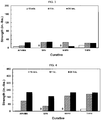
- Adhesive strength data for the phenylhydrazine curatives in Formulation 1 are given in Tables 1-4 below and shown graphically in FIGs. 1-4 .
- Table 1 15 min. 60 min. 24 hrs.
- APH/MA 12 65 180 SPH 5 13 63 HHPH 6 23 42 THPH 0 53 39
- Table 2 15 min. 60 min. 24 hrs.
- APH/MA 6 10 26 SPH 0 26 29 HHPH 0 26 8 THPH 12 22 23
- Table 4 15 min. 60 min. 24 hrs.
- APH/MA 3 117 215 SPH O 58 171 HHPH O 174 212 THPH 24 193 212
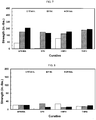
- Adhesive strength data for the phenylhydrazine based curatives in Formulation 2 are given in Tables 6-10 below and shown graphically in FIGs. 6-10 .
- Table 6 15 min. 60 min. 24 hrs.
- Table 7 15 min. 60 min. 24 hrs.
- Table 8 15 min. 60 min. 24 hrs.
- Table 10 capture the data and show the data in bar chart form. Table 10 15 min. 60 min. 24 hrs. APH/MA 1557 2436 2423 SPH 167 1894 2029 HHPH 1308 1947 2124 THPH 1253 1350 1572
- Table 6 and FIG. 6 improvement on strength development may be seen with the HHPH-containing composition as contrasted to the SPH-containing control composition when cured on steel nuts and bolts, even modestly after 15 minutes or 1 hour and significantly after 24 hours at room temperature.
- Table 7 and FIG. 7 show improvement in strength development with the inventive compositions as contrasted to the SPH-containing composition when cured at room temperature on steel nuts and bolts after 15 minutes.
- Table 9 and FIG. 9 show improvement in strength development with the inventive compositions as contrasted to the SPH-containing composition when cured at room temperature on steel nuts and bolts after 1 hour.
- Table 10 and FIG. 10 show improvement in strength development with the inventive compositions as contrasted to the HHPH-containing composition when cured at room temperature on steel pins and collars after 15 minutes.
Landscapes
- Chemical & Material Sciences (AREA)
- Organic Chemistry (AREA)
- Health & Medical Sciences (AREA)
- Chemical Kinetics & Catalysis (AREA)
- Medicinal Chemistry (AREA)
- Polymers & Plastics (AREA)
- Engineering & Computer Science (AREA)
- Materials Engineering (AREA)
- Adhesives Or Adhesive Processes (AREA)
- Organic Low-Molecular-Weight Compounds And Preparation Thereof (AREA)
- Polymerisation Methods In General (AREA)
- Sealing Material Composition (AREA)
Claims (11)
- Utilisation comme accélérateur de durcissement dans une composition durcissable anaérobie d'un composé dans la structure I
 R1 est choisi parmi H et les groupes alkyle en C1 à C4 ;p est un entier compris entre 1 et 5 ; et,O représente un groupe cycloalkyle, cycloalcényle, bicycloalkyle oubicycloalcényle, avec ou sans un ou plusieurs substituants alkyle en C1 à C4.
 - La composition durcissable anaérobie, comprenant :(a) un composant (méth)acrylate ; à(b) la composition anaérobie inductrice de durcissement ; et,(c) un composé conforme à la structure 1
 R1 est choisi parmi H et les groupes alkyle en C1 à C4 ;p est un entier compris entre 1 et 5 ; et,O représente un groupe cycloalkyle, cycloalcényle, bicycloalkyle oubicycloalcényle, avec ou sans un ou plusieurs substituants alkyle en C1 à C4.
 - Composition selon la revendication 2, dans laquelle le composé c) est un élément choisi dans le groupe comprenant :


- Composition selon la revendication 2, dans laquelle le composant (méth)acrylate est représenté par H2C = CGC02R10, dans lequel :G est un membre choisi dans le groupe constitué de H, l'halogène et l'alkyle ayant 1 à quatre atomes de carbone ; etR10 est un membre du groupe constitué des groupes alkyle, cycloalkyle, alcényle, cycloalcényle, alkaryle et aryle ayant 1 à 16 atomes de carbone, avec ou sans substitution ou interruption par un membre du groupe constitué de silane, silicium, oxygène, halogène, carbonyle, hydroxyle, ester, acide carboxylique, urée, uréthane, carbamate, amine, amide, soufre, sulfonate et sulfone.
- Composition selon la revendication 2, dans laquelle le composant (méth)acrylate est un membre choisi du groupe comprenant des (méth)acrylates de silicone, di(méth)acrylates de polyéthylène glycol, (méth)acrylates et di(méth)acrylates de tetra hydrofuran, (méth)acrylate d'hydroxypropyle, di(méth)acrylates d'hexanediol, tri(méth)acrylates de triméthylol propane, di(méth)acrylates de diéthylène glycol, di(méth)acrylates de triéthylène glycol, di(méth)acrylates de tétraéthylène diglycol, tétra(méth)acrylates de diglycérol, di(méth)acrylates de tétraméthylène, di(méth)acrylates d'éthylène, di(méth)acrylates de néopentyl glycol, (méth)acrylates de bisphénol-A, (méth)acrylates bisphénol-A éthoxylé, (méth)acrylates de bisphénol-F, (méth)acrylates de bisphénol-F éthoxylé, di(méth)acrylates de bisphenol-A, di(méth)acrylates de bisphénol-A éthoxylé, di(méth)acrylates bisphenol-F et di(méth)acrylates de bisphenol-F éthoxylé.
- La composition selon la revendication 2, comprenant en outre un co-accélérateur.
- Composition selon la revendication 2, dans laquelle la composition anaérobie inductrice de durcissement comprend la combinaison d'un initiateur de radicaux libres et un co-accélérateur de radicaux libres.
- Composition selon la revendication 2, comprenant en outre de l'acide acrylique.
- Procédé de préparation d'un produit de réaction à partir de la composition durcissable anaérobie, comprenant les étapes consistant à :appliquer la composition durcissable anaérobie selon la revendication 2 sur une surface de substrat souhaitée ; et,exposer la composition à un environnement anaérobie pendant un temps suffisant pour durcir la composition.
- Procédé de préparation de la composition durcissable anaérobie, comprenant l'étape consistant à mélanger ensemble :(i) en tant qu'accélérateur de durcissement anaérobie, un composé de structure 1
 R1 est choisi parmi H et les groupes alkyle en C1 à C4 ;p est un entier compris entre 1 et 5 ; et,O représente un groupe cycloalkyle, cycloalcényle, bicycloalkyle oubicycloalcényle, avec ou sans un ou plusieurs substituants alkyle en C1 à C4 ;(ii) le composant (méth)acrylate ; et,(iii) la composition anaérobie inductrice de durcissement.
 - Procédé d'utilisation d'un composé en tant qu'accélérateur de durcissement anaérobie consistant à :(I) mélanger le composé avec un composant (méth)acrylate, la composition anaérobie inductrice de durcissement ; ou,(II) appliquer le composé sur une surface d'un substrat et appliquer par dessus la composition durcissable anaérobie.
Applications Claiming Priority (2)
| Application Number | Priority Date | Filing Date | Title |
|---|---|---|---|
| US201462067027P | 2014-10-22 | 2014-10-22 | |
| PCT/US2015/053063 WO2016064543A1 (fr) | 2014-10-22 | 2015-09-30 | Produits d'addition phénylhydrazine/anhydride et compositions durcissables par voie anaérobie mettant en oeuvre ces produits |
Publications (3)
| Publication Number | Publication Date |
|---|---|
| EP3209640A1 EP3209640A1 (fr) | 2017-08-30 |
| EP3209640A4 EP3209640A4 (fr) | 2018-04-04 |
| EP3209640B1 true EP3209640B1 (fr) | 2019-07-10 |
Family
ID=55761308
Family Applications (1)
| Application Number | Title | Priority Date | Filing Date |
|---|---|---|---|
| EP15851676.5A Active EP3209640B1 (fr) | 2014-10-22 | 2015-09-30 | Produits d'addition phénylhydrazine/anhydride et compositions durcissables par voie anaérobie mettant en oeuvre ces produits |
Country Status (9)
| Country | Link |
|---|---|
| US (1) | US10662147B2 (fr) |
| EP (1) | EP3209640B1 (fr) |
| JP (1) | JP6629315B2 (fr) |
| KR (1) | KR102518981B1 (fr) |
| CN (1) | CN107148411B (fr) |
| BR (1) | BR112017008049A2 (fr) |
| CA (1) | CA2964572C (fr) |
| MX (1) | MX2017005121A (fr) |
| WO (1) | WO2016064543A1 (fr) |
Families Citing this family (2)
| Publication number | Priority date | Publication date | Assignee | Title |
|---|---|---|---|---|
| GB201812113D0 (en) * | 2018-07-25 | 2018-09-05 | Henkel IP & Holding GmbH | Anerobically curable compositions |
| CN117402076B (zh) * | 2023-08-28 | 2025-07-08 | 南京林业大学 | 降冰片烯酸甲酰肼类化合物的制备方法和产品及其应用 |
Family Cites Families (25)
| Publication number | Priority date | Publication date | Assignee | Title |
|---|---|---|---|---|
| US3218305A (en) | 1963-12-26 | 1965-11-16 | Loctite Corp | Accelerated anaerobic compositions and method of using same |
| US3592784A (en) * | 1967-08-03 | 1971-07-13 | Hercules Inc | Cross-linkable polymer compositions |
| DE1719144C3 (de) | 1967-12-01 | 1974-08-22 | Henkel & Cie Gmbh, 4000 Duesseldorf | Unter Sauerstoffausschluß beschleunigt erhärtende Klebstoffe oder Dichtungsmittel |
| DE1817989C3 (de) | 1967-12-28 | 1981-11-05 | Loctite Corp., 06111 Newington, Conn. | Verfahren zum Verbinden von nicht porösen Oberflächen mittels polymerisierbaren Klebstoffen |
| US3970505A (en) | 1973-01-15 | 1976-07-20 | Loctite Corporation | Anaerobic compositions and surface activator therefor |
| US4287330A (en) * | 1975-05-23 | 1981-09-01 | Loctite Corporation | Accelerator for curable compositions |
| US4321349A (en) | 1975-05-23 | 1982-03-23 | Loctite Corporation | Accelerator for curable compositions |
| IE43811B1 (en) | 1976-11-08 | 1981-06-03 | Loctite Ltd | Curable acrylate ester compositions containing hydrazine acelerators and acid co-accelerators |
| JPS53102989A (en) | 1977-02-22 | 1978-09-07 | Denki Kagaku Kogyo Kk | Curable composition |
| DE2911661A1 (de) | 1979-03-24 | 1980-09-25 | Bayer Ag | Verfahren zur herstellung von thiazolidin-2-thionen |
| US5411988A (en) | 1993-10-27 | 1995-05-02 | Bockow; Barry I. | Compositions and methods for inhibiting inflammation and adhesion formation |
| JPH07308757A (ja) | 1994-05-18 | 1995-11-28 | Tokyo Yogyo Co Ltd | スライディングノズルプレート |
| US5605999A (en) | 1995-06-05 | 1997-02-25 | Loctite Corporation | Anaerobically curable silicones |
| US5811473A (en) | 1996-04-02 | 1998-09-22 | Loctite Corporation | Primer activator composition for anaerobic adhesives |
| WO1999001484A1 (fr) | 1997-07-03 | 1999-01-14 | Loctite Corporation | Compositions adhesives anaerobies a resistance controlee pour hautes temperatures, durcissables dans des conditions ambiantes |
| WO2000040664A1 (fr) | 1999-01-08 | 2000-07-13 | Loctite (R & D) Limited | Nouveau durcisseur pour compositions adhesives anaerobies |
| US6835762B1 (en) * | 2002-05-31 | 2004-12-28 | Henkel Corporation | Cure accelerators for anaerobic curable compositions |
| US6958368B1 (en) | 2002-05-31 | 2005-10-25 | Henkel Corporation | Cure accelerators for anaerobic curable compositions |
| US6897277B1 (en) | 2003-12-22 | 2005-05-24 | Henkel Corporation | Cure accelerators for anaerobic curable compositions |
| EP1942104A1 (fr) * | 2006-12-20 | 2008-07-09 | sanofi-aventis | Hétéroarylcyclopropanecarboxamide et leur utilisation pharmaceutique |
| US8598279B2 (en) | 2007-07-23 | 2013-12-03 | Henkel IP US LLC | Adducts useful as cure components for anaerobic curable compositions |
| US8609881B2 (en) * | 2008-05-07 | 2013-12-17 | Henkel IP US LCC | Cure accelerators for anaerobic curable compositions |
| US8106141B2 (en) | 2008-05-07 | 2012-01-31 | Henkel Corporation | Cure accelerators for anaerobic curable compositions |
| MX2011011029A (es) | 2009-05-01 | 2011-11-04 | Loctite R & D Ltd | Aceladores de curacion para composiciones curables anaerobias. |
| CN102549058B (zh) | 2009-05-01 | 2014-03-12 | 汉高公司 | 用于厌氧性可固化组合物的固化促进剂 |
-
2015
- 2015-09-30 WO PCT/US2015/053063 patent/WO2016064543A1/fr not_active Ceased
- 2015-09-30 EP EP15851676.5A patent/EP3209640B1/fr active Active
- 2015-09-30 MX MX2017005121A patent/MX2017005121A/es unknown
- 2015-09-30 CA CA2964572A patent/CA2964572C/fr not_active Expired - Fee Related
- 2015-09-30 BR BR112017008049A patent/BR112017008049A2/pt not_active Application Discontinuation
- 2015-09-30 KR KR1020177011364A patent/KR102518981B1/ko active Active
- 2015-09-30 JP JP2017522118A patent/JP6629315B2/ja active Active
- 2015-09-30 CN CN201580057413.6A patent/CN107148411B/zh active Active
-
2017
- 2017-04-12 US US15/485,546 patent/US10662147B2/en active Active
Non-Patent Citations (1)
| Title |
|---|
| None * |
Also Published As
| Publication number | Publication date |
|---|---|
| KR102518981B1 (ko) | 2023-04-07 |
| BR112017008049A2 (pt) | 2017-12-19 |
| MX2017005121A (es) | 2017-07-13 |
| CN107148411A (zh) | 2017-09-08 |
| EP3209640A4 (fr) | 2018-04-04 |
| CA2964572A1 (fr) | 2016-04-28 |
| JP6629315B2 (ja) | 2020-01-15 |
| CN107148411B (zh) | 2020-06-19 |
| EP3209640A1 (fr) | 2017-08-30 |
| US10662147B2 (en) | 2020-05-26 |
| KR20170072228A (ko) | 2017-06-26 |
| WO2016064543A1 (fr) | 2016-04-28 |
| US20170217879A1 (en) | 2017-08-03 |
| JP2017537885A (ja) | 2017-12-21 |
| CA2964572C (fr) | 2022-01-18 |
Similar Documents
| Publication | Publication Date | Title |
|---|---|---|
| US6835762B1 (en) | Cure accelerators for anaerobic curable compositions | |
| US6897277B1 (en) | Cure accelerators for anaerobic curable compositions | |
| JP5654026B2 (ja) | 嫌気硬化性組成物 | |
| JP6073131B2 (ja) | 嫌気硬化性組成物用の硬化促進剤 | |
| KR101899270B1 (ko) | 노볼락 비닐 에스테르를 갖는 혐기 경화성 조성물 | |
| KR102601879B1 (ko) | 혐기 경화성 조성물을 위한 경화 촉진제 | |
| EP4200344B1 (fr) | Accélérateurs de durcissement pour compositions durcissables anaérobiques | |
| EP3209640B1 (fr) | Produits d'addition phénylhydrazine/anhydride et compositions durcissables par voie anaérobie mettant en oeuvre ces produits | |
| EP3201266B1 (fr) | Accélérateurs de durcissement pour des compositions durcissables anaérobies | |
| US7411025B1 (en) | Cure accelerators for anaerobic curable compositions | |
| EP3204461B1 (fr) | Accélérateurs de durcissement pour compositions durcissables par voie anaérobie | |
| US9969863B2 (en) | Cure accelerators for anaerobic curable compositions | |
| US7411009B1 (en) | Cure accelerators for anaerobic curable compositions | |
| US7709559B1 (en) | Cure accelerators for anaerobic curable compositions |
Legal Events
| Date | Code | Title | Description |
|---|---|---|---|
| STAA | Information on the status of an ep patent application or granted ep patent |
Free format text: STATUS: THE INTERNATIONAL PUBLICATION HAS BEEN MADE |
|
| PUAI | Public reference made under article 153(3) epc to a published international application that has entered the european phase |
Free format text: ORIGINAL CODE: 0009012 |
|
| STAA | Information on the status of an ep patent application or granted ep patent |
Free format text: STATUS: REQUEST FOR EXAMINATION WAS MADE |
|
| 17P | Request for examination filed |
Effective date: 20170407 |
|
| AK | Designated contracting states |
Kind code of ref document: A1 Designated state(s): AL AT BE BG CH CY CZ DE DK EE ES FI FR GB GR HR HU IE IS IT LI LT LU LV MC MK MT NL NO PL PT RO RS SE SI SK SM TR |
|
| AX | Request for extension of the european patent |
Extension state: BA ME |
|
| DAV | Request for validation of the european patent (deleted) | ||
| DAX | Request for extension of the european patent (deleted) | ||
| A4 | Supplementary search report drawn up and despatched |
Effective date: 20180302 |
|
| RIC1 | Information provided on ipc code assigned before grant |
Ipc: C08K 5/25 20060101ALI20180226BHEP Ipc: C07C 243/36 20060101AFI20180226BHEP Ipc: C09K 3/10 20060101ALI20180226BHEP Ipc: C08F 20/10 20060101ALI20180226BHEP Ipc: C08F 2/44 20060101ALI20180226BHEP Ipc: C09J 133/10 20060101ALI20180226BHEP Ipc: C08L 33/10 20060101ALI20180226BHEP |
|
| GRAP | Despatch of communication of intention to grant a patent |
Free format text: ORIGINAL CODE: EPIDOSNIGR1 |
|
| STAA | Information on the status of an ep patent application or granted ep patent |
Free format text: STATUS: GRANT OF PATENT IS INTENDED |
|
| INTG | Intention to grant announced |
Effective date: 20190320 |
|
| GRAS | Grant fee paid |
Free format text: ORIGINAL CODE: EPIDOSNIGR3 |
|
| GRAA | (expected) grant |
Free format text: ORIGINAL CODE: 0009210 |
|
| STAA | Information on the status of an ep patent application or granted ep patent |
Free format text: STATUS: THE PATENT HAS BEEN GRANTED |
|
| AK | Designated contracting states |
Kind code of ref document: B1 Designated state(s): AL AT BE BG CH CY CZ DE DK EE ES FI FR GB GR HR HU IE IS IT LI LT LU LV MC MK MT NL NO PL PT RO RS SE SI SK SM TR |
|
| REG | Reference to a national code |
Ref country code: GB Ref legal event code: FG4D |
|
| REG | Reference to a national code |
Ref country code: CH Ref legal event code: EP Ref country code: AT Ref legal event code: REF Ref document number: 1153426 Country of ref document: AT Kind code of ref document: T Effective date: 20190715 |
|
| REG | Reference to a national code |
Ref country code: DE Ref legal event code: R096 Ref document number: 602015033724 Country of ref document: DE |
|
| REG | Reference to a national code |
Ref country code: IE Ref legal event code: FG4D |
|
| REG | Reference to a national code |
Ref country code: NL Ref legal event code: MP Effective date: 20190710 |
|
| REG | Reference to a national code |
Ref country code: LT Ref legal event code: MG4D |
|
| REG | Reference to a national code |
Ref country code: AT Ref legal event code: MK05 Ref document number: 1153426 Country of ref document: AT Kind code of ref document: T Effective date: 20190710 |
|
| PG25 | Lapsed in a contracting state [announced via postgrant information from national office to epo] |
Ref country code: AT Free format text: LAPSE BECAUSE OF FAILURE TO SUBMIT A TRANSLATION OF THE DESCRIPTION OR TO PAY THE FEE WITHIN THE PRESCRIBED TIME-LIMIT Effective date: 20190710 Ref country code: NO Free format text: LAPSE BECAUSE OF FAILURE TO SUBMIT A TRANSLATION OF THE DESCRIPTION OR TO PAY THE FEE WITHIN THE PRESCRIBED TIME-LIMIT Effective date: 20191010 Ref country code: LT Free format text: LAPSE BECAUSE OF FAILURE TO SUBMIT A TRANSLATION OF THE DESCRIPTION OR TO PAY THE FEE WITHIN THE PRESCRIBED TIME-LIMIT Effective date: 20190710 Ref country code: NL Free format text: LAPSE BECAUSE OF FAILURE TO SUBMIT A TRANSLATION OF THE DESCRIPTION OR TO PAY THE FEE WITHIN THE PRESCRIBED TIME-LIMIT Effective date: 20190710 Ref country code: PT Free format text: LAPSE BECAUSE OF FAILURE TO SUBMIT A TRANSLATION OF THE DESCRIPTION OR TO PAY THE FEE WITHIN THE PRESCRIBED TIME-LIMIT Effective date: 20191111 Ref country code: BG Free format text: LAPSE BECAUSE OF FAILURE TO SUBMIT A TRANSLATION OF THE DESCRIPTION OR TO PAY THE FEE WITHIN THE PRESCRIBED TIME-LIMIT Effective date: 20191010 Ref country code: FI Free format text: LAPSE BECAUSE OF FAILURE TO SUBMIT A TRANSLATION OF THE DESCRIPTION OR TO PAY THE FEE WITHIN THE PRESCRIBED TIME-LIMIT Effective date: 20190710 Ref country code: HR Free format text: LAPSE BECAUSE OF FAILURE TO SUBMIT A TRANSLATION OF THE DESCRIPTION OR TO PAY THE FEE WITHIN THE PRESCRIBED TIME-LIMIT Effective date: 20190710 Ref country code: SE Free format text: LAPSE BECAUSE OF FAILURE TO SUBMIT A TRANSLATION OF THE DESCRIPTION OR TO PAY THE FEE WITHIN THE PRESCRIBED TIME-LIMIT Effective date: 20190710 |
|
| PG25 | Lapsed in a contracting state [announced via postgrant information from national office to epo] |
Ref country code: GR Free format text: LAPSE BECAUSE OF FAILURE TO SUBMIT A TRANSLATION OF THE DESCRIPTION OR TO PAY THE FEE WITHIN THE PRESCRIBED TIME-LIMIT Effective date: 20191011 Ref country code: ES Free format text: LAPSE BECAUSE OF FAILURE TO SUBMIT A TRANSLATION OF THE DESCRIPTION OR TO PAY THE FEE WITHIN THE PRESCRIBED TIME-LIMIT Effective date: 20190710 Ref country code: LV Free format text: LAPSE BECAUSE OF FAILURE TO SUBMIT A TRANSLATION OF THE DESCRIPTION OR TO PAY THE FEE WITHIN THE PRESCRIBED TIME-LIMIT Effective date: 20190710 Ref country code: AL Free format text: LAPSE BECAUSE OF FAILURE TO SUBMIT A TRANSLATION OF THE DESCRIPTION OR TO PAY THE FEE WITHIN THE PRESCRIBED TIME-LIMIT Effective date: 20190710 Ref country code: RS Free format text: LAPSE BECAUSE OF FAILURE TO SUBMIT A TRANSLATION OF THE DESCRIPTION OR TO PAY THE FEE WITHIN THE PRESCRIBED TIME-LIMIT Effective date: 20190710 Ref country code: IS Free format text: LAPSE BECAUSE OF FAILURE TO SUBMIT A TRANSLATION OF THE DESCRIPTION OR TO PAY THE FEE WITHIN THE PRESCRIBED TIME-LIMIT Effective date: 20191110 |
|
| PG25 | Lapsed in a contracting state [announced via postgrant information from national office to epo] |
Ref country code: TR Free format text: LAPSE BECAUSE OF FAILURE TO SUBMIT A TRANSLATION OF THE DESCRIPTION OR TO PAY THE FEE WITHIN THE PRESCRIBED TIME-LIMIT Effective date: 20190710 |
|
| PG25 | Lapsed in a contracting state [announced via postgrant information from national office to epo] |
Ref country code: IT Free format text: LAPSE BECAUSE OF FAILURE TO SUBMIT A TRANSLATION OF THE DESCRIPTION OR TO PAY THE FEE WITHIN THE PRESCRIBED TIME-LIMIT Effective date: 20190710 Ref country code: DK Free format text: LAPSE BECAUSE OF FAILURE TO SUBMIT A TRANSLATION OF THE DESCRIPTION OR TO PAY THE FEE WITHIN THE PRESCRIBED TIME-LIMIT Effective date: 20190710 Ref country code: EE Free format text: LAPSE BECAUSE OF FAILURE TO SUBMIT A TRANSLATION OF THE DESCRIPTION OR TO PAY THE FEE WITHIN THE PRESCRIBED TIME-LIMIT Effective date: 20190710 Ref country code: RO Free format text: LAPSE BECAUSE OF FAILURE TO SUBMIT A TRANSLATION OF THE DESCRIPTION OR TO PAY THE FEE WITHIN THE PRESCRIBED TIME-LIMIT Effective date: 20190710 Ref country code: PL Free format text: LAPSE BECAUSE OF FAILURE TO SUBMIT A TRANSLATION OF THE DESCRIPTION OR TO PAY THE FEE WITHIN THE PRESCRIBED TIME-LIMIT Effective date: 20190710 |
|
| PG25 | Lapsed in a contracting state [announced via postgrant information from national office to epo] |
Ref country code: MC Free format text: LAPSE BECAUSE OF FAILURE TO SUBMIT A TRANSLATION OF THE DESCRIPTION OR TO PAY THE FEE WITHIN THE PRESCRIBED TIME-LIMIT Effective date: 20190710 Ref country code: SK Free format text: LAPSE BECAUSE OF FAILURE TO SUBMIT A TRANSLATION OF THE DESCRIPTION OR TO PAY THE FEE WITHIN THE PRESCRIBED TIME-LIMIT Effective date: 20190710 Ref country code: CZ Free format text: LAPSE BECAUSE OF FAILURE TO SUBMIT A TRANSLATION OF THE DESCRIPTION OR TO PAY THE FEE WITHIN THE PRESCRIBED TIME-LIMIT Effective date: 20190710 Ref country code: IS Free format text: LAPSE BECAUSE OF FAILURE TO SUBMIT A TRANSLATION OF THE DESCRIPTION OR TO PAY THE FEE WITHIN THE PRESCRIBED TIME-LIMIT Effective date: 20200224 Ref country code: SM Free format text: LAPSE BECAUSE OF FAILURE TO SUBMIT A TRANSLATION OF THE DESCRIPTION OR TO PAY THE FEE WITHIN THE PRESCRIBED TIME-LIMIT Effective date: 20190710 |
|
| REG | Reference to a national code |
Ref country code: CH Ref legal event code: PL |
|
| REG | Reference to a national code |
Ref country code: DE Ref legal event code: R097 Ref document number: 602015033724 Country of ref document: DE |
|
| PLBE | No opposition filed within time limit |
Free format text: ORIGINAL CODE: 0009261 |
|
| STAA | Information on the status of an ep patent application or granted ep patent |
Free format text: STATUS: NO OPPOSITION FILED WITHIN TIME LIMIT |
|
| PG2D | Information on lapse in contracting state deleted |
Ref country code: IS |
|
| PG25 | Lapsed in a contracting state [announced via postgrant information from national office to epo] |
Ref country code: LI Free format text: LAPSE BECAUSE OF NON-PAYMENT OF DUE FEES Effective date: 20190930 Ref country code: CH Free format text: LAPSE BECAUSE OF NON-PAYMENT OF DUE FEES Effective date: 20190930 Ref country code: LU Free format text: LAPSE BECAUSE OF NON-PAYMENT OF DUE FEES Effective date: 20190930 Ref country code: IE Free format text: LAPSE BECAUSE OF NON-PAYMENT OF DUE FEES Effective date: 20190930 |
|
| REG | Reference to a national code |
Ref country code: BE Ref legal event code: MM Effective date: 20190930 |
|
| 26N | No opposition filed |
Effective date: 20200603 |
|
| PG25 | Lapsed in a contracting state [announced via postgrant information from national office to epo] |
Ref country code: BE Free format text: LAPSE BECAUSE OF NON-PAYMENT OF DUE FEES Effective date: 20190930 Ref country code: SI Free format text: LAPSE BECAUSE OF FAILURE TO SUBMIT A TRANSLATION OF THE DESCRIPTION OR TO PAY THE FEE WITHIN THE PRESCRIBED TIME-LIMIT Effective date: 20190710 |
|
| PG25 | Lapsed in a contracting state [announced via postgrant information from national office to epo] |
Ref country code: CY Free format text: LAPSE BECAUSE OF FAILURE TO SUBMIT A TRANSLATION OF THE DESCRIPTION OR TO PAY THE FEE WITHIN THE PRESCRIBED TIME-LIMIT Effective date: 20190710 |
|
| PG25 | Lapsed in a contracting state [announced via postgrant information from national office to epo] |
Ref country code: HU Free format text: LAPSE BECAUSE OF FAILURE TO SUBMIT A TRANSLATION OF THE DESCRIPTION OR TO PAY THE FEE WITHIN THE PRESCRIBED TIME-LIMIT; INVALID AB INITIO Effective date: 20150930 Ref country code: MT Free format text: LAPSE BECAUSE OF FAILURE TO SUBMIT A TRANSLATION OF THE DESCRIPTION OR TO PAY THE FEE WITHIN THE PRESCRIBED TIME-LIMIT Effective date: 20190710 |
|
| PG25 | Lapsed in a contracting state [announced via postgrant information from national office to epo] |
Ref country code: MK Free format text: LAPSE BECAUSE OF FAILURE TO SUBMIT A TRANSLATION OF THE DESCRIPTION OR TO PAY THE FEE WITHIN THE PRESCRIBED TIME-LIMIT Effective date: 20190710 |
|
| REG | Reference to a national code |
Ref country code: DE Ref legal event code: R081 Ref document number: 602015033724 Country of ref document: DE Owner name: HENKEL AG & CO. KGAA, DE Free format text: FORMER OWNER: HENKEL IP & HOLDING GMBH, 40589 DUESSELDORF, DE |
|
| REG | Reference to a national code |
Ref country code: GB Ref legal event code: 732E Free format text: REGISTERED BETWEEN 20220811 AND 20220817 |
|
| PGFP | Annual fee paid to national office [announced via postgrant information from national office to epo] |
Ref country code: GB Payment date: 20220920 Year of fee payment: 8 |
|
| PGFP | Annual fee paid to national office [announced via postgrant information from national office to epo] |
Ref country code: FR Payment date: 20220922 Year of fee payment: 8 |
|
| P01 | Opt-out of the competence of the unified patent court (upc) registered |
Effective date: 20230705 |
|
| GBPC | Gb: european patent ceased through non-payment of renewal fee |
Effective date: 20230930 |
|
| PG25 | Lapsed in a contracting state [announced via postgrant information from national office to epo] |
Ref country code: GB Free format text: LAPSE BECAUSE OF NON-PAYMENT OF DUE FEES Effective date: 20230930 |
|
| PG25 | Lapsed in a contracting state [announced via postgrant information from national office to epo] |
Ref country code: GB Free format text: LAPSE BECAUSE OF NON-PAYMENT OF DUE FEES Effective date: 20230930 Ref country code: FR Free format text: LAPSE BECAUSE OF NON-PAYMENT OF DUE FEES Effective date: 20230930 |
|
| PGFP | Annual fee paid to national office [announced via postgrant information from national office to epo] |
Ref country code: DE Payment date: 20250919 Year of fee payment: 11 |