EP3211015B1 - Composition de résine photodurcissable, encre, et revêtement - Google Patents
Composition de résine photodurcissable, encre, et revêtement Download PDFInfo
- Publication number
- EP3211015B1 EP3211015B1 EP16746494.0A EP16746494A EP3211015B1 EP 3211015 B1 EP3211015 B1 EP 3211015B1 EP 16746494 A EP16746494 A EP 16746494A EP 3211015 B1 EP3211015 B1 EP 3211015B1
- Authority
- EP
- European Patent Office
- Prior art keywords
- resin
- resin composition
- photocurable resin
- allylic
- photocurable
- Prior art date
- Legal status (The legal status is an assumption and is not a legal conclusion. Google has not performed a legal analysis and makes no representation as to the accuracy of the status listed.)
- Active
Links
Classifications
-
- C—CHEMISTRY; METALLURGY
- C08—ORGANIC MACROMOLECULAR COMPOUNDS; THEIR PREPARATION OR CHEMICAL WORKING-UP; COMPOSITIONS BASED THEREON
- C08F—MACROMOLECULAR COMPOUNDS OBTAINED BY REACTIONS ONLY INVOLVING CARBON-TO-CARBON UNSATURATED BONDS
- C08F20/00—Homopolymers and copolymers of compounds having one or more unsaturated aliphatic radicals, each having only one carbon-to-carbon double bond, and only one being terminated by only one carboxyl radical or a salt, anhydride, ester, amide, imide or nitrile thereof
- C08F20/02—Monocarboxylic acids having less than ten carbon atoms, Derivatives thereof
- C08F20/10—Esters
- C08F20/40—Esters of unsaturated alcohols, e.g. allyl (meth)acrylate
-
- C—CHEMISTRY; METALLURGY
- C08—ORGANIC MACROMOLECULAR COMPOUNDS; THEIR PREPARATION OR CHEMICAL WORKING-UP; COMPOSITIONS BASED THEREON
- C08F—MACROMOLECULAR COMPOUNDS OBTAINED BY REACTIONS ONLY INVOLVING CARBON-TO-CARBON UNSATURATED BONDS
- C08F2/00—Processes of polymerisation
- C08F2/44—Polymerisation in the presence of compounding ingredients, e.g. plasticisers, dyestuffs, fillers
-
- C—CHEMISTRY; METALLURGY
- C08—ORGANIC MACROMOLECULAR COMPOUNDS; THEIR PREPARATION OR CHEMICAL WORKING-UP; COMPOSITIONS BASED THEREON
- C08F—MACROMOLECULAR COMPOUNDS OBTAINED BY REACTIONS ONLY INVOLVING CARBON-TO-CARBON UNSATURATED BONDS
- C08F2/00—Processes of polymerisation
- C08F2/46—Polymerisation initiated by wave energy or particle radiation
- C08F2/48—Polymerisation initiated by wave energy or particle radiation by ultraviolet or visible light
-
- C—CHEMISTRY; METALLURGY
- C08—ORGANIC MACROMOLECULAR COMPOUNDS; THEIR PREPARATION OR CHEMICAL WORKING-UP; COMPOSITIONS BASED THEREON
- C08F—MACROMOLECULAR COMPOUNDS OBTAINED BY REACTIONS ONLY INVOLVING CARBON-TO-CARBON UNSATURATED BONDS
- C08F222/00—Copolymers of compounds having one or more unsaturated aliphatic radicals, each having only one carbon-to-carbon double bond, and at least one being terminated by a carboxyl radical and containing at least one other carboxyl radical in the molecule; Salts, anhydrides, esters, amides, imides, or nitriles thereof
- C08F222/10—Esters
- C08F222/26—Esters of unsaturated alcohols
-
- C—CHEMISTRY; METALLURGY
- C08—ORGANIC MACROMOLECULAR COMPOUNDS; THEIR PREPARATION OR CHEMICAL WORKING-UP; COMPOSITIONS BASED THEREON
- C08F—MACROMOLECULAR COMPOUNDS OBTAINED BY REACTIONS ONLY INVOLVING CARBON-TO-CARBON UNSATURATED BONDS
- C08F263/00—Macromolecular compounds obtained by polymerising monomers on to polymers of esters of unsaturated alcohols with saturated acids as defined in group C08F18/00
- C08F263/06—Macromolecular compounds obtained by polymerising monomers on to polymers of esters of unsaturated alcohols with saturated acids as defined in group C08F18/00 on to polymers of esters with polycarboxylic acids
-
- C—CHEMISTRY; METALLURGY
- C08—ORGANIC MACROMOLECULAR COMPOUNDS; THEIR PREPARATION OR CHEMICAL WORKING-UP; COMPOSITIONS BASED THEREON
- C08F—MACROMOLECULAR COMPOUNDS OBTAINED BY REACTIONS ONLY INVOLVING CARBON-TO-CARBON UNSATURATED BONDS
- C08F291/00—Macromolecular compounds obtained by polymerising monomers on to macromolecular compounds according to more than one of the groups C08F251/00 - C08F289/00
-
- C—CHEMISTRY; METALLURGY
- C09—DYES; PAINTS; POLISHES; NATURAL RESINS; ADHESIVES; COMPOSITIONS NOT OTHERWISE PROVIDED FOR; APPLICATIONS OF MATERIALS NOT OTHERWISE PROVIDED FOR
- C09D—COATING COMPOSITIONS, e.g. PAINTS, VARNISHES OR LACQUERS; FILLING PASTES; CHEMICAL PAINT OR INK REMOVERS; INKS; CORRECTING FLUIDS; WOODSTAINS; PASTES OR SOLIDS FOR COLOURING OR PRINTING; USE OF MATERIALS THEREFOR
- C09D11/00—Inks
- C09D11/02—Printing inks
- C09D11/10—Printing inks based on artificial resins
- C09D11/101—Inks specially adapted for printing processes involving curing by wave energy or particle radiation, e.g. with UV-curing following the printing
-
- C—CHEMISTRY; METALLURGY
- C09—DYES; PAINTS; POLISHES; NATURAL RESINS; ADHESIVES; COMPOSITIONS NOT OTHERWISE PROVIDED FOR; APPLICATIONS OF MATERIALS NOT OTHERWISE PROVIDED FOR
- C09D—COATING COMPOSITIONS, e.g. PAINTS, VARNISHES OR LACQUERS; FILLING PASTES; CHEMICAL PAINT OR INK REMOVERS; INKS; CORRECTING FLUIDS; WOODSTAINS; PASTES OR SOLIDS FOR COLOURING OR PRINTING; USE OF MATERIALS THEREFOR
- C09D11/00—Inks
- C09D11/02—Printing inks
- C09D11/10—Printing inks based on artificial resins
- C09D11/106—Printing inks based on artificial resins containing macromolecular compounds obtained by reactions only involving carbon-to-carbon unsaturated bonds
-
- C—CHEMISTRY; METALLURGY
- C09—DYES; PAINTS; POLISHES; NATURAL RESINS; ADHESIVES; COMPOSITIONS NOT OTHERWISE PROVIDED FOR; APPLICATIONS OF MATERIALS NOT OTHERWISE PROVIDED FOR
- C09D—COATING COMPOSITIONS, e.g. PAINTS, VARNISHES OR LACQUERS; FILLING PASTES; CHEMICAL PAINT OR INK REMOVERS; INKS; CORRECTING FLUIDS; WOODSTAINS; PASTES OR SOLIDS FOR COLOURING OR PRINTING; USE OF MATERIALS THEREFOR
- C09D129/00—Coating compositions based on homopolymers or copolymers of compounds having one or more unsaturated aliphatic radicals, each having only one carbon-to-carbon double bond, and at least one being terminated by an alcohol, ether, aldehydo, ketonic, acetal, or ketal radical; Coating compositions based on hydrolysed polymers of esters of unsaturated alcohols with saturated carboxylic acids; Coating compositions based on derivatives of such polymers
- C09D129/02—Homopolymers or copolymers of unsaturated alcohols
- C09D129/06—Copolymers of allyl alcohol
-
- C—CHEMISTRY; METALLURGY
- C09—DYES; PAINTS; POLISHES; NATURAL RESINS; ADHESIVES; COMPOSITIONS NOT OTHERWISE PROVIDED FOR; APPLICATIONS OF MATERIALS NOT OTHERWISE PROVIDED FOR
- C09D—COATING COMPOSITIONS, e.g. PAINTS, VARNISHES OR LACQUERS; FILLING PASTES; CHEMICAL PAINT OR INK REMOVERS; INKS; CORRECTING FLUIDS; WOODSTAINS; PASTES OR SOLIDS FOR COLOURING OR PRINTING; USE OF MATERIALS THEREFOR
- C09D151/00—Coating compositions based on graft polymers in which the grafted component is obtained by reactions only involving carbon-to-carbon unsaturated bonds; Coating compositions based on derivatives of such polymers
- C09D151/003—Coating compositions based on graft polymers in which the grafted component is obtained by reactions only involving carbon-to-carbon unsaturated bonds; Coating compositions based on derivatives of such polymers grafted on to macromolecular compounds obtained by reactions only involving unsaturated carbon-to-carbon bonds
-
- C—CHEMISTRY; METALLURGY
- C09—DYES; PAINTS; POLISHES; NATURAL RESINS; ADHESIVES; COMPOSITIONS NOT OTHERWISE PROVIDED FOR; APPLICATIONS OF MATERIALS NOT OTHERWISE PROVIDED FOR
- C09D—COATING COMPOSITIONS, e.g. PAINTS, VARNISHES OR LACQUERS; FILLING PASTES; CHEMICAL PAINT OR INK REMOVERS; INKS; CORRECTING FLUIDS; WOODSTAINS; PASTES OR SOLIDS FOR COLOURING OR PRINTING; USE OF MATERIALS THEREFOR
- C09D7/00—Features of coating compositions, not provided for in group C09D5/00; Processes for incorporating ingredients in coating compositions
- C09D7/40—Additives
-
- C—CHEMISTRY; METALLURGY
- C09—DYES; PAINTS; POLISHES; NATURAL RESINS; ADHESIVES; COMPOSITIONS NOT OTHERWISE PROVIDED FOR; APPLICATIONS OF MATERIALS NOT OTHERWISE PROVIDED FOR
- C09D—COATING COMPOSITIONS, e.g. PAINTS, VARNISHES OR LACQUERS; FILLING PASTES; CHEMICAL PAINT OR INK REMOVERS; INKS; CORRECTING FLUIDS; WOODSTAINS; PASTES OR SOLIDS FOR COLOURING OR PRINTING; USE OF MATERIALS THEREFOR
- C09D7/00—Features of coating compositions, not provided for in group C09D5/00; Processes for incorporating ingredients in coating compositions
- C09D7/40—Additives
- C09D7/65—Additives macromolecular
-
- C—CHEMISTRY; METALLURGY
- C09—DYES; PAINTS; POLISHES; NATURAL RESINS; ADHESIVES; COMPOSITIONS NOT OTHERWISE PROVIDED FOR; APPLICATIONS OF MATERIALS NOT OTHERWISE PROVIDED FOR
- C09J—ADHESIVES; NON-MECHANICAL ASPECTS OF ADHESIVE PROCESSES IN GENERAL; ADHESIVE PROCESSES NOT PROVIDED FOR ELSEWHERE; USE OF MATERIALS AS ADHESIVES
- C09J131/00—Adhesives based on homopolymers or copolymers of compounds having one or more unsaturated aliphatic radicals, each having only one carbon-to-carbon double bond, and at least one being terminated by an acyloxy radical of a saturated carboxylic acid, of carbonic acid, or of a haloformic acid; Adhesives based on derivatives of such polymers
- C09J131/02—Homopolymers or copolymers of esters of monocarboxylic acids
Definitions
- the present invention relates to a photocurable resin composition containing an allylic polymer (A) and a tackifier resin (B), and also relates to an ink and a coating material including the resin composition. Specifically, the present invention relates to a photocurable resin composition having excellent adhesion to plastic substrates.
- UV curable printing inks are highly valued because, e.g. , they have a high cure rate so that they can be cured in a short time; they are environmentally friendly due to no use of solvents; and they can save resources and energy. Therefore, they are increasingly widely used in practice.
- diallyl phthalate resins derived from diallyl phthalate diallyl orthophthalate, diallyl isophthalate, or diallyl terephthalate are used as UV offset inks for paper.
- Patent Literature 2 describes that, among active energy ray-curable ink compositions each containing a photopolymerizable acrylate monomer, a pigment, a photoinitiator, and a petroleum-based resin which is soluble in the photopolymerizable acrylate monomer, those containing specific petroleum-based resins have excellent transferability and adhesion to olefin resin films such as polyethylene or polypropylene films.
- these active energy ray-curable ink compositions have a versatile problem in that the diallyl phthalate resins are compatible with limited petroleum-based resins.
- Patent Literature 3 relates to an particular active energy ray-curable resin composition comprising a diallyl water-added phthalate prepolymer among compounds curable by irradiation with energy rays.
- Patent Literature 4 concerns a specific ene-thiol based curable composition comprising a thiol compound having two or more specific groups in the molecule, and an ene oligomer having an alicyclic or aromatic ring structure and two or more ethylenically unsaturated groups in the molecule, with a number average molecular weight of 500 to 20,000 in terms of polystyrene.
- the present invention aims to provide a photocurable resin composition that has excellent adhesion to plastic substrates and can form a composition with good compatibility.
- a photocurable resin composition which contains an allylic polymer (A) produced by polymerization of an allylic compound having a specific structure, and a tackifier resin (B) has excellent adhesion to plastic substrates and can form a composition with good compatibility, thereby achieving the present invention.
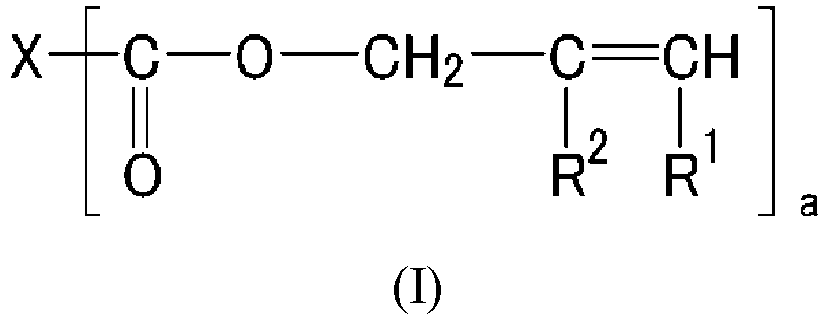
- the photocurable resin composition of the present invention contains: an allylic polymer (A) produced by polymerization of an allylic compound represented by the formula (I) below; and a tackifier resin (B) of the type and amount specified in claim 1, wherein R 1 and R 2 each represent H or CH 3 ; X represents an a-valent group having an unsubstituted saturated or partially unsaturated four- to eight-membered cyclic structure; and a represents 2 or 3.
- a photocurable resin composition which contains an allylic polymer (A) produced by polymerization of an allylic compound of formula (I), and a tackifier resin (B) has excellent adhesion to plastic substrates.
- Such a photocurable resin composition shows excellent adhesion particularly to polypropylene (PP) resin.
- the combination of the allylic polymer (A) and the tackifier resin (B) in the photocurable composition is favorable for adhesion to PP resin.
- the photocurable resin composition containing the allylic polymer (A) and the tackifier resin (B) in combination with other resin components can form a composition with good compatibility.
- the photocurable resin composition is suitable as a component of inks or coating materials for PP resin, to which conventional diallyl phthalate resin compositions are difficult to closely adhere.
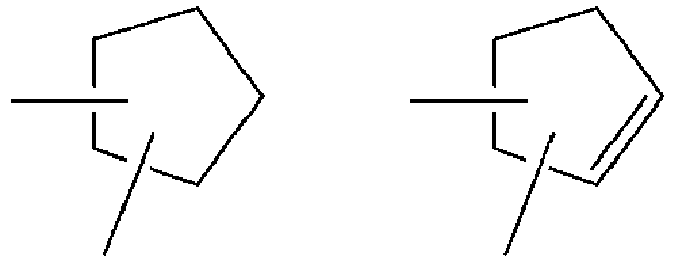
- the X in formula (I) preferably has any of the following cyclic structures:
- the photocurable resin composition of the present invention further contains an ethylenically unsaturated compound (C).
- C ethylenically unsaturated compound
- the ethylenically unsaturated compound (C) has good compatibility with the allylic polymer (A) and the tackifier resin (B) and is thus suitable to provide a composition with good compatibility.
- the photocurable resin composition of the present invention further contains a photopolymerization initiator.
- composition containing a photopolymerization initiator can be smoothly polymerized by exposure to light, so that a higher molecular weight polymer can be produced in a short time.
- the ink of the present invention includes the photocurable resin composition of the present invention.
- This ink is suitable for printing on plastic substrates, and especially on PP resin substrates (e.g. sheets or films) .
- the coating material of the present invention includes the photocurable resin composition of the present invention.
- This coating material is suitable for painting on plastic substrates, and especially on PP resin substrates (e.g. sheets or films).
- the coating material of the present invention is preferably an overprint varnish.
- the present invention provides a photocurable resin composition which has good adhesion to synthetic polymer substrates, particularly plastic substrates, when it is used as a component of inks, coating materials, adhesives, or photoresists, and further which is excellent in compatibility.
- the photocurable resin composition of the present invention contains an allylic polymer (A) produced by polymerization of an allylic compound represented by the following formula (I): wherein R 1 and R 2 each represent H or CH 3 ; X represents an a-valent group having an unsubstituted saturated or partially unsaturated four- to eight-membered cyclic structure; and a represents 2 or 3.
- R 1 and R 2 each represent H or CH 3 ;
- X represents an a-valent group having an unsubstituted saturated or partially unsaturated four- to eight-membered cyclic structure; and a represents 2 or 3.
- Preferred examples of X in formula (I) include those having the following cyclic structures:
- X in formula (I) include those having the following cyclic structures:
- the X may be of various types and may have a cyclic structure other than those mentioned above.
- the number of double bonds in the cyclic structure is not limited to one, and may be two or more. However, X does not have an aromatic six-membered cyclic structure.
- the X may be intramolecularly crosslinked.
- Examples of the intramolecularly crosslinked X include adamantane, norbornene, and norbornane.
- X is an a-valent group where a is 2 or 3
- X is a bivalent or trivalent group.
- a number "a (2 or 3)" of allyl ester groups [-CO-O-CH 2 -CR 2 -CHR 1 ] shown in formula (I) are bound to the cyclic structure of X.
- the allylic compound may be a mixture of compounds that differ in the combination of substitution positions. Particularly when two allyl ester groups are bound to a six-membered X, the two allyl ester groups may be in the ortho, meta, or para orientation, preferably in the ortho or para orientation.
- allylic compound of formula (I) examples include diallyl 1,2-cyclohexanedicarboxylate, diallyl 1,3-cyclohexanedicarboxylate, diallyl 1,4-cyclohexanedicarboxylate, diallyl 4-cyclohexene-1,2-dicarboxylate, and diallyl 2-cyclohexene-1,2-dicarboxylate.
- diallyl 1,2-cyclohexanedicarboxylate diallyl 4-cyclohexene-1,2-dicarboxylate
- diallyl 1,4-cyclohexanedicarboxylate diallyl 1,2-cyclohexanedicarboxylate being more preferred.
- An allylic polymer (A) produced by polymerization of at least one compound selected from the group consisting of the aforementioned allylic compounds may be used in the photocurable resin composition.
- copolymers produced by copolymerization of the allylic compound of formula (I) and other polymerizable compounds may be used in the photocurable resin composition.
- Examples of copolymerizable compounds include 3-methyl-hexahydro-1,2-diallyl phthalate, 4-methyl-hexahydro-1,2-diallyl phthalate, 3-methyl-1,2,3,6-tetrahydro-1,2-diallyl phthalate, and 4-methyl-1,2,3,6-tetrahydro-1,2-diallyl phthalate.
- the specific exemplary allylic compounds of formula (I) may be produced, for example, by an esterification reaction between cyclohexanedicarboxylic acid or cyclohexanedicarboxylic anhydride and allyl alcohol or allyl chloride, or an esterification reaction between cyclohexenedicarboxylic acid or cyclohexenedicarboxylic anhydride and allyl alcohol or allyl chloride.
- the allylic compound of formula (I) may be polymerized by any method, including usual polymerization reactions.
- An appropriate polymerization initiator if needed, may be added in the polymerization reaction.
- the use of a polymerization initiator allows for production of a higher molecular weight polymer in a short time.
- polymerization initiator used in the polymerization reaction of the allylic compound examples include azo initiators such as azobisisobutyronitrile and dimethyl 2,2'-azobisisobutyrate; peroxide initiators such as ketone peroxides, peroxy ketals, hydroperoxides, dialkyl peroxides, diacyl peroxides, peroxy dicarbonates, peroxy esters, and benzoyl peroxide; and photopolymerization initiators, including: acetophenone initiators such as 2-methyl-1-[4-(methylthio)phenyl]-2-morpholinopropane-1-one and 1-hydroxycyclohexyl phenyl ketone; benzoin initiators such as benzoin and benzoin ethyl ether; benzophenone initiators such as benzophenone; phosphorus initiators such as acylphosphine oxide; sulfur initiators such as thioxanthone; and benzil initiators such as benzil
- the amount of the polymerization initiator relative to 100 parts by weight of the allylic compound of formula (I) as a monomer is preferably 5.0 parts by weight or less, more preferably 3.0 parts by weight or less. Moreover, the amount is particularly preferably 0.001 to 3.0 parts by weight.
- the reaction temperature during the polymerization is preferably 60 to 240°C, e.g. 80 to 220°C.
- the reaction time is preferably 0.1 to 100 hours, e.g. 1 to 30 hours.
- An allylic polymer (A) having a monomer unit based on the allylic compound of formula (I) can be prepared by polymerization of the allylic compound of formula (I) as described above or by other methods.
- the amount of the monomer unit based on the allylic compound of formula (I), based on 100% by weight of the allylic polymer (A), is preferably 20% by weight or more, more preferably 50% by weight or more, further more preferably 80% by weight or more, particularly preferably 98% by weight or more, and may be 100% by weight.
- the allylic polymer (A) preferably has a weight average molecular weight of 300,000 or less, more preferably 200,000 or less.
- the weight average molecular weight is further preferably 2,000 to 150,000, particularly preferably 5,000 to 140,000.
- the amount of the allylic polymer (A) in the photocurable resin composition of the present invention is preferably 1% to 50% by weight, more preferably 1% to 40% by weight, further more preferably 1% to 30% by weight of the total amount of the photocurable resin composition.
- a tackifier resin (B) and an ethylenically unsaturated compound (C), which will be described below, are added to the allylic polymer (A) within the range indicated above, they can be maintained sufficiently soluble so that the composition has excellent compatibility.
- tackifier resins (B) that can be used in the photocurable resin composition of the present invention include unsaturated polyester resin, polyamide resin, epoxy resin, phenolic resin, vinyl chloride resin, vinyl acetate resin, urethane resin, ABS resin, AS resin, AAS resin, ethylene/vinyl chloride copolymer resin, butyral resin, ethylene/vinyl acetate copolymer resin, polyimide resin, polyacetal resin, polyethylene resin, polycarbonate resin, styrene resin, styrene-maleic acid resin, polysulfone resin, melamine resin, urea resin, xylene resin, coumarone resin, ketone resin, maleic acid resin, polyvinyl alcohol, polyvinyl ether, polyterpene resin, terpene phenolic resin, and acrylic resin.
- the tackifier resin (B) has a SP value, which is a measure of polarity, of 7.0 to 10.0, preferably 8.0 to 10.0, and more preferably 9.0 to 10.0.
- resins examples include polyethylene resin (SP value: 8.1), styrene resin (SP value: 9.1), vinyl acetate resin (SP value: 9.4), vinyl chloride resin (SP value: 9.6), polycarbonate resin (SP value: 9.8), and styrene-maleic acid resin (SP value: 9.85).
- the SP value can be calculated by the Fedors method described in Polymer Engineering and Science, 14, (2), 147 (1974 ).
- the resin is preferably a resin containing a benzene ring, more preferably a styrene-based resin having a styrene-based monomer unit.
- the styrene-based resin include AS resin, ABS resin, styrene resin, and styrene-maleic acid resin, with styrene resin or styrene-maleic acid resin being particularly preferred.
- the amount of the tackifier resin (B) contained in the photocurable resin composition is 50 to 1,000 parts by weight, preferably 100 to 900 parts by weight, more preferably 200 to 800 parts by weight, relative to 100 parts by weight of the allylic polymer (A) in the photocurable resin composition.
- the amount is within the range indicated above, the composition has sufficient adhesion to plastic substrates, and the allylic polymer (A) and the tackifier resin (B) are maintained sufficiently soluble so that the composition has excellent compatibility.
- the ethylenically unsaturated compound (C) when added, they can be maintained sufficiently soluble.
- the photocurable resin composition of the present invention preferably contains an ethylenically unsaturated compound (C) that can be cured by exposure to light.
- the ethylenically unsaturated compound (C) preferably has 1 to 20, more preferably 1 to 10, further more preferably 2 to 6 carbon-carbon double bonds.
- the ethylenically unsaturated compound (C) may be, for example, a (meth)acrylic acid ester compound, a (meth)allyl compound, or a vinyl compound.
- the ethylenically unsaturated compound may be a mixture of two or more compounds.
- Examples of the (meth) acrylic acid ester compound include (meth)acrylic acid ester compounds of alcohols such as pentaerythritol, dipentaerythritol, trimethylolpropane, ditrimethylolpropane, neopentyl glycol, 1,6-hexanediol, glycerol, polyethylene glycol, or polypropylene glycol, and alkylene oxide (e.g. ethylene oxide, propylene oxide) adducts of these (meth) acrylic acid ester compounds; (meth) acrylic acid ester compounds of alkylene oxide (e.g.
- ethylene oxide, propylene oxide) adducts of bisphenols such as bisphenol A or bisphenol F; (meth) acrylic acid ester compounds such as epoxy (meth)acrylate, urethane (meth)acrylate, and alkyd (meth) acrylate; and (meth) acrylic acid ester compounds such as epoxidized soybean oil acrylate.
- (meth)acrylic acid ester compounds of alcohols such as pentaerythritol, dipentaerythritol, trimethylolpropane, ditrimethylolpropane, neopentyl glycol, 1,6-hexanediol, glycerol, polyethylene glycol, or polypropylene glycol, and alkylene oxide (e.g. ethylene oxide, propylene oxide) adducts of these (meth)acrylic acid ester compounds.
- alcohols such as pentaerythritol, dipentaerythritol, trimethylolpropane, ditrimethylolpropane, neopentyl glycol, 1,6-hexanediol, glycerol, polyethylene glycol, or polypropylene glycol, and alkylene oxide (e.g. ethylene oxide, propylene oxide) adducts of these (meth)acrylic acid ester compounds.
- (meth)acrylic acid ester compounds of alcohols such as pentaerythritol, dipentaerythritol, trimethylolpropane, or ditrimethylolpropane, and alkylene oxide (e.g. ethylene oxide, propylene oxide) adducts of these (meth)acrylic acid ester compounds.
- alcohols such as pentaerythritol, dipentaerythritol, trimethylolpropane, or ditrimethylolpropane
- alkylene oxide e.g. ethylene oxide, propylene oxide
- Examples of the (meth)allyl compound include di (meth)allyl phthalate and tri(meth)allyl isocyanurate.
- vinyl compound examples include styrene, divinylbenzene, N-vinylpyrrolidone, and vinyl acetate.
- ditrimethylolpropane tetraacrylate or trimethylolpropane triacrylate is preferred among these, with ditrimethylolpropane tetraacrylate being more preferred.
- the amount of the ethylenically unsaturated compound (C) contained in the photocurable resin composition of the present invention is preferably 50 to 1,000 parts by weight, more preferably 100 to 950 parts by weight, further more preferably 250 to 950 parts by weight, relative to 100 parts by weight of the allylic polymer (A) in the photocurable resin composition.
- the amount of the ethylenically unsaturated compound (C) to be contained in the photocurable resin composition is preferably added so that the photocurable resin composition has a viscosity in the range of 100 to 300 Pa ⁇ s (25°C).
- the ratio of the tackifier resin (B) to the ethylenically unsaturated compound (C) (tackifier resin (B):ethylenically unsaturated compound (C)) added to the photocurable resin composition is preferably in the range of 10:90 to 70:30, more preferably 20:80 to 60:40.
- the photocurable resin composition of the present invention may contain a polymerization initiator, and in particular preferably a photopolymerization initiator.
- photopolymerization initiators that may be contained in the photocurable resin composition include acetophenone initiators such as 2-methyl-1-[4-(methylthio)phenyl)-2-morpholinopropane-1-one and 1-hydroxycyclohexyl phenyl ketone; benzoin initiators such as benzoin and benzoin ethyl ether; benzophenone initiators such as benzophenone; phosphorus initiators such as acylphosphine oxide; sulfur initiators such as thioxanthone; and benzil initiators such as benzil and 9,10 -phenanthrenequinone.
- acetophenone initiators such as 2-methyl-1-[4-(methylthio)phenyl)-2-morpholinopropane-1-one and 1-hydroxycyclohexyl phenyl ketone
- the amount of the photopolymerization initiator contained in the photocurable resin composition is preferably in the range of 0.1% to 15% by weight, more preferably 0.5% to 12% by weight, further more preferably 1% to 10% by weight of the total photocurable resin composition.
- a photoinitiation aid e.g. an amine photoinitiation aid such as triethanolamine
- an amine photoinitiation aid such as triethanolamine
- the amount of the photoinitiation aid is preferably in the range of 0.1% to 5% by weight, more preferably 0.5% to 3% by weight of the total photocurable resin composition.
- the photocurable resin composition of the present invention may contain various additives depending on the purpose, and examples of the additives include stabilizers (e.g. polymerization inhibitors such as hydroquinone and methoquinone), coloring agents such as pigments (e.g. cyanine blue, disazo yellow, carmine 6b, lake red C, carbon black, titanium white), fillers, and viscosity modifiers.
- stabilizers e.g. polymerization inhibitors such as hydroquinone and methoquinone
- coloring agents such as pigments (e.g. cyanine blue, disazo yellow, carmine 6b, lake red C, carbon black, titanium white)
- fillers e.g. cyanine blue, disazo yellow, carmine 6b, lake red C, carbon black, titanium white
- viscosity modifiers e.g. cyanine blue, disazo yellow, carmine 6b, lake red C, carbon black, titanium white
- the amount of the stabilizer contained in the photocurable resin composition is preferably in the
- the amount of the coloring agent is preferably in the range of 1% to 50% by weight, more preferably 1% to 45% by weight of the total photocurable resin composition.
- the photocurable resin composition of the present invention can be prepared by mixing an allylic polymer (A) with a tackifier resin (B) and optionally an ethylenically unsaturated compound (C) as well as a photopolymerization initiator, a photoinitiation aid, and additives (e.g. a stabilizer, a pigment).
- the photocurable resin composition of the present invention is cured by exposure to light.
- the light used in the curing is typically ultraviolet rays.
- the curing reaction of the photocurable resin composition may be carried out with any curing apparatus under any curing condition, and methods commonly used for photocuring reactions may be used.
- the photocurable resin composition of the present invention can be used in any application. It may be used in various technical fields, such as inks (e.g. printing inks such as photocurable printing inks for lithography, silk screen printing inks, and gravure inks), coating materials (e.g. coating materials for paper, plastics, metals, wood, or other substrates, such as overprint varnishes), adhesives, and photoresists.
- inks e.g. printing inks such as photocurable printing inks for lithography, silk screen printing inks, and gravure inks
- coating materials e.g. coating materials for paper, plastics, metals, wood, or other substrates, such as overprint varnishes
- adhesives e.g. adhesives, and photoresists.
- An ink including the photocurable resin composition of the present invention is the ink of the present invention.
- a coating material including the photocurable resin composition of the present invention is the coating material of the present invention.
- the coating material of the present invention is preferably an overprint varnish.
- the ink may typically be produced as follows.
- An allylic polymer (A), a tackifier resin (B), and a stabilizer or the like are dissolved in an ethylenically unsaturated compound (C) with stirring at 60°C to 100°C to prepare a varnish.
- the varnish is mixed with a pigment, a photopolymerization initiator, and other additives with stirring in a butterfly mixer and then milled using, for example, a three-roll mill to obtain an ink.
- An overprint varnish can be produced in the same manner as described for the ink with the exception of not using any pigment.
- Mw Weight average molecular weight
- Mw/Mn molecular weight distribution
- Diallyl 1,2-cyclohexanedicarboxylate was prepared by an esterification reaction between cyclohexanedicarboxylic anhydride and allyl alcohol.
- Photocurable resin compositions with the formulations described in Table 1 were prepared and evaluated for their properties.
- the allylic polymer (A) prepared in Production Example 1 or DAP resin, tackifier resins (B), an ethylenically unsaturated compound (C), and a polymerization inhibitor were added in the formulation amounts indicated in Table 1 and mixed with heat at 100°C to prepare photocurable resin compositions.
- the photocurable resin compositions were cooled to room temperature and then allowed to stand overnight. Thereafter, the appearance of each composition was evaluated for transparency to determine the compatibiity.
- the compositions having a transparent appearance after cooling were rated as "Good", and those having a cloudy appearance were rated as "Poor”. Table 2 shows the results.
- Example 1 Example 2 Comparative Example 1 Comparative Example 2 Comparative Example 3 Allylic polymer (A) or DAP resin Polymer 1 10 7.5 - - 30 DAP resin - - 10 30 - Tackifier resin (B) Piccolastic A75 30 - 30 - - SMA2625 - 22.5 - - - Ethylenically unsaturated compound (C) SR355 60 70 60 70 70 Polymerization inhibitor Irganox 1076 0.3 0.3 0.3 0.3 0.3 0.3 0.3 0.3 0.3 0.3 0.3 0.3 0.3 0.3 0.3 0.3 0.3 0.3 0.3 0.3 0.3 0.3 0.3 0.3 0.3 0.3 0.3 0.3 0.3 0.3 0.3 0.3 0.3 0.3 0.3 0.3 0.3 0.3 0.3 0.3 0.3 0.3 0.3 0.3 0.3 0.3 0.3 0.3 0.3 0.3 0.3 0.3 0.3 0.3 0.3 0.3 0.3 0.3 0.3 0.3 0.3 0.3 0.3 0.3 0.3 0.3 0.3 The components other
- Irgacure 907 (2-methyl-1-[4-(methylthio)phenyl]-2-morpholinopropane-1-one available from BASF Japan) as a photopolymerization initiator, and they were mixed with heat to prepare a sample for an adhesion test.
- the amount of the photopolymerization initiator was adjusted to 5 parts by weight relative to 100 parts by weight of the total of the allylic polymer (A) or DAP resin, the tackifier resin (B), and the ethylenically unsaturated compound (C) in the photocurable resin composition.
- the prepared samples for an adhesion test were coated on a plastic film (polypropylene substrate, highly transparent cast PP sheet available from Tatsuta Chemical Co., Ltd., trade name: High P Crystal ST-500, thickness: 0.3 mm) using an RI tester, followed by being cured using a metal halide lamp with an output of 120 W/cm (distance to lamp: 11 cm, a plurality of passes at a conveyor speed of 5 m/min until the coated film became tack-free).
- the UV curing apparatus used was a conveyor-type UV curing apparatus available from Eye Graphics Co., Ltd. An 18 mm width strip of Cellotape (registered trademark) (Nichiban Co., Ltd., product No.
- Example 1 A comparison between Example 1 and Comparative Example 1 reveals that a combination of Polymer 1, which was an allylic polymer (A) produced by polymerization of an allylic compound of formula (I), and a tackifier resin (B) had better compatibility with an ethylenically unsaturated compound (C) than a combination of DAP resin and the tackifier resin (B).
- the photocurable resin composition of the present invention can be used in inks (e.g. offset inks), coating materials, adhesives, photoresists, and other applications for plastic substrates.
- inks e.g. offset inks
- coating materials e.g. adhesives, photoresists, and other applications for plastic substrates.
Landscapes
- Chemical & Material Sciences (AREA)
- Organic Chemistry (AREA)
- Chemical Kinetics & Catalysis (AREA)
- Health & Medical Sciences (AREA)
- Polymers & Plastics (AREA)
- Medicinal Chemistry (AREA)
- Wood Science & Technology (AREA)
- Life Sciences & Earth Sciences (AREA)
- Materials Engineering (AREA)
- Engineering & Computer Science (AREA)
- Polymerisation Methods In General (AREA)
- Inks, Pencil-Leads, Or Crayons (AREA)
- Addition Polymer Or Copolymer, Post-Treatments, Or Chemical Modifications (AREA)
- Macromonomer-Based Addition Polymer (AREA)
- Compositions Of Macromolecular Compounds (AREA)
- Graft Or Block Polymers (AREA)
- Paints Or Removers (AREA)
Claims (9)
- Composition de résine photodurcissable comprenant :un polymère allylique (A) produit par polymérisation d'un composé allylique représenté par la formule (1) ci-dessous ; etune résine conférant du collant (B) ayant une valeur SP de 7,0 à 10,0, telle que calculée par la méthode de Fedor décrite dans Polymer Engineering and Science, 14 (2), 147 (1974), dans laquelle la quantité de la résine conférant du collant (B) est de 50 à 1 000 parties en poids pour 100 parties en poids du polymère allylique (A) dans la composition de résine photodurcissable ;
- Composition de résine photodurcissable selon la revendication 1, dans laquelle la résine conférant du collant est choisie dans l'ensemble constitué par une résine de polyéthylène, une résine de styrène, une résine d'acétate de vinyle, une résine chlorure de vinyle, une résine de polycarbonate et une résine de styrène-acide maléique.
- Composition de résine photodurcissable selon les revendications 1 ou 2, dans laquelle la résine conférant du collant est choisie dans l'ensemble constitué par une résine de styrène et une résine de styrène-acide maléique.
- Composition de résine photodurcissable selon l'une quelconque des revendications 1 à 3, dans laquelle X dans la formule (1) a l'une quelconque des structures cycliques suivantes :



- Composition de résine photodurcissable selon l'une quelconque des revendications 1 à 4, comprenant en outre un composé à insaturation éthylénique (C).
- Composition de résine photodurcissable selon l'une quelconque des revendications 1 à 5, comprenant en outre un amorceur de photopolymérisation.
- Encre comprenant la composition de résine photodurcissable selon l'une quelconque des revendications 1 à 6.
- Matériau de revêtement comprenant la composition de résine photodurcissable selon l'une quelconque des revendications 1 à 6.
- Matériau de revêtement selon la revendication 8, qui est un vernis de surimpression.
Applications Claiming Priority (2)
| Application Number | Priority Date | Filing Date | Title |
|---|---|---|---|
| JP2015019430 | 2015-02-03 | ||
| PCT/JP2016/052375 WO2016125663A1 (fr) | 2015-02-03 | 2016-01-27 | Composition de résine photodurcissable, encre, et revêtement |
Publications (4)
| Publication Number | Publication Date |
|---|---|
| EP3211015A1 EP3211015A1 (fr) | 2017-08-30 |
| EP3211015A4 EP3211015A4 (fr) | 2018-08-22 |
| EP3211015C0 EP3211015C0 (fr) | 2024-08-07 |
| EP3211015B1 true EP3211015B1 (fr) | 2024-08-07 |
Family
ID=56564011
Family Applications (1)
| Application Number | Title | Priority Date | Filing Date |
|---|---|---|---|
| EP16746494.0A Active EP3211015B1 (fr) | 2015-02-03 | 2016-01-27 | Composition de résine photodurcissable, encre, et revêtement |
Country Status (7)
| Country | Link |
|---|---|
| US (1) | US10336836B2 (fr) |
| EP (1) | EP3211015B1 (fr) |
| JP (1) | JP6690555B2 (fr) |
| KR (1) | KR102459203B1 (fr) |
| CN (1) | CN107075042B (fr) |
| ES (1) | ES2986776T3 (fr) |
| WO (1) | WO2016125663A1 (fr) |
Families Citing this family (9)
| Publication number | Priority date | Publication date | Assignee | Title |
|---|---|---|---|---|
| JP6650230B2 (ja) * | 2015-08-31 | 2020-02-19 | ダイセル・オルネクス株式会社 | 活性エネルギー線硬化性コート剤組成物 |
| WO2018047588A1 (fr) * | 2016-09-06 | 2018-03-15 | 株式会社大阪ソーダ | Résine de phtalate de diallyle modifiée par un composé thiol, et composition de résine photodurcissable comprenant cette résine ainsi qu'application de celle-ci |
| JP6597688B2 (ja) * | 2017-03-23 | 2019-10-30 | 東洋インキScホールディングス株式会社 | 活性エネルギー線硬化型樹脂組成物、インキおよび印刷物 |
| ES2989662T3 (es) * | 2017-08-24 | 2024-11-27 | Osaka Soda Co Ltd | Composición de resina fotocurable, tinta y pintura |
| WO2019039185A1 (fr) * | 2017-08-24 | 2019-02-28 | 株式会社大阪ソーダ | Composition de résine de polyester insaturé |
| JP6828853B2 (ja) * | 2019-01-30 | 2021-02-10 | 株式会社大阪ソーダ | 光硬化性樹脂組成物、インキ及び塗料 |
| WO2021044729A1 (fr) * | 2019-09-02 | 2021-03-11 | 株式会社大阪ソーダ | Composition de résine photodurcissable, encre et peinture |
| ES2991506T3 (es) * | 2020-03-30 | 2024-12-03 | Osaka Soda Co Ltd | Composición de tinta curable por rayos de energía activa |
| JP2023121316A (ja) * | 2022-02-21 | 2023-08-31 | サカタインクス株式会社 | 活性エネルギー線硬化型インキ組成物 |
Citations (1)
| Publication number | Priority date | Publication date | Assignee | Title |
|---|---|---|---|---|
| JPH0794519B2 (ja) * | 1987-08-14 | 1995-10-11 | 東洋インキ製造株式会社 | 活性エネルギー線硬化性樹脂組成物並びに被覆組成物および印刷インキ組成物 |
Family Cites Families (11)
| Publication number | Priority date | Publication date | Assignee | Title |
|---|---|---|---|---|
| JPS524310A (en) | 1975-06-28 | 1977-01-13 | Toka Shikiso Chem Ind | Method of producing stampable ink |
| JPS58103519A (ja) * | 1981-12-15 | 1983-06-20 | Teijin Ltd | 硬化性樹脂組成物 |
| JPH0277414A (ja) | 1988-06-24 | 1990-03-16 | Toyo Ink Mfg Co Ltd | 活性エネルギー線硬化性樹脂組成物並びに被覆組成物および印刷インキ組成物 |
| JP4457907B2 (ja) * | 2005-02-08 | 2010-04-28 | ダイソー株式会社 | 硬化性樹脂組成物およびその用途 |
| JP2007056187A (ja) * | 2005-08-26 | 2007-03-08 | Toyo Ink Mfg Co Ltd | 硬化性組成物、それを使用した活性エネルギー線硬化性印刷インキ及びその印刷物 |
| JP2010189537A (ja) | 2009-02-18 | 2010-09-02 | Toyo Ink Mfg Co Ltd | 活性エネルギー線硬化型インキ組成物および該組成物を印刷してなる印刷物 |
| JP2012046612A (ja) | 2010-08-26 | 2012-03-08 | Daiso Co Ltd | アリル系重合体およびその硬化性樹脂組成物とその用途 |
| US20120123014A1 (en) * | 2010-11-17 | 2012-05-17 | Xerox Corporation | Overprint varnish formulations |
| JP5585776B2 (ja) * | 2010-11-29 | 2014-09-10 | ダイソー株式会社 | アリル系重合体およびジアリルフタレート樹脂を含む光硬化性樹脂組成物とその用途 |
| JP2013124218A (ja) * | 2011-12-13 | 2013-06-24 | Daiso Co Ltd | 新規アリルエステル化合物およびその製法 |
| WO2014203779A1 (fr) * | 2013-06-17 | 2014-12-24 | 昭和電工株式会社 | Composition durcissable de type ène-thiol et produit durci de celle-ci |
-
2016
- 2016-01-27 KR KR1020177007170A patent/KR102459203B1/ko active Active
- 2016-01-27 WO PCT/JP2016/052375 patent/WO2016125663A1/fr not_active Ceased
- 2016-01-27 JP JP2016573307A patent/JP6690555B2/ja active Active
- 2016-01-27 CN CN201680002709.2A patent/CN107075042B/zh active Active
- 2016-01-27 EP EP16746494.0A patent/EP3211015B1/fr active Active
- 2016-01-27 US US15/517,868 patent/US10336836B2/en active Active
- 2016-01-27 ES ES16746494T patent/ES2986776T3/es active Active
Patent Citations (1)
| Publication number | Priority date | Publication date | Assignee | Title |
|---|---|---|---|---|
| JPH0794519B2 (ja) * | 1987-08-14 | 1995-10-11 | 東洋インキ製造株式会社 | 活性エネルギー線硬化性樹脂組成物並びに被覆組成物および印刷インキ組成物 |
Also Published As
| Publication number | Publication date |
|---|---|
| EP3211015C0 (fr) | 2024-08-07 |
| US20170313796A1 (en) | 2017-11-02 |
| KR102459203B1 (ko) | 2022-10-26 |
| JP6690555B2 (ja) | 2020-04-28 |
| EP3211015A4 (fr) | 2018-08-22 |
| WO2016125663A1 (fr) | 2016-08-11 |
| CN107075042A (zh) | 2017-08-18 |
| US10336836B2 (en) | 2019-07-02 |
| ES2986776T3 (es) | 2024-11-12 |
| CN107075042B (zh) | 2020-03-03 |
| EP3211015A1 (fr) | 2017-08-30 |
| JPWO2016125663A1 (ja) | 2017-11-09 |
| KR20170110568A (ko) | 2017-10-11 |
Similar Documents
| Publication | Publication Date | Title |
|---|---|---|
| EP3211015B1 (fr) | Composition de résine photodurcissable, encre, et revêtement | |
| US11084891B2 (en) | Photocurable resin composition, ink and coating material | |
| JP5585776B2 (ja) | アリル系重合体およびジアリルフタレート樹脂を含む光硬化性樹脂組成物とその用途 | |
| JP5517112B2 (ja) | 光硬化性樹脂組成物とその用途 | |
| US11149157B2 (en) | Photocurable resin composition, ink and coating material | |
| EP4026857B1 (fr) | Composition de résine photodurcissable, encre et peinture | |
| JP6880543B2 (ja) | 光硬化性樹脂組成物、インキ及び塗料 | |
| EP4596639A1 (fr) | Composition d'encre durcissable par rayonnement d'énergie active | |
| JP2016186017A (ja) | チオール化合物で変性したジアリルフタレート樹脂、及び当該樹脂を含有する光硬化性樹脂組成物とその用途 | |
| JP2021011557A (ja) | 活性エネルギー線重合性組成物および重合性化合物 | |
| JPWO2019064979A1 (ja) | 活性エネルギー線硬化型インクジェットインク、遮光膜、及び遮光膜の製造方法 |
Legal Events
| Date | Code | Title | Description |
|---|---|---|---|
| STAA | Information on the status of an ep patent application or granted ep patent |
Free format text: STATUS: THE INTERNATIONAL PUBLICATION HAS BEEN MADE |
|
| PUAI | Public reference made under article 153(3) epc to a published international application that has entered the european phase |
Free format text: ORIGINAL CODE: 0009012 |
|
| STAA | Information on the status of an ep patent application or granted ep patent |
Free format text: STATUS: REQUEST FOR EXAMINATION WAS MADE |
|
| 17P | Request for examination filed |
Effective date: 20170524 |
|
| AK | Designated contracting states |
Kind code of ref document: A1 Designated state(s): AL AT BE BG CH CY CZ DE DK EE ES FI FR GB GR HR HU IE IS IT LI LT LU LV MC MK MT NL NO PL PT RO RS SE SI SK SM TR |
|
| AX | Request for extension of the european patent |
Extension state: BA ME |
|
| DAV | Request for validation of the european patent (deleted) | ||
| DAX | Request for extension of the european patent (deleted) | ||
| RIC1 | Information provided on ipc code assigned before grant |
Ipc: C08F 263/06 20060101AFI20180712BHEP Ipc: C09D 131/06 20060101ALI20180712BHEP Ipc: C08F 291/00 20060101ALI20180712BHEP Ipc: C09D 11/106 20140101ALI20180712BHEP Ipc: C09D 11/101 20140101ALI20180712BHEP Ipc: C09D 4/00 20060101ALI20180712BHEP Ipc: C08F 2/44 20060101ALI20180712BHEP |
|
| A4 | Supplementary search report drawn up and despatched |
Effective date: 20180720 |
|
| STAA | Information on the status of an ep patent application or granted ep patent |
Free format text: STATUS: EXAMINATION IS IN PROGRESS |
|
| 17Q | First examination report despatched |
Effective date: 20190828 |
|
| GRAP | Despatch of communication of intention to grant a patent |
Free format text: ORIGINAL CODE: EPIDOSNIGR1 |
|
| STAA | Information on the status of an ep patent application or granted ep patent |
Free format text: STATUS: GRANT OF PATENT IS INTENDED |
|
| INTG | Intention to grant announced |
Effective date: 20240411 |
|
| GRAS | Grant fee paid |
Free format text: ORIGINAL CODE: EPIDOSNIGR3 |
|
| GRAA | (expected) grant |
Free format text: ORIGINAL CODE: 0009210 |
|
| STAA | Information on the status of an ep patent application or granted ep patent |
Free format text: STATUS: THE PATENT HAS BEEN GRANTED |
|
| AK | Designated contracting states |
Kind code of ref document: B1 Designated state(s): AL AT BE BG CH CY CZ DE DK EE ES FI FR GB GR HR HU IE IS IT LI LT LU LV MC MK MT NL NO PL PT RO RS SE SI SK SM TR |
|
| REG | Reference to a national code |
Ref country code: GB Ref legal event code: FG4D |
|
| REG | Reference to a national code |
Ref country code: CH Ref legal event code: EP |
|
| REG | Reference to a national code |
Ref country code: DE Ref legal event code: R096 Ref document number: 602016088771 Country of ref document: DE |
|
| REG | Reference to a national code |
Ref country code: IE Ref legal event code: FG4D |
|
| U01 | Request for unitary effect filed |
Effective date: 20240807 |
|
| U07 | Unitary effect registered |
Designated state(s): AT BE BG DE DK EE FI FR IT LT LU LV MT NL PT SE SI Effective date: 20240814 |
|
| REG | Reference to a national code |
Ref country code: ES Ref legal event code: FG2A Ref document number: 2986776 Country of ref document: ES Kind code of ref document: T3 Effective date: 20241112 |
|
| PG25 | Lapsed in a contracting state [announced via postgrant information from national office to epo] |
Ref country code: NO Free format text: LAPSE BECAUSE OF FAILURE TO SUBMIT A TRANSLATION OF THE DESCRIPTION OR TO PAY THE FEE WITHIN THE PRESCRIBED TIME-LIMIT Effective date: 20241107 |
|
| PG25 | Lapsed in a contracting state [announced via postgrant information from national office to epo] |
Ref country code: PL Free format text: LAPSE BECAUSE OF FAILURE TO SUBMIT A TRANSLATION OF THE DESCRIPTION OR TO PAY THE FEE WITHIN THE PRESCRIBED TIME-LIMIT Effective date: 20240807 Ref country code: GR Free format text: LAPSE BECAUSE OF FAILURE TO SUBMIT A TRANSLATION OF THE DESCRIPTION OR TO PAY THE FEE WITHIN THE PRESCRIBED TIME-LIMIT Effective date: 20241108 |
|
| PG25 | Lapsed in a contracting state [announced via postgrant information from national office to epo] |
Ref country code: IS Free format text: LAPSE BECAUSE OF FAILURE TO SUBMIT A TRANSLATION OF THE DESCRIPTION OR TO PAY THE FEE WITHIN THE PRESCRIBED TIME-LIMIT Effective date: 20241207 |
|
| PG25 | Lapsed in a contracting state [announced via postgrant information from national office to epo] |
Ref country code: HR Free format text: LAPSE BECAUSE OF FAILURE TO SUBMIT A TRANSLATION OF THE DESCRIPTION OR TO PAY THE FEE WITHIN THE PRESCRIBED TIME-LIMIT Effective date: 20240807 |
|
| PG25 | Lapsed in a contracting state [announced via postgrant information from national office to epo] |
Ref country code: RS Free format text: LAPSE BECAUSE OF FAILURE TO SUBMIT A TRANSLATION OF THE DESCRIPTION OR TO PAY THE FEE WITHIN THE PRESCRIBED TIME-LIMIT Effective date: 20241107 |
|
| PG25 | Lapsed in a contracting state [announced via postgrant information from national office to epo] |
Ref country code: RS Free format text: LAPSE BECAUSE OF FAILURE TO SUBMIT A TRANSLATION OF THE DESCRIPTION OR TO PAY THE FEE WITHIN THE PRESCRIBED TIME-LIMIT Effective date: 20241107 Ref country code: PL Free format text: LAPSE BECAUSE OF FAILURE TO SUBMIT A TRANSLATION OF THE DESCRIPTION OR TO PAY THE FEE WITHIN THE PRESCRIBED TIME-LIMIT Effective date: 20240807 Ref country code: NO Free format text: LAPSE BECAUSE OF FAILURE TO SUBMIT A TRANSLATION OF THE DESCRIPTION OR TO PAY THE FEE WITHIN THE PRESCRIBED TIME-LIMIT Effective date: 20241107 Ref country code: IS Free format text: LAPSE BECAUSE OF FAILURE TO SUBMIT A TRANSLATION OF THE DESCRIPTION OR TO PAY THE FEE WITHIN THE PRESCRIBED TIME-LIMIT Effective date: 20241207 Ref country code: HR Free format text: LAPSE BECAUSE OF FAILURE TO SUBMIT A TRANSLATION OF THE DESCRIPTION OR TO PAY THE FEE WITHIN THE PRESCRIBED TIME-LIMIT Effective date: 20240807 Ref country code: GR Free format text: LAPSE BECAUSE OF FAILURE TO SUBMIT A TRANSLATION OF THE DESCRIPTION OR TO PAY THE FEE WITHIN THE PRESCRIBED TIME-LIMIT Effective date: 20241108 |
|
| U20 | Renewal fee for the european patent with unitary effect paid |
Year of fee payment: 10 Effective date: 20250124 |
|
| PG25 | Lapsed in a contracting state [announced via postgrant information from national office to epo] |
Ref country code: SM Free format text: LAPSE BECAUSE OF FAILURE TO SUBMIT A TRANSLATION OF THE DESCRIPTION OR TO PAY THE FEE WITHIN THE PRESCRIBED TIME-LIMIT Effective date: 20240807 |
|
| PG25 | Lapsed in a contracting state [announced via postgrant information from national office to epo] |
Ref country code: CZ Free format text: LAPSE BECAUSE OF FAILURE TO SUBMIT A TRANSLATION OF THE DESCRIPTION OR TO PAY THE FEE WITHIN THE PRESCRIBED TIME-LIMIT Effective date: 20240807 |
|
| PG25 | Lapsed in a contracting state [announced via postgrant information from national office to epo] |
Ref country code: SK Free format text: LAPSE BECAUSE OF FAILURE TO SUBMIT A TRANSLATION OF THE DESCRIPTION OR TO PAY THE FEE WITHIN THE PRESCRIBED TIME-LIMIT Effective date: 20240807 |
|
| PLBE | No opposition filed within time limit |
Free format text: ORIGINAL CODE: 0009261 |
|
| STAA | Information on the status of an ep patent application or granted ep patent |
Free format text: STATUS: NO OPPOSITION FILED WITHIN TIME LIMIT |
|
| 26N | No opposition filed |
Effective date: 20250508 |
|
| PG25 | Lapsed in a contracting state [announced via postgrant information from national office to epo] |
Ref country code: MC Free format text: LAPSE BECAUSE OF FAILURE TO SUBMIT A TRANSLATION OF THE DESCRIPTION OR TO PAY THE FEE WITHIN THE PRESCRIBED TIME-LIMIT Effective date: 20240807 |
|
| PG25 | Lapsed in a contracting state [announced via postgrant information from national office to epo] |
Ref country code: IE Free format text: LAPSE BECAUSE OF NON-PAYMENT OF DUE FEES Effective date: 20250127 |
|
| REG | Reference to a national code |
Ref country code: CH Ref legal event code: U11 Free format text: ST27 STATUS EVENT CODE: U-0-0-U10-U11 (AS PROVIDED BY THE NATIONAL OFFICE) Effective date: 20260201 |
|
| U20 | Renewal fee for the european patent with unitary effect paid |
Year of fee payment: 11 Effective date: 20260129 |
|
| PGFP | Annual fee paid to national office [announced via postgrant information from national office to epo] |
Ref country code: GB Payment date: 20260123 Year of fee payment: 11 |
|
| PGFP | Annual fee paid to national office [announced via postgrant information from national office to epo] |
Ref country code: ES Payment date: 20260227 Year of fee payment: 11 |
|
| PG25 | Lapsed in a contracting state [announced via postgrant information from national office to epo] |
Ref country code: RO Free format text: LAPSE BECAUSE OF FAILURE TO SUBMIT A TRANSLATION OF THE DESCRIPTION OR TO PAY THE FEE WITHIN THE PRESCRIBED TIME-LIMIT Effective date: 20240807 |
|
| PGFP | Annual fee paid to national office [announced via postgrant information from national office to epo] |
Ref country code: CH Payment date: 20260201 Year of fee payment: 11 |