EP3213438B1 - Procédés et appareil pour une conception de répétition - Google Patents
Procédés et appareil pour une conception de répétition Download PDFInfo
- Publication number
- EP3213438B1 EP3213438B1 EP16742812.7A EP16742812A EP3213438B1 EP 3213438 B1 EP3213438 B1 EP 3213438B1 EP 16742812 A EP16742812 A EP 16742812A EP 3213438 B1 EP3213438 B1 EP 3213438B1
- Authority
- EP
- European Patent Office
- Prior art keywords
- repetition
- received
- sequence
- repetitions
- symbol
- Prior art date
- Legal status (The legal status is an assumption and is not a legal conclusion. Google has not performed a legal analysis and makes no representation as to the accuracy of the status listed.)
- Active
Links
Images




Classifications
-
- H—ELECTRICITY
- H04—ELECTRIC COMMUNICATION TECHNIQUE
- H04L—TRANSMISSION OF DIGITAL INFORMATION, e.g. TELEGRAPHIC COMMUNICATION
- H04L27/00—Modulated-carrier systems
- H04L27/26—Systems using multi-frequency codes
- H04L27/2601—Multicarrier modulation systems
- H04L27/2602—Signal structure
- H04L27/261—Details of reference signals
- H04L27/2613—Structure of the reference signals
- H04L27/26132—Structure of the reference signals using repetition
-
- H—ELECTRICITY
- H04—ELECTRIC COMMUNICATION TECHNIQUE
- H04L—TRANSMISSION OF DIGITAL INFORMATION, e.g. TELEGRAPHIC COMMUNICATION
- H04L1/00—Arrangements for detecting or preventing errors in the information received
- H04L1/02—Arrangements for detecting or preventing errors in the information received by diversity reception
- H04L1/04—Arrangements for detecting or preventing errors in the information received by diversity reception using frequency diversity
-
- H—ELECTRICITY
- H04—ELECTRIC COMMUNICATION TECHNIQUE
- H04L—TRANSMISSION OF DIGITAL INFORMATION, e.g. TELEGRAPHIC COMMUNICATION
- H04L1/00—Arrangements for detecting or preventing errors in the information received
- H04L1/08—Arrangements for detecting or preventing errors in the information received by repeating transmission, e.g. Verdan system
-
- H—ELECTRICITY
- H04—ELECTRIC COMMUNICATION TECHNIQUE
- H04L—TRANSMISSION OF DIGITAL INFORMATION, e.g. TELEGRAPHIC COMMUNICATION
- H04L1/00—Arrangements for detecting or preventing errors in the information received
- H04L1/12—Arrangements for detecting or preventing errors in the information received by using return channel
- H04L1/16—Arrangements for detecting or preventing errors in the information received by using return channel in which the return channel carries supervisory signals, e.g. repetition request signals
- H04L1/18—Automatic repetition systems, e.g. Van Duuren systems
- H04L1/1812—Hybrid protocols; Hybrid automatic repeat request [HARQ]
- H04L1/1819—Hybrid protocols; Hybrid automatic repeat request [HARQ] with retransmission of additional or different redundancy
-
- H—ELECTRICITY
- H04—ELECTRIC COMMUNICATION TECHNIQUE
- H04L—TRANSMISSION OF DIGITAL INFORMATION, e.g. TELEGRAPHIC COMMUNICATION
- H04L1/00—Arrangements for detecting or preventing errors in the information received
- H04L1/12—Arrangements for detecting or preventing errors in the information received by using return channel
- H04L1/16—Arrangements for detecting or preventing errors in the information received by using return channel in which the return channel carries supervisory signals, e.g. repetition request signals
- H04L1/18—Automatic repetition systems, e.g. Van Duuren systems
- H04L1/1825—Adaptation of specific ARQ protocol parameters according to transmission conditions
-
- H—ELECTRICITY
- H04—ELECTRIC COMMUNICATION TECHNIQUE
- H04L—TRANSMISSION OF DIGITAL INFORMATION, e.g. TELEGRAPHIC COMMUNICATION
- H04L1/00—Arrangements for detecting or preventing errors in the information received
- H04L1/12—Arrangements for detecting or preventing errors in the information received by using return channel
- H04L1/16—Arrangements for detecting or preventing errors in the information received by using return channel in which the return channel carries supervisory signals, e.g. repetition request signals
- H04L1/18—Automatic repetition systems, e.g. Van Duuren systems
- H04L1/1867—Arrangements specially adapted for the transmitter end
- H04L1/1874—Buffer management
-
- H—ELECTRICITY
- H04—ELECTRIC COMMUNICATION TECHNIQUE
- H04L—TRANSMISSION OF DIGITAL INFORMATION, e.g. TELEGRAPHIC COMMUNICATION
- H04L1/00—Arrangements for detecting or preventing errors in the information received
- H04L1/12—Arrangements for detecting or preventing errors in the information received by using return channel
- H04L1/16—Arrangements for detecting or preventing errors in the information received by using return channel in which the return channel carries supervisory signals, e.g. repetition request signals
- H04L1/18—Automatic repetition systems, e.g. Van Duuren systems
- H04L1/1867—Arrangements specially adapted for the transmitter end
- H04L1/189—Transmission or retransmission of more than one copy of a message
Definitions
- the disclosed embodiments relate generally to wireless communication, and, more particularly, to methods and apparatus for repetition design.
- Third generation partnership project (3GPP) and Long Term Evolution (LTE) mobile telecommunication systems provide high data rate, lower latency and improved system performances. Such systems are optimized for regular data communications, wherein there is no need for repeatedly retransmissions. However, in some situations, repeatedly retransmissions are needed. For example, some UEs, in the basements of residential buildings or locations shielded by foil-backed insulation, metalized windows, or traditional thick-walled building construction, may experience significantly larger penetration losses on the radio interface than normal LTE devices. More resources/power is needed to support these UEs in the extreme coverage scenario. Repetition has been identified as a common technique to bridge the additional penetration losses than normal LTE devices. However, issues remain for the repeated transmission.
- 3GPP Third generation partnership project
- LTE Long Term Evolution
- a same symbol sequence generated from an information packet is repeatedly transmitted in each repetition, or different symbol sequences generated from the information packet are transmitted within different repetitions. Further, whether there are multiple repetitions within one time block at time domain. A new mechanism for repeated transmissions or retransmissions is needed.
- the RV sequence is selected from a predefined set of RV sequences for the repeated transmission.
- the UE obtains or selects a RV sequence, wherein the RV values included in the RV sequence are selected for each repeated transmission.
- the UE determines a repetition time interval (RTI) length for the repeatedly transmitted information packets.
- the UE receives information packets from a base station, wherein the information packets are transmitted repeatedly by a repetition number, and wherein the RV values are selected from a preconfigured RV sequence for each repeated transmission.
- the UE combines received each repetition of the information packets and decoding the information packets based on the repetition configuration.
- the one or more RV values in the selected RV sequence are repeatedly used for the repeated transmission, by applying each RV value one by one to one block of repetitions cyclically, wherein the number of repetition in the block is determined by the repetition number and the length of the RV sequence.
- the one or more RV values in the selected RV sequence are repeatedly used for the repeated transmission, by applying each RV value one by one to one repetition cyclically.
- the RV values and the scrambling sequences are the same for the repetition blocks and a symbol level combination is applied.
- the UE obtains the repetition configuration including one or more repetition parameters comprise a scrambling sequence, a RV value, a physical resource location, and a repetition type.
- a repeated transmission of an information packet can be implemented based on one time block in time domain. It means one repetition is performed within one time block and each repetition within one time block is self-decodable. Under such repetition mechanism, a repetition granularity in time domain is one time block. For easy description, a repetition time interval (RTI) is introduced. Under this embodiment, such repetition is based on a basic RTI with a length of one time block.
- RTI repetition time interval
- an information packet is repeatedly transmitted within a set of resources distributed to a plurality of time blocks, i.e., a subset of the information packet is transmitted in a subset of resources within each time block.
- the RTI length is more than one time block and each transmission in one time block within a longer RTI is not self-decodable. Then, the receiver side can start to decode the information packet after the plurality of time blocks are received.
- One of repetition mechanisms in above embodiments is an inter-repetition mechanism with a basic RTI or a longer RTI.
- the information packet is repeatedly transmitted within one time block in a third embodiment. Further, such repetition also repeats within a plurality of time blocks in case that repetition within one time block cannot compensate a coverage loss.
- Such repetition mechanism can improve power consumption at the receiver side due to a smaller latency. Further, scheduling at network will be simpler since connected devices with a coverage loss can be served in a time-domain multiplexing scheme under such one shot transmission, considering connected devices are massive within a cell, and the size of the information packet is quite small.
- FIG. 1 is an exemplary block diagram illustrating a schematic diagram of a wireless communications system according to one embodiment of the present invention.
- a wireless communications system 100 includes one or more fixed base infrastructure units 101 and 102, forming one or more access networks distributed over a geographical region.
- the access network may be a Universal Terrestrial Radio Access Network (UTRAN) in the WCDMA technology or an E-UTRAN in the Long Term Evolution (LTE)/LTE-A technology.
- the base unit may also be referred to an access point, base station, Node-B, eNode-B, or other terminologies used in the art.
- one or more base stations are communicably coupled to a controller forming an access network that is communicably coupled to one or more core networks.
- one or more mobile stations 103 and 104 are connected wirelessly to base stations 101 and 102 for wireless service within a serving area, for example, a cell or within a cell sector.
- the mobile station may also be called as user equipment (UE), a wireless communication device, terminal or some other terminologies.
- Mobile station 103 sends uplink data to base stations 101 via uplink channel 111 in the time and/or frequency domain.
- Mobile station 104 sends uplink data to base stations 102 via uplink channel 114 in the time and/or frequency domain.
- the serving base stations 101 and 102 transmit downlink signals via a downlink channel 112 and 113 to mobile stations 103 and 104, respectively.
- the communication system utilizes Orthogonal Frequency Division Multiplexing Access (OFDMA) or a multi-carrier based architecture including Adaptive Modulation and Coding (AMC) on the downlink and next generation single-carrier (SC) based FDMA architecture for uplink transmissions.
- SC based FDMA architectures include Interleaved FDMA (IFDMA), Localized FDMA (LFDMA), DFT-spread OFDM (DFT-SOFDM) with IFDMA or LFDMA.
- IFDMA Interleaved FDMA
- LFDMA Localized FDMA
- DFT-SOFDM DFT-spread OFDM
- remote units are served by assigning downlink or uplink radio resources that typically comprises a set of sub-carriers over one or more OFDM symbols.
- Exemplary OFDMA based protocols include the developing LTE/LTE-A of the 3GPP standard and IEEE 802.16 standard.
- the architecture may also include the use of spreading techniques such as multi-carrier CDMA (MC-CDMA), multi-carrier direct sequence CDMA (MC-DS-CDMA), Orthogonal Frequency and Code Division Multiplexing (OFCDM) with one or two dimensional spreading, or may be based on simpler time and/or frequency division multiplexing/multiple access techniques, or a combination of these various techniques.
- the communication system may utilize other cellular communication system protocols including, but not limited to, TDMA or direct sequence CDMA. The disclosure, however, is not intended to be limited to any particular wireless communication system.
- wireless communication network 100 is an OFDM/OFDMA system comprising a base station eNB 101 and eNB 102, and a plurality of mobile station 103 and mobile station 104.
- each mobile station gets a downlink assignment, e.g., a set of radio resources in a physical downlink shared channel (PDSCH).
- PDSCH physical downlink shared channel
- the mobile station gets a grant from the base station that assigns a set of uplink radio resources.
- the radio resource is partitioned into subframes each of which is comprised of two slots and each slot has seven OFDMA symbols in the case of normal Cyclic Prefix (CP).
- Each OFDMA symbol further consists of a number of OFDMA subcarriers depending on the system bandwidth.
- the basic unit of the radio resource grid is called Resource Element (RE), which spans an OFDMA subcarrier over one OFDMA symbol.
- RE Resource Element
- PRB physical resource block
- Virtual resource blocks is another type of the basic block of the radio resources definition in LTE system, which have two types: localized type and distributed type. For each virtual resource blocks, a pair of virtual resource blocks over two slots in a subframe is assigned together by a single virtual resource block number.
- One downlink assignment or an uplink grant consists of one or multiple basic blocks of the radio resources, e.g., a set of PRBs.
- FIG. 1 further shows a simplified block diagram of base station 101 in accordance to the current invention.
- Base station 101 has an antenna 155, which transmits and receives radio signals.
- a RF transceiver module 153 coupled with the antenna, receives RF signals from antenna 155, converts them to baseband signals and sends them to processor 152.
- RF transceiver 153 also converts received baseband signals from processor 152, converts them to RF signals, and sends out to antenna 155.
- Processor 152 processes the received baseband signals and invokes different functional modules to perform features in base station 101.
- Memory 151 stores program instructions and data 154 to control the operations of base station 101.
- Base station 101 also includes a RV handler 161 that handles the RV selection for the UEs.
- FIG. 1 also shows a simplified block diagram of mobile station 103 in accordance to the current invention.
- Mobile station 103 has an antenna 135, which transmits and receives radio signals.
- An RF transceiver module 133 coupled with the antenna, receives RF signals from antenna 135, converts them to baseband signals and sends them to processor 132.
- RF transceiver 133 also converts received baseband signals from processor 132, converts them to RF signals, and sends out to antenna 135.
- Processor 132 processes the received baseband signals and invokes different functional modules to perform features in mobile station 103.
- Memory 131 stores program instructions and data 134 to control the operations of mobile station 103.
- Mobile station 103 includes several modules that carry out different tasks in accordance with embodiments of the current invention, including a repetition configurator 141, a RTI estimator 142, a RV selector 143, and a decoder 144.
- Repetition configurator 141 obtains a repetition configuration in the wireless communication system, wherein the repetition configurator configures each repetition for repeatedly transmitted information packets.
- RTI estimator 142 determines a RTI length for the repeatedly transmitted information packets.
- RV selector 143 receives information packets from a base station, wherein the information packets are transmitted repeatedly by a repetition number, and wherein a RV value is selected from a preconfigured RV sequence for each repeated transmission.
- Decoder 144 combines received each repetition of the information packets and decodes the information packets based on the repetition configuration.
- a repeated transmission means an initial repeated transmission of an information packet, and a repeated retransmission of the information packet in case of failure decoding.
- a repeated transmission of an information packet can be implemented based on one time block in time domain. It means one repetition is performed within one time block and each repetition within one time block is self-decodable. Under such repetition mechanism, a repetition granularity in time domain is one time block. For easy description, such granularity is named as a repetition time interval (RTI). Moreover, such repetition scheme can be regarded as an inter-repetition mechanism based on one time block, or on a basic RTI. Subsequently, a repetition number of the transmitted information packet bits equals to a number of occupied time blocks with each carrying one repetition of the information packet.
- a time block is a basic time unit at time domain. For example, a time block is a subframe in a LTE system.
- FIG. 2 shows an example of a repeated transmission of an information packet by an inter repetition mechanism based on one time block.
- an information packet 210 is repeatedly transmitted within a duration 230.
- a repeated transmission of information packet 210 comprises a repetition 220 at time block 200, a repetition 211 at time block 201 and a repetition 213 at time block 202. Each repetition is different in the frequency domain.
- an information packet is repeatedly transmitted within a set of resources distributed to a plurality of time blocks, i.e., a subset of the information packet is transmitted in a subset of resources within each time block.
- the RTI length is more than one time block and each transmission in one time block within a longer RTI is not self-decodable.
- the receiver can start to decode the information packet after the plurality of time blocks are received.
- This repetition scheme is an inter repetition mechanism based on a longer RTI comprising multiple time blocks. Transmissions within one longer RTI are considered as one repetition. For easy description, each transmission within one time block within the longer RTI is named as a part of one repetition.
- FIG. 3 shows an illustration of a repeated transmission of an information packet by an inter repetition based on a longer RTI.
- An information packet 310 comprises two information subsets 311 and 312, and transmitted repeatedly within a duration 340. Specifically, subsets 311 and 312 are repeated within different time blocks. Repetition of subset 311 comprises a repetition 320 at time block 300, a repetition 323 at time block 302, and a repetition 325 at time block 304, while repetition of subset 312 comprises a repetition 321 at time block 301, a repetition 324 at time block 303 and a repetition 326 at time block 305.
- a transmission 320 of information subset 311 in time block 300 and a transmission 321 of information subset 312 in time block 301 constitute a complete repetition of the whole information packet 310 based on a longer RTI with two time blocks.
- the information packet is repeatedly transmitted within one time block in a third embodiment. Further, such repetitions also repeat within a plurality of time blocks in case that multiple repetitions within one time block cannot compensate the coverage loss. Different from the inter repetition based on one or more time blocks, there are multiple repetitions of the information packet within one time block or a basic RTI.
- Such repetition mechanism can improve power consumption at the receiver side due to a smaller latency. Further, scheduling at network will be simpler, since connected devices with a coverage loss are served in a time domain multiplexing scheme under such one shot transmission, considering connected devices are massive within a cell, and size of an information packet is quite small. To support such repetition mechanism, an indicator within a control signaling can be used to inform the receiver side in one embodiment.
- FIG. 4 and FIG. 5 show some examples of a repeated transmission of an information packet based on the intra repetition mechanism and the inter repetition mechanism.
- a repeated transmission of an information packet 410 happens within a duration 440, wherein there are repetitions both within one time block and among time blocks. In this example, there are two repetitions within one time block. Within time block 400, there are repetitions 420 and 421. Moreover, there are repetitions 422 and 423 within time block 401, and repetitions 424 and 425 within time block 403.
- Such method uses both the intra repetitions and the inter repetitions for information packet 410.
- FIG. 5 illustrates an exemplary diagram of an intra repetition within one time block. Different from FIG. 4 , there are only intra repetitions within one time block in FIG. 5 . In detail, a repeated transmission of information packet 510 only occurs in time block 501, where there are repetitions 520, 521, 522, and 523 at different locations in frequency domain.
- the time blocks for a repeated transmission can be contiguous in time domain in one embodiment, or discrete in time domain in another embodiment.
- the receiver should determine which time block is occupied for a repeated transmission before reception.
- a resource size is assumed identical for one transmission, which is one complete repetition, a part of one repetition, or multiple repetitions in each occupied time block, in this invention.
- physical resource location of each transmission in frequency domain within each occupied time block can be different.
- physical resource locations of other transmissions in frequency domain are identical to the first physical resource location for the first transmission within the first time block, which is a starting point of a repeated transmission.
- physical resource location within other occupied time blocks are a predefined function of a first physical resource location in a first time block. Specifically, parameters of the predefined function comprise a starting index of the first physical resource location in frequency domain, and the index of occupied time blocks for repetitions.
- R n start R 1 ⁇ st start + I n mod N BW
- R n start and R 1 ⁇ st start denote a start point of a physical resource location within n-th time block and 1 st time block during a repeated transmission
- N BW is a channel bandwidth
- the first physical resource location is obtained by an indicator within a control signaling in one embodiment, or predefined in another embodiment.
- FIG. 6 and FIG. 7 show illustrations of physical locations of resources within different occupied time blocks for a repeated transmission.
- an information packet 610 is repeatedly transmitted by a repetition 620 in time block 600, a repetition 622 in time block 601 and a repetition 624 in time block 603.
- resource locations of repetitions 620, 622 and 624 are identical in frequency domain.
- an information packet 710 is repeatedly transmitted by a repetition 720 in time block 700, a repetition 722 in time block 701 and repetition 724 in time block 703.
- Physical resource location 741 for repetition 722 is obtained by adding a shift 751 which is with a value 2 to physical resource location 740 of repetition 720, while physical resource location 742 of repetition 724 is obtained by adding a shift 752, which is with value 6 to 740.
- resources within one time block can be discrete in one embodiment and contiguous in another embodiment. Some examples are shown in FIG. 8 ⁇ FIG. 10 .
- an information packet 800 is transmitted repeatedly by an inter repetition 810 based on one time block.
- Resources for one repetition 820 in time block 850 comprise two subsets 830 and 831, and these two subsets of resources are discrete in frequency domain.
- an information packet 900 is repeatedly transmitted by an intra repetition 910, and there are two repetitions within one time block. Specifically, in time block 950, resources for two repetitions 920 and 921 are distributed into three subsets of resources 930, 931 and 932 in frequency domain.
- FIG.10 for an intra repetition 1010 for an information packet 1000, there are two repetitions in one time block. Specifically, resources 1030 in frequency domain for repetitions 1020 and 1021 in time block 1050 are contiguous.
- time blocks for a repeated transmission of an information packet are discrete in time domain. In another embodiment, a set of contiguous time blocks is used for a repeated transmission.
- the length of a symbol sequence which is generated from an information packet to be transmitted, depends on the size of overall resources within a longer RTI, wherein the overall resources comprise multiple subsets of resources with an identical size and located in occupied time blocks within a longer RTI, in one embodiment. Then, the symbol sequence is divided into multiple parts equally, wherein a length of each part depends on a size of resources within one time block, and each part is transmitted in one time block within a longer RTI.
- FIG. 11 shows an example of signal generation for an inter repetition based on a long RTI.
- a symbol sequence 1101 with a length 1110 is generated from an information packet 1100, and the symbol sequence comprises two parts 1103 with a length 1111 and 1104 with a length 1112.
- One repetition of 1101 comprises two time blocks, i.e., 1103 and 1104 are repeatedly transmitted within different time blocks.
- 1103 is repeatedly transmitted by repetitions 1130 at time block 1150, 1132 at time block 1152 and 1134 at time block 1154, while 1104 is repeatedly transmitted by repetitions 1131 at time block 1151, 1133 at time block 1153 and 1135 at time block 1155.
- the length value 1110 of symbol sequence 1101 depends on the size 1142 of overall resource for one complete repetition within two time blocks, wherein the overall resources comprise resource 1140 and resource1141. Sizes of overall resources for each longer RTI (time block 1150, 1151, 1152, 1153, 1154, and 1155) are identical.
- a basic resource granularity is proposed for one repetition of the information packet.
- a length of a symbol sequence generated from the information packet depends on a size of the basic resource granularity in one embodiment.
- the basic resource granularity is predefined between eNB and UE, and fixed during the entire repeated transmission in one embodiment.
- the basic resource granularity is given by a control signaling, or in some cases, the basic resource granularity is adjusted dynamically.
- the basic resource granularity is indicated by a higher layer signaling and changes semi-statically.
- FIG. 12 gives an example of signal generation for an intra repetition mechanism.
- an information packet 1200 is repeatedly transmitted by a one-shot transmission within time block 1201 by 4 repetitions.
- a symbol sequence 1201 with a length 1210 generated from 1200 is repeatedly 4 times within 4 subsets of resources 1220, 1221, 1222 and 1223, while the size of each subset of resource is size 1230. Further, the length 1210 is determined by size 1230.
- 1220, 1221, 1222 and 1223 are four basic resource granularities with size 1230.
- the size of the basic resource granularity and the size of the information packet should be determined.
- the sizes are indicated in a control signaling, while the sizes are same for all repetitions within different occupied time blocks within one repeated transmission. Note that one size of the basic resource granularity corresponds to the size of one information packet and such relationship is specified in one embodiment, and corresponds to multiple sizes of one information packet in another embodiment.
- the basic resource granularity is predefined with a specific size, and several sizes of an information packet.
- the sizes of the information packet are indexed and indicated by an indicator within a control signaling for transmission.
- FIG. 13 to FIG. 15 show illustrations of designing a resource granularity under an intra repetition mechanism.
- a table 1300 about the sizes for a basic resource granularity and information packet is predefined.
- block 1310 denotes sizes for a basic resource granularity with values 1311 -1315
- block 1330 denotes sizes for an information packet with values 1331 ⁇ 1334.
- Block 1320 is indices for sizes of information packet 1321 ⁇ 1323.
- An indicator 1341 within a control signaling 1340 will indicate a size of an information packet to the receiver side, and another indicator 1342 informs the receiver the size of the resource granularity.
- an indicator 1401 within a control signaling 1400 carries an index value for a receiver side to determine a size of an basic resource granularity and also a size for an information packet, and the receiver can determine detail values by checking a table 1420.
- sizes of the basic resource granularity and information packet are indexed with a one-to-one mapping relationship.
- block 1440 with sizes 1441, 1442 and 1443 corresponds to information packet sizes 1450 with value 1451, 1452, and 1453 wherein size 1441 ⁇ 1443 and 1451 ⁇ 1453 are indexed in the table 1420 by indices 1431, 1432, and 1433 in the size block 1430.
- an indicator 1501 within a control signaling 1500 carries an index value to determine the size of the information packet.
- Predefined sizes for an information packet are 1541, 1542, 1543, and indexed in a table 1520 by indices 1531, 1532, and 1533.
- a receiver side can determine the size by an indicator 1501 within a control signaling.
- a size of a basic resource granularity is predefined.
- a reserved set of resources within one time block is predefined in one embodiment.
- a set of resources is indicated by the control signaling.
- the size of overall resources for multiple repetitions within one time block is multiple of the size of the basic resource granularity.
- a symbol sequence generated from the information packet is mapped to available REs in one embodiment.
- Such mapping scheme can be regarded as a sequence-level mapping or a sequence-level repetition.
- symbols within the sequence are repeatedly one by one. Different from the sequence-level repetition, such repetition can be named as a symbol-level mapping.
- FIG. 16 and FIG. 17 Some examples are given in FIG. 16 and FIG. 17 .
- a symbol sequence 1610 with a length L is repeatedly transmitted by repetitions 1601 and 1602 at different frequency locations within one time block, wherein each repetition occupies one pair of PRB.
- LTE system is considered.
- the symbol sequence is repeatedly mapped to available resources.
- a symbol sequence 1710 with a length L is repeatedly transmitted by repetitions 1701 and 1702 at different frequency locations within one time block, wherein each repetition occupies one PRB pair, based on LTE system.
- symbols within 1710 are mapped repeatedly one by one to available resources.
- mapping scheme is specified in one embodiment. No matter which mapping scheme is applied, a repetition number within one time block depends on the size of overall resources and the size of the basic resource granularity. Alternatively, the repetition number can be expressed by the size of overall resources within one time block and a length of the symbol sequence.
- N intra ⁇ N RE / N symb ⁇ wherein N RE denotes a resource size expressed by a number of available REs within one time block, N symb is a number of symbols or a sequence length.
- a receiver side In a wireless communication system, a receiver side, either a terminal or a base station, need to combine received data for decoding under HARQ retransmission, wherein a same redundancy version (RV) or different RVs will be used for retransmissions, compared to an initial transmission of a data packet or a sequence of information bits.
- RV value for downlink transmission is indicated by the control signaling, carried by PDCCH.
- RV value can be predefined for uplink transmission.
- a RV sequence is repeatedly used for symbol generation in one embodiment, wherein elements within the RV sequence are different from each other, or some elements within the RV sequence share the same value. If all elements within the RV sequence are identical, only one RV value is used for repetitions actually, i.e., RV values for all repetitions are identical.
- a second RV sequence different from a first RV sequence for an initial repeated transmission can be used.
- Each RV sequence for each retransmission can be different or identical.
- the length of the RV sequence is less than or equal to the repetition number.
- the RV sequence is used repeatedly. If the length of the RV sequence is equal to one, it means only one RV is used for all repetitions within a repeated transmission or retransmission.
- One RV value can be used to multiple consecutive repetitions (for example, X repetitions), and all RV values within the sequence are cycled by each X repetitions.
- a RV sequence is selected from a predefined set of RV sequences for the repeated transmission.
- the RV sequence with one or more RV values are repeatedly used for the repeated transmission, by applying each RV value one by one to one block of repetitions cyclically.
- each scrambling sequence is the same for its corresponding RV value in the RV sequence for the repetition transmission.
- the symbol-level can be used before demodulation.
- the RV sequence with one or more RV values is repeatedly used for the repeated transmission, by applying each RV value one by one to one repetition cyclically.
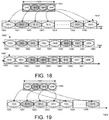
- FIG. 18 and FIG. 19 show some examples of a repeated transmission with a predefined RV sequence.
- a RV sequence 1840 with a length 1820 comprising RV elements 1841, 1842, 1843, and 1844 is repeatedly used for a repeated transmission 1810.
- RV element 1841 is used for a repetition 1811 at time block 1800
- RV element 1842 is used for a repetition 1812 at time block 1801
- RV element 1843 is used for repetitions 1813 and 1815 at time blocks 1802 and 1805
- RV element 1844 is used for repetitions 1814 and 1816 at time blocks 1804 and 1806.
- a repetition number of the repeated transmission 1850/1830 is a multiple of the RV sequence length 1820.
- the RV sequence is repeatedly used for the repeated transmission by applying each RV value one by one to one repetition cyclically.
- the RV sequence 1840 with length 1820 comprising RV elements 1841, 1842, 1843, and 1844 is repeatedly used for a repeated transmission 1820.
- different symbol sequences are generated by different RV values.
- RV element 1841 is used for a repetition 1821 at time block 1890;
- RV element 1842 is used for a repetition 1822 at time block 1891;
- RV element 1843 is used for repetition block 1823 and 1892.
- RV element 1844 is used for repetition block 1824 at 1893.
- the RV sequence is cyclically applied to the rest of repetition blocks.
- RV element 1841 is used for a repetition 1825 at time block 1894; RV element 1842 is used for a repetition 1826 at time block 1895; RV element 1843 is used for repetition block 1827 and 1896. RV element 1844 is used for repetition block 1828 at 1897.
- the RV sequence used for repeated transmission 1850 are same as the RV sequence used for repeated transmission 1810.
- the RV sequence is repeatedly used for the repeated transmission by applying each RV value one by one to one block of repetitions cyclically.
- each RV value is repeated used for a block of repetition cyclically.
- repetition transmission 1830 uses RV sequence 1840 by applying the RV value of 1840 one to one block of repetition cyclically.
- RV element 1841 is used for a repetition 1831 and 1832 at time block 1890 and 1891.
- RV element 1842 is used for a repetition 1833 and 1834 at time block 1892 and 1893.
- RV element 1843 is used for a repetition 1835 and 1836 at time block 1894 and 1895.
- RV element 1844 is used for a repetition 1837 and 1838 at time block 1896 and 1897.
- a RV sequence 1940 with a length 1920 comprising RV elements 1941, 1942, 1943, and 1944 is repeatedly used for a repeated transmission 1990.
- RV element 1941 is used for a repetition 1910 and 1914 at time block 1900 and 1904
- RV element 1942 is used for a repetition 1911 at time block 1901
- RV element 1943 is used for repetitions 1912 and 1915 at time blocks 1902 and 1906
- RV element 1944 is used for repetitions 1913 at time blocks 1903.
- a repetition number of the repeated transmission is not a multiple of RV sequence length 1920, and RV element 1943 is also used for the last repetition 1915.
- a RV sequence is used repeatedly for the whole repetition, i.e., different RV values are applied for different repetitions within one time block.
- FIG. 20 and Fig. 21 show examples of an intra repetition with a RV sequence.
- a RV sequence 2030 with a length 2020 is used for a repeated transmission 2060, wherein 2060 is based on an inter repetition and an intra repetition.
- RV sequence 2030 comprises multiple RV elements 2040, 2041, 2042 and 2043, and these RV elements are used for different repetitions.
- the whole RV sequence is used repeatedly by applying different RV values for different repetitions within one time block, i.e, RV values one by one are used for repetitions cyclically.
- RV element 2040 is used a repetition 2010 at time block 2000
- RV element 2041 is used for another repetition 2011 at time block 2000
- RV element 2042 is used for a repetition 2012 at time block 2001
- RV element 2043 is used for another repetition 2013 within the same time block 2001, and repetition 2014 at time block 2002.
- Last two repetitions 2014 and 2015 within time block 2002 are based on RV element 2043 and 2042 respectively, since repetition number of 2060 is multiple of 2020.
- a RV sequence 2130 with a length 2120 is repeatedly used for a repetition 2160.
- a RV element 2140 is used for repetitions 2110 and 2111 within time block 2100;
- a RV element 2141 is used for repetitions 2112 and 2113 at time block 2101;
- a RV element 2143 is used for repetitions 2114 and 2115 within time block 2102. Note that the number of occupied time blocks for 2160 is multiple of 2120, and the last RV element 2143 within 2130 is used for repetitions within the last occupied time block 2102 of 2160.
- each RV value for each repetition is identical, and each scrambling sequence for each repetition is identical.
- a repeated transmission means a same symbol sequence is repeatedly transmitted in one embodiment. It can be regarded as an identical repetition.
- the scrambling sequence can be a function of a first time block index, wherein the first time block is a starting point for a repeated transmission or retransmission.
- different symbol sequences which are generated from the same information packets are transmitted in different repetitions.
- different symbol sequences means different RV values are applied to explore a coding gain, or different scrambling sequences are used to randomize interference. It is assumed that a modulation order remains identical during repetitions for above designs.
- a set of RV sequences is predefined and an indicator within a control signaling informs the receiver side about the used RV sequence implicitly in on embodiment.
- the receiver can determine the used RV sequence by checking a RV sequence index carried by the indicator.
- a predefined rule is specified to get RV values for each repetition without any signaling.
- the receiver Before to receive a repeated transmission of an information packet, at the receiver side, the receiver should first determine configurations for each repetition, wherein the configurations comprise scrambling sequence, RV value, and physical resources including locations in time domain and frequency domain, repetition mechanism (inter repetition or intra repetition). If an identical repetition is applied, the receiver can combine received symbols from different repetitions directly in one embodiment, i.e., a symbol-level combination is performed. The receiver can combine outputs after demodulation in another embodiment. If an identical repetition is not applied, the receiver should perform a combination after demodulation, i.e., a bit-level combination is performed, in a third embodiment.
- the configurations comprise scrambling sequence, RV value, and physical resources including locations in time domain and frequency domain, repetition mechanism (inter repetition or intra repetition). If an identical repetition is applied, the receiver can combine received symbols from different repetitions directly in one embodiment, i.e., a symbol-level combination is performed. The receiver can combine outputs after demodulation in another embodiment. If an identical repetition is not applied, the receiver should
- the receiver can perform decoding by receiving some repetitions, without receiving all repetitions, to reduce time delay in a realistic system in one embodiment. If a successful decoding achieved, for example, CRC check is passed, the receiver can determine a successful reception of transmitted data, and can stop to receive rest repetitions.
- FIG. 22 and FIG. 23 illustrate examples of a procedure of decoding an information packet under a repeated transmission.
- the receiver determines configurations for each repetition within a repeated transmission in Step 2200 before performing reception, and then starts to receive each repetition (Step 2210). If yes, go to a determination that an identical repetition is applied for the repeated transmission in Step 2220, which means that current receiving repetition is identical as the received repetitions previously, the receiver will combine received repetitions by a symbol-level combination (Step 2221). Then, the receiver will judge whether the repetition finishes (Step 2230). If not to Step 2230, the receiver will continue to receive rest repetitions.
- Step 2230 a demodulation will be performed based on the symbol-level combination output (Step 2231). Further, received data will be decoded (step 2240) by inputting the demodulation output in Step 2231. If no in Step 2220, the receiver will demodulate each received repetition and buffer each demodulation output (Step 2222). Then, the receiver will judge whether the repetition finishes (Step 2250). If not in Step 2250, the receiver will continue to receive rest repetitions, which is to go back to step 2210. If yes in Step 2250, an output will be obtained for data decoding (step 2240)by combining each demodulation output of each repetition (Step 2260). In one example, decoding in step 2240 needs to combine the demodulation output and decoding based on output in Step 2231 and Step 2260, and ending the procedure.
- the receiver determines configurations for each repetition within a repeated transmission firstly (Step 2300). After receiving one repetition in step 2310, a demodulation of the received repetition is performed and each output is buffered (Step 2320). Then, the receiver will determine whether all repetitions are received (Step 2330). If yes in Step 2330, a decoding will be performed (Step 2350) by combining each demodulation output (Step 2340) and the whole procedure stops. If not in Step 2330, the receiver continues to receive repetitions, that means to go to step 2310.
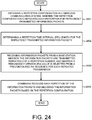
- FIG. 24 illustrates an exemplary flow chart of the repetition design using predefined RV sequences in accordance with embodiments of the current invention.
- the UE obtains a repetition configuration in a wireless communication system, wherein the repetition configuration configures each repetition for repeatedly transmitted information packets.
- the UE determines a RTI length for the repeatedly transmitted information packets.
- the UE receives information packets from a base station, wherein the information packets are transmitted repeatedly by a repetition number, and wherein a RV value is selected from a preconfigured RV sequence for each repeated transmission.
- the UE combines received each repetition of the information packets and decoding the information packets based on the repetition configuration.
Landscapes
- Engineering & Computer Science (AREA)
- Computer Networks & Wireless Communication (AREA)
- Signal Processing (AREA)
- Mobile Radio Communication Systems (AREA)
Claims (14)
- Méthode pour un système de communication sans fil (100) comprenant un équipement utilisateur, UE, (103), et une station de base, BS, (101), la méthode comprenant les étapes consistant à :obtenir (2401) par l'UE (103) une configuration de répétition pour chacune de transmissions répétées d'un paquet d'informations ;recevoir (2403) des paquets d'informations par l'UE (103) en provenance de la BS (101),dans laquelle les paquets d'informations sont transmis un nombre de répétitions, et dans laquelle une valeur de version de redondance, RV, est sélectionnée pour chaque transmission répétée ; etcombiner chaque répétition reçue des paquets d'informations et décoder les paquets d'informations sur la base de la configuration de répétition,dans laquelle la valeur de la version de redondance, RV, est sélectionnée à partir d'une séquence préconfigurée de valeurs de RV pour chaque transmission répétée,etdans laquelle, sur la base de la configuration de répétition, la séquence préconfigurée de valeurs de RV est utilisée à plusieurs reprises pour la transmission répétée en(a) appliquant chaque valeur de RV de la séquence préconfigurée de valeurs de RV de manière répétée à un premier bloc de répétitions multiples d'un certain nombre de blocs de répétitions de telle sorte que chaque bloc de répétitions a la même valeur de RV, dans laquelle le nombre de blocs de répétitions est déterminé par le nombre de répétitions, ou(b) appliquant chaque valeur de RV de la séquence préconfigurée de valeurs de RV une par une à une répétition de manière cyclique.
- Méthode selon la revendication 1, dans laquelle la configuration de répétition comprend un ou plusieurs paramètres de répétition, comprenant :
une séquence de brouillage, une valeur de RV, un emplacement de ressources physiques et un type de répétition. - Méthode selon la revendication 2, dans laquelle la séquence de brouillage est la même au sein du premier bloc de répétitions.
- Méthode selon la revendication 2, dans laquelle la combinaison de chaque répétition reçue des paquets d'informations et le décodage des paquets d'informations comprennent les étapes consistant à :collecter des ressources disponibles dans une ou plusieurs répétitions d'une manière contiguë appartenant à chaque symbole dans une séquence de symboles transmise, dans laquelle la séquence de symboles est générée à partir du paquet d'informations, si les une ou plusieurs répétitions sont déterminées comme étant une répétition de niveau symbole ;obtenir un symbole reçu en combinant des ressources disponibles collectées à partir des une ou plusieurs répétitions ; etdémoduler des données reçues en construisant des symboles reçus un par un après la combinaison ;combiner chaque sortie de démodulation de chacune des une ou plusieurs répétitions, et décoder le paquet d'informations reçu ;ou dans laquelle la combinaison de chaque répétition reçue des paquets d'informations et le décodage des paquets d'informations comprennent les étapes consistant à :collecter des ressources disponibles dans une ou plusieurs répétitions d'une manière discrète appartenant à chaque symbole dans une séquence de symboles transmise, dans laquelle la séquence de symboles est générée à partir du paquet d'informations, si les une ou plusieurs répétitions sont déterminées comme étant une répétition de niveau symbole ;obtenir un symbole reçu en combinant des ressources disponibles collectées à partir d'une ou de plusieurs répétitions ; etdémoduler des données reçues en construisant des symboles reçus un par un après la combinaison ; etcombiner chaque sortie de démodulation de chacune des une ou plusieurs répétitions, et décoder le paquet d'informations reçu ;ou dans laquelle la combinaison de chaque répétition reçue des paquets d'informations et le décodage des paquets d'informations comprennent les étapes consistant à :obtenir une répétition reçue en collectant des ressources disponibles dans une répétition à un bloc de temps appartenant à une séquence de symboles transmise, dans laquelle la séquence de symboles est générée à partir du paquet d'informations, si la répétition est déterminée comme une répétition de niveau bit ;démoduler chaque répétition reçue ; etdécoder le paquet d'informations reçu en combinant chaque sortie à chaque répétition.
- Méthode selon la revendication 1, comprenant en outre l'étape consistant à
déterminer (2401) une longueur d'intervalle de temps de répétition, RTI, pour les paquets d'informations transmis de manière répétée, dans laquelle la transmission répétée est une répétition intra qui transmet de manière répétée les paquets d'informations dans un RTI sur différents domaines fréquentiels. - Méthode selon la revendication 5, comprenant en outre les étapes consistant à :déterminer un mécanisme intra-répétition en vérifiant un indicateur dans une signalisation de commande ;déterminer une granularité de ressources de base pour une répétition sous la répétition intra ; etrecevoir plusieurs répétitions dans un RTI.
- Méthode selon la revendication 6, dans laquelle une taille de la granularité de ressources de base est indiquée par un indicateur dans une signalisation de commande pour la transmission de paquets d'informations.
- Equipement utilisateur, UE (103), comprenant :un configurateur de répétition (141) qui obtient (2401) une configuration de répétition pour chacune de transmissions répétées d'un paquet d'informations ;un sélecteur de version redondante, RV, (143) qui reçoit (2403) des paquets d'informations en provenance d'une station de base, BS, (101), dans lequel les paquets d'informations sont transmis un nombre de répétitions, et dans lequel une valeur de RV est sélectionnée pour chaque transmission répétée ; etun décodeur (144) qui combine chaque répétition reçu des paquets d'informations et décode les paquets d'informations sur la base de la configuration de répétition,dans lequella valeur de version de redondance, RV, est sélectionnée à partir d'une séquence préconfigurée de valeurs de RV pour chaque transmission répétée,
etdans lequel, sur la base de la configuration de répétition, la séquence préconfigurée de valeurs de RV est utilisée de manière répétée pour la transmission répétée en(a) appliquant chaque valeur de RV de la séquence préconfigurée de valeurs de RV de manière répétée à un premier bloc de répétitions multiples d'un certain nombre de blocs de répétitions de telle sorte que chaque bloc de répétitions a la même valeur de RV, dans lequel le nombre de blocs de répétitions est déterminé par le nombre de répétitions, ou(b) appliquant chaque valeur de RV de la séquence préconfigurée de valeurs de RV une par une à une répétition de manière cyclique. - UE selon la revendication 8, dans lequel la configuration de répétition comprend un ou plusieurs paramètres de répétition, comprenant :
une séquence de brouillage, une valeur de RV, un emplacement de ressources physiques, et un type de répétition. - UE selon la revendication 9, dans lequel la séquence de brouillage est la même dans le premier bloc de répétitions.
- UE selon la revendication 8, dans lequel la combinaison de chaque répétition reçue des paquets d'informations et le décodage des paquets d'informations comprennent les étapes consistant à :collecter des ressources disponibles dans une ou plusieurs répétitions d'une manière contiguë appartenant à chaque symbole dans une séquence de symboles transmise, dans lequel la séquence de symboles est générée à partir du paquet d'informations, si les une ou plusieurs répétitions sont déterminées comme étant une répétition de niveau symbole ;obtenir un symbole reçu en combinant des ressources disponibles collectées à partir des une ou plusieurs répétitions ; etdémoduler des données reçues en construisant des symboles reçus un par un après la combinaison ;combiner chaque sortie de démodulation de chacune des une ou plusieurs répétitions, et décoder le paquet d'informations reçu ;ou dans lequel la combinaison de chaque répétition reçue des paquets d'informations et le décodage des paquets d'informations comprennent les étapes consistant à :collecter des ressources disponibles dans une ou plusieurs répétitions d'une manière discrète appartenant à chaque symbole dans une séquence de symboles transmise, dans lequel la séquence de symboles est générée à partir du paquet d'informations, si les une ou plusieurs répétitions sont déterminées comme étant une répétition de niveau symbole ;obtenir un symbole reçu en combinant des ressources disponibles collectées à partir d'une ou de plusieurs répétitions ; etdémoduler des données reçues en construisant des symboles reçus un par un après la combinaison ; etcombiner chaque sortie de démodulation de chacune des une ou plusieurs répétitions, et décoder le paquet d'informations reçu ;ou dans lequel la combinaison de chaque répétition reçue des paquets d'informations et le décodage des paquets d'informations comprennent les étapes consistant à :obtenir une répétition reçue en collectant des ressources disponibles dans une répétition à un bloc de temps appartenant à une séquence de symboles transmise, dans lequel la séquence de symboles est générée à partir du paquet d'informations, si la répétition est déterminée comme une répétition de niveau bit ;démoduler chaque répétition reçue ; etdécoder le paquet d'informations reçu en combinant chaque sortie à chaque répétition.
- UE selon la revendication 8, dans lequel un estimateur d'intervalle de temps de répétition, RTI (142) détermine une longueur de RTI pour des paquets d'informations transmis de manière répétée, et
dans lequel la transmission répétée est une répétition intra qui transmet de manière répétée les paquets d'informations dans un RTI sur différents domaines fréquentiels. - UE selon la revendication 8, comprenant en outre un gestionnaire intra-répétition qui détermine un mécanisme intra-répétition en vérifiant un indicateur dans une signalisation de commande, détermine une granularité de ressource de base pour une répétition sous l'intra répétition, et reçoit plusieurs répétitions dans un RTI.
- UE selon la revendication 13, dans lequel une taille de la granularité de ressources de base est indiquée par un indicateur dans une signalisation de commande pour la transmission de paquets d'informations.
Applications Claiming Priority (2)
| Application Number | Priority Date | Filing Date | Title |
|---|---|---|---|
| PCT/CN2015/071973 WO2016119229A1 (fr) | 2015-01-30 | 2015-01-30 | Procédés permettant de concevoir des répétitions |
| PCT/CN2016/072841 WO2016119750A1 (fr) | 2015-01-30 | 2016-01-29 | Procédés et appareil pour une conception de répétition |
Publications (3)
| Publication Number | Publication Date |
|---|---|
| EP3213438A1 EP3213438A1 (fr) | 2017-09-06 |
| EP3213438A4 EP3213438A4 (fr) | 2017-12-20 |
| EP3213438B1 true EP3213438B1 (fr) | 2020-05-06 |
Family
ID=56542223
Family Applications (1)
| Application Number | Title | Priority Date | Filing Date |
|---|---|---|---|
| EP16742812.7A Active EP3213438B1 (fr) | 2015-01-30 | 2016-01-29 | Procédés et appareil pour une conception de répétition |
Country Status (4)
| Country | Link |
|---|---|
| US (2) | US10361820B2 (fr) |
| EP (1) | EP3213438B1 (fr) |
| CN (1) | CN107005363B (fr) |
| WO (2) | WO2016119229A1 (fr) |
Families Citing this family (23)
| Publication number | Priority date | Publication date | Assignee | Title |
|---|---|---|---|---|
| WO2016119229A1 (fr) * | 2015-01-30 | 2016-08-04 | Mediatek Singapore Pte. Ltd. | Procédés permettant de concevoir des répétitions |
| CN107155400B (zh) * | 2015-04-03 | 2020-01-17 | 华为技术有限公司 | 一种数据传输方法、设备及系统 |
| EP4287547A3 (fr) * | 2016-02-05 | 2024-01-03 | Sony Group Corporation | Dispositifs de communication, équipement d'infrastructure et procédés |
| US10263823B2 (en) * | 2017-01-09 | 2019-04-16 | Qualcomm Incorporated | Communicating synchronization signals in wireless communications |
| CN110235400B (zh) * | 2017-02-02 | 2022-07-26 | 夏普株式会社 | 用户设备、基站和通信方法 |
| US10965407B2 (en) | 2017-02-02 | 2021-03-30 | Sharp Kabushiki Kaisha | User equipments, base stations and communication methods |
| CN108513363B (zh) * | 2017-02-24 | 2022-02-11 | 中国移动通信有限公司研究院 | 一种信息传输方法、用户设备及基站 |
| CN109600840B (zh) * | 2017-09-30 | 2021-06-22 | 华为技术有限公司 | 一种指示方法及装置 |
| WO2019093840A1 (fr) * | 2017-11-10 | 2019-05-16 | 엘지전자 주식회사 | Procédé d'émission ou de réception de signal sans fil dans un système de communication sans fil et appareil associé |
| CN109787708B (zh) * | 2017-11-13 | 2022-03-01 | 珠海市魅族科技有限公司 | 指示或接收冗余版本的方法及装置 |
| EP3718321A4 (fr) * | 2017-12-01 | 2021-07-21 | Nokia Technologies Oy | Partitionnement en blocs de répétitions |
| US11139930B2 (en) | 2018-08-10 | 2021-10-05 | Institute For Information Industry | User equipment and method for performing repetition |
| US10833818B2 (en) | 2018-11-13 | 2020-11-10 | Qualcomm Incorporated | Resource exclusion in a half duplex based wireless communication system |
| US11146359B2 (en) * | 2019-03-22 | 2021-10-12 | Qualcomm Incorporated | Methods for retransmission for improved handling of vulnerable symbols |
| CN111769899B (zh) * | 2019-03-30 | 2021-10-01 | 华为技术有限公司 | 确定传输资源的方法及装置 |
| WO2020204376A1 (fr) * | 2019-04-05 | 2020-10-08 | 엘지전자 주식회사 | Procédé et appareil de réalisation d'une opération de harq |
| US11882554B2 (en) | 2019-06-27 | 2024-01-23 | Qualcomm Incorporated | Opportunistic transmission for sidelink communications |
| CN113271607B (zh) * | 2020-02-14 | 2024-07-12 | 大唐移动通信设备有限公司 | 一种时域重复传输方法、装置及发射机 |
| CN119135315A (zh) * | 2020-04-03 | 2024-12-13 | 高通股份有限公司 | 传输突发中的重复信息 |
| US11489627B2 (en) * | 2020-07-29 | 2022-11-01 | Nxp B.V. | Wireless communications device and method of wireless communications |
| US11398936B2 (en) | 2020-07-30 | 2022-07-26 | Nxp B.V. | Wireless communications device and method of wireless communications |
| US11496236B2 (en) * | 2020-08-14 | 2022-11-08 | Samsung Electronics Co., Ltd. | Method and apparatus for link budget enhancements in communication systems |
| CN120693950A (zh) * | 2023-02-17 | 2025-09-23 | 联发科技(新加坡)私人有限公司 | 用于移动通信的频域重复中降低papr的方法及装置 |
Family Cites Families (19)
| Publication number | Priority date | Publication date | Assignee | Title |
|---|---|---|---|---|
| US8009752B2 (en) * | 2004-10-01 | 2011-08-30 | Qualcomm Incorporated | Multi-carrier incremental redundancy for packet-based wireless communications |
| CN101425880A (zh) * | 2007-10-30 | 2009-05-06 | 华为技术有限公司 | 应答信息跨子帧重复传输的方法及装置 |
| US9172509B2 (en) * | 2008-04-11 | 2015-10-27 | Interdigital Patent Holdings, Inc. | Method for transmission time interval bundling in the uplink |
| WO2009132204A2 (fr) * | 2008-04-24 | 2009-10-29 | Interdigital Patent Holdings, Inc. | Procédé et appareil pour retransmissions harq autonomes |
| US8271861B2 (en) * | 2008-05-09 | 2012-09-18 | Marvell International Ltd. | Symbol vector-level combining receiver for incremental redundancy HARQ with MIMO |
| US8787241B2 (en) * | 2008-07-07 | 2014-07-22 | Interdigital Patent Holdings, Inc. | Method and apparatus for use in cooperative relays using incremental redundancy and distributed spatial multiplexing |
| US20110161772A1 (en) * | 2008-09-02 | 2011-06-30 | Panasonic Corporation | Wireless communication device and wireless communication method |
| EP2422477B1 (fr) * | 2009-04-24 | 2012-12-26 | Nokia Corp. | Procédé et appareil pour mémorisation de données delta |
| KR20110009025A (ko) * | 2009-07-20 | 2011-01-27 | 엘지전자 주식회사 | 상향링크 제어정보 전송 방법 및 장치 |
| US8817711B2 (en) * | 2009-12-18 | 2014-08-26 | Broadcom Corporation | Method and system for concurrently locating systematic bits and parity bits in physical channel memory to increase HARQ processing speed in 3GPP CPC system |
| US9363122B2 (en) * | 2011-11-28 | 2016-06-07 | Lg Electronics Inc. | Method and apparatus for transmitting training field |
| EP2629442B1 (fr) * | 2012-02-14 | 2014-12-10 | Telefonaktiebolaget L M Ericsson (publ) | Sélection de la version de redondance à l'aide de qualité de réception et format de transmission |
| US11006462B2 (en) * | 2012-05-21 | 2021-05-11 | Blackberry Limited | System and method for handling of an uplink transmission collision with an ACK/NACK signal |
| US9071983B2 (en) * | 2012-08-28 | 2015-06-30 | Samsung Electronics Co., Ltd. | Communication system with repeat-response processing mechanism and method of operation thereof |
| CN103795505A (zh) * | 2012-11-02 | 2014-05-14 | 电信科学技术研究院 | 一种传输数据的方法、系统和设备 |
| CN103338090B (zh) * | 2013-05-30 | 2016-12-28 | 中国联合网络通信集团有限公司 | 业务数据传输方法、设备及系统 |
| JP6368028B2 (ja) * | 2014-03-28 | 2018-08-01 | 華為技術有限公司Huawei Technologies Co.,Ltd. | ダウンリンク制御チャネルの繰り返し回数を決定するための方法および装置 |
| US10849147B2 (en) * | 2015-01-28 | 2020-11-24 | Sharp Kabushiki Kaisha | Systems and methods for accommodating specific user equipments |
| WO2016119229A1 (fr) * | 2015-01-30 | 2016-08-04 | Mediatek Singapore Pte. Ltd. | Procédés permettant de concevoir des répétitions |
-
2015
- 2015-01-30 WO PCT/CN2015/071973 patent/WO2016119229A1/fr not_active Ceased
-
2016
- 2016-01-29 CN CN201680003764.3A patent/CN107005363B/zh active Active
- 2016-01-29 EP EP16742812.7A patent/EP3213438B1/fr active Active
- 2016-01-29 WO PCT/CN2016/072841 patent/WO2016119750A1/fr not_active Ceased
-
2017
- 2017-06-05 US US15/613,467 patent/US10361820B2/en active Active
-
2019
- 2019-06-14 US US16/440,984 patent/US10897330B2/en active Active
Non-Patent Citations (1)
| Title |
|---|
| None * |
Also Published As
| Publication number | Publication date |
|---|---|
| US10361820B2 (en) | 2019-07-23 |
| WO2016119229A1 (fr) | 2016-08-04 |
| US20170272211A1 (en) | 2017-09-21 |
| EP3213438A1 (fr) | 2017-09-06 |
| CN107005363B (zh) | 2020-07-03 |
| US20190296865A1 (en) | 2019-09-26 |
| CN107005363A (zh) | 2017-08-01 |
| US10897330B2 (en) | 2021-01-19 |
| EP3213438A4 (fr) | 2017-12-20 |
| WO2016119750A1 (fr) | 2016-08-04 |
Similar Documents
| Publication | Publication Date | Title |
|---|---|---|
| US10897330B2 (en) | Methods for repetition design | |
| US12238041B2 (en) | Methods and apparatuses for transmitting signal | |
| EP3078145B1 (fr) | Procédés pour améliorer un mécanisme de demande de répétition automatique hybride (harq) | |
| AU2018236657B2 (en) | Method and device by which terminal receives data in wireless communication system | |
| EP2947938B1 (fr) | Canal de contrôle pour une couverture ameliorée | |
| CN103733561B (zh) | 用于无线通信网络中的控制信道的参考信号 | |
| JP6235095B2 (ja) | 無線通信システムにおいて基地局が下りリンク制御チャネルを多重化する方法及びそのための装置 | |
| US20180295651A1 (en) | Flexible Grant-Free Resource Configuration Signaling | |
| RU2583376C2 (ru) | Способ связи в мобильной сети в течение промежуточного режима конфигурирования | |
| US10396934B2 (en) | Method for channel quality report | |
| EP2369776A2 (fr) | Procédé pour indiquer un port d'antenne DM-RS dans un système de communication sans fil | |
| KR20090089780A (ko) | 물리 하이브리드 arq 지시 채널 매핑 방법 | |
| KR20170020285A (ko) | 무선 통신 시스템에서 통신 방법 및 장치 | |
| CN105991243A (zh) | 一种数据重复传输方法及装置 | |
| JP2013533690A (ja) | リレー・バックホール・リンクにアップリンク制御チャネルを割り当てる方法 | |
| KR20190038329A (ko) | 통신 시스템에서 프리엠션의 지시 방법 | |
| KR20170128723A (ko) | 무선 셀룰라 통신 시스템에서 상향링크 데이터 및 제어신호 전송 타이밍 결정 방법 및 장치 | |
| WO2015018075A1 (fr) | Procédé de détermination de la sous-trame de début d'un canal de données | |
| CN107046719B (zh) | 用于减少时分双工的传输时延的方法、装置和系统 | |
| JP2022141774A (ja) | 端末、通信方法及び集積回路 | |
| US9236993B2 (en) | Method and apparatus for transmitting a reference signal in a wireless communication system | |
| CN103546253B (zh) | 一种数据传输方法及系统 | |
| KR102216731B1 (ko) | 이동 통신 시스템에서 제어 정보 스케줄링 방법 및 스케줄링된 제어 정보를 수신하는 방법 | |
| WO2016070413A1 (fr) | Procédés pour l'amélioration d'un message de réponse d'accès en fonction de la contention |
Legal Events
| Date | Code | Title | Description |
|---|---|---|---|
| STAA | Information on the status of an ep patent application or granted ep patent |
Free format text: STATUS: THE INTERNATIONAL PUBLICATION HAS BEEN MADE |
|
| PUAI | Public reference made under article 153(3) epc to a published international application that has entered the european phase |
Free format text: ORIGINAL CODE: 0009012 |
|
| STAA | Information on the status of an ep patent application or granted ep patent |
Free format text: STATUS: REQUEST FOR EXAMINATION WAS MADE |
|
| 17P | Request for examination filed |
Effective date: 20170530 |
|
| AK | Designated contracting states |
Kind code of ref document: A1 Designated state(s): AL AT BE BG CH CY CZ DE DK EE ES FI FR GB GR HR HU IE IS IT LI LT LU LV MC MK MT NL NO PL PT RO RS SE SI SK SM TR |
|
| AX | Request for extension of the european patent |
Extension state: BA ME |
|
| A4 | Supplementary search report drawn up and despatched |
Effective date: 20171116 |
|
| RIC1 | Information provided on ipc code assigned before grant |
Ipc: H04L 1/04 20060101ALI20171110BHEP Ipc: H04L 1/08 20060101AFI20171110BHEP Ipc: H04L 1/18 20060101ALI20171110BHEP |
|
| DAV | Request for validation of the european patent (deleted) | ||
| DAX | Request for extension of the european patent (deleted) | ||
| STAA | Information on the status of an ep patent application or granted ep patent |
Free format text: STATUS: EXAMINATION IS IN PROGRESS |
|
| 17Q | First examination report despatched |
Effective date: 20181017 |
|
| RAP1 | Party data changed (applicant data changed or rights of an application transferred) |
Owner name: HFI INNOVATION INC. |
|
| GRAP | Despatch of communication of intention to grant a patent |
Free format text: ORIGINAL CODE: EPIDOSNIGR1 |
|
| STAA | Information on the status of an ep patent application or granted ep patent |
Free format text: STATUS: GRANT OF PATENT IS INTENDED |
|
| INTG | Intention to grant announced |
Effective date: 20191127 |
|
| GRAS | Grant fee paid |
Free format text: ORIGINAL CODE: EPIDOSNIGR3 |
|
| GRAA | (expected) grant |
Free format text: ORIGINAL CODE: 0009210 |
|
| STAA | Information on the status of an ep patent application or granted ep patent |
Free format text: STATUS: THE PATENT HAS BEEN GRANTED |
|
| AK | Designated contracting states |
Kind code of ref document: B1 Designated state(s): AL AT BE BG CH CY CZ DE DK EE ES FI FR GB GR HR HU IE IS IT LI LT LU LV MC MK MT NL NO PL PT RO RS SE SI SK SM TR |
|
| REG | Reference to a national code |
Ref country code: GB Ref legal event code: FG4D |
|
| REG | Reference to a national code |
Ref country code: AT Ref legal event code: REF Ref document number: 1268526 Country of ref document: AT Kind code of ref document: T Effective date: 20200515 Ref country code: CH Ref legal event code: EP |
|
| REG | Reference to a national code |
Ref country code: IE Ref legal event code: FG4D |
|
| REG | Reference to a national code |
Ref country code: DE Ref legal event code: R096 Ref document number: 602016035812 Country of ref document: DE |
|
| REG | Reference to a national code |
Ref country code: LT Ref legal event code: MG4D |
|
| REG | Reference to a national code |
Ref country code: NL Ref legal event code: MP Effective date: 20200506 |
|
| PG25 | Lapsed in a contracting state [announced via postgrant information from national office to epo] |
Ref country code: LT Free format text: LAPSE BECAUSE OF FAILURE TO SUBMIT A TRANSLATION OF THE DESCRIPTION OR TO PAY THE FEE WITHIN THE PRESCRIBED TIME-LIMIT Effective date: 20200506 Ref country code: IS Free format text: LAPSE BECAUSE OF FAILURE TO SUBMIT A TRANSLATION OF THE DESCRIPTION OR TO PAY THE FEE WITHIN THE PRESCRIBED TIME-LIMIT Effective date: 20200906 Ref country code: SE Free format text: LAPSE BECAUSE OF FAILURE TO SUBMIT A TRANSLATION OF THE DESCRIPTION OR TO PAY THE FEE WITHIN THE PRESCRIBED TIME-LIMIT Effective date: 20200506 Ref country code: PT Free format text: LAPSE BECAUSE OF FAILURE TO SUBMIT A TRANSLATION OF THE DESCRIPTION OR TO PAY THE FEE WITHIN THE PRESCRIBED TIME-LIMIT Effective date: 20200907 Ref country code: GR Free format text: LAPSE BECAUSE OF FAILURE TO SUBMIT A TRANSLATION OF THE DESCRIPTION OR TO PAY THE FEE WITHIN THE PRESCRIBED TIME-LIMIT Effective date: 20200807 Ref country code: NO Free format text: LAPSE BECAUSE OF FAILURE TO SUBMIT A TRANSLATION OF THE DESCRIPTION OR TO PAY THE FEE WITHIN THE PRESCRIBED TIME-LIMIT Effective date: 20200806 Ref country code: FI Free format text: LAPSE BECAUSE OF FAILURE TO SUBMIT A TRANSLATION OF THE DESCRIPTION OR TO PAY THE FEE WITHIN THE PRESCRIBED TIME-LIMIT Effective date: 20200506 |
|
| PG25 | Lapsed in a contracting state [announced via postgrant information from national office to epo] |
Ref country code: RS Free format text: LAPSE BECAUSE OF FAILURE TO SUBMIT A TRANSLATION OF THE DESCRIPTION OR TO PAY THE FEE WITHIN THE PRESCRIBED TIME-LIMIT Effective date: 20200506 Ref country code: LV Free format text: LAPSE BECAUSE OF FAILURE TO SUBMIT A TRANSLATION OF THE DESCRIPTION OR TO PAY THE FEE WITHIN THE PRESCRIBED TIME-LIMIT Effective date: 20200506 Ref country code: HR Free format text: LAPSE BECAUSE OF FAILURE TO SUBMIT A TRANSLATION OF THE DESCRIPTION OR TO PAY THE FEE WITHIN THE PRESCRIBED TIME-LIMIT Effective date: 20200506 Ref country code: BG Free format text: LAPSE BECAUSE OF FAILURE TO SUBMIT A TRANSLATION OF THE DESCRIPTION OR TO PAY THE FEE WITHIN THE PRESCRIBED TIME-LIMIT Effective date: 20200806 |
|
| REG | Reference to a national code |
Ref country code: AT Ref legal event code: MK05 Ref document number: 1268526 Country of ref document: AT Kind code of ref document: T Effective date: 20200506 |
|
| PG25 | Lapsed in a contracting state [announced via postgrant information from national office to epo] |
Ref country code: AL Free format text: LAPSE BECAUSE OF FAILURE TO SUBMIT A TRANSLATION OF THE DESCRIPTION OR TO PAY THE FEE WITHIN THE PRESCRIBED TIME-LIMIT Effective date: 20200506 Ref country code: NL Free format text: LAPSE BECAUSE OF FAILURE TO SUBMIT A TRANSLATION OF THE DESCRIPTION OR TO PAY THE FEE WITHIN THE PRESCRIBED TIME-LIMIT Effective date: 20200506 |
|
| PG25 | Lapsed in a contracting state [announced via postgrant information from national office to epo] |
Ref country code: CZ Free format text: LAPSE BECAUSE OF FAILURE TO SUBMIT A TRANSLATION OF THE DESCRIPTION OR TO PAY THE FEE WITHIN THE PRESCRIBED TIME-LIMIT Effective date: 20200506 Ref country code: RO Free format text: LAPSE BECAUSE OF FAILURE TO SUBMIT A TRANSLATION OF THE DESCRIPTION OR TO PAY THE FEE WITHIN THE PRESCRIBED TIME-LIMIT Effective date: 20200506 Ref country code: EE Free format text: LAPSE BECAUSE OF FAILURE TO SUBMIT A TRANSLATION OF THE DESCRIPTION OR TO PAY THE FEE WITHIN THE PRESCRIBED TIME-LIMIT Effective date: 20200506 Ref country code: SM Free format text: LAPSE BECAUSE OF FAILURE TO SUBMIT A TRANSLATION OF THE DESCRIPTION OR TO PAY THE FEE WITHIN THE PRESCRIBED TIME-LIMIT Effective date: 20200506 Ref country code: IT Free format text: LAPSE BECAUSE OF FAILURE TO SUBMIT A TRANSLATION OF THE DESCRIPTION OR TO PAY THE FEE WITHIN THE PRESCRIBED TIME-LIMIT Effective date: 20200506 Ref country code: DK Free format text: LAPSE BECAUSE OF FAILURE TO SUBMIT A TRANSLATION OF THE DESCRIPTION OR TO PAY THE FEE WITHIN THE PRESCRIBED TIME-LIMIT Effective date: 20200506 Ref country code: AT Free format text: LAPSE BECAUSE OF FAILURE TO SUBMIT A TRANSLATION OF THE DESCRIPTION OR TO PAY THE FEE WITHIN THE PRESCRIBED TIME-LIMIT Effective date: 20200506 Ref country code: ES Free format text: LAPSE BECAUSE OF FAILURE TO SUBMIT A TRANSLATION OF THE DESCRIPTION OR TO PAY THE FEE WITHIN THE PRESCRIBED TIME-LIMIT Effective date: 20200506 |
|
| REG | Reference to a national code |
Ref country code: DE Ref legal event code: R097 Ref document number: 602016035812 Country of ref document: DE |
|
| PG25 | Lapsed in a contracting state [announced via postgrant information from national office to epo] |
Ref country code: SK Free format text: LAPSE BECAUSE OF FAILURE TO SUBMIT A TRANSLATION OF THE DESCRIPTION OR TO PAY THE FEE WITHIN THE PRESCRIBED TIME-LIMIT Effective date: 20200506 Ref country code: PL Free format text: LAPSE BECAUSE OF FAILURE TO SUBMIT A TRANSLATION OF THE DESCRIPTION OR TO PAY THE FEE WITHIN THE PRESCRIBED TIME-LIMIT Effective date: 20200506 |
|
| PLBE | No opposition filed within time limit |
Free format text: ORIGINAL CODE: 0009261 |
|
| STAA | Information on the status of an ep patent application or granted ep patent |
Free format text: STATUS: NO OPPOSITION FILED WITHIN TIME LIMIT |
|
| 26N | No opposition filed |
Effective date: 20210209 |
|
| PG25 | Lapsed in a contracting state [announced via postgrant information from national office to epo] |
Ref country code: SI Free format text: LAPSE BECAUSE OF FAILURE TO SUBMIT A TRANSLATION OF THE DESCRIPTION OR TO PAY THE FEE WITHIN THE PRESCRIBED TIME-LIMIT Effective date: 20200506 |
|
| PG25 | Lapsed in a contracting state [announced via postgrant information from national office to epo] |
Ref country code: MC Free format text: LAPSE BECAUSE OF FAILURE TO SUBMIT A TRANSLATION OF THE DESCRIPTION OR TO PAY THE FEE WITHIN THE PRESCRIBED TIME-LIMIT Effective date: 20200506 |
|
| REG | Reference to a national code |
Ref country code: CH Ref legal event code: PL |
|
| PG25 | Lapsed in a contracting state [announced via postgrant information from national office to epo] |
Ref country code: LU Free format text: LAPSE BECAUSE OF NON-PAYMENT OF DUE FEES Effective date: 20210129 |
|
| REG | Reference to a national code |
Ref country code: BE Ref legal event code: MM Effective date: 20210131 |
|
| PG25 | Lapsed in a contracting state [announced via postgrant information from national office to epo] |
Ref country code: LI Free format text: LAPSE BECAUSE OF NON-PAYMENT OF DUE FEES Effective date: 20210131 Ref country code: CH Free format text: LAPSE BECAUSE OF NON-PAYMENT OF DUE FEES Effective date: 20210131 |
|
| PG25 | Lapsed in a contracting state [announced via postgrant information from national office to epo] |
Ref country code: IE Free format text: LAPSE BECAUSE OF NON-PAYMENT OF DUE FEES Effective date: 20210129 |
|
| PG25 | Lapsed in a contracting state [announced via postgrant information from national office to epo] |
Ref country code: BE Free format text: LAPSE BECAUSE OF NON-PAYMENT OF DUE FEES Effective date: 20210131 |
|
| PG25 | Lapsed in a contracting state [announced via postgrant information from national office to epo] |
Ref country code: HU Free format text: LAPSE BECAUSE OF FAILURE TO SUBMIT A TRANSLATION OF THE DESCRIPTION OR TO PAY THE FEE WITHIN THE PRESCRIBED TIME-LIMIT; INVALID AB INITIO Effective date: 20160129 |
|
| PG25 | Lapsed in a contracting state [announced via postgrant information from national office to epo] |
Ref country code: CY Free format text: LAPSE BECAUSE OF FAILURE TO SUBMIT A TRANSLATION OF THE DESCRIPTION OR TO PAY THE FEE WITHIN THE PRESCRIBED TIME-LIMIT Effective date: 20200506 |
|
| P01 | Opt-out of the competence of the unified patent court (upc) registered |
Effective date: 20230627 |
|
| PG25 | Lapsed in a contracting state [announced via postgrant information from national office to epo] |
Ref country code: MK Free format text: LAPSE BECAUSE OF FAILURE TO SUBMIT A TRANSLATION OF THE DESCRIPTION OR TO PAY THE FEE WITHIN THE PRESCRIBED TIME-LIMIT Effective date: 20200506 |
|
| PG25 | Lapsed in a contracting state [announced via postgrant information from national office to epo] |
Ref country code: MT Free format text: LAPSE BECAUSE OF FAILURE TO SUBMIT A TRANSLATION OF THE DESCRIPTION OR TO PAY THE FEE WITHIN THE PRESCRIBED TIME-LIMIT Effective date: 20200506 |
|
| PG25 | Lapsed in a contracting state [announced via postgrant information from national office to epo] |
Ref country code: TR Free format text: LAPSE BECAUSE OF FAILURE TO SUBMIT A TRANSLATION OF THE DESCRIPTION OR TO PAY THE FEE WITHIN THE PRESCRIBED TIME-LIMIT Effective date: 20200506 |
|
| PGFP | Annual fee paid to national office [announced via postgrant information from national office to epo] |
Ref country code: GB Payment date: 20251211 Year of fee payment: 11 |
|
| PGFP | Annual fee paid to national office [announced via postgrant information from national office to epo] |
Ref country code: FR Payment date: 20251128 Year of fee payment: 11 |
|
| PGFP | Annual fee paid to national office [announced via postgrant information from national office to epo] |
Ref country code: DE Payment date: 20251203 Year of fee payment: 11 |