EP3214623B1 - Lithium-ionen-leitender kristallkörper und lithium-ionen-festkörpersekundärbatterie - Google Patents
Lithium-ionen-leitender kristallkörper und lithium-ionen-festkörpersekundärbatterie Download PDFInfo
- Publication number
- EP3214623B1 EP3214623B1 EP15853839.7A EP15853839A EP3214623B1 EP 3214623 B1 EP3214623 B1 EP 3214623B1 EP 15853839 A EP15853839 A EP 15853839A EP 3214623 B1 EP3214623 B1 EP 3214623B1
- Authority
- EP
- European Patent Office
- Prior art keywords
- lithium ion
- ion conductive
- crystal body
- polycrystal
- conductive crystal
- Prior art date
- Legal status (The legal status is an assumption and is not a legal conclusion. Google has not performed a legal analysis and makes no representation as to the accuracy of the status listed.)
- Active
Links
Images


Classifications
-
- H—ELECTRICITY
- H01—ELECTRIC ELEMENTS
- H01B—CABLES; CONDUCTORS; INSULATORS; SELECTION OF MATERIALS FOR THEIR CONDUCTIVE, INSULATING OR DIELECTRIC PROPERTIES
- H01B1/00—Conductors or conductive bodies characterised by the conductive materials; Selection of materials as conductors
- H01B1/06—Conductors or conductive bodies characterised by the conductive materials; Selection of materials as conductors mainly consisting of other non-metallic substances
- H01B1/08—Conductors or conductive bodies characterised by the conductive materials; Selection of materials as conductors mainly consisting of other non-metallic substances oxides
-
- C—CHEMISTRY; METALLURGY
- C01—INORGANIC CHEMISTRY
- C01G—COMPOUNDS CONTAINING METALS NOT COVERED BY SUBCLASSES C01D OR C01F
- C01G25/00—Compounds of zirconium
-
- C—CHEMISTRY; METALLURGY
- C01—INORGANIC CHEMISTRY
- C01G—COMPOUNDS CONTAINING METALS NOT COVERED BY SUBCLASSES C01D OR C01F
- C01G25/00—Compounds of zirconium
- C01G25/006—Compounds containing zirconium, with or without oxygen or hydrogen, and containing two or more other elements
-
- C—CHEMISTRY; METALLURGY
- C01—INORGANIC CHEMISTRY
- C01G—COMPOUNDS CONTAINING METALS NOT COVERED BY SUBCLASSES C01D OR C01F
- C01G35/00—Compounds of tantalum
-
- C—CHEMISTRY; METALLURGY
- C01—INORGANIC CHEMISTRY
- C01G—COMPOUNDS CONTAINING METALS NOT COVERED BY SUBCLASSES C01D OR C01F
- C01G35/00—Compounds of tantalum
- C01G35/006—Compounds containing tantalum, with or without oxygen or hydrogen, and containing two or more other elements
-
- H—ELECTRICITY
- H01—ELECTRIC ELEMENTS
- H01B—CABLES; CONDUCTORS; INSULATORS; SELECTION OF MATERIALS FOR THEIR CONDUCTIVE, INSULATING OR DIELECTRIC PROPERTIES
- H01B1/00—Conductors or conductive bodies characterised by the conductive materials; Selection of materials as conductors
- H01B1/06—Conductors or conductive bodies characterised by the conductive materials; Selection of materials as conductors mainly consisting of other non-metallic substances
- H01B1/12—Conductors or conductive bodies characterised by the conductive materials; Selection of materials as conductors mainly consisting of other non-metallic substances organic substances
- H01B1/122—Ionic conductors
-
- H—ELECTRICITY
- H01—ELECTRIC ELEMENTS
- H01M—PROCESSES OR MEANS, e.g. BATTERIES, FOR THE DIRECT CONVERSION OF CHEMICAL ENERGY INTO ELECTRICAL ENERGY
- H01M10/00—Secondary cells; Manufacture thereof
- H01M10/05—Accumulators with non-aqueous electrolyte
- H01M10/052—Li-accumulators
- H01M10/0525—Rocking-chair batteries, i.e. batteries with lithium insertion or intercalation in both electrodes; Lithium-ion batteries
-
- H—ELECTRICITY
- H01—ELECTRIC ELEMENTS
- H01M—PROCESSES OR MEANS, e.g. BATTERIES, FOR THE DIRECT CONVERSION OF CHEMICAL ENERGY INTO ELECTRICAL ENERGY
- H01M10/00—Secondary cells; Manufacture thereof
- H01M10/05—Accumulators with non-aqueous electrolyte
- H01M10/056—Accumulators with non-aqueous electrolyte characterised by the materials used as electrolytes, e.g. mixed inorganic/organic electrolytes
- H01M10/0561—Accumulators with non-aqueous electrolyte characterised by the materials used as electrolytes, e.g. mixed inorganic/organic electrolytes the electrolyte being constituted of inorganic materials only
- H01M10/0562—Solid materials
-
- H—ELECTRICITY
- H01—ELECTRIC ELEMENTS
- H01M—PROCESSES OR MEANS, e.g. BATTERIES, FOR THE DIRECT CONVERSION OF CHEMICAL ENERGY INTO ELECTRICAL ENERGY
- H01M10/00—Secondary cells; Manufacture thereof
- H01M10/05—Accumulators with non-aqueous electrolyte
- H01M10/058—Construction or manufacture
- H01M10/0585—Construction or manufacture of accumulators having only flat construction elements, i.e. flat positive electrodes, flat negative electrodes and flat separators
-
- C—CHEMISTRY; METALLURGY
- C01—INORGANIC CHEMISTRY
- C01P—INDEXING SCHEME RELATING TO STRUCTURAL AND PHYSICAL ASPECTS OF SOLID INORGANIC COMPOUNDS
- C01P2002/00—Crystal-structural characteristics
- C01P2002/30—Three-dimensional structures
-
- C—CHEMISTRY; METALLURGY
- C01—INORGANIC CHEMISTRY
- C01P—INDEXING SCHEME RELATING TO STRUCTURAL AND PHYSICAL ASPECTS OF SOLID INORGANIC COMPOUNDS
- C01P2002/00—Crystal-structural characteristics
- C01P2002/50—Solid solutions
-
- C—CHEMISTRY; METALLURGY
- C01—INORGANIC CHEMISTRY
- C01P—INDEXING SCHEME RELATING TO STRUCTURAL AND PHYSICAL ASPECTS OF SOLID INORGANIC COMPOUNDS
- C01P2002/00—Crystal-structural characteristics
- C01P2002/70—Crystal-structural characteristics defined by measured X-ray, neutron or electron diffraction data
- C01P2002/76—Crystal-structural characteristics defined by measured X-ray, neutron or electron diffraction data by a space-group or by other symmetry indications
-
- C—CHEMISTRY; METALLURGY
- C01—INORGANIC CHEMISTRY
- C01P—INDEXING SCHEME RELATING TO STRUCTURAL AND PHYSICAL ASPECTS OF SOLID INORGANIC COMPOUNDS
- C01P2002/00—Crystal-structural characteristics
- C01P2002/70—Crystal-structural characteristics defined by measured X-ray, neutron or electron diffraction data
- C01P2002/77—Crystal-structural characteristics defined by measured X-ray, neutron or electron diffraction data by unit-cell parameters, atom positions or structure diagrams
-
- C—CHEMISTRY; METALLURGY
- C01—INORGANIC CHEMISTRY
- C01P—INDEXING SCHEME RELATING TO STRUCTURAL AND PHYSICAL ASPECTS OF SOLID INORGANIC COMPOUNDS
- C01P2004/00—Particle morphology
- C01P2004/01—Particle morphology depicted by an image
- C01P2004/02—Particle morphology depicted by an image obtained by optical microscopy
-
- C—CHEMISTRY; METALLURGY
- C01—INORGANIC CHEMISTRY
- C01P—INDEXING SCHEME RELATING TO STRUCTURAL AND PHYSICAL ASPECTS OF SOLID INORGANIC COMPOUNDS
- C01P2006/00—Physical properties of inorganic compounds
- C01P2006/40—Electric properties
-
- H—ELECTRICITY
- H01—ELECTRIC ELEMENTS
- H01M—PROCESSES OR MEANS, e.g. BATTERIES, FOR THE DIRECT CONVERSION OF CHEMICAL ENERGY INTO ELECTRICAL ENERGY
- H01M2300/00—Electrolytes
- H01M2300/0017—Non-aqueous electrolytes
- H01M2300/0065—Solid electrolytes
- H01M2300/0068—Solid electrolytes inorganic
- H01M2300/0071—Oxides
-
- Y—GENERAL TAGGING OF NEW TECHNOLOGICAL DEVELOPMENTS; GENERAL TAGGING OF CROSS-SECTIONAL TECHNOLOGIES SPANNING OVER SEVERAL SECTIONS OF THE IPC; TECHNICAL SUBJECTS COVERED BY FORMER USPC CROSS-REFERENCE ART COLLECTIONS [XRACs] AND DIGESTS
- Y02—TECHNOLOGIES OR APPLICATIONS FOR MITIGATION OR ADAPTATION AGAINST CLIMATE CHANGE
- Y02E—REDUCTION OF GREENHOUSE GAS [GHG] EMISSIONS, RELATED TO ENERGY GENERATION, TRANSMISSION OR DISTRIBUTION
- Y02E60/00—Enabling technologies; Technologies with a potential or indirect contribution to GHG emissions mitigation
- Y02E60/10—Energy storage using batteries
-
- Y—GENERAL TAGGING OF NEW TECHNOLOGICAL DEVELOPMENTS; GENERAL TAGGING OF CROSS-SECTIONAL TECHNOLOGIES SPANNING OVER SEVERAL SECTIONS OF THE IPC; TECHNICAL SUBJECTS COVERED BY FORMER USPC CROSS-REFERENCE ART COLLECTIONS [XRACs] AND DIGESTS
- Y02—TECHNOLOGIES OR APPLICATIONS FOR MITIGATION OR ADAPTATION AGAINST CLIMATE CHANGE
- Y02P—CLIMATE CHANGE MITIGATION TECHNOLOGIES IN THE PRODUCTION OR PROCESSING OF GOODS
- Y02P70/00—Climate change mitigation technologies in the production process for final industrial or consumer products
- Y02P70/50—Manufacturing or production processes characterised by the final manufactured product
Definitions
- the present invention relates to a high-density lithium ion conductive crystal body and an all-solid state lithium ion secondary battery containing the lithium ion conductive crystal body as a solid electrolyte.
- a lithium ion secondary battery Since the energy density is high and operation at a high potential is achieved as compared with secondary batteries, such as a nickel-cadmium battery and a nickel-hydride battery, a lithium ion secondary battery has been widely used for small information devices, such as a cellular phone and a notebook PC. In recent years, since a reduction in size and weight is easily achieved, a demand as a secondary battery for hybrid vehicles and electric vehicles has increased. Considering safety, an all-solid state lithium ion secondary battery containing no flammable electrolytic solution has been researched and developed. A solid electrolyte for use in the all-solid state lithium ion secondary battery has been required to have high ion conductivity.
- Li 7.1 La 3.1 Zr1 .9 O 12 having a cubic garnet-related type crystal structure produced by a high temperature sintering method is known (Patent Document 1).
- Patent Document 1 Li 7.1 La 3.1 Zr1 .9 O 12 having a cubic garnet-related type crystal structure produced by a high temperature sintering method.
- a crystal body having a diameter of about several tens to several hundreds of ⁇ m is obtained.
- the crystal body of this size cannot be used as a solid electrolyte of all-solid state lithium ion secondary battery products.
- a lithium ion conductive crystal body is required which has an area equal to or larger than a circle having a diameter of about 1 cm and which can be formed into a thin piece in order to reduce an electrical resistance value.
- Zhang et al discloses field assisted sintering technology (FAST) to prepare Li7La3Zr2O12 solid electrolytes comprising Al with a cubic structure (Journal of Power Sources 268 (2014)
- Patent Document 1 Japanese Unexamined Patent Application Publication No. 2011-195373
- the present invention has been made in view of such circumstances. It is an object of the present invention to provide a lithium ion conductive crystal body having a high-density and a large length and an all-solid state lithium ion secondary battery containing the lithium ion conductive crystal body as a solid electrolyte.
- the present inventors have considered that high-density Li 7-3x Al x La 3 Zr 2 O 12 (0.05 ⁇ x ⁇ 0.50), Li 5 La 3 Ta 2 O 12 , and Li 6 BaLa 2 Ta 2 O 12 crystal bodies in which no grain boundary is present are obtained by conceiving a method for producing a crystal body, so that the above-described problem can be solved.
- the chemical composition of the lithium ion conductive crystal body of the present invention is represented by Li 7-3x Al x La 3 Zr 2 O 12 (0.05 ⁇ x ⁇ 0.50), Li 5 La 3 Ta 2 O 12 , or Li 6 BaLa 2 Ta 2 O 12 , has a relative density of 99% or more, belongs to a cubic system, has a garnet-related type structure, and has a length of 2 cm or more.
- a method for producing a lithium ion conductive crystal body of the present invention is a method for producing a lithium ion conductive crystal body having a chemical composition represented by Li 7-3x Al x La 3 Zr 2 O 12 (0.05 ⁇ x ⁇ 0.50), Li 5 La 3 Ta 2 O 12 , or Li 6 BaLa 2 Ta 2 O 12 , having a relative density of 99% or more, belonging to a cubic crystal system, and having a garnet-related type structure, and the method includes a process of melting at least a part of a raw material of a polycrystal represented by the same chemical composition as that of the lithium ion conductive crystal body to form a melted portion, and then moving the melted portion at a movement speed of 8 mm/h or more.
- a method for producing another lithium ion conductive crystal body of the present invention is a method for producing a lithium ion conductive crystal body having a chemical composition represented by Li 7-3x Al x La 3 Zr 2 O 12 (0.05 ⁇ x ⁇ 0.50), having a relative density of 99% or more, belonging to a cubic crystal system, and having a garnet-related type structure, and the method includes a process of melting at least a part of a raw material containing a polycrystal body having a chemical composition represented by Li 7 La 3 Zr 2 O 12 , belonging to a tetragonal crystal system, and having a garnet-related type structure and at least one of an Al 2 O 3 polycrystal body and a LiAlO 2 polycrystal body to form a melted portion, and then moving the melted portion at a movement speed of 8 mm/h or more.
- An all-solid state lithium ion secondary battery of the present invention has a positive electrode, a negative electrode, and a solid electrolyte, in which the solid electrolyte contains the lithium ion conductive crystal body of the present invention.
- a lithium ion conductive crystal body having a high-density and a large length and an all-solid state lithium ion secondary battery containing the lithium ion conductive crystal body as a solid electrolyte are obtained.
- a lithium ion conductive crystal body a method for producing Li 5 La 3 Ta 2 O 12 , Li 6 BaLa 2 Ta 2 O 12 , and Li 7-3x Al x La 3 Zr 2 O 12 crystal bodies, and an all-solid state lithium ion secondary battery of the present invention are described in detail based on Embodiment and Examples. An overlapped description is omitted as appropriate.
- the present inventors have found that, by molding polycrystalline powder of Li 5 La 3 Ta 2 O 12 and Li 6 BaLa 2 Ta 2 O 12 into a rod shape, and then melting and rapidly cooling the rod-shaped polycrystal body by a floating zone (FZ) method employing infrared ray converging heating, a crystal body having high-density and a large length can be produced, and then have completed the present invention.
- FZ floating zone
- a lithium ion conductive crystal body according to an embodiment of the present invention has a chemical composition represented by Li 7-3x Al x La 3 Zr 2 O 12 (0.05 ⁇ x ⁇ 0.50), Li 5 La 3 Ta 2 O 12 , or Li 6 BaLa 2 Ta 2 O 12 , has a relative density of 99% or more, belongs to a cubic system, and has a garnet-related type structure.
- the length of the ion conductive crystal body is 2 cm or more.
- the relative density is calculated by measuring the outer shape of a produced thin piece, calculating the apparent volume, and then dividing the apparent density calculated from the measurement mass by a true density obtained from a single crystal X-ray structure analysis result.
- the lithium ion conductive crystal body of this embodiment having a higher relative density is more preferable. In the lithium ion conductive crystal body of this embodiment, all crystal domains do not need to face in the same direction.
- the high-density lithium ion conductive crystal body has high strength, and therefore can be easily cut into an arbitrary thickness with a diamond cutter or the like. For example, a thin piece having a thickness of about 0.1 mm can be mechanically produced.
- a lithium ion conductive crystal body having a relative density of 100%, i.e., an original lithium ion conductive single crystal body, is particularly excellent in lithium ion conductivity. When a ratio where the crystal domains of the lithium ion conductive crystal body are aligned in the same direction is high, diffraction spots are observed as clear points in the X-ray diffraction measurement using a single crystal.
- a lithium ion conductive crystal body in which the directions of the crystal domains of are not aligned, diffraction spots are complicated or the diffractions from various domains are overlapped, so that the diffraction spots are close to a ring shape.
- the crystal body was produced by moving a melted portion at 10 mm/h in the FZ method. Therefore, the cooling rate of the melted portion increases, so that growing cannot be performed in such a manner that the directions of the crystal domains are always uniform in the crystal body.
- the lithium ion conductive crystal body of this embodiment satisfies at least one of (1) and (2) below: (1) the Nyquist plot by alternative current impedance measurement does not show a resistance component due to a grain boundary but shows only a resistance component of the material itself; and (2) a diffraction spot appears in a diffraction pattern in X-ray diffraction measurement, neutron diffraction measurement, or electron diffraction measurement using a single crystal. The diffraction spot sometimes appears only in a spot shape or sometimes appears in a spot shape and a ring shape.
- the lithium ion conductive crystal body of this embodiment is produced by melting at least a part of a raw material of a polycrystal body to form a melted portion, and then moving the melted portion at a movement speed of 8 mm/h or more.
- the lithium ion conductive crystal body is grown by a floating zone (FZ) method, a Czochralski (CZ) method, a Bridgman method, a Pedestal method, and the like.
- a suitable method may be selected from these methods according to the size, shape, and the like of a lithium ion conductive crystal body to be produced.
- the lithium ion conductive crystal body of this embodiment may be grown by a melting method employing a polycrystal body represented by the same chemical composition as a raw material. More specifically, a Li 7-3x Al x La 3 Zr 2 O 12 (0.05 ⁇ x ⁇ 0.50) crystal body is grown by a melting method employing a Li 7-3x Al x La 3 Zr 2 O 12 (0.05 ⁇ x ⁇ 0.50) polycrystal body as a raw material, a Li 5 La 3 Ta 2 O 12 crystal body is grown by a melting method employing a Li 5 La 3 Ta 2 O 12 polycrystal body as a raw material, and a Li 6 BaLa 2 Ta 2 O 12 crystal body is grown by a melting method employing a Li 6 BaLa 2 Ta 2 O 12 polycrystal body as a raw material.
- the lithium ion conductive crystal body having a chemical composition represented by Li 7-3x Al x La 3 Zr 2 O 12 (0.05 ⁇ x ⁇ 0.50), having a relative density of 99% or more, belonging to a cubic system, and having a garnet-related type structure may be grown by melting at least a part of a raw material containing a polycrystal body having a chemical composition represented by Li 7 La 3 Zr 2 O 12 , belonging to a tetragonal system, and having a garnet-related type structure and at least one of an Al 2 O 3 polycrystal body and a LiAlO 2 polycrystal body to form a melted portion, and then moving the melted portion at a movement speed of 8 mm/h or more.
- a part of a rod-shaped polycrystal body raw material is melted while being rotated on a plane perpendicular to the longitudinal direction, and then moving the melted portion in the longitudinal direction to thereby grow the lithium ion conductive crystal body.
- the movement speed of the melted portion is preferably 8 mm/h or more and 19 mm/h or less.
- the lithium tends to volatilize, so that air bubbles are generated.
- the air bubbles can be removed by setting the rotation speed of the rod-shaped polycrystal body raw material to be as high as 30 rpm or more.
- the rotation speed of the raw material is preferably 30 rpm or more and 60 rpm or less.
- the lithium ion conductive crystal body having a relative density of 99% or more can be produced.
- a method for producing a lithium ion conductive crystal body is described taking the growing of a Li 5 La 3 Ta 2 O 12 crystal body having a relative density of 99% or more, belonging to a cubic system, having a garnet-related type structure, and having a length of 2 cm or more as an example.
- a rod-shaped Li 5 La 3 Ta 2 O 12 polycrystal body raw material is produced as follows. More specifically, a lithium compound, a lanthanum compound, and a tantalum compound are weighed so that Li:La:Ta is 6-7:3:2 in terms of a molar ratio considering the fact that the lithium is volatilized at a high temperature.
- the lithium compound is not particularly limited insofar as lithium is contained, and Li 2 O, Li 2 CO 3 , and the like are mentioned.
- the lanthanum compound is not particularly limited insofar as lanthanum is contained and La 2 O 3 , La(OH) 3 , and the like are mentioned.
- the tantalum compound is not particularly limited insofar as tantalum is contained and Ta 2 O 5 , TaCl 5 , and the like are mentioned.
- a compound containing two or more kinds of lithium, lanthanum, and tantalum e.g., LaTaO 4 , LiTaO 3 , or the like, the compound may be weighed so that Li:La:Ta is 6-7:3:2 in terms of a molar ratio.
- a mixing method is not particularly limited insofar as these compounds can be uniformly mixed, and these compounds may be mixed by a wet method or a dry method using mixing devices, such as a mixer, for example.
- the obtained mixture is charged into a crucible with a cover, and then calcined at 900°C to 1000°C and preferably 930°C to 990°C, whereby polycrystal body powder serving as a raw material is obtained. It is more preferable to repeat pulverization, mixing, and baking of the once-calcined product again.
- the polycrystal body powder belongs to the cubic system.
- the obtained polycrystal body powder is pulverized to reduce the particle size.
- a pulverization method is not particularly limited insofar as the powder can be pulverized and, for example, the powder may be pulverized by a wet method or a dry method using a pulverization device, such as a planetary ball mill, a pot mill, or a bead mill. Then, the obtained pulverized substances are charged into a rubber tube, and then molded into a rod shape by a hydrostatic press.
- the obtained molded substance is baked at about 800°C to 1300°C and preferably 900°C to 1100°C, whereby a rod-shaped Li 5 La 3 Ta 2 O 12 polycrystal body raw material is obtained.
- the rod-shaped polycrystal body raw material belongs to the cubic system.
- the rod-shaped polycrystal body raw material is melted in an infrared ray converging heating furnace, and then rapidly cooled, whereby a Li 5 La 3 Ta 2 O 12 crystal body having a relative density of 99% or more, having the garnet-related structure, and having a length of 2 cm or more is produced.
- the Li 5 La 3 Ta 2 O 12 crystal body to be produced belongs to the cubic system. Thus, a Li 5 La 3 Ta 2 O 12 crystal body having a high-density and a large length can be produced. A Li 5 La 3 Ta 2 O 12 crystal body having a relative density of 100% can also be produced.
- the grating constant a of the lithium ion conductive crystal body of this embodiment is 1.28 nm ⁇ a ⁇ 1.31 nm.
- the production is performed by the following procedure. First, a Li 5 La 3 Ta 2 O 12 polycrystal body as a raw material is placed in a crucible, and then heated for melting. Next, a seed crystal is dipped in a melt of the raw material, and then pulled up while rotating. It is considered that, by setting the movement speed of the melted portion, i.e., the pull-up speed of the seed crystal, to be as high as 8 mm/h or more, the volatilization of the lithium is prevented, and a high-density Li 5 La 3 Ta 2 O 12 crystal body is obtained.
- the lithium ion conductive crystal body of this embodiment has a length of 2 cm or more. Therefore, thin pieces having the same quality can be easily produced by cutting.
- a method for producing a Li 7-3x Al x La 3 Zr 2 O 12 (0.05 ⁇ x ⁇ 0.50) crystal body is the same as the method for producing the Li 5 La 3 Ta 2 O 12 crystal body.
- An aluminum compound serving as a raw material is not particularly limited insofar as Al is contained and Al 2 O 3 , LiAlO 2 , and the like are mentioned.
- a zirconium compound serving as a raw material is not particularly limited insofar as zirconium is contained and ZrO 2 , ZrCl 4 , La 2 Zr 2 O 7 , Li 2 ZrO 3 , and the like are mentioned.
- a method for producing a Li 6 BaLa 2 Ta 2 O 12 crystal body is the same as the method for producing the Li 5 La 3 Ta 2 O 12 crystal body.
- a barium compound serving as a raw material is not particularly limited insofar as barium is contained and BaCO 3 , BaO, and the like are mentioned.
- the lithium ion conductive crystal body of the present invention is excellent in lithium ion conductivity, and therefore is usable for a solid electrolyte of an all-solid state lithium ion secondary battery. More specifically, an all-solid state lithium ion secondary battery of the present invention has a positive electrode, a negative electrode, and a solid electrolyte, in which the solid electrolyte contains the lithium ion conductive crystal body of the present invention.
- the solid electrolyte is a high-density lithium ion conductive crystal body, and therefore, in an all-solid state lithium battery in which a negative electrode is metallic lithium, a short circuit due to penetration of the metallic lithium in charge/discharge can be prevented. Moreover, the solid electrolyte can be formed into a thin piece, and therefore the energy density per unit mass of the battery can be increased.
- Example 1 Production of Li 6.46 Al 0.18 La 3 Zr 2 O 12 crystal body (Production of Li 7 La 3 Zr 2 O 12 polycrystal body powder)
- lithium is 20 mol% excessive as compared with the stoichiometric ratio of Li 7 La 3 Zr 2 O 12 which is a target substance. More specifically, as the quantity, the chemical composition is equivalent to Li 8.4 La 3 Zr 2 O 12 .
- 36 g of the mixture was charged into an alumina crucible with a cover (manufactured by NIKKATO CORPORATION, C5 type). Then, the crucible was placed in a box type electric furnace (manufactured by YAMATO SCIENTIFIC CO., LTD., FP100 type), and then calcined at 950°C for 5 hours, whereby powder was obtained. Next, the obtained powder was pulverized with the mortar, and then baked at 980°C for 10 hours twice, whereby Li 7 La 3 Zr 2 O 12 polycrystal body powder was produced.
- the polycrystal body powder after the pulverization was dried at 100°C for 24 hours, and classified using a sieve having an opening of 250 ⁇ m to obtain mixed powder of the Li 7 La 3 Zr 2 O 12 polycrystal body and the Al 2 O 3 polycrystal body.
- a rod-shaped mixture of the Li 7 La 3 Zr 2 O 12 polycrystal body and the Al 2 O 3 polycrystal body was produced using the mixed powder classified in the process above by the following procedure. First, 26 g of the mixed powder was charged into a rubber mold, followed by degassing. Next, the mold was placed in water in a state of being sealed, and then held at 40 MPa for 5 minutes. Then, the water pressure was reduced, and then the molded substance was taken out from the mold. The molded substance had a cylindrical shape having a diameter of 1.0 cm and a height of 4.8 cm.
- the cylindrical molded substance was baked at 1150°C for 8 hours using a box type electric furnace (manufactured by DENKEN Co., Ltd., Model Number KDF009). After the baking, 26 g of a mixture of the Li 7 La 3 Zr 2 O 12 polycrystal body and the Al 2 O 3 polycrystal body close to a column having a width of 0.8 cm and a height of 4 cm was obtained.
- the rod-shaped mixture of the Li 7 La 3 Zr 2 O 12 polycrystal body and the Al 2 O 3 polycrystal body as the raw material obtained in the process above was disposed in a four ellipse-type infrared ray converging heating furnace (FZ furnace) (manufactured by Crystal System, FZ-T-10000H type) having a 1 kW halogen lamp, and then a dry air atmosphere was set.
- FZ furnace manufactured by Crystal System, FZ-T-10000H type
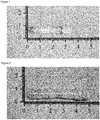
- FIG. 1 illustrates a photograph of the appearance of the Li 6.46 Al 0.18 La 3 Zr 2 O 12 crystal body (hereinafter sometimes referred to as "sample 1") obtained at the lowering speed of 19 mm/h. As illustrated in FIG. 1 , the length of the sample 1 was 2.3 cm.
- a rod-shaped mixture of the Li 7 La 3 Zr 2 O 12 polycrystal body and the LiAlO 2 polycrystal body was produced in the same manner as the method for producing the rod-shaped mixture of the Li 7 La 3 Zr 2 O 12 polycrystal body and the Al 2 O 3 polycrystal body, except using the mixed powder of the Li 7 La 3 Zr 2 O 12 polycrystal body and the LiAlO 2 polycrystal body in place of the mixed powder of the Li 7 La 3 Zr 2 O 12 polycrystal body and the Al 2 O 3 polycrystal body.
- a Li 6.46 Al 0.18 La 3 Zr 2 O 12 crystal body was grown in the same manner as the method of "Growing 1 of Li 6.46 Al 0.18 La 3 Zr 2 O 12 crystal body" above, except using the rod-shaped mixture of the Li 7 La 3 Zr 2 O 12 polycrystal body and the LiAlO 2 polycrystal body in place the mixture of the rod-shaped Li 7 La 3 Zr 2 O 12 polycrystal body and the Al 2 O 3 polycrystal body.
- the same crystal body was able to be grown.
- Example 2 Production of Li 6.1 Al 0.3 La 3 Zr 2 O 12 crystal body (Production of mixed powder of polycrystal bodies as raw material)
- lithium is 20 mol% excessive as compared with the stoichiometric ratio of Li 6.1 Al 0.3 La 3 Zr 2 O 12 which is a target substance. More specifically, as the quantity, the chemical composition is equivalent to Li 7.32 Al 0.3 La 3 Zr 2 O 12 .
- 27 g of the mixture was charged into an alumina crucible with a cover (manufactured by NIKKATO CORPORATION, C5 type).
- the crucible was placed in a box type electric furnace (manufactured by DENKEN Co., Ltd., Model Number KDF009), and then calcined at 850°C for 4 hours, whereby mixed powder of the polycrystal bodies was obtained.
- a rod-shaped mixture of the polycrystal bodies was produced in the same manner as the method for producing the rod-shaped mixture of the Li 7 La 3 Zr 2 O 12 polycrystal body and the Al 2 O 3 polycrystal body, except using the mixed powder of the polycrystal bodies as the raw material above in place of the mixed powder of the Li 7 La 3 Zr 2 O 12 polycrystal body and the Al 2 O 3 polycrystal body.
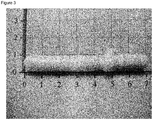
- FIG. 2 illustrates a photograph of the appearance of the obtained Li 6.1 Al 0.3 La 3 Zr 2 O 12 crystal body (hereinafter also sometimes referred to as "sample 2"). As illustrated in FIG. 2 , the length of the sample 2 was 4 cm.
- Example 3 Production of Li 5 La 3 Ta 2 O 12 crystal body (Production of Li 5 La 3 Ta 2 O 12 polycrystal body powder)
- Li 5 La 3 Ta 2 O 12 polycrystal body powder was produced in the same manner as in Example 1, except using 6.9256 g of lithium carbonate Li 2 CO 3 (manufactured by RARE METALLIC Co., LTD., Purity of 99.99%), 15.2686 g of lanthanum oxide La 2 O 3 (manufactured by RARE METALLIC Co., LTD., Purity of 99.99%), and 13.8058 g of tantalum oxide Ta 2 O 5 (manufactured by RARE METALLIC Co., LTD., Purity of 99.99%) as starting materials.
- lithium is 20 mol% excessive as compared with the stoichiometric ratio of Li 5 La 3 Ta 2 O 12 which is a target substance. More specifically, as the quantity, the chemical composition is equivalent to Li 6 La 3 Ta 2 O 12 .
- a rod-shaped Li 5 La 3 Ta 2 O 12 polycrystal body was produced using the Li 5 La 3 Ta 2 O 12 polycrystal body powder classified in the process above by the following procedure. First, 26 g of the Li 5 La 3 Ta 2 O 12 polycrystal body powder was charged into a rubber mold, followed by degassing. Next, the mold was placed in water in a state of being sealed, and then held at 40 MPa for 5 minutes. Then, the water pressure was reduced, and then the molded substance was taken out from the mold. The molded substance had a cylindrical shape having a diameter of 1.2 cm and a height of 7 cm.
- the molded substance was baked at 1150°C for 8 hours using a box type electric furnace (manufactured by DENKEN Co., Ltd., Model Number KDF009). After the baking, 26 g of a rod-shaped Li 5 La 3 Ta 2 O 12 polycrystal body close to a column and having a width of 1 cm and a length of 7 cm was obtained.
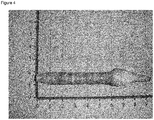
- FIG. 3 illustrates a photograph of the appearance of the Li 5 La 3 Ta 2 O 12 crystal body (hereinafter also sometimes referred to as "sample 3") obtained at a lowering speed of 19 mm/h. As illustrated in FIG. 3 , the length of the sample 3 was 4 cm.
- Example 4 Production of Li 6 BaLa 2 Ta 2 O 12 crystal (Production of Li 6 BaLa 2 Ta 2 O 12 polycrystal body powder)
- Li 6 BaLa 2 Ta 2 O 12 polycrystal body powder was produced in the same manner as in Example 1, except using 6.8699 g of lithium carbonate Li 2 CO 3 (manufactured by RARE METALLIC Co., LTD., Purity of 99.99%), 5.0964 g of barium carbonate BaCO 3 (manufactured by RARE METALLIC Co., LTD., Purity of 99.99%), 12.6215 g of lanthanum oxide La 2 O 3 (manufactured by RARE METALLIC Co., LTD., Purity of 99.99%), and 11.4123 g of tantalum oxide Ta 2 O 5 (manufactured by RARE METALLIC Co., LTD., Purity of 99.99%) as starting materials.
- lithium is 20 mol% excessive as compared with the stoichiometric ratio of Li 6 BaLa 2 Ta 2 O 12 which is a target substance. More specifically, as the quantity, the chemical composition is equivalent to Li 7.2 BaLa 2 Ta 2 O 12 .
- a rod-shaped Li 6 BaLa 2 Ta 2 O 12 polycrystal body was produced using the Li 6 BaLa 2 Ta 2 O 12 polycrystal body powder classified in the process above by the following procedure.
- 26g of the Li 6 BaLa 2 Ta 2 O 12 polycrystal body powder was charged into a rubber mold, followed by degassing.
- the mold was placed in water in a state of being sealed, and then held at 40 MPa for 5 minutes. Then, the water pressure was reduced, and then the molded substance was taken out from the mold.
- the molded substance had a cylindrical shape having a diameter of 1.4 cm and a height of 9 cm.
- the molded substance was baked at 1150°C for 8 hours using a box type electric furnace (manufactured by DENKEN Co., Ltd., Model Number KDF009). After the baking, 26 g of a rod-shaped Li 6 BaLa 2 Ta 2 O 12 polycrystal body close to a column and having a width of 1.2 cm and a length of 8 cm was obtained.
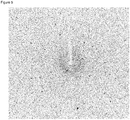
- FIG. 4 illustrates a photograph of the appearance of the Li 6 BaLa 2 Ta 2 O 12 crystal body (hereinafter also sometimes referred to as "sample 4") obtained at a lowering speed of 19 mm/h. As illustrated in FIG. 4 , the length of the sample 4 was 6 cm.
- the powder X-ray diffraction pattern of the sample 2 was the same as the pattern of Li 7-3x Al x La 3 Zr 2 O 12 of the cubic system garnet-related structure reported until now.
- FIG. 5 illustrates the X-ray diffraction pattern of the sample 3. As illustrated in FIG. 5 , clear diffraction points were able to be measured.
- RAPID AUTO attached to the single crystal X-ray diffraction device
- the crystal structure of the sample 3 was investigated by a crystal structure analysis program Jana 2006, it was found that the sample 3 belongs to a cubic system.
- the grating constant a of the sample 2 was determined by a least-squares method using the reflection observed in the single crystal X-ray diffraction measurement, 1.2816 nm ⁇ 0.003 nm was obtained. It was confirmed from the grating constant that the sample 2 is a lithium composite oxide belonging to the cubic system and having the garnet-related type structure. Thin pieces having a thickness of about 0.1 mm were produced from the sample 3 and the sample 4, and then powder X-ray diffraction measurement was performed using a powder X-ray diffraction device (manufactured by Rigaku Corporation, Smart Lab). As a result, the diffraction pattern of the cubic system garnet-related type compound reported before applied to the thin pieces of the sample 3 and the sample 4.
- the relative densities were 99.2%, 99.5%, 99.8%, and 1 00% to the true density calculated from the crystal structure.
- the relative density of the sample 4 was also 99% or more.
- the sample 4 was cut with a diamond cutter, thin pieces having a thickness of 0.3 mm and 0.086 mm were able to be produced as illustrated in FIG. 7 .
- thin pieces can be obtained, and therefore, when the lithium ion conductive crystal body of this embodiment is used as a solid electrolyte of an all-solid state lithium ion secondary battery, the electrical resistance value of the solid electrolyte can be reduced.
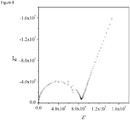
- the sample 2 was cut to produce a thin piece having a diameter of about 0.8 cm and a thickness of about 0.09 cm. 40 nm thick gold of a circle having a diameter of 0.2 cm was sputtered onto the front side and the back side of the thin piece to form an electrode. Then, the impedance of the sample 2 was measured by subjecting the sample to an alternative current impedance method (Measuring device: Solartron, 1260) at 25°C in a nitrogen atmosphere.
- FIG. 8 illustrates the Nyquist plot at this time. The lithium ion conductivity was calculated to be 3.3 ⁇ 10 -5 S/cm from the Nyquist plot illustrated in FIG. 8 .
- the lithium ion conductive crystal body of the present invention is usable for a material of a solid electrolyte of an all-solid state lithium ion secondary battery, for example.
Landscapes
- Chemical & Material Sciences (AREA)
- Organic Chemistry (AREA)
- Inorganic Chemistry (AREA)
- Engineering & Computer Science (AREA)
- Electrochemistry (AREA)
- Manufacturing & Machinery (AREA)
- Chemical Kinetics & Catalysis (AREA)
- General Chemical & Material Sciences (AREA)
- Physics & Mathematics (AREA)
- General Physics & Mathematics (AREA)
- Condensed Matter Physics & Semiconductors (AREA)
- Materials Engineering (AREA)
- Spectroscopy & Molecular Physics (AREA)
- Secondary Cells (AREA)
- Conductive Materials (AREA)
- Inorganic Compounds Of Heavy Metals (AREA)
- Crystals, And After-Treatments Of Crystals (AREA)
Claims (11)
- Lithiumionen-leitender Kristallkörper:der eine chemische Zusammensetzung aufweist, die durch Li7-3xAlxLa3Zr2O12 (0,05 < x < 0,50), Li5La3Ta2O12 oder Li6BaLa2Ta2O12 dargestellt ist;der eine relative Dichte von 99 % oder mehr aufweist;der einem kubischen System angehört;der eine Struktur granatartigen Typs aufweist; undeine Länge von 2 cm oder mehr aufweist.
- Lithiumionen-leitender Kristallkörper nach Anspruch 1, wobei
der Lithiumionen-leitende Kristallkörper durch ein Schmelzverfahren gezüchtet ist, wobei ein Rohmaterial eingesetzt wird, das einen polykristallinen Körper enthält, der eine chemische Zusammensetzung aufweist, die durch Li7La3Zr2O12 dargestellt ist, einem tetragonalen System angehört und eine Struktur granatartigen Typs aufweist und mindestens einen von einem polykristallinen Al2O3-Körper und einem polykristallinen LiAlO2-Körper aufweist und
eine chemische Zusammensetzung aufweist, die durch Li7-3xAlxLa3Zr2O12 (0,05 < x < 0,50) dargestellt ist. - Lithiumionen-leitender Kristallkörper nach Anspruch 1, wobei
der Lithiumionen-leitende Kristallkörper durch ein Schmelzverfahren gezüchtet ist, wobei ein polykristalliner Körper eingesetzt wird, der durch eine gleiche chemische Zusammensetzung wie ein Rohmaterial dargestellt ist. - Lithiumionen-leitender Kristallkörper nach einem von Anspruch 1 bis 3, wobei
die relative Dichte 100 % beträgt. - Lithiumionen-leitender Kristallkörper nach einem von Anspruch 1 bis 4, wobei
eine Gitterkonstante a 1,28 nm ≤ a ≤ 1,31 nm ist. - Verfahren zum Herstellen eines Lithiumionen-leitenden Kristallkörpers, der eine chemische Zusammensetzung aufweist, die durch Li7-3xAlxLa3Zr2O12 (0,05 < x < 0,50), Li5La3Ta2O12 oder Li6BaLa2Ta2O12 dargestellt ist, eine relative Dichte von 99 % oder mehr aufweist, einem kubischen System angehört und eine Struktur granatartigen Typs aufweist,
wobei das Verfahren umfasst:
einen Schritt des Schmelzens von mindestens einem Teil eines Rohmaterials eines polykristallinen Körpers, der durch eine gleiche chemische Zusammensetzung wie die chemische Zusammensetzung des Lithiumionen-leitenden Kristallkörpers dargestellt ist, um einen geschmolzenen Anteil zu bilden, und dann Bewegen des geschmolzenen Anteils mit einer Bewegungsgeschwindigkeit von 8 mm/h oder mehr. - Verfahren zum Herstellen eines Lithiumionen-leitenden Kristallkörpers, der eine chemische Zusammensetzung aufweist, die durch Li7-3xAlxLa3Zr2O12 (0,05 < x < 0,50) dargestellt ist, der eine relative Dichte von 99 % oder mehr aufweist, einem kubischen System angehört und eine Struktur granatartigen Typs aufweist,
wobei das Verfahren umfasst:
einen Schritt des Schmelzens von mindestens einem Teil eines Rohmaterials, das einen polykristallinen Körper enthält, der eine chemische Zusammensetzung aufweist, die durch Li7La3Zr2O12 dargestellt ist, der einem tetragonalen System angehört und eine Struktur granatartigen Typs aufweist und mindestens einen von einem polykristallinen Al2O3-Körper und einem polykristallinen LiAlO2-Körper aufweist, um einen geschmolzenen Anteil zu bilden, und dann Bewegen des geschmolzenen Anteils mit einer Bewegungsgeschwindigkeit von 8 mm/h oder mehr. - Verfahren zum Herstellen eines Lithiumionen-leitenden Kristallkörpers nach Anspruch 6 oder 7, wobei die Bewegungsgeschwindigkeit 8 mm/h oder mehr und 19 mm/h oder weniger beträgt.
- Verfahren zum Herstellen eines Lithiumionen-leitenden Kristallkörpers nach einem von Anspruch 6 bis 8, wobei das Rohmaterial geschmolzen wird, während das stabförmige Rohmaterial mit einer Drehzahl von 30 U/min auf einer Ebene, die senkrecht zu einer Längsrichtung ist, rotiert.
- Verfahren zum Herstellen eines Lithiumionen-leitenden Kristallkörpers nach Anspruch 9, wobei die Drehzahl 30 U/min oder mehr und 60 U/min oder weniger beträgt.
- Lithiumionen-Festkörpersekundärbatterie, umfassend:eine positive Elektrode;eine negative Elektrode; undeinen festen Elektrolyten, wobeider feste Elektrolyt den Lithiumionen-leitenden Kristallkörper nach einem von Anspruch 1 bis 5 enthält.
Applications Claiming Priority (2)
| Application Number | Priority Date | Filing Date | Title |
|---|---|---|---|
| JP2014223346 | 2014-10-31 | ||
| PCT/JP2015/080825 WO2016068329A1 (ja) | 2014-10-31 | 2015-10-30 | リチウムイオン伝導性結晶体および全固体リチウムイオン二次電池 |
Publications (3)
| Publication Number | Publication Date |
|---|---|
| EP3214623A1 EP3214623A1 (de) | 2017-09-06 |
| EP3214623A4 EP3214623A4 (de) | 2018-07-04 |
| EP3214623B1 true EP3214623B1 (de) | 2019-03-06 |
Family
ID=55857662
Family Applications (1)
| Application Number | Title | Priority Date | Filing Date |
|---|---|---|---|
| EP15853839.7A Active EP3214623B1 (de) | 2014-10-31 | 2015-10-30 | Lithium-ionen-leitender kristallkörper und lithium-ionen-festkörpersekundärbatterie |
Country Status (6)
| Country | Link |
|---|---|
| US (2) | US20170309955A1 (de) |
| EP (1) | EP3214623B1 (de) |
| JP (1) | JP6296263B2 (de) |
| KR (1) | KR101982422B1 (de) |
| CN (1) | CN106796825B (de) |
| WO (1) | WO2016068329A1 (de) |
Families Citing this family (7)
| Publication number | Priority date | Publication date | Assignee | Title |
|---|---|---|---|---|
| CN107075722B (zh) * | 2014-07-31 | 2019-12-31 | 国立研究开发法人产业技术综合研究所 | 含锂石榴石晶体及其制造方法、以及全固体锂离子二次电池 |
| WO2018013517A1 (en) * | 2016-07-11 | 2018-01-18 | The Regents Of The University Of Michigan | Ceramic garnet based ionically conducting material |
| JP6669268B2 (ja) * | 2016-09-21 | 2020-03-18 | 株式会社村田製作所 | 固体電解質及び全固体電池 |
| CN109319837B (zh) * | 2018-11-29 | 2020-12-01 | 江苏海基新能源股份有限公司 | 一种含铝立方相石榴石Li7La3Zr2O12的制备方法 |
| EP3904453B1 (de) | 2018-12-27 | 2023-05-10 | Kaneka Corporation | Harzzusammensetzung und verwendung davon |
| CN113646382B (zh) | 2019-03-28 | 2024-12-03 | 株式会社钟化 | 树脂组合物的制造方法及树脂组合物 |
| CN116635331A (zh) * | 2020-12-24 | 2023-08-22 | 新日本电工株式会社 | 锂离子传导性氧化物材料及全固态锂二次电池 |
Family Cites Families (14)
| Publication number | Priority date | Publication date | Assignee | Title |
|---|---|---|---|---|
| JP2972873B1 (ja) * | 1998-04-28 | 1999-11-08 | 工業技術院長 | ジルコニア繊維の製造方法 |
| DE102004010892B3 (de) * | 2004-03-06 | 2005-11-24 | Christian-Albrechts-Universität Zu Kiel | Chemisch stabiler fester Lithiumionenleiter |
| US9034525B2 (en) | 2008-06-27 | 2015-05-19 | Johnson Ip Holding, Llc | Ionically-conductive amorphous lithium lanthanum zirconium oxide |
| JP5132639B2 (ja) * | 2008-08-21 | 2013-01-30 | 日本碍子株式会社 | セラミックス材料及びその製造方法 |
| WO2010090301A1 (en) * | 2009-02-04 | 2010-08-12 | Kabushiki Kaisha Toyota Chuo Kenkyusho | Garnet-type lithium ion-conducting oxide and all-solid-state lithium ion secondary battery containing the same |
| JP5376252B2 (ja) * | 2009-09-03 | 2013-12-25 | 日本碍子株式会社 | セラミックス材料及びその利用 |
| JP5649033B2 (ja) * | 2010-03-19 | 2015-01-07 | 独立行政法人産業技術総合研究所 | リチウムイオン伝導性酸化物及びその製造方法、並びにそれを部材として使用した電気化学デバイス |
| JP5290337B2 (ja) * | 2011-02-24 | 2013-09-18 | 国立大学法人信州大学 | ガーネット型固体電解質、当該ガーネット型固体電解質を含む二次電池、及び当該ガーネット型固体電解質の製造方法 |
| WO2013014759A1 (ja) * | 2011-07-27 | 2013-01-31 | トヨタ自動車株式会社 | 固体電池の製造方法 |
| JP2013107779A (ja) * | 2011-11-17 | 2013-06-06 | Honda Motor Co Ltd | 焼結体及びその製造方法 |
| JP5910072B2 (ja) | 2011-12-26 | 2016-04-27 | ソニー株式会社 | 固体電解質、固体電解質の製造方法および電気化学デバイス |
| JP6018947B2 (ja) * | 2012-02-21 | 2016-11-02 | 日本碍子株式会社 | 固体電解質セラミックス材料のイオン伝導率を回復させる方法 |
| JP6079307B2 (ja) * | 2012-05-14 | 2017-02-15 | 株式会社豊田中央研究所 | ガーネット型リチウムイオン伝導性酸化物の製造方法 |
| US9660270B2 (en) * | 2014-04-24 | 2017-05-23 | Daiichi Kigenso Kagaku Kogyo Co., Ltd. | Method for producing garnet-type compound, garnet-type compound, and all-solid lithium secondary cell containing said garnet-type compound |
-
2015
- 2015-10-30 CN CN201580054375.9A patent/CN106796825B/zh active Active
- 2015-10-30 EP EP15853839.7A patent/EP3214623B1/de active Active
- 2015-10-30 JP JP2016556682A patent/JP6296263B2/ja active Active
- 2015-10-30 US US15/517,125 patent/US20170309955A1/en not_active Abandoned
- 2015-10-30 KR KR1020177011375A patent/KR101982422B1/ko active Active
- 2015-10-30 WO PCT/JP2015/080825 patent/WO2016068329A1/ja not_active Ceased
-
2020
- 2020-06-09 US US16/897,119 patent/US11139504B2/en active Active
Non-Patent Citations (1)
| Title |
|---|
| None * |
Also Published As
| Publication number | Publication date |
|---|---|
| US20170309955A1 (en) | 2017-10-26 |
| JPWO2016068329A1 (ja) | 2017-07-20 |
| CN106796825B (zh) | 2018-06-29 |
| WO2016068329A1 (ja) | 2016-05-06 |
| KR101982422B1 (ko) | 2019-05-27 |
| KR20170065594A (ko) | 2017-06-13 |
| US20200303771A1 (en) | 2020-09-24 |
| CN106796825A (zh) | 2017-05-31 |
| JP6296263B2 (ja) | 2018-03-20 |
| EP3214623A1 (de) | 2017-09-06 |
| US11139504B2 (en) | 2021-10-05 |
| EP3214623A4 (de) | 2018-07-04 |
Similar Documents
| Publication | Publication Date | Title |
|---|---|---|
| US11139504B2 (en) | Lithium ion conductive crystal body and all-solid state lithium ion secondary battery | |
| US10319985B2 (en) | Lithium lanthanum zirconium tantalum oxide garnet crystal and all-solid-state lithium ion secondary battery | |
| JP6278433B2 (ja) | リチウム含有ガーネット結晶体および全固体リチウムイオン二次電池 | |
| CN107075722B (zh) | 含锂石榴石晶体及其制造方法、以及全固体锂离子二次电池 | |
| JP6667182B2 (ja) | 低対称ガーネット関連型構造固体電解質およびリチウムイオン二次電池 | |
| KR102912375B1 (ko) | 갈륨 치환형 고체 전해질 재료 및 전고체 리튬이온 이차전지 | |
| US12467158B2 (en) | Lithium composite oxide single crystal, lithium composite oxide polycrystal, lithium composite oxide material, solid electrolyte material, all- solid-state lithium-ion secondary battery, and method for producing solid electrolyte material | |
| KR102878280B1 (ko) | 신규 결정 구조를 구비하는 복합 산화물과, 이 복합 산화물을 고체 전해질로 하는 전고체 리튬 이온 이차 전지와, 복합 산화물의 제조 방법 |
Legal Events
| Date | Code | Title | Description |
|---|---|---|---|
| STAA | Information on the status of an ep patent application or granted ep patent |
Free format text: STATUS: THE INTERNATIONAL PUBLICATION HAS BEEN MADE |
|
| PUAI | Public reference made under article 153(3) epc to a published international application that has entered the european phase |
Free format text: ORIGINAL CODE: 0009012 |
|
| STAA | Information on the status of an ep patent application or granted ep patent |
Free format text: STATUS: REQUEST FOR EXAMINATION WAS MADE |
|
| 17P | Request for examination filed |
Effective date: 20170403 |
|
| AK | Designated contracting states |
Kind code of ref document: A1 Designated state(s): AL AT BE BG CH CY CZ DE DK EE ES FI FR GB GR HR HU IE IS IT LI LT LU LV MC MK MT NL NO PL PT RO RS SE SI SK SM TR |
|
| AX | Request for extension of the european patent |
Extension state: BA ME |
|
| DAV | Request for validation of the european patent (deleted) | ||
| DAX | Request for extension of the european patent (deleted) | ||
| A4 | Supplementary search report drawn up and despatched |
Effective date: 20180606 |
|
| RIC1 | Information provided on ipc code assigned before grant |
Ipc: C01G 35/00 20060101ALI20180530BHEP Ipc: H01M 10/0585 20100101ALI20180530BHEP Ipc: H01B 1/08 20060101ALI20180530BHEP Ipc: H01B 1/12 20060101ALI20180530BHEP Ipc: H01M 10/0525 20100101ALI20180530BHEP Ipc: H01M 10/0562 20100101ALI20180530BHEP Ipc: C01G 25/00 20060101AFI20180530BHEP |
|
| REG | Reference to a national code |
Ref country code: DE Ref legal event code: R079 Ref document number: 602015026084 Country of ref document: DE Free format text: PREVIOUS MAIN CLASS: H01B0001060000 Ipc: C01G0025000000 |
|
| GRAP | Despatch of communication of intention to grant a patent |
Free format text: ORIGINAL CODE: EPIDOSNIGR1 |
|
| STAA | Information on the status of an ep patent application or granted ep patent |
Free format text: STATUS: GRANT OF PATENT IS INTENDED |
|
| RIC1 | Information provided on ipc code assigned before grant |
Ipc: H01B 1/08 20060101ALI20180829BHEP Ipc: H01M 10/0585 20100101ALI20180829BHEP Ipc: C01G 35/00 20060101ALI20180829BHEP Ipc: H01B 1/12 20060101ALI20180829BHEP Ipc: H01M 10/0525 20100101ALI20180829BHEP Ipc: C01G 25/00 20060101AFI20180829BHEP Ipc: H01M 10/0562 20100101ALI20180829BHEP |
|
| INTG | Intention to grant announced |
Effective date: 20180921 |
|
| GRAS | Grant fee paid |
Free format text: ORIGINAL CODE: EPIDOSNIGR3 |
|
| GRAA | (expected) grant |
Free format text: ORIGINAL CODE: 0009210 |
|
| STAA | Information on the status of an ep patent application or granted ep patent |
Free format text: STATUS: THE PATENT HAS BEEN GRANTED |
|
| AK | Designated contracting states |
Kind code of ref document: B1 Designated state(s): AL AT BE BG CH CY CZ DE DK EE ES FI FR GB GR HR HU IE IS IT LI LT LU LV MC MK MT NL NO PL PT RO RS SE SI SK SM TR |
|
| REG | Reference to a national code |
Ref country code: GB Ref legal event code: FG4D |
|
| REG | Reference to a national code |
Ref country code: CH Ref legal event code: EP Ref country code: AT Ref legal event code: REF Ref document number: 1104292 Country of ref document: AT Kind code of ref document: T Effective date: 20190315 |
|
| REG | Reference to a national code |
Ref country code: DE Ref legal event code: R096 Ref document number: 602015026084 Country of ref document: DE |
|
| REG | Reference to a national code |
Ref country code: IE Ref legal event code: FG4D |
|
| REG | Reference to a national code |
Ref country code: NL Ref legal event code: MP Effective date: 20190306 |
|
| REG | Reference to a national code |
Ref country code: LT Ref legal event code: MG4D |
|
| PG25 | Lapsed in a contracting state [announced via postgrant information from national office to epo] |
Ref country code: FI Free format text: LAPSE BECAUSE OF FAILURE TO SUBMIT A TRANSLATION OF THE DESCRIPTION OR TO PAY THE FEE WITHIN THE PRESCRIBED TIME-LIMIT Effective date: 20190306 Ref country code: LT Free format text: LAPSE BECAUSE OF FAILURE TO SUBMIT A TRANSLATION OF THE DESCRIPTION OR TO PAY THE FEE WITHIN THE PRESCRIBED TIME-LIMIT Effective date: 20190306 Ref country code: SE Free format text: LAPSE BECAUSE OF FAILURE TO SUBMIT A TRANSLATION OF THE DESCRIPTION OR TO PAY THE FEE WITHIN THE PRESCRIBED TIME-LIMIT Effective date: 20190306 Ref country code: NO Free format text: LAPSE BECAUSE OF FAILURE TO SUBMIT A TRANSLATION OF THE DESCRIPTION OR TO PAY THE FEE WITHIN THE PRESCRIBED TIME-LIMIT Effective date: 20190606 |
|
| PG25 | Lapsed in a contracting state [announced via postgrant information from national office to epo] |
Ref country code: LV Free format text: LAPSE BECAUSE OF FAILURE TO SUBMIT A TRANSLATION OF THE DESCRIPTION OR TO PAY THE FEE WITHIN THE PRESCRIBED TIME-LIMIT Effective date: 20190306 Ref country code: NL Free format text: LAPSE BECAUSE OF FAILURE TO SUBMIT A TRANSLATION OF THE DESCRIPTION OR TO PAY THE FEE WITHIN THE PRESCRIBED TIME-LIMIT Effective date: 20190306 Ref country code: RS Free format text: LAPSE BECAUSE OF FAILURE TO SUBMIT A TRANSLATION OF THE DESCRIPTION OR TO PAY THE FEE WITHIN THE PRESCRIBED TIME-LIMIT Effective date: 20190306 Ref country code: HR Free format text: LAPSE BECAUSE OF FAILURE TO SUBMIT A TRANSLATION OF THE DESCRIPTION OR TO PAY THE FEE WITHIN THE PRESCRIBED TIME-LIMIT Effective date: 20190306 Ref country code: GR Free format text: LAPSE BECAUSE OF FAILURE TO SUBMIT A TRANSLATION OF THE DESCRIPTION OR TO PAY THE FEE WITHIN THE PRESCRIBED TIME-LIMIT Effective date: 20190607 Ref country code: BG Free format text: LAPSE BECAUSE OF FAILURE TO SUBMIT A TRANSLATION OF THE DESCRIPTION OR TO PAY THE FEE WITHIN THE PRESCRIBED TIME-LIMIT Effective date: 20190606 |
|
| REG | Reference to a national code |
Ref country code: AT Ref legal event code: MK05 Ref document number: 1104292 Country of ref document: AT Kind code of ref document: T Effective date: 20190306 |
|
| PG25 | Lapsed in a contracting state [announced via postgrant information from national office to epo] |
Ref country code: EE Free format text: LAPSE BECAUSE OF FAILURE TO SUBMIT A TRANSLATION OF THE DESCRIPTION OR TO PAY THE FEE WITHIN THE PRESCRIBED TIME-LIMIT Effective date: 20190306 Ref country code: ES Free format text: LAPSE BECAUSE OF FAILURE TO SUBMIT A TRANSLATION OF THE DESCRIPTION OR TO PAY THE FEE WITHIN THE PRESCRIBED TIME-LIMIT Effective date: 20190306 Ref country code: CZ Free format text: LAPSE BECAUSE OF FAILURE TO SUBMIT A TRANSLATION OF THE DESCRIPTION OR TO PAY THE FEE WITHIN THE PRESCRIBED TIME-LIMIT Effective date: 20190306 Ref country code: IT Free format text: LAPSE BECAUSE OF FAILURE TO SUBMIT A TRANSLATION OF THE DESCRIPTION OR TO PAY THE FEE WITHIN THE PRESCRIBED TIME-LIMIT Effective date: 20190306 Ref country code: RO Free format text: LAPSE BECAUSE OF FAILURE TO SUBMIT A TRANSLATION OF THE DESCRIPTION OR TO PAY THE FEE WITHIN THE PRESCRIBED TIME-LIMIT Effective date: 20190306 Ref country code: SK Free format text: LAPSE BECAUSE OF FAILURE TO SUBMIT A TRANSLATION OF THE DESCRIPTION OR TO PAY THE FEE WITHIN THE PRESCRIBED TIME-LIMIT Effective date: 20190306 Ref country code: AL Free format text: LAPSE BECAUSE OF FAILURE TO SUBMIT A TRANSLATION OF THE DESCRIPTION OR TO PAY THE FEE WITHIN THE PRESCRIBED TIME-LIMIT Effective date: 20190306 Ref country code: PT Free format text: LAPSE BECAUSE OF FAILURE TO SUBMIT A TRANSLATION OF THE DESCRIPTION OR TO PAY THE FEE WITHIN THE PRESCRIBED TIME-LIMIT Effective date: 20190706 |
|
| PG25 | Lapsed in a contracting state [announced via postgrant information from national office to epo] |
Ref country code: SM Free format text: LAPSE BECAUSE OF FAILURE TO SUBMIT A TRANSLATION OF THE DESCRIPTION OR TO PAY THE FEE WITHIN THE PRESCRIBED TIME-LIMIT Effective date: 20190306 Ref country code: PL Free format text: LAPSE BECAUSE OF FAILURE TO SUBMIT A TRANSLATION OF THE DESCRIPTION OR TO PAY THE FEE WITHIN THE PRESCRIBED TIME-LIMIT Effective date: 20190306 |
|
| REG | Reference to a national code |
Ref country code: DE Ref legal event code: R097 Ref document number: 602015026084 Country of ref document: DE |
|
| PG25 | Lapsed in a contracting state [announced via postgrant information from national office to epo] |
Ref country code: IS Free format text: LAPSE BECAUSE OF FAILURE TO SUBMIT A TRANSLATION OF THE DESCRIPTION OR TO PAY THE FEE WITHIN THE PRESCRIBED TIME-LIMIT Effective date: 20190706 Ref country code: AT Free format text: LAPSE BECAUSE OF FAILURE TO SUBMIT A TRANSLATION OF THE DESCRIPTION OR TO PAY THE FEE WITHIN THE PRESCRIBED TIME-LIMIT Effective date: 20190306 |
|
| PLBE | No opposition filed within time limit |
Free format text: ORIGINAL CODE: 0009261 |
|
| STAA | Information on the status of an ep patent application or granted ep patent |
Free format text: STATUS: NO OPPOSITION FILED WITHIN TIME LIMIT |
|
| PG25 | Lapsed in a contracting state [announced via postgrant information from national office to epo] |
Ref country code: DK Free format text: LAPSE BECAUSE OF FAILURE TO SUBMIT A TRANSLATION OF THE DESCRIPTION OR TO PAY THE FEE WITHIN THE PRESCRIBED TIME-LIMIT Effective date: 20190306 |
|
| 26N | No opposition filed |
Effective date: 20191209 |
|
| PG25 | Lapsed in a contracting state [announced via postgrant information from national office to epo] |
Ref country code: SI Free format text: LAPSE BECAUSE OF FAILURE TO SUBMIT A TRANSLATION OF THE DESCRIPTION OR TO PAY THE FEE WITHIN THE PRESCRIBED TIME-LIMIT Effective date: 20190306 |
|
| PG25 | Lapsed in a contracting state [announced via postgrant information from national office to epo] |
Ref country code: TR Free format text: LAPSE BECAUSE OF FAILURE TO SUBMIT A TRANSLATION OF THE DESCRIPTION OR TO PAY THE FEE WITHIN THE PRESCRIBED TIME-LIMIT Effective date: 20190306 |
|
| PG25 | Lapsed in a contracting state [announced via postgrant information from national office to epo] |
Ref country code: MC Free format text: LAPSE BECAUSE OF FAILURE TO SUBMIT A TRANSLATION OF THE DESCRIPTION OR TO PAY THE FEE WITHIN THE PRESCRIBED TIME-LIMIT Effective date: 20190306 |
|
| REG | Reference to a national code |
Ref country code: CH Ref legal event code: PL |
|
| PG25 | Lapsed in a contracting state [announced via postgrant information from national office to epo] |
Ref country code: CH Free format text: LAPSE BECAUSE OF NON-PAYMENT OF DUE FEES Effective date: 20191031 Ref country code: LI Free format text: LAPSE BECAUSE OF NON-PAYMENT OF DUE FEES Effective date: 20191031 Ref country code: LU Free format text: LAPSE BECAUSE OF NON-PAYMENT OF DUE FEES Effective date: 20191030 |
|
| REG | Reference to a national code |
Ref country code: BE Ref legal event code: MM Effective date: 20191031 |
|
| PG25 | Lapsed in a contracting state [announced via postgrant information from national office to epo] |
Ref country code: BE Free format text: LAPSE BECAUSE OF NON-PAYMENT OF DUE FEES Effective date: 20191031 |
|
| PG25 | Lapsed in a contracting state [announced via postgrant information from national office to epo] |
Ref country code: IE Free format text: LAPSE BECAUSE OF NON-PAYMENT OF DUE FEES Effective date: 20191030 |
|
| REG | Reference to a national code |
Ref country code: DE Ref legal event code: R082 Ref document number: 602015026084 Country of ref document: DE Representative=s name: HL KEMPNER PATENTANWAELTE, SOLICITORS (ENGLAND, DE Ref country code: DE Ref legal event code: R082 Ref document number: 602015026084 Country of ref document: DE Representative=s name: HL KEMPNER PATENTANWALT, RECHTSANWALT, SOLICIT, DE Ref country code: DE Ref legal event code: R082 Ref document number: 602015026084 Country of ref document: DE Representative=s name: HL KEMPNER PARTG MBB, DE |
|
| PG25 | Lapsed in a contracting state [announced via postgrant information from national office to epo] |
Ref country code: CY Free format text: LAPSE BECAUSE OF FAILURE TO SUBMIT A TRANSLATION OF THE DESCRIPTION OR TO PAY THE FEE WITHIN THE PRESCRIBED TIME-LIMIT Effective date: 20190306 |
|
| PG25 | Lapsed in a contracting state [announced via postgrant information from national office to epo] |
Ref country code: MT Free format text: LAPSE BECAUSE OF FAILURE TO SUBMIT A TRANSLATION OF THE DESCRIPTION OR TO PAY THE FEE WITHIN THE PRESCRIBED TIME-LIMIT Effective date: 20190306 Ref country code: HU Free format text: LAPSE BECAUSE OF FAILURE TO SUBMIT A TRANSLATION OF THE DESCRIPTION OR TO PAY THE FEE WITHIN THE PRESCRIBED TIME-LIMIT; INVALID AB INITIO Effective date: 20151030 |
|
| PG25 | Lapsed in a contracting state [announced via postgrant information from national office to epo] |
Ref country code: MK Free format text: LAPSE BECAUSE OF FAILURE TO SUBMIT A TRANSLATION OF THE DESCRIPTION OR TO PAY THE FEE WITHIN THE PRESCRIBED TIME-LIMIT Effective date: 20190306 |
|
| PGFP | Annual fee paid to national office [announced via postgrant information from national office to epo] |
Ref country code: GB Payment date: 20250820 Year of fee payment: 11 |
|
| PGFP | Annual fee paid to national office [announced via postgrant information from national office to epo] |
Ref country code: FR Payment date: 20250821 Year of fee payment: 11 |
|
| PGFP | Annual fee paid to national office [announced via postgrant information from national office to epo] |
Ref country code: DE Payment date: 20250820 Year of fee payment: 11 |