EP3214674B1 - Verfahren zur herstellung von kathodenmaterial für lithium-schwefel-batterie - Google Patents
Verfahren zur herstellung von kathodenmaterial für lithium-schwefel-batterie Download PDFInfo
- Publication number
- EP3214674B1 EP3214674B1 EP15855521.9A EP15855521A EP3214674B1 EP 3214674 B1 EP3214674 B1 EP 3214674B1 EP 15855521 A EP15855521 A EP 15855521A EP 3214674 B1 EP3214674 B1 EP 3214674B1
- Authority
- EP
- European Patent Office
- Prior art keywords
- lithium
- carbon
- particle
- battery
- active material
- Prior art date
- Legal status (The legal status is an assumption and is not a legal conclusion. Google has not performed a legal analysis and makes no representation as to the accuracy of the status listed.)
- Active
Links
Images




Classifications
-
- H—ELECTRICITY
- H01—ELECTRIC ELEMENTS
- H01M—PROCESSES OR MEANS, e.g. BATTERIES, FOR THE DIRECT CONVERSION OF CHEMICAL ENERGY INTO ELECTRICAL ENERGY
- H01M4/00—Electrodes
- H01M4/02—Electrodes composed of, or comprising, active material
- H01M4/36—Selection of substances as active materials, active masses, active liquids
- H01M4/362—Composites
- H01M4/366—Composites as layered products
-
- C—CHEMISTRY; METALLURGY
- C01—INORGANIC CHEMISTRY
- C01B—NON-METALLIC ELEMENTS; COMPOUNDS THEREOF; METALLOIDS OR COMPOUNDS THEREOF NOT COVERED BY SUBCLASS C01C
- C01B17/00—Sulfur; Compounds thereof
- C01B17/22—Alkali metal sulfides or polysulfides
- C01B17/24—Preparation by reduction
- C01B17/26—Preparation by reduction with carbon
-
- H—ELECTRICITY
- H01—ELECTRIC ELEMENTS
- H01M—PROCESSES OR MEANS, e.g. BATTERIES, FOR THE DIRECT CONVERSION OF CHEMICAL ENERGY INTO ELECTRICAL ENERGY
- H01M10/00—Secondary cells; Manufacture thereof
- H01M10/05—Accumulators with non-aqueous electrolyte
- H01M10/052—Li-accumulators
-
- H—ELECTRICITY
- H01—ELECTRIC ELEMENTS
- H01M—PROCESSES OR MEANS, e.g. BATTERIES, FOR THE DIRECT CONVERSION OF CHEMICAL ENERGY INTO ELECTRICAL ENERGY
- H01M10/00—Secondary cells; Manufacture thereof
- H01M10/05—Accumulators with non-aqueous electrolyte
- H01M10/056—Accumulators with non-aqueous electrolyte characterised by the materials used as electrolytes, e.g. mixed inorganic/organic electrolytes
- H01M10/0564—Accumulators with non-aqueous electrolyte characterised by the materials used as electrolytes, e.g. mixed inorganic/organic electrolytes the electrolyte being constituted of organic materials only
- H01M10/0566—Liquid materials
- H01M10/0568—Liquid materials characterised by the solutes
-
- H—ELECTRICITY
- H01—ELECTRIC ELEMENTS
- H01M—PROCESSES OR MEANS, e.g. BATTERIES, FOR THE DIRECT CONVERSION OF CHEMICAL ENERGY INTO ELECTRICAL ENERGY
- H01M10/00—Secondary cells; Manufacture thereof
- H01M10/05—Accumulators with non-aqueous electrolyte
- H01M10/056—Accumulators with non-aqueous electrolyte characterised by the materials used as electrolytes, e.g. mixed inorganic/organic electrolytes
- H01M10/0564—Accumulators with non-aqueous electrolyte characterised by the materials used as electrolytes, e.g. mixed inorganic/organic electrolytes the electrolyte being constituted of organic materials only
- H01M10/0566—Liquid materials
- H01M10/0569—Liquid materials characterised by the solvents
-
- H—ELECTRICITY
- H01—ELECTRIC ELEMENTS
- H01M—PROCESSES OR MEANS, e.g. BATTERIES, FOR THE DIRECT CONVERSION OF CHEMICAL ENERGY INTO ELECTRICAL ENERGY
- H01M4/00—Electrodes
- H01M4/02—Electrodes composed of, or comprising, active material
- H01M4/04—Processes of manufacture in general
- H01M4/0471—Processes of manufacture in general involving thermal treatment, e.g. firing, sintering, backing particulate active material, thermal decomposition, pyrolysis
-
- H—ELECTRICITY
- H01—ELECTRIC ELEMENTS
- H01M—PROCESSES OR MEANS, e.g. BATTERIES, FOR THE DIRECT CONVERSION OF CHEMICAL ENERGY INTO ELECTRICAL ENERGY
- H01M4/00—Electrodes
- H01M4/02—Electrodes composed of, or comprising, active material
- H01M4/13—Electrodes for accumulators with non-aqueous electrolyte, e.g. for lithium-accumulators; Processes of manufacture thereof
- H01M4/136—Electrodes based on inorganic compounds other than oxides or hydroxides, e.g. sulfides, selenides, tellurides, halogenides or LiCoFy
-
- H—ELECTRICITY
- H01—ELECTRIC ELEMENTS
- H01M—PROCESSES OR MEANS, e.g. BATTERIES, FOR THE DIRECT CONVERSION OF CHEMICAL ENERGY INTO ELECTRICAL ENERGY
- H01M4/00—Electrodes
- H01M4/02—Electrodes composed of, or comprising, active material
- H01M4/13—Electrodes for accumulators with non-aqueous electrolyte, e.g. for lithium-accumulators; Processes of manufacture thereof
- H01M4/139—Processes of manufacture
- H01M4/1393—Processes of manufacture of electrodes based on carbonaceous material, e.g. graphite-intercalation compounds or CFx
-
- H—ELECTRICITY
- H01—ELECTRIC ELEMENTS
- H01M—PROCESSES OR MEANS, e.g. BATTERIES, FOR THE DIRECT CONVERSION OF CHEMICAL ENERGY INTO ELECTRICAL ENERGY
- H01M4/00—Electrodes
- H01M4/02—Electrodes composed of, or comprising, active material
- H01M4/13—Electrodes for accumulators with non-aqueous electrolyte, e.g. for lithium-accumulators; Processes of manufacture thereof
- H01M4/139—Processes of manufacture
- H01M4/1397—Processes of manufacture of electrodes based on inorganic compounds other than oxides or hydroxides, e.g. sulfides, selenides, tellurides, halogenides or LiCoFy
-
- H—ELECTRICITY
- H01—ELECTRIC ELEMENTS
- H01M—PROCESSES OR MEANS, e.g. BATTERIES, FOR THE DIRECT CONVERSION OF CHEMICAL ENERGY INTO ELECTRICAL ENERGY
- H01M4/00—Electrodes
- H01M4/02—Electrodes composed of, or comprising, active material
- H01M4/36—Selection of substances as active materials, active masses, active liquids
- H01M4/362—Composites
- H01M4/364—Composites as mixtures
-
- H—ELECTRICITY
- H01—ELECTRIC ELEMENTS
- H01M—PROCESSES OR MEANS, e.g. BATTERIES, FOR THE DIRECT CONVERSION OF CHEMICAL ENERGY INTO ELECTRICAL ENERGY
- H01M4/00—Electrodes
- H01M4/02—Electrodes composed of, or comprising, active material
- H01M4/36—Selection of substances as active materials, active masses, active liquids
- H01M4/38—Selection of substances as active materials, active masses, active liquids of elements or alloys
- H01M4/381—Alkaline or alkaline earth metals elements
- H01M4/382—Lithium
-
- H—ELECTRICITY
- H01—ELECTRIC ELEMENTS
- H01M—PROCESSES OR MEANS, e.g. BATTERIES, FOR THE DIRECT CONVERSION OF CHEMICAL ENERGY INTO ELECTRICAL ENERGY
- H01M4/00—Electrodes
- H01M4/02—Electrodes composed of, or comprising, active material
- H01M4/36—Selection of substances as active materials, active masses, active liquids
- H01M4/58—Selection of substances as active materials, active masses, active liquids of inorganic compounds other than oxides or hydroxides, e.g. sulfides, selenides, tellurides, halogenides or LiCoFy; of polyanionic structures, e.g. phosphates, silicates or borates
- H01M4/581—Chalcogenides or intercalation compounds thereof
- H01M4/5815—Sulfides
-
- H—ELECTRICITY
- H01—ELECTRIC ELEMENTS
- H01M—PROCESSES OR MEANS, e.g. BATTERIES, FOR THE DIRECT CONVERSION OF CHEMICAL ENERGY INTO ELECTRICAL ENERGY
- H01M4/00—Electrodes
- H01M4/02—Electrodes composed of, or comprising, active material
- H01M4/36—Selection of substances as active materials, active masses, active liquids
- H01M4/58—Selection of substances as active materials, active masses, active liquids of inorganic compounds other than oxides or hydroxides, e.g. sulfides, selenides, tellurides, halogenides or LiCoFy; of polyanionic structures, e.g. phosphates, silicates or borates
- H01M4/583—Carbonaceous material, e.g. graphite-intercalation compounds or CFx
- H01M4/587—Carbonaceous material, e.g. graphite-intercalation compounds or CFx for inserting or intercalating light metals
-
- H—ELECTRICITY
- H01—ELECTRIC ELEMENTS
- H01M—PROCESSES OR MEANS, e.g. BATTERIES, FOR THE DIRECT CONVERSION OF CHEMICAL ENERGY INTO ELECTRICAL ENERGY
- H01M4/00—Electrodes
- H01M4/02—Electrodes composed of, or comprising, active material
- H01M4/62—Selection of inactive substances as ingredients for active masses, e.g. binders, fillers
- H01M4/624—Electric conductive fillers
- H01M4/625—Carbon or graphite
-
- H—ELECTRICITY
- H01—ELECTRIC ELEMENTS
- H01M—PROCESSES OR MEANS, e.g. BATTERIES, FOR THE DIRECT CONVERSION OF CHEMICAL ENERGY INTO ELECTRICAL ENERGY
- H01M4/00—Electrodes
- H01M4/02—Electrodes composed of, or comprising, active material
- H01M2004/021—Physical characteristics, e.g. porosity, surface area
-
- H—ELECTRICITY
- H01—ELECTRIC ELEMENTS
- H01M—PROCESSES OR MEANS, e.g. BATTERIES, FOR THE DIRECT CONVERSION OF CHEMICAL ENERGY INTO ELECTRICAL ENERGY
- H01M4/00—Electrodes
- H01M4/02—Electrodes composed of, or comprising, active material
- H01M2004/026—Electrodes composed of, or comprising, active material characterised by the polarity
- H01M2004/028—Positive electrodes
-
- H—ELECTRICITY
- H01—ELECTRIC ELEMENTS
- H01M—PROCESSES OR MEANS, e.g. BATTERIES, FOR THE DIRECT CONVERSION OF CHEMICAL ENERGY INTO ELECTRICAL ENERGY
- H01M2300/00—Electrolytes
- H01M2300/0017—Non-aqueous electrolytes
- H01M2300/0025—Organic electrolyte
- H01M2300/0045—Room temperature molten salts comprising at least one organic ion
-
- Y—GENERAL TAGGING OF NEW TECHNOLOGICAL DEVELOPMENTS; GENERAL TAGGING OF CROSS-SECTIONAL TECHNOLOGIES SPANNING OVER SEVERAL SECTIONS OF THE IPC; TECHNICAL SUBJECTS COVERED BY FORMER USPC CROSS-REFERENCE ART COLLECTIONS [XRACs] AND DIGESTS
- Y02—TECHNOLOGIES OR APPLICATIONS FOR MITIGATION OR ADAPTATION AGAINST CLIMATE CHANGE
- Y02E—REDUCTION OF GREENHOUSE GAS [GHG] EMISSIONS, RELATED TO ENERGY GENERATION, TRANSMISSION OR DISTRIBUTION
- Y02E60/00—Enabling technologies; Technologies with a potential or indirect contribution to GHG emissions mitigation
- Y02E60/10—Energy storage using batteries
Definitions
- the present invention relates to a production method for a cathode material of a lithium sulfur battery that is composed of a (lithium sulfide/carbon) composite.
- a theoretical capacity of a lithium sulfur secondary battery including sulfur as a cathode material which is 1672 mAh/g, is very high, and is ten times a theoretical capacity of a lithium secondary battery including LiCoO2 or the like as a prevailing cathode active material, which is 137 mAh/g. Further, sulfur is low in cost and is abundant as a resource.
- Japanese Patent Application Laid-Open Publication No. 2013-229227 discloses a method of reducing lithium sulfate by heating a mixture of lithium sulfate particles and carbon particles at 830°C and producing a cathode material composed of carbon particles and lithium sulfide particles.
- the manufacturing method includes the steps of mixing exfoliated graphene with sulfur, grinding the mixture, heat-treating said mixture to a maximum temperature of 250°C under Ar, adding lithium triethylborohydride to the educt and finally heating up to 110°c to remove the liquid.
- Patent Literature 1 Japanese Patent Application Laid-Open Publication No. 2013-229227
- An embodiment of the present invention has an object to provide an easy production method for a cathode material of a high-performance lithium sulfur battery.
- a production method for a cathode material of a lithium sulfur battery in an embodiment includes, in sequence: a step of preparing a first dispersed solution in which a carbon particle is dispersed in a lithium sulfate solution; a step of adding a solvent in the first dispersed solution, the solvent being a solvent in which lithium sulfate is insoluble; a step of separating a precursor particle from the first dispersed solution in which the solvent is added; and a step of changing the precursor particle into an active material particle by heating the precursor particle under an inert atmosphere.
- a cathode material of a lithium sulfur battery in another embodiment is produced by a production method of the present invention including, in sequence: a step of preparing a first dispersed solution in which a carbon particle is dispersed in a lithium sulfate solution; a step of adding a solvent in the first dispersed solution, the solvent being a solvent in which lithium sulfate is insoluble; a step of separating a precursor particle from the first dispersed solution in which the solvent is added; and a step of changing the precursor particle into a cathode active material particle by heating the precursor particle under an inert atmosphere.
- a lithium sulfur battery in another embodiment includes a cathode material produced by a production method of the present invention including, in sequence: a step of preparing a first dispersed solution in which a carbon particle is dispersed in a lithium sulfate solution; a step of adding a solvent in the first dispersed solution, the solvent being a solvent in which lithium sulfate is insoluble; a step of separating a precursor particle from the first dispersed solution in which the solvent is added; and a step of changing the precursor particle into a cathode active material particle by heating the precursor particle under an inert atmosphere.
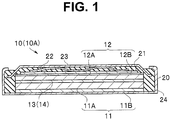
- a lithium sulfur battery (hereinafter, referred to as a "battery") 10 in the present embodiment includes a cathode 11, an anode 12, a separator 13 and an electrolyte 14.
- the cathode (positive electrode) 11 includes a cathode active material layer 11A containing a (lithium sulfide/carbon) composite, and a current collector 11B.
- the anode (negative electrode) 12 includes a metal lithium.
- the cathode 11 and the anode 12 are laminated with the separator 13 impregnated with the electrolyte 14, and are encapsulated in a coin cell case 20. That is, a spacer 21 and a spring 22 are provided on the anode 12, and the coin cell case 20 is sealed with a cap 23. Note that a gasket 24 is interposed on a sidewall of the coin cell case 20.
- An anode active material layer 12A of the anode 12 is charged/discharged as shown in a following (Formula 1). Li + + e - ⁇ (discharge) ⁇ (charge) ⁇ Li (Formula 1)
- the cathode active material layer 11A of the cathode 11 includes sulfur as a cathode active material that can occlude and release lithium ion, as shown in a following (Formula 2).
- the anode 12 contains a metal lithium as an anode active material
- the cathode 11 contains lithium sulfide as a cathode active material.
- an aprotic solvate ionic liquid in which an ether and a lithium salt forms a complex is particularly suitably used because of having a refractory property, a low viscosity, a high lithium ion concentration and a high lithium ion conductive property.
- an electrolyte in which the aprotic solvate ionic liquid is diluted by the addition of a solvent can be also used.
- the added solvent a solvent that does not break the structure of the complex formed by the ether and the lithium salt is suitably used.
- the added solvent include a hydrofluoroether (HFE) such as HF 2 CF 2 CH 2 C-O-CF 2 CF 2 H and F 3 CH 2 CO-CF 2 CF 2 H, which are fluorine solvents.
- HFE hydrofluoroether
- Examples of the separator 13 disposed between the cathode 11 and the anode 12 include a porous sheet and a non-woven fabric that are composed of a glass fiber or a polymer.
- the cathode 11 (cathode active material), particularly, includes a (lithium sulfide/graphene-laminated nanoplates) composite 44 in which lithium sulfide is formed on an outer surface of a graphene-laminated nanoplate.
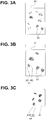
- a precursor particle 41 that is a graphene-laminated nanoplate 40 ( Fig. 3B ) having lithium sulfate 42 deposited on the outer surface is prepared from a first dispersed solution 30 ( Fig. 3A ) in which the carbon particle 40 is dispersed in a lithium sulfate solution. Then, the precursor particle 41 is heated at a high temperature under an inert atmosphere, and thereby, the (lithium sulfide 43/carbon 40A) composite (active material particle) 44 ( Fig. 3C ) is produced.
- the battery 10 has a good charge-discharge characteristic and provides a high-performance, because lithium sulfide is combined with the carbon particle having a high conductivity in the cathode 11 of the battery 10.
- the carbon particle may have a spherical shape, an amorphous shape or the like although Fig. 3A to Fig. 3C schematically illustrate carbon particles 40, 40A as a flat body and an aggregate of flat bodies.
- the lithium sulfide 43 may have a through-hole or a crack or may be divided into a plurality of small pieces because the (lithium sulfide 43/carbon 40A) composite 44 ( Fig. 3C ) releases carbon dioxide at the time of a reduction reaction as described later.
- the carbon 40A of the (lithium sulfide/carbon) composite 44 has lithium sulfide formed on the outer surface.
- the "formation” means that the lithium sulfate deposited on the outer surface is changed into the lithium sulfide by the reduction reaction, and for example, shows a different configuration from the configuration described in Japanese Patent Application Laid-Open Publication No. 2013-229227 , in which a mere physical fixation is performed.
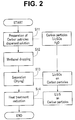
- a first dispersed solution 30 in which carbon particles 40 are dispersed in a lithium sulfate solution is prepared.
- the lithium sulfate solution that is, the solution containing lithium ion and sulfate ion is prepared by dissolving solid lithium sulfate monohydrate in a first solvent.
- a first solvent it is preferable to use water that has a high solubility for lithium sulfate monohydrate and that is inexpensive and safe.
- the carbon particle 40 is graphene-laminated nanoplate in which graphenes are laminated (hereinafter, referred to as "GNP").
- GNP graphene-laminated nanoplate in which graphenes are laminated
- a secondary particle forming an aggregate may be used.
- GNPs graphene-laminated nanoplates
- GNPs graphene-laminated nanoplates
- the GNP is a roughly rectangular flat body in which several tens to several hundreds of graphene layers are laminated, and a maximum thickness is, for example, about several micrometers. Since the GNP is a minute particle, a specific surface area is 750 m 2 /g. In the case of a GNP having a specific surface area of 200 m 2 /g or greater, a graphene lamination number is small, and the conductivity is particularly high. Note that an upper limit of the specific surface area is, for example, about 3000 m 2 /g in view of cost and technique.
- a particle diameter (secondary particle diameter) is 0.3 ⁇ m to 7 ⁇ m in the GNAs shown in Fig. 4A and Fig. 4B .
- the carbon particles 40 and the lithium sulfate may be added in water at roughly the same time, or the lithium sulfate may be added in a carbon particle dispersed water and then may be dissolved, in the preparation of the first dispersed solution 30.
- a second solvent that is a precipitating agent in which lithium sulfate is insoluble is added in the first dispersed solution 30.
- the lithium sulfate 42 is deposited on outer surfaces of the carbon particles 40.
- the first dispersed solution 30 is changed into a second dispersed solution 31 in which (lithium sulfate/carbon) composites 41 that are precursor particles composed of the carbon particles 40 having the lithium sulfate 42 formed on the outer surfaces are dispersed in water.
- the second solvent examples include methanol, ethanol, propyl alcohol, isopropyl alcohol, acetone, acetonitrile and diethyl ether, in which lithium sulfate is hardly soluble.
- the second solvents one kind may be used, or two or more kinds may be used.
- alcohols such as ethanol and methanol are preferable, and ethanol is particularly preferable from the standpoint of safety and price.
- the lithium sulfate (lithium ion/sulfate ion) dissolved in water is deposited (crystallized) while the carbon particles 40 are nucleated. That is, as shown in Fig. 3B , the (lithium sulfate/carbon) composites 41 (Li 2 SO 4 on carbon), which are the carbon particles 40 having the lithium sulfate monohydrates 42 deposited on the outer surfaces, are prepared.
- an aggregate in which a circumference of a secondary particle composed of a plurality of carbon particles is covered with lithium sulfate is sometimes formed because lithium sulfate is deposited on an outer surface of a plurality of carbon particles that are aggregated or lithium sulfate is thickly deposited on surfaces of dispersed carbon particles and is bonded ( Fig. 5 ).
- the particle diameter was measured from a scanning electron microscope (SEM) micrograph.
- the average particle diameter d50 is an arithmetic mean value of the particle diameters of 30 particles.
- Fig. 6B and Fig. 6C show an EDX analysis (energy dispersive X-ray spectroscopy) indicating a carbon distribution ( Fig. 6B ) or a sulfur distribution ( Fig. 6C ) of the (lithium sulfate/carbon) composite 41 within a box shown in Fig. 6A . From Fig. 6B and Fig. 6C , it is found that sulfur is uniformly distributed around carbon and lithium sulfate is deposited while the carbon particles 40 are nucleated.
- EDX analysis energy dispersive X-ray spectroscopy
- the second dispersed solution 31 is filtered and is washed with ethanol, and a vacuum drying (40°C) is performed for 12 hours.
- the precursor particles 41 which are black powders (Li 2 SO 4 -GNAs Mix) composed of the carbon particles having lithium sulfate deposited on the outer surface, is obtained.
- the precursor particles 41 may be separated by the increase in the temperature of the dispersed solution and the evaporation of the solvent, without the filtration.
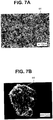
- the precursor particles 41 ( Fig. 3B , Fig. 5 ) are heated at about 800°C under an inert atmosphere, and thereby, the (lithium sulfide/carbon) composites ( Fig. 3C , Fig. 7A, Fig. 7B ), which are active material particles 44, are prepared.
- the inert atmosphere for example, is an atmosphere of an inert gas such as argon and nitrogen, or a vacuum atmosphere.
- thermogravimetry-mass simultaneous analysis apparatus TG-MS
- TG-MS thermogravimetry-mass simultaneous analysis apparatus
- a heat treatment of the (lithium sulfate/carbon) composites 41 was performed while argon flowed through a tube furnace. Temperature rise conditions are shown by following (A) to (F). (A) 30°C, 1 hour, (B) temperature rise to 200°C at 10°C/minute, (C) 200°C, 1 hours, (D) temperature rise to 781°C at 10°C/minute, (E) 781°C, 2 hours, (F) natural cooling
- the carbon particles 40 of the (lithium sulfate/carbon) composites 41 are consumed by the reduction reaction shown in (Formula 3), and therefore, become small. Remaining carbon particles 40A have a function as an electron conductive carrier for lithium sulfide.
- a part of the carbon particle 40A is sometimes exposed on the outer surface of the active material particle 44.
- Lithium sulfide is dissolved in methanol. Therefore, by washing the (lithium sulfide/carbon) composites 44 with methanol, it is possible to observe remaining carbon particles 40A that have not been consumed in the reduction reaction.
- the thickness of the GNP configuring the GNAs becomes smaller.
- the thickness of a certain GNP before the reduction reaction was 90 nm, and the thickness of another GNP after the reduction reaction was 1.0 nm to 1.3 nm.
- the battery 10 was made using the cathode material composed of the (lithium sulfide/carbon) composite 44, and charge-discharge characteristic was evaluated.
- the anode 40 was made by attaching a lithium metal plate having a thickness of 200 ⁇ m to a stainless-steel disc having a thickness of 500 ⁇ m.
- the cathode 11 was made, by applying a slurry resulting from adding and kneading a moderate amount of NMP (N-methyl-2-pyrrolidone), on the current collector 11B formed of an aluminum foil, and performing drying/pressing, after the heat treatment of the above mixture.
- NMP N-methyl-2-pyrrolidone
- a foil, a mesh, an expanded grid (expanded metal), a punched metal and the like on which a conductive metal such as aluminum, nickel, copper and stainless steel is formed can be used as the current collectors 11B, 12B.
- a resin having a conductive property or a resin containing a conductive filler may be used as the current collectors.
- the thickness of the current collector is, for example, 5 to 30 ⁇ m.
- the separator 13 was a glass filter (Toyo Roshi Kaisha, Ltd.: GA-55) having a thickness of 200 ⁇ m.
- an aprotic solvate ionic liquid in which an ether and a lithium metal salt formed a complex was diluted with a solvent.
- a solvent As the ether, tetraglyme (G4: tetraethylene glycol dimethyl ether) was used.
- LiTFSA lithium bis(trifluoromethanesulfonyl)amide
- HFE hydrofluoroether
- the electrolyte 14 is shown by a chemical formula [Li(G4) 1 ] [TFSA]-4HFE.
- tetrahydrofuran THF: manufactured by Wako Pure Chemical Industries, Ltd.
- monoglyme G1: 1,2-dimethoxyethane
- diglyme G2: diethylene glycol dimethyl ether
- triglyme G3: triethylene glycol dimethyl ether
- tetraglyme G4: tetraethylene glycol dimethyl ether
- THF, G1, G2, G3 and G4 include one ether oxygen [O] atom, two ether oxygen [O] atoms, three ether oxygen [O] atoms, four ether oxygen [O] atoms and five ether oxygen [O] atoms, in one molecule, respectively.
- lithium polysulfide Li 2 S N : Li 2 S 8 , Li 2 S 4 , Li 2 S 2
- the solvate ionic liquid has an extremely low solubility for lithium polysulfide, and therefore, can actualize a high cycling characteristic in the case of the use in the lithium/sulfur secondary battery.
- hydrofluoroether with which the aprotic solvate ionic liquid is diluted for example, any one of following solvents manufactured by Daikin Industries, Ltd. can be suitably used.
- HF 2 CF 2 CH 2 C-O-CF 2 CF 2 H F 3 CH 2 C-O-CF 2 CF 2 H
- the addition amount of the solvent is set, for example, such that an ionic conductivity (30°C) is 0.1 mS/cm or higher and a viscosity (30°C) is 10 mPa ⁇ s or lower.
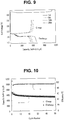
- the even portion at 2.2 V corresponds to the reduction reaction of sulfur (S 6 ) to (Li 2 S N : 4 ⁇ N ⁇ 8). Further, the even portion at 2.0 V corresponds to the reduction reaction of (Li 2 S N : 4 ⁇ N ⁇ 8) to Li 2 S 2 and further Li 2 S.
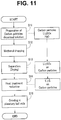
- an initial discharging capacity was as high as 693 mAh/g, and even after 50 charge-discharge tests (50 cycles), the discharging capacity was 497 mAh/g. Further, an average coulombic efficiency in the 50 cycles was 95%.
- the composition ratio of the (lithium sulfide/carbon) composite 44 is roughly determined by the mixture ratio between lithium sulfate monohydrate and the carbon particle at the time of the preparation of the first dispersed solution 30.
- the weight ratio (carbon particle weight / lithium sulfate monohydrate weight) of the carbon particle 40 to lithium sulfate monohydrate in the first dispersed solution 30 is 0.30 (0.48 g / 1.60 g) in the above embodiment, and preferably should be 0.20 or more and less than 0.40.
- the carbon content of the (lithium sulfide/carbon) composite 44 is 10 wt% or more, and a high conductivity is obtained. Therefore, the charge-discharge characteristic is excellent.
- the carbon content is 30 wt% or less, the content rate of lithium sulfide is high, and a high capacity is obtained.
- carbon black was 10 wt% or more and 15 wt% or less, that is, when the weight ratio of carbon black to the carbon particle 40A was 0.33 or more and 0.50 or less, a high characteristic that was roughly the same as the characteristic in the case of 13 wt% carbon black was confirmed.
- carbon black was less than 10 wt% or more than 15 wt%, the even portion in the first charge rose to 4.4 V or higher and the activation of Li 2 S was not easy, in each case. Further, the charging capacity and the result of 50 charge-discharge tests also tended to decrease.
- the alkali metal/sulfur secondary battery 10 in the embodiment configures a cell by distantly disposing the cathode 11 and the anode 12 with the separator 13 and making the separator contain the electrolyte 14, but may have a structure in which a plurality of cells laminated or a wound cell is contained in a case.
- the current collectors of the cathode and the anode are led out of the case and are electrically connected to tabs (terminals), respectively.
- a lithium sulfur battery 10A including an active material particle 44A as the cathode material obtained with the method of the present invention is similar to the lithium sulfur battery 10 and the like. Therefore, identical reference characters are assigned to identical component elements, and the description is omitted.
- step S15 of decreasing the particle diameter of the active material particle 44 is further included, after the heat treatment of the precursor particle 41 as the active material particle 44 in step S14.
- step S15 the active material particle 44 becomes an active material particle 44A having a smaller particle diameter, by a planetary ball mill process that is a mechanical grinding process.
- the grinding process was performed in a glove box under an argon atmosphere having a dew point of -95°C.
- the battery 10A with the same method/configuration of the battery 10 in the first embodiment was made, using the active material particle 44A as the (lithium sulfide/carbon) composite.
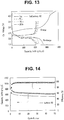
- the overvoltage in the first charge step was greatly decreased from 4.2 V to 2.9 V, compared to the battery 10 including the (lithium sulfide/carbon) composite 44 having a larger particle diameter.
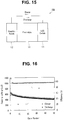
- the initial discharging capacity of the battery 10A was 812 mAh/g, and was higher than the initial discharging capacity of the battery 10. Even after 50 charge-discharge tests (50 cycles), the discharging capacity was 588 mAh/g. Further, the average coulombic efficiency of the battery 10A in the 50 cycles was 97%, which was higher than the average coulombic efficiency of the battery 10.
- step S15 The evaluation was performed while a process condition in step S15, more specifically, a process time period was changed. As a result, it was revealed that the reason why the battery 10A had better characteristics than the battery 10 was because the average particle diameter d50 of the active material particle 44A was 1 ⁇ m or less. Note that it was not easy to disperse the active material particle 44A at a high density in the preparation of the cathode material (mixture) by the mixing with carbon black or the like, when the average particle diameter d50 of the active material particle 44A was less than 0.1 ⁇ m.
- step S14 it is possible to decrease the particle diameter of the active material particle made in the heat treatment step (S14) also by performing a step of mechanically grinding the carbon particle 40 and decreasing the particle diameter before step S11 (dispersed solution preparation).
- the battery that was made by the method and that included an active material particle having a particle diameter of 1 ⁇ m or less had worse characteristics than the battery 10A.
- the reason why the battery 10A had better characteristics than the battery 10 was not only because the surface area of the active material particles was increased but also because surfaces of the carbon particles 40A having a lower conductivity than lithium sulfide were exposed on outer surfaces by the mechanical grinding process.
- the mechanical grinding process may be, for example, a tumbling ball mill, a vibratory ball mill or a jet mill if the process is a mechanical process.
- a ball for the ball mill an alumina spherolith, a natural silica, an iron ball, a zirconia ball or the like is used.
- the rotation speed is 500 to 2000 rpm, and the process time period is 1 hour to 72 hours.
- the production method further including the step of decreasing the particle diameter of the active material particle in the present embodiment, it is possible to produce a higher-performance lithium sulfur battery or the like because the particle diameter of the active material particle becomes 1 ⁇ m or less.
- the above step is a mechanical grinding process that is performed after the step in which the active material particle is the precursor particle, because a part of the carbon particle is exposed on the outer surface of the active material particle.
- lithium sulfur battery 10B including graphite as the anode material, and the like will be described.
- the lithium sulfur battery 10B and the like in the present embodiment are similar to the lithium sulfur battery 10 and the like. Therefore, identical reference characters are assigned to identical component elements, and the description is omitted.
- the battery 10B includes graphite that is an elemental carbon in the anode 12 as the anode active material.
- the cathode 11 includes the active material particle 44A that is the (lithium sulfide/carbon) composite after the grinding process, and the electrolyte 14 is an aprotic solvate ionic liquid in which an ether and a lithium salt form a complex.
- Graphite occludes and releases lithium ion. As shown in a following (Formula 4), carbon reversibly changes to lithium carbide, and therefore, can occlude(charge)/release (discharge) lithium ion. 6C + Li + + e - ⁇ (discharge) ⁇ (charge) ⁇ LiC 6 (Formula 4)
- anode 12 of the battery 10B it is preferable to use a mixture of a binding agent and the like, and an anode active material composed of a material containing at least one kind selected from carbon materials including crystalline elemental carbons such as natural graphite, synthetic graphite, carbon black, acetylene black, graphite, active carbon, carbon fiber, coke, soft carbon and hard carbon, and non-crystalline elemental carbons, and carbon group elements (elements belonging to Group 14) such as silicon and tin.
- carbon materials including crystalline elemental carbons such as natural graphite, synthetic graphite, carbon black, acetylene black, graphite, active carbon, carbon fiber, coke, soft carbon and hard carbon, and non-crystalline elemental carbons, and carbon group elements (elements belonging to Group 14) such as silicon and tin.
- a carbon group element compound can be used as the anode active material.
- the battery 10B in which the anode active material is not a metal lithium, has a higher safety than the batteries 10, 10A.
- the lithium sulfide 43 is formed on the outer surface of the carbon particle 40A.
- the “formation” means that the lithium sulfate deposited on the outer surface of the carbon particle 40 is changed into the lithium sulfide by the reduction reaction, and for example, shows a different configuration from the configuration described in Japanese Patent Application Laid-Open Publication No. 2013-229227 , in which a mere physical "fixation” is performed.
- the specifying of the lithium sulfide layer "deposited and formed” on the carbon particle requires, for example, the specifying of an atomic arrangement of an interface between the carbon particle and the lithium sulfide layer, and is not realistic.
Landscapes
- Chemical & Material Sciences (AREA)
- General Chemical & Material Sciences (AREA)
- Chemical Kinetics & Catalysis (AREA)
- Electrochemistry (AREA)
- Engineering & Computer Science (AREA)
- Inorganic Chemistry (AREA)
- Manufacturing & Machinery (AREA)
- Composite Materials (AREA)
- Materials Engineering (AREA)
- Organic Chemistry (AREA)
- Physics & Mathematics (AREA)
- Condensed Matter Physics & Semiconductors (AREA)
- General Physics & Mathematics (AREA)
- Battery Electrode And Active Subsutance (AREA)
- Secondary Cells (AREA)
Claims (4)
- Produktionsverfahren für ein Kathodenmaterial einer Lithiumschwefelbatterie (10), wobei das Produktionsverfahren aufeinanderfolgend umfasst:einen Schritt der Herstellung einer ersten dispergierten Lösung (30), in der ein Kohlenstoffpartikel (40) eine Graphen-laminierte Nanoplatte ist, die in einer wässrigen Lithiumsulfatlösung dispergiert wird;einen Schritt der Zugabe eines anderen Lösemittels in die erste dispergierte Lösung, wobei das andere Lösemittel ein Lösemittel ist, in dem das Lithiumsulfat (42) unlöslich ist, um die Abscheidung des Lithiumsulfats auf der äußeren Fläche der Graphen-laminierten Nanoplatte zu erreichen;einen Schritt der Abtrennung eines Vorläufer-Partikels, d.h. der Graphen-laminierten Nanoplatte mit dem auf der äußeren Fläche abgeschiedenen Lithiumsulfat, von der ersten dispergierten Lösung in die das andere Lösemittel zugegeben wurde; undeinen Schritt der Umwandlung des Vorläufer-Partikels in einen Kathoden-Aktivmaterialpartikel, d.h. einem (Lithiumsulfid-/Kohlenstoff-) Komposit, durch Erwärmen des Vorläufer-Partikels unter einer inerten Atmosphäre.
- Produktionsverfahren für das Kathodenmaterial der Lithiumschwefelbatterie nach Anspruch 1, worin das Lithiumsulfat durch Kohlenstoff reduziert wird, sodass daraus Lithiumsulfid wird, in dem Erwärmungsschritt.
- Produktionsverfahren für das Kathodenmaterial der Lithiumschwefelbatterie nach Anspruch 2, weiterhin umfassend einen Schritt der Reduzierung eines Partikeldurchmessers des Kathoden-Aktivmaterialpartikels.
- Produktionsverfahren für das Kathodenmaterial der Lithiumschwefelbatterie nach Anspruch 3, worin der Schritt der Reduzierung des Partikeldurchmessers des Kathoden-Aktivmaterialpartikels ein mechanischer Mahlprozess ist, der durchgeführt wird nach dem Schritt der Umwandlung des Vorläufer-Partikels in das Kathoden-Aktivmaterialpartikel.
Applications Claiming Priority (2)
| Application Number | Priority Date | Filing Date | Title |
|---|---|---|---|
| JP2014218504 | 2014-10-27 | ||
| PCT/JP2015/079981 WO2016068043A1 (ja) | 2014-10-27 | 2015-10-23 | リチウム硫黄電池のカソード材料の製造方法、リチウム硫黄電池のカソード材料、およびリチウム硫黄電池 |
Publications (3)
| Publication Number | Publication Date |
|---|---|
| EP3214674A1 EP3214674A1 (de) | 2017-09-06 |
| EP3214674A4 EP3214674A4 (de) | 2018-05-02 |
| EP3214674B1 true EP3214674B1 (de) | 2019-05-15 |
Family
ID=55857382
Family Applications (1)
| Application Number | Title | Priority Date | Filing Date |
|---|---|---|---|
| EP15855521.9A Active EP3214674B1 (de) | 2014-10-27 | 2015-10-23 | Verfahren zur herstellung von kathodenmaterial für lithium-schwefel-batterie |
Country Status (6)
| Country | Link |
|---|---|
| US (1) | US10270090B2 (de) |
| EP (1) | EP3214674B1 (de) |
| JP (1) | JP6270004B2 (de) |
| KR (1) | KR101933329B1 (de) |
| CN (1) | CN107078296B (de) |
| WO (1) | WO2016068043A1 (de) |
Families Citing this family (20)
| Publication number | Priority date | Publication date | Assignee | Title |
|---|---|---|---|---|
| CN106229491B (zh) * | 2016-09-10 | 2019-01-15 | 华南理工大学 | 一种生物质废弃物热还原活化硫酸锂制备锂硫电池正极Li2S/NCs复合材料的方法 |
| CN108539265A (zh) * | 2017-03-02 | 2018-09-14 | 深圳格林德能源有限公司 | 一种锂硫电池 |
| WO2019065004A1 (ja) * | 2017-09-27 | 2019-04-04 | 国立研究開発法人物質・材料研究機構 | グラフェンを含有する電極、その製造方法およびそれを用いた蓄電デバイス |
| CN109088055B (zh) * | 2017-10-24 | 2021-11-09 | 苏州市相城区渭塘城乡发展有限公司 | 硫锂电池 |
| CN110416597B (zh) * | 2018-04-27 | 2021-06-08 | 宁德时代新能源科技股份有限公司 | 一种醚类电解液以及锂硫二次电池 |
| EP3788666A4 (de) * | 2018-04-30 | 2022-01-19 | Lyten, Inc. | Lithiumionenbatterie und batteriematerialien |
| JP7082405B2 (ja) * | 2018-06-29 | 2022-06-08 | 学校法人早稲田大学 | リチウム硫黄電池の製造方法 |
| JP7112073B2 (ja) * | 2018-06-29 | 2022-08-03 | 学校法人早稲田大学 | リチウム硫黄電池の活物質の製造方法、リチウム硫黄電池の電極、および、リチウム硫黄電池 |
| KR102663583B1 (ko) * | 2018-09-28 | 2024-05-03 | 주식회사 엘지에너지솔루션 | 황-탄소 복합체의 제조방법 |
| CN112334409B (zh) * | 2018-09-28 | 2023-07-11 | 株式会社Lg新能源 | 硫碳复合物和其制造方法 |
| CN110148781A (zh) * | 2019-04-22 | 2019-08-20 | 华中科技大学 | 一种离子液体凝胶电解质、其制备方法和应用 |
| CN111403716B (zh) * | 2020-03-27 | 2022-07-08 | 清华大学深圳国际研究生院 | 自支撑锂硫电池正极片、其制备方法以及锂硫电池 |
| KR102876039B1 (ko) * | 2020-11-26 | 2025-10-23 | 주식회사 엘지에너지솔루션 | 리튬-황 전지용 전해액 및 이를 포함하는 리튬-황 전지 |
| KR102603627B1 (ko) * | 2020-12-18 | 2023-11-16 | 주식회사 포스코 | 황화리튬 및 이의 제조방법 |
| US20250214838A1 (en) * | 2022-03-31 | 2025-07-03 | Solivis Inc. | Method for producing high-purity alkali metal sulfide |
| FR3134923B1 (fr) * | 2022-04-20 | 2024-04-26 | Ecole Polytech | Batterie Lithium-ions nouvelle génération et procédé de fabrication associé |
| CN116417563A (zh) * | 2023-04-03 | 2023-07-11 | 武汉船用电力推进装置研究所(中国船舶集团有限公司第七一二研究所) | 一种硫/硫化锂复合正极及电池 |
| KR102795495B1 (ko) * | 2023-11-29 | 2025-04-16 | 주식회사 티앨씨 | 황화리튬의 제조방법 |
| CN117566692B (zh) * | 2023-12-06 | 2024-07-12 | 华南师范大学 | 一种硫化锂纳米颗粒的制备方法、硫化锂纳米颗粒及其应用 |
| CN117977044B (zh) * | 2024-04-01 | 2024-07-16 | 四川新能源汽车创新中心有限公司 | 一种硫化物基全固态电池物料的回收方法 |
Family Cites Families (5)
| Publication number | Priority date | Publication date | Assignee | Title |
|---|---|---|---|---|
| CN103329319B (zh) * | 2011-01-27 | 2017-08-29 | 出光兴产株式会社 | 碱金属硫化物和导电剂的复合材料 |
| CN103187558B (zh) | 2011-12-28 | 2015-07-01 | 清华大学 | 硫-石墨烯复合材料的制备方法 |
| JP6059449B2 (ja) | 2012-04-26 | 2017-01-11 | 古河機械金属株式会社 | 二次電池用正極材料の製造方法、二次電池用正極の製造方法および二次電池の製造方法 |
| JP5770675B2 (ja) * | 2012-04-26 | 2015-08-26 | 古河機械金属株式会社 | 硫化リチウムの製造方法 |
| JP6281808B2 (ja) * | 2012-11-07 | 2018-02-21 | 国立大学法人横浜国立大学 | 二次電池 |
-
2015
- 2015-10-23 WO PCT/JP2015/079981 patent/WO2016068043A1/ja not_active Ceased
- 2015-10-23 JP JP2016556540A patent/JP6270004B2/ja active Active
- 2015-10-23 KR KR1020177010983A patent/KR101933329B1/ko active Active
- 2015-10-23 EP EP15855521.9A patent/EP3214674B1/de active Active
- 2015-10-23 US US15/522,154 patent/US10270090B2/en active Active
- 2015-10-23 CN CN201580058745.6A patent/CN107078296B/zh active Active
Non-Patent Citations (2)
| Title |
|---|
| KAI ZHANG ET AL: "Ultrasmall Li2S Nanoparticles Anchored in Graphene Nanosheets for High-Energy Lithium-Ion Batteries", SCIENTIFIC REPORTS, vol. 4, no. 6467, 25 September 2014 (2014-09-25), pages 1 - 7, XP055355555, DOI: 10.1038/srep06467 * |
| ZICHAO YANG ET AL: "In situ synthesis of lithium sulfide-carbon composites as cathode materials for rechargeable lithium batteries", JOURNAL OF MATERIALS CHEMISTRY A, vol. 1, no. 4, 1 January 2013 (2013-01-01), pages 1433, XP055169729, ISSN: 2050-7488, DOI: 10.1039/C2TA00779G * |
Also Published As
| Publication number | Publication date |
|---|---|
| JP6270004B2 (ja) | 2018-01-31 |
| CN107078296A (zh) | 2017-08-18 |
| KR20170057423A (ko) | 2017-05-24 |
| KR101933329B1 (ko) | 2018-12-27 |
| WO2016068043A1 (ja) | 2016-05-06 |
| EP3214674A1 (de) | 2017-09-06 |
| JPWO2016068043A1 (ja) | 2017-07-20 |
| CN107078296B (zh) | 2020-09-29 |
| EP3214674A4 (de) | 2018-05-02 |
| US10270090B2 (en) | 2019-04-23 |
| US20170317343A1 (en) | 2017-11-02 |
Similar Documents
| Publication | Publication Date | Title |
|---|---|---|
| EP3214674B1 (de) | Verfahren zur herstellung von kathodenmaterial für lithium-schwefel-batterie | |
| Guo et al. | Pineapple-shaped ZnCo 2 O 4 microspheres as anode materials for lithium ion batteries with prominent rate performance | |
| JP6535581B2 (ja) | 負極活物質、混合負極活物質材料、非水電解質二次電池用負極、リチウムイオン二次電池 | |
| Tang et al. | Novel MnO/carbon composite anode material with multi-modal pore structure for high performance lithium-ion batteries | |
| EP3467912B1 (de) | Negativelektrodenaktivmaterial, gemischtes negativelektrodenaktivmaterial und verfahren zur herstellung eines negativelektrodenaktivmaterials | |
| JP6867821B2 (ja) | 負極活物質、混合負極活物質材料、非水電解質二次電池用負極、リチウムイオン二次電池用負極、リチウムイオン二次電池、負極活物質の製造方法、負極の製造方法、及びリチウムイオン二次電池の製造方法 | |
| KR101899701B1 (ko) | 나노 실리콘 재료와 그 제조 방법 및 이차 전지의 부극 | |
| EP3467911B1 (de) | Negativelektrodenaktivmaterial, gemischtes negativelektrodenaktivmaterial und verfahren zur herstellung eines negativelektrodenaktivmaterials | |
| CN106458610B (zh) | 含铜的硅材料及其制造方法和负极活性物质以及二次电池 | |
| EP3467913B1 (de) | Negativelektrodenaktivmaterial, gemischtes negativelektrodenaktivmaterial und verfahren zur herstellung eines negativelektrodenaktivmaterials | |
| EP3447829B1 (de) | Negativelektrodenaktivsubstanz, gemischtes negativelektrodenaktivsubstanzmaterial und verfahren zur herstellung einer negativelektrodenaktivsubstanz | |
| KR20140070227A (ko) | 리튬 이차 전지용 음극 활물질, 이의 제조 방법, 그리고 이를 포함하는 음극 및 리튬 이차 전지 | |
| RU2656241C1 (ru) | Кремниевый материал и отрицательный электрод вторичной батареи | |
| CN117321797A (zh) | 复合体粒子、负极合剂层及锂离子二次电池 | |
| TW201640719A (zh) | 粉末、包含此種粉末之電極及電池組 | |
| EP3364482A1 (de) | Negativelektrodenaktivmaterial, gemischtes negativelektrodenaktivmaterial, negativelektrode für sekundärbatterie mit wasserfreiem elektrolyt, lithium-ionen-sekundärbatterie, verfahren zur herstellung des negativelektrodenaktivmaterials und verfahren zur herstellung der lithium-ionen-sekundärbatterie | |
| Zeng et al. | Ethanol thermal reduction synthesis of hierarchical MoO 2–C hollow spheres with high rate performance for lithium ion batteries | |
| JP2015109255A (ja) | リチウム二次電池用負極活物質、その製造方法およびこれを含むリチウム二次電池 | |
| KR20180114151A (ko) | 고정화 셀레늄, 그 제조방법, 및 재충전식 전지에서 고정화 셀레늄의 사용 | |
| JP2016189294A (ja) | リチウムイオン2次電池用負極活物質およびその製造方法 | |
| JP7669428B2 (ja) | リチウム二次電池用正極活物質、その製造方法およびこれを含むリチウム二次電池 | |
| JP2015219989A (ja) | リチウムイオン2次電池用負極活物質およびその製造方法 | |
| CN111095628A (zh) | 含有含Al和O的硅材料的负极活性物质 | |
| KR20240063150A (ko) | 리튬 황 전지 | |
| JP2024028115A (ja) | リチウム二次電池用正極活物質、その製造方法およびこれを含むリチウム二次電池 |
Legal Events
| Date | Code | Title | Description |
|---|---|---|---|
| STAA | Information on the status of an ep patent application or granted ep patent |
Free format text: STATUS: THE INTERNATIONAL PUBLICATION HAS BEEN MADE |
|
| PUAI | Public reference made under article 153(3) epc to a published international application that has entered the european phase |
Free format text: ORIGINAL CODE: 0009012 |
|
| STAA | Information on the status of an ep patent application or granted ep patent |
Free format text: STATUS: REQUEST FOR EXAMINATION WAS MADE |
|
| 17P | Request for examination filed |
Effective date: 20170425 |
|
| AK | Designated contracting states |
Kind code of ref document: A1 Designated state(s): AL AT BE BG CH CY CZ DE DK EE ES FI FR GB GR HR HU IE IS IT LI LT LU LV MC MK MT NL NO PL PT RO RS SE SI SK SM TR |
|
| AX | Request for extension of the european patent |
Extension state: BA ME |
|
| DAV | Request for validation of the european patent (deleted) | ||
| DAX | Request for extension of the european patent (deleted) | ||
| A4 | Supplementary search report drawn up and despatched |
Effective date: 20180403 |
|
| RIC1 | Information provided on ipc code assigned before grant |
Ipc: H01M 4/587 20100101ALI20180326BHEP Ipc: H01M 4/136 20100101ALI20180326BHEP Ipc: H01M 4/62 20060101ALI20180326BHEP Ipc: H01M 10/052 20100101ALI20180326BHEP Ipc: H01M 4/36 20060101ALI20180326BHEP Ipc: H01M 4/02 20060101ALN20180326BHEP Ipc: H01M 10/0569 20100101ALI20180326BHEP Ipc: H01M 4/58 20100101AFI20180326BHEP Ipc: H01M 4/04 20060101ALI20180326BHEP Ipc: H01M 10/0568 20100101ALI20180326BHEP Ipc: C01B 17/26 20060101ALI20180326BHEP |
|
| RIC1 | Information provided on ipc code assigned before grant |
Ipc: H01M 4/587 20100101ALI20181012BHEP Ipc: H01M 4/62 20060101ALI20181012BHEP Ipc: H01M 4/136 20100101ALI20181012BHEP Ipc: H01M 4/04 20060101ALI20181012BHEP Ipc: H01M 10/0568 20100101ALI20181012BHEP Ipc: H01M 10/0569 20100101ALI20181012BHEP Ipc: C01B 17/26 20060101ALI20181012BHEP Ipc: H01M 10/052 20100101ALI20181012BHEP Ipc: H01M 4/36 20060101ALI20181012BHEP Ipc: H01M 4/58 20100101AFI20181012BHEP Ipc: H01M 4/1393 20100101ALI20181012BHEP Ipc: H01M 4/1397 20100101ALI20181012BHEP Ipc: H01M 4/02 20060101ALN20181012BHEP |
|
| GRAP | Despatch of communication of intention to grant a patent |
Free format text: ORIGINAL CODE: EPIDOSNIGR1 |
|
| STAA | Information on the status of an ep patent application or granted ep patent |
Free format text: STATUS: GRANT OF PATENT IS INTENDED |
|
| INTG | Intention to grant announced |
Effective date: 20181206 |
|
| GRAS | Grant fee paid |
Free format text: ORIGINAL CODE: EPIDOSNIGR3 |
|
| GRAA | (expected) grant |
Free format text: ORIGINAL CODE: 0009210 |
|
| STAA | Information on the status of an ep patent application or granted ep patent |
Free format text: STATUS: THE PATENT HAS BEEN GRANTED |
|
| AK | Designated contracting states |
Kind code of ref document: B1 Designated state(s): AL AT BE BG CH CY CZ DE DK EE ES FI FR GB GR HR HU IE IS IT LI LT LU LV MC MK MT NL NO PL PT RO RS SE SI SK SM TR |
|
| REG | Reference to a national code |
Ref country code: CH Ref legal event code: EP |
|
| REG | Reference to a national code |
Ref country code: DE Ref legal event code: R096 Ref document number: 602015030543 Country of ref document: DE |
|
| REG | Reference to a national code |
Ref country code: IE Ref legal event code: FG4D |
|
| REG | Reference to a national code |
Ref country code: NL Ref legal event code: MP Effective date: 20190515 |
|
| REG | Reference to a national code |
Ref country code: LT Ref legal event code: MG4D |
|
| PG25 | Lapsed in a contracting state [announced via postgrant information from national office to epo] |
Ref country code: FI Free format text: LAPSE BECAUSE OF FAILURE TO SUBMIT A TRANSLATION OF THE DESCRIPTION OR TO PAY THE FEE WITHIN THE PRESCRIBED TIME-LIMIT Effective date: 20190515 Ref country code: NO Free format text: LAPSE BECAUSE OF FAILURE TO SUBMIT A TRANSLATION OF THE DESCRIPTION OR TO PAY THE FEE WITHIN THE PRESCRIBED TIME-LIMIT Effective date: 20190815 Ref country code: HR Free format text: LAPSE BECAUSE OF FAILURE TO SUBMIT A TRANSLATION OF THE DESCRIPTION OR TO PAY THE FEE WITHIN THE PRESCRIBED TIME-LIMIT Effective date: 20190515 Ref country code: LT Free format text: LAPSE BECAUSE OF FAILURE TO SUBMIT A TRANSLATION OF THE DESCRIPTION OR TO PAY THE FEE WITHIN THE PRESCRIBED TIME-LIMIT Effective date: 20190515 Ref country code: ES Free format text: LAPSE BECAUSE OF FAILURE TO SUBMIT A TRANSLATION OF THE DESCRIPTION OR TO PAY THE FEE WITHIN THE PRESCRIBED TIME-LIMIT Effective date: 20190515 Ref country code: SE Free format text: LAPSE BECAUSE OF FAILURE TO SUBMIT A TRANSLATION OF THE DESCRIPTION OR TO PAY THE FEE WITHIN THE PRESCRIBED TIME-LIMIT Effective date: 20190515 Ref country code: NL Free format text: LAPSE BECAUSE OF FAILURE TO SUBMIT A TRANSLATION OF THE DESCRIPTION OR TO PAY THE FEE WITHIN THE PRESCRIBED TIME-LIMIT Effective date: 20190515 Ref country code: PT Free format text: LAPSE BECAUSE OF FAILURE TO SUBMIT A TRANSLATION OF THE DESCRIPTION OR TO PAY THE FEE WITHIN THE PRESCRIBED TIME-LIMIT Effective date: 20190915 Ref country code: AL Free format text: LAPSE BECAUSE OF FAILURE TO SUBMIT A TRANSLATION OF THE DESCRIPTION OR TO PAY THE FEE WITHIN THE PRESCRIBED TIME-LIMIT Effective date: 20190515 |
|
| PG25 | Lapsed in a contracting state [announced via postgrant information from national office to epo] |
Ref country code: BG Free format text: LAPSE BECAUSE OF FAILURE TO SUBMIT A TRANSLATION OF THE DESCRIPTION OR TO PAY THE FEE WITHIN THE PRESCRIBED TIME-LIMIT Effective date: 20190815 Ref country code: LV Free format text: LAPSE BECAUSE OF FAILURE TO SUBMIT A TRANSLATION OF THE DESCRIPTION OR TO PAY THE FEE WITHIN THE PRESCRIBED TIME-LIMIT Effective date: 20190515 Ref country code: RS Free format text: LAPSE BECAUSE OF FAILURE TO SUBMIT A TRANSLATION OF THE DESCRIPTION OR TO PAY THE FEE WITHIN THE PRESCRIBED TIME-LIMIT Effective date: 20190515 Ref country code: GR Free format text: LAPSE BECAUSE OF FAILURE TO SUBMIT A TRANSLATION OF THE DESCRIPTION OR TO PAY THE FEE WITHIN THE PRESCRIBED TIME-LIMIT Effective date: 20190816 |
|
| REG | Reference to a national code |
Ref country code: AT Ref legal event code: MK05 Ref document number: 1134487 Country of ref document: AT Kind code of ref document: T Effective date: 20190515 |
|
| PG25 | Lapsed in a contracting state [announced via postgrant information from national office to epo] |
Ref country code: CZ Free format text: LAPSE BECAUSE OF FAILURE TO SUBMIT A TRANSLATION OF THE DESCRIPTION OR TO PAY THE FEE WITHIN THE PRESCRIBED TIME-LIMIT Effective date: 20190515 Ref country code: SK Free format text: LAPSE BECAUSE OF FAILURE TO SUBMIT A TRANSLATION OF THE DESCRIPTION OR TO PAY THE FEE WITHIN THE PRESCRIBED TIME-LIMIT Effective date: 20190515 Ref country code: AT Free format text: LAPSE BECAUSE OF FAILURE TO SUBMIT A TRANSLATION OF THE DESCRIPTION OR TO PAY THE FEE WITHIN THE PRESCRIBED TIME-LIMIT Effective date: 20190515 Ref country code: DK Free format text: LAPSE BECAUSE OF FAILURE TO SUBMIT A TRANSLATION OF THE DESCRIPTION OR TO PAY THE FEE WITHIN THE PRESCRIBED TIME-LIMIT Effective date: 20190515 Ref country code: EE Free format text: LAPSE BECAUSE OF FAILURE TO SUBMIT A TRANSLATION OF THE DESCRIPTION OR TO PAY THE FEE WITHIN THE PRESCRIBED TIME-LIMIT Effective date: 20190515 |
|
| REG | Reference to a national code |
Ref country code: DE Ref legal event code: R097 Ref document number: 602015030543 Country of ref document: DE |
|
| PG25 | Lapsed in a contracting state [announced via postgrant information from national office to epo] |
Ref country code: SM Free format text: LAPSE BECAUSE OF FAILURE TO SUBMIT A TRANSLATION OF THE DESCRIPTION OR TO PAY THE FEE WITHIN THE PRESCRIBED TIME-LIMIT Effective date: 20190515 Ref country code: IT Free format text: LAPSE BECAUSE OF FAILURE TO SUBMIT A TRANSLATION OF THE DESCRIPTION OR TO PAY THE FEE WITHIN THE PRESCRIBED TIME-LIMIT Effective date: 20190515 |
|
| PLBE | No opposition filed within time limit |
Free format text: ORIGINAL CODE: 0009261 |
|
| STAA | Information on the status of an ep patent application or granted ep patent |
Free format text: STATUS: NO OPPOSITION FILED WITHIN TIME LIMIT |
|
| PG25 | Lapsed in a contracting state [announced via postgrant information from national office to epo] |
Ref country code: TR Free format text: LAPSE BECAUSE OF FAILURE TO SUBMIT A TRANSLATION OF THE DESCRIPTION OR TO PAY THE FEE WITHIN THE PRESCRIBED TIME-LIMIT Effective date: 20190515 |
|
| 26N | No opposition filed |
Effective date: 20200218 |
|
| PG25 | Lapsed in a contracting state [announced via postgrant information from national office to epo] |
Ref country code: PL Free format text: LAPSE BECAUSE OF FAILURE TO SUBMIT A TRANSLATION OF THE DESCRIPTION OR TO PAY THE FEE WITHIN THE PRESCRIBED TIME-LIMIT Effective date: 20190515 |
|
| PG25 | Lapsed in a contracting state [announced via postgrant information from national office to epo] |
Ref country code: MC Free format text: LAPSE BECAUSE OF FAILURE TO SUBMIT A TRANSLATION OF THE DESCRIPTION OR TO PAY THE FEE WITHIN THE PRESCRIBED TIME-LIMIT Effective date: 20190515 Ref country code: SI Free format text: LAPSE BECAUSE OF FAILURE TO SUBMIT A TRANSLATION OF THE DESCRIPTION OR TO PAY THE FEE WITHIN THE PRESCRIBED TIME-LIMIT Effective date: 20190515 |
|
| REG | Reference to a national code |
Ref country code: CH Ref legal event code: PL |
|
| PG25 | Lapsed in a contracting state [announced via postgrant information from national office to epo] |
Ref country code: LU Free format text: LAPSE BECAUSE OF NON-PAYMENT OF DUE FEES Effective date: 20191023 Ref country code: CH Free format text: LAPSE BECAUSE OF NON-PAYMENT OF DUE FEES Effective date: 20191031 Ref country code: LI Free format text: LAPSE BECAUSE OF NON-PAYMENT OF DUE FEES Effective date: 20191031 |
|
| REG | Reference to a national code |
Ref country code: BE Ref legal event code: MM Effective date: 20191031 |
|
| PG25 | Lapsed in a contracting state [announced via postgrant information from national office to epo] |
Ref country code: BE Free format text: LAPSE BECAUSE OF NON-PAYMENT OF DUE FEES Effective date: 20191031 |
|
| GBPC | Gb: european patent ceased through non-payment of renewal fee |
Effective date: 20191023 |
|
| PG25 | Lapsed in a contracting state [announced via postgrant information from national office to epo] |
Ref country code: IE Free format text: LAPSE BECAUSE OF NON-PAYMENT OF DUE FEES Effective date: 20191023 Ref country code: FR Free format text: LAPSE BECAUSE OF NON-PAYMENT OF DUE FEES Effective date: 20191031 Ref country code: GB Free format text: LAPSE BECAUSE OF NON-PAYMENT OF DUE FEES Effective date: 20191023 |
|
| PG25 | Lapsed in a contracting state [announced via postgrant information from national office to epo] |
Ref country code: RO Free format text: LAPSE BECAUSE OF FAILURE TO SUBMIT A TRANSLATION OF THE DESCRIPTION OR TO PAY THE FEE WITHIN THE PRESCRIBED TIME-LIMIT Effective date: 20190515 |
|
| PG25 | Lapsed in a contracting state [announced via postgrant information from national office to epo] |
Ref country code: CY Free format text: LAPSE BECAUSE OF FAILURE TO SUBMIT A TRANSLATION OF THE DESCRIPTION OR TO PAY THE FEE WITHIN THE PRESCRIBED TIME-LIMIT Effective date: 20190515 |
|
| PG25 | Lapsed in a contracting state [announced via postgrant information from national office to epo] |
Ref country code: IS Free format text: LAPSE BECAUSE OF FAILURE TO SUBMIT A TRANSLATION OF THE DESCRIPTION OR TO PAY THE FEE WITHIN THE PRESCRIBED TIME-LIMIT Effective date: 20190915 |
|
| PG25 | Lapsed in a contracting state [announced via postgrant information from national office to epo] |
Ref country code: MT Free format text: LAPSE BECAUSE OF FAILURE TO SUBMIT A TRANSLATION OF THE DESCRIPTION OR TO PAY THE FEE WITHIN THE PRESCRIBED TIME-LIMIT Effective date: 20190515 Ref country code: HU Free format text: LAPSE BECAUSE OF FAILURE TO SUBMIT A TRANSLATION OF THE DESCRIPTION OR TO PAY THE FEE WITHIN THE PRESCRIBED TIME-LIMIT; INVALID AB INITIO Effective date: 20151023 |
|
| PG25 | Lapsed in a contracting state [announced via postgrant information from national office to epo] |
Ref country code: MK Free format text: LAPSE BECAUSE OF FAILURE TO SUBMIT A TRANSLATION OF THE DESCRIPTION OR TO PAY THE FEE WITHIN THE PRESCRIBED TIME-LIMIT Effective date: 20190515 |
|
| PGFP | Annual fee paid to national office [announced via postgrant information from national office to epo] |
Ref country code: DE Payment date: 20251020 Year of fee payment: 11 |