EP3216157B1 - Procédé pour donner la priorité à un accès aléatoire avec codage de préambule - Google Patents
Procédé pour donner la priorité à un accès aléatoire avec codage de préambule Download PDFInfo
- Publication number
- EP3216157B1 EP3216157B1 EP14806622.8A EP14806622A EP3216157B1 EP 3216157 B1 EP3216157 B1 EP 3216157B1 EP 14806622 A EP14806622 A EP 14806622A EP 3216157 B1 EP3216157 B1 EP 3216157B1
- Authority
- EP
- European Patent Office
- Prior art keywords
- preambles
- resource request
- base station
- time
- terminal device
- Prior art date
- Legal status (The legal status is an assumption and is not a legal conclusion. Google has not performed a legal analysis and makes no representation as to the accuracy of the status listed.)
- Active
Links
Images






Classifications
-
- H—ELECTRICITY
- H04—ELECTRIC COMMUNICATION TECHNIQUE
- H04L—TRANSMISSION OF DIGITAL INFORMATION, e.g. TELEGRAPHIC COMMUNICATION
- H04L5/00—Arrangements affording multiple use of the transmission path
- H04L5/003—Arrangements for allocating sub-channels of the transmission path
- H04L5/0053—Allocation of signalling, i.e. of overhead other than pilot signals
-
- H—ELECTRICITY
- H04—ELECTRIC COMMUNICATION TECHNIQUE
- H04L—TRANSMISSION OF DIGITAL INFORMATION, e.g. TELEGRAPHIC COMMUNICATION
- H04L5/00—Arrangements affording multiple use of the transmission path
- H04L5/0091—Signalling for the administration of the divided path, e.g. signalling of configuration information
-
- H—ELECTRICITY
- H04—ELECTRIC COMMUNICATION TECHNIQUE
- H04W—WIRELESS COMMUNICATION NETWORKS
- H04W72/00—Local resource management
- H04W72/20—Control channels or signalling for resource management
- H04W72/23—Control channels or signalling for resource management in the downlink direction of a wireless link, i.e. towards a terminal
-
- H—ELECTRICITY
- H04—ELECTRIC COMMUNICATION TECHNIQUE
- H04W—WIRELESS COMMUNICATION NETWORKS
- H04W72/00—Local resource management
- H04W72/50—Allocation or scheduling criteria for wireless resources
- H04W72/56—Allocation or scheduling criteria for wireless resources based on priority criteria
-
- H—ELECTRICITY
- H04—ELECTRIC COMMUNICATION TECHNIQUE
- H04W—WIRELESS COMMUNICATION NETWORKS
- H04W74/00—Wireless channel access
- H04W74/002—Transmission of channel access control information
- H04W74/004—Transmission of channel access control information in the uplink, i.e. towards network
-
- H—ELECTRICITY
- H04—ELECTRIC COMMUNICATION TECHNIQUE
- H04W—WIRELESS COMMUNICATION NETWORKS
- H04W74/00—Wireless channel access
- H04W74/08—Non-scheduled access, e.g. ALOHA
- H04W74/0833—Random access procedures, e.g. with 4-step access
-
- H—ELECTRICITY
- H04—ELECTRIC COMMUNICATION TECHNIQUE
- H04W—WIRELESS COMMUNICATION NETWORKS
- H04W74/00—Wireless channel access
- H04W74/08—Non-scheduled access, e.g. ALOHA
- H04W74/0866—Non-scheduled access, e.g. ALOHA using a dedicated channel for access
- H04W74/0875—Non-scheduled access, e.g. ALOHA using a dedicated channel for access with assigned priorities based access
-
- H—ELECTRICITY
- H04—ELECTRIC COMMUNICATION TECHNIQUE
- H04W—WIRELESS COMMUNICATION NETWORKS
- H04W28/00—Network traffic management; Network resource management
- H04W28/02—Traffic management, e.g. flow control or congestion control
Definitions
- the present invention relates to a Random Access (RA) method, and to a base station, a terminal device and computer program, respectively, which are each configured to participate in the RA method.
- the RA method of the present invention introduces prioritization to an assignment of uplink resources in a wireless network by determining priority levels of resource requests.
- the RA method of the present invention can be applied to communication services with different levels of latency requirements and service priorities, specifically to services of machine type communications, but also services of human-centric communications.
- Future mobile and wireless communication networks will support a variety of services. Particular services, such as services enabling traffic safety applications, have extremely strict latency requirements.
- a response time for a terminal device using such a delay-sensitive service i.e. the time period from the time point, at which a terminal device initiates a transmission to the base station, until the time point, at which the transmission is received at the base station, and is optionally confirmed by an application server, needs to be a short time period, e.g. in the order of milliseconds. Within this short time period, the network should accomplish the whole uplink transmission procedure.
- an uplink transmission procedure is typically a RA procedure, in which resource allocation to transmitters, for example terminal devices, cannot be coordinated in advance.
- RA procedure in which resource allocation to transmitters, for example terminal devices, cannot be coordinated in advance.
- more than one terminal device employ the same uplink resource at the same RA time slot for a transmission to the base station, a collision occurs.
- This collision usually results in interference such that some or all of the colliding transmissions cannot be decoded correctly. As a consequence, the affected transmission has to be repeated, which leads to additional delay in the procedure.
- the delay caused by a collision can be the most critical issue.
- the latency of a RA channel in the 3GPP Long Term Evolution (LTE) network often exceeds 100 ms (see e.g. 3GPP, TR 37.868, "Study on RAN Improvement for Machine-Type Communication", V 11.0.0, Sep. 2011 ), which is far beyond the actual response time requirements for most delay-sensitive services, e.g., traffic safety services.
- MTC Machine Type Communication
- the RA procedure will thus need to employ some prioritization of the different kinds of service traffic. For instance, in case that a resource request for a delay-sensitive service collides with a resource request for a delay-tolerant service, a higher priority should be granted to the delay-sensitive resource request, so that a retransmission of the delay-sensitive resource request is avoided.
- CSMA Carrier Sense Multiple Access
- a transmitting terminal device senses and detects signals from other terminal devices before it starts its actual transmission.
- the time period, in which the terminal device senses, whether the channel is free, is called a contention window for colliding devices.
- the priority in this scheme can be implemented by adjusting the contention window size such that specific terminal devices are given earlier chances to transmit than others (see Y. Liu et al., "Design of a scalable hybrid mac protocol for heterogeneous m2m networks" IEEE Internet of Things Journal, Bd. 1, Nr. 1, p. 99 - 111, 2014 or I. Rhee et al. "Z-MAC: A hybrid MAC for wireless sensor networks" IEEE Transaction for Network, Bd. 16, Nr. 3, p.
- the CSMA scheme bases on the assumption that one terminal device can detect the signal from other terminal devices in advance. This is a practical limitation, particularly in a cellular network with a cell radius over several hundred meters. That is to say, in order to be able to detect other terminal devices, the terminal devices have to be located close to each other. Otherwise, the CSMA scheme will suffer from the so called “hidden node problem " as known from WLAN.
- preambles are used in the RA procedure.
- a first terminal device 102 and a second terminal device 103 each transmit a preamble as a resource request in advance of their actual transmission to a base station 101 (denoted as BS), in order to request a dedicated uplink resource, specifically a time-frequency resource block, from the base station 101.
- the RA procedure 100 comprises four steps.
- one or more terminal devices 102, 103 transmit a resource request with a randomly selected RA preamble to the base station 101.
- the two terminal devices UE1 and UE2 each transmit a preamble defined by a signature PA1.
- a set of all possible preambles is known at the terminal devices 102, 103 and at the base station 101. Therefore, the preamble can also be used as a training sequence and as a signature.
- the base station 101 can detect different preambles, and can send responses according to individual preambles. In the case of Fig. 1 , the base station 101 detects a resource request with the preamble PA1.
- the base station 101 transmits a RA response in the downlink shared channel in response to the detected preambles.
- the base station 101 assigns an uplink resource to the corresponding terminal device(s) 102, 103.
- the base station 101 grants uplink (UL) resource for the terminal devices UE1 and UE2 sending the preamble PA1.
- a terminal device 102, 103 transmits its identity and other messages, e.g., scheduling request, to the base station 101 using the resource assigned to it by the base station 101 in the RA response in the second step.
- identity and other messages e.g., scheduling request
- both UE1 and UE2 recognize that UL resources are granted according to their resource request, and thus both UE1 and UE2 send a message in the granted UL resource.
- the base station 101 echoes the identity of the terminal device(s) 102, 103 it received in the third step.
- delay-sensitive resource requests do not have any advantage over delay-tolerant resource requests. Only during the retransmission of the preamble, delay-sensitive resource requests may be granted with a shorter back-off time compared to delay-tolerant requests.
- LTE In order to further reduce the potential latency for emergent and delay-sensitive services, LTE also applies a contention-free scheme for RA channel.
- contention-free scheme particular preambles are reserved only for delay-sensitive services. That is, certain terminal devices are assigned exclusive preambles, which are not shared with other terminal devices. Because the reserved preambles are exclusively used for the specified delay-sensitive services, the collision probability is reduced or even eliminated.
- the number of preambles in a network is typically limited. Further, the reservation of dedicated preambles even reduces the total number of available preambles used for other contention-based accesses.
- US 2013/301541 A1 discloses methods partitioning at least a subset of contention based resources for random access attempts into a plurality of partitions, wherein each of said plurality of partitions is associated with at least one precondition governing selection of a partition.
- the present invention aims to improve the state of the art.
- the present invention thus has the object to provide a more effective and flexible RA scheme.
- the present invention desires to reduce transmission delays, specifically for terminal devices sending delay-sensitive resource requests.
- the present invention aims at providing a RA scheme, which is able to better handle simultaneous resource requests and is able to resolve collisions during actual transmissions of multiple terminal devices.
- the present invention seeks to avoid that terminal devices, which send delay-sensitive resource requests, do not receive any resources in case that resources are insufficient. Therefore, the RA scheme of the present invention generally intends to provide different priorities to delay-sensitive resource requests and delay-tolerant resource requests.
- priorities are assigned user / terminal device specific, or application / service specific.
- the present invention is defined by RA methods according to independent claims 1 and 7, a base station according to independent claim 12, and a terminal device according to independent claim 13. Additional features of the invention are provided in the dependent claims.
- parts of the description and drawings referring to embodiments which are not covered by the claims are not presented as embodiments of the invention, but as examples useful for understanding the invention.
- the present invention proposes a RA scheme between at least one base station and at least one terminal device, for instance at least one UE in an LTE network.
- the base station may simultaneously receive multiple resource requests and transmissions from multiple terminal devices.
- Multiple terminal devices share the same wireless media in the sense of time and/or frequency resources for their transmissions. Resource requests from the terminal devices are random, so that they are not coordinated in advance.
- a first aspect provides a RA method comprising transmitting, by at least one of a plurality of terminal devices, a resource request with one or more preambles to a base station during one RA time slot, detecting, by the base station, a priority level of the at least one resource request based on the number of preambles in the at least one resource request, and assigning, by the base station, uplink resources according to the at least one resource request and the at least one priority level.
- a priority level of a resource request indicates a preference for receiving resources from the base station. That means, a higher priority level of a first resource request, in relation to a lower priority level of a second resource request, indicates a higher preference that resources are assigned according to the first resource request than according to the second resource request.
- a RA time slot is the time interval, during which a terminal device is allowed to perform a preamble transmission. Preambles are distinguished, for instance, by their signature, i.e. different preambles have different signatures.
- the preamble-based RA method of the first aspect is able to prioritize, for instance, resource requests having different levels of delay requirements.
- delay-sensitive resource requests may include, instead of one preamble, a combination of several preambles transmitted during a given RA time slot.
- the base station can identify a combination of multiple preambles. Furthermore, the base station can distinguish between a combination of multiple preambles, which are sent by one terminal device in one resource request, and a random combination of preambles, which are transmitted individually by several terminal devices in several resource requests. For instance, if a longer combination of preambles encounters a shorter combination of preambles in the channel, at least the longer combination of preambles can be identified by the base station.
- a resource request with a higher priority level is more immune from collisions and thus retransmissions.
- a collision would occur in the conventional RA procedure as shown in Fig. 1 .
- the base station can detect at least the longest combination of preambles, which corresponds to the resource request having the highest priority level, the base station can assign resources according to the resource request having the highest priority level. It is noted that a collision probability within a higher priority level, i.e. for two resource requests having the same higher priority level with the same number and combination of preambles, decreases exponentially with the number of preambles transmitted in a given RA time slot.
- the detecting of the priority levels of the resource requests enables the base station to assign resources according to the priority levels in a case, where resources are limited, i.e. in case that not each terminal device can be assigned with a resource.
- Assigning resources according to at least one priority level means that the base station assigns resources according to a resource request with a highest priority level first, before assigning resources according to resource requests with decreasingly lower priority levels.
- the RA method of the first aspect is more effective and flexible than conventional RA procedures.
- Fig. 2 shows an embodiment of a RA method 200 proposed by the present invention.
- a first step 201 of the method 200 at least one terminal device transmits a resource request with one or more preambles to a base station during one RA time slot.
- the base station detects a priority level of the at least one received resource request based on the number of preambles included in the at least one resource request.
- the base station assigns uplink resources according to the at least one received resource request and the respectively detected at least one priority level.
- the base station assigns uplink resources according to the resource request, among these determined resource requests with least one common preamble, which has the highest priority level. For resource requests not having any preamble in common, the base station sequentially assigns uplink resources according to, firstly, the resource request having the highest priority level to, lastly, the resource having the lowest priority level. If not enough resources are available to satisfy all resource requests, the base station sequentially assigns all available uplink resources according to, firstly, the resource request having the highest priority level to, lastly, a certain resource request having a lower priority level.
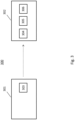
- Fig. 3 shows an embodiment of a system 300 including at least one terminal device 301 and a base station 302 as proposed by the present invention.
- the system 300 is configured to perform the RA method 200 described in Fig. 2 .
- the terminal device 301 preferably includes a transmitting unit 303 configured to transmit (indicated by the dotted arrow) a resource request with one or more preambles to the base station 302 during one RA time slot, and is configured to combine more preambles for transmitting a resource request having a higher priority level and is configured to combine fewer preambles for transmitting a resource request having a lower priority level.
- a transmitting unit 303 configured to transmit (indicated by the dotted arrow) a resource request with one or more preambles to the base station 302 during one RA time slot, and is configured to combine more preambles for transmitting a resource request having a higher priority level and is configured to combine fewer preambles for transmitting a resource request having a lower priority level.
- the base station 302 preferably includes a receiving unit 304 configured to receive from at least one terminal device 301 a resource request (indicated by the dotted arrow) with one or more preambles during the RA time slot. Further, the base station 302 preferably includes a detecting unit 305 configured to detect a priority level of the at least one received resource request based on the number of preambles in the at least one resource request. Finally, the base station 302 preferably includes an assignment unit 306 configured to assign uplink resources according to the at least one received resource request and the at least one detected priority level.
- multiple terminal devices 301 may use a shared wireless medium without coordination and scheduling in advance, e.g. a physical random access channel (PRACH) in LTE.
- PRACH physical random access channel
- a terminal device 301 transmits actual data it firstly sends the resource request with the at least one preamble in a common radio channel.
- Sequences can thereby be applied as the preamble signature (as described by J. D. C. Chu, "Polyphase Codes with Good Periodic Correlation Properties” IEEE Trans. on, Bd. 18, p. 531-532, 1972 or R. Frank et al., "Phase Shift Pulse Codes With Good Periodic Correlation” IEEE Trans. on Information Theory, Bd. 8, p. 381-382, 1962 .).
- Such sequences have nice properties in sense of autocorrelation and cross-correlation.
- T is the length of the sequence
- Z is the set of the integers
- f represents the complex conjugate of f.
- f ( t ) is the periodic extension of a first sequence as described above
- g ( t ) is likewise a periodic extension of a second sequence
- g is the complex conjugate of g.
- the periodic autocorrelation is a Dirac delta function, and it is exactly zero at non-zero lag.
- the absolute value of the cyclic cross-correlation function between two different sequences is very low.
- the receiving unit 304 of the base station 302 can preferably utilize the above properties of autocorrelation and cross-correlation, in order to detect individual preamble signatures, even if the preamble signatures overlap in the frequency and/or time domain.
- a higher prioritized terminal device 301 i.e. a terminal device 301 sending a resource request with a higher priority level
- uses for the resource request a combination of more preambles i.e. combines more preamble signatures, in a certain RA time slot, than a lower prioritized terminal device 301, which sends a resource request with a lower priority level, and thus with fewer preambles.
- a terminal device 301 combines more preambles for transmitting a resource request having a higher priority level or fewer preambles for transmitting a resource request having a lower priority level. If resource requests have one or more preambles in common, the resource request of highest priority level "overwrites" the resource requests of lower priority level.
- Fig. 4 shows a specific example for preamble combinations of resource requests of different priority levels in the RA method 200 according to the embodiment of the present invention.
- Fig. 4 shows a time (t) axis. Above the time axis is shown time-dependently, how two terminal devices 301 (referred to as UE1 and UE2) each send a resource request with preambles in a certain RA time slot to the base station, BS, 302. Below the time axis is shown time-dependently, how in the same RA time slot the base station 302 detects the sent and received preambles.
- UE1 and UE2 have a different priority.
- the higher priority UE2 (called “priority UE” in Fig. 4 ) transmits, after another in a time direction, two preambles, which are defined by preamble signatures PA1 and PA2, respectively, in the same RA time slot (the preambles are referred to in the following as preamble PA1 and PA2).
- the lower priority UE1 sends only one preamble, which is defined by the preamble signature PA1, in the same channel in the same RA time slot. That means the resource requests of UE1 and UE2 have one preamble in common, namely the preamble PA1.
- Fig. 5 shows specifically the preamble detection at the base station 302.
- Fig. 5 shows on a time axis (t) curves indicating a correlation of the received signal with preambles PA1 and PA2, respectively.
- t time axis
- the base station 302 detects the preambles PA1 and PA2, and identifies the combination of PA1+PA2 from UE2 as a higher priority level resource request than resource request with a single preamble.
- uplink resources will be granted by the base station 302 according to the resource request including the preamble combination PA1+PA2, i.e. to the terminal device UE2.
- Terminal device UE1 does not receive uplink resources, and needs to enter back-off and retransmission procedure. If, however, UE1 would send a preamble PA3 instead of preamble PA1, then the base station 302 would assign uplink resources firstly according to the resource request including the preambles PA1+PA2, i.e.
- the terminal device UE2 and secondly according to the resource request including preamble PA3, i.e. to the terminal device UE1, given that uplink resources are still available. In this case the terminal device UE1 does not have to enter a back-off and retransmission procedure.
- Fig. 6 shows a RA method 200 according to an embodiment of the present invention, which bases on the embodiment shown in Fig. 2 .
- Fig. 6 shows a RA procedure carried out between two terminal devices 301, namely UE1 and UE2 as shown in the Figs. 4 and 5 , and the base station 302.
- Arrows in Fig. 6 indicate information that is sent between the participating entities 301 and 302, respectively.
- Fig. 6 illustrates the RA method 200 for the case that two terminal devices 301 UE1 and UE2 would have a collision in the conventional RA procedure 100 as shown in Fig. 1 .
- UE1 and UE2 are provided with a different priority. Therefore, in a first step, as also described with respect to Fig. 4 , UE1, which is of low priority, transmits a resource request with preamble PA1, and UE2, which is of high priority, transmits a resource request with preamble combination PA1+PA2.
- the base station 302 detects in a second step the high priority level resource request including the preambles PA1+PA2.
- the base station 302 sends to UE1 and UE2 a grant of uplink (UL) resource according to the resource request including PA1+PA2, i.e. essentially for the UE sending PA1+PA2.
- UE2 recognizes that uplink resources were assigned according to its resource request, and transmits its actual message in the granted UL resource. Meanwhile, UE1 does not recognize that uplink resources were assigned according to its resource request, and enters a back-off and retransmission procedure. That means, UE1 will wait a certain number of N ms, and will then retransmit its resource request to the base station 302.
- the RA method 200 of the present invention shown in Fig. 6 guarantees the priority of particular resource requests.
- the highest priority level resource request of all potentially colliding resource request, does not need to enter a back-off and retransmission procedure, so that the delay caused by a collision is avoided, at least for the highest priority level resource request.
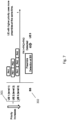
- Fig. 7 shows a further specific example for preamble combinations of resource requests of different priority level in the RA method 200.
- Fig. 7 shows a time (t) axis. Above the time axis is shown time-dependently, how three terminal devices 301 (referred to in the following as UE1, UE2 and UE3) each sends a resource request with preambles in a certain RA time slot to the base station, BS, 302. Below the time axis is shown time-dependently, how the base station 302 detects these preambles.
- UE1, UE2 and UE3 in Fig. 7 have three different priorities.
- UE3 has the highest priority (called “level 3" in Fig. 7 ), and uses a combination of three preambles PA1+PA2+PA3 for its resource request.
- UE2 has a lower priority (called “level 2" in Fig. 7 ) than UE3, and uses a combination of two preambles PA1+PA2 for its resource request.
- UE1 has the lowest priority (called “level 1" in Fig. 7 ), and uses one preamble PA1 for its resource request.
- a terminal device 301 may determine a number of preambles for transmitting a resource request with a determined priority level.
- the base station 302 may broadcast to one or more terminal devices 301 mapping information between numbers of preambles and priority levels of resource requests.
- the base station 302 assigns uplink resources only according to one of the three received resource requests. As indicated, the base station 302 detects the three preambles PA1+PA2+PA3 and identifies this resource request of highest priority level to be from UE3.
- Fig. 8 shows on a time axis (t) curves indicating a correlation with the preambles PA1, PA2 and PA3, respectively.
- t time axis
- preambles were sent sequentially, i.e. were arranged in a time direction. Combinations of preambles are accordingly applied in the time domain. However, combination of preambles can be applied either in the time domain or the frequency domain, or even both, as shown exemplarily in Fig. 9 .
- Fig. 9 shows in (a) two preambles PA1 and PA2 transmitted, by a terminal device 301 denoted as UE1, sequentially in the time domain (as indicated by the time axis t).
- the preambles PA1 and PA2 are, however, transmitted at the same frequency, i.e. are not separated in the frequency domain (as indicated by the frequency axis f).
- Fig. 9 shows in (b) two preambles transmitted, by a terminal device 301 denoted again as UE1, sequentially in the frequency domain (as indicated by the frequency axis f), i.e. transmitted at different frequencies.
- the preambles PA1 and PA2 are, however, transmitted at the same time, i.e. are not separated in the time domain (as indicated by the time axis t). That means a terminal device 301 may determine and set a time and/or frequency shift between multiple preambles in one resource request.
- the preambles used for one preamble combination in a resource request can also overlap in the time and/or frequency domain, as shown in Fig. 10 .
- a terminal device 301 transmitting a resource request with more than one preamble may arrange the preambles with at least a partial overlap in the time and/or frequency domain.
- Fig. 10 shows in (a) partially overlapped preambles PA1 and PA2 transmitted by a terminal device 301 denoted as UE1.
- PA1 and PA2 are separated both in the time and the frequency domain (as indicated by the time and frequency axis t and f), but also overlap in both the frequency and the time domain.
- ⁇ t and ⁇ f indicate determined time shift and frequency shift values, respectively, between the preambles PA1 and PA2.
- ⁇ t may denote the time shift between a beginning of the first preamble PA1 and a beginning of the second preamble PA2 in the time domain, wherein "beginning in the time domain” implies earlier in time.
- ⁇ f may denote the frequency shift between the beginnings of the preambles PA1 and PA2 in the frequency domain, respectively, wherein "beginning in the frequency domain” implies higher in frequency.
- ⁇ t and ⁇ f are larger than zero.
- preambles are additionally defined by different signatures, i.e. by PA 1 #PA2, due to the non-zero time and/or frequency shift between the preambles, also preambles defined by the same signature could be transmitted, and could still be distinguished at the base station 301.
- Fig. 10 shows in (b) that two preambles PA1 and PA2, which are transmitted by a terminal device 301 denoted again as UE1, can even completely overlap, i.e. both the time shift ⁇ t and the frequency shift ⁇ f are equal to zero, and the preambles PA1 and PA2 are neither separated in the time nor the frequency domain (as indicated by the time and frequency axis t and f).
- the preamble signatures should not be the same, i.e. in Fig. 10 in (b) the preambles need to be defined by different signatures PA1 ⁇ PA2.
- a terminal device 301 which transmits a resource request with more than one preamble, preferably provides a determined time and/or frequency shift between the preambles, and in case the determined time and/or frequency shift is zero, provides the preambles with different signatures.
- the time and/or frequency shifts ⁇ t and ⁇ f can be either predetermined, or can be determined based on the current status of the network and/or the base station 302, e.g. they can depend on a current load or a predicted load in the network or at the base station 302, and/or based on the available radio resources.
- the time and frequency shifts may be known both at the terminal devices 301 and the base station 302, or may be communicated between the terminal devices 301 and the base station 302 in either direction.
- the base station 302 may broadcast to the plurality of terminal devices 301 the determined time and/or frequency shift to be set between preambles of a resource request.
- a terminal device 301 may determine the frequency and/or time shift between the number of preambles, and may preferably transmit the number of preambles and/or the time and/or frequency shift to the base station 302 beforehand.
- the base station 302 preferably utilizes the knowledge of the time and/or frequency shifts, in order to avoid possible misdetections of resource requests.
- Fig. 11 illustrates specifically two different cases on the time axis, i.e. the cases may occur after each other.
- a first terminal device 301 denoted as UE1 sends a preamble PA1
- a second terminal device 301 denoted as UE2 sends a preamble PA2 in the same RA time slot.
- a third terminal device 301 denoted as UE3 with a higher priority than UE1 and UE2 sends a combination of PA1 and PA2.
- the base station 302 Since the base station 302 knows the determined time and/or frequency shift ⁇ t and ⁇ f , it can distinguish between these two different cases, i.e. it can distinguish whether the preambles PA1 and PA2 are sent by two different terminal devices 301 denoted as UE1 and UE2, as in the first case, or by one higher priority terminal device 301 denoted as UE3, as in the second case.
- the base station 302 detects preambles PA1 and PA2 and estimates a time shift ⁇ t ' between the two received preambles PA1 and PA2, wherein the actual ⁇ t' is not equal to the predetermined time shift ⁇ t. Therefore, the base station 302 can conclude that the two preambles PA1 and PA2 are sent by different UEs.
- the base station 302 detects preambles PA1 and PA2 and estimates a time shift ⁇ t' between the two preambles PA1 and PA2, wherein the actual ⁇ t' is equal to the predetermined time shift ⁇ t.
- the base station 302 can conclude that the two preambles PA1 and PA2 are sent by the same UE.
- the same is of course possible for preambles sent with a frequency shift, and the base station 302 comparing an estimated frequency shift ⁇ f ' with the determined frequency shift ⁇ f.
- the base station 302 may detect the time and/or frequency shift between at least two received preambles and may determine, whether the at least two received preambles are from the same terminal device 301 or from different terminal devices 301 based on the detected time and/or frequency shift and/or received power levels of preambles.
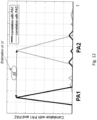
- Fig. 12 shows on a time axis (t) curves indicating a correlation with PA1 and PA2, respectively.
- ⁇ t ' denotes the time shift detected by the base station 302 between the preambles PA1 and PA2, which is preferably - as illustrated - the estimated time shift between the peaks of the two correlation functions.
- the base station 302 can measure time and/or frequency shifts between correlation peaks of received preambles.
- the base station 302 determines that both preambles PA1 and PA2 originate from the same terminal device 301.
Landscapes
- Engineering & Computer Science (AREA)
- Signal Processing (AREA)
- Computer Networks & Wireless Communication (AREA)
- Mobile Radio Communication Systems (AREA)
- Small-Scale Networks (AREA)
Claims (15)
- Procédé d'accès aléatoire, RA, (200), comprenant les étapes suivantes exécutées par une station de base (302) d'un réseau sans fil :la réception, en provenance d'au moins un dispositif terminal (301) d'une pluralité de dispositifs terminaux, d'une demande de ressources ayant un ou plusieurs préambules pendant un intervalle de temps RA ;la détection (202) d'un niveau de priorité de la demande de ressources sur la base d'un certain nombre des un ou plusieurs préambules dans la demande de ressources ; etl'attribution (203) de ressources de liaison montante selon la demande de ressources et le niveau de priorité,dans lequel l'intervalle de temps RA est un intervalle de temps pendant lequel l'au moins un dispositif terminal (301) est autorisé à réaliser une transmission de préambule.
- Procédé RA (200) selon la revendication 1, comprenant également :
la diffusion, par la station de base (302) sur la pluralité de dispositifs terminaux, d'au moins l'un d'un décalage temporel et fréquentiel à définir entre les préambules de la demande de ressources. - Procédé RA (200) selon la revendication 2, dans lequel l'au moins l'un du décalage temporel et fréquentiel est prédéterminé ou est déterminé sur la base d'au moins l'une d'une charge de réseau actuelle et des ressources radio disponibles.
- Procédé RA (200) selon l'une quelconque des revendications 1 à 3, comprenant également :
la diffusion, par la station de base (302) sur la pluralité de dispositifs terminaux (301), d'informations de mappage entre des nombres de préambules et des niveaux de priorité de demandes de ressources. - Procédé RA (200) selon l'une quelconque des revendications 1 à 4, comprenant également :la détection, par la station de base (302), d'au moins l'un d'un autre décalage temporel et fréquentiel entre au moins deux préambules reçus ; etla détermination, par la station de base, du fait de savoir si les au moins deux préambules reçus proviennent d'un même dispositif terminal ou de dispositifs terminaux différents, sur la base d'au moins l'un parmi l'autre décalage temporel et fréquentiel et les niveaux de puissance de préambules reçus détectés.
- Procédé RA (200) selon la revendication 5, dans lequel la détection de l'au moins un autre décalage temporel et fréquentiel entre les au moins deux préambules reçus comprend :
la mesure, par la station de base (302), de l'au moins un de l'autre décalage temporel et fréquentiel entre les pics de corrélation détectés des au moins deux préambules reçus. - Procédé d'accès aléatoire, RA, (200), comprenant les étapes suivantes exécutées par un dispositif terminal (301) :la détermination d'un certain nombre des un ou plusieurs préambules pour une demande de ressources sur la base d'un niveau de priorité de la demande de ressources ; etla transmission de la demande de ressources ayant les un ou plusieurs préambules à une station de base (302) pendant un intervalle de temps RA,dans lequel l'intervalle de temps RA est un intervalle de temps, pendant lequel le dispositif terminal (301) est autorisé à réaliser une transmission de préambule.
- Procédé RA (200) selon la revendication 7, comprenant également :la fourniture, par le dispositif terminal (301), lorsque la demande de ressources a plus d'un préambule, d'au moins l'un d'un décalage temporel et fréquentiel entre les préambules,dans lequel, dans le cas où l'au moins l'un du décalage temporel et fréquentiel est nul, les préambules sont dotés de signatures différentes.
- Procédé RA (200) selon la revendication 7 ou 8, comprenant également :
l'agencement, par le dispositif terminal (301), lorsque la demande de ressources a plus d'un préambule, des préambules avec au moins un chevauchement partiel dans au moins l'un du domaine temporel et fréquentiel. - Procédé RA (200) selon l'une quelconque des revendications 7 à 9, comprenant également :
la détermination, par le dispositif terminal (301), d'au moins l'un d'un décalage temporel et fréquentiel entre les préambules. - Procédé RA (200) selon la revendication 10, comprenant également :
la transmission, par le dispositif terminal (301), d'au moins l'un du nombre de préambules et de l'au moins l'un du décalage temporel et fréquentiel à la station de base (302). - Station de base (302), comprenant :une unité de réception (304) configurée pour recevoir en provenance d'au moins un dispositif terminal (301) d'une pluralité de dispositifs terminaux une demande de ressource ayant un ou plusieurs préambules pendant un intervalle temporel d'accès aléatoire, RA ;une unité de détection (305) configurée pour détecter un niveau de priorité de la demande de ressources sur la base d'un certain nombre des un ou plusieurs préambules dans la demande de ressources ; etune unité d'attribution (306) configurée pour attribuer des ressources de liaison montante selon la demande de ressources et le niveau de priorité,dans lequel l'intervalle de temps RA est un intervalle de temps, pendant lequel l'au moins un dispositif terminal (301) est autorisé à réaliser une transmission de préambule.
- Dispositif terminal (301), comprenant :une unité de transmission (303) configurée pour transmettre une demande de ressources ayant un ou plusieurs préambules à une station de base (302) pendant un intervalle temporel d'accès aléatoire, RA,dans lequel le dispositif terminal (301) est configuré pour déterminer un certain nombre des un ou plusieurs préambules pour la demande de ressources sur la base d'un niveau de priorité de la demande de ressources, etdans lequel l'intervalle de temps RA est un intervalle de temps, pendant lequel le dispositif terminal (301) est autorisé à réaliser une transmission de préambule.
- Produit de programme informatique comprenant des instructions qui, lorsqu'elles sont exécutées par un ordinateur d'une station de base, amènent la station de base à réaliser un procédé d'accès aléatoire selon l'une quelconque des revendications 1 à 6.
- Programme informatique comprenant des instructions qui, lorsqu'elles sont exécutées par un ordinateur d'un dispositif terminal, amènent le dispositif terminal à réaliser un procédé d'accès aléatoire selon l'une des revendications 7 à 11.
Applications Claiming Priority (1)
| Application Number | Priority Date | Filing Date | Title |
|---|---|---|---|
| PCT/EP2014/076358 WO2016086982A1 (fr) | 2014-12-03 | 2014-12-03 | Procédé pour donner la priorité à un accès aléatoire avec codage de préambule |
Publications (2)
| Publication Number | Publication Date |
|---|---|
| EP3216157A1 EP3216157A1 (fr) | 2017-09-13 |
| EP3216157B1 true EP3216157B1 (fr) | 2024-10-09 |
Family
ID=52007018
Family Applications (1)
| Application Number | Title | Priority Date | Filing Date |
|---|---|---|---|
| EP14806622.8A Active EP3216157B1 (fr) | 2014-12-03 | 2014-12-03 | Procédé pour donner la priorité à un accès aléatoire avec codage de préambule |
Country Status (10)
| Country | Link |
|---|---|
| US (1) | US10506638B2 (fr) |
| EP (1) | EP3216157B1 (fr) |
| JP (1) | JP6505862B2 (fr) |
| KR (2) | KR20170097670A (fr) |
| CN (1) | CN107079493B (fr) |
| AU (1) | AU2014413131B2 (fr) |
| BR (1) | BR112017011895A2 (fr) |
| RU (1) | RU2676946C2 (fr) |
| SG (1) | SG11201704566TA (fr) |
| WO (1) | WO2016086982A1 (fr) |
Families Citing this family (18)
| Publication number | Priority date | Publication date | Assignee | Title |
|---|---|---|---|---|
| CN107969021B (zh) * | 2016-10-19 | 2021-06-08 | 中南大学 | 一种基于区分服务的事件与执行器间的高效路由策略 |
| US10687355B2 (en) | 2016-11-16 | 2020-06-16 | Qualcomm Incorporated | Techniques for reservation preamble for low latency detection in a new radio shared spectrum communication system |
| EP3574701B1 (fr) * | 2017-01-26 | 2023-12-20 | Motorola Mobility LLC | Niveaux de priorité de configuration de ressources |
| CN110366836B (zh) * | 2017-03-01 | 2022-07-01 | 瑞典爱立信有限公司 | 随机接入前导码时隙分配 |
| CN107347216B (zh) * | 2017-06-12 | 2020-06-19 | 西安交通大学 | 一种5g大连接物联网中上下行资源的分配方法 |
| WO2019028772A1 (fr) * | 2017-08-10 | 2019-02-14 | 北京小米移动软件有限公司 | Procédé et dispositif d'accès aléatoire, équipement d'utilisateur, et station de base |
| KR102134591B1 (ko) * | 2018-10-08 | 2020-07-16 | 인하대학교 산학협력단 | 공존하는 ps-lte 및 lte-m 네트워크의 충돌 해결을 위한 미션 크리티컬 사용자의 우선순위 기반 랜덤 액세스 방법 및 장치 |
| EP3672350A1 (fr) * | 2018-12-18 | 2020-06-24 | BIOTRONIK SE & Co. KG | Concept d'évitement de collision de communication par réseau corporel pour systèmes médicaux |
| JP7063473B2 (ja) * | 2019-06-21 | 2022-05-09 | Necプラットフォームズ株式会社 | 無線通信装置、無線通信システム及び無線通信方法 |
| KR102037893B1 (ko) | 2019-07-05 | 2019-11-26 | 세종대학교산학협력단 | 디지털 외관조사망도 구축 시스템 및 방법 |
| US11425760B2 (en) * | 2019-10-04 | 2022-08-23 | Qualcomm Incorporated | Multi-root preamble techniques for wireless communications systems |
| KR102476701B1 (ko) | 2020-09-22 | 2022-12-12 | 세종대학교산학협력단 | 구조물 외관 조사망도 구축 시스템 및 방법 |
| US20220183068A1 (en) * | 2020-12-04 | 2022-06-09 | David E. Newman | Rapid Uplink Access by Parallel Signaling on a 5G Random-Access Channel |
| KR102481896B1 (ko) | 2020-12-28 | 2022-12-27 | 세종대학교산학협력단 | 이미지 스티칭을 이용한 구조물 외관 조사망도 구축 시스템 및 방법 |
| KR102541678B1 (ko) | 2021-02-23 | 2023-06-12 | 세종대학교산학협력단 | 무인 비행체를 이용한 깊이 맵 기반의 디지털 외관 조사망도 구축 및 구조물 물량 산출 장치 및 방법 |
| US12342390B2 (en) * | 2021-06-18 | 2025-06-24 | Parallel Wireless, Inc. | RACH response preamble prioritization |
| CN114390721A (zh) * | 2021-12-30 | 2022-04-22 | 四川大学 | 一种基站和基于业务优先级的随机接入方法 |
| DE112023006079T5 (de) * | 2023-08-03 | 2026-02-26 | Denso Ten Limited | Kommunikationsverfahren und kommunikationssystem |
Citations (1)
| Publication number | Priority date | Publication date | Assignee | Title |
|---|---|---|---|---|
| US20130301541A1 (en) * | 2012-05-11 | 2013-11-14 | Research In Motion Limited | Method and system for partitioning contention based resources in a wireless network |
Family Cites Families (30)
| Publication number | Priority date | Publication date | Assignee | Title |
|---|---|---|---|---|
| ES2985074T3 (es) | 2004-03-09 | 2024-11-04 | Optis Wireless Technology Llc | Procedimiento de acceso aleatorio y dispositivo terminal de radiocomunicación |
| US7664076B2 (en) * | 2004-12-13 | 2010-02-16 | Electronics And Telecommunications Research Institute | Random access apparatus and method |
| KR100994285B1 (ko) * | 2005-11-04 | 2010-11-15 | 엘지전자 주식회사 | 주파수분할 다중접속 시스템을 위한 랜덤 액세스 채널 호핑 |
| EP1954081A4 (fr) | 2005-11-04 | 2011-09-28 | Ntt Docomo Inc | Procede de communication de paquets, station mobile, et station de base radio |
| CN102843770B (zh) * | 2006-10-25 | 2016-06-22 | 三星电子株式会社 | 使用随机接入过程分配无线资源的方法和装置 |
| CN101632243B (zh) * | 2007-01-19 | 2014-05-07 | 株式会社Ntt都科摩 | 基站装置、移动台、移动通信系统以及通信控制方法 |
| JP4934203B2 (ja) | 2007-02-12 | 2012-05-16 | エルジー エレクトロニクス インコーポレイティド | 高速ueアクセス方法及び手順 |
| WO2008115451A1 (fr) * | 2007-03-16 | 2008-09-25 | Interdigital Technology Corporation | Mappage de ressources à accès aléatoire pour évolution à long terme |
| JP2008278473A (ja) | 2007-03-21 | 2008-11-13 | Asustek Computer Inc | 無線通信システムにおいてランダムアクセスプロセスを処理する方法及び装置 |
| TW200840381A (en) * | 2007-03-21 | 2008-10-01 | Innovative Sonic Ltd | Method and apparatus for handling random access procedure in a wireless communications system |
| EP2145493B1 (fr) * | 2007-06-19 | 2015-08-12 | LG Electronics Inc. | Amélioration de la procédure d'accès aléatoire lte |
| US9357564B2 (en) * | 2007-06-19 | 2016-05-31 | Texas Instruments Incorporated | Signaling of random access preamble parameters in wireless networks |
| US8583152B2 (en) * | 2007-10-30 | 2013-11-12 | Ntt Docomo, Inc. | Base station apparatus, mobile station, and communications control method |
| WO2010064968A1 (fr) | 2008-12-05 | 2010-06-10 | Telefonaktiebolaget L M Ericsson (Publ) | Procédé et agencement dans un système de réseau de communication |
| WO2010137914A2 (fr) * | 2009-05-28 | 2010-12-02 | 엘지전자 주식회사 | Procédé et appareil pour transmission sur canal de contrôle en liaison montante dans un système de communication sans fil |
| EP2416604B1 (fr) | 2010-08-05 | 2017-09-20 | HTC Corporation | Gestion de la congestion de signalisation et dispositif de communication associé |
| US8934896B2 (en) * | 2010-08-12 | 2015-01-13 | Fujitsu Limited | Macro user equipment initiated evolved inter-cell interference coordination mechanism through private femtocells |
| DE102010051431A1 (de) * | 2010-11-15 | 2012-05-16 | Rohde & Schwarz Gmbh & Co. Kg | Verfahren und Basisstation zum Priorisieren von mobilen Endgeräten |
| EP2705720B1 (fr) * | 2011-05-05 | 2015-01-28 | Telefonaktiebolaget LM Ericsson (PUBL) | Procédés et agencements pour adapter une attribution de ressources d'accès aléatoire à des équipements utilisateurs |
| US20140177525A1 (en) * | 2011-07-22 | 2014-06-26 | Alcatel Lucent | Machine type communications in a radio network |
| CN104186010B (zh) * | 2012-03-16 | 2018-09-21 | 交互数字专利控股公司 | 无线系统中的随机接入过程 |
| JP2013236327A (ja) * | 2012-05-10 | 2013-11-21 | Panasonic Corp | 無線通信端末、無線通信装置及び上りリソース要求処理方法 |
| US9179409B2 (en) * | 2012-12-03 | 2015-11-03 | Qualcomm Incorporated | Multiple access scheme for narrowband channels |
| US9019823B1 (en) * | 2013-01-16 | 2015-04-28 | Sprint Spectrum L.P. | Random access preamble selection |
| WO2014162048A1 (fr) * | 2013-04-05 | 2014-10-09 | Nokia Corporation | Gestion de déséquilibre sur liaison montante/liaison descendante |
| US9609499B2 (en) * | 2013-05-22 | 2017-03-28 | Avago Technologies General Ip (Singapore) Pte. Ltd. | Apparatus and method to prioritize a random access procedure for emergency access |
| WO2015042829A1 (fr) * | 2013-09-26 | 2015-04-02 | 华为技术有限公司 | Procédé d'affectation de ressources d'amélioration de couverture pour un équipement utilisateur, station de base et équipement utilisateur |
| CN103763784B (zh) * | 2014-01-22 | 2017-07-18 | 东南大学 | 用于td‑lte/td‑lte‑a系统区分用户优先级前导码分配的上行接入方法 |
| US20160278127A1 (en) * | 2014-03-20 | 2016-09-22 | Telefonaktiebolaget L M Ericsson (Publ) | A Network Node, a User Equipment and Methods Therein for Random Access |
| US9426828B1 (en) * | 2014-06-12 | 2016-08-23 | Sprint Spectrum L.P. | Variation of RACH preamble grouping |
-
2014
- 2014-12-03 EP EP14806622.8A patent/EP3216157B1/fr active Active
- 2014-12-03 BR BR112017011895-5A patent/BR112017011895A2/en not_active IP Right Cessation
- 2014-12-03 AU AU2014413131A patent/AU2014413131B2/en active Active
- 2014-12-03 RU RU2017122705A patent/RU2676946C2/ru active
- 2014-12-03 SG SG11201704566TA patent/SG11201704566TA/en unknown
- 2014-12-03 KR KR1020177018278A patent/KR20170097670A/ko not_active Ceased
- 2014-12-03 CN CN201480083150.1A patent/CN107079493B/zh active Active
- 2014-12-03 KR KR1020197003710A patent/KR102109563B1/ko not_active Expired - Fee Related
- 2014-12-03 JP JP2017548520A patent/JP6505862B2/ja not_active Expired - Fee Related
- 2014-12-03 WO PCT/EP2014/076358 patent/WO2016086982A1/fr not_active Ceased
-
2017
- 2017-06-02 US US15/612,882 patent/US10506638B2/en active Active
Patent Citations (1)
| Publication number | Priority date | Publication date | Assignee | Title |
|---|---|---|---|---|
| US20130301541A1 (en) * | 2012-05-11 | 2013-11-14 | Research In Motion Limited | Method and system for partitioning contention based resources in a wireless network |
Also Published As
| Publication number | Publication date |
|---|---|
| AU2014413131A1 (en) | 2017-06-29 |
| JP6505862B2 (ja) | 2019-04-24 |
| BR112017011895A2 (en) | 2018-07-03 |
| KR20190016605A (ko) | 2019-02-18 |
| JP2018502534A (ja) | 2018-01-25 |
| CN107079493A (zh) | 2017-08-18 |
| WO2016086982A1 (fr) | 2016-06-09 |
| SG11201704566TA (en) | 2017-07-28 |
| KR20170097670A (ko) | 2017-08-28 |
| US10506638B2 (en) | 2019-12-10 |
| KR102109563B1 (ko) | 2020-05-12 |
| CN107079493B (zh) | 2023-03-28 |
| RU2017122705A (ru) | 2019-01-09 |
| AU2014413131B2 (en) | 2018-08-09 |
| RU2017122705A3 (fr) | 2019-01-09 |
| EP3216157A1 (fr) | 2017-09-13 |
| RU2676946C2 (ru) | 2019-01-11 |
| US20170273115A1 (en) | 2017-09-21 |
Similar Documents
| Publication | Publication Date | Title |
|---|---|---|
| EP3216157B1 (fr) | Procédé pour donner la priorité à un accès aléatoire avec codage de préambule | |
| US11937308B2 (en) | Two-step contention-based random access over radio resources in LAA | |
| US11395250B2 (en) | Coordinated resource discovery | |
| EP3527020B1 (fr) | Partitionnement de ressources coordonnées | |
| EP3527033B1 (fr) | Support de transmission de liaison montante autonome et critique | |
| US10609664B2 (en) | Techniques and apparatuses for frequency division multiplexing (FDM) based medium access on shared spectrum | |
| WO2011120352A1 (fr) | Procédé et dispositif pour accès aléatoire | |
| CN107295567B (zh) | 一种基于帧结构的无线资源冲突检测方法 | |
| CA3036715C (fr) | Decouverte de ressources coordonnees | |
| WO2026052220A1 (fr) | Accès aléatoire basé sur un multiplexage par répartition orthogonale de la fréquence (ofdm) | |
| HK40007750A (zh) | 协调式资源划分 |
Legal Events
| Date | Code | Title | Description |
|---|---|---|---|
| STAA | Information on the status of an ep patent application or granted ep patent |
Free format text: STATUS: THE INTERNATIONAL PUBLICATION HAS BEEN MADE |
|
| PUAI | Public reference made under article 153(3) epc to a published international application that has entered the european phase |
Free format text: ORIGINAL CODE: 0009012 |
|
| STAA | Information on the status of an ep patent application or granted ep patent |
Free format text: STATUS: REQUEST FOR EXAMINATION WAS MADE |
|
| 17P | Request for examination filed |
Effective date: 20170607 |
|
| AK | Designated contracting states |
Kind code of ref document: A1 Designated state(s): AL AT BE BG CH CY CZ DE DK EE ES FI FR GB GR HR HU IE IS IT LI LT LU LV MC MK MT NL NO PL PT RO RS SE SI SK SM TR |
|
| AX | Request for extension of the european patent |
Extension state: BA ME |
|
| DAX | Request for extension of the european patent (deleted) | ||
| STAA | Information on the status of an ep patent application or granted ep patent |
Free format text: STATUS: EXAMINATION IS IN PROGRESS |
|
| 17Q | First examination report despatched |
Effective date: 20181206 |
|
| GRAP | Despatch of communication of intention to grant a patent |
Free format text: ORIGINAL CODE: EPIDOSNIGR1 |
|
| STAA | Information on the status of an ep patent application or granted ep patent |
Free format text: STATUS: GRANT OF PATENT IS INTENDED |
|
| INTG | Intention to grant announced |
Effective date: 20240503 |
|
| GRAS | Grant fee paid |
Free format text: ORIGINAL CODE: EPIDOSNIGR3 |
|
| GRAA | (expected) grant |
Free format text: ORIGINAL CODE: 0009210 |
|
| STAA | Information on the status of an ep patent application or granted ep patent |
Free format text: STATUS: THE PATENT HAS BEEN GRANTED |
|
| AK | Designated contracting states |
Kind code of ref document: B1 Designated state(s): AL AT BE BG CH CY CZ DE DK EE ES FI FR GB GR HR HU IE IS IT LI LT LU LV MC MK MT NL NO PL PT RO RS SE SI SK SM TR |
|
| REG | Reference to a national code |
Ref country code: GB Ref legal event code: FG4D |
|
| REG | Reference to a national code |
Ref country code: CH Ref legal event code: EP |
|
| REG | Reference to a national code |
Ref country code: DE Ref legal event code: R096 Ref document number: 602014090993 Country of ref document: DE |
|
| REG | Reference to a national code |
Ref country code: IE Ref legal event code: FG4D |
|
| P01 | Opt-out of the competence of the unified patent court (upc) registered |
Free format text: CASE NUMBER: APP_53625/2024 Effective date: 20240926 |
|
| REG | Reference to a national code |
Ref country code: LT Ref legal event code: MG9D |
|
| REG | Reference to a national code |
Ref country code: NL Ref legal event code: MP Effective date: 20241009 |
|
| REG | Reference to a national code |
Ref country code: AT Ref legal event code: MK05 Ref document number: 1731757 Country of ref document: AT Kind code of ref document: T Effective date: 20241009 |
|
| PG25 | Lapsed in a contracting state [announced via postgrant information from national office to epo] |
Ref country code: NL Free format text: LAPSE BECAUSE OF FAILURE TO SUBMIT A TRANSLATION OF THE DESCRIPTION OR TO PAY THE FEE WITHIN THE PRESCRIBED TIME-LIMIT Effective date: 20241009 |
|
| PG25 | Lapsed in a contracting state [announced via postgrant information from national office to epo] |
Ref country code: NL Free format text: LAPSE BECAUSE OF FAILURE TO SUBMIT A TRANSLATION OF THE DESCRIPTION OR TO PAY THE FEE WITHIN THE PRESCRIBED TIME-LIMIT Effective date: 20241009 |
|
| PG25 | Lapsed in a contracting state [announced via postgrant information from national office to epo] |
Ref country code: IS Free format text: LAPSE BECAUSE OF FAILURE TO SUBMIT A TRANSLATION OF THE DESCRIPTION OR TO PAY THE FEE WITHIN THE PRESCRIBED TIME-LIMIT Effective date: 20250209 Ref country code: HR Free format text: LAPSE BECAUSE OF FAILURE TO SUBMIT A TRANSLATION OF THE DESCRIPTION OR TO PAY THE FEE WITHIN THE PRESCRIBED TIME-LIMIT Effective date: 20241009 Ref country code: PT Free format text: LAPSE BECAUSE OF FAILURE TO SUBMIT A TRANSLATION OF THE DESCRIPTION OR TO PAY THE FEE WITHIN THE PRESCRIBED TIME-LIMIT Effective date: 20250210 |
|
| PG25 | Lapsed in a contracting state [announced via postgrant information from national office to epo] |
Ref country code: FI Free format text: LAPSE BECAUSE OF FAILURE TO SUBMIT A TRANSLATION OF THE DESCRIPTION OR TO PAY THE FEE WITHIN THE PRESCRIBED TIME-LIMIT Effective date: 20241009 |
|
| PG25 | Lapsed in a contracting state [announced via postgrant information from national office to epo] |
Ref country code: BG Free format text: LAPSE BECAUSE OF FAILURE TO SUBMIT A TRANSLATION OF THE DESCRIPTION OR TO PAY THE FEE WITHIN THE PRESCRIBED TIME-LIMIT Effective date: 20241009 |
|
| PG25 | Lapsed in a contracting state [announced via postgrant information from national office to epo] |
Ref country code: ES Free format text: LAPSE BECAUSE OF FAILURE TO SUBMIT A TRANSLATION OF THE DESCRIPTION OR TO PAY THE FEE WITHIN THE PRESCRIBED TIME-LIMIT Effective date: 20241009 |
|
| PG25 | Lapsed in a contracting state [announced via postgrant information from national office to epo] |
Ref country code: NO Free format text: LAPSE BECAUSE OF FAILURE TO SUBMIT A TRANSLATION OF THE DESCRIPTION OR TO PAY THE FEE WITHIN THE PRESCRIBED TIME-LIMIT Effective date: 20250109 |
|
| PG25 | Lapsed in a contracting state [announced via postgrant information from national office to epo] |
Ref country code: LV Free format text: LAPSE BECAUSE OF FAILURE TO SUBMIT A TRANSLATION OF THE DESCRIPTION OR TO PAY THE FEE WITHIN THE PRESCRIBED TIME-LIMIT Effective date: 20241009 Ref country code: GR Free format text: LAPSE BECAUSE OF FAILURE TO SUBMIT A TRANSLATION OF THE DESCRIPTION OR TO PAY THE FEE WITHIN THE PRESCRIBED TIME-LIMIT Effective date: 20250110 Ref country code: AT Free format text: LAPSE BECAUSE OF FAILURE TO SUBMIT A TRANSLATION OF THE DESCRIPTION OR TO PAY THE FEE WITHIN THE PRESCRIBED TIME-LIMIT Effective date: 20241009 |
|
| PG25 | Lapsed in a contracting state [announced via postgrant information from national office to epo] |
Ref country code: PL Free format text: LAPSE BECAUSE OF FAILURE TO SUBMIT A TRANSLATION OF THE DESCRIPTION OR TO PAY THE FEE WITHIN THE PRESCRIBED TIME-LIMIT Effective date: 20241009 |
|
| PG25 | Lapsed in a contracting state [announced via postgrant information from national office to epo] |
Ref country code: RS Free format text: LAPSE BECAUSE OF FAILURE TO SUBMIT A TRANSLATION OF THE DESCRIPTION OR TO PAY THE FEE WITHIN THE PRESCRIBED TIME-LIMIT Effective date: 20250109 |
|
| PG25 | Lapsed in a contracting state [announced via postgrant information from national office to epo] |
Ref country code: SM Free format text: LAPSE BECAUSE OF FAILURE TO SUBMIT A TRANSLATION OF THE DESCRIPTION OR TO PAY THE FEE WITHIN THE PRESCRIBED TIME-LIMIT Effective date: 20241009 |
|
| PG25 | Lapsed in a contracting state [announced via postgrant information from national office to epo] |
Ref country code: MC Free format text: LAPSE BECAUSE OF FAILURE TO SUBMIT A TRANSLATION OF THE DESCRIPTION OR TO PAY THE FEE WITHIN THE PRESCRIBED TIME-LIMIT Effective date: 20241009 |
|
| PG25 | Lapsed in a contracting state [announced via postgrant information from national office to epo] |
Ref country code: DK Free format text: LAPSE BECAUSE OF FAILURE TO SUBMIT A TRANSLATION OF THE DESCRIPTION OR TO PAY THE FEE WITHIN THE PRESCRIBED TIME-LIMIT Effective date: 20241009 |
|
| REG | Reference to a national code |
Ref country code: DE Ref legal event code: R097 Ref document number: 602014090993 Country of ref document: DE |
|
| PG25 | Lapsed in a contracting state [announced via postgrant information from national office to epo] |
Ref country code: EE Free format text: LAPSE BECAUSE OF FAILURE TO SUBMIT A TRANSLATION OF THE DESCRIPTION OR TO PAY THE FEE WITHIN THE PRESCRIBED TIME-LIMIT Effective date: 20241009 |
|
| PG25 | Lapsed in a contracting state [announced via postgrant information from national office to epo] |
Ref country code: RO Free format text: LAPSE BECAUSE OF FAILURE TO SUBMIT A TRANSLATION OF THE DESCRIPTION OR TO PAY THE FEE WITHIN THE PRESCRIBED TIME-LIMIT Effective date: 20241009 |
|
| PG25 | Lapsed in a contracting state [announced via postgrant information from national office to epo] |
Ref country code: SK Free format text: LAPSE BECAUSE OF FAILURE TO SUBMIT A TRANSLATION OF THE DESCRIPTION OR TO PAY THE FEE WITHIN THE PRESCRIBED TIME-LIMIT Effective date: 20241009 |
|
| PG25 | Lapsed in a contracting state [announced via postgrant information from national office to epo] |
Ref country code: CZ Free format text: LAPSE BECAUSE OF FAILURE TO SUBMIT A TRANSLATION OF THE DESCRIPTION OR TO PAY THE FEE WITHIN THE PRESCRIBED TIME-LIMIT Effective date: 20241009 |
|
| PG25 | Lapsed in a contracting state [announced via postgrant information from national office to epo] |
Ref country code: IT Free format text: LAPSE BECAUSE OF FAILURE TO SUBMIT A TRANSLATION OF THE DESCRIPTION OR TO PAY THE FEE WITHIN THE PRESCRIBED TIME-LIMIT Effective date: 20241009 |
|
| REG | Reference to a national code |
Ref country code: CH Ref legal event code: PL |
|
| PLBE | No opposition filed within time limit |
Free format text: ORIGINAL CODE: 0009261 |
|
| STAA | Information on the status of an ep patent application or granted ep patent |
Free format text: STATUS: NO OPPOSITION FILED WITHIN TIME LIMIT |
|
| PG25 | Lapsed in a contracting state [announced via postgrant information from national office to epo] |
Ref country code: LU Free format text: LAPSE BECAUSE OF NON-PAYMENT OF DUE FEES Effective date: 20241203 |
|
| PG25 | Lapsed in a contracting state [announced via postgrant information from national office to epo] |
Ref country code: SE Free format text: LAPSE BECAUSE OF FAILURE TO SUBMIT A TRANSLATION OF THE DESCRIPTION OR TO PAY THE FEE WITHIN THE PRESCRIBED TIME-LIMIT Effective date: 20241009 |
|
| 26N | No opposition filed |
Effective date: 20250710 |
|
| GBPC | Gb: european patent ceased through non-payment of renewal fee |
Effective date: 20250109 |
|
| REG | Reference to a national code |
Ref country code: BE Ref legal event code: MM Effective date: 20241231 |
|
| PG25 | Lapsed in a contracting state [announced via postgrant information from national office to epo] |
Ref country code: BE Free format text: LAPSE BECAUSE OF NON-PAYMENT OF DUE FEES Effective date: 20241231 Ref country code: GB Free format text: LAPSE BECAUSE OF NON-PAYMENT OF DUE FEES Effective date: 20250109 |
|
| PG25 | Lapsed in a contracting state [announced via postgrant information from national office to epo] |
Ref country code: CH Free format text: LAPSE BECAUSE OF NON-PAYMENT OF DUE FEES Effective date: 20241231 |
|
| PG25 | Lapsed in a contracting state [announced via postgrant information from national office to epo] |
Ref country code: IE Free format text: LAPSE BECAUSE OF NON-PAYMENT OF DUE FEES Effective date: 20241203 |
|
| PGFP | Annual fee paid to national office [announced via postgrant information from national office to epo] |
Ref country code: DE Payment date: 20251104 Year of fee payment: 12 |
|
| PGFP | Annual fee paid to national office [announced via postgrant information from national office to epo] |
Ref country code: FR Payment date: 20251110 Year of fee payment: 12 |
|
| PG25 | Lapsed in a contracting state [announced via postgrant information from national office to epo] |
Ref country code: CY Free format text: LAPSE BECAUSE OF FAILURE TO SUBMIT A TRANSLATION OF THE DESCRIPTION OR TO PAY THE FEE WITHIN THE PRESCRIBED TIME-LIMIT; INVALID AB INITIO Effective date: 20141203 |