EP3216499A1 - Dispositif d'entraînement réactif - Google Patents
Dispositif d'entraînement réactif Download PDFInfo
- Publication number
- EP3216499A1 EP3216499A1 EP16159078.1A EP16159078A EP3216499A1 EP 3216499 A1 EP3216499 A1 EP 3216499A1 EP 16159078 A EP16159078 A EP 16159078A EP 3216499 A1 EP3216499 A1 EP 3216499A1
- Authority
- EP
- European Patent Office
- Prior art keywords
- training device
- sensor
- responsive
- output
- audio
- Prior art date
- Legal status (The legal status is an assumption and is not a legal conclusion. Google has not performed a legal analysis and makes no representation as to the accuracy of the status listed.)
- Withdrawn
Links
- 238000012549 training Methods 0.000 title claims abstract description 125
- 230000003993 interaction Effects 0.000 claims abstract description 21
- 230000001953 sensory effect Effects 0.000 claims abstract description 17
- 230000004044 response Effects 0.000 claims description 59
- 230000033001 locomotion Effects 0.000 claims description 16
- 239000000463 material Substances 0.000 claims description 14
- 230000033764 rhythmic process Effects 0.000 claims description 10
- 238000000034 method Methods 0.000 claims description 9
- 239000004744 fabric Substances 0.000 claims description 7
- 230000000694 effects Effects 0.000 description 18
- 230000008901 benefit Effects 0.000 description 16
- 230000008859 change Effects 0.000 description 11
- 239000003989 dielectric material Substances 0.000 description 8
- 230000006870 function Effects 0.000 description 6
- 230000009471 action Effects 0.000 description 5
- 230000002452 interceptive effect Effects 0.000 description 5
- 210000003205 muscle Anatomy 0.000 description 5
- 238000004519 manufacturing process Methods 0.000 description 4
- 238000005259 measurement Methods 0.000 description 4
- 230000000007 visual effect Effects 0.000 description 4
- 238000013459 approach Methods 0.000 description 3
- 238000004891 communication Methods 0.000 description 3
- 230000006835 compression Effects 0.000 description 3
- 238000007906 compression Methods 0.000 description 3
- 238000013461 design Methods 0.000 description 3
- 239000012530 fluid Substances 0.000 description 3
- 230000000386 athletic effect Effects 0.000 description 2
- 239000013013 elastic material Substances 0.000 description 2
- 238000003032 molecular docking Methods 0.000 description 2
- 230000003387 muscular Effects 0.000 description 2
- 238000009958 sewing Methods 0.000 description 2
- 239000007921 spray Substances 0.000 description 2
- 206010011878 Deafness Diseases 0.000 description 1
- 208000032041 Hearing impaired Diseases 0.000 description 1
- 230000001133 acceleration Effects 0.000 description 1
- 230000005540 biological transmission Effects 0.000 description 1
- 239000003086 colorant Substances 0.000 description 1
- 239000004020 conductor Substances 0.000 description 1
- 238000010924 continuous production Methods 0.000 description 1
- 230000006378 damage Effects 0.000 description 1
- 230000002526 effect on cardiovascular system Effects 0.000 description 1
- 238000011156 evaluation Methods 0.000 description 1
- 238000009434 installation Methods 0.000 description 1
- 230000004298 light response Effects 0.000 description 1
- 208000018883 loss of balance Diseases 0.000 description 1
- 210000002346 musculoskeletal system Anatomy 0.000 description 1
- 230000008569 process Effects 0.000 description 1
- 238000005096 rolling process Methods 0.000 description 1
- 230000011664 signaling Effects 0.000 description 1
- 210000002435 tendon Anatomy 0.000 description 1
- 238000002560 therapeutic procedure Methods 0.000 description 1
Images





Classifications
-
- A—HUMAN NECESSITIES
- A63—SPORTS; GAMES; AMUSEMENTS
- A63B—APPARATUS FOR PHYSICAL TRAINING, GYMNASTICS, SWIMMING, CLIMBING, OR FENCING; BALL GAMES; TRAINING EQUIPMENT
- A63B71/00—Games or sports accessories not covered in groups A63B1/00 - A63B69/00
- A63B71/06—Indicating or scoring devices for games or players, or for other sports activities
- A63B71/0619—Displays, user interfaces and indicating devices, specially adapted for sport equipment, e.g. display mounted on treadmills
- A63B71/0622—Visual, audio or audio-visual systems for entertaining, instructing or motivating the user
-
- A—HUMAN NECESSITIES
- A63—SPORTS; GAMES; AMUSEMENTS
- A63B—APPARATUS FOR PHYSICAL TRAINING, GYMNASTICS, SWIMMING, CLIMBING, OR FENCING; BALL GAMES; TRAINING EQUIPMENT
- A63B21/00—Exercising apparatus for developing or strengthening the muscles or joints of the body by working against a counterforce, with or without measuring devices
- A63B21/40—Interfaces with the user related to strength training; Details thereof
- A63B21/4027—Specific exercise interfaces
- A63B21/4037—Exercise mats for personal use, with or without hand-grips or foot-grips, e.g. for Yoga or supine floor exercises
-
- A—HUMAN NECESSITIES
- A63—SPORTS; GAMES; AMUSEMENTS
- A63B—APPARATUS FOR PHYSICAL TRAINING, GYMNASTICS, SWIMMING, CLIMBING, OR FENCING; BALL GAMES; TRAINING EQUIPMENT
- A63B41/00—Hollow inflatable balls
- A63B41/125—Large inflatable balls primarily used as body supports for exercising, e.g. balancing
-
- A—HUMAN NECESSITIES
- A63—SPORTS; GAMES; AMUSEMENTS
- A63B—APPARATUS FOR PHYSICAL TRAINING, GYMNASTICS, SWIMMING, CLIMBING, OR FENCING; BALL GAMES; TRAINING EQUIPMENT
- A63B43/00—Balls with special arrangements
-
- A—HUMAN NECESSITIES
- A63—SPORTS; GAMES; AMUSEMENTS
- A63B—APPARATUS FOR PHYSICAL TRAINING, GYMNASTICS, SWIMMING, CLIMBING, OR FENCING; BALL GAMES; TRAINING EQUIPMENT
- A63B43/00—Balls with special arrangements
- A63B43/06—Balls with special arrangements with illuminating devices ; with reflective surfaces
-
- A—HUMAN NECESSITIES
- A63—SPORTS; GAMES; AMUSEMENTS
- A63B—APPARATUS FOR PHYSICAL TRAINING, GYMNASTICS, SWIMMING, CLIMBING, OR FENCING; BALL GAMES; TRAINING EQUIPMENT
- A63B71/00—Games or sports accessories not covered in groups A63B1/00 - A63B69/00
- A63B71/06—Indicating or scoring devices for games or players, or for other sports activities
- A63B71/0619—Displays, user interfaces and indicating devices, specially adapted for sport equipment, e.g. display mounted on treadmills
- A63B71/0622—Visual, audio or audio-visual systems for entertaining, instructing or motivating the user
- A63B2071/0625—Emitting sound, noise or music
-
- A—HUMAN NECESSITIES
- A63—SPORTS; GAMES; AMUSEMENTS
- A63B—APPARATUS FOR PHYSICAL TRAINING, GYMNASTICS, SWIMMING, CLIMBING, OR FENCING; BALL GAMES; TRAINING EQUIPMENT
- A63B2220/00—Measuring of physical parameters relating to sporting activity
- A63B2220/17—Counting, e.g. counting periodical movements, revolutions or cycles, or including further data processing to determine distances or speed
-
- A—HUMAN NECESSITIES
- A63—SPORTS; GAMES; AMUSEMENTS
- A63B—APPARATUS FOR PHYSICAL TRAINING, GYMNASTICS, SWIMMING, CLIMBING, OR FENCING; BALL GAMES; TRAINING EQUIPMENT
- A63B2220/00—Measuring of physical parameters relating to sporting activity
- A63B2220/40—Acceleration
-
- A—HUMAN NECESSITIES
- A63—SPORTS; GAMES; AMUSEMENTS
- A63B—APPARATUS FOR PHYSICAL TRAINING, GYMNASTICS, SWIMMING, CLIMBING, OR FENCING; BALL GAMES; TRAINING EQUIPMENT
- A63B2220/00—Measuring of physical parameters relating to sporting activity
- A63B2220/50—Force related parameters
- A63B2220/56—Pressure
-
- A—HUMAN NECESSITIES
- A63—SPORTS; GAMES; AMUSEMENTS
- A63B—APPARATUS FOR PHYSICAL TRAINING, GYMNASTICS, SWIMMING, CLIMBING, OR FENCING; BALL GAMES; TRAINING EQUIPMENT
- A63B2220/00—Measuring of physical parameters relating to sporting activity
- A63B2220/80—Special sensors, transducers or devices therefor
- A63B2220/83—Special sensors, transducers or devices therefor characterised by the position of the sensor
- A63B2220/833—Sensors arranged on the exercise apparatus or sports implement
-
- A—HUMAN NECESSITIES
- A63—SPORTS; GAMES; AMUSEMENTS
- A63B—APPARATUS FOR PHYSICAL TRAINING, GYMNASTICS, SWIMMING, CLIMBING, OR FENCING; BALL GAMES; TRAINING EQUIPMENT
- A63B2225/00—Miscellaneous features of sport apparatus, devices or equipment
- A63B2225/74—Miscellaneous features of sport apparatus, devices or equipment with powered illuminating means, e.g. lights
Definitions
- the present invention relates to a responsive training device for responding to user interaction with the device.
- the responsive training device is configured with a surface enclosing a compressible body.
- the responsive training device further embeds at least one sensor configured to detect user interaction with the responsive training device and to generate a sensory output to a controller.
- the responsive training device furthermore embeds a controller configured to control at least one transponder.
- the responsive training device embeds at least one transponder configured to give an audio-or-visual output as a function of the sensor output.
- Training, exercise or rehabilitation is a continuous process and reoccurring routine for many people and a wide range of devices has been developed to assist or strengthen the output of each training pass.
- the interactive part often comprises a screen which displays a pattern that the user has to follow or mirrors the user's movements. By mirroring the user on a screen the user may adjust the way in which the exercises are performed such that the exercises are performed correctly.
- the interactive devices may instruct and guide the user through an exercise routine on the number of repetitions to be performed of each training exercise and how fast it should be performed.
- the emphasis is on instructing or guiding the user and the interaction may comprise a one-way dialogue from the screen to the user in case of the displayed pattern or the displayed mirroring of the user on the screen.
- these devices require that a screen is connected to the training devise and that you have to keep focus on the screen for intentional use of the devices.
- This group of devices may include devices which instruct the user on an exercise routine by the number of repetitions to be performed of each exercise or how fast the exercise should be performed by playing music with a rhythm corresponding to the rhythm by which the user should perform the exercises.
- the devices may comprise predefined programs aimed for muscular build-up or cardio-vascular training where light, music or instructions are provided from the device to the user on which exercises to perform, repetition rate, time left of the program and so forth. The emphasis is often on instructing the user and the communication is from the machine to the user. Thus, the device is not interactive with the user. Hence, these devices do not adapt to the ability of the user due to a one-way communication from machine to user.
- Another group of training devices are responsive training devices or athletic equipment with biofeedback. These devices return a device response generated by a user input and encompass athletic equipment such as a ball responsive to acceleration, club or racquet responsive to applied force by the user, pressure-responsive boxing ball or a ball responsive to impact applied by a user by hand or racquet.
- the feedback or response is often presented as numbers submitting measured data for statistical purposes.
- these devices also include equipment that returns a sound which the user recognizes as a measure of for example applied impact facilitated as one response to one user input.
- the devices which respond with numerical output are well suited for statistical purposes and for subsequent evaluation of training passes.
- An object is achieved by a responsive training device for responding to user interaction with the device.
- the responsive training device is configured with a surface enclosing a compressible body.
- the responsive training device further embeds at least one sensor configured to detect user interaction with the responsive training device and to generate a sensory output to a controller.
- the responsive training device furthermore embeds a controller configured to control at least one transponder.
- the responsive training device embeds at least one transponder configured to give an audio-or-visual output as a function of the sensor output.
- the responsive training device may be used as an individual training device disconnected from other means and thus, no additional equipment has to be connected to the device when in use. This is advantageous in regard to the fact that no installation of additional equipment is required which saves space for and costs of additional equipment. Furthermore, the user does not need special knowledge on how to install additional equipment.
- the training devices may be used independent on location. Locations may be both indoor and outdoor.
- Another effect of this embodiment is that during use the user may limit his/her focus to the equipment due to the audio-or-visual output from the device. This is advantageous in regard to reducing the risk of loss of balance during use of the device because the user is changing eye focus. This may be especially relevant for elderly and feeble users who are part of the target group of users for this device.
- the audio-or-visual output is also advantageous for another potential group of users including visually or hearing impaired persons or even blind or deaf persons.
- the embodiment presents simple training devices for domestic use which are intuitive in use such that the devices may be used without supervision and continuous instructions.
- the embodiment presents a device that may be interesting for continuous training and rehabilitation with the advantage of easing the approach to the training devices for a broad user segment.
- the simple devices may also be interesting in more professional connections for example for instructors, trainers, physiotherapists or others where clients may use the training devises themselves with the advantage that the clients may use the training devises without supervision and continuous instructions.
- the term responsive in responsive training devise refers to that the training device reacts to a detected action and responds with an output.
- the output may be a suggestion of new modes or supporting modes.
- new modes may include a change in rhythm of the detected action, or a change in intensity of the performed actions by the user.
- supported modes may include responses which support the rhythm and intensity of the user.
- the responsive training may also react or respond to a non-occurring action.
- Audio-or-visual response is a response given as a signalling response as sound or light or sound and light.
- the audio response or sound response may be a single sound, a combination of sounds, a stanza, or a piece of music.
- the visual response or light response may be a gleam of light, a flashing light, or different colors of light.
- the audio-or visual response may include the above examples alone or a combination of these and is by no means limited to the above examples.
- the transponder may comprise several transponders and may comprise one or more speakers, one or more light indicators or a combination of both for an audio-or-visual response.
- the target group for the training device may include a broad range of users including amongst others very feeble persons, elderly, disabled, people with limitations of their musculoskeletal system, and people without any muscular problems.
- the device may be used for rehabilitation, routinely training for maintaining muscle and condition level or for improving muscle and condition level.
- the responsive training devises are developed to be intuitive in use with a minimum requirement of knowledge to technique, electronics, software or other technical knowledge.
- the controller comprised in the responsive training device may be configured to generate a first audio-or-visual output and to generate a second audio-visual output as a function of a sensor output.
- the responsive device may give a first audio-or-visual output to a non-occurring action. This is advantageous in regard to alerting the user that it may be time to do the routinely training or instruct the user that a training session is scheduled.
- the responsive device may give a first audio-or visual output that is not in line with the on-going training.
- An advantage of this may be to instruct the user to change the training mode or to instruct the user that the required training pass is fulfilled.
- Another advantage of this is that the user may be alerted of excessive use of the device, which may for example include notification that intensity is too high. This may be a problem during rehabilitation and thus the advantage may be to reduce the risk of excessive muscle load which may lead to further injuries or a set-back in the rehabilitation of muscles, joints and/or tendons.
- At least one sensor is a pressure sensor, which pressure sensor is configured to generate a sensory output in response to pressure applied to the surface.
- the training device may as a minimum be set to be responsive to an applied pressure from the user.
- This is advantageous in regard to using the training device to a broad range of exercises.
- exercises for maintaining or improving muscle and/or condition level includes applying a form of pressure to the device.
- the exercises may for example include standing exercises in which the user applies pressure simply by stepping onto the device, sitting exercises in which the user varied the pressure of the body to the device, squeezing exercises by which the user squeezes the device with for example his/her fingers, hands, arms, legs, by rolling on the device or other ways.
- the pressure sensor is configured with two or more sensor zones, which sensor zones are configured to generate a sensory zone output in response to where the pressure is applied to the surface.
- the training device may detect in which zone or zones the pressure is applied. This is advantageous in regard to doing balancing exercises or for doing right- and left-hand training, where the device may respond according to the intensity of the pressure applied on for example the right-hand side compared to that applied on the left-hand side of the device.
- At least one sensor is a capacitive sensor.
- the capacitive sensor which may be used in this device is a shielded capacitive sensor comprising a two terminal device that consists of two conducting bodies separated by a dielectric material.
- the sensor works by measuring the capacitance between the two conducting bodies. If the dielectric material and the distance between the two conducting bodies remain constant, the capacitance also remains constant. By introducing a change in distance between the two conducting bodies the capacitance changes.
- a compression of the dielectric material between the conducting bodies result in a change in capacitance due to reduced distance
- the compression may also change the dielectric properties of the dielectric material and thus both contributions, which may lead in different directions, may contribute to the change in capacitance.
- the change in capacitance is thus a result of a change in distance and material properties and thus a measurement of the pressure applied to the device.
- the dielectric material may excess a counter force to the force applied by the user. This counter force should be considered in the measurements.
- the sensing capabilities for dielectric materials is a function of the dielectric constant of the material and the mass of material within the sensing field which also may change due to compression of the dielectric material. These changes should also be considered in the measurements.
- the sensor may be flexible which may have the advantage that the user does not feel the sensor when using the device.
- a further effect is that the sensor may be constructed with a wide range of shapes which is advantageous in regard to easily adapting the sensor to fit the design of the device.
- At least one capacitive sensor comprises at least one capacitive sensor layer configured with two or more sensor zones.
- the training device may detect in which zone or zones the pressure is applied. This is advantageous in regard to doing balancing exercises or for doing right- and left-hand training where the device may respond according to the intensity of the pressure applied on for example the right-hand side, compared to that applied on the left-hand side of the device.
- the capacitive sensor may comprise at least one capacitive sensor electrode configured by a conductive fabric.
- the capacitive sensor may comprise at least one capacitive sensor electrode configured by at least one conductive thread sewed or woven into a material.
- the capacitive sensor may comprise at least one capacitive sensor electrode configured by a surface of a conductive spray-on material.
- the capacitive sensor may comprise at least one capacitive sensor electrode configured by at least one unshielded electrical lead embedded in the device.
- the senor may be performed as part of the device. This is advantageous in regard to easily adapting the sensor to fit the design of the device.
- a further advantage is that the sensor may be adapted to the individual designs of the device and furthermore, the sensors may be sewed, woven, assembled or sprayed into the device as one additional simple procedure operation amongst the procedure operations of the complete production procedure of the device. And, this one additional simple procedure operation may not require any specialized technological knowledge of the production personnel.
- the acts of for example sewing a conductive thread into a material, thereby constituting one capacitive sensor electrode may be incorporated in the working routine as other parts of the product also include sewing procedures and thus, a single person may handle several of the acts acquired in the production of one product.
- sensors are fabricated using simple means as thread, fabric or spray. This is advantageous in regard to the fact that not specific electronic devices are necessary and thus the production of the device is independent of subcontractors of sensors.
- a further advantage is that the costs may be reduced using simple means as thread, fabric or spray compared to prefabricated electronic sensors.
- the responsive training device comprises at least one additional sensor in form of an accelerometer.
- the responsive training device may be used to detect the motion of the device. This may be an advantage when using the device for coordinative exercises. Using an accelerometer broadens the use of the training device to detect if the device is elevated, rotated, thrown, dropped, swung or used for exercises involving other movements.
- the responsive training device is formed as a pillow, a ball or a mat.
- the device may be shaped according to well-known training devices with the advantage of easing the approach of the user to the device.
- a further advantage is that the device may be used for exercises which are already well-known by the user from other training devices.
- the well-known forms of a pillow, a mat and a ball may favour a natural approach to the device and thus an intuitive use of the device.
- the form of the pillow may include for example a cubic form, a cylinder form, a triangular shape or a device shaped like a seat.
- the form of the pillow is by no means limited to these examples.
- the ball may be a big ball used for floor exercises, a small ball for throwing or lifting or any size in between.
- the matt may be in full body size for support during lying exercises, smaller mats for using up against a wall or smaller matts in feet size of for standing exercises or any size in between.
- the form of the responsive training device is not limited to the above mentioned examples.
- the invention is primarily developed for training purposes in the broad sense already described. However, the invention may also be used in connection with psychological therapy, for intelligent physical games, as a toy or for other purposes not mentioned here.
- the pressure sensor detects applied pressure characteristics of at least intensity, repetition rate, rhythm or combinations thereof.
- the repetition rate may comprise the number of repetitions of applied pressure
- intensity may comprise the strength of pressure applied
- duration of applied pressure or a combination of these
- rhythm may comprise the pattern of applied pressure
- the sensory output is classified according to a set of pressure characteristics mapped to a set of response characteristics output as an audio-or-visual response.
- the sensory output is further categorized according to a set of movement characteristics mapped to the set of response characteristics.
- the effect of this embodiment is that the use of the device is detected and may be categorized accordingly. This may be advantageous in regard to the further use of the device, as the use of the device should be adaptable to the user and such that the response from the device takes origin in the user's abilities. Furthermore, the response may be mapped to the input of the user to motivate or instruct the user to continue the training using the device.
- the responsive training device when in use responds with an audio-visual signal configured with an audio-or-visual universe responsive to the pressure characteristics of the use, motion characteristics of the use or combinations thereof.
- An audio-or-visual universe may for example comprise a type of music, a light pattern which expresses a feeling, a state of mind, resemble scenery from nature or present the user to other sceneries or universes of sound or light or a combination of these.
- the sceneries from nature could for example be bird song, sunrise or waves.
- a state of mind could for example be relaxed, meditative or gearing up.
- the effect of a response in form of an audio-or-visual universe may be that the device is adapted to the user's preferences in music and light with the advantage of using universes which motivate the user to use the device and to continue using it.
- An object of the invention may be achieved by a method of implementing sensor means into an item and thereby achieving a responsive training device, which training device comprises at least one sensor configured to detect user interaction with the responsive training device and to generate a sensory output to a controller.
- the training device further comprises a controller configured to control at least one transponder.
- the responsive training device furthermore comprises least one transponder configured to give an audio-or-visual output as a function of the sensor output. The training device motivates the user through the audio-or-visual response.
- the audio-or-visual universe may be altered through wireless data transmission to the controller.
- the compressible body comprises an elastic and dynamic material which reacts to both weak and heavy pressures.
- the compressible body comprises an elastic and dynamic material which does not collapse or experience material fatigue due to continuous use.
- the responsive training device does not comprise control panels, buttons or sockets.
- the responsive training device comprises one or more rechargeable power units and the device may be rechargeable via a docking station connected through an electrically conductive fabric on the surface or cover of the device, via solar panels, via magnetic connections or via other means which may be comprised on the surface or embraced in the device.
- the responsive training device comprises a hygienic surface or cover.
- the responsive training device comprises an anti-slip surface or cover.
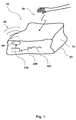
- Figure 1 illustrates the responsive training device 10 with user interaction 20.
- the user interaction 20 may be a pressure applied by the user to the device 10.
- the pressure is illustrated as applied by hand to the surface 60 of the device 10. Due to the applied pressure, the compressible body 70 of the device 10 is compressed.
- a sensor 100 embedded in the device 10 detects the user interaction 20 and generates a sensor output 200.
- the sensor output 200 is received by the controller 270.
- the controller 270 controls a transponder 90 which gives an audio-or-visual output 22.
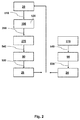
- Figure 2 illustrates how the response of the responsive training device 10 is generated with a first audio-or-visual response 24 and a second audio-or-visual response 26.
- the first audio-or-visual response 24 is generated by the controller 270 without a sensory output 200 and without user interaction 20.
- the controller 270 controls 540 the transponder 90 to output 530 an audio-or-visual signal, which for this embodiment is the first audio-or-visual output 24.
- the first audio-or-visual output 24 may alert or motivate the user to use the training device 10.
- the user may then interact 20 with the device and apply 510 a pressure or a movement to the device 10. This interaction is detected 520 by a sensor 100 which generates a sensor output 200.
- the sensor output 200 is sent to the controller 270 which controls a transponder 90 to output 530 an audio-or-visual signal, which for this embodiment is the second audio-or-visual output 26.
- the illustration may illustrate several working modes of the device 10 where the device 10 is set to alert, instruct, or motivate the user by a first audio-or-visual response 24.
- the working mode may be to alert the user to begin a training routine.
- Another example may be that the working mode of the device 10 is set to motivate the user to alter the pattern of the ongoing training.
- Figure 3 illustrates the responsive training device 10 formed as a pillow 30.
- the device 10 is configured with a surface 60 enclosing a compressible body 70 embedding a transponder 90 and which surface 60 is configured with a connecting point 260.
- the connecting point 260 may for example be useable for recharging the device 10 by connecting the device 10 to a docking station. Another example for use of a connection point could be to load or alter the audio-or-visual universe 28 of the device 10.
- the illustrated transponder 90 may comprise several transponders 90 and may comprise one or more speakers 92, one or more light indicators 94 or a combination of both for an audio-or-visual response 22.
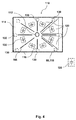
- FIG 4 illustrates a top section view of a capacitive sensor 110 which may be embedded in the responsive training device 10.
- the sensor 110 comprises two conductive bodies configured as a capacitive sensor layer 114 and as an electric shield 118. In the illustrated embodiment, the electric shield further constitutes the surface 60 of the device 10.
- the capacitive sensor layer 114 is configured with multiple capacitive electrodes 116 which may be conductive threads 166 woven into or sewed onto a nonconductive fabric.
- the capacitive electrodes 116 divide the sensor into multiple sensor zones 120.
- the capacitance 130 may be measured between any of the capacitive electrodes 116, preferably between the electric shield 118 and the capacitive electrodes 116 comprised in the capacitive sensor layer 114.
- the capacitive sensor 110 further comprises a capacitive sensor chip 112.
- the distance between the capacitive electrodes 116 including the electrode constituting the electric shield 118 is changed when an outside pressure is applied to the device 10.
- the capacitance 130 between the electrodes 116 is altered.
- the change in capacitance 130 may be registered by the capacitive senor chip 112.
- the sensor zones 120 facilitate the possibility of generating sensory zone outputs 210 in response to the location of where the pressure is applied to the device 10.
- Figure 5 illustrates a side section view of a capacitive sensor 110 embedded in the responsive training device 10.
- the surface 60 of the illustrated embodiment comprises a cover 80.
- FIG. 5A illustrates a one-part capacitive sensor 140.
- the one-part capacitive sensor 140 comprises a capacitive electrode 116 placed substantially in the middle between the upper and lower part of the device 10 which for this embodiment also is in the middle between the upper and lower part of the electric shield 118 comprising the other capacitive electrode 116.
- the capacitive electrode 116 in the middle of the device 10 may comprise a capacitive sensor layer 114 outlined with sensor zones 120 as illustrated in the top section view in figure 4 .
- the capacitance 130 between the capacitive electrodes 116 is changed when an outside pressure is applied to the device 10.
- two transponders 90 and a controller 270 are embedded to generate an audio-or-visual response 22 generated by an applied pressure.
- an accelerometer 104 is embedded in the device.
- Figure 5B illustrates a two-part capacitive sensor 142.
- This sensor comprises two capacitive sensor electrodes embedded in the compressible body 70 surrounded by the electric shield 118 constituting yet another capacitive electrode 116.
- the two capacitive sensor electrodes embedded in the compressible body 70 are placed substantially parallel to each other with one placed above the middle of the device 10 and the other placed below the middle of the device 10. Thereby a kernel of the device 10 is left available for embedding transponders 90, a controller 270 and an accelerometer 104.
- the two capacitive sensor electrodes embedded in the compressible body 70 may be capacitive sensor layers 114 configured with the outline illustrated in the top section view in figure 4 .
- the responsive training device 10 constructed as a ball 40 is illustrated in figure 6A .
- the figure illustrates a section view of the ball-formed training device 10,40 comprising a capacitive sensor 110 and an accelerometer 104.
- the capacitive sensor 110 comprises annular capacitive electrodes 116 in an inner layer and an outer layer with substantially equidistance spaced along the circumference of the ball.
- the electrodes 116 may be thin ring-shaped capacitive electrodes, broader band-shaped electrodes configured as a capacitive sensor layer 114 or ball-shaped capacitive sensor layers 114.
- the sensor layers 114 may further be outlined with sensor zones 120 resembling the capacitive sensor layer 114 illustrated in figure 4 .
- the capacitive electrode 116 in one layer may comprise multiple thin ring-shaped capacitive electrodes or broader band-shaped electrodes placed at different angles or distances to each other as illustrated in figure 6B and 6C .
- the two capacitive electrode layers 114 are spaced by a compressible body and as previously described in connection with figure 4 the capacitance 130 between the layers 114 or across the sensor zones 120 comprised in the individual layers 114 may be changed due to an applied pressure to the surface 60 of the ball-formed device 10,40.
- a controller 240 may be embedded in the centre of the ball 40 comprised within the inner layer of the capacitive sensor.
- the centre of the ball may comprise an incompressible fluid or a compressible fluid. If a compressible fluid is embedded in the centre of the ball, considerations should be taken regarding the degree of compressibility of the two compressible materials comprised in the device 10 to achieve sufficient changes in capacitance in order to determine the applied pressure.
- the surface 60 of the illustrated embodiment comprises a cover 80.
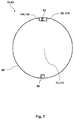
- Figure 7 illustrates the responsive training device 10 constructed as a ball 40.
- the figure illustrates a section view of the device 10.
- the illustrated embodiment comprises an air pressure sensor 106 and an accelerometer 104 embedded in the ball with the surface 60.
- the ball comprises a centre of air 170 which also constitutes the compressible body 70.
- a valve 42 is provided to inflate the ball 40.
- two transponders 90 and a controller are embedded in the ball to generate an audio-or-visual response.
- Figure 8 illustrates the response of the responsive training device 10 in use 500 which response is generated by pressure input due to user interaction 20.
- a user interacts with the device 10 by applying 510 a pressure to the device 10.
- the applied pressure is detected 520 by a pressure sensor 102 and the sensory output 200 is classified according to a set of pressure characteristics 420.
- the pressure characteristics 420 are mapped to a set of response characteristics 430.
- the set of response characteristics 430 is mapped to a specific audio-or-visual universe 28 which is output 530 as an audio-or-visual response 22.
- the set of pressure characteristics 420 may comprise information such as intensity 402, repetition rate 404 and rhythm 406 of the applied pressure.
- Figure 9 illustrates the response of the responsive training device 10 in use 500 which response is generated by a pressure input and a motion input due to user interaction 20.
- a user interacts with the device 10 by applying 510 a pressure and motion to the device 10.
- the applied 510 pressure is detected 520 by a pressure sensor 102 and the applied 510 motion is detected 520 by an accelerometer 104.
- the sensor outputs 200 are classified according to a set of pressure characteristics 420 and a set of motion characteristics 410.
- the characteristics 410,420 are mapped to a set of response characteristics 430.
- the set of response characteristics 430 is mapped to a specific audio-or-visual universe 28 which is output 530 as an audio-or-visual response 22.
- the set of pressure and motion characteristics 410,420 may comprise information such as intensity 402, repetition rate 404 and rhythm 406 of the applied pressure.
Landscapes
- Health & Medical Sciences (AREA)
- General Health & Medical Sciences (AREA)
- Physical Education & Sports Medicine (AREA)
- Engineering & Computer Science (AREA)
- Life Sciences & Earth Sciences (AREA)
- Biophysics (AREA)
- Orthopedic Medicine & Surgery (AREA)
- Multimedia (AREA)
- Human Computer Interaction (AREA)
- Rehabilitation Tools (AREA)
- Measurement Of The Respiration, Hearing Ability, Form, And Blood Characteristics Of Living Organisms (AREA)
Priority Applications (7)
| Application Number | Priority Date | Filing Date | Title |
|---|---|---|---|
| EP16159078.1A EP3216499A1 (fr) | 2016-03-08 | 2016-03-08 | Dispositif d'entraînement réactif |
| PCT/DK2017/050050 WO2017152917A1 (fr) | 2016-03-08 | 2017-02-24 | Dispositif d'entraînement fournissant une rétroaction |
| EP17707163.6A EP3426361B1 (fr) | 2016-03-08 | 2017-02-24 | Dispositif d'entraînement réactif |
| US16/083,203 US11565164B2 (en) | 2016-03-08 | 2017-02-24 | Responsive training device |
| CN201790000652.2U CN209155064U (zh) | 2016-03-08 | 2017-02-24 | 响应训练设备 |
| JP2018566626A JP2019515761A (ja) | 2016-03-08 | 2017-02-24 | 応答式トレーニング装置 |
| JP2022000047U JP3236932U (ja) | 2016-03-08 | 2022-01-11 | 応答式トレーニング装置 |
Applications Claiming Priority (1)
| Application Number | Priority Date | Filing Date | Title |
|---|---|---|---|
| EP16159078.1A EP3216499A1 (fr) | 2016-03-08 | 2016-03-08 | Dispositif d'entraînement réactif |
Publications (1)
| Publication Number | Publication Date |
|---|---|
| EP3216499A1 true EP3216499A1 (fr) | 2017-09-13 |
Family
ID=55527309
Family Applications (2)
| Application Number | Title | Priority Date | Filing Date |
|---|---|---|---|
| EP16159078.1A Withdrawn EP3216499A1 (fr) | 2016-03-08 | 2016-03-08 | Dispositif d'entraînement réactif |
| EP17707163.6A Active EP3426361B1 (fr) | 2016-03-08 | 2017-02-24 | Dispositif d'entraînement réactif |
Family Applications After (1)
| Application Number | Title | Priority Date | Filing Date |
|---|---|---|---|
| EP17707163.6A Active EP3426361B1 (fr) | 2016-03-08 | 2017-02-24 | Dispositif d'entraînement réactif |
Country Status (5)
| Country | Link |
|---|---|
| US (1) | US11565164B2 (fr) |
| EP (2) | EP3216499A1 (fr) |
| JP (2) | JP2019515761A (fr) |
| CN (1) | CN209155064U (fr) |
| WO (1) | WO2017152917A1 (fr) |
Families Citing this family (10)
| Publication number | Priority date | Publication date | Assignee | Title |
|---|---|---|---|---|
| CN106621273B (zh) * | 2016-12-22 | 2019-11-26 | 厦门衡拓电子信息有限公司 | 一种智能交互式击打设备的实现方法 |
| DE102018113602A1 (de) | 2018-06-07 | 2019-12-12 | Ichó Systems Gmbh | Vorrichtung für Körperübungen mit Näherungssensor und Verfahren zur Steuerung |
| US12515115B2 (en) * | 2018-08-08 | 2026-01-06 | Catherine Angela Hoeffner | Equipment feedback system |
| CN112657040A (zh) * | 2020-12-23 | 2021-04-16 | 至诚文化发展(常州)有限公司 | 一种回弹性好的挤压式情绪发泄球 |
| IT202100014858A1 (it) * | 2021-06-08 | 2022-12-08 | Ledragomma Srl | Dispositivo per l’esercizio fisico |
| TWI769084B (zh) * | 2021-09-23 | 2022-06-21 | 楚卿 林 | 遊戲系統 |
| EP4426449B1 (fr) | 2021-11-03 | 2025-12-24 | Boxco SAS | Système et procédé pour fournir une expérience de remise en forme à un utilisateur |
| CN114344848A (zh) * | 2021-12-17 | 2022-04-15 | 广东远华新材料股份有限公司 | 一种基于智能运动垫的运动监测处理方法、智能运动垫 |
| US20250190079A1 (en) * | 2022-03-24 | 2025-06-12 | Sony Interactive Entertainment Inc. | Controller apparatus and sensor |
| FR3136679B1 (fr) * | 2022-06-16 | 2025-02-21 | Sealynx Int | Dispositif d’aide à l’entraînement physique |
Citations (4)
| Publication number | Priority date | Publication date | Assignee | Title |
|---|---|---|---|---|
| WO2001008755A1 (fr) * | 1999-05-27 | 2001-02-08 | Smith & Nephew Plc | Dispositif de rehabilitation |
| US20050212762A1 (en) * | 2004-03-24 | 2005-09-29 | Dale Pearcey | Responsive punching device |
| US20140290360A1 (en) * | 2011-03-25 | 2014-10-02 | May Patents Ltd. | System and method for a motion sensing device |
| US20150113731A1 (en) * | 2013-10-28 | 2015-04-30 | Hong-Mao LIU | Floor-stretching exercise mat with movement guiding function and a movement guiding method |
Family Cites Families (15)
| Publication number | Priority date | Publication date | Assignee | Title |
|---|---|---|---|---|
| US4883271A (en) * | 1985-10-10 | 1989-11-28 | French Sportech Corporation | Sports impact measuring apparatus |
| US4824107A (en) * | 1985-10-10 | 1989-04-25 | French Barry J | Sports scoring device including a piezoelectric transducer |
| US5280905A (en) * | 1993-04-12 | 1994-01-25 | James Micco | Electronic football blocking and tackling dummy |
| US5419549A (en) * | 1993-05-28 | 1995-05-30 | Umlimited Ideas Corporation | Baseball pitcher game and trainer apparatus |
| US7386401B2 (en) * | 1994-11-21 | 2008-06-10 | Phatrat Technology, Llc | Helmet that reports impact information, and associated methods |
| JP2008241717A (ja) * | 2004-03-29 | 2008-10-09 | Sanyo Electric Co Ltd | 静電容量型圧力センサー及びこれを用いた心拍/呼吸計測装置 |
| US20060252601A1 (en) * | 2005-03-24 | 2006-11-09 | Baum Aaron W | Human-bearing inflatable device |
| NZ551819A (en) * | 2006-12-04 | 2009-03-31 | Zephyr Technology Ltd | Impact detection system |
| US9345424B2 (en) * | 2008-04-03 | 2016-05-24 | University Of Washington | Clinical force sensing glove |
| US8384551B2 (en) * | 2008-05-28 | 2013-02-26 | MedHab, LLC | Sensor device and method for monitoring physical stresses placed on a user |
| US9724570B2 (en) | 2012-11-09 | 2017-08-08 | Wilson Sporting Goods Co. | Ball lighting |
| US10161838B2 (en) * | 2013-02-13 | 2018-12-25 | Board Of Regents, The University Of Texas System | Sensor assembly, method, and device for monitoring shear force and pressure on a structure |
| CA2901026C (fr) * | 2014-08-19 | 2020-11-24 | Western Michigan University Research Foundation | Systeme de surveillance d'impact sur un casque |
| US10493350B2 (en) * | 2015-11-11 | 2019-12-03 | Step And Connect, Llc | Balance sensory and motor feedback mat |
| US20170225032A1 (en) * | 2016-02-09 | 2017-08-10 | Darnell Jones | Exercise training system |
-
2016
- 2016-03-08 EP EP16159078.1A patent/EP3216499A1/fr not_active Withdrawn
-
2017
- 2017-02-24 WO PCT/DK2017/050050 patent/WO2017152917A1/fr not_active Ceased
- 2017-02-24 US US16/083,203 patent/US11565164B2/en active Active
- 2017-02-24 CN CN201790000652.2U patent/CN209155064U/zh active Active
- 2017-02-24 JP JP2018566626A patent/JP2019515761A/ja active Pending
- 2017-02-24 EP EP17707163.6A patent/EP3426361B1/fr active Active
-
2022
- 2022-01-11 JP JP2022000047U patent/JP3236932U/ja active Active
Patent Citations (4)
| Publication number | Priority date | Publication date | Assignee | Title |
|---|---|---|---|---|
| WO2001008755A1 (fr) * | 1999-05-27 | 2001-02-08 | Smith & Nephew Plc | Dispositif de rehabilitation |
| US20050212762A1 (en) * | 2004-03-24 | 2005-09-29 | Dale Pearcey | Responsive punching device |
| US20140290360A1 (en) * | 2011-03-25 | 2014-10-02 | May Patents Ltd. | System and method for a motion sensing device |
| US20150113731A1 (en) * | 2013-10-28 | 2015-04-30 | Hong-Mao LIU | Floor-stretching exercise mat with movement guiding function and a movement guiding method |
Also Published As
| Publication number | Publication date |
|---|---|
| US11565164B2 (en) | 2023-01-31 |
| US20190038955A1 (en) | 2019-02-07 |
| EP3426361B1 (fr) | 2021-09-22 |
| WO2017152917A1 (fr) | 2017-09-14 |
| JP3236932U (ja) | 2022-03-31 |
| JP2019515761A (ja) | 2019-06-13 |
| EP3426361A1 (fr) | 2019-01-16 |
| CN209155064U (zh) | 2019-07-26 |
Similar Documents
| Publication | Publication Date | Title |
|---|---|---|
| EP3426361B1 (fr) | Dispositif d'entraînement réactif | |
| US10398354B2 (en) | Sensor array system | |
| US9868026B2 (en) | Functional postural training machine | |
| US20130116852A1 (en) | Device including a multi-actuator haptic surface for providing haptic effects on said surface | |
| US11130037B2 (en) | Boxing fitness device and detection method thereof | |
| EP3437700A1 (fr) | Vêtement intelligent et procédé d'entraînement | |
| WO2016131936A2 (fr) | Dispositif, système et procédé de transmission de stimuli | |
| KR20110055591A (ko) | 사람의 움직임을 감지하기 위한 시스템 및 이를 사용하는 방법 | |
| DE202015001313U1 (de) | Vorrichtung und System zum Empfang vom EMG-Signalen und/oder übermitteln von EMS-Signalen an einen menschlichen Körper um ihn zu trainieren | |
| CN107341351A (zh) | 智能健身方法、装置及系统 | |
| JP2016002109A (ja) | 活動評価装置、評価処理装置、プログラム | |
| JP2023514438A (ja) | カメラ付きのサイクル及び協調パンチエクササイズ装置と方法 | |
| CN113457105A (zh) | 具健身选单的智能镜子 | |
| CN208678266U (zh) | 一种静态平衡训练装置 | |
| US11712601B2 (en) | Exercise device | |
| CN204246136U (zh) | 灵敏素质测试装置 | |
| JP6270115B2 (ja) | 運動支援システム及び運動支援プログラム | |
| JP7560101B2 (ja) | 圧力計測機能付き操作装置及び操作システム | |
| Rito | Virtual reality tool for balance training | |
| WO2017039553A1 (fr) | Système de rééducation personnalisée | |
| EP1804929A1 (fr) | Procede et appareil permettant de surveiller et de guider un entrainement physique | |
| JP2021090500A (ja) | エクササイズ用具用の装置 | |
| Chen et al. | Concept Design of Home-Based VR Gaming Device to Promote Active Aging | |
| CA2531358C (fr) | Systeme d'entrainement kinesthesique a retroaction composite | |
| Sundholm | Activity recognition using floor based pressure sensors |
Legal Events
| Date | Code | Title | Description |
|---|---|---|---|
| PUAI | Public reference made under article 153(3) epc to a published international application that has entered the european phase |
Free format text: ORIGINAL CODE: 0009012 |
|
| AK | Designated contracting states |
Kind code of ref document: A1 Designated state(s): AL AT BE BG CH CY CZ DE DK EE ES FI FR GB GR HR HU IE IS IT LI LT LU LV MC MK MT NL NO PL PT RO RS SE SI SK SM TR |
|
| AX | Request for extension of the european patent |
Extension state: BA ME |
|
| STAA | Information on the status of an ep patent application or granted ep patent |
Free format text: STATUS: THE APPLICATION IS DEEMED TO BE WITHDRAWN |
|
| 18D | Application deemed to be withdrawn |
Effective date: 20180314 |