EP3217582B1 - Procédé et dispositif de transmission de données dans une bande de fréquences non autorisée - Google Patents
Procédé et dispositif de transmission de données dans une bande de fréquences non autorisée Download PDFInfo
- Publication number
- EP3217582B1 EP3217582B1 EP15857557.1A EP15857557A EP3217582B1 EP 3217582 B1 EP3217582 B1 EP 3217582B1 EP 15857557 A EP15857557 A EP 15857557A EP 3217582 B1 EP3217582 B1 EP 3217582B1
- Authority
- EP
- European Patent Office
- Prior art keywords
- frame
- transmitted
- sub
- data
- frequency band
- Prior art date
- Legal status (The legal status is an assumption and is not a legal conclusion. Google has not performed a legal analysis and makes no representation as to the accuracy of the status listed.)
- Active
Links
Images



Classifications
-
- H—ELECTRICITY
- H04—ELECTRIC COMMUNICATION TECHNIQUE
- H04W—WIRELESS COMMUNICATION NETWORKS
- H04W72/00—Local resource management
- H04W72/04—Wireless resource allocation
- H04W72/044—Wireless resource allocation based on the type of the allocated resource
- H04W72/0453—Resources in frequency domain, e.g. a carrier in FDMA
-
- H—ELECTRICITY
- H04—ELECTRIC COMMUNICATION TECHNIQUE
- H04L—TRANSMISSION OF DIGITAL INFORMATION, e.g. TELEGRAPHIC COMMUNICATION
- H04L5/00—Arrangements affording multiple use of the transmission path
- H04L5/003—Arrangements for allocating sub-channels of the transmission path
- H04L5/0044—Allocation of payload; Allocation of data channels, e.g. PDSCH or PUSCH
-
- H—ELECTRICITY
- H04—ELECTRIC COMMUNICATION TECHNIQUE
- H04L—TRANSMISSION OF DIGITAL INFORMATION, e.g. TELEGRAPHIC COMMUNICATION
- H04L1/00—Arrangements for detecting or preventing errors in the information received
-
- H—ELECTRICITY
- H04—ELECTRIC COMMUNICATION TECHNIQUE
- H04L—TRANSMISSION OF DIGITAL INFORMATION, e.g. TELEGRAPHIC COMMUNICATION
- H04L27/00—Modulated-carrier systems
- H04L27/26—Systems using multi-frequency codes
-
- H—ELECTRICITY
- H04—ELECTRIC COMMUNICATION TECHNIQUE
- H04L—TRANSMISSION OF DIGITAL INFORMATION, e.g. TELEGRAPHIC COMMUNICATION
- H04L5/00—Arrangements affording multiple use of the transmission path
- H04L5/02—Channels characterised by the type of signal
- H04L5/06—Channels characterised by the type of signal the signals being represented by different frequencies
-
- H—ELECTRICITY
- H04—ELECTRIC COMMUNICATION TECHNIQUE
- H04W—WIRELESS COMMUNICATION NETWORKS
- H04W72/00—Local resource management
- H04W72/04—Wireless resource allocation
- H04W72/044—Wireless resource allocation based on the type of the allocated resource
- H04W72/0446—Resources in time domain, e.g. slots or frames
-
- H—ELECTRICITY
- H04—ELECTRIC COMMUNICATION TECHNIQUE
- H04W—WIRELESS COMMUNICATION NETWORKS
- H04W72/00—Local resource management
- H04W72/04—Wireless resource allocation
- H04W72/115—Grant-free or autonomous transmission
-
- H—ELECTRICITY
- H04—ELECTRIC COMMUNICATION TECHNIQUE
- H04W—WIRELESS COMMUNICATION NETWORKS
- H04W72/00—Local resource management
- H04W72/12—Wireless traffic scheduling
- H04W72/1263—Mapping of traffic onto schedule, e.g. scheduled allocation or multiplexing of flows
- H04W72/1273—Mapping of traffic onto schedule, e.g. scheduled allocation or multiplexing of flows of downlink data flows
-
- H—ELECTRICITY
- H04—ELECTRIC COMMUNICATION TECHNIQUE
- H04W—WIRELESS COMMUNICATION NETWORKS
- H04W72/00—Local resource management
- H04W72/20—Control channels or signalling for resource management
- H04W72/23—Control channels or signalling for resource management in the downlink direction of a wireless link, i.e. towards a terminal
-
- H—ELECTRICITY
- H04—ELECTRIC COMMUNICATION TECHNIQUE
- H04L—TRANSMISSION OF DIGITAL INFORMATION, e.g. TELEGRAPHIC COMMUNICATION
- H04L5/00—Arrangements affording multiple use of the transmission path
- H04L5/0001—Arrangements for dividing the transmission path
- H04L5/0003—Two-dimensional division
- H04L5/0005—Time-frequency
- H04L5/0007—Time-frequency the frequencies being orthogonal, e.g. OFDM(A) or DMT
-
- H—ELECTRICITY
- H04—ELECTRIC COMMUNICATION TECHNIQUE
- H04L—TRANSMISSION OF DIGITAL INFORMATION, e.g. TELEGRAPHIC COMMUNICATION
- H04L5/00—Arrangements affording multiple use of the transmission path
- H04L5/003—Arrangements for allocating sub-channels of the transmission path
- H04L5/0058—Allocation criteria
- H04L5/0073—Allocation arrangements that take into account other cell interferences
-
- H—ELECTRICITY
- H04—ELECTRIC COMMUNICATION TECHNIQUE
- H04W—WIRELESS COMMUNICATION NETWORKS
- H04W88/00—Devices specially adapted for wireless communication networks, e.g. terminals, base stations or access point devices
- H04W88/02—Terminal devices
- H04W88/06—Terminal devices adapted for operation in multiple networks or having at least two operational modes, e.g. multi-mode terminals
Definitions
- the present invention relates to the field of mobile communications, and particularly to a method and apparatus for transmitting data in an unlicensed frequency band.
- frequency band resources appear more and more insufficient, and a demand for a large number of mobile data services may not be satisfied by deploying a network and transmitting the services only over licensed frequency band resources, so transmission of the mobile data services may alternatively be deployed over unlicensed frequency band resources so as to increase the utilization ratio of the frequency band resources, and to improve experiences of users, where a mobile data service is transmitted in an unlicensed frequency band which is a secondary carrier with the assistance of a primary carrier in a licensed frequency band.
- the unlicensed frequency bands can be shared by various wireless communication systems, e.g., Bluetooth, Wireless Fidelity (WiFi), and other systems, all of which access the shared unlicensed frequency band resources by competing for the resources, so coexistence between Unlicensed Long Term Evolution (simply U-LTE or LTE-U) systems deployed by different operators, and between the LTE-U systems, and the WiFi and other wireless communication systems has been studied as a focus.
- wireless communication systems e.g., Bluetooth, Wireless Fidelity (WiFi), and other systems, all of which access the shared unlicensed frequency band resources by competing for the resources, so coexistence between Unlicensed Long Term Evolution (simply U-LTE or LTE-U) systems deployed by different operators, and between the LTE-U systems, and the WiFi and other wireless communication systems has been studied as a focus.
- WiFi Wireless Fidelity
- the LTE system supports two duplex modes of Frequency Division Duplex (FDD) and Time Division Duplex (TDD) to which there are different frame structures applicable.
- the two frame structures are common in that each radio frame includes 10 sub-frames of 1ms.
- a first type of frame structure applicable to the FDD system is as illustrated in Fig.1
- a second type of frame structure applicable to the TDD system is as illustrated in Fig.2 .
- an LTE-U signal may be transmitted starting in time at such any location in some sub-frame that the incomplete sub-frame is transmitted, that is, the length of time of the physical resource is less than the length of a normal sub-frame. If no signal is transmitted in the incomplete sub-frame, then the resource will be preempted by one of the other nodes intensively competing for the resource.
- LBT Listen Before Talk
- a period of time for the LTE-U system to transmit once is appropriately 10ms, and preferably no more than 40ms. If the LTE-U system transmits once for a period of time of at most 10ms, then the systems will compete for an access in such an incomplete sub-frame that the sub-frame available as a result is also the incomplete sub-frame. If no data are transmitted in either of two incomplete sub-frames, then the efficiency of transmission in the LTE-U system will be degraded by a factor of at least 10%.
- Embodiments of the invention provide a method and apparatus for transmitting data in an unlicensed frequency band so as to address how to transmit data in an incomplete sub-frame in an unlicensed frequency band.
- An embodiment of the invention provides a method for transmitting data in an unlicensed frequency band, the method including:
- the signaling is carried over a carrier in the unlicensed frequency band, or carried over a primary carrier or a secondary carrier in a licensed frequency band.
- the signaling is indicated in a Downlink (DL) grant of a Physical Downlink Shared Channel (PDSCH), or a DL grant of an enhanced Physical Downlink Control Channel (ePDCCH), over a secondary carrier in the unlicensed frequency band; or the signaling is indicated in a DL grant of a PDSCH, or a DL grant of an ePDCCH, over a primary carrier in a licensed frequency band.
- DL Downlink
- ePDCCH enhanced Physical Downlink Control Channel
- a PDSCH and an ePDCCH are transmitted in a frequency-division multiplexed mode, start points in time domain of the PDSCH and the ePDCCH are the same, and end points in time domain of the PDSCH and the ePDCCH are the same; and the start points in time domain of the PDSCH and the ePDCCH are located at a start point of the sub-frame where the end position of the data to be transmitted is located.
- the end position of the data to be transmitted, in the radio frame is an end OFDM symbol of a PDSCH or an ePDCCH.
- An embodiment of the invention further provides a method for transmitting data in an unlicensed frequency band, the method including:
- Preferably receiving, by the user equipment, the position indication information in the radio frame in the unlicensed frequency band via signaling includes: obtaining, by the user equipment, the signaling over a carrier in the unlicensed frequency band, or a primary carrier or a secondary carrier in a licensed frequency band.
- Preferably receiving, by the user equipment, the position indication information in the radio frame in the unlicensed frequency band via signaling includes:
- the user equipment further obtains from the signaling a position of a last sub-frame of channel occupancy time period on the unlicensed frequency.
- a PDSCH and an ePDCCH are transmitted in a frequency-division multiplexed mode, start points in time domain of the PDSCH and the ePDCCH are the same, and end points in time domain of the PDSCH and the ePDCCH are the same; and the start points in time domain of the PDSCH and the ePDCCH are located at a start point of the sub-frame where the end position of the data to be transmitted is located.
- the end position of the data to be transmitted, in the radio frame is an end OFDM symbol of a PDSCH or an ePDCCH.
- the end position of the transmitted data in the radio frame in the unlicensed frequency band is indicated in the position indication information to the user equipment, so that the user equipment can determine the end position of the transmitted data in the radio frame according to the position indication information to thereby receive the data correctly according to the end position and receiving position of the transmitted data.
- a User Equipment could not determine the end position of the data to be transmitted, in the received incomplete sub-frame.
- UE User Equipment
- data can only be transmitted in an incomplete sub-frame.
- the length of the incomplete sub-frame is less than the length of a complete sub-frame, for example, in an LTE system, there are only 14 Orthogonal Frequency Division Multiplex (OFDM) symbols available in a complete sub-frame with a normal Cyclic Prefix (CP), and a sub-frame with less than 14 OFDM symbols is an incomplete sub-frame.
- OFDM Orthogonal Frequency Division Multiplex
- the start position of an information block to be transmitted is known or fixed, and the end position thereof is undetermined or variable, where the length of the information block to be transmitted is less than the length of a sub-frame; and for the network device, both the start position and the end position of the information block to be transmitted are known, but the start position is relatively fixed, and the end position is variable. Since the end position where the data are transmitted is undetermined or variable, and the start position where the data are transmitted is known or fixed, if the user equipment can not determine the end position where the data are transmitted in the incomplete sub-frame, then the user equipment will not obtain the transmitted data.
- the network device transmits the radio frame by sending a position indication information to indicate the end position of the data to be transmitted, in the radio frame to the user equipment, so that the user equipment can determine the end position where the data are transmitted in the radio frame, and further obtain correctly the data in the incomplete sub-frame.
- the embodiments of the invention provide methods for transmitting data in an unlicensed frequency band respectively at the network side and the user equipment side, where the transmitting method at the network side, and the transmitting method at the user equipment side can be performed separately or in combination.
- the transmitting methods at the network side and the user equipment side will be described below respectively.
- the methods according to the embodiments of the invention can be applicable to various mobile communication systems, and they will be described in the embodiments of the invention merely taking an LTE system as an example, although a repeated description of other mobile communication systems will be omitted here.
- symbol refers to an OFDM symbol in the LTE system described by way of an example.
- a network device which can be a device capable of accessing a network, e.g., an eNB.
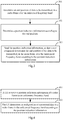
- the flow can include:
- PDSCH Physical Downlink Shared Channel
- ePDCCH enhanced Physical Downlink Control Channel
- the end position of the data to be transmitted, indicated by the position indication information refers to the sequence number of an end symbol in the radio frame where the data to be transmitted are carried, or the relative position of an end symbol in the radio frame, where the relative position refers to the number of symbols by which the end symbol of the data to be transmitted is spaced from the start of the radio frame or the sub-frame where the data to be transmitted are carried, or the number of symbols by which the end symbol of the data to be transmitted is spaced from the start of the radio frame or the sub-frame, or other substantially equivalent information.
- the determined position indication information can be a sequence prescribed between the network device and the user equipment; or the position indication information can be sent via signaling.
- the sequence will be prescribed in advance between the network device and the user equipment, that is, the sequence is a sequence known to both the network device and the user equipment.
- the sequence can be stored locally in the user equipment, or generated by the user equipment.
- the sequence is generated using a Pseudo-Noise (PN) sequence or a Constant Amplitude Zero Auto-Correlation (CAZAC) sequence as a base sequence.
- PN Pseudo-Noise
- CAZAC Constant Amplitude Zero Auto-Correlation
- the sequence can alternatively be generated otherwise, so a repeated description thereof will be omitted here.
- the network device sends the sequence generally by locating the sequence in the last complete available OFDM symbol in the incomplete sub-frame, or in some OFDM symbol before the last complete available OFDM symbol.
- the sequence occupies all the bandwidth or a specified part of the bandwidth in the frequency domain.
- the symbol where the sequence is located will be located in time domain in any one prescribed symbol between the start symbol and the end symbol where the data to be transmitted are transmitted, or in the start symbol where the data to be transmitted are transmitted, for example, the network device sends the sequence in an OFDM symbol preceding to the end OFDM symbol where the PDSCH is transmitted.
- the symbol where the sequence is located will be the end symbol of the data to be transmitted.
- the network device sends the sequence in the end OFDM symbol where the PDSCH is transmitted, and the PDSCH and the sequence occupy different parts of the bandwidth in the frequency-division multiplexed mode.
- the position indication information is a sequence
- the sequence will be carried over a carrier in an unlicensed frequency band where the sub-frame is located.
- the signaling will be located in a symbol prescribed between the network device and the user equipment, where the position where the position indication information is sent is fixed instead of being detected blindly by the user equipment.
- the network device can configure the signaling in a prescribed symbol in any one sub-frame between a sub-frame where a successful contention based access is achieved, and the sub-frame where the last complete available symbol, where the data to be transmitted are transmitted, is located.
- a transmission period of time, and the end OFDM symbol in the last sub-frame can be indicated in signaling carried in some OFDM symbol in the sub-frame where a successful contention based access is achieved.
- the network device can determine the position of the end OFDM symbol in the last incomplete sub-frame, in the sub-frame where a successful contention based access is achieved.
- the signaling is configured in the last complete available symbol in the sub-frame where a successful contention based access is achieved.
- the user equipment decodes the signaling, so that the user equipment can obtain the end where the channel is occupied once by the network device, no matter whether the user equipment has data to be transmitted.
- the network device accessing the channel can occupy the channel for a configurable period of time, or the network device can indicate the period of time for which the occupied channel is transmitted, as the position of the end OFDM symbol in the last sub-frame, for example, the end OFDM symbol in the last sub-frame can be indicated as the L-th OFDM symbol in the M-th sub-frame after the network device accesses a sub-frame, where M and L are nonnegative integers, thus indicating the entire transmission period of time, and the end OFDM symbol in the last sub-frame.
- the signaling can alternatively be located in some prescribed OFDM symbol in the last sub-frame, and preferably the signaling is located in the first N-th OFDM symbol in the last sub-frame (N is a positive integer), where the position where the signaling is sent is fixed instead of being detected by the user equipment.
- the specified symbol is located in the last complete available symbol in the last sub-frame, where the signaling can be carried over the carrier where the incomplete sub-frame is located, or the signaling can be carried over another carrier to indicate the end symbol in the incomplete sub-frame across the carriers, that is, the signaling is carried over a carrier in the unlicensed frequency band, or over a primary carrier or a secondary carrier in a licensed frequency band.
- the signaling is carried in the licensed frequency band.
- the user device decoding the last sub-frame has been synchronized in time and frequency using a discovery signal or otherwise to determine the boundary of the header in the last sub-frame, if the position indication information of the information block to be transmitted is configured and transmitted in the K-th Resource Block (RB) in the first OFDM symbol in the last sub-frame, where K is a nonnegative integer, then the user equipment can decode the sub-frame after obtaining the position indication information in the K-th RB in the first OFDM symbol in the sub-frame.
- RB Resource Block
- the signaling occupies all the bandwidth of the prescribed symbol in the frequency domain, or a part of the bandwidth.
- the position indication information generally indicates the sequence number of the end OFDM symbol of the PDSCH or the ePDCCH, or the relative position of the sequence number of the end OFDM symbol of the PDSCH or the ePDCCH in the last sub-frame, in several bits, the number of the bits is particularly determined as needed in reality.
- the signaling occupies a specified part of the bandwidth, then the signaling and other information (e.g., a control channel, or the data to be transmitted) can occupy the same symbol in the frequency-division multiplexed mode.
- the signaling can be sent in the end OFDM symbol of the PDSCH, and the signaling and the PDSCH can be transmitted in the frequency-division multiplexed mode.
- the signaling can alternatively be indicated in a DL grant of the PDSCH, or a DL grant of the ePDCCH, over the secondary carrier in the unlicensed frequency band; or can be indicated in a DL grant of the PDSCH, or a DL grant of the ePDCCH, over a primary carrier in the licensed frequency band.
- the DL grant indicating the signaling can be carried in a common search space.
- an L1/L2 control channel When data are transmitted in a sub-frame in the LTE system, an L1/L2 control channel is located in the first P OFDM symbols in a complete sub-frame, where P is less than or equal to 4, and an OFDM symbol occupied by the L1/L2 control channel typically exists in an incomplete sub-frame in the unlicensed frequency band, so the PDCCH and the PDSCH can operate in the time-division multiplexed mode in the LTE protocol to thereby apply the original LTE protocol as much as possible.
- a control channel will occupy the entire bandwidth in the frequency domain, and at least one OFDM symbol in the time domain, that is, a control overhead occupies at least 1/3 and even more of available resources, thus evidently degrading the utilization ratio of the resources.
- the traditional L1/L2 control area in R8/R9 can be abandoned, but the ePDCCH and the PDSCH can operate in the frequency-division multiplexed mode.
- the sub-frame where the end position of the data to be transmitted is located is typically an incomplete sub-frame, so in the sub-frame where the end position of the data to be transmitted is located, the PDSCH and the ePDCCH are transmitted in the frequency-division multiplexed mode, and the start points in time domain of the PDSCH and the ePDCCH are the same, and the end points in time domain of the PDSCH and the ePDCCH are the same, where the start points in time domain of the PDSCH and the ePDCCH are located at the start point of the sub-frame where the end position of the data to be transmitted is located.
- the end position of the transmitted data in the radio frame in the unlicensed frequency band is indicated in the position indication information to the user equipment, so that the user equipment can determine the end position of the transmitted data in the radio frame according to the position indication information to thereby receive the data correctly.
- FIG.4 there is a flow chart of another method for transmitting data in an unlicensed frequency band according to an embodiment of the invention, where the flow is performed by a user equipment which can be a user equipment capable of wireless communication, e.g., a mobile phone.
- a user equipment which can be a user equipment capable of wireless communication, e.g., a mobile phone.
- the flow can include:
- the position indication information is a sequence prescribed between a network device and the user equipment, then if the user equipment detects the sequence in the radio frame in the operation 401, then the user equipment will can determine the end position of the transmitted data in the received radio frame according to the value of the prescribed sequence, and the position of a symbol in which the sequence is located, in the operation 402 to thereby demodulate the radio frame for the data.
- the user equipment will obtain the signaling, and a sub-frame corresponding to the signaling, over a secondary carrier in the unlicensed frequency band, or a primary carrier in a licensed frequency band to thereby obtain the end position of the transmitted data in the sub-frame in the operation 401.
- the signaling for indicating the position indication information is transmitted in the K-th RB located at the middle of a frequency band in the last OFDM symbol in the last sub-frame in the radio frame as prescribed in an LTE system.
- the user equipment can be synchronized in time and frequency using a discovery signal or otherwise to determine the boundary of a tailer in an incomplete sub-frame, and detect the signaling in the K-th RB at the middle of the frequency band in the last OFDM symbol in the incomplete sub-frame to thereby obtain the end position of the transmitted data in the sub-frame according to the signaling.
- the network device can have an ePDCCH and a PDSCH operated in the frequency-division multiplexed mode to thereby improve the utilization ratio of resources.
- the user equipment can determine the end position of the transmitted data in the radio frame according to the position indication information transmitted by the network device upon reception of the radio frame in the unlicensed frequency band, so that the user equipment can determine the end position of the transmitted data in the radio frame according to the position indication information to thereby receive the data correctly.
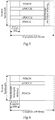
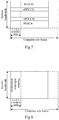
- the position indication information can be represented in two patterns, and the following description will be given taking an LTE system as an example with reference to Fig.5 and Fig.8 illustrating schematic structural diagrams of various combination patterns in which the last sub-frame is an incomplete sub-frame.
- the data to be transmitted are mapped onto and transmitted in a PDSCH, and an ePDCCH and a PDSCH operate in the time-division multiplexed mode.
- the start points in time domain of the PDSCH and the ePDCCH are the same, and both of them are located at the start point of the incomplete sub-frame.
- the position indication information is a sequence prescribed between the network device and the user equipment.
- the sequence located in the last complete available OFDM symbol in the incomplete sub-frame can occupy the entire bandwidth, or a part of the bandwidth, and if the sequence occupies a part of the bandwidth, then the PDSCH and the ePDCCH may also occupy a frequency resource of the OFDM symbol where the sequence is located.
- the user equipment firstly buffers the entire last incomplete sub-frame, and then detects the known sequence, and once the sequence located at the tailer is detected, then the user equipment can determine the end OFDM symbol in the incomplete sub-frame to thereby decode the ePDCCH and the PDSCH.
- the data to be transmitted are mapped onto and transmitted in a PDSCH, and an ePDCCH and a PDSCH operate in the frequency-division multiplexed mode.
- the start points in time domain of the PDSCH and the ePDCCH are the same, and both of them are located at the start point of the incomplete sub-frame.
- the position indication information is signaling.
- the signaling occupies a part of the bandwidth, and the signaling and the PDSCH together occupy an OFDM symbol in the frequency-division multiplexed mode, where the OFDM symbol where the sequence is located is located at the start OFDM symbol in the PDSCH.
- the user equipment determines the position of the end OFDM symbol in the sub-frame upon detection of the signaling, and then decodes the ePDCCH and the PDSCH according to the position of the end OFDM symbol.
- the data to be transmitted are mapped onto and transmitted in a PDSCH, and an ePDCCH and a PDSCH operate in the frequency-division multiplexed mode.
- the start points in time domain of the PDSCH and the ePDCCH are the same, and both of them are located at the start point of the incomplete sub-frame.
- the position indication information is signaling.
- the signaling is located in some OFDM symbol in a sub-frame where the network device competes for an access.
- the user equipment determines the position of the end OFDM symbol in the incomplete sub-frame upon detection of the signaling in some OFDM symbol in the sub-frame where a successful contention based access is achieved, and then decodes the ePDCCH and the PDSCH according to the position of the end OFDM symbol.
- the position indication information is signaling configured and transmitted in the K-th RB in the first OFDM symbol in the last incomplete sub-frame.
- the signaling can alternatively be located in some specific OFDM symbol in the incomplete sub-frame.
- the signaling is sent at such a position that is prescribed by the network device and the user equipment instead of being detected by the user equipment.
- the user device decoding the last incomplete sub-frame has been synchronized in time and frequency using a discovery signal or otherwise to determine the start symbol in the incomplete sub-frame, and then determine the end symbol of the data to be transmitted, according to the signaling in the K-th RB in the first OFDM symbol in the incomplete sub-frame to thereby decode the last incomplete sub-frame.
- embodiments of the invention further provide a network device and a user equipment, and reference can be made to the implementations of the methods above for implementations of the network device and the user equipment, so a repeated description thereof will be omitted here.
- FIG.9 there is a structural diagram of a network device according to an embodiment of the invention, which includes:
- the position indication information is a sequence prescribed between the network device and the user equipment.
- a symbol where the sequence is located is located in time domain in any one prescribed symbol between a start symbol and an end symbol where the data to be transmitted are transmitted, or in the start symbol where the data to be transmitted are transmitted, where the sequence occupies all the bandwidth or a specified part of the bandwidth in the frequency domain; or
- a symbol where the sequence is located is the end symbol where the data to be transmitted are transmitted, where the sequence occupies a specified part of the bandwidth.
- the position indication information is sent via signaling, where the signaling is located in a symbol prescribed between the network device and the user equipment.
- the signaling occupies a part of the bandwidth of the prescribed symbol.
- the signaling is configured in a prescribed symbol in any one sub-frame between a sub-frame where a successful contention based access is achieved, and a sub-frame where the last complete available symbol, where the data to be transmitted are transmitted, is located.
- the signaling is configured in the last complete available symbol in the sub-frame where a successful contention based access is achieved.
- the signaling is carried over a carrier in the unlicensed frequency band, or carried over a primary carrier or a secondary carrier in a licensed frequency band.
- the signaling is indicated in a DL grant of a Physical Downlink Shared Channel (PDSCH), or a DL grant of an enhanced Physical Downlink Control Channel (ePDCCH), over a secondary carrier in the unlicensed frequency band; or
- the signaling is indicated in a DL grant of a PDSCH, or a DL grant of an ePDCCH, over a primary carrier in a licensed frequency band.
- PDSCH Physical Downlink Shared Channel
- ePDCCH enhanced Physical Downlink Control Channel
- the signaling is further configured to indicate the position of the last sub-frame of channel occupancy time period on the unlicensed frequency.
- a PDSCH and an ePDCCH are transmitted in the frequency-division multiplexed mode, start points in time domain of the PDSCH and the ePDCCH are the same, and end points in time domain of the PDSCH and the ePDCCH are the same; and the start points in time domain of the PDSCH and the ePDCCH are located at the start point of the sub-frame where the end position of the data to be transmitted is located.
- the end position of the data to be transmitted, in the radio frame is an end symbol of a PDSCH or an ePDCCH.
- FIG.10 there is a structural diagram of a user equipment according to an embodiment of the invention, which includes:
- a receiving unit 1001 configured to receive a position indication information of a radio frame in an unlicensed frequency band
- a determining unit 1002 configured to determine an end position of transmitted data in a radio frame in the unlicensed frequency band according to the position indication information.
- the position indication information is a sequence prescribed between a network device and the user equipment.
- the determining unit is configured:
- the position indication information is sent via signaling, where the signaling is located in a symbol prescribed between the network device and the user equipment.
- the signaling occupies a part of the bandwidth of the prescribed symbol.
- the signaling is configured in a prescribed symbol in any one sub-frame between a sub-frame where a successful contention based access is achieved, and a sub-frame where the last complete available symbol, where the data to be transmitted are transmitted, is located.
- the signaling is configured in the last complete available symbol in the sub-frame where a successful contention based access is achieved.
- the determining unit 1002 is configured: To obtain the signaling over a carrier in the unlicensed frequency band, or a primary carrier or a secondary carrier in a licensed frequency band.
- the determining unit 1002 is configured:
- the determining unit 1002 is configured: To obtain from the signaling the position of the last sub-frame of channel occupancy time period on the unlicensed frequency.
- a PDSCH and an ePDCCH are transmitted in the frequency-division multiplexed mode, start points in time domain of the PDSCH and the ePDCCH are the same, and end points in time domain of the PDSCH and the ePDCCH are the same; and the start points in time domain of the PDSCH and the ePDCCH are located at the start point of the sub-frame where the end position of the data to be transmitted is located.
- the end position of the data to be transmitted, in the radio frame is an end symbol of a PDSCH or an ePDCCH.
- embodiments of the invention further provide an eNB and a mobile device, and reference can be made to the implementations of the methods above for implementations of the eNB and the mobile device, so a repeated description thereof will be omitted here.
- FIG.11 there is a structural diagram of an eNB according to an embodiment of the invention, which includes:
- the position indication information is a sequence prescribed between the network device and the user equipment.
- a symbol where the sequence is located is located in time domain in any one prescribed symbol between a start symbol and an end symbol where the data to be transmitted are transmitted, or in the start symbol where the data to be transmitted are transmitted, where the sequence occupies all the bandwidth or a specified part of the bandwidth in the frequency domain; or A symbol where the sequence is located is the end symbol where the data to be transmitted are transmitted, where the sequence occupies a specified part of the bandwidth.
- the position indication information is sent via signaling, where the signaling is located in a symbol prescribed between the network device and the user equipment.
- the signaling occupies a part of the bandwidth of the prescribed symbol.
- the signaling is configured in a prescribed symbol in any one sub-frame between a sub-frame where a successful contention based access is achieved, and a sub-frame where the last complete available symbol, where the data to be transmitted are transmitted, is located.
- the signaling is configured in the last complete available symbol in the sub-frame where a successful contention based access is achieved.
- the signaling is carried over a carrier in the unlicensed frequency band, or carried over a primary carrier or a secondary carrier in a licensed frequency band.
- the signaling is indicated in a DL grant of a PDSCH, or a DL grant of an ePDCCH, over a secondary carrier in the unlicensed frequency band; or
- the signaling is indicated in a DL grant of a PDSCH, or a DL grant of an ePDCCH, over a primary carrier in a licensed frequency band.
- the signaling is further configured to indicate the position of the last sub-frame of channel occupancy time period on the unlicensed frequency.
- a PDSCH and an ePDCCH are transmitted in the frequency-division multiplexed mode, start points in time domain of the PDSCH and the ePDCCH are the same, and end points in time domain of the PDSCH and the ePDCCH are the same; and the start points in time domain of the PDSCH and the ePDCCH are located at the start point of the sub-frame where the end position of the data to be transmitted is located.
- the end position of the data to be transmitted, in the radio frame is an end symbol of a PDSCH or an ePDCCH.
- the bus architecture can include any number of interconnected buses and bridges, and particularly link together various circuits of one or more processors represented by the processor 1101, and a memory represented by the memory 1102.
- the bus architecture can further link together various other circuits, e.g., peripheral devices, a voltage stabilizer, a power management circuit, etc., all of which are well known in the art, so a further description thereof will be omitted in this context.
- the bus interface serves as an interface.
- the transceiver 1103 can include a number of elements including a transmitter and a receiver serving as elements configured to communicate with various other devices over a transmission medium.
- the processor 1101 is responsible for managing the bus architecture and performing other normal processes, and the memory 1102 can store data for use by the processor 1101 in performing the operations.
- FIG.12 there is a structural diagram of a mobile device according to an embodiment of the invention, which includes:
- the position indication information is a sequence prescribed between a network device and the user equipment.
- processor 1201 is configured:
- the position indication information is sent via signaling, where the signaling is located in a symbol prescribed between the network device and the user equipment.
- the signaling occupies a part of the bandwidth of the prescribed symbol.
- the signaling is configured in a prescribed symbol in any one sub-frame between a sub-frame where a successful contention based access is achieved, and a sub-frame where the last complete available symbol, where the data to be transmitted are transmitted, is located.
- the signaling is configured in the last complete available symbol in the sub-frame where a successful contention based access is achieved.
- the processor 1201 is configured: To obtain the signaling over a carrier in the unlicensed frequency band, or a primary carrier or a secondary carrier in a licensed frequency band.
- processor 1201 is configured:
- the processor 1201 is configured: To obtain from the signaling the position of the last sub-frame of channel occupancy time period on the unlicensed frequency.
- a PDSCH and an ePDCCH are transmitted in the frequency-division multiplexed mode, start points in time domain of the PDSCH and the ePDCCH are the same, and end points in time domain of the PDSCH and the ePDCCH are the same; and the start points in time domain of the PDSCH and the ePDCCH are located at the start point of the sub-frame where the end position of the data to be transmitted is located.
- the end position of the data to be transmitted, in the radio frame is an end symbol of a PDSCH or an ePDCCH.
- the bus architecture can include any number of interconnected buses and bridges, and particularly link together various circuits of one or more processors represented by the processor 1201, and a memory represented by the memory 1202.
- the bus architecture can further link together various other circuits, e.g., peripheral devices, a voltage stabilizer, a power management circuit, etc., all of which are well known in the art, so a further description thereof will be omitted in this context.
- the bus interface serves as an interface.
- the transceiver 1203 can include a number of elements including a transmitter and a receiver serving as elements configured to communicate with various other devices over a transmission medium.
- the processor 1201 is responsible for managing the bus architecture and performing other normal processes, and the memory 1202 can store data for use by the processor 1201 in performing the operations.
- the end position of the data to be transmitted, in the radio frame is indicated in the position indication information to the user equipment, so that the user equipment can receive the data correctly.
- the indicating method according to the embodiments of the invention is simple, the data can be transmitted efficiently, and the available time-frequency resources can be made full use of, thus avoiding the resources from being wasted.
- the embodiments of the invention can be embodied as a method, a system or a computer program product. Therefore the invention can be embodied in the form of an all-hardware embodiment, an all-software embodiment or an embodiment of software and hardware in combination. Furthermore the invention can be embodied in the form of a computer program product embodied in one or more computer useable storage mediums (including but not limited to a disk memory, an optical memory, etc.) in which computer useable program codes are contained.
- These computer program instructions can also be stored into a computer readable memory capable of directing the computer or the other programmable data processing device to operate in a specific manner so that the instructions stored in the computer readable memory create an article of manufacture including instruction means which perform the functions specified in the flow(s) of the flow chart and/or the block(s) of the block diagram.
- These computer program instructions can also be loaded onto the computer or the other programmable data processing device so that a series of operational steps are performed on the computer or the other programmable data processing device to create a computer implemented process so that the instructions executed on the computer or the other programmable device provide steps for performing the functions specified in the flow(s) of the flow chart and/or the block(s) of the block diagram.
Landscapes
- Engineering & Computer Science (AREA)
- Signal Processing (AREA)
- Computer Networks & Wireless Communication (AREA)
- Mobile Radio Communication Systems (AREA)
Claims (12)
- Procédé de transmission de données dans une bande de fréquences sans licence, le procédé comprenant les étapes suivantes :déterminer (301), par un dispositif de réseau, une position de fin des données à transmettre, dans une trame radio sur la bande de fréquences sans licence ;déterminer (302), par le dispositif de réseau, une information d'indication de position selon la position de fin, où l'information d'indication de position donne pour instruction à un équipement utilisateur de déterminer la position de fin des données à transmettre, dans la trame radio sur la bande de fréquences sans licence selon l'information d'indication de position ; etenvoyer (303), par le dispositif de réseau, l'information d'indication de position à l'équipement utilisateur par l'intermédiaire de la signalisation ; où la signalisation est située dans un symbole de multiplexage par répartition orthogonale de la fréquence, OFDM, prescrit dans une sous-trame quelconque incluse dans la trame radio, entre une sous-trame où un accès par contention réussi est réalisé, et une sous-trame où se trouve un dernier symbole OFDM complet disponible, où les données à transmettre sont transmises ; ou la signalisation est située dans un premier Nième symbole OFDM ou un dernier symbole OFDM disponible complet dans une dernière sous-trame incluse dans la trame radio, où N est un entier positif.
- Procédé selon la revendication 1, dans lequel la signalisation est transportée sur une porteuse dans la bande de fréquences sans licence, ou transportée sur une porteuse primaire ou une porteuse secondaire dans une bande de fréquences sous licence.
- Procédé selon la revendication 1, dans lequel la signalisation est indiquée dans une attribution en liaison descendante, DL, d'un canal physique partagé en liaison descendante, PDSCH, ou une attribution DL d'un canal physique de contrôle de liaison descendante amélioré, ePDCCH, sur une porteuse secondaire dans la bande de fréquences sans licence ; ou
la signalisation est indiquée dans une attribution DL d'un PDSCH, ou une attribution DL d'un ePDCCH, sur une porteuse primaire dans une bande de fréquences sous licence. - Procédé selon la revendication 1, dans lequel, dans une sous-trame où se trouve la position de fin des données à transmettre, un PDSCH et un ePDCCH sont transmis en mode multiplexé par répartition en fréquence, les points de départ dans le domaine temporel du PDSCH et du ePDCCH sont les mêmes, et les points de fin dans le domaine temporel du PDSCH et du ePDCCH sont les mêmes ; et les points de départ dans le domaine temporel du PDSCH et du ePDCCH sont situés à un point de départ de la sous-trame où se trouve la position de fin des données à transmettre.
- Procédé selon l'une quelconque des revendications 1 à 4, dans lequel la position de fin des données à transmettre, dans la trame radio, est un symbole OFDM de fin d'un PDSCH ou d'un ePDCCH.
- Procédé de transmission de données dans une bande de fréquences sans licence, le procédé comprenant les étapes suivantes :recevoir (401), par un équipement utilisateur, une information d'indication de position d'une trame radio dans une bande de fréquences sans licence par l'intermédiaire d'une signalisation, où la signalisation est située dans un symbole de multiplexage par répartition orthogonale de la fréquence, OFDM, prescrit dans une sous-trame quelconque incluse dans la trame radio, entre une sous-trame où un accès par contention réussi est réalisé, et une sous-trame où se trouve un dernier symbole OFDM disponible complet, où les données à transmettre sont transmises ; ou la signalisation est située dans un premier Nième symbole OFDM ou un dernier symbole OFDM disponible complet dans une dernière sous-trame incluse dans la trame radio, où N est un entier positif ; etdéterminer (402), par l'équipement utilisateur, une position de fin des données transmises dans une trame radio dans la bande de fréquences sans licence en fonction de l'information d'indication de position.
- Procédé selon la revendication 6, dans lequel la réception (401), par l'équipement utilisateur, de l'information d'indication de position dans la trame radio dans la bande de fréquences non autorisée par l'intermédiaire de la signalisation comprend l'étape suivante :
obtenir, par l'équipement utilisateur, la signalisation sur une porteuse dans la bande de fréquences sans licence, ou une porteuse primaire ou une porteuse secondaire dans une bande de fréquences sous licence. - Procédé selon la revendication 6, dans lequel la réception (401), par l'équipement utilisateur, de l'information d'indication de position dans la trame radio dans la bande de fréquences sans licence par l'intermédiaire de la signalisation comprend les étapes suivantes :obtenir, par l'équipement utilisateur, la signalisation dans une attribution DL d'un canal physique partagé en liaison descendante, PDSCH, ou une attribution DL d'un canal physique de contrôle de liaison descendante amélioré, ePDCCH, sur une porteuse secondaire dans la bande de fréquences sans licence ; ouobtenir, par l'équipement utilisateur, la signalisation dans une attribution DL d'un PDSCH, ou une attribution DL d'un ePDCCH, sur une porteuse primaire dans une bande de fréquences sous licence.
- Procédé selon la revendication 6, dans lequel, dans une sous-trame où se trouve la position de fin des données à transmettre, un PDSCH et un ePDCCH sont transmis en mode multiplexé par répartition en fréquence, les points de départ dans le domaine temporel du PDSCH et du ePDCCH sont les mêmes, et les points de fin dans le domaine temporel du PDSCH et du ePDCCH sont les mêmes ; et les points de départ dans le domaine temporel du PDSCH et du ePDCCH sont situés à un point de départ de la sous-trame où se trouve la position de fin des données à transmettre.
- Procédé selon l'une quelconque des revendications 6 à 9, dans lequel la position de fin des données à transmettre, dans la trame radio, est un symbole OFDM de fin d'un PDSCH ou d'un ePDCCH.
- Dispositif de réseau, comprenant :une unité de détermination de la position de fin (901) configurée pour déterminer une position de fin des données à transmettre, dans une trame radio sur une bande de fréquences sans licence ;une unité de détermination d'information d'indication de position (902) configurée pour déterminer une information d'indication de position en fonction de la position de fin, où l'information d'indication de position donne pour instruction à un équipement utilisateur de déterminer la position de fin des données à transmettre, dans la trame radio sur la bande de fréquences sans licence selon l'information d'indication de position ; etune unité d'envoi (903) configurée pour envoyer l'information d'indication de position à l'équipement utilisateur par l'intermédiaire de la signalisation ; où la signalisation est située dans un symbole de multiplexage par répartition orthogonale de la fréquence, OFDM, prescrit dans une sous-trame quelconque incluse dans la trame radio, entre une sous-trame où un accès par contention réussi est réalisé, et une sous-trame où se trouve un dernier symbole OFDM complet disponible, où les données à transmettre sont transmises ; ou la signalisation est située dans un premier Nième symbole OFDM ou un dernier symbole OFDM disponible complet dans une dernière sous-trame incluse dans la trame radio, où N est un entier positif.
- Équipement utilisateur, comprenant :une unité de réception (1101) configurée pour recevoir une information d'indication de position d'une trame radio dans une bande de fréquences sans licence par l'intermédiaire d'une signalisation, où la signalisation est située dans un symbole de multiplexage par répartition orthogonale de la fréquence, OFDM, prescrit dans une sous-trame quelconque incluse dans la trame radio, entre une sous-trame où un accès par contention réussi est réalisé, et une sous-trame où se trouve un dernier symbole OFDM disponible complet, où les données à transmettre sont transmises ; ou la signalisation est située dans un premier Nième symbole OFDM ou un dernier symbole OFDM disponible complet dans une dernière sous-trame incluse dans la trame radio, où N est un entier positif ; etune unité de détermination (1102) configurée pour déterminer une position de fin des données transmises dans une trame radio dans la bande de fréquences sans licence en fonction de l'information d'indication de position.
Applications Claiming Priority (2)
| Application Number | Priority Date | Filing Date | Title |
|---|---|---|---|
| CN201410638168.5A CN105634666B (zh) | 2014-11-05 | 2014-11-05 | 一种在非授权频段上的数据传输方法及装置 |
| PCT/CN2015/091948 WO2016070704A1 (fr) | 2014-11-05 | 2015-10-14 | Procédé et dispositif de transmission de données dans une bande de fréquences non autorisée |
Publications (3)
| Publication Number | Publication Date |
|---|---|
| EP3217582A1 EP3217582A1 (fr) | 2017-09-13 |
| EP3217582A4 EP3217582A4 (fr) | 2017-11-08 |
| EP3217582B1 true EP3217582B1 (fr) | 2020-07-08 |
Family
ID=55908551
Family Applications (1)
| Application Number | Title | Priority Date | Filing Date |
|---|---|---|---|
| EP15857557.1A Active EP3217582B1 (fr) | 2014-11-05 | 2015-10-14 | Procédé et dispositif de transmission de données dans une bande de fréquences non autorisée |
Country Status (6)
| Country | Link |
|---|---|
| US (1) | US10506593B2 (fr) |
| EP (1) | EP3217582B1 (fr) |
| JP (1) | JP6438149B2 (fr) |
| KR (1) | KR20170081235A (fr) |
| CN (1) | CN105634666B (fr) |
| WO (1) | WO2016070704A1 (fr) |
Families Citing this family (14)
| Publication number | Priority date | Publication date | Assignee | Title |
|---|---|---|---|---|
| EP3155783B1 (fr) | 2014-06-12 | 2019-09-18 | LG Electronics Inc. | Procédé et appareil pour réaliser une détection à l'aveugle dans un système de communication sans fil |
| WO2016070397A1 (fr) * | 2014-11-07 | 2016-05-12 | Alcatel-Lucent Shanghai Bell Co., Ltd. | Procédé pour aider à la transmission de données sur une première porteuse par indication d'un point de fin de transmission de données |
| EP3219141B1 (fr) | 2014-11-15 | 2021-03-10 | Panasonic Intellectual Property Corporation of America | Procédé de planification de ressources, noeud b évolué, équipement utilisateur et procédé de détermination de ressources |
| US10015783B2 (en) * | 2015-11-16 | 2018-07-03 | Asustek Computer Inc. | Method and apparatus for signalling to downlink transmission for unlicensed channels in a wireless communication system |
| US10517021B2 (en) | 2016-06-30 | 2019-12-24 | Evolve Cellular Inc. | Long term evolution-primary WiFi (LTE-PW) |
| CN107733548B (zh) | 2016-08-10 | 2023-04-18 | 华为技术有限公司 | 信息的传输方法及相关装置 |
| WO2018184460A1 (fr) | 2017-04-06 | 2018-10-11 | Guangdong Oppo Mobile Telecommunications Corp., Ltd. | Procédé et dispositif destinés à déterminer des ressources, et support d'informations |
| CN110167160B (zh) * | 2018-02-13 | 2022-01-04 | 北京紫光展锐通信技术有限公司 | 一种信道资源分配方法及计算机可读存储介质和终端 |
| CN111758230B (zh) * | 2018-07-27 | 2022-02-08 | 华为技术有限公司 | 信号传输的方法和装置 |
| CN110784931B (zh) * | 2018-07-31 | 2024-02-09 | 中国信息通信研究院 | 一种网络设备、终端设备及其组成的通信系统和方法 |
| CN111107628A (zh) * | 2018-10-25 | 2020-05-05 | 普天信息技术有限公司 | 一种数据传输方法及装置 |
| CN109906573B (zh) * | 2019-02-01 | 2021-11-02 | 北京小米移动软件有限公司 | 传输格式确定方法、装置、基站、终端及存储介质 |
| CN111865518A (zh) * | 2019-04-26 | 2020-10-30 | 普天信息技术有限公司 | 5g非授权频谱的下行传输方法和装置 |
| DE112021002457T5 (de) * | 2020-07-14 | 2023-03-30 | Intel Corporation | Techniken für die steuerkanalübertragung für einen schlitzlosen betrieb und planung von datenübertragungen |
Family Cites Families (21)
| Publication number | Priority date | Publication date | Assignee | Title |
|---|---|---|---|---|
| US8842702B2 (en) * | 2007-07-17 | 2014-09-23 | Qualcomm Incorporated | Control indications for slotted wireless communication |
| US7990944B2 (en) | 2007-09-06 | 2011-08-02 | Wi-Lan, Inc. | Contention-based communication |
| WO2010121411A1 (fr) | 2009-04-20 | 2010-10-28 | 华为技术有限公司 | Procédé et appareil de transmission de données |
| CN115767752A (zh) * | 2011-02-11 | 2023-03-07 | 交互数字专利控股公司 | 用于增强型控制信道的系统和方法 |
| US9363798B2 (en) * | 2011-03-11 | 2016-06-07 | Lg Electronics Inc. | Method and device for terminal to transmit/receive signal in wireless communication system having carrier aggregation technique applied thereto |
| CN102724757B (zh) | 2011-03-30 | 2017-11-07 | 中兴通讯股份有限公司 | 一种控制信道信息处理方法和系统 |
| KR101600487B1 (ko) * | 2011-04-18 | 2016-03-21 | 엘지전자 주식회사 | 무선통신시스템에서 신호 전송 방법 및 장치 |
| WO2013006006A2 (fr) | 2011-07-07 | 2013-01-10 | 엘지전자 주식회사 | Procédé et appareil de transmission d'un signal dans un système de communication sans fil |
| US9549326B2 (en) * | 2011-07-14 | 2017-01-17 | Broadcom Corporation | Methods and apparatuses for provision of a flexible time sharing scheme on an unlicensed band of a system |
| EP2590350A1 (fr) * | 2011-11-07 | 2013-05-08 | Panasonic Corporation | Chevauchement PDCCH amélioré dans la région PDCCH |
| US9973967B2 (en) * | 2011-12-15 | 2018-05-15 | Nokia Solutions And Networks Oy | Radio operations in a carrier aggregation system |
| GB2497937B (en) * | 2011-12-22 | 2017-02-01 | Sca Ipla Holdings Inc | Telecommunications apparatus and methods |
| US20140056244A1 (en) | 2012-05-11 | 2014-02-27 | Telefonaktiebolaget L M Ericsson (Publ) | A Node and Method for Downlink Communications Scheduling |
| CN109088713B (zh) * | 2012-11-02 | 2021-05-18 | 华为技术有限公司 | 一种信息传输方法、用户设备及基站 |
| CN107580333B (zh) * | 2013-03-22 | 2022-04-05 | 华为技术有限公司 | Ofdma竞争方法及接入点 |
| CN105453507B (zh) * | 2013-08-08 | 2019-02-05 | Lg电子株式会社 | 在无线通信系统中发送和接收信号的方法及其装置 |
| US10326577B2 (en) * | 2013-08-13 | 2019-06-18 | Qualcomm Incorporated | Harq design for LTE in unlicensed spectrum utilizing individual ACK/NACK |
| JP2017526216A (ja) * | 2014-06-30 | 2017-09-07 | 華為技術有限公司Huawei Technologies Co.,Ltd. | サブフレーム処理方法およびサブフレーム処理デバイス |
| JP6742240B2 (ja) * | 2014-07-03 | 2020-08-19 | シャープ株式会社 | 基地局装置、端末装置、および通信方法 |
| JP6389905B2 (ja) * | 2014-07-07 | 2018-09-12 | エルジー エレクトロニクス インコーポレイティド | 無線通信システムにおけるデータ送受信方法及びその装置 |
| CN104301273B (zh) * | 2014-08-25 | 2020-03-10 | 中兴通讯股份有限公司 | 使用非授权载波发送及接收信号的方法、基站及用户设备 |
-
2014
- 2014-11-05 CN CN201410638168.5A patent/CN105634666B/zh active Active
-
2015
- 2015-10-14 EP EP15857557.1A patent/EP3217582B1/fr active Active
- 2015-10-14 US US15/524,503 patent/US10506593B2/en active Active
- 2015-10-14 KR KR1020177015328A patent/KR20170081235A/ko not_active Ceased
- 2015-10-14 JP JP2017542244A patent/JP6438149B2/ja active Active
- 2015-10-14 WO PCT/CN2015/091948 patent/WO2016070704A1/fr not_active Ceased
Non-Patent Citations (1)
| Title |
|---|
| None * |
Also Published As
| Publication number | Publication date |
|---|---|
| KR20170081235A (ko) | 2017-07-11 |
| WO2016070704A1 (fr) | 2016-05-12 |
| CN105634666A (zh) | 2016-06-01 |
| JP2017535223A (ja) | 2017-11-24 |
| US10506593B2 (en) | 2019-12-10 |
| CN105634666B (zh) | 2019-08-16 |
| EP3217582A4 (fr) | 2017-11-08 |
| EP3217582A1 (fr) | 2017-09-13 |
| US20170332379A1 (en) | 2017-11-16 |
| JP6438149B2 (ja) | 2018-12-12 |
Similar Documents
| Publication | Publication Date | Title |
|---|---|---|
| EP3217582B1 (fr) | Procédé et dispositif de transmission de données dans une bande de fréquences non autorisée | |
| US12120621B2 (en) | Enabling multiple numerologies in a network | |
| JP7534367B2 (ja) | ページング機会の開始決定 | |
| JP6577577B2 (ja) | 非権限周波数帯でのデータ伝送方法、データ受信方法及び装置 | |
| JP2020145715A (ja) | 無線システムにおける信号伝達構成 | |
| US20170238311A1 (en) | Synchronous Licensed Assisted Access | |
| CN104272631B (zh) | 用于增强覆盖范围的方法和装置 | |
| CN105991274B (zh) | 数据传输的方法、反馈信息传输方法及相关设备 | |
| CN116782393A (zh) | 一种系统信息发送方法及装置 | |
| JP6729976B2 (ja) | リソース判定方法、関連デバイスおよびシステム | |
| JP2019511889A (ja) | 情報送信方法及びシステム並びに装置 | |
| CN105634667B (zh) | 一种物理下行信道的处理方法及装置 | |
| CN107453852B (zh) | 一种子帧类型通知、确定方法及装置 | |
| HK40009642A (en) | Enabling multiple numerologies in a network | |
| HK40009642B (zh) | 在网络中实现多个参数集 |
Legal Events
| Date | Code | Title | Description |
|---|---|---|---|
| STAA | Information on the status of an ep patent application or granted ep patent |
Free format text: STATUS: THE INTERNATIONAL PUBLICATION HAS BEEN MADE |
|
| PUAI | Public reference made under article 153(3) epc to a published international application that has entered the european phase |
Free format text: ORIGINAL CODE: 0009012 |
|
| STAA | Information on the status of an ep patent application or granted ep patent |
Free format text: STATUS: REQUEST FOR EXAMINATION WAS MADE |
|
| 17P | Request for examination filed |
Effective date: 20170509 |
|
| AK | Designated contracting states |
Kind code of ref document: A1 Designated state(s): AL AT BE BG CH CY CZ DE DK EE ES FI FR GB GR HR HU IE IS IT LI LT LU LV MC MK MT NL NO PL PT RO RS SE SI SK SM TR |
|
| AX | Request for extension of the european patent |
Extension state: BA ME |
|
| REG | Reference to a national code |
Ref country code: DE Ref legal event code: R079 Ref document number: 602015055577 Country of ref document: DE Free format text: PREVIOUS MAIN CLASS: H04L0001000000 Ipc: H04W0072120000 |
|
| A4 | Supplementary search report drawn up and despatched |
Effective date: 20171009 |
|
| RIC1 | Information provided on ipc code assigned before grant |
Ipc: H04W 72/12 20090101AFI20171003BHEP Ipc: H04L 5/00 20060101ALI20171003BHEP |
|
| DAV | Request for validation of the european patent (deleted) | ||
| DAX | Request for extension of the european patent (deleted) | ||
| STAA | Information on the status of an ep patent application or granted ep patent |
Free format text: STATUS: EXAMINATION IS IN PROGRESS |
|
| 17Q | First examination report despatched |
Effective date: 20180917 |
|
| GRAP | Despatch of communication of intention to grant a patent |
Free format text: ORIGINAL CODE: EPIDOSNIGR1 |
|
| STAA | Information on the status of an ep patent application or granted ep patent |
Free format text: STATUS: GRANT OF PATENT IS INTENDED |
|
| INTG | Intention to grant announced |
Effective date: 20200213 |
|
| GRAS | Grant fee paid |
Free format text: ORIGINAL CODE: EPIDOSNIGR3 |
|
| GRAA | (expected) grant |
Free format text: ORIGINAL CODE: 0009210 |
|
| STAA | Information on the status of an ep patent application or granted ep patent |
Free format text: STATUS: THE PATENT HAS BEEN GRANTED |
|
| AK | Designated contracting states |
Kind code of ref document: B1 Designated state(s): AL AT BE BG CH CY CZ DE DK EE ES FI FR GB GR HR HU IE IS IT LI LT LU LV MC MK MT NL NO PL PT RO RS SE SI SK SM TR |
|
| REG | Reference to a national code |
Ref country code: AT Ref legal event code: REF Ref document number: 1289881 Country of ref document: AT Kind code of ref document: T Effective date: 20200715 Ref country code: CH Ref legal event code: EP |
|
| REG | Reference to a national code |
Ref country code: DE Ref legal event code: R096 Ref document number: 602015055577 Country of ref document: DE |
|
| REG | Reference to a national code |
Ref country code: IE Ref legal event code: FG4D |
|
| REG | Reference to a national code |
Ref country code: LT Ref legal event code: MG4D |
|
| REG | Reference to a national code |
Ref country code: AT Ref legal event code: MK05 Ref document number: 1289881 Country of ref document: AT Kind code of ref document: T Effective date: 20200708 |
|
| REG | Reference to a national code |
Ref country code: NL Ref legal event code: MP Effective date: 20200708 |
|
| PG25 | Lapsed in a contracting state [announced via postgrant information from national office to epo] |
Ref country code: HR Free format text: LAPSE BECAUSE OF FAILURE TO SUBMIT A TRANSLATION OF THE DESCRIPTION OR TO PAY THE FEE WITHIN THE PRESCRIBED TIME-LIMIT Effective date: 20200708 Ref country code: ES Free format text: LAPSE BECAUSE OF FAILURE TO SUBMIT A TRANSLATION OF THE DESCRIPTION OR TO PAY THE FEE WITHIN THE PRESCRIBED TIME-LIMIT Effective date: 20200708 Ref country code: NO Free format text: LAPSE BECAUSE OF FAILURE TO SUBMIT A TRANSLATION OF THE DESCRIPTION OR TO PAY THE FEE WITHIN THE PRESCRIBED TIME-LIMIT Effective date: 20201008 Ref country code: LT Free format text: LAPSE BECAUSE OF FAILURE TO SUBMIT A TRANSLATION OF THE DESCRIPTION OR TO PAY THE FEE WITHIN THE PRESCRIBED TIME-LIMIT Effective date: 20200708 Ref country code: GR Free format text: LAPSE BECAUSE OF FAILURE TO SUBMIT A TRANSLATION OF THE DESCRIPTION OR TO PAY THE FEE WITHIN THE PRESCRIBED TIME-LIMIT Effective date: 20201009 Ref country code: PT Free format text: LAPSE BECAUSE OF FAILURE TO SUBMIT A TRANSLATION OF THE DESCRIPTION OR TO PAY THE FEE WITHIN THE PRESCRIBED TIME-LIMIT Effective date: 20201109 Ref country code: BG Free format text: LAPSE BECAUSE OF FAILURE TO SUBMIT A TRANSLATION OF THE DESCRIPTION OR TO PAY THE FEE WITHIN THE PRESCRIBED TIME-LIMIT Effective date: 20201008 Ref country code: SE Free format text: LAPSE BECAUSE OF FAILURE TO SUBMIT A TRANSLATION OF THE DESCRIPTION OR TO PAY THE FEE WITHIN THE PRESCRIBED TIME-LIMIT Effective date: 20200708 Ref country code: AT Free format text: LAPSE BECAUSE OF FAILURE TO SUBMIT A TRANSLATION OF THE DESCRIPTION OR TO PAY THE FEE WITHIN THE PRESCRIBED TIME-LIMIT Effective date: 20200708 Ref country code: FI Free format text: LAPSE BECAUSE OF FAILURE TO SUBMIT A TRANSLATION OF THE DESCRIPTION OR TO PAY THE FEE WITHIN THE PRESCRIBED TIME-LIMIT Effective date: 20200708 |
|
| PG25 | Lapsed in a contracting state [announced via postgrant information from national office to epo] |
Ref country code: IS Free format text: LAPSE BECAUSE OF FAILURE TO SUBMIT A TRANSLATION OF THE DESCRIPTION OR TO PAY THE FEE WITHIN THE PRESCRIBED TIME-LIMIT Effective date: 20201108 Ref country code: PL Free format text: LAPSE BECAUSE OF FAILURE TO SUBMIT A TRANSLATION OF THE DESCRIPTION OR TO PAY THE FEE WITHIN THE PRESCRIBED TIME-LIMIT Effective date: 20200708 Ref country code: LV Free format text: LAPSE BECAUSE OF FAILURE TO SUBMIT A TRANSLATION OF THE DESCRIPTION OR TO PAY THE FEE WITHIN THE PRESCRIBED TIME-LIMIT Effective date: 20200708 Ref country code: RS Free format text: LAPSE BECAUSE OF FAILURE TO SUBMIT A TRANSLATION OF THE DESCRIPTION OR TO PAY THE FEE WITHIN THE PRESCRIBED TIME-LIMIT Effective date: 20200708 |
|
| PG25 | Lapsed in a contracting state [announced via postgrant information from national office to epo] |
Ref country code: NL Free format text: LAPSE BECAUSE OF FAILURE TO SUBMIT A TRANSLATION OF THE DESCRIPTION OR TO PAY THE FEE WITHIN THE PRESCRIBED TIME-LIMIT Effective date: 20200708 |
|
| REG | Reference to a national code |
Ref country code: DE Ref legal event code: R097 Ref document number: 602015055577 Country of ref document: DE |
|
| PG25 | Lapsed in a contracting state [announced via postgrant information from national office to epo] |
Ref country code: EE Free format text: LAPSE BECAUSE OF FAILURE TO SUBMIT A TRANSLATION OF THE DESCRIPTION OR TO PAY THE FEE WITHIN THE PRESCRIBED TIME-LIMIT Effective date: 20200708 Ref country code: SM Free format text: LAPSE BECAUSE OF FAILURE TO SUBMIT A TRANSLATION OF THE DESCRIPTION OR TO PAY THE FEE WITHIN THE PRESCRIBED TIME-LIMIT Effective date: 20200708 Ref country code: RO Free format text: LAPSE BECAUSE OF FAILURE TO SUBMIT A TRANSLATION OF THE DESCRIPTION OR TO PAY THE FEE WITHIN THE PRESCRIBED TIME-LIMIT Effective date: 20200708 Ref country code: IT Free format text: LAPSE BECAUSE OF FAILURE TO SUBMIT A TRANSLATION OF THE DESCRIPTION OR TO PAY THE FEE WITHIN THE PRESCRIBED TIME-LIMIT Effective date: 20200708 Ref country code: CZ Free format text: LAPSE BECAUSE OF FAILURE TO SUBMIT A TRANSLATION OF THE DESCRIPTION OR TO PAY THE FEE WITHIN THE PRESCRIBED TIME-LIMIT Effective date: 20200708 Ref country code: DK Free format text: LAPSE BECAUSE OF FAILURE TO SUBMIT A TRANSLATION OF THE DESCRIPTION OR TO PAY THE FEE WITHIN THE PRESCRIBED TIME-LIMIT Effective date: 20200708 |
|
| PLBE | No opposition filed within time limit |
Free format text: ORIGINAL CODE: 0009261 |
|
| STAA | Information on the status of an ep patent application or granted ep patent |
Free format text: STATUS: NO OPPOSITION FILED WITHIN TIME LIMIT |
|
| PG25 | Lapsed in a contracting state [announced via postgrant information from national office to epo] |
Ref country code: AL Free format text: LAPSE BECAUSE OF FAILURE TO SUBMIT A TRANSLATION OF THE DESCRIPTION OR TO PAY THE FEE WITHIN THE PRESCRIBED TIME-LIMIT Effective date: 20200708 |
|
| REG | Reference to a national code |
Ref country code: CH Ref legal event code: PL |
|
| 26N | No opposition filed |
Effective date: 20210409 |
|
| PG25 | Lapsed in a contracting state [announced via postgrant information from national office to epo] |
Ref country code: LU Free format text: LAPSE BECAUSE OF NON-PAYMENT OF DUE FEES Effective date: 20201014 Ref country code: SK Free format text: LAPSE BECAUSE OF FAILURE TO SUBMIT A TRANSLATION OF THE DESCRIPTION OR TO PAY THE FEE WITHIN THE PRESCRIBED TIME-LIMIT Effective date: 20200708 Ref country code: MC Free format text: LAPSE BECAUSE OF FAILURE TO SUBMIT A TRANSLATION OF THE DESCRIPTION OR TO PAY THE FEE WITHIN THE PRESCRIBED TIME-LIMIT Effective date: 20200708 |
|
| REG | Reference to a national code |
Ref country code: BE Ref legal event code: MM Effective date: 20201031 |
|
| REG | Reference to a national code |
Ref country code: DE Ref legal event code: R081 Ref document number: 602015055577 Country of ref document: DE Owner name: DATANG MOBILE COMMUNICATIONS EQUIPMENT CO., LT, CN Free format text: FORMER OWNER: CHINA ACADEMY OF TELECOMMUNICATIONS TECHNOLOGY, HAIDIAN, DISTRICT BEIJING, CN |
|
| PG25 | Lapsed in a contracting state [announced via postgrant information from national office to epo] |
Ref country code: SI Free format text: LAPSE BECAUSE OF FAILURE TO SUBMIT A TRANSLATION OF THE DESCRIPTION OR TO PAY THE FEE WITHIN THE PRESCRIBED TIME-LIMIT Effective date: 20200708 Ref country code: LI Free format text: LAPSE BECAUSE OF NON-PAYMENT OF DUE FEES Effective date: 20201031 Ref country code: BE Free format text: LAPSE BECAUSE OF NON-PAYMENT OF DUE FEES Effective date: 20201031 Ref country code: CH Free format text: LAPSE BECAUSE OF NON-PAYMENT OF DUE FEES Effective date: 20201031 |
|
| PG25 | Lapsed in a contracting state [announced via postgrant information from national office to epo] |
Ref country code: IE Free format text: LAPSE BECAUSE OF NON-PAYMENT OF DUE FEES Effective date: 20201014 |
|
| REG | Reference to a national code |
Ref country code: GB Ref legal event code: 732E Free format text: REGISTERED BETWEEN 20211007 AND 20211013 |
|
| PG25 | Lapsed in a contracting state [announced via postgrant information from national office to epo] |
Ref country code: TR Free format text: LAPSE BECAUSE OF FAILURE TO SUBMIT A TRANSLATION OF THE DESCRIPTION OR TO PAY THE FEE WITHIN THE PRESCRIBED TIME-LIMIT Effective date: 20200708 Ref country code: MT Free format text: LAPSE BECAUSE OF FAILURE TO SUBMIT A TRANSLATION OF THE DESCRIPTION OR TO PAY THE FEE WITHIN THE PRESCRIBED TIME-LIMIT Effective date: 20200708 Ref country code: CY Free format text: LAPSE BECAUSE OF FAILURE TO SUBMIT A TRANSLATION OF THE DESCRIPTION OR TO PAY THE FEE WITHIN THE PRESCRIBED TIME-LIMIT Effective date: 20200708 |
|
| PG25 | Lapsed in a contracting state [announced via postgrant information from national office to epo] |
Ref country code: MK Free format text: LAPSE BECAUSE OF FAILURE TO SUBMIT A TRANSLATION OF THE DESCRIPTION OR TO PAY THE FEE WITHIN THE PRESCRIBED TIME-LIMIT Effective date: 20200708 |
|
| P01 | Opt-out of the competence of the unified patent court (upc) registered |
Effective date: 20230512 |
|
| PGFP | Annual fee paid to national office [announced via postgrant information from national office to epo] |
Ref country code: DE Payment date: 20251021 Year of fee payment: 11 |
|
| PGFP | Annual fee paid to national office [announced via postgrant information from national office to epo] |
Ref country code: GB Payment date: 20251024 Year of fee payment: 11 |
|
| PGFP | Annual fee paid to national office [announced via postgrant information from national office to epo] |
Ref country code: FR Payment date: 20251030 Year of fee payment: 11 |