EP3217863B1 - Vorrichtung für den nachweis von blutungen und angeleiteten wiederbelebung sowie anwendungen davon - Google Patents
Vorrichtung für den nachweis von blutungen und angeleiteten wiederbelebung sowie anwendungen davon Download PDFInfo
- Publication number
- EP3217863B1 EP3217863B1 EP15859906.8A EP15859906A EP3217863B1 EP 3217863 B1 EP3217863 B1 EP 3217863B1 EP 15859906 A EP15859906 A EP 15859906A EP 3217863 B1 EP3217863 B1 EP 3217863B1
- Authority
- EP
- European Patent Office
- Prior art keywords
- living subject
- vascular
- peak
- frequency
- peaks
- Prior art date
- Legal status (The legal status is an assumption and is not a legal conclusion. Google has not performed a legal analysis and makes no representation as to the accuracy of the status listed.)
- Active
Links
Images






Classifications
-
- A—HUMAN NECESSITIES
- A61—MEDICAL OR VETERINARY SCIENCE; HYGIENE
- A61B—DIAGNOSIS; SURGERY; IDENTIFICATION
- A61B5/00—Measuring for diagnostic purposes; Identification of persons
- A61B5/0002—Remote monitoring of patients using telemetry, e.g. transmission of vital signals via a communication network
-
- A—HUMAN NECESSITIES
- A61—MEDICAL OR VETERINARY SCIENCE; HYGIENE
- A61B—DIAGNOSIS; SURGERY; IDENTIFICATION
- A61B5/00—Measuring for diagnostic purposes; Identification of persons
- A61B5/02—Detecting, measuring or recording for evaluating the cardiovascular system, e.g. pulse, heart rate, blood pressure or blood flow
- A61B5/02007—Evaluating blood vessel condition, e.g. elasticity, compliance
-
- A—HUMAN NECESSITIES
- A61—MEDICAL OR VETERINARY SCIENCE; HYGIENE
- A61B—DIAGNOSIS; SURGERY; IDENTIFICATION
- A61B5/00—Measuring for diagnostic purposes; Identification of persons
- A61B5/02—Detecting, measuring or recording for evaluating the cardiovascular system, e.g. pulse, heart rate, blood pressure or blood flow
- A61B5/02028—Determining haemodynamic parameters not otherwise provided for, e.g. cardiac contractility or left ventricular ejection fraction
-
- A—HUMAN NECESSITIES
- A61—MEDICAL OR VETERINARY SCIENCE; HYGIENE
- A61B—DIAGNOSIS; SURGERY; IDENTIFICATION
- A61B5/00—Measuring for diagnostic purposes; Identification of persons
- A61B5/02—Detecting, measuring or recording for evaluating the cardiovascular system, e.g. pulse, heart rate, blood pressure or blood flow
- A61B5/02042—Determining blood loss or bleeding, e.g. during a surgical procedure
-
- A—HUMAN NECESSITIES
- A61—MEDICAL OR VETERINARY SCIENCE; HYGIENE
- A61B—DIAGNOSIS; SURGERY; IDENTIFICATION
- A61B5/00—Measuring for diagnostic purposes; Identification of persons
- A61B5/02—Detecting, measuring or recording for evaluating the cardiovascular system, e.g. pulse, heart rate, blood pressure or blood flow
- A61B5/024—Measuring pulse rate or heart rate
- A61B5/02438—Measuring pulse rate or heart rate with portable devices, e.g. worn by the patient
-
- A—HUMAN NECESSITIES
- A61—MEDICAL OR VETERINARY SCIENCE; HYGIENE
- A61B—DIAGNOSIS; SURGERY; IDENTIFICATION
- A61B5/00—Measuring for diagnostic purposes; Identification of persons
- A61B5/08—Measuring devices for evaluating the respiratory organs
- A61B5/0816—Measuring devices for examining respiratory frequency
-
- A—HUMAN NECESSITIES
- A61—MEDICAL OR VETERINARY SCIENCE; HYGIENE
- A61B—DIAGNOSIS; SURGERY; IDENTIFICATION
- A61B5/00—Measuring for diagnostic purposes; Identification of persons
- A61B5/48—Other medical applications
- A61B5/4869—Determining body composition
- A61B5/4875—Hydration status, fluid retention of the body
-
- A—HUMAN NECESSITIES
- A61—MEDICAL OR VETERINARY SCIENCE; HYGIENE
- A61B—DIAGNOSIS; SURGERY; IDENTIFICATION
- A61B5/00—Measuring for diagnostic purposes; Identification of persons
- A61B5/68—Arrangements of detecting, measuring or recording means, e.g. sensors, in relation to patient
- A61B5/6801—Arrangements of detecting, measuring or recording means, e.g. sensors, in relation to patient specially adapted to be attached to or worn on the body surface
- A61B5/6802—Sensor mounted on worn items
- A61B5/681—Wristwatch-type devices
-
- A—HUMAN NECESSITIES
- A61—MEDICAL OR VETERINARY SCIENCE; HYGIENE
- A61B—DIAGNOSIS; SURGERY; IDENTIFICATION
- A61B5/00—Measuring for diagnostic purposes; Identification of persons
- A61B5/72—Signal processing specially adapted for physiological signals or for diagnostic purposes
- A61B5/7221—Determining signal validity, reliability or quality
-
- A—HUMAN NECESSITIES
- A61—MEDICAL OR VETERINARY SCIENCE; HYGIENE
- A61B—DIAGNOSIS; SURGERY; IDENTIFICATION
- A61B5/00—Measuring for diagnostic purposes; Identification of persons
- A61B5/72—Signal processing specially adapted for physiological signals or for diagnostic purposes
- A61B5/7235—Details of waveform analysis
- A61B5/7253—Details of waveform analysis characterised by using transforms
- A61B5/7257—Details of waveform analysis characterised by using transforms using Fourier transforms
-
- G—PHYSICS
- G16—INFORMATION AND COMMUNICATION TECHNOLOGY [ICT] SPECIALLY ADAPTED FOR SPECIFIC APPLICATION FIELDS
- G16H—HEALTHCARE INFORMATICS, i.e. INFORMATION AND COMMUNICATION TECHNOLOGY [ICT] SPECIALLY ADAPTED FOR THE HANDLING OR PROCESSING OF MEDICAL OR HEALTHCARE DATA
- G16H40/00—ICT specially adapted for the management or administration of healthcare resources or facilities; ICT specially adapted for the management or operation of medical equipment or devices
- G16H40/60—ICT specially adapted for the management or administration of healthcare resources or facilities; ICT specially adapted for the management or operation of medical equipment or devices for the operation of medical equipment or devices
- G16H40/63—ICT specially adapted for the management or administration of healthcare resources or facilities; ICT specially adapted for the management or operation of medical equipment or devices for the operation of medical equipment or devices for local operation
Definitions
- [n] represents the n-th reference cited in the reference list.
- [1] represents the first reference cited in the reference list, namely, Hubetamann B, Lefering R, Taeger G, et al., Influence of prehospital fluid resuscitation on patients with multiple injuries in hemorrhagic shock in patients from the DGU trauma registry. Journal of emergencies, trauma, and shock 2011;4:465-71 .
- the present invention relates generally to detection of volume overload, dehydration, hemorrhage and real time assessment of resuscitation of a living subject, and more specifically, the present invention relates to systems and methods of using non-invasive vascular analysis (NIVA) to assess hemodynamic parameters, such as blood volume status of a living subject, and applications of the same.
- NIVA non-invasive vascular analysis
- hemorrhagic shock remains the leading preventable cause of death in the casualty care setting [2, 3]. Survival is contingent upon early recognition of hemorrhage, appropriate triage, and goal-directed transfusion therapy [4, 5]. Timely damage control surgery (DCS) and restrictive fluid resuscitation (RFR) have been shown to significantly improve mortality [6]. However, recognition of subclinical hemorrhage and proper fluid resuscitation has remained elusive, resulting in delayed triage and poor management of patients with acute blood loss [7].
- PPV and SVV depend on changes in heart-lung interactions via mechanical ventilation for detecting hypovolemia [14, 16]. This critical limitation renders arterial-based monitors ineffective for detecting hypovolemia in the spontaneously breathing patient [17].
- US 2012/296219 A1 , US 2013/226009 A1 , US 2013/165802 A1 , US 2010/0292590 A1 and US 2013/0172691 A1 are examples of related systems for vascular monitoring.
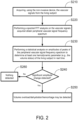
- the system includes: at least one sensor, configured to acquire, continuously for a time period from T 0 to T 2 , vascular signals from at least one peripheral vein, or perfused tissue of the living subject in real time, wherein the time period is divided into a first time period from T 0 to T 1 , and a second time period from T 1 to T 2 ; and a processing device communicatively coupled to the at least one sensor, configured to receive the vascular signals transmitted from the at least one sensor, and perform a spectral analysis on the vascular signals.
- the vascular signals are processed by a spectral fast Fourier transform (FFT) analysis to obtain the baseline peripheral vascular signal frequency spectrum and the peripheral vascular signal frequency spectrum, respectively.
- FFT spectral fast Fourier transform
- each of the at least one sensor is a piezoelectric sensor, a resistive pressure/force sensor, an optical wavelength selective reflectance or absorbance measurement system, a tonometer, an ultrasound, bioimpedence, plethysmography, or pressure transducer, or any combination thereof.
- the at least one sensor and the processing device form a non-invasive device, wherein the non-invasive device is a wearable band, an adhesive, or an attachment being in contact with a surface of skin of the living subject overlying the at least one peripheral vein, or perfused tissue.
- the non-invasive device is a wearable band, an adhesive, or an attachment being in contact with a surface of skin of the living subject overlying the at least one peripheral vein, or perfused tissue.
- the vascular signals are processed by a spectral fast Fourier transform (FFT) analysis to obtain the baseline peripheral vascular signal frequency spectrum and the peripheral vascular signal frequency spectrum, respectively.
- FFT spectral fast Fourier transform
- relative terms such as “lower” or “bottom” and “upper” or “top”, may be used herein to describe one element's relationship to another element as illustrated in the Figures. It will be understood that relative terms are intended to encompass different orientations of the device in addition to the orientation depicted in the Figures. For example, if the device in one of the figures is turned over, elements described as being on the “lower” side of other elements would then be oriented on “upper” sides of the other elements. The exemplary term “lower” can, therefore, encompass both an orientation of “lower” and “upper”, depending on the particular orientation of the figure.
- the non-invasive device 110 may include at least one sensor, which is configured to acquire vascular signals from the living subject in real time.
- the living subject may be a human being, or may be other animals.
- the living subject may be a human patient or an animal patient.
- the processing device 120 is configured to receive the vascular signals transmitted from the at least one sensor, and perform a spectral analysis on the vascular signals in order to determine at least one hemodynamic parameter of the living subject.
- the vascular signals being acquired by the at least one sensor may be transmitted to a controller communicatively coupled to the at least one sensor.
- the processing device 120 upon receiving the vascular signals from the non-invasive device 110, performs a spectral process and analysis, such as a spectral fast Fourier transform (FFT) analysis, on the vascular signal to obtain a peripheral vascular signal frequency spectrum.
- FFT spectral fast Fourier transform
- the processing device 120 performs a statistical analysis on amplitudes of peaks of the peripheral vascular signal frequency spectrum to determine at least one hemodynamic parameter of the living subject in real time.
- the at least one hemodynamic parameter of the living subject may include information of volume status, heart rate, heart rate variability, oximetry, blood pressure, pulse pressure variability, temperature, and respiratory rate of the living subject.
- the alert mechanism may be provided on the wearable device itself and/or on the smartphone application.
- the mobile application is displaying various hemodynamic variables, including heart rate, volume status (current and trends), temperature, and respiratory rate.
- off-the-shelf miniature thin film based piezoelectric sensors are evaluated in order to determine the sensor with the optimal signal and sensitivity, which can be incorporated into the wearable wristband configuration of the invention.
- the different sensor configurations can be tested with the wristband using a standard PowerLab/LabChart data acquisition system. It is envisioned to integrate miniature piezoelectric sensor arrays interfaced with a miniature microcontroller board with Bluetooth capabilities into a wearable wristband, which is battery operated.
- the wearable device could be streaming data to a phone or computer over Bluetooth, with non-invasive peripheral vascular waveform analysis including, but not limited to Fourier transform analysis and algorithm implementation to compute the volume status on the smart phone/computer.
- non-invasive peripheral vascular waveform analysis including, but not limited to Fourier transform analysis and algorithm implementation to compute the volume status on the smart phone/computer.
- the implementation of a real time signal processing on the smart phone is straightforward and leads to a portable, wireless, wristband based device that can determine the intravascular volume status in real-time.
- the volume status or any other physiological variables can be computed on the microcontroller, which could display the status on the wristband or communicates any changes in condition to the paired smart phone via Bluetooth to conserve battery power.
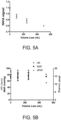
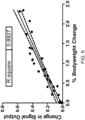
- the sensitivity of the wearable wristband based device for detecting hemorrhage and quantitating hemorrhage in pigs is determined. Early, compensated hemorrhagic shock is difficult to detect with standard vital sign monitoring. The preliminary data shows that our device provides a sensitive method for detecting hypovolemia. In one embodiment, a wireless device is used to determine thresholds for euvolemia and hypovolemia.
- the device using non-invasive vascular waveform analysis for hemorrhage detection and staging in humans is validated.
- the inventors planned to enroll 50 patients who present for coronary artery bypass surgery who have normal ventricular and valve function. It is standard practice for patients to undergo preoperative autologous blood donation in order to conserve clotting factors, often consumed during cardiopulmonary bypass. Cardiac surgery also offers an opportunity to compare real time changes in hemodynamic parameters with our device parameters in a challenging heterogeneous group of patients.
- FIG. 10 shows charts of a patient's NIVA signal of (a) pre-diuresis and (b) post-diuresis, and (c) the NIVA signal of a control patient according to certain embodiments of the present invention. Specifically, FIG. 10 shows how the NIVA signal would look before diuresis, after diuresis and in comparison to a control patient, thus demonstrating how NIVA can be used to detect volume overload in patients.
- aspects of the invention relate to systems and methods for performing peripheral vascular signal analysis using NIVA, which uses spectral analysis to estimate volume status or other hemodynamic parameters of a living subject, and its applications.
- the invention recites, among other things:
- the device displays volume status data directly in another embodiment it transmits data via Bluetooth technology to Smartphones for real-time graphical display of volume status of the patient.
- Personnel data can be transferred to cloud-based servers for centralized healthcare guidance and telemedicine option allowing for early interventions and off-loading tasks from field medics.
- the device or mobile application stores the patient's intravascular volume status along with other physiological variables in a cloud-based server providing graphically display throughout the entire resuscitation history accessible to all providers throughout the continuum of care. Continuous display of the patient's intravascular volume status at the receiving hospital while the patient is en route allows for adequate team and supply preparation in advance of the patient's arrival.
- the features of detecting volume changes in mechanically ventilated and spontaneously breathing patients are a significant advancement over current arterial-based technology that depends on intrathoracic changes via positive pressure ventilation in order to detect hypovolemia.
- the device is the first non-invasive monitor used to guide large-volume resuscitation.
- Currently determination of euvolemia and hypervolemia require invasive intravascular monitoring which is not feasible in the trauma or pre-hospital setting and puts patients at risk for vascular injury and catheter-based infections.
- development of the device and mobile application can facilitate transfer and storage of real time patient information, allowing receiving hospital can adequately prepare for damage control surgery and resuscitation prior to patient arrival.
- automated decision support enhances patient care in global and pre-hospital settings where invasive monitoring and skilled medical personnel may not be immediately available.
- the NIVA system, device and method as described above may be implement in a variety of applications.
- one further aspect of the present invention may relate to a system, which includes the NIVA system as described above, and an administration device communicatively connected to the NIVA system, for controlling, based on the at least one hemodynamic parameter of the living subject provided by the NIVA system, administration of a drug or fluid to the living subject, or for controlling a rate or ultrafiltration of fluid removal from the living subject.
- the administration device may be an IV device, which includes an IV pump for controlling the administration the drug or fluid.
- the administration device is configured to control the administration of the drug or fluid to the living subject based on the at least one hemodynamic parameter of the living subject to maintain a specific physiological condition of the living subject.
- one particular physiological condition may be euvolemia, and the controlling of the administration of fluid or drug may be conducted to prevent over-resuscitation.
- venous waveform analysis is far more sensitive than standard vital sign monitoring for detecting hemorrhage ranging from subclinical to hypovolemic shock.
- vascular waveform analysis is more sensitive than standard vital sign and arterial-based monitoring methods for detecting excessive fluid administration.
- the invention has been evolved from an intravascular to non-invasive desktop analysis of venous waveforms.
- Extensions for the use of this device include monitoring for dehydration. Preliminary experiments have been performed with acute exercise and have shown that non-invasive vascular waveform analysis detects decreases in intravascular volume associated with strenuous exertion. Thus, such a device could be extremely useful for optimizing physical conditioning of the soldier under austere environmental conditions. Further, the device and platform can be expanded to measure additional vital parameters such as heart and respiratory rates and temperature to assist in the clinical evaluation of wounded, septic or trauma patients.
- the inventors have identified a subset of patients who undergo preoperative autologous blood donation in a titrated manner. This environment provides us an excellent opportunity for comparing our non-invasive device with known hemorrhage rate and quantity, invasive hemodynamic monitoring, and echocardiographic imaging. This situation is ideal for algorithm determination and optimization across diverse patient demographics and ongoing resuscitation.
Landscapes
- Health & Medical Sciences (AREA)
- Life Sciences & Earth Sciences (AREA)
- Engineering & Computer Science (AREA)
- Biomedical Technology (AREA)
- Physics & Mathematics (AREA)
- Surgery (AREA)
- Public Health (AREA)
- General Health & Medical Sciences (AREA)
- Medical Informatics (AREA)
- Veterinary Medicine (AREA)
- Animal Behavior & Ethology (AREA)
- Molecular Biology (AREA)
- Heart & Thoracic Surgery (AREA)
- Pathology (AREA)
- Biophysics (AREA)
- Physiology (AREA)
- Cardiology (AREA)
- Signal Processing (AREA)
- Computer Vision & Pattern Recognition (AREA)
- Artificial Intelligence (AREA)
- Psychiatry (AREA)
- Nuclear Medicine, Radiotherapy & Molecular Imaging (AREA)
- Mathematical Physics (AREA)
- Vascular Medicine (AREA)
- Primary Health Care (AREA)
- Business, Economics & Management (AREA)
- General Business, Economics & Management (AREA)
- Epidemiology (AREA)
- Pulmonology (AREA)
- Computer Networks & Wireless Communication (AREA)
- Measuring Pulse, Heart Rate, Blood Pressure Or Blood Flow (AREA)
- Measurement Of The Respiration, Hearing Ability, Form, And Blood Characteristics Of Living Organisms (AREA)
- Infusion, Injection, And Reservoir Apparatuses (AREA)
- Percussion Or Vibration Massage (AREA)
- Measuring And Recording Apparatus For Diagnosis (AREA)
Claims (15)
- System (100) für nicht-invasive Gefäßanalyse (NIVA) zum Erfassen oder Überwachen eines intravaskulären Volumenstatus, einer Volumenüberlastung, Dehydratation, Blutung, Herz-/Nieren-/Leberfunktion, Lungenembolie, der vaskulären Endothelfunktion, vaskulärer Compliance und Echtzeitbewertung einer Wiederbelebung eines lebenden Subjekts, umfassend:
eine nicht-invasive Vorrichtung (110, 300, 300'), umfassend:mindestens einen Sensor, der konfiguriert ist, um vaskuläre Signale von einer Vene oder einem durchbluteten Gewebe eines lebenden Subjekts in Echtzeit zu erfassen; undeine Steuerung, kommunikativ gekoppelt mit dem mindestens einen Sensor, die konfiguriert ist, um vaskuläre Signale zu empfangen, die von dem mindestens einen Sensor übertragen werden, und eine Spektralanalyse der vaskulären Signale durchzuführen,um mindestens einen hämodynamischen Parameter des lebenden Subjekts zu bestimmen,wobei der mindestens eine Sensor konfiguriert ist, um kontinuierlich über einen Zeitraum von T0 bis T2 die vaskulären Signale von der mindestens einen peripheren Vene oder dem durchbluteten Gewebe des lebenden Subjekts zu erfassen (S210), wobei der Zeitraum in einen ersten Zeitraum von T0 bis T1 und einen zweiten Zeitraum von T1 bis T2 unterteilt ist,wobei die Spektralanalyse die folgenden Schritte umfasst:Verarbeiten der in dem ersten Zeitraum erfassten vaskulären Signale, um ein anfängliches Frequenzspektrum des peripheren vaskulären Signals zu erlangen;Erlangen einer Vielzahl von anfänglichen Peaks {BN-1} auf dem anfänglichen Frequenzspektrum des peripheren vaskulären Signals, wobei N eine positive ganze Zahl ist und die Vielzahl von anfänglichen Peaks {BN-1} jeweils einer Vielzahl von Frequenzen {F0, F1, ..., FN} entspricht, sodass BN-1 abhängig ist von FN-1, die BN-1 = BN-1 (FN-1) erfüllt, wobei FN größer ist als FN-1;Verarbeiten der vaskulären Signale, die in dem zweiten Zeitraum erfasst werden, um ein Frequenzspektrum des peripheren vaskulären Signals zu erlangen;Erlangen einer Vielzahl von Peaks {PN-1} auf dem Frequenzspektrum des peripheren vaskulären Drucks, wobei die Vielzahl von Peaks {PN-1} der Vielzahl von Frequenzen {F0, F1, ..., FN} entspricht, sodass PN-1 abhängig ist von FN-1, die PN-1 = PN-1 (FN-1) erfüllt; undBestimmen des Volumenstatus des lebenden Subjekts in dem zweiten Zeitraum durch Vergleichen von Amplituden der Peaks {PN-1} jeweils mit jenen der anfänglichen Peaks {BN-1},wobei der Volumenstatus des lebenden Subjekts in dem zweiten Zeitraum Hypovolämie oder Hypervolämie angibt, wenn bei den anfänglichen Peaks {BN-1} zu den Peaks {PN-1} Amplitudenänderungen größer als ein Schwellenwert erfasst werden. - System (100) nach Anspruch 1, wobei die nicht-invasive Vorrichtung (110) ein tragbares Band, ein Aufkleber oder ein Aufsatz ist, der in Kontakt mit einer Hautoberfläche des lebenden Subjekts ist, die über mindestens einer peripheren Vene oder durchblutetem Gewebe liegt.
- System (100) nach Anspruch 1, ferner umfassend eine Überwachungsvorrichtung, die konfiguriert ist, um mit der Steuerung zu kommunizieren, um die vaskulären Signale und den mindestens einen hämodynamischen Parameter zu empfangen, um einen Zustand des lebenden Subjekts in Echtzeit zu überwachen, wobei die Überwachungsvorrichtung vorzugsweise ein Smartphone (320), eine Tablet-Rechenvorrichtung, eine Laptop-Rechenvorrichtung, eine Desktop-Rechenvorrichtung oder eine beliebige Kombination davon ist, oder vorzugsweise wobei die Überwachungsvorrichtung über ein drahtloses Protokoll mit der Steuerung kommuniziert.
- System (100) nach Anspruch 3, wobei die Überwachungsvorrichtung oder die Steuerung die Spektralanalyse durchführt und Algorithmen auf die vaskulären Signale von dem mindestens einen Sensor anwendet, um Informationen über den mindestens einen hämodynamischen Parameter zu berechnen und die Informationen grafisch anzuzeigen, und wobei der mindestens eine hämodynamische Parameter Volumenstatus, Herzfrequenz, Herzfrequenzvariabilität, Oximetrie, Blutdruck, Pulsdruckvariabilität, Temperatur und Atemfrequenz des lebenden Subjekts umfasst.
- System (100) nach Anspruch 1, wobei jeder von dem mindestens einen Sensor ein piezoelektrischer Sensor, ein resistiver Druck-/Kraftsensor, ein optisches wellenlängenselektives Reflexions- oder Absorptionsmesssystem, ein Tonometer, ein Ultraschall-, Bioimpedanz-, Pletyhsmographie- oder Druckmesswertgeber oder eine beliebige Kombination davon ist.
- System (100) nach Anspruch 1, wobei:die Vielzahl von Peaks {PN-1} einen ersten Peak P0, der einer ersten Frequenz F0 entspricht, und einen zweiten Peak P1, der einer zweiten Frequenz F1 entspricht, umfasst;der erste Peak P0, der der ersten Frequenz F0 entspricht, mit einer Atemfrequenz des lebenden Subjekts assoziiert ist; undder zweite Peak P1, der der zweiten Frequenz F1 entspricht, mit der Herzfrequenz des lebenden Subjekts assoziiert ist.
- System nach Anspruch 6, wobei:die Vielzahl von Peaks {PN-1} ferner einen dritten Peak P2, der einer dritten Frequenz F2 entspricht, und einen vierten Peak P3, der einer vierten Frequenz F3 entspricht, umfasst; undder dritte Peak P2, der der dritten Frequenz F2 entspricht, und der vierte Peak P3, der der vierten Frequenz F3 entspricht, mit Oberschwingungen des lebenden Subjekts assoziiert sind.
- System (100) nach Anspruch 1,
wobei die Spektralanalyse ferner die folgenden Schritte umfasst:Bestimmen mindestens eines hämodynamischen Parameters des lebenden Subjekts in dem zweiten Zeitraum durch Vergleichen von Amplituden der Peaks {PN-1} jeweils mit jenen der anfänglichen Peaks {BN-1},wobei vorzugsweise die vaskulären Signale durch eine spektrale Analyse einer Fast-Fourier-Transformation (FFT) verarbeitet werden, um jeweils das anfängliche Frequenzspektrum des peripheren vaskulären Signals und das periphere vaskuläre Frequenzspektrum zu erlangen. - System (100) nach Anspruch 8, wobei der mindestens eine Sensor und die Verarbeitungsvorrichtung eine nicht-invasive Vorrichtung bilden, wobei die nicht-invasive Vorrichtung (300') ein tragbares Band, ein Aufkleber oder ein Aufsatz ist, der in Kontakt mit einer Hautoberfläche des lebenden Subjekts ist, die über der mindestens einer peripheren Vene oder dem durchblutetem Gewebe liegt, vorzugsweise wobei die Verarbeitungsvorrichtung Folgendes umfasst:einen Prozessor, der konfiguriert ist, um die von dem mindestens einen Sensor übertragenen vaskulären Signale zu empfangen, wobei der mindestens eine Sensor und der Prozessor die nicht-invasive Vorrichtung bilden; undeine Überwachungsvorrichtung, die konfiguriert ist, um mit dem Prozessor zu kommunizieren, um die vaskulären Signale zu empfangen und die Spektralanalyse zum Überwachen eines Zustands des lebenden Subjekts in Echtzeit durchzuführen.
- System nach Anspruch 9, wobei der mindestens eine hämodynamische Parameter des lebenden Subjekts Informationen über Volumenstatus, Herzfrequenz, Herzfrequenzvariabilität, Oximetrie, Blutdruck, Pulsdruckvariabilität, Temperatur und Atemfrequenz des lebenden Subjekts umfasst.
- System (100) nach Anspruch 8, wobei:die Vielzahl von Peaks {PN-1} einen ersten Peak P0, der einer ersten Frequenz F0 entspricht, einen zweiten Peak P1, der einer zweiten Frequenz F1 entspricht, einen dritten Peak P2, der einer dritten Frequenz F2 entspricht, und einen vierten Peak P3, der einer vierten Frequenz F3 entspricht, umfasst;der erste Peak P0, der der ersten Frequenz F0 entspricht, mit einer Atemfrequenz des lebenden Subjekts assoziiert ist;der zweite Peak P1, der der zweiten Frequenz F1 entspricht, mit einer Herzfrequenz des lebenden Subjekts assoziiert ist; undder dritte Peak P2, der der dritten Frequenz F2 entspricht, und der vierte Peak P3, der der vierten Frequenz F3 entspricht, mit Oberschwingungen des lebenden Subjekts assoziiert sind.
- Verwendung des NIVA-Systems (100) nach einem der Ansprüche 1 bis 11 zum Erlangen eines hämodynamischen Parameters,
wobei die Verwendung Folgendes umfasst:Erlangen (S210), von mindestens einer peripheren Vene oder von einem durchbluteten Gewebe des lebenden Subjekts, von vaskulären Signalen unter Verwendung einer nicht-invasiven Vorrichtung (110, 300, 300') in Echtzeit; undVerarbeiten (S220, S230) der erlangten vaskulären Signale, um ein Frequenzspektrum des peripheren vaskulären Drucks zu erhalten, um mindestens einen hämodynamischen Parameter des lebenden Subjekts zu bestimmen. - Verwendung nach Anspruch 12, wobei der mindestens eine hämodynamische Parameter Volumenstatus, Herzfrequenz, Herzfrequenzvariabilität, Oximetrie, Blutdruck, Pulsdruckvariabilität, Temperatur und Atemfrequenz des lebenden Subjekts umfasst.
- Nicht-transitorisches computerlesbares Medium, das Anweisungen speichert, die, wenn sie von einem oder mehreren Prozessoren ausgeführt werden, das System (100) nach Anspruch 1 veranlassen, die Verwendung nach Anspruch 12 durchzuführen.
- System, umfassend:das NIVA-System (100) nach Anspruch 1; undeine Verabreichungsvorrichtung, die kommunikativ mit dem NIVA-System (100) verbunden ist, um basierend auf dem mindestens einen hämodynamischen Parameter des lebenden Subjekts, der von dem NIVA-System (100) bereitgestellt wird, eine Verabreichung eines Arzneimittels oder eines Fluids an das lebende Subjekt zu steuern, oder um eine Rate oder Ultrafiltration von Fluidentfernung aus dem lebenden Subjekt zu steuern, wobei die Verabreichungsvorrichtung vorzugsweise eine intravenöse (IV) Pumpe zum Steuern der Verabreichung des Arzneimittels oder des Fluids umfasst, oder wobei die Verabreichungsvorrichtung konfiguriert ist, um die Verabreichung des Arzneimittels oder des Fluids an das lebende Subjekt basierend auf dem mindestens einen hämodynamischen Parameter des lebenden Subjekts zu steuern, um einen bestimmten physiologischen Zustand des lebenden Subjekts aufrechtzuerhalten.
Applications Claiming Priority (3)
| Application Number | Priority Date | Filing Date | Title |
|---|---|---|---|
| US201462079367P | 2014-11-13 | 2014-11-13 | |
| US14/853,504 US20160073959A1 (en) | 2014-09-12 | 2015-09-14 | Hypovolemia/hypervolemia detection using peripheral intravenous waveform analysis (piva) and applications of same |
| PCT/US2015/060697 WO2016077765A1 (en) | 2014-11-13 | 2015-11-13 | Device and method for hemorrhage detection and guided resuscitation and applications of same |
Publications (3)
| Publication Number | Publication Date |
|---|---|
| EP3217863A1 EP3217863A1 (de) | 2017-09-20 |
| EP3217863A4 EP3217863A4 (de) | 2018-07-11 |
| EP3217863B1 true EP3217863B1 (de) | 2024-07-03 |
Family
ID=55955152
Family Applications (1)
| Application Number | Title | Priority Date | Filing Date |
|---|---|---|---|
| EP15859906.8A Active EP3217863B1 (de) | 2014-11-13 | 2015-11-13 | Vorrichtung für den nachweis von blutungen und angeleiteten wiederbelebung sowie anwendungen davon |
Country Status (9)
| Country | Link |
|---|---|
| EP (1) | EP3217863B1 (de) |
| JP (1) | JP6769960B2 (de) |
| KR (1) | KR102444875B1 (de) |
| CN (1) | CN106999064B (de) |
| AU (1) | AU2015346054B2 (de) |
| CA (1) | CA2967634A1 (de) |
| MX (1) | MX395536B (de) |
| SG (1) | SG11201703795SA (de) |
| WO (1) | WO2016077765A1 (de) |
Families Citing this family (13)
| Publication number | Priority date | Publication date | Assignee | Title |
|---|---|---|---|---|
| US11344254B2 (en) * | 2016-01-22 | 2022-05-31 | Welch Allyn, Inc. | Estimating hydration using capillary refill time |
| JP6878589B2 (ja) | 2016-12-15 | 2021-05-26 | バクスター・インターナショナル・インコーポレイテッドBaxter International Incorp0Rated | 感知された静脈波形から患者パラメータを監視および決定するためのシステムおよび方法 |
| CA3059794A1 (en) * | 2017-04-14 | 2018-10-18 | Vanderbilt University | Non-invasive venous waveform analysis for evaluating a subject |
| WO2019118822A1 (en) * | 2017-12-15 | 2019-06-20 | Baxter International Inc. | Systems and methods for filtering medical device noise artifacts from venous waveform signals |
| EP3524165A1 (de) * | 2018-02-08 | 2019-08-14 | Koninklijke Philips N.V. | Überwachung der blutverteilung in einem subjekt |
| CA3099475A1 (en) * | 2018-05-10 | 2019-11-14 | Vanderbilt University | Non-invasive venous waveform analysis for evaluating a subject |
| US12023134B2 (en) | 2018-09-06 | 2024-07-02 | Vanderbilt University | Non-invasive venous waveform analysis for evaluating a subject |
| CA3122115C (en) * | 2019-02-14 | 2023-11-14 | Baylor College Of Medicine | Method of predicting fluid responsiveness in patients |
| EP4025116A4 (de) * | 2019-05-24 | 2024-03-06 | ConvaTec Technologies Inc. | Tragbares entwässerungsüberwachungssystem |
| JP7626420B2 (ja) * | 2019-07-17 | 2025-02-04 | 株式会社テクトロン | 輸液ポンプシステム |
| JP7351464B2 (ja) * | 2020-09-03 | 2023-09-27 | 国立大学法人九州大学 | 脱水状態推定装置及び脱水状態推定方法 |
| KR102664414B1 (ko) * | 2021-12-10 | 2024-05-13 | 조현경 | 혈압 파형 측정센서 및 그의 혈압 측정장치 |
| CN117158919B (zh) * | 2023-10-25 | 2024-03-15 | 深圳大学 | 出血点检测装置和计算机可读存储介质 |
Citations (2)
| Publication number | Priority date | Publication date | Assignee | Title |
|---|---|---|---|---|
| US20100292590A1 (en) * | 2007-11-20 | 2010-11-18 | The Doshisha | Arteriosclerosis diagnostic device |
| US20130172691A1 (en) * | 2006-05-16 | 2013-07-04 | Bao Tran | Health monitoring appliance |
Family Cites Families (14)
| Publication number | Priority date | Publication date | Assignee | Title |
|---|---|---|---|---|
| CN1229074C (zh) * | 2002-07-09 | 2005-11-30 | 医能生物科技股份有限公司 | 可同时取得脉压及血流量的脉波讯息量测方法及其装置 |
| US8251912B2 (en) * | 2003-03-12 | 2012-08-28 | Yale University | Method of assessing blood volume using photoelectric plethysmography |
| US7460899B2 (en) * | 2003-04-23 | 2008-12-02 | Quiescent, Inc. | Apparatus and method for monitoring heart rate variability |
| WO2009138881A2 (en) * | 2008-05-12 | 2009-11-19 | Cardio Art Technologies, Ltd. | Method and system for monitoring a health condition |
| US8463347B2 (en) * | 2009-09-30 | 2013-06-11 | Nellcor Puritan Bennett Ireland | Systems and methods for normalizing a plethysmograph signal for improved feature analysis |
| US9414753B2 (en) | 2009-10-20 | 2016-08-16 | Worcester Polytechnic Institute | Apparatus and method for respiratory rate detection and early detection of blood loss volume |
| IT1398605B1 (it) * | 2010-02-25 | 2013-03-08 | Bombardini | Dispositivo per la quantificazione e il monitoraggio della funzione cardiovascolare in corso di stress o attivita' fisica e a riposo |
| US9353334B2 (en) | 2010-12-28 | 2016-05-31 | Kao Corporation | Method for cleaning medical instrument |
| CN103049631A (zh) * | 2011-10-13 | 2013-04-17 | 客隆生医科技股份有限公司 | 计算机脉波诊断分析装置及其方法 |
| US9332913B2 (en) * | 2011-12-21 | 2016-05-10 | Pacesetter, Inc. | System and method for discriminating hypervolemia, hypervolemia and euvolemia using an implantable medical device |
| KR20140107407A (ko) * | 2011-12-22 | 2014-09-04 | 캘리포니아 인스티튜트 오브 테크놀로지 | 고유 주파수 혈류역학 파형 분석 |
| US8880155B2 (en) * | 2012-02-24 | 2014-11-04 | Covidien Lp | Hypovolemia diagnosis technique |
| US8948832B2 (en) * | 2012-06-22 | 2015-02-03 | Fitbit, Inc. | Wearable heart rate monitor |
| EP2892582B1 (de) * | 2012-09-10 | 2019-11-13 | Vanderbilt University | Intravenöse zugangsvorrichtung mit einem integrierten hämodynamischen wiederbelebungssystem. |
-
2015
- 2015-11-13 CN CN201580063695.0A patent/CN106999064B/zh active Active
- 2015-11-13 MX MX2017006318A patent/MX395536B/es unknown
- 2015-11-13 AU AU2015346054A patent/AU2015346054B2/en active Active
- 2015-11-13 CA CA2967634A patent/CA2967634A1/en active Pending
- 2015-11-13 JP JP2017525386A patent/JP6769960B2/ja active Active
- 2015-11-13 EP EP15859906.8A patent/EP3217863B1/de active Active
- 2015-11-13 SG SG11201703795SA patent/SG11201703795SA/en unknown
- 2015-11-13 KR KR1020177016035A patent/KR102444875B1/ko active Active
- 2015-11-13 WO PCT/US2015/060697 patent/WO2016077765A1/en not_active Ceased
Patent Citations (2)
| Publication number | Priority date | Publication date | Assignee | Title |
|---|---|---|---|---|
| US20130172691A1 (en) * | 2006-05-16 | 2013-07-04 | Bao Tran | Health monitoring appliance |
| US20100292590A1 (en) * | 2007-11-20 | 2010-11-18 | The Doshisha | Arteriosclerosis diagnostic device |
Also Published As
| Publication number | Publication date |
|---|---|
| EP3217863A4 (de) | 2018-07-11 |
| MX2017006318A (es) | 2018-02-13 |
| KR102444875B1 (ko) | 2022-09-19 |
| CN106999064B (zh) | 2020-10-27 |
| KR20170082621A (ko) | 2017-07-14 |
| JP2018502612A (ja) | 2018-02-01 |
| SG11201703795SA (en) | 2017-06-29 |
| EP3217863A1 (de) | 2017-09-20 |
| WO2016077765A1 (en) | 2016-05-19 |
| CN106999064A (zh) | 2017-08-01 |
| AU2015346054A1 (en) | 2017-06-01 |
| JP6769960B2 (ja) | 2020-10-14 |
| MX395536B (es) | 2025-03-25 |
| CA2967634A1 (en) | 2016-05-19 |
| AU2015346054B2 (en) | 2020-04-09 |
Similar Documents
| Publication | Publication Date | Title |
|---|---|---|
| EP3217863B1 (de) | Vorrichtung für den nachweis von blutungen und angeleiteten wiederbelebung sowie anwendungen davon | |
| US10456046B2 (en) | Device and method for hemorrhage detection and guided resuscitation and applications of same | |
| Walsh III et al. | Novel wireless devices for cardiac monitoring | |
| Zhang et al. | Pulse arrival time is not an adequate surrogate for pulse transit time as a marker of blood pressure | |
| JP6780147B2 (ja) | 末梢静脈波形解析(piva)を使用した血液量減少/血液量増加の検出、およびその応用 | |
| Convertino et al. | Wearable sensors incorporating compensatory reserve measurement for advancing physiological monitoring in critically injured trauma patients | |
| US11406269B2 (en) | Rapid detection of bleeding following injury | |
| WO2017218431A1 (en) | Rapid detection of bleeding following injury | |
| US20210267468A1 (en) | Hypovolemia/hypervolemia and intravenous infiltration detection using peripheral intravenous waveform analysis (piva) and applications of same | |
| Manga et al. | Estimation of physiologic pressures: invasive and non-invasive techniques, ai models, and future perspectives | |
| Pielmus et al. | Surrogate based continuous noninvasive blood pressure measurement | |
| Parry et al. | Ambulatory impedance cardiography: a systematic review | |
| McGillion et al. | Beyond wellness monitoring: continuous multiparameter remote automated monitoring of patients | |
| Tzavaras et al. | Development of a low-cost wireless monitoring System supporting the Continuity of Medical Care of the Patient at home | |
| US20240285177A1 (en) | Monitoring of health conditions using a real-time and continuous blood pressure measuring system | |
| US20240156360A1 (en) | Blood pressure detection using only acoustic energy without imaging | |
| US20160095556A1 (en) | Graphical technique for detecting congestive heart failure | |
| US20260076642A1 (en) | Acoustic measuring device for monitoring of health data | |
| Onistuka et al. | What is Needed in Remote Monitoring of Heart Failure in the Era of Aging Societies and Digital Health | |
| Nundy et al. | Continuous Cuff-less Blood Pressure Monitoring and Measurement | |
| Naples | Brining A Monitoring System To Market | |
| Kuzmanov et al. | Using Cuffless Non-Invasive Methods for Blood Pressure Estimation: Description of the Selected Solutions | |
| CN105943028A (zh) | 一种心脏健康检查系统 |
Legal Events
| Date | Code | Title | Description |
|---|---|---|---|
| STAA | Information on the status of an ep patent application or granted ep patent |
Free format text: STATUS: THE INTERNATIONAL PUBLICATION HAS BEEN MADE |
|
| PUAI | Public reference made under article 153(3) epc to a published international application that has entered the european phase |
Free format text: ORIGINAL CODE: 0009012 |
|
| STAA | Information on the status of an ep patent application or granted ep patent |
Free format text: STATUS: REQUEST FOR EXAMINATION WAS MADE |
|
| 17P | Request for examination filed |
Effective date: 20170606 |
|
| AK | Designated contracting states |
Kind code of ref document: A1 Designated state(s): AL AT BE BG CH CY CZ DE DK EE ES FI FR GB GR HR HU IE IS IT LI LT LU LV MC MK MT NL NO PL PT RO RS SE SI SK SM TR |
|
| AX | Request for extension of the european patent |
Extension state: BA ME |
|
| DAV | Request for validation of the european patent (deleted) | ||
| DAX | Request for extension of the european patent (deleted) | ||
| REG | Reference to a national code |
Ref country code: HK Ref legal event code: DE Ref document number: 1241247 Country of ref document: HK |
|
| A4 | Supplementary search report drawn up and despatched |
Effective date: 20180611 |
|
| RIC1 | Information provided on ipc code assigned before grant |
Ipc: A61B 5/02 20060101AFI20180605BHEP Ipc: A61B 5/00 20060101ALI20180605BHEP |
|
| STAA | Information on the status of an ep patent application or granted ep patent |
Free format text: STATUS: EXAMINATION IS IN PROGRESS |
|
| 17Q | First examination report despatched |
Effective date: 20210309 |
|
| P01 | Opt-out of the competence of the unified patent court (upc) registered |
Effective date: 20230517 |
|
| REG | Reference to a national code |
Ref country code: DE Ref legal event code: R079 Free format text: PREVIOUS MAIN CLASS: A61B0005020000 Ipc: A61B0005024000 Ref document number: 602015089133 Country of ref document: DE |
|
| RIC1 | Information provided on ipc code assigned before grant |
Ipc: A61B 5/00 20060101ALI20231208BHEP Ipc: A61B 5/02 20060101ALI20231208BHEP Ipc: G16H 40/63 20180101ALI20231208BHEP Ipc: A61B 5/08 20060101ALI20231208BHEP Ipc: A61B 5/024 20060101AFI20231208BHEP |
|
| GRAP | Despatch of communication of intention to grant a patent |
Free format text: ORIGINAL CODE: EPIDOSNIGR1 |
|
| STAA | Information on the status of an ep patent application or granted ep patent |
Free format text: STATUS: GRANT OF PATENT IS INTENDED |
|
| INTG | Intention to grant announced |
Effective date: 20240130 |
|
| GRAS | Grant fee paid |
Free format text: ORIGINAL CODE: EPIDOSNIGR3 |
|
| GRAA | (expected) grant |
Free format text: ORIGINAL CODE: 0009210 |
|
| STAA | Information on the status of an ep patent application or granted ep patent |
Free format text: STATUS: THE PATENT HAS BEEN GRANTED |
|
| AK | Designated contracting states |
Kind code of ref document: B1 Designated state(s): AL AT BE BG CH CY CZ DE DK EE ES FI FR GB GR HR HU IE IS IT LI LT LU LV MC MK MT NL NO PL PT RO RS SE SI SK SM TR |
|
| REG | Reference to a national code |
Ref country code: CH Ref legal event code: EP |
|
| REG | Reference to a national code |
Ref country code: DE Ref legal event code: R096 Ref document number: 602015089133 Country of ref document: DE |
|
| REG | Reference to a national code |
Ref country code: LT Ref legal event code: MG9D |
|
| REG | Reference to a national code |
Ref country code: NL Ref legal event code: MP Effective date: 20240703 |
|
| PG25 | Lapsed in a contracting state [announced via postgrant information from national office to epo] |
Ref country code: PT Free format text: LAPSE BECAUSE OF FAILURE TO SUBMIT A TRANSLATION OF THE DESCRIPTION OR TO PAY THE FEE WITHIN THE PRESCRIBED TIME-LIMIT Effective date: 20241104 |
|
| REG | Reference to a national code |
Ref country code: AT Ref legal event code: MK05 Ref document number: 1698939 Country of ref document: AT Kind code of ref document: T Effective date: 20240703 |
|
| PG25 | Lapsed in a contracting state [announced via postgrant information from national office to epo] |
Ref country code: NL Free format text: LAPSE BECAUSE OF FAILURE TO SUBMIT A TRANSLATION OF THE DESCRIPTION OR TO PAY THE FEE WITHIN THE PRESCRIBED TIME-LIMIT Effective date: 20240703 |
|
| PG25 | Lapsed in a contracting state [announced via postgrant information from national office to epo] |
Ref country code: PT Free format text: LAPSE BECAUSE OF FAILURE TO SUBMIT A TRANSLATION OF THE DESCRIPTION OR TO PAY THE FEE WITHIN THE PRESCRIBED TIME-LIMIT Effective date: 20241104 Ref country code: NL Free format text: LAPSE BECAUSE OF FAILURE TO SUBMIT A TRANSLATION OF THE DESCRIPTION OR TO PAY THE FEE WITHIN THE PRESCRIBED TIME-LIMIT Effective date: 20240703 |
|
| PG25 | Lapsed in a contracting state [announced via postgrant information from national office to epo] |
Ref country code: NO Free format text: LAPSE BECAUSE OF FAILURE TO SUBMIT A TRANSLATION OF THE DESCRIPTION OR TO PAY THE FEE WITHIN THE PRESCRIBED TIME-LIMIT Effective date: 20241003 |
|
| PG25 | Lapsed in a contracting state [announced via postgrant information from national office to epo] |
Ref country code: PL Free format text: LAPSE BECAUSE OF FAILURE TO SUBMIT A TRANSLATION OF THE DESCRIPTION OR TO PAY THE FEE WITHIN THE PRESCRIBED TIME-LIMIT Effective date: 20240703 Ref country code: FI Free format text: LAPSE BECAUSE OF FAILURE TO SUBMIT A TRANSLATION OF THE DESCRIPTION OR TO PAY THE FEE WITHIN THE PRESCRIBED TIME-LIMIT Effective date: 20240703 Ref country code: GR Free format text: LAPSE BECAUSE OF FAILURE TO SUBMIT A TRANSLATION OF THE DESCRIPTION OR TO PAY THE FEE WITHIN THE PRESCRIBED TIME-LIMIT Effective date: 20241004 |
|
| PG25 | Lapsed in a contracting state [announced via postgrant information from national office to epo] |
Ref country code: BG Free format text: LAPSE BECAUSE OF FAILURE TO SUBMIT A TRANSLATION OF THE DESCRIPTION OR TO PAY THE FEE WITHIN THE PRESCRIBED TIME-LIMIT Effective date: 20240703 |
|
| PG25 | Lapsed in a contracting state [announced via postgrant information from national office to epo] |
Ref country code: LV Free format text: LAPSE BECAUSE OF FAILURE TO SUBMIT A TRANSLATION OF THE DESCRIPTION OR TO PAY THE FEE WITHIN THE PRESCRIBED TIME-LIMIT Effective date: 20240703 |
|
| PG25 | Lapsed in a contracting state [announced via postgrant information from national office to epo] |
Ref country code: IS Free format text: LAPSE BECAUSE OF FAILURE TO SUBMIT A TRANSLATION OF THE DESCRIPTION OR TO PAY THE FEE WITHIN THE PRESCRIBED TIME-LIMIT Effective date: 20241103 Ref country code: AT Free format text: LAPSE BECAUSE OF FAILURE TO SUBMIT A TRANSLATION OF THE DESCRIPTION OR TO PAY THE FEE WITHIN THE PRESCRIBED TIME-LIMIT Effective date: 20240703 |
|
| PG25 | Lapsed in a contracting state [announced via postgrant information from national office to epo] |
Ref country code: CZ Free format text: LAPSE BECAUSE OF FAILURE TO SUBMIT A TRANSLATION OF THE DESCRIPTION OR TO PAY THE FEE WITHIN THE PRESCRIBED TIME-LIMIT Effective date: 20240703 Ref country code: HR Free format text: LAPSE BECAUSE OF FAILURE TO SUBMIT A TRANSLATION OF THE DESCRIPTION OR TO PAY THE FEE WITHIN THE PRESCRIBED TIME-LIMIT Effective date: 20240703 |
|
| PG25 | Lapsed in a contracting state [announced via postgrant information from national office to epo] |
Ref country code: ES Free format text: LAPSE BECAUSE OF FAILURE TO SUBMIT A TRANSLATION OF THE DESCRIPTION OR TO PAY THE FEE WITHIN THE PRESCRIBED TIME-LIMIT Effective date: 20240703 Ref country code: RS Free format text: LAPSE BECAUSE OF FAILURE TO SUBMIT A TRANSLATION OF THE DESCRIPTION OR TO PAY THE FEE WITHIN THE PRESCRIBED TIME-LIMIT Effective date: 20241003 |
|
| PG25 | Lapsed in a contracting state [announced via postgrant information from national office to epo] |
Ref country code: RS Free format text: LAPSE BECAUSE OF FAILURE TO SUBMIT A TRANSLATION OF THE DESCRIPTION OR TO PAY THE FEE WITHIN THE PRESCRIBED TIME-LIMIT Effective date: 20241003 Ref country code: PL Free format text: LAPSE BECAUSE OF FAILURE TO SUBMIT A TRANSLATION OF THE DESCRIPTION OR TO PAY THE FEE WITHIN THE PRESCRIBED TIME-LIMIT Effective date: 20240703 Ref country code: NO Free format text: LAPSE BECAUSE OF FAILURE TO SUBMIT A TRANSLATION OF THE DESCRIPTION OR TO PAY THE FEE WITHIN THE PRESCRIBED TIME-LIMIT Effective date: 20241003 Ref country code: LV Free format text: LAPSE BECAUSE OF FAILURE TO SUBMIT A TRANSLATION OF THE DESCRIPTION OR TO PAY THE FEE WITHIN THE PRESCRIBED TIME-LIMIT Effective date: 20240703 Ref country code: IS Free format text: LAPSE BECAUSE OF FAILURE TO SUBMIT A TRANSLATION OF THE DESCRIPTION OR TO PAY THE FEE WITHIN THE PRESCRIBED TIME-LIMIT Effective date: 20241103 Ref country code: HR Free format text: LAPSE BECAUSE OF FAILURE TO SUBMIT A TRANSLATION OF THE DESCRIPTION OR TO PAY THE FEE WITHIN THE PRESCRIBED TIME-LIMIT Effective date: 20240703 Ref country code: GR Free format text: LAPSE BECAUSE OF FAILURE TO SUBMIT A TRANSLATION OF THE DESCRIPTION OR TO PAY THE FEE WITHIN THE PRESCRIBED TIME-LIMIT Effective date: 20241004 Ref country code: FI Free format text: LAPSE BECAUSE OF FAILURE TO SUBMIT A TRANSLATION OF THE DESCRIPTION OR TO PAY THE FEE WITHIN THE PRESCRIBED TIME-LIMIT Effective date: 20240703 Ref country code: ES Free format text: LAPSE BECAUSE OF FAILURE TO SUBMIT A TRANSLATION OF THE DESCRIPTION OR TO PAY THE FEE WITHIN THE PRESCRIBED TIME-LIMIT Effective date: 20240703 Ref country code: CZ Free format text: LAPSE BECAUSE OF FAILURE TO SUBMIT A TRANSLATION OF THE DESCRIPTION OR TO PAY THE FEE WITHIN THE PRESCRIBED TIME-LIMIT Effective date: 20240703 Ref country code: BG Free format text: LAPSE BECAUSE OF FAILURE TO SUBMIT A TRANSLATION OF THE DESCRIPTION OR TO PAY THE FEE WITHIN THE PRESCRIBED TIME-LIMIT Effective date: 20240703 Ref country code: AT Free format text: LAPSE BECAUSE OF FAILURE TO SUBMIT A TRANSLATION OF THE DESCRIPTION OR TO PAY THE FEE WITHIN THE PRESCRIBED TIME-LIMIT Effective date: 20240703 |
|
| REG | Reference to a national code |
Ref country code: DE Ref legal event code: R097 Ref document number: 602015089133 Country of ref document: DE |
|
| PG25 | Lapsed in a contracting state [announced via postgrant information from national office to epo] |
Ref country code: RO Free format text: LAPSE BECAUSE OF FAILURE TO SUBMIT A TRANSLATION OF THE DESCRIPTION OR TO PAY THE FEE WITHIN THE PRESCRIBED TIME-LIMIT Effective date: 20240703 Ref country code: DK Free format text: LAPSE BECAUSE OF FAILURE TO SUBMIT A TRANSLATION OF THE DESCRIPTION OR TO PAY THE FEE WITHIN THE PRESCRIBED TIME-LIMIT Effective date: 20240703 Ref country code: SM Free format text: LAPSE BECAUSE OF FAILURE TO SUBMIT A TRANSLATION OF THE DESCRIPTION OR TO PAY THE FEE WITHIN THE PRESCRIBED TIME-LIMIT Effective date: 20240703 |
|
| PG25 | Lapsed in a contracting state [announced via postgrant information from national office to epo] |
Ref country code: EE Free format text: LAPSE BECAUSE OF FAILURE TO SUBMIT A TRANSLATION OF THE DESCRIPTION OR TO PAY THE FEE WITHIN THE PRESCRIBED TIME-LIMIT Effective date: 20240703 |
|
| PG25 | Lapsed in a contracting state [announced via postgrant information from national office to epo] |
Ref country code: SK Free format text: LAPSE BECAUSE OF FAILURE TO SUBMIT A TRANSLATION OF THE DESCRIPTION OR TO PAY THE FEE WITHIN THE PRESCRIBED TIME-LIMIT Effective date: 20240703 Ref country code: IT Free format text: LAPSE BECAUSE OF FAILURE TO SUBMIT A TRANSLATION OF THE DESCRIPTION OR TO PAY THE FEE WITHIN THE PRESCRIBED TIME-LIMIT Effective date: 20240703 |
|
| PLBE | No opposition filed within time limit |
Free format text: ORIGINAL CODE: 0009261 |
|
| STAA | Information on the status of an ep patent application or granted ep patent |
Free format text: STATUS: NO OPPOSITION FILED WITHIN TIME LIMIT |
|
| 26N | No opposition filed |
Effective date: 20250404 |
|
| REG | Reference to a national code |
Ref country code: CH Ref legal event code: PL |
|
| PG25 | Lapsed in a contracting state [announced via postgrant information from national office to epo] |
Ref country code: MC Free format text: LAPSE BECAUSE OF FAILURE TO SUBMIT A TRANSLATION OF THE DESCRIPTION OR TO PAY THE FEE WITHIN THE PRESCRIBED TIME-LIMIT Effective date: 20240703 |
|
| PG25 | Lapsed in a contracting state [announced via postgrant information from national office to epo] |
Ref country code: LU Free format text: LAPSE BECAUSE OF NON-PAYMENT OF DUE FEES Effective date: 20241113 |
|
| REG | Reference to a national code |
Ref country code: CH Ref legal event code: PL |
|
| PG25 | Lapsed in a contracting state [announced via postgrant information from national office to epo] |
Ref country code: CH Free format text: LAPSE BECAUSE OF NON-PAYMENT OF DUE FEES Effective date: 20241130 |
|
| REG | Reference to a national code |
Ref country code: BE Ref legal event code: MM Effective date: 20241130 |
|
| PG25 | Lapsed in a contracting state [announced via postgrant information from national office to epo] |
Ref country code: SE Free format text: LAPSE BECAUSE OF FAILURE TO SUBMIT A TRANSLATION OF THE DESCRIPTION OR TO PAY THE FEE WITHIN THE PRESCRIBED TIME-LIMIT Effective date: 20240703 |
|
| PG25 | Lapsed in a contracting state [announced via postgrant information from national office to epo] |
Ref country code: BE Free format text: LAPSE BECAUSE OF NON-PAYMENT OF DUE FEES Effective date: 20241130 |
|
| PG25 | Lapsed in a contracting state [announced via postgrant information from national office to epo] |
Ref country code: IE Free format text: LAPSE BECAUSE OF NON-PAYMENT OF DUE FEES Effective date: 20241113 |
|
| PGFP | Annual fee paid to national office [announced via postgrant information from national office to epo] |
Ref country code: DE Payment date: 20251022 Year of fee payment: 11 |
|
| PGFP | Annual fee paid to national office [announced via postgrant information from national office to epo] |
Ref country code: GB Payment date: 20251022 Year of fee payment: 11 |
|
| PGFP | Annual fee paid to national office [announced via postgrant information from national office to epo] |
Ref country code: FR Payment date: 20251023 Year of fee payment: 11 |
|
| PG25 | Lapsed in a contracting state [announced via postgrant information from national office to epo] |
Ref country code: HU Free format text: LAPSE BECAUSE OF FAILURE TO SUBMIT A TRANSLATION OF THE DESCRIPTION OR TO PAY THE FEE WITHIN THE PRESCRIBED TIME-LIMIT; INVALID AB INITIO Effective date: 20151113 |
|
| PG25 | Lapsed in a contracting state [announced via postgrant information from national office to epo] |
Ref country code: CY Free format text: LAPSE BECAUSE OF FAILURE TO SUBMIT A TRANSLATION OF THE DESCRIPTION OR TO PAY THE FEE WITHIN THE PRESCRIBED TIME-LIMIT; INVALID AB INITIO Effective date: 20151113 |