EP3219077B1 - Verfahren und system zur verwaltung von benutzeridentitäten, die während der kommunikation zwischen zwei webbrowsern implementiert werden sollen - Google Patents
Verfahren und system zur verwaltung von benutzeridentitäten, die während der kommunikation zwischen zwei webbrowsern implementiert werden sollen Download PDFInfo
- Publication number
- EP3219077B1 EP3219077B1 EP15801900.0A EP15801900A EP3219077B1 EP 3219077 B1 EP3219077 B1 EP 3219077B1 EP 15801900 A EP15801900 A EP 15801900A EP 3219077 B1 EP3219077 B1 EP 3219077B1
- Authority
- EP
- European Patent Office
- Prior art keywords
- user
- identity
- datum
- characteristic
- terminal
- Prior art date
- Legal status (The legal status is an assumption and is not a legal conclusion. Google has not performed a legal analysis and makes no representation as to the accuracy of the status listed.)
- Active
Links
Images


Classifications
-
- H—ELECTRICITY
- H04—ELECTRIC COMMUNICATION TECHNIQUE
- H04L—TRANSMISSION OF DIGITAL INFORMATION, e.g. TELEGRAPHIC COMMUNICATION
- H04L63/00—Network architectures or network communication protocols for network security
- H04L63/04—Network architectures or network communication protocols for network security for providing a confidential data exchange among entities communicating through data packet networks
- H04L63/0407—Network architectures or network communication protocols for network security for providing a confidential data exchange among entities communicating through data packet networks wherein the identity of one or more communicating identities is hidden
- H04L63/0414—Network architectures or network communication protocols for network security for providing a confidential data exchange among entities communicating through data packet networks wherein the identity of one or more communicating identities is hidden during transmission, i.e. party's identity is protected against eavesdropping, e.g. by using temporary identifiers, but is known to the other party or parties involved in the communication
-
- H—ELECTRICITY
- H04—ELECTRIC COMMUNICATION TECHNIQUE
- H04L—TRANSMISSION OF DIGITAL INFORMATION, e.g. TELEGRAPHIC COMMUNICATION
- H04L65/00—Network arrangements, protocols or services for supporting real-time applications in data packet communication
- H04L65/10—Architectures or entities
- H04L65/1045—Proxies, e.g. for session initiation protocol [SIP]
-
- H—ELECTRICITY
- H04—ELECTRIC COMMUNICATION TECHNIQUE
- H04L—TRANSMISSION OF DIGITAL INFORMATION, e.g. TELEGRAPHIC COMMUNICATION
- H04L65/00—Network arrangements, protocols or services for supporting real-time applications in data packet communication
- H04L65/1066—Session management
- H04L65/1069—Session establishment or de-establishment
-
- H—ELECTRICITY
- H04—ELECTRIC COMMUNICATION TECHNIQUE
- H04L—TRANSMISSION OF DIGITAL INFORMATION, e.g. TELEGRAPHIC COMMUNICATION
- H04L63/00—Network architectures or network communication protocols for network security
- H04L63/08—Network architectures or network communication protocols for network security for authentication of entities
- H04L63/0815—Network architectures or network communication protocols for network security for authentication of entities providing single-sign-on or federations
-
- H—ELECTRICITY
- H04—ELECTRIC COMMUNICATION TECHNIQUE
- H04L—TRANSMISSION OF DIGITAL INFORMATION, e.g. TELEGRAPHIC COMMUNICATION
- H04L63/00—Network architectures or network communication protocols for network security
- H04L63/16—Implementing security features at a particular protocol layer
- H04L63/166—Implementing security features at a particular protocol layer at the transport layer
-
- H—ELECTRICITY
- H04—ELECTRIC COMMUNICATION TECHNIQUE
- H04L—TRANSMISSION OF DIGITAL INFORMATION, e.g. TELEGRAPHIC COMMUNICATION
- H04L67/00—Network arrangements or protocols for supporting network services or applications
- H04L67/01—Protocols
- H04L67/02—Protocols based on web technology, e.g. hypertext transfer protocol [HTTP]
Definitions
- the invention relates to the general field of telecommunications.
- It relates more particularly to the field of communications implemented in real time between two or more web browsers, installed on user terminals.
- WebRTC Web Real-Time Communication
- W3C World Wide Web Consortium
- IETF Internet Engineering Task Force
- JavaScript programming interface API
- These communications can be of any nature, i.e. audio, video, data, etc.
- Alice To establish communication with Bob, Alice (also referred to as “first user” below) identifies and authenticates herself through the web browser of her terminal 2 with an identity provider (or IdP for Identity Provider) 3.
- Identity provider 3 sends in response to Alice's web browser an identity certificate or more generally a proof of Alice's authentication.
- Alice's web browser transmits this certificate in a signaling message to the web browser of Bob's terminal 4 (referred to as “second user”).
- This signaling message passes through the communications provider WebRTC 1.
- the identity certificate included in the signaling message then allows Bob to verify and / or obtain Alice's identity from the identity provider 3.
- Alice's identity is for example an email address, a telephone number, an Internet Protocol (IP) address, etc.
- the same principle is applied to allow Alice to verify and / or obtain the identity of Bob from an identity provider 5 (which can be the same as the identity provider 3).
- the first two aspects are defined in the specification document of IETF titled "WebRTC Security Architecture - draft-ietf-rtcweb-security-arch-10", July 4, 2014, available on the website http://tools.ietf.org/id/draft-ietf-rtcweb-security -arch-10.html .
- the third aspect is defined in the specification document of WebRTC API by W3C titled “WebRTC 1.0: Real-time Communication Between Browsers”, June 17, 2014, available at http: //dev.w3.ora/2011/webrtc/editor/archives/20140617/webrtc .html .
- the IETF considers more particularly the OAuth2.0 protocol for the first category of protocols and the BrowserID protocol for the second category of protocols.
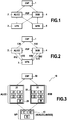
- FIG 2 shows schematically how the IETF today sees the application of the OAuth2.0 protocol in the context of WebRTC.
- the same references as in figure 1 are used and only Alice's Identity Provider 3 is shown.
- step E10 when Alice wishes to call Bob through the web browser of her terminal 2, she authenticates herself in a first step with its identity provider 3 in a conventional manner (for example with a login and a password, or a fingerprint, etc.) (step E10).
- the terminal 2 sends the identity provider 3 a digital fingerprint.
- This fingerprint is a digital information uniquely identifying the call between Alice and Bob, such as for example part of the pair of asymmetric keys used by Alice to communicate during this call with Bob in a peer-to-peer connection, etc. .
- the identity provider 3 authenticates Alice and provides, where appropriate, in response to this authentication, an authorization code (or ticket) to Alice's web browser (step E20).
- This authorization code is proof of Alice's authentication by the identity provider IdPA.
- Alice's web browser includes the authorization code received from identity provider 3 as well as her fingerprint in her call request to Bob's web browser of terminal 4 (step E30). This call request passes through the web server 1 of the WebRTC communications provider (step E40).
- Bob's web browser On receipt of Alice's call request, Bob's web browser sends the authorization code included in the call request to Alice's identity provider 3 (step E50). In return, he receives an access token (or “token”) (step E60) which allows him to access Alice's identity and her fingerprint from the identity provider 3 (step E70).
- an access token or “token”
- the authorization code is sent "in the clear" by Alice in the signaling message to Bob.
- this signaling message passes, as mentioned previously, through the web server of the communications provider 1. Therefore, a third party (possibly the WebRTC communications provider itself) can without major difficulty intercept the code of authorization transmitted by Alice to Bob and use it with Alice's Identity Provider 3 to obtain her identity.
- Alice's identity provider has no way of verifying that the person using the authorization code has been authorized to do so by Alice (i.e. delegation of authorization by Alice). It should be noted that in addition to the resulting security concerns, this goes against the philosophy of the OAuth2.0 protocol which requires that the entity requesting an authorization code be the same as the one requesting a token from access using the authorization code.
- the identity of the first user can be of different kinds. It may for example be an email address, a telephone number, etc., or more generally any type of information allowing the second user to unambiguously identify his correspondent during the communication c that is to say Alice.
- This management system can be integrated into a single device (typically in the terminal of the first user) or its modules can be dispatched to several distinct devices (e.g. on the first terminal and on a trusted entity such as a supplier. identities of the first user), as detailed later.
- each user eg Alice or Bob
- each user is considered to be a first user within the meaning of the invention.
- the invention advantageously allows the first user (eg Alice) to link his own identity to a datum characterizing the second user (eg Bob), thereby authorizing the second user to receive his identity.
- data characteristic of the second user is understood to mean data which is associated with or which uniquely and / or unambiguously (or even unambiguously) identifies the second user. It is a public encryption key of an asymmetric key pair comprising this public key and a secret key assigned to the second user, or a fingerprint of such a key. Note that this key pair can be assigned to a given communication (typically it can be a key pair assigned to the second user for peer-to-peer communication with the first user), and vary from one communication to another.
- the identity of the first user can also be linked (i.e. associated) to an identifier of the communication, or to any other parameter linked to the communication in progress between the first and the second user.
- the first user can be assured that his identity is communicated only to a user of his choice who can prove that he has been authorized by the first user to access his identity.
- This proof is provided when the second user can demonstrate that he has data corresponding to the characteristic data associated with the identity of the first user, that is to say identical to this characteristic data or uniquely linked to this one.
- the characteristic datum of the second user associated with the identity of the first user is a public key of a pair of asymmetric keys
- the datum corresponding to this characteristic datum can be the private key of the pair of asymmetric keys or a imprint of this key.
- the invention therefore offers a mechanism making it possible to guarantee a secure exchange between the users participating in the same communication in a WebRTC context, and by extension, for the rendering of various telecom services linked to the presentation of the identity of the users during the communication.
- a communication such as for example the restriction of identity presentation (or CLIR for "Calling Line Identity Restriction" in English).
- the mechanism proposed by the invention is more secure than that provided today by the IETF in that it prevents in particular a third party intervening between the first user and the second user (for example, the WebRTC communications provider to which the first and second users are connected), to seize the identity of the first user without his authorization
- the identity of the first user made available to the second user may depend on the second user.
- the first user can personalize the identity that he associates with each “second” user, according to various criteria (membership of his contacts, first communication with this user, etc.).
- the invention advantageously applies to the two types of SSO protocols envisaged today by the IETF in the WebRTC context, namely both to protocols comprising a pre-authorization (such as the OAuth2.0 protocol) and to protocols. with immediate identity provision (eg BrowserID) described above.
- a pre-authorization such as the OAuth2.0 protocol
- protocols. with immediate identity provision eg BrowserID
- the obtaining step can be implemented by the first browser and the association and provision steps can be implemented by a trusted entity.
- the identity of the first user is recorded, in association with a datum characteristic of the second user authorized by the first user, at the level of the trusted entity which has for example authenticated or is likely to identify the first user.
- This trusted entity is typically the identity provider of the first user who generates an authorization code or ticket to the first user within the framework of the OAuth2.0 protocol.
- This embodiment thus offers a mechanism which makes it possible to “delegate” the authorization ticket issued by the identity provider from one web browser to another, that is to say in other words, which allows the authorization code of the web browser of the first user to be transmitted with the authorization of the first user to the web browser of his correspondent.
- the invention thus allows the identity provider to easily verify that the second user has indeed been authorized by the first user to use the authorization code with him when he himself has given this code to the first user, and that the second user is indeed authorized to obtain the identity of the first user.
- said at least one first datum characteristic of the second user is a public key of a pair of public and secret keys attributed to the second user, said at least one first characteristic datum being obtained by the first browser of the second browser.
- the step of making the identity of the first user available to the second user can then comprise the sending by the trusted entity to the second browser of the identity of the first user following receipt by the trusted entity of 'a proof of authentication of the first user signed by the second browser using the private key of the key pair assigned to the second user.
- Such proof of authentication can consist in particular of an authorization code provided by the trusted entity to the first user, which is then signed using the private key of the second user.
- the trusted entity can thus easily verify that the authorization code comes from a user authorized by the first user by verifying the signature received using the public key of the second user associated with the identity of the first user. This allows him to validate that the second user who sent him the authorization code does indeed hold a piece of data corresponding to the characteristic datum which was transmitted to him by the first user and which was recorded by him in association with his identity.
- the invention thus makes it possible to improve the security of SSO protocols with a pre-authorization mechanism, such as the OAuth2.0 protocol.
- the invention is not limited to this type of protocol and can also be applied when an SSO protocol with immediate identity provision is envisaged.
- the steps of obtaining, associating and making available are preferably implemented by the first browser.
- the identity of the first user is recorded in association with a datum characteristic of the second user authorized by the first user at the level of the first browser itself. Moreover, it is he who makes the identity of the first user available to the second user when the latter holds a datum corresponding to the characteristic datum associated by the first browser with the identity of the first terminal.
- This embodiment thus offers a mechanism which makes it possible to ensure that the identity of the first user is only issued to a second user authorized by the first user. It should be noted that the identity of the first user is understood here to mean, for the mechanisms to immediate identity provision, information that uniquely identifies the first user.
- said at least one first datum characteristic of the second user is a public key of a pair of public and secret keys attributed to the second user, said at least one first characteristic datum being obtained by the first browser of a trusted entity having authenticated the second user.
- the provision of the identity of the first user is indeed conditioned in this variant embodiment by the possession of a piece of data corresponding to the public key linked to the identity of the first user since the second user cannot access it. 'identity of the first user only if he holds the private key corresponding to this public key.
- the simple fact of encrypting the identity of the first user with the public key of the second user authorized by the first user makes it possible to ensure that only the latter can access it and to avoid any unwanted interception of the identity of the first user.
- the invention therefore also makes it possible to improve the security of SSO protocols with immediate identity provision, such as the BrowserID protocol.
- the management method according to the invention relies, as mentioned above, on various entities, namely in particular the terminal of the first user, the terminal of the second user and the trusted entity.
- the identity of the first user associated with the trusted entity with said at least one first datum characteristic of the second user may be identical or distinct from an identity of the first user used during an authentication of the first user, this authentication being able to be carried out by the trusted entity.
- This method can follow in particular the authentication of the first user by the trusted entity.
- the various aforementioned entities form a communication system allowing the first and the second user to exchange their identities in a secure manner during communication via their web browsers.
- the terminal of the first user and the communication method implemented by this terminal, the trusted entity and the provision method implemented by this trusted entity, the terminal of the second user as well as the method for obtaining implemented by this terminal, and the communication system according to the invention benefit from the same advantages mentioned above as the management system and the management method according to the invention when these are used in the context of protocols with a communication mechanism. pre-authorization.
- the management system according to the invention is integrated into the terminal of the first user.
- the invention is also aimed at a terminal comprising a management system according to the invention (terminal of the first user).
- the terminal and the communication system according to this embodiment of the invention also benefit from the same advantages mentioned above as the management system and the management method according to the invention when these are used in the context of protocols with provision. immediate identity.
- the various steps of the management and / or obtaining and / or communication and / or provisioning methods are determined by computer program instructions.
- the invention is also aimed at a computer program on an information medium, this program being capable of being implemented in a terminal, an entity. trust, a management system or more generally in a computer, this program comprising instructions adapted to the implementation of the steps of a method as described above.
- This program can use any programming language, and be in the form of source code, object code, or intermediate code between source code and object code, such as in a partially compiled form, or in any other. desirable form.
- the invention also relates to an information or recording medium readable by a computer, and comprising instructions of a computer program as mentioned above.
- the information medium can be any entity or device capable of storing the program.
- the medium may comprise a storage means, such as a ROM, for example a CD ROM or a microelectronic circuit ROM, or else a magnetic recording means, for example a floppy disk or a disk. hard.
- the information medium can be a transmissible medium such as an electrical or optical signal, which can be conveyed via an electrical or optical cable, by radio or by other means.
- the program according to the invention can in particular be downloaded from an Internet type network.
- the information medium can be an integrated circuit in which the program is incorporated, the circuit being adapted to execute or to be used in the execution of the method in question.
- the invention is described below in the context of communications based on the WebRTC technology and architecture as studied by the W3C consortium and the IETF. However, this assumption is not limiting and the invention can be applied to other communication systems between web browsers, such as for example proprietary communication systems.
- the invention provides a secure mechanism for exchanging identities between users participating in the same communication, which can be used both in association with an SSO protocol with pre-authorization and with an SSO protocol with provision of a. immediate identity.
- the figure 3 illustrates, in its environment, a communication system 10 in accordance with the invention in a first embodiment in which the invention is used in association with an SSO protocol based on a pre-authorization mechanism.
- this SSO protocol is the OAuth2.0 protocol known per se.
- the communication system 10 also comprises here a web server 50 of a WebRTC communications provider (or CSP for “Communication Service Provider”), to which the terminals 20 and 30 of Alice and Bob are connected by means of 'a secure link, for example by means of a link established according to the HTTPS protocol (HyperText Transfer Protocol Secure).
- a WebRTC communications provider or CSP for “Communication Service Provider”
- CSP Common Service Provider
- Web browsers 21 and 31 have a WebRTC programming interface or API.
- This API comprises, in a manner known per se, a “PeerConnection” media object which makes it possible to manage communications with other web browsers, and is able to instantiate an “IdP Proxy” proxy to interact and communicate with the trusted entity 40 (in other words, the proxy acts as the interface between the web browser and the trusted entity).
- IdP Proxy an “IdP Proxy” proxy to interact and communicate with the trusted entity 40 (in other words, the proxy acts as the interface between the web browser and the trusted entity).
- each terminal 20 and 30 has the same means for making the identity of his own user available to the other user and receiving the identity of the other user.
- terminals 20 and 30 here have the hardware architecture of a computer as shown schematically on figure 4A .
- Each terminal comprises in particular a PROC processor, a ROM read-only memory, a RAM random-access memory, a non-volatile memory MEM in which the web browser of the terminal is stored (designated by BROWS on the figure 4A ), as well as COM communication means on a NW telecommunications network.
- a PROC processor for executing code
- ROM read-only memory for storing data
- RAM random-access memory for storing the web browser of the terminal is stored
- MEM non-volatile memory MEM in which the web browser of the terminal is stored
- COM communication means on a NW telecommunications network No limitation is attached to the nature of this network: it can be a fixed or mobile, wired or wireless network, local or not, etc.
- These communication means allow the terminals 20 and 30 to communicate with each other, but also with the web server 50 and the trusted entity 40.
- the computer program PROG1 defines, in an equivalent manner, functional modules of each of the terminals 20 and 30 and more precisely of the browsers 21 and 31, as well as the interactions between these modules, these modules being activated during a communication in which the terminal browsers participate.
- type of communication considered: it can be an audio, video, messaging type communication. instant, etc., as offered in particular (but not exhaustively) by WebRTC technology.
- Modules 22 and 23 are based here in particular on the COM communication means, on the “Peer Connection” media object (for modules 22 and 32) and on the “IdP proxy” proxy (for modules 23 and 33) of terminal 20 (respectively of terminal 30).
- the computer program PROG2 also defines functional modules (as well as the interactions of these modules with each other) of each of the terminals 20 and 30 and more precisely of the browsers 21 and 31 installed on these terminals, these modules being activated. and controlled by browsers during communication between these browsers.
- modules are based in particular on the communication means COM of the terminal 30 (respectively of the terminal 20).
- the trusted entity 40 also has the hardware architecture of a computer as shown schematically on figure 4B .
- It comprises in particular a processor PROC ', a read-only memory ROM', a random access memory RAM ', a non-volatile memory MEM', as well as communication means COM 'on the telecommunications network NW.
- These communication means allow the trusted entity 40 to communicate in particular with the terminals 20 and 30 and more particularly with the browsers 21 and 31 installed on these terminals.
- the ROM 'read-only memory of the trusted entity 40 constitutes a recording medium in accordance with the invention, readable by the processor PROC' and on which is recorded a computer program PROG 3 in accordance with the invention, comprising instructions for executing the steps of a method for making user identities available, in accordance with the invention.
- the computer program PROG3 defines, in an equivalent manner, functional modules of the trusted entity 40 as well as the interactions between these modules, these modules being activated during a communication in which the browsers 21 and 31 of the terminals 20 participate. and 30 respectively.
- the figure 5 illustrates, in diagram form, the main steps of the management, provision and obtaining methods according to the invention in the first embodiment, when they are implemented by the different entities forming the communication system 10, namely the terminals 20 and 30 and the trusted entity 40 and when this system uses the OAuth2.0 authentication protocol.
- the steps of the management method are distributed over several entities, namely on the terminals 20 and 30 and on the trusted entity 40.
- the modules of these entities implementing the steps of the management method therefore form a management system within the meaning of the invention.
- Alice wishes to establish, via the browser 21 installed on her terminal 20, a communication with Bob or more precisely with the browser 31 installed on Bob's terminal 30.
- Alice and Bob each fulfill in turn the role of first user and second user within the meaning of the invention.
- the browser 21 sends an authentication request from Alice to its identity provider (step G10), in other words here, to the trusted entity 40 (designated for greater clarity on the figure 5 by 40 / Alice when she manages Alice's identity, and by 40 / Bob when she manages Bob's identity).
- the authentication of Alice by the identity provider 40 / Alice is carried out in a manner known per se, as detailed in the WebRTC architecture and based on the OAuth2 protocol. .0.
- the browser 21 receives, in response to this authentication request, an authorization code CODA from the identity provider 40 / Alice (step G20).
- This authorization code in itself constitutes proof of authentication of Alice by the trusted entity 40.
- the browser 21 sends the authorization code CODA in a signaling message (eg call request) to Bob's browser 31, via the web server 50 (step G30). It also attaches here to the signaling message a digital fingerprint FPA, which consists of digital information uniquely identifying the communication between Alice and Bob.
- This fingerprint is for example made up of a digest (or "hash" in English) of a public key PKA of a pair of asymmetric keys assigned to Alice for communication with Bob to establish secure peer-to-peer exchanges with Bob according to the DTLS protocol.
- This key pair includes the public key PKA and the associated private key SKA. It is generated by Alice's browser 21 for the communication in question.
- the signaling message containing the CODA authorization code and Alice's FPA fingerprint is routed by the web server 50 to Bob's browser 31 (step G40).
- the browser 31 of Bob's terminal 30 on receipt of the signaling message from Alice, the browser 31 of Bob's terminal 30 sends a Bob authentication request to his identity provider (step G50), in other words here to the trusted entity 40 / Bob. It obtains in return, in accordance with the OAuth2.0 protocol, a CODB authorization code (step G60). It should be noted that steps G50 and G60 are not necessarily carried out following receipt of Alice's call request, but can be implemented by the browser 31 of Bob's terminal 30 in parallel, for example steps G10 and G20, or at some other time before the receipt of the call request from Alice.
- Bob's browser 31 responds to Alice's call request by sending her authorization code CODB and a digital fingerprint FPB of a public key PKB which has been allocated to her by her browser 31 (step G70).
- this public key PKB belongs to a pair of asymmetric keys (ie comprising the public key PKB and an associated private key SKB), allocated by the browser 31 to Bob for communication with Alice, with a view to establishing secure peer-to-peer exchanges with Alice according to the DTLS protocol.
- the response from the browser 31 passes through the web server 50 and is routed by the latter to Alice's browser 21 (step G80).
- Bob's browser 31 then initiates the establishment of a secure communication channel (or secure media) with Alice's browser 21. Securing exchanges on this Communication channel is ensured by the use of the DTLS protocol (Datagram Transport Layer Security), known per se.
- DTLS protocol Datagram Transport Layer Security
- Bob's browser 31 sends Alice's browser 21, via its module 34, its public key PKB (step G90).
- the public key PKB constitutes data DB characteristic of Bob within the meaning of the invention, in the sense that it is allocated uniquely to Bob (and here to his communication with Alice) and therefore unambiguously identifies Bob.
- Bob's characteristic DB (i.e. his public key PKB here) is obtained by the obtaining module 22 of Alice's browser 21.
- Alice's browser 21 sends in response to Bob's browser 31, via its module 24, its public key PKA (step G100)).
- This public key PKA constitutes data DA characteristic of Alice (and here of her communication with Bob) and therefore unambiguously identifies her.
- Alice's characteristic DA data i.e. her public key PKA here
- Alice's characteristic DA data i.e. her public key PKA here
- Alice's browser 21 then checks the validity of the public key PKB from the FPB imprint received in step G80, and stores it, if necessary, in the non-volatile memory MEM of terminal 20 (step G110).
- Bob's browser 31 checks the validity of the public key PKA from the fingerprint FPA received at step G40, and stores it where appropriate in the non-volatile memory MEM of terminal 30 (step G120). Steps G110 and G120 are carried out in a manner known to those skilled in the art.
- Alice's browser 21, through its module 23, then communicates with its identity provider 40 / Alice (ie with the trusted entity 40), in order to associate (ie register) with the latter an identity Alice's IDA with the datum DB PKB characteristic of Bob (step G130).
- the identity IDA can be the same identity as that used by the browser 21 to authenticate itself during step G10, or an identity selected by Alice for Bob (in other words which can vary according to the party with whom Alice wishes establish communication). This can include an email address, a phone number, etc.
- the identity provider 40 / Alice records, by means of its module 42, the data item DB characteristic of Bob in association with the identity IDA of Alice in its non-volatile memory MEM '(step G140). It confirms this registration with the browser 21 (step G150).
- the communication steps G160, registration G170 and confirmation G180 are identical to steps G130, G140 and G150 described previously for Alice.
- the module 35 does this in a manner known per se and not detailed here.
- the signature of the authorization code denoted CODA (SKB) is then sent by the module 35 of the browser 31 to the identity provider 40 / Alice in a request aimed at obtaining the identity of Alice (step G200).
- the signed authorization code or equivalent the CODA signature (SKB) constitutes in itself proof that Bob holds a data item, namely the secret key SKB, corresponding unambiguously to the characteristic DB data of Bob, in other words here to the public key PKB. Indeed, only a signature generated using Bob's secret key SKB can be verified by the identity provider 40 / Alice using the public key PKB.
- the verification of the CODA signature (SKB) by the identity provider 40 / Alice also enables it to find the CODA authorization code that it gave to Alice during her authentication in step G20.
- This provision includes the direct sending of the IDA identity by the identity provider 40 / Alice to Bob's browser 31 (and in particular to his module 36), that is to say without going through the web server 50.
- the identity IDA can be encrypted by the identity provider 40 / Alice with Bob's public key PKB before being transmitted to him or being sent over a secure channel (for example in accordance with the HTTPS protocol).
- the identity provider 40 / Alice rejects Bob's identity request and does not provide Alice's IDA identity to Bob.
- Steps G230 of signing the CODB authorization code using Alice's secret key SKA and G240 of sending by the module 25 of the browser 21 a request to the identity provider 40 / Bob aiming to obtain Bob's identity and containing the CODB signature (SKA) of the CODB authorization code, as well as steps G250 for verifying the signature and G260 for sending the IDB identity by the identity provider 40 / Bob to the browser 31 of terminal 30 are implemented identically to steps G190, G200, G210 and G220 described above.
- step G220 the browser 21 of Alice (respectively the browser 31 of Bob), has the IDA identity of Alice (respectively the identity Bob's IDB).
- these identities did not pass through the web server 50, but were sent directly to the browsers 21 and 31 by the secure channel. previously established after verifying that both had proof of delegation of authorization codes by Alice and Bob respectively.
- the invention allows, in this first embodiment, a secure exchange of identities between Alice and Bob in accordance with the requirements of the OAuth2.0 protocol.
- the figure 6 illustrates, in its environment, a communication system 100 according to the invention in the second embodiment.
- Web browsers 210 and 310 are equipped like web browsers 21 and 31 with the figure 3 a programming interface or WebRTC API, comprising a “PeerConnection” media object and able to instantiate an “IdP Proxy” proxy to interact and communicate with the trusted entity 400.
- a programming interface or WebRTC API comprising a “PeerConnection” media object and able to instantiate an “IdP Proxy” proxy to interact and communicate with the trusted entity 400.
- each terminal 200 and 300 has the same means, to make the identity of his own user available to the other user and to receive the identity of the other user.
- the terminals 200 and 300 also have, like the terminals 20 and 30, the hardware architecture of a computer as shown schematically on figure 4A . However, they differ from terminals 20 and 30 in that the non-volatile memory MEM of each terminal now constitutes a recording medium according to the invention, readable by the processor PROC and on which is recorded a computer program conforming to the invention. invention, comprising instructions for executing the steps of a management method in accordance with the invention (designated by the program PROG4).
- the computer program PROG4 defines, in an equivalent manner, functional modules of each of the terminals 200 and 300 and more precisely of the browsers 210 and 310, as well as the interactions between these modules, these modules being activated and controlled by the browsers 210 and 310 during a communication in which these browsers participate.
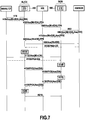
- the figure 7 illustrates, in diagram form, the main steps of the management method according to the invention in the second embodiment, when it is implemented by the communication system 100 and more precisely by the terminals 200 and 300, and when this system uses the BrowserID authentication protocol.
- Alice wishes to establish, via the browser 210 installed on her terminal 200, a communication with Bob or more precisely with the browser 310 installed on Bob's terminal 300.
- Alice and Bob each fulfill in turn the role of first user and second user within the meaning of the invention.
- the browser 210 sends an authentication request from Alice to its identity provider 400 / Alice (step H10).
- the authentication of Alice by the identity provider 400 / Alice is carried out in a manner known per se, as detailed in the WebRTC architecture and based here on the BrowseID protocol.
- the browser 210 receives, in response to this authentication request, a certificate relating to a minimalist identity MinIDA from Alice denoted Ass (MinIDA), and a certificate relating to an identity IDA from Alice denoted by Ass (IDA) (step H20 ).
- a certificate of an identity issued by a trusted entity comprises the identity in clear as well as a signature of this identity by the trusted entity. This is a proof of authentication by the trusted entity of the user using this identity.
- the certificate Ass (MinIDA), respectively Ass (IDA), therefore constitutes proof that Alice has indeed been identified by the identity provider 400 / Alice with the identity MinIDA, respectively IDA.
- Alice's minimalist identity MinIDA here designates information intended to provide a minimum level of confidence on Alice (ie she has been authenticated by the identity provider 400 / Alice), for example to Bob or to its identity provider.
- This minimalist identity can be anonymized information, it can simply be made up of one or more data fields including, for example, depending on the context considered, a country code of residence, a name of the company to which Alice belongs, or even Alice's first name (only, ie not her last name).
- the minimalist identity certificate Ass further comprises a link or information making it possible to obtain from the identity provider 400 / Alice, a public key PKA belonging to a pair of asymmetric keys assigned to Alice.
- the asymmetric key pair also includes a secret key SKA associated with the public key PKA.
- Browser 210 sends the minimalist identity certificate Ass (MinIDA) as well as an FPA fingerprint of Alice's PKA public key in a signaling message (call request) to Bob's browser 310, through the server. web 500 (step H30).
- MinIDA minimalist identity certificate Ass
- FPA FPA fingerprint of Alice's PKA public key
- the signaling message containing the minimalist identity certificate Ass (MinIDA) and Alice's FPA fingerprint is routed by the web server 500 to Bob's browser 310 (step H40).
- the browser 310 of Bob's terminal 30 on receipt of the signaling message from Alice, sends a Bob authentication request to his identity provider 400 / Bob (step H50). It obtains in return, in accordance with the BrowserID protocol, a certificate relating to a minimalist identity MinIDB of Bob noted Ass (MinIDB), and a certificate relating to an IDB identity of Bob unambiguously identifying him, noted Ass (IDB) (step H60). Each certificate relating to an identity (IDB or MinIDB) contains this identity and a signature of this identity by the identity provider 400 / Bob.
- steps H50 and H60 are not necessarily carried out following receipt of Alice's call request, but can be implemented by the browser 310 of Bob's terminal 300 in parallel, for example steps H10 and H20, or at another time before receiving the call request from Alice.
- Bob's browser 310 responds to Alice's call request by sending the Ass certificate (MinIDB) of her minimalist identity and an FPB hash of a public key PKB belonging to an asymmetric key pair uniquely assigned to Bob. by their identity provider 400 / Bob (step H70).
- This pair of asymmetric keys also includes a secret key SKB associated with the public key PKB.
- the response from the browser 310 passes through the web server 500 and is routed by the latter to Alice's browser 210 (step H80).
- Alice's browser 210 On receipt of Bob's response, Alice's browser 210, through its module 220, sends a request to Bob's identity provider 400 / Bob to obtain Bob's public key PKB (step H90). For this purpose, he attaches in his request the minimalist identity certificate Ass (MinIDB) of Bob received at step H80.
- MinIDB minimalist identity certificate Ass
- the identity provider 400 / Bob On receipt of the request, the identity provider 400 / Bob extracts from the certificate Ass (MinIDB) the minimalist identity MinIDB and uses this minimalist identity to find Bob's public key PKB.
- MinIDB certificate Ass
- Bob's public key PKB required by Alice's browser 210 belongs, as mentioned previously, to an asymmetric key pair previously assigned by identity provider 400 / Bob to Bob. It should be noted that this key pair may be different from the key pair assigned to Bob to communicate directly securely with Alice according to the DTLS protocol.
- the public key PKB constitutes data DB characteristic of Bob within the meaning of the invention, in the sense that it is uniquely allocated to Bob and unambiguously identifies him.
- the association module 230 of the Alice browser 210 associates the public key PKB (characteristic data of Bob) received from the identity provider 400 / Bob with the identity of Alice IDA (or in an equivalent manner with her certificate Ass ( IDA)) in the memory MEM of the terminal 200 (step H110).
- PKB characteristic data of Bob
- IDA identity More precisely her Ass Certificate (IDA) here which contains the IDA identity
- PKB Alice's identity certificate Ass (IDA) encrypted using Bob's public key PKB.
- module 230 only encrypts Alice's IDA identity rather than her certificate.
- Bob's browser 310 following receipt of Alice's call request, Bob's browser 310, through its module 320, sends a request to Alice's 400 / Alice identity provider to obtain the key.
- Alice's public PKA step H120.
- the identity provider 400 / Alice On receipt of the request, the identity provider 400 / Alice extracts from the certificate Ass (MinIDA) the minimalist identity MinIDA and uses this minimalist identity to find Alice's public key PKA.
- the public key PKA of Alice required by the browser 310 belongs to an asymmetric key pair previously allocated by the identity provider 400 / Alice to Alice. It should be noted that this key pair may be different from the key pair assigned to Alice to communicate directly securely with Bob according to the DTLS protocol.
- the public key PKA constitutes data DA characteristic of Alice within the meaning of the invention, in the sense that it is uniquely allocated to Alice and unambiguously identifies her.
- the association module 330 of Bob's browser 310 then associates the public key PKA (characteristic data of Alice) received from the identity provider 400 / Alice with the identity of Bob IDB (or in an equivalent manner with his certificate Ass ( IDB)) in the memory MEM of the terminal 300 (step H140).
- PKA public key of Alice
- module 330 only encrypts Bob's IDB identity rather than his certificate.
- steps H90-H110 and H120-H140 can be carried out in parallel by browsers 210 and 310 respectively.
- Alice's browser 210 then sends Bob's browser 310, via its module 240, a call request comprising Alice's identity certificate Ass (IDA) encrypted with Bob's public key PKB, that is to say the message PKB (Ass (IDA)) (step H150).
- IDA identity certificate
- PKB public key
- This request passes through the web server 500 and is routed by the latter to Bob's browser 310 (step H160).
- the web server 500 not holding Bob's SKB private key, it cannot access the Ass certificate (IDA) and therefore the IDA identity contained in the request. Only Bob can access the IDA identity contained in the request by decrypting the PKB message (Ass (IDA)) using his secret key SKB.
- the step of sending by the browser 210 of Alice the encrypted message PKB constitutes a step of making available to Bob the identity of Alice within the meaning of the invention, the condition according to which Bob must hold a datum (in this case the private key SKB) corresponding to the characteristic datum DB (ie the public key PKB) recorded by the browser 210 in association with the identity IDA being verified.
- the browser 310 On receipt of the call request from the browser 210, the browser 310 via its module 350, decrypts the PKB (Ass (IDA)) message using Bob SKB's secret key and thus obtains the IDA identity of 'Alice (step H170).
- PKB Ass (IDA)
- This response message passes through the web server 500 which routes it to the browser 210 of Alice's terminal 200 (step H190). Again, the web server 500 that does not have Alice's private key does not have access to the certificate Ass (IDB) and therefore to the IDB identity conveyed in the response message.
- IDB certificate Ass
- the browser 210 On receipt of the response message, the browser 210 via its module 250, decrypts the encrypted message PKA (Ass (IDB)) using Alice's secret key SKA and thus obtains Bob's IDB identity (step H200).
- PKA Ass (IDB)
- SKA Alice's secret key
- a direct and secure communication channel is initiated between the browsers 210 and 310 (step H210). This channel is based on the DTLS protocol.
- This second embodiment therefore offers a mechanism for the secure exchange of the identities of Alice and Bob compatible with the use of an SSO protocol with immediate identity provision such as the BrowserID protocol.
- the identity of Alice is associated at the level of the trusted entity 40 or of Alice's browser (respectively of Bob) with a datum characteristic of Bob (respectively Alice), such as a public encryption key.
- the identity of Alice can also be associated, in addition to the characteristic datum of Bob (respectively of Alice) with an identifier of the communication between Alice and Bob and / or with any other parameter related to this communication.
- the provision of the identity of Alice can be further conditioned by the provision of the identifier of the communication, in order to further strengthen the security of the exchange mechanism. identities between Alice and Bob.
Landscapes
- Engineering & Computer Science (AREA)
- Computer Networks & Wireless Communication (AREA)
- Signal Processing (AREA)
- Computer Security & Cryptography (AREA)
- Multimedia (AREA)
- Computer Hardware Design (AREA)
- Computing Systems (AREA)
- General Engineering & Computer Science (AREA)
- Business, Economics & Management (AREA)
- General Business, Economics & Management (AREA)
- Information Transfer Between Computers (AREA)
- Telephonic Communication Services (AREA)
Claims (17)
- Verfahren zur Verwaltung einer Identität (IDA, IDB) eines ersten Benutzers, das dazu bestimmt ist, bei einer Kommunikation zwischen einem auf einem Endgerät (20, 30; 200, 300) des ersten Benutzers installierten ersten Webbrowser (21, 31; 210, 310) und einem auf einem Endgerät (30, 20; 300, 200) eines zweiten Benutzers installierten zweiten Webbrowser (31, 21; 310, 210) durchgeführt zu werden, wobei das Verwaltungsverfahren enthält:- einen Schritt der Erlangung (G90, G40; H130, H100) durch den ersten Benutzer mindestens eines ersten charakteristischen Datenwerts (DB, DA) des zweiten Benutzers, wobei der mindestens eine erste charakteristische Datenwert (DB, DA) des zweiten Benutzers ein öffentlicher Schlüssel (PKB, PKA) eines dem zweiten Benutzer zugeteilten Paars von öffentlichem und geheimem Schlüssel ist;- einen Schritt der Verknüpfung (G140, G160; H200, H170) einer Identität (IDA, IDB) des ersten Benutzers mit dem mindestens einen ersten charakteristischen Datenwert (DB, DA) des zweiten Benutzers; und- einen Schritt, dem zweiten Benutzer die mit dem mindestens einen ersten charakteristischen Datenwert verknüpfte Identität des ersten Benutzers (IDA, IDB) zur Verfügung zu stellen (G220, G260; H150, H180), vorausgesetzt, der zweite Benutzer besitzt mindestens einen zweiten Datenwert (SKB, SKA) entsprechend dem ersten charakteristischen Datenwert des zweiten Benutzers.
- Verwaltungsverfahren nach Anspruch 1, wobei die Identität des ersten Benutzers während des Verknüpfungsschritts (G140, G160; H200, H170) außerdem mit einer Kennung der Kommunikation verknüpft wird.
- Verwaltungsverfahren nach Anspruch 1 oder 2, wobei die dem zweiten Benutzer zur Verfügung gestellte Identität des ersten Benutzers vom zweiten Benutzer abhängt.
- Verwaltungsverfahren nach einem der Ansprüche 1 bis 3, wobei der Erlangungsschritt (G80, G40) vom ersten Browser (21, 31) durchgeführt wird, und die Schritte der Verknüpfung (G140, G160) und der Zurverfügungstellung (G220, G260) von einer Vertrauensentität (40) durchgeführt werden, die den ersten Benutzer authentifizieren kann.
- Verwaltungsverfahren nach Anspruch 4, wobei:- der mindestens eine erste charakteristische Datenwert (DB, DA) des zweiten Benutzers ein öffentlicher Schlüssel (PKB, PKA) eines dem zweiten Benutzer zugeteilten Paars von öffentlichem und geheimem Schlüssel ist, wobei dieser öffentliche Schlüssel durch den ersten Browser (21, 31) vom zweiten Browser (31, 21) erlangt wird; und- der Schritt der Zurverfügungstellung (G220, G260) das Senden durch die Vertrauensentität (40) an den zweiten Browser (31, 21) der Identität (IDA, IDB) des ersten Benutzers nach dem Empfang (G200, G240) durch die Vertrauensentität (40) eines Authentifizierungsbeweises (CODA, CODB) des ersten Benutzers signiert vom zweiten Browser unter Verwendung des privaten Schlüssels (SKB, SKA) des dem zweiten Benutzer zugeteilten Paars von Schlüsseln enthält.
- Verwaltungsverfahren nach einem der Ansprüche 1 bis 3, wobei die Schritte der Erlangung (H130, H100), der Verknüpfung (H200, H170) und der Zurverfügungstellung (H150, H180) vom ersten Browser (210, 310) durchgeführt werden.
- Verwaltungsverfahren nach Anspruch 6, wobei:- der mindestens eine erste charakteristische Datenwert (DB, DA) des zweiten Benutzers ein öffentlicher Schlüssel (PKB, PKA) eines dem zweiten Benutzer zugeteilten Paars von öffentlichem und geheimem Schlüssel ist, wobei dieser öffentliche Schlüssel durch den ersten Browser (210, 310) von einer Vertrauensentität (40) erlangt wird, die den zweiten Benutzer authentifiziert hat;- der Verknüpfungsschritt (H200, H170) die Verschlüsselung durch den ersten Browser (210, 310) der Identität (IDA, IDB) des ersten Benutzers unter Verwendung dieses öffentlichen Schlüssels (PKA, PKB) des zweiten Benutzers enthält; und- der Schritt der Zurverfügungstellung (H150, H180) das Senden durch den Browser (210, 310) an den zweiten Browser (310, 210) der so verschlüsselten Identität (PKB(Ass(IDA)), PKA(Ass(IDB))) enthält.
- Kommunikationsverfahren eines auf einem Endgerät (20, 30) eines ersten Benutzers installierten ersten Webbrowsers (21, 31) mit einer Vertrauensentität (40), das dazu bestimmt ist, bei einer Kommunikation zwischen dem ersten Webbrowser und einem auf einem Endgerät (30, 20) eines zweiten Benutzers installierten zweiten Webbrowser (31, 21) durchgeführt zu werden, wobei das Kommunikationsverfahren enthält:- einen Schritt der Erlangung (G100, G90) durch den ersten Webbrowser vom zweiten Webbrowser mindestens eines ersten charakteristischen Datenwerts (DB, DA) des zweiten Benutzers, wobei der mindestens eine erste charakteristische Datenwert (DB, DA) des zweiten Benutzers ein öffentlicher Schlüssel (PKB, PKA) eines dem zweiten Benutzer zugeteilten Paars von öffentlichem und geheimem Schlüssel ist; und- einen Schritt der Kommunikation (G130, G160) des ersten Webbrowsers (21, 31) mit der Vertrauensentität (40), um bei der Vertrauensentität eine Identität (IDA, IDB) des ersten Benutzers mit dem mindestens einen ersten charakteristischen Datenwert (DB, DA) des zweiten Benutzers zu verknüpfen.
- Kommunikationsverfahren nach Anspruch 8, wobei die Identität des ersten Benutzers, die bei der Vertrauensentität mit dem mindestens einen ersten charakteristischen Datenwert des zweiten Benutzers verknüpft ist, sich von einer Identität des ersten Benutzers unterscheidet, die bei der Authentifizierung des ersten Benutzers durch die Vertrauensentität verwendet wurde.
- Verfahren zur Zurverfügungstellung einer Identität (IDA, IDB) eines ersten Benutzers durch eine Vertrauensentität (40), das dazu bestimmt ist, bei einer Kommunikation zwischen einem auf einem Endgerät (20, 30) des ersten Benutzers installierten ersten Webbrowser (21, 31) und einem auf einem Endgerät (30, 20) eines zweiten Benutzers installierten zweiten Webbrowser (31, 21) durchgeführt zu werden, wobei das Zurverfügungstellungsverfahren enthält:- einen Schritt der Verknüpfung (G140, G170) durch die Vertrauensentität einer Identität (IDA, IDB) des ersten Benutzers mit mindestens einem ersten charakteristischen Datenwert (DB, DA) des zweiten Benutzers, wobei der mindestens eine erste charakteristische Datenwert (DB, DA) des zweiten Benutzers ein öffentlicher Schlüssel (PKB, PKA) eines dem zweiten Benutzer zugeteilten Paars von öffentlichem und geheimem Schlüssel ist; und- nach dem Empfang (G200, G240) durch die Vertrauensentität eines Beweises, dass der zweite Benutzer mindestens einen zweiten Datenwert besitzt, der dem ersten charakteristischen Datenwert des zweiten Benutzers entspricht, einen Schritt, dem zweiten Benutzer die Identität des ersten Benutzers, die mit dem mindestens einen ersten charakteristischen Datenwert des zweiten Benutzers verknüpft ist, zur Verfügung zu stellen (G220, G260).
- Verfahren zur Erlangung einer Identität (IDA, IDB) eines ersten Benutzers, das dazu bestimmt ist, bei einer Kommunikation zwischen einem auf einem Endgerät (20, 30) des ersten Benutzers installierten ersten Webbrowser (21, 31) und einem auf einem Endgerät (30, 20) eines zweiten Benutzers installierten zweiten Webbrowser (31, 21) durchgeführt zu werden, wobei das Verfahren enthält:- einen Schritt des Lieferns (G90, G100) durch den zweiten Browser an den ersten Browser mindestens eines ersten charakteristischen Datenwerts (DB, DA) des zweiten Benutzers, wobei der mindestens eine erste charakteristische Datenwert (DB, DA) des zweiten Benutzers ein öffentlicher Schlüssel (PKB, PKA) eines dem zweiten Benutzer zugeteilten Paars von öffentlichem und geheimem Schlüssel ist;- einen Schritt des Lieferns (G200, G240) durch den zweiten Browser an die Vertrauensentität eines Beweises, dass der zweite Benutzer mindestens einen zweiten Datenwert (SKB, SKA) entsprechend dem ersten charakteristischen Datenwert (DB, DA) des zweiten Benutzers besitzt; und- einen Schritt des Empfangs (G220, G260) durch den zweiten Browser von einer Vertrauensentität, die den ersten Benutzer authentifizieren kann, einer Identität des ersten Benutzers, die bei der Vertrauensentität mit dem ersten charakteristischen Datenwert des zweiten Benutzers verknüpft ist.
- System (205) zur Verwaltung einer Identität (IDA, IDB) eines ersten Benutzers, das eine Vielzahl von Modulen enthält, die bei einer Kommunikation zwischen einem auf einem Endgerät des ersten Benutzers installierten ersten Webbrowser (21, 31; 210, 310) und einem auf einem Endgerät eines zweiten Benutzers installierten zweiten Webbrowser (31, 21; 310, 210) aktiviert werden, wobei die Vielzahl von Modulen enthält:- ein Modul (22, 32; 220, 320) an Bord des Endgeräts des ersten Benutzers zum Erlangen mindestens eines ersten charakteristischen Datenwerts des zweiten Benutzers, wobei der mindestens eine erste charakteristische Datenwert (DB, DA) des zweiten Benutzers ein öffentlicher Schlüssel (PKB, PKA) eines dem zweiten Benutzer zugeteilten Paars von öffentlichem und geheimem Schlüssel ist;- ein Modul zur Verknüpfung (42; 230, 330) einer Identität (IDA, IDB) des ersten Benutzers mit dem mindestens einen ersten charakteristischen Datenwert (DB, DA) des zweiten Benutzers; und- ein Modul, um dem zweiten Benutzer die mit dem mindestens einen ersten charakteristischen Datenwert verknüpfte Identität des ersten Benutzers unter der Voraussetzung zur Verfügung zu stellen (43; 240, 340), dass der zweite Benutzer mindestens einen zweiten Datenwert entsprechend dem ersten charakteristischen Datenwert des zweiten Benutzers besitzt.
- Endgerät (200, 300) eines ersten Benutzers, das mit einem ersten Webbrowser (210, 310) ausgestattet ist, das ein Verwaltungssystem (205, 305) einer Identität (IDA, IDB) des ersten Benutzers nach Anspruch 12 enthält.
- Endgerät (20, 30) eines ersten Benutzers, das mit einem ersten Webbrowser (21, 31) und einer Vielzahl von Modulen ausgestattet ist, die bei einer Kommunikation zwischen dem ersten Webbrowser und einem auf einem Endgerät eines zweiten Benutzers installierten zweiten Webbrowser (31, 21) aktiviert werden, wobei die Vielzahl von Modulen vom ersten Webbrowser gesteuert wird und enthält:- ein Modul zur Erlangung (22) mindestens eines ersten charakteristischen Datenwerts des zweiten Benutzers vom zweiten Webbrowser, wobei der mindestens eine erste charakteristische Datenwert (DB, DA) des zweiten Benutzers ein öffentlicher Schlüssel (PKB, PKA) eines dem zweiten Benutzer zugeteilten Paars von öffentlichem und geheimem Schlüssel ist; und- ein Modul zur Kommunikation (23) mit der Vertrauensentität, um bei einer Vertrauensentität, die den ersten Benutzer authentifizieren kann, eine Identität des ersten Benutzers mit dem mindestens einen ersten charakteristischen Datenwert des zweiten Benutzers zu verknüpfen.
- Vertrauensentität (40), die eine Vielzahl von Modulen enthält, die bei einer Kommunikation zwischen einem auf einem Endgerät des ersten Benutzers installierten ersten Webbrowser und einem auf einem Endgerät eines zweiten Benutzers installierten zweiten Webbrowser aktiviert werden, wobei die Vielzahl von Modulen enthält:- ein Modul zur Verknüpfung (42) einer Identität des ersten Benutzers mit mindesten einem ersten charakteristischen Datenwert des zweiten Benutzers, wobei der mindestens eine erste charakteristische Datenwert (DB, DA) des zweiten Benutzers ein öffentlicher Schlüssel (PKB, PKA) eines dem zweiten Benutzer zugeteilten Paars von öffentlichem und geheimem Schlüssel ist; und- ein Modul (43), das nach dem Empfang durch die Vertrauensentität eines Beweises, dass der zweite Benutzer mindestens einen zweiten Datenwert besitzt, der dem ersten charakteristischen Datenwert des zweiten Benutzers entspricht, aktiviert wird, das konfiguriert ist, dem zweiten Benutzer die mit dem mindestens einen ersten charakteristischen Datenwert des zweiten Benutzers verknüpfte Identität des ersten Benutzers zur Verfügung zu stellen.
- Endgerät (31, 21), das eine Identität (IDA, IDB) eines ersten Benutzers bei einer Kommunikation zwischen einem auf einem Endgerät des ersten Benutzers installierten ersten Webbrowser (21, 31) und einem auf dem Endgerät installierten zweiten Webbrowser (31, 21) erlangen kann, wobei das Endgerät eine Vielzahl von Modulen enthält, die vom zweiten Browser gesteuert werden und enthalten:- ein Modul zum Liefern (34, 24) an den ersten Browser mindestens eines ersten charakteristischen Datenwerts eines zweiten Benutzers, wobei der mindestens eine charakteristische Datenwert (DB, DA) des zweiten Benutzers ein öffentlicher Schlüssel (PKB, PKA) eines dem zweiten Benutzer zugeteilten Paars von öffentlichem und geheimem Schlüssel ist;- ein Modul zum Liefern (35, 25) an eine Vertrauensentität, die den ersten Benutzer authentifizieren kann, eines Beweises, dass der zweite Benutzer mindestens einen zweiten Datenwert besitzt, der dem ersten charakteristischen Datenwert des zweiten Benutzers entspricht; und- ein Modul zum Empfang (36, 26) von der Vertrauensentität einer Identität des ersten Benutzers, die bei der Vertrauensentität mit dem ersten charakteristischen Datenwert des zweiten Benutzers verknüpft ist.
- Kommunikationssystem (100), das enthält:- ein Endgerät (200, 300) eines ersten Benutzers, auf dem ein erster Webbrowser (210, 310) installiert ist und das Anspruch 16 entspricht; und- ein Endgerät (300, 200) eines zweiten Benutzers, auf dem ein zweiter Webbrowser (310, 210) installiert ist, der auf eine Identität (IDA, IDB) des ersten Benutzers zugreifen kann, die vom Endgerät des ersten Benutzers zur Verfügung gestellt wird.
Applications Claiming Priority (2)
| Application Number | Priority Date | Filing Date | Title |
|---|---|---|---|
| FR1460863A FR3028369A1 (fr) | 2014-11-10 | 2014-11-10 | Procede et systeme de gestion d'identites d'utilisateurs destine a etre mis en oeuvre lors d'une communication entre deux navigateurs web |
| PCT/FR2015/053005 WO2016075395A1 (fr) | 2014-11-10 | 2015-11-06 | Procédé et système de gestion d'identités d'utilisateurs destiné à être mis en œuvre lors d'une communication entre deux navigateurs web |
Publications (2)
| Publication Number | Publication Date |
|---|---|
| EP3219077A1 EP3219077A1 (de) | 2017-09-20 |
| EP3219077B1 true EP3219077B1 (de) | 2021-05-19 |
Family
ID=52737197
Family Applications (1)
| Application Number | Title | Priority Date | Filing Date |
|---|---|---|---|
| EP15801900.0A Active EP3219077B1 (de) | 2014-11-10 | 2015-11-06 | Verfahren und system zur verwaltung von benutzeridentitäten, die während der kommunikation zwischen zwei webbrowsern implementiert werden sollen |
Country Status (5)
| Country | Link |
|---|---|
| US (1) | US11146536B2 (de) |
| EP (1) | EP3219077B1 (de) |
| ES (1) | ES2881869T3 (de) |
| FR (1) | FR3028369A1 (de) |
| WO (1) | WO2016075395A1 (de) |
Families Citing this family (3)
| Publication number | Priority date | Publication date | Assignee | Title |
|---|---|---|---|---|
| EP3323232B1 (de) * | 2015-07-15 | 2023-02-22 | Telefonaktiebolaget LM Ericsson (publ) | Aufbau einer gesicherten peer-to-peer-verbindung |
| US12143374B2 (en) | 2019-10-23 | 2024-11-12 | Bae Systems Plc | Secure communication between devices |
| GB2588418B (en) * | 2019-10-23 | 2024-08-28 | Bae Systems Plc | Secure communication between devices |
Family Cites Families (3)
| Publication number | Priority date | Publication date | Assignee | Title |
|---|---|---|---|---|
| EP2588949A1 (de) * | 2010-07-01 | 2013-05-08 | Ishai Binenstock | Ortsbewusstes mobiles verbindungs- und austauschsystem |
| US9363133B2 (en) * | 2012-09-28 | 2016-06-07 | Avaya Inc. | Distributed application of enterprise policies to Web Real-Time Communications (WebRTC) interactive sessions, and related methods, systems, and computer-readable media |
| US9571529B2 (en) * | 2013-03-15 | 2017-02-14 | Avaya Inc. | Browser-based communications enhanced with enterprise communication features |
-
2014
- 2014-11-10 FR FR1460863A patent/FR3028369A1/fr active Pending
-
2015
- 2015-11-06 ES ES15801900T patent/ES2881869T3/es active Active
- 2015-11-06 WO PCT/FR2015/053005 patent/WO2016075395A1/fr not_active Ceased
- 2015-11-06 EP EP15801900.0A patent/EP3219077B1/de active Active
- 2015-11-06 US US15/525,573 patent/US11146536B2/en active Active
Non-Patent Citations (1)
| Title |
|---|
| None * |
Also Published As
| Publication number | Publication date |
|---|---|
| ES2881869T3 (es) | 2021-11-30 |
| FR3028369A1 (fr) | 2016-05-13 |
| WO2016075395A1 (fr) | 2016-05-19 |
| US20170331793A1 (en) | 2017-11-16 |
| EP3219077A1 (de) | 2017-09-20 |
| US11146536B2 (en) | 2021-10-12 |
Similar Documents
| Publication | Publication Date | Title |
|---|---|---|
| JP5047291B2 (ja) | インターネットユーザに対して認証サービスを提供するための方法およびシステム | |
| EP2484084B1 (de) | Verfahren und geräte zur sicheren kommunikation vor denial-of-service- oder flooding-attacken in einem telekommunikationsnetzwerk | |
| EP3613186A1 (de) | Kommunikationssystem und -verfahren | |
| EP2577901A1 (de) | Verfahren und vorrichtung für sichere kommunikation in einem telekommunikationsnetz | |
| FR3081654A1 (fr) | Procede, dispositif et serveur de distribution securisee d'une configuration a un terminal | |
| EP2220812A2 (de) | Verfahren zur authentifizierung eines benutzers | |
| WO2016075395A1 (fr) | Procédé et système de gestion d'identités d'utilisateurs destiné à être mis en œuvre lors d'une communication entre deux navigateurs web | |
| EP2056565A1 (de) | Authentifizierungsverfahren eines Benutzers, der von einem Computer auf einen Fernserver zugreift | |
| WO2016156737A1 (fr) | Procede d'obtention d'une liste d'au moins une donnee sensible | |
| WO2019239029A1 (fr) | Procédé de traitement de messages par un dispositif d'un réseau de voix sur ip | |
| EP1418702B1 (de) | Sicheres Austauschverfahren zwischen zwei Kommunikationsvorrichtungen, Kontrollsystem und Server für die implementierung des Verfahrens | |
| WO2021074527A1 (fr) | Procede de gestion d'une base de donnees de cles publiques, procede d'authentification de cles publiques, et dispositifs serveur et client mettant en oeuvre ces procedes | |
| EP1992104B1 (de) | Authentifizierung einer computervorrichtung auf benutzerebene | |
| FR3070776A1 (fr) | Enrolement perfectionne d'un equipement dans un reseau securise | |
| WO2007101941A1 (fr) | Procede pour l' appairage securise de deux systemes prealablement a leur mise en communication | |
| WO2024246702A1 (fr) | Système de gestion mutualisée de comptes de cryptoactifs, ayant des modules matériels de gouvernance et de signature distincts | |
| EP2339775A1 (de) | Verfahren und Gerät für verteilte Datenverschlüsselung, basierend auf einem Schlüsselserver | |
| WO2012001272A1 (fr) | Procede d'authentification permettant de renforcer l'anonymat entre un fournisseur d'identites et un fournisseur de services | |
| WO2017089710A1 (fr) | Procédé de distribution de droits sur un service et plateforme de service | |
| FR3076153A1 (fr) | Procede pour creer une signature electronique a distance au moyen du protocole fido | |
| EP3360293A1 (de) | Mittel zur verwaltung des zugriffs auf daten | |
| EP3654615A1 (de) | Verbesserte dezentralisierte plattform zur verwaltung von geheimhaltungsinformationen | |
| FR2950767A1 (fr) | Procede de communications securisees dans un reseau de telecommunications |
Legal Events
| Date | Code | Title | Description |
|---|---|---|---|
| STAA | Information on the status of an ep patent application or granted ep patent |
Free format text: STATUS: THE INTERNATIONAL PUBLICATION HAS BEEN MADE |
|
| PUAI | Public reference made under article 153(3) epc to a published international application that has entered the european phase |
Free format text: ORIGINAL CODE: 0009012 |
|
| STAA | Information on the status of an ep patent application or granted ep patent |
Free format text: STATUS: REQUEST FOR EXAMINATION WAS MADE |
|
| 17P | Request for examination filed |
Effective date: 20170522 |
|
| AK | Designated contracting states |
Kind code of ref document: A1 Designated state(s): AL AT BE BG CH CY CZ DE DK EE ES FI FR GB GR HR HU IE IS IT LI LT LU LV MC MK MT NL NO PL PT RO RS SE SI SK SM TR |
|
| AX | Request for extension of the european patent |
Extension state: BA ME |
|
| DAV | Request for validation of the european patent (deleted) | ||
| DAX | Request for extension of the european patent (deleted) | ||
| STAA | Information on the status of an ep patent application or granted ep patent |
Free format text: STATUS: EXAMINATION IS IN PROGRESS |
|
| 17Q | First examination report despatched |
Effective date: 20190918 |
|
| RAP1 | Party data changed (applicant data changed or rights of an application transferred) |
Owner name: ORANGE |
|
| GRAP | Despatch of communication of intention to grant a patent |
Free format text: ORIGINAL CODE: EPIDOSNIGR1 |
|
| STAA | Information on the status of an ep patent application or granted ep patent |
Free format text: STATUS: GRANT OF PATENT IS INTENDED |
|
| INTG | Intention to grant announced |
Effective date: 20200825 |
|
| GRAJ | Information related to disapproval of communication of intention to grant by the applicant or resumption of examination proceedings by the epo deleted |
Free format text: ORIGINAL CODE: EPIDOSDIGR1 |
|
| STAA | Information on the status of an ep patent application or granted ep patent |
Free format text: STATUS: EXAMINATION IS IN PROGRESS |
|
| GRAS | Grant fee paid |
Free format text: ORIGINAL CODE: EPIDOSNIGR3 |
|
| STAA | Information on the status of an ep patent application or granted ep patent |
Free format text: STATUS: GRANT OF PATENT IS INTENDED |
|
| GRAP | Despatch of communication of intention to grant a patent |
Free format text: ORIGINAL CODE: EPIDOSNIGR1 |
|
| INTC | Intention to grant announced (deleted) | ||
| INTG | Intention to grant announced |
Effective date: 20201221 |
|
| GRAA | (expected) grant |
Free format text: ORIGINAL CODE: 0009210 |
|
| STAA | Information on the status of an ep patent application or granted ep patent |
Free format text: STATUS: THE PATENT HAS BEEN GRANTED |
|
| AK | Designated contracting states |
Kind code of ref document: B1 Designated state(s): AL AT BE BG CH CY CZ DE DK EE ES FI FR GB GR HR HU IE IS IT LI LT LU LV MC MK MT NL NO PL PT RO RS SE SI SK SM TR |
|
| REG | Reference to a national code |
Ref country code: GB Ref legal event code: FG4D Free format text: NOT ENGLISH |
|
| REG | Reference to a national code |
Ref country code: CH Ref legal event code: EP |
|
| REG | Reference to a national code |
Ref country code: DE Ref legal event code: R096 Ref document number: 602015069491 Country of ref document: DE |
|
| REG | Reference to a national code |
Ref country code: AT Ref legal event code: REF Ref document number: 1395086 Country of ref document: AT Kind code of ref document: T Effective date: 20210615 |
|
| REG | Reference to a national code |
Ref country code: IE Ref legal event code: FG4D Free format text: LANGUAGE OF EP DOCUMENT: FRENCH |
|
| RAP4 | Party data changed (patent owner data changed or rights of a patent transferred) |
Owner name: ORANGE |
|
| REG | Reference to a national code |
Ref country code: LT Ref legal event code: MG9D |
|
| REG | Reference to a national code |
Ref country code: AT Ref legal event code: MK05 Ref document number: 1395086 Country of ref document: AT Kind code of ref document: T Effective date: 20210519 |
|
| REG | Reference to a national code |
Ref country code: NL Ref legal event code: MP Effective date: 20210519 |
|
| PG25 | Lapsed in a contracting state [announced via postgrant information from national office to epo] |
Ref country code: HR Free format text: LAPSE BECAUSE OF FAILURE TO SUBMIT A TRANSLATION OF THE DESCRIPTION OR TO PAY THE FEE WITHIN THE PRESCRIBED TIME-LIMIT Effective date: 20210519 Ref country code: AT Free format text: LAPSE BECAUSE OF FAILURE TO SUBMIT A TRANSLATION OF THE DESCRIPTION OR TO PAY THE FEE WITHIN THE PRESCRIBED TIME-LIMIT Effective date: 20210519 Ref country code: BG Free format text: LAPSE BECAUSE OF FAILURE TO SUBMIT A TRANSLATION OF THE DESCRIPTION OR TO PAY THE FEE WITHIN THE PRESCRIBED TIME-LIMIT Effective date: 20210819 Ref country code: LT Free format text: LAPSE BECAUSE OF FAILURE TO SUBMIT A TRANSLATION OF THE DESCRIPTION OR TO PAY THE FEE WITHIN THE PRESCRIBED TIME-LIMIT Effective date: 20210519 Ref country code: FI Free format text: LAPSE BECAUSE OF FAILURE TO SUBMIT A TRANSLATION OF THE DESCRIPTION OR TO PAY THE FEE WITHIN THE PRESCRIBED TIME-LIMIT Effective date: 20210519 |
|
| REG | Reference to a national code |
Ref country code: DE Ref legal event code: R079 Ref document number: 602015069491 Country of ref document: DE Free format text: PREVIOUS MAIN CLASS: H04L0029060000 Ipc: H04L0065000000 |
|
| PG25 | Lapsed in a contracting state [announced via postgrant information from national office to epo] |
Ref country code: LV Free format text: LAPSE BECAUSE OF FAILURE TO SUBMIT A TRANSLATION OF THE DESCRIPTION OR TO PAY THE FEE WITHIN THE PRESCRIBED TIME-LIMIT Effective date: 20210519 Ref country code: GR Free format text: LAPSE BECAUSE OF FAILURE TO SUBMIT A TRANSLATION OF THE DESCRIPTION OR TO PAY THE FEE WITHIN THE PRESCRIBED TIME-LIMIT Effective date: 20210820 Ref country code: IS Free format text: LAPSE BECAUSE OF FAILURE TO SUBMIT A TRANSLATION OF THE DESCRIPTION OR TO PAY THE FEE WITHIN THE PRESCRIBED TIME-LIMIT Effective date: 20210919 Ref country code: RS Free format text: LAPSE BECAUSE OF FAILURE TO SUBMIT A TRANSLATION OF THE DESCRIPTION OR TO PAY THE FEE WITHIN THE PRESCRIBED TIME-LIMIT Effective date: 20210519 Ref country code: SE Free format text: LAPSE BECAUSE OF FAILURE TO SUBMIT A TRANSLATION OF THE DESCRIPTION OR TO PAY THE FEE WITHIN THE PRESCRIBED TIME-LIMIT Effective date: 20210519 Ref country code: PT Free format text: LAPSE BECAUSE OF FAILURE TO SUBMIT A TRANSLATION OF THE DESCRIPTION OR TO PAY THE FEE WITHIN THE PRESCRIBED TIME-LIMIT Effective date: 20210920 Ref country code: NO Free format text: LAPSE BECAUSE OF FAILURE TO SUBMIT A TRANSLATION OF THE DESCRIPTION OR TO PAY THE FEE WITHIN THE PRESCRIBED TIME-LIMIT Effective date: 20210819 Ref country code: PL Free format text: LAPSE BECAUSE OF FAILURE TO SUBMIT A TRANSLATION OF THE DESCRIPTION OR TO PAY THE FEE WITHIN THE PRESCRIBED TIME-LIMIT Effective date: 20210519 |
|
| REG | Reference to a national code |
Ref country code: ES Ref legal event code: FG2A Ref document number: 2881869 Country of ref document: ES Kind code of ref document: T3 Effective date: 20211130 |
|
| PG25 | Lapsed in a contracting state [announced via postgrant information from national office to epo] |
Ref country code: NL Free format text: LAPSE BECAUSE OF FAILURE TO SUBMIT A TRANSLATION OF THE DESCRIPTION OR TO PAY THE FEE WITHIN THE PRESCRIBED TIME-LIMIT Effective date: 20210519 |
|
| PG25 | Lapsed in a contracting state [announced via postgrant information from national office to epo] |
Ref country code: RO Free format text: LAPSE BECAUSE OF FAILURE TO SUBMIT A TRANSLATION OF THE DESCRIPTION OR TO PAY THE FEE WITHIN THE PRESCRIBED TIME-LIMIT Effective date: 20210519 Ref country code: SM Free format text: LAPSE BECAUSE OF FAILURE TO SUBMIT A TRANSLATION OF THE DESCRIPTION OR TO PAY THE FEE WITHIN THE PRESCRIBED TIME-LIMIT Effective date: 20210519 Ref country code: SK Free format text: LAPSE BECAUSE OF FAILURE TO SUBMIT A TRANSLATION OF THE DESCRIPTION OR TO PAY THE FEE WITHIN THE PRESCRIBED TIME-LIMIT Effective date: 20210519 Ref country code: DK Free format text: LAPSE BECAUSE OF FAILURE TO SUBMIT A TRANSLATION OF THE DESCRIPTION OR TO PAY THE FEE WITHIN THE PRESCRIBED TIME-LIMIT Effective date: 20210519 Ref country code: CZ Free format text: LAPSE BECAUSE OF FAILURE TO SUBMIT A TRANSLATION OF THE DESCRIPTION OR TO PAY THE FEE WITHIN THE PRESCRIBED TIME-LIMIT Effective date: 20210519 Ref country code: EE Free format text: LAPSE BECAUSE OF FAILURE TO SUBMIT A TRANSLATION OF THE DESCRIPTION OR TO PAY THE FEE WITHIN THE PRESCRIBED TIME-LIMIT Effective date: 20210519 |
|
| REG | Reference to a national code |
Ref country code: DE Ref legal event code: R097 Ref document number: 602015069491 Country of ref document: DE |
|
| PLBE | No opposition filed within time limit |
Free format text: ORIGINAL CODE: 0009261 |
|
| STAA | Information on the status of an ep patent application or granted ep patent |
Free format text: STATUS: NO OPPOSITION FILED WITHIN TIME LIMIT |
|
| 26N | No opposition filed |
Effective date: 20220222 |
|
| PG25 | Lapsed in a contracting state [announced via postgrant information from national office to epo] |
Ref country code: IS Free format text: LAPSE BECAUSE OF FAILURE TO SUBMIT A TRANSLATION OF THE DESCRIPTION OR TO PAY THE FEE WITHIN THE PRESCRIBED TIME-LIMIT Effective date: 20210919 Ref country code: AL Free format text: LAPSE BECAUSE OF FAILURE TO SUBMIT A TRANSLATION OF THE DESCRIPTION OR TO PAY THE FEE WITHIN THE PRESCRIBED TIME-LIMIT Effective date: 20210519 |
|
| PG25 | Lapsed in a contracting state [announced via postgrant information from national office to epo] |
Ref country code: MC Free format text: LAPSE BECAUSE OF FAILURE TO SUBMIT A TRANSLATION OF THE DESCRIPTION OR TO PAY THE FEE WITHIN THE PRESCRIBED TIME-LIMIT Effective date: 20210519 |
|
| REG | Reference to a national code |
Ref country code: CH Ref legal event code: PL |
|
| PG25 | Lapsed in a contracting state [announced via postgrant information from national office to epo] |
Ref country code: LU Free format text: LAPSE BECAUSE OF NON-PAYMENT OF DUE FEES Effective date: 20211106 Ref country code: BE Free format text: LAPSE BECAUSE OF NON-PAYMENT OF DUE FEES Effective date: 20211130 |
|
| REG | Reference to a national code |
Ref country code: BE Ref legal event code: MM Effective date: 20211130 |
|
| PG25 | Lapsed in a contracting state [announced via postgrant information from national office to epo] |
Ref country code: LI Free format text: LAPSE BECAUSE OF NON-PAYMENT OF DUE FEES Effective date: 20211130 Ref country code: CH Free format text: LAPSE BECAUSE OF NON-PAYMENT OF DUE FEES Effective date: 20211130 |
|
| PG25 | Lapsed in a contracting state [announced via postgrant information from national office to epo] |
Ref country code: IE Free format text: LAPSE BECAUSE OF NON-PAYMENT OF DUE FEES Effective date: 20211106 |
|
| PG25 | Lapsed in a contracting state [announced via postgrant information from national office to epo] |
Ref country code: HU Free format text: LAPSE BECAUSE OF FAILURE TO SUBMIT A TRANSLATION OF THE DESCRIPTION OR TO PAY THE FEE WITHIN THE PRESCRIBED TIME-LIMIT; INVALID AB INITIO Effective date: 20151106 |
|
| PG25 | Lapsed in a contracting state [announced via postgrant information from national office to epo] |
Ref country code: CY Free format text: LAPSE BECAUSE OF FAILURE TO SUBMIT A TRANSLATION OF THE DESCRIPTION OR TO PAY THE FEE WITHIN THE PRESCRIBED TIME-LIMIT Effective date: 20210519 |
|
| PG25 | Lapsed in a contracting state [announced via postgrant information from national office to epo] |
Ref country code: MK Free format text: LAPSE BECAUSE OF FAILURE TO SUBMIT A TRANSLATION OF THE DESCRIPTION OR TO PAY THE FEE WITHIN THE PRESCRIBED TIME-LIMIT Effective date: 20210519 |
|
| PG25 | Lapsed in a contracting state [announced via postgrant information from national office to epo] |
Ref country code: TR Free format text: LAPSE BECAUSE OF FAILURE TO SUBMIT A TRANSLATION OF THE DESCRIPTION OR TO PAY THE FEE WITHIN THE PRESCRIBED TIME-LIMIT Effective date: 20210519 |
|
| PG25 | Lapsed in a contracting state [announced via postgrant information from national office to epo] |
Ref country code: MT Free format text: LAPSE BECAUSE OF FAILURE TO SUBMIT A TRANSLATION OF THE DESCRIPTION OR TO PAY THE FEE WITHIN THE PRESCRIBED TIME-LIMIT Effective date: 20210519 |
|
| PGFP | Annual fee paid to national office [announced via postgrant information from national office to epo] |
Ref country code: DE Payment date: 20251022 Year of fee payment: 11 |
|
| PGFP | Annual fee paid to national office [announced via postgrant information from national office to epo] |
Ref country code: GB Payment date: 20251023 Year of fee payment: 11 |
|
| PGFP | Annual fee paid to national office [announced via postgrant information from national office to epo] |
Ref country code: IT Payment date: 20251022 Year of fee payment: 11 |
|
| PGFP | Annual fee paid to national office [announced via postgrant information from national office to epo] |
Ref country code: FR Payment date: 20251022 Year of fee payment: 11 |
|
| PGFP | Annual fee paid to national office [announced via postgrant information from national office to epo] |
Ref country code: ES Payment date: 20251201 Year of fee payment: 11 |