EP3219739A1 - Herstellungsverfahren von schaumstoffen aus polyurethan und/oder polyisocyanuraten auf der basis von oxazolidin und cashewnuss-öl - Google Patents
Herstellungsverfahren von schaumstoffen aus polyurethan und/oder polyisocyanuraten auf der basis von oxazolidin und cashewnuss-öl Download PDFInfo
- Publication number
- EP3219739A1 EP3219739A1 EP17160868.0A EP17160868A EP3219739A1 EP 3219739 A1 EP3219739 A1 EP 3219739A1 EP 17160868 A EP17160868 A EP 17160868A EP 3219739 A1 EP3219739 A1 EP 3219739A1
- Authority
- EP
- European Patent Office
- Prior art keywords
- polyols
- mixture
- polyurethane
- protonation
- alkylation
- Prior art date
- Legal status (The legal status is an assumption and is not a legal conclusion. Google has not performed a legal analysis and makes no representation as to the accuracy of the status listed.)
- Withdrawn
Links
- 229920002635 polyurethane Polymers 0.000 title claims abstract description 51
- 239000004814 polyurethane Substances 0.000 title claims abstract description 50
- 239000006260 foam Substances 0.000 title claims abstract description 44
- 229920000582 polyisocyanurate Polymers 0.000 title claims abstract description 41
- 239000011495 polyisocyanurate Substances 0.000 title claims abstract description 40
- 238000000034 method Methods 0.000 title claims abstract description 18
- 244000226021 Anacardium occidentale Species 0.000 title claims description 39
- 235000020226 cashew nut Nutrition 0.000 title claims description 39
- 239000010466 nut oil Substances 0.000 title claims description 12
- WYNCHZVNFNFDNH-UHFFFAOYSA-N Oxazolidine Chemical compound C1COCN1 WYNCHZVNFNFDNH-UHFFFAOYSA-N 0.000 title description 15
- 238000002360 preparation method Methods 0.000 claims abstract description 26
- 230000008569 process Effects 0.000 claims abstract description 14
- 229920005862 polyol Polymers 0.000 claims description 124
- 150000003077 polyols Chemical class 0.000 claims description 124
- 239000000203 mixture Substances 0.000 claims description 91
- 230000005588 protonation Effects 0.000 claims description 34
- 238000005804 alkylation reaction Methods 0.000 claims description 33
- 239000003921 oil Substances 0.000 claims description 32
- 235000019198 oils Nutrition 0.000 claims description 32
- 230000029936 alkylation Effects 0.000 claims description 31
- 238000006243 chemical reaction Methods 0.000 claims description 26
- 229920001228 polyisocyanate Polymers 0.000 claims description 23
- 239000005056 polyisocyanate Substances 0.000 claims description 23
- 239000003795 chemical substances by application Substances 0.000 claims description 15
- 238000004519 manufacturing process Methods 0.000 claims description 14
- 125000002887 hydroxy group Chemical group [H]O* 0.000 claims description 11
- 150000001875 compounds Chemical class 0.000 claims description 10
- 229910052702 rhenium Inorganic materials 0.000 claims description 10
- 238000009413 insulation Methods 0.000 claims description 9
- 230000002152 alkylating effect Effects 0.000 claims description 8
- KFZMGEQAYNKOFK-UHFFFAOYSA-N Isopropanol Chemical compound CC(C)O KFZMGEQAYNKOFK-UHFFFAOYSA-N 0.000 claims description 7
- 150000002917 oxazolidines Chemical class 0.000 claims description 7
- QTBSBXVTEAMEQO-UHFFFAOYSA-N Acetic acid Chemical compound CC(O)=O QTBSBXVTEAMEQO-UHFFFAOYSA-N 0.000 claims description 6
- NLXLAEXVIDQMFP-UHFFFAOYSA-N Ammonia chloride Chemical compound [NH4+].[Cl-] NLXLAEXVIDQMFP-UHFFFAOYSA-N 0.000 claims description 6
- 125000003118 aryl group Chemical group 0.000 claims description 6
- 229920005903 polyol mixture Polymers 0.000 claims description 6
- 125000004169 (C1-C6) alkyl group Chemical group 0.000 claims description 5
- 125000000217 alkyl group Chemical group 0.000 claims description 5
- 125000003837 (C1-C20) alkyl group Chemical group 0.000 claims description 4
- VEXZGXHMUGYJMC-UHFFFAOYSA-N Hydrochloric acid Chemical compound Cl VEXZGXHMUGYJMC-UHFFFAOYSA-N 0.000 claims description 4
- 125000001931 aliphatic group Chemical group 0.000 claims description 4
- 125000002877 alkyl aryl group Chemical group 0.000 claims description 4
- QGZKDVFQNNGYKY-UHFFFAOYSA-O ammonium group Chemical group [NH4+] QGZKDVFQNNGYKY-UHFFFAOYSA-O 0.000 claims description 4
- OKJPEAGHQZHRQV-UHFFFAOYSA-N Triiodomethane Natural products IC(I)I OKJPEAGHQZHRQV-UHFFFAOYSA-N 0.000 claims description 3
- 239000002253 acid Substances 0.000 claims description 3
- 150000001350 alkyl halides Chemical class 0.000 claims description 3
- 125000005233 alkylalcohol group Chemical group 0.000 claims description 3
- 235000019270 ammonium chloride Nutrition 0.000 claims description 3
- 239000003292 glue Substances 0.000 claims description 3
- 229910052500 inorganic mineral Inorganic materials 0.000 claims description 3
- INQOMBQAUSQDDS-UHFFFAOYSA-N iodomethane Chemical compound IC INQOMBQAUSQDDS-UHFFFAOYSA-N 0.000 claims description 3
- 239000011707 mineral Substances 0.000 claims description 3
- 150000007524 organic acids Chemical class 0.000 claims description 3
- 239000002245 particle Substances 0.000 claims description 3
- RNFJDJUURJAICM-UHFFFAOYSA-N 2,2,4,4,6,6-hexaphenoxy-1,3,5-triaza-2$l^{5},4$l^{5},6$l^{5}-triphosphacyclohexa-1,3,5-triene Chemical compound N=1P(OC=2C=CC=CC=2)(OC=2C=CC=CC=2)=NP(OC=2C=CC=CC=2)(OC=2C=CC=CC=2)=NP=1(OC=1C=CC=CC=1)OC1=CC=CC=C1 RNFJDJUURJAICM-UHFFFAOYSA-N 0.000 claims description 2
- 239000004604 Blowing Agent Substances 0.000 claims description 2
- XEFQLINVKFYRCS-UHFFFAOYSA-N Triclosan Chemical compound OC1=CC(Cl)=CC=C1OC1=CC=C(Cl)C=C1Cl XEFQLINVKFYRCS-UHFFFAOYSA-N 0.000 claims description 2
- 150000007513 acids Chemical class 0.000 claims description 2
- 239000011248 coating agent Substances 0.000 claims description 2
- 238000000576 coating method Methods 0.000 claims description 2
- 239000003063 flame retardant Substances 0.000 claims description 2
- 239000012774 insulation material Substances 0.000 claims description 2
- 239000007788 liquid Substances 0.000 claims description 2
- 235000005985 organic acids Nutrition 0.000 claims description 2
- 125000000896 monocarboxylic acid group Chemical group 0.000 claims 2
- 229940045714 alkyl sulfonate alkylating agent Drugs 0.000 claims 1
- 150000008052 alkyl sulfonates Chemical class 0.000 claims 1
- 229920005830 Polyurethane Foam Polymers 0.000 abstract description 17
- 239000011496 polyurethane foam Substances 0.000 abstract description 17
- 150000003512 tertiary amines Chemical class 0.000 description 21
- KVVSCMOUFCNCGX-UHFFFAOYSA-N cardol Chemical compound CCCCCCCCCCCCCCCC1=CC(O)=CC(O)=C1 KVVSCMOUFCNCGX-UHFFFAOYSA-N 0.000 description 20
- JOLVYUIAMRUBRK-UHFFFAOYSA-N 11',12',14',15'-Tetradehydro(Z,Z-)-3-(8-Pentadecenyl)phenol Natural products OC1=CC=CC(CCCCCCCC=CCC=CCC=C)=C1 JOLVYUIAMRUBRK-UHFFFAOYSA-N 0.000 description 17
- YLKVIMNNMLKUGJ-UHFFFAOYSA-N 3-Delta8-pentadecenylphenol Natural products CCCCCCC=CCCCCCCCC1=CC=CC(O)=C1 YLKVIMNNMLKUGJ-UHFFFAOYSA-N 0.000 description 17
- JOLVYUIAMRUBRK-UTOQUPLUSA-N Cardanol Chemical compound OC1=CC=CC(CCCCCCC\C=C/C\C=C/CC=C)=C1 JOLVYUIAMRUBRK-UTOQUPLUSA-N 0.000 description 17
- FAYVLNWNMNHXGA-UHFFFAOYSA-N Cardanoldiene Natural products CCCC=CCC=CCCCCCCCC1=CC=CC(O)=C1 FAYVLNWNMNHXGA-UHFFFAOYSA-N 0.000 description 17
- PTFIPECGHSYQNR-UHFFFAOYSA-N cardanol Natural products CCCCCCCCCCCCCCCC1=CC=CC(O)=C1 PTFIPECGHSYQNR-UHFFFAOYSA-N 0.000 description 17
- 230000015572 biosynthetic process Effects 0.000 description 14
- 238000005755 formation reaction Methods 0.000 description 14
- 210000004027 cell Anatomy 0.000 description 12
- 239000006071 cream Substances 0.000 description 12
- UPMLOUAZCHDJJD-UHFFFAOYSA-N 4,4'-Diphenylmethane Diisocyanate Chemical compound C1=CC(N=C=O)=CC=C1CC1=CC=C(N=C=O)C=C1 UPMLOUAZCHDJJD-UHFFFAOYSA-N 0.000 description 11
- UFMJCOLGRWKUKO-UHFFFAOYSA-N cardol diene Natural products CCCC=CCC=CCCCCCCCC1=CC(O)=CC(O)=C1 UFMJCOLGRWKUKO-UHFFFAOYSA-N 0.000 description 10
- 239000003054 catalyst Substances 0.000 description 10
- 150000003242 quaternary ammonium salts Chemical class 0.000 description 10
- YMWUJEATGCHHMB-UHFFFAOYSA-N Dichloromethane Chemical compound ClCCl YMWUJEATGCHHMB-UHFFFAOYSA-N 0.000 description 9
- 125000002496 methyl group Chemical group [H]C([H])([H])* 0.000 description 9
- SVYKKECYCPFKGB-UHFFFAOYSA-N N,N-dimethylcyclohexylamine Chemical compound CN(C)C1CCCCC1 SVYKKECYCPFKGB-UHFFFAOYSA-N 0.000 description 8
- XLYOFNOQVPJJNP-UHFFFAOYSA-N water Substances O XLYOFNOQVPJJNP-UHFFFAOYSA-N 0.000 description 8
- 230000003197 catalytic effect Effects 0.000 description 7
- 238000005187 foaming Methods 0.000 description 7
- 239000012948 isocyanate Substances 0.000 description 7
- 150000003866 tertiary ammonium salts Chemical class 0.000 description 7
- XKRFYHLGVUSROY-UHFFFAOYSA-N Argon Chemical compound [Ar] XKRFYHLGVUSROY-UHFFFAOYSA-N 0.000 description 6
- OKKJLVBELUTLKV-UHFFFAOYSA-N Methanol Chemical compound OC OKKJLVBELUTLKV-UHFFFAOYSA-N 0.000 description 6
- KAOMOVYHGLSFHQ-UTOQUPLUSA-N anacardic acid Chemical compound CCC\C=C/C\C=C/CCCCCCCC1=CC=CC(O)=C1C(O)=O KAOMOVYHGLSFHQ-UTOQUPLUSA-N 0.000 description 6
- 235000014398 anacardic acid Nutrition 0.000 description 6
- ADFWQBGTDJIESE-UHFFFAOYSA-N anacardic acid 15:0 Natural products CCCCCCCCCCCCCCCC1=CC=CC(O)=C1C(O)=O ADFWQBGTDJIESE-UHFFFAOYSA-N 0.000 description 6
- 238000006114 decarboxylation reaction Methods 0.000 description 6
- -1 des oxazolidines Chemical class 0.000 description 6
- 150000002513 isocyanates Chemical class 0.000 description 6
- 239000000463 material Substances 0.000 description 6
- CSCPPACGZOOCGX-UHFFFAOYSA-N Acetone Chemical compound CC(C)=O CSCPPACGZOOCGX-UHFFFAOYSA-N 0.000 description 5
- 241000195940 Bryophyta Species 0.000 description 5
- 210000003850 cellular structure Anatomy 0.000 description 5
- 235000011929 mousse Nutrition 0.000 description 5
- 238000006116 polymerization reaction Methods 0.000 description 5
- CURLTUGMZLYLDI-UHFFFAOYSA-N Carbon dioxide Chemical compound O=C=O CURLTUGMZLYLDI-UHFFFAOYSA-N 0.000 description 4
- LFQSCWFLJHTTHZ-UHFFFAOYSA-N Ethanol Chemical compound CCO LFQSCWFLJHTTHZ-UHFFFAOYSA-N 0.000 description 4
- 239000004721 Polyphenylene oxide Substances 0.000 description 4
- 125000003178 carboxy group Chemical group [H]OC(*)=O 0.000 description 4
- 230000006872 improvement Effects 0.000 description 4
- ISWSIDIOOBJBQZ-UHFFFAOYSA-N phenol group Chemical group C1(=CC=CC=C1)O ISWSIDIOOBJBQZ-UHFFFAOYSA-N 0.000 description 4
- 229920000570 polyether Polymers 0.000 description 4
- 238000001878 scanning electron micrograph Methods 0.000 description 4
- 239000004094 surface-active agent Substances 0.000 description 4
- YXFVVABEGXRONW-UHFFFAOYSA-N Toluene Chemical compound CC1=CC=CC=C1 YXFVVABEGXRONW-UHFFFAOYSA-N 0.000 description 3
- 229910052786 argon Inorganic materials 0.000 description 3
- 125000004432 carbon atom Chemical group C* 0.000 description 3
- 230000007613 environmental effect Effects 0.000 description 3
- NBVXSUQYWXRMNV-UHFFFAOYSA-N fluoromethane Chemical compound FC NBVXSUQYWXRMNV-UHFFFAOYSA-N 0.000 description 3
- 239000003208 petroleum Substances 0.000 description 3
- 229920005906 polyester polyol Polymers 0.000 description 3
- 239000000047 product Substances 0.000 description 3
- 230000009257 reactivity Effects 0.000 description 3
- 238000004626 scanning electron microscopy Methods 0.000 description 3
- CDOOAUSHHFGWSA-OWOJBTEDSA-N (e)-1,3,3,3-tetrafluoroprop-1-ene Chemical compound F\C=C\C(F)(F)F CDOOAUSHHFGWSA-OWOJBTEDSA-N 0.000 description 2
- UJPMYEOUBPIPHQ-UHFFFAOYSA-N 1,1,1-trifluoroethane Chemical compound CC(F)(F)F UJPMYEOUBPIPHQ-UHFFFAOYSA-N 0.000 description 2
- NPNPZTNLOVBDOC-UHFFFAOYSA-N 1,1-difluoroethane Chemical compound CC(F)F NPNPZTNLOVBDOC-UHFFFAOYSA-N 0.000 description 2
- FXRLMCRCYDHQFW-UHFFFAOYSA-N 2,3,3,3-tetrafluoropropene Chemical compound FC(=C)C(F)(F)F FXRLMCRCYDHQFW-UHFFFAOYSA-N 0.000 description 2
- UPIKAIAOTXEAAZ-UHFFFAOYSA-N 2-(1,3-oxazolidin-3-yl)ethanol Chemical compound OCCN1CCOC1 UPIKAIAOTXEAAZ-UHFFFAOYSA-N 0.000 description 2
- MHAJPDPJQMAIIY-UHFFFAOYSA-N Hydrogen peroxide Chemical compound OO MHAJPDPJQMAIIY-UHFFFAOYSA-N 0.000 description 2
- LRHPLDYGYMQRHN-UHFFFAOYSA-N N-Butanol Chemical compound CCCCO LRHPLDYGYMQRHN-UHFFFAOYSA-N 0.000 description 2
- 229930040373 Paraformaldehyde Natural products 0.000 description 2
- OFBQJSOFQDEBGM-UHFFFAOYSA-N Pentane Chemical compound CCCCC OFBQJSOFQDEBGM-UHFFFAOYSA-N 0.000 description 2
- XKGDWZQXVZSXAO-ADYSOMBNSA-N Ricinoleic Acid methyl ester Chemical compound CCCCCC[C@@H](O)C\C=C/CCCCCCCC(=O)OC XKGDWZQXVZSXAO-ADYSOMBNSA-N 0.000 description 2
- XKGDWZQXVZSXAO-SFHVURJKSA-N Ricinolsaeure-methylester Natural products CCCCCC[C@H](O)CC=CCCCCCCCC(=O)OC XKGDWZQXVZSXAO-SFHVURJKSA-N 0.000 description 2
- FAPWRFPIFSIZLT-UHFFFAOYSA-M Sodium chloride Chemical compound [Na+].[Cl-] FAPWRFPIFSIZLT-UHFFFAOYSA-M 0.000 description 2
- LHIJANUOQQMGNT-UHFFFAOYSA-N aminoethylethanolamine Chemical compound NCCNCCO LHIJANUOQQMGNT-UHFFFAOYSA-N 0.000 description 2
- 150000003863 ammonium salts Chemical class 0.000 description 2
- 230000008901 benefit Effects 0.000 description 2
- 239000001569 carbon dioxide Substances 0.000 description 2
- 229910002092 carbon dioxide Inorganic materials 0.000 description 2
- 125000005442 diisocyanate group Chemical group 0.000 description 2
- NKDDWNXOKDWJAK-UHFFFAOYSA-N dimethoxymethane Chemical compound COCOC NKDDWNXOKDWJAK-UHFFFAOYSA-N 0.000 description 2
- 239000004205 dimethyl polysiloxane Substances 0.000 description 2
- 235000013870 dimethyl polysiloxane Nutrition 0.000 description 2
- 238000004821 distillation Methods 0.000 description 2
- 238000009472 formulation Methods 0.000 description 2
- IQPQWNKOIGAROB-UHFFFAOYSA-N isocyanate group Chemical group [N-]=C=O IQPQWNKOIGAROB-UHFFFAOYSA-N 0.000 description 2
- QWTDNUCVQCZILF-UHFFFAOYSA-N isopentane Chemical compound CCC(C)C QWTDNUCVQCZILF-UHFFFAOYSA-N 0.000 description 2
- 229920002866 paraformaldehyde Polymers 0.000 description 2
- 125000001997 phenyl group Chemical group [H]C1=C([H])C([H])=C(*)C([H])=C1[H] 0.000 description 2
- 229920000435 poly(dimethylsiloxane) Polymers 0.000 description 2
- 239000012429 reaction media Substances 0.000 description 2
- XKGDWZQXVZSXAO-UHFFFAOYSA-N ricinoleic acid methyl ester Natural products CCCCCCC(O)CC=CCCCCCCCC(=O)OC XKGDWZQXVZSXAO-UHFFFAOYSA-N 0.000 description 2
- 238000003786 synthesis reaction Methods 0.000 description 2
- 238000005406 washing Methods 0.000 description 2
- 125000006273 (C1-C3) alkyl group Chemical group 0.000 description 1
- LDTMPQQAWUMPKS-OWOJBTEDSA-N (e)-1-chloro-3,3,3-trifluoroprop-1-ene Chemical compound FC(F)(F)\C=C\Cl LDTMPQQAWUMPKS-OWOJBTEDSA-N 0.000 description 1
- NVSXSBBVEDNGPY-UHFFFAOYSA-N 1,1,1,2,2-pentafluorobutane Chemical compound CCC(F)(F)C(F)(F)F NVSXSBBVEDNGPY-UHFFFAOYSA-N 0.000 description 1
- QXRRAZIZHCWBQY-UHFFFAOYSA-N 1,1-bis(isocyanatomethyl)cyclohexane Chemical compound O=C=NCC1(CN=C=O)CCCCC1 QXRRAZIZHCWBQY-UHFFFAOYSA-N 0.000 description 1
- VGHSXKTVMPXHNG-UHFFFAOYSA-N 1,3-diisocyanatobenzene Chemical compound O=C=NC1=CC=CC(N=C=O)=C1 VGHSXKTVMPXHNG-UHFFFAOYSA-N 0.000 description 1
- 239000005059 1,4-Cyclohexyldiisocyanate Substances 0.000 description 1
- ALQLPWJFHRMHIU-UHFFFAOYSA-N 1,4-diisocyanatobenzene Chemical compound O=C=NC1=CC=C(N=C=O)C=C1 ALQLPWJFHRMHIU-UHFFFAOYSA-N 0.000 description 1
- CDMDQYCEEKCBGR-UHFFFAOYSA-N 1,4-diisocyanatocyclohexane Chemical compound O=C=NC1CCC(N=C=O)CC1 CDMDQYCEEKCBGR-UHFFFAOYSA-N 0.000 description 1
- SBJCUZQNHOLYMD-UHFFFAOYSA-N 1,5-Naphthalene diisocyanate Chemical compound C1=CC=C2C(N=C=O)=CC=CC2=C1N=C=O SBJCUZQNHOLYMD-UHFFFAOYSA-N 0.000 description 1
- 229940008841 1,6-hexamethylene diisocyanate Drugs 0.000 description 1
- JRQLZCFSWYQHPI-UHFFFAOYSA-N 4,5-dichloro-2-cyclohexyl-1,2-thiazol-3-one Chemical compound O=C1C(Cl)=C(Cl)SN1C1CCCCC1 JRQLZCFSWYQHPI-UHFFFAOYSA-N 0.000 description 1
- 239000002028 Biomass Substances 0.000 description 1
- QFPSWHHWTPBRCL-UHFFFAOYSA-N CCN(CC(C)O)CC(C)O Chemical compound CCN(CC(C)O)CC(C)O QFPSWHHWTPBRCL-UHFFFAOYSA-N 0.000 description 1
- 244000025254 Cannabis sativa Species 0.000 description 1
- 235000012766 Cannabis sativa ssp. sativa var. sativa Nutrition 0.000 description 1
- 235000012765 Cannabis sativa ssp. sativa var. spontanea Nutrition 0.000 description 1
- OKTJSMMVPCPJKN-UHFFFAOYSA-N Carbon Chemical group [C] OKTJSMMVPCPJKN-UHFFFAOYSA-N 0.000 description 1
- 240000002228 Cynara humilis Species 0.000 description 1
- 235000005921 Cynara humilis Nutrition 0.000 description 1
- 239000005057 Hexamethylene diisocyanate Substances 0.000 description 1
- UFHFLCQGNIYNRP-UHFFFAOYSA-N Hydrogen Chemical compound [H][H] UFHFLCQGNIYNRP-UHFFFAOYSA-N 0.000 description 1
- 240000006240 Linum usitatissimum Species 0.000 description 1
- 235000004431 Linum usitatissimum Nutrition 0.000 description 1
- 240000003433 Miscanthus floridulus Species 0.000 description 1
- 235000019502 Orange oil Nutrition 0.000 description 1
- 235000019482 Palm oil Nutrition 0.000 description 1
- 229920000538 Poly[(phenyl isocyanate)-co-formaldehyde] Polymers 0.000 description 1
- ZLMJMSJWJFRBEC-UHFFFAOYSA-N Potassium Chemical compound [K] ZLMJMSJWJFRBEC-UHFFFAOYSA-N 0.000 description 1
- ATJFFYVFTNAWJD-UHFFFAOYSA-N Tin Chemical compound [Sn] ATJFFYVFTNAWJD-UHFFFAOYSA-N 0.000 description 1
- 238000007259 addition reaction Methods 0.000 description 1
- 239000002168 alkylating agent Substances 0.000 description 1
- 229940100198 alkylating agent Drugs 0.000 description 1
- 125000002029 aromatic hydrocarbon group Chemical group 0.000 description 1
- 239000010692 aromatic oil Substances 0.000 description 1
- 238000005844 autocatalytic reaction Methods 0.000 description 1
- 229910052797 bismuth Inorganic materials 0.000 description 1
- JCXGWMGPZLAOME-UHFFFAOYSA-N bismuth atom Chemical compound [Bi] JCXGWMGPZLAOME-UHFFFAOYSA-N 0.000 description 1
- 125000000484 butyl group Chemical group [H]C([*])([H])C([H])([H])C([H])([H])C([H])([H])[H] 0.000 description 1
- 235000009120 camo Nutrition 0.000 description 1
- 230000001413 cellular effect Effects 0.000 description 1
- 239000004568 cement Substances 0.000 description 1
- 235000005607 chanvre indien Nutrition 0.000 description 1
- 238000007906 compression Methods 0.000 description 1
- 230000006835 compression Effects 0.000 description 1
- 238000006482 condensation reaction Methods 0.000 description 1
- 230000003247 decreasing effect Effects 0.000 description 1
- LVTYICIALWPMFW-UHFFFAOYSA-N diisopropanolamine Chemical compound CC(O)CNCC(C)O LVTYICIALWPMFW-UHFFFAOYSA-N 0.000 description 1
- 229940043276 diisopropanolamine Drugs 0.000 description 1
- AFABGHUZZDYHJO-UHFFFAOYSA-N dimethyl butane Natural products CCCC(C)C AFABGHUZZDYHJO-UHFFFAOYSA-N 0.000 description 1
- IEJIGPNLZYLLBP-UHFFFAOYSA-N dimethyl carbonate Chemical compound COC(=O)OC IEJIGPNLZYLLBP-UHFFFAOYSA-N 0.000 description 1
- XXBDWLFCJWSEKW-UHFFFAOYSA-N dimethylbenzylamine Chemical compound CN(C)CC1=CC=CC=C1 XXBDWLFCJWSEKW-UHFFFAOYSA-N 0.000 description 1
- 125000001495 ethyl group Chemical group [H]C([H])([H])C([H])([H])* 0.000 description 1
- 238000001704 evaporation Methods 0.000 description 1
- 230000008020 evaporation Effects 0.000 description 1
- 238000000605 extraction Methods 0.000 description 1
- 238000003818 flash chromatography Methods 0.000 description 1
- 238000007306 functionalization reaction Methods 0.000 description 1
- 239000007789 gas Substances 0.000 description 1
- 239000011487 hemp Substances 0.000 description 1
- RRAMGCGOFNQTLD-UHFFFAOYSA-N hexamethylene diisocyanate Chemical compound O=C=NCCCCCCN=C=O RRAMGCGOFNQTLD-UHFFFAOYSA-N 0.000 description 1
- 125000004051 hexyl group Chemical group [H]C([H])([H])C([H])([H])C([H])([H])C([H])([H])C([H])([H])C([H])([H])* 0.000 description 1
- 150000002430 hydrocarbons Chemical group 0.000 description 1
- 239000001257 hydrogen Substances 0.000 description 1
- 229910052739 hydrogen Inorganic materials 0.000 description 1
- 125000004435 hydrogen atom Chemical group [H]* 0.000 description 1
- 230000002209 hydrophobic effect Effects 0.000 description 1
- 238000011065 in-situ storage Methods 0.000 description 1
- 230000000977 initiatory effect Effects 0.000 description 1
- ZXEKIIBDNHEJCQ-UHFFFAOYSA-N isobutanol Chemical group CC(C)CO ZXEKIIBDNHEJCQ-UHFFFAOYSA-N 0.000 description 1
- 125000000959 isobutyl group Chemical group [H]C([H])([H])C([H])(C([H])([H])[H])C([H])([H])* 0.000 description 1
- NIMLQBUJDJZYEJ-UHFFFAOYSA-N isophorone diisocyanate Chemical compound CC1(C)CC(N=C=O)CC(C)(CN=C=O)C1 NIMLQBUJDJZYEJ-UHFFFAOYSA-N 0.000 description 1
- 125000001449 isopropyl group Chemical group [H]C([H])([H])C([H])(*)C([H])([H])[H] 0.000 description 1
- 230000007246 mechanism Effects 0.000 description 1
- 229910052751 metal Inorganic materials 0.000 description 1
- 239000002184 metal Substances 0.000 description 1
- 150000002736 metal compounds Chemical class 0.000 description 1
- 150000002739 metals Chemical class 0.000 description 1
- 238000006452 multicomponent reaction Methods 0.000 description 1
- 125000001624 naphthyl group Chemical group 0.000 description 1
- CXQXSVUQTKDNFP-UHFFFAOYSA-N octamethyltrisiloxane Chemical compound C[Si](C)(C)O[Si](C)(C)O[Si](C)(C)C CXQXSVUQTKDNFP-UHFFFAOYSA-N 0.000 description 1
- 239000010502 orange oil Substances 0.000 description 1
- 238000004806 packaging method and process Methods 0.000 description 1
- 239000003973 paint Substances 0.000 description 1
- 239000002540 palm oil Substances 0.000 description 1
- 238000005192 partition Methods 0.000 description 1
- 125000001147 pentyl group Chemical group C(CCCC)* 0.000 description 1
- 150000004965 peroxy acids Chemical class 0.000 description 1
- 238000005191 phase separation Methods 0.000 description 1
- 150000002989 phenols Chemical class 0.000 description 1
- 238000004987 plasma desorption mass spectroscopy Methods 0.000 description 1
- 229920000728 polyester Polymers 0.000 description 1
- 229910052700 potassium Inorganic materials 0.000 description 1
- 239000011591 potassium Substances 0.000 description 1
- BDERNNFJNOPAEC-UHFFFAOYSA-N propan-1-ol Chemical compound CCCO BDERNNFJNOPAEC-UHFFFAOYSA-N 0.000 description 1
- 125000001436 propyl group Chemical group [H]C([*])([H])C([H])([H])C([H])([H])[H] 0.000 description 1
- 238000000746 purification Methods 0.000 description 1
- 239000002994 raw material Substances 0.000 description 1
- 230000009467 reduction Effects 0.000 description 1
- 229920005989 resin Polymers 0.000 description 1
- 239000011347 resin Substances 0.000 description 1
- 229930195734 saturated hydrocarbon Natural products 0.000 description 1
- 125000002914 sec-butyl group Chemical group [H]C([H])([H])C([H])([H])C([H])(*)C([H])([H])[H] 0.000 description 1
- 239000011780 sodium chloride Substances 0.000 description 1
- 239000002904 solvent Substances 0.000 description 1
- 239000000126 substance Substances 0.000 description 1
- 239000006228 supernatant Substances 0.000 description 1
- 125000000999 tert-butyl group Chemical group [H]C([H])([H])C(*)(C([H])([H])[H])C([H])([H])[H] 0.000 description 1
- 229910052718 tin Inorganic materials 0.000 description 1
- 125000003944 tolyl group Chemical group 0.000 description 1
- 238000006276 transfer reaction Methods 0.000 description 1
- 238000005829 trimerization reaction Methods 0.000 description 1
- 235000013311 vegetables Nutrition 0.000 description 1
- 239000002023 wood Substances 0.000 description 1
Images
Classifications
-
- C—CHEMISTRY; METALLURGY
- C08—ORGANIC MACROMOLECULAR COMPOUNDS; THEIR PREPARATION OR CHEMICAL WORKING-UP; COMPOSITIONS BASED THEREON
- C08G—MACROMOLECULAR COMPOUNDS OBTAINED OTHERWISE THAN BY REACTIONS ONLY INVOLVING UNSATURATED CARBON-TO-CARBON BONDS
- C08G18/00—Polymeric products of isocyanates or isothiocyanates
- C08G18/06—Polymeric products of isocyanates or isothiocyanates with compounds having active hydrogen
- C08G18/70—Polymeric products of isocyanates or isothiocyanates with compounds having active hydrogen characterised by the isocyanates or isothiocyanates used
- C08G18/72—Polyisocyanates or polyisothiocyanates
- C08G18/74—Polyisocyanates or polyisothiocyanates cyclic
- C08G18/76—Polyisocyanates or polyisothiocyanates cyclic aromatic
- C08G18/7657—Polyisocyanates or polyisothiocyanates cyclic aromatic containing two or more aromatic rings
- C08G18/7664—Polyisocyanates or polyisothiocyanates cyclic aromatic containing two or more aromatic rings containing alkylene polyphenyl groups
- C08G18/7671—Polyisocyanates or polyisothiocyanates cyclic aromatic containing two or more aromatic rings containing alkylene polyphenyl groups containing only one alkylene bisphenyl group
-
- C—CHEMISTRY; METALLURGY
- C08—ORGANIC MACROMOLECULAR COMPOUNDS; THEIR PREPARATION OR CHEMICAL WORKING-UP; COMPOSITIONS BASED THEREON
- C08G—MACROMOLECULAR COMPOUNDS OBTAINED OTHERWISE THAN BY REACTIONS ONLY INVOLVING UNSATURATED CARBON-TO-CARBON BONDS
- C08G18/00—Polymeric products of isocyanates or isothiocyanates
- C08G18/06—Polymeric products of isocyanates or isothiocyanates with compounds having active hydrogen
- C08G18/28—Polymeric products of isocyanates or isothiocyanates with compounds having active hydrogen characterised by the compounds used containing active hydrogen
- C08G18/30—Low-molecular-weight compounds
- C08G18/32—Polyhydroxy compounds; Polyamines; Hydroxyamines
- C08G18/3271—Hydroxyamines
-
- C—CHEMISTRY; METALLURGY
- C08—ORGANIC MACROMOLECULAR COMPOUNDS; THEIR PREPARATION OR CHEMICAL WORKING-UP; COMPOSITIONS BASED THEREON
- C08J—WORKING-UP; GENERAL PROCESSES OF COMPOUNDING; AFTER-TREATMENT NOT COVERED BY SUBCLASSES C08B, C08C, C08F, C08G or C08H
- C08J9/00—Working-up of macromolecular substances to porous or cellular articles or materials; After-treatment thereof
- C08J9/04—Working-up of macromolecular substances to porous or cellular articles or materials; After-treatment thereof using blowing gases generated by a previously added blowing agent
- C08J9/12—Working-up of macromolecular substances to porous or cellular articles or materials; After-treatment thereof using blowing gases generated by a previously added blowing agent by a physical blowing agent
- C08J9/14—Working-up of macromolecular substances to porous or cellular articles or materials; After-treatment thereof using blowing gases generated by a previously added blowing agent by a physical blowing agent organic
-
- C—CHEMISTRY; METALLURGY
- C08—ORGANIC MACROMOLECULAR COMPOUNDS; THEIR PREPARATION OR CHEMICAL WORKING-UP; COMPOSITIONS BASED THEREON
- C08L—COMPOSITIONS OF MACROMOLECULAR COMPOUNDS
- C08L75/00—Compositions of polyureas or polyurethanes; Compositions of derivatives of such polymers
- C08L75/04—Polyurethanes
-
- C—CHEMISTRY; METALLURGY
- C08—ORGANIC MACROMOLECULAR COMPOUNDS; THEIR PREPARATION OR CHEMICAL WORKING-UP; COMPOSITIONS BASED THEREON
- C08G—MACROMOLECULAR COMPOUNDS OBTAINED OTHERWISE THAN BY REACTIONS ONLY INVOLVING UNSATURATED CARBON-TO-CARBON BONDS
- C08G2101/00—Manufacture of cellular products
-
- C—CHEMISTRY; METALLURGY
- C08—ORGANIC MACROMOLECULAR COMPOUNDS; THEIR PREPARATION OR CHEMICAL WORKING-UP; COMPOSITIONS BASED THEREON
- C08J—WORKING-UP; GENERAL PROCESSES OF COMPOUNDING; AFTER-TREATMENT NOT COVERED BY SUBCLASSES C08B, C08C, C08F, C08G or C08H
- C08J2203/00—Foams characterized by the expanding agent
- C08J2203/14—Saturated hydrocarbons, e.g. butane; Unspecified hydrocarbons
- C08J2203/142—Halogenated saturated hydrocarbons, e.g. H3C-CF3
-
- C—CHEMISTRY; METALLURGY
- C08—ORGANIC MACROMOLECULAR COMPOUNDS; THEIR PREPARATION OR CHEMICAL WORKING-UP; COMPOSITIONS BASED THEREON
- C08J—WORKING-UP; GENERAL PROCESSES OF COMPOUNDING; AFTER-TREATMENT NOT COVERED BY SUBCLASSES C08B, C08C, C08F, C08G or C08H
- C08J2375/00—Characterised by the use of polyureas or polyurethanes; Derivatives of such polymers
- C08J2375/04—Polyurethanes
Definitions
- the present invention relates to a process for the preparation of polyurethane (PUR) and / or polyisocyanurate (PIR) foams from at least one polyisocyanate and from polyols obtained by reaction between cashew nut oil and an oxazolidine .
- PUR polyurethane
- PIR polyisocyanurate
- the present invention also relates to the foams obtainable by this process as well as its various uses.
- PUR Polyurethane Foam is a cellular insulation composed of fine cells that store a gas with low thermal conductivity.
- PUR foam is used in many applications such as the automotive industry as a soft PUR foam or in insulation as a rigid PUR foam.
- the formation of polyurethane foams is well known to those skilled in the art. Its formation involves a multi-component reaction between a polyol (compound carrying at least two hydroxyl groups), a polyisocyanate (compound carrying at least two isocyanate functional groups -NCO) and an expansion agent. This condensation reaction is in particular catalyzed by compounds with basic characteristics such as tertiary amines. Thus, a large number of compounds are required for the formation of PUR foam.
- the polyols commonly used in the manufacture of PUR foams are polyether polyols or polyester polyols, mainly derived from petroleum chemistry.
- the use of these polyols has many disadvantages. Indeed, the latter come from oil, a non-renewable fossil material, and therefore generally have a stronger environmental impact compared to their biobased counterparts.
- these polyols have a strong environmental impact during their formation due to the emission of volatile compounds. It is therefore important from both an environmental and economic point of view to be able to replace these polyols from petroleum chemistry with new biobased polyols.
- Polyisocyanurate (PIR) and polyurethane / polyisocyanurate (PUR-PIR) foams are also used in insulation and have the advantage of providing better fire-resistance properties and higher compressive strength than PURE.
- the formation process of these foams is similar to the formation process PUR foams. Indeed, obtaining PUR, PIR and PUR-PIR foams depending on the isocyanate / polyol ratio.
- Cashew nut oil a natural aromatic oil known and used for many years in various fields of the chemical industry, such as resins, paints or cements, is considered one of the most promising ecological sources for polyol production. Indeed, the latter consists of a mixture of natural phenolic structures having an aliphatic chain in the meta position. Although the proportions of these phenolic structures in cashew nut shell oil vary according to the countries and the production methods as well as the extraction methods used, the major component in the decarboxylated and eventually distilled oils is cardanol. obtained from the anacardic acid.
- the prior art has the particular disadvantage of the prior and necessary processing of cashew nut oil. Indeed, the cardanol used for the preparation of polyols is derived from the decarboxylation of crude cashew nut shell oil.
- Another disadvantage of the prior art is related to the fact that the polyols derived from cashew nut shell oil, in particular the polyols formed from oxazolidine and cardanol, exhibit excessive reactivity and therefore a cream time. too short in the formation reaction of PUR, PIR and PUR-PIR foams. During the formation of these foams they are therefore generally added to a mixture of polyols comprising other types of polyols such as polyether polyols or polyester. Thus, these polyols do not completely replace the polyether or polyester polyols in the production of polyurethane foams and / or polyisocyanurate.
- the present invention relates to a process for preparing polyurethane and / or polyisocyanurate foams from cashew nut shell oil.
- cashew nut oil makes it possible to obtain a mixture of polyols.
- cashew nut shell oil of the D-CNSL type provides a simplification of the process, making it possible to dispense with a step of purification of the major CNSL compound (cardanol), without altering the mechanical properties and thermal foam obtained.
- cashew nut shell oil is intended to mean any crude cashew nut shell oil or any cashew nut shell oil which has undergone a decarboxylation reaction and then possibly a distillation reaction.
- polyols any carbon structure carrying at least two OH groups.
- (C 1 -C 20 ) alkyl and “(C 1 -C 6 ) alkyl” is meant, in the sense of the present invention, a saturated hydrocarbon chain, linear or branched, respectively comprising 1 to 20, in particular 1 to 6 carbon atoms or 1 to 6, especially 1 to 4, carbon atoms.
- aryl means an aromatic hydrocarbon group, preferably comprising from 6 to 10 carbon atoms, and comprising one or more contiguous rings, for example a phenyl or naphthyl group.
- aryl is an aromatic hydrocarbon group, preferably comprising from 6 to 10 carbon atoms, and comprising one or more contiguous rings, for example a phenyl or naphthyl group.
- it is phenyl.
- (C 1 -C 6 ) alkyl-aryl is meant, within the meaning of the present invention, a (C 1 -C 6 ) alkyl group as defined above, linked to the rest of the molecule by the intermediate of an aryl group as defined above.
- (C 1 -C 20 ) alkyl-alcohol means a (C 1 -C 20 ) alkyl group, as defined above, in which one or more hydrogen atoms have each been replaced by a hydroxy group.
- oxazolidine will be used to generally designate any molecule of the oxazolidine family of formula (A).
- the hydroxyl number of a polyol is expressed in mg KOH / g polyol, measured according to DIN 53240-2.
- Step a) involves a mixture of phenolic compounds (cardol, cardanol, 6-methylcardol or anacardic acid).
- cashew nut shell oil (crude, T-CNSL or D-CNSL) makes it possible to obtain a mixture of polyols.
- Step b) of the process according to the invention relates to the total or partial protonation or alkylation of the polyol mixture obtained in step a).
- This step makes it possible to modulate the catalytic activity of the polyols thus obtained in step a).
- the tertiary amines present in the structure of the polyols obtained in step a) act as catalysts vis-à-vis the alcohol / isocyanate reaction.
- a conversion of these tertiary amines to tertiary or quaternary ammonium salt makes it possible to reduce the catalytic effect provided by these functions.
- the polyols developed thus make it possible to obtain polyurethane syntheses with a low foaming time, ideal for industrial manufacture and making it possible to dispense with the use of catalysts external to polyols.
- R 1 , R 3 and R 4 represent independently of each other H, a (C 1 -C 3 ) alkyl group or (C) 1 -C 3 ) alkyl-aryl, and R 2 represents a (C 1 -C 6 ) alkyl or (C 1 -C 6 ) alkyl-alcohol group.
- R 1 represents H or CH 3
- R 3 and R 4 represent H
- R 2 represents a (C 2 -C 3 ) alkyl group -alcohol.
- R 1 represents CH 3
- R 3 and R 4 represent H
- R 2 represents an isopropanol group.
- the molecule of the family of oxazolidines of formula (A) is 2- (3-oxazolidine) propan-2-ol.
- the cashew nut oil mixture has a hydroxyl number between 150 and 220 and an average functionality of between 1 and 2, that is, between 1 and 2 hydroxy functions per molecule.
- Step a) of preparing a mixture of polyols I of formula (I) comprises the reaction between the different phenolic structures depending on the cashew nut shell oil used (cardol, cardanol, anacardic acid and methylcardol) and a molecule of the oxazolidine family of formula (A).
- the mixture of polyols I thus obtained consists of polyols having an average functionality of between 2 and 7 and a hydroxyl number of between 300 and 600.
- the reaction mechanism between the structures functionalized with oxazolidine, by addition of a tertiary amine, is similar to that of a phenol and N- (2-hydroxyethyl) -1,3-oxazolidine, described by lonescu et al. (J. Polym., Circa 20 (2012) 647-658, doi: 10.1007 / s10924-012-0467-9 ).
- the mixture of polyols I of formula (I) obtained in step a) consists of a mixture comprising the polyols functionalized with oxazolidine, that is to say the polyols having a tertiary amine.
- the ratio of cashew nut shell oil to oxazolidine is from 1: 5 to 5: 1, preferably from 1: 1 to 1: 2.
- the preparation of the polyol mixture I from cashew nut shell oil thus has the advantage of being obtained by means of a single reaction carried out at a temperature between 95 ° C. and 150 ° C. for a duration of 3 to 10 hours under argon.
- the reaction conditions depend on the type of oxazolidine used.
- polyols I in the mixture having one or more tertiary amines according to the ratio of cashew nut oil / oxazolidine used to obtain the mixture of polyols I during step a) makes it possible to make the addition an unnecessary catalyst.
- polyols I having one or more tertiary amines serve both as polyols and catalyst.
- the presence of one or more tertiary amines on all the polyols I of the mixture obtained in step a) renders the latter extremely reactive with respect to the polyisocyanate during the polymerization reaction of the polyurethanes and / or or polyisocyanurates. It is therefore important to be able to modulate the cream time related to the catalytic activity provided by the tertiary amine within the structure of these polyols I.
- Step b) i. allows the protonation or total alkylation of the polyols I of the mixture of step a) so as to obtain a mixture of polyols II.
- the proton donor agent that is to say a compound having a labile hydrogen and thus capable of initiating a proton transfer reaction, converts a tertiary amine to an ammonium salt tertiary.
- the alkylating derivative makes it possible to initiate an addition reaction of the alkyl and thus converts the tertiary amine into a quaternary ammonium salt.
- tertiary amine which is very reactive is converted to tertiary ammonium salt or quaternary much less reactive during protonation or alkylation.
- This difference in catalytic power between tertiary amines and tertiary or quaternary ammonium salts makes it possible to modulate the reactivity of the polyols.
- a polyol II corresponds to a polyol I having had at least one tertiary amine converted into a tertiary or quaternary ammonium salt.
- the total protonation or alkylation of the polyols I during step b) i. the mixture obtained in step a) consists of a protonation or alkylation of 100% by weight of the polyols I to obtain a mixture consisting solely of polyols II.
- 100% of the polyols of the mixture thus obtained had at least one tertiary amine converted to a tertiary or quaternary ammonium salt.
- the protonation or partial alkylation of the polyols I during step b) ii. of the mixture obtained in step a) consists of a protonation or alkylation greater than or equal to 10% and less than 100% by weight of the polyols I.
- the mixture of polyols I and II obtained during protonation or partial alkylation of step b) ii. consists of a mixture comprising polyols which have not undergone protonation or alkylation (polyols I) and polyols having at least one tertiary amine converted to a tertiary or quaternary ammonium salt (polyols II).
- step b) 10 to 100% by weight of the polyols I of the mixture obtained in step a) are converted into polyols II.
- the total or partial protonation of the polyols I of the mixture resulting from step a) during step b) is carried out with 1 to 3 molar equivalents of a proton donor agent at room temperature, preferably during a duration of 30 minutes to 2 hours.
- the total or partial alkylation of the polyols I of the mixture resulting from stage a) during stage b) is carried out at a temperature of 30 to 50.degree. C., preferably at 40.degree. at 5 hours, preferably for 3 hours in the presence of an alkylating agent.
- the mixtures of polyols II or polyols I and II, thus obtained at the end of step b), consist of polyols having an average functionality of between 2 and 7 and a hydroxyl number of between 300 and 600. .
- the proton donor agent used for the preparation of the polyols II is chosen from mineral acids, such as hydrochloric acid, organic acids such as acetic acid or protonated ammoniums, such as sodium chloride. ammonium.
- the proton donor agent is a protonated ammonium such as ammonium chloride.
- the alkylating derivative used for the preparation of the polyols II is chosen from alkyl halides and alkyl sulphonates, preferably from alkyl halides, preferably from methyl halides such as iodomethane.
- the alkylation reaction is carried out in acetone.
- suitable polyisocyanates include aromatic isocyanates such as 4,4'-, 2,4'- and 2,2'-isomers of diphenylmethane diisocyanate (MDI), any compound derived from the polymerization of these isomers, toluene 2 4- and 2,6-diisocyanate (TDI), m- and p-phenylene diisocyanate, naphthalene-1,5-diisocyanate; aliphatic, cycloaliphatic, arylaliphatic isocyanates such as 1,6-hexamethylene diisocyanate (HDI), isophorone diisocyanate (IPDI), 4,4'-dicyclohexylmethane diisocyanate (H 12 MDI), 1,4-cyclohexane diisocyanate ( CHDI), bis (isocyanatomethyl) cyclohexane (H 6 XDI, DDI) and tetramethyxy
- the preparation process according to the invention furthermore comprises the addition to step c) of a polyol of the petrochemical type (polyether polyol / polyester polyol) having a hydroxyl value of between 250 and 500. .
- the preparation method according to the invention does not include any addition of surfactant and / or foaming catalyst, especially during step c).
- the polyols of the mixture prepared in step b) act both as a catalyst thanks to the presence of the tertiary amine on polyols I and / or polyols II or tertiary or quaternary ammonium salts on the polyols II, as well as the role of surfactant through the presence of a hydrophilic polar head (hydroxy function) and a hydrophobic tail (alkyl chain).
- quaternary ammonium salts are also known to have a catalytic effect on the trimerization of isocyanate during the formation of polyisocyanurate.
- the process according to the invention is therefore remarkable in that it allows the use of biosourced polyols which in addition makes it possible to avoid the use of catalyst and surfactant, particularly expensive products.
- the preparation process according to the invention further comprises the addition to step c) of an expansion agent, advantageously selected from hydrofluoroolefins, such as 2,3,3,3- tetrafluoropropene (HFO-1234yf), 1,3,3,3-tetrafluoropropene (HFO-1234ze) or 1-chloro-3,3,3-trifluoropropene (HFO-1233zd) hydrofluorocarbons such as fluoromethane (HFC-41 ), pentafluorobutane (HFC 365mfc) 1,1,1-trifluoroethane (HFC-143a), 1,1-difluoroethane (HFC-152a), liquid and gaseous compounds such as carbon dioxide, methylene chloride , acetone, pentane, isopentane, methylal, dimethoxymethane, dimethylcarbonate and H 2 O.
- the blowing agent is advantageously H 2 O.
- the agent typically represents between
- the preparation method according to the invention further comprises the addition to step c) of an organophosphorus flame retardant, advantageously the TCCP.
- the present invention also relates to polyurethane and / or polyisocyanurate foams (PUR, PIR, PUR-PIR) obtainable by the preparation method of the present invention.
- PUR, PIR, PUR-PIR polyurethane and / or polyisocyanurate foams
- the density of the polyurethane foam of the invention is between 10 and 300 kg / m 3 .
- the polyurethane foams obtained according to the invention can therefore typically be flexible or rigid foams.
- the conductivity of the polyurethane and / or polyisocyanurate foams obtained will be less than 40 mW / m.K, preferably less than 35 mW / m.K, more preferably less than 30 mW / m.K.
- the present invention also relates to the use of polyurethane and / or polyisocyanurate foams.
- polyurethane foam in many fields of application such as building, glues, furniture or packaging is well known to those skilled in the art.
- the present invention also relates to the use of polyurethane and / or polyisocyanurate foams as insulation material, especially in the field of building.
- the present invention also relates to the use of polyurethane and / or polyisocyanurate foams as glue, especially for bonding insulation panels to partitions.
- the present invention also relates to the use of polyurethane and / or polyisocyanurate foams as a coating solution for particles, advantageously vegetable particles such as wood, flax, hemp or miscanthus.
- the present invention also relates to the use of polyurethane and / or polyisocyanurate foams in the manufacture of insulation panels.
- the present invention also relates to the use of polyurethane and / or polyisocyanurate foams in the manufacture of layout panels.
- Table 1 shows a composition 1 taken from a publication ( S.Chuayjuljit et al. J. of metals, materials and minerals 17. (2007) 17-23 .) emphasizing the need to use a catalyst (dimethylcyclohexylamine or DMCHA) and a surfactant (Polydimethylsiloxane or PMDS) said to be conventional for the formulation of polyurethane foams from a polyol having no property of autocatalysis.
- DMCHA dimethylcyclohexylamine
- PMDS Polydimethylsiloxane
- Example 2 Process according to the invention by protonation
- Composition 2 corresponds to a mixture of polyols I obtained in step a) not undergoing any protonation before reacting with MDI, water and a hydrofluorocarbon to form the polyurethane foam.
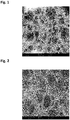
- the cellular structure of the polyurethanes (PU) thus synthesized has a direct influence on the thermal conductivity of the materials obtained. In this, an increase in the cream time allows an improvement of the thermal conductivity properties.
- the link established between the cream time and the thermal conductivity of the material has been proven for cream times less than 20 seconds.
- composition 2 ( Figure 1 ) shows cells of size between 50 microns and 200 microns. In addition, we observe the tearing of some cells contributing to reduce the thermal insulation performance of the material.
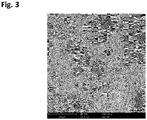
- composition 3 shows cells smaller than 100 ⁇ m in size. The rate of cells having undergone tearing is decreased compared to the composition 1.
- composition 4 shows cells smaller than 80 ⁇ m in size. However, some cells still tear, but the appearance of closed cells contributes to an improvement of the thermal insulation properties.
- the tertiary amines present in the structure of the polyols obtained in step a) are subjected to an alkylation reaction to give quaternary ammonium salts.
- the conversion of these tertiary amines to quaternary ammonium salts makes it possible to annihilate the catalytic effect of the polyols obtained in step a) with respect to the alcohol / isocyanate reaction.
- this alkylation step b) makes it possible to modulate the catalytic effect by varying the ratio of quaternized tertiary amines.
Landscapes
- Chemical & Material Sciences (AREA)
- Health & Medical Sciences (AREA)
- Chemical Kinetics & Catalysis (AREA)
- Medicinal Chemistry (AREA)
- Polymers & Plastics (AREA)
- Organic Chemistry (AREA)
- Engineering & Computer Science (AREA)
- Materials Engineering (AREA)
- Polyurethanes Or Polyureas (AREA)
Applications Claiming Priority (1)
| Application Number | Priority Date | Filing Date | Title |
|---|---|---|---|
| FR1652130A FR3048699B1 (fr) | 2016-03-14 | 2016-03-14 | Procede de preparation de mousses de polyurethane et/ou polyisocyanurate a partir d'oxazolidine et d'huile de noix de cajou |
Publications (1)
| Publication Number | Publication Date |
|---|---|
| EP3219739A1 true EP3219739A1 (de) | 2017-09-20 |
Family
ID=56148435
Family Applications (1)
| Application Number | Title | Priority Date | Filing Date |
|---|---|---|---|
| EP17160868.0A Withdrawn EP3219739A1 (de) | 2016-03-14 | 2017-03-14 | Herstellungsverfahren von schaumstoffen aus polyurethan und/oder polyisocyanuraten auf der basis von oxazolidin und cashewnuss-öl |
Country Status (2)
| Country | Link |
|---|---|
| EP (1) | EP3219739A1 (de) |
| FR (1) | FR3048699B1 (de) |
Cited By (1)
| Publication number | Priority date | Publication date | Assignee | Title |
|---|---|---|---|---|
| JP2023092020A (ja) * | 2021-12-21 | 2023-07-03 | 株式会社イノアックコーポレーション | ポリウレタンフォームとその製造方法及びシール材 |
Citations (3)
| Publication number | Priority date | Publication date | Assignee | Title |
|---|---|---|---|---|
| WO2006003668A1 (en) | 2004-06-30 | 2006-01-12 | Council Of Scientific And Industrial Research | Process for preparing polyurethane polyol and rigid foams therefrom from cardanol |
| WO2011003446A1 (en) * | 2009-07-08 | 2011-01-13 | Cimteclab S.R.L. | Synthesis of novel multifunctional cardanol's derivatives and their use as halogen free polyurethanic foams precursors |
| WO2014209704A1 (en) * | 2013-06-25 | 2014-12-31 | Bayer Materialscience Llc | Polyurethane pultrusion formulations for the production of articles with improved coating adhesion and articles produced therefrom |
-
2016
- 2016-03-14 FR FR1652130A patent/FR3048699B1/fr active Active
-
2017
- 2017-03-14 EP EP17160868.0A patent/EP3219739A1/de not_active Withdrawn
Patent Citations (3)
| Publication number | Priority date | Publication date | Assignee | Title |
|---|---|---|---|---|
| WO2006003668A1 (en) | 2004-06-30 | 2006-01-12 | Council Of Scientific And Industrial Research | Process for preparing polyurethane polyol and rigid foams therefrom from cardanol |
| WO2011003446A1 (en) * | 2009-07-08 | 2011-01-13 | Cimteclab S.R.L. | Synthesis of novel multifunctional cardanol's derivatives and their use as halogen free polyurethanic foams precursors |
| WO2014209704A1 (en) * | 2013-06-25 | 2014-12-31 | Bayer Materialscience Llc | Polyurethane pultrusion formulations for the production of articles with improved coating adhesion and articles produced therefrom |
Non-Patent Citations (5)
| Title |
|---|
| GANDHI TEJAS S ET AL: "Mechanical, thermal and fire properties of sustainable rigid polyurethane foam derived from cashew nut shell liquid", INTERNATIONAL JOURNAL OF PLASTICS TECHNOLOGY, CENTRAL INSTITUTE OF PLASTICS ENGINEERING & TECHNOLOGY, CIPET, IN, vol. 19, no. 1, 17 October 2015 (2015-10-17), pages 30 - 46, XP035961777, ISSN: 0972-656X, [retrieved on 20151017], DOI: 10.1007/S12588-015-9114-3 * |
| LONESCU ET AL., J. POLYM. ENVIRON, vol. 20, 2012, pages 647 - 658 |
| LONESCU ET AL., J. POLYM. ENVIRON., vol. 20, 2012, pages 647 - 658 |
| MIHAIL IONESCU ET AL: "Polyols and Rigid Polyurethane Foams from Cashew Nut Shell Liquid", JOURNAL OF POLYMERS AND THE ENVIRONMENT ; FORMERLY: 'JOURNAL OF ENVIRONMENTAL POLYMER DEGRADATION', KLUWER ACADEMIC PUBLISHERS-PLENUM PUBLISHERS, NE, vol. 20, no. 3, 13 May 2012 (2012-05-13), pages 647 - 658, XP035112380, ISSN: 1572-8900, DOI: 10.1007/S10924-012-0467-9 * |
| S.CHUAYJULJIT ET AL., J. OF METALS, MATERIALS AND MINERAIS, vol. 17, 2007, pages 17 - 23 |
Cited By (1)
| Publication number | Priority date | Publication date | Assignee | Title |
|---|---|---|---|---|
| JP2023092020A (ja) * | 2021-12-21 | 2023-07-03 | 株式会社イノアックコーポレーション | ポリウレタンフォームとその製造方法及びシール材 |
Also Published As
| Publication number | Publication date |
|---|---|
| FR3048699B1 (fr) | 2019-11-15 |
| FR3048699A1 (fr) | 2017-09-15 |
Similar Documents
| Publication | Publication Date | Title |
|---|---|---|
| EP2064258B1 (de) | Verwendung von polyisocyanat-zusammensetzungen für hochglanzbeschichtungen | |
| JPS5916858A (ja) | ポリアミンの1段階製造方法 | |
| FR2597874A1 (fr) | Composition et procede pour produire une mousse d'isocyanurate modifie par de l'oxazolidone, et mousse ainsi obtenue | |
| JP2025537808A (ja) | 動的ヒンダード尿素結合を有する共有結合適合性ポリ(尿素-ウレタン)ネットワークを含む複合材料のためのクローズドループリサイクル概念 | |
| EP3265507B1 (de) | Wärmehärtbare schaumstoffe und verfahren zur herstellung davon aus reduzierenden zuckern und aminen | |
| EP3749637A1 (de) | Difunktionelle biphenylverbindungen, herstellung und verwendungen | |
| KR20180002125A (ko) | 부탄다이올 용매열 액화 반응을 통한 리그닌 부산물 유래 바이오폴리올의 제조 및 바이오폴리우레탄의 합성 | |
| CN104334624B (zh) | 含有碳二亚胺的组合物、其制备方法及其用途 | |
| EP3219739A1 (de) | Herstellungsverfahren von schaumstoffen aus polyurethan und/oder polyisocyanuraten auf der basis von oxazolidin und cashewnuss-öl | |
| RU2540581C2 (ru) | Материалы, включающие матрицу, и способ их изготовления | |
| US11214539B1 (en) | Biobased diisocyanates, and process for preparation of same | |
| JPH0370734B2 (de) | ||
| FR3056985A1 (fr) | Procede de fabrication de polyphenols alcoxyles | |
| EP3504179B1 (de) | Verfahren zur herstellung von polyetherpolyolen und verwendung davon bei polyurethan | |
| US20170291983A1 (en) | Polyols formed from self-metathesized natural oils and their use in making polyurethane foams | |
| EP3289008A1 (de) | Wärmehärtbare schäume und verfahren zur herstellung | |
| CA3237889A1 (en) | Eco-friendly polyurethane foam using aldehyde compound and diels-alder reaction products of aldehyde compound and method for forming same | |
| FR3018074A1 (fr) | Procede de preparation a hauts rendements de p-(r)calix[9-20]arenes | |
| EP3743456A1 (de) | Hartschaum mit verbesserter isolierleistung | |
| Peyrton | Development of new building blocks derived from microalgae oil for the elaboration of new biobased polyurethane foams | |
| Jaques | Design of NIPUs through transfer reactions and complementary reactions | |
| CH616147A5 (de) | ||
| WO2025228982A1 (en) | Process for recycling a composition comprising a poly(urea-urethane) polymer with hindered urea bonds | |
| BE655756A (de) | ||
| JP2026067964A (ja) | リグニンモノマーを含有する解重合リグニンに由来するポリウレタン |
Legal Events
| Date | Code | Title | Description |
|---|---|---|---|
| PUAI | Public reference made under article 153(3) epc to a published international application that has entered the european phase |
Free format text: ORIGINAL CODE: 0009012 |
|
| 17P | Request for examination filed |
Effective date: 20170314 |
|
| AK | Designated contracting states |
Kind code of ref document: A1 Designated state(s): AL AT BE BG CH CY CZ DE DK EE ES FI FR GB GR HR HU IE IS IT LI LT LU LV MC MK MT NL NO PL PT RO RS SE SI SK SM TR |
|
| AX | Request for extension of the european patent |
Extension state: BA ME |
|
| STAA | Information on the status of an ep patent application or granted ep patent |
Free format text: STATUS: THE APPLICATION IS DEEMED TO BE WITHDRAWN |
|
| 18D | Application deemed to be withdrawn |
Effective date: 20180321 |