EP3220158A1 - Procédé et dispositif de traitement du signal - Google Patents
Procédé et dispositif de traitement du signal Download PDFInfo
- Publication number
- EP3220158A1 EP3220158A1 EP15859302.0A EP15859302A EP3220158A1 EP 3220158 A1 EP3220158 A1 EP 3220158A1 EP 15859302 A EP15859302 A EP 15859302A EP 3220158 A1 EP3220158 A1 EP 3220158A1
- Authority
- EP
- European Patent Office
- Prior art keywords
- frequency
- domain
- beam forming
- output
- signal
- Prior art date
- Legal status (The legal status is an assumption and is not a legal conclusion. Google has not performed a legal analysis and makes no representation as to the accuracy of the status listed.)
- Granted
Links
Images


Classifications
-
- G—PHYSICS
- G10—MUSICAL INSTRUMENTS; ACOUSTICS
- G10L—SPEECH ANALYSIS TECHNIQUES OR SPEECH SYNTHESIS; SPEECH RECOGNITION; SPEECH OR VOICE PROCESSING TECHNIQUES; SPEECH OR AUDIO CODING OR DECODING
- G10L21/00—Speech or voice signal processing techniques to produce another audible or non-audible signal, e.g. visual or tactile, in order to modify its quality or its intelligibility
- G10L21/02—Speech enhancement, e.g. noise reduction or echo cancellation
- G10L21/0272—Voice signal separating
-
- G—PHYSICS
- G01—MEASURING; TESTING
- G01S—RADIO DIRECTION-FINDING; RADIO NAVIGATION; DETERMINING DISTANCE OR VELOCITY BY USE OF RADIO WAVES; LOCATING OR PRESENCE-DETECTING BY USE OF THE REFLECTION OR RERADIATION OF RADIO WAVES; ANALOGOUS ARRANGEMENTS USING OTHER WAVES
- G01S3/00—Direction-finders for determining the direction from which infrasonic, sonic, ultrasonic or electromagnetic waves, or particle emission, not having a directional significance, are being received
- G01S3/80—Direction-finders for determining the direction from which infrasonic, sonic, ultrasonic or electromagnetic waves, or particle emission, not having a directional significance, are being received using ultrasonic, sonic or infrasonic waves
- G01S3/802—Systems for determining direction or deviation from predetermined direction
- G01S3/805—Systems for determining direction or deviation from predetermined direction using adjustment of real or effective orientation of directivity characteristics of a transducer or transducer system to give a desired condition of signal derived from that transducer or transducer system, e.g. to give a maximum or minimum signal
- G01S3/8055—Systems for determining direction or deviation from predetermined direction using adjustment of real or effective orientation of directivity characteristics of a transducer or transducer system to give a desired condition of signal derived from that transducer or transducer system, e.g. to give a maximum or minimum signal adjusting orientation of a single directivity characteristic to produce maximum or minimum signal
-
- G—PHYSICS
- G01—MEASURING; TESTING
- G01S—RADIO DIRECTION-FINDING; RADIO NAVIGATION; DETERMINING DISTANCE OR VELOCITY BY USE OF RADIO WAVES; LOCATING OR PRESENCE-DETECTING BY USE OF THE REFLECTION OR RERADIATION OF RADIO WAVES; ANALOGOUS ARRANGEMENTS USING OTHER WAVES
- G01S5/00—Position-fixing by co-ordinating two or more direction or position line determinations; Position-fixing by co-ordinating two or more distance determinations
- G01S5/18—Position-fixing by co-ordinating two or more direction or position line determinations; Position-fixing by co-ordinating two or more distance determinations using ultrasonic, sonic or infrasonic waves
- G01S5/20—Position of source determined by a plurality of spaced direction-finders
-
- G—PHYSICS
- G10—MUSICAL INSTRUMENTS; ACOUSTICS
- G10L—SPEECH ANALYSIS TECHNIQUES OR SPEECH SYNTHESIS; SPEECH RECOGNITION; SPEECH OR VOICE PROCESSING TECHNIQUES; SPEECH OR AUDIO CODING OR DECODING
- G10L21/00—Speech or voice signal processing techniques to produce another audible or non-audible signal, e.g. visual or tactile, in order to modify its quality or its intelligibility
- G10L21/02—Speech enhancement, e.g. noise reduction or echo cancellation
- G10L21/0208—Noise filtering
- G10L21/0216—Noise filtering characterised by the method used for estimating noise
-
- H—ELECTRICITY
- H04—ELECTRIC COMMUNICATION TECHNIQUE
- H04R—LOUDSPEAKERS, MICROPHONES, GRAMOPHONE PICK-UPS OR LIKE ACOUSTIC ELECTROMECHANICAL TRANSDUCERS; ELECTRIC HEARING AIDS; PUBLIC ADDRESS SYSTEMS
- H04R3/00—Circuits for transducers
- H04R3/005—Circuits for transducers for combining the signals of two or more microphones
-
- G—PHYSICS
- G10—MUSICAL INSTRUMENTS; ACOUSTICS
- G10L—SPEECH ANALYSIS TECHNIQUES OR SPEECH SYNTHESIS; SPEECH RECOGNITION; SPEECH OR VOICE PROCESSING TECHNIQUES; SPEECH OR AUDIO CODING OR DECODING
- G10L21/00—Speech or voice signal processing techniques to produce another audible or non-audible signal, e.g. visual or tactile, in order to modify its quality or its intelligibility
- G10L21/02—Speech enhancement, e.g. noise reduction or echo cancellation
- G10L21/0316—Speech enhancement, e.g. noise reduction or echo cancellation by changing the amplitude
Definitions
- the present disclosure relates to the field of signal processing, and more particularly to a signal processing method and device.
- the most common microphone-array-based speech enhancement method utilizes a beam forming characteristic of an array.
- existing beam forming technologies may be divided into Delay and Sum Beam Forming (DSBF) and adaptive beam forming technologies.
- DSBF Delay and Sum Beam Forming
- the DSBF method proposed by Flanagan in 1985 is the simplest DSBF method. At first, time compensation is performed on a speech signal received on each microphone in an array to implement speech synchronization of each channel, and then the signal of each channel is added and averaged. Under such a condition, once the signals are deviated from a direction of the array, the array may provide different gains for signals of different frequencies, thereby causing processing distortion of the bandwidth signals.
- the other type of beam forming technology corresponding to the DSBF technology is adaptive beam forming technology.
- the adaptive characteristic of the adaptive beam forming technology is reflected in variation of a filter coefficient along with variation of a statistical characteristic of an input signal.
- a Generalized Sidelobe Canceller (GSC) proposed by Griffth and Jim in 1982 is a universal model of an adaptive beam former.
- GSC Generalized Sidelobe Canceller
- output of a Block Matrix (BM) usually includes an effective speech component, so that an original speech may be damaged in a filter result.
- Some embodiments of the present disclosure provide a signal processing method and device, so as to mainly solve the problem of distortion of a bandwidth signal during microphone-array-based speech enhancement in a related signal processing technology.
- an embodiment of the present disclosure provides a signal processing method, which may include the following acts.
- At least two channel sound signals are acquired, and Short-Time Fourier Transform (STFT) is performed on each channel sound signal to acquire a frequency-domain audio signal corresponding to each channel sound signal.
- STFT Short-Time Fourier Transform
- Beam forming output signals of a beam group corresponding to an audio signal of each frequency point are acquired according to preset weight vectors of multiple directions and the frequency-domain audio signal corresponding to each channel sound signal.
- An output direction of the beam group is acquired according to beam energy of different frequency points in same directions.
- Time-domain sound signals output after beam forming in the output direction are acquired.
- the act that the beam forming output signals of the beam group corresponding to the audio signal of each frequency point are acquired according to the preset weight vectors of the multiple directions and the frequency-domain audio signal corresponding to each channel sound signal may include the following acts.
- frequency-domain audio signals corresponding to all or part of the at least two channel sound signals are selected and the beam forming output signals of the beam group corresponding to the audio signal of each frequency point are acquired.
- the act that the output direction of the beam group is acquired according to the beam energy of different frequency points in the same directions may include the following acts.
- the beam energy of different frequency points in the same directions is summated, and a direction with maximum beam energy is selected as the output direction.
- the acts that the beam energy of different frequency points in the same directions is summated and the direction with the maximum beam energy is selected as the output direction may include the following acts.
- the beam energy of all frequency points between a preset first frequency and a preset second frequency in the same directions is summated, and the direction with the maximum beam energy is selected as the output direction.
- the preset weight vectors of the multiple directions may be obtained based on a DSBF algorithm, a linearly constrained minimum variance beam forming algorithm, a GSC beam forming algorithm or a Minimum Variance Distortionless Response (MVDR) method.
- a DSBF algorithm a linearly constrained minimum variance beam forming algorithm
- a GSC beam forming algorithm a Minimum Variance Distortionless Response (MVDR) method.
- MVDR Minimum Variance Distortionless Response
- the method may further include the following act.
- An audio signal, output after beam forming in the output direction, of each frequency point is multiplied by a gain, the gain having a directly proportional relationship with a frequency-domain value.
- the gain may have different directly proportional relationships with the frequency-domain value within different preset frequency-domain value ranges.
- a signal processing device which may include:
- the first acquisition unit may be arranged to:
- the second acquisition unit may further be arranged to:
- the second acquisition unit may further be arranged to:
- the preset weight vectors of the multiple directions may be obtained based on a DSBF algorithm, a linearly constrained minimum variance beam forming algorithm, a GSC beam forming algorithm or an MVDR method.
- the device may further include a gain unit, arranged to multiply an audio signal, output after beam forming in the output direction, of each frequency point by a gain, the gain having a directly proportional relationship with a frequency-domain value.
- a gain unit arranged to multiply an audio signal, output after beam forming in the output direction, of each frequency point by a gain, the gain having a directly proportional relationship with a frequency-domain value.
- the gain may have different directly proportional relationships with the frequency-domain value within different preset frequency-domain value ranges.
- the at least two channel sound signals are acquired, and STFT is performed on each channel sound signal to acquire the frequency-domain audio signal corresponding to each channel sound signal; the beam forming output signals of the beam group corresponding to the audio signal of each frequency point are acquired according to the preset weight vectors of the multiple directions and the frequency-domain audio signal corresponding to each channel sound signal; the output direction of the beam group is acquired according to the beam energy of different frequency points in the same directions; and the time-domain sound signals output after beam forming in the output direction are acquired.
- a frequency-domain-based wideband beam forming algorithm is adopted to effectively improve a gain of a received speech, a manner of adaptively selecting an optimal beam is adopted to avoid provision of prior information such as an arrival direction of an expected signal, reduce algorithm complexity and widen an application range of the algorithm.
- the adopted frequency-domain beam forming algorithm is favorable for fine regulation of a signal spectrum, and is conveniently integrated with other pre-processing or post-processing algorithms, and in addition, the present disclosure is easy to implement, small in calculation amount and applicable to various embedded platforms.
- Some embodiments of the present disclosure provide a signal processing method.
- Fig. 1 is a flowchart of a signal processing method according to a first embodiment of the present disclosure.
- the signal processing method includes the following acts.
- At act 101 at least two channel sound signals are acquired, and STFT is performed on each channel sound signal to acquire a frequency-domain audio signal corresponding to each channel sound signal.
- STFT is performed on the time-domain signal received by each microphone to obtain data of each frequency point of the signal received by the microphone.
- STFT may be performed on the signal of each microphone by adopting the same framing method.
- Frames may be partially superimposed. There are multiple superimposition manners, for example, a manner of 1/4 frame shift is adopted for framing in the embodiment, and of course, another manner such as 1/2 frame shift may also be adopted.
- the frame signal S n ( i ) of the n th microphone is multiplied by a window function w ( i ), for example, a hamming window being used in the embodiment, to obtain a widowed frame signal x n ( i ).
- beam forming output signals of a beam group corresponding to an audio signal of each frequency point are acquired according to preset weight vectors of multiple directions and the frequency-domain audio signal corresponding to each channel sound signal.
- a beam group is designed, including M beams pointing to M directions respectively: ⁇ 1 , ⁇ 2 , ⁇ , ⁇ M , and beam forming is performed on each beam by virtue of all array elements in a microphone array. Main lobes of adjacent beams are intersected, and the main lobes of the beam group cover a required spatial range. Therefore, no matter which direction a sound source comes from, there is a certain beam with a direction close to the direction of the sound source.
- Corresponding frequency-domain frame data after formation of the M beams is obtained according to weight vectors of the M different directions.
- the act of acquiring the beam forming output signals of the beam group corresponding to the audio signal of each frequency point according to the preset weight vectors of the multiple directions and the frequency-domain audio signal corresponding to each channel sound signal may include the following acts.
- frequency-domain audio signals corresponding to all or part of the at least two channel sound signals are selected and the beam forming output signals of the beam group corresponding to the audio signal of each frequency point are acquired.
- a beam forming effect achieved by virtue of part of subarrays in the microphone array may be very close to a beam forming effect achieved by virtue of all the array elements.
- the same performance effect may be achieved by a relatively small calculation amount.
- Fig. 2 is a schematic diagram of a beam forming method according to an embodiment of the present disclosure.
- a round microphone array formed by 8 directional microphones is shown.
- the microphone closest to a direction of an expected signal and adjacent microphones of this microphone may be selected to form a subarray for beam forming.
- the expected signal is a beam in a 45-degree direction
- the microphone 2 dead against the 45-degree direction and adjacent microphones of this microphone 1 and 3 may be selected to form a subarray for beam forming.
- a beam group is designed, including 8 beams pointing to 8 directions respectively: 0 degree, 45 degrees, 90 degrees, 135 degrees, 180 degrees, 225 degrees, 270 degrees and 315 degrees. Main lobes of adjacent beams are intersected, and the main lobes of the all the beams are superimposed to cover a range of 360 degrees. Therefore, no matter which direction a sound source comes from, there is a certain beam with a direction close to the direction of the sound source.
- an output direction of the beam group is acquired according to beam energy of different frequency points in same directions.
- the act of acquiring the output direction of the beam group according to the beam energy of different frequency points in the same directions may include the following acts.
- the beam energy of different frequency points in the same directions is summated, and a direction with maximum beam energy is selected as the output direction.
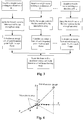
- Fig. 3 is a detailed flowchart of act 103.
- Energy of the M pieces of frequency-domain frame data is calculated by virtue of the weighted synthetic data Y m ( f ) obtained in act 102 respectively.
- the acts of summating the beam energy of different frequency points in the same directions and selecting the direction with the maximum beam energy as the output direction may include the following acts.
- the beam energy of all frequency points between a preset first frequency and a preset second frequency in the same directions is summated, and the direction with the maximum beam energy is selected as the output direction.
- an optimal output beam may be selected according to an energy sum of part of the frequency points.
- a specific implementation flow is shown in Fig. 3 .
- Energy sums of the frequency-domain frame data corresponding to the M directions are calculated by virtue of the weighted synthetic data Y m ( f ) obtained in act 102 respectively.
- An energy sum from frequency points f 1 to f 2 is calculated here.
- the beam with the maximum energy value E is selected as the final beam forming result. Adopting the manner may avoid low-frequency signal distortion.
- the preset weight vectors of the multiple directions may be obtained based on a DSBF algorithm, a linearly constrained minimum variance beam forming algorithm, a GSC beam forming algorithm or a Minimum Variance Distortionless Response (MVDR) method.
- a DSBF algorithm a linearly constrained minimum variance beam forming algorithm
- a GSC beam forming algorithm a Minimum Variance Distortionless Response (MVDR) method.
- MVDR Minimum Variance Distortionless Response
- the MVDR method is to minimize power of the output signals to obtain an estimate about an optimal beam former weight vector.
- ⁇ n fs c ⁇ l x , n cos ⁇ sin ⁇ + l y , n sin ⁇ sin ⁇ + l z , n cos ⁇
- f s is a signal sampling rate
- c is a sound velocity 340m/s
- l x is a component of a spacing distance between the n th array element and a reference array element in a direction of an x axis
- l y n is a component in a direction of a y axis
- l z , n is a component in a direction of a z axis
- ⁇ is an included angle between a projection of an incident signal in an
- the at least two channel sound signals are acquired, and STFT is performed on each channel sound signal to acquire the frequency-domain audio signal corresponding to each channel sound signal; the beam forming output signals of the beam group corresponding to the audio signal of each frequency point are acquired according to the preset weight vectors of the multiple directions and the frequency-domain audio signal corresponding to each channel sound signal; the output direction of the beam group is acquired according to the beam energy of different frequency points in the same directions; and the time-domain sound signals output after beam forming in the output direction are acquired.
- a frequency-domain-based wideband beam forming algorithm is adopted to effectively improve a gain of a received speech, a manner of adaptively selecting an optimal beam is adopted to avoid provision of prior information such as an arrival direction of an expected signal, reduce algorithm complexity and widen an application range of the algorithm.
- the adopted frequency-domain beam forming algorithm is favorable for fine regulation of a signal spectrum, and is conveniently integrated with other pre-processing or post-processing algorithms, and in addition, the present disclosure is easy to implement, small in calculation amount and applicable to various embedded platforms.
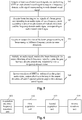
- Fig. 5 is a flowchart of a signal processing method according to a second embodiment of the present disclosure.
- act 105 is further included.
- an audio signal, output after beam forming in the output direction, of each frequency point is multiplied by a gain, the gain having a directly proportional relationship with a frequency-domain value.
- a main lobe of a wideband beam is wide in low-frequency part and narrow in high-frequency part. If a normalization constraint condition in Formula (9) is simultaneously met, that is, the signals in the expected direction are ensured to be distortionless, high-frequency energy of the signals may be greatly attenuated, which causes signal distortion. Therefore, after beam forming, there is a postprocessing process in the embodiment.
- weight coefficients of the beams are multiplied with a progressively decreased weight factor, as shown in Formula (15), to compensate attenuation of high-frequency parts, thereby achieving the purpose of high-frequency boosting.
- Y f Y f ⁇ 1 + f / f s ⁇ ⁇
- different enhancement or attenuation processing is performed for different frequency points to create a more comfortable subjective auditory feeling.
- the main lodes of the beams are very wide and the low-frequency signals are hardly attenuated, so that enhancement may be eliminated.
- the signals start to be attenuated, and along with increase of the frequency, gains of the beams are amplified to different extents, as shown in Formula (16).
- Y f ⁇ Y f , 0 ⁇ f ⁇ f 1 Y f ⁇ 1 + f / f s ⁇ ⁇ 1 , f 1 ⁇ f ⁇ f 2 Y f ⁇ 1 + f / f s ⁇ ⁇ 2 , f 2 ⁇ f ⁇ f s / 2
- the gain has different directly proportional relationships with the frequency-domain value within different preset frequency-domain value ranges.
- inverse transform of STFT is performed on the gained audio signal, output after beam forming in the output direction, of each frequency point to acquire time-domain sound signals.
- the frequency-domain-based wideband beam forming algorithm effectively improves the gain of the received speech
- the manner of adaptively selecting the optimal beam is adopted to avoid provision of the prior information such as the arrival direction of the expected signal, reduce algorithm complexity and widen the application range of the algorithm.
- the adopted frequency-domain beam forming algorithm is favorable for fine regulation of the signal spectrum, and is conveniently integrated with other pre-processing or post-processing algorithms, a post-processing algorithm of adjusting gains of the frequency points is adopted to improve the problem of sound quality reduction during wideband speech signal processing, and in addition, the technical solution provided by the embodiments of the present disclosure is easy to implement, small in calculation amount and applicable to various embedded platforms.
- Some embodiments of the present disclosure provide a signal processing device.
- Fig. 6 is a schematic diagram of function modules of a signal processing device according to a first embodiment of the present disclosure.
- the device includes:
- STFT is performed on the time-domain signal received by each microphone to obtain data of each frequency point of the signal received by the microphone.
- STFT may be performed on the signal of each microphone by adopting the same framing method.
- Frames may be partially superimposed. There are multiple superimposition manners, for example, a manner of 1/4 frame shift is adopted for framing in the embodiment, and of course, another manner such as 1/2 frame shift may also be adopted.
- the frame signal S n ( i ) of the n th microphone is multiplied by a window function w ( i ), for example, a hamming window being used in the embodiment, to obtain a widowed frame signal x n ( i ) .
- a first acquisition unit 602 is arranged to acquire beam forming output signals of a beam group corresponding to an audio signal of each frequency point according to preset weight vectors of multiple directions and the frequency-domain audio signal corresponding to each channel sound signal.
- a beam group is designed, including M beams pointing to M directions respectively: ⁇ 1 , ⁇ 2 , ⁇ , ⁇ M , and beam forming is performed on each beam by virtue of all array elements in a microphone array. Main lobes of adjacent beams are intersected, and the main lobes of the beam group cover a required spatial range. Therefore, no matter which direction a sound source comes from, there is a certain beam with a direction close to the direction of the sound source.
- Corresponding frequency-domain frame data after formation of the M beams is obtained according to weight vectors of the M different directions.
- the first acquisition unit 602 is arranged to:
- a beam forming effect achieved by virtue of part of subarrays in the microphone array may be very close to a beam forming effect achieved by virtue of all the array elements.
- the same performance effect may be achieved by a relatively small calculation amount.
- Fig. 2 is a schematic diagram of a beam forming method according to an embodiment of the present disclosure.
- a round microphone array formed by 8 directional microphones is shown.
- the microphone closest to a direction of an expected signal and adjacent microphones of this microphone may be selected to form a subarray for beam forming.
- the expected signal is a beam in a 45-degree direction
- the microphone 2 dead against the 45-degree direction and adjacent microphones of this microphone 1 and 3 may be selected to form a subarray for beam forming.
- a beam group is designed, including 8 beams pointing to 8 directions respectively: 0 degree, 45 degrees, 90 degrees, 135 degrees, 180 degrees, 225 degrees, 270 degrees and 315 degrees. Main lobes of adjacent beams are intersected, and the main lobes of the all the beams are superimposed to cover a range of 360 degrees. Therefore, no matter which direction a sound source comes from, there is a certain beam with a direction close to the direction of the sound source.
- a second acquisition unit 603 is arranged to acquire an output direction of the beam group according to beam energy of different frequency points in same directions.
- the second acquisition unit 603 is arranged to:
- Energy of the M pieces of frequency-domain frame data is calculated by virtue of the weighted synthetic data Y m ( f ) obtained by the first acquisition unit 602 respectively.
- the second acquisition unit 603 is further arranged to:
- an optimal output beam may be selected according to an energy sum of part of the frequency points.
- a specific implementation flow is shown in Fig. 3 .
- Energy sums of the frequency-domain frame data corresponding to the M directions are calculated by virtue of the weighted synthetic data Y m ( f ) obtained by the first acquisition unit 602 respectively.
- a calculation formula is as follows.
- An energy sum from frequency points f 1 to f 2 is calculated here. Then, the beam with the maximum energy value E is selected as the final beam forming result. Adopting the manner may avoid low-frequency signal distortion.
- FFT Fast Fourier Transform
- the preset weight vectors of the multiple directions may be obtained based on a DSBF algorithm, a linearly constrained minimum variance beam forming algorithm, a GSC beam forming algorithm or an MVDR method.
- the MVDR method is to minimize power of the output signals to obtain an estimate about an optimal beam former weight vector.
- ⁇ n fs c ⁇ l x , n cos ⁇ sin ⁇ + l y , n sin ⁇ sin ⁇ + l z , n cos ⁇
- f s is a signal sampling rate
- c is a sound velocity 340m/s
- l x , n is a component of a spacing distance between the n th array element and a reference array element in a direction of an x axis
- l y , n is a component in a direction of a y axis
- l z , n is a component in a direction of a z axis
- ⁇ is an included angle between a projection of an incident signal in an
- An inverse transform unit 604 is arranged to acquire time-domain sound signals output after beam forming in the output direction.
- the at least two channel sound signals are acquired, and STFT is performed on each channel sound signal to acquire the frequency-domain audio signal corresponding to each channel sound signal; the beam forming output signals of the beam group corresponding to the audio signal of each frequency point are acquired according to the preset weight vectors of the multiple directions and the frequency-domain audio signal corresponding to each channel sound signal; the output direction of the beam group is acquired according to the beam energy of different frequency points in the same directions; and the time-domain sound signals output after beam forming in the output direction are acquired.
- a frequency-domain-based wideband beam forming algorithm is adopted to effectively improve a gain of a received speech, a manner of adaptively selecting an optimal beam is adopted to avoid provision of prior information such as an arrival direction of an expected signal, reduce algorithm complexity and widen an application range of the algorithm.
- the adopted frequency-domain beam forming algorithm is favorable for fine regulation of a signal spectrum, and is conveniently integrated with other pre-processing or post-processing algorithms, and in addition, the present disclosure is easy to implement, small in calculation amount and applicable to various embedded platforms.
- Fig. 7 is a schematic diagram of function modules of a signal processing device according to a second embodiment of the present disclosure.
- a gain unit 605 is further included.
- the gain unit 605 is arranged to multiply an audio signal, output after beam forming in the output direction, of each frequency point by a gain, the gain having a directly proportional relationship with a frequency-domain value.
- a main lobe of a wideband beam is wide in low-frequency part and narrow in high-frequency part. If a normalization constraint condition in Formula (9) is simultaneously met, that is, the signals in the expected direction are ensured to be distortionless, high-frequency energy of the signals may be greatly attenuated, which causes signal distortion. Therefore, after beam forming, there is a postprocessing process in the embodiment.
- weight coefficients of the beams are multiplied with a progressively decreased weight factor, as shown in Formula (15), to compensate attenuation of high-frequency parts, thereby achieving the purpose of high-frequency boosting.
- Y f Y f ⁇ 1 + f / f s ⁇ ⁇
- different enhancement or attenuation processing is performed for different frequency points to create a more comfortable subjective auditory feeling. For example, at a low frequency, the main lodes of the beams are very wide and the low-frequency signals are hardly attenuated, so that enhancement may be eliminated.
- Y f ⁇ Y f , 0 ⁇ f ⁇ f 1 Y f ⁇ 1 + f / f s ⁇ ⁇ 1 , f 1 ⁇ f ⁇ f 2 Y f ⁇ 1 + f / f s ⁇ ⁇ 2 , f 2 ⁇ f ⁇ f s / 2
- the gain has different directly proportional relationships with the frequency-domain value within different preset frequency-domain value ranges.
- adopting the method of the embodiment of the present disclosure has the advantages that the frequency-domain-based wideband beam forming algorithm effectively improves the gain of the received speech, the manner of adaptively selecting the optimal beam is adopted to avoid provision of the prior information such as the arrival direction of the expected signal, reduce algorithm complexity and widen the application range of the algorithm.
- the adopted frequency-domain beam forming algorithm is favorable for fine regulation of the signal spectrum, and is conveniently integrated with other pre-processing or post-processing algorithms, a post-processing algorithm of adjusting gains of the frequency points is adopted to improve the problem of sound quality reduction during wideband speech signal processing, and in addition, the technical solution provided by the embodiment of the present disclosure is easy to implement, small in calculation amount and applicable to various embedded platforms.
- the at least two channel sound signals are acquired, and STFT is performed on each channel sound signal to acquire the frequency-domain audio signal corresponding to each channel sound signal; the beam forming output signals of the beam group corresponding to the audio signal of each frequency point are acquired according to the preset weight vectors of the multiple directions and the frequency-domain audio signal corresponding to each channel sound signal; the output direction of the beam group is acquired according to the beam energy of different frequency points in the same directions; and the time-domain sound signals output after beam forming in the output direction are acquired.
- the frequency-domain-based wideband beam forming algorithm is adopted to effectively improve the gain of the received speech, the manner of adaptively selecting the optimal beam is adopted to avoid provision of the prior information such as the arrival direction of the expected signal, reduce algorithm complexity and widen the application range of the algorithm.
- the adopted frequency-domain beam forming algorithm is favorable for fine regulation of the signal spectrum, and is conveniently integrated with the other pre-processing or post-processing algorithms, and in addition, the technical solution provided by the embodiments of the present disclosure is easy to implement, small in calculation amount and applicable to various embedded platforms.
Landscapes
- Engineering & Computer Science (AREA)
- Physics & Mathematics (AREA)
- General Physics & Mathematics (AREA)
- Radar, Positioning & Navigation (AREA)
- Remote Sensing (AREA)
- Health & Medical Sciences (AREA)
- Signal Processing (AREA)
- Acoustics & Sound (AREA)
- Quality & Reliability (AREA)
- Computational Linguistics (AREA)
- Audiology, Speech & Language Pathology (AREA)
- Human Computer Interaction (AREA)
- Multimedia (AREA)
- General Health & Medical Sciences (AREA)
- Otolaryngology (AREA)
- Circuit For Audible Band Transducer (AREA)
- Obtaining Desirable Characteristics In Audible-Bandwidth Transducers (AREA)
Applications Claiming Priority (2)
| Application Number | Priority Date | Filing Date | Title |
|---|---|---|---|
| CN201410649621.2A CN105590631B (zh) | 2014-11-14 | 2014-11-14 | 信号处理的方法及装置 |
| PCT/CN2015/084148 WO2016074495A1 (fr) | 2014-11-14 | 2015-07-15 | Procédé et dispositif de traitement du signal |
Publications (3)
| Publication Number | Publication Date |
|---|---|
| EP3220158A1 true EP3220158A1 (fr) | 2017-09-20 |
| EP3220158A4 EP3220158A4 (fr) | 2017-12-20 |
| EP3220158B1 EP3220158B1 (fr) | 2024-10-09 |
Family
ID=55930153
Family Applications (1)
| Application Number | Title | Priority Date | Filing Date |
|---|---|---|---|
| EP15859302.0A Active EP3220158B1 (fr) | 2014-11-14 | 2015-07-15 | Procédé et dispositif de traitement du signal |
Country Status (4)
| Country | Link |
|---|---|
| US (1) | US10181330B2 (fr) |
| EP (1) | EP3220158B1 (fr) |
| CN (1) | CN105590631B (fr) |
| WO (1) | WO2016074495A1 (fr) |
Families Citing this family (24)
| Publication number | Priority date | Publication date | Assignee | Title |
|---|---|---|---|---|
| US9252908B1 (en) * | 2012-04-12 | 2016-02-02 | Tarana Wireless, Inc. | Non-line of sight wireless communication system and method |
| US9735940B1 (en) | 2012-04-12 | 2017-08-15 | Tarana Wireless, Inc. | System architecture for optimizing the capacity of adaptive array systems |
| US10348394B1 (en) | 2014-03-14 | 2019-07-09 | Tarana Wireless, Inc. | System architecture and method for enhancing wireless networks with mini-satellites and pseudollites and adaptive antenna processing |
| CN106973353A (zh) * | 2017-03-27 | 2017-07-21 | 广东顺德中山大学卡内基梅隆大学国际联合研究院 | 一种基于Volterra滤波器的麦克风阵列通道不匹配校准方法 |
| CN108877828B (zh) * | 2017-05-16 | 2020-12-08 | 福州瑞芯微电子股份有限公司 | 语音增强方法/系统、计算机可读存储介质及电子设备 |
| CN107785029B (zh) | 2017-10-23 | 2021-01-29 | 科大讯飞股份有限公司 | 目标语音检测方法及装置 |
| CN107910012B (zh) * | 2017-11-14 | 2020-07-03 | 腾讯音乐娱乐科技(深圳)有限公司 | 音频数据处理方法、装置及系统 |
| CN109599104B (zh) * | 2018-11-20 | 2022-04-01 | 北京小米智能科技有限公司 | 多波束选取方法及装置 |
| CN110503970B (zh) * | 2018-11-23 | 2021-11-23 | 腾讯科技(深圳)有限公司 | 一种音频数据处理方法、装置及存储介质 |
| CN111624554B (zh) * | 2019-02-27 | 2023-05-02 | 北京京东尚科信息技术有限公司 | 声源定位方法和装置 |
| CN111833901B (zh) * | 2019-04-23 | 2024-04-05 | 北京京东尚科信息技术有限公司 | 音频处理方法、音频处理装置、系统及介质 |
| CN110111805B (zh) * | 2019-04-29 | 2021-10-29 | 北京声智科技有限公司 | 远场语音交互中的自动增益控制方法、装置及可读存储介质 |
| CN110265038B (zh) * | 2019-06-28 | 2021-10-22 | 联想(北京)有限公司 | 一种处理方法及电子设备 |
| US11234073B1 (en) * | 2019-07-05 | 2022-01-25 | Facebook Technologies, Llc | Selective active noise cancellation |
| CN110517703B (zh) * | 2019-08-15 | 2021-12-07 | 北京小米移动软件有限公司 | 一种声音采集方法、装置及介质 |
| WO2021087728A1 (fr) * | 2019-11-05 | 2021-05-14 | Alibaba Group Holding Limited | Système de capteurs directionnels différentiels |
| CN110600051B (zh) * | 2019-11-12 | 2020-03-31 | 乐鑫信息科技(上海)股份有限公司 | 用于选择麦克风阵列的输出波束的方法 |
| CN110956951A (zh) * | 2019-12-23 | 2020-04-03 | 苏州思必驰信息科技有限公司 | 一种语音增强采集配件、方法、系统、设备及存储介质 |
| CN112634934B (zh) * | 2020-12-21 | 2024-06-25 | 北京声智科技有限公司 | 语音检测方法及装置 |
| CN112634931B (zh) * | 2020-12-22 | 2024-05-14 | 北京声智科技有限公司 | 语音增强方法及装置 |
| CN113375063B (zh) * | 2021-06-07 | 2022-06-28 | 国家石油天然气管网集团有限公司西气东输分公司 | 一种天然气管道泄漏智能监测方法及系统 |
| CN113362846B (zh) * | 2021-06-29 | 2022-09-20 | 辽宁工业大学 | 一种基于广义旁瓣相消结构的语音增强方法 |
| CN114594424B (zh) * | 2022-03-15 | 2025-03-25 | 昆明理工大学 | 一种高鲁棒性的水听器阵列测向系统装置及设计方法 |
| CN115267660B (zh) * | 2022-07-15 | 2025-07-15 | 北京航天控制仪器研究所 | 一种水下窄带信号抗干扰定向及自动解模糊方法 |
Family Cites Families (19)
| Publication number | Priority date | Publication date | Assignee | Title |
|---|---|---|---|---|
| JP4247195B2 (ja) | 2005-03-23 | 2009-04-02 | 株式会社東芝 | 音響信号処理装置、音響信号処理方法、音響信号処理プログラム、及び音響信号処理プログラムを記録した記録媒体 |
| CN100466061C (zh) * | 2005-08-15 | 2009-03-04 | 华为技术有限公司 | 一种宽带波束形成方法和装置 |
| US8098842B2 (en) * | 2007-03-29 | 2012-01-17 | Microsoft Corp. | Enhanced beamforming for arrays of directional microphones |
| EP1992959A3 (fr) | 2007-05-18 | 2011-02-09 | Ono Sokki Co., Ltd. | Procédé de recherche de source sonore, dispositif de recherche de source sonore, et support de stockage de programme de recherche de source sonore |
| JP5305743B2 (ja) * | 2008-06-02 | 2013-10-02 | 株式会社東芝 | 音響処理装置及びその方法 |
| WO2009151578A2 (fr) * | 2008-06-09 | 2009-12-17 | The Board Of Trustees Of The University Of Illinois | Procédé et appareil de récupération de signal aveugle dans des environnements bruyants et réverbérants |
| US9159335B2 (en) * | 2008-10-10 | 2015-10-13 | Samsung Electronics Co., Ltd. | Apparatus and method for noise estimation, and noise reduction apparatus employing the same |
| KR20110106715A (ko) * | 2010-03-23 | 2011-09-29 | 삼성전자주식회사 | 후방 잡음 제거 장치 및 방법 |
| JP2012150237A (ja) | 2011-01-18 | 2012-08-09 | Sony Corp | 音信号処理装置、および音信号処理方法、並びにプログラム |
| JP2012234150A (ja) * | 2011-04-18 | 2012-11-29 | Sony Corp | 音信号処理装置、および音信号処理方法、並びにプログラム |
| CN102324237B (zh) * | 2011-05-30 | 2013-01-02 | 深圳市华新微声学技术有限公司 | 麦克风阵列语音波束形成方法、语音信号处理装置及系统 |
| US9173025B2 (en) * | 2012-02-08 | 2015-10-27 | Dolby Laboratories Licensing Corporation | Combined suppression of noise, echo, and out-of-location signals |
| CN103513249B (zh) | 2012-06-20 | 2016-02-03 | 中国科学院声学研究所 | 一种宽带相干模基信号处理方法及系统 |
| CN103856866B (zh) * | 2012-12-04 | 2019-11-05 | 西北工业大学 | 低噪微分麦克风阵列 |
| WO2014085978A1 (fr) * | 2012-12-04 | 2014-06-12 | Northwestern Polytechnical University | Réseaux de microphones différentiels à faible bruit |
| CN104103277B (zh) | 2013-04-15 | 2017-04-05 | 北京大学深圳研究生院 | 一种基于时频掩膜的单声学矢量传感器目标语音增强方法 |
| CN103308889B (zh) | 2013-05-13 | 2014-07-02 | 辽宁工业大学 | 复杂环境下被动声源二维doa估计方法 |
| US9432769B1 (en) * | 2014-07-30 | 2016-08-30 | Amazon Technologies, Inc. | Method and system for beam selection in microphone array beamformers |
| US20170337932A1 (en) * | 2016-05-19 | 2017-11-23 | Apple Inc. | Beam selection for noise suppression based on separation |
-
2014
- 2014-11-14 CN CN201410649621.2A patent/CN105590631B/zh active Active
-
2015
- 2015-07-15 EP EP15859302.0A patent/EP3220158B1/fr active Active
- 2015-07-15 WO PCT/CN2015/084148 patent/WO2016074495A1/fr not_active Ceased
- 2015-07-15 US US15/526,812 patent/US10181330B2/en active Active
Also Published As
| Publication number | Publication date |
|---|---|
| CN105590631B (zh) | 2020-04-07 |
| WO2016074495A1 (fr) | 2016-05-19 |
| EP3220158B1 (fr) | 2024-10-09 |
| CN105590631A (zh) | 2016-05-18 |
| US20170337936A1 (en) | 2017-11-23 |
| EP3220158A4 (fr) | 2017-12-20 |
| US10181330B2 (en) | 2019-01-15 |
Similar Documents
| Publication | Publication Date | Title |
|---|---|---|
| EP3220158B1 (fr) | Procédé et dispositif de traitement du signal | |
| CN108172235B (zh) | 基于维纳后置滤波的ls波束形成混响抑制方法 | |
| EP2393463B1 (fr) | Filtre de tonalité directionel a microphones multiples | |
| US8942976B2 (en) | Method and device for noise reduction control using microphone array | |
| DE102017102134B4 (de) | Global optimierte Nachfilterung mit der Kleinste-Quadrate-Methode für die Sprachverbesserung | |
| EP2608197B1 (fr) | Procédé, dispositif et système de réduction du bruit dans un réseau de multiples microphones | |
| EP3080806B1 (fr) | Extraction de son réverbérant à l'aide d'ensembles de microphones | |
| DE102018127071B3 (de) | Audiosignalverarbeitung mit akustischer Echounterdrückung | |
| JP6780644B2 (ja) | 信号処理装置、信号処理方法、および信号処理プログラム | |
| EP3183891B1 (fr) | Calcule de coefficients d'un filtre rif pour un filtre d'un dispositif de beamforming | |
| EP2647221B1 (fr) | Appareil et procédé d'acquisition sonore spatialement sélective par triangulation acoustique | |
| CN105244036A (zh) | 一种麦克风语音增强方法及装置 | |
| JP6363213B2 (ja) | いくつかの入力オーディオ信号の残響を除去するための信号処理の装置、方法、およびコンピュータプログラム | |
| EP3462452A1 (fr) | Estimation de bruit destinée à être utilisée avec réduction de bruit et annulation d'écho dans une communication personnelle | |
| EP3783609A1 (fr) | Procédé et module de formation de faisceaux différentiels, procédé et appareil de traitement de signaux, et puce | |
| CN111081267A (zh) | 一种多通道远场语音增强方法 | |
| CN106031196A (zh) | 信号处理装置、方法以及程序 | |
| Huang et al. | Globally optimized least-squares post-filtering for microphone array speech enhancement | |
| Yousefian et al. | Using power level difference for near field dual-microphone speech enhancement | |
| Xu et al. | Adaptive speech enhancement algorithm based on first-order differential microphone array | |
| EP3225037B1 (fr) | Procédé et appareil de génération d'un signal sonore directionnel à partir de premier et deuxième signaux sonores | |
| Jinzai et al. | Wavelength proportional arrangement of virtual microphones based on interpolation/extrapolation for underdetermined speech enhancement | |
| Wang et al. | A reverberation robust target speech detection method using dual-microphone in distant-talking scene | |
| Ghanavi et al. | Improving spatial cues for hearables using a parameterized binaural CDR estimator | |
| CN119400192A (zh) | 一种维纳增益的设计方法 |
Legal Events
| Date | Code | Title | Description |
|---|---|---|---|
| STAA | Information on the status of an ep patent application or granted ep patent |
Free format text: STATUS: THE INTERNATIONAL PUBLICATION HAS BEEN MADE |
|
| PUAI | Public reference made under article 153(3) epc to a published international application that has entered the european phase |
Free format text: ORIGINAL CODE: 0009012 |
|
| STAA | Information on the status of an ep patent application or granted ep patent |
Free format text: STATUS: REQUEST FOR EXAMINATION WAS MADE |
|
| 17P | Request for examination filed |
Effective date: 20170522 |
|
| AK | Designated contracting states |
Kind code of ref document: A1 Designated state(s): AL AT BE BG CH CY CZ DE DK EE ES FI FR GB GR HR HU IE IS IT LI LT LU LV MC MK MT NL NO PL PT RO RS SE SI SK SM TR |
|
| AX | Request for extension of the european patent |
Extension state: BA ME |
|
| A4 | Supplementary search report drawn up and despatched |
Effective date: 20171122 |
|
| RIC1 | Information provided on ipc code assigned before grant |
Ipc: G01S 3/805 20060101AFI20171116BHEP |
|
| DAV | Request for validation of the european patent (deleted) | ||
| DAX | Request for extension of the european patent (deleted) | ||
| STAA | Information on the status of an ep patent application or granted ep patent |
Free format text: STATUS: EXAMINATION IS IN PROGRESS |
|
| 17Q | First examination report despatched |
Effective date: 20210514 |
|
| REG | Reference to a national code |
Ref country code: DE Ref legal event code: R079 Free format text: PREVIOUS MAIN CLASS: G01S0005200000 Ipc: G01S0003805000 Ref country code: DE Ref legal event code: R079 Ref document number: 602015090111 Country of ref document: DE Free format text: PREVIOUS MAIN CLASS: G01S0005200000 Ipc: G01S0003805000 |
|
| GRAP | Despatch of communication of intention to grant a patent |
Free format text: ORIGINAL CODE: EPIDOSNIGR1 |
|
| STAA | Information on the status of an ep patent application or granted ep patent |
Free format text: STATUS: GRANT OF PATENT IS INTENDED |
|
| RIC1 | Information provided on ipc code assigned before grant |
Ipc: G01S 5/20 20060101ALI20240416BHEP Ipc: G01S 3/805 20060101AFI20240416BHEP |
|
| INTG | Intention to grant announced |
Effective date: 20240502 |
|
| RIN1 | Information on inventor provided before grant (corrected) |
Inventor name: HUANG, DONGMEI Inventor name: YUAN, HAO Inventor name: HAN, NA |
|
| GRAS | Grant fee paid |
Free format text: ORIGINAL CODE: EPIDOSNIGR3 |
|
| GRAA | (expected) grant |
Free format text: ORIGINAL CODE: 0009210 |
|
| STAA | Information on the status of an ep patent application or granted ep patent |
Free format text: STATUS: THE PATENT HAS BEEN GRANTED |
|
| AK | Designated contracting states |
Kind code of ref document: B1 Designated state(s): AL AT BE BG CH CY CZ DE DK EE ES FI FR GB GR HR HU IE IS IT LI LT LU LV MC MK MT NL NO PL PT RO RS SE SI SK SM TR |
|
| REG | Reference to a national code |
Ref country code: CH Ref legal event code: EP |
|
| REG | Reference to a national code |
Ref country code: DE Ref legal event code: R096 Ref document number: 602015090111 Country of ref document: DE |
|
| REG | Reference to a national code |
Ref country code: IE Ref legal event code: FG4D |
|
| REG | Reference to a national code |
Ref country code: LT Ref legal event code: MG9D |
|
| REG | Reference to a national code |
Ref country code: NL Ref legal event code: MP Effective date: 20241009 |
|
| REG | Reference to a national code |
Ref country code: AT Ref legal event code: MK05 Ref document number: 1731128 Country of ref document: AT Kind code of ref document: T Effective date: 20241009 |
|
| PG25 | Lapsed in a contracting state [announced via postgrant information from national office to epo] |
Ref country code: NL Free format text: LAPSE BECAUSE OF FAILURE TO SUBMIT A TRANSLATION OF THE DESCRIPTION OR TO PAY THE FEE WITHIN THE PRESCRIBED TIME-LIMIT Effective date: 20241009 |
|
| PG25 | Lapsed in a contracting state [announced via postgrant information from national office to epo] |
Ref country code: NL Free format text: LAPSE BECAUSE OF FAILURE TO SUBMIT A TRANSLATION OF THE DESCRIPTION OR TO PAY THE FEE WITHIN THE PRESCRIBED TIME-LIMIT Effective date: 20241009 |
|
| PG25 | Lapsed in a contracting state [announced via postgrant information from national office to epo] |
Ref country code: IS Free format text: LAPSE BECAUSE OF FAILURE TO SUBMIT A TRANSLATION OF THE DESCRIPTION OR TO PAY THE FEE WITHIN THE PRESCRIBED TIME-LIMIT Effective date: 20250209 Ref country code: HR Free format text: LAPSE BECAUSE OF FAILURE TO SUBMIT A TRANSLATION OF THE DESCRIPTION OR TO PAY THE FEE WITHIN THE PRESCRIBED TIME-LIMIT Effective date: 20241009 Ref country code: PT Free format text: LAPSE BECAUSE OF FAILURE TO SUBMIT A TRANSLATION OF THE DESCRIPTION OR TO PAY THE FEE WITHIN THE PRESCRIBED TIME-LIMIT Effective date: 20250210 |
|
| PG25 | Lapsed in a contracting state [announced via postgrant information from national office to epo] |
Ref country code: FI Free format text: LAPSE BECAUSE OF FAILURE TO SUBMIT A TRANSLATION OF THE DESCRIPTION OR TO PAY THE FEE WITHIN THE PRESCRIBED TIME-LIMIT Effective date: 20241009 |
|
| PG25 | Lapsed in a contracting state [announced via postgrant information from national office to epo] |
Ref country code: BG Free format text: LAPSE BECAUSE OF FAILURE TO SUBMIT A TRANSLATION OF THE DESCRIPTION OR TO PAY THE FEE WITHIN THE PRESCRIBED TIME-LIMIT Effective date: 20241009 |
|
| PG25 | Lapsed in a contracting state [announced via postgrant information from national office to epo] |
Ref country code: ES Free format text: LAPSE BECAUSE OF FAILURE TO SUBMIT A TRANSLATION OF THE DESCRIPTION OR TO PAY THE FEE WITHIN THE PRESCRIBED TIME-LIMIT Effective date: 20241009 |
|
| PG25 | Lapsed in a contracting state [announced via postgrant information from national office to epo] |
Ref country code: NO Free format text: LAPSE BECAUSE OF FAILURE TO SUBMIT A TRANSLATION OF THE DESCRIPTION OR TO PAY THE FEE WITHIN THE PRESCRIBED TIME-LIMIT Effective date: 20250109 |
|
| PG25 | Lapsed in a contracting state [announced via postgrant information from national office to epo] |
Ref country code: LV Free format text: LAPSE BECAUSE OF FAILURE TO SUBMIT A TRANSLATION OF THE DESCRIPTION OR TO PAY THE FEE WITHIN THE PRESCRIBED TIME-LIMIT Effective date: 20241009 Ref country code: GR Free format text: LAPSE BECAUSE OF FAILURE TO SUBMIT A TRANSLATION OF THE DESCRIPTION OR TO PAY THE FEE WITHIN THE PRESCRIBED TIME-LIMIT Effective date: 20250110 Ref country code: AT Free format text: LAPSE BECAUSE OF FAILURE TO SUBMIT A TRANSLATION OF THE DESCRIPTION OR TO PAY THE FEE WITHIN THE PRESCRIBED TIME-LIMIT Effective date: 20241009 |
|
| PG25 | Lapsed in a contracting state [announced via postgrant information from national office to epo] |
Ref country code: PL Free format text: LAPSE BECAUSE OF FAILURE TO SUBMIT A TRANSLATION OF THE DESCRIPTION OR TO PAY THE FEE WITHIN THE PRESCRIBED TIME-LIMIT Effective date: 20241009 |
|
| PG25 | Lapsed in a contracting state [announced via postgrant information from national office to epo] |
Ref country code: RS Free format text: LAPSE BECAUSE OF FAILURE TO SUBMIT A TRANSLATION OF THE DESCRIPTION OR TO PAY THE FEE WITHIN THE PRESCRIBED TIME-LIMIT Effective date: 20250109 |
|
| PG25 | Lapsed in a contracting state [announced via postgrant information from national office to epo] |
Ref country code: SM Free format text: LAPSE BECAUSE OF FAILURE TO SUBMIT A TRANSLATION OF THE DESCRIPTION OR TO PAY THE FEE WITHIN THE PRESCRIBED TIME-LIMIT Effective date: 20241009 |
|
| PG25 | Lapsed in a contracting state [announced via postgrant information from national office to epo] |
Ref country code: DK Free format text: LAPSE BECAUSE OF FAILURE TO SUBMIT A TRANSLATION OF THE DESCRIPTION OR TO PAY THE FEE WITHIN THE PRESCRIBED TIME-LIMIT Effective date: 20241009 |
|
| PGFP | Annual fee paid to national office [announced via postgrant information from national office to epo] |
Ref country code: GB Payment date: 20250529 Year of fee payment: 11 |
|
| REG | Reference to a national code |
Ref country code: DE Ref legal event code: R097 Ref document number: 602015090111 Country of ref document: DE |
|
| PG25 | Lapsed in a contracting state [announced via postgrant information from national office to epo] |
Ref country code: EE Free format text: LAPSE BECAUSE OF FAILURE TO SUBMIT A TRANSLATION OF THE DESCRIPTION OR TO PAY THE FEE WITHIN THE PRESCRIBED TIME-LIMIT Effective date: 20241009 |
|
| PGFP | Annual fee paid to national office [announced via postgrant information from national office to epo] |
Ref country code: FR Payment date: 20250610 Year of fee payment: 11 |
|
| PG25 | Lapsed in a contracting state [announced via postgrant information from national office to epo] |
Ref country code: RO Free format text: LAPSE BECAUSE OF FAILURE TO SUBMIT A TRANSLATION OF THE DESCRIPTION OR TO PAY THE FEE WITHIN THE PRESCRIBED TIME-LIMIT Effective date: 20241009 |
|
| PG25 | Lapsed in a contracting state [announced via postgrant information from national office to epo] |
Ref country code: SK Free format text: LAPSE BECAUSE OF FAILURE TO SUBMIT A TRANSLATION OF THE DESCRIPTION OR TO PAY THE FEE WITHIN THE PRESCRIBED TIME-LIMIT Effective date: 20241009 |
|
| PG25 | Lapsed in a contracting state [announced via postgrant information from national office to epo] |
Ref country code: CZ Free format text: LAPSE BECAUSE OF FAILURE TO SUBMIT A TRANSLATION OF THE DESCRIPTION OR TO PAY THE FEE WITHIN THE PRESCRIBED TIME-LIMIT Effective date: 20241009 |
|
| PG25 | Lapsed in a contracting state [announced via postgrant information from national office to epo] |
Ref country code: IT Free format text: LAPSE BECAUSE OF FAILURE TO SUBMIT A TRANSLATION OF THE DESCRIPTION OR TO PAY THE FEE WITHIN THE PRESCRIBED TIME-LIMIT Effective date: 20241009 |
|
| PLBE | No opposition filed within time limit |
Free format text: ORIGINAL CODE: 0009261 |
|
| STAA | Information on the status of an ep patent application or granted ep patent |
Free format text: STATUS: NO OPPOSITION FILED WITHIN TIME LIMIT |
|
| PG25 | Lapsed in a contracting state [announced via postgrant information from national office to epo] |
Ref country code: SE Free format text: LAPSE BECAUSE OF FAILURE TO SUBMIT A TRANSLATION OF THE DESCRIPTION OR TO PAY THE FEE WITHIN THE PRESCRIBED TIME-LIMIT Effective date: 20241009 |
|
| 26N | No opposition filed |
Effective date: 20250710 |
|
| PGFP | Annual fee paid to national office [announced via postgrant information from national office to epo] |
Ref country code: DE Payment date: 20250604 Year of fee payment: 11 |
|
| REG | Reference to a national code |
Ref country code: CH Ref legal event code: H13 Free format text: ST27 STATUS EVENT CODE: U-0-0-H10-H13 (AS PROVIDED BY THE NATIONAL OFFICE) Effective date: 20260224 |
|
| PG25 | Lapsed in a contracting state [announced via postgrant information from national office to epo] |
Ref country code: LU Free format text: LAPSE BECAUSE OF NON-PAYMENT OF DUE FEES Effective date: 20250715 |
|
| REG | Reference to a national code |
Ref country code: BE Ref legal event code: MM Effective date: 20250731 |
|
| PG25 | Lapsed in a contracting state [announced via postgrant information from national office to epo] |
Ref country code: BE Free format text: LAPSE BECAUSE OF NON-PAYMENT OF DUE FEES Effective date: 20250731 |
|
| PG25 | Lapsed in a contracting state [announced via postgrant information from national office to epo] |
Ref country code: CH Free format text: LAPSE BECAUSE OF NON-PAYMENT OF DUE FEES Effective date: 20250731 |