EP3220610A1 - Herzschlagbasierte datensynchronisationsvorrichtung und verfahren sowie verteiltes speichersystem - Google Patents
Herzschlagbasierte datensynchronisationsvorrichtung und verfahren sowie verteiltes speichersystem Download PDFInfo
- Publication number
- EP3220610A1 EP3220610A1 EP16854615.8A EP16854615A EP3220610A1 EP 3220610 A1 EP3220610 A1 EP 3220610A1 EP 16854615 A EP16854615 A EP 16854615A EP 3220610 A1 EP3220610 A1 EP 3220610A1
- Authority
- EP
- European Patent Office
- Prior art keywords
- data block
- block group
- time
- heartbeat
- status information
- Prior art date
- Legal status (The legal status is an assumption and is not a legal conclusion. Google has not performed a legal analysis and makes no representation as to the accuracy of the status listed.)
- Granted
Links
Images



Classifications
-
- G—PHYSICS
- G06—COMPUTING OR CALCULATING; COUNTING
- G06F—ELECTRIC DIGITAL DATA PROCESSING
- G06F3/00—Input arrangements for transferring data to be processed into a form capable of being handled by the computer; Output arrangements for transferring data from processing unit to output unit, e.g. interface arrangements
- G06F3/06—Digital input from, or digital output to, record carriers, e.g. RAID, emulated record carriers or networked record carriers
- G06F3/0601—Interfaces specially adapted for storage systems
- G06F3/0628—Interfaces specially adapted for storage systems making use of a particular technique
- G06F3/0646—Horizontal data movement in storage systems, i.e. moving data in between storage devices or systems
- G06F3/065—Replication mechanisms
-
- G—PHYSICS
- G06—COMPUTING OR CALCULATING; COUNTING
- G06F—ELECTRIC DIGITAL DATA PROCESSING
- G06F11/00—Error detection; Error correction; Monitoring
-
- G—PHYSICS
- G06—COMPUTING OR CALCULATING; COUNTING
- G06F—ELECTRIC DIGITAL DATA PROCESSING
- G06F11/00—Error detection; Error correction; Monitoring
- G06F11/07—Responding to the occurrence of a fault, e.g. fault tolerance
- G06F11/14—Error detection or correction of the data by redundancy in operations
- G06F11/1402—Saving, restoring, recovering or retrying
- G06F11/1415—Saving, restoring, recovering or retrying at system level
- G06F11/142—Reconfiguring to eliminate the error
- G06F11/1425—Reconfiguring to eliminate the error by reconfiguration of node membership
-
- G—PHYSICS
- G06—COMPUTING OR CALCULATING; COUNTING
- G06F—ELECTRIC DIGITAL DATA PROCESSING
- G06F11/00—Error detection; Error correction; Monitoring
- G06F11/07—Responding to the occurrence of a fault, e.g. fault tolerance
- G06F11/14—Error detection or correction of the data by redundancy in operations
- G06F11/1471—Error detection or correction of the data by redundancy in operations involving logging of persistent data for recovery
-
- G—PHYSICS
- G06—COMPUTING OR CALCULATING; COUNTING
- G06F—ELECTRIC DIGITAL DATA PROCESSING
- G06F11/00—Error detection; Error correction; Monitoring
- G06F11/07—Responding to the occurrence of a fault, e.g. fault tolerance
- G06F11/16—Error detection or correction of the data by redundancy in hardware
- G06F11/20—Error detection or correction of the data by redundancy in hardware using active fault-masking, e.g. by switching out faulty elements or by switching in spare elements
- G06F11/202—Error detection or correction of the data by redundancy in hardware using active fault-masking, e.g. by switching out faulty elements or by switching in spare elements where processing functionality is redundant
-
- G—PHYSICS
- G06—COMPUTING OR CALCULATING; COUNTING
- G06F—ELECTRIC DIGITAL DATA PROCESSING
- G06F11/00—Error detection; Error correction; Monitoring
- G06F11/30—Monitoring
- G06F11/3003—Monitoring arrangements specially adapted to the computing system or computing system component being monitored
- G06F11/3006—Monitoring arrangements specially adapted to the computing system or computing system component being monitored where the computing system is distributed, e.g. networked systems, clusters, multiprocessor systems
-
- G—PHYSICS
- G06—COMPUTING OR CALCULATING; COUNTING
- G06F—ELECTRIC DIGITAL DATA PROCESSING
- G06F11/00—Error detection; Error correction; Monitoring
- G06F11/30—Monitoring
- G06F11/3003—Monitoring arrangements specially adapted to the computing system or computing system component being monitored
- G06F11/3034—Monitoring arrangements specially adapted to the computing system or computing system component being monitored where the computing system component is a storage system, e.g. DASD based or network based
-
- G—PHYSICS
- G06—COMPUTING OR CALCULATING; COUNTING
- G06F—ELECTRIC DIGITAL DATA PROCESSING
- G06F11/00—Error detection; Error correction; Monitoring
- G06F11/30—Monitoring
- G06F11/34—Recording or statistical evaluation of computer activity, e.g. of down time, of input/output operation ; Recording or statistical evaluation of user activity, e.g. usability assessment
- G06F11/3409—Recording or statistical evaluation of computer activity, e.g. of down time, of input/output operation ; Recording or statistical evaluation of user activity, e.g. usability assessment for performance assessment
- G06F11/3433—Recording or statistical evaluation of computer activity, e.g. of down time, of input/output operation ; Recording or statistical evaluation of user activity, e.g. usability assessment for performance assessment for load management
-
- G—PHYSICS
- G06—COMPUTING OR CALCULATING; COUNTING
- G06F—ELECTRIC DIGITAL DATA PROCESSING
- G06F11/00—Error detection; Error correction; Monitoring
- G06F11/30—Monitoring
- G06F11/34—Recording or statistical evaluation of computer activity, e.g. of down time, of input/output operation ; Recording or statistical evaluation of user activity, e.g. usability assessment
- G06F11/3452—Performance evaluation by statistical analysis
-
- G—PHYSICS
- G06—COMPUTING OR CALCULATING; COUNTING
- G06F—ELECTRIC DIGITAL DATA PROCESSING
- G06F16/00—Information retrieval; Database structures therefor; File system structures therefor
- G06F16/10—File systems; File servers
- G06F16/18—File system types
- G06F16/182—Distributed file systems
- G06F16/1824—Distributed file systems implemented using Network-attached Storage [NAS] architecture
-
- G—PHYSICS
- G06—COMPUTING OR CALCULATING; COUNTING
- G06F—ELECTRIC DIGITAL DATA PROCESSING
- G06F16/00—Information retrieval; Database structures therefor; File system structures therefor
- G06F16/20—Information retrieval; Database structures therefor; File system structures therefor of structured data, e.g. relational data
- G06F16/27—Replication, distribution or synchronisation of data between databases or within a distributed database system; Distributed database system architectures therefor
-
- G—PHYSICS
- G06—COMPUTING OR CALCULATING; COUNTING
- G06F—ELECTRIC DIGITAL DATA PROCESSING
- G06F3/00—Input arrangements for transferring data to be processed into a form capable of being handled by the computer; Output arrangements for transferring data from processing unit to output unit, e.g. interface arrangements
- G06F3/06—Digital input from, or digital output to, record carriers, e.g. RAID, emulated record carriers or networked record carriers
- G06F3/0601—Interfaces specially adapted for storage systems
- G06F3/0602—Interfaces specially adapted for storage systems specifically adapted to achieve a particular effect
- G06F3/061—Improving I/O performance
-
- G—PHYSICS
- G06—COMPUTING OR CALCULATING; COUNTING
- G06F—ELECTRIC DIGITAL DATA PROCESSING
- G06F3/00—Input arrangements for transferring data to be processed into a form capable of being handled by the computer; Output arrangements for transferring data from processing unit to output unit, e.g. interface arrangements
- G06F3/06—Digital input from, or digital output to, record carriers, e.g. RAID, emulated record carriers or networked record carriers
- G06F3/0601—Interfaces specially adapted for storage systems
- G06F3/0628—Interfaces specially adapted for storage systems making use of a particular technique
- G06F3/0629—Configuration or reconfiguration of storage systems
-
- G—PHYSICS
- G06—COMPUTING OR CALCULATING; COUNTING
- G06F—ELECTRIC DIGITAL DATA PROCESSING
- G06F3/00—Input arrangements for transferring data to be processed into a form capable of being handled by the computer; Output arrangements for transferring data from processing unit to output unit, e.g. interface arrangements
- G06F3/06—Digital input from, or digital output to, record carriers, e.g. RAID, emulated record carriers or networked record carriers
- G06F3/0601—Interfaces specially adapted for storage systems
- G06F3/0628—Interfaces specially adapted for storage systems making use of a particular technique
- G06F3/0653—Monitoring storage devices or systems
-
- G—PHYSICS
- G06—COMPUTING OR CALCULATING; COUNTING
- G06F—ELECTRIC DIGITAL DATA PROCESSING
- G06F3/00—Input arrangements for transferring data to be processed into a form capable of being handled by the computer; Output arrangements for transferring data from processing unit to output unit, e.g. interface arrangements
- G06F3/06—Digital input from, or digital output to, record carriers, e.g. RAID, emulated record carriers or networked record carriers
- G06F3/0601—Interfaces specially adapted for storage systems
- G06F3/0668—Interfaces specially adapted for storage systems adopting a particular infrastructure
- G06F3/067—Distributed or networked storage systems, e.g. storage area networks [SAN], network attached storage [NAS]
-
- H—ELECTRICITY
- H04—ELECTRIC COMMUNICATION TECHNIQUE
- H04L—TRANSMISSION OF DIGITAL INFORMATION, e.g. TELEGRAPHIC COMMUNICATION
- H04L43/00—Arrangements for monitoring or testing data switching networks
- H04L43/06—Generation of reports
-
- H—ELECTRICITY
- H04—ELECTRIC COMMUNICATION TECHNIQUE
- H04L—TRANSMISSION OF DIGITAL INFORMATION, e.g. TELEGRAPHIC COMMUNICATION
- H04L43/00—Arrangements for monitoring or testing data switching networks
- H04L43/10—Active monitoring, e.g. heartbeat, ping or trace-route
-
- H—ELECTRICITY
- H04—ELECTRIC COMMUNICATION TECHNIQUE
- H04L—TRANSMISSION OF DIGITAL INFORMATION, e.g. TELEGRAPHIC COMMUNICATION
- H04L43/00—Arrangements for monitoring or testing data switching networks
- H04L43/10—Active monitoring, e.g. heartbeat, ping or trace-route
- H04L43/103—Active monitoring, e.g. heartbeat, ping or trace-route with adaptive polling, i.e. dynamically adapting the polling rate
-
- H—ELECTRICITY
- H04—ELECTRIC COMMUNICATION TECHNIQUE
- H04L—TRANSMISSION OF DIGITAL INFORMATION, e.g. TELEGRAPHIC COMMUNICATION
- H04L67/00—Network arrangements or protocols for supporting network services or applications
- H04L67/01—Protocols
- H04L67/10—Protocols in which an application is distributed across nodes in the network
- H04L67/1095—Replication or mirroring of data, e.g. scheduling or transport for data synchronisation between network nodes
-
- H—ELECTRICITY
- H04—ELECTRIC COMMUNICATION TECHNIQUE
- H04L—TRANSMISSION OF DIGITAL INFORMATION, e.g. TELEGRAPHIC COMMUNICATION
- H04L67/00—Network arrangements or protocols for supporting network services or applications
- H04L67/01—Protocols
- H04L67/10—Protocols in which an application is distributed across nodes in the network
- H04L67/1097—Protocols in which an application is distributed across nodes in the network for distributed storage of data in networks, e.g. transport arrangements for network file system [NFS], storage area networks [SAN] or network attached storage [NAS]
-
- H—ELECTRICITY
- H04—ELECTRIC COMMUNICATION TECHNIQUE
- H04L—TRANSMISSION OF DIGITAL INFORMATION, e.g. TELEGRAPHIC COMMUNICATION
- H04L67/00—Network arrangements or protocols for supporting network services or applications
- H04L67/14—Session management
- H04L67/143—Termination or inactivation of sessions, e.g. event-controlled end of session
- H04L67/145—Termination or inactivation of sessions, e.g. event-controlled end of session avoiding end of session, e.g. keep-alive, heartbeats, resumption message or wake-up for inactive or interrupted session
-
- H—ELECTRICITY
- H04—ELECTRIC COMMUNICATION TECHNIQUE
- H04L—TRANSMISSION OF DIGITAL INFORMATION, e.g. TELEGRAPHIC COMMUNICATION
- H04L69/00—Network arrangements, protocols or services independent of the application payload and not provided for in the other groups of this subclass
- H04L69/28—Timers or timing mechanisms used in protocols
-
- G—PHYSICS
- G06—COMPUTING OR CALCULATING; COUNTING
- G06F—ELECTRIC DIGITAL DATA PROCESSING
- G06F11/00—Error detection; Error correction; Monitoring
- G06F11/07—Responding to the occurrence of a fault, e.g. fault tolerance
- G06F11/16—Error detection or correction of the data by redundancy in hardware
- G06F11/20—Error detection or correction of the data by redundancy in hardware using active fault-masking, e.g. by switching out faulty elements or by switching in spare elements
- G06F11/2053—Error detection or correction of the data by redundancy in hardware using active fault-masking, e.g. by switching out faulty elements or by switching in spare elements where persistent mass storage functionality or persistent mass storage control functionality is redundant
- G06F11/2094—Redundant storage or storage space
-
- G—PHYSICS
- G06—COMPUTING OR CALCULATING; COUNTING
- G06F—ELECTRIC DIGITAL DATA PROCESSING
- G06F11/00—Error detection; Error correction; Monitoring
- G06F11/07—Responding to the occurrence of a fault, e.g. fault tolerance
- G06F11/16—Error detection or correction of the data by redundancy in hardware
- G06F11/20—Error detection or correction of the data by redundancy in hardware using active fault-masking, e.g. by switching out faulty elements or by switching in spare elements
- G06F11/2097—Error detection or correction of the data by redundancy in hardware using active fault-masking, e.g. by switching out faulty elements or by switching in spare elements maintaining the standby controller/processing unit updated
Definitions
- the present invention relates to the field of data synchronization technologies, and in particular, to a heartbeat-based data synchronization apparatus and method, and a distributed storage system.
- data in a distributed storage system based on the Raft consistency algorithm is divided into multiple data block groups.
- Each data block group includes multiple same data blocks separately stored in different storage devices.
- data is synchronized by using a data block group as a unit.
- storage devices in which data blocks of the data block group are located first elect a primary device for the data block group.
- another device is a secondary device for the data block group.
- the primary device is responsible for processing interaction with a client. When receiving a read/write instruction sent by the client, the primary device records the read/write instruction as a log, and sends a data synchronization instruction that includes the log to each secondary device according to a fixed heartbeat time.
- Each secondary device synchronizes data according to the data synchronization instruction. If there is no to-be-sent log when the heartbeat time elapses, the primary device needs to send a heartbeat signal that includes no data synchronization instruction to each secondary device, so as to determine that a connection is normal.
- heartbeat times of various data block groups are a fixed value, but read/write frequencies of the data block groups are not even.
- the fixed value is generally set to be relatively small, so as to ensure that all data blocks in a data block group of a relatively high read/write frequency can be synchronized in a timely manner. Consequently, a signal also needs to be frequently received and sent between all storage devices in which a data block group of a relatively low read/write frequency is located, thereby causing relatively large system overheads, and affecting read/write performance of a storage system.
- Embodiments of the present invention provide an apparatus, a method, and a distributed storage system, to resolve a prior-art problem that a signal also needs to be frequently received and sent between all storage devices in which a data block group of a relatively low read/write frequency is located, thereby causing relatively large system overheads, and affecting read/write performance of a storage system.
- the technical solutions are as follows:
- At least one data block group is stored in the distributed storage system, and the distributed storage system includes multiple storage devices.
- One device in the multiple storage devices is a primary device for storing the data block group, and other devices are secondary devices for storing the data block group.
- the distributed storage system may further include a coordination device, and the coordination device is connected to all storage devices in the distributed storage system.
- a heartbeat-based data synchronization method includes:
- a heartbeat time of the data block group is adaptively determined according to related information such as a read/write frequency of the data block group.
- the access status information of the data block group includes a read frequency and a write frequency of the data block group.
- the determining, by the primary device, a heartbeat time of the data block group according to the access status information of the data block group includes: scoring, by the primary device, the access status information according to a preset first scoring rule, so as to obtain a first reference score; and determining, by the primary device, the heartbeat time of the data block group according to the first reference score.
- a manner for determining the heartbeat time according to at least two pieces of information including the read frequency and the write frequency is provided, so as to adaptively determine the heartbeat time of the data block group.
- the determining, by the primary device, a heartbeat time of the data block group according to the access status information of the data block group includes: separately scoring, by the primary device, the read frequency and the write frequency according to the first scoring rule; using, by the primary device, a sum of scores for the read frequency and the write frequency as a first reference score; and determining, by the primary device, the heartbeat time of the data block group according to the first reference score.
- the determining, by the primary device, a heartbeat time of the data block group according to the access status information of the data block group includes: obtaining, by the primary device, a preset reference time and a first weight corresponding to the access status information; and calculating, by the primary device, the heartbeat time of the data block group according to the access status information, the reference time, and the first weight.
- a manner for determining the heartbeat time according to at least two pieces of information including the read frequency and the write frequency is provided, so as to adaptively determine the heartbeat time of the data block group.
- the determining, by the primary device, a heartbeat time of the data block group according to the access status information of the data block group includes:
- a primary device determines a heartbeat time of a data block group according to access status information of the data block group. Impact imposed by different pieces of access status information on a whole storage system is comprehensively considered.
- the heartbeat time is more appropriately configured from a perspective of an actual data access situation. Therefore, a problem that a "heartbeat storm" is caused because a signal is frequently received and sent between all storage devices in which a data block group is located in a short time in an existing multi-Raft system, thereby causing relatively large system overheads, and affecting read/write performance of a storage system is resolved.
- the method further includes: sending, by the primary device, the heartbeat time of the data block group to the secondary device, so that the secondary device sets an election timeout time according to the heartbeat time.
- a primary device sends a heartbeat time of a data block group to a secondary device, so that the secondary device sets an election timeout time according to the heartbeat time. Impact imposed by the heartbeat time on the election timeout time is considered.
- a primary device that is most helpful to play system overall performance is elected to lead data synchronization, so as to improve overall read/write performance of a storage system.
- the distributed storage system further includes a coordination device connected to the multiple storage devices, and the method further includes: sending, by the primary device, the heartbeat time of the data block group to the coordination device; receiving, by the primary device, a corrected heartbeat time returned by the coordination device; and sending, by the primary device, a data synchronization instruction to the secondary device according to the corrected heartbeat time.
- a heartbeat time of each data block group is corrected according to a read/write frequency of each data block group. Therefore, the heartbeat time of each data block group in a storage system is optimized as a whole, and read/write performance of the storage system is further improved.
- a heartbeat-based data synchronization method includes: receiving, by the secondary device, a data synchronization instruction sent by the primary device according to a heartbeat time of the data block group, where the primary device obtains access status information of the data block group, and determines the heartbeat time according to the access status information of the data block group; and synchronizing, by the secondary device, data according to the data synchronization instruction.
- a heartbeat time of a data block group is adaptively determined according to related information such as a read/write frequency of the data block group.
- Data synchronization between devices is performed according to the determined heartbeat time.
- the access status information of the data block group includes a read frequency and a write frequency of the data block group.
- the method further includes: receiving, by the secondary device, the heartbeat time sent by the primary device; setting, by the secondary device, an election timeout time according to the heartbeat time; and initiating, by the secondary device, a primary device election in all other storage devices of the multiple storage devices when the secondary device does not receive, in the election timeout time, any signal sent by the primary device.
- a secondary device sets an election timeout time according to a heartbeat time. Impact imposed by the heartbeat time on the election timeout time is considered.
- a primary device that is most helpful to play system overall performance is elected to lead data synchronization, so as to improve overall read/write performance of a storage system.
- the setting, by the secondary device, an election timeout time according to the heartbeat time includes: scoring, by the secondary device, the access status information according to a preset second scoring rule, so as to obtain a second reference score; determining, by the secondary device, a first timeout coefficient of the data block group according to the second reference score; and setting, by the secondary device, a product of multiplying the first timeout coefficient by the heartbeat time as the election timeout time.
- the setting, by the secondary device, an election timeout time according to the heartbeat time includes: obtaining, by the secondary device, a preset reference coefficient and a second weight corresponding to the access status information; calculating, by the secondary device, a second timeout coefficient of the data block group according to the access status information, the reference coefficient, and the second weight; and setting, by the secondary device, a product of multiplying the second timeout coefficient by the heartbeat time as the election timeout time.
- the setting, by the secondary device, an election timeout time according to the heartbeat time includes:
- OverTime is the election timeout time
- heartbeatTime is the heartbeat time
- Reference is the reference coefficient
- R is a value of the read frequency
- W is a value of the write frequency
- weightR is a weight corresponding to the read frequency
- weightW is a weight corresponding to the write frequency.
- a primary device determines a heartbeat time of a data block group according to access status information of the data block group, and an election timeout time is set according to the heartbeat time. Impact imposed by different pieces of access status information on a whole storage system is comprehensively considered.
- the election time is more appropriately configured from a perspective of an actual data access situation, so as to improve overall read/write performance of the storage system.
- a heartbeat-based data synchronization method includes: collecting, by the coordination device, statistics on access status information of the data block group, and receiving a heartbeat time that is of the data block group and sent by the primary device, where the primary device obtains the access status information of the data block group, and determines the heartbeat time according to the access status information of the data block group; determining, by the coordination device, an importance level of the data block group according to the access status information of the data block group; correcting, by the coordination device, the heartbeat time according to the importance level of the data block group; and returning, by the coordination device, a corrected heartbeat time to the primary device.
- a coordination device determines an importance level of a data block group according to access status information of the data block group, and corrects a heartbeat time according to the importance level of the data block group.
- a heartbeat time is adjusted as a whole from a perspective of a whole system, so as to more appropriately allocate resources, and improve overall read/write performance of a storage system.
- a network device includes: a processor, a network interface, a memory, and a bus, where the memory and the network interface are separately connected to the processor by using the bus; the processor is configured to execute an instruction stored in the memory; and the processor executes the instruction to implement the heartbeat-based data synchronization method provided in the first aspect or any possible implementation manner of the first aspect.
- a network device includes: a processor, a network interface, a memory, and a bus, where the memory and the network interface are separately connected to the processor by using the bus; the processor is configured to execute an instruction stored in the memory; and the processor executes the instruction to implement the heartbeat-based data synchronization method provided in the second aspect or any possible implementation manner of the second aspect.
- a network device includes: a processor, a network interface, a memory, and a bus, where the memory and the network interface are separately connected to the processor by using the bus; the processor is configured to execute an instruction stored in the memory; and the processor executes the instruction to implement the heartbeat-based data synchronization method provided in the third aspect.
- an embodiment of the present invention provides a heartbeat-based data synchronization apparatus, where the user interface interaction apparatus includes at least one unit, and the at least one unit is configured to implement the heartbeat-based data synchronization method provided in the first aspect or any possible implementation manner of the first aspect.
- an embodiment of the present invention provides a heartbeat-based data synchronization apparatus, where the user interface interaction apparatus includes at least one unit, and the at least one unit is configured to implement the heartbeat-based data synchronization method provided in the second aspect or any possible implementation manner of the second aspect.
- an embodiment of the present invention provides a heartbeat-based data synchronization apparatus, where the user interface interaction apparatus includes at least one unit, and the at least one unit is configured to implement the heartbeat-based data synchronization method provided in the third aspect.
- a primary device obtains access status information of a data block group; the primary device determines a heartbeat time of the data block group according to the access status information of the data block group; the primary device sends a data synchronization instruction to a secondary device according to the heartbeat time of the data block group, where the data synchronization instruction is used to instruct the secondary device to synchronize data.
- a problem that a signal needs to be frequently received and sent between all storage devices in which a data block group is located, thereby causing relatively large system overheads, and affecting read/write performance of a storage system in an existing Raft consistency algorithm is resolved. Therefore, system overheads of a distributed storage system are reduced, and read/write performance of the storage system is improved.
- FIG. 1A shows a schematic structural diagram of an example of a distributed storage system according to an embodiment of the present invention.
- the distributed storage system includes multiple storage devices 110.
- each data block group includes multiple same data blocks, and multiple data blocks in a same data block group are stored in different storage devices.
- one storage device is a primary device for storing the data block group, and other storage devices are secondary devices for storing the data block group.
- the primary device is responsible for processing interaction with a client.
- a primary device of a data block group may obtain access status information of the data block group, determine a heartbeat time of the data block group according to the access status information of the data block group, and send a data synchronization instruction to the secondary device according to the heartbeat time of the data block group.
- the secondary device of the data block group is configured to synchronize data according to the data synchronization instruction, so that the multiple data blocks keep consistent.
- the distributed storage system further includes a coordination device 120.
- the coordination device 120 is connected to and communicates with the multiple storage devices 110 by using a wired or wireless network.
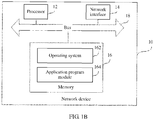
- FIG. 1B shows a schematic structural diagram of an example of a network device involved in this embodiment of the present invention.
- the network device 10 may be the foregoing storage device 110 or coordination device 120, and the network device 10 includes a processor 12 and a network interface 14.
- the processor 12 includes one or more processing cores.
- the processor 12 performs various functional applications and data processing by running a software program and a module.
- the network interface 14 is configured to communicate with another storage device or network device.
- the network device 10 further includes a component such as a memory 16 or a bus 18.
- the memory 16 and the network interface 14 are separately connected to the processor 12 by using the bus 18.
- the memory 16 may be configured to store a software program and a module. Specifically, the memory 16 may store an operating system 162, and an application program module 164 required by at least one function.
- the operating system 162 may be a real-time operating system (Real Time executive, RTX), or an operating system such as LINUX, UNIX, WINDOWS, or OS X.
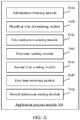
- FIG. 1C shows a schematic diagram of an example of an application program module involved in this embodiment of the present invention.
- the application program module 164 may be an information obtaining module 164a, a heartbeat time determining module 164b, a first instruction sending module 164c, a first time sending module 164d, a second time sending module 164e, a first time receiving module 164f, and a second instruction sending module 164g.
- the information obtaining module 164a obtains access status information of the data block group.
- the heartbeat time determining module 164b determines a heartbeat time of the data block group according to the access status information of the data block group.
- the first instruction sending module 164c sends a data synchronization instruction to a secondary device according to the heartbeat time of the data block group.
- the first time sending module 164d sends the heartbeat time of the data block group to the secondary device.
- the second time sending module 164e sends the heartbeat time of the data block group to the coordination device.
- the first time receiving module 164f receives a corrected heartbeat time returned by the coordination device.
- the second instruction sending module 164g sends a data synchronization instruction to the secondary device according to the corrected heartbeat time.
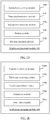
- FIG. 1D shows a schematic diagram of an example of another application program module involved in this embodiment of the present invention.
- the application program module 164 may be an instruction receiving module 164h, a data synchronization module 164i, a second time receiving module 164j, a setting module 164k, and an election initiation module 1641.
- the instruction receiving module 164h receives a data synchronization instruction sent by a primary device according to a heartbeat time of the data block group, where the primary device obtains access status information of the data block group, and determines the heartbeat time according to the access status information of the data block group.
- the data synchronization module 164i synchronizes data according to the data synchronization instruction, so that multiple data blocks keep consistent.
- the second time receiving module 164j receives the heartbeat time sent by the primary device.
- the setting module 164k sets an election timeout time according to the heartbeat time.
- the election initiation module 1641 initiates a primary device election in all other storage devices of the multiple storage devices when the secondary device does not receive, in the election timeout time, any signal sent by the primary device.
- FIG. 1E shows a schematic diagram of an example of still another application program module involved in this embodiment of the present invention.
- the application program module 164 may be a statistics collection module 164m, a third time receiving module 164n, a level determining module 164p, a correction module 164q, and a time return module 164r.
- the statistics collection module 164m collects statistics on access status information of a data block group.
- the third time receiving module 164n receives a heartbeat time that is of the data block group and sent by a primary device, where the primary device obtains the access status information of the data block group, and determines the heartbeat time according to the access status information of the data block group.
- the level determining module 164p determines an importance level of the data block group according to the access status information of the data block group.
- the correction module 164q corrects the heartbeat time according to the importance level of the data block group.
- the time return module 164r returns a corrected heartbeat time to the primary device.
- FIG. 2 is a method flowchart of an example of a heartbeat-based data synchronization method according to an embodiment of the present invention. The method may be applied to the storage system shown in FIG. 1 in which at least one data block group is stored. As shown in FIG. 2 , the heartbeat-based data synchronization method may include the following steps.
- Step 201 A primary device obtains access status information of a data block group.
- the access status information of the data block group may include a read frequency and a write frequency of the data block group.
- the read frequency of the data block group is a quantity of times that the primary device in the storage system receives a read operation on a data block in the data block group in a period of time.
- the write frequency of the data block group is a quantity of times that the primary device in the storage system receives a write operation on a data block in the data block group in a period of time.
- a distributed storage system based on a Raft consistency algorithm is used as an example.
- a client For a data block group, a client generally performs a read/write operation only on a data block stored in a primary device corresponding to the data block group. Therefore, a quantity of times that a data read or write operation is performed on a primary device in a period of time reflects use frequency of a data group to some extent.
- a storage device may collect statistics on access status information such as a read frequency or a write frequency of the data block group in a period of time.
- the access status information of the data block group may further include working status information of each storage device that stores the data block group.
- the access status information of the data block group may further include a data throughput, CPU (Central Processing Unit, central processing unit) usage, memory usage, an I/O (Input/Output, input/output) occupancy rate, or the like of each storage device that stores the data block group.
- information such as a data throughput, CPU usage, memory usage, or an I/O occupancy rate of a storage device may reflect frequency that the storage device receives a data synchronization instruction or a heartbeat signal. For example, if a data throughput, CPU usage, memory usage, or an I/O occupancy rate of a storage device is large, it reflects that the storage device frequently receives a data synchronization instruction or a heartbeat signal. On the contrary, if a data throughput, CPU usage, memory usage, or an I/O occupancy rate of a storage device is small, it reflects that the storage device rarely receives a data synchronization instruction or a heartbeat signal.
- the processor 12 in the network device 10 shown in FIG. 1B may run the information obtaining module 164a to implement this step.
- Step 202 The primary device determines a heartbeat time of the data block group according to the access status information of the data block group.
- a heartbeat time corresponding to a data block group is longer, a quantity of times of communication in a unit time between a primary device and a secondary device of the data block group in the distributed storage system is smaller. On the contrary, if the heartbeat time is shorter, the quantity of times of communication in a unit time between the primary device and the secondary device of the data block group is larger.
- a data block group of a relatively low read/write frequency if a quantity of times of data synchronization in a unit time between a primary device and a secondary device of the data block group keeps in a relatively low level, a synchronization performance requirement of each data block in the data block group may be satisfied.
- an independent heartbeat time may be separately set for each data block group, so that a quantity of times of communication in a unit time between a primary device and a secondary device of a data block group of a relatively small quantity of read/write times keeps in a relatively low level.
- the quantity of times of communication in a unit time between the primary device and the secondary device of the data block group is reduced as far as possible while synchronization performance of the data block group is ensured, thereby reducing system overheads of the distributed storage system, and improving read/write performance of the storage system.
- the step in which the primary device determines a heartbeat time of the data block group according to the access status information of the data block group may include the following two possible implementation manners:
- the primary device first scores the read frequency and the write frequency of the data block group according to the preset first scoring rule, uses a sum of scores for the read frequency and the write frequency as the first reference score, and determines the heartbeat time of the data block group according to the first reference score.
- the first scoring rule may be a scoring rule pre-designated for the access status information of the data block group.
- the scoring rule may be a rule shown in Table 1 below.
- Table 1 First scoring rule Read/write frequency Data throughput CPU usage Memory usage I/O occupancy rate One point Less than 50 Hz Less than 800 KB/s Less than 20% Less than 35% Less than 30% Two points 50-100 Hz 800-2000 KB/s 20%-80% 35%-70% 30%-70% Three points Greater than 100 Hz Greater than 2000 KB/s Greater than 80% Greater than 70% Greater than 70%
- a sum of scores for the access status information of the data block group that are determined according to the first scoring rule is used as the first reference score.
- the first reference score is a sum of two points corresponding to the read frequency of 70 Hz and one point corresponding to the write frequency of 45 Hz. Therefore, the first reference score is three points.
- the primary device determines the heartbeat time of the data block group according to the first reference score of three points.
- a determining manner may be determining according to a value of the first reference score. For a determining manner that may be implemented, refer to Table 2.
- Table 2 First reference score Heartbeat time 1-3 points 5 ms 4-7 points 2 ms More than 7 points 1 ms
- the primary device finds a heartbeat time of 5 ms corresponding to the first reference score of three points, and determines 5 ms as the heartbeat time of the data block group.
- Table 1 sets no limitation on the first scoring rule, and Table 1 is only one possible implementation manner of the first scoring rule.
- access status information "read/write frequency" in the second column of Table 1 represents that scoring rules corresponding to the read frequency and the write frequency are the same. In an actual application, the scoring rules of the read frequency and the write frequency may be different.
- Table 2 shows only one correspondence manner between a first reference score and a heartbeat time that may be implemented, and a correspondence manner between a first reference score and a heartbeat time is not limited in this embodiment.
- the reference time is a value obtained by means of machine learning, or a preset value.
- the first weight includes weights respectively corresponding to at least two pieces of information.
- each piece of access status information may be multiplied by a corresponding weight, or each piece of access status information on which scheduled processing is performed is multiplied by a corresponding weight.
- a processing manner may a manner such as scoring. For example, the access status information is processed according to the first scoring rule, a sum is obtained by adding together obtained products that are respectively corresponding to all pieces of access status information, and then the preset reference time is divided by the sum obtained by adding together the products that are respectively corresponding to all the pieces of access status information, and the corresponding heartbeat time is obtained.
- heartbeatTime is the heartbeat time
- Time is the reference time
- R is a value of the read frequency
- W is a value of the write frequency
- weightR is a weight corresponding to the read frequency
- weightW is a weight corresponding to the write frequency.
- the access status information of the data block group includes the following five pieces of data: a read frequency of 70 Hz, a write frequency of 45 Hz, a data throughput of 900 KB/s, CPU usage of 40%, and memory usage of 50%; and weights respectively corresponding to the foregoing five pieces of data are: 0.05, 0.05, 0.1, 0.2, and 0.4.
- the heartbeat time obtained according to the foregoing calculation method is: 12 ms/(70 ⁇ 0.05+45 ⁇ 0.05+0.9 ⁇ 0.1+0.4 ⁇ 0.2+0.5 ⁇ 0.4), which is approximately equal to 2 ms.
- the foregoing two specific implementation scenarios are merely used as examples for description of a manner in which the primary device calculates the heartbeat time of the data block group according to the access status information of the data block group, the reference time, and the first weight, and an access status information type and a calculation formula are not limited.
- the processor 12 in the network device 10 shown in FIG. 1B may run the heartbeat time determining module 164b to implement this step.
- Step 203 The primary device sends the heartbeat time of the data block group to the secondary device.
- the processor 12 in the network device 10 shown in FIG. 1B may run the first time sending module 164d to implement this step.
- Step 204 The secondary device receives the heartbeat time sent by the primary device.
- the processor 12 in the network device 10 shown in FIG. 1B may run the second time receiving module 164j to implement this step.
- Step 205 The secondary device sets an election timeout time according to the heartbeat time.
- the processor 12 in the network device 10 shown in FIG. 1B may run the setting module 164k to implement this step.
- Step 206 The secondary device initiates a primary device election in all other storage devices of the multiple storage devices when not receiving, in the election timeout time, any signal sent by the primary device.
- a distributed storage system based on a Raft consistency algorithm is used as an example.
- the system classifies storage devices into three roles: a Leader (leader), a follower (follower), and a Candidate (candidate).
- the primary device is equivalent to the Leader
- the secondary device is equivalent to the Follower.
- the Leader is responsible for log synchronization management (that is, data consistency management), processes access of a client that includes a read/write operation, and keeps contact with the Follower by sending a heartbeat.
- the Follower is responsible for responding to a log synchronization request (that is, a data synchronization instruction) of the Leader and responding to a vote request initiated by the Candidate, and forwards a received client request to the Leader.
- the election timeout time is used to trigger the secondary device to initiate a Leader election. Specifically, a timer is set in the secondary device. The secondary device resets the timer each time after receiving a heartbeat signal or a data synchronization instruction sent by the primary device. If a heartbeat signal or a data synchronization instruction is still not received when timing of the timer reaches the election timeout time, the secondary device considers by default that the primary device becomes faulty.
- the secondary device re-initiates an election, where an identity of the secondary device that initiates the election changes from the Follower to the Candidate; and initiates a vote request (RequestVote) to another secondary device by using a remote procedure call protocol (Remote Procedure Call Protocol, RPC), to request the another secondary device to support the secondary device to become the Leader.
- a vote request (RequestVote) to another secondary device by using a remote procedure call protocol (Remote Procedure Call Protocol, RPC), to request the another secondary device to support the secondary device to become the Leader.
- RPC Remote Procedure Call Protocol
- the secondary device may set the election timeout time in the following three manners:
- a specific method in which the secondary device scores the access status information according to the preset second scoring rule and obtains the second reference score is similar to a process in which the primary device scores the access status information according to the first scoring rule and obtains the first reference score, and details are not described herein.
- the secondary device may pre-store a correspondence between each reference score interval and each timeout coefficient.
- the secondary device may query a reference score interval to which the second reference score belongs, and query the first timeout coefficient corresponding to the reference score interval in the pre-stored correspondence.
- a specific form of the correspondence between each reference score interval and each timeout coefficient is not limited in this embodiment of the present invention. For example, referring to Table 3, Table 3 shows a correspondence table between a reference score interval and a timeout coefficient. Table 3 Reference score interval Timeout coefficient 1-2 points 70 3-4 points 60 5-6 points 50 More than 7 points 40
- the reference coefficient may be a value obtained by means of machine learning, or may be a preset value.
- the second weight includes a weight of each piece of the access status information of the data block group.
- the secondary device may multiply a value corresponding to each piece of the access status information by the weight corresponding to each piece of the access status information, and add together obtained products to obtain a sum.
- the second timeout coefficient is obtained by adding the reference coefficient to the sum that is obtained by adding together the products.
- a product of multiplying the second timeout coefficient by the heartbeat time is the election timeout time.
- OverTime is the election timeout time
- heartbeatTime is the heartbeat time
- Reference is the reference coefficient
- R is a value of the read frequency
- W is a value of the write frequency
- weightR is a weight corresponding to the read frequency
- weightW is a weight corresponding to the write frequency.
- the access status information of the data block group includes the read frequency and the write frequency of the data block group, which are respectively 70 Hz and 45 Hz, corresponding weights are respectively 0.2 and 0.8, the reference coefficient is 15, and the heartbeat time is 2 ms.
- the heartbeat time is 2 ms
- the reference coefficient is 15
- the access status information of the data block group includes the read frequency (70 Hz), the write frequency (45 Hz), and the CPU usage (40%)
- corresponding second weights are respectively 0.2, 0.6, and 0.2.
- the secondary device may also directly multiply the reference coefficient by the heartbeat time sent by the primary device, and use a product as the election timeout time.
- step 202 Similar to step 202, in this embodiment of the present invention, the foregoing specific implementation scenarios are merely used as examples for description of a manner in which the secondary device calculates the election timeout time according to the heartbeat time and the access status information of the data block group, and an access status information type and a specific calculation formula are not limited.
- the processor 12 in the network device 10 shown in FIG. 1B may run the election initiation module 1641 to implement this step.
- Step 207 The primary device sends a data synchronization instruction to the secondary device according to the heartbeat time of the data block group.
- the processor 12 in the network device 10 shown in FIG. 1B may run the first instruction sending module 164c to implement this step.
- Step 208 The secondary device receives the data synchronization instruction sent by the primary device according to the heartbeat time of the data block group.
- the processor 12 in the network device 10 shown in FIG. 1B may run the instruction receiving module 164h to implement this step.
- Step 209 The secondary device synchronizes data according to the data synchronization instruction.
- data of all data blocks of a same data block group may be synchronized by means of log replication (Log Replication).
- Log Replication log replication
- a primary device after receiving a log (transaction request) of a client, a primary device first supplements the log to a local log, and then synchronizes the log with each secondary device by using a heartbeat.
- the secondary device sends an acknowledgement response to the primary device after receiving and recording the log.
- the primary device sets the log to being submitted, supplements the log to a local disk, notifies the client, and instructs the secondary device to store the log in a local disk of the secondary device in a next heartbeat.
- the processor 12 in the network device 10 shown in FIG. 1B may run the data synchronization module 164i to implement this step.
- the method provided in this embodiment is not limited to being used in a distributed storage system based on a Raft consistency algorithm, and may be further applied to another distributed storage system in which data is synchronized based on a heartbeat time.
- a primary device obtains access status information of a data block group, determines a heartbeat time of the data block group according to the access status information of the data block group, and sends a data synchronization instruction to a secondary device according to the heartbeat time of the data block group, so as to instruct the secondary device to synchronize data.
- a problem that a signal needs to be frequently received and sent between all storage devices in which a data block group is located, thereby causing relatively large system overheads, and affecting read/write performance of a storage system in an existing Raft consistency algorithm is resolved. Therefore, system overheads of a distributed storage system are reduced, and read/write performance of the storage system is improved.
- FIG. 3 is a method flowchart of an example of a heartbeat-based data synchronization method according to an embodiment of the present invention.
- the method may be used in the storage system shown in FIG. 1 that includes a coordination device and in which at least one data block group is stored.
- the heartbeat-based data synchronization method may include the following steps.
- Step 301 A coordination device collects statistics on access status information of at least one data block group.
- the access status information of the at least one data block group may be sent by a respective primary device of the at least one data block group to the coordination device.
- the processor 12 in the network device 10 shown in FIG. 1B may run the statistics collection module 164m to implement this step.
- Step 302 The coordination device determines an importance level of the data block group according to the access status information of the data block group.
- the coordination device may determine the importance level of the data block group according to a sum of a read frequency and a write frequency that are in the access status information of the data block group. For example, referring to Table 4, a read frequency and a write frequency of each data block group, and an importance rank of each data block group in a storage system are listed in Table 4. Table 4 Data block group name Read frequency Write frequency Sum of read and write frequencies Importance rank First data block group 35 Hz 25 Hz 60 Hz 3 Second data block group 20 Hz 15 Hz 35 Hz 4 Third data block group 40 Hz 50 Hz 90 Hz 2 Fourth data block group 55 Hz 45 Hz 100 Hz 1
- the coordination device calculates sums of respective read and write frequencies of four data block groups, and determines importance of the four data block groups according to values of the sums of the respective read and write frequencies of the four data block groups. A larger sum of read and write frequencies of a data block group indicates higher importance, and a higher corresponding importance rank.
- the coordination device may obtain a third weight, and the third weight includes weights respectively corresponding to the read frequency and the write frequency.
- the coordination device determines an importance level of each data block group according to the read frequency and the write frequency corresponding to each data block group, and the third weight.
- the processor 12 in the network device 10 shown in FIG. 1B may run the level determining module 164p to implement this step.
- Step 303 A primary device of the data block group sends a heartbeat time of the data block group to the coordination device.
- the primary device obtains the access status information of the data block group, and determines the heartbeat time according to the access status information of the data block group.
- the access status information may include at least two pieces of information including the read frequency and the write frequency of the data block group.
- the processor 12 in the network device 10 shown in FIG. 1B may run the second time sending module 164e to implement this step.
- Step 304 The coordination device receives the heartbeat time that is of the data block group and sent by the primary device.
- the processor 12 in the network device 10 shown in FIG. 1B may run the third time receiving module 164n to implement this step.
- Step 305 The coordination device corrects the heartbeat time of the data block group according to the importance level of the data block group.
- a method for correcting the heartbeat time may be as follows: A correction coefficient of the data block group is first determined according to the importance level of the data block group, and then a product of multiplying the correction coefficient by the heartbeat time is determined as a corrected heartbeat time.
- corrected heartbeat times of the five data block groups are respectively 1.4 ms, 1.6 ms, 2 ms, 2.4 ms, and 3.0 ms.
- the processor 12 in the network device 10 shown in FIG. 1B may run the correction module 164q to implement this step.
- Step 306 The coordination device returns a corrected heartbeat time to the primary device, so that the primary device sends a data synchronization instruction to the secondary device according to the corrected heartbeat time.
- the processor 12 in the network device 10 shown in FIG. 1B may run the time return module 164r to implement this step.
- a primary device of a data block group after generating a heartbeat time, sends the heartbeat time to a coordination device for correction.
- the primary device sends a data synchronization instruction or a heartbeat signal according to the generated heartbeat time before receiving a corrected heartbeat time returned by the coordination device.
- the primary device changes to send a data synchronization instruction or a heartbeat signal according to the corrected heartbeat time after receiving the corrected heartbeat time returned by the coordination device.
- the primary device sends the corrected heartbeat time to a secondary device of the data block group, so that the secondary device of the data block group resets an election timeout time according to the corrected heartbeat time.
- a coordination device collects statistics on access status information of a data block group, determines an importance level of the data block group according to the access status information of the data block group, receives a heartbeat time that is of the data block group and sent by a primary device of the data block group, corrects the heartbeat time of the data block group according to the importance level of the data block group, and returns a corrected heartbeat time to the primary device.
- a heartbeat time of each data block group is corrected according to a running parameter of each data block group. Therefore, the heartbeat time of each data block group in a storage system is optimized as a whole, and read/write performance of the storage system is further improved.
- the following is an embodiment of an apparatus of the present invention, and the apparatus may be configured to execute the method embodiment of the present invention.
- the apparatus may be configured to execute the method embodiment of the present invention.
- details not disclosed in the apparatus embodiment of the present invention refer to the method embodiment of the present invention.
- FIG. 4 is a structural block diagram of a heartbeat-based data synchronization apparatus according to an embodiment of the present invention.
- the heartbeat-based data synchronization apparatus may be implemented as a part or all of a storage device of a distributed storage system by software, hardware, or a combination thereof.
- the distributed storage system may be the distributed storage system shown in FIG. 1A , and the storage device is a primary device of a data block group.
- the data block group includes multiple data blocks, and the multiple data blocks are separately stored in multiple storage devices of the distributed storage system.
- the multiple storage devices include the primary device, and a remaining device in the multiple storage devices except the primary device is a secondary device of the data block group.
- the heartbeat-based data synchronization apparatus may include an information obtaining unit 401, a heartbeat time determining unit 402, a first instruction sending unit 403, a first time sending unit 404, a second time sending unit 405, a first time receiving unit 406, and a second instruction sending unit 407.
- the information obtaining unit 401 has a same or similar function as the information obtaining module 164a.
- the heartbeat time determining unit 402 has a same or similar function as the heartbeat time determining module 164b.
- the first instruction sending unit 403 has a same or similar function as the first instruction sending module 164c.
- the first time sending unit 404 has a same or similar function as the first time sending module 164d.
- the second time sending unit 405 has a same or similar function as the second time sending module 164e.
- the first time receiving unit 406 has a same or similar function as the first time receiving module 164f.
- the second instruction sending unit 407 has a same or similar function as the second instruction sending module 164g.
- FIG. 5 is a structural block diagram of a heartbeat-based data synchronization apparatus according to an embodiment of the present invention.
- the heartbeat-based data synchronization apparatus may be implemented as a part or all of a storage device of a distributed storage system by software, hardware, or a combination thereof.
- the distributed storage system may be the distributed storage system shown in FIG. 1A , and the storage device is a secondary device of a data block group.
- the data block group includes multiple data blocks, and the multiple data blocks are separately stored in multiple storage devices of the distributed storage system.
- the multiple storage devices include the primary device, and a remaining device in the multiple storage devices except the primary device is a secondary device of the data block group.
- the heartbeat-based data synchronization apparatus may include an instruction receiving unit 501, a data synchronization unit 502, a second time receiving unit 503, a setting unit 504, and an election initiation unit 505.
- the instruction receiving unit 501 has a same or similar function as the instruction receiving module 164h.
- the data synchronization unit 502 has a same or similar function as the data synchronization module 164i.
- the second time receiving unit 503 has a same or similar function as the second time receiving module 164j.
- the setting unit 504 has a same or similar function as the setting module 164k.
- the election initiation unit 505 has a same or similar function as the election initiation module 1641.
- FIG. 6 is a structural block diagram of a heartbeat-based data synchronization apparatus according to an embodiment of the present invention.
- the heartbeat-based data synchronization apparatus may be implemented as a part or all of a coordination device of a distributed storage system by software, hardware, or a combination thereof.
- the distributed storage system may be the distributed storage system shown in FIG. 1A , and at least one data block group is stored in the distributed storage system.
- a data block group includes multiple data blocks, and the multiple data blocks are separately stored in multiple storage devices of the distributed storage system.
- the multiple storage devices include the primary device, and a remaining device in the multiple storage devices except the primary device is a secondary device of the data block group.
- the heartbeat-based data synchronization apparatus may include a statistics collection unit 601, a third time receiving unit 602, a level determining unit 603, a correction unit 604, and a time return unit 605.
- the statistics collecting 601 has a same or similar function as the statistics collection module 164m.
- the third time receiving unit 602 has a same or similar function as the third time receiving module 164n.
- the level determining unit 603 has a same or similar function as the level determining module 164p.
- the correction unit 604 has a same or similar function as the correction module 164q.
- the time return unit 605 has a same or similar function as the time return module 164r.
- the program may be stored in a computer-readable storage medium.
- the storage medium may include: a read-only memory, a magnetic disk, an optical disc, or the like.
Landscapes
- Engineering & Computer Science (AREA)
- Theoretical Computer Science (AREA)
- Physics & Mathematics (AREA)
- General Engineering & Computer Science (AREA)
- General Physics & Mathematics (AREA)
- Signal Processing (AREA)
- Computer Networks & Wireless Communication (AREA)
- Quality & Reliability (AREA)
- Computing Systems (AREA)
- Human Computer Interaction (AREA)
- Databases & Information Systems (AREA)
- Health & Medical Sciences (AREA)
- Cardiology (AREA)
- General Health & Medical Sciences (AREA)
- Computer Hardware Design (AREA)
- Data Mining & Analysis (AREA)
- Mathematical Physics (AREA)
- Computer Security & Cryptography (AREA)
- Probability & Statistics with Applications (AREA)
- Evolutionary Biology (AREA)
- Bioinformatics & Computational Biology (AREA)
- Bioinformatics & Cheminformatics (AREA)
- Life Sciences & Earth Sciences (AREA)
- Information Retrieval, Db Structures And Fs Structures Therefor (AREA)
Applications Claiming Priority (2)
| Application Number | Priority Date | Filing Date | Title |
|---|---|---|---|
| CN201610082068.8A CN107046552B (zh) | 2016-02-05 | 2016-02-05 | 基于心跳的数据同步装置、方法及分布式存储系统 |
| PCT/CN2016/097244 WO2017133233A1 (zh) | 2016-02-05 | 2016-08-29 | 基于心跳的数据同步装置、方法及分布式存储系统 |
Publications (3)
| Publication Number | Publication Date |
|---|---|
| EP3220610A1 true EP3220610A1 (de) | 2017-09-20 |
| EP3220610A4 EP3220610A4 (de) | 2017-10-18 |
| EP3220610B1 EP3220610B1 (de) | 2019-05-22 |
Family
ID=59337398
Family Applications (1)
| Application Number | Title | Priority Date | Filing Date |
|---|---|---|---|
| EP16854615.8A Active EP3220610B1 (de) | 2016-02-05 | 2016-08-29 | Herzschlagbasierte datensynchronisationsvorrichtung und verfahren sowie verteiltes speichersystem |
Country Status (4)
| Country | Link |
|---|---|
| US (1) | US10025529B2 (de) |
| EP (1) | EP3220610B1 (de) |
| CN (1) | CN107046552B (de) |
| WO (1) | WO2017133233A1 (de) |
Families Citing this family (17)
| Publication number | Priority date | Publication date | Assignee | Title |
|---|---|---|---|---|
| CN107181637B (zh) * | 2016-03-11 | 2021-01-29 | 华为技术有限公司 | 一种心跳信息发送方法、装置及心跳发送节点 |
| CN105916100B (zh) * | 2016-04-01 | 2020-04-28 | 华为技术有限公司 | 代理心跳包的方法、装置和通信系统 |
| CN106897338A (zh) * | 2016-07-04 | 2017-06-27 | 阿里巴巴集团控股有限公司 | 一种针对数据库的数据修改请求处理方法及装置 |
| CN109525347B (zh) * | 2017-09-19 | 2019-11-22 | 比亚迪股份有限公司 | 时间同步方法和装置 |
| US10637865B2 (en) | 2017-10-16 | 2020-04-28 | Juniper Networks, Inc. | Fast heartbeat liveness between packet processing engines using media access control security (MACSEC) communication |
| US10785350B2 (en) * | 2018-10-07 | 2020-09-22 | Hewlett Packard Enterprise Development Lp | Heartbeat in failover cluster |
| CN110597909B (zh) * | 2019-09-12 | 2023-03-14 | 广州南翼信息科技有限公司 | 一种保持客户端和多终端设备状态一致的方法 |
| CN116075819A (zh) * | 2020-08-03 | 2023-05-05 | 日立数据管理有限公司 | 多个分区组之间的心跳通信的随机化 |
| CN113297236B (zh) * | 2020-11-10 | 2024-07-30 | 阿里巴巴集团控股有限公司 | 分布式一致性系统中主节点的选举方法、装置及系统 |
| CN112653734B (zh) * | 2020-12-11 | 2023-09-19 | 邦彦技术股份有限公司 | 服务器集群实时主从控制和数据同步系统及方法 |
| CN113609043B (zh) * | 2021-06-20 | 2024-07-05 | 山东云海国创云计算装备产业创新中心有限公司 | 一种i2c主机的数据传输方法、装置、设备及可读介质 |
| CN113411237B (zh) * | 2021-08-18 | 2021-11-30 | 成都丰硕智能数字科技有限公司 | 一种低延迟检测终端状态的方法、存储介质及系统 |
| CN114344799B (zh) * | 2021-12-13 | 2022-11-11 | 深圳市培林体育科技有限公司 | 智能云跳绳和跳绳运动系统及其控制方法 |
| CN115037745B (zh) * | 2022-05-18 | 2023-09-26 | 阿里巴巴(中国)有限公司 | 一种在分布式系统中选举的方法及装置 |
| CN115167777B (zh) * | 2022-07-27 | 2025-07-04 | 苏州浪潮智能科技有限公司 | 分布式存储系统的优化方法、装置、设备及可读存储介质 |
| CN118228068A (zh) * | 2022-12-21 | 2024-06-21 | 戴尔产品有限公司 | 基于相关性的更新机制 |
| CN116881984B (zh) * | 2023-09-08 | 2024-02-23 | 云筑信息科技(成都)有限公司 | 一种数据监测方法 |
Family Cites Families (13)
| Publication number | Priority date | Publication date | Assignee | Title |
|---|---|---|---|---|
| US6651242B1 (en) * | 1999-12-14 | 2003-11-18 | Novell, Inc. | High performance computing system for distributed applications over a computer |
| US7185236B1 (en) * | 2002-08-30 | 2007-02-27 | Eternal Systems, Inc. | Consistent group membership for semi-active and passive replication |
| JP4415610B2 (ja) * | 2003-08-26 | 2010-02-17 | 株式会社日立製作所 | 系切替方法、レプリカ作成方法、及びディスク装置 |
| US7647329B1 (en) * | 2005-12-29 | 2010-01-12 | Amazon Technologies, Inc. | Keymap service architecture for a distributed storage system |
| US7827428B2 (en) * | 2007-08-31 | 2010-11-02 | International Business Machines Corporation | System for providing a cluster-wide system clock in a multi-tiered full-graph interconnect architecture |
| US9804928B2 (en) * | 2011-11-14 | 2017-10-31 | Panzura, Inc. | Restoring an archived file in a distributed filesystem |
| CN103583012B (zh) * | 2012-06-08 | 2016-11-09 | 华为终端有限公司 | 心跳行为的同步方法和装置 |
| KR20150030036A (ko) * | 2013-09-11 | 2015-03-19 | 삼성전자주식회사 | 분산 처리 방법, 마스터 서버 및 분산 클러스터 |
| US10264071B2 (en) * | 2014-03-31 | 2019-04-16 | Amazon Technologies, Inc. | Session management in distributed storage systems |
| CN104572917A (zh) * | 2014-12-29 | 2015-04-29 | 成都致云科技有限公司 | 数据锁定方法、装置及分布式存储系统 |
| CN104765661B (zh) * | 2014-12-30 | 2018-04-13 | 深圳市安云信息科技有限公司 | 一种云存储服务中元数据服务节点的多节点热备方法 |
| CN104994168B (zh) * | 2015-07-14 | 2018-05-01 | 苏州科达科技股份有限公司 | 分布式存储方法及分布式存储系统 |
| CN105260136B (zh) * | 2015-09-24 | 2019-04-05 | 北京百度网讯科技有限公司 | 数据读写方法及分布式存储系统 |
-
2016
- 2016-02-05 CN CN201610082068.8A patent/CN107046552B/zh active Active
- 2016-08-29 EP EP16854615.8A patent/EP3220610B1/de active Active
- 2016-08-29 WO PCT/CN2016/097244 patent/WO2017133233A1/zh not_active Ceased
-
2017
- 2017-05-01 US US15/583,687 patent/US10025529B2/en active Active
Also Published As
| Publication number | Publication date |
|---|---|
| CN107046552A (zh) | 2017-08-15 |
| WO2017133233A1 (zh) | 2017-08-10 |
| EP3220610A4 (de) | 2017-10-18 |
| EP3220610B1 (de) | 2019-05-22 |
| US20170235492A1 (en) | 2017-08-17 |
| US10025529B2 (en) | 2018-07-17 |
| CN107046552B (zh) | 2020-10-23 |
Similar Documents
| Publication | Publication Date | Title |
|---|---|---|
| US10025529B2 (en) | Heartbeat-based data synchronization apparatus and method, and distributed storage system | |
| US10541833B2 (en) | System and method for automatically selecting baud rate in a CAN network | |
| US10207183B2 (en) | Wireless gaming protocol | |
| US20150207877A1 (en) | Time synchronization client, a system and a non-transitory computer readable medium | |
| CN109087082B (zh) | 基于区块链的金融交易执行方法及装置、电子设备 | |
| US12157057B2 (en) | Method, apparatus, and device for correcting position of target object, and medium | |
| CN109660601A (zh) | 一种区块链共识方法及区块链共识装置 | |
| CN111294135A (zh) | 一种面向边缘云的多级时钟同步方法 | |
| CN112039727B (zh) | 数据传输方法、装置、电子设备及存储介质 | |
| WO2019153482A1 (zh) | 一种反洗钱作业中数据包的生成方法、存储介质和服务器 | |
| CN110620939B (zh) | 一种网络状态确定方法、装置、电子设备及存储介质 | |
| CN113297236A (zh) | 分布式一致性系统中主节点的选举方法、装置及系统 | |
| US11263112B2 (en) | Method and apparatus for evaluating quality of software running environment of device | |
| CN120711020A (zh) | 领导节点的转移方法及分布式系统、电子设备、存储介质 | |
| US12566101B2 (en) | Vibration evaluation method and apparatus, computer device, storage medium, and computer program product | |
| CN111585679A (zh) | 一种同步网络中时间自同步的方法及设备 | |
| CN109908586B (zh) | Html5游戏的优化方法及装置 | |
| JP2009116678A (ja) | Webサーバ | |
| CN117839225A (zh) | 一种帧同步数据的校验方法、装置和系统 | |
| CN115776601A (zh) | 视频流传输信息评估方法、装置、设备及存储介质 | |
| CN115734009A (zh) | 视频流的碰撞消除方法、装置、设备及存储介质 | |
| CN110381109A (zh) | 图片同步方法及系统 | |
| CN121841529A (zh) | 基于时间同步请求的轮询间隔调整方法、装置及设备 | |
| CN110677710A (zh) | 多媒体终端的同步控制方法和终端控制系统 | |
| HK1193518B (en) | Method and system for synchronizing chat log of instant messaging tool |
Legal Events
| Date | Code | Title | Description |
|---|---|---|---|
| STAA | Information on the status of an ep patent application or granted ep patent |
Free format text: STATUS: UNKNOWN |
|
| STAA | Information on the status of an ep patent application or granted ep patent |
Free format text: STATUS: THE INTERNATIONAL PUBLICATION HAS BEEN MADE |
|
| PUAI | Public reference made under article 153(3) epc to a published international application that has entered the european phase |
Free format text: ORIGINAL CODE: 0009012 |
|
| STAA | Information on the status of an ep patent application or granted ep patent |
Free format text: STATUS: REQUEST FOR EXAMINATION WAS MADE |
|
| 17P | Request for examination filed |
Effective date: 20170421 |
|
| AK | Designated contracting states |
Kind code of ref document: A1 Designated state(s): AL AT BE BG CH CY CZ DE DK EE ES FI FR GB GR HR HU IE IS IT LI LT LU LV MC MK MT NL NO PL PT RO RS SE SI SK SM TR |
|
| AX | Request for extension of the european patent |
Extension state: BA ME |
|
| A4 | Supplementary search report drawn up and despatched |
Effective date: 20170919 |
|
| RIC1 | Information provided on ipc code assigned before grant |
Ipc: G06F 11/20 20060101ALI20170913BHEP Ipc: G06F 3/06 20060101ALI20170913BHEP Ipc: H04L 12/26 20060101ALI20170913BHEP Ipc: G06F 11/00 20060101ALI20170913BHEP Ipc: H04L 29/06 20060101ALI20170913BHEP Ipc: G06F 17/30 20060101ALI20170913BHEP Ipc: G06F 11/14 20060101ALI20170913BHEP Ipc: H04L 29/08 20060101AFI20170913BHEP |
|
| RIN1 | Information on inventor provided before grant (corrected) |
Inventor name: LIU, CUNWEI Inventor name: JIN, XUEFENG Inventor name: WU, GUOJUN Inventor name: HUANG, XIHUA |
|
| STAA | Information on the status of an ep patent application or granted ep patent |
Free format text: STATUS: EXAMINATION IS IN PROGRESS |
|
| 17Q | First examination report despatched |
Effective date: 20180824 |
|
| GRAP | Despatch of communication of intention to grant a patent |
Free format text: ORIGINAL CODE: EPIDOSNIGR1 |
|
| STAA | Information on the status of an ep patent application or granted ep patent |
Free format text: STATUS: GRANT OF PATENT IS INTENDED |
|
| DAV | Request for validation of the european patent (deleted) | ||
| DAX | Request for extension of the european patent (deleted) | ||
| INTG | Intention to grant announced |
Effective date: 20181127 |
|
| GRAS | Grant fee paid |
Free format text: ORIGINAL CODE: EPIDOSNIGR3 |
|
| GRAA | (expected) grant |
Free format text: ORIGINAL CODE: 0009210 |
|
| STAA | Information on the status of an ep patent application or granted ep patent |
Free format text: STATUS: THE PATENT HAS BEEN GRANTED |
|
| AK | Designated contracting states |
Kind code of ref document: B1 Designated state(s): AL AT BE BG CH CY CZ DE DK EE ES FI FR GB GR HR HU IE IS IT LI LT LU LV MC MK MT NL NO PL PT RO RS SE SI SK SM TR |
|
| REG | Reference to a national code |
Ref country code: GB Ref legal event code: FG4D |
|
| REG | Reference to a national code |
Ref country code: CH Ref legal event code: EP |
|
| REG | Reference to a national code |
Ref country code: IE Ref legal event code: FG4D |
|
| REG | Reference to a national code |
Ref country code: DE Ref legal event code: R096 Ref document number: 602016014471 Country of ref document: DE |
|
| REG | Reference to a national code |
Ref country code: AT Ref legal event code: REF Ref document number: 1137476 Country of ref document: AT Kind code of ref document: T Effective date: 20190615 |
|
| REG | Reference to a national code |
Ref country code: NL Ref legal event code: MP Effective date: 20190522 |
|
| REG | Reference to a national code |
Ref country code: LT Ref legal event code: MG4D |
|
| PG25 | Lapsed in a contracting state [announced via postgrant information from national office to epo] |
Ref country code: HR Free format text: LAPSE BECAUSE OF FAILURE TO SUBMIT A TRANSLATION OF THE DESCRIPTION OR TO PAY THE FEE WITHIN THE PRESCRIBED TIME-LIMIT Effective date: 20190522 Ref country code: NL Free format text: LAPSE BECAUSE OF FAILURE TO SUBMIT A TRANSLATION OF THE DESCRIPTION OR TO PAY THE FEE WITHIN THE PRESCRIBED TIME-LIMIT Effective date: 20190522 Ref country code: LT Free format text: LAPSE BECAUSE OF FAILURE TO SUBMIT A TRANSLATION OF THE DESCRIPTION OR TO PAY THE FEE WITHIN THE PRESCRIBED TIME-LIMIT Effective date: 20190522 Ref country code: NO Free format text: LAPSE BECAUSE OF FAILURE TO SUBMIT A TRANSLATION OF THE DESCRIPTION OR TO PAY THE FEE WITHIN THE PRESCRIBED TIME-LIMIT Effective date: 20190822 Ref country code: FI Free format text: LAPSE BECAUSE OF FAILURE TO SUBMIT A TRANSLATION OF THE DESCRIPTION OR TO PAY THE FEE WITHIN THE PRESCRIBED TIME-LIMIT Effective date: 20190522 Ref country code: PT Free format text: LAPSE BECAUSE OF FAILURE TO SUBMIT A TRANSLATION OF THE DESCRIPTION OR TO PAY THE FEE WITHIN THE PRESCRIBED TIME-LIMIT Effective date: 20190922 Ref country code: AL Free format text: LAPSE BECAUSE OF FAILURE TO SUBMIT A TRANSLATION OF THE DESCRIPTION OR TO PAY THE FEE WITHIN THE PRESCRIBED TIME-LIMIT Effective date: 20190522 Ref country code: SE Free format text: LAPSE BECAUSE OF FAILURE TO SUBMIT A TRANSLATION OF THE DESCRIPTION OR TO PAY THE FEE WITHIN THE PRESCRIBED TIME-LIMIT Effective date: 20190522 Ref country code: ES Free format text: LAPSE BECAUSE OF FAILURE TO SUBMIT A TRANSLATION OF THE DESCRIPTION OR TO PAY THE FEE WITHIN THE PRESCRIBED TIME-LIMIT Effective date: 20190522 |
|
| PG25 | Lapsed in a contracting state [announced via postgrant information from national office to epo] |
Ref country code: GR Free format text: LAPSE BECAUSE OF FAILURE TO SUBMIT A TRANSLATION OF THE DESCRIPTION OR TO PAY THE FEE WITHIN THE PRESCRIBED TIME-LIMIT Effective date: 20190823 Ref country code: RS Free format text: LAPSE BECAUSE OF FAILURE TO SUBMIT A TRANSLATION OF THE DESCRIPTION OR TO PAY THE FEE WITHIN THE PRESCRIBED TIME-LIMIT Effective date: 20190522 Ref country code: BG Free format text: LAPSE BECAUSE OF FAILURE TO SUBMIT A TRANSLATION OF THE DESCRIPTION OR TO PAY THE FEE WITHIN THE PRESCRIBED TIME-LIMIT Effective date: 20190822 Ref country code: LV Free format text: LAPSE BECAUSE OF FAILURE TO SUBMIT A TRANSLATION OF THE DESCRIPTION OR TO PAY THE FEE WITHIN THE PRESCRIBED TIME-LIMIT Effective date: 20190522 |
|
| REG | Reference to a national code |
Ref country code: AT Ref legal event code: MK05 Ref document number: 1137476 Country of ref document: AT Kind code of ref document: T Effective date: 20190522 |
|
| PG25 | Lapsed in a contracting state [announced via postgrant information from national office to epo] |
Ref country code: EE Free format text: LAPSE BECAUSE OF FAILURE TO SUBMIT A TRANSLATION OF THE DESCRIPTION OR TO PAY THE FEE WITHIN THE PRESCRIBED TIME-LIMIT Effective date: 20190522 Ref country code: AT Free format text: LAPSE BECAUSE OF FAILURE TO SUBMIT A TRANSLATION OF THE DESCRIPTION OR TO PAY THE FEE WITHIN THE PRESCRIBED TIME-LIMIT Effective date: 20190522 Ref country code: SK Free format text: LAPSE BECAUSE OF FAILURE TO SUBMIT A TRANSLATION OF THE DESCRIPTION OR TO PAY THE FEE WITHIN THE PRESCRIBED TIME-LIMIT Effective date: 20190522 Ref country code: DK Free format text: LAPSE BECAUSE OF FAILURE TO SUBMIT A TRANSLATION OF THE DESCRIPTION OR TO PAY THE FEE WITHIN THE PRESCRIBED TIME-LIMIT Effective date: 20190522 Ref country code: RO Free format text: LAPSE BECAUSE OF FAILURE TO SUBMIT A TRANSLATION OF THE DESCRIPTION OR TO PAY THE FEE WITHIN THE PRESCRIBED TIME-LIMIT Effective date: 20190522 Ref country code: CZ Free format text: LAPSE BECAUSE OF FAILURE TO SUBMIT A TRANSLATION OF THE DESCRIPTION OR TO PAY THE FEE WITHIN THE PRESCRIBED TIME-LIMIT Effective date: 20190522 |
|
| REG | Reference to a national code |
Ref country code: DE Ref legal event code: R097 Ref document number: 602016014471 Country of ref document: DE |
|
| PG25 | Lapsed in a contracting state [announced via postgrant information from national office to epo] |
Ref country code: SM Free format text: LAPSE BECAUSE OF FAILURE TO SUBMIT A TRANSLATION OF THE DESCRIPTION OR TO PAY THE FEE WITHIN THE PRESCRIBED TIME-LIMIT Effective date: 20190522 Ref country code: IT Free format text: LAPSE BECAUSE OF FAILURE TO SUBMIT A TRANSLATION OF THE DESCRIPTION OR TO PAY THE FEE WITHIN THE PRESCRIBED TIME-LIMIT Effective date: 20190522 |
|
| PLBE | No opposition filed within time limit |
Free format text: ORIGINAL CODE: 0009261 |
|
| STAA | Information on the status of an ep patent application or granted ep patent |
Free format text: STATUS: NO OPPOSITION FILED WITHIN TIME LIMIT |
|
| PG25 | Lapsed in a contracting state [announced via postgrant information from national office to epo] |
Ref country code: TR Free format text: LAPSE BECAUSE OF FAILURE TO SUBMIT A TRANSLATION OF THE DESCRIPTION OR TO PAY THE FEE WITHIN THE PRESCRIBED TIME-LIMIT Effective date: 20190522 |
|
| 26N | No opposition filed |
Effective date: 20200225 |
|
| PG25 | Lapsed in a contracting state [announced via postgrant information from national office to epo] |
Ref country code: PL Free format text: LAPSE BECAUSE OF FAILURE TO SUBMIT A TRANSLATION OF THE DESCRIPTION OR TO PAY THE FEE WITHIN THE PRESCRIBED TIME-LIMIT Effective date: 20190522 |
|
| PG25 | Lapsed in a contracting state [announced via postgrant information from national office to epo] |
Ref country code: CH Free format text: LAPSE BECAUSE OF NON-PAYMENT OF DUE FEES Effective date: 20190831 Ref country code: LU Free format text: LAPSE BECAUSE OF NON-PAYMENT OF DUE FEES Effective date: 20190829 Ref country code: SI Free format text: LAPSE BECAUSE OF FAILURE TO SUBMIT A TRANSLATION OF THE DESCRIPTION OR TO PAY THE FEE WITHIN THE PRESCRIBED TIME-LIMIT Effective date: 20190522 Ref country code: LI Free format text: LAPSE BECAUSE OF NON-PAYMENT OF DUE FEES Effective date: 20190831 Ref country code: MC Free format text: LAPSE BECAUSE OF FAILURE TO SUBMIT A TRANSLATION OF THE DESCRIPTION OR TO PAY THE FEE WITHIN THE PRESCRIBED TIME-LIMIT Effective date: 20190522 |
|
| REG | Reference to a national code |
Ref country code: BE Ref legal event code: MM Effective date: 20190831 |
|
| PG25 | Lapsed in a contracting state [announced via postgrant information from national office to epo] |
Ref country code: IE Free format text: LAPSE BECAUSE OF NON-PAYMENT OF DUE FEES Effective date: 20190829 |
|
| PG25 | Lapsed in a contracting state [announced via postgrant information from national office to epo] |
Ref country code: BE Free format text: LAPSE BECAUSE OF NON-PAYMENT OF DUE FEES Effective date: 20190831 |
|
| PG25 | Lapsed in a contracting state [announced via postgrant information from national office to epo] |
Ref country code: CY Free format text: LAPSE BECAUSE OF FAILURE TO SUBMIT A TRANSLATION OF THE DESCRIPTION OR TO PAY THE FEE WITHIN THE PRESCRIBED TIME-LIMIT Effective date: 20190522 |
|
| PG25 | Lapsed in a contracting state [announced via postgrant information from national office to epo] |
Ref country code: IS Free format text: LAPSE BECAUSE OF FAILURE TO SUBMIT A TRANSLATION OF THE DESCRIPTION OR TO PAY THE FEE WITHIN THE PRESCRIBED TIME-LIMIT Effective date: 20190922 |
|
| PG25 | Lapsed in a contracting state [announced via postgrant information from national office to epo] |
Ref country code: HU Free format text: LAPSE BECAUSE OF FAILURE TO SUBMIT A TRANSLATION OF THE DESCRIPTION OR TO PAY THE FEE WITHIN THE PRESCRIBED TIME-LIMIT; INVALID AB INITIO Effective date: 20160829 Ref country code: MT Free format text: LAPSE BECAUSE OF FAILURE TO SUBMIT A TRANSLATION OF THE DESCRIPTION OR TO PAY THE FEE WITHIN THE PRESCRIBED TIME-LIMIT Effective date: 20190522 |
|
| REG | Reference to a national code |
Ref country code: DE Ref legal event code: R079 Ref document number: 602016014471 Country of ref document: DE Free format text: PREVIOUS MAIN CLASS: H04L0029080000 Ipc: H04L0065000000 |
|
| PG25 | Lapsed in a contracting state [announced via postgrant information from national office to epo] |
Ref country code: MK Free format text: LAPSE BECAUSE OF FAILURE TO SUBMIT A TRANSLATION OF THE DESCRIPTION OR TO PAY THE FEE WITHIN THE PRESCRIBED TIME-LIMIT Effective date: 20190522 |
|
| PGFP | Annual fee paid to national office [announced via postgrant information from national office to epo] |
Ref country code: DE Payment date: 20250702 Year of fee payment: 10 |
|
| PGFP | Annual fee paid to national office [announced via postgrant information from national office to epo] |
Ref country code: GB Payment date: 20250703 Year of fee payment: 10 |
|
| PGFP | Annual fee paid to national office [announced via postgrant information from national office to epo] |
Ref country code: FR Payment date: 20250703 Year of fee payment: 10 |