EP3220835B1 - Sicherheitsisolierbeutel für intraabdominale endoskopische eingriffe, leistungsmorcellation und vaginalmorcellation - Google Patents
Sicherheitsisolierbeutel für intraabdominale endoskopische eingriffe, leistungsmorcellation und vaginalmorcellation Download PDFInfo
- Publication number
- EP3220835B1 EP3220835B1 EP15861758.9A EP15861758A EP3220835B1 EP 3220835 B1 EP3220835 B1 EP 3220835B1 EP 15861758 A EP15861758 A EP 15861758A EP 3220835 B1 EP3220835 B1 EP 3220835B1
- Authority
- EP
- European Patent Office
- Prior art keywords
- bag
- safety isolation
- isolation bag
- morcellation
- mouth
- Prior art date
- Legal status (The legal status is an assumption and is not a legal conclusion. Google has not performed a legal analysis and makes no representation as to the accuracy of the status listed.)
- Active
Links
Images

Classifications
-
- A—HUMAN NECESSITIES
- A61—MEDICAL OR VETERINARY SCIENCE; HYGIENE
- A61B—DIAGNOSIS; SURGERY; IDENTIFICATION
- A61B17/00—Surgical instruments, devices or methods
- A61B17/00234—Surgical instruments, devices or methods for minimally invasive surgery
-
- A—HUMAN NECESSITIES
- A61—MEDICAL OR VETERINARY SCIENCE; HYGIENE
- A61B—DIAGNOSIS; SURGERY; IDENTIFICATION
- A61B17/00—Surgical instruments, devices or methods
- A61B17/34—Trocars; Puncturing needles
- A61B17/3474—Insufflating needles, e.g. Veress needles
-
- A—HUMAN NECESSITIES
- A61—MEDICAL OR VETERINARY SCIENCE; HYGIENE
- A61B—DIAGNOSIS; SURGERY; IDENTIFICATION
- A61B90/00—Instruments, implements or accessories specially adapted for surgery or diagnosis and not covered by any of the groups A61B1/00 - A61B50/00, e.g. for luxation treatment or for protecting wound edges
- A61B90/90—Identification means for patients or instruments, e.g. tags
-
- A—HUMAN NECESSITIES
- A61—MEDICAL OR VETERINARY SCIENCE; HYGIENE
- A61B—DIAGNOSIS; SURGERY; IDENTIFICATION
- A61B90/00—Instruments, implements or accessories specially adapted for surgery or diagnosis and not covered by any of the groups A61B1/00 - A61B50/00, e.g. for luxation treatment or for protecting wound edges
- A61B90/90—Identification means for patients or instruments, e.g. tags
- A61B90/92—Identification means for patients or instruments, e.g. tags coded with colour
-
- A—HUMAN NECESSITIES
- A61—MEDICAL OR VETERINARY SCIENCE; HYGIENE
- A61B—DIAGNOSIS; SURGERY; IDENTIFICATION
- A61B17/00—Surgical instruments, devices or methods
- A61B17/22—Implements for squeezing-off ulcers or the like on inner organs of the body; Implements for scraping-out cavities of body organs, e.g. bones; for invasive removal or destruction of calculus using mechanical vibrations; for removing obstructions in blood vessels, not otherwise provided for
- A61B17/221—Gripping devices in the form of loops or baskets for gripping calculi or similar types of obstructions
-
- A—HUMAN NECESSITIES
- A61—MEDICAL OR VETERINARY SCIENCE; HYGIENE
- A61B—DIAGNOSIS; SURGERY; IDENTIFICATION
- A61B17/00—Surgical instruments, devices or methods
- A61B17/32—Surgical cutting instruments
- A61B17/320016—Endoscopic cutting instruments, e.g. arthroscopes, resectoscopes
- A61B17/32002—Endoscopic cutting instruments, e.g. arthroscopes, resectoscopes with continuously rotating, oscillating or reciprocating cutting instruments
-
- A—HUMAN NECESSITIES
- A61—MEDICAL OR VETERINARY SCIENCE; HYGIENE
- A61B—DIAGNOSIS; SURGERY; IDENTIFICATION
- A61B17/00—Surgical instruments, devices or methods
- A61B17/00234—Surgical instruments, devices or methods for minimally invasive surgery
- A61B2017/00287—Bags for minimally invasive surgery
-
- A—HUMAN NECESSITIES
- A61—MEDICAL OR VETERINARY SCIENCE; HYGIENE
- A61B—DIAGNOSIS; SURGERY; IDENTIFICATION
- A61B17/00—Surgical instruments, devices or methods
- A61B2017/00535—Surgical instruments, devices or methods pneumatically or hydraulically operated
- A61B2017/00557—Surgical instruments, devices or methods pneumatically or hydraulically operated inflatable
-
- A—HUMAN NECESSITIES
- A61—MEDICAL OR VETERINARY SCIENCE; HYGIENE
- A61B—DIAGNOSIS; SURGERY; IDENTIFICATION
- A61B17/00—Surgical instruments, devices or methods
- A61B17/02—Surgical instruments, devices or methods for holding wounds open, e.g. retractors; Tractors
- A61B17/0218—Surgical instruments, devices or methods for holding wounds open, e.g. retractors; Tractors for minimally invasive surgery
- A61B2017/0225—Surgical instruments, devices or methods for holding wounds open, e.g. retractors; Tractors for minimally invasive surgery flexible, e.g. fabrics, meshes, or membranes
-
- A—HUMAN NECESSITIES
- A61—MEDICAL OR VETERINARY SCIENCE; HYGIENE
- A61B—DIAGNOSIS; SURGERY; IDENTIFICATION
- A61B17/00—Surgical instruments, devices or methods
- A61B17/22—Implements for squeezing-off ulcers or the like on inner organs of the body; Implements for scraping-out cavities of body organs, e.g. bones; for invasive removal or destruction of calculus using mechanical vibrations; for removing obstructions in blood vessels, not otherwise provided for
- A61B17/221—Gripping devices in the form of loops or baskets for gripping calculi or similar types of obstructions
- A61B2017/2212—Gripping devices in the form of loops or baskets for gripping calculi or similar types of obstructions having a closed distal end, e.g. a loop
-
- A—HUMAN NECESSITIES
- A61—MEDICAL OR VETERINARY SCIENCE; HYGIENE
- A61B—DIAGNOSIS; SURGERY; IDENTIFICATION
- A61B17/00—Surgical instruments, devices or methods
- A61B17/32—Surgical cutting instruments
- A61B17/320016—Endoscopic cutting instruments, e.g. arthroscopes, resectoscopes
- A61B17/32002—Endoscopic cutting instruments, e.g. arthroscopes, resectoscopes with continuously rotating, oscillating or reciprocating cutting instruments
- A61B2017/320024—Morcellators, e.g. having a hollow cutting tube with an annular cutter for morcellating and removing tissue
-
- A—HUMAN NECESSITIES
- A61—MEDICAL OR VETERINARY SCIENCE; HYGIENE
- A61B—DIAGNOSIS; SURGERY; IDENTIFICATION
- A61B90/00—Instruments, implements or accessories specially adapted for surgery or diagnosis and not covered by any of the groups A61B1/00 - A61B50/00, e.g. for luxation treatment or for protecting wound edges
- A61B90/06—Measuring instruments not otherwise provided for
- A61B2090/063—Measuring instruments not otherwise provided for for measuring volume
-
- A—HUMAN NECESSITIES
- A61—MEDICAL OR VETERINARY SCIENCE; HYGIENE
- A61B—DIAGNOSIS; SURGERY; IDENTIFICATION
- A61B90/00—Instruments, implements or accessories specially adapted for surgery or diagnosis and not covered by any of the groups A61B1/00 - A61B50/00, e.g. for luxation treatment or for protecting wound edges
- A61B90/08—Accessories or related features not otherwise provided for
- A61B2090/0807—Indication means
-
- A—HUMAN NECESSITIES
- A61—MEDICAL OR VETERINARY SCIENCE; HYGIENE
- A61B—DIAGNOSIS; SURGERY; IDENTIFICATION
- A61B2217/00—General characteristics of surgical instruments
- A61B2217/002—Auxiliary appliance
- A61B2217/005—Auxiliary appliance with suction drainage system
-
- A—HUMAN NECESSITIES
- A61—MEDICAL OR VETERINARY SCIENCE; HYGIENE
- A61B—DIAGNOSIS; SURGERY; IDENTIFICATION
- A61B2217/00—General characteristics of surgical instruments
- A61B2217/002—Auxiliary appliance
- A61B2217/007—Auxiliary appliance with irrigation system
-
- A—HUMAN NECESSITIES
- A61—MEDICAL OR VETERINARY SCIENCE; HYGIENE
- A61B—DIAGNOSIS; SURGERY; IDENTIFICATION
- A61B90/00—Instruments, implements or accessories specially adapted for surgery or diagnosis and not covered by any of the groups A61B1/00 - A61B50/00, e.g. for luxation treatment or for protecting wound edges
- A61B90/40—Apparatus fixed or close to patients specially adapted for providing an aseptic surgical environment
Definitions
- the present disclosure generally relates to "safety isolation bag", a pneumoperitoneum device for intra-abdominal, endoscopic procedures, power morcellation and vaginal morcellation and more especially meant for total laparoscopic hysterectomy (TLH), laparoscopy assisted vaginal hysterectomies, laparoscopic myomectomies and other endoscopic procedures where benign or malignant tissues have to be removed. More especially it relates to safety isolation bag having one or more layered wall provided with soft and flexible non-return valves made of biocompatible / medical grade plastic material for the insertion of instruments during laparoscopic surgery. Further said non-return valves are attached with tubular guides and long looped threads to help to guide and puncture the bag in suitable position of the valves as well as to close the puncture hole after the procedure by pulling the thread.
- safety isolation bag having one or more layered wall provided with soft and flexible non-return valves made of biocompatible / medical grade plastic material for the insertion of instruments during laparoscopic surgery
- Laparoscopic morcellation is commonly used in surgeries to remove bulky specimens from the abdomen using minimally invasive techniques. Historically, morcellation was performed using a device that required the surgeon or assistant to manually 'squeeze' the handle. Other reports describe using a scalpel directly through the abdomen to create small specimens that can be drawn out of the abdominal cavity. Power Morcellation is associated with spreading of cellular material of the morcellated tissues.
- Morcellation within an insufflated isolation bag is a feasible technique and methods for morcellating uterine tissue in a contained manner may provide an option to minimize the risks of open power morcellation while preserving the benefits of minimally invasive surgery. It is also reported that the patients who underwent endometrial morcellation, using a normal isolation bag, during minimally invasive hysterectomy or myomectomy, the possibility of spread of tissue beyond the isolation bag and additional punctures to the bag during the procedure cannot be ruled out causing postoperative pain, infection and the potential to spread undetected malignancy.
- the quality and the design of the isolation bag is of paramount importance as during the procedure it could result in tiny punctures in the bag or could spread microscopic cells beyond the bag.
- Patent numbers US 5176687 ; US 5524633 A ( WO1995009666A1 ); US 20130184536 A1 ; US 6685628 B2 ; US 7547310 B2 ; and US 8585712 B2 are mentioned here by way of reference.
- One of the drawbacks of the prior art patents is that it requires more number of steps in introducing the bag and instrumentation as well as for the retrieval of the specimen. In addition, this causes enhanced procedural time. Further learning curve associated with other isolation bags appears to be very high as it involves complicated steps in comparison with the safety isolation bag of the present invention. The procedural outcome also is not evident in the similar bags used for laparoscopic surgery.
- the main objective of the present invention is to provide an isolation bag for intra-abdominal, endoscopic procedures, power morcellation and vaginal morcellation which is very safe, avoiding spillage of fine tissue pieces and body fluids during surgery to remove bulky specimens from the abdomen, using minimally invasive techniques including during gynecologic surgery.
- One more objective of the present invention is to have multiple incision endoscopic procedures making the procedure simple, safe and avoid complicated steps which are there in case of bags with multi tail end-openings.
- Yet another objective of the present invention is to have an isolation bag which once inflated will get filled completely inside the abdominal cavity keeping away all organs from the field of morcellation or tissue extraction.
- Still another objective of the invention is to have an isolation bag which can withstand and reduce the chances of accidental puncture while in use during the procedure.
- One more objective of the invention is to doubly ensure that the bag does not leak during the laparoscopic procedure, by providing multi-walled construction of the bag.
- Yet another objective of the invention is to have provisions like primary instrument insertion sleeve attached to the inner side of the bag at the mouth and provided with an inlet opening for introducing telescope, and other apparatus such as trocar, morcellator / cutting instrument, suction apparatus etc. required for power morcellation, extraction of the body mass and also for inflating the bag to create peritoneum especially during single incision laparoscopic surgeries.
- Still another objective of the invention is to provide 1 or more soft and flexible non-return valves along the walls on the upper side of the safety isolation bag attached with long looped thread, for introducing telescope, and other apparatus such as trocar, morcellator / cutting instrument, suction apparatus etc. required for power morcellation, extraction of the body mass and also for inflating the bag to create pneumoperitoneum and to prevent gas leakage as most of the endoscopic procedures use multiple instruments from multiple body sites.
- Another objective of the invention is to provide a long looped thread to the non-return valve to help to puncture the safety isolation bag in the right position and to give counter pressure while puncturing to insert the trocars, in addition to closing the puncture hole completely by pulling said thread after completing the tissue mass removal.
- One more objective of the invention is to provide one or more tubular guides attached at the non-return valves to guide the trocars directly to the valves and puncture the safety isolation bag at the proper place.
- Yet another objective of the invention is to provide two 20 to 30 cm long threads attached at both sides of the opening of the safety isolation bag to facilitate to keep open the bag during the removal of dermoid cyst from the ovary.
- the safety isolation bag of the invention is defined in claim 1. Preferred embodiments are defined in the dependent claims.
- the safety isolation bag a pneumoperitoneum device for intra-abdominal, endoscopic procedures, power morcellation and vaginal morcellation for facilitating the safe removal of a mass from within the abdominal or body cavity is inflatable and having single or multilayered walls made out of flexible medical grade plastic, preferably having two layered walls.
- the bag has a retainer ring which is flexible to keep the bag in open condition and to facilitate entry through an incision as well as for introducing surgical instruments and accessories and also to close the bag by pulling the retainer ring / thread.
- the ring can be of a springy material such as an engineering polymer, stainless steel, nickel titanium super elastic alloy, or elastomer or non elastic thread.
- Said neck portion is in communication with the enclosed internal space.
- the neck is having markings indicating how much the bag is to be pulled out for large, medium and small tissue mass removal.
- This enclosed space or enclosure can be of bulbous shape when inflated.
- the enclosed shape may be formed from material selected from polyolefin, polyethylene terephthalate, polybutylene terephthalate, polyvinyl chloride, ionomer, polyurethane, nylon, polycarbonate, acrylic, ethylene vinyl acetate copolymer, polyvinylidene fluoride or blends thereof preferably from low density poly ethylene, poly urethane and poly propylene.
- Said bag may be manufactured using one or more combination of process such as injection, blow or rotational molding, casting or dipping, radio frequency welding, or bonding or any other suitable method known to those skilled in the art.
- the material used has to be flexible, gas-impermeable, and biocompatible medical grade.
- it can be formed by welding or bonding flexible medical grade plastic film into bag shaped assembly with enclosed internal space or cavity having a neck portion with mouth or a wide opening, at one end thereof and welding or bonding is done throughout the circumferential sites distributed over the surface of the said plastic film.
- a retractor means is attached to the periphery of the mouth of the bag which facilitates to pull out the bag through the incision made in the body once the tumor is placed inside the device. Even a non-traumatic grasper can be used for pulling out the bag, instead of retractor means.
- Soft and flexible non-return valves are provided on one of the surfaces below the neck in one or more places for introducing the surgical instruments and accessories into the enclosed internal space or cavity and to prevent gas leakage during the surgery. Further these non-return valves are attached with long looped threads to facilitate the introduction of instruments at the right place in the wall, while said thread is kept pulled out of the body incision during the procedure.
- one tubular guide is attached to each of the non return valves, in addition to long looped thread, to facilitate for the introduction of instruments at the right place in the wall, so as to guide the instruments when the safety isolation bag is punctured at the no return valve. This will prevent any accidental damage while passing the trocar to puncture the device and can also ensure that there will not be any accidental spillage if the trocar is withdrawn by mistake.
- the safety isolation bag is introducible through any of the endoscopic incisions / vaginal incision and is capable of being pushed through the body incision by means of introducer / blunt obturator and the said bag defines an internal space in an expanded state for reception of the masses to be removed from the abdominal cavity and collapsible from its expanded state.
- the body mass removed from the body cavity is placed / directed through the mouth of the bag into the internal space defined by the said bag, after which the mouth of the bag is pulled using the retractor means or using a non-traumatic grasper till the specified marking on the neck of the bag comes out of the body incision, whereupon the escape of the body mass from the mouth of the bag is prevented.
- the safety isolation bag is provided with two about 20 cm to 30 cm long threads attached at both the sides of the opening to facilitate to keep open the bag during the removal of dermoid cyst from the ovary.
- a primary instrument insertion sleeve is attached to the inner side of the bag at the mouth and provided with an inlet opening and outlet for the surgical instruments and accessories to introduce into the enclosed internal space or cavity.
- An exemplary method to be followed for removing a mass from within a body cavity, using safety isolation bag of the present disclosure can comprise the following steps:
- step e) When a tubular guide is attached to the non-return valves, in addition to long looped thread, method of removing a mass from within a body cavity, using safety isolation bag, shall need said step e) and said step g) to be modified as below:
- the safety isolation bag according to the present invention is for Intra abdominal, endoscopic procedures, power morcellation and vaginal morcellation, total laparoscopic hysterectomy (TLH), laparoscopy assisted vaginal hysterectomies, laparoscopic myomectomies and other endoscopic procedures for removing benign or malignant tissues.
- TH total laparoscopic hysterectomy
- laparoscopy assisted vaginal hysterectomies laparoscopic myomectomies
- other endoscopic procedures for removing benign or malignant tissues.
- Intra-abdominal or vaginal uterus morcellation are well described and routinely practiced techniques in removing benign bulky uterus or fibroids. But the chances of developing cancer due to the spillage of malignant tissues are of utmost concern during such procedures.
- the uterus or any such masses needs to be removed intact to avoid intra peritoneal spillage of the cancer cells.
- endoscopic procedures intra-abdominal, endoscopic or vaginal procedures
- This invention is intended to make power morcellation and other surgical specimen / tissue removal safer with less procedural steps, which not only saves surgery time, but also avoid related complications.
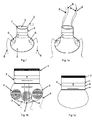
- safety isolation bag is an inflatable pneumoperitoneum device comprising of an expandable and collapsible enclosed internal space or cavity (5) bulbous in shape when inflated through gas tubing (14) and having a neck portion (4) with a mouth or a wide opening (3) made out of single layered or multilayered flexible gas-impermeable, biocompatible medical grade flexible material.
- the safety isolation bags is made of two layered construction. This will prevent significant level of gas leakage while directly puncturing the safety isolation bag with trocars or any other instruments during laparoscopic surgery once the pneumoperitoneum is created. It will help surgeons to use multiple ports on the anterior walls of the bag as per their choice for the easy handling of instruments and for perfect internal vision for morcellation or in any such safety isolation surgeries.
- non-return valves (6) are provided on one of the surface in the walls of the safety isolation bag below the neck as means for introducing the surgical instruments and accessories into the enclosed internal space or cavity (5) in multiple port surgeries for preventing gas leakage and to maintain the pneumoperitoneum.
- Said non-return valve is further attached with long looped threads (8) for using multiple instruments. These long looped threads help to puncture the bag at right position in the valves. By pulling the thread, it gives enough counter pressure for puncturing to insert the trocars. Once the procedure is done, the looped thread (8) is pulled tightly so that the puncture hole gets closed completely.
- non-return valves with long looped threads can be provided on one of the surface of the bag below the neck in one or more places.
- These non-return valves are soft and flexible and made of biocompatible / medical grade plastic film and provided along the walls of the safety isolation bag for easy insertion of the trocar and for preventing gas leakage.
- the non-return valves are marked with colour codes for easy identification.
- This bag can be made from one of the material selected from polyolefin, polyethylene terephthalate, polybutylene terephthalate, polyvinyl chloride, ionomer, polyurethane, nylon, polycarbonate, acrylic, ethylene vinyl acetate copolymer, polyvinylidene fluoride or blends thereof preferably from low density poly ethylene, poly urethane and poly propylene.
- This bag can be formed by injection, blow or rotational molding, dipping, casting or radio frequency welding or bonding, or any other suitable method known to those skilled in the art.
- said bag can be formed by welding or bonding layer of flexible medical grade plastic film into bag shaped assembly (1) with enclosed internal space or cavity (5) having a neck portion (4) with mouth (3) or a wide opening, at one end thereof.
- bonding or welding is done throughout the circumferential sites distributed over the surface of the said plastic films.
- Mouth of the safety isolation bag is having a diameter of about 10 to 30 cm while total length of the safety isolation bag from the opening of the neck end to fundus which is the effective length inside the abdominal cavity, which is ranging from 15 to 40 cm and with a maximum width of about 15 to 45 cm.
- the neck portion (4) of the bag is having a length of about 5 to15 cm.
- the mouth of the bag is kept in open position by a flexible retainer ring element (7) embedded with double layered at the upper circumferential portion to facilitate entry for introducing surgical instruments and accessories. This arrangement facilitates to keep the mouth open automatically on applying pressure from sides and collapse on releasing pressure.
- Said retainer ring element is made out of a springy material such as an engineering polymer, stainless steel, nickel titanium super elastic alloy, elastomer or other elastic material.
- One retractor means (2) of about 30 to 55 cm length is attached to the mouth of the bag enabling to pull out the bag from the abdominal cavity through the body incision and is flexible.
- the retractor means can be in the form of a strip, tape or thread preferably made of the material of the isolation bag.
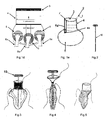
- one tubular guide (8a) is attached as shown in Fig.1d to each of the non return valve, in addition to long looped threads, to facilitate for the introduction of instruments at the right place in the wall, so as to guide the instruments when the safety isolation bag is punctured at the no return valve. This will prevent any accidental damage while passing the trocar to puncture the device and can also ensure that there will not be any accidental spillage if the trocar is withdrawn by mistake.
- Said tubular guide can be of same diameter at both ends or higher diameter at one end, which is attached to the non return valve in a sealing manner and is tapering towards the other end and that end will be closed.
- the tubular guide is of about 2 to 5 cm diameter with length up to 20cm and is positioned on the non return valve in such a way that the long looped thread (8) is outside the base of the tubular guide (8a)
- the tubular guide along with the long looped thread is taken out of the incision/ port made in the body by the surgeon for passing the trocars.
- the tube is cut at the desired length making an opening through which trocars and other instruments are passed and punctured into the internal cavity of the safety isolation bag for morcellation of the tissue mass.
- these non return valves are inbuilt on the anterior walls of the safety isolation bag by welding one or more additional layer over the bag at the earmarked portion of the anterior wall of the safety isolation bag at 4 cm to 25 cm distance from the end portion of the neck of the safety isolation bag.
- These multi layered wall of the bag on one of the surface in one or more location below the neck as shown in Fig.1, Fig.1a, Fig.1b, Fig.1c and Fig.1d functions as non-return valve and allow the trocars to pierce the bag for other hand instruments to pass through without any gas leakage. This again enhances the free movement of the instruments without any hindrance on internal vision while using telescopes and instruments from multiple sites.
- a primary instrument insertion sleeve (5) is attached to inner sidewall at the neck portion instead of non return valve. It is provided with an opening (6a) with a dia of 5 to 15mm to pass the surgical instruments. Said opening is facing opposite to the inner wall of the neck portion to which sleeve is attached and towards the distal end of the sleeve. Outlet (6b) of the sleeve is provided with oblique cut for maximum movability of the instruments.
- primary instrument insertion sleeve is having a length of about 20cm at one side and 15cm on the other side with inlet opening (6a) for inserting the primary instrument at 5cm from the shorter length.
- Safety isolation bag is inflatable and made out of single layer / multilayers of flexible medical grade plastic such as low density poly ethylene, poly urethane, poly propylene etc. and is also substantially transparent. It has sufficient strength and as such is very safe avoiding leakage during surgery while removing bulky specimens from the abdomen using minimally invasive techniques including during gynecologic surgery.
- the safety isolation bag can be made gas leak proof when punctured with surgical instruments like trocars even with single layered bag by welding one or two additional layers over the said single walled bag at the earmarked portion of the anterior wall of the safety isolation bag, which can function as non-return valve when surgical instruments penetrates the bag in-situ during the surgery. But care should be taken to select the right material of the bag.
- the safety isolation bag according to my invention is made to shrink or collapse for inserting into the abdominal cavity through one of the abdominal incisions viz. the umbilicus incision / supra- umbilicus incision / lateral incision / vaginal incision by means of a blunt tip obturator made out of plastic as shown in Fig. 2 . It is further pushed through using the same blunt tip obturator, once the body mass or surgical specimen is ready for removal.
- the obturator is having about 5 to 10 mm diameter and 25 to 35 cm length. According to the present invention, there is no necessity of using washers for making it leak proof while introducing both the trocar and morcellator hand piece.
- the safety isolation bag according to the invention defines an internal space in an expanded state for reception of a mass to be removed from the abdominal cavity and collapsible or shrinkable from its expanded state.
- the body mass removed from the body cavity can be placed / directed through the mouth of the bag into the internal space of the bag, after which the mouth of the bag is pulled using the retractor means or using a non-traumatic grasper, till the neck end of the bag comes out of the body incision fully or partly as the case may be based on the size of the tissue mass being removed.
- the umbilicus (lateral / vaginal) incision using the retractor means (2) up to the 'L' marking (for about 20 to 26 cm size tumor) marked at the neck for the removal of large size tissue mass; up to 'M' marking (for about 10 to 19 cm size tumor) marked at the neck for the removal of medium size tissue mass; and up to 'S' marking (up to about 8 cm size tumor) marked at the neck for the removal of small tissue mass.
- the shape of the bag with the special design of the neck of the safety isolation bag also prevent the body mass from falling off once it is placed inside. Surgical instruments and accessories are introduced through the mouth directly into the enclosed internal space or through the non-return valves.
- the safety isolation bag can also be used for dermoid cyst removal by attaching two 20 to 30 cm long threads (9) at both the sides of opening of the safety isolation bag as shown in Fig. 1a .
- This facilitates the bag to keep in open condition during the removal of dermoid cyst, so that the ovary can be brought inside the bag and perform the procedure.
- cyst could be completely collected inside the bag and removed by morcellation and or suction.
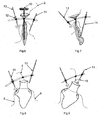
- the safety isolation bag is inserted into the abdominal cavity directly using the blunt tip obturator (10) by pushing the bag through the incision through which the morcellation can be performed as shown in Fig. 3 and Fig. 4 .
- the safety isolation bag passes through the incision and enters in the abdominal cavity as seen in Fig. 5 the obturator is removed.
- the safety isolation bag is pulled fully into the abdominal cavity using a non traumatic grasper (11), which is monitored using the telescope (13) through the trocar (12) introduced through one of the lateral incision as shown in Fig. 6 and Fig. 7 .
- mouth of the safety isolation bag can be opened for placing the tissue mass to be removed and this procedure can be monitored using the telescope (13) inserted through one of the lateral incision as shown in Fig. 8 .
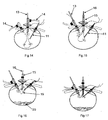
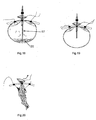
- the mouth of the safety isolation bag is pulled out through the same incision, through which the bag was inserted using the retractor means provided in the safety isolation bag or using a non-traumatic grasper till the specific marking (L, M and S) in the neck of the bag comes out of the incision depending on the size of the tissues, as shown in Fig. 9 and Fig. 10 and Fig. 11 .
- tubular guide (8a) is provided in addition to long looped thread, as mentioned earlier according to one of the embodiment under the invention, the same can also be pulled out along the long looped thread(8) through the incision through which the trocar required to be passed. Then the closed tip of the tubular guide is cut and removed, so as to make passage for introducing the trocar.
- the trocar and telescope can be removed from the mouth of the safety Isolation bag and the same telescope is passed through the primary trocar.
- the mouth opening can be used for introducing the morcellator hand piece.
- the morcellator hand piece 15
- the morcellator hand piece is introduced through the mouth opening using blunt tip obturator, and pushed into the cavity of the bag by means of spiral clockwise movement.
- a tenaculam (16) is passed through the hand piece lumen.
- morcellation is performed within the pneumoperitoneum created by the safety isolation bag as shown in Fig. 16 .
- the trocars are removed from the non-return valves as shown in Fig. 17 .
- Tenaculam (16) from the morcellator hand piece (18) is taken out and all body fluids and small tissue pieces (19) from the safety isolation bag is removed using a suction irrigation apparatus (17), which is passed through the same morcellator hand piece.
- Safety isolation bag is deflated fully by using the suction apparatus, which is passed through the morcellator hand piece and once the device is fully deflated, the morcellator hand piece as well as the safety isolation bag is pulled out as shown in Fig. 19 and Fig. 20 after closing the puncture hole by tightly pulling the long looped thread.
- An exemplary method to be followed for removing a mass from within a body cavity using the disclosed-safety isolation bag may comprise of the following steps.
- Step-1 Widen the umbilicus incision (supra- umbilicus incision, lateral incision / vaginal incision) 12 to 15 cm or as per the convenience of the surgeon for the size of the morcellator is being used.
- Step-2 Open the mouth of the bag using a non-traumatic grasper through the lateral port and place the tissue specimens to be removed inside the safety isolation bag which is being monitored by the telescope.
- Step-3 Pull the mouth of the safety isolation bag out through the same incision through which the bag was inserted using the retractor means provided in the safety isolation bag or using a non-traumatic grasper till the specific marking (L, M and S) in the neck of the bag comes out of the incision depending on the size of the tissues.
- Step-4 Pull out the long looped thread stuck to the non-return valve which is colour coded, through the incision through which the primary trocar has to be passed. If the non return valve is attached with tubular guide in addition to long looped thread according to another embodiment under the invention, long looped thread as well as tubular guide stuck to the non-return valve is pulled out, through the incision through which the primary trocar required to be passed.
- Step- 5 Introduce one trocar and telescope through the mouth of the safety isolation bag and inflate the safety isolation bag through gas tubing connected to the trocar which is passed through the mouth of the bag so that the complete pneumoperitoneum is created and the abdominal cavity is covered fully with the safety isolation bag. The same can be visualized and monitored through the telescope connected to the monitor screen.
- Step-6 Once the safety isolation bag is completely filled up by visualizing inside the bag, introduce one trocar through the existing incision through which the long looped thread attached to the non- return valve was pulled out and puncture at the non-return valve. If required, use another hand instrument for the procedure. Then introduce another trocar into the other non-return valve which is at the upper wall of the safety isolation bag.
- tubular guide In case tubular guide is provided, according to yet another embodiment under the invention, cut the closed tip of the tubular guide, and introduce one trocar through the existing incision through which the long looped thread attached to the non-return valve was pulled out and puncture at the non-return valve by passing through the tubular guide. Then introduce another trocar if needed by passing it through the tubular guide and puncture at the other non-return valve as done earlier.
- Step-7 Remove the trocar and telescope which was inserted through the mouth of the safety isolation bag and pass the telescope through the primary trocar. This opening can be used for introducing the morcellator hand piece. Introduce the morcellator hand piece (cutter blade hand instrument) using blunt tip obturator and push it into the cavity of the bag using a spiral clockwise inward movement, while it is visualized through the telescope passed through the trocar and connected to the monitor screen;
- Step-8 Now remove the blunt obturator from the morcellator hand piece and pass a tenaculam through the hand piece lumen and hold the specimen and perform the morcellation within the pneumoperitoneum created by the safety isolation bag. Once the morcellation is completed and the tissue mass is extracted, remove the trocars from the non-return valves / from the walls of the safety isolation bag.
- Step-9 Take out the tenaculam from the morcellator hand piece, once the tissues are extracted. Remove all body fluids and small tissue pieces from the bag using a suction irrigation apparatus which is passed through the same morcellator hand piece and deflate the safety isolation bag fully by using the same suction apparatus. Pull out the morcellator hand piece and the bag together, once the safety isolation bag is fully deflated after closing the puncture hole by tightly pulling the long looped thread.
Landscapes
- Health & Medical Sciences (AREA)
- Surgery (AREA)
- Life Sciences & Earth Sciences (AREA)
- Heart & Thoracic Surgery (AREA)
- Molecular Biology (AREA)
- Veterinary Medicine (AREA)
- Engineering & Computer Science (AREA)
- Biomedical Technology (AREA)
- Nuclear Medicine, Radiotherapy & Molecular Imaging (AREA)
- Medical Informatics (AREA)
- Public Health (AREA)
- Animal Behavior & Ethology (AREA)
- General Health & Medical Sciences (AREA)
- Pathology (AREA)
- Oral & Maxillofacial Surgery (AREA)
- Endoscopes (AREA)
- Surgical Instruments (AREA)
Claims (11)
- Sicherheitsisolierbeutel, der als eine Pneumoperitoneum-Vorrichtung für intraabdominelle, endoskopische Eingriffe, Leistungsmorcellation und vaginale Morcellation konfiguriert ist, um eine sichere Entnahme einer chirurgischen Probe oder einer Körpermasse aus dem Innern einer Bauchhöhle oder von einer beliebigen Stelle im Körper zu ermöglichen; wobei der Sicherheitsisolierbeutel einen dehnbaren und zusammenfaltbaren Beutel umfasst, der konfiguriert ist, um einen internen Raum bzw. Hohlraum (5) einzuschließen und einen Halsabschnitt (4) mit einer Mündung (3) oder einer breiten Öffnung umfasst; wobei der Sicherheitsisolierbeutel aus einer oder mehreren Schichten einer biegsamen, biokompatiblen/ für medizinische Zwecke geeigneten Plastikfolie hergestellt ist, die sicherstellt, dass der Beutel auslaufsicher ist, wobei die Mündung (3) des Beutels normalerweise anhand eines biegsamen Halterings (7), der an einem oberen Umfangsabschnitt der Mündung eingebettet ist, in einer offenen Position gehalten wird, und an der Peripherie der Mündung (3) des Beutels ein Retraktormittel (2) angebracht ist, um das Herausziehen des Beutels durch einen Einschnitt in den Körper hindurch zu ermöglichen;
wobei der Sicherheitsisolierbeutel dadurch gekennzeichnet ist, dass der Halsabschnitt mit Markierungen oder einer farblichen Codierung versehen ist, die angeben, wie weit der Beutel zum Entnehmen einer großen, mittleren oder kleinen Gewebemasse herauszuziehen ist, und
der Sicherheitsisolierbeutel mit einem oder mehreren Rückschlagventilen (6) an der Wand des Sicherheitsisolierbeutels versehen ist, um beim Aufstechen des Beutels zum Einführen von chirurgischen Instrumenten und Zubehör in den eingeschlossenen internen Raum bzw. Hohlraum (5) behilflich zu sein, und das eine oder die mehreren Rückschlagventile (6) mit langen Schlingenfäden (8) versehen sind, um genug Gegendruck zu geben, wenn daran gezogen wird, um das Aufstechen in der richtigen Position zum Einfügen der chirurgischen Instrumente und des Zubehörs zu ermöglichen. - Sicherheitsisolierbeutel nach Anspruch 1, ferner umfassend eine röhrenförmige Führung (8a) mit einem Durchmesser von ungefähr 2 bis 5 cm und einer Länge von bis zu 20 cm, die abdichtend an jedem von dem einen oder den mehreren Rückschlagventilen (6) derart angebracht ist, dass der entsprechende lange Schlingenfaden (8) außerhalb der Basis der röhrenförmigen Führung liegt, und wobei die röhrenförmige Führung (8a) in Richtung auf das andere Ende spitz zuläuft und dieses Ende geschlossen ist.
- Sicherheitsisolierbeutel nach Anspruch 1, wobei der Halsabschnitt markiert ist mit a) "L" für die Entnahme einer großen Gewebemasse eines etwa 20 bis 26 cm großen Tumors; b) "M" für die Entnahme einer mittleren Gewebemasse eines etwa 10 bis 19 cm großen Tumors; und c) "S" für die Entnahme einer kleinen Gewebemasse von etwa 9 cm und weniger, was angibt, wie weit die Vorrichtung vor der Morcellation herauszuziehen ist.
- Sicherheitsisolierbeutel nach Anspruch 1, wobei das eine oder die mehreren Rückschlagventile auslaufsicher bleiben, wenn sie mit Trokaren oder anderen chirurgischen Instrumenten aufgestochen werden, und
wobei das eine oder die mehreren Rückschlagventile durch Schweißen oder Binden einer oder mehrerer zusätzlicher Schichten einer biegsamen biokompatiblen/ für medizinische Zwecke geeigneten Plastikfolie auf der vorderen Oberfläche der Wand des Sicherheitsisolierbeutels gebildet werden. - Sicherheitsisolierbeutel nach Anspruch 1, wobei ein oder mehrere Rückschlagventile und die entsprechenden langen Schlingenfäden (8) farblich codiert sind.
- Sicherheitsisolierbeutel nach Anspruch 1, wobei der Sicherheitsisolierbeutel konfiguriert ist, um die Bauchhöhle als ein Pneumoperitoneum abzudecken, wenn er mit einem Gas aufgeblasen wird, und das Gas im Innern des internen Raums bzw. Hohlraums (5) zurückhält, nachdem darin handgehaltene Instrumente, bevorzugt über das eine oder die mehreren Rückschlagventile, vor Ort während der Operation eingedrungen sind.
- Sicherheitsisolierbeutel nach Anspruch 1, wobei sich das Einstechloch vollständig schließt, wenn der lange Schlingenfaden (8) festgezogen wird, nachdem die Operation beendet ist.
- Sicherheitsisolierbeutel nach Anspruch 1, wobei das eine oder die mehreren Rückschlagventile (6) mit einem langen Schlingenfaden (8) konfiguriert sind, um die chirurgischen Instrumente und das Zubehör in den eingeschlossenen internen Raum bzw. Hohlraum einzuführen.
- Sicherheitsisolierbeutel nach Anspruch 1, wobei an dem Sicherheitsisolierbeutel, wenn er zum Entfernen einer Dermoidzyste verwendet wird, zwei 20 bis 30 cm lange Fäden (9) auf beiden Seiten der Öffnung des Sicherheitsisolierbeutels angebracht sind, wobei die beiden 20 bis 30 cm langen Fäden (9) verwendet werden, um die Öffnung in einem offenen Zustand zu halten, um das Einbringen des Eierstocks in das Innere des Beutels zu ermöglichen.
- Sicherheitsisolierbeutel nach Anspruch 1, wobei der biegsame Haltering (7) einen Faden umfasst, um die Mündung (3) zu schließen, nachdem die Proben in das Innere des Beutels eingefügt wurden.
- Sicherheitsisolierbeutel nach Anspruch 1, wobei das Material für den Beutel und das Rückschlagventil aus Polyolefin, Polyethylenterephthalat, Polybutylenterephthalat, Polyvinylchlorid, Ionomer, Polyurethan, Nylon, Polycarbonat, Acryl, Ethylenvinylacetat-Copolymer, Polyvinylidenfluorid oder Mischungen derselben, bevorzugt aus Polyethylen, Polyurethan und Polypropylen geringer Dichte ausgewählt wird, und wobei der lange Schlingenfaden aus Baumwolle, Nylon oder einem beliebigen anderen Polymermaterial hergestellt wird.
Applications Claiming Priority (2)
| Application Number | Priority Date | Filing Date | Title |
|---|---|---|---|
| IN5813CH2014 | 2014-11-19 | ||
| PCT/IN2015/000420 WO2016079752A1 (en) | 2014-11-19 | 2015-11-12 | Safety isolation bags for intra abdominal, endoscopic procedures, power morcellation and vaginal morcellation |
Publications (3)
| Publication Number | Publication Date |
|---|---|
| EP3220835A1 EP3220835A1 (de) | 2017-09-27 |
| EP3220835A4 EP3220835A4 (de) | 2018-06-27 |
| EP3220835B1 true EP3220835B1 (de) | 2020-02-12 |
Family
ID=56013384
Family Applications (1)
| Application Number | Title | Priority Date | Filing Date |
|---|---|---|---|
| EP15861758.9A Active EP3220835B1 (de) | 2014-11-19 | 2015-11-12 | Sicherheitsisolierbeutel für intraabdominale endoskopische eingriffe, leistungsmorcellation und vaginalmorcellation |
Country Status (3)
| Country | Link |
|---|---|
| US (1) | US10675011B2 (de) |
| EP (1) | EP3220835B1 (de) |
| WO (1) | WO2016079752A1 (de) |
Families Citing this family (27)
| Publication number | Priority date | Publication date | Assignee | Title |
|---|---|---|---|---|
| WO2017161080A1 (en) * | 2016-03-17 | 2017-09-21 | Rugart Eric S | Organ enclosures for inhibiting tumor invasion and detecting organ pathology |
| EP4393421A3 (de) | 2016-04-25 | 2024-10-09 | Claria Medical, Inc. | Systeme und verfahren zur gewebeerfassung und -entfernung |
| WO2017216803A1 (en) * | 2016-06-16 | 2017-12-21 | Safesac Medical Ltd. | Tissue containment device for use in surgical procedures |
| US12285188B2 (en) | 2016-09-10 | 2025-04-29 | Ark Surgical Ltd. | Laparoscopic workspace device |
| CN108158616A (zh) * | 2018-01-08 | 2018-06-15 | 浙江大学 | 用在结直肠术后经肛取出肿瘤标本的气充式通道装置 |
| GB2570329B (en) | 2018-01-22 | 2022-11-30 | Gyrus Medical Ltd | Surgical devices |
| US11419610B2 (en) | 2018-08-17 | 2022-08-23 | Empress Medical, Inc. | Device and method for passing tension member around tissue mass |
| US12239322B2 (en) | 2018-08-17 | 2025-03-04 | Empress Medical, Inc. | Device and method for passing tension member around tissue mass |
| CN112770680A (zh) | 2018-08-17 | 2021-05-07 | 安普列斯医疗公司 | 用于压迫肿瘤的装置和方法 |
| CN108992149A (zh) * | 2018-08-29 | 2018-12-14 | 合肥赫博医疗器械有限责任公司 | 腔镜下粉碎用取物袋与硬质导管的防滑脱组合式连接 |
| CN109009266B (zh) * | 2018-08-29 | 2024-09-17 | 合肥赫博医疗器械有限责任公司 | 连通硬质导管取物袋的腹腔置入与双套管封口装置 |
| US11207102B2 (en) | 2018-09-12 | 2021-12-28 | Lsi Solutions, Inc. | Minimally invasive specimen retrieval system and methods thereof |
| DE102019113982B4 (de) * | 2019-05-24 | 2021-03-11 | Medi-Globe Gmbh | Extraktionseinrichtung und Applikationsvorrichtung mit einer Extraktionseinrichtung |
| US11278317B2 (en) | 2019-08-28 | 2022-03-22 | Covidien Lp | Surgical access devices and systems including smoke evacuation |
| US11058459B2 (en) | 2019-12-12 | 2021-07-13 | Covidien Lp | Two-piece cutting guard with evacuation ports |
| US11116488B2 (en) | 2019-12-20 | 2021-09-14 | Covidien Lp | Tissue guard for tissue removal and other surgical procedures |
| US11690648B2 (en) | 2020-03-03 | 2023-07-04 | Covidien Lp | Surgical access device and method for using the same |
| US11583314B2 (en) | 2020-03-03 | 2023-02-21 | Covidien Lp | Surgical access device and method for using the same |
| US11529191B2 (en) | 2020-05-26 | 2022-12-20 | Covidien Lp | Auxiliary electrosurgical return via cutting guard |
| US11627988B2 (en) | 2020-07-14 | 2023-04-18 | Covidien Lp | Snap-fit cutting guard |
| US11534258B2 (en) | 2020-08-26 | 2022-12-27 | Covidien Lp | Cutting guard |
| WO2022130385A2 (en) | 2020-12-17 | 2022-06-23 | Ark Surgical Ltd. | Laparoscopic tissue containment device |
| CN114041836B (zh) * | 2021-12-22 | 2025-03-21 | 四川省肿瘤医院 | 适用于经由单孔取出体内大体积实性肿瘤的操作套件 |
| CN116407169B (zh) * | 2021-12-29 | 2025-12-05 | 江苏风和医疗器材股份有限公司 | 取物袋 |
| CN116407239A (zh) * | 2021-12-29 | 2023-07-11 | 江苏风和医疗器材股份有限公司 | 取物袋 |
| CN119949912B (zh) * | 2024-12-17 | 2025-11-21 | 无锡圣诺亚科技有限公司 | 心肌穿孔修补罩 |
| CN119367028B (zh) * | 2024-12-31 | 2025-05-16 | 温州医科大学附属第一医院 | 一种腹腔镜困难标本取物袋 |
Family Cites Families (17)
| Publication number | Priority date | Publication date | Assignee | Title |
|---|---|---|---|---|
| US5176687A (en) | 1991-05-10 | 1993-01-05 | Hasson Harrith M | Disposable pouch container for isolation and retrieval of tissues removed at laparoscopy |
| US5524633A (en) | 1991-11-25 | 1996-06-11 | Advanced Surgical, Inc. | Self-deploying isolation bag |
| US20030225312A1 (en) | 2002-03-18 | 2003-12-04 | Anthony Kalloo | Endoscopic system for treating inside of body cavity |
| US6685628B2 (en) | 2002-05-15 | 2004-02-03 | Dinh Q. Vu | Endoscopic balloon for spill-proof laparoscopic ovarian cystectomy |
| DE102004038071A1 (de) * | 2004-07-28 | 2006-03-23 | Mtp Medical Technical Promotion Gmbh | Endochirurgischer Bergebeutel für die Aufnahme von Körpergewebe oder -flüssigkeit |
| US7547310B2 (en) | 2005-03-29 | 2009-06-16 | Tyco Healthcare Group Lp | Specimen retrieval apparatus |
| US20110190781A1 (en) * | 2010-02-03 | 2011-08-04 | Nicholas John Collier | Surgical retrieval apparatus |
| US8585712B2 (en) | 2010-02-03 | 2013-11-19 | Covidien Lp | Surgical retrieval apparatus |
| US20110190779A1 (en) * | 2010-02-03 | 2011-08-04 | Jennifer Rachel Gell | Surgical retrieval apparatus |
| US20140330285A1 (en) * | 2011-11-18 | 2014-11-06 | Rosenblatt Associates, Llc | Tissue retreival bag for removal of tissue |
| US8956286B2 (en) | 2011-12-23 | 2015-02-17 | Atropos Limited | Pneumoperitoneum device |
| EP2793707A2 (de) * | 2011-12-23 | 2014-10-29 | Atropos Limited | Pneumoperitoneum-vorrichtung |
| CN105025810A (zh) * | 2013-03-01 | 2015-11-04 | 柯惠Lp公司 | 具有小袋止动件的标本取出装置 |
| WO2015084769A1 (en) * | 2013-12-02 | 2015-06-11 | Brigham And Women's Hospital, Inc. | System and method for tissue retrieval |
| EP3125776A4 (de) * | 2014-04-03 | 2017-11-29 | Veol Medical Technologies Pvt. Ltd. | Gewebeisolator |
| US9872674B2 (en) * | 2014-05-07 | 2018-01-23 | Boehringer Laboratories Inc. | Entrapment and containment system for use with a morcellator and method of entrapping and containing material produced during morcellation procedure |
| US20170231611A1 (en) * | 2014-08-19 | 2017-08-17 | Covidien Lp | Specimen retrieval bags and specimen retrieval systems |
-
2015
- 2015-11-12 US US15/524,558 patent/US10675011B2/en active Active
- 2015-11-12 WO PCT/IN2015/000420 patent/WO2016079752A1/en not_active Ceased
- 2015-11-12 EP EP15861758.9A patent/EP3220835B1/de active Active
Non-Patent Citations (1)
| Title |
|---|
| None * |
Also Published As
| Publication number | Publication date |
|---|---|
| WO2016079752A1 (en) | 2016-05-26 |
| EP3220835A4 (de) | 2018-06-27 |
| US20180008250A1 (en) | 2018-01-11 |
| US10675011B2 (en) | 2020-06-09 |
| EP3220835A1 (de) | 2017-09-27 |
Similar Documents
| Publication | Publication Date | Title |
|---|---|---|
| EP3220835B1 (de) | Sicherheitsisolierbeutel für intraabdominale endoskopische eingriffe, leistungsmorcellation und vaginalmorcellation | |
| JP7815318B2 (ja) | 組織収容・回収システムおよび方法 | |
| US6685628B2 (en) | Endoscopic balloon for spill-proof laparoscopic ovarian cystectomy | |
| US11134929B2 (en) | Pneumoperitoneum device | |
| US5312416A (en) | Method and system for enclosing, manipulating, debulking and removing tissue through minimal access incisions | |
| US8956286B2 (en) | Pneumoperitoneum device | |
| US5359995A (en) | Method of using an inflatable laparoscopic retractor | |
| US20170325798A1 (en) | Wound retractor specimen bag | |
| US6572631B1 (en) | Transvaginal tube as an aid to laparoscopic surgery | |
| EP3013251B1 (de) | Aufblasbare pneumoperitoneumvorrichtung | |
| US20040158261A1 (en) | Endoscopic device for spill-proof laparoscopic ovarian cystectomy | |
| US20170325800A1 (en) | Wound retractor and specimen bag assembly | |
| US20120109144A1 (en) | Systems and Methods for Tissue or Organ Removal | |
| US10499889B2 (en) | Inflatable pneumoperitoneum device | |
| US20210077087A1 (en) | Specimen retrieval device | |
| Regier et al. | Miscellaneous Surgical Instrumentation |
Legal Events
| Date | Code | Title | Description |
|---|---|---|---|
| STAA | Information on the status of an ep patent application or granted ep patent |
Free format text: STATUS: THE INTERNATIONAL PUBLICATION HAS BEEN MADE |
|
| PUAI | Public reference made under article 153(3) epc to a published international application that has entered the european phase |
Free format text: ORIGINAL CODE: 0009012 |
|
| STAA | Information on the status of an ep patent application or granted ep patent |
Free format text: STATUS: REQUEST FOR EXAMINATION WAS MADE |
|
| 17P | Request for examination filed |
Effective date: 20170509 |
|
| AK | Designated contracting states |
Kind code of ref document: A1 Designated state(s): AL AT BE BG CH CY CZ DE DK EE ES FI FR GB GR HR HU IE IS IT LI LT LU LV MC MK MT NL NO PL PT RO RS SE SI SK SM TR |
|
| AX | Request for extension of the european patent |
Extension state: BA ME |
|
| DAV | Request for validation of the european patent (deleted) | ||
| DAX | Request for extension of the european patent (deleted) | ||
| A4 | Supplementary search report drawn up and despatched |
Effective date: 20180528 |
|
| RIC1 | Information provided on ipc code assigned before grant |
Ipc: A61B 17/00 20060101AFI20180522BHEP Ipc: A61B 90/92 20160101ALI20180522BHEP Ipc: A61B 17/221 20060101ALN20180522BHEP Ipc: A61B 90/90 20160101ALI20180522BHEP Ipc: A61B 17/34 20060101ALN20180522BHEP Ipc: A61B 90/00 20160101ALN20180522BHEP |
|
| RIC1 | Information provided on ipc code assigned before grant |
Ipc: A61B 90/92 20160101ALI20190514BHEP Ipc: A61B 90/00 20160101ALN20190514BHEP Ipc: A61B 90/90 20160101ALI20190514BHEP Ipc: A61B 17/34 20060101ALN20190514BHEP Ipc: A61B 17/00 20060101AFI20190514BHEP Ipc: A61B 17/221 20060101ALN20190514BHEP |
|
| GRAP | Despatch of communication of intention to grant a patent |
Free format text: ORIGINAL CODE: EPIDOSNIGR1 |
|
| STAA | Information on the status of an ep patent application or granted ep patent |
Free format text: STATUS: GRANT OF PATENT IS INTENDED |
|
| RIC1 | Information provided on ipc code assigned before grant |
Ipc: A61B 17/00 20060101AFI20190520BHEP Ipc: A61B 17/221 20060101ALN20190520BHEP Ipc: A61B 90/92 20160101ALI20190520BHEP Ipc: A61B 90/90 20160101ALI20190520BHEP Ipc: A61B 90/00 20160101ALN20190520BHEP Ipc: A61B 17/34 20060101ALN20190520BHEP |
|
| RIC1 | Information provided on ipc code assigned before grant |
Ipc: A61B 90/00 20160101ALN20190605BHEP Ipc: A61B 17/221 20060101ALN20190605BHEP Ipc: A61B 90/92 20160101ALI20190605BHEP Ipc: A61B 90/90 20160101ALI20190605BHEP Ipc: A61B 17/00 20060101AFI20190605BHEP Ipc: A61B 17/34 20060101ALN20190605BHEP |
|
| INTG | Intention to grant announced |
Effective date: 20190624 |
|
| GRAS | Grant fee paid |
Free format text: ORIGINAL CODE: EPIDOSNIGR3 |
|
| GRAA | (expected) grant |
Free format text: ORIGINAL CODE: 0009210 |
|
| STAA | Information on the status of an ep patent application or granted ep patent |
Free format text: STATUS: THE PATENT HAS BEEN GRANTED |
|
| AK | Designated contracting states |
Kind code of ref document: B1 Designated state(s): AL AT BE BG CH CY CZ DE DK EE ES FI FR GB GR HR HU IE IS IT LI LT LU LV MC MK MT NL NO PL PT RO RS SE SI SK SM TR |
|
| REG | Reference to a national code |
Ref country code: GB Ref legal event code: FG4D |
|
| REG | Reference to a national code |
Ref country code: CH Ref legal event code: EP |
|
| REG | Reference to a national code |
Ref country code: AT Ref legal event code: REF Ref document number: 1231042 Country of ref document: AT Kind code of ref document: T Effective date: 20200215 |
|
| REG | Reference to a national code |
Ref country code: IE Ref legal event code: FG4D |
|
| REG | Reference to a national code |
Ref country code: DE Ref legal event code: R096 Ref document number: 602015047061 Country of ref document: DE |
|
| PG25 | Lapsed in a contracting state [announced via postgrant information from national office to epo] |
Ref country code: RS Free format text: LAPSE BECAUSE OF FAILURE TO SUBMIT A TRANSLATION OF THE DESCRIPTION OR TO PAY THE FEE WITHIN THE PRESCRIBED TIME-LIMIT Effective date: 20200212 Ref country code: NO Free format text: LAPSE BECAUSE OF FAILURE TO SUBMIT A TRANSLATION OF THE DESCRIPTION OR TO PAY THE FEE WITHIN THE PRESCRIBED TIME-LIMIT Effective date: 20200512 Ref country code: FI Free format text: LAPSE BECAUSE OF FAILURE TO SUBMIT A TRANSLATION OF THE DESCRIPTION OR TO PAY THE FEE WITHIN THE PRESCRIBED TIME-LIMIT Effective date: 20200212 |
|
| REG | Reference to a national code |
Ref country code: LT Ref legal event code: MG4D |
|
| REG | Reference to a national code |
Ref country code: NL Ref legal event code: MP Effective date: 20200212 |
|
| PG25 | Lapsed in a contracting state [announced via postgrant information from national office to epo] |
Ref country code: IS Free format text: LAPSE BECAUSE OF FAILURE TO SUBMIT A TRANSLATION OF THE DESCRIPTION OR TO PAY THE FEE WITHIN THE PRESCRIBED TIME-LIMIT Effective date: 20200612 Ref country code: BG Free format text: LAPSE BECAUSE OF FAILURE TO SUBMIT A TRANSLATION OF THE DESCRIPTION OR TO PAY THE FEE WITHIN THE PRESCRIBED TIME-LIMIT Effective date: 20200512 Ref country code: HR Free format text: LAPSE BECAUSE OF FAILURE TO SUBMIT A TRANSLATION OF THE DESCRIPTION OR TO PAY THE FEE WITHIN THE PRESCRIBED TIME-LIMIT Effective date: 20200212 Ref country code: GR Free format text: LAPSE BECAUSE OF FAILURE TO SUBMIT A TRANSLATION OF THE DESCRIPTION OR TO PAY THE FEE WITHIN THE PRESCRIBED TIME-LIMIT Effective date: 20200513 Ref country code: LV Free format text: LAPSE BECAUSE OF FAILURE TO SUBMIT A TRANSLATION OF THE DESCRIPTION OR TO PAY THE FEE WITHIN THE PRESCRIBED TIME-LIMIT Effective date: 20200212 Ref country code: SE Free format text: LAPSE BECAUSE OF FAILURE TO SUBMIT A TRANSLATION OF THE DESCRIPTION OR TO PAY THE FEE WITHIN THE PRESCRIBED TIME-LIMIT Effective date: 20200212 |
|
| PG25 | Lapsed in a contracting state [announced via postgrant information from national office to epo] |
Ref country code: NL Free format text: LAPSE BECAUSE OF FAILURE TO SUBMIT A TRANSLATION OF THE DESCRIPTION OR TO PAY THE FEE WITHIN THE PRESCRIBED TIME-LIMIT Effective date: 20200212 |
|
| PG25 | Lapsed in a contracting state [announced via postgrant information from national office to epo] |
Ref country code: DK Free format text: LAPSE BECAUSE OF FAILURE TO SUBMIT A TRANSLATION OF THE DESCRIPTION OR TO PAY THE FEE WITHIN THE PRESCRIBED TIME-LIMIT Effective date: 20200212 Ref country code: PT Free format text: LAPSE BECAUSE OF FAILURE TO SUBMIT A TRANSLATION OF THE DESCRIPTION OR TO PAY THE FEE WITHIN THE PRESCRIBED TIME-LIMIT Effective date: 20200705 Ref country code: ES Free format text: LAPSE BECAUSE OF FAILURE TO SUBMIT A TRANSLATION OF THE DESCRIPTION OR TO PAY THE FEE WITHIN THE PRESCRIBED TIME-LIMIT Effective date: 20200212 Ref country code: EE Free format text: LAPSE BECAUSE OF FAILURE TO SUBMIT A TRANSLATION OF THE DESCRIPTION OR TO PAY THE FEE WITHIN THE PRESCRIBED TIME-LIMIT Effective date: 20200212 Ref country code: SM Free format text: LAPSE BECAUSE OF FAILURE TO SUBMIT A TRANSLATION OF THE DESCRIPTION OR TO PAY THE FEE WITHIN THE PRESCRIBED TIME-LIMIT Effective date: 20200212 Ref country code: RO Free format text: LAPSE BECAUSE OF FAILURE TO SUBMIT A TRANSLATION OF THE DESCRIPTION OR TO PAY THE FEE WITHIN THE PRESCRIBED TIME-LIMIT Effective date: 20200212 Ref country code: SK Free format text: LAPSE BECAUSE OF FAILURE TO SUBMIT A TRANSLATION OF THE DESCRIPTION OR TO PAY THE FEE WITHIN THE PRESCRIBED TIME-LIMIT Effective date: 20200212 Ref country code: CZ Free format text: LAPSE BECAUSE OF FAILURE TO SUBMIT A TRANSLATION OF THE DESCRIPTION OR TO PAY THE FEE WITHIN THE PRESCRIBED TIME-LIMIT Effective date: 20200212 Ref country code: LT Free format text: LAPSE BECAUSE OF FAILURE TO SUBMIT A TRANSLATION OF THE DESCRIPTION OR TO PAY THE FEE WITHIN THE PRESCRIBED TIME-LIMIT Effective date: 20200212 |
|
| REG | Reference to a national code |
Ref country code: DE Ref legal event code: R097 Ref document number: 602015047061 Country of ref document: DE |
|
| REG | Reference to a national code |
Ref country code: AT Ref legal event code: MK05 Ref document number: 1231042 Country of ref document: AT Kind code of ref document: T Effective date: 20200212 |
|
| PLBE | No opposition filed within time limit |
Free format text: ORIGINAL CODE: 0009261 |
|
| STAA | Information on the status of an ep patent application or granted ep patent |
Free format text: STATUS: NO OPPOSITION FILED WITHIN TIME LIMIT |
|
| 26N | No opposition filed |
Effective date: 20201113 |
|
| PG25 | Lapsed in a contracting state [announced via postgrant information from national office to epo] |
Ref country code: IT Free format text: LAPSE BECAUSE OF FAILURE TO SUBMIT A TRANSLATION OF THE DESCRIPTION OR TO PAY THE FEE WITHIN THE PRESCRIBED TIME-LIMIT Effective date: 20200212 Ref country code: AT Free format text: LAPSE BECAUSE OF FAILURE TO SUBMIT A TRANSLATION OF THE DESCRIPTION OR TO PAY THE FEE WITHIN THE PRESCRIBED TIME-LIMIT Effective date: 20200212 |
|
| PG25 | Lapsed in a contracting state [announced via postgrant information from national office to epo] |
Ref country code: PL Free format text: LAPSE BECAUSE OF FAILURE TO SUBMIT A TRANSLATION OF THE DESCRIPTION OR TO PAY THE FEE WITHIN THE PRESCRIBED TIME-LIMIT Effective date: 20200212 Ref country code: SI Free format text: LAPSE BECAUSE OF FAILURE TO SUBMIT A TRANSLATION OF THE DESCRIPTION OR TO PAY THE FEE WITHIN THE PRESCRIBED TIME-LIMIT Effective date: 20200212 |
|
| PG25 | Lapsed in a contracting state [announced via postgrant information from national office to epo] |
Ref country code: MC Free format text: LAPSE BECAUSE OF FAILURE TO SUBMIT A TRANSLATION OF THE DESCRIPTION OR TO PAY THE FEE WITHIN THE PRESCRIBED TIME-LIMIT Effective date: 20200212 |
|
| REG | Reference to a national code |
Ref country code: CH Ref legal event code: PL |
|
| PG25 | Lapsed in a contracting state [announced via postgrant information from national office to epo] |
Ref country code: LU Free format text: LAPSE BECAUSE OF NON-PAYMENT OF DUE FEES Effective date: 20201112 |
|
| REG | Reference to a national code |
Ref country code: BE Ref legal event code: MM Effective date: 20201130 |
|
| PG25 | Lapsed in a contracting state [announced via postgrant information from national office to epo] |
Ref country code: CH Free format text: LAPSE BECAUSE OF NON-PAYMENT OF DUE FEES Effective date: 20201130 Ref country code: LI Free format text: LAPSE BECAUSE OF NON-PAYMENT OF DUE FEES Effective date: 20201130 |
|
| PG25 | Lapsed in a contracting state [announced via postgrant information from national office to epo] |
Ref country code: IE Free format text: LAPSE BECAUSE OF NON-PAYMENT OF DUE FEES Effective date: 20201112 |
|
| PG25 | Lapsed in a contracting state [announced via postgrant information from national office to epo] |
Ref country code: TR Free format text: LAPSE BECAUSE OF FAILURE TO SUBMIT A TRANSLATION OF THE DESCRIPTION OR TO PAY THE FEE WITHIN THE PRESCRIBED TIME-LIMIT Effective date: 20200212 Ref country code: MT Free format text: LAPSE BECAUSE OF FAILURE TO SUBMIT A TRANSLATION OF THE DESCRIPTION OR TO PAY THE FEE WITHIN THE PRESCRIBED TIME-LIMIT Effective date: 20200212 Ref country code: CY Free format text: LAPSE BECAUSE OF FAILURE TO SUBMIT A TRANSLATION OF THE DESCRIPTION OR TO PAY THE FEE WITHIN THE PRESCRIBED TIME-LIMIT Effective date: 20200212 |
|
| PG25 | Lapsed in a contracting state [announced via postgrant information from national office to epo] |
Ref country code: MK Free format text: LAPSE BECAUSE OF FAILURE TO SUBMIT A TRANSLATION OF THE DESCRIPTION OR TO PAY THE FEE WITHIN THE PRESCRIBED TIME-LIMIT Effective date: 20200212 Ref country code: AL Free format text: LAPSE BECAUSE OF FAILURE TO SUBMIT A TRANSLATION OF THE DESCRIPTION OR TO PAY THE FEE WITHIN THE PRESCRIBED TIME-LIMIT Effective date: 20200212 |
|
| PG25 | Lapsed in a contracting state [announced via postgrant information from national office to epo] |
Ref country code: BE Free format text: LAPSE BECAUSE OF NON-PAYMENT OF DUE FEES Effective date: 20201130 |
|
| PGFP | Annual fee paid to national office [announced via postgrant information from national office to epo] |
Ref country code: GB Payment date: 20260306 Year of fee payment: 11 |
|
| PGFP | Annual fee paid to national office [announced via postgrant information from national office to epo] |
Ref country code: DE Payment date: 20260317 Year of fee payment: 11 |
|
| PGFP | Annual fee paid to national office [announced via postgrant information from national office to epo] |
Ref country code: FR Payment date: 20260320 Year of fee payment: 11 |