EP3220948B1 - Nouvel auto-antigène dans des myopathies inflammatoires idiopathiques - Google Patents
Nouvel auto-antigène dans des myopathies inflammatoires idiopathiques Download PDFInfo
- Publication number
- EP3220948B1 EP3220948B1 EP15861262.2A EP15861262A EP3220948B1 EP 3220948 B1 EP3220948 B1 EP 3220948B1 EP 15861262 A EP15861262 A EP 15861262A EP 3220948 B1 EP3220948 B1 EP 3220948B1
- Authority
- EP
- European Patent Office
- Prior art keywords
- fhl1
- muscle
- patients
- autoantibodies
- myositis
- Prior art date
- Legal status (The legal status is an assumption and is not a legal conclusion. Google has not performed a legal analysis and makes no representation as to the accuracy of the status listed.)
- Active
Links
Images






Classifications
-
- G—PHYSICS
- G01—MEASURING; TESTING
- G01N—INVESTIGATING OR ANALYSING MATERIALS BY DETERMINING THEIR CHEMICAL OR PHYSICAL PROPERTIES
- G01N33/00—Investigating or analysing materials by specific methods not covered by groups G01N1/00 - G01N31/00
- G01N33/48—Biological material, e.g. blood, urine; Haemocytometers
- G01N33/50—Chemical analysis of biological material, e.g. blood, urine; Testing involving biospecific ligand binding methods; Immunological testing
- G01N33/53—Immunoassay; Biospecific binding assay; Materials therefor
- G01N33/564—Immunoassay; Biospecific binding assay; Materials therefor for pre-existing immune complex or autoimmune disease, i.e. systemic lupus erythematosus, rheumatoid arthritis, multiple sclerosis, rheumatoid factors or complement components C1-C9
-
- A—HUMAN NECESSITIES
- A61—MEDICAL OR VETERINARY SCIENCE; HYGIENE
- A61K—PREPARATIONS FOR MEDICAL, DENTAL OR TOILETRY PURPOSES
- A61K38/00—Medicinal preparations containing peptides
- A61K38/16—Peptides having more than 20 amino acids; Gastrins; Somatostatins; Melanotropins; Derivatives thereof
- A61K38/17—Peptides having more than 20 amino acids; Gastrins; Somatostatins; Melanotropins; Derivatives thereof from animals; from humans
-
- A—HUMAN NECESSITIES
- A61—MEDICAL OR VETERINARY SCIENCE; HYGIENE
- A61K—PREPARATIONS FOR MEDICAL, DENTAL OR TOILETRY PURPOSES
- A61K38/00—Medicinal preparations containing peptides
- A61K38/16—Peptides having more than 20 amino acids; Gastrins; Somatostatins; Melanotropins; Derivatives thereof
- A61K38/17—Peptides having more than 20 amino acids; Gastrins; Somatostatins; Melanotropins; Derivatives thereof from animals; from humans
- A61K38/1703—Peptides having more than 20 amino acids; Gastrins; Somatostatins; Melanotropins; Derivatives thereof from animals; from humans from vertebrates
- A61K38/1709—Peptides having more than 20 amino acids; Gastrins; Somatostatins; Melanotropins; Derivatives thereof from animals; from humans from vertebrates from mammals
-
- A—HUMAN NECESSITIES
- A61—MEDICAL OR VETERINARY SCIENCE; HYGIENE
- A61K—PREPARATIONS FOR MEDICAL, DENTAL OR TOILETRY PURPOSES
- A61K39/00—Medicinal preparations containing antigens or antibodies
-
- A—HUMAN NECESSITIES
- A61—MEDICAL OR VETERINARY SCIENCE; HYGIENE
- A61P—SPECIFIC THERAPEUTIC ACTIVITY OF CHEMICAL COMPOUNDS OR MEDICINAL PREPARATIONS
- A61P21/00—Drugs for disorders of the muscular or neuromuscular system
-
- G—PHYSICS
- G01—MEASURING; TESTING
- G01N—INVESTIGATING OR ANALYSING MATERIALS BY DETERMINING THEIR CHEMICAL OR PHYSICAL PROPERTIES
- G01N33/00—Investigating or analysing materials by specific methods not covered by groups G01N1/00 - G01N31/00
- G01N33/48—Biological material, e.g. blood, urine; Haemocytometers
- G01N33/50—Chemical analysis of biological material, e.g. blood, urine; Testing involving biospecific ligand binding methods; Immunological testing
- G01N33/68—Chemical analysis of biological material, e.g. blood, urine; Testing involving biospecific ligand binding methods; Immunological testing involving proteins, peptides or amino acids
- G01N33/6887—Chemical analysis of biological material, e.g. blood, urine; Testing involving biospecific ligand binding methods; Immunological testing involving proteins, peptides or amino acids from muscle, cartilage or connective tissue
Definitions
- the present invention relates to the fields of medicine, diagnostics and muscle disease. More particular, FHL1 (Four-and-a-half-LIM domain 1) has been identified as a new muscle specific autoantigen in idiopathic inflammatory myopathies (IIM).
- the invention specifically relates to methods detecting anti-FHLl autoantibodies, which represent peripheral blood biomarkers for diagnosis of a new subset of IIM characterized by pronounced skeletal muscle involvement and poor prognosis.
- Idiopathic inflammatory myopathies are a group of rare, systemic autoimmune diseases.
- the skeletal muscle is attacked by cells of the immune system consequently leading to proximal muscle weakness and in many individuals extra-muscular manifestations including fever, interstitial lung disease, and arthritis or skin rash.
- Several forms of the disease can be distinguished based on clinical features, autoantibody profiles and muscle histopathology.
- the commonly used nomenclature includes polymyositis, dermatomyositis, inclusion body myositis (IBM) and immune mediated necrotizing myopathy ( Dalakas et al.
- Myositis-specific autoantibodies can be detected in the serum of approximately 50-60% of myositis patients.
- the most frequent specificities are autoantibodies against aminoacyl transfer RNA (tRNA) synthetases including histidyl-tRNA synthetase (Jo-1) ( Mathews et al. Myositis autoantibody inhibits histidyl-tRNA synthetase: a model for autoimmunity.
- tRNA aminoacyl transfer RNA
- FHL1 Four-and-a-half-LIM domain 1 (FHL1) is a member of the FHL family of proteins characterized by four and a half highly conserved LIM domains. LIM domains are cysteine-rich, tandem zinc finger motifs mediating protein-protein interactions. Several spliced variants of FHL1 have been identified containing additional domains resulting in differential intracellular localization, protein interactions and functions ( Shathasivam et al. Genes, proteins and complexes: the multifaceted nature of FHL family proteins in diverse tissues. J Cell Mol Med 2010, 14(12):2702-2720 ).
- the major isoforms are FHL1 isoform A (containing 4 and 1 ⁇ 2 LIM domain, predicted molecular size 32kDa), isoform B (containing 3 and 1 ⁇ 2 LIM domain, a nuclear localization and export sequences and a binding site for RBP-J (recombination signal binding protein for immunoglobulin kappa J region) region, predicted molecular size 36kDa) and the short isoform C (containing 2 and 1 ⁇ 2 LIM domain A and a RBP-J region, predicted molecular size 22 kDa).
- FHL1 Since FHL1 is predominantly expressed in the skeletal muscle, all of these protein interactions translate into a multifunctional role of FHL1 in muscle growth and differentiation, structural maintenance including assembly of the sarcomere as well as cell signalling, although the precise molecular mechanisms are largely unknown (Shathasivam ibid; McGrath et al. Four and a half LIM protein 1 binds myosin-binding protein C and regulates myosin filament formation and sarcomere assembly. J Biol Chem 2006, 281(11):7666-7683 ; Cowling et al. Four and a half LIM protein 1 gene mutations cause four distinct human myopathies: a comprehensive review of the clinical, histological and pathological features.
- FHL1 mutations have been identified that are causative for numerous different X-linked myopathies such as reducing body myopathy (RBM)
- RBM reducing body myopathy
- Neuropediatrics 2010, 41(1):43-46 Schessl et al. Clinical, histological and genetic characterization of reducing body myopathy caused by mutations in FHL1.
- Brain 2009, 132(Pt 2):452-464 Schessl et al. Proteomic identification of FHL1 as the protein mutated in human reducing body myopathy.
- FHL1-associated myopathies share some overlapping pathological features, they differ in respect to severity of muscle weakness ranging from development of scoliosis, spinal rigidity, progressive muscle loss till complete loss of ambulation and death caused by respiratory or heart failure (Cowling ibid ).
- a molecular explanation might be protein instability because of a possible destruction of the zinc finger motif consequently leading to protein aggregation and degradation (Schessl ibid ). All these studies indicate that FHL1 is critical for a healthy skeletal muscle structure and functionality.
- FHL1 half LIM domain 1
- FHL1 autoantibodies are significantly associated with distal muscle weakness, clinical atrophy, dysphagia as well as a poor clinical outcome and fiber necrosis and connective tissue/fat replacement as evident by clinical and muscle biopsy features.
- a first aspect of the present invention provides methods for the diagnosis of autoimmune muscle diseases.
- the methods comprise detection of autoantibodies specific for FHL1 in a sample obtained from a subject.
- the methods can be used for assessing the subject's risk of developing an autoimmune muscle disease.
- the methods can be used for assessing the severity and/or the prognosis of the autoimmune muscle disease.
- the methods can be used for determining whether the subject is likely to benefit from a specific form of treatment or not, the specific form of treatment can be treatment with FHL1 and/or peptide fragments derived from FHL1.
- the subject can be a human.
- the sample can be a blood sample, such as serum or plasma.
- the autoimmune muscle disease can be an idiopathic inflammatory myopathy.
- Antibodies specific for FHL1 can be detected using an immunoassay, such as ELISA, RIA, or radioimmunoprecipitation assays, by surface plasmon resonance, or by electrochemiluminescence.
- an immunoassay such as ELISA, RIA, or radioimmunoprecipitation assays, by surface plasmon resonance, or by electrochemiluminescence.
- FHL1 is highly susceptible to cleavage by granzyme B, which might mediate its autoantigenic properties, lead to a break of tolerance and initiate formation of anti-FHLl autoantibodies.
- those autoantibodies are indicators of disease severity in particular affecting functionality of the skeletal muscle qualifying them as biomarkers for a poor prognosis in this disease.
- the present invention provides methods for the diagnosis of autoimmune muscle diseases.
- the methods comprise detection of autoantibodies specifically binding to FHL1 in a sample obtained from a subject.
- the methods can be used for assessing the subject's risk of developing an autoimmune muscle disease.
- the methods can further comprise assessing the level of autoantibodies specifically binding to FHL1 in the sample and in a control sample, and determining that the subject is likely to develop an autoimmune muscle disease, or is suffering from an autoimmune muscle disease, when the level of autoantibodies specifically binding to FHL1 in the sample is greater than the autoantibodies specifically binding to FHL1 in the control sample.
- the methods can be used for assessing the severity and/or the prognosis of the autoimmune muscle disease.
- the methods can further comprise assessing the level of autoantibodies specifically binding to FHL1 in the sample and comparing it to the level of autoantibodies specifically binding to FHL1 in control samples obtained from patients where the severity and/or the prognosis of the autoimmune muscle disease has been documented, and determining the severity and/or the prognosis of the autoimmune muscle disease in the subject.
- the autoimmune muscle disease can be an idiopathic inflammatory myopathy (myositis).
- myositis myositis
- the autoimmune muscle disease is characterized by the presence of autoantibodies specific to FHL1.
- the subject can be a human.
- the sample can be a blood sample, such as serum or plasma.
- Antibodies specifically binding to FHL1 can be detected using an immunoassay, such as ELISA, or RIA, by surface plasmon resonance, or electrochemiluminescence.
- an immunoassay such as ELISA, or RIA
- the "immunoassay" used to detect autoantibodies specifically binding to FHL1 according to the invention may be based on standard techniques known in the art.
- the immunoassay may be an ELISA.
- ELISAs are generally well known in the art.
- the FHL1 antigen is immobilised on a solid surface (e.g. the wells of a standard microtiter assay plate, or the surface of a microbead or a microarray) and a sample comprising the sample to be tested for the presence of autoantibodies specifically binding to FHL1 is brought into contact with the immobilised antigen.
- a sample comprising the sample to be tested for the presence of autoantibodies specifically binding to FHL1 is brought into contact with the immobilised antigen.
- Any autoantibodies of the desired specificity present in the sample will bind to the immobilised antigen.
- the bound antibody/antigen complexes may then be detected using any suitable method.
- a labelled secondary anti-human immunoglobulin antibody which specifically recognises an epitope common to one or more classes of human immunoglobulins, is used to detect the antibody/antigen complexes.
- the secondary antibody will be anti-IgG or anti-IgM.
- the secondary antibody is usually labelled with a detectable marker, typically an enzyme marker such as, for example, peroxidase or alkaline phosphatase, allowing quantitative detection by the addition of a substrate for the enzyme which generates a detectable product, for example a coloured, chemiluminescent or fluorescent product.
- a detectable marker typically an enzyme marker such as, for example, peroxidase or alkaline phosphatase
- the antigen is typically produced in vitro by in vitro transcription of a specific plasmid containing the cDNA sequence of FHL1 or a fragment thereof with suitable promotors, e.g. T7, T3 and SP-6, followed by in vitro translation in the presence of a components from a reticulocyte lysate and a radioactive amino acid, e.g. S35-methionine.
- suitable promotors e.g. T7, T3 and SP-6
- a radioactive amino acid e.g. S35-methionine.
- the resulting radioactive proteins are then incubated with patient sera, the antibodies collected by Protein A or G bound to a matrix, antibodies against IgG and or IgM and or IgA, collected, washed and the bound radioactivity analysed.
- an antibody recognizing an antigen and "an antibody specific for an antigen” are used interchangeably herein with the term “an antibody which binds specifically to an antigen.”
- inflammatory muscle disease myositis
- myositis idiopathic inflammatory myopathy
- IBM inclusion body myositis
- JDM juvenile dermatomyositis
- JPM juvenile polymyositis
- FHL1 as used herein is intended to include isoform A, also known as isoform 1, FHL1, FHL1A, and SLIM; isoform B, also known as isoform 2, FHL1B, and SLIMMER; isoform C, also known as isoform 3, and FHL1C; isoform 4; and isoform 5.
- a peptide fragment derived from FHL1 as used herein is intended to include any peptide comprising or consisting of an amino acid sequence derived from FHL1.
- a peptide fragment derived from FLH1 can preferably comprise an autoimmune epitope.
- the autoimmune epitope can be an epitope generated proteolytic cleavage of FHL1.
- Full-length FHL1 or one or more peptides fragment derived from FHL1 can be used as antigen in the detection of autoantibodies specifically binding to FHL1.
- FHL1 The amino acid sequence of FHL1 can be found in GenBank Accession No. U29538 or SwissProt/UniProt Accesion No. Q13642 (FHL1_HUMAN).
- Human FHL1 CDS was amplified from FHL1 Human cDNA ORF clone (transcript variant 2; NM_001449; origene) introducing EcoRI (5'-CAA CAA GAA TTC ATG GCG GAG AAG TTT GAC TG-3') (SEQ ID NO:1) and SalI (5'-CAA CAA GTC GAC TTA CAG CTT TTT GGC ACA G-3') (SED ID NO:2) restriction sites and ligated into the multiple cloning site of pTNTTM vector (Promega).
- EcoRI 5'-CAA CAA GAA TTC ATG GCG GAG AAG TTT GAC TG-3'
- SalI 5'-CAA CAA GTC GAC TTA CAG CTT TTT GGC ACA G-3'
- FHL1 ORF was subcloned into either pMAL-cRI (New England Biolabs) or pET-28a (Novogen) expression vectors and proteins with a Maltose-Binding protein (MaBP)- and a His-tag, respectively, were expressed in BL21 Escherichia coli cells. Wildtype MaBP was used as control. Full-length proteins were purified on amylose columns (for MaBP fusion proteins, NEB) and Ni-NTA columns (for His-tag proteins, Pierce), respectively, according to manufacturer's instructions. In some experiments a commercially available recombinant FHL1 protein (Origene, transcript variant 2, GenBank accession: NM_001449) was used.
- ELISA for detection of antibodies against FHL-1.
- ELISA was performed as previously described ( Salomonsson et al. A serologic marker for fetal risk of congenital heart block. Arthritis Rheum 2002, 46(5):1233-1241 ). Briefly, maxisorb 96-well plates (442404, Nunc) were coated with 1 ⁇ g recombinant FHL1-MaBP or FHL1-His tag full-length protein per well diluted in carbonate buffer, pH 9.6 overnight at 4 degrees. Plates were blocked with phosphate buffered saline (PBS)/ 0.05% Tween20/ 5% milk powder, and sera were tested at a dilution of 1:500 in PBS/ Tween/ 1% milk powder.
- PBS phosphate buffered saline
- Bound antibodies were detected by alkaline-phosphatase (AP)-conjugated anti-human IgG (DAKO). Phosphatase substrate tablets (Sigma) dissolved in diethanolamine buffer, pH 9.6, were used as substrate. Absorbance was measured at 405 nm (A405). For ELISAs with FHL1-MaBP fusion protein, all sera were tested for reactivity to MaBP fusion partner. In general, OD values for MaBP only ELISAs were ⁇ 0.2. Absorbances obtained from ELISAs with FHL1-MaBP fusion protein were in addition normalized to reactivity to MaBP alone by subtracting A405 measured to MaBP from A405 measured to FHL1-MaBP fusion. In some experiments, ELISAs were performed with FHL1 cleaved by granzyme B.
- Immunoblot was performed with a monoclonal anti-FHLl antibody (ab76912, Abcam), mouse monoclonal anti-GAPDH antibody (398600, Invitrogen) or rabbit monoclonal anti-GAPDH antibody (14C10, Cell Signaling Technology), followed by incubation with horseradish peroxidase (HRP)-coupled anti-mouse (DAKO) or anti-rabbit (DAKO) secondary antibodies.
- HRP horseradish peroxidase
- DAKO horseradish peroxidase
- DAKO anti-rabbit
- patient sera were used as primary antibody-source; followed by incubation with HRP-coupled anti-human IgG (DAKO). Individual bands were visualized with enhanced chemiluminescence (GE Healthcare). Quantification was done Quantity One 1-D Analysis software.
- HLA genotyping HLA typing was performed using sequence-specific primer-polymerase chain reaction (PCR) (DR low-resolution kit; Olerup SSP, Saltsjöbaden, Sweden), and the PCR products were loaded onto 2% agarose gels for electrophoresis. An interpretation table was used to determine the specific genotype according to the recommendations of the manufacturer.
- PCR sequence-specific primer-polymerase chain reaction
- Muscle biopsies were frozen in isopenthane prechilled by liquid nitrogen, sectioned into 7 ⁇ m sections, formalin fixed and stored at -70°C until processing.
- Formalin-fixed muscle tissue sections were permeabilized with 0.1% saponin and stained with monoclonal mouse anti-human FHL1 antibody (ab76912, Abcam) followed by Alexa Fluor 594-conjugated anti-mouse antibody (Invitrogen).
- sections were incubated with rabbit polyclonal anti-laminin followed by Alexa Fluor 488-conjugated anti-rabbit antibody (Invitrogen).
- Nuclei were counterstained with DAPI (Roche), and sections were mounted in Fluoromount-G (SouthernBiotech). Images were acquired using a Leica TCS SP5 and acquisition was performed using a 40x oil objective. A z-dimension series was taken every 0.2 ⁇ m. Images were analyzed with the ImageJ software.
- the RNeasy® Fibrous Tissue Mini Kit (Qiagen, Hilden, Germany) was used for the RNA extraction. Samples were stored at -80°C prior to cDNA synthesis, which was performed with an iScript cDNA synthesis kit following the manufacturer's protocol (Bio-Rad, Hercules, CA, USA).
- the detection of the transcript FHL1B was performed using the predesign real-time gene expression assay Hs00938359_g1 (Applied Biosystems, Life Technologies, Europe), with a probe spanning exons 7-8; context sequence reporter 5'-FAM*-CTCCTCGAGGCCCGGGTTTGGTAAA-NFQ**-3', (SEQ ID NO:3).
- Two custom TaqMan® assays were designed to evaluate the expression of FHL1A and FHL1B transcripts.
- the context sequence spanning exons 6-8 5'-FAM*-ACCCCATCACTGGGTTTGGTA-NFQ**-3' (SEQ ID NO:4); and for the FHL1C the probe spanning exons 5-8: 5'-FAM*-AGTGCAACAAGGGTTTGG-NFQ**-3' (SEQ ID NO:5).
- primer design the on-line Custom TaqMan® Assay Design Tool from Applied Biosystems was used. The experiment was set at least in triplicates. Three non-template controls were included in each experiment. Expression measurements were made using the delta-delta relative quantification method ( ⁇ Cycle threshold) with QuantStudioTM6 and 7 Flex Real-Time PCR System and ExpressionSuite Software Version 1.0.4. ZNF592 gene was used as an endogenous reference control (predesign assay Hs00206029_ml) which ⁇ Ct was subtracted from each individual measurement. The mean ⁇ Ct values for controls were used as a calibrator.
- the cleavage was done for 1.5 hr at 37° C and stopped by adding SDS sample buffer and boiling. The reaction was loaded on a SDS PAGE and blotted to Nitrocellulose Membrane. Detection was done with a mouse monoclonal anti-FHLl antibody (ab76912, Abcam) or a goat polyclonal anti-FHL1 (ab23937, Abcam). The granzyme B cleavage site in FHL1 was confirmed by cloning FHL1 CDS in pTNT plasmid (Promega) and mutating aspartic acid (D) at amino acid position 50 to Alanin (A) using site directed mutagenesis (Agilent).
- Primers used for mutagenesis PCR were a149c antisense (5'-cacctccttggaggccgcaccgatggg-3') (SEQ ID NO:6) and a149c sense (5'-cccatcggtgcggcctccaaggaggtg-3') (SeQ ID NO:7). Wild type and mutated protein were expressed by in vitro transcription/ translation (IVTT; Promega) and cleaved with granzyme B. The reaction was loaded on a PAGE, and immunoblot was developed using monoclonal anti-FHLl antibody (ab76912, Abcam).
- Immunoprecipitation For Immunoprecipitation, recombinant FHL1 fusion protein was cleaved by granzyme B or left untreated. To 500 ⁇ l of protein solution, 2.5 ⁇ l sera were added and the mixture was incubated for 2 hours at 4°C. Immunoprecipitation was performed using magnetic ProteinG beads according the manufactures instructions (Miltenyi Biotech). The eluted immunoprecipitate was analyzed by SDS PAGE and subsequent immunoblot using monoclonal anti-FHLl (ab76912, Abcam). Quantification of the signals was done with Image J software. Signal intensities of not cleaved and cleaved FHL1 bands were summated and the intensity of the bands detected in IP samples without any serum (background) was subtracted.
- FHL1 missense mutations have been linked to a couple of rare congenital myopathies ( Schessl ibid; Windpassinger ibid; Gueneau ibid; Quinzii et al. X-linked dominant scapuloperoneal myopathy is due to a mutation in the gene encoding four-and-a-half-LIM protein 1. Am J Hum Genet 2008, 82(1):208-213 ). Since this might indicate an important role of FHL1 in muscle diseases, it was selected for further analysis.
- Anti-FHL1 autoantibodies are detected at high frequencies in patients with established myositis.
- an ELISA was established to detect IgG specific to FHL1 in serum.
- FHL1 coupled to the Maltose-Binding protein (MaBP) was used as antigen, and in addition, ELISAs with only MaBP as antigen were performed as controls. The latter showed either no or only small reactivity demonstrating the specificity of the reaction. 141 patients with IIM were examined and compared serum reactivity with that of gender- and age-matched healthy controls.
- Myositis patients showed a highly significant increase in appearance of autoantibodies directed against FHL1 ( Figure 1A ).
- Examining healthy controls allowed us to determine a cut-off value by that anti-FHL1 negative and anti-FHLl positive (anti-FHL1 + ) patients could be differentiated.
- In total 35 of the 141 patients (24.8%) were identified with a positive reactivity against FHL1 ( Figure 1B ).
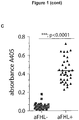
- Positive reaction against FHL1 was subsequently confirmed by another ELISA using a recombinant FHL1 protein with a His-tag ( Figure 1C ) and a Western Blot using recombinant FHL1-MaBP fusion protein ( Figure 1D ).
- the Western Blot also verified no reactivity against FHL1 in healthy control sera and no reactivity of sera from anti-FHLl positive patients against MaBP ( Figure 1D ).
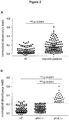
- the presence of anti-FHLl autoantibodies could also be confirmed an independent cohort of 129 myositis patients from Czech Republic; here 31 (24%) of patients were identified as being positive for autoantibodies to FHL1 ( Figure 2 ).
- 3 of 81 (3.78%) of the gender- and age-matched healthy controls showed positivity for anti-FHLl autoantibodies.
- Anti-FHLl autoantibodies are myositis specific. Autoantibodies found in myositis can be divided into myositis-specific autoantibodies that can be detected exclusively in inflammatory myopathies and in myositis-associated autoantibodies, which are frequently observed in other auto-inflammatory diseases like (SLE), (SSc) or rheumatoid arthritis (RA) ( Targoff. Autoantibodies in polymyositis. Rheum Dis Clin North Am 1992, 18(2):455-482 ).
- SLE auto-inflammatory diseases
- SSc SSc
- RA rheumatoid arthritis
- Presence of anti-FHLl autoantibodies is associated with dysphagia as well as high muscle disease severity and histopathology.
- FHL1 autoantibodies were detectable in all three major subtypes of myositis. Specifically, 19 of 33 anti-FHL1 + patients were diagnosed with PM (58%), 10 with DM (30%), one was diagnosed with Juvenile DM (3%), and 3 of 33 patients had IBM (9%).
- Dysphagia is a disease parameter that is associated with a high severity of myositis ( Horowitz et al. Abnormalities of gastric and esophageal emptying in polymyositis and dermatomyositis. Gastroenterology 1986, 90(2):434-439 ).
- IMACS International Myositis Assessment & Clinical Studies Group
- MDI myositis damage index
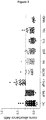
- VAS score Isenberg et al. International consensus outcome measures for patients with idiopathic inflammatory myopathies. Development and initial validation of myositis activity and damage indices in patients with adult onset disease. Rheumatology (Oxford) 2004, 43(1):49-54 ) was considered. It was found that patients with anti-FHLl autoantibodies had a significantly worse outcome score compared to patients without this autoantibody ( Figure 4C ).
- FHL1 shows a different expression pattern and localization in muscles of myositis patients compared to healthy muscle tissue.
- the expression of the protein in muscle tissue of myositis patients positive for anti-FHLl autoantibodies compared to muscle tissue from healthy individuals was examined by immunofluorescence staining and confocal microscopy. Healthy muscle tissue and muscle of anti-FHL1- patients displayed a homogenous expression pattern of FHL1 that is mainly intracellular and distributed uniformly along the muscle fiber. A remarkably different expression pattern was detected when examining myositis patients with anti-FHLl autoantibodies.
- FHL1 is susceptible to cleavage by granzyme B.
- Many autoantigens in autoimmune diseases including myositis and scleroderma are substrates of serine/cysteine proteases such as granzyme B or caspases ( Rosen et al. Autoantigens as substrates for apoptotic proteases: implications for the pathogenesis of systemic autoimmune disease. Cell Death Differ 1999, 6(1):6-12 ). Since this could reveal the exposure of neo-epitopes and thus explain the presence of autoantibodies against FHL1, we addressed the question if FHL1 might be cleaved by proteases performing cleavage assays with lysates from human skeletal muscle cells.
- FHL1 was identified to be a target of proteases in muscle cells as a dose-dependent fragmentation of FHL1 with increasing concentration of granzyme B could be observed ( Figure 6A ). Presence of different caspase inhibitors such as z-Vad and z-DEVD could not prevent cleavage of FHL1 ( Figure 6B ). Consequently, FHL1 is a direct substrate of granzyme B with a resulting cleavage fragment of 30 kDa.
- this cleavage site was identified to have the sequence IGAD with PI aspartic acid at amino acid position 50 ( Figure 6F ).
- the identified cleavage site was confirmed be site directed mutagenesis of D50 -> A50 leading to insusceptibility of FHL1 protein to be cleaved by granzyme B whereas in contrast wildtype FHL1 was cleaved as expected ( Figure 6G ).
- Myopathies are skeletal muscle disorders, with genetic or autoimmune mediated origin, which are characterized by progressive weakness, degeneration and atrophy of the muscle.
- studies of genetically based muscular dystrophies provide emerging evidence that FHL1 is the causative gene for several X-linked myopathies.
- the present inventors have used a molecular cloning strategy, and identified FHL1 as a novel antigenic target in IIM and thus extended current knowledge about FHL1 and its role in muscle-specific pathology.
- Autoantibodies to FHL1 in patients with IIM were detected at proportionate high frequencies of 25% in different cohorts whereas patients suffering from other autoimmune diseases or other hereditary myopathies did not display autoantibody reactivity towards FHL1.
- anti-FHLl autoantibodies represent novel and highly attractive biomarkers for IIM characterized by a severe involvement of skeletal muscle and a risk of poor prognosis.
- the myositis-specific antibodies target a ubiquitously active group of intracellular molecules of the transcriptional machinery, including tRNA synthetases (e.g. Jo1) and signal recognition particles (SRP), or components of the nucleosome remodelling complex, such as Mi-2. It is not known whether these autoantibodies play a role in IIM pathology. Therefore, the triggers for the observed immune response and the main targets of autoimmunity in IIM remain to be discovered.
- tRNA synthetases e.g. Jo1
- SRP signal recognition particles
- RBM This specific expression pattern is similar to that observed by immunofluorescence in patients suffering from RBM (Schessl ibid ).
- RBM is caused by mutations of FHL1 affecting the highly conserved zinc-coordinating histidine and cysteine residues of FHL1 consequently leading to instability of the secondary structure, misfolding and aggregation of the protein.
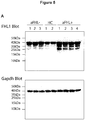
- the protein appears to be progressively incorporated into intracytoplasmic inclusions and elevated total FHL1 content can be detected in the biopsies. The latter is in agreement with our data from western blot analysis of biopsy material from myositis with higher FHL1 contents compared to healthy muscle tissue ( Figure 5 ).
- Granzyme B cleavage of autoantigens can lead to generation of neoepitopes and thus promote initiation of an immune response ( Darrah et al. Granzyme B cleavage of autoantigens in autoimmunity. Cell Death Differ 2010, 17(4):624-632 ), but it can also influence protein function as well as redistribution within the cell. It could be demonstrate here, that FHL1 is a substrate of granzyme B ( Figure 6 ). The cleavage site could be detected to be IGAD at amino acid position 50. Moreover evidence that cleavage of FHL1 causes a higher immunoreactivity towards this protein is provided ( Figure 7 ).
- Susceptibility to granzyme B cleavage thus could drive exposure of novel FHL1 epitopes and lead to a subsequent break of tolerance and initiation of autoimmunity. Moreover, it could also induce instability of the secondary structure of FHL1 protein similar to that observed in FHL1-related genetic muscular dystrophies which consequently might result in loss of protein functionality.
- the present inventors have identified and characterized a novel myositis- and muscle-specific autoantigen target in patients classified as having IIM with severe skeletal muscle involvement and poor prognosis.
- Autoantibodies specific to FHL1 represent biomarkers for prognostic value in this disease. Further investigations on FHL1 and its corresponding autoantibodies in IIM may shed some light on possible mechanisms of the development of autoimmunity in inflammatory muscle disease.
Landscapes
- Health & Medical Sciences (AREA)
- Life Sciences & Earth Sciences (AREA)
- Engineering & Computer Science (AREA)
- Immunology (AREA)
- Chemical & Material Sciences (AREA)
- Medicinal Chemistry (AREA)
- General Health & Medical Sciences (AREA)
- Biomedical Technology (AREA)
- Hematology (AREA)
- Molecular Biology (AREA)
- Urology & Nephrology (AREA)
- Pharmacology & Pharmacy (AREA)
- Animal Behavior & Ethology (AREA)
- Public Health (AREA)
- Veterinary Medicine (AREA)
- Proteomics, Peptides & Aminoacids (AREA)
- Microbiology (AREA)
- Epidemiology (AREA)
- Bioinformatics & Cheminformatics (AREA)
- Analytical Chemistry (AREA)
- Food Science & Technology (AREA)
- Gastroenterology & Hepatology (AREA)
- Zoology (AREA)
- Pathology (AREA)
- General Physics & Mathematics (AREA)
- Biochemistry (AREA)
- Physics & Mathematics (AREA)
- Biotechnology (AREA)
- Cell Biology (AREA)
- Rheumatology (AREA)
- Rehabilitation Therapy (AREA)
- Marine Sciences & Fisheries (AREA)
- Mycology (AREA)
- General Chemical & Material Sciences (AREA)
- Organic Chemistry (AREA)
- Chemical Kinetics & Catalysis (AREA)
- Neurology (AREA)
- Nuclear Medicine, Radiotherapy & Molecular Imaging (AREA)
- Physical Education & Sports Medicine (AREA)
- Orthopedic Medicine & Surgery (AREA)
Claims (7)
- Procédé de diagnostic de maladies musculaires auto-immunes, ledit procédé comprenant la détection d'auto-anticorps spécifiques de FHL1 dans un échantillon qui a été obtenu d'un sujet.
- Procédé d'évaluation d'un risque de développement d'une maladie musculaire auto-immune pour un sujet, ledit procédé comprenant la détection d'auto-anticorps spécifiques de FHL1 dans un échantillon qui a été obtenu d'un sujet.
- Procédé d'évaluation de la gravité et/ou du pronostic d'une maladie musculaire auto-immune, ledit procédé comprenant la détection d'auto-anticorps spécifiques de FHL1 dans un échantillon qui a été obtenu d'un sujet.
- Procédé selon l'une quelconque des revendications 1 à 3 dans lequel le sujet est un sujet humain.
- Procédé selon l'une quelconque des revendications 1 à 4 dans lequel l'échantillon est un échantillon de sang, par exemple du sérum ou du plasma.
- Procédé selon l'une quelconque des revendications 1 à 5 dans lequel la maladie musculaire est une myopathie inflammatoire idiopathique.
- Procédé selon l'une quelconque des revendications 1 à 6 dans lequel les anticorps spécifiques de FHL1 sont détectés en utilisant un dosage immunologique, par exemple un ELISA, un RIA, ou des dosages par radio-immunoprécipitation, par résonance plasmonique de surface, ou par électrochimiluminescence.
Applications Claiming Priority (2)
| Application Number | Priority Date | Filing Date | Title |
|---|---|---|---|
| SE1430161 | 2014-11-17 | ||
| PCT/SE2015/051189 WO2016080887A1 (fr) | 2014-11-17 | 2015-11-10 | Nouvel auto-antigène dans des myopathies inflammatoires idiopathiques |
Publications (3)
| Publication Number | Publication Date |
|---|---|
| EP3220948A1 EP3220948A1 (fr) | 2017-09-27 |
| EP3220948A4 EP3220948A4 (fr) | 2018-04-04 |
| EP3220948B1 true EP3220948B1 (fr) | 2019-09-18 |
Family
ID=56014284
Family Applications (1)
| Application Number | Title | Priority Date | Filing Date |
|---|---|---|---|
| EP15861262.2A Active EP3220948B1 (fr) | 2014-11-17 | 2015-11-10 | Nouvel auto-antigène dans des myopathies inflammatoires idiopathiques |
Country Status (3)
| Country | Link |
|---|---|
| US (1) | US10254281B2 (fr) |
| EP (1) | EP3220948B1 (fr) |
| WO (1) | WO2016080887A1 (fr) |
Cited By (1)
| Publication number | Priority date | Publication date | Assignee | Title |
|---|---|---|---|---|
| CN111693693A (zh) * | 2020-06-29 | 2020-09-22 | 陕西脉元生物科技有限公司 | 人体液中肌炎、重症肌无力自身抗体检测试剂盒及方法 |
Families Citing this family (2)
| Publication number | Priority date | Publication date | Assignee | Title |
|---|---|---|---|---|
| JP6816876B2 (ja) * | 2016-11-11 | 2021-01-20 | 国立大学法人富山大学 | Ro52/TRIM21タンパク質に対する自己抗体が認識するエピトープおよびその利用 |
| CN118962150B (zh) * | 2024-08-02 | 2026-03-27 | 中国医学科学院北京协和医院 | 特发性炎性肌病的生物标记物及其应用 |
Family Cites Families (5)
| Publication number | Priority date | Publication date | Assignee | Title |
|---|---|---|---|---|
| JP5081930B2 (ja) | 2007-03-08 | 2012-11-28 | エフ.ホフマン−ラ ロシュ アーゲー | 心不全の評価におけるslim−1の使用 |
| CA2688678C (fr) * | 2007-06-04 | 2023-03-14 | John B. Vincent | Mutations flh1 associees a de nouvelles myopathies musculaires liees au chromosome x |
| JP2013528799A (ja) * | 2010-05-13 | 2013-07-11 | ユニバーシティ オブ メディスン アンド デンティストリー オブ ニュー ジャージー | 神経変性疾患の検知および診断のための診断用自己抗体プロファイル |
| SI2729810T1 (sl) * | 2011-07-07 | 2019-02-28 | Stichting Katholieke Universiteit | Miozitis |
| WO2013010003A1 (fr) | 2011-07-12 | 2013-01-17 | University Of Medicine And Dentistry Of New Jersey | Profils de biomarqueurs diagnostiques pour le dépistage et le diagnostic de la maladie d'alzheimer |
-
2015
- 2015-11-10 EP EP15861262.2A patent/EP3220948B1/fr active Active
- 2015-11-10 WO PCT/SE2015/051189 patent/WO2016080887A1/fr not_active Ceased
- 2015-11-10 US US15/526,851 patent/US10254281B2/en active Active
Non-Patent Citations (1)
| Title |
|---|
| None * |
Cited By (2)
| Publication number | Priority date | Publication date | Assignee | Title |
|---|---|---|---|---|
| CN111693693A (zh) * | 2020-06-29 | 2020-09-22 | 陕西脉元生物科技有限公司 | 人体液中肌炎、重症肌无力自身抗体检测试剂盒及方法 |
| CN111693693B (zh) * | 2020-06-29 | 2022-03-04 | 陕西脉元生物科技有限公司 | 人体液中肌炎、重症肌无力自身抗体检测试剂盒及方法 |
Also Published As
| Publication number | Publication date |
|---|---|
| EP3220948A4 (fr) | 2018-04-04 |
| US20170328899A1 (en) | 2017-11-16 |
| US10254281B2 (en) | 2019-04-09 |
| EP3220948A1 (fr) | 2017-09-27 |
| WO2016080887A1 (fr) | 2016-05-26 |
Similar Documents
| Publication | Publication Date | Title |
|---|---|---|
| Wolstencroft et al. | Dermatomyositis clinical and pathological phenotypes associated with myositis-specific autoantibodies | |
| Amlani et al. | Anti-NT5c1A autoantibodies as biomarkers in inclusion body myositis | |
| Mosca et al. | Prevalence and clinico-serological correlations of anti-alpha-enolase, anti-C1q, and anti-dsDNA antibodies in patients with systemic lupus erythematosus. | |
| US7972796B2 (en) | Methods for diagnosis of encephalitis | |
| JPWO2012039161A1 (ja) | 新規血管炎の検査方法および検査用試薬 | |
| US9506924B2 (en) | Compositions and methods for characterizing a myopathy | |
| Christopher-Stine et al. | Statin-associated immune-mediated myopathy: biology and clinical implications | |
| EP3220948B1 (fr) | Nouvel auto-antigène dans des myopathies inflammatoires idiopathiques | |
| US9417247B2 (en) | Human autoantibodies specific for PAD3 which are cross-reactive with PAD4 and their use in the diagnosis and treatment of rheumatoid arthritis and related diseases | |
| US20140370526A1 (en) | Detecting inclusion body myositis | |
| WO2016012864A2 (fr) | Biomarqueurs de la maladie de fabry | |
| CA2748157C (fr) | Prediction diagnostique de la polyarthrite rhumatoide et du lupus erythemateux dissemine | |
| US20130101611A1 (en) | Citrullination of human peptidylarginine deiminase 4 (pad-4) regulates its function and immunogenicity | |
| EP2482074A1 (fr) | Procédés et moyens pour le diagnostic de la vascularite | |
| US20180313830A1 (en) | Peptide and biomarker associated with inflammatory disorders, and uses thereof | |
| WO2021138273A2 (fr) | Auto-anticorps en tant que biomarqueurs pour le syndrome polyglandulaire auto-immun de type 1 | |
| US9784751B2 (en) | Method for detecting neurological disease associated with cognitive impairment by measuring EphA4 extracellular domain | |
| WO2014193611A1 (fr) | Bright/arid3a fonction/expression en tant que marqueur indiquant la gravité et l'intensité du lupus érythémateux disséminé | |
| Hoftman et al. | MAGE-B2 autoantibody: a new biomarker for pediatric systemic lupus erythematosus | |
| US20040180385A1 (en) | Method of diagnosing systemic lupus erythematosus | |
| AU2011239467B9 (en) | Compositions and methods for characterizing a myopathy | |
| RU2574932C2 (ru) | Композиции и способы характеризации миопатии | |
| Cottrell | Stem Cells Are Highly Enriched Sources of Autoantigens Targeted in Scleroderma–Implications for Pathogenesis | |
| LIESENBORGS et al. | Antibodies against three novel peptides in early axial spondyloarthritis patients from two independent cohorts |
Legal Events
| Date | Code | Title | Description |
|---|---|---|---|
| STAA | Information on the status of an ep patent application or granted ep patent |
Free format text: STATUS: THE INTERNATIONAL PUBLICATION HAS BEEN MADE |
|
| PUAI | Public reference made under article 153(3) epc to a published international application that has entered the european phase |
Free format text: ORIGINAL CODE: 0009012 |
|
| STAA | Information on the status of an ep patent application or granted ep patent |
Free format text: STATUS: REQUEST FOR EXAMINATION WAS MADE |
|
| 17P | Request for examination filed |
Effective date: 20170612 |
|
| AK | Designated contracting states |
Kind code of ref document: A1 Designated state(s): AL AT BE BG CH CY CZ DE DK EE ES FI FR GB GR HR HU IE IS IT LI LT LU LV MC MK MT NL NO PL PT RO RS SE SI SK SM TR |
|
| AX | Request for extension of the european patent |
Extension state: BA ME |
|
| DAV | Request for validation of the european patent (deleted) | ||
| DAX | Request for extension of the european patent (deleted) | ||
| A4 | Supplementary search report drawn up and despatched |
Effective date: 20180301 |
|
| RIC1 | Information provided on ipc code assigned before grant |
Ipc: G01N 33/564 20060101ALI20180223BHEP Ipc: A61K 38/17 20060101ALI20180223BHEP Ipc: A61K 39/00 20060101AFI20180223BHEP Ipc: A61P 21/00 20060101ALI20180223BHEP |
|
| RIN1 | Information on inventor provided before grant (corrected) |
Inventor name: KAEMPE, OLLE Inventor name: ALBRECHT, INKA Inventor name: HALLGREN, ASA Inventor name: WICK, CECILIA Inventor name: LUNDBERG, INGRID |
|
| GRAP | Despatch of communication of intention to grant a patent |
Free format text: ORIGINAL CODE: EPIDOSNIGR1 |
|
| STAA | Information on the status of an ep patent application or granted ep patent |
Free format text: STATUS: GRANT OF PATENT IS INTENDED |
|
| INTG | Intention to grant announced |
Effective date: 20190417 |
|
| RIN1 | Information on inventor provided before grant (corrected) |
Inventor name: ALBRECHT, INKA Inventor name: WICK, CECILIA Inventor name: HALLGREN, ASA Inventor name: KAEMPE, OLLE Inventor name: LUNDBERG, INGRID |
|
| GRAS | Grant fee paid |
Free format text: ORIGINAL CODE: EPIDOSNIGR3 |
|
| GRAA | (expected) grant |
Free format text: ORIGINAL CODE: 0009210 |
|
| STAA | Information on the status of an ep patent application or granted ep patent |
Free format text: STATUS: THE PATENT HAS BEEN GRANTED |
|
| AK | Designated contracting states |
Kind code of ref document: B1 Designated state(s): AL AT BE BG CH CY CZ DE DK EE ES FI FR GB GR HR HU IE IS IT LI LT LU LV MC MK MT NL NO PL PT RO RS SE SI SK SM TR |
|
| REG | Reference to a national code |
Ref country code: GB Ref legal event code: FG4D |
|
| REG | Reference to a national code |
Ref country code: CH Ref legal event code: EP |
|
| REG | Reference to a national code |
Ref country code: DE Ref legal event code: R096 Ref document number: 602015038453 Country of ref document: DE |
|
| REG | Reference to a national code |
Ref country code: AT Ref legal event code: REF Ref document number: 1180515 Country of ref document: AT Kind code of ref document: T Effective date: 20191015 |
|
| REG | Reference to a national code |
Ref country code: IE Ref legal event code: FG4D |
|
| REG | Reference to a national code |
Ref country code: NL Ref legal event code: MP Effective date: 20190918 |
|
| PG25 | Lapsed in a contracting state [announced via postgrant information from national office to epo] |
Ref country code: SE Free format text: LAPSE BECAUSE OF FAILURE TO SUBMIT A TRANSLATION OF THE DESCRIPTION OR TO PAY THE FEE WITHIN THE PRESCRIBED TIME-LIMIT Effective date: 20190918 Ref country code: FI Free format text: LAPSE BECAUSE OF FAILURE TO SUBMIT A TRANSLATION OF THE DESCRIPTION OR TO PAY THE FEE WITHIN THE PRESCRIBED TIME-LIMIT Effective date: 20190918 Ref country code: HR Free format text: LAPSE BECAUSE OF FAILURE TO SUBMIT A TRANSLATION OF THE DESCRIPTION OR TO PAY THE FEE WITHIN THE PRESCRIBED TIME-LIMIT Effective date: 20190918 Ref country code: NO Free format text: LAPSE BECAUSE OF FAILURE TO SUBMIT A TRANSLATION OF THE DESCRIPTION OR TO PAY THE FEE WITHIN THE PRESCRIBED TIME-LIMIT Effective date: 20191218 Ref country code: BG Free format text: LAPSE BECAUSE OF FAILURE TO SUBMIT A TRANSLATION OF THE DESCRIPTION OR TO PAY THE FEE WITHIN THE PRESCRIBED TIME-LIMIT Effective date: 20191218 |
|
| REG | Reference to a national code |
Ref country code: SE Ref legal event code: TRGR |
|
| REG | Reference to a national code |
Ref country code: LT Ref legal event code: MG4D |
|
| PG25 | Lapsed in a contracting state [announced via postgrant information from national office to epo] |
Ref country code: LV Free format text: LAPSE BECAUSE OF FAILURE TO SUBMIT A TRANSLATION OF THE DESCRIPTION OR TO PAY THE FEE WITHIN THE PRESCRIBED TIME-LIMIT Effective date: 20190918 Ref country code: AL Free format text: LAPSE BECAUSE OF FAILURE TO SUBMIT A TRANSLATION OF THE DESCRIPTION OR TO PAY THE FEE WITHIN THE PRESCRIBED TIME-LIMIT Effective date: 20190918 Ref country code: GR Free format text: LAPSE BECAUSE OF FAILURE TO SUBMIT A TRANSLATION OF THE DESCRIPTION OR TO PAY THE FEE WITHIN THE PRESCRIBED TIME-LIMIT Effective date: 20191219 Ref country code: RS Free format text: LAPSE BECAUSE OF FAILURE TO SUBMIT A TRANSLATION OF THE DESCRIPTION OR TO PAY THE FEE WITHIN THE PRESCRIBED TIME-LIMIT Effective date: 20190918 |
|
| REG | Reference to a national code |
Ref country code: AT Ref legal event code: MK05 Ref document number: 1180515 Country of ref document: AT Kind code of ref document: T Effective date: 20190918 |
|
| PG25 | Lapsed in a contracting state [announced via postgrant information from national office to epo] |
Ref country code: PL Free format text: LAPSE BECAUSE OF FAILURE TO SUBMIT A TRANSLATION OF THE DESCRIPTION OR TO PAY THE FEE WITHIN THE PRESCRIBED TIME-LIMIT Effective date: 20190918 Ref country code: AT Free format text: LAPSE BECAUSE OF FAILURE TO SUBMIT A TRANSLATION OF THE DESCRIPTION OR TO PAY THE FEE WITHIN THE PRESCRIBED TIME-LIMIT Effective date: 20190918 Ref country code: EE Free format text: LAPSE BECAUSE OF FAILURE TO SUBMIT A TRANSLATION OF THE DESCRIPTION OR TO PAY THE FEE WITHIN THE PRESCRIBED TIME-LIMIT Effective date: 20190918 Ref country code: RO Free format text: LAPSE BECAUSE OF FAILURE TO SUBMIT A TRANSLATION OF THE DESCRIPTION OR TO PAY THE FEE WITHIN THE PRESCRIBED TIME-LIMIT Effective date: 20190918 Ref country code: NL Free format text: LAPSE BECAUSE OF FAILURE TO SUBMIT A TRANSLATION OF THE DESCRIPTION OR TO PAY THE FEE WITHIN THE PRESCRIBED TIME-LIMIT Effective date: 20190918 Ref country code: IT Free format text: LAPSE BECAUSE OF FAILURE TO SUBMIT A TRANSLATION OF THE DESCRIPTION OR TO PAY THE FEE WITHIN THE PRESCRIBED TIME-LIMIT Effective date: 20190918 Ref country code: PT Free format text: LAPSE BECAUSE OF FAILURE TO SUBMIT A TRANSLATION OF THE DESCRIPTION OR TO PAY THE FEE WITHIN THE PRESCRIBED TIME-LIMIT Effective date: 20200120 |
|
| PG25 | Lapsed in a contracting state [announced via postgrant information from national office to epo] |
Ref country code: SK Free format text: LAPSE BECAUSE OF FAILURE TO SUBMIT A TRANSLATION OF THE DESCRIPTION OR TO PAY THE FEE WITHIN THE PRESCRIBED TIME-LIMIT Effective date: 20190918 Ref country code: IS Free format text: LAPSE BECAUSE OF FAILURE TO SUBMIT A TRANSLATION OF THE DESCRIPTION OR TO PAY THE FEE WITHIN THE PRESCRIBED TIME-LIMIT Effective date: 20200224 Ref country code: SM Free format text: LAPSE BECAUSE OF FAILURE TO SUBMIT A TRANSLATION OF THE DESCRIPTION OR TO PAY THE FEE WITHIN THE PRESCRIBED TIME-LIMIT Effective date: 20190918 Ref country code: CZ Free format text: LAPSE BECAUSE OF FAILURE TO SUBMIT A TRANSLATION OF THE DESCRIPTION OR TO PAY THE FEE WITHIN THE PRESCRIBED TIME-LIMIT Effective date: 20190918 |
|
| REG | Reference to a national code |
Ref country code: DE Ref legal event code: R097 Ref document number: 602015038453 Country of ref document: DE |
|
| REG | Reference to a national code |
Ref country code: CH Ref legal event code: PL |
|
| PLBE | No opposition filed within time limit |
Free format text: ORIGINAL CODE: 0009261 |
|
| STAA | Information on the status of an ep patent application or granted ep patent |
Free format text: STATUS: NO OPPOSITION FILED WITHIN TIME LIMIT |
|
| PG2D | Information on lapse in contracting state deleted |
Ref country code: IS |
|
| PG25 | Lapsed in a contracting state [announced via postgrant information from national office to epo] |
Ref country code: MC Free format text: LAPSE BECAUSE OF FAILURE TO SUBMIT A TRANSLATION OF THE DESCRIPTION OR TO PAY THE FEE WITHIN THE PRESCRIBED TIME-LIMIT Effective date: 20190918 Ref country code: CH Free format text: LAPSE BECAUSE OF NON-PAYMENT OF DUE FEES Effective date: 20191130 Ref country code: LU Free format text: LAPSE BECAUSE OF NON-PAYMENT OF DUE FEES Effective date: 20191110 Ref country code: LI Free format text: LAPSE BECAUSE OF NON-PAYMENT OF DUE FEES Effective date: 20191130 Ref country code: DK Free format text: LAPSE BECAUSE OF FAILURE TO SUBMIT A TRANSLATION OF THE DESCRIPTION OR TO PAY THE FEE WITHIN THE PRESCRIBED TIME-LIMIT Effective date: 20190918 Ref country code: IS Free format text: LAPSE BECAUSE OF FAILURE TO SUBMIT A TRANSLATION OF THE DESCRIPTION OR TO PAY THE FEE WITHIN THE PRESCRIBED TIME-LIMIT Effective date: 20200119 |
|
| REG | Reference to a national code |
Ref country code: BE Ref legal event code: MM Effective date: 20191130 |
|
| 26N | No opposition filed |
Effective date: 20200619 |
|
| PG25 | Lapsed in a contracting state [announced via postgrant information from national office to epo] |
Ref country code: SI Free format text: LAPSE BECAUSE OF FAILURE TO SUBMIT A TRANSLATION OF THE DESCRIPTION OR TO PAY THE FEE WITHIN THE PRESCRIBED TIME-LIMIT Effective date: 20190918 |
|
| PG25 | Lapsed in a contracting state [announced via postgrant information from national office to epo] |
Ref country code: ES Free format text: LAPSE BECAUSE OF FAILURE TO SUBMIT A TRANSLATION OF THE DESCRIPTION OR TO PAY THE FEE WITHIN THE PRESCRIBED TIME-LIMIT Effective date: 20190918 Ref country code: IE Free format text: LAPSE BECAUSE OF NON-PAYMENT OF DUE FEES Effective date: 20191110 |
|
| PG25 | Lapsed in a contracting state [announced via postgrant information from national office to epo] |
Ref country code: BE Free format text: LAPSE BECAUSE OF NON-PAYMENT OF DUE FEES Effective date: 20191130 |
|
| PG25 | Lapsed in a contracting state [announced via postgrant information from national office to epo] |
Ref country code: CY Free format text: LAPSE BECAUSE OF FAILURE TO SUBMIT A TRANSLATION OF THE DESCRIPTION OR TO PAY THE FEE WITHIN THE PRESCRIBED TIME-LIMIT Effective date: 20190918 |
|
| PG25 | Lapsed in a contracting state [announced via postgrant information from national office to epo] |
Ref country code: HU Free format text: LAPSE BECAUSE OF FAILURE TO SUBMIT A TRANSLATION OF THE DESCRIPTION OR TO PAY THE FEE WITHIN THE PRESCRIBED TIME-LIMIT; INVALID AB INITIO Effective date: 20151110 Ref country code: MT Free format text: LAPSE BECAUSE OF FAILURE TO SUBMIT A TRANSLATION OF THE DESCRIPTION OR TO PAY THE FEE WITHIN THE PRESCRIBED TIME-LIMIT Effective date: 20190918 |
|
| PG25 | Lapsed in a contracting state [announced via postgrant information from national office to epo] |
Ref country code: TR Free format text: LAPSE BECAUSE OF FAILURE TO SUBMIT A TRANSLATION OF THE DESCRIPTION OR TO PAY THE FEE WITHIN THE PRESCRIBED TIME-LIMIT Effective date: 20190918 |
|
| PG25 | Lapsed in a contracting state [announced via postgrant information from national office to epo] |
Ref country code: MK Free format text: LAPSE BECAUSE OF FAILURE TO SUBMIT A TRANSLATION OF THE DESCRIPTION OR TO PAY THE FEE WITHIN THE PRESCRIBED TIME-LIMIT Effective date: 20190918 |
|
| P01 | Opt-out of the competence of the unified patent court (upc) registered |
Effective date: 20230529 |
|
| PGFP | Annual fee paid to national office [announced via postgrant information from national office to epo] |
Ref country code: DE Payment date: 20251118 Year of fee payment: 11 |
|
| PGFP | Annual fee paid to national office [announced via postgrant information from national office to epo] |
Ref country code: GB Payment date: 20251117 Year of fee payment: 11 |
|
| PGFP | Annual fee paid to national office [announced via postgrant information from national office to epo] |
Ref country code: FR Payment date: 20251117 Year of fee payment: 11 |
|
| PGFP | Annual fee paid to national office [announced via postgrant information from national office to epo] |
Ref country code: SE Payment date: 20251121 Year of fee payment: 11 |