EP3223113A1 - Faltbare anzeigevorrichtung zur fixierung eines bildschirms durch falten der anzeige und verfahren zur steuerung der faltbaren anzeigevorrichtung - Google Patents
Faltbare anzeigevorrichtung zur fixierung eines bildschirms durch falten der anzeige und verfahren zur steuerung der faltbaren anzeigevorrichtung Download PDFInfo
- Publication number
- EP3223113A1 EP3223113A1 EP14906348.9A EP14906348A EP3223113A1 EP 3223113 A1 EP3223113 A1 EP 3223113A1 EP 14906348 A EP14906348 A EP 14906348A EP 3223113 A1 EP3223113 A1 EP 3223113A1
- Authority
- EP
- European Patent Office
- Prior art keywords
- display
- state
- mode
- folding
- display area
- Prior art date
- Legal status (The legal status is an assumption and is not a legal conclusion. Google has not performed a legal analysis and makes no representation as to the accuracy of the status listed.)
- Granted
Links
Images



Classifications
-
- G—PHYSICS
- G06—COMPUTING OR CALCULATING; COUNTING
- G06F—ELECTRIC DIGITAL DATA PROCESSING
- G06F1/00—Details not covered by groups G06F3/00 - G06F13/00 and G06F21/00
- G06F1/16—Constructional details or arrangements
- G06F1/1613—Constructional details or arrangements for portable computers
- G06F1/1633—Constructional details or arrangements of portable computers not specific to the type of enclosures covered by groups G06F1/1615 - G06F1/1626
- G06F1/1637—Details related to the display arrangement, including those related to the mounting of the display in the housing
- G06F1/1652—Details related to the display arrangement, including those related to the mounting of the display in the housing the display being flexible, e.g. mimicking a sheet of paper, or rollable
-
- G—PHYSICS
- G09—EDUCATION; CRYPTOGRAPHY; DISPLAY; ADVERTISING; SEALS
- G09F—DISPLAYING; ADVERTISING; SIGNS; LABELS OR NAME-PLATES; SEALS
- G09F9/00—Indicating arrangements for variable information in which the information is built-up on a support by selection or combination of individual elements
- G09F9/30—Indicating arrangements for variable information in which the information is built-up on a support by selection or combination of individual elements in which the desired character or characters are formed by combining individual elements
- G09F9/301—Indicating arrangements for variable information in which the information is built-up on a support by selection or combination of individual elements in which the desired character or characters are formed by combining individual elements flexible foldable or roll-able electronic displays, e.g. thin LCD, OLED
-
- G—PHYSICS
- G06—COMPUTING OR CALCULATING; COUNTING
- G06F—ELECTRIC DIGITAL DATA PROCESSING
- G06F1/00—Details not covered by groups G06F3/00 - G06F13/00 and G06F21/00
- G06F1/16—Constructional details or arrangements
- G06F1/1613—Constructional details or arrangements for portable computers
- G06F1/1615—Constructional details or arrangements for portable computers with several enclosures having relative motions, each enclosure supporting at least one I/O or computing function
- G06F1/1616—Constructional details or arrangements for portable computers with several enclosures having relative motions, each enclosure supporting at least one I/O or computing function with folding flat displays, e.g. laptop computers or notebooks having a clamshell configuration, with body parts pivoting to an open position around an axis parallel to the plane they define in closed position
-
- G—PHYSICS
- G06—COMPUTING OR CALCULATING; COUNTING
- G06F—ELECTRIC DIGITAL DATA PROCESSING
- G06F1/00—Details not covered by groups G06F3/00 - G06F13/00 and G06F21/00
- G06F1/16—Constructional details or arrangements
- G06F1/1613—Constructional details or arrangements for portable computers
- G06F1/1633—Constructional details or arrangements of portable computers not specific to the type of enclosures covered by groups G06F1/1615 - G06F1/1626
- G06F1/1637—Details related to the display arrangement, including those related to the mounting of the display in the housing
- G06F1/1641—Details related to the display arrangement, including those related to the mounting of the display in the housing the display being formed by a plurality of foldable display components
-
- G—PHYSICS
- G06—COMPUTING OR CALCULATING; COUNTING
- G06F—ELECTRIC DIGITAL DATA PROCESSING
- G06F1/00—Details not covered by groups G06F3/00 - G06F13/00 and G06F21/00
- G06F1/16—Constructional details or arrangements
- G06F1/1613—Constructional details or arrangements for portable computers
- G06F1/1633—Constructional details or arrangements of portable computers not specific to the type of enclosures covered by groups G06F1/1615 - G06F1/1626
- G06F1/1637—Details related to the display arrangement, including those related to the mounting of the display in the housing
- G06F1/1643—Details related to the display arrangement, including those related to the mounting of the display in the housing the display being associated to a digitizer, e.g. laptops that can be used as penpads
-
- G—PHYSICS
- G06—COMPUTING OR CALCULATING; COUNTING
- G06F—ELECTRIC DIGITAL DATA PROCESSING
- G06F1/00—Details not covered by groups G06F3/00 - G06F13/00 and G06F21/00
- G06F1/16—Constructional details or arrangements
- G06F1/1613—Constructional details or arrangements for portable computers
- G06F1/1633—Constructional details or arrangements of portable computers not specific to the type of enclosures covered by groups G06F1/1615 - G06F1/1626
- G06F1/1637—Details related to the display arrangement, including those related to the mounting of the display in the housing
- G06F1/1647—Details related to the display arrangement, including those related to the mounting of the display in the housing including at least an additional display
-
- G—PHYSICS
- G06—COMPUTING OR CALCULATING; COUNTING
- G06F—ELECTRIC DIGITAL DATA PROCESSING
- G06F1/00—Details not covered by groups G06F3/00 - G06F13/00 and G06F21/00
- G06F1/16—Constructional details or arrangements
- G06F1/1613—Constructional details or arrangements for portable computers
- G06F1/1633—Constructional details or arrangements of portable computers not specific to the type of enclosures covered by groups G06F1/1615 - G06F1/1626
- G06F1/1675—Miscellaneous details related to the relative movement between the different enclosures or enclosure parts
- G06F1/1677—Miscellaneous details related to the relative movement between the different enclosures or enclosure parts for detecting open or closed state or particular intermediate positions assumed by movable parts of the enclosure, e.g. detection of display lid position with respect to main body in a laptop, detection of opening of the cover of battery compartment
-
- G—PHYSICS
- G06—COMPUTING OR CALCULATING; COUNTING
- G06F—ELECTRIC DIGITAL DATA PROCESSING
- G06F3/00—Input arrangements for transferring data to be processed into a form capable of being handled by the computer; Output arrangements for transferring data from processing unit to output unit, e.g. interface arrangements
- G06F3/01—Input arrangements or combined input and output arrangements for interaction between user and computer
- G06F3/048—Interaction techniques based on graphical user interfaces [GUI]
- G06F3/0481—Interaction techniques based on graphical user interfaces [GUI] based on specific properties of the displayed interaction object or a metaphor-based environment, e.g. interaction with desktop elements like windows or icons, or assisted by a cursor's changing behaviour or appearance
-
- G—PHYSICS
- G06—COMPUTING OR CALCULATING; COUNTING
- G06F—ELECTRIC DIGITAL DATA PROCESSING
- G06F3/00—Input arrangements for transferring data to be processed into a form capable of being handled by the computer; Output arrangements for transferring data from processing unit to output unit, e.g. interface arrangements
- G06F3/01—Input arrangements or combined input and output arrangements for interaction between user and computer
- G06F3/048—Interaction techniques based on graphical user interfaces [GUI]
- G06F3/0484—Interaction techniques based on graphical user interfaces [GUI] for the control of specific functions or operations, e.g. selecting or manipulating an object, an image or a displayed text element, setting a parameter value or selecting a range
- G06F3/0485—Scrolling or panning
-
- G—PHYSICS
- G06—COMPUTING OR CALCULATING; COUNTING
- G06F—ELECTRIC DIGITAL DATA PROCESSING
- G06F3/00—Input arrangements for transferring data to be processed into a form capable of being handled by the computer; Output arrangements for transferring data from processing unit to output unit, e.g. interface arrangements
- G06F3/01—Input arrangements or combined input and output arrangements for interaction between user and computer
- G06F3/048—Interaction techniques based on graphical user interfaces [GUI]
- G06F3/0487—Interaction techniques based on graphical user interfaces [GUI] using specific features provided by the input device, e.g. functions controlled by the rotation of a mouse with dual sensing arrangements, or of the nature of the input device, e.g. tap gestures based on pressure sensed by a digitiser
- G06F3/0488—Interaction techniques based on graphical user interfaces [GUI] using specific features provided by the input device, e.g. functions controlled by the rotation of a mouse with dual sensing arrangements, or of the nature of the input device, e.g. tap gestures based on pressure sensed by a digitiser using a touch-screen or digitiser, e.g. input of commands through traced gestures
-
- G—PHYSICS
- G06—COMPUTING OR CALCULATING; COUNTING
- G06F—ELECTRIC DIGITAL DATA PROCESSING
- G06F3/00—Input arrangements for transferring data to be processed into a form capable of being handled by the computer; Output arrangements for transferring data from processing unit to output unit, e.g. interface arrangements
- G06F3/14—Digital output to display device ; Cooperation and interconnection of the display device with other functional units
- G06F3/1423—Digital output to display device ; Cooperation and interconnection of the display device with other functional units controlling a plurality of local displays, e.g. CRT and flat panel display
-
- G—PHYSICS
- G06—COMPUTING OR CALCULATING; COUNTING
- G06F—ELECTRIC DIGITAL DATA PROCESSING
- G06F2203/00—Indexing scheme relating to G06F3/00 - G06F3/048
- G06F2203/048—Indexing scheme relating to G06F3/048
- G06F2203/04803—Split screen, i.e. subdividing the display area or the window area into separate subareas
-
- G—PHYSICS
- G06—COMPUTING OR CALCULATING; COUNTING
- G06F—ELECTRIC DIGITAL DATA PROCESSING
- G06F3/00—Input arrangements for transferring data to be processed into a form capable of being handled by the computer; Output arrangements for transferring data from processing unit to output unit, e.g. interface arrangements
- G06F3/14—Digital output to display device ; Cooperation and interconnection of the display device with other functional units
- G06F3/147—Digital output to display device ; Cooperation and interconnection of the display device with other functional units using display panels
-
- G—PHYSICS
- G09—EDUCATION; CRYPTOGRAPHY; DISPLAY; ADVERTISING; SEALS
- G09G—ARRANGEMENTS OR CIRCUITS FOR CONTROL OF INDICATING DEVICES USING STATIC MEANS TO PRESENT VARIABLE INFORMATION
- G09G2340/00—Aspects of display data processing
- G09G2340/04—Changes in size, position or resolution of an image
- G09G2340/0442—Handling or displaying different aspect ratios, or changing the aspect ratio
-
- G—PHYSICS
- G09—EDUCATION; CRYPTOGRAPHY; DISPLAY; ADVERTISING; SEALS
- G09G—ARRANGEMENTS OR CIRCUITS FOR CONTROL OF INDICATING DEVICES USING STATIC MEANS TO PRESENT VARIABLE INFORMATION
- G09G2340/00—Aspects of display data processing
- G09G2340/04—Changes in size, position or resolution of an image
- G09G2340/045—Zooming at least part of an image, i.e. enlarging it or shrinking it
-
- G—PHYSICS
- G09—EDUCATION; CRYPTOGRAPHY; DISPLAY; ADVERTISING; SEALS
- G09G—ARRANGEMENTS OR CIRCUITS FOR CONTROL OF INDICATING DEVICES USING STATIC MEANS TO PRESENT VARIABLE INFORMATION
- G09G2340/00—Aspects of display data processing
- G09G2340/04—Changes in size, position or resolution of an image
- G09G2340/0492—Change of orientation of the displayed image, e.g. upside-down, mirrored
-
- G—PHYSICS
- G09—EDUCATION; CRYPTOGRAPHY; DISPLAY; ADVERTISING; SEALS
- G09G—ARRANGEMENTS OR CIRCUITS FOR CONTROL OF INDICATING DEVICES USING STATIC MEANS TO PRESENT VARIABLE INFORMATION
- G09G2340/00—Aspects of display data processing
- G09G2340/14—Solving problems related to the presentation of information to be displayed
- G09G2340/145—Solving problems related to the presentation of information to be displayed related to small screens
-
- G—PHYSICS
- G09—EDUCATION; CRYPTOGRAPHY; DISPLAY; ADVERTISING; SEALS
- G09G—ARRANGEMENTS OR CIRCUITS FOR CONTROL OF INDICATING DEVICES USING STATIC MEANS TO PRESENT VARIABLE INFORMATION
- G09G2380/00—Specific applications
- G09G2380/02—Flexible displays
Definitions
- the present invention relates to a foldable display device and a method for controlling the same, and more particularly, to a foldable display device capable of fixing a screen by means of display folding and a method for controlling the same.
- a user may use a foldable display device to view only one display in a state that the device is folded, or may use the foldable display device to view a plurality of displays at a glance in a state that the device is unfolded.
- a screen size of digital contents displayed on the display for example, a length of a full page of an Internet web page may be greater than the display which is unfolded.
- the user moves the screen in an up and down direction of the page while scrolling the screen up and down.
- the foldable display device has display areas split physically or visually, portions which the user desires to view may be displayed respectively through the split display areas. Therefore, it is required to display each of contents on the display areas split by the foldable display device.
- An object of the present specification devised to solve the problem of the relate art is to provide a foldable display device capable of fixing a screen by means of display folding and a method for controlling the same.
- a foldable display device comprises a display unit for outputting an input signal by sensing a user's touch and including first and second display areas split spatially or visually by folding; a folding sensor unit for sensing full folding, full unfolding and intermediate folding of the display unit and outputting a state signal related to a folding level of the display unit, the intermediate folding being a process of connecting the full unfolding with the full folding; and a controller for displaying digital contents on the display unit, controlling a screen displayed on the display unit by receiving the input signal, and monitoring a state of the display unit by receiving the state signal from the folding sensor unit, wherein the controller controls the entire of the screen displayed on the display unit by means of the input signal when the digital contents are displayed on the display unit in the state of full unfolding (hereinafter, 'first mode'), and controls the screen of the display area where the user's touch is sensed from the first and second display areas when the state of full unfolding has been switched to the state of intermediate folding (hereinafter, 'second
- the controller may maintain a screen of the display area where the user's touch is not sensed from the first and second display areas.
- the controller may display a size ratio of text and image displayed on the first and second display areas in the second mode equally to a size ratio of text and image in the first mode.
- the controller may control the screen of the second display area to correspond to only the input signal received through the second display area among the input signals in the second mode.
- the controller may display a graphic effect, which indicates that the screen of the first display area is not controlled, on the first display area with respect to the input signal received through the first display area in the second mode.
- the second display area may be a display area of which size is relatively greater than that of the first display area.
- a position of the first display area and a position of the second display area may be set previously.
- the controller may execute the second mode when the state of full unfolding has been switched to the state of intermediate folding and the state of intermediate folding has been maintained for a predetermined time.
- the controller may display a graphic effect, which indicates that the second mode has been executed, on the display unit.
- the controller may not display the same portion of the contents on the first and second display areas even though an input for moving the screen of the display area is received in the second mode.
- the contents may be a plurality of sequential images
- the controller may display at least two or more sequential images among the plurality of images in the first mode and display at least one or more images on each of the first and second display areas in the second mode.
- the controller may execute the first mode when the state of intermediate folding has been switched to the state of full unfolding after executing the second mode.
- the controller may display the contents on the display unit on the basis of the screen displayed on the first display area in case of the second mode. According to another embodiment, the controller may display the contents on the display unit on the basis of the screen displayed on the second display area in case of the second mode.
- the controller may end only the content of the display area where the user's touch is sensed from the first and second display areas and maintain the screen of the contents displayed on the other display area when the user's input is an input for ending the contents in the second mode.
- a method for controlling a foldable display device is a method for controlling a foldable display device, which comprises a display unit for outputting an input signal by sensing a user's touch and including first and second display areas split spatially or visually by folding and a folding sensor unit for sensing full folding, full unfolding and intermediate folding of the display unit and outputting a state signal related to a folding level of the display unit, the intermediate folding being a process of connecting the full unfolding with the full folding, and may comprise the steps of (a) displaying digital contents on the display unit in a state of the full unfolding, and executing a first mode for controlling the entire of a screen displayed on the display unit by means of the input signal; (b) monitoring the state of the display unit by receiving the state signal from the folding sensor unit; and (c) executing a second mode for controlling the screen of the display area where the user's touch is sensed from the first and second display areas when the state of full unfolding has been switched to the state of intermediate folding.
- a user may simultaneously view screens of two desired portions from one content. Therefore, inconvenience occurring in that the user should alternately scroll the screens may be reduced.
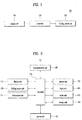
- FIG. 1 is a schematic block diagram illustrating a foldable display device according to the present specification.
- the foldable display device 100 comprises a display unit 110, a folding sensor unit 120, and a controller 130.
- the display unit 110 may output an input signal by sensing a user's touch, and may include at least two or more display areas split spatially or visually by folding.
- the display unit 110 may output digital contents in accordance with a control command of the controller 130.
- the folding sensor unit 120 may sense full folding of the display unit 110, full unfolding thereof, and intermediate folding which is a process of connecting the full folding with the full unfolding.
- the folding sensor unit 120 may output a state signal related to a folding level of the display unit 110.
- the controller 130 may display digital contents on the display unit 110.
- the controller 130 may control a screen displayed on the display unit 110 by receiving the input signal.
- the controller 130 may monitor the state of the display unit 110 by receiving the state signal from the folding sensor unit 120.
- the display unit 110, the folding sensor unit 120 and the controller 130 are electrically connected with one another. Therefore, it is possible to give and take information among these elements.
- a communication protocol for giving and taking information among these elements is not limited to a specific protocol, and various communication protocols that may easily be used by those (hereinafter, 'skilled persons') skilled in the art to which the present specification pertains may be used.
- the foldable display device 100 may further comprise various elements if necessary.
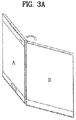
- FIG. 2 is a schematic block diagram illustrating a foldable display device according to the embodiment of the present specification.
- the foldable display device 100 may include a display unit 110, a folding sensor unit 120, other sensor unit 121, a controller 130, a communication unit 140, a camera unit 150, an input unit 160, an audio unit 170, a storage unit 180, and a power unit 190.
- the other sensor unit 121 may deliver a user input or an environment recognized by the device to the controller 130 by using a sensor installed in the device.
- the other sensor unit 121 may include a plurality of sensors.
- the plurality of sensors may include a gravity sensor, a geomagnetic sensor, a motion sensor, a gyro sensor, an acceleration sensor, an inclination sensor, a brightness sensor, an altitude sensor, a smell sensor, a temperature sensor, a depth sensor, a pressure sensor, a bending sensor, an audio sensor, a video sensor, a GPS sensor, a touch sensor, etc.
- the communication unit 140 may perform communication with an external network using various protocols and transmit and receive digital data to and from the external network by accessing the external network through a wire or wirelessly.
- the camera unit 150 may take photos and moving images.
- the camera unit 150 may be used as a motion sensor or video sensor.
- the camera unit 150 may include a plurality of cameras.
- the input unit 160 may externally receive a user command.
- the input unit 160 may be implemented in various manners.
- the input unit 160 may be implemented as a keyboard, a key pad, a mouse, a touch pad, a button, a soft key, etc.
- the input unit 160 may include a microphone, a touch screen, etc.
- the microphone may receive a user's voice
- the touch screen may receive a touch gesture of the user.
- the microphone may be included in the audio unit.
- the audio unit 170 may include an audio output means such as a speaker and an audio input means such as a microphone.
- the audio unit 170 may be used as an audio sensor.
- the storage unit 180 may store various digital data such as video, audio, photo, moving image and application.
- the storage unit 180 may include a RAM, a ROM, a cache memory, a hard disk drive (HDD), a solid state drive (SSD), a CD, a DVD, a Blu-ray disk, a floppy disk (FDD), a magnetic disk, a memory card, a flash memory, and a USB memory.
- the power unit 190 is a power source connected with a battery or an external power source, and may supply a power to the device.
- the foldable display device 100 means various types of devices that may process various digital data and perform corresponding operations.
- the foldable display device 100 is preferably a mobile communication device
- the foldable display device 100 may be one of a notebook computer, a personal computer, a tablet computing device, a portable navigation device, a portable video player, a personal digital assistant (PDA), and other similar device.
- the elements of the foldable display device 100 shown in FIG. 2 are provided as exemplary embodiments, and it is to be understood that the present specification may be carried out by the foldable display device 100 that comprises more or less elements than those shown in FIG. 2 .
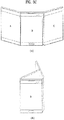
- FIG. 3 is an exemplary view illustrating various examples of a type of a foldable display device according to the present specification.
- a 2-foldable display device is comprised of two display areas A and B.
- the two display areas A and B are connected with each other to be seen as one display.
- the two display areas A and B are spaced apart from each other to be seen as two displays. Therefore, the embodiment shown in FIG. 3 a includes a display unit that includes two display areas A and B spaced apart from each other spatially or visually by folding.
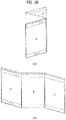
- a 2-foldable display device is comprised of three display areas A, B and C.
- the foldable display device In a state that the foldable display device is fully unfolded, only one display area A is seen.
- the other two display areas B and C are connected with each other to be seen as one display. Therefore, the embodiment shown in FIG. 3b includes a display unit that includes two display areas B and C spaced apart from each other spatially or visually by folding.
- a 3-foldable display device is comprised of three display areas A, B and C.
- the three display areas A, B and C are connected with one another to be seen as one display.
- the three display areas A, B and C are spaced apart from one another to be seen as the respective displays. Therefore, the embodiment shown in FIG. 3c includes a display unit that includes three display areas A, B and C spaced apart from one another spatially or visually by folding.
- a 3-foldable display device is comprised of three display areas A, B and C.
- the foldable display device of FIG. 3d is different from that of FIG. 3c in a folding direction. Therefore, it is noted that the three display areas A, B and C of the foldable display device are folded and then unfolded in a shape of 'Z'. In a state that the foldable display device is fully unfolded, the three display areas A, B and C are connected with one another to be seen as one display. In a state that the foldable display device is fully folded, the three display areas A, B and C are spaced apart from one another to be seen as the respective displays. Therefore, the embodiment shown in FIG. 3d includes a display unit that includes three display areas A, B and C spaced apart from one another spatially or visually by folding.
- a foldable display device comprises a flexible display unit.
- the flexible display unit is physically seen as one display but includes two display areas A and B split spatially or visually by folding.
- the foldable display device 100 may have various embodiments in shape and structure.
- the display unit 110 included in the foldable display device 100 according to the present specification may also have various types.
- the display unit 110 may include different display areas split spatially or visually by folding.
- the different areas split by folding will be referred to as 'a first display area' and 'a second display area'.
- the terms "the first and the second' are intended to identify different display areas from each other, but do not indicate a priority between the display areas. Therefore, any one of the different display areas spaced apart from each other by folding may be the first display area and the other one may be the second display area.
- the display unit 110 may have three states by means of folding of the foldable display device 100.
- the three states may include 'full unfolding' where the display areas belonging to the display unit 110 form one plane on a space, 'full folding' where all structures which may move in view of a mechanical structure of the foldable display device 100 are matched with each other, and 'intermediate folding' which is a process of connecting the 'full folding' with the 'full unfolding'.
- the foldable display device will be described based on a Z type 3-foldable display device having three display units A, B and C shown in FIG. 3d .
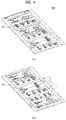
- FIG. 4 is an exemplary view of a first mode according to the present specification.
- a content is displayed on the display unit 110 in a state of full unfolding of the display unit 110.
- the content is a web page, and is exemplarily shown through a web browser application.
- a user may scroll a web page screen up and down by touching the display unit to view another portion of the webpage.
- a user inputs a scroll through the display unit 110.
- the display unit 110 may output an input signal related to a direction and size of the scroll by sensing a user's touch.
- the controller 130 may control the screen displayed on the display unit 110 to move as much as the input direction and size by receiving the input signal.
- This control mode of the controller 130 will be referred to as 'a first mode' in this specification. That is, the first mode is characterized in that the entire of the screen displayed on the display unit 110 is controlled by the input signal.
- the user may desire to fix some screen while the first mode is being executed. For example, it is assumed that the user desires to simultaneously view the uppermost content and the lowest content of the web page. It is also assumed that a length of the web page is longer than that of the entire screen of the display unit 110 so as not to allow the user to simultaneously view the uppermost content and the lowest content of the web page. Under the circumstances, the user of the display device according to the related art should alternately compare the uppermost content of the web page with the lowest content of the web page while scrolling the screen up and down.
- a second mode of the foldable display device 100 may be executed, the above inconvenience may be reduced.
- the user of the foldable display device 100 according to the present specification performs a behavior for slightly folding the display unit 110 when desiring to simultaneously view the uppermost content and the lowest content of the web page.
- the folding sensor unit 120 outputs a state signal related to a folded level of the display unit 110.
- the controller 130 monitors the state of the display unit 110 by receiving the state signal from the folding sensor unit 120, it is noted that the state of the display unit 110 is switched from the state of full unfolding to the state of intermediate folding.
- the controller 130 executes a mode for controlling the screen of the display area where the user's touch is sensed from the first and second display areas.
- the mode will be referred to as 'the second mode'.
- the second mode will be described in more detail with reference to FIGS. 5 and 6 .
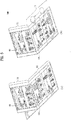
- FIG. 5 is an exemplary view of a second mode according to the present specification.
- the state of the display unit 110 is the state of intermediate folding. At this time, the display unit 110 is split into a first display area 111 and a second display area 112 by folding. As shown in (a) of FIG. 5 , when the display unit 110 is switched from the state of full unfolding to the state of intermediate folding, the controller 130 executes the second mode.
- the controller 130 may display a size ratio of text and image displayed on the first and second display areas in the second mode equally to a size ratio of text and image in the first mode.
- the controller 130 may execute the second mode when the state of the display unit 110 is switched from the state of full unfolding to the state of intermediate folding and the state of intermediate folding is maintained for a predetermined time.
- the controller 130 may determine whether the behavior of the user for folding the display unit 110 is a behavior for switching the state of full unfolding to the state of full folding or a behavior for executing the second mode, by identifying whether the state of intermediate folding has been maintained for a predetermined time.
- the controller 130 may display a graphic effect indicating that the second mode has been executed, on the display unit 110.
- a graphic effect for making the surrounding of the first display area 111 dark is shown in FIG. 5 as an example, various graphic effects such as screen flickering and alarm message may be displayed.
- the controller 130 controls the screen of the display area where the user's touch is sensed from the first display area 111 and the second display area 112. Referring to (b) of FIG. 5 , it is noted that the user performs a scroll input by touching the second display area 112. At this time, the controller 130 moves the screen of the second display area 112 by receiving the input signal. As a result, as shown in (b) of FIG. 5 , it is noted that the screen of the first display area 111 is maintained without any change and only the screen of the second display area 112 moves to a scroll direction. At this time, the controller 130 may maintain the screen of the display area where the user's touch is sensed from the first display area 111 and the second display area 112.
- the user may simultaneously view desired two portions of a web page on the screen at a glance. Therefore, inconvenience occurring in that the user should alternately compare the uppermost content with the lowest content of the web page while scrolling the web page up and down may be avoided.
- the controller 130 may move the screen displayed on the first display area 111 to correspond to the user's input which is input to the first display area 111.
- the controller 130 may control the screen of the second display area 112 to correspond to only the input signal received through the second display area 112 among the input signals in the second mode. That is, the screen displayed on the first display area 111 is fixed in spite of the user's input.
- the controller 130 may display a graphic effect, which indicates that the screen of the first display area 111 is not controlled, on the first display area 111 with respect to the input signal received through the first display area in the second mode.
- An example of the graphic effect may include 'a bounce back' for moving the screen and then returning the screen to its original position.
- the second display area 112 may be a display area of which size is relatively greater than the first display area 111.
- the display area arranged on the upper end based on the portion where folding occurs is set to the first display area 111 and the display area arranged on the lower end based on the portion where folding occurs is set to the second display area 112.
- the second the second display area 112 may be a display area of which size is relatively smaller than the first display area 111.
- the position of the first display area 111 and the position of the second display area 112 may be set previously.
- the display area which will become the first display area or the second display area may be set previously.
- the controller 130 may not display the same portion of the contents on the first display area 111 and the second display area 112 even though the input for moving the screen of the display area is received in the second mode.
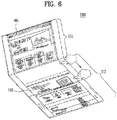
- FIG. 6 is an exemplary view of a second mode according to the present specification.
- the controller 130 may not display the same portion of the contents on the first display area 111 and the second display area 112 as shown in FIG. 6 even though the input for moving the screen of the display area is received in the second mode.
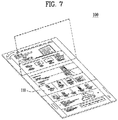
- FIG. 7 is an exemplary view illustrating that a first mode is executed again in a foldable display device according to the present specification.
- the state of the display unit 110 is switched from the state of intermediate folding to the state of full unfolding.
- the controller 130 may determine that the user desires to return to the previous mode, that is, the first mode. Therefore, the controller 130 may execute the first mode when the state of intermediate folding is switched to the state of full unfolding after the second mode is executed.
- the controller 130 may display the content on the display unit 110 on the basis of the screen displayed on the first display area 111 in case of the second mode.
- the controller 130 may display the content on the display unit 110 on the basis of the screen displayed on the second display area 112 in case of the second mode.
- the controller 130 displays the content on the display unit 110 on the basis of the screen displayed on the second display area 112 in case of the second mode shown in FIG. 5 .
- the controller 130 may end only the content of the display area where the user's touch is sensed from the first display area 111 and the second display area 112 and maintain the screen of the content displayed on the other display area.
- FIG. 8 is an exemplary view illustrating that a content of one of a first display area and a second display area ends in accordance with the present specification.
- a messenger application not a web page is executed on the second display area 112.
- the controller 130 ends the content of the second display area 112 in accordance with the user's input in the second mode. At this time, the controller 130 maintains the screen of the content displayed on the first display area. Afterwards, the controller 130 executes the message application in accordance with the user's input. According to this embodiment, if the state of intermediate folding of the display unit 110 is maintained even though the content ends, the controller 130 may maintain the screen of the display area where the user's input is not received.
- FIGS. 4 to 8 have been described based on that the content is a web page, the digital contents according to the present specification are not limited to the web page.
- Various data executed by various applications included in the foldable display device 100 according to the present specification and displayed on the display unit 110 may be the digital contents.
- the contents may be a plurality of images having sequence.
- the controller 130 may display at least two or more sequential images among the plurality of images in the first mode and display at least one or more images on the first and second areas in the second mode.
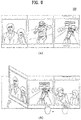
- FIG. 9 is an exemplary view illustrating a first mode and a second mode when contents correspond to a plurality of images having sequence.
- the state of the display unit 110 is the state of full unfolding. Therefore, the controller 130 executes the first mode.
- the controller 130 may display at least two or more sequential images among the plurality of images in the first mode. In (a) of FIG. 9 , it is noted that three sequential images are displayed on the display unit 110.
- the state of the display unit 110 is the state of intermediate unfolding. Therefore, the controller 130 executes the second mode.
- the controller 130 may display at least one or more images on each of the first display area 111 and the second display area 112 in the second mode.
- two images are displayed on the second display area 112.
- the state shown in (b) of FIG. 9 is that the controller 130 controls the screen of the second display area 112 by means of the input signal for moving the screen input through the second display area 112 by means of the user. Since the contents are a plurality of sequential images, the controller 130 may display an image having next sequence on the second display area 112 in accordance with a screen moving direction.
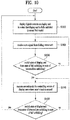
- FIG. 10 is a flow chart illustrating a method for controlling a foldable display device according to one embodiment of the present specification.
- step S1010 the controller 130 displays digital contents on the display unit 110 in a state that the display unit 110 is fully unfolded.
- the controller 130 executes a first mode for controlling the entire of the screen displayed on the display unit 110 by means of the input signal output to the folding sensor unit 120.
- the controller 130 finishes the process of the step S1010 and moves to step S1020.
- the controller 130 may monitor the state of the display unit 110 by receiving the state signal of the display unit 110 from the folding sensor unit 120. The controller 130 finishes the process of the step S1020 and moves to step S1030.
- the controller 130 determines whether the state of the display unit 110 has been switched from the state of full unfolding to the state of intermediate unfolding. If the state of the display unit 110 has not been switched from the state of full unfolding to the state of intermediate unfolding ('no' of step S1030), the controller moves to the step S1020. Therefore, the controller 130 repeatedly executes the steps S1020 and S1030. On the other hand, if the state of the display unit 110 has been switched from the state of full unfolding to the state of intermediate unfolding ('yes' of step S1030), the controller 130 moves to step S1040.
- the controller 130 may determine whether the state of full unfolding is switched to the state of intermediate folding and the state of intermediate folding is maintained for a predetermined time. When the state of intermediate folding is maintained for a predetermined time, the controller 130 may move to the step S1040.
- the controller 130 may execute the second mode for controlling the screen of the display area where the user's touch is sensed from the first and second display areas. At this time, the controller 130 may maintain the screen of the display area where the user's touch is not sensed from the first and second display areas 111 and 112. The controller 130 may display a size ratio of text and image displayed on the first and second display areas 111 and 112 equally to a size ratio of text and image in the first mode.
- the controller 130 may move to step S1050 after executing the step S1040.
- the controller 130 determines whether the state of the display unit 110 has been switched from the state of intermediate unfolding to the state of full unfolding. If the state of the display unit 110 has not been switched from the state of intermediate unfolding to the state of full unfolding ('no' of step S1050), the controller 130 moves to the step S1040. Therefore, the controller 130 repeatedly executes the steps S1040 and S1050. On the other hand, if the state of the display unit 110 has been switched from the state of intermediate unfolding to the state of full unfolding ('yes' of step S1050), the controller 130 moves to the step S1010. Therefore, the controller 130 executes the first mode and the second mode suitable for the condition while repeatedly executing the steps S1010 to S1050.
- first and/or “second” in this specification may be used to describe various elements, it is to be understood that the elements are not limited by such terms.
- the terms may be used to identify one element from another element.
- the first element may be referred to as the second element, and vice versa within the range that does not depart from the scope of the present specification.
- ...module means a unit for processing at least one function or operation, and may be implemented by hardware, software or combination of hardware and software.
- the present specification may fully or partially be applied to electronic devices.
Landscapes
- Engineering & Computer Science (AREA)
- Theoretical Computer Science (AREA)
- General Engineering & Computer Science (AREA)
- Physics & Mathematics (AREA)
- General Physics & Mathematics (AREA)
- Computer Hardware Design (AREA)
- Human Computer Interaction (AREA)
- Mathematical Physics (AREA)
- User Interface Of Digital Computer (AREA)
- Controls And Circuits For Display Device (AREA)
Applications Claiming Priority (1)
| Application Number | Priority Date | Filing Date | Title |
|---|---|---|---|
| PCT/KR2014/011005 WO2016080559A1 (ko) | 2014-11-17 | 2014-11-17 | 디스플레이 폴딩을 통해 화면을 고정시킬 수 있는 폴더블 디스플레이 디바이스 및 그 제어 방법 |
Publications (3)
| Publication Number | Publication Date |
|---|---|
| EP3223113A1 true EP3223113A1 (de) | 2017-09-27 |
| EP3223113A4 EP3223113A4 (de) | 2018-06-06 |
| EP3223113B1 EP3223113B1 (de) | 2020-03-11 |
Family
ID=56014086
Family Applications (1)
| Application Number | Title | Priority Date | Filing Date |
|---|---|---|---|
| EP14906348.9A Active EP3223113B1 (de) | 2014-11-17 | 2014-11-17 | Faltbare anzeigevorrichtung |
Country Status (4)
| Country | Link |
|---|---|
| US (1) | US10175726B2 (de) |
| EP (1) | EP3223113B1 (de) |
| KR (1) | KR20170086470A (de) |
| WO (1) | WO2016080559A1 (de) |
Cited By (3)
| Publication number | Priority date | Publication date | Assignee | Title |
|---|---|---|---|---|
| CN109782976A (zh) * | 2019-01-15 | 2019-05-21 | Oppo广东移动通信有限公司 | 文件处理方法、装置、终端及存储介质 |
| WO2022171300A1 (en) * | 2021-02-12 | 2022-08-18 | Huawei Technologies Co., Ltd. | Foldable display assembly for electronic device |
| US12216899B2 (en) | 2019-10-30 | 2025-02-04 | Huawei Technologies Co., Ltd. | Display element display method and electronic device |
Families Citing this family (27)
| Publication number | Priority date | Publication date | Assignee | Title |
|---|---|---|---|---|
| US20170345396A1 (en) * | 2016-05-24 | 2017-11-30 | Lenovo (Singapore) Pte. Ltd. | Configuring virtual display zones within one flexible display |
| US20210142706A1 (en) * | 2016-09-30 | 2021-05-13 | Hewlett-Packard Development Company, L.P. | Mobile device with transparent display and scanner |
| JP1586458S (de) * | 2016-10-11 | 2017-12-18 | ||
| JP1581148S (de) * | 2016-10-11 | 2018-01-09 | ||
| US10015442B1 (en) | 2017-05-12 | 2018-07-03 | Microsoft Technology Licensing, Llc | Three-way video calling on hinged multi-screen device |
| CN108646976B (zh) * | 2018-05-17 | 2021-02-26 | Oppo广东移动通信有限公司 | 触控信息的处理方法、装置、存储介质及电子设备 |
| CN109144351A (zh) * | 2018-07-05 | 2019-01-04 | Oppo(重庆)智能科技有限公司 | 终端设备及其控制方法、控制组件和可读存储介质 |
| KR102848756B1 (ko) | 2018-12-04 | 2025-08-22 | 삼성전자 주식회사 | 전자 장치의 상태 정보에 기반하여 동작을 수행하는 전자 장치 및 전자 장치의 동작 방법 |
| US11398168B2 (en) | 2019-04-03 | 2022-07-26 | Samsung Electronics Co., Ltd. | Mobile device with a foldable display and method of providing user interfaces on the foldable display |
| CN111831198B (zh) * | 2019-04-22 | 2022-01-25 | 成都鼎桥通信技术有限公司 | 双屏触控方法及装置 |
| CN110286865B (zh) * | 2019-06-20 | 2022-09-09 | 上海摩软通讯技术有限公司 | 一种触摸屏的显示方法及电子设备 |
| KR20210033784A (ko) * | 2019-09-19 | 2021-03-29 | 삼성전자주식회사 | 사용자 입력에 따라 사용자 인터페이스를 변경하는 전자 장치 및 방법 |
| KR20210041768A (ko) * | 2019-10-08 | 2021-04-16 | 삼성전자주식회사 | 전자 장치 및 전자 장치의 제어 방법 |
| CN112751954B (zh) * | 2019-10-31 | 2022-08-26 | 华为技术有限公司 | 一种操作提示的方法和电子设备 |
| KR102859606B1 (ko) | 2020-02-10 | 2025-09-16 | 삼성전자주식회사 | 어플리케이션의 실행 화면을 제공하기 위한 전자 장치 및 그 동작 방법 |
| KR20220017152A (ko) | 2020-08-04 | 2022-02-11 | 삼성전자주식회사 | 폴더블 전자 장치 및 상기 폴더블 전자 장치에서 정보를 표시하는 방법 |
| KR20220017203A (ko) | 2020-08-04 | 2022-02-11 | 삼성전자주식회사 | 디스플레이를 포함하는 전자 장치 및 그의 화면 운용 방법 |
| CN112051892A (zh) * | 2020-08-12 | 2020-12-08 | 武汉华星光电半导体显示技术有限公司 | 移动终端 |
| KR102878800B1 (ko) | 2021-01-11 | 2025-10-31 | 삼성전자 주식회사 | 폴더블 하우징을 적응적으로 개폐하도록 구성된 전자 장치 |
| US11656832B1 (en) | 2022-01-06 | 2023-05-23 | International Business Machines Corporation | Display of directions for configuring mechanically adjustable display screen |
| CN116679893A (zh) * | 2022-02-22 | 2023-09-01 | 华为技术有限公司 | 一种显示方法及相关装置 |
| WO2024005615A1 (ko) | 2022-07-01 | 2024-01-04 | 삼성전자 주식회사 | 전자 장치 및 전자 장치의 디스플레이 제어 방법 |
| CN115509479A (zh) * | 2022-09-26 | 2022-12-23 | 联想(北京)有限公司 | 一种显示控制方法及装置 |
| US11907606B1 (en) * | 2023-03-15 | 2024-02-20 | Motorola Mobility Llc | Compute box and corresponding systems and methods for formatting content for presentation on flexible content presentation companion devices |
| US12055977B1 (en) | 2023-03-15 | 2024-08-06 | Motorola Mobility Llc | Compute box and corresponding systems and methods for formatting content for presentation on flexible content presentation companion devices |
| CN117152286B (zh) * | 2023-08-28 | 2026-09-08 | 三星电子(中国)研发中心 | 潜在图像的生成方法、装置、计算机存储介质和电子设备 |
| CN224366493U (zh) * | 2025-04-16 | 2026-06-16 | 深圳市鑫正宇科技有限公司 | 双屏显示的智能日历 |
Family Cites Families (9)
| Publication number | Priority date | Publication date | Assignee | Title |
|---|---|---|---|---|
| US20070268264A1 (en) * | 2006-05-16 | 2007-11-22 | Nokia Corporation | Electronic devices |
| KR101569776B1 (ko) | 2009-01-09 | 2015-11-19 | 삼성전자주식회사 | 접히는 표시부를 가지는 휴대 단말기 및 이의 운용 방법 |
| US9189018B2 (en) | 2010-10-01 | 2015-11-17 | Z124 | Windows position control for phone applications |
| EP3734407A1 (de) * | 2011-02-10 | 2020-11-04 | Samsung Electronics Co., Ltd. | Tragbare vorrichtung mit einer berührungsbildschirmanzeige und verfahren zur steuerung davon |
| US9588668B2 (en) | 2011-07-21 | 2017-03-07 | Imerj, Llc | Methods of displaying a second view |
| KR20130006041U (ko) | 2012-04-09 | 2013-10-17 | 이용노 | 접이식 디스플레이 패널 |
| KR101375335B1 (ko) | 2012-05-15 | 2014-03-18 | 삼성디스플레이 주식회사 | 디스플레이 장치 및 그 제어 방법 |
| KR102104588B1 (ko) | 2012-07-11 | 2020-04-24 | 삼성전자주식회사 | 플렉서블 디스플레이 장치 및 그 동작 방법 |
| KR102131825B1 (ko) * | 2013-03-20 | 2020-07-09 | 엘지전자 주식회사 | 적응적 터치 센서티브 영역을 제공하는 폴더블 디스플레이 디바이스 및 그 제어 방법 |
-
2014
- 2014-11-17 EP EP14906348.9A patent/EP3223113B1/de active Active
- 2014-11-17 US US15/527,001 patent/US10175726B2/en not_active Expired - Fee Related
- 2014-11-17 WO PCT/KR2014/011005 patent/WO2016080559A1/ko not_active Ceased
- 2014-11-17 KR KR1020177010062A patent/KR20170086470A/ko not_active Abandoned
Cited By (5)
| Publication number | Priority date | Publication date | Assignee | Title |
|---|---|---|---|---|
| CN109782976A (zh) * | 2019-01-15 | 2019-05-21 | Oppo广东移动通信有限公司 | 文件处理方法、装置、终端及存储介质 |
| CN109782976B (zh) * | 2019-01-15 | 2020-12-22 | Oppo广东移动通信有限公司 | 文件处理方法、装置、终端及存储介质 |
| US11347389B2 (en) | 2019-01-15 | 2022-05-31 | Guangdong Oppo Mobile Telecommunications Corp., Ltd. | File processing method, terminal, and storage medium |
| US12216899B2 (en) | 2019-10-30 | 2025-02-04 | Huawei Technologies Co., Ltd. | Display element display method and electronic device |
| WO2022171300A1 (en) * | 2021-02-12 | 2022-08-18 | Huawei Technologies Co., Ltd. | Foldable display assembly for electronic device |
Also Published As
| Publication number | Publication date |
|---|---|
| US10175726B2 (en) | 2019-01-08 |
| KR20170086470A (ko) | 2017-07-26 |
| US20170322597A1 (en) | 2017-11-09 |
| EP3223113B1 (de) | 2020-03-11 |
| WO2016080559A1 (ko) | 2016-05-26 |
| EP3223113A4 (de) | 2018-06-06 |
Similar Documents
| Publication | Publication Date | Title |
|---|---|---|
| US10175726B2 (en) | Foldable display device capable of fixing screen by means of folding display and method for controlling the foldable display device | |
| US20220129041A1 (en) | Foldable device and method of controlling the same | |
| AU2018203008B2 (en) | Foldable electronic apparatus and interfacing method thereof | |
| US10101884B2 (en) | Wearable device and controlling method thereof | |
| KR102537922B1 (ko) | 디스플레이 사이의 각도를 측정하는 방법 및 이를 사용하는 전자 장치 | |
| KR102545605B1 (ko) | 전자 장치 및 그의 동작 방법 | |
| KR102262721B1 (ko) | 폴더블 디스플레이 디바이스 및 그 제어 방법 | |
| CN105452983B (zh) | 可折叠装置及其控制方法 | |
| KR102097496B1 (ko) | 폴더블 이동 단말기 및 그 제어 방법 | |
| CA2849616C (en) | Device and method for generating data for generating or modifying a display object | |
| JP6655275B2 (ja) | モバイル装置及びその制御方法 | |
| EP2860610A2 (de) | Vorrichtungen und Verfahren zur Erzeugung von taktilem Feedback | |
| US10955928B2 (en) | Application swap based on smart device movement | |
| KR20130127050A (ko) | 벤디드 디스플레이를 갖는 휴대단말의 기능 운용 방법 및 장치 | |
| CN108353104A (zh) | 便携式装置和用于控制其屏幕的方法 | |
| EP3032394A1 (de) | Verfahren und vorrichtung zur eingabe von information durch verwendung einer bildschirmtastatur | |
| US20140340336A1 (en) | Portable terminal and method for controlling touch screen and system thereof | |
| KR102526860B1 (ko) | 전자 장치 및 전자 장치 제어 방법 | |
| US20200034032A1 (en) | Electronic apparatus, computer-readable non-transitory recording medium, and display control method | |
| KR20150122976A (ko) | 디스플레이 디바이스 및 그 제어 방법 | |
| KR20180134517A (ko) | 터치의 압력에 응답하여 지정된 동작을 수행하는 전자 장치 및 방법 | |
| JP7034856B2 (ja) | 電子機器、制御プログラム及び表示制御方法 | |
| JP2013137697A (ja) | 電子機器、表示制御方法、およびプログラム | |
| JP2019096182A (ja) | 電子装置、表示方法、およびプログラム | |
| EP2797280A1 (de) | Vorrichtung, System und Verfahren zur Erzeugung einer Datenanzeige |
Legal Events
| Date | Code | Title | Description |
|---|---|---|---|
| STAA | Information on the status of an ep patent application or granted ep patent |
Free format text: STATUS: THE INTERNATIONAL PUBLICATION HAS BEEN MADE |
|
| PUAI | Public reference made under article 153(3) epc to a published international application that has entered the european phase |
Free format text: ORIGINAL CODE: 0009012 |
|
| STAA | Information on the status of an ep patent application or granted ep patent |
Free format text: STATUS: REQUEST FOR EXAMINATION WAS MADE |
|
| 17P | Request for examination filed |
Effective date: 20170508 |
|
| AK | Designated contracting states |
Kind code of ref document: A1 Designated state(s): AL AT BE BG CH CY CZ DE DK EE ES FI FR GB GR HR HU IE IS IT LI LT LU LV MC MK MT NL NO PL PT RO RS SE SI SK SM TR |
|
| AX | Request for extension of the european patent |
Extension state: BA ME |
|
| DAX | Request for extension of the european patent (deleted) | ||
| A4 | Supplementary search report drawn up and despatched |
Effective date: 20180507 |
|
| RIC1 | Information provided on ipc code assigned before grant |
Ipc: G06F 3/0488 20130101ALI20180430BHEP Ipc: G06F 3/0487 20130101AFI20180430BHEP Ipc: G06F 3/14 20060101ALI20180430BHEP Ipc: G06F 1/16 20060101ALI20180430BHEP Ipc: G06F 3/0481 20130101ALI20180430BHEP Ipc: G06F 3/147 20060101ALI20180430BHEP Ipc: G06F 3/0484 20130101ALI20180430BHEP |
|
| STAA | Information on the status of an ep patent application or granted ep patent |
Free format text: STATUS: EXAMINATION IS IN PROGRESS |
|
| 17Q | First examination report despatched |
Effective date: 20190515 |
|
| REG | Reference to a national code |
Ref country code: DE Ref legal event code: R079 Ref document number: 602014062396 Country of ref document: DE Free format text: PREVIOUS MAIN CLASS: G06F0003010000 Ipc: G06F0003048500 |
|
| GRAP | Despatch of communication of intention to grant a patent |
Free format text: ORIGINAL CODE: EPIDOSNIGR1 |
|
| STAA | Information on the status of an ep patent application or granted ep patent |
Free format text: STATUS: GRANT OF PATENT IS INTENDED |
|
| RIC1 | Information provided on ipc code assigned before grant |
Ipc: G06F 3/0485 20130101AFI20191023BHEP Ipc: G06F 3/0484 20130101ALI20191023BHEP Ipc: G06F 3/14 20060101ALI20191023BHEP Ipc: G06F 3/0481 20130101ALI20191023BHEP Ipc: G06F 1/16 20060101ALI20191023BHEP Ipc: G06F 3/0488 20130101ALI20191023BHEP |
|
| INTG | Intention to grant announced |
Effective date: 20191121 |
|
| GRAS | Grant fee paid |
Free format text: ORIGINAL CODE: EPIDOSNIGR3 |
|
| GRAA | (expected) grant |
Free format text: ORIGINAL CODE: 0009210 |
|
| STAA | Information on the status of an ep patent application or granted ep patent |
Free format text: STATUS: THE PATENT HAS BEEN GRANTED |
|
| AK | Designated contracting states |
Kind code of ref document: B1 Designated state(s): AL AT BE BG CH CY CZ DE DK EE ES FI FR GB GR HR HU IE IS IT LI LT LU LV MC MK MT NL NO PL PT RO RS SE SI SK SM TR |
|
| REG | Reference to a national code |
Ref country code: GB Ref legal event code: FG4D |
|
| REG | Reference to a national code |
Ref country code: CH Ref legal event code: EP |
|
| REG | Reference to a national code |
Ref country code: AT Ref legal event code: REF Ref document number: 1244000 Country of ref document: AT Kind code of ref document: T Effective date: 20200315 |
|
| REG | Reference to a national code |
Ref country code: DE Ref legal event code: R096 Ref document number: 602014062396 Country of ref document: DE |
|
| REG | Reference to a national code |
Ref country code: IE Ref legal event code: FG4D |
|
| PG25 | Lapsed in a contracting state [announced via postgrant information from national office to epo] |
Ref country code: RS Free format text: LAPSE BECAUSE OF FAILURE TO SUBMIT A TRANSLATION OF THE DESCRIPTION OR TO PAY THE FEE WITHIN THE PRESCRIBED TIME-LIMIT Effective date: 20200311 Ref country code: NO Free format text: LAPSE BECAUSE OF FAILURE TO SUBMIT A TRANSLATION OF THE DESCRIPTION OR TO PAY THE FEE WITHIN THE PRESCRIBED TIME-LIMIT Effective date: 20200611 Ref country code: FI Free format text: LAPSE BECAUSE OF FAILURE TO SUBMIT A TRANSLATION OF THE DESCRIPTION OR TO PAY THE FEE WITHIN THE PRESCRIBED TIME-LIMIT Effective date: 20200311 |
|
| REG | Reference to a national code |
Ref country code: NL Ref legal event code: MP Effective date: 20200311 |
|
| PG25 | Lapsed in a contracting state [announced via postgrant information from national office to epo] |
Ref country code: HR Free format text: LAPSE BECAUSE OF FAILURE TO SUBMIT A TRANSLATION OF THE DESCRIPTION OR TO PAY THE FEE WITHIN THE PRESCRIBED TIME-LIMIT Effective date: 20200311 Ref country code: LV Free format text: LAPSE BECAUSE OF FAILURE TO SUBMIT A TRANSLATION OF THE DESCRIPTION OR TO PAY THE FEE WITHIN THE PRESCRIBED TIME-LIMIT Effective date: 20200311 Ref country code: SE Free format text: LAPSE BECAUSE OF FAILURE TO SUBMIT A TRANSLATION OF THE DESCRIPTION OR TO PAY THE FEE WITHIN THE PRESCRIBED TIME-LIMIT Effective date: 20200311 Ref country code: GR Free format text: LAPSE BECAUSE OF FAILURE TO SUBMIT A TRANSLATION OF THE DESCRIPTION OR TO PAY THE FEE WITHIN THE PRESCRIBED TIME-LIMIT Effective date: 20200612 Ref country code: BG Free format text: LAPSE BECAUSE OF FAILURE TO SUBMIT A TRANSLATION OF THE DESCRIPTION OR TO PAY THE FEE WITHIN THE PRESCRIBED TIME-LIMIT Effective date: 20200611 |
|
| REG | Reference to a national code |
Ref country code: LT Ref legal event code: MG4D |
|
| PG25 | Lapsed in a contracting state [announced via postgrant information from national office to epo] |
Ref country code: NL Free format text: LAPSE BECAUSE OF FAILURE TO SUBMIT A TRANSLATION OF THE DESCRIPTION OR TO PAY THE FEE WITHIN THE PRESCRIBED TIME-LIMIT Effective date: 20200311 |
|
| PG25 | Lapsed in a contracting state [announced via postgrant information from national office to epo] |
Ref country code: SK Free format text: LAPSE BECAUSE OF FAILURE TO SUBMIT A TRANSLATION OF THE DESCRIPTION OR TO PAY THE FEE WITHIN THE PRESCRIBED TIME-LIMIT Effective date: 20200311 Ref country code: LT Free format text: LAPSE BECAUSE OF FAILURE TO SUBMIT A TRANSLATION OF THE DESCRIPTION OR TO PAY THE FEE WITHIN THE PRESCRIBED TIME-LIMIT Effective date: 20200311 Ref country code: IS Free format text: LAPSE BECAUSE OF FAILURE TO SUBMIT A TRANSLATION OF THE DESCRIPTION OR TO PAY THE FEE WITHIN THE PRESCRIBED TIME-LIMIT Effective date: 20200711 Ref country code: PT Free format text: LAPSE BECAUSE OF FAILURE TO SUBMIT A TRANSLATION OF THE DESCRIPTION OR TO PAY THE FEE WITHIN THE PRESCRIBED TIME-LIMIT Effective date: 20200805 Ref country code: CZ Free format text: LAPSE BECAUSE OF FAILURE TO SUBMIT A TRANSLATION OF THE DESCRIPTION OR TO PAY THE FEE WITHIN THE PRESCRIBED TIME-LIMIT Effective date: 20200311 Ref country code: RO Free format text: LAPSE BECAUSE OF FAILURE TO SUBMIT A TRANSLATION OF THE DESCRIPTION OR TO PAY THE FEE WITHIN THE PRESCRIBED TIME-LIMIT Effective date: 20200311 Ref country code: SM Free format text: LAPSE BECAUSE OF FAILURE TO SUBMIT A TRANSLATION OF THE DESCRIPTION OR TO PAY THE FEE WITHIN THE PRESCRIBED TIME-LIMIT Effective date: 20200311 Ref country code: EE Free format text: LAPSE BECAUSE OF FAILURE TO SUBMIT A TRANSLATION OF THE DESCRIPTION OR TO PAY THE FEE WITHIN THE PRESCRIBED TIME-LIMIT Effective date: 20200311 |
|
| REG | Reference to a national code |
Ref country code: AT Ref legal event code: MK05 Ref document number: 1244000 Country of ref document: AT Kind code of ref document: T Effective date: 20200311 |
|
| REG | Reference to a national code |
Ref country code: DE Ref legal event code: R097 Ref document number: 602014062396 Country of ref document: DE |
|
| PLBE | No opposition filed within time limit |
Free format text: ORIGINAL CODE: 0009261 |
|
| STAA | Information on the status of an ep patent application or granted ep patent |
Free format text: STATUS: NO OPPOSITION FILED WITHIN TIME LIMIT |
|
| PG25 | Lapsed in a contracting state [announced via postgrant information from national office to epo] |
Ref country code: ES Free format text: LAPSE BECAUSE OF FAILURE TO SUBMIT A TRANSLATION OF THE DESCRIPTION OR TO PAY THE FEE WITHIN THE PRESCRIBED TIME-LIMIT Effective date: 20200311 Ref country code: DK Free format text: LAPSE BECAUSE OF FAILURE TO SUBMIT A TRANSLATION OF THE DESCRIPTION OR TO PAY THE FEE WITHIN THE PRESCRIBED TIME-LIMIT Effective date: 20200311 Ref country code: AT Free format text: LAPSE BECAUSE OF FAILURE TO SUBMIT A TRANSLATION OF THE DESCRIPTION OR TO PAY THE FEE WITHIN THE PRESCRIBED TIME-LIMIT Effective date: 20200311 Ref country code: IT Free format text: LAPSE BECAUSE OF FAILURE TO SUBMIT A TRANSLATION OF THE DESCRIPTION OR TO PAY THE FEE WITHIN THE PRESCRIBED TIME-LIMIT Effective date: 20200311 |
|
| PGFP | Annual fee paid to national office [announced via postgrant information from national office to epo] |
Ref country code: DE Payment date: 20201006 Year of fee payment: 7 |
|
| 26N | No opposition filed |
Effective date: 20201214 |
|
| PG25 | Lapsed in a contracting state [announced via postgrant information from national office to epo] |
Ref country code: SI Free format text: LAPSE BECAUSE OF FAILURE TO SUBMIT A TRANSLATION OF THE DESCRIPTION OR TO PAY THE FEE WITHIN THE PRESCRIBED TIME-LIMIT Effective date: 20200311 Ref country code: PL Free format text: LAPSE BECAUSE OF FAILURE TO SUBMIT A TRANSLATION OF THE DESCRIPTION OR TO PAY THE FEE WITHIN THE PRESCRIBED TIME-LIMIT Effective date: 20200311 |
|
| PG25 | Lapsed in a contracting state [announced via postgrant information from national office to epo] |
Ref country code: MC Free format text: LAPSE BECAUSE OF FAILURE TO SUBMIT A TRANSLATION OF THE DESCRIPTION OR TO PAY THE FEE WITHIN THE PRESCRIBED TIME-LIMIT Effective date: 20200311 |
|
| REG | Reference to a national code |
Ref country code: CH Ref legal event code: PL |
|
| GBPC | Gb: european patent ceased through non-payment of renewal fee |
Effective date: 20201117 |
|
| PG25 | Lapsed in a contracting state [announced via postgrant information from national office to epo] |
Ref country code: LU Free format text: LAPSE BECAUSE OF NON-PAYMENT OF DUE FEES Effective date: 20201117 |
|
| REG | Reference to a national code |
Ref country code: BE Ref legal event code: MM Effective date: 20201130 |
|
| PG25 | Lapsed in a contracting state [announced via postgrant information from national office to epo] |
Ref country code: CH Free format text: LAPSE BECAUSE OF NON-PAYMENT OF DUE FEES Effective date: 20201130 Ref country code: LI Free format text: LAPSE BECAUSE OF NON-PAYMENT OF DUE FEES Effective date: 20201130 |
|
| PG25 | Lapsed in a contracting state [announced via postgrant information from national office to epo] |
Ref country code: FR Free format text: LAPSE BECAUSE OF NON-PAYMENT OF DUE FEES Effective date: 20201130 Ref country code: IE Free format text: LAPSE BECAUSE OF NON-PAYMENT OF DUE FEES Effective date: 20201117 |
|
| PG25 | Lapsed in a contracting state [announced via postgrant information from national office to epo] |
Ref country code: GB Free format text: LAPSE BECAUSE OF NON-PAYMENT OF DUE FEES Effective date: 20201117 |
|
| PG25 | Lapsed in a contracting state [announced via postgrant information from national office to epo] |
Ref country code: TR Free format text: LAPSE BECAUSE OF FAILURE TO SUBMIT A TRANSLATION OF THE DESCRIPTION OR TO PAY THE FEE WITHIN THE PRESCRIBED TIME-LIMIT Effective date: 20200311 Ref country code: MT Free format text: LAPSE BECAUSE OF FAILURE TO SUBMIT A TRANSLATION OF THE DESCRIPTION OR TO PAY THE FEE WITHIN THE PRESCRIBED TIME-LIMIT Effective date: 20200311 Ref country code: CY Free format text: LAPSE BECAUSE OF FAILURE TO SUBMIT A TRANSLATION OF THE DESCRIPTION OR TO PAY THE FEE WITHIN THE PRESCRIBED TIME-LIMIT Effective date: 20200311 |
|
| REG | Reference to a national code |
Ref country code: DE Ref legal event code: R119 Ref document number: 602014062396 Country of ref document: DE |
|
| PG25 | Lapsed in a contracting state [announced via postgrant information from national office to epo] |
Ref country code: MK Free format text: LAPSE BECAUSE OF FAILURE TO SUBMIT A TRANSLATION OF THE DESCRIPTION OR TO PAY THE FEE WITHIN THE PRESCRIBED TIME-LIMIT Effective date: 20200311 Ref country code: AL Free format text: LAPSE BECAUSE OF FAILURE TO SUBMIT A TRANSLATION OF THE DESCRIPTION OR TO PAY THE FEE WITHIN THE PRESCRIBED TIME-LIMIT Effective date: 20200311 |
|
| PG25 | Lapsed in a contracting state [announced via postgrant information from national office to epo] |
Ref country code: BE Free format text: LAPSE BECAUSE OF NON-PAYMENT OF DUE FEES Effective date: 20201130 |
|
| PG25 | Lapsed in a contracting state [announced via postgrant information from national office to epo] |
Ref country code: DE Free format text: LAPSE BECAUSE OF NON-PAYMENT OF DUE FEES Effective date: 20220601 |
|
| PG25 | Lapsed in a contracting state [announced via postgrant information from national office to epo] |
Ref country code: IS Free format text: LAPSE BECAUSE OF NON-PAYMENT OF DUE FEES Effective date: 20200711 |