EP3224261B1 - Modulateurs du récepteur opioïde - Google Patents
Modulateurs du récepteur opioïde Download PDFInfo
- Publication number
- EP3224261B1 EP3224261B1 EP15863352.9A EP15863352A EP3224261B1 EP 3224261 B1 EP3224261 B1 EP 3224261B1 EP 15863352 A EP15863352 A EP 15863352A EP 3224261 B1 EP3224261 B1 EP 3224261B1
- Authority
- EP
- European Patent Office
- Prior art keywords
- alkyl
- aryl
- alkynyl
- alkenyl
- compound
- Prior art date
- Legal status (The legal status is an assumption and is not a legal conclusion. Google has not performed a legal analysis and makes no representation as to the accuracy of the status listed.)
- Active
Links
Images


Classifications
-
- C—CHEMISTRY; METALLURGY
- C07—ORGANIC CHEMISTRY
- C07D—HETEROCYCLIC COMPOUNDS
- C07D491/00—Heterocyclic compounds containing in the condensed ring system both one or more rings having oxygen atoms as the only ring hetero atoms and one or more rings having nitrogen atoms as the only ring hetero atoms, not provided for by groups C07D451/00 - C07D459/00, C07D463/00, C07D477/00 or C07D489/00
- C07D491/12—Heterocyclic compounds containing in the condensed ring system both one or more rings having oxygen atoms as the only ring hetero atoms and one or more rings having nitrogen atoms as the only ring hetero atoms, not provided for by groups C07D451/00 - C07D459/00, C07D463/00, C07D477/00 or C07D489/00 in which the condensed system contains three hetero rings
- C07D491/18—Bridged systems
-
- A—HUMAN NECESSITIES
- A61—MEDICAL OR VETERINARY SCIENCE; HYGIENE
- A61K—PREPARATIONS FOR MEDICAL, DENTAL OR TOILETRY PURPOSES
- A61K31/00—Medicinal preparations containing organic active ingredients
- A61K31/33—Heterocyclic compounds
- A61K31/395—Heterocyclic compounds having nitrogen as a ring hetero atom, e.g. guanethidine or rifamycins
- A61K31/435—Heterocyclic compounds having nitrogen as a ring hetero atom, e.g. guanethidine or rifamycins having six-membered rings with one nitrogen as the only ring hetero atom
- A61K31/47—Quinolines; Isoquinolines
- A61K31/485—Morphinan derivatives, e.g. morphine, codeine
-
- A—HUMAN NECESSITIES
- A61—MEDICAL OR VETERINARY SCIENCE; HYGIENE
- A61K—PREPARATIONS FOR MEDICAL, DENTAL OR TOILETRY PURPOSES
- A61K9/00—Medicinal preparations characterised by special physical form
- A61K9/0012—Galenical forms characterised by the site of application
- A61K9/007—Pulmonary tract; Aromatherapy
- A61K9/0073—Sprays or powders for inhalation; Aerolised or nebulised preparations generated by other means than thermal energy
-
- A—HUMAN NECESSITIES
- A61—MEDICAL OR VETERINARY SCIENCE; HYGIENE
- A61K—PREPARATIONS FOR MEDICAL, DENTAL OR TOILETRY PURPOSES
- A61K9/00—Medicinal preparations characterised by special physical form
- A61K9/70—Web, sheet or filament bases ; Films; Fibres of the matrix type containing drug
- A61K9/7023—Transdermal patches and similar drug-containing composite devices, e.g. cataplasms
- A61K9/703—Transdermal patches and similar drug-containing composite devices, e.g. cataplasms characterised by shape or structure; Details concerning release liner or backing; Refillable patches; User-activated patches
- A61K9/7092—Transdermal patches having multiple drug layers or reservoirs, e.g. for obtaining a specific release pattern, or for combining different drugs
-
- A—HUMAN NECESSITIES
- A61—MEDICAL OR VETERINARY SCIENCE; HYGIENE
- A61P—SPECIFIC THERAPEUTIC ACTIVITY OF CHEMICAL COMPOUNDS OR MEDICINAL PREPARATIONS
- A61P25/00—Drugs for disorders of the nervous system
- A61P25/04—Centrally acting analgesics, e.g. opioids
-
- A—HUMAN NECESSITIES
- A61—MEDICAL OR VETERINARY SCIENCE; HYGIENE
- A61P—SPECIFIC THERAPEUTIC ACTIVITY OF CHEMICAL COMPOUNDS OR MEDICINAL PREPARATIONS
- A61P25/00—Drugs for disorders of the nervous system
- A61P25/24—Antidepressants
-
- C—CHEMISTRY; METALLURGY
- C07—ORGANIC CHEMISTRY
- C07D—HETEROCYCLIC COMPOUNDS
- C07D471/00—Heterocyclic compounds containing nitrogen atoms as the only ring hetero atoms in the condensed system, at least one ring being a six-membered ring with one nitrogen atom, not provided for by groups C07D451/00 - C07D463/00
- C07D471/12—Heterocyclic compounds containing nitrogen atoms as the only ring hetero atoms in the condensed system, at least one ring being a six-membered ring with one nitrogen atom, not provided for by groups C07D451/00 - C07D463/00 in which the condensed system contains three hetero rings
- C07D471/18—Bridged systems
-
- C—CHEMISTRY; METALLURGY
- C07—ORGANIC CHEMISTRY
- C07D—HETEROCYCLIC COMPOUNDS
- C07D495/00—Heterocyclic compounds containing in the condensed system at least one hetero ring having sulfur atoms as the only ring hetero atoms
- C07D495/12—Heterocyclic compounds containing in the condensed system at least one hetero ring having sulfur atoms as the only ring hetero atoms in which the condensed system contains three hetero rings
- C07D495/18—Bridged systems
-
- A—HUMAN NECESSITIES
- A61—MEDICAL OR VETERINARY SCIENCE; HYGIENE
- A61K—PREPARATIONS FOR MEDICAL, DENTAL OR TOILETRY PURPOSES
- A61K47/00—Medicinal preparations characterised by the non-active ingredients used, e.g. carriers or inert additives; Targeting or modifying agents chemically bound to the active ingredient
- A61K47/30—Macromolecular organic or inorganic compounds, e.g. inorganic polyphosphates
- A61K47/36—Polysaccharides; Derivatives thereof, e.g. gums, starch, alginate, dextrin, hyaluronic acid, chitosan, inulin, agar or pectin
- A61K47/38—Cellulose; Derivatives thereof
-
- A—HUMAN NECESSITIES
- A61—MEDICAL OR VETERINARY SCIENCE; HYGIENE
- A61K—PREPARATIONS FOR MEDICAL, DENTAL OR TOILETRY PURPOSES
- A61K9/00—Medicinal preparations characterised by special physical form
- A61K9/0002—Galenical forms characterised by the drug release technique; Application systems commanded by energy
Definitions
- MOR mu-opioid receptor
- opium poppy e.g. morphine
- KOR kappa-opioid receptor
- KOR agonists also suffer from significant disadvantages, including profound dysphoric and dissociative effects at high doses (Chavkin, C. 2011). Accordingly, there is continuing interest in the development of novel pain medications, including new MOR and/or KOR modulators with improved therapeutic profile (Corbett, A.D. et al. 2006).
- KOR agonists and antagonists have also been suggested as potential treatments for drug addiction or abuse.
- KOR agonists reduce self-administration of cocaine in addicted monkeys (Negus, S.S. et al. 1997) and inhibit reinstatement of cocaine self-administration in rats (Schenk, S. et al. 2000).
- MOR modulators are among the only options available. More recently, studies in rodents (Besson, A. et al. 1996) have suggested that MOR activation may lead to antidepressant and/or anxiolytic effects. On the molecular level, MORs are extensively expressed in the hippocampus and have been shown to exert a variety of indirect modulatory effects on glutamatergic neurons in this brain region (Xie, C.W. et al. 1997; Svoboda, K.R. et al. 1999).
- the present invention provides a compound having the structure: wherein
- the present invention provides a compound having the structure: wherein
- A is other than
- R 1 , R 2 , R 3 and R 4 are each independently -H, - (alkyl), -(alkenyl), -(alkynyl), -(fluroalkyl), -(cycloalkyl), - (aryl), -(heteroaryl), -(heteroalkyl), -(hydroxyalkyl), -(alkyl)-(aryl), -(alkyl)-(heteroaryl), -(alkyl)-( cycloalkyl), -(alkyl)-OH, - (alkyl)-O-(alkyl), -OH, -NH 2 , -OAc, -CO 2 H, -CN, -OCF 3 , halogen, -CO 2 -(C 2 -C 12 alkyl), C(O)-NH 2 , -C(O)-(alkyl), C(O)-NH-(aryl), C(O)-
- R 1 , R 2 , R 3 and R 4 are each independently -H, - (alkyl), -(alkenyl), -(alkynyl), -(fluroalkyl), -(cycloalkyl), - (aryl), -(heteroaryl), -(heteroalkyl), -(hydroxyalkyl), -(alkyl)-(aryl), -(alkyl)-(heteroaryl), -(alkyl)-( cycloalkyl), -(alkyl)-OH, - (alkyl)-O-(alkyl), -OH, -NH 2 , -OAc, -CO 2 H, -CN, -CF 3 , -CH 2 F, -OCF 3 , halogen, -CO 2 -(C 2 -C 12 alkyl), C(O)-NH 2 , -C(O)-NH-(alkyl), C(
- the present invention provides a compound having the structure: wherein
- the present invention further provides a compound having the structure: wherein
- R 1 , R 2 , R 3 and R 4 are each independently H, - (alkyl), -(alkenyl), -(alkynyl), -(aryl), -(heteroaryl), - (heteroalkyl), -(hydroxyalkyl), -(alkyl)-(aryl), -(alkyl)-(heteroaryl), -(alkyl)-OH, -(alkyl)-O-(alkyl), -OH, -NH 2 , -CO 2 H, -CO 2 -(alkyl), -C(O)-NH 2 or -C(O)-NH-(alkyl),
- A phenyl
- X 1 is C
- X 2 is O and ⁇ is present
- R 1 is other than -CO 2 Me.
- R 2 is other than -CO 2 Me.
- R 5 is -H.
- R 5 is other than -OH.
- the compound having the structure or a pharmaceutically acceptable salt or ester thereof.
- R 5 is -H.
- R 5 is other than -OH.
- the compound having the structure or a pharmaceutically acceptable salt or ester thereof. This embodiment is not encompassed by the wording of the claims but is considered useful for understanding the invention.
- the compound having the structure or a pharmaceutically acceptable salt or ester thereof. This embodiment is not encompassed by the wording of the claims but is considered useful for understanding the invention.
- A is other than
- R 5 , R 6 , R 7 and R 8 are each independently-H, halogen, -CN, -CF 3 , -OCF 3 , -(alkyl), -(alkenyl), -(alkynyl), - (fluoroalkyl), -(cycloalkyl), -(aryl), -(heteroaryl), -(heteroalkyl), -(hydroxyalkyl), -NH 2 , -NH-(alkyl), -NH-(alkenyl), -NH-(alkynyl) -NH-(aryl), -NH-(heteroaryl), -OH, -OAc, -CO 2 H, -CO 2 -(alkyl), -O-C(O) (alkyl), -O-(alkyl), -O-(alkenyl), -O-(alkynyl), -O-(aryl), -
- R 5 , R 6 , R 7 and R 8 are each independently -H, halogen, -CN, -CF 3 , -OCF 3 , -(alkyl), -(alkenyl), -(alkynyl), (cycloalkyl), -(aryl), -(heteroaryl), -(heteroalkyl),-(hydroxyalkyl), -NH 2 , -NH-(alkyl), -NH-(alkenyl), -NH-(alkynyl) -NH-(aryl), -NH-(heteroaryl), -OH, -OAc, -CO 2 H, -CF 3 , -CH 2 F, -COz-(alkyl), -O-C(O) (alkyl), -O-(alkyl), -O-(alkenyl), -O-(alkynyl), -O-(aryl), - O
- R 5 is -H.
- R 5 is other than -OH.
- the compound having the structure or a pharmaceutically acceptable salt or ester thereof.
- the compound having the structure or a pharmaceutically acceptable salt or ester thereof. This embodiment is not encompassed by the wording of the claims but is considered useful for understanding the invention.
- R 5 is -H. This embodiment is not encompassed by the wording of the claims but is considered useful for understanding the invention.
- R 5 is other than -OH. This embodiment is not encompassed by the wording of the claims but is considered useful for understanding the invention.
- the compound having the structure or a pharmaceutically acceptable salt or ester thereof. This embodiment is not encompassed by the wording of the claims but is considered useful for understanding the invention.
- the compound wherein R 1 is -H and R 2 is -(alkyl), -(alkenyl), -(alkynyl), -(aryl), -(heteroaryl), -(alkyl)-OH, -(alkyl)-(aryl), -(alkyl)-O-(alkyl), -OH, -NH 2 , -COz-(alkyl), or -C(O)-NH-(alkyl).
- This embodiment is not encompassed by the wording of the claims but is considered useful for understanding the invention.
- the compound wherein R 1 is -H and R 2 is -CH 2 CH 3 .
- This embodiment is not encompassed by the wording of the claims but is considered useful for understanding the invention.
- the compound wherein R 1 is -H and R 2 is -CH 2 CH 3 , -CH 2 CH 2 CH 3 , -CH 2 CH 2 CH 2 CH 3 , -CH 2 C 6 H 5 , -CH (CH 3 ) 2 , -CO 2 CH 2 CH 3 , -CH 2 OCH 3 , -C 6 H 5 or -CH 2 OH.
- This embodiment is not encompassed by the wording of the claims but is considered useful for understanding the invention.
- the compound wherein R 1 is -H and R 2 is -CH 3 , -CH 2 CH 3 , -CH 2 CH 2 CH 3 , -CH 2 CH 2 CH 2 CH 3 , -CH 2 C 6 H 5 , -CH (CH 3 ) 2 , -CO 2 CH 2 CH 3 , -CH 2 OCH 3 , -C 6 H 5 or -CH 2 OH.
- This embodiment is not encompassed by the wording of the claims but is considered useful for understanding the invention.
- the compound wherein R 2 is -H and R 1 is -(alkyl), -(alkenyl), -(alkynyl), -(aryl), -(heteroaryl), -(alkyl)-OH, -(alkyl)-(aryl), -(alkyl)-O-(alkyl), -OH, -NH 2 , -CO 2 -(alkyl), or -C(O)-NH-(alkyl).
- This embodiment is not encompassed by the wording of the claims but is considered useful for understanding the invention.
- the compound wherein R 2 is -H and R 1 is -CH 2 CH 3 is not encompassed by the wording of the claims but is considered useful for understanding the invention.
- the compound wherein R 2 is -H and R 1 is -CH 2 CH 3 , -CH 2 CH 2 CH 3 , -CH 2 CH 2 CH 2 CH 3 , -CH 2 C 6 H 5 , -CH (CH 3 ) 2 , -CO 2 CH 2 CH 3 , -CH 2 OCH 3 , -C 6 H 5 or CH 2 OH.
- This embodiment is not encompassed by the wording of the claims but is considered useful for understanding the invention.
- the compound wherein R 2 is -H and R 1 is -CH 3 , -CH 2 CH 3 , -CH 2 CH 2 CH 3 , -CH 2 CH 2 CH 2 CH 3 , -CH 2 C 6 H 5 , -CH (CH 3 ) 2 , -CO 2 CH 2 CH 3 , -CH 2 OCH 3 , -C 6 H 5 or CH 2 OH.
- This embodiment is not encompassed by the wording of the claims but is considered useful for understanding the invention.
- the compound wherein R 3 is -H and R 4 is -(alkyl), -(alkenyl), -(alkynyl), -(aryl), -(heteroaryl), -(alkyl)-OH, -(alkyl)-(aryl), -(alkyl)-O-(alkyl), -OH, -NH 2 , -CO 2 -(alkyl), or -C(O)-NH-(alkyl).
- This embodiment is not encompassed by the wording of the claims but is considered useful for understanding the invention.
- the compound wherein R 3 is -H and R 4 is -CH 2 CH 3 .
- This embodiment is not encompassed by the wording of the claims but is considered useful for understanding the invention.
- the compound wherein R 3 is -H and R 4 is -CH 2 CH 3 , -CH 2 CH 2 CH 3 , -CH 2 CH 2 CH 2 CH 3 , -CH 2 C 6 H 5 , - CH(CH 3 ) 2 , -CO 2 CH 2 CH 3 , -CH 2 OCH 3 , -C 6 H 5 or -CH 2 OH.
- This embodiment is not encompassed by the wording of the claims but is considered useful for understanding the invention.
- the compound wherein R 3 is -H and R 4 is -CH 3 , -CH 2 CH 3 , -CH 2 CH 2 CH 3 , -CH 2 CH 2 CH 2 CH 3 , -CH 2 C 6 H 5 , -CH (CH 3 ) 2 , -CO 2 CH 2 CH 3 , -CH 2 OCH 3 , -C 6 H 5 or -CH 2 OH.
- This embodiment is not encompassed by the wording of the claims but is considered useful for understanding the invention.
- the compound wherein R 4 is -H and R 3 is -(alkyl), -(alkenyl), -(alkynyl), -(aryl), -(heteroaryl), -(alkyl)-OH, -(alkyl)-(aryl), -(alkyl)-O-(alkyl), -OH, -NH 2 , -COz-(alkyl), or -C(O)-NH-(alkyl).
- This embodiment is not encompassed by the wording of the claims but is considered useful for understanding the invention.
- the compound wherein R 4 is -H and R 3 is -CH 2 CH 3 . This embodiment is not encompassed by the wording of the claims but is considered useful for understanding the invention.
- the compound wherein R 4 is -H and R 3 is -CH 2 CH 3 , -CH 2 CH 2 CH 3 , -CH 2 CH 2 CH 2 CH 3 , -CH 2 C 6 H 5 , -CH (CH 3 ) 2 , -CO 2 CH 2 CH 3 , -CH 2 OCH 3 , -C 6 H 5 or -CH 2 OH.
- This embodiment is not encompassed by the wording of the claims but is considered useful for understanding the invention.
- the compound wherein R 4 is -H and R 3 is -CH 3 , -CH 2 CH 3 , -CH 2 CH 2 CH 3 , -CH 2 CH 2 CH 2 CH 3 , -CH 2 C 6 H 5 , -CH (CH 3 ) 2 , -CO 2 CH 2 CH 3 , -CH 2 OCH 3 , -C 6 H 5 or -CH 2 OH.
- This embodiment is not encompassed by the wording of the claims but is considered useful for understanding the invention.
- the compound wherein R 1 and R 2 are each -H. This embodiment is not encompassed by the wording of the claims but is considered useful for understanding the invention.
- the compound wherein R 3 and R 4 are each -H is not encompassed by the wording of the claims but is considered useful for understanding the invention.
- the compound wherein R 1 , R 2 , R 3 and R 4 are each -H is not encompassed by the wording of the claims but is considered useful for understanding the invention.
- the compound wherein R 5 , R 6 , R 7 and R 8 are each -H. This embodiment is not encompassed by the wording of the claims but is considered useful for understanding the invention.
- the compound wherein R 5 , R 6 and R 7 are each -H and R 8 is halogen, -CN, -CF 3 , -OCF 3 , -(alkyl), -(alkenyl), -(alkynyl), -(aryl), -(heteroaryl), -NH 2 , -NH-(alkyl), - NH-(alkenyl), -NH-(alkynyl) -NH-(aryl), -NH-(heteroaryl), -OH, -OAc, -O-C(O) (alkyl), -O-(alkyl), -O-(alkenyl), -O-(alkynyl), -O-(aryl), or -O-(heteroaryl).
- This embodiment is not encompassed by the wording of the claims but is considered useful for understanding the invention.
- the compound wherein R 5 , R 6 and R 7 are each -H and R 8 is halogen, -OH or -O-(alkyl) . This embodiment is not encompassed by the wording of the claims but is considered useful for understanding the invention.
- the compound wherein R 5 , R 6 and R 7 are each -H and R 8 is halogen, -OH -OAc, or -O-(alkyl) .
- This embodiment is not encompassed by the wording of the claims but is considered useful for understanding the invention.
- the compound wherein R 5 , R 6 and R 7 are each -H and R 8 is -F, -OH or -OCH 3 . This embodiment is not encompassed by the wording of the claims but is considered useful for understanding the invention.
- the compound wherein R 5 , R 6 and R 8 are each -H and R 7 is halogen, -CN, -CF 3 , -OCF 3 , - (alkyl), -(alkenyl), -(alkynyl), -(aryl), -(heteroaryl), -NH 2 , -NH-(alkyl), - NH-(alkenyl), -NH-(alkynyl) -NH-(aryl), -NH-(heteroaryl), -OH, -OAc, -O-C(O) (alkyl), -O-(alkyl), -O-(alkenyl), -O-(alkynyl), -O-(aryl), or -O-(heteroaryl).
- This embodiment is not encompassed by the wording of the claims but is considered useful for understanding the invention.
- the compound wherein R 5 , R 6 and R 8 are each -H and R 7 is halogen, -OH or -O-(alkyl) . This embodiment is not encompassed by the wording of the claims but is considered useful for understanding the invention.
- the compound wherein R 5 , R 6 and R 8 are each -H and R 7 is halogen, -OH, -OAc or -O-(alkyl) .
- This embodiment is not encompassed by the wording of the claims but is considered useful for understanding the invention.
- the compound wherein R 5 , R 6 and R 8 are each -H and R 7 is -F, -OH or -OCH 3 . This embodiment is not encompassed by the wording of the claims but is considered useful for understanding the invention.
- the compound wherein R 5 , R 7 and R 8 are each -H and R 6 is halogen, -OH or -O-(alkyl) . This embodiment is not encompassed by the wording of the claims but is considered useful for understanding the invention.
- the compound wherein R 5 , R 7 and R 8 are each -H and R 6 is halogen, -OH, -OAc or -O-(alkyl). This embodiment is not encompassed by the wording of the claims but is considered useful for understanding the invention.
- the compound wherein R 5 , R 7 and R 8 are each -H and R 6 is -F, -OH or -OCH 3 . This embodiment is not encompassed by the wording of the claims but is considered useful for understanding the invention.
- the compound wherein R 6 , R 7 and R 8 are each -H and R 5 is halogen, -CN, -CF 3 , -OCF 3 , -(alkyl), -(alkenyl), -(alkynyl), -(aryl), -(heteroaryl), -NH 2 , -NH-(alkyl), - NH-(alkenyl), -NH-(alkynyl) -NH-(aryl), -NH-(heteroaryl), -OH, -OAc, -O-C(O) (alkyl), -O-(alkyl), -O-(alkenyl), -O-(alkynyl), -O-(aryl), or -O-(heteroaryl).
- This embodiment is not encompassed by the wording of the claims but is considered useful for understanding the invention.
- the compound wherein R 6 , R 7 and R 8 are each -H and R 5 is halogen, -OH or -O-(alkyl) . This embodiment is not encompassed by the wording of the claims but is considered useful for understanding the invention.
- the compound wherein R 6 , R 7 and R 8 are each -H and R 5 is halogen, -OH, -OAc or -O-(alkyl). This embodiment is not encompassed by the wording of the claims but is considered useful for understanding the invention.
- the compound wherein R 6 , R 7 and R 8 are each -H and R 5 is -F, -OH or -OCH 3 . This embodiment is not encompassed by the wording of the claims but is considered useful for understanding the invention.
- the compound wherein R 5 and R 8 are each -H and R 6 and R 7 are each independently halogen, - CN, -CF 3 , -OCF 3 , -(alkyl), -(alkenyl), -(alkynyl), -(aryl), - (heteroaryl), -NH 2 , -NH-(alkyl), -NH-(alkenyl), -NH-(alkynyl) -NH-(aryl), -NH-(heteroaryl), -OH, -OAc, -O-C(O) (alkyl), -O-(alkyl), -O-(alkenyl), -O-(alkynyl), -O-(aryl), or -O-(heteroaryl).
- This embodiment is not encompassed by the wording of the claims but is considered useful for understanding the invention.
- the compound wherein R 5 and R 8 are each -H and R 6 and R 7 are each independently halogen, - OH or -O-(alkyl). This embodiment is not encompassed by the wording of the claims but is considered useful for understanding the invention.
- This embodiment is not encompassed by the wording of the claims but is considered useful for understanding the invention.
- This embodiment is not encompassed by the wording of the claims but is considered useful for understanding the invention.
- the compound wherein R 5 and R 8 are each -H and R 6 and R 7 are each independently -(alkyl) or -O-(alkyl). This embodiment is not encompassed by the wording of the claims but is considered useful for understanding the invention.
- the compound wherein R 5 and R 8 are each -H and R 6 and R 7 are each independently -(alkyl), - OH or -O-(alkyl). This embodiment is not encompassed by the wording of the claims but is considered useful for understanding the invention.
- This embodiment is not encompassed by the wording of the claims but is considered useful for understanding the invention.
- This embodiment is not encompassed by the wording of the claims but is considered useful for understanding the invention.
- the compound having the structure or a pharmaceutically acceptable salt or ester thereof.
- R 5 is -H.
- R 5 is other than -OH.
- the compound having the structure or a pharmaceutically acceptable salt or ester thereof. This embodiment is not encompassed by the wording of the claims but is considered useful for understanding the invention.
- the compound having the structure or a pharmaceutically acceptable salt or ester thereof. This embodiment is not encompassed by the wording of the claims but is considered useful for understanding the invention.
- the compound having the structure or a pharmaceutically acceptable salt or ester thereof.
- the compound having the structure or a pharmaceutically acceptable salt or ester thereof.
- the compound having the structure or a pharmaceutically acceptable salt or ester thereof.
- the compound having the structure or a pharmaceutically acceptable salt thereof. This embodiment is not encompassed by the wording of the claims but is considered useful for understanding the invention.
- the compound having the structure or a pharmaceutically acceptable salt or ester thereof. This embodiment is not encompassed by the wording of the claims but is considered useful for understanding the invention.
- the compound having the structure or a pharmaceutically acceptable salt or ester thereof. This embodiment is not encompassed by the wording of the claims but is considered useful for understanding the invention.
- the compound having the structure or a pharmaceutically acceptable salt or ester thereof.
- the compound having the structure or a pharmaceutically acceptable salt or ester thereof.
- the compound having the structure or a pharmaceutically acceptable salt or ester thereof.
- the compound having the structure or a pharmaceutically acceptable salt or ester thereof.
- the compound having the structure or a pharmaceutically acceptable salt or ester thereof.
- R 5 is -H.
- R 5 is other than -OH.
- the compound having the structure or a pharmaceutically acceptable salt or ester thereof. This embodiment is not encompassed by the wording of the claims but is considered useful for understanding the invention.
- the compound having the structure or a pharmaceutically acceptable salt or ester thereof. This embodiment is not encompassed by the wording of the claims but is considered useful for understanding the invention.
- the compound wherein Y 1 and Y 2 are each -H.
- the compound wherein Y 3 , Y 4 and Y 5 are each, independently, H or -(alkyl).
- the compound wherein Y 3 , Y 4 and Y 5 are each, independently, H or -CH 3 .
- the compound having the structure or a pharmaceutically acceptable salt or ester thereof.
- R 5 is other than - OH.
- R 5 is -H.
- the compound having the structure: or wherein the R 1 , R 2 , R 3 , R 4 , R 6 , R 7 , R 8 , Y 1 , Y 2 , Y 3 , Y 4 and Y 5 are defined according any of the above embodiments or combination thereof.
- the present invention also provides a pharmaceutical composition
- a pharmaceutical composition comprising the compound of the present application and a pharmaceutically acceptable carrier.
- the present invention further provides a process for producing the compound having the structure: comprising
- the present invention further provides a process for producing the compound having the structure: comprising
- the process wherein the palladium (II) catalyst is Pd(CH 3 CN) 4 (BF 4 ) 2 .
- This embodiment is not encompassed by the wording of the claims but is considered useful for understanding the invention.
- the process wherein the first suitable solvent is acetonitrile. This embodiment is not encompassed by the wording of the claims but is considered useful for understanding the invention.
- the process wherein the second suitable solvent is methanol. This embodiment is not encompassed by the wording of the claims but is considered useful for understanding the invention.
- the process wherein the reducing agent is sodium borohydride. This embodiment is not encompassed by the wording of the claims but is considered useful for understanding the invention.
- the present invention further provides a process for producing the compound having the structure: comprising
- the present invention further provides a process for producing the compound having the structure: comprising
- the process wherein the nickel (0) catalyst is bis(1,5-cyclooctadiene)nickel(0). This embodiment is not encompassed by the wording of the claims but is considered useful for understanding the invention.
- the process wherein the first suitable solvent is heptane.
- the process wherein the first suitable solvent is toluene, hexane, and dodecane. This embodiment is not encompassed by the wording of the claims but is considered useful for understanding the invention.
- the process wherein the first suitable solvent is a non-polar hydrocarbon solvent. This embodiment is not encompassed by the wording of the claims but is considered useful for understanding the invention.
- the process wherein the N-heterocyclic carbene is 1,3-bis(2,4,6-trimethylphenyl)-1,3-2 H -imidazol-2-ylidene (IMes).
- IMes 1,3-bis(2,4,6-trimethylphenyl)-1,3-2 H -imidazol-2-ylidene
- the compound contacted in step (a) is or and the compound produced is or respectively.
- step (a) the compound contacted in step (a) is or and the compound produced is or respectively. This embodiment is not encompassed by the wording of the claims but is considered useful for understanding the invention.
- step (a) the compound contacted in step (a) is and the compound produced is respectively.
- step (a) the compound contacted in step (a) is and the compound produced is respectively.
- the present invention yet further provides a process for producing a compound having the structure: comprising
- the present invention yet further provides a process for producing the compound having the structure: comprising
- the present invention yet further provides a process for producing the compound having the structure: comprising
- the above process wherein the palladium (II) catalyst is Pd(CH 3 CN) 4 (BF 4 ) 2 .
- This embodiment is not encompassed by the wording of the claims but is considered useful for understanding the invention.
- the above process wherein the first suitable solvent is acetonitrile. This embodiment is not encompassed by the wording of the claims but is considered useful for understanding the invention.
- the above process wherein the second suitable solvent is methanol.
- This embodiment is not encompassed by the wording of the claims but is considered useful for understanding the invention.
- the above process wherein the reducing agent is sodium borohydride. This embodiment is not encompassed by the wording of the claims but is considered useful for understanding the invention.
- the present invention yet further provides a process for producing the compound having the structure: comprising
- the present invention yet further provides a process for producing the compound having the structure: comprising
- the present invention yet further aprocess for producing the compound having the structure: comprising
- the present invention yet further aprocess for producing the compound having the structure: comprising
- the above process wherein the nickel (0) catalyst is bis(1,5-cyclooctadiene)nickel(0).
- the above process wherein the first suitable solvent is heptane.
- the process wherein the first suitable solvent is toluene, hexane, and dodecane. This embodiment is not encompassed by the wording of the claims but is considered useful for understanding the invention.
- the process wherein the first suitable solvent is a non-polar hydrocarbon solvent. This embodiment is not encompassed by the wording of the claims but is considered useful for understanding the invention.
- the above process wherein the N -heterocyclic carbene is 1,3-bis(2,4,6-trimethylphenyl)-1,3-2 H -imidazol-2-ylidene (IMes) .
- IMes 1,3-bis(2,4,6-trimethylphenyl)-1,3-2 H -imidazol-2-ylidene
- the present invention provides a pharmaceutical composition comprising the compound of the present invention and a pharmaceutically acceptable carrier. This embodiment is not encompassed by the wording of the claims but is considered useful for understanding the invention.
- the present invention provides a method of activating mu-opioid receptor comprising contacting the mu-opioid receptor with the compound of the present invention.
- This embodiment is not encompassed by the wording of the claims but is considered useful for understanding the invention.
- the present invention provides a method of activating delta-opioid receptor comprising contacting the delta-opioid receptor with the compound of the present invention.
- This embodiment is not encompassed by the wording of the claims but is considered useful for understanding the invention.
- the present invention provides a method of activating kappa-opioid receptor comprising contacting the kappa-opioid receptor with the compound of the present invention. This embodiment is not encompassed by the wording of the claims but is considered useful for understanding the invention.
- the present invention provides a method of treating a subject afflicted with depression or major depression comprising administering an effective amount of the compound of the present invention to the subject so as to treat the depression or major depression.
- This embodiment is not encompassed by the wording of the claims but is considered useful for understanding the invention.
- the mu-opioid, delta-opioid or kappa-opioid receptors are in a human subject.
- the stress disorder is post-traumatic stress disorder (PTSD) or acute stress disorder. This embodiment is not encompassed by the wording of the claims but is considered useful for understanding the invention.
- PTSD post-traumatic stress disorder
- acute stress disorder This embodiment is not encompassed by the wording of the claims but is considered useful for understanding the invention.
- the anxiety disorder is panic disorder, social anxiety disorder, generalized anxiety disorder or a specific phobia. This embodiment is not encompassed by the wording of the claims but is considered useful for understanding the invention.
- any of the above compounds for use in activating the mu-opioid receptor, delta-opioid receptor and/or kappa-opioid receptor are any of the above compounds for use in activating the mu-opioid receptor, delta-opioid receptor and/or kappa-opioid receptor.
- any of the above compounds for use in inhibiting the mu-opioid receptor, delta-opioid receptor and/or kappa-opioid receptor are any of the above compounds for use in inhibiting the mu-opioid receptor, delta-opioid receptor and/or kappa-opioid receptor.
- any of the above compounds for use in treating a subject afflicted with depression, major depression, pain, anxiety disorder, obsessive-compulsive disorder (OCD) or stress disorder is any of the above compounds for use in treating a subject afflicted with depression, major depression, pain, anxiety disorder, obsessive-compulsive disorder (OCD) or stress disorder.
- OCD obsessive-compulsive disorder
- any of the above compounds for use in treating depression, major depression, pain, anxiety disorder, obsessive-compulsive disorder (OCD) or stress disorder for use in treating depression, major depression, pain, anxiety disorder, obsessive-compulsive disorder (OCD) or stress disorder.
- OCD obsessive-compulsive disorder
- a pharmaceutical composition comprising any of the above compounds for treating a subject afflicted with depression, major depression, pain, anxiety disorder, obsessive-compulsive disorder (OCD) or stress disorder.
- OCD obsessive-compulsive disorder
- a pharmaceutical composition comprising any of the above compounds for treating depression, major depression, pain, anxiety disorder, obsessive-compulsive disorder (OCD) or stress disorder.
- OCD obsessive-compulsive disorder
- R 1 -R 8 groups replace the R 1 -R 8 groups found on the compounds of Table 3.
- Compounds with such R 1 -R 8 groups act as KOR, DOR and/or MOR agonists with similar activity to the compounds of Table 3.
- R 1 -R 8 groups replace the R 1 -R 8 groups found on the compounds of Tables 4 and 5.
- Compounds with such R 1 -R 8 groups act as KOR, DOR and/or MOR agonists with similar activity to the compounds of Table 4 and 5.
- R 1 -R 8 groups replace the R 1 -R 8 groups found on the compounds of Tables 3-5.
- Compounds with such R 1 -R 8 groups act as KOR, DOR and/or MOR antagonists with similar activity to the compounds of Table 3-5.
- An additional aspect of the invention provides synthetic methods that are used to modify or encompass chemical space around the core structure of 35d. Additional compounds are synthesized according to the protocols described in Schemes 1-13, and function analogously to 35d.
- An additional aspect of the invention provides synthetic methods that are used to modify or encompass chemical space around the core structure of 35d. Additional compounds are synthesized according to the protocols described in Schemes 1-13, and function analogously to the compounds of Tables 3-5.
- Embodiments of the compounds disclosed herein include compounds where R 1 , R 2 , R 3 or R 4 are H, methyl, ethyl, propyl, butyl, pentyl or hexyl.
- MOR agonist is intended to mean any compound or substance that activates the mu-opioid receptor (MOR).
- the agonist may be a partial, full, super, or biased agonist.
- DOR agonist is intended to mean any compound or substance that activates the delta-opioid receptor (DOR).
- the agonist may be a partial, full, super, or biased agonist.
- KOR agonist is intended to mean any compound or substance that activates the kappa-opioid receptor (KOR).
- the agonist may be a partial, full, super, or biased agonist.
- MOR antagonist is intended to mean any compound or substance that blocks or inhibits the mu-opioid receptor (MOR).
- the antagonist may be a competitive, non-competitive, uncompetitive or silent antagonist.
- DOR antagonist is intended to mean any compound or substance that blocks or inhibits the delta-opioid receptor (DOR).
- the antagonist may be a competitive, non-competitive, uncompetitive or silent antagonist.
- KOR antagonist is intended to mean any compound or substance that blocks or inhibits the kappa-opioid receptor (KOR).
- the antagonist may be a competitive, non-competitive, uncompetitive or silent antagonist.
- a compound of this invention includes an asymmetric carbon atom, it is understood that the compound occurs as a racemate, racemic mixture, and isolated single enantiomer. All such isomeric forms of these compounds are expressly included in this invention. Except where otherwise specified, each stereogenic carbon may be of the R or S configuration. It is to be understood accordingly that the isomers arising from such asymmetry (e.g., all enantiomers and diastereomers) are included within the scope of this invention, unless indicated otherwise. Such isomers can be obtained in substantially pure form by classical separation techniques and by stereo chemically controlled synthesis, such as those described in " Enantiomers, Racemates and Resolutions" by J. Jacques, A. Collet and S. Wilen, Pub. John Wiley & Sons, NY, 1981 . For example, the resolution may be carried out by preparative chromatography on a chiral column.
- the subject invention is also intended to include all isotopes of atoms occurring on the compounds disclosed herein.
- Isotopes include those atoms having the same atomic number but different mass numbers.
- isotopes of hydrogen include tritium and deuterium.
- isotopes of carbon include C-13 and C-14.
- any notation of a carbon in structures throughout this application when used without further notation, are intended to represent all isotopes of carbon, such as 12 C, 13 C, or 14 C.
- any compounds containing 13 C or 14 C may specifically have the structure of any of the compounds disclosed herein.
- any notation of a hydrogen in structures throughout this application when used without further notation, are intended to represent all isotopes of hydrogen, such as 1 H, 2 H, or 3 H.
- any compounds containing 2 H or 3 H may specifically have the structure of any of the compounds disclosed herein.
- Isotopically-labeled compounds can generally be prepared by conventional techniques known to those skilled in the art using appropriate isotopically-labeled reagents in place of the non-labeled reagents employed.
- the substituents may be substituted or unsubstituted, unless specifically defined otherwise.
- alkyl, heteroalkyl, monocycle, bicycle, aryl, heteroaryl and heterocycle groups can be further substituted by replacing one or more hydrogen atoms with alternative non-hydrogen groups.
- non-hydrogen groups include, but are not limited to, halo, hydroxy, mercapto, amino, carboxy, cyano and carbamoyl.
- substituents and substitution patterns on the compounds used in the method of the present invention can be selected by one of ordinary skill in the art to provide compounds that are chemically stable and that can be readily synthesized by techniques known in the art from readily available starting materials. If a substituent is itself substituted with more than one group, it is understood that these multiple groups may be on the same carbon or on different carbons, so long as a stable structure results.
- alkyl is intended to include both branched and straight-chain saturated aliphatic hydrocarbon groups having the specified number of carbon atoms.
- C 1 -C n as in “C 1 -C n alkyl” is defined to include groups having 1, 2 ising , n-1 or n carbons in a linear or branched arrangement, and specifically includes methyl, ethyl, propyl, butyl, pentyl, hexyl, heptyl, isopropyl, isobutyl, sec-butyl and so on.
- An embodiment can be C 1 -C 12 alkyl, C 2 -C 12 alkyl, C 3 -C 12 alkyl, C 4 -C 12 alkyl and so on.
- An embodiment can be C 1 -C 8 alkyl, C 2 -C 8 alkyl, C 3 -C 8 alkyl, C 4 -C 8 alkyl and so on.
- Alkoxy represents an alkyl group as described above attached through an oxygen bridge.
- hydroxyalkyl includes alkyl groups as described above wherein one or more bonds to hydrogen contained therein are replaced by a bond to an -OH group.
- C 1 -C n as in “C 1 -C n alkyl” is defined to include groups having 1, 2, ...., n-1 or n carbons in a linear or branched arrangement (e.g.
- C 1 -C 2 hydroxyalkyl C 1 -C 3 hydroxyalkyl, C 1 -C 4 hydroxyalkyl, C 1 -C 5 hydroxyalkyl, or C 1 -C 6 hydroxyalkyl
- C 1 -C 6 as in "C 1 -C 6 hydroxyalkyl" is defined to include groups having 1, 2, 3, 4, 5, or 6 carbons in a linear or branched alkyl arrangement wherein a hydrogen contained therein is replaced by a bond to an -OH group.
- heteroalkyl includes both branched and straight-chain saturated aliphatic hydrocarbon groups having the specified number of carbon atoms and at least 1 heteroatom within the chain or branch.
- the haloalkyl is fluoroalkyl. In some embodiments, the fluoroalkyl is -CF 3 or -CH 2 F.
- monocycle includes any stable polyatomic carbon ring of up to 10 atoms and may be unsubstituted or substituted.
- non-aromatic monocycle elements include but are not limited to: cyclobutyl, cyclopentyl, cyclohexyl, and cycloheptyl.
- aromatic monocycle elements include but are not limited to: phenyl.
- bicycle includes any stable polyatomic carbon ring of up to 10 atoms that is fused to a polyatomic carbon ring of up to 10 atoms with each ring being independently unsubstituted or substituted.
- non-aromatic bicycle elements include but are not limited to: decahydronaphthalene.
- aromatic bicycle elements include but are not limited to: naphthalene.
- aryl is intended to mean any stable monocyclic, bicyclic or polycyclic carbon ring of up to 10 atoms in each ring, wherein at least one ring is aromatic, and may be unsubstituted or substituted.
- aryl elements include but are not limited to: phenyl, p-toluenyl (4-methylphenyl), naphthyl, tetrahydro-naphthyl, indanyl, phenanthryl, anthryl or acenaphthyl.
- the aryl substituent is bicyclic and one ring is non-aromatic, it is understood that attachment is via the aromatic ring.
- heteroaryl represents a stable monocyclic, bicyclic or polycyclic ring of up to 10 atoms in each ring, wherein at least one ring is aromatic and contains from 1 to 4 heteroatoms selected from the group consisting of O, N and S.
- Bicyclic aromatic heteroaryl groups include phenyl, pyridine, pyrimidine or pyridazine rings that are (a) fused to a 6-membered aromatic (unsaturated) heterocyclic ring having one nitrogen atom; (b) fused to a 5- or 6-membered aromatic (unsaturated) heterocyclic ring having two nitrogen atoms; (c) fused to a 5-membered aromatic (unsaturated) heterocyclic ring having one nitrogen atom together with either one oxygen or one sulfur atom; or (d) fused to a 5-membered aromatic (unsaturated) heterocyclic ring having one heteroatom selected from O, N or S.
- Heteroaryl groups within the scope of this definition include but are not limited to: benzoimidazolyl, benzofuranyl, benzofurazanyl, benzopyrazolyl, benzotriazolyl, benzothiophenyl, benzoxazolyl, carbazolyl, carbolinyl, cinnolinyl, furanyl, indolinyl, indolyl, indolazinyl, indazolyl, isobenzofuranyl, isoindolyl, isoquinolyl, isothiazolyl, isoxazolyl, naphthpyridinyl, oxadiazolyl, oxazolyl, oxazoline, isoxazoline, oxetanyl, pyranyl, pyrazinyl, pyrazolyl, pyridazinyl, pyridopyridinyl, pyridazinyl, pyridyl, pyr
- heteroaryl substituent is bicyclic and one ring is non-aromatic or contains no heteroatoms, it is understood that attachment is via the aromatic ring or via the heteroatom containing ring, respectively. If the heteroaryl contains nitrogen atoms, it is understood that the corresponding N-oxides thereof are also encompassed by this definition.
- heterocycle refers to a mono- or poly-cyclic ring system which can be saturated or contains one or more degrees of unsaturation and contains one or more heteroatoms.
- Preferred heteroatoms include N, O, and/or S, including N-oxides, sulfur oxides, and dioxides.
- the ring is three to ten-membered and is either saturated or has one or more degrees of unsaturation.
- the heterocycle may be unsubstituted or substituted, with multiple degrees of substitution being allowed.
- Such rings may be optionally fused to one or more of another "heterocyclic" ring(s), heteroaryl ring(s), aryl ring(s), or cycloalkyl ring(s).
- heterocycles include, but are not limited to, tetrahydrofuran, pyran, 1,4-dioxane, 1,3-dioxane, piperidine, piperazine, pyrrolidine, morpholine, thiomorpholine, tetrahydrothiopyran, tetrahydrothiophene, 1,3-oxathiolane, and the like.
- cycloalkyl includes cyclic rings of alkanes of three to eight total carbon atoms, or any number within this range (i.e., cyclopropyl, cyclobutyl, cyclopentyl, cyclohexyl, cycloheptyl or cyclooctyl).
- esters is intended to a mean an organic compound containing the R-O-CO-R' group.
- amide is intended to a mean an organic compound containing the R-CO-NH-R' or R-CO-N-R'R” group.
- benzyl is intended to mean a -CH 2 R 1 group wherein the R 1 is a phenyl group.
- substitution refers to a functional group as described above in which one or more bonds to a hydrogen atom contained therein are replaced by a bond to non-hydrogen or non-carbon atoms, provided that normal valencies are maintained and that the substitution results in a stable compound.
- Substituted groups also include groups in which one or more bonds to a carbon(s) or hydrogen(s) atom are replaced by one or more bonds, including double or triple bonds, to a heteroatom.
- substituent groups include the functional groups described above, and halogens (i.e., F, Cl, Br, and I); alkyl groups, such as methyl, ethyl, n-propyl, isopropyl, n-butyl, tert-butyl, and trifluoromethyl; hydroxyl; alkoxy groups, such as methoxy, ethoxy, n-propoxy, and isopropoxy; aryloxy groups, such as phenoxy; arylalkyloxy, such as benzyloxy (phenylmethoxy) and p-trifluoromethylbenzyloxy (4-trifluoromethylphenylmethoxy); heteroaryloxy groups; sulfonyl groups, such as trifluoromethanesulfonyl, methanesulfonyl, and p-toluenesulfonyl; nitro, nitrosyl; mercapto; sulfanyl groups,
- substituted compound can be independently substituted by one or more of the disclosed or claimed substituent moieties, singly or plurally.
- independently substituted it is meant that the (two or more) substituents can be the same or different.
- the compounds used in the method of the present invention may be prepared by techniques well known in organic synthesis and familiar to a practitioner ordinarily skilled in the art. However, these may not be the only means by which to synthesize or obtain the desired compounds.
- the compounds used in the method of the present invention may be prepared by techniques described in Vogel's Textbook of Practical Organic Chemistry, A.I. Vogel, A.R. Tatchell, B.S. Furnis, A.J. Hannaford, P.W.G. Smith, (Prentice Hall) 5th Edition (1996 ), March's Advanced Organic Chemistry: Reactions, Mechanisms, and Structure, Michael B. Smith, Jerry March, (Wiley-Interscience) 5th Edition (2007 ), and references therein, which are incorporated by reference herein.
- Another aspect of the invention comprises a compound used in the method of the present invention as a pharmaceutical composition.
- the term "pharmaceutically active agent” means any substance or compound suitable for administration to a subject and furnishes biological activity or other direct effect in the treatment, cure, mitigation, diagnosis, or prevention of disease, or affects the structure or any function of the subject.
- Pharmaceutically active agents include, but are not limited to, substances and compounds described in the Physicians' Desk Reference (PDR Network, LLC; 64th edition; November 15, 2009 ) and " Approved Drug Products with Therapeutic Equivalence Evaluations" (U.S. Department Of Health And Human Services, 30th edition, 2010 ), which are hereby incorporated by reference.
- compositions which have pendant carboxylic acid groups may be modified in accordance with the present invention using standard esterification reactions and methods readily available and known to those having ordinary skill in the art of chemical synthesis. Where a pharmaceutically active agent does not possess a carboxylic acid group, the ordinarily skilled artisan will be able to design and incorporate a carboxylic acid group into the pharmaceutically active agent where esterification may subsequently be carried out so long as the modification does not interfere with the pharmaceutically active agent's biological activity or effect.
- the compounds used in the method of the present invention may be in a salt form.
- a “salt” is a salt of the instant compounds which has been modified by making acid or base salts of the compounds.
- the salt is pharmaceutically acceptable.
- pharmaceutically acceptable salts include, but are not limited to, mineral or organic acid salts of basic residues such as amines; alkali or organic salts of acidic residues such as phenols.
- the salts can be made using an organic or inorganic acid.
- Such acid salts are chlorides, bromides, sulfates, nitrates, phosphates, sulfonates, formates, tartrates, maleates, malates, citrates, benzoates, salicylates, ascorbates, and the like.
- Phenolate salts are the alkaline earth metal salts, sodium, potassium or lithium.
- pharmaceutically acceptable salt in this respect, refers to the relatively non-toxic, inorganic and organic acid or base addition salts of compounds of the present invention.
- salts can be prepared in situ during the final isolation and purification of the compounds of the invention, or by separately reacting a purified compound of the invention in its free base or free acid form with a suitable organic or inorganic acid or base, and isolating the salt thus formed.
- Representative salts include the hydrobromide, hydrochloride, sulfate, bisulfate, phosphate, nitrate, acetate, valerate, oleate, palmitate, stearate, laurate, benzoate, lactate, phosphate, tosylate, citrate, maleate, fumarate, succinate, tartrate, napthylate, mesylate, glucoheptonate, lactobionate, and laurylsulphonate salts and the like. (See, e.g., Berge et al. (1977) "Pharmaceutical Salts", J. Pharm. Sci. 66:1-19 ).
- treating means preventing, slowing, halting, or reversing the progression of a disease or infection. Treating may also mean improving one or more symptoms of a disease or infection.
- the compounds used in the method of the present invention may be administered in various forms, including those detailed herein.
- the treatment with the compound may be a component of a combination therapy or an adjunct therapy, i.e. the subject or patient in need of the drug is treated or given another drug for the disease in conjunction with one or more of the instant compounds.
- This combination therapy can be sequential therapy where the patient is treated first with one drug and then the other or the two drugs are given simultaneously.
- These can be administered independently by the same route or by two or more different routes of administration depending on the dosage forms employed.
- a "pharmaceutically acceptable carrier” is a pharmaceutically acceptable solvent, suspending agent or vehicle, for delivering the instant compounds to the animal or human.
- the carrier may be liquid or solid and is selected with the planned manner of administration in mind.
- Liposomes are also a pharmaceutically acceptable carrier.
- the dosage of the compounds administered in treatment will vary depending upon factors such as the pharmacodynamic characteristics of a specific chemotherapeutic agent and its mode and route of administration; the age, sex, metabolic rate, absorptive efficiency, health and weight of the recipient; the nature and extent of the symptoms; the kind of concurrent treatment being administered; the frequency of treatment with; and the desired therapeutic effect.
- the compounds can be administered in oral dosage forms as tablets, capsules, pills, powders, granules, elixirs, tinctures, suspensions, syrups, and emulsions.
- the compounds may also be administered in intravenous (bolus or infusion), intraperitoneal, subcutaneous, or intramuscular form, or introduced directly, e.g. by injection, topical application, or other methods, into or onto a site of infection, all using dosage forms well known to those of ordinary skill in the pharmaceutical arts.
- the compounds used in the method of the present invention can be administered in admixture with suitable pharmaceutical diluents, extenders, excipients, or carriers (collectively referred to herein as a pharmaceutically acceptable carrier) suitably selected with respect to the intended form of administration and as consistent with conventional pharmaceutical practices.
- a pharmaceutically acceptable carrier suitably selected with respect to the intended form of administration and as consistent with conventional pharmaceutical practices.
- the unit will be in a form suitable for oral, rectal, topical, intravenous or direct injection or parenteral administration.
- the compounds can be administered alone or mixed with a pharmaceutically acceptable carrier.
- This carrier can be a solid or liquid, and the type of carrier is generally chosen based on the type of administration being used.
- the active agent can be co-administered in the form of a tablet or capsule, liposome, as an agglomerated powder or in a liquid form.
- suitable solid carriers include lactose, sucrose, gelatin and agar.
- Capsule or tablets can be easily formulated and can be made easy to swallow or chew; other solid forms include granules, and bulk powders. Tablets may contain suitable binders, lubricants, diluents, disintegrating agents, coloring agents, flavoring agents, flow-inducing agents, and melting agents.
- liquid dosage forms examples include solutions or suspensions in water, pharmaceutically acceptable fats and oils, alcohols or other organic solvents, including esters, emulsions, syrups or elixirs, suspensions, solutions and/or suspensions reconstituted from non-effervescent granules and effervescent preparations reconstituted from effervescent granules.
- Such liquid dosage forms may contain, for example, suitable solvents, preservatives, emulsifying agents, suspending agents, diluents, sweeteners, thickeners, and melting agents.
- Oral dosage forms optionally contain flavorants and coloring agents.
- Parenteral and intravenous forms may also include minerals and other materials to make them compatible with the type of injection or delivery system chosen.
- Tablets may contain suitable binders, lubricants, disintegrating agents, coloring agents, flavoring agents, flow-inducing agents, and melting agents.
- the active drug component can be combined with an oral, non-toxic, pharmaceutically acceptable, inert carrier such as lactose, gelatin, agar, starch, sucrose, glucose, methyl cellulose, magnesium stearate, dicalcium phosphate, calcium sulfate, mannitol, sorbitol and the like.
- Suitable binders include starch, gelatin, natural sugars such as glucose or beta-lactose, corn sweeteners, natural and synthetic gums such as acacia, tragacanth, or sodium alginate, carboxymethylcellulose, polyethylene glycol, waxes, and the like.
- Lubricants used in these dosage forms include sodium oleate, sodium stearate, magnesium stearate, sodium benzoate, sodium acetate, sodium chloride, and the like.
- Disintegrators include, without limitation, starch, methyl cellulose, agar, bentonite, xanthan gum, and the like.
- the compounds used in the method of the present invention may also be administered in the form of liposome delivery systems, such as small unilamellar vesicles, large unilamellar vesicles, and multilamellar vesicles.
- Liposomes can be formed from a variety of phospholipids, such as cholesterol, stearylamine, or phosphatidylcholines.
- the compounds may be administered as components of tissue-targeted emulsions.
- the compounds used in the method of the present invention may also be coupled to soluble polymers as targetable drug carriers or as a prodrug.
- soluble polymers include polyvinylpyrrolidone, pyran copolymer, polyhydroxylpropylmethacrylamide-phenol, polyhydroxyethylasparta-midephenol, or polyethyleneoxide-polylysine substituted with palmitoyl residues.
- the compounds may be coupled to a class of biodegradable polymers useful in achieving controlled release of a drug, for example, polylactic acid, polyglycolic acid, copolymers of polylactic and polyglycolic acid, polyepsilon caprolactone, polyhydroxy butyric acid, polyorthoesters, polyacetals, polydihydropyrans, polycyanoacylates, and crosslinked or amphipathic block copolymers of hydrogels.
- a class of biodegradable polymers useful in achieving controlled release of a drug
- a drug for example, polylactic acid, polyglycolic acid, copolymers of polylactic and polyglycolic acid, polyepsilon caprolactone, polyhydroxy butyric acid, polyorthoesters, polyacetals, polydihydropyrans, polycyanoacylates, and crosslinked or amphipathic block copolymers of hydrogels.
- Gelatin capsules may contain the active ingredient compounds and powdered carriers, such as lactose, starch, cellulose derivatives, magnesium stearate, stearic acid, and the like. Similar diluents can be used to make compressed tablets. Both tablets and capsules can be manufactured as immediate release products or as sustained release products to provide for continuous release of medication over a period of hours. Compressed tablets can be sugar coated or film coated to mask any unpleasant taste and protect the tablet from the atmosphere, or enteric coated for selective disintegration in the gastrointestinal tract.
- powdered carriers such as lactose, starch, cellulose derivatives, magnesium stearate, stearic acid, and the like. Similar diluents can be used to make compressed tablets. Both tablets and capsules can be manufactured as immediate release products or as sustained release products to provide for continuous release of medication over a period of hours. Compressed tablets can be sugar coated or film coated to mask any unpleasant taste and protect the tablet from the atmosphere, or enteric coated for selective disintegration in the gastrointestinal tract.
- liquid dosage form For oral administration in liquid dosage form, the oral drug components are combined with any oral, non-toxic, pharmaceutically acceptable inert carrier such as ethanol, glycerol, water, and the like.
- suitable liquid dosage forms include solutions or suspensions in water, pharmaceutically acceptable fats and oils, alcohols or other organic solvents, including esters, emulsions, syrups or elixirs, suspensions, solutions and/or suspensions reconstituted from non-effervescent granules and effervescent preparations reconstituted from effervescent granules.
- Such liquid dosage forms may contain, for example, suitable solvents, preservatives, emulsifying agents, suspending agents, diluents, sweeteners, thickeners, and melting agents.
- Liquid dosage forms for oral administration can contain coloring and flavoring to increase patient acceptance.
- water a suitable oil, saline, aqueous dextrose (glucose), and related sugar solutions and glycols such as propylene glycol or polyethylene glycols are suitable carriers for parenteral solutions.
- Solutions for parenteral administration preferably contain a water soluble salt of the active ingredient, suitable stabilizing agents, and if necessary, buffer substances.
- Antioxidizing agents such as sodium bisulfite, sodium sulfite, or ascorbic acid, either alone or combined, are suitable stabilizing agents.
- citric acid and its salts and sodium EDTA are also used.
- parenteral solutions can contain preservatives, such as benzalkonium chloride, methyl- or propyl-paraben, and chlorobutanol.
- preservatives such as benzalkonium chloride, methyl- or propyl-paraben, and chlorobutanol.
- Suitable pharmaceutical carriers are described in Remington's Pharmaceutical Sciences, Mack Publishing Company , a standard reference text in this field.
- the compounds used in the method of the present invention may also be administered in intranasal form via use of suitable intranasal vehicles, or via transdermal routes, using those forms of transdermal skin patches well known to those of ordinary skill in that art.
- the dosage administration will generally be continuous rather than intermittent throughout the dosage regimen.
- Parenteral and intravenous forms may also include minerals and other materials to make them compatible with the type of injection or delivery system chosen.
- Reagents and solvents were obtained from commercial sources and were used without further purification unless otherwise stated. All compounds were prepared in racemic form. All reactions were performed in flame-dried glassware under argon atmosphere unless otherwise stated and monitored by TLC using solvent mixtures appropriate to each reaction. All column chromatography was performed on silica gel (40-63 ⁇ m) and preparative TLC on 20 ⁇ 20 cm plates coated in a 1 mm silica layer. Nuclear magnetic resonance spectra were recorded on Bruker 300, 400, or 500 MHz instruments as indicated.
- Multiplicity is indicated as follows: s (singlet); d (doublet); t (triplet); q (quartet); p (pentet); h (heptet); dd (doublet of doublets); ddd (doublet of doublet of doublets); dt (doublet of triplets); td (triplet of doublets); dtd (doublet of triplet of doublets); ddt (double of doublet of triplets); m (multiplet); br (broad).
- s singlet
- t triplet
- dddd doublet of triplet of doublets
- ddt double of doublet of triplets
- m multiplet
- br broad
- Low-resolution mass spectra were recorded on a JEOL LCmate (ionization mode: APCI+).
- High-resolution mass spectra were acquired on a high-resolution sector-type double-focusing mass spectrometer (ionization mode: FAB+). In calculated high-resolution masses, the mass difference for loss of one electron has been taken into account for positive ions.
- Deactivated silica was prepared as follows. To a suspension of silica gel (40-63 ⁇ m, 50 g) in CH 2 Cl 2 (200 mL) was added ethyltrichlorosilane (4.0 mL) (gas evolution occurs) and the resulting mixture was stirred for 15 min. At this time the treated silica was collected by filtration, washed with CH 2 Cl 2 (2 ⁇ 100 mL) and MeOH (3 ⁇ 100 mL), and dried in vacuo with gentle warming. Treated TLC plates were prepared in the same manner. However, these were UV opaque and thus were developed in an iodine chamber.
- the primary side products were the hydrogenated starting materials (olefin reduced), which were often observed in comparable yields to the desired products. Presumably, these side products result from residual starting material that is hydrogenated by liberated hydrogen during the sodium borohydride quench.
- the reaction mixture was stirred for 2 h at room temperature and then warmed to 70 °C and stirred for a further 16 h. At this time, the reaction was cooled to 0 °C and anhydrous MeOH (2.25 mL) was added followed by NaBH 4 (30.3 mg, 0.800 mmol), causing the immediate precipitation of palladium black. The resulting black mixture was stirred for 20 min. at 0 °C, then diluted with Et 2 O (50 mL), filtered through celite, and the filter cake washed with additional Et 2 O (4 ⁇ 10 mL). The combined filtrate and washings were concentrated to afford the crude product. The NMR yield was then determined using mesitylene (10 ⁇ L) as an internal standard and the product was purified by column chromatography with an appropriate solvent mixture (as described below for each compound).
- the NMR yield of product contained in this material (42%) was determined using mesitylene (10 ⁇ L) as an internal standard and it was then further purified by preparatory TLC (20 ⁇ 20 cm plate, 1 mm silica layer, Et 2 O + 1% Et 3 N) to provide the pure product IIIa as a viscous, pale-yellow oil (53.3 mg, 38%).
- Exo-tosylhydrazone 1a and endo-tosylhydrazone 1b were prepared by the method of Krow (Krow et al. 1988). However, in contrast to this report, crystalline products were obtained for both stereoisomers.
- the exo-tosylhydrazone was prepared by separation of the exo / endo mixture as described above.
- the spectral data were in agreement with the epimer incorrectly assigned to the endo configuration by Krow (Krow et al. 1988).
- the endo-tosylhydrazone was prepared by separation of the exo / endo mixture as described above.
- the spectral data were in agreement with the epimer incorrectly assigned to the exo configuration by Krow (Krow et al. 1988).
- exo-methyl 7-ethyl-2-azabicyclo[2.2.2]oct-5-ene-2-carboxylate (2a) .
- exo-tosylhydrazone 1a 33.02 g, 87.5 mmol
- sodium cyanoborohydride 21.99 g, 350 mmol
- p- toluenesulfonic acid monohydrate (1.40 g, 7.36 mmol) were combined in anhydrous THF (250 mL) and refluxed for 21 h.
- additional p -TsOH ⁇ H 2 O (0.35 g, 1.84 mmol) was added and reflux was continued for an additional 4 h.
- reaction mixture was then diluted with H 2 O (250 mL) and extracted with cyclohexane (3 ⁇ 100 mL).
- the combined organics were washed with H 2 O (250 mL), saturated aqueous NaHCOs (250 mL), and H 2 O again (50 mL), dried over Na 2 SO 4 , and concentrated to provide a cloudy, pale-yellow oil.
- this material was dissolved in MeOH (140 mL) under argon, sodium methoxide (5.90 g, 109.2 mmol) was added, and the mixture was stirred at room temperature for 4 h. After removing the MeOH in vacuo, the remaining aqueous was extracted with CH 2 Cl 2 (3 ⁇ 50 mL). The combined organics were washed with water (50 mL) and brine (50 mL), dried over Na 2 SO 4 , and concentrated to yield exo-enriched ketone 6 as a yellow oil (4.00 g, 99%, 63:37 exo : endo determined by 1 H NMR) .
- the resulting off-white solid was purified by repeated column chromatography (gradients of Et 2 O in CH 2 Cl 2 ) to yield the pure exo (7a, 1.69 g, 24%) and endo (7b, 1.17 g, 17%) epimers along with several mixed exo / endo fractions (2.65 g, 38%).
- Exo-tosylhydrazone 7a (1.64 g, 4.19 mmol), sodium cyanoborohydride (1.05 g, 16.8 mmol), and p-toluenesulfonic acid monohydrate (67.0 mg, 0.352 mmol) were combined in anhydrous THF (17 mL), and the mixture was refluxed for 13 h. At this time an additional portion of p -TsOH ⁇ H 2 O (17 mg, 0.088 mmol) was added, and reflux was continued for an additional 5 h.
- Ketone 8 (1.67 g, 6.16 mmol) was dissolved in MeOH (50 mL) and the solution was chilled to 0 °C.
- NaBH 4 233 mg, 6.16 mmol was then added and the solution was warmed to room temperature and stirred for 30 min. The volatiles were removed in vacuo to yield a white solid, which was partitioned between CH 2 Cl 2 (25 mL) and H 2 O (25 mL). After separating the organics, the aqueous layer was extracted with additional CH 2 Cl 2 (25 mL).
- Oxazolidine catalysts 12a and 12b were prepared according to the procedures described by Nakano et al. and obtained as white solids (Nakano, H. et al. 2010).
- Exo-alcohol 14a was prepared and separated as described above and obtained as a colorless oil (443 mg, 27%).
- endo -benzyl 7-(bromomethyl)-2-azabicyclo[2.2.2]oct-5-ene-2-carboxylate (15).
- endo -alcohol 14b (3.25 g, 12.0 mmol) in anhydrous CH 2 Cl 2 (30 mL)
- carbon tetrabromide (4.78 g, 14.4 mmol)
- triphenylphosphine (3.78 g, 14.4 mmol) were added in three portions at 0 °C, and the mixture was stirred for 16 h at room temperature.
- exo- benzyl 7-(methoxymethyl)-2-azabicyclo[2.2.2]oct-5-ene-2-carboxylate (2g).
- NaH 160 mg of 60% in mineral oil, 4.00 mmol
- MeI 187 ⁇ L, 3.00 mmol
- MeI 187 ⁇ L, 3.00 mmol
- endo -benzyl 7-(methoxymethyl)-2-azabicyclo[2.2.2]oct-5-ene-2-carboxylate (2h).
- NaH 160 mg of 60% in mineral oil, 4.00 mmol
- MeI 187 ⁇ L, 3.00 mmol
- additional MeI 187 ⁇ L, 3.00 mmol
- Isoquinuclidine 21 was prepared according to literature procedure (Krow, G.R. et al. 2007) and obtained as a mixture of endo and exo isomers (colorless oil, 2.86 g, 50%).
- Benzofuranone 19 was prepared from 4-methoxyphenol according to literature procedure (Hammond, M.L. et al . 1990) and obtained as orange-tan crystals (2.49 g, 30%).
- This material was purified by column chromatography (hexanes, 2 column volumes ⁇ 20:1 hexanes:Et 2 O, 2 column volumes ⁇ 10:1 hexanes:Et 2 O, 2 column volumes) to yield pure bromide 18b as a pale-yellow oil that slowly crystallized to a white solid (2.81 g, 97%).
- Alcohol 24 was prepared via LiAlH 4 reduction of benzo[ b ]thiophene-3-acetic acid as previously described (Hatzenbuhler, N.T. et al. 2005). The crude product was obtained as an orange oil of sufficient purity for the next step (895 mg, 97%) . Spectral and physical properties were in agreement with those previously reported (Campaigne, E. et al. 1968).
- This material was purified by column chromatography (9:1 hexanes:CH 2 Cl 2 , 4 column volumes ⁇ 7:3 hexanes:CH 2 Cl 2 , 3 column volumes ⁇ 4:6 hexanes:CH 2 Cl 2 , 4 column volumes) to provide the impure benzothiophenyl ester as a yellow-brown oil (1.09 g) that was used in the next step without further purification.
- reaction mixture was purified directly by column chromatography (hexanes, 2 column volumes ⁇ 20:1 hexanes:Et 2 O, 2 column volumes -> 10:1 hexanes:Et 2 O, 1 column volume) to yield pure bromide 18e as a nearly colorless oil that slowly crystallized to a white solid (430 mg, 96%).
- Aniline 27 was prepared from aminoalcohol 26 according to literature procedure (Bolli, M. et al. 2012) and obtained as a purple-brown solid (2.47 g, 95%) .
- reaction mixture was purified directly by column chromatography (hexanes, 2 column volumes -> 20:1 hexanes:Et 2 O, 2 column volumes ⁇ 10:1 hexanes:Et 2 O, 3 column volumes) to yield pure bromide 18g as an off-white crystalline solid (389 mg, 90%).
- reaction was then diluted with H 2 O, made strongly basic with aqueous NaOH, and extracted with CHCl 3 (3x). The combined organics were washed with H 2 O, dried over Na 2 SO 4 , and concentrated to provide the crude product, which was purified by column chromatography with an appropriate solvent mixture (as described below for each compound).
- Heteroarylazepine 34a The crude reaction mixture was purified directly by column chromatography (40:1 hexanes:EtOAc + 2% Et 3 N) to yield several fractions as pale-yellow oils. The central fractions provided pure product 34a (20.3 mg), while the early (96.1 mg) and later (26.1 mg) fractions were contaminated with co-eluting impurities. The later fractions were purified on a second chromatography column (hexanes + 4% Et 3 N) to provide a colorless oil (14.2 mg).
- Heteroarylazepine 34b The crude reaction mixture was purified directly by column chromatography (9:1 hexanes:EtOAc + 2% Et 3 N) to yield an orange-brown oil contaminated with a co-eluting impurity. This material was further purified by preparative TLC (Et 2 O + 1% Et 3 N) to provide the pure product 34b as a pale-yellow oil (53.3 mg, 38%).
- Heteroarylazepine 34c The crude reaction mixture was purified directly by column chromatography (30:1 hexanes:EtOAc + 1% Et 3 N) to yield the crude product as a pale-yellow oil. This material was further purified by preparative TLC (30:1 hexanes:EtOAc + 1% Et 3 N) to provide the pure product 34c as a pale-brown oil (118 mg, 76%).
- Heteroarylazepine 34d The crude reaction mixture was purified directly by column chromatography (9:1 hexanes:EtOAc + 2% Et 3 N, 4 column volumes ⁇ 8:2 hexanes:EtOAc + 2% Et 3 N, 3 column volumes) to yield the crude product as a yellow-orange oil. This material was further purified by preparative TLC (Et 2 O + 1% Et 3 N) to provide the pure product 34d as a nearly colorless oil that slowly crystallized to a white solid (27.0 mg, 28%).
- Heteroarylazepine 34e The crude reaction mixture was purified directly by column chromatography (30:1 hexanes:EtOAc + 1% Et 3 N) to yield the crude product as a pale-yellow oil. This material was further purified by preparative TLC (20:1 hexanes:EtOAc + 2% Et 3 N) to provide the pure product 34e as a nearly colorless oil that slowly crystallized to a white solid (82.6 mg, 67%).
- Heteroarylazepine 34f The crude reaction mixture was purified directly by column chromatography (9:1 hexanes:EtOAc + 2% Et 3 N, 3 column volumes -> 8:2 hexanes:EtOAc + 2% Et 3 N, 3 column volumes) to yield the crude product as a yellow-brown oil. This material was further purified by preparative TLC (Et 2 O + 1% Et 3 N) to provide the pure product 34f as a nearly colorless oil that slowly crystallized to a white solid (46.3 mg, 36%).
- Heteroarylazepine 34g The crude reaction mixture was purified directly by column chromatography (30:1 hexanes:EtOAc + 1% Et 3 N) to yield the crude product as a yellow-orange oil. This material was further purified by preparative TLC (30:1 hexanes:EtOAc + 2% Et 3 N) to provide the pure product 34g as a nearly colorless glass (26.0 mg, 62%).
- Heteroarylazepine 34h The crude reaction mixture was purified directly by column chromatography (8:2 hexanes:EtOAc + 2% Et 3 N, 3 column volumes ⁇ 7:3 hexanes:EtOAc + 2% Et 3 N, 3 column volumes) to yield the pure product 34h as a brown oil that slowly crystallized to a pale-brown solid (101 mg, 71%).
- Heteroarylazepine 34j The crude reaction mixture was purified directly by column chromatography (80:1 hexanes:EtOAc + 2% Et 3 N) to yield the crude product as a pale-yellow oil. This material was further purified by preparative TLC (80:1 hexanes:EtOAc + 2% Et 3 N) to provide the pure product 34j as a very pale-pink oil that slowly crystallized to a white solid (22.7 mg, 73%) .
- Heteroarylazepine 34k The crude reaction mixture was purified directly by column chromatography (30:1 hexanes:EtOAc + 1% Et 3 N) to yield the crude product as a yellow oil. This material was further purified by preparative TLC (30:1 hexanes:EtOAc + 1% Et 3 N) to provide the pure product 34k as a nearly colorless oil (54.7 mg, 59%).
- Heteroarylazepine 34l The crude reaction mixture was purified directly by column chromatography (20:1 hexanes:EtOAc + 2% Et 3 N) to yield the pure product 34l as a yellow oil that slowly crystallized to a pale-yellow solid (42.0 mg, 75%) .
- Heteroarylazepine 34m The crude reaction mixture was purified directly by column chromatography (20:1 hexanes:EtOAc + 2% Et 3 N) to yield the pure product 34m as a beige oil (27.1 mg, 55%). A few fractions contaminated with a co-eluting spot were further purified by preparative TLC using the same solvent system to yield additional product (9.3 mg, 19%).
- the reaction mixture was stirred for 2 h at room temperature and then warmed to 70 °C and stirred for a further 16 h. At this time, the reaction was cooled to 0 °C, and anhydrous MeOH (0.111 M, based on 32 ) was added followed by NaBH 4 (3.2 equivalents), causing the immediate precipitation of palladium black. The resulting black mixture was stirred for 20 min. at 0 °C, then diluted with Et 2 O, filtered through celite, and the filter cake washed with additional Et 2 O (4x). The combined filtrate and washings were concentrated to afford the crude product. This material was purified by column chromatography or preparative TLC with an appropriate solvent mixture (as described below for each compound).
- Heteroarylazepine 34q The product 34q was purified by column chromatography (9:1 hexanes:EtOAc + 2% Et 3 N, 4 column volumes ⁇ 8:2 hexanes:EtOAc + 2% Et 3 N, 2 column volumes) and obtained as a pale-yellow oil (6.0 mg, 34%).
- Heteroarylazepine 34r was purified by preparative TLC (20:1 hexanes:EtOAc + 2% Et 3 N) and obtained as a colorless oil that slowly crystallized to a white solid (41.7 mg, 42%).
- Hydroxyheteroarylazepine 35b The product 35b was purified by column chromatography (20:1 CH 2 Cl 2 :MeOH, 4 column volumes -> 20:1 acetone:MeOH, 4 column volumes) and obtained as a white foamy solid (13.7 mg, 92%).
- Hydroxyheteroarylazepine 35d The product 35d was purified by column chromatography (20:1 CH 2 Cl 2 :MeOH, 4 column volumes -> 20:1 acetone:MeOH, 4 column volumes) and obtained as a white foamy solid (24.3 mg, 78%).
- Hydroxyheteroarylazepine 35h The product 35h was purified by column chromatography (20:1 CH 2 Cl 2 :MeOH, 4 column volumes -> 20:1 acetone:MeOH, 6 column volumes) and obtained as a white foamy solid (15.4 mg, 79%).
- Hydroxyheteroarylazepine 35k The product 35k was purified by column chromatography (7:3 hexanes:EtOAc, 2 column volumes ⁇ 1:1 hexanes:EtOAc, 4 column volumes) and obtained as a white foamy solid (19.6 mg, 62%) .
- Hydroxyheteroarylazepine 35l The product 35l was purified by column chromatography (8:2 hexanes:EtOAc, 2 column volumes ⁇ 7:3 hexanes:EtOAc, 4 column volumes) and obtained as a white foamy solid (7.8 mg, 68%).
- Hydroxyheteroarylazepine 35m The product 35m was purified by column chromatography (20:1 acetone:MeOH) and obtained as an off-white foamy solid (2.0 mg, ⁇ 50%, 2% over 2 steps from 32p).
- Hydroxyheteroarylazepine 35o The product 35o was purified by column chromatography (EtOAc, 2 column volumes ⁇ 9:1 EtOAc:acetone, 2 column volumes ⁇ 8:2 EtOAc:acetone, 2 column volumes) and obtained as a white foamy solid (4.8 mg, 64%).
- Transfected cells were dissociated and resuspended in phosphate-buffered saline (PBS). Approximately 200,000 cells/well were added to a black-framed, white well 96-well plate (#60050; Perkin Elmer; Waltham, MA). The microplate was centrifuged and the cells were resuspended in PBS. Then 5 ⁇ M of the luciferase substrate coelenterazine H was added to each well for 5 minutes. Following coelenterazine H addition, ligands were added and the BRET signal was measured at 5 minutes on a PHERAstar FS plate reader.
- PBS phosphate-buffered saline
- Quantification of the BRET signal required calculating the ratio of the light emitted by the energy acceptor, mVenus (510-540 nm), over the light emitted by the energy donor, RLuc8 (485 nm).
- This drug-induced BRET signal was normalized using the E max of U-50,488 (KOR), DAMGO (MOR), or DPDPE (DOR) as the 100% maximal response for G protein activation. Dose response curves were fit using three-parameter logistics equation in GraphPad Prism 6.
- Figures 1-3 demonstrate the agonist activity and potency of compound 35d at KOR, MOR, and DOR. Compounds of Table 3 activate KOR, MOR, and/or DOR in an analogous manner.
- the reaction mixture was then purified directly by column chromatography (hexanes, 2 column volumes -> 20:1 hexanes:Et 2 O, 2 column volumes ⁇ 10:1 hexanes:Et 2 O, 2 column volumes) to provide a pale-yellow oil that slowly solidified to large, vitreous pale-yellow crystals (313 mg, ⁇ 85%, 41% over 3 steps from 41).
- the product was found to be unstable at room temperature.
- reaction mixture was then purified directly by column chromatography (hexanes, 2 column volumes ⁇ 20:1 hexanes:Et 2 O, 2 column volumes ⁇ 10:1 hexanes:Et 2 O, 2 column volumes) to provide a pale-yellow oil that slowly crystallized to a pale-yellow solid (517 mg, 98%).
- exo-7-Ethyl-2-(2-(7-methoxybenzofuran-3-yl)ethyl)-2-azabicyclo[2.2.2] oct-5-ene 50a.
- the product 50a was prepared according to the general procedure and purified by column chromatography (20:1 hexanes:Et 2 O, 3 column volumes ⁇ 20:1 hexanes:Et 2 O + 2% Et 3 N, 3 column volumes ⁇ 10:1 hexanes :Et 2 O + 2% Et 3 N, 3 column volumes) to provide a pale-yellow oil (59.1 mg, 63%).
- exo -7-Ethyl-2-(2-(4-methoxybenzofuran-3-yl)ethyl)-2-azabicyclo[2.2.2] oct-5-ene 50b.
- the product 50b was prepared according to the general procedure and purified by column chromatography (20:1 hexanes:Et 2 O, 3 column volumes ⁇ 20:1 hexanes:Et 2 O + 2% Et 3 N, 3 column volumes ⁇ 10:1 hexanes :Et 2 O + 2% Et 3 N, 3 column volumes) to provide a pale-yellow oil (53.9 mg, 58%).
- exo -7-Ethyl-2-(2-(5-methoxy-6-methylbenzofuran-3-yl)ethyl)-2-azabicyclo[2.2.2]oct-5-ene 50c.
- the product 50c was prepared according to the general procedure and purified by column chromatography (20:1 hexanes:Et 2 O, 2 column volumes ⁇ 20:1 hexanes:Et 2 O + 2% Et 3 N, 6 column volumes) to provide a pale-yellow oil (29.4 mg, 30%).
- This material was purified by column chromatography (20:1 hexanes:Et 2 O + 2% Et 3 N) to provide a mixture of the two diastereomers ⁇ - endo -50e and ⁇ - exo- 50e as a yellow-orange oil (132 mg, 81%, 84:16 ⁇ -endo : ⁇ -exo ) .
- Heteroarylazepine (51b) Prepared according to the general procedure.
- the crude reaction mixture was purified directly by column chromatography (30:1 hexanes:EtOAc + 1% Et 3 N) to yield the crude product as a pale-yellow oil.
- This material was further purified by preparative TLC (20:1 hexanes:EtOAc + 2% Et 3 N) to provide the pure product 51b as a cloudy, very pale-green oil (29.4 mg, 63%).
- Heteroarylazepine (51c). Prepared according to the general procedure. The crude reaction mixture was purified directly by column chromatography (20:1 hexanes:EtOAc + 2% Et 3 N) to yield the crude product as a pale-yellow oil. This material was further purified by preparative TLC (20:1 hexanes:EtOAc + 2% Et 3 N) to provide the pure product 51c as a very pale-brown oil (20.1 mg, 70%).
- Heteroarylazepine ( ⁇ - endo- 51e).
- the product ⁇ - endo -51e was prepared according to the general procedure, starting from the mixed diastereomers 50e, and obtained as a mixture with the ⁇ -exo -epimer, ⁇ - exo -51e. It was separated by column chromatography (40:1 hexanes:EtOAc + 1% Et 3 N, 3 column volumes ⁇ 20:1 hexanes:EtOAc + 2% Et 3 N, 2 column volumes) to provide a very pale-brown oil (72.4 mg, 64%, 76% based on quantity of ⁇ - endo in starting material).
- Heteroarylazepine ( ⁇ - exo -51e).
- the product ⁇ - exo -51e was prepared according to the general procedure, starting from the mixed diastereomers 50e, and obtained as a mixture with the ⁇ - endo -epimer, ⁇ - endo -51e.
- Heteroarylazepine ( ⁇ -endo-51f).
- the product ⁇ -endo-51f was prepared according to the general procedure, starting from the mixed diastereomers 50f, and obtained as a mixture with the ⁇ - exo -epimer, ⁇ - exo -51f .
- Heteroarylazepine ( ⁇ - endo -51g).
- the product ⁇ - endo -51g was prepared according to the general procedure, starting from the mixed diastereomers 50g, and obtained as a single isomer, ⁇ - endo -51g, and purified by preparative TLC (30:1 Hexanes:EtOAc with 2% Et 3 N) yielding a dark-orange, glassy oil (13.6 mg, 16%).
- the product 52a was prepared according to the general procedure and purified by column chromatography (7:3 hexanes:EtOAc, 2 column volumes ⁇ 1:1 hexanes:EtOAc, 3 column volumes) to provide an off-white, foamy solid (14.2 mg, 64%) .
- the product 52b was prepared according to the general procedure and purified by column chromatography (1:1 hexanes:EtOAc, 4 column volumes ⁇ EtOAc, 2 column volumes) to provide a white, foamy solid (9.1 mg, 61%) .
- the product 52c was prepared according to the general procedure and purified by column chromatography (1:1 hexanes:EtOAc, 2 column volumes -> EtOAc, 3 column volumes) to provide a white, foamy solid (9.7 mg, 68%).
- ⁇ - endo -52e Hydroxyheteroarylazepine ( ⁇ - endo -52e).
- the product ⁇ - endo -52e was prepared according to the general procedure and purified by column chromatography (8:2 hexanes:EtOAc) to provide a white, foamy solid (22.6 mg, 73%).
- ⁇ - exo -52e Hydroxyheteroarylazepine ( ⁇ - exo -52e).
- the product ⁇ - exo -52e was prepared according to the general procedure and purified by column chromatography (6:4 hexanes:EtOAc, 4 column volumes ⁇ 1:1 hexanes:EtOAc, 2 column volumes) to provide a yellow glass (3.9 mg, 62%) .
- ⁇ - endo-52f Hydroxyheteroarylazepine ( ⁇ - endo -52f).
- the product ⁇ - endo- 52f was prepared according to the general procedure and purified by column chromatography (20:1 CH 2 Cl 2 :MeOH, 2 column volumes -> 20:1 acetone:MeOH, 3 column volumes) to provide a white, foamy solid (24.4 mg, 78%).
- ⁇ - exo -52f Hydroxyheteroarylazepine ( ⁇ - exo -52f).
- the product ⁇ - exo -52f was prepared according to the general procedure and purified by column chromatography (20:1 acetone: MeOH) to provide a white, foamy solid (12.4 mg, 10% over 2 steps from 50f).
- ⁇ - endo -52g Hydroxyheteroarylazepine ( ⁇ - endo -52g).
- the product ⁇ - endo -52g was prepared according to the general procedure and purified by preparative TLC (20:1 CH 2 Cl 2 :MeOH, silica washed with 10:1 acetone:MeOH) to provide a pale-brown glass (2.0 mg, 31%).
- the following compounds activate or inhibit human KOR, DOR and/or MOR. Accordingly, the compounds listed in Table 4 are agonists or antagonists of KOR, DOR and/or MOR.
- ⁇ -endo-52g is a KOR antagonist and has no agonist activity.
- ⁇ -endo-52f is a selective KOR agonist.
- compound 35a is a full agonist at all three receptors ( Figures 4-7 ).
- Table 4 EC 50 at indicated opioid receptor. Data represent mean EC 50 ⁇ SEM of at least two independent trials, E max in parentheses. For some compounds inactive as agonists, IC 50 for inhibition of a reference agonist is provided, indicating antagonist activity.
- Isoquinuclidine 53 was prepared following the procedure described by Krow et al. (2007). yielding a mixture of endo and exo isomers 53 in a ratio of 3:1 (65% yield). To a solution of 53 (17.29 g, 77.44 mmol) in MeOH (296 mL) was added NaOMe (12.56 g, 232.5 mmol) and the resulting solution was left to stir at room temperature.
- exo -Methyl 7-ethyl-4-methyl-2-azabicyclo[2.2.2]oct-5-ene-2-carboxylate 56a.
- a mixture of exo-tosylhydrazone 55a (3.50 g, 8.94 mmol), sodium cyanoborohydride (2.25 g, 35.76 mmol), and p-toluenesulfonic acid (143 mg, 0.751 mmol) in anhydrous THF (36 mL) was refluxed. After 42 h, additional p-toluenesulfonic acid was added (144 mg, 0.757 mmol) and the mixture was refluxed for an additional 4 h.
- endo -Methyl 7-ethyl-4-methyl-2-azabicyclo[2.2.2]oct-5-ene-2-carboxylate 56b.
- a mixture of endo-tosylhydrazone 55b (3.50 g, 8.94 mmol), sodium cyanoborohydride (2.25 g, 35.76 mmol), and p-toluenesulfonic acid (143 mg, 0.751 mmol) in anhydrous THF (36 mL) was refluxed for 39 h. The reaction was cooled to room temperature, diluted with H 2 O (24 mL), and extracted with cyclohexane (3 x 12 mL).
- the reaction mixture was then cooled to room temperature, washed with water (30 mL), saturated aqueous NaHCO 3 (30 mL), and water again (30 mL), dried over Na 2 SO 4 , and concentrated to provide an orange oil (2.72 g).
- exo-2-(2-(5-Methoxybenzofuran-3-yl)ethyl)-3-methyl-2-azabicyclo [2.2.2]oct-5-ene (58d).
- the product 58d was prepared according to the general procedure and obtained as a mixture with the minor diastereomer 58e. It was separated by preparative TLC (9:1 hexanes:EtOAc +2% Et 3 N) and obtained as a viscous, pale-yellow oil (52.2 mg, 51%).
- Heteroarylazepine (59a). Prepared according to the general procedure. The crude reaction mixture was purified directly by column chromatography (15:1 hexanes:EtOAc + 1% Et 3 N) to yield the crude product as a pale yellow oil. This material was further purified by preparative TLC (10:1 hexanes:EtOAc + 2% Et 3 N) to provide the pure product 59a as a nearly colorless oil (12.7 mg, 35%).
- Heteroarylazepine (59b). Prepared according to the general procedure. The crude reaction mixture was purified directly by column chromatography (10:1 hexanes:EtOAc + 2% Et 3 N) followed by preparative TLC (10:1 hexanes:EtOAc + 2% Et 3 N) to yield the pure product 59b as a pale-yellow oil (8.9 mg, 5%).
- Heteroarylazepine (59c). Prepared according to the general procedure. The crude reaction mixture was purified directly by column chromatography (20:1 hexanes:EtOAc + 2% Et3N, 8 column volumes ⁇ 10:1 hexanes:EtOAc + 2% Et3N, 8 column volumes) to yield the pure product 59c as a viscous, dark-brown oil (74.9 mg, 61%).
- Heteroarylazepine (59d). Prepared according to the general procedure. The crude reaction mixture was purified directly by column chromatography (9:1 hexanes:EtOAc + 2% Et 3 N) to yield the crude product as a pale-yellow oil. This material was further purified by preparative TLC (9:1 hexanes:EtOAc + 2% Et 3 N) to provide the pure product 59d as a viscous, nearly-colorless oil (10.3 mg, 20%).
- Heteroarylazepine ( ⁇ - endo -59f).
- the product ⁇ - endo -59f was prepared according to the general procedure, starting from the mixed diastereomers 58f, and obtained as a mixture with the ⁇ - exo -epimer, ⁇ - exo -59f.
- Heteroarylazepine ( ⁇ - exo -59f).
- the product ⁇ - exo -59f was prepared according to the general procedure, starting from the mixed diastereomers 58f, and obtained as a mixture with the ⁇ - endo -epimer, ⁇ - endo- 59f.
- reaction mixture was stirred for 2 h at room temperature and then warmed to 70 °C and stirred for a further 16 h. At this time, the reaction was cooled to 0 °C and anhydrous MeOH (0.111 M, based on substrate) was added followed by NaBH 4 (3.2 equivalents), causing the immediate precipitation of palladium black. The resulting black mixture was stirred for 20 min. at 0 °C, then diluted with Et 2 O, filtered through celite, and the filter cake washed with additional Et 2 O (4x). The combined filtrate and washings were concentrated to afford the crude product. This material was purified by column chromatography or preparative TLC with an appropriate solvent mixture (as described below for each compound).
- Heteroarylazepine (59g).
- the product 59g was prepared according to the general procedure and purified by column chromatography (6:1 hexanes:EtOAc + 2% Et 3 N, 2 column volumes ⁇ 4:1 hexanes:EtOAc + 2% Et 3 N, 2 column volumes ⁇ 2:1 hexanes:EtOAc + 2% Et 3 N, 3 column volumes) to provide a colorless oil (23.2 mg, 24%).
- Heteroarylazepine (59h).
- the product 59h was purified by column chromatography (10:1 hexanes:EtOAc + 2% Et 3 N, 2 column volumes ⁇ 6:1 hexanes:EtOAc + 2% Et 3 N, 2 column volumes ⁇ 2:1 hexanes:EtOAc + 2% Et 3 N, 3 column volumes) followed by preparative TLC (2:1 hexanes:EtOAc + 2% Et 3 N) and obtained as a yellow oil (20.5 mg, 20%) .
- the product 60a was prepared according to the general procedure and purified by column chromatography (10:1 hexanes:EtOAc, 2 column volumes ⁇ 5:1 hexanes:EtOAc, 2 column volumes ⁇ 1:1 hexanes:EtOAc, 2 column volumes) and obtained as a white foamy solid (4.9 mg, 61%).
- the product 60b was prepared according to the general procedure and purified by column chromatography (20:1 CH 2 Cl 2 :MeOH) to provide a pale-purple foamy solid (4.5 mg, 58%).
- the product 60d was prepared according to the general procedure and purified by column chromatography (20:1 CH 2 Cl 2 :MeOH, 2 column volumes ⁇ 20:1 acetone:MeOH, 4 column volumes) to provide a white solid (7.7 mg, 83%).
- ⁇ - endo -60f Hydroxyheteroarylazepine ( ⁇ - endo -60f).
- the product ⁇ - endo -60f was prepared according to the general procedure and purified by column chromatography (20:1 CH 2 Cl 2 :MeOH, 2 column volumes -> 20:1 acetone:MeOH, 2 column volumes) to provide a foamy white solid (24.7 mg, 83%).
- ⁇ - exo -60f Hydroxyheteroarylazepine ( ⁇ - exo -60f).
- the product ⁇ - exo -60f was prepared according to the general procedure and purified by column chromatography (20:1 CH 2 Cl 2 :MeOH, 2 column volumes -> 20:1 acetone:MeOH, 4 column volumes) to provide a foamy white solid (13.2 mg, 80%).
- the product 60g was prepared according to the general procedure and purified by column chromatography (5% MeOH in CH 2 Cl 2 , 2 column volumes ⁇ 10% MeOH in CH 2 Cl 2 , 2 column volumes ⁇ 20% MeOH in CH 2 Cl 2 , 2 column volumes) to provide an off-white solid (5 mg, 28%).
- the product 60h was prepared according to the general procedure and purified by column chromatography (10:1 hexanes:EtOAc, 2 column volumes ⁇ 5:1 hexanes:EtOAc, 2 column volumes ⁇ 2:1 hexanes:EtOAc, 2 column volumes) to provide an off-white solid (2 mg, 11%).
- An additional aspect of the invention provides analogs of the compounds of Table 3 that are KOR, DOR and MOR agonists. Additional benzofuran, benzothiophene and benzimidazole compounds are tested in in vitro human KOR, DOR and MOR assays. These analogs agonize KOR, DOR and/or MOR activity.
- An additional aspect of the invention provides analogs of the compounds of Table 4 that are KOR, DOR and MOR agonists. Additional benzofuran, benzothiophene and benzimidazole compounds are tested in in vitro human KOR, DOR and MOR assays. These analogs agonize KOR, DOR and/or MOR activity.
- An additional aspect of the invention provides analogs of the compounds of Table 5 that are KOR, DOR and MOR agonists. Additional benzofuran, benzothiophene and benzimidazole compounds are tested in in vitro human KOR, DOR and MOR assays. These analogs agonize KOR, DOR and/or MOR activity.
- An additional aspect of the invention provides analogs of the compounds of Table 3 that are KOR, DOR and MOR antagonists. Additional benzofuran, benzothiophene and benzimidazole compounds are tested in in vitro human KOR, DOR and MOR assays. These analogs antagonize KOR, DOR and/or MOR activity.
- An additional aspect of the invention provides analogs of the compounds of Table 4 that are KOR, DOR and MOR antagonists. Additional benzofuran, benzothiophene and benzimidazole compounds are tested in in vitro human KOR, DOR and MOR assays. These analogs antagonize KOR, DOR and/or MOR activity.
- An additional aspect of the invention provides analogs of the compounds of Table 5 that are KOR, DOR and MOR antagonists. Additional benzofuran, benzothiophene and benzimidazole compounds are tested in in vitro human KOR, DOR and MOR assays. These analogs antagonize KOR, DOR and/or MOR activity.
- Example 20 Administration of KOR, DOR and MOR agonists
- An amount of any one of compounds of Table 3 is administered to a subject afflicted with depression or major depression.
- the amount of the compound is effective to treat the subject afflicted with depression or major depression.
- An amount of any one of compounds of Table 3 is administered to a subject afflicted with pain.
- the amount of the compound is effective to treat the subject afflicted with pain.
- An amount of any one of compounds of Table 3 is administered to a subject afflicted with an anxiety disorder.
- the amount of the compound is effective to treat the subject afflicted with the anxiety disorder.
- An amount of any one of compounds of Table 3 is administered to a subject afflicted with obsessive-compulsive disorder (OCD).
- OCD obsessive-compulsive disorder
- the amount of the compound is effective to treat the subject afflicted with obsessive-compulsive disorder (OCD).
- An amount of any one of compounds of Table 3 is administered to a subject afflicted with a stress disorder.
- the amount of the compound is effective to treat the subject afflicted with the stress disorder.
- An amount of any one of compounds of Table 4 is administered to a subject afflicted with depression or major depression.
- the amount of the compound is effective to treat the subject afflicted with depression or major depression.
- An amount of any one of compounds of Table 4 is administered to a subject afflicted with pain.
- the amount of the compound is effective to treat the subject afflicted with pain.
- An amount of any one of compounds of Table 4 is administered to a subject afflicted with an anxiety disorder.
- the amount of the compound is effective to treat the subject afflicted with the anxiety disorder.
- An amount of any one of compounds of Table 4 is administered to a subject afflicted with obsessive-compulsive disorder (OCD).
- OCD obsessive-compulsive disorder
- the amount of the compound is effective to treat the subject afflicted with obsessive-compulsive disorder (OCD).
- An amount of any one of compounds of Table 4 is administered to a subject afflicted with a stress disorder.
- the amount of the compound is effective to treat the subject afflicted with the stress disorder.
- An amount of any one of compounds of Table 5 is administered to a subject afflicted with depression or major depression.
- the amount of the compound is effective to treat the subject afflicted with depression or major depression.
- An amount of any one of compounds of Table 5 is administered to a subject afflicted with pain.
- the amount of the compound is effective to treat the subject afflicted with pain.
- An amount of any one of compounds of Table 5 is administered to a subject afflicted with an anxiety disorder.
- the amount of the compound is effective to treat the subject afflicted with the anxiety disorder.
- An amount of any one of compounds of Table 5 is administered to a subject afflicted with obsessive-compulsive disorder (OCD).
- OCD obsessive-compulsive disorder
- the amount of the compound is effective to treat the subject afflicted with obsessive-compulsive disorder (OCD).
- An amount of any one of compounds of Table 5 is administered to a subject afflicted with a stress disorder.
- the amount of the compound is effective to treat the subject afflicted with the stress disorder.
- the present invention describes a novel class of heteroarylazepines which are active as modulators of the MOR, DOR, and KOR.
- the new compounds are structurally and pharmacologically distinct from known opiates. Therefore, they are potentially useful as analgesics with reduced side-effects compared to existing treatments, or as anti-addictive agents. Further, they are useful as antidepressants and anxiolytics, either through direct action or via indirect modulation of glutamate signaling.
- This invention also describes novel synthetic methods that may be used to access, modify, and encompass chemical space around the heteroarylazepine core structure of the new compounds.
- This present invention describes a novel class of heteroarylazepines effective as modulators of opioid receptor activity with submicromolar to micromolar potency.
- the new compounds are full agonists, partial agonists, or antagonists at one or more of the three opioid receptors (MOR, DOR, and/or KOR).
- the compounds disclosed herein activate MOR, DOR, or KOR, dually activate any of the two receptors, or concomitantly activate all three. Therefore, they are useful as analgesics or as anti-addictive agents.
- this activity leads to modulation of glutamatergic neurons and signaling, thereby triggering antidepressant and anxiolytic effects. Accordingly, the compounds disclosed herein are also useful as antidepressants and axiolytics.
Landscapes
- Health & Medical Sciences (AREA)
- Chemical & Material Sciences (AREA)
- Organic Chemistry (AREA)
- Bioinformatics & Cheminformatics (AREA)
- Engineering & Computer Science (AREA)
- Life Sciences & Earth Sciences (AREA)
- Animal Behavior & Ethology (AREA)
- General Health & Medical Sciences (AREA)
- Public Health (AREA)
- Veterinary Medicine (AREA)
- Pharmacology & Pharmacy (AREA)
- Medicinal Chemistry (AREA)
- Epidemiology (AREA)
- Chemical Kinetics & Catalysis (AREA)
- Neurosurgery (AREA)
- Nuclear Medicine, Radiotherapy & Molecular Imaging (AREA)
- General Chemical & Material Sciences (AREA)
- Pain & Pain Management (AREA)
- Biomedical Technology (AREA)
- Neurology (AREA)
- Dermatology (AREA)
- Emergency Medicine (AREA)
- Psychiatry (AREA)
- Otolaryngology (AREA)
- Pulmonology (AREA)
- Pharmaceuticals Containing Other Organic And Inorganic Compounds (AREA)
- Peptides Or Proteins (AREA)
- Nitrogen Condensed Heterocyclic Rings (AREA)
- Preparation Of Compounds By Using Micro-Organisms (AREA)
Claims (18)
- Composé ayant la structure:
 Y1 est H, -(C1-C12 alkyle), - (C2-C12 alcényle), -(C2-C12 alcynyle), - (cycloalkyle), -(haloalkyle), -(C1-C12 alkyle)-O-(C1-C12 alkyle) ou - (C1-C12 alkyle)-(C3-C8 cycloalkyle);Y2 est H, -(C1-C12 alkyle), - (C2-C12 alcényle), -(C2-C12 alcynyle), - (cycloalkyle), -(haloalkyle), -(C1-C12 alkyle) -O-(C1-C12 alkyle) ou - (C1-C12 alkyle) -(C3-C8 cycloalkyle);Y3 est H;Y4 est H, -(C1-C12 alkyle), - (C2-C12 alcényle), -(C2-C12 alcynyle), - (cycloalkyle), -(haloalkyle), -(C1-C12 alkyle)-O-(C1-C12 alkyle) ou - (C1-C12 alkyle)-(C3-C8 cycloalkyle);Y5 est H, -(C1-C12 alkyle), - (C2-C12 alcényle), -(C2-C12 alcynyle), - (cycloalkyle), -(haloalkyle), -(C1-C12 alkyle)-O-(C1-C12 alkyle) ou - (C1-C12 alkyle)-(C3-C8 cycloalkyle);R1, R2, R3 et R4 sont chacun indépendamment H, -(C1-C12 alkyle), - (C2-C12 alcényle), -(C2-C12 alcynyle), -(aryle), -(hétéroaryle), - (C1-C12 hétéroalkyle), -(C1-C12 hydroxyalkyle), -(C1-C12 alkyle) - (aryle), -(C1-C12 alkyle) -(hétéroaryle), - (C1-C12 alkyle) -OH, -(C1-C12 alkyle) -O- (C1-C12 alkyle), -OH, -NH2, ou -C(O)-NH-(C1-C12 alkyle), chacun sans substitution; etR5, R6, R7, R8 sont chacun indépendamment -H, halogène, -CN, -CF3, -OCF3, -(C1-C12 alkyle), -(C2-C12 alcényle), -(C2-C12 alcynyle), - (aryle), -(hétéroaryle), -(C1-C12 hétéroalkyle), -(C1-C12 hydroxyalkyle), -NH2, -NH-(C1-C12 alkyle), -NH-(C2-C12 alcényle), - NH-(C2-C12 alcynyle), -NH-(aryle), -NH-(hétéroaryle), -OH, -OAc, - CO2H, -CO2-(C1-C12 alkyle), -O-C(O)(C1-C12 alkyle), -O- (C1-C12 alkyle), -O-(C2-C12 alcényle), -O-(C2-C12 alcynyle), -O-(aryle), -O-(hétéroaryle), C(O)-NH2, C(O)-NH-(C1-C12 alkyle), ou C(O)-NH-(aryle), chacun sans substitution,ou sel pharmaceutiquement acceptable de celui-ci.
 - Composé selon la revendication 1,où R1 est -H et R2 est - (C1-C12 alkyle), - (C2-C12 alcényle), -(C2-C12 alcynyle), -(aryle), -(hétéroaryle), - (C1-C12 alkyle) -OH, -(C1-C12 alkyle) - (aryle), - (C1-C12 alkyle)-O-(C1-C12 alkyle), -OH, -NH2, ou -C(O)-NH-(C1-C12 alkyle), orR2 est -H et R1 est -(C1-C12 alkyle), - (C2-C12 alcényle), -(C2-C12 alcynyle), -(aryle), -(hétéroaryle), -(C1-C12 alkyle) -OH, -(C1-C12 alkyle)-(aryle), - (C1-C12 alkyle)-O-(C1-C12 alkyle), -OH, -NH2, ou -C(O)-NH-(C1-C12 alkyle), ouoù R3 est -H et R4 est - (C1-C12 alkyle), - (C2-C12 alcényle), -(C2-C12 alcynyle), -(aryle), -(hétéroaryle), - (C1-C12 alkyle) -OH, -(C1-C12 alkyle)-(aryle), - (C1-C12 alkyle)-O-(C1-C12 alkyle), -OH, -NH2, ou -C(O)-NH-(C1-C12 alkyle), ouR4 est -H et R3 est -(C1-C12 alkyle), - (C2-C12 alcényle), -(C2-C12 alcynyle), -(aryle), - (hétéroaryle), -(C1-C12 alkyle) -OH, - (C1-C12 alkyle) -(aryle), -(C1-C12 alkyle)-O-(C1-C12 alkyle), -OH, -NH2, ou -C(O)-NH-(C1-C12 alkyle) .
- Composé selon la revendication 1,où R5, R6 et R7 sont chacun -H et R8 est halogène, -CN, -CF3, -OCF3, -(C1-C12 alkyle), -(C2-C12 alcényle), -(C2-C12 alcynyle), -(aryle), -(hétéroaryle), -NH2, -NH-(C1-C12 alkyle), -NH- (C2-C12 alcényle), -NH-(C2-C12 alcynyle), -NH- (aryle), -NH-(hétéroaryle), -OH, -OAc, -O-C(O) (C1-C12 alkyle), -O-(C1-C12 alkyle), -O-(C2-C12 alcényle), -O-(C2-C12 alcynyle), - O-(aryle), ou -O-(hétéroaryle), ouR5, R6 et R8 sont chacun -H et R7 est halogène, -CN, -CF3, -OCF3, -(C1-C12 alkyle), -(C2-C12 alcényle), -(C2-C12 alcynyle), -(aryle), -(hétéroaryle), -NH2, -NH-(C1-C12 alkyle), -NH-(C2-C12 alcényle), -NH-(C2-C12 alcynyle), - NH-(aryle), -NH-(hétéroaryle), -OH, -OAc, -O-C(O) (C1-C12 alkyle), -O-(C1-C12 alkyle), -O-(C2-C12 alcényle), -O- (C2-C12 alcynyle), -O-(aryle), ou - O-(hétéroaryle), ouR5, R7 et R8 sont chacun -H et R6 est halogène, -CN, -CF3, -OCF3, -(C1-C12 alkyle), -(C2-C12 alcényle), -(C2-C12 alcynyle), -(aryle), -(hétéroaryle), -NH2, -NH-(C1-C12 alkyle), -NH-(C2-C12 alcényle), -NH-(C2-C12 alcynyle), - NH-(aryle), -NH-(hétéroaryle), -OH, -OAc, -O-C(O) (C1-C12 alkyle), -O-(C1-C12 alkyle), -O-(C2-C12 alcényle), -O-(C2-C12 alcynyle), -O-(aryle), -O-(hétéroaryle), ouR6, R7 et R8 sont chacun -H et R5 est halogène, -CN, -CF3, -OCF3, -(C1-C12 alkyle), -(C2-C12 alcényle), -(C2-C12 alcynyle), -(aryle), -(hétéroaryle), -NH2, -NH-(C1-C12 alkyle), -NH-(C2-C12 alcényle), -NH-(C2-C12 alcynyle), - NH-(aryle), -NH-(hétéroaryle), -OH, -OAc, -O-C(O) (C1-C12 alkyle), -O-(C1-C12 alkyle), -O-(C2-C12 alcényle), -O- (C2-C12 alcynyle), -O- (aryle), ou - O-(hétéroaryle), orR5 et R8 sont chacun -H et R6 et R7 sont chacun indépendamment halogène, -CN, -CF3, -OCF3, -(C1-C12 alkyle), -(C2-C12 alcényle), -(C2-C12 alcynyle), -(aryle), -(hétéroaryle), -NH2, -NH-(C1-C12 alkyle), -NH-(C2-C12 alcényle), -NH-(C2-C12 alcynyle) -NH-(aryle), -NH-(hétéroaryle), -OH, -OAc, -OC(O) (C1-C12 alkyle), -O-(C1-C12 alkyle), -O-(C2-C12 alcényle), -O-(C2-C12 alcynyle), -O-(aryle), ou -O-(hétéroaryle).
- Composé selon l'une quelconque des revendications 1-3, oùY1 est H; etY2 est -CH3 ou -CH2CH3; ouY1 est -CH3 ou -CH2CH3; etY2 est H.
- Composé selon l'une quelconque des revendications 1-4, où
R1, R2, R3 et R4 sont chacun -H. - Composé selon l'une quelconque des revendications 1-5 ayant la structure :
 R1, R2, R3 et R4 sont chacun -H;R5, R6 et R8 sont chacun -H et R7 est -OH;Y1 est H, -CH3 ou -CH2CH3; etY2 est H, -CH3 ou -CH2CH3,ou sel pharmaceutiquement acceptable de celui-ci.
 - Composé selon la revendication 1 ayant la structure:
 R1, R2, R3 et R4 sont chacun indépendamment H, -(C1-C12 alkyle), - (C2-C12 alcényle), -(C2-C12 alcynyle), - (aryle), -(hétéroaryle), - (C1-C12 hétéroalkyle), -(C1-C12 hydroxyalkyle), -(C1-C12 alkyle)-(aryle), -(C1-C12 alkyle)-(hétéroaryle), - (C1-C12 alkyle) -OH, -(C1-C12 alkyle) -O- (C1-C12 alkyle), -OH, -NH2, ou -C(O)-NH-(C1-C12 alkyle), chacun sans substitution; etR5, R6, R7, R8 sont chacun indépendamment -H, halogène, -CN, -CF3, -OCF3, -(C1-C12 alkyle), -(C2-C12 alcényle), -(C2-C12 alcynyle), - (aryle), -(hétéroaryle), -(C1-C12 hétéroalkyle), -(C1-C12 hydroxyalkyle), -NH2, -NH-(C1-C12 alkyle), -NH-(C2-C12 alcényle), - NH-(C2-C12 alcynyle), -NH-(aryle), -NH-(hétéroaryle), -OH, -OAc, - CO2H, -CO2-(C1-C12 alkyle), -O-C(O) (C1-C12 alkyle), -O- (C1-C12 alkyle), -O-(C2-C12 alcényle), -O-(C2-C12 alcynyle), -O-(aryle), -O-(hétéroaryle), C(O)-NH2, C(O)-NH-(C1-C12 alkyle), ou C(O)-NH-(aryle), chacun sans substitution,ou sel pharmaceutiquement acceptable de celui-ci.
 - Composé selon la revendication 1 ou 7 ayant la structure:





- Composé selon la revendication 1 ayant la structure:


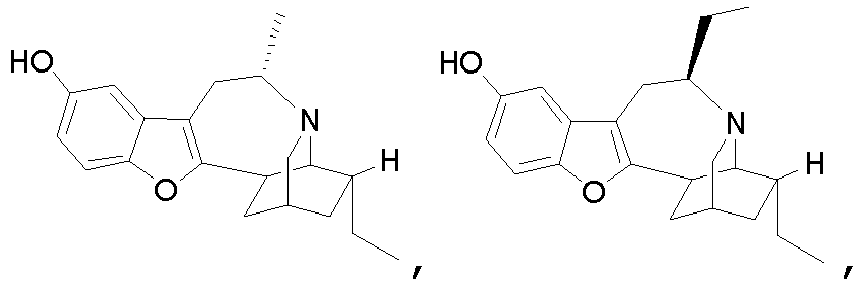


- Composé selon la revendication 1 ou 7 ayant la structure:

- Composé selon la revendication 1 ou 7 ayant la structure:

- Composé selon la revendication 1 ayant la structure:

- Composé selon la revendication 1 ayant la structure:

- Composé selon la revendication 1 ayant la structure:
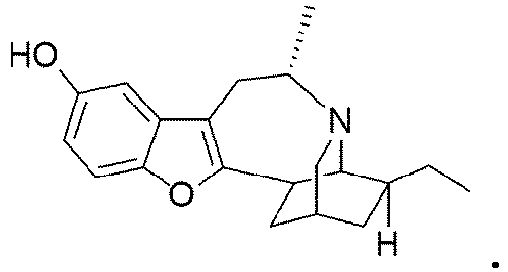
- Composé selon la revendication 1 ayant la structure:

- Composition pharmaceutique comprenant le composé selon l'une quelconque des revendications 1-15 et un vecteur pharmaceutiquement acceptable.
- Composé selon l'une quelconque des revendications 1-15 ou composition selon la revendication 16 destiné(e) à être utilisé(e) dans le traitement d'un sujet souffrant de dépression, de dépression majeure, de douleur, d'un trouble d'anxiété, de trouble obsessionnel-compulsif (TOC) ou de trouble de stress.
- Procédé pour produire le composé selon l'une quelconque des revendications 1-15 ayant la structure:
 (a) la mise en contact du composé ayant la structure:

Priority Applications (1)
| Application Number | Priority Date | Filing Date | Title |
|---|---|---|---|
| EP24200877.9A EP4487913A3 (fr) | 2014-11-26 | 2015-11-25 | Modulateurs des récepteurs opioïdes |
Applications Claiming Priority (3)
| Application Number | Priority Date | Filing Date | Title |
|---|---|---|---|
| US201462084994P | 2014-11-26 | 2014-11-26 | |
| US201562204318P | 2015-08-12 | 2015-08-12 | |
| PCT/US2015/062726 WO2016086158A1 (fr) | 2014-11-26 | 2015-11-25 | Modulateurs du récepteur opioïde |
Related Child Applications (1)
| Application Number | Title | Priority Date | Filing Date |
|---|---|---|---|
| EP24200877.9A Division EP4487913A3 (fr) | 2014-11-26 | 2015-11-25 | Modulateurs des récepteurs opioïdes |
Publications (3)
| Publication Number | Publication Date |
|---|---|
| EP3224261A1 EP3224261A1 (fr) | 2017-10-04 |
| EP3224261A4 EP3224261A4 (fr) | 2018-05-16 |
| EP3224261B1 true EP3224261B1 (fr) | 2024-09-18 |
Family
ID=56075051
Family Applications (2)
| Application Number | Title | Priority Date | Filing Date |
|---|---|---|---|
| EP24200877.9A Pending EP4487913A3 (fr) | 2014-11-26 | 2015-11-25 | Modulateurs des récepteurs opioïdes |
| EP15863352.9A Active EP3224261B1 (fr) | 2014-11-26 | 2015-11-25 | Modulateurs du récepteur opioïde |
Family Applications Before (1)
| Application Number | Title | Priority Date | Filing Date |
|---|---|---|---|
| EP24200877.9A Pending EP4487913A3 (fr) | 2014-11-26 | 2015-11-25 | Modulateurs des récepteurs opioïdes |
Country Status (4)
| Country | Link |
|---|---|
| US (3) | US11840541B2 (fr) |
| EP (2) | EP4487913A3 (fr) |
| ES (1) | ES3007998T3 (fr) |
| WO (1) | WO2016086158A1 (fr) |
Families Citing this family (13)
| Publication number | Priority date | Publication date | Assignee | Title |
|---|---|---|---|---|
| WO2013028999A1 (fr) | 2011-08-24 | 2013-02-28 | The Trustees Of Columbia University In The City Of New York | Petites molécules inductrices de gdnf comme nouvelle thérapeutique possible des troubles neuropsychiatriques |
| JP6557674B2 (ja) | 2014-03-12 | 2019-08-07 | ザ・トラスティーズ・オブ・コランビア・ユニバーシティー・イン・ザ・シティー・オブ・ニューヨーク | 新規クラスのミュー−オピオイド受容体アゴニスト |
| US11840541B2 (en) | 2014-11-26 | 2023-12-12 | The Trustees Of Columbia University In The City Of New York | Opioid receptor modulators |
| AU2016323977B9 (en) | 2015-09-16 | 2021-03-04 | The Trustees Of Columbia University In The City Of New York | Carboxylic diarylthiazepineamines as mu-opioid receptor agonists |
| US10961244B2 (en) | 2016-03-25 | 2021-03-30 | The Trustees Of Columbia University In The City Of New York | Mitragynine alkaloids as opioid receptor modulators |
| JP7094942B2 (ja) * | 2017-03-15 | 2022-07-04 | 住友ファーマ株式会社 | ベンズイミダゾール誘導体の製造方法 |
| WO2021178691A1 (fr) | 2020-03-05 | 2021-09-10 | The Trustees Of Columbia University In The City Of New York | Analogues de l'ibogaïne en tant qu'agents thérapeutiques pour des troubles neurologiques et psychiatriques |
| CN111747837A (zh) * | 2020-06-12 | 2020-10-09 | 苏州华道生物药业股份有限公司 | 一种反式-4-氧代-2-己烯醛的合成方法 |
| MX2023009294A (es) * | 2021-02-08 | 2023-11-09 | Univ Columbia | Analogos inspirados por oxa-ibogaina para el tratamiento de trastornos neurologicos y psiquiatricos. |
| WO2022178099A1 (fr) * | 2021-02-17 | 2022-08-25 | The Trustees Of Columbia University In The City Of New York | Analogues d'oxa-ibogaïne pour le traitement de troubles liés à l'utilisation de substances |
| US20240376116A1 (en) * | 2023-04-28 | 2024-11-14 | Atai Therapeutics, Inc. | Ibogaine and noribogaine analogs and methods of use |
| WO2025184442A1 (fr) * | 2024-03-01 | 2025-09-04 | Gilgamesh Pharmaceuticals, Inc. | Sels cristallins d'oxanoribogaïne |
| WO2025240512A1 (fr) * | 2024-05-13 | 2025-11-20 | The Trustees Of Columbia University In The City Of New York | Nouveaux analogues d'alcaloïdes iboga et leurs utilisations |
Family Cites Families (19)
| Publication number | Priority date | Publication date | Assignee | Title |
|---|---|---|---|---|
| US3639408A (en) | 1967-06-03 | 1972-02-01 | Shionogi & Co | Process for the preparation of isoquinuclidine derivatives |
| US5106979A (en) | 1989-02-21 | 1992-04-21 | University Of Pittsburgh | Method for the synthesis of huperzine A and analogs thereof and compounds useful therein |
| IE912239A1 (en) * | 1990-07-24 | 1992-01-29 | Akzo Nv | Tetrahydropyridinyldibenzazepine derivatives |
| US20050032873A1 (en) | 2003-07-30 | 2005-02-10 | Wyeth | 3-Amino chroman and 2-amino tetralin derivatives |
| WO2006023821A2 (fr) | 2004-08-20 | 2006-03-02 | The Trustees Of Columbia University In The City Of New York | Ligands pour aldocetoreductases |
| WO2006026368A2 (fr) | 2004-08-25 | 2006-03-09 | The Trustees Of Collumbia University In The City Of New York | Mise au point de substrats fluorogenes destines aux monoamine oxydases (mao-a and mao-b) |
| WO2007022263A1 (fr) | 2005-08-16 | 2007-02-22 | The Trustees Of Columbia University In The City Of New York | Sondes fluorogenes pour acyl-coa deshydrogenase des acides gras a chaine moyenne (mcad) |
| US8337941B2 (en) | 2006-07-27 | 2012-12-25 | The Trustees Of Columbia University In The City Of New York | Fluorescent substrates for monoamine transporters as optical false neurotransmitters |
| WO2011094560A1 (fr) | 2010-01-29 | 2011-08-04 | The Trustees Of Columbia University In The City Of New York | Faux neurotransmetteurs flourescents réactifs au ph et leur utilisation |
| US8741891B1 (en) * | 2010-06-22 | 2014-06-03 | Demerx, Inc. | N-substituted noribogaine prodrugs |
| WO2012088402A1 (fr) * | 2010-12-22 | 2012-06-28 | The Scripps Research Institute | Synthèse de la conolidine et découverte d'un analgésique non opioïde puissant pour la douleur |
| WO2012110986A1 (fr) | 2011-02-18 | 2012-08-23 | Actelion Pharmaceuticals Ltd | Nouveaux dérivés de pyrazole et d'imidazole utiles à titre d'antagonistes d'orexine |
| WO2013028999A1 (fr) * | 2011-08-24 | 2013-02-28 | The Trustees Of Columbia University In The City Of New York | Petites molécules inductrices de gdnf comme nouvelle thérapeutique possible des troubles neuropsychiatriques |
| WO2013112757A1 (fr) * | 2012-01-25 | 2013-08-01 | Demerx, Inc. | Dérivés d'isoquinuclidène réunis par fusion à de l'indole et du benzofurane et leurs procédés de préparation |
| JP6557674B2 (ja) | 2014-03-12 | 2019-08-07 | ザ・トラスティーズ・オブ・コランビア・ユニバーシティー・イン・ザ・シティー・オブ・ニューヨーク | 新規クラスのミュー−オピオイド受容体アゴニスト |
| US11840541B2 (en) | 2014-11-26 | 2023-12-12 | The Trustees Of Columbia University In The City Of New York | Opioid receptor modulators |
| AU2016323977B9 (en) | 2015-09-16 | 2021-03-04 | The Trustees Of Columbia University In The City Of New York | Carboxylic diarylthiazepineamines as mu-opioid receptor agonists |
| US10961244B2 (en) | 2016-03-25 | 2021-03-30 | The Trustees Of Columbia University In The City Of New York | Mitragynine alkaloids as opioid receptor modulators |
| WO2018170275A1 (fr) | 2017-03-15 | 2018-09-20 | The Trustees Of Columbia University In The City Of New York | Diarythiazépinamines carboxyliques en tant qu'agonistes mixtes de récepteur d'opioïde mu et delta |
-
2015
- 2015-11-25 US US15/528,339 patent/US11840541B2/en active Active
- 2015-11-25 EP EP24200877.9A patent/EP4487913A3/fr active Pending
- 2015-11-25 WO PCT/US2015/062726 patent/WO2016086158A1/fr not_active Ceased
- 2015-11-25 EP EP15863352.9A patent/EP3224261B1/fr active Active
- 2015-11-25 ES ES15863352T patent/ES3007998T3/es active Active
-
2023
- 2023-04-07 US US18/297,081 patent/US12195478B2/en active Active
-
2024
- 2024-12-20 US US18/990,408 patent/US20250122213A1/en active Pending
Also Published As
| Publication number | Publication date |
|---|---|
| US20250122213A1 (en) | 2025-04-17 |
| EP4487913A3 (fr) | 2025-04-16 |
| EP3224261A4 (fr) | 2018-05-16 |
| US11840541B2 (en) | 2023-12-12 |
| US20230271976A1 (en) | 2023-08-31 |
| EP4487913A2 (fr) | 2025-01-08 |
| WO2016086158A1 (fr) | 2016-06-02 |
| US12195478B2 (en) | 2025-01-14 |
| EP3224261A1 (fr) | 2017-10-04 |
| ES3007998T3 (en) | 2025-03-21 |
| US20170334923A1 (en) | 2017-11-23 |
Similar Documents
| Publication | Publication Date | Title |
|---|---|---|
| US12195478B2 (en) | Opioid receptor modulators | |
| US11912707B2 (en) | Mitragynine alkaloids as opioid receptor modulators | |
| EP3116509B1 (fr) | Nouvelle classe d'agonistes du récepteur mu-opioïde | |
| ES2329739T3 (es) | Analogos de cocaina. | |
| NZ560368A (en) | Methods and compostions for treatment of central and peripheral nervous system disorders and novel compounds useful therefor | |
| US11760758B2 (en) | Mitragynine analogs for the treatment of pain, mood disorders and substance use disorders | |
| RU2241001C2 (ru) | Производные галантамина, способ их получения, лекарственное средство на их основе и способ его получения | |
| WO2013028999A1 (fr) | Petites molécules inductrices de gdnf comme nouvelle thérapeutique possible des troubles neuropsychiatriques | |
| JPH02504394A (ja) | フロ〔3,4‐c〕ピリジン鏡像体の立体特異的製造方法、かくして得られた化合物及びこれの製薬組成物 | |
| HK40120508A (en) | Opioid receptor modulators | |
| EP3768679B1 (fr) | Agonistes de type opioïde puissants biaisés agissant en tant que médicaments améliorés pour le traitement d'une douleur chronique et aiguë et procédés d'utilisation associées | |
| AU2013240007A1 (en) | Schweinfurthin analogues | |
| US20250346581A1 (en) | Process for synthesis of galbulimima alkaloid 18 and compounds useful as opioid receptor antagonists and agonists | |
| EP4561699A1 (fr) | Agonistes et antagonistes sélectifs du récepteur opioïde | |
| JPH11514383A (ja) | 神経保護活性を有するチアモルヒナン | |
| WO2020094634A1 (fr) | Promédicaments de thiophène de naltroxène pour compositions injectables à action prolongée et procédés associés | |
| HK1206745B (en) | Schweinfurthin analogues |
Legal Events
| Date | Code | Title | Description |
|---|---|---|---|
| STAA | Information on the status of an ep patent application or granted ep patent |
Free format text: STATUS: THE INTERNATIONAL PUBLICATION HAS BEEN MADE |
|
| PUAI | Public reference made under article 153(3) epc to a published international application that has entered the european phase |
Free format text: ORIGINAL CODE: 0009012 |
|
| STAA | Information on the status of an ep patent application or granted ep patent |
Free format text: STATUS: REQUEST FOR EXAMINATION WAS MADE |
|
| 17P | Request for examination filed |
Effective date: 20170622 |
|
| AK | Designated contracting states |
Kind code of ref document: A1 Designated state(s): AL AT BE BG CH CY CZ DE DK EE ES FI FR GB GR HR HU IE IS IT LI LT LU LV MC MK MT NL NO PL PT RO RS SE SI SK SM TR |
|
| AX | Request for extension of the european patent |
Extension state: BA ME |
|
| RIN1 | Information on inventor provided before grant (corrected) |
Inventor name: WULF, MADALEE G. Inventor name: JAVITCH, JONATHAN A. Inventor name: SAMES, DALIBOR Inventor name: KRUEGEL, ANDREW C. |
|
| DAV | Request for validation of the european patent (deleted) | ||
| DAX | Request for extension of the european patent (deleted) | ||
| A4 | Supplementary search report drawn up and despatched |
Effective date: 20180413 |
|
| RIC1 | Information provided on ipc code assigned before grant |
Ipc: A61P 25/04 20060101ALI20180409BHEP Ipc: C07D 495/18 20060101ALI20180409BHEP Ipc: C07D 471/18 20060101ALI20180409BHEP Ipc: C07D 491/18 20060101AFI20180409BHEP Ipc: A61P 25/24 20060101ALI20180409BHEP |
|
| STAA | Information on the status of an ep patent application or granted ep patent |
Free format text: STATUS: EXAMINATION IS IN PROGRESS |
|
| 17Q | First examination report despatched |
Effective date: 20190617 |
|
| P01 | Opt-out of the competence of the unified patent court (upc) registered |
Effective date: 20230314 |
|
| GRAP | Despatch of communication of intention to grant a patent |
Free format text: ORIGINAL CODE: EPIDOSNIGR1 |
|
| STAA | Information on the status of an ep patent application or granted ep patent |
Free format text: STATUS: GRANT OF PATENT IS INTENDED |
|
| INTG | Intention to grant announced |
Effective date: 20240408 |
|
| GRAS | Grant fee paid |
Free format text: ORIGINAL CODE: EPIDOSNIGR3 |
|
| GRAA | (expected) grant |
Free format text: ORIGINAL CODE: 0009210 |
|
| STAA | Information on the status of an ep patent application or granted ep patent |
Free format text: STATUS: THE PATENT HAS BEEN GRANTED |
|
| AK | Designated contracting states |
Kind code of ref document: B1 Designated state(s): AL AT BE BG CH CY CZ DE DK EE ES FI FR GB GR HR HU IE IS IT LI LT LU LV MC MK MT NL NO PL PT RO RS SE SI SK SM TR |
|
| REG | Reference to a national code |
Ref country code: GB Ref legal event code: FG4D |
|
| REG | Reference to a national code |
Ref country code: CH Ref legal event code: EP |
|
| REG | Reference to a national code |
Ref country code: IE Ref legal event code: FG4D |
|
| REG | Reference to a national code |
Ref country code: DE Ref legal event code: R096 Ref document number: 602015089949 Country of ref document: DE |
|
| REG | Reference to a national code |
Ref country code: LT Ref legal event code: MG9D |
|
| PG25 | Lapsed in a contracting state [announced via postgrant information from national office to epo] |
Ref country code: NO Free format text: LAPSE BECAUSE OF FAILURE TO SUBMIT A TRANSLATION OF THE DESCRIPTION OR TO PAY THE FEE WITHIN THE PRESCRIBED TIME-LIMIT Effective date: 20241218 |
|
| PG25 | Lapsed in a contracting state [announced via postgrant information from national office to epo] |
Ref country code: GR Free format text: LAPSE BECAUSE OF FAILURE TO SUBMIT A TRANSLATION OF THE DESCRIPTION OR TO PAY THE FEE WITHIN THE PRESCRIBED TIME-LIMIT Effective date: 20241219 Ref country code: FI Free format text: LAPSE BECAUSE OF FAILURE TO SUBMIT A TRANSLATION OF THE DESCRIPTION OR TO PAY THE FEE WITHIN THE PRESCRIBED TIME-LIMIT Effective date: 20240918 |
|
| PG25 | Lapsed in a contracting state [announced via postgrant information from national office to epo] |
Ref country code: BG Free format text: LAPSE BECAUSE OF FAILURE TO SUBMIT A TRANSLATION OF THE DESCRIPTION OR TO PAY THE FEE WITHIN THE PRESCRIBED TIME-LIMIT Effective date: 20240918 |
|
| PG25 | Lapsed in a contracting state [announced via postgrant information from national office to epo] |
Ref country code: LV Free format text: LAPSE BECAUSE OF FAILURE TO SUBMIT A TRANSLATION OF THE DESCRIPTION OR TO PAY THE FEE WITHIN THE PRESCRIBED TIME-LIMIT Effective date: 20240918 |
|
| PG25 | Lapsed in a contracting state [announced via postgrant information from national office to epo] |
Ref country code: HR Free format text: LAPSE BECAUSE OF FAILURE TO SUBMIT A TRANSLATION OF THE DESCRIPTION OR TO PAY THE FEE WITHIN THE PRESCRIBED TIME-LIMIT Effective date: 20240918 |
|
| REG | Reference to a national code |
Ref country code: NL Ref legal event code: MP Effective date: 20240918 |
|
| PG25 | Lapsed in a contracting state [announced via postgrant information from national office to epo] |
Ref country code: RS Free format text: LAPSE BECAUSE OF FAILURE TO SUBMIT A TRANSLATION OF THE DESCRIPTION OR TO PAY THE FEE WITHIN THE PRESCRIBED TIME-LIMIT Effective date: 20241218 |
|
| PG25 | Lapsed in a contracting state [announced via postgrant information from national office to epo] |
Ref country code: RS Free format text: LAPSE BECAUSE OF FAILURE TO SUBMIT A TRANSLATION OF THE DESCRIPTION OR TO PAY THE FEE WITHIN THE PRESCRIBED TIME-LIMIT Effective date: 20241218 Ref country code: NO Free format text: LAPSE BECAUSE OF FAILURE TO SUBMIT A TRANSLATION OF THE DESCRIPTION OR TO PAY THE FEE WITHIN THE PRESCRIBED TIME-LIMIT Effective date: 20241218 Ref country code: LV Free format text: LAPSE BECAUSE OF FAILURE TO SUBMIT A TRANSLATION OF THE DESCRIPTION OR TO PAY THE FEE WITHIN THE PRESCRIBED TIME-LIMIT Effective date: 20240918 Ref country code: HR Free format text: LAPSE BECAUSE OF FAILURE TO SUBMIT A TRANSLATION OF THE DESCRIPTION OR TO PAY THE FEE WITHIN THE PRESCRIBED TIME-LIMIT Effective date: 20240918 Ref country code: GR Free format text: LAPSE BECAUSE OF FAILURE TO SUBMIT A TRANSLATION OF THE DESCRIPTION OR TO PAY THE FEE WITHIN THE PRESCRIBED TIME-LIMIT Effective date: 20241219 Ref country code: FI Free format text: LAPSE BECAUSE OF FAILURE TO SUBMIT A TRANSLATION OF THE DESCRIPTION OR TO PAY THE FEE WITHIN THE PRESCRIBED TIME-LIMIT Effective date: 20240918 Ref country code: BG Free format text: LAPSE BECAUSE OF FAILURE TO SUBMIT A TRANSLATION OF THE DESCRIPTION OR TO PAY THE FEE WITHIN THE PRESCRIBED TIME-LIMIT Effective date: 20240918 |
|
| REG | Reference to a national code |
Ref country code: AT Ref legal event code: MK05 Ref document number: 1724624 Country of ref document: AT Kind code of ref document: T Effective date: 20240918 |
|
| PG25 | Lapsed in a contracting state [announced via postgrant information from national office to epo] |
Ref country code: NL Free format text: LAPSE BECAUSE OF FAILURE TO SUBMIT A TRANSLATION OF THE DESCRIPTION OR TO PAY THE FEE WITHIN THE PRESCRIBED TIME-LIMIT Effective date: 20240918 |
|
| REG | Reference to a national code |
Ref country code: ES Ref legal event code: FG2A Ref document number: 3007998 Country of ref document: ES Kind code of ref document: T3 Effective date: 20250321 |
|
| PG25 | Lapsed in a contracting state [announced via postgrant information from national office to epo] |
Ref country code: IS Free format text: LAPSE BECAUSE OF FAILURE TO SUBMIT A TRANSLATION OF THE DESCRIPTION OR TO PAY THE FEE WITHIN THE PRESCRIBED TIME-LIMIT Effective date: 20250118 Ref country code: PT Free format text: LAPSE BECAUSE OF FAILURE TO SUBMIT A TRANSLATION OF THE DESCRIPTION OR TO PAY THE FEE WITHIN THE PRESCRIBED TIME-LIMIT Effective date: 20250120 |
|
| PG25 | Lapsed in a contracting state [announced via postgrant information from national office to epo] |
Ref country code: SM Free format text: LAPSE BECAUSE OF FAILURE TO SUBMIT A TRANSLATION OF THE DESCRIPTION OR TO PAY THE FEE WITHIN THE PRESCRIBED TIME-LIMIT Effective date: 20240918 Ref country code: RO Free format text: LAPSE BECAUSE OF FAILURE TO SUBMIT A TRANSLATION OF THE DESCRIPTION OR TO PAY THE FEE WITHIN THE PRESCRIBED TIME-LIMIT Effective date: 20240918 |
|
| PG25 | Lapsed in a contracting state [announced via postgrant information from national office to epo] |
Ref country code: EE Free format text: LAPSE BECAUSE OF FAILURE TO SUBMIT A TRANSLATION OF THE DESCRIPTION OR TO PAY THE FEE WITHIN THE PRESCRIBED TIME-LIMIT Effective date: 20240918 Ref country code: AT Free format text: LAPSE BECAUSE OF FAILURE TO SUBMIT A TRANSLATION OF THE DESCRIPTION OR TO PAY THE FEE WITHIN THE PRESCRIBED TIME-LIMIT Effective date: 20240918 |
|
| PG25 | Lapsed in a contracting state [announced via postgrant information from national office to epo] |
Ref country code: CZ Free format text: LAPSE BECAUSE OF FAILURE TO SUBMIT A TRANSLATION OF THE DESCRIPTION OR TO PAY THE FEE WITHIN THE PRESCRIBED TIME-LIMIT Effective date: 20240918 Ref country code: PL Free format text: LAPSE BECAUSE OF FAILURE TO SUBMIT A TRANSLATION OF THE DESCRIPTION OR TO PAY THE FEE WITHIN THE PRESCRIBED TIME-LIMIT Effective date: 20240918 |
|
| PG25 | Lapsed in a contracting state [announced via postgrant information from national office to epo] |
Ref country code: SK Free format text: LAPSE BECAUSE OF FAILURE TO SUBMIT A TRANSLATION OF THE DESCRIPTION OR TO PAY THE FEE WITHIN THE PRESCRIBED TIME-LIMIT Effective date: 20240918 |
|
| REG | Reference to a national code |
Ref country code: DE Ref legal event code: R097 Ref document number: 602015089949 Country of ref document: DE |
|
| REG | Reference to a national code |
Ref country code: CH Ref legal event code: PL |
|
| PG25 | Lapsed in a contracting state [announced via postgrant information from national office to epo] |
Ref country code: MC Free format text: LAPSE BECAUSE OF FAILURE TO SUBMIT A TRANSLATION OF THE DESCRIPTION OR TO PAY THE FEE WITHIN THE PRESCRIBED TIME-LIMIT Effective date: 20240918 |
|
| PG25 | Lapsed in a contracting state [announced via postgrant information from national office to epo] |
Ref country code: DK Free format text: LAPSE BECAUSE OF FAILURE TO SUBMIT A TRANSLATION OF THE DESCRIPTION OR TO PAY THE FEE WITHIN THE PRESCRIBED TIME-LIMIT Effective date: 20240918 |
|
| PG25 | Lapsed in a contracting state [announced via postgrant information from national office to epo] |
Ref country code: LU Free format text: LAPSE BECAUSE OF NON-PAYMENT OF DUE FEES Effective date: 20241125 |
|
| REG | Reference to a national code |
Ref country code: CH Ref legal event code: PL |
|
| PG25 | Lapsed in a contracting state [announced via postgrant information from national office to epo] |
Ref country code: CH Free format text: LAPSE BECAUSE OF NON-PAYMENT OF DUE FEES Effective date: 20241130 |
|
| PLBE | No opposition filed within time limit |
Free format text: ORIGINAL CODE: 0009261 |
|
| STAA | Information on the status of an ep patent application or granted ep patent |
Free format text: STATUS: NO OPPOSITION FILED WITHIN TIME LIMIT |
|
| 26N | No opposition filed |
Effective date: 20250619 |
|
| REG | Reference to a national code |
Ref country code: BE Ref legal event code: MM Effective date: 20241130 |
|
| PG25 | Lapsed in a contracting state [announced via postgrant information from national office to epo] |
Ref country code: SE Free format text: LAPSE BECAUSE OF FAILURE TO SUBMIT A TRANSLATION OF THE DESCRIPTION OR TO PAY THE FEE WITHIN THE PRESCRIBED TIME-LIMIT Effective date: 20240918 |
|
| PG25 | Lapsed in a contracting state [announced via postgrant information from national office to epo] |
Ref country code: BE Free format text: LAPSE BECAUSE OF NON-PAYMENT OF DUE FEES Effective date: 20241130 |
|
| PG25 | Lapsed in a contracting state [announced via postgrant information from national office to epo] |
Ref country code: IE Free format text: LAPSE BECAUSE OF NON-PAYMENT OF DUE FEES Effective date: 20241125 |
|
| PGFP | Annual fee paid to national office [announced via postgrant information from national office to epo] |
Ref country code: DE Payment date: 20251119 Year of fee payment: 11 |
|
| PGFP | Annual fee paid to national office [announced via postgrant information from national office to epo] |
Ref country code: GB Payment date: 20251121 Year of fee payment: 11 |
|
| PGFP | Annual fee paid to national office [announced via postgrant information from national office to epo] |
Ref country code: IT Payment date: 20251119 Year of fee payment: 11 |
|
| PGFP | Annual fee paid to national office [announced via postgrant information from national office to epo] |
Ref country code: FR Payment date: 20251126 Year of fee payment: 11 |
|
| PGFP | Annual fee paid to national office [announced via postgrant information from national office to epo] |
Ref country code: ES Payment date: 20251229 Year of fee payment: 11 |
|
| PG25 | Lapsed in a contracting state [announced via postgrant information from national office to epo] |
Ref country code: HU Free format text: LAPSE BECAUSE OF FAILURE TO SUBMIT A TRANSLATION OF THE DESCRIPTION OR TO PAY THE FEE WITHIN THE PRESCRIBED TIME-LIMIT; INVALID AB INITIO Effective date: 20151125 |
|
| PG25 | Lapsed in a contracting state [announced via postgrant information from national office to epo] |
Ref country code: CY Free format text: LAPSE BECAUSE OF FAILURE TO SUBMIT A TRANSLATION OF THE DESCRIPTION OR TO PAY THE FEE WITHIN THE PRESCRIBED TIME-LIMIT; INVALID AB INITIO Effective date: 20151125 |