EP3224367B1 - Procédé pour l'extraction de bioplastique et production de monomères à partir du bioplastique - Google Patents
Procédé pour l'extraction de bioplastique et production de monomères à partir du bioplastique Download PDFInfo
- Publication number
- EP3224367B1 EP3224367B1 EP15863047.5A EP15863047A EP3224367B1 EP 3224367 B1 EP3224367 B1 EP 3224367B1 EP 15863047 A EP15863047 A EP 15863047A EP 3224367 B1 EP3224367 B1 EP 3224367B1
- Authority
- EP
- European Patent Office
- Prior art keywords
- bioplastic
- cells
- pha
- extraction
- poly
- Prior art date
- Legal status (The legal status is an assumption and is not a legal conclusion. Google has not performed a legal analysis and makes no representation as to the accuracy of the status listed.)
- Active
Links
Images




Classifications
-
- C—CHEMISTRY; METALLURGY
- C08—ORGANIC MACROMOLECULAR COMPOUNDS; THEIR PREPARATION OR CHEMICAL WORKING-UP; COMPOSITIONS BASED THEREON
- C08J—WORKING-UP; GENERAL PROCESSES OF COMPOUNDING; AFTER-TREATMENT NOT COVERED BY SUBCLASSES C08B, C08C, C08F, C08G or C08H
- C08J11/00—Recovery or working-up of waste materials
- C08J11/04—Recovery or working-up of waste materials of polymers
- C08J11/10—Recovery or working-up of waste materials of polymers by chemically breaking down the molecular chains of polymers or breaking of crosslinks, e.g. devulcanisation
- C08J11/105—Recovery or working-up of waste materials of polymers by chemically breaking down the molecular chains of polymers or breaking of crosslinks, e.g. devulcanisation by treatment with enzymes
-
- C—CHEMISTRY; METALLURGY
- C12—BIOCHEMISTRY; BEER; SPIRITS; WINE; VINEGAR; MICROBIOLOGY; ENZYMOLOGY; MUTATION OR GENETIC ENGINEERING
- C12N—MICROORGANISMS OR ENZYMES; COMPOSITIONS THEREOF; PROPAGATING, PRESERVING, OR MAINTAINING MICROORGANISMS; MUTATION OR GENETIC ENGINEERING; CULTURE MEDIA
- C12N1/00—Microorganisms; Compositions thereof; Processes of propagating, maintaining or preserving microorganisms or compositions thereof; Processes of preparing or isolating a composition containing a microorganism; Culture media therefor
- C12N1/20—Bacteria; Culture media therefor
-
- C—CHEMISTRY; METALLURGY
- C08—ORGANIC MACROMOLECULAR COMPOUNDS; THEIR PREPARATION OR CHEMICAL WORKING-UP; COMPOSITIONS BASED THEREON
- C08L—COMPOSITIONS OF MACROMOLECULAR COMPOUNDS
- C08L101/00—Compositions of unspecified macromolecular compounds
- C08L101/16—Compositions of unspecified macromolecular compounds the macromolecular compounds being biodegradable
-
- C—CHEMISTRY; METALLURGY
- C12—BIOCHEMISTRY; BEER; SPIRITS; WINE; VINEGAR; MICROBIOLOGY; ENZYMOLOGY; MUTATION OR GENETIC ENGINEERING
- C12N—MICROORGANISMS OR ENZYMES; COMPOSITIONS THEREOF; PROPAGATING, PRESERVING, OR MAINTAINING MICROORGANISMS; MUTATION OR GENETIC ENGINEERING; CULTURE MEDIA
- C12N1/00—Microorganisms; Compositions thereof; Processes of propagating, maintaining or preserving microorganisms or compositions thereof; Processes of preparing or isolating a composition containing a microorganism; Culture media therefor
- C12N1/06—Lysis of microorganisms
-
- C—CHEMISTRY; METALLURGY
- C12—BIOCHEMISTRY; BEER; SPIRITS; WINE; VINEGAR; MICROBIOLOGY; ENZYMOLOGY; MUTATION OR GENETIC ENGINEERING
- C12N—MICROORGANISMS OR ENZYMES; COMPOSITIONS THEREOF; PROPAGATING, PRESERVING, OR MAINTAINING MICROORGANISMS; MUTATION OR GENETIC ENGINEERING; CULTURE MEDIA
- C12N1/00—Microorganisms; Compositions thereof; Processes of propagating, maintaining or preserving microorganisms or compositions thereof; Processes of preparing or isolating a composition containing a microorganism; Culture media therefor
- C12N1/20—Bacteria; Culture media therefor
- C12N1/205—Bacterial isolates
-
- C—CHEMISTRY; METALLURGY
- C12—BIOCHEMISTRY; BEER; SPIRITS; WINE; VINEGAR; MICROBIOLOGY; ENZYMOLOGY; MUTATION OR GENETIC ENGINEERING
- C12P—FERMENTATION OR ENZYME-USING PROCESSES TO SYNTHESISE A DESIRED CHEMICAL COMPOUND OR COMPOSITION OR TO SEPARATE OPTICAL ISOMERS FROM A RACEMIC MIXTURE
- C12P7/00—Preparation of oxygen-containing organic compounds
- C12P7/40—Preparation of oxygen-containing organic compounds containing a carboxyl group including Peroxycarboxylic acids
- C12P7/42—Hydroxy-carboxylic acids
-
- C—CHEMISTRY; METALLURGY
- C12—BIOCHEMISTRY; BEER; SPIRITS; WINE; VINEGAR; MICROBIOLOGY; ENZYMOLOGY; MUTATION OR GENETIC ENGINEERING
- C12P—FERMENTATION OR ENZYME-USING PROCESSES TO SYNTHESISE A DESIRED CHEMICAL COMPOUND OR COMPOSITION OR TO SEPARATE OPTICAL ISOMERS FROM A RACEMIC MIXTURE
- C12P7/00—Preparation of oxygen-containing organic compounds
- C12P7/62—Carboxylic acid esters
- C12P7/625—Polyesters of hydroxy carboxylic acids
-
- C—CHEMISTRY; METALLURGY
- C08—ORGANIC MACROMOLECULAR COMPOUNDS; THEIR PREPARATION OR CHEMICAL WORKING-UP; COMPOSITIONS BASED THEREON
- C08J—WORKING-UP; GENERAL PROCESSES OF COMPOUNDING; AFTER-TREATMENT NOT COVERED BY SUBCLASSES C08B, C08C, C08F, C08G or C08H
- C08J2367/00—Characterised by the use of polyesters obtained by reactions forming a carboxylic ester link in the main chain; Derivatives of such polymers
- C08J2367/04—Polyesters derived from hydroxy carboxylic acids, e.g. lactones
-
- C—CHEMISTRY; METALLURGY
- C12—BIOCHEMISTRY; BEER; SPIRITS; WINE; VINEGAR; MICROBIOLOGY; ENZYMOLOGY; MUTATION OR GENETIC ENGINEERING
- C12R—INDEXING SCHEME ASSOCIATED WITH SUBCLASSES C12C - C12Q, RELATING TO MICROORGANISMS
- C12R2001/00—Microorganisms ; Processes using microorganisms
- C12R2001/01—Bacteria or Actinomycetales ; using bacteria or Actinomycetales
- C12R2001/07—Bacillus
Definitions
- the present invention relates to a bio-based process for extraction and depolymerization of bioplastics from bioplastic-producing microbial cells.
- bioplastics After the oil crisis and during the past three decades, biopolymers produced from biomass and having properties suitable for use as plastics, hence called as bioplastics, have gained a lot of interest as renewable alternative to petroleum based plastics.
- bioplastics include polyhydroxyalkanoates (PHAs) that belong to the polyester class of polymers.
- PHAs polyhydroxyalkanoates
- Poly(3-hydroxybutyrate), (PHB) is a homopolymer and is the most common type of PHA produced by microorganisms.
- Several microbial strains are also able to produce other PHA homopolymers or copolymers with varying monomer composition such as poly(hydroxybutyrate- co- hydroxyvalerate) (PHBV), poly(hydroxybutyrate-co-hydroxyhexanoate) (PHBHx), poly(hydroxyoctanoate-co-hydroxyhexanoate) (PHOHx), etc.
- PHAs are of interest as bio-derived and biodegradable plastics and have properties similar to the widely used fossil based plastics, polyethylene and polypropylene. Examples of properties may be thermoplasticity, good resistance to moisture, aroma barrier properties, etc. Also, the possibility to produce PHAs with different properties by varying the monomer composition, using different renewable carbon sources, and their complete biodegradability upon being decomposed in soil, make PHAs highly interesting substitutes for conventional plastics. Moreover, PHAs show great biocompatibility in different pharmaceutical and medicinal applications, in addition to their promising industrial and agricultural applications.
- Polylactic acid or polylactide is also a biodegradable aliphatic bioplastic derived from renewable resources, such as corn starch, tapioca roots, chips or starch, or sugarcane.
- PLA like PHA, belong to the polyester class. Synthesis of PLA by recombinant bacteria has also been reported.
- WO14032633 a method for producing polyhydroxyalkanoates from oil substrate is disclosed. Further, in WO12149162 production of polyhydroxyalkanoate with genetically engineered microbes is disclosed.
- Processes for production of PHA bioplastics involve methods of extracting the produced bioplastic material from the microbial cells producing said bioplastic.
- Today such methods involve various chemicals as part of the process.
- Chemicals that could be used to extract the bioplastic from the cells may be chosen from organic solvents, detergents, acid, alkali, or hypochlorite.
- the use of different types of chemicals in the production of bioplastics is both costly and not desirable due to their high environmental impact.
- WO08065749 and WO11145683 disclose methods for producing natural polymeric substances for molding of a biodegradable material.
- the method of extraction utilizes a time consuming drying and grinding step providing an end product of low purity.
- WO 2011/112154 discloses the extraction of PHA from PHA-containing microbes using fungi that release enzymes that hydrolyze the microbial cell walls.
- WO 2006/103699 discloses the use of Actinomycetes for cell lysis of PHA producing bacteria.
- PHAs are regarded to be a novel renewable source for enatiomerically pure chemicals via depolymerization of PHAs into its monomeric composition, R -3-hydroxyalkanoic acids ( R -3-HAs). Because of the interesting industrial and medical applications of R-3-HAs, different chemical and biological depolymerization methods are being investigated to achieve an economic and easy-to-apply process for R-3HA production from PHA.
- the bacterial cells are of Bacillus pumilus FH9.
- the extraction process further is comprising a separation step, wherein proteins, peptides, or amino acids or any combinations thereof are separated from the bioplastic.
- the separation is performed by decantation, filtration, centrifugation, aggregation, air flotation or precipitation or any combinations thereof.
- One embodiment is further comprising a washing step preferably after extraction and separation to wash the obtained bioplastic. In one embodiment, said washing step is preferably performed using water as washing liquid.
- said bioplastic-producing microbial cells are bacterial cells. In one embodiment said bioplastic-producing microbial cells are bacterial or archaeal strains. In one embodiment said bioplastic-producing microbial cells are selected from a strain selected from the group Ralstonia, Halomonas, Zobellella, Pseudomonas, Alcaligenes, Bacillus, Chromobacterium, recombinant Eschericha coli or any combinations thereof. Other PHA-accumulating strains or other bioplastic-producing microbial cells or mixed cultures could be used.
- the bioplastic is a polyester. In one embodiment said bioplastic is a linear polyester. In another embodiment the bioplastic is selected from different polyhydroxyalkanoates (PHAs), such as poly(3-hydroxypropionate) (PHP or P3HP), poly(3-hydroxybutyrate) (PHB or P3HB), poly(4-hydroxybutyrate) (P4HB), poly(3-hydroxyvalerate) (PHV or P3HV), poly(4-hydroxyvalerate) (P4HV), poly(5-hydroxyvalerate) (P5HV), poly(3-hydroxyhexanoate) (PHHx or P3HHx), poly(3-hydroxyoctanoate) (PHO, or P3HO), poly(3-hydroxydecanoate) (PHD or P3HD), poly(3-hydroxyundecanoate) (PHU, P3HU), or other short- or medium-chain length, saturated or unsaturated PHAs; or polylactic acid (PLA); or their copolymers or PHA
- the provision of the depolymerization substance is provided via addition of microbial cells producing said bioplastic depolymerization substance.
- said added microbial cells produce a thermostable extracellular PHA depolymerase.
- said microbial cells are selected from the strain Schlegelella thermodepolymerans K14.
- the process of the present invention is further comprising a separation step for retrieval of the depolymerization substance. In one aspect, said process further comprises the steps of:
- the bioplastic is a linear polyester. In one embodiment said bioplastic is polyhydroxyalkanoate (PHA).
- PHA polyhydroxyalkanoate
- biopolymer composition obtainable by the process according to the present invention comprising a purity of biopolymer of at least 88%, preferably at least 90%, preferably at least 95%, preferably at least 97%, preferably at least 98%.
- bioplastic extracted according to the present invention for the production of products selected from the group comprising bioactive nanobeads, biocompatible products, biodegradable or renewable products, thermoplast, elastomer products or polymer precursors.
- One aspect relates to the use of products chosen from the group comprising coatings, foils, diapers, wastebags, tyres, packaging, single use articles, protein purification matrix, implant parts, bone replacements, slow release drug or fertilizer/pesticide carriers.
- One aspect relates to the use of a bioplastic extracting process for the production of monomers.
- said monomers are preferably hydroxyalkanoate (HA) monomers.
- Another aspect relates to the use of a bioplastic extracting process for the production of proteins, peptides, or amino acids or any combinations thereof.
- One aspect relates to the use of the bioplastic extracting process for production of waste proteinaceous biomass preferably from the microbial fermentation industry or agro or animal/poultry industries.
- Yet another aspect relates to the use of a bioplastic extraction process for the production of biopolymers with a purity of 95% comprising no use of a organic solvents.
- a further aspect relates to use of a bioplastic extracting process according to the present invention for the production of monomers from linear polyesters.
- Another aspect relates to use of a bioplastic extracting process according to the present invention for production of a bioplastic or monomers thereof are selected from the group polyhydroxyalkanoates (PHAs): poly(3-hydroxypropionate) (PHP or P3HP), poly(3-hydroxybutyrate) (PHB or P3HB), poly(4-hydroxybutyrate) (P4HB), poly(3-hydroxyvalerate) (PHV or P3HV), poly(4-hydroxyvalerate) (P4HV), poly(5-hydroxyvalerate) (P5HV), poly(3-hydroxyhexanoate) (PHHx or P3HHx), poly(3-hydroxyoctanoate) (PHO, or P3HO), poly(3-hydroxydecanoate) (PHD or P3HD), poly(3-hydroxyundecanoate) (PHU, P3HU
- microbial intracellular polymers are selected from the group lipids (preferably triacylglycerol or TAGs), polyanhydride particles (preferably polyphosphate) or polysaccarides (preferably glycogen).
- the present inivention relates to the use of a bacterial strain from the species Bacillus pumilus for lysing bioplastic producing bacterial cells.
- the present invention relates to a bio-based process for the extraction of bioplastics produced in microbial cells.
- a bio-based process for the production of monomers from said bioplastics are operated without the use of any chemicals, such as organic solvents, acid, alkali or other chemical additives.
- organic solvents such as organic solvents, acid, alkali or other chemical additives.
- the bioplastics are obtained in a native form without any degradation or other losses.
- non-bioplastic materials are also obtained during the extraction process.
- the non-bioplastic materials could comprise different cellular materials, such as lipids, nucleic acids, proteins, peptides and/or amino acids and other biochemical molecules.
- the present method of extraction involves the provision of microbial cells containing bioplastic materials.
- the bioplastics are accumulated as granules in the cytoplasm of the microbial cell.
- the cells containing the bioplastics are preferably bacterial or archaeal cells.
- the mentioned cells containing the bioplastics are contacted with inoculum of bacterial cells of the genus Bacillus, preferably of the species Bacillus pumilus.
- the Bacillus cells act on the cell wall of the microbial cells containing the bioplastics, mainly they lyse it and utilize its constituents as nutrients for growth. In doing so, they disintegrate the cell structure of the bioplastic containing cells and uncover the bioplastic granules. The exposed bioplastic granules may then be collected.
- the lysis of the bioplastic containing cells may be performed using one or several enzyme and/or other lysis affecting materials.
- the lysate obtained upon the lysis of the bioplastic containing cells is supposed to comprise exposed bioplastic (e.g. as granules), proteins, peptides, amino acids and other cell residues in aqueous solution.
- the bioplastic may be removed and used as a high-end, high-purity product. It may also be used in furher processes. Further, proteins, peptides and/or amino acids and other biomolecules may also be recovered as further value-added products.
- the process according to the present invention also enables production of the monomers of the recovered bioplastics by depolymerization.
- the depolymerization is achieved using depolymerising substances or microbial cells producing such depolymerising substances.
- Depolymerising substances may be chosen from enzymes and other depolymerization affecting substances.
- Depolymerization may be performed in one or more steps. As a one step process, depolymerising substances may be added to the bioplastics or the complete mixture from the extraction process containing the bioplastics. Alternatively, the bioplastics or the complete mixture from the extraction process containing the bioplastics disclosed above, may be contacted with microbial cells producing depolymerising substances.
- the mixture formed may contain a mixture of monomers and oligomers.
- the microbial cells producing the depolymerising substances may start acting on, e.g. consuming, the obtained monomers, which may result in a decreased yield of monomers.
- the depolymerization may be performed in multiple steps. By providing a first step wherein a bioplastic or a mixture containing such a bioplastic is contacted with microbial cells producing depolymerising substances and allowed to react.
- the reaction is terminated.
- the obtained mixture comprises cells, depolymerizing substances, polymers, monomers etc.
- a separation step separates depolymerizing substances from the other contents.
- the separated depolymerizing substances may then be used in a second step, and admixed with a bioplastic or a mixture containing such a bioplastic. This two-step process is a way to increase the yield of the monomers to be obtained.
- the production of monomers from bioplastic produced according to the present process enables production of specific monomers in high purity.
- This method of producing monomers may be very attractive because of its simplicity, cost-efficiency, energy-efficiency, high product purity and low environmental impact.
- the monomers that may be obtained in enantiomerically pure form may be very difficult to obtain via conventional routes.
- the present invention relates to a process for extraction of bioplastic from bioplastic-producing microbial cells, comprising the steps of:
- the present invention provides an organic solvent free option, and therefore suggests a more cost-efficient and environment-friendly alternative technology to existing bioplastic extraction processes.
- Another aspect described herein relates to a process of producing monomers from bioplastic, comprising the steps of:
- the process for extracting bioplastic from producing microbial cells and depolymerization of extracted polymer granules may comprise different standard components, such as various batch size, baffles, stirrers and so forth.
- the design of the process for extracting bioplastic from producing microbial cells may vary, and the present invention, as formulated in the claims and exemplified within this application should be seen as embodying different forms of the product.
- Bioplastics as defined herein are plastics derived from renewable biomass sources, such as, but not limited to, sugars like glucose, sucrose, fructose, lactose, or xylose); vegetable fats and oils; methanol; glycerol; starch, cellulose, hemicellulose, lignin, or whey hydrolyzate; or gases (such as CH 4 or CO 2 ); or any combination or waste substrates or streams thereof.
- Petrochemical plastics are derived from petroleum. Petrochemical plastics are based on fossil fuels and this contributes to the carbondioxide load. Some, but not all, bioplastics are biodegradable. Biodegradable bioplastics can be broken down in either anaerobic or aerobic environments, depending on their composition. There is a variety of materials that bioplastics can be composed of, such as, but not limited to, starches, cellulose, or other biopolymers; or any combination thereof.
- the extraction of bioplastic from producing microbial cells is performed by cell lysis.
- lytic bacterial cells from the species Bacillus pumilus are used, said cells, in contact with another bioplastic-producing microbial cells, contributes to an extraction reaction which may be lysis.
- the lytic bacterial cells contributing to the extraction may produce an extraction substance that break down the cell wall of the bioplastic-producing cell, liberating the bioplastic.
- the bacterial cells used for extraction are in one embodiment part of the species Bacillus pumilus and the cellular features of B. pumilus are synonymous with other species of the genus Bacillus including B. subtilis, B. megaterium, B. licheniformis, and B. cereus. Therefore, extraction of bioplastics from bioplastic-producing microbial cells may be done with other bacterial cells than cells of the species B. pumilus.
- the present invention as described herewith is to be considered to embody various options of extraction species.
- the lytic bacterial cells are selected from the group comprising 1T, 272T, 567T, ATCC 7061T, BCRC 11065T, BCRC 1706T, CCEB 639T, CCM 2144T, CCRC 11065T, CCRC 11706T, CCT 0513T, CCUG 26015T, CCUG 26016T, CECT 29T, CGMCC 1.3533T, CIP 52.67T, CN 2200T, CNCM 52.67T, DSM 27T, DSMZ 27T, Gordon 272T, GottheilT, HAMBI 1826T, IAM 12469T, IM 14177T, IAM 567T, IFO 12092T, JCM 2508T, KACC 10917T, KCTC 3348T, KCTC 3855T, LMD 48.24T, LMG 8928, LMG 7132T, LMG 7132 t1T, LMG 7132 t2T, Logan B0019T, Lohnis
- the lytic bacterial cells are originated from the strain FH9 and in one specific embodiment said FH9 produces extracellular enzymes.
- enzymes produced by the lytic bacterial cell may be proteases, glycosidases and/or lipases and in yet another specific embodiment the enzymes, such as proteases, glycosidases and/or lipases, act on the cell wall of the bioplastic-producing cells.
- the present invention illustrates a process where various products may be collected and refined.
- the process further comprises a separation step, wherein proteins, peptides, amino acids, nucleic acids, and other biomolecules, or any combinations thereof are separated from the bioplastic.
- the separation may be performed in various ways and some examples, however not exclusively, may be separation by decantation, filtration, centrifugation, aggregation, airflotation or precipitation or any combinations thereof.
- This step separate the plastic and renders it possible to further separate cellular components from the plastic.
- Such components may, as previously mentioned, be proteins, peptides, amino acids, nucleic acids, and/or other biomolecules.
- Such cellular components may in further steps be collected and/or processed further.
- the present invention is further compatible with various further process steps, when producing bioplastics, such as in one embodiment the process further comprisies a washing step preferably after the extraction and separation, to wash the obtained removed bioplastic. This step cleans the plastic from remained cellular components.
- the washing step is performed using water as washing liquid.
- the process for extracting bioplastics according to the present invention may comprise different steps, and also as having varied designs, which are not explicitly mentioned. Examples of such are one or more separation steps, concentration, stirring, controlling temperature and/or controlling pH, etc.
- the design of the equipment used may vary, and the present invention, as according to the claims, should be seen as embodying different forms of equipments.
- the extraction of bioplastic is accomplished with lytic bacterial cells from the species B. pumilus.
- the lytic bacterial cells are selected from the group biomass-degrading-enzymes producing microorganisms, such as protease/lipase/glycosidase-producing bacteria.
- the microbial cells containing bioplastics are selected from the group Ralstonia eutropha, Halomonas boliviensis, Zobellella denitrificans and recombinant Eschericha coli.
- the lytic bacterial strain FH9 has been deposited at DSMZ on 2014-03-24 Number: DSM 28594.
- the bioplastic is a polyester, preferably a linear polyester.
- the bioplastic could be, but not limited to, one of polyhydroxyalkanoates (PHAs), such as poly(3-hydroxypropionate) (PHP or P3HP), poly(3-hydroxybutyrate) (PHB or P3HB), poly(4-hydroxybutyrate) (P4HB), poly(3-hydroxyvalerate) (PHV or P3HV), poly(4-hydroxyvalerate) (P4HV), poly(5-hydroxyvalerate) (P5HV), poly(3-hydroxyhexanoate) (PHHx or P3HHx), poly(3-hydroxyoctanoate) (PHO, or P3HO), poly(3-hydroxydecanoate) (PHD or P3HD), poly(3-hydroxyundecanoate) (PHU, P3HU), or other short- or medium-chain length, saturated or unsaturated PHAs; or polylactic acid (PLAs), such as poly(3-hydroxyprop
- the present invention discloses an environment-friendly option to existing alternatives since in one embodiment, no organic solvent or chemicals or any combinations thereof are used in the process.
- the bioplastic produced may be polylactic acid.
- the polymerisation of the lactic acid may occur in recombinant microbial cells by providing lactic acid-producing microbial cells with PHA synthase enzyme from said PHA synthesizing bacterial strain. Said polylactic acid may then be extracted as disclosed above, and optionally depolymerising the polymer to obtain enantiomeric monomers.
- a biopolymer composition obtainable by the process for extraction of bioplastic from bioplastic-producing microbial cells, is comprising a purity of biopolymer of at least 88%, preferably at least 90%, preferably at least 95%, preferably at least 97%, preferably at least 98%, and a recovery of at least 85% of the original PHA accumulated in the producing microbial cells.
- One aspect described herein comprises the use of a bioplastic extracting process according to the present invention for the production of bioplastic with a purity of 95% and recovery of 85%, comprising no use of an organic solvent.
- Bioplastics are used in various applications in the industry today, and are part of, or the sole component of, many consumer articles. Further, the bioplastic produced according to the present invention is biocompatible and implies use, for example, within the field of surgery.
- One aspect comprises the use of a bioplastic extracted according to the process for extraction of bioplastic from bioplastic-producing microbial cells, for the production of products selected from the group comprising bioactive nanobeads (for example protein purification matrix), biocompatible products (for example implant parts, bone replacements), biodegradable products (for example slow release drug or fertilizer/pesticide carriers) or renewable thermoplast or elastomer products preferably chosen from the group comprising bags, boxes, bottles, cans, coatings, foils, diapers, wastebags, tyres, packaging, single use articles but not exclusively.
- bioactive nanobeads for example protein purification matrix
- biocompatible products for example implant parts, bone replacements
- biodegradable products for example slow release drug or fertilizer/pesticide carriers
- renewable thermoplast or elastomer products preferably chosen from the group comprising bags, boxes, bottles, cans, coatings, foils, diapers, wastebags, tyres, packaging, single use articles but not exclusively.
- Another aspect comprises the use of a bioplastic extracting process, according to the present invention, for the production of proteins, peptides, amino acids and/or other biomolecules or any combinations thereof.
- One aspect relates to production of proteins, peptides and/or amino acids from proteinaceous biomass wastes.
- Said biomass wastes may be originated from the microbial fermentation industry or agro- , animal-, fish-, algae- or poultry industries.
- Another aspect relates to a process of producing monomers from bioplastic, comprising the steps of:
- a depolymerising substance of step E is performed by addition of microbial cells which produces said depolymerization substance.
- the depolymerization substance may be an enzyme, e.g. a PHA extracellular depolymerase.
- the enzyme is used for the depolymerization of the bioplastic.
- the depolymerizing substance is provided via addition of microbial cells, producing said depolymerizing substance.
- the provision of enzyme is provided via addition of thermophilic PHA-degrading bacterial cells, which e.g. is producing thermostable extracellular PHA-depolymerase (s).
- the microbial cells used for depolymerization are Schlegelella thermodepolymerans or any other PHA-depolymerizing thermophilic or mesophilic microorganism (bacteria, actinomycetes or fungi).
- said depolymerizing substance is a PHA-extracellular depolymerase.
- said depolymerizing enzyme is a PHA-extracellular depolymerase and PHA oligomer hydrolase or any combinations thereof.
- Another aspect comprises the use of a bioplastic extracting process according to the present invention for the production of monomers, e.g. hydroxyalkanoate (HA) monomers.
- monomers e.g. hydroxyalkanoate (HA) monomers.
- the obtained monomers may be removed by a separation step.
- step E If the depolymerising substance of step E is performed by addition of microbial cells which produce the depolymerization substance, then a separation step may be performed to remove the formed depolymerization substance from the depolymerization mixture.
- the depolymerization substance may be used to further depolymerise bioplastic produced according to the process for extraction of bioplastic from bioplastic-producing microbial cells, according to the process below.
- step F if the depolymerization in step F is performed by addition of the depolymerization substance which was produced by microbial cells, said process further comprises the steps of:
- the depolymerization substance may be separated from the process mixture and reused further.
- steps G-I preferably do not have cells present.
- the invention comprises a separation step for provision of S. thermodepolymerans enzyme.
- Another aspect relates to a process of producing monomers from bioplastic, comprising the steps of:
- the microbial cells producing the depolymerising substance are bacterial cells, preferably a thermophilic bacterial strain is used for the depolymerization of bioplastic.
- a thermostable PHA depolymerase is used for the depolymerization of bioplastic.
- the PHA depolymerizing substance is an extracellular thermostable PHA depolymerase from Schlegelella thermodepolymerans or any other PHA depolymerizing microorganism (bacteria, actinomycetes or fungi).
- One embodiment illustrates a process of producing cellular proteinaceous byproducts, using the process according to the present invention including the step of separating the bioplastic extracted from the proteins, peptides and/or amino acids or any combination thereof.
- the proteins, peptides and/or amino acids may be considered as some of the thinkable products produced as a result of the present invention.
- Other products may be the monomers or the polymers produced as well as isolated extraction substances such as vitamins, enzymes, cofactors, lipids, carbohydrates, metabolites, osmolytes, and/or the like.
- Another aspect comprises the possible use of a bioplastic extracting and depolymerization processes for the production of other microbial intracellular polymers such as lipids (triacylglycerol, TAGs), polyanhydride particles (polyphosphate) or polysaccharides (glycogen), and the possible depolymerization into its constituents.
- lipids triacylglycerol, TAGs
- polyanhydride particles polyphosphate
- glycogen polysaccharides
- the process according to the present invention is a complete bio-based process for the extraction of bioplastics, PHAs, from the cells of the bioplastic-producing strains. It is assumed that this process can be applied for the extraction of PHAs from any accumulating strains or mixed cultures as it was proven using different PHA-producing strains in this invention.
- the purity of the granules could be easily improved by simple washing steps using only water or with commercial detergent. Autoclaving of the granules is an additional step to ensure the inactivation of any residual cells of the lysing bacteria.
- the invention was extended to produce the monomer of, for example R-3HA as an easy and cost effective bio-based method for enantiomerically pure chemicals.
- R -3HA has numerous medical applications, such as its enhancing effect on cell proliferation.
- PHB was completely degraded by the thermophilic strain using its extracellular PHA depolymerase.
- the enzymatic bioconversion of the polymer into R-3HB was achieved at 70°C using thermophilic PHA depolymerase crude preparation in a liter scale.
- This invention is a completely non-organic solvent, non-chemical extraction process for the bioplastics, PHAs, and for its monomers production, and this in addition to the amino acids rich by-product.
- This technology might also be applied for the utilization of other microbial cellular materials remaining from any biotechnological process, where a huge cellular biomass could be converted into valuable product.
- Process A Extraction of PHA granules from producing microbial cells.
- Pre-cultures were prepared by full loop of well grown colony from plates into 250-ml Erlenmeyer flasks, both with the same medium. after inoculation, cultures were incubated at 37°C for 24 h under shaking condition (180 rpm).
- the pH of the culture was adjusted at 7.5 before sterilization. Flasks were incubated at temperature 37°C and 180 rpm. Samples of 10-ml volume were taken for analyses at different incubation periods (0, 12, 26, 48, 72, and 240 h).
- Culture broths were harvested after 10 days by centrifugation at 10000 rpm for 10 min. The recovered pellets were washed three times with distilled H 2 O and centrifuged at 6000 rpm for 10 min. Much slower speed could be applied to recover the aggregated granules, while most of the cells of the lysing strain, FH9, remain in the supernatant and can be separated easily by decantation.
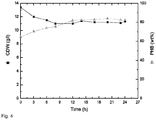
- Process A was conducted in a larger scale (3-I fermentor). Around 92 gram wet cells of Z. denitrificans (13.4 g/l CDW, 64.4 wt% PHB) were sterilized in 1500 ml basal medium. Well-grown pre-culture of strain FH9 (100 ml) was used as the lysis inoculum for the fermentor culture (ZdFF). Batch cultivation was performed in stirred tank fermentor at 37°C, pH 8.0, for 24 hours. Samples of 10-ml size were withdrawn from the fermentor at different time intervals for monitoring of the lysis reaction and for further biochemical analyses. After 24 hours, ZdFF culture was harvested by centrifugation at 10000 rpm for 20 min. Recovered lysis pellet was kept without washing at - 20°C for further analyses and application.
- pellets were then frozen and lyophilized for further GC and GPC analysis of PHA purity and molecular weight changes.
- Process B Depolymerization of PHA.
- Depolymerization of recovered PHA granules was performed to produce the 3-hydroxyalkanoic acid via a completely bio-based process.
- thermophilic strain for extracellular PHA-depolymerase production was used in this process.
- Pellets were sterilized in fermentor containing 1500 ml cultivation medium for the degrading thermophilic strain, mineral salts medium containing (g/l): Na 2 HPO 4 ⁇ 12H 2 O, 9.0; KH 2 PO 4 , 1.5; MgSO ⁇ 7H 2 O, 0.2; NH 4 Cl, 1.0; CaCl 2 ⁇ 2H 2 O, 0.02; Fe(III)NH 4 -citrate, 0.0012; 1 ml of trace elements solution containing (g/l): EDTA, 50.0; FeCl 3 , 8.3; ZnCI2, 0.84; CuCl 2 ⁇ 2H 2 O, 0.13; CoCl 2 ⁇ 6H 2 O, 0.1; MnCl 2 ⁇ 6H 2 O, 0.016; H 3 BO 3 , 0.1. Pellets from ZdFF was used as the sole carbon source.
- mineral salts medium containing (g/l): Na 2 HPO 4 ⁇ 12H 2 O, 9.0; KH 2 PO 4
- Process C Enzymatic depolymerization of PHA.
- CWW Cell wet weight
- CDW cell dry weight
- GC analyses 10-20 mg lyophilized cells or pellets were methanolyzed in chloroform and acidic methanol (15% H 2 SO 4 ) for 3-4 hours at 100°C. Chloroform phase was used for GC analyses of 3-hydroxymethyl esters of PHA moieties. Lyophilized supernatants of process B and C were also methanolyzed and used to detect depolymerization products by GC.
- PHA wt% Weight content of PHA (PHA wt%) was determined by GC in dry samples of known weight against standard sample of highly purified PHA, and used for purity and recovery calculation as well.
- HPLC was used for the detection of released microbial or enzymatic depolymerization products, 3-hydroxyalkanoic acid, from provided poly(3-hydroxyalkanoic acid) granules.
- Process A Lysis of PHA-producing microbial strains.
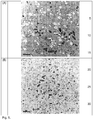
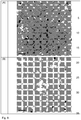
- Electron microscope images show dramatic physical disruption of cell wall and other non-PHA cellular materials, even after only 6 hours of the inoculation with strain FH9 ( Fig. 3 B ). With increase in fermentation time, PHA granules were released completely and appear to be free of other cellular materials. Some free granules were seen to merge together ( Fig. 3 B, C ; size 0.3-1.0 ⁇ m) forming granules larger than the size of normal granules inside the cells ( Fig. 3 A; size ⁇ 0.3 ⁇ m). It was also noticed that the predominance of FH9 cells (rod cells) increased with time between 6h and 24h ( Fig. 3 B, C ).
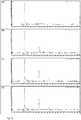
- the microscopic graph in Figure 3 C shows the complete spherical shape of the recovered PHA granules in a mixture with cells of strain FH9. Some granules are seen to have other cellular material around. This may be the reason of low purity of the recovered PHA detected by GC (not washed pellets from process A) ( Fig. 4 ). However it is clear that during the first 12 hours, significant improved purity has been achieved as a result of the hydrolysis of non-PHA cellular materials by the action of the lytic strain, B. pumilus FH9.
- Lysis time of 12 hours seems enough for release of PHA granules after lysing the other cellular materials.
- PHB content in this recovered mixture increased from 64.4 wt% to 81.8 wt%. Slightly higher PHB content was reached by the increased lysis time, maximum PHB content was achieved at 20 h (83.8 wt%). Very high PHB recovery was achieved when 97-100% of the cellular content of PHA before the lysis was recovered at the end of the culture. Separation and washing of the released granules from the culture broth could give higher purity polymer granules. This relatively short time is very promising for industrial application of the process. As a single-step extraction if compared with other reported shorter but multiple-step extraction processes.
- the product of the lysis process using strain FH9 was a mixture of PHA granules with some non-PHA molecules, probably attached proteins and/or lipids in addition to the growing FH9 cells. This mixture was easily recovered by centrifugation. Additional separation step is needed to separate the PHA granules from some of the growing lysing cells and lysis products.
- Process B Bacterial Depolymerization of PHA.
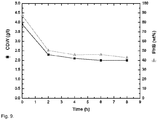
- Scanning electron microscopic graph ( Fig. 5 C ) also shows a direct contact of the PHA-depolymerizing cells on the degradation of PHA granules during growth.
- the granules are used as the sole source of carbon for the depolymerizing cells.
- Process C Enzymatic depolymerization of PHA for 3-HA production.
Landscapes
- Chemical & Material Sciences (AREA)
- Life Sciences & Earth Sciences (AREA)
- Organic Chemistry (AREA)
- Engineering & Computer Science (AREA)
- Health & Medical Sciences (AREA)
- Wood Science & Technology (AREA)
- Zoology (AREA)
- Biotechnology (AREA)
- Bioinformatics & Cheminformatics (AREA)
- Genetics & Genomics (AREA)
- General Engineering & Computer Science (AREA)
- General Health & Medical Sciences (AREA)
- Microbiology (AREA)
- Biochemistry (AREA)
- Medicinal Chemistry (AREA)
- Chemical Kinetics & Catalysis (AREA)
- Biomedical Technology (AREA)
- Virology (AREA)
- Tropical Medicine & Parasitology (AREA)
- General Chemical & Material Sciences (AREA)
- Polymers & Plastics (AREA)
- Mycology (AREA)
- Sustainable Development (AREA)
- Preparation Of Compounds By Using Micro-Organisms (AREA)
Claims (9)
- Procédé pour l'extraction de bioplastique à partir de cellules microbiennes, comprenant les étapes de :A. fournir des cellules microbiennes productrices de bioplastique comprenant du bioplastique sous forme de granules;B. fournir des cellules bactériennes sélectionnées à partir dans l'espèce Bacillus pumilus ;C. extraire le bioplastique sous forme de granules en mélangeant les cellules microbiennes productrices de bioplastique de l'étape A et les cellules bactériennes de l'étape B et permettre la réaction sans interagir avec ou consommer le bioplastique des cellules microbiennes productrices de bioplastique ;dans lequel l'extraction comprend une étape de lyse par lesdites cellules bactériennes sélectionnées à partir de l'espèce Bacillus pumilus pour désintégrer la structure cellulaire des cellules microbiennes productrices de bioplastique comprenant du bioplastique,
dans lequel ledit procédé pour l'extraction de bioplastique est une extraction et une récupération de granules de bioplastique sans solvant organique et sans produit chimique. - Procédé selon la revendication 1, dans lequel les cellules bactériennes sélectionnées à partir de l'espèce Bacillus pumilus sont issues de la souche FH9 déposée sous DSM 28594.
- Procédé selon l'une quelconque des revendications 1 ou 2, dans lequel les bioplastiques sont obtenus sous une forme native sans aucune dégradation ni autres pertes.
- Procédé selon l'une quelconque des revendications 1-3, dans lequel le procédé pour extraction comprend en outre une étape de séparation, dans laquelle des protéines, des peptides ou des acides aminés ou toutes combinaisons de ceux-ci sont séparés des granules bioplastiques; de préférence dans laquelle la séparation est effectuée par décantation, filtration, centrifugation, agrégation, flottation à l'air ou précipitation ou toutes combinaisons de celles-ci.
- Procédé selon la revendication 4, comprenant en outre une étape de lavage de préférence après extraction et séparation pour laver les granules bioplastiques obtenus, ladite étape de lavage est de préférence exécutée en utilisant de l'eau en tant que liquide de lavage.
- Procédé selon l'une quelconque des revendications 1-5, dans lequel les cellules microbiennes productrices de bioplastiques sont sélectionnées dans le groupe Ralstonia, Halomonas, Zobel / el / a, Pseudomonas, Alcaligenes, Bacillus, Chromobacterium, Eschericha coli recombinant, ou toutes combinaisons de celles-ci ou d'autres cellules microbiennes produisant des bioplastiques, ou des cultures mixtes.
- Procédé selon l'une quelconque des revendications 1-6, dans lequel le bioplastique est un polyester, de préférence un polyester linéaire.
- Procédé selon l'une quelconque des revendications 1-7, dans lequel le bioplastique est sélectionné à partir de polyhydroxyalcanoates (PHA): poly(3-hydroxypropionate) (PHP ou P3HP), poly(3-hydroxybutyrate) (PHB ou P3HB), poly(4-hydroxybutyrate) (P4HB), poly(3-hydroxyvalérate) (PHV ou P3HV), poly(4-hydroxyvalérate) (P4HV), poly(5-hydroxyvalérate) (P5HV), poly(3-hydroxyhexanoate) (PHHx ou P3HHx), poly(3-hydroxyoctanoate) (PHO ou P3HO), poly(3- hydroxydécanoate) (PHO ou P3HD), poly(3-0 hydroxyundécanoate) (PHU, P3HU) ou autres PHA à chaîne courte ou moyenne, saturés ou insaturés; ou l'acide polylactique (PLA); ou leurs copolymères ou toute combinaison de ceux-ci.
- Utilisation d'une souche bactérienne choisie à partir de l'espèce Bacillus pumilus, ou d'une bactérie, Bacillus pumilus de souche FH9, numéro de dépôt DSM 28594, ou une variante de celle-ci, pour lyser des cellules microbiennes productrices de bioplastique, sans interagir avec ou consommer du bioplastique provenant des cellules microbiennes productrices de bioplastique.
Applications Claiming Priority (2)
| Application Number | Priority Date | Filing Date | Title |
|---|---|---|---|
| SE1451422 | 2014-11-25 | ||
| PCT/SE2015/051268 WO2016085396A1 (fr) | 2014-11-25 | 2015-11-25 | Procédé pour l'extraction de bioplastique et production de monomères à partir du bioplastique |
Publications (3)
| Publication Number | Publication Date |
|---|---|
| EP3224367A1 EP3224367A1 (fr) | 2017-10-04 |
| EP3224367A4 EP3224367A4 (fr) | 2018-06-06 |
| EP3224367B1 true EP3224367B1 (fr) | 2020-07-22 |
Family
ID=56074775
Family Applications (1)
| Application Number | Title | Priority Date | Filing Date |
|---|---|---|---|
| EP15863047.5A Active EP3224367B1 (fr) | 2014-11-25 | 2015-11-25 | Procédé pour l'extraction de bioplastique et production de monomères à partir du bioplastique |
Country Status (4)
| Country | Link |
|---|---|
| US (1) | US10597506B2 (fr) |
| EP (1) | EP3224367B1 (fr) |
| ES (1) | ES2828506T3 (fr) |
| WO (1) | WO2016085396A1 (fr) |
Families Citing this family (9)
| Publication number | Priority date | Publication date | Assignee | Title |
|---|---|---|---|---|
| CN110452833B (zh) * | 2019-07-05 | 2020-12-15 | 中国农业大学 | 一株降解大豆胰蛋白酶抑制剂的短小芽孢杆菌lz013-2及其应用 |
| US20240034985A1 (en) * | 2020-12-18 | 2024-02-01 | Liberty Biosecurity, Llc | Compositions from a bacterial organism and uses thereof |
| ES2932307T3 (es) | 2020-12-30 | 2023-01-17 | Bioextrax Ab | Sistemas para el cocultivo de cepas de ralstonia eutropha |
| BR112023023666A2 (pt) * | 2021-05-28 | 2024-02-06 | Kimberly Clark Co | Método para tratamento de um produto pós-consumo, sistema configurado para descontaminação e biodegradação simultâneas de um produto pós-consumo, e, célula |
| EP4347855A4 (fr) | 2021-05-28 | 2025-11-05 | Kimberly Clark Co | Bioréacteur et procédé de formation de polyhydroxybutyrate directement à partir de polyhydroxybutyrate dépolymérisé |
| KR102733939B1 (ko) * | 2021-05-28 | 2024-11-26 | 킴벌리-클라크 월드와이드, 인크. | 산업 응용을 위한 호염성 phb 탈중합효소의 최적화 |
| CN113336336B (zh) * | 2021-06-04 | 2022-03-29 | 中国科学院重庆绿色智能技术研究院 | 卓贝尔氏菌在高效除氨氮中的应用 |
| CN113308410B (zh) * | 2021-07-08 | 2022-05-31 | 山东绿邦生物科技有限公司 | 一种高效脱氮的反硝化细菌及其应用 |
| KR20240089066A (ko) | 2021-09-30 | 2024-06-20 | 킴벌리-클라크 월드와이드, 인크. | 폴리하이드록시알카노에이트의 탈중합 및 대사 과정을 통해 수득된 하이드록시알카노에이트 단량체의 재활용 |
Family Cites Families (7)
| Publication number | Priority date | Publication date | Assignee | Title |
|---|---|---|---|---|
| WO2006103699A1 (fr) | 2005-03-31 | 2006-10-05 | Council Of Scientific & Industrial Research | Un processus pour l'extraction de polyhydroxyalkanoates des bactéries |
| JP4117900B2 (ja) | 2006-11-30 | 2008-07-16 | 聖子 佐藤 | 植物由来の生分解性天然素材 |
| GB2478588A (en) | 2010-03-12 | 2011-09-14 | G5 Internat Holdings Pte Ltd | Microbial production of polyhydroxyalkanoates (PHAs) using culture medium containing hydrogen |
| JP4725869B1 (ja) | 2010-05-19 | 2011-07-13 | 聖子 佐藤 | バイオマスプラスチックの製造方法及びその成形品 |
| WO2012149162A2 (fr) | 2011-04-29 | 2012-11-01 | Metabolix, Inc. | Procédé écologique pour la production de polyhydroxyalcanoates et de produits chimiques à l'aide d'une matière biologique renouvelable |
| CZ2012571A3 (cs) | 2012-08-27 | 2013-12-11 | Vysoké ucení technické v Brne | Zpusob produkce polyhydroxyalkanoátu (PHA) na olejovém substrátu |
| TR201900782T4 (tr) | 2012-11-20 | 2019-02-21 | Carbios | Plastik ürünlerin geri dönüştürülmesine yönelik yöntem. |
-
2015
- 2015-11-25 US US15/529,028 patent/US10597506B2/en active Active
- 2015-11-25 ES ES15863047T patent/ES2828506T3/es active Active
- 2015-11-25 EP EP15863047.5A patent/EP3224367B1/fr active Active
- 2015-11-25 WO PCT/SE2015/051268 patent/WO2016085396A1/fr not_active Ceased
Non-Patent Citations (1)
| Title |
|---|
| None * |
Also Published As
| Publication number | Publication date |
|---|---|
| EP3224367A4 (fr) | 2018-06-06 |
| US10597506B2 (en) | 2020-03-24 |
| EP3224367A1 (fr) | 2017-10-04 |
| WO2016085396A1 (fr) | 2016-06-02 |
| US20170253713A1 (en) | 2017-09-07 |
| ES2828506T3 (es) | 2021-05-26 |
Similar Documents
| Publication | Publication Date | Title |
|---|---|---|
| US10597506B2 (en) | Process for extraction of bioplastic and production of monomers from the bioplastic | |
| Singhvi et al. | Biomass to biodegradable polymer (PLA) | |
| Koller | Modern biotechnological polymer synthesis: a review | |
| Tokiwa et al. | Review degradation of microbial polyesters | |
| Rohini et al. | Synthesis and characterization of poly-beta-hydroxybutyrate from Bacillus thuringiensis R1 | |
| Akhlaq et al. | Polyhydroxybutyrate biosynthesis from different waste materials, degradation, and analytic methods: A short review | |
| CA3110841C (fr) | Composition de polymeres biodegradables et son procede de production | |
| de Paula et al. | Burkholderia glumae MA13: A newly isolated bacterial strain suitable for polyhydroxyalkanoate production from crude glycerol | |
| US20240093249A1 (en) | Systems for co-culture of ralstonia eutropha strains | |
| Kumar Singh et al. | Pseudomonas aeruginosa MTCC 7925 as a biofactory for production of the novel SCL-LCL-PHA thermoplastic from non-edible oils | |
| Ali et al. | Microbial‐derived polymers and their degradability behavior for future prospects | |
| CN120077142A (zh) | 将聚酯生物再循环为pha | |
| Dalal et al. | Microbial polyhydroxyalkanoates: Current status and future prospects | |
| EP4320256A1 (fr) | Procédé de production de polyhydroxyalcanoates pour emballages alimentaires | |
| Eremia et al. | Studies on poly-3-hydroxyoctanoate biosynthesis by a consortium of microorganisms | |
| CA2499650A1 (fr) | Bioconversion de xylane et d'acide levulique en thermoplastiques biodegradables | |
| Ebu et al. | Polyhydroxyalkanoate Recovery From Newly Screened Bacillus Sp. LPPI-81 Using Various Methods of Extraction From Loktak Lake Sediment Sample | |
| Danış et al. | Polyhydroxyalkanoates production from renewable and waste materials using extremophiles/recombinant microbes | |
| Awasthi et al. | NeuroPharmac Journal | |
| Abdulkareem et al. | 5 Microbial Production of | |
| Ashby et al. | Agro-Based Waste-/Co-products as Feedstocks for Polyhydroxyalkanoate Biosynthesis | |
| Chobchuenchom | Selection and cultivation conditions of Bacillus thuringiensis L25. 1 for poly (3-hydroxybutyrate-co-3-hydroxyvalerate) production using native rice bran waste as the main nutrient | |
| Abdulkareem et al. | Microbial Production of Bio-Based Plastics | |
| Ibrahim et al. | Biobased extraction and depolymerization technology for PHA, PHA monomers, and biomass hydrolysate production | |
| Quillaguaman et al. | Biopolyester production: halophilic microorganisms as an attractive source |
Legal Events
| Date | Code | Title | Description |
|---|---|---|---|
| STAA | Information on the status of an ep patent application or granted ep patent |
Free format text: STATUS: THE INTERNATIONAL PUBLICATION HAS BEEN MADE |
|
| PUAI | Public reference made under article 153(3) epc to a published international application that has entered the european phase |
Free format text: ORIGINAL CODE: 0009012 |
|
| STAA | Information on the status of an ep patent application or granted ep patent |
Free format text: STATUS: REQUEST FOR EXAMINATION WAS MADE |
|
| 17P | Request for examination filed |
Effective date: 20170616 |
|
| AK | Designated contracting states |
Kind code of ref document: A1 Designated state(s): AL AT BE BG CH CY CZ DE DK EE ES FI FR GB GR HR HU IE IS IT LI LT LU LV MC MK MT NL NO PL PT RO RS SE SI SK SM TR |
|
| AX | Request for extension of the european patent |
Extension state: BA ME |
|
| RAP1 | Party data changed (applicant data changed or rights of an application transferred) |
Owner name: BIOEXTRAX AB |
|
| DAV | Request for validation of the european patent (deleted) | ||
| DAX | Request for extension of the european patent (deleted) | ||
| A4 | Supplementary search report drawn up and despatched |
Effective date: 20180508 |
|
| RIC1 | Information provided on ipc code assigned before grant |
Ipc: C12N 1/06 20060101AFI20180502BHEP Ipc: C12P 7/62 20060101ALI20180502BHEP Ipc: C12N 1/20 20060101ALI20180502BHEP Ipc: C08G 63/06 20060101ALI20180502BHEP Ipc: C12R 1/07 20060101ALN20180502BHEP Ipc: C08J 11/10 20060101ALI20180502BHEP |
|
| STAA | Information on the status of an ep patent application or granted ep patent |
Free format text: STATUS: EXAMINATION IS IN PROGRESS |
|
| 17Q | First examination report despatched |
Effective date: 20190626 |
|
| REG | Reference to a national code |
Ref country code: DE Ref legal event code: R079 Ref document number: 602015056317 Country of ref document: DE Free format text: PREVIOUS MAIN CLASS: C12P0007620000 Ipc: C12N0001060000 |
|
| GRAP | Despatch of communication of intention to grant a patent |
Free format text: ORIGINAL CODE: EPIDOSNIGR1 |
|
| RIC1 | Information provided on ipc code assigned before grant |
Ipc: C12P 7/62 20060101ALI20200128BHEP Ipc: C12N 1/06 20060101AFI20200128BHEP Ipc: C12R 1/07 20060101ALN20200128BHEP Ipc: C08G 63/06 20060101ALI20200128BHEP Ipc: C08J 11/10 20060101ALI20200128BHEP Ipc: C12N 1/20 20060101ALI20200128BHEP |
|
| STAA | Information on the status of an ep patent application or granted ep patent |
Free format text: STATUS: GRANT OF PATENT IS INTENDED |
|
| INTG | Intention to grant announced |
Effective date: 20200305 |
|
| GRAS | Grant fee paid |
Free format text: ORIGINAL CODE: EPIDOSNIGR3 |
|
| GRAA | (expected) grant |
Free format text: ORIGINAL CODE: 0009210 |
|
| STAA | Information on the status of an ep patent application or granted ep patent |
Free format text: STATUS: THE PATENT HAS BEEN GRANTED |
|
| AK | Designated contracting states |
Kind code of ref document: B1 Designated state(s): AL AT BE BG CH CY CZ DE DK EE ES FI FR GB GR HR HU IE IS IT LI LT LU LV MC MK MT NL NO PL PT RO RS SE SI SK SM TR |
|
| REG | Reference to a national code |
Ref country code: GB Ref legal event code: FG4D |
|
| REG | Reference to a national code |
Ref country code: CH Ref legal event code: EP |
|
| REG | Reference to a national code |
Ref country code: DE Ref legal event code: R096 Ref document number: 602015056317 Country of ref document: DE |
|
| REG | Reference to a national code |
Ref country code: AT Ref legal event code: REF Ref document number: 1293406 Country of ref document: AT Kind code of ref document: T Effective date: 20200815 |
|
| REG | Reference to a national code |
Ref country code: IE Ref legal event code: FG4D |
|
| REG | Reference to a national code |
Ref country code: NL Ref legal event code: FP |
|
| REG | Reference to a national code |
Ref country code: SE Ref legal event code: TRGR |
|
| REG | Reference to a national code |
Ref country code: LT Ref legal event code: MG4D |
|
| REG | Reference to a national code |
Ref country code: AT Ref legal event code: MK05 Ref document number: 1293406 Country of ref document: AT Kind code of ref document: T Effective date: 20200722 |
|
| PG25 | Lapsed in a contracting state [announced via postgrant information from national office to epo] |
Ref country code: FI Free format text: LAPSE BECAUSE OF FAILURE TO SUBMIT A TRANSLATION OF THE DESCRIPTION OR TO PAY THE FEE WITHIN THE PRESCRIBED TIME-LIMIT Effective date: 20200722 Ref country code: PT Free format text: LAPSE BECAUSE OF FAILURE TO SUBMIT A TRANSLATION OF THE DESCRIPTION OR TO PAY THE FEE WITHIN THE PRESCRIBED TIME-LIMIT Effective date: 20201123 Ref country code: HR Free format text: LAPSE BECAUSE OF FAILURE TO SUBMIT A TRANSLATION OF THE DESCRIPTION OR TO PAY THE FEE WITHIN THE PRESCRIBED TIME-LIMIT Effective date: 20200722 Ref country code: BG Free format text: LAPSE BECAUSE OF FAILURE TO SUBMIT A TRANSLATION OF THE DESCRIPTION OR TO PAY THE FEE WITHIN THE PRESCRIBED TIME-LIMIT Effective date: 20201022 Ref country code: GR Free format text: LAPSE BECAUSE OF FAILURE TO SUBMIT A TRANSLATION OF THE DESCRIPTION OR TO PAY THE FEE WITHIN THE PRESCRIBED TIME-LIMIT Effective date: 20201023 Ref country code: LT Free format text: LAPSE BECAUSE OF FAILURE TO SUBMIT A TRANSLATION OF THE DESCRIPTION OR TO PAY THE FEE WITHIN THE PRESCRIBED TIME-LIMIT Effective date: 20200722 Ref country code: NO Free format text: LAPSE BECAUSE OF FAILURE TO SUBMIT A TRANSLATION OF THE DESCRIPTION OR TO PAY THE FEE WITHIN THE PRESCRIBED TIME-LIMIT Effective date: 20201022 Ref country code: AT Free format text: LAPSE BECAUSE OF FAILURE TO SUBMIT A TRANSLATION OF THE DESCRIPTION OR TO PAY THE FEE WITHIN THE PRESCRIBED TIME-LIMIT Effective date: 20200722 |
|
| PG25 | Lapsed in a contracting state [announced via postgrant information from national office to epo] |
Ref country code: LV Free format text: LAPSE BECAUSE OF FAILURE TO SUBMIT A TRANSLATION OF THE DESCRIPTION OR TO PAY THE FEE WITHIN THE PRESCRIBED TIME-LIMIT Effective date: 20200722 Ref country code: PL Free format text: LAPSE BECAUSE OF FAILURE TO SUBMIT A TRANSLATION OF THE DESCRIPTION OR TO PAY THE FEE WITHIN THE PRESCRIBED TIME-LIMIT Effective date: 20200722 Ref country code: RS Free format text: LAPSE BECAUSE OF FAILURE TO SUBMIT A TRANSLATION OF THE DESCRIPTION OR TO PAY THE FEE WITHIN THE PRESCRIBED TIME-LIMIT Effective date: 20200722 Ref country code: IS Free format text: LAPSE BECAUSE OF FAILURE TO SUBMIT A TRANSLATION OF THE DESCRIPTION OR TO PAY THE FEE WITHIN THE PRESCRIBED TIME-LIMIT Effective date: 20201122 |
|
| REG | Reference to a national code |
Ref country code: DE Ref legal event code: R097 Ref document number: 602015056317 Country of ref document: DE |
|
| PG25 | Lapsed in a contracting state [announced via postgrant information from national office to epo] |
Ref country code: CZ Free format text: LAPSE BECAUSE OF FAILURE TO SUBMIT A TRANSLATION OF THE DESCRIPTION OR TO PAY THE FEE WITHIN THE PRESCRIBED TIME-LIMIT Effective date: 20200722 Ref country code: DK Free format text: LAPSE BECAUSE OF FAILURE TO SUBMIT A TRANSLATION OF THE DESCRIPTION OR TO PAY THE FEE WITHIN THE PRESCRIBED TIME-LIMIT Effective date: 20200722 Ref country code: RO Free format text: LAPSE BECAUSE OF FAILURE TO SUBMIT A TRANSLATION OF THE DESCRIPTION OR TO PAY THE FEE WITHIN THE PRESCRIBED TIME-LIMIT Effective date: 20200722 Ref country code: SM Free format text: LAPSE BECAUSE OF FAILURE TO SUBMIT A TRANSLATION OF THE DESCRIPTION OR TO PAY THE FEE WITHIN THE PRESCRIBED TIME-LIMIT Effective date: 20200722 Ref country code: EE Free format text: LAPSE BECAUSE OF FAILURE TO SUBMIT A TRANSLATION OF THE DESCRIPTION OR TO PAY THE FEE WITHIN THE PRESCRIBED TIME-LIMIT Effective date: 20200722 |
|
| REG | Reference to a national code |
Ref country code: ES Ref legal event code: FG2A Ref document number: 2828506 Country of ref document: ES Kind code of ref document: T3 Effective date: 20210526 |
|
| PLBE | No opposition filed within time limit |
Free format text: ORIGINAL CODE: 0009261 |
|
| STAA | Information on the status of an ep patent application or granted ep patent |
Free format text: STATUS: NO OPPOSITION FILED WITHIN TIME LIMIT |
|
| PG25 | Lapsed in a contracting state [announced via postgrant information from national office to epo] |
Ref country code: AL Free format text: LAPSE BECAUSE OF FAILURE TO SUBMIT A TRANSLATION OF THE DESCRIPTION OR TO PAY THE FEE WITHIN THE PRESCRIBED TIME-LIMIT Effective date: 20200722 |
|
| 26N | No opposition filed |
Effective date: 20210423 |
|
| PG25 | Lapsed in a contracting state [announced via postgrant information from national office to epo] |
Ref country code: MC Free format text: LAPSE BECAUSE OF FAILURE TO SUBMIT A TRANSLATION OF THE DESCRIPTION OR TO PAY THE FEE WITHIN THE PRESCRIBED TIME-LIMIT Effective date: 20200722 Ref country code: SK Free format text: LAPSE BECAUSE OF FAILURE TO SUBMIT A TRANSLATION OF THE DESCRIPTION OR TO PAY THE FEE WITHIN THE PRESCRIBED TIME-LIMIT Effective date: 20200722 |
|
| REG | Reference to a national code |
Ref country code: CH Ref legal event code: PL |
|
| PG25 | Lapsed in a contracting state [announced via postgrant information from national office to epo] |
Ref country code: LU Free format text: LAPSE BECAUSE OF NON-PAYMENT OF DUE FEES Effective date: 20201125 |
|
| PG25 | Lapsed in a contracting state [announced via postgrant information from national office to epo] |
Ref country code: LI Free format text: LAPSE BECAUSE OF NON-PAYMENT OF DUE FEES Effective date: 20201130 Ref country code: SI Free format text: LAPSE BECAUSE OF FAILURE TO SUBMIT A TRANSLATION OF THE DESCRIPTION OR TO PAY THE FEE WITHIN THE PRESCRIBED TIME-LIMIT Effective date: 20200722 Ref country code: CH Free format text: LAPSE BECAUSE OF NON-PAYMENT OF DUE FEES Effective date: 20201130 |
|
| PG25 | Lapsed in a contracting state [announced via postgrant information from national office to epo] |
Ref country code: TR Free format text: LAPSE BECAUSE OF FAILURE TO SUBMIT A TRANSLATION OF THE DESCRIPTION OR TO PAY THE FEE WITHIN THE PRESCRIBED TIME-LIMIT Effective date: 20200722 Ref country code: MT Free format text: LAPSE BECAUSE OF FAILURE TO SUBMIT A TRANSLATION OF THE DESCRIPTION OR TO PAY THE FEE WITHIN THE PRESCRIBED TIME-LIMIT Effective date: 20200722 Ref country code: CY Free format text: LAPSE BECAUSE OF FAILURE TO SUBMIT A TRANSLATION OF THE DESCRIPTION OR TO PAY THE FEE WITHIN THE PRESCRIBED TIME-LIMIT Effective date: 20200722 |
|
| PG25 | Lapsed in a contracting state [announced via postgrant information from national office to epo] |
Ref country code: MK Free format text: LAPSE BECAUSE OF FAILURE TO SUBMIT A TRANSLATION OF THE DESCRIPTION OR TO PAY THE FEE WITHIN THE PRESCRIBED TIME-LIMIT Effective date: 20200722 |
|
| P01 | Opt-out of the competence of the unified patent court (upc) registered |
Effective date: 20230503 |
|
| PGFP | Annual fee paid to national office [announced via postgrant information from national office to epo] |
Ref country code: NL Payment date: 20251114 Year of fee payment: 11 |
|
| PGFP | Annual fee paid to national office [announced via postgrant information from national office to epo] |
Ref country code: DE Payment date: 20251021 Year of fee payment: 11 |
|
| PGFP | Annual fee paid to national office [announced via postgrant information from national office to epo] |
Ref country code: GB Payment date: 20251117 Year of fee payment: 11 |
|
| PGFP | Annual fee paid to national office [announced via postgrant information from national office to epo] |
Ref country code: IT Payment date: 20251028 Year of fee payment: 11 |
|
| PGFP | Annual fee paid to national office [announced via postgrant information from national office to epo] |
Ref country code: FR Payment date: 20251117 Year of fee payment: 11 |
|
| PGFP | Annual fee paid to national office [announced via postgrant information from national office to epo] |
Ref country code: BE Payment date: 20251124 Year of fee payment: 11 |
|
| PGFP | Annual fee paid to national office [announced via postgrant information from national office to epo] |
Ref country code: SE Payment date: 20251114 Year of fee payment: 11 |
|
| PGFP | Annual fee paid to national office [announced via postgrant information from national office to epo] |
Ref country code: IE Payment date: 20251114 Year of fee payment: 11 |
|
| PGFP | Annual fee paid to national office [announced via postgrant information from national office to epo] |
Ref country code: ES Payment date: 20251212 Year of fee payment: 11 |