EP3224712B1 - Support pour une unité de traitement graphique (gpu) à haute disponibilité, transparente aux applications avec des points de contrôle de machines virtuelles (vm) - Google Patents
Support pour une unité de traitement graphique (gpu) à haute disponibilité, transparente aux applications avec des points de contrôle de machines virtuelles (vm) Download PDFInfo
- Publication number
- EP3224712B1 EP3224712B1 EP14906872.8A EP14906872A EP3224712B1 EP 3224712 B1 EP3224712 B1 EP 3224712B1 EP 14906872 A EP14906872 A EP 14906872A EP 3224712 B1 EP3224712 B1 EP 3224712B1
- Authority
- EP
- European Patent Office
- Prior art keywords
- gpu
- commands
- graphics
- cpu
- execution
- Prior art date
- Legal status (The legal status is an assumption and is not a legal conclusion. Google has not performed a legal analysis and makes no representation as to the accuracy of the status listed.)
- Active
Links
Images





Classifications
-
- G—PHYSICS
- G06—COMPUTING OR CALCULATING; COUNTING
- G06F—ELECTRIC DIGITAL DATA PROCESSING
- G06F9/00—Arrangements for program control, e.g. control units
- G06F9/06—Arrangements for program control, e.g. control units using stored programs, i.e. using an internal store of processing equipment to receive or retain programs
- G06F9/44—Arrangements for executing specific programs
- G06F9/455—Emulation; Interpretation; Software simulation, e.g. virtualisation or emulation of application or operating system execution engines
- G06F9/45533—Hypervisors; Virtual machine monitors
- G06F9/45558—Hypervisor-specific management and integration aspects
-
- G—PHYSICS
- G06—COMPUTING OR CALCULATING; COUNTING
- G06T—IMAGE DATA PROCESSING OR GENERATION, IN GENERAL
- G06T1/00—General purpose image data processing
- G06T1/20—Processor architectures; Processor configuration, e.g. pipelining
-
- G—PHYSICS
- G06—COMPUTING OR CALCULATING; COUNTING
- G06T—IMAGE DATA PROCESSING OR GENERATION, IN GENERAL
- G06T1/00—General purpose image data processing
- G06T1/60—Memory management
-
- G—PHYSICS
- G06—COMPUTING OR CALCULATING; COUNTING
- G06F—ELECTRIC DIGITAL DATA PROCESSING
- G06F9/00—Arrangements for program control, e.g. control units
- G06F9/06—Arrangements for program control, e.g. control units using stored programs, i.e. using an internal store of processing equipment to receive or retain programs
- G06F9/44—Arrangements for executing specific programs
- G06F9/455—Emulation; Interpretation; Software simulation, e.g. virtualisation or emulation of application or operating system execution engines
- G06F9/45533—Hypervisors; Virtual machine monitors
- G06F9/45558—Hypervisor-specific management and integration aspects
- G06F2009/45579—I/O management, e.g. providing access to device drivers or storage
-
- G—PHYSICS
- G06—COMPUTING OR CALCULATING; COUNTING
- G06F—ELECTRIC DIGITAL DATA PROCESSING
- G06F9/00—Arrangements for program control, e.g. control units
- G06F9/06—Arrangements for program control, e.g. control units using stored programs, i.e. using an internal store of processing equipment to receive or retain programs
- G06F9/44—Arrangements for executing specific programs
- G06F9/455—Emulation; Interpretation; Software simulation, e.g. virtualisation or emulation of application or operating system execution engines
- G06F9/45533—Hypervisors; Virtual machine monitors
- G06F9/45558—Hypervisor-specific management and integration aspects
- G06F2009/45583—Memory management, e.g. access or allocation
-
- G—PHYSICS
- G06—COMPUTING OR CALCULATING; COUNTING
- G06F—ELECTRIC DIGITAL DATA PROCESSING
- G06F9/00—Arrangements for program control, e.g. control units
- G06F9/06—Arrangements for program control, e.g. control units using stored programs, i.e. using an internal store of processing equipment to receive or retain programs
- G06F9/44—Arrangements for executing specific programs
- G06F9/455—Emulation; Interpretation; Software simulation, e.g. virtualisation or emulation of application or operating system execution engines
- G06F9/45533—Hypervisors; Virtual machine monitors
- G06F9/45558—Hypervisor-specific management and integration aspects
- G06F2009/45587—Isolation or security of virtual machine instances
-
- G—PHYSICS
- G06—COMPUTING OR CALCULATING; COUNTING
- G06F—ELECTRIC DIGITAL DATA PROCESSING
- G06F9/00—Arrangements for program control, e.g. control units
- G06F9/06—Arrangements for program control, e.g. control units using stored programs, i.e. using an internal store of processing equipment to receive or retain programs
- G06F9/44—Arrangements for executing specific programs
- G06F9/455—Emulation; Interpretation; Software simulation, e.g. virtualisation or emulation of application or operating system execution engines
- G06F9/45533—Hypervisors; Virtual machine monitors
- G06F9/45558—Hypervisor-specific management and integration aspects
- G06F2009/45591—Monitoring or debugging support
Definitions
- GPUs are specialized electronic components originally designed for performing very high-speed operations pertaining to generating graphic images on computer displays.
- modern computers include either a GPU on a motherboard or employ a graphics cards including a GPU (or in some cases multiple GPUs).
- some GPUs are so complex and powerful that graphics cards designed for gaming applications may exceed both the cost and power consumption of the host computers they are used in.
- GPUs are also used to generate graphics for other types of devices, such as smartphones, and support such features as animation, hardware-based zooming, texture mapping, and screen rotation.
- GPUs are very efficient at manipulating computer graphics, their highly parallel structure makes them more effective than general-purpose CPUs for performing algorithms that process large blocks of data in parallel.
- GPU rendering the use of GPUs ingeneral purpose computing on GPU (GPGPU) computing is becoming more and more popular in many areas, such as the high-performance computing (HPC), image processing, packet filtering, weather broadcast, web technology and computer aided design (CAD).
- HPC high-performance computing
- CAD computer aided design
- Virtualization is commonly used in cloud-based environments, such as data centers. Under virtualization, compute resources in the data center can be used more efficiently and more flexibly. While software architectures to support virtualization of most computing resources (CPU, memory, storage I/O, network I/O, etc .), such as hypervisors or virtual machine managers (VMMs) is mature, virtualization of GPU resources presents additional challenges that are not well-addressed by existing hypervisors and VMMs, especially when talking about some complex virtualization features, such as VM replication.
- Virtualization provides a means for addressing fault-tolerance and high availability requirements, which are traditionally implemented with hardware redundancy and/or software complexity.
- VM replication allows application-agnostic fail-over at the time of hardware failures, by replicating the state of a Primary VM (PVM) running on a primary node, to a Secondary VM (SVM) running on a secondary node.
- PVM Primary VM
- SVM Secondary VM
- Lock-stepping replicates VM state at the instruction level, i.e. PVM/SVM runs in parallel for deterministic instructions, while lock-step is used for non-deterministic instructions, with input events replicated into both VMs.
- lock-stepping faces a big challenge for MP (multi-processor) guest situations, where memory accesses may be non-deterministic, thus lock-stepping becomes a performance bottleneck.
- Checkpointing generates PVM snapshots to SVM periodically, with all output packets buffered until a successful checkpoint is completed in current epoch, such as Xen Remus (See, e.g ., Cully, B., Lefebvre, G., Meyer, D., Feeley, M., Hutchinson, N., Warfield, A.: Remus: high availability via asynchronous virtual machine replication. In: Proceedings of the 5th USENIX Symposium on Networked Systems Design and Implementation, NSDI 2008, pp. 161-174. USENIX Association, Berkeley (2008 )). Such a design allows failover to the last snapshot against hardware failures, overcoming the issue of non-deterministic memory access in MP-guests.
- VM checkpointing works well for MP guest cases.However, the checkpointing solution works for software abstracted devices only, such as paravirtualized devices.
- Existing techniques in VM checkpointing can't be used to checkpoint dedicated pass-through devices (the device exclusively owned by one VM) and/or sharedpass-through devices (the device shared by multiple VMs), where all or some of the resources are passed through to hardware directly without VMM intervention, and thus the device state is difficult to snapshot.
- Embodiments of methods, software, and apparatus for application transparent, high available GPU computing with VM checkpointing are described herein.
- numerous specific details are set forth to provide a thorough understanding of embodiments disclosed and illustrated herein.
- One skilled in the relevant art will recognize, however, that the invention can be practiced without one or more of the specific details, or with other methods, components, materials, etc.
- well-known structures, materials, or operations are not shown or described in detail to avoid obscuring aspects of the invention.
- a GPU architecture is very comprehensive, and is impossible to fully emulate a GPU using a software-only implementation. So it imposes a challenge on how to capture GPU state when generating VM replication for fault-tolerance, while still providing good performance. To better appreciate this, the following provides a brief description of an exemplary GPU architecture and its operation.
- Figure 1 a depicts an exemplary GPU 100 coupled to external graphics memory 102.
- system memory is used for graphics memory 102, while on a graphics card or the like graphics memory will comprise memory that is on-board the graphics card.
- graphics memory will comprise memory that is on-board the graphics card.
- GPUs use local on-die memory.
- a combination of local and system memory may be used.
- GPU 100 includes a global state block 104, a render engine 106, a display engine 108,graphics virtual memory 110 and GPU page table(s) 112.
- Render engine 106 is used for hardware acceleration of graphics rendering operation and is configured to render graphics content onto one or more virtual canvases in memory and performassociated mathematical operations (such as affine transformations, manipulation of texture maps, image manipulation, etc.) via multiple processes that are run in parallel.
- Its internal architecture may include fixed pipelines and a set of programmable execution units (both not shown), with corresponding state registers 114.
- Display engine 108 is used for routing data from graphics memory 102 to external monitors and other types of display devices, and includes state registers 116. In this example, there is no on-die graphics memory.
- GPU 100 may comprise one or many GPU page tables 112, to map system memory into virtual address spaces (as known as graphics virtual memory). In one embodiment, this is used to implement graphics virtual memory 110, when there is no on-die memory in the GPU. In some embodiments, a unified virtual address space is possible to map either on-die graphics memory or system memory. This memory is the graphics virtual memory actually used by the render engine and the display engine. Not all the virtual address spaces may be accessible globally. Some address spaces may be only local to one engine. Global state block 104 represents the remaining circuitry and logic, including circuitry used for initialization, power management, etc.
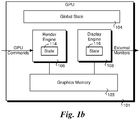
- FIG. 1b depicts an exemplary GPU 101 that includes local on-die graphics memory 103.
- GPU 101 includes a global state 104, a render engine 106 with state registers 114, and a display engine 108 with display state registers 103.
- GPU 101 may include other components that are now shown for simplicity.
- the complete GPU state consists of the render engine state, the display engine state, the global state, GPU page table(s)and the graphics memory content, which can be dumped out through accessing I/O registers (MMIO registers, PCI configuration space registers, Port I/O registers), issuing a GPU command to dump internal hardware context into graphics memory, and accessing the graphics memory pages.
- I/O registers MMIO registers, PCI configuration space registers, Port I/O registers
- GPU page tables are also part of GPU state.
- GPU page table may reside in I/O registers or in system memory.
- the GPU page table(s) is/are in I/O registers.
- a complete GPU state is huge, especially when graphics virtual memory address spaces are considered (for example, recent GPUs support a 64-bit address space).
- FIG. 2 shows an exemplary system architecture including a CPU 200, graphics memory 202, and a GPU 100.
- graphics memory 202 includes a command buffer 204 and a frame buffer 206.
- CPU 200 programs command buffer 204 and rendering engine 106 fetches commands from command buffer 204, which is shown in simplified form, but in practice may comprise one or more command buffers including a primary buffer (ring buffer) and one or more batch buffers.
- CPU 200 provides the initial image/texture data, and display engine 108 fetches pixel data from frame buffer 206 and sends the pixel data to external monitors for display.
- the output of rendering engine is put in the frame buffer, and CPU may read this back as the input for other purposes.
- CPU 200 programs GPU 100 through GPU-specific commands using a producer-consumer model.
- the graphics driver programs GPU commands into command buffer 204, including the primary buffer and batch buffer(s), according to high-level programming APIs such as OpenGL, OpenCL and DirectX.
- GPU 100 then fetches and executed the commands.
- the primary buffer a ring buffer, may chain other batch buffers together.
- the batch buffer is used to convey the majority of the commands (up to ⁇ 98%) per the programming model.
- a register tuple head, tail
- CPU 200 submits the commands to GPU 100 by updating tail , while the GPU fetches commands from head, and then notifies CPU 200 by updating head , after the commands have finished execution.
- Other embodiments may use different interface for command submission.
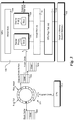
- FIG. 3 shows further details of the GPU buffer configuration, according to one embodiment.
- the GPU buffers includes a batch buffer 300, a ring buffer 302, and chained batch buffers 304 and 306.
- the GPU driver converts high-level application requests (e.g ., via OpenGL, OpenCL, and DirectX, APIs) to hardware specific commands, puts the commands into the command buffer (including ring buffer 302 and batch buffer 300), and submits the commands by moving the Tail register of ring buffer 302.
- the ring buffer has 2 registers: head and tail indicating the ownership of commands in the ring: the CPU programs commands from tail to head, while the GPU fetches commands from head to tail.
- the CPU moves the tail registers and GPU updates the head register once the command is executed.
- ring buffer and batch buffers are also placed in the system memory. We separate them just for description purpose.
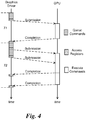
- FIG. 4 shows a process and message timeline illustrating operations performed by a graphics driver and GPU and messages transferred between the two to execute graphics commands.
- the graphics driver queues graphics commands, which is submitted to the GPU for execution by writing a 'tail' register or other notification interface.
- the GPU Upon completion of submittedcommands, the GPU returns a completion notification (e.g . a device interrupt) to the graphics driver, with information about the location in the command buffer where the GPU completes ( e.g . in a 'head' register). This process continues on an ongoing basis.
- a completion notification e.g . a device interrupt
- the massive GPU commands are usually put in batch buffer 300 or chained batch buffers 304 or 306, referenced by the ring buffer 302. Execution of those GPU commands changes the GPU state implicitly, including register states and graphics memory states, while those changes are difficult to be tracked by the driver on native operation system. Also no GPU has yet to implement a dirty memory tracking mechanism, like current mechanisms that use dirty-bits in CPU page tables to mark which pages are dirty. Thus, it is possible to know which graphics memory page is modified from CPU, but difficult to do so for modifications from GPU. This is the secondmajor challenge why existing technologies can't capture incremental GPU state change to avoid dump complete GPU state for every checkpoint.
- a software GPU virtualization solution such as the Xen split-driver model, can support VM checkpointing, but the performance of software GPU graphics (Gfx) virtualization is suboptimal and the features are very limited ( e.g ., this approach cannot support full GPU features).
- Dedicated pass through or sharedpass through has reasonable GPU performance, but is lacking of the checkpointing support, due to the same reason on native that many GPU states are directly changed by GPU commands, which are no longer trapped by the VMM. As a result, the VMM is unable to snapshot and transport the state from PVM to SVM
- the techniques take advantage of the GPU programming model to efficiently track the state of the guest GPU in combination with checkpointing, by introducing a command-based state tracker. This may be applied to both dedicated GFX pass-through (the GPU passed through to a VM exclusively) and shared GFX pass-through (the GPU is shared by multiple VMs, but each VM is passed through with a portion of GPU resource).
- the guest access of I/O registers are intercepted through CPU virtualization technology (e.g . Intel VT-x), to keep a copy of guest context per semantics, and/or emulate the guest operations, maintained as a vGPU device model.
- CPU virtualization technology e.g . Intel VT-x
- a MMU virtualizationmechanism such as hardware two-level page tables (e.g ., Intel EPT (Extended Page Table))orsoftware shadow page table(s),is used to track dirty memory pages manipulated by the CPU, and perform a delta memory snapshotper checkpoint.
- the submission requests of GPU commands e.g.
- write to the tail register are intercepted through the aforementioned I/O interception, and commands are scanned before submission to predict: a) potential to-be-dirtied memory pages, which will be the candidates to be transferred per checkpoint; b) potential to-be-modified registers, which will be combined with register snapshot trapped from CPU accesses, and c) the execution time of intercepted commands, so the next checkpointing can be aligned to predicted execution time.
- the GPU commands from the guest are buffered, while checkpointing is in process, to avoid further damage to the GPU state.
- the GPU internal states are drained by flushing internal context/tlb/cache, at the completion of submitted commands, and then snapshot the vGPU state, based on tracked/predicted I/O state, GPU context (through GPU-specific commands) and trapped/predicted dirty memory pages.
- a course-grained command delivery mechanism is implemented under which large batch buffers may be broken down into multiple smaller buffers, to ensure one submission of the GPU commands may not take too long time for a non-preemptive GPU, so the aligned checkpoint time won't shift too much from the scheduled time.
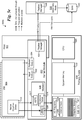
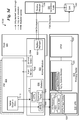
- FIG. 5a illustrates an architecture 500a corresponding to one embodiment of a GPU virtualization implementation.
- Architecture 500a is based on the hypervisor model depicted as hypervisor 502, which hosts one of more VMs 504.
- hypervisor 502 is a Type 1 "bare metal" hypervisor, which is a pure hypervisor that run directly on the computeplatform hardware and hosts guest operating systems (OS's) in the VMs.
- a mediator driver 506 (also referred to herein simply as "mediator”) extends the memory virtualization module (vMMU) 508 for user VMs and is configured to implement the policies of trap and pass-through, as described below in further detail.
- vMMU memory virtualization module
- Each VM 504 hosts a guest operating system and runs a native graphics driver 510, and its access to the GPU is fully controlled by the mediator driver.
- mediator driver 506 To capture GPU state change, privileged resources, that is, the I/O registers and PTEs, corresponding accesses, from the graphics driver in user VMs, are trapped by mediator driver 506, and emulated via one or more virtual GPUs (vGPUs) 512.
- the emulation could be a direct forward to the physical GPU, in dedicated pass-through scenario, or a semantic emulation with context switch conducted by a GPU scheduler, in a shared pass-through scenario.
- Mediator driver 506 also includes a command parser 514.
- VMM 502 is implemented on system hardware comprising a primary node 516, which includes a GPU 518, a CPU 520 and system memory 522, which may be accessed by each of CPU 522 and GPU 516.
- GPU 518 is further depicted with I/O registers 524, which include MMIO/PIO/PCI registers, internal state 526, and on-die graphics memory 527.
- the GPU may access graphics memory in system memory 522, as depicted by graphics memory 527a.
- GPU 518 further includes GPU page tables 528, in one embodiment.In another embodiment, the GPU page tables may be in system memory 522 (not shown). In this case, the GPU page table data can be intercepted througha memory write-protection mechanism, as what's used in the shadow page table.Internal state 526, is representative of the various GPU state information discussed herein.
- the GPU state is composed of three blocks: 1) I/O registers accessed through I/O interface, 2) internal state invisible to software, but can be dumped through specific GPU commands, and 3) the graphics memory which can be either modified by the CPU or by the GPU.
- architecture 500a employs a VM checkpointing scheme that includes aspects that are similar to the Xen Remus checkpointing scheme discussed above. These aspects are illustrated by a replica manager 530, an input delivery block 532, and a buffer output block 534, a secondary node 536 including a replica manager 538, and a Storage Area Network (SAN) 540.
- SAN 540 is illustrative of any type of storage resource that is accessible via a network to which primary node 516 is connected.
- the system hardware for primary node 516 will generally include a network adaptor or network interface controller (NIC) or the like (not shown).
- a VM checkpoint for a primary virtual machine (PVM) hosted on a primary node is periodically written by a replication manager on the primary node to one or both of a replica manager on a secondary node and a SAN storage device.
- VM packets sent out are buffered in buffer output block 534, and only flushed out until the next checkpoint is successfully completed by replica manager 530.
- the input delivery block duplicates the hardware packets to both PVM/SVM, to ensure SVM can successfully continue after a failover.
- Replica manager 530 controls when and how to generate a snapshot and to send snapshot to the secondary node. In the embodiments illustrated in Figures 5a , 5b , 5c , 5d , 5e , and 5f , replica manager 530 contacts mediator 506 for GPU state checkpointing.
- Mediator driver 506 is configured to selectively trap or pass-through guest access of certain GPU resources.
- CPU accesses to GPU states is implemented via trap and emulation under which: 1) CPU mapping to I/O resources 524 are removed from vMMU 508 ( e.g ., via an EPT), resulting in every access triggering a page table vault so the VMM/hypervisor can emulate and capture the state change; and 2) CPU access to graphics memory is trapped through log-dirty from vMMU 508, e.g ., read-only for first access, record dirty page(s) and then open write permission.
- Command parser 514 is used to scan commands and identify corresponding resource access and effects that access may have on such resources. This includes 1) prediction of to-be-dirtied memory pages, which will be candidates for transferred pages for a subsequent checkpoint; 2) to-be modified I/O registers, which may be merged with anI/O snapshot from CPU accesses; and 3) predict execution times for trapped commands.
- the command parsing happens when the guest submits the command buffer, e.g. by write a 'tail' register.
- the parsing could happen right before the mediator wants to submit the command buffer to the physical GPU.
- the parsing is based on the GPU command semantics, as defined by the GPU hardware specification.
- a GPU command may include explicit memory accesses specified in command operands, or include implicit memory accesses through some indirect structures.
- the parsing output is associated with the parsed command buffer, and will be used to update the GPU snapshot after the command buffer is successfully executed.
- Mediator driver 506 manages vGPUs 512 of one or more VMs, and performs trapping and emulating of the privileged operations.
- a GPU scheduler may be further included in the mediator driver, to schedule command buffers from different guests in a time-shared manner. Context switches are conducted when switching from one VM to another VM.
- the mediator handles the physical GPU interrupt to know whether a given command buffer is successfully executed, and may generate virtual interrupts to designated VMs.
- the mediator will update the GPU snapshot, once a command buffer is successfully executed, according to previous parsed information: 1) prediction of to-be-dirtied memory pages, which will be candidates for transferred pages for a subsequent checkpoint; 2) to be modified I/O registers, which may be merged with a I/O snapshot from CPU accesses
- command parser 514 employs some heuristics based on historical execution statistics, to predict the execution time of the next command buffer. The prediction may be communicated to replica manager 530, which will then choose the next checkpointing interval to align with the command execution time.
- command parser 514 may split a large command buffer into multiple smaller command buffers, based on historical execution statistics, if the predicted execution time may be too large to fit an efficient checkpointing (otherwise a long buffer time may be incurred).
- Figure 5c shows an architecture 500c that corresponds to one embodiment of a host model implementation of architecture 500a, where like-numbered components in architectures 500a and 500c perform similar operations.
- Figure 5d shows an architecture 500d having an optional configuration to architecture 500c under which graphic memory 527a is in system memory 522
- FIGS 5e and 5f respectively show architecture 500e and 500f corresponding to embodiments of a hybrid hypervisor model.
- a mediator helper driver 507 including vMMU 508 is implemented in a hypervisor 505
- each of a mediator 506b (including vGPU(s) 512 and a command parser 514), replica manager 530, input delivery block 532 and buffered output block 534 are implemented in a VM 509 that is operated as a control domain.
- a hybrid hypervisor model is the aforementioned Xen architecture.
- FIG. 6 shows a flowchart 600 illustrating operations and logic implement by a guest and a hypervisor or VMM to facilitate GPU virtualization with VM checkpointing, according to one embodiment.
- a GPU API call is received from an application.
- applications may issue various GPU commands using an applicable API, such as OpenGL OpenCL, DirectX, etc.
- the GPU commands are stored in a batch buffer and the ring buffer (as applicable).
- the commands are then submitted by moving the tail registers in a block 606, in the manner described above. Up to this point, all of the operations in blocks 602, 604, and 606 correspond to conventional operations.
- GPU commands or resource accesses submitted from a VM are intercepted or "trapped" by logic in mediator driver 506 and/or other mechanisms (not shown).
- logic or other mechanisms for trapping commands or resource accesses may be implemented in various manners, and a combination of logic and/or mechanisms may be used to trap different types of commands and resource accesses.
- a GPU command/resource access inspector or the like may be implemented in a hypervisor or VMM, or otherwise in a component implemented in the hypervisor or VMM.
- an interrupt mechanism or the like may be used to trap commands or resource accesses.
- Block 612 shows the guest has submitted the command by moving the tail register.
- the queued commands are scanned to identify any memory pages that might-be dirtied via execution of the command via the GPU, and an approximate execute time is calculated.
- a block 616 the time left to a next VM checkpoint is determined.
- a decision block 618 a determination is made to whether there is any time left before VM checkpointing. If no time is left, a VM checkpointing operation is performed. If the answer is NO ( i.e ., there is time left), the logic proceeds to a block 620 in which the number of commands roughly matching the time left before VM checkpointing are scheduled and submitted to the physical GPU.
- decision block 608 a determination is made to whether there are any more commands to issue to the GPU. If YES, the logic returns to block 602, and the operations of blocks 602, 604, 606 are repeated. As depicted by a block 610, the foregoing guest operations are repeated on an ongoing basis with synchronous or asynchronous waiting between loop iterations, as applicable.
- a dirty-tracking scheme In addition to the operations and logic shown in flowchart 600, guest access of graphics memory, such as the frame buffer and command buffer, are passed throughin a dirty-tracking scheme, which imposes additional challenge to VM checkpointing.
- the dirty-tracking scheme causes a page fault only at the first write to the protected page, while all following guest writes to the same page are passed through. This allows the mediator to capture incremental CPU modifications to the graphics memory, at the page granularity level.
- the dirtied pages are tracked using vMMU 508.
- the output packets (containing the checkpoint data) are buffered during each epoch, and are released after the checkpoint is confirmed as successful.
- the VM checkpoint will include all of the dirtied memory pages accumulated during the past epoch, which includes both the dirtied pages tracked using the dirty-tracking scheme associated with frame buffer and command buffer accesses, and the predicted to-be dirtied pages.
- Each VM checkpoint will also include applicable GPU state
- Architecture 500 saves and restores internal pipeline state and I/O register states, plus cache/TLB (Translation Lookaside Buffer) flush, when generating the vGPU snapshot.
- the internal pipeline state is invisible to the CPU, but can be saved and restored through GPU commands. Saving/restoring I/O register states can be achieved through reads/writes to a list of the registers in the render context.
- Internal cache and TLB included in modern GPUs to accelerate data accesses and address translations, are flushed using commands at render context switch, to guarantee isolation and correctness. The steps used to switch a context are: 1) save current I/O states, 2) flush the current context, 3) use the additional commands to save the current context, 4) use the additional commands to restore the new context, and 5) restore I/O state of the new context.
- aspects of the embodiments herein may be implemented in various types of computing and networking equipment, such as switches, routers and blade servers such as those employed in a data center and/or server farm environment.
- the servers used in data centers and server farms comprise arrayed server configurations such as rack-based servers or blade servers.
- These servers are interconnected in communication via various network provisions, such as partitioning sets of servers into LANs with appropriate switching and routing facilities between the LANs to form a private Intranet.
- cloud hosting facilities may typically employ large data centers with a multitude of servers.
- a rack-mounted chassis 700 is employed to provide power and communication functions for a plurality of server blades ( a.k.a. , blades) 702, each of which occupies a corresponding slot. (It is noted that all slots in a chassis do not need to be occupied.)
- one or more chassis 700 may be installed in a blade server rack 703 shown in Figure 7c .
- Each blade is coupled to an interface plane 704 (e.g ., a backplane or mid-plane) upon installation via one or more mating connectors.
- the interface plane will include a plurality of respective mating connectors that provide power and communication signals to the blades, and including routed signal paths for coupling Ethernet signals between blades.
- many interface planes provide "hot-swapping" functionality - that is, blades can be added or removed (“hot-swapped”) on the fly, without taking the entire chassis down through appropriate power and data signal buffering.
- a typical mid-plane interface plane configuration is shown in Figures 7a and 7b .
- the backside of interface plane 704 is coupled to one or more power supplies 706.
- the power supplies are redundant and hot-swappable, being coupled to appropriate power planes and conditioning circuitry to enable continued operation in the event of a power supply failure.
- an array of power supplies may be used to supply power to an entire rack of blades, wherein there is not a one-to-one power supply-to-chassis correspondence.
- a plurality of cooling fans 708 are employed to draw air through the chassis to cool the server blades.
- a network connect card may include a physical interface comprising a plurality of network port connections (e.g ., RJ-45 ports), or may comprise a high-density connector designed to directly connect to a network device, such as a network switch, hub, or router. It is noted that other network architectures may also be used, such as Top of Rack (ToR) switch architecture and disaggregated switch architectures, and the network links may comprise wired and/or optical cables.
- ToR Top of Rack
- Blade servers usually provide some type of management interface for managing operations of the individual blades. This may generally be facilitated by a built-in network or communication channel or channels. For example, one or more buses for facilitating a "private" or “management” network and appropriate switching may be built into the interface plane, or a private network may be implemented through closely-coupled network cabling and a network.
- the switching and other management functionality may be provided by a management switch card 712 that is coupled to the backside or frontside of the interface plane.
- a management or configuration server may be employed to manage blade activities, wherein communications are handled via standard computer networking infrastructure, for example, Ethernet.
- each blade comprises a separate computing platform that is configured to perform server-type functions, i.e ., is a "server on a card.”
- each blade includes components common to conventional servers, including a main printed circuit board (main board) 801 providing internal wiring ( i.e ., buses) for coupling appropriate integrated circuits (ICs) and other components mounted to the board.
- main board main printed circuit board
- ICs integrated circuits
- These components include one or more processors ( a.k.a. CPUs) 802 coupled to system memory 804 (e.g.
- a NIC (network interface controller) chip 810 is provided for supporting conventional network communication functions, such as to support communication between a blade and external network infrastructure.
- Other illustrated components include status LED (light-emitting diodes) 812, one or more RJ-45 Ethernet ports 814 (only one of which is shown for simplicity), and an interface plane connector 816.
- Additional components include various passive components ( i.e ., resistors, capacitors), power conditioning components, and peripheral device connectors.
- each blade 800 may also provide on-board storage. This is typically facilitated via one or more built-in disk controllers and corresponding connectors to which one or more disk drives 818 are coupled.
- typical disk controllers include SATA controllers, SCSI controllers, and the like.
- a disk drive 808 may comprise a magnetic drive or a solid state drive (SSD).
- the disk drives may be housed separate from the blades in the same or a separate rack, such as might be the case when a network-attached storage (NAS) appliance or backend storage sub-system that is employed for storing large volumes of data.
- NAS network-attached storage
- NIC 810 comprises circuitry and logic for facilitating corresponding networking operations, such as support for physical layer (L1) and data link layer operations (L2).
- L1 physical layer
- L2 data link layer operations
- upper layer operations are facilitated by an operating system network stack that would be hosted by an operating system running on processor 802.
- a NIC may employ its own network stack via embedded logic or the like.
- a server blade may include one or more GPUs 820.
- the GPU(s) may employ separate memory or may employ system memory, such as employed by the embodiments illustrated herein.
- today's server processors employ System on a Chip (SoC) architectures, under which multiple functional components, blocks, and interfaces are integrated on a chip.
- SoC System on a Chip
- a processor includes a CPU comprising multiple cores and circuitry corresponding to one or more GPUs.
- network switching elements comprise rack-mounted equipment, such as would occupy a 1U, 2U, or 4U slot, or may be implemented via one or more server blades.
- a network switching element may be implemented use one or more server blades.
- the elements in some cases may each have a same reference number or a different reference number to suggest that the elements represented could be different and/or similar.
- an element may be flexible enough to have different implementations and work with some or all of the systems shown or described herein.
- the various elements shown in the figures may be the same or different. Which one is referred to as a first element and which is called a second element is arbitrary.
- Coupled may mean that two or more elements are in direct physical or electrical contact. However, “coupled” may also mean that two or more elements are not in direct contact with each other, but yet still co-operate or interact with each other.
- An algorithm is here, and generally, considered to be a self-consistent sequence of acts or operations leading to a desired result. These include physical manipulations of physical quantities. Usually, though not necessarily, these quantities take the form of electrical or magnetic signals capable of being stored, transferred, combined, compared, and otherwise manipulated. It has proven convenient at times, principally for reasons of common usage, to refer to these signals as bits, values, elements, symbols, characters, terms, numbers or the like. It should be understood, however, that all of these and similar terms are to be associated with the appropriate physical quantities and are merely convenient labels applied to these quantities.
- An embodiment is an implementation or example of the inventions.
- Reference in the specification to "an embodiment,” “one embodiment,” “some embodiments,” or “other embodiments” means that a particular feature, structure, or characteristic described in connection with the embodiments is included in at least some embodiments, but not necessarily all embodiments, of the inventions.
- the various appearances “an embodiment,” “one embodiment,” or “some embodiments” are not necessarily all referring to the same embodiments.
- embodiments herein may be facilitated by corresponding software and/or firmware components and applications, such as software running on a server or device processor or software and/or firmware executed by an embedded processor or the like.
- embodiments of this invention may be used as or to support a software program, software modules, firmware, and/or distributed software executed upon some form of processing core (such as the CPU of a computer, one or more cores of a multi-core processor), a virtual machine running on a processor or core or otherwise implemented or realized upon or within a computer-readable or machine-readable non-transitory storage medium.
- a computer-readable or machine-readable non-transitory storage medium includes any mechanism for storing or transmitting information in a form readable by a machine (e.g ., a computer).
- a computer-readable or machine-readable non-transitory storage medium includes any mechanism that provides ( i.e ., stores and/or transmits) information in a form accessible by a computer or computing machine (e.g ., computing device, electronic system, etc .), such as recordable/non-recordable media (e.g ., read only memory (ROM), random access memory (RAM), magnetic disk storage media, optical storage media, flash memory devices, etc .).
- the content may be directly executable ("object” or “executable” form), source code, or difference code ("delta” or “patch” code).
- a computer-readable or machine-readable non-transitory storage medium may also include a storage or database from which content can be downloaded.
- the computer-readable or machine-readable non-transitory storage medium may also include a device or product having content stored thereon at a time of sale or delivery.
- delivering a device with stored content, or offering content for download over a communication medium may be understood as providing an article of manufacture comprising a computer-readable or machine-readable non-transitory storage medium with such content described herein.
- Various components referred to above as processes, servers, or tools described herein may be a means for performing the functions described.
- the operations and functions performed by various components described herein may be implemented by software running on a processing element, via embedded hardware or the like, or any combination of hardware and software.
- Such components may be implemented as software modules, hardware modules, special-purpose hardware (e.g ., application specific hardware, ASICs, DSPs, etc .), embedded controllers, hardwired circuitry, hardware logic, etc.
- Software content e.g., data, instructions, configuration information, etc.
- a list of items joined by the term "at least one of' can mean any combination of the listed terms.
- the phrase "at least one of A, B or C" can mean A; B; C; A and B; A and C; B and C; or A, B and C.
Landscapes
- Engineering & Computer Science (AREA)
- Theoretical Computer Science (AREA)
- Software Systems (AREA)
- Physics & Mathematics (AREA)
- General Physics & Mathematics (AREA)
- General Engineering & Computer Science (AREA)
- Retry When Errors Occur (AREA)
- Memory System Of A Hierarchy Structure (AREA)
Claims (14)
- Procédé comprenant :la mise en œuvre d'au moins une machine virtuelle, VM (504), sur une plate-forme informatique incluant une unité de traitement centrale, CPU (520), une unité de traitement graphique, GPU (518), et une mémoire graphique (527), chacune de la ou des VM (504) hébergées par un hyperviseur (502) sont exécutées par le biais de la CPU (520) ;pour chacune de la ou des VM (504),piéger des commandes GPU soumises à partir de la VM (504) ;émuler, à l'aide d'une GPU virtuelle (512) associée à la VM (504), l'exécution des commandes GPU piégées, la GPU virtuelle (512) incluant des informations d'état ;poursuivre des informations d'état pour la GPU virtuelle (512) ;prédire, par le balayage des commandes GPU piégées et l'identification d'un accès à des ressources correspondantes et des effets qu'un accès peut avoir sur de telles ressources, des pages de mémoire graphique qui peuvent être salies par le biais de l'exécution des commandes GPU piégées par la GPU virtuelle (512) ; etexécuter de manière périodique une opération de pointage de contrôle VM pour la VM (504), dans lequel une copie instantanée d'informations d'état de suivi actuelles pour la GPU virtuelle (512) et une copie des pages de mémoire graphique qui sont prédites comme étant salies sont stockées en tant que point de contrôle VM.
- Procédé selon la revendication 1, comprenant en outre :la prédiction de temps d'exécution d'une commande ou d'un lot de commandes qui ont été piégées ; etla détermination, sur la base des temps d'exécution prédits, de quelles commandes piégées soumettre à la GPU (518) avant d'exécuter une prochaine opération de pointage de contrôle.
- Procédé selon la revendication 1 ou la revendication 2, comprenant en outre :le balayage des commandes GPU piégées soumises par une VM (504) donnée à travers un analyseur de commande ; etl'émulation des accès à au moins un des registres (524) d'entrée/sortie (E/S) GPU et à une ou plusieurs tables de pages GPU à l'aide de la GPU virtuelle (512) associée à la VM (504) donnée.
- Procédé selon la revendication 1, comprenant en outre :le passage à travers certains accès à la mémoire graphique (527) et le marquage des pages de mémoire graphique qui sont prédites comme étant salies suite aux certains accès à la mémoire graphique (527) ; etl'inclusion d'une copie des pages de mémoire graphique qui sont prédites comme étant salies suite à certains accès à la mémoire graphique dans le point de contrôle VM.
- Procédé selon la revendication 4, dans lequel les certains accès à la mémoire graphique (527) qui sont traversés incluent des accès à une mémoire tampon d'affichage et une mémoire tampon de commande dans la mémoire graphique (527).
- Procédé selon la revendication 4, dans lequel les certains accès à la mémoire graphique (527) qui sont traversés incluent des accès à la mémoire graphique (527) par la CPU (520).
- Procédé selon l'une quelconque des revendications précédentes, dans lequel la GPU (518) inclut un contexte interne, un répertoire de pages actives de traduction et une mémoire cache, le procédé comprenant en outre le drainage des données d'état interne de la GPU par balayage du contexte de la GPU interne, du répertoire de pages actives de traduction et de la mémoire cache en connexion avec la prise d'une copie instantanée des changements des informations d'état pour la GPU (518) .
- Procédé selon l'une quelconque des revendications précédentes, comprenant en outre la mise en mémoire tampon de commandes soumises à partir d'une VM (504) pendant une opération de pointage de contrôle VM.
- Procédé selon l'une quelconque des revendications précédentes, dans lequel l'hyperviseur (502) est un hyperviseur de type 1.
- Support lisible par machine non transitoire tangible ayant des instructions comprenant une pluralité de modules de logiciel qui y sont stockés, configurés pour être exécutés sur une plate-forme informatique incluant une unité de traitement centrale, CPU (520), une unité de traitement graphique, GPU (518), et une mémoire de système (516), dans lequel l'exécution des instructions met en œuvre le procédé selon l'une quelconque des revendications 1 à 9.
- Système comprenant :une carte principale sur laquelle une pluralité de composants sont montés et interconnectés, incluant,une unité de traitement centrale, CPU (520),une unité de traitement graphique, GPU (518) ;une mémoire (516), couplée de manière opérationnelle à chaque GPU (518) ; etun dispositif de stockage, couplé de manière opérationnelle à la CPU (520) ;dans lequel des instructions résident dans au moins un élément parmi la mémoire (516) et le dispositif de stockage comprenant une pluralité de modules de logiciel configurés pour être exécutés par la CPU (520) et la GPU (518), les modules de logiciel incluant un hyperviseur (502) qui est configuré pour être exécuté par la CPU (520) et hébergent au moins une machine virtuelle, VM (504), dans lequel lors de l'exécution les instructions permettent au système de :pour chacune de la ou des VM (504),piéger des commandes GPU soumises à partir de la VM (504) ;émuler l'exécution des commandes GPU piégées à l'aide d'une GPU virtuelle (512) associée à la VM (504), la GPU virtuelle (504) incluant des informations d'état ;poursuivre des informations d'état pour la GPU virtuelle (504) ;prédire, par le balayage des commandes GPU piégées et l'identification d'un accès à des ressources correspondantes et des effets qu'un accès peut avoir sur de telles ressources, des pages de mémoire graphique qui peuvent être salies par le biais de l'exécution des commandes GPU piégées par la GPU virtuelle (512) ; etexécuter de manière périodique une opération de pointage de contrôle VM pour la VM (504), dans lequel une copie instantanée d'informations d'état de suivi actuelles pour la GPU virtuelle (512) et une copie des pages de mémoire graphique qui sont prédites comme étant salies sont stockées en tant que point de contrôle VM.
- Système selon la revendication 11, dans lequel l'exécution des instructions permet en outre au système de :prédire des temps d'exécution d'une commande ou d'un lot de commandes ; etdéterminer, sur la base des temps d'exécution prédits, quelles commandes soumettre à la GPU (518) avant d'exécuter une prochaine opération de pointage de contrôle.
- Système selon l'une quelconque des revendications 11 ou 12, dans lequel l'exécution des instructions permet en outre au système de :balayer des commandes piégées soumises par un pilote graphique pour une VM (504) donnée à travers un analyseur de commande (514) ; etémuler des accès à au moins un des registres (524) d'entrée/sortie (E/S) GPU et à une ou plusieurs tables de pages GPU à l'aide de la GPU virtuelle (512) associée à la VM (504) donnée.
- Système selon l'une quelconque des revendications 11 à 13, dans lequel l'exécution des instructions permet en outre au système de :détecter des accès GPU à une mémoire tampon d'affichage ou une mémoire tampon de commande ; etpoursuivre des pages de mémoire graphique sales résultant des accès GPU à la mémoire tampon d'affichage et à la mémoire tampon de commande.
Applications Claiming Priority (1)
| Application Number | Priority Date | Filing Date | Title |
|---|---|---|---|
| PCT/CN2014/092028 WO2016082073A1 (fr) | 2014-11-24 | 2014-11-24 | Support pour une unité de traitement graphique (gpu) à haute disponibilité, transparente aux applications, effectuant des calculs avec des points de contrôle de mémoire virtuelle (vm) |
Publications (3)
| Publication Number | Publication Date |
|---|---|
| EP3224712A1 EP3224712A1 (fr) | 2017-10-04 |
| EP3224712A4 EP3224712A4 (fr) | 2018-07-11 |
| EP3224712B1 true EP3224712B1 (fr) | 2020-12-02 |
Family
ID=56073284
Family Applications (1)
| Application Number | Title | Priority Date | Filing Date |
|---|---|---|---|
| EP14906872.8A Active EP3224712B1 (fr) | 2014-11-24 | 2014-11-24 | Support pour une unité de traitement graphique (gpu) à haute disponibilité, transparente aux applications avec des points de contrôle de machines virtuelles (vm) |
Country Status (3)
| Country | Link |
|---|---|
| US (1) | US10996968B2 (fr) |
| EP (1) | EP3224712B1 (fr) |
| WO (1) | WO2016082073A1 (fr) |
Families Citing this family (25)
| Publication number | Priority date | Publication date | Assignee | Title |
|---|---|---|---|---|
| US10996968B2 (en) | 2014-11-24 | 2021-05-04 | Intel Corporation | Support for application transparent, high available GPU computing with VM checkpointing |
| US10481937B2 (en) * | 2015-03-23 | 2019-11-19 | Intel Corporation | Shadow command ring for graphics processor virtualization |
| US20170097836A1 (en) * | 2015-10-02 | 2017-04-06 | Shigeya Senda | Information processing apparatus |
| US12248560B2 (en) | 2016-03-07 | 2025-03-11 | Crowdstrike, Inc. | Hypervisor-based redirection of system calls and interrupt-based task offloading |
| US12339979B2 (en) * | 2016-03-07 | 2025-06-24 | Crowdstrike, Inc. | Hypervisor-based interception of memory and register accesses |
| US10891773B2 (en) * | 2017-04-07 | 2021-01-12 | Intel Corporation | Apparatus and method for efficient graphics virtualization |
| CN108989194B (zh) * | 2017-05-31 | 2021-07-09 | 微软技术许可有限责任公司 | 分布式IPSec网关 |
| US11055807B2 (en) * | 2017-06-12 | 2021-07-06 | Apple Inc. | Method and system for a transactional based display pipeline to interface with graphics processing units |
| US10593010B2 (en) * | 2017-12-13 | 2020-03-17 | Microsoft Technology Licensing, Llc | Techniques for capturing and executing graphics processing operations |
| US11443072B2 (en) * | 2018-06-29 | 2022-09-13 | Microsoft Technology Licensing, Llc | Peripheral device with resource isolation |
| US10922203B1 (en) * | 2018-09-21 | 2021-02-16 | Nvidia Corporation | Fault injection architecture for resilient GPU computing |
| US11126757B2 (en) | 2018-10-19 | 2021-09-21 | Microsoft Technology Licensing, Llc | Peripheral device |
| US11467835B1 (en) * | 2018-11-23 | 2022-10-11 | Amazon Technologies, Inc. | Framework integration for instance-attachable accelerator |
| US10795718B2 (en) * | 2019-02-08 | 2020-10-06 | Microsoft Technology Licensing, Llc | Updating hardware with reduced virtual machine downtime |
| CN110737373B (zh) * | 2019-08-09 | 2020-10-27 | 北京达佳互联信息技术有限公司 | 一种应用界面控制方法、装置、终端及存储介质 |
| US11307882B1 (en) * | 2019-09-26 | 2022-04-19 | Amazon Technologies, Inc. | Performance checkpointing |
| US11544093B2 (en) * | 2019-09-27 | 2023-01-03 | Intel Corporation | Virtual machine replication and migration |
| CN111045623B (zh) * | 2019-11-21 | 2023-06-13 | 中国航空工业集团公司西安航空计算技术研究所 | 一种多gpu拼接环境下图形命令的处理方法 |
| US20210165675A1 (en) * | 2019-12-02 | 2021-06-03 | Xiao Wang | Live migration for hardware accelerated para-virtualized io device |
| KR102275529B1 (ko) * | 2019-12-23 | 2021-07-09 | 주식회사 텔레칩스 | 멀티-마스터를 지원하는 그래픽 처리 장치를 공유하는 시스템 온 칩 및 그래픽 처리 장치의 동작 방법 |
| GB2593730B (en) * | 2020-03-31 | 2022-03-30 | Imagination Tech Ltd | Hypervisor removal |
| CN114115703B (zh) * | 2020-08-29 | 2025-08-22 | 华为云计算技术有限公司 | 裸金属服务器在线迁移方法以及系统 |
| US11812580B2 (en) * | 2021-10-12 | 2023-11-07 | Dell Products L.P. | Modular breakout cable |
| US11822490B2 (en) * | 2021-10-14 | 2023-11-21 | Samsung Electronics Co., Ltd. | Systems, methods, and devices for accessing a device operating system over an interconnect |
| CN121560461B (zh) * | 2026-01-23 | 2026-04-17 | 憨猴科技集团有限公司 | 面向过程gpu的实时容错与任务迁移系统及方法 |
Family Cites Families (5)
| Publication number | Priority date | Publication date | Assignee | Title |
|---|---|---|---|---|
| US9098347B2 (en) * | 2006-12-21 | 2015-08-04 | Vmware | Implementation of virtual machine operations using storage system functionality |
| WO2011032114A1 (fr) * | 2009-09-11 | 2011-03-17 | Citrix Systems, Inc. | Rendu à distance d'images tridimensionnelles au moyen de machines virtuelles |
| US8893147B2 (en) * | 2012-01-13 | 2014-11-18 | Ca, Inc. | Providing a virtualized replication and high availability environment including a replication and high availability engine |
| US9201887B1 (en) * | 2012-03-30 | 2015-12-01 | Emc Corporation | Cluster file server proxy server for backup and recovery |
| US10996968B2 (en) | 2014-11-24 | 2021-05-04 | Intel Corporation | Support for application transparent, high available GPU computing with VM checkpointing |
-
2014
- 2014-11-24 US US15/529,426 patent/US10996968B2/en active Active
- 2014-11-24 EP EP14906872.8A patent/EP3224712B1/fr active Active
- 2014-11-24 WO PCT/CN2014/092028 patent/WO2016082073A1/fr not_active Ceased
Non-Patent Citations (1)
| Title |
|---|
| None * |
Also Published As
| Publication number | Publication date |
|---|---|
| EP3224712A1 (fr) | 2017-10-04 |
| US20170329623A1 (en) | 2017-11-16 |
| WO2016082073A1 (fr) | 2016-06-02 |
| US10996968B2 (en) | 2021-05-04 |
| EP3224712A4 (fr) | 2018-07-11 |
Similar Documents
| Publication | Publication Date | Title |
|---|---|---|
| EP3224712B1 (fr) | Support pour une unité de traitement graphique (gpu) à haute disponibilité, transparente aux applications avec des points de contrôle de machines virtuelles (vm) | |
| US9870248B2 (en) | Page table based dirty page tracking | |
| CN104021063B (zh) | 一种基于硬件虚拟化的模块化计算机取证系统及其方法 | |
| US8464259B2 (en) | Migrating virtual machines configured with direct access device drivers | |
| US9176763B2 (en) | Apparatus and method thereof for efficient execution of a guest in a virtualized environment | |
| US20110113426A1 (en) | Apparatuses for switching the running of a virtual machine between multiple computer devices belonging to the same computer platform and the associated switching methods | |
| US9164784B2 (en) | Signalizing an external event using a dedicated virtual central processing unit | |
| US11960366B2 (en) | Live migrating virtual machines to a target host upon fatal memory errors | |
| US9715403B2 (en) | Optimized extended context management for virtual machines | |
| CN107924325A (zh) | 用于多级虚拟化的技术 | |
| Lu et al. | HSG-LM: hybrid-copy speculative guest OS live migration without hypervisor | |
| CN115461720A (zh) | 可从不可校正的存储器错误恢复的虚拟机 | |
| Xue et al. | Scalable GPU virtualization with dynamic sharing of graphics memory space | |
| US10268595B1 (en) | Emulating page modification logging for a nested hypervisor | |
| US9904567B2 (en) | Limited hardware assisted dirty page logging | |
| US11243800B2 (en) | Efficient virtual machine memory monitoring with hyper-threading | |
| US20070038996A1 (en) | Remote I/O for virtualized systems | |
| Terada et al. | Dwarf: Shortening downtime of reboot-based kernel updates | |
| Zhang et al. | gha: An efficient and iterative checkpointing mechanism for virtualized gpus | |
| EP4321998A1 (fr) | Duplication et migration de tâches optimisées en termes de performances | |
| US20250103371A1 (en) | Systems and methods for implementing fine-grain single root input/output (i/o) virtualization (sr-iov) | |
| CN117591252A (zh) | 性能优化的任务复制和迁移 | |
| Kilic | Scaling Virtual Processors for Parallel Applications in Virtual Machines | |
| Santoso et al. | SUPPORTING VIRTIO IN BARE-METAL VIRTUAL MACHINE MONITOR | |
| Yang et al. | FlowGPU: Transparent and Efficient GPU Checkpointing and Restore |
Legal Events
| Date | Code | Title | Description |
|---|---|---|---|
| STAA | Information on the status of an ep patent application or granted ep patent |
Free format text: STATUS: THE INTERNATIONAL PUBLICATION HAS BEEN MADE |
|
| PUAI | Public reference made under article 153(3) epc to a published international application that has entered the european phase |
Free format text: ORIGINAL CODE: 0009012 |
|
| STAA | Information on the status of an ep patent application or granted ep patent |
Free format text: STATUS: REQUEST FOR EXAMINATION WAS MADE |
|
| 17P | Request for examination filed |
Effective date: 20170424 |
|
| AK | Designated contracting states |
Kind code of ref document: A1 Designated state(s): AL AT BE BG CH CY CZ DE DK EE ES FI FR GB GR HR HU IE IS IT LI LT LU LV MC MK MT NL NO PL PT RO RS SE SI SK SM TR |
|
| AX | Request for extension of the european patent |
Extension state: BA ME |
|
| DAX | Request for extension of the european patent (deleted) | ||
| REG | Reference to a national code |
Ref country code: DE Ref legal event code: R079 Ref document number: 602014073092 Country of ref document: DE Free format text: PREVIOUS MAIN CLASS: G06F0009445000 Ipc: G06F0009455000 |
|
| A4 | Supplementary search report drawn up and despatched |
Effective date: 20180613 |
|
| RIC1 | Information provided on ipc code assigned before grant |
Ipc: G06F 9/445 20060101ALI20180607BHEP Ipc: G06F 9/455 20060101AFI20180607BHEP |
|
| GRAP | Despatch of communication of intention to grant a patent |
Free format text: ORIGINAL CODE: EPIDOSNIGR1 |
|
| STAA | Information on the status of an ep patent application or granted ep patent |
Free format text: STATUS: GRANT OF PATENT IS INTENDED |
|
| INTG | Intention to grant announced |
Effective date: 20200731 |
|
| GRAS | Grant fee paid |
Free format text: ORIGINAL CODE: EPIDOSNIGR3 |
|
| GRAA | (expected) grant |
Free format text: ORIGINAL CODE: 0009210 |
|
| STAA | Information on the status of an ep patent application or granted ep patent |
Free format text: STATUS: THE PATENT HAS BEEN GRANTED |
|
| AK | Designated contracting states |
Kind code of ref document: B1 Designated state(s): AL AT BE BG CH CY CZ DE DK EE ES FI FR GB GR HR HU IE IS IT LI LT LU LV MC MK MT NL NO PL PT RO RS SE SI SK SM TR |
|
| REG | Reference to a national code |
Ref country code: GB Ref legal event code: FG4D |
|
| REG | Reference to a national code |
Ref country code: AT Ref legal event code: REF Ref document number: 1341679 Country of ref document: AT Kind code of ref document: T Effective date: 20201215 Ref country code: CH Ref legal event code: EP |
|
| REG | Reference to a national code |
Ref country code: IE Ref legal event code: FG4D |
|
| REG | Reference to a national code |
Ref country code: DE Ref legal event code: R096 Ref document number: 602014073092 Country of ref document: DE |
|
| PG25 | Lapsed in a contracting state [announced via postgrant information from national office to epo] |
Ref country code: RS Free format text: LAPSE BECAUSE OF FAILURE TO SUBMIT A TRANSLATION OF THE DESCRIPTION OR TO PAY THE FEE WITHIN THE PRESCRIBED TIME-LIMIT Effective date: 20201202 Ref country code: FI Free format text: LAPSE BECAUSE OF FAILURE TO SUBMIT A TRANSLATION OF THE DESCRIPTION OR TO PAY THE FEE WITHIN THE PRESCRIBED TIME-LIMIT Effective date: 20201202 Ref country code: NO Free format text: LAPSE BECAUSE OF FAILURE TO SUBMIT A TRANSLATION OF THE DESCRIPTION OR TO PAY THE FEE WITHIN THE PRESCRIBED TIME-LIMIT Effective date: 20210302 Ref country code: GR Free format text: LAPSE BECAUSE OF FAILURE TO SUBMIT A TRANSLATION OF THE DESCRIPTION OR TO PAY THE FEE WITHIN THE PRESCRIBED TIME-LIMIT Effective date: 20210303 |
|
| REG | Reference to a national code |
Ref country code: NL Ref legal event code: MP Effective date: 20201202 |
|
| REG | Reference to a national code |
Ref country code: AT Ref legal event code: MK05 Ref document number: 1341679 Country of ref document: AT Kind code of ref document: T Effective date: 20201202 |
|
| PG25 | Lapsed in a contracting state [announced via postgrant information from national office to epo] |
Ref country code: LV Free format text: LAPSE BECAUSE OF FAILURE TO SUBMIT A TRANSLATION OF THE DESCRIPTION OR TO PAY THE FEE WITHIN THE PRESCRIBED TIME-LIMIT Effective date: 20201202 Ref country code: PL Free format text: LAPSE BECAUSE OF FAILURE TO SUBMIT A TRANSLATION OF THE DESCRIPTION OR TO PAY THE FEE WITHIN THE PRESCRIBED TIME-LIMIT Effective date: 20201202 Ref country code: SE Free format text: LAPSE BECAUSE OF FAILURE TO SUBMIT A TRANSLATION OF THE DESCRIPTION OR TO PAY THE FEE WITHIN THE PRESCRIBED TIME-LIMIT Effective date: 20201202 Ref country code: BG Free format text: LAPSE BECAUSE OF FAILURE TO SUBMIT A TRANSLATION OF THE DESCRIPTION OR TO PAY THE FEE WITHIN THE PRESCRIBED TIME-LIMIT Effective date: 20210302 |
|
| PG25 | Lapsed in a contracting state [announced via postgrant information from national office to epo] |
Ref country code: NL Free format text: LAPSE BECAUSE OF FAILURE TO SUBMIT A TRANSLATION OF THE DESCRIPTION OR TO PAY THE FEE WITHIN THE PRESCRIBED TIME-LIMIT Effective date: 20201202 Ref country code: HR Free format text: LAPSE BECAUSE OF FAILURE TO SUBMIT A TRANSLATION OF THE DESCRIPTION OR TO PAY THE FEE WITHIN THE PRESCRIBED TIME-LIMIT Effective date: 20201202 |
|
| REG | Reference to a national code |
Ref country code: LT Ref legal event code: MG9D |
|
| PG25 | Lapsed in a contracting state [announced via postgrant information from national office to epo] |
Ref country code: RO Free format text: LAPSE BECAUSE OF FAILURE TO SUBMIT A TRANSLATION OF THE DESCRIPTION OR TO PAY THE FEE WITHIN THE PRESCRIBED TIME-LIMIT Effective date: 20201202 Ref country code: PT Free format text: LAPSE BECAUSE OF FAILURE TO SUBMIT A TRANSLATION OF THE DESCRIPTION OR TO PAY THE FEE WITHIN THE PRESCRIBED TIME-LIMIT Effective date: 20210405 Ref country code: SK Free format text: LAPSE BECAUSE OF FAILURE TO SUBMIT A TRANSLATION OF THE DESCRIPTION OR TO PAY THE FEE WITHIN THE PRESCRIBED TIME-LIMIT Effective date: 20201202 Ref country code: LT Free format text: LAPSE BECAUSE OF FAILURE TO SUBMIT A TRANSLATION OF THE DESCRIPTION OR TO PAY THE FEE WITHIN THE PRESCRIBED TIME-LIMIT Effective date: 20201202 Ref country code: SM Free format text: LAPSE BECAUSE OF FAILURE TO SUBMIT A TRANSLATION OF THE DESCRIPTION OR TO PAY THE FEE WITHIN THE PRESCRIBED TIME-LIMIT Effective date: 20201202 Ref country code: EE Free format text: LAPSE BECAUSE OF FAILURE TO SUBMIT A TRANSLATION OF THE DESCRIPTION OR TO PAY THE FEE WITHIN THE PRESCRIBED TIME-LIMIT Effective date: 20201202 Ref country code: CZ Free format text: LAPSE BECAUSE OF FAILURE TO SUBMIT A TRANSLATION OF THE DESCRIPTION OR TO PAY THE FEE WITHIN THE PRESCRIBED TIME-LIMIT Effective date: 20201202 |
|
| PG25 | Lapsed in a contracting state [announced via postgrant information from national office to epo] |
Ref country code: AT Free format text: LAPSE BECAUSE OF FAILURE TO SUBMIT A TRANSLATION OF THE DESCRIPTION OR TO PAY THE FEE WITHIN THE PRESCRIBED TIME-LIMIT Effective date: 20201202 |
|
| REG | Reference to a national code |
Ref country code: DE Ref legal event code: R097 Ref document number: 602014073092 Country of ref document: DE |
|
| PG25 | Lapsed in a contracting state [announced via postgrant information from national office to epo] |
Ref country code: IS Free format text: LAPSE BECAUSE OF FAILURE TO SUBMIT A TRANSLATION OF THE DESCRIPTION OR TO PAY THE FEE WITHIN THE PRESCRIBED TIME-LIMIT Effective date: 20210402 |
|
| PLBE | No opposition filed within time limit |
Free format text: ORIGINAL CODE: 0009261 |
|
| STAA | Information on the status of an ep patent application or granted ep patent |
Free format text: STATUS: NO OPPOSITION FILED WITHIN TIME LIMIT |
|
| PG25 | Lapsed in a contracting state [announced via postgrant information from national office to epo] |
Ref country code: IT Free format text: LAPSE BECAUSE OF FAILURE TO SUBMIT A TRANSLATION OF THE DESCRIPTION OR TO PAY THE FEE WITHIN THE PRESCRIBED TIME-LIMIT Effective date: 20201202 Ref country code: AL Free format text: LAPSE BECAUSE OF FAILURE TO SUBMIT A TRANSLATION OF THE DESCRIPTION OR TO PAY THE FEE WITHIN THE PRESCRIBED TIME-LIMIT Effective date: 20201202 |
|
| 26N | No opposition filed |
Effective date: 20210903 |
|
| PG25 | Lapsed in a contracting state [announced via postgrant information from national office to epo] |
Ref country code: SI Free format text: LAPSE BECAUSE OF FAILURE TO SUBMIT A TRANSLATION OF THE DESCRIPTION OR TO PAY THE FEE WITHIN THE PRESCRIBED TIME-LIMIT Effective date: 20201202 Ref country code: DK Free format text: LAPSE BECAUSE OF FAILURE TO SUBMIT A TRANSLATION OF THE DESCRIPTION OR TO PAY THE FEE WITHIN THE PRESCRIBED TIME-LIMIT Effective date: 20201202 |
|
| PG25 | Lapsed in a contracting state [announced via postgrant information from national office to epo] |
Ref country code: ES Free format text: LAPSE BECAUSE OF FAILURE TO SUBMIT A TRANSLATION OF THE DESCRIPTION OR TO PAY THE FEE WITHIN THE PRESCRIBED TIME-LIMIT Effective date: 20201202 |
|
| PG25 | Lapsed in a contracting state [announced via postgrant information from national office to epo] |
Ref country code: IS Free format text: LAPSE BECAUSE OF FAILURE TO SUBMIT A TRANSLATION OF THE DESCRIPTION OR TO PAY THE FEE WITHIN THE PRESCRIBED TIME-LIMIT Effective date: 20210402 |
|
| PG25 | Lapsed in a contracting state [announced via postgrant information from national office to epo] |
Ref country code: MC Free format text: LAPSE BECAUSE OF FAILURE TO SUBMIT A TRANSLATION OF THE DESCRIPTION OR TO PAY THE FEE WITHIN THE PRESCRIBED TIME-LIMIT Effective date: 20201202 |
|
| REG | Reference to a national code |
Ref country code: CH Ref legal event code: PL |
|
| GBPC | Gb: european patent ceased through non-payment of renewal fee |
Effective date: 20211124 |
|
| PG25 | Lapsed in a contracting state [announced via postgrant information from national office to epo] |
Ref country code: LU Free format text: LAPSE BECAUSE OF NON-PAYMENT OF DUE FEES Effective date: 20211124 Ref country code: BE Free format text: LAPSE BECAUSE OF NON-PAYMENT OF DUE FEES Effective date: 20211130 |
|
| REG | Reference to a national code |
Ref country code: BE Ref legal event code: MM Effective date: 20211130 |
|
| PG25 | Lapsed in a contracting state [announced via postgrant information from national office to epo] |
Ref country code: LI Free format text: LAPSE BECAUSE OF NON-PAYMENT OF DUE FEES Effective date: 20211130 Ref country code: CH Free format text: LAPSE BECAUSE OF NON-PAYMENT OF DUE FEES Effective date: 20211130 |
|
| PG25 | Lapsed in a contracting state [announced via postgrant information from national office to epo] |
Ref country code: IE Free format text: LAPSE BECAUSE OF NON-PAYMENT OF DUE FEES Effective date: 20211124 Ref country code: GB Free format text: LAPSE BECAUSE OF NON-PAYMENT OF DUE FEES Effective date: 20211124 |
|
| PG25 | Lapsed in a contracting state [announced via postgrant information from national office to epo] |
Ref country code: FR Free format text: LAPSE BECAUSE OF NON-PAYMENT OF DUE FEES Effective date: 20211130 |
|
| PG25 | Lapsed in a contracting state [announced via postgrant information from national office to epo] |
Ref country code: HU Free format text: LAPSE BECAUSE OF FAILURE TO SUBMIT A TRANSLATION OF THE DESCRIPTION OR TO PAY THE FEE WITHIN THE PRESCRIBED TIME-LIMIT; INVALID AB INITIO Effective date: 20141124 |
|
| P01 | Opt-out of the competence of the unified patent court (upc) registered |
Effective date: 20230518 |
|
| PG25 | Lapsed in a contracting state [announced via postgrant information from national office to epo] |
Ref country code: CY Free format text: LAPSE BECAUSE OF FAILURE TO SUBMIT A TRANSLATION OF THE DESCRIPTION OR TO PAY THE FEE WITHIN THE PRESCRIBED TIME-LIMIT Effective date: 20201202 |
|
| PG25 | Lapsed in a contracting state [announced via postgrant information from national office to epo] |
Ref country code: MK Free format text: LAPSE BECAUSE OF FAILURE TO SUBMIT A TRANSLATION OF THE DESCRIPTION OR TO PAY THE FEE WITHIN THE PRESCRIBED TIME-LIMIT Effective date: 20201202 |
|
| PG25 | Lapsed in a contracting state [announced via postgrant information from national office to epo] |
Ref country code: MT Free format text: LAPSE BECAUSE OF FAILURE TO SUBMIT A TRANSLATION OF THE DESCRIPTION OR TO PAY THE FEE WITHIN THE PRESCRIBED TIME-LIMIT Effective date: 20201202 |
|
| PG25 | Lapsed in a contracting state [announced via postgrant information from national office to epo] |
Ref country code: TR Free format text: LAPSE BECAUSE OF FAILURE TO SUBMIT A TRANSLATION OF THE DESCRIPTION OR TO PAY THE FEE WITHIN THE PRESCRIBED TIME-LIMIT Effective date: 20201202 |
|
| PGFP | Annual fee paid to national office [announced via postgrant information from national office to epo] |
Ref country code: DE Payment date: 20250930 Year of fee payment: 12 |