EP3226819B1 - Nanoparticule à changement de phase - Google Patents
Nanoparticule à changement de phase Download PDFInfo
- Publication number
- EP3226819B1 EP3226819B1 EP15823030.0A EP15823030A EP3226819B1 EP 3226819 B1 EP3226819 B1 EP 3226819B1 EP 15823030 A EP15823030 A EP 15823030A EP 3226819 B1 EP3226819 B1 EP 3226819B1
- Authority
- EP
- European Patent Office
- Prior art keywords
- nanoparticle
- nano
- spheres
- phase
- outer layer
- Prior art date
- Legal status (The legal status is an assumption and is not a legal conclusion. Google has not performed a legal analysis and makes no representation as to the accuracy of the status listed.)
- Active
Links
Images


Classifications
-
- A—HUMAN NECESSITIES
- A61—MEDICAL OR VETERINARY SCIENCE; HYGIENE
- A61K—PREPARATIONS FOR MEDICAL, DENTAL OR TOILETRY PURPOSES
- A61K41/00—Medicinal preparations obtained by treating materials with wave energy or particle radiation ; Therapies using these preparations
- A61K41/0052—Thermotherapy; Hyperthermia; Magnetic induction; Induction heating therapy
-
- A—HUMAN NECESSITIES
- A61—MEDICAL OR VETERINARY SCIENCE; HYGIENE
- A61F—FILTERS IMPLANTABLE INTO BLOOD VESSELS; PROSTHESES; DEVICES PROVIDING PATENCY TO, OR PREVENTING COLLAPSING OF, TUBULAR STRUCTURES OF THE BODY, e.g. STENTS; ORTHOPAEDIC, NURSING OR CONTRACEPTIVE DEVICES; FOMENTATION; TREATMENT OR PROTECTION OF EYES OR EARS; BANDAGES, DRESSINGS OR ABSORBENT PADS; FIRST-AID KITS
- A61F7/00—Heating or cooling appliances for medical or therapeutic treatment of the human body
-
- A—HUMAN NECESSITIES
- A61—MEDICAL OR VETERINARY SCIENCE; HYGIENE
- A61K—PREPARATIONS FOR MEDICAL, DENTAL OR TOILETRY PURPOSES
- A61K47/00—Medicinal preparations characterised by the non-active ingredients used, e.g. carriers or inert additives; Targeting or modifying agents chemically bound to the active ingredient
- A61K47/06—Organic compounds, e.g. natural or synthetic hydrocarbons, polyolefins, mineral oil, petrolatum or ozokerite
-
- A—HUMAN NECESSITIES
- A61—MEDICAL OR VETERINARY SCIENCE; HYGIENE
- A61K—PREPARATIONS FOR MEDICAL, DENTAL OR TOILETRY PURPOSES
- A61K47/00—Medicinal preparations characterised by the non-active ingredients used, e.g. carriers or inert additives; Targeting or modifying agents chemically bound to the active ingredient
- A61K47/50—Medicinal preparations characterised by the non-active ingredients used, e.g. carriers or inert additives; Targeting or modifying agents chemically bound to the active ingredient the non-active ingredient being chemically bound to the active ingredient, e.g. polymer-drug conjugates
- A61K47/51—Medicinal preparations characterised by the non-active ingredients used, e.g. carriers or inert additives; Targeting or modifying agents chemically bound to the active ingredient the non-active ingredient being chemically bound to the active ingredient, e.g. polymer-drug conjugates the non-active ingredient being a modifying agent
- A61K47/54—Medicinal preparations characterised by the non-active ingredients used, e.g. carriers or inert additives; Targeting or modifying agents chemically bound to the active ingredient the non-active ingredient being chemically bound to the active ingredient, e.g. polymer-drug conjugates the non-active ingredient being a modifying agent the modifying agent being an organic compound
- A61K47/549—Sugars, nucleosides, nucleotides or nucleic acids
-
- A—HUMAN NECESSITIES
- A61—MEDICAL OR VETERINARY SCIENCE; HYGIENE
- A61K—PREPARATIONS FOR MEDICAL, DENTAL OR TOILETRY PURPOSES
- A61K47/00—Medicinal preparations characterised by the non-active ingredients used, e.g. carriers or inert additives; Targeting or modifying agents chemically bound to the active ingredient
- A61K47/50—Medicinal preparations characterised by the non-active ingredients used, e.g. carriers or inert additives; Targeting or modifying agents chemically bound to the active ingredient the non-active ingredient being chemically bound to the active ingredient, e.g. polymer-drug conjugates
- A61K47/51—Medicinal preparations characterised by the non-active ingredients used, e.g. carriers or inert additives; Targeting or modifying agents chemically bound to the active ingredient the non-active ingredient being chemically bound to the active ingredient, e.g. polymer-drug conjugates the non-active ingredient being a modifying agent
- A61K47/56—Medicinal preparations characterised by the non-active ingredients used, e.g. carriers or inert additives; Targeting or modifying agents chemically bound to the active ingredient the non-active ingredient being chemically bound to the active ingredient, e.g. polymer-drug conjugates the non-active ingredient being a modifying agent the modifying agent being an organic macromolecular compound, e.g. an oligomeric, polymeric or dendrimeric molecule
- A61K47/59—Medicinal preparations characterised by the non-active ingredients used, e.g. carriers or inert additives; Targeting or modifying agents chemically bound to the active ingredient the non-active ingredient being chemically bound to the active ingredient, e.g. polymer-drug conjugates the non-active ingredient being a modifying agent the modifying agent being an organic macromolecular compound, e.g. an oligomeric, polymeric or dendrimeric molecule obtained otherwise than by reactions only involving carbon-to-carbon unsaturated bonds, e.g. polyureas or polyurethanes
- A61K47/60—Medicinal preparations characterised by the non-active ingredients used, e.g. carriers or inert additives; Targeting or modifying agents chemically bound to the active ingredient the non-active ingredient being chemically bound to the active ingredient, e.g. polymer-drug conjugates the non-active ingredient being a modifying agent the modifying agent being an organic macromolecular compound, e.g. an oligomeric, polymeric or dendrimeric molecule obtained otherwise than by reactions only involving carbon-to-carbon unsaturated bonds, e.g. polyureas or polyurethanes the organic macromolecular compound being a polyoxyalkylene oligomer, polymer or dendrimer, e.g. PEG, PPG, PEO or polyglycerol
-
- A—HUMAN NECESSITIES
- A61—MEDICAL OR VETERINARY SCIENCE; HYGIENE
- A61K—PREPARATIONS FOR MEDICAL, DENTAL OR TOILETRY PURPOSES
- A61K47/00—Medicinal preparations characterised by the non-active ingredients used, e.g. carriers or inert additives; Targeting or modifying agents chemically bound to the active ingredient
- A61K47/50—Medicinal preparations characterised by the non-active ingredients used, e.g. carriers or inert additives; Targeting or modifying agents chemically bound to the active ingredient the non-active ingredient being chemically bound to the active ingredient, e.g. polymer-drug conjugates
- A61K47/69—Medicinal preparations characterised by the non-active ingredients used, e.g. carriers or inert additives; Targeting or modifying agents chemically bound to the active ingredient the non-active ingredient being chemically bound to the active ingredient, e.g. polymer-drug conjugates the conjugate being characterised by physical or galenical forms, e.g. emulsion, particle, inclusion complex, stent or kit
- A61K47/6921—Medicinal preparations characterised by the non-active ingredients used, e.g. carriers or inert additives; Targeting or modifying agents chemically bound to the active ingredient the non-active ingredient being chemically bound to the active ingredient, e.g. polymer-drug conjugates the conjugate being characterised by physical or galenical forms, e.g. emulsion, particle, inclusion complex, stent or kit the form being a particulate, a powder, an adsorbate, a bead or a sphere
- A61K47/6927—Medicinal preparations characterised by the non-active ingredients used, e.g. carriers or inert additives; Targeting or modifying agents chemically bound to the active ingredient the non-active ingredient being chemically bound to the active ingredient, e.g. polymer-drug conjugates the conjugate being characterised by physical or galenical forms, e.g. emulsion, particle, inclusion complex, stent or kit the form being a particulate, a powder, an adsorbate, a bead or a sphere the form being a solid microparticle having no hollow or gas-filled cores
- A61K47/6929—Medicinal preparations characterised by the non-active ingredients used, e.g. carriers or inert additives; Targeting or modifying agents chemically bound to the active ingredient the non-active ingredient being chemically bound to the active ingredient, e.g. polymer-drug conjugates the conjugate being characterised by physical or galenical forms, e.g. emulsion, particle, inclusion complex, stent or kit the form being a particulate, a powder, an adsorbate, a bead or a sphere the form being a solid microparticle having no hollow or gas-filled cores the form being a nanoparticle, e.g. an immuno-nanoparticle
-
- A—HUMAN NECESSITIES
- A61—MEDICAL OR VETERINARY SCIENCE; HYGIENE
- A61K—PREPARATIONS FOR MEDICAL, DENTAL OR TOILETRY PURPOSES
- A61K47/00—Medicinal preparations characterised by the non-active ingredients used, e.g. carriers or inert additives; Targeting or modifying agents chemically bound to the active ingredient
- A61K47/50—Medicinal preparations characterised by the non-active ingredients used, e.g. carriers or inert additives; Targeting or modifying agents chemically bound to the active ingredient the non-active ingredient being chemically bound to the active ingredient, e.g. polymer-drug conjugates
- A61K47/69—Medicinal preparations characterised by the non-active ingredients used, e.g. carriers or inert additives; Targeting or modifying agents chemically bound to the active ingredient the non-active ingredient being chemically bound to the active ingredient, e.g. polymer-drug conjugates the conjugate being characterised by physical or galenical forms, e.g. emulsion, particle, inclusion complex, stent or kit
- A61K47/6921—Medicinal preparations characterised by the non-active ingredients used, e.g. carriers or inert additives; Targeting or modifying agents chemically bound to the active ingredient the non-active ingredient being chemically bound to the active ingredient, e.g. polymer-drug conjugates the conjugate being characterised by physical or galenical forms, e.g. emulsion, particle, inclusion complex, stent or kit the form being a particulate, a powder, an adsorbate, a bead or a sphere
- A61K47/6927—Medicinal preparations characterised by the non-active ingredients used, e.g. carriers or inert additives; Targeting or modifying agents chemically bound to the active ingredient the non-active ingredient being chemically bound to the active ingredient, e.g. polymer-drug conjugates the conjugate being characterised by physical or galenical forms, e.g. emulsion, particle, inclusion complex, stent or kit the form being a particulate, a powder, an adsorbate, a bead or a sphere the form being a solid microparticle having no hollow or gas-filled cores
- A61K47/6929—Medicinal preparations characterised by the non-active ingredients used, e.g. carriers or inert additives; Targeting or modifying agents chemically bound to the active ingredient the non-active ingredient being chemically bound to the active ingredient, e.g. polymer-drug conjugates the conjugate being characterised by physical or galenical forms, e.g. emulsion, particle, inclusion complex, stent or kit the form being a particulate, a powder, an adsorbate, a bead or a sphere the form being a solid microparticle having no hollow or gas-filled cores the form being a nanoparticle, e.g. an immuno-nanoparticle
- A61K47/6931—Medicinal preparations characterised by the non-active ingredients used, e.g. carriers or inert additives; Targeting or modifying agents chemically bound to the active ingredient the non-active ingredient being chemically bound to the active ingredient, e.g. polymer-drug conjugates the conjugate being characterised by physical or galenical forms, e.g. emulsion, particle, inclusion complex, stent or kit the form being a particulate, a powder, an adsorbate, a bead or a sphere the form being a solid microparticle having no hollow or gas-filled cores the form being a nanoparticle, e.g. an immuno-nanoparticle the material constituting the nanoparticle being a polymer
- A61K47/6935—Medicinal preparations characterised by the non-active ingredients used, e.g. carriers or inert additives; Targeting or modifying agents chemically bound to the active ingredient the non-active ingredient being chemically bound to the active ingredient, e.g. polymer-drug conjugates the conjugate being characterised by physical or galenical forms, e.g. emulsion, particle, inclusion complex, stent or kit the form being a particulate, a powder, an adsorbate, a bead or a sphere the form being a solid microparticle having no hollow or gas-filled cores the form being a nanoparticle, e.g. an immuno-nanoparticle the material constituting the nanoparticle being a polymer the polymer being obtained otherwise than by reactions involving carbon to carbon unsaturated bonds, e.g. polyesters, polyamides or polyglycerol
-
- A—HUMAN NECESSITIES
- A61—MEDICAL OR VETERINARY SCIENCE; HYGIENE
- A61N—ELECTROTHERAPY; MAGNETOTHERAPY; RADIATION THERAPY; ULTRASOUND THERAPY
- A61N1/00—Electrotherapy; Circuits therefor
- A61N1/40—Applying electric fields by inductive or capacitive coupling ; Applying radio-frequency signals
- A61N1/403—Applying electric fields by inductive or capacitive coupling ; Applying radio-frequency signals for thermotherapy, e.g. hyperthermia
- A61N1/406—Applying electric fields by inductive or capacitive coupling ; Applying radio-frequency signals for thermotherapy, e.g. hyperthermia using implantable thermoseeds or injected particles for localized hyperthermia
-
- A—HUMAN NECESSITIES
- A61—MEDICAL OR VETERINARY SCIENCE; HYGIENE
- A61P—SPECIFIC THERAPEUTIC ACTIVITY OF CHEMICAL COMPOUNDS OR MEDICINAL PREPARATIONS
- A61P35/00—Antineoplastic agents
Definitions
- Some applications of the present invention generally relate to implantable medical apparatus. Specifically, some applications of the present invention relate to the use of phase-change materials.
- Hyperthermia is a method of treating cancer, in which heat is applied to tissue of the cancer patient, in order to kill cancer cells within the tissue. Hyperthermia is typically used to treat cancer patients in combination with other therapies, such as radiotherapy and chemotherapy.
- the Warburg effect describes the observation that most cancer cells predominantly produce energy by glycolysis followed by lactic acid fermentation, rather than by oxidation of pyruvate like most healthy cells.
- the Warburg effect results in cancer cells consuming more than 20 times the quantity of glucose to produce energy than do healthy cells, ceteris paribus.
- phase-change When a solid material is heated until its melting point, the material undergoes a phase-change to its liquid state. During the phase-change, the material accumulates a certain amount of heat, which is called the latent heat of fusion, or the enthalpy change of fusion. The temperature of the material stays relatively constant when the phase change occurs.
- US 8197471 relates to core-excited nano-particle thermotherapy, and discloses apparatus according to the pre-characterizing portion of appended claim 1.
- a plurality of nanoparticles are administered to a subject who is suffering from cancer.
- the nanoparticles typically have the following characteristics:
- the nanoparticles will not become elongated to a precise geometric ellipsoid shape, but will assume a generally ellipsoidal shape when maximally elongated.
- a heating device is typically used in conjunction with the administration of the nanoparticles to the subject.
- the heating device acts as an energy transmission unit that transmits energy toward the subject's body, causing at least some of the cancerous cells to become heated, such that the heated cells become injured, or ruptured, leading to cell death.
- apparatus for use with a subject suffering from cancer, a body of the subject containing cancerous cells and non-cancerous cells, and for use with a heating device configured to heat at least a portion of the subject's body, the apparatus including:
- the phase-change material is configured to undergo the selected phase change at a phase-change temperature of between 42°C and 50°C.
- the phase-change material is configured to undergo the selected phase change at a phase-change temperature of between 50°C and 60°C.
- the phase-change material is configured to undergo the selected phase change at a phase-change temperature of between 60°C and 80°C.
- the nanoparticle is configured to become elongated in response to hydrostatic pressure within the subject's body.
- the nanoparticle is configured to become elongated in response to osmotic pressure within the subject's body.
- the nanoparticle is configured to be blocked from passing through a blood brain barrier of the subject, by being elongatable into an ellipsoid, such that even when the nanoparticle is maximally elongated, each of the semi-axes defined by the ellipsoid is greater than 5 nm.
- the nanoparticle is configured to be able to pass through a liver of the subject, by being elongatable into an ellipsoid, such that when the nanoparticle is maximally elongated at least two of the semi axes of the ellipsoid are less than 30 nm.
- the nanoparticle is configured to be able to pass through glands of the subject, by being elongatable into an ellipsoid, such that when the nanoparticle is maximally elongated at least two of the semi axes of the ellipsoid are less than 30 nm.
- the nanoparticle is configured to be able to pass through a mononuclear phagocyte system of the subject, by being elongatable into an ellipsoid, such that when the nanoparticle is maximally elongated at least two of the semi axes of the ellipsoid are less than 30 nm.
- the nanoparticle is configured to be able to pass through a spleen of the subject, by being elongatable into an ellipsoid, such that when the nanoparticle is maximally elongated at least two of the semi axes of the ellipsoid are less than 30 nm.
- the phase-change material is configured to prevent the nanoparticle from being heated to a temperature that is greater than the phase change temperature, by absorbing latent heat of fusion.
- the nanoparticle is elongatable into an ellipsoid, such that when the nanoparticle is maximally elongated each of the semi-axes defined by the ellipsoid is greater than 10 nm.
- the nanoparticle is elongatable into an ellipsoid, such that when the nanoparticle is maximally elongated at least two of the semi axes of the ellipsoid are less than 25 nm.
- the nano-spheres of the at least one metal are configured to cause the nanoparticle to preferentially absorb energy from the heating device relative to tissue of the subject.
- the nano-spheres of the at least one metal include gold nano-spheres.
- the plurality of molecules of the substance that binds preferentially with cancerous cells relative to non-cancerous cells include a plurality of glucose molecules.
- the plurality of molecules of the substance that binds preferentially with cancerous cells relative to non-cancerous cells include a plurality of molecules of a glucose derivative.
- the plurality of molecules of the substance that binds preferentially with cancerous cells relative to non-cancerous cells include a plurality of molecules of a glucose analog.
- the plurality of molecules of the substance that binds preferentially with cancerous cells relative to non-cancerous cells include a plurality of molecules of an antibody.
- the nanoparticle further includes a plurality of polymer chains disposed between the inner core and the outer layer, the outer layer being bound to the inner core via the polymer chains.
- the polymer chains include chains of a polyetheramine.
- the nanoparticle further includes a plurality of polymer chains disposed around the outer layer.
- the polymer chains include chains of a polyetheramine.
- the polymer chains are configured to at least partially mask at least the outer layer from phagocytic cells of a mononuclear phagocyte system of the subject.
- the nanoparticles are configured to be used with an inductive radio frequency heating device, and the nano-spheres are configured to be heated by the inductive radio frequency heating device.
- the nanoparticles are configured to be used with an inductive radiofrequency heating device that transmits RF energy at a given frequency, and the nano-spheres have a resonant frequency that matches the given frequency.
- each of the nano-spheres has a diameter that is between 1 nm and 10 nm.
- each of the nano-spheres has a diameter that is between 3 nm and 7 nm.
- each of the nano-spheres is separated from all others of the nano-spheres of the outer layer by a minimum separation of between 0.3 nm and 2 nm.
- each of the nano-spheres is separated from all others of the nano-spheres of the outer layer by a minimum separation of between 0.5 nm and 1.5 nm.
- the inner core has a volume of 50,000-270,000 nm 3 .
- the inner core has a volume of 85,000-145,000 nm 3 .
- the nanoparticle has a volume of 110,000-700,000 nm 3 .
- the nanoparticle has a volume of 180,000-525,000 nm 3 .
- the phase-change material includes an organic phase-change material.
- the phase-change material includes paraffin.
- providing the inner core includes providing the inner core, the phase-change material of the inner core having a phase-change temperature of between 42°C and 50°C.
- providing the inner core includes providing the inner core, the phase-change material of the inner core having a phase-change temperature of between 50°C and 60°C.
- providing the inner core includes providing the inner core, the phase-change material of the inner core having a phase-change temperature of between 60°C and 80°C.
- synthesizing the nanoparticle includes synthesizing the nanoparticle to be elongatable in response to hydrostatic pressure.
- synthesizing the nanoparticle includes synthesizing the nanoparticle to be elongatable in response to osmotic pressure.
- synthesizing the nanoparticle includes synthesizing the nanoparticle to be elongatable into an ellipsoid, such that when the nanoparticle is maximally elongated each of the semi-axes defined by the ellipsoid is greater than 10 nm.
- synthesizing the nanoparticle includes synthesizing the nanoparticle to be elongatable into an ellipsoid, such that when the nanoparticle is maximally elongated at least two of the semi axes of the ellipsoid are less than 25 nm.
- binding the outer layer to the inner core includes binding an outer layer to the inner core, the outer layer including a plurality of gold nano-spheres.
- binding the outer layer to the inner core includes binding the outer layer to the inner core, the substance that binds preferentially with cancerous cells relative to non-cancerous cells including glucose.
- binding the outer layer to the inner core includes binding the outer layer to the inner core, the substance that binds preferentially with cancerous cells relative to non-cancerous cells including a glucose derivative.
- binding the outer layer to the inner core includes binding the outer layer to the inner core, the substance that binds preferentially with cancerous cells relative to non-cancerous cells including a glucose analog.
- binding the outer layer to the inner core includes binding the outer layer to the inner core, the substance that binds preferentially with cancerous cells relative to non-cancerous cells including an antibody.
- binding the outer layer to the inner core includes binding the outer layer to the inner core via a plurality of polymer chains.
- binding the outer layer to the inner core includes binding the outer layer to the inner core via a plurality of chains of a polyetheramine.
- synthesizing the nanoparticle includes binding a plurality of polymer chains to the outer layer, such that the polymer chains are disposed around the outer layer.
- binding the plurality of polymer chains to the outer layer includes binding a plurality of chains of a polyetheramine polymer to the outer layer.
- binding the outer layer to the inner core includes binding an outer layer to the inner core, each of the nano-spheres of the outer layer having a diameter that is between 1 nm and 10 nm.
- binding the outer layer to the inner core includes binding an outer layer to the inner core, each of the nano-spheres of the outer layer having a diameter that is between 3 nm and 7 nm.
- binding the outer layer to the inner core includes binding an outer layer to the inner core, each of the nano-spheres of the outer layer being separated from all others of the nano-spheres of the outer layer by a minimum separation of between 0.3 nm and 2 nm.
- binding the outer layer to the inner core includes binding an outer layer to the inner core, each of the nano-spheres of the outer layer being separated from all others of the nano-spheres of the outer layer by a minimum separation of between 0.5 nm and 1.5 nm.
- providing the inner core that includes the phase-change material includes providing an inner core having a volume of 50,000-270,000 nm 3 .
- providing the inner core that includes the phase-change material includes providing an inner core having a volume of 85,000-145,000 nm 3 .
- synthesizing the nanoparticle includes synthesizing the nanoparticle to have a volume of 110,000-700,000 nm 3 .
- synthesizing the nanoparticle includes synthesizing the nanoparticle to have a volume of a volume of 180,000-525,000 nm 3 .
- providing the inner core that includes the phase-change material includes providing an inner core that includes an organic phase-change material.
- providing the inner core that includes the organic phase-change material includes providing an inner core that includes paraffin.
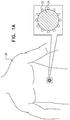
- Figs. 1A-B are schematic illustrations of a subject 20 who is suffering from cancer, a plurality of nanoparticles 22 having been administered to the subject and having amassed at a tumor 24 that contains cancerous cells, in accordance with some applications of the present invention.
- a heating device 26 is typically used in conjunction with the administration of the nanoparticles to the subject.
- the heating device transmits energy (schematically illustrated by arrows 28) toward the subject's body, causing at least some of the cancerous cells to become heated, such that the heated cells become injured or ruptured, leading to cell death.
- the heating device acts as an energy transmission unit.
- the nanoparticles typically have the following characteristics:
- the nanoparticles will not become elongated to a precise geometric ellipsoid shape, but will assume a generally ellipsoidal shape when maximally elongated.
- the heating device 26 with which the nanoparticles are used is an RF-transmitter, which heats the nanoparticles via inductive radiofrequency heating.
- Fig. 1B shows the patient's body inside the heating device.
- heating device e.g., the RF-transmitter
- a coil 29 spirals around inside the housing and transmits energy in the general direction of the subject's body.
- heating device 26 may include respective transmission and receiving electrodes (e.g., electrode plates) that are disposed on opposite sides of the subject's body (e.g., above and below the subject's body).
- the heating device is typically configured to generate an electromagnetic field that passes through at least a portion of the subject's body, by transmitting electromagnetic energy from the transmission electrode to the receiving electrode.
- heating device 26 is shaped differently and/or transmits energy toward the subject's body in a form other than RF energy.
- the heating device may be housed in a portable housing, and the housing may be sized such that the energy is directed toward a specific portion of the subject's body.
- the heating device may transmit sonic or ultrasonic energy, and/or may transmit a different range of electromagnetic energy, e.g., optical energy, infrared energy, UV energy, or microwave energy.
- the heating device may use Joule heating, magnetic heating, electromagnetic heating, electrophoretic heating, and/or inductive heating.
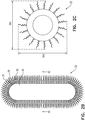
- FIG. 2A is a schematic illustration of a cross-section of nanoparticle 22, in accordance with some applications of the present invention.
- Fig. 2A shows a cross-section of the nanoparticle when the nanoparticle is shaped spherically, for illustrative purposes.
- Figs. 2B and 2C are schematic illustration of respective cross-sections of nanoparticle 22, when the nanoparticle is elongated and is shaped as an ellipsoid. It is noted that, for illustrative purposes, the relative dimensions of the respective components of the nanoparticle are not shown to scale in Figs. 2A-C .
- nanoparticle 22 typically includes an inner core 30 that is a phase-change material.
- An outer layer 32 is disposed around the inner core, the outer layer including a plurality of nano-spheres 34 of at least one metal. It is noted that the outer layer is typically not a continuous layer, but rather there are separations between each of the nano-spheres and the nano-spheres that are adjacent thereto, as described in further detail hereinbelow.
- polymer chains 36 that define respective hydrophobic and hydrophilic ends are disposed between inner core 30 and outer layer 32, such that the hydrophobic core is bonded to the phase-change material within the inner core, and the hydrophilic ends are bonded to the nano-spheres of the first outer layer.
- polymer chains 37 are disposed around the outside of outer layer 32, as shown.
- molecules 38 of a substance that binds preferentially with cancerous cells relative to non-cancerous cells are bound to nano-spheres 34.
- glucose molecules, and/or molecules of a glucose analog or a glucose derivative are used as the substance that binds preferentially with cancerous cells relative to non-cancerous cells.
- glucose analog or glucose derivative such as fluorodeoxyglucose and/or D-glucose
- more than twenty times as many glucose (or glucose analog or glucose derivative) molecules may become coupled to the cancer cells as become coupled to the healthy cells.
- the preferential uptake of glucose molecules by cancer cells is based on the Warburg effect, described hereinabove in the Background, and as described in " Cancer's Molecular Sweet Tooth and the Warburg Effect," by Kim et al., Cancer Res 2006; 66: (18), September 15, 2006 .
- the principle of cancer cells preferentially uptaking glucose molecules forms the basis of certain PET-CT imaging protocols.
- glucose or a glucose analog or a glucose derivative
- glucose derivatives bind with both solid tumors and hematological tumors.
- a different type of molecule e.g., an antibody, a drug, and/or a hormone
- the nanoparticles are administered to the subject systemically (e.g., orally, and/or via intravenous injection), and the nanoparticles are configured to preferentially bind with the cancer cells, by virtue of the fact that the nanoparticle includes the substance that binds preferentially with cancerous cells relative to non-cancerous cells.
- the nanoparticles typically amass in the vicinity of a cancerous tumor (e.g., tumor 24, shown in Fig. 1A ), and bind with cells of the tumor.
- a cancerous tumor e.g., tumor 24, shown in Fig. 1A
- the nanoparticles amass around and bind with metastasized cancer cells.
- outer layer 32 includes a plurality of nano-spheres 34 of at least one metal.
- nano-spheres 34 include a noble metal such as ruthenium, rhodium, palladium, silver, osmium, iridium, platinum, and/or gold.
- nano-sphere 34 is a paramagnetic gold superatom nano-sphere.
- an alloy that includes a mixture of two or more metals, or a metal and a nonmetal, is used for nano-spheres 34.
- outer layer 32 is typically not a continuous layer, but rather there are separations between each of the nano-spheres and the nano-spheres that are adjacent thereto.
- a diameter of each of the nano-spheres is greater than 1 nm (e.g., greater than 3 mm), and/or less than 10 nm (e.g., less than 7 mm), e.g., between 1 and 10 nm, or between 3 nm and 7 nm.
- nanoparticle 22 is in its spherical configuration ( Fig.
- a separation S between each of the nano-spheres and an adjacent nano-sphere is greater than 0.3 nm (e.g., greater than 0.5 mm), and/or less than 2 nm (e.g., less than 1.5 mm), e.g., between 0.3 nm and 2 nm, or between 0.5 nm and 1.5 nm.
- the separation between the nano-spheres allows the nano-spheres to move with respect to each other, which contributes to the nanoparticle having the property of being self-adjusting in shape.
- outer layer 32 were to be formed as a continuous layer of metal, the outer layer would be relatively rigid.
- the separation between the nano-spheres is typically not greater than the maximum separation described herein, in order to prevent phagocytic cells of the subject's mononuclear phagocyte system (i.e., the subject's reticuloendothelial system) from penetrating outer layer 32 and breaking down polymer chains 36 and/or the phase-change material of inner core 30.
- phagocytic cells of the subject's mononuclear phagocyte system i.e., the subject's reticuloendothelial system
- heating device 26 is typically used to transmit energy (e.g., RF energy) toward the subject's body.
- the heating device may direct inductive radio frequency heating toward the subject's body (and, therefore, toward the nano-spheres).
- the heating device directs energy toward the subject's body at a resonant frequency of nano-spheres 34, and/or a frequency at which the nano-spheres have high energy absorbance relative to that of the subject's tissue, such that the nano-spheres preferentially absorb energy from the heating device relative to the subject's tissue (e.g., healthy tissue of the subject).
- the absorption of energy by the nano-spheres is such as to heat the nano-spheres. Since nanoparticles 22 typically amass in the vicinity of cancer cells and bind with the cancer cells, and the nano-spheres preferentially absorb the energy that is transmitted toward the subject, the cancer cells are preferentially heated relative to healthy cells of the subject.
- the average heat flux density (i.e., the heat rate per unit area) at the cancer cells within the region of the subject's body that is heated by the heating device is typically substantially greater (e.g., more than twice as great, more than 5 times greater, more than 10 times greater, and/or more than 20 times greater) than that of the average heat flux density at the healthy cells within the region that is heated by the heating device.
- the heating of the subject's body (or the portion thereof) by the heating device is typically such as to damage the cancer cells in the subject's body (or in the heated portion) but not to substantially damage the healthy cells therein.
- Nanoparticle 22 typically includes inner core 30, which includes a phase-change material.
- the phase-change material upon being heated to a phase-change temperature of the phase-change material, the phase-change material is configured to undergo a change of phase from solid to liquid, solid to gel, or gel to liquid.
- the heating device is configured to transmit energy toward the subject's body, such that nanoparticles 22 are heated to the phase-change temperature of the phase-change material.
- the temperature of the nanoparticles and in the vicinity of the nanoparticles remains substantially constant once the phase-change material has been heated to the phase-change temperature.
- the heating device does not heat the cluster to a temperature that is greater than the phase-change temperature.
- the heating device is configured to heat the nanoparticles to the phase change temperature of the nanoparticles, but to prevent heating of the nanoparticles above the phase-change temperature of the nanoparticles, by effecting a phase change of the nanoparticles.
- energy is directed toward the subject's body (or a portion thereof) by the heating device for a period of time that is such that the phase-change material absorbs heat without all of the molecules of the phase change material within inner core 30 changing phase. In this manner, heat continues to be absorbed as latent heat of fusion by the phase-change material within the inner core, throughout the duration of the energy transmission.
- the heating device may sense a temperature of the clusters using known techniques, and discontinue the transmission of the energy in response to the sensed temperature (e.g., in response to the sensed temperature exceeding the phase-change temperature, which would indicate that heat is no longer being absorbed as latent heat of fusion).
- the heating device discontinues transmission of the energy in response to a duration of transmission of the energy, i.e., the unit ceases to transmit energy after a given time period.
- the heating device transmits energy in an intermittent manner, the unit alternating between ON periods during which energy is transmitted by the unit, and OFF periods during which energy is not transmitted by the unit, or a reduced amount of energy is transmitted by the unit relative to during the ON periods.
- the heating device is configured such that the relative durations of the ON and OFF periods of the unit are such as to heat the nanoparticles to the phase change temperature of the nanoparticles, but to prevent heating of the nanoparticles above the phase-change temperature of the nanoparticles, in the manner described hereinabove.
- the phase-change material is chosen such that the phase-change temperature is a temperature at which the cancer cells will be substantially damaged (e.g., injured or ruptured) but such that the healthy cells in the surrounding tissue will not be substantially damaged. (It is noted that typically some healthy cells may be at least partially damaged.) Since the phase-change material maintains the temperature of the nanoparticles at the phase-change temperature, the heating of the nanoparticles is such as to damage the cancer cells in the vicinity of the nanoparticles but not to substantially damage the healthy cells in the vicinity.
- the effect of the heating of the nanoparticles on the cancer is in accordance with Table 1, which appears in an article by Thomsen, entitled “Pathologic analysis of photothermal and photomechanical effects of laser-tissue interactions” (Photochem Photobiol.
- the region of the subject's body in which cancer cells are located is heated to the phase-change temperature of the phase-change material.
- a phase-change material having a phase-change temperature of more than 42°C and/or less than 80°C e.g., 42-80°C
- the phase-change material may have a phase-change temperature of more than 42°C and/or less than 50°C (e.g., 42-50°C), more than 50°C and/or less than 60°C (e.g., 50-60°C), or more than 60°C, and/or less than 80°C (e.g., 60-80°C).
- phase-change material of inner core 30 is used as the phase-change material of inner core 30.
- Table 2 Melting temperatures of paraffin particles Compound Melting temperature (°C) Heat of fusion (Kj/Kg) Paraffin C16-C28 42-44 189 Paraffin C20-C33 48-50 189 Paraffin C22-C45 58-60 189 Paraffin wax 64 173.6 Paraffin C28-C50 66-68 189 Paraffin RT40 43 181 Paraffin RT50 54 195 Paraffin RT65 64 207 Paraffin RT80 79 209 Paraffin RT90 90 197 Paraffin RT110 112 213
- Table 3 Melting temperature of organic phase-change materials: Compound Melting Temperature (°C) Heat of Fusion (Kj/Kg) Paraffin C14 4.5 165 Paraffin C15-C16 8 153 Polyglycol E400 8 99.6 Dimethyl-sulfoxide (DMS) 16.5 85.7 Paraffin C16-C18 20-22 152 Polyglycol E600 22 189 Paraffin C13-C24 22-24 189 1-Dodecanol 26 200 Paraffin C18 28
- phase-change material of inner core 30 crude oil, paraffin produced by the Fischer-Tropsch process, and an organic material having saturated, unsaturated, straight, or branched carbon chain particles.
- the phase-change material may include, for example, trilaurin, trimyristin, tripalmitin, tristearin, and/or any suitable type of paraffin or paraffin wax.
- an organic phase-change material is used in inner core 30.
- paraffin and/or fatty acid particles may be used.
- an organic material is used in inner core 30 because the organic phase-change material freezes without substantial super cooling, is able to melt congruently, has self-nucleating properties, does not segregate, is chemically stable, has a high heat of fusion, and/or for a different reason.
- phase-change materials is used in inner core 30: Octadecane (CAS Number 593-45-3), Lauric acid (CAS No: 143-07-7), Myristic acid (CAS No: 544-63-8), Palmitic acid (CAS No: 57-10-3), Heptadecanoic acid (CAS No: 506-12-7), Stearic acid (CAS No: 57-11-4), Arachidic acid (CAS No: 506-30-9), Behenic acid (Cas No: 112-85-6) Trimethylolethane (CAS No:77-85-0), Stearamine (Octadecylamine) (Sigma-74750), Cetylamine (Hexadecylamine) (Sigma-445312).
- Octadecane CAS Number 593-45-3
- Lauric acid CAS No: 143-07-7
- Myristic acid CAS No: 544-63-8
- Palmitic acid CAS No: 57-10-3
- Heptadecanoic acid CAS No: 506-12-7
- selection criteria for selecting the phase-change material for use in inner core 30 include thermodynamic, kinetic, and chemical properties of the phase-change material.
- the phase-change material is selected to have given thermodynamic properties, such as a melting temperature in the desired operating temperature range, a high latent heat of fusion per unit volume, high specific heat, high density, high thermal conductivity, small volume changes on phase transformation, small vapor pressure at operating temperatures, and/or congruent melting.
- the phase-change material is selected to have given kinetic properties, such as a high nucleation rate, and/or a high rate of crystal growth.
- the phase-change material is selected to have given chemical properties, such as chemical stability, reversibility of the phase-change cycle without degradation of the particles after a large number of phase-change cycles, non-corrosiveness, and/or non-toxicity.
- the phase-change material has relatively low thermal conductivity, and is arranged to have a large surface area to overcome the low thermal conductivity and increase the flow of heat into the phase-change material.
- nanoparticle 22 is at least partially self-adjusting in shape, the nanoparticles being configured to be elongatable to a generally ellipsoid shape (e.g., a tri-axial ellipsoid shape, or a prolate or oblate ellipsoid of revolution shape). It is noted that typically, the nanoparticle will not become elongated to a precise geometric ellipsoid shape, but will assume a generally ellipsoidal shape when maximally elongated.
- a generally ellipsoid shape e.g., a tri-axial ellipsoid shape, or a prolate or oblate ellipsoid of revolution shape.
- nanoparticles 22 need to have a certain minimum volume, for at least one of the following reasons:
- inner core 30 of the phase-change material has a volume of at least 15,000 nm 3 , e.g., at least 50,000 nm 3 , or at least 85,000 nm 3 .
- inner core 30 of the phase-change material has a volume of less than 400,000 nm 3 , e.g., less than 270,000 nm 3 , or less than 145,000 nm 3 .
- inner core 30 may have a volume of 15,000-400,000 nm 3 , e.g., 50,000-270,000 nm 3 , or 85,000-145,000 nm 3 .
- inner core 30 of the phase-change material when inner core 30 is shaped spherically (as shown, for illustrative purposes, in Fig. 2A ), inner core 30 of the phase-change material has a diameter of at least 30 nm, e.g., at least 45 nm, or at least 55 nm.
- inner core 30 of the phase-change material when inner core 30 is shaped spherically, inner core 30 of the phase-change material has a diameter of less than 90 nm, e.g., less than 80 nm, or less than 65 nm.
- inner core 30 when inner core 30 is shaped spherically, inner core 30 may have a diameter of 30-90 nm, e.g., 45-80 nm, or 55-65 nm.
- the diameter of each of nano-spheres 34 is greater than 1 nm (e.g., greater than 3 mm), and/or less than 10 nm (e.g., less than 7 mm), e.g., between 1 and 10 nm, or between 3 nm and 7 nm.
- the length of each of polymer chains 36, when the chain is maximally straightened, is typically greater than 1 nm (e.g., greater than 1.5 nm), and/or less than 4 nm (e.g. less than 3 nm), e.g., 1-4 nm, or 1.5-3 nm.
- the length of each of polymer chains 37, when the chain is maximally straightened, is typically greater than 2 nm (e.g., greater than 4 nm), and/or less than 10 nm (e.g. less than 8 nm), e.g., 2-10 nm, or 4-8 nm.
- Nanoparticle 22 typically has a volume of at least 65,000 nm 3 , e.g., at least 110,000 nm 3 , or at least 180,000 nm 3 . Further typically, in its spherical configuration, the nanoparticle has a diameter of less than 900,000 nm 3 , e.g., less than 700,000 nm 3 , or less than 525,000 nm 3 . For some applications, the nanoparticle has a volume of 65,000-900,000 nm 3 , e.g., 110,000-700,000 nm 3 , or 180,000-525,000 nm 3 .
- nanoparticle 22 When it is shaped spherically (as shown, for illustrative purposes, in Fig. 2A ), nanoparticle 22 typically has a diameter of at least 50 nm, e.g., at least 60 nm, or at least 70 nm. Further typically, in its spherical shape, the nanoparticle has a diameter of less than 120 nm, e.g., less than 110 nm, or less than 100 nm. For some applications, in its spherical shape, the nanoparticle has a diameter of 50-120 nm, e.g., 60-110 nm, or 70-100 nm.
- nanoparticle is typically defined as a particle between 1 and 100 nanometers in size, the scope of the present application includes a nanoparticle 22 having a size that is slightly greater than 100 nm, e.g., up to 120 nm, as described.
- nanoparticle 22 is shown in Fig. 2A in a spherical configuration, and the dimensions of nanoparticle 22 are provided hereinabove, for when the nanoparticle is shaped spherically.
- nanoparticle 22 does not necessarily assume a spherical shape when in the subject's blood stream, even if the nanoparticle is not being subjected to osmotic, hydrostatic, and/or any other pressure inside the body. Rather, the nanoparticle may assume, for example, a tear shape, a bobble shape, an ellipsoid shape, and/or may be amorphous.
- nanoparticle 22 does have a substantially fixed volume, as provided hereinabove.
- the nanoparticle is typically configured to be at least partially self-adjusting in shape, such that the nanoparticle is able to pass through an anatomical barrier having a size that is greater than a threshold minimum size, for example, in response to hydrostatic and/or osmotic pressure being exerted on the nanoparticle, as described in further detail hereinbelow.
- nanoparticle 22 contributes to the nanoparticle being self-adjusting in shape:
- nanoparticles 22 are administered to the subject systemically (e.g., orally, and/or intravenously).
- the nanoparticles are configured to elongate (as shown schematically in Figs.
- one of the semi axes of the nanoparticle SA1 is typically less than 30 nm, e.g., less than 25 nm
- a second one of the semi axes of the nanoparticle SA2 is typically less than 30 nm, e.g., less than 25 nm.
- nanoparticle 22 is configured such that each of the semi axes of the ellipsoid is greater than 5 nm, e.g., greater than 10 nm.
- both semi axes SA1 and SA2 are greater than 5 nm, e.g., greater than 10 nm.
- the nanoparticle is prevented from traversing the blood brain barrier.
- outer layer 32 includes molecules of a substance that binds preferentially with cancerous cells relative to non-cancerous cells.
- Some of the substances that preferentially bind with cancer cells e.g., antibodies, glucose, and glucose analogs or derivatives (such as fluorodeoxyglucose and/or D-glucose)
- nanoparticle 22 is typically configured such that even in its maximally elongated configuration, each of the semi axes of the ellipsoid is greater than 5 nm, e.g., greater than 10 nm, in order to prevent the nanoparticle from being able to traverse the blood brain barrier.
- polymer chains 36 define respective hydrophobic and hydrophilic ends, and are disposed between inner core 30 and outer layer 32.
- a polyetheramine e.g., a Jeffamine® polyetheramine, such as polyethylene glycol (PEG) or polypropylene
- polymer chains 36 act to bind the inner core 30 to outer layer 32, and contribute to the self-adjusting property of nanoparticle 22 as described herein.
- polymer chains 37 are disposed around outer layer 32.
- a polyetheramine e.g., a Jeffamine® polyetheramine, such as polyethylene glycol (PEG) or polypropylene, is used in polymer chains 37.
- Polymer chains 37 at least partially mask other components of nanoparticle 22 (e.g., outer layer 32) from phagocytic cells of the subject's mononuclear phagocyte system (i.e., the subject's reticuloendothelial system), thereby preventing the nanoparticle from being broken down by the phagocytic cells.
- phagocytic cells of the subject's mononuclear phagocyte system i.e., the subject's reticuloendothelial system
- the methods described herein are applied to the subject while imaging the subject, for example, using CT, sonic, ultrasonic, and/or MRI imaging protocols.
- the substance is administered to the subject, and the subject's body (or a region thereof) is irradiated with the energy that is preferentially absorbed by the clusters, as described herein. While the subject's body is irradiated, the subject's body is imaged using a heat-sensitive imaging protocol (for example, using MRI) to detect which regions of the subject's body (including cancer cells) have been heated.
- a heat-sensitive imaging protocol for example, using MRI
- Nanoparticles including paraffin engulfed with PPO-PEO-PPO/PEO were prepared by using an emulsification/solvent evaporation method. Drops of a solution of paraffin wax in dichloromethane were added into an aqueous solution of N,N-Methyl Bisacrylamide (BIS) and a mixture of an acrylated tri/diblock copolymer. Jeffamine® 1900 was used as the tri/diblock copolymer.
- Jeffamine® 1900 is a block copolymer composed of polypropylene-oxide/polyethyleneoxide: NH2-PPO-PEO-PPO-NH2, functionalized with polymerizable acrylamide groups either (a) at one end, such as to provide a positively charged di-block copolymer of type acryl-NH-A-B-NH3+, or (b) at both ends, such as to provide a tri-block co-polymer of type acryl-NH-B-A-B-NH-acryl.
- the mixture was subjected to ultrasonication to form a stable oil-in-water emulsion. Once residual solvent within the droplets was evaporated, nanoparticles of PPO-PEO-PPO/PEO engulfing paraffin wax were obtained, in a nano-reservoir structure. Since the monomers possess polymerizable functions, radical activation at elevated temperature was used to start polymerization and cross-linking within the self-assembled particles, resulting in the formation of nanoparticles with a PEO-PPO-PEO/PEO cross-linked shell structure with an oil-filled core in the interior. The resultant nanoparticles possessed terminal amine groups which acted as attachment points for small colloidal gold particles.
- the attachment points were used as nucleation sites for the coalescence of a thin gold overlayer using tetrakis(hydroxymethyl)phosphonium chloride (THPC) as a reducing agent.
- THPC tetrakis(hydroxymethyl)phosphonium chloride
- the gold nano-spheres were bonded to the nanoparticles, such that each of the gold nano-spheres was separated from all of the other nano-spheres in the overlayer, such that the overlayer formed a segmented shell.
- the segmented shell thickness was controlled using chloroauric acid and ammonium hydroxide.
- SH-PEG2K-Fluorescein isothiocyanate was added to 1-Thio- ⁇ -D-glucose sodium salt and the mixed solution was added to the encapsulated paraffin nanoparticles. The mixture was vortexed for 10 min and then shaken in an orbital shaker at room temperature for 24 h. The nanoparticles were then centrifuged before being re-dispersed and washed.
- FITC SH-PEG2K-Fluorescein isothiocyanate
- the nanoparticles were used to perform an experiment on a set of mice.
- Tumor cells were injected subcutaneously into the set of mice. The volumes of the subcutaneous tumors were measured daily.
- the mouse was injected with the nanoparticles.
- the mice were weighed, and a volume of 10 microliters of the nanoparticles were injected, per gram of weight of the mouse.
- the mice were sacrificed at respective times subsequent to the administration of the nanoparticles to the respective mice. Organs, such as the liver and the spleen, of each of the mice were harvested, as was the tumor of each of the mice.
- the organs, as well as the tumor were weighed, and subsequently, the organs and the tumor were placed in acid, such that all of the organic matter dissolved.
- the matter that remained from each of the organs and the tumor was then analyzed using inductively coupled plasma mass spectrometry (ICP-MS), in order to detect the amount of gold (from the gold nano-spheres of the nanoparticles) that was present in each of the organs and the tumor.
- ICP-MS inductively coupled plasma mass spectrometry
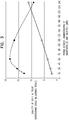
- Fig. 3 is a graph showing the results of the above-described experiment.
- the dashed curve shows a plot of the amount of gold (in micrograms of gold, per milligram of tissue) that was present in the livers and the spleens of mice that were sacrificed at respective time periods after administration of the nanoparticles to the mice.
- the solid line shows a plot of the amount of gold that was present in the tumors of the mice that were sacrificed at the respective time periods after the administration of the nanoparticles to the mice.
- the graph is based on data from mice that were sacrificed, respectively, 15 minutes, 30 minutes, 60 minutes, 120 minutes, and 240 minutes after the administration of the nanoparticles to the mice.
- the amount of gold that was present in the organs and tumors of the mice is representative of the volume of nanoparticles that reached the organs and the tumor. It may be observed that, over time, the amount of gold that is present in the liver and spleen decreases, while the amount of gold that is present in the tumor increases.
- apparatus and methods described herein are performed in combination with apparatus and methods described in US 2012/0221081 to Hof .
Landscapes
- Health & Medical Sciences (AREA)
- Chemical & Material Sciences (AREA)
- Life Sciences & Earth Sciences (AREA)
- Veterinary Medicine (AREA)
- Animal Behavior & Ethology (AREA)
- General Health & Medical Sciences (AREA)
- Public Health (AREA)
- Engineering & Computer Science (AREA)
- Medicinal Chemistry (AREA)
- Pharmacology & Pharmacy (AREA)
- Epidemiology (AREA)
- Bioinformatics & Cheminformatics (AREA)
- Biomedical Technology (AREA)
- Nanotechnology (AREA)
- Nuclear Medicine, Radiotherapy & Molecular Imaging (AREA)
- Chemical Kinetics & Catalysis (AREA)
- General Chemical & Material Sciences (AREA)
- Immunology (AREA)
- Radiology & Medical Imaging (AREA)
- Heart & Thoracic Surgery (AREA)
- Vascular Medicine (AREA)
- Oil, Petroleum & Natural Gas (AREA)
- Biochemistry (AREA)
- Molecular Biology (AREA)
- Organic Chemistry (AREA)
- Medicinal Preparation (AREA)
- Pharmaceuticals Containing Other Organic And Inorganic Compounds (AREA)
- Medicines That Contain Protein Lipid Enzymes And Other Medicines (AREA)
- Medicines Containing Material From Animals Or Micro-Organisms (AREA)
Claims (15)
- Appareil pour utilisation avec un sujet souffrant d'un cancer, le corps du sujet contenant des cellules cancéreuses et des cellules non cancéreuses, et pour utilisation avec un dispositif chauffant (26) configuré pour chauffer au moins une partie du corps du sujet, l'appareil comprenant :
une nanoparticule (22) comprenant :un noyau intérieur (30) ;une couche extérieure (32) disposée autour du noyau intérieur (30), la couche extérieure (32) comprenant :une pluralité de nano-sphères (34) d'au moins un métal et une pluralité de molécules (38) d'une substance qui se lie de préférence aux cellules cancéreuse plutôt qu'aux cellules non cancéreuses, la nanoparticule (22) ayant un volume d'au moins 65 000 nm3,caractérisé en ce que :le noyau intérieur (30) comprend un matériau à changement de phase qui est configuré pour absorber la chaleur de fusion latente en subissant un changement de phase sélectionné dans le groupe constitué de : solide à liquide, et gel à liquide, le changement de phase se produisant à une température de changement de phase comprise entre 42°C et 80°C ;la couche extérieure (32) n'est pas une couche continue, des séparations entre chacune des nano-sphères (34) et les nano-sphères (34) qui leur sont adjacentes permettant aux nano-sphères (34) de se déplacer les unes par rapport aux autres ; etla nanoparticule (22), du fait que chacune des nano-sphères (34) est séparée des autres nano-sphères (34) de la couche extérieure (32), étant allongeable en un ellipsoïde, de sorte que lorsque la nanoparticule (22) est allongée au maximum :chacun des demi-axes définis par l'ellipsoïde est supérieur à 5 nm, andau moins deux des demi-axes de l'ellipsoïde sont inférieurs à 30 nm. - Appareil selon la revendication 1, dans lequel la nanoparticule (22) est configurée pour s'allonger en réponse à la pression hydrostatique régnant à l'intérieur du corps du sujet, et/ou en réponse à la pression osmotique régnant à l'intérieur du corps du sujet.
- Appareil selon la revendication 1, dans lequel la nanoparticule (22) est configurée pour être empêchée de traverser la barrière sang-cerveau du sujet, en étant allongeable en un ellipsoïde de telle sorte que, même quand la nanoparticule (22) est allongée au maximum, chacun des demi-axes définis par l'ellipsoïde est supérieur à 5 nm.
- Appareil selon la revendication 1, dans lequel la nanoparticule (22) est configurée pour pouvoir passer à travers le foie du sujet, des glandes du sujet, un système de phagocytes mononuclées du sujet, et/ou la rate du sujet, en étant allongeable en un ellipsoïde, de telle sorte que, lorsque la nanoparticule (22) est allongée au maximum, au moins deux des demi-axes de l'ellipsoïde sont inférieurs à 30 nm.
- Appareil selon la revendication 1, dans lequel le matériau à changement de phase est configuré pour empêcher la nanoparticule (22) d'être chauffée à une température qui est supérieure à la température de changement de phase, en absorbant la chaleur de fusion latente.
- Appareil selon la revendication 1, dans lequel les nano-sphères (34) du ou des métaux comprennent des nano-sphères d'or.
- Appareil selon la revendication 1, dans lequel la pluralité de molécules (38) de la substance qui se lie de préférence avec les cellules cancéreuses plutôt qu'avec les cellules non cancéreuses comprennent une pluralité de molécules de glucose, une pluralité de molécules d'un analogue du glucose, une pluralité de molécules d'un dérivé du glucose, et/ou une pluralité de molécules d'un anticorps.
- Appareil selon l'une quelconque des revendications 1-7, dans lequel la nanoparticule (22) comprend en outre une pluralité de chaînes polymériques (36) disposées entre le noyau intérieur (30) et la couche extérieure (32), la couche extérieure (32) étant liée au noyau intérieur (30) via les chaînes polymériques (36).
- Appareil selon l'une quelconque des revendications 1-7, dans lequel la nanoparticule (22) comprend en outre une pluralité de chaînes polymériques (37) disposées autour de la couche extérieure.
- Appareil selon l'une quelconque des revendications 1-7, dans lequel les nanoparticules (22) sont configurées pour être utilisées avec un dispositif de chauffage haute fréquence à induction (26), et dans lequel les nano-sphères (34) sont configurées pour être chauffées par le dispositif de chauffage haute fréquence à induction (26).
- Appareil selon la revendication 10, dans lequel les nanoparticules sont configurées pour être utilisées avec un dispositif de chauffage haute fréquence à induction (26) qui transmet l'énergie RF à une fréquence donnée, et dans lequel les nano-sphères (34) ont une fréquence de résonance qui correspond à la fréquence donnée.
- Appareil selon l'une quelconque des revendications 1-7, dans lequel chacune des nano-sphères (34) est séparée de toutes les autres nano-sphères (34) de la couche extérieure (32) par une séparation minimale comprise entre 0,3 nm et 2 nm.
- Appareil selon l'une quelconque des revendications 1-7, dans lequel le noyau intérieur (30) a un volume de 50 000-270 000 nm3.
- Appareil selon l'une quelconque des revendications 1-7, dans lequel la nanoparticule (22) a un volume de 110 000-700 000 nm3.
- Procédé comprenant :
la synthétisation d'une nanoparticule (22) devant avoir un volume d'au moins 65 000 nm3, la synthétisation étant réalisée par les étapes consistant à :fournir un noyau intérieur (30) ; etlier une couche extérieure (32) au noyau intérieur (30), la couche extérieure (32) incluant :une pluralité de nano-sphères (34) d'au moins un métal etune pluralité de molécules (38) d'une substance qui se lie de préférence avec les cellules cancéreuses plutôt qu'avec les cellules non cancéreuses ;caractérisé en ce que :la nanoparticule (22) est allongeable en un ellipsoïde, de sorte que lorsque la nanoparticule (22) est allongée au maximum :chacun des demi-axes définis par l'ellipsoïde est supérieur à 5 nm, etau moins deux des demi-axes de l'ellipsoïde sont inférieurs à 30 nm ;le noyau intérieur (30) inclut un matériau à changement de phase qui est configuré pour absorber la chaleur de fusion latente, en subissant un changement de phase sélectionné dans le groupe constitué de : solide à liquide et gel à liquide, le changement de phase se produisant à une température de changement de phase comprise entre 42°C et 80°C ; etla couche extérieure (32) n'est pas une couche continue, des séparations entre chacune des nano-sphères (34) et les nano-sphères (34) qui leur sont adjacentes permettant aux nano-sphères (34) de se déplacer les unes par rapport aux autres pour faciliter ainsi l'allongement de la nanoparticule (22).
Applications Claiming Priority (2)
| Application Number | Priority Date | Filing Date | Title |
|---|---|---|---|
| US201462083978P | 2014-11-25 | 2014-11-25 | |
| PCT/IL2015/051146 WO2016084082A1 (fr) | 2014-11-25 | 2015-11-25 | Nanoparticule à changement de phase |
Publications (2)
| Publication Number | Publication Date |
|---|---|
| EP3226819A1 EP3226819A1 (fr) | 2017-10-11 |
| EP3226819B1 true EP3226819B1 (fr) | 2018-10-24 |
Family
ID=55080144
Family Applications (1)
| Application Number | Title | Priority Date | Filing Date |
|---|---|---|---|
| EP15823030.0A Active EP3226819B1 (fr) | 2014-11-25 | 2015-11-25 | Nanoparticule à changement de phase |
Country Status (7)
| Country | Link |
|---|---|
| US (2) | US9872902B2 (fr) |
| EP (1) | EP3226819B1 (fr) |
| CN (2) | CN107206082B (fr) |
| CA (1) | CA2968648C (fr) |
| ES (1) | ES2706317T3 (fr) |
| IL (1) | IL252488B (fr) |
| WO (1) | WO2016084082A1 (fr) |
Families Citing this family (6)
| Publication number | Priority date | Publication date | Assignee | Title |
|---|---|---|---|---|
| US9572695B2 (en) | 2009-08-24 | 2017-02-21 | New Phase Ltd | Phase-change and shape-change materials |
| EP3226819B1 (fr) | 2014-11-25 | 2018-10-24 | New Phase Ltd. | Nanoparticule à changement de phase |
| US20200054886A1 (en) | 2017-02-22 | 2020-02-20 | New Phase Ltd. | Phase-change nanoparticle |
| EP3907518A1 (fr) * | 2020-05-08 | 2021-11-10 | Koninklijke Philips N.V. | Système de détection de l'échauffement induit par les radiofréquences d'un patient subissant un examen irm |
| CN111840810B (zh) * | 2020-07-27 | 2022-03-01 | 哈尔滨工业大学 | 一种基于光学相变纳米颗粒的生物组织温度场被动调控方法 |
| DE102022115394A1 (de) * | 2022-06-21 | 2023-12-21 | Rheinisch-Westfälische Technische Hochschule (Rwth) Aachen | Implantat und Anordnung aufweisend eine Strahlungsquelle und ein Implantat |
Family Cites Families (98)
| Publication number | Priority date | Publication date | Assignee | Title |
|---|---|---|---|---|
| US4106488A (en) | 1974-08-20 | 1978-08-15 | Robert Thomas Gordon | Cancer treatment method |
| US4096616A (en) | 1976-10-28 | 1978-06-27 | General Electric Company | Method of manufacturing a concentric tube heat exchanger |
| US4204573A (en) | 1977-05-09 | 1980-05-27 | Pvi Industries, Inc. | Heat exchanger with concentric flow tubes |
| US4392040A (en) | 1981-01-09 | 1983-07-05 | Rand Robert W | Induction heating apparatus for use in causing necrosis of neoplasm |
| US4569836A (en) | 1981-08-27 | 1986-02-11 | Gordon Robert T | Cancer treatment by intracellular hyperthermia |
| US4440217A (en) | 1982-06-10 | 1984-04-03 | Stieler Scott M | Counterflow heat exchanger |
| US4747826A (en) | 1983-06-08 | 1988-05-31 | University Of Pittsburgh | Rapid venous infusion system |
| US4678460A (en) | 1985-02-11 | 1987-07-07 | Rosner Mark S | Portable rapid massive parenteral fluid warming and infusion apparatus |
| US4983159A (en) | 1985-03-25 | 1991-01-08 | Rand Robert W | Inductive heating process for use in causing necrosis of neoplasms at selective frequencies |
| US5003991A (en) | 1987-03-31 | 1991-04-02 | Olympus Optical Co., Ltd. | Hyperthermia apparatus |
| US5153827A (en) | 1989-01-30 | 1992-10-06 | Omni-Flow, Inc. | An infusion management and pumping system having an alarm handling system |
| JPH03178668A (ja) | 1989-12-06 | 1991-08-02 | Senko Ika Kogyo Kk | 熱交換器 |
| EP0543498B1 (fr) | 1991-11-20 | 1998-04-08 | Kabushiki Kaisha Riken | Poudre injectable pour la thérapie du cancer |
| US5217363A (en) | 1992-06-03 | 1993-06-08 | Gaz Metropolitan & Co., Ltd. And Partnership | Air-cooled oxygen gas burner assembly |
| US5318557A (en) | 1992-07-13 | 1994-06-07 | Elan Medical Technologies Limited | Medication administering device |
| US5964744A (en) | 1993-01-04 | 1999-10-12 | Menlo Care, Inc. | Polymeric medical device systems having shape memory |
| US5716410A (en) | 1993-04-30 | 1998-02-10 | Scimed Life Systems, Inc. | Temporary stent and method of use |
| US5385540A (en) | 1993-05-26 | 1995-01-31 | Quest Medical, Inc. | Cardioplegia delivery system |
| IL108832A (en) | 1994-03-03 | 1999-12-31 | Medinol Ltd | Urological stent and positioning device for it |
| US5545210A (en) | 1994-09-22 | 1996-08-13 | Advanced Coronary Technology, Inc. | Method of implanting a permanent shape memory alloy stent |
| US6059810A (en) | 1995-05-10 | 2000-05-09 | Scimed Life Systems, Inc. | Endovascular stent and method |
| US5658234A (en) | 1995-07-24 | 1997-08-19 | J. D. Technologies, Inc. | Method for treating tumors |
| JP3609835B2 (ja) | 1996-01-18 | 2005-01-12 | メドトロニック・インコーポレーテッド | 血液熱交換システム |
| US5830179A (en) | 1996-04-09 | 1998-11-03 | Endocare, Inc. | Urological stent therapy system and method |
| US6072154A (en) | 1996-09-05 | 2000-06-06 | Medtronic, Inc. | Selectively activated shape memory device |
| US6451044B1 (en) | 1996-09-20 | 2002-09-17 | Board Of Regents, The University Of Texas System | Method and apparatus for heating inflammed tissue |
| US5984893A (en) | 1997-03-27 | 1999-11-16 | Ward; Roger T. | Blood infusion control system |
| US7041941B2 (en) | 1997-04-07 | 2006-05-09 | Patented Medical Solutions, Llc | Medical item thermal treatment systems and method of monitoring medical items for compliance with prescribed requirements |
| DE19745890C1 (de) | 1997-10-17 | 1999-03-25 | Inst Physikalische Hochtech Ev | Marker für eine Darm-Diagnostik und Darm-Therapie |
| US6120534A (en) | 1997-10-29 | 2000-09-19 | Ruiz; Carlos E. | Endoluminal prosthesis having adjustable constriction |
| US6379378B1 (en) | 2000-03-03 | 2002-04-30 | Innercool Therapies, Inc. | Lumen design for catheter |
| US7235096B1 (en) | 1998-08-25 | 2007-06-26 | Tricardia, Llc | Implantable device for promoting repair of a body lumen |
| US6585692B1 (en) | 1999-02-19 | 2003-07-01 | Alsius Corporation | Method and system for patient temperature management and central venous access |
| DE19921088C2 (de) | 1999-04-30 | 2003-08-07 | Magforce Applic Gmbh | Stent zur Offenhaltung gangartiger Strukturen |
| US6554791B1 (en) | 1999-09-29 | 2003-04-29 | Smisson-Cartledge Biomedical, Llc | Rapid infusion system |
| IL153753A0 (en) | 2002-12-30 | 2003-07-06 | Neovasc Medical Ltd | Varying-diameter vascular implant and balloon |
| US7640062B2 (en) | 2000-05-08 | 2009-12-29 | Brainsgate Ltd. | Methods and systems for management of alzheimer's disease |
| US7146209B2 (en) | 2000-05-08 | 2006-12-05 | Brainsgate, Ltd. | Stimulation for treating eye pathologies |
| US7117033B2 (en) | 2000-05-08 | 2006-10-03 | Brainsgate, Ltd. | Stimulation for acute conditions |
| JP4311904B2 (ja) | 2000-05-08 | 2009-08-12 | ブレインスゲート リミテッド | 血液脳関門及び脳血流の性質を改善するための翼口蓋神経節の刺激方法及び装置 |
| US6805711B2 (en) | 2000-06-02 | 2004-10-19 | 3F Therapeutics, Inc. | Expandable medical implant and percutaneous delivery |
| WO2002000145A1 (fr) | 2000-06-26 | 2002-01-03 | BVBA Flux Medical Systems Therapeutic | Procede et dispositif de chauffage non invasif externe d"implants metalliques au moyen de champs magnetiques alternatifs |
| US8372139B2 (en) | 2001-02-14 | 2013-02-12 | Advanced Bio Prosthetic Surfaces, Ltd. | In vivo sensor and method of making same |
| US6768921B2 (en) | 2000-12-28 | 2004-07-27 | Z-Tech (Canada) Inc. | Electrical impedance method and apparatus for detecting and diagnosing diseases |
| US6390185B1 (en) | 2001-03-06 | 2002-05-21 | Richard A. Proeschel | Annular flow concentric tube recuperator |
| DE10113659B4 (de) | 2001-03-21 | 2006-10-26 | Triton BioSystems Inc., Chelmsford | Metallischer medizinischer Stent |
| US6746439B2 (en) | 2001-04-19 | 2004-06-08 | Jay Alan Lenker | Method and apparatus for fluid administration with distributed heating |
| US7731648B2 (en) | 2001-07-25 | 2010-06-08 | Aduro Biotech | Magnetic nanoscale particle compositions, and therapeutic methods related thereto |
| US7074175B2 (en) | 2001-07-25 | 2006-07-11 | Erik Schroeder Handy | Thermotherapy via targeted delivery of nanoscale magnetic particles |
| CA2769574C (fr) | 2001-10-04 | 2014-12-23 | Neovasc Medical Ltd. | Implant reducteur de flux |
| US7048756B2 (en) | 2002-01-18 | 2006-05-23 | Apasara Medical Corporation | System, method and apparatus for evaluating tissue temperature |
| WO2003066132A1 (fr) | 2002-02-07 | 2003-08-14 | Medela Ag | Embout tire-lait |
| US8709488B2 (en) | 2002-02-14 | 2014-04-29 | Gholam A. Peyman | Method and composition for hyperthermally treating cells |
| US7684859B2 (en) | 2002-04-25 | 2010-03-23 | Brainsgate Ltd. | Stimulation of the OTIC ganglion for treating medical conditions |
| CA2489341A1 (fr) | 2002-06-14 | 2003-12-24 | Brainsgate, Ltd. | Procedes et systemes de gestion de la maladie d'alzheimer |
| TWI313188B (en) | 2002-09-12 | 2009-08-11 | Shell Int Research | Catalytic conversion of an organic carbonate |
| US20040059385A1 (en) | 2002-09-25 | 2004-03-25 | Yu Tsung I. | Low frequency assistor for electric-stimulating breast acupuncture point portions of a human body |
| US7112273B2 (en) | 2002-09-27 | 2006-09-26 | Nxstage Medical, Inc. | Volumetric fluid balance control for extracorporeal blood treatment |
| KR20050083750A (ko) | 2002-10-11 | 2005-08-26 | 디포메드 디벨롭먼트 리미티드 | 위-체류성 레보도파 전달 형태 |
| US7560160B2 (en) | 2002-11-25 | 2009-07-14 | Materials Modification, Inc. | Multifunctional particulate material, fluid, and composition |
| CN1774239A (zh) | 2003-01-29 | 2006-05-17 | 埃-皮尔制药公司 | 用于胃肠道的有效药物递送 |
| AU2003904086A0 (en) | 2003-08-04 | 2003-08-21 | Cochlear Limited | Implant battery short circuit protection |
| US20050074506A1 (en) | 2003-10-02 | 2005-04-07 | Brainsgate Ltd. | Targeted release of nitric oxide in the CNS circulation for modulating the BBB and treating disorders |
| US7270910B2 (en) | 2003-10-03 | 2007-09-18 | Black & Decker Inc. | Thermal management systems for battery packs |
| US20050090732A1 (en) | 2003-10-28 | 2005-04-28 | Triton Biosystems, Inc. | Therapy via targeted delivery of nanoscale particles |
| US9040090B2 (en) * | 2003-12-19 | 2015-05-26 | The University Of North Carolina At Chapel Hill | Isolated and fixed micro and nano structures and methods thereof |
| US8055347B2 (en) | 2005-08-19 | 2011-11-08 | Brainsgate Ltd. | Stimulation for treating brain events and other conditions |
| US8010189B2 (en) | 2004-02-20 | 2011-08-30 | Brainsgate Ltd. | SPG stimulation for treating complications of subarachnoid hemorrhage |
| US7510555B2 (en) | 2004-05-07 | 2009-03-31 | Therm Med, Llc | Enhanced systems and methods for RF-induced hyperthermia |
| US7627381B2 (en) | 2004-05-07 | 2009-12-01 | Therm Med, Llc | Systems and methods for combined RF-induced hyperthermia and radioimmunotherapy |
| US20050283327A1 (en) | 2004-06-21 | 2005-12-22 | Bowman Catherine M | Breast feeding monitoring device and method |
| US7713298B2 (en) | 2004-06-29 | 2010-05-11 | Micardia Corporation | Methods for treating cardiac valves with adjustable implants |
| US20060083694A1 (en) | 2004-08-07 | 2006-04-20 | Cabot Corporation | Multi-component particles comprising inorganic nanoparticles distributed in an organic matrix and processes for making and using same |
| CA2589817A1 (fr) | 2004-12-09 | 2006-06-15 | Palomar Medical Technologies, Inc. | Appareil buccal avec mecanisme de transfert de chaleur |
| US20060276882A1 (en) | 2005-04-11 | 2006-12-07 | Cook Incorporated | Medical device including remodelable material attached to frame |
| US7357815B2 (en) | 2005-04-21 | 2008-04-15 | Micardia Corporation | Dynamically adjustable implants and methods for reshaping tissue |
| CN100336598C (zh) | 2005-06-13 | 2007-09-12 | 天津大学 | 自换热型催化剂评价反应器 |
| TWI314465B (en) * | 2005-12-30 | 2009-09-11 | Ind Tech Res Inst | Thermosensitive nanostructure for hyperthermia treatment |
| US8404341B2 (en) * | 2006-01-26 | 2013-03-26 | Outlast Technologies, LLC | Microcapsules and other containment structures for articles incorporating functional polymeric phase change materials |
| GB0605672D0 (en) | 2006-03-22 | 2006-05-03 | Univ Keele | Indirect heating |
| US7919184B2 (en) | 2006-08-21 | 2011-04-05 | Mohapatra Satish C | Hybrid nanoparticles |
| US8518870B2 (en) | 2007-02-19 | 2013-08-27 | The Board Of Regents Of The University Of Oklahoma | Compositions and methods for cancer treatment using targeted carbon nanotubes |
| WO2008148014A2 (fr) | 2007-05-23 | 2008-12-04 | C.R. Bard, Inc. | Endoprothèse comportant un revêtement polymère |
| CN101343529B (zh) * | 2007-07-13 | 2010-09-01 | 中国科学院大连化学物理研究所 | 一种复合相变材料的制备方法 |
| ES2320837B1 (es) | 2007-07-26 | 2010-03-04 | Consejo Superior De Investigaciones Cientificas | Dispositivo de hipertermia y su utilizacion con nanoparticulas. |
| US20090082832A1 (en) | 2007-09-25 | 2009-03-26 | Boston Scientific Neuromodulation Corporation | Thermal Management of Implantable Medical Devices |
| US20130078288A1 (en) | 2007-11-21 | 2013-03-28 | Chun Ho Yu | Method of Treating Cancer |
| US8326426B2 (en) | 2009-04-03 | 2012-12-04 | Enteromedics, Inc. | Implantable device with heat storage |
| US9572695B2 (en) | 2009-08-24 | 2017-02-21 | New Phase Ltd | Phase-change and shape-change materials |
| US20110195526A1 (en) | 2010-02-11 | 2011-08-11 | University Of Central Florida Research Foundation | Thermo-probes, methods of making thermo-probes, and methods of detection using thermo-probes |
| CN101836915B (zh) * | 2010-03-12 | 2012-07-04 | 重庆大学 | 热物理治疗中对正常组织进行热防护的磁性相变微胶囊 |
| US8197471B1 (en) * | 2011-02-14 | 2012-06-12 | Samuel Harry Tersigni | Core-excited nanoparticles and methods of their use in the diagnosis and treatment of disease |
| CN102172411B (zh) * | 2011-03-04 | 2013-08-21 | 中国人民解放军第二军医大学 | 具有靶向mr显像和光热疗性能的纳米复合物粒子及其制备方法 |
| CN102198086B (zh) * | 2011-05-27 | 2012-12-26 | 上海交通大学医学院 | 一种固相纳米胶束及其制备方法 |
| US9439966B2 (en) * | 2011-10-12 | 2016-09-13 | Case Western Reserve University | Multi-component nanochains |
| WO2014055539A1 (fr) * | 2012-10-01 | 2014-04-10 | University Of Washington Through Its Center For Commercialization | Émulsions de nanoparticules |
| CN104127872B (zh) * | 2014-07-29 | 2016-05-25 | 北京福纳康生物技术有限公司 | 金属富勒烯单晶纳米颗粒在制备特异性肿瘤血管阻断剂中的应用 |
| EP3226819B1 (fr) | 2014-11-25 | 2018-10-24 | New Phase Ltd. | Nanoparticule à changement de phase |
-
2015
- 2015-11-25 EP EP15823030.0A patent/EP3226819B1/fr active Active
- 2015-11-25 WO PCT/IL2015/051146 patent/WO2016084082A1/fr not_active Ceased
- 2015-11-25 CN CN201580074408.6A patent/CN107206082B/zh active Active
- 2015-11-25 CA CA2968648A patent/CA2968648C/fr active Active
- 2015-11-25 ES ES15823030T patent/ES2706317T3/es active Active
- 2015-11-25 CN CN202111575622.3A patent/CN114209830B/zh active Active
-
2017
- 2017-04-04 US US15/478,849 patent/US9872902B2/en active Active
- 2017-05-24 IL IL252488A patent/IL252488B/en active IP Right Grant
- 2017-12-22 US US15/852,293 patent/US10172939B2/en active Active
Non-Patent Citations (1)
| Title |
|---|
| None * |
Also Published As
| Publication number | Publication date |
|---|---|
| CA2968648A1 (fr) | 2016-06-02 |
| US20170209580A1 (en) | 2017-07-27 |
| WO2016084082A1 (fr) | 2016-06-02 |
| CN107206082B (zh) | 2022-01-11 |
| CN107206082A (zh) | 2017-09-26 |
| IL252488B (en) | 2021-02-28 |
| IL252488A0 (en) | 2017-07-31 |
| CA2968648C (fr) | 2021-05-18 |
| CN114209830B (zh) | 2023-12-22 |
| ES2706317T3 (es) | 2019-03-28 |
| EP3226819A1 (fr) | 2017-10-11 |
| US9872902B2 (en) | 2018-01-23 |
| US20180117154A1 (en) | 2018-05-03 |
| CN114209830A (zh) | 2022-03-22 |
| US10172939B2 (en) | 2019-01-08 |
Similar Documents
| Publication | Publication Date | Title |
|---|---|---|
| US10172939B2 (en) | Phase-change nanoparticle | |
| Yu et al. | Nanoparticles: a new approach to upgrade cancer diagnosis and treatment | |
| Fu et al. | Magnetic targeted near-infrared II PA/MR imaging guided photothermal therapy to trigger cancer immunotherapy | |
| Li et al. | Multifunctional bismuth selenide nanocomposites for antitumor thermo-chemotherapy and imaging | |
| Zhou et al. | Size-tunable Gd2O3@ albumin nanoparticles conjugating chlorin e6 for magnetic resonance imaging-guided photo-induced therapy | |
| Ke et al. | Gold nanoshelled liquid perfluorocarbon magnetic nanocapsules: a nanotheranostic platform for bimodal ultrasound/magnetic resonance imaging guided photothermal tumor ablation | |
| Melancon et al. | Gold-based magneto/optical nanostructures: challenges for in vivo applications in cancer diagnostics and therapy | |
| Zha et al. | Polypyrrole hollow microspheres as echogenic photothermal agent for ultrasound imaging guided tumor ablation | |
| US20200054886A1 (en) | Phase-change nanoparticle | |
| Givarian et al. | Dual-trigger release of berberine chloride from the gelatin/perfluorohexane core–shell structure | |
| CN106668879B (zh) | 一种同时用于ct/pat造影和光热治疗的纳米单质铋诊疗剂的制备方法 | |
| Li et al. | Radiofrequency-thermal effect of cisplatin-crosslinked nanogels for triple therapies of ablation-chemo-embolization | |
| Okuyucu et al. | Chemosensitizer loaded NIR-responsive nanostructured lipid carriers: a tool for drug-resistant breast cancer synergistic therapy | |
| KR101794499B1 (ko) | 상변환물질과 결정성 탄소 나노입자를 포함하는 약물 전달체 및 이의 제조방법 | |
| CN104069494B (zh) | 一种用于肿瘤微波热疗技术的海藻酸钠微胶囊及其制备方法和应用 | |
| Guan et al. | Cerasome-based gold-nanoshell encapsulating L-menthol for ultrasound contrast imaging and photothermal therapy of cancer | |
| CN114456310A (zh) | 纳米凝胶-碳点复合材料、其制备方法及应用 | |
| Masuko et al. | Antitumor activity of selective hyperthermia in tumor-bearing rats using thermosensitive magnetoliposomes as a new hyperthermic material | |
| CN106822893A (zh) | 一种具有微波增敏效果的纳米脂质体及其制备方法和应用 | |
| WO2020014277A1 (fr) | Impression tridimensionnelle in vivo de matériaux biocompatibles | |
| Wang et al. | Drug-loaded magnetic microhydrogel as microwave susceptible agents for cancer multimodality treatment and MR imaging | |
| CN116173242B (zh) | 多重响应型双模态成像指导联合治疗的肿瘤纳米诊疗剂及其制备方法 | |
| Sulaiman Khil et al. | Several applications of solid lipid nanoparticles in drug delivery | |
| CN105169420B (zh) | 一种新型射频诊疗剂及其制备方法 | |
| CN104043124A (zh) | 金铜合金纳米晶体为有效成分的药物组合物及其在制药中的应用 |
Legal Events
| Date | Code | Title | Description |
|---|---|---|---|
| PUAI | Public reference made under article 153(3) epc to a published international application that has entered the european phase |
Free format text: ORIGINAL CODE: 0009012 |
|
| 17P | Request for examination filed |
Effective date: 20170620 |
|
| AK | Designated contracting states |
Kind code of ref document: A1 Designated state(s): AL AT BE BG CH CY CZ DE DK EE ES FI FR GB GR HR HU IE IS IT LI LT LU LV MC MK MT NL NO PL PT RO RS SE SI SK SM TR |
|
| AX | Request for extension of the european patent |
Extension state: BA ME |
|
| RAP1 | Party data changed (applicant data changed or rights of an application transferred) |
Owner name: NEW PHASE LTD. |
|
| DAV | Request for validation of the european patent (deleted) | ||
| DAX | Request for extension of the european patent (deleted) | ||
| GRAP | Despatch of communication of intention to grant a patent |
Free format text: ORIGINAL CODE: EPIDOSNIGR1 |
|
| RIC1 | Information provided on ipc code assigned before grant |
Ipc: A61F 7/00 20060101AFI20180504BHEP Ipc: A61K 47/54 20170101ALI20180504BHEP Ipc: A61K 41/00 20060101ALI20180504BHEP Ipc: A61K 47/69 20170101ALI20180504BHEP Ipc: A61N 1/40 20060101ALI20180504BHEP |
|
| INTG | Intention to grant announced |
Effective date: 20180604 |
|
| GRAS | Grant fee paid |
Free format text: ORIGINAL CODE: EPIDOSNIGR3 |
|
| GRAA | (expected) grant |
Free format text: ORIGINAL CODE: 0009210 |
|
| AK | Designated contracting states |
Kind code of ref document: B1 Designated state(s): AL AT BE BG CH CY CZ DE DK EE ES FI FR GB GR HR HU IE IS IT LI LT LU LV MC MK MT NL NO PL PT RO RS SE SI SK SM TR |
|
| REG | Reference to a national code |
Ref country code: CH Ref legal event code: EP |
|
| REG | Reference to a national code |
Ref country code: IE Ref legal event code: FG4D |
|
| REG | Reference to a national code |
Ref country code: AT Ref legal event code: REF Ref document number: 1055804 Country of ref document: AT Kind code of ref document: T Effective date: 20181115 |
|
| REG | Reference to a national code |
Ref country code: DE Ref legal event code: R096 Ref document number: 602015018865 Country of ref document: DE |
|
| REG | Reference to a national code |
Ref country code: CH Ref legal event code: NV Representative=s name: DENNEMEYER AG, CH |
|
| REG | Reference to a national code |
Ref country code: SE Ref legal event code: TRGR |
|
| REG | Reference to a national code |
Ref country code: NL Ref legal event code: FP |
|
| REG | Reference to a national code |
Ref country code: LT Ref legal event code: MG4D |
|
| REG | Reference to a national code |
Ref country code: AT Ref legal event code: MK05 Ref document number: 1055804 Country of ref document: AT Kind code of ref document: T Effective date: 20181024 |
|
| REG | Reference to a national code |
Ref country code: ES Ref legal event code: FG2A Ref document number: 2706317 Country of ref document: ES Kind code of ref document: T3 Effective date: 20190328 |
|
| PG25 | Lapsed in a contracting state [announced via postgrant information from national office to epo] |
Ref country code: FI Free format text: LAPSE BECAUSE OF FAILURE TO SUBMIT A TRANSLATION OF THE DESCRIPTION OR TO PAY THE FEE WITHIN THE PRESCRIBED TIME-LIMIT Effective date: 20181024 Ref country code: BG Free format text: LAPSE BECAUSE OF FAILURE TO SUBMIT A TRANSLATION OF THE DESCRIPTION OR TO PAY THE FEE WITHIN THE PRESCRIBED TIME-LIMIT Effective date: 20190124 Ref country code: LT Free format text: LAPSE BECAUSE OF FAILURE TO SUBMIT A TRANSLATION OF THE DESCRIPTION OR TO PAY THE FEE WITHIN THE PRESCRIBED TIME-LIMIT Effective date: 20181024 Ref country code: IS Free format text: LAPSE BECAUSE OF FAILURE TO SUBMIT A TRANSLATION OF THE DESCRIPTION OR TO PAY THE FEE WITHIN THE PRESCRIBED TIME-LIMIT Effective date: 20190224 Ref country code: NO Free format text: LAPSE BECAUSE OF FAILURE TO SUBMIT A TRANSLATION OF THE DESCRIPTION OR TO PAY THE FEE WITHIN THE PRESCRIBED TIME-LIMIT Effective date: 20190124 Ref country code: LV Free format text: LAPSE BECAUSE OF FAILURE TO SUBMIT A TRANSLATION OF THE DESCRIPTION OR TO PAY THE FEE WITHIN THE PRESCRIBED TIME-LIMIT Effective date: 20181024 Ref country code: AT Free format text: LAPSE BECAUSE OF FAILURE TO SUBMIT A TRANSLATION OF THE DESCRIPTION OR TO PAY THE FEE WITHIN THE PRESCRIBED TIME-LIMIT Effective date: 20181024 Ref country code: PL Free format text: LAPSE BECAUSE OF FAILURE TO SUBMIT A TRANSLATION OF THE DESCRIPTION OR TO PAY THE FEE WITHIN THE PRESCRIBED TIME-LIMIT Effective date: 20181024 Ref country code: HR Free format text: LAPSE BECAUSE OF FAILURE TO SUBMIT A TRANSLATION OF THE DESCRIPTION OR TO PAY THE FEE WITHIN THE PRESCRIBED TIME-LIMIT Effective date: 20181024 |
|
| PG25 | Lapsed in a contracting state [announced via postgrant information from national office to epo] |
Ref country code: PT Free format text: LAPSE BECAUSE OF FAILURE TO SUBMIT A TRANSLATION OF THE DESCRIPTION OR TO PAY THE FEE WITHIN THE PRESCRIBED TIME-LIMIT Effective date: 20190224 Ref country code: AL Free format text: LAPSE BECAUSE OF FAILURE TO SUBMIT A TRANSLATION OF THE DESCRIPTION OR TO PAY THE FEE WITHIN THE PRESCRIBED TIME-LIMIT Effective date: 20181024 Ref country code: GR Free format text: LAPSE BECAUSE OF FAILURE TO SUBMIT A TRANSLATION OF THE DESCRIPTION OR TO PAY THE FEE WITHIN THE PRESCRIBED TIME-LIMIT Effective date: 20190125 Ref country code: RS Free format text: LAPSE BECAUSE OF FAILURE TO SUBMIT A TRANSLATION OF THE DESCRIPTION OR TO PAY THE FEE WITHIN THE PRESCRIBED TIME-LIMIT Effective date: 20181024 |
|
| REG | Reference to a national code |
Ref country code: DE Ref legal event code: R097 Ref document number: 602015018865 Country of ref document: DE |
|
| PG25 | Lapsed in a contracting state [announced via postgrant information from national office to epo] |
Ref country code: CZ Free format text: LAPSE BECAUSE OF FAILURE TO SUBMIT A TRANSLATION OF THE DESCRIPTION OR TO PAY THE FEE WITHIN THE PRESCRIBED TIME-LIMIT Effective date: 20181024 Ref country code: LU Free format text: LAPSE BECAUSE OF NON-PAYMENT OF DUE FEES Effective date: 20181125 Ref country code: DK Free format text: LAPSE BECAUSE OF FAILURE TO SUBMIT A TRANSLATION OF THE DESCRIPTION OR TO PAY THE FEE WITHIN THE PRESCRIBED TIME-LIMIT Effective date: 20181024 |
|
| REG | Reference to a national code |
Ref country code: BE Ref legal event code: MM Effective date: 20181130 |
|
| REG | Reference to a national code |
Ref country code: IE Ref legal event code: MM4A |
|
| PG25 | Lapsed in a contracting state [announced via postgrant information from national office to epo] |
Ref country code: SM Free format text: LAPSE BECAUSE OF FAILURE TO SUBMIT A TRANSLATION OF THE DESCRIPTION OR TO PAY THE FEE WITHIN THE PRESCRIBED TIME-LIMIT Effective date: 20181024 Ref country code: EE Free format text: LAPSE BECAUSE OF FAILURE TO SUBMIT A TRANSLATION OF THE DESCRIPTION OR TO PAY THE FEE WITHIN THE PRESCRIBED TIME-LIMIT Effective date: 20181024 Ref country code: RO Free format text: LAPSE BECAUSE OF FAILURE TO SUBMIT A TRANSLATION OF THE DESCRIPTION OR TO PAY THE FEE WITHIN THE PRESCRIBED TIME-LIMIT Effective date: 20181024 Ref country code: MC Free format text: LAPSE BECAUSE OF FAILURE TO SUBMIT A TRANSLATION OF THE DESCRIPTION OR TO PAY THE FEE WITHIN THE PRESCRIBED TIME-LIMIT Effective date: 20181024 Ref country code: SK Free format text: LAPSE BECAUSE OF FAILURE TO SUBMIT A TRANSLATION OF THE DESCRIPTION OR TO PAY THE FEE WITHIN THE PRESCRIBED TIME-LIMIT Effective date: 20181024 |
|
| PLBE | No opposition filed within time limit |
Free format text: ORIGINAL CODE: 0009261 |
|
| STAA | Information on the status of an ep patent application or granted ep patent |
Free format text: STATUS: NO OPPOSITION FILED WITHIN TIME LIMIT |
|
| 26N | No opposition filed |
Effective date: 20190725 |
|
| PG25 | Lapsed in a contracting state [announced via postgrant information from national office to epo] |
Ref country code: SI Free format text: LAPSE BECAUSE OF FAILURE TO SUBMIT A TRANSLATION OF THE DESCRIPTION OR TO PAY THE FEE WITHIN THE PRESCRIBED TIME-LIMIT Effective date: 20181024 Ref country code: IE Free format text: LAPSE BECAUSE OF NON-PAYMENT OF DUE FEES Effective date: 20181125 |
|
| PG25 | Lapsed in a contracting state [announced via postgrant information from national office to epo] |
Ref country code: BE Free format text: LAPSE BECAUSE OF NON-PAYMENT OF DUE FEES Effective date: 20181130 |
|
| PG25 | Lapsed in a contracting state [announced via postgrant information from national office to epo] |
Ref country code: MT Free format text: LAPSE BECAUSE OF NON-PAYMENT OF DUE FEES Effective date: 20181125 |
|
| PG25 | Lapsed in a contracting state [announced via postgrant information from national office to epo] |
Ref country code: TR Free format text: LAPSE BECAUSE OF FAILURE TO SUBMIT A TRANSLATION OF THE DESCRIPTION OR TO PAY THE FEE WITHIN THE PRESCRIBED TIME-LIMIT Effective date: 20181024 |
|
| PG25 | Lapsed in a contracting state [announced via postgrant information from national office to epo] |
Ref country code: MK Free format text: LAPSE BECAUSE OF NON-PAYMENT OF DUE FEES Effective date: 20181024 Ref country code: HU Free format text: LAPSE BECAUSE OF FAILURE TO SUBMIT A TRANSLATION OF THE DESCRIPTION OR TO PAY THE FEE WITHIN THE PRESCRIBED TIME-LIMIT; INVALID AB INITIO Effective date: 20151125 Ref country code: CY Free format text: LAPSE BECAUSE OF FAILURE TO SUBMIT A TRANSLATION OF THE DESCRIPTION OR TO PAY THE FEE WITHIN THE PRESCRIBED TIME-LIMIT Effective date: 20181024 |
|
| P01 | Opt-out of the competence of the unified patent court (upc) registered |
Effective date: 20230517 |
|
| REG | Reference to a national code |
Ref country code: CH Ref legal event code: U11 Free format text: ST27 STATUS EVENT CODE: U-0-0-U10-U11 (AS PROVIDED BY THE NATIONAL OFFICE) Effective date: 20251201 |
|
| PGFP | Annual fee paid to national office [announced via postgrant information from national office to epo] |
Ref country code: NL Payment date: 20251119 Year of fee payment: 11 |
|
| PGFP | Annual fee paid to national office [announced via postgrant information from national office to epo] |
Ref country code: DE Payment date: 20251119 Year of fee payment: 11 |
|
| PGFP | Annual fee paid to national office [announced via postgrant information from national office to epo] |
Ref country code: GB Payment date: 20251121 Year of fee payment: 11 |
|
| PGFP | Annual fee paid to national office [announced via postgrant information from national office to epo] |
Ref country code: IT Payment date: 20251125 Year of fee payment: 11 |
|
| PGFP | Annual fee paid to national office [announced via postgrant information from national office to epo] |
Ref country code: FR Payment date: 20251126 Year of fee payment: 11 |
|
| PGFP | Annual fee paid to national office [announced via postgrant information from national office to epo] |
Ref country code: CH Payment date: 20251201 Year of fee payment: 11 Ref country code: SE Payment date: 20251119 Year of fee payment: 11 |
|
| PGFP | Annual fee paid to national office [announced via postgrant information from national office to epo] |
Ref country code: ES Payment date: 20251229 Year of fee payment: 11 |