EP3228414B1 - Procédé de soudage par points par résistance - Google Patents
Procédé de soudage par points par résistance Download PDFInfo
- Publication number
- EP3228414B1 EP3228414B1 EP15865842.7A EP15865842A EP3228414B1 EP 3228414 B1 EP3228414 B1 EP 3228414B1 EP 15865842 A EP15865842 A EP 15865842A EP 3228414 B1 EP3228414 B1 EP 3228414B1
- Authority
- EP
- European Patent Office
- Prior art keywords
- welding
- sheet
- current
- heat generated
- amount
- Prior art date
- Legal status (The legal status is an assumption and is not a legal conclusion. Google has not performed a legal analysis and makes no representation as to the accuracy of the status listed.)
- Active
Links
Images

Classifications
-
- B—PERFORMING OPERATIONS; TRANSPORTING
- B23—MACHINE TOOLS; METAL-WORKING NOT OTHERWISE PROVIDED FOR
- B23K—SOLDERING OR UNSOLDERING; WELDING; CLADDING OR PLATING BY SOLDERING OR WELDING; CUTTING BY APPLYING HEAT LOCALLY, e.g. FLAME CUTTING; WORKING BY LASER BEAM
- B23K11/00—Resistance welding; Severing by resistance heating
- B23K11/10—Spot welding; Stitch welding
- B23K11/11—Spot welding
-
- B—PERFORMING OPERATIONS; TRANSPORTING
- B23—MACHINE TOOLS; METAL-WORKING NOT OTHERWISE PROVIDED FOR
- B23K—SOLDERING OR UNSOLDERING; WELDING; CLADDING OR PLATING BY SOLDERING OR WELDING; CUTTING BY APPLYING HEAT LOCALLY, e.g. FLAME CUTTING; WORKING BY LASER BEAM
- B23K11/00—Resistance welding; Severing by resistance heating
- B23K11/10—Spot welding; Stitch welding
- B23K11/11—Spot welding
- B23K11/115—Spot welding by means of two electrodes placed opposite one another on both sides of the welded parts
-
- B—PERFORMING OPERATIONS; TRANSPORTING
- B23—MACHINE TOOLS; METAL-WORKING NOT OTHERWISE PROVIDED FOR
- B23K—SOLDERING OR UNSOLDERING; WELDING; CLADDING OR PLATING BY SOLDERING OR WELDING; CUTTING BY APPLYING HEAT LOCALLY, e.g. FLAME CUTTING; WORKING BY LASER BEAM
- B23K11/00—Resistance welding; Severing by resistance heating
- B23K11/16—Resistance welding; Severing by resistance heating taking account of the properties of the material to be welded
-
- B—PERFORMING OPERATIONS; TRANSPORTING
- B23—MACHINE TOOLS; METAL-WORKING NOT OTHERWISE PROVIDED FOR
- B23K—SOLDERING OR UNSOLDERING; WELDING; CLADDING OR PLATING BY SOLDERING OR WELDING; CUTTING BY APPLYING HEAT LOCALLY, e.g. FLAME CUTTING; WORKING BY LASER BEAM
- B23K11/00—Resistance welding; Severing by resistance heating
- B23K11/16—Resistance welding; Severing by resistance heating taking account of the properties of the material to be welded
- B23K11/20—Resistance welding; Severing by resistance heating taking account of the properties of the material to be welded of different metals
-
- B—PERFORMING OPERATIONS; TRANSPORTING
- B23—MACHINE TOOLS; METAL-WORKING NOT OTHERWISE PROVIDED FOR
- B23K—SOLDERING OR UNSOLDERING; WELDING; CLADDING OR PLATING BY SOLDERING OR WELDING; CUTTING BY APPLYING HEAT LOCALLY, e.g. FLAME CUTTING; WORKING BY LASER BEAM
- B23K11/00—Resistance welding; Severing by resistance heating
- B23K11/24—Electric supply or control circuits therefor
-
- B—PERFORMING OPERATIONS; TRANSPORTING
- B23—MACHINE TOOLS; METAL-WORKING NOT OTHERWISE PROVIDED FOR
- B23K—SOLDERING OR UNSOLDERING; WELDING; CLADDING OR PLATING BY SOLDERING OR WELDING; CUTTING BY APPLYING HEAT LOCALLY, e.g. FLAME CUTTING; WORKING BY LASER BEAM
- B23K11/00—Resistance welding; Severing by resistance heating
- B23K11/24—Electric supply or control circuits therefor
- B23K11/25—Monitoring devices
- B23K11/252—Monitoring devices using digital means
- B23K11/255—Monitoring devices using digital means the measured parameter being a force
-
- B—PERFORMING OPERATIONS; TRANSPORTING
- B23—MACHINE TOOLS; METAL-WORKING NOT OTHERWISE PROVIDED FOR
- B23K—SOLDERING OR UNSOLDERING; WELDING; CLADDING OR PLATING BY SOLDERING OR WELDING; CUTTING BY APPLYING HEAT LOCALLY, e.g. FLAME CUTTING; WORKING BY LASER BEAM
- B23K11/00—Resistance welding; Severing by resistance heating
- B23K11/24—Electric supply or control circuits therefor
- B23K11/25—Monitoring devices
- B23K11/252—Monitoring devices using digital means
- B23K11/257—Monitoring devices using digital means the measured parameter being an electrical current
-
- B—PERFORMING OPERATIONS; TRANSPORTING
- B23—MACHINE TOOLS; METAL-WORKING NOT OTHERWISE PROVIDED FOR
- B23K—SOLDERING OR UNSOLDERING; WELDING; CLADDING OR PLATING BY SOLDERING OR WELDING; CUTTING BY APPLYING HEAT LOCALLY, e.g. FLAME CUTTING; WORKING BY LASER BEAM
- B23K11/00—Resistance welding; Severing by resistance heating
- B23K11/36—Auxiliary equipment
- B23K11/362—Contact means for supplying welding current to the electrodes
Definitions
- the disclosure relates to a resistance spot welding method (see, e.g. WO 2014/045431 A1 ).
- the disclosure is particularly intended to ensure a stable nugget diameter without splashing regardless of disturbances such as current shunting or a sheet gap, in a sheet combination of three or more sheets with a high sheet thickness ratio in which a thin sheet is overlapped on at least one face of two or more overlapping thick sheets.
- Resistance spot welding is a method of squeezing two or more overlapping steel sheets by a pair of electrodes from above and below and, while applying an electrode force, passing a high welding current between the upper and lower electrodes for a short time to join the steel sheets. Heat generated from the resistance to the flow of the high welding current is used to obtain a spot weld.
- the spot weld is called a nugget, and results from the overlapping steel sheets melting and solidifying at their contact portion when the current flows through the steel sheets.
- the steel sheets are spot-joined by this nugget.
- the joining strength of the resistance spot weld depends on the nugget diameter. Particularly in the case where high joining strength is required as in automotive parts and the like, it is important to ensure at least a predetermined nugget diameter.
- the nugget diameter gradually increases as the welding current increases.
- splashing occurs.
- Splashing is a phenomenon in which molten metal splatters between the steel sheets. Splashing not only is dangerous, but also degrades appearance as molten metal adheres around the weld, and causes variations in nugget diameter and joint tensile strength. This results in unstable joint quality.
- a center pillar has a structure in which a reinforcement is sandwiched between an outer portion and an inner portion.
- three or more steel sheets need to be overlapped and spot welded, unlike in the case of simply spot welding two overlapping steel sheets.
- the nugget is typically formed by heat generated by volume resistance according to the specific resistance of each steel sheet from near the center between the electrodes. Since the nugget grows large between the thick sheets located near the center between the electrodes before the nugget grows to the thin sheet side, splashing occurs as it cannot be prevented by the applied electrode force. It is therefore difficult to obtain a nugget of a required size between the thin sheet and the thick sheet without splashing in such a sheet combination.
- the outermost thin sheet is the outer portion
- mild steel is often used as the steel sheet because formability is more important than strength.
- the thick sheet is a strength reinforcing member, for which a high tensile strength steel sheet is often used.
- the heat generation position tends to be closer to the high tensile strength steel sheet with high specific resistance. This further hinders the nugget formation between the thick sheet and the thin sheet (mild steel).
- the steel sheet used is a coated steel sheet, the coated layer that has molten at a low temperature expands the current path between the steel sheets, causing a decrease in current density. This makes the nugget formation on the thin sheet side more difficult.
- a nugget of a required size is hard to be formed between the thin and thick sheets in the aforementioned sheet combination of three or more sheets with a high sheet thickness ratio.
- the welding condition for obtaining an appropriate nugget diameter is therefore very limited.
- JP 2003-071569 A proposes the following technique.
- a sheet combination with a high sheet thickness ratio in which a thin sheet is further overlapped on two overlapping thick sheets, a bearing surface one level higher than a general portion is partly formed at the welding position of the thin sheet, and the end of the electrode facing the thin sheet is made spherical.
- the thin sheet and the adjacent thick sheet are welded with a low electrode force so as to crush the bearing surface of the thin sheet.
- the two thick sheets are welded with a high electrode force. A required nugget is thus formed between the thin and thick sheets.
- JP 2003-251469 A proposes the following technique.
- a method of squeezing by a pair of electrode tips, a workpiece in which a thin sheet with low rigidity is overlapped on two thick sheets with high rigidity and spot welding the workpiece, the electrode force applied to the workpiece by the electrode tip in contact with the thin sheet lowest in rigidity is lower than the electrode force applied to the workpiece by the electrode tip in contact with the thick sheet, to form a nugget between the thin and thick sheets.
- the weld strength of the workpiece is thus enhanced.
- JP 2004-358500 A proposes the following technique.
- a method of spot welding parts to be welded with a high sheet thickness ratio after passing a welding current while applying a first electrode force to the parts to be welded, the current passage is stopped, and then a welding current is passed again while applying a second electrode force higher than the first electrode force in the state where the parts to be welded remain squeezed.
- the current value of the welding current in the process of applying the first electrode force is changed in three steps of first to third steps, where the current in the second step is less than the current in each of the first and third steps. The joining strength of the parts to be welded with a high sheet thickness ratio is thus improved.
- the nugget is formed between the thin and thick sheets by setting the electrode force applied to the workpiece by the electrode tip in contact with the thin sheet lowest in rigidity to be lower than the electrode force applied to the workpiece by the electrode tip in contact with the thick sheet.
- the electrode force applied to the workpiece by the electrode tip in contact with the thin sheet is low, the contact area between the thin sheet and the electrode tip is small.
- the range subjected to the electrode force application is reduced, which facilitates splashing when forming a large nugget between the thick sheets.
- a large strain occurs in the workpiece as, after squeezing the workpiece by the electrodes, a welding gun body to which the electrodes are attached is forcibly moved to produce different electrode forces.
- PTL 1 to PTL 3 also have a common problem in that the welding condition for obtaining an appropriate nugget diameter in a sheet combination with a high sheet thickness ratio is very limited. Accordingly, for example in the case where disturbances such as a sheet gap or an existing weld are present, there is a need to derive an appropriate welding condition depending on the size of the sheet gap, the distance to the nearby existing weld, or the like to set an appropriate welding condition for every weld. Deriving such conditions through testing and the like requires considerable time and cost.
- One of the objects of the disclosure is to provide a resistance spot welding method with which a nugget of an appropriate diameter can be obtained without splashing regardless of disturbances such as a sheet gap or current shunting, in a sheet combination with a high sheet thickness ratio in which a thin sheet is overlapped on one face of two or more overlapping thick sheets.
- the disclosure relates to a resistance spot welding method including performing actual welding to squeeze, by a pair of electrodes, a sheet combination in which a thin sheet is overlapped on at least one face of two or more overlapping thick sheets, and passing a current while applying an electrode force to join the sheet combination.
- the disclosure is particularly intended for a sheet combination whose sheet thickness ratio ((the total thickness of the sheet combination)/(the sheet thickness of the thinnest steel sheet (metal sheet) in the sheet combination)) is more than 3 or further 5 or more, for which it has been difficult to obtain a nugget of a required size between the thin and thick sheets without splashing.
- the upper limit of the sheet thickness ratio is not particularly limited, but is typically 12.
- Any welding device that includes a pair of upper and lower electrodes and is capable of freely controlling each of the electrode force and the welding current during welding may be used in the resistance spot welding method according to the disclosure.
- the force mechanism air cylinder, servomotor, etc.
- the type stationary, robot gun, etc.
- the electrode shape, and the like are not particularly limited.
- the term “thin sheet” means a steel sheet with relatively small sheet thickness and the term “thick sheet” means a steel sheet with relatively large sheet thickness, of the steel sheets used in the sheet combination.
- the sheet thickness of the thin sheet is not more than 3/4 of that of the steel sheet (thick sheet) with the largest sheet thickness.
- the current/electrode force pattern is divided into two or more steps to perform welding.
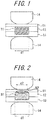
- the following describes the resistance spot welding method according to the disclosure, using an example where a sheet combination in which two steel sheets (thick sheets) 12 and 13 are overlapped on each other and further a thin sheet 11 is overlapped on one face of the thick sheets 12 and 13 as illustrated in FIG. 1 is subjected to resistance spot welding by dividing the current/electrode force pattern into two steps.
- reference sign 14 is an electrode.
- the sheet combination is squeezed by the pair of upper and lower electrodes at a desired welding position, and electrode force application and current passage are started.
- the electrode force and the welding current are set to suppress splashing, and the part between the thick sheets 12 and 13 is molten to form a nugget N1.
- Forming the nugget between the thick sheets 12 and 13 first in this way makes it easier to ensure the current passage area between sheets, in particular between the thin sheet 11 and the thick sheet 12. As a result, splashing between the thin sheet 11 and the thick sheet 12 is suppressed in the current passage in the second step onward.
- the welding in the second step is performed to form a nugget N2 between the thin sheet I1 and the thick sheet 12 as illustrated in FIG. 2 .
- F1 > F2 where F1 (kN) is the electrode force in the first step and F2 (kN) is the electrode force in the second step.
- a weld fusion zone is formed first in the interface between the thick sheets 12 and 13 in the first step, which makes it easier to ensure the current passage area between the thin sheet 11 and the thick sheet 12.
- the electrode force in the second step is lower than the electrode force in the first step, the contact area between the thin sheet 11 and the thick sheet 12 and between the thin sheet 11 and the electrode 14 is reduced from that in the first step to thus increase the current density, with it being possible to facilitate sufficient heat generation to obtain a nugget of an appropriate diameter between the thin sheet 11 and the thick sheet 12 in the second step as illustrated in FIG. 2 .
- the electrode force F2 satisfies the relationship 0.5t m ⁇ F2 ⁇ 8t m where t m (mm) is the sheet thickness of the thinnest steel sheet of the plurality of steel sheets constituting the sheet combination (the sheet thickness of the thin sheet 11 in FIGS. 1 and 2 ).
- the electrode force F2 (kN) is more than 8t m , the contact area expands excessively and the amount of heat generated is reduced, making it difficult to form a nugget of an appropriate diameter between the thin sheet 11 and the thick sheet 12. If the electrode force F2 (kN) is less than 0.5t m , the contact resistance between the electrode 14 and the thin sheet 11 is high, which promotes sparks and also promotes splashing between the thin sheet 11 and the thick sheet 12. A more preferable range is 0.6t m ⁇ F2 ⁇ 7t m .
- the appropriate condition tends to vary due to disturbances such as current shunting or a sheet gap
- test welding it is preferable to perform test welding before the aforementioned actual welding. From the sheet thickness of the parts to be welded and the welding time in the test welding, the cumulative amount of heat generated per unit volume with which the parts to be welded can be welded favorably is calculated for each step in the actual welding. Adaptive control welding of adjusting the welding current or voltage so as to generate the calculated amount of heat generated per unit volume and per unit time is then performed in the actual welding.
- test welding and the adaptive control welding are described below.
- a welding test with the same steel type and thickness as the parts to be welded is performed by constant current control under various conditions in the state where there is no current shunting to an existing weld or sheet gap, to find an optimal condition in the test welding.
- the time variation of the instantaneous amount of heat generated per unit volume is stored as a time variation curve, and the cumulative amount of heat generated per unit volume is stored. Both the time variation and the cumulative amount are calculated from the electrical property between the electrodes during welding when the test welding is performed under the aforementioned condition.
- the electrical property between the electrodes in the disclosure means the interelectrode resistance or the interelectrode voltage.
- the adaptive control welding is performed in the actual welding.
- the time variation curve stored in the test welding for each step is used a target. If the time variation of the instantaneous amount of heat generated per unit volume follows the stored time variation curve, the welding is continued without change and completed.
- the adaptive control welding of controlling the current passage amount is carried out to compensate for the difference within the remaining welding time of the step so that the cumulative amount of heat generated per unit volume in the actual welding matches the stored cumulative amount of heat generated per unit volume.
- the required cumulative amount of heat generated can be ensured to obtain an appropriate nugget diameter even in the state where the effects of disturbances such as current shunting or a sheet gap are significant.
- the method of calculating the amount of heat generated per unit volume is not particularly limited.
- JP H11-33743 A (PTL 4) describes an example of the method, which may be used in this disclosure. The following is the procedure of calculating the cumulative amount Q of heat generated per unit volume according to this method.
- t the total thickness of the parts to be welded
- r the electrical resistivity of the parts to be welded
- V the interelectrode voltage
- I the welding current
- S the contact area of the electrodes and the parts to be welded.
- the welding current passes through a columnar portion whose cross-sectional area is S and thickness is t, to generate heat by resistance.
- the amount q of heat generated per unit volume and per unit time can be calculated from the interelectrode voltage V, the total thickness t of the parts to be welded, and the electrical resistivity r of the parts to be welded, and is not affected by the contact area S of the electrodes and the parts to be welded.
- the amount of heat generated is calculated from the interelectrode voltage V in Equation (3)
- the amount q of heat generated may be calculated from the interelectrode current I.
- the contact area S of the electrodes and the parts to be welded need not be used in this case, either.
- the cumulative amount Q of heat generated per unit volume for the welding is obtained.
- the cumulative amount Q of heat generated per unit volume can also be calculated without using the contact area S of the electrodes and the parts to be welded.
- the cumulative amount Q may be calculated by any other method.
- I1' is the current in the first step and I2' is the current in the second step in the test welding.
- a cooling time (hereafter also denoted by Tc) is preferably provided between the current passage in the first step and the current passage in the second step in the actual welding.
- the nugget growth between the thick sheets 12 and 13 in the second step can be prevented to suppress splashing.
- the cooling time is more than 5 cycles (hereafter all time units are expressed by the number of cycles at 50 Hz).
- the current passage in the second step starts in the state where the temperature between the thick sheets 12 and 13 is high.
- remelting between the thick sheets I2 and 13 may be promoted in the second step even though the current density between the thin sheet 11 and the thick sheet 12 is increased by setting the electrode force F2 (kN) in the second step to be lower than the electrode force F1 (kN) in the first step.
- This not only makes it impossible to obtain a desired nugget diameter between the thin sheet 11 and the thick sheet 12, but also incites splashing between the thick sheets 12 and 13.
- cooling time is more than cycles, on the other hand, heat generation and melting between the thin sheet 11 and the thick sheet 12 can be facilitated while preventing excessive nugget growth between the thick sheets 12 and 13 more reliably.
- the cooling time is more preferably more than 7 cycles or more.
- the upper limit of the cooling time is preferably 100 cycles.
- Preferable welding times T1 and T2 in the first and second steps in the actual welding are typically about 5 cycles to 50 cycles and about I cycle to 20 cycles, respectively.
- the steel sheets to be welded by the resistance spot welding method according to the disclosure are not particularly limited.
- the resistance spot welding method may be used for the welding of steel sheets and coated steel sheets having various strengths from mild steel to ultra high tensile strength steel and light metal sheets of aluminum alloys and the like.
- the resistance spot welding method may also be used for a sheet combination of four or more metal sheets in which thin sheets are overlapped on both faces of two or more overlapping thick sheets.
- Current passage in a third step onward may be performed to heat-treat the weld after the current passage in the first and second steps for nugget formation.
- the part between the thin sheet I1 and the thick sheet I2 may be partly molten as long as splashing does not occur.
- the part between the thin sheet I1 and the thick sheet I2 may be molten uniformly as illustrated in FIG. 2 , or only the outer peripheral part may be molten in the shape of a ring while the center part remains not molten as illustrated in FIG. 3 .
- JP 2008-290099 A discloses "a resistance spot welding method wherein, when squeezing a workpiece of a sheet combination in which a thin sheet is overlapped on one face of two or more overlapping thick sheets by a pair of electrodes and resistance spot welding it while applying an electrode force, the welding is divided into two steps where the first step involves welding with a low electrode force and a high current and the second step involves welding with a higher electrode force than the electrode force in the first step, the electrode in contact with the thin sheet of the fixed workpiece being a fixed electrode of a welding gun and the electrode in contact with the thick sheet being a movable electrode of the welding gun".
- the electrode in contact with the thin sheet is used as the fixed electrode and the electrode in contact with the thick sheet as the movable electrode, and the phenomenon resulting from this arrangement is utilized to perform initial welding with a low electrode force and a high current and subsequent welding with a high electrode force, to form a nugget of an appropriate diameter between the thin and thick sheets and between the thick sheets.
- the electrode in contact with the thin sheet is used as the movable electrode and the electrode in contact with the thick sheet as the fixed electrode according to a conventional method.
- the welding method according to the disclosure is therefore different from the welding method in PTL 5.
- control mode is "constant current” in Table 2 indicates the result of performing welding by constant current control under the welding condition shown in Table 2.
- the result in the case where the control mode is "adaptive control” in Table 2 indicates the result of, after performing test welding in the absence of disturbances such as a sheet gap under the welding condition in Table 2 and storing the time variation of the instantaneous amount of heat generated per unit volume, performing adaptive control welding of adjusting the current with reference to the time variation curve of the instantaneous amount of heat generated per unit volume obtained in the test welding.
- spacers I5 (inter-spacer distance: 60 mm) were inserted between the thick sheets I2 and I3 as illustrated in FIG. 4 , and the sheet combination was clamped from above and below (not illustrated), to create a sheet gap of any of various sheet gap thicknesses.
- An inverter DC resistance spot welder was used as the welder, and chromium copper electrodes with 6 mm face diameter DR-shaped tips were used as the electrodes.
- the electrode in contact with the thin sheet was the movable electrode, and the electrode in contact with the thick sheet was the fixed electrode.
- the weld was cut and etched in section, and then observed with an optical microscope to measure each of the nugget diameter d1 between the thick sheets and the nugget diameter d2 (mm) between the thin and thick sheets.
- Each sample in which the nugget diameters d1 and d2 were both 4 ⁇ t' or more (t': the sheet thickness (mm) of the thinner steel sheet of the adjacent two steel sheets) and no splashing occurred was evaluated as good.
- Each sample in which any of the nugget diameters d1 and d2 was less than 4 ⁇ t' or splashing occurred was evaluated as poor.
Landscapes
- Engineering & Computer Science (AREA)
- Mechanical Engineering (AREA)
- Resistance Welding (AREA)
Claims (4)
- Procédé de soudage par points par résistance comprenant les étapes consistant à effectuer un soudage réel pour presser, par une paire d'électrodes, une combinaison de feuilles avec un rapport d'épaisseur de feuille de plus de 3 dans laquelle une feuille mince est superposée sur au moins une face de deux ou plus de deux feuilles épaisses en superposition, et faire passer un courant tout en appliquant une force d'électrode pour unir la combinaison de feuilles,
dans lequel lors du soudage réel, un motif du courant et de la force d'électrode est divisé en deux étapes ou plus de deux étapes, incluant une première étape et une seconde étape pour effectuer un soudage, et une force d'électrode F1 lors de la première étape et une force d'électrode F2 lors de la seconde étape satisfont à une relation
F1 > F2, et
caractérisé en ce qu'un temps de refroidissement entre un passage de courant lors de la première étape et un passage de courant lors de la seconde étape du soudage réel est supérieur à 5 cycles et des unités de temps sont exprimées par le nombre de cycles à 50 Hz. - Procédé de soudage par points par résistance selon la revendication 1, comprenant en outre, avant le soudage réel, les étapes consistant à
effectuer un soudage test et stocker, pour chacune des étapes, une quantité de variation de temps d'une quantité instantanée de chaleur générée par unité de volume sous forme d'une courbe de variation de temps et stocker une quantité cumulée de chaleur générée par unité de volume, dans lequel à la fois la quantité de variation de temps et la quantité cumulée de chaleur sont calculées à partir d'une propriété électrique entre les électrodes afin de former une pépite appropriée en faisant passer un courant par commande de courant constant,
dans lequel lors du soudage réel, la courbe de variation de temps stockée est utilisée comme cible et, dans le cas où une variation de temps de la quantité instantanée de chaleur générée par unité de volume lors du soudage réel diffère de la courbe de variation de temps stockée dans l'une quelconque des étapes, un soudage à commande adaptative est effectué pour commander une quantité de passage de courant afin de compenser la différence dans un temps de soudage restant lors de l'étape de sorte qu'une quantité cumulée de chaleur générée par unité de volume lors du soudage réel correspond à la quantité cumulée stockée de chaleur générée par unité de volume. - Procédé de soudage par points par résistance selon la revendication 1,
dans lequel un courant I1 lors de la première étape et un courant I2 lors de la seconde étape du soudage réel satisfont à une relation
I1 < I2. - Procédé de soudage par points par résistance selon la revendication 2,
dans lequel un courant I1' lors de la première étape et un courant I2' lors de la seconde étape du soudage test satisfont à une relation
I1' < I2'.
Applications Claiming Priority (2)
| Application Number | Priority Date | Filing Date | Title |
|---|---|---|---|
| JP2014243340 | 2014-12-01 | ||
| PCT/JP2015/005771 WO2016088319A1 (fr) | 2014-12-01 | 2015-11-18 | Procédé de soudage par points par résistance |
Publications (3)
| Publication Number | Publication Date |
|---|---|
| EP3228414A1 EP3228414A1 (fr) | 2017-10-11 |
| EP3228414A4 EP3228414A4 (fr) | 2017-12-13 |
| EP3228414B1 true EP3228414B1 (fr) | 2020-08-05 |
Family
ID=56091285
Family Applications (1)
| Application Number | Title | Priority Date | Filing Date |
|---|---|---|---|
| EP15865842.7A Active EP3228414B1 (fr) | 2014-12-01 | 2015-11-18 | Procédé de soudage par points par résistance |
Country Status (7)
| Country | Link |
|---|---|
| US (1) | US10625365B2 (fr) |
| EP (1) | EP3228414B1 (fr) |
| JP (1) | JP6108030B2 (fr) |
| KR (1) | KR101906084B1 (fr) |
| CN (1) | CN107000109B (fr) |
| MX (1) | MX372539B (fr) |
| WO (1) | WO2016088319A1 (fr) |
Families Citing this family (24)
| Publication number | Priority date | Publication date | Assignee | Title |
|---|---|---|---|---|
| EP3272451B1 (fr) * | 2015-03-16 | 2019-08-28 | JFE Steel Corporation | Procédé de soudage par points par résistance et procédé pour fabriquer un raccord soudé par points par résistance |
| JP6399266B1 (ja) * | 2017-03-31 | 2018-10-03 | Jfeスチール株式会社 | 抵抗スポット溶接継手の製造方法 |
| WO2019124465A1 (fr) * | 2017-12-19 | 2019-06-27 | 日本製鉄株式会社 | Procédé de fabrication d'un joint soudé par points par résistance |
| WO2019124467A1 (fr) * | 2017-12-19 | 2019-06-27 | 日本製鉄株式会社 | Procédé de fabrication d'un joint soudé par points de résistance |
| KR102010069B1 (ko) * | 2017-12-22 | 2019-08-12 | 주식회사 포스코 | 다층 강판의 저항 점 용접방법 |
| CN110277204B (zh) * | 2018-03-14 | 2021-12-10 | 国巨电子(中国)有限公司 | 分流电阻器及其制造方法 |
| WO2019180923A1 (fr) * | 2018-03-23 | 2019-09-26 | 本田技研工業株式会社 | Procédé de soudage par points |
| CN110364318B (zh) * | 2018-03-26 | 2021-08-17 | 国巨电子(中国)有限公司 | 高频电阻器与高频电阻器的制造方法 |
| US20190358733A1 (en) * | 2018-05-22 | 2019-11-28 | GM Global Technology Operations LLC | Overlapping spot welds for improved mechanical performance and weld repair |
| KR102415951B1 (ko) * | 2018-06-29 | 2022-06-30 | 제이에프이 스틸 가부시키가이샤 | 저항 스폿 용접 방법 및 용접 부재의 제조 방법 |
| US20200055139A1 (en) * | 2018-08-14 | 2020-02-20 | GM Global Technology Operations LLC | Manufacturing method for welding a multi-sheet assembly |
| CN109202245B (zh) * | 2018-09-17 | 2021-06-22 | 武汉钢铁有限公司 | 一种适用于中间层为铝硅涂层热成形钢的三层板的电阻点焊方法 |
| WO2020110394A1 (fr) * | 2018-11-26 | 2020-06-04 | 本田技研工業株式会社 | Procédé de soudage par points |
| JP6790050B2 (ja) * | 2018-12-13 | 2020-11-25 | 本田技研工業株式会社 | 抵抗溶接評価装置及び抵抗溶接評価方法 |
| JP7112602B2 (ja) * | 2019-08-20 | 2022-08-03 | 本田技研工業株式会社 | スポット溶接方法 |
| JP6856181B1 (ja) * | 2019-08-29 | 2021-04-07 | Jfeスチール株式会社 | 抵抗スポット溶接方法および溶接部材の製造方法 |
| CN111014923A (zh) * | 2020-02-18 | 2020-04-17 | 吉林大学 | 不等厚板的电阻点焊装置及方法 |
| JP7479757B2 (ja) * | 2020-03-25 | 2024-05-09 | ダイハツ工業株式会社 | スポット溶接方法 |
| CN111390366A (zh) * | 2020-04-15 | 2020-07-10 | 深圳市欧帝克科技有限公司 | 一种电阻焊电极温度补偿方法 |
| US11167378B1 (en) | 2020-05-01 | 2021-11-09 | David W. Steinmeier | Techniques for determining weld quality |
| KR20230010561A (ko) * | 2021-07-12 | 2023-01-19 | 현대자동차주식회사 | 용접팁의 단면적 조절을 통한 멀티 레이어 용접이 가능한 용접방법 및 이를 이용한 용접장치 |
| CN115156681A (zh) * | 2022-07-14 | 2022-10-11 | 首钢集团有限公司 | 一种多层板的电阻点焊方法 |
| CN115958276A (zh) * | 2022-12-15 | 2023-04-14 | 东风汽车有限公司东风日产乘用车公司 | 一种三层板电阻点焊方法 |
| CN120828196B (zh) * | 2025-09-19 | 2026-01-09 | 鞍钢股份有限公司 | 一种软钢电阻点焊熔核硬度的预测方法 |
Family Cites Families (35)
| Publication number | Priority date | Publication date | Assignee | Title |
|---|---|---|---|---|
| US4135076A (en) * | 1977-04-11 | 1979-01-16 | Beneteau Donald J | Apparatus for resistance welding |
| JPS57202988A (en) * | 1981-06-10 | 1982-12-13 | Nippon Abionikusu Kk | Accommodation controlling device for resistance welding |
| JP2510377B2 (ja) * | 1992-05-01 | 1996-06-26 | 株式会社ナ・デックス | 溶接コントロ―ラ |
| JP3114440B2 (ja) * | 1993-07-22 | 2000-12-04 | 日産自動車株式会社 | スポット溶接装置 |
| JPH1058157A (ja) * | 1996-06-13 | 1998-03-03 | Kawasaki Heavy Ind Ltd | スポット溶接の制御方法および装置 |
| JP3886603B2 (ja) | 1997-07-14 | 2007-02-28 | 株式会社ナ・デックス | 単位体積当たりの累積発熱量を指標とする抵抗溶接システム |
| DE19917896B4 (de) * | 1998-04-20 | 2019-02-21 | Nissan Motor Co., Ltd. | Punktschweißverfahren |
| WO2002024392A1 (fr) * | 2000-09-21 | 2002-03-28 | Massachusetts Institute Of Technology | Systeme de soudage par points et procede de capture des conditions de soudage en temps reel |
| JP3794300B2 (ja) | 2001-08-30 | 2006-07-05 | トヨタ車体株式会社 | スポット溶接方法 |
| JP3894545B2 (ja) | 2002-03-05 | 2007-03-22 | 本田技研工業株式会社 | スポット溶接方法 |
| JP4327508B2 (ja) | 2003-06-04 | 2009-09-09 | ダイハツ工業株式会社 | スポット溶接方法およびスポット溶接装置 |
| US7060929B2 (en) * | 2004-02-24 | 2006-06-13 | General Motors Corporation | Sheet-to-tube resistance spot welding using servo gun |
| FR2895925B1 (fr) | 2006-01-06 | 2008-02-15 | Alcan Technology & Man | Procede de soudage par resistance par points d'alliages d'aluminium |
| JP5261984B2 (ja) | 2007-05-23 | 2013-08-14 | Jfeスチール株式会社 | 抵抗スポット溶接方法 |
| JP5427074B2 (ja) * | 2009-03-31 | 2014-02-26 | 本田技研工業株式会社 | 抵抗溶接方法及びその装置 |
| KR101388692B1 (ko) * | 2009-08-31 | 2014-04-24 | 신닛테츠스미킨 카부시키카이샤 | 스폿 용접 조인트 및 스폿 용접 방법 |
| JP5468350B2 (ja) * | 2009-10-23 | 2014-04-09 | マツダ株式会社 | 異種金属板の接合方法 |
| JP2011152574A (ja) * | 2010-01-28 | 2011-08-11 | Honda Motor Co Ltd | 抵抗溶接方法 |
| JP5149355B2 (ja) * | 2010-09-08 | 2013-02-20 | 富士重工業株式会社 | スポット溶接方法及びスポット溶接装置 |
| US20130248505A1 (en) * | 2010-10-14 | 2013-09-26 | Nippon Steel & Sumitomo Metal Corporation | Welding quality classification apparatus |
| JP5758667B2 (ja) * | 2011-03-24 | 2015-08-05 | 富士重工業株式会社 | スポット溶接装置 |
| US9969026B2 (en) * | 2011-08-25 | 2018-05-15 | GM Global Technology Operations LLC | Weld schedule for resistance spot welding of aluminum alloy workpieces |
| JP5498463B2 (ja) * | 2011-10-13 | 2014-05-21 | 富士重工業株式会社 | スポット溶接装置の加圧制御方法 |
| JP5333560B2 (ja) * | 2011-10-18 | 2013-11-06 | Jfeスチール株式会社 | 高張力鋼板の抵抗スポット溶接方法及び抵抗スポット溶接継手 |
| JP5267640B2 (ja) * | 2011-11-25 | 2013-08-21 | Jfeスチール株式会社 | 抵抗スポット溶接継手の評価方法 |
| US10040145B2 (en) | 2012-09-24 | 2018-08-07 | Nippon Steel & Sumitomo Metal Corporation | Spot welding method of high-strength steel sheets excellent in joint strength |
| CN103111741A (zh) * | 2012-12-21 | 2013-05-22 | 上海交通大学 | 一种用于降低多层板电阻点焊焊接飞溅的可控电极力方法 |
| US10328518B2 (en) * | 2013-03-08 | 2019-06-25 | Jfe Steel Corporation | Resistance spot welding method |
| US9895764B2 (en) | 2013-03-29 | 2018-02-20 | Jfe Steel Corporation | Resistance spot welding system |
| JP2014200797A (ja) * | 2013-04-01 | 2014-10-27 | トヨタ自動車株式会社 | 抵抗スポット溶接方法及び装置 |
| CA2912591C (fr) * | 2013-06-05 | 2017-12-19 | Nippon Steel & Sumitomo Metal Corporation | Joint soude par point et procede de soudage par point |
| DE102013014701A1 (de) * | 2013-09-05 | 2015-03-05 | GM Global Technology Operations LLC (n. d. Ges. d. Staates Delaware) | Schweißanordnung zum Verschweißen eines Verbindungsabschnitts und Verfahren zum Verschweißen des Verbindungsabschnitts mit der Schweißanordnung |
| US10730134B2 (en) * | 2014-05-07 | 2020-08-04 | Nippon Steel Corporation | Spot welding method |
| US10279418B2 (en) * | 2014-07-16 | 2019-05-07 | Honda Motor Co., Ltd. | Method and apparatus for resistive spot welding |
| MX371462B (es) * | 2015-04-27 | 2020-01-23 | Jfe Steel Corp | Metodo de soldadura por puntos de resistencia |
-
2015
- 2015-11-18 CN CN201580065285.XA patent/CN107000109B/zh active Active
- 2015-11-18 JP JP2016513172A patent/JP6108030B2/ja active Active
- 2015-11-18 MX MX2017007020A patent/MX372539B/es active IP Right Grant
- 2015-11-18 EP EP15865842.7A patent/EP3228414B1/fr active Active
- 2015-11-18 WO PCT/JP2015/005771 patent/WO2016088319A1/fr not_active Ceased
- 2015-11-18 KR KR1020177015146A patent/KR101906084B1/ko active Active
- 2015-11-18 US US15/526,125 patent/US10625365B2/en active Active
Non-Patent Citations (1)
| Title |
|---|
| None * |
Also Published As
| Publication number | Publication date |
|---|---|
| JP6108030B2 (ja) | 2017-04-05 |
| JPWO2016088319A1 (ja) | 2017-04-27 |
| MX2017007020A (es) | 2017-08-14 |
| US20170312846A1 (en) | 2017-11-02 |
| KR101906084B1 (ko) | 2018-10-08 |
| EP3228414A4 (fr) | 2017-12-13 |
| WO2016088319A1 (fr) | 2016-06-09 |
| CN107000109A (zh) | 2017-08-01 |
| KR20170072948A (ko) | 2017-06-27 |
| MX372539B (es) | 2020-03-23 |
| EP3228414A1 (fr) | 2017-10-11 |
| CN107000109B (zh) | 2021-09-10 |
| US10625365B2 (en) | 2020-04-21 |
Similar Documents
| Publication | Publication Date | Title |
|---|---|---|
| EP3228414B1 (fr) | Procédé de soudage par points par résistance | |
| US10625368B2 (en) | Resistance spot welding method and method for manufacturing resistance spot welded joint | |
| EP3391988B1 (fr) | Procédés de soudage par points par résistance et procédé de fabrication d'élément soudé utilisant une telle méthode | |
| EP3290146B1 (fr) | Procédé de soudage par points par résistance | |
| EP3342524B1 (fr) | Procédé de soudage par points par résistance et procédé de fabrication d'élément soudé | |
| JP6904479B2 (ja) | 抵抗スポット溶接方法および溶接部材の製造方法 | |
| EP3470161B1 (fr) | Procédé de soudage par points par résistance | |
| KR102622518B1 (ko) | 저항 스폿 용접 방법 및 용접 부재의 제조 방법 | |
| JP5045238B2 (ja) | 抵抗スポット溶接方法 | |
| EP4023384A1 (fr) | Procédé de soudage par points par résistance et procédé de fabrication d'un élément soudé | |
| US20250303502A1 (en) | Method of predicting expulsion occurrence in resistance spot welding, resistance spot welding method, and method of producing welded member | |
| US12447549B2 (en) | Resistance spot welding method and weld member production method | |
| JP5082249B2 (ja) | 抵抗スポット溶接方法 |
Legal Events
| Date | Code | Title | Description |
|---|---|---|---|
| STAA | Information on the status of an ep patent application or granted ep patent |
Free format text: STATUS: THE INTERNATIONAL PUBLICATION HAS BEEN MADE |
|
| PUAI | Public reference made under article 153(3) epc to a published international application that has entered the european phase |
Free format text: ORIGINAL CODE: 0009012 |
|
| STAA | Information on the status of an ep patent application or granted ep patent |
Free format text: STATUS: REQUEST FOR EXAMINATION WAS MADE |
|
| 17P | Request for examination filed |
Effective date: 20170516 |
|
| AK | Designated contracting states |
Kind code of ref document: A1 Designated state(s): AL AT BE BG CH CY CZ DE DK EE ES FI FR GB GR HR HU IE IS IT LI LT LU LV MC MK MT NL NO PL PT RO RS SE SI SK SM TR |
|
| AX | Request for extension of the european patent |
Extension state: BA ME |
|
| A4 | Supplementary search report drawn up and despatched |
Effective date: 20171115 |
|
| RIC1 | Information provided on ipc code assigned before grant |
Ipc: B23K 11/16 20060101ALI20171109BHEP Ipc: B23K 11/24 20060101ALI20171109BHEP Ipc: B23K 11/20 20060101AFI20171109BHEP Ipc: B23K 11/11 20060101ALI20171109BHEP |
|
| DAV | Request for validation of the european patent (deleted) | ||
| DAX | Request for extension of the european patent (deleted) | ||
| GRAP | Despatch of communication of intention to grant a patent |
Free format text: ORIGINAL CODE: EPIDOSNIGR1 |
|
| STAA | Information on the status of an ep patent application or granted ep patent |
Free format text: STATUS: GRANT OF PATENT IS INTENDED |
|
| INTG | Intention to grant announced |
Effective date: 20200311 |
|
| GRAS | Grant fee paid |
Free format text: ORIGINAL CODE: EPIDOSNIGR3 |
|
| GRAA | (expected) grant |
Free format text: ORIGINAL CODE: 0009210 |
|
| STAA | Information on the status of an ep patent application or granted ep patent |
Free format text: STATUS: THE PATENT HAS BEEN GRANTED |
|
| AK | Designated contracting states |
Kind code of ref document: B1 Designated state(s): AL AT BE BG CH CY CZ DE DK EE ES FI FR GB GR HR HU IE IS IT LI LT LU LV MC MK MT NL NO PL PT RO RS SE SI SK SM TR |
|
| REG | Reference to a national code |
Ref country code: GB Ref legal event code: FG4D |
|
| REG | Reference to a national code |
Ref country code: CH Ref legal event code: EP |
|
| REG | Reference to a national code |
Ref country code: AT Ref legal event code: REF Ref document number: 1298024 Country of ref document: AT Kind code of ref document: T Effective date: 20200815 |
|
| REG | Reference to a national code |
Ref country code: DE Ref legal event code: R096 Ref document number: 602015057162 Country of ref document: DE |
|
| REG | Reference to a national code |
Ref country code: IE Ref legal event code: FG4D |
|
| REG | Reference to a national code |
Ref country code: LT Ref legal event code: MG4D |
|
| REG | Reference to a national code |
Ref country code: NL Ref legal event code: MP Effective date: 20200805 |
|
| REG | Reference to a national code |
Ref country code: AT Ref legal event code: MK05 Ref document number: 1298024 Country of ref document: AT Kind code of ref document: T Effective date: 20200805 |
|
| PG25 | Lapsed in a contracting state [announced via postgrant information from national office to epo] |
Ref country code: LT Free format text: LAPSE BECAUSE OF FAILURE TO SUBMIT A TRANSLATION OF THE DESCRIPTION OR TO PAY THE FEE WITHIN THE PRESCRIBED TIME-LIMIT Effective date: 20200805 Ref country code: ES Free format text: LAPSE BECAUSE OF FAILURE TO SUBMIT A TRANSLATION OF THE DESCRIPTION OR TO PAY THE FEE WITHIN THE PRESCRIBED TIME-LIMIT Effective date: 20200805 Ref country code: BG Free format text: LAPSE BECAUSE OF FAILURE TO SUBMIT A TRANSLATION OF THE DESCRIPTION OR TO PAY THE FEE WITHIN THE PRESCRIBED TIME-LIMIT Effective date: 20201105 Ref country code: NO Free format text: LAPSE BECAUSE OF FAILURE TO SUBMIT A TRANSLATION OF THE DESCRIPTION OR TO PAY THE FEE WITHIN THE PRESCRIBED TIME-LIMIT Effective date: 20201105 Ref country code: SE Free format text: LAPSE BECAUSE OF FAILURE TO SUBMIT A TRANSLATION OF THE DESCRIPTION OR TO PAY THE FEE WITHIN THE PRESCRIBED TIME-LIMIT Effective date: 20200805 Ref country code: GR Free format text: LAPSE BECAUSE OF FAILURE TO SUBMIT A TRANSLATION OF THE DESCRIPTION OR TO PAY THE FEE WITHIN THE PRESCRIBED TIME-LIMIT Effective date: 20201106 Ref country code: PT Free format text: LAPSE BECAUSE OF FAILURE TO SUBMIT A TRANSLATION OF THE DESCRIPTION OR TO PAY THE FEE WITHIN THE PRESCRIBED TIME-LIMIT Effective date: 20201207 Ref country code: HR Free format text: LAPSE BECAUSE OF FAILURE TO SUBMIT A TRANSLATION OF THE DESCRIPTION OR TO PAY THE FEE WITHIN THE PRESCRIBED TIME-LIMIT Effective date: 20200805 Ref country code: AT Free format text: LAPSE BECAUSE OF FAILURE TO SUBMIT A TRANSLATION OF THE DESCRIPTION OR TO PAY THE FEE WITHIN THE PRESCRIBED TIME-LIMIT Effective date: 20200805 Ref country code: FI Free format text: LAPSE BECAUSE OF FAILURE TO SUBMIT A TRANSLATION OF THE DESCRIPTION OR TO PAY THE FEE WITHIN THE PRESCRIBED TIME-LIMIT Effective date: 20200805 |
|
| PG25 | Lapsed in a contracting state [announced via postgrant information from national office to epo] |
Ref country code: RS Free format text: LAPSE BECAUSE OF FAILURE TO SUBMIT A TRANSLATION OF THE DESCRIPTION OR TO PAY THE FEE WITHIN THE PRESCRIBED TIME-LIMIT Effective date: 20200805 Ref country code: LV Free format text: LAPSE BECAUSE OF FAILURE TO SUBMIT A TRANSLATION OF THE DESCRIPTION OR TO PAY THE FEE WITHIN THE PRESCRIBED TIME-LIMIT Effective date: 20200805 Ref country code: PL Free format text: LAPSE BECAUSE OF FAILURE TO SUBMIT A TRANSLATION OF THE DESCRIPTION OR TO PAY THE FEE WITHIN THE PRESCRIBED TIME-LIMIT Effective date: 20200805 Ref country code: NL Free format text: LAPSE BECAUSE OF FAILURE TO SUBMIT A TRANSLATION OF THE DESCRIPTION OR TO PAY THE FEE WITHIN THE PRESCRIBED TIME-LIMIT Effective date: 20200805 Ref country code: IS Free format text: LAPSE BECAUSE OF FAILURE TO SUBMIT A TRANSLATION OF THE DESCRIPTION OR TO PAY THE FEE WITHIN THE PRESCRIBED TIME-LIMIT Effective date: 20201205 |
|
| PG25 | Lapsed in a contracting state [announced via postgrant information from national office to epo] |
Ref country code: RO Free format text: LAPSE BECAUSE OF FAILURE TO SUBMIT A TRANSLATION OF THE DESCRIPTION OR TO PAY THE FEE WITHIN THE PRESCRIBED TIME-LIMIT Effective date: 20200805 Ref country code: SM Free format text: LAPSE BECAUSE OF FAILURE TO SUBMIT A TRANSLATION OF THE DESCRIPTION OR TO PAY THE FEE WITHIN THE PRESCRIBED TIME-LIMIT Effective date: 20200805 Ref country code: EE Free format text: LAPSE BECAUSE OF FAILURE TO SUBMIT A TRANSLATION OF THE DESCRIPTION OR TO PAY THE FEE WITHIN THE PRESCRIBED TIME-LIMIT Effective date: 20200805 Ref country code: DK Free format text: LAPSE BECAUSE OF FAILURE TO SUBMIT A TRANSLATION OF THE DESCRIPTION OR TO PAY THE FEE WITHIN THE PRESCRIBED TIME-LIMIT Effective date: 20200805 Ref country code: CZ Free format text: LAPSE BECAUSE OF FAILURE TO SUBMIT A TRANSLATION OF THE DESCRIPTION OR TO PAY THE FEE WITHIN THE PRESCRIBED TIME-LIMIT Effective date: 20200805 |
|
| REG | Reference to a national code |
Ref country code: DE Ref legal event code: R097 Ref document number: 602015057162 Country of ref document: DE |
|
| PG25 | Lapsed in a contracting state [announced via postgrant information from national office to epo] |
Ref country code: AL Free format text: LAPSE BECAUSE OF FAILURE TO SUBMIT A TRANSLATION OF THE DESCRIPTION OR TO PAY THE FEE WITHIN THE PRESCRIBED TIME-LIMIT Effective date: 20200805 |
|
| PLBE | No opposition filed within time limit |
Free format text: ORIGINAL CODE: 0009261 |
|
| STAA | Information on the status of an ep patent application or granted ep patent |
Free format text: STATUS: NO OPPOSITION FILED WITHIN TIME LIMIT |
|
| PG25 | Lapsed in a contracting state [announced via postgrant information from national office to epo] |
Ref country code: MC Free format text: LAPSE BECAUSE OF FAILURE TO SUBMIT A TRANSLATION OF THE DESCRIPTION OR TO PAY THE FEE WITHIN THE PRESCRIBED TIME-LIMIT Effective date: 20200805 Ref country code: SK Free format text: LAPSE BECAUSE OF FAILURE TO SUBMIT A TRANSLATION OF THE DESCRIPTION OR TO PAY THE FEE WITHIN THE PRESCRIBED TIME-LIMIT Effective date: 20200805 |
|
| REG | Reference to a national code |
Ref country code: CH Ref legal event code: PL |
|
| 26N | No opposition filed |
Effective date: 20210507 |
|
| PG25 | Lapsed in a contracting state [announced via postgrant information from national office to epo] |
Ref country code: LU Free format text: LAPSE BECAUSE OF NON-PAYMENT OF DUE FEES Effective date: 20201118 Ref country code: IT Free format text: LAPSE BECAUSE OF FAILURE TO SUBMIT A TRANSLATION OF THE DESCRIPTION OR TO PAY THE FEE WITHIN THE PRESCRIBED TIME-LIMIT Effective date: 20200805 |
|
| REG | Reference to a national code |
Ref country code: BE Ref legal event code: MM Effective date: 20201130 |
|
| PG25 | Lapsed in a contracting state [announced via postgrant information from national office to epo] |
Ref country code: LI Free format text: LAPSE BECAUSE OF NON-PAYMENT OF DUE FEES Effective date: 20201130 Ref country code: SI Free format text: LAPSE BECAUSE OF FAILURE TO SUBMIT A TRANSLATION OF THE DESCRIPTION OR TO PAY THE FEE WITHIN THE PRESCRIBED TIME-LIMIT Effective date: 20200805 Ref country code: CH Free format text: LAPSE BECAUSE OF NON-PAYMENT OF DUE FEES Effective date: 20201130 |
|
| PG25 | Lapsed in a contracting state [announced via postgrant information from national office to epo] |
Ref country code: IE Free format text: LAPSE BECAUSE OF NON-PAYMENT OF DUE FEES Effective date: 20201118 |
|
| PG25 | Lapsed in a contracting state [announced via postgrant information from national office to epo] |
Ref country code: TR Free format text: LAPSE BECAUSE OF FAILURE TO SUBMIT A TRANSLATION OF THE DESCRIPTION OR TO PAY THE FEE WITHIN THE PRESCRIBED TIME-LIMIT Effective date: 20200805 Ref country code: MT Free format text: LAPSE BECAUSE OF FAILURE TO SUBMIT A TRANSLATION OF THE DESCRIPTION OR TO PAY THE FEE WITHIN THE PRESCRIBED TIME-LIMIT Effective date: 20200805 Ref country code: CY Free format text: LAPSE BECAUSE OF FAILURE TO SUBMIT A TRANSLATION OF THE DESCRIPTION OR TO PAY THE FEE WITHIN THE PRESCRIBED TIME-LIMIT Effective date: 20200805 |
|
| PG25 | Lapsed in a contracting state [announced via postgrant information from national office to epo] |
Ref country code: MK Free format text: LAPSE BECAUSE OF FAILURE TO SUBMIT A TRANSLATION OF THE DESCRIPTION OR TO PAY THE FEE WITHIN THE PRESCRIBED TIME-LIMIT Effective date: 20200805 |
|
| PG25 | Lapsed in a contracting state [announced via postgrant information from national office to epo] |
Ref country code: BE Free format text: LAPSE BECAUSE OF NON-PAYMENT OF DUE FEES Effective date: 20201130 |
|
| PGFP | Annual fee paid to national office [announced via postgrant information from national office to epo] |
Ref country code: GB Payment date: 20230928 Year of fee payment: 9 |
|
| GBPC | Gb: european patent ceased through non-payment of renewal fee |
Effective date: 20241118 |
|
| PG25 | Lapsed in a contracting state [announced via postgrant information from national office to epo] |
Ref country code: GB Free format text: LAPSE BECAUSE OF NON-PAYMENT OF DUE FEES Effective date: 20241118 |
|
| PGFP | Annual fee paid to national office [announced via postgrant information from national office to epo] |
Ref country code: FR Payment date: 20250930 Year of fee payment: 11 |
|
| PGFP | Annual fee paid to national office [announced via postgrant information from national office to epo] |
Ref country code: DE Payment date: 20250930 Year of fee payment: 11 |