EP3228592A1 - Graphendispergiermittel und anwendung davon - Google Patents
Graphendispergiermittel und anwendung davon Download PDFInfo
- Publication number
- EP3228592A1 EP3228592A1 EP15865917.7A EP15865917A EP3228592A1 EP 3228592 A1 EP3228592 A1 EP 3228592A1 EP 15865917 A EP15865917 A EP 15865917A EP 3228592 A1 EP3228592 A1 EP 3228592A1
- Authority
- EP
- European Patent Office
- Prior art keywords
- graphene
- aniline oligomer
- painting
- aniline
- mixture
- Prior art date
- Legal status (The legal status is an assumption and is not a legal conclusion. Google has not performed a legal analysis and makes no representation as to the accuracy of the status listed.)
- Withdrawn
Links
Images



Classifications
-
- C—CHEMISTRY; METALLURGY
- C01—INORGANIC CHEMISTRY
- C01B—NON-METALLIC ELEMENTS; COMPOUNDS THEREOF; METALLOIDS OR COMPOUNDS THEREOF NOT COVERED BY SUBCLASS C01C
- C01B32/00—Carbon; Compounds thereof
- C01B32/20—Graphite
-
- C—CHEMISTRY; METALLURGY
- C01—INORGANIC CHEMISTRY
- C01B—NON-METALLIC ELEMENTS; COMPOUNDS THEREOF; METALLOIDS OR COMPOUNDS THEREOF NOT COVERED BY SUBCLASS C01C
- C01B32/00—Carbon; Compounds thereof
- C01B32/15—Nano-sized carbon materials
- C01B32/182—Graphene
- C01B32/194—After-treatment
Definitions
- the present disclosure relates to the field of a graphene dispersant and application thereof.
- Graphene is composed of carbon atoms, which has a structure of hexagonal lattice like honeycomb.
- the graphene has a thickness of one carbon atom.
- the graphene was discovered in 2004, and the 2010 Nobel Prize in physics was generated for this discovery.
- the single atom structure of the graphene results in its unique performances. For example, 1 highly electric conductive: because electrons in the graphene almost have no quality and speed of electrons can reach 1/300 of the speed of light, the graphene has superior electric conductivity.
- 2 ultra high strength the hardness of the graphene is higher than that of diamond, and the graphene has good toughness and can be bent.
- the surface area of single-layer graphene can reach to 2630 m 2 /g, and surface area of activated carbon is only 1500m 2 /G, the large surface area makes the graphene becoming energy storage material of huge potential. Since the graphene has a number of excellent performances, research on the graphene is inspired in the worldwide.
- the methods for making graphene can be a method of mechanical exfoliation, a method of chemical vapor deposition, a method of oxidation-reduction, a method of ultrasonic peeling, and so on.
- the graphene is easily joined and aggragated , due to ⁇ - ⁇ conjugated effect and van der Waals forces.
- the present disclosure aims to provide a graphene dispersant and its application thereof.
- the graphene can be dispersed uniformly by the graphene dispersant, to achieve large applications in various fields.
- the present disclosure provides a graphene dispersant used for dispersing graphene.
- the graphene dispersant comprises aniline oligomer or aniline oligomer derivative.
- the aniline oligomer or aniline oligomer derivative is an electroactive polymer.
- the aniline oligomer or aniline oligomer derivative is able to combine with graphene via ⁇ - ⁇ bond.
- the aniline oligomer derivative is aniline oligomer with functional groups.
- the functional groups are carboxyl group, hydroxyl group, carbonyl group, esters group, amino group, hydroxyl group, alkyl group, sulfonic acid group, phosphate group, epoxy group, polyethylene glycol group, polyvinyl alcohol group, or combinations thereof, and the aniline oligomer is selected from the group consisting of aniline trimer, aniline tetramer, aniline pentamer, aniline hexamer, aniline octamer, and combination thereof.
- the present disclosure also provides a method for dispersing graphene.
- the method comprising the following steps:
- the present disclosure also provides a graphene composite powder.
- the graphene composite powder comprising graphene powder, a graphene dispersant, and a dispersing agent, the graphene dispersant and the dispersing agent are dispersed uniformly in the graphene powder, the graphene dispersant comprises aniline oligomer or aniline oligomer derivative, the aniline oligomer or aniline oligomer derivative is an electroactive polymer, and the aniline oligomer or aniline oligomer derivative is combined with graphene powder via ⁇ - ⁇ bond.
- the dispersing agent is selected from the group consisting of silane coupling agent, polyvinyl alcohol, polyvinyl pyrrolidone, organic modified polysiloxane dipropylene glycol monomethyl ether solution, organic silicon surfactant and/or fluorosurfactant, a mass ratio of the aniline oligomer or aniline oligomer derivative in the graphene composite powder is 0.1 % ⁇ 50%.
- the mass ratio of the aniline oligomer or aniline oligomer derivative in the graphene composite powder is 10% ⁇ 20%.
- the present disclosure also provides a method for making a graphene composite powder, comprising the following steps:
- the dispersing medium is deionized water, ethanol, acetone, isopropyl alcohol, butanol, ethyl acetate, toluene, chloroform, dimethyl methylamide, dimethyl sulfone, dichloroethane, or combinations thereof, a mass ratio of the graphene and the dispersing medium is 1:10 ⁇ 1:10000, the dispersing agent is selected from the group consisting of silane coupling agent, polyvinyl alcohol, polyvinyl pyrrolidone, organic modified polysiloxane dipropylene glycol monomethyl ether solution, organic silicon surfactant and/or fluorosurfactant, and a mass ratio of the dispersing agent and the mixture A is (0.01 ⁇ ):100.
- a method for making a graphene slurry comprising the following steps:
- the dispersing medium A1 and the dispersing medium A2 is deionized water, ethanol, acetone, isopropyl alcohol, butanol, ethyl acetate, toluene, chloroform, dimethyl methylamide, dimethyl sulfone, dichloroethane, high molecular polymer, or combinations thereof, a mass ratio of the graphene material and the dispersing medium A1 is 1:10 ⁇ 1:10000, and a mass ratio of the aniline oligomer or aniline oligomer derivative and the mixture B1 is (0.01 ⁇ 1):100.
- the present disclosure also provides a graphene slurry obtained by the above described method.
- the present disclosure also provides a graphene painting.
- the graphene painting is composed of a painting main-body, a graphene dispersion, and a painting agent, a mass percent of the painting main-body in the graphene painting is 40% ⁇ 60%, a mass percent of the graphene dispersion in the graphene painting is 30% ⁇ 50%, a mass percent of the painting agent in the graphene painting is 3% ⁇ 10%,
- the graphene dispersion comprises a graphene material, a graphene dispersant, and a dispersing medium
- the graphene dispersant comprises aniline oligomer or aniline oligomer derivative, which is an electroactive polymer
- the graphene material is dispersed uniformly in the painting main-body by forming ⁇ - ⁇ bond with the aniline oligomer or aniline oligomer derivative.
- a mass percent of the graphene material in the graphene dispersion is 0.1% ⁇ 10%
- a mass percent of the graphene dispersant in the graphene dispersion is 0.1% ⁇ 10%
- a mass percent of the dispersing medium in the graphene dispersion is 80% ⁇ 90%
- the painting main-body comprises silicone resin, acrylic resin, polyester resin, polyurethane resin, alkyd resin, epoxy resin, or combinations thereof
- the painting agent comprises a binder, a wetting agent, an antifoaming agent, and a leveling agent
- the binder is selected from the group consisting of ethylene glycol monobutyl ether, propylene glycol monobutyl ether, dipropylene glycol methyl ethyl ether, ethylene glycol propyl ether, dipropylene ether, propanediol phenyl ether, benzyl alcohol, and dodecanol ester
- the wetting agent is selected from the group consisting of dodec
- the present disclosure also provides a method for making a graphene painting, comprising the following steps:
- the present disclosure also provides a method for making a graphene composite membrane, comprising the following steps:
- the present disclosure also provides a method for making a graphene composite paper, comprising the following steps:
- the micro-porous membrane is a polymer membrane with a plurality of penetrating holes, the diameter of the plurality of penetrating holes is 10 nanometers to 1000 micrometers, the polymer membrane is selected from the group consisting of polyethylene, polypropylene, polystyrene, polymethyl methacrylate, polyvinyl chloride, nylon, polycarbonate, polyurethane, polytetrafluoroethylene, or polyethylene terephthalate, the carbonization temperature is 800 degrees centigrade to 1400 degrees centigrade, and the time of carbonizing is 1 hour to 3 hours.
- the present disclosure also provides a graphene composite painting.
- the graphene composite painting is composed of resin, a graphene material, aniline oligomer, a dispersing solvent, and a painting agent, the aniline oligomer is an electroactive polymer, a mass percent of the graphene material in the graphene composite painting is 0.01% ⁇ 5%, and the graphene material is dispersed uniformly in the resin by forming ⁇ - ⁇ bond with the aniline oligomer.
- a mass ratio of the aniline oligomer and the graphene material is 1:10 ⁇ 10:1, the dispersing solvent is toluene, xylene, acetone, tetrahydrofuran, ethanol, dimethylsulfone, or combination thereof, and the resin is epoxy resin, acrylic resin, polyurethane resin, acrylic polyurethane resin, amino resin, or combination thereof.
- the present disclosure also provides a method for making a graphene composite painting, comprising the following steps:
- the present disclosure also provides a water-soluble graphene composite painting.
- the water-soluble graphene composite painting is composed of water-soluble resin, a graphene material, aniline oligomer derivative, water, and a painting agent, the aniline oligomer derivative is an electroactive polymer, a mass percent of the graphene material in the water-soluble graphene composite painting is 0.01% ⁇ 4%, and the graphene material is dispersed uniformly in the water by forming ⁇ - ⁇ bond with the aniline oligomer derivative.
- the water-soluble resin is water-soluble epoxy resin, water-soluble acrylic resin, water-soluble polyurethane resin, water-soluble acrylic polyurethane resin, water-soluble amino resin, or combination thereof.
- the present disclosure also provides a method for making a water-soluble graphene composite painting, comprising the following steps:
- the base is sodium hydroxide, triethyl amine, potassium hydroxide, ammonia , or combination thereof.
- the present disclosure also provides a method for making a graphene composite metal foil, comprising the following steps:
- the present disclosure also provides a graphene composite metal foil making by the above described method, characterized in that the graphene composite metal foil comprises a metal foil with a plurality of penetrating holes and a graphene material, the graphene material is formed on a surface of the graphene composite metal foil and hole walls of the plurality of penetrating holes of the graphene composite metal foil via a liquid deposition, and a bonding strength between the graphene material and the metal foil is 1Mpa ⁇ 100Mpa.
- the present disclosure also provides a graphene conductive painting, characterized in that the graphene conductive painting comprises a graphene material, a graphene dispersant, and a paint matrix, the graphene dispersant comprises aniline oligomer or aniline oligomer derivative, which is an electroactive polymer, and the aniline oligomer or aniline oligomer derivative is combined with the graphene material via ⁇ - ⁇ bond, resulting in the graphene powder distributing in the paint matrix uniformly.
- the present disclosure provides a graphene dispersant comprising aniline oligomer or aniline oligomer derivative.
- the structure of the aniline oligomer or aniline oligomer derivative includes a benzene ring with ⁇ bond, which is similar with the ring of six carbon of the graphene.
- the aniline oligomer or aniline oligomer derivative is combined with the graphene via ⁇ - ⁇ bond.
- the aniline oligomer or aniline oligomer derivative is an electroactive polymer, adjacent two molecules of the aniline oligomer or aniline oligomer derivative cannot easily be stacked, resulting in the graphene combined with the aniline oligomer or aniline oligomer derivative can be dispersed uniformly and preventing to be stacked.
- the graphene has excellent dispersibility and chemical stability after being modified by the aniline oligomer or aniline oligomer derivative.
- the graphene can be easily dispersed in many kinds of mediums or coated on a surface of a base material, which improving the application of graphene.
- the products including graphene have excellent dispersibility and chemical stability.
- the process of the method is simple and costs low, which is good for industrialized application of the graphene.
- An embodiment of the disclosure provides a graphene dispersant used for dispersing graphene.
- the graphene dispersant comprises aniline oligomer or aniline oligomer derivative.
- the aniline oligomer is selected from the group consisting of aniline trimer, aniline tetramer, aniline pentamer, aniline hexamer, aniline octamer, and combination thereof.
- the aniline oligomer derivative is aniline oligomer with functional groups, the functional groups are carboxyl group, hydroxyl group, carbonyl group, esters group, amino group, hydroxyl group, alkyl group, sulfonic acid group, phosphate group, epoxy group, polyethylene glycol group, polyvinyl alcohol group, or combinations thereof.
- aniline oligomer or aniline oligomer derivative can be as follows: wherein M is mainly sodium ion, potassium ion, quaternary ammonium salt, and so on.
- the aniline oligomer or aniline oligomer derivative is an electroactive polymer.
- the aniline oligomer or aniline oligomer derivative is able to combine with graphene via ⁇ - ⁇ bond.
- benzene ring of the structure of the aniline oligomer or aniline oligomer derivative is similar with the ring of six carbon of the graphene.
- the aniline oligomer or aniline oligomer derivative is combined with the graphene via ⁇ - ⁇ bond.
- the aniline oligomer or aniline oligomer derivative is an electroactive polymer, so adjacent two molecules of the aniline oligomer or aniline oligomer derivative cannot easily be stacked, resulting in the graphene combined with the aniline oligomer or aniline oligomer derivative can be dispersed uniformly and preventing to be stacked.
- the graphene has excellent dispersibility and chemical stability through the aniline oligomer or aniline oligomer derivative. It is needed to point out that, the type of ⁇ - ⁇ bond between the aniline oligomer or aniline oligomer derivative and the graphene is different from chemical graft modification , which does not destroy the structure of graphene itself.
- this type of ⁇ - ⁇ bond is different from the physical coating graphene by polymers, which does not reduce the performance of graphene. That is, the graphene modified by aniline oligomer or aniline oligomer derivative has excellent dispersibility and chemical stability, neither destroying the structure of the graphene nor reducing original performance of the graphene.
- the disclosure provides a method for dispersing graphene.
- the method comprising the following steps:
- the graphene is a reductive graphene.
- the structure of graphene is not restricted.
- the graphene can be graphene nanosheets, graphene microsheets, graphene nanobelts, a few layer graphene (2 ⁇ 5 layers), multilayer graphene (2 ⁇ 9 layers), graphene quantum dots and derivatives of the graphene material.
- the definition of the graphene material can be found in the document "All in the graphene family - A recommended materials nomenclature for two-dimensional carbon".
- a thickness of the graphene material can be less than or equal to 20 nanometers, and more preferably, less than or equal to 10 nanometers. In one embodiment, the optimum thickness of the graphene material is less than or equal to 3 nanometers.
- the methods for making the graphene material is not limited, and the graphene material can be prepared by conventional preparation method to one in the art.
- the graphene material can be prepared by thermal expansion of graphene oxide, which is formed via chemical oxidation process, such as the method of Brodie, the method of Hummers, or the method of Staudenmaier.
- the graphene material can also be prepared by the method of mechanical stripping, the method of liquid exfoliation, or the method of electrochemical stripping.
- the dispersing medium comprises water, organic solvent, polymer, or combinations thereof.
- the organic solvent can be selected according to specific application.
- the organic solvent can be selected from the group consisting of ethanol, acetone, isopropyl alcohol, butyl alcohol, ethyl acetate, toluene, chloroform, N,N-dimethylformamide, dimethyl sulfoxide, and dichloroethane.
- the volume ratio of the graphene material, the graphene dispersant, and water or organic solvent is adjusted according to specific needs. In one embodiment, a mass ratio of the graphene material and water or organic solvent is 1:10 ⁇ 1:10000.
- the mass ratio of the graphene and the organic solvent or water is 1:20 ⁇ 1:1000.
- a ratio of the weight of the aniline oligomer or aniline oligomer and the total weight of the graphene material and water or organic solvent is (0.01-10): 100. More preferably, the ratio of the weight of the aniline oligomer or aniline oligomer and the total weight of the graphene material and water or organic solvent is (6-10): 100.
- the disclosure provides a method for making a graphene composite powder.
- the method for making the graphene composite powder comprises the following steps:
- a mass ratio of the aniline oligomer or aniline oligomer derivative and the mixture A is (0.01 ⁇ 10):100. More preferably, the mass ratio of the aniline oligomer or aniline oligomer derivative and the mixture A is (6 ⁇ 10):100.
- the dispersing agent is used to make the graphene material dispersing uniformly.
- the dispersing agent can be selected from the group consisting of silane coupling agent, polyvinyl alcohol, polyvinyl pyrrolidone, organic modified polysiloxane dipropylene glycol monomethyl ether solution, organic silicon surfactant and/or fluorosurfactant. And a mass ratio of the dispersing agent and the mixture A is (0.01 ⁇ 1):100.
- the mass percent of the aniline oligomer or aniline oligomer derivative is 0.1% ⁇ 50%.
- the method for making the graphene composite powder is innovate, and can make the graphene composite powder with good dispersion and chemical stability.
- the process of making the graphene composite powder is simple and costs low, which is good for industrialized application of the graphene material.
- the present disclosure also provides a graphene composite powder, which is made via the above mentioned method.
- the graphene composite powder includes graphene powder, aaniline oligomer or aniline oligomer derivative, and a dispersing agent.
- the aniline oligomer or aniline oligomer derivative and the dispersing agent are dispersed uniformly in the graphene powder.
- the graphene powder modifed by the aniline oligomer or aniline oligomer derivative has improved dispersibility and chemical stability.
- the graphene composite powder can be easily dispersed in many kinds of mediums or coated on a surface of a base material, which improving the application of graphene.
- Graphene and dispersing medium were mixed and stirred by 1500rad/min at high speed for 20 minutes.
- a mixture A was obtained by ultrasonic dispersion of 20 minutes.
- the dispersing agent and the aniline trimer carboxylic acid derivative were added to the mixture A.
- a mixture B is obtained.
- a graphene composite powder modified by aniline trimer carboxylic acid derivative is obtained after being dried at 60 degrees centigrade.
- the obtained graphene composite powder were tested for their properties.
- the obtained graphene composite powder was dispersed in a solvent to observe dispersion effect, surface properties and stability of the graphene composite powder.
- the stability test was that the prepared slurry containing graphene composite powder was stored for 3 months and then observed.
- the solvent is a common solvent, which can be water, ethanol (EtOH), tetrahydrofuran (THF), and so on.
- the main properties of the obtained graphene composite powder were shown in table 1a.
- Graphene and dispersing medium were mixed and stirred by 1000rad/min at high speed for 20 minutes.
- a mixture A was obtained by ultrasonic dispersion of 30 minutes.
- the dispersing agent and the aniline tetramer alkyl derivative were added to the mixture A.
- a mixture B is obtained.
- a graphene composite powder modified by aniline tetramer alkyl derivative is obtained after being dried at 60 degrees centigrade.
- the obtained graphene composite powder were tested for their properties.
- the method of testing was the same as that of embodiment 1a.
- the main properties of the obtained graphene composite powder were shown in table 1a.
- a untreated graphene powder is tested.
- the method of testing is the same as that of embodiment 1a.
- the main properties of the untreated graphene powder were shown in table 1a.
- a graphene powder and silane coupling agent were mixed with 1500rad/min at high speed for 20 minutes. Then, a mixture was obtained by ultrasonic for 20 minutes. The mixture was dried at 60 degrees centigrade to obtain the graphene powder treated by silane coupling agent.
- the graphene powder treated by silane coupling agent was tested.
- the method of testing was the same as that of embodiment 1a.
- the main properties of the graphene powder treated by silane coupling agent were shown in table 1a.
- the graphene composite powders of embodiments 1a and 1b had obviously improved dispersion and stability.
- the surface property of the graphene composite powder can be oleophylic or hydrophilic, , which is good for its industrialized application.
- the graphene composite powder modified by aniline oligomer derivative had an absorption peaks of 1410cm -1 , which proves the existence of ⁇ - ⁇ bond between aniline oligomer derivative and graphene.
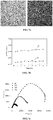
- tthe graphene composite powder of embodiment 1a and aniline trimer carboxylic acid derivative were detected by UV-Vis spectra. The results were shown in FIG. 1b .
- the ⁇ - ⁇ bond of the aniline trimer carboxylic acid derivative itself had two distinct absorption peaks at 307 nm and 474 nm.
- the absorption peak of the graphene composite powder was shifted (to 311nm and 468nm), which further confirmed the existence of ⁇ - ⁇ bond between aniline trimer carboxylic acid derivative and graphene, resulting the shift of the absorption peaks.
- the present disclosure also provides a method for making a graphene slurry.
- the method for making a graphene slurry comprising the following steps:
- the dispersing medium A1 can be water, ethanol, acetone, isopropyl alcohol, butyl alcohol, ethyl acetate, toluene, chloroform, N,N-dimethylformamide, dimethyl sulfoxide, dichloroethane, or combinations thereof.
- a mass ratio of the graphene material and the dispersing medium A1 can be 1:10 ⁇ 1:10000.
- the mass ratio of the graphene material and the dispersing medium A1 is 1:20 ⁇ 1:1000.
- a mass ratio of the aniline oligomer or aniline oligomer derivative and the mixture B 1 is (0.01 ⁇ 10): 100. More preferably, the mass ratio of the aniline oligomer or aniline oligomer derivative and the mixture B1 is (6 ⁇ 10):100.
- the dispersing agent is used to make the graphene material dispersing uniformly.
- the dispersing agent can be selected from the group consisting of silane coupling agent, polyvinyl alcohol, polyvinyl pyrrolidone, organic modified polysiloxane dipropylene glycol monomethyl ether solution, organic silicon surfactant and/or fluorosurfactant. And a mass ratio of the dispersing agent and the mixture B1 is (0.01 ⁇ 1):100.
- the mass percent of the aniline oligomer or aniline oligomer derivative is 0.1% ⁇ 50%.
- a mass ratio of the graphene material and the dispersing medium A2 is 1:10 ⁇ 1:10000.
- the mass ratio of the graphene material and the dispersing medium A2 is 1:20 ⁇ 1:1000.
- the dispersing medium A2 is the same as the dispersing medium A1. It is understood that in order to gain graphene composite powder with better dispersion, another dispersing material can be added.
- the dispersing material can be modified acrylic acid dispersing agent, polyacrylate dispersant, modified polyester dispersing agent, polyvinyl alcohol dispersing agent, modified polyurethane dispersing agent, and so on.
- the present disclosure also provides a graphene slurry obtained by the above mentioned method.
- the method for making the graphene slurry is innovate, and can make the graphene composite powder with good dispersion and chemical stability.
- the graphene material modifed by the aniline oligomer or aniline oligomer derivative has improved dispersibility and chemical stability.
- the graphene slurry can be easily dispersed in many kinds of mediums or coated on a surface of a base material, which improving the application of graphene.
- each component is as follows: graphene powder (single layer), 2g; deionized water (dispersing medium A1), 98g; aniline trimer carboxylic acid derivatives (containing carboxyl groups, modifiers), 1g; polyvinylpyrrolidone (dispersing agent), 0.05g.
- graphene and dispersing medium A1 were mixed and stirred by 1500rad/min at high speed for 20 minutes.
- a mixture B1 was obtained by ultrasonic dispersion of 20 minutes.
- the dispersing agent and the aniline trimer carboxylic acid derivative were added to the mixture B1.
- a mixture B2 is obtained.
- a graphene composite powder modified by aniline trimer carboxylic acid derivative is obtained after being dried at 60 degrees centigrade.
- each component is as follows: the above graphene composite powder from step (1), 5g; ethanol, 94.95g; modified acrylic dispersant, 0.05g.
- the graphene composite powder was added into the ethanol and stirred at high speed for 5 minutes, and then the modified acrylic acid dispersant was added by ultrasonic dispersing for 30 minutes.
- a graphene slurry was obtained after being treated by a high speed mixer for 1 hour.
- the obtained graphene composite powder was tested for the surface property.
- the obtained graphene slurry was tested for the stability.
- the main properties of the obtained graphene composite powder and the obtained graphene slurry were shown in table 2a and FIG. 2a .
- graphene and dispersing medium A1 were mixed and stirred by 1500rad/min at high speed for 10 minutes.
- a mixture B 1 was obtained by ultrasonic dispersion of 20 minutes.
- the dispersing agent and the aniline pentamer sulfonic acid derivative were added to the mixture B 1.
- a mixture B2 is obtained.
- a graphene composite powder modified by aniline pentamer sulfonic acid derivative is obtained after being dried at 70 degrees centigrade.
- the graphene composite powder was added into the ethyl acetate and stirred at high speed for 5 minutes, and then the modified polyester dispersant was added by ultrasonic dispersing for 20 minutes.
- a graphene slurry was obtained after being treated by a high speed mixer for 1 hour.
- the obtained graphene composite powder was tested for the surface property.
- the obtained graphene slurry was tested for the stability.
- the main properties of the obtained graphene composite powder and the obtained graphene slurry were shown in table 2a and FIG. 2a
- controlled examples 2a and 2b were provided as follows.
- each component is as follows: an untreated graphene powder, 0.1g; toluene, 99g; a dispersant, 0.9g.
- the untreated graphene powder was added to different dispersing mediums A2 and stirred at high speed for 5 minutes, and then the dispersant was added by ultrasonic dispersing for 20 minutes.
- the dispersing mediums A2 are water, ethanol and tetrahydrofuran. Three graphene slurries were obtained after being treated by a high speed mixer for 1 hour.
- the untreated graphene powder was tested for the surface property.
- the obtained graphene slurries were tested for the stability.
- the main properties of the untreated graphene powder and the obtained graphene slurries were shown in table 2a and FIG. 2a Table 2a (The stability test is that the obtained graphene slurries was stored for 3 months and then observed)
- Embodiment 2a Embodiment 2b Controlled example 2a surface property hydrophilic oleophylic not hydrophilic, not oleophylic stability no settlement no settlement all settlement
- the graphene slurries of embodiments 2a and 2b had obviously improved dispersion and stability.
- the surface property of the graphene composite powder can be oleophylic or hydrophilic, , which is good for its industrialized application.
- the graphene of the graphene slurry had been dispersed uniformly. Adjacent two graphenes did not been stacked together.
- the present disclosure also provides a method for making a graphene painting.
- the method for making the graphene painting comprising the following steps:
- the graphene material after adding the graphene material to the mixture A, the graphene material can be mixed with the mixture A by high speed stirring, ultrasonic dispersion method, ball milling and/or sanding. Then the graphene material can be further mixed with the aniline oligomer or aniline oligomer derivative uniformly.
- a mass ratio of the graphene material and the dispersing medium can be (0.1 ⁇ 10):(80 ⁇ 90). That is, a mass percent of the graphene material in the obtained graphene dispersion is 0.1% ⁇ 10%, a mass percent of the graphene dispersant in the obtained graphene dispersion is 0.1% ⁇ 10%, and a mass percent of the dispersing medium in the obtained graphene dispersion is 80% ⁇ 90%.
- the mass ratio of the graphene material and the dispersing medium can be (0.5 ⁇ 5):(80 ⁇ 90).
- the painting main-body can be silicone resin, acrylic resin, polyester resin, polyurethane resin, alkyd resin, epoxy resin, or combinations thereof.
- a mass ratio of the painting main-body and the graphene dispersion can be (4 ⁇ 6):(3 ⁇ 5). It can be understand that, the graphene dispersion can be can be mixed with the painting main-body by high speed stirring, ultrasonic dispersion method, ball milling and/or sanding. Then the graphene material can be further dispersed in the painting main-body uniformly.
- the painting agent includes a binder, a wetting agent, an antifoaming agent, and a leveling agent.
- the binder is selected from the group consisting of ethylene glycol monobutyl ether, propylene glycol monobutyl ether, dipropylene glycol methyl ethyl ether, ethylene glycol propyl ether, dipropylene ether, propanediol phenyl ether, benzyl alcohol, and dodecanol ester.
- the wetting agent is selected from the group consisting of dodecyl sulfate, dodecyl sulfonate, polyvinyl alcohol, polyethylene pyrrolidine, organic silicone compound, and organic fluorine compounds.
- the antifoaming agent is selected from the group consisting of dimethyl silicone oil, ether ester compound, modified mineral oil, ethoxylated glycerin, small molecule metal organics and modified organo-silicon polymer.
- the leveling agent is selected from the group consisting of ethylene glycol butyl ether, cellulose acetate-butyrate, polyacrylic acid esters, silicone oil, hydroxymethyl cellulose, polydimethyl silane, polymethylphenyl sioxane, and modified organo-silicon polymer.
- a mass ratio of the painting agent and the graphene dispersion can be (0.3 ⁇ 1):(3 ⁇ 5). That is, a mass percent of the painting main-body in the graphene painting is 40% ⁇ 60%, a mass percent of the graphene dispersion in the graphene painting is 30% ⁇ 50%, a mass percent of the painting agent in the graphene painting is 3% ⁇ 10%.
- the mass ratio of the painting agent and the graphene dispersion can be (0.3 ⁇ 0.5):(3 ⁇ 5).
- the present disclosure also provides a graphene painting.
- the graphene painting is composed of a painting main-body, a graphene dispersion, and a painting agent.
- a mass percent of the painting main-body in the graphene painting is 40% ⁇ 60%.
- a mass percent of the graphene dispersion in the graphene painting is 30% ⁇ 50%.
- a mass percent of the painting agent in the graphene painting is 3% ⁇ 10%.
- the graphene dispersion includes a graphene material, a graphene dispersant, and a dispersing medium.
- the graphene dispersant includes aniline oligomer or aniline oligomer derivative, which is an electroactive polymer.
- the graphene material is dispersed uniformly in the painting main-body by forming ⁇ - ⁇ bond with the aniline oligomer or aniline oligomer derivative.
- the graphene powder modifed by the aniline oligomer or aniline oligomer derivative has improved its dispersibility and chemical stability in the above mentioned graphene printing.
- the graphene painting can be easily attached to sufaces of transparent substrates, such as the front glass of vehicles and architectural glasses.
- the membrane obtained is transparent, and its heat insulation, and effect of energy saving is remarkable.
- the graphene painting does not contain heavy metals, such as In, Sn, and so on, and does not bring heavy metal pollutions.
- the method for making the graphene painting is innovate, and can make the graphene painting with good dispersion and chemical stability. The process of the method is simple and costs low, which is good for industrialized application of the graphene painting.
- 60g silicone resin was added to a mixing vessel, and then 35g graphene dispersion were added to the mixing vessel under 1500 rad/min speed stirring, and a mixture B was obtained.
- 2g ethylene glycol monobutyl ether, 2g dodecyl sulfate, 0.5g modified mineral oil and 0.5g silicone oil were added in mixture B, stirred for 10 minutes, and dispersed under ultrasonic for 30 minutes. After being filtered by 325-400 mesh, a graphene printing was obtained.
- the dispersion effect of the graphene dispersion was shown in FIG.3a . As shown in FIG. 3a , the dispersion effect of the graphene dispersion was good.
- the obtained graphene printing was tested for their properties.
- the obtained graphene printing was coated on a 10cm * 10cm * 0.2cm flat glass sheet with a 10 ⁇ m wire rod coater, and then dried in an oven of 80 degrees centigrade for 1 hour to obtain a graphene film.
- the visible light transmittance, infrared light transmittance and UV light barrier rate of the obtained graphene film was detected by UV-Vis infrared spectrophotometer based on GB/T 2680.
- the adhesion of the obtained graphene film was detected by GB/T 9286 according to the scoring method.
- the water resistance of the obtained graphene film was tested according to GB/T 1733 by being soaked at room temperature and the test time was 96 hours.
- the artificial weathering machine was used to test the artificial weathering ability of the obtained graphene film according to GB/T 1865, and the test time was 1000 hours.
- the temperature resistance of the obtained graphene film was tested by GB/T 1735, by alternate test of cold and heat resistance.
- the dispersion effect of the graphene dispersion was shown in FIG.3a . As shown in FIG. 3a , the dispersion effect of the graphene dispersion was good.
- the obtained graphene printing were tested for their properties.
- the methods of testing were same as the methods in embodiment 3a.
- the main properties of a graphene film made from the obtained graphene printing were shown in table 3 a.
- the dispersion effect of the graphene dispersion was shown in FIG.3a . As shown in FIG. 3a , the dispersion effect of the graphene dispersion was good.
- the obtained graphene printing were tested for their properties.
- the methods of testing were same as the methods in embodiment 3a.
- the main properties of a graphene film made from the obtained graphene printing were shown in table 3 a.
- Table 3a Embodiment 3a Embodiment 3b Embodiment 3c visible light transmittance 91% 94% 93% infrared light transmittance 7% 12% 10% UV light barrier rate 99% 98% 99% water resistance no abnormalities no abnormalities no abnormalities artificial weathering ability no abnormalities no abnormalities no abnormalities adhesion 0 level 0 level 0 level temperature resistance no abnormalities no abnormalities no abnormalities no abnormalities
- graphene films made from the obtained graphene printing had high visible light transmittance and almost completely shielding ultraviolet light, and could effectively block the infrared light of higher energy in sunlight.
- the graphene films had good artificial weathering ability, good water resistance, good adhesion, and good temperature resistance.
- the present disclosure also provides a method for making a graphene composite membrane, comprising the following steps:
- the content of steps S51 to S54 is the same as the content of the steps S41 to S44 in the above mentioned method for making the graphene composite printing, and no further details are given here.
- step S55 the graphene composite printing is coated on a substrate 1, and a graphene composite membrane is obtained after being dried.
- the graphene composite printing can be coated on a substrate 1 by spraying, scraping, brushing, showering, or roll coating to form a coating 2 on the surface of the substrate 1.
- the substrate is a thin film made from polyethylene (PE), polypropylene (PP), polyhexamethylene adipamide (PA), polyvinyl chloride (PVC), polyethylene terephthalate (PET), or polymethyl methacrylate (PMMA).
- PE polyethylene
- PP polypropylene
- PA polyhexamethylene adipamide
- PA polyvinyl chloride
- PET polyethylene terephthalate
- PMMA polymethyl methacrylate
- the graphene modifed by the aniline oligomer or aniline oligomer derivative has improved its dispersibility and chemical stability in the above mentioned graphene composite membrane.
- the graphene composite membrane can be easily attached to sufaces of transparent substrates, such as the front glass of vehicles and architectural glasses.
- the graphene composite membrane obtained is transparent, and its adhesion, artificial weathering ability, and heat insulation is remarkable.
- the graphene composite membrane does not contain heavy metals, such as In, Sn, and so on, and does not bring heavy metal pollutions.
- the method for making the graphene composite membrane has simple process, convenient construction, and easy to operate, which can be widely used for building glass and glasses of car, train, aircraft and other transportation having a need of energy saving in other fields.
- 60g silicone resin was added to a mixing vessel, and then 35g graphene dispersion were added to the mixing vessel under 1500 rad/min speed stirring, and a mixture B was obtained.
- 2g ethylene glycol monobutyl ether, 2g dodecyl sulfate, 0.5g modified mineral oil and 0.5g silicone oil were added in mixture B, stirred for 10 minutes, and dispersed under ultrasonic for 30 minutes. After being filtered by 325-400 mesh, a graphene composite printing was obtained.
- the obtained graphene composite printing was coated on a transparent PMMA film by scraping coating, and a graphene composite membrane was obtained.
- the obtained graphene composite membrane was tested for their properties.
- the visible light transmittance, infrared light transmittance and UV light barrier rate of the obtained graphene composite membrane was detected by UV-Vis infrared spectrophotometer based on GB/T 2680.
- the adhesion of the obtained graphene composite membrane was detected by GB/T 9286 according to the scoring method.
- the water resistance of the obtained graphene composite membrane was tested according to GB/T 1733 by being soaked at room temperature and the test time was 96 hours.
- the artificial weathering machine was used to test the artificial weathering ability of the obtained graphene composite membrane according to GB/T 1865, and the test time was 1000 hours.
- the temperature resistance of the obtained graphene composite membrane was tested by GB/T 1735, by alternate test of cold and heat resistance.
- the test results of the properties of the obtained graphene composite membrane were as follows: visible light transmittance was 91%; infrared light transmittance was 7%; UV light barrier rate was 99%; water resistance was up to 96 hours; artificial weathering ability was up to 1000 hours; and adhesion was 0 level.
- the obtained graphene composite printing was coated on a transparent PP film by spraying, and a graphene composite membrane was obtained.
- the obtained graphene composite membrane was tested for their properties.
- the methods of testing were same as the methods in embodiment 4a.
- the test results of the properties of the obtained graphene composite membrane were as follows: visible light transmittance was 94%; infrared light transmittance was 12%; UV light barrier rate was 98%; water resistance was up to 96 hours; artificial weathering ability was up to 1000 hours; and adhesion was 0 level.
- the graphene composite membranes of embodiment 4a and 4b had high visible light transmittance and almost completely shielding ultraviolet light, and could effectively block the infrared light of higher energy in sunlight.
- the graphene composite membranes had good artificial weathering ability, good water resistance, good adhesion, and good temperature resistance.
- the present disclosure also provides a method for making a graphene composite paper.
- the method for making a graphene composite paper comprises the following steps.
- the micro-porous membrane takes a role of a template and a carrier, so that the obtained graphene composite paper has a definite shape and size.
- the micro-porous membrane can be a polymer membrane with a plurality of penetrating holes. The diameter of the plurality of penetrating holes can be 10 nanometers to 1000 micrometers.
- the polymer membrane can be selected from the group consisting of polyethylene (PE), polypropylene (PP), polystyrene (PS), polymethyl methacrylate (PMMA), polyvinyl chloride (PVC), nylon, polycarbonate (PC), polyurethane (PU), polytetrafluoroethylene (PTFE), or polyethylene terephthalate (PET).
- PE polyethylene
- PP polypropylene
- PS polystyrene
- PMMA polymethyl methacrylate
- PVC polyvinyl chloride
- PC polycarbonate
- PU polyurethane
- PTFE polytetrafluoroethylene
- PET polyethylene terephthalate
- the graphene composite paper is obtained by immersing in the graphene dispersion and using a filter paper or micro-porous membrane as the base.
- the process of the method is simple, the cost is low, and is suitable for industrial production in large scale.
- the graphene in the method is deposited on the surface and pores of the micro-porous membrane, and a woven structure is formed.
- the strength and flexibility of graphene composite paper of the above method is better greater than that of other methods, so as to facilitate its application in flexible electronics.
- the performances of the graphene composite paper were tested.
- the test results showed that the conductivity of the composite graphene paper was 1.3 * 10 5 S/m, and the tensile strength was 221MPa.
- the graphene composite paper had good flexibility and could be able to be curled.
- the present disclosure also provides a method for making a graphene composite painting.
- the method for making a graphene composite painting comprises the following steps.
- the graphene dispersion can be evenly dispersed in the resin by way of high-speed agitation, ultrasonic, ball milling and/or sanding, which further makes graphene disperse in the resin evenly.
- the resin can be epoxy resin, acrylic resin, polyurethane resin, acrylic polyurethane resin, amino resin, or combination thereof.
- the painting agent comprises an anti-settling agent, an antifoaming agent, and a leveling agent.
- the anti-settling agent can be fumed silica, polyamide wax, organic bentonite, or combination thereof.
- the antifoaming agent can be dimethyl silicone oil, ether ester compound, modified mineral oil, ethoxylated glycerin, small molecule metal organics, modified organo-silicon polymer, , or combination thereof.
- the leveling agent can be ethylene glycol butyl ether, cellulose acetate-butyrate, polyacrylic acid esters, silicone oil, hydroxymethyl cellulose, polydimethyl silane, polymethylphenyl sioxane, modified organo-silicon polymer, or combination thereof.
- the graphene composite printing can include a curing agent.
- the curing agent can be a polyamide used for accelerating the curing process of the graphene composite printing.
- a mass percent of the graphene material in the graphene composite painting is 0.01% ⁇ 5%.
- the mass percent of the graphene material in the graphene composite painting is 0.2% ⁇ 5%.
- the present disclosure also provides a graphene composite painting made by the above mentioned method.
- the graphene composite painting is consisted of a resin, a graphene material, aniline oligomer, a dispersing solvent, and a painting agent.
- the mass percent of the graphene material in the graphene composite painting is 0.01% ⁇ 5%.
- the graphene material can be dispersed in the resin uniformly via forming ⁇ - ⁇ bond with the aniline oligomer.
- the graphene material modifed by the aniline oligomer has improved dispersibility and chemical stability.
- the graphene material can be easily dispersed in the resin.
- it can effectively inhibit the adsorption of water molecules on the surface of the graphene composite printing.
- graphene has a two-dimensional layer structure and can disperse in the graphene composite painting evenly.
- graphene When forming a graphene composite coating preparing by the graphene composite printing, graphene can be stacked together and forming an dense insulating layer.
- the corrosion medium of small molecules eg. water molecules, chloride ion
- the dense insulating layer plays a role of a physical isolator. That is, the prepared graphene composite coating has a good water permeability, strong protection ability, and excellent corrosion protection effect. Moreover, the graphene composite painting does not contain heavy metals, such as In, Sn, and so on, and does not bring heavy metal pollutions.
- the method for making the graphene composite painting is innovate, and can make the graphene composite painting having good dispersion and chemical stability. The process of the method is simple and costs low, which is good for industrialized application of the graphene composite painting.
- the graphene dispersion was added to the 46g epoxy resin (model E44, purchased from Jiangsu Wujiang Heli Resin Factory) and mixed to gain a mixture of A4. Then 1g leveling agent, 1g antifoaming agent, 1g anti-settling agent and 46g curing agent of polyamide were successively added to the mixture A4. And a graphene composite painting was obtained after being stirred evenly.
- the obtained graphene composite painting was applied to a substrate of carbon steel. And a graphene composite coating is obtained after volatilization of toluene.
- controlled example 3a of epoxy resin coating was provided.
- the preparation of the epoxy resin coating of controlled example 3a was the same as the embodiment 6a, but only the graphite dispersion was not added.
- the graphene composite coating of embodiment 6a and the epoxy resin coating of controlled example 3a were tested for corrosion resistance.
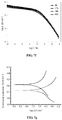
- the graphene composite coating of embodiment 6a and the epoxy resin coating of controlled example 3a were immersed in NaCl solution with 3.5 weight percent for 8 days.
- AC impedance spectra see FIG. 6b to FIG. 6e
- polarization curves see FIG. 6f
- the graphene composite coating has a higher impedance than the epoxy resin coating.
- the self etching current density of the graphene composite coating was 5.23 nA • cm -2
- the self etching current density of the epoxy resin coating was 158 nA • cm -2 . It was showed that the graphene modified by aniline oligomer can be evenly dispersed in the resin , thus the corrosion resistance of the graphene composite coating was greatly improved.
- the graphene composite coating of embodiment 6a and the epoxy resin coating of controlled example 3a were tested for water-tolerant permeability.
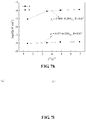
- the AC impedance values were fitted, the 1gQ c (Q c is capacitor of the coating) was plotted on the t 1/2 , and FIG. 6g was obtained.
- linear fitting linear regression equations of the graphene composite coating and the epoxy resin coating were obtained.
- diffusion coefficients of the graphene composite coating and the epoxy resin coating were calculated to 6.35 * 10 -11 m 2 /d and 9.1 * 10 -12 m 2 /d, respectively. It was proved that the graphene modified by aniline oligomer could be uniformly dispersed in the resin, thus slowing the diffusion rate of water molecules in the graphene composite coating.
- the graphene composite coating, pure epoxy resin coating, and market epoxy zinc rich coating were immersed in NaCl solution with 3.5 weight percent for 8 days, and the AC impedance spectroscopies were compared (see FIG. 6h ). As shown in FIG. 6h , it is found that the graphene composite coating had the best anti-corrosion effect.
- the graphene dispersion was added to the 90g polyurethane (purchased from Ningbo Feilun paint making Co., Ltd.) and mixed to obtain a mixture A4. Then 2g leveling agent, 3g antifoaming agent, and 2g anti-settling were successively added to the mixture A4. And a graphene composite painting was obtained after being stirred evenly.
- the obtained graphene composite painting was applied to a substrate of carbon steel. And a graphene composite coating is obtained after volatilization of toluene.
- controlled example 3b of pure PU coating was provided.
- the preparation of the pure PU coating of controlled example 3b was the same as the embodiment 6b, but only the graphite dispersion is not added.
- the graphene composite coating of embodiment 6b and the pure PU coating of controlled example 3b were tested for salt spray resistance.
- the graphene composite coating and the pure PU coating of controlled example 3b were respectively placed in a salt fog test for 1000 hours, and dried at room temperature for taking pictures (see FIG. 6a ).
- the surface of the pure PU coating had obvious corrosion pits, while the surface of the graphene composite coating had no obvious corrosion phenomenon.
- the present disclosure also provides a method for making a water-soluble graphene composite painting.
- the method for making the water-soluble graphene composite painting includes the following steps.
- the purpose of adding the base is to make the aniline oligomer derivatives better dissolving in water.
- the limit of equal molar quantity is that the groups of carboxylic acid or other acid in the structure of the aniline oligomer derivatives can be neutralized completely with the base.
- the base is sodium hydroxide, triethyl amine, potassium hydroxide, ammonia , or combination thereof.
- the aniline oligomer derivative and the base are dispersed in water, so that the aniline oligomer derivative can be fully dissolved.
- the aniline oligomer derivative is used to modify the graphene.
- a mass ratio of the aniline oligomer derivative and the graphene material can be 1:10 ⁇ 10:1.
- the mass ratio of the aniline oligomer derivative and the graphene material can be 2:1 ⁇ 1:1.
- the graphene dispersion can be evenly dispersed in the water-soluble resin by way of high-speed agitation, ultrasonic, ball milling and/or sanding, which further makes graphene disperse in the water-soluble resin evenly.
- the water-soluble resin can be water-soluble epoxy resin, water-soluble acrylic resin, water-soluble polyurethane resin, water-soluble acrylic polyurethane resin, water-soluble amino resin, or combination thereof.
- the painting agent comprises an anti-settling agent, an antifoaming agent, and a leveling agent.
- the anti-settling agent can be fumed silica, polyamide wax, organic bentonite, or combination thereof.
- the antifoaming agent can be dimethyl silicone oil, ether ester compound, modified mineral oil, ethoxylated glycerin, small molecule metal organics, modified organo-silicon polymer, , or combination thereof.
- the leveling agent can be ethylene glycol butyl ether, cellulose acetate-butyrate, polyacrylic acid esters, silicone oil, hydroxymethyl cellulose, polydimethyl silane, polymethylphenyl sioxane, modified organo-silicon polymer, or combination thereof.
- the water-soluble graphene composite printing can include a water-soluble curing agent.
- the water-soluble curing agent can be a water-soluble polyamide used for accelerating the curing process of the water-soluble graphene composite printing.
- a mass percent of the graphene in the water-soluble graphene composite painting is 0.01% ⁇ 4%.
- the mass percent of the graphene material in the water-soluble graphene composite painting is 0.2% ⁇ 1.0%.
- the present disclosure also provides a water-soluble graphene composite painting made by the above mentioned method.
- the water-soluble graphene composite painting is consisted of a water-soluble resin, a graphene material, aniline oligomer derivative, water, and a painting agent.
- the mass percent of the graphene material in the water-soluble graphene composite painting is 0.01% ⁇ 4%.
- the mass percent of the graphene material in the water-soluble graphene composite painting is 0.2% ⁇ 1.0%.
- the graphene material can be dispersed in the water-soluble resin uniformly via forming ⁇ - ⁇ bond with the aniline oligomer derivative.
- the graphene material modifed by the aniline oligomer derivative has improved dispersibility and chemical stability.
- the graphene material can be easily dispersed in the water-soluble resin. For the reason that the graphene has good hydrophobic property, it can effectively inhibit the adsorption of water molecules on the surface of the graphene composite printing.
- graphene has a two-dimensional layer structure and can disperse in the water-soluble graphene composite painting evenly.
- graphene When forming a water-soluble graphene composite coating preparing by the graphene composite printing, graphene can be stacked together and forming an dense insulating layer.
- the corrosion medium of small molecules eg.
- the dense insulating layer plays a role of a physical isolator. That is, the prepared water-soluble graphene composite coating has a good water permeability, strong protection ability, and excellent corrosion protection effect. Moreover, the water-soluble graphene composite painting does not contain heavy metals, such as In, Sn, and so on, and does not bring heavy metal pollutions.
- the method for making the water-soluble graphene composite painting is innovate, and can make the water-soluble graphene composite painting having good dispersion and chemical stability. The process of the method is simple and costs low, which is good for industrialized application of the water-soluble graphene composite painting.
- aniline trimer was dissolved in 50 mL THF, and then 1.04g succinic anhydride was added and reacted with the aniline trimer for 3 hours.
- An aniline trimer carboxyl derivative were obtained by precipitation with petroleum ether.
- the graphene dispersion was added to the 45g water-soluble epoxy resin (purchased from Xibei Yongxin Group Ltd.) and mixed to gain a mixture of B5. Then 1g leveling agent, 2g antifoaming agent, 2.67g anti-settling agent and 45g curing agent of water-soluble polyamide were successively added to the mixture B5. And a water-soluble graphene composite painting was obtained after being stirred evenly.
- the obtained water-soluble graphene composite painting was applied to a substrate of carbon steel. And a water-soluble graphene composite coating is obtained after volatilization of water.
- controlled example 4a of water-soluble epoxy resin coating was provided.
- the preparation of the water-soluble epoxy resin coating of controlled example 4a was the same as the embodiment 7a, but only the graphite dispersion was not added.
- the water-soluble graphene composite coating of embodiment 7a and the water-soluble epoxy resin coating of controlled example 4a were tested for salt spray resistance.
- the water-soluble graphene composite coating and the water-soluble epoxy resin coating of controlled example 4a were respectively placed in a salt fog test for 500 hours, and dried at room temperature for taking pictures (see FIG. 7a ).
- the surface of the water-soluble epoxy resin coating had obvious corrosion pits, while the surface of the water-soluble graphene composite coating had no obvious corrosion phenomenon.
- the water-soluble graphene composite coating of embodiment 7a and the water-soluble epoxy resin coating of controlled example 4a were tested for corrosion resistance.
- the water-soluble graphene composite coating of embodiment 7a and the water-soluble epoxy resin coating of controlled example 4a were immersed in NaCl solution with 3.5 weight percent (simulated sea water) for 8 days.
- Shanghai Chen Hua CHI660E electrochemical workstation the action mechanism of water-soluble graphene composite coating was analyzed by means of open circuit potential, AC impedance and potentiodynamic polarization curves.
- saturated calomel electrode with a Luggin capillary was taken as reference electrode
- platinum electrode was taken as counter electrode
- graphene coating/carbon steel electrode was taken as working electrode.
- Reference electrode, counter electrode, and working electrode were simulated in simulated seawater solution until the open circuit potential (OCP) becoming stable.
- OCP open circuit potential
- EIS electrochemical impedance spectra
- Polarization curve was scanned with scanning speed of 0.5 mV/s and scanning range of -200 ⁇ 200mV vs.OCP.
- the test result of OCP was shown in FIG. 7b
- the AC impedance results was shown in FIG. 7c to FIG. 7f
- the polarization curve was shown in FIG. 7g .
- impedance of the water-soluble graphene composite coating was greater than that of the water-soluble epoxy resin coating.
- the self etching current density of water-soluble graphene composite coating was 130 nA • cm -2
- the self etching current density of water-soluble epoxy resin coating was 38 nA • cm -2 . It was showed that the graphene modified by aniline oligomer derivative can be evenly dispersed in the water-soluble resin , thus the open circuit potential of the water-soluble graphene composite coating positively shifted, its impedance increased, its self etching current density reduced and the corrosion resistance of the water-soluble graphene composite coating was greatly improved.
- the water-soluble graphene composite coating of embodiment 7a and the water-soluble epoxy resin coating of controlled example 4a were tested for water-tolerant permeability.
- the AC impedance values were fitted, the 1gQ c (Q c is capacitor of the coating) was plotted on the t 1/2 , and FIG. 7h was obtained.
- linear fitting linear regression equations of the water-soluble graphene composite coating and the water-soluble epoxy resin coating were obtained.
- the diffusion coefficients of the water-soluble graphene composite coating and the water-soluble epoxy resin coating were calculated to 5.56 * 10 -9 cm 2 /h and 1.61 * 10 -11 cm 2 /h, respectively. It was proved that the water-soluble graphene modified by aniline oligomer derivate could be uniformly dispersed in the water-soluble resin, thus slowing the diffusion rate of water molecules in the water-soluble graphene composite coating.
- the water-soluble graphene composite coating of embodiment 7a and the water-soluble epoxy resin coating of controlled example 4a were tested for contact angle (see FIG. 7i ). The results were the contact angle of the water-soluble graphene composite coating is 95.38 degrees, and the contact angle of the water-soluble epoxy resin coating is 87.32 degrees. It was proved that the water-soluble graphene modified by aniline oligomer derivate could be uniformly dispersed in the water-soluble resin, thus the contact angle of water-soluble graphene composite coating increased, and the hydrophobic property of water-soluble graphene composite coating improved.
- the present disclosure also provides a method for making a graphene composite metal foil.
- the method for making the graphene composite metal foil includes the following steps.
- the thickness of the metal foil 10 is 5 ⁇ m ⁇ 500 ⁇ m.
- the thickness of the metal foil 10 is 10 ⁇ m ⁇ 100 ⁇ m.
- a diameter of the plurality of penetrating holes 20 is 1 ⁇ m ⁇ 1000 ⁇ m, and a hole density of the plurality of penetrating holes 20 is 10 1 /cm 2 ⁇ 10 6 /cm 2 .
- the diameter of the plurality of penetrating holes 20 is 10 ⁇ m ⁇ 500 ⁇ m, and the hole density of the plurality of penetrating holes 20 is 10 2 /cm 2 ⁇ 10 4 /cm 2 .
- the graphene material, the dispersant and the solvent can be mixed by way of high-speed agitation, ultrasonic, ball milling and/or sanding, and a homogeneous and stable graphene dispersion further is obtained.
- the dispersant can be aniline oligomer or aniline oligomer derivative.
- the aniline oligomer or aniline oligomer derivative has good solubility and can be soluble in the solvent.
- the solvent can be deionized water, ethanol, acetone, isopropyl alcohol, butyl alcohol, ethyl acetate, toluene, chloroform, dimethylformamide, dimethyl sulfoxide, dichloroethane, or combination of.
- a mass percentage (i.e., solid content) of graphene in the graphene dispersion is 0.1% ⁇ 10%.
- the graphene deposited on the surface of the metal foil and and hole walls of the plurality of penetrating holes of the metal foil connects together and forms a graphene with layered structure, and the metal foil is sandwiched in the middle of the graphene with layered structure and hold up.
- the graphene with layered structure 30 is composed of a plurality of layers of pure graphene.
- the graphene with layered structure 30 covers the surface of the metal foil 10 and hole walls of the plurality of penetrating holes 20 of the metal foil.
- the number of layers of pure graphene is 1 ⁇ 100.
- the thickness of The graphene with layered structure 30 is 0.01 ⁇ m ⁇ 10 ⁇ m.
- a thermal conductivity of the graphene composite metal foil is 500 W/m • K -2000 W/m • K and the bonding strength between the graphene and the metal foil 10 is 1Mpa ⁇ 100Mpa.
- the graphene composite metal foil can be used as a heat radiating element and can be applied to an integrated circuit, an electronic device, a heat exchanger or a heat sink of LED.
- the method for making the graphene composite metal foil of the present disclosure has following advantages.
- the graphene is dispersed by aniline oligomer or aniline oligomer derivative and the homogeneous and stable graphene dispersion is obtained.
- the aniline oligomer or aniline oligomer derivative has positive charges, which makes the graphene dispersion positively charged, the surface of the clean metal foil is negatively charged, there is strong electrostatic forces between the graphene dispersion and the clean metal foil. Therefore, the operation of adding an adhesive to coat is omitted, and the graphene is more stable and adhered to the surface of the metal foil by electrostatic force.
- the graphene composite metal foil of the present disclosure has following advantages. (1) It has excellent heat dissipation performance.
- the graphene prepared by the prior art is all tiled on the surface of the metal foil, and the heat flow direction is perpendicular to the surface of the graphene, resulting in the final heat dissipation effect is not ideal.
- the graphene composite metal foil of the present disclosure has a layered graphene on both sides of the metal foil and on the hole walls of the plurality of penetrating holes.
- the bottom layered graphene of the metal foil can not only rapidly transfer heat of a heat source to the surface of the layered graphene, but also transfer the heat to the upper layered graphene of the metal foil by the layered graphene attached to the hole walls of the plurality of penetrating holes.
- the heat transferred to the upper layered graphene can be rapidly diffused through the plane surface of the layered graphene, and finally rapidly cooled by convection and radiation. That is, the graphene on hole walls of the plurality of penetrating holes of the graphene composite metal foil can increase thermal conductivity perpendicular to the surface of the metal foil, thereby greatly improving the overall thermal conductivity of the graphene composite metal foil.
- the bonding strength between the layered graphene and the metal foil is large.
- Graphene prepared by the existing technology is easy to lead to delamination of graphene because of interfacial stress between the surface of metal foil and the graphene.
- the graphene While in the graphene composite metal foil of the present disclosure, the graphene not only covers two surface of the metal foil but also is deposited on the hole walls of the plurality of penetrating holes of the metal foil, which formed a graphene with layered structure integrally.
- the metal foil is sandwiched in the middle of the graphene with layered structure and hold up, improving the bonding strength between the graphene and the metal foil.
- graphene composite metal foils are prepared by electrostatic adsorption, and the adhesion of graphene on the metal foil is strong, and the bonding strength is high.
- the process of the method is simple and the preparation cost is low.
- the prior art such as by chemical vapor deposition (CVD) method, growing graphene on the surface of a foil, it needs to grow equipment of high cost, longer growth time, higher growth conditions (high temperature, high vacuum), and has certain selectivity to metal foil (need to be able to act as metal catalyst), and it is hard to grow continuously.
- the graphene composite metal foil is prepared by the method of liquid phase deposition. The growth conditions, growth of equipment and material of this method are not specially required, the growth period is short (1min ⁇ 10min), and the graphene can be continuously formed, thus greatly improving the producing efficiency.
- the present disclosure also provides a graphene conductive painting.
- the graphene conductive painting includes a graphene material, a graphene dispersant, and a paint matrix.
- the graphene dispersant includes aniline oligomer or aniline oligomer derivative, which is an electroactive polymer. And the aniline oligomer or aniline oligomer derivative is combined with the graphene material via ⁇ - ⁇ bond, resulting in the graphene material distributing in the paint matrix uniformly.
- the paint matrix can be water-soluble polyurethane, but are not limited to polyurethane system.
- the paint matrix also includes other polymer film-forming resin, such as epoxy resin, alkyd resin, polymethyl acrylic ester emulsion, silicone resin, etc..
- the graphene dispersant includes aniline oligomer or aniline oligomer derivative
- graphene having a electric conductivity can be uniformly dispersed in the paint matrix.
- the graphene conductive painting obtained has a good electric conductivity, and can be applied to the conductive ink, antistatic coating, electromagnetic shielding, stealth, etc..
Landscapes
- Chemical & Material Sciences (AREA)
- Organic Chemistry (AREA)
- Inorganic Chemistry (AREA)
- Engineering & Computer Science (AREA)
- Materials Engineering (AREA)
- Nanotechnology (AREA)
- Life Sciences & Earth Sciences (AREA)
- General Life Sciences & Earth Sciences (AREA)
- Geology (AREA)
- Carbon And Carbon Compounds (AREA)
Applications Claiming Priority (16)
| Application Number | Priority Date | Filing Date | Title |
|---|---|---|---|
| CN201410722468 | 2014-12-02 | ||
| CN201410722772 | 2014-12-02 | ||
| CN201410720559 | 2014-12-02 | ||
| CN201410781191.XA CN105778740B (zh) | 2014-12-16 | 2014-12-16 | 石墨烯导电涂料、其制备方法及应用 |
| CN201410816025.9A CN105792598B (zh) | 2014-12-24 | 2014-12-24 | 一种石墨烯复合金属箔 |
| CN201410815986.8A CN105778571B (zh) | 2014-12-24 | 2014-12-24 | 一种石墨烯复合浆料及其制备方法 |
| CN201410816051.1A CN105778572B (zh) | 2014-12-24 | 2014-12-24 | 一种石墨烯复合粉体及其制备方法 |
| CN201410813889.5A CN105783576B (zh) | 2014-12-24 | 2014-12-24 | 一种复合导热片 |
| CN201410819604.9A CN105789155B (zh) | 2014-12-24 | 2014-12-24 | 一种石墨烯复合金属箔及其制备方法 |
| CN201410815993.8A CN105778134B (zh) | 2014-12-24 | 2014-12-24 | 一种石墨烯复合高分子膜材料及其制备方法 |
| CN201410814945.7A CN105778608B (zh) | 2014-12-24 | 2014-12-24 | 一种石墨烯复合涂料及其制备方法 |
| CN201410814796.4A CN105788874B (zh) | 2014-12-24 | 2014-12-24 | 一种复合石墨烯纸及其制备方法 |
| CN201410816024.4A CN105778136B (zh) | 2014-12-24 | 2014-12-24 | 一种石墨烯复合贴膜及其制备方法 |
| CN201410844601.0A CN105802452B (zh) | 2014-12-30 | 2014-12-30 | 一种石墨烯复合涂层、石墨烯复合涂料及其制备方法 |
| CN201410841675.9A CN105802441B (zh) | 2014-12-30 | 2014-12-30 | 一种水性石墨烯复合涂层、水性石墨烯复合涂料及其制备方法 |
| PCT/CN2015/095742 WO2016086796A1 (zh) | 2014-12-02 | 2015-11-27 | 一种石墨烯分散剂及其应用 |
Publications (2)
| Publication Number | Publication Date |
|---|---|
| EP3228592A1 true EP3228592A1 (de) | 2017-10-11 |
| EP3228592A4 EP3228592A4 (de) | 2019-04-03 |
Family
ID=56091003
Family Applications (1)
| Application Number | Title | Priority Date | Filing Date |
|---|---|---|---|
| EP15865917.7A Withdrawn EP3228592A4 (de) | 2014-12-02 | 2015-11-27 | Graphendispergiermittel und anwendung davon |
Country Status (3)
| Country | Link |
|---|---|
| EP (1) | EP3228592A4 (de) |
| TW (1) | TWI602611B (de) |
| WO (1) | WO2016086796A1 (de) |
Cited By (2)
| Publication number | Priority date | Publication date | Assignee | Title |
|---|---|---|---|---|
| CN111341997A (zh) * | 2017-10-13 | 2020-06-26 | 南京旭羽睿材料科技有限公司 | 新型石墨烯膜电极制备方法 |
| CN117125864A (zh) * | 2023-10-26 | 2023-11-28 | 湘潭电化科技股份有限公司 | 一种氨氮工业废水的处理方法 |
Families Citing this family (29)
| Publication number | Priority date | Publication date | Assignee | Title |
|---|---|---|---|---|
| US10822501B2 (en) * | 2016-11-17 | 2020-11-03 | Ningbo Institute Of Materials Technology & Engineering, Chinese Academy Of Sciences | Hexagonal boron nitride epoxy compound anticorrosive paint, and preparation method and use thereof |
| US10077351B2 (en) | 2016-12-23 | 2018-09-18 | Angstron Materials (Asia) Limited | Graphene dispersion and graphene reinforced polymer |
| CN108047805A (zh) * | 2017-12-29 | 2018-05-18 | 陈鹏 | 一种复合型流平剂及其制备方法和应用 |
| TWI708801B (zh) * | 2018-02-26 | 2020-11-01 | 謙華科技股份有限公司 | 石墨烯複合薄膜的製造方法 |
| CN110581429B (zh) * | 2018-06-09 | 2023-03-31 | 滨州市腾源电子科技有限公司 | 一种基于石墨烯材料的太赫兹波辐射源 |
| CN110310762A (zh) * | 2018-08-22 | 2019-10-08 | 苏州怡拓生物传感技术有限公司 | 改性石墨烯导电碳浆 |
| CN109266119A (zh) * | 2018-09-14 | 2019-01-25 | 安庆市泽烨新材料技术推广服务有限公司 | 石墨烯导电涂料 |
| CN109385194A (zh) * | 2018-09-14 | 2019-02-26 | 安庆市泽烨新材料技术推广服务有限公司 | 水性弹性导电涂料 |
| CN109280434A (zh) * | 2018-09-14 | 2019-01-29 | 安庆市泽烨新材料技术推广服务有限公司 | 水性导电涂料 |
| TWI694121B (zh) * | 2019-02-12 | 2020-05-21 | 台灣中油股份有限公司 | 石墨烯-奈米銀粒子-高分子溶液、其製備方法及其用途 |
| CN109912924B (zh) * | 2019-03-05 | 2022-09-27 | 深圳市驭晟新材料科技有限公司 | 一种石墨烯-纳米聚四氟乙烯复合改性填料的制备及其应用方法 |
| CN110049661A (zh) * | 2019-05-17 | 2019-07-23 | 台州思碳科技有限公司 | 一种石墨多孔金属箔散热膜及其制备方法 |
| CN110791167A (zh) * | 2019-06-18 | 2020-02-14 | 西北工业大学 | 石墨烯重防腐蚀涂料及其制备方法、重防腐蚀涂层 |
| CN110294912B (zh) * | 2019-06-30 | 2021-05-25 | 桂林理工大学 | 一种导电型聚合物基复合电磁屏蔽材料的制备方法 |
| CN110204760B (zh) * | 2019-06-30 | 2021-10-29 | 桂林理工大学 | 一种导电型橡胶基复合电磁屏蔽材料的制备方法 |
| CN112175477B (zh) * | 2019-07-03 | 2022-02-11 | 中国科学院宁波材料技术与工程研究所 | 氟化石墨烯/CeO2纳米复合物改性防腐涂层及其制备方法 |
| CN110559695A (zh) * | 2019-08-29 | 2019-12-13 | 安徽銮威化工科技开发有限公司 | 一种氧化石墨烯改性有机硅消泡剂及其制备方法 |
| CN111205727A (zh) * | 2020-03-04 | 2020-05-29 | 绵阳麦思威尔科技有限公司 | 用于空调换热器铝翅片上的水性超防腐涂料及其制备方法 |
| JP7492806B2 (ja) * | 2020-07-03 | 2024-05-30 | リファインホールディングス株式会社 | 炭素質材料分散液およびその製造方法 |
| CN111860739A (zh) * | 2020-07-17 | 2020-10-30 | 山东华冠智能卡有限公司 | 一种石墨烯基rfid天线的制备方法 |
| CN112940411B (zh) * | 2021-01-29 | 2022-08-05 | 大连理工大学 | 一种石墨烯/聚氯乙烯复合包装材料及其制备方法 |
| CN113388315A (zh) * | 2021-04-25 | 2021-09-14 | 中国科学院福建物质结构研究所 | 一种石墨烯/树脂复合涂料、及石墨烯/树脂复合涂层的制备方法 |
| CN113363668A (zh) * | 2021-06-08 | 2021-09-07 | 浙江理工大学 | 具有准分子紫外光辐照修饰的石墨烯负载玻璃纤维膜及其制备方法 |
| CN113666363A (zh) * | 2021-08-05 | 2021-11-19 | 深圳烯创技术有限公司 | 一种高热辐射系数和高电磁屏蔽的氧化石墨烯材料的制备方法 |
| CN113735101B (zh) * | 2021-09-23 | 2024-04-09 | 上海烯望新材料科技有限公司 | 一种剥离法制备亲油性少层石墨烯的方法 |
| CN114854203B (zh) * | 2022-06-20 | 2024-02-06 | 柳州市凯佰化工股份有限公司 | 一种石墨烯浆料的制备方法 |
| CN117285847B (zh) * | 2023-09-08 | 2024-07-12 | 桂林视群纸业有限公司 | 一种水性聚丙烯薄膜涂覆用涂层及其制备方法 |
| CN119410219B (zh) * | 2024-11-25 | 2025-08-19 | 国网湖北省电力有限公司武汉供电公司 | 一种防电缆表面结冰的涂料及其制备方法 |
| CN120590710B (zh) * | 2025-08-05 | 2025-10-21 | 四川索玛新材料科技有限公司 | 一种基于石墨烯的复合抗菌材料及其制备方法和应用 |
Family Cites Families (6)
| Publication number | Priority date | Publication date | Assignee | Title |
|---|---|---|---|---|
| CN101740234B (zh) * | 2010-03-03 | 2012-03-28 | 中国科学院电工研究所 | 一种含氧石墨烯粉体及含氧石墨烯/四聚苯胺的 粉体的制备方法 |
| CN102321254B (zh) * | 2011-09-30 | 2013-02-06 | 西安交通大学 | 一种高浓度石墨烯-聚苯胺纳米纤维复合分散液及复合膜的制备方法 |
| CN102492296B (zh) * | 2011-11-25 | 2014-02-12 | 江南大学 | 一种水分散聚苯胺/石墨烯复合材料的合成方法 |
| CN103086362B (zh) * | 2012-12-11 | 2014-10-15 | 武汉工程大学 | 电活性苯胺齐聚物修饰石墨烯的制备方法 |
| CN103449420B (zh) * | 2013-08-22 | 2015-03-25 | 中国科学院金属研究所 | 一种高质量石墨烯的分散和薄膜制备方法 |
| CN103623741B (zh) * | 2013-11-27 | 2015-05-20 | 中国科学院长春应用化学研究所 | 石墨烯分散剂、其制备方法及石墨烯的制备方法 |
-
2015
- 2015-11-27 EP EP15865917.7A patent/EP3228592A4/de not_active Withdrawn
- 2015-11-27 WO PCT/CN2015/095742 patent/WO2016086796A1/zh not_active Ceased
- 2015-11-27 TW TW104139658A patent/TWI602611B/zh not_active IP Right Cessation
Cited By (3)
| Publication number | Priority date | Publication date | Assignee | Title |
|---|---|---|---|---|
| CN111341997A (zh) * | 2017-10-13 | 2020-06-26 | 南京旭羽睿材料科技有限公司 | 新型石墨烯膜电极制备方法 |
| CN111341997B (zh) * | 2017-10-13 | 2021-05-28 | 南京旭羽睿材料科技有限公司 | 石墨烯膜电极制备方法 |
| CN117125864A (zh) * | 2023-10-26 | 2023-11-28 | 湘潭电化科技股份有限公司 | 一种氨氮工业废水的处理方法 |
Also Published As
| Publication number | Publication date |
|---|---|
| TW201620607A (zh) | 2016-06-16 |
| TWI602611B (zh) | 2017-10-21 |
| WO2016086796A1 (zh) | 2016-06-09 |
| EP3228592A4 (de) | 2019-04-03 |
Similar Documents
| Publication | Publication Date | Title |
|---|---|---|
| US10696790B2 (en) | Graphene dispersant and application thereof | |
| EP3228592A1 (de) | Graphendispergiermittel und anwendung davon | |
| Jung et al. | Ligand chemistry for surface functionalization in MXenes: A review | |
| Wu et al. | 2D nanomaterials reinforced organic coatings for marine corrosion protection: state of the art, challenges, and future prospectives | |
| Ates | A review on conducting polymer coatings for corrosion protection | |
| Najmi et al. | Design of nacre-inspired 2D-MoS2 nanosheets assembled with mesoporous covalent organic frameworks (COFs) for smart coatings | |
| Fazli-Shokouhi et al. | Epoxy-matrix polyaniline/p-phenylenediamine-functionalised graphene oxide coatings with dual anti-corrosion and anti-fouling performance | |
| Jin et al. | A durable, superhydrophobic, superoleophobic and corrosion-resistant coating with rose-like ZnO nanoflowers on a bamboo surface | |
| Sun et al. | Suppression of the coffee-ring effect by self-assembling graphene oxide and monolayer titania | |
| Yeole et al. | The effect of carbon nanotubes loaded with 2-mercaptobenzothiazole in epoxy-based coatings | |
| KR20130038812A (ko) | 투명한 전도성 필름용 부식 방지제 | |
| Li et al. | Corrosion protection properties of polyvinyl butyral/polyaniline-graphene oxide/poly (methylhydrosiloxane) composite coating for AA2024 aluminum alloy | |
| EP3088356A1 (de) | Nichtkovalente verbindungsmodifizierte kohlenstoffstruktur und kohlenstoffstruktur/polymerverbundstoff damit | |
| JPWO2007088815A1 (ja) | 粘土膜及びその製造方法 | |
| Chen et al. | Engineering active-site-induced homogeneous growth of polydopamine nanocontainers on loading-enhanced ultrathin graphene for smart self-healing anticorrosion coatings | |
| CN105802452A (zh) | 一种石墨烯复合涂层、石墨烯复合涂料及其制备方法 | |
| An et al. | Eco-friendly superhydrophobic coupling conversion coating with corrosion resistance on magnesium alloy | |
| Gao et al. | Eco-friendly sustainable and responsive high-performance benzotriazole-metal organic frameworks/silica composite coating with active/passive corrosion protection on copper | |
| Jin et al. | Water‐and oxidation‐resistant MXenes for advanced electromagnetic interference shielding applications | |
| Zhang et al. | Hydrophobic modification of ZnO nanostructures surface using silane coupling agent | |
| US20130062577A1 (en) | Carbon nanotube suspension and superhydrophobic film prepared therefrom | |
| CN103182369A (zh) | 一种在金属基体上制备混杂多阶结构的超疏水薄膜的方法 | |
| Wu et al. | Organic–Inorganic Composite Strategy for Fluorinated Waterborne Polyurethane (WPU)@ ZIF-8/Ti3C2T x Coatings to Achieve Superior Anticorrosion Properties for Bronze Protection | |
| Jiang et al. | Superhydrophobic poplar scrimber via in situ synthesis of Cu7Cl4 (OH) 10· H2O heterostructure inspired by pine cone with superultraviolet resistance | |
| Saffar et al. | Superhydrophobic ZnO thin film modified by stearic acid on copper substrate for corrosion and fouling protections |
Legal Events
| Date | Code | Title | Description |
|---|---|---|---|
| STAA | Information on the status of an ep patent application or granted ep patent |
Free format text: STATUS: THE INTERNATIONAL PUBLICATION HAS BEEN MADE |
|
| PUAI | Public reference made under article 153(3) epc to a published international application that has entered the european phase |
Free format text: ORIGINAL CODE: 0009012 |
|
| STAA | Information on the status of an ep patent application or granted ep patent |
Free format text: STATUS: REQUEST FOR EXAMINATION WAS MADE |
|
| 17P | Request for examination filed |
Effective date: 20170703 |
|
| AK | Designated contracting states |
Kind code of ref document: A1 Designated state(s): AL AT BE BG CH CY CZ DE DK EE ES FI FR GB GR HR HU IE IS IT LI LT LU LV MC MK MT NL NO PL PT RO RS SE SI SK SM TR |
|
| AX | Request for extension of the european patent |
Extension state: BA ME |
|
| RIC1 | Information provided on ipc code assigned before grant |
Ipc: C01B 32/20 20170101ALI20171205BHEP Ipc: C01B 32/182 20170101AFI20171205BHEP |
|
| DAV | Request for validation of the european patent (deleted) | ||
| DAX | Request for extension of the european patent (deleted) | ||
| A4 | Supplementary search report drawn up and despatched |
Effective date: 20180611 |
|
| RIC1 | Information provided on ipc code assigned before grant |
Ipc: C01B 32/182 20170101AFI20180605BHEP Ipc: C01B 32/20 20170101ALI20180605BHEP |
|
| DA4 | Supplementary search report drawn up and despatched (deleted) | ||
| RIC1 | Information provided on ipc code assigned before grant |
Ipc: C01B 32/20 20170101ALI20180621BHEP Ipc: C01B 32/182 20170101AFI20180621BHEP |
|
| RIC1 | Information provided on ipc code assigned before grant |
Ipc: C01B 32/20 20170101ALI20181120BHEP Ipc: C01B 32/182 20170101AFI20181120BHEP |
|
| RIC1 | Information provided on ipc code assigned before grant |
Ipc: C01B 32/182 20170101AFI20190221BHEP Ipc: C01B 32/20 20170101ALI20190221BHEP |
|
| RA4 | Supplementary search report drawn up and despatched (corrected) |
Effective date: 20190227 |
|
| RIC1 | Information provided on ipc code assigned before grant |
Ipc: C01B 32/20 20170101ALI20190222BHEP Ipc: C01B 32/182 20170101AFI20190222BHEP |
|
| STAA | Information on the status of an ep patent application or granted ep patent |
Free format text: STATUS: EXAMINATION IS IN PROGRESS |
|
| STAA | Information on the status of an ep patent application or granted ep patent |
Free format text: STATUS: REQUEST FOR EXAMINATION WAS MADE |
|
| STAA | Information on the status of an ep patent application or granted ep patent |
Free format text: STATUS: EXAMINATION IS IN PROGRESS |
|
| 17Q | First examination report despatched |
Effective date: 20200114 |
|
| 17Q | First examination report despatched |
Effective date: 20200127 |
|
| STAA | Information on the status of an ep patent application or granted ep patent |
Free format text: STATUS: THE APPLICATION IS DEEMED TO BE WITHDRAWN |
|
| 18D | Application deemed to be withdrawn |
Effective date: 20220601 |