EP3229503A1 - Procédé et dispositif de régulation de la priorité de transmission - Google Patents
Procédé et dispositif de régulation de la priorité de transmission Download PDFInfo
- Publication number
- EP3229503A1 EP3229503A1 EP14909404.7A EP14909404A EP3229503A1 EP 3229503 A1 EP3229503 A1 EP 3229503A1 EP 14909404 A EP14909404 A EP 14909404A EP 3229503 A1 EP3229503 A1 EP 3229503A1
- Authority
- EP
- European Patent Office
- Prior art keywords
- floor
- message
- talker
- identity
- release
- Prior art date
- Legal status (The legal status is an assumption and is not a legal conclusion. Google has not performed a legal analysis and makes no representation as to the accuracy of the status listed.)
- Granted
Links
- 238000000034 method Methods 0.000 title claims abstract description 139
- 230000007774 longterm Effects 0.000 claims description 25
- 238000005516 engineering process Methods 0.000 abstract description 9
- 238000010586 diagram Methods 0.000 description 9
- 230000005540 biological transmission Effects 0.000 description 6
- 230000001413 cellular effect Effects 0.000 description 3
- 238000010295 mobile communication Methods 0.000 description 3
- 238000004891 communication Methods 0.000 description 2
- 230000003287 optical effect Effects 0.000 description 1
- 230000011664 signaling Effects 0.000 description 1
- 230000001960 triggered effect Effects 0.000 description 1
Images



Classifications
-
- H—ELECTRICITY
- H04—ELECTRIC COMMUNICATION TECHNIQUE
- H04W—WIRELESS COMMUNICATION NETWORKS
- H04W4/00—Services specially adapted for wireless communication networks; Facilities therefor
- H04W4/12—Messaging; Mailboxes; Announcements
-
- H—ELECTRICITY
- H04—ELECTRIC COMMUNICATION TECHNIQUE
- H04L—TRANSMISSION OF DIGITAL INFORMATION, e.g. TELEGRAPHIC COMMUNICATION
- H04L65/00—Network arrangements, protocols or services for supporting real-time applications in data packet communication
- H04L65/40—Support for services or applications
- H04L65/4061—Push-to services, e.g. push-to-talk or push-to-video
-
- H—ELECTRICITY
- H04—ELECTRIC COMMUNICATION TECHNIQUE
- H04W—WIRELESS COMMUNICATION NETWORKS
- H04W4/00—Services specially adapted for wireless communication networks; Facilities therefor
- H04W4/06—Selective distribution of broadcast services, e.g. multimedia broadcast multicast service [MBMS]; Services to user groups; One-way selective calling services
- H04W4/10—Push-to-Talk [PTT] or Push-On-Call services
-
- H—ELECTRICITY
- H04—ELECTRIC COMMUNICATION TECHNIQUE
- H04W—WIRELESS COMMUNICATION NETWORKS
- H04W76/00—Connection management
- H04W76/40—Connection management for selective distribution or broadcast
- H04W76/45—Connection management for selective distribution or broadcast for Push-to-Talk [PTT] or Push-to-Talk over cellular [PoC] services
-
- H—ELECTRICITY
- H04—ELECTRIC COMMUNICATION TECHNIQUE
- H04L—TRANSMISSION OF DIGITAL INFORMATION, e.g. TELEGRAPHIC COMMUNICATION
- H04L65/00—Network arrangements, protocols or services for supporting real-time applications in data packet communication
- H04L65/10—Architectures or entities
- H04L65/1016—IP multimedia subsystem [IMS]
-
- H—ELECTRICITY
- H04—ELECTRIC COMMUNICATION TECHNIQUE
- H04L—TRANSMISSION OF DIGITAL INFORMATION, e.g. TELEGRAPHIC COMMUNICATION
- H04L65/00—Network arrangements, protocols or services for supporting real-time applications in data packet communication
- H04L65/10—Architectures or entities
- H04L65/102—Gateways
- H04L65/1023—Media gateways
- H04L65/103—Media gateways in the network
-
- H—ELECTRICITY
- H04—ELECTRIC COMMUNICATION TECHNIQUE
- H04L—TRANSMISSION OF DIGITAL INFORMATION, e.g. TELEGRAPHIC COMMUNICATION
- H04L65/00—Network arrangements, protocols or services for supporting real-time applications in data packet communication
- H04L65/40—Support for services or applications
- H04L65/403—Arrangements for multi-party communication, e.g. for conferences
- H04L65/4038—Arrangements for multi-party communication, e.g. for conferences with floor control
Definitions
- the present invention relates to the communications field, and in particular, to a floor control method and apparatus.
- PoC Push-to-Talk over Cellular, push-to-talk over cellular
- PTT Push-to-Talk, push-to-talk
- the PTT service implements a mobile voice service of a walkie-talkie Walkie-Talkie, and has the following advantages: a call set-up time is short, a channel is occupied only when a user talks, only a channel is listened to when a call is answered, and a receiver can receive call information at any time without off-hook.
- the PoC is a two-way, instant, and multi-party communication manner, and allows two or more user equipments to communicate with each other. A user can press a key to send a voice to all participants of a session.
- a floor control solution is that floor information is reported by using the RTCP (Real-Time Transport Control Protocol, Real-Time Transport Control Protocol) protocol and by using a dedicated unicast connection of user equipment.
- RTCP Real-Time Transport Control Protocol
- a dedicated unicast connection of user equipment e.g., Wi-Fi, Wi-Fi, Wi-Fi, Wi-Fi, Wi-Fi, Wi-Fi, Wi-Fi, Wi-Fi, Wi-Fi Protected Access (Real-Time Transport Control Protocol, Real-Time Transport Control Protocol) protocol and by using a dedicated unicast connection of user equipment.
- RTCP Real-Time Transport Control Protocol
- a dedicated unicast connection of user equipment a dedicated unicast connection of user equipment.
- both signaling on a control plane and a bearing on a media plane are implemented in a PoC server PoC Server, and the control plane and the media plane are not separated. This causes difficulty in subsequent technology evolution and is not conducive to either flexible implementation of services or system extension.
- Embodiments of the present invention provide a floor control method and apparatus, so as to resolve a prior-art problem: A control plane and a media plane of a PoC service are not separated, and this causes difficulty in subsequent technology evolution and is not conducive to either flexible implementation of services or system extension; and there is no detailed floor control procedure after the control plane and the media plane are separated.
- a floor control method includes:
- the method further includes:
- the method further includes:
- the method further includes:
- the method further includes:
- the method further includes:
- the method further includes:
- a floor control apparatus includes:
- the first receiving module is further configured to receive a first floor release message sent by the UE, where the first floor release message includes the identity of the talker, the identifier of the group to which the talker belongs, a parameter indicating that an event type is floor release, and a release cause value;
- the first generation module is further configured to generate a second floor release message according to the first floor release message received by the first receiving module, where the second floor release message includes the identity of the talker, the identifier of the group to which the talker belongs, the parameter indicating that an event type is floor release, and the release cause value;
- the first sending module is further configured to send, to the MCPTT server, the second floor release message generated by the first generation module;
- the first receiving module is further configured to receive a response message that is in response to the second floor release message and that is sent by the MCPTT server;
- the first generation module is further configured to generate a response message of the first floor release message according to the
- the first receiving module is further configured to receive a third floor release message sent by the MCPTT server, where the third floor release message includes the identity of the talker, the identifier of the group to which the talker belongs, a parameter indicating that an event type is floor release, and a release cause value;
- the first generation module is further configured to generate a response message of the third floor release message according to the third floor release message received by the first receiving module;
- the first sending module is further configured to send, to the MCPTT server, the response message that is of the third floor release message and that is generated by the first generation module;
- the first generation module is further configured to generate a fourth floor release message according to the third floor release message generated by the first generation module, where the fourth floor release message includes the identity of the talker, the identifier of the group to which the talker belongs, the parameter indicating that an event type is floor release, and the release cause value; and the first sending module is further configured to send, to
- the first receiving module is further configured to receive a third floor release message sent by the MCPTT server, where the third floor release message includes the identity of the talker, the identifier of the group to which the talker belongs, a parameter indicating that an event type is floor release, and a release cause value;
- the first generation module is further configured to: generate a response message of the third floor release message according to the third floor release message received by the first receiving module, and generate a fourth floor release message according to the third floor release message, where the fourth floor release message includes the identity of the talker, the identifier of the group to which the talker belongs, the parameter indicating that an event type is floor release, and the release cause value;
- the first sending module is further configured to: send, to the MCPTT server, the response message that is of the third floor release message and that is generated by the first generation module, and send the fourth floor release message to the UE.
- the first receiving module is further configured to receive, at a multicast endpoint, a first notification message sent by the MCPTT server, where the first notification message includes a temporary mobile group identity TMGI, the identity of the talker, and multicast endpoint information;
- the first generation module is further configured to generate a second notification message according to the first notification message received by the first receiving module, where the second notification message includes the TMGI and the identity of the talker;
- the first sending module is further configured to send, to a broadcast/multicast service center BM-SC, the second notification message generated by the first generation module, where the second notification message is used to instruct the BM-SC to notify, by using a multicast channel, a device used by another member, except the talker, that is in a multicast area and that is in the group to which the talker belongs of information indicating that a floor of the talker is granted;
- the first receiving module is further configured to receive a response message that is
- the first receiving module is further configured to receive, at a multicast endpoint, a first notification message sent by the MCPTT server, where the first notification message includes a temporary mobile group identity TMGI, the identity of the talker, and multicast endpoint information;
- the first generation module is further configured to generate a second notification message according to the first notification message received by the first receiving module, where the second notification message includes the TMGI and the identity of the talker;
- the first sending module is further configured to send, to a broadcast/multicast service center BM-SC, the second notification message generated by the first generation module, where the second notification message is used to instruct the BM-SC to notify, by using a multicast channel, a device used by another member, except the talker, that is in a multicast area and that is in the group to which the talker belongs of information indicating that a floor of the talker is released;
- the first receiving module is further configured to receive a first floor duration notification message sent by the MCPTT server, where the first floor duration notification message includes the identity of the talker, the identifier of the group to which the talker belongs, a parameter indicating that an event type is floor timeout, and remaining floor duration;
- the first generation module is further configured to generate a second floor duration notification message according to the first floor duration notification message received by the first receiving module, where the second floor duration notification message includes the identity of the talker, the identifier of the group to which the talker belongs, the parameter indicating that an event type is floor timeout, and the remaining floor duration;
- the first sending module is further configured to send, to the UE, the second floor duration notification message generated by the first generation module, where the second floor duration notification message is used to instruct the UE to prompt for a floor time limit status of the talker.
- the apparatus includes a media resource function entity.
- a floor control method includes:
- a floor control apparatus includes:
- a floor control method is provided, where the method includes:
- the method further includes:
- the method further includes:
- the method further includes:
- the method further includes:
- the method further includes:
- the method further includes:
- the method further includes:
- a floor control apparatus includes:
- the apparatus further includes a third generation module; the third receiving module is further configured to receive a second floor release message sent by the media resource function entity, where the second floor release message includes the identity of the talker, the identifier of the group to which the talker belongs, a parameter indicating that an event type is floor release, and a release cause value, the second floor release message is generated by the media resource function entity according to a first floor release message sent by the UE, and the first floor release message includes the identity of the talker, the identifier of the group to which the talker belongs, the parameter indicating that an event type is floor release, and the release cause value; the third generation module is further configured to generate, according to the second floor release message, a response message in response to the second floor release message; and the third sending module is further configured to send, to the media resource function entity, the response message in response to the second floor release message, where the response message in response to the second floor release message is used
- the first determining and generation module is further configured to: determine to release the floor of the talker, and generate a third floor release message, where the third floor release message includes the identity of the talker, the identifier of the group to which the talker belongs, a parameter indicating that an event type is floor release, and a release cause value;
- the third sending module is further configured to send the third floor release message to the media resource function entity, where the third floor release message is used to instruct the media resource function entity to generate a fourth floor release message, and send the fourth floor release message to the UE, and the fourth floor release message includes the identity of the talker, the identifier of the group to which the talker belongs, the parameter indicating that an event type is floor release, and the release cause value;
- the third receiving module is further configured to receive a response message that is in response to the third floor release message and that is sent by the media resource function entity.
- the third sending module is further configured to send a third notification message to a broadcast/multicast service center BM-SC, where the third notification message includes a temporary mobile group identity TMGI and the identity of the talker, and the third notification message is used to instruct the BM-SC to notify, by using a multicast channel, a device used by another member, except the talker, that is in a multicast area and that is in the group to which the talker belongs of information indicating that the floor of the talker is granted; and the third receiving module is further configured to receive a response message that is of the third notification message and that is sent by the BM-SC.
- the third notification message includes a temporary mobile group identity TMGI and the identity of the talker
- the third notification message is used to instruct the BM-SC to notify, by using a multicast channel, a device used by another member, except the talker, that is in a multicast area and that is in the group to which the talker belongs of information indicating that the floor of the talker is granted
- the third sending module is further configured to send a third notification message to a broadcast/multicast service center BM-SC, where the third notification message includes a temporary mobile group identity TMGI and the identity of the talker, and the third notification message is used to instruct the BM-SC to notify, by using a multicast channel, a device used by another member, except the talker, that is in a multicast area and that is in the group to which the talker belongs of information indicating that the floor of the talker is released; the third receiving module is further configured to receive a response message that is of the third notification message and that is sent by the BM-SC; and the identity of the talker is a preset value.
- the third notification message includes a temporary mobile group identity TMGI and the identity of the talker
- the third notification message is used to instruct the BM-SC to notify, by using a multicast channel, a device used by another member, except the talker, that is in a multicast area and that is in the group to which the talker belongs of information indicating
- the third sending module is further configured to send, at a multicast endpoint, a first notification message to the media resource function entity, where the first notification message includes a temporary mobile group identity TMGI, the identity of the talker, and multicast endpoint information, and the first notification message is used to instruct the media resource function entity to notify, by using a broadcast/multicast service center BM-SC, a device used by another member, except the talker, that is in a multicast area and that is in the group to which the talker belongs of information indicating that the floor of the talker is granted; and the third receiving module is further configured to receive, at the multicast endpoint, a response message that is of the first notification message and that is sent by the media resource function entity.
- the first notification message includes a temporary mobile group identity TMGI, the identity of the talker, and multicast endpoint information
- the first notification message is used to instruct the media resource function entity to notify, by using a broadcast/multicast service center BM-SC, a device used by another member, except the talker
- the third sending module is further configured to send, at a multicast endpoint, a first notification message to the media resource function entity, where the first notification message includes a temporary mobile group identity TMGI, the identity of the talker, and multicast endpoint information, and the first notification message is used to instruct the media resource function entity to notify, by using a broadcast/multicast service center BM-SC, a device used by another member, except the talker, that is in a multicast area and that is in the group to which the talker belongs of information indicating that the floor of the talker is released; the third receiving module is further configured to receive, at the multicast endpoint, a response message that is of the first notification message and that is sent by the media resource function entity; and the identity of the talker is a preset value.
- the first notification message includes a temporary mobile group identity TMGI, the identity of the talker, and multicast endpoint information
- the first notification message is used to instruct the media resource function entity to notify, by using a broadcast/multicast service center BM-SC
- the first determining and generation module is further configured to: determine that the talker needs to be notified of remaining floor duration, and generate a first floor duration notification message, where the first floor duration notification message includes the identity of the talker, the identifier of the group to which the talker belongs, a parameter indicating that an event type is floor timeout, and the remaining floor duration; and the third sending module is further configured to send the first floor duration notification message to the media resource function entity, where the first floor duration notification message is used to instruct the media resource function entity to send a second floor duration notification message to the UE, and the second floor duration notification message is used to instruct the UE to prompt for a floor time limit status of the talker.
- the apparatus is a mission-critical push-to-talk MCPTT server over Long Term Evolution network.
- a floor control method is provided, where the method includes:
- a floor control apparatus where the apparatus includes:
- a control plane and a media plane of a PTT service can be separated, and transmission information on a control plane for floor control and a floor control (including: floor application, floor deny, floor release, remaining floor duration, and floor information notification by using a multicast channel) procedure method are defined.
- configuration can be flexibly performed at a service layer, and a service feature can be flexibly defined, so that a service is flexibly implemented. This also helps system extension.
- the following embodiments may be applied to a fourth-generation network such as an LTE (Long Term Evolution, Long Term Evolution) network, may be applied to a third-generation network such as a UMTS (Universal Mobile Telecommunications System, Universal Mobile Telecommunications System) network or a CDMA 2000 (Code Division Multiple Access 2000, Code Division Multiple Access 2000) network, or may be applied to a second-generation network such as a CDMA (Code Division Multiple Access, Code Division Multiple Access) network or a GSM (Global System for Mobile Communications, Global System for Mobile Communications) network.
- LTE Long Term Evolution, Long Term Evolution
- a third-generation network such as a UMTS (Universal Mobile Telecommunications System, Universal Mobile Telecommunications System) network or a CDMA 2000 (Code Division Multiple Access 2000, Code Division Multiple Access 2000) network
- a second-generation network such as a CDMA (Code Division Multiple Access, Code Division Multiple Access) network or a GSM (Global System for Mobile Communications, Global System for Mobile Communications) network.
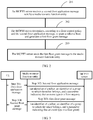
- Embodiment 1 of the present invention is described in detail in the following by using FIG. 1 as an example.
- This embodiment of the present invention provides a floor control method, the method is specifically a successful floor application procedure, and the method includes the following steps:
- Embodiment 2 of the present invention is described in detail in the following by using FIG. 2 as an example.
- This embodiment of the present invention provides a floor control method, the method is specifically a successful floor application procedure, and the method includes the following steps.
- Step 201 A mission-critical push-to-talk MCPTT server over Long Term Evolution network (Mission Critical Push To Talk over LTE, mission-critical push-to-talk server over Long Term Evolution network) receives a second floor application message sent by a media resource function entity, where the second floor application message includes an identity of the talker, an identifier of a group to which the talker belongs, and a parameter indicating that the event type is a floor request, the second floor application message is generated by the media resource function entity according to a first floor application message sent by user equipment UE, and the first floor application message includes the identity of the talker, the identifier of the group to which the talker belongs, and the parameter indicating that an event type is a floor request.
- the second floor application message includes an identity of the talker, an identifier of a group to which the talker belongs, and a parameter indicating that the event type is a floor request.
- Step 202 The MCPTT server determines, according to a floor control policy and the second floor application message, to grant the talker a floor, and generates, according to the second floor application message, a first floor grant message in response to the second floor application message, where the first floor grant message includes the identity of the talker, the identifier of the group to which the talker belongs, and a parameter indicating that an event type is a floor grant.
- the floor control policy includes at least one of a status of the group in which the talker is located, a user priority, a user floor control right, or a current floor queue status.
- That it is determined, according to the user priority, to grant the talker the floor may be:
- the floor is granted to the talker.
- That it is determined, according to the user floor control right, to grant the talker the floor may be:
- the floor is granted to the talker.
- That it is determined, according to the status of the group in which the talker is located, to grant the talker the floor may be:
- Whether currently there is a user in the group who holds the floor is checked; if currently there is a floor holder, there is a need to grant the talker the floor after it is determined that a user priority of the talker is higher than that of the current floor holder and that the talker has a user floor right (for example, the talker is not in a blacklist); or if currently there is no floor holder, the floor is granted to the talker after it is determined that the talker has a user floor right (for example, the talker is not in a blacklist).
- That it is determined, according to the current floor queue status, to grant the talker the floor may be:
- Step 203 The MCPTT server sends the first floor grant message to the media resource function entity, where the first floor grant message is used to instruct the media resource function entity to generate a second floor grant message, and send the second floor grant message to the UE, and the second floor grant message includes the identity of the talker, the identifier of the group to which the talker belongs, and the parameter indicating that an event type is a floor grant.
- Embodiment 3 of the present invention A same floor grant procedure is described in the foregoing Embodiments 1 and 2 respectively from a perspective of the media resource function entity and from a perspective of the MCPTT server, and features in the foregoing Embodiments 1 and 2 may be mutually referenced.
- Embodiment 3 of the present invention For other more detailed content of the floor grant procedure, refer to Embodiment 3 of the present invention.
- Embodiment 3 of the present invention is described in detail in the following by using FIG. 3 as an example.
- This embodiment of the present invention provides a floor control method, the method is specifically a successful floor application procedure, and the method includes the following steps.
- Step 301 A talker presses a PTT key of user equipment UE (user equipment), and the UE sends a first floor application message to a media resource function (Media Resource Function) entity, where the first floor application message includes an identity of the talker (talk ID), an identifier of a group (Group ID) to which the talker belongs, and a parameter indicating that an event type is a floor request (floor request).
- a message type of the first floor application message may be a floor application floor request message in the RTCP (Real-Time Control Protocol, Real-Time Control Protocol) protocol.
- Step 302 The media resource function entity generates a second floor application message according to the first floor application message, where the second floor application message includes the identity of the talker (talk ID), the identifier of the group (group ID) to which the talker belongs, and the parameter indicating that the event type is a floor request (floor request); and then, the media resource function entity sends the second floor application message to an MCPTT server.
- the second floor application message includes the identity of the talker (talk ID), the identifier of the group (group ID) to which the talker belongs, and the parameter indicating that the event type is a floor request (floor request); and then, the media resource function entity sends the second floor application message to an MCPTT server.
- a message type of the second floor application message may be a floor application floor request message in the RTCP protocol.
- Step 303 The MCPTT server receives the second floor application message, and determines, according to the second floor application message and a floor control policy, to grant the talker a floor; the MCPTT server generates, according to the second floor application message, a first floor grant message in response to the second floor application message, where the first floor grant message includes the identity of the talker, the identifier of the group to which the talker belongs, and a parameter indicating that an event type is a floor grant (floor grant); and the MCPTT server sends the first floor grant message to the media resource function entity.
- a message type of the first floor grant message may be a floor grant message in the RTCP protocol.
- the floor control policy includes at least one of a status of the group in which the talker is located, a user priority, a user floor control right, or a current floor queue status.
- the floor control policy includes at least one of the status of the group in which the talker is located, the user priority, the user floor control right, or the current floor queue status.
- That it is determined, according to the user priority, to grant the talker the floor may be:
- the floor is granted to the talker.
- That it is determined, according to the user floor control right, to grant the talker the floor may be:
- That it is determined, according to the status of the group in which the talker is located, to grant the talker the floor may be:
- That it is determined, according to the current floor queue status, to grant the talker the floor may be:
- Step 304 The media resource function entity receives the first floor grant message, and generates a second floor grant message according to the first floor grant message, where the second floor grant message includes the identity of the talker, the identifier of the group to which the talker belongs, and the parameter indicating that an event type is a floor grant; the media resource function entity sends the second floor grant message to the UE; and after receiving the second floor grant message, the UE notifies the talker that the talker can talk.
- a message type of the second floor grant message may be a floor grant message in the RTCP protocol.
- the MCPTT server may notify another member in the group to which the talker belongs that the talker is granted the floor.
- a control plane and a media plane of a PTT service can be separated, and transmission information on a control plane for floor control and a floor application procedure method are defined.
- configuration may be flexibly performed at a service layer, and a service feature may be flexibly defined, so that a service is flexibly implemented. This also helps system extension.
- Embodiment 4 of the present invention is described in detail in the following by using FIG. 4 as an example.
- This embodiment of the present invention provides a floor control method, the method is specifically a floor release procedure, and the method includes the following steps.
- Step 401 A talker releases a PTT key of UE, and the UE sends a first floor release message to a media resource function entity, where the first floor release message includes an identity of the talker, an identifier of a group to which the talker belongs, a parameter indicating that an event type is floor release, and a release cause value.
- a message type of the first floor release message may be a floor release message in the RTCP protocol.
- Step 402 The media resource function entity generates a second floor release message according to the first floor release message, where the second floor release message includes the identity of the talker, the identifier of the group to which the talker belongs, the parameter indicating that an event type is floor release, and the release cause value; and the media resource function entity sends the second floor release message to the MCPTT server.
- a message type of the second floor release message may be a floor release message in the RTCP protocol.
- Step 403 The MCPTT server generates, according to the second floor release message, a response message in response to the second floor release message.
- a message type of the response message of the second floor release message may be a floor release OK message in the RTCP protocol.
- the MCPTT server determines to grant the talker a floor, and then generates the response message in response to the second floor release message.
- the checking a status of the group in which the talker is located may include: checking whether the floor is held in the group.
- the refreshing a status of the group in which the talker is located may include: determining a specific user in the group who holds the floor.
- the MCPTT server sends, to the media resource function entity, the response message in response to the second floor release message.
- Step 404 The media resource function entity generates a response message of the first floor release message according to the response message in response to the second floor release message, and the media resource function entity sends the response message of the first floor release message to the UE.
- the response message of the first floor release message may be a floor release OK message in the RTCP protocol.
- the MCPTT server may notify another member in the group to which the talker belongs that the floor of the talker is released.
- Embodiment 5 of the present invention is described in detail in the following by using FIG. 5 as an example.
- This embodiment of the present invention provides another floor release procedure, and the method includes the following steps.
- Step 501 An MCPTT server determines to release a floor of the talker, and generates a third floor release message, where the third floor release message includes an identity of the talker, an identifier of a group to which the talker belongs, a parameter indicating that an event type is floor release, and a release cause value.
- a message type of the third floor release message may be a floor release message in the RTCP protocol.
- Step 502 The MCPTT server sends the third floor release message to the media resource function entity, where the third floor release message is used to instruct the media resource function entity to generate a fourth floor release message.
- Step 503 The media resource function entity generates the fourth floor release message according to the third floor release message, where the fourth floor release message includes the identity of the talker, the identifier of the group to which the talker belongs, the parameter indicating that an event type is floor release, and the release cause value; and the media resource function entity sends the fourth floor release message to the UE.
- the UE After receiving the fourth floor release message, the UE notifies the talker that the floor is released.
- a message type of the fourth floor release message may be a floor release message in the RTCP protocol.
- the foregoing embodiment may further include the following step:
- the media resource function entity generates a response message of the third floor release message according to the third floor release message, and the media resource function entity sends the response message of the third floor release message to the MCPTT server. This step may be performed before step 503, or may be performed after step 503.
- a message type of the response message of the third floor release message may be a floor release OK message in the RTCP protocol.
- the foregoing method may further include the following step: After the MCPTT server receives the response message that is of the third floor release message and that is sent by the media resource function entity, the MCPTT server may notify another member in the group to which the talker belongs that the floor of the talker is released.
- a control plane and a media plane of a PTT service can be separated, and transmission information on a control plane for floor control and a floor release procedure method are defined.
- configuration may be flexibly performed at a service layer, and a service feature may be flexibly defined, so that a service is flexibly implemented. This also helps system extension.
- Embodiment 6 of the present invention is described in detail in the following by using FIG. 6 as an example.
- This embodiment of the present invention provides a floor duration notification procedure, and the method includes the following steps.
- Step 601 An MCPTT server determines that a talker needs to be notified of remaining floor duration, and generates a first floor duration notification message, where the first floor duration notification message includes an identity of the talker, an identifier of a group to which the talker belongs, a parameter indicating that an event type is floor timeout, and the remaining floor duration.
- the MCPTT server determines that a talker needs to be notified of remaining floor duration may be:
- Step 602 The MCPTT server sends the first floor duration notification message to the media resource function entity, where the first floor duration notification message is used to instruct the media resource function entity to send a second floor duration notification message to the UE, and the second floor duration notification message is used to instruct the UE to prompt for a floor time limit status of the talker.
- Step 603 The media resource function entity receives the first floor duration notification message, and generates the second floor duration notification message according to the first floor duration notification message, where the second floor duration notification message includes the identity of the talker, the identifier of the group to which the talker belongs, the parameter indicating that an event type is floor timeout, and the remaining floor duration; and the media resource function entity sends the second floor duration notification message to the UE.
- the UE After receiving the second floor duration notification message, the UE notifies the talker of the remaining floor duration. Likewise, referring to the example in step 601, the remaining floor duration may be one minute.
- a control plane and a media plane of a PTT service can be separated, and transmission information on a control plane for floor control and a floor release procedure method are defined.
- configuration may be flexibly performed at a service layer, and a service feature may be flexibly defined, so that a service is flexibly implemented. This also helps system extension.
- Embodiment 7 of the present invention is described in detail in the following by using FIG. 7 as an example.
- This embodiment of the present invention provides a floor deny procedure, and the method includes the following steps.
- Step 701 A talker presses a PTT key of user equipment UE (user equipment), and the UE sends a first floor application message to a media resource function (Media Resource Function) entity, where the first floor application message includes an identity of the talker (talk ID), an identifier of a group (Group ID) to which the talker belongs, and a parameter indicating that an event type is a floor request (floor request).
- a message type of the first floor application message may be a floor application floor request message in the RTCP (Real-Time Control Protocol, Real-Time Control Protocol) protocol.
- Step 702 The media resource function entity generates a second floor application message according to the first floor application message, where the second floor application message includes the identity of the talker (talk ID), the identifier of the group (group ID) to which the talker belongs, and the parameter indicating that the event type is a floor request (floor request); and then, the media resource function entity sends the second floor application message to an MCPTT server.
- a message type of the second floor application message may be a floor application floor request message in the RTCP (Real-Time Control Protocol, Real-Time Control Protocol) protocol.
- Step 703 The MCPTT server receives the second floor application message, and determines to deny granting the talker a floor; the MCPTT server generates, according to the second floor application message, a first floor deny message in response to the second floor application message, where the first floor deny message includes the identity of the talker, the identifier of the group to which the talker belongs, a parameter indicating that an event type is floor deny (floor deny), and a deny cause value; and the MCPTT server sends the first deny message to the media resource function entity.
- a message type of the first floor deny message may be a floor deny message in the RTCP protocol.
- the MCPTT server may determine, according to the second floor application message and a floor control policy, to deny granting the talker the floor.
- the floor control policy includes at least one of a status of the group in which the talker is located, a user priority, a user floor control right, or a current floor queue status.
- the floor control policy includes at least one of the status of the group in which the talker is located, the user priority, the user floor control right, or the current floor queue status.
- That it is determined, according to the user priority, to deny granting the talker the floor may be:
- That it is determined, according to the user floor control right, to deny granting the talker the floor may be:
- That it is determined, according to the status of the group in which the talker is located, to deny granting the talker the floor may be:
- That it is determined, according to the current floor queue status, to grant the talker the floor may be:
- Step 704 The media resource function entity receives the first floor deny message, and generates a second floor deny message according to the first floor deny message, where the second floor deny message includes the identity of the talker, the identifier of the group to which the talker belongs, the parameter indicating that an event type is floor deny, and the deny cause value; the media resource function entity sends the second floor deny message to the UE; and after receiving the second floor deny message, the UE notifies the talker that the floor is denied.
- a message type of the second floor deny message may be a floor deny floor deny message in the RTCP protocol.
- a control plane and a media plane of a PTT service can be separated, and transmission information on a control plane for floor control and a floor deny procedure method are defined.
- configuration may be flexibly performed at a service layer, and a service feature may be flexibly defined, so that a service is flexibly implemented. This also helps system extension.
- Embodiment 8 of the present invention is described in detail in the following by using FIG. 8 as an example.
- This embodiment of the present invention provides a method for notifying, in a multicast manner, another member in a group to which a talker belongs, and the method includes the following steps:
- the BM-SC notifies, by using the multicast channel, the device used by the another member, except the talker, that is in the multicast area and that is in the group to which the talker belongs of the information indicating that the floor of the talker is granted or the information indicating that the floor is released.
- the third notification message is used to instruct the BM-SC to notify, by using the multicast channel, the device used by the another member, except the talker, that is in the multicast area and that is in the group to which the talker belongs of the information indicating that the floor of the talker is released.
- the identity of the talker is a preset value.
- the preset value may be all zeros or all ones.
- this embodiment may further include the following step:
- the MCPTT server determines that the talker successfully applies for the floor or that the floor is released. Specifically, after the MCPTT server receives a second floor application message, the MCPTT server determines to grant the talker the floor, and the MCPTT server may perform step 801 after determining to grant the talker the floor. Alternatively, after the MCPTT server receives a second floor application message, the MCPTT server determines to deny granting the talker the floor, and the MCPTT server may perform step 801 after determining to deny granting the talker the floor. Step 801 may be after or before a response message of a second floor release message is sent to a media resource function entity.
- the MCPTT server may perform step 801 after receiving a response message that is of a third floor release message and that is sent by the media resource function entity, or may perform step 801 after generating a third floor release message and before receiving a response message that is of the third floor release message and that is sent by the media resource function entity.
- Embodiment 9 of the present invention is described in detail in the following by using FIG. 9 as an example.
- This embodiment of the present invention provides another method for notifying, in a multicast manner, another member in a group to which a talker belongs, and the method includes the following steps:
- the third notification message is used to instruct the BM-SC to notify, by using the multicast channel, the device used by the another member, except the talker, that is in the multicast area and that is in the group to which the talker belongs of the information indicating that the floor of the talker is released.
- the identity of the talker is a preset value.
- the preset value may be all zeros or all ones.
- this embodiment may further include the following step:
- the MCPTT server determines that the talker successfully applies for the floor or that the floor is released. Specifically, after the MCPTT server receives a second floor application message, the MCPTT server determines to grant the talker the floor, and the MCPTT server may perform step 901 after determining to grant the talker the floor. Alternatively, after the MCPTT server receives a second floor application message, the MCPTT server determines to deny granting the talker the floor, and the MCPTT server may perform step 901 after determining to deny granting the talker the floor. Step 901 may be after or before a response message of a second floor release message is sent to the media resource function entity.
- the MCPTT server may perform step 901 after receiving a response message that is of a third floor release message and that is sent by the media resource function entity, or may perform step 901 after generating a third floor release message and before receiving a response message that is of the third floor release message and that is sent by the media resource function entity.
- Embodiment 10 of the present invention is described in detail in the following by using FIG. 10 as an example.
- This embodiment of the present invention provides a floor control apparatus, the apparatus may be a media resource function Media Resource Function entity, and the apparatus includes: a first receiving module 1001, a first generation module 1002, and a first sending module 1003.
- the first receiving module 1001 is configured to receive a first floor application message sent by user equipment UE, where the first floor application message includes an identity of a talker, an identifier of a group to which the talker belongs, and a parameter indicating that an event type is a floor request.
- the first floor application message may be a floor application floor request message in the RTCP (Real-Time Control Protocol, Real-Time Control Protocol) protocol.
- RTCP Real-Time Control Protocol, Real-Time Control Protocol
- the first generation module 1002 is configured to generate a second floor application message according to the first floor application message received by the first receiving module 201, where the second floor application message includes the identity of the talker, the identifier of the group to which the talker belongs, and the parameter indicating that the event type is a floor request.
- a message type of the second floor application message may be a floor application floor request message in the RTCP protocol.
- the first sending module 1003 is configured to send, to a mission-critical push-to-talk MCPTT server over Long Term Evolution network, the second floor application message generated by the first generation module 1002.
- the first receiving module 1001 is further configured to receive a first floor grant message that is in response to the second floor application message and that is sent by the MCPTT server, where the first floor grant message includes the identity of the talker, the identifier of the group to which the talker belongs, and a parameter indicating that an event type is a floor grant.
- a message type of the first floor grant message may be a floor grant message in the RTCP protocol.
- the first generation module 1002 is further configured to generate a second floor grant message according to the first floor grant message, where the second floor grant message includes the identity of the talker, the identifier of the group to which the talker belongs, and the parameter indicating that an event type is a floor grant.
- a message type of the second floor grant message may be a floor grant message in the RTCP protocol.
- the first sending module 1003 is further configured to send, to the UE, the second floor grant message generated by the first generation module.
- This embodiment describes a structure and functions of a media resource function entity applied to a floor application procedure. For details, refer to Embodiment 3.
- the media resource function entity may further have the following structure and/or functions:
- the media resource function entity may be further applied to a floor release procedure. Further, refer to Embodiment 4.
- the first receiving module is further configured to receive a first floor release message sent by the UE, where the first floor release message includes the identity of the talker, the identifier of the group to which the talker belongs, a parameter indicating that an event type is floor release, and a release cause value.
- a message type of the first floor release message may be a floor release message in the RTCP protocol.
- the first generation module is further configured to generate a second floor release message according to the first floor release message received by the first receiving module, where the second floor release message includes the identity of the talker, the identifier of the group to which the talker belongs, the parameter indicating that an event type is floor release, and the release cause value.
- a message type of the second floor release message may be a floor release message in the RTCP protocol.
- the first sending module is further configured to send, to the MCPTT server, the second floor release message generated by the first generation module.
- the first receiving module is further configured to receive a response message that is in response to the second floor release message and that is sent by the MCPTT server.
- a message type of the response message of the second floor release message may be a floor release OK message in the RTCP protocol.
- the first generation module is further configured to generate a response message of the first floor release message according to the response message that is in response to the second floor release message and that is received by the first receiving module.
- the first sending module is further configured to send, to the UE, the response message that is of the first floor release message and that is generated by the first generation module.
- the response message of the first floor release message may be a floor release OK message in the RTCP protocol.
- this embodiment may be combined with the foregoing other embodiments, for example, combined with at least one of the embodiment of floor release, floor duration notification, or notification by using a multicast channel, so as to form a media resource function entity having at least one of a function of floor release, floor duration notification, or user floor information notification by using a multicast channel, and a floor application function.
- this embodiment may be an independent embodiment, that is, form a media resource function entity having only a floor release function.
- description about functions of functional parts should be changed from "further configured to” into “configured to”.
- the media resource function entity may be further applied to a floor release procedure. Further, refer to Embodiment 5.
- the first receiving module is further configured to receive a third floor release message sent by the MCPTT server, where the third floor release message includes the identity of the talker, the identifier of the group to which the talker belongs, a parameter indicating that an event type is floor release, and a release cause value.
- a message type of the third floor release message may be a floor release message in the RTCP protocol.
- the first generation module is further configured to generate a response message of the third floor release message according to the third floor release message received by the first receiving module.
- the first sending module is further configured to send, to the MCPTT server, the response message that is of the third floor release message and that is generated by the first generation module.
- the first generation module is further configured to generate a fourth floor release message according to the third floor release message generated by the first generation module, where the fourth floor release message includes the identity of the talker, the identifier of the group to which the talker belongs, the parameter indicating that an event type is floor release, and the release cause value.
- the first sending module is further configured to send, to the UE, the fourth floor release message generated by the first generation module.
- a message type of the fourth floor release message may be a floor release message in the RTCP protocol.
- the media resource function entity may be further applied to a floor release procedure. Further, refer to Embodiment 5.
- the first receiving module is further configured to receive a third floor release message sent by the MCPTT server, where the third floor release message includes the identity of the talker, the identifier of the group to which the talker belongs, a parameter indicating that an event type is floor release, and a release cause value.
- a message type of the third floor release message may be a floor release message in the RTCP protocol.
- the first generation module is further configured to: generate a response message of the third floor release message according to the third floor release message received by the first receiving module, and generate a fourth floor release message according to the third floor release message, where the fourth floor release message includes the identity of the talker, the identifier of the group to which the talker belongs, the parameter indicating that an event type is floor release, and the release cause value.
- the response message of the third floor release message may be a floor release OK message in the RTCP protocol.
- a message type of the fourth floor release message may be a floor release message in the RTCP protocol.
- the first sending module is further configured to: send, to the MCPTT server, the response message that is of the third floor release message and that is generated by the first generation module, and send the fourth floor release message to the UE.
- this embodiment may be combined with the foregoing other embodiments, for example, combined with the embodiments of floor application, floor duration notification, and notification by using a multicast channel, so as to form a media resource function entity having functions of floor application, floor duration notification, and notification by using a multicast channel.
- this embodiment may be an independent embodiment, that is, form a media resource function entity having only a floor release function.
- description about functions of functional parts should be changed from "further configured to" into "configured to”.
- the media resource function entity may be further applied to a case in which another member in the group in which the talker is located is notified, by using a multicast channel, of information indicating that a floor of the talker is granted. Further, refer to Embodiment 9.
- the first receiving module is further configured to receive, at a multicast endpoint, a first notification message sent by the MCPTT server, where the first notification message includes a temporary mobile group identity TMGI, the identity of the talker, and multicast endpoint information.
- TMGI temporary mobile group identity
- the first generation module is further configured to generate a second notification message according to the first notification message received by the first receiving module, where the second notification message includes the TMGI and the identity of the talker.
- the first sending module is further configured to send, to a broadcast/multicast service center BM-SC, the second notification message generated by the first generation module, where the second notification message is used to instruct the BM-SC to notify, by using a multicast channel, a device used by another member, except the talker, that is in a multicast area and that is in the group to which the talker belongs of information indicating that a floor of the talker is granted or information indicating that a floor is released.
- the first receiving module is further configured to receive a response message that is in response to the second notification message and that is sent by the BM-SC.
- the first generation module is further configured to generate a response message of the first notification message according to the response message that is of the second notification message and that is received by the first receiving module.
- the first sending module is further configured to send, to the MCPTT server, the response message that is of the first notification message and that is generated by the first generation module.
- this embodiment may be combined with the foregoing other embodiments, for example, combined with the embodiment of floor application, and then optionally combined with the embodiments of floor release and floor duration notification, so as to form a media resource function entity having functions of floor application and notification by using a multicast channel and optionally having functions of floor release and floor duration notification.
- this embodiment may be an independent embodiment, that is, form a media resource function entity having only a function of notification by using a multicast channel.
- description about functions of functional parts should be changed from "further configured to” into “configured to”.
- the media resource function entity may be further applied to a case in which another member in the group in which the talker is located is notified, by using a multicast channel, of information indicating that a floor of the talker is released. Further, refer to Embodiment 9.
- the first receiving module is further configured to receive, at a multicast endpoint, a first notification message sent by the MCPTT server, where the first notification message includes a temporary mobile group identity TMGI, the identity of the talker, and multicast endpoint information.
- TMGI temporary mobile group identity
- the first generation module is further configured to generate a second notification message according to the first notification message received by the first receiving module, where the second notification message includes the TMGI and the identity of the talker.
- the first sending module is further configured to send, to a broadcast/multicast service center BM-SC, the second notification message generated by the first generation module, where the second notification message is used to instruct the BM-SC to notify, by using a multicast channel, a device used by another member, except the talker, that is in a multicast area and that is in the group to which the talker belongs of information indicating that a floor of the talker is granted or information indicating that a floor is released.
- the first receiving module is further configured to receive a response message that is in response to the second notification message and that is sent by the BM-SC.
- the first generation module is further configured to generate a response message of the first notification message according to the response message that is of the second notification message and that is received by the first receiving module.
- the first sending module is further configured to send, to the MCPTT server, the response message that is of the first notification message and that is generated by the first generation module.
- the identity of the talker is a preset value.
- the preset value may be all zeros or all ones.
- this embodiment may be combined with the foregoing other embodiments, for example, combined with the embodiment of floor release, and then optionally combined with the embodiments of floor application and floor duration notification, so as to form a media resource function entity having functions of floor release and notification by using a multicast channel and optionally having functions of floor application and floor duration notification.
- this embodiment may be an independent embodiment, that is, form a media resource function entity having only a function of notification by using a multicast channel.
- description about functions of functional parts should be changed from "further configured to” into “configured to”.
- the media resource function entity may be further applied to a floor duration notification procedure. Further, refer to Embodiment 6.
- the first receiving module is further configured to receive a first floor duration notification message sent by the MCPTT server, where the first floor duration notification message includes the identity of the talker, the identifier of the group to which the talker belongs, a parameter indicating that an event type is floor timeout, and remaining floor duration.
- the first generation module is further configured to generate a second floor duration notification message according to the first floor duration notification message received by the first receiving module, where the second floor duration notification message includes the identity of the talker, the identifier of the group to which the talker belongs, the parameter indicating that an event type is floor timeout, and the remaining floor duration.
- the first sending module is further configured to send, to the UE, the second floor duration notification message generated by the first generation module, where the second floor duration notification message is used to instruct the UE to prompt for a floor time limit status of the talker.
- this embodiment may be combined with the foregoing other embodiments, for example, combined with at least one of the embodiment of floor application or floor release, and optionally combined with the embodiment of notification by using a multicast channel, so as to form a media resource function entity having at least one of a function of floor application or floor release and a function of remaining floor time notification and optionally having a function of notification by using a multicast channel.
- this embodiment may be an independent embodiment, that is, form a media resource function entity having only a function of remaining floor time notification.
- Embodiment 11 of the present invention is described in detail in the following by using FIG. 11 as an example.
- This embodiment of the present invention provides a floor control apparatus, the apparatus may be a media resource function Media Resource Function entity, and the apparatus includes: a second receiving module 1101, a second generation module 1102, and a second sending module 1103.
- the second receiving module 1101 is configured to receive a first floor application message sent by user equipment UE, where the floor application message includes an identity of a talker, an identifier of a group to which the UE belongs, and a parameter indicating that an event type is a floor request.
- a message type of the first floor application message may be a floor application floor request message in the RTCP (Real-Time Control Protocol, Real-Time Control Protocol) protocol.
- RTCP Real-Time Control Protocol, Real-Time Control Protocol
- the second generation module 1102 is configured to generate a second floor application message according to the first floor application message received by the second receiving module 1101, where the second floor application message includes the identity of the talker, the identifier of the group to which the UE belongs, and the parameter indicating that the event type is a floor request.
- a message type of the second floor application message may be a floor application floor request message in the RTCP (Real-Time Control Protocol, Real-Time Control Protocol) protocol.
- RTCP Real-Time Control Protocol, Real-Time Control Protocol
- the second sending module 1103 is configured to send, to a mission-critical push-to-talk MCPTT server over Long Term Evolution network, the second floor application message generated by the second generation module 1102.
- the second receiving module 1101 is further configured to receive a first floor deny message that is in response to the second floor application message and that is sent by the MCPTT server, where the first floor deny message includes the identity of the talker, the identifier of the group to which the UE belongs, a parameter indicating that an event type is floor deny, and a deny cause value.
- a message type of the first floor deny message may be a floor deny message in the RTCP protocol.
- the second generation module 1102 is further configured to generate a second floor deny message according to the first floor deny message received by the second receiving module 1101, where the second floor deny message includes the identity of the talker, the identifier of the group to which the UE belongs, the parameter indicating that an event type is floor deny, and the deny cause value.
- a message type of the second floor deny message may be a floor deny floor deny message in the RTCP protocol.
- the second sending module 1103 is further configured to send, to the UE, the second floor deny message generated by the second generation module 1102.
- Embodiment 12 of the present invention is described in detail in the following by using FIG. 12 as an example.
- This embodiment of the present invention provides an apparatus used in a floor application procedure, and the apparatus may be a mission-critical push-to-talk MCPTT server over Long Term Evolution network. Further, refer to Embodiment 9.
- the apparatus includes: a third receiving module 1201, a first determining and generation module 1202, and a third sending module 1203.
- the third receiving module 1201 is configured to receive a second floor application message sent by a media resource function entity, where the second floor application message includes an identity of the talker, an identifier of a group to which the talker belongs, and a parameter indicating that the event type is a floor request, the second floor application message is generated by the media resource function entity according to a first floor application message sent by user equipment UE, and the first floor application message includes the identity of the talker, the identifier of the group to which the talker belongs, and the parameter indicating that an event type is a floor request.
- a message type of the first floor application message may be a floor application floor request message in the RTCP (Real-Time Control Protocol, Real-Time Control Protocol) protocol.
- RTCP Real-Time Control Protocol, Real-Time Control Protocol
- a message type of the second floor application message may be a floor application floor request message in the RTCP (Real-Time Control Protocol, Real-Time Control Protocol) protocol.
- RTCP Real-Time Control Protocol, Real-Time Control Protocol
- the first determining and generation module 1202 is configured to: determine, according to a floor control policy and the second floor application message, to grant the talker a floor, and generate, according to the second floor application message, a first floor grant message in response to the second floor application message, where the first floor grant message includes the identity of the talker, the identifier of the group to which the talker belongs, and a parameter indicating that an event type is a floor grant.
- a message type of the first floor grant message may be a floor grant message in the RTCP protocol.
- the floor control policy includes at least one of a status of the group in which the talker is located, a user priority, a user floor control right, or a current floor queue status.
- the floor control policy includes at least one of the status of the group in which the talker is located, the user priority, the user floor control right, or the current floor queue status.
- That it is determined, according to the user priority, to grant the talker the floor may be:
- That it is determined, according to the user floor control right, to grant the talker the floor may be:
- That it is determined, according to the status of the group in which the talker is located, to grant the talker the floor may be:
- That it is determined, according to the current floor queue status, to grant the talker the floor may be:
- the third sending module 1203 is configured to send the first floor grant message to the media resource function entity, where the first floor grant message is used to instruct the media resource function entity to generate a second floor grant message, and send the second floor grant message to the UE, and the second floor grant message includes the identity of the talker, the identifier of the group to which the talker belongs, and the parameter indicating that an event type is a floor grant.
- a message type of the second floor grant message may be a floor grant message in the RTCP protocol.
- the apparatus may notify another member in the group to which the talker belongs that the talker is granted the floor.
- a control plane and a media plane of a PTT service can be separated, and transmission information on a control plane for floor control and a floor application procedure method are defined.
- configuration may be flexibly performed at a service layer, and a service feature may be flexibly defined, so that a service is flexibly implemented. This also helps system extension.
- the MCPTT server may be further applied to a floor release procedure. Further, refer to Embodiment 4.
- the third receiving module is further configured to receive a second floor release message sent by the media resource function entity, where the second floor release message includes the identity of the talker, the identifier of the group to which the talker belongs, a parameter indicating that an event type is floor release, and a release cause value, the second floor release message is generated by the media resource function entity according to a first floor release message sent by the UE, and the first floor release message includes the identity of the talker, the identifier of the group to which the talker belongs, the parameter indicating that an event type is floor release, and the release cause value.
- a message type of the second floor release message may be a floor release message in the RTCP protocol.
- a message type of the first floor release message may be a floor release message in the RTCP protocol.
- the third generation module is further configured to generate, according to the second floor release message, a response message in response to the second floor release message.
- the MCPTT server determines to grant the talker the floor, and then generates the response message in response to the second floor release message.
- the checking a status of the group in which the talker is located may include: checking whether the floor is held in the group.
- the refreshing a status of the group in which the talker is located may include: determining a specific user in the group who holds the floor.
- the third sending module is further configured to send, to the media resource function entity, the response message in response to the second floor release message, where the response message in response to the second floor release message is used to instruct the media resource function entity to generate a response message of the first floor release message according to the response message of the second floor release message, and send the response message of the first floor release message to the UE.
- a message type of the response message of the second floor release message may be a floor release OK message in the RTCP protocol.
- the response message of the first floor release message may be a floor release OK message in the RTCP protocol.
- the apparatus may notify another member in the group to which the talker belongs that the floor of the talker is released.
- this embodiment may be combined with the foregoing other embodiments, for example, combined with the embodiments of floor application, floor duration notification, and notification by using a multicast channel, so as to form a media resource function entity having functions of floor application, floor duration notification, and notification by using a multicast channel.
- this embodiment may be an independent embodiment, that is, form a media resource function entity having only a floor release function.
- description about functions of functional parts should be changed from "further configured to" into "configured to”.
- the MCPTT server may be further applied to a floor release procedure. Further, refer to Embodiment 5.
- the first determining and generation module is further configured to: determine to release the floor of the talker, and generate a third floor release message, where the third floor release message includes the identity of the talker, the identifier of the group to which the talker belongs, a parameter indicating that an event type is floor release, and a release cause value.
- the third sending module is further configured to send the third floor release message to the media resource function entity, where the third floor release message is used to instruct the media resource function entity to generate a fourth floor release message, and send the fourth floor release message to the UE, and the fourth floor release message includes the identity of the talker, the identifier of the group to which the talker belongs, the parameter indicating that an event type is floor release, and the release cause value.
- a message type of the third floor release message may be a floor release message in the RTCP protocol.
- the third receiving module is further configured to receive a response message that is in response to the third floor release message and that is sent by the media resource function entity.
- a message type of the response message of the third floor release message may be a floor release OK message in the RTCP protocol.
- this embodiment may be combined with the foregoing other embodiments, for example, combined with the embodiments of floor application, floor duration notification, and notification by using a multicast channel, so as to form a media resource function entity having functions of floor application, floor duration notification, and notification by using a multicast channel.
- this embodiment may be an independent embodiment, that is, form a media resource function entity having only a floor release function.
- description about functions of functional parts should be changed from "further configured to" into "configured to”.
- the MCPTT server may be further applied to a case in which another member in the group in which the talker is located is notified of information about the floor of the talker by using a multicast channel. Further, refer to Embodiment 8.
- the third sending module is further configured to send a third notification message to a broadcast/multicast service center BM-SC, where the third notification message includes a temporary mobile group identity TMGI and the identity of the talker, and the third notification message is used to instruct the BM-SC to notify, by using a multicast channel, a device used by another member, except the talker, that is in a multicast area and that is in the group to which the talker belongs of information indicating that the floor of the talker is granted or information indicating that the floor is released.
- the third notification message includes a temporary mobile group identity TMGI and the identity of the talker
- the third notification message is used to instruct the BM-SC to notify, by using a multicast channel, a device used by another member, except the talker, that is in a multicast area and that is in the group to which the talker belongs of information indicating that the floor of the talker is granted or information indicating that the floor is released.
- the third receiving module is further configured to receive a response message that is of the third notification message and that is sent by the BM-SC.
- this embodiment may be combined with the foregoing other embodiments, for example, combined with the embodiment of floor release, and then optionally combined with the embodiments of floor application and floor duration notification, so as to form a media resource function entity having functions of floor release and notification by using a multicast channel and optionally having functions of floor application and floor duration notification.
- this embodiment may be an independent embodiment, that is, form a media resource function entity having only a function of notification by using a multicast channel.
- description about functions of functional parts should be changed from "further configured to” into “configured to”.
- the MCPTT server may be further applied to a case in which another member in the group in which the talker is located is notified of information about the floor of the talker by using a multicast channel. Further, refer to Embodiment 8.
- the third sending module is further configured to send a third notification message to a broadcast/multicast service center BM-SC, where the third notification message includes a temporary mobile group identity TMGI and the identity of the talker, and the third notification message is used to instruct the BM-SC to notify, by using a multicast channel, a device used by another member, except the talker, that is in a multicast area and that is in the group to which the talker belongs of information indicating that the floor of the talker is granted or information indicating that the floor is released.
- the third notification message includes a temporary mobile group identity TMGI and the identity of the talker
- the third notification message is used to instruct the BM-SC to notify, by using a multicast channel, a device used by another member, except the talker, that is in a multicast area and that is in the group to which the talker belongs of information indicating that the floor of the talker is granted or information indicating that the floor is released.
- the third receiving module is further configured to receive a response message that is of the third notification message and that is sent by the BM-SC.
- the identity of the talker is a preset value.
- the preset value may be all zeros or all ones.
- this embodiment may be combined with the foregoing other embodiments, for example, combined with the embodiment of floor release, and then optionally combined with the embodiments of floor application and floor duration notification, so as to form a media resource function entity having functions of floor release and notification by using a multicast channel and optionally having functions of floor application and floor duration notification.
- this embodiment may be an independent embodiment, that is, form a media resource function entity having only a function of notification by using a multicast channel.
- description about functions of functional parts should be changed from "further configured to” into “configured to”.
- the MCPTT server may be further applied to a case in which another member in the group in which the talker is located is notified of information about the floor of the talker by using a multicast channel. Further, refer to Embodiment 9.
- the third sending module is further configured to send, at a multicast endpoint, a first notification message to the media resource function entity, where the first notification message includes a temporary mobile group identity TMGI, the identity of the talker, and multicast endpoint information, and the first notification message is used to instruct the media resource function entity to notify, by using a broadcast/multicast service center BM-SC, a device used by another member, except the talker, that is in a multicast area and that is in the group to which the talker belongs of information indicating that the floor of the talker is granted.
- TMGI temporary mobile group identity
- the third receiving module is further configured to receive, at the multicast endpoint, a response message that is of the first notification message and that is sent by the media resource function entity.
- this embodiment may be combined with the foregoing other embodiments, for example, combined with the embodiment of floor application, and then optionally combined with the embodiments of floor release and floor duration notification, so as to form a media resource function entity having functions of floor release and notification by using a multicast channel and optionally having functions of floor application and floor duration notification.
- this embodiment may be an independent embodiment, that is, form a media resource function entity having only a function of notification by using a multicast channel.
- description about functions of functional parts should be changed from "further configured to” into “configured to”.
- the MCPTT server may be further applied to a case in which another member in the group in which the talker is located is notified of information about the floor of the talker by using a multicast channel. Further, refer to Embodiment 9.
- the third sending module is further configured to send, at a multicast endpoint, a first notification message to the media resource function entity, where the first notification message includes a temporary mobile group identity TMGI, the identity of the talker, and multicast endpoint information, and the first notification message is used to instruct the media resource function entity to notify, by using a broadcast/multicast service center BM-SC, a device used by another member, except the talker, that is in a multicast area and that is in the group to which the talker belongs of information indicating that the floor of the talker is released.
- TMGI temporary mobile group identity
- the third receiving module is further configured to receive, at the multicast endpoint, a response message that is of the first notification message and that is sent by the media resource function entity.
- the identity of the talker is a preset value.
- the preset value may be all zeros or all ones.
- this embodiment may be combined with the foregoing other embodiments, for example, combined with the embodiment of floor release, and then optionally combined with the embodiments of floor application and floor duration notification, so as to form a media resource function entity having functions of floor release and notification by using a multicast channel and optionally having functions of floor application and floor duration notification.
- this embodiment may be an independent embodiment, that is, form a media resource function entity having only a function of notification by using a multicast channel.
- description about functions of functional parts should be changed from "further configured to” into “configured to”.
- the MCPTT server may be further applied to a case in which another member in the group in which the talker is located is notified of information about the floor of the talker by using a multicast channel. Further, refer to Embodiment 6.
- the first determining and generation module is further configured to: determine that the talker needs to be notified of remaining floor duration, and generate a first floor duration notification message, where the first floor duration notification message includes the identity of the talker, the identifier of the group to which the talker belongs, a parameter indicating that an event type is floor timeout, and the remaining floor duration.
- the third sending module is further configured to send the first floor duration notification message to the media resource function entity, where the first floor duration notification message is used to instruct the media resource function entity to send a second floor duration notification message to the UE, and the second floor duration notification message is used to instruct the UE to prompt for a floor time limit status of the talker.
- this embodiment may be combined with the foregoing other embodiments, for example, combined with at least one of the embodiment of floor application or floor release, and optionally combined with the embodiment of notification by using a multicast channel, so as to form a media resource function entity having at least one of a function of floor application or floor release and a function of remaining floor time notification and optionally having a function of notification by using a multicast channel.
- this embodiment may be an independent embodiment, that is, form a media resource function entity having only a function of remaining floor time notification.
- the foregoing method embodiments or apparatus embodiments may be combined, or may be independent from each other.
- the foregoing floor application may be an independent embodiment, or may be combined with other different embodiments to be one embodiment.
- a talker may first successfully apply for a floor by using a floor application procedure, and receive floor duration notification information by using a floor duration notification procedure. Then the floor is successfully released by using a floor release procedure.
- a manner of combining other embodiments is similar to this.
- another member in a group in which the talker is located may be notified, in a manner of notification by using a multicast channel in the foregoing embodiments, of information indicating that the floor of the talker is granted or released.
- Embodiment 13 of the present invention is described in detail in the following by using FIG. 13 as an example.
- This embodiment of the present invention provides a floor control apparatus, the apparatus may be a media resource function Media Resource Function entity, and the apparatus includes: a second receiving module 1301, a second generation module 1302, and a second sending module 1303.
- the second receiving module 1301 is configured to receive a first floor application message sent by user equipment UE, where the floor application message includes an identity of a talker, an identifier of a group to which the UE belongs, and a parameter indicating that an event type is a floor request.
- a message type of the first floor application message may be a floor application floor request message in the RTCP (Real-Time Control Protocol, Real-Time Control Protocol) protocol.
- RTCP Real-Time Control Protocol, Real-Time Control Protocol
- the second generation module 1302 is configured to generate a second floor application message according to the first floor application message received by the second receiving module 1301, where the second floor application message includes the identity of the talker, the identifier of the group to which the UE belongs, and the parameter indicating that the event type is a floor request.
- a message type of the second floor application message may be a floor application floor request message in the RTCP protocol.
- the second sending module 1303 is configured to send, to a mission-critical push-to-talk MCPTT server over Long Term Evolution network, the second floor application message generated by the second generation module 1302.
- the second receiving module 1301 is further configured to receive a first floor deny message that is in response to the second floor application message and that is sent by the MCPTT server, where the first floor deny message includes the identity of the talker, the identifier of the group to which the UE belongs, a parameter indicating that an event type is floor deny, and a deny cause value.
- a message type of the first floor deny message may be a floor deny message in the RTCP protocol.
- the second generation module 1302 is further configured to generate a second floor deny message according to the first floor deny message received by the second receiving module 1301, where the second floor deny message includes the identity of the talker, the identifier of the group to which the UE belongs, the parameter indicating that an event type is floor deny, and the deny cause value.
- a message type of the second floor deny message may be a floor deny floor deny message in the RTCP protocol.
- the second sending module 1303 is further configured to send, to the UE, the second floor deny message generated by the second generation module 1302.
- Embodiment 14 of the present invention is described in detail in the following by using FIG. 14 as an example.
- This embodiment of the present invention provides a floor control apparatus, the apparatus may be an MCPTT server, and the apparatus includes: a fourth receiving module 1401, a fourth generation module 1402, and a fourth sending module 1403.
- the fourth receiving module 1401 is configured to receive a second floor application message sent by a media resource function entity, where the second floor application message includes an identity of the talker, an identifier of a group to which the talker belongs, and a parameter indicating that the event type is a floor request, the second floor application message is generated by the media resource function entity according to a first floor application message sent by user equipment UE, and the floor application message includes the identity of the talker, the identifier of the group to which the talker belongs, and the parameter indicating that an event type is a floor request.
- a message type of the first floor application message may be a floor application floor request message in the RTCP (Real-Time Control Protocol, Real-Time Control Protocol) protocol.
- RTCP Real-Time Control Protocol, Real-Time Control Protocol
- a message type of the second floor application message may be a floor application floor request message in the RTCP (Real-Time Control Protocol, Real-Time Control Protocol) protocol.
- RTCP Real-Time Control Protocol, Real-Time Control Protocol
- the fourth generation module 1402 is configured to generate a first floor deny message according to the second floor application message and a floor control policy, where the first floor deny message includes the identity of the talker, the identifier of the group to which the talker belongs, a parameter indicating that an event type is floor deny, and a deny cause value.
- a message type of the first floor deny message may be a floor deny message in the RTCP protocol.
- the floor control policy includes at least one of a status of the group in which the talker is located, a user priority, a user floor control right, or a current floor queue status.
- That it is determined, according to the user priority, to deny granting the talker a floor may be:
- That it is determined, according to the user floor control right, to deny granting the talker a floor may be:
- That it is determined, according to the status of the group in which the talker is located, to deny granting the talker a floor may be:
- That it is determined, according to the current floor queue status, to grant the talker a floor may be:
- the fourth sending module 1403 is configured to send the first floor deny message to the media resource function entity, where the first floor deny message is used to instruct the media resource function entity to generate a second floor deny message according to the first floor deny message, and send the second floor deny message to the UE, and the second floor deny message includes the identity of the talker, the identifier of the group to which the talker belongs, the parameter indicating that an event type is floor deny, and the deny cause value.
- a message type of the second floor deny message may be a floor deny floor deny message in the RTCP protocol.
- Embodiment 15 of the present invention is described in detail in the following by using FIG. 15 as an example.
- This embodiment of the present invention provides a floor control apparatus, the apparatus may be a media resource function Media Resource Function entity, and the apparatus includes: a receiver 1501, a processor 1502, and a transmitter 1503.
- the receiver 1501 is configured to receive a first floor application message sent by user equipment UE, where the first floor application message includes an identity of a talker, an identifier of a group to which the talker belongs, and a parameter indicating that an event type is a floor request.
- a message type of the first floor application message may be a floor application floor request message in the RTCP (Real-Time Control Protocol, Real-Time Control Protocol) protocol.
- RTCP Real-Time Control Protocol, Real-Time Control Protocol
- the processor 1502 is configured to generate a second floor application message according to the first floor application message received by the receiver 1301, where the second floor application message includes the identity of the talker, the identifier of the group to which the talker belongs, and the parameter indicating that the event type is a floor request.
- a message type of the second floor application message may be a floor application floor request message in the RTCP (Real-Time Control Protocol, Real-Time Control Protocol) protocol.
- RTCP Real-Time Control Protocol, Real-Time Control Protocol
- the transmitter 1503 is configured to send, to a mission-critical push-to-talk MCPTT server over Long Term Evolution network, the second floor application message generated by the processor 1302.
- the receiver 1501 is further configured to receive a first floor grant message that is in response to the second floor application message and that is sent by the MCPTT server, where the first floor grant message includes the identity of the talker, the identifier of the group to which the talker belongs, and a parameter indicating that an event type is a floor grant.
- a message type of the first floor grant message may be a floor grant message in the RTCP protocol.
- the processor 1502 is further configured to generate a second floor grant message according to the first floor grant message, where the second floor grant message includes the identity of the talker, the identifier of the group to which the talker belongs, and the parameter indicating that an event type is a floor grant.
- a message type of the second floor grant message may be a floor grant message in the RTCP protocol.
- the transmitter 1503 is further configured to send, to the UE, the second floor grant message generated by the first generation module.
- This embodiment describes a structure and functions of a media resource function entity applied to a floor application procedure. For details, refer to Embodiment 3.
- Embodiment 16 of the present invention is described in detail in the following by using FIG. 16 as an example.
- This embodiment of the present invention provides a floor control apparatus, the apparatus may be an MCPTT server, and the apparatus includes: a receiver 1601, a processor 1602, and a transmitter 1603.
- the receiver 1601 is configured to receive a second floor application message sent by a media resource function entity, where the second floor application message includes an identity of the talker, an identifier of a group to which the talker belongs, and a parameter indicating that the event type is a floor request, the second floor application message is generated by the media resource function entity according to a first floor application message sent by user equipment UE, and the first floor application message includes the identity of the talker, the identifier of the group to which the talker belongs, and the parameter indicating that an event type is a floor request.
- the first floor application message may be a floor application floor request message in the RTCP (Real-Time Control Protocol, Real-Time Control Protocol) protocol.
- RTCP Real-Time Control Protocol, Real-Time Control Protocol
- a message type of the second floor application message may be a floor application floor request message in the RTCP protocol.
- the processor 1602 is configured to: determine, according to a floor control policy and the second floor application message, to grant the talker a floor, and generate, according to the second floor application message, a first floor grant message in response to the second floor application message, where the first floor grant message includes the identity of the talker, the identifier of the group to which the talker belongs, and a parameter indicating that an event type is a floor grant.
- a message type of the first floor grant message may be a floor grant message in the RTCP protocol.
- the floor control policy includes at least one of a status of the group in which the talker is located, a user priority, a user floor control right, or a current floor queue status.
- That it is determined, according to the user priority, to grant the talker the floor may be:
- That it is determined, according to the user floor control right, to grant the talker the floor may be:
- That it is determined, according to the status of the group in which the talker is located, to grant the talker the floor may be:
- That it is determined, according to the current floor queue status, to grant the talker the floor may be:
- the transmitter 1603 is configured to send the first floor grant message to the media resource function entity, where the first floor grant message is used to instruct the media resource function entity to generate a second floor grant message, and send the second floor grant message to the UE, and the second floor grant message includes the identity of the talker, the identifier of the group to which the talker belongs, and the parameter indicating that an event type is a floor grant.
- a message type of the second floor grant message may be a floor grant message in the RTCP protocol.
- Embodiment 3 describes a structure and functions of an MCPTT server applied to a floor application procedure. For details, refer to Embodiment 3.
- Embodiment 17 of the present invention is described in detail in the following by using FIG. 17 as an example.
- This embodiment of the present invention provides a floor control apparatus, the apparatus may be a media resource function Media Resource Function entity, and the apparatus includes: a receiver 1701, a processor 1702, and a transmitter 1703.
- the receiver 1701 is configured to receive a first floor application message sent by user equipment UE, where the floor application message includes an identity of a talker, an identifier of a group to which the UE belongs, and a parameter indicating that an event type is a floor request.
- a message type of the first floor application message may be a floor application floor request message in the RTCP protocol.
- the processor 1702 is configured to generate a second floor application message according to the first floor application message received by the second receiving module, where the second floor application message includes the identity of the talker, the identifier of the group to which the UE belongs, and the parameter indicating that the event type is a floor request.
- a message type of the second floor application message may be a floor application floor request message in the RTCP protocol.
- the transmitter 1703 is configured to send, to a mission-critical push-to-talk MCPTT server over Long Term Evolution network, the second floor application message generated by the second generation module.
- the receiver 1701 is further configured to receive a first floor deny message that is in response to the second floor application message and that is sent by the MCPTT server, where the first floor deny message includes the identity of the talker, the identifier of the group to which the UE belongs, a parameter indicating that an event type is floor deny, and a deny cause value.
- a message type of the first floor deny message may be a floor deny message in the RTCP protocol.
- the processor 1702 is further configured to generate a second floor deny message according to the first floor deny message received by the second receiving module, where the second floor deny message includes the identity of the talker, the identifier of the group to which the UE belongs, the parameter indicating that an event type is floor deny, and the deny cause value.
- a message type of the second floor deny message may be a floor deny floor deny message in the RTCP protocol.
- the transmitter 1703 is further configured to send, to the UE, the second floor deny message generated by the second generation module.
- Embodiment 7 This embodiment describes a structure and functions of an MCPTT server applied to a floor deny procedure. For details, refer to Embodiment 7.
- Embodiment 18 of the present invention is described in detail in the following by using FIG. 18 as an example.
- This embodiment of the present invention provides a floor control apparatus, the apparatus may be an MCPTT server, and the apparatus includes: a receiver 1801, a processor 1802, and a transmitter 1803.
- the receiver 1801 is configured to receive a second floor application message sent by a media resource function entity, where the second floor application message includes an identity of the talker, an identifier of a group to which the talker belongs, and a parameter indicating that the event type is a floor request, the second floor application message is generated by the media resource function entity according to a first floor application message sent by user equipment UE, and the floor application message includes the identity of the talker, the identifier of the group to which the talker belongs, and the parameter indicating that an event type is a floor request.
- a message type of the second floor application message may be a floor application floor request message in the RTCP (Real-Time Control Protocol, Real-Time Control Protocol) protocol.
- RTCP Real-Time Control Protocol, Real-Time Control Protocol
- a message type of the first floor application message may be a floor application floor request message in the RTCP (Real-Time Control Protocol, Real-Time Control Protocol) protocol.
- RTCP Real-Time Control Protocol, Real-Time Control Protocol
- the processor 1802 is configured to generate a first floor deny message according to the second floor application message and a floor control policy, where the first floor deny message includes the identity of the talker, the identifier of the group to which the talker belongs, a parameter indicating that an event type is floor deny, and a deny cause value.
- a message type of the first floor deny message may be a floor deny message in the RTCP protocol.
- the floor control policy includes at least one of a status of the group in which the talker is located, a user priority, a user floor control right, or a current floor queue status.
- That it is determined, according to the user priority, to deny granting the talker a floor may be:
- That it is determined, according to the user floor control right, to deny granting the talker a floor may be:
- That it is determined, according to the status of the group in which the talker is located, to deny granting the talker a floor may be:
- That it is determined, according to the current floor queue status, to deny granting the talker a floor may be:
- the transmitter 1803 is configured to send the first floor deny message to the media resource function entity, where the first floor deny message is used to instruct the media resource function entity to generate a second floor deny message according to the first floor deny message, and send the second floor deny message to the UE, and the second floor deny message includes the identity of the talker, the identifier of the group to which the talker belongs, the parameter indicating that an event type is floor deny, and the deny cause value.
- a message type of the second floor deny message may be a floor deny floor deny message in the RTCP protocol.
- Embodiment 7 This embodiment describes a structure and functions of an MCPTT server applied to a floor deny procedure. For details, refer to Embodiment 7.
- module division of the apparatus is function division in the embodiments of the present invention, and actual specific structures may be obtained by splitting or combining the foregoing functional modules.
- the word "receive" in the foregoing embodiments of the present invention may be understood as actively obtaining information from another unit or receiving information sent by another unit.
- the foregoing method embodiments may be implemented by a program instructing relevant hardware.
- the program may be stored in a computer readable storage medium. When the program runs, the steps of the foregoing method embodiments are performed.
- the foregoing storage medium includes: any medium that can store program code, such as a ROM, a RAM, a magnetic disk, or an optical disc.
- the foregoing relevant hardware may be various types of processors such as a CPU (Central Processing Unit, central processing unit).
Landscapes
- Engineering & Computer Science (AREA)
- Computer Networks & Wireless Communication (AREA)
- Signal Processing (AREA)
- Multimedia (AREA)
- Mobile Radio Communication Systems (AREA)
- Telephonic Communication Services (AREA)
Applications Claiming Priority (1)
| Application Number | Priority Date | Filing Date | Title |
|---|---|---|---|
| PCT/CN2014/095641 WO2016106593A1 (fr) | 2014-12-30 | 2014-12-30 | Procédé et dispositif de régulation de la priorité de transmission |
Publications (3)
| Publication Number | Publication Date |
|---|---|
| EP3229503A1 true EP3229503A1 (fr) | 2017-10-11 |
| EP3229503A4 EP3229503A4 (fr) | 2018-01-10 |
| EP3229503B1 EP3229503B1 (fr) | 2019-10-09 |
Family
ID=56283869
Family Applications (1)
| Application Number | Title | Priority Date | Filing Date |
|---|---|---|---|
| EP14909404.7A Active EP3229503B1 (fr) | 2014-12-30 | 2014-12-30 | Procédé et dispositif de régulation de la priorité de transmission |
Country Status (6)
| Country | Link |
|---|---|
| US (1) | US10142808B2 (fr) |
| EP (1) | EP3229503B1 (fr) |
| CN (1) | CN107113583B (fr) |
| AU (1) | AU2014415981B2 (fr) |
| RU (1) | RU2663825C1 (fr) |
| WO (1) | WO2016106593A1 (fr) |
Cited By (1)
| Publication number | Priority date | Publication date | Assignee | Title |
|---|---|---|---|---|
| US20170374633A1 (en) * | 2015-03-12 | 2017-12-28 | Huawei Technologies Co., Ltd. | Real-time transport protocol rtp packet transmission method and apparatus |
Families Citing this family (8)
| Publication number | Priority date | Publication date | Assignee | Title |
|---|---|---|---|---|
| WO2016159559A1 (fr) * | 2015-04-03 | 2016-10-06 | 엘지전자 주식회사 | Procédé et appareil pour changer, par un terminal, la priorité dans un mcptt |
| RU2711023C1 (ru) | 2016-07-15 | 2020-01-14 | Хуавей Текнолоджиз Ко., Лтд. | Способ обращения за разрешением на медиапередачу и способ и устройство для отмены разрешения на медиапередачу |
| WO2018084648A1 (fr) | 2016-11-04 | 2018-05-11 | Samsung Electronics Co., Ltd. | Procédé et appareil de libération de communication de données essentielles à une mission |
| CN109600721B (zh) * | 2017-09-30 | 2021-03-30 | 华为技术有限公司 | 一种通信方法及装置 |
| US10911927B1 (en) | 2020-03-26 | 2021-02-02 | Motorola Solutions, Inc. | Methods and apparatus for supporting multiple emergency callers in a push-to-talk group call |
| CN116057975B (zh) * | 2020-08-12 | 2025-10-03 | 三星电子株式会社 | 用于在无线通信网络中处理关键任务服务的方法和装置 |
| US11575525B2 (en) | 2020-12-30 | 2023-02-07 | Zoom Video Communications, Inc. | Methods and apparatus for providing meeting controls for network conferences |
| US11595451B2 (en) | 2020-12-30 | 2023-02-28 | Zoom Video Communications, Inc. | Methods and apparatus for receiving meeting controls for network conferences |
Family Cites Families (21)
| Publication number | Priority date | Publication date | Assignee | Title |
|---|---|---|---|---|
| US7688764B2 (en) * | 2002-06-20 | 2010-03-30 | Motorola, Inc. | Method and apparatus for speaker arbitration in a multi-participant communication session |
| US20050124365A1 (en) * | 2003-12-05 | 2005-06-09 | Senaka Balasuriya | Floor control in multimedia push-to-talk |
| GB0413972D0 (en) * | 2004-06-22 | 2004-07-28 | Nokia Corp | A communication system |
| US9913300B2 (en) * | 2011-12-14 | 2018-03-06 | Kodiak Networks, Inc. | Push-to-talk-over-cellular (PoC) |
| US8010142B2 (en) * | 2005-01-31 | 2011-08-30 | Motorola Solutions, Inc. | Method and apparatus for including a recording device in a push-to-talk over cellular communication session |
| JP2006324832A (ja) * | 2005-05-18 | 2006-11-30 | Nec Corp | グループ通信システム、サーバ装置、端末装置及びそれらに用いるフロア制御方法並びにそのプログラム |
| US20070019645A1 (en) * | 2005-07-05 | 2007-01-25 | Deepthy Menon | Method and system for multicasting data in a communication network |
| CN100409701C (zh) * | 2005-07-11 | 2008-08-06 | 大唐移动通信设备有限公司 | 控制集群系统无线一键通方式讲话权的方法 |
| CN100471292C (zh) * | 2006-05-17 | 2009-03-18 | 华为技术有限公司 | 话权分配和话权变更的方法及相应的集群呼叫系统 |
| US8184795B2 (en) * | 2006-08-03 | 2012-05-22 | Motorola Solutions, Inc. | Method and system for floor control in a wireless network |
| CN100571148C (zh) * | 2006-08-04 | 2009-12-16 | 华为技术有限公司 | 一种在分离架构下席位控制的方法及系统 |
| KR101396972B1 (ko) | 2006-10-18 | 2014-05-20 | 엘지전자 주식회사 | Pt 서비스에서의 발언권 제어 방법 |
| US8050700B2 (en) * | 2007-06-27 | 2011-11-01 | Alcatel Lucent | Negotiation of control over a PTT call between an OMA PoC network and a P25 network |
| US8625475B2 (en) | 2007-09-24 | 2014-01-07 | Qualcomm Incorporated | Responding to an interactive multicast message within a wireless communication system |
| CN101729995A (zh) * | 2009-10-30 | 2010-06-09 | 华为终端有限公司 | 一种集群呼叫中的话权控制的方法及设备 |
| US8750915B2 (en) * | 2010-01-05 | 2014-06-10 | Qualcomm Incorporated | Exchange of location information using a wireless communication device |
| US8553631B2 (en) * | 2010-09-30 | 2013-10-08 | Motorola Solutions, Inc. | Methods for reducing set up time for communications among multiple user equipment in a long term evolution system |
| US8781515B2 (en) * | 2011-09-01 | 2014-07-15 | Motorola Solutions, Inc. | Method and apparatus for providing a group communications follow mode |
| CN102394877A (zh) * | 2011-09-13 | 2012-03-28 | 华为技术有限公司 | 一种建立ptt集群呼叫的方法、服务器及系统 |
| US20140189537A1 (en) * | 2013-01-03 | 2014-07-03 | Qualcomm Incorporated | Framework and method for dynamic talker ID based media treatment in a group communication |
| US9432820B2 (en) * | 2013-05-29 | 2016-08-30 | Qualcomm Incorporated | Method for efficiently supporting multiple simultaneous group PTT calls requiring low call setup latency |
-
2014
- 2014-12-30 AU AU2014415981A patent/AU2014415981B2/en active Active
- 2014-12-30 RU RU2017126980A patent/RU2663825C1/ru active
- 2014-12-30 WO PCT/CN2014/095641 patent/WO2016106593A1/fr not_active Ceased
- 2014-12-30 CN CN201480084346.2A patent/CN107113583B/zh active Active
- 2014-12-30 EP EP14909404.7A patent/EP3229503B1/fr active Active
-
2017
- 2017-06-30 US US15/639,772 patent/US10142808B2/en active Active
Cited By (2)
| Publication number | Priority date | Publication date | Assignee | Title |
|---|---|---|---|---|
| US20170374633A1 (en) * | 2015-03-12 | 2017-12-28 | Huawei Technologies Co., Ltd. | Real-time transport protocol rtp packet transmission method and apparatus |
| US10448348B2 (en) * | 2015-03-12 | 2019-10-15 | Huawei Technologies Co., Ltd. | Real-time transport protocol RTP packet transmission method and apparatus |
Also Published As
| Publication number | Publication date |
|---|---|
| CN107113583A (zh) | 2017-08-29 |
| US10142808B2 (en) | 2018-11-27 |
| WO2016106593A1 (fr) | 2016-07-07 |
| EP3229503A4 (fr) | 2018-01-10 |
| AU2014415981B2 (en) | 2019-02-07 |
| CN107113583B (zh) | 2020-02-14 |
| EP3229503B1 (fr) | 2019-10-09 |
| US20170303102A1 (en) | 2017-10-19 |
| AU2014415981A1 (en) | 2017-08-10 |
| RU2663825C1 (ru) | 2018-08-10 |
Similar Documents
| Publication | Publication Date | Title |
|---|---|---|
| US10129712B2 (en) | Floor control method and apparatus | |
| US10142808B2 (en) | Floor control method and apparatus | |
| US9628965B2 (en) | Merging active group calls | |
| EP3314849B1 (fr) | Fusion d'appels de groupe actifs | |
| EP3300399B1 (fr) | Procédé, appareil et système de commande de tribune pour de multiples systèmes mcptt | |
| CN106454762B (zh) | 一种组呼合并的实现方法及核心网设备 | |
| US12574989B2 (en) | Supporting high numbers of public safety UEs in small area | |
| EP3016417B1 (fr) | Procédé de notification d'informations d'utilisateur et centre de commutation de service mobile | |
| CN113852411B (zh) | 一种基于专用电路域信道实现组呼业务的方法 | |
| CN100438657C (zh) | 一种业务用户占用组呼上行信道后的保护方法及系统 | |
| HK1252011B (zh) | 合并活动组呼叫 |
Legal Events
| Date | Code | Title | Description |
|---|---|---|---|
| STAA | Information on the status of an ep patent application or granted ep patent |
Free format text: STATUS: THE INTERNATIONAL PUBLICATION HAS BEEN MADE |
|
| PUAI | Public reference made under article 153(3) epc to a published international application that has entered the european phase |
Free format text: ORIGINAL CODE: 0009012 |
|
| STAA | Information on the status of an ep patent application or granted ep patent |
Free format text: STATUS: REQUEST FOR EXAMINATION WAS MADE |
|
| 17P | Request for examination filed |
Effective date: 20170707 |
|
| AK | Designated contracting states |
Kind code of ref document: A1 Designated state(s): AL AT BE BG CH CY CZ DE DK EE ES FI FR GB GR HR HU IE IS IT LI LT LU LV MC MK MT NL NO PL PT RO RS SE SI SK SM TR |
|
| AX | Request for extension of the european patent |
Extension state: BA ME |
|
| A4 | Supplementary search report drawn up and despatched |
Effective date: 20171207 |
|
| RIC1 | Information provided on ipc code assigned before grant |
Ipc: H04W 4/10 20090101AFI20171201BHEP Ipc: H04L 29/06 20060101ALI20171201BHEP |
|
| DAX | Request for extension of the european patent (deleted) | ||
| STAA | Information on the status of an ep patent application or granted ep patent |
Free format text: STATUS: EXAMINATION IS IN PROGRESS |
|
| 17Q | First examination report despatched |
Effective date: 20180802 |
|
| GRAP | Despatch of communication of intention to grant a patent |
Free format text: ORIGINAL CODE: EPIDOSNIGR1 |
|
| STAA | Information on the status of an ep patent application or granted ep patent |
Free format text: STATUS: GRANT OF PATENT IS INTENDED |
|
| RAP1 | Party data changed (applicant data changed or rights of an application transferred) |
Owner name: HUAWEI TECHNOLOGIES CO., LTD. |
|
| INTG | Intention to grant announced |
Effective date: 20190502 |
|
| GRAS | Grant fee paid |
Free format text: ORIGINAL CODE: EPIDOSNIGR3 |
|
| GRAA | (expected) grant |
Free format text: ORIGINAL CODE: 0009210 |
|
| STAA | Information on the status of an ep patent application or granted ep patent |
Free format text: STATUS: THE PATENT HAS BEEN GRANTED |
|
| AK | Designated contracting states |
Kind code of ref document: B1 Designated state(s): AL AT BE BG CH CY CZ DE DK EE ES FI FR GB GR HR HU IE IS IT LI LT LU LV MC MK MT NL NO PL PT RO RS SE SI SK SM TR |
|
| REG | Reference to a national code |
Ref country code: GB Ref legal event code: FG4D |
|
| REG | Reference to a national code |
Ref country code: CH Ref legal event code: EP |
|
| REG | Reference to a national code |
Ref country code: DE Ref legal event code: R096 Ref document number: 602014055102 Country of ref document: DE |
|
| REG | Reference to a national code |
Ref country code: IE Ref legal event code: FG4D |
|
| REG | Reference to a national code |
Ref country code: AT Ref legal event code: REF Ref document number: 1190237 Country of ref document: AT Kind code of ref document: T Effective date: 20191115 |
|
| REG | Reference to a national code |
Ref country code: NL Ref legal event code: MP Effective date: 20191009 |
|
| REG | Reference to a national code |
Ref country code: LT Ref legal event code: MG4D |
|
| REG | Reference to a national code |
Ref country code: AT Ref legal event code: MK05 Ref document number: 1190237 Country of ref document: AT Kind code of ref document: T Effective date: 20191009 |
|
| PG25 | Lapsed in a contracting state [announced via postgrant information from national office to epo] |
Ref country code: PL Free format text: LAPSE BECAUSE OF FAILURE TO SUBMIT A TRANSLATION OF THE DESCRIPTION OR TO PAY THE FEE WITHIN THE PRESCRIBED TIME-LIMIT Effective date: 20191009 Ref country code: SE Free format text: LAPSE BECAUSE OF FAILURE TO SUBMIT A TRANSLATION OF THE DESCRIPTION OR TO PAY THE FEE WITHIN THE PRESCRIBED TIME-LIMIT Effective date: 20191009 Ref country code: NL Free format text: LAPSE BECAUSE OF FAILURE TO SUBMIT A TRANSLATION OF THE DESCRIPTION OR TO PAY THE FEE WITHIN THE PRESCRIBED TIME-LIMIT Effective date: 20191009 Ref country code: LT Free format text: LAPSE BECAUSE OF FAILURE TO SUBMIT A TRANSLATION OF THE DESCRIPTION OR TO PAY THE FEE WITHIN THE PRESCRIBED TIME-LIMIT Effective date: 20191009 Ref country code: BG Free format text: LAPSE BECAUSE OF FAILURE TO SUBMIT A TRANSLATION OF THE DESCRIPTION OR TO PAY THE FEE WITHIN THE PRESCRIBED TIME-LIMIT Effective date: 20200109 Ref country code: PT Free format text: LAPSE BECAUSE OF FAILURE TO SUBMIT A TRANSLATION OF THE DESCRIPTION OR TO PAY THE FEE WITHIN THE PRESCRIBED TIME-LIMIT Effective date: 20200210 Ref country code: AT Free format text: LAPSE BECAUSE OF FAILURE TO SUBMIT A TRANSLATION OF THE DESCRIPTION OR TO PAY THE FEE WITHIN THE PRESCRIBED TIME-LIMIT Effective date: 20191009 Ref country code: GR Free format text: LAPSE BECAUSE OF FAILURE TO SUBMIT A TRANSLATION OF THE DESCRIPTION OR TO PAY THE FEE WITHIN THE PRESCRIBED TIME-LIMIT Effective date: 20200110 Ref country code: FI Free format text: LAPSE BECAUSE OF FAILURE TO SUBMIT A TRANSLATION OF THE DESCRIPTION OR TO PAY THE FEE WITHIN THE PRESCRIBED TIME-LIMIT Effective date: 20191009 Ref country code: ES Free format text: LAPSE BECAUSE OF FAILURE TO SUBMIT A TRANSLATION OF THE DESCRIPTION OR TO PAY THE FEE WITHIN THE PRESCRIBED TIME-LIMIT Effective date: 20191009 Ref country code: LV Free format text: LAPSE BECAUSE OF FAILURE TO SUBMIT A TRANSLATION OF THE DESCRIPTION OR TO PAY THE FEE WITHIN THE PRESCRIBED TIME-LIMIT Effective date: 20191009 Ref country code: NO Free format text: LAPSE BECAUSE OF FAILURE TO SUBMIT A TRANSLATION OF THE DESCRIPTION OR TO PAY THE FEE WITHIN THE PRESCRIBED TIME-LIMIT Effective date: 20200109 |
|
| PG25 | Lapsed in a contracting state [announced via postgrant information from national office to epo] |
Ref country code: HR Free format text: LAPSE BECAUSE OF FAILURE TO SUBMIT A TRANSLATION OF THE DESCRIPTION OR TO PAY THE FEE WITHIN THE PRESCRIBED TIME-LIMIT Effective date: 20191009 Ref country code: RS Free format text: LAPSE BECAUSE OF FAILURE TO SUBMIT A TRANSLATION OF THE DESCRIPTION OR TO PAY THE FEE WITHIN THE PRESCRIBED TIME-LIMIT Effective date: 20191009 Ref country code: IS Free format text: LAPSE BECAUSE OF FAILURE TO SUBMIT A TRANSLATION OF THE DESCRIPTION OR TO PAY THE FEE WITHIN THE PRESCRIBED TIME-LIMIT Effective date: 20200224 |
|
| PG25 | Lapsed in a contracting state [announced via postgrant information from national office to epo] |
Ref country code: AL Free format text: LAPSE BECAUSE OF FAILURE TO SUBMIT A TRANSLATION OF THE DESCRIPTION OR TO PAY THE FEE WITHIN THE PRESCRIBED TIME-LIMIT Effective date: 20191009 |
|
| REG | Reference to a national code |
Ref country code: DE Ref legal event code: R119 Ref document number: 602014055102 Country of ref document: DE |
|
| PG2D | Information on lapse in contracting state deleted |
Ref country code: IS |
|
| PG25 | Lapsed in a contracting state [announced via postgrant information from national office to epo] |
Ref country code: CZ Free format text: LAPSE BECAUSE OF FAILURE TO SUBMIT A TRANSLATION OF THE DESCRIPTION OR TO PAY THE FEE WITHIN THE PRESCRIBED TIME-LIMIT Effective date: 20191009 Ref country code: RO Free format text: LAPSE BECAUSE OF FAILURE TO SUBMIT A TRANSLATION OF THE DESCRIPTION OR TO PAY THE FEE WITHIN THE PRESCRIBED TIME-LIMIT Effective date: 20191009 Ref country code: EE Free format text: LAPSE BECAUSE OF FAILURE TO SUBMIT A TRANSLATION OF THE DESCRIPTION OR TO PAY THE FEE WITHIN THE PRESCRIBED TIME-LIMIT Effective date: 20191009 Ref country code: DK Free format text: LAPSE BECAUSE OF FAILURE TO SUBMIT A TRANSLATION OF THE DESCRIPTION OR TO PAY THE FEE WITHIN THE PRESCRIBED TIME-LIMIT Effective date: 20191009 Ref country code: IS Free format text: LAPSE BECAUSE OF FAILURE TO SUBMIT A TRANSLATION OF THE DESCRIPTION OR TO PAY THE FEE WITHIN THE PRESCRIBED TIME-LIMIT Effective date: 20200209 |
|
| REG | Reference to a national code |
Ref country code: CH Ref legal event code: PL |
|
| PLBE | No opposition filed within time limit |
Free format text: ORIGINAL CODE: 0009261 |
|
| STAA | Information on the status of an ep patent application or granted ep patent |
Free format text: STATUS: NO OPPOSITION FILED WITHIN TIME LIMIT |
|
| REG | Reference to a national code |
Ref country code: BE Ref legal event code: MM Effective date: 20191231 |
|
| PG25 | Lapsed in a contracting state [announced via postgrant information from national office to epo] |
Ref country code: SK Free format text: LAPSE BECAUSE OF FAILURE TO SUBMIT A TRANSLATION OF THE DESCRIPTION OR TO PAY THE FEE WITHIN THE PRESCRIBED TIME-LIMIT Effective date: 20191009 Ref country code: MC Free format text: LAPSE BECAUSE OF FAILURE TO SUBMIT A TRANSLATION OF THE DESCRIPTION OR TO PAY THE FEE WITHIN THE PRESCRIBED TIME-LIMIT Effective date: 20191009 Ref country code: SM Free format text: LAPSE BECAUSE OF FAILURE TO SUBMIT A TRANSLATION OF THE DESCRIPTION OR TO PAY THE FEE WITHIN THE PRESCRIBED TIME-LIMIT Effective date: 20191009 Ref country code: IT Free format text: LAPSE BECAUSE OF FAILURE TO SUBMIT A TRANSLATION OF THE DESCRIPTION OR TO PAY THE FEE WITHIN THE PRESCRIBED TIME-LIMIT Effective date: 20191009 |
|
| 26N | No opposition filed |
Effective date: 20200710 |
|
| PG25 | Lapsed in a contracting state [announced via postgrant information from national office to epo] |
Ref country code: IE Free format text: LAPSE BECAUSE OF NON-PAYMENT OF DUE FEES Effective date: 20191230 Ref country code: FR Free format text: LAPSE BECAUSE OF NON-PAYMENT OF DUE FEES Effective date: 20191231 Ref country code: LU Free format text: LAPSE BECAUSE OF NON-PAYMENT OF DUE FEES Effective date: 20191230 Ref country code: DE Free format text: LAPSE BECAUSE OF NON-PAYMENT OF DUE FEES Effective date: 20200701 |
|
| PG25 | Lapsed in a contracting state [announced via postgrant information from national office to epo] |
Ref country code: LI Free format text: LAPSE BECAUSE OF NON-PAYMENT OF DUE FEES Effective date: 20191231 Ref country code: SI Free format text: LAPSE BECAUSE OF FAILURE TO SUBMIT A TRANSLATION OF THE DESCRIPTION OR TO PAY THE FEE WITHIN THE PRESCRIBED TIME-LIMIT Effective date: 20191009 Ref country code: BE Free format text: LAPSE BECAUSE OF NON-PAYMENT OF DUE FEES Effective date: 20191231 Ref country code: CH Free format text: LAPSE BECAUSE OF NON-PAYMENT OF DUE FEES Effective date: 20191231 |
|
| PG25 | Lapsed in a contracting state [announced via postgrant information from national office to epo] |
Ref country code: CY Free format text: LAPSE BECAUSE OF FAILURE TO SUBMIT A TRANSLATION OF THE DESCRIPTION OR TO PAY THE FEE WITHIN THE PRESCRIBED TIME-LIMIT Effective date: 20191009 |
|
| PG25 | Lapsed in a contracting state [announced via postgrant information from national office to epo] |
Ref country code: MT Free format text: LAPSE BECAUSE OF FAILURE TO SUBMIT A TRANSLATION OF THE DESCRIPTION OR TO PAY THE FEE WITHIN THE PRESCRIBED TIME-LIMIT Effective date: 20191009 Ref country code: HU Free format text: LAPSE BECAUSE OF FAILURE TO SUBMIT A TRANSLATION OF THE DESCRIPTION OR TO PAY THE FEE WITHIN THE PRESCRIBED TIME-LIMIT; INVALID AB INITIO Effective date: 20141230 |
|
| PG25 | Lapsed in a contracting state [announced via postgrant information from national office to epo] |
Ref country code: TR Free format text: LAPSE BECAUSE OF FAILURE TO SUBMIT A TRANSLATION OF THE DESCRIPTION OR TO PAY THE FEE WITHIN THE PRESCRIBED TIME-LIMIT Effective date: 20191009 |
|
| PG25 | Lapsed in a contracting state [announced via postgrant information from national office to epo] |
Ref country code: MK Free format text: LAPSE BECAUSE OF FAILURE TO SUBMIT A TRANSLATION OF THE DESCRIPTION OR TO PAY THE FEE WITHIN THE PRESCRIBED TIME-LIMIT Effective date: 20191009 |
|
| PGFP | Annual fee paid to national office [announced via postgrant information from national office to epo] |
Ref country code: GB Payment date: 20241107 Year of fee payment: 11 |