EP3230464B1 - Procédé pour la fermentation de souches fongiques - Google Patents
Procédé pour la fermentation de souches fongiques Download PDFInfo
- Publication number
- EP3230464B1 EP3230464B1 EP15805513.7A EP15805513A EP3230464B1 EP 3230464 B1 EP3230464 B1 EP 3230464B1 EP 15805513 A EP15805513 A EP 15805513A EP 3230464 B1 EP3230464 B1 EP 3230464B1
- Authority
- EP
- European Patent Office
- Prior art keywords
- mixture
- tank
- rotor
- toothed
- stator
- Prior art date
- Legal status (The legal status is an assumption and is not a legal conclusion. Google has not performed a legal analysis and makes no representation as to the accuracy of the status listed.)
- Active
Links
Images


Classifications
-
- C—CHEMISTRY; METALLURGY
- C12—BIOCHEMISTRY; BEER; SPIRITS; WINE; VINEGAR; MICROBIOLOGY; ENZYMOLOGY; MUTATION OR GENETIC ENGINEERING
- C12P—FERMENTATION OR ENZYME-USING PROCESSES TO SYNTHESISE A DESIRED CHEMICAL COMPOUND OR COMPOSITION OR TO SEPARATE OPTICAL ISOMERS FROM A RACEMIC MIXTURE
- C12P19/00—Preparation of compounds containing saccharide radicals
- C12P19/04—Polysaccharides, i.e. compounds containing more than five saccharide radicals attached to each other by glycosidic bonds
- C12P19/08—Dextran
-
- C—CHEMISTRY; METALLURGY
- C12—BIOCHEMISTRY; BEER; SPIRITS; WINE; VINEGAR; MICROBIOLOGY; ENZYMOLOGY; MUTATION OR GENETIC ENGINEERING
- C12P—FERMENTATION OR ENZYME-USING PROCESSES TO SYNTHESISE A DESIRED CHEMICAL COMPOUND OR COMPOSITION OR TO SEPARATE OPTICAL ISOMERS FROM A RACEMIC MIXTURE
- C12P19/00—Preparation of compounds containing saccharide radicals
- C12P19/04—Polysaccharides, i.e. compounds containing more than five saccharide radicals attached to each other by glycosidic bonds
-
- C—CHEMISTRY; METALLURGY
- C08—ORGANIC MACROMOLECULAR COMPOUNDS; THEIR PREPARATION OR CHEMICAL WORKING-UP; COMPOSITIONS BASED THEREON
- C08B—POLYSACCHARIDES; DERIVATIVES THEREOF
- C08B37/00—Preparation of polysaccharides not provided for in groups C08B1/00 - C08B35/00; Derivatives thereof
- C08B37/0006—Homoglycans, i.e. polysaccharides having a main chain consisting of one single sugar, e.g. colominic acid
- C08B37/0024—Homoglycans, i.e. polysaccharides having a main chain consisting of one single sugar, e.g. colominic acid beta-D-Glucans; (beta-1,3)-D-Glucans, e.g. paramylon, coriolan, sclerotan, pachyman, callose, scleroglucan, schizophyllan, laminaran, lentinan or curdlan; (beta-1,6)-D-Glucans, e.g. pustulan; (beta-1,4)-D-Glucans; (beta-1,3)(beta-1,4)-D-Glucans, e.g. lichenan; Derivatives thereof
-
- C—CHEMISTRY; METALLURGY
- C12—BIOCHEMISTRY; BEER; SPIRITS; WINE; VINEGAR; MICROBIOLOGY; ENZYMOLOGY; MUTATION OR GENETIC ENGINEERING
- C12M—APPARATUS FOR ENZYMOLOGY OR MICROBIOLOGY; APPARATUS FOR CULTURING MICROORGANISMS FOR PRODUCING BIOMASS, FOR GROWING CELLS OR FOR OBTAINING FERMENTATION OR METABOLIC PRODUCTS, i.e. BIOREACTORS OR FERMENTERS
- C12M23/00—Constructional details, e.g. recesses, hinges
- C12M23/58—Reaction vessels connected in series or in parallel
-
- C—CHEMISTRY; METALLURGY
- C12—BIOCHEMISTRY; BEER; SPIRITS; WINE; VINEGAR; MICROBIOLOGY; ENZYMOLOGY; MUTATION OR GENETIC ENGINEERING
- C12M—APPARATUS FOR ENZYMOLOGY OR MICROBIOLOGY; APPARATUS FOR CULTURING MICROORGANISMS FOR PRODUCING BIOMASS, FOR GROWING CELLS OR FOR OBTAINING FERMENTATION OR METABOLIC PRODUCTS, i.e. BIOREACTORS OR FERMENTERS
- C12M27/00—Means for mixing, agitating or circulating fluids in the vessel
- C12M27/02—Stirrer or mobile mixing elements
-
- C—CHEMISTRY; METALLURGY
- C12—BIOCHEMISTRY; BEER; SPIRITS; WINE; VINEGAR; MICROBIOLOGY; ENZYMOLOGY; MUTATION OR GENETIC ENGINEERING
- C12M—APPARATUS FOR ENZYMOLOGY OR MICROBIOLOGY; APPARATUS FOR CULTURING MICROORGANISMS FOR PRODUCING BIOMASS, FOR GROWING CELLS OR FOR OBTAINING FERMENTATION OR METABOLIC PRODUCTS, i.e. BIOREACTORS OR FERMENTERS
- C12M35/00—Means for application of stress for stimulating the growth of microorganisms or the generation of fermentation or metabolic products; Means for electroporation or cell fusion
- C12M35/04—Mechanical means, e.g. sonic waves, stretching forces, pressure or shear stimuli
Definitions
- the present invention relates to a process for the fermentation of fungal strains which secrete glucans with a ⁇ -1,3-glycosidically linked main chain and side groups ⁇ -1,6-glycosidically bonded thereto, in a cascade of tanks using high-shear mixers.
- a reservoir comprises more or less salt-comprising water.
- primary recovery the petroleum flows spontaneously under the reservoir's own pressure through the well to the surface after drilling down to the reservoir.
- the intrinsic pressure is no longer sufficient for recovery.
- secondary recovery the pressure in the reservoir is maintained by injection of water and/or steam, but the petroleum cannot be fully recovered even with this technology.
- Tertiary petroleum recovery includes processes in which suitable chemicals are used as auxiliaries for oil recovery. These include so-called "polymer flooding".
- polymer flooding an aqueous solution of a thickener polymer is injected into the petroleum reservoir via the injection wells instead of water. This enables the yield to be increased further compared with the use of water or steam.
- Suitable thickening polymers for tertiary petroleum recovery also known as enhanced oil recovery (EOR)
- EOR enhanced oil recovery
- the polymers must meet a number of specific requirements. In addition to sufficient viscosity, the polymers must also be thermally very stable and retain their thickening effect even at high salt concentrations.
- branched homopolysaccharides from glucose.
- Polysaccharides composed of glucose units are also called glucans.
- the specified branched homopolysaccharides have a main chain composed of -1,3-linked glucose units, of which, statistically, about each third unit is -1,6-glycosidically linked with a further glucose unit.
- Aqueous solutions of such branched homopolysaccharides have advantageous physicochemical properties, meaning that they are particularly well suited to polymer flooding.
- Beta-glucans are known well-conserved components of cell walls in several microorganisms, particularly in fungi and yeast ( Novak, Endocrine, Metabol & Immune Disorders - Drug Targets (2009), 9: 67-75 ).
- Biochemically, beta-glucans are non-cellulosic polymers of beta-glucose linked via glycosidic beta(1-3) bonds exhibiting a certain branching pattern with beta(1-6) bound glucose molecules (Novak, loc cit).
- beta-glucans exhibit a similar branching pattern such as schizophyllan, scleroglucan, pendulan, cinerian, laminarin, lentinan and pleuran, all of which exhibit a linear main chain of beta-D-(1-3)-glucopyranosyl units with a single beta-D-glucopyranosyl unit (1-6) linked to a beta-D-glucopyranosyl unit of the linear main chain with an average branching degree of about 0,3 (Novak, loc cit; EP-B1 463540 ; Stahmann, Appl Environ Microbiol (1992), 58: 3347-3354 ; Kim, Biotechnol Letters (2006), 28: 439-446 ; Nikitina, Food Technol Biotechnol (2007), 45: 230-237 ).
- Homopolysaccharides of said structure are secreted by various fungal strains, for example by the filamentously growing basidiomycete Schizophyllum commune, which secretes, during growth, a homopolysaccharide of said structure having a typical molecular weight Mw of about 5 to about 25*10 6 g/mol (trivial name schizophyllan). Mention is also to be made of homopolysaccharides of said structure secreted by Sclerotium rolfsii (trivial name: scleroglucans).
- EP 0 271 907 A2 and EP 0 504 673 A1 disclose processes and fungal strains for producing branched homopolysaccharides composed of -1,3-linked glucose units in the main chain. Production takes place by discontinuous fermentation of the strains with stirring and aeration.
- the nutrient medium consists essentially of glucose, yeast extract, potassium dihydrogen phosphate, magnesium sulfate and water. The polymer is secreted by the fungus into the aqueous fermentation broth, and ultimately an aqueous polymer solution is separated off from the biomass-comprising fermentation broth, for example by centrifugation or filtration.
- DE 40 12 238 A1 discloses a process for increasing the space-time yield during the production of nonionic biopolymers, in particular of the fungal strains disclosed in EP 0 271 907 A2 .
- the limitation of oxygen on the one hand, and furthermore the shearing of the cell walls with homogenization of the fermentation broth, and also the avoidance of pellet formation during the cultivation is disclosed.
- a toothed-wheel pump in a bypass is proposed.
- Processes for fermentation of fungal strains are known for example from EP 0 271 907 A2 , EP 0 504 673 A1 , DE 40 12 238 A1 , WO 03/016545 A2 .
- EP 0 271 907 A2 , EP 0 504 673 A1 and DE 40 12 238 A1 disclose processes for the preparation, i.e. the preparation is effected by batchwise fermentation of the fungus Schizophyllum commune with stirring and aeration.
- the culture medium substantially comprises glucose, yeast extract, potassium dihydrogen phosphate, magnesium sulfate and water.
- EP 0 271 907 A2 describes a method for separating the polysaccharide, in which the culture suspension is first centrifuged and the polysaccharide is precipitated from the supernatant with isopropanol.
- a second method comprises a pressure filtration followed by an ultrafiltration of the solution obtained, without details of the method having been disclosed.
- US 5,010,186 and US 4,873,323 disclose polysaccharide biopolymers having improved filterability that are prepared by acidifying an aqueous polysaccharide composition with nitric acid to a pH value from about 2 to 0.1 and treating said acidified composition at a temperature from about 50 °C to 100 °C for about 5 to 60 minutes.
- US 4,667,026 describes an aqueous solution of polysaccharide biopolymers that are heat treated for more than 5 minutes at a pH value ranging from 3.5 to 6.2 to improve the filterability thereof.
- an aqueous solution comprising at least one beta-glucan that is used for polymer flooding does not comprise any gel particles or other small particles at all. Even a small number of particles having dimensions in the micron range blocks the fine pores in the mineral oil-containing formation and thus at least complicates or even stops the mineral oil production.
- aqueous solutions containing at least one beta-glucan are substantially free of cells and cell fragments because these cells and/or cell fragments otherwise block the mineral oil formation which complicates the extraction of the mineral oil or even makes it impossible.
- Filtration Ratio FR value
- the removal of cell fragments, gel particles and other small particles could be improved by using filter membranes with a small pore size.
- the filter membranes With decreasing pore size, however, the filter membranes increasingly also retain the beta-glucans, in particular the fractions of the beta-glucans that have very high molecular weights.
- the retention of beta-glucans with a very high molecular weight leads to a loss of beta-glucans and makes the overall process for the production of beta-glucans less economical.
- an aqueous solution of beta-glucans is susceptible to bacterial invasion.
- the beta-glucan acts as a nutrient for the bacteria, the beta-glucans are degraded.
- undesirable products from the metabolism of the bacteria are excreted into the aqueous solution such as for example hydrogen sulfide. Due to the formation of unwanted products the aqueous solution containing at least one beta-glucan cannot be used for oil field applications.
- processes for producing branched homopolysaccharides form -1,3-linked glucose units by fermentation of fungal strains are known from the prior art, there is a problem with the production in that the fungi have a tendency towards pellet formation during growth.
- the fungi in the core of the pellets can no longer be supplied adequately with oxygen.
- the phenomenon of oxygen limitation arises. This condition then leads to cell death of the fungi and to the formation of undesired byproducts such as ethanol, meaning that the space-time yield during the production of the homopolysaccharides is drastically reduced.
- One object of the present invention is thus to provide a process for the fermentation of fungal strains which secrete glucans with a ⁇ -1,3-glycosidically linked main chain and side groups ⁇ -1,6-glycosidically bonded thereto, which makes it possible to produce glucans with a ⁇ -1,3-glycosidically linked main chain and side groups ⁇ -1,6-glycosidically bonded thereto with a high space-time yield.
- the present invention provides a process for the fermentation of fungal strains which secrete glucans with a ⁇ -1,3-glycosidically linked main chain and side groups ⁇ -1,6-glycosidically bonded thereto according to the subject matter of the independent claim(s). Further embodiments are incorporated in the dependent claims.
- the first mixture by a high shear mixing process in order to keep a size of fungal agglomerates small before a second fermentation step starts.
- This will significantly increase the efficiency of the fermentation process.
- the agglomerates grow in size during fermentation. Larger agglomerates have a lower relative fermentation rate, so that it may be desirable keeping the size of the agglomerates lower.
- By treating the agglomerates with a shearing procedure the size decreases, so that the later fermentation process is more efficient.
- the process for fermentation of glucans with a fermentation step in a first tank and a further fermentation in a second tank includes a transfer from the first tank to the second tank includes a high shear mixing, such that the entire mixture passes through the shearing geometry of the high shear mixer, the shearing result becomes more homogenous than a shearing in a batch process, where the high shear mixer is arranged within the tank. In the latter case some parts of the mixture regularly pass the high shear mixer twice or more, while other parts do not pass the high shear mixer at all.
- Glucans are a class of homopolysaccharides whose monomer building block is exclusively glucose.
- the glucose molecule can be ⁇ -glycosidically or ⁇ -glycosidically linked, branched to varying degrees or be linear.
- glucans selected from the group consisting of cellulose, amylose, dextran, glycogen, lichenin, laminarin from algae, pachyman from tree fungi and yeast glucans with ⁇ -1,3 bonding; nigeran, a mycodextran isolated from fungi ( ⁇ -1,3-glucan, ⁇ -1,4-glucan), curdlan ( ⁇ -1,3-D-glucan), pullulan ( ⁇ -1,4-bonded and ⁇ -1,6-bonded D-glucan) and schizophyllan ( ⁇ -1,3 main chain, ⁇ -1,6 side chain) and pustulan ( ⁇ -1,6-glucan).
- the glucan preferably comprises a main chain composed of ⁇ -1,3-glycosidically linked glucose units and side groups composed of glucose units and ⁇ -1,6-glycosidically bonded to the main chain.
- the side groups preferably consist of a single ⁇ -1,6-glycosidically bonded glucose unit, with, statistically, each third unit of the main chain being ⁇ -1,6-glycosidically bonded with a further glucose unit.
- beta-glucans have various degrees of branching and linkages in the side chains.
- the beta-glucan as described herein may be any beta-glucan such as beta-1,4-glucans, beta-1,3-glucans, beta-1,6-glucans and beta-1,3(1,6)-glucans.
- the beta-glucan is a polymer consisting of a linear main chain of beta-D-(1-3)-glucopyranosyl units having a single beta-D-glucopyranosyl unit (1-6) linked to a beta-D-glucopyranosyl unit of the linear main chain with an average branching degree of about 0.3.
- the term "average branching degree about 0.3" means that in average about 3 of 10 beta-D-(1-3)-glucopyranosyl units are (1-6) linked to a single beta-D-glucopyranosyl unit.
- the term “about” means that the average branching degree may be within the range from 0.25 to 0.35, preferably from 0.25 to 0.33, more preferably from 0.27 to 0.33, most preferably from 0.3 to 0.33. It may also be 0.3 or 0.33.
- the average branching degree of a beta-glucan can be determined by methods known in the art, e.g., by periodic oxidation analysis, methylated sugar analysis and NMR ( Brigand, Industrial Gums, Academic Press, New York/USA (1993), 461-472 ).
- the at least one beta-glucan to be produced as described herein is preferably selected from the group consisting of schizophyllan and scleroglucan, particularly preferably the at least one beta-glucan is schizophyllan.
- Schizophyllan and scleroglucan can both be referred to as beta-1,3-glucans.
- Schizophyllan and scleroglucan have an average branching degree between 0.25 and 0.33 (Novak, loc cit , Survase, loc cit ); for example, scleroglucan and schizophyllan have an average branching degree of 0.3 to 0.33.
- the polysaccharide chains usually form a three-dimensional structure of triple helices; polymer chains consist of glucose units whose hydroxy groups in 1- and 3-position are beta-linked to form the polymer main chain, and wherein each third glucose unit contains in position 6 a further glucose moiety linked by its hydroxyl function in position 1 (beta-1,3-bonded glucopyranose as the main chain and beta-1,6-bonded glucopyranose as side chains) and has the structural formula, where n is a number in the range from 7000 to 35 000: wherein n is a number which provides the beta-1,3-glucan component with a weight average molecular weight (Mw) of 5 ⁇ 10 5 g/mol to 25 ⁇ 10 6 g/mol, which is determined by GPC (Gel-Permeation-Chromatography) .
- Mw weight average molecular weight
- Fungal strains that secrete such glucans are known to the person skilled in the art.
- the fungal strains are preferably selected from the group consisting of Schizophyllum commune, Sclerotium rolfsii, Sclerotium glucanicum, Monilinia fructigena, Lentinula edodes and Botrytis cinera. Suitable fungal strains are also mentioned, for example, in EP 0 271 907 A2 and EP 0 504 673 A1 .
- the fungal strains used are particularly preferably Schizophyllum ses or Sclerotium rolfsii and very particularly preferably Schizophyllum commune.
- This fungal strain secretes a glucan in which, on a main chain composed of ⁇ -1,3-glycosidically linked glucose units, each third unit - viewed statistically - of the main chain is ⁇ -1,6-glycosidically linked with a further glucose unit; i.e. the glucan is preferably the so-called schizophyllan.
- Typical schizophyllans have a weight-average molecular weight Mw of about 5 ⁇ 10 5 g/mol to 25 ⁇ 106 g/mol.
- the fungal strains are fermented in a suitable aqueous medium or nutrient medium.
- the fungi secrete the aforementioned class of glucans into the aqueous medium.
- the fungal strains are preferably cultivated in an aqueous medium at a temperature in the range from 15°C to 40°C, particularly preferably in the range from 25 to 30°C, preferably with aeration and agitation, for example using a stirrer.
- the fermentation takes place in a cascade of tanks.
- an amount of fungal strains and thus also a volume of the aqueous medium is produced that is adequate to bring about as rapid as possible a fermentation in the subsequent tank.
- the high-shear mixer is a rotor-stator mixer having a rotor and a stator.
- a rotor-stator mixer has a high through flow capacity and a reliable shearing characteristic. Further a rotor-stator mixer allows an in-line process, which means that the mixture once passes the shearing geometry and then is sufficiently sheared.
- the rotor-stator mixer(s) include types of for example, toothed-rim dispersers, annular-gap mills and colloid mills.
- the rotor-stator mixer is a toothed-rim dispersing machine.
- a toothed-rim dispersing machine allows a sufficient shearing without too much destroying the agglomerates.
- rotor-stator mixers which have means for generating cavitation forces.
- Means of this type may be elevations on the rotor and/or stator side which protrude into the mixing chamber and have at least one face where the normal has a tangential portion, such as, for example, pins, teeth or blades or coaxial rings having radial disposed slits.
- the rotor-stator mixer has on the rotor side at least one rotational symmetrically disposed toothed rim and/or at least one rotational symmetrically disposed ring having radial slits (space widths).
- Apparatuses of this type are also referred to as toothed-rim dispersers or toothed-rim dispersing machines.
- the rotor-stator mixer has, on both the rotor side and the stator side, at least one rotational symmetrically disposed toothed rim and/or ring with radial slits (space widths), where the toothed rims/rings disposed on the rotor and stator side are arranged coaxially and mutually intermesh to form an annular gap.
- the rotor-stator mixer has a construction which corresponds to a stand with annular ridges with slits cut therein and a rotor with annular ridges with slits cut therein which are arranged concentrically and which are arranged at a distance such that they intermesh with one another.
- this rotor-stator mixer the aqueous media or mixtures are fed into the middle section between the stand/stator and the rotor, while the rotor is left to rotate, so that it presses the aqueous media or mixture through the slit and the gap middle the medium section in the direction of the perimeter.
- At least one of the rotor and the stator of the rotor-stator mixer has at least two concentric toothed-rims and the other of the rotor and the stator has at least one toothed rim, wherein the at least one toothed-rim of the other of the rotor and the stator concentrically interleaves with the at least two concentric toothed-rims, wherein the first aqueous medium passes through the interleaved toothed-rims.
- the shearing geometry may have a geometry, which allows a well defined shearing process, the result of which are agglomerates having a suitable size distribution.
- the at least two concentric toothed-rims of one of the rotor and the stator and the at least one toothed rim of the other of the rotor and the stator have an equidistant tooth geometry, wherein the distance between adjacent teeth of the respective outer toothed-rim is larger than the distance between adjacent teeth of the respective inner toothed-rim, wherein the first aqueous medium passes through the interleaved toothed-rims in a direction of ascending teeth distance.
- the track speed of the radial outer rims is higher than the track speed of the radial inner rims.
- the shearing effect may be adapted and a destruction of the agglomerates in particular at the outer rims can be avoided. Further, a clogging effect in the flow path of the high shear mixer can be avoided.
- the first mixture passes through a gap in radial direction, which gap in a radial direction is formed by the concentrically interleaving at least two concentric toothed-rims of one of the rotor and the stator and the at least one toothed-rim of the other of the rotor and the stator, wherein the gap between an outer diameter of a toothed rim and an inner diameter of a radial outwardly adjacent toothed-rim has a width between 0.2mm and 2.0mm, preferably 0.4mm and 1.2mm, more preferably between 0.8mm and 0.9mm.
- the size of the agglomerates when leaving the shear mixer may be in a particular size range. This size range may lead to a particularly efficient fermentation process in the subsequent tank behind the high shear mixer.
- the first mixture dwells for between 0.01s and 0.004s, preferably between 0.02 and 0.07s, more preferably 0.01s +/- 0.005s while passing the least two concentric toothed-rims of one of the rotor and the stator and the at least one toothed-rim of the other of the rotor and the stator.
- the shearing process can be optimized.
- a quick passing may destroy the agglomerates or may lead to an agglomerate size being too large for an efficient fermentation process.
- edges of teeth along a flow path through the shearing geometry have rounded edges with a radius of at least 0.2 mm, in particular more than 3mm.
- the agglomerates do not collide with sharp edges and do not underlay a cutting.
- the rounded edges allow a shearing of the agglomerates and at the same time preserve the agglomerates from unintended cutting within the high shear mixer. Further, it can be avoided that particular agglomerates or parts thereof or other residuals remain in the shearing geometry.
- the rotor rotates at a speed relative to the stator between 250 and 7200, preferably between 1800 and 6000, more preferably between 4000 and 4500 revolutions per minute.
- the shearing process in particular in view of the above described geometries and dimensions, is efficient and also the subsequent fermentation process is efficient.
- the rotor rotates at a peripheral/track speed of the outmost toothed rim of between 2 m/s and 60 m/s, preferably between 15 m/s and 50 m/s, more preferably between 35 m/s and 45 m/s.
- the maximum force may be kept in a particular range within the high shear mixer.
- the agglomerates do not suffer from a too high tension treatment possibly leading to a destruction of the agglomerates.
- the proportion of the volume of the first mixture to the volume of the second tank is in the range between ⁇ 1 % to ⁇ 20%.
- the fermentation process can be made more efficient.
- the proportion of the volume of the first mixture to the volume of the second tank is in the range between ⁇ 2.5% to ⁇ 15%.
- the at least one beta-glucan is selected from the group consisting of Schizophyllan and Scleroglucan, wherein the Schizophyllan or Scleroglucan are obtained by fermentation of fungal strains.
- the fungal strains are Schizophyllum commune or Sclerotium rolfsii .
- the process for the fermentation of fungal strains is carried out in a tank cascade which further comprises a third tank with a third volume, and the process further comprises at least the steps of
- a further cascade step can be provided.
- the entire fermentation process can be improved.
- Three fermentation steps with two interleaved shearing processes allow a more controlled process for fermentation of fungal stains.
- the entire process can be sped up and the efficiency can be increased.
- the second mixture in step d) is passed through at least one high-shear mixer, the high-shear mixer has a shearing geometry, such that the entire second mixture entirely passes through the shearing geometry of the at least one high-shear mixer.
- the proportion of the second mixture to the volume of the third tank is in the range between ⁇ 1% to ⁇ 20%, in particular in the range between ⁇ 2.5% to ⁇ 15%.
- the high-shear mixer is preferably a high-shear mixer selected from the group consisting of rotor-stator mixers and high-pressure homogenizers, as described above.
- a process for the fermentation of fungal strains which secrete glucans with a ⁇ -1,3-glycosidically linked main chain and side groups ⁇ -1,6-glycosidically linked thereto in a cascade of tanks comprising at least a first tank with a first volume, a second tank with a second volume, a third tank with a third volume and a fourth tank with a fourth volume, comprising at least the steps
- the proportion of the volume of the first aqueous medium to the volume of the second tank is in the range between ⁇ 1% to ⁇ 20%, particularly in the range between ⁇ 2.5% to ⁇ 15%.
- the proportion of the volume of the second aqueous medium to the volume of the third tank is in the range between ⁇ 1 % to ⁇ 20%, particularly in the range between ⁇ 2.5% to ⁇ 15%.
- the proportion of the volume of the third aqueous medium to the volume of the fourth tank is in the range between ⁇ 1% to ⁇ 20%, particularly in the range between ⁇ 2.5% to ⁇ 15%.
- the fermentation is performed such that the concentration of the glucans to be prepared in the aqueous medium at the end of the fermentation process in the last tank of the reactor cascade is at least 3 g/l.
- the upper limit is not limited in principle. It results from what viscosity can still be handled in the tank used.
- the high-shear mixers used in the transferring step have an identical or different design in the individual steps.
- the rotor-stator mixers used in the transferring step in the individual steps have an identical or different design.
- Rotor-stator mixers may also comprise in principle all dynamic mixer types in which a highspeed rotor, which may be a rotational symmetrical, cooperates with a stator to form one or more processing regions which are essentially in the shape of an annular gap. In these processing regions, the mixing material is subjected to severe shear stresses, while the high level of turbulence which often prevails within the annular gaps likewise promotes the mixing operation.
- the high-shear mixer is a high-pressure homogenizer.
- the aqueous medium is forced through a small opening under high pressure.
- the high pressure is in the range from 100 bar to 2000 bar, particularly preferably in the range from 200 bar to 1000 bar.
- the small opening has a diameter in the range from 0.5 to 2.5 cm, particularly preferably in the range from 0.8 to 2.0 cm.
- the fermentation broth comprising at least one beta-glucan and biomass (fungal cells with or without cell constituents) at the end of the fermentation process is filtered.
- the content of the fermentation tank after the fermentation is filtered with the use of asymmetrical filter membranes or symmetrical filter membranes.
- the fermentation broth is removed continuously or from time to time from the plant via a side stream and an aqueous solution comprising at least one beta-glucan is separated off therefrom by crossflow microfiltration.
- the remaining aqueous fermentation broth in which the biomass has a higher concentration than beforehand can be at least partly recycled to the fermentation container.
- microfiltration is understood by the person skilled in the art as meaning the removal of particles having a size of from about 0.1 ⁇ m to about 10 ⁇ m.
- a stream of the liquid to be filtered is applied, for example, by a suitable circulation pump, parallel to the surface of the membrane used as filtration material.
- a liquid stream therefore continuously flows over the filter membrane, and the formation of deposits on the membrane surface is prevented or at least reduced thereby.
- all types of pump are suitable as the pump. Owing to the high viscosity of the medium to be transported, however, in particular positive displacement pumps and very particularly eccentric screw pumps and rotary piston pumps have proven useful.
- asymmetrical filter membranes or symmetrical tubular membranes are used for the crossflow microfiltration.
- Asymmetrical filter membranes consist of at least two different layers having different pore size, i.e. of at least one support layer and one separating layer.
- the support layer is comparatively thick and has comparatively large pores. It imparts the mechanical strength to the filter membrane.
- At least one separating layer having finer pores than the pores of the support layer is applied to the support layer.
- mercury porosimetry can be used in a manner known in principle for measuring the pore sizes.
- one or more intermediate layers may also be arranged between the separating layer and the support layer.
- the asymmetrical membranes may be, for example, metallic membranes or ceramic membranes.
- the asymmetrical membranes used are preferably asymmetrical ceramic membranes. Details of asymmetrical ceramic membranes are described, for example, in “ Melin, Rautenbach, Membranmaschine, Springer-Verlag, 3rd edition, 2007, page 51 to page 52 ".
- Symmetrical tubular membranes are tubular membranes which have a pore distribution which is essentially constant over the entire cross section of the membrane wall. Symmetrical tubular membranes are known to those skilled in the art and are described, inter alia, in “ Melin, Rautenbach, Membranmaschine, Springer-Verlag, 3rd edition, 2007, page 20 ".
- the good quality of the aqueous solution comprising at least one beta-glucan may be evident from the good filtration properties, which are expressed by the low filtration ratio (FR value).
- the FR value of the product may be preferably in the range of ⁇ 10 to ⁇ 1.8, more preferably in the range of ⁇ 10 to ⁇ 1.5, even more preferably in the range of ⁇ 10 to ⁇ 1.3.
- the yield of at least one beta-glucan after filtration i.e. the amount of at least one beta-glucan which can be recovered from the fermentation broth, based on the amount of at least one beta-glucan present in the fermentation broth prior to filtration, is preferably in the range from ⁇ 25% to ⁇ 97%, more preferably in the range from ⁇ 30% to ⁇ 95% and most preferably in the range from ⁇ 50% to ⁇ 93%.
- the aqueous solution containing at least one beta-glucan may be further worked up and concentrated in order to obtain the at least one beta-glucan in highly concentrated form.
- the aqueous solution comprising at least one beta-glucan can be brought into contact with at least one precipitating agent to obtain at least one precipitated beta-glucan in a solvent mixture comprising water and the at least one precipitating agent.
- the at least one precipitating agent is selected from the group consisting of low boiling liquids, high boiling liquids and mixtures thereof.
- low boiling liquids are formates like methyl formate, acyclic ethers like dimethoxymethane, cyclic ethers like tetrahydrofuran, 2-methyl-1,2-dioxalane, carboxylic acid esters like acetic acid ethyl ester, alcohols like methanol, ethanol, isopropanol or propanol, ketones like acetone or methylethylketone, or mixtures of at least two of them.
- high boiling liquids are polyethylene glycols having molecular weights preferably in the range of 10 to 200 kD, more preferably in the range of 15 to 120 kD, polypropylene glycols having molecular weights in the range of 5 to 100 kD, more preferably 10 to 30 kD, or mixtures of at least two of them.
- the at least one precipitating agent is generally added to the aqueous solution comprising at least one beta-glucan, so that the volume ratio of the precipating agent to the aqueous solution is in the range of preferably 0.1:1 to 20:1, more preferably 0.2:1 to 2:1, most preferably 0.2:1 to 1.5:1, in each case based on the total mixture that is obtained.
- the at least one precipitated beta-glucan can be separated from the solvent mixture comprising water and the at least one precipitating agent to obtain a precipitated beta-glucan in highly concentrated form.
- the separation can in general be conducted by any methods known to the skilled artisan, for example, inter alia , centrifugation, sedimentation, flotation and filtration.
- the beta-glucan such as schizophyllan which is obtained according to the inventively claimed method may be further modified after filtration and optionally concentration.
- the beta-glucan such as schizophyllan may be converted by oxidation, enzyme conversion, acid hydrolysis, heat and/or acid dextrinization or shear.
- the beta-glucan such as schizophyllan can also be chemically, enzymatically or physically modified.
- Suitable chemical derivatives of schizophyllan include esters, such as the acetate and half esters, such as the succinate, octenyl succinate and tetradecenyl succinate, phosphate derivatives, ethers such as hydroxyalkyl ethers and cationic ethers, or any other derivatives or combinations thereof. Modification may also be chemical crosslinking. Crosslinking agents that are suitable for use herein include phosphorus oxychloride, epichlorohydrin, sodium trimetaphosphate and adipic acid/ acetic acid mixed anhydrides.
- Fig. 1 illustrates a two-step fermentation process with an interleaved shearing process according to an exemplary embodiment.
- Fig. 1 in particular illustrates the general set-up of the tank and shear mixer structure.
- a first tank K1 having a first tank volume VK1 and receives a first aqueous mediumM1.
- a fermentation of fungal strains takes place in the first aqueous medium M1, resulting in a first mixture S1.
- the fungal strains form agglomerates.
- the first mixture S1 including the agglomerates of fungal strains is transferred to a second tank K2 having a second tank volume VK2.
- a second aqueous medium M2 may be added to the first mixture S1, so that a further fermentation of fungal strains in the first mixture in a second aqueous medium in the second tank takes place, resulting in a second mixture S2.
- the first mixture S1 flows through a high-shear mixer 1 being arranged between the first tank K1 and the second tank K2.
- the proportion of the volume of the first mixture VM1 to the volume of the second tank VK2 is in the range between 0.1% to 50%.
- the high-shear mixer 1 is of a type in view of a shearing geometry, such that the entire first mixture S1 entirely passes through the shearing geometry of the high-shear mixer 1.
- the detailed geometry of the high-shear mixer is later described with respect to Figs. 4, 5a, 5b and 6 .
- Fig. 2 illustrates a three-step fermentation process with two interleaved shearing processes according to an exemplary embodiment.
- Fig. 2 illustrates a first tank K31 with a first tank volume VK31.
- a first aqueous medium M31 is in the first tank volume VK31.
- a fermentation of fungal strains takes place in the first aqueous medium M31 in the first tank volume VK31, resulting in a first mixture S31.
- the first mixture S31 is transferred to the second tank K32 having a second tank volume VK32.
- An aqueous medium M32 is added to the first mixture S31 in the second tank volume VK32, so that a fermentation of fungal strains in the first mixture in the second aqueous medium M32 takes place.
- the size of the agglomerates should be reduced, e.g. by a shearing process by a high-shear mixer 1 being arranged between the first tank K31 and the second tank K32. Consequently, the first mixture S31 flows through the high-shear mixer 1 and will be sheared, and then enters the second tank K32.
- the proportion of the volume of the first mixture VM31 to the volume of the second tank K32 may be in the range between 0.1% to 50%.
- the first mixture S31 entirely passes through the high-shear mixer 1, wherein the high-shear mixer 1 has a shearing geometry, such that the entire first mixture S31 entirely passes through the shearing geometry of the high-shear mixer 1. This means that the shear mixer has a flow through geometry.
- the resulting second mixture S32 will be transferred to a third tank K33.
- the second mixture S32 for this purpose passes a further high-shear mixer 1 so that the again formed agglomerates will be again sheared before entering the third tank K33.
- the second mixture S32 will be added to a third aqueous medium M33, so that a further fermentation can take place in the volume VK33 of the third tank K33.
- Fig. 3 illustrates a four-step fermentation process with three interleaved shearing processes according to an exemplary embodiment.
- Fungal strains in a first aqueous medium M41 in a volume VK41 in a first tank K41 are fermented, resulting in a first mixture S41.
- fungal strains form agglomerates, which possibly do not allow an efficient further fermentation, so that the agglomerates should be sheared before starting a further fermentation in the second tank K42 having a second tank volume VK42.
- the first mixture S41 is transferred to the second tank K42 and during transfer passes the high-shear mixer 1 between the first tank K41 and the second tank K42.
- the first mixture S41 including the sheared agglomerates will be added to a second aqueous medium M42, so that a further fermentation may take place, resulting in a second mixture S42.
- the second mixture S42 will then be transferred to a third tank K43 having a third tank volume VK43.
- the second mixture S42 passes a high-shear mixer 1, so that the agglomerates being formed during the second fermentation will be sheared.
- the second mixture in the third tank K43 will be added to a third aqueous medium M43.
- a third fermentation process may take place in the tank volume VK43, resulting in a third mixture S43.
- the third mixture S43 may include agglomerates which may decrease efficiency of a further fermentation.
- the third mixture S43 also passes a high-shear mixer 1 before entering a fourth tank K44 having a fourth tank volume VK44.
- the third mixture S43 will be added to a fourth aqueous medium M44. A further fermentation may take place in the fourth tank volume VK44.
- a fermentation process can be provided having more than four steps as described above with respect to Fig. 3 .
- the high-shear mixers 1 between two respective tanks may have different specifications according to the expected structure of the agglomerates in the respective tank after fermentation.
- the proportion of the volume of the first mixture VM1, VM31, VM41, to the volume of the second tank VK2, VK32, VK42 may be in the range between 0.1% and 50%. Further, it should be noted, that for all three above described embodiments with respect to Fig. 1, 2 and 3 , the proportion of the volume of the first mixture VM1, VM31, VM41, to the volume of the second tank VK2, VK32, VK42 may be in a range between 1% and 20%.
- the proportion of the second mixture S32, S42 to the volume of the third tank VK33, VK43 may be in a range between 0.1% and 50%, and in particular between 1% and 20%.
- the proportion of the third mixture S43 to the volume of the fourth tank VK44 in the embodiment described with respect to Fig. 3 may be in a range between 0.1% to 50%, and in particular between 1% and 20%.
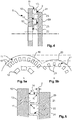
- FIG. 4 illustrates a cross-sectional view of a high-shear mixing geometry according to an embodiment.
- a high-shear mixer according to the illustrated embodiment of Fig. 4 comprises a rotor 10 and a stator 20.
- the rotor has a first toothed-rim 11 having a plurality of teeth 13.
- the rotor 10 further has a second toothed-rim 12 also comprising a plurality of teeth 13.
- the stator 20 also has a first toothed-rim 21 having a plurality of teeth 23.
- the stator has a second toothed-rim 22 also having a plurality of teeth 23.
- each of the toothed-rims 11, 12, 21, 22 are arranged along a circuit being concentric to the rotational axis of the high-shear mixer 1.
- the toothed-rims of the rotor 11, 12 and the toothed-rims of the stator 21, 22 interleave so as to form a gap 2 between the teeth as such, and the rotor and stator body, respectively.
- the mixture to be sheared will be fed through for example a through-hole of the rotor 10 and flows along the double arrows in Fig. 4 , so that the mixture S1 will be sheared between teeth of adjacent rims.
- the feeding of the mixture S1 can also take place through a through-hole of the stator, although this specification is not explicitly illustrated in Fig. 4 . Further, it should be noted that the number of toothed-rims of the rotor as well as the stator may be more than two.
- Fig. 5a illustrates a top view of one of a rotor and a stator of a high-shear mixer according to an embodiment.
- Fig. 5a illustrates a rotor 10 having a first toothed-rim 11 including a plurality of teeth 13.
- a second toothed-rim 12 is provided on the rotor.
- the configuration illustrated in Fig. 5a may also be a configuration for a stator.
- the teeth 13 of the first and second toothed-rims 11, 12 may be different as well as the width of the teeth and the width of the gap there between in a circumferential direction.
- Fig. 5b illustrates a top view of the other of a rotor and a stator of a high-shear mixer according to an embodiment in view of Fig. 5a , and in particular a stator 20.
- the stator 20 has at least one rim 21 having a plurality of teeth 23.
- the toothed-rims of the rotor 10 and the stator 20 interleave when being coupled as illustrated in Fig. 4 .
- Fig. 6 illustrates a detailed cut-out of a cross-sectional view of a high-shear mixer geometry according to an exemplary embodiment.
- Fig. 6 illustrates the rotor 10 and the stator 20 with respective teeth of a toothed-rim.
- the rotor 10 and/or the stator 20 may have a further toothed-rim with a similar geometry.
- the teeth 13 and 23 of the toothed-rims 11 and 21 of the rotor 10 and the stator 20, respectively have rounded edges.
- the edges have a radius R so as to provide a smooth transition between the teeth and the stator body or the teeth and the rotor body, as well as between the teeth and the gap 2.
- rounded edges 14, 24 result in a reduced impact to the agglomerates of the mixture, so that the agglomerates are not cut or destroyed by sharp edges of the teeth 13, 23, which will result in a deteriorated fermentation process.
- rounded edges may be provided in particular at edges between teeth of adjacent rims. Further, rounded edges can also be provided between adjacent teeth of a single rim.
- the radius R of teeth of adjacent rims may be adapted to each other so as to have a more or less continuous width of the gap 2.
- the Schizophyllum commune strain used is laid open in EP 0 504 673 .
- Suitable nutrient media for the precultures and main cultures and cultivation conditions can be found for example in the patent EP 504 6073 , EP 0 271 907 and " Process and molecular data of branched 1,3- ⁇ -D-glucans in comparison with Xanthan, U. Rau, R. -J. Müller, K. Cordes, J.
- Nutrient medium used 30 g/l glucose, 3 g/l yeast extract, 1 g/l KH 2 PO 4 , 0.5 MgSO 4 * 7 H 2 O
- All of the tanks of the preculture were operated at a constant speed and gassing rate so that the pO 2 was always above 60%.
- the duration of the precultures was chosen such that the glucose did not drop below 5 g/l.
- the main culture was carried out according to the process described in the literature under oxygen-limiting conditions.
- the procedure for the main culture is described for example in " Oxygen controlled batch cultivations of Schizophyllum commune for enhanced production of branched ⁇ -1,3-glucans, U. Rau, C. Brandt Bioprocess Engineering September 1994, Volume 11, Issue 4, pp 161-165 ", " Udo Rau, "Biosynthese, intention und Anlagen von extrazelluldid Pilz-Glucanen [Biosynthesis, production and properties of extracellular fungal glucans]", Postdoctoral thesis, Technical University of Braunschweig, 1997 " and " Process and molecular data of branched 1,3- ⁇ -D-glucans in comparison with Xanthan, U. Rau, R. -J. Müller, K. Cordes, J. Klein, Bioprocess Engineering, 1990, Volume 5, Issue 2, pp 89-93 ",
- the rotor-stator mixer was incorporated into the pipeline of the last tank of the preculture to the main culture tank in the reactor cascade and steam-sterilized prior to insertion in order to permit aseptic operation.
- the space-time yield also called volumetric productivity, was determined by measuring the glucan concentration in a sample taken after a runtime of 72 h using a method described in the literature. The measured concentration divided by the runtime until the sample was taken (72 h) gives the space-time yield. For the purposes of simplification, relative STY are shown. The STY which were achieved without using a high-shear mixer were set as 100%.
- FR filtration ratio
- the time span which is required for in each case 20 g of filtrate to flow through is determined, i.e. at a early time and at a late time in the filtration process, and the quotient is calculated from the two time spans.
- the FR value is determined by the following method:
- a mixture of the glucan solution obtained from the experiments and water is prepared, i.e. in a ratio such that the concentration of the glucan is 1.75 g/l.
- the mixture is stirred for 10 min and checked visually for homogeneity. If the mixture is still inhomogeneous, further stirring is effected until the mixture is homogeneous.
- the mixture is then made up to a total amount of 250 g with 200 g of ultrapure water. Thereafter, stirring is effected for at least 1 h for homogenization, after which the pH is adjusted to 6.0 with 0.1 M NaOH and stirring is then effected again for 15 min. The pH of 6.0 is checked again.
- the final concentration of the glucan in the mixture is 0.35 g/l.
- the amount of filtrate is determined as a function of time.
- the mass indicated in each case can be read visually but of course also automatically and evaluated.
- Fig. 7 illustrates an exemplary relative space-time-yield over time chart for a laboratory fermenter with/without morphology control.
- a laboratory fermenter with morphology control has a higher relative space-time-yield compared to a laboratory fermenter without a morphology control.
- the efficiency of the laboratory fermenter with morphology control is higher than a laboratory fermenter without a morphology control.
- Fig. 7 shows the comparison of the relative STY for production on a laboratory scale (21 I) with a three-stage preculture. It can be seen that the STY is significantly increased in the case of morphology control to avoid pellet or agglomerate formation.
- Fig. 8 illustrates an exemplary relative space-time-yield over time chart for a pilot plant fermenter with/without morphology control.
- the relative space-time-yield of a pilot plant scale fermenter with morphology control is a little bit higher than a relative space-time-yield of a pilot plant scale fermenter without morphology control.
- Fig. 8 shows the comparison of the relative STY for the production on a pilot-plant scale (3 m 3 ) with a three-stage preculture. It can be seen that the STY is significantly increased in the case of morphology control to avoid pellet/agglomerate formation.
Landscapes
- Chemical & Material Sciences (AREA)
- Life Sciences & Earth Sciences (AREA)
- Organic Chemistry (AREA)
- Engineering & Computer Science (AREA)
- Health & Medical Sciences (AREA)
- Wood Science & Technology (AREA)
- Zoology (AREA)
- Bioinformatics & Cheminformatics (AREA)
- General Health & Medical Sciences (AREA)
- Biochemistry (AREA)
- Biotechnology (AREA)
- Genetics & Genomics (AREA)
- General Engineering & Computer Science (AREA)
- Microbiology (AREA)
- Chemical Kinetics & Catalysis (AREA)
- General Chemical & Material Sciences (AREA)
- Biomedical Technology (AREA)
- Sustainable Development (AREA)
- Polymers & Plastics (AREA)
- Medicinal Chemistry (AREA)
- Materials Engineering (AREA)
- Molecular Biology (AREA)
- Clinical Laboratory Science (AREA)
- Mechanical Engineering (AREA)
- Cell Biology (AREA)
- Preparation Of Compounds By Using Micro-Organisms (AREA)
- Apparatus Associated With Microorganisms And Enzymes (AREA)
- Polysaccharides And Polysaccharide Derivatives (AREA)
- Micro-Organisms Or Cultivation Processes Thereof (AREA)
Claims (16)
- Procédé de fermentation de souches fongiques qui secrètent des glucanes ayant une chaîne principale à liaison β-1,3-glycosidique et des groupements latéraux y étant liés par voie β-1,6-glycosidique, dans des cuves en cascade comprenant au moins une première cuve (K1, K31) ayant un premier volume (VK1, VK31), et une deuxième cuve (K2, K32) ayant un deuxième volume (VK2, VK32), comprenant au moins les étapesa) de fermentation des souches fongiques dans un premier milieu aqueux (M1, M31) dans la première cuve (K1, K31) et le volume du premier milieu aqueux (VM1, VM31), conduisant à un premier mélange (S1, S31),b) de transfert du premier mélange (S1, S31) vers la deuxième cuve (K2, K32), etc) de fermentation des souches fongiques dans le premier mélange (S1, S31) dans un deuxième milieu aqueux (M2, M32) dans la deuxième cuve (K2, K32) et le volume du deuxième milieu aqueux (VM2, VM32), conduisant à un deuxième mélange (S2, S32),où la proportion du volume du premier mélange (VM1, VM31) par rapport au volume de la deuxième cuve (VK2, VK32) se trouve dans la plage allant de ≥ 0,1% à ≤ 50% et où on fait passer le premier mélange (S1, S31) dans l'étape b) à travers au moins un mélangeur à cisaillement élevé, le mélangeur à cisaillement élevé (1) possède une géométrie de cisaillement telle que l'ensemble du premier mélange (S1, S31) passe entièrement à travers la géométrie de cisaillement du au moins un mélangeur à cisaillement élevé.
- Procédé selon la revendication 1, dans lequel le mélangeur à cisaillement élevé (1) est un mélangeur de type rotor-stator ayant un rotor (10) et un stator (20) .
- Procédé selon la revendication 2, dans lequel le mélangeur de type rotor-stator est une machine de dispersion à couronnes dentées.
- Procédé selon l'une quelconque des revendications 2 et 3, dans lequel au moins l'un parmi le rotor (10) et le stator du mélangeur de type rotor-stator possède au moins deux couronnes dentées concentriques (11, 12) et l'autre parmi le rotor et le stator (20) possède au moins une couronne dentée (21, 22), où la au moins une couronne dentée de l'autre parmi le rotor et le stator est entrelacée de manière concentrique avec les au moins deux couronnes dentées concentriques, où le premier milieu aqueux (M1, M31) passe à travers les couronnes dentées entrelacées.
- Procédé selon la revendication 4, dans lequel les au moins deux couronnes dentées concentriques (11, 12) de l'un parmi le rotor (10) et le stator et la au moins une couronne dentée (21, 22) de l'autre parmi le rotor et le stator (20) possèdent une géométrie de dent équidistante et où la distance entre des dents adjacentes (13) de la couronne dentée externe respective (11) est plus grande que la distance entre des dents adjacentes (23) de la couronne dentée interne respective (21), où le premier milieu aqueux M1 passe à travers les couronnes dentées entrelacées dans le sens d'une distance de dents ascendante.
- Procédé selon l'une quelconque des revendications 4 et 5, dans lequel le premier mélange (S1) passe à travers un espace (2) dans un sens radial, lequel espace dans un sens radial est formé par l'entrelacement de manière concentrique d'au moins deux couronnes dentées concentriques (11, 12) de l'un parmi le rotor (10) et le stator et la au moins une couronne dentée (21, 22) de l'autre parmi le rotor et le stator (20), où l'espace (2) entre un diamètre externe d'une couronne dentée et un diamètre interne d'une couronne dentée radiale extérieurement adjacente possède une largeur comprise entre 0,2 mm et 2,0 mm, préférablement entre 0,4 mm et 1,2 mm, plus préférablement entre 0,8 mm et 0,9 mm.
- Procédé selon l'une quelconque des revendications 4 à 6, dans lequel le premier mélange (S1) séjourne pendant entre 0,01 s et 0,004 s, préférablement entre 0,02 et 0,07 s, plus préférablement 0,01 s ± 0,001 s lors de son passage via les au moins deux couronnes dentées concentriques (11, 12) de l'un parmi le rotor (10) et le stator et la au moins une couronne dentée (21, 22) de l'autre parmi le rotor et le stator (20).
- Procédé selon l'une quelconque des revendications 3 à 7, dans lequel les bords (14, 24) des dents (13, 23) le long d'un chemin d'écoulement à travers la géométrie de cisaillement possèdent des bords arrondis ayant un rayon d'au moins 0,2 mm, en particulier supérieur à 3 mm.
- Procédé selon l'une quelconque des revendications 2 à 8, dans lequel le rotor (10) tourne à une vitesse par rapport au stator comprise entre 250 et 7200, préférablement entre 1800 et 6000, plus préférablement entre 4000 et 4500 tours par minute.
- Procédé selon l'une quelconque des revendications 2 à 9, dans lequel le rotor (10) tourne à une vitesse périphérique comprise entre 2 m/s et 60 m/s, préférablement entre 15 m/s et 50 m/s, plus préférablement entre 35 m/s et 45 m/s.
- Procédé selon l'une quelconque des revendications 1 à 10, dans lequel la proportion du volume du premier mélange (VM1, VM31) par rapport au volume de la deuxième cuve (VK2, VK32) se trouve dans la plage allant de ≥ 1% à ≤ 20%.
- Procédé selon l'une quelconque des revendications 1 à 11, dans lequel le au moins un bêta-glucane est choisi dans le groupe constitué par le schizophyllane et le scléroglucane, où le schizophyllane et le scléroglucane sont obtenus par fermentation de souches fongiques.
- Procédé selon l'une quelconque des revendications 1 à 12, dans lequel les souches fongiques sont Schizophyllum commune ou Sclerotium rolfsii.
- Procédé selon l'une quelconque des revendications 1 à 13, dans lequel la cascade de cuves comprend en outre une troisième cuve (K33) ayant un troisième volume (VK33), et le procédé de fermentation comprend en outre au moins les étapesd) de transfert du deuxième mélange (S32) vers la troisième cuve (K33), ete) de fermentation des souches fongiques dans le deuxième mélange (S32) dans un troisième milieu aqueux (M33) dans la troisième cuve (K33),où la proportion du deuxième mélange par rapport au volume de la troisième cuve (VK33) se trouve dans la plage allant de ≥ 0,1% à ≤ 50%.
- Procédé selon la revendication 14, dans lequel on fait passer le deuxième mélange (S32) dans l'étape d) à travers au moins un mélangeur à cisaillement élevé, le mélangeur à cisaillement élevé (1) possède une géométrie de cisaillement telle que l'ensemble du deuxième mélange (S32) passe entièrement à travers la géométrie de cisaillement du au moins un mélangeur à cisaillement élevé.
- Procédé selon l'une quelconque des revendications 14 et 15, dans lequel la proportion du deuxième mélange (S32) par rapport au volume de la troisième cuve (VK33) se trouve dans la plage allant de ≥ 1% à ≤ 20%.
Priority Applications (1)
| Application Number | Priority Date | Filing Date | Title |
|---|---|---|---|
| PL15805513T PL3230464T3 (pl) | 2014-12-12 | 2015-12-08 | Sposób fermentacji szczepów grzybów |
Applications Claiming Priority (2)
| Application Number | Priority Date | Filing Date | Title |
|---|---|---|---|
| EP14197750 | 2014-12-12 | ||
| PCT/EP2015/079004 WO2016091892A1 (fr) | 2014-12-12 | 2015-12-08 | Procédé pour la fermentation de souches fongiques |
Publications (2)
| Publication Number | Publication Date |
|---|---|
| EP3230464A1 EP3230464A1 (fr) | 2017-10-18 |
| EP3230464B1 true EP3230464B1 (fr) | 2018-09-19 |
Family
ID=52133855
Family Applications (1)
| Application Number | Title | Priority Date | Filing Date |
|---|---|---|---|
| EP15805513.7A Active EP3230464B1 (fr) | 2014-12-12 | 2015-12-08 | Procédé pour la fermentation de souches fongiques |
Country Status (15)
| Country | Link |
|---|---|
| US (1) | US20170362620A1 (fr) |
| EP (1) | EP3230464B1 (fr) |
| JP (1) | JP2018504101A (fr) |
| KR (1) | KR20170089009A (fr) |
| CN (1) | CN107406865A (fr) |
| AU (1) | AU2015359491A1 (fr) |
| BR (1) | BR112017012212B1 (fr) |
| CA (1) | CA2969166A1 (fr) |
| DK (1) | DK3230464T3 (fr) |
| EA (1) | EA201791279A1 (fr) |
| ES (1) | ES2702025T3 (fr) |
| MX (1) | MX2017007698A (fr) |
| PL (1) | PL3230464T3 (fr) |
| WO (1) | WO2016091892A1 (fr) |
| ZA (1) | ZA201704550B (fr) |
Cited By (1)
| Publication number | Priority date | Publication date | Assignee | Title |
|---|---|---|---|---|
| AU2023201749B2 (en) * | 2020-12-16 | 2023-05-11 | Alpha Group Limited | Isolating intracellular polysaccharides from fungi |
Families Citing this family (5)
| Publication number | Priority date | Publication date | Assignee | Title |
|---|---|---|---|---|
| CN106613350B (zh) * | 2016-12-21 | 2020-06-30 | 广东省微生物研究所(广东省微生物分析检测中心) | 一株裂褶菌及其驯化栽培方法和应用 |
| MX2019011648A (es) * | 2017-03-28 | 2019-12-19 | Cargill Inc | Composiciones de beta-glucano y corte para proporcionar el mantenimiento de la viscosidad de estas. |
| CN112997061A (zh) * | 2018-06-01 | 2021-06-18 | 艾斯图基因组学公司 | 用于处理组织样品的方法和装置 |
| US12227729B2 (en) * | 2020-12-24 | 2025-02-18 | Cellfe, Inc. | Methods and systems for high-throughput cell processing |
| CN117987475B (zh) * | 2024-02-01 | 2024-12-24 | 广州嘉创生物科技有限公司 | 具有舒缓功效的白参菌发酵产物、及其制备方法和应用 |
Family Cites Families (10)
| Publication number | Priority date | Publication date | Assignee | Title |
|---|---|---|---|---|
| FR2551070B1 (fr) | 1983-08-30 | 1986-09-26 | Rhone Poulenc Spec Chim | Procede de traitement d'une solution de polysaccharide et son utilisation |
| GB2162537A (en) * | 1984-08-01 | 1986-02-05 | Albright & Wilson | Suspension culture of plant tissue |
| FR2586249B1 (fr) | 1985-08-14 | 1987-12-24 | Rhone Poulenc Spec Chim | Procede de preparation d'un heteropolysaccharide modifie et compositions le contenant |
| DE3643467A1 (de) | 1986-12-19 | 1988-06-30 | Wintershall Ag | Verfahren zur extrazellulaeren herstellung nichtionischer biopolymerer und deren verwendung |
| DE4012238A1 (de) | 1989-04-25 | 1991-01-03 | Wintershall Ag | Verfahren zur erhoehung der volumenbezogenen produktivitaet (g/l/d) nichtionischer biopolymere |
| JP2911554B2 (ja) | 1990-06-25 | 1999-06-23 | 台糖株式会社 | 抗ウィルス剤 |
| DE4109457A1 (de) | 1991-03-22 | 1992-11-12 | Wintershall Ag | Verfahren zur extrazellulaeren herstellung von hochmolekularen homopolyscchariden und zu ihrer anwendung, sowie die entsprechenden pilzstaemme |
| US20040265977A1 (en) | 2001-08-15 | 2004-12-30 | Thomas Maier | Process for the production of scleroglucan |
| MX2012006882A (es) * | 2009-12-17 | 2012-12-05 | Wintershall Holding GmbH | Metodo para producir homopolisacaridos. |
| US20110244554A1 (en) * | 2010-04-02 | 2011-10-06 | E. I. Du Pont De Nemours And Company | Mechanical device for dispersing biomass populations |
-
2015
- 2015-12-08 EP EP15805513.7A patent/EP3230464B1/fr active Active
- 2015-12-08 PL PL15805513T patent/PL3230464T3/pl unknown
- 2015-12-08 KR KR1020177019210A patent/KR20170089009A/ko not_active Ceased
- 2015-12-08 BR BR112017012212-0A patent/BR112017012212B1/pt active IP Right Grant
- 2015-12-08 CN CN201580075479.8A patent/CN107406865A/zh active Pending
- 2015-12-08 CA CA2969166A patent/CA2969166A1/fr not_active Abandoned
- 2015-12-08 ES ES15805513T patent/ES2702025T3/es active Active
- 2015-12-08 JP JP2017531536A patent/JP2018504101A/ja active Pending
- 2015-12-08 WO PCT/EP2015/079004 patent/WO2016091892A1/fr not_active Ceased
- 2015-12-08 DK DK15805513.7T patent/DK3230464T3/en active
- 2015-12-08 MX MX2017007698A patent/MX2017007698A/es unknown
- 2015-12-08 US US15/534,597 patent/US20170362620A1/en not_active Abandoned
- 2015-12-08 AU AU2015359491A patent/AU2015359491A1/en not_active Abandoned
- 2015-12-08 EA EA201791279A patent/EA201791279A1/ru unknown
-
2017
- 2017-07-05 ZA ZA2017/04550A patent/ZA201704550B/en unknown
Non-Patent Citations (1)
| Title |
|---|
| None * |
Cited By (1)
| Publication number | Priority date | Publication date | Assignee | Title |
|---|---|---|---|---|
| AU2023201749B2 (en) * | 2020-12-16 | 2023-05-11 | Alpha Group Limited | Isolating intracellular polysaccharides from fungi |
Also Published As
| Publication number | Publication date |
|---|---|
| EA201791279A1 (ru) | 2017-12-29 |
| AU2015359491A1 (en) | 2017-06-15 |
| US20170362620A1 (en) | 2017-12-21 |
| DK3230464T3 (en) | 2019-01-21 |
| MX2017007698A (es) | 2017-10-27 |
| ES2702025T3 (es) | 2019-02-27 |
| BR112017012212B1 (pt) | 2022-10-18 |
| BR112017012212A2 (pt) | 2018-01-30 |
| CA2969166A1 (fr) | 2016-06-16 |
| ZA201704550B (en) | 2019-01-30 |
| CN107406865A (zh) | 2017-11-28 |
| PL3230464T3 (pl) | 2019-05-31 |
| KR20170089009A (ko) | 2017-08-02 |
| EP3230464A1 (fr) | 2017-10-18 |
| WO2016091892A1 (fr) | 2016-06-16 |
| JP2018504101A (ja) | 2018-02-15 |
Similar Documents
| Publication | Publication Date | Title |
|---|---|---|
| DK3230464T3 (en) | PROCEDURE FOR CREATING FUNGI TREES | |
| Wang et al. | Ultrasonic treatment for improved solution properties of a high-molecular weight exopolysaccharide produced by a medicinal fungus | |
| Palaniraj et al. | Production, recovery and applications of xanthan gum by Xanthomonas campestris | |
| Gunasekar et al. | Xanthan from sulphuric acid treated tapioca pulp: influence of acid concentration on xanthan fermentation | |
| Seviour et al. | Operating bioreactors for microbial exopolysaccharide production | |
| Torres et al. | Kinetics of production and characterization of the fucose-containing exopolysaccharide from Enterobacter A47 | |
| Nwe et al. | Effect of urea on fungal chitosan production in solid substrate fermentation | |
| JP2013514067A (ja) | ホモ多糖の調製方法 | |
| Freitas et al. | Production of a new exopolysaccharide (EPS) by Pseudomonas oleovorans NRRL B-14682 grown on glycerol | |
| Haghighatpanah et al. | Optimization and characterization of pullulan obtained from corn bran hydrolysates by Aerobasidiom pullulan KY767024 | |
| JP5732390B2 (ja) | 酵母ピキア・パストリスの発酵によるキチン、その誘導体及びグルコース、マンノース及び/又はガラクトースを含有するポリマーの共生産のための方法 | |
| US10273514B2 (en) | Method for preparing an aqueous solution of beta-glucan | |
| JP2013513397A (ja) | フコース含有細菌バイオポリマー | |
| US10767105B2 (en) | Redispersion of schizophyllan | |
| Qamar et al. | Bio-valorization of agroindustrial biomass into microbial exopolysaccharides | |
| Bahl et al. | Recovery and purification of the exopolysaccharide PS-EDIV from Sphingomonas pituitosa DSM 13101 | |
| Kim et al. | A novel galactoglucomannan exopolysaccharide produced by oil fermentation with Pseudozyma sp. SY16 | |
| US20180273647A1 (en) | Method for concentrating beta-glucans | |
| Rau | Glucans secreted by fungi | |
| Araújo et al. | Biopolymer production using fungus Mucor racemosus Fresenius and glycerol as substrate | |
| Sampaio et al. | Oilfield Carbonated Produced Water Recycling Coupled to Exopolysaccharide Transformation by Lelliottia amnigena | |
| Hassan et al. | Production and optimization of bioflocculant isolated from bacteria | |
| Lorenzon | Brewery's residual streams exploitation through anaerobic digestion and nanocellulose production | |
| Crognale et al. | Enhanced production of β-glucan from Botryosphaeria rhodina using emulsified media or fan impellers | |
| Ma et al. | Optimization of functional polysaccharide production in Naematelia aurantialba: Surfactant‐driven yield enhancement and multifunctional property optimization |
Legal Events
| Date | Code | Title | Description |
|---|---|---|---|
| PUAI | Public reference made under article 153(3) epc to a published international application that has entered the european phase |
Free format text: ORIGINAL CODE: 0009012 |
|
| 17P | Request for examination filed |
Effective date: 20170712 |
|
| AK | Designated contracting states |
Kind code of ref document: A1 Designated state(s): AL AT BE BG CH CY CZ DE DK EE ES FI FR GB GR HR HU IE IS IT LI LT LU LV MC MK MT NL NO PL PT RO RS SE SI SK SM TR |
|
| AX | Request for extension of the european patent |
Extension state: BA ME |
|
| DAV | Request for validation of the european patent (deleted) | ||
| DAX | Request for extension of the european patent (deleted) | ||
| GRAP | Despatch of communication of intention to grant a patent |
Free format text: ORIGINAL CODE: EPIDOSNIGR1 |
|
| INTG | Intention to grant announced |
Effective date: 20180605 |
|
| GRAS | Grant fee paid |
Free format text: ORIGINAL CODE: EPIDOSNIGR3 |
|
| GRAA | (expected) grant |
Free format text: ORIGINAL CODE: 0009210 |
|
| AK | Designated contracting states |
Kind code of ref document: B1 Designated state(s): AL AT BE BG CH CY CZ DE DK EE ES FI FR GB GR HR HU IE IS IT LI LT LU LV MC MK MT NL NO PL PT RO RS SE SI SK SM TR |
|
| REG | Reference to a national code |
Ref country code: GB Ref legal event code: FG4D |
|
| REG | Reference to a national code |
Ref country code: CH Ref legal event code: EP |
|
| REG | Reference to a national code |
Ref country code: AT Ref legal event code: REF Ref document number: 1043315 Country of ref document: AT Kind code of ref document: T Effective date: 20181015 |
|
| REG | Reference to a national code |
Ref country code: IE Ref legal event code: FG4D |
|
| REG | Reference to a national code |
Ref country code: DE Ref legal event code: R096 Ref document number: 602015016753 Country of ref document: DE |
|
| REG | Reference to a national code |
Ref country code: NL Ref legal event code: FP |
|
| REG | Reference to a national code |
Ref country code: DK Ref legal event code: T3 Effective date: 20190109 |
|
| PG25 | Lapsed in a contracting state [announced via postgrant information from national office to epo] |
Ref country code: SE Free format text: LAPSE BECAUSE OF FAILURE TO SUBMIT A TRANSLATION OF THE DESCRIPTION OR TO PAY THE FEE WITHIN THE PRESCRIBED TIME-LIMIT Effective date: 20180919 Ref country code: RS Free format text: LAPSE BECAUSE OF FAILURE TO SUBMIT A TRANSLATION OF THE DESCRIPTION OR TO PAY THE FEE WITHIN THE PRESCRIBED TIME-LIMIT Effective date: 20180919 Ref country code: LT Free format text: LAPSE BECAUSE OF FAILURE TO SUBMIT A TRANSLATION OF THE DESCRIPTION OR TO PAY THE FEE WITHIN THE PRESCRIBED TIME-LIMIT Effective date: 20180919 Ref country code: GR Free format text: LAPSE BECAUSE OF FAILURE TO SUBMIT A TRANSLATION OF THE DESCRIPTION OR TO PAY THE FEE WITHIN THE PRESCRIBED TIME-LIMIT Effective date: 20181220 |
|
| PGFP | Annual fee paid to national office [announced via postgrant information from national office to epo] |
Ref country code: FI Payment date: 20181219 Year of fee payment: 4 Ref country code: NO Payment date: 20181220 Year of fee payment: 4 Ref country code: IE Payment date: 20181221 Year of fee payment: 4 Ref country code: DK Payment date: 20181221 Year of fee payment: 4 |
|
| REG | Reference to a national code |
Ref country code: NO Ref legal event code: T2 Effective date: 20180919 |
|
| REG | Reference to a national code |
Ref country code: LT Ref legal event code: MG4D |
|
| REG | Reference to a national code |
Ref country code: ES Ref legal event code: FG2A Ref document number: 2702025 Country of ref document: ES Kind code of ref document: T3 Effective date: 20190227 |
|
| PG25 | Lapsed in a contracting state [announced via postgrant information from national office to epo] |
Ref country code: LV Free format text: LAPSE BECAUSE OF FAILURE TO SUBMIT A TRANSLATION OF THE DESCRIPTION OR TO PAY THE FEE WITHIN THE PRESCRIBED TIME-LIMIT Effective date: 20180919 Ref country code: HR Free format text: LAPSE BECAUSE OF FAILURE TO SUBMIT A TRANSLATION OF THE DESCRIPTION OR TO PAY THE FEE WITHIN THE PRESCRIBED TIME-LIMIT Effective date: 20180919 Ref country code: AL Free format text: LAPSE BECAUSE OF FAILURE TO SUBMIT A TRANSLATION OF THE DESCRIPTION OR TO PAY THE FEE WITHIN THE PRESCRIBED TIME-LIMIT Effective date: 20180919 |
|
| PG25 | Lapsed in a contracting state [announced via postgrant information from national office to epo] |
Ref country code: RO Free format text: LAPSE BECAUSE OF FAILURE TO SUBMIT A TRANSLATION OF THE DESCRIPTION OR TO PAY THE FEE WITHIN THE PRESCRIBED TIME-LIMIT Effective date: 20180919 Ref country code: CZ Free format text: LAPSE BECAUSE OF FAILURE TO SUBMIT A TRANSLATION OF THE DESCRIPTION OR TO PAY THE FEE WITHIN THE PRESCRIBED TIME-LIMIT Effective date: 20180919 Ref country code: IS Free format text: LAPSE BECAUSE OF FAILURE TO SUBMIT A TRANSLATION OF THE DESCRIPTION OR TO PAY THE FEE WITHIN THE PRESCRIBED TIME-LIMIT Effective date: 20190119 Ref country code: EE Free format text: LAPSE BECAUSE OF FAILURE TO SUBMIT A TRANSLATION OF THE DESCRIPTION OR TO PAY THE FEE WITHIN THE PRESCRIBED TIME-LIMIT Effective date: 20180919 |
|
| PG25 | Lapsed in a contracting state [announced via postgrant information from national office to epo] |
Ref country code: SM Free format text: LAPSE BECAUSE OF FAILURE TO SUBMIT A TRANSLATION OF THE DESCRIPTION OR TO PAY THE FEE WITHIN THE PRESCRIBED TIME-LIMIT Effective date: 20180919 Ref country code: SK Free format text: LAPSE BECAUSE OF FAILURE TO SUBMIT A TRANSLATION OF THE DESCRIPTION OR TO PAY THE FEE WITHIN THE PRESCRIBED TIME-LIMIT Effective date: 20180919 Ref country code: PT Free format text: LAPSE BECAUSE OF FAILURE TO SUBMIT A TRANSLATION OF THE DESCRIPTION OR TO PAY THE FEE WITHIN THE PRESCRIBED TIME-LIMIT Effective date: 20190119 |
|
| REG | Reference to a national code |
Ref country code: DE Ref legal event code: R097 Ref document number: 602015016753 Country of ref document: DE |
|
| PLBE | No opposition filed within time limit |
Free format text: ORIGINAL CODE: 0009261 |
|
| STAA | Information on the status of an ep patent application or granted ep patent |
Free format text: STATUS: NO OPPOSITION FILED WITHIN TIME LIMIT |
|
| REG | Reference to a national code |
Ref country code: CH Ref legal event code: PL |
|
| 26N | No opposition filed |
Effective date: 20190620 |
|
| PG25 | Lapsed in a contracting state [announced via postgrant information from national office to epo] |
Ref country code: MC Free format text: LAPSE BECAUSE OF FAILURE TO SUBMIT A TRANSLATION OF THE DESCRIPTION OR TO PAY THE FEE WITHIN THE PRESCRIBED TIME-LIMIT Effective date: 20180919 Ref country code: LU Free format text: LAPSE BECAUSE OF NON-PAYMENT OF DUE FEES Effective date: 20181208 |
|
| PG25 | Lapsed in a contracting state [announced via postgrant information from national office to epo] |
Ref country code: SI Free format text: LAPSE BECAUSE OF FAILURE TO SUBMIT A TRANSLATION OF THE DESCRIPTION OR TO PAY THE FEE WITHIN THE PRESCRIBED TIME-LIMIT Effective date: 20180919 |
|
| PG25 | Lapsed in a contracting state [announced via postgrant information from national office to epo] |
Ref country code: CH Free format text: LAPSE BECAUSE OF NON-PAYMENT OF DUE FEES Effective date: 20181231 Ref country code: LI Free format text: LAPSE BECAUSE OF NON-PAYMENT OF DUE FEES Effective date: 20181231 |
|
| PG25 | Lapsed in a contracting state [announced via postgrant information from national office to epo] |
Ref country code: MT Free format text: LAPSE BECAUSE OF NON-PAYMENT OF DUE FEES Effective date: 20181208 |
|
| PGFP | Annual fee paid to national office [announced via postgrant information from national office to epo] |
Ref country code: HU Payment date: 20191214 Year of fee payment: 5 |
|
| PGFP | Annual fee paid to national office [announced via postgrant information from national office to epo] |
Ref country code: TR Payment date: 20191205 Year of fee payment: 5 |
|
| PG25 | Lapsed in a contracting state [announced via postgrant information from national office to epo] |
Ref country code: MK Free format text: LAPSE BECAUSE OF NON-PAYMENT OF DUE FEES Effective date: 20180919 Ref country code: CY Free format text: LAPSE BECAUSE OF FAILURE TO SUBMIT A TRANSLATION OF THE DESCRIPTION OR TO PAY THE FEE WITHIN THE PRESCRIBED TIME-LIMIT Effective date: 20180919 |
|
| REG | Reference to a national code |
Ref country code: FI Ref legal event code: MAE |
|
| REG | Reference to a national code |
Ref country code: DK Ref legal event code: EBP Effective date: 20191231 Ref country code: NO Ref legal event code: MMEP |
|
| PG25 | Lapsed in a contracting state [announced via postgrant information from national office to epo] |
Ref country code: FI Free format text: LAPSE BECAUSE OF NON-PAYMENT OF DUE FEES Effective date: 20191208 |
|
| REG | Reference to a national code |
Ref country code: NL Ref legal event code: MM Effective date: 20200101 |
|
| REG | Reference to a national code |
Ref country code: BE Ref legal event code: MM Effective date: 20191231 |
|
| PG25 | Lapsed in a contracting state [announced via postgrant information from national office to epo] |
Ref country code: PL Free format text: LAPSE BECAUSE OF NON-PAYMENT OF DUE FEES Effective date: 20181208 |
|
| PG25 | Lapsed in a contracting state [announced via postgrant information from national office to epo] |
Ref country code: NL Free format text: LAPSE BECAUSE OF NON-PAYMENT OF DUE FEES Effective date: 20200101 |
|
| PG25 | Lapsed in a contracting state [announced via postgrant information from national office to epo] |
Ref country code: IE Free format text: LAPSE BECAUSE OF NON-PAYMENT OF DUE FEES Effective date: 20191208 Ref country code: NO Free format text: LAPSE BECAUSE OF NON-PAYMENT OF DUE FEES Effective date: 20191231 |
|
| PG25 | Lapsed in a contracting state [announced via postgrant information from national office to epo] |
Ref country code: BG Free format text: LAPSE BECAUSE OF NON-PAYMENT OF DUE FEES Effective date: 20200630 Ref country code: BE Free format text: LAPSE BECAUSE OF NON-PAYMENT OF DUE FEES Effective date: 20191231 |
|
| PG25 | Lapsed in a contracting state [announced via postgrant information from national office to epo] |
Ref country code: DK Free format text: LAPSE BECAUSE OF NON-PAYMENT OF DUE FEES Effective date: 20191231 |
|
| PG25 | Lapsed in a contracting state [announced via postgrant information from national office to epo] |
Ref country code: HU Free format text: LAPSE BECAUSE OF NON-PAYMENT OF DUE FEES Effective date: 20201209 |
|
| REG | Reference to a national code |
Ref country code: AT Ref legal event code: MM01 Ref document number: 1043315 Country of ref document: AT Kind code of ref document: T Effective date: 20201208 |
|
| PG25 | Lapsed in a contracting state [announced via postgrant information from national office to epo] |
Ref country code: AT Free format text: LAPSE BECAUSE OF NON-PAYMENT OF DUE FEES Effective date: 20201208 |
|
| PG25 | Lapsed in a contracting state [announced via postgrant information from national office to epo] |
Ref country code: TR Free format text: LAPSE BECAUSE OF NON-PAYMENT OF DUE FEES Effective date: 20201208 |
|
| REG | Reference to a national code |
Ref country code: AT Ref legal event code: UEP Ref document number: 1043315 Country of ref document: AT Kind code of ref document: T Effective date: 20180919 |
|
| PGFP | Annual fee paid to national office [announced via postgrant information from national office to epo] |
Ref country code: GB Payment date: 20251223 Year of fee payment: 11 |
|
| PGFP | Annual fee paid to national office [announced via postgrant information from national office to epo] |
Ref country code: IT Payment date: 20251218 Year of fee payment: 11 |
|
| PGFP | Annual fee paid to national office [announced via postgrant information from national office to epo] |
Ref country code: FR Payment date: 20251223 Year of fee payment: 11 |
|
| PGFP | Annual fee paid to national office [announced via postgrant information from national office to epo] |
Ref country code: ES Payment date: 20260122 Year of fee payment: 11 |
|
| PGFP | Annual fee paid to national office [announced via postgrant information from national office to epo] |
Ref country code: DE Payment date: 20251229 Year of fee payment: 11 |