EP3231820A1 - Polymerzusammensetzungen mit halohaltigem polymer mit multifunktionaler phosphinverknüpfung - Google Patents
Polymerzusammensetzungen mit halohaltigem polymer mit multifunktionaler phosphinverknüpfung Download PDFInfo
- Publication number
- EP3231820A1 EP3231820A1 EP16165563.4A EP16165563A EP3231820A1 EP 3231820 A1 EP3231820 A1 EP 3231820A1 EP 16165563 A EP16165563 A EP 16165563A EP 3231820 A1 EP3231820 A1 EP 3231820A1
- Authority
- EP
- European Patent Office
- Prior art keywords
- halo
- polymer
- polymer composition
- containing polymer
- functional
- Prior art date
- Legal status (The legal status is an assumption and is not a legal conclusion. Google has not performed a legal analysis and makes no representation as to the accuracy of the status listed.)
- Withdrawn
Links
- 229920000642 polymer Polymers 0.000 title claims abstract description 200
- 229910000073 phosphorus hydride Inorganic materials 0.000 title claims abstract description 92
- XYFCBTPGUUZFHI-UHFFFAOYSA-N Phosphine Chemical compound P XYFCBTPGUUZFHI-UHFFFAOYSA-N 0.000 title claims abstract description 90
- 239000000203 mixture Substances 0.000 title claims abstract description 80
- 125000001475 halogen functional group Chemical group 0.000 title claims abstract 28
- -1 phosphine compound Chemical class 0.000 claims abstract description 57
- 238000000034 method Methods 0.000 claims abstract description 24
- 238000009826 distribution Methods 0.000 claims abstract description 19
- 150000001875 compounds Chemical class 0.000 claims abstract description 15
- 239000000178 monomer Substances 0.000 claims description 59
- 229920005557 bromobutyl Polymers 0.000 claims description 38
- 239000002904 solvent Substances 0.000 claims description 8
- 125000000217 alkyl group Chemical group 0.000 claims description 5
- 229920005556 chlorobutyl Polymers 0.000 claims description 4
- 125000003342 alkenyl group Chemical group 0.000 claims description 3
- 125000003118 aryl group Chemical group 0.000 claims description 3
- 230000002902 bimodal effect Effects 0.000 claims description 3
- 125000000753 cycloalkyl group Chemical group 0.000 claims description 3
- 125000004404 heteroalkyl group Chemical group 0.000 claims description 3
- 125000001072 heteroaryl group Chemical group 0.000 claims description 3
- 125000000592 heterocycloalkyl group Chemical group 0.000 claims description 3
- 230000001588 bifunctional effect Effects 0.000 claims 1
- 229920002959 polymer blend Polymers 0.000 claims 1
- 125000005843 halogen group Chemical group 0.000 description 66
- 241001441571 Hiodontidae Species 0.000 description 33
- 238000006243 chemical reaction Methods 0.000 description 24
- RRHGJUQNOFWUDK-UHFFFAOYSA-N Isoprene Chemical compound CC(=C)C=C RRHGJUQNOFWUDK-UHFFFAOYSA-N 0.000 description 19
- 238000005227 gel permeation chromatography Methods 0.000 description 15
- 229920005549 butyl rubber Polymers 0.000 description 14
- RIOQSEWOXXDEQQ-UHFFFAOYSA-N triphenylphosphine Chemical compound C1=CC=CC=C1P(C=1C=CC=CC=1)C1=CC=CC=C1 RIOQSEWOXXDEQQ-UHFFFAOYSA-N 0.000 description 14
- 239000000523 sample Substances 0.000 description 11
- 238000010438 heat treatment Methods 0.000 description 10
- VQTUBCCKSQIDNK-UHFFFAOYSA-N Isobutene Chemical group CC(C)=C VQTUBCCKSQIDNK-UHFFFAOYSA-N 0.000 description 9
- 229920001971 elastomer Polymers 0.000 description 9
- 125000001246 bromo group Chemical group Br* 0.000 description 8
- 229920005555 halobutyl Polymers 0.000 description 8
- 239000005060 rubber Substances 0.000 description 8
- 125000000484 butyl group Chemical group [H]C([*])([H])C([H])([H])C([H])([H])C([H])([H])[H] 0.000 description 7
- 229920001577 copolymer Polymers 0.000 description 7
- 230000026030 halogenation Effects 0.000 description 7
- 238000005658 halogenation reaction Methods 0.000 description 7
- 229920006158 high molecular weight polymer Polymers 0.000 description 7
- 229920000554 ionomer Polymers 0.000 description 7
- 238000000926 separation method Methods 0.000 description 7
- WKBOTKDWSSQWDR-UHFFFAOYSA-N Bromine atom Chemical compound [Br] WKBOTKDWSSQWDR-UHFFFAOYSA-N 0.000 description 6
- GDTBXPJZTBHREO-UHFFFAOYSA-N bromine Substances BrBr GDTBXPJZTBHREO-UHFFFAOYSA-N 0.000 description 6
- 229910052794 bromium Inorganic materials 0.000 description 6
- 125000004968 halobutyl group Chemical group 0.000 description 6
- 238000005259 measurement Methods 0.000 description 5
- LVEYOSJUKRVCCF-UHFFFAOYSA-N 1,3-bis(diphenylphosphino)propane Chemical compound C=1C=CC=CC=1P(C=1C=CC=CC=1)CCCP(C=1C=CC=CC=1)C1=CC=CC=C1 LVEYOSJUKRVCCF-UHFFFAOYSA-N 0.000 description 4
- JJGBFZZXKPWGCW-UHFFFAOYSA-N 2,3-bis[8-[3-[(3-pentyloxiran-2-yl)methyl]oxiran-2-yl]octanoyloxy]propyl 8-[3-[(3-pentyloxiran-2-yl)methyl]oxiran-2-yl]octanoate Chemical compound CCCCCC1OC1CC1C(CCCCCCCC(=O)OCC(COC(=O)CCCCCCCC2C(O2)CC2C(O2)CCCCC)OC(=O)CCCCCCCC2C(O2)CC2C(O2)CCCCC)O1 JJGBFZZXKPWGCW-UHFFFAOYSA-N 0.000 description 4
- WSSSPWUEQFSQQG-UHFFFAOYSA-N 4-methyl-1-pentene Chemical compound CC(C)CC=C WSSSPWUEQFSQQG-UHFFFAOYSA-N 0.000 description 4
- 238000000149 argon plasma sintering Methods 0.000 description 4
- ZSWFCLXCOIISFI-UHFFFAOYSA-N cyclopentadiene Chemical compound C1C=CC=C1 ZSWFCLXCOIISFI-UHFFFAOYSA-N 0.000 description 4
- 229920000831 ionic polymer Polymers 0.000 description 4
- 239000012038 nucleophile Substances 0.000 description 4
- 238000012545 processing Methods 0.000 description 4
- 229920002554 vinyl polymer Polymers 0.000 description 4
- QTBSBXVTEAMEQO-UHFFFAOYSA-N Acetic acid Chemical compound CC(O)=O QTBSBXVTEAMEQO-UHFFFAOYSA-N 0.000 description 3
- CPELXLSAUQHCOX-UHFFFAOYSA-M Bromide Chemical compound [Br-] CPELXLSAUQHCOX-UHFFFAOYSA-M 0.000 description 3
- 125000000746 allylic group Chemical group 0.000 description 3
- 239000001273 butane Substances 0.000 description 3
- 125000004432 carbon atom Chemical group C* 0.000 description 3
- 230000003247 decreasing effect Effects 0.000 description 3
- 150000001993 dienes Chemical class 0.000 description 3
- 238000005516 engineering process Methods 0.000 description 3
- 125000001188 haloalkyl group Chemical group 0.000 description 3
- VLKZOEOYAKHREP-UHFFFAOYSA-N n-Hexane Chemical compound CCCCCC VLKZOEOYAKHREP-UHFFFAOYSA-N 0.000 description 3
- OFBQJSOFQDEBGM-UHFFFAOYSA-N n-pentane Natural products CCCCC OFBQJSOFQDEBGM-UHFFFAOYSA-N 0.000 description 3
- 239000000376 reactant Substances 0.000 description 3
- 238000005160 1H NMR spectroscopy Methods 0.000 description 2
- BKOOMYPCSUNDGP-UHFFFAOYSA-N 2-methylbut-2-ene Chemical compound CC=C(C)C BKOOMYPCSUNDGP-UHFFFAOYSA-N 0.000 description 2
- RCJMVGJKROQDCB-UHFFFAOYSA-N 2-methylpenta-1,3-diene Chemical compound CC=CC(C)=C RCJMVGJKROQDCB-UHFFFAOYSA-N 0.000 description 2
- KAKZBPTYRLMSJV-UHFFFAOYSA-N Butadiene Chemical compound C=CC=C KAKZBPTYRLMSJV-UHFFFAOYSA-N 0.000 description 2
- 238000005481 NMR spectroscopy Methods 0.000 description 2
- HEDRZPFGACZZDS-MICDWDOJSA-N Trichloro(2H)methane Chemical compound [2H]C(Cl)(Cl)Cl HEDRZPFGACZZDS-MICDWDOJSA-N 0.000 description 2
- 238000007792 addition Methods 0.000 description 2
- 239000007795 chemical reaction product Substances 0.000 description 2
- NEHMKBQYUWJMIP-UHFFFAOYSA-N chloromethane Chemical compound ClC NEHMKBQYUWJMIP-UHFFFAOYSA-N 0.000 description 2
- 238000013329 compounding Methods 0.000 description 2
- MGNZXYYWBUKAII-UHFFFAOYSA-N cyclohexa-1,3-diene Chemical compound C1CC=CC=C1 MGNZXYYWBUKAII-UHFFFAOYSA-N 0.000 description 2
- 238000011161 development Methods 0.000 description 2
- 238000002474 experimental method Methods 0.000 description 2
- 229910052736 halogen Inorganic materials 0.000 description 2
- 150000002367 halogens Chemical class 0.000 description 2
- NFWSQSCIDYBUOU-UHFFFAOYSA-N methylcyclopentadiene Chemical compound CC1=CC=CC1 NFWSQSCIDYBUOU-UHFFFAOYSA-N 0.000 description 2
- 238000006116 polymerization reaction Methods 0.000 description 2
- 239000000047 product Substances 0.000 description 2
- 230000007704 transition Effects 0.000 description 2
- 238000004073 vulcanization Methods 0.000 description 2
- 239000003643 water by type Substances 0.000 description 2
- APPOKADJQUIAHP-GGWOSOGESA-N (2e,4e)-hexa-2,4-diene Chemical compound C\C=C\C=C\C APPOKADJQUIAHP-GGWOSOGESA-N 0.000 description 1
- PCCCQOGUVCNYOI-FNORWQNLSA-N (3e)-2,3-dimethylpenta-1,3-diene Chemical compound C\C=C(/C)C(C)=C PCCCQOGUVCNYOI-FNORWQNLSA-N 0.000 description 1
- BOGRNZQRTNVZCZ-AATRIKPKSA-N (3e)-3-methylpenta-1,3-diene Chemical compound C\C=C(/C)C=C BOGRNZQRTNVZCZ-AATRIKPKSA-N 0.000 description 1
- 125000004178 (C1-C4) alkyl group Chemical group 0.000 description 1
- BOGRNZQRTNVZCZ-UHFFFAOYSA-N 1,2-dimethyl-butadiene Natural products CC=C(C)C=C BOGRNZQRTNVZCZ-UHFFFAOYSA-N 0.000 description 1
- LAOUNGYUCAGCIL-UHFFFAOYSA-N 1-ethenyl-4-methylbenzene 2-methylbuta-1,3-diene 2-methylprop-1-ene Chemical class CC1=CC=C(C=C)C=C1.C=CC(C)=C.CC(C)=C LAOUNGYUCAGCIL-UHFFFAOYSA-N 0.000 description 1
- JBAUPCNQUQGXJT-UHFFFAOYSA-N 1-ethenyl-4-methylbenzene;2-methylprop-1-ene Chemical class CC(C)=C.CC1=CC=C(C=C)C=C1 JBAUPCNQUQGXJT-UHFFFAOYSA-N 0.000 description 1
- JLSUFZZPRVNDIW-UHFFFAOYSA-N 1-ethenylcyclohexa-1,3-diene Chemical compound C=CC1=CC=CCC1 JLSUFZZPRVNDIW-UHFFFAOYSA-N 0.000 description 1
- DZPCYXCBXGQBRN-UHFFFAOYSA-N 2,5-Dimethyl-2,4-hexadiene Chemical compound CC(C)=CC=C(C)C DZPCYXCBXGQBRN-UHFFFAOYSA-N 0.000 description 1
- SBYMUDUGTIKLCR-UHFFFAOYSA-N 2-chloroethenylbenzene Chemical compound ClC=CC1=CC=CC=C1 SBYMUDUGTIKLCR-UHFFFAOYSA-N 0.000 description 1
- MHNNAWXXUZQSNM-UHFFFAOYSA-N 2-methylbut-1-ene Chemical compound CCC(C)=C MHNNAWXXUZQSNM-UHFFFAOYSA-N 0.000 description 1
- XNUNYHQZMMREQD-UHFFFAOYSA-N 2-methylhepta-1,6-diene Chemical compound CC(=C)CCCC=C XNUNYHQZMMREQD-UHFFFAOYSA-N 0.000 description 1
- SLQMKNPIYMOEGB-UHFFFAOYSA-N 2-methylhexa-1,5-diene Chemical compound CC(=C)CCC=C SLQMKNPIYMOEGB-UHFFFAOYSA-N 0.000 description 1
- DRWYRROCDFQZQF-UHFFFAOYSA-N 2-methylpenta-1,4-diene Chemical compound CC(=C)CC=C DRWYRROCDFQZQF-UHFFFAOYSA-N 0.000 description 1
- YHQXBTXEYZIYOV-UHFFFAOYSA-N 3-methylbut-1-ene Chemical compound CC(C)C=C YHQXBTXEYZIYOV-UHFFFAOYSA-N 0.000 description 1
- IGLWCQMNTGCUBB-UHFFFAOYSA-N 3-methylidenepent-1-ene Chemical compound CCC(=C)C=C IGLWCQMNTGCUBB-UHFFFAOYSA-N 0.000 description 1
- JLBJTVDPSNHSKJ-UHFFFAOYSA-N 4-Methylstyrene Chemical compound CC1=CC=C(C=C)C=C1 JLBJTVDPSNHSKJ-UHFFFAOYSA-N 0.000 description 1
- BCJVBDBJSMFBRW-UHFFFAOYSA-N 4-diphenylphosphanylbutyl(diphenyl)phosphane Chemical compound C=1C=CC=CC=1P(C=1C=CC=CC=1)CCCCP(C=1C=CC=CC=1)C1=CC=CC=C1 BCJVBDBJSMFBRW-UHFFFAOYSA-N 0.000 description 1
- ZSNRMRKAYAJYRZ-UHFFFAOYSA-N 4-methylidenehex-2-ene Chemical compound CCC(=C)C=CC ZSNRMRKAYAJYRZ-UHFFFAOYSA-N 0.000 description 1
- YBPXZRWAVVJHBP-UHFFFAOYSA-N 4-methylocta-1,3-diene Chemical compound CCCCC(C)=CC=C YBPXZRWAVVJHBP-UHFFFAOYSA-N 0.000 description 1
- AQYKIROTAGYYQK-UHFFFAOYSA-N 5,5-dimethyl-3-methylidenehex-1-ene Chemical compound CC(C)(C)CC(=C)C=C AQYKIROTAGYYQK-UHFFFAOYSA-N 0.000 description 1
- MZFPAWGWFDGCHP-UHFFFAOYSA-N 5-diphenylphosphanylpentyl(diphenyl)phosphane Chemical compound C=1C=CC=CC=1P(C=1C=CC=CC=1)CCCCCP(C=1C=CC=CC=1)C1=CC=CC=C1 MZFPAWGWFDGCHP-UHFFFAOYSA-N 0.000 description 1
- YGQQJSWILPTCPE-UHFFFAOYSA-N 5-ethylidene-6-methylidenedecane Chemical compound CCCCC(=C)C(=CC)CCCC YGQQJSWILPTCPE-UHFFFAOYSA-N 0.000 description 1
- GPORFKPYXATYNX-UHFFFAOYSA-N 6-diphenylphosphanylhexyl(diphenyl)phosphane Chemical compound C=1C=CC=CC=1P(C=1C=CC=CC=1)CCCCCCP(C=1C=CC=CC=1)C1=CC=CC=C1 GPORFKPYXATYNX-UHFFFAOYSA-N 0.000 description 1
- BABUPOVYOOZOAE-UHFFFAOYSA-N 8-diphenylphosphanyloctyl(diphenyl)phosphane Chemical compound C=1C=CC=CC=1P(C=1C=CC=CC=1)CCCCCCCCP(C=1C=CC=CC=1)C1=CC=CC=C1 BABUPOVYOOZOAE-UHFFFAOYSA-N 0.000 description 1
- 101000734334 Arabidopsis thaliana Protein disulfide isomerase-like 1-1 Proteins 0.000 description 1
- 101000609815 Caenorhabditis elegans Protein disulfide-isomerase 1 Proteins 0.000 description 1
- 101000609840 Caenorhabditis elegans Protein disulfide-isomerase 2 Proteins 0.000 description 1
- 239000004215 Carbon black (E152) Substances 0.000 description 1
- 238000005727 Friedel-Crafts reaction Methods 0.000 description 1
- 244000043261 Hevea brasiliensis Species 0.000 description 1
- 239000005062 Polybutadiene Substances 0.000 description 1
- ATUOYWHBWRKTHZ-UHFFFAOYSA-N Propane Chemical class CCC ATUOYWHBWRKTHZ-UHFFFAOYSA-N 0.000 description 1
- PPBRXRYQALVLMV-UHFFFAOYSA-N Styrene Natural products C=CC1=CC=CC=C1 PPBRXRYQALVLMV-UHFFFAOYSA-N 0.000 description 1
- 238000006887 Ullmann reaction Methods 0.000 description 1
- 239000000853 adhesive Substances 0.000 description 1
- 230000001070 adhesive effect Effects 0.000 description 1
- XYLMUPLGERFSHI-UHFFFAOYSA-N alpha-Methylstyrene Chemical compound CC(=C)C1=CC=CC=C1 XYLMUPLGERFSHI-UHFFFAOYSA-N 0.000 description 1
- 238000004458 analytical method Methods 0.000 description 1
- 230000009286 beneficial effect Effects 0.000 description 1
- 230000015572 biosynthetic process Effects 0.000 description 1
- 150000001649 bromium compounds Chemical class 0.000 description 1
- 229910052799 carbon Inorganic materials 0.000 description 1
- 230000015556 catabolic process Effects 0.000 description 1
- 239000003054 catalyst Substances 0.000 description 1
- 125000002091 cationic group Chemical group 0.000 description 1
- 230000001010 compromised effect Effects 0.000 description 1
- 238000007334 copolymerization reaction Methods 0.000 description 1
- 238000006731 degradation reaction Methods 0.000 description 1
- 230000001627 detrimental effect Effects 0.000 description 1
- 239000003085 diluting agent Substances 0.000 description 1
- 230000000694 effects Effects 0.000 description 1
- 239000000806 elastomer Substances 0.000 description 1
- 239000013628 high molecular weight specie Substances 0.000 description 1
- 229930195733 hydrocarbon Natural products 0.000 description 1
- 150000002430 hydrocarbons Chemical class 0.000 description 1
- 125000003010 ionic group Chemical group 0.000 description 1
- 238000011068 loading method Methods 0.000 description 1
- 238000004519 manufacturing process Methods 0.000 description 1
- 239000000463 material Substances 0.000 description 1
- 229940050176 methyl chloride Drugs 0.000 description 1
- IJDNQMDRQITEOD-UHFFFAOYSA-N n-butane Chemical class CCCC IJDNQMDRQITEOD-UHFFFAOYSA-N 0.000 description 1
- 229920003052 natural elastomer Polymers 0.000 description 1
- 229920001194 natural rubber Polymers 0.000 description 1
- TVMXDCGIABBOFY-UHFFFAOYSA-N octane Chemical compound CCCCCCCC TVMXDCGIABBOFY-UHFFFAOYSA-N 0.000 description 1
- 230000003647 oxidation Effects 0.000 description 1
- 238000007254 oxidation reaction Methods 0.000 description 1
- 230000001590 oxidative effect Effects 0.000 description 1
- GQIJYUMTOUBHSH-IJIVKGSJSA-N piperyline Chemical compound C=1C=C2OCOC2=CC=1/C=C/C=C/C(=O)N1CCCC1 GQIJYUMTOUBHSH-IJIVKGSJSA-N 0.000 description 1
- 229920006112 polar polymer Polymers 0.000 description 1
- 239000003505 polymerization initiator Substances 0.000 description 1
- 230000008707 rearrangement Effects 0.000 description 1
- 238000006462 rearrangement reaction Methods 0.000 description 1
- 239000013074 reference sample Substances 0.000 description 1
- 230000000717 retained effect Effects 0.000 description 1
- 102220069615 rs373911322 Human genes 0.000 description 1
- 239000002002 slurry Substances 0.000 description 1
- 241000894007 species Species 0.000 description 1
- 229920003048 styrene butadiene rubber Polymers 0.000 description 1
- 150000003440 styrenes Chemical class 0.000 description 1
- 229920003051 synthetic elastomer Polymers 0.000 description 1
- 229920001897 terpolymer Polymers 0.000 description 1
- 238000012360 testing method Methods 0.000 description 1
- 238000012956 testing procedure Methods 0.000 description 1
- 238000000825 ultraviolet detection Methods 0.000 description 1
Images






Classifications
-
- C—CHEMISTRY; METALLURGY
- C08—ORGANIC MACROMOLECULAR COMPOUNDS; THEIR PREPARATION OR CHEMICAL WORKING-UP; COMPOSITIONS BASED THEREON
- C08L—COMPOSITIONS OF MACROMOLECULAR COMPOUNDS
- C08L15/00—Compositions of rubber derivatives
- C08L15/02—Rubber derivatives containing halogen
-
- C—CHEMISTRY; METALLURGY
- C08—ORGANIC MACROMOLECULAR COMPOUNDS; THEIR PREPARATION OR CHEMICAL WORKING-UP; COMPOSITIONS BASED THEREON
- C08F—MACROMOLECULAR COMPOUNDS OBTAINED BY REACTIONS ONLY INVOLVING CARBON-TO-CARBON UNSATURATED BONDS
- C08F8/00—Chemical modification by after-treatment
- C08F8/40—Introducing phosphorus atoms or phosphorus-containing groups
-
- C—CHEMISTRY; METALLURGY
- C08—ORGANIC MACROMOLECULAR COMPOUNDS; THEIR PREPARATION OR CHEMICAL WORKING-UP; COMPOSITIONS BASED THEREON
- C08C—TREATMENT OR CHEMICAL MODIFICATION OF RUBBERS
- C08C19/00—Chemical modification of rubber
- C08C19/24—Incorporating phosphorus atoms into the molecule
-
- C—CHEMISTRY; METALLURGY
- C08—ORGANIC MACROMOLECULAR COMPOUNDS; THEIR PREPARATION OR CHEMICAL WORKING-UP; COMPOSITIONS BASED THEREON
- C08F—MACROMOLECULAR COMPOUNDS OBTAINED BY REACTIONS ONLY INVOLVING CARBON-TO-CARBON UNSATURATED BONDS
- C08F10/00—Homopolymers and copolymers of unsaturated aliphatic hydrocarbons having only one carbon-to-carbon double bond
- C08F10/04—Monomers containing three or four carbon atoms
- C08F10/08—Butenes
- C08F10/10—Isobutene
-
- C—CHEMISTRY; METALLURGY
- C08—ORGANIC MACROMOLECULAR COMPOUNDS; THEIR PREPARATION OR CHEMICAL WORKING-UP; COMPOSITIONS BASED THEREON
- C08J—WORKING-UP; GENERAL PROCESSES OF COMPOUNDING; AFTER-TREATMENT NOT COVERED BY SUBCLASSES C08B, C08C, C08F, C08G or C08H
- C08J3/00—Processes of treating or compounding macromolecular substances
- C08J3/24—Crosslinking, e.g. vulcanising, of macromolecules
-
- C—CHEMISTRY; METALLURGY
- C08—ORGANIC MACROMOLECULAR COMPOUNDS; THEIR PREPARATION OR CHEMICAL WORKING-UP; COMPOSITIONS BASED THEREON
- C08K—Use of inorganic or non-macromolecular organic substances as compounding ingredients
- C08K5/00—Use of organic ingredients
- C08K5/49—Phosphorus-containing compounds
- C08K5/50—Phosphorus bound to carbon only
-
- C—CHEMISTRY; METALLURGY
- C08—ORGANIC MACROMOLECULAR COMPOUNDS; THEIR PREPARATION OR CHEMICAL WORKING-UP; COMPOSITIONS BASED THEREON
- C08L—COMPOSITIONS OF MACROMOLECULAR COMPOUNDS
- C08L23/00—Compositions of homopolymers or copolymers of unsaturated aliphatic hydrocarbons having only one carbon-to-carbon double bond; Compositions of derivatives of such polymers
- C08L23/26—Compositions of homopolymers or copolymers of unsaturated aliphatic hydrocarbons having only one carbon-to-carbon double bond; Compositions of derivatives of such polymers modified by chemical after-treatment
- C08L23/32—Compositions of homopolymers or copolymers of unsaturated aliphatic hydrocarbons having only one carbon-to-carbon double bond; Compositions of derivatives of such polymers modified by chemical after-treatment by reaction with compounds containing phosphorus or sulfur
Definitions
- Butyl rubber is understood to be a copolymer of an isoolefin and one or more, optionally conjugated, multiolefins as co-monomers.
- Commercial butyl comprises a major portion of isoolefin and a minor amount, usually not more than 2.5 mol%, of a conjugated multiolefin.
- Butyl rubber or butyl polymer is generally prepared in a slurry process using methyl chloride as a diluent and a Friedel-Crafts catalyst as part of the polymerization initiator. This process is further described in U.S. Patent No. 2,356,128 and Ullmanns Encyclopedia of Industrial Chemistry, volume A 23, 1993, pages 288-295 .
- halogenated butyl rubber (halobutyl, or XIIR) has greatly extended the usefulness of butyl by providing much higher curing rates and enabling co- vulcanization with general purpose rubbers such as natural rubber and styrene- butadiene rubber.
- Butyl rubber and halobutyl rubber are high value polymers, as they possess the unique combination of properties (for example, excellent impermeability, good flex, good weatherability, co-vulcanization with high unsaturation rubbers, in the case of halobutyl). These properties allowed the development of more durable tubeless tires with the air retaining inner liner chemically bonded to the body of the tire.
- butyl rubber Given the unique properties associated with butyl rubber, it is important that the green strength of the butyl rubber be sufficient enough to permit processability to form the desired end products prior to curing.
- Resistance to flow, or increased green strength, in butyl rubber or other polymers typically involves increasing the molecular weight of a polymer. However, increasing the molecular weight of a polymer can have detrimental impacts on processability.
- Other methods to increase green strength typically involve substantial changes to the polymerization process or production methods. These changes can be costly and time consuming. Considering that resistance to flow is an important property for polymer processability and transport, a simple post polymerization process for increasing polymer green strength is highly desirable.
- a process for producing a polymer composition having a multi-modal molecular weight distribution comprising: dispersing a multi-functional phosphine compound in a halo-containing polymer, the halo-containing polymer comprising a total number of available halo sites; and reacting the multi-functional phosphine compound with the halo-containing polymer at an elevated temperature to produce the polymer composition in which less than 10% of the total number of available halo sites are reacted with the phosphine compound to provide multi-functional phosphine linkages in the halo-containing compound.
- the polymer composition is considered uncured because the multi-functional phosphine compound only reacts with less than 10% of the available halo sites in the halo-containing polymer.
- the halo-containing polymer comprises left over halo sites available for curing.
- about 90% or more of the halo sites of the halo-containing polymer are left over for curing after reacting with the multi-functional phosphine compound.
- the uncured polymer composition comprises a gel content of less than about 10%.
- the instant disclosure is directed to an uncured polymer composition and methods of producing the same.
- the uncured polymer composition includes a halo-containing polymer having a multi-modal molecular weight distribution with a high molecular weight polymer fraction.
- the high molecular weight polymer fraction comprises a branched multi-functional phosphine linkage within the polymer structure.
- the uncured polymer composition is formed from reacting a multi-functional phosphine compound with a halo-containing polymer resulting in an uncured polymer composition having a branched polymer fraction.
- the halo-containing polymer may include polymers, including copolymers, having at least one isoolefin monomer and one or more multiolefin monomers or one or more styrenic monomers or both.
- Suitable isoolefin monomers include hydrocarbon monomers having 4 to 16 carbon atoms. In one embodiment, isoolefins have from 4-7 carbon atoms. Examples of suitable isoolefins include isobutene (isobutylene), 2-methyl-1-butene, 3-methyl-1-butene, 2-methyl-2-butene, 4-methyl-1-pentene, 4-methyl-1-pentene and mixtures thereof.
- a preferred isoolefin monomer is isobutene (isobutylene).
- Styrenic monomers include but are not limited to alkyl-substituted vinyl aromatic monomers, for example C 1 -C 4 alkyl substituted styrene.
- Specific examples of styrenic monomers include, for example, ⁇ -methyl styrene, p-methyl styrene, chlorostyrene, cyclopentadiene and methylcyclopentadiene.
- Halogenation of a prepared polymer may be performed according to the process known by those skilled in the art, for example, the procedures described in Rubber Technology, 3rd Ed., Edited by Maurice Morton, Kluwer Academic Publishers, pp. 297 - 300 and further documents cited therein.
- the multiolefin content of the copolymer is converted to units comprising allylic halides. It is understood that the total allylic halide content of the halo-containing polymer cannot exceed the starting multiolefin content of the parent polymer.
- butyl rubber copolymer is used as the parent polymer.
- the monomer mixture used in preparing the multiolefin butyl rubber comprises from about 80% to about 99.5% by weight of at least one isoolefin monomer and from about 0.5% to about 20% by weight of at least one multiolefin monomer.
- the monomer mixture comprises from about 83% to about 98% by weight of at least one isoolefin monomer and from about 2.0% to about 17% by weight of a multiolefin monomer.
- the multiolefin in the butyl polymer comprises at least 0.5 mol% repeating units derived from the multiolefin monomers. In certain embodiments, the repeating units derived from the multiolefin monomers are at least 0.75 mol%. In certain embodiments, the repeating units derived from the multiolefin monomers are at least 1.0 mol%. In certain embodiments, the repeating units derived from the multiolefin monomers are at least 1.5 mol%. In certain embodiments, the repeating units derived from the multiolefin monomers are at least 2.0 mol%. In certain embodiments, the repeating units derived from the multiolefin monomers are at least 2.5 mol%.
- the repeating units derived from the multiolefin monomers are from about 0.5 mol% to about 20 mol%. In certain embodiments, the repeating units derived from the multiolefin monomers are from about 0.5 mol% to about 8 mol%. In certain embodiments, the repeating units derived from the multiolefin monomers are from about 0.5 mol% to about 4 mol%. In certain embodiments, the repeating units derived from the multiolefin monomers are from about 0.5 mol% to about 2.5 mol%.
- suitable halobutyl polymers include a brominated butyl rubber formed from isobutylene and less than 2.2 mol % isoprene, which is commercially available from LANXESS GmbH and sold under the names Bromobutyl 2030TM, Bromobutyl 2040TM, Bromobutyl X2TM, and Bromobutyl 2230TM.
- a suitable halobutyl polymer includes brominated RB 402, also available from LANXESS Deutschland GmbH.
- the halo-containing polymers for use in the present invention includes a high isoprene brominated butyl rubber formed from isobutylene and at least 3 mol% isoprene or at least 4% mol% isoprene, as described in Canadian Patent Application No. 2,578,583 and 2,418,884 , respectively.
- halo-containing polymers may comprise copolymers of at least one isoolefin and one or more alkyl substituted aromatic vinyl monomers.
- one or more of the repeating units derived from the aromatic vinyl monomers comprise a halo alkyl moiety.
- halo-containing polymers can be obtained by first preparing a copolymer from a monomer mixture comprising one or more isoolefins and one or more styrenic monomers, followed by subjecting the resulting copolymer to a halogenation process to form the halo-containing polymer. During halogenation, some or all of the alkyl groups of the repeating units derived from the aromatic vinyl monomers are halogenated.
- the monomer mixture used in preparing a polymer of isoolefin, the multiolefin and the styrenic monomers comprise from about 80% to about 99% by weight of isoolefin monomers, from about 0.5% to about 5% by weight the multiolefin monomers, and from about 0.5% to about 15% by weight of the styrenic monomers.
- the monomer mixture comprises from about 85% to about 99% by weight of isoolefin monomer, from about 0.5% to about 5% by weight the multiolefin monomer and from about 0.5% to about 10% by weight styrenic monomer.
- the halo-containing polymers have allylic bromide content from 0.05 to 2.0 mol%. In certain embodiments, the allylic bromide content can be from 0.2 to 1.0 mol%. In certain embodiments, the allylic bromide content can be from 0.5 to 0.8 mol%.
- the high multiolefin halo-containing polymers may also contain residual multiolefin levels ranging from 2 to 10 mol%. In some embodiments, the high multiolefin halo-containing polymer may contain residual multiolfefin levels ranging from about 3 to 8 mol%. In other embodiments, the high multiolefin halo-containing polymer may contain residual multiolfefin levels ranging from about 4 to 7.5 mol%.
- Halogen-containing polymers that may suitable for use in the instant disclosure include, for example, bromobutyl, chlorobutyl, brominated high isoprene butyl rubber, brominated isobutylene para-methylstyrene (BIMSM), brominated isoprene isobutylene p-methylstyrene terpolymer and starbranch brominated butyl (SBB).
- the halogen-containing polymer is bromobutyl.
- Suitable bisphosphine compounds include symmetrical or unsymmetrical bisphosphine nucleophiles of the following structure: (R 2 ) 2 P-R 1 -P(R 3 ) 2 , wherein R 1 , R 2 , and R 3 are the same or different and are alkyl, alkenyl, cycloalkyl, aryl, heteroaryl, heteroalkyl, heteroalkenyl or heterocycloalkyl.
- the bisphosphine nucleophiles may include one or more bisphosphine nucleophiles.
- bisphosphine nucleophiles are 1,3-bis(diphenylphosphino)propane (DPPP), 1,4-bis(diphenylphosphino)butane (DPPB), 1,5-bis(diphenylphosphino)pentane, 1,6-bis(diphenyl-phosphino)hexane and 1,8-bis (diphenylphosphino)octane.
- the multi-functional phosphine compound can be reacted with the halo-containing polymer in an amount of about 2-160 mg of the multi-functional phosphine compound per 100 g of the halo-containing polymer. In certain embodiments, the multi-functional phosphine compound may be used in an amount ranging from about 10-108 mg per 100 g of the halo-containing polymer. In certain embodiments, the multi-functional phosphine compound may be used in an amount ranging from about 15-90 g per 100 g of the halo-containing polymer.
- the multi-functional phosphine compound may be used in an amount ranging from about 25-70 mg per 100 g of the halo-containing polymer. In certain embodiments, the multi-functional phosphine compound may be used in an amount ranging from about 30-66 mg per 100 g of the halo-containing polymer. In certain embodiments, the multi-functional phosphine compound may be used in an amount ranging from about 15-66 mg per 100 g of the halo-containing polymer.
- the molar ratio of bisphosphine to bromo-containing polymer is in the range of 1:60 to 1:350. In certain embodiments, the molar ratio of bisphosphine to bromo-containing polymer is in the range of 1:90 to 1:150.
- the solvent may be removed by stripping the solvent under heated conditions prior to reacting the multi-functional phosphine compound with the halo-containing polymer. In certain embodiments, the solvent can be stripped when heat is applied to effectuate the reaction.
- the reactants are reacted under heated conditions. In certain embodiments, the reactants are heated to a temperature in the range of about 140° to about 200°C. In certain embodiments, the reactants are heated to a temperature to a temperature of about 160°C. In certain embodiments, the multi-functional phosphine compound and the halo-containing polymer are reacted for about 1-90 minutes.
- the high molecular weight polymer fraction may be present in the polymer composition in amounts of up to about 50% by weight based on the total weight of the polymer composition. In certain embodiments, the high molecular weight polymer fraction may be present in an amount ranging from about 2% to about 50%. In certain embodiments, the high molecular weight polymer fraction may be present in an amount ranging from about 5% to about 50%. In certain embodiments, the high molecular weight polymer fraction may be present in an amount ranging from about 5% to about 40%. In certain embodiments, the high molecular weight polymer fraction may be present in an amount ranging from about 10% to about 40%.
- Reactions according to the instant disclosure form a polymer fraction having a branched multi-functional phosphine compound linkage.
- This branched linkage is derived from the multi-functional phosphine compound employed during the reaction, as disclosed herein.
- the multi-functional phosphine compound reacts with the polymer and connects polymer chains by creating a branch or bridge between the polymer chains where the branch or bridge comprises a linkage derived from the multi-functional phosphine compound. After the reaction, a composition is created having a mixture of polymer fractions having the multi-functional branching and a portion of unreacted halo-containing polymers.
- the polymer fraction comprises an ionic functionality.
- Reaction I illustrates an exemplary embodiment of a reaction between the multi-functional phosphine compound and a halo-containing polymer.
- a bisphosphine is reacted with a halobutyl polymer at a temperature of between 160° and 180° C to form a polymer fraction having ionic functionality.
- the reaction produces an uncured polymer composition since the amount of multi-functional phosphine compound employed in the reaction is insufficient to cure the halo-containing polymer.
- the levels of the multi-functional component represent less than about 10% of the halo sites available on the starting (unmodified) halo-containing polymer.
- the level of the multi-functional component may represent less than about 9%, or less than about 8%, or less than about 7%, or less than about 6% or less than about 5%, or less than about 4%, or less than about 3%, or less than about 2%, or less than about 1.9% or less than about 1.8%, or less than about 1.7%, or less than about 1.6%, or less than about 1.5%, or less than about 1.4%, or less than about 1.3%, or less than about 1.2%, or less than about 1.1%, or less than about 1%, or less than about 0.9%, or less than about 0.8% or less than about 0.7%, or less than about 0.6%, or less than about 0.5%, or less than about 0.4%, or less than about 0.3%, or less than about 0.2%, or less than about 0.1% of the available halo sites.
- the cure state of the polymer composition is not compromised during compounding.
- the resultant polymer composition comprises a gel content of less than about 10%, based on total weight of the polymer composition.
- the gel content of the polymer composition is about 9% or less.
- the gel content of the polymer composition is about 5% or less.
- the gel content of the polymer composition is about 3% or less.
- the gel content of the polymer composition is about 2.5% or less.
- the gel content of the polymer composition is about 2% or less.
- the gel content of the polymer composition is about 1.5% or less.
- the gel content of the polymer composition is about 1% or less. In certain embodiments, the gel content of the polymer composition is about 0.5% or less.
- Heat treatment of the halo-containing polymer i.e., subjecting the polymer to heated conditions of 160° to 180°C, alone may have an impact on the microstructure of the halo-containing polymer.
- heat treatment produces an increase in re-arranged bromine of the brominated isoprene portion of the brominated butyl rubber and a decrease in the exo-structure.
- the amount of ESBO remaining may be decreased to about 0%.
- a less intense heat treatment results in a less amount of the re-arranged bromine.
- the resultant polymer composition made according to the instant disclosure possesses a multi-modal molecular weight distribution.
- the multi-modal molecular weight distribution is a bimodal molecular weight distribution. It is remarkable that the polymer composition may possess a multi-modal molecular weight distribution, in particular a bimodal molecular weight distribution, with a significant amount of a higher molecular weight fraction while not having a significant gel content.
- the polymer composition can have a change, in particular an increase, in the Mooney viscosity relative to the starting halo-containing polymer of about 1 to 30 MU (delta MU).
- the delta MU can be from about 5 to about 30.
- the delta MU can be from about 10 to about 30.
- the delta Mooney is related to the amount of multi-functional phosphine compound employed in the reaction to form the polymer composition.
- the delta Mooney is related to the amount of multi-functional phosphine compound by a non-linear relationship.
- the resultant polymer composition has been found to have an increase in Mooney relaxation time (T80) over the starting halo-containing polymer.
- T80 Mooney relaxation time
- T80 [1.4 ⁇ 0.1] ⁇ MU.
- the polymer compositions of the present disclosure have been shown to have increased processability and may be suitable in tire applications, such as inner liners, pharma stoppers, adhesives, belts, and the like.
- the polymer compositions disclosed herein can be used in similar applications as what would be expected with regard to the starting halo-containing polymer. Such applications would be apparent to those of skill in the art in view of this disclosure.
- Mooney relaxation experiments (ML 1+8+8) at 125 °C were completed on an Monsanto MV2000 Mooney viscometer.
- RPA experiments were completed using an Alpha Technologies Rubber Process Analyzer RPA 2000.
- GPC Gel permeation Chromatography
- the GPC was also equipped with a Wyatt Viscostar II viscometer, a Wyatt Optilab rEX refractive index detector and a Waters 2998 Photodiode Array Detector operating at 254 nm for UV detection.
- All samples were prepared by first dispersing the bis-phosphine into the BB2030 via a 4x6 or 6x12 mill at 100 °C for less than 3 mins.
- the temperature was chosen for ease of processing and to limit any mechanical degradation of high molecular weight chains.
- the time was limited to minimize the oxidation of the phosphine prior to the reaction.
- a C.W. Brabender Intelli-Torque Plasti-Corder with an 85 mL mixing head and cam mixer blades was used (samples 1-16) to determine the range of bis-phosphine required to increase the molecular weight of BB2030 but not form a substantial gel fraction (60 g sample, fill factor of 86%).
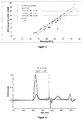
- a temperature of 160 °C and 60 rpm was chosen as the starting temperature for the reaction between triphenylphosphine (TPP) and BIIR. Torque curves were used illustrate that the reaction was indeed occurring, and to determine appropriate mixing time. Mixing was continued until the torque had stabilized for approx. 1 minute, as shown in Figure 1 .
- a 1.5 L Banbury mixer (BR-82), utilizing 1.3 ⁇ kg (88% fill factor) of BB2030 per mix (samples 23-32).
- the start temperature was 80 °C and 70 rpm.
- the time and temperature of the mixing reactions are noted in Tables 1-3, below.
- a twin screw extruder (Thermo Electron Corporation Prism USALAB 16 Mini Extruder) was used (samples 17-22) at 160 - 180 °C and 25 - 50 rpm. These conditions resulted in a throughput of approx. 8.5 g/min, with a residence time of approx. 3 mins. Specific temperatures and rpm are listed in Tables 1-3.
- Table 1 illustrates Mooney Viscosities, decay times, and % gel for the tested samples numbers 1-32.
- Table 1 Mixing type sample # mg / 100g MU 80% decay Gel (%) Brabender 1 0 32.2 4.16 3 160-180 °C 2 0 32.2 4.16 4 3 37 39.1 11.96 3 4 37 38.9 11.04 4 5 45 43.3 17.28 5 6 45 41.6 14.96 3 7 55 46.3 20.64 3 8 55 48.6 23.76 3 9 66 57.1 38.08 3 10 66 53 31.20 3 11 ⁇ 28 36.6 9.16 n.d. 12 ⁇ 42 41.9 15.84 n.d. 13 55 46.5 21.00 n.d. 14 55 40.5 13.12 n.d.
- Table 2 illustrates GPC results for the tested samples 1-32.
- an ionomer column was employed to improve separation of the ionomeric polymers.
- Table 3 illustrates H NMR analysis for the tested samples 1-32.
- Table 3 Mixing type sample # CH 2 -X (Z) exo-CH 2 (E) trans endo X sum Br ESBO 1 0.33 0.52 0.03 0.88 2 0.00 3 0.51 0.29 0.03 0.83 4 0.00 5 0.00 6 0.52 0.28 0.02 0.82 7 0.55 0.21 0.03 0.79 Brabender 160-180 °C 8 0.54 0.24 0.03 0.81 9 0.55 0.23 0.03 0.81 10 0.57 0.21 0.03 0.81 11 0.56 0.24 0.03 0.83 12 0.56 0.21 0.01 0.78 13 0.55 0.2 0.03 0.78 14 0.46 0.37 0.03 0.86 15 0.50 0.3 0.02 0.82 16 0.53 0.27 0.03 0.83 Mill, 100 °C 17 0.09 0.79 0.03 0.91 18 0.21 0.66 0.02 0.89 19 0.00 180 °C, 50 rpm 20 (avg of 8) 0.52 0.29 0.02 0.83 3 std dev 0.0 0.0 0.0 0.0 0.0
- the reaction was completed using BB2030 in: 1) a small head brabender at 160 - 180 °C with a 60 g sample size, 2) a twin screw extruder at 160 and 180 °C and at 25 and 50 rpm, 3) a 4x6" mill at 100 °C for 1 hr, and 3) scaled up using the BR-82 1.5 L internal mixer at 160 - 180 °C.
- the amount of the bis-phosphine was varied between 0 - 66 mg/100g BIIR (0 - 0.066 phr). These levels of bis-phosphine represent ⁇ 2% of the bromine sites available, and would not impact the cure state of the polymer during compounding.
- Samples maintained at temperatures at or below 160 °C retained a higher level of bound bromine as determined by H NMR, further illustrated in Table 3.
- Table 4-6 Samples 33-59. Table 4 Mixing type, BIIR sample # mg / 100g MU 80% decay Gel (%) BR82, BB2030 33 50 45.6 16.56 5 34 50 46.6 18.56 5 35 34 39.1 8.96 5 36 55 47.0 19.60 0.32 Extruder, 160C, 50 rpm, BB2030 37 55 46.7 19.32 2.93 38 55 46.7 19.12 -2.58 39 5 32.8 4.36 n.d. 40 10 33.9 4.60 n.d. 41 15 34.8 4.84 n.d. 42 20 35.5 5.2 n.d. 43 0 25.9 3.28 n.d. Extruder, 160C, 50 rpm, 26 MU base 44 15 28.2 3.17 n.d.
- Samples 33-59 represent polymer compositions based on three different base BIIR's, i.e., BB2030 and Brominated RB 402, having Mooney viscosities of 22, 26, and 32 MU where the resultant polymer compositions had Mooney viscosities of up to 50 MU and low gel content. All samples were prepared by first dispersing bis-phosphine into the BIIR via a 4x6 or 6x12 mill at 100 °C for less than 3 mins.
- BB2030 based samples were produced using a 1.5 L Banbury mixer (BR-82), utilizing 1.3 kg (88% fill factor) of BB2030 per mix (samples 1-3).
- the start temperature was 80 °C and 70 rpm.
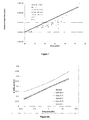
- the inset in Figure 12 illustrates that the percent HMWF for all three series overlaps as a function of added bis-phosphine when the series is normalized to moles bis-phosphine per moles of chains of BIIR, showing a consistency of the bis-phosphine-Br reaction between different grades and different samples.
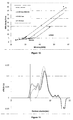
- Figure 13 illustrates the relationship between the percent HMWF and the change in MU observed after the reaction.
- the percent HMWF increases at a relatively steep rate compared to the increasing in MU, whereas after 30% HMWF, the MU increases much faster for every small increase in HMWF.
Landscapes
- Chemical & Material Sciences (AREA)
- Health & Medical Sciences (AREA)
- Chemical Kinetics & Catalysis (AREA)
- Medicinal Chemistry (AREA)
- Polymers & Plastics (AREA)
- Organic Chemistry (AREA)
- General Chemical & Material Sciences (AREA)
- Addition Polymer Or Copolymer, Post-Treatments, Or Chemical Modifications (AREA)
- Compositions Of Macromolecular Compounds (AREA)
Priority Applications (8)
| Application Number | Priority Date | Filing Date | Title |
|---|---|---|---|
| EP16165563.4A EP3231820A1 (de) | 2016-04-15 | 2016-04-15 | Polymerzusammensetzungen mit halohaltigem polymer mit multifunktionaler phosphinverknüpfung |
| EP17781667.5A EP3458516A4 (de) | 2016-04-15 | 2017-04-07 | Polymerzusammensetzungen mit halohaltigem polymer mit multifunktionaler phosphinverknüpfung |
| CA3021018A CA3021018C (en) | 2016-04-15 | 2017-04-07 | Polymer compositions having a halo-containing polymer with a multi-functional phosphine linkage |
| PCT/CA2017/050425 WO2017177314A1 (en) | 2016-04-15 | 2017-04-07 | Polymer compositions having a halo-containing polymer with a multi-functional phosphine linkage |
| US16/093,704 US10781301B2 (en) | 2016-04-15 | 2017-04-07 | Polymer compositions having a halo-containing polymer with a multi-functional phosphine linkage |
| CN201780037489.1A CN109312133A (zh) | 2016-04-15 | 2017-04-07 | 具有带有多官能膦连接基的含卤素聚合物的聚合物组合物 |
| RU2018140108A RU2744879C2 (ru) | 2016-04-15 | 2017-04-07 | Полимерные композиции, имеющие галогенсодержащий полимер с многофункциональной фосфиновой связью |
| JP2018553885A JP6904974B2 (ja) | 2016-04-15 | 2017-04-07 | 多官能性ホスフィン連結を有するハロ含有ポリマーを有するポリマー組成物 |
Applications Claiming Priority (1)
| Application Number | Priority Date | Filing Date | Title |
|---|---|---|---|
| EP16165563.4A EP3231820A1 (de) | 2016-04-15 | 2016-04-15 | Polymerzusammensetzungen mit halohaltigem polymer mit multifunktionaler phosphinverknüpfung |
Publications (1)
| Publication Number | Publication Date |
|---|---|
| EP3231820A1 true EP3231820A1 (de) | 2017-10-18 |
Family
ID=55910731
Family Applications (2)
| Application Number | Title | Priority Date | Filing Date |
|---|---|---|---|
| EP16165563.4A Withdrawn EP3231820A1 (de) | 2016-04-15 | 2016-04-15 | Polymerzusammensetzungen mit halohaltigem polymer mit multifunktionaler phosphinverknüpfung |
| EP17781667.5A Withdrawn EP3458516A4 (de) | 2016-04-15 | 2017-04-07 | Polymerzusammensetzungen mit halohaltigem polymer mit multifunktionaler phosphinverknüpfung |
Family Applications After (1)
| Application Number | Title | Priority Date | Filing Date |
|---|---|---|---|
| EP17781667.5A Withdrawn EP3458516A4 (de) | 2016-04-15 | 2017-04-07 | Polymerzusammensetzungen mit halohaltigem polymer mit multifunktionaler phosphinverknüpfung |
Country Status (7)
| Country | Link |
|---|---|
| US (1) | US10781301B2 (de) |
| EP (2) | EP3231820A1 (de) |
| JP (1) | JP6904974B2 (de) |
| CN (1) | CN109312133A (de) |
| CA (1) | CA3021018C (de) |
| RU (1) | RU2744879C2 (de) |
| WO (1) | WO2017177314A1 (de) |
Citations (8)
| Publication number | Priority date | Publication date | Assignee | Title |
|---|---|---|---|---|
| US2356128A (en) | 1939-10-20 | 1944-08-22 | Jasco Inc | Mixed olefinic polymerization process and product |
| EP0320263A2 (de) * | 1987-12-11 | 1989-06-14 | Exxon Chemical Patents Inc. | Verarbeitung von Isoolefin-Polymeren |
| CA2418884A1 (en) | 2003-02-14 | 2004-08-14 | Bayer Inc. | Process for production of high-isoprene butyl rubber |
| EP1591480A1 (de) * | 2004-04-28 | 2005-11-02 | Lanxess Inc. | Mit Silica gefüllte Elastomerzusammensetzung |
| CA2578583A1 (en) | 2006-03-14 | 2007-09-14 | Lanxess Inc. | Butyl ionomer having improved surface adhesion |
| EP2077285A1 (de) * | 2006-10-25 | 2009-07-08 | Unimatec Co., Ltd. | Fluoriniertes elastomer zur formung einer brennstoffleitungskomponente sowie zusammensetzung damit |
| WO2011089083A1 (en) * | 2010-01-20 | 2011-07-28 | Lanxess International Sa | Process for production of halobutyl ionomers |
| WO2014100890A1 (en) * | 2012-12-26 | 2014-07-03 | Lanxess Inc. | Sulfur-free, zinc-free cure system for halobutyl and halogen containing polymers |
Family Cites Families (17)
| Publication number | Priority date | Publication date | Assignee | Title |
|---|---|---|---|---|
| US5194538A (en) * | 1992-07-15 | 1993-03-16 | Polysar Corporation | Preparation of butyl rubber with bimodal molecular weight distribution |
| US5578682A (en) * | 1995-05-25 | 1996-11-26 | Exxon Chemical Patents Inc. | Bimodalization of polymer molecular weight distribution |
| EP0881237A1 (de) * | 1997-05-26 | 1998-12-02 | Fina Research S.A. | Verfahren zur Herstellung von bimodalen Polyolefinen mit Metallocenkatalysatoren in zwei Reaktionszonen |
| CN1145677C (zh) * | 2000-08-18 | 2004-04-14 | 长春人造树脂厂股份有限公司 | 含有环氧基的含磷化合物的树脂组合物及其用途 |
| EP1334150B1 (de) * | 2000-10-11 | 2005-12-28 | Exxonmobil Chemical Patents Inc. | Thermoplastische zusammensetzungen aus halogenierten elastomeren |
| US6933358B2 (en) * | 2002-08-16 | 2005-08-23 | The Goodyear Tire & Rubber Company | Functionalized monomers for synthesis of rubbery polymers |
| US6884855B2 (en) * | 2003-01-30 | 2005-04-26 | Chevron Oronite Company Llc | Sulfurized polyisobutylene based wear and oxidation inhibitors |
| JP4636254B2 (ja) * | 2005-08-11 | 2011-02-23 | ブラザー工業株式会社 | インクジェット記録装置 |
| WO2007022619A1 (en) * | 2005-08-26 | 2007-03-01 | Lanxess Inc. | Peroxide curable rubber compound containing high multiolefin halobutyl ionomers |
| CN101253207A (zh) * | 2005-08-30 | 2008-08-27 | 皮雷利&C.有限公司 | 生产热塑性弹性体材料的方法 |
| WO2012019301A2 (en) * | 2010-08-13 | 2012-02-16 | Lanxess Inc. | Butyl ionomer latex |
| TW201235359A (en) * | 2010-11-24 | 2012-09-01 | Lanxess Inc | Ionomers comprising pendant vinyl groups and processes for preparing same |
| US8158701B1 (en) * | 2011-02-02 | 2012-04-17 | Sabic Innovative Plastics Ip B.V. | Non-halogenated flame retardant polycarbonate compostions |
| SG11201504821XA (en) * | 2012-12-20 | 2015-07-30 | Lanxess Butyl Pte Ltd | Ionomer comprising pendant vinyl groups and processes for preparing same |
| WO2015164962A1 (en) * | 2014-04-30 | 2015-11-05 | Lanxess Inc. | Highly unsaturated multi-modal polyisoolefin composition and process for preparation thereof |
| EP2987828A1 (de) * | 2014-08-22 | 2016-02-24 | Lanxess Inc. | Butyl-Ionomer-Mischungen |
| CN104498925B (zh) * | 2015-01-19 | 2017-07-21 | 山东大学 | 一种基于多官能团烷基磷酸酯的金属表面处理液及应用 |
-
2016
- 2016-04-15 EP EP16165563.4A patent/EP3231820A1/de not_active Withdrawn
-
2017
- 2017-04-07 RU RU2018140108A patent/RU2744879C2/ru active
- 2017-04-07 CA CA3021018A patent/CA3021018C/en active Active
- 2017-04-07 JP JP2018553885A patent/JP6904974B2/ja not_active Expired - Fee Related
- 2017-04-07 CN CN201780037489.1A patent/CN109312133A/zh active Pending
- 2017-04-07 WO PCT/CA2017/050425 patent/WO2017177314A1/en not_active Ceased
- 2017-04-07 EP EP17781667.5A patent/EP3458516A4/de not_active Withdrawn
- 2017-04-07 US US16/093,704 patent/US10781301B2/en not_active Expired - Fee Related
Patent Citations (8)
| Publication number | Priority date | Publication date | Assignee | Title |
|---|---|---|---|---|
| US2356128A (en) | 1939-10-20 | 1944-08-22 | Jasco Inc | Mixed olefinic polymerization process and product |
| EP0320263A2 (de) * | 1987-12-11 | 1989-06-14 | Exxon Chemical Patents Inc. | Verarbeitung von Isoolefin-Polymeren |
| CA2418884A1 (en) | 2003-02-14 | 2004-08-14 | Bayer Inc. | Process for production of high-isoprene butyl rubber |
| EP1591480A1 (de) * | 2004-04-28 | 2005-11-02 | Lanxess Inc. | Mit Silica gefüllte Elastomerzusammensetzung |
| CA2578583A1 (en) | 2006-03-14 | 2007-09-14 | Lanxess Inc. | Butyl ionomer having improved surface adhesion |
| EP2077285A1 (de) * | 2006-10-25 | 2009-07-08 | Unimatec Co., Ltd. | Fluoriniertes elastomer zur formung einer brennstoffleitungskomponente sowie zusammensetzung damit |
| WO2011089083A1 (en) * | 2010-01-20 | 2011-07-28 | Lanxess International Sa | Process for production of halobutyl ionomers |
| WO2014100890A1 (en) * | 2012-12-26 | 2014-07-03 | Lanxess Inc. | Sulfur-free, zinc-free cure system for halobutyl and halogen containing polymers |
Non-Patent Citations (4)
| Title |
|---|
| "Ullmann's Encyclopedia of Industrial Chemistry", vol. A231 |
| MAURICE MORTON: "Rubber Technology", 1987, VAN NOSTRAND REINHOLD COMPANY, pages: 297 - 300 |
| MAURICE MORTON: "Rubber Technology", KLUWER ACADEMIC PUBLISHERS, pages: 297 - 300 |
| ULLMANNS ENCYCLOPEDIA OF INDUSTRIAL CHEMISTRY, vol. A 23, 1993, pages 288 - 295 |
Also Published As
| Publication number | Publication date |
|---|---|
| JP2019511619A (ja) | 2019-04-25 |
| RU2744879C2 (ru) | 2021-03-16 |
| JP6904974B2 (ja) | 2021-07-21 |
| EP3458516A1 (de) | 2019-03-27 |
| RU2018140108A3 (de) | 2020-06-04 |
| WO2017177314A1 (en) | 2017-10-19 |
| US10781301B2 (en) | 2020-09-22 |
| EP3458516A4 (de) | 2020-03-04 |
| CA3021018C (en) | 2019-01-15 |
| CA3021018A1 (en) | 2017-10-19 |
| CN109312133A (zh) | 2019-02-05 |
| US20190136020A1 (en) | 2019-05-09 |
| RU2018140108A (ru) | 2020-05-15 |
Similar Documents
| Publication | Publication Date | Title |
|---|---|---|
| KR101483609B1 (ko) | 개선된 표면 부착성을 갖는 부틸 이오노머 | |
| KR101858288B1 (ko) | 펜던트 비닐 기를 포함하는 포스포늄 이오노머 및 그의 제조 방법 | |
| EP1313777B1 (de) | Verfahten zur herstellung von butyl-kautschuk mit verbesserter verarbeitbarkeit | |
| EP1820808A1 (de) | Verfahren zum Halogenieren von Butylkautschuk ohne Säureneutralisierungsmittel | |
| EP1215220B1 (de) | Halogenierte, Gel-freie Isobuten-Kopolymere mit hohem Molekulargewicht und hohem Gehalt an Doppelbindungen | |
| JP2009506138A (ja) | 過酸化物硬化性ハイマルチオレフィンハロブチルアイオノマーの製造方法 | |
| US10781301B2 (en) | Polymer compositions having a halo-containing polymer with a multi-functional phosphine linkage | |
| KR20150119846A (ko) | 펜던트 비닐 기를 포함하는 이오노머 및 그의 제조 방법 | |
| EP3774959B1 (de) | Isobutylenbasierte polymere mit olefinischen seitenkettensubstituenten und härtbare zusammensetzungen damit | |
| WO2023000099A9 (en) | Branched butyl rubber compounds | |
| JP2005531655A (ja) | ブチル重合体の加工性改良方法 | |
| EP1215241A1 (de) | Gummizusammensetzung für Schläuche | |
| CA2581699A1 (en) | Resin curable butyl rubber compound and curing bladders made therefrom |
Legal Events
| Date | Code | Title | Description |
|---|---|---|---|
| PUAI | Public reference made under article 153(3) epc to a published international application that has entered the european phase |
Free format text: ORIGINAL CODE: 0009012 |
|
| AK | Designated contracting states |
Kind code of ref document: A1 Designated state(s): AL AT BE BG CH CY CZ DE DK EE ES FI FR GB GR HR HU IE IS IT LI LT LU LV MC MK MT NL NO PL PT RO RS SE SI SK SM TR |
|
| AX | Request for extension of the european patent |
Extension state: BA ME |
|
| 17P | Request for examination filed |
Effective date: 20180418 |
|
| RBV | Designated contracting states (corrected) |
Designated state(s): AL AT BE BG CH CY CZ DE DK EE ES FI FR GB GR HR HU IE IS IT LI LT LU LV MC MK MT NL NO PL PT RO RS SE SI SK SM TR |
|
| RAP1 | Party data changed (applicant data changed or rights of an application transferred) |
Owner name: ARLANXEO SINGAPORE PTE. LTD. |
|
| STAA | Information on the status of an ep patent application or granted ep patent |
Free format text: STATUS: THE APPLICATION IS DEEMED TO BE WITHDRAWN |
|
| 18D | Application deemed to be withdrawn |
Effective date: 20180419 |