EP3231833A1 - Poudres composites de polyester de nanoparticules d'argent sulfonées enrobées de polymère à base styrénique et procédés de fabrication associés - Google Patents
Poudres composites de polyester de nanoparticules d'argent sulfonées enrobées de polymère à base styrénique et procédés de fabrication associés Download PDFInfo
- Publication number
- EP3231833A1 EP3231833A1 EP17164308.3A EP17164308A EP3231833A1 EP 3231833 A1 EP3231833 A1 EP 3231833A1 EP 17164308 A EP17164308 A EP 17164308A EP 3231833 A1 EP3231833 A1 EP 3231833A1
- Authority
- EP
- European Patent Office
- Prior art keywords
- sulfonated polyester
- silver
- composite powder
- particles
- copoly
- Prior art date
- Legal status (The legal status is an assumption and is not a legal conclusion. Google has not performed a legal analysis and makes no representation as to the accuracy of the status listed.)
- Granted
Links
Images


Classifications
-
- C—CHEMISTRY; METALLURGY
- C08—ORGANIC MACROMOLECULAR COMPOUNDS; THEIR PREPARATION OR CHEMICAL WORKING-UP; COMPOSITIONS BASED THEREON
- C08L—COMPOSITIONS OF MACROMOLECULAR COMPOUNDS
- C08L67/00—Compositions of polyesters obtained by reactions forming a carboxylic ester link in the main chain; Compositions of derivatives of such polymers
- C08L67/02—Polyesters derived from dicarboxylic acids and dihydroxy compounds
-
- C—CHEMISTRY; METALLURGY
- C08—ORGANIC MACROMOLECULAR COMPOUNDS; THEIR PREPARATION OR CHEMICAL WORKING-UP; COMPOSITIONS BASED THEREON
- C08J—WORKING-UP; GENERAL PROCESSES OF COMPOUNDING; AFTER-TREATMENT NOT COVERED BY SUBCLASSES C08B, C08C, C08F, C08G or C08H
- C08J3/00—Processes of treating or compounding macromolecular substances
- C08J3/12—Powdering or granulating
- C08J3/126—Polymer particles coated by polymer, e.g. core shell structures
-
- A—HUMAN NECESSITIES
- A01—AGRICULTURE; FORESTRY; ANIMAL HUSBANDRY; HUNTING; TRAPPING; FISHING
- A01N—PRESERVATION OF BODIES OF HUMANS OR ANIMALS OR PLANTS OR PARTS THEREOF; BIOCIDES, e.g. AS DISINFECTANTS, AS PESTICIDES OR AS HERBICIDES; PEST REPELLANTS OR ATTRACTANTS; PLANT GROWTH REGULATORS
- A01N25/00—Biocides, pest repellants or attractants, or plant growth regulators, characterised by their forms, or by their non-active ingredients or by their methods of application, e.g. seed treatment or sequential application; Substances for reducing the noxious effect of the active ingredients to organisms other than pests
- A01N25/26—Biocides, pest repellants or attractants, or plant growth regulators, characterised by their forms, or by their non-active ingredients or by their methods of application, e.g. seed treatment or sequential application; Substances for reducing the noxious effect of the active ingredients to organisms other than pests in coated particulate form
- A01N25/28—Microcapsules or nanocapsules
-
- A—HUMAN NECESSITIES
- A01—AGRICULTURE; FORESTRY; ANIMAL HUSBANDRY; HUNTING; TRAPPING; FISHING
- A01N—PRESERVATION OF BODIES OF HUMANS OR ANIMALS OR PLANTS OR PARTS THEREOF; BIOCIDES, e.g. AS DISINFECTANTS, AS PESTICIDES OR AS HERBICIDES; PEST REPELLANTS OR ATTRACTANTS; PLANT GROWTH REGULATORS
- A01N59/00—Biocides, pest repellants or attractants, or plant growth regulators containing elements or inorganic compounds
- A01N59/16—Heavy metals; Compounds thereof
-
- B—PERFORMING OPERATIONS; TRANSPORTING
- B01—PHYSICAL OR CHEMICAL PROCESSES OR APPARATUS IN GENERAL
- B01J—CHEMICAL OR PHYSICAL PROCESSES, e.g. CATALYSIS OR COLLOID CHEMISTRY; THEIR RELEVANT APPARATUS
- B01J13/00—Colloid chemistry, e.g. the production of colloidal materials or their solutions, not otherwise provided for; Making microcapsules or microballoons
- B01J13/02—Making microcapsules or microballoons
-
- B—PERFORMING OPERATIONS; TRANSPORTING
- B29—WORKING OF PLASTICS; WORKING OF SUBSTANCES IN A PLASTIC STATE IN GENERAL
- B29B—PREPARATION OR PRETREATMENT OF THE MATERIAL TO BE SHAPED; MAKING GRANULES OR PREFORMS; RECOVERY OF PLASTICS OR OTHER CONSTITUENTS OF WASTE MATERIAL CONTAINING PLASTICS
- B29B7/00—Mixing; Kneading
- B29B7/80—Component parts, details or accessories; Auxiliary operations
- B29B7/88—Adding charges, i.e. additives
- B29B7/90—Fillers or reinforcements, e.g. fibres
-
- B—PERFORMING OPERATIONS; TRANSPORTING
- B29—WORKING OF PLASTICS; WORKING OF SUBSTANCES IN A PLASTIC STATE IN GENERAL
- B29B—PREPARATION OR PRETREATMENT OF THE MATERIAL TO BE SHAPED; MAKING GRANULES OR PREFORMS; RECOVERY OF PLASTICS OR OTHER CONSTITUENTS OF WASTE MATERIAL CONTAINING PLASTICS
- B29B9/00—Making granules
- B29B9/12—Making granules characterised by structure or composition
-
- B—PERFORMING OPERATIONS; TRANSPORTING
- B29—WORKING OF PLASTICS; WORKING OF SUBSTANCES IN A PLASTIC STATE IN GENERAL
- B29B—PREPARATION OR PRETREATMENT OF THE MATERIAL TO BE SHAPED; MAKING GRANULES OR PREFORMS; RECOVERY OF PLASTICS OR OTHER CONSTITUENTS OF WASTE MATERIAL CONTAINING PLASTICS
- B29B9/00—Making granules
- B29B9/16—Auxiliary treatment of granules
-
- B—PERFORMING OPERATIONS; TRANSPORTING
- B29—WORKING OF PLASTICS; WORKING OF SUBSTANCES IN A PLASTIC STATE IN GENERAL
- B29C—SHAPING OR JOINING OF PLASTICS; SHAPING OF MATERIAL IN A PLASTIC STATE, NOT OTHERWISE PROVIDED FOR; AFTER-TREATMENT OF THE SHAPED PRODUCTS, e.g. REPAIRING
- B29C35/00—Heating, cooling or curing, e.g. crosslinking or vulcanising; Apparatus therefor
- B29C35/02—Heating or curing, e.g. crosslinking or vulcanizing during moulding, e.g. in a mould
- B29C35/08—Heating or curing, e.g. crosslinking or vulcanizing during moulding, e.g. in a mould by wave energy or particle radiation
-
- B—PERFORMING OPERATIONS; TRANSPORTING
- B29—WORKING OF PLASTICS; WORKING OF SUBSTANCES IN A PLASTIC STATE IN GENERAL
- B29C—SHAPING OR JOINING OF PLASTICS; SHAPING OF MATERIAL IN A PLASTIC STATE, NOT OTHERWISE PROVIDED FOR; AFTER-TREATMENT OF THE SHAPED PRODUCTS, e.g. REPAIRING
- B29C64/00—Additive manufacturing, i.e. manufacturing of three-dimensional [3D] objects by additive deposition, additive agglomeration or additive layering, e.g. by 3D printing, stereolithography or selective laser sintering
- B29C64/10—Processes of additive manufacturing
- B29C64/106—Processes of additive manufacturing using only liquids or viscous materials, e.g. depositing a continuous bead of viscous material
- B29C64/124—Processes of additive manufacturing using only liquids or viscous materials, e.g. depositing a continuous bead of viscous material using layers of liquid which are selectively solidified
- B29C64/129—Processes of additive manufacturing using only liquids or viscous materials, e.g. depositing a continuous bead of viscous material using layers of liquid which are selectively solidified characterised by the energy source therefor, e.g. by global irradiation combined with a mask
- B29C64/135—Processes of additive manufacturing using only liquids or viscous materials, e.g. depositing a continuous bead of viscous material using layers of liquid which are selectively solidified characterised by the energy source therefor, e.g. by global irradiation combined with a mask the energy source being concentrated, e.g. scanning lasers or focused light sources
-
- B—PERFORMING OPERATIONS; TRANSPORTING
- B29—WORKING OF PLASTICS; WORKING OF SUBSTANCES IN A PLASTIC STATE IN GENERAL
- B29C—SHAPING OR JOINING OF PLASTICS; SHAPING OF MATERIAL IN A PLASTIC STATE, NOT OTHERWISE PROVIDED FOR; AFTER-TREATMENT OF THE SHAPED PRODUCTS, e.g. REPAIRING
- B29C64/00—Additive manufacturing, i.e. manufacturing of three-dimensional [3D] objects by additive deposition, additive agglomeration or additive layering, e.g. by 3D printing, stereolithography or selective laser sintering
- B29C64/10—Processes of additive manufacturing
- B29C64/141—Processes of additive manufacturing using only solid materials
- B29C64/153—Processes of additive manufacturing using only solid materials using layers of powder being selectively joined, e.g. by selective laser sintering or melting
-
- B—PERFORMING OPERATIONS; TRANSPORTING
- B33—ADDITIVE MANUFACTURING TECHNOLOGY
- B33Y—ADDITIVE MANUFACTURING, i.e. MANUFACTURING OF THREE-DIMENSIONAL [3D] OBJECTS BY ADDITIVE DEPOSITION, ADDITIVE AGGLOMERATION OR ADDITIVE LAYERING, e.g. BY 3D PRINTING, STEREOLITHOGRAPHY OR SELECTIVE LASER SINTERING
- B33Y70/00—Materials specially adapted for additive manufacturing
- B33Y70/10—Composites of different types of material, e.g. mixtures of ceramics and polymers or mixtures of metals and biomaterials
-
- B—PERFORMING OPERATIONS; TRANSPORTING
- B82—NANOTECHNOLOGY
- B82Y—SPECIFIC USES OR APPLICATIONS OF NANOSTRUCTURES; MEASUREMENT OR ANALYSIS OF NANOSTRUCTURES; MANUFACTURE OR TREATMENT OF NANOSTRUCTURES
- B82Y30/00—Nanotechnology for materials or surface science, e.g. nanocomposites
-
- C—CHEMISTRY; METALLURGY
- C08—ORGANIC MACROMOLECULAR COMPOUNDS; THEIR PREPARATION OR CHEMICAL WORKING-UP; COMPOSITIONS BASED THEREON
- C08F—MACROMOLECULAR COMPOUNDS OBTAINED BY REACTIONS ONLY INVOLVING CARBON-TO-CARBON UNSATURATED BONDS
- C08F112/00—Homopolymers of compounds having one or more unsaturated aliphatic radicals, each having only one carbon-to-carbon double bond, and at least one being terminated by an aromatic carbocyclic ring
- C08F112/02—Monomers containing only one unsaturated aliphatic radical
- C08F112/04—Monomers containing only one unsaturated aliphatic radical containing one ring
- C08F112/06—Hydrocarbons
- C08F112/08—Styrene
-
- C—CHEMISTRY; METALLURGY
- C08—ORGANIC MACROMOLECULAR COMPOUNDS; THEIR PREPARATION OR CHEMICAL WORKING-UP; COMPOSITIONS BASED THEREON
- C08G—MACROMOLECULAR COMPOUNDS OBTAINED OTHERWISE THAN BY REACTIONS ONLY INVOLVING UNSATURATED CARBON-TO-CARBON BONDS
- C08G63/00—Macromolecular compounds obtained by reactions forming a carboxylic ester link in the main chain of the macromolecule
- C08G63/68—Polyesters containing atoms other than carbon, hydrogen and oxygen
- C08G63/688—Polyesters containing atoms other than carbon, hydrogen and oxygen containing sulfur
- C08G63/6884—Polyesters containing atoms other than carbon, hydrogen and oxygen containing sulfur derived from polycarboxylic acids and polyhydroxy compounds
- C08G63/6886—Dicarboxylic acids and dihydroxy compounds
-
- C—CHEMISTRY; METALLURGY
- C08—ORGANIC MACROMOLECULAR COMPOUNDS; THEIR PREPARATION OR CHEMICAL WORKING-UP; COMPOSITIONS BASED THEREON
- C08J—WORKING-UP; GENERAL PROCESSES OF COMPOUNDING; AFTER-TREATMENT NOT COVERED BY SUBCLASSES C08B, C08C, C08F, C08G or C08H
- C08J3/00—Processes of treating or compounding macromolecular substances
- C08J3/12—Powdering or granulating
- C08J3/16—Powdering or granulating by coagulating dispersions
-
- C—CHEMISTRY; METALLURGY
- C08—ORGANIC MACROMOLECULAR COMPOUNDS; THEIR PREPARATION OR CHEMICAL WORKING-UP; COMPOSITIONS BASED THEREON
- C08J—WORKING-UP; GENERAL PROCESSES OF COMPOUNDING; AFTER-TREATMENT NOT COVERED BY SUBCLASSES C08B, C08C, C08F, C08G or C08H
- C08J3/00—Processes of treating or compounding macromolecular substances
- C08J3/20—Compounding polymers with additives, e.g. colouring
-
- C—CHEMISTRY; METALLURGY
- C08—ORGANIC MACROMOLECULAR COMPOUNDS; THEIR PREPARATION OR CHEMICAL WORKING-UP; COMPOSITIONS BASED THEREON
- C08J—WORKING-UP; GENERAL PROCESSES OF COMPOUNDING; AFTER-TREATMENT NOT COVERED BY SUBCLASSES C08B, C08C, C08F, C08G or C08H
- C08J3/00—Processes of treating or compounding macromolecular substances
- C08J3/20—Compounding polymers with additives, e.g. colouring
- C08J3/205—Compounding polymers with additives, e.g. colouring in the presence of a continuous liquid phase
- C08J3/21—Compounding polymers with additives, e.g. colouring in the presence of a continuous liquid phase the polymer being premixed with a liquid phase
- C08J3/215—Compounding polymers with additives, e.g. colouring in the presence of a continuous liquid phase the polymer being premixed with a liquid phase at least one additive being also premixed with a liquid phase
-
- C—CHEMISTRY; METALLURGY
- C08—ORGANIC MACROMOLECULAR COMPOUNDS; THEIR PREPARATION OR CHEMICAL WORKING-UP; COMPOSITIONS BASED THEREON
- C08K—Use of inorganic or non-macromolecular organic substances as compounding ingredients
- C08K3/00—Use of inorganic substances as compounding ingredients
- C08K3/02—Elements
- C08K3/08—Metals
-
- C—CHEMISTRY; METALLURGY
- C08—ORGANIC MACROMOLECULAR COMPOUNDS; THEIR PREPARATION OR CHEMICAL WORKING-UP; COMPOSITIONS BASED THEREON
- C08L—COMPOSITIONS OF MACROMOLECULAR COMPOUNDS
- C08L25/00—Compositions of, homopolymers or copolymers of compounds having one or more unsaturated aliphatic radicals, each having only one carbon-to-carbon double bond, and at least one being terminated by an aromatic carbocyclic ring; Compositions of derivatives of such polymers
- C08L25/02—Homopolymers or copolymers of hydrocarbons
- C08L25/04—Homopolymers or copolymers of styrene
- C08L25/06—Polystyrene
-
- C—CHEMISTRY; METALLURGY
- C08—ORGANIC MACROMOLECULAR COMPOUNDS; THEIR PREPARATION OR CHEMICAL WORKING-UP; COMPOSITIONS BASED THEREON
- C08L—COMPOSITIONS OF MACROMOLECULAR COMPOUNDS
- C08L67/00—Compositions of polyesters obtained by reactions forming a carboxylic ester link in the main chain; Compositions of derivatives of such polymers
-
- B—PERFORMING OPERATIONS; TRANSPORTING
- B29—WORKING OF PLASTICS; WORKING OF SUBSTANCES IN A PLASTIC STATE IN GENERAL
- B29B—PREPARATION OR PRETREATMENT OF THE MATERIAL TO BE SHAPED; MAKING GRANULES OR PREFORMS; RECOVERY OF PLASTICS OR OTHER CONSTITUENTS OF WASTE MATERIAL CONTAINING PLASTICS
- B29B9/00—Making granules
- B29B9/12—Making granules characterised by structure or composition
- B29B2009/125—Micropellets, microgranules, microparticles
-
- B—PERFORMING OPERATIONS; TRANSPORTING
- B33—ADDITIVE MANUFACTURING TECHNOLOGY
- B33Y—ADDITIVE MANUFACTURING, i.e. MANUFACTURING OF THREE-DIMENSIONAL [3D] OBJECTS BY ADDITIVE DEPOSITION, ADDITIVE AGGLOMERATION OR ADDITIVE LAYERING, e.g. BY 3D PRINTING, STEREOLITHOGRAPHY OR SELECTIVE LASER SINTERING
- B33Y10/00—Processes of additive manufacturing
-
- B—PERFORMING OPERATIONS; TRANSPORTING
- B33—ADDITIVE MANUFACTURING TECHNOLOGY
- B33Y—ADDITIVE MANUFACTURING, i.e. MANUFACTURING OF THREE-DIMENSIONAL [3D] OBJECTS BY ADDITIVE DEPOSITION, ADDITIVE AGGLOMERATION OR ADDITIVE LAYERING, e.g. BY 3D PRINTING, STEREOLITHOGRAPHY OR SELECTIVE LASER SINTERING
- B33Y80/00—Products made by additive manufacturing
-
- C—CHEMISTRY; METALLURGY
- C08—ORGANIC MACROMOLECULAR COMPOUNDS; THEIR PREPARATION OR CHEMICAL WORKING-UP; COMPOSITIONS BASED THEREON
- C08J—WORKING-UP; GENERAL PROCESSES OF COMPOUNDING; AFTER-TREATMENT NOT COVERED BY SUBCLASSES C08B, C08C, C08F, C08G or C08H
- C08J2300/00—Characterised by the use of unspecified polymers
- C08J2300/10—Polymers characterised by the presence of specified groups, e.g. terminal or pendant functional groups
-
- C—CHEMISTRY; METALLURGY
- C08—ORGANIC MACROMOLECULAR COMPOUNDS; THEIR PREPARATION OR CHEMICAL WORKING-UP; COMPOSITIONS BASED THEREON
- C08J—WORKING-UP; GENERAL PROCESSES OF COMPOUNDING; AFTER-TREATMENT NOT COVERED BY SUBCLASSES C08B, C08C, C08F, C08G or C08H
- C08J2367/00—Characterised by the use of polyesters obtained by reactions forming a carboxylic ester link in the main chain; Derivatives of such polymers
- C08J2367/02—Polyesters derived from dicarboxylic acids and dihydroxy compounds
-
- C—CHEMISTRY; METALLURGY
- C08—ORGANIC MACROMOLECULAR COMPOUNDS; THEIR PREPARATION OR CHEMICAL WORKING-UP; COMPOSITIONS BASED THEREON
- C08J—WORKING-UP; GENERAL PROCESSES OF COMPOUNDING; AFTER-TREATMENT NOT COVERED BY SUBCLASSES C08B, C08C, C08F, C08G or C08H
- C08J2425/00—Characterised by the use of homopolymers or copolymers of compounds having one or more unsaturated aliphatic radicals, each having only one carbon-to-carbon double bond, and at least one being terminated by an aromatic carbocyclic ring; Derivatives of such polymers
- C08J2425/02—Homopolymers or copolymers of hydrocarbons
- C08J2425/04—Homopolymers or copolymers of styrene
-
- C—CHEMISTRY; METALLURGY
- C08—ORGANIC MACROMOLECULAR COMPOUNDS; THEIR PREPARATION OR CHEMICAL WORKING-UP; COMPOSITIONS BASED THEREON
- C08J—WORKING-UP; GENERAL PROCESSES OF COMPOUNDING; AFTER-TREATMENT NOT COVERED BY SUBCLASSES C08B, C08C, C08F, C08G or C08H
- C08J2425/00—Characterised by the use of homopolymers or copolymers of compounds having one or more unsaturated aliphatic radicals, each having only one carbon-to-carbon double bond, and at least one being terminated by an aromatic carbocyclic ring; Derivatives of such polymers
- C08J2425/02—Homopolymers or copolymers of hydrocarbons
- C08J2425/04—Homopolymers or copolymers of styrene
- C08J2425/06—Polystyrene
-
- C—CHEMISTRY; METALLURGY
- C08—ORGANIC MACROMOLECULAR COMPOUNDS; THEIR PREPARATION OR CHEMICAL WORKING-UP; COMPOSITIONS BASED THEREON
- C08K—Use of inorganic or non-macromolecular organic substances as compounding ingredients
- C08K3/00—Use of inorganic substances as compounding ingredients
- C08K3/02—Elements
- C08K3/08—Metals
- C08K2003/0806—Silver
-
- C—CHEMISTRY; METALLURGY
- C08—ORGANIC MACROMOLECULAR COMPOUNDS; THEIR PREPARATION OR CHEMICAL WORKING-UP; COMPOSITIONS BASED THEREON
- C08K—Use of inorganic or non-macromolecular organic substances as compounding ingredients
- C08K2201/00—Specific properties of additives
- C08K2201/011—Nanostructured additives
Definitions
- the present disclosure relates to composites, particularly, polymer coated composites comprising metal nanoparticles dispersed throughout the composite matrix, for use in selective laser sintering (SLS) application.
- SLS selective laser sintering
- SLS selective laser sintering
- 3D printing 3D printing
- SLS additive manufacturing
- a detailed description of SLS technology can be found in U.S. Pat. Nos. 4,247,508 , 4,863,538 , 5,017,753 , 5,597,589 and 6,110,411 , each incorporated herein by reference.
- SLS printing typically employs powdered plastics/polymers as build materials for printing objects.
- Most SLS materials are composites of polyamide (nylon) with or without additives such as powdered glass, carbon fibers, aluminum powder, etc.
- the powder is sintered into shape by a laser in a layer-by-layer fashion to build the objects from "scratch".
- Laser sintering usually uses particles ranging from about 50 to about 300 microns, where the degree of detail is limited only by the precision of the laser and fineness of the powder.
- the detail and intricacy of the objects derived through the SLS process is remarkable but also creates potential scaffolds for bacterial or microbial build-up, especially in applications related to health care and the food industry.
- embodiments herein relate to composite powders for use in selective laser sintering (SLS) application, the composite powder comprising a core particle comprising a sulfonated polyester matrix and a plurality of silver nanoparticles dispersed within the matrix; and a shell polymer disposed about the core particle, wherein the silver nanoparticle is present in the composite powder in a range from about 0.5 ppm to about 50,000 ppm; and further wherein the composite powder has a particle size of from about 10 microns to about 300 microns.
- SLS selective laser sintering
- embodiments herein relate to method comprising heating a sulfonated polyester resin in an organic-free solvent; adding a solution of silver (I) ion to the heated resin in water to form a mixture; adding a solution of a reducing agent to the mixture, thereby forming an emulsion of particles comprising a sulfonated polyester matrix and a plurality of silver nanoparticles disposed within the sulfonated polyester matrix; adding a styrene monomer and initiator to the emulsion of composite particles to form a shell polymer disposed about the core particles, thereby forming a composite structure; aggregating the emulsion of particles to form aggregated particles; coalescing the aggregated particles to form coalesced particles; and washing the coalesced particles, thereby forming the composite powder.
- embodiments herein relate to articles an article comprising a composite powder, the composite powder comprising a core particle and a shell polymer disposed about the core particle, where the core particle comprises a sulfonated polyester matrix and a plurality of silver nanoparticles dispersed within the matrix; wherein the silver nanoparticle is present in the composite powder in a range from about 0.5 ppm to about 50,000 ppm; and further wherein the composite powder has a particle size of from about 10 microns to about 300 microns.
- a coating composition that comprises “an” additive can be interpreted to mean that the coating composition includes “one or more” additives.
- the present disclosure provides a composite powder, more specifically, a polymer coated powdered sulfonated polyester polymeric composite containing silver nanoparticles (AgNPs), for use in selective laser sintering (SLS) application.
- a composite powder more specifically, a polymer coated powdered sulfonated polyester polymeric composite containing silver nanoparticles (AgNPs), for use in selective laser sintering (SLS) application.
- the class of AgNP polymer composites is more suitable for antibacterial applications compared to ionic and bulk silver, because silver salts may release silver too quickly and uncontrollably while bulk silver is very inefficient in releasing active silver species.
- AgNPs are known for their antibacterial properties; however the exact mechanism of antibacterial activity using AgNPs is poorly understood.
- the AgNPs may interact with the cell wall of the bacteria, consequently destabilizing the plasma-membrane potential and reducing the levels of intracellular adenosine triphosphate (ATP) resulting in bacterial cell death.
- AgNPs might play a role in the formation of reactive oxygen species (ROS) which is responsible for the cytotoxicity of bacteria cells in presence of AgNPs.
- ROS reactive oxygen species
- the SLS composite powder of the present disclosure may be synthesized from sulfonated polyester-silver nanoparticles (SPE-AgNPs).
- SPE-AgNPs sulfonated polyester-silver nanoparticles
- the SLS powder may be formed from the aggregation of self-dispersible sulfonated polyester (SPE) with embedded silver nanoparticles (AgNPs) that are simultaneously formed from silver nitrate with or without a reducing agent during the self-assembly of the sulfonated polyester resin particles in water.
- Certain embodiments herein provide methods of synthesizing silver nanoparticles (AgNPs) by reduction of silver (I) ion simultaneously during the self-assembly of sodio sulfonated polyester resin particles in water.
- the methods which employ water as the bulk solvent are environmentally friendly being free of organic solvents.
- the methods are efficient requiring minimal time to prepare the polymer metal nanocomposites. Without being bound by theory it is postulated that silver ions are trapped within the polymer matrix during the self-assembly of the sodio sulfonated polyester while simultaneously being reduced to AgNPs.
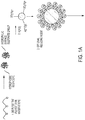
- the sulfonated polyester-silver nanoparticles are simultaneously synthesized during the self-assembly or dispersing of polymer in water as indicated in FIG. 1 .
- the sodio sulfonated polyester serves as both a carrier for the silver ions and an organic matrix for the in situ synthesis of silver nanocomposites.
- An optional reducing agent is added during the self-assembly of sodio sulfonated polyester to reduce silver nitrate into silver nanoparticles (AgNPs) resulting in well dispersed particles.
- the polyester matrix plays an important role as it is postulated to inhibit the agglomeration of AgNPs.
- the porosity of the sulfonated polyester allows the silver ions to diffuse and/or absorb throughout the polymer matrix allowing unhindered interaction with the sulfonate functional groups of the polyester.
- the reducing agent employed in the reduction of silver ion also freely diffuses throughout the polyester matrix and promotes the formation of well-dispersed AgNPs on the surface and interior of the polyester particles.
- the process minimizes nanoparticle agglomeration that plagues conventional methods with pre-formed nanoparticles.
- the sulfonated polymer matrix has an important role in keeping the AgNPs dispersed as well as maintaining overall chemical and mechanical stability of the composite.
- a polystyrene shell may be then formed on the surface of the SPE-AgNPs.
- a hydrophobic monomer such as styrene
- styrene polymerizes around the hydrophobic SPE core of the SPE nanosphere and forms a polystyrene shell on the surface of the SPE-AgNPs.
- the styrene monomer may diffuse within the porous SPE core.
- the sulfonated polyester plays a critical role as a stabilizer for in-situ synthesized AgNPs and also as a nano-template to provide a favorable environment for the polymerization of styrene in water without the use of a surfactant.
- Silver has many useful properties, including its antibacterial, antimicrobial, antifungal, antiviral properties. These novel properties of the silver nanocomposite materials disclosed herein make them useful in medical applications and others as described herein.
- the sulfonated polyester resins disclosed herein have been selected to have a hydrophobic backbone while presenting hydrophilic sulfonate groups attached along the chain.
- the hydrophobic portions when placed in water and heated, the hydrophobic portions may interact with each other to form a hydrophobic core with the hydrophilic sulfonate groups facing the surrounding water resulting in the sulfonated polyester self-assembling into a higher order, spherical nanoparticle without the requirement of additional reagents.
- the hydrophobic backbone which is insoluble in water, and the water-soluble hydrophilic sulfonate groups, operate as macrosurfactants.
- composites comprising a sulfonated polyester matrix, and a plurality of silver nanoparticles dispersed within the matrix.
- the sulfonated polyester matrix is a branched polymer (BSPE).
- the sulfonated polyester matrix is a linear polymer.
- the selection of branched or linear polymer may depend on, inter alia, the downstream application of the composite product. Linear polymers can be used to create strands of fibers or form a strong mesh-like structure. Branched polymers may be useful to confer thermoplastic properties on the resultant composite material.
- sulfonated polyesters of the present disclosure can be a homopolymer of one ester monomer or a copolymer of two or more ester monomers.
- suitable sulfonated polyesters include those disclosed in U.S. Pat. Nos.
- sulfonated polyesters of the present disclosure can be hydrogen or a salt of a random sulfonated polyester, including salts (such as metal salts, including aluminum salts, salts of alkali metals such as sodium, lithium, and potassium, salts of alkaline earth metals such as beryllium, magnesium, calcium, and barium, metal salts of transition metals, such as vanadium, iron, cobalt, copper, and the like, as well as mixtures thereof) of poly(1,2-propylene-5-sulfoisophthalate), poly(neopentylene-5-sulfoisophthalate), poly(diethylene-5-sulfoisophthalate), copoly(1,2-propylene-5-sulfoisophthalate)-copoly-(1,2-propylene-terephthalate phthalate), copoly(1,2-propylene-diethylene-5-sulfoisophthalate)-copoly-(1,2-propylene-diethylene-5
- the sulfonated polyesters may have the following general structure, or random copolymers thereof in which the n and p segments are separated.
- R is an alkylene of, for example, from 2 to about 25 carbon atoms such as ethylene, propylene, butylene, oxyalkylene diethyleneoxide, and the like
- R' is an arylene of, for example, from about 6 to about 36 carbon atoms, such as a benzylene, bisphenylene, bis(alkyloxy) bisphenolene, and the like
- p and n represent the number of randomly repeating segments, such as for example from about 10 to about 100,000.
- sulfonated polyesters further include those disclosed in U.S. Patent No. 7,312,011 which is incorporated herein by reference in its entirety.
- amorphous alkali sulfonated polyester based resins include, but are not limited to, copoly(ethylene-terephthalate)-copoly-(ethylene-5-sulfo-isophthalate), copoly(propylene-terephthalate)-copoly(propylene-5-sulfo-isophthalate), copoly(diethylene-terephthalate)-copoly(diethylene-5-sulfo-isophthalate), copoly(propylene-diethylene-terephthalate)-copoly(propylene-diethylene-5-sulfo-isophthalate), copoly(propylene-butylene-terephthalate)-copoly(propylene-butylene-5-sulfo-isophthalate), copoly(propoxylated
- Examples of crystalline alkali sulfonated polyester based resins alkali copoly(5-sulfoisophthaloyl)-co-poly(ethylene-adipate), alkali copoly(5-sulfoisophthaloyl)-copoly(propylene-adipate), alkali copoly(5-sulfoisophthaloyl)-copoly(butylene-adipate), alkali copoly(5-sulfo-isophthaloyl)-copoly(pentylene-adipate), and alkali copoly(5-sulfo-iosphthalbyl)-copoly(octylene-adipate), alkali copoly(5-sulfo-isophthaloyl)-copoly(ethylene-adipate), alkali copoly(5-sulfo-isophthaloyl)-copoly (propylene-adipate),
- the sulfonated polyesters suitable for use in the present disclosure may have a glass transition (Tg) temperature of from about 45° C to about 95° C, or from about 52° C to about 70° C, as measured by the Differential Scanning Calorimeter.
- Tg glass transition
- the sulfonated polyesters may have a number average molecular weight of from about 2,000 g per mole to about 150,000 g per mole, from about 3,000 g per mole to about 50,000 g per mole, or from about 6,000 g per mole to about 15,000 g per mole, as measured by the Gel Permeation Chromatograph.
- the sulfonated polyesters may have a weight average molecular weight of from about 3,000 g per mole to about 300,000 g per mole, from about 8,000 g per mole to about 90,000 g per mole, or from about 10,000 g per mole to about 60,000 g per mole, as measured by the Gel Permeation Chromatograph.
- the sulfonated polyesters may have a polydispersity of from about 1.6 to about 100, from about 2.0 to about 50, or from about 5.0 to about 30, as calculated by the ratio of the weight average to number average molecular weight.
- the linear amorphous polyester resins are generally prepared by the polycondensation of an organic diol and a diacid or diester, at least one of which is sulfonated or a sulfonated difunctional monomer being included in the reaction, and a polycondensation catalyst.
- a branching agent such as a multivalent polyacid or polyol.
- diacid or diesters selected for the preparation of amorphous polyesters include dicarboxylic acids or diesters selected from the group consisting of terephthalic acid, phthalic acid, isophthalic acid, fumaric acid, maleic acid, itaconic acid, succinic acid, succinic anhydride, dodecylsuccinic acid, dodecylsuccinic anhydride, glutaric acid, glutaric anhydride, adipic acid, pimelic acid, suberic acid, azelic acid, dodecanediacid, dimethyl terephthalate, diethyl terephthalate, dimethylisophthalate, diethylisophthalate, dimethylphthalate, phthalic anhydride, diethylphthalate, dimethylsuccinate, dimethylfumarate, dimethyl maleate, dimethylglutarate, dimethyladipate, dimethyl dodecylsuccinate, and mixtures thereof.
- the organic diacid or diester are selected, for example, from about 45 to about 52 mole percent of the resin.
- diols utilized in generating the amorphous polyester include 1,2-propanediol, 1,3-propanediol, 1,2-butanediol, 1,3-butanediol, 1,4-butanediol, pentanediol, hexanediol, 2,2-dimethylpropanediol, 2,2,3-trimethylhexanediol, heptanediol, dodecanediol, bis(hyroxyethyl)-bisphenol A, bis(2-hyroxypropyl)-bisphenol A, 1,4-cyclohexanedimethanol, 1,3-cyclohexanedimethanol, xylenedimethanol, cyclohexanediol, diethylene glycol, bis(2-hydroxyethyl
- Alkali sulfonated difunctional monomer examples wherein the alkali is lithium, sodium, or potassium, include dimethyl-5-sulfo-isophthalate, dialkyl-5-sulfo-isophthalate-4-sulfo-1,8-naphthalic anhydride, 4-sulfo-phthalic acid, 4-sulfophenyl-3,5-dicarbomethoxybenzene, 6-sulfo-2-naphthyl-3,5-dicarbomethoxybenzene, sulfo-terephthalic acid, dimethyl-sulfo-terephthalate, dialkyl-sulfo-terephthalate, sulfo-ethanediol, 2-sulfo-propanediol, 2-sulfo-butanediol, 3-sulfo-pentanediol, 2-sulfo-hexanediol, 3-sulfo-2-methyl
- Branching agents for use in forming the branched amorphous sulfonated polyester include, for example, a multivalent polyacid such as 1,2,4-benzenetricarboxylic acid, 1,2,4-cyclohexanetricarboxylic acid, 2,5,7-naphthalenetricarboxylic acid, 1,2,4-naphthalenetricarboxylic acid, 1,2,5-hexanetricarboxylic acid, 1,3-dicarboxyl-2-methyl-2-methylene-carboxylpropane, tetra(methylene-carboxyl)methane, and 1,2,7,8-octanetetracarboxylic acid, acid anhydrides thereof, and lower alkyl esters thereof, 1 to about 6 carbon atoms; a multivalent polyol such as sorbitol, 1,2,3,6-hexanetetrol, 1,4-sorbitane, pentaerythritol, dipentaerythritol
- Polycondensation catalyst examples for amorphous polyesters include tetraalkyl titanates, dialkyltin oxide such as dibutyltin oxide, tetraalkyltin such as dibutyltin dilaurate, dialkyltin oxide hydroxide such as butyltin oxide hydroxide, aluminum alkoxides, alkyl zinc, dialkyl zinc, zinc oxide, stannous oxide, or mixtures thereof; and which catalysts are selected in amounts of, for example, from about 0.01 mole percent to about 5 mole percent based on the starting diacid or diester used to generate the polyester resin.
- the sulfonated polyester matrix comprises a polyol monomer unit selected from the group consisting of trimethylolpropane, 1,2-propanediol, diethylene glycol, and combinations thereof.
- the sulfonated polyester matrix comprises a diacid monomer unit selected from the group consisting of terephthalic acid, sulfonated isophthalic acid, and combinations thereof.
- the sulfonated polyester-silver core nanoparticles may have a particle size in a range from about 5 nm to about 500 nm, or about 10 to about 200 nm, or about 20 to about 100 nm.
- a core particle size of less than 100 nm may be useful for reinforcement of polymer matrices without disturbing transparency and other properties of coatings.
- references to "particle size” will generally refer to D 50 mass-median-diameter (MMD) or the log-normal distribution mass median diameter. The MMD is considered to be the average particle diameter by mass.
- the silver nanoparticles may include solely elemental silver or may be a silver composite, including composites with other metals.
- Such metal-silver composite may include either or both of (i) one or more other metals and (ii) one or more non-metals.
- Suitable other metals include for example Al, Au, Pt, Pd, Cu, Co, Cr, In, and Ni, particularly the transition metals for example Au, Pt, Pd, Cu, Cr, Ni, and mixtures thereof.
- Exemplary metal composites are Au-Ag, Ag-Cu, Au-Ag-Cu, and Au-Ag-Pd.
- Suitable non-metals in the metal composite include for example Si, C, and Ge.
- the various components of the silver composite may be present in an amount ranging for example from about 0.01% to about 99.9% by weight, particularly from about 10% to about 90% by weight.
- the silver composite is a metal alloy composed of silver and one, two or more other metals, with silver comprising for example at least about 20% of the nanoparticles by weight, particularly greater than about 50% of the nanoparticles by weight.
- the weight percentages recited herein for the components of the silver-containing nanoparticles do not include the stabilizer.
- Silver nanoparticles composed of a silver composite can be made for example by using a mixture of (i) a silver compound (or compounds, especially silver (I) ion-containing compounds) and (ii) another metal salt (or salts) or another non-metal (or non-metals) during the reduction step.
- the silver nanoparticles have a particle size in a range from about 2 to about 50 nm, or about 10 to about 50 nm or about 20 to about 50 nm.
- Silver nanoparticles of diameter less than 100 nm absorb light primarily below 500 nm. This property is useful as it allows the AgNPs to be used in combination with fluorescence emission detection since most fluorophores emit at a wavelength above 500 nm, thus minimizing quenching of the signal.
- the sulfonated polyester-silver core nanoparticles may further comprise nanostructured materials, such as, without limitation, carbon nanotubes (CNTs, including single-walled, double-walled, and multi-walled), graphene sheet, nanoribbons, nano-onions, hollow nanoshell metals, nano-wires and the like.
- CNTs may be added in amounts that enhance electrical and thermal conductivity.
- a shell polymer may be disposed over the sulfonated polyester-silver core nanoparticles to provide additional reinforcement in terms of the hardness, strength, chemical resistance and thermal stability of the sulfonated polyester-silver core/AgNP composite in extreme environments.
- the shell polymer disposed about the sulfonated polyester-silver core nanoparticles comprises a styrene monomer, including substituted or unsubstituted styrenes.
- the shell polymer further comprises at least one vinyl monomer selected from the group consisting of methyl acrylate, ethyl acrylate, butyl acrylate, isobutyl acrylate, dodecyl acrylate, n-octyl acrylate, 2-ethylhexyl acrylate, 2-chloroethyl acrylate, phenyl acrylate, ⁇ -carboxyethyl acrylate, methyl ⁇ -chloro acrylate, methyl methacrylate, ethyl methacrylate, butyl methacrylate, butadiene, isoprene, methacrylonitrile, acrylonitrile, methyl vinyl ether, vinyl isobutyl ether,
- the shell polymer has a thickness from about 0.5 nm to about 100 nm, or from about 1.0 nm to about 50 nm, or from about 1.5 nm to about 20 nm.
- the shell polymer confers to the sulfonated polyester-silver core nanoparticles one or more properties, such as, methanol resistance, resistance to thermal degradation, and acid/base resistance.
- the polymer shell protects the core sulfonated polyester/AgNP composite from gelation.
- no more than about 10% material dissolves when, for example, a styrene shell is used.
- polymer shell-protected composites show only about 50% degradation at 400 °C, while uncoated SPE-AgNP composites show about 80% decomposition at 400 °C.
- the thermal stability of the styrene-coated composites appears to be more complex than that of polystyrene alone.
- a polymer shell such as styrene
- addition of a polymer shell, such as styrene, to the core composite may provide an improvement under basic conditions by 20 to 30%.
- a polymer shell, such as polystyrene, around the SPE/AgNp core provides substantially improved rigidity and strength of the organic/inorganic hybrid composite core materials.
- Composite powders disclosed herein are specifically suitable for SLS printing, which can be prepared from the sulfonated polyester-silver nanoparticles (SPE-AgNPs).
- Composite powders of the present disclosure may be prepared by conventional (ground and classification) or chemical (emulsion aggregation) means.
- U.S. Patent Nos. 5,111,998 , 5,147,753 , 5,272,034 , and 5,393,630 disclose conventional toner manufacturing processes are incorporated in their entirety by reference herein.
- Composite powders may be prepared by emulsion aggregation means. Any suitable emulsion aggregation procedure may be used in forming the emulsion aggregation composite particles without restriction.
- FIG. 3 shows an emulsion aggregation process for preparing dry particles for selective laser sintering (SLS) according to certain embodiments of the present disclosure.
- These procedures typically include the process steps of aggregating an emulsion of particles, such as those described in the present disclosure, a polymer coated core particle, where the core particle comprising a sulfonated polyester matrix and a plurality of silver nanoparticles disposed within the sulfonated polyester matrix, and one or more additional optional additives to form aggregated particles, subsequently coalescing the aggregated particles, and then recovering, optionally washing and optionally drying the obtained emulsion aggregation particles.
- the process is modified by the addition of a coalescent agent (or coalescence aid agent) prior to the coalescence.
- This addition of the coalescent agent provides toner particles having improved spheroidization, and allows the coalescence to be conducted in a shorter time, at a lower process temperature, or both.
- water is added to the SPE-AgNPs to form a slurry.
- the addition of water affords a total solid content based on the total weight of the slurry of from about 1 % to about 40%, from about 5% to about 20%, or from about 10% to about 50%.
- the aggregating step includes heating the slurry to a temperature of from about 30°C to about 80°C, from about 40°C to about 70°C, or from about 50°C to about 68°C.
- the duration of the aggregation step may be from about 1 minute to about 8 hours, from about 30 minutes to about 6 hour, or from about 60 minutes to about 4 hours.
- the coalescing step includes heating the aggregated particles to a temperature of from about 30°C to about 95°C, from about 40°C to about 95°C, or from about 60°C to about 90°C.
- the duration of the coalescing step may be from about 1 minute to about 6 hours, from about 30 minutes to about 4 hour, or from about 60 minutes to about 3 hours.
- coalescent agents include, but are not limited to, benzoic acid alkyl esters, ester-alcohols, glycol-ether type solvents, long-chain aliphatic alcohols, aromatic alcohols, mixtures thereof, and the like.
- benzoic acid alkyl esters include benzoic acid alkyl esters where the alkyl group, which can be straight or branched, substituted or unsubstituted, has from about 2 to about 30 carbon atoms, such as decyl or isodecyl benzoate, nonyl or isononyl benzoate, octyl or isooctyl benzoate, 2-ethylhexyl benzoate, tridecyl or isotridecyl benzoate, 3,7-dimethyloctyl benzoate, 3,5,5-trimethylhexyl benzoate, mixtures thereof, and the like.
- benzoic acid alkyl esters include VELTA® 262 (isodecyl benzoate) and VELTA® 368 (2-ethylhexyl benzoate), available from Vlesicol Chemical Corporation.
- ester-alcohols include hydroxyalkyl esters of alkanoic acids where the alkyls group, which can be straight or branched, substituted or unsubstituted, independently have from about 2 to about 30 carbon atoms, such as 2,2,4-trimethylpentane-1,3-diol monoisobutyrate.
- ester-alcohols include TEXANOL® (2,2,4-trimethylpentane-1,3-diol monoisobutyrate) available from Eastman Chemical Company.
- glycol-ether type solvents include diethylene glycol monomethylether acetate, diethylene glycol monobutylether acetate, butyl carbitol acetate (BCA), and the like.
- BCA butyl carbitol acetate
- long-chain aliphatic alcohols include those where the alkyl group is from about 5 to about 20 carbon atoms, such as ethylhexanol, octanol, dodecanol, and the like.
- aromatic alcohols include benzyl alcohol, and the like.
- the coalescent agent evaporates during later stages of the emulsion aggregation process or during coalescence, such as during the heating step that is generally near or above the glass transition temperature of the sulfonated polyester resin.
- the final composite powders are thus free of, or essentially or substantially free of, any remaining coalescent agent.
- the amount of remaining coalescent agent is such that it does not affect any properties or performance of the composite powders.
- the coalescent agent can be added prior to the coalescence in any desired or suitable amount.
- the coalescent agent can be added in an amount of from about 0.01 to about 10 percent by weight, based on the solids content in the reaction medium.
- the coalescent agent can be added in an amount of from about 0.05 or from about 0.1 to about 0.5 or to about 5.0 percent by weight, based on the solids content in the reaction medium.
- the coalescent agent can be added at any time between aggregation and coalescence (also upfront before heating).
- Optional additives such as waxes, pigments, ceramics, carbon fiber or nanotubes, and fillers may be included in the composite powder. These additives may be added prior to or during the aggregation step or upfront before heating.
- the amount of additives present in the composite powder may be from about 0 % to about 30 %, from about 0 % to about 20 %, or from about 0 % to about 10 % by weight of the total weight of the composite powder.
- the final composite powders can be of any desired size, in embodiments, the composite powders may have a particle size of from about 10 microns to about 300 microns, from about 10 microns to about 100 microns, or from about 10 microns to about 50 microns.
- the use of composite powders in the smaller particle size range may be advantageous in SLS relative to the typical particle size ranges (100-300 microns) due to the fine-grained nature of the shapes thus available.
- the composite powders have a particle size distribution with a lower number ratio geometric standard deviation (GSD) of from about 1.0 to about 4.0, from about 1.1 to about 3.0, or from about 1.2 to about 2.0.
- the toner particles of the present disclosure also can have a size such that the upper geometric standard deviation (GSD) by volume is from about 1.0 to about 4.5, from about 1.1 to about 3.5, or from about 1.2 to about 2.5.
- the final composite powders can be of any desired shape, either coarse or spherical. Spherical particles are generally desired for optimal packing and fusing/welding.
- a loading of silver nanoparticle is present in the final composite powders is in a range from about 0.5 ppm to about 50,000 ppm, from about 5 ppm to about 5,000, from about 10 ppm to about 2,500, ppm, or from about 50 ppm to about 1,000 ppm.
- Loading concentrations of silver within this range can be used for antibacterial applications. Lower concentrations of silver might be sufficient for catalytic applications; concentrations of AgNPs as low as 1 ppm have been used. Ghosh, S.K. et al. Langmuir. 18(23):8756-8760 (2002 ).
- the composite powder may comprise a core particle comprising a sulfonated polyester matrix and a plurality of silver nanoparticles dispersed throughout the matrix and a shell polymer disposed about the core particle.
- the properties of the composite powder herein make them useful in various applications including, without limitation, electronics components, optical detectors, chemical and biochemical sensors and devices.
- the ability to miniaturize any of these materials is a major benefit of using the nanoscale composite structures herein.
- Other areas of interest that employ the composite powder herein include, without limitation, antibacterial applications, optical bi-stability, textiles photoresponsivity, environmental, biological, medicine (membranes and separation devices), functional smart coatings, fuel and solar cells, and as catalysts.
- the present disclosure also provides methods for making the composite powder described herein.
- the method to prepare the microparticles from polymeric coated sulfonated polyester-silver nanoparticles SPE-AgNPs is similar to the process known to generate toner particles (emulsion aggregation or EA).
- Particles of narrow size distribution and controllable particle size can be achieved with the aid of aggregating agents such as zinc acetate, magnesium chloride salts, aluminum sulfate and polyaluminum chloride (PAC).
- the particle morphology can be controlled via temperature, time, and stirring to provide particles that range from an irregularly shaped or an imperfect spherical to a near or perfect spherical.
- the method comprising heating a sulfonated polyester resin in water, adding a solution of silver (I) ion to the heated resin in water to form a mixture, adding a solution of a reducing agent to the mixture, thereby forming an emulsion of composite particles comprising a sulfonated polyester matrix and a plurality of silver nanoparticles disposed within the sulfonated polyester matrix; adding a styrene monomer and initiator to the emulsion of composite particles to form a shell polymer disposed about the core particles, thereby forming a composite structure; aggregating the emulsion of particles to form aggregated particles; coalescing the aggregated particles to form coalesced particles; and washing the coalesced particles, thereby forming the composite powder.
- heating is conducted at a temperature from about 65 °C to about 90 °C. Temperatures in this range are appropriate for both the initial dissolution of the polymer resin and subsequent reduction in the presence of silver ion.
- a source of silver (I) ion is selected from silver nitrate, silver sulfonate, silver fluoride, silver perchlorate, silver lactate, silver tetrafluoroborate, silver oxide, silver acetate.
- Silver nitrate is a common silver ion precursor for the synthesis of AgNPs.
- the reducing agent is selected from ascorbic acid, trisodium citrate, glucose, galactose, maltose, lactose, gallic acid, rosmarinic acid, caffeic acid, tannic acid, dihydrocaffeic acid, quercetin, sodium borohydride, potassium borohydride, hydrazine hydrate, sodium hypophosphite, hydroxylamine hydrochloride.
- reducing agents for the synthesis of AgNPs may include sodium borohydride or sodium citrate. Selection of appropriate reducing agent may provide access to desirable nanoparticle morphologies. For example, ascorbic acid was observed to provide silver nanoplate forms during a study directed to quantitation of vitamin C tablets. Rashid et al. J. Pharm. Sci. 12(1):29-33 (2013 ).
- methods may include during addition of styrene monomer, also adding at least one vinyl monomer selected from the group consisting of methyl acrylate, ethyl acrylate, butyl acrylate, isobutyl acrylate, dodecyl acrylate, n-octyl acrylate, 2-ethylhexyl acrylate, 2-chloroethyl acrylate, phenyl acrylate, ⁇ -carboxyethyl acrylate, methyl ⁇ -chloro acrylate, methyl methacrylate, ethyl methacrylate, butyl methacrylate, butadiene, isoprene, methacrylonitrile, acrylonitrile, methyl vinyl ether, vinyl isobutyl ether, vinyl ethyl ether, vinyl acetate, vinyl propionate, vinyl benzoate, vinyl butyrate, vinyl methyl ketone, vinyl hexyl ketone,
- methods disclosed herein may be particularly well-suited for making composites with relatively low solids content. Under such conditions, silver ion and reducing agent may readily diffuse through the polymer matrix. In the case of silver ion, such ready diffusion may improve uniformity of distribution of silver throughout the matrix.
- room temperature refers to a temperature of from about 20 ° C to about 25° C.
- Composite preparation involves dispersing a branched sodio sulfonated polyester (BSPE) in water at about 90 °C, followed by addition of a silver nitrate solution and lastly a mild reducing agent such as trisodium citrate, ascorbic acid.
- a mild reducing agent such as trisodium citrate, ascorbic acid.
- the reduction of Ag(I) to Ag(0) occurs after the addition of Ag(I) salt to the BSPE and is facilitated by the reducing agent.
- AgNP-BSPE systems that are synthesized via the trisodium citrate reductant route can also utilize the citrate cap for further applications such as biosensors where the citrate ligand is employed for analyte binding for quantitative or qualitative analysis of analyte concentration in a sample.
- a polymeric monomer such as a styrene monomer, along with an initiator (e.g., ammonium persulfate) is added to form a polymeric shell about the core
- This example describes the preparation of a branched sodio sulfonated amorphous polyesters (BSPE) according to embodiments of the present disclosure
- a branched amorphous sulfonated polyester resin comprised of 0.425 mole equivalent of terephthalate, 0.080 mole equivalent of sodium 5-sulfoisophthalic acid, 0.4501 mole equivalent of 1,2-propanediol, and 0.050 mole equivalent of diethylene glycol, was prepared as follows.
- the branched sulfonated-polyester resin had a glass transition temperature measured to be 54.5° C. (onset) and a softening point of 154° C.
- This Comparative Example shows the preparation of a BSPE core particle with no silver and no styrene shell
- the reaction was carried out in a 3 necked, 500 mL round bottom flask equipped with an overhead stirrer, reflux condenser, thermocouple, hot plate, and nitrogen entrance (the condenser acted as the nitrogen exit).
- 125 mL of deionized water (DIW) was charged into the flask at room temperature (about 22°C).
- the final appearance of the BSPE emulsion was a white, opaque solution.
- This Comparative Example shows the formation of a styrene shell about a BSPE core particle with no silver dispersed within the core particle.
- the reaction was carried out in a 3 necked, 500 mL round bottom flask equipped with an overhead stirrer, reflux condenser, thermocouple, hot plate, and nitrogen entrance (the condenser acted as the nitrogen exit).
- About 240 mL of deionized water was charged into the flask at room temperature (22°C).
- the resulting solution was translucent with a blue tinge, which was left to stir for 2 hours. Then the set point was reduced to 75°C.
- This Example shows the formation of a styrene shell about a BSPE/AgNP core composite prepared in the absence of a reducing agent.
- the reaction was carried out in a 3 necked, 500 mL round bottom flask equipped with an overhead stirrer, reflux condenser, thermocouple, hot plate, and nitrogen entrance (the condenser acted as the nitrogen exit).
- About 235 mL of deionized water was charged into the flask at room temperature (22°C).
- the resulting mixture was translucent with a blue tinge, which was left to stir for 2 hours.
- This Example shows the formation of a styrene shell about a BSPE/AgNP core particle prepared in the presence of the reducing agent oleic acid.
- the reaction was carried out in a 3 necked, 500 mL round bottom flask equipped with an overhead stirrer, reflux condenser, thermocouple, hot plate, and nitrogen entrance (the condenser acted as the nitrogen exit).
- About 118 mL of deionized water and 0.25 g oleic acid were charged into the flask at room temperature (22°C).
- the resulting solution was translucent and purple/brown in colour. The mixture was left to stir for 2 hours.
- This Example shows the formation of a styrene shell about a BSPE/AgNP core particle prepared in the presence of the reducing agent glutathione.
- the reaction was carried out in a 3 necked, 500 mL round bottom flask equipped with an overhead stirrer, reflux condenser, thermocouple, hot plate, and nitrogen entrance (the condenser acted as the nitrogen exit).
- About 240 mL of deionized water was charged into the flask at room temperature (22°C).
- 35.0 g of finely ground BSPE obtained from Example 1 was added to the flask.
- the resulting solution was opaque and white with a blue tinge.
- the BSPE was mixed for 1 hour to disperse it.
- This Example shows the formation of a styrene shell about a BSPE/AgNP core particle prepared in the presence of the reducing agent.
- the reaction was carried out in a 3 necked, 500mL round bottom flask equipped with an overhead stirrer, reflux condenser, thermocouple, hot plate, and nitrogen entrance (the condenser acted as the nitrogen exit).
- 248mL of DIW was charged into the flask at room temperature (22°C).
- the solution became hazy and had a pale blue tinge.
- 0.1184g AgNO 3 dissolved in 2mL DIW was added dropwise to the solution at a rate of approx.
- Table 1 shows particle characterization for coated and uncoated core particles comprising sulfonated polyester silver nanoparticles with or without silver nanoparticles.
- the particle size and zeta potential of all samples are comparable except for a couple of outliers (e.g., Example 5's zeta potential and Example 6's particle size).
- Example 5 has a higher zeta potential compared to the other samples due to the contribution of the carboxyl groups from oleic acid which slightly increases the negative surface charge of the nanoparticles.
- Example 6 contains a higher loading of styrene and glutathione which both contribute to the higher particle size compared to the other samples.
- This Example shows the preparation of a styrenated BSPE/AgNP powder (i.e., styrenic shell/BSPE/AgNP powder)
- a latex emulsion containing 200g of styrenic/BSPE-AgNP composite obtained from Example 5 and 200 g of deionized water is premixed to give total solids of 13.3%, the pH is adjusted from about 5.0 to 3.0 with 0.3 M nitric acid.
- the slurry is then homogenized using an IKA ULTRA TURRAX T50 homogenizer operating at about 3,000 - 4,000 RPM.
- IKA ULTRA TURRAX T50 homogenizer operating at about 3,000 - 4,000 RPM.
- about 28 g of a flocculent mixture containing about 2.8 g polyaluminum chloride mixture and about 25.2 g 0.02 M nitric acid solution is added to the slurry.
- the 2 L glass reactor is transferred to a heating mantle; the RPM is set to 230 and heated to a temperature of about 50°C where samples are taken to determine the average toner particle size.
- freezing begins with the pH of the slurry being adjusted to about 4.5 - 5.0 using a 4% NaOH solution while also decreasing the reactor RPM to 75.
- the reactor temperature is ramped to 96°C. Once at the coalescence temperature, the slurry is coalesced for about 3 hours until the particle circularity is between 0.975 - 0.980 as measured by the Flow Particle Image Analysis (FPIA) instrument. The slurry is then cooled.
- FPIA Flow Particle Image Analysis
- the final particle size of the slurry is about 15.5 microns, GSDv 1.25, GSDn 1.25 and a circularity of 0.981.
- the slurry is then discharged from the reactor and the particles are filtered from the mother liquor and washed 2 times with deionized water (DIW).
- DIW deionized water
- the final slurry is redispersed into 200 mL of deionized water, frozen via shell-freezer, and placed on drier for 3 days to result in dry particles to be used for SLS additive manufacturing.
- the solvent resistance test tests the ability of a composite to resist chemicals or solvents that would otherwise degrade the polymer.
- a pellet was made by compressing approximately 0.50g of sample under 5 tons of pressure for 5 minutes using a hand press. The initial weight of the pellet was measured. 10mL of solvent was added to the vials. After 24 hours, the solutions were inverted 5 times. After 48 hours, the pellet was placed on a weighing dish. The pellet was allowed to air dry. The final mass of the pellet was measured and recorded once it achieved constant weight (+/- 0.0001 g).
- BSPE alone cannot withstand treatment with solvents with a high dielectric constant/high polarity (i.e., methanol) very well. Although it was not completely dissolved after 48 hours, the physical properties changed dramatically to a stringy gelatinous blob.
- Example 4 had good resistance to methanol compared to other hybrid nanocomposites; this sample had well dispersed AgNPs within the organic matrix as seen in FIG. 2 .
- the polymer shell-protected (e.g., styrenic/BSPE/AgNPs obtained from Example 6) shows only about 50% degradation at 400°C by thermogravimetric analysis (TGA), while uncoated BSPE-AgNP composites BSPE alone are 80% decomposed by 400°C.
- TGA thermogravimetric analysis
- the thermal stability of the styrene-coated BSPE/AgNPs appears to be more complex than that of polystyrene alone.
- the first major mass loss of the hybrid composite starts around 300°C (30.86%) but becomes more stable and degrades much slower than uncoated samples and polystyrene control.
- the acid/base resistance test tests the ability of a composite acids and bases that would otherwise degrade the composite.
- a pellet was made by compressing approximately 0.50g of sample under 5 tons of pressure for 5 minutes using a hand press. The initial weight of the pellet was measured. 10mL of acid/base (10% Nitric acid, 10% NaOH or 30% Sulfuric acid) was added to the vials. After 96 hours, the pellet was placed on a weighing dish. The pellet was allowed to air dry for 3 days. The final mass of the pellet was measured and recorded. This procedure was adapted from an article published in Industrial and Engineering Chemistry. Church, J.M et al. Ind. Eng. Chem., 47 (12):2456-2462 (1955 ).
- Table 4 shows Acid/Base Resistance results for BSPE/Styrenated AgNPs compared to 100% BSPE or polystyrene. The value for the % dissolved for sample from Example 3 was corrected to account for 5% sample loss during measurement.
- the results of the soak test show that composites are largely susceptible to base catalyzed degradation.
- the sample of BSPE alone showed the highest amount of it's initial mass dissolved in 10% NaOH. In comparison, styrene alone did not dissolve.
- the BSPE-Styrene (Example 3) and BSPE-Styrene-Silver samples (Examples 5 and 6) were less susceptible to degradation in an alkaline environment than the sample that was not styrenated. Samples did not dissolve appreciably in acidic environments. The higher amount of dissolved material in acid for Example 6 is likely the result of the hydrolysis of glutathione in acid. Olson, C.K. et al. J. Biol. Chem., 186:731-735 (1950 ).
- BSPE/AgNPs styrene shells
- hydrolysis may be acid or base catalyzed (e.g., polymer coated materials exposed to basic or acidic cleaning products or acid rain).
- Polymerizing a shell of polystyrene, around the BSPE/AgNP core provides substantially improved rigidity and strength of the organic/inorganic hybrid composite core materials.
- This Example shows wet deposition of BSPE-AgNPs antibacterial particles to mimic glass microfiber membrane fusing
- a suspension of the particles prepared in Example 3 was prepared in water containing a small amount of Triton-X 100 surfactant. An amount of this suspension corresponding to 9.62 mg of particles was passed through a glass microfiber membrane through a cup with an exposed surface area of 9.62 cm 2 . The retained particles and filter paper were dried at room temperature, then enveloped in Mylar film and passed through a GBC laminator set to 120°C.
- This Example shows a SLS sintering process of the BSPE-AgNPs powder
- Example 7 Approximately 10 g of particles obtained from Example 7 are spread into a 4" petri dish and subject to laser annealing for 10 seconds. (Epilog Zing Laser Cutter, 40 W laser). Particles are then welded together to form solid monoliths.
Landscapes
- Chemical & Material Sciences (AREA)
- Health & Medical Sciences (AREA)
- Organic Chemistry (AREA)
- Chemical Kinetics & Catalysis (AREA)
- Medicinal Chemistry (AREA)
- Polymers & Plastics (AREA)
- Engineering & Computer Science (AREA)
- Materials Engineering (AREA)
- Manufacturing & Machinery (AREA)
- Life Sciences & Earth Sciences (AREA)
- Physics & Mathematics (AREA)
- Composite Materials (AREA)
- Dispersion Chemistry (AREA)
- Mechanical Engineering (AREA)
- Civil Engineering (AREA)
- Structural Engineering (AREA)
- Ceramic Engineering (AREA)
- Optics & Photonics (AREA)
- General Health & Medical Sciences (AREA)
- Crystallography & Structural Chemistry (AREA)
- Zoology (AREA)
- Dentistry (AREA)
- Environmental Sciences (AREA)
- Wood Science & Technology (AREA)
- Agronomy & Crop Science (AREA)
- Pest Control & Pesticides (AREA)
- Plant Pathology (AREA)
- Toxicology (AREA)
- Nanotechnology (AREA)
- Inorganic Chemistry (AREA)
- General Physics & Mathematics (AREA)
- Thermal Sciences (AREA)
- Condensed Matter Physics & Semiconductors (AREA)
- Oral & Maxillofacial Surgery (AREA)
- Processes Of Treating Macromolecular Substances (AREA)
- Developing Agents For Electrophotography (AREA)
- Compositions Of Macromolecular Compounds (AREA)
- Medicinal Preparation (AREA)
- Powder Metallurgy (AREA)
- Polymerisation Methods In General (AREA)
Applications Claiming Priority (1)
| Application Number | Priority Date | Filing Date | Title |
|---|---|---|---|
| US15/098,280 US9908977B2 (en) | 2016-04-13 | 2016-04-13 | Styrenic-based polymer coated silver nanoparticle-sulfonated polyester composite powders and methods of making the same |
Publications (2)
| Publication Number | Publication Date |
|---|---|
| EP3231833A1 true EP3231833A1 (fr) | 2017-10-18 |
| EP3231833B1 EP3231833B1 (fr) | 2018-12-12 |
Family
ID=58606010
Family Applications (1)
| Application Number | Title | Priority Date | Filing Date |
|---|---|---|---|
| EP17164308.3A Not-in-force EP3231833B1 (fr) | 2016-04-13 | 2017-03-31 | Poudres composites de polyester de nanoparticules d'argent sulfonées enrobées de polymère à base styrénique et procédés de fabrication associés |
Country Status (6)
| Country | Link |
|---|---|
| US (1) | US9908977B2 (fr) |
| EP (1) | EP3231833B1 (fr) |
| JP (1) | JP2017197721A (fr) |
| KR (1) | KR102196869B1 (fr) |
| CN (1) | CN107286596B (fr) |
| RU (1) | RU2761454C2 (fr) |
Cited By (2)
| Publication number | Priority date | Publication date | Assignee | Title |
|---|---|---|---|---|
| DE102020119683A1 (de) | 2020-06-25 | 2021-12-30 | Rehau Ag + Co | Verfahren zur Herstellung eines Bauteils im Wege der additiven Fertigung |
| EP4166598A1 (fr) * | 2021-09-24 | 2023-04-19 | Xerox Corporation | Particules polymères et procédés de fabrication additive associés |
Families Citing this family (11)
| Publication number | Priority date | Publication date | Assignee | Title |
|---|---|---|---|---|
| US10216111B2 (en) * | 2015-05-07 | 2019-02-26 | Xerox Corporation | Antimicrobial sulfonated polyester resin |
| US10577458B2 (en) | 2018-03-07 | 2020-03-03 | Xerox Corporation | Powders for laser sintering |
| US11851536B2 (en) | 2018-10-02 | 2023-12-26 | Xerox Corporation | Precipitation process for preparing polystyrene microparticles |
| WO2020132215A1 (fr) * | 2018-12-19 | 2020-06-25 | Seurat Technologies, Inc. | Système de fabrication additive utilisant un laser à modulation d'impulsions pour impression bidimensionnelle |
| US11001662B2 (en) | 2019-03-29 | 2021-05-11 | Xerox Corporation | Surface additive for three-dimensional polymeric printing powders |
| US11628494B2 (en) | 2019-03-29 | 2023-04-18 | Xerox Corporation | Surface additive for three-dimensional metal printing compositions |
| EP4516391A3 (fr) | 2019-09-27 | 2025-08-27 | SHPP Global Technologies B.V. | Procédés de fabrication de poudres de particules c ur-écorce en céramique polymère |
| CN111086208A (zh) * | 2019-12-23 | 2020-05-01 | 齐鲁理工学院 | 高分子抑菌材料的制造方法 |
| US12391828B2 (en) | 2020-06-15 | 2025-08-19 | Shpp Global Technologies B.V. | Polymer-ceramic composite articles with low dissipation factor and high dielectric constant, and core-shell particle powders and processes for making such articles |
| CN120303333A (zh) * | 2022-10-13 | 2025-07-11 | 界面咨询有限责任公司 | 热稳定的水溶性聚合物组合物 |
| CN116752007A (zh) * | 2023-06-19 | 2023-09-15 | 洛阳船舶材料研究所(中国船舶集团有限公司第七二五研究所) | 一种石墨烯/铜复合材料的制备方法 |
Citations (29)
| Publication number | Priority date | Publication date | Assignee | Title |
|---|---|---|---|---|
| US4247508A (en) | 1979-12-03 | 1981-01-27 | Hico Western Products Co. | Molding process |
| US4863538A (en) | 1986-10-17 | 1989-09-05 | Board Of Regents, The University Of Texas System | Method and apparatus for producing parts by selective sintering |
| US5017753A (en) | 1986-10-17 | 1991-05-21 | Board Of Regents, The University Of Texas System | Method and apparatus for producing parts by selective sintering |
| US5111998A (en) | 1990-03-30 | 1992-05-12 | Canon Kabushiki Kaisha | Process for producing toner for developing electrostatic image and apparatus system therefor |
| US5147753A (en) | 1989-09-19 | 1992-09-15 | Canon Kabushiki Kaisha | Process for producing toner for developing electrostatic image |
| US5272034A (en) | 1991-07-22 | 1993-12-21 | Mita Industrial Co., Ltd. | Process for producing electrophotographic toner |
| US5348832A (en) | 1993-06-01 | 1994-09-20 | Xerox Corporation | Toner compositions |
| US5393630A (en) | 1993-10-04 | 1995-02-28 | Xerox Corporation | Melt mixing processes |
| US5593807A (en) | 1996-05-10 | 1997-01-14 | Xerox Corporation | Toner processes using sodium sulfonated polyester resins |
| US5597589A (en) | 1986-10-17 | 1997-01-28 | Board Of Regents, The University Of Texas System | Apparatus for producing parts by selective sintering |
| US5604076A (en) | 1996-02-01 | 1997-02-18 | Xerox Corporation | Toner compositions and processes thereof |
| US5648193A (en) | 1996-06-17 | 1997-07-15 | Xerox Corporation | Toner processes |
| US5658704A (en) | 1996-06-17 | 1997-08-19 | Xerox Corporation | Toner processes |
| US5660965A (en) | 1996-06-17 | 1997-08-26 | Xerox Corporation | Toner processes |
| US5840462A (en) | 1998-01-13 | 1998-11-24 | Xerox Corporation | Toner processes |
| US5853944A (en) | 1998-01-13 | 1998-12-29 | Xerox Corporation | Toner processes |
| US5916725A (en) | 1998-01-13 | 1999-06-29 | Xerox Corporation | Surfactant free toner processes |
| US5919595A (en) | 1998-01-13 | 1999-07-06 | Xerox Corporation | Toner process with cationic salts |
| US5945245A (en) | 1998-01-13 | 1999-08-31 | Xerox Corporation | Toner processes |
| US6017671A (en) | 1999-05-24 | 2000-01-25 | Xerox Corporation | Toner and developer compositions |
| US6020101A (en) | 1999-04-21 | 2000-02-01 | Xerox Corporation | Toner composition and process thereof |
| US6054240A (en) | 1999-03-31 | 2000-04-25 | Xerox Corporation | Toner compositions and processes thereof |
| US6110411A (en) | 1997-03-18 | 2000-08-29 | Clausen; Christian Henning | Laser sinterable thermoplastic powder |
| US6140003A (en) | 1994-04-01 | 2000-10-31 | Xerox Corporation | Toner compositions with charge enhancing resins |
| US6143457A (en) | 1999-10-12 | 2000-11-07 | Xerox Corporation | Toner compositions |
| US6210853B1 (en) | 2000-09-07 | 2001-04-03 | Xerox Corporation | Toner aggregation processes |
| WO2007114895A2 (fr) * | 2006-04-06 | 2007-10-11 | Z Corporation | production d'éléments tridimensionnels au moyen de radiations électromagnétiques |
| US7312011B2 (en) | 2005-01-19 | 2007-12-25 | Xerox Corporation | Super low melt and ultra low melt toners containing crystalline sulfonated polyester |
| US9243141B1 (en) * | 2014-11-03 | 2016-01-26 | Xerox Corporation | Coated silver nanoparticle composites comprising a sulfonated polyester matrix and methods of making the same |
Family Cites Families (13)
| Publication number | Priority date | Publication date | Assignee | Title |
|---|---|---|---|---|
| US4999396A (en) | 1988-11-25 | 1991-03-12 | Farrell Larry J | Method for making low resin content polymer concrete |
| IT1305576B1 (it) * | 1998-09-22 | 2001-05-09 | Novamont Spa | Polimeri a carattere idrofobico caricati con complessi dell'amido. |
| WO2007011331A2 (fr) * | 2005-07-14 | 2007-01-25 | 3M Innovative Properties Company | Substrat polymere hydrosoluble presentant un revetement de nanoparticules metalliques |
| US7425398B2 (en) * | 2005-09-30 | 2008-09-16 | Xerox Corporation | Sulfonated polyester toner |
| US7939237B2 (en) * | 2007-08-17 | 2011-05-10 | Xerox Corporation | Nano-sized composites containing polymer modified clays and method for making toner particles using same |
| RU2455321C2 (ru) * | 2007-11-05 | 2012-07-10 | Сервисьос Административос Пеньолес С.А. Де К.В. | Способ приготовления добавки для покрытий, включающей в себя металлосодержащие наночастицы, и получаемый продукт |
| KR100889256B1 (ko) * | 2007-11-07 | 2009-03-19 | 주식회사 라이온켐텍 | 코어 쉘 구조로 이루어진 레이저 소결용 메탈 고분자복합분말 및 이의 제조방법 |
| US8703377B2 (en) | 2011-02-04 | 2014-04-22 | Xerox Corporation | Emulsion aggregation toner compositions |
| US8518624B2 (en) * | 2011-04-15 | 2013-08-27 | Xerox Corporation | Polyester resin comprising a biopolyol |
| US8475994B2 (en) * | 2011-08-23 | 2013-07-02 | Xerox Corporation | Toner compositions |
| MX2015006002A (es) | 2012-11-14 | 2016-02-05 | Orthopaedic Innovation Ct Inc | Articulos antimicrobianos producidos por fabricacion aditiva. |
| US8974993B2 (en) * | 2013-01-15 | 2015-03-10 | Xerox Corporation | UV red fluorescent EA toner |
| US9505058B2 (en) | 2014-05-16 | 2016-11-29 | Xerox Corporation | Stabilized metallic nanoparticles for 3D printing |
-
2016
- 2016-04-13 US US15/098,280 patent/US9908977B2/en active Active
-
2017
- 2017-03-21 KR KR1020170035161A patent/KR102196869B1/ko not_active Expired - Fee Related
- 2017-03-22 CN CN201710174820.6A patent/CN107286596B/zh not_active Expired - Fee Related
- 2017-03-24 JP JP2017058456A patent/JP2017197721A/ja active Pending
- 2017-03-24 RU RU2017109911A patent/RU2761454C2/ru active
- 2017-03-31 EP EP17164308.3A patent/EP3231833B1/fr not_active Not-in-force
Patent Citations (30)
| Publication number | Priority date | Publication date | Assignee | Title |
|---|---|---|---|---|
| US4247508B1 (en) | 1979-12-03 | 1996-10-01 | Dtm Corp | Molding process |
| US4247508A (en) | 1979-12-03 | 1981-01-27 | Hico Western Products Co. | Molding process |
| US4863538A (en) | 1986-10-17 | 1989-09-05 | Board Of Regents, The University Of Texas System | Method and apparatus for producing parts by selective sintering |
| US5017753A (en) | 1986-10-17 | 1991-05-21 | Board Of Regents, The University Of Texas System | Method and apparatus for producing parts by selective sintering |
| US5597589A (en) | 1986-10-17 | 1997-01-28 | Board Of Regents, The University Of Texas System | Apparatus for producing parts by selective sintering |
| US5147753A (en) | 1989-09-19 | 1992-09-15 | Canon Kabushiki Kaisha | Process for producing toner for developing electrostatic image |
| US5111998A (en) | 1990-03-30 | 1992-05-12 | Canon Kabushiki Kaisha | Process for producing toner for developing electrostatic image and apparatus system therefor |
| US5272034A (en) | 1991-07-22 | 1993-12-21 | Mita Industrial Co., Ltd. | Process for producing electrophotographic toner |
| US5348832A (en) | 1993-06-01 | 1994-09-20 | Xerox Corporation | Toner compositions |
| US5393630A (en) | 1993-10-04 | 1995-02-28 | Xerox Corporation | Melt mixing processes |
| US6140003A (en) | 1994-04-01 | 2000-10-31 | Xerox Corporation | Toner compositions with charge enhancing resins |
| US5604076A (en) | 1996-02-01 | 1997-02-18 | Xerox Corporation | Toner compositions and processes thereof |
| US5593807A (en) | 1996-05-10 | 1997-01-14 | Xerox Corporation | Toner processes using sodium sulfonated polyester resins |
| US5660965A (en) | 1996-06-17 | 1997-08-26 | Xerox Corporation | Toner processes |
| US5658704A (en) | 1996-06-17 | 1997-08-19 | Xerox Corporation | Toner processes |
| US5648193A (en) | 1996-06-17 | 1997-07-15 | Xerox Corporation | Toner processes |
| US6110411A (en) | 1997-03-18 | 2000-08-29 | Clausen; Christian Henning | Laser sinterable thermoplastic powder |
| US5840462A (en) | 1998-01-13 | 1998-11-24 | Xerox Corporation | Toner processes |
| US5853944A (en) | 1998-01-13 | 1998-12-29 | Xerox Corporation | Toner processes |
| US5916725A (en) | 1998-01-13 | 1999-06-29 | Xerox Corporation | Surfactant free toner processes |
| US5919595A (en) | 1998-01-13 | 1999-07-06 | Xerox Corporation | Toner process with cationic salts |
| US5945245A (en) | 1998-01-13 | 1999-08-31 | Xerox Corporation | Toner processes |
| US6054240A (en) | 1999-03-31 | 2000-04-25 | Xerox Corporation | Toner compositions and processes thereof |
| US6020101A (en) | 1999-04-21 | 2000-02-01 | Xerox Corporation | Toner composition and process thereof |
| US6017671A (en) | 1999-05-24 | 2000-01-25 | Xerox Corporation | Toner and developer compositions |
| US6143457A (en) | 1999-10-12 | 2000-11-07 | Xerox Corporation | Toner compositions |
| US6210853B1 (en) | 2000-09-07 | 2001-04-03 | Xerox Corporation | Toner aggregation processes |
| US7312011B2 (en) | 2005-01-19 | 2007-12-25 | Xerox Corporation | Super low melt and ultra low melt toners containing crystalline sulfonated polyester |
| WO2007114895A2 (fr) * | 2006-04-06 | 2007-10-11 | Z Corporation | production d'éléments tridimensionnels au moyen de radiations électromagnétiques |
| US9243141B1 (en) * | 2014-11-03 | 2016-01-26 | Xerox Corporation | Coated silver nanoparticle composites comprising a sulfonated polyester matrix and methods of making the same |
Non-Patent Citations (7)
| Title |
|---|
| "Micelle bound redox dye marker for nanogram level arsenic detection promoted by nanoparticles", NEW J. CHEM., vol. 26, 2002, pages 1081 - 1084 |
| "Potential Theranostics Application of Bio-Synthesized Silver Nanoparticles (4-in-1 System", THERANOSTICS, vol. 4, no. 3, 2014, pages 316 - 335 |
| CHURCH, J.M ET AL.: "Industrial and Engineering Chemistry", IND. ENG. CHEM., vol. 47, no. 12, 1955, pages 2456 - 2462 |
| GHOSH, S.K. ET AL., LANGMUIR, vol. 18, no. 23, 2002, pages 8756 - 8760 |
| OLSON, C.K. ET AL., J. BIOL. CHEM., vol. 186, 1950, pages 731 - 735 |
| RASHID ET AL., J. PHARM. SCI, vol. 12, no. 1, 2013, pages 29 - 33 |
| TSAVALAS, J.G. ET AL., J. APPL. POLYM. SCI., vol. 87, 2003, pages 1825 - 1836 |
Cited By (3)
| Publication number | Priority date | Publication date | Assignee | Title |
|---|---|---|---|---|
| DE102020119683A1 (de) | 2020-06-25 | 2021-12-30 | Rehau Ag + Co | Verfahren zur Herstellung eines Bauteils im Wege der additiven Fertigung |
| EP4166598A1 (fr) * | 2021-09-24 | 2023-04-19 | Xerox Corporation | Particules polymères et procédés de fabrication additive associés |
| US11859103B2 (en) | 2021-09-24 | 2024-01-02 | Xerox Corporation | Polymer particles and related additive manufacturing methods |
Also Published As
| Publication number | Publication date |
|---|---|
| RU2017109911A (ru) | 2018-09-24 |
| US20170298194A1 (en) | 2017-10-19 |
| JP2017197721A (ja) | 2017-11-02 |
| KR102196869B1 (ko) | 2020-12-30 |
| RU2761454C2 (ru) | 2021-12-08 |
| RU2017109911A3 (fr) | 2020-05-28 |
| US9908977B2 (en) | 2018-03-06 |
| CN107286596B (zh) | 2021-06-04 |
| EP3231833B1 (fr) | 2018-12-12 |
| CN107286596A (zh) | 2017-10-24 |
| KR20170117314A (ko) | 2017-10-23 |
Similar Documents
| Publication | Publication Date | Title |
|---|---|---|
| EP3231833B1 (fr) | Poudres composites de polyester de nanoparticules d'argent sulfonées enrobées de polymère à base styrénique et procédés de fabrication associés | |
| EP3231831B1 (fr) | Poudres composites de polyester de nanoparticules d'argent sulfonées et leurs procédés de fabrication | |
| EP3231900B1 (fr) | Filaments composites de nanoparticules d'argent et de polyester sulfoné revêtu de polymère et leurs procédés de fabrication | |
| EP3231590B1 (fr) | Filaments composites de nanoparticules d'argent et de polyester sulfoné et leurs procédés de fabrication | |
| JP6556018B2 (ja) | コーティングされた銀ナノ粒子コンポジット、およびその製造方法 | |
| US20170037197A1 (en) | Methods of preparing metal nanodendrimer structures | |
| US20170121488A1 (en) | Metal nanoparticle sulfonated polyester composites and methods of making the same | |
| Ali et al. | Composite-Walled Magnetic Microcapsules at the Water–Toluene Interface by Ligand Polymerization |
Legal Events
| Date | Code | Title | Description |
|---|---|---|---|
| PUAI | Public reference made under article 153(3) epc to a published international application that has entered the european phase |
Free format text: ORIGINAL CODE: 0009012 |
|
| STAA | Information on the status of an ep patent application or granted ep patent |
Free format text: STATUS: THE APPLICATION HAS BEEN PUBLISHED |
|
| AK | Designated contracting states |
Kind code of ref document: A1 Designated state(s): AL AT BE BG CH CY CZ DE DK EE ES FI FR GB GR HR HU IE IS IT LI LT LU LV MC MK MT NL NO PL PT RO RS SE SI SK SM TR |
|
| AX | Request for extension of the european patent |
Extension state: BA ME |
|
| STAA | Information on the status of an ep patent application or granted ep patent |
Free format text: STATUS: REQUEST FOR EXAMINATION WAS MADE |
|
| 17P | Request for examination filed |
Effective date: 20180418 |
|
| RBV | Designated contracting states (corrected) |
Designated state(s): AL AT BE BG CH CY CZ DE DK EE ES FI FR GB GR HR HU IE IS IT LI LT LU LV MC MK MT NL NO PL PT RO RS SE SI SK SM TR |
|
| RIC1 | Information provided on ipc code assigned before grant |
Ipc: C08K 3/08 20060101ALI20180509BHEP Ipc: C08J 3/16 20060101AFI20180509BHEP Ipc: C08J 3/215 20060101ALI20180509BHEP |
|
| GRAP | Despatch of communication of intention to grant a patent |
Free format text: ORIGINAL CODE: EPIDOSNIGR1 |
|
| STAA | Information on the status of an ep patent application or granted ep patent |
Free format text: STATUS: GRANT OF PATENT IS INTENDED |
|
| INTG | Intention to grant announced |
Effective date: 20180625 |
|
| GRAS | Grant fee paid |
Free format text: ORIGINAL CODE: EPIDOSNIGR3 |
|
| GRAA | (expected) grant |
Free format text: ORIGINAL CODE: 0009210 |
|
| STAA | Information on the status of an ep patent application or granted ep patent |
Free format text: STATUS: THE PATENT HAS BEEN GRANTED |
|
| AK | Designated contracting states |
Kind code of ref document: B1 Designated state(s): AL AT BE BG CH CY CZ DE DK EE ES FI FR GB GR HR HU IE IS IT LI LT LU LV MC MK MT NL NO PL PT RO RS SE SI SK SM TR |
|
| REG | Reference to a national code |
Ref country code: GB Ref legal event code: FG4D |
|
| REG | Reference to a national code |
Ref country code: CH Ref legal event code: EP |
|
| REG | Reference to a national code |
Ref country code: AT Ref legal event code: REF Ref document number: 1075897 Country of ref document: AT Kind code of ref document: T Effective date: 20181215 |
|
| REG | Reference to a national code |
Ref country code: DE Ref legal event code: R096 Ref document number: 602017001292 Country of ref document: DE |
|
| REG | Reference to a national code |
Ref country code: IE Ref legal event code: FG4D |
|
| REG | Reference to a national code |
Ref country code: NL Ref legal event code: MP Effective date: 20181212 |
|
| REG | Reference to a national code |
Ref country code: LT Ref legal event code: MG4D |
|
| PG25 | Lapsed in a contracting state [announced via postgrant information from national office to epo] |
Ref country code: BG Free format text: LAPSE BECAUSE OF FAILURE TO SUBMIT A TRANSLATION OF THE DESCRIPTION OR TO PAY THE FEE WITHIN THE PRESCRIBED TIME-LIMIT Effective date: 20190312 Ref country code: NO Free format text: LAPSE BECAUSE OF FAILURE TO SUBMIT A TRANSLATION OF THE DESCRIPTION OR TO PAY THE FEE WITHIN THE PRESCRIBED TIME-LIMIT Effective date: 20190312 Ref country code: HR Free format text: LAPSE BECAUSE OF FAILURE TO SUBMIT A TRANSLATION OF THE DESCRIPTION OR TO PAY THE FEE WITHIN THE PRESCRIBED TIME-LIMIT Effective date: 20181212 Ref country code: FI Free format text: LAPSE BECAUSE OF FAILURE TO SUBMIT A TRANSLATION OF THE DESCRIPTION OR TO PAY THE FEE WITHIN THE PRESCRIBED TIME-LIMIT Effective date: 20181212 Ref country code: LV Free format text: LAPSE BECAUSE OF FAILURE TO SUBMIT A TRANSLATION OF THE DESCRIPTION OR TO PAY THE FEE WITHIN THE PRESCRIBED TIME-LIMIT Effective date: 20181212 Ref country code: LT Free format text: LAPSE BECAUSE OF FAILURE TO SUBMIT A TRANSLATION OF THE DESCRIPTION OR TO PAY THE FEE WITHIN THE PRESCRIBED TIME-LIMIT Effective date: 20181212 Ref country code: ES Free format text: LAPSE BECAUSE OF FAILURE TO SUBMIT A TRANSLATION OF THE DESCRIPTION OR TO PAY THE FEE WITHIN THE PRESCRIBED TIME-LIMIT Effective date: 20181212 |
|
| REG | Reference to a national code |
Ref country code: AT Ref legal event code: MK05 Ref document number: 1075897 Country of ref document: AT Kind code of ref document: T Effective date: 20181212 |
|
| PG25 | Lapsed in a contracting state [announced via postgrant information from national office to epo] |
Ref country code: SE Free format text: LAPSE BECAUSE OF FAILURE TO SUBMIT A TRANSLATION OF THE DESCRIPTION OR TO PAY THE FEE WITHIN THE PRESCRIBED TIME-LIMIT Effective date: 20181212 Ref country code: GR Free format text: LAPSE BECAUSE OF FAILURE TO SUBMIT A TRANSLATION OF THE DESCRIPTION OR TO PAY THE FEE WITHIN THE PRESCRIBED TIME-LIMIT Effective date: 20190313 Ref country code: AL Free format text: LAPSE BECAUSE OF FAILURE TO SUBMIT A TRANSLATION OF THE DESCRIPTION OR TO PAY THE FEE WITHIN THE PRESCRIBED TIME-LIMIT Effective date: 20181212 Ref country code: RS Free format text: LAPSE BECAUSE OF FAILURE TO SUBMIT A TRANSLATION OF THE DESCRIPTION OR TO PAY THE FEE WITHIN THE PRESCRIBED TIME-LIMIT Effective date: 20181212 |
|
| PG25 | Lapsed in a contracting state [announced via postgrant information from national office to epo] |
Ref country code: NL Free format text: LAPSE BECAUSE OF FAILURE TO SUBMIT A TRANSLATION OF THE DESCRIPTION OR TO PAY THE FEE WITHIN THE PRESCRIBED TIME-LIMIT Effective date: 20181212 |
|
| PG25 | Lapsed in a contracting state [announced via postgrant information from national office to epo] |
Ref country code: CZ Free format text: LAPSE BECAUSE OF FAILURE TO SUBMIT A TRANSLATION OF THE DESCRIPTION OR TO PAY THE FEE WITHIN THE PRESCRIBED TIME-LIMIT Effective date: 20181212 Ref country code: PL Free format text: LAPSE BECAUSE OF FAILURE TO SUBMIT A TRANSLATION OF THE DESCRIPTION OR TO PAY THE FEE WITHIN THE PRESCRIBED TIME-LIMIT Effective date: 20181212 Ref country code: PT Free format text: LAPSE BECAUSE OF FAILURE TO SUBMIT A TRANSLATION OF THE DESCRIPTION OR TO PAY THE FEE WITHIN THE PRESCRIBED TIME-LIMIT Effective date: 20190412 Ref country code: IT Free format text: LAPSE BECAUSE OF FAILURE TO SUBMIT A TRANSLATION OF THE DESCRIPTION OR TO PAY THE FEE WITHIN THE PRESCRIBED TIME-LIMIT Effective date: 20181212 |
|
| PG25 | Lapsed in a contracting state [announced via postgrant information from national office to epo] |
Ref country code: EE Free format text: LAPSE BECAUSE OF FAILURE TO SUBMIT A TRANSLATION OF THE DESCRIPTION OR TO PAY THE FEE WITHIN THE PRESCRIBED TIME-LIMIT Effective date: 20181212 Ref country code: SM Free format text: LAPSE BECAUSE OF FAILURE TO SUBMIT A TRANSLATION OF THE DESCRIPTION OR TO PAY THE FEE WITHIN THE PRESCRIBED TIME-LIMIT Effective date: 20181212 Ref country code: SK Free format text: LAPSE BECAUSE OF FAILURE TO SUBMIT A TRANSLATION OF THE DESCRIPTION OR TO PAY THE FEE WITHIN THE PRESCRIBED TIME-LIMIT Effective date: 20181212 Ref country code: IS Free format text: LAPSE BECAUSE OF FAILURE TO SUBMIT A TRANSLATION OF THE DESCRIPTION OR TO PAY THE FEE WITHIN THE PRESCRIBED TIME-LIMIT Effective date: 20190412 Ref country code: RO Free format text: LAPSE BECAUSE OF FAILURE TO SUBMIT A TRANSLATION OF THE DESCRIPTION OR TO PAY THE FEE WITHIN THE PRESCRIBED TIME-LIMIT Effective date: 20181212 |
|
| REG | Reference to a national code |
Ref country code: DE Ref legal event code: R097 Ref document number: 602017001292 Country of ref document: DE |
|
| PLBE | No opposition filed within time limit |
Free format text: ORIGINAL CODE: 0009261 |
|
| STAA | Information on the status of an ep patent application or granted ep patent |
Free format text: STATUS: NO OPPOSITION FILED WITHIN TIME LIMIT |
|
| PG25 | Lapsed in a contracting state [announced via postgrant information from national office to epo] |
Ref country code: AT Free format text: LAPSE BECAUSE OF FAILURE TO SUBMIT A TRANSLATION OF THE DESCRIPTION OR TO PAY THE FEE WITHIN THE PRESCRIBED TIME-LIMIT Effective date: 20181212 Ref country code: DK Free format text: LAPSE BECAUSE OF FAILURE TO SUBMIT A TRANSLATION OF THE DESCRIPTION OR TO PAY THE FEE WITHIN THE PRESCRIBED TIME-LIMIT Effective date: 20181212 Ref country code: MC Free format text: LAPSE BECAUSE OF FAILURE TO SUBMIT A TRANSLATION OF THE DESCRIPTION OR TO PAY THE FEE WITHIN THE PRESCRIBED TIME-LIMIT Effective date: 20181212 Ref country code: SI Free format text: LAPSE BECAUSE OF FAILURE TO SUBMIT A TRANSLATION OF THE DESCRIPTION OR TO PAY THE FEE WITHIN THE PRESCRIBED TIME-LIMIT Effective date: 20181212 |
|
| 26N | No opposition filed |
Effective date: 20190913 |
|
| PG25 | Lapsed in a contracting state [announced via postgrant information from national office to epo] |
Ref country code: LU Free format text: LAPSE BECAUSE OF NON-PAYMENT OF DUE FEES Effective date: 20190331 |
|
| REG | Reference to a national code |
Ref country code: BE Ref legal event code: MM Effective date: 20190331 |
|
| PG25 | Lapsed in a contracting state [announced via postgrant information from national office to epo] |
Ref country code: IE Free format text: LAPSE BECAUSE OF NON-PAYMENT OF DUE FEES Effective date: 20190331 |
|
| PG25 | Lapsed in a contracting state [announced via postgrant information from national office to epo] |
Ref country code: BE Free format text: LAPSE BECAUSE OF NON-PAYMENT OF DUE FEES Effective date: 20190331 |
|
| PG25 | Lapsed in a contracting state [announced via postgrant information from national office to epo] |
Ref country code: TR Free format text: LAPSE BECAUSE OF FAILURE TO SUBMIT A TRANSLATION OF THE DESCRIPTION OR TO PAY THE FEE WITHIN THE PRESCRIBED TIME-LIMIT Effective date: 20181212 |
|
| PG25 | Lapsed in a contracting state [announced via postgrant information from national office to epo] |
Ref country code: MT Free format text: LAPSE BECAUSE OF NON-PAYMENT OF DUE FEES Effective date: 20190331 |
|
| REG | Reference to a national code |
Ref country code: CH Ref legal event code: PL |
|
| PG25 | Lapsed in a contracting state [announced via postgrant information from national office to epo] |
Ref country code: CH Free format text: LAPSE BECAUSE OF NON-PAYMENT OF DUE FEES Effective date: 20200331 Ref country code: LI Free format text: LAPSE BECAUSE OF NON-PAYMENT OF DUE FEES Effective date: 20200331 |
|
| PG25 | Lapsed in a contracting state [announced via postgrant information from national office to epo] |
Ref country code: CY Free format text: LAPSE BECAUSE OF FAILURE TO SUBMIT A TRANSLATION OF THE DESCRIPTION OR TO PAY THE FEE WITHIN THE PRESCRIBED TIME-LIMIT Effective date: 20181212 |
|
| PG25 | Lapsed in a contracting state [announced via postgrant information from national office to epo] |
Ref country code: HU Free format text: LAPSE BECAUSE OF FAILURE TO SUBMIT A TRANSLATION OF THE DESCRIPTION OR TO PAY THE FEE WITHIN THE PRESCRIBED TIME-LIMIT; INVALID AB INITIO Effective date: 20170331 |
|
| GBPC | Gb: european patent ceased through non-payment of renewal fee |
Effective date: 20210331 |
|
| PG25 | Lapsed in a contracting state [announced via postgrant information from national office to epo] |
Ref country code: GB Free format text: LAPSE BECAUSE OF NON-PAYMENT OF DUE FEES Effective date: 20210331 |
|
| PG25 | Lapsed in a contracting state [announced via postgrant information from national office to epo] |
Ref country code: MK Free format text: LAPSE BECAUSE OF FAILURE TO SUBMIT A TRANSLATION OF THE DESCRIPTION OR TO PAY THE FEE WITHIN THE PRESCRIBED TIME-LIMIT Effective date: 20181212 |
|
| PGFP | Annual fee paid to national office [announced via postgrant information from national office to epo] |
Ref country code: FR Payment date: 20230222 Year of fee payment: 7 |
|
| PGFP | Annual fee paid to national office [announced via postgrant information from national office to epo] |
Ref country code: DE Payment date: 20230221 Year of fee payment: 7 |
|
| REG | Reference to a national code |
Ref country code: DE Ref legal event code: R119 Ref document number: 602017001292 Country of ref document: DE |
|
| PG25 | Lapsed in a contracting state [announced via postgrant information from national office to epo] |
Ref country code: DE Free format text: LAPSE BECAUSE OF NON-PAYMENT OF DUE FEES Effective date: 20241001 |
|
| PG25 | Lapsed in a contracting state [announced via postgrant information from national office to epo] |
Ref country code: FR Free format text: LAPSE BECAUSE OF NON-PAYMENT OF DUE FEES Effective date: 20240331 |
|
| PG25 | Lapsed in a contracting state [announced via postgrant information from national office to epo] |
Ref country code: FR Free format text: LAPSE BECAUSE OF NON-PAYMENT OF DUE FEES Effective date: 20240331 Ref country code: DE Free format text: LAPSE BECAUSE OF NON-PAYMENT OF DUE FEES Effective date: 20241001 |