EP3231920A1 - Procédé de commande de chauffage pour machine à laver à cuves multiples - Google Patents
Procédé de commande de chauffage pour machine à laver à cuves multiples Download PDFInfo
- Publication number
- EP3231920A1 EP3231920A1 EP15866747.7A EP15866747A EP3231920A1 EP 3231920 A1 EP3231920 A1 EP 3231920A1 EP 15866747 A EP15866747 A EP 15866747A EP 3231920 A1 EP3231920 A1 EP 3231920A1
- Authority
- EP
- European Patent Office
- Prior art keywords
- washing drum
- washing
- heating
- drum
- water
- Prior art date
- Legal status (The legal status is an assumption and is not a legal conclusion. Google has not performed a legal analysis and makes no representation as to the accuracy of the status listed.)
- Granted
Links
Images



Classifications
-
- D—TEXTILES; PAPER
- D06—TREATMENT OF TEXTILES OR THE LIKE; LAUNDERING; FLEXIBLE MATERIALS NOT OTHERWISE PROVIDED FOR
- D06F—LAUNDERING, DRYING, IRONING, PRESSING OR FOLDING TEXTILE ARTICLES
- D06F33/00—Control of operations performed in washing machines or washer-dryers
- D06F33/30—Control of washing machines characterised by the purpose or target of the control
- D06F33/46—Control of the energy or water consumption
-
- D—TEXTILES; PAPER
- D06—TREATMENT OF TEXTILES OR THE LIKE; LAUNDERING; FLEXIBLE MATERIALS NOT OTHERWISE PROVIDED FOR
- D06F—LAUNDERING, DRYING, IRONING, PRESSING OR FOLDING TEXTILE ARTICLES
- D06F29/00—Combinations of a washing machine with other separate apparatus in a common frame or the like, e.g. with rinsing apparatus
-
- D—TEXTILES; PAPER
- D06—TREATMENT OF TEXTILES OR THE LIKE; LAUNDERING; FLEXIBLE MATERIALS NOT OTHERWISE PROVIDED FOR
- D06F—LAUNDERING, DRYING, IRONING, PRESSING OR FOLDING TEXTILE ARTICLES
- D06F31/00—Washing installations comprising an assembly of several washing machines or washing units, e.g. continuous flow assemblies
-
- D—TEXTILES; PAPER
- D06—TREATMENT OF TEXTILES OR THE LIKE; LAUNDERING; FLEXIBLE MATERIALS NOT OTHERWISE PROVIDED FOR
- D06F—LAUNDERING, DRYING, IRONING, PRESSING OR FOLDING TEXTILE ARTICLES
- D06F37/00—Details specific to washing machines covered by groups D06F21/00 - D06F25/00
- D06F37/02—Rotary receptacles, e.g. drums
-
- D—TEXTILES; PAPER
- D06—TREATMENT OF TEXTILES OR THE LIKE; LAUNDERING; FLEXIBLE MATERIALS NOT OTHERWISE PROVIDED FOR
- D06F—LAUNDERING, DRYING, IRONING, PRESSING OR FOLDING TEXTILE ARTICLES
- D06F58/00—Domestic laundry dryers
- D06F58/20—General details of domestic laundry dryers
- D06F58/24—Condensing arrangements
-
- D—TEXTILES; PAPER
- D06—TREATMENT OF TEXTILES OR THE LIKE; LAUNDERING; FLEXIBLE MATERIALS NOT OTHERWISE PROVIDED FOR
- D06F—LAUNDERING, DRYING, IRONING, PRESSING OR FOLDING TEXTILE ARTICLES
- D06F58/00—Domestic laundry dryers
- D06F58/30—Drying processes
-
- D—TEXTILES; PAPER
- D06—TREATMENT OF TEXTILES OR THE LIKE; LAUNDERING; FLEXIBLE MATERIALS NOT OTHERWISE PROVIDED FOR
- D06F—LAUNDERING, DRYING, IRONING, PRESSING OR FOLDING TEXTILE ARTICLES
- D06F58/00—Domestic laundry dryers
- D06F58/32—Control of operations performed in domestic laundry dryers
- D06F58/34—Control of operations performed in domestic laundry dryers characterised by the purpose or target of the control
- D06F58/36—Control of operational steps, e.g. for optimisation or improvement of operational steps depending on the condition of the laundry
- D06F58/38—Control of operational steps, e.g. for optimisation or improvement of operational steps depending on the condition of the laundry of drying, e.g. to achieve the target humidity
-
- D—TEXTILES; PAPER
- D06—TREATMENT OF TEXTILES OR THE LIKE; LAUNDERING; FLEXIBLE MATERIALS NOT OTHERWISE PROVIDED FOR
- D06F—LAUNDERING, DRYING, IRONING, PRESSING OR FOLDING TEXTILE ARTICLES
- D06F2101/00—User input for the control of domestic laundry washing machines, washer-dryers or laundry dryers
- D06F2101/14—Time settings
-
- D—TEXTILES; PAPER
- D06—TREATMENT OF TEXTILES OR THE LIKE; LAUNDERING; FLEXIBLE MATERIALS NOT OTHERWISE PROVIDED FOR
- D06F—LAUNDERING, DRYING, IRONING, PRESSING OR FOLDING TEXTILE ARTICLES
- D06F2103/00—Parameters monitored or detected for the control of domestic laundry washing machines, washer-dryers or laundry dryers
-
- D—TEXTILES; PAPER
- D06—TREATMENT OF TEXTILES OR THE LIKE; LAUNDERING; FLEXIBLE MATERIALS NOT OTHERWISE PROVIDED FOR
- D06F—LAUNDERING, DRYING, IRONING, PRESSING OR FOLDING TEXTILE ARTICLES
- D06F2103/00—Parameters monitored or detected for the control of domestic laundry washing machines, washer-dryers or laundry dryers
- D06F2103/14—Supply, recirculation or draining of washing liquid
-
- D—TEXTILES; PAPER
- D06—TREATMENT OF TEXTILES OR THE LIKE; LAUNDERING; FLEXIBLE MATERIALS NOT OTHERWISE PROVIDED FOR
- D06F—LAUNDERING, DRYING, IRONING, PRESSING OR FOLDING TEXTILE ARTICLES
- D06F2103/00—Parameters monitored or detected for the control of domestic laundry washing machines, washer-dryers or laundry dryers
- D06F2103/16—Washing liquid temperature
-
- D—TEXTILES; PAPER
- D06—TREATMENT OF TEXTILES OR THE LIKE; LAUNDERING; FLEXIBLE MATERIALS NOT OTHERWISE PROVIDED FOR
- D06F—LAUNDERING, DRYING, IRONING, PRESSING OR FOLDING TEXTILE ARTICLES
- D06F2103/00—Parameters monitored or detected for the control of domestic laundry washing machines, washer-dryers or laundry dryers
- D06F2103/18—Washing liquid level
-
- D—TEXTILES; PAPER
- D06—TREATMENT OF TEXTILES OR THE LIKE; LAUNDERING; FLEXIBLE MATERIALS NOT OTHERWISE PROVIDED FOR
- D06F—LAUNDERING, DRYING, IRONING, PRESSING OR FOLDING TEXTILE ARTICLES
- D06F2103/00—Parameters monitored or detected for the control of domestic laundry washing machines, washer-dryers or laundry dryers
- D06F2103/38—Time, e.g. duration
-
- D—TEXTILES; PAPER
- D06—TREATMENT OF TEXTILES OR THE LIKE; LAUNDERING; FLEXIBLE MATERIALS NOT OTHERWISE PROVIDED FOR
- D06F—LAUNDERING, DRYING, IRONING, PRESSING OR FOLDING TEXTILE ARTICLES
- D06F2105/00—Systems or parameters controlled or affected by the control systems of washing machines, washer-dryers or laundry dryers
- D06F2105/28—Electric heating
-
- D—TEXTILES; PAPER
- D06—TREATMENT OF TEXTILES OR THE LIKE; LAUNDERING; FLEXIBLE MATERIALS NOT OTHERWISE PROVIDED FOR
- D06F—LAUNDERING, DRYING, IRONING, PRESSING OR FOLDING TEXTILE ARTICLES
- D06F39/00—Details of washing machines not specific to a single type of machines covered by groups D06F9/00 - D06F27/00
- D06F39/04—Heating arrangements
-
- D—TEXTILES; PAPER
- D06—TREATMENT OF TEXTILES OR THE LIKE; LAUNDERING; FLEXIBLE MATERIALS NOT OTHERWISE PROVIDED FOR
- D06F—LAUNDERING, DRYING, IRONING, PRESSING OR FOLDING TEXTILE ARTICLES
- D06F58/00—Domestic laundry dryers
- D06F58/20—General details of domestic laundry dryers
- D06F58/26—Heating arrangements, e.g. gas heating equipment
-
- D—TEXTILES; PAPER
- D06—TREATMENT OF TEXTILES OR THE LIKE; LAUNDERING; FLEXIBLE MATERIALS NOT OTHERWISE PROVIDED FOR
- D06F—LAUNDERING, DRYING, IRONING, PRESSING OR FOLDING TEXTILE ARTICLES
- D06F58/00—Domestic laundry dryers
- D06F58/32—Control of operations performed in domestic laundry dryers
- D06F58/34—Control of operations performed in domestic laundry dryers characterised by the purpose or target of the control
- D06F58/48—Control of the energy consumption
-
- Y—GENERAL TAGGING OF NEW TECHNOLOGICAL DEVELOPMENTS; GENERAL TAGGING OF CROSS-SECTIONAL TECHNOLOGIES SPANNING OVER SEVERAL SECTIONS OF THE IPC; TECHNICAL SUBJECTS COVERED BY FORMER USPC CROSS-REFERENCE ART COLLECTIONS [XRACs] AND DIGESTS
- Y02—TECHNOLOGIES OR APPLICATIONS FOR MITIGATION OR ADAPTATION AGAINST CLIMATE CHANGE
- Y02B—CLIMATE CHANGE MITIGATION TECHNOLOGIES RELATED TO BUILDINGS, e.g. HOUSING, HOUSE APPLIANCES OR RELATED END-USER APPLICATIONS
- Y02B40/00—Technologies aiming at improving the efficiency of home appliances, e.g. induction cooking or efficient technologies for refrigerators, freezers or dish washers
Definitions
- the present disclosure relates to a washing machine and a control method of a washing machine in a field of washing, the washing machine has a plurality of washing drums for washing clothes according to different ways based on the amount and type of clothes, and relates to a washing water heating control method of the multi-drum washing machine.
- the washing machine performs cleaning, rinsing and spinning-dehydrating operations in order to remove the stains attached to the the laundry using the interaction of the detergent with water.
- Dryer is another representative of the clothing treatment device, and it is a household appliance used for drying wet clothing and so on. Recently, household appliances with a combination of washing machines and dryers have been widely used.
- a reasonable double drums design is a top-bottom arrangement which is easy to save space.
- the power control problem of the washing machine comes along with the design. Especially when heating, drying and high-speed dehydration are operating at the same time, there will be an overload condition, which will seriously affect the use of the machine stability and life.
- a Chinese patent No. CN200880124154.4 discloses a control method which emphasizes that the two drums are heated alternately or sequentially. However, due to the different washing procedures of the duel-drum washing machine, the heating times of the two washing drums are different. If the heating time required for one of the washing drums is longer, and when the washing drum is subjected to a washing heating process, the other washing drum is performing dehydration, drying processes. In this way, it still will lead to the occurrence of implementation two high-power procedures at the same time.
- An object of the present disclosure is to provide a heating control method of a multi-drum washing machine, so that the multi-drum washing machine can perform the heating procedure independently and stably.
- the specific scheme adopted by the present disclosure for solving the problem mentioned above is: a heating control method of a multi-drum washing machine, the washing machine at least comprising a first washing drum provided with a first heater and a second washing drum provided with a second heater.
- a heating control method of a multi-drum washing machine the washing machine at least comprising a first washing drum provided with a first heater and a second washing drum provided with a second heater.
- the first washing drum performs a heating process. If no, the first washing drum performs the heating process, if yes, it is necessary to determine whether or not a remaining heating time of the second washing drum is smaller than a set value T min .
- the first washing drum pauses performing the heating process, and the first washing drum dose not perform the heating process until the heating process of the second washing drum is completed. If no, it is determined a remaining heating time of the first washing drum and the second washing drum. The washing drum having a shorter remaining heating time preferentially performs the heating process, and the other washing drum is followed to perform the heating process.
- the second washing drum can't perform any one process of heating, dehydration and drying processes.
- the second washing drum it is necessary to determine whether or not the second washing drum is performing a dehydration process or a drying process after determining the second washing drum is not performing the heating process. If yes, the first washing drum pauses performing the heating process, and continues performing the heating process after the dehydration process or the drying process of the second washing drum is completed. If no, the first washing drum performs the heating process directly.
- the second washing drum is performing the dehydration process.
- the first washing drum pauses performing the heating process and continues performing the heating process after the dehydration process and a followed drying process of the second washing drum are completed.
- the remaining heating time of the first washing drum and the second washing drum are equal, it is necessary to determine whether or not the remaining heating time of the washing drums is greater than a set value T max . If yes, an alternate heating process for alternately heating the first washing drum and the second washing drum is performed. If no, a sequential heating process, in which the second washing drum heats first, then the first washing drum heats, is performed.
- the alternate heating process is, the first washing drum and the second washing drum are alternately heated for certain time intervals. And after the completion of each time interval heating, it is determined whether or not the heating processes of the first washing drum and the second washing drum are completed. If the heating process of the first washing drum or the second washing drum is completed, the second washing drum or the first washing drum keeps heating until to the end. Otherwise, keeps alternately heating.
- a total heating time of the second washing drum is T m2
- the set value T max satisfies a following condition, 2/3T m2 ⁇ T max ⁇ T m2 .
- the 10min ⁇ T max is a total heating time of the second washing drum.
- a total heating time of the second washing drum is T m2
- the set value T min satisfies a following condition, 0 ⁇ T min ⁇ 1/3T m2 .
- the 0 ⁇ T min ⁇ 5 min .
- the heating time of the first washing drum or the second washing drum is the corresponding set value of the washing process performed by the corresponding washing drum.
- the washing machine times the heating process performed by the first washing drum or the second washing drum to obtain a heated time corresponding to the washing drum.
- remaining heating time total heating time - heated time, to obtain the remaining heating time of the first washing drum or the second washing drum.
- the first washing drum when the first washing drum is performing the heating process, it is determined whether the second washing drum is operating. If no, the first washing drum performs the heating process directly. If yes, it is determined whether the heating time of the first washing drum is close to a longest heating time of the first washing drum, thus, to determine whether or not the first washing drum is performing the heating process.
- the washing drum being operating means that it is performing water supply process, water replenishment process, washing process, rinsing process, drainage process, dehydration process, drying process and so on.
- a set heating temperature, a set water level and a heating time of the first washing drum are the set values of the washing process performed by the first washing drum.
- a set heating temperature, a set water level and a heating time of the second washing drum are the set values of the washing process performed by the second washing drum.
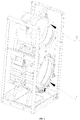
- a multi-drum washing machine which at least provides with a first washing drum 1 and a second washing drum which can independently perform clothes washing.
- the first washing drum 1 and the second washing drum 2 can independently perform a washing process, a rinsing process, a dehydration process in turn to the clothes in order to achieve a goal of clothes washing.
- the multi-drum washing machine further provides with a drying means to perform a drying process after the completion of the dehydration process on the first washing drum 1 and/or the second washing drum 2 to dry the clothes within.
- the first washing drum 1 is provided with a first heater for heating the washing water therein
- the second washing drum 2 is provided with a second heater for heating the washing water therein. Therefore, during the execution of the washing process, each heater heats the washing water in the corresponding washing drum to control the water temperature during the laundry washing process.
- the universal household cable can withstand less current. If the first washing drum and the second washing drum work at the same time, it will produce a larger load instantaneous current, resulting in the user's household distribution box trip, and even lead to cable burning. Therefore, it needs to arrange the high-power processes of the duel-drum washing machine at different stages, in order to avoid the occurrence of instantaneous high current.
- the high-power processes include the heating process, the dehydration process and the drying process and so on.
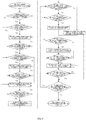
- the heating control method of the multi-drum washing machine is as follows:
- the heating time of the first washing drum is a set value corresponding to the washing process performed by the first washing drum.
- the heating time of the second washing drum is a set value corresponding to the washing process performed by the second washing drum.
- the heating control methods of the first washing drum and the second washing drum are the same.
- the positions of the first washing drum and the second washing drum in from steps 1) to 11) can be exchanged to obtain a heating control method of the second washing drum.
- the heating time of the first washing drum or the second washing drum is the set value corresponding to the washing process performed by the washing drum.
- the washing machine times the heating process performed by the first washing drum or the second washing drum to obtain a heated time.
- remaining heating time total heating time-heated time, it is obtained the remaining heating time of the first washing drum or the second washing drum
- the alternate heating process is, the first washing drum and the second washing drum are alternately heated for a certain time interval. And after the completion of heating for each time interval, it is determined whether or not the heating processes of the first washing drum and the second washing drum are completed. If the heating process of the first washing drum or the second washing drum is completed, the second washing drum or the first washing drum keeps heating until to the end. Otherwise, keeps alternately heating.
- the total heating time of the second washing drum is T m2 .
- the set value T max satisfies a following condition, 2/3Tm2 ⁇ T max ⁇ Tm2.
- the set value T min satisfies a following condition, 0 ⁇ T min ⁇ 1/3T m2 .
- the sequential heating process is, the washing drum performing earlier has the priority to perform in order to avoid the occurrence of heat loss caused by the interruption of the process.
- the second washing drum performing earlier is needed to continue performing the heating process.
- the first washing drum performing later pauses to perform until the heating process of the second washing drum is completed, and then performs the heating process.
- the first washing drum needs to perform the heating process, and the second washing drum is performing the heating process and the remaining heating time of the second washing drum is shorter (no bigger that the set value T min ). At this time, due a relatively short waiting time, in order to reduce the heat loss, the first washing drum and then start the heating process after instructing the second washing drum to finish the heating process.
- the first washing drum pauses performing the heating process until the heating process of the second washing drum is completed, and the first washing drum continues performing the heating process.
- the first washing drum normally performs the heating process in advance so that the user places the laundry which is urgently to be washed into the first washing drum to shorten the waiting time for the user to wash the laundry.
- the second washing drum continues the process it performing and then the first washing drum has the priority to perform the heating process, in order to avoid the occurrence of the second washing drum waiting too long.
- a washing capacity of the first washing drum is smaller than a washing capacity of the second washing drum.
- the heating control method of the multi-drum washing machine is as follows:
- the set heating temperature of the first washing drum is t 1
- the set water level Q 1 is the set value corresponding to the washing process performed by the first washing drum.
- the set heating temperature of the second washing drum is t 2
- the set water level Q 2 is the set value corresponding to the washing process performed by the second washing drum.
- the common set temperature t' and common water level Q' are the required heating temperature and water level which obtained by several tests in the normal use of the washing machine.
- the first washing drum is provided with a plurality of inlet water levels, and the common water level is the inlet water level which is more frequently used.
- the first washing drum is also provided with a plurality of heating gears, each of which is a set temperature value corresponding to be used more frequently, and a larger heating range.
- the water depth value of the washing water corresponding to the common water level is not greater than 1/2 diameter of the first washing drum, not less than 1/4 diameter of the first washing drum.
- the first washing drum is provided with four inlet water levels which are 1, 2, 3, and 4.
- the water level from the level 1 to level 4 increases in turn.
- the common water level Q' of the first washing drum is the inlet water level of level 3.
- the first washing drum is provided with 5 heating gears, each gear corresponding to the set heating temperature of 30, 40, 50, 60 and 90 degrees Celsius.
- the common set heating temperature t' of the first washing drum is 60 degrees Celsius.
- the actual measured value t1n of the first washing drum and the actual measured value t2n of the second washing drum are the respective detection values obtained by performing real-time temperature detection or timing temperature detection on the washing water in the first washing drum and the second washing drum.
- the first washing drum is designated as a priority drum for preferentially performing the heating process so that the user can put the laundry which is badly in need of washing into in the drum for washing and reduce the waiting time of the user.
- the washing capacity of the first washing drum with respect to the second washing tub is smaller so as to normally use the small drum to preferentially perform the washing process and further reduce the waiting time for the user to wash the laundry being badly in need of washing.
- the prioritized washing drum performs the heating process, it is necessary to predetermine the heating time needed to take into account the special conditions requiring a longer washing heating time for the prioritized washing drum. Thus it is to avoid the occurrence of a longer waiting time for the other washing drum due to too long heating time, and to increase the degree of humanization of the washing apparatus.
- step 3 it is determined whether or not the heating time of the first washing drum needed is too long. If no, the second washing drum has priority to perform the heating process, and the first washing drum does not perform the heating process until the heating process of the second washing drum is completed. If yes, executes step 3), the heating process of the first washing drum is determined according to the principle of the washing drum having the shorter remaining time preferentially performing.
- the first washing drum of the washing machine has priority to perform in the normal case. And in the special condition where the heating time of the first washing drum is too long, by determining the remaining heating time of the two washing drums, the washing drum having a small remaining heating time preferentially performs the heating process.
- the method for determining whether or not the heating time needed for the first washing drum is too long is the same as that of the embodiment 2, and it is determined by the following three judgment conditions:
- the differences between the present embodiment and the embodiments from 1 to 3 are: before the first washing drum performs the heating process, firstly executing the following determination. It is determined whether or not the second washing drum is operating. If no, the first washing drum performs the heating process directly; if yes, further executes step 2) in any one of embodiments from 1 to 3 to determine whether or not the first washing drum performs the heating process.
- the washing drum being operating means that it is performing water supply process, water replenishment process, washing process, rinsing process, drainage process, dehydration process, drying process and so on.
- the first washing drum 1 and the second washing drum 2 are communicated with a same inlet water pipe path through pipe path.
- the pipe path is provided with a control means for controlling the on and off of the water flow. Therefore, before executes the washing process, the washing water can be supplied into the first washing drum and/or the second washing drum through the inlet water pipe path.
- the second washing drum can perform neither the water supply process nor the water replenishment process at the same time. Also, when the second washing drum performs the water supply process, the first washing drum can perform neither the water supply process nor the water replenishment process at the same time. Thus, it can avoid the situation which the two drums supply water at the same time from happening.
- the present embodiment describes a water replenishment control method of a multi-drum washing machine as follows.
- the first washing drum performs the water supply process and the water replenishment process
- it can avoid the situation which the two washing drums perform the water supply process or the water replenishment process at the same time from happening, and avoid lacking inlet water in the washing drum.
- the water supply-replenish control mothed of the multi-drum washing machine is as follows:
- the set water level is the set value corresponding to the washing process performed by the first washing drum.
- the second washing drum cannot perform the water supply or the water replenishment process at the same time.
- the condition which the water supply process of the first washing drum is completed is that the water level of the washing water in the first washing drum reaches the set water level.
- the water replenishment control methods of the first washing drum and the second washing drum are the same.
- the positions of the first washing drum and the second washing drum in from steps 1) to 13) can be exchanged to obtain a water replenishment control method of the second washing drum.
- the washing machine can only issue either one water supply order or one water replenishment order at any time point.
- the order can only control either the first washing drum or the second washing drum to perform the water supply process or the water replenishment process.
- the control unit of the washing machine can issue only one order of water supply or water replenishment to the first washing drum or the second washing drum at one-time point. It avoids the situation which the first washing drum and the second washing drum perform the water supply or the water replenishment process at the same time from happening.
- Sensors for detecting water level of washing water are respectively provided on the first washing drum and the second washing drum.
- the water inlet valve remains open until the sensor detects the washing water reaches the set water level and then the water inlet valve close, and the water supply process is completed.
- the water level of the washing water in the first washing drum or the second washing drum is lower than the set water level, and when the first washing drum or the second washing drum begins to perform the water replenishment process, the water inlet valve remains open until the sensor detects the washing water reaches the set water level, and then the water inlet valve close, the water replenishment process is completed.
- the determination condition for determining whether or not the first washing drum and the second washing drum are performing the water supply process or the water replenishment is, whether or not the water inlet valves corresponding to the first washing drum and the second washing drum are open.
- the way to determine whether or not the water inlet valve is open is: when an order that the water inlet valve last received is an order to open, the water inlet valve is determined as open; when an order that the water inlet valve last received is an order to close, the water inlet valve is determined as closed.
- the water level of the washing water detected by the water level sensor provided on the first washing drum or the second washing drum is lower than the set water level, the first washing drum or the second washing drum begins to perform the water supply process or the water replenishment process.
- the control unit of the washing machine send open signal to the water inlet valve and the water inlet valve is at an open state.
- the sensor sends close signal to the corresponding water inlet valve, and the water inlet valve is at a close state.
- the way to determine whether or not the water inlet valve is open is to determine whether or not there is water flowing through the corresponding water inlet valve.
- the water inlet valve When there is, water flowing through the water inlet valve, the water inlet valve is at open state. When there isn't, water flowing through the water inlet valve, the water inlet valve is at close state.
- Water flow sensors for detecting the quantity of water flowing through corresponding water inlet valve are respectively provided on the water inlet valves of the first washing drum and the second washing drum. When the water flow sensor detects the presence of water flowing through the sensor, the corresponding water inlet valve is determined as open, otherwise, the corresponding water inlet valve is at close state.
- the way to determine whether or not the water inlet valve is open is to determine whether or not an open time of the water inlet valve is reaching the set time.
- the open time of the water inlet valve reaches the set time
- the water inlet valve is at close state.
- the open time of the water inlet valve does not reach the set time, the water inlet valve is at open state.
- a timer is provided on the washing machine, when the water inlet valve receives the open signal, the timer begins to time. The water inlet valve remains open before the timer reaches the set time. The water inlet valve is closed when the timer reaches the set time.
- the water inlet valve of the first washing drum and the water inlet valve of the second washing drum are provided with interlock means to interlock with each other. So that when the water inlet valve of the first washing drum is in the open state, the water inlet valve of the second washing drum cannot open; when the water inlet valve of the second washing drum is in the open state, the water inlet valve of the first washing drum cannot open. Thus, the occurrence of the simultaneous opening of the water inlet valve of the first washing drum and the second washing drum is avoided.
- the interlock device also has a third state in which the water inlet valves of the first and second washing drums are in a closed state.
- the first washing drum and the second washing drum are communicated with each other. It is possible to make the washing water discharged from the first washing drum and satisfying the cleanliness flow into the second washing drum and be reused as water resource for water supply or water replenishment. It is also possible to make the washing water discharged from the second washing drum and satisfying the cleanliness flow into the first washing drum and be reused as water resource for water supply or water replenishment.
- step 2) in the embodiment 5 it is necessary to determine whether or not the second washing drum is performing or about to perform the drainage process. If no, the first washing drum performs the water supply process or the water replenishment process directly by using clean water as water resource. If yes, it is determined whether or not the washing water in the second washing drum can be reused; if yes, the first washing drum pauses performing the water supply process or the water replenishment process, and the washing water in the second washing drum used as water resource of the water supply or the water replenishment flows into the first washing drum when the second washing drum begins to drain.
- the determination condition of whether or not the second washing drum is about to perform the drainage process is, whether or not the remaining time for the second washing drum to reach a next drainage process is smaller than a set time. If yes, the first washing drum pauses performing the water supply process or the water replenishment process, and the washing water in the second washing drum flows into the first washing drum to reuse when the second washing drum begins to drain. If no, the second washing drum supplies clean water directly.
- the determination condition of whether or not the washing water in the second washing drum can be reused is that, a turbidity value or a bubble concentration value of the water in the second washing drum is detected. If the turbidity value or the bubble concentration value of the water is smaller than a set value, the water in the second washing drum can be reused. Otherwise the water in the second washing drum cannot be reused.
- the present embodiment uses a waiting time of the water supply as a determination criterion to determine whether or not to reuse the water.
- the waiting time of water supply it is determined whether to reuse water drained from the other washing drum when one washing drum reaches the water supply process.
- the method has a simple judgment and control logic; the control stability is high in the actual washing process. At the same time, it achieves a full reuse of water, and the practical value is high, which is more effective to promote and apply.
- the determination of whether or not the water can be reused in the present embodiment can be combined with the determination of the water supply-replenish process described in embodiment 5, to determine whether or not the discharged water from the washing drum can be reused as water resource of the water supply or the water replenishment by another washing drum. Thus, it can achieve the purpose of reusing the washing water.
- the water reuse control method is as follows:
- step 1 if the second washing drum is draining water when the first washing drum reaches the water supply process, the time T 22 for reaching the drainage process of the second washing drum is 0, and no need to wait, and directly executes step 2. It is also possible to first determine whether or not the second washing drum is currently performing the drainage process before comparing the time T 22 for reaching the drainage process of the second washing drum and the time T 21 for reaching the next water supply process of the first washing drum. If the second washing drum is not subjected to the drainage process, then it is compared the time T 22 for reaching the drainage process of the second washing drum and the time T 21 for reaching the next water supply process of the first washing drum.
- an allowable waiting time T 2 is set, which T 2 ⁇ T 21 . If T 22 ⁇ T 2 , the first washing drum waits until the second washing drum drains, and executes step 2. If T 22 ⁇ T 2 , the first washing drum supplies clean water directly. This step can avoid the first washing drum waiting too long and reasonably arrange the water reuse under the premise of ensuring the washing time of the first washing drum. Thus, it will not waste too much time of the first washing drum because of only considering water reuse. If the washing machine determines that the waiting time is too long and exceeds the set allowable waiting time, the first washing drum will not reuse the water in the second washing drum. The determination makes the reuse of water more reasonable, optimizing the relationship between waiting time and water reuse to a large extent.
- step 2 the turbidity value or the bubble concentration value of the water in the second washing drum is detected. If the turbidity value or the bubble concentration value of the water is smaller than the set value, the water in the second washing drum can be reused. Otherwise the water in the second washing drum cannot be reused. Water can be reused when the turbidity value or bubble concentration value of the water is within the set range.
- step 1 when the first washing drum reaches the water supply process, it is determined whether or not the water supply process being executed is a water supply for a last rinse. If yes, the first washing drum supplies clean water directly. If no, it is continued to compare the time T 22 for reaching the drainage process of the second washing drum and the time T 21 for reaching the next water supply process of the first washing drum. Thus it is ensured that the water supplied-in in the last rinse process is clean water, which ensures that the effect of washing clothes after washing.
- step 2 before the water in the second washing drum is drained into the first washing drum, it is determined whether or not the first washing drum executes the water supply process for washing. If yes, the first washing drum first supplies water for washing the detergent box. After the completion of water supply for washing the detergent box of the first washing drum, the water in the second washing drum is drained into the first washing drum. If no, the water in the second washing drum is drained into the first washing drum directly.
- step 2 when the water in the second washing drum is drained into the first washing drum, the height of the water level in the first washing drum is detected. If the water level in the first washing drum reaches the set water level value and there is water in the second washing drum, the remaining water in the second washing drum is discharged directly. If the water in the second washing drum is entirely drained into the first washing drum and the water level in the first washing tub does not reach the set water level value, then the first washing drum supplies clean water.
- the second washing drum waits until the dehydration process of the first washing drum is completed, and then drains. If no, it is determined a time for reaching the dehydration process of the first washing drum is T 41 , a time taken for the first washing drum to dehydrate is T 44 , and an allowable waiting time T 4 is set. If T 41 +T 44 ⁇ T 4 , the second washing drum waits until the dehydration process of the first washing drum is completed, and then drains. Otherwise, the water of the second washing drum is drained directly.
- step 2 the water in the first washing drum cannot be reused, if the second washing drum is in a washing process when it drains and the first washing drum is in a rinse process when it supplies water; or if the first, second washing drums are both in the washing process when the second washing drum drains and the first washing drum supplies water, and washing times of the second washing drum is less than washing times of the first washing drum; or if the first, second washing drums are both in the rinse process when the second washing drum drains and the first washing drum supplies water, and rinsing times of the second washing drum is less than rinsing times of the first washing drum.
- the second washing drum When the second washing drum reaches the water supply process, it is compared the time for reaching the drainage process of the first washing drum and the time for reaching the next water supply of the second washing drum, and it is determined whether or not the second washing drum waits until the first washing drum drains.
- the drainage outlet of the second washing drum is communicated with the first washing drum, and the water in the second washing drum can be drained into the first washing drum to reuse.
- the drainage outlet of the second washing drum is provided with a holding valve, the water in the second washing drum can flow through the holding valve into the first washing drum.
- the first washing drum is provided with an inlet valve and the clean water outside can flow into the first washing drum through the inlet valve.
- the control method can also add a process of determining whether or not the second washing drum is draining water before comparing the time T 22 for reaching the drainage process of the second washing drum and the time T 21 for reaching the next water supply process of the first washing drum.
- the control method is as follows:
- the control method may also include determining whether or not the first washing drum has enough time to wait the second washing drum draining, the control method is as follows:
- control method is as follows:
- the water inlet of the second washing drum is communicated with the drainage outlet of the first washing drum.
- the water in the first washing drum can be drained into the second washing drum for reuse.
- the drainage outlet of the first washing drum is provided with a holding valve and the water of the first washing drum can flow into the second washing drum through the holding valve.
- the second washing drum is provided with an inlet valve, clean water from outside can flow into the second washing drum through the inlet valve.
- the first washing drum and the second washing drum of the present embodiment are only for the sake of convenience of the description, regardless of the order of the relationship. It may also to reuse the water in the first washing drum. However, the two washing drums cannot perform the steps mentioned above at the same time, to avoid the occurrence of causing an infinite loop of both washing drums waiting from happening.
Landscapes
- Engineering & Computer Science (AREA)
- Textile Engineering (AREA)
- Control Of Washing Machine And Dryer (AREA)
- Detail Structures Of Washing Machines And Dryers (AREA)
- Accessory Of Washing/Drying Machine, Commercial Washing/Drying Machine, Other Washing/Drying Machine (AREA)
Applications Claiming Priority (2)
| Application Number | Priority Date | Filing Date | Title |
|---|---|---|---|
| CN201410766842.8A CN105734915B (zh) | 2014-12-12 | 2014-12-12 | 一种多滚筒洗衣机加热控制方法 |
| PCT/CN2015/088590 WO2016090968A1 (fr) | 2014-12-12 | 2015-08-31 | Procédé de commande de chauffage pour machine à laver à cuves multiples |
Publications (3)
| Publication Number | Publication Date |
|---|---|
| EP3231920A1 true EP3231920A1 (fr) | 2017-10-18 |
| EP3231920A4 EP3231920A4 (fr) | 2018-08-15 |
| EP3231920B1 EP3231920B1 (fr) | 2022-07-20 |
Family
ID=56106616
Family Applications (1)
| Application Number | Title | Priority Date | Filing Date |
|---|---|---|---|
| EP15866747.7A Active EP3231920B1 (fr) | 2014-12-12 | 2015-08-31 | Procédé de commande de chauffage pour machine à laver à cuves multiples |
Country Status (6)
| Country | Link |
|---|---|
| US (1) | US10648123B2 (fr) |
| EP (1) | EP3231920B1 (fr) |
| JP (1) | JP6579404B2 (fr) |
| KR (1) | KR20170094360A (fr) |
| CN (1) | CN105734915B (fr) |
| WO (1) | WO2016090968A1 (fr) |
Families Citing this family (22)
| Publication number | Priority date | Publication date | Assignee | Title |
|---|---|---|---|---|
| KR20170087272A (ko) * | 2016-01-20 | 2017-07-28 | 엘지전자 주식회사 | 세탁물 처리기기 및 그 제어방법 |
| KR20170089677A (ko) * | 2016-01-27 | 2017-08-04 | 엘지전자 주식회사 | 세탁물 처리기기 및 그 제어방법 |
| KR102598167B1 (ko) | 2016-12-23 | 2023-11-06 | 삼성전자주식회사 | 세탁기 및 그 제어방법 |
| KR102448503B1 (ko) * | 2017-04-28 | 2022-09-29 | 삼성전자주식회사 | 세탁기 및 그 제어 방법 |
| WO2018199433A1 (fr) * | 2017-04-28 | 2018-11-01 | Samsung Electronics Co., Ltd. | Machine à laver et son procédé de commande |
| CN109306593B (zh) * | 2017-07-27 | 2021-06-01 | 重庆海尔滚筒洗衣机有限公司 | 一种多筒洗干一体机的烘干控制方法及多筒洗干一体机 |
| KR20190079281A (ko) | 2017-12-27 | 2019-07-05 | 엘지전자 주식회사 | 의류처리장치 및 제어방법 |
| WO2019154266A1 (fr) * | 2018-02-09 | 2019-08-15 | 青岛海尔滚筒洗衣机有限公司 | Appareil de traitement de linge et son procédé de commande |
| CN110130044A (zh) * | 2018-02-09 | 2019-08-16 | 青岛海尔滚筒洗衣机有限公司 | 一种衣物处理设备及其控制方法 |
| CN110130076B (zh) * | 2018-02-09 | 2021-08-03 | 青岛海尔洗涤电器有限公司 | 一种洗干衣机的控制方法 |
| CN110468552B (zh) * | 2018-05-11 | 2022-04-05 | 青岛海尔洗涤电器有限公司 | 一种洗干一体机的控制方法 |
| CN109763295B (zh) * | 2019-03-29 | 2021-02-26 | 海信(山东)冰箱有限公司 | 一种多筒洗衣机的控制方法及多筒洗衣机 |
| US10907299B1 (en) * | 2019-10-09 | 2021-02-02 | Whirlpool Corporation | Heater and control scheme for multi-compartment dryer |
| CN111074478A (zh) * | 2019-11-02 | 2020-04-28 | 珠海格力电器股份有限公司 | 一种多桶洗衣机支撑框架结构 |
| CN111041774B (zh) * | 2019-12-09 | 2022-06-10 | 无锡小天鹅电器有限公司 | 衣物处理装置的加热控制方法、装置以及衣物处理装置 |
| CN111501283B (zh) * | 2020-04-13 | 2022-02-25 | 无锡小天鹅电器有限公司 | 衣物处理装置的控制方法和装置 |
| CN114250578B (zh) * | 2020-09-25 | 2023-11-28 | 无锡小天鹅电器有限公司 | 多桶洗衣机的洗涤控制方法和装置 |
| EP4253641B1 (fr) * | 2020-11-27 | 2025-07-16 | Qingdao Haier Drum Washing Machine Co., Ltd. | Appareil de lavage de vêtements |
| CN114687113B (zh) * | 2020-12-25 | 2023-09-12 | 重庆海尔滚筒洗衣机有限公司 | 高温蒸煮方法、计算机可读存储介质及控制装置 |
| CN113089255B (zh) * | 2021-03-19 | 2022-12-06 | 海信冰箱有限公司 | 多筒洗衣机的加热控制方法和多筒洗衣机 |
| CN115613281A (zh) * | 2021-07-15 | 2023-01-17 | 重庆海尔滚筒洗衣机有限公司 | 一种衣物处理设备的控制方法及衣物处理设备 |
| CN115029890A (zh) * | 2022-06-30 | 2022-09-09 | 南京创维电器研究院有限公司 | 一种多模块衣物处理装置的加热控制系统及其方法 |
Family Cites Families (11)
| Publication number | Priority date | Publication date | Assignee | Title |
|---|---|---|---|---|
| JPS63127788A (ja) * | 1986-11-18 | 1988-05-31 | シャープ株式会社 | 洗濯乾燥機 |
| JPH0751181B2 (ja) * | 1989-06-19 | 1995-06-05 | 株式会社日立製作所 | 洗たく機の運転制御装置 |
| KR101075227B1 (ko) * | 2006-07-25 | 2011-10-19 | 삼성전자주식회사 | 2조식 세탁기의 운전제어방법 |
| KR101276815B1 (ko) | 2006-08-29 | 2013-06-18 | 엘지전자 주식회사 | 페데스탈 건조기 |
| KR101435814B1 (ko) | 2007-11-27 | 2014-08-29 | 엘지전자 주식회사 | 세탁물 처리장치 및 그 제어방법 |
| KR101604689B1 (ko) * | 2009-05-04 | 2016-03-18 | 엘지전자 주식회사 | 세탁물 처리장치 및 그 제어방법 |
| CN201436314U (zh) * | 2009-05-06 | 2010-04-07 | 陈天成 | 一种节能型双筒式烘干机 |
| KR20110019082A (ko) * | 2009-08-19 | 2011-02-25 | 삼성전자주식회사 | 세탁기 및 그 제어방법 |
| CN102061590A (zh) | 2009-11-16 | 2011-05-18 | 博西华电器(江苏)有限公司 | 组合式洗衣烘干机系统及其控制方法 |
| KR20110083235A (ko) * | 2010-01-14 | 2011-07-20 | 최원심 | 2조식 세탁기 운용방법 |
| CN201908220U (zh) * | 2010-12-07 | 2011-07-27 | 南京乐金熊猫电器有限公司 | 可分别进行独立控制的双筒洗衣机 |
-
2014
- 2014-12-12 CN CN201410766842.8A patent/CN105734915B/zh active Active
-
2015
- 2015-08-31 WO PCT/CN2015/088590 patent/WO2016090968A1/fr not_active Ceased
- 2015-08-31 EP EP15866747.7A patent/EP3231920B1/fr active Active
- 2015-08-31 JP JP2017529272A patent/JP6579404B2/ja not_active Expired - Fee Related
- 2015-08-31 KR KR1020177019139A patent/KR20170094360A/ko not_active Ceased
- 2015-08-31 US US15/534,883 patent/US10648123B2/en active Active
Also Published As
| Publication number | Publication date |
|---|---|
| US10648123B2 (en) | 2020-05-12 |
| JP6579404B2 (ja) | 2019-09-25 |
| CN105734915B (zh) | 2019-02-05 |
| KR20170094360A (ko) | 2017-08-17 |
| JP2017536901A (ja) | 2017-12-14 |
| WO2016090968A1 (fr) | 2016-06-16 |
| CN105734915A (zh) | 2016-07-06 |
| EP3231920A4 (fr) | 2018-08-15 |
| EP3231920B1 (fr) | 2022-07-20 |
| US20170342638A1 (en) | 2017-11-30 |
Similar Documents
| Publication | Publication Date | Title |
|---|---|---|
| US10648123B2 (en) | Heating control method of a multi-drum washing machine | |
| EP3231921B1 (fr) | Procédé de commande de réalimentation en eau pour machine à laver à cuves multiples | |
| EP3231925B1 (fr) | Procédé de commande d'évacuation/de vidange de machine à laver à tambours multiples | |
| CN105734891B (zh) | 一种多滚筒洗衣机加热控制方法 | |
| JP6628055B2 (ja) | ダブルドラム洗濯機の制御方法 | |
| US20170342624A1 (en) | Control method of dual-drum washing machine | |
| EP3351673B1 (fr) | Procédé de vidage d'eau de machine à laver à plusieurs tambours | |
| JP6443645B2 (ja) | 複数槽洗濯機の排水制御方法 | |
| EP3231919B1 (fr) | Procédé de commande de réutilisation d'eau dans une machine à laver à multiples tambours |
Legal Events
| Date | Code | Title | Description |
|---|---|---|---|
| STAA | Information on the status of an ep patent application or granted ep patent |
Free format text: STATUS: THE INTERNATIONAL PUBLICATION HAS BEEN MADE |
|
| PUAI | Public reference made under article 153(3) epc to a published international application that has entered the european phase |
Free format text: ORIGINAL CODE: 0009012 |
|
| STAA | Information on the status of an ep patent application or granted ep patent |
Free format text: STATUS: REQUEST FOR EXAMINATION WAS MADE |
|
| 17P | Request for examination filed |
Effective date: 20170626 |
|
| AK | Designated contracting states |
Kind code of ref document: A1 Designated state(s): AL AT BE BG CH CY CZ DE DK EE ES FI FR GB GR HR HU IE IS IT LI LT LU LV MC MK MT NL NO PL PT RO RS SE SI SK SM TR |
|
| AX | Request for extension of the european patent |
Extension state: BA ME |
|
| DAV | Request for validation of the european patent (deleted) | ||
| DAX | Request for extension of the european patent (deleted) | ||
| A4 | Supplementary search report drawn up and despatched |
Effective date: 20180717 |
|
| RIC1 | Information provided on ipc code assigned before grant |
Ipc: D06F 58/26 20060101ALN20180711BHEP Ipc: D06F 58/28 20060101ALN20180711BHEP Ipc: D06F 39/04 20060101ALN20180711BHEP Ipc: D06F 25/00 20060101ALI20180711BHEP Ipc: D06F 29/00 20060101ALI20180711BHEP Ipc: D06F 33/02 20060101AFI20180711BHEP |
|
| REG | Reference to a national code |
Ref country code: DE Ref legal event code: R079 Ref document number: 602015079974 Country of ref document: DE Free format text: PREVIOUS MAIN CLASS: D06F0033020000 Ipc: D06F0029000000 |
|
| GRAP | Despatch of communication of intention to grant a patent |
Free format text: ORIGINAL CODE: EPIDOSNIGR1 |
|
| STAA | Information on the status of an ep patent application or granted ep patent |
Free format text: STATUS: GRANT OF PATENT IS INTENDED |
|
| RIC1 | Information provided on ipc code assigned before grant |
Ipc: D06F 103/38 20200101ALN20220223BHEP Ipc: D06F 105/28 20200101ALN20220223BHEP Ipc: D06F 103/18 20200101ALN20220223BHEP Ipc: D06F 103/16 20200101ALN20220223BHEP Ipc: D06F 103/14 20200101ALN20220223BHEP Ipc: D06F 103/00 20200101ALN20220223BHEP Ipc: D06F 101/14 20200101ALN20220223BHEP Ipc: D06F 58/48 20200101ALN20220223BHEP Ipc: D06F 58/26 20060101ALN20220223BHEP Ipc: D06F 39/04 20060101ALN20220223BHEP Ipc: D06F 25/00 20060101ALI20220223BHEP Ipc: D06F 33/46 20200101ALI20220223BHEP Ipc: D06F 29/00 20060101AFI20220223BHEP |
|
| INTG | Intention to grant announced |
Effective date: 20220318 |
|
| GRAS | Grant fee paid |
Free format text: ORIGINAL CODE: EPIDOSNIGR3 |
|
| GRAA | (expected) grant |
Free format text: ORIGINAL CODE: 0009210 |
|
| STAA | Information on the status of an ep patent application or granted ep patent |
Free format text: STATUS: THE PATENT HAS BEEN GRANTED |
|
| AK | Designated contracting states |
Kind code of ref document: B1 Designated state(s): AL AT BE BG CH CY CZ DE DK EE ES FI FR GB GR HR HU IE IS IT LI LT LU LV MC MK MT NL NO PL PT RO RS SE SI SK SM TR |
|
| REG | Reference to a national code |
Ref country code: GB Ref legal event code: FG4D |
|
| REG | Reference to a national code |
Ref country code: CH Ref legal event code: EP |
|
| REG | Reference to a national code |
Ref country code: DE Ref legal event code: R096 Ref document number: 602015079974 Country of ref document: DE |
|
| REG | Reference to a national code |
Ref country code: AT Ref legal event code: REF Ref document number: 1505592 Country of ref document: AT Kind code of ref document: T Effective date: 20220815 |
|
| REG | Reference to a national code |
Ref country code: IE Ref legal event code: FG4D |
|
| REG | Reference to a national code |
Ref country code: LT Ref legal event code: MG9D |
|
| REG | Reference to a national code |
Ref country code: NL Ref legal event code: MP Effective date: 20220720 |
|
| PG25 | Lapsed in a contracting state [announced via postgrant information from national office to epo] |
Ref country code: SE Free format text: LAPSE BECAUSE OF FAILURE TO SUBMIT A TRANSLATION OF THE DESCRIPTION OR TO PAY THE FEE WITHIN THE PRESCRIBED TIME-LIMIT Effective date: 20220720 Ref country code: RS Free format text: LAPSE BECAUSE OF FAILURE TO SUBMIT A TRANSLATION OF THE DESCRIPTION OR TO PAY THE FEE WITHIN THE PRESCRIBED TIME-LIMIT Effective date: 20220720 Ref country code: PT Free format text: LAPSE BECAUSE OF FAILURE TO SUBMIT A TRANSLATION OF THE DESCRIPTION OR TO PAY THE FEE WITHIN THE PRESCRIBED TIME-LIMIT Effective date: 20221121 Ref country code: NO Free format text: LAPSE BECAUSE OF FAILURE TO SUBMIT A TRANSLATION OF THE DESCRIPTION OR TO PAY THE FEE WITHIN THE PRESCRIBED TIME-LIMIT Effective date: 20221020 Ref country code: NL Free format text: LAPSE BECAUSE OF FAILURE TO SUBMIT A TRANSLATION OF THE DESCRIPTION OR TO PAY THE FEE WITHIN THE PRESCRIBED TIME-LIMIT Effective date: 20220720 Ref country code: LV Free format text: LAPSE BECAUSE OF FAILURE TO SUBMIT A TRANSLATION OF THE DESCRIPTION OR TO PAY THE FEE WITHIN THE PRESCRIBED TIME-LIMIT Effective date: 20220720 Ref country code: LT Free format text: LAPSE BECAUSE OF FAILURE TO SUBMIT A TRANSLATION OF THE DESCRIPTION OR TO PAY THE FEE WITHIN THE PRESCRIBED TIME-LIMIT Effective date: 20220720 Ref country code: FI Free format text: LAPSE BECAUSE OF FAILURE TO SUBMIT A TRANSLATION OF THE DESCRIPTION OR TO PAY THE FEE WITHIN THE PRESCRIBED TIME-LIMIT Effective date: 20220720 Ref country code: ES Free format text: LAPSE BECAUSE OF FAILURE TO SUBMIT A TRANSLATION OF THE DESCRIPTION OR TO PAY THE FEE WITHIN THE PRESCRIBED TIME-LIMIT Effective date: 20220720 |
|
| REG | Reference to a national code |
Ref country code: AT Ref legal event code: MK05 Ref document number: 1505592 Country of ref document: AT Kind code of ref document: T Effective date: 20220720 |
|
| PG25 | Lapsed in a contracting state [announced via postgrant information from national office to epo] |
Ref country code: PL Free format text: LAPSE BECAUSE OF FAILURE TO SUBMIT A TRANSLATION OF THE DESCRIPTION OR TO PAY THE FEE WITHIN THE PRESCRIBED TIME-LIMIT Effective date: 20220720 Ref country code: IS Free format text: LAPSE BECAUSE OF FAILURE TO SUBMIT A TRANSLATION OF THE DESCRIPTION OR TO PAY THE FEE WITHIN THE PRESCRIBED TIME-LIMIT Effective date: 20221120 Ref country code: HR Free format text: LAPSE BECAUSE OF FAILURE TO SUBMIT A TRANSLATION OF THE DESCRIPTION OR TO PAY THE FEE WITHIN THE PRESCRIBED TIME-LIMIT Effective date: 20220720 Ref country code: GR Free format text: LAPSE BECAUSE OF FAILURE TO SUBMIT A TRANSLATION OF THE DESCRIPTION OR TO PAY THE FEE WITHIN THE PRESCRIBED TIME-LIMIT Effective date: 20221021 |
|
| REG | Reference to a national code |
Ref country code: CH Ref legal event code: PL |
|
| REG | Reference to a national code |
Ref country code: DE Ref legal event code: R097 Ref document number: 602015079974 Country of ref document: DE |
|
| PG25 | Lapsed in a contracting state [announced via postgrant information from national office to epo] |
Ref country code: SM Free format text: LAPSE BECAUSE OF FAILURE TO SUBMIT A TRANSLATION OF THE DESCRIPTION OR TO PAY THE FEE WITHIN THE PRESCRIBED TIME-LIMIT Effective date: 20220720 Ref country code: RO Free format text: LAPSE BECAUSE OF FAILURE TO SUBMIT A TRANSLATION OF THE DESCRIPTION OR TO PAY THE FEE WITHIN THE PRESCRIBED TIME-LIMIT Effective date: 20220720 Ref country code: MC Free format text: LAPSE BECAUSE OF FAILURE TO SUBMIT A TRANSLATION OF THE DESCRIPTION OR TO PAY THE FEE WITHIN THE PRESCRIBED TIME-LIMIT Effective date: 20220720 Ref country code: LU Free format text: LAPSE BECAUSE OF NON-PAYMENT OF DUE FEES Effective date: 20220831 Ref country code: LI Free format text: LAPSE BECAUSE OF NON-PAYMENT OF DUE FEES Effective date: 20220831 Ref country code: DK Free format text: LAPSE BECAUSE OF FAILURE TO SUBMIT A TRANSLATION OF THE DESCRIPTION OR TO PAY THE FEE WITHIN THE PRESCRIBED TIME-LIMIT Effective date: 20220720 Ref country code: CZ Free format text: LAPSE BECAUSE OF FAILURE TO SUBMIT A TRANSLATION OF THE DESCRIPTION OR TO PAY THE FEE WITHIN THE PRESCRIBED TIME-LIMIT Effective date: 20220720 Ref country code: CH Free format text: LAPSE BECAUSE OF NON-PAYMENT OF DUE FEES Effective date: 20220831 Ref country code: AT Free format text: LAPSE BECAUSE OF FAILURE TO SUBMIT A TRANSLATION OF THE DESCRIPTION OR TO PAY THE FEE WITHIN THE PRESCRIBED TIME-LIMIT Effective date: 20220720 |
|
| REG | Reference to a national code |
Ref country code: BE Ref legal event code: MM Effective date: 20220831 |
|
| PLBE | No opposition filed within time limit |
Free format text: ORIGINAL CODE: 0009261 |
|
| STAA | Information on the status of an ep patent application or granted ep patent |
Free format text: STATUS: NO OPPOSITION FILED WITHIN TIME LIMIT |
|
| PG25 | Lapsed in a contracting state [announced via postgrant information from national office to epo] |
Ref country code: SK Free format text: LAPSE BECAUSE OF FAILURE TO SUBMIT A TRANSLATION OF THE DESCRIPTION OR TO PAY THE FEE WITHIN THE PRESCRIBED TIME-LIMIT Effective date: 20220720 Ref country code: EE Free format text: LAPSE BECAUSE OF FAILURE TO SUBMIT A TRANSLATION OF THE DESCRIPTION OR TO PAY THE FEE WITHIN THE PRESCRIBED TIME-LIMIT Effective date: 20220720 |
|
| 26N | No opposition filed |
Effective date: 20230421 |
|
| PG25 | Lapsed in a contracting state [announced via postgrant information from national office to epo] |
Ref country code: AL Free format text: LAPSE BECAUSE OF FAILURE TO SUBMIT A TRANSLATION OF THE DESCRIPTION OR TO PAY THE FEE WITHIN THE PRESCRIBED TIME-LIMIT Effective date: 20220720 |
|
| PG25 | Lapsed in a contracting state [announced via postgrant information from national office to epo] |
Ref country code: IE Free format text: LAPSE BECAUSE OF NON-PAYMENT OF DUE FEES Effective date: 20220831 |
|
| PG25 | Lapsed in a contracting state [announced via postgrant information from national office to epo] |
Ref country code: SI Free format text: LAPSE BECAUSE OF FAILURE TO SUBMIT A TRANSLATION OF THE DESCRIPTION OR TO PAY THE FEE WITHIN THE PRESCRIBED TIME-LIMIT Effective date: 20220720 |
|
| PG25 | Lapsed in a contracting state [announced via postgrant information from national office to epo] |
Ref country code: BE Free format text: LAPSE BECAUSE OF NON-PAYMENT OF DUE FEES Effective date: 20220831 |
|
| PG25 | Lapsed in a contracting state [announced via postgrant information from national office to epo] |
Ref country code: HU Free format text: LAPSE BECAUSE OF FAILURE TO SUBMIT A TRANSLATION OF THE DESCRIPTION OR TO PAY THE FEE WITHIN THE PRESCRIBED TIME-LIMIT; INVALID AB INITIO Effective date: 20150831 |
|
| PG25 | Lapsed in a contracting state [announced via postgrant information from national office to epo] |
Ref country code: CY Free format text: LAPSE BECAUSE OF FAILURE TO SUBMIT A TRANSLATION OF THE DESCRIPTION OR TO PAY THE FEE WITHIN THE PRESCRIBED TIME-LIMIT Effective date: 20220720 |
|
| PG25 | Lapsed in a contracting state [announced via postgrant information from national office to epo] |
Ref country code: MK Free format text: LAPSE BECAUSE OF FAILURE TO SUBMIT A TRANSLATION OF THE DESCRIPTION OR TO PAY THE FEE WITHIN THE PRESCRIBED TIME-LIMIT Effective date: 20220720 |
|
| PG25 | Lapsed in a contracting state [announced via postgrant information from national office to epo] |
Ref country code: TR Free format text: LAPSE BECAUSE OF FAILURE TO SUBMIT A TRANSLATION OF THE DESCRIPTION OR TO PAY THE FEE WITHIN THE PRESCRIBED TIME-LIMIT Effective date: 20220720 |
|
| PG25 | Lapsed in a contracting state [announced via postgrant information from national office to epo] |
Ref country code: BG Free format text: LAPSE BECAUSE OF FAILURE TO SUBMIT A TRANSLATION OF THE DESCRIPTION OR TO PAY THE FEE WITHIN THE PRESCRIBED TIME-LIMIT Effective date: 20220720 |
|
| PG25 | Lapsed in a contracting state [announced via postgrant information from national office to epo] |
Ref country code: MT Free format text: LAPSE BECAUSE OF FAILURE TO SUBMIT A TRANSLATION OF THE DESCRIPTION OR TO PAY THE FEE WITHIN THE PRESCRIBED TIME-LIMIT Effective date: 20220720 |
|
| PGFP | Annual fee paid to national office [announced via postgrant information from national office to epo] |
Ref country code: DE Payment date: 20250819 Year of fee payment: 11 |
|
| PGFP | Annual fee paid to national office [announced via postgrant information from national office to epo] |
Ref country code: IT Payment date: 20250829 Year of fee payment: 11 |
|
| PGFP | Annual fee paid to national office [announced via postgrant information from national office to epo] |
Ref country code: GB Payment date: 20250825 Year of fee payment: 11 |
|
| PGFP | Annual fee paid to national office [announced via postgrant information from national office to epo] |
Ref country code: FR Payment date: 20250827 Year of fee payment: 11 |