EP3232686A2 - Modélisation de haut-parleur à base de réseau neural au moyen d'un filtre de déconvolution - Google Patents
Modélisation de haut-parleur à base de réseau neural au moyen d'un filtre de déconvolution Download PDFInfo
- Publication number
- EP3232686A2 EP3232686A2 EP17166587.0A EP17166587A EP3232686A2 EP 3232686 A2 EP3232686 A2 EP 3232686A2 EP 17166587 A EP17166587 A EP 17166587A EP 3232686 A2 EP3232686 A2 EP 3232686A2
- Authority
- EP
- European Patent Office
- Prior art keywords
- loudspeaker
- response
- neural network
- output
- reverberant environment
- Prior art date
- Legal status (The legal status is an assumption and is not a legal conclusion. Google has not performed a legal analysis and makes no representation as to the accuracy of the status listed.)
- Granted
Links
Images


Classifications
-
- H—ELECTRICITY
- H04—ELECTRIC COMMUNICATION TECHNIQUE
- H04R—LOUDSPEAKERS, MICROPHONES, GRAMOPHONE PICK-UPS OR LIKE ACOUSTIC ELECTROMECHANICAL TRANSDUCERS; ELECTRIC HEARING AIDS; PUBLIC ADDRESS SYSTEMS
- H04R3/00—Circuits for transducers
- H04R3/04—Circuits for transducers for correcting frequency response
-
- G—PHYSICS
- G05—CONTROLLING; REGULATING
- G05B—CONTROL OR REGULATING SYSTEMS IN GENERAL; FUNCTIONAL ELEMENTS OF SUCH SYSTEMS; MONITORING OR TESTING ARRANGEMENTS FOR SUCH SYSTEMS OR ELEMENTS
- G05B13/00—Adaptive control systems, i.e. systems automatically adjusting themselves to have a performance which is optimum according to some preassigned criterion
- G05B13/02—Adaptive control systems, i.e. systems automatically adjusting themselves to have a performance which is optimum according to some preassigned criterion electric
- G05B13/0265—Adaptive control systems, i.e. systems automatically adjusting themselves to have a performance which is optimum according to some preassigned criterion electric the criterion being a learning criterion
- G05B13/027—Adaptive control systems, i.e. systems automatically adjusting themselves to have a performance which is optimum according to some preassigned criterion electric the criterion being a learning criterion using neural networks only
-
- G—PHYSICS
- G06—COMPUTING OR CALCULATING; COUNTING
- G06F—ELECTRIC DIGITAL DATA PROCESSING
- G06F3/00—Input arrangements for transferring data to be processed into a form capable of being handled by the computer; Output arrangements for transferring data from processing unit to output unit, e.g. interface arrangements
- G06F3/16—Sound input; Sound output
- G06F3/165—Management of the audio stream, e.g. setting of volume, audio stream path
-
- H—ELECTRICITY
- H04—ELECTRIC COMMUNICATION TECHNIQUE
- H04R—LOUDSPEAKERS, MICROPHONES, GRAMOPHONE PICK-UPS OR LIKE ACOUSTIC ELECTROMECHANICAL TRANSDUCERS; ELECTRIC HEARING AIDS; PUBLIC ADDRESS SYSTEMS
- H04R29/00—Monitoring arrangements; Testing arrangements
- H04R29/001—Monitoring arrangements; Testing arrangements for loudspeakers
-
- H—ELECTRICITY
- H04—ELECTRIC COMMUNICATION TECHNIQUE
- H04R—LOUDSPEAKERS, MICROPHONES, GRAMOPHONE PICK-UPS OR LIKE ACOUSTIC ELECTROMECHANICAL TRANSDUCERS; ELECTRIC HEARING AIDS; PUBLIC ADDRESS SYSTEMS
- H04R3/00—Circuits for transducers
-
- H—ELECTRICITY
- H04—ELECTRIC COMMUNICATION TECHNIQUE
- H04R—LOUDSPEAKERS, MICROPHONES, GRAMOPHONE PICK-UPS OR LIKE ACOUSTIC ELECTROMECHANICAL TRANSDUCERS; ELECTRIC HEARING AIDS; PUBLIC ADDRESS SYSTEMS
- H04R2430/00—Signal processing covered by H04R, not provided for in its groups
-
- H—ELECTRICITY
- H04—ELECTRIC COMMUNICATION TECHNIQUE
- H04S—STEREOPHONIC SYSTEMS
- H04S7/00—Indicating arrangements; Control arrangements, e.g. balance control
- H04S7/30—Control circuits for electronic adaptation of the sound field
- H04S7/305—Electronic adaptation of stereophonic audio signals to reverberation of the listening space
Definitions
- the various embodiments relate generally to analyzing loudspeaker systems and, more specifically, to neural network-based loudspeaker modeling with a deconvolution filter.
- Modeling the behavior of loudspeakers is a common step when designing and manufacturing an audio system. For example, a manufacturer may collect data for a loudspeaker once the loudspeaker reaches the end of a factory line in order to model the specific behavior and characteristics of the loudspeaker. The resulting model may then be implemented in a control system that corrects for linear and/or non-linear distortion of the loudspeaker during operation, thereby enabling a desired loudspeaker response to be achieved. Such modeling is sometimes performed with an artificial learning architecture, such as an artificial neural network.
- artificial neural networks include algorithmic models inspired by biological neural networks that are used to estimate or approximate functions that can depend on a large number of inputs.
- artificial neural networks may be presented as systems of interconnected "neurons" that exchange messages with each other, where connections between each neuron have a numeric weight that can be tuned based on experience.
- neural networks may be considered adaptive to various inputs and thereby capable, in a sense, of learning.
- an artificial neural network may be trained using measurements that are ideally taken in an anechoic chamber, in which acoustic reflections are significantly damped.
- the loudspeaker being modeled by the artificial neural network outputs a response to a known input stimulus in the form of a pressure wave, the response is received directly by the microphone or sensor employed for the training; no significant acoustic reflections off surfaces of the anechoic chamber are typically detected by the microphone or sensor. Consequently, the measurement at the microphone or sensor includes only the response of the loudspeaker and some path losses, which allows the artificial neural network to learn the dynamic behavior of the loudspeaker very accurately.
- anechoic chambers are not always available for training artificial neural networks associated with particular loudspeakers. Moreover, even if an anechoic chamber were readily available for testing and training, the use of such a chamber is not readily scalable for use in a mass production environment. Furthermore, the training of an artificial neural network in a reverberant environment, such as a "live room" with significant wall reflections, is impracticable because the reverberations of the response from the walls of the room necessarily impact the dynamic response of the loudspeaker. Thus, an artificial neural network cannot accurately learn the dynamic behavior of a loudspeaker in such an environment.
- Embodiments of the present disclosure set forth a computer-implemented method of generating a filter for a loudspeaker control system.
- the method includes receiving a measured system output of a loudspeaker and a reverberant environment in which the loudspeaker is disposed, via a sensor, extracting a head portion from the measured system output, wherein the head portion includes a measured output of the loudspeaker, determining an inverse of a response of the reverberant environment based on the head portion and the measured system output, and generating the filter based on the inverse of the response.
- At least one advantage of the disclosed techniques is that a response of a reverberant environment in which a loudspeaker is disposed can be reduced by 20 db or more by a deconvolution filter. Consequently, a neural network of a loudspeaker system can be trained in the reverberant environment to remove distortion in the loudspeaker response, even though reverberations can be generated in the reverberant environment that would normally be mixed with the response of the loudspeaker.
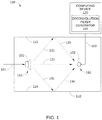
- FIG. 1 illustrates a filter generation system 100 configured to implement one or more aspects of the various embodiments.
- Filter generation system 100 includes, without limitation, a loudspeaker 101 and a sensor 102 that are disposed within a reverberant environment 110. More specifically, loudspeaker 101 is disposed in a first location 111 in reverberant environment 110 and sensor 102 is disposed in a second location 112 in reverberant environment 110.
- filter generation system 100 includes a deconvolution filter generator 103 that resides in a computing device 120.
- Loudspeaker 101 is configured to transform an input stimulus 121 (e.g., an audio signal) into a loudspeaker output 131, such as sound waves.
- Loudspeaker 101 may be implemented in any technically feasible fashion.
- loudspeaker 101 may be a cone loudspeaker, a dome loudspeaker, a horn loudspeaker, or a planar loudspeaker (e.g., an electrostatic loudspeaker). It is noted that loudspeaker output 131 may be emitted omnidirectionally from loudspeaker 101.
- room response 133 and room response 134 are reverberations of loudspeaker output 131 that each include a signal similar to loudspeaker output 131, but delayed and having a lower amplitude.
- Sensor 102 is configured to transform received pressure waves into a measured response 122, and may include without limitation, a microphone or other pressure sensor.
- sensor 102 receives loudspeaker output 131, room response 133, and room response 134, and generates measured response 122, which is a system response of loudspeaker 101 and reverberant environment 110.
- Measured response 122 may be a pressure measurement, an audio signal derived from a pressure measurement, or any other technically feasible form of measured response.
- measured response 122 may include an electrical signal that represents one or more characteristics of loudspeaker output 131, such as the amplitude, phase, frequency response, and/or sound pressure level (SPL), etc. of loudspeaker output 131.
- SPL sound pressure level
- measured response 122 may include an electrical signal that represents one or more characteristics of room response 133 and of room response 134, such as the amplitude, phase, frequency response, and/or SPL, etc. of room response 133 and room response 134.
- Measured response 122 may include, without limitation, a pressure produced by loudspeaker 101, or any other technically feasible value that is indicative of loudspeaker 101 operation.
- Deconvolution filter generator 103 is configured to generate a deconvolution filter, i.e., a dereverberation filter, for loudspeaker 101 when loudspeaker 101 and sensor 102 are part of a loudspeaker system that includes a control system configured to correct for linear and/or non-linear distortion of loudspeaker 101 and improve the quality of loudspeaker output 131. More specifically, deconvolution filter generator 103 is configured to generate a deconvolution filter for loudspeaker 101 when loudspeaker 101 is disposed in first location 111 of reverberant environment 110 and sensor 102 is disposed in second location 112 of reverberant environment 110. Deconvolution filter generator 103 may reside in computing device 120 and be implemented in any technically feasible fashion.
- a deconvolution filter i.e., a dereverberation filter
- deconvolution filter generator 103 may be a software module that is run by computing device 120, firmware included in computing device 120, or hardware included in computing device 120, such as an application-specific integrated circuit (ASIC) or a field programmable gate array (FPGA), or any combination thereof.
- ASIC application-specific integrated circuit
- FPGA field programmable gate array
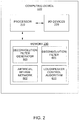
- FIG. 2 is a more detailed illustration of the computing device of Figure 1 , according to various embodiments.
- Computing device 120 is configured to implement one or more aspects of filter generation system 100 of Figure 1 , according to various embodiments.
- Computing device 120 may be any type of device capable of executing application programs including, without limitation, instructions associated with deconvolution filter generator 103, a deconvolution filter, such as a deconvolution filter 601, an artificial neural network of a loudspeaker system, such as an artificial neural network 602 and/or a loudspeaker control algorithm, such as an artificial neural network 610.
- Deconvolution filter 601 artificial neural network 602, and loudspeaker control algorithm 610 are described below in conjunction with Figure 6 .
- computing device 120 may be a laptop, a tablet, a smartphone, etc.
- computing device 120 includes, without limitation, a processor 210, input/output (I/O) devices 220, and a memory 230.
- I/O input/output
- Processor 210 may be implemented as a central processing unit (CPU), a graphics processing unit (GPU), an ASIC, an FPGA, any other type of processing unit, or a combination of different processing units.
- processor 210 may be any technically feasible hardware unit capable of processing data and/or executing software applications to facilitate operation of filter generation system 100 of Figure 1 and/or loudspeaker system 600, as described herein.
- processor 210 may be configured as a controller for filter generation system 100 and/or loudspeaker system 600.
- processor 210 may be configured to execute instructions associated with deconvolution filter generator 103, artificial neural network 602, and/or loudspeaker control algorithm 610.
- I/O devices 220 may include input devices, output devices, and devices capable of both receiving input (e.g., input stimulus 121, measured response 122, etc.) and providing output (e.g., an artificial neural network output 623, shown in Figure 6 ).
- Memory 230 may include a memory module or a collection of memory modules. As shown, in some embodiments, some or all of deconvolution filter generator 103 and/or artificial neural network 602 may reside in memory 230 during operation.
- Computing device 120 may be implemented as a stand-alone chip, such as a microprocessor, or as part of a more comprehensive solution that is implemented as an application-specific integrated circuit (ASIC), a system-on-a-chip (SoC), and so forth.
- the computing device 120 may be configured to coordinate the overall operation of a computer-based system, such as filter generation system 100 and/or loudspeaker system 600.
- computing device 120 may be coupled to, but separate from such a computer-based system.
- the computer-based system may include a separate processor that transmits data, such as input stimulus 121, to computing device 120, which may be included in a consumer electronic device, such as a personal computer, and the like.
- the embodiments disclosed herein contemplate any technically feasible system configured to implement the functionality associated with various components of filter generation system 100 and/or loudspeaker system 600, in any combination.
- reverberant environment 110 may be any room, vehicle interior, or other space in which loudspeaker 101 and sensor 102 are disposed that is not equivalent to an anechoic chamber.
- reverberant environment may 110 be a passenger compartment in a vehicle or a room in a building that includes a high fidelity, low-distortion sound reproduction system, such as a home theater venue, a commercial entertainment venue, and the like. Because reverberant environment 110 is not anechoic, sound reflections from interior surfaces 113 and 114 are not significantly damped.
- loudspeaker 101 when input stimulus 121 is applied to loudspeaker 101, and loudspeaker 101 emits a response in the form of a pressure wave, such as loudspeaker output 131, sensor 102 receives a system response (i.e., loudspeaker output 131 plus room response 133 plus room response 134), rather than simply a loudspeaker response (i.e., loudspeaker output 131).
- a system response may include any number of room responses from the various reflective surfaces in reverberant environment 110, and is not limited to room response 133 and room response 134.
- Figure 3 One such system response is illustrated in Figure 3 .
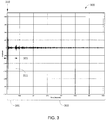
- Figure 3 illustrates a time domain response of a loudspeaker in the filter generation system of Figure 1 recorded by sensor 102, according to various embodiments.
- System output 300 is generated when loudspeaker 110 and sensor 102 are disposed in reverberant environment 110 and input stimulus 121 is applied to loudspeaker 110, thus, system output 300 is a system response that includes loudspeaker output 131, room response 133, and room response 134 of Figure 1 .
- system output 300 includes a head portion 301 and a tail portion 302.
- Head portion 301 begins with an initial portion 310 of the response of loudspeaker 101, such as the first sound waves received by sensor 102, and ends at a truncation point 311.
- head portion 301 includes an output of loudspeaker 101 received directly by sensor 102, i.e., loudspeaker output 131.
- head portion 301 includes little or no portion of the response of reverberant environment 110, i.e., room response 133 or room response 134.
- Head portion 301 does not include room response 133 or room response 134 because loudspeaker output 131 follows a direct path to sensor 102, whereas room response 133 and room response 134 each follow longer paths to sensor 102. Consequently, room response 133 and room response 134 each arrive at sensor 102 after a significant portion of loudspeaker output 131 has arrived at sensor 102, that is, the portion of loudspeaker output 131 included in head portion 301.
- tail portion 302 may begin at or near truncation point 311, and continues to any technically feasible point in the time domain, for example several seconds after truncation point 311.
- tail portion 302 generally includes some later arriving portion of loudspeaker output 131 as well as room response 133 and room response 134. Consequently, tail portion 302 includes a response of loudspeaker 101 and a response of reverberant environment 110.
- a time delay 303 between the initial arrival time of loudspeaker output 131 and the initial arrival time of room response 133 and/or room response 134 is a function of the relative positions of loudspeaker 101, interior surfaces 113 and 114, and sensor 102; truncation point 311 may be selected to substantially coincide with the expiration of time delay 303. Alternatively, truncation point 311 may be selected based on any other technically feasible criteria, such as a point prior to reception of the first reverberation of loudspeaker output 131.
- loudspeaker 101 and sensor 102 may be part of a loudspeaker system that includes a control system configured to correct for linear and/or non-linear distortion of loudspeaker 101.
- modeling is typically performed with an artificial learning architecture, such as an artificial neural network, to characterize loudspeaker 101.
- an artificial learning architecture such as an artificial neural network
- conventional techniques for characterization of loudspeaker 101 i.e., computing an impulse response function, generally require loudspeaker 101 and sensor 102 to be disposed in an anechoic chamber. In this way, the artificial neural network modeling loudspeaker 101 only processes an output from loudspeaker 101 that is not mixed with room response 133 and room response 134.
- deconvolution filter generator 103 deconvolves (removes or significantly reduces) a response of reverberant environment 110 (i.e., room response 133 and room response 134) from measured response 122.
- loudspeaker 101 can be accurately characterized by an artificial neural network when not disposed in an anechoic chamber.
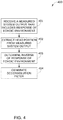
- FIG 4 sets forth a flowchart of method steps for generating a filter for a loudspeaker control system, according to various embodiments. Although the method steps are described with respect to the systems of Figures 1-3 , persons skilled in the art will understand that any system configured to perform the method steps, in any order, falls within the scope of the present disclosure.
- a method 400 begins at step 401, in which filter generation system 100 receives a measured system output, such as measured response 122.
- filter generation system 100 may measure, via sensor 102, a system output signal of loudspeaker 101 while disposed in reverberant environment 110.
- sensor 102 receives a plurality of sound waves that include loudspeaker output 131 (i.e., the output signal of loudspeaker 101) and room response 133 and room response 134 (i.e., the output signal of reverberant environment 110 in response to loudspeaker output 131, such as reverberations of loudspeaker output 131).
- the plurality of sound waves is produced by loudspeaker 101 in response to the application of input stimulus 121, such as an audio signal, to loudspeaker 101.
- Sensor 102 then generates measured response 122.
- Input stimulus 121 may be, without limitation, a single sine tone, a multi-tone, one or more different types and/or levels of music, square waves, Farina sweeps, pink noise, or any combination thereof.
- filter generation system 100 stores measured response 122 until an amplitude of the impulse falls 60 db or to some predefined level.
- filter generation system 100 may store several seconds of measured response 122.
- filter generation system 100 may store any technically feasible duration of measured response 122 to facilitate accurate computing of an impulse response function for loudspeaker 101.
- step 402 filter generation system 100 extracts head portion 301 from measured response 122.
- head portion 301 includes an initial portion of impulse response of loudspeaker 101, and ends proximate truncation point 311.
- head portion 301 may be selected to include little or no response of reverberant environment 110 (e.g., room response 133 and room response 134), and truncation point 311 may be selected accordingly.
- reverberant environment 110 e.g., room response 133 and room response 134
- truncation point 311 may be selected accordingly.
- head portion generally does not include the first or subsequent reflections of loudspeaker output 131.
- filter generation system 100 determines an inverse of the response of reverberant environment 110, based on head portion 301 and measured response 122.
- the inverse determined in step 403 may be any technically feasible inverse of the contributions to measured response 122 of room response 133 and room response 134.
- the inverse may be an audio signal.
- any suitable mathematical technique or approach may be employed in step 404 to determine the inverse of the response of reverberant environment 110.
- filter generation module 103 determines such an inverse by computing a first impulse response function for loudspeaker 101 based on head portion 301 and computing a second impulse response function, based on measured response 122, for a system that includes loudspeaker 101 while disposed in reverberant environment 110.
- filter generation module 103 then transforms the first impulse response into a first spectrum in the frequency domain and transforms the second impulse response into a second spectrum in the frequency domain.
- Filter generation module 103 then divides the first spectrum by the second spectrum, and transforms the result of this division to the time domain.
- the product of this transformation is a time domain filter that can function as an inverse to the contribution of room response 133 and room response 134 to measured response 122.
- filter generation module 103 determines such an inverse by computing a single impulse response function for reverberant environment 110 based on tail portion 302. In such embodiments, filter generation module 103 then transforms the single impulse response into a first spectrum in the frequency domain, inverts the first spectrum, then transforms the result of this inversion back to the time domain.
- the product of this transformation is a time domain filter that can function as an inverse to the contribution of room response 133 and room response 134 to measured response 122.
- a delay may be added to such a time domain filter so that the time domain filter remains causal. For example, in some embodiments, the delay may be substantially equal to time delay 303, shown in Figure 3 .
- filter generation module 103 generates a deconvolution filter, such as deconvolution filter 601 shown in Figure 6 .
- filter generation module 103 stores the deconvolution filter in memory 230.
- the deconvolution filter can then be implemented in a loudspeaker control system associated with loudspeaker 101 and sensor 102 that corrects for linear and/or non-linear distortion of loudspeaker 101.
- a loudspeaker control system uses the deconvolution filter to process measured response 122 from sensor 102, room response 133 and room response 134 are substantially filtered therefrom, as illustrated in Figures 5A and 5B .
- Figure 5A illustrates a tail portion 501 of a time domain response of loudspeaker 101 recorded by sensor 102, according to various embodiments.
- Figure 5B illustrates tail portion 501 after being filtered with a deconvolution filter, according to various embodiments. As shown, the average amplitude of tail portion 501 in Figure 5B is reduced by 20 db or more. Consequently, measured response 122, after filtering by a deconvolution filter based on the inverse to the contribution of room response 133 and room response 134 to measured response 122, may be employed by an artificial neural network to accurately characterize the impulse response function of loudspeaker 101, even though loudspeaker 101 is disposed in reverberant environment 110.
- FIG 6 illustrates a loudspeaker system 600 configured to implement one or more aspects of the various embodiments.
- Loudspeaker system 600 includes, without limitation, loudspeaker 101, sensor 102, reverberant environment 110 with interior surfaces 113 and 114, and computing device 120, each of which is described above in conjunction with Figure 1 .
- loudspeaker system 600 includes a deconvolution filter 601 and an artificial neural network 602, each of which may reside in computing device 120.
- loudspeaker system 600 includes loudspeaker control algorithm 610, which is shown in Figure 1 .
- Deconvolution filter 601 is configured to generate a filtered loudspeaker response 621 by processing measured response 122, which is generated by sensor 102.
- deconvolution filter 601 may be a finite impulse response (FIR) filter.
- FIR finite impulse response
- Artificial neural network 602 is configured to accurately model the input/output behavior of loudspeaker 101.
- artificial neural network 602 is configured to process input stimulus 121 to generate, via a neural network model, a neural network output 622 that approximates the filtered loudspeaker response 621.
- Neural network output 622 is then compared to filtered loudspeaker response 621 to generate an error value 623 that is passed back to artificial neural network 602 to generate an updated neural network output 622, thereby improving the accuracy with which artificial neural network 602 models the nonlinear input/output behavior of loudspeaker 101.
- This process of training artificial neural network 602 to generate accurate neural network output 621 may be performed in real-time and/or over a series of training iterations. Consequently, the impulse response function of loudspeaker 101 can be accurately modeled even though loudspeaker 101 is disposed in reverberant environment 110 and measured response 122 includes room response 133 and room response 134 combined with loudspeaker output 131.
- Artificial neural network 602 may be implemented in any technically feasible fashion.
- artificial neural network 602 may include a cascade correlation neural network architecture, a recurrent cascade neural network architecture, a recurrent neural network architecture, a MultiLayer Perceptron neural network architecture, or any other type of artificial learning architecture.
- artificial neural network 602 may be configured to "learn" in any manner that is consistent with the neural network architecture implemented by artificial neural network 602.
- artificial neural network 602 may be configured to minimize a least squares error cost function.
- Loudspeaker control algorithm 610 is configured to control loudspeaker system 600 with deconvolution filter 601 and artificial neural network 602. Loudspeaker control algorithm 610 may reside in computing device 120 and be implemented in any technically feasible fashion. For example, and without limitation, Loudspeaker control algorithm 610 may be a software module that is run by computing device 120, firmware included in computing device 120, or hardware included in computing device 120, such as an ASIC, an FPGA, or any combination thereof.
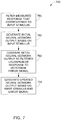
- Figure 7 sets forth a flowchart of method steps for controlling a loudspeaker system with an artificial neural network, according to an embodiment. Although the method steps are described with respect to the systems of Figures 1-6 , persons skilled in the art will understand that any system configured to perform the method steps, in any order, falls within the scope of the present disclosure.
- a method 700 begins at step 701, in which loudspeaker control system 600 filters a measured system response of loudspeaker 101 disposed in reverberant environment 110.
- loudspeaker control system 600 filters measured response 122, via deconvolution filter 601, to generate filtered loudspeaker response 621.
- measured response 122 corresponds to an audio input signal, such as input stimulus 121, applied to loudspeaker 101 while loudspeaker 101 is disposed in reverberant environment 110.
- deconvolution filter 601 is based on an inverse of a response of the reverberant environment, i.e., an inverse of the contributions of room response 133 and room response 134 to measured response 122, filtered loudspeaker response 621 is an accurate approximation of loudspeaker output 131.
- loudspeaker control system 600 generates an initial neural network output 622, via a neural network model, such as artificial neural network 602.
- Artificial neural network 602 may employ any technically feasible approach for modeling the input/output behavior of loudspeaker 101 based on input stimulus 121.
- loudspeaker control system 600 compares the initial neural network output 622 to filtered loudspeaker response 621 to determine an error value 623.
- loudspeaker control system 600 generates, via a neural network model, such as artificial neural network 602, an updated neural network output 622 based on input stimulus 121 and error value 623.
- a neural network model such as artificial neural network 602
- an updated neural network output 622 based on input stimulus 121 and error value 623.
- artificial neural network 602 "learns,” iteratively modifying and, thereby, improving the mapping between input stimulus 21 and measured loudspeaker response 122.
- a loudspeaker system includes a single loudspeaker and a single sensor or microphone, and a single deconvolution filter is generated for and employed by the loudspeaker system.
- a loudspeaker system may include multiple loudspeakers and/or multiple sensors.
- one deconvolution filter may be generated for each loudspeaker/sensor pairing.
- three loudspeakers and one sensor three different deconvolution filters may be generated-one for each loudspeaker/sensor pairing.
- four different deconvolution filters may be generated.
- each such deconvolution filter is preferably generated individually.
- the deconvolution filter associated with a first loudspeaker and a first sensor is generated by applying an input stimulus only to the first loudspeaker, and the measured system response used to generate the deconvolution filter is the sensor output from the first sensor.
- each convolution filter is generally implemented simultaneously, and is used to filter only the corresponding sensor output. Consequently, loudspeaker systems that are more complex than loudspeaker system 600 in Figure 6 can readily benefit from embodiments described herein.
- a deconvolution filter can be generated for a loudspeaker system that is disposed in a reverberant environment and includes a control system configured to correct for linear and/or non-linear distortion of a loudspeaker.
- the deconvolution filter is configured to remove the contribution of room response to the output of the loudspeaker system.
- the control system can be trained to remove distortion in loudspeaker response, even though reverberations can be generated in the reverberant environment that would normally be mixed with the response of the loudspeaker and prevent accurate training of the control system.
- aspects of the present embodiments may be embodied as a system, method or computer program product. Accordingly, aspects of the present disclosure may take the form of an entirely hardware embodiment, an entirely software embodiment (including firmware, resident software, micro-code, etc.) or an embodiment combining software and hardware aspects that may all generally be referred to herein as a "circuit,” “module” or “system.” Furthermore, aspects of the present disclosure may take the form of a computer program product embodied in one or more computer readable medium(s) having computer readable program code embodied thereon.
- the computer readable medium may be a computer readable signal medium or a computer readable storage medium.
- a computer readable storage medium may be, for example, but not limited to, an electronic, magnetic, optical, electromagnetic, infrared, or semiconductor system, apparatus, or device, or any suitable combination of the foregoing.
- a computer readable storage medium may be any tangible medium that can contain, or store a program for use by or in connection with an instruction execution system, apparatus, or device.
- each block in the flowchart or block diagrams may represent a module, segment, or portion of code, which comprises one or more executable instructions for implementing the specified logical function(s).
- the functions noted in the block may occur out of the order noted in the figures. For example, two blocks shown in succession may, in fact, be executed substantially concurrently, or the blocks may sometimes be executed in the reverse order, depending upon the functionality involved.
Landscapes
- Engineering & Computer Science (AREA)
- Physics & Mathematics (AREA)
- Artificial Intelligence (AREA)
- Acoustics & Sound (AREA)
- Signal Processing (AREA)
- Health & Medical Sciences (AREA)
- Evolutionary Computation (AREA)
- General Physics & Mathematics (AREA)
- General Health & Medical Sciences (AREA)
- Theoretical Computer Science (AREA)
- Computer Vision & Pattern Recognition (AREA)
- Automation & Control Theory (AREA)
- Software Systems (AREA)
- Medical Informatics (AREA)
- Otolaryngology (AREA)
- Multimedia (AREA)
- Audiology, Speech & Language Pathology (AREA)
- Human Computer Interaction (AREA)
- General Engineering & Computer Science (AREA)
- Circuit For Audible Band Transducer (AREA)
- Soundproofing, Sound Blocking, And Sound Damping (AREA)
- Stereophonic System (AREA)
Applications Claiming Priority (1)
| Application Number | Priority Date | Filing Date | Title |
|---|---|---|---|
| US15/099,433 US10425730B2 (en) | 2016-04-14 | 2016-04-14 | Neural network-based loudspeaker modeling with a deconvolution filter |
Publications (3)
| Publication Number | Publication Date |
|---|---|
| EP3232686A2 true EP3232686A2 (fr) | 2017-10-18 |
| EP3232686A3 EP3232686A3 (fr) | 2018-08-08 |
| EP3232686B1 EP3232686B1 (fr) | 2021-03-03 |
Family
ID=58671351
Family Applications (1)
| Application Number | Title | Priority Date | Filing Date |
|---|---|---|---|
| EP17166587.0A Active EP3232686B1 (fr) | 2016-04-14 | 2017-04-13 | Modélisation de haut-parleur à base de réseau neural au moyen d'un filtre de déconvolution |
Country Status (3)
| Country | Link |
|---|---|
| US (2) | US10425730B2 (fr) |
| EP (1) | EP3232686B1 (fr) |
| CN (1) | CN107302737B (fr) |
Cited By (1)
| Publication number | Priority date | Publication date | Assignee | Title |
|---|---|---|---|---|
| KR20240087585A (ko) * | 2022-12-12 | 2024-06-19 | 가우디오랩 주식회사 | 기계 학습 모델을 이용하여 RIR(room impulse response) 필터를 생성하는 오디오 신호 처리 장치 및 방법 |
Families Citing this family (30)
| Publication number | Priority date | Publication date | Assignee | Title |
|---|---|---|---|---|
| US9084058B2 (en) | 2011-12-29 | 2015-07-14 | Sonos, Inc. | Sound field calibration using listener localization |
| US9706323B2 (en) | 2014-09-09 | 2017-07-11 | Sonos, Inc. | Playback device calibration |
| US9106192B2 (en) | 2012-06-28 | 2015-08-11 | Sonos, Inc. | System and method for device playback calibration |
| US9219460B2 (en) | 2014-03-17 | 2015-12-22 | Sonos, Inc. | Audio settings based on environment |
| US9264839B2 (en) | 2014-03-17 | 2016-02-16 | Sonos, Inc. | Playback device configuration based on proximity detection |
| US9952825B2 (en) | 2014-09-09 | 2018-04-24 | Sonos, Inc. | Audio processing algorithms |
| US10664224B2 (en) | 2015-04-24 | 2020-05-26 | Sonos, Inc. | Speaker calibration user interface |
| US9538305B2 (en) | 2015-07-28 | 2017-01-03 | Sonos, Inc. | Calibration error conditions |
| US9693165B2 (en) | 2015-09-17 | 2017-06-27 | Sonos, Inc. | Validation of audio calibration using multi-dimensional motion check |
| EP3531714B1 (fr) | 2015-09-17 | 2022-02-23 | Sonos Inc. | Facilitation de l'étalonnage d'un dispositif de lecture audio |
| US9743207B1 (en) | 2016-01-18 | 2017-08-22 | Sonos, Inc. | Calibration using multiple recording devices |
| US10003899B2 (en) | 2016-01-25 | 2018-06-19 | Sonos, Inc. | Calibration with particular locations |
| US11106423B2 (en) | 2016-01-25 | 2021-08-31 | Sonos, Inc. | Evaluating calibration of a playback device |
| US9860662B2 (en) | 2016-04-01 | 2018-01-02 | Sonos, Inc. | Updating playback device configuration information based on calibration data |
| US9864574B2 (en) | 2016-04-01 | 2018-01-09 | Sonos, Inc. | Playback device calibration based on representation spectral characteristics |
| US9763018B1 (en) | 2016-04-12 | 2017-09-12 | Sonos, Inc. | Calibration of audio playback devices |
| US9992570B2 (en) | 2016-06-01 | 2018-06-05 | Google Llc | Auralization for multi-microphone devices |
| US9794710B1 (en) | 2016-07-15 | 2017-10-17 | Sonos, Inc. | Spatial audio correction |
| US10372406B2 (en) | 2016-07-22 | 2019-08-06 | Sonos, Inc. | Calibration interface |
| US10459684B2 (en) | 2016-08-05 | 2019-10-29 | Sonos, Inc. | Calibration of a playback device based on an estimated frequency response |
| EP3519846B1 (fr) * | 2016-09-29 | 2023-03-22 | Dolby Laboratories Licensing Corporation | Découverte et localisation automatiques d'emplacements de haut-parleur dans des systèmes de sons d'ambiance |
| US10127921B2 (en) * | 2016-10-31 | 2018-11-13 | Harman International Industries, Incorporated | Adaptive correction of loudspeaker using recurrent neural network |
| US11206484B2 (en) | 2018-08-28 | 2021-12-21 | Sonos, Inc. | Passive speaker authentication |
| US10299061B1 (en) | 2018-08-28 | 2019-05-21 | Sonos, Inc. | Playback device calibration |
| US10734965B1 (en) | 2019-08-12 | 2020-08-04 | Sonos, Inc. | Audio calibration of a portable playback device |
| CN111312272A (zh) * | 2020-03-19 | 2020-06-19 | 西安石油大学 | 一种用于减少近井声数据集中噪声信号的产品、方法及系统 |
| CN115776629A (zh) * | 2021-09-07 | 2023-03-10 | 宏碁股份有限公司 | 声音播放系统及可适性音场调整方法 |
| WO2023056258A1 (fr) | 2021-09-30 | 2023-04-06 | Sonos, Inc. | Gestion de conflit pour processus de détection de mot d'activation |
| US12323780B2 (en) | 2022-04-28 | 2025-06-03 | Samsung Electronics Co., Ltd. | Bayesian optimization for simultaneous deconvolution of room impulse responses |
| CN117275500A (zh) * | 2022-06-14 | 2023-12-22 | 青岛海尔科技有限公司 | 去混响方法、装置、设备及存储介质 |
Family Cites Families (21)
| Publication number | Priority date | Publication date | Assignee | Title |
|---|---|---|---|---|
| US5400299A (en) * | 1993-08-20 | 1995-03-21 | Exxon Production Research Company | Seismic vibrator signature deconvolution |
| JP2001057697A (ja) | 1999-08-18 | 2001-02-27 | Matsushita Electric Ind Co Ltd | 音場補正装置 |
| US6954745B2 (en) * | 2000-06-02 | 2005-10-11 | Canon Kabushiki Kaisha | Signal processing system |
| US7209566B2 (en) * | 2001-09-25 | 2007-04-24 | Intel Corporation | Method and apparatus for determining a nonlinear response function for a loudspeaker |
| US7577262B2 (en) * | 2002-11-18 | 2009-08-18 | Panasonic Corporation | Microphone device and audio player |
| CN100452929C (zh) * | 2002-11-29 | 2009-01-14 | Tcl王牌电子(深圳)有限公司 | 以回声抵消测量非消声室扬声器方法 |
| US8284947B2 (en) * | 2004-12-01 | 2012-10-09 | Qnx Software Systems Limited | Reverberation estimation and suppression system |
| EP1885154B1 (fr) | 2006-08-01 | 2013-07-03 | Nuance Communications, Inc. | Déreverbération des signaux d'un microphone |
| US7593535B2 (en) * | 2006-08-01 | 2009-09-22 | Dts, Inc. | Neural network filtering techniques for compensating linear and non-linear distortion of an audio transducer |
| EP2914019B1 (fr) * | 2008-12-22 | 2017-09-13 | Oticon A/s | Un système de prothèse auditive à électrodes |
| JP5241020B2 (ja) * | 2009-03-17 | 2013-07-17 | 矢崎総業株式会社 | 液面レベル検出装置 |
| US8218780B2 (en) | 2009-06-15 | 2012-07-10 | Hewlett-Packard Development Company, L.P. | Methods and systems for blind dereverberation |
| JP4886881B2 (ja) | 2010-06-30 | 2012-02-29 | 株式会社東芝 | 音響補正装置、音響出力装置、及び音響補正方法 |
| JP5654955B2 (ja) * | 2011-07-01 | 2015-01-14 | クラリオン株式会社 | 直接音抽出装置および残響音抽出装置 |
| JP5699844B2 (ja) * | 2011-07-28 | 2015-04-15 | 富士通株式会社 | 残響抑制装置および残響抑制方法並びに残響抑制プログラム |
| CN202887704U (zh) * | 2012-06-18 | 2013-04-17 | 歌尔声学股份有限公司 | 一种单通道语音去混响装置 |
| US9036825B2 (en) * | 2012-12-11 | 2015-05-19 | Amx Llc | Audio signal correction and calibration for a room environment |
| JP5982297B2 (ja) * | 2013-02-18 | 2016-08-31 | 日本電信電話株式会社 | 音声認識装置、音響モデル学習装置、その方法及びプログラム |
| US9060052B2 (en) | 2013-03-13 | 2015-06-16 | Accusonus S.A. | Single channel, binaural and multi-channel dereverberation |
| US9426589B2 (en) * | 2013-07-04 | 2016-08-23 | Gn Resound A/S | Determination of individual HRTFs |
| CN103440869B (zh) * | 2013-09-03 | 2017-01-18 | 大连理工大学 | 一种音频混响的抑制装置及其抑制方法 |
-
2016
- 2016-04-14 US US15/099,433 patent/US10425730B2/en active Active
-
2017
- 2017-04-13 CN CN201710239088.6A patent/CN107302737B/zh active Active
- 2017-04-13 EP EP17166587.0A patent/EP3232686B1/fr active Active
-
2019
- 2019-09-13 US US16/570,844 patent/US10715913B2/en active Active
Non-Patent Citations (1)
| Title |
|---|
| None |
Cited By (3)
| Publication number | Priority date | Publication date | Assignee | Title |
|---|---|---|---|---|
| KR20240087585A (ko) * | 2022-12-12 | 2024-06-19 | 가우디오랩 주식회사 | 기계 학습 모델을 이용하여 RIR(room impulse response) 필터를 생성하는 오디오 신호 처리 장치 및 방법 |
| KR102838629B1 (ko) | 2022-12-12 | 2025-07-25 | 가우디오랩 주식회사 | 기계 학습 모델을 이용하여 RIR(room impulse response) 필터를 생성하는 오디오 신호 처리 장치 및 방법 |
| US12526601B2 (en) | 2022-12-12 | 2026-01-13 | Gaudio Lab, Inc. | Audio signal processing device generating room impulse response filter using machine learning model |
Also Published As
| Publication number | Publication date |
|---|---|
| US20170303039A1 (en) | 2017-10-19 |
| US20200007986A1 (en) | 2020-01-02 |
| EP3232686B1 (fr) | 2021-03-03 |
| US10425730B2 (en) | 2019-09-24 |
| EP3232686A3 (fr) | 2018-08-08 |
| CN107302737B (zh) | 2023-04-25 |
| US10715913B2 (en) | 2020-07-14 |
| CN107302737A (zh) | 2017-10-27 |
Similar Documents
| Publication | Publication Date | Title |
|---|---|---|
| US10715913B2 (en) | Neural network-based loudspeaker modeling with a deconvolution filter | |
| Ratnarajah et al. | Towards improved room impulse response estimation for speech recognition | |
| Pezzoli et al. | Implicit neural representation with physics-informed neural networks for the reconstruction of the early part of room impulse responses | |
| US10582299B1 (en) | Modeling room acoustics using acoustic waves | |
| US20210306782A1 (en) | Method and system of audio device performance testing | |
| JP2013524601A5 (fr) | ||
| CN108141691A (zh) | 自适应混响消除系统 | |
| CN108200526B (zh) | 一种基于可信度曲线的音响调试方法及装置 | |
| CN106558315B (zh) | 异质麦克风自动增益校准方法及系统 | |
| US11830471B1 (en) | Surface augmented ray-based acoustic modeling | |
| US10757519B2 (en) | Neural network-based parameter estimation of loudspeakers | |
| CN113424558B (zh) | 智能个人助理 | |
| CN114613382B (zh) | 一种分布式麦克风阵列降噪方法、装置和控制设备 | |
| CN112652290A (zh) | 产生混响音频信号的方法及音频处理模型的训练方法 | |
| CN111968620B (zh) | 算法的测试方法、装置、电子设备及存储介质 | |
| Ramírez et al. | Modeling plate and spring reverberation using a dsp-informed deep neural network | |
| Dietrich | Uncertainties in acoustical transfer functions: modeling, measurement and derivation of parameters for airborne and structure-borne sound | |
| EP4354899A1 (fr) | Appareil, procédés et programmes informatiques pour fournir des signaux pour des mesures d'émission otoacoustique | |
| Blacodon et al. | Reverberation cancellation in a closed test section of a wind tunnel using a multi-microphone cesptral method | |
| US9668075B2 (en) | Estimating parameter values for a lumped parameter model of a loudspeaker | |
| US20190385590A1 (en) | Generating device, generating method, and non-transitory computer readable storage medium | |
| Kaneda | Noise reduction performance of various signals for impulse response measurement | |
| Antonello et al. | Joint source localization and dereverberation by sound field interpolation using sparse regularization | |
| CN114287137A (zh) | 基于高斯分布和k最近邻算法的房间校准 | |
| Dilungana et al. | Learning-based estimation of individual absorption profiles from a single room impulse response with known positions of source, sensor and surfaces |
Legal Events
| Date | Code | Title | Description |
|---|---|---|---|
| PUAI | Public reference made under article 153(3) epc to a published international application that has entered the european phase |
Free format text: ORIGINAL CODE: 0009012 |
|
| STAA | Information on the status of an ep patent application or granted ep patent |
Free format text: STATUS: THE APPLICATION HAS BEEN PUBLISHED |
|
| AK | Designated contracting states |
Kind code of ref document: A2 Designated state(s): AL AT BE BG CH CY CZ DE DK EE ES FI FR GB GR HR HU IE IS IT LI LT LU LV MC MK MT NL NO PL PT RO RS SE SI SK SM TR |
|
| AX | Request for extension of the european patent |
Extension state: BA ME |
|
| PUAL | Search report despatched |
Free format text: ORIGINAL CODE: 0009013 |
|
| AK | Designated contracting states |
Kind code of ref document: A3 Designated state(s): AL AT BE BG CH CY CZ DE DK EE ES FI FR GB GR HR HU IE IS IT LI LT LU LV MC MK MT NL NO PL PT RO RS SE SI SK SM TR |
|
| AX | Request for extension of the european patent |
Extension state: BA ME |
|
| RIC1 | Information provided on ipc code assigned before grant |
Ipc: H04R 29/00 20060101AFI20180703BHEP Ipc: H04S 7/00 20060101ALN20180703BHEP Ipc: G05B 13/02 20060101ALN20180703BHEP Ipc: G06F 3/16 20060101ALI20180703BHEP Ipc: H04R 3/00 20060101ALI20180703BHEP Ipc: H04R 3/04 20060101ALI20180703BHEP |
|
| STAA | Information on the status of an ep patent application or granted ep patent |
Free format text: STATUS: REQUEST FOR EXAMINATION WAS MADE |
|
| 17P | Request for examination filed |
Effective date: 20190207 |
|
| RBV | Designated contracting states (corrected) |
Designated state(s): AL AT BE BG CH CY CZ DE DK EE ES FI FR GB GR HR HU IE IS IT LI LT LU LV MC MK MT NL NO PL PT RO RS SE SI SK SM TR |
|
| STAA | Information on the status of an ep patent application or granted ep patent |
Free format text: STATUS: EXAMINATION IS IN PROGRESS |
|
| 17Q | First examination report despatched |
Effective date: 20190527 |
|
| GRAP | Despatch of communication of intention to grant a patent |
Free format text: ORIGINAL CODE: EPIDOSNIGR1 |
|
| STAA | Information on the status of an ep patent application or granted ep patent |
Free format text: STATUS: GRANT OF PATENT IS INTENDED |
|
| RIC1 | Information provided on ipc code assigned before grant |
Ipc: G06F 3/16 20060101ALI20200915BHEP Ipc: H04S 7/00 20060101ALN20200915BHEP Ipc: H04R 29/00 20060101AFI20200915BHEP Ipc: G05B 13/02 20060101ALN20200915BHEP Ipc: H04R 3/04 20060101ALI20200915BHEP Ipc: H04R 3/00 20060101ALI20200915BHEP |
|
| INTG | Intention to grant announced |
Effective date: 20200930 |
|
| GRAS | Grant fee paid |
Free format text: ORIGINAL CODE: EPIDOSNIGR3 |
|
| GRAA | (expected) grant |
Free format text: ORIGINAL CODE: 0009210 |
|
| STAA | Information on the status of an ep patent application or granted ep patent |
Free format text: STATUS: THE PATENT HAS BEEN GRANTED |
|
| AK | Designated contracting states |
Kind code of ref document: B1 Designated state(s): AL AT BE BG CH CY CZ DE DK EE ES FI FR GB GR HR HU IE IS IT LI LT LU LV MC MK MT NL NO PL PT RO RS SE SI SK SM TR |
|
| REG | Reference to a national code |
Ref country code: GB Ref legal event code: FG4D |
|
| REG | Reference to a national code |
Ref country code: AT Ref legal event code: REF Ref document number: 1368571 Country of ref document: AT Kind code of ref document: T Effective date: 20210315 Ref country code: CH Ref legal event code: EP |
|
| REG | Reference to a national code |
Ref country code: DE Ref legal event code: R096 Ref document number: 602017033640 Country of ref document: DE |
|
| REG | Reference to a national code |
Ref country code: IE Ref legal event code: FG4D |
|
| REG | Reference to a national code |
Ref country code: LT Ref legal event code: MG9D |
|
| PG25 | Lapsed in a contracting state [announced via postgrant information from national office to epo] |
Ref country code: LT Free format text: LAPSE BECAUSE OF FAILURE TO SUBMIT A TRANSLATION OF THE DESCRIPTION OR TO PAY THE FEE WITHIN THE PRESCRIBED TIME-LIMIT Effective date: 20210303 Ref country code: BG Free format text: LAPSE BECAUSE OF FAILURE TO SUBMIT A TRANSLATION OF THE DESCRIPTION OR TO PAY THE FEE WITHIN THE PRESCRIBED TIME-LIMIT Effective date: 20210603 Ref country code: GR Free format text: LAPSE BECAUSE OF FAILURE TO SUBMIT A TRANSLATION OF THE DESCRIPTION OR TO PAY THE FEE WITHIN THE PRESCRIBED TIME-LIMIT Effective date: 20210604 Ref country code: HR Free format text: LAPSE BECAUSE OF FAILURE TO SUBMIT A TRANSLATION OF THE DESCRIPTION OR TO PAY THE FEE WITHIN THE PRESCRIBED TIME-LIMIT Effective date: 20210303 Ref country code: FI Free format text: LAPSE BECAUSE OF FAILURE TO SUBMIT A TRANSLATION OF THE DESCRIPTION OR TO PAY THE FEE WITHIN THE PRESCRIBED TIME-LIMIT Effective date: 20210303 Ref country code: NO Free format text: LAPSE BECAUSE OF FAILURE TO SUBMIT A TRANSLATION OF THE DESCRIPTION OR TO PAY THE FEE WITHIN THE PRESCRIBED TIME-LIMIT Effective date: 20210603 |
|
| REG | Reference to a national code |
Ref country code: NL Ref legal event code: MP Effective date: 20210303 |
|
| REG | Reference to a national code |
Ref country code: AT Ref legal event code: MK05 Ref document number: 1368571 Country of ref document: AT Kind code of ref document: T Effective date: 20210303 |
|
| PG25 | Lapsed in a contracting state [announced via postgrant information from national office to epo] |
Ref country code: LV Free format text: LAPSE BECAUSE OF FAILURE TO SUBMIT A TRANSLATION OF THE DESCRIPTION OR TO PAY THE FEE WITHIN THE PRESCRIBED TIME-LIMIT Effective date: 20210303 Ref country code: RS Free format text: LAPSE BECAUSE OF FAILURE TO SUBMIT A TRANSLATION OF THE DESCRIPTION OR TO PAY THE FEE WITHIN THE PRESCRIBED TIME-LIMIT Effective date: 20210303 Ref country code: PL Free format text: LAPSE BECAUSE OF FAILURE TO SUBMIT A TRANSLATION OF THE DESCRIPTION OR TO PAY THE FEE WITHIN THE PRESCRIBED TIME-LIMIT Effective date: 20210303 Ref country code: SE Free format text: LAPSE BECAUSE OF FAILURE TO SUBMIT A TRANSLATION OF THE DESCRIPTION OR TO PAY THE FEE WITHIN THE PRESCRIBED TIME-LIMIT Effective date: 20210303 |
|
| PG25 | Lapsed in a contracting state [announced via postgrant information from national office to epo] |
Ref country code: NL Free format text: LAPSE BECAUSE OF FAILURE TO SUBMIT A TRANSLATION OF THE DESCRIPTION OR TO PAY THE FEE WITHIN THE PRESCRIBED TIME-LIMIT Effective date: 20210303 |
|
| PG25 | Lapsed in a contracting state [announced via postgrant information from national office to epo] |
Ref country code: SM Free format text: LAPSE BECAUSE OF FAILURE TO SUBMIT A TRANSLATION OF THE DESCRIPTION OR TO PAY THE FEE WITHIN THE PRESCRIBED TIME-LIMIT Effective date: 20210303 Ref country code: AT Free format text: LAPSE BECAUSE OF FAILURE TO SUBMIT A TRANSLATION OF THE DESCRIPTION OR TO PAY THE FEE WITHIN THE PRESCRIBED TIME-LIMIT Effective date: 20210303 Ref country code: EE Free format text: LAPSE BECAUSE OF FAILURE TO SUBMIT A TRANSLATION OF THE DESCRIPTION OR TO PAY THE FEE WITHIN THE PRESCRIBED TIME-LIMIT Effective date: 20210303 Ref country code: CZ Free format text: LAPSE BECAUSE OF FAILURE TO SUBMIT A TRANSLATION OF THE DESCRIPTION OR TO PAY THE FEE WITHIN THE PRESCRIBED TIME-LIMIT Effective date: 20210303 |
|
| PG25 | Lapsed in a contracting state [announced via postgrant information from national office to epo] |
Ref country code: IS Free format text: LAPSE BECAUSE OF FAILURE TO SUBMIT A TRANSLATION OF THE DESCRIPTION OR TO PAY THE FEE WITHIN THE PRESCRIBED TIME-LIMIT Effective date: 20210703 Ref country code: PT Free format text: LAPSE BECAUSE OF FAILURE TO SUBMIT A TRANSLATION OF THE DESCRIPTION OR TO PAY THE FEE WITHIN THE PRESCRIBED TIME-LIMIT Effective date: 20210705 Ref country code: RO Free format text: LAPSE BECAUSE OF FAILURE TO SUBMIT A TRANSLATION OF THE DESCRIPTION OR TO PAY THE FEE WITHIN THE PRESCRIBED TIME-LIMIT Effective date: 20210303 Ref country code: SK Free format text: LAPSE BECAUSE OF FAILURE TO SUBMIT A TRANSLATION OF THE DESCRIPTION OR TO PAY THE FEE WITHIN THE PRESCRIBED TIME-LIMIT Effective date: 20210303 |
|
| REG | Reference to a national code |
Ref country code: DE Ref legal event code: R097 Ref document number: 602017033640 Country of ref document: DE |
|
| PG25 | Lapsed in a contracting state [announced via postgrant information from national office to epo] |
Ref country code: LU Free format text: LAPSE BECAUSE OF NON-PAYMENT OF DUE FEES Effective date: 20210413 |
|
| PLBE | No opposition filed within time limit |
Free format text: ORIGINAL CODE: 0009261 |
|
| STAA | Information on the status of an ep patent application or granted ep patent |
Free format text: STATUS: NO OPPOSITION FILED WITHIN TIME LIMIT |
|
| REG | Reference to a national code |
Ref country code: BE Ref legal event code: MM Effective date: 20210430 |
|
| PG25 | Lapsed in a contracting state [announced via postgrant information from national office to epo] |
Ref country code: FR Free format text: LAPSE BECAUSE OF NON-PAYMENT OF DUE FEES Effective date: 20210503 Ref country code: ES Free format text: LAPSE BECAUSE OF FAILURE TO SUBMIT A TRANSLATION OF THE DESCRIPTION OR TO PAY THE FEE WITHIN THE PRESCRIBED TIME-LIMIT Effective date: 20210303 Ref country code: DK Free format text: LAPSE BECAUSE OF FAILURE TO SUBMIT A TRANSLATION OF THE DESCRIPTION OR TO PAY THE FEE WITHIN THE PRESCRIBED TIME-LIMIT Effective date: 20210303 Ref country code: AL Free format text: LAPSE BECAUSE OF FAILURE TO SUBMIT A TRANSLATION OF THE DESCRIPTION OR TO PAY THE FEE WITHIN THE PRESCRIBED TIME-LIMIT Effective date: 20210303 Ref country code: CH Free format text: LAPSE BECAUSE OF NON-PAYMENT OF DUE FEES Effective date: 20210430 Ref country code: LI Free format text: LAPSE BECAUSE OF NON-PAYMENT OF DUE FEES Effective date: 20210430 Ref country code: MC Free format text: LAPSE BECAUSE OF FAILURE TO SUBMIT A TRANSLATION OF THE DESCRIPTION OR TO PAY THE FEE WITHIN THE PRESCRIBED TIME-LIMIT Effective date: 20210303 |
|
| 26N | No opposition filed |
Effective date: 20211206 |
|
| PG25 | Lapsed in a contracting state [announced via postgrant information from national office to epo] |
Ref country code: SI Free format text: LAPSE BECAUSE OF FAILURE TO SUBMIT A TRANSLATION OF THE DESCRIPTION OR TO PAY THE FEE WITHIN THE PRESCRIBED TIME-LIMIT Effective date: 20210303 |
|
| PG25 | Lapsed in a contracting state [announced via postgrant information from national office to epo] |
Ref country code: IT Free format text: LAPSE BECAUSE OF FAILURE TO SUBMIT A TRANSLATION OF THE DESCRIPTION OR TO PAY THE FEE WITHIN THE PRESCRIBED TIME-LIMIT Effective date: 20210303 Ref country code: IE Free format text: LAPSE BECAUSE OF NON-PAYMENT OF DUE FEES Effective date: 20210413 |
|
| PG25 | Lapsed in a contracting state [announced via postgrant information from national office to epo] |
Ref country code: IS Free format text: LAPSE BECAUSE OF FAILURE TO SUBMIT A TRANSLATION OF THE DESCRIPTION OR TO PAY THE FEE WITHIN THE PRESCRIBED TIME-LIMIT Effective date: 20210703 |
|
| PG25 | Lapsed in a contracting state [announced via postgrant information from national office to epo] |
Ref country code: BE Free format text: LAPSE BECAUSE OF NON-PAYMENT OF DUE FEES Effective date: 20210430 |
|
| PG25 | Lapsed in a contracting state [announced via postgrant information from national office to epo] |
Ref country code: HU Free format text: LAPSE BECAUSE OF FAILURE TO SUBMIT A TRANSLATION OF THE DESCRIPTION OR TO PAY THE FEE WITHIN THE PRESCRIBED TIME-LIMIT; INVALID AB INITIO Effective date: 20170413 |
|
| PG25 | Lapsed in a contracting state [announced via postgrant information from national office to epo] |
Ref country code: CY Free format text: LAPSE BECAUSE OF FAILURE TO SUBMIT A TRANSLATION OF THE DESCRIPTION OR TO PAY THE FEE WITHIN THE PRESCRIBED TIME-LIMIT Effective date: 20210303 |
|
| P01 | Opt-out of the competence of the unified patent court (upc) registered |
Effective date: 20230527 |
|
| PG25 | Lapsed in a contracting state [announced via postgrant information from national office to epo] |
Ref country code: MK Free format text: LAPSE BECAUSE OF FAILURE TO SUBMIT A TRANSLATION OF THE DESCRIPTION OR TO PAY THE FEE WITHIN THE PRESCRIBED TIME-LIMIT Effective date: 20210303 |
|
| PG25 | Lapsed in a contracting state [announced via postgrant information from national office to epo] |
Ref country code: TR Free format text: LAPSE BECAUSE OF FAILURE TO SUBMIT A TRANSLATION OF THE DESCRIPTION OR TO PAY THE FEE WITHIN THE PRESCRIBED TIME-LIMIT Effective date: 20210303 |
|
| PG25 | Lapsed in a contracting state [announced via postgrant information from national office to epo] |
Ref country code: MT Free format text: LAPSE BECAUSE OF FAILURE TO SUBMIT A TRANSLATION OF THE DESCRIPTION OR TO PAY THE FEE WITHIN THE PRESCRIBED TIME-LIMIT Effective date: 20210303 |
|
| PGFP | Annual fee paid to national office [announced via postgrant information from national office to epo] |
Ref country code: GB Payment date: 20250319 Year of fee payment: 9 |
|
| PGFP | Annual fee paid to national office [announced via postgrant information from national office to epo] |
Ref country code: DE Payment date: 20250319 Year of fee payment: 9 |