EP3233932B1 - Radikalische niedertemperaturpolymerisierung von alkoxyaminen - Google Patents
Radikalische niedertemperaturpolymerisierung von alkoxyaminen Download PDFInfo
- Publication number
- EP3233932B1 EP3233932B1 EP15823668.7A EP15823668A EP3233932B1 EP 3233932 B1 EP3233932 B1 EP 3233932B1 EP 15823668 A EP15823668 A EP 15823668A EP 3233932 B1 EP3233932 B1 EP 3233932B1
- Authority
- EP
- European Patent Office
- Prior art keywords
- alkoxyamine
- polymerization
- radical
- process according
- temperature
- Prior art date
- Legal status (The legal status is an assumption and is not a legal conclusion. Google has not performed a legal analysis and makes no representation as to the accuracy of the status listed.)
- Active
Links
- 0 CCC1(C**C**C)CCCC1 Chemical compound CCC1(C**C**C)CCCC1 0.000 description 3
Images

Classifications
-
- C—CHEMISTRY; METALLURGY
- C08—ORGANIC MACROMOLECULAR COMPOUNDS; THEIR PREPARATION OR CHEMICAL WORKING-UP; COMPOSITIONS BASED THEREON
- C08F—MACROMOLECULAR COMPOUNDS OBTAINED BY REACTIONS ONLY INVOLVING CARBON-TO-CARBON UNSATURATED BONDS
- C08F293/00—Macromolecular compounds obtained by polymerisation on to a macromolecule having groups capable of inducing the formation of new polymer chains bound exclusively at one or both ends of the starting macromolecule
- C08F293/005—Macromolecular compounds obtained by polymerisation on to a macromolecule having groups capable of inducing the formation of new polymer chains bound exclusively at one or both ends of the starting macromolecule using free radical "living" or "controlled" polymerisation, e.g. using a complexing agent
-
- C—CHEMISTRY; METALLURGY
- C08—ORGANIC MACROMOLECULAR COMPOUNDS; THEIR PREPARATION OR CHEMICAL WORKING-UP; COMPOSITIONS BASED THEREON
- C08F—MACROMOLECULAR COMPOUNDS OBTAINED BY REACTIONS ONLY INVOLVING CARBON-TO-CARBON UNSATURATED BONDS
- C08F2/00—Processes of polymerisation
- C08F2/38—Polymerisation using regulators, e.g. chain terminating agents, e.g. telomerisation
-
- C—CHEMISTRY; METALLURGY
- C08—ORGANIC MACROMOLECULAR COMPOUNDS; THEIR PREPARATION OR CHEMICAL WORKING-UP; COMPOSITIONS BASED THEREON
- C08F—MACROMOLECULAR COMPOUNDS OBTAINED BY REACTIONS ONLY INVOLVING CARBON-TO-CARBON UNSATURATED BONDS
- C08F2/00—Processes of polymerisation
- C08F2/46—Polymerisation initiated by wave energy or particle radiation
- C08F2/48—Polymerisation initiated by wave energy or particle radiation by ultraviolet or visible light
- C08F2/50—Polymerisation initiated by wave energy or particle radiation by ultraviolet or visible light with sensitising agents
-
- C—CHEMISTRY; METALLURGY
- C08—ORGANIC MACROMOLECULAR COMPOUNDS; THEIR PREPARATION OR CHEMICAL WORKING-UP; COMPOSITIONS BASED THEREON
- C08F—MACROMOLECULAR COMPOUNDS OBTAINED BY REACTIONS ONLY INVOLVING CARBON-TO-CARBON UNSATURATED BONDS
- C08F220/00—Copolymers of compounds having one or more unsaturated aliphatic radicals, each having only one carbon-to-carbon double bond, and only one being terminated by only one carboxyl radical or a salt, anhydride ester, amide, imide or nitrile thereof
- C08F220/02—Monocarboxylic acids having less than ten carbon atoms; Derivatives thereof
- C08F220/10—Esters
-
- C—CHEMISTRY; METALLURGY
- C08—ORGANIC MACROMOLECULAR COMPOUNDS; THEIR PREPARATION OR CHEMICAL WORKING-UP; COMPOSITIONS BASED THEREON
- C08F—MACROMOLECULAR COMPOUNDS OBTAINED BY REACTIONS ONLY INVOLVING CARBON-TO-CARBON UNSATURATED BONDS
- C08F4/00—Polymerisation catalysts
- C08F4/28—Oxygen or compounds releasing free oxygen
- C08F4/32—Organic compounds
- C08F4/34—Per-compounds with one peroxy-radical
-
- C—CHEMISTRY; METALLURGY
- C09—DYES; PAINTS; POLISHES; NATURAL RESINS; ADHESIVES; COMPOSITIONS NOT OTHERWISE PROVIDED FOR; APPLICATIONS OF MATERIALS NOT OTHERWISE PROVIDED FOR
- C09D—COATING COMPOSITIONS, e.g. PAINTS, VARNISHES OR LACQUERS; FILLING PASTES; CHEMICAL PAINT OR INK REMOVERS; INKS; CORRECTING FLUIDS; WOODSTAINS; PASTES OR SOLIDS FOR COLOURING OR PRINTING; USE OF MATERIALS THEREFOR
- C09D153/00—Coating compositions based on block copolymers containing at least one sequence of a polymer obtained by reactions only involving carbon-to-carbon unsaturated bonds; Coating compositions based on derivatives of such polymers
-
- C—CHEMISTRY; METALLURGY
- C09—DYES; PAINTS; POLISHES; NATURAL RESINS; ADHESIVES; COMPOSITIONS NOT OTHERWISE PROVIDED FOR; APPLICATIONS OF MATERIALS NOT OTHERWISE PROVIDED FOR
- C09J—ADHESIVES; NON-MECHANICAL ASPECTS OF ADHESIVE PROCESSES IN GENERAL; ADHESIVE PROCESSES NOT PROVIDED FOR ELSEWHERE; USE OF MATERIALS AS ADHESIVES
- C09J153/00—Adhesives based on block copolymers containing at least one sequence of a polymer obtained by reactions only involving carbon-to-carbon unsaturated bonds; Adhesives based on derivatives of such polymers
-
- C—CHEMISTRY; METALLURGY
- C08—ORGANIC MACROMOLECULAR COMPOUNDS; THEIR PREPARATION OR CHEMICAL WORKING-UP; COMPOSITIONS BASED THEREON
- C08F—MACROMOLECULAR COMPOUNDS OBTAINED BY REACTIONS ONLY INVOLVING CARBON-TO-CARBON UNSATURATED BONDS
- C08F220/00—Copolymers of compounds having one or more unsaturated aliphatic radicals, each having only one carbon-to-carbon double bond, and only one being terminated by only one carboxyl radical or a salt, anhydride ester, amide, imide or nitrile thereof
- C08F220/02—Monocarboxylic acids having less than ten carbon atoms; Derivatives thereof
- C08F220/10—Esters
- C08F220/12—Esters of monohydric alcohols or phenols
- C08F220/16—Esters of monohydric alcohols or phenols of phenols or of alcohols containing two or more carbon atoms
- C08F220/18—Esters of monohydric alcohols or phenols of phenols or of alcohols containing two or more carbon atoms with acrylic or methacrylic acids
- C08F220/1804—C4-(meth)acrylate, e.g. butyl (meth)acrylate, isobutyl (meth)acrylate or tert-butyl (meth)acrylate
-
- C—CHEMISTRY; METALLURGY
- C08—ORGANIC MACROMOLECULAR COMPOUNDS; THEIR PREPARATION OR CHEMICAL WORKING-UP; COMPOSITIONS BASED THEREON
- C08F—MACROMOLECULAR COMPOUNDS OBTAINED BY REACTIONS ONLY INVOLVING CARBON-TO-CARBON UNSATURATED BONDS
- C08F2438/00—Living radical polymerisation
- C08F2438/02—Stable Free Radical Polymerisation [SFRP]; Nitroxide Mediated Polymerisation [NMP] for, e.g. using 2,2,6,6-tetramethylpiperidine-1-oxyl [TEMPO]
-
- C—CHEMISTRY; METALLURGY
- C08—ORGANIC MACROMOLECULAR COMPOUNDS; THEIR PREPARATION OR CHEMICAL WORKING-UP; COMPOSITIONS BASED THEREON
- C08L—COMPOSITIONS OF MACROMOLECULAR COMPOUNDS
- C08L2205/00—Polymer mixtures characterised by other features
- C08L2205/04—Polymer mixtures characterised by other features containing interpenetrating networks
Definitions
- the present invention relates to a process for the radical polymerization of alkoxyamines at low temperature, typically at temperatures as low as minus 50 ° C in the presence of a photoinitiator.
- the invention also relates to the use of the method of the invention for obtaining objects, as well as the objects obtained.
- Radical polymerization is a well-known polymerization technique.
- alkoxyamines makes it possible to prepare block copolymers. These polymerizations are almost always conducted at temperatures of at least 100 ° C.
- N-tert-butyl-1-diethylphosphono-2,2-dimethylpropyl nitroxide also known as SG1
- SG1 N-tert-butyl-1-diethylphosphono-2,2-dimethylpropyl nitroxide
- this nitroxide has many advantages such as moderate polymerization temperatures, good control of many monomers, It does not make it possible to carry out low temperature polymerizations such as ambient (for example 20 ° C.) see below the ambient in times compatible with industrial cycles when it comes from alkoxyamines, the latter being able to generate the persistent radical only at temperatures above 50 ° C.
- ambient for example 20 ° C.
- WO 03/074572 describes the possibility of polymerizing in a controlled manner by the nitroxide route at temperatures between 50 ° C and 160 ° C, but preferably between 80 ° C and 100 ° C. The reaction is therefore not possible for example at room temperature.
- the low temperature polymerization has advantages (limitation of side reactions, no degradation of some temperature sensitive molecules) but also allows to consume less energy or to minimize the pressure in synthesis reactors .
- the process of the invention can be carried out with any type of alkoxyamine. It can also be a poly-alkoxyamine, capable of generating a plurality of nitroxide radicals, or a macromolecular alkoxyamine or poly-macromolecular alkoxyamine resulting from a polymerization step between at least one monomer and an alkoxyamine.
- alkoxyamines can also be a poly-alkoxyamine, capable of generating a plurality of nitroxide radicals, or a macromolecular alkoxyamine or poly-macromolecular alkoxyamine resulting from a polymerization step between at least one monomer and an alkoxyamine.
- at least one of the alkoxyamines is monofunctional.
- at least one of the alkoxyamines is multifunctional.
- the alkoxyamine or polyalkoxyamine is described by the general formula Z (-T) n in which Z denotes a multivalent group, T a nitroxide and n an integer greater than or equal to 1, preferably between 2 and 10, advantageously between 2 and 8 and more preferably between 2 and 4, terminals included.
- n represents the functionality of the alkoxyamine, that is to say the number of nitroxydes radicals T that can be released by the alkoxyamine according to the mechanism: Z (-T) n ⁇ Z + n T
- This reaction is activated by the presence of a photoinitiator which under electromagnetic radiation generates free radicals. In the presence of monomer (s), the activated alkoxyamine initiates polymerization.
- the monomer M1 is first polymerized after activation of the alkoxyamine, then once the polyM1 block is complete, the monomer M2 is then polymerized:
- Z denotes a multivalent group, that is to say a group capable of releasing several radical sites after activation. The activation in question occurs by covalent Z-T bond failure.
- Z may be chosen from the following groups (I) to (VIII): in which R 3 and R 4, which are identical or different, represent a linear or branched alkyl radical having a number of carbon atoms ranging from 1 to 10, phenyl or thienyl radicals optionally substituted by a halogen atom such as F, Cl, Br, or by a linear or branched alkyl radical having a number of carbon atoms ranging from 1 to 4, or alternatively by nitro, alkoxy, aryloxy, carbonyl or carboxy radicals; a benzyl radical, a cycloalkyl radical having a number of carbon atoms ranging from 3 to 12, a radical containing one or more unsaturations; B represents a linear or branched alkylene radical having a number of carbon atoms ranging from 1 to 20; m is an integer from 1 to 10; in which R 5 and R 6 , which are identical or different, represent aryl, pyridy
- stable free radical denotes a radical that is so persistent and non-reactive with respect to air and moisture in the ambient air that it can be handled and stored for a much longer period than the majority free radicals (see, Accounts of Chemical Research 1976, 9, 13-19 ).
- the stable free radical is thus distinguished from free radicals whose lifetime is ephemeral (from a few milliseconds to a few seconds) such as free radicals from conventional polymerization initiators such as peroxides, hydroperoxides or azo initiators. It can be said that a free radical is stable if it is not a polymerization initiator and if the average lifetime of the radical is at least one minute.
- R L is a phosphonate group of formula: in which R c and R d are two identical or different alkyl groups, optionally linked so as to form a ring, comprising from 1 to 40 carbon atoms, optionally substituted or not.
- the R L group may also comprise at least one aromatic ring such as the phenyl radical or the naphthyl radical, substituted for example by one or more alkyl radicals comprising from 1 to 10 carbon atoms.
- R L is a phosphonate group of formula: in which R c and R d are two identical or different alkyl groups, optionally linked so as to form a ring, comprising from 1 to 40 carbon atoms, optionally substituted or not.
- the R L group may also comprise at least one aromatic ring such as the phenyl radical or the naphthyl radical, substituted for example by one or more alkyl radicals comprising from 1 to 10 carbon atoms.
- nitroxide of formula (XIV) is particularly preferred:
- the alkoxyamine (I), and especially the alkoxyamine (XIII), may be prepared by recipes described for example in FR2791979 .
- Alkoxyamines that can be used in the context of the invention are represented below:
- the last two alkoxyamines are called DIAMINS and TRIAMINS respectively and are the preferred alkoxyamines.
- These mixtures could thus comprise, for example, an alkoxyamine having attached nitroxides and an alkoxyamine having n 2 nitroxides attached with n 1 other than n 2. It could also be a combination of alkoxyamines carrying different nitroxides.
- Photoinitiators are compounds that can generate free radicals when these compounds are exposed to electromagnetic radiation.
- the electromagnetic radiations have wavelengths in the ultraviolet or visible range, but it is not beyond the scope of the invention to use wavelengths in shorter wavelength regions ( X-rays, or gamma) or longer (infra-red see beyond).
- It may also be a photoinitiator capable of generating free radicals by absorption at least two photons.
- This latter example is particularly useful when it comes to selectively polymerize a zone in the mass of the reaction mixture, in particular in the fields of 3D printing involving polymerization in the presence of a photoinitiator, that is, that is to say the creation of three-dimensional objects and prototypes by polymerization of successive layers using a laser beam.
- the photoinitiators can be of any type. Preferably, they are chosen from those which generate the free radicals by a homolytic cleavage reaction at position ⁇ with respect to the carbonyl group, such as the benzoin ether derivatives, the hydroxyalkylphenones, the dialkoxyacetophenones, as well as the derivatives of the oxides of acylphosphine, and in position ⁇ such as ketone sulphides and derivatives of sulfonylketones, those which form free radicals by tearing hydrogen from a hydrogen donor, such as benzophenones or thioxanthones.
- a homolytic cleavage reaction at position ⁇ with respect to the carbonyl group such as the benzoin ether derivatives, the hydroxyalkylphenones, the dialkoxyacetophenones, as well as the derivatives of the oxides of acylphosphine, and in position ⁇ such as ketone sulphides and derivatives of
- the process involves a charge transfer complex with an amine, followed by electron and proton transfer to form an initiator alkyl radical and an inactive cetyl radical.
- Mention may be made of benzyl diacetals, hydroxyalkyl phenones, alpha amino ketones, acyl phosphine oxides, benzophenones and thioxanthones.
- Suitable radical initiators are, for example, isopropyl carbonate, benzoyl peroxide, lauroyl, caproyl, dicumyl, tert-butyl perbenzoate, tert-butyl 2-ethyl perhexanoate, cumyl hydroperoxide, and the like.
- the process of the invention may also comprise various additives, such as plasticizers, thermal stabilizers or UV, dyes, depending on the end use of the object obtained by using the method of the invention.
- the conduct of the polymerization according to the process of the invention may be carried out in bulk, solution, suspension or emulsion.
- the alkoxyamine used can be prepared by a similar nitroxide-controlled radical polymerization process but without the presence of the photoinitiator, at a temperature above 50 ° C. It is for example to make a first block comprising at least one monomer, which will subsequently be put under the conditions of the present invention, that is to say at low temperature, typically at room temperature to generate the polymerization of the other blocks. We will obtain a copolymer with several blocks.
- the synthesis of block copolymers, or block copolymers has been using several techniques for many years. In each of these techniques, the temperatures used for the synthesis are always very far from the ambient and therefore require special conditions of preparation, often incompatible with the manufacturing processes used in the applications.
- the polymerization temperatures are between -50 ° C. and + 80 ° C., advantageously between -20 ° C. and + 80 ° C., preferably between 0 ° C. and 80 ° C., more preferably between 0 ° C and 50 ° C, and most preferably between 10 and 35 ° C.
- the viscosity is no longer a problem because it appears only at the end of the process. . This opens up new opportunities in areas where viscosity is a limiting factor such as coatings, resin injection or infusion processes, adhesives ...
- the present invention has the dual advantage of allowing the synthesis of the in situ block copolymer in the host material, so as to obtain a particular morphology more favorable to the application properties, and by maintaining a low initial viscosity which is particularly favorable for the implementation of the additive material.
- the host material may be a solvent, a polymer, an oligomer, a pigmentary or non-pigment filler of any size and any type of porous or non-porous form factor, short or long fibers, woven or non-woven fibers, nanotubes or combination of these host materials.
- the host material may also be a polymer precursor, for example any two-component system or not capable of polymerizing independently of the polymerization involving the alkoxyamine, for example without limitation an epoxy resin, polyurethane, polyester.
- the host material and the material resulting from the polymerization of the alkoxyamine can be polymerized either simultaneously or sequentially.
- the present invention is similar to the methods described in WO 03/062293 or WO 06/06152 but differs from these in that the synthesis temperature of the second block is very significantly lower than those described in the prior art, typically at room temperature, which is made possible by the combined use of a macromolecular alkoxyamine initiator previously prepared during a first step conventionally described in the prior art, in the presence of a photoinitiator and the constituent monomers of the second block.
- monomers having one or more double bonds such as vinylaromatic monomers such as styrene or substituted styrenes, especially alpha-methylstyrene, and acrylic monomers such as acrylic acid or its salts, alkyl acrylates (having one or more acrylic functions), cycloalkyl or aryl such as methyl acrylate, ethyl acrylate, butyl acrylate, ethylhexyl acrylate or phenyl acrylate, hydroxyalkyl acrylates such as 2-hydroxyethyl acrylate, ether alkyl acrylates such as 2-methoxyethyl acrylate, alkoxy- or aryloxy-polyalkylene glycol acrylates such as methoxypolyethylene glycol acrylates, acryloyl acrylates and the like.
- vinylaromatic monomers such as styrene or substituted styrenes, especially alpha-methylstyrene
- ethoxypolyethylene glycol methoxypolypropylene glycol acrylates, methoxypolyethylene glycol acrylate-polypropylene glycol acrylates or mixtures thereof, aminoalkyl acrylates such as 2- (dimethylamino) ethyl acrylate (ADAME), fluorinated acrylates, silylated acrylates, phosphorus acrylates such as alkylene glycol phosphate acrylates, methacrylic monomers such as methacrylic acid or its salts, methacrylates of alkyl (having one or more methacrylic functions), cycloalkyl, alkenyl or aryl such as methyl methacrylate (MMA), lauryl, cyclohexyl, allyl, phenyl or naphthyl, methacrylates hydroxyalkyl such as 2-hydroxyethyl methacrylate or 2-hydroxypropyl methacrylate, alkyl ether methacrylates such as 2-ethoxy
- the invention also relates to polymers or copolymers, block or not, obtained according to the method of the invention in the presence or absence of a host material.
- the present invention also relates to the applications of the use of this low temperature synthesis method. This process becomes compatible with many applications and for which the application temperature remains cold or moderate.
- the present invention is advantageously suitable for applications such as varnishes, 3D printing, coatings, adhesives and adhesives, mechanical reinforcement of plastics, composite materials because the polymerization temperature coincides with the temperature of the application. .
- the present invention also relates to the host materials comprising the polymers or copolymers resulting from the process of the invention because of their unique properties resulting from the use of the process of the invention, in particular allowing to incorporate large quantities of copolymers object of the invention to host materials using the method of the invention.
- the reaction mixture is degassed three times under vacuum / nitrogen.
- the reactor is then closed and stirring (50 rpm) and heating (temperature set point: 125 ° C) are started.
- the temperature of the reaction mixture reaches 113 ° C. in about 30 minutes.
- the pressure is 1.5 bar.
- the temperature of the reactor is maintained at 115 ° C. for 522 min.
- 340 g of a mixture containing 67% of dry extract are recovered.
- the excess butyl acrylate is then removed by evaporation at 70 ° C under reduced pressure for 3 h.
- the ratio by weight butyl acrylate: styrene of the obtained radical macro is 83:17.
- the GPC analysis of block B gives the following results: M n : 35000 g / mol; M w : 65000 g / mol; Polymolecularity: 1.86.
- the reaction mixture is degassed three times under vacuum / nitrogen.
- the reactor is then closed and stirring (50 rpm) and heating (temperature set point: 125 ° C) are started.
- the temperature of the reaction mixture reaches 113 ° C. in about 30 minutes.
- the pressure is 1.5 bar.
- the temperature of the reactor is maintained at 115 ° C. for 522 min.
- 740 g of a 70% solids content mixture are recovered.
- the excess butyl acrylate is then removed by evaporation at 70 ° C under reduced pressure for 3 h.
- the weight ratio of butyl acrylate to styrene of the obtained radical macro is 83:17.
- a mixture containing the macroinitiator or the non-initiating copolymer, the UV initiator is produced.
- TPO Esacure from Lamberti, and a methyl methacrylate monomer.
- the irradiation time is 90min.
- the irradiation source is the UVAHAND250 lamp from Dr. Hönle AG UV Technology (Lochhamer Schlag 1, 82166 Gräfelfing / Ober, Germany).
- the initial temperature of the mixture is the ambient temperature (20 ° C).
- Example 6e is repeated, but this time the glass vial rests on a brine bed at -15 ° C. The same result as for Example 6e is observed, a polymerization of the mixture and a transparent polymer are obtained.
- the macroinitiator used is that derived from Example 2.
- IBoA is isobornyl acrylate (the Tg of the PiBoA homopolymer is around 100 ° C).
- the TPO-L Speedcure is ethyl (2,4,6-trimethylbenzoyl) phenylphosphinate, a liquid photoinitiator distributed by Lambson.
- the mass composition given in Table 2 below is homogenized with magnetic stirring at room temperature (20 ° C.) and then poured into a silicone mold (40 mm long, 30 mm wide and 1 mm thick). The filled mold is then placed under UV-LED radiation (Firefly model distributed by Phoseon Technology, wavelength 395 nm, power 4W / cm 2 ) for 40 seconds.
- DS1 Macro Primer IBOA TPO-L EXAMPLE 8 2.61g 4.15g 0.07g
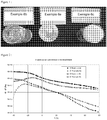
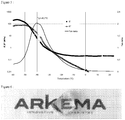
- Dynamic mechanical analysis in traction shows in figure 3 2 glass transition temperatures corresponding to 2 distinct phases, one associated with the macro-initiator polymer (Tg -11 ° C), the other with the isobornyl polyacrylate matrix (Tg 101 ° C). Since the module E 'remains higher than the module E "up to 80 ° C, it is deduced that the material is structured Optical transparency indicates that this structuring is very fine (submicron scale), figure 4 .
- the macro-initiator used is that derived from Example 2.
- SR256 is 2- (2-ethoxyethoxy) ethyl acrylate, it is distributed by Sartomer (the Tg of the homopolymer is around -55 ° C).
- the TPO-L Speedcure is ethyl (2,4,6-trimethylbenzoyl) phenylphosphinate, a liquid photoinitiator distributed by Lambson.
- Dynamic mechanical analysis in compression shows in figure 5 a glass transition temperature at -40 ° C of the 2-ethoxyethoxyethylene polyacrylate matrix.
- the elastic modulus E ' remains greater than the modulus E "after this glass transition at -40 ° C., which reflects the presence of a structuration.Once again, the optical transparency of the sample confirms that the scale of the structuration is very thin, submicron ( figure 6 ).
Landscapes
- Chemical & Material Sciences (AREA)
- Chemical Kinetics & Catalysis (AREA)
- Organic Chemistry (AREA)
- Medicinal Chemistry (AREA)
- Polymers & Plastics (AREA)
- Health & Medical Sciences (AREA)
- Materials Engineering (AREA)
- Engineering & Computer Science (AREA)
- Life Sciences & Earth Sciences (AREA)
- Wood Science & Technology (AREA)
- Addition Polymer Or Copolymer, Post-Treatments, Or Chemical Modifications (AREA)
- Polymerisation Methods In General (AREA)
- Organic Low-Molecular-Weight Compounds And Preparation Thereof (AREA)
- Polymerization Catalysts (AREA)
Claims (10)
- Radikalpolymerisationsverfahren, das die folgenden Schritte umfasst:- Mischung, umfassend mindestens ein Monomer in Gegenwart mindestens eines Photoinitiators und mindestens eines Alkoxyamins,- Durchführen der Polymerisation der Mischung bei einer Temperatur zwischen -50 °C und 80 °C bis zur vollständigen Umsetzung der Monomere.
- Verfahren nach Anspruch 1, bei dem mindestens ein Alkoxyamin monofunktionell ist.
- Verfahren nach Anspruch 1, bei dem mindestens ein Alkoxyamin multifunktionell ist.
- Verfahren nach Anspruch 1, bei dem es sich bei mindestens einem Alkoxyamin um ein makromolekulares Alkoxyamin handelt.
- Verfahren nach Anspruch 1, bei dem mindestens ein Photoinitiator mit mindestens einem Initiator, der thermisch Radikale bildet, kombiniert wird.
- Verfahren nach Anspruch 1, bei dem mindestens ein Photoinitiator mit mindestens einem Initiator, der durch eine Redoxreaktion Radikale bildet, kombiniert wird.
- Verfahren nach Anspruch 1, bei dem die Polymerisation in Gegenwart eines Wirtsmaterials durchgeführt wird.
- Verfahren nach Anspruch 7, bei dem das Wirtsmaterial aus gewebten oder ungewebten Fasern und Epoxid-, Polyurethan- und Polyesterharzen ausgewählt wird.
- Verwendung des Verfahrens nach einem der Ansprüche 1 bis 8 zur Herstellung von Klebstoffen, Verbundteilen, Lacken, Beschichtungen und mit einer 3D-Drucktechnik hergestellten Gegenständen.
- Gegenstand, erhalten mit Hilfe einer Verwendung nach Anspruch 9.
Applications Claiming Priority (2)
| Application Number | Priority Date | Filing Date | Title |
|---|---|---|---|
| FR1462720A FR3030526B1 (fr) | 2014-12-18 | 2014-12-18 | Polymerisation radicalaire d'alcoxyamines a basse temperature |
| PCT/FR2015/053616 WO2016097646A1 (fr) | 2014-12-18 | 2015-12-18 | Polymerisation radicalaire d'alcoxyamines a basse temperature |
Publications (2)
| Publication Number | Publication Date |
|---|---|
| EP3233932A1 EP3233932A1 (de) | 2017-10-25 |
| EP3233932B1 true EP3233932B1 (de) | 2019-09-18 |
Family
ID=53191759
Family Applications (1)
| Application Number | Title | Priority Date | Filing Date |
|---|---|---|---|
| EP15823668.7A Active EP3233932B1 (de) | 2014-12-18 | 2015-12-18 | Radikalische niedertemperaturpolymerisierung von alkoxyaminen |
Country Status (8)
| Country | Link |
|---|---|
| EP (1) | EP3233932B1 (de) |
| JP (1) | JP6677729B2 (de) |
| KR (1) | KR101963523B1 (de) |
| CN (1) | CN107207644A (de) |
| ES (1) | ES2761660T3 (de) |
| FR (1) | FR3030526B1 (de) |
| IL (1) | IL252948B (de) |
| WO (1) | WO2016097646A1 (de) |
Families Citing this family (2)
| Publication number | Priority date | Publication date | Assignee | Title |
|---|---|---|---|---|
| FR3047991B1 (fr) * | 2016-02-24 | 2020-03-20 | Arkema France | Composition polymerisable de faible viscosite precurseur de materiaux renforces a l'impact |
| FR3080374B1 (fr) * | 2018-04-19 | 2020-11-06 | Arkema France | Alcoxyamines oligomeres |
Family Cites Families (24)
| Publication number | Priority date | Publication date | Assignee | Title |
|---|---|---|---|---|
| US4666978A (en) * | 1985-11-27 | 1987-05-19 | First Chemical Corporation | Method of curing unsaturated polyester resins at low temperatures |
| FR2730240A1 (fr) | 1995-02-07 | 1996-08-09 | Atochem Elf Sa | Stabilisation d'un polymere par un radical libre stable |
| US5723511A (en) * | 1996-06-17 | 1998-03-03 | Xerox Corporation | Processes for preparing telechelic, branched and star thermoplastic resin polymers |
| US5728747A (en) * | 1996-08-08 | 1998-03-17 | Xerox Corporation | Stable free radical polymerization processes and compositions thereof |
| FR2791979B1 (fr) | 1999-04-08 | 2003-05-16 | Atochem Elf Sa | Procede de preparation d'alcoxyamines a partir de nitroxydes |
| JP4505698B2 (ja) * | 2000-01-17 | 2010-07-21 | 日油株式会社 | ビニル基含有アルコキシアミン、その用途および製造方法 |
| FR2804118B1 (fr) * | 2000-01-26 | 2003-08-22 | Atofina | Procede de polymerisation ou copolymerisation radicalaire controlee de l'ethylene sous haute pression en presence de radicaux libres amorceurs et de radicaux nitroxydes indoliniques controleurs |
| FR2807439B1 (fr) * | 2000-04-07 | 2003-06-13 | Atofina | Polymeres multimodaux par polymerisation radicalaire controlee en presence d'alcoxyamines |
| US8013062B2 (en) | 2002-01-22 | 2011-09-06 | Arkema France | Method of producing and using materials which are reinforced against impact and which contain block copolymers that are obtained by means of controlled radical polymerization in the presence of nitroxides |
| US7297819B2 (en) | 2002-03-05 | 2007-11-20 | Ciba Specialty Chemicals Corp. | Open-chain alkoxyamines and their corresponding nitroxides for controlled low temperature radical polymerization |
| FR2843394B1 (fr) * | 2002-08-07 | 2005-12-30 | Atofina | Alcoxyamines issues de nitroxydes b-phosphore, leur utilisation en polymerisation radicalaire |
| FR2866026B1 (fr) * | 2004-02-06 | 2008-05-23 | Arkema | Procede de polymerisation radicalaire en emulsion mettant en oeuvre des alcoxyamines hydrosolubles |
| WO2006006152A2 (en) | 2004-07-08 | 2006-01-19 | Ramot At Tel-Aviv University Ltd | Treatment of disorders and diseases of the colon |
| FR2877670B1 (fr) * | 2004-11-09 | 2007-02-02 | Arkema Sa | Dispersants acryliques hydrosolubles obtenus par polymerisation radicalaire controlee |
| JP4691986B2 (ja) * | 2004-12-27 | 2011-06-01 | 住友化学株式会社 | 樹脂接着体の製造方法 |
| FR2898127B1 (fr) * | 2006-03-02 | 2008-07-11 | Arkema Sa | Procede de polymerisation ou copolymerisation radicalaire controlee d'un ou plusieurs monomeres en presence d'un amorceur de type alcoxyamine |
| US20090065737A1 (en) * | 2007-09-11 | 2009-03-12 | Arkema Inc. | Polymerization controllers for composites cured by organic peroxide initiators |
| EP2238178B1 (de) * | 2008-01-28 | 2014-09-10 | Basf Se | Photolatente amidinbasen zur redox-härtung radikal härtbarer formulierungen |
| FR2931153B1 (fr) * | 2008-05-19 | 2010-05-28 | Arkema France | Procede de preparation d'une dispersion de particules polymeriques en milieu aqueux |
| JP5233704B2 (ja) * | 2009-01-30 | 2013-07-10 | 株式会社リコー | ブロック共重合体及びその製造方法 |
| JP5229167B2 (ja) * | 2009-09-04 | 2013-07-03 | 株式会社リコー | ラジカル重合用組成物及びポリマーの製造方法 |
| JP4821916B1 (ja) * | 2010-05-07 | 2011-11-24 | 横浜ゴム株式会社 | 変性ポリマーの製造法 |
| JP5333975B2 (ja) * | 2011-05-23 | 2013-11-06 | 電気化学工業株式会社 | (メタ)アクリル酸エステル共重合体およびこれを含んでなる粘着剤組成物ならびに(メタ)アクリル酸エステル共重合体の製造方法 |
| FR2983773B1 (fr) * | 2011-12-09 | 2014-10-24 | Arkema France | Procede de preparation de surfaces |
-
2014
- 2014-12-18 FR FR1462720A patent/FR3030526B1/fr active Active
-
2015
- 2015-12-18 CN CN201580075300.9A patent/CN107207644A/zh active Pending
- 2015-12-18 JP JP2017532037A patent/JP6677729B2/ja active Active
- 2015-12-18 WO PCT/FR2015/053616 patent/WO2016097646A1/fr not_active Ceased
- 2015-12-18 ES ES15823668T patent/ES2761660T3/es active Active
- 2015-12-18 EP EP15823668.7A patent/EP3233932B1/de active Active
- 2015-12-18 KR KR1020177020041A patent/KR101963523B1/ko active Active
-
2017
- 2017-06-15 IL IL252948A patent/IL252948B/en unknown
Non-Patent Citations (1)
| Title |
|---|
| None * |
Also Published As
| Publication number | Publication date |
|---|---|
| EP3233932A1 (de) | 2017-10-25 |
| ES2761660T3 (es) | 2020-05-20 |
| JP6677729B2 (ja) | 2020-04-08 |
| KR101963523B1 (ko) | 2019-07-31 |
| KR20170096180A (ko) | 2017-08-23 |
| FR3030526A1 (fr) | 2016-06-24 |
| IL252948A0 (en) | 2017-08-31 |
| FR3030526B1 (fr) | 2018-06-15 |
| WO2016097646A1 (fr) | 2016-06-23 |
| IL252948B (en) | 2021-08-31 |
| CN107207644A (zh) | 2017-09-26 |
| JP2017538022A (ja) | 2017-12-21 |
Similar Documents
| Publication | Publication Date | Title |
|---|---|---|
| EP2655031B1 (de) | Vernetzte nanostrukturierte gussplatten | |
| US10829672B2 (en) | Water compatible nanogel compositions | |
| US10968300B2 (en) | Control of polymer network structures via nanogels | |
| EP3233933B1 (de) | Radikalische niedertemperaturpolymerisierung von alkoxyaminen | |
| US10563000B2 (en) | Low-temperature radical polymerisation of alkoxyamines | |
| EP3233932B1 (de) | Radikalische niedertemperaturpolymerisierung von alkoxyaminen | |
| EP3420006A1 (de) | Niedrigviskose polymerisierbare vorläuferzusammensetzung für schlagverstärkte materialien | |
| JP2012041371A (ja) | 硬化性樹脂組成物および成形体 | |
| WO2010097561A2 (fr) | Nouveaux copolymères amphiphiles comprenant un groupe colorant, leur procédé de préparation et leurs utilisations comme pigments | |
| EP2291423A1 (de) | Blockcopolymer mit einem photoaktiven monomer mit einer photoisomerisierbaren gruppe, verwendung davon in einem dreidimensionalen optischen speicher |
Legal Events
| Date | Code | Title | Description |
|---|---|---|---|
| STAA | Information on the status of an ep patent application or granted ep patent |
Free format text: STATUS: THE INTERNATIONAL PUBLICATION HAS BEEN MADE |
|
| PUAI | Public reference made under article 153(3) epc to a published international application that has entered the european phase |
Free format text: ORIGINAL CODE: 0009012 |
|
| STAA | Information on the status of an ep patent application or granted ep patent |
Free format text: STATUS: REQUEST FOR EXAMINATION WAS MADE |
|
| 17P | Request for examination filed |
Effective date: 20170616 |
|
| AK | Designated contracting states |
Kind code of ref document: A1 Designated state(s): AL AT BE BG CH CY CZ DE DK EE ES FI FR GB GR HR HU IE IS IT LI LT LU LV MC MK MT NL NO PL PT RO RS SE SI SK SM TR |
|
| AX | Request for extension of the european patent |
Extension state: BA ME |
|
| RIN1 | Information on inventor provided before grant (corrected) |
Inventor name: INOUBLI, RABER Inventor name: CAZAUMAYOU, SYLVIE Inventor name: BOURRIGAUD, SYLVAIN Inventor name: ESCALE, PIERRE |
|
| RIN1 | Information on inventor provided before grant (corrected) |
Inventor name: BOURRIGAUD, SYLVAIN Inventor name: CAZAUMAYOU, SYLVIE Inventor name: ESCALE, PIERRE Inventor name: INOUBLI, RABER |
|
| DAV | Request for validation of the european patent (deleted) | ||
| DAX | Request for extension of the european patent (deleted) | ||
| GRAP | Despatch of communication of intention to grant a patent |
Free format text: ORIGINAL CODE: EPIDOSNIGR1 |
|
| STAA | Information on the status of an ep patent application or granted ep patent |
Free format text: STATUS: GRANT OF PATENT IS INTENDED |
|
| INTG | Intention to grant announced |
Effective date: 20190418 |
|
| GRAS | Grant fee paid |
Free format text: ORIGINAL CODE: EPIDOSNIGR3 |
|
| GRAA | (expected) grant |
Free format text: ORIGINAL CODE: 0009210 |
|
| STAA | Information on the status of an ep patent application or granted ep patent |
Free format text: STATUS: THE PATENT HAS BEEN GRANTED |
|
| AK | Designated contracting states |
Kind code of ref document: B1 Designated state(s): AL AT BE BG CH CY CZ DE DK EE ES FI FR GB GR HR HU IE IS IT LI LT LU LV MC MK MT NL NO PL PT RO RS SE SI SK SM TR |
|
| REG | Reference to a national code |
Ref country code: GB Ref legal event code: FG4D Free format text: NOT ENGLISH |
|
| REG | Reference to a national code |
Ref country code: CH Ref legal event code: EP |
|
| REG | Reference to a national code |
Ref country code: DE Ref legal event code: R096 Ref document number: 602015038402 Country of ref document: DE |
|
| REG | Reference to a national code |
Ref country code: AT Ref legal event code: REF Ref document number: 1181211 Country of ref document: AT Kind code of ref document: T Effective date: 20191015 |
|
| REG | Reference to a national code |
Ref country code: IE Ref legal event code: FG4D Free format text: LANGUAGE OF EP DOCUMENT: FRENCH |
|
| REG | Reference to a national code |
Ref country code: NL Ref legal event code: FP |
|
| PG25 | Lapsed in a contracting state [announced via postgrant information from national office to epo] |
Ref country code: FI Free format text: LAPSE BECAUSE OF FAILURE TO SUBMIT A TRANSLATION OF THE DESCRIPTION OR TO PAY THE FEE WITHIN THE PRESCRIBED TIME-LIMIT Effective date: 20190918 Ref country code: NO Free format text: LAPSE BECAUSE OF FAILURE TO SUBMIT A TRANSLATION OF THE DESCRIPTION OR TO PAY THE FEE WITHIN THE PRESCRIBED TIME-LIMIT Effective date: 20191218 Ref country code: BG Free format text: LAPSE BECAUSE OF FAILURE TO SUBMIT A TRANSLATION OF THE DESCRIPTION OR TO PAY THE FEE WITHIN THE PRESCRIBED TIME-LIMIT Effective date: 20191218 Ref country code: SE Free format text: LAPSE BECAUSE OF FAILURE TO SUBMIT A TRANSLATION OF THE DESCRIPTION OR TO PAY THE FEE WITHIN THE PRESCRIBED TIME-LIMIT Effective date: 20190918 Ref country code: HR Free format text: LAPSE BECAUSE OF FAILURE TO SUBMIT A TRANSLATION OF THE DESCRIPTION OR TO PAY THE FEE WITHIN THE PRESCRIBED TIME-LIMIT Effective date: 20190918 Ref country code: LT Free format text: LAPSE BECAUSE OF FAILURE TO SUBMIT A TRANSLATION OF THE DESCRIPTION OR TO PAY THE FEE WITHIN THE PRESCRIBED TIME-LIMIT Effective date: 20190918 |
|
| REG | Reference to a national code |
Ref country code: LT Ref legal event code: MG4D |
|
| PG25 | Lapsed in a contracting state [announced via postgrant information from national office to epo] |
Ref country code: RS Free format text: LAPSE BECAUSE OF FAILURE TO SUBMIT A TRANSLATION OF THE DESCRIPTION OR TO PAY THE FEE WITHIN THE PRESCRIBED TIME-LIMIT Effective date: 20190918 Ref country code: LV Free format text: LAPSE BECAUSE OF FAILURE TO SUBMIT A TRANSLATION OF THE DESCRIPTION OR TO PAY THE FEE WITHIN THE PRESCRIBED TIME-LIMIT Effective date: 20190918 Ref country code: AL Free format text: LAPSE BECAUSE OF FAILURE TO SUBMIT A TRANSLATION OF THE DESCRIPTION OR TO PAY THE FEE WITHIN THE PRESCRIBED TIME-LIMIT Effective date: 20190918 Ref country code: GR Free format text: LAPSE BECAUSE OF FAILURE TO SUBMIT A TRANSLATION OF THE DESCRIPTION OR TO PAY THE FEE WITHIN THE PRESCRIBED TIME-LIMIT Effective date: 20191219 |
|
| REG | Reference to a national code |
Ref country code: CH Ref legal event code: NV Representative=s name: VALIPAT S.A. C/O BOVARD SA NEUCHATEL, CH |
|
| REG | Reference to a national code |
Ref country code: AT Ref legal event code: MK05 Ref document number: 1181211 Country of ref document: AT Kind code of ref document: T Effective date: 20190918 |
|
| PG25 | Lapsed in a contracting state [announced via postgrant information from national office to epo] |
Ref country code: EE Free format text: LAPSE BECAUSE OF FAILURE TO SUBMIT A TRANSLATION OF THE DESCRIPTION OR TO PAY THE FEE WITHIN THE PRESCRIBED TIME-LIMIT Effective date: 20190918 Ref country code: PL Free format text: LAPSE BECAUSE OF FAILURE TO SUBMIT A TRANSLATION OF THE DESCRIPTION OR TO PAY THE FEE WITHIN THE PRESCRIBED TIME-LIMIT Effective date: 20190918 Ref country code: PT Free format text: LAPSE BECAUSE OF FAILURE TO SUBMIT A TRANSLATION OF THE DESCRIPTION OR TO PAY THE FEE WITHIN THE PRESCRIBED TIME-LIMIT Effective date: 20200120 Ref country code: RO Free format text: LAPSE BECAUSE OF FAILURE TO SUBMIT A TRANSLATION OF THE DESCRIPTION OR TO PAY THE FEE WITHIN THE PRESCRIBED TIME-LIMIT Effective date: 20190918 Ref country code: AT Free format text: LAPSE BECAUSE OF FAILURE TO SUBMIT A TRANSLATION OF THE DESCRIPTION OR TO PAY THE FEE WITHIN THE PRESCRIBED TIME-LIMIT Effective date: 20190918 |
|
| REG | Reference to a national code |
Ref country code: ES Ref legal event code: FG2A Ref document number: 2761660 Country of ref document: ES Kind code of ref document: T3 Effective date: 20200520 |
|
| PG25 | Lapsed in a contracting state [announced via postgrant information from national office to epo] |
Ref country code: SM Free format text: LAPSE BECAUSE OF FAILURE TO SUBMIT A TRANSLATION OF THE DESCRIPTION OR TO PAY THE FEE WITHIN THE PRESCRIBED TIME-LIMIT Effective date: 20190918 Ref country code: CZ Free format text: LAPSE BECAUSE OF FAILURE TO SUBMIT A TRANSLATION OF THE DESCRIPTION OR TO PAY THE FEE WITHIN THE PRESCRIBED TIME-LIMIT Effective date: 20190918 Ref country code: IS Free format text: LAPSE BECAUSE OF FAILURE TO SUBMIT A TRANSLATION OF THE DESCRIPTION OR TO PAY THE FEE WITHIN THE PRESCRIBED TIME-LIMIT Effective date: 20200224 Ref country code: SK Free format text: LAPSE BECAUSE OF FAILURE TO SUBMIT A TRANSLATION OF THE DESCRIPTION OR TO PAY THE FEE WITHIN THE PRESCRIBED TIME-LIMIT Effective date: 20190918 |
|
| REG | Reference to a national code |
Ref country code: DE Ref legal event code: R097 Ref document number: 602015038402 Country of ref document: DE |
|
| PLBE | No opposition filed within time limit |
Free format text: ORIGINAL CODE: 0009261 |
|
| STAA | Information on the status of an ep patent application or granted ep patent |
Free format text: STATUS: NO OPPOSITION FILED WITHIN TIME LIMIT |
|
| PG2D | Information on lapse in contracting state deleted |
Ref country code: IS |
|
| PG25 | Lapsed in a contracting state [announced via postgrant information from national office to epo] |
Ref country code: DK Free format text: LAPSE BECAUSE OF FAILURE TO SUBMIT A TRANSLATION OF THE DESCRIPTION OR TO PAY THE FEE WITHIN THE PRESCRIBED TIME-LIMIT Effective date: 20190918 Ref country code: IS Free format text: LAPSE BECAUSE OF FAILURE TO SUBMIT A TRANSLATION OF THE DESCRIPTION OR TO PAY THE FEE WITHIN THE PRESCRIBED TIME-LIMIT Effective date: 20200119 |
|
| 26N | No opposition filed |
Effective date: 20200619 |
|
| PG25 | Lapsed in a contracting state [announced via postgrant information from national office to epo] |
Ref country code: SI Free format text: LAPSE BECAUSE OF FAILURE TO SUBMIT A TRANSLATION OF THE DESCRIPTION OR TO PAY THE FEE WITHIN THE PRESCRIBED TIME-LIMIT Effective date: 20190918 Ref country code: MC Free format text: LAPSE BECAUSE OF FAILURE TO SUBMIT A TRANSLATION OF THE DESCRIPTION OR TO PAY THE FEE WITHIN THE PRESCRIBED TIME-LIMIT Effective date: 20190918 |
|
| PG25 | Lapsed in a contracting state [announced via postgrant information from national office to epo] |
Ref country code: IE Free format text: LAPSE BECAUSE OF NON-PAYMENT OF DUE FEES Effective date: 20191218 Ref country code: LU Free format text: LAPSE BECAUSE OF NON-PAYMENT OF DUE FEES Effective date: 20191218 |
|
| PG25 | Lapsed in a contracting state [announced via postgrant information from national office to epo] |
Ref country code: CY Free format text: LAPSE BECAUSE OF FAILURE TO SUBMIT A TRANSLATION OF THE DESCRIPTION OR TO PAY THE FEE WITHIN THE PRESCRIBED TIME-LIMIT Effective date: 20190918 |
|
| PG25 | Lapsed in a contracting state [announced via postgrant information from national office to epo] |
Ref country code: MT Free format text: LAPSE BECAUSE OF FAILURE TO SUBMIT A TRANSLATION OF THE DESCRIPTION OR TO PAY THE FEE WITHIN THE PRESCRIBED TIME-LIMIT Effective date: 20190918 Ref country code: HU Free format text: LAPSE BECAUSE OF FAILURE TO SUBMIT A TRANSLATION OF THE DESCRIPTION OR TO PAY THE FEE WITHIN THE PRESCRIBED TIME-LIMIT; INVALID AB INITIO Effective date: 20151218 |
|
| PG25 | Lapsed in a contracting state [announced via postgrant information from national office to epo] |
Ref country code: TR Free format text: LAPSE BECAUSE OF FAILURE TO SUBMIT A TRANSLATION OF THE DESCRIPTION OR TO PAY THE FEE WITHIN THE PRESCRIBED TIME-LIMIT Effective date: 20190918 |
|
| PG25 | Lapsed in a contracting state [announced via postgrant information from national office to epo] |
Ref country code: MK Free format text: LAPSE BECAUSE OF FAILURE TO SUBMIT A TRANSLATION OF THE DESCRIPTION OR TO PAY THE FEE WITHIN THE PRESCRIBED TIME-LIMIT Effective date: 20190918 |
|
| REG | Reference to a national code |
Ref country code: CH Ref legal event code: R18 Free format text: ST27 STATUS EVENT CODE: U-0-0-R10-R18 (AS PROVIDED BY THE NATIONAL OFFICE) Effective date: 20251008 |
|
| PGFP | Annual fee paid to national office [announced via postgrant information from national office to epo] |
Ref country code: NL Payment date: 20251112 Year of fee payment: 11 |
|
| REG | Reference to a national code |
Ref country code: DE Ref legal event code: R081 Ref document number: 602015038402 Country of ref document: DE Owner name: ARKEMA FRANCE, FR Free format text: FORMER OWNER: ARKEMA FRANCE, COLOMBES, FR |
|
| REG | Reference to a national code |
Ref country code: CH Ref legal event code: U11 Free format text: ST27 STATUS EVENT CODE: U-0-0-U10-U11 (AS PROVIDED BY THE NATIONAL OFFICE) Effective date: 20260101 |
|
| PGFP | Annual fee paid to national office [announced via postgrant information from national office to epo] |
Ref country code: DE Payment date: 20251028 Year of fee payment: 11 |
|
| PGFP | Annual fee paid to national office [announced via postgrant information from national office to epo] |
Ref country code: GB Payment date: 20251030 Year of fee payment: 11 |
|
| PGFP | Annual fee paid to national office [announced via postgrant information from national office to epo] |
Ref country code: IT Payment date: 20251121 Year of fee payment: 11 |
|
| PGFP | Annual fee paid to national office [announced via postgrant information from national office to epo] |
Ref country code: FR Payment date: 20251110 Year of fee payment: 11 |
|
| PGFP | Annual fee paid to national office [announced via postgrant information from national office to epo] |
Ref country code: BE Payment date: 20251117 Year of fee payment: 11 |
|
| REG | Reference to a national code |
Ref country code: BE Ref legal event code: PD Owner name: ARKEMA FRANCE; FR Free format text: DETAILS ASSIGNMENT: CHANGE OF OWNER(S), OTHER; FORMER OWNER NAME: ARKEMA FRANCE Effective date: 20250919 |
|
| PGFP | Annual fee paid to national office [announced via postgrant information from national office to epo] |
Ref country code: ES Payment date: 20260114 Year of fee payment: 11 |
|
| PGFP | Annual fee paid to national office [announced via postgrant information from national office to epo] |
Ref country code: CH Payment date: 20260101 Year of fee payment: 11 |