EP3235189B1 - Négociation de taille de fragment de message pour session de protocole de relais de session de message - Google Patents
Négociation de taille de fragment de message pour session de protocole de relais de session de message Download PDFInfo
- Publication number
- EP3235189B1 EP3235189B1 EP15826185.9A EP15826185A EP3235189B1 EP 3235189 B1 EP3235189 B1 EP 3235189B1 EP 15826185 A EP15826185 A EP 15826185A EP 3235189 B1 EP3235189 B1 EP 3235189B1
- Authority
- EP
- European Patent Office
- Prior art keywords
- msrp
- server
- point
- chunk size
- preferred
- Prior art date
- Legal status (The legal status is an assumption and is not a legal conclusion. Google has not performed a legal analysis and makes no representation as to the accuracy of the status listed.)
- Not-in-force
Links
- 238000000034 method Methods 0.000 claims description 20
- 238000004891 communication Methods 0.000 claims description 15
- 238000004590 computer program Methods 0.000 claims description 3
- 230000003287 optical effect Effects 0.000 claims 1
- 230000004044 response Effects 0.000 description 4
- 230000006399 behavior Effects 0.000 description 3
- 230000006870 function Effects 0.000 description 3
- 230000000977 initiatory effect Effects 0.000 description 3
- 230000003190 augmentative effect Effects 0.000 description 2
- 230000005540 biological transmission Effects 0.000 description 1
- 230000002452 interceptive effect Effects 0.000 description 1
- 238000005457 optimization Methods 0.000 description 1
Images



Classifications
-
- H—ELECTRICITY
- H04—ELECTRIC COMMUNICATION TECHNIQUE
- H04L—TRANSMISSION OF DIGITAL INFORMATION, e.g. TELEGRAPHIC COMMUNICATION
- H04L65/00—Network arrangements, protocols or services for supporting real-time applications in data packet communication
- H04L65/60—Network streaming of media packets
- H04L65/75—Media network packet handling
- H04L65/762—Media network packet handling at the source
-
- H—ELECTRICITY
- H04—ELECTRIC COMMUNICATION TECHNIQUE
- H04L—TRANSMISSION OF DIGITAL INFORMATION, e.g. TELEGRAPHIC COMMUNICATION
- H04L51/00—User-to-user messaging in packet-switching networks, transmitted according to store-and-forward or real-time protocols, e.g. e-mail
- H04L51/04—Real-time or near real-time messaging, e.g. instant messaging [IM]
-
- H—ELECTRICITY
- H04—ELECTRIC COMMUNICATION TECHNIQUE
- H04L—TRANSMISSION OF DIGITAL INFORMATION, e.g. TELEGRAPHIC COMMUNICATION
- H04L65/00—Network arrangements, protocols or services for supporting real-time applications in data packet communication
- H04L65/1066—Session management
- H04L65/1069—Session establishment or de-establishment
-
- H—ELECTRICITY
- H04—ELECTRIC COMMUNICATION TECHNIQUE
- H04L—TRANSMISSION OF DIGITAL INFORMATION, e.g. TELEGRAPHIC COMMUNICATION
- H04L65/00—Network arrangements, protocols or services for supporting real-time applications in data packet communication
- H04L65/1066—Session management
- H04L65/1101—Session protocols
- H04L65/1104—Session initiation protocol [SIP]
-
- H—ELECTRICITY
- H04—ELECTRIC COMMUNICATION TECHNIQUE
- H04W—WIRELESS COMMUNICATION NETWORKS
- H04W4/00—Services specially adapted for wireless communication networks; Facilities therefor
- H04W4/12—Messaging; Mailboxes; Announcements
-
- H—ELECTRICITY
- H04—ELECTRIC COMMUNICATION TECHNIQUE
- H04W—WIRELESS COMMUNICATION NETWORKS
- H04W4/00—Services specially adapted for wireless communication networks; Facilities therefor
- H04W4/50—Service provisioning or reconfiguring
Definitions
- This disclosure relates generally to negotiation of Message Session Relay Protocol, MSRP chunk size between end-points.
- MSRP The Message Session Relay Protocol
- IP Internet Protocol
- RFC 4975 The Internet Engineering Task Force, IETF, in Request For Comment, RFC 4975.
- the content in an instant message can be a text message, a Hypertext Transfer Protocol, HTML page, a file containing video clips, images, songs, or just a generic file. The content could also be related to sharing remote desktops or whiteboards.
- MSRP is a text-based protocol that is carried on a media plane, over transport protocols such as Transport Control Protocol, TCP, IETF RFC 793, Stream Control Transmission Protocol, SCTP, IETF RFC 2690, Transport Layer Security, TLS over TCP, IETF RFC 2246, etc.
- transport protocols such as Transport Control Protocol, TCP, IETF RFC 793, Stream Control Transmission Protocol, SCTP, IETF RFC 2690, Transport Layer Security, TLS over TCP, IETF RFC 2246, etc.
- transport protocols such as Transport Control Protocol, TCP, IETF RFC 793, Stream Control Transmission Protocol, SCTP, IETF RFC 2690, Transport Layer Security, TLS over TCP, IETF RFC 2246, etc.
- MSRP Relays can also be used as defined by the IETF RFC 4976. MSRP Relays are used when one of the end-points is located behind a Network Address Translator, NAT, more specifically if the MSRP session has to span across multiple administrative domains. MSRP Relays are also used to support bulk messaging, and carry messages for a large number of MSRP sessions through a small number of inter-relay connections.
- NAT Network Address Translator
- MSRP messages consist of requests and responses and not every MSRP request is answered by an MSRP response.
- MSRP defines methods and there are currently three specified methods:
- MSRP cannot set up sessions on its own, and in order to establish an MSRP session between end-points, the MSRP session is negotiated via an external rendezvous mechanism.
- Typical rendezvous mechanism used to establish an MSRP session is Session Initiation Protocol, SIP, with Session Description Protocol, SDP offer/answer model. Other rendezvous protocols can of course be used and are not precluded.
- Session Initiation Protocol, SIP, IETF RFC 3261, and Session Description, SDP offer/answer, IETF RFC3264 are the only known standardized mechanism for establishing an MSRP session.
- SIP is an IETF standard protocol that allows for the establishment of interactive user sessions involving multimedia elements such as video, voice, chat, gaming, and virtual reality. It is also used to establish session based messaging sessions, i.e., MSRP sessions, for exchanging instant messages or files.
- the MSRP session parameters are exchanged in accordance with the SDP answer/offer model.
- SDP attributes are exchanged between the end-points in an SDP offer/answer exchange via SIP in order to establish an MSRP session:
- an originating end-point 100 hosting a SIP user agent sends to a remote end-point, also hosting a SIP user agent, a SIP INVITE that includes an SDP offer.
- the SDP offer comprises the message media type and the MSRP UR1 of the originating end-point 100 in the path attribute. If the remote end-point accepts the invitation, it responds with a 200 OK to acknowledge the choice of media and includes the receiving MSRP URI. At this point the MSRP session is set up and the end-points can start exchanging instant messages or files or the likes. The MSRP session is terminated when either end-point send a SIP BYE request.
- the originating end-point 100 sends a SEND request to deliver a complete message, or if the message is very large, the originating end-point 100 could deliver the message in chunks using several SEND requests, where each SEND request contains one chunk of the overall message, a message ID corresponding to the whole message, a Byte-Range header field that identifies the portion of the message carried in the SEND request and the total size of the message.
- the remote end-point uses the received information to re-assemble the message and determines which chunks belong to which message. The remote end-point re-assembles the chunks into a complete message.
- the SEND request may be answered by an MSRP 200 OK from a peer node or endpoint node and/or by a REPORT request from the end-point indicating successful delivery of the complete message.
- Incremental success REPORT requests may also be generated by the remote end-point as message chunks are received.
- the originating end-point 100 decides on the MSRP chunk size based on for example its internal configuration.
- the MSRP Relay may also re-segment the MSRP message to a different chunk size than it was received.
- the re-segmenting performed at the MSRP Relay is typically based on internal configuration.
- the determination of the chunk size does not take into account the remote end-point capabilities, the receiving network capabilities and the remote end-point mobility if it moves from a high capacity access network to a lower capacity access network or vice versa or if the network/link conditions in the remote end-point network has changed. This may lead to message chunks that may not be delivered or lack of optimization in delivery of the messages.
- MSRP is carried over a transport protocol that offers congestion control
- the originating end-point has no indication as to the optimal chunk size that is acceptable to the remote end-point.
- the publication US2008/160906 discloses a method of negotiating MSRP chunk size for an MSRP session comprising determining a chunk size to be used and segmenting the message by the sending end-point according to this chunk size.
- the B2BUA or relay would then negotiate the chunk size with the remote end-point.
- the originating end-point would then determine the best chunk size to use considering both the originating and the remote end-point or B2BUA restrictions and capabilities including access network type, network and link conditions and configuration.
- a server according to claim 1 a method according to claim 12, a computer program according to claim 13 and a carrier according to claim 14.
- a server is used to negotiate MSRP chunk sizes with the originating end-point, also referred to as first end-point, and the remote end-point, also referred to as second end-point.
- the server determines the MSRP chunk sizes to be used for an MSRP session between the first (originating) end-point and the server and between the server and the second (remote) end-point as messages are transmitted between the first end-point and the second end-point through the server.
- the server receives from the first end-point an SDP offer in a first message (e.g., SIP INVITE) comprising the first end-point preferred MSRP chunk size.
- the server may use local policy and/or service level agreement between the server and the peer network along the communication path or the network where the second end-point is located to determine the first server preferred MSRP chunk size.
- the server replaces in the SDP offer the first end-point preferred MSRP chunk size received from the first end-point with the first server preferred MSRP chunk size and forwards the first message with the updated SDP offer towards the second end-point.
- the server When the server receives an SDP answer in a second message (e.g., SIP 200 OK) comprising a second end-point preferred MSRP chunk size in an SDP answer attribute, it may use local policy and/or service level agreement between the server and the peer network node along the communication path towards the first end-point to determine a second server preferred MSRP chunk size that would be used between the server and the first end-point. The server then replaces in the SDP answer, the second end-point preferred MSRP chunk size received from the second end-point with the second server preferred MSRP chunk size. The server then forwards the updated SDP answer in the second message towards the first end-point.
- SIP 200 OK e.g., SIP 200 OK
- the first server preferred MSRP chunk size may correspond to a maximum MSRP chunk size allowed between the server and the second end-point.
- the second server preferred MSRP chunk size may correspond to a maximum MSRP chunk size allowed between the server and the first end-point
- the server determines a first server MSRP chunk size to be used to segment messages from the server to the second end-point based on the second end-point preferred MSRP chunk size and the first server preferred MSRP chunk size.
- the server may determine the first server MSRP chunk size by selecting the smaller of the first server preferred MSRP chunk size and the second end-point preferred MSRP chunk size.
- the server determines a second server MSRP chunk size based on the first end-point preferred MSRP chunk size and the second server preferred MSRP chunk size.
- the server may determine the second server MSRP chunk size by selecting the smaller of the second server preferred MSRP chunk size and the first end-ponit preferred MSRP chunk size,
- the server when the server receives chunks of a large message or a file or other large content from the first end-point destined to the second end-point, the server may store all the message chunks received from the first end-point prior to forwarding the message re-segmented according to the first server MSRP chunk size. Likewise, on the other direction, if the server receives chunks of a large message or a file or other large content from the second end-point, the server may store all the message chunks received from the second end-point prior to forwarding the message re-segmented according to the second server MSRP chunk size. Alternatively, the server sends the message chunks re-segmented to either end-point as soon as they are received.
- the server sends towards the second end-point a list of first server preferred MSRP chunk sizes in an SDP attribute.
- the first server preferred MSRP chunk sizes may be listed in order of preference or priority.
- Another object of the invention consist of providing in an SDP attribute a minimum and a maximum chunk size, hence providing a range of allowed MSRP chunk sizes.
- Figure 1 illustrates an exemplary embodiment of a simplified MSRP session establishment between an originating end-point 100 and a remote end-point 101 where only the relevant steps are shown.
- the originating end-point 100 sends at step 102, a SIP INVITE and includes an SDP offer comprising the well-known Path attribute. If the originating end-point 100 determines that the message or file has to be delivered in chunks, a new SDP attribute indicating the originating end-point preferred chunk size is included in the SDP offer.
- the originating end-point 100 determines the preferred chunk size at least partially based on the access network type, the access network/access link conditions, internal configuration and/or originating end-point 100 capabilities.
- the originating end-point 100 may offer a list of preferred chunk sizes.
- the remote end-point 101 responds with a SIP 200 OK including an SDP answer comprising the well-known path attribute and a new attribute indicating the remote end-point preferred chunk size.
- the remote end-point 101 may offer a list of its preferred chunk sizes. If the remote end-point preferred chunk size is identical to the originating end-point preferred chunk size, the remote end-point 101 may omit transmitting the remote end-point preferred chunk size in the SDP answer towards the originating end-point 100.
- the originating end-point 100 preferred chunk size and the remote end-point preferred chunk size may indicate a maximum chunk size allowed by the end-point for the MSRP session. Additionally, if the SDP attribute contains a list of preferred chunk-size, each chunk size in the list may indicate absolute chunk size value in which case the chunk sizes are listed in order of preference or priority. Optionally, the list may comprise two values indicating a minimum and a maximum chunk size value hence providing an allowable range of chunk sizes that can be used for the MSRP session.
- the originating end-point uses the originating end-point preferred chunk size and the remote end-point preferred chunk size to determine the best chunk size to use when sending the message chunks to the remote end-point 101.
- the originating end-point 100 selects and uses the smallest of the originating end-point preferred chunk size and the remote end-point preferred chunk size.
- Figure 1 shows that the message can be sent in two chunks.
- Step 104 shows the originating end-point 100 sending the first piece or chunk of the complete message in a SEND request to the remote end-point 101 which responds with an MSRP 200 OK at step 105.
- the size of the message chunk in the SEND request is the best chunk size for both the originating and remote end-points as determined by the originating end-point 100.
- the originating end-point 100 sends the second and last piece or chunk of the complete message in a second SEND request to the remote end-point 101 which responds with an MSRP 200 OK at step 107.
- the remote end-point 101 determines that all the chunks are received, it optionally sends a REPORT request to indicate successful delivery of the message as shown at step 108.
- the originating end-point 100 sends a SIP BYE message and receives a SIP 200 OK from the remote end-point 101 as shown in bundled step 109.
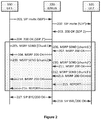
- FIG. 2 illustrates an exemplary embodiment of a simplified MSRP session establishment between an originating end-point 100 and a remote end-point 101 through a server, such as a B2BUA 200.
- a server such as a B2BUA 200.
- Other servers could also be used such as messaging application server or a MSRP Relay.
- B2BUA 200 is illustrated in Figure 2 .
- Figure 2 does not show the intermediary nodes such as SIP proxies and Serving Call Session Control Function, S-CSCF. Only the relevant steps between the end-points and the B2BUA 200 are shown.
- the originating end-point 100 sends a SIP INVITE at step 201 to the remote end-point 101 through a B2BUA 200 and includes an SDP offer comprising the well-known Path attribute. If the originating end-point 100 determines that the message or file has to be delivered in chunks, a new SDP attribute indicating the originating end-point preferred chunk size is included in the SDP offer of a SIP INVITE. Alternatively, the originating end-point 100 may offer a list of preferred chunk sizes in the SDP attribute.
- the B2BUA 200 receives the SIP INVITE comprising the new SDP attribute and prior to forwarding or relaying the SIP INVITE to the remote end-point 101 at step 202, the B2BUA 200 determines if the originating end-point preferred chunk size in the SDP attribute should be replaced with its own preferred chunk size. If the B2BUA 200 determines that the originating end-point preferred chunk size should be replaced, then the B2BUA 200 determines its own preferred MSRP chunk size, namely the first server MSRP preferred chunk size to be negotiated with the remote end-point 101. The B2BUA 200 may determine the first server MSRP preferred chunk size in accordance with its internal configuration or network/link condition, capabilities and/or service level agreements toward the remote end-point network.
- the B2BUA 200 forwards a modified SIP INVITE to the remote end-point 101, where it has replaced the originating end-point preferred chunk size with the first server MSRP preferred chunk size in the SDP offer attribute.
- the B2BUA 200 may replace the originating end-point preferred chunk size with a list of B2BUA preferred chunk sizes and forwards the SIP INVITE to the remote end-point 101.
- the remote end-point 101 may determine its preferred chunk size based on access network type, network condition/link and internal configuration.
- the remote end-point 101 sends a SIP 200 OK to the originating end-point 100 through the B2BUA 200 wherein it includes an SDP answer comprising the well-known path attribute and a new SDP attribute indicating the remote end-point preferred chunk size.
- the remote end-point 101 may offer a list of preferred chunk sizes in the new SDP attribute.
- the B2BUA 200 receives the SIP 200 OK message from the remote end-point. Prior to forwarding or relaying the SIP 200 OK to the originating end-point 100 at step 204, the B2BUA 200 may replace the remote end-point preferred chunk size with a second server MSRP preferred chunk size that it may prefer to use towards the originating end-point 100 in place of the remote end-point preferred chunk size. The B2BUA 200 may determine the second server MSRP preferred chunk size in accordance with its internal configuration, capabilities, network/link condition and/or service level agreements toward the originating end-point 100. The B2BUA 200 sends a modified SIP 200 OK to the originating end-pomt 100 where it has replaced the remote end-point preferred chunk size with its own, i.e.
- the B2BUA 200 may replace the remote end-point preferred chunk size with a list of B2BUA preferred chunk sizes prior to forwarding a modified SIP 200 OK to the originating end-point 100.
- the B2BUA 200 may use different first server and second server MSRP preferred chunk sizes or different lists of B2BUA preferred chunk sizes towards the remote end-point 101 and the originating end-point 100.
- the originating end-point 100 uses its preferred chunk size and the second server MSRP preferred chunk size to determine the best chunk size to use when sending the message chunks to the B2BUA 200 towards the remote end-point 101.
- the originating end-point 100 selects and uses the smallest of the originating end-point preferred chunk size and the second server MSRP preferred chunk size as the best end-point chunk size.
- Best end-point chunk size Min (the originating end-point preferred chunk size, the server (e.g., B2BUA 200) second MSRP preferred chunk size)
- the B2BUA 200 uses the first server MSRP preferred chunk size it has sent to the remote end-point 101 at step 204, and the remote end-point preferred chunk size to determine the best chunk size to use when forwarding the originating end-point 100 message to the remote end-point 101.
- the B2BUA 200 selects and uses the smallest of the first server MSRP preferred chunk size and the remote end-point preferred chunk size as the best server chunk size,
- Best server chunk size Min (the remote end-point preferred chunk size, the first server MSRP preferred chunk size)
- Figure 2 illustrates an embodiment where the originating end-point 100 uses the best end-point chunk size to send a complete message to a remote end-point 101 through the B2BUA 200 using two chunks: chunk I and chunk 2.
- B2BUA 200 will forward the complete message received from the originating end-point 100 in three chunks (chunk 1', chunk 2' and chunk 3') towards the remote end-point 101 using the best server chunk size which can also be referred to as first server MSRP chunk size.
- Figure 2 illustrates the B2BUA 200 sending the message chunks to the remote end-point 101 as they are received.
- the best end-point chunk size is greater (>) best server chunk size/first server MSRP chunk size, hence Chunk 1' is smaller than chunk 1.
- the B2BUA 200 would hence need to use more SEND requests towards the remote end-point 101 to forward the message received from the originating end-point 100.
- Step 205 shows the originating end-point 100 using the determined best end-point chunk size to send the first piece or chunk 1 of the complete message in a SEND request to the B2BUA 200.
- the B2BUA 200 stores chunk 1 of the message and sends, at step 206, a SEND request to the remote end-point 101 comprising chunk 1' of the message.
- the B2BUA 200 receives an MSRP 200 OK from the remote end-point 101 to acknowledge receipt of chunk 1'.
- the B2BUA 200 sends an MSRP 200 OK to the originating end-point 100 to confirm the reception of the SEND message at step 205. Note that step 208 can occur prior to step 207 or step 206.
- the originating end-point 100 sends the second and last message piece or chunk 2 in a second SEND request to the B2BUA 200.
- the B2BUA 200 stores the received chunk 2 of the message and determines that chunk2 is the last chunk of the complete message.
- the B2BUA 200 sends a SEND request comprising chunk 2' of the complete message to the remote end-point 101.
- the remote end-point 101 confirms receiving the SEND request in an MSRP 200 OK message at step 211.
- the B2BUA 200 sends the last SEND request comprising chunk 3' of the complete message to the remote end-point 101.
- the remote end-point 101 confirms receiving the SEND request with an MSRP 200 OK message at step 213.
- Step 214 shows the B2BUA 200 sending an MSRP 200 OK to the originating end-point 100 to confirm reception of chunk 2. Similarly, step 214 can occur right after step 209.
- the B2BUA 200 stores the received message chunks as they arrive, waits until all the message chunks are received before it re-segments the message towards the remote end-point. 101 using the first server MSRP chunk size. Even if the best end-point chunk size is greater (>) the first server MSRP chunk size, the B2BUA 200 may, as an alternative to the illustrated embodiment in Figure 2 , store the received message chunks as they arrive, wait until all the message chunks are received, before it re-segments the message towards the remote end-point 101 using the first server MSRP chunk size also referred to as the best server chunk size.
- the remote end-point 101 determines that all the chunks are received, it optionally sends a REPORT request to the B2BUA 200 to indicate successful delivery of the complete message as shown at step 215.
- the B2BUA 200 then sends a REPORT request to the originating end-point 100 to indicate successful delivery of the complete message as shown at step 216.
- the originating end-point 100 could then terminate the session by sending a SIP BYE message and receiving a SIP 200 OK from the B2BUA 200 as shown in bundled step 217.
- the B2BUA 200 then terminates the session by sending a SIP BYE message and receiving a SIP 200 OK from the remote end-point 101 as shown in bundled step 218.
- the originating end-point preferred chunk size, the first server MSRP preferred chunk sizes and the remote end-point preferred chunk size may indicate a maximum chunk size supported by each of the entities. Additionally, if a list of preferred chunk-size is used, it may indicate absolute chunk size values in which case they are listed in order of preference or priority. Optionally, the list may comprise two values indicating a minimum and a maximum chunk size hence providing an allowable range of chunk sizes.
- Figure 3 illustrates an embodiment of a method 30 executed at an end-point originating an instant message towards a remote end-point.
- the remote end-point may be the destination/recipient end-point for the MSRP messages, in which case the end-point and the remote being the destination/recipient end-point communicate directly.
- the remote end-point may be a server acting as an intermediary remote end-point towards the end-point. The server is used to communicate or inter-work with the destination/recipient remote end-point on behalf of the end-point.
- the end-point determines that an instant message, or file or content is to be sent in chunks and further determines a preferred chunk size for the message.
- the preferred chunk size is transmitted as an SDP offer in a SIP INVITE.
- the end-point may instead send a list of preferred chunk sizes listed in order of preference or priority.
- the end-point may send two chunk size values indicating a minimum and a maximum chunk size hence providing an allowable range of chunk sizes.
- the end-point determines the preferred chunk size at least partially based on criteria comprising: the end-point access network type, the end-point access network/access link conditions and/or internal configuration.
- the end-point receives an SDP answer in a SIP 200 OK from the remote end-point 101.
- the SIP 2000K comprises the remote end-point preferred chunk size.
- the remote end-point 101 may determine its preferred chunk size based on the remote end-point access network type, the remote end-point access network/access link conditions and/or internal configuration.
- the remote end-point 101 may instead include in the SDP answer, a list of preferred chunk sizes listed in order of preference or priority.
- the remote end-point 101 may instead include in the SDP answer two chunk size values indicating a minimum and a maximum chunk size hence providing an allowable range of chunk sizes.
- the end-point determines the best chunk size to use for the MSRP session.
- An embodiment of the determination of the best chunk size is as follows:
- a remote end-point 101 does not support negotiation of the chunk size, the end-point should assume today's known behaviour, i.e., that there is no limit to the chunk size and it may use its own configured value or even its own determined preferred chunk size.
- MSRP session starts, where the end-point sends a SEND request comprising the first chunk of the complete message using the best chunk size for the session as determined above at step 32.
- the end-point could receive MSRP 200 OK from the remote end-point 101 to confirm receipt of the SEND request.
- the end-point proceeds by sending subsequent SEND requests comprising the subsequent message chunks until the complete message is sent and delivered.
- a Report message indicating success delivery may be received once the remote end-point 101 has received the complete message and reassembled all the chunks.
- the end-point and/or the remote end-point 101 may move from one access network type to another access network type of different capacity, or the access network/access link conditions of one or both end-points have changed.
- the end-point and/or the remote end-point 101 may send an updated SDP offer in a SIP RE-INVITE or SIP UPDATE during the ongoing MSRP session.
- the updated SDP offer would comprise an updated preferred chunk size value for one end-point and an SDP answer is returned which may comprise an updated preferred chunk size for the other end-point.
- the end-point sending a message may then make a new determination of the best chunk size value based on the updated preferred chunk size in the updated SDP offer/answer and continue the MSRP session with the new determined best chunk size value.
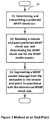
- FIG. 4 illustrates an exemplary method 40 executed at a server 200 that relays or forwards instant messages from an originating end-point 100 to a remote end-point 101.
- the server 200 may be a B2BUA, a Relay or a message center that has the ability to establish an MSRP session between an originating end-point 100 and a remote end-point 101 and to re-segment the instant messages sent between the originating end-point 100 and the remote end-point 101, as required in accordance with defined or dynamic server criteria.
- the server 200 negotiates with each end-point the parameters of the MSRP session.
- the MSRP session establishment starts at step 41, when the server 200 receives an SDP offer in a SIP INVITE message, the SDP offer comprises the legacy MSRP parameters, e.g., path, Max Size, etc. and a new SDP attribute indicating the originating end-point preferred chunk size for the message as the message may be delivered in chunks from the originating end-point 100.
- the server 200 at step 42 determines the remote end-point 101 from the path parameter, determines the first server preferred MSRP chunk size towards the remote end-point 101.
- the first server preferred MSRP chunk size is different from the received originating end-point preferred chunk size value, it further modifies the SIP INVITE message by replacing the new SDP attribute value in the received SDP offer indicating the originating end-point preferred chunk size with its own, i.e. the first server preferred MSRP chunk size.
- the server 200 then forwards the modified SIP INVITE with the SDP offer towards the remote end-point 101.
- the server 200 receives an SDP answer in a SIP 200 OK from the remote end-point 101 which includes the legacy MSRP parameters and a new SDP parameter indicating the remote end-point preferred chunk size. Again the server 200 determines a second server preferred MSRP chunk size but this time towards the originating end-point 100.
- the second server preferred MSRP chunk size is different from the remote end-point preferred chunk size value, it further modifies the SIP 200 OK where it replaces the new SDP attribute value in the SDP answer indicating the remote end-point preferred chunk size with its own, i.e., the second server preferred MSRP chunk size and forwards the modified SIP 200 OK with the SDP answer towards the originating end-point 100.
- the server 200 may not replace the new SDP attribute value in the SDP answer indicating the remote end-point preferred chunk size with its own, i.e., the second server preferred MSRP chunk size.
- the server 200 determines the first server preferred MSRP chunk size and the second server preferred MSRP chunk size based on criteria comprising internal configuration or configured policies and/or service level agreements between the server 200 and the next node along the path, e.g.. Network to Network Interconnect, NNI, or even User to Network Interconnect, UNI if the server 200 communicates directly with one or both end-points without other intermediary nodes.
- criteria comprising internal configuration or configured policies and/or service level agreements between the server 200 and the next node along the path, e.g. Network to Network Interconnect, NNI, or even User to Network Interconnect, UNI if the server 200 communicates directly with one or both end-points without other intermediary nodes.
- the server 200 determines a first server MSRP chunk size which is the best chunk size to use towards the remote end-point 101 for messages received from the originating end-point 100.
- the server 200 also determines a second server MSRP chunk size which is the best chunk size to use towards the originating end-point 100 for messages received on the other direction from the remote end-point 101 towards the originating end-point 100 over the same MSRP session.
- An embodiment of the determination of the first server MSRP chunk size is described. The same embodiment is applicable to the determination of the second server MSRP chunk size with the originating end-point 100:
- the server 200 e.g., B2BUA
- a remote end-point 101 cannot negotiate the chunk size
- the server 200 should assume today's known behaviour, i.e., there may be no limit to the chunk size and it may use its own configured value or even its own determined preferred chunk size for messages forwarded from the server 200 to the remote end-point 101.
- the server 200 e.g., B2BUA
- the server 200 is able to negotiate the chunk size with the remote end-point 101 but not with the originating end-point 100, and vice versa.
- negotiation of chunk size cannot be negotiated with either one of the end-point, the concerned end-point and the server 200 would use the default chunk size over the corresponding link as per prior art.
- the MSRP session is established.
- the server 200 uses the first server MSRP chunk size and the second server MSRP chunk size to transmit messages between the originating end-point 100 and the remote end-point 101.
- the server 200 may require to store all the message chunks until the complete message is received, then starts forwarding the message re-segmented according to first server MSRP chunk size towards the remote end-point 101.
- the server 200 may start forwarding the message re-segmented towards the remote end-point 101 as soon as it receives and stores enough message bytes or octets to allow re-segmenting according to the first server MSRP chunk size.
- the server 200 may only need to store few chunks of the message and does not need to wait for the complete message to be received and stored from the originating end-point 100 before it starts forwarding to the remote end-point 101.
- the server 200 stores the message chunk and waits for more message chunks to arrive from the originating end-point 1 00 before it starts to forward and re-segment to the remote end-point 101 according to the first server MSRP chunk size
- Step 45 of Method 40 is equally executed for messages received from the remote end-point 101, where the message chunks are re-segmented on the opposite direction towards the originating end-point 100 according to the second MSRP chunk size.
- the originating end-point 100 and/or the remote end-point 101 may update at any time their corresponding preferred MSRP chunk size during an ongoing MSRP session.
- the end-points may at any time send an SDP offer in either a SIP RE-INVITE or a SIP UPDATE message. This may occur if for instance the network/link conditions have changed or one of the end-points or both have moved to a different access network type of different capacity where perhaps different bandwidth policies may apply. If however the server 200 that receives the updated SDP offer from one end-point determines that it should maintain its previously determined first server preferred MSRP chunk size or second server preferred MSRP chunk size it responds to the end-point and does not forward the SDP offer to the other end-point.
- the following embodiment illustrates a format of the new SDP attribute comprised in an SDP offer and an SDP answer, when the attribute is used to carry a preferred chunk size.
- An example of the definition and syntax of the attribute is as follows: SDP a-line attribute "a-chunk-size:" which can take a value in Kbytes starting from for example 100 Kilobytes. The chunk-size may be the maximum chunk-size.
- SDP a-line attribute "a-chunk-size:" which can take a value in Kbytes starting from for example 100 Kilobytes.
- the chunk-size may be the maximum chunk-size.
- an endpoint that is not receiving the MSRP chunk size attribute in the SDP offer or SDP answer should assume today's behavior i.e. that there is no limit to the chunk size and it may use its own configured value.
- An Augmented Backus-Naur Form, ABNF syntax for the new SDP attribute could be:
- Similar embodiments can be used when the attribute is used to carry a list of preferred chunk sizes listed in order of preference or priority.
- the attribute can be formatted to carry a Minimum value and a Maximum value for the preferred chunk size.
- FIG. 5 shows an end-point comprising a circuitry 50 which executes the method steps according to the embodiments as described in Figure 1 and Figure 3 in addition to other embodiments described herein.
- the circuitry 50 may comprise a processor 51 and a storage 52 (also referred to as memory) containing instructions, which when executed, cause the processor 51 to perform the steps in a method according to embodiments described herein.
- the circuitry 50 may further comprise a communication interface 53 to communicate with external entities.
- FIG. 6 shows a server 200 comprising a circuitry 60 which executes the method steps according to the embodiments as described in Figure 2 and Figure 4 in addition to other embodiments described herein.
- the circuitry 50 may comprise a processor 61 and a storage 62 (also referred to as memory) containing instructions, which when executed, cause the processor 61 to perform the steps in a method according to embodiments described herein.
- the circuitry 60 may further comprise a communication interface 63 to communicate with external entities and end-points.
- FIG. 7 illustrates a circuitry 70 comprising a processing module 71 configured to determine a preferred MSRP chunk size for a MSRP session and transmit through a communication module 73 a message that includes the preferred MSRP chunk size of the end-point.
- the message may be a SIP-INVITE message.
- the processing module 71 is further configured to receive a response message through the communication module 73, where the response message includes a remote end-point preferred MSRP chunk size.
- the processing module 71 is configured to determine an MSRP chunk size to be used for the MSRP media session.
- the processing module 71 is further configured to segment the MSRP session message in accordance with the determined MSRP chunk size that is stored in a memory module (72) the MSRP chunk size.
- the circuitry 70 in Figure 7 further comprises the communication module 73 configured to send and receive the communication messages used to establish the MSRP session and negotiate the MSRP chunk size for the MSRP session between the end-points.
- the communication module 73 is further configured to send segmented MSRP session messages that are segmented according the determined MSRP chunk size.
- the communication module 73 is further configured to receive MSRP session messages from the remote end-point which may be segmented according to the remote end-point determined MSRP chunk size.
- the memory module 72 maintains the determined MSRP chunk size by the end-point that is used to segment MSRP messages from the end-point to the remote end-point.
Landscapes
- Engineering & Computer Science (AREA)
- Computer Networks & Wireless Communication (AREA)
- Signal Processing (AREA)
- Multimedia (AREA)
- Business, Economics & Management (AREA)
- General Business, Economics & Management (AREA)
- Telephonic Communication Services (AREA)
- Mobile Radio Communication Systems (AREA)
Claims (14)
- Serveur (200) configuré pour négocier une taille de fragment de protocole relais de session de message, MSRP, à utiliser dans une session multimédia MSRP établie entre un premier point terminal (100) et un deuxième point terminal (101) par l'intermédiaire du serveur, le serveur (200) conçu pour :- recevoir depuis un premier point terminal (100) un premier message comprenant une première taille préférée de fragment MSRP de point terminal ;- déterminer une première taille préférée de fragment MSRP de serveur, modifier le premier message pour remplacer la première taille préférée de fragment MSRP de point terminal par la première taille préférée de fragment MSRP de serveur et acheminer le premier message modifié vers un deuxième point terminal (101) ;- recevoir un deuxième message depuis le deuxième point terminal (101) comprenant une deuxième taille préférée de fragment MSRP de point terminal ;- déterminer une deuxième taille préférée de fragment MSRP de serveur, modifier le deuxième message pour remplacer la deuxième taille préférée de fragment MSRP de point terminal par la deuxième taille préférée de fragment MSRP de serveur et acheminer le deuxième message modifié vers le premier point terminal (100) ;- déterminer une première taille de fragment MSRP de serveur et une deuxième taille de fragment MSRP de serveur pour la session MSRP ; et- segmenter un message de session MSRP provenant du premier point terminal (100) conformément à la première taille de fragment MSRP de serveur et segmenter un message MSRP provenant du deuxième point terminal (101) conformément à la deuxième taille de fragment MSRP de serveur.
- Serveur (200) selon la revendication 1, dans lequel le serveur (200) est conçu pour déterminer la première taille préférée de fragment MSRP de serveur et la deuxième taille préférée de fragment MSRP de serveur sur la base, au moins partiellement, d'au moins l'un parmi une politique locale et un accord de niveau de service entre le serveur et un noeud de réseau homologue le long d'un trajet de communication.
- Serveur (200) selon la revendication 1, dans lequel la première taille préférée de fragment MSRP de serveur correspond à une taille maximale de fragment MSRP autorisée entre le serveur et le deuxième point terminal.
- Serveur (200) selon la revendication 1, dans lequel la deuxième taille préférée de fragment MSRP de serveur correspond à une taille maximale de fragment MSRP autorisée entre le serveur et le premier point terminal.
- Serveur (200) selon la revendication 1, dans lequel le serveur (200) est conçu pour déterminer la première taille de fragment MSRP de serveur sur la base de la deuxième taille préférée de fragment MSRP de point terminal et de la première taille préférée de fragment MSRP de serveur.
- Serveur (200) selon la revendication 1, dans lequel le serveur (200) est conçu pour déterminer la deuxième taille de fragment MSRP de serveur sur la base de la première taille préférée de fragment MSRP de point terminal et de la deuxième taille préférée de fragment MSRP de serveur.
- Serveur (200) selon la revendication 1, dans lequel le serveur (200) conçu pour déterminer la première taille de fragment MSRP de serveur comprend le serveur (200) conçu pour identifier une plus petite parmi la première taille préférée de fragment MSRP de serveur et la deuxième taille préférée de fragment MSRP de point terminal.
- Serveur (200) selon la revendication 1, dans lequel le serveur (200) conçu pour déterminer la deuxième taille de fragment MSRP de serveur comprend le serveur conçu pour identifier une plus petite parmi la deuxième taille préférée de fragment MSRP de serveur et la première taille préférée de fragment MSRP de point terminal.
- Serveur (200) selon la revendication 1, dans lequel le serveur (200) est en outre conçu pour stocker tous les fragments d'un message de session MSRP reçus du premier point terminal avant d'acheminer le message de session MSRP re-segmenté au deuxième point terminal selon la première taille de fragment MSRP de serveur.
- Serveur (200) selon la revendication 1, dans lequel le premier message modifié acheminé vers le deuxième point terminal comprend une liste de premières tailles préférées de fragment MSRP de serveur.
- Serveur (200) selon la revendication 1, dans lequel le premier message modifié acheminé vers le deuxième point terminal comprend une première taille minimale préférée de fragment MSRP de serveur et une première taille maximale préférée de fragment MSRP de serveur.
- Procédé (40) de négociation de taille de fragment de protocole relais de session de message, MSRP, à utiliser dans une session MSRP établie entre des points terminaux par l'intermédiaire d'un serveur, et exécuté au niveau du serveur, le procédé comprenant :- la réception (41), depuis un premier point terminal, d'un premier message comprenant une première taille préférée de fragment MSRP de point terminal ;- la détermination (42) d'une première taille préférée de fragment MSRP de serveur, la modification du premier message pour remplacer la première taille préférée de fragment MSRP de point terminal par la première taille préférée de fragment MSRP de serveur et l'acheminement du premier message modifié vers un deuxième point terminal ;- la réception (43) d'un deuxième message depuis le deuxième point terminal comprenant une deuxième taille préférée de fragment MSRP de point terminal ;- la détermination (43) d'une deuxième taille préférée de fragment MSRP de serveur, la modification du deuxième message pour remplacer la deuxième taille préférée de fragment MSRP de point terminal par la deuxième taille préférée de fragment MSRP de serveur et l'acheminement du deuxième message modifié vers le premier point terminal ;- la détermination (44) d'une première taille de fragment MSRP de serveur et d'une deuxième taille de fragment MSRP de serveur pour la session MSRP ; et- la segmentation (45) d'un message de session MSRP provenant du premier point terminal conformément à la première taille de fragment MSRP de serveur et la segmentation d'un message MSRP provenant du deuxième point terminal en utilisant la deuxième taille de fragment MSRP de serveur.
- Programme informatique, comprenant des instructions qui, lorsqu'elles sont exécutées sur au moins un processeur, amènent l'au moins un processeur à effectuer le procédé selon la revendication 12.
- Porteuse contenant le programme d'ordinateur selon la revendication 13, dans lequel la porteuse est l'un parmi un signal électronique, un signal optique, un signal radio ou un support de stockage lisible par ordinateur.
Applications Claiming Priority (2)
| Application Number | Priority Date | Filing Date | Title |
|---|---|---|---|
| US201462094227P | 2014-12-19 | 2014-12-19 | |
| PCT/IB2015/059851 WO2016098086A1 (fr) | 2014-12-19 | 2015-12-21 | Négociation de taille de fragment de message pour session de protocole de relais de session de message |
Publications (2)
| Publication Number | Publication Date |
|---|---|
| EP3235189A1 EP3235189A1 (fr) | 2017-10-25 |
| EP3235189B1 true EP3235189B1 (fr) | 2019-04-10 |
Family
ID=55182502
Family Applications (1)
| Application Number | Title | Priority Date | Filing Date |
|---|---|---|---|
| EP15826185.9A Not-in-force EP3235189B1 (fr) | 2014-12-19 | 2015-12-21 | Négociation de taille de fragment de message pour session de protocole de relais de session de message |
Country Status (5)
| Country | Link |
|---|---|
| US (1) | US10498791B2 (fr) |
| EP (1) | EP3235189B1 (fr) |
| CN (1) | CN107113223B (fr) |
| IL (1) | IL252650A0 (fr) |
| WO (1) | WO2016098086A1 (fr) |
Families Citing this family (7)
| Publication number | Priority date | Publication date | Assignee | Title |
|---|---|---|---|---|
| US10747729B2 (en) * | 2017-09-01 | 2020-08-18 | Microsoft Technology Licensing, Llc | Device specific chunked hash size tuning |
| US11716363B2 (en) * | 2017-11-02 | 2023-08-01 | Telefonaktiebolaget Lm Ericsson (Publ) | Messaging resource function |
| US10871945B2 (en) * | 2018-04-13 | 2020-12-22 | Microsoft Technology Licensing, Llc | Resumable merge sort |
| CN110881021B (zh) * | 2018-09-06 | 2022-06-03 | 中国移动通信有限公司研究院 | Msrp分片的处理方法及装置、网络设备及存储介质 |
| US11856073B1 (en) * | 2019-03-22 | 2023-12-26 | Amazon Technologies, Inc. | Message batching for communication protocols |
| CN112437125B (zh) * | 2020-11-10 | 2022-05-03 | 阿波罗智联(北京)科技有限公司 | 信息并发处理方法、装置、电子设备及存储介质 |
| EP4489379B1 (fr) * | 2023-07-05 | 2026-05-06 | u-blox AG | Transmission et réception de données par l'intermédiaire d'une interface série asynchrone |
Family Cites Families (22)
| Publication number | Priority date | Publication date | Assignee | Title |
|---|---|---|---|---|
| US7272658B1 (en) * | 2003-02-13 | 2007-09-18 | Adobe Systems Incorporated | Real-time priority-based media communication |
| GB0321975D0 (en) * | 2003-09-19 | 2003-10-22 | Ericsson Telefon Ab L M | Exchange protocol for combination multimedia services |
| US20050243746A1 (en) * | 2004-04-29 | 2005-11-03 | Nokia Corporation | Session inspection scheme |
| EP1672866A1 (fr) * | 2004-12-15 | 2006-06-21 | Siemens S.p.A. | Méthode et système de transfert instantané des fichiers multimédia entre utilisateurs de téléphonie mobile dans la portée des services combinatoires. |
| FI20055288A0 (fi) * | 2005-06-06 | 2005-06-06 | Nokia Corp | Yksittäinen sanomanvälitys |
| CA2606773C (fr) * | 2005-06-20 | 2011-08-09 | Telefonaktiebolaget Lm Ericsson (Publ) | Procede et dispositif permettant d'etablir une communication |
| KR100789902B1 (ko) * | 2005-12-09 | 2008-01-02 | 한국전자통신연구원 | 다중 프레임을 갖는 브이오아이피 패킷 처리 장치 및 그방법 |
| CN1870639B (zh) * | 2005-11-25 | 2010-12-08 | 华为技术有限公司 | 初始会话协议消息编码能力的协商方法及装置 |
| US7636767B2 (en) * | 2005-11-29 | 2009-12-22 | Cisco Technology, Inc. | Method and apparatus for reducing network traffic over low bandwidth links |
| CN100401724C (zh) * | 2005-12-15 | 2008-07-09 | 华为技术有限公司 | 发送即时消息的方法和设备 |
| DE602007014204D1 (de) * | 2006-05-31 | 2011-06-09 | Huawei Tech Co Ltd | Vorrichtung und verfahren zum routen von nachrichtendiensten |
| KR100966047B1 (ko) * | 2006-08-25 | 2010-06-28 | 삼성전자주식회사 | 통신시스템에서 미디어 송신 방법 및 장치 |
| US20080160906A1 (en) * | 2006-12-28 | 2008-07-03 | Motorola, Inc. | Discrete media transfer progress status indication |
| CN101170623B (zh) * | 2007-11-23 | 2012-12-19 | 中兴通讯股份有限公司 | 一种收发传真的系统及其发送/接收传真的方法 |
| US20100077057A1 (en) * | 2008-09-23 | 2010-03-25 | Telefonaktiebolaget Lm Ericsson (Publ) | File Transfer in Conference Services |
| CN101924744A (zh) * | 2009-06-10 | 2010-12-22 | 中兴通讯股份有限公司 | 一种融合ip消息消息会话中继协议msrp参数协商的方法 |
| CN101997842B (zh) * | 2009-08-11 | 2015-05-20 | 中兴通讯股份有限公司 | 大消息模式cpm消息传输方法及系统 |
| CN102025514A (zh) * | 2009-09-11 | 2011-04-20 | 中兴通讯股份有限公司 | 即时消息与电子邮件互通的方法与系统 |
| CN102026112B (zh) * | 2009-09-21 | 2014-07-02 | 中兴通讯股份有限公司 | 一种融合ip消息的发送方法及系统 |
| US8416780B2 (en) * | 2009-11-03 | 2013-04-09 | Research In Motion Limited | System and method for session initiation protocol header modification |
| KR20140001477A (ko) * | 2012-06-27 | 2014-01-07 | 삼성전자주식회사 | 영상통화의 효율적 세션 교섭을 위한 장치 및 방법 |
| US9537784B2 (en) * | 2014-06-05 | 2017-01-03 | International Business Machines Corporation | Network-specific data downloading to a mobile device |
-
2015
- 2015-12-21 EP EP15826185.9A patent/EP3235189B1/fr not_active Not-in-force
- 2015-12-21 US US14/910,159 patent/US10498791B2/en active Active
- 2015-12-21 WO PCT/IB2015/059851 patent/WO2016098086A1/fr not_active Ceased
- 2015-12-21 CN CN201580069770.4A patent/CN107113223B/zh active Active
-
2017
- 2017-06-04 IL IL252650A patent/IL252650A0/en unknown
Non-Patent Citations (1)
| Title |
|---|
| None * |
Also Published As
| Publication number | Publication date |
|---|---|
| CN107113223B (zh) | 2020-07-28 |
| WO2016098086A1 (fr) | 2016-06-23 |
| IL252650A0 (en) | 2017-07-31 |
| CN107113223A (zh) | 2017-08-29 |
| EP3235189A1 (fr) | 2017-10-25 |
| US20160352795A1 (en) | 2016-12-01 |
| US10498791B2 (en) | 2019-12-03 |
Similar Documents
| Publication | Publication Date | Title |
|---|---|---|
| EP3235189B1 (fr) | Négociation de taille de fragment de message pour session de protocole de relais de session de message | |
| EP2342883B1 (fr) | Transfert de fichiers dans les services de conférence | |
| US8135845B2 (en) | Terminal unit for handling session on the basis of session initiation protocol, method of transmitting and receiving thereof | |
| US9204264B2 (en) | Exchange of messages and sessions | |
| US9288174B2 (en) | Page-mode messaging | |
| CN101674228B (zh) | 实现流媒体通信的方法、装置及系统 | |
| US9350695B2 (en) | Method for transferring and storing CPM service message and service thereof | |
| EP2429256A1 (fr) | Procédé de négociation de paramètres de connexion sous protocole de relais de session de messagerie | |
| EP2445302B1 (fr) | Procédé de transmission et système de messagerie ip convergente | |
| CN100411394C (zh) | 一种在消息会话中继协议中消息的封装传输系统及方法 | |
| JP2011515980A (ja) | 通信システムにおけるピアツーピアマルチメディア接続の状態を問い合わせるシステムおよび方法 | |
| KR101524311B1 (ko) | 통신 시스템에서 그룹 메시징 세션 생성 방법 및 그 시스템 | |
| WO2018133542A1 (fr) | Procédé, système et appareil de transmission de fichier, et dispositif électronique, ainsi que support de stockage informatique | |
| EP1879345A1 (fr) | Méthode pour transmettre un message du Session Initiation Protocol (SIP) en utilisant l'encapsulation SIP | |
| US20150120843A1 (en) | Method and Device to Store and Forward a File Thumbnail to an Initially Unavailable Client | |
| KR20080090250A (ko) | 이종 메시지의 상호 연동을 통한 메시지 전송 방법 | |
| HK1134382A (en) | Method and apparatus for cpm session management |
Legal Events
| Date | Code | Title | Description |
|---|---|---|---|
| STAA | Information on the status of an ep patent application or granted ep patent |
Free format text: STATUS: THE INTERNATIONAL PUBLICATION HAS BEEN MADE |
|
| PUAI | Public reference made under article 153(3) epc to a published international application that has entered the european phase |
Free format text: ORIGINAL CODE: 0009012 |
|
| STAA | Information on the status of an ep patent application or granted ep patent |
Free format text: STATUS: REQUEST FOR EXAMINATION WAS MADE |
|
| 17P | Request for examination filed |
Effective date: 20170718 |
|
| AK | Designated contracting states |
Kind code of ref document: A1 Designated state(s): AL AT BE BG CH CY CZ DE DK EE ES FI FR GB GR HR HU IE IS IT LI LT LU LV MC MK MT NL NO PL PT RO RS SE SI SK SM TR |
|
| AX | Request for extension of the european patent |
Extension state: BA ME |
|
| DAV | Request for validation of the european patent (deleted) | ||
| DAX | Request for extension of the european patent (deleted) | ||
| GRAP | Despatch of communication of intention to grant a patent |
Free format text: ORIGINAL CODE: EPIDOSNIGR1 |
|
| STAA | Information on the status of an ep patent application or granted ep patent |
Free format text: STATUS: GRANT OF PATENT IS INTENDED |
|
| INTG | Intention to grant announced |
Effective date: 20181119 |
|
| GRAS | Grant fee paid |
Free format text: ORIGINAL CODE: EPIDOSNIGR3 |
|
| GRAA | (expected) grant |
Free format text: ORIGINAL CODE: 0009210 |
|
| STAA | Information on the status of an ep patent application or granted ep patent |
Free format text: STATUS: THE PATENT HAS BEEN GRANTED |
|
| AK | Designated contracting states |
Kind code of ref document: B1 Designated state(s): AL AT BE BG CH CY CZ DE DK EE ES FI FR GB GR HR HU IE IS IT LI LT LU LV MC MK MT NL NO PL PT RO RS SE SI SK SM TR |
|
| REG | Reference to a national code |
Ref country code: GB Ref legal event code: FG4D |
|
| REG | Reference to a national code |
Ref country code: CH Ref legal event code: EP Ref country code: AT Ref legal event code: REF Ref document number: 1120211 Country of ref document: AT Kind code of ref document: T Effective date: 20190415 |
|
| REG | Reference to a national code |
Ref country code: IE Ref legal event code: FG4D |
|
| REG | Reference to a national code |
Ref country code: DE Ref legal event code: R096 Ref document number: 602015028226 Country of ref document: DE |
|
| REG | Reference to a national code |
Ref country code: NL Ref legal event code: MP Effective date: 20190410 |
|
| REG | Reference to a national code |
Ref country code: LT Ref legal event code: MG4D |
|
| REG | Reference to a national code |
Ref country code: AT Ref legal event code: MK05 Ref document number: 1120211 Country of ref document: AT Kind code of ref document: T Effective date: 20190410 |
|
| PG25 | Lapsed in a contracting state [announced via postgrant information from national office to epo] |
Ref country code: NL Free format text: LAPSE BECAUSE OF FAILURE TO SUBMIT A TRANSLATION OF THE DESCRIPTION OR TO PAY THE FEE WITHIN THE PRESCRIBED TIME-LIMIT Effective date: 20190410 |
|
| PG25 | Lapsed in a contracting state [announced via postgrant information from national office to epo] |
Ref country code: AL Free format text: LAPSE BECAUSE OF FAILURE TO SUBMIT A TRANSLATION OF THE DESCRIPTION OR TO PAY THE FEE WITHIN THE PRESCRIBED TIME-LIMIT Effective date: 20190410 Ref country code: ES Free format text: LAPSE BECAUSE OF FAILURE TO SUBMIT A TRANSLATION OF THE DESCRIPTION OR TO PAY THE FEE WITHIN THE PRESCRIBED TIME-LIMIT Effective date: 20190410 Ref country code: PT Free format text: LAPSE BECAUSE OF FAILURE TO SUBMIT A TRANSLATION OF THE DESCRIPTION OR TO PAY THE FEE WITHIN THE PRESCRIBED TIME-LIMIT Effective date: 20190910 Ref country code: HR Free format text: LAPSE BECAUSE OF FAILURE TO SUBMIT A TRANSLATION OF THE DESCRIPTION OR TO PAY THE FEE WITHIN THE PRESCRIBED TIME-LIMIT Effective date: 20190410 Ref country code: LT Free format text: LAPSE BECAUSE OF FAILURE TO SUBMIT A TRANSLATION OF THE DESCRIPTION OR TO PAY THE FEE WITHIN THE PRESCRIBED TIME-LIMIT Effective date: 20190410 Ref country code: NO Free format text: LAPSE BECAUSE OF FAILURE TO SUBMIT A TRANSLATION OF THE DESCRIPTION OR TO PAY THE FEE WITHIN THE PRESCRIBED TIME-LIMIT Effective date: 20190710 Ref country code: SE Free format text: LAPSE BECAUSE OF FAILURE TO SUBMIT A TRANSLATION OF THE DESCRIPTION OR TO PAY THE FEE WITHIN THE PRESCRIBED TIME-LIMIT Effective date: 20190410 Ref country code: FI Free format text: LAPSE BECAUSE OF FAILURE TO SUBMIT A TRANSLATION OF THE DESCRIPTION OR TO PAY THE FEE WITHIN THE PRESCRIBED TIME-LIMIT Effective date: 20190410 |
|
| PG25 | Lapsed in a contracting state [announced via postgrant information from national office to epo] |
Ref country code: LV Free format text: LAPSE BECAUSE OF FAILURE TO SUBMIT A TRANSLATION OF THE DESCRIPTION OR TO PAY THE FEE WITHIN THE PRESCRIBED TIME-LIMIT Effective date: 20190410 Ref country code: RS Free format text: LAPSE BECAUSE OF FAILURE TO SUBMIT A TRANSLATION OF THE DESCRIPTION OR TO PAY THE FEE WITHIN THE PRESCRIBED TIME-LIMIT Effective date: 20190410 Ref country code: PL Free format text: LAPSE BECAUSE OF FAILURE TO SUBMIT A TRANSLATION OF THE DESCRIPTION OR TO PAY THE FEE WITHIN THE PRESCRIBED TIME-LIMIT Effective date: 20190410 Ref country code: BG Free format text: LAPSE BECAUSE OF FAILURE TO SUBMIT A TRANSLATION OF THE DESCRIPTION OR TO PAY THE FEE WITHIN THE PRESCRIBED TIME-LIMIT Effective date: 20190710 Ref country code: GR Free format text: LAPSE BECAUSE OF FAILURE TO SUBMIT A TRANSLATION OF THE DESCRIPTION OR TO PAY THE FEE WITHIN THE PRESCRIBED TIME-LIMIT Effective date: 20190711 |
|
| PG25 | Lapsed in a contracting state [announced via postgrant information from national office to epo] |
Ref country code: IS Free format text: LAPSE BECAUSE OF FAILURE TO SUBMIT A TRANSLATION OF THE DESCRIPTION OR TO PAY THE FEE WITHIN THE PRESCRIBED TIME-LIMIT Effective date: 20190810 Ref country code: AT Free format text: LAPSE BECAUSE OF FAILURE TO SUBMIT A TRANSLATION OF THE DESCRIPTION OR TO PAY THE FEE WITHIN THE PRESCRIBED TIME-LIMIT Effective date: 20190410 |
|
| REG | Reference to a national code |
Ref country code: DE Ref legal event code: R097 Ref document number: 602015028226 Country of ref document: DE |
|
| PG25 | Lapsed in a contracting state [announced via postgrant information from national office to epo] |
Ref country code: SK Free format text: LAPSE BECAUSE OF FAILURE TO SUBMIT A TRANSLATION OF THE DESCRIPTION OR TO PAY THE FEE WITHIN THE PRESCRIBED TIME-LIMIT Effective date: 20190410 Ref country code: EE Free format text: LAPSE BECAUSE OF FAILURE TO SUBMIT A TRANSLATION OF THE DESCRIPTION OR TO PAY THE FEE WITHIN THE PRESCRIBED TIME-LIMIT Effective date: 20190410 Ref country code: DK Free format text: LAPSE BECAUSE OF FAILURE TO SUBMIT A TRANSLATION OF THE DESCRIPTION OR TO PAY THE FEE WITHIN THE PRESCRIBED TIME-LIMIT Effective date: 20190410 Ref country code: RO Free format text: LAPSE BECAUSE OF FAILURE TO SUBMIT A TRANSLATION OF THE DESCRIPTION OR TO PAY THE FEE WITHIN THE PRESCRIBED TIME-LIMIT Effective date: 20190410 Ref country code: CZ Free format text: LAPSE BECAUSE OF FAILURE TO SUBMIT A TRANSLATION OF THE DESCRIPTION OR TO PAY THE FEE WITHIN THE PRESCRIBED TIME-LIMIT Effective date: 20190410 |
|
| PLBE | No opposition filed within time limit |
Free format text: ORIGINAL CODE: 0009261 |
|
| STAA | Information on the status of an ep patent application or granted ep patent |
Free format text: STATUS: NO OPPOSITION FILED WITHIN TIME LIMIT |
|
| PG25 | Lapsed in a contracting state [announced via postgrant information from national office to epo] |
Ref country code: SM Free format text: LAPSE BECAUSE OF FAILURE TO SUBMIT A TRANSLATION OF THE DESCRIPTION OR TO PAY THE FEE WITHIN THE PRESCRIBED TIME-LIMIT Effective date: 20190410 Ref country code: IT Free format text: LAPSE BECAUSE OF FAILURE TO SUBMIT A TRANSLATION OF THE DESCRIPTION OR TO PAY THE FEE WITHIN THE PRESCRIBED TIME-LIMIT Effective date: 20190410 |
|
| 26N | No opposition filed |
Effective date: 20200113 |
|
| PG25 | Lapsed in a contracting state [announced via postgrant information from national office to epo] |
Ref country code: TR Free format text: LAPSE BECAUSE OF FAILURE TO SUBMIT A TRANSLATION OF THE DESCRIPTION OR TO PAY THE FEE WITHIN THE PRESCRIBED TIME-LIMIT Effective date: 20190410 |
|
| PG25 | Lapsed in a contracting state [announced via postgrant information from national office to epo] |
Ref country code: SI Free format text: LAPSE BECAUSE OF FAILURE TO SUBMIT A TRANSLATION OF THE DESCRIPTION OR TO PAY THE FEE WITHIN THE PRESCRIBED TIME-LIMIT Effective date: 20190410 |
|
| REG | Reference to a national code |
Ref country code: CH Ref legal event code: PL |
|
| REG | Reference to a national code |
Ref country code: BE Ref legal event code: MM Effective date: 20191231 |
|
| PG25 | Lapsed in a contracting state [announced via postgrant information from national office to epo] |
Ref country code: MC Free format text: LAPSE BECAUSE OF FAILURE TO SUBMIT A TRANSLATION OF THE DESCRIPTION OR TO PAY THE FEE WITHIN THE PRESCRIBED TIME-LIMIT Effective date: 20190410 |
|
| PG25 | Lapsed in a contracting state [announced via postgrant information from national office to epo] |
Ref country code: IE Free format text: LAPSE BECAUSE OF NON-PAYMENT OF DUE FEES Effective date: 20191221 Ref country code: FR Free format text: LAPSE BECAUSE OF NON-PAYMENT OF DUE FEES Effective date: 20191231 Ref country code: LU Free format text: LAPSE BECAUSE OF NON-PAYMENT OF DUE FEES Effective date: 20191221 |
|
| PG25 | Lapsed in a contracting state [announced via postgrant information from national office to epo] |
Ref country code: CH Free format text: LAPSE BECAUSE OF NON-PAYMENT OF DUE FEES Effective date: 20191231 Ref country code: BE Free format text: LAPSE BECAUSE OF NON-PAYMENT OF DUE FEES Effective date: 20191231 Ref country code: LI Free format text: LAPSE BECAUSE OF NON-PAYMENT OF DUE FEES Effective date: 20191231 |
|
| PG25 | Lapsed in a contracting state [announced via postgrant information from national office to epo] |
Ref country code: CY Free format text: LAPSE BECAUSE OF FAILURE TO SUBMIT A TRANSLATION OF THE DESCRIPTION OR TO PAY THE FEE WITHIN THE PRESCRIBED TIME-LIMIT Effective date: 20190410 |
|
| PG25 | Lapsed in a contracting state [announced via postgrant information from national office to epo] |
Ref country code: MT Free format text: LAPSE BECAUSE OF FAILURE TO SUBMIT A TRANSLATION OF THE DESCRIPTION OR TO PAY THE FEE WITHIN THE PRESCRIBED TIME-LIMIT Effective date: 20190410 Ref country code: HU Free format text: LAPSE BECAUSE OF FAILURE TO SUBMIT A TRANSLATION OF THE DESCRIPTION OR TO PAY THE FEE WITHIN THE PRESCRIBED TIME-LIMIT; INVALID AB INITIO Effective date: 20151221 |
|
| REG | Reference to a national code |
Ref country code: DE Ref legal event code: R079 Ref document number: 602015028226 Country of ref document: DE Free format text: PREVIOUS MAIN CLASS: H04L0012580000 Ipc: H04L0051000000 |
|
| PG25 | Lapsed in a contracting state [announced via postgrant information from national office to epo] |
Ref country code: MK Free format text: LAPSE BECAUSE OF FAILURE TO SUBMIT A TRANSLATION OF THE DESCRIPTION OR TO PAY THE FEE WITHIN THE PRESCRIBED TIME-LIMIT Effective date: 20190410 |
|
| PGFP | Annual fee paid to national office [announced via postgrant information from national office to epo] |
Ref country code: GB Payment date: 20221227 Year of fee payment: 8 |
|
| PGFP | Annual fee paid to national office [announced via postgrant information from national office to epo] |
Ref country code: DE Payment date: 20221228 Year of fee payment: 8 |
|
| REG | Reference to a national code |
Ref country code: DE Ref legal event code: R119 Ref document number: 602015028226 Country of ref document: DE |
|
| GBPC | Gb: european patent ceased through non-payment of renewal fee |
Effective date: 20231221 |
|
| PG25 | Lapsed in a contracting state [announced via postgrant information from national office to epo] |
Ref country code: DE Free format text: LAPSE BECAUSE OF NON-PAYMENT OF DUE FEES Effective date: 20240702 |
|
| PG25 | Lapsed in a contracting state [announced via postgrant information from national office to epo] |
Ref country code: GB Free format text: LAPSE BECAUSE OF NON-PAYMENT OF DUE FEES Effective date: 20231221 |
|
| PG25 | Lapsed in a contracting state [announced via postgrant information from national office to epo] |
Ref country code: GB Free format text: LAPSE BECAUSE OF NON-PAYMENT OF DUE FEES Effective date: 20231221 Ref country code: DE Free format text: LAPSE BECAUSE OF NON-PAYMENT OF DUE FEES Effective date: 20240702 |