EP3236367B1 - Programme, procédé et dispositif de codage, programme, procédé et dispositif de récupération - Google Patents
Programme, procédé et dispositif de codage, programme, procédé et dispositif de récupération Download PDFInfo
- Publication number
- EP3236367B1 EP3236367B1 EP17166790.0A EP17166790A EP3236367B1 EP 3236367 B1 EP3236367 B1 EP 3236367B1 EP 17166790 A EP17166790 A EP 17166790A EP 3236367 B1 EP3236367 B1 EP 3236367B1
- Authority
- EP
- European Patent Office
- Prior art keywords
- bitmap
- word
- hashed
- file
- bit
- Prior art date
- Legal status (The legal status is an assumption and is not a legal conclusion. Google has not performed a legal analysis and makes no representation as to the accuracy of the status listed.)
- Active
Links
Images








Classifications
-
- G—PHYSICS
- G06—COMPUTING OR CALCULATING; COUNTING
- G06F—ELECTRIC DIGITAL DATA PROCESSING
- G06F16/00—Information retrieval; Database structures therefor; File system structures therefor
- G06F16/20—Information retrieval; Database structures therefor; File system structures therefor of structured data, e.g. relational data
- G06F16/22—Indexing; Data structures therefor; Storage structures
- G06F16/2228—Indexing structures
- G06F16/2255—Hash tables
-
- G—PHYSICS
- G06—COMPUTING OR CALCULATING; COUNTING
- G06F—ELECTRIC DIGITAL DATA PROCESSING
- G06F16/00—Information retrieval; Database structures therefor; File system structures therefor
- G06F16/20—Information retrieval; Database structures therefor; File system structures therefor of structured data, e.g. relational data
- G06F16/23—Updating
- G06F16/235—Update request formulation
-
- G—PHYSICS
- G06—COMPUTING OR CALCULATING; COUNTING
- G06F—ELECTRIC DIGITAL DATA PROCESSING
- G06F16/00—Information retrieval; Database structures therefor; File system structures therefor
- G06F16/30—Information retrieval; Database structures therefor; File system structures therefor of unstructured textual data
- G06F16/31—Indexing; Data structures therefor; Storage structures
Definitions
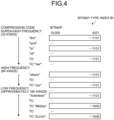
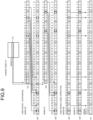
- FIG. 4 is a diagram illustrating a configuration example of the bitmap-type index according to the first embodiment.
- the bitmap-type index BI associates compression codes (corresponding to word IDs) according to super-high frequency words, high frequency words, and low frequency words with respective bitmaps.
- the bitmaps are code-bit strings indicating that each of the super-high frequency words, the high frequency words, and the low frequency words is included in any of the compressed files.
- the bit of the bitmaps indicates whether or not each of the super-high frequency words, the high frequency words, and the low frequency words is included in each of the compressed files.
- a bitmap of a word “the” indicated by a compressed code is "...1101".
- the bitmap of the first effective row in the bitmap-type index BI indicates files that include the compressed code of "the”.
- the bitmap "...1101” indicates that a file 1 includes “the” because "1” is stored in the first bit, a file 2 does not include “the” because "0” is stored in the second bit, and a file 3 includes “the” because "1” is stored in the third bit.
- the bitmap "...1101” indicates that a file 4 includes “the” because "1” is stored in the fourth bit.
- the bitmap "...1101” also indicates whether or not each of the other files after a file 5 includes "the”.
- the dynamic dictionary D0 mentioned here associates a word not registered in the static dictionary S0 but registered in the external dictionary E0, a code in the external dictionary E0, and a dynamic code assigned dynamically with one another.
- Words not registered in the static dictionary S0 include, as an example, a word (low frequency word) whose appearance frequency is low. This word (low frequency word) may be a specialized word, a new word, an unknown word, etc.
- the words associated with respective dynamic codes are registered in accordance with the appearance order of words not registered in the static dictionary S0. Detailed explanation of the dynamic dictionary D0 will be mentioned later.
- the external dictionary E0 mentioned here is a dictionary that associates words not registered in the static dictionary S0 and respective word codes with each other for each specialty.
- the external dictionary E0 includes, as an example, specialized dictionaries, new-word dictionaries, unknown-word dictionaries, etc.
- the specialized dictionary memorizes specialized words.
- the new-word dictionary memorizes new words.
- the unknown-word dictionary memorizes unknown words.
- the dynamic code to be assigned to a low frequency word differs for each target file even in a case of the same word.
- a word code in the external dictionary E0 is, in a case of the same word, shared between target files.
- the encoding process acquires, from the external dictionary E0, a code (word code) corresponding to the character string of the word and an ID of the external dictionary E0 in which this word is registered.
- the encoding process may assign a code in the external dictionary E0 by using the own device, or may inquire a master device that assigns word codes. In the embodiment, the case in which the encoding process assigns a code in the external dictionary E0 to the own device is exemplified.
- the encoding process registers, in the dynamic dictionary D0, a character string of a word, a code (word code) in the external dictionary E0, and a dynamic code assigned dynamically.
- the encoding process encodes, on the basis of the dynamic dictionary D0, the registered character string of the word into a word code corresponding to this registered character string of the word to output this word code.
- the encoding process may encode the character string of this word into a word code corresponding to the character string of this word on the basis of the dynamic dictionary D0, and may output this word code.
- the encoding process outputs the word codes based on the static codes and the dynamic dictionary D0 to an area of encoded data c3 in the appearance order of the words.
- the area of encoded data c3 is an area of encoded data in the encoded file F2, which corresponds to the file f3.
- a bitmap corresponding to a word ID "A002h” of "Mickey” is illustrated.
- "ON”, namely "1” in binary is set as presence information of the file including this word
- "OFF" namely "0” in binary is set as presence information of the file including this word.
- "1" is set at a bit corresponding to a file ID "3” in a bitmap corresponding to the word ID "A002h” of "Mickey”.
- the index generating process generates a hashed index HI from the bitmap-type index BI.
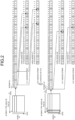
- the index generating process generates, on the basis of a plurality of adjacent hash values (base numbers), a hashed index obtained by application of hashing with respect to, for example, an axis (X-axis) of the file.
- a method for generating the hashed index is similar to that having explained in the upper part of FIG. 2 , and thus the explanation thereof is omitted.
- FIG. 7 is a diagram illustrating one example of the Y-axis-direction hashing of the bitmap-type index according to the first embodiment.
- the index generating process applies a hash function to bitmaps corresponding to the file IDs to generate a plurality of hashed bitmaps.
- the index generating process divides the Y-axis into three parts in accordance with the appearance frequencies, and hashes, by using a combination of different base numbers, each of the bitmaps obtained by the dividing into the three parts.
- the index updating process applies a hash function to an updated bit of a bitmap corresponding to a file ID to update a plurality of hashed bitmaps. For example, when a low frequency word is added to the file, the index updating process updates the hashed bitmaps using the base numbers ⁇ y3 and ⁇ y3 by using a value of the updated bit in a bitmap of the low frequency words within the bitmaps corresponding to the file ID.
- the index updating process changes, into a value "1” obtained by an OR operation between a value "1" of the updated bit and the already set value "0", a value of a remainder position in a hashed bitmap h21' when a position of a updated bit in a bitmap corresponding to the low frequency words in a bitmap b2' is divided by the base number ⁇ y3 .
- FIG. 8 is a diagram illustrating one example of a retrieval process which is not part of the claimed invention.
- the retrieval process when accepting an input of a retrieval word, extracts, from the hashed index HI, a plurality of hashed bitmaps corresponding to a word ID indicated by the accepted retrieval word.
- "Sherlock” and "Mickey” are assumed to be input as retrieval words.
- the retrieval process extracts, from the hashed index HI, a plurality of hashed bitmaps h5 corresponding to a word ID "A000h” indicated by "Sherlock” that is accepted as the retrieval word.
- the plurality of hashed bitmaps h5 includes a hashed bitmap h51 using the base number "29” and a hashed bitmap h52 using the base number "31".
- the retrieval process extracts, from the hashed index HI, a plurality of hashed bitmaps h4 corresponding to a word ID "A002h” indicated by "Mickey” that is accepted as the retrieval word.
- the plurality of hashed bitmaps h4 includes a hashed bitmap h41 using the base number "29” and a hashed bitmap h42 using the base number "31".
- the retrieval process decodes the plurality of hashed bitmaps corresponding to the extracted word ID and hashed deletion bitmaps.
- the decoding process of the plurality of hashed bitmaps will be mentioned later.
- the decoded result is indicated by using a bitmap corresponding to the word ID.
- the retrieval process decodes the plurality of hashed bitmaps h4 corresponding to the word ID "A002h” so as to output a bitmap b4 as a decoded result.
- the retrieval process decodes the plurality of hashed bitmaps h5 corresponding to a word ID "A000h” so as to output a bitmap b5 as a decoded result.
- the retrieval process decodes the hashed deletion bitmaps hdb, and outputs the deletion bitmap db as a decoded result.
- the retrieval process executes an AND operation between the bitmap b4 of the word ID "A002h”, the bitmap b5 of the word ID "A000h”, and the inverted deletion bitmap db.
- the retrieval process outputs file IDs whose bits of the ANDed results are ON ("1") as a retrieved result.
- the file 3 whose file ID is "3" is output as a retrieved result.
- the retrieval process decodes hashed bitmaps of the retrieval target and uses only the decoded bitmap, so that it is possible to rapidly narrow a file in which the word indicated by the retrieval key exists.
- FIG. 9 is a diagram illustrating one example of a hashed-bitmap decoding process according to the first embodiment. As illustrated in FIG. 9 , the hashed-bitmap decoding process decodes hashed bitmaps corresponding to a word ID into bitmaps whose hashes are expanded. The hashed-bitmap decoding process is executed when retrieving a file in which words constituting a retrieval word exist.
- the retrieval process expands a plurality of hashed bitmaps h41 and h42 of the hashed bitmap h4 (see FIG. 8 ) into bitmaps, respectively (first decoding process).
- the retrieval process sets a value of each bit in the hashed bitmap at a position where a position of the corresponding bit in the hashed bitmap is added to a value obtained by multiplying the base number by an integral number (from "0").
- the retrieval process sets a value of each bit in the hashed bitmap h41 at a position where a position of the corresponding bit in the hashed bitmap h41 is added to a value obtained by multiplying the base number "29" by "0".
- the retrieval process sets a value of each bit in the hashed bitmap h41 at a position where a position of the corresponding bit in the hashed bitmap h41 is added to a value obtained by multiplying the base number "29" by "1". The retrieval process is repeated until a bit value at the largest-bit position in the bitmap b41 corresponding to the base number "29" that is the decoding destination is set.
- the retrieval process sets a value of each bit in the hashed bitmap h42 at a position where a position of the corresponding bit in the hashed bitmap h42 is added to a value obtained by multiplying the base number "31" by "0".
- the retrieval process sets a value of each bit in the hashed bitmap h42 at a position where a position of the corresponding bit in the hashed bitmap h42 is added to a value obtained by multiplying the base number "31" by "1".
- the retrieval process repeats until a bit value at the largest-bit position in the bitmap b42 that is the decoding destination is set.
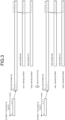
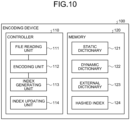
- the controller 110 is a process unit that executes the index generating process, the encoding process, and the index updating process, which are illustrated in FIGS. 2 , 3 , and 5 .
- the controller 110 includes an internal memory that stores control data and programs defining various processing procedures so as to execute various processes by using them.
- the controller 110 corresponds to an electronic circuit of an integrated circuit such as an Application Specific Integrated Circuit (ASIC) and a Field Programmable Gate Array (FPGA). Or, the controller 110 corresponds to an electronic circuit such as a Central Processing Unit (CPU) and a Micro Processing Unit (MPU).
- the controller 110 includes a file reading unit 111, an encoding unit 112, an index generating unit 113, and an index updating unit 114.
- the memory 120 corresponds to a memory device that is, for example, a non-volatile semiconductor memory element such as a Flash Memory and a Ferroelectric Random Access Memory (FRAM: Registered Trademark); and the like.
- the memory 120 includes a static dictionary 121, a dynamic dictionary 122, an external dictionary 123, and a hashed index 124.
- a configuration of the hashed index 124 is similar to the configuration (see FIG. 5 ) of the collected hashed bitmaps corresponding to the word IDs, and thus the explanation thereof is omitted.
- the static dictionary 121 is a dictionary that specifies the appearance frequencies of words appearing in documents on the basis of general English-language dictionaries, general Japanese-language dictionaries, general textbooks, etc., and assigns shorter codes to words whose appearance frequencies are higher.
- the static dictionary 121 corresponds to the static dictionary S0 illustrated in FIG. 5 .
- the dynamic dictionary 122 is a dictionary that associates words not registered in the static dictionary 121, respective dynamic codes assigned dynamically, and the word codes with one another.
- the dynamic dictionary 122 corresponds to the dynamic dictionary D0 illustrated in FIGS. 5 and 6 .
- the explanation of the dynamic dictionary 122 is similar to that of FIG. 6 , and thus the explanation thereof is omitted.
- the external dictionary 123 is a dictionary that associates words not registered in the static dictionary 121 and word codes with each other for each specialty.
- the external dictionary 123 includes, for example, specialized dictionaries, new-word dictionaries, and unknown-word dictionaries.
- the external dictionary 123 associates character strings of words and respective word codes with each other for each of the dictionaries.
- the external dictionary 123 corresponds to the external dictionary E0 illustrated in FIG. 5 .
- the file reading unit 111 reads out, in a memory region, the target file F1.
- the file reading unit 111 reads out the file F1 from the memory region, and executes lexical analysis on the read out file F1.
- the file reading unit 111 sequentially outputs the words of the lexically analyzed results to the encoding unit 112.
- the encoding unit 112 encodes the words having output from the file reading unit 111.
- the encoding unit 112 encodes the character string of this word on the basis of the dynamic dictionary 122. As one example, the encoding unit 112 determines whether or not the character string of the word is already stored in the buffering unit D1 of the dynamic dictionary 122. When the character string of the word is not already stored in the buffering unit D1 of the dynamic dictionary 122, the encoding unit 112 acquires, from the external dictionary 123, a word code corresponding to the character string of this word and an ID of a dictionary in which this word is registered.
- the encoding unit 112 stores, in a record corresponding to a new dynamic code in the address table D2, the word code and the ID of the dictionary in which the word is registered. In addition, the encoding unit 112 stores the character string of the word in the buffering unit D1, and further stores a storage position where the character string of this word is stored and the length of the stored data in the record corresponding to the new dynamic code of the address table D2. The encoding unit 112 encodes the character string of the word into a word code of the address table D2 which is associated with the character string of this word. The encoding unit 112 outputs the encoded word code to the index generating unit 113.
- the index generating unit 113 generates bitmaps on the basis of the encoded word code group. For example, the index generating unit 113 hashes bits, which corresponds to the file F1, in the bitmap corresponding to the word code having output from the encoding unit 112 so as to set "1". When there exists a word not processed in the file F1, the index generating unit 113 causes the encoding unit 112 to execute the encoding process on the next word. In a case where there exists no word not processed in the file F1, when there exists another target file, the index generating unit 113 causes the encoding unit 112 to execute the encoding process on the another target file.
- the index generating unit 113 generates the hashed index 124 on the basis of a plurality of hash values (base numbers). For example, the index generating unit 113 generates a plurality of hashed bitmaps corresponding to each of the bitmaps that corresponds to the respective plurality of word IDs (word codes). As one example, the index generating unit 113 generates hashed bitmaps based on two hash values (base numbers), which correspond to each of the bitmaps corresponding to the respective plurality of word IDs. In other words, the index generating unit 113 sequentially sets the bits from the zero-th bit in the bitmap for the zero-th to (base number-1)-th bits in the hashed bitmap.
- the index generating unit 113 folds the file axis again so as to set, from the zero-th bit in the hashed bitmap, values on which OR operations are sequentially executed with the respective values having already set in the hashed bitmap.
- the index generating unit 113 stores, in the memory 120, the hashed index 124 in which the generated hashed bitmaps are collected.
- the index updating unit 114 updates bits in hashed bitmaps which corresponds to the added bit in the bitmap corresponding to the file ID of the added file.
- the index updating unit 114 sets, in the hashed index 124, a bit associated with the file ID of the added file.
- the index updating unit 114 sets a bit of "0" (OFF) for a file ID of an added file, and further sets a bit of "1" (ON) for a deleted file ID of a deleted file.
- the index updating unit 114 changes, in a bitmap corresponding to a word code (word ID) of a word included in an added file, a bit corresponding a file ID of this added file into "1".
- the index updating unit 114 updates hashed bitmaps based on two hash values (base numbers), which correspond to the updated bit in the bitmap corresponding to the word ID.
- the base numbers are assumed to be " ⁇ " and " ⁇ ".
- the index updating unit 114 changes, into a value “1” obtained by an OR operation between the value “1” of the updated bit and the value “0” having already set, a value at a remainder position in a hashed bitmap using the base number " ⁇ ” when a position of the updated bit is divided by " ⁇ ".
- the index updating unit 114 changes, into a value "1” obtained by an OR operation between the value "1” of the updated bit and the value "0” having already set, a value at a remainder position in a hashed bitmap using the base number " ⁇ ” when a position of the updated bit is divided by " ⁇ ".
- the index updating unit 114 updates hashed bitmaps based on the two hash values (base numbers), which correspond to an updated bit of the deletion bitmap.
- the index updating unit 114 can update, in accordance with addition of a file, only the difference part in the hashed index 124 indicating that a predetermined word is included in any of the plurality of files.
- the index updating unit 114 updates a hashed bitmap corresponding to a file ID of the deleted file. For example, the index updating unit 114 changes, in a deletion bitmap, a bit at a file ID of the deleted file into "1".
- the index updating unit 114 updates hashed bitmaps based on the two hash values (base numbers), which correspond to the updated bit in the deletion bitmap.
- the index updating unit 114 can update, in accordance with deletion of a file, only the difference parts in the deletion hashed bitmaps indicating that any of the plurality of files is deleted.
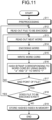
- FIG. 11 is a flowchart illustrating one example of the index generating process according to the first embodiment.
- the encoding unit 112 executes preprocessing (Step S11). For example, the encoding unit 112 ensures various memory regions in the memory 120. The encoding unit 112 reads out a character string of one target file within a plurality of target files for encoding, and stores the file in a memory region for being read out (Step S12).
- the encoding unit 112 reads out a character string of words of one target file from the memory region for being read out (Step S13). For example, the encoding unit 112 executes lexical analysis on one target file, and reads out a character string of the words of the lexically analyzed result from the head thereof.
- the encoding unit 112 encodes the read out words (Step S14). Explanation of an encoding process of the words will be mentioned later.
- the encoding unit 112 writes word codes output from the encoding process of the words into a memory region for the encoded data, which corresponds to the target file (Step S15).
- the index generating unit 113 hashes a bitmap corresponding to the word code so as to write "1" (Step S16). For example, the index generating unit 113 sets, for a hashed bitmap using the base number " ⁇ ", a value of each bit at a remainder position when a position of the corresponding bit in the bitmap is divided by the base number " ⁇ ". The index generating unit 113 sets, for a hashed bitmap using the base number " ⁇ ", a value of each bit at a remainder position when a position of the corresponding bit in the bitmap is divided by the base number " ⁇ ".
- the index generating unit 113 sequentially sets, at from the zero-th bit to (base number-1)-th bit in the hashed bitmap, the bits from the zero-th bit in the hashed bitmap. Having set up to the (base number-1)-th bit, the index generating unit 113 folds the file axis again so as to set results obtained by OR operations from the zero-th bit. In other words, the index generating unit 113 sets, in the bitmap corresponding to the word code, "1" indicating the present at a bit corresponding to the file ID of the target file.
- the encoding unit 112 determines whether or not it is an end point of the target file (Step S17). When determining that it is not the end point of the target file (Step S17: No), the encoding unit 112 shifts to Step S13 so as to read out the next word in the target file.
- Step S17 when determining that it is the end point of the target file (Step S17: Yes), the encoding unit 112 determines whether or not there exists any target file not encoded (Step S18). When determining that there exists a target file not encoded (Step S18: Yes), the encoding unit 112 shifts to Step S12 so as to encode the next target file.
- the index generating unit 113 stores, in the memory 120, the hashed index 124 obtained by collecting the generated hashed bitmaps (Step S19). The index generating unit 113 terminates the index generating process.
- FIG. 12 is a flowchart illustrating one example of the encoding process according to the first embodiment.
- the encoding unit 112 is assumed to have received a character string of a word.
- the encoding unit 112 having received the character string of the word determines whether or not the character string of the word is already registered in the static dictionary 121 (Step S31). When determining that the character string of the word is already registered in the static dictionary 121 (Step S31: Yes), the encoding unit 112 outputs a static code (word code) registered in the static dictionary 121 (Step S32). The encoding unit 112 terminates the encoding process.
- the encoding unit 112 registers the assigned word code to the dynamic dictionary 122 (Step S36). For example, the encoding unit 110 stores an assigned word code and an ID of the dictionary in which the word is registered in a record corresponding to a new dynamic code of the address table D2. In addition, the encoding unit 112 stores the character string of the word in the buffering unit D1, and further stores, in the record corresponding to the new dynamic code of the address table D2, a storage position where the character string of this word is stored and the length of the stored data. The encoding unit 112 shifts to Step S37.
- Step S37 the encoding unit 112 outputs the word code registered in the dynamic dictionary 122 (Step S37). For example, the encoding unit 112 encodes the character string of the word into a word code of the address table D2, which is associated with the character string this word. The encoding unit 112 outputs the encoded word code. The encoding unit 112 terminates the encoding process.
- the index updating unit 114 reads out the character string of words of the added file (Step S43). For example, the index updating unit 114 executes lexical analysis on the added file, and reads out the character strings of the words as a lexically analyzed result from the head.
- the index updating unit 114 encodes the read out words (Step S44).
- the explanation of the encoding process of the words has been already explained with reference to FIG. 12 , and thus the explanation thereof is omitted.
- the index updating unit 114 writes, into a memory region for the encoded data corresponding to the added file, the word code output from the encoding process of the words (Step S45).
- the index updating unit 114 updates, in hashed bitmaps corresponding to the word code, bits at a file ID of the added file into "1" (Step S46). For example, the index updating unit 114 updates, for a hashed bitmap using the base number " ⁇ " corresponding to the word code, a value of a remainder position when a bit position of the bitmap corresponding to the added file ID is divided by " ⁇ ” by using a value "1” obtained by an OR operation between a value "1" of the updated bit and the already set value "0".
- the index updating unit 114 updates, for a hashed bitmap using the base number " ⁇ " corresponding to the word code, a value of a remainder position when a bit position of the bitmap corresponding to the added file ID is divided by " ⁇ ” by using a value "1” obtained by an OR operation between a value "1" of the updated bit and the already set value "0".
- the index updating unit 114 determines whether or not it is an end point of the added file (Step S47). When determining that it is not the end point of the added file (Step S47: No), the index updating unit 114 shifts to Step S43 so as to read out the next word in the added file.
- Step S47: Yes when determining that it is the end point of the added file (Step S47: Yes), the index updating unit 114 terminates the index updating process.
- Step S41 when determining that no file is added (Step S41: No), the index updating unit 114 determines whether or not any file is deleted (Step S48). When determining that no file is deleted (Step S48: No), the index updating unit 114 shifts to Step S41 so as to repeat the determination process.
- the index updating unit 114 changes, in hashed bitmaps corresponding to a deletion bitmap, bits corresponding to a file ID of the deleted file into "1" (Step S49). For example, the index updating unit 114 updates, for a hashed bitmap using the base number " ⁇ " corresponding to the deletion bitmap, a value of a remainder position when a bit position of the bitmap corresponding to the deleted file ID is divided by " ⁇ " by using a value "1” obtained by an OR operation between a value "1" of the updated bit and the already set value.
- the index updating unit 114 updates, for a hashed bitmap using the base number " ⁇ " corresponding to the deletion bitmap, a value of a remainder position when a bit position of the bitmap corresponding to the deleted file ID is divided by " ⁇ ” by using a value "1” obtained by an OR operation between a value "1" of the updated bit and the already set value.
- the index updating unit 114 terminates the index updating process.
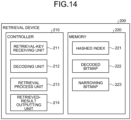
- FIG. 14 is a functional block diagram illustrating a configuration of the retrieval device according to the first embodiment.
- the retrieval device 200 includes a controller 210 and a memory 220.
- the controller 210 is a process unit that executes the retrieval process illustrated in FIG. 8 .
- the controller 210 includes an internal memory for storing control data and programs that define various processing procedures so as to execute various processes by using them.
- the controller 210 corresponds to an electronic circuit of an integrated circuit such as an ASIC and a FPGA. Or, the controller 210 corresponds to an electronic circuit such as a CPU and a MPU.
- the controller 210 includes a retrieval-key receiving unit 211, a decoding unit 212, a retrieval process unit 213, and a retrieved-result outputting unit 214.
- the memory 220 corresponds to a memory device that is, for example, a non-volatile semiconductor memory element such as a Flash Memory and an FRAM (Registered Trademark); and the like.
- the memory 220 includes a hashed index 221, a decoded bitmap 222, and a narrowing bitmap 223.
- Configurations of the hashed index 221 and the decoded bitmap 222 are similar to those of the respective hashed bitmap and bitmap corresponding to each word ID (see FIG. 2 ), and thus explanation thereof is omitted.
- a configuration of the narrowing bitmap 223 is similar to that of the bitmap corresponding to each word and the corresponding ANDed result (see FIG. 8 ), and thus explanation thereof is omitted.
- the decoding unit 212 sets a value of each bit in the hashed bitmap at a position where a position of the corresponding bit in the hashed bitmap is added to a value obtained by multiplying the base number " ⁇ " by an integral number (from "0").
- the decoding unit 212 sequentially sets, at from the zero-th bit in the bitmap of the decoding destination, bits from the zero-th bit in the hashed bitmap so as to process up to (base number-1)-th bit.
- the decoding unit 212 folds the file axis again so as to set values of the hashed bitmap from the zero-th bit of the hashed bitmap.
- the decoding unit 212 executes an AND operation (second decoding process) between bits at the corresponding positions in the respective bitmaps expanded in the first decoding process.
- the decoding unit 212 executes an AND operation between the bitmap expanded form the hashed bitmap using the base number " ⁇ " and the bitmap expanded form the hashed bitmap using the base number " ⁇ ".
- the decoding unit 212 stores a bitmap of the ANDed result in the decoded bitmap 222 as a decoded result.
- the decoding unit 212 decodes hashed bitmaps for each of the words to be retrieved, and stores bitmaps in the decoded bitmap 222 as decoded results.
- the decoding unit 212 decodes a hashed deletion bitmap. As one example, the decoding unit 212 executes the first and second decoding processes on the hashed deletion bitmap, and stores a deletion bitmap in the decoded bitmap 222 as a decoded result.
- the retrieved-result outputting unit 214 outputs the retrieved result by using the narrowing bitmap 223 stored by the retrieval process unit 213. For example, the retrieved-result outputting unit 214 outputs, as the retrieved result, a file ID whose bit in the narrowing bitmap 223 indicates "1".
- FIG. 15 is a flowchart illustrating one example of the retrieval process according to the first embodiment.
- the retrieval-key receiving unit 211 determines whether or not a word to be retrieved is accepted (Step S51). When determining that the word to be retrieved is not accepted (Step S51: No), the retrieval-key receiving unit 211 repeats the determination process until it accepts a word to be retrieved.
- Step S51 when determining that a word to be retrieved is accepted (Step S51: Yes), the decoding unit 212 reads out the hashed index 221 from the memory 220 (Step S51A). The decoding unit 212 selects, from the read out hashed index 221, hashed bitmaps using the respective base numbers " ⁇ " and " ⁇ " corresponding to a word ID indicated by the word to be retrieved (Step S52).
- the decoding unit 212 decodes the selected hashed bitmaps (Step S53). This decoding process is executed for each of the hashed bitmaps using the base numbers " ⁇ " and " ⁇ ". In other words, the decoding unit 212 executes the first decoding process on the hashed bitmap using the base number " ⁇ ". The decoding unit 212 executes the first decoding process on the hashed bitmap using the base number " ⁇ ".
- the decoding unit 212 executes an AND operation between the bitmap using the base number " ⁇ " and the bitmap using the base number " ⁇ ” (Step S54). In other words, the decoding unit 212 executes the second decoding process by using the bitmap using the base number " ⁇ ” and the bitmap using the base number " ⁇ ", which are decoded by the first decoding process. The decoding unit 212 stores the ANDed result in the decoded bitmap 222.
- the decoding unit 212 determines whether or not there exists a word not processed (Step S55). When determining that there exists a word not processed (Step S55: Yes), the decoding unit 212 shifts to Step S52 so as to process the next word of the retrieval target.
- Step S55 when determining that there exists no word not processed (Step S55: No), the decoding unit 212 decodes hashed deletion bitmaps (Step S56). This decoding process is executed for each of the hashed deletion bitmaps using the respective base numbers " ⁇ " and " ⁇ ". In other words, the decoding unit 212 executes the first decoding process on the hashed deletion bitmap using the base number " ⁇ ". The decoding unit 212 executes the first decoding process on the hashed deletion bitmap using the base number " ⁇ ".
- the decoding unit 212 executes an AND operation between the deletion bitmap using the base number " ⁇ ” and the deletion bitmap using the base number " ⁇ ” (Step S57). In other words, the decoding unit 212 executes the second decoding process by using the bitmaps using the respective base numbers " ⁇ " and " ⁇ ", which are decoded by the first decoding process. The decoding unit 212 stores the ANDed result in the decoded bitmap 222.
- the retrieval process unit 213 executes an AND operation between the bitmap of the word to be retrieved and the deletion bitmap (Step S58). For example, a computing process unit 213 executes an AND operation between each bit in the bitmap stored in the decoded bitmap 222 and the corresponding bit in the inverted deletion bitmap. The computing process unit 213 stores the ANDed result in the narrowing bitmap 223.
- the retrieved-result outputting unit 214 outputs a file ID whose bit of the ANDed result indicates "1" as a retrieved result (Step S59). For example, the retrieved-result outputting unit 214 outputs, as a retrieved result, a file ID whose bit indicates "1" by using an ANDed result stored in the narrowing bitmap 223.
- the encoding device 100 encodes a target file by using the static dictionary 121 and the dynamic dictionary 122.
- the encoding device 100 generates index information of the target file by folding a file axis and a word axis of the index information of the target file utilizing base numbers, respectively, the index information indicating presence information words registered in the static dictionary 121 and the dynamic dictionary 122 in the target file.
- the encoding device 100 generates difference information of the index information when the target file is updated, the difference information indicating difference of the index information with respect to the file axis direction or the word axis direction.
- the encoding device 100 can easily update the index information that indicates presence information in the files in accordance with update of a file.
- the encoding device 100 generates the difference information between index information before update and that after the update in accordance with the update of the file, and thus only the different part can be updated in the index information.
- the encoding device 100 when a file is added, the encoding device 100 generates presence information information of a word in the added file as difference information corresponding to index information on between before and after the addition, and thus only the difference information can be updated in the index information.
- the encoding device 100 can update the difference information to be able to update the index information without generating index information again.
- the encoding device 100 targets the plurality of bitmap-type indexes BI to generate the hashed indexes HI on the basis of the respective plurality of bitmap-type indexes BI.
- the encoding device 100 updates, for the hashed index HI taking charge of the updated file, this hashed index HI by using difference information of a bitmap corresponding to the updated file from a bitmap before the update.
- the encoding device 100 may hierarchize the plurality of bitmap-type indexes BI.
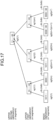
- FIG. 16 is a diagram illustrating one example of hierarchization of bitmap-type indexes according to an example which is not part of the claimed invention
- bitmap-type index BI is divided by "n" that is a predetermined number of files.
- "n” is 256, for example.
- Each of the divided indexes is referred to as a segment.
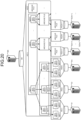
- FIG. 20 is a diagram illustrating a configuration example, not part of the claimed invention, of a computer system in which the hierarchized segment groups are implemented.
- one archive file is assumed to include "m" segments.
- "AX(Y)” is a code of an archive file
- "X” indicates a hierarchy number
- "Y” indicates an archive number. Therefore, "AX(Y)” indicates the Y-th archive file of the X-th hierarchy.
- an archive file A0(1) is an aggregation of the segments sg0(1) to sg0(m) in a zero hierarchy.
- a master server MS stores archive files of equal to or upper than the first hierarchy.
- Each of the slave servers S1, S2, ⁇ , S(2m+1), ... stores one archive file assigned by the master server MS.
- Each of the slave servers corresponds to, for example, the encoding device 100 and the retrieval device 200.
- the number of assigned archive files illustrated in FIG. 20 is one, the master server MS is not needed to take charge of all of the archive files of equal to or upper than the first hierarchy, and may be distributed to another server.
- At least one of the slave servers S1, S2, ⁇ , S(2m+1), ⁇ may take charge of, not one archive file, but a plurality of archive files.
- the computer system including the encoding device 100 and the retrieval device 200 executes encoding and hierarchization on the basis of codes (word codes) corresponding to, for example, specialized words, new words, and unknown words, and thus the performance of all of the slave servers is easily improved.
- the computer system can perform scale-out.
- the master server MS can refer to ANDed results in the archive files taken charge of, and can assign the slave server to the segment so that the loads become even.
- the encoding device 100 is assumed to be of a 32-bit register, and is explained to hash each of the bitmaps on the basis of the hash values (base numbers) of "29” and "31".
- the hash values (base numbers) of "29” and “31” are merely one example and not limited thereto.
- the two hash values (base numbers) may be decided in accordance with the number of kinds of words in respective plurality of files. For example, when the number of kinds of words is "10000", two base numbers are selected so that two-dimensional matrices indicated by remainders divided one base number and remainders divided the other base number is approximately "10000". It is sufficient that the two base numbers are adjacent prime numbers.
- two prime numbers to be selected are, as one example, "97" and "101". It is on the basis of the assumption that, in a two-dimensional matrix space whose lowest common multiple is approximately "10000", the combination of remainders obtained by one and the other hashes with respect to a word will not collide (duplicate) with the combination of remainders with respect to another word.
- the encoding device 100 is explained to generate the hashed index to which two-dimensional (word and file axes) hashing is applied on the basis of a plurality of adjacent hash values (base numbers).
- the encoding device 100 may employ a block axis instead of the file axis.
- presence information of the word IDs may be a block unit.
- the information including the processing procedures, the control procedures, the specific appellations, and various data and parameters, which are indicated in the embodiment, may be arbitrarily changed without the case of special notes.
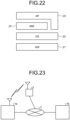
- FIG. 21 is a diagram illustrating a hardware configuration example of a computer 1.
- the computer 1 includes, for example, a processor 301, a Random Access Memory (RAM) 302, a Read Only Memory (ROM) 303, a drive device 304, a memory medium 305, an input interface (I/F) 306, an input device 307, an output interface (I/F) 308, an output device 309, a communication interface (I/F) 310, a Storage Area Network interface (SAN I/F) 311, a bus 312, etc.
- the pieces of the hardware are connected with one another via the bus 312.
- the RAM 302 is a memory device to be read out and written into, and a semiconductor memory such as a Static RAM (SR_AM) and a Dynamic RAM (DRAM); a Flash Memory not the RAM; etc. may be used.
- the ROM 303 includes a Programmable ROM (PROM) and the like.
- the drive device 304 is a device that executes at least one of reading out and writing into of the information registered in the memory medium 305.
- the memory medium 305 memorizes information that is written into by the drive device 304.
- the memory medium 305 includes, for example, a hard disk; a Flash Memory such as a Solid State Drive (SSD); and a memory medium such as a Compact Disc (CD), a Digital Versatile Disc (DVD), and a Blu-ray Disc.
- SSD Solid State Drive
- CD Compact Disc
- DVD Digital Versatile Disc
- Blu-ray Disc a Blu-ray Disc.
- the drive device 304 and the memory medium 305 are provided with respect to each of a plurality of kinds of the memory mediums.
- the input interface 306 is a circuit that is connected to the input device 307, and transmits an input signal received from the input device 307 to the processor 301.
- the output interface 308 is a circuit that is connected to the output device 309, and causes the output device 309 to execute outputting in accordance with an instruction of the processor 301.
- the communication interface 310 is a circuit that executes control of communication via the network 3.
- the communication interface 310 is, for example, a Network Interface Card (NIC), etc.
- the SAN interface 311 is a circuit that executes control of communication with a memory device connected to the computer 1 by a storage area network.
- the SAN interface 311 is, for example, a Host Bus Adopter (HBA) and the like.
- the input device 307 is a device that transmits input signals in accordance with operations.
- the input device 307 includes a key device such as a keyboard and buttons provided on a body of the computer 1; and a pointing device such as a mouse and a touch panel.
- the output device 309 is a device that outputs information in accordance with control of the computer 1.
- the output device 309 includes an image outputting device (display device) such as a display; and a sound outputting device such as a speaker.
- an input/output device such as a touch screen is used as the input device 307 and the output device 309.
- the input device 307 and the output device 309 may be integrated with the computer 1, or may be a device that is not integrated with the computer 1 and, for example, is externally connected to the computer 1.
- the ROM 303 and the memory medium 305 memorizes program files (application program (AP) 24, middleware (MW) 23, Operating System (OS) 22 to be mentioned later, etc.) and data files (for example, static dictionary 121, dynamic dictionary 122, external dictionary 123, bitmap-type index 124, hashed index 125, etc.), and the RAM 302 is used as a work area of the processor 301, and thus functions of the memories 120 and 220 are realized.
- the program to be read out by the processor 301 will be explained with reference to FIG. 22 .
- the encoding device 100 and the retrieval device 200 may be included in any of the computer 1a and the computer 1b illustrated in FIG. 23 .
- the computer 1b may include functions of the encoding device 100 and the computer 1a may include functions of the retrieval device 200.
- the computer 1a may include functions of the encoding device 100 and the computer 1b may include functions of the retrieval device 200.
- Each of the computers 1a and 1b may include the functions of the encoding device 100 and the functions of the retrieval device 200.
- index information of a plurality of files can be easily updated in accordance with the update of any file without changing the size.
Landscapes
- Engineering & Computer Science (AREA)
- Theoretical Computer Science (AREA)
- Physics & Mathematics (AREA)
- Data Mining & Analysis (AREA)
- Databases & Information Systems (AREA)
- General Engineering & Computer Science (AREA)
- General Physics & Mathematics (AREA)
- Software Systems (AREA)
- Mathematical Physics (AREA)
- Information Retrieval, Db Structures And Fs Structures Therefor (AREA)
- Compression, Expansion, Code Conversion, And Decoders (AREA)
Claims (10)
- Procédé de codage à mettre en oeuvre par un ordinateur, le procédé comprenant :le codage d'un fichier cible (f3) en codes de mots sur la base d'un dictionnaire statique (S0) et d'un dictionnaire dynamique (D0) ;la définition, dans une table de bitmap (BI) de longueur m, d'informations de présence pour chacun des codes de mots dans chacun de m fichiers, dans lequel chaque entrée de chaque rangée de la table de bitmap BI indique la présence des codes de mots pour chacun des m fichiers indiqués par des ID de fichier respectifs et chaque colonne indique la présence de codes de mots dans un fichier unique indiqué par l'ID de fichier ; etla génération, depuis chaque rangée de la table de bitmap BI et sur la base de deux nombres de base qui sont des nombres premiers adjacents inférieurs à n, où n < m, de deux bitmaps hachés de longueur n obtenus en écrivant une valeur de chaque bit à une position restante quand une position du bit original correspondant divisé par le nombre respectif des deux nombres de base.
- Procédé de codage selon la revendication 1, dans lequelle dictionnaire statique (S0) est un dictionnaire dans lequel une fréquence d'apparition d'un mot apparaissant dans un document est spécifiée et un code plus court est attribué à un mot dont la fréquence d'apparition est plus élevée,le dictionnaire dynamique (D0) associe un mot non enregistré dans le dictionnaire statique (S0) mais enregistré dans un dictionnaire externe (E0), un code dans le dictionnaire externe (E0) et un code dynamique attribués dynamiquement les uns aux autres, etle dictionnaire externe (E0) est un dictionnaire qui associe des mots non enregistrés dans le dictionnaire statique (S0) et des codes de mots respectifs les uns aux autres pour chaque spécialité, dans lequel une spécialité est un mot spécialisé, un mot nouveau et/ou un mot inconnu.
- Procédé de codage selon la revendication 1 ou la revendication 2, comprenant en outre :
lorsqu'un fichier est ajouté ou que le fichier cible (f3) est mis à jour, la mise à jour d'une valeur à une position dans l'index haché en mettant en oeuvre une opération OU entre la valeur du bit mis à jour et la valeur ayant déjà été définie dans l'index haché. - Procédé de codage selon l'une quelconque des revendications 1 à 3, comprenant en outre :la génération d'un bitmap de suppression haché (hdb) à partir d'un bitmap de suppression (db), dans lequelle bitmap de suppression (db) est un index qui indique la présence ou la suppression d'un fichier cible à l'aide d'une chaîne de bits, etle bitmap de suppression haché (hdb) est généré à partir du bitmap de suppression (db) sur la base d'une pluralité des nombres de base ; etlorsque le fichier cible (f3) est supprimé, la mise à jour d'une valeur à une position dans le bitmap de suppression haché (hdb) en mettant en oeuvre une opération ET entre la valeur "0" du bit mis à jour et la valeur ayant déjà été définie dans le bitmap de suppression haché (hdb).
- Procédé de codage selon l'une quelconque des revendications 1 à 4, dans lequel une taille de chacun parmi l'axe de fichier et l'axe de mot de la table de bitmap correspond à un nombre de bits en fonction d'une taille d'un registre.
- Programme de codage qui amène un ordinateur à mettre en oeuvre le procédé selon l'une quelconque des revendications 1 à 5.
- Dispositif de codage comprenant un moyen de réalisation du procédé selon l'une quelconque des revendications 1 à 5.
- Procédé de récupération à mettre en oeuvre par un ordinateur, le procédé comprenant :l'acceptation d'une entrée d'un mot de récupération ;l'extraction depuis une collecte de bitmaps hachés de longueur n, où n < m, générés avec le procédé selon l'une quelconque des revendications 1 à 5, de deux bitmaps hachés (h41, h42) de longueur n correspondant à un code de mots indiqué par le mot de récupération accepté ;l'expansion, sur la base de deux nombres de base qui sont des nombres premiers adjacents inférieurs à n, des bitmaps hachés (h41, h42) de longueur n dans des bitmaps (b41, b42) de longueur m en définissant, pour chacun des deux bitmaps de destination utilisant l'un des deux nombres de base, une valeur de chaque bit dans le bitmap (h41, h42) à une position où une position du bit original correspondant dans le bitmap haché (h41, h42) est ajoutée à une valeur obtenue en multipliant le nombre de base par un nombre entier ; etla mise en oeuvre d'une opération ET dans le sens du bit entre les deux bitmaps expansés (b41, b42) de taille m pour produire un bitmap combiné de taille m.
- Programme de récupération qui amène un ordinateur à mettre en oeuvre le procédé selon la revendication 8.
- Dispositif de récupération comprenant un moyen de réalisation du procédé selon la revendication 8.
Applications Claiming Priority (1)
| Application Number | Priority Date | Filing Date | Title |
|---|---|---|---|
| JP2016083168A JP6662169B2 (ja) | 2016-04-18 | 2016-04-18 | 符号化プログラム、符号化方法、符号化装置、検索プログラム、検索方法および検索装置 |
Publications (3)
| Publication Number | Publication Date |
|---|---|
| EP3236367A2 EP3236367A2 (fr) | 2017-10-25 |
| EP3236367A3 EP3236367A3 (fr) | 2018-01-24 |
| EP3236367B1 true EP3236367B1 (fr) | 2023-09-13 |
Family
ID=58549053
Family Applications (1)
| Application Number | Title | Priority Date | Filing Date |
|---|---|---|---|
| EP17166790.0A Active EP3236367B1 (fr) | 2016-04-18 | 2017-04-18 | Programme, procédé et dispositif de codage, programme, procédé et dispositif de récupération |
Country Status (3)
| Country | Link |
|---|---|
| US (1) | US10521414B2 (fr) |
| EP (1) | EP3236367B1 (fr) |
| JP (1) | JP6662169B2 (fr) |
Families Citing this family (5)
| Publication number | Priority date | Publication date | Assignee | Title |
|---|---|---|---|---|
| US10263638B2 (en) * | 2016-05-31 | 2019-04-16 | Texas Instruments Incorporated | Lossless compression method for graph traversal |
| JP6805720B2 (ja) | 2016-10-21 | 2020-12-23 | 富士通株式会社 | データ検索プログラム、データ検索装置およびデータ検索方法 |
| JP7059516B2 (ja) * | 2017-03-29 | 2022-04-26 | 富士通株式会社 | 符号化プログラム、符号化装置および符号化方法 |
| JP6958241B2 (ja) * | 2017-10-31 | 2021-11-02 | 富士通株式会社 | 変更検出プログラム、変更検出方法および変更検出装置 |
| EP3944101B1 (fr) * | 2019-03-22 | 2024-01-10 | Fujitsu Limited | Programme de traitement d'informations, procédé de traitement d'informations et dispositif de traitement d'informations |
Citations (5)
| Publication number | Priority date | Publication date | Assignee | Title |
|---|---|---|---|---|
| US5748953A (en) * | 1989-06-14 | 1998-05-05 | Hitachi, Ltd. | Document search method wherein stored documents and search queries comprise segmented text data of spaced, nonconsecutive text elements and words segmented by predetermined symbols |
| JPH10261969A (ja) * | 1997-03-19 | 1998-09-29 | Hitachi Ltd | データ圧縮方法および装置 |
| US20070136243A1 (en) * | 2005-12-12 | 2007-06-14 | Markus Schorn | System and method for data indexing and retrieval |
| US20140059075A1 (en) * | 2011-05-02 | 2014-02-27 | Fujitsu Limited | Extracting method, information processing method, computer product, extracting apparatus, and information processing apparatus |
| US20160056839A1 (en) * | 2014-08-20 | 2016-02-25 | Fujitsu Limited | Compression device, compression method, decompression device, decompression method, and computer-readable recording medium |
Family Cites Families (17)
| Publication number | Priority date | Publication date | Assignee | Title |
|---|---|---|---|---|
| US5237678A (en) * | 1987-05-08 | 1993-08-17 | Kuechler William L | System for storing and manipulating information in an information base |
| JPH0830633A (ja) | 1994-07-13 | 1996-02-02 | Hitachi Ltd | テキストデータ検索装置 |
| JP3554459B2 (ja) | 1997-02-26 | 2004-08-18 | 株式会社日立製作所 | テキストデータ登録検索方法 |
| IL156123A0 (en) * | 2000-11-29 | 2003-12-23 | Lafayette Software Inc | Methods of organizing data and processing queries in a database system, and database system and software product for implementing such methods |
| US7627616B2 (en) * | 2004-08-30 | 2009-12-01 | Hywire Ltb. | Database storage and maintenance using row index ordering |
| US20070130112A1 (en) * | 2005-06-30 | 2007-06-07 | Intelligentek Corp. | Multimedia conceptual search system and associated search method |
| US8229921B2 (en) * | 2008-02-25 | 2012-07-24 | Mitsubishi Electric Research Laboratories, Inc. | Method for indexing for retrieving documents using particles |
| US8595248B2 (en) * | 2008-05-21 | 2013-11-26 | Oracle International Corporation | Querying a cascading index that avoids disk accesses |
| JP5316158B2 (ja) * | 2008-05-28 | 2013-10-16 | 株式会社リコー | 情報処理装置、全文検索方法、全文検索プログラム、及び記録媒体 |
| US8595238B2 (en) * | 2011-06-22 | 2013-11-26 | International Business Machines Corporation | Smart index creation and reconciliation in an interconnected network of systems |
| EP2757488B1 (fr) * | 2011-09-14 | 2019-02-20 | Fujitsu Limited | Procédé d'extraction, programme d'extraction, dispositif d'extraction et système d'extraction |
| WO2014117295A1 (fr) * | 2013-01-31 | 2014-08-07 | Hewlett-Packard Development Company, L.P. | Réalisation d'une opération d'index dans un environnement mapreduce |
| US9514146B1 (en) * | 2013-09-26 | 2016-12-06 | Emc Corporation | System and method for improving data compression of a storage system in an online manner |
| CN104714819B (zh) * | 2013-12-16 | 2019-11-15 | 中兴通讯股份有限公司 | 文件系统升级包制作方法、升级方法及装置、终端 |
| US10282438B2 (en) * | 2016-02-12 | 2019-05-07 | International Business Machines Corporation | Locating data in a set with a single index using multiple property values |
| US10409866B1 (en) * | 2016-06-28 | 2019-09-10 | Glassdoor, Inc. | Systems and methods for occupation normalization at a job aggregator |
| US10579827B2 (en) * | 2017-07-24 | 2020-03-03 | Meltwater News International Holdings Gmbh | Event processing system to estimate unique user count |
-
2016
- 2016-04-18 JP JP2016083168A patent/JP6662169B2/ja not_active Expired - Fee Related
-
2017
- 2017-04-18 US US15/490,210 patent/US10521414B2/en active Active
- 2017-04-18 EP EP17166790.0A patent/EP3236367B1/fr active Active
Patent Citations (5)
| Publication number | Priority date | Publication date | Assignee | Title |
|---|---|---|---|---|
| US5748953A (en) * | 1989-06-14 | 1998-05-05 | Hitachi, Ltd. | Document search method wherein stored documents and search queries comprise segmented text data of spaced, nonconsecutive text elements and words segmented by predetermined symbols |
| JPH10261969A (ja) * | 1997-03-19 | 1998-09-29 | Hitachi Ltd | データ圧縮方法および装置 |
| US20070136243A1 (en) * | 2005-12-12 | 2007-06-14 | Markus Schorn | System and method for data indexing and retrieval |
| US20140059075A1 (en) * | 2011-05-02 | 2014-02-27 | Fujitsu Limited | Extracting method, information processing method, computer product, extracting apparatus, and information processing apparatus |
| US20160056839A1 (en) * | 2014-08-20 | 2016-02-25 | Fujitsu Limited | Compression device, compression method, decompression device, decompression method, and computer-readable recording medium |
Also Published As
| Publication number | Publication date |
|---|---|
| JP6662169B2 (ja) | 2020-03-11 |
| JP2017194753A (ja) | 2017-10-26 |
| EP3236367A2 (fr) | 2017-10-25 |
| US10521414B2 (en) | 2019-12-31 |
| EP3236367A3 (fr) | 2018-01-24 |
| US20170300491A1 (en) | 2017-10-19 |
Similar Documents
| Publication | Publication Date | Title |
|---|---|---|
| CN107305586B (zh) | 索引生成方法、索引生成装置及搜索方法 | |
| EP3236367B1 (fr) | Programme, procédé et dispositif de codage, programme, procédé et dispositif de récupération | |
| US9793920B1 (en) | Computer-readable recording medium, encoding device, and encoding method | |
| US11182341B2 (en) | Recording medium recording indexed data generation program, indexed data generation method and retrieval method | |
| US9509333B2 (en) | Compression device, compression method, decompression device, decompression method, information processing system, and recording medium | |
| JP6641857B2 (ja) | 符号化プログラム、符号化方法、符号化装置、復号化プログラム、復号化方法および復号化装置 | |
| US20190052284A1 (en) | Data compression apparatus, data decompression apparatus, data compression program, data decompression program, data compression method, and data decompression method | |
| US9520896B1 (en) | Non-transitory computer-readable recording medium, encoding method, encoding device, decoding method, and decoding device | |
| EP3306823B1 (fr) | Programme de codage, appareil de codage et procédé de codage | |
| TWI643061B (zh) | 用於熵編碼之系統層級測試之電腦實施方法、系統及電腦程式產品 | |
| JP6551131B2 (ja) | インデックス生成プログラム、インデックス生成装置、インデックス生成方法、検索プログラム、検索装置および検索方法 | |
| US11055328B2 (en) | Non-transitory computer readable medium, encode device, and encode method | |
| US10997139B2 (en) | Search apparatus and search method | |
| JP2019121861A (ja) | 符号化プログラム、動的辞書の生成プログラム、符号化方法、動的辞書の生成方法、符号化装置および復号化装置 | |
| JP2018067264A (ja) | データ検索プログラム、データ検索装置およびデータ検索方法 | |
| JP6931442B2 (ja) | 符号化プログラム、インデックス生成プログラム、検索プログラム、符号化装置、インデックス生成装置、検索装置、符号化方法、インデックス生成方法および検索方法 | |
| JP7210130B2 (ja) | 符号化プログラム、符号化方法および符号化装置 | |
| JPWO2017009958A1 (ja) | 圧縮プログラム、圧縮方法および圧縮装置 | |
| JP6717153B2 (ja) | インデックス生成プログラム、インデックス生成装置、インデックス生成方法、検索プログラム、検索装置および検索方法 | |
| JP2016134754A (ja) | 変換処理プログラム、情報処理装置および変換処理方法 |
Legal Events
| Date | Code | Title | Description |
|---|---|---|---|
| PUAI | Public reference made under article 153(3) epc to a published international application that has entered the european phase |
Free format text: ORIGINAL CODE: 0009012 |
|
| STAA | Information on the status of an ep patent application or granted ep patent |
Free format text: STATUS: THE APPLICATION HAS BEEN PUBLISHED |
|
| AK | Designated contracting states |
Kind code of ref document: A2 Designated state(s): AL AT BE BG CH CY CZ DE DK EE ES FI FR GB GR HR HU IE IS IT LI LT LU LV MC MK MT NL NO PL PT RO RS SE SI SK SM TR |
|
| AX | Request for extension of the european patent |
Extension state: BA ME |
|
| PUAL | Search report despatched |
Free format text: ORIGINAL CODE: 0009013 |
|
| AK | Designated contracting states |
Kind code of ref document: A3 Designated state(s): AL AT BE BG CH CY CZ DE DK EE ES FI FR GB GR HR HU IE IS IT LI LT LU LV MC MK MT NL NO PL PT RO RS SE SI SK SM TR |
|
| AX | Request for extension of the european patent |
Extension state: BA ME |
|
| RIC1 | Information provided on ipc code assigned before grant |
Ipc: G06F 17/30 20060101AFI20171215BHEP |
|
| STAA | Information on the status of an ep patent application or granted ep patent |
Free format text: STATUS: REQUEST FOR EXAMINATION WAS MADE |
|
| 17P | Request for examination filed |
Effective date: 20180615 |
|
| RBV | Designated contracting states (corrected) |
Designated state(s): AL AT BE BG CH CY CZ DE DK EE ES FI FR GB GR HR HU IE IS IT LI LT LU LV MC MK MT NL NO PL PT RO RS SE SI SK SM TR |
|
| STAA | Information on the status of an ep patent application or granted ep patent |
Free format text: STATUS: EXAMINATION IS IN PROGRESS |
|
| 17Q | First examination report despatched |
Effective date: 20190926 |
|
| RIC1 | Information provided on ipc code assigned before grant |
Ipc: G06F 16/31 20190101AFI20210726BHEP |
|
| REG | Reference to a national code |
Ref country code: DE Ref legal event code: R079 Free format text: PREVIOUS MAIN CLASS: G06F0017300000 Ipc: G06F0016310000 Ref country code: DE Ref legal event code: R079 Ref document number: 602017074076 Country of ref document: DE Free format text: PREVIOUS MAIN CLASS: G06F0017300000 Ipc: G06F0016310000 |
|
| GRAP | Despatch of communication of intention to grant a patent |
Free format text: ORIGINAL CODE: EPIDOSNIGR1 |
|
| STAA | Information on the status of an ep patent application or granted ep patent |
Free format text: STATUS: GRANT OF PATENT IS INTENDED |
|
| RIC1 | Information provided on ipc code assigned before grant |
Ipc: G06F 16/23 20190101ALI20230403BHEP Ipc: G06F 16/22 20190101ALI20230403BHEP Ipc: G06F 16/31 20190101AFI20230403BHEP |
|
| INTG | Intention to grant announced |
Effective date: 20230419 |
|
| GRAS | Grant fee paid |
Free format text: ORIGINAL CODE: EPIDOSNIGR3 |
|
| GRAA | (expected) grant |
Free format text: ORIGINAL CODE: 0009210 |
|
| STAA | Information on the status of an ep patent application or granted ep patent |
Free format text: STATUS: THE PATENT HAS BEEN GRANTED |
|
| AK | Designated contracting states |
Kind code of ref document: B1 Designated state(s): AL AT BE BG CH CY CZ DE DK EE ES FI FR GB GR HR HU IE IS IT LI LT LU LV MC MK MT NL NO PL PT RO RS SE SI SK SM TR |
|
| REG | Reference to a national code |
Ref country code: GB Ref legal event code: FG4D |
|
| REG | Reference to a national code |
Ref country code: CH Ref legal event code: EP |
|
| REG | Reference to a national code |
Ref country code: DE Ref legal event code: R096 Ref document number: 602017074076 Country of ref document: DE |
|
| REG | Reference to a national code |
Ref country code: IE Ref legal event code: FG4D |
|
| REG | Reference to a national code |
Ref country code: LT Ref legal event code: MG9D |
|
| REG | Reference to a national code |
Ref country code: NL Ref legal event code: MP Effective date: 20230913 |
|
| PG25 | Lapsed in a contracting state [announced via postgrant information from national office to epo] |
Ref country code: GR Free format text: LAPSE BECAUSE OF FAILURE TO SUBMIT A TRANSLATION OF THE DESCRIPTION OR TO PAY THE FEE WITHIN THE PRESCRIBED TIME-LIMIT Effective date: 20231214 |
|
| PG25 | Lapsed in a contracting state [announced via postgrant information from national office to epo] |
Ref country code: SE Free format text: LAPSE BECAUSE OF FAILURE TO SUBMIT A TRANSLATION OF THE DESCRIPTION OR TO PAY THE FEE WITHIN THE PRESCRIBED TIME-LIMIT Effective date: 20230913 Ref country code: RS Free format text: LAPSE BECAUSE OF FAILURE TO SUBMIT A TRANSLATION OF THE DESCRIPTION OR TO PAY THE FEE WITHIN THE PRESCRIBED TIME-LIMIT Effective date: 20230913 Ref country code: NO Free format text: LAPSE BECAUSE OF FAILURE TO SUBMIT A TRANSLATION OF THE DESCRIPTION OR TO PAY THE FEE WITHIN THE PRESCRIBED TIME-LIMIT Effective date: 20231213 Ref country code: LV Free format text: LAPSE BECAUSE OF FAILURE TO SUBMIT A TRANSLATION OF THE DESCRIPTION OR TO PAY THE FEE WITHIN THE PRESCRIBED TIME-LIMIT Effective date: 20230913 Ref country code: LT Free format text: LAPSE BECAUSE OF FAILURE TO SUBMIT A TRANSLATION OF THE DESCRIPTION OR TO PAY THE FEE WITHIN THE PRESCRIBED TIME-LIMIT Effective date: 20230913 Ref country code: HR Free format text: LAPSE BECAUSE OF FAILURE TO SUBMIT A TRANSLATION OF THE DESCRIPTION OR TO PAY THE FEE WITHIN THE PRESCRIBED TIME-LIMIT Effective date: 20230913 Ref country code: GR Free format text: LAPSE BECAUSE OF FAILURE TO SUBMIT A TRANSLATION OF THE DESCRIPTION OR TO PAY THE FEE WITHIN THE PRESCRIBED TIME-LIMIT Effective date: 20231214 Ref country code: FI Free format text: LAPSE BECAUSE OF FAILURE TO SUBMIT A TRANSLATION OF THE DESCRIPTION OR TO PAY THE FEE WITHIN THE PRESCRIBED TIME-LIMIT Effective date: 20230913 |
|
| REG | Reference to a national code |
Ref country code: AT Ref legal event code: MK05 Ref document number: 1611992 Country of ref document: AT Kind code of ref document: T Effective date: 20230913 |
|
| PG25 | Lapsed in a contracting state [announced via postgrant information from national office to epo] |
Ref country code: NL Free format text: LAPSE BECAUSE OF FAILURE TO SUBMIT A TRANSLATION OF THE DESCRIPTION OR TO PAY THE FEE WITHIN THE PRESCRIBED TIME-LIMIT Effective date: 20230913 |
|
| PG25 | Lapsed in a contracting state [announced via postgrant information from national office to epo] |
Ref country code: IS Free format text: LAPSE BECAUSE OF FAILURE TO SUBMIT A TRANSLATION OF THE DESCRIPTION OR TO PAY THE FEE WITHIN THE PRESCRIBED TIME-LIMIT Effective date: 20240113 |
|
| PG25 | Lapsed in a contracting state [announced via postgrant information from national office to epo] |
Ref country code: AT Free format text: LAPSE BECAUSE OF FAILURE TO SUBMIT A TRANSLATION OF THE DESCRIPTION OR TO PAY THE FEE WITHIN THE PRESCRIBED TIME-LIMIT Effective date: 20230913 |
|
| PG25 | Lapsed in a contracting state [announced via postgrant information from national office to epo] |
Ref country code: ES Free format text: LAPSE BECAUSE OF FAILURE TO SUBMIT A TRANSLATION OF THE DESCRIPTION OR TO PAY THE FEE WITHIN THE PRESCRIBED TIME-LIMIT Effective date: 20230913 |
|
| PG25 | Lapsed in a contracting state [announced via postgrant information from national office to epo] |
Ref country code: SM Free format text: LAPSE BECAUSE OF FAILURE TO SUBMIT A TRANSLATION OF THE DESCRIPTION OR TO PAY THE FEE WITHIN THE PRESCRIBED TIME-LIMIT Effective date: 20230913 Ref country code: RO Free format text: LAPSE BECAUSE OF FAILURE TO SUBMIT A TRANSLATION OF THE DESCRIPTION OR TO PAY THE FEE WITHIN THE PRESCRIBED TIME-LIMIT Effective date: 20230913 Ref country code: IS Free format text: LAPSE BECAUSE OF FAILURE TO SUBMIT A TRANSLATION OF THE DESCRIPTION OR TO PAY THE FEE WITHIN THE PRESCRIBED TIME-LIMIT Effective date: 20240113 Ref country code: ES Free format text: LAPSE BECAUSE OF FAILURE TO SUBMIT A TRANSLATION OF THE DESCRIPTION OR TO PAY THE FEE WITHIN THE PRESCRIBED TIME-LIMIT Effective date: 20230913 Ref country code: EE Free format text: LAPSE BECAUSE OF FAILURE TO SUBMIT A TRANSLATION OF THE DESCRIPTION OR TO PAY THE FEE WITHIN THE PRESCRIBED TIME-LIMIT Effective date: 20230913 Ref country code: CZ Free format text: LAPSE BECAUSE OF FAILURE TO SUBMIT A TRANSLATION OF THE DESCRIPTION OR TO PAY THE FEE WITHIN THE PRESCRIBED TIME-LIMIT Effective date: 20230913 Ref country code: AT Free format text: LAPSE BECAUSE OF FAILURE TO SUBMIT A TRANSLATION OF THE DESCRIPTION OR TO PAY THE FEE WITHIN THE PRESCRIBED TIME-LIMIT Effective date: 20230913 Ref country code: PT Free format text: LAPSE BECAUSE OF FAILURE TO SUBMIT A TRANSLATION OF THE DESCRIPTION OR TO PAY THE FEE WITHIN THE PRESCRIBED TIME-LIMIT Effective date: 20240115 Ref country code: SK Free format text: LAPSE BECAUSE OF FAILURE TO SUBMIT A TRANSLATION OF THE DESCRIPTION OR TO PAY THE FEE WITHIN THE PRESCRIBED TIME-LIMIT Effective date: 20230913 |
|
| PG25 | Lapsed in a contracting state [announced via postgrant information from national office to epo] |
Ref country code: PL Free format text: LAPSE BECAUSE OF FAILURE TO SUBMIT A TRANSLATION OF THE DESCRIPTION OR TO PAY THE FEE WITHIN THE PRESCRIBED TIME-LIMIT Effective date: 20230913 Ref country code: IT Free format text: LAPSE BECAUSE OF FAILURE TO SUBMIT A TRANSLATION OF THE DESCRIPTION OR TO PAY THE FEE WITHIN THE PRESCRIBED TIME-LIMIT Effective date: 20230913 |
|
| REG | Reference to a national code |
Ref country code: DE Ref legal event code: R097 Ref document number: 602017074076 Country of ref document: DE |
|
| PG25 | Lapsed in a contracting state [announced via postgrant information from national office to epo] |
Ref country code: DK Free format text: LAPSE BECAUSE OF FAILURE TO SUBMIT A TRANSLATION OF THE DESCRIPTION OR TO PAY THE FEE WITHIN THE PRESCRIBED TIME-LIMIT Effective date: 20230913 |
|
| PLBE | No opposition filed within time limit |
Free format text: ORIGINAL CODE: 0009261 |
|
| STAA | Information on the status of an ep patent application or granted ep patent |
Free format text: STATUS: NO OPPOSITION FILED WITHIN TIME LIMIT |
|
| PG25 | Lapsed in a contracting state [announced via postgrant information from national office to epo] |
Ref country code: DK Free format text: LAPSE BECAUSE OF FAILURE TO SUBMIT A TRANSLATION OF THE DESCRIPTION OR TO PAY THE FEE WITHIN THE PRESCRIBED TIME-LIMIT Effective date: 20230913 |
|
| 26N | No opposition filed |
Effective date: 20240614 |
|
| PG25 | Lapsed in a contracting state [announced via postgrant information from national office to epo] |
Ref country code: SI Free format text: LAPSE BECAUSE OF FAILURE TO SUBMIT A TRANSLATION OF THE DESCRIPTION OR TO PAY THE FEE WITHIN THE PRESCRIBED TIME-LIMIT Effective date: 20230913 |
|
| PG25 | Lapsed in a contracting state [announced via postgrant information from national office to epo] |
Ref country code: SI Free format text: LAPSE BECAUSE OF FAILURE TO SUBMIT A TRANSLATION OF THE DESCRIPTION OR TO PAY THE FEE WITHIN THE PRESCRIBED TIME-LIMIT Effective date: 20230913 |
|
| REG | Reference to a national code |
Ref country code: DE Ref legal event code: R119 Ref document number: 602017074076 Country of ref document: DE |
|
| PG25 | Lapsed in a contracting state [announced via postgrant information from national office to epo] |
Ref country code: BG Free format text: LAPSE BECAUSE OF FAILURE TO SUBMIT A TRANSLATION OF THE DESCRIPTION OR TO PAY THE FEE WITHIN THE PRESCRIBED TIME-LIMIT Effective date: 20230913 |
|
| PG25 | Lapsed in a contracting state [announced via postgrant information from national office to epo] |
Ref country code: MC Free format text: LAPSE BECAUSE OF FAILURE TO SUBMIT A TRANSLATION OF THE DESCRIPTION OR TO PAY THE FEE WITHIN THE PRESCRIBED TIME-LIMIT Effective date: 20230913 |
|
| PG25 | Lapsed in a contracting state [announced via postgrant information from national office to epo] |
Ref country code: MC Free format text: LAPSE BECAUSE OF FAILURE TO SUBMIT A TRANSLATION OF THE DESCRIPTION OR TO PAY THE FEE WITHIN THE PRESCRIBED TIME-LIMIT Effective date: 20230913 Ref country code: BG Free format text: LAPSE BECAUSE OF FAILURE TO SUBMIT A TRANSLATION OF THE DESCRIPTION OR TO PAY THE FEE WITHIN THE PRESCRIBED TIME-LIMIT Effective date: 20230913 |
|
| REG | Reference to a national code |
Ref country code: CH Ref legal event code: PL |
|
| PG25 | Lapsed in a contracting state [announced via postgrant information from national office to epo] |
Ref country code: LU Free format text: LAPSE BECAUSE OF NON-PAYMENT OF DUE FEES Effective date: 20240418 |
|
| GBPC | Gb: european patent ceased through non-payment of renewal fee |
Effective date: 20240418 |
|
| REG | Reference to a national code |
Ref country code: BE Ref legal event code: MM Effective date: 20240430 |
|
| PG25 | Lapsed in a contracting state [announced via postgrant information from national office to epo] |
Ref country code: LU Free format text: LAPSE BECAUSE OF NON-PAYMENT OF DUE FEES Effective date: 20240418 |
|
| PG25 | Lapsed in a contracting state [announced via postgrant information from national office to epo] |
Ref country code: DE Free format text: LAPSE BECAUSE OF NON-PAYMENT OF DUE FEES Effective date: 20241105 |
|
| PG25 | Lapsed in a contracting state [announced via postgrant information from national office to epo] |
Ref country code: BE Free format text: LAPSE BECAUSE OF NON-PAYMENT OF DUE FEES Effective date: 20240430 |
|
| PG25 | Lapsed in a contracting state [announced via postgrant information from national office to epo] |
Ref country code: GB Free format text: LAPSE BECAUSE OF NON-PAYMENT OF DUE FEES Effective date: 20240418 |
|
| PG25 | Lapsed in a contracting state [announced via postgrant information from national office to epo] |
Ref country code: FR Free format text: LAPSE BECAUSE OF NON-PAYMENT OF DUE FEES Effective date: 20240430 |
|
| PG25 | Lapsed in a contracting state [announced via postgrant information from national office to epo] |
Ref country code: GB Free format text: LAPSE BECAUSE OF NON-PAYMENT OF DUE FEES Effective date: 20240418 Ref country code: FR Free format text: LAPSE BECAUSE OF NON-PAYMENT OF DUE FEES Effective date: 20240430 Ref country code: DE Free format text: LAPSE BECAUSE OF NON-PAYMENT OF DUE FEES Effective date: 20241105 Ref country code: BE Free format text: LAPSE BECAUSE OF NON-PAYMENT OF DUE FEES Effective date: 20240430 Ref country code: CH Free format text: LAPSE BECAUSE OF NON-PAYMENT OF DUE FEES Effective date: 20240430 |
|
| PG25 | Lapsed in a contracting state [announced via postgrant information from national office to epo] |
Ref country code: IE Free format text: LAPSE BECAUSE OF NON-PAYMENT OF DUE FEES Effective date: 20240418 |
|
| PG25 | Lapsed in a contracting state [announced via postgrant information from national office to epo] |
Ref country code: CY Free format text: LAPSE BECAUSE OF FAILURE TO SUBMIT A TRANSLATION OF THE DESCRIPTION OR TO PAY THE FEE WITHIN THE PRESCRIBED TIME-LIMIT; INVALID AB INITIO Effective date: 20170418 |
|
| PG25 | Lapsed in a contracting state [announced via postgrant information from national office to epo] |
Ref country code: HU Free format text: LAPSE BECAUSE OF FAILURE TO SUBMIT A TRANSLATION OF THE DESCRIPTION OR TO PAY THE FEE WITHIN THE PRESCRIBED TIME-LIMIT; INVALID AB INITIO Effective date: 20170418 |