EP3237623B1 - Production de plantes haploïdes - Google Patents
Production de plantes haploïdes Download PDFInfo
- Publication number
- EP3237623B1 EP3237623B1 EP15817864.0A EP15817864A EP3237623B1 EP 3237623 B1 EP3237623 B1 EP 3237623B1 EP 15817864 A EP15817864 A EP 15817864A EP 3237623 B1 EP3237623 B1 EP 3237623B1
- Authority
- EP
- European Patent Office
- Prior art keywords
- amino acid
- seq
- cenh3
- substituted
- plant
- Prior art date
- Legal status (The legal status is an assumption and is not a legal conclusion. Google has not performed a legal analysis and makes no representation as to the accuracy of the status listed.)
- Active
Links
Images
Classifications
-
- A—HUMAN NECESSITIES
- A01—AGRICULTURE; FORESTRY; ANIMAL HUSBANDRY; HUNTING; TRAPPING; FISHING
- A01H—NEW PLANTS OR NON-TRANSGENIC PROCESSES FOR OBTAINING THEM; PLANT REPRODUCTION BY TISSUE CULTURE TECHNIQUES
- A01H1/00—Processes for modifying genotypes ; Plants characterised by associated natural traits
- A01H1/06—Processes for producing mutations, e.g. treatment with chemicals or with radiation
- A01H1/08—Methods for producing changes in chromosome number
-
- A—HUMAN NECESSITIES
- A01—AGRICULTURE; FORESTRY; ANIMAL HUSBANDRY; HUNTING; TRAPPING; FISHING
- A01H—NEW PLANTS OR NON-TRANSGENIC PROCESSES FOR OBTAINING THEM; PLANT REPRODUCTION BY TISSUE CULTURE TECHNIQUES
- A01H1/00—Processes for modifying genotypes ; Plants characterised by associated natural traits
- A01H1/02—Methods or apparatus for hybridisation; Artificial pollination ; Fertility
- A01H1/021—Methods of breeding using interspecific crosses, i.e. interspecies crosses
-
- A—HUMAN NECESSITIES
- A01—AGRICULTURE; FORESTRY; ANIMAL HUSBANDRY; HUNTING; TRAPPING; FISHING
- A01H—NEW PLANTS OR NON-TRANSGENIC PROCESSES FOR OBTAINING THEM; PLANT REPRODUCTION BY TISSUE CULTURE TECHNIQUES
- A01H1/00—Processes for modifying genotypes ; Plants characterised by associated natural traits
- A01H1/02—Methods or apparatus for hybridisation; Artificial pollination ; Fertility
- A01H1/022—Genic fertility modification, e.g. apomixis
- A01H1/023—Male sterility
-
- A—HUMAN NECESSITIES
- A01—AGRICULTURE; FORESTRY; ANIMAL HUSBANDRY; HUNTING; TRAPPING; FISHING
- A01H—NEW PLANTS OR NON-TRANSGENIC PROCESSES FOR OBTAINING THEM; PLANT REPRODUCTION BY TISSUE CULTURE TECHNIQUES
- A01H5/00—Angiosperms, i.e. flowering plants, characterised by their plant parts; Angiosperms characterised otherwise than by their botanic taxonomy
-
- A—HUMAN NECESSITIES
- A01—AGRICULTURE; FORESTRY; ANIMAL HUSBANDRY; HUNTING; TRAPPING; FISHING
- A01H—NEW PLANTS OR NON-TRANSGENIC PROCESSES FOR OBTAINING THEM; PLANT REPRODUCTION BY TISSUE CULTURE TECHNIQUES
- A01H5/00—Angiosperms, i.e. flowering plants, characterised by their plant parts; Angiosperms characterised otherwise than by their botanic taxonomy
- A01H5/06—Roots
-
- A—HUMAN NECESSITIES
- A01—AGRICULTURE; FORESTRY; ANIMAL HUSBANDRY; HUNTING; TRAPPING; FISHING
- A01H—NEW PLANTS OR NON-TRANSGENIC PROCESSES FOR OBTAINING THEM; PLANT REPRODUCTION BY TISSUE CULTURE TECHNIQUES
- A01H5/00—Angiosperms, i.e. flowering plants, characterised by their plant parts; Angiosperms characterised otherwise than by their botanic taxonomy
- A01H5/10—Seeds
-
- A—HUMAN NECESSITIES
- A01—AGRICULTURE; FORESTRY; ANIMAL HUSBANDRY; HUNTING; TRAPPING; FISHING
- A01H—NEW PLANTS OR NON-TRANSGENIC PROCESSES FOR OBTAINING THEM; PLANT REPRODUCTION BY TISSUE CULTURE TECHNIQUES
- A01H6/00—Angiosperms, i.e. flowering plants, characterised by their botanic taxonomy
- A01H6/20—Brassicaceae, e.g. canola, broccoli or rucola
-
- C—CHEMISTRY; METALLURGY
- C07—ORGANIC CHEMISTRY
- C07K—PEPTIDES
- C07K14/00—Peptides having more than 20 amino acids; Gastrins; Somatostatins; Melanotropins; Derivatives thereof
- C07K14/415—Peptides having more than 20 amino acids; Gastrins; Somatostatins; Melanotropins; Derivatives thereof from plants
-
- C—CHEMISTRY; METALLURGY
- C12—BIOCHEMISTRY; BEER; SPIRITS; WINE; VINEGAR; MICROBIOLOGY; ENZYMOLOGY; MUTATION OR GENETIC ENGINEERING
- C12N—MICROORGANISMS OR ENZYMES; COMPOSITIONS THEREOF; PROPAGATING, PRESERVING, OR MAINTAINING MICROORGANISMS; MUTATION OR GENETIC ENGINEERING; CULTURE MEDIA
- C12N15/00—Mutation or genetic engineering; DNA or RNA concerning genetic engineering, vectors, e.g. plasmids, or their isolation, preparation or purification; Use of hosts therefor
- C12N15/09—Recombinant DNA-technology
- C12N15/63—Introduction of foreign genetic material using vectors; Vectors; Use of hosts therefor; Regulation of expression
- C12N15/79—Vectors or expression systems specially adapted for eukaryotic hosts
- C12N15/82—Vectors or expression systems specially adapted for eukaryotic hosts for plant cells, e.g. plant artificial chromosomes (PACs)
-
- C—CHEMISTRY; METALLURGY
- C12—BIOCHEMISTRY; BEER; SPIRITS; WINE; VINEGAR; MICROBIOLOGY; ENZYMOLOGY; MUTATION OR GENETIC ENGINEERING
- C12N—MICROORGANISMS OR ENZYMES; COMPOSITIONS THEREOF; PROPAGATING, PRESERVING, OR MAINTAINING MICROORGANISMS; MUTATION OR GENETIC ENGINEERING; CULTURE MEDIA
- C12N15/00—Mutation or genetic engineering; DNA or RNA concerning genetic engineering, vectors, e.g. plasmids, or their isolation, preparation or purification; Use of hosts therefor
- C12N15/09—Recombinant DNA-technology
- C12N15/63—Introduction of foreign genetic material using vectors; Vectors; Use of hosts therefor; Regulation of expression
- C12N15/79—Vectors or expression systems specially adapted for eukaryotic hosts
- C12N15/82—Vectors or expression systems specially adapted for eukaryotic hosts for plant cells, e.g. plant artificial chromosomes (PACs)
- C12N15/8241—Phenotypically and genetically modified plants via recombinant DNA technology
- C12N15/8261—Phenotypically and genetically modified plants via recombinant DNA technology with agronomic (input) traits, e.g. crop yield
- C12N15/8287—Phenotypically and genetically modified plants via recombinant DNA technology with agronomic (input) traits, e.g. crop yield for fertility modification, e.g. apomixis
-
- Y—GENERAL TAGGING OF NEW TECHNOLOGICAL DEVELOPMENTS; GENERAL TAGGING OF CROSS-SECTIONAL TECHNOLOGIES SPANNING OVER SEVERAL SECTIONS OF THE IPC; TECHNICAL SUBJECTS COVERED BY FORMER USPC CROSS-REFERENCE ART COLLECTIONS [XRACs] AND DIGESTS
- Y02—TECHNOLOGIES OR APPLICATIONS FOR MITIGATION OR ADAPTATION AGAINST CLIMATE CHANGE
- Y02A—TECHNOLOGIES FOR ADAPTATION TO CLIMATE CHANGE
- Y02A40/00—Adaptation technologies in agriculture, forestry, livestock or agroalimentary production
- Y02A40/10—Adaptation technologies in agriculture, forestry, livestock or agroalimentary production in agriculture
- Y02A40/146—Genetically Modified [GMO] plants, e.g. transgenic plants
Definitions
- the present invention relates to non-transgenic plants, preferably crop plants, having biological activity of a haploid inducer and comprising a polynucleotide which comprises a nucleotide sequence encoding a centromer histone H3 (CENH3) protein, wherein the polynucleotide comprises at least one mutation causing an alteration of the amino acid sequence of the CENH3 protein and said alteration confers the biological activity of a haploid inducer.
- a haploid inducer comprising a polynucleotide which comprises a nucleotide sequence encoding a centromer histone H3 (CENH3) protein, wherein the polynucleotide comprises at least one mutation causing an alteration of the amino acid sequence of the CENH3 protein and said alteration confers the biological activity of a haploid inducer.
- CENH3 centromer histone H3
- haploids are one of the most powerful biotechnological means to improve cultivated plants.
- the advantage of haploids for breeders is that homozygosity can be achieved already in the first generation after dihaploidization, creating doubled haploid plants, without the need of several backcrossing generations required to obtain a high degree of homozygosity.
- the value of haploids in plant research and breeding lies in the fact that the founder cells of doubled haploids are products of meiosis, so that resultant populations constitute pools of diverse recombinant and at the same time genetically fixed individuals.
- the generation of doubled haploids thus provides not only perfectly useful genetic variability to select from with regard to crop improvement, but is also a valuable means to produce mapping populations, recombinant inbreds as well as instantly homozygous mutants and transgenic lines.
- Haploids can be obtained by in vitro or in vivo approaches. However, many species and genotypes are recalcitrant to these processes. Alternatively, substantial changes of the centromere-specific histone H3 variant (CENH3, also called CENP-A), by swapping its N-terminal regions and fusing it to GFP ("GFP-tailswap" CENH3), creates haploid inducer lines in the model plant Arabidopsis thaliana ( Ravi and Chan, Nature, 464 (2010), 615-618 ; Comai, L, "Genome elimination: translating basic research into a future tool for plant breeding.”, PLoS biology, 12.6 (2014 )).
- CENH3 centromere-specific histone H3 variant
- GFP-tailswap GFP-tailswap
- CENH3 proteins are variants of H3 histone proteins that are members of the kinetochore complex of active centromeres.
- GFP-tailswap haploid inducer lines
- haploidization occurred in the progeny when a haploid inducer plant was crossed with a wildtype plant.
- the haploid inducer line was stable upon selfing, suggesting that a competition between modified and wild type centromere in the developing hybrid embryo results in centromere inactivation of the inducer parent and consequently in uniparental chromosome elimination.
- the chromosomes containing the altered CENH3 protein are lost during early embryo development producing haploid progeny containing only the chromosomes of the wildtype parent.
- haploid plants can be obtained by crossing "GFP-tailswap" transgenic plants as haploid inducer to wildtype plants.
- this technique requires substantial changes of the CENH3 protein and the plants comprise a heterologous transgene, which is economically problematic because of increasing public reluctance toward genetically engineered crops.
- the term 'alteration' means any modification of the amino acid sequence of the protein CENH3 (including multiple modifications) which are caused by at least one mutation in the polynucleotide which comprises a nucleotide sequence encoding a centromer histone H3 (CENH3) protein.
- the polynucleotide can be a genomic DNA of the CENH3 gene, the cDNA of CENH3, or 5'- or 3'-untranslated regions of the CENH3 gene or a mixture thereof that comprises for instances a part of the genomic DNA and a part of the cDNA,
- An alteration is a substitution of one or more amino acids. Mutations at DNA level which are able to alter the amino acid sequence of the protein CENH3 are point mutations leading to an amino acid substitution.
- the at least one mutation causes the alteration of the amino acid sequence of the protein CENH3 which confers the biological activity of a haploid inducer in at least one segment of the amino acid sequence of the CENH3 protein, wherein the sequence segment is the N-terminal tail domain.
- the N-terminal tail domain of the CENH3 protein corresponds to amino acid sequence from position 1 to position 82 as set forth in SEQ ID NO: 11 derived from Arabidopsis thaliana and/or the N-terminal tail domain of the CENH3 protein is encoded by a nucleotide sequence corresponding to nucleotides from position 1 to position 246 as set forth in SEQ ID NO: 10 derived from Arabidopsis thaliana.
- the CATD domain of the CENH3 protein corresponds to amino acid sequence from position 113 to position 155 as set forth in SEQ ID NO: 11 derived from Arabidopsis thaliana and/or the CATD domain of the CENH3 protein is encoded by a nucleotide sequence corresponding to nucleotides from position 337 to position 465 as set forth in SEQ ID NO: 10 derived from Arabidopsis thaliana.
- the aN-helix of the CENH3 protein corresponds to amino acid sequence from position 83 to position 97 as set forth in SEQ ID NO: 11 derived from Arabidopsis thaliana and/or the aN-helix of the CENH3 protein is encoded by a nucleotide sequence corresponding to nucleotides from position 247 to position 291 as set forth in SEQ ID NO: 10 derived from Arabidopsis thaliana.
- the ⁇ 1-helix of the CENH3 protein corresponds to amino acid sequence from position 103 to position 113 as set forth in SEQ ID NO: 11 derived from Arabidopsis thaliana and/or the ⁇ 1 -helix of the CENH3 protein is encoded by a nucleotide sequence corresponding to nucleotides from position 307 to position 339 as set forth in SEQ ID NO: 10 derived from Arabidopsis thaliana.
- the loop1 of the CENH3 protein corresponds to amino acid sequence from position 114 to position 126 as set forth in SEQ ID NO: 11 derived from Arabidopsis thaliana and/or the loop1 of the CENH3 protein is encoded by a nucleotide sequence corresponding to nucleotides from position 340 to position 378 as set forth in SEQ ID NO: 10 derived from Arabidopsis thaliana.
- the ⁇ 2-helix of the CENH3 protein corresponds to amino acid sequence from position 127 to position 155 as set forth in SEQ ID NO: 11 derived from Arabidopsis thaliana and/or the ⁇ 2-helix of the CENH3 protein is encoded by a nucleotide sequence corresponding to nucleotides from position 379 to position 465 as set forth in SEQ ID NO: 10 derived from Arabidopsis thaliana.
- the loop2 of the CENH3 protein corresponds to amino acid sequence from position 156 to position 162 as set forth in SEQ ID NO: 11 derived from Arabidopsis thaliana and/or the loop2 of the CENH3 protein is encoded by a nucleotide sequence corresponding to nucleotides from position 466 to position 486 as set forth in SEQ ID NO: 10 derived from Arabidopsis thaliana.
- the ⁇ 3-helix of the CENH3 protein corresponds to amino acid sequence from position 163 to position 172 as set forth in SEQ ID NO: 11 derived from Arabidopsis thaliana and/or the ⁇ 3-helix of the CENH3 protein is encoded by a nucleotide sequence corresponding to nucleotides from position 487 to position 516 as set forth in SEQ ID NO: 10 derived from Arabidopsis thaliana.
- the C-terminal domain of the CENH3 protein corresponds to amino acid sequence from position 173 to position 178 as set forth in SEQ ID NO: 11 derived from Arabidopsis thaliana and/or the C-terminal domain of the CENH3 protein is encoded by a nucleotide sequence corresponding to nucleotides from position 517 to position 534 as set forth in SEQ ID NO: 10 derived from Arabidopsis thaliana.
- the A. thaliana sequences serve only as references and do not limit the invention to the particular A. thaliana sequences. Due to the high level of conservation ones skilled in the art is able to find the nucleotide sequence and amino acid sequence corresponding to the A. thaliana sequences in any other plant material or plant species.
- CENH3 proteins are variants of H3 histone proteins that are members of the kinetochore complex of active centromeres, i.e. the protein structure on chromosomes where spindle fibres attach during cell division. Basically, CENH3 proteins are characterized by a variable N-terminal tail domain, which does not form a rigid secondary structure, and a conserved histone fold domain consisting of three ⁇ -helical regions, termed ⁇ 1 to ⁇ 3, which are connected by two loop sections. The N-terminal tail domain is primarily subject to post translational modification by enzymes.
- Such modifications include methylation, citrullination, phosphorylation, SUMOylation, ubiquitination, and ADP-ribosylation and affect the function of regulation of the CENH3 gene.
- CATD domain Within the histone fold domain the highly conserved CATD domain (CENP-A targeting domain) is located, which is formed by parts of the ⁇ 1 -helix, the complete ⁇ 2-helix and the connecting loop1.
- the conserved CATD domain is required for CENH3 loading by chaperones and thus vital for its kinetochore localization and centromere function.
- N-terminal tail domain and histone fold domain are linked by the ⁇ N-helix.
- a plant possessing the capability to produce haploid progeny i.e. a haploid inducer
- haploid progeny can be obtained not only by alteration of the amino acid sequence of the conserved CENH3 protein, but also by alteration of the amino acid sequence of any other domain and structural regions of the CENH3 gene and CENH3 protein.
- the capability to produce haploid progeny can be further enhanced by combination of two or more alterations of the amino acid sequence of the CENH3 protein in different domains, segments or structural regions of the CENH3 protein.
- the efficiency of haploid production can be increased significantly.
- this can be achieved by transgenic as well as non-transgenic methods.
- Non-transgenic methods are preferred because of enormous costs for deregulation of genetically modified organisms (GMO) as well as increasing public rejection of genetically modified organisms (GMO) or plants generated by means of GMO, in particular crops for human consumption, and extensive market authorisation processes including rigorous safety assessments of such GMOs.
- the present invention provides a plant as defined in claim 1. The same is true accordingly for the sequences of the sequence listing being part of the application as originally filed.
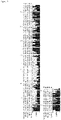
- the non-mutated N-terminal tail domain of the CENH3 protein is partly conserved among plant species (see Figure).
- any amino acid position given with respect to these two conserved parts of the N-terminal tail domain (part A and part B) or the below described consensus sequence is referring to the following numbering system.
- conserved part A and part B of the N-terminal tail domain can be separated by one or more amino acids.
- the specific number varies from plant species to plant species.
- a " ⁇ " has been introduced as place holder.
- the non-mutated N-terminal tail domain exhibits the amino acid sequence as given in Table 1.
- Table 1 Specified amino acids in the N-terminal tail domain of the CENH3 protein conserveed part - position within the N-terminal Amino acid(s) A / 1 M A / 2 A A / 3 R A / 4 T, V, I or A A / 5 KorR A / 6 H, T, Q or K A / 7 X A / 8 X A / 9 V, A, P, G, N, P, R, S or H A / 10 T, R, S, L, K, H, N, A or P A / 11 R, K, A, N or T A / 12 S, A, T, L, K, R, D, N or E A / 13 Q, T, R, A, P, S, G, N, V, K or R A / 14 P, T, D, E, Q, S, N, G, A, K or R A / 15 R, N, H, V, G, K, S, A, T, E or P B / 1 R, D
- the N terminal tail domain has the consensus sequences of SEQ ID NO: 1 (part A, before ⁇ ) and SEQ ID NO: 2 (part B, beyond ⁇ ), which is
- the N-terminal tail domain comprises unspecified [marked as X] and specified amino acids [marked as one letter code].
- the "X" can also be a gap of at least one amino acid.
- the non-mutated ⁇ N-helix of the CENH3 protein is highly conserved among plant species and is 15 amino acids long starting with position 1 and ending with position 15.
- any amino acid position given with respect to the ⁇ N-helix or the below described consensus sequence of SEQ ID NO: 3 is referring to this numbering system.
- the non-mutated ⁇ N-helix exhibits the amino acid sequence as given in Table 2.
- Table 2 Specified amino acids in the ⁇ N-helix of the CENH3 protein Position within the aN-helix Amino acid(s) 1 G 2 T 3 V 4 A 5 L 6 K, W or R 7 EorQ 8 I 9 R 10 X 11 F, Y or L 12 Q or R 13 K 14 Q, S or T 15 T, F, W, V, C or A
- the aN-helix has the consensus sequence of SEQ ID NO: 3, which is
- the aN-helix comprises unspecified [marked as X] and specified amino acids [marked as one letter code].
- the non-mutated ⁇ 1-helix of the CENH3 protein is conserved among plant species and is 11 amino acids long starting with position 1 and ending with position 11.
- any amino acid position given with respect to the ⁇ 1-helix or the below described consensus sequence of SEQ ID NO: 4 is referring to this numbering system.
- the non-mutated ⁇ 1-helix exhibits the amino acid sequence as given in Table 3.
- Table 3 Specified amino acids in the ⁇ 1-helix of the CENH3 protein Position within the ⁇ 1 -helix Amino acid(s) 1 A, F, R or S 2 A, M or S 3 S, P, T, A or C 4 F 5 I, V, M, L, S or A 6 R 7 E, T, V, L, C, Q or A 8 V or I 9 RorK 10 S, E, M, T, E, Q, G or D 11 I, V, L or T
- the ⁇ 1-helix has the consensus sequence of SEQ ID NO: 4, which is
- the a 1 -helix comprises specified amino acids [marked as one letter code],
- the non-mutated loop1 of the CENH3 protein is highly conserved among plant species and is 13 amino acids long starting with position 1 and ending with position 13.
- any amino acid position given with respect to the loop1 or the below described consensus sequence of SEQ ID NO: 5 is referring to this numbering system.
- the non-mutated loop1 exhibits the amino acid sequence as given in Table 4.
- Table 4 Specified amino acids in the loop1 of the CENH3 protein Position within the loop1 Amino acid(s) 1 T, S or A 2 H, Q, N, A, Y, F, G, D or E 3 M, Q, I, F, Y, A, E, N, R, L, H or G 4 L, F, V, I or Y 5 A, T, S, C or M 6 P, N, D, R, A, T, F, R, H, S or K 7 X 8 Q, Y, D, K, R, E, G, S, P, H, N or A 9 I, V or P 10 N, G, T, E, or S 11 R or P 12 W or Y 13 T, Q or S
- the loop1 has the consensus sequence of SEQ ID NO: 5, which is
- the loop1 comprises unspecified [marked as X] and specified amino acids [marked as one letter code].
- the non-mutated ⁇ 2-helix of the CENH3 protein is highly conserved among plant species and is 29 amino acids long starting with position 1 and ending with position 29.
- any amino acid position given with respect to the ⁇ 2-helix or the below described consensus sequence of SEQ ID NO: 6 is referring to this numbering system.
- the non-mutated ⁇ 2-helix exhibits the amino acid sequence as given in Table 5.
- Table 5 Specified amino acids in the ⁇ 2-helix of the CENH3 protein Position within the ⁇ 2-helix Amino acid(s) 1 A, P, V or L 2 E, D, Q, H or L 3 A 4 L or V 5 V, L, M, I, R, Y or T 6 S or A 7 I or L 8 Q 9 E 10 A or S 11 A or T 12 E 13 D, N, F, I or Y 14 Y, F or H 15 L, I or V 16 V or I 17 G, R, E, H, N, T, E, D or Q 18 L, M or I 19 F, M or L 20 S, E, D or G 21 D, M, V, N, E, A, R or K 22 S, G, A or T 23 M, W, N or H 24 L or H 25 C or L 26 AorT 27 L or I 28 H 29 A or S
- the ⁇ 2-helix has the consensus sequence of SEQ ID NO: 6, which is
- the ⁇ 2-helix comprises specified amino acids [marked as one letter code].
- the non-mutated loop2 of the CENH3 protein is highly conserved among plant species and is 7 amino acids long starting with position 1 and ending with position 7.
- any amino acid position given with respect to the loop2 or the below described consensus sequence of SEQ ID NO: 7 is referring to this numbering system.
- the non-mutated loop2 exhibits the amino acid sequence as given in Table 6.
- Table 6 Specified amino acids in the loop2 of the CENH3 protein Position within the loop2 Amino acid(s) 1 R, K or H 2 R 3 V or I 4 T 5 L, I or V 6 M or L 7 R, K, Q, L or T
- the loop2 has the consensus sequence of SEQ ID NO: 7, which is
- the loop2 comprises specified amino acids [marked as one letter code].
- the non-mutated ⁇ 3-helix of the CENH3 protein is highly conserved among plant species and is 10 amino acids long starting with position 1 and ending with position 10.
- any amino acid position given with respect to the ⁇ 3-helix or the below described consensus sequence of SEQ ID NO: 8 is referring to this numbering system.
- the non-mutated ⁇ 3-helix exhibits the amino acid sequence as given in Table 7.
- Table 7 Specified amino acids in the ⁇ 3-helix of the CENH3 protein Position within the ⁇ 3-helix Amino acid(s) 1 KorR 2 D 3 F, L, I, M or W 4 E, Q or R 5 L 6 A or T 7 R 8 R 9 L or I 10 G, R or T
- the ⁇ 3-helix has the consensus sequence of SEQ ID NO: 8, which is
- the ⁇ 3-helix comprises specified amino acids [marked as one letter code].
- the non-mutated C-terminal domain of the CENH3 protein varies in length. Under consideration of numerous plant species (see below) we identified length of up to 7 amino acids. In the present disclosure, any amino acid position given with respect to the C-terminal domain or the below described consensus sequence of SEQ ID NO: 9 is referring to this numbering system, Preferably, the non-mutated C-terminal domain exhibits the amino acid sequence as given in Table 8.
- Table 8 Specified amino acids in the C-terminal domain of the CENH3 protein Position within the C-terminal domain Amino acid(s) 1 G, K, A, S or T 2 K, R, I or A 3 G, E or A 4 R, Q or V 5 P, G, I, Q, L, S or H 6 W, L, F or V 7 X
- the C-terminal domain has the consensus sequence of SEQ ID NO: 9, which is
- the C-terminal domain comprises specified amino acids [marked as one letter code].
- An unspecified amino acid as given in Table 1 or in SEQ ID NO: 1 or 2, or in Table 2 or in SEQ ID NO: 3, or in Table 3 or in SEQ ID NO: 4, or in Table 4 or in SEQ ID NO: 5, or in Table 5 or in SEQ ID NO: 6, or in Table 6 or in SEQ ID NO: 7, in Table 7 or in SEQ ID NO: 8, or in Table 8 or in SEQ ID NO: 9 is an amino acid which although being specified in a group of particular plant species, in a particular plant genus or in a particular plant species is not conserved in a greater range of plant species.
- an unspecified amino acid of SEQ ID NO: 1, 2, 3, 4, 5, 6, 7, 8 or 9 or as given in Table 1, Table 2, Table 3, Table 4, Table 5, Table 6, Table 7 or Table 8 is in a group of particular plant species, in a particular plant genus or in a particular plant species a well-defined, specific amino acid, which, however, is possibly not found at the same place in another plant species.
- an amino acid substitution of an unspecified amino acid of SEQ ID NO: 1 or as indicated in Table 1 means that in a plant, namely in a specific plant species, the specific but not conserved amino acid is substituted by another amino acid than naturally occurring at that place in this group of particular plant species, in this particular plant genus or in this particular plant species in the endogenously coded native CENH3 protein of said plant species.
- an unspecified amino acid as well as a specified amino acid can be essential with respect to processes of protein folding or protein stability. The alteration of such amino acid can lead to a mutant CENH3 having impaired stability or an incorrect folding.
- Specified amino acids given in Table 1, Table 2, Table 3, Table 4, Table 5, Table 6, Table 7 or Table 8 and in particular specified amino acids of SEQ ID NO: 1, 2, 3, 4, 5, 6, 7, 8 or 9 are those which occur in a broad range of plant species, preferably such as listed below, and which are thus well conserved.
- SEQ ID NO: 1, 2, 3, 4, 5, 6, 7, 8 and 9 has been compiled from the sequences of the protein segments derived from species selected from the group consisting of Hordeum vulgare, Hordeum bulbusom, Sorghum bicolor, Saccharum officinarium, Zea mays, Setaria italica, Oryza minuta, Oriza sativa, Oryza australiensis, Oryza alta, Triticum aestivum, Secale cereale, Mains domestica, Brachypodium distachyon, Hordeum marinum, Aegilops tauschii, Daucus glochidiatus, Beta vulgaris, Daucus pusillus, Daucus muricatus, Daucus carota, Eucalyptus grandis, Nicotiana sylvestris, Nicotiana tomentosiformis, Nicotiana tabacum, Solanum lycopersicum, Solanum tuberosum, Coffea canephora, Vitis
- substitution of a specified amino acid as defined in Table 1 shall mean the substitution of an amino acid selected from the group consisting of:
- substitution of a specified amino acid as defined in Table 2 shall mean the substitution of an amino acid selected from the group consisting of:
- substitution of a specified amino acid as defined in Table 3 shall mean the substitution of an amino acid selected from the group consisting of:
- substitution of a specified amino acid as defined in Table 4 shall mean the substitution of an amino acid selected from the group consisting of:
- substitution of a specified amino acid as defined in Table 5 shall mean the substitution of an amino acid selected from the group consisting of:
- substitution of a specified amino acid as defined in Table 6 shall mean the substitution of an amino acid selected from the group consisting of:
- substitution of a specified amino acid as defined in Table 7 shall mean the substitution of an amino acid selected from the group consisting of:
- substitution of a specified amino acid as defined in Table 8 shall mean the substitution of an amino acid selected from the group consisting of:
- substitution of a specified amino acid of SEQ ID NO: 1 shall mean the substitution of an amino acid selected from group consisting of:
- substitution of a specified amino acid of SEQ ID NO: 2 shall mean the substitution of an amino acid selected from group consisting of:
- substitution of a specified amino acid of SEQ ID NO: 3 shall mean the substitution of an amino acid selected from group consisting of:
- substitution of a specified amino acid of SEQ ID NO: 4 shall mean the substitution of an amino acid selected from group consisting of:
- substitution of a specified amino acid of SEQ ID NO: 5 shall mean the substitution of an amino acid selected from group consisting of:
- substitution of a specified amino acid of SEQ ID NO: 6 shall mean the substitution of an amino acid selected from group consisting of:
- substitution of a specified amino acid of SEQ ID NO: 7 shall mean the substitution of an amino acid selected from group consisting of:
- substitution of a specified amino acid of SEQ ID NO: 8 shall mean the substitution of an amino acid selected from group consisting of:
- substitution of a specified amino acid of SEQ ID NO: 9 shall mean the substitution of an amino acid selected from group consisting of:
- one segment of the CENH3 protein 1, 1 or 2, 1 to 3, 1 to 4, 1 to 5, preferably 1 to 6, and more preferably 1 to 7 amino acid substitutions are present.
- the present invention is concerned with mutations that cause or lead to an amino acid substitution within a segment of the CENH3 protein.
- a mutation preferably is a non-synonymous point mutation or substitution in the DNA sequence encoding the CENH3 protein resulting in a change in amino acid. This is also called a missense mutation.
- the change in amino acid or the amino acid substitution may be conservative, i.e. a change to an amino acid with similar physiochemical properties, semi-conservative, e.g. negative to positively charged amino acid, or radical, i.e. a change to a vastly different amino acid.
- the present plant having biological activity of a haploid inducer is homozygous with respect to the at least one mutation. In a further embodiment of the present invention, the present plant having biological activity of a haploid inducer is heterozygous with respect to the at least one mutation.
- the plant according to the present invention has the biological activity of a haploid inducer. This means that crossing between the plant according to the present invention and a wildtype plant or a plant expressing wildtype CENH3 protein yields at least 0.1 %, 0.2 %, 0.3 %, 0.4 %, 0.5 %, 0.6 %, 0.7 %, 0.8 %, 0.9 %, preferably at least 1 %, preferably at least 2 %, preferably at least 3 %, preferably at least 4 %, preferably at least 5 %, preferably at least 6 %, preferably at least 7 %, preferably at least 8 %, preferably at least 9 %, most preferred at least 10 %, at least 15 %, at least 20% or more haploid progeny.
- a wildtype plant is preferably a plant of the same species which does not comprise the at least one mutation of the plant according to the present invention within the corresponding endogenous CENH3 gene, i.e. the plant is able to express the native CENH3 protein
- a plant expressing wildtype CENH3 is preferably a plant of the same species which comprises i) a polynucleotide comprising a nucleotide sequence encoding the CENH3 protein without the at least one mutation of the plant according to the present invention and is able to express said native CENH3 protein or ii) a polynucleotide comprising a nucleotide sequence encoding a CENH3 protein from another plant species that shows a comparable functionality to the native CENH3, for instance, such CENH3 protein derived from another plant species can be introduced as a transgene.
- the present invention most advantageously provides means and methods to generate haploid inducer lines in a wide range of eudicot, dicot and monocot species.
- the present invention also allows the exchange of maternal cytoplasm and to create for instance cytoplasmic male sterility plants with a desired genotype in a single process step.
- the present invention is advantageous insofar as a single amino acid mutation can be generated by mutagenesis or any other non-GMO-based approaches.
- the entire process of haploidization via application of a haploid inducer line characterized by a mutated endogenous CENH3 gene with an alteration of the amino acid at at least one of the positions provided by the present invention is non-transgenic.
- an "endogenous" gene, allele or protein refers to a nonrecombinant sequence of a plant as the sequence occurs in the respective plant, in particular wildtype plant.
- the term “mutated” refers to a human-altered sequence.
- humaninduced non-transgenic mutation include exposure of a plant to a high dose of chemical, radiological, or other mutagen for the purposes of selecting mutants.
- humaninduced transgenic mutations i.e. recombinant alterations or genomic engineering for example by means of TALE nucleases, zinc-finger nucleases or a CRISPR/Cas system, include fusions, insertions, deletions, and/or changes to the DNA or amino acid sequence.
- a polynucleotide or polypeptide sequence is "heterologous or exogenous to" an organism if it originates from a foreign species, or, if from the same species, is modified from its original form.
- transgenic plant is a plant comprising a transgene, i.e. is a genetically-modified plant.
- the transgenic plant can be the initial plant into which the transgene was introduced as well as progeny thereof whose genome contains the transgene as well,
- nucleotide sequence encoding' refers to a nucleic acid which directs the expression of a specific protein, in particular the CENH3 protein or parts thereof.
- the nucleotide sequences include both the DNA strand sequence that is transcribed into RNA and the RNA sequence that is translated into the protein.
- the nucleotide sequences include both the full length nucleic acid sequences as well as non-full length sequences derived from the full length sequences.
- 'gene' refers to a coding nucleotide sequence and associated regulatory nucleotide sequences, intron(s), 5' UTR and/or 3' UTR.
- 'regulatory element' refers to a sequence, preferably a nucleotide sequence, located upstream (5'), within and/or downstream (3') to a nucleotide sequence, preferably a coding sequence, whose transcription and expression is controlled by the regulatory element, potentially in conjunction with the protein biosynthetic apparatus of the cell.
- 'Regulation' or 'regulate' refer to the modulation of the gene expression induced by DNA sequence elements located primarily, but not exclusively upstream (5') from the transcription start of the gene of interest. Regulation may result in an all or none response to a stimulation, or it may result in variations in the level of gene expression.
- a regulatory element in particular DNA sequence, such as a promoter is said to be "operably linked to” or “associated with” a DNA sequence that codes for a RNA or a protein, if the two sequences are situated and orientated such that the regulatory DNA sequence effects expression of the coding DNA sequence.
- a 'promoter' is a DNA sequence initiating transcription of an associated DNA sequence, in particular being located upstream (5') from the start of transcription and being involved in recognition and being of the RNA-polymerase. Depending on the specific promoter region it may also include elements that act as regulators of gene expression such as activators, enhancers, and/or repressors.
- a '3' regulatory element' refers to that portion of a gene comprising a DNA segment, excluding the 5' sequence which drives the initiation of transcription and the structural portion of the gene, that determines the correct termination site and contains a polyadenylation signal and any other regulatory signals capable of effecting messenger RNA (mRNA) processing or gene expression.
- the polyadenylation signal is usually characterized by effecting the addition of polyadenylic acid tracts to the 3' end of the mRNA precursor.
- Polyadenylation signals are often recognized by the presence of homology to the canonical form 5'-AATAAA-3'.
- 'coding sequence' refers to that portion of a gene encoding a protein, polypeptide, or a portion thereof, and excluding the regulatory sequences which drive the initiation or termination of transcription.
- the gene, coding sequence or the regulatory element may be one normally found in the cell, in which case it is called 'autologous' or 'endogenous', or it may be one not normally found in a cellular location, in which case it is termed 'heterologous', 'transgenic' or 'transgene'.
- a 'heterologous' gene, coding sequence or regulatory element may also be autologous to the cell but is, however, arranged in an order and/or orientation or in a genomic position or environment not normally found or occurring in the cell in which it is transferred.
- the term 'vector' refers to a recombinant DNA construct which may be a plasmid, virus, autonomously replicating sequence, an artificial chromosome, such as the bacterial artificial chromosome BAC, phage or other nucleotide sequence, in which at least two nucleotide sequences, at least one of which is a nucleic acid molecule of the present invention, have been joined or recombined.
- a vector may be linear or circular.
- a vector may be composed of a single or double stranded DNA or RNA.
- 'expression' refers to the transcription and/or translation of an endogenous gene or a transgene in plants.
- 'Transformation', 'transforming' and 'transferring' refers to methods to transfer nucleic acid molecules, in particular DNA, into cells including, but not limited to, biolistic approaches such as particle bombardment, microinjection, permeabilising the cell membrane with various physical, for instance electroporation, or chemical treatments, for instance polyethylene glycol or PEG, treatments; the fusion of protoplasts or Agrobacterium tumefaciens or rhizogenes mediated trans-formation.
- biolistic approaches such as particle bombardment, microinjection, permeabilising the cell membrane with various physical, for instance electroporation, or chemical treatments, for instance polyethylene glycol or PEG, treatments; the fusion of protoplasts or Agrobacterium tumefaciens or rhizogenes mediated trans-formation.
- Plasmids such as pUC derivatives can be used. If whole plants are to be regenerated from such transformed cells, the use of a selectable marker is preferred.
- the Ti or Ri plasmid is used for the transformation of the plant cell, at least the right border, often, however, the right and left border of the Ti and Ri plasmid T-DNA have to be linked as flanking region to the genes to be introduced.
- the transferred nucleic acid molecules are stably integrated in the genome or plastome of the recipient plant.
- a haploid inducer' or 'haploid inducer' or 'haploid inducer line' refers to a plant or plant line having the capability to produce haploid progeny or offspring in at least 0.1 %, at least 0.2 %, 0.3 %, 0.4 %, 0.5 %, 0.6 %, 0.7 %, 0.8 %, 0.9 %, preferably at least 1 %, preferably at least 2 %, preferably at least 3 %, preferably at least 4 %, preferably at least 5 %, preferably at least 6 %, preferably at least 7 %, preferably at least 8 %, preferably at least 9 %, most preferred at least 10 %, most preferred at least 15 %, most preferred at least 20 % of cases when crossed to a wildtype plant or a plant at least expressing wildtype CENH3 protein.
- the resulting haploid progeny only comprises the chromosomes of the wildtype parent.
- the haploid inducer was the ovule parent of the cross, the haploid progeny possesses the cytoplasm of the inducer and the chromosomes of the wildtype parent.
- plant' includes whole plants or parts of such a whole plant.
- Whole plants preferably are seed plants, or a crop.
- Parts of a plant are e.g. shoot vegetative organs/structures, e.g., leaves, stems and tubers; roots, flowers and floral organs/structures, e.g. bracts, sepals, petals, stamens, carpels, anthers and ovules; seed, including embryo, endosperm, and seed coat; fruit and the mature ovary; plant tissue, e.g. vascular tissue, ground tissue, and the like; and cells, e.g. guard cells, egg cells, trichomes and the like; and progeny of the same.
- shoot vegetative organs/structures e.g., leaves, stems and tubers
- roots, flowers and floral organs/structures e.g. bracts, sepals, petals, stamens, carpels, anthers and ovules
- seed including embryo, endosperm, and seed coat
- the plant of the present invention comprises at least one cell comprising a polynucleotide which comprises a nucleotide sequence encoding a centromer histone H3 (CENH3) protein, wherein the polynucleotide comprises at least one mutation causing an alteration of the amino acid sequence of the CENH3 protein and said alteration confers the biological activity of a haploid inducer as specified in claim 1.
- a polynucleotide which comprises a nucleotide sequence encoding a centromer histone H3 (CENH3) protein
- CENH3 centromer histone H3
- Most preferably, most or in particular all cells of the plant of the present invention comprises the mutation(s) as defined in claim 1.
- the species of plants that can be used in the method of the invention are preferably eudicot, dicot and monocot plants.
- plant' in a preferred embodiment relates solely to a whole plant, i.e. a plant exhibiting the full phenotype of a developed plant and capable of reproduction, a developmental earlier stage thereof, e.g. a plant embryo, or to both.
- the term 'plant' refers to a part of a whole plant, in particular plant material, plant cells or plant cell cultures.
- the term 'plant cell' describes the structural and physiological unit of the plant, and comprises a protoplast and a cell wall.
- the plant cell may be in form of an isolated single cell, such as a stomatal guard cells or a cultured cell, or as a part of a higher organized unit such as, for example, a plant tissue, or a plant organ.
- plant material' includes plant parts, in particular plant cells, plant tissue, in particular plant propagation material, preferably leaves, stems, roots, emerged radicles, flowers or flower parts, petals, fruits, pollen, pollen tubes, anther filaments, ovules, embryo sacs, egg cells, ovaries, zygotes, embryos, zygotic embryos per se, somatic embryos, hypocotyl sections, apical meristems, vascular bundles, pericycles, seeds, roots, cuttings, cell or tissue cultures, or any other part or product of a plant.
- plant parts in particular plant cells, plant tissue, in particular plant propagation material, preferably leaves, stems, roots, emerged radicles, flowers or flower parts, petals, fruits, pollen, pollen tubes, anther filaments, ovules, embryo sacs, egg cells, ovaries, zygotes, embryos, zygotic embryos per se, somatic embryos, hypocotyl sections, apical mer
- the present invention also provides plant propagation material of the plants of the present invention.
- plant propagation material is understood to be any plant material that may be propagated sexually or asexually in vivo or in vitro.
- Particularly preferred within the scope of the present invention are protoplasts, cells, calli, tissues, organs, seeds, embryos, pollen, egg cells, zygotes, together with any other propagating material obtained from transgenic plants.
- Parts of plants, such as for example flowers, stems, fruits, leaves, roots originating in mutated plants or their progeny previously mutated, preferably transformed, by means of the methods of the present invention and therefore consisting at least in part of mutated cells, are also an object of the present invention.
- the plant according to the present invention is selected from the group consisting of sorghum ( Sorghum bicolor ), maize ( Zea mays ), Beta vulgaris, rape ( Brassica napus ), broccoli ( Brassiea oleracea ), and Brassica rapa.,
- the plant according to the present invention contains the polynucleotide which comprises the nucleotide sequence encoding the CENH3 as an endogenous gene.
- the at least one amino acid substitution is introduced into the nucleotide sequence encoding CENH3 non-transgenically.
- the obtained plant is non-transgenic.
- the mutation is effected via non-transgenic mutagenesis, transposon mutagenesis, in particular chemical mutagenesis, preferably via EMS (ethylmethane sulfonate)-induced TILLING or targeted genome editing.
- the present invention relates to a plant, wherein the non-transgenic introduction of the at least one mutation causing an alteration of the amino acid sequence of the CENH3 protein and said alteration confers the biological activity of a haploid inducer is effected via chemical mutagenesis, in particular via TILLING.
- the present invention also relates to a polynucleotide as defined in claim 4.
- the term 'comprising' as used herein is also understood to mean 'consisting of thereby excluding the presence of other elements besides the explicitly mentioned element.
- the term 'comprising' as used herein is also understood to mean 'consisting essentially of thereby excluding the presence of other elements providing a significant contribution to the disclosed teaching besides the explicitly mentioned element.
- the Figure shows an alignment of the amino acid sequences of Arabidopsis thaliana (first row), Beta vulgaris (second row), Brassica napus (third row), Zea mays (forth row), Sorghum bicolor (fifth row) as well as a diagram showing the level of conservation over these five plant species.
- bicolor and B. vulgaris respectively, which are separated in mutations causing a splicing error and in mutations causing an amino acid substitution.
- a mutation within a splicing site is of particular interest. Such mutation(s) can cause a malfunctioning splicing site (splicing error), which then results in an increased cellular translational production of non-fully functional CENH3 protein, which shows e.g. an impaired stability, a reduced binding affinity to DNA, a changed geometric shape of the protein, preferably a changed secondary or tertiary structure, or a disordered protein folding compared to the fully functional wildtype CENH3 protein. Plants having a genome which was heterozygous for such mutation(s) were viable.
- Table 9 mutation of the CENH3 derived from Brassica napus (aa: amino acid; nd: not determined, y: yes, n: no). Amino acid substitution is given as X#Y, i.e. amino acid X (one letter code) is substituted for amino acid Y at position #.
- Amino acid substitution is given as X#Y, i.e. amino acid X (one letter code) is substituted for amino acid Y at position #.
- mutation identifier (Zea mays) codon wildtype codon mutant mutation chance in secondary structure ZM_CenH3_01 splicing error after aa at position 89 nd ZM_CenH3_02 splicing error after aa at position 115 nd ZM_CenH3_03 splicing error after aa at position 141 nd ZM_CenH3_04 gcg acg A32T nd ZM_CenH3_05 gaa aaa E35K nd ZM_CenH3_06 cca tca P56S nd ZM_CenH3_07 gca aca A107T nd ZM_CenH3_08 caa taa Q114stop nd ZM_CenH3_09 gga gaa G152E
- Amino acid substitution is given as X#Y, i.e. amino acid X (one letter code) is substituted for amino acid Y at position #.
- Mu-mutant Beside mutations of splicing sites and point mutations causing amino acid substitutions within the amino acid sequence of CENH3 protein a corn mutant (called Mu-mutant) has been identified that contains a transposon insertion within the 5' untranslated region of the CENH3 gene (see SEQ ID NO: 24). This mutation causes an extension of the N terminal tail domain. Thus, the effect of this mutation on CENH3 is very similar to the mutation described by Ravi & Chan (2010) except that the mutation is non-transgenic.
- the mutant plants have to be crossed with another tester plant of the same species (carrying wildtype form of CENH3) that can be used as ovule parent or pollen parent, respectively.
- Putative haploid progeny from this cross can be determined quickly if the used tester lines carry a recessive non-CENH3 mutation. So, the haploid plants show the recessive phenotype. For example, in corn the manifestation of the mutation glossy ( Mutants of maize, Neuffer, MG et al. 1997.Cold Spring Harbor Laboratory, New York ) can be used.
- Cytogenetic analyses of mitose and meiose with the inductors give indications for suitability of mutants as haploid inducers.
- the homozygosity is determined by use of molecular markers, polymorph for tester and potential inductor. Haploidy as such is tested cytogenetically.
- the TILLING plants with mutated endogenous CENH3 gene as described above yield at least 0.4 % haploid progeny, Frequently but not always, the induction rate was higher if the tester was used as female parent in the cross.
- the mutations that base on amino acid substitutions in the N-terminal tail domain result in induction rates of at least 0.5% and partly up to more than 2%. Thereby, the locations of mutations are not specific to a certain region in this domain but rather distributed over the entire domain.
- the N-terminal tail domain in Brassica napus reaches from amino acid position 1 to 84. Mutations conferring the biological activity of a haploid inducer can be found for instances in positions 9, 16, 24, 29, 30, 33, 41, 43, 50, 55, 57 and 61, whereby not all of these mutations lead necessarily to a change in secondary structure of the protein (calculated in silico).
- the mutations that base on amino acid substitutions in the N-terminal tail domain result in induction rates of at least 0.4%. Thereby, the locations of mutations are not specific to a certain region in this domain but rather distributed over the entire domain.
- the N-terminal tail domain in Zea mays reaches from amino acid position 1 to 62. Mutations conferring the biological activity of a haploid inducer can be found for instances in positions 32, 35 and 56. Comparable results have been achieved for the more conserved histone fold domain containing the three helices and the two loops.
- Mu-mutant containing a transposon insertion within the 5' untranslated region of the CENH3 gene has been tested for biological activity of a haploid inducer, This non-transgenic mutation causes an induction rate of more than 1.0 %.
- mutations could be introduced into other plant species by techniques like TILLING, Mutagenesis or genome editing (e.g. CRISPR/Cas, TALENs, Zinc Finger nucleases etc.).
- TILLING Mutagenesis or genome editing
- the biological activity and efficiency of a haploid inducer could be further improved by combining different identified mutations in one plant and/or modifying the genetic background of the haploid inducer.
- the combination of different mutations could be achieved efficiently by genome editing, or the mutant haploid inducer is mutagenized for a second time.
Landscapes
- Life Sciences & Earth Sciences (AREA)
- Health & Medical Sciences (AREA)
- Genetics & Genomics (AREA)
- Botany (AREA)
- Environmental Sciences (AREA)
- Developmental Biology & Embryology (AREA)
- Chemical & Material Sciences (AREA)
- General Health & Medical Sciences (AREA)
- Organic Chemistry (AREA)
- Molecular Biology (AREA)
- Engineering & Computer Science (AREA)
- Physiology (AREA)
- Biophysics (AREA)
- Bioinformatics & Cheminformatics (AREA)
- Wood Science & Technology (AREA)
- Zoology (AREA)
- Biomedical Technology (AREA)
- Biochemistry (AREA)
- General Engineering & Computer Science (AREA)
- Biotechnology (AREA)
- Physics & Mathematics (AREA)
- Plant Pathology (AREA)
- Microbiology (AREA)
- Cell Biology (AREA)
- Gastroenterology & Hepatology (AREA)
- Medicinal Chemistry (AREA)
- Proteomics, Peptides & Aminoacids (AREA)
- Animal Husbandry (AREA)
- Natural Medicines & Medicinal Plants (AREA)
- Breeding Of Plants And Reproduction By Means Of Culturing (AREA)
- Peptides Or Proteins (AREA)
- Micro-Organisms Or Cultivation Processes Thereof (AREA)
Claims (4)
- Plante ayant l'activité biologique d'un inducteur haploïde et comprenant un polynucléotide qui comprend une séquence nucléotidique codant pour une protéine centromère histone H3 (CENH3), dans laquelle le polynucléotide comprend une mutation provoquant une altération de la séquence d'acides aminés de la protéine CENH3 dans le domaine N-terminal et dans laquelle ladite altération confère l'activité biologique d'un inducteur haploïde, dans laquelle l'altération est une substitution de 1 à 7 acides aminés, dans laquelle le polynucléotide comprenant la mutation est un gène endogène, et
dans laquelle la mutation provoque une substitution dans laquellei. l'acide aminé arginine en position 2 de SEQ ID NO : 23 est substitué, de préférence à la lysine, ouii. l'acide aminé sérine en position 9 de SEQ ID NO : 14 est substitué, de préférence à la phénylalanine, ouiii. l'acide aminé arginine en position 16 de SEQ ID NO : 14 est substitué, de préférence à la glutamine, ouiv. l'acide aminé sérine en position 24 de SEQ ID NO : 14 est substitué, de préférence à la leucine, ouv. l'acide aminé alanine en position 25 de SEQ ID NO : 17 est substitué, de préférence à la thréonine, ouvi. l'acide aminé acide glutamique en position 29 de SEQ ID NO : 14 est substitué, de préférence à la lysine, ouvii. l'acide aminé glycine en position 30 de SEQ ID NO : 14 est substitué, de préférence à l'acide aspartique, ouviii. l'acide aminé alanine en position 33 de SEQ ID NO : 14 ou en position 32 de SEQ ID NO : 20 est substitué, de préférence à la thréonine, ouix. l'acide aminé proline en position 35 de SEQ ID NO : 14 est substitué, de préférence à la leucine, oux. l'acide aminé acide glutamique en position 35 de SEQ ID NO : 20 est substitué, de préférence à la lysine, ouxi. l'acide aminé sérine en position 41 de SEQ ID NO : 14 est substitué, de préférence à l'asparagine, ouxii. l'acide aminé glycine en position 43 de SEQ ID NO : 14 est substitué, de préférence à l'acide glutamique, ouxiii. l'acide aminé proline en position 50 de SEQ ID NO : 14 est substitué, de préférence à la sérine, ouxiv. l'acide aminé proline en position 55 de SEQ ID NO : 14 est substitué, de préférence à la leucine, ouxv. l'acide aminé glycine en position 57 de SEQ ID NO : 14 est substitué, de préférence à l'acide aspartique, ouxvi. l'acide aminé glycine en position 61 de SEQ ID NO : 14 est substitué, de préférence à l'acide glutamique, ouxvii. l'acide aminé arginine en position 65 de SEQ ID NO : 14 est substitué, de préférence à la glutamine, ouxviii. l'acide aminé arginine en position 65 de SEQ ID NO : 14 est substitué, de préférence à un signal d'arrêt, ouxix. l'acide aminé proline en position 71 de SEQ ID NO : 14 est substitué, de préférence à la sérine, ouxx. l'acide aminé acide aspartique en position 46 de SEQ ID NO : 23 est substitué, de préférence à l'asparagine ou à la glycine, ouxxi. l'acide aminé proline en position 56 de SEQ ID NO : 20 est substitué, de préférence à la sérine, ouxxii. l'acide aminé alanine en position 62 de SEQ ID NO : 17 est substitué, de préférence à la valine - Plante selon la revendication 1, dans laquelle le croisement entre la plante et une plante de type sauvage ou une plante exprimant la protéine CENH3 de type sauvage produit au moins 0,1 % de descendance haploïde.
- Partie d'une plante selon la revendication 1 ou 2, qui est de préférence un organe végétatif de pousse, une racine, une fleur ou un organe floral, une graine, un fruit, un ovule, un embryon, un tissu de plante ou une cellule, dans laquelle la partie d'une plante comprend le polynucléotide tel que défini dans la revendication 1.
- Polynucléotide comprenant une séquence nucléotidique codant pour une protéine CENH3, dans lequel le polynucléotide comprend une mutation provoquant une altération de la séquence d'acides aminés du domaine N-terminal tel que défini à la revendication 1, dans lequel l'altération est une substitution de 1 à 7 acides aminés.
Priority Applications (8)
| Application Number | Priority Date | Filing Date | Title |
|---|---|---|---|
| EP22181156.5A EP4144851A1 (fr) | 2014-12-23 | 2015-12-23 | Génération de plantes haploïdes |
| EP22181424.7A EP4144854A1 (fr) | 2014-12-23 | 2015-12-23 | Génération de plantes haploïdes |
| EP22181432.0A EP4141123A1 (fr) | 2014-12-23 | 2015-12-23 | Génération de plantes haploïdes |
| EP22181163.1A EP4144853A1 (fr) | 2014-12-23 | 2015-12-23 | Génération de plantes haploïdes |
| EP26157346.3A EP4728855A2 (fr) | 2014-12-23 | 2015-12-23 | Génération de plantes haploïdes |
| EP22181430.4A EP4144855A1 (fr) | 2014-12-23 | 2015-12-23 | Génération de plantes haploïdes |
| EP22181154.0A EP4144850A1 (fr) | 2014-12-23 | 2015-12-23 | Génération de plantes haploïdes |
| EP22181157.3A EP4144852A1 (fr) | 2014-12-23 | 2015-12-23 | Génération de plantes haploïdes |
Applications Claiming Priority (2)
| Application Number | Priority Date | Filing Date | Title |
|---|---|---|---|
| EP14004389.4A EP3037540A1 (fr) | 2014-12-23 | 2014-12-23 | Inducteur d'haploïdes |
| PCT/EP2015/081158 WO2016102665A2 (fr) | 2014-12-23 | 2015-12-23 | Inducteur haploïde |
Related Child Applications (8)
| Application Number | Title | Priority Date | Filing Date |
|---|---|---|---|
| EP22181156.5A Division EP4144851A1 (fr) | 2014-12-23 | 2015-12-23 | Génération de plantes haploïdes |
| EP22181430.4A Division EP4144855A1 (fr) | 2014-12-23 | 2015-12-23 | Génération de plantes haploïdes |
| EP26157346.3A Division EP4728855A2 (fr) | 2014-12-23 | 2015-12-23 | Génération de plantes haploïdes |
| EP22181432.0A Division EP4141123A1 (fr) | 2014-12-23 | 2015-12-23 | Génération de plantes haploïdes |
| EP22181163.1A Division EP4144853A1 (fr) | 2014-12-23 | 2015-12-23 | Génération de plantes haploïdes |
| EP22181154.0A Division EP4144850A1 (fr) | 2014-12-23 | 2015-12-23 | Génération de plantes haploïdes |
| EP22181157.3A Division EP4144852A1 (fr) | 2014-12-23 | 2015-12-23 | Génération de plantes haploïdes |
| EP22181424.7A Division EP4144854A1 (fr) | 2014-12-23 | 2015-12-23 | Génération de plantes haploïdes |
Publications (2)
| Publication Number | Publication Date |
|---|---|
| EP3237623A2 EP3237623A2 (fr) | 2017-11-01 |
| EP3237623B1 true EP3237623B1 (fr) | 2022-07-13 |
Family
ID=52434478
Family Applications (10)
| Application Number | Title | Priority Date | Filing Date |
|---|---|---|---|
| EP14004389.4A Withdrawn EP3037540A1 (fr) | 2014-08-28 | 2014-12-23 | Inducteur d'haploïdes |
| EP15817864.0A Active EP3237623B1 (fr) | 2014-12-23 | 2015-12-23 | Production de plantes haploïdes |
| EP22181432.0A Withdrawn EP4141123A1 (fr) | 2014-12-23 | 2015-12-23 | Génération de plantes haploïdes |
| EP26157346.3A Pending EP4728855A2 (fr) | 2014-12-23 | 2015-12-23 | Génération de plantes haploïdes |
| EP22181424.7A Withdrawn EP4144854A1 (fr) | 2014-12-23 | 2015-12-23 | Génération de plantes haploïdes |
| EP22181430.4A Withdrawn EP4144855A1 (fr) | 2014-12-23 | 2015-12-23 | Génération de plantes haploïdes |
| EP22181154.0A Pending EP4144850A1 (fr) | 2014-12-23 | 2015-12-23 | Génération de plantes haploïdes |
| EP22181163.1A Withdrawn EP4144853A1 (fr) | 2014-12-23 | 2015-12-23 | Génération de plantes haploïdes |
| EP22181157.3A Withdrawn EP4144852A1 (fr) | 2014-12-23 | 2015-12-23 | Génération de plantes haploïdes |
| EP22181156.5A Withdrawn EP4144851A1 (fr) | 2014-12-23 | 2015-12-23 | Génération de plantes haploïdes |
Family Applications Before (1)
| Application Number | Title | Priority Date | Filing Date |
|---|---|---|---|
| EP14004389.4A Withdrawn EP3037540A1 (fr) | 2014-08-28 | 2014-12-23 | Inducteur d'haploïdes |
Family Applications After (8)
| Application Number | Title | Priority Date | Filing Date |
|---|---|---|---|
| EP22181432.0A Withdrawn EP4141123A1 (fr) | 2014-12-23 | 2015-12-23 | Génération de plantes haploïdes |
| EP26157346.3A Pending EP4728855A2 (fr) | 2014-12-23 | 2015-12-23 | Génération de plantes haploïdes |
| EP22181424.7A Withdrawn EP4144854A1 (fr) | 2014-12-23 | 2015-12-23 | Génération de plantes haploïdes |
| EP22181430.4A Withdrawn EP4144855A1 (fr) | 2014-12-23 | 2015-12-23 | Génération de plantes haploïdes |
| EP22181154.0A Pending EP4144850A1 (fr) | 2014-12-23 | 2015-12-23 | Génération de plantes haploïdes |
| EP22181163.1A Withdrawn EP4144853A1 (fr) | 2014-12-23 | 2015-12-23 | Génération de plantes haploïdes |
| EP22181157.3A Withdrawn EP4144852A1 (fr) | 2014-12-23 | 2015-12-23 | Génération de plantes haploïdes |
| EP22181156.5A Withdrawn EP4144851A1 (fr) | 2014-12-23 | 2015-12-23 | Génération de plantes haploïdes |
Country Status (14)
| Country | Link |
|---|---|
| US (3) | US10844401B2 (fr) |
| EP (10) | EP3037540A1 (fr) |
| CN (1) | CN107205354A (fr) |
| AR (1) | AR103226A1 (fr) |
| AU (2) | AU2015370904B2 (fr) |
| BR (1) | BR112017013406B1 (fr) |
| CL (1) | CL2017001665A1 (fr) |
| DK (1) | DK3237623T3 (fr) |
| EA (3) | EA202193165A1 (fr) |
| ES (1) | ES2926323T3 (fr) |
| HU (1) | HUE059654T2 (fr) |
| MX (2) | MX2017008283A (fr) |
| PL (1) | PL3237623T3 (fr) |
| WO (1) | WO2016102665A2 (fr) |
Families Citing this family (16)
| Publication number | Priority date | Publication date | Assignee | Title |
|---|---|---|---|---|
| AU2016222874A1 (en) * | 2015-02-24 | 2017-10-12 | The Regents Of The University Of California | Haploid induction |
| UY37335A (es) * | 2016-07-21 | 2018-02-28 | Kaiima Bio Agritech Ltd | Composiciones y métodos para generar un haploide de una planta objeto |
| WO2018015956A1 (fr) * | 2016-07-21 | 2018-01-25 | Kaiima Bio Agritech Ltd. | Compositions et procédés de génération d'haploïdes dans une plante cible |
| US10519456B2 (en) | 2016-12-02 | 2019-12-31 | Syngenta Participations Ag | Simultaneous gene editing and haploid induction |
| CN109982560A (zh) | 2016-12-02 | 2019-07-05 | 先正达参股股份有限公司 | 同时基因编辑和单倍体诱导 |
| EP3366778A1 (fr) | 2017-02-28 | 2018-08-29 | Kws Saat Se | Haploidisation dans le sorgho |
| WO2019234129A1 (fr) | 2018-06-05 | 2019-12-12 | KWS SAAT SE & Co. KGaA | Induction haploïde à réparation d'adn modifiée |
| EP3660164A1 (fr) | 2018-11-30 | 2020-06-03 | KWS SAAT SE & Co. KGaA | Criblage de plasma germinatif de polymorphismes souhaités par des analyses testés sur de l'adn synthétique |
| EP3689135A1 (fr) * | 2019-01-30 | 2020-08-05 | KWS SAAT SE & Co. KGaA | Inducteurs d'haploïdes |
| WO2020205334A1 (fr) | 2019-04-01 | 2020-10-08 | Syngenta Crop Protection Ag | Augmentation de la capacité de transformation des plantes par transfert de cytotype |
| CN112725374A (zh) * | 2019-10-29 | 2021-04-30 | 中国种子集团有限公司 | 创制植物单倍体诱导系的方法及其应用 |
| AR122206A1 (es) * | 2020-05-29 | 2022-08-24 | Kws Saat Se & Co Kgaa | Inducción de haploides en plantas |
| MX2022015615A (es) * | 2020-06-09 | 2023-03-08 | Univ Georgia | Monocotiledoneas heterocigotas con cenh3 y metodos de uso de estas para induccion de haploides y edicion simultanea del genoma. |
| CN114957422B (zh) * | 2022-06-15 | 2024-08-27 | 中国水稻研究所 | 一种诱导单倍体的方法及其在植物育种中的应用 |
| CN113801891B (zh) * | 2021-09-13 | 2023-06-09 | 内蒙古自治区农牧业科学院 | 甜菜BvCENH3基因单倍体诱导系的构建方法与应用 |
| CN116463348B (zh) * | 2023-05-26 | 2024-05-14 | 中国农业科学院作物科学研究所 | 利用CRISPR/Cas9系统编辑玉米ZmCENH3基因的sg RNA及其应用 |
Citations (1)
| Publication number | Priority date | Publication date | Assignee | Title |
|---|---|---|---|---|
| WO2016138021A1 (fr) * | 2015-02-24 | 2016-09-01 | CHAN, Bee Yong | Induction d'haploïdes |
Family Cites Families (3)
| Publication number | Priority date | Publication date | Assignee | Title |
|---|---|---|---|---|
| MX349747B (es) | 2009-10-06 | 2017-08-09 | Univ California | Generacion de plantas haploides y cruza de plantas mejorada. |
| WO2014110274A2 (fr) * | 2013-01-09 | 2014-07-17 | Regents Of The University Of California A California Corporation | Génération de plantes haploïdes |
| US10993391B2 (en) * | 2014-08-28 | 2021-05-04 | KWS SAAT SE & Co. KGaA | Generation of haploid plants |
-
2014
- 2014-12-23 EP EP14004389.4A patent/EP3037540A1/fr not_active Withdrawn
-
2015
- 2015-12-21 AR ARP150104235A patent/AR103226A1/es unknown
- 2015-12-23 BR BR112017013406A patent/BR112017013406B1/pt active IP Right Grant
- 2015-12-23 EP EP15817864.0A patent/EP3237623B1/fr active Active
- 2015-12-23 DK DK15817864.0T patent/DK3237623T3/da active
- 2015-12-23 EA EA202193165A patent/EA202193165A1/ru unknown
- 2015-12-23 ES ES15817864T patent/ES2926323T3/es active Active
- 2015-12-23 EP EP22181432.0A patent/EP4141123A1/fr not_active Withdrawn
- 2015-12-23 EP EP26157346.3A patent/EP4728855A2/fr active Pending
- 2015-12-23 EP EP22181424.7A patent/EP4144854A1/fr not_active Withdrawn
- 2015-12-23 EP EP22181430.4A patent/EP4144855A1/fr not_active Withdrawn
- 2015-12-23 AU AU2015370904A patent/AU2015370904B2/en active Active
- 2015-12-23 WO PCT/EP2015/081158 patent/WO2016102665A2/fr not_active Ceased
- 2015-12-23 EA EA202193164A patent/EA202193164A1/ru unknown
- 2015-12-23 EP EP22181154.0A patent/EP4144850A1/fr active Pending
- 2015-12-23 MX MX2017008283A patent/MX2017008283A/es unknown
- 2015-12-23 US US15/539,065 patent/US10844401B2/en active Active
- 2015-12-23 CN CN201580075644.XA patent/CN107205354A/zh active Pending
- 2015-12-23 HU HUE15817864A patent/HUE059654T2/hu unknown
- 2015-12-23 EP EP22181163.1A patent/EP4144853A1/fr not_active Withdrawn
- 2015-12-23 EP EP22181157.3A patent/EP4144852A1/fr not_active Withdrawn
- 2015-12-23 EA EA201791414A patent/EA039590B1/ru unknown
- 2015-12-23 EP EP22181156.5A patent/EP4144851A1/fr not_active Withdrawn
- 2015-12-23 PL PL15817864.0T patent/PL3237623T3/pl unknown
-
2017
- 2017-06-21 MX MX2022015112A patent/MX2022015112A/es unknown
- 2017-06-22 CL CL2017001665A patent/CL2017001665A1/es unknown
-
2020
- 2020-10-12 US US17/068,487 patent/US12102048B2/en active Active
-
2021
- 2021-08-30 AU AU2021225142A patent/AU2021225142B2/en active Active
-
2024
- 2024-08-27 US US18/816,918 patent/US20240415085A1/en active Pending
Patent Citations (1)
| Publication number | Priority date | Publication date | Assignee | Title |
|---|---|---|---|---|
| WO2016138021A1 (fr) * | 2015-02-24 | 2016-09-01 | CHAN, Bee Yong | Induction d'haploïdes |
Non-Patent Citations (8)
| Title |
|---|
| BRITT ANNE B ET AL: "Cenh3: An Emerging Player in Haploid Induction Technology", FRONTIERS IN PLANT SCIENCE, FRONTIERS RESEARCH FOUNDATION, CH, vol. 7, 12 April 2016 (2016-04-12), pages 1 - 10, XP002765862, ISSN: 1664-462X, DOI: 10.3389/FPLS.2016.00357 * |
| JACQUIER NATHANAËL M A ET AL: "Puzzling out plant reproduction by haploid induction for innovations in plant breeding", NATURE PLANTS, NATURE PUBLISHING GROUP UK, LONDON, vol. 6, no. 6, 1 June 2020 (2020-06-01), pages 610 - 619, XP037171425, DOI: 10.1038/S41477-020-0664-9 * |
| JIAOJIAO REN ET AL: "Novel technologies in doubled haploid line development", PLANT BIOTECHNOLOGY JOURNAL, vol. 15, no. 11, 1 November 2017 (2017-11-01), GB, pages 1361 - 1370, XP055717679, ISSN: 1467-7644, DOI: 10.1111/pbi.12805 * |
| KALINOWSKA KAMILA ET AL: "State-of-the-art and novel developments of in vivo haploid technologies", THEORETICAL AND APPLIED GENETICS, SPRINGER BERLIN HEIDELBERG, BERLIN/HEIDELBERG, vol. 132, no. 3, 19 December 2018 (2018-12-19), pages 593 - 605, XP036743630, ISSN: 0040-5752, [retrieved on 20181219], DOI: 10.1007/S00122-018-3261-9 * |
| MARIMUTHU MOHAN P.A. ET AL: "Epigenetically mismatched parental centromeres trigger genome elimination in hybrids", SCIENCE ADVANCES, vol. 7, no. 47, 19 November 2021 (2021-11-19), pages 1 - 18, XP055873942, Retrieved from the Internet <URL:https://www.science.org/doi/10.1126/sciadv.abk1151> * |
| RAHELEH KARIMI-ASHTIYANI ET AL: "Point mutation impairs centromeric CENH3 loading and induces haploid plants", PROCEEDINGS OF THE NATIONAL ACADEMY OF SCIENCES, vol. 112, no. 36, 20 August 2015 (2015-08-20), pages 11211 - 11216, XP055233787, ISSN: 0027-8424, DOI: 10.1073/pnas.1504333112 * |
| RAHELEH KARIMI-ASHTIYANI ET AL: "Point mutation impairs centromeric CENH3 loading and induces haploid plants", PROCEEDINGS OF THE NATIONAL ACADEMY OF SCIENCES, vol. 112, no. 36, 20 August 2015 (2015-08-20), pages 11211 - 11216, XP055233810, ISSN: 0027-8424, DOI: 10.1073/pnas.1504333112 * |
| ROCHE D. B. ET AL: "The IntFOLD server: an integrated web resource for protein fold recognition, 3D model quality assessment, intrinsic disorder prediction, domain prediction and ligand binding site prediction", NUCLEIC ACIDS RESEARCH, vol. 39, no. suppl, 31 March 2011 (2011-03-31), GB, pages W171 - W176, XP055859066, ISSN: 0305-1048, DOI: 10.1093/nar/gkr184 * |
Also Published As
Similar Documents
| Publication | Publication Date | Title |
|---|---|---|
| US20240415085A1 (en) | Generation of haploid plants | |
| US11895960B2 (en) | Generation of haploid plants | |
| US20230337611A1 (en) | Generation of hapoloid plants based on knl2 | |
| EP2989889B1 (fr) | Génération de plantes haploïdes | |
| CA2970123C (fr) | Plantes ayant une proteine cenh3 modifiee produisant une activite d'inducteur haploide | |
| EA046710B1 (ru) | Гаплоидный индуктор | |
| EA048205B1 (ru) | Гаплоидный индуктор |
Legal Events
| Date | Code | Title | Description |
|---|---|---|---|
| STAA | Information on the status of an ep patent application or granted ep patent |
Free format text: STATUS: THE INTERNATIONAL PUBLICATION HAS BEEN MADE |
|
| PUAI | Public reference made under article 153(3) epc to a published international application that has entered the european phase |
Free format text: ORIGINAL CODE: 0009012 |
|
| STAA | Information on the status of an ep patent application or granted ep patent |
Free format text: STATUS: REQUEST FOR EXAMINATION WAS MADE |
|
| 17P | Request for examination filed |
Effective date: 20170918 |
|
| AK | Designated contracting states |
Kind code of ref document: A2 Designated state(s): AL AT BE BG CH CY CZ DE DK EE ES FI FR GB GR HR HU IE IS IT LI LT LU LV MC MK MT NL NO PL PT RO RS SE SI SK SM TR |
|
| AX | Request for extension of the european patent |
Extension state: BA ME |
|
| DAV | Request for validation of the european patent (deleted) | ||
| DAX | Request for extension of the european patent (deleted) | ||
| STAA | Information on the status of an ep patent application or granted ep patent |
Free format text: STATUS: EXAMINATION IS IN PROGRESS |
|
| 17Q | First examination report despatched |
Effective date: 20181011 |
|
| RAP1 | Party data changed (applicant data changed or rights of an application transferred) |
Owner name: KWS SAAT SE & CO. KGAA |
|
| GRAP | Despatch of communication of intention to grant a patent |
Free format text: ORIGINAL CODE: EPIDOSNIGR1 |
|
| STAA | Information on the status of an ep patent application or granted ep patent |
Free format text: STATUS: GRANT OF PATENT IS INTENDED |
|
| INTG | Intention to grant announced |
Effective date: 20220125 |
|
| GRAS | Grant fee paid |
Free format text: ORIGINAL CODE: EPIDOSNIGR3 |
|
| GRAA | (expected) grant |
Free format text: ORIGINAL CODE: 0009210 |
|
| STAA | Information on the status of an ep patent application or granted ep patent |
Free format text: STATUS: THE PATENT HAS BEEN GRANTED |
|
| AK | Designated contracting states |
Kind code of ref document: B1 Designated state(s): AL AT BE BG CH CY CZ DE DK EE ES FI FR GB GR HR HU IE IS IT LI LT LU LV MC MK MT NL NO PL PT RO RS SE SI SK SM TR |
|
| REG | Reference to a national code |
Ref country code: CH Ref legal event code: EP |
|
| REG | Reference to a national code |
Ref country code: DE Ref legal event code: R096 Ref document number: 602015079876 Country of ref document: DE |
|
| REG | Reference to a national code |
Ref country code: IE Ref legal event code: FG4D |
|
| REG | Reference to a national code |
Ref country code: AT Ref legal event code: REF Ref document number: 1504316 Country of ref document: AT Kind code of ref document: T Effective date: 20220815 |
|
| REG | Reference to a national code |
Ref country code: DK Ref legal event code: T3 Effective date: 20220907 |
|
| REG | Reference to a national code |
Ref country code: NL Ref legal event code: FP |
|
| REG | Reference to a national code |
Ref country code: SE Ref legal event code: TRGR |
|
| REG | Reference to a national code |
Ref country code: ES Ref legal event code: FG2A Ref document number: 2926323 Country of ref document: ES Kind code of ref document: T3 Effective date: 20221025 |
|
| REG | Reference to a national code |
Ref country code: LT Ref legal event code: MG9D |
|
| REG | Reference to a national code |
Ref country code: HU Ref legal event code: AG4A Ref document number: E059654 Country of ref document: HU |
|
| PG25 | Lapsed in a contracting state [announced via postgrant information from national office to epo] |
Ref country code: RS Free format text: LAPSE BECAUSE OF FAILURE TO SUBMIT A TRANSLATION OF THE DESCRIPTION OR TO PAY THE FEE WITHIN THE PRESCRIBED TIME-LIMIT Effective date: 20220713 Ref country code: PT Free format text: LAPSE BECAUSE OF FAILURE TO SUBMIT A TRANSLATION OF THE DESCRIPTION OR TO PAY THE FEE WITHIN THE PRESCRIBED TIME-LIMIT Effective date: 20221114 Ref country code: NO Free format text: LAPSE BECAUSE OF FAILURE TO SUBMIT A TRANSLATION OF THE DESCRIPTION OR TO PAY THE FEE WITHIN THE PRESCRIBED TIME-LIMIT Effective date: 20221013 Ref country code: LV Free format text: LAPSE BECAUSE OF FAILURE TO SUBMIT A TRANSLATION OF THE DESCRIPTION OR TO PAY THE FEE WITHIN THE PRESCRIBED TIME-LIMIT Effective date: 20220713 Ref country code: LT Free format text: LAPSE BECAUSE OF FAILURE TO SUBMIT A TRANSLATION OF THE DESCRIPTION OR TO PAY THE FEE WITHIN THE PRESCRIBED TIME-LIMIT Effective date: 20220713 Ref country code: FI Free format text: LAPSE BECAUSE OF FAILURE TO SUBMIT A TRANSLATION OF THE DESCRIPTION OR TO PAY THE FEE WITHIN THE PRESCRIBED TIME-LIMIT Effective date: 20220713 |
|
| PG25 | Lapsed in a contracting state [announced via postgrant information from national office to epo] |
Ref country code: IS Free format text: LAPSE BECAUSE OF FAILURE TO SUBMIT A TRANSLATION OF THE DESCRIPTION OR TO PAY THE FEE WITHIN THE PRESCRIBED TIME-LIMIT Effective date: 20221113 Ref country code: HR Free format text: LAPSE BECAUSE OF FAILURE TO SUBMIT A TRANSLATION OF THE DESCRIPTION OR TO PAY THE FEE WITHIN THE PRESCRIBED TIME-LIMIT Effective date: 20220713 Ref country code: GR Free format text: LAPSE BECAUSE OF FAILURE TO SUBMIT A TRANSLATION OF THE DESCRIPTION OR TO PAY THE FEE WITHIN THE PRESCRIBED TIME-LIMIT Effective date: 20221014 |
|
| REG | Reference to a national code |
Ref country code: DE Ref legal event code: R097 Ref document number: 602015079876 Country of ref document: DE |
|
| PG25 | Lapsed in a contracting state [announced via postgrant information from national office to epo] |
Ref country code: SM Free format text: LAPSE BECAUSE OF FAILURE TO SUBMIT A TRANSLATION OF THE DESCRIPTION OR TO PAY THE FEE WITHIN THE PRESCRIBED TIME-LIMIT Effective date: 20220713 Ref country code: RO Free format text: LAPSE BECAUSE OF FAILURE TO SUBMIT A TRANSLATION OF THE DESCRIPTION OR TO PAY THE FEE WITHIN THE PRESCRIBED TIME-LIMIT Effective date: 20220713 Ref country code: CZ Free format text: LAPSE BECAUSE OF FAILURE TO SUBMIT A TRANSLATION OF THE DESCRIPTION OR TO PAY THE FEE WITHIN THE PRESCRIBED TIME-LIMIT Effective date: 20220713 |
|
| PLBE | No opposition filed within time limit |
Free format text: ORIGINAL CODE: 0009261 |
|
| STAA | Information on the status of an ep patent application or granted ep patent |
Free format text: STATUS: NO OPPOSITION FILED WITHIN TIME LIMIT |
|
| PG25 | Lapsed in a contracting state [announced via postgrant information from national office to epo] |
Ref country code: SK Free format text: LAPSE BECAUSE OF FAILURE TO SUBMIT A TRANSLATION OF THE DESCRIPTION OR TO PAY THE FEE WITHIN THE PRESCRIBED TIME-LIMIT Effective date: 20220713 Ref country code: EE Free format text: LAPSE BECAUSE OF FAILURE TO SUBMIT A TRANSLATION OF THE DESCRIPTION OR TO PAY THE FEE WITHIN THE PRESCRIBED TIME-LIMIT Effective date: 20220713 |
|
| 26N | No opposition filed |
Effective date: 20230414 |
|
| PG25 | Lapsed in a contracting state [announced via postgrant information from national office to epo] |
Ref country code: AL Free format text: LAPSE BECAUSE OF FAILURE TO SUBMIT A TRANSLATION OF THE DESCRIPTION OR TO PAY THE FEE WITHIN THE PRESCRIBED TIME-LIMIT Effective date: 20220713 |
|
| P01 | Opt-out of the competence of the unified patent court (upc) registered |
Effective date: 20230526 |
|
| REG | Reference to a national code |
Ref country code: CH Ref legal event code: PL |
|
| PG25 | Lapsed in a contracting state [announced via postgrant information from national office to epo] |
Ref country code: SI Free format text: LAPSE BECAUSE OF FAILURE TO SUBMIT A TRANSLATION OF THE DESCRIPTION OR TO PAY THE FEE WITHIN THE PRESCRIBED TIME-LIMIT Effective date: 20220713 Ref country code: LU Free format text: LAPSE BECAUSE OF NON-PAYMENT OF DUE FEES Effective date: 20221223 |
|
| PG25 | Lapsed in a contracting state [announced via postgrant information from national office to epo] |
Ref country code: LI Free format text: LAPSE BECAUSE OF NON-PAYMENT OF DUE FEES Effective date: 20221231 Ref country code: IE Free format text: LAPSE BECAUSE OF NON-PAYMENT OF DUE FEES Effective date: 20221223 Ref country code: CH Free format text: LAPSE BECAUSE OF NON-PAYMENT OF DUE FEES Effective date: 20221231 |
|
| PG25 | Lapsed in a contracting state [announced via postgrant information from national office to epo] |
Ref country code: CY Free format text: LAPSE BECAUSE OF FAILURE TO SUBMIT A TRANSLATION OF THE DESCRIPTION OR TO PAY THE FEE WITHIN THE PRESCRIBED TIME-LIMIT Effective date: 20220713 |
|
| PG25 | Lapsed in a contracting state [announced via postgrant information from national office to epo] |
Ref country code: MK Free format text: LAPSE BECAUSE OF FAILURE TO SUBMIT A TRANSLATION OF THE DESCRIPTION OR TO PAY THE FEE WITHIN THE PRESCRIBED TIME-LIMIT Effective date: 20220713 |
|
| PG25 | Lapsed in a contracting state [announced via postgrant information from national office to epo] |
Ref country code: MC Free format text: LAPSE BECAUSE OF FAILURE TO SUBMIT A TRANSLATION OF THE DESCRIPTION OR TO PAY THE FEE WITHIN THE PRESCRIBED TIME-LIMIT Effective date: 20220713 |
|
| PG25 | Lapsed in a contracting state [announced via postgrant information from national office to epo] |
Ref country code: MC Free format text: LAPSE BECAUSE OF FAILURE TO SUBMIT A TRANSLATION OF THE DESCRIPTION OR TO PAY THE FEE WITHIN THE PRESCRIBED TIME-LIMIT Effective date: 20220713 |
|
| PG25 | Lapsed in a contracting state [announced via postgrant information from national office to epo] |
Ref country code: BG Free format text: LAPSE BECAUSE OF FAILURE TO SUBMIT A TRANSLATION OF THE DESCRIPTION OR TO PAY THE FEE WITHIN THE PRESCRIBED TIME-LIMIT Effective date: 20220713 |
|
| PG25 | Lapsed in a contracting state [announced via postgrant information from national office to epo] |
Ref country code: MT Free format text: LAPSE BECAUSE OF FAILURE TO SUBMIT A TRANSLATION OF THE DESCRIPTION OR TO PAY THE FEE WITHIN THE PRESCRIBED TIME-LIMIT Effective date: 20220713 |
|
| REG | Reference to a national code |
Ref country code: AT Ref legal event code: UEP Ref document number: 1504316 Country of ref document: AT Kind code of ref document: T Effective date: 20220713 |
|
| PGFP | Annual fee paid to national office [announced via postgrant information from national office to epo] |
Ref country code: GB Payment date: 20251229 Year of fee payment: 11 |
|
| PGFP | Annual fee paid to national office [announced via postgrant information from national office to epo] |
Ref country code: AT Payment date: 20251222 Year of fee payment: 11 |
|
| PGFP | Annual fee paid to national office [announced via postgrant information from national office to epo] |
Ref country code: DK Payment date: 20251223 Year of fee payment: 11 |
|
| PGFP | Annual fee paid to national office [announced via postgrant information from national office to epo] |
Ref country code: HU Payment date: 20251209 Year of fee payment: 11 Ref country code: FR Payment date: 20251223 Year of fee payment: 11 Ref country code: NL Payment date: 20251223 Year of fee payment: 11 |
|
| PGFP | Annual fee paid to national office [announced via postgrant information from national office to epo] |
Ref country code: TR Payment date: 20251215 Year of fee payment: 11 Ref country code: BE Payment date: 20251222 Year of fee payment: 11 |
|
| PGFP | Annual fee paid to national office [announced via postgrant information from national office to epo] |
Ref country code: SE Payment date: 20251223 Year of fee payment: 11 |
|
| PGFP | Annual fee paid to national office [announced via postgrant information from national office to epo] |
Ref country code: PL Payment date: 20251128 Year of fee payment: 11 |
|
| PGFP | Annual fee paid to national office [announced via postgrant information from national office to epo] |
Ref country code: ES Payment date: 20260102 Year of fee payment: 11 |
|
| PGFP | Annual fee paid to national office [announced via postgrant information from national office to epo] |
Ref country code: DE Payment date: 20251230 Year of fee payment: 11 |
|
| PGFP | Annual fee paid to national office [announced via postgrant information from national office to epo] |
Ref country code: IT Payment date: 20251229 Year of fee payment: 11 |