EP3239088B1 - Aufzugnotstromversorgerausgleich - Google Patents
Aufzugnotstromversorgerausgleich Download PDFInfo
- Publication number
- EP3239088B1 EP3239088B1 EP17168400.4A EP17168400A EP3239088B1 EP 3239088 B1 EP3239088 B1 EP 3239088B1 EP 17168400 A EP17168400 A EP 17168400A EP 3239088 B1 EP3239088 B1 EP 3239088B1
- Authority
- EP
- European Patent Office
- Prior art keywords
- elevator
- feeder
- power
- group
- feeder group
- Prior art date
- Legal status (The legal status is an assumption and is not a legal conclusion. Google has not performed a legal analysis and makes no representation as to the accuracy of the status listed.)
- Active
Links
Images




Classifications
-
- B—PERFORMING OPERATIONS; TRANSPORTING
- B66—HOISTING; LIFTING; HAULING
- B66B—ELEVATORS; ESCALATORS OR MOVING WALKWAYS
- B66B1/00—Control systems of elevators in general
- B66B1/24—Control systems with regulation, i.e. with retroactive action, for influencing travelling speed, acceleration, or deceleration
- B66B1/2408—Control systems with regulation, i.e. with retroactive action, for influencing travelling speed, acceleration, or deceleration where the allocation of a call to an elevator car is of importance, i.e. by means of a supervisory or group controller
-
- B—PERFORMING OPERATIONS; TRANSPORTING
- B66—HOISTING; LIFTING; HAULING
- B66B—ELEVATORS; ESCALATORS OR MOVING WALKWAYS
- B66B1/00—Control systems of elevators in general
- B66B1/24—Control systems with regulation, i.e. with retroactive action, for influencing travelling speed, acceleration, or deceleration
- B66B1/28—Control systems with regulation, i.e. with retroactive action, for influencing travelling speed, acceleration, or deceleration electrical
- B66B1/30—Control systems with regulation, i.e. with retroactive action, for influencing travelling speed, acceleration, or deceleration electrical effective on driving gear, e.g. acting on power electronics, on inverter or rectifier controlled motor
-
- B—PERFORMING OPERATIONS; TRANSPORTING
- B66—HOISTING; LIFTING; HAULING
- B66B—ELEVATORS; ESCALATORS OR MOVING WALKWAYS
- B66B1/00—Control systems of elevators in general
- B66B1/34—Details, e.g. call counting devices, data transmission from car to control system, devices giving information to the control system
-
- B—PERFORMING OPERATIONS; TRANSPORTING
- B66—HOISTING; LIFTING; HAULING
- B66B—ELEVATORS; ESCALATORS OR MOVING WALKWAYS
- B66B3/00—Applications of devices for indicating or signalling operating conditions of elevators
- B66B3/002—Indicators
-
- B—PERFORMING OPERATIONS; TRANSPORTING
- B66—HOISTING; LIFTING; HAULING
- B66B—ELEVATORS; ESCALATORS OR MOVING WALKWAYS
- B66B5/00—Applications of checking, fault-correcting, or safety devices in elevators
- B66B5/02—Applications of checking, fault-correcting, or safety devices in elevators responsive to abnormal operating conditions
- B66B5/021—Applications of checking, fault-correcting, or safety devices in elevators responsive to abnormal operating conditions the abnormal operating conditions being independent of the system
-
- B—PERFORMING OPERATIONS; TRANSPORTING
- B66—HOISTING; LIFTING; HAULING
- B66B—ELEVATORS; ESCALATORS OR MOVING WALKWAYS
- B66B5/00—Applications of checking, fault-correcting, or safety devices in elevators
- B66B5/02—Applications of checking, fault-correcting, or safety devices in elevators responsive to abnormal operating conditions
- B66B5/027—Applications of checking, fault-correcting, or safety devices in elevators responsive to abnormal operating conditions to permit passengers to leave an elevator car in case of failure, e.g. moving the car to a reference floor or unlocking the door
Definitions
- the subject matter disclosed herein generally relates to elevator emergency power and, more particularly, to balancing of elevator emergency power.
- an elevator controller selects which elevator cars to power based on a set priority list. For example, when an emergency occurs that requires that the elevators switch from building power to a back-up power generator, the controller will select a sub-set of elevator cars to power based on a priority list of all the elevator cars contained in all feeder groups connected to the power generator.
- this approach can lead to entire feeder groups being left without an operating elevator car for evacuation.
- JP 2009 035408 A discloses an elevator capable of reducing the cost of apparatuses for elevating/lowering a plurality of cars during power failure, and to enhance the services for passengers.
- a method of balancing elevator car emergency power in an elevator system as claimed in claim 1 is provided.
- further embodiments may include wherein selecting, using the elevator controller, the at least one elevator car from the first feeder group of elevator cars, further includes selecting the at least one elevator car from the first feeder group of elevator cars based on one or more heuristics, wherein the one or more heuristics includes selection based on elevator car with largest capacity, elevator car furthest from emergency condition, elevator car that can service the most floors, elevator nearest evacuating passengers, elevator power consumption, elevator safety rating, feeder group elevator car priority list, and most popular elevator car in feeder group.
- further embodiments may include, wherein selecting, using the elevator controller, the at least one elevator car from the second feeder group of elevator cars, further includes selecting the at least one elevator car from the second feeder group of elevator cars based on one or more heuristics, wherein the one or more heuristics includes selection based on elevator car with largest capacity, elevator car furthest from emergency condition, elevator car that can service the most floors, elevator nearest evacuating passengers, elevator power consumption, elevator safety rating, feeder group elevator car priority list, and most popular elevator car in feeder group.
- further embodiments may include, wherein switching the first feeder group of elevator cars further includes detecting an emergency condition, discontinuing the use of the building power by disconnecting from the first building power feeder in response to detecting the emergency condition, and commencing the use of the back-up power by connecting to the back-up power source in response to detecting the emergency condition.
- further embodiments may include wherein the emergency condition is one selected from a group consisting of the building power from the first power feeder dropping below an operating threshold, a detection of a dangerous emergency condition within proximity of one or more elevators in the first feeder group, and a building management command noting the dangerous emergency condition.
- the emergency condition is one selected from a group consisting of the building power from the first power feeder dropping below an operating threshold, a detection of a dangerous emergency condition within proximity of one or more elevators in the first feeder group, and a building management command noting the dangerous emergency condition.
- switching the second feeder group of elevator cars further includes detecting an emergency condition, discontinuing the use of the building power by disconnecting from the second building power feeder in response to detecting the emergency condition, and commencing the use of the back-up power by connecting to the back-up power source in response to detecting the emergency condition.
- further embodiments may include wherein the emergency condition is one selected from a group consisting of the building power from the second power feeder dropping below an operating threshold, a detection of a dangerous emergency condition within proximity of one or more elevators in the second feeder group, and a building management command noting the dangerous emergency condition.
- the emergency condition is one selected from a group consisting of the building power from the second power feeder dropping below an operating threshold, a detection of a dangerous emergency condition within proximity of one or more elevators in the second feeder group, and a building management command noting the dangerous emergency condition.
- further embodiments may include wherein the first feeder group is a high rise elevator group, and wherein the second feeder group is a low rise elevator group.
- further embodiments may include a plurality of feeder groups, wherein each of the plurality of feeder groups is switched from building power to the back-up power, and wherein, using the elevator controller, at least one elevator car is selected and powered from each feeder group in the plurality of feeder groups.
- a system for balancing elevator car emergency power as claimed in claim 6 is provided.
- further embodiments may include wherein the first feeder group is a high rise elevator group, and wherein the second feeder group is a low rise elevator group.
- further embodiments may include a plurality of feeder groups, wherein each of the plurality of feeder groups is switched from building power to the back-up power, and wherein, using the elevator controller, at least one elevator car is selected and powered from each feeder group in the plurality of feeder groups.
- a computer program product for balancing elevator car emergency power as claimed in claim 9 is provided.
- further embodiments may include additional program instructions executable by the processor to cause the processor to select the at least one elevator car from the first feeder group of elevator cars based on one or more heuristics, and select the at least one elevator car from the second feeder group of elevator cars based on one or more heuristics, wherein the one or more heuristics includes selection based on elevator car with largest capacity, elevator car furthest from emergency condition, elevator car that can service the most floors, elevator nearest evacuating passengers, elevator power consumption, elevator safety rating, feeder group elevator car priority list, and most popular elevator car in feeder group.
- further embodiments may include additional program instructions executable by the processor to cause the processor to detect an emergency condition, discontinue the use of the building power by disconnecting from the first building power feeder in response to detecting the emergency condition, discontinue the use of the building power by disconnecting from the second building power feeder in response to detecting the emergency condition, and commence the use of the back-up power by connecting to the back-up power source in response to detecting the emergency condition.
- Different elevator groups are typically energized with separate building power feeders. Often, two or more groups of elevators may be combined into a single group for dispatching purposes. When this occurs, the two or more separate elevator groups, which are normally powered by separate building power feeders, may be powered by a single emergency power source that is capable of running multiple cars.
- the emergency power source can be a generator, a solar panel, a wind turbine, a battery, an alternative feeder line, or any other known power means, and/or any combination thereof.
- a building owner may request that at least one car return to normal service in each separate feeder group, despite the cars being part of the same larger group.
- One or more embodiments provide support for a 'feeder balancing' algorithm during elevator emergency power in which a minimum number of cars may be configured to run in each separate 'feeder group' during an emergency power situation. Further, according to one or more embodiments, the cars are returned to service within the scope of each separate 'feeder group' based upon a heuristic such as 'car that could serve maximum number of landings', 'most popular car in group', and/or 'configured priority list'.
- FIG. 1 depicts an elevator system 100 in accordance with one or more embodiments.
- the elevator system 100 is shown installed at a building 102.
- the building 102 may be an office building or a collection of office buildings that may or may not be physically located near each other.
- the building 102 may include a number of floors. Persons entering the building 102 may enter at a lobby floor, or any other floor, and may go to a destination floor via one or more conveyance devices, such as an elevator group 104 and/or elevator group 105.
- the elevator groups 104, 105 may be coupled to one or more computing devices, such as a controller 106.
- the controller 106 may be configured to control dispatching operations for one or more elevator cars (e.g., cars 104-1, 104-2, 105-1,105-2) associated with the elevator groups 104 and 105, respectively.
- the elevator cars 104-1 and 104-2, and 105-1 and 105-2 may be located in one hoist way for each group 104, 105, respectively, or all in independent hoist ways so as to allow coordination amongst elevator cars in different elevator banks serving different floors. It is understood that other components of the elevator system 100 (e.g., drive, counterweight, safeties, etc.) are not depicted for ease of illustration.
- the controller 106 may include a processor 106-2, a memory 106-1, and communication module 106-3 as shown in FIG. 1 .
- the processor 106-2 can be any type or combination of computer processors, such as a microprocessor, microcontroller, digital signal processor, application specific integrated circuit, programmable logic device, and/or field programmable gate array.
- the memory 106-1 is an example of a non-transitory computer readable storage medium tangibly embodied in the controller 106 including executable instructions stored therein, for instance, as firmware.
- the communication module 106-3 may implement one or more communication protocols as described in further detail herein.
- the elevator groups 104, 105 and the controller 106 communicate with one another. According to one or more embodiments, the communication between the elevator groups 104, 105 and the controller 106 is done through systems such as transmitters, converters, receivers, and other transmitting and processing elements depending on the communication type selected.
- the elevator groups 104, 105 and the controller 106 may communicate over a wireless network, such as 802.11x (WiFi), short-range radio (Bluetooth), or any other known type of wireless communication.
- the controller 106 may include, or be associated with (e.g., communicatively coupled to) a networked element, such as kiosk, beacon, hall call fixture, lantern, bridge, router, network node, etc.
- the networked element may communicate with the elevator groups 104, 105 using one or more communication protocols or standards.
- the networked element may communicate with the elevator groups 104, 105 using any type of known wired or wireless communication means.
- the networked element may communicate with the elevator groups 104, 105 through a cellular network or over the internet through a number of other devices outside the building.
- the controller 106 may be connected using a wired communication to each of the elevator groups 104, 105.
- the wired communication may include a coaxial cable, a cat5, cat5e, cat6, power cable, or other cable capable of transmitting data to and from the controller 106 and elevator groups 104, 105.
- the controller 106 may be located at a position within the building that is separate from either of the elevator groups 104, 105 as shown in FIG. 1 . According to another embodiment, the controller 106 can be included within one of the elevator group 104, 105 or within one of the elevator cars 104-1, 104-2, 105-1, or 105-2. Further, according to another embodiment, the controller 106 may be located off-site outside of the building 102. Further, according to one or more embodiments, the controller 106 may be made up of a plurality of controllers that are located at any combination of locations. For example, a controller could be included in each elevator car as well as a master type controller within the building that communicates with the other controllers and together they determine processing decisions for controlling the elevator system.
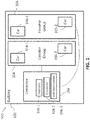
- FIG. 2A depicts a system 200A for balancing elevator car emergency power in an elevator system in accordance with one or more embodiments of the present disclosure.
- the system 200A is of a building that includes two elevator groups 204, 205. Specifically, the first elevator group is feeder group 204 and the second elevator group is a feeder group 205.
- the feeder group 204 includes elevator cars 204-1 and 204-2.
- the feeder group 204 and associated cars 204-1 and 204-2 are powered during normal operating conditions using building power that is provided from a building power feeder 208-1.
- the building power is fed through a feeder switch 207-1.
- the switch 207-1 can switch the incoming power from the building power to back-up power that originates from a back-up power source 209-1.
- the back-up power source 209-1 can be a generator, a solar panel, a wind turbine, a battery, an alternative feeder line, or any other known power means, and/or any combination thereof.
- the feeder switch 207-1 would switch to back-up power source 209-1 during an emergency.
- feeder group 205 includes elevator cars 205-1 and 205-2.
- the feeder group 205 and associated cars 205-1 and 205-2 are powered during normal operating conditions using building power that is provided from a building power feeder 208-2.
- the building power is fed through a feeder switch 207-2.
- the switch 207-2 can switch the incoming power from the building power to back-up power that originates from the back-up power source 209-1.
- the feeder switch 207-2 would switch to back-up power source 209-1 during an emergency.
- the system 200A includes a controller 206 that is communicatively connected to both feeder group 204 and feeder group 205 cars (204-1, 204-2, 205-1, and 205-2).
- the controller 206 can be used to facilitate dispatching during both normal and emergency power scenarios. For example, during an emergency power situation, feeder group 204 and feeder group 205 are both powered by the back-up power source 209-1.
- the back-up power source 209-1 may only be able to move a subset of elevator cars while providing basic power to all elevator cars. Accordingly selections need to be made by the controller 206 as to which cars will run.
- the controller 206 will always select at least one car from each feeder group. If additional power is available, the controller 206 can select additional cars to power and run to help evacuate additional users. For example, the controller 206 can select car 204-1 and car 205-1 to operate during the emergency condition. Alternatively, the controller 206 can select another combination of cars as long as there is one selected from each feeder group.
- FIG. 2B depicts a system 200B for balancing elevator car emergency power in an elevator system in accordance with one or more embodiments of the present disclosure.
- This embodiment is identical to FIG. 2A expect that it contains a duplicate of each element.
- the system 200B has two back-up power sources that each provides emergency power to two separate feeder groups.
- the back-up power sources can be a generator, a solar panel, a wind turbine, a battery, an alternative feeder line, or any other known power means, and/or any combination thereof.
- the system 200B operates in a similar fashion such that at least one elevator car is selected from each feeder group. By providing separate back-up power sources the system 200B may be able to power and run additional elevator cars in each feeder group.
- a building manager may provide a priority list of elevator cars listing all elevator cars in the system 200B from highest priority to lowest priority.
- one such priority list may look as follows, with highest priority listed first: Car 1, Car 8, Car 2, Car 7, Car 3, Car 6, Car 4, and Car 5.
- the system 200B will go through the priority list and first select one elevator car from each feeder group. Specifically, the system will select Car 1, Car 8, Car 3, and Car 6 initially. The system 200B will then power the cars using the back-up power source that is connected to that feeder group. For example, Car 1 and Car 3 will be powered by power generator #1 as shown in FIG. 2B . Further, Car 8 and Car 6 are powered by power generator #2 as shown.
- the next elevator in the priority list can be selected and powered. For example, if power generator #1 has additional power Car 2 will be powered and run. Alternatively, if power generator #2 has additional power Car 7 will be powered and run.
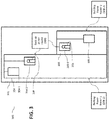
- FIG. 3 depicts another system 300 for balancing elevator car emergency power in an elevator system in accordance with one or more embodiments of the present disclosure.
- the system 300 is a building that includes similar elements to those shown in FIG. 2A .
- the system 300 includes a feeder group 304 and a feeder group 305.
- the feeder group 304 can service higher floors within the building than the feeder group 305 can. Therefore, the feeder group 304 can be called a high-rise feeder group while the feeder group 305 can be called a low-rise feeder group.
- the system 300 includes elevator cars 304-1, 304-2, 305-1, and 305-2.
- the system 300 includes a back-up power source 309 that is connected to both feeder groups 304 and 305.
- the back-up power source 309 can be a generator, a solar panel, a wind turbine, a battery, an alternative feeder line, or any other known power means, and/or any combination thereof.
- Each feeder group 304 and 205 is connected to building power feeders 308-1 and 308-2, respectively. These building power feeders 308-1 and 308-2 provide building power to the feeder groups 304 and 305 during normal operating procedures. However, during an emergency, the building power feeders 308-1 an 308-2 may discontinue power services to the feeder groups 304 and 305.
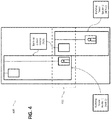
- FIG. 4 depicts another system 400 for balancing elevator car emergency power in an elevator system in accordance with one or more embodiments of the present disclosure.
- the elevator system 400 includes similar elements to those or FIG. 3 .
- the system 400 includes building power feeders 408-1 and 408-2 that power feeder groups that contain elevator cars.
- the system includes a back-up power source 409 that powers at least one car from each feeder group during an emergency scenario that is selected by a controller which may be located anywhere in the system.
- the back-up power source 409 can be a generator, a solar panel, a wind turbine, a battery, an alternative feeder line, or any other known power means, and/or any combination thereof.
- the system 400 may include a sky bridge floor 412 were users will move from a first feeder group to a second feeder group when exiting the building.
- the first feeder group does not reach the ground floor while the second feeder group does not reach upper floors.
- Other arrangements of what floors each feeder group service can also be including in accordance with one or more embodiments.
- FIG. 5 depicts another system 500 for balancing elevator car emergency power in an elevator system in accordance with one or more embodiments of the present disclosure.
- a plurality of elevator banks and hoist way arrangements may be included in feeder groups.
- a first feeder group powered by feeder 508-1 may include elevator banks 504 and 505.
- a second feeder group powered by a feeder 508-2 may include elevators 514, 515, and 516.
- the elevators may include a plurality of elevator cars.
- elevator 504 includes elevator cars 504-1, 504-2, and 504-3.
- Other elevators may include more or less elevator cars in accordance with one or more embodiments.
- a feeder group can include three or more elevator systems 514, 515, and 516 that each service different floors. Further, this example also provides that feeder groups do not need to be symmetrical in the number of elevator cars, elevators, and/or floors that are being serviced and powered. Thus, even when the feeder groups are asymmetrically distributed the back-up power source 509 is still connected and provides power to all the different elevators and feeder groups as shown.
- the back-up power source 509 can be a generator, a solar panel, a wind turbine, a battery, an alternative feeder line, or any other known power means, and/or any combination thereof. The differences in arrangement and power consumption are then taken into consideration when selecting what elevator cars to power using the limited power provided by the back-up power source 509.
- At least one elevator car is selected from each feeder group 508-1 and 508-2.
- the power source 509 when the power source 509 is able to power elevator cars, a number of considerations and factors can be taken into account when selecting elevators to power during emergency conditions. For example, initially the power source 509 may power an elevator car 504-3 in the first feeder group 508-1 and an elevator car 515-1 from the second feeder group 508-2. Further, if the back-up power source 509 has additional power available to move another elevator, an elevator 505-1 may be selected for example.
- All of these selections can be made based on collected data that includes any number of values and factors such as collected sensor data, historical usage data, input data from a building manger, input data from one or more passengers, or other data provided in the system.
- the data can include anything from emergency type and location within building, location of passengers within building, power available from back-up power source, power consumption amount for different elevators based on expected loads, speed, operating condition, and time.
- the data may include image data that indicates the location and number of passengers, image data that indicates the type and severity of the emergency, or any other detected value.
- the system is able to provide that at least one elevator car is operating in each feeder group. Further, the system can also provide that additional elevator cars can operate when additional power is available from the back-up power source. These additional elevator cars selected can be selected based on the same data and reasoning used to selected the initial elevator cars from each feeder group or can be selected based on different criteria and data.
- the system and method can select an elevator car from each feeder group automatically.
- the system controller can automatically make selection decisions without any input from a building owner or passenger including any preset input. For example, the system controller can know how much power each elevator car uses, where each of the elevator cars serve in the building, their frequency of use, the type, location, and severity of the emergency, etc. and can also be told the available power from the back-up power source. Based on one or more of these values the controller can select at least one elevator car in each feeder group automatically.
- the system and method can include one or more sensors that collect data in and around the elevators that can be used to make the automatic selections. For example, image data that indicates the location and number of passengers, image data that indicates the type and severity of the emergency, weight values from weight plate sensors, wireless device signal strength and tracking values, or any other detectable value can be collected and used to make the automatic selection.
- FIG. 6 depicts another system 600 for balancing elevator car emergency power in an elevator system in accordance with one or more embodiments of the present disclosure.
- each elevator bank 604, 605, 614, 615, and 615 may be its own feeder group powered by its own feeder.
- building power feeders 608-1, 608-2, 608-3, 608-4, and 608-5 each individually power an elevator bank 604, 605, 614, 615, and 615, respectively.
- all these elevators are still powered by a single back-up power source 609.
- the back-up power source 609 can be a generator, a solar panel, a wind turbine, a battery, an alternative feeder line, or any other known power means, and/or any combination thereof.
- the number of feeder groups is scalable based on what is present in the building. For example, there may be as few as two feeder groups as described above with reference to FIGs. 1-5 , three feeder groups, four feeder groups, five feeder groups as described in FIG. 6 , or more depending on the size and complexity of the building and/or overall elevator system.
- the plurality of feeders is connected to the back-up power source 609 which powers at least one elevator car in each feeder group. Further, if the back-up power source 609 has additional power remaining, the back-up power source 609 can power additional elevator cars as discussed above.
- FIG. 7 depicts a flow diagram of a method 700 of balancing elevator car emergency power in an elevator system in accordance with one or more embodiments of the present disclosure.
- the method 700 includes switching a first feeder group of elevator cars from building power provided through a first building power feeder to back-up power provided through a back-up power source (operation 705).
- the method 700 also includes switching a second feeder group of elevator cars from the building power provided through a second building power feeder to the back-up power provided through the back-up power source (operation 710).
- the method 700 includes selecting, using an elevator controller, at least one elevator car from the first feeder group of elevator cars (operation 715), and selecting, using the elevator controller, at least one elevator car from the second feeder group of elevator cars(operation 720).
- the method 700 includes powering the selected elevator cars from the first feeder group and the second feeder group using the back-up power from the back-up power source (operation 725).
- selection of the elevator cars from the first feeder group and the second feeder group is done based on a priority list provided by a building manager/owner. Specifically, the building manager will generate and provide a priority list of all elevator cars in the system included in both feeder groups. Then, the method will select an elevator car from each feeder group in the order they are provided in the priority list.
- the building manager can provide a priority list that has the elevator cars in the following order, with the highest priority elevator car listed first: 504-1, 505-1, 504-2, 504-3, and 515-1. From this list the method will go through and first select one elevator car from each feeder group. Accordingly, the method will select elevator car 504-1 from the first feeder group, elevator car 515-1 from the second feeder group. Further, if the back-up power source 509 has additional power sufficient to move an additional elevator car, the method can further select the next elevator car from the priority list that is not already running. Specifically, the method will select elevator car 505-1.
- the selection of an elevator car can be made based on collected data that can include any number of value and factors such as collected sensor data, historical usage data, input data from a building manger, input data from one or more passengers, or other data provided in the system.
- the data can include anything from emergency type and location within building, location of passengers within building, power available from back-up power source, power consumption amount for different elevators based on expected loads, speed, operating condition, and time.
- the data may include image data that indicates the location and number of passengers, image data that indicates the type and severity of the emergency, or any other detected value.
- selecting, using the elevator controller, the at least one elevator car from the first feeder group of elevator cars further includes selecting the at least one elevator car from the first feeder group of elevator cars based on one or more heuristics.
- selecting, using the elevator controller, the at least one elevator car from the second feeder group of elevator cars further includes selecting the at least one elevator car from the second feeder group of elevator cars based on one or more heuristics.
- the one or more heuristics includes selection based on elevator car with largest capacity, elevator car furthest from emergency condition, elevator car that can service the most floors, elevator nearest evacuating passengers, elevator power consumption, elevator safety rating, feeder group elevator car priority list, and most popular elevator car in feeder group.
- switching the first feeder group of elevator cars further includes switching a first feeder switch from a first position that connects the first feeder group of elevator cars to the first building power feeder to a second position that connects the first feeder group of elevator cars to the back-up power source.
- switching the first feeder group of elevator cars further includes detecting an emergency condition, discontinuing the use of the building power by disconnecting from the first building power feeder in response to detecting the emergency condition, and commencing the use of the back-up power by connecting to the back-up power source in response to detecting the emergency condition.
- the emergency condition is one selected from a group consisting of the building power from the first power feeder dropping below an operating threshold, a detection of a dangerous emergency condition within proximity of one or more elevators in the first feeder group, and a building management command noting the dangerous emergency condition.
- switching the second feeder group of elevator cars further includes switching a second feeder switch from a first position that connects the second feeder group of elevator cars to the second building power feeder to a second position that connects the second feeder group of elevator cars to the back-up power source.
- switching the second feeder group of elevator cars further includes detecting an emergency condition, discontinuing the use of the building power by disconnecting from the second building power feeder in response to detecting the emergency condition, and commencing the use of the back-up power by connecting to the back-up power source in response to detecting the emergency condition.
- the first feeder group is a high rise elevator group
- the second feeder group is a low rise elevator group
- the system and method further includes a plurality of feeder groups, wherein each of the plurality of feeder groups is switched from building power to the back-up power. Further, at least one elevator car is selected and powered from each feeder group in the plurality of feeder groups.
- the present embodiments may be a system, a method, and/or a computer program product at any possible technical detail level of integration
- the computer program product may include a computer readable storage medium (or media) having computer readable program instructions thereon for causing a processor to carry out aspects of the present disclosure
- the computer readable program instructions may execute entirely on the user's mobile device, partly on the user's mobile device, as a stand-alone software package, partly on the user's mobile device and partly on a remote computer or entirely on the remote computer or server.
- the remote computer may be connected to the user's mobile device through any type of network, including a local area network (LAN) or a wide area network (WAN), or the connection may be made to an external computer (for example, through the Internet using an Internet Service Provider).
- LAN local area network
- WAN wide area network
- Internet Service Provider for example, AT&T, MCI, Sprint, EarthLink, MSN, GTE, etc.
- electronic circuitry including, for example, programmable logic circuitry, field-programmable gate arrays (FPGA), or programmable logic arrays (PLA) may execute the computer readable program instructions by utilizing state information of the computer readable program instructions to personalize the electronic circuitry, in order to perform aspects of the present disclosure.
- FPGA field-programmable gate arrays
- PLA programmable logic arrays
- each block in the flowchart or block diagrams may represent a module, segment, or portion of instructions, which comprises one or more executable instructions for implementing the specified logical function(s).
- the functions noted in the blocks may occur out of the order noted in the Figures.
- two blocks shown in succession may, in fact, be executed substantially concurrently, or the blocks may sometimes be executed in the reverse order, depending upon the functionality involved.
Landscapes
- Engineering & Computer Science (AREA)
- Automation & Control Theory (AREA)
- Computer Networks & Wireless Communication (AREA)
- Elevator Control (AREA)
- Maintenance And Inspection Apparatuses For Elevators (AREA)
Claims (11)
- Verfahren zum Ausgleichen von Aufzugkabinennotstrom in einem Aufzugsystem (200A; 200B; 300; 400; 500; 600), wobei das Verfahren umfasst:Umschalten einer ersten Versorgergruppe (204; 304) von Aufzugkabinen von Gebäudestrom, der durch einen ersten Gebäudestromversorger (208-1; 308-1; 408-1; 508-1; 608-1) bereitgestellt wird, auf Reservestrom, der durch eine Reservestromquelle (209-1; 309; 409; 609) bereitgestellt wird;Umschalten einer zweiten Versorgergruppe (205; 305) von Aufzugkabinen von dem Gebäudestrom, der durch einen zweiten Gebäudestromversorger (208-2; 308-2; 408-2; 508-2; 608-2) bereitgestellt wird, auf den Reservestrom, der durch die Reservestromquelle (209-1; 309; 409; 609) bereitgestellt wird;Auswählen, unter Verwendung einer Aufzugsteuerung (206), mindestens einer Aufzugkabine aus der ersten Versorgergruppe (204; 304) von Aufzugkabinen;Auswählen, unter Verwendung der Aufzugsteuerung (206), mindestens einer Aufzugkabine aus der zweiten Versorgergruppe (205; 305) von Aufzugkabinen; undAntreiben der ausgewählten Aufzugkabinen aus der ersten Versorgergruppe (204; 304) und der zweiten Versorgergruppe (205; 305) unter Verwendung des Reservestroms von der Reservestromquelle (209-1; 309; 409; 609), dadurch gekennzeichnet, dass das Umschalten der ersten Versorgergruppe von Aufzugkabinen ferner umfasst:Umschalten eines ersten Versorgerschalters (207-1) von einer ersten Position, die die erste Versorgergruppe (204; 304) von Aufzugkabinen mit dem ersten Gebäudestromversorger (208-1; 308-1; 408-1; 508-1; 608-1) verbindet, in eine zweite Position, die die erste Versorgergruppe (204; 304) von Aufzugkabinen mit der Reservestromquelle (209-1; 309; 409; 609) verbindet; und/oderwobei das Umschalten der zweiten Versorgergruppe (205; 305) von Aufzugkabinen ferner umfasst:Umschalten eines zweiten Versorgerschalters (207-2) von einer ersten Position, die die zweite Versorgergruppe (205; 305) von Aufzugkabinen mit dem zweiten Gebäudestromversorger (208-2; 308-2; 408-2; 508-2; 608-2) verbindet, in eine zweite Position, die die zweite Versorgergruppe (205; 305) von Aufzugkabinen mit der Reservestromquelle (209-1; 309; 409; 609) verbindet.
- Verfahren nach Anspruch 1, wobei das Auswählen, unter Verwendung der Aufzugsteuerung (206), der mindestens einen Aufzugkabine aus der ersten Versorgergruppe (204; 304) von Aufzugkabinen ferner umfasst:Auswählen der mindestens einen Aufzugkabine aus der ersten Versorgergruppe (204; 304) von Aufzugkabinen auf Grundlage einer oder mehrerer Heuristiken,wobei die eine oder die mehreren Heuristiken die Auswahl auf Grundlage einer Aufzugkabine mit der größten Kapazität, einer Aufzugkabine, die am weitesten von einem Notzustand entfernt ist, einer Aufzugkabine, die die meisten Etagen bedienen kann, eines Aufzugs, der Passagieren, die evakuiert werden, am nächsten ist, eines Aufzugstromverbrauchs, einer Aufzugsicherheitsbewertung, einer Prioritätsliste von Versorgergruppenaufzugkabinen und einer gängigsten Aufzugkabine in der Versorgergruppe beinhalten; und/oderwobei das Auswählen, unter Verwendung der Aufzugsteuerung (206), der mindestens einen Aufzugkabine aus der zweiten Versorgergruppe von Aufzugkabinen ferner umfasst:Auswählen der mindestens einen Aufzugkabine aus der zweiten Versorgergruppe (205; 305) von Aufzugkabinen auf Grundlage einer oder mehrerer Heuristiken,wobei die eine oder die mehreren Heuristiken die Auswahl auf Grundlage einer Aufzugkabine mit der größten Kapazität, einer Aufzugkabine, die am weitesten von einem Notzustand entfernt ist, einer Aufzugkabine, die die meisten Etagen bedienen kann, eines Aufzugs, der Passagieren, die evakuiert werden, am nächsten ist, eines Aufzugstromverbrauchs, einer Aufzugsicherheitsbewertung, einer Prioritätsliste von Versorgergruppenaufzugkabinen und einer gängigsten Aufzugkabine in der Versorgergruppe beinhalten.
- Verfahren nach einem der vorstehenden Ansprüche, wobei das Umschalten der ersten Versorgergruppe (204; 304) von Aufzugkabinen ferner umfasst:Erkennen eines Notzustands;Unterbrechen der Verwendung des Gebäudestroms durch Abtrennen von dem ersten Gebäudestromversorger (208-1; 308-1; 408-1; 508-1; 608-1) als Reaktion auf das Erkennen des Notzustands; undBeginnen der Verwendung des Reservestroms durch Verbinden der Reservestromquelle (209-1; 309; 409; 609) als Reaktion auf das Erkennen des Notzustands,
wobei der Notzustand vorzugsweise einer ist, der aus einer Gruppe ausgewählt ist, die aus einem Fallen des Gebäudestroms von dem ersten Stromversorger unter einen Betriebsschwellenwert, einer Erkennung eines gefährlichen Notzustands in der Nähe eines oder mehrerer Aufzüge in der ersten Versorgergruppe (204; 304) und einem Gebäudeverwaltungsbefehl, der den gefährlichen Notzustand angibt, besteht; und/oderwobei das Umschalten der zweiten Versorgergruppe (205; 305) von Aufzugkabinen ferner umfasst:Erkennen eines Notzustands;Unterbrechen der Verwendung des Gebäudestroms durch Abtrennen von dem zweiten Gebäudestromversorger als Reaktion auf das Erkennen des Notzustands; undBeginnen der Verwendung des Reservestroms durch Verbinden der Reservestromquelle (209-1; 309; 409; 609) als Reaktion auf das Erkennen des Notzustands,
wobei der Notzustand vorzugsweise einer ist, der aus einer Gruppe ausgewählt ist, die aus einem Fallen des Gebäudestroms von dem zweiten Stromversoger unter einen Betriebsschwellenwert, einer Erkennung eines gefährlichen Notzustands in der Nähe eines oder mehrerer Aufzüge in der zweiten Versorgergruppe und einem Gebäudeverwaltungsbefehl, der den gefährlichen Notzustand angibt, besteht. - Verfahren nach einem der vorstehenden Ansprüche,
wobei das Auswählen mindestens einer Aufzugkabine aus der ersten Versorgergruppe (204; 304) von Aufzugkabinen auf Grundlage von gesammelten Daten automatisch erfolgt, und
wobei das Auswählen mindestens einer Aufzugkabine aus der zweiten Versorgergruppe (205; 305) von Aufzugkabinen auf Grundlage von gesammelten Daten automatisch erfolgt. - Verfahren nach einem der vorstehenden Ansprüche, ferner umfassend:eine Vielzahl von Versorgergruppen,wobei jede der Vielzahl von Versorgergruppen von Gebäudestrom zu dem Reservestrom umgeschaltet wird, undwobei, unter Verwendung der Aufzugsteuerung (206), mindestens eine Aufzugkabine aus jeder Versorgergruppe in der Vielzahl von Versorgergruppen ausgewählt und angetrieben wird.
- System zum Ausgleichen von Aufzugkabinennotstrom, wobei das System umfasst:eine erste Versorgergruppe (204; 304) von Aufzugkabinen, die dazu konfiguriert ist, von Gebäudestrom, der durch einen ersten Gebäudestromversorger (208-1; 308-1; 408-1; 508-1; 608-1) bereitgestellt wird, auf Reservestrom umzuschalten, der durch eine Reservestromquelle (209-1; 309; 409; 609) bereitgestellt wird;eine zweite Versorgergruppe (205; 305) von Aufzugkabinen, die dazu konfiguriert ist, von dem Gebäudestrom, der durch einen zweiten Gebäudestromversorger (208-2; 308-2; 408-2; 508-2; 608-2) bereitgestellt wird, auf den Reservestrom umzuschalten, der durch die Reservestromquelle (209-1; 309; 409; 609) bereitgestellt wird; undeine Aufzugsteuerung (206), die mindestens eine Aufzugkabine aus der ersten Versorgergruppe (204; 304) von Aufzugkabinen auswählt und mindestens eine Aufzugkabine aus der zweiten Versorgergruppe von Aufzugkabinen auswählt,wobei die Reservestromquelle (209-1; 309; 409; 609) die ausgewählten Aufzugkabinen aus der ersten Versorgergruppe (204; 304) und der zweiten Versorgergruppe (205; 305) unter Verwendung des Reservestroms antreibt,dadurch gekennzeichnet, dass die erste Versorgergruppe (204; 304) von Aufzugkabinen ferner umfasst:einen ersten Versorgerschalter (207-1), der dazu konfiguriert ist, von einer ersten Position, die die erste Versorgergruppe (204; 304) von Aufzugkabinen mit dem ersten Gebäudestromversorger (208-1; 308-1; 408-1; 508-1; 608-1) verbindet, in eine zweite Position umzuschalten, die die erste Versorgergruppe (204; 304) von Aufzugkabinen mit der Reservestromquelle (209-1; 309; 409; 609) verbindet,und/oder dadurch, dass die zweite Versorgergruppe (205; 305) von Aufzugkabinen ferner umfasst:einen zweiten Versorgerschalter (207-2), der dazu konfiguriert ist, von einer ersten Position, die die zweite Versorgergruppe (205; 305) von Aufzugkabinen mit dem zweiten Gebäudestromversorger (208-2; 308-2; 408-2; 508-2; 608-2) verbindet, in eine zweite Position umzuschalten, die die zweite Versorgergruppe (205; 305) von Aufzugkabinen mit der Reservestromquelle (209-1; 309; 409; 609) verbindet.
- System nach Anspruch 6,
wobei das Auswählen mindestens einer Aufzugkabine aus der ersten Versorgergruppe (204; 304) von Aufzugkabinen auf Grundlage von gesammelten Daten automatisch erfolgt, und
wobei das Auswählen mindestens einer Aufzugkabine aus der zweiten Versorgergruppe (205; 305) von Aufzugkabinen auf Grundlage von gesammelten Daten automatisch erfolgt. - System nach Anspruch 6 oder 7, ferner umfassend:eine Vielzahl von Versorgergruppen,wobei jede der Vielzahl von Versorgergruppen von Gebäudestrom zu dem Reservestrom umgeschaltet wird, undwobei, unter Verwendung der Aufzugsteuerung (206), mindestens eine Aufzugkabine aus jeder Versorgergruppe in der Vielzahl von Versorgergruppen ausgewählt und angetrieben wird.
- Computerprogrammprodukt zum Ausgleichen von Aufzugkabinennotstrom, wobei das Computerprogrammprodukt ein computerlesbares Speichermedium mit darin enthaltenen Programmanweisungen umfasst, wobei die Programmanweisungen durch einen Prozessor ausführbar sind, um den Prozessor zu Folgendem zu veranlassen:Umschalten einer ersten Versorgergruppe (204; 304) von Aufzugkabinen von Gebäudestrom, der durch einen ersten Gebäudestromversorger (208-1; 308-1; 408-1; 508-1; 608-1) bereitgestellt wird, auf Reservestrom, der durch eine Reservestromquelle (209-1; 309; 409; 609) bereitgestellt wird;Umschalten einer zweiten Versorgergruppe (205; 305) von Aufzugkabinen von dem Gebäudestrom, der durch einen zweiten Gebäudestromversorger (208-2; 308-2; 408-2; 508-2; 608-2) bereitgestellt wird, auf den Reservestrom, der durch die Reservestromquelle (209-1; 309; 409; 609) bereitgestellt wird;Auswählen, unter Verwendung einer Aufzugsteuerung (206), mindestens einer Aufzugkabine aus der ersten Versorgergruppe (204; 304) von Aufzugkabinen;Auswählen, unter Verwendung der Aufzugsteuerung (206), mindestens einer Aufzugkabine aus der zweiten Versorgergruppe (205; 305) von Aufzugkabinen; und Antreiben der ausgewählten Aufzugkabinen aus der ersten Versorgergruppe (204; 304) und der zweiten Versorgergruppe (205; 305) unter Verwendung des Reservestroms von der Reservestromquelle (209-1; 309; 409; 609),dadurch gekennzeichnet, dass das Computerprogrammprodukt zusätzliche Programmanweisungen umfasst, die durch den Prozessor ausführbar sind, um den Prozessor zu Folgendem zu veranlassen:Umschalten eines ersten Versorgerschalters (207-1) von einer ersten Position, die die erste Versorgergruppe von Aufzugkabinen mit dem ersten Gebäudestromversorger (208-1; 308-1; 408-1; 508-1; 608-1) verbindet, in eine zweite Position, die die erste Versorgergruppe (204; 304) von Aufzugkabinen mit der Reservestromquelle (209-1; 309; 409; 609) verbindet; und/oderUmschalten eines zweiten Versorgerschalters (207-2) von einer ersten Position, die die zweite Versorgergruppe (205; 305) von Aufzugkabinen mit dem zweiten Gebäudestromversorger (208-2; 308-2; 408-2; 508-2; 608-2) verbindet, in eine zweite Position, die die zweite Versorgergruppe (205; 305) von Aufzugkabinen mit der Reservestromquelle (209-1; 309; 409; 609) verbindet.
- Computerprogrammprodukt nach Anspruch 9, wobei das Computerprogrammprodukt zusätzliche Programmanweisungen umfasst, die durch den Prozessor ausführbar sind, um den Prozessor zu Folgendem zu veranlassen:Auswählen der mindestens einen Aufzugkabine aus der ersten Versorgergruppe (204; 304) von Aufzugkabinen auf Grundlage einer oder mehrerer Heuristiken; undAuswählen der mindestens einen Aufzugkabine aus der zweiten Versorgergruppe (205; 305) von Aufzugkabinen auf Grundlage einer oder mehrerer Heuristiken,wobei die eine oder die mehreren Heuristiken die Auswahl auf Grundlage einer Aufzugkabine mit der größten Kapazität, einer Aufzugkabine, die am weitesten von einem Notzustand entfernt ist, einer Aufzugkabine, die die meisten Etagen bedienen kann, eines Aufzugs, der Passagieren, die evakuiert werden, am nächsten ist, eines Aufzugstromverbrauchs, einer Aufzugsicherheitsbewertung, einer Prioritätsliste von Versorgergruppenaufzugkabinen und einer gängigsten Aufzugkabine in der Versorgergruppe beinhalten.
- Computerprogrammprodukt nach Anspruch 9 oder 10, wobei das Computerprogrammprodukt zusätzliche Programmanweisungen umfasst, die durch den Prozessor ausführbar sind, um den Prozessor zu Folgendem zu veranlassen:Erkennen eines Notzustands;Unterbrechen der Verwendung des Gebäudestroms durch Abtrennen von dem ersten Gebäudestromversorger (208-1; 308-1; 408-1; 508-1; 608-1) als Reaktion auf das Erkennen des Notzustands;Unterbrechen der Verwendung des Gebäudestroms durch Abtrennen von dem zweiten Gebäudestromversorger (208-2; 308-2; 408-2; 508-2; 608-2) als Reaktion auf das Erkennen des Notzustands; undBeginnen der Verwendung des Reservestroms durch Verbinden der Reservestromquelle (209-1; 309; 409; 609) als Reaktion auf das Erkennen des Notzustands.
Applications Claiming Priority (1)
| Application Number | Priority Date | Filing Date | Title |
|---|---|---|---|
| US15/141,376 US10207895B2 (en) | 2016-04-28 | 2016-04-28 | Elevator emergency power feeder balancing |
Publications (2)
| Publication Number | Publication Date |
|---|---|
| EP3239088A1 EP3239088A1 (de) | 2017-11-01 |
| EP3239088B1 true EP3239088B1 (de) | 2019-11-13 |
Family
ID=58638764
Family Applications (1)
| Application Number | Title | Priority Date | Filing Date |
|---|---|---|---|
| EP17168400.4A Active EP3239088B1 (de) | 2016-04-28 | 2017-04-27 | Aufzugnotstromversorgerausgleich |
Country Status (3)
| Country | Link |
|---|---|
| US (1) | US10207895B2 (de) |
| EP (1) | EP3239088B1 (de) |
| CN (1) | CN107337038B (de) |
Families Citing this family (2)
| Publication number | Priority date | Publication date | Assignee | Title |
|---|---|---|---|---|
| CN106687403B (zh) * | 2014-09-12 | 2020-07-28 | 奥的斯电梯公司 | 电梯制动器控制系统 |
| JP6319511B2 (ja) * | 2015-03-26 | 2018-05-09 | 三菱電機株式会社 | エレベーター群管理システム |
Family Cites Families (50)
| Publication number | Priority date | Publication date | Assignee | Title |
|---|---|---|---|---|
| US3506095A (en) | 1967-11-22 | 1970-04-14 | Reliance Electric Co | Group elevator control for restricted power conditions |
| US4379499A (en) | 1981-07-06 | 1983-04-12 | Otis Elevator Company | Emergency power elevator recovery and service system |
| EP0709332B1 (de) | 1994-05-17 | 2000-12-13 | Mitsubishi Denki Kabushiki Kaisha | Gruppensteuerung für aufzüge |
| CN2200625Y (zh) * | 1994-06-10 | 1995-06-14 | 核工业理化工程研究院 | 电梯自动救助装置 |
| FI99109C (fi) | 1994-11-29 | 1997-10-10 | Kone Oy | Varavoimajärjestelmä |
| KR100186370B1 (ko) * | 1996-10-24 | 1999-04-15 | 이종수 | 엘리베이터의 정전시 비상 운전 장치 |
| CN1207361A (zh) * | 1997-08-05 | 1999-02-10 | 北京市畅达贸易发展公司 | 电梯自动救援的安全装置 |
| CA2400762C (en) | 2000-03-31 | 2009-05-26 | Inventio Ag | Emergency current supply equipment for lift installations |
| JP2004203623A (ja) | 2002-12-23 | 2004-07-22 | Inventio Ag | 建物の人の緊急避難方法およびシステム、および前記システムを用いた既存の建物の近代化方法 |
| US7246686B2 (en) | 2004-01-30 | 2007-07-24 | Thyssen Elevator Capital Corp. | Power supply for elevator systems having variable speed drives |
| BRPI0417042B1 (pt) * | 2004-04-20 | 2014-10-29 | Mitsubishi Electric Corp | Sistema de parada de emergência para um elevador |
| WO2006001053A1 (ja) | 2004-06-24 | 2006-01-05 | Mitsubishi Denki Kabushiki Kaisha | エレベータの停電時運転装置 |
| FI117381B (fi) | 2005-03-11 | 2006-09-29 | Kone Corp | Hissiryhmä ja menetelmä hissiryhmän ohjaamiseksi |
| FI117282B (fi) | 2005-05-12 | 2006-08-31 | Kone Corp | Hissijärjestelmä |
| WO2007044000A1 (en) | 2005-10-07 | 2007-04-19 | Otis Elevator Company | Elevator power system |
| FI117938B (fi) | 2005-10-07 | 2007-04-30 | Kone Corp | Hissijärjestelmä |
| FI118332B (fi) | 2005-10-14 | 2007-10-15 | Kone Corp | Hissijärjestelmä |
| US7540356B2 (en) | 2005-10-18 | 2009-06-02 | Thyssen Elevator Capital Corp. | Method and apparatus to prevent or minimize the entrapment of passengers in elevators during a power failure |
| FI120092B (fi) | 2005-12-30 | 2009-06-30 | Kone Corp | Hissijärjestelmä ja menetelmä kokonaistehon pienentämiseksi hissijärjestelmässä |
| FI118465B (fi) | 2006-03-03 | 2007-11-30 | Kone Corp | Hissijärjestelmä |
| US7554278B2 (en) * | 2006-06-13 | 2009-06-30 | Railpower Technologies Corp. | Load-lifting apparatus and method of storing energy for the same |
| ES2379602T3 (es) * | 2007-01-11 | 2012-04-27 | Otis Elevator Company | Sistema de gestión térmica termoeléctrica para el sistema de almacenamiento de energía en un ascensor regenerativo |
| EP2117983B1 (de) * | 2007-02-13 | 2018-09-19 | Otis Elevator Company | Automatischer rettungsbetrieb für ein regeneratives antriebssystem |
| CN100560462C (zh) * | 2007-06-01 | 2009-11-18 | 苏州江南嘉捷电梯股份有限公司 | 同步电机驱动电梯的停电救援方法 |
| CN201089681Y (zh) * | 2007-07-10 | 2008-07-23 | 林浩生 | 电梯应急装置 |
| JP2009035408A (ja) | 2007-08-03 | 2009-02-19 | Toshiba Elevator Co Ltd | エレベータ |
| RU2484003C2 (ru) | 2008-07-25 | 2013-06-10 | Отис Элевэйтор Компани | Способ эксплуатации лифта в аварийном режиме |
| BRPI0823023A2 (pt) | 2008-08-15 | 2015-07-28 | Otis Elevator Co | Sistema e método para gerenciar energia de uma fonte de energia secundária |
| FI120447B (fi) | 2008-08-21 | 2009-10-30 | Kone Corp | Hissijärjestelmä sekä hissiryhmän ohjausmenetelmä |
| ES2436143T3 (es) | 2008-09-04 | 2013-12-27 | Otis Elevator Company | Gestión de potencia procedente de varias fuentes basada en patrones de uso de ascensores |
| WO2010059139A1 (en) | 2008-11-19 | 2010-05-27 | Otis Elevator Company | Power management in elevators during marginal quality power conditions |
| KR101245966B1 (ko) * | 2009-01-19 | 2013-03-22 | 미쓰비시덴키 가부시키가이샤 | 엘리베이터 시스템 |
| FI122048B (fi) | 2009-06-01 | 2011-07-29 | Kone Corp | Kuljetusjärjestelmä |
| CN102459050B (zh) | 2009-06-30 | 2014-11-26 | 奥的斯电梯公司 | 执行升降机救援运行的升降机系统和方法 |
| JP2011063428A (ja) * | 2009-09-18 | 2011-03-31 | Toshiba Elevator Co Ltd | エレベータの救出運転システム |
| JP5550302B2 (ja) | 2009-10-19 | 2014-07-16 | 東芝エレベータ株式会社 | エレベータの救出運転システム |
| JP2011084388A (ja) | 2009-10-19 | 2011-04-28 | Toshiba Elevator Co Ltd | エレベータの救出運転システム |
| US8230980B2 (en) | 2009-12-31 | 2012-07-31 | Inventio Ag | Method of operating elevators during emergency situations |
| FI123168B (fi) | 2010-02-10 | 2012-11-30 | Kone Corp | Sähkövoimajärjestelmä |
| JP2012188229A (ja) | 2011-03-10 | 2012-10-04 | Toshiba Elevator Co Ltd | エレベータ救助運転システムおよび方法 |
| EP2500309A1 (de) * | 2011-03-18 | 2012-09-19 | Inventio AG | Energieverwaltungssystem für solarbetriebene Liftanlage |
| JP2013147328A (ja) | 2012-01-20 | 2013-08-01 | Hitachi Ltd | 非常用電源で運転されるエレベータ |
| ES2665979T3 (es) * | 2012-06-01 | 2018-04-30 | Otis Elevator Company | Sistema de ascensor con un dispositivo de almacenamiento de energía |
| CN104470842B (zh) * | 2012-07-18 | 2016-10-12 | 奥的斯电梯公司 | 电梯电力管理 |
| CN102923537B (zh) | 2012-11-13 | 2014-04-23 | 天津大学 | 超级电容储能式电梯一体化驱动控制装置 |
| TWI610875B (zh) * | 2012-12-18 | 2018-01-11 | 伊文修股份有限公司 | 控制方法、升降設備及複合式升降設備 |
| CN103303759A (zh) * | 2013-06-20 | 2013-09-18 | 天津大学 | 超级电容储能电梯自救装置 |
| CN105517933B (zh) * | 2013-09-05 | 2017-07-18 | 通力股份公司 | 电梯装置以及用于控制电梯的方法 |
| CN103693521B (zh) * | 2013-12-03 | 2016-06-08 | 天津市安维康家科技发展有限公司 | 一种智能化电梯故障远程应急三合一单元及控制方法 |
| JP6243726B2 (ja) | 2013-12-19 | 2017-12-06 | 株式会社日立製作所 | エレベーター群管理システムおよびエレベーター群管理方法 |
-
2016
- 2016-04-28 US US15/141,376 patent/US10207895B2/en active Active
-
2017
- 2017-04-27 EP EP17168400.4A patent/EP3239088B1/de active Active
- 2017-04-27 CN CN201710290274.2A patent/CN107337038B/zh active Active
Non-Patent Citations (1)
| Title |
|---|
| None * |
Also Published As
| Publication number | Publication date |
|---|---|
| US10207895B2 (en) | 2019-02-19 |
| CN107337038B (zh) | 2021-06-18 |
| CN107337038A (zh) | 2017-11-10 |
| US20170313547A1 (en) | 2017-11-02 |
| EP3239088A1 (de) | 2017-11-01 |
Similar Documents
| Publication | Publication Date | Title |
|---|---|---|
| EP3439998B1 (de) | Zustandsverwaltung einer mobilen vorrichtung und lagebestimmung | |
| EP3412615B1 (de) | Neuzuordnung von aufzügen für benutzer mobiler vorrichtungen | |
| EP3505476B1 (de) | Aufzugsdienstanforderung unter verwendung einer benutzervorrichtung mit gefilterter zielstockwerkauswahl | |
| CN115279678B (zh) | 具有用于机器人交通的排队功能的电梯系统 | |
| EP3228570A1 (de) | Modifizierung von mobilen anrufen | |
| EP3228571B1 (de) | Orchestrierung einer insassenevakuierungsaktion mit einem aufzug | |
| EP3569544B1 (de) | Nahtloser aufzugsruf von mobilvorrichtungsanwendung aus | |
| CN102398806A (zh) | 电梯的省电力系统 | |
| JP2018177513A (ja) | エレベータ制御システム | |
| EP3239088B1 (de) | Aufzugnotstromversorgerausgleich | |
| JP2009035408A (ja) | エレベータ | |
| WO2019111359A1 (ja) | 群管理制御装置及び群管理制御方法 | |
| EP4309110B1 (de) | System und verfahren zur steuerung des multidirektionalen betriebs eines aufzugs | |
| EP3974366B1 (de) | Verfahren zur steuerung von aufzügen | |
| JP2020026325A (ja) | エレベータシステム | |
| JP7380793B1 (ja) | エレベータの制御システム | |
| KR102330509B1 (ko) | 행선층 예약시스템에서 특정층의 행선층 입력장치 고장시 엘리베이터 임시 운행 방법 | |
| HK40001630B (zh) | 用於移动装置用户的电梯重新分配 | |
| HK40074704A (en) | Elevator system with queueing function for robot traffic | |
| HK40105941A (zh) | 电梯系统和用於选择无线通信系统的方法 | |
| HK40001630A (en) | Reassignment of elevators for mobile device users | |
| HK40103329A (zh) | 检测维护人员到达维护站点 | |
| JPH04313576A (ja) | エレベータの群管理制御装置 |
Legal Events
| Date | Code | Title | Description |
|---|---|---|---|
| PUAI | Public reference made under article 153(3) epc to a published international application that has entered the european phase |
Free format text: ORIGINAL CODE: 0009012 |
|
| STAA | Information on the status of an ep patent application or granted ep patent |
Free format text: STATUS: THE APPLICATION HAS BEEN PUBLISHED |
|
| AK | Designated contracting states |
Kind code of ref document: A1 Designated state(s): AL AT BE BG CH CY CZ DE DK EE ES FI FR GB GR HR HU IE IS IT LI LT LU LV MC MK MT NL NO PL PT RO RS SE SI SK SM TR |
|
| AX | Request for extension of the european patent |
Extension state: BA ME |
|
| STAA | Information on the status of an ep patent application or granted ep patent |
Free format text: STATUS: REQUEST FOR EXAMINATION WAS MADE |
|
| 17P | Request for examination filed |
Effective date: 20180430 |
|
| RBV | Designated contracting states (corrected) |
Designated state(s): AL AT BE BG CH CY CZ DE DK EE ES FI FR GB GR HR HU IE IS IT LI LT LU LV MC MK MT NL NO PL PT RO RS SE SI SK SM TR |
|
| GRAP | Despatch of communication of intention to grant a patent |
Free format text: ORIGINAL CODE: EPIDOSNIGR1 |
|
| STAA | Information on the status of an ep patent application or granted ep patent |
Free format text: STATUS: GRANT OF PATENT IS INTENDED |
|
| INTG | Intention to grant announced |
Effective date: 20190516 |
|
| GRAS | Grant fee paid |
Free format text: ORIGINAL CODE: EPIDOSNIGR3 |
|
| GRAA | (expected) grant |
Free format text: ORIGINAL CODE: 0009210 |
|
| STAA | Information on the status of an ep patent application or granted ep patent |
Free format text: STATUS: THE PATENT HAS BEEN GRANTED |
|
| AK | Designated contracting states |
Kind code of ref document: B1 Designated state(s): AL AT BE BG CH CY CZ DE DK EE ES FI FR GB GR HR HU IE IS IT LI LT LU LV MC MK MT NL NO PL PT RO RS SE SI SK SM TR |
|
| REG | Reference to a national code |
Ref country code: CH Ref legal event code: EP Ref country code: AT Ref legal event code: REF Ref document number: 1201444 Country of ref document: AT Kind code of ref document: T Effective date: 20191115 |
|
| REG | Reference to a national code |
Ref country code: DE Ref legal event code: R096 Ref document number: 602017008580 Country of ref document: DE |
|
| REG | Reference to a national code |
Ref country code: IE Ref legal event code: FG4D |
|
| REG | Reference to a national code |
Ref country code: NL Ref legal event code: MP Effective date: 20191113 |
|
| REG | Reference to a national code |
Ref country code: LT Ref legal event code: MG4D |
|
| PG25 | Lapsed in a contracting state [announced via postgrant information from national office to epo] |
Ref country code: FI Free format text: LAPSE BECAUSE OF FAILURE TO SUBMIT A TRANSLATION OF THE DESCRIPTION OR TO PAY THE FEE WITHIN THE PRESCRIBED TIME-LIMIT Effective date: 20191113 Ref country code: LV Free format text: LAPSE BECAUSE OF FAILURE TO SUBMIT A TRANSLATION OF THE DESCRIPTION OR TO PAY THE FEE WITHIN THE PRESCRIBED TIME-LIMIT Effective date: 20191113 Ref country code: SE Free format text: LAPSE BECAUSE OF FAILURE TO SUBMIT A TRANSLATION OF THE DESCRIPTION OR TO PAY THE FEE WITHIN THE PRESCRIBED TIME-LIMIT Effective date: 20191113 Ref country code: LT Free format text: LAPSE BECAUSE OF FAILURE TO SUBMIT A TRANSLATION OF THE DESCRIPTION OR TO PAY THE FEE WITHIN THE PRESCRIBED TIME-LIMIT Effective date: 20191113 Ref country code: NL Free format text: LAPSE BECAUSE OF FAILURE TO SUBMIT A TRANSLATION OF THE DESCRIPTION OR TO PAY THE FEE WITHIN THE PRESCRIBED TIME-LIMIT Effective date: 20191113 Ref country code: BG Free format text: LAPSE BECAUSE OF FAILURE TO SUBMIT A TRANSLATION OF THE DESCRIPTION OR TO PAY THE FEE WITHIN THE PRESCRIBED TIME-LIMIT Effective date: 20200213 Ref country code: PT Free format text: LAPSE BECAUSE OF FAILURE TO SUBMIT A TRANSLATION OF THE DESCRIPTION OR TO PAY THE FEE WITHIN THE PRESCRIBED TIME-LIMIT Effective date: 20200313 Ref country code: GR Free format text: LAPSE BECAUSE OF FAILURE TO SUBMIT A TRANSLATION OF THE DESCRIPTION OR TO PAY THE FEE WITHIN THE PRESCRIBED TIME-LIMIT Effective date: 20200214 Ref country code: PL Free format text: LAPSE BECAUSE OF FAILURE TO SUBMIT A TRANSLATION OF THE DESCRIPTION OR TO PAY THE FEE WITHIN THE PRESCRIBED TIME-LIMIT Effective date: 20191113 Ref country code: NO Free format text: LAPSE BECAUSE OF FAILURE TO SUBMIT A TRANSLATION OF THE DESCRIPTION OR TO PAY THE FEE WITHIN THE PRESCRIBED TIME-LIMIT Effective date: 20200213 |
|
| PG25 | Lapsed in a contracting state [announced via postgrant information from national office to epo] |
Ref country code: IS Free format text: LAPSE BECAUSE OF FAILURE TO SUBMIT A TRANSLATION OF THE DESCRIPTION OR TO PAY THE FEE WITHIN THE PRESCRIBED TIME-LIMIT Effective date: 20200313 Ref country code: HR Free format text: LAPSE BECAUSE OF FAILURE TO SUBMIT A TRANSLATION OF THE DESCRIPTION OR TO PAY THE FEE WITHIN THE PRESCRIBED TIME-LIMIT Effective date: 20191113 Ref country code: RS Free format text: LAPSE BECAUSE OF FAILURE TO SUBMIT A TRANSLATION OF THE DESCRIPTION OR TO PAY THE FEE WITHIN THE PRESCRIBED TIME-LIMIT Effective date: 20191113 |
|
| PG25 | Lapsed in a contracting state [announced via postgrant information from national office to epo] |
Ref country code: AL Free format text: LAPSE BECAUSE OF FAILURE TO SUBMIT A TRANSLATION OF THE DESCRIPTION OR TO PAY THE FEE WITHIN THE PRESCRIBED TIME-LIMIT Effective date: 20191113 |
|
| PG25 | Lapsed in a contracting state [announced via postgrant information from national office to epo] |
Ref country code: EE Free format text: LAPSE BECAUSE OF FAILURE TO SUBMIT A TRANSLATION OF THE DESCRIPTION OR TO PAY THE FEE WITHIN THE PRESCRIBED TIME-LIMIT Effective date: 20191113 Ref country code: CZ Free format text: LAPSE BECAUSE OF FAILURE TO SUBMIT A TRANSLATION OF THE DESCRIPTION OR TO PAY THE FEE WITHIN THE PRESCRIBED TIME-LIMIT Effective date: 20191113 Ref country code: RO Free format text: LAPSE BECAUSE OF FAILURE TO SUBMIT A TRANSLATION OF THE DESCRIPTION OR TO PAY THE FEE WITHIN THE PRESCRIBED TIME-LIMIT Effective date: 20191113 Ref country code: DK Free format text: LAPSE BECAUSE OF FAILURE TO SUBMIT A TRANSLATION OF THE DESCRIPTION OR TO PAY THE FEE WITHIN THE PRESCRIBED TIME-LIMIT Effective date: 20191113 |
|
| REG | Reference to a national code |
Ref country code: DE Ref legal event code: R097 Ref document number: 602017008580 Country of ref document: DE |
|
| REG | Reference to a national code |
Ref country code: AT Ref legal event code: MK05 Ref document number: 1201444 Country of ref document: AT Kind code of ref document: T Effective date: 20191113 |
|
| PG25 | Lapsed in a contracting state [announced via postgrant information from national office to epo] |
Ref country code: SK Free format text: LAPSE BECAUSE OF FAILURE TO SUBMIT A TRANSLATION OF THE DESCRIPTION OR TO PAY THE FEE WITHIN THE PRESCRIBED TIME-LIMIT Effective date: 20191113 Ref country code: SM Free format text: LAPSE BECAUSE OF FAILURE TO SUBMIT A TRANSLATION OF THE DESCRIPTION OR TO PAY THE FEE WITHIN THE PRESCRIBED TIME-LIMIT Effective date: 20191113 |
|
| PLBE | No opposition filed within time limit |
Free format text: ORIGINAL CODE: 0009261 |
|
| STAA | Information on the status of an ep patent application or granted ep patent |
Free format text: STATUS: NO OPPOSITION FILED WITHIN TIME LIMIT |
|
| 26N | No opposition filed |
Effective date: 20200814 |
|
| PG25 | Lapsed in a contracting state [announced via postgrant information from national office to epo] |
Ref country code: ES Free format text: LAPSE BECAUSE OF FAILURE TO SUBMIT A TRANSLATION OF THE DESCRIPTION OR TO PAY THE FEE WITHIN THE PRESCRIBED TIME-LIMIT Effective date: 20191113 |
|
| PG25 | Lapsed in a contracting state [announced via postgrant information from national office to epo] |
Ref country code: SI Free format text: LAPSE BECAUSE OF FAILURE TO SUBMIT A TRANSLATION OF THE DESCRIPTION OR TO PAY THE FEE WITHIN THE PRESCRIBED TIME-LIMIT Effective date: 20191113 Ref country code: MC Free format text: LAPSE BECAUSE OF FAILURE TO SUBMIT A TRANSLATION OF THE DESCRIPTION OR TO PAY THE FEE WITHIN THE PRESCRIBED TIME-LIMIT Effective date: 20191113 Ref country code: AT Free format text: LAPSE BECAUSE OF FAILURE TO SUBMIT A TRANSLATION OF THE DESCRIPTION OR TO PAY THE FEE WITHIN THE PRESCRIBED TIME-LIMIT Effective date: 20191113 |
|
| REG | Reference to a national code |
Ref country code: CH Ref legal event code: PL |
|
| PG25 | Lapsed in a contracting state [announced via postgrant information from national office to epo] |
Ref country code: CH Free format text: LAPSE BECAUSE OF NON-PAYMENT OF DUE FEES Effective date: 20200430 Ref country code: LU Free format text: LAPSE BECAUSE OF NON-PAYMENT OF DUE FEES Effective date: 20200427 Ref country code: LI Free format text: LAPSE BECAUSE OF NON-PAYMENT OF DUE FEES Effective date: 20200430 Ref country code: IT Free format text: LAPSE BECAUSE OF FAILURE TO SUBMIT A TRANSLATION OF THE DESCRIPTION OR TO PAY THE FEE WITHIN THE PRESCRIBED TIME-LIMIT Effective date: 20191113 |
|
| REG | Reference to a national code |
Ref country code: BE Ref legal event code: MM Effective date: 20200430 |
|
| PG25 | Lapsed in a contracting state [announced via postgrant information from national office to epo] |
Ref country code: BE Free format text: LAPSE BECAUSE OF NON-PAYMENT OF DUE FEES Effective date: 20200430 |
|
| PG25 | Lapsed in a contracting state [announced via postgrant information from national office to epo] |
Ref country code: IE Free format text: LAPSE BECAUSE OF NON-PAYMENT OF DUE FEES Effective date: 20200427 |
|
| GBPC | Gb: european patent ceased through non-payment of renewal fee |
Effective date: 20210427 |
|
| PG25 | Lapsed in a contracting state [announced via postgrant information from national office to epo] |
Ref country code: GB Free format text: LAPSE BECAUSE OF NON-PAYMENT OF DUE FEES Effective date: 20210427 |
|
| PG25 | Lapsed in a contracting state [announced via postgrant information from national office to epo] |
Ref country code: TR Free format text: LAPSE BECAUSE OF FAILURE TO SUBMIT A TRANSLATION OF THE DESCRIPTION OR TO PAY THE FEE WITHIN THE PRESCRIBED TIME-LIMIT Effective date: 20191113 Ref country code: MT Free format text: LAPSE BECAUSE OF FAILURE TO SUBMIT A TRANSLATION OF THE DESCRIPTION OR TO PAY THE FEE WITHIN THE PRESCRIBED TIME-LIMIT Effective date: 20191113 Ref country code: CY Free format text: LAPSE BECAUSE OF FAILURE TO SUBMIT A TRANSLATION OF THE DESCRIPTION OR TO PAY THE FEE WITHIN THE PRESCRIBED TIME-LIMIT Effective date: 20191113 |
|
| PG25 | Lapsed in a contracting state [announced via postgrant information from national office to epo] |
Ref country code: MK Free format text: LAPSE BECAUSE OF FAILURE TO SUBMIT A TRANSLATION OF THE DESCRIPTION OR TO PAY THE FEE WITHIN THE PRESCRIBED TIME-LIMIT Effective date: 20191113 |
|
| PGFP | Annual fee paid to national office [announced via postgrant information from national office to epo] |
Ref country code: DE Payment date: 20250319 Year of fee payment: 9 |
|
| PGFP | Annual fee paid to national office [announced via postgrant information from national office to epo] |
Ref country code: FR Payment date: 20260320 Year of fee payment: 10 |