EP3239360B1 - Rohrartige elektrolysezelle - Google Patents
Rohrartige elektrolysezelle Download PDFInfo
- Publication number
- EP3239360B1 EP3239360B1 EP15873463.2A EP15873463A EP3239360B1 EP 3239360 B1 EP3239360 B1 EP 3239360B1 EP 15873463 A EP15873463 A EP 15873463A EP 3239360 B1 EP3239360 B1 EP 3239360B1
- Authority
- EP
- European Patent Office
- Prior art keywords
- pipe
- electrode
- electrolysis cell
- type electrolysis
- insulating spacer
- Prior art date
- Legal status (The legal status is an assumption and is not a legal conclusion. Google has not performed a legal analysis and makes no representation as to the accuracy of the status listed.)
- Active
Links
Images






Classifications
-
- C—CHEMISTRY; METALLURGY
- C25—ELECTROLYTIC OR ELECTROPHORETIC PROCESSES; APPARATUS THEREFOR
- C25B—ELECTROLYTIC OR ELECTROPHORETIC PROCESSES FOR THE PRODUCTION OF COMPOUNDS OR NON-METALS; APPARATUS THEREFOR
- C25B9/00—Cells or assemblies of cells; Constructional parts of cells; Assemblies of constructional parts, e.g. electrode-diaphragm assemblies; Process-related cell features
- C25B9/01—Electrolytic cells characterised by shape or form
- C25B9/015—Cylindrical cells
-
- C—CHEMISTRY; METALLURGY
- C25—ELECTROLYTIC OR ELECTROPHORETIC PROCESSES; APPARATUS THEREFOR
- C25B—ELECTROLYTIC OR ELECTROPHORETIC PROCESSES FOR THE PRODUCTION OF COMPOUNDS OR NON-METALS; APPARATUS THEREFOR
- C25B11/00—Electrodes; Manufacture thereof not otherwise provided for
- C25B11/02—Electrodes; Manufacture thereof not otherwise provided for characterised by shape or form
-
- C—CHEMISTRY; METALLURGY
- C25—ELECTROLYTIC OR ELECTROPHORETIC PROCESSES; APPARATUS THEREFOR
- C25B—ELECTROLYTIC OR ELECTROPHORETIC PROCESSES FOR THE PRODUCTION OF COMPOUNDS OR NON-METALS; APPARATUS THEREFOR
- C25B1/00—Electrolytic production of inorganic compounds or non-metals
- C25B1/01—Products
- C25B1/24—Halogens or compounds thereof
- C25B1/26—Chlorine; Compounds thereof
-
- C—CHEMISTRY; METALLURGY
- C25—ELECTROLYTIC OR ELECTROPHORETIC PROCESSES; APPARATUS THEREFOR
- C25B—ELECTROLYTIC OR ELECTROPHORETIC PROCESSES FOR THE PRODUCTION OF COMPOUNDS OR NON-METALS; APPARATUS THEREFOR
- C25B1/00—Electrolytic production of inorganic compounds or non-metals
- C25B1/01—Products
- C25B1/24—Halogens or compounds thereof
- C25B1/26—Chlorine; Compounds thereof
- C25B1/265—Chlorates
-
- C—CHEMISTRY; METALLURGY
- C25—ELECTROLYTIC OR ELECTROPHORETIC PROCESSES; APPARATUS THEREFOR
- C25B—ELECTROLYTIC OR ELECTROPHORETIC PROCESSES FOR THE PRODUCTION OF COMPOUNDS OR NON-METALS; APPARATUS THEREFOR
- C25B1/00—Electrolytic production of inorganic compounds or non-metals
- C25B1/01—Products
- C25B1/34—Simultaneous production of alkali metal hydroxides and chlorine, oxyacids or salts of chlorine, e.g. by chlor-alkali electrolysis
-
- C—CHEMISTRY; METALLURGY
- C25—ELECTROLYTIC OR ELECTROPHORETIC PROCESSES; APPARATUS THEREFOR
- C25B—ELECTROLYTIC OR ELECTROPHORETIC PROCESSES FOR THE PRODUCTION OF COMPOUNDS OR NON-METALS; APPARATUS THEREFOR
- C25B11/00—Electrodes; Manufacture thereof not otherwise provided for
- C25B11/02—Electrodes; Manufacture thereof not otherwise provided for characterised by shape or form
- C25B11/036—Bipolar electrodes
-
- C—CHEMISTRY; METALLURGY
- C25—ELECTROLYTIC OR ELECTROPHORETIC PROCESSES; APPARATUS THEREFOR
- C25B—ELECTROLYTIC OR ELECTROPHORETIC PROCESSES FOR THE PRODUCTION OF COMPOUNDS OR NON-METALS; APPARATUS THEREFOR
- C25B9/00—Cells or assemblies of cells; Constructional parts of cells; Assemblies of constructional parts, e.g. electrode-diaphragm assemblies; Process-related cell features
-
- C—CHEMISTRY; METALLURGY
- C25—ELECTROLYTIC OR ELECTROPHORETIC PROCESSES; APPARATUS THEREFOR
- C25B—ELECTROLYTIC OR ELECTROPHORETIC PROCESSES FOR THE PRODUCTION OF COMPOUNDS OR NON-METALS; APPARATUS THEREFOR
- C25B9/00—Cells or assemblies of cells; Constructional parts of cells; Assemblies of constructional parts, e.g. electrode-diaphragm assemblies; Process-related cell features
- C25B9/60—Constructional parts of cells
- C25B9/63—Holders for electrodes; Positioning of the electrodes
-
- C—CHEMISTRY; METALLURGY
- C25—ELECTROLYTIC OR ELECTROPHORETIC PROCESSES; APPARATUS THEREFOR
- C25B—ELECTROLYTIC OR ELECTROPHORETIC PROCESSES FOR THE PRODUCTION OF COMPOUNDS OR NON-METALS; APPARATUS THEREFOR
- C25B9/00—Cells or assemblies of cells; Constructional parts of cells; Assemblies of constructional parts, e.g. electrode-diaphragm assemblies; Process-related cell features
- C25B9/70—Assemblies comprising two or more cells
-
- Y—GENERAL TAGGING OF NEW TECHNOLOGICAL DEVELOPMENTS; GENERAL TAGGING OF CROSS-SECTIONAL TECHNOLOGIES SPANNING OVER SEVERAL SECTIONS OF THE IPC; TECHNICAL SUBJECTS COVERED BY FORMER USPC CROSS-REFERENCE ART COLLECTIONS [XRACs] AND DIGESTS
- Y02—TECHNOLOGIES OR APPLICATIONS FOR MITIGATION OR ADAPTATION AGAINST CLIMATE CHANGE
- Y02E—REDUCTION OF GREENHOUSE GAS [GHG] EMISSIONS, RELATED TO ENERGY GENERATION, TRANSMISSION OR DISTRIBUTION
- Y02E60/00—Enabling technologies; Technologies with a potential or indirect contribution to GHG emissions mitigation
- Y02E60/30—Hydrogen technology
- Y02E60/36—Hydrogen production from non-carbon containing sources, e.g. by water electrolysis
Definitions
- the present invention relates to a pipe-type electrolysis cell and, more particularly, to a pipe-type electrolysis cell having a reduced size, thereby overcoming a constraint of installation space and reducing the manufacturing cost while providing advantages of a tube type electrolysis cell.
- an electrolytic cell for electrolyzing an electrolyte solution such as sea water, salt water, or the like
- an electrolytic cell for electrolyzing an electrolyte solution such as sea water, salt water, or the like
- an electrolytic cell for electrolyzing an electrolyte solution such as sea water, salt water, or the like
- an electrolyte solution such as sea water, salt water, or the like
- a pipe-type electrolysis cell As a typical example of an electrolytic cell for electrolyzing an electrolyte solution such as sea water, salt water, or the like, there is a pipe-type electrolysis cell.
- the pipe-type electrolysis cell has a pipe-type electrode typically consisting of an outer pipe and an inner pipe.
- the inner pipe is a combined bipolar tube electrode in which one portion serves as an anode and the other portion serves as a cathode.
- the outer pipe includes an anode portion, a cathode portion, and an insulating spacer disposed at a center portion thereof, in which the anode portion and the cathode portion are disposed to be opposite to the anode and the cathode of the inner pipe.
- both of the inner pipe and the outer pipe may be monopolar electrodes having one polarity.
- Electrolysis can be used for various process such as production of chlorine, sodium hydroxide, sodium hypochlorite, and the like through electrolysis of sea water or salt water, production of hydrogen and oxygen through electrolysis of water, production of various organic compounds through electrolysis of carbon dioxide, decomposition of ammonia or organic substances, production of acidic water and alkaline water, and the like.
- Chlorine (Cl 2 ) is produced at the anode side through oxidation of chlorine ions, and hydrogen gas (H 2 ) and hydroxyl ions (OH-) are produced at the cathode side through water splitting.
- Hydroxyl ions (OH-) produced at the cathode side react with sodium ions (Na+) in a bulk phase to produce sodium hydroxide (NaOH), and the sodium hydroxide (NaOH) reacts with chlorine (Cl 2 ), in a bulk phase, produced at the anode to produce sodium hypochlorite (NaOCl).
- Sodium hypochlorite (NaOCl) produced in this way is used to lower biological activity, or used in various applications for sterilization (disinfection) and cleaning.
- Hardness materials such as Ca and Mg contained in an electrolyte solution form scale on a cathode electrode through chemical reactions described below, during electrolysis, and the accumulated scale lowers electrolysis efficiency, resulting in an increase in cell voltage, impedes the flow of a fluid, and causes physical damage attributable to short-circuiting between electrodes in extreme cases.
- Scale formation reaction HCO 3 - + NaOH ⁇ CO 3 2- + H 2 O + Na + Ca 2+ or Mg 2+ + CO 3 2- ⁇ CaCO 3 or MgCO 3 Ca 2+ or Mg 2+ + 2OH- ⁇ Ca(OH) 2 or Mg(OH) 2
- a conventional technology of preventing accumulation of scale is disclosed in Korean Patent Application Publication No. 10-2006-0098445 (Electronic Water Treatment System And Method For Controlling The Same).
- an anode bar serving as an anode is installed inside a pipeline through which a fluid flows, a housing surrounding the anode bar serves as a cathode, and an electric current flows through the anode bar to form electromagnetic fields in a fluid passage, thereby preventing generation of scale. That is, when a fluid flows along the fluid passage in which electromagnetic fields are formed, since free electrons are sufficiently generated due to the electromagnetic fields, inorganic substances contained in the fluid become structurally stable, which prevents scale formation.
- the conventional technology requires generation of uniform density of electromagnetic fields to suppress generation of scale.
- the flow rate of fluid, flowing along the fluid passage is not constant but fluctuates, it is difficult to maintain uniform density of electromagnetic fields. For this reason, it is difficult to effectively impede scale formation.
- the conventional art which prevents scale formation through an electrical method, requires an advanced technology to precisely control the intensity of current in accordance with the flow rate of fluid. Therefore, it is not easy to substantially perfectly prevent scale formation, and thus it is necessary to mechanically remove generated scale.
- Korean Patent Application No. 10-2012-0032399 titled “Pipe-type Electrolysis Cell” is disclosed.
- the "Pipe-type Electrolysis Cell” provides an electrolytic cell in which corners of electrodes in a fluid passing zone are eliminated to prevent scale formation on the surface of a cathode during operation of the electrolytic cell.
- the construction of the pipe-type electrolysis cell is shown in FIGS. 1 to 6 .
- a pipe-type electrolysis cell 10 includes an insulating spacer 11 disposed at a middle portion thereof, an anode outer pipe 12 disposed on one side of the insulating spacer 11, and a cathode outer pipe 13 disposed on the other side of the insulating spacer 11.
- a cathode inner pipe (not shown) is installed inside the anode outer pipe 12, and an anode inner pipe 13' is installed inside the cathode outer pipe 13.
- An insulating bushing 14, a spiral block 15, a fixing bushing 16, and an inlet/outlet connection nipple 17 are assembled with an end of the electrolysis cell 10 by a coupling member 18.
- the spiral block 15 Due to the use of the spiral block 15, when a fluid flows in and out of the electrolysis cell 10 through a spiral hole 15a formed in the spiral block 15, since a fluid passage has a spiral form, the fluid can flow at a constant uniform flow rate. This prevents hydrogen gas H 2 and oxygen gas O 2 generated during an electrolytic reaction from being locally concentrated in a specific portion, which removes an intervening factor of surface reaction attributable to the gases and enables uniform reaction. Therefore, it is possible to obtain effects of an improvement in efficiency of electrolytic reaction and an increase in life span of the electrolysis cell.
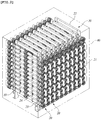
- a plurality of electrolysis cells 10 each cell being the pipe-type electrolysis cell 10 having the structure described above, is connected in series with each other to form a unit module 20 as illustrated in FIG. 1 . Therefore, it is possible to easily provide a module having desired capacity. Furthermore, a plurality of unit modules 20 may be connected in parallel with each other to increase the electrolysis capacity, as illustrated in FIG. 2 .
- the electrolysis module consisting of the pipe-type electrolysis cells 10 has a higher withstand voltage and a simpler structure than conventional cube-shaped electrolysis modules using a flat plate electrode. Furthermore, since this electrolysis module has an improved velocity profile, it is possible to minimize scale accumulation and facilitate hydrogen emissions.
- Patent Document 1 Korean Patent Application Publication No. 10-2006-0098445 (Electronic Water Treatment System And Method For Controlling The Same)
- an object of the present invention is to provide a pipe-type electrolysis cell that can reduce the manufacturing cost of an electrolysis module by reducing the number of parts thereof and simplifying a manufacturing method, and can overcome a space constraint problem by having a size that is about a half of the size of conventional electrolysis cells having the same capacity, while providing advantages of conventional technologies that are proven to be safe.
- the present invention is devised in consideration of the above problems, and is intended to provide an improved pipe-type electrolysis cell having a reduced size while maintaining an electrolysis performance, thereby saving an installation space and the manufacturing cost.
- Another object of the invention is to improve uniformity and efficiency of reaction by enabling uniform current distribution throughout pipe-type electrolysis cells arranged in multiple stages.
- the present invention provides a pipe-type electrolysis cell including: a pair of terminal electrodes including an outer electrode and an inner electrode having respective first ends electrically connected to each other and respective second ends separated from each other; and a pipe-type bipolar electrode installed between the terminal electrodes and electrically insulated from the terminal electrodes.
- the pipe-type electrolysis cell may further include: an insulation unit supporting the separated second ends of the terminal electrodes and connecting the terminal electrodes to each other; and a spiral block combined with the connected first ends of the terminal electrodes and provided with a spiral guide hole through which a fluid passes.
- the terminal electrodes may include a connection plate that supports and connects the first ends of the inner electrode and the outer electrode and which is provided with a fluid passing hole communicating with a channel formed between the inner electrode and the outer electrode, thereby guiding a fluid to the channel.
- the pipe-type electrolysis cell may further include terminal insulating spacers provided to respective ends of the bipolar electrode to electrically insulate and space the bipolar electrode from the connection plate, the inner electrode, and the outer electrode.
- Either one or both of an outside surface of the outer electrode having a pipe shape and an inside surface of the inner electrode having a pipe shape are plated with a metal having a high electrical conductivity, wherein the outside surface and the inside surface are not involved in an electrolytic reaction.
- connection plate provided with the fluid passing hole, and the outer and inner electrodes may be connected through welding.
- the fluid passing holes formed in the connection plate may be through holes formed to be aligned with spiral guide holes formed in the spiral block.
- a positioning guide pin may be formed to protrude from an outside surface of the connection plate, the spiral block may be combined with the outside surface of the connection plate, and the spiral block may be provided with a plurality of spiral guide holes that are arranged in a circumferential direction so as to correspond to the fluid passing holes of the connection plate.
- the spiral block may be provided with a positioning hole into which the positioning guide pin is inserted when the spiral block is combined with the connection plate such that the spiral guide holes are well aligned with the fluid passing holes of the connection plate.
- the insulation unit may include: an outer insulating spacer provided on an outside surface of the bipolar electrode at a middle portion in a longitudinal direction; and an inner insulating spacer provided inside the bipolar electrode at the middle portion in the longitudinal direction.
- the pipe-type electrolysis cell may further include: an insulation unit supporting and connecting the separated second ends of the terminal electrodes to each other; and a spiral block combined with the connected first ends of the terminal electrodes and provided with a spiral guide hole through which a fluid passes.
- the outer insulating spacer may include: a plurality of protrusions formed on an inside surface thereof and arranged at regular intervals in a circumferential direction thereof, at a middle portion in a longitudinal direction thereof, the protrusions being in contact with the outside surface of the middle electrode; and a pair of electrode connection portions that are provided at respective ends thereof and into which the outer electrodes are inserted, the electrode connection portions having an inner diameter larger than that of the middle portion of the outer insulating spacer such that an inside surface of the electrode connection portion and an inside surface of the middle portion of the outer insulating spacer form a step shape.
- the inner insulating spacer may include: a plurality of protrusions arranged at a middle portion of the middle electrode in a longitudinal direction, arranged at regular intervals in a circumferential direction, and formed to protrude from an outside surface of the inner insulating spacer; and a pair of electrode connection portions provided at respective ends thereof and having an outer diameter smaller than that of the middle portion of the inner insulating spacer such that an outside surface of the electrode connection portion and the outside surface of the middle portion of the inner insulating spacer form a step form, in which the electrode connection portions are inserted into the inner electrodes.
- the pipe-type electrolysis cell may further include a connection pipe or an inlet/outlet connection nipple combined with the first ends of the terminal electrodes, and used to connect one of the pipe-type electrolysis cells to another pipe-type electrolysis cell, wherein the connection pipe or the inlet/outlet connection nipple is structured such that a bottom surface thereof is sloped upwards toward an end of the connection pipe or the inlet/outlet connection nipple.
- the pipe-type electrolysis cell since the pipe-type electrolysis cell has a structure in which both the outside surface and the inside surface of the bipolar electrode are involved in electrolysis, electrolysis efficiency doubles compared with conventional electrolysis cells having the same size. Therefore, it is possible to reduce the manufacturing cost and the size of an electrolysis module manufactured by connecting a plurality of pipe-type electrolysis cells.
- one surface of an electrode which is not involved in an electrolytic reaction, is plated with a metal having a high electrical conductivity. This has an effect of uniformizing current distribution over the entire area of the electrode, resulting in improvements in uniformity and efficiency of the electrolytic reaction.
- the pipe-type electrolysis cell according to the present invention can reduce an installation space therefore in half compared with conventional electrolysis cells that require a large installation space while maintaining the same electrolysis performance, thereby reducing the cost.
- an electrolysis unit module includes a pipe-type electrolysis cell 110, a connection pipe 120 connected to an end of the pipe-type electrolysis cell 110, and an inlet/outlet connection nipple 130 combined with a second end of the pipe-type electrolysis cell 110.
- the pipe-type electrolysis cell 110 includes a pair of terminal electrodes, a bipolar electrode, an insulation unit, and a spiral block 118.
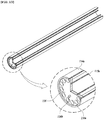
- the pair of terminal electrodes includes inner electrodes 115a and 115b, outer electrodes 114a and 114b, and connection plates 116 by which first ends of the inner electrodes 115a and 115b are electrically connected to first ends of the outer electrodes 114a and 114b.
- the bipolar electrode includes a pipe-type middle electrode 111 installed between the inner electrodes 115a and 115b and the outer electrodes 114a and 114b.
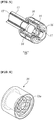
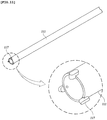
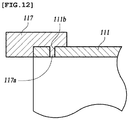
- the middle electrode 111 is a bipolar electrode having opposite polarities at opposite sides thereof. As shown in FIGS. 11 and 12 , each end of the middle electrode 111 is provided with insulating terminal spacers 117. Specifically, each end of the middle electrode 111 is provided with three insulating terminal spacers 117. The three insulating terminal spacers 117 may be arranged at an equal angular interval of 120°C. However, the number and interval of the insulating terminal spacers 117 are not limited thereto. More specifically, the insulating terminal spacers 117 may be provided to protrude outward from an end of the middle electrode 111 in a longitudinal direction and from the outside surface of the middle electrode 111.
- each insulating terminal spacer 117 is provided with a coupling pin 117a to be fitted into a coupling hole 111b provided at an end portion of the middle electrode 111. Due to the insulating terminal spacers 117, the middle electrode 111 can be spaced from the outer electrodes 114a and 114b and from the connection plates 116, by a predetermined distance. Therefore, the middle electrode 111 can be electrically insulated from the outer electrodes and the connection plates.
- the shape of the insulating terminal spacers 117 is not limited to the structure described above.
- the insulating terminal spacers 117 can have any shape if they can space the middle electrode 111 from the outer electrodes 114a and 114b and the connection plates 116, thereby electrically insulating the middle electrode 111 from the outer electrodes 114a and 114b and the connection plates 116.
- the structure of the insulating terminal spacers 117 there is a further requirement that it should not block an electrolyte solution that is introduced into a channel formed between the electrodes through fluid passing holes formed in the connection plates 116.
- the insulation unit includes an outer insulating spacer 112 installed outside the middle electrode 111, at a middle portion of the middle electrode 111 in a longitudinal direction thereof, and an inner insulating spacer 113 installed inside the middle portion at the middle portion. A further detailed description of the insulation will be given later.
- the outer electrodes 114a and 114b have a pipe shape.
- One outer electrode (114a) of the outer electrodes serves as a cathode and the other outer electrode (114b) serves as an anode.
- the outer insulating spacer 112 is provided between the outer electrode 114a and the outer electrode 114b to electrically insulate the outer electrodes 114a and 114b from each other and spaces the outer electrodes 114a and 114b from the middle electrode 111.
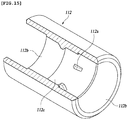
- a middle portion of the inside surface of the outer insulating spacer 112 is provided with protrusions 112a which enable the inside surface of the outer insulating spacer 112 to be spaced from the outside surface of the middle electrode 111 by a predetermined distance.
- the protrusions 112a may be arranged at regular intervals in the circumferential direction of the outer insulating spacer 112 and are in surface contact with the outside surface of the middle electrode 111. Respective ends of the outer insulating spacer 112 are provided with outer electrode connection portions 112b into which end portions of the outer electrodes 114a and 114b are inserted, in which the outer electrode connection portions 112b have an inner diameter larger than an inner diameter of the middle portion of the outer insulating spacer 112. That is, the inside surface of the electrode connection portion 112b and the inside surface of the middle portion of the insulating outer spacer 112 form a step shape. Therefore, the outer electrodes 114a and 114b are supported on and insulated from each other by the outer insulating spacer 112.
- adjacent ends (second ends) of the outer electrodes 114a and 114b are assembled with the outer insulating spacer 112, and the other ends (first ends) are respectively assembled with the connection pipes 120 or the inlet/outlet connection nipples 130.
- first ends of the outer electrodes 114a and 114b are connected to first ends of the inner electrodes 115a and 115b by the connection plates 116.
- the connection plates 116 are made of a metal.
- the first ends of the inner electrodes 115a and 115b and the first ends of the outer electrodes 114a and 114b are connected through a connection method such as welding that does not increase electrical resistance. Therefore, as to the inner electrodes 115a and 115b and the outer electrodes 114a and 114b connected by the connection plate 116, the outer electrode 114a and the inner electrode 115a, connected to each other, have the same polarity (i.e. both serving as a cathode) and the outer electrode 114b and the inner electrode 115b have the same polarity (i.e. both serving as an anode).
- the inner insulating spacer 113 is provided between the inner electrodes 115a and 115b, so that the inner electrodes 115a and 115b are electrically insulated from each other by the inner insulating spacer 113.
- the inner insulating spacer 113 also spaces and electrically insulates the inner electrodes 115a and 115b from the middle electrode 111.
- the inner insulating spacer 113 is installed at a middle portion inside the middle electrode 111 and is provided with a plurality of protrusions 113 on the outside surface thereof.
- the protrusions 113a protrude from the outside surface 113 of the inner insulating spacer 113 and are arranged at regular intervals in the circumferential direction.
- the protrusions 113 are in contact with the inside surface of the middle electrode 111.
- Respective ends of the inner insulating spacer 113 are provided with inner electrode connection portions 113b that have a smaller outer diameter than that of a middle portion of the inner insulating spacer 113 such that the outside surface of the inner electrode connection portion 113b and the outside surface of the middle portion of the inner insulating spacer 113 form a step shape. Therefore, the inner electrode connection portions 113b of the inner insulating spacer 113 can be respectively inserted into the adjacent ends of the inner electrodes 115a and 115b.
- the inner insulating spacer 113 supports the inner electrodes 115a and 115b while electrically insulating the inner electrodes 115a and 115b from each other, and also spaces and electrically insulates the inner electrodes 115a and 115b from the middle electrode 111.
- the structures of the outer insulating spacer 112 and the inner insulating spacer 113 are not limited to those described above.
- the outer insulating spacer 112 and the inner insulating spacer 113 may have any structure that can meet requirements that the outer electrodes 114a and 114b can be supported in a state of being electrically insulated from each other, the inner electrodes 115a and 115b can be supported in a state of being electrically insulated from each other, and the outer electrodes and the inner electrodes can be spaced and electrically insulated from the middle electrode 111 by a predetermined distance.
- the protrusions 112a of the outer insulating spacer 112 and the protrusions 113a of the inner insulating spacer 113 which are provided to space and electrically insulate the outer electrodes and the inner electrodes from the middle electrode 111, are preferably configured not to impede the flow of an electrolyte solution which flows along a channel provided between the outer electrode and the middle electrode and a channel provided between the inner electrode and the middle electrode.
- the bipolar electrode i.e. the pipe-type middle electrode 11 which is disposed between and spaced from the outer electrodes 114a and 114b and the inner electrodes 115a and 115b, with respect to the outer electrodes 114a and 114b and the inner electrodes 115a and 115b. Accordingly, an electrolytic reaction occurs in a state in which a fluid flows along the outside surface and the inside surface of the middle electrode 111. Since the electrolytic reaction occurs while the fluid is flowing along the outside surface and the inside surface of the middle electrode 111, the pipe-type electrolysis cell of the present invention exhibits electrolysis performance that is twice or more than that of conventional pipe-type electrolysis cells.
- the pipe-type electrolysis cell of the invention can obtain two times higher electrolysis efficiency than the conventional pipe-type electrolysis cell. Since those skilled in the art can easily understand the detailed structure and operation of the pipe-type electrolysis cell, there will be no further description thereof.
- connection plate 116 is provided with a plurality of fluid passing holes 116a that are equal in size and are arranged at regular intervals in a circumferential direction of the connection plate 116 such that the fluid can be introduced into a gap between the inner electrodes 115a and 115b and the outer electrodes 114a and 114b.
- one or more positioning guide pins 116b are formed to protrude from the outside surface of the connection plate 116. The positioning guide pins 116b are configured to enable a combined structure of the electrodes to be precisely and accurately aligned with the spiral block 118 when the combined structure of the electrodes is combined with the spiral block.
- connection plate 116 may be made of a plurality of plates arranged in multiple stages. In this case, the plates are stacked such that the fluid passing holes provided to each plate are misaligned. That is, a fluid path extending through the fluid passing holes of the plates may form a spiral shape. Alternatively, each fluid passing hole 116a may extend in a spiral form in the connection plate 116, thereby guiding the fluid along a spiral flow path.
- the spiral block 118 is connected to the outside surface of the connection plate 116.
- the spiral block 118 is provided with a plurality of spiral guide holes 118a that are arranged at intervals in a circumferential direction of the spiral block 118. Since the fluid spirally flows while passing through the spiral guide holes 118a, velocity distribution of the fluid can be uniformized.
- the spiral block 118 is provided with a positioning hole 118b that is used to position the spiral block 118 such that the guide holes 118a of the spiral block 118 can be precisely and accurately aligned with the fluid passing holes 116a of the connection plate 116 when the spiral block 118 is connected to the connection plate 116.
- connection plate 116 When the positioning guide pin 116b of the connection plate 116 is inserted into the positioning hole 118b, the fluid passing holes 116a are automatically aligned with the guides hole 118a. Therefore, the fluid can flow without flow resistance.
- the spiral block 118 is assembled with the connection pipe 120 or the inlet/outlet connection nipple 130.
- the middle electrode 111 a half of each of the outside surface and the inside surface in terms of the longitudinal direction is coated with an anode material. That is, both of the outside surface and the inside surface of the middle electrode 111 can be used for an electrolytic reaction unlike conventional arts. Therefore, electrolysis capacity is doubled.
- the outer electrode 114a serving as the cathode and the inner electrode 115a serving as the cathode are made of stainless steel or nickel alloys.
- the outer electrode 114a and the inner electrode 115a serving as the cathode are connected to the connection plate 116 through a connection method such as welding that does not increase electric resistance.
- one or more surfaces of the electrodes, which do not participate in an electrolytic reaction while the electrolyte solution flows for example, the inside surface of the inner electrode 115a or the outside surface of the outer electrode 114a, are preferably coated with a metal having a high electric conductivity, which uniformly distributes current intensity over the entire length of the electrode during the electrolytic reaction. For this reason, uniformity and efficiency of the electrolytic reaction can be improved compared with conventional multi-stage electrolytic cells, and heat generated during the electrolytic reaction can be controlled.
- the outer electrode 114b and the inner electrode 115b serving as the anode are made of titanium.
- the inside surface of the outer electrode 114a and the outside surface of the inner electrode 115b are coated with a platinum oxide to form insoluble electrodes.
- these electrodes are plated and welded in the same manner as the electrodes serving as the cathode described above, thereby maintaining the electrical conductivity.
- a plurality of pipe-type electrolysis cells 110 having the structure described above are arranged in series, and adjacent ends thereof are connected to each other by the connection pipe 120 so that a fluid can flow from one cell to another.
- the outermost electrolysis cells 110 are connected to the inlet/outlet connection nipples 130. That is, outer ends of both of the outermost pipe-type electrolysis cell 110 are connected to the connection pipes 120 or the inlet/outlet connection nipples 130. Alternatively, the outer end of one of the outermost pipe-type electrolysis cells 110 may be connected to the connection pipe 120 and the outer end of the other of the outermost pipe-type electrolysis cells 110 may be connected to the inlet/outlet connection nipple 130.
- an internal fluid channel i.e. fluid passage channel
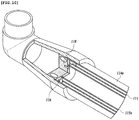
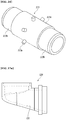
- the connection pipe 120 and/or the inlet/outlet connection nipple 130 have bottom surfaces 121 and 131 that are sloped upward toward the outer ends thereof as shown in FIGS. 17A and 17B .
- an electrolysis unit module 100 is made up of the plurality of pipe-type electrolysis cells 110 connected in series with each other.
- the pipe-type electrolysis cell 110 is structured such that the pipe-type bipolar electrode (i.e. middle electrode) is arranged between the terminal electrodes consisting of the outer electrode and the inner electrode, thereby enabling the electrolytic reaction to occur on both the inside surface and the outside surface of the bipolar electrode.
- the pipe-type electrolysis cell can obtain an electrolysis performance equal to that of a conventional pipe-type electrolysis cell even while being only half the size.
- the amount of electrode material is reduced to about 65%, and the amount of epoxy molding material and the amount of frames are also reduced by about 50%. That is, the pipe-type electrolysis cell of the invention is considerably more cost effective because it is possible to reduce the size and the material cost while maintaining electrolysis capacity.
- an electrolysis module made up of the pipe-type electrolysis cells having the structure described above is applied to a ship, it can be installed in old ships as well as new ships because it requires a reduced installation space.
- the pipe-type electrolysis cell of the present invention can be applied to an electrolysis apparatus that can electrolyze general water such as flesh water as well as an electrolysis apparatus that electrolyzes sea water, salt water, and so on.
Landscapes
- Chemical & Material Sciences (AREA)
- Engineering & Computer Science (AREA)
- Chemical Kinetics & Catalysis (AREA)
- Electrochemistry (AREA)
- Materials Engineering (AREA)
- Metallurgy (AREA)
- Organic Chemistry (AREA)
- Inorganic Chemistry (AREA)
- Electrolytic Production Of Non-Metals, Compounds, Apparatuses Therefor (AREA)
- Electrodes For Compound Or Non-Metal Manufacture (AREA)
Claims (15)
- Elektrolysezelle vom Typ Rohr, welche aufweist:ein Paar an Anschlusselektroden, die eine äußere Elektrode und eine innere Elektrode enthalten, die an ihren jeweiligen ersten Enden elektrisch miteinander verbunden sind und die an ihren jeweiligen zweiten Enden voneinander getrennt sind, undeine bipolare Elektrode vom Typ Rohr, die zwischen den Anschlusselektroden angebracht ist und die von den Anschlusselektroden elektrisch isoliert ist.
- Elektrolysezelle vom Typ Rohr nach Anspruch 1, welche ferner aufweist:eine Isolationseinheit, die die getrennten zweiten Enden der Anschlusselektroden trägt, undeinen Spiralblock, der mit den verbundenen ersten Enden der Anschlusselektroden kombiniert ist und der mit einem spiralförmigen Führungsloch versehen ist, durch das ein Fluid fließt.
- Elektrolysezelle vom Typ Rohr nach Anspruch 1, wobei die Anschlusselektroden eine Verbindungsplatte aufweisen, die die ersten Enden der inneren Elektrode und der äußeren Elektrode trägt und verbindet und die mit einem Fluiddurchgangsloch versehen ist, das mit einem Kanal in Verbindung steht, der zwischen der inneren Elektrode und der äußeren Elektrode ausgebildet ist, wodurch ein Fluid zu dem Kanal geleitet wird.
- Elektrolysezelle vom Typ Rohr nach Anspruch 3, welche ferner isolierende Anschlussabstandshalter aufweist, die an den jeweiligen Enden der bipolaren Elektrode vorgesehen sind, um die bipolare Elektrode von der Verbindungsplatte, der inneren Elektrode und der äußeren Elektrode elektrisch zu isolieren und zu beabstanden.
- Elektrolysezelle vom Typ Rohr nach Anspruch 1, wobei entweder eine oder beide von einer äußeren Oberfläche der äußeren Elektrode, die eine Rohrform aufweist, und einer inneren Oberfläche der inneren Elektrode, die eine Rohrform aufweist, mit einem Metall, das eine hohe elektrischen Leitfähigkeit aufweist, plattiert worden sind, wobei die äußere Oberfläche und die innere Oberfläche nicht an einer elektrolytischen Reaktion beteiligt sind.
- Elektrolysezelle vom Typ Rohr nach Anspruch 3, wobei die mit dem Fluiddurchgangsloch versehene Verbindungsplatte und die äußere Elektrode und die innere Elektrode durch ein Schweißen verbunden worden sind.
- Elektrolysezelle vom Typ Rohr nach Anspruch 3, wobei die Fluiddurchgangslöcher, die in der Verbindungsplatte ausgebildet worden sind, mit Spiralführungslöchern ausgerichtet sind, die in dem Spiralblock ausgebildet worden sind.
- Elektrolysezelle vom Typ Rohr nach Anspruch 3, wobei ein Positionierungsführungsstift auf eine solche Weise ausgebildet ist, dass er von einer äußeren Oberfläche der Verbindungsplatte vorsteht, wobei der Spiralblock mit der äußeren Oberfläche der Verbindungsplatte kombiniert ist und wobei der Spiralblock mit eine Vielzahl an spiralförmigen Führungslöchern versehen ist, die in einer Umfangsrichtung angeordnet sind, um den Fluiddurchgangslöchern der Verbindungsplatte zu entsprechen.
- Elektrolysezelle vom Typ Rohr nach Anspruch 8, wobei der Spiralblock mit einem Positionierungsloch versehen ist, in das der Positionierungsführungsstift eingeführt ist, wenn der Spiralblock mit der Verbindungsplatte auf eine solche Weise kombiniert worden ist, dass die Spiralführungslöcher gut mit den Fluiddurchgangslöchern der Anschlussplatte ausgerichtet sind.
- Elektrolysezelle vom Typ Rohr nach Anspruch 2, wobei die Isolationseinheit aufweist:einen äußeren isolierenden Abstandshalter, der an einer äußeren Oberfläche der bipolaren Elektrode in einem mittleren Bereich in einer Längsrichtung vorgesehen ist, undeinen inneren isolierenden Abstandshalter, der im Inneren der bipolaren Elektrode in einem mittleren Bereich in der Längsrichtung vorgesehen
- Elektrolysezelle vom Typ Rohr nach einem der Ansprüche 3 bis 9, welche ferner aufweist:eine Isolationseinheit, die die getrennten zweiten Enden der Anschlusselektroden trägt und miteinander verbindet, undeinen Spiralblock, der mit den verbundenen ersten Enden der Anschlusselektroden kombiniert ist und der mit einem spiralförmigen Führungsloch versehen ist, durch das ein Fluid fließt.
- Elektrolysezelle vom Typ Rohr nach Anspruch 11, wobei die Isolationseinheit aufweist:einen äußeren isolierenden Abstandshalter, der an einer äußeren Oberfläche der bipolaren Elektrode in einem mittleren Bereich in einer Längsrichtung vorgesehen ist, undeinen inneren isolierenden Abstandshalter, der im Inneren der bipolaren Elektrode in einem mittleren Bereich in der Längsrichtung vorgesehen ist.
- Elektrolysezelle vom Typ Rohr nach Anspruch 10, wobei der äußere isolierende Abstandshalter aufweist:eine Vielzahl an Vorsprüngen, die an einer inneren Oberfläche davon ausgebildet sind und die in regelmäßigen Abständen in einer Umfangsrichtung davon in einem mittleren Bereich in einer Längsrichtung davon angeordnet sind, wobei die Vorsprünge mit der äußeren Oberfläche der mittleren Elektrode in Kontakt stehen, undein Paar an Elektrodenverbindungsabschnitten, die an ihren jeweiligen Enden vorgesehen sind und in die die äußeren Elektroden eingesetzt sind, wobei die Elektrodenverbindungsabschnitte einen Innendurchmesser aufweisen, der größer als der des mittleren Bereiches des äußeren isolierenden Abstandshalters ist, so dass eine innere Oberfläche des Elektrodenverbindungsabschnitte und eine innere Oberfläche des mittleren Bereiches des äußeren isolierenden Abstandshalters eine Stufenform bilden.
- Elektrolysezelle vom Typ Rohr nach Anspruch 10, wobei der innere isolierende Abstandshalter aufweist:eine Vielzahl an Vorsprüngen, die an einem mittleren Bereich der mittleren Elektrode in einer Längsrichtung angeordnet sind und die in regelmäßigen Abständen in einer Umfangsrichtung angeordnet sind und die auf eine solche Weise ausgebildet sind, dass sie von einer äußeren Oberfläche des inneren isolierenden Abstandshalters hervorstehen, undein Paar an Elektrodenverbindungsabschnitten, die an ihren jeweiligen Enden vorgesehen sind und einen Außendurchmesser aufweisen, der kleiner als der des mittleren Bereiches des inneren isolierenden Abstandshalters ist, so dass eine äußere Oberfläche des Elektrodenverbindungsabschnitts und die äußere Oberfläche des mittleren Bereiches des inneren isolierenden Abstandshalters eine Stufenform bilden, in der die Elektrodenanschlussabschnitte in die inneren Elektroden eingesetzt sind.
- Elektrolysezelle vom Typ Rohr nach einem der Ansprüche 1 bis 10, welche ferner aufweist: ein Verbindungsrohr oder einen Einlass / Auslass-Verbindungsstutzen, der mit den ersten Enden der Anschlusselektroden kombiniert ist, und die verwendet werden, um die Elektrolysezelle vom Typ Rohr mit einer anderen Elektrolysezelle vom Typ Rohr zu verbinden, wobei das Verbindungsrohr oder der Einlass- / Auslass-Verbindungsstutzen auf eine solche Weise aufgebaut ist, dass eine untere Oberfläche davon in Richtung auf ein Ende des Verbindungsrohrs oder des Einlass- / Auslass-Verbindungsstutzens hin nach oben geneigt ist.
Applications Claiming Priority (2)
| Application Number | Priority Date | Filing Date | Title |
|---|---|---|---|
| KR1020140187430A KR101712586B1 (ko) | 2014-12-23 | 2014-12-23 | 파이프형 전해셀 |
| PCT/KR2015/011466 WO2016104935A1 (ko) | 2014-12-23 | 2015-10-28 | 파이프형 전해셀 |
Publications (3)
| Publication Number | Publication Date |
|---|---|
| EP3239360A1 EP3239360A1 (de) | 2017-11-01 |
| EP3239360A4 EP3239360A4 (de) | 2018-11-21 |
| EP3239360B1 true EP3239360B1 (de) | 2019-11-27 |
Family
ID=56150917
Family Applications (1)
| Application Number | Title | Priority Date | Filing Date |
|---|---|---|---|
| EP15873463.2A Active EP3239360B1 (de) | 2014-12-23 | 2015-10-28 | Rohrartige elektrolysezelle |
Country Status (6)
| Country | Link |
|---|---|
| US (1) | US10550485B2 (de) |
| EP (1) | EP3239360B1 (de) |
| JP (1) | JP6435413B2 (de) |
| KR (1) | KR101712586B1 (de) |
| CN (1) | CN107109671B (de) |
| WO (1) | WO2016104935A1 (de) |
Families Citing this family (5)
| Publication number | Priority date | Publication date | Assignee | Title |
|---|---|---|---|---|
| CN110267919B (zh) * | 2017-02-07 | 2022-04-05 | 明亮火花有限责任公司 | 包含通道、阴极、阳极和电源的装置和用于制备二氧化氯的方法 |
| CN112030183B (zh) * | 2020-08-26 | 2021-11-02 | 万华化学集团股份有限公司 | 一种套管式微通道电解反应装置及其应用 |
| CN121110060A (zh) * | 2025-11-14 | 2025-12-12 | 华东理工大学 | 一体化膜电极管、管式电解槽、电解系统和电解方法 |
| CN121183357B (zh) * | 2025-11-24 | 2026-03-20 | 华东理工大学 | 一种用于管式电解槽的分布式多点导电连接结构及电解水制氢系统 |
| CN121228256B (zh) * | 2025-12-02 | 2026-02-13 | 华东理工大学 | 一种带有坏管检测系统的管式电解槽及其坏管检测方法 |
Family Cites Families (21)
| Publication number | Priority date | Publication date | Assignee | Title |
|---|---|---|---|---|
| NL174072C (nl) * | 1971-09-08 | 1984-04-16 | Engelhard Corp | Elektrolysecel. |
| JPS5268872A (en) * | 1975-12-05 | 1977-06-08 | Hitachi Cable Ltd | Electrolytic cell for generating apparatus of electrolyzed sodium hypo chlorite |
| JPS52139677A (en) * | 1976-05-18 | 1977-11-21 | Kobe Steel Ltd | Electrolytic cell of plural tubes structure |
| US4392937A (en) * | 1982-04-26 | 1983-07-12 | Uhde Gmbh | Electrolysis cell |
| AU1574588A (en) * | 1987-06-09 | 1989-01-04 | Cleanup And Recovery Corporation | System for electrolytic treatment of liquid |
| CN2064366U (zh) * | 1989-12-05 | 1990-10-24 | 航空航天部航空工业规划设计研究院 | 双极阴极换向除垢次氯酸钠发生器 |
| US5385650A (en) * | 1991-11-12 | 1995-01-31 | Great Lakes Chemical Corporation | Recovery of bromine and preparation of hypobromous acid from bromide solution |
| RU2104961C1 (ru) * | 1997-03-11 | 1998-02-20 | Харрисон Инвестментс Лтд. | Электрохимическая установка |
| US20030205482A1 (en) * | 2002-05-02 | 2003-11-06 | Allen Larry D. | Method and apparatus for generating hydrogen and oxygen |
| WO2004097072A1 (en) * | 2003-04-30 | 2004-11-11 | Hydrox Holdings Limited | Method and apparatus for producing combustible fluid |
| KR100718723B1 (ko) | 2005-03-03 | 2007-05-15 | 주식회사 성창엔지니어링 | 전자장 수처리 장치 및 그 제어방법 |
| JP4915761B2 (ja) * | 2005-03-25 | 2012-04-11 | 株式会社竹中工務店 | 流水式電気分解装置 |
| US7374645B2 (en) * | 2006-05-25 | 2008-05-20 | Clenox, L.L.C. | Electrolysis cell assembly |
| CN102762773B (zh) * | 2010-03-15 | 2016-01-20 | 唯一科技股份公司 | 次氯酸钠制造用电解槽 |
| EP2631334A1 (de) * | 2012-02-24 | 2013-08-28 | Caliopa AG | Elektrolysezelle, insbesondere zur Verwendung in einer Anlage zur Erzeugung einer elektrochemisch aktivierten Kochsalzlösung, sowie Anlage mit einer Anzahl derartiger Elektrolysezellen |
| KR101389937B1 (ko) * | 2012-03-29 | 2014-04-30 | (주) 테크윈 | 파이프형 전해셀 |
| KR101366343B1 (ko) * | 2012-07-31 | 2014-02-25 | (주) 테크윈 | 파이프형 전해조 |
| KR101329046B1 (ko) * | 2012-12-13 | 2013-11-20 | 유니테크 주식회사 | 차아염소산 나트륨 제조용 튜브형 전해조 |
| WO2014146043A1 (en) * | 2013-03-15 | 2014-09-18 | Kerstiens Kenny | Pressure induced gas generator system for electroloysis |
| KR101466371B1 (ko) * | 2013-04-30 | 2014-11-27 | 주식회사 욱영전해씨스템 | 고농도 차아염소산나트륨 생산용 나트륨 해수전해장치 |
| KR101412721B1 (ko) * | 2013-05-23 | 2014-06-30 | (주) 테크윈 | 전해모듈 |
-
2014
- 2014-12-23 KR KR1020140187430A patent/KR101712586B1/ko active Active
-
2015
- 2015-10-28 CN CN201580069447.7A patent/CN107109671B/zh active Active
- 2015-10-28 WO PCT/KR2015/011466 patent/WO2016104935A1/ko not_active Ceased
- 2015-10-28 JP JP2017533467A patent/JP6435413B2/ja active Active
- 2015-10-28 EP EP15873463.2A patent/EP3239360B1/de active Active
-
2017
- 2017-06-15 US US15/623,995 patent/US10550485B2/en active Active
Non-Patent Citations (1)
| Title |
|---|
| None * |
Also Published As
| Publication number | Publication date |
|---|---|
| EP3239360A4 (de) | 2018-11-21 |
| EP3239360A1 (de) | 2017-11-01 |
| CN107109671A (zh) | 2017-08-29 |
| CN107109671B (zh) | 2019-05-21 |
| JP6435413B2 (ja) | 2018-12-05 |
| JP2017538868A (ja) | 2017-12-28 |
| KR101712586B1 (ko) | 2017-03-06 |
| KR20160076860A (ko) | 2016-07-01 |
| WO2016104935A1 (ko) | 2016-06-30 |
| US20170283962A1 (en) | 2017-10-05 |
| US10550485B2 (en) | 2020-02-04 |
Similar Documents
| Publication | Publication Date | Title |
|---|---|---|
| US10550485B2 (en) | Pipe-type electrolysis cell | |
| KR101716349B1 (ko) | 연속식 전해 산화수/환원수 생성 장치 | |
| CN108193223B (zh) | 一种次氯酸盐生产系统 | |
| CN111032919B (zh) | 电解池及电解池用电极板 | |
| US8753490B2 (en) | Electrolyzer for producing sodium hypochlorite | |
| US10494275B2 (en) | Electrolysis module | |
| JP7082002B2 (ja) | 電解槽及びその使用方法 | |
| US20100213049A1 (en) | Metal plate stack for salt water electrolysis | |
| CN108265312B (zh) | 一种次氯酸盐发生器的电解槽 | |
| KR20190026597A (ko) | 고농도의 미산성 전해수 생성 방법 및 장치 | |
| CN208136345U (zh) | 一种次氯酸盐生产系统 | |
| CN108193226B (zh) | 一种复合电极组件 | |
| KR101481327B1 (ko) | 복극식 전기분해 반응기 | |
| CN208136348U (zh) | 一种复合电极组件 | |
| CN208136347U (zh) | 一种次氯酸盐发生器的电解槽 | |
| HK1241422A1 (en) | Pipe-type electrolysis cell | |
| HK1241422B (zh) | 管式电解槽 | |
| KR200475903Y1 (ko) | 튜블라 타입 전해 장치 | |
| HK1241423B (zh) | 电解模块 | |
| JP2006198562A (ja) | 電極装置および電解槽 | |
| HK1241423A1 (en) | Electrolysis module | |
| HK40027740A (en) | Electrolysis cell and electrode plate for electrolysis cell | |
| JP2019042726A (ja) | 高濃度の微酸性電解水生成方法及び装置 | |
| JP2007054813A (ja) | 銅イオン供給装置 | |
| WO2014204332A1 (ru) | Электрохимическая модульная ячейка для обработки растворов электролитов |
Legal Events
| Date | Code | Title | Description |
|---|---|---|---|
| STAA | Information on the status of an ep patent application or granted ep patent |
Free format text: STATUS: THE INTERNATIONAL PUBLICATION HAS BEEN MADE |
|
| PUAI | Public reference made under article 153(3) epc to a published international application that has entered the european phase |
Free format text: ORIGINAL CODE: 0009012 |
|
| STAA | Information on the status of an ep patent application or granted ep patent |
Free format text: STATUS: REQUEST FOR EXAMINATION WAS MADE |
|
| 17P | Request for examination filed |
Effective date: 20170627 |
|
| AK | Designated contracting states |
Kind code of ref document: A1 Designated state(s): AL AT BE BG CH CY CZ DE DK EE ES FI FR GB GR HR HU IE IS IT LI LT LU LV MC MK MT NL NO PL PT RO RS SE SI SK SM TR |
|
| AX | Request for extension of the european patent |
Extension state: BA ME |
|
| DAV | Request for validation of the european patent (deleted) | ||
| DAX | Request for extension of the european patent (deleted) | ||
| A4 | Supplementary search report drawn up and despatched |
Effective date: 20181019 |
|
| RIC1 | Information provided on ipc code assigned before grant |
Ipc: C25B 1/34 20060101ALI20181015BHEP Ipc: C25B 11/02 20060101ALI20181015BHEP Ipc: C25B 1/26 20060101ALI20181015BHEP Ipc: C25B 9/02 20060101ALI20181015BHEP Ipc: C25B 9/00 20060101AFI20181015BHEP |
|
| REG | Reference to a national code |
Ref country code: DE Ref legal event code: R079 Ref document number: 602015042724 Country of ref document: DE Free format text: PREVIOUS MAIN CLASS: C25B0009000000 Ipc: C25B0009060000 |
|
| GRAP | Despatch of communication of intention to grant a patent |
Free format text: ORIGINAL CODE: EPIDOSNIGR1 |
|
| STAA | Information on the status of an ep patent application or granted ep patent |
Free format text: STATUS: GRANT OF PATENT IS INTENDED |
|
| RIC1 | Information provided on ipc code assigned before grant |
Ipc: C25B 11/02 20060101ALI20190605BHEP Ipc: C25B 9/06 20060101AFI20190605BHEP Ipc: C25B 1/26 20060101ALI20190605BHEP Ipc: C25B 9/02 20060101ALI20190605BHEP Ipc: C25B 9/18 20060101ALI20190605BHEP |
|
| INTG | Intention to grant announced |
Effective date: 20190709 |
|
| GRAS | Grant fee paid |
Free format text: ORIGINAL CODE: EPIDOSNIGR3 |
|
| GRAA | (expected) grant |
Free format text: ORIGINAL CODE: 0009210 |
|
| STAA | Information on the status of an ep patent application or granted ep patent |
Free format text: STATUS: THE PATENT HAS BEEN GRANTED |
|
| AK | Designated contracting states |
Kind code of ref document: B1 Designated state(s): AL AT BE BG CH CY CZ DE DK EE ES FI FR GB GR HR HU IE IS IT LI LT LU LV MC MK MT NL NO PL PT RO RS SE SI SK SM TR |
|
| REG | Reference to a national code |
Ref country code: GB Ref legal event code: FG4D |
|
| REG | Reference to a national code |
Ref country code: CH Ref legal event code: EP |
|
| REG | Reference to a national code |
Ref country code: AT Ref legal event code: REF Ref document number: 1206743 Country of ref document: AT Kind code of ref document: T Effective date: 20191215 |
|
| REG | Reference to a national code |
Ref country code: DE Ref legal event code: R096 Ref document number: 602015042724 Country of ref document: DE |
|
| REG | Reference to a national code |
Ref country code: IE Ref legal event code: FG4D |
|
| REG | Reference to a national code |
Ref country code: NO Ref legal event code: T2 Effective date: 20191127 |
|
| REG | Reference to a national code |
Ref country code: LT Ref legal event code: MG4D |
|
| REG | Reference to a national code |
Ref country code: GR Ref legal event code: EP Ref document number: 20200400085 Country of ref document: GR Effective date: 20200318 |
|
| PG25 | Lapsed in a contracting state [announced via postgrant information from national office to epo] |
Ref country code: LT Free format text: LAPSE BECAUSE OF FAILURE TO SUBMIT A TRANSLATION OF THE DESCRIPTION OR TO PAY THE FEE WITHIN THE PRESCRIBED TIME-LIMIT Effective date: 20191127 Ref country code: SE Free format text: LAPSE BECAUSE OF FAILURE TO SUBMIT A TRANSLATION OF THE DESCRIPTION OR TO PAY THE FEE WITHIN THE PRESCRIBED TIME-LIMIT Effective date: 20191127 Ref country code: LV Free format text: LAPSE BECAUSE OF FAILURE TO SUBMIT A TRANSLATION OF THE DESCRIPTION OR TO PAY THE FEE WITHIN THE PRESCRIBED TIME-LIMIT Effective date: 20191127 Ref country code: FI Free format text: LAPSE BECAUSE OF FAILURE TO SUBMIT A TRANSLATION OF THE DESCRIPTION OR TO PAY THE FEE WITHIN THE PRESCRIBED TIME-LIMIT Effective date: 20191127 Ref country code: BG Free format text: LAPSE BECAUSE OF FAILURE TO SUBMIT A TRANSLATION OF THE DESCRIPTION OR TO PAY THE FEE WITHIN THE PRESCRIBED TIME-LIMIT Effective date: 20200227 |
|
| REG | Reference to a national code |
Ref country code: NL Ref legal event code: FP |
|
| PG25 | Lapsed in a contracting state [announced via postgrant information from national office to epo] |
Ref country code: RS Free format text: LAPSE BECAUSE OF FAILURE TO SUBMIT A TRANSLATION OF THE DESCRIPTION OR TO PAY THE FEE WITHIN THE PRESCRIBED TIME-LIMIT Effective date: 20191127 Ref country code: HR Free format text: LAPSE BECAUSE OF FAILURE TO SUBMIT A TRANSLATION OF THE DESCRIPTION OR TO PAY THE FEE WITHIN THE PRESCRIBED TIME-LIMIT Effective date: 20191127 Ref country code: IS Free format text: LAPSE BECAUSE OF FAILURE TO SUBMIT A TRANSLATION OF THE DESCRIPTION OR TO PAY THE FEE WITHIN THE PRESCRIBED TIME-LIMIT Effective date: 20200327 |
|
| PG25 | Lapsed in a contracting state [announced via postgrant information from national office to epo] |
Ref country code: AL Free format text: LAPSE BECAUSE OF FAILURE TO SUBMIT A TRANSLATION OF THE DESCRIPTION OR TO PAY THE FEE WITHIN THE PRESCRIBED TIME-LIMIT Effective date: 20191127 |
|
| PG25 | Lapsed in a contracting state [announced via postgrant information from national office to epo] |
Ref country code: DK Free format text: LAPSE BECAUSE OF FAILURE TO SUBMIT A TRANSLATION OF THE DESCRIPTION OR TO PAY THE FEE WITHIN THE PRESCRIBED TIME-LIMIT Effective date: 20191127 Ref country code: EE Free format text: LAPSE BECAUSE OF FAILURE TO SUBMIT A TRANSLATION OF THE DESCRIPTION OR TO PAY THE FEE WITHIN THE PRESCRIBED TIME-LIMIT Effective date: 20191127 Ref country code: PT Free format text: LAPSE BECAUSE OF FAILURE TO SUBMIT A TRANSLATION OF THE DESCRIPTION OR TO PAY THE FEE WITHIN THE PRESCRIBED TIME-LIMIT Effective date: 20200419 Ref country code: RO Free format text: LAPSE BECAUSE OF FAILURE TO SUBMIT A TRANSLATION OF THE DESCRIPTION OR TO PAY THE FEE WITHIN THE PRESCRIBED TIME-LIMIT Effective date: 20191127 Ref country code: CZ Free format text: LAPSE BECAUSE OF FAILURE TO SUBMIT A TRANSLATION OF THE DESCRIPTION OR TO PAY THE FEE WITHIN THE PRESCRIBED TIME-LIMIT Effective date: 20191127 |
|
| REG | Reference to a national code |
Ref country code: DE Ref legal event code: R097 Ref document number: 602015042724 Country of ref document: DE |
|
| PG25 | Lapsed in a contracting state [announced via postgrant information from national office to epo] |
Ref country code: SK Free format text: LAPSE BECAUSE OF FAILURE TO SUBMIT A TRANSLATION OF THE DESCRIPTION OR TO PAY THE FEE WITHIN THE PRESCRIBED TIME-LIMIT Effective date: 20191127 Ref country code: SM Free format text: LAPSE BECAUSE OF FAILURE TO SUBMIT A TRANSLATION OF THE DESCRIPTION OR TO PAY THE FEE WITHIN THE PRESCRIBED TIME-LIMIT Effective date: 20191127 |
|
| REG | Reference to a national code |
Ref country code: AT Ref legal event code: MK05 Ref document number: 1206743 Country of ref document: AT Kind code of ref document: T Effective date: 20191127 |
|
| PLBE | No opposition filed within time limit |
Free format text: ORIGINAL CODE: 0009261 |
|
| STAA | Information on the status of an ep patent application or granted ep patent |
Free format text: STATUS: NO OPPOSITION FILED WITHIN TIME LIMIT |
|
| PG25 | Lapsed in a contracting state [announced via postgrant information from national office to epo] |
Ref country code: ES Free format text: LAPSE BECAUSE OF FAILURE TO SUBMIT A TRANSLATION OF THE DESCRIPTION OR TO PAY THE FEE WITHIN THE PRESCRIBED TIME-LIMIT Effective date: 20191127 |
|
| 26N | No opposition filed |
Effective date: 20200828 |
|
| REG | Reference to a national code |
Ref country code: DE Ref legal event code: R079 Ref document number: 602015042724 Country of ref document: DE Free format text: PREVIOUS MAIN CLASS: C25B0009060000 Ipc: C25B0009170000 |
|
| PG25 | Lapsed in a contracting state [announced via postgrant information from national office to epo] |
Ref country code: PL Free format text: LAPSE BECAUSE OF FAILURE TO SUBMIT A TRANSLATION OF THE DESCRIPTION OR TO PAY THE FEE WITHIN THE PRESCRIBED TIME-LIMIT Effective date: 20191127 Ref country code: SI Free format text: LAPSE BECAUSE OF FAILURE TO SUBMIT A TRANSLATION OF THE DESCRIPTION OR TO PAY THE FEE WITHIN THE PRESCRIBED TIME-LIMIT Effective date: 20191127 Ref country code: AT Free format text: LAPSE BECAUSE OF FAILURE TO SUBMIT A TRANSLATION OF THE DESCRIPTION OR TO PAY THE FEE WITHIN THE PRESCRIBED TIME-LIMIT Effective date: 20191127 |
|
| REG | Reference to a national code |
Ref country code: CH Ref legal event code: PL |
|
| PG25 | Lapsed in a contracting state [announced via postgrant information from national office to epo] |
Ref country code: LU Free format text: LAPSE BECAUSE OF NON-PAYMENT OF DUE FEES Effective date: 20201028 Ref country code: MC Free format text: LAPSE BECAUSE OF FAILURE TO SUBMIT A TRANSLATION OF THE DESCRIPTION OR TO PAY THE FEE WITHIN THE PRESCRIBED TIME-LIMIT Effective date: 20191127 |
|
| REG | Reference to a national code |
Ref country code: BE Ref legal event code: MM Effective date: 20201031 |
|
| PG25 | Lapsed in a contracting state [announced via postgrant information from national office to epo] |
Ref country code: CH Free format text: LAPSE BECAUSE OF NON-PAYMENT OF DUE FEES Effective date: 20201031 Ref country code: BE Free format text: LAPSE BECAUSE OF NON-PAYMENT OF DUE FEES Effective date: 20201031 Ref country code: LI Free format text: LAPSE BECAUSE OF NON-PAYMENT OF DUE FEES Effective date: 20201031 |
|
| PG25 | Lapsed in a contracting state [announced via postgrant information from national office to epo] |
Ref country code: IE Free format text: LAPSE BECAUSE OF NON-PAYMENT OF DUE FEES Effective date: 20201028 |
|
| PG25 | Lapsed in a contracting state [announced via postgrant information from national office to epo] |
Ref country code: TR Free format text: LAPSE BECAUSE OF FAILURE TO SUBMIT A TRANSLATION OF THE DESCRIPTION OR TO PAY THE FEE WITHIN THE PRESCRIBED TIME-LIMIT Effective date: 20191127 Ref country code: MT Free format text: LAPSE BECAUSE OF FAILURE TO SUBMIT A TRANSLATION OF THE DESCRIPTION OR TO PAY THE FEE WITHIN THE PRESCRIBED TIME-LIMIT Effective date: 20191127 Ref country code: CY Free format text: LAPSE BECAUSE OF FAILURE TO SUBMIT A TRANSLATION OF THE DESCRIPTION OR TO PAY THE FEE WITHIN THE PRESCRIBED TIME-LIMIT Effective date: 20191127 |
|
| PG25 | Lapsed in a contracting state [announced via postgrant information from national office to epo] |
Ref country code: MK Free format text: LAPSE BECAUSE OF FAILURE TO SUBMIT A TRANSLATION OF THE DESCRIPTION OR TO PAY THE FEE WITHIN THE PRESCRIBED TIME-LIMIT Effective date: 20191127 |
|
| P01 | Opt-out of the competence of the unified patent court (upc) registered |
Effective date: 20230530 |
|
| PGFP | Annual fee paid to national office [announced via postgrant information from national office to epo] |
Ref country code: NL Payment date: 20251023 Year of fee payment: 11 |
|
| PGFP | Annual fee paid to national office [announced via postgrant information from national office to epo] |
Ref country code: DE Payment date: 20251020 Year of fee payment: 11 |
|
| PGFP | Annual fee paid to national office [announced via postgrant information from national office to epo] |
Ref country code: GB Payment date: 20251024 Year of fee payment: 11 |
|
| PGFP | Annual fee paid to national office [announced via postgrant information from national office to epo] |
Ref country code: NO Payment date: 20251022 Year of fee payment: 11 |
|
| PGFP | Annual fee paid to national office [announced via postgrant information from national office to epo] |
Ref country code: IT Payment date: 20251031 Year of fee payment: 11 |
|
| PGFP | Annual fee paid to national office [announced via postgrant information from national office to epo] |
Ref country code: FR Payment date: 20251024 Year of fee payment: 11 |
|
| PGFP | Annual fee paid to national office [announced via postgrant information from national office to epo] |
Ref country code: GR Payment date: 20251021 Year of fee payment: 11 |