EP3240094B1 - Solution électrolytique pour batteries secondaires et batterie secondaire la comprenant - Google Patents
Solution électrolytique pour batteries secondaires et batterie secondaire la comprenant Download PDFInfo
- Publication number
- EP3240094B1 EP3240094B1 EP15872474.0A EP15872474A EP3240094B1 EP 3240094 B1 EP3240094 B1 EP 3240094B1 EP 15872474 A EP15872474 A EP 15872474A EP 3240094 B1 EP3240094 B1 EP 3240094B1
- Authority
- EP
- European Patent Office
- Prior art keywords
- liquid electrolyte
- secondary battery
- lithium
- positive electrode
- liquid
- Prior art date
- Legal status (The legal status is an assumption and is not a legal conclusion. Google has not performed a legal analysis and makes no representation as to the accuracy of the status listed.)
- Active
Links
Images
Classifications
-
- H—ELECTRICITY
- H01—ELECTRIC ELEMENTS
- H01M—PROCESSES OR MEANS, e.g. BATTERIES, FOR THE DIRECT CONVERSION OF CHEMICAL ENERGY INTO ELECTRICAL ENERGY
- H01M10/00—Secondary cells; Manufacture thereof
- H01M10/05—Accumulators with non-aqueous electrolyte
- H01M10/056—Accumulators with non-aqueous electrolyte characterised by the materials used as electrolytes, e.g. mixed inorganic/organic electrolytes
- H01M10/0564—Accumulators with non-aqueous electrolyte characterised by the materials used as electrolytes, e.g. mixed inorganic/organic electrolytes the electrolyte being constituted of organic materials only
- H01M10/0566—Liquid materials
- H01M10/0569—Liquid materials characterised by the solvents
-
- H—ELECTRICITY
- H01—ELECTRIC ELEMENTS
- H01G—CAPACITORS; CAPACITORS, RECTIFIERS, DETECTORS, SWITCHING DEVICES, LIGHT-SENSITIVE OR TEMPERATURE-SENSITIVE DEVICES OF THE ELECTROLYTIC TYPE
- H01G11/00—Hybrid capacitors, i.e. capacitors having different positive and negative electrodes; Electric double-layer [EDL] capacitors; Processes for the manufacture thereof or of parts thereof
- H01G11/04—Hybrid capacitors
- H01G11/06—Hybrid capacitors with one of the electrodes allowing ions to be reversibly doped thereinto, e.g. lithium ion capacitors [LIC]
-
- H—ELECTRICITY
- H01—ELECTRIC ELEMENTS
- H01G—CAPACITORS; CAPACITORS, RECTIFIERS, DETECTORS, SWITCHING DEVICES, LIGHT-SENSITIVE OR TEMPERATURE-SENSITIVE DEVICES OF THE ELECTROLYTIC TYPE
- H01G11/00—Hybrid capacitors, i.e. capacitors having different positive and negative electrodes; Electric double-layer [EDL] capacitors; Processes for the manufacture thereof or of parts thereof
- H01G11/54—Electrolytes
- H01G11/58—Liquid electrolytes
- H01G11/62—Liquid electrolytes characterised by the solute, e.g. salts, anions or cations therein
-
- H—ELECTRICITY
- H01—ELECTRIC ELEMENTS
- H01G—CAPACITORS; CAPACITORS, RECTIFIERS, DETECTORS, SWITCHING DEVICES, LIGHT-SENSITIVE OR TEMPERATURE-SENSITIVE DEVICES OF THE ELECTROLYTIC TYPE
- H01G11/00—Hybrid capacitors, i.e. capacitors having different positive and negative electrodes; Electric double-layer [EDL] capacitors; Processes for the manufacture thereof or of parts thereof
- H01G11/54—Electrolytes
- H01G11/58—Liquid electrolytes
- H01G11/64—Liquid electrolytes characterised by additives
-
- H—ELECTRICITY
- H01—ELECTRIC ELEMENTS
- H01M—PROCESSES OR MEANS, e.g. BATTERIES, FOR THE DIRECT CONVERSION OF CHEMICAL ENERGY INTO ELECTRICAL ENERGY
- H01M10/00—Secondary cells; Manufacture thereof
- H01M10/05—Accumulators with non-aqueous electrolyte
- H01M10/052—Li-accumulators
-
- H—ELECTRICITY
- H01—ELECTRIC ELEMENTS
- H01M—PROCESSES OR MEANS, e.g. BATTERIES, FOR THE DIRECT CONVERSION OF CHEMICAL ENERGY INTO ELECTRICAL ENERGY
- H01M10/00—Secondary cells; Manufacture thereof
- H01M10/05—Accumulators with non-aqueous electrolyte
- H01M10/052—Li-accumulators
- H01M10/0525—Rocking-chair batteries, i.e. batteries with lithium insertion or intercalation in both electrodes; Lithium-ion batteries
-
- H—ELECTRICITY
- H01—ELECTRIC ELEMENTS
- H01M—PROCESSES OR MEANS, e.g. BATTERIES, FOR THE DIRECT CONVERSION OF CHEMICAL ENERGY INTO ELECTRICAL ENERGY
- H01M4/00—Electrodes
- H01M4/02—Electrodes composed of, or comprising, active material
- H01M4/13—Electrodes for accumulators with non-aqueous electrolyte, e.g. for lithium-accumulators; Processes of manufacture thereof
- H01M4/131—Electrodes based on mixed oxides or hydroxides, or on mixtures of oxides or hydroxides, e.g. LiCoOx
-
- H—ELECTRICITY
- H01—ELECTRIC ELEMENTS
- H01M—PROCESSES OR MEANS, e.g. BATTERIES, FOR THE DIRECT CONVERSION OF CHEMICAL ENERGY INTO ELECTRICAL ENERGY
- H01M4/00—Electrodes
- H01M4/02—Electrodes composed of, or comprising, active material
- H01M4/36—Selection of substances as active materials, active masses, active liquids
- H01M4/48—Selection of substances as active materials, active masses, active liquids of inorganic oxides or hydroxides
- H01M4/485—Selection of substances as active materials, active masses, active liquids of inorganic oxides or hydroxides of mixed oxides or hydroxides for inserting or intercalating light metals, e.g. LiTi2O4 or LiTi2OxFy
-
- H—ELECTRICITY
- H01—ELECTRIC ELEMENTS
- H01G—CAPACITORS; CAPACITORS, RECTIFIERS, DETECTORS, SWITCHING DEVICES, LIGHT-SENSITIVE OR TEMPERATURE-SENSITIVE DEVICES OF THE ELECTROLYTIC TYPE
- H01G11/00—Hybrid capacitors, i.e. capacitors having different positive and negative electrodes; Electric double-layer [EDL] capacitors; Processes for the manufacture thereof or of parts thereof
- H01G11/22—Electrodes
- H01G11/26—Electrodes characterised by their structure, e.g. multi-layered, porosity or surface features
- H01G11/28—Electrodes characterised by their structure, e.g. multi-layered, porosity or surface features arranged or disposed on a current collector; Layers or phases between electrodes and current collectors, e.g. adhesives
-
- H—ELECTRICITY
- H01—ELECTRIC ELEMENTS
- H01G—CAPACITORS; CAPACITORS, RECTIFIERS, DETECTORS, SWITCHING DEVICES, LIGHT-SENSITIVE OR TEMPERATURE-SENSITIVE DEVICES OF THE ELECTROLYTIC TYPE
- H01G11/00—Hybrid capacitors, i.e. capacitors having different positive and negative electrodes; Electric double-layer [EDL] capacitors; Processes for the manufacture thereof or of parts thereof
- H01G11/54—Electrolytes
- H01G11/58—Liquid electrolytes
- H01G11/60—Liquid electrolytes characterised by the solvent
-
- H—ELECTRICITY
- H01—ELECTRIC ELEMENTS
- H01M—PROCESSES OR MEANS, e.g. BATTERIES, FOR THE DIRECT CONVERSION OF CHEMICAL ENERGY INTO ELECTRICAL ENERGY
- H01M10/00—Secondary cells; Manufacture thereof
- H01M10/05—Accumulators with non-aqueous electrolyte
- H01M10/056—Accumulators with non-aqueous electrolyte characterised by the materials used as electrolytes, e.g. mixed inorganic/organic electrolytes
- H01M10/0564—Accumulators with non-aqueous electrolyte characterised by the materials used as electrolytes, e.g. mixed inorganic/organic electrolytes the electrolyte being constituted of organic materials only
- H01M10/0566—Liquid materials
- H01M10/0568—Liquid materials characterised by the solutes
-
- H—ELECTRICITY
- H01—ELECTRIC ELEMENTS
- H01M—PROCESSES OR MEANS, e.g. BATTERIES, FOR THE DIRECT CONVERSION OF CHEMICAL ENERGY INTO ELECTRICAL ENERGY
- H01M4/00—Electrodes
- H01M4/02—Electrodes composed of, or comprising, active material
- H01M2004/026—Electrodes composed of, or comprising, active material characterised by the polarity
- H01M2004/027—Negative electrodes
-
- H—ELECTRICITY
- H01—ELECTRIC ELEMENTS
- H01M—PROCESSES OR MEANS, e.g. BATTERIES, FOR THE DIRECT CONVERSION OF CHEMICAL ENERGY INTO ELECTRICAL ENERGY
- H01M2300/00—Electrolytes
- H01M2300/0017—Non-aqueous electrolytes
- H01M2300/0025—Organic electrolyte
- H01M2300/0045—Room temperature molten salts comprising at least one organic ion
-
- Y—GENERAL TAGGING OF NEW TECHNOLOGICAL DEVELOPMENTS; GENERAL TAGGING OF CROSS-SECTIONAL TECHNOLOGIES SPANNING OVER SEVERAL SECTIONS OF THE IPC; TECHNICAL SUBJECTS COVERED BY FORMER USPC CROSS-REFERENCE ART COLLECTIONS [XRACs] AND DIGESTS
- Y02—TECHNOLOGIES OR APPLICATIONS FOR MITIGATION OR ADAPTATION AGAINST CLIMATE CHANGE
- Y02E—REDUCTION OF GREENHOUSE GAS [GHG] EMISSIONS, RELATED TO ENERGY GENERATION, TRANSMISSION OR DISTRIBUTION
- Y02E60/00—Enabling technologies; Technologies with a potential or indirect contribution to GHG emissions mitigation
- Y02E60/10—Energy storage using batteries
-
- Y—GENERAL TAGGING OF NEW TECHNOLOGICAL DEVELOPMENTS; GENERAL TAGGING OF CROSS-SECTIONAL TECHNOLOGIES SPANNING OVER SEVERAL SECTIONS OF THE IPC; TECHNICAL SUBJECTS COVERED BY FORMER USPC CROSS-REFERENCE ART COLLECTIONS [XRACs] AND DIGESTS
- Y02—TECHNOLOGIES OR APPLICATIONS FOR MITIGATION OR ADAPTATION AGAINST CLIMATE CHANGE
- Y02E—REDUCTION OF GREENHOUSE GAS [GHG] EMISSIONS, RELATED TO ENERGY GENERATION, TRANSMISSION OR DISTRIBUTION
- Y02E60/00—Enabling technologies; Technologies with a potential or indirect contribution to GHG emissions mitigation
- Y02E60/13—Energy storage using capacitors
Definitions
- This invention relates to a liquid electrolyte for secondary batteries and to a secondary battery.
- the invention relates more particularly to a liquid electrolyte for secondary batteries which includes a specific ionic liquid and a lithium salt, and to a secondary battery that uses the same.
- lithium-based secondary batteries with a high cell voltage of 3V or more and a large energy density per unit weight have attracted particular attention and are today the subject of vigorous development efforts.
- An electrolyte solution obtained by dissolving an ion-conductive salt such as LiBF 4 or LiPF 6 in an aprotic organic solvent is generally used in these lithium-based secondary batteries.
- lithium-based secondary batteries are designed so as to charge and discharge within the voltage range between a fully charged cell voltage of 4.2 V and an end-of discharge voltage of about 2.7 V.
- the organic solvent and electrode active materials used are sometimes exposed to high voltages and electrically decompose.
- One such technology involves the use of an ionic liquid as a component of a liquid electrolyte.
- Patent Document 1 discloses a secondary power supply which uses an electrolyte that includes a lithium salt, an ionic liquid and an organic solvent. More specifically, this publication discloses a secondary power supply in which 1-ethyl-3-methylimidazolium tetrafluoroborate (abbreviated below as EMIBF4) is used as the ionic liquid and the molar ratio thereof with respect to lithium salt is set in a specific range.
- EMIBF4 1-ethyl-3-methylimidazolium tetrafluoroborate
- Patent Document 2 discloses a liquid electrolyte which includes both an ionic liquid containing an alicyclic ammonium cation having a specific alkoxyalkyl group on a nitrogen atom, and an ion-conductive salt that is a solid at room temperature.
- a liquid electrolyte containing N-methoxyethyl-N-methylpyrrolidinium tetrafluoroborate (MEMPBF4) and the like as the ionic liquid, and an electrical double-layer capacitor that uses the same are disclosed.
- MEMPBF4 does not have a sufficient ability to dissolve lithium salts, and so increasing the lithium salt concentration is difficult.
- the internal resistance of the battery rises.
- Patent Document 3 discloses a lithium-ion capacitor which uses a liquid electrolyte that includes both a lithium salt and an ionic liquid, wherein the lithium salt and the ionic liquid have the same anion.
- a capacitor is disclosed in which a compound such as N-methyl-N-butylpyrrolidinium bis(fluorosulfonyl)amide (MBPYFSA) is used as the ionic liquid and lithium bis(fluorosulfonyl)amide is used as the lithium salt.
- MBPYFSA N-methyl-N-butylpyrrolidinium bis(fluorosulfonyl)amide
- Patent Document 4 discloses various bis(fluorosulfonyl)amide anion-containing ionic liquids and methods for their synthesis, and also discloses that these ionic liquids can be used as electrolyte materials in secondary batteries and the like.
- MEMP ⁇ FSA N-methoxyethyl-N-methylpyrrolidinium bis(fluorosulfonyl)amide
- EP 1837333 A1 discloses a quaternary ammonium salt represented by formula (1) disclosed therein.
- the quaternary ammonium salt cation is pyrrolidinium-based and a number of possible anions are proposed.
- EP 2023434 A1 discloses an electrolyte comprising an ionic liquid and an aprotic dipolar solvent.
- the ionic liquid is electrochemically stable at 4.5 V, has a viscosity of less than 300 mPa.s at 20°C and a conductivity of 1.0 mScm -1 at 20°C.
- the solvent is present in an amount of 20-60 vol% based on the electrolyte.
- the electrolyte has a conductivity twice that of the ionic liquid.
- An additive with a polymerizable functional group and lithium salt are also disclosed.
- JP 2011-253677 A discloses a method for preparing an electrolyte solution containing an ion solution.
- the ion solution is a salt of cation Ay and anion By.
- Cation Ay is pyrrolidium or piperidinium.
- the method includes a step of crystallizing a first material which is a salt of Ay and By, a step of preparing a solution by dissolving the crystallized first material in a solvent, a step of bringing the solution into contact with an adsorbent and a step of producing the ion solution by mixing a second material having anion By and the first material after fractionating the solution from the adsorbent.
- EP 1642894 A1 discloses a quaternary ammonium salt represented by formula (1) disclosed therein, and an electrolytic solution and electrochemical device using the salt.
- JP 2014-197472 A discloses an electrolytic solution for a lithium battery comprising an ionic liquid with a cation having a nitrogen atom and an ether group, wherein the nitrogen atom is at a centre of the cation and an oxygen atom of the ether group is disposed through one carbon atom.
- JP 2013-089365 A discloses a non-aqueous electrolytic solution composed of a non-aqueous electrolytic solvent in which a lithium salt is dissolved.
- the non-aqueous solvent is an ionic fluid containing bis(fluorosulfonyl)imide anions as an anion component, and contains lithium bis(oxalate)borate as an additive.
- JP 2011-134459 A discloses an electrolytic composition including a compound represented by the general formula (1) disclosed therein and ionic liquid, as well as a secondary battery and compound represented the general formula (1) disclosed therein.
- the object of this invention is to provide a liquid electrolyte for secondary batteries that includes an ionic liquid and a lithium salt, and that affords secondary batteries having a good performance particularly in high-temperature environments.
- ionic liquids consisting of a specific pyrrolidinium cation and the bis(fluorosulfonyl)amide anion have an excellent ability to dissolve lithium salts, and that the outstanding properties of such ionic liquids are not lost even when they are mixed with a lithium salt.
- the inventors have also found that secondary batteries obtained using a liquid electrolyte containing this ionic liquid and a lithium salt exhibit a good battery performance even in a high-temperature environment.
- this invention provides:
- An advantage of this invention is that it provides an ionic liquid-containing liquid electrolyte in which a lithium salt can be dissolved without losing the excellent properties of the ionic liquid, and which affords a secondary battery having an excellent performance in a high-temperature environment.
- the ionic liquid used in this liquid electrolyte has a high withstand voltage, and thus undergoes little deterioration even in secondary batteries where the potential of the liquid electrolyte reaches a high-voltage region. Moreover, secondary batteries obtained using this liquid electrolyte have a lower internal resistance at elevated temperatures and undergo little deterioration even when charging and discharging are repeatedly carried out in a high-temperature environment.
- the ionic liquid used in the liquid electrolyte of the invention has an excellent ability to dissolve lithium salts and also has a relatively low viscosity.
- an organic solvent is either not used or, when used, the amount thereof can be made very small, enabling a secondary battery having an excellent safety to be provided.
- the liquid electrolyte for a secondary battery according to the invention includes an ionic liquid of formula (1) and a lithium salt.
- R 1 and R 2 are each independently an alkyl group of 1 to 5 carbon atoms, and n is 1 or 2.
- the alkyl group of 1 to 5 carbon atoms may be linear, branched or cyclic. Illustrative examples include methyl, ethyl, n-propyl, i-propyl, c-propyl, n-butyl, i-butyl, s-butyl, t-butyl, c-butyl, n-pentyl and c-pentyl groups.
- a linear alkyl group is preferred, with methyl and ethyl groups being more preferred, and a methyl group being even more preferred.
- the ionic liquid used in the invention can be prepared by, for example, the method described in Patent Document 4.
- the ionic liquid can be obtained by carrying out an anion exchange reaction between an N-alkoxyalkyl-N-alkylpyrrolidinium halide (e.g., chloride, bromide) prepared in the usual manner and a bis(fluorosulfonyl)amide salt of an alkali metal (e.g., sodium, potassium) within an aqueous solvent.
- an N-alkoxyalkyl-N-alkylpyrrolidinium halide e.g., chloride, bromide
- a bis(fluorosulfonyl)amide salt of an alkali metal e.g., sodium, potassium
- Examples of cation structures in the ionic liquid that can be suitably used in this invention include, but are not limited to, those shown below.
- cation structure (A) below is preferred; in terms of having a lower viscosity, cation structure (B) below is preferred.
- the lithium salt which is the other ingredient making up the inventive liquid electrolyte for secondary batteries is exemplified by various lithium salts that have hitherto been widely used in lithium secondary batteries and other secondary batteries.
- Illustrative examples include lithium tetrafluoroborate, lithium hexafluorophosphate, lithium bis(trifluoromethanesulfonyl)amide, lithium bis(fluorosulfonyl)amide, lithium perchlorate, lithium acetate, lithium trifluoroacetate, lithium benzoate, lithium p-toluenesulfonate, lithium nitrate, lithium bromide and lithium iodide.
- lithium tetrafluoroborate, lithium hexafluorophosphate, lithium bis(trifluoromethanesulfonyl)amide and lithium bis(fluorosulfonyl)amide are preferred.
- the lithium salt concentration in the liquid electrolyte for a secondary battery is generally from about 0.5 to about 3 mol/L, preferably from about 0.8 to about 2 mol/L, and more preferably from about 0.9 to about 1.5 mol/L.
- a nonaqueous organic solvent commonly used for preparing electrolyte solutions may also be used in the liquid electrolyte for secondary batteries of the invention.
- the ionic liquid used in this invention has a relatively low viscosity itself and also has a good ability to dissolve lithium salts, even in cases where a nonaqueous solvent is used, the amount of use thereof is preferably not more than 10 wt%, more preferably not more than 5 wt%, and optimally 0 wt% (meaning that the liquid component consists only of the ionic liquid) of the liquid electrolyte.
- illustrative examples of this solvent include acyclic ethers such as dibutyl ether, 1,2-dimethoxyethane, 1,2-ethoxymethoxyethane, methyl diglyme, methyl triglyme, methyl tetraglyme, ethyl glyme, ethyl diglyme, butyl diglyme, ethyl cellosolve, ethyl carbitol, butyl cellosolve and butyl carbitol; heterocyclic ethers such as tetrahydrofuran, 2-methyltetrahydrofuran, 1,3-dioxolane and 4,4-dimethyl-1,3-dioxane; lactones such as ⁇ -butyrolactone, ⁇ -valerolactone, ⁇ -valerolactone, 3-methyl-1,3-oxazolidin
- the secondary battery according to the invention is not particularly limited, provided it includes the above-described liquid electrolyte for secondary batteries.
- the inventive liquid electrolyte for secondary batteries may be employed in an ordinary secondary battery having a positive electrode made of a positive electrode current collector and a positive electrode active material layer formed on the surface thereof, a negative electrode made of a negative electrode current collector and a negative electrode active material layer formed on the surface thereof, and a separator interposed between these electrodes; or may be employed in an air battery having a positive electrode (air electrode) layer, a negative electrode layer, and a liquid electrode layer disposed between the electrodes.
- the materials making up this secondary battery are not particularly limited, and may be suitably selected and used from among conventional known materials. Some examples are given below.
- positive electrode current collectors include aluminum foil and aluminum alloy foil. Three dimensional porous bodies thereof, such as foams or nonwoven fabric-like bodies, may be used as the current collector.
- positive electrode active materials include carbonaceous materials such as activated carbon and carbon nanotube that are able to reversibly support lithium; and lithium oxides having an olivine-type crystal structure, a layered rock salt-type crystal structure or a spinel-type crystal structure.
- activated carbon starting materials include coconut shell, phenolic resin and petroleum coke. Methods for activating the activated carbon starting material include steam activation and molten alkali activation.
- lithium oxides include composite oxides of the general formula LiMPO 4 (where M is one or more from among Fe(II), Mn(II), Co(II) and Ni(II)), lithium cobalt oxide (LiCoO 2 ), LiNiO 2 , LiMnO 2 , Li 2 MnO 3 , and NiCo systems such as LiNi 0.8 Co 0.2 O 2 .
- negative electrode current collectors include copper foil, copper alloy foil, nickel foil, nickel alloy foil, stainless steel foil, aluminum foil and aluminum alloy foil.
- negative electrode active materials include, without particular limited, substances capable of intercalating and deintercalating lithium ions, such as carbonaceous materials (graphite, etc.), silicon oxides, silicon alloys, tin oxides, tin alloys, lithium, and metals that can form lithium alloys, such as aluminum, lead, tin, indium, bismuth, silver, barium, calcium, mercury, palladium, platinum, tellurium, zinc and lanthanum. These may be of one type used alone, or two or more types may be used in combination. A carbonaceous material or lithium composite oxide is preferred from the standpoint of safety.
- a substance containing titanium (Ti), lithium (Li) or both Ti and Li is preferred from the standpoint of the charge-discharge characteristics at a high current density.
- the positive electrode active material and the negative electrode active material may be used together with a conductive additive.
- conductive additives include carbon black, ketjen black, acetylene black, carbon whiskers, carbon fibers, natural graphite, synthetic graphite, titanium oxide, ruthenium oxide, aluminum and nickel.
- the positive electrode and negative electrode active material layers can be formed by coating the current collector with an electrode slurry containing the above described active material, a binder polymer and, optionally, a conductive additive with a solvent, and then drying under applied heat, where necessary.
- Binder polymers that are suitably selected from among known materials may be used.
- Illustrative examples include polyvinylidene fluoride (PVdF), polyvinyl pyrrolidone, polytetrafluoroethylene, tetrafluoroethylene-hexafluoropropylene copolymers, vinylidene fluoride-hexafluoropropylene copolymers ([P(VDF-HFP)], vinylidene fluoride-chlorotrifluoroethylene copolymers [P(VDF-CTFE)], polyvinyl alcohol, ethylene-propylene-diene terpolymers, styrene-butadiene rubbers and carboxymethylcellulose (CMC).
- PVdF polyvinylidene fluoride
- PVdF polyvinylidene fluoride
- PVdF polyvinyl pyrrolidone
- polytetrafluoroethylene tetrafluoroethylene-hexaflu
- the solvent is selected according to the type of binder polymer, with N-methyl-2-pyrrolidone or water generally being used.
- the electrodes having an active material layer formed therein may be pressed.
- separators made of a polyolefin such as polyethylene or polypropylene, separators made of a polyester such as polyethylene terephthalate, polyamide separators, polyimide separators, cellulose-based separators and glass-fiber-based separators.
- a polyolefin such as polyethylene or polypropylene
- separators made of a polyester such as polyethylene terephthalate
- polyamide separators such as polyethylene terephthalate
- polyimide separators polyimide separators
- cellulose-based separators and glass-fiber-based separators.
- the secondary battery of the invention can be obtained by stacking, fan-folding or winding and, if necessary, forming into a coin shape, a battery assembly composed of the positive electrode, the negative electrode and a separator interposed therebetween.
- the assembly is then placed within a battery housing such as a battery can or a laminate pack, after which it is filled with the inventive liquid electrolyte for secondary batteries.
- the housing is then mechanically sealed if it is a can or heat-sealed if it is a laminate pack.
- the organic layer on the bottom was washed twice with deionized water and then dried using a vacuum pump, giving 1.50 parts by weight of the target substance N-2-methoxyethyl-N-methylpyrrolidinium bis(fluorosulfonyl)amide (MEMP ⁇ FSA) (yield, 83 %).
- MEMP ⁇ FSA N-2-methoxyethyl-N-methylpyrrolidinium bis(fluorosulfonyl)amide
- the organic layer on the bottom was washed four times with deionized water and then dried using a vacuum pump, giving 10.2 parts by weight of the target substance N-methoxymethyl-N-methylpyrrolidinium bis(fluorosulfonyl)amide (MMMP ⁇ FSA) (yield, 63 %).
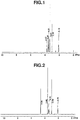
- the 1 H-NMR spectrum for MMMP ⁇ FSA is shown in FIG. 2 .
- the viscosity at 25°C was 20 cP.
- Li ⁇ FSA Lithium bis(fluorosulfonyl)amide
- a coating slurry for a positive electrode was prepared by mixing together the activated carbon Maxsorb MSP-20 (Kansai Coke and Chemicals Co., Ltd.), a conductive material (HS-100, from Denka Co., Ltd.) and the binder PVDF (Aldrich Co.) in the weight ratio 85:8:7 within the coating solvent N-methyl-2-pyrrolidone (NMP).
- NMP N-methyl-2-pyrrolidone
- the slurry was coated onto etched aluminum foil (30B, from Japan Capacitor Industrial Co., Ltd.) as the positive current collector and then rolled using a roll press, following which the NMP was removed by drying so as to form a positive electrode, thereby giving a positive electrode assembly.
- a coating slurry for a negative electrode was prepared by mixing together lithium titanate powder (lithium titanium, spinel; from Sigma-Aldrich Co.), a conductive material (HS-100), and a binder (PVDF) in the weight ratio 83:8:9 within NMP as the coating solvent.
- lithium titanate powder lithium titanium, spinel; from Sigma-Aldrich Co.
- a conductive material HS-100
- PVDF binder
- the slurry was coated onto etched aluminum foil (30CB) in the same way as for the positive electrode assembly and then rolled using a roll press, following which the NMP was removed by drying so as to form a negative electrode, thereby giving a negative electrode assembly.
- a cell was assembled by spot-welding aluminum terminals to each of the positive electrode assembly and the negative electrode assembly obtained as described above and placing a separator (TF40-35, from Nippon Kodoshi Corporation) therebetween, and the cell was inserted into an outer enclosure made of an aluminum laminate (Dai Nippon Printing Co., Ltd.).
- a predetermined amount of the liquid electrolyte for secondary batteries prepared in Working Example 1-1 was injected therein, following which electrolyte impregnation was effected by at least 12 hours of standing at 25°C under a reduced pressure of 10 kPa or below. The enclosure was then sealed by heat welding, giving a secondary battery.
- the capacitance was calculated from the total amount of energy discharged when, after being constant-current charged to 3.2 V at the one-hour rate and constant-voltage charged thereafter for 30 minutes, the battery was subsequently constant-current discharged from 3.2 V to 1.8 V at the one-hour rate. Measurement was carried out over two cycles, with the second-cycle value being treated as the capacitance. The internal resistance was measured with a resistance meter (RM 3548, from Hioki EE Corporation) following the charge/discharge test. Each of the measurements was carried out following at least two hours of standing in a thermostatic chamber at 25°C. [Table 2] Initial characteristics Capacitance (F) Internal resistance ( ⁇ ) Working Example 2-1 2.5 6.4 Working Example 2-2 3.5 5.5 Comparative Example 2-1 2.3 3.8 Comparative Example 2-2 1.7 10.4 Comparative Example 2-3 2.5 3.2
- the secondary batteries obtained were heated in a thermostatic chamber at 60°C, and cyclic charging and discharging was carried out. The number of cycles was set to one charge-discharge cycle for determining the initial performance, and 20 cycles overall. After charge/discharge cycling, the thermostatic chamber was returned to 25°C and left to stand for 2 hours, following which the performance was measured in the same way as for measurement of the initial performance. Percent changes in the capacitance and internal resistance were calculated relative to an arbitrary value of 100 % for the initially measured capacitance and internal resistance. The results are shown in Table 4.
- a positive coating paste was prepared by adjusting a positive electrode active material (LiCoO 2 , from Honjo Chemical Corporation), a conductive material (acetylene black, from Denka Co., Ltd.), and PVDF to a weight ratio therebetween of 91:3:6 and dissolving these ingredients to form a solution, and then mixing the solution together with NMP.
- the positive electrode coating paste was applied with a doctor blade onto aluminum foil to a dry film thickness of 115 ⁇ m, subsequently dried at 80°C for 2 hours and rolled so as to form a LiCoO 2 positive electrode, thereby giving a positive electrode assembly.
- a coin-type lithium secondary battery was produced by cutting both the positive electrode obtained above and a metallic lithium foil as the negative electrode to a 12-mm diameter size, sandwiching a polyolefin flat-film membrane (Hipore, from Asahi Kasei-E-materials Corporation) as the separator between the positive and negative electrodes thus cut out, and injecting and impregnating therein the liquid electrolyte obtained in Working Example 1-1.
- a polyolefin flat-film membrane Hipore, from Asahi Kasei-E-materials Corporation
- the lithium-ion battery obtained as described above was subjected to a charge/discharge test in which the upper voltage limit on charge was set to 4.2 V, the cut-off voltage on discharge was set to 3 V, and constant-current low-voltage charging and constant-current discharging were carried out at a current density of 0.025 mA/cm 2 .
- the discharge capacity per unit weight of LiCoO 2 was 122.5 mAh/g, which is sufficient for a lithium-ion battery.
- a positive electrode coating paste was prepared by adjusting a positive electrode active material (MCMB, from Osaka Gas Chemicals Co., Ltd.) and PVDF to a weight ratio therebetween of 88:12 and mixing these together with a suitable amount of NMP.
- This positive electrode coating paste was applied with a doctor blade onto aluminum foil to a dry film thickness of 75 ⁇ m, subsequently dried at 140°C for 72 hours to remove the NMP and moisture, and rolled so as to form a positive electrode, thereby giving a positive electrode assembly.
- the positive electrode obtained above and metallic lithium foil as the negative electrode were cut to a size of 12 mm diameter for the positive electrode and a size of 15 mm diameter for the negative electrode.
- the liquid electrolyte obtained in Working Example 1-1 was impregnated into a polyolefin flat-film membrane (Hipore, from Asahi Kasei E-materials Corporation) as the separator, and this was sandwiched between the cut-out positive and negative electrodes, thereby producing a lithium-air battery cell.
- This cell was placed within a positive electrode can having air holes formed therein and disposed in such a way that the positive electrode current collector faces the air holes, following which a negative electrode can was set on top and both portions of the cell enclosure were mechanically sealed, thereby producing an air battery.
- the resulting cell was placed within a glass desiccator (500 mL) equipped with a gas-flushing cock.
- the interior of the glass desiccator had a structure that allows the introduction of oxygen, enabling oxygen to be supplied to the
- the air battery obtained as described above was subjected to a charge/discharge test in which the upper voltage limit on charge was set to 3.8 V, the cut-off voltage on discharge was set to 2 V, and constant-current, low-voltage charging and constant-current discharging were carried out at a current density of 67 nA/cm 2 .
- the resulting discharge capacity was 3.3 mAh.
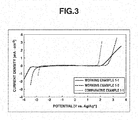
- the liquid electrolyte for secondary batteries of the invention has a wide potential window and an excellent withstand voltage. Moreover, secondary batteries produced using this liquid electrolyte have an excellent performance in high-temperature environments, with the internal resistance at elevated temperature greatly decreasing and the battery incurring little deterioration even when charging and discharging are repeatedly carried out at high temperature.
Landscapes
- Chemical & Material Sciences (AREA)
- Engineering & Computer Science (AREA)
- Electrochemistry (AREA)
- Chemical Kinetics & Catalysis (AREA)
- Power Engineering (AREA)
- General Chemical & Material Sciences (AREA)
- Manufacturing & Machinery (AREA)
- Microelectronics & Electronic Packaging (AREA)
- Inorganic Chemistry (AREA)
- Physics & Mathematics (AREA)
- General Physics & Mathematics (AREA)
- Condensed Matter Physics & Semiconductors (AREA)
- Materials Engineering (AREA)
- Secondary Cells (AREA)
- Hybrid Cells (AREA)
- Battery Electrode And Active Subsutance (AREA)
- Electric Double-Layer Capacitors Or The Like (AREA)
Claims (9)
- Electrolyte liquide pour batterie secondaire, caractérisé en ce qu'il comprend un liquide ionique de formule (1) et un sel de lithium

- Electrolyte liquide pour une batterie secondaire selon la revendication 1, dans lequel R1 et R2 sont chacun indépendamment un groupe méthyle ou un groupe éthyle.
- Electrolyte liquide pour une batterie secondaire selon la revendication 1 ou 2, dans lequel R1 et R2 sont tous deux des groupes méthyle.
- Electrolyte liquide pour une batterie secondaire selon l'une quelconque des revendications 1 à 3, qui est exempt de solvant organique.
- Electrolyte liquide pour une batterie secondaire selon l'une quelconque des revendications 1 à 4, qui est constitué uniquement du liquide ionique de formule (1) et d'un sel de lithium.
- Electrolyte liquide pour une batterie secondaire selon l'une quelconque des revendications 1 à 5, dans lequel le sel de lithium est un ou plusieurs choisis dans le groupe constitué par le tétrafluoroborate de lithium, l'hexafluorophosphate de lithium, le bis(trifluorométhanesulfonyl)amide de lithium et le bis(fluorosulfonyl)amide de lithium.
- Batterie secondaire caractérisée en ce qu'elle comprend l'électrolyte liquide pour une batterie secondaire selon l'une quelconque des revendications 1 à 6.
- Batterie secondaire selon la revendication 7, comprenant une électrode positive ayant un collecteur de courant d'électrode positive et une couche de matériau actif d'électrode positive formée sur une surface de celle-ci, une électrode négative ayant un collecteur de courant d'électrode négative et une couche de matériau actif d'électrode négative formée sur une surface de celle-ci, un séparateur interposé entre les électrodes, et un électrolyte liquide,
dans laquelle l'électrolyte liquide est l'électrolyte liquide pour une batterie secondaire selon l'une quelconque des revendications 1 à 6 et la couche de matériau actif d'électrode négative comprend un oxyde composite de lithium. - Batterie secondaire selon la revendication 7, qui est une batterie à air comprenant une couche d'électrode positive (électrode à air), une couche d'électrode négative et une couche d'électrolyte liquide disposée entre les électrodes,
dans laquelle la couche d'électrolyte liquide comprend un électrolyte liquide pour une batterie secondaire selon l'une quelconque des revendications 1 à 6.
Applications Claiming Priority (2)
| Application Number | Priority Date | Filing Date | Title |
|---|---|---|---|
| JP2014258863A JP6592891B2 (ja) | 2014-12-22 | 2014-12-22 | 二次電池用電解液および二次電池 |
| PCT/JP2015/080489 WO2016103905A1 (fr) | 2014-12-22 | 2015-10-29 | Solution électrolytique pour batteries secondaires et batteries secondaires associées |
Publications (3)
| Publication Number | Publication Date |
|---|---|
| EP3240094A1 EP3240094A1 (fr) | 2017-11-01 |
| EP3240094A4 EP3240094A4 (fr) | 2018-07-04 |
| EP3240094B1 true EP3240094B1 (fr) | 2020-06-03 |
Family
ID=56149941
Family Applications (1)
| Application Number | Title | Priority Date | Filing Date |
|---|---|---|---|
| EP15872474.0A Active EP3240094B1 (fr) | 2014-12-22 | 2015-10-29 | Solution électrolytique pour batteries secondaires et batterie secondaire la comprenant |
Country Status (6)
| Country | Link |
|---|---|
| US (1) | US10763548B2 (fr) |
| EP (1) | EP3240094B1 (fr) |
| JP (1) | JP6592891B2 (fr) |
| KR (1) | KR20170095889A (fr) |
| CN (1) | CN107112592A (fr) |
| WO (1) | WO2016103905A1 (fr) |
Families Citing this family (10)
| Publication number | Priority date | Publication date | Assignee | Title |
|---|---|---|---|---|
| JP2018170271A (ja) * | 2017-03-29 | 2018-11-01 | Tdk株式会社 | リチウムイオン二次電池用電解液およびリチウムイオン二次電池 |
| JP7119452B2 (ja) * | 2017-03-29 | 2022-08-17 | Tdk株式会社 | リチウムイオン二次電池用電解液およびリチウムイオン二次電池 |
| US10505219B2 (en) * | 2017-05-26 | 2019-12-10 | Toyota Motor Engineering & Manufacturing North America, Inc. | Artificial SEI transplantation |
| US10868339B2 (en) * | 2017-12-05 | 2020-12-15 | Toyota Motor Engineering & Manufacturing North America, Inc. | Aqueous electrolytes with bis(fluorosulfonyl)imide salt electrolyte and ionic liquid system and batteries using the electrolyte system |
| CN108232295B (zh) * | 2017-12-21 | 2020-11-17 | 北京科技大学 | 一种锂空气电池用离子液体基电解液及其锂空气电池体系 |
| CN112602228B (zh) * | 2018-09-04 | 2024-03-08 | 国立研究开发法人物质·材料研究机构 | 锂空气电池用电解液和使用其的锂空气电池 |
| US12438191B2 (en) * | 2019-03-25 | 2025-10-07 | Nisshinbo Holdings Inc. | Electrolyte additive |
| FR3095551B1 (fr) * | 2019-04-26 | 2021-04-02 | Renault Sas | Electrolyte pour accumulateur électrochimique comprenant un liquide ionique particulier |
| CN112448032B (zh) * | 2019-09-02 | 2022-03-22 | 华南师范大学 | 苯甲酸锂的新用途 |
| CN112408437B (zh) * | 2020-11-19 | 2023-03-28 | 江西天新药业股份有限公司 | 锂盐的回收方法 |
Family Cites Families (24)
| Publication number | Priority date | Publication date | Assignee | Title |
|---|---|---|---|---|
| KR100861916B1 (ko) | 2001-03-26 | 2008-10-09 | 닛신보세키 가부시키 가이샤 | 이온성 액체, 축전 디바이스용 전해질염, 축전 디바이스용전해액, 전기 2중층 캐패시터, 및 2차전지 |
| JP3831939B2 (ja) * | 2001-11-12 | 2006-10-11 | ソニー株式会社 | 電池 |
| KR100757166B1 (ko) | 2003-07-01 | 2007-09-07 | 오츠카 가가쿠 가부시키가이샤 | 제4급 암모늄염 및 전해질 및 전기 화학 디바이스 |
| JP4617727B2 (ja) | 2004-06-08 | 2011-01-26 | パナソニック株式会社 | 二次電源 |
| EP1837333B1 (fr) | 2005-01-12 | 2013-04-10 | Otsuka Chemical Co., Ltd. | Sel d'ammonium quaternaire, electrolyte, solution electrolytique et dispositif electrochimique |
| JP2006236829A (ja) | 2005-02-25 | 2006-09-07 | Nisshinbo Ind Inc | イオン液体、蓄電デバイス用非水電解液および蓄電デバイス |
| EP2023434B1 (fr) * | 2007-07-23 | 2016-09-07 | Litarion GmbH | Préparations d'électrolytes pour accumulateurs d'énergie à base de liquides ioniques |
| CN101747243A (zh) | 2008-11-28 | 2010-06-23 | 华中科技大学 | 由双(氟磺酰)亚胺和(全氟烷基磺酰基氟磺酰基)亚胺碱金属盐制备的离子液体 |
| WO2010107034A1 (fr) * | 2009-03-18 | 2010-09-23 | 日本合成化学工業株式会社 | Liquide ionique, électrolyte, batterie secondaire au lithium les comprenant, et procédé de production de liquide ionique |
| JP2011134459A (ja) | 2009-12-22 | 2011-07-07 | Konica Minolta Holdings Inc | 電解質組成物、二次電池、および化合物 |
| WO2011114605A1 (fr) | 2010-03-19 | 2011-09-22 | 第一工業製薬株式会社 | Batterie secondaire au lithium à base d'un liquide ionique |
| JP5557010B2 (ja) * | 2010-06-01 | 2014-07-23 | トヨタ自動車株式会社 | 電解液の製造方法 |
| JP5778625B2 (ja) * | 2011-06-03 | 2015-09-16 | 株式会社半導体エネルギー研究所 | イオン液体、及びイオン液体を含む蓄電装置 |
| WO2013051302A1 (fr) | 2011-10-05 | 2013-04-11 | 国立大学法人東北大学 | Batterie secondaire |
| JP5726707B2 (ja) * | 2011-10-14 | 2015-06-03 | エレクセル株式会社 | リチウム二次電池 |
| JP2014167873A (ja) * | 2013-02-28 | 2014-09-11 | Sanyo Electric Co Ltd | リチウムイオン二次電池用負極活物質、その製造方法及びリチウムイオン二次電池 |
| JP2014183161A (ja) | 2013-03-19 | 2014-09-29 | Sumitomo Electric Ind Ltd | リチウムイオンキャパシタおよびその充放電方法 |
| JP5742865B2 (ja) | 2013-03-29 | 2015-07-01 | トヨタ自動車株式会社 | リチウム金属電池用の電解液 |
| US9190696B2 (en) * | 2013-05-16 | 2015-11-17 | Nanotek Instruments, Inc. | Lithium secondary batteries containing lithium salt-ionic liquid solvent electrolyte |
| JP2014238935A (ja) | 2013-06-06 | 2014-12-18 | 住友電気工業株式会社 | ナトリウム溶融塩電池に用いるイオン液体および溶融塩電解質、ナトリウム溶融塩電池、ならびにナトリウム溶融塩電池用溶融塩電解質の製造方法 |
| JP2014239006A (ja) | 2013-06-10 | 2014-12-18 | 住友電気工業株式会社 | 溶融塩電池 |
| US20150132649A1 (en) | 2013-11-13 | 2015-05-14 | Semiconductor Energy Laboratory Co., Ltd. | Negative electrode for power storage device, power storage device, and electrical device |
| KR101520394B1 (ko) * | 2013-12-19 | 2015-05-14 | 한국에너지기술연구원 | 스택형 플로우 에너지 저장 장치 및 그 용도 |
| JP5833176B2 (ja) * | 2014-04-30 | 2015-12-16 | 株式会社東芝 | 非水電解質電池及び電池パック |
-
2014
- 2014-12-22 JP JP2014258863A patent/JP6592891B2/ja active Active
-
2015
- 2015-10-29 US US15/534,073 patent/US10763548B2/en active Active
- 2015-10-29 KR KR1020177017140A patent/KR20170095889A/ko not_active Withdrawn
- 2015-10-29 WO PCT/JP2015/080489 patent/WO2016103905A1/fr not_active Ceased
- 2015-10-29 CN CN201580070131.XA patent/CN107112592A/zh active Pending
- 2015-10-29 EP EP15872474.0A patent/EP3240094B1/fr active Active
Non-Patent Citations (1)
| Title |
|---|
| None * |
Also Published As
| Publication number | Publication date |
|---|---|
| JP2016119241A (ja) | 2016-06-30 |
| CN107112592A (zh) | 2017-08-29 |
| EP3240094A1 (fr) | 2017-11-01 |
| KR20170095889A (ko) | 2017-08-23 |
| WO2016103905A1 (fr) | 2016-06-30 |
| US20170338516A1 (en) | 2017-11-23 |
| EP3240094A4 (fr) | 2018-07-04 |
| JP6592891B2 (ja) | 2019-10-23 |
| US10763548B2 (en) | 2020-09-01 |
Similar Documents
| Publication | Publication Date | Title |
|---|---|---|
| US10763548B2 (en) | Electrolyte solution for secondary batteries, and secondary battery | |
| CA2686890C (fr) | Electrolyte cristal plastique ayant une large fenetre de potentiel | |
| US10658700B2 (en) | Additive for electrolyte solutions | |
| US20100173195A1 (en) | Material for electrolytic solutions and use thereof | |
| KR101546251B1 (ko) | 전기화학 장치용 전해액 및 전기화학 장치 | |
| JP5293926B2 (ja) | 二次電池 | |
| CN113169377B (zh) | 电池用非水电解液及锂二次电池 | |
| JP7035579B2 (ja) | 電解液用添加剤 | |
| EP3240000A1 (fr) | Dispositif d'accumulation d'électricté | |
| EP1970990B1 (fr) | Solution électrolytique non aqueuse pour batterie, batterie à électrolyte non aqueux la comprenant, solution électrolytique pour condensateur électrique double couche et condensateur électrique double couche la comprenant | |
| JP5398321B2 (ja) | 二次電池用非水電解液及び非水電解液二次電池 | |
| JP2017004638A (ja) | 電解質塩、該電解質塩を含む非水電解液、及びそれを用いた蓄電デバイス | |
| JP7263679B2 (ja) | 電池用非水電解液及びリチウム二次電池 | |
| JP7200465B2 (ja) | 電池用非水電解液及びリチウム二次電池 | |
| JP2009105028A (ja) | アンモニウム塩、並びにそれを用いた電解質、電解液、添加剤及び蓄電デバイス | |
| JP6980502B2 (ja) | 電池用非水電解液及びリチウム二次電池 | |
| US12438191B2 (en) | Electrolyte additive | |
| JP2019204725A (ja) | リチウム二次電池 | |
| JP2019179613A (ja) | 電池用非水電解液及びリチウム二次電池 |
Legal Events
| Date | Code | Title | Description |
|---|---|---|---|
| PUAI | Public reference made under article 153(3) epc to a published international application that has entered the european phase |
Free format text: ORIGINAL CODE: 0009012 |
|
| 17P | Request for examination filed |
Effective date: 20170706 |
|
| AK | Designated contracting states |
Kind code of ref document: A1 Designated state(s): AL AT BE BG CH CY CZ DE DK EE ES FI FR GB GR HR HU IE IS IT LI LT LU LV MC MK MT NL NO PL PT RO RS SE SI SK SM TR |
|
| AX | Request for extension of the european patent |
Extension state: BA ME |
|
| DAV | Request for validation of the european patent (deleted) | ||
| DAX | Request for extension of the european patent (deleted) | ||
| A4 | Supplementary search report drawn up and despatched |
Effective date: 20180605 |
|
| RIC1 | Information provided on ipc code assigned before grant |
Ipc: H01M 10/0569 20100101AFI20180525BHEP Ipc: H01G 11/64 20130101ALI20180525BHEP Ipc: H01G 11/06 20130101ALI20180525BHEP Ipc: H01G 11/28 20130101ALN20180525BHEP Ipc: H01M 10/0568 20100101ALN20180525BHEP Ipc: H01M 10/0525 20100101ALN20180525BHEP Ipc: H01G 11/62 20130101ALI20180525BHEP Ipc: H01M 10/052 20100101ALI20180525BHEP Ipc: H01G 11/60 20130101ALN20180525BHEP |
|
| 17Q | First examination report despatched |
Effective date: 20190617 |
|
| REG | Reference to a national code |
Ref country code: DE Ref legal event code: R079 Ref document number: 602015053917 Country of ref document: DE Free format text: PREVIOUS MAIN CLASS: H01M0010056800 Ipc: H01M0010056900 |
|
| GRAP | Despatch of communication of intention to grant a patent |
Free format text: ORIGINAL CODE: EPIDOSNIGR1 |
|
| RIC1 | Information provided on ipc code assigned before grant |
Ipc: H01M 10/0525 20100101ALN20191202BHEP Ipc: H01G 11/62 20130101ALI20191202BHEP Ipc: H01G 11/64 20130101ALI20191202BHEP Ipc: H01M 10/052 20100101ALI20191202BHEP Ipc: H01M 10/0568 20100101ALN20191202BHEP Ipc: H01G 11/60 20130101ALN20191202BHEP Ipc: H01G 11/06 20130101ALI20191202BHEP Ipc: H01G 11/28 20130101ALN20191202BHEP Ipc: H01M 10/0569 20100101AFI20191202BHEP |
|
| INTG | Intention to grant announced |
Effective date: 20200103 |
|
| RIN1 | Information on inventor provided before grant (corrected) |
Inventor name: MASUDA, GEN Inventor name: YUYAMA, KANAKO |
|
| GRAS | Grant fee paid |
Free format text: ORIGINAL CODE: EPIDOSNIGR3 |
|
| GRAA | (expected) grant |
Free format text: ORIGINAL CODE: 0009210 |
|
| STAA | Information on the status of an ep patent application or granted ep patent |
Free format text: STATUS: THE PATENT HAS BEEN GRANTED |
|
| AK | Designated contracting states |
Kind code of ref document: B1 Designated state(s): DE |
|
| RBV | Designated contracting states (corrected) |
Designated state(s): DE |
|
| REG | Reference to a national code |
Ref country code: DE Ref legal event code: R096 Ref document number: 602015053917 Country of ref document: DE |
|
| REG | Reference to a national code |
Ref country code: DE Ref legal event code: R097 Ref document number: 602015053917 Country of ref document: DE |
|
| PLBE | No opposition filed within time limit |
Free format text: ORIGINAL CODE: 0009261 |
|
| STAA | Information on the status of an ep patent application or granted ep patent |
Free format text: STATUS: NO OPPOSITION FILED WITHIN TIME LIMIT |
|
| 26N | No opposition filed |
Effective date: 20210304 |
|
| PGFP | Annual fee paid to national office [announced via postgrant information from national office to epo] |
Ref country code: DE Payment date: 20250902 Year of fee payment: 11 |