EP3241038B1 - Strukturüberwachungssystem des rumpfes eines schiffes mit integriertem navigationsentscheidungsunterstützungssystem - Google Patents
Strukturüberwachungssystem des rumpfes eines schiffes mit integriertem navigationsentscheidungsunterstützungssystem Download PDFInfo
- Publication number
- EP3241038B1 EP3241038B1 EP15830872.6A EP15830872A EP3241038B1 EP 3241038 B1 EP3241038 B1 EP 3241038B1 EP 15830872 A EP15830872 A EP 15830872A EP 3241038 B1 EP3241038 B1 EP 3241038B1
- Authority
- EP
- European Patent Office
- Prior art keywords
- ship
- estimate
- magnitude
- calculating
- predetermined point
- Prior art date
- Legal status (The legal status is an assumption and is not a legal conclusion. Google has not performed a legal analysis and makes no representation as to the accuracy of the status listed.)
- Active
Links
Images






Classifications
-
- B—PERFORMING OPERATIONS; TRANSPORTING
- B63—SHIPS OR OTHER WATERBORNE VESSELS; RELATED EQUIPMENT
- B63B—SHIPS OR OTHER WATERBORNE VESSELS; EQUIPMENT FOR SHIPPING
- B63B71/00—Designing vessels; Predicting their performance
-
- B—PERFORMING OPERATIONS; TRANSPORTING
- B63—SHIPS OR OTHER WATERBORNE VESSELS; RELATED EQUIPMENT
- B63B—SHIPS OR OTHER WATERBORNE VESSELS; EQUIPMENT FOR SHIPPING
- B63B49/00—Arrangements of nautical instruments or navigational aids
-
- B—PERFORMING OPERATIONS; TRANSPORTING
- B63—SHIPS OR OTHER WATERBORNE VESSELS; RELATED EQUIPMENT
- B63B—SHIPS OR OTHER WATERBORNE VESSELS; EQUIPMENT FOR SHIPPING
- B63B71/00—Designing vessels; Predicting their performance
- B63B71/10—Designing vessels; Predicting their performance using computer simulation, e.g. finite element method [FEM] or computational fluid dynamics [CFD]
-
- B—PERFORMING OPERATIONS; TRANSPORTING
- B63—SHIPS OR OTHER WATERBORNE VESSELS; RELATED EQUIPMENT
- B63B—SHIPS OR OTHER WATERBORNE VESSELS; EQUIPMENT FOR SHIPPING
- B63B79/00—Monitoring properties or operating parameters of vessels in operation
- B63B79/10—Monitoring properties or operating parameters of vessels in operation using sensors, e.g. pressure sensors, strain gauges or accelerometers
- B63B79/15—Monitoring properties or operating parameters of vessels in operation using sensors, e.g. pressure sensors, strain gauges or accelerometers for monitoring environmental variables, e.g. wave height or weather data
-
- B—PERFORMING OPERATIONS; TRANSPORTING
- B63—SHIPS OR OTHER WATERBORNE VESSELS; RELATED EQUIPMENT
- B63B—SHIPS OR OTHER WATERBORNE VESSELS; EQUIPMENT FOR SHIPPING
- B63B79/00—Monitoring properties or operating parameters of vessels in operation
- B63B79/20—Monitoring properties or operating parameters of vessels in operation using models or simulation, e.g. statistical models or stochastic models
-
- B—PERFORMING OPERATIONS; TRANSPORTING
- B63—SHIPS OR OTHER WATERBORNE VESSELS; RELATED EQUIPMENT
- B63B—SHIPS OR OTHER WATERBORNE VESSELS; EQUIPMENT FOR SHIPPING
- B63B79/00—Monitoring properties or operating parameters of vessels in operation
- B63B79/30—Monitoring properties or operating parameters of vessels in operation for diagnosing, testing or predicting the integrity or performance of vessels
-
- G—PHYSICS
- G01—MEASURING; TESTING
- G01S—RADIO DIRECTION-FINDING; RADIO NAVIGATION; DETERMINING DISTANCE OR VELOCITY BY USE OF RADIO WAVES; LOCATING OR PRESENCE-DETECTING BY USE OF THE REFLECTION OR RERADIATION OF RADIO WAVES; ANALOGOUS ARRANGEMENTS USING OTHER WAVES
- G01S13/00—Systems using the reflection or reradiation of radio waves, e.g. radar systems; Analogous systems using reflection or reradiation of waves whose nature or wavelength is irrelevant or unspecified
- G01S13/88—Radar or analogous systems specially adapted for specific applications
- G01S13/95—Radar or analogous systems specially adapted for specific applications for meteorological use
- G01S13/956—Radar or analogous systems specially adapted for specific applications for meteorological use mounted on ship or other platform
-
- Y—GENERAL TAGGING OF NEW TECHNOLOGICAL DEVELOPMENTS; GENERAL TAGGING OF CROSS-SECTIONAL TECHNOLOGIES SPANNING OVER SEVERAL SECTIONS OF THE IPC; TECHNICAL SUBJECTS COVERED BY FORMER USPC CROSS-REFERENCE ART COLLECTIONS [XRACs] AND DIGESTS
- Y02—TECHNOLOGIES OR APPLICATIONS FOR MITIGATION OR ADAPTATION AGAINST CLIMATE CHANGE
- Y02A—TECHNOLOGIES FOR ADAPTATION TO CLIMATE CHANGE
- Y02A90/00—Technologies having an indirect contribution to adaptation to climate change
- Y02A90/10—Information and communication technologies [ICT] supporting adaptation to climate change, e.g. for weather forecasting or climate simulation
Definitions
- the acquisition system consists of three panels - located at the stern, at midship and at the bow, respectively, so as to minimize the distance between them and the strain gauge sensors and thereby maximize the accuracy of measurement - containing the power supply/acquisition electronics of the sensors and an acquisition PC interfaced with the ship automation (for the acquisition of signals and for sending alarms/warnings) and with any other onboard equipment, with relative screen.
- the "active guidance" systems are based on calculation tables derived from the FEM/CFD models of the ship, i.e. on the response operators of the ship motions, of the global structural stresses of the ship and of the resistance to progress.
- the object of the invention is a system for assisting the driving of a ship, including:
- said at least one processing unit is further configured for: correcting the estimate of said magnitude at the second predetermined point without sensors based on the offset value determined by the comparison between said indication of magnitude provided by the reference sensor with the estimate of said magnitude at the first predetermined point provided with the reference sensor.
- the system according to the invention has the characteristic of combining the capabilities and the advantages of the structural monitoring systems and of the "active guidance" navigation support systems.
- the minimum number of sensors required by the register to obtain the additional class notation relative to the structural monitoring (notation MONHULL+S of the RINA or equivalent notation of other Registers) is combined with the integration in the structural monitoring software of the response operators of motions and global stresses of the hull girder (as in the active guidance systems) and of local stresses of the structure, the latter obtained from detailed FEM models of structural points of interest. Therefore, integrating an "active guidance" system in a structural monitoring system is equivalent to incorporating some "virtual" sensors in the latter for the evaluation of stresses in ungauged areas of the ship.
- the overlap of the local stress contribution due to slamming/whipping to that of the wave further requires an ad hoc procedure to implement within the software: it should not be limited to using local voltage values measured at some points to calibrate the local response operators referred to the gauged points and to the "virtual" points in order to calculate the current/expected maximum value in the short term in the current/expected sea weather conditions but it should also evaluate the phasing between the pattern of wave and slamming/whipping stresses so as not to overestimate the combination of the two effects.
- the number of virtual sensors is theoretically infinite; currently, it is only limited to the number of channels available within the software (48) for the set of physical sensors placed on board and the virtual ones.
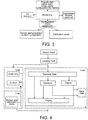
- FIG. 1a Taking as an example a system consisting of 3 PPU, the system architecture is depicted in figure 1a .
- the controller inserted within a configurable chassis acquires data from the modules inserted into the chassis and from those inserted in the secondary chassis connected via EtherCAT, offering a stand-alone embedded execution specially designed for real-time applications.
- the PPU internally consist of the acquisition hardware with programmable logic and a power supply that provides the stabilized voltage to both the remote sensors and to the acquisition hardware.
- the acquisition hardware of the main PPU shown in figure 1a consists of a unit NI 9111 with programmable FPGA integrated by a real-time controller (NI 9022) and strain gauge signal (NI 9237) and current (NI 9203) or voltage (NI 9201) signal acquisition modules; the acquisition hardware of any remote PPU required consists of a unit NI 9144 operating in slave mode integrated by strain gauge signal (NI 9237) and current (NI 9203) or voltage (NI 9201) signal acquisition modules.
- the computer is equipped with at least the following:
- the acquisition unit is equipped with a screen to display the acquired values and for the interaction with the operator.
- Analog sensors are further provided.
- the ship motion measurement sensors (accelerometers, inclinometers, pressure probe), in addition to being listed in the Register requirements for obtaining the additional class notation for the structural monitoring, are required in the post-analysis step to correlate the hull strains measured.
- analog channels may be added at any time on the customer's request.
- the outputs to the automation system are required to comply with the requirements of the Registers about the reporting of any alarms on the bridge.
- the source of information is the X-band navigation radar already present on any ship, suitably configured and used, whose data (ACP+ARP, image, trigger, etc.) are acquired by an interface device (Integrated Video Digitizer) which allows a dedicated software to extract information about the state of the sea in terms of significant height, direction and period.
- ACP+ARP, image, trigger, etc. data acquired by an interface device (Integrated Video Digitizer) which allows a dedicated software to extract information about the state of the sea in terms of significant height, direction and period.
- the monitoring panel is opened directly using the information contained in the last valid configuration file.
- the user can switch from one sub-panel to the other using the buttons positioned on the main application bar.
- a "Master Alarm” is activated, which remains active until it is acknowledged by the user, even if the sensor returns to acceptable values.
- Alarm management in the HMS software is implemented in accordance with the regulations of the IMO Code on Alarms and Indicators.
- the main screen of the HMS Sh.A.M.An. is shown in figure 7 .
- the software core therefore is the model of the ship consisting of the tables of the response operators of motions and stresses. They must be prepared before the onboard installation of the system using the appropriate software tools: in the case of SNS, for the prediction of the rigid body motions and the global dynamic loads induced directly by the wavy sea, the calculation model PRECAL was used, developed and validated in more than 20 years of research within the international consortium CRS (Co-operative Research Ship). Such a calculation package is capable of performing both conventional linear forecasts in the frequency domain and non-linear simulations in the time domain.
- the functional diagram of the calculation model implemented in the software is shown in the block diagram shown in figure 9 .
- the system may be divided into 6 main parts:
- Figure 10 shows by way of example the statistical RVV prediction of a cruise ship in a determined sea state for different ship speeds and sea directions.
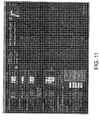
- the main screen of the SNS is shown in figure 11 .
- the diagram in figure 12 summarizes the operational features of the ESNS system according to the invention.
- FIG. 12a shows the architectural principle of the ESNS system, starting from what already exists in the Hull Monitoring Systems and in the Safe Navigation Systems. Dash-and-point lines show the features that have been introduced in the ESNS system.
- the information concerning the state of the sea (significant wave height, average period and meeting direction with respect to the ship prow), the ship heading from the gyro and the ship speed from the GPS, is provided directly to the SNS module: while in the earlier version of the SNS, the passage of information was done by reading a text file, with synchronization problems in reading/writing the same, by integrating the two systems the information may be directly sent at the kernel level of the software.
- the original SNS system once the wave and direction/speed data have been acquired, queries a Response Amplitude Operator (RAO) which in output allows estimating bending moment, strain and acceleration.
- RAO Response Amplitude Operator
- This information is provided to an OED (Operating Envelope Diagram) which displays the current ship situation on a polar diagram, allowing the simulation of some of the possible variations (route, speed, displacement) visually verifying the accuracy of such actions before putting them into practice.
- the HMS system will therefore treat these sensors like sensors physically installed on board, monitoring the values thereof, creating appropriate alarms in case of exceeding of threshold values, saving statistical data.
- the ESNS in the calculation procedures of ship motions and global stresses on the hull girder (VBM and VSF), takes into account the non-linearity due to lateral motions coupled with rolling, providing more accurate and realistic results.
- the combination of wave and slamming contributions is differentiated according to the condition of hogging or sagging in which the ship is.
- the calculation takes place starting from the global loads previously calculated (VBM and VSF) and combined into the respective whipping and wave components and from response operators of the local stresses suitably calculated offline and implemented within the software like the RAO of global stresses.
- the software can calculate the number of cycles (and the amplitude for each of them) needed to reach the threshold below which the stress is deemed not to affect the fatigue life of the structure, the latter value being determined according to the type of material and structural detail.
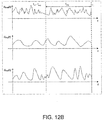
- Figure 13 represents the time axis, in which the point T 0 represents a reference instant in which the correction procedure takes place.
- the correction step is actually applied continuously in real time during the operation of the ESNS system; the calculated values are then constantly corrected according to what is calculated and measured at the reference points, allowing a continuous real-time calibration of the system for any navigation and environmental conditions in which the ship operates.
- T exp represents the exposure time with respect to which the estimates of the magnitudes are conventionally made by the SNS module.
- the time interval (T 0 , T 0 +T exp ) represents the time interval within which the magnitudes are expected to take the expected value estimated by the SNS module.
- the HMS system is already set up for the acquisition of the onboard signals (GPS, gyro, etc.) and it is necessary that these data are sent to the SNS module for evaluating the stresses as a function of the speed and route, in addition to an input coming from the sea state measurement system.
- the computer of the sea state measurement system is separate from the ESNS system.
- the system receives the information on significant wave height, average zero crossing period, prevailing wave direction and more via a serial NMEA string agreed with the manufacturer of the sub-product.
- the software of the previous SNS system is installed on the same computer on which the wave height measurement system runs and the exchange of the information required is carried out by reading a text file saved to a common folder. This mode, in addition to reducing the life time of the disk due to frequent accesses to the same, slows the program execution that does not have direct access to this information in the memory.
Landscapes
- Engineering & Computer Science (AREA)
- Ocean & Marine Engineering (AREA)
- Chemical & Material Sciences (AREA)
- Combustion & Propulsion (AREA)
- Mechanical Engineering (AREA)
- Radar, Positioning & Navigation (AREA)
- Remote Sensing (AREA)
- Physics & Mathematics (AREA)
- Electromagnetism (AREA)
- General Physics & Mathematics (AREA)
- Computer Networks & Wireless Communication (AREA)
- Life Sciences & Earth Sciences (AREA)
- Probability & Statistics with Applications (AREA)
- Atmospheric Sciences (AREA)
- Environmental & Geological Engineering (AREA)
- Theoretical Computer Science (AREA)
- General Engineering & Computer Science (AREA)
- Fluid Mechanics (AREA)
- Traffic Control Systems (AREA)
- Testing Or Calibration Of Command Recording Devices (AREA)
- Radar Systems Or Details Thereof (AREA)
- Navigation (AREA)
Claims (6)
- System zum Assistieren beim Fahren eines Schiffes, mit:Navigationsermittlungsmitteln (10), die zum Bereitstellen einer Anzeige der Bewegung des Schiffes angepasst sind;Umweltermittlungsmitteln (20), die zum Bereitstellen einer Anzeige der Meerwellenbewegung angepasst sind; undwenigstens einer Bearbeitungseinheit (30), die zum Ausführen der folgenden Schritte in Echtzeit während der Bewegung des Schiffes ausgebildet ist:- Bestimmen von Starrkörper-Schiffsbewegungen aufgrund direkter Wellenanregung basierend auf der Anzeige der Schiffsbewegung und auf der Anzeige der Meerwellenbewegung,- Schätzen von Strukturbelastungen des Schiffes aufgrund der direkten Wellenanregung, wobei die Schätzung auf der Basis der Bestimmung der Starrkörper-Schiffsbewegungen berechnet wird,- Auswerten und Bereitstellen einer Anzeige eines Wellenaufschlags auf das Schiff,- Schätzen der Strukturbelastungen des Schiffes aufgrund des Peitschenhiebeffekts, der durch den Wellenaufschlag verursacht wird, wobei das Schätzen auf der Basis der Anzeige des Wellenaufschlags auf das Schiff berechnet wird, bei dem die Schätzungen der Strukturbelastungen auf 3D-Finite-Element-Modellen basieren, die die dynamischen Reaktionen der Schiffsstruktur wiedergeben,- Berechnen einer Kombination der geschätzten Strukturbelastungen, und- grafisches und/oder numerisches Präsentieren der Kombination der geschätzten Strukturbelastungen;dadurch gekennzeichnet, dass es wenigstens einen Referenzsensor (40') aufweist, der zum Vorsehen einer Anzeige einer Bewegung oder einer Belastungsstärke an einem vorgegebenen Punkt der Schiffsstruktur angepasst ist,wobei die wenigstens eine Bearbeitungseinheit ferner zum Ausführen der folgenden Schritte in Echtzeit während der Bewegung des Schiffes ausgebildet ist:Berechnen einer Schätzung der Stärke an dem vorgegebenen Punkt der Schiffsstruktur, wobei die Berechnung aufweist:- Berechnen eines ersten Schätzbeitrags aufgrund der direkten Wellenanregung, wobei der erste Schätzbeitrag auf der Basis der Bestimmung der Starrkörper-Schiffsbewegungen berechnet wird,- Berechnen eines zweiten Schätzbeitrags aufgrund des Peitschenhiebeffekts, der durch den Wellenaufschlag verursacht wird, wobei der zweite Schätzbeitrag auf der Basis der Anzeige eines Wellenaufschlags auf das Schiff berechnet wird, bei dem die Schätzbeiträge auf 3D-Finite-Element-Modellen basieren, die dynamische Reaktionen eines Gebiets der Schiffsstruktur an dem vorgegebenen Punkt wiedergeben,- Berechnen einer Kombination des ersten und zweiten Schätzbeitrags,Vergleichen der Anzeige der Stärke, die von dem Referenzsensor (40') während der Bewegung des Schiffes bereitgestellt wird, mit der Schätzung der Stärke, so dass ein Abweichungswert bestimmt wird; undKorrigieren des Schätzens der Strukturbelastungen und/oder des Schätzens der Stärke auf der Basis des Abweichungswertes.
- System nach Anspruch 1, bei dem das Schätzen von Strukturbelastungen des Schiffes aufgrund des Peitschenhiebeffekts, der von dem Wellenaufschlag verursacht wird, aufweist
Schätzen des Phasenabgleichs zwischen einem Peitschenhiebbauteil und einem Wellenaufschlagbauteil. - System nach Anspruch 1 oder 2, bei dem die wenigstens eine Bearbeitungseinheit ferner zum Ausführen der folgenden Schritte in Echtzeit während der Bewegung des Schiffes ausgebildet ist:Berechnen einer Schätzung der Stärke an wenigstens einem zweiten sensorlosen vorgegebenen Punkt (50) der Schiffsstruktur, wobei die Berechnung aufweist:- Berechnen eines ersten Schätzbeitrags aufgrund der direkten Wellenanregung, wobei der erste Schätzbeitrag auf der Basis der Bestimmung der Starrkörper-Schiffsbewegungen berechnet wird,- Berechnen eines zweiten Schätzbeitrags aufgrund des Peitschenhiebeffekts, der durch den Wellenaufschlag verursacht wird, wobei der zweite Schätzbeitrag auf der Basis der Anzeige des Wellenaufschlags auf das Schiff berechnet wird, wobei die Schätzbeiträge auf 3D-Finite-Element-Modellen basieren, die dynamische Reaktionen eines Gebiets der Schiffsstruktur an dem zweiten vorgegebenen Punkt (50) wiedergeben,- Berechnen einer Kombination des ersten und zweiten Schätzbeitrags;grafisches und/oder numerisches Präsentieren der Kombination des ersten und zweiten Schätzbeitrags.
- System nach Anspruch 3, bei dem die wenigstens eine Bearbeitungseinheit ferner zum Ausführen der folgenden Schritte in Echtzeit während der Bewegung des Schiffes ausgebildet ist:
Korrigieren des Schätzens der Stärke an dem zweiten, sensorlosen vorgegebenen Punkt (50) basierend auf dem Abweichungswert, der durch den Vergleich zwischen der Anzeige der Stärke, die durch den Referenzsensor (40') während der Schiffsbewegung bereitgestellt wird, mit dem Schätzen der Stärke, die an dem ersten vorgegebenen Punkt, der mit dem Referenzsensor (40') versehen ist, berechnet wird. - System nach Anspruch 4, bei dem
der Schritt zum Berechnen eines Schätzens der Stärke an dem zweiten, sensorlosen vorgegebenen Punkt (50) aufweist
Berechnen eines erwarteten Maximalwerts und Minimalwerts der Stärke des zweiten vorgegebenen Punkts (50) zu jedem Erfassungsmoment innerhalb eines Aufnahmezeitintervalls (T0-Texp, T0) vor einem Referenzmoment (T0), und
Berechnen des Maximal-, Minimal-, Durchschnitts- und RMS-Werts der erwarteten Maximalwerte und Minimalwerte in dem Aufnahmezeitintervall (T0-Texp, T0) für den zweiten vorgegebenen Punkt zu dem Referenzmoment T0;
wobei der Schritt zum Berechnen eines Schätzens der Stärke an dem ersten vorgegebenen Punkt, der mit dem Referenzsensor (40') versehen ist, ein Berechnen eines erwarteten Maximalwerts und Minimalwerts der Stärke des ersten vorgegeben Punkts zu jedem Erfassungsmoment innerhalb des Aufnahmezeitintervalls (T0-Texp, T0) vor dem Referenzmoment T0 aufweist, und
Berechnen des Maximal-, Minimal-, Durchschnitts- und RMS-Werts der erwarteten Maximalwerte und Minimalwerte in dem Aufnahmezeitintervall ((T0-Texp, T0) für den ersten vorgegebenen Punkt zu dem Referenzmoment T0;
wobei der Schritt des Vergleichens der Anzeige der Stärke mit dem Schätzen der Stärke aufweist
Entnehmen eines Maximal-, Minimal-, Durchschnitts- und RMS-Messwerts aus aufgezeichneten Daten von Messungen, die von dem Referenzsensor (40') in dem Aufnahmezeitintervall (T0-Texp, T0) bereitgestellt werden, und
Bestimmen von Abweichungswerten als die Differenz zwischen dem Maximal-, Minimal-, Durchschnitts- und RMS-Messwert und dem erwarteten Maximal-, Minimal-, Durchschnitts- und RMS-Wert der Stärke an dem ersten vorgegebenen Punkt in dem Zeitintervall (T0-Texp, T0). - System nach Anspruch 5, bei dem der Schritt des Korrigierens der Schätzung der Stärke an dem zweiten, sensorlosen vorgegebenen Punkt (50) aufweist
Korrigieren des erwarteten Maximal-, Minimal-, Durchschnitts- und RMS-Werts der Stärke an dem zweiten vorgegebenen Punkt auf der Basis der Abweichungswerte.
Applications Claiming Priority (2)
| Application Number | Priority Date | Filing Date | Title |
|---|---|---|---|
| ITMI20142277 | 2014-12-30 | ||
| PCT/IB2015/060025 WO2016108183A1 (en) | 2014-12-30 | 2015-12-29 | Structural monitoring system of the hull of a ship integrated with a navigation decision support system |
Publications (2)
| Publication Number | Publication Date |
|---|---|
| EP3241038A1 EP3241038A1 (de) | 2017-11-08 |
| EP3241038B1 true EP3241038B1 (de) | 2019-05-29 |
Family
ID=52574317
Family Applications (1)
| Application Number | Title | Priority Date | Filing Date |
|---|---|---|---|
| EP15830872.6A Active EP3241038B1 (de) | 2014-12-30 | 2015-12-29 | Strukturüberwachungssystem des rumpfes eines schiffes mit integriertem navigationsentscheidungsunterstützungssystem |
Country Status (6)
| Country | Link |
|---|---|
| US (1) | US10501152B2 (de) |
| EP (1) | EP3241038B1 (de) |
| JP (1) | JP6735756B2 (de) |
| KR (1) | KR102419702B1 (de) |
| CN (1) | CN107406126B (de) |
| WO (1) | WO2016108183A1 (de) |
Cited By (1)
| Publication number | Priority date | Publication date | Assignee | Title |
|---|---|---|---|---|
| EP4454989A4 (de) * | 2021-12-21 | 2025-03-12 | Yamaha Hatsudoki Kabushiki Kaisha | Vorrichtung zur unterstützung des segelns bei einem segelboot |
Families Citing this family (48)
| Publication number | Priority date | Publication date | Assignee | Title |
|---|---|---|---|---|
| ES2584281B1 (es) * | 2015-02-26 | 2017-03-23 | Miguel Angel MARTIN MELLADO | Sistema de servicios múltiples a través de sensores con unidad de control central para embarcaciones |
| KR102525295B1 (ko) * | 2016-01-06 | 2023-04-25 | 삼성전자주식회사 | 데이터 관리 방법 및 장치 |
| US10976185B2 (en) * | 2016-06-30 | 2021-04-13 | Schlumberger Technology Corporation | Sensor array noise reduction |
| JP6846896B2 (ja) * | 2016-08-30 | 2021-03-24 | 株式会社Ihi原動機 | 船舶の推進性能の解析 |
| NO20161706A1 (en) * | 2016-10-27 | 2018-04-30 | 7Waves As | Motion tool |
| US10691847B2 (en) * | 2017-01-13 | 2020-06-23 | Sap Se | Real-time damage determination of an asset |
| JP6880171B2 (ja) * | 2017-03-03 | 2021-06-02 | 古野電気株式会社 | 船体負荷観測装置、船体負荷観測方法、および、船体負荷観測プログラム |
| US10920389B2 (en) * | 2017-08-02 | 2021-02-16 | Rowan Companies, Inc. | Multi-stage coming off location technology |
| US11155324B2 (en) * | 2017-09-13 | 2021-10-26 | Hefring ehf. | Methods and systems for wave slam monitoring of water vessels |
| JP7067997B2 (ja) * | 2018-03-28 | 2022-05-16 | 住友重機械マリンエンジニアリング株式会社 | 船舶情報提供装置、船舶情報提供プログラム、記憶媒体、船舶情報提供方法、及び船舶情報提供システム |
| EP3795464A4 (de) * | 2018-05-14 | 2022-03-09 | National Institute of Maritime, Port and Aviation Technology | Verfahren, programm und system zur bewertung der tatsächlichen antriebsleistung im seegebiet für schiffe |
| CN108750001B (zh) * | 2018-06-22 | 2023-08-15 | 上海船舶运输科学研究所 | 船舶航行时的波浪综合测量系统 |
| CN109325303B (zh) * | 2018-10-10 | 2023-08-18 | 中国人民解放军海军工程大学 | 一种船舶回转运动模拟方法 |
| CN109490906B (zh) * | 2018-11-30 | 2022-12-16 | 武汉大学 | 一种基于激光雷达的船载波浪动态测量装置 |
| CN109726359B (zh) * | 2018-12-05 | 2023-05-12 | 中国船舶工业集团公司第七0八研究所 | 一种基于三维模型的船体首部外飘砰击并行计算方法 |
| CN109649626A (zh) * | 2018-12-21 | 2019-04-19 | 广州文冲船厂有限责任公司 | 一种智能船舶 |
| CN110077523A (zh) * | 2019-02-13 | 2019-08-02 | 中国舰船研究设计中心 | 一种船舶倾斜试验数据测算仪 |
| CN109946474A (zh) * | 2019-04-10 | 2019-06-28 | 中国船舶科学研究中心(中国船舶重工集团公司第七0二研究所) | 数字式新型船波相对速度测量装置 |
| FR3095802B1 (fr) | 2019-05-09 | 2023-03-24 | Gaztransport Et Technigaz | Méthode et dispositif de détermination du ballottement |
| CN110615063B (zh) * | 2019-10-21 | 2022-01-14 | 哈尔滨工程大学 | 一种测试人工周期船体梁波动特性的试验装置 |
| RU2741671C1 (ru) * | 2019-11-18 | 2021-01-28 | Федеральное государственное бюджетное образовательное учреждение высшего образования "Калининградский государственный технический университет" | Способ контроля состояния наружной обшивки корпуса судна |
| CN110907132B (zh) * | 2019-12-13 | 2022-06-07 | 中国人民解放军军事科学院国防科技创新研究院 | 一种波向探测方法、系统、设备、介质 |
| RU2734838C1 (ru) * | 2020-02-13 | 2020-10-23 | Федеральное государственное автономное образовательное учреждение высшего образования "Дальневосточный федеральный университет" (ДВФУ) | Способ определения крутящего момента судна в условиях волнения |
| CN111460572B (zh) * | 2020-02-24 | 2024-06-18 | 浙江工业大学 | 一种计算豪华邮轮极限强度的简化增量迭代方法 |
| JP6742549B1 (ja) * | 2020-03-23 | 2020-08-19 | ジャパンマリンユナイテッド株式会社 | 船舶の積付計画方法、積付計画システムおよび船舶 |
| JP6793273B1 (ja) * | 2020-05-22 | 2020-12-02 | ジャパンマリンユナイテッド株式会社 | 船舶の航行方法、航行システムおよび船舶 |
| CN112307419B (zh) * | 2020-10-19 | 2022-05-24 | 华南理工大学 | 一种船舶垂向运动响应的快速预报方法 |
| EP3988442A1 (de) * | 2020-10-26 | 2022-04-27 | Fraunhofer-Gesellschaft zur Förderung der angewandten Forschung e.V. | Anordnung sowie verfahren zur massenbestimmung eines sich im wasser fortbewegenden schiffes |
| JP7692688B2 (ja) * | 2020-11-18 | 2025-06-16 | 三菱造船株式会社 | 推定装置、推定方法及びプログラム |
| TWI760952B (zh) * | 2020-12-02 | 2022-04-11 | 財團法人船舶暨海洋產業研發中心 | 船舶電力安全控制系統及其運作方法 |
| CN112637279B (zh) * | 2020-12-07 | 2023-02-17 | 上海民航华东空管工程技术有限公司 | 导航设备数据解析方法、集中监控系统及异地互联系统 |
| CN112498623B (zh) * | 2020-12-15 | 2022-06-28 | 上海博添船舶科技有限公司 | 一种船舶航行时的波浪综合测量系统及其控制方法 |
| CN112883488B (zh) * | 2021-02-05 | 2022-09-20 | 华南理工大学 | 一种基于船波相对运动的砰击载荷预报方法 |
| US11175663B1 (en) * | 2021-03-15 | 2021-11-16 | Sea Machines Robotics, Inc. | Automated marine navigation |
| WO2023006575A1 (en) * | 2021-07-29 | 2023-02-02 | Asdea Software S.R.L. | Unit for detecting parameters of a component of a structure and network for monitoring a structure comprising such units |
| FR3129362B1 (fr) | 2021-11-24 | 2024-12-13 | Naval Group | Procédé et système de surveillance d'une structure marine |
| CN114036648B (zh) * | 2021-12-10 | 2023-07-21 | 哈尔滨工程大学 | 一种基于局部应力关联法的船体结构整体应力状态获取方法 |
| CN114199436B (zh) * | 2021-12-10 | 2023-07-21 | 哈尔滨工程大学 | 一种基于传感器数据的船舶监测结构整体应力状态快速获取方法 |
| CN114313148A (zh) * | 2021-12-28 | 2022-04-12 | 哈尔滨工程大学 | 一种船体结构状态长期监测系统 |
| CN114802636B (zh) * | 2022-04-24 | 2023-01-31 | 江苏科技大学 | 一种基于集装箱船的水弹性响应动态数据收集器 |
| CN114789780B (zh) * | 2022-04-28 | 2024-05-03 | 江苏科技大学 | 一种模拟集装箱船克服水弹性的实验平台 |
| CN115230910A (zh) * | 2022-08-10 | 2022-10-25 | 南通中远海运川崎船舶工程有限公司 | 一种基于波浪雷达的船舶结构智能健康监测系统及方法 |
| CN115392085A (zh) * | 2022-08-29 | 2022-11-25 | 南通中远海运川崎船舶工程有限公司 | 一种基于大数据技术的集装箱船安全航行系统及方法 |
| USD1061552S1 (en) | 2022-12-21 | 2025-02-11 | Caterpillar Inc. | Display screen or portion thereof with graphical user interface |
| KR102852872B1 (ko) * | 2022-12-28 | 2025-09-02 | 주식회사 포토메카닉 | 이더캣 기반 슬레이브 장치 및 이를 이용한 센서 데이터 처리 방법 |
| CN116118965B (zh) * | 2023-02-22 | 2025-08-01 | 中船澄西船舶修造有限公司 | 船舶柴油机异型增压器海试换装方法 |
| CN116167169B (zh) * | 2023-03-16 | 2025-05-13 | 哈尔滨工程大学 | 一种单向耦合cfd与模态叠加的水弹性方法及系统 |
| CN118246297B (zh) * | 2024-05-30 | 2024-09-03 | 烟台哈尔滨工程大学研究院 | 一种大型船体结构应力场的构建方法 |
Family Cites Families (13)
| Publication number | Priority date | Publication date | Assignee | Title |
|---|---|---|---|---|
| US6263297B1 (en) * | 1999-03-11 | 2001-07-17 | The United States Of America As Represented By The Secretary Of The Navy | Programmed computation of predicted loading of ship hull |
| US6996493B1 (en) * | 2004-02-11 | 2006-02-07 | The United States Of America As Represented By The Secretary Of The Navy | Programmed computation of predicted pressure loads on marine vessels |
| JP3686420B1 (ja) * | 2005-01-27 | 2005-08-24 | 三井造船株式会社 | 船体強度の評価方法及び船体強度の評価システム |
| JP2008044472A (ja) * | 2006-08-11 | 2008-02-28 | National Maritime Research Institute | 舶用波浪衝撃回避システム |
| JP2008110622A (ja) * | 2006-10-27 | 2008-05-15 | Ihi Marine United Inc | 水中爆発によるバブル挙動と船体ホイッピング応答の解析方法とプログラム |
| JP2008260315A (ja) * | 2007-04-10 | 2008-10-30 | Osaka Prefecture Univ | 操船支援方法およびシステム |
| WO2008152613A2 (en) * | 2007-06-14 | 2008-12-18 | Fincantieri Cantieri Navali Italiani S.P.A. | Device and method for operator guidance of a ship |
| JP4970346B2 (ja) * | 2008-05-28 | 2012-07-04 | 三井造船株式会社 | 船舶の運航支援システムと船舶の運航支援方法 |
| US8643509B1 (en) * | 2011-01-31 | 2014-02-04 | The Boeing Company | Methods and systems for providing sloshing alerts and advisories |
| NL2007761C2 (en) * | 2011-11-09 | 2013-05-13 | Ihc Holland Ie Bv | Vessel and crane with full dynamic compensation for vessel and wave motions. |
| KR20130135024A (ko) * | 2012-05-30 | 2013-12-10 | 주식회사 싸이트로닉 | 항해 또는 계류 중인 선박의 공기역학적 환경 내-외력, 선체 응력, 6자유도운동 및 표류 위치를 실시간 모니터링 및 제어 함을 통한 선박의 연료절감 및 안전운항 방법 |
| KR20130135721A (ko) | 2012-05-30 | 2013-12-11 | 주식회사 싸이트로닉 | 항해 또는 계류 중인 선박의 유체역학적 환경 내-외력, 선체 응력, 6자유도운동 및 표류 위치를 실시간 모니터링 및 제어 함을 통한 선박의 연료절감 및 안전운항 방법 |
| CN104118532B (zh) * | 2014-07-28 | 2016-03-09 | 中国船舶重工集团公司第七○二研究所 | 船模波浪中稳性试验装置中的水动力性能测量机构 |
-
2015
- 2015-12-29 EP EP15830872.6A patent/EP3241038B1/de active Active
- 2015-12-29 US US15/540,503 patent/US10501152B2/en active Active
- 2015-12-29 CN CN201580077061.0A patent/CN107406126B/zh active Active
- 2015-12-29 JP JP2017535797A patent/JP6735756B2/ja active Active
- 2015-12-29 WO PCT/IB2015/060025 patent/WO2016108183A1/en not_active Ceased
- 2015-12-29 KR KR1020177021202A patent/KR102419702B1/ko active Active
Non-Patent Citations (1)
| Title |
|---|
| None * |
Cited By (1)
| Publication number | Priority date | Publication date | Assignee | Title |
|---|---|---|---|---|
| EP4454989A4 (de) * | 2021-12-21 | 2025-03-12 | Yamaha Hatsudoki Kabushiki Kaisha | Vorrichtung zur unterstützung des segelns bei einem segelboot |
Also Published As
| Publication number | Publication date |
|---|---|
| JP6735756B2 (ja) | 2020-08-05 |
| WO2016108183A1 (en) | 2016-07-07 |
| KR102419702B1 (ko) | 2022-07-12 |
| CN107406126A (zh) | 2017-11-28 |
| CN107406126B (zh) | 2019-06-07 |
| US20170369127A1 (en) | 2017-12-28 |
| EP3241038A1 (de) | 2017-11-08 |
| KR20170101968A (ko) | 2017-09-06 |
| US10501152B2 (en) | 2019-12-10 |
| JP2018509327A (ja) | 2018-04-05 |
Similar Documents
| Publication | Publication Date | Title |
|---|---|---|
| EP3241038B1 (de) | Strukturüberwachungssystem des rumpfes eines schiffes mit integriertem navigationsentscheidungsunterstützungssystem | |
| EP2167916B1 (de) | Vorrichtung und verfahren zur bedieneranweisung bei einem schiff | |
| EP2092401B1 (de) | Detektion harter landungen | |
| Comanducci et al. | Structural health monitoring of suspension bridges with features affected by changing wind speed | |
| US8643509B1 (en) | Methods and systems for providing sloshing alerts and advisories | |
| Mao et al. | Development of a fatigue model useful in ship routing design | |
| Perera et al. | Development of an onboard decision support system for ship navigation under rough weather conditions | |
| US11772823B2 (en) | Estimating fatigue damage in a structure | |
| Rodrigues et al. | Decision support system for the safe operation of fishing vessels in waves | |
| Hay et al. | Characteristics of hydrodynamic loads data for a naval combatant | |
| Gebrezgabir et al. | Slam and wave load response reconstruction in high speed catamarans using transmissibility on full scale sea trials | |
| KR101726500B1 (ko) | 선박 모니터링 방법 및 장치 | |
| Torkildsen et al. | Development and applications of full-scale ship hull health monitoring systems for the Royal Norwegian Navy | |
| Li et al. | Fatigue routing of container ships–assessment of contributions to fatigue damage from wave-induced torsion and horizontal and vertical bending | |
| Hageman et al. | Structural fatigue loading predictions and comparisons with test data for a new class of US coast guard cutters | |
| Cusano et al. | Evaluation and Forecasting of Elapsed Fatigue Life of Ship Structures by Analyzing Data from Full Scale Ship Structural Monitoring | |
| Nickerson | Inverse models for ice-induced propeller moments on a polar vessel. | |
| Witmer et al. | The BP oil tanker structural monitoring system | |
| Mao et al. | Comparison between a fatigue model for voyage planning and measurements of a container vessel | |
| Drummen et al. | Structural fatigue life assessment and maintenance needs for a new class of US Coast Guard Cutters | |
| Wall et al. | Opportunities for expanding shipboard-helicopter operational envelopes using modelling and simulation tools | |
| JPH04147031A (ja) | 船体強度自己診断装置 | |
| Pferdekämper | Full-scale measurement and quantification of hull fatigue on a slamming-prone polar vessel | |
| Gardiner et al. | A trial sensor network for the Armidale Class patrol boat | |
| Zhang et al. | A novel method to estimate the sea state for recycling work on the sea surface |
Legal Events
| Date | Code | Title | Description |
|---|---|---|---|
| STAA | Information on the status of an ep patent application or granted ep patent |
Free format text: STATUS: THE INTERNATIONAL PUBLICATION HAS BEEN MADE |
|
| PUAI | Public reference made under article 153(3) epc to a published international application that has entered the european phase |
Free format text: ORIGINAL CODE: 0009012 |
|
| STAA | Information on the status of an ep patent application or granted ep patent |
Free format text: STATUS: REQUEST FOR EXAMINATION WAS MADE |
|
| 17P | Request for examination filed |
Effective date: 20170627 |
|
| AK | Designated contracting states |
Kind code of ref document: A1 Designated state(s): AL AT BE BG CH CY CZ DE DK EE ES FI FR GB GR HR HU IE IS IT LI LT LU LV MC MK MT NL NO PL PT RO RS SE SI SK SM TR |
|
| AX | Request for extension of the european patent |
Extension state: BA ME |
|
| DAV | Request for validation of the european patent (deleted) | ||
| DAX | Request for extension of the european patent (deleted) | ||
| GRAP | Despatch of communication of intention to grant a patent |
Free format text: ORIGINAL CODE: EPIDOSNIGR1 |
|
| STAA | Information on the status of an ep patent application or granted ep patent |
Free format text: STATUS: GRANT OF PATENT IS INTENDED |
|
| INTG | Intention to grant announced |
Effective date: 20181210 |
|
| GRAS | Grant fee paid |
Free format text: ORIGINAL CODE: EPIDOSNIGR3 |
|
| GRAA | (expected) grant |
Free format text: ORIGINAL CODE: 0009210 |
|
| STAA | Information on the status of an ep patent application or granted ep patent |
Free format text: STATUS: THE PATENT HAS BEEN GRANTED |
|
| AK | Designated contracting states |
Kind code of ref document: B1 Designated state(s): AL AT BE BG CH CY CZ DE DK EE ES FI FR GB GR HR HU IE IS IT LI LT LU LV MC MK MT NL NO PL PT RO RS SE SI SK SM TR |
|
| REG | Reference to a national code |
Ref country code: GB Ref legal event code: FG4D |
|
| REG | Reference to a national code |
Ref country code: CH Ref legal event code: EP |
|
| REG | Reference to a national code |
Ref country code: AT Ref legal event code: REF Ref document number: 1138605 Country of ref document: AT Kind code of ref document: T Effective date: 20190615 |
|
| REG | Reference to a national code |
Ref country code: DE Ref legal event code: R096 Ref document number: 602015031190 Country of ref document: DE |
|
| REG | Reference to a national code |
Ref country code: IE Ref legal event code: FG4D |
|
| REG | Reference to a national code |
Ref country code: NL Ref legal event code: FP |
|
| REG | Reference to a national code |
Ref country code: LT Ref legal event code: MG4D |
|
| REG | Reference to a national code |
Ref country code: NO Ref legal event code: T2 Effective date: 20190529 |
|
| PG25 | Lapsed in a contracting state [announced via postgrant information from national office to epo] |
Ref country code: FI Free format text: LAPSE BECAUSE OF FAILURE TO SUBMIT A TRANSLATION OF THE DESCRIPTION OR TO PAY THE FEE WITHIN THE PRESCRIBED TIME-LIMIT Effective date: 20190529 Ref country code: AL Free format text: LAPSE BECAUSE OF FAILURE TO SUBMIT A TRANSLATION OF THE DESCRIPTION OR TO PAY THE FEE WITHIN THE PRESCRIBED TIME-LIMIT Effective date: 20190529 Ref country code: SE Free format text: LAPSE BECAUSE OF FAILURE TO SUBMIT A TRANSLATION OF THE DESCRIPTION OR TO PAY THE FEE WITHIN THE PRESCRIBED TIME-LIMIT Effective date: 20190529 Ref country code: PT Free format text: LAPSE BECAUSE OF FAILURE TO SUBMIT A TRANSLATION OF THE DESCRIPTION OR TO PAY THE FEE WITHIN THE PRESCRIBED TIME-LIMIT Effective date: 20190930 Ref country code: HR Free format text: LAPSE BECAUSE OF FAILURE TO SUBMIT A TRANSLATION OF THE DESCRIPTION OR TO PAY THE FEE WITHIN THE PRESCRIBED TIME-LIMIT Effective date: 20190529 Ref country code: LT Free format text: LAPSE BECAUSE OF FAILURE TO SUBMIT A TRANSLATION OF THE DESCRIPTION OR TO PAY THE FEE WITHIN THE PRESCRIBED TIME-LIMIT Effective date: 20190529 Ref country code: ES Free format text: LAPSE BECAUSE OF FAILURE TO SUBMIT A TRANSLATION OF THE DESCRIPTION OR TO PAY THE FEE WITHIN THE PRESCRIBED TIME-LIMIT Effective date: 20190529 |
|
| PG25 | Lapsed in a contracting state [announced via postgrant information from national office to epo] |
Ref country code: GR Free format text: LAPSE BECAUSE OF FAILURE TO SUBMIT A TRANSLATION OF THE DESCRIPTION OR TO PAY THE FEE WITHIN THE PRESCRIBED TIME-LIMIT Effective date: 20190830 Ref country code: BG Free format text: LAPSE BECAUSE OF FAILURE TO SUBMIT A TRANSLATION OF THE DESCRIPTION OR TO PAY THE FEE WITHIN THE PRESCRIBED TIME-LIMIT Effective date: 20190829 Ref country code: RS Free format text: LAPSE BECAUSE OF FAILURE TO SUBMIT A TRANSLATION OF THE DESCRIPTION OR TO PAY THE FEE WITHIN THE PRESCRIBED TIME-LIMIT Effective date: 20190529 Ref country code: LV Free format text: LAPSE BECAUSE OF FAILURE TO SUBMIT A TRANSLATION OF THE DESCRIPTION OR TO PAY THE FEE WITHIN THE PRESCRIBED TIME-LIMIT Effective date: 20190529 |
|
| REG | Reference to a national code |
Ref country code: AT Ref legal event code: MK05 Ref document number: 1138605 Country of ref document: AT Kind code of ref document: T Effective date: 20190529 |
|
| PG25 | Lapsed in a contracting state [announced via postgrant information from national office to epo] |
Ref country code: CZ Free format text: LAPSE BECAUSE OF FAILURE TO SUBMIT A TRANSLATION OF THE DESCRIPTION OR TO PAY THE FEE WITHIN THE PRESCRIBED TIME-LIMIT Effective date: 20190529 Ref country code: SK Free format text: LAPSE BECAUSE OF FAILURE TO SUBMIT A TRANSLATION OF THE DESCRIPTION OR TO PAY THE FEE WITHIN THE PRESCRIBED TIME-LIMIT Effective date: 20190529 Ref country code: RO Free format text: LAPSE BECAUSE OF FAILURE TO SUBMIT A TRANSLATION OF THE DESCRIPTION OR TO PAY THE FEE WITHIN THE PRESCRIBED TIME-LIMIT Effective date: 20190529 Ref country code: EE Free format text: LAPSE BECAUSE OF FAILURE TO SUBMIT A TRANSLATION OF THE DESCRIPTION OR TO PAY THE FEE WITHIN THE PRESCRIBED TIME-LIMIT Effective date: 20190529 Ref country code: AT Free format text: LAPSE BECAUSE OF FAILURE TO SUBMIT A TRANSLATION OF THE DESCRIPTION OR TO PAY THE FEE WITHIN THE PRESCRIBED TIME-LIMIT Effective date: 20190529 Ref country code: DK Free format text: LAPSE BECAUSE OF FAILURE TO SUBMIT A TRANSLATION OF THE DESCRIPTION OR TO PAY THE FEE WITHIN THE PRESCRIBED TIME-LIMIT Effective date: 20190529 |
|
| PG25 | Lapsed in a contracting state [announced via postgrant information from national office to epo] |
Ref country code: SM Free format text: LAPSE BECAUSE OF FAILURE TO SUBMIT A TRANSLATION OF THE DESCRIPTION OR TO PAY THE FEE WITHIN THE PRESCRIBED TIME-LIMIT Effective date: 20190529 |
|
| REG | Reference to a national code |
Ref country code: DE Ref legal event code: R097 Ref document number: 602015031190 Country of ref document: DE |
|
| PG25 | Lapsed in a contracting state [announced via postgrant information from national office to epo] |
Ref country code: TR Free format text: LAPSE BECAUSE OF FAILURE TO SUBMIT A TRANSLATION OF THE DESCRIPTION OR TO PAY THE FEE WITHIN THE PRESCRIBED TIME-LIMIT Effective date: 20190529 |
|
| PLBE | No opposition filed within time limit |
Free format text: ORIGINAL CODE: 0009261 |
|
| STAA | Information on the status of an ep patent application or granted ep patent |
Free format text: STATUS: NO OPPOSITION FILED WITHIN TIME LIMIT |
|
| PG25 | Lapsed in a contracting state [announced via postgrant information from national office to epo] |
Ref country code: PL Free format text: LAPSE BECAUSE OF FAILURE TO SUBMIT A TRANSLATION OF THE DESCRIPTION OR TO PAY THE FEE WITHIN THE PRESCRIBED TIME-LIMIT Effective date: 20190529 |
|
| 26N | No opposition filed |
Effective date: 20200303 |
|
| PG25 | Lapsed in a contracting state [announced via postgrant information from national office to epo] |
Ref country code: SI Free format text: LAPSE BECAUSE OF FAILURE TO SUBMIT A TRANSLATION OF THE DESCRIPTION OR TO PAY THE FEE WITHIN THE PRESCRIBED TIME-LIMIT Effective date: 20190529 |
|
| REG | Reference to a national code |
Ref country code: DE Ref legal event code: R119 Ref document number: 602015031190 Country of ref document: DE |
|
| REG | Reference to a national code |
Ref country code: CH Ref legal event code: PL |
|
| REG | Reference to a national code |
Ref country code: BE Ref legal event code: MM Effective date: 20191231 |
|
| PG25 | Lapsed in a contracting state [announced via postgrant information from national office to epo] |
Ref country code: MC Free format text: LAPSE BECAUSE OF FAILURE TO SUBMIT A TRANSLATION OF THE DESCRIPTION OR TO PAY THE FEE WITHIN THE PRESCRIBED TIME-LIMIT Effective date: 20190529 |
|
| PG25 | Lapsed in a contracting state [announced via postgrant information from national office to epo] |
Ref country code: DE Free format text: LAPSE BECAUSE OF NON-PAYMENT OF DUE FEES Effective date: 20200701 Ref country code: LU Free format text: LAPSE BECAUSE OF NON-PAYMENT OF DUE FEES Effective date: 20191229 Ref country code: IE Free format text: LAPSE BECAUSE OF NON-PAYMENT OF DUE FEES Effective date: 20191229 |
|
| PG25 | Lapsed in a contracting state [announced via postgrant information from national office to epo] |
Ref country code: BE Free format text: LAPSE BECAUSE OF NON-PAYMENT OF DUE FEES Effective date: 20191231 Ref country code: LI Free format text: LAPSE BECAUSE OF NON-PAYMENT OF DUE FEES Effective date: 20191231 Ref country code: CH Free format text: LAPSE BECAUSE OF NON-PAYMENT OF DUE FEES Effective date: 20191231 |
|
| PG25 | Lapsed in a contracting state [announced via postgrant information from national office to epo] |
Ref country code: CY Free format text: LAPSE BECAUSE OF FAILURE TO SUBMIT A TRANSLATION OF THE DESCRIPTION OR TO PAY THE FEE WITHIN THE PRESCRIBED TIME-LIMIT Effective date: 20190529 |
|
| PG25 | Lapsed in a contracting state [announced via postgrant information from national office to epo] |
Ref country code: IS Free format text: LAPSE BECAUSE OF FAILURE TO SUBMIT A TRANSLATION OF THE DESCRIPTION OR TO PAY THE FEE WITHIN THE PRESCRIBED TIME-LIMIT Effective date: 20190929 |
|
| PG25 | Lapsed in a contracting state [announced via postgrant information from national office to epo] |
Ref country code: MT Free format text: LAPSE BECAUSE OF FAILURE TO SUBMIT A TRANSLATION OF THE DESCRIPTION OR TO PAY THE FEE WITHIN THE PRESCRIBED TIME-LIMIT Effective date: 20190529 Ref country code: HU Free format text: LAPSE BECAUSE OF FAILURE TO SUBMIT A TRANSLATION OF THE DESCRIPTION OR TO PAY THE FEE WITHIN THE PRESCRIBED TIME-LIMIT; INVALID AB INITIO Effective date: 20151229 |
|
| PG25 | Lapsed in a contracting state [announced via postgrant information from national office to epo] |
Ref country code: MK Free format text: LAPSE BECAUSE OF FAILURE TO SUBMIT A TRANSLATION OF THE DESCRIPTION OR TO PAY THE FEE WITHIN THE PRESCRIBED TIME-LIMIT Effective date: 20190529 |
|
| PGFP | Annual fee paid to national office [announced via postgrant information from national office to epo] |
Ref country code: GB Payment date: 20251219 Year of fee payment: 11 |
|
| PGFP | Annual fee paid to national office [announced via postgrant information from national office to epo] |
Ref country code: NO Payment date: 20251219 Year of fee payment: 11 |
|
| PGFP | Annual fee paid to national office [announced via postgrant information from national office to epo] |
Ref country code: IT Payment date: 20251007 Year of fee payment: 11 |
|
| PGFP | Annual fee paid to national office [announced via postgrant information from national office to epo] |
Ref country code: FR Payment date: 20251128 Year of fee payment: 11 Ref country code: NL Payment date: 20251222 Year of fee payment: 11 |