EP3241823B1 - Composé pyrrole-amide, procédé de préparation de ce dernier, et son utilisation - Google Patents
Composé pyrrole-amide, procédé de préparation de ce dernier, et son utilisation Download PDFInfo
- Publication number
- EP3241823B1 EP3241823B1 EP15874912.7A EP15874912A EP3241823B1 EP 3241823 B1 EP3241823 B1 EP 3241823B1 EP 15874912 A EP15874912 A EP 15874912A EP 3241823 B1 EP3241823 B1 EP 3241823B1
- Authority
- EP
- European Patent Office
- Prior art keywords
- compound
- solvents
- temperature
- halocarbon
- volume ratio
- Prior art date
- Legal status (The legal status is an assumption and is not a legal conclusion. Google has not performed a legal analysis and makes no representation as to the accuracy of the status listed.)
- Active
Links
- 0 O=C(c(cc1)cc(cc2)c1cc2OC(C1=CC2)=CC=NC1=CC2Cl)Nc1cccc(*I)c1 Chemical compound O=C(c(cc1)cc(cc2)c1cc2OC(C1=CC2)=CC=NC1=CC2Cl)Nc1cccc(*I)c1 0.000 description 5
- GRDXCFKBQWDAJH-UHFFFAOYSA-N CC(Nc(cc1)ccc1S(Cl)(=O)=O)=O Chemical compound CC(Nc(cc1)ccc1S(Cl)(=O)=O)=O GRDXCFKBQWDAJH-UHFFFAOYSA-N 0.000 description 2
- VQMYJZQDCBCQEZ-UHFFFAOYSA-N CC(Nc(cc1)ccc1S(N1CC(C(NO)=O)=CC1)(=O)=O)=O Chemical compound CC(Nc(cc1)ccc1S(N1CC(C(NO)=O)=CC1)(=O)=O)=O VQMYJZQDCBCQEZ-UHFFFAOYSA-N 0.000 description 2
- BNMWGTKOMIXMRX-UHFFFAOYSA-N CNC(c(cc1)ccc1S(Cl)(=O)=O)=O Chemical compound CNC(c(cc1)ccc1S(Cl)(=O)=O)=O BNMWGTKOMIXMRX-UHFFFAOYSA-N 0.000 description 2
- GQYVVUTWJRKSQW-UHFFFAOYSA-N CNC(c(cc1)ccc1S(N1CC(C(NO)=O)=CC1)(=O)=O)=O Chemical compound CNC(c(cc1)ccc1S(N1CC(C(NO)=O)=CC1)(=O)=O)=O GQYVVUTWJRKSQW-UHFFFAOYSA-N 0.000 description 2
- DTJVECUKADWGMO-UHFFFAOYSA-N COc(cc1)ccc1S(Cl)(=O)=O Chemical compound COc(cc1)ccc1S(Cl)(=O)=O DTJVECUKADWGMO-UHFFFAOYSA-N 0.000 description 2
- JHJKSEKUZNJKGO-UHFFFAOYSA-N COc1cccc(S(Cl)(=O)=O)c1 Chemical compound COc1cccc(S(Cl)(=O)=O)c1 JHJKSEKUZNJKGO-UHFFFAOYSA-N 0.000 description 2
- BFXHJFKKRGVUMU-UHFFFAOYSA-N O=S(c(cc1)ccc1F)(Cl)=O Chemical compound O=S(c(cc1)ccc1F)(Cl)=O BFXHJFKKRGVUMU-UHFFFAOYSA-N 0.000 description 2
- OKYSUJVCDXZGKE-UHFFFAOYSA-N O=S(c1cc(F)ccc1)(Cl)=O Chemical compound O=S(c1cc(F)ccc1)(Cl)=O OKYSUJVCDXZGKE-UHFFFAOYSA-N 0.000 description 2
- GDUVXAWQQKULNP-UHFFFAOYSA-N ONC(C(C1)=CCN1S(c(cc1)ccc1F)(=O)=O)=O Chemical compound ONC(C(C1)=CCN1S(c(cc1)ccc1F)(=O)=O)=O GDUVXAWQQKULNP-UHFFFAOYSA-N 0.000 description 2
- PDSVVGFADINADX-UHFFFAOYSA-N ONC(C(C1)=CCN1S(c(cc1)ccc1Oc1ccccc1)(=O)=O)=O Chemical compound ONC(C(C1)=CCN1S(c(cc1)ccc1Oc1ccccc1)(=O)=O)=O PDSVVGFADINADX-UHFFFAOYSA-N 0.000 description 2
- SYBDLIBZKDEEMM-UHFFFAOYSA-N ONC(C(C1)=CCN1S(c1cc(F)ccc1)(=O)=O)=O Chemical compound ONC(C(C1)=CCN1S(c1cc(F)ccc1)(=O)=O)=O SYBDLIBZKDEEMM-UHFFFAOYSA-N 0.000 description 2
- YEZADZMMVHWFIY-UHFFFAOYSA-N CC(C)(C)c(cc1)ccc1S(Cl)(=O)=O Chemical compound CC(C)(C)c(cc1)ccc1S(Cl)(=O)=O YEZADZMMVHWFIY-UHFFFAOYSA-N 0.000 description 1
- ALOQYFFSHSEVJH-UHFFFAOYSA-N CC(Nc(c(Cl)c1)ccc1S(Cl)(=O)=O)=O Chemical compound CC(Nc(c(Cl)c1)ccc1S(Cl)(=O)=O)=O ALOQYFFSHSEVJH-UHFFFAOYSA-N 0.000 description 1
- UAVUXKYCESJRHD-UHFFFAOYSA-N CCOC(C(C1)=CCN1S(c1ccccc1)(=O)=O)=O Chemical compound CCOC(C(C1)=CCN1S(c1ccccc1)(=O)=O)=O UAVUXKYCESJRHD-UHFFFAOYSA-N 0.000 description 1
- YYROPELSRYBVMQ-UHFFFAOYSA-N Cc(cc1)ccc1S(Cl)(=O)=O Chemical compound Cc(cc1)ccc1S(Cl)(=O)=O YYROPELSRYBVMQ-UHFFFAOYSA-N 0.000 description 1
- GKMGWWSTWSLHCK-UHFFFAOYSA-N N#Cc(cc1)cc([O]=S(c2ccccc2)(Cl)=[O]c(cc(cc2)S(Cl)(=O)=O)c2Oc2ccccc2)c1S(Cl)(=O)=O Chemical compound N#Cc(cc1)cc([O]=S(c2ccccc2)(Cl)=[O]c(cc(cc2)S(Cl)(=O)=O)c2Oc2ccccc2)c1S(Cl)(=O)=O GKMGWWSTWSLHCK-UHFFFAOYSA-N 0.000 description 1
- UHYIBERPFLCTBR-UHFFFAOYSA-N O=S(c1cc(OCC2)c2cc1)(Cl)=O Chemical compound O=S(c1cc(OCC2)c2cc1)(Cl)=O UHYIBERPFLCTBR-UHFFFAOYSA-N 0.000 description 1
- JWHSRWUHRLYAPM-UHFFFAOYSA-N O=S(c1ccc2OCCOc2c1)(Cl)=O Chemical compound O=S(c1ccc2OCCOc2c1)(Cl)=O JWHSRWUHRLYAPM-UHFFFAOYSA-N 0.000 description 1
- OFXLSRPKPVZWLT-UHFFFAOYSA-N OC(C1=CCNC1)=O Chemical compound OC(C1=CCNC1)=O OFXLSRPKPVZWLT-UHFFFAOYSA-N 0.000 description 1
- PTCSSXYPZOFISK-UHFFFAOYSA-N OC(c(cc1)ccc1S(Cl)(=O)=O)=O Chemical compound OC(c(cc1)ccc1S(Cl)(=O)=O)=O PTCSSXYPZOFISK-UHFFFAOYSA-N 0.000 description 1
Classifications
-
- C—CHEMISTRY; METALLURGY
- C07—ORGANIC CHEMISTRY
- C07D—HETEROCYCLIC COMPOUNDS
- C07D207/00—Heterocyclic compounds containing five-membered rings not condensed with other rings, with one nitrogen atom as the only ring hetero atom
- C07D207/46—Heterocyclic compounds containing five-membered rings not condensed with other rings, with one nitrogen atom as the only ring hetero atom with hetero atoms directly attached to the ring nitrogen atom
- C07D207/48—Sulfur atoms
-
- A—HUMAN NECESSITIES
- A61—MEDICAL OR VETERINARY SCIENCE; HYGIENE
- A61K—PREPARATIONS FOR MEDICAL, DENTAL OR TOILETRY PURPOSES
- A61K31/00—Medicinal preparations containing organic active ingredients
- A61K31/33—Heterocyclic compounds
- A61K31/395—Heterocyclic compounds having nitrogen as a ring hetero atom, e.g. guanethidine or rifamycins
- A61K31/40—Heterocyclic compounds having nitrogen as a ring hetero atom, e.g. guanethidine or rifamycins having five-membered rings with one nitrogen as the only ring hetero atom, e.g. sulpiride, succinimide, tolmetin, buflomedil
-
- A—HUMAN NECESSITIES
- A61—MEDICAL OR VETERINARY SCIENCE; HYGIENE
- A61P—SPECIFIC THERAPEUTIC ACTIVITY OF CHEMICAL COMPOUNDS OR MEDICINAL PREPARATIONS
- A61P25/00—Drugs for disorders of the nervous system
-
- A—HUMAN NECESSITIES
- A61—MEDICAL OR VETERINARY SCIENCE; HYGIENE
- A61P—SPECIFIC THERAPEUTIC ACTIVITY OF CHEMICAL COMPOUNDS OR MEDICINAL PREPARATIONS
- A61P29/00—Non-central analgesic, antipyretic or antiinflammatory agents, e.g. antirheumatic agents; Non-steroidal antiinflammatory drugs [NSAID]
-
- A—HUMAN NECESSITIES
- A61—MEDICAL OR VETERINARY SCIENCE; HYGIENE
- A61P—SPECIFIC THERAPEUTIC ACTIVITY OF CHEMICAL COMPOUNDS OR MEDICINAL PREPARATIONS
- A61P31/00—Antiinfectives, i.e. antibiotics, antiseptics, chemotherapeutics
- A61P31/12—Antivirals
-
- A—HUMAN NECESSITIES
- A61—MEDICAL OR VETERINARY SCIENCE; HYGIENE
- A61P—SPECIFIC THERAPEUTIC ACTIVITY OF CHEMICAL COMPOUNDS OR MEDICINAL PREPARATIONS
- A61P35/00—Antineoplastic agents
-
- A—HUMAN NECESSITIES
- A61—MEDICAL OR VETERINARY SCIENCE; HYGIENE
- A61P—SPECIFIC THERAPEUTIC ACTIVITY OF CHEMICAL COMPOUNDS OR MEDICINAL PREPARATIONS
- A61P37/00—Drugs for immunological or allergic disorders
-
- A—HUMAN NECESSITIES
- A61—MEDICAL OR VETERINARY SCIENCE; HYGIENE
- A61P—SPECIFIC THERAPEUTIC ACTIVITY OF CHEMICAL COMPOUNDS OR MEDICINAL PREPARATIONS
- A61P37/00—Drugs for immunological or allergic disorders
- A61P37/02—Immunomodulators
- A61P37/06—Immunosuppressants, e.g. drugs for graft rejection
-
- A—HUMAN NECESSITIES
- A61—MEDICAL OR VETERINARY SCIENCE; HYGIENE
- A61P—SPECIFIC THERAPEUTIC ACTIVITY OF CHEMICAL COMPOUNDS OR MEDICINAL PREPARATIONS
- A61P43/00—Drugs for specific purposes, not provided for in groups A61P1/00-A61P41/00
-
- C—CHEMISTRY; METALLURGY
- C07—ORGANIC CHEMISTRY
- C07D—HETEROCYCLIC COMPOUNDS
- C07D401/00—Heterocyclic compounds containing two or more hetero rings, having nitrogen atoms as the only ring hetero atoms, at least one ring being a six-membered ring with only one nitrogen atom
- C07D401/02—Heterocyclic compounds containing two or more hetero rings, having nitrogen atoms as the only ring hetero atoms, at least one ring being a six-membered ring with only one nitrogen atom containing two hetero rings
- C07D401/12—Heterocyclic compounds containing two or more hetero rings, having nitrogen atoms as the only ring hetero atoms, at least one ring being a six-membered ring with only one nitrogen atom containing two hetero rings linked by a chain containing hetero atoms as chain links
-
- C—CHEMISTRY; METALLURGY
- C07—ORGANIC CHEMISTRY
- C07D—HETEROCYCLIC COMPOUNDS
- C07D405/00—Heterocyclic compounds containing both one or more hetero rings having oxygen atoms as the only ring hetero atoms, and one or more rings having nitrogen as the only ring hetero atom
- C07D405/02—Heterocyclic compounds containing both one or more hetero rings having oxygen atoms as the only ring hetero atoms, and one or more rings having nitrogen as the only ring hetero atom containing two hetero rings
- C07D405/12—Heterocyclic compounds containing both one or more hetero rings having oxygen atoms as the only ring hetero atoms, and one or more rings having nitrogen as the only ring hetero atom containing two hetero rings linked by a chain containing hetero atoms as chain links
Definitions
- the present invention relates to a pyrrolic amide compound and a preparation method and an application thereof, and particularly relates to a pyrrolic amide compound with histone deacetylase inhibitory viability and a preparation method and an application thereof.
- Inactivation of genes for controlling cell growth in organisms is a tumorigenesis marker.
- Epigenetic mechanisms causing gene inactivation mainly include DNA methylation, histone acetylation and modifications of other ingredients in higher-order chromatin structures. These modifications change chromatin configurations to cause achange of gene transcription regulation. Genetic transcription disorders may cause abnormal cell proliferation, thereby causing tumors.
- acetylation modification of histone occurs on an epsilon-amino of N-terminal evolutionarily conserved lysine residues, and the modification on H3 and H4 is more universal than that on H2A and H2B.
- Relatively important acetylation loci refer to Lys 9 and Lys 14 on H3 and Lys 5 , Lys 8 , Lys 12 and Lys 16 on H4.
- HAT Through acetylation of HAT, aminos of N-terminal lysine of histone are acetylated, positive charges on the aminos are eliminated, negative charges on DNA molecules contribute to spreading DNA conformation, nucleosome structures are relaxed, transcription factors and collaborative transcription activators are facilitated to contact with the DNA molecules, and the histone acetylation can activate specific gene transcriptional expression. Conversely, the histone acetylation is not favorable for expressions of specific genes (such as Rb, p21 and p27).
- histone acetylation is regulated by a pair of proteases with mutually antagonistic functions, that is, histone acetyltransferases (HATs) and histone deacetylases (HDACs).
- HATs histone acetyltransferases
- HDACs histone deacetylases
- the pair of proteases is in a dynamic balance state in normal cells.
- histone acetylation level enhancement is related to gene transcription viability enhancement, while too low acetylation level is related to gene expression inhibition ( Forsberg EC, Bresnick EH. Histone acetylation beyond promoters: long-range acetylation patterns in the chromatin world[J]. Bioessays, 2001, 23(9): 820-830 ).
- An HDAC inhibitor can inhibit HDAC enzyme viability, and an action mechanism of the inhibitor is to block inhibited gene expression caused by HDAC recruiting dysfunctions by inhibiting the HDAC and to change a chromatin structure by changing the degree of acetylation of the histone, thereby regulating the gene expression to treat cancers.
- the inhibitor has obvious curative effects for treating hematopoietic tumors and solid tumors by inducing growth arrest, differentiation or apoptosis of tumor cells.
- the HDAC inhibitor has tumor specificity and has a cytotoxic effect to proliferative and dormant aberrant cells, while normal cells have more than 10 times of tolerance to the HDAC inhibitor, and growth arrest and apoptosis of the normal cells may not be caused.
- the clinical dosage of the HDAC inhibitor is far lower than the maximum human tolerance, and the inhibitor has low toxicity to the organisms. The development and utilization of the HDAC inhibitor has become a new hot spot of tumor therapy.
- hydroxamic acid compounds with a functional group of hydroximic acid including representatives such as TSA, SAHA ( Curtin ML, Garland RB, Heyman HR, et al.Succinimide hydroxamic acids as potent inhibitors of histone deacetylase[J].Bioorg Med Chem Lett, 2002, 12(20) : 2919-2923 ), LAQ824 ( Atadja P, Hsu M, Kwon P, et al.Moleculer and cellular basis for the anti-proliferative effects of the HDAC inhibitor LAQ824.
- a Chinese patent CN 103420917 A discloses a benzamide compound containing a condensed ring structure shown as a formula A, and histone deacetylase inhibitory viability and applications in treating malignant tumors and differentiation and proliferation related diseases.
- a Chinese patent CN 103288728 A discloses a naphthoamide derivative shown as a formul B, and the naphthoamide derivative can effectively treat some diseases caused by protein kinase regulation abnormality.
- a Chinese patent CN 103539695 A discloses a substituted diphenyl ether histone deacetylase inhibitor shown as a formula C.
- a Chinese patent CN 103467359 A discloses an indole-containing cinnamamide histone deacetylase inhibitor shown as a formula D.
- a Chinese patent CN 102659630 A discloses a hydroxamic acid compound shown as a formula E.
- a Chinese patent CN 102786458 A discloses a pyrrole formamide derivative shown as a formula F, an application as an anti-malignant tumor drug, and particularly an application in preparing medicines for treating breast cancer, lung cancer and gastric cancer.
- WO 2005/113542 A2 is directed to gamma secretase inhibitors of formula G: where the formulas of A-ring are disclosed therein. However, it fails to specifically disclose the pyrrolic amide compounds with amide substituent -CONH-R 3 .
- WO 2005/087724 A2 relates to sulphonylpyrroles of formula H as HDAC inhibitors where the compounds (H) has dihydro-pyrroles rather than pyrroles and 3-amides rather than 3-acrylamides.
- SAHA developed by Merck company is a listed histone deacetylase inhibitor, is only limited to treatment of skin T cell lymphoma and does not have obvious curative effects on many other cancers.
- Other developed HDAC inhibitors have certain problems in antitumor viability, toxic and side effects, subtype selectivity and the like. Therefore, development of a novel compound with the histone deacetylase inhibitory viability has very important social and economic significances.
- the present invention aims to provide a pyrrolic amide compound.
- the present invention provides a pyrrolic amide compound shown as a formula I, or crystal forms thereof, and pharmaceutically acceptable salts, hydrates or solvates: wherein
- R 1 is selected from hydrogen, hydroxyl, cyano, fluorine, chlorine, bromine, carboxyl, methyl, ethyl, n-propyl, isopropyl, n-butyl, isobutyl, tert-butyl, pentyl, hexyl, methoxy, ethoxy, n-propoxy, isopropoxy, n-butoxy, isobutoxy, tert-butoxy, pentalkoxy, hexalkoxy, formamido, acetamido, n-propionamido, isopropylamide, n-butyramido, isobutyramido, tert-butyramido, pentaneamide, hexaneamide, methylaminoacyl.
- R 2 is selected from hydrogen, hydroxyl, cyano, fluorine, chlorine, bromine, carboxyl, methyl, ethyl, n-propyl, isopropyl, n-butyl, isobutyl, tert-
- the compound shown as the formula I is:
- Another aim of the present invention is to provide a method for preparing the pyrrolic amide compound shown as the formula I.
- the method for preparing the pyrrolic amide compound shown as the formula I provided by the present invention includes the following synthetic routes: or
- the method comprises the following steps:
- the method comprises the following steps:
- R 1 is selected from hydrogen, hydroxyl, cyano, fluorine, chlorine, bromine, carboxyl, methyl, ethyl, n-propyl, isopropyl, n-butyl, isobutyl, tert-butyl, pentyl, hexyl, methoxy, ethoxy, n-propoxy, isopropoxy, n-butoxy, isobutoxy, tert-butoxy, pentalkoxy, hexalkoxy, formamido, acetamido, n-propionamido, isopropylamide, n-butyramido, isobutyramido, tert-butyramido, pentaneamide, hexaneamide, methylaminoacyl.
- R 2 is selected from hydrogen, hydroxyl, cyano, fluorine, chlorine, bromine, carboxyl, methyl, ethyl, n-propyl, isopropyl, n-butyl, isobutyl, tert-
- the ether solvents are selected from one or more of tetrahydrofuran, diethyl ether, tert-butyl methyl ether, isopropyl ether and butyl ether;
- the halocarbon solvents are selected from one or more of dichloromethane, chloroethane, dichloroethane, trichloromethane and carbon tetrachloride;
- the ester solvents are selected from one or more of ethyl acetate and ethyl formate;
- the nitrogen-containing solvents are selected from one or more of N,N-dimethylformamide, N,N-dimethyl-acetamide, acetonitrile and pyridine.
- the present invention further provides another method for preparing the pyrrolic amide compound shown as the formula I.
- the method for preparing the pyrrolic amide compound shown as the formula I provided by the present invention includes the following synthetic routes:
- the method comprises the following steps:
- the method comprises the following steps:
- R1 is selected from hydrogen, hydroxyl, cyano, fluorine, chlorine, bromine, carboxyl, methyl, ethyl, n-propyl, isopropyl, n-butyl, isobutyl, tert-butyl, pentyl, hexyl, methoxy, ethoxy, n-propoxy, isopropoxy, n-butoxy, isobutoxy, tert-butoxy, pentalkoxy, hexalkoxy, formamido, acetamido, n-propionamido, isopropylamide, n-butyramido, isobutyramido, tert-butyramido, pentaneamide, hexaneamide, methylaminoacyl.
- R 2 is selected from hydrogen, hydroxyl, cyano, fluorine, chlorine, bromine, carboxyl, methyl, ethyl, n-propyl, isopropyl, n-butyl, isobutyl, tert-
- the halocarbon solvents are selected from one or more of dichloromethane, chloroethane, dichloroethane, trichloromethane and carbon tetrachloride;
- the ester solvents are selected from one or more of ethyl acetate and ethyl formate;
- the ether solvents are selected from one or more of tetrahydrofuran, diethyl ether, tert-butyl methyl ether, isopropyl ether and butyl ether.
- the present invention further provides a pyrrolic amide compound, or crystal forms thereof, and pharmaceutically acceptable salts, hydrates or solvates for use in treating cell proliferative diseases, autoimmune diseases, inflammations, neurodegenerative diseases or viral diseases.
- the disease is cancer.
- the present invention further provides a pharmaceutical composition
- a pharmaceutical composition comprising the pyrrolic amide compound or crystal forms thereof and the pharmaceutically acceptable salts, hydrates or solvates as active ingredients and pharmaceutically common excipients or auxiliary ingredients.
- composition is an oral administration preparation, a sublingual administration preparation, a buccal administration preparation, a transdermal absorption preparation or an injection preparation.
- the present invention provides a novel compound shown as a formula I, and the compound has high histone deacetylase inhibitory viability. Meanwhile, a method for preparing the novel compound in the present invention has the advantages of fewer steps, simple and convenient operation, safety, environment friendliness, high yield and the like and is very suitable for industrial application.
- Table 1 Compounds 1-19 Prepared by the Present Invention Compound No. Structure Name 1 N-hydroxy-1-((4-benzenecyano)sulfonyl) 2,5-dihydro-1H-pyrrole-3-formamide 2 N-hydroxy-1-(benzenesulfonyl)-2,5-dihy dro-1H-pyrrole-3 -formamide 3 N-hydroxy-1-((4-phenoxyphenyl)sulfonyl )-2,5-dihydro-1H-pyrrole-3-formamide 4 N-hydroxy-1-((4-acetamido-3-chlorpheny 1)sulfonyl)2,5-dihydro-1H-pyrrole-3-form amide 5 N-hydroxy-1-((2,3-dihydrobenzo[b][1,4]d ioxin)-6-sul
- Histone deacetylase plays an important role in gene transcription regulation, signal transduction, growth and development, differentiation and apoptosis, metabolic diseases, tumors and other physiological and pathological processes. If histone deacetylase viability is abnormal, a series of histone deacetylase viability abnormality diseases may be caused, including cell proliferative diseases, autoimmune diseases, inflammations, neurodegenerative diseases or viral diseases (e.g., review of diseases applicable to HDAC6 inhibitors in the world patent WO2011011186 ).
- the compounds and derivatives provided in the present invention can be named according to IUPAC (International Union of Pure and Applied Chemistry) or CAS (Chemical Abstracts Service, Columbus, OH) naming systems.
- substitution refers to that hydrogen atoms in molecules are substituted by other different atoms or molecules.
- a minimum value and a maximum value of carbon atom content in hydrocarbon groups are expressed by prefixes.
- a prefix (C a-b) alkyl represents any alkyl containing "a" to "b” carbon atoms. Therefore, for example, (C1-4) alkyl refers to alkyl containing 1-4 carbon atoms.
- a term "pharmaceutically acceptable” refers to that some carriers, carrying vehicles, diluents, excipients and/or formed salts are generally chemically or physically compatible with other ingredients forming dosage forms and are physiologically compatible with receptors.
- salts and “medicinal salts” refer to acidic and/or basic salts formed by the compounds or stereoisomers thereof and inorganic and/or organic acids and bases, and further include zwitterionic salts (inner salts) and quaternary ammonium salts, such as alkylammonium salts. These salts can be directly obtained in final separation and purification of the compounds, and can also be obtained by mixing the compounds above or stereoisomers thereof with a certain amount of acids or bases (such as equal equivalence) appropriately. These salts may be obtained by forming precipitates in solution and collected by a filtering method or by recovering after solvent evaporation, or prepared by performing freeze-drying operation after reacting in an aqueous medium.
- the salts in the present invention may be hydrochloride, sulfate, citrate, benzene sulfonate, hydrobromate, hydrofluoride, phosphate, acetate, propionate, succinate, oxalate, malate, succinate, fumarate, maleate, tartrate or trifluoroacetate of the compounds.
- the present invention includes isotope labeled compounds, wherein the isotope labeled compounds are the same as the compounds listed in the present invention, but one or more atoms in the isotope labeled compounds are substituted by another atom.
- the atomic mass or mass number of the atom is different from common atomic mass or mass number in natural world.
- Isotopes in the compound shown as the formula (I) including hydrogen, carbon, nitrogen, oxygen, sulfur, that is, 2 H, 3 H, 13 C, 14 C, 15 N, 17 O, 18 O, 35 S can be introduced.
- Compounds of the formula (I) containing the isotopes above and/or other atomic isotopes and stereoisomers thereof and medicinal salts of the compounds and stereoisomers may be included in the scope of the present invention.
- a used manner refers to a common separation and purification method in organic chemistry, and examples of the method include filtration, extraction, drying, spin dry and various types of chromatography.
- a next reaction can be carried out among the intermediates without purification.
- one or more compounds in the present invention can be combined with one another to use.
- the compounds in the present invention can be further selected to be combined with any other active reagents so as to be used for preparing medicines or pharmaceutical compositions for regulating cell functions or treating diseases. If a group of compounds are used, the compounds can simultaneously, individually or orderly perform administration on subjects.
- Administration manners of the compounds or pharmaceutical compositions in the present invention are not specially limited.
- Representative administration manners include (but not limited to): oral, parenteral (intravenous, intramuscular or subcutaneous), and local administration.
- Solid dosage forms used for oral administration include capsules, tablets, pills, powder and granules.
- active compounds are mixed with at least one conventional inert excipient (or carrier), such as sodium citrate or dicalcium phosphate, or are mixed with the following ingredients: (a) fillers or compatibilizers, such as starch, lactose, sucrose, glucose, mannitol and silicic acid; (b) adhesives such as hydroxymethyl cellulose, alginate, gelatin, polyvinyl pyrrolidone, sucrose and Arabic gum; (c) a wetting agent such as glycerin; (d) disintegrating agents, such as agar, calcium carbonate, potato starch or cassava starch, alginic acid, some composite silicates and sodium carbonate; (e) a slow-dissolving agent such as paraffin; (f) absorption accelerators such as quaternary ammonium compounds; (g) a wetting agent such as spermol and glycerin
- the solid dosage forms such as the tablets, honeyed pills, capsules, pills and granules can be prepared from coatings and shell materials, such as casings and other known materials in the field.
- the solid dosage forms may include opacifying agents, and the active compounds or compounds in the compositions can be released in a certain part of a digestive tract in a delayed manner. Examples of available embedding ingredients refer to polymeric substances and wax substances.
- the active compounds can further form a microcapsule dosage form with one or more of the excipients when necessary.
- Liquid dosage forms used for oral administration include pharmaceutically acceptable emulsion, solution, suspension, syrup or tinctures.
- the liquid dosage forms may include the conventional inert diluents used in the field, such as water or other solvents, solubilizers and emulsifiers, e.g. ethanol, isopropanol, ethyl carbonate, ethyl acetate, propylene glycol, 1,3-butanediol, dimethylformamide and oil, particularly cottonseed oil, peanut oil, maize germ oil, olive oil, castor oil and sesame oil or mixtures of the substances, etc.
- solubilizers and emulsifiers e.g. ethanol, isopropanol, ethyl carbonate, ethyl acetate, propylene glycol, 1,3-butanediol, dimethylformamide and oil, particularly cottonseed oil, peanut oil, maize germ oil, olive oil, castor oil and
- the composition may further include aids, such as wetting agents, emulsifiers, suspending agents, sweetening agents, flavoring agents and spices.
- aids such as wetting agents, emulsifiers, suspending agents, sweetening agents, flavoring agents and spices.
- the suspension may include the suspending agent such as ethoxylated isooctadecanol, polyoxyethylenesorbitol, isosorbide dinitrate, microcrystalline cellulose, aluminum methoxide and agar or mixtures of the substances, etc.
- the suspending agent such as ethoxylated isooctadecanol, polyoxyethylenesorbitol, isosorbide dinitrate, microcrystalline cellulose, aluminum methoxide and agar or mixtures of the substances, etc.
- a composition for parenteral injection may include physiologically acceptable sterile aqueous or anhydrous solution, dispersion, suspension or emulsion, and sterile powder re-dissolved into sterile injectable solution or dispersion.
- physiologically acceptable sterile aqueous or anhydrous solution, dispersion, suspension or emulsion, and sterile powder re-dissolved into sterile injectable solution or dispersion include physiologically acceptable sterile aqueous or anhydrous solution, dispersion, suspension or emulsion, and sterile powder re-dissolved into sterile injectable solution or dispersion.
- aqueous and anhydrous carriers, diluents, solvents or excipients include water, ethanol, polyhydric alcohols and appropriate mixtures thereof.
- Dosage forms of the compounds used for local administration in the present invention include ointments, powder, patches, spraying agents and inhalants.
- the active ingredients are mixed with physiologically acceptable carriers and any preservative or buffer agent or possibly needed propellants when necessary under sterile conditions.
- the pharmaceutically acceptable excipients in the present invention refer to substances included in the dosage forms except the active ingredients.
- the pharmaceutically acceptable auxiliary ingredients in the present invention have certain physiological viabilities, but the added ingredients do not change a leading role of the above pharmaceutical composition in a disease treatment process and only achieve auxiliary effects.
- the auxiliary effects only refer to utilization of known viabilities of the ingredients, and are conventional adjuvant treatment manners in the field of medicine. If the auxiliary ingredients above are matched with the pharmaceutical composition in the present invention, the auxiliary ingredients should still belong to the protection scope of the present invention.
- the compounds in the present invention have viabilities of inducing differentiation, realizing immunoregulation, hindering cell cycle and promoting cell apoptosis and excellent HDAC subtype selectivity, aim to achieve better curative effects on various cancers, and simultaneously overcome toxic and side effects of the existing HDAC inhibitors, such as anemia, ischemic stroke, deep venous thrombosis, thrombocytopenia, emesis, etc.
- the compounds in the present invention have HDAC inhibitory viabilities, can be used for treating diseases related to HDAC abnormal viability, and particularly have excellent effects on liver cancer.
- Raw materials and devices used in specific embodiments of the present invention are known products and are obtained by purchasing commercially-available products.
- step 1 preparing white solid N-hydroxy-1-(benzenesulfonyl)-2,5-dihydro-1H-pyrrole-3-formamide(18 mg, 14% yield) according to similar steps in embodiment 1 by taking 2,5-dihydro-1H-pyrrole-3-(tetrahydropyrane-2-oxo)-formamide (100 mg, 0.5 mmol) and benzene sulfonyl chloride (100 mg, 0.6 mmol; manufacturer: J&K Scientific LTD.) as raw materials; MS (ESI) m/z 269(M+1) + .
- step 1 preparing white solid N-hydroxy-1-((4-(trifluoromethoxy)phenyl)sulfonyl)-2,5-dihydro-1H-pyrrole-3-formamide (26 mg 16% yield) according to similar steps in embodiment 1 by taking 2,5-dihydro-1H-pyrrole-3-(tetrahydropyrane-2-oxo)-formamide (100 mg, 0.5 mmol) and 4-phenoxybenzenesulfonyl chloride (125mg, 0.6 mmol; manufacturer: J&K Scientific LTD.) as raw materials; MS (ESI) m/z 361(M+1) + .
- step 1 preparing white solid N-hydroxy-1-((4-acetamido-3-chlorphenyl)sulfonyl)-2,5-dihydro-1H-pyrrole-3-formamide (47 mg, 10.7% yield) according to similar steps in embodiment 1 by taking 2,5-dihydro-1H-pyrrole-3-(tetrahydropyrane-2-oxo)-formamide (100 mg, 0.5 mmol) and 4-acetamido-3-chlorobenzenesulfonyl chloride (150 mg, 0.6 mmol; manufacturer: J&K Scientific LTD.) as raw materials; MS (ESI) m/z 360(M+1) + .
- step 1 preparing white solids N-hydroxy-1-((2,3-dihydrobenzo[b][1,4]dioxin)-6-sulfonyl)-2,5-dihydro-1H-pyrrole-3-form amide (12mg, 8.0% yield) according to similar steps in embodiment 1 by taking 2,5-dihydro-1H-pyrrole-3-(tetrahydropyrane-2-oxo)-formamide (100mg, 0.5 mmol) and 2,3-dihydrobenzo[b][1,4]dioxin-6-sulfonyl chloride (132mg, 0.6 mmol; manufacturer: J&K Scientific LTD.) as raw materials; MS (ESI) m/z 327(M+1) + .
- step 1 preparing white solid N-hydroxy-1-((2,3-dihydrobenzofuran)-6-sulfonyl)-2,5-dihydro-1H-pyrrole-3-formamide( 10 mg, 6.8% yield) according to similar steps in embodiment 1 by taking 2,5-dihydro-1H-pyrrole-3-(tetrahydropyrane-2-oxo)-formamide (100 mg, 0.5 mmol) and 2,3-dihydrobenzofuran-6-sulfonylchloride (123 mg, 0.6 mmol; manufacturer: J&K Scientific LTD.) as raw materials; MS (ESI) m/z 311(M+1) + .
- step 1 preparing white solid N-hydroxy-1-((4-formyl)-benzenesulfonyl)-2,5-dihydro-1H-pyrrole-3-formamide (116 mg, 79% yield) according to similar steps in embodiment 1 by taking 2,5-dihydro-1H-pyrrole-3-(tetrahydropyrane-2-oxo)-formamide (100 mg, 0.5 mmol) and 4-(chlorosulfonyl) benzoic acid (124 mg, 0.6 mmol; manufacturer: J&K Scientific LTD.) as raw materials; MS (ESI) m/z 313(M+1) + .
- step 1 preparing white solid N-hydroxy-1-((4-(methylamine carbonyl)phenyl)sulfonyl)-2,5-dihydro-1H-pyrrole-3-formamide(25mg, 16% yield) according to similar steps in embodiment 1 by taking 2,5-dihydro-1H-pyrrole-3-(tetrahydropyrane-2-oxo)-formamide (100 mg, 0.5 mmol) and 4-(methylamine carbonyl) benzene sulfonyl chloride (128mg, 0.6 mmol; manufacturer: J&K Scientific LTD.) as raw materials; MS (ESI) m/z 326(M+1) + .
- step 1 preparing white solid N-hydroxy-1-((3-fluorophenyl)sulfonyl)-2,5-dihydro-1H-pyrrole-3-formamide (33mg,25% yield) according to similar steps in embodiment 1 by taking 2,5-dihydro-1H-pyrrole-3-(tetrahydropyrane-2-oxo)-formamide (100mg,0.5mmol) and 3-fluorobenzenesulfonyl chloride (109mg, 0.6mmol; manufacturer: J&K Scientific LTD.) as raw materials; MS (ESI) m/z 287(M+1) + .
- step 1 preparing white solid N-hydroxy-1-((4-methoxyphenyl)sulfonyl)-2,5-dihydro-1H-pyrrole-3-formamide (34mg, 23% yield) according to similar steps in embodiment 1 by taking 2,5-dihydro-1H-pyrrole-3-(tetrahydropyrane-2-oxo)-formamide (100mg,0.5mmol) and 4-methoxybenzenesulfonyl chloride (123mg, 0.6mmol; manufacturer: J&K Scientific LTD.) as raw materials; MS (ESI) m/z 299(M+1) + .
- step 1 preparing white solid N-hydroxy-1-((3-methyl phenyl)sulfonyl)-2,5-dihydro-1H-pyrrole-3-formamide (24mg, 18% yield) according to similar steps in embodiment 1 by taking 2,5-dihydro-1H-pyrrole-3-(tetrahydropyrane-2-oxo)-formamide (100mg,0.5mmol) and 3-toluene sulfonyl chloride (114mg, 0.6mmol; manufacturer: J&K Scientific LTD.) as raw materials; MS (ESI) m/z 283(M+1) + .
- step 1 preparing white solid N-hydroxy-1-((3, 4-dimethoxyphenyl)sulfonyl)-2,5-dihydro-1H-pyrrole-3-formamide (24mg, 18% yield) according to similar steps in embodiment 1 by taking 2,5-dihydro-1H-pyrrole-3-(tetrahydropyrane-2-oxo)-formamide (100mg,0.5mmol) and 3,4-dimethoxybenzenesulfonyl chloride (114mg, 0.6mmol; manufacturer: J&K Scientific LTD.) as raw materials; MS (ESI) m/z 329(M+1) + .
- step 1 preparing white solid N-hydroxy-1-((4-(1,2,36-tetrahydropyridine-4-yl)phenyl)sulfonyl)2,5-dihydro-1H-pyrrole-3-formamide (26mg, 15% yield) according to similar steps in embodiment 1 by taking 2,5-dihydro-1H-pyrrole-3-(tetrahydropyrane-2-oxo)-formamide (100mg,0.5mmol) and 4-(1,2,36-tetrahydropyridine-4-yl)phenyl) sulfonyl chloride (114mg, 0.6mmol; manufacturer: J&K Scientific LTD.) as raw materials; MS (ESI) m/z 350(M+1) + .
- Test example 1 Detection of biological viability
- HDAC inhibitory viabilities of the compounds in the present invention are detected in detection of substrate deacetylation.
- Acetyl of HDAC 6 on a substrate is removed, so that the substrate is activated and can be affected by a subsequently added developing solution, and fluorophore is released.
- the size of a fluorescence signal reflects the viability of the HDAC 6.
- An IC50 detection method of the enzyme is disclosed in Chuping Xu, Elisabetta Soragni Improved Histone Deacetylase Inhibitors as Therapeutics for the Neurdegenerative DiseaseFriedreich's Ataxia: A New Synthetic Route.
- a total reaction system (100 ⁇ L/well) contains 0.35 ng/ ⁇ L of HDAC 6, 20 ⁇ M of substrate and compounds of different concentrations.
- the fluorescence signal is measured within 30 minutes after incubation at a temperature of 37°C, inhibitory effects of the compounds are determined from the obtained data and mapped with the compound concentrations to obtain a concentration response curve, and the IC50 value is fitted according to a four-parameter model.
- Acetyl of HDAC 3 on a substrate is removed, so that the substrate is activated and can be affected by the developing solution, and fluorophore is released.
- the size of a fluorescence signal reflects the viability of the HDAC 3.
- An IC50 detection method of the enzyme is disclosed in Chuping Xu, Elisabetta Soragni Improved Histone Deacetylase Inhibitors as Therapeutics for the Neurdegenerative DiseaseFriedreich's Ataxia: A New Synthetic Route.
- a total reaction system (100 ⁇ L/well) contains 0.16 ng/ ⁇ L of HDAC 3, 10 ⁇ M of substrate and compounds of different concentrations.
- the compounds 1-19 prepared in the embodiments are subjected to detection of enzyme viability of histone deacetylase 6 (i.e., HDAC6) according to the method above. Test results are shown in Table 2, wherein the measured IC50 values of the compounds are classified as specified, as shown in Table 2:
- the compounds 1-19 prepared in the embodiments are subjected to detection of enzyme viability of histone deacetylase 3 (i.e., HDAC3) according to the method above. Test results are shown in Table 2, wherein the measured IC50 values of the compounds are classified as specified, as shown in Table 2:
- Test example 2 Cell determination- determination of cell growth inhibition
- HepG2 cell strains, Hep3B cell strains, Huh7 cell strains and Li7 cell strains are purchased from Shanghai Institutes for Biological Sciences of Chinese Academy of Sciences; DMEM high glucose media and MEM media are purchased from Hyclone; fetal calf serum is purchased from Gibco Company; trypsin is purchased from Invitrogen Shanghai; CCK-8 kits are purchased from Beyotime Institute of Biotechnology; and other consumables such as cell-culture dishes and the like are purchased from Corning China.
- the novel compound shown as the formula I disclosed in the present invention shows good histone deacetylase inhibitory viability, and a novel medicinal possibility is provided for clinically treating diseases related to abnormal histone deacetylase viability.
- a method for preparing the novel compound in the present invention has the advantages of fewer steps, simple and convenient operation, safety, environment friendliness, high yield and the like and is very suitable for industrial application.
Landscapes
- Chemical & Material Sciences (AREA)
- Health & Medical Sciences (AREA)
- Organic Chemistry (AREA)
- Life Sciences & Earth Sciences (AREA)
- Public Health (AREA)
- Medicinal Chemistry (AREA)
- Pharmacology & Pharmacy (AREA)
- Animal Behavior & Ethology (AREA)
- General Health & Medical Sciences (AREA)
- Veterinary Medicine (AREA)
- Chemical Kinetics & Catalysis (AREA)
- General Chemical & Material Sciences (AREA)
- Nuclear Medicine, Radiotherapy & Molecular Imaging (AREA)
- Bioinformatics & Cheminformatics (AREA)
- Engineering & Computer Science (AREA)
- Immunology (AREA)
- Epidemiology (AREA)
- Communicable Diseases (AREA)
- Oncology (AREA)
- Transplantation (AREA)
- Pain & Pain Management (AREA)
- Rheumatology (AREA)
- Virology (AREA)
- Biomedical Technology (AREA)
- Neurology (AREA)
- Neurosurgery (AREA)
- Pharmaceuticals Containing Other Organic And Inorganic Compounds (AREA)
- Plural Heterocyclic Compounds (AREA)
- Pyrrole Compounds (AREA)
Claims (17)
- Un composé pyrrole-amide présenté dans la formule I ou ses formes cristallines, un sel pharmaceutiquement acceptable, un hydrate ou un complexe de solvants:
 R1 est choisi parmi le hydrogène, le hydroxy, le cyano, le halogène, le carboxyle, l'alkyle en C1∼C8, l'alcoxy en C1∼C6, l'amide en C2∼C6, l'amino acyle en C2∼C6, l'hétérocyclique en C3∼C6, l'allyl hétérocyclique en C3∼C6 ou le phénoxy;R2 est choisi parmi le hydrogène, le hydroxy, le cyano, le halogène, le carboxyle, l'alkyle en C1∼C6, l'alcoxy en C1∼C6, l'amide en C2∼C6, l'amino acyle en C2∼C6, l'hétérocyclique en C3∼C6, l'allyl hétérocyclique en C3∼C6, le phénoxy, le phényle ou le phényle substitué;R3 est choisi dans le groupe hydroxy, un groupe phényle substitué par un amino ou un groupe fluorényle;X est choisi parmi le groupe
- Composé pyrrole-amide selon la revendication 1 ou ses formes cristallines, un sel pharmaceutiquement acceptable, un hydrate ou un complexe de solvants, se caractérise par:R1 est choisi parmi le hydrogène, le hydroxy, le cyano, le fluoro, le chloro, le bromo, le carboxy, le méthyle, l'éthyle, le n-propyle, l'isopropyle, le n-butyle, l'isobutyle, le tert-butyle, le pentyle, le hexane alkylé, le méthoxy, l'éthoxy, le n-propoxy, l'isopropoxy, le n-butoxy, l'isobutoxy, le butoxy, le pentanoxy, le hexaneoxy, le formamide, l'acétyle amino, le n-propionylamino, l'isopropylamide, le n-butyryle, l'isobutyryle, le t-butyryle, le pentaneamide, le hexaneamide, le carbamoyle, l'acétyle, n-alanyle, le groupe isopropyle, le groupe n-butyryle, le groupe isobutyryle, le groupe tert-butyryle, le groupe valyle, l'amino acyle, le radical hétérocyclique d'azote en C3, le radical hétérocyclique d'azote en C4, le radical hétérocyclique d'azote en C5, le radical hétérocyclique d'azote en C6, l'allyl hétérocyclique d'azote en C3, l'allyl hétérocyclique d'azote en C4, l'allyl hétérocyclique d'azote en C5, l'allyl hétérocyclique d'azote en C6 ou le phénoxy;R2 est choisi parmi le hydrogène, le hydroxy, le cyano, le fluoro, le chloro, le bromo, le carboxy, le méthyle, l'éthyle, le n-propyle, l'isopropyle, le n-butyle, l'isobutyle, le tert-butyle, le pentyle, le hexane alkylé, le méthoxy, l'éthoxy, le n-propoxy, l'isopropoxy, le n-butoxy, l'isobutoxy, le butoxy, le pentanoxy, le hexaneoxy, le formamide, l'acétyle amino, le n-propionylamino, l'isopropylamide, le n-butyryle, l'isobutyryle, le t-butyryle, le pentaneamide, le hexaneamide, le carbamoyle, l'acétyle, n-alanyle, le groupe isopropyle, le groupe n-butyryle, le groupe isobutyryle, le groupe tert-butyryle, le groupe valyle, l'amino acyle, le radical hétérocyclique d'azote en C3, le radical hétérocyclique d'azote en C4, le radical hétérocyclique d'azote en C5, le radical hétérocyclique d'azote en C6, l'allyl hétérocyclique d'azote en C3, l'allyl hétérocyclique d'azote en C4, l'allyl hétérocyclique d'azote en C5, l'allyl hétérocyclique d'azote en C6, le phénoxy, le phényle ou le phényle substitué;R1 se différant de R2 est hydrogène;R3 est choisi parmi un groupe phényle substitué par un hydroxy ou un amino;M est 1 ou 2 et n est 1.
- Composé pyrrole-amide selon la revendication 1 ou 2 ou ses formes cristallines, un sel pharmaceutiquement acceptable, un hydrate ou un complexe de solvants, se caractérise par: le compose dans la formule I est:
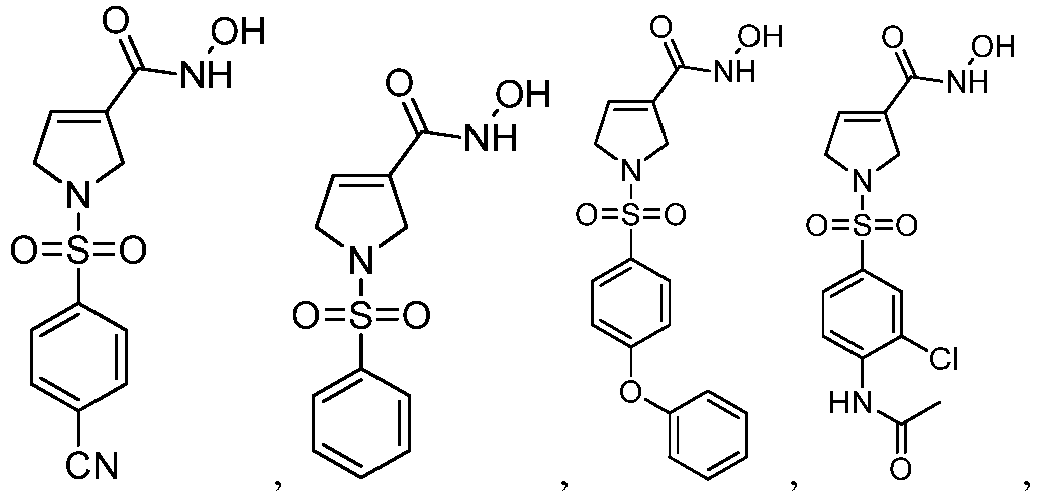


- Procédé de préparation du composé pyrrolamide de formule I, se caractérise par: sa voie de synthèse est:


 R1 est choisi parmi le hydrogène, le hydroxy, le cyano, le halogène, le carboxyle, l'alkyle en C1∼C6, l'alcoxy en C1∼C6, l'amide en C2∼C6, l'amino acyle en C2∼C6, l'hétérocyclique en C3∼C6, l'allyl hétérocyclique en C3∼C6 ou le phénoxy;R2 est choisi parmi le hydrogène, le hydroxy, le cyano, le halogène, le carboxyle, l'alkyle en C1∼C6, l'alcoxy en C1∼C6, l'amide en C2∼C6, l'amino acyle en C2∼C6, l'hétérocyclique en C3∼C6, l'allyl hétérocyclique en C3∼C6, le phénoxy, le phényle ou le phényle substitué;R5 est choisi parmi le halogène;X est choisi parmi le groupeLa méthode comprend les étapes suivantes:
 a. Après avoir agité le composé IM-4, le hydroxyde de lithium et le solvant éther/eau à 20°C∼30°C pendant 1h∼6h, le solvant organique est éliminé, dilué avec de l'eau, le pH ajusté est de 3∼6, avec la précipitation du solide, filtré pour donner un solide, lavé à l'eau et séché pour obtenir l'acide N-tert-butoxycarbonyl-2,5-dihydro-1H-pyrrole-3-carboxylique;
Le rapport molaire du composé IM-4 et l'hydroxyde de lithium est de 1: (1∼10); le rapport de masse au volume du composé IM-4 au solvant mélangé est de 1: (7∼20) (m: v); parmi les solvants mélangés, le rapport volumique du solvant éther à l'eau est de (1∼2):1;b. Lors de 0°C∼5°C, le composé N-tert-butoxycarbonyl-2,5-dihydro-1H-pyrrole-3-carboxylique dans l'étape a est dissous dans le solvant hydrocarboné halogéné, l'acide trifluoroacétique est ajouté pour agiter à 20°C∼30°C pendant 2h∼12h afin d'obtenir un liquide réactionnel; le liquide réactionnel est concentré pour obtenir une huile jaune qui est le composé IM-3;
Le rapport de masse au volume décrit de N-tert-butoxycarbonyl-2,5-dihydro-1H-pyrrole-3-carboxylique, du solvant halogénocarboné et de l'acide trifluoroacétique est de 1: (5∼20): (2∼10)(m:v:v);c. Après avoir agité le composé IM-3 de l'étape b, le carbonate de sodium, le chlorure de décanoyle et le solvant éther/eau à 20°C∼30°C pendant 12h∼16h, dilués avec de l'eau, le pH ajusté est de 1∼3, le solvant ester est extrait, la phase organique est combinée et la phase organique est séchée, filtrée et concentrée pour obtenir le composé IM-2;
Le rapport molaire décrit du composé IM-3, carbonate de sodium au chlorure de décanoyle est de 1:(1∼5):(0.9∼1.5); le rapport de masse au volume du composé IM-3 au solvant mélangé est de 1:(10∼25); parmi les solvants mélangés, le rapport volumique du solvant éther à l'eau est de (1∼2):1;d. Après avoir mélangé le composé IM-2, O-(tétrahydro-2H-pyran-2-yl) hydroxylamine, 2-(7-azobenzotriazole)-N,N,N',N'-tétraméthyluronium hexafluorophosphate, N,N-diisopropyléthylamine et le solvant hydrocarboné halogène dans l'étape c à 25°C∼30°C pendant 12h∼16h, dilués avec de l'eau, le solvant ester est extrait, la phase organique est combinée et la phase organique est séchée, filtrée et concentrée pour obtenir un produit brut; le produit brut est purifié par chromatographie sur colonne pour obtenir le composé IM-1;
Le rapport molaire décrit du composé IM-2, O-(tétrahydro-2H-pyran-2-yl) hydroxylamine, 2-(7-azobenzotriazole)-N,N,N',N'-tétraméthyluronium hexafluorophosphate, N,N-diisopropyléthylamine est de 1: (1∼2): (1∼2): (2∼4); le rapport de masse au volume du composé IM-2 au solvant halogénocarboné est de 1:(9∼20) (m:v);e. Après avoir agité le composé IM-1 de l'étape d, la pipéridine et le solvant de l'azote à 25°C∼30°C pendant 4h∼6h, dilués avec de l'eau, le solvant ester est extrait, la phase organique est combinée et la phase organique est séchée, filtrée et concentrée pour obtenir le composé IM;
Le rapport de masse au volume du composé IM-1, de la pipéridine et du solvant contenant de l'azote est de 1: (1∼4): (5∼20);f. Le composé IM de l'étape e, la triéthylamine,

Ou,
Le composé IM de l'étape e, la triéthylamine,
 g. Lors de 0°C∼5°C, le composé TM-1(a) de l'étape f est dissous dans le solvant hydrocarboné halogène, l'acide trifluoroacétique est ajouté pour agiter à 25°C∼30°C pendant 1h∼12h, puis le solvant est éliminé pour obtenir un produit brut, le produit brut étant purifié par le chromatographie liquide préparatoire de haute performance, pour obtenir le composé TM (a), le rapport de masse au volume du composé TM-1(a), du solvant halogénocarboné et de l'acide trifluoroacétique est de 1: (50∼100): (10∼50) (m:v:v);
Ou,
Lors de 0°C∼5°C, le composé TM-1(b) de l'étape f est dissous dans le solvant hydrocarboné halogène, l'acide trifluoroacétique est ajouté pour agiter à 25°C∼30°C pendant 1h∼12h, puis le solvant est éliminé pour obtenir un produit brut, le produit brut étant purifié par le chromatographie liquide préparatoire de haute performance, pour obtenir le composé TM (b), le rapport de masse au volume du composé TM-1(b), du solvant halogénocarboné et de l'acide trifluoroacétique est de 1:(50∼100):(10∼50) (m:v:v). - Procédé selon la revendication 4, se caractérise par: le procédé comprend les étapes suivantes:a. Après avoir agité le composé IM-4, le hydroxyde de lithium et le solvant éther/eau à 25°C pendant 2h, le solvant organique est éliminé, dilué avec de l'eau, le pH ajusté est de 5, avec la précipitation du solide, filtré pour donner un solide, lavé à l'eau et séché pour obtenir l'acide N-tert-butoxycarbonyl-2,5-dihydro-1H-pyrrole-3-carboxylique;
Le rapport molaire du composé IM-4 et l'hydroxyde de lithium est de 1: (4.5∼5); le rapport de masse au volume du composé IM-4 au solvant mélangé est de 1:(10∼12)(m:v); parmi les solvants mélangés, le rapport volumique du solvant éther à l'eau est de 2:1;b. Lors de 0°C, le composé N-tert-butoxycarbonyl-2,5-dihydro-1H-pyrrole-3-carboxylique dans l'étape a est dissous dans le solvant hydrocarboné halogéné, l'acide trifluoroacétique est ajouté pour agiter à 25°C pendant 2h afin d'obtenir un liquide réactionnel; le liquide réactionnel est concentré pour obtenir une huile jaune qui est le composé IM-3;
Le rapport de masse au volume décrit de N-tert-butoxycarbonyl-2,5-dihydro-1H-pyrrole-3-carboxylique, du solvant halogénocarboné et de l'acide trifluoroacétique est de 1:10: (4∼5)(m:v:v);c. Après avoir mélangé le composé IM-3, carbonate de sodium, l'oxychlorure de décanoyle et le solvant éther/eau dans l'étape b à 25°C pendant 12h∼16h, dilués avec de l'eau, le pH ajusté est de 1, le solvant ester est extrait, la phase organique est combinée et la phase organique est séchée, filtrée et concentrée pour obtenir le composé IM-2;
Le rapport molaire décrit du composé IM-3, carbonate de sodium au chlorure de décanoyle est de 1:3:1; le rapport de masse au volume du composé IM-3 au solvant mélangé est de 1:20; parmi les solvants mélangés, le rapport volumique du solvant éther à l'eau est de 5:3;d. Après avoir mélangé le composé IM-2, O-(tétrahydro-2H-pyran-2-yl) hydroxylamine, 2-(7-azobenzotriazole)-N,N,N',N'-tétraméthyluronium hexafluorophosphate, N,N-diisopropyléthylamine et le solvant hydrocarboné halogène dans l'étape c à 25°C pendant 12h∼16h, dilués avec de l'eau, le solvant ester est extrait, la phase organique est combinée et la phase organique est séchée, filtrée et concentrée pour obtenir un produit brut; le produit brut est purifié par chromatographie sur colonne pour obtenir le composé IM-1;
Le rapport molaire décrit du composé IM-2, O-(tétrahydro-2H-pyran-2-yl) hydroxylamine, 2-(7-azobenzotriazole)-N,N,N',N'-tétraméthyluronium hexafluorophosphate, N,N-diisopropyléthylamine est de 1:1,1:1,2:3; le rapport de masse au volume du composé IM-2 au solvant halogénocarboné est de 1:(9∼10) (m: v);e. Après avoir agité le composé IM-1 de l'étape d, la pipéridine et le solvant de l'azote à 25°C pendant 4h∼6h, dilués avec de l'eau, le solvant ester est extrait, la phase organique est combinée et la phase organique est séchée, filtrée et concentrée pour obtenir le composé IM;
Le rapport de masse au volume du composé IM-1, de la pipéridine et du solvant contenant de l'azote est de 1:2:10;f. Le composé IM de l'étape e, la triéthylamine et le solvant halogénocarboné sont agités à 25°C pendant 2h, puis le solvant est éliminé pour obtenir un produit brut; le produit brut est purifié par le chromatographie sur colonne pour obtenir le composé TM-1(a); le rapport molaire de l'IM, la triéthylamine et
Ou,
Le composé IM de l'étape e, la triéthylamine et le solvant halogénocarboné sont agités à 25°C pendant 2h, puis le solvant est éliminé pour obtenir un produit brut; le produit brut est purifié par le chromatographie sur colonne pour obtenir le composé TM-1(b); le rapport molaire de l'IM, la triéthylamine et g. Lors de 0°C, le composé IM-1(a) de l'étape f est dissous dans le solvant hydrocarboné halogéné, l'acide trifluoroacétique est ajouté pour agiter à 25°C pendant 2h, puis le solvant est éliminé pour obtenir un produit brut, le produit brut étant purifié par le chromatographie liquide préparatoire de haute performance, pour obtenir le composé TM(a), le rapport de masse au volume du composé TM-1(a), du solvant halogénocarboné et de l'acide trifluoroacétique est de 1: (60∼6S):25(m:v:v).
Ou,
Lors de 0°C, le composé TM-1(b) de l'étape f est dissous dans le solvant hydrocarboné halogéné, l'acide trifluoroacétique est ajouté pour agiter à 25°C pendant 2h, puis le solvant est éliminé pour obtenir un produit brut, le produit brut étant purifié par le chromatographie liquide préparatoire de haute performance, pour obtenir le composé TM(b), le rapport de masse au volume du composé TM-1(b), du solvant halogénocarboné et de l'acide trifluoroacétique est de 1: (60∼65):25(m:v:v). - Procédé selon la revendication 4 ou 5, se caractérise par:R1 est choisi parmi le hydrogène, le hydroxy, le cyano, le fluoro, le chloro, le bromo, le carboxy, le méthyle, l'éthyle, le n-propyle, l'isopropyle, le n-butyle, l'isobutyle, le tert-butyle, le pentyle, le hexane alkylé, le méthoxy, l'éthoxy, le n-propoxy, l'isopropoxy, le n-butoxy, l'isobutoxy, le butoxy, le pentanoxy, le hexaneoxy, le formamide, l'acétyle amino, le n-propionylamino, l'isopropylamide, le n-butyryle, l'isobutyryle, le t-butyryle, le pentaneamide, le hexaneamide, le carbamoyle, l'acétyle, n-alanyle, le groupe isopropyle, le groupe n-butyryle, le groupe isobutyryle, le groupe tert-butyryle, le groupe valyle, l'amino acyle, le radical hétérocyclique d'azote en C3, le radical hétérocyclique d'azote en C4, le radical hétérocyclique d'azote en C5, le radical hétérocyclique d'azote en C6, l'allyl hétérocyclique d'azote en C3, l'allyl hétérocyclique d'azote en C4, l'allyl hétérocyclique d'azote en C5, l'allyl hétérocyclique d'azote en C6 ou le phénoxy;R2 est choisi parmi le hydrogène, le hydroxy, le cyano, le fluoro, le chloro, le bromo, le carboxy, le méthyle, l'éthyle, le n-propyle, l'isopropyle, le n-butyle, l'isobutyle, le tert-butyle, le pentyle, le hexane alkylé, le méthoxy, l'éthoxy, le n-propoxy, l'isopropoxy, le n-butoxy, l'isobutoxy, le butoxy, le pentanoxy, le hexaneoxy, le formamide, l'acétyle amino, le n-propionylamino, l'isopropylamide, le n-butyryle, l'isobutyryle, le t-butyryle, le pentaneamide, le hexaneamide, le carbamoyle, l'acétyle, n-alanyle, le groupe isopropyle, le groupe n-butyryle, le groupe isobutyryle, le groupe tert-butyryle, le groupe valyle, l'amino acyle, le radical hétérocyclique d'azote en C3, le radical hétérocyclique d'azote en C4, le radical hétérocyclique d'azote en C5, le radical hétérocyclique d'azote en C6, l'allyl hétérocyclique d'azote en C3, l'allyl hétérocyclique d'azote en C4, l'allyl hétérocyclique d'azote en C5, l'allyl hétérocyclique d'azote en C6, le phénoxy, le phényle ou le phényle substitué;R1 se différant de R2 est hydrogène;R5 est choisi parmi le fluor, le chlore, le brome et l'iode;M est 1 ou 2, et n est 1 ou 2.
- Procédé selon la revendication 6, se caractérise par:


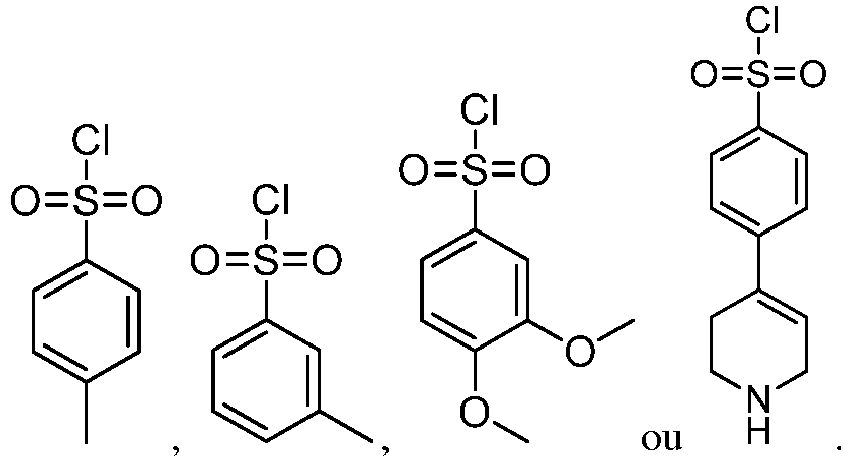
- Procédé selon la revendication 4 ou 5, se caractérise par: dans les étapes a∼g, le solvant éther est choisi dans un ou plusieurs comprenant le tétrahydrofuranne, l'éther sulfurique, l'éther méthylique de tert-butyle, l'éther isopropylique et l'éther butylique; le solvant hydrocarboné halogéné décrit est choisi dans un ou plusieurs comprenant le dichlorométhane, le chloroéthane, le dichloroéthane, le trichlorométhane et le tétrachloréthylène; le solvant ester est choisi dans un ou plusieurs comprenant l'acétate d'éthyle et le formiate d'éthyle; le solvant de l'azote est choisi parmi dans un ou plusieurs comprenant N,N-diméthylformamide, le N,N-diméthylacétamide, l'acétonitrile et la pyridine.
- Procédé de préparation du composé pyrrolamide de formule I, se caractérise par: sa voie de synthèse est:
 Dont Boc représente le groupe tert-butoxycarbonyle, TFA représente l'acide trifluoroacétique et HATU représente le 2-(7-azobenzotriazole) -N,N,N',N'-tétraméthyluronium hexafluorophosphate; DIEA représente la N,N-diisopropyléthylamine; LiOH représente l'hydroxyde de lithium;R1 est choisi parmi le hydrogène, le hydroxy, le cyano, le halogène, le carboxyle, l'alkyle en C1∼C6, l'alcoxy en C1∼C6, l'amide en C2∼C6, l'amino acyle en C2∼C6, l'hétérocyclique en C3∼C6, l'allyl hétérocyclique en C3∼C6 ou le phénoxy;R2 est choisi parmi le hydrogène, le hydroxy, le cyano, le halogène, le carboxyle, l'alkyle en C1∼C6, l'alcoxy en C1∼C6, l'amide en C2∼C6, l'amino acyle en C2∼C6, l'hétérocyclique en C3∼C6, l'allyl hétérocyclique en C3∼C6, le phénoxy, le phényle ou le phényle substitué;R5 est choisi parmi le halogène;Avec les étapes suivantes:a. Lors de 0°C∼5°C, le composé IM-4 est dissous dans le solvant hydrocarboné halogéné, l'acide trifluoroacétique est ajouté pour agiter à 20°C∼30°C pendant 2h∼2h afin d'obtenir un liquide réactionnel; le liquide réactionnel est concentré pour obtenir une huile jaune qui est le composé IM-5;
Le rapport de masse au volume décrit de l'IM-4, du solvant hydrocarboné halogène et de l'acide trifluoroacétique est de 1: (5∼20):(2∼10);b. Après avoir mélangé le composé IM-5, la triéthylamine
Le rapport molaire du composé IM-5, la triéthylamine, à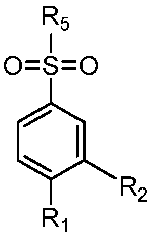 c. Après avoir mélangé le composé IM-6, le solvant mélangé d'hydroxyde de lithium et du solvant éther/eau dans l'étape b à 20°C∼30°C pendant 10h∼16h, le liquide réactionnel est obtenu; le pH du liquide réactionnel ajusté est de 1∼5, le solvant ester est extrait, la phase organique est combinée et la phase organique est séchée, filtrée et concentrée pour obtenir le composé IM-7;
Le rapport molaire du composé IM-4 et l'hydroxyde de lithium est de 1: (1∼10); le rapport de masse au volume du composé IM-4 au solvant mélangé est de 1: (55∼60)(m:v); parmi les solvants mélangés, le rapport volumique du solvant éther à l'eau est de (1∼5):1;d. Après avoir mélangé le composé IM-7, 1,2-diaminobenzène, 2-(7-azobenzotriazole)-N,N,N',N'-tétraméthyluronium hexafluorophosphate, N,N-diisopropyléthylamine et le solvant hydrocarboné halogène dans l'étape c à 25°C∼30°C pendant 12h∼16h, le liquide réactionnel est obtenu; le liquide réactionnel est dilué avec de l'eau, le solvant ester est extrait, la phase organique est combinée et la phase organique est séchée, filtrée et concentrée pour obtenir un produit brut; le produit brut est purifié par chromatographie sur colonne pour obtenir le composé TM(c);
Le rapport solaire du composé IM-7, 1,2-diaminobenzène, 2-(7-azobenzotriazole) -N,N,N',N'-tétraméthyluronium hexafluorophosphate, N, et N-diisopropyléthylamine est de 1:(1∼2):(1∼2):(2∼4); le rapport de masse au volume du composé IM-7 et du solvant hydrocarboné est de 1:(40∼100) (m:v). - Procédé selon la revendication 9, se caractérise par: le procédé comprend les étapes suivantes:a. Lors de 0°C, le composé IM-4 est dissous dans le solvant hydrocarboné halogéné, l'acide trifluoroacétique est ajouté pour agiter à 25°C pendant 2h afin d'obtenir un liquide réactionnel; le liquide réactionnel est concentré pour obtenir une huile jaune qui est le composé IM-5;
Le rapport de masse au volume décrit de l'IM-4, du solvant hydrocarboné halogène et de l'acide trifluoroacétique est de 1:20:8;b. Après avoir mélangé le composé IM-5, la triéthylamine
Le rapport molaire du composé IM-5, la triéthylamine, à c. Après avoir mélangé le composé IM-6, le solvant mélangé d'hydroxyde de lithium et du solvant éther/eau dans l'étape b à 25°C pendant 12h∼16h, le liquide réactionnel est obtenu; le pH du liquide réactionnel ajusté est de 2, le solvant ester est extrait, la phase organique est combinée et la phase organique est séchée, filtrée et concentrée pour obtenir le composé IM-7;
Le rapport molaire du composé IM-4 et l'hydroxyde de lithium est de 1:4,5; le rapport de masse au volume du composé IM-4 au solvant mélangé est de 1:(55∼60)(m:v); parmi les solvants mélangés, le rapport volumique du solvant éther à l'eau est de 3:1;d. Après avoir mélangé le composé IM-7, 1,2-diaminobenzène, 2-(7-azobenzotriazole) -N,N,N',N'-tétraméthyluronium hexafluorophosphate, N,N-diisopropyléthylamine et le solvant hydrocarboné halogène dans l'étape c à 25°C pendant 12h∼16h, le liquide réactionnel est obtenu; le liquide réactionnel est dilué avec de l'eau, le solvant ester est extrait, la phase organique est combinée et la phase organique est séchée, filtrée et concentrée pour obtenir un produit brut; le produit brut est purifié par chromatographie sur colonne pour obtenir le composé TM(c);
Le rapport solaire du composé IM-7, 1,2-diaminobenzène, 2-(7-azobenzotriazole)-N,N,N',N'-tétraméthyluronium hexafluorophosphate, N, et N-diisopropyléthylamine est de 1:1,5: 1,5:3; le rapport de masse au volume du composé IM-7 et du solvant hydrocarboné est de 1: (40-45) (m:v). - Procédé selon la revendication 9 ou 10, se caractérise par:R1 est choisi parmi le hydrogène, le hydroxy, le cyano, le fluoro, le chloro, le bromo, le carboxy, le méthyle, l'éthyle, le n-propyle, l'isopropyle, le n-butyle, l'isobutyle, le tert-butyle, le pentyle, le hexane alkylé, le méthoxy, l'éthoxy, le n-propoxy, l'isopropoxy, le n-butoxy, l'isobutoxy, le butoxy, le pentanoxy, le hexaneoxy, le formamide, l'acétyle amino, le n-propionylamino, l'isopropylamide, le n-butyryle, l'isobutyryle, le t-butyryle, le pentaneamide, le hexaneamide, le carbamoyle, l'acétyle, n-alanyle, le groupe isopropyle, le groupe n-butyryle, le groupe isobutyryle, le groupe tert-butyryle, le groupe valyle, l'amino acyle, le radical hétérocyclique d'azote en C3, le radical hétérocyclique d'azote en C4, le radical hétérocyclique d'azote en C5, le radical hétérocyclique d'azote en C6, l'allyl hétérocyclique d'azote en C3, l'allyl hétérocyclique d'azote en C4, l'allyl hétérocyclique d'azote en C5, l'allyl hétérocyclique d'azote en C6 ou le phénoxy;R2 est choisi parmi le hydrogène, le hydroxy, le cyano, le fluoro, le chloro, le bromo, le carboxy, le méthyle, l'éthyle, le n-propyle, l'isopropyle, le n-butyle, l'isobutyle, le tert-butyle, le pentyle, le hexane alkylé, le méthoxy, l'éthoxy, le n-propoxy, l'isopropoxy, le n-butoxy, l'isobutoxy, le butoxy, le pentanoxy, le hexaneoxy, le formamide, l'acétyle amino, le n-propionylamino, l'isopropylamide, le n-butyryle, l'isobutyryle, le t-butyryle, le pentaneamide, le hexaneamide, le carbamoyle, l'acétyle, n-alanyle, le groupe isopropyle, le groupe n-butyryle, le groupe isobutyryle, le groupe tert-butyryle, le groupe valyle, l'amino acyle, le radical hétérocyclique d'azote en C3, le radical hétérocyclique d'azote en C4, le radical hétérocyclique d'azote en C5, le radical hétérocyclique d'azote en C6, l'allyl hétérocyclique d'azote en C3, l'allyl hétérocyclique d'azote en C4, l'allyl hétérocyclique d'azote en C5, l'allyl hétérocyclique d'azote en C6, le phénoxy, le phényle ou le phényle substitué;R1 se différant de R2 est hydrogène;R5 est choisi parmi le fluor, le chlore, le brome et l'iode.
- Procédé selon la revendication 9 ou 10, se caractérise par:


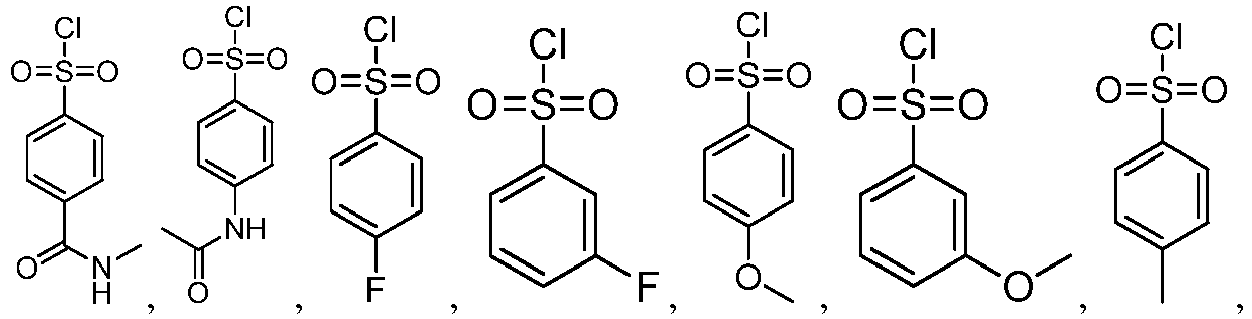

- Procédé selon la revendication 9 ou 10, se caractérise par: dans les étapes a∼d, le solvant hydrocarboné halogéné décrit est choisi dans un ou plusieurs comprenant le dichlorométhane, le chloroéthane, le dichloroéthane, le trichlorométhane et le tétrachloréthylène; le solvant ester est choisi dans un ou plusieurs comprenant l'acétate d'éthyle et le formiate d'éthyle; le solvant éther est choisi dans un ou plusieurs comprenant le tétrahydrofuranne, l'éther sulfurique, l'éther méthylique de tert-butyle, l'éther isopropylique et l'éther butylique.
- La destination du composé pyrroleamide décrit dans la revendication 1 ou sa forme cristalline, du sel pharmaceutiquement acceptable, du hydrate ou du complexe de solvants dans la maladie proliférative cellulaire, la maladie auto-immune, l'inflammation, la maladie neurodégénérative ou la maladie virale.
- La destination du composé pyrroleamide ou sa forme cristalline décrit dans la revendication 14, du sel pharmaceutiquement acceptable, du hydrate ou du complexe de solvants, se caractérise par: la maladie décrite est le cancer.
- Une composition pharmaceutique, comprenant le composé pyrroleamide ou sa forme cristalline décrit dans l'une des revendications 1∼3, le sel pharmaceutiquement acceptable, le hydrate ou le complexe de solvants comme l'élément actif, et les fournitures ou bien les éléments axillaires couramment utilisés dans la pharmacie.
- La composition pharmaceutique selon la revendication 16, se caractérise par: la composition descriptive est une préparation de dosage orale, une préparation de dosage sublinguale, une préparation de dosage buccale, une préparation d'absorption transdermique ou une préparation d'injection.
Applications Claiming Priority (2)
| Application Number | Priority Date | Filing Date | Title |
|---|---|---|---|
| CN201410836191.5A CN105801464B (zh) | 2014-12-29 | 2014-12-29 | 吡咯酰胺类化合物及其制备方法与用途 |
| PCT/CN2015/090291 WO2016107227A1 (fr) | 2014-12-29 | 2015-09-22 | Composé pyrrole-amide, procédé de préparation de ce dernier, et son utilisation |
Publications (3)
| Publication Number | Publication Date |
|---|---|
| EP3241823A1 EP3241823A1 (fr) | 2017-11-08 |
| EP3241823A4 EP3241823A4 (fr) | 2018-06-20 |
| EP3241823B1 true EP3241823B1 (fr) | 2019-04-17 |
Family
ID=56284143
Family Applications (1)
| Application Number | Title | Priority Date | Filing Date |
|---|---|---|---|
| EP15874912.7A Active EP3241823B1 (fr) | 2014-12-29 | 2015-09-22 | Composé pyrrole-amide, procédé de préparation de ce dernier, et son utilisation |
Country Status (5)
| Country | Link |
|---|---|
| US (1) | US10266489B2 (fr) |
| EP (1) | EP3241823B1 (fr) |
| JP (1) | JP2018503683A (fr) |
| CN (1) | CN105801464B (fr) |
| WO (1) | WO2016107227A1 (fr) |
Families Citing this family (4)
| Publication number | Priority date | Publication date | Assignee | Title |
|---|---|---|---|---|
| MX2022007376A (es) | 2019-12-20 | 2022-09-02 | Tenaya Therapeutics Inc | Fluoroalqull-oxadiazoles y sus usos. |
| IL307883A (en) | 2021-04-23 | 2023-12-01 | Tenaya Therapeutics Inc | HDAC6 inhibitors for use in the treatment of dilated myocardial disease |
| US20240252502A1 (en) | 2021-05-04 | 2024-08-01 | Tenaya Therapeutics, Inc. | Hdac6 inhibitors for treatment of metabolic disease and hfpef |
| WO2025215092A1 (fr) | 2024-04-10 | 2025-10-16 | Institut National de la Santé et de la Recherche Médicale | Inhibiteurs sélectifs de hdac6 destinés à être utilisés dans le traitement de la dystrophie myotonique de type 1 |
Family Cites Families (13)
| Publication number | Priority date | Publication date | Assignee | Title |
|---|---|---|---|---|
| DE69924534D1 (de) * | 1999-08-23 | 2005-05-04 | Rotem Amfert Negev Ltd | Modifiziertes titandioxid, verfahren für seine herstellung und katalytische zusammensetzungen derselben enthaltende |
| WO2005068448A1 (fr) * | 2003-08-29 | 2005-07-28 | Ionix Pharmaceuticals Limited | Sulfonamides a action antagoniste sur des canaux calcium de type n |
| EA012451B1 (ru) * | 2004-03-11 | 2009-10-30 | 4Сц Аг | Новые амидозамещённые гидрокси-6-фенилфенантридины |
| US20060035884A1 (en) * | 2004-05-20 | 2006-02-16 | Elan Pharmaceuticals, Inc. | N-cyclic sulfonamido inhibitors of gamma secretase |
| US20110178138A1 (en) * | 2008-07-28 | 2011-07-21 | The Regents Of The University Of California | Inhibitors of protein prenyltransferases |
| CN102659630B (zh) | 2011-05-04 | 2016-01-06 | 成都地奥九泓制药厂 | 一种异羟肟酸类化合物及其制备方法和用途 |
| CN103420917B (zh) | 2012-05-18 | 2015-08-19 | 国药一心制药有限公司 | 含稠环结构的苯甲酰胺类化合物及其作为抗肿瘤药物应用 |
| CN102786458B (zh) | 2012-06-04 | 2014-02-12 | 天津渤海职业技术学院 | 吡咯甲酰胺衍生物、其制备方法和用途 |
| CN103539695B (zh) | 2012-07-12 | 2015-09-09 | 南京圣和药业股份有限公司 | 一种新的取代二苯醚类组蛋白去乙酰化酶抑制剂 |
| US9914717B2 (en) * | 2012-12-20 | 2018-03-13 | The Broad Institute, Inc. | Cycloalkenyl hydroxamic acid derivatives and their use as histone deacetylase inhibitors |
| CN103288728A (zh) | 2013-05-17 | 2013-09-11 | 华侨大学 | 一种萘甲酰胺衍生物、其制备方法以及应用 |
| CN103467359B (zh) | 2013-09-27 | 2015-04-22 | 山东大学 | 一种含有吲哚的肉桂酰胺类组蛋白去乙酰化酶抑制剂及其制备方法和应用 |
| WO2016107544A1 (fr) * | 2014-12-29 | 2016-07-07 | 成都先导药物开发有限公司 | Composé intermédiaire pour la préparation d'un composé pyrrole amide et son procédé de préparation et d'utilisation |
-
2014
- 2014-12-29 CN CN201410836191.5A patent/CN105801464B/zh active Active
-
2015
- 2015-09-22 JP JP2017552203A patent/JP2018503683A/ja active Pending
- 2015-09-22 EP EP15874912.7A patent/EP3241823B1/fr active Active
- 2015-09-22 WO PCT/CN2015/090291 patent/WO2016107227A1/fr not_active Ceased
-
2017
- 2017-06-27 US US15/635,181 patent/US10266489B2/en active Active
Non-Patent Citations (1)
| Title |
|---|
| None * |
Also Published As
| Publication number | Publication date |
|---|---|
| EP3241823A4 (fr) | 2018-06-20 |
| WO2016107227A1 (fr) | 2016-07-07 |
| CN105801464A (zh) | 2016-07-27 |
| EP3241823A1 (fr) | 2017-11-08 |
| US20170298016A1 (en) | 2017-10-19 |
| US10266489B2 (en) | 2019-04-23 |
| CN105801464B (zh) | 2019-05-28 |
| JP2018503683A (ja) | 2018-02-08 |
Similar Documents
| Publication | Publication Date | Title |
|---|---|---|
| CA2987570C (fr) | Composes derives de sulfamide du 1,3,4-oxadiazole utilises comme inhibiteur de l'histone desacetylase 6, et composition pharmaceutique comprenant ceux-ci | |
| EP3398598B1 (fr) | Dérivé du sulfonamide, son procédé de préparation et son procédé d'utilisation | |
| Zhang et al. | Discovery of a tetrahydroisoquinoline-based hydroxamic acid derivative (ZYJ-34c) as histone deacetylase inhibitor with potent oral antitumor activities | |
| CZ299836B6 (cs) | Aryl- a heteroaryl-substituované heterocyklické mocoviny, jejich použití a farmaceutické kompozice s jejich obsahem | |
| EP3241823B1 (fr) | Composé pyrrole-amide, procédé de préparation de ce dernier, et son utilisation | |
| CN108947912B (zh) | 一种靶向Neddylation通路的抗肿瘤化合物 | |
| CN115417877B (zh) | 组蛋白去乙酰化酶抑制剂及其制备和在制备抗癌症药物上的应用 | |
| EP2280940A1 (fr) | Nouveaux n-(2-amino-phényl)-acrylamides | |
| CN105131082A (zh) | 环肽类化合物及其应用 | |
| CA3178647A1 (fr) | Amides tricycliques substitues, analogues de ceux-ci et procedes les mettant en oeuvre | |
| CN104529933B (zh) | 取代邻苯甲酰磺酰亚胺类组蛋白去乙酰化酶抑制剂及制备方法和应用 | |
| CN105732459B (zh) | 吡咯酰胺类化合物及其制备方法与用途 | |
| CN114349735B (zh) | 一类O-GlcNAc转移酶抑制剂及其制备方法和应用 | |
| CN109438347B (zh) | 一种氰基喹啉类ido1抑制剂、其制备方法及应用 | |
| CN105732597B (zh) | 一种制备吡咯酰胺类化合物的中间体化合物及其制备方法与应用 | |
| CN110563701B (zh) | N-2-嘧啶-2-叠氮-3-(2,2,6,6-四甲基哌啶氧)吲哚啉及其制备与应用 | |
| CN105732458B (zh) | 吡咯酰胺类化合物及其制备方法与用途 | |
| CN106966978A (zh) | 一种酰胺类化合物及其制备方法和用途 | |
| CN111960970B (zh) | 抗肿瘤化合物 | |
| CN116768881B (zh) | 4-(3-吲哚基)-1,3-噻唑类化合物及其制备方法和应用 | |
| CN105985335B (zh) | 异羟肟酸类化合物、制备方法及其用途 | |
| CN114573567B (zh) | 一种吲唑环联三氮唑类化合物及其制备方法和应用 | |
| CN118459418A (zh) | 一种异羟肟酸类hdac抑制剂及其在制备抗肿瘤药物中的应用 | |
| CN121378217A (zh) | 2-氧代-2-(1-(苯磺酰基)-1h-吲哚-3-基)-n-(吡啶-3-基)乙酰胺类衍生物及其应用 | |
| CN116924987A (zh) | 4-哌嗪硫脲苯磺酰胺-1,8-萘酰亚胺衍生物及其制备方法和应用 |
Legal Events
| Date | Code | Title | Description |
|---|---|---|---|
| STAA | Information on the status of an ep patent application or granted ep patent |
Free format text: STATUS: THE INTERNATIONAL PUBLICATION HAS BEEN MADE |
|
| PUAI | Public reference made under article 153(3) epc to a published international application that has entered the european phase |
Free format text: ORIGINAL CODE: 0009012 |
|
| STAA | Information on the status of an ep patent application or granted ep patent |
Free format text: STATUS: REQUEST FOR EXAMINATION WAS MADE |
|
| 17P | Request for examination filed |
Effective date: 20170707 |
|
| AK | Designated contracting states |
Kind code of ref document: A1 Designated state(s): AL AT BE BG CH CY CZ DE DK EE ES FI FR GB GR HR HU IE IS IT LI LT LU LV MC MK MT NL NO PL PT RO RS SE SI SK SM TR |
|
| AX | Request for extension of the european patent |
Extension state: BA ME |
|
| DAV | Request for validation of the european patent (deleted) | ||
| DAX | Request for extension of the european patent (deleted) | ||
| REG | Reference to a national code |
Ref country code: DE Ref legal event code: R079 Ref document number: 602015028673 Country of ref document: DE Free format text: PREVIOUS MAIN CLASS: C07D0207480000 Ipc: C07D0401120000 |
|
| A4 | Supplementary search report drawn up and despatched |
Effective date: 20180517 |
|
| RIC1 | Information provided on ipc code assigned before grant |
Ipc: A61P 37/00 20060101ALI20180511BHEP Ipc: C07D 405/12 20060101ALI20180511BHEP Ipc: A61K 31/40 20060101ALI20180511BHEP Ipc: A61P 25/00 20060101ALI20180511BHEP Ipc: A61P 35/00 20060101ALI20180511BHEP Ipc: C07D 207/48 20060101ALI20180511BHEP Ipc: C07D 401/12 20060101AFI20180511BHEP |
|
| GRAP | Despatch of communication of intention to grant a patent |
Free format text: ORIGINAL CODE: EPIDOSNIGR1 |
|
| STAA | Information on the status of an ep patent application or granted ep patent |
Free format text: STATUS: GRANT OF PATENT IS INTENDED |
|
| INTG | Intention to grant announced |
Effective date: 20181121 |
|
| GRAS | Grant fee paid |
Free format text: ORIGINAL CODE: EPIDOSNIGR3 |
|
| GRAA | (expected) grant |
Free format text: ORIGINAL CODE: 0009210 |
|
| STAA | Information on the status of an ep patent application or granted ep patent |
Free format text: STATUS: THE PATENT HAS BEEN GRANTED |
|
| AK | Designated contracting states |
Kind code of ref document: B1 Designated state(s): AL AT BE BG CH CY CZ DE DK EE ES FI FR GB GR HR HU IE IS IT LI LT LU LV MC MK MT NL NO PL PT RO RS SE SI SK SM TR |
|
| REG | Reference to a national code |
Ref country code: GB Ref legal event code: FG4D |
|
| REG | Reference to a national code |
Ref country code: CH Ref legal event code: EP |
|
| REG | Reference to a national code |
Ref country code: DE Ref legal event code: R096 Ref document number: 602015028673 Country of ref document: DE |
|
| REG | Reference to a national code |
Ref country code: AT Ref legal event code: REF Ref document number: 1121410 Country of ref document: AT Kind code of ref document: T Effective date: 20190515 Ref country code: IE Ref legal event code: FG4D |
|
| REG | Reference to a national code |
Ref country code: NL Ref legal event code: MP Effective date: 20190417 |
|
| REG | Reference to a national code |
Ref country code: LT Ref legal event code: MG4D |
|
| PG25 | Lapsed in a contracting state [announced via postgrant information from national office to epo] |
Ref country code: NL Free format text: LAPSE BECAUSE OF FAILURE TO SUBMIT A TRANSLATION OF THE DESCRIPTION OR TO PAY THE FEE WITHIN THE PRESCRIBED TIME-LIMIT Effective date: 20190417 |
|
| PG25 | Lapsed in a contracting state [announced via postgrant information from national office to epo] |
Ref country code: NO Free format text: LAPSE BECAUSE OF FAILURE TO SUBMIT A TRANSLATION OF THE DESCRIPTION OR TO PAY THE FEE WITHIN THE PRESCRIBED TIME-LIMIT Effective date: 20190717 Ref country code: FI Free format text: LAPSE BECAUSE OF FAILURE TO SUBMIT A TRANSLATION OF THE DESCRIPTION OR TO PAY THE FEE WITHIN THE PRESCRIBED TIME-LIMIT Effective date: 20190417 Ref country code: ES Free format text: LAPSE BECAUSE OF FAILURE TO SUBMIT A TRANSLATION OF THE DESCRIPTION OR TO PAY THE FEE WITHIN THE PRESCRIBED TIME-LIMIT Effective date: 20190417 Ref country code: PT Free format text: LAPSE BECAUSE OF FAILURE TO SUBMIT A TRANSLATION OF THE DESCRIPTION OR TO PAY THE FEE WITHIN THE PRESCRIBED TIME-LIMIT Effective date: 20190817 Ref country code: SE Free format text: LAPSE BECAUSE OF FAILURE TO SUBMIT A TRANSLATION OF THE DESCRIPTION OR TO PAY THE FEE WITHIN THE PRESCRIBED TIME-LIMIT Effective date: 20190417 Ref country code: AL Free format text: LAPSE BECAUSE OF FAILURE TO SUBMIT A TRANSLATION OF THE DESCRIPTION OR TO PAY THE FEE WITHIN THE PRESCRIBED TIME-LIMIT Effective date: 20190417 Ref country code: HR Free format text: LAPSE BECAUSE OF FAILURE TO SUBMIT A TRANSLATION OF THE DESCRIPTION OR TO PAY THE FEE WITHIN THE PRESCRIBED TIME-LIMIT Effective date: 20190417 Ref country code: LT Free format text: LAPSE BECAUSE OF FAILURE TO SUBMIT A TRANSLATION OF THE DESCRIPTION OR TO PAY THE FEE WITHIN THE PRESCRIBED TIME-LIMIT Effective date: 20190417 |
|
| PG25 | Lapsed in a contracting state [announced via postgrant information from national office to epo] |
Ref country code: PL Free format text: LAPSE BECAUSE OF FAILURE TO SUBMIT A TRANSLATION OF THE DESCRIPTION OR TO PAY THE FEE WITHIN THE PRESCRIBED TIME-LIMIT Effective date: 20190417 Ref country code: GR Free format text: LAPSE BECAUSE OF FAILURE TO SUBMIT A TRANSLATION OF THE DESCRIPTION OR TO PAY THE FEE WITHIN THE PRESCRIBED TIME-LIMIT Effective date: 20190718 Ref country code: BG Free format text: LAPSE BECAUSE OF FAILURE TO SUBMIT A TRANSLATION OF THE DESCRIPTION OR TO PAY THE FEE WITHIN THE PRESCRIBED TIME-LIMIT Effective date: 20190717 Ref country code: LV Free format text: LAPSE BECAUSE OF FAILURE TO SUBMIT A TRANSLATION OF THE DESCRIPTION OR TO PAY THE FEE WITHIN THE PRESCRIBED TIME-LIMIT Effective date: 20190417 Ref country code: RS Free format text: LAPSE BECAUSE OF FAILURE TO SUBMIT A TRANSLATION OF THE DESCRIPTION OR TO PAY THE FEE WITHIN THE PRESCRIBED TIME-LIMIT Effective date: 20190417 |
|
| REG | Reference to a national code |
Ref country code: AT Ref legal event code: MK05 Ref document number: 1121410 Country of ref document: AT Kind code of ref document: T Effective date: 20190417 |
|
| PG25 | Lapsed in a contracting state [announced via postgrant information from national office to epo] |
Ref country code: IS Free format text: LAPSE BECAUSE OF FAILURE TO SUBMIT A TRANSLATION OF THE DESCRIPTION OR TO PAY THE FEE WITHIN THE PRESCRIBED TIME-LIMIT Effective date: 20190817 |
|
| REG | Reference to a national code |
Ref country code: DE Ref legal event code: R097 Ref document number: 602015028673 Country of ref document: DE |
|
| PG25 | Lapsed in a contracting state [announced via postgrant information from national office to epo] |
Ref country code: RO Free format text: LAPSE BECAUSE OF FAILURE TO SUBMIT A TRANSLATION OF THE DESCRIPTION OR TO PAY THE FEE WITHIN THE PRESCRIBED TIME-LIMIT Effective date: 20190417 Ref country code: SK Free format text: LAPSE BECAUSE OF FAILURE TO SUBMIT A TRANSLATION OF THE DESCRIPTION OR TO PAY THE FEE WITHIN THE PRESCRIBED TIME-LIMIT Effective date: 20190417 Ref country code: EE Free format text: LAPSE BECAUSE OF FAILURE TO SUBMIT A TRANSLATION OF THE DESCRIPTION OR TO PAY THE FEE WITHIN THE PRESCRIBED TIME-LIMIT Effective date: 20190417 Ref country code: CZ Free format text: LAPSE BECAUSE OF FAILURE TO SUBMIT A TRANSLATION OF THE DESCRIPTION OR TO PAY THE FEE WITHIN THE PRESCRIBED TIME-LIMIT Effective date: 20190417 Ref country code: DK Free format text: LAPSE BECAUSE OF FAILURE TO SUBMIT A TRANSLATION OF THE DESCRIPTION OR TO PAY THE FEE WITHIN THE PRESCRIBED TIME-LIMIT Effective date: 20190417 Ref country code: AT Free format text: LAPSE BECAUSE OF FAILURE TO SUBMIT A TRANSLATION OF THE DESCRIPTION OR TO PAY THE FEE WITHIN THE PRESCRIBED TIME-LIMIT Effective date: 20190417 |
|
| PLBE | No opposition filed within time limit |
Free format text: ORIGINAL CODE: 0009261 |
|
| STAA | Information on the status of an ep patent application or granted ep patent |
Free format text: STATUS: NO OPPOSITION FILED WITHIN TIME LIMIT |
|
| PG25 | Lapsed in a contracting state [announced via postgrant information from national office to epo] |
Ref country code: IT Free format text: LAPSE BECAUSE OF FAILURE TO SUBMIT A TRANSLATION OF THE DESCRIPTION OR TO PAY THE FEE WITHIN THE PRESCRIBED TIME-LIMIT Effective date: 20190417 Ref country code: SM Free format text: LAPSE BECAUSE OF FAILURE TO SUBMIT A TRANSLATION OF THE DESCRIPTION OR TO PAY THE FEE WITHIN THE PRESCRIBED TIME-LIMIT Effective date: 20190417 |
|
| 26N | No opposition filed |
Effective date: 20200120 |
|
| PG25 | Lapsed in a contracting state [announced via postgrant information from national office to epo] |
Ref country code: TR Free format text: LAPSE BECAUSE OF FAILURE TO SUBMIT A TRANSLATION OF THE DESCRIPTION OR TO PAY THE FEE WITHIN THE PRESCRIBED TIME-LIMIT Effective date: 20190417 |
|
| PG25 | Lapsed in a contracting state [announced via postgrant information from national office to epo] |
Ref country code: SI Free format text: LAPSE BECAUSE OF FAILURE TO SUBMIT A TRANSLATION OF THE DESCRIPTION OR TO PAY THE FEE WITHIN THE PRESCRIBED TIME-LIMIT Effective date: 20190417 Ref country code: MC Free format text: LAPSE BECAUSE OF FAILURE TO SUBMIT A TRANSLATION OF THE DESCRIPTION OR TO PAY THE FEE WITHIN THE PRESCRIBED TIME-LIMIT Effective date: 20190417 |
|
| REG | Reference to a national code |
Ref country code: CH Ref legal event code: PL |
|
| PG25 | Lapsed in a contracting state [announced via postgrant information from national office to epo] |
Ref country code: LI Free format text: LAPSE BECAUSE OF NON-PAYMENT OF DUE FEES Effective date: 20190930 Ref country code: LU Free format text: LAPSE BECAUSE OF NON-PAYMENT OF DUE FEES Effective date: 20190922 Ref country code: IE Free format text: LAPSE BECAUSE OF NON-PAYMENT OF DUE FEES Effective date: 20190922 Ref country code: CH Free format text: LAPSE BECAUSE OF NON-PAYMENT OF DUE FEES Effective date: 20190930 |
|
| REG | Reference to a national code |
Ref country code: BE Ref legal event code: MM Effective date: 20190930 |
|
| PG25 | Lapsed in a contracting state [announced via postgrant information from national office to epo] |
Ref country code: BE Free format text: LAPSE BECAUSE OF NON-PAYMENT OF DUE FEES Effective date: 20190930 |
|
| PG25 | Lapsed in a contracting state [announced via postgrant information from national office to epo] |
Ref country code: CY Free format text: LAPSE BECAUSE OF FAILURE TO SUBMIT A TRANSLATION OF THE DESCRIPTION OR TO PAY THE FEE WITHIN THE PRESCRIBED TIME-LIMIT Effective date: 20190417 |
|
| PG25 | Lapsed in a contracting state [announced via postgrant information from national office to epo] |
Ref country code: MT Free format text: LAPSE BECAUSE OF FAILURE TO SUBMIT A TRANSLATION OF THE DESCRIPTION OR TO PAY THE FEE WITHIN THE PRESCRIBED TIME-LIMIT Effective date: 20190417 Ref country code: HU Free format text: LAPSE BECAUSE OF FAILURE TO SUBMIT A TRANSLATION OF THE DESCRIPTION OR TO PAY THE FEE WITHIN THE PRESCRIBED TIME-LIMIT; INVALID AB INITIO Effective date: 20150922 |
|
| PG25 | Lapsed in a contracting state [announced via postgrant information from national office to epo] |
Ref country code: MK Free format text: LAPSE BECAUSE OF FAILURE TO SUBMIT A TRANSLATION OF THE DESCRIPTION OR TO PAY THE FEE WITHIN THE PRESCRIBED TIME-LIMIT Effective date: 20190417 |
|
| PGFP | Annual fee paid to national office [announced via postgrant information from national office to epo] |
Ref country code: DE Payment date: 20220909 Year of fee payment: 8 |
|
| PGFP | Annual fee paid to national office [announced via postgrant information from national office to epo] |
Ref country code: FR Payment date: 20220902 Year of fee payment: 8 |
|
| REG | Reference to a national code |
Ref country code: DE Ref legal event code: R119 Ref document number: 602015028673 Country of ref document: DE |
|
| PG25 | Lapsed in a contracting state [announced via postgrant information from national office to epo] |
Ref country code: FR Free format text: LAPSE BECAUSE OF NON-PAYMENT OF DUE FEES Effective date: 20230930 Ref country code: DE Free format text: LAPSE BECAUSE OF NON-PAYMENT OF DUE FEES Effective date: 20240403 |
|
| PGFP | Annual fee paid to national office [announced via postgrant information from national office to epo] |
Ref country code: GB Payment date: 20250901 Year of fee payment: 11 |