EP3241836B1 - Polymorph d'un tétrasaccharide contenant du n-acétyllactosamine - Google Patents
Polymorph d'un tétrasaccharide contenant du n-acétyllactosamine Download PDFInfo
- Publication number
- EP3241836B1 EP3241836B1 EP17173284.5A EP17173284A EP3241836B1 EP 3241836 B1 EP3241836 B1 EP 3241836B1 EP 17173284 A EP17173284 A EP 17173284A EP 3241836 B1 EP3241836 B1 EP 3241836B1
- Authority
- EP
- European Patent Office
- Prior art keywords
- general formula
- lnnt
- compound
- optionally substituted
- polymorph
- Prior art date
- Legal status (The legal status is an assumption and is not a legal conclusion. Google has not performed a legal analysis and makes no representation as to the accuracy of the status listed.)
- Active
Links
Images

Classifications
-
- C—CHEMISTRY; METALLURGY
- C07—ORGANIC CHEMISTRY
- C07H—SUGARS; DERIVATIVES THEREOF; NUCLEOSIDES; NUCLEOTIDES; NUCLEIC ACIDS
- C07H1/00—Processes for the preparation of sugar derivatives
-
- A—HUMAN NECESSITIES
- A23—FOODS OR FOODSTUFFS; TREATMENT THEREOF, NOT COVERED BY OTHER CLASSES
- A23L—FOODS, FOODSTUFFS OR NON-ALCOHOLIC BEVERAGES, NOT OTHERWISE PROVIDED FOR; PREPARATION OR TREATMENT THEREOF
- A23L29/00—Foods or foodstuffs containing additives; Preparation or treatment thereof
- A23L29/30—Foods or foodstuffs containing additives; Preparation or treatment thereof containing carbohydrate syrups; containing sugars; containing sugar alcohols, e.g. xylitol; containing starch hydrolysates, e.g. dextrin
-
- A—HUMAN NECESSITIES
- A23—FOODS OR FOODSTUFFS; TREATMENT THEREOF, NOT COVERED BY OTHER CLASSES
- A23L—FOODS, FOODSTUFFS OR NON-ALCOHOLIC BEVERAGES, NOT OTHERWISE PROVIDED FOR; PREPARATION OR TREATMENT THEREOF
- A23L33/00—Modifying nutritive qualities of foods; Dietetic products; Preparation or treatment thereof
- A23L33/10—Modifying nutritive qualities of foods; Dietetic products; Preparation or treatment thereof using additives
-
- A—HUMAN NECESSITIES
- A23—FOODS OR FOODSTUFFS; TREATMENT THEREOF, NOT COVERED BY OTHER CLASSES
- A23L—FOODS, FOODSTUFFS OR NON-ALCOHOLIC BEVERAGES, NOT OTHERWISE PROVIDED FOR; PREPARATION OR TREATMENT THEREOF
- A23L5/00—Preparation or treatment of foods or foodstuffs, in general; Food or foodstuffs obtained thereby; Materials therefor
-
- C—CHEMISTRY; METALLURGY
- C07—ORGANIC CHEMISTRY
- C07H—SUGARS; DERIVATIVES THEREOF; NUCLEOSIDES; NUCLEOTIDES; NUCLEIC ACIDS
- C07H13/00—Compounds containing saccharide radicals esterified by carbonic acid or derivatives thereof, or by organic acids, e.g. phosphonic acids
- C07H13/02—Compounds containing saccharide radicals esterified by carbonic acid or derivatives thereof, or by organic acids, e.g. phosphonic acids by carboxylic acids
- C07H13/04—Compounds containing saccharide radicals esterified by carbonic acid or derivatives thereof, or by organic acids, e.g. phosphonic acids by carboxylic acids having the esterifying carboxyl radicals attached to acyclic carbon atoms
-
- A—HUMAN NECESSITIES
- A23—FOODS OR FOODSTUFFS; TREATMENT THEREOF, NOT COVERED BY OTHER CLASSES
- A23L—FOODS, FOODSTUFFS OR NON-ALCOHOLIC BEVERAGES, NOT OTHERWISE PROVIDED FOR; PREPARATION OR TREATMENT THEREOF
- A23L33/00—Modifying nutritive qualities of foods; Dietetic products; Preparation or treatment thereof
- A23L33/10—Modifying nutritive qualities of foods; Dietetic products; Preparation or treatment thereof using additives
- A23L33/125—Modifying nutritive qualities of foods; Dietetic products; Preparation or treatment thereof using additives containing carbohydrate syrups; containing sugars; containing sugar alcohols; containing starch hydrolysates
-
- A—HUMAN NECESSITIES
- A23—FOODS OR FOODSTUFFS; TREATMENT THEREOF, NOT COVERED BY OTHER CLASSES
- A23L—FOODS, FOODSTUFFS OR NON-ALCOHOLIC BEVERAGES, NOT OTHERWISE PROVIDED FOR; PREPARATION OR TREATMENT THEREOF
- A23L7/00—Cereal-derived products; Malt products; Preparation or treatment thereof
-
- A—HUMAN NECESSITIES
- A23—FOODS OR FOODSTUFFS; TREATMENT THEREOF, NOT COVERED BY OTHER CLASSES
- A23V—INDEXING SCHEME RELATING TO FOODS, FOODSTUFFS OR NON-ALCOHOLIC BEVERAGES AND LACTIC OR PROPIONIC ACID BACTERIA USED IN FOODSTUFFS OR FOOD PREPARATION
- A23V2002/00—Food compositions, function of food ingredients or processes for food or foodstuffs
Definitions
- the present invention relates to a method for the preparation of Galp ⁇ 1-4GlcNAc ⁇ 1-3Galp ⁇ 1-4Glc (LNnT), especially in large scale, as well as to intermediates and a new crystal form (polymorph) of LNnT.
- HMOs human milk oligosaccharides
- the tetrasaccharide Galp ⁇ 1-4GlcNAcp ⁇ 1-3Galp ⁇ 1-4Glc (lacto- N -neotetraose, LNnT, Scheme 1) is one of the oligosaccharides occurring in human milk [ Kuhn et al. Chem. Ber. 1962, 95, 513 and 518 , Kobata Methods Enzymol. 1972, 28, 262 ].
- LNnT acts as bacterial receptor for pneumococci and it was found to be useful in the recognition of the acceptor specificity of glycosyltransferases, the substrate specificity of glycosidases and the structure of antigenic determinants.
- LNnT represents a core structural element of more complex oligosaccharides, in glycolipids and in glycoproteins (paragloboside, 6-sialyl-LNnT, etc.) with various physiological activities.
- Enzymatic synthesis of LNnT consists of incubation of lacto- N -triose II with UDP-galactose in the presence of a galactosyltransferase [ Sabesan et al. J. Am. Chem. Soc. 1986, 108, 2068 ; EP-A-870841 ] or with lactose in the presence of ⁇ -D-galactosidase [ Murata et al. Glycoconj. J. 1999, 16, 189 ; JP 10-234394 A ].
- Enzymatic galactosylation of the proper trisaccharide bound to solid support was also elaborated [ Blixt et al. Carbohydr. Res. 1999, 319, 80 ; Renaudie et al. ibid. 2004, 339 , 693].
- LNnT When isolated from natural source [ Kuhn et al. Chem. Ber. 1962, 95, 513 ] or made by enzymatic way [ EP-A-1405856 ] LNnT was characterized as a crystalline material.
- the first aspect of the present invention relates to a method for crystallizing the polymorph of Galp ⁇ 1-4GlcNAcp ⁇ 1-3Galp ⁇ 1-4Glc (LNnT) as defined according to the claims, comprising the steps:
- the water/methanol mixture used in step i) is a ⁇ 1:1 mixture.
- the method for crystallizing the polymorph of Galp ⁇ 1-4GlcNAcp ⁇ 1-3Galp ⁇ 1-4Glc comprises the further steps of
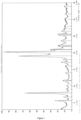
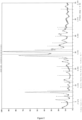
- the second aspect of the present invention provides a polymorph of Galp ⁇ 1-4GlcNAcp ⁇ 1-3Galp ⁇ 1-4Glc (LNnT) according to claim 1, characterized in that it displays X-ray powder diffraction reflections, based on a measurement using CuK ⁇ radiation, at 20.32 ⁇ 0.20, 19.10 ⁇ 0.20, 7.98 ⁇ 0.20, 21.03 ⁇ 0.20, 20.95 ⁇ 0.20 and 5.66 ⁇ 0.20 2 ⁇ angles, which displays a melting point between 226-230 °C.
- the third aspect of the present invention relates to the polymorph of Galp ⁇ 1-4GlcNAc ⁇ 1-3Galp ⁇ 1-4Glc (LNnT) for use as pharmaceutical agent as defined in the claims.
- the fourth aspect of the present invention provides the polymorph of Galp ⁇ 1-4GlcNAcp ⁇ 1-3Galp ⁇ 1-4Glc (LNnT) for use as nutritional additive as defined in the claims.
- the fifth aspect of the present invention relates to a pharmaceutical composition
- a pharmaceutical composition comprising the polymorph of Galp ⁇ 1-4GlcNAcp ⁇ 1-3Galp ⁇ 1-4Glc as defined in the claims.
- the sixth aspect of the present invention provides a nutritional composition comprising the polymorph of Galp ⁇ 1-4GlcNAcp ⁇ 1-3Galp ⁇ 1-4Glc as defined in the claims.
- R' 1 is selected from substituted benzyl, optionally substituted benzhydryl, optionally substituted trityl and optionally substituted naphthylmethyl.
- R' 1 is selected from substituted benzyl, optionally substituted benzhydryl, optionally substituted trityl and optionally substituted naphthylmethyl.
- R 1 is selected from optionally substituted benzyl, optionally substituted benzhydryl, optionally substituted trityl and optionally substituted naphthylmethyl
- -NR 5 R 6 is selected from -NH-haloacyl, phthalimide, tetrachlorophthalimide, 2,3-diphenylmaleimide and 2,3-dimethylmaleimide.
- R 1 is selected from optionally substituted benzyl, optionally substituted benzhydryl, optionally substituted trityl and optionally substituted naphthylmethyl, and each of R 2 and R 4 are independently optionally substituted acyl, R 3 is selected from optionally substituted acyl and H, -NR 5 R 6 is selected from -NAc 2 , -NH-haloacyl, tetrachlorophthalimide, 2,3-diphenylmaleimide and 2,3-dimethylmaleimide.
- R 1 is selected from optionally substituted benzyl, optionally substituted benzhydryl, optionally substituted trityl and optionally substituted naphthylmethyl.
- R 4 is optionally substituted acyl, preferably acetyl
- -NR 5 R 6 is -NH-haloacyl, preferably -NH-trichloroacetyl or -NH-trifluoroacetyl
- R 7 is optionally substituted phenyl, preferably phenyl.
- R 1 is selected from optionally substituted benzyl, optionally substituted benzhydryl, optionally substituted trityl and optionally substituted naphthylmethyl
- R 2 is optionally substituted benzoyl
- R 3 is selected from optionally substituted acyl and H.
- alkyl either alone or when attached to another atom or group, means a linear or branched hydrocarbon group with 1-6 carbon atoms, like methyl, ethyl, n-propyl, i-propyl, n-butyl, i-butyl, s-butyl, t-butyl, etc.
- aryl refers to homoaromatic groups like phenyl or naphthyl.
- aryl means phenyl.
- R may be H, alkyl or aryl, like formyl, acetyl, propionyl, butyryl, pivaloyl, benzoyl, etc.
- the alkyl and aryl residues both may be substituted.
- substituted means that the group in question is substituted with a group which typically modifies the general chemical characteristics of the chain or ring.
- the substituents can be used to modify characteristics of the molecule as a whole, such as stability, solubility, and ability to form crystals.
- the person skilled in the art will be aware of other suitable substituents of a similar size and charge characteristics, which could be used as alternatives in a given situation.
- alkyl More generally in connection with the terms “alkyl”, “aryl” and “acyl” the term “optionally substituted” is intended to mean that the group in question may be substituted one or several times, preferably 1-5 times, more preferably 1-3 times with group(s) selected from alkyl (only for aryl and aromatic acyl), hydroxy, alkoxy (i.e.
- alkyl-oxy ), carboxy, oxo (forming a keto or aldehyde functionality), alkoxycarbonyl, alkylcarbonyl, formyl, aryl, aryloxycarbonyl, aryloxy, arylamino, arylcarbonyl, amino, mono- and dialkylamino, carbamoyl, mono- and dialkyl-aminocarbonyl, alkylcarbonylamino, cyano, alkanoyloxy, nitro, alkylthio and halogen (F, Cl, Br, I).
- group removable by catalytic hydrogenation refers to groups, whose C-O bond is cleaved by addition of hydrogen in the presence of catalytic amounts of palladium, Raney nickel or another appropriate metal catalyst known for use in hydrogenolysis, resulting in the regeneration of the OH group.
- Groups of this type are well known to the skilled man and thoroughly discussed [e.g. P.G.M. Wuts and T.W. Greene: Protective Groups in Organic Synthesis, John Wiley & Sons (2007 )].
- Suitable groups include benzyl, diphenylmethyl (benzhydryl), 1-naphthylmethyl, 2-naphthylmethyl or triphenylmethyl (trityl) groups, each of which may be optionally substituted by one or more groups selected from: alkyl, alkoxy, phenyl, amino, acylamino, alkylamino, dialkylamino, nitro, carboxyl, alkoxycarbonyl, carbamoyl, N -alkylcarbamoyl, N , N -dialkylcarbamoyl, azido, halogenalkyl or halogen.
- substitution if present, is on the aromatic ring(s).
- Particularly preferred protecting group is benzyl optionally substituted with one or more groups selected from alkyl or halogen. More preferably, the protecting group is selected from unsubstituted benzyl, 4-chlorobenzyl and 4-methylbenzyl. These particularly preferred and more preferable protecting groups have the advantage that the by-products of the hydrogenolysis are exclusively toluene or substituted toluene. Such by-products can easily be removed even in multi ton scales from water soluble oligosaccharide products via evaporation and/or extraction processes.
- the present invention represents a commercial approach suitable for large scale manufacture of LNnT, i.e. typically for the manufacture of batches of at least 1 kg of LNnT, such as at least 5 kg, or at least 50 kg, or even at least 200 kg, e.g. at least 1 ton, of LNnT.
- the successful strategy is based upon the introduction of relevant crystalline intermediates permitting simple and robust purification methodologies. Crystallization or recrystallization is one of the simplest and cheapest methods to separate a product from contaminations and obtain pure substance.
- thermodynamic stability for example thermodynamic stability, solubility, density, hygroscopicity, electrical properties (such as dielectric constant, conductivity), mechanical properties (such as friability, hardness, breaking strength, elasticity), optical properties (such as colour, transparency, refraction), etc. - diversely. It enlarges the repertoire of materials that a scientist has available for improving the product's characteristics.
- the present invention provides in a first aspect a method for crystallizing the polymorph of Galp ⁇ 1-4GlcNAcp ⁇ 1-3Galp ⁇ 1-4Glc (LNnT) as defined according to the claims, comprising the steps:
- the water/methanol mixture used in step i) is a ⁇ 1:1 mixture.
- the method for the preparation of Galp ⁇ 1-4GlcNAcp ⁇ 1-3Galp ⁇ 1-4Glc comprises the steps of:
- step a) the fully protected LNnT derivatives according to general formula 4 are synthesized in the reaction of a compound of general formula 5 (donor) with a compound of general formula 6 (acceptor) under glycosylation condition.
- the coupling of the lactose acceptor of general formula 6 with the lactosaminyl donor of general formula 5 can be carried out an aprotic solvent or in a mixture of aprotic solvents in the presence of an activator (promoter or catalyst) so as to lead to the desired glycosylated product.
- the new interglycosidic linkage is formed by the nucleophilic displacement of the leaving group X of donor according to general formula 5 with the 3'-OH group of the acceptor according to general formula 6.
- Other functional groups in both participating reactants have to be masked with protecting groups.
- the equatorial OH-group may act as stronger nucleophile under glycosylation conditions.
- the conditions such as donor reactivity, solvent, temperature, nature of promoter, means of addition of reactants/promoters and like the reaction can be driven to the formation of the desired 1-3 interglycosidic linkage instead of 1-4 coupling. Particular care has to be taken with regard to the stereoselectivity.
- the stereochemical outcome may be affected by different factors like the presence or absence of a participating group at C-2 of the donor, the nature of the leaving group X, solvent effect, nature of the protective groups on both the donor and acceptor, nature of the promoters or catalysts, temperature, pressure, steric interactions between the donor and acceptor, and like.
- glucosaminyl or lactosaminyl derivatives an array of anomeric activation for glycosylation is developed and available to a skilled person engaged in carbohydrate chemistry.
- glycosyl halides (X means F, Cl, Br, I) are frequently used in glycosylation reaction because of their easy accessibility and satisfactory reactivity. Typically, anomeric halides follow the reactivity order F ⁇ Cl ⁇ Br ⁇ I for nucleophilic displacement.
- the glycosylation reactions are generally promoted by heavy metal ion, mainly mercury or silver, and Lewis acids.
- catalytic amount of Lewis acid such as trimethylsilyl triflate or BF 3 -etherate, promotes the coupling.
- Glycosyl acetates or benzoates (X represents -OAc or -OBz) in glycosylation reaction are first subjected to electrophilic activation providing a reactive intermediate, then treated with the nucleophilic OH-acceptor.
- Typical activators of choice are Bronsted acids (such as TsOH, HClO 4 , sulfamic acid), Lewis acids (such as ZnCl 2 , SnCl 4 , triflate salts, BF 3 -etherate, trityl perchlorate, AlCl 3 , triflic anhydride) and their mixtures.
- Thioglycosides (X denotes alkylthio- or phenylthio-group) can be activated by thiofilic promoters such as mercury(II) salts, Br 2 , I 2 , NBS, NIS, triflic acid, triflate salts, BF 3 -etherate, trimethylsilyl triflate, dimethyl-methlythio sulphonium triflate, phenylselenyl triflate, iodonium dicollidine perchlorate, tetrabutylammonium iodide or mixtures thereof, in condensation reactions, preferably by Br 2 , NBS, NIS and triflate salts.
- thiofilic promoters such as mercury(II) salts, Br 2 , I 2 , NBS, NIS, triflic acid, triflate salts, BF 3 -etherate, trimethylsilyl triflate, dimethyl-methlythio sulphon
- the glycosyl donor may a compound of general formula 5, wherein R 4 is optionally substituted acyl, -NR 5 R 6 is -NH-haloacyl and X is -SR 7 , wherein R 7 is selected from optionally substituted alkyl or optionally substituted phenyl; more preferably R 7 is optionally substituted phenyl; even more preferably R 4 is acetyl, -NR 5 R 6 is selected from -NH-trichloroacetyl and -NH-trifluoroacetyl, R 7 is phenyl and -SR 7 is in ⁇ .
- the glycosylation is carried out in aprotic solvent(s) like chloroform, dichloromethane, toluene, dioxane, THF, acetonitrile or mixture thereof, preferably chloroform or dichloromethane, under the activation of NIS, NBS, Br 2 , triflic acid, silver triflate, BF 3 -etherate or mixture thereof.
- aprotic solvent(s) like chloroform, dichloromethane, toluene, dioxane, THF, acetonitrile or mixture thereof, preferably chloroform or dichloromethane, under the activation of NIS, NBS, Br 2 , triflic acid, silver triflate, BF 3 -etherate or mixture thereof.
- the glycosyl acceptor may be a compound of general formula 6, in which R 1 is optionally substituted benzyl and R 3 is selected from H and optionally substituted benzoyl; more preferably R 1 is benzyl, R 2 is benzoyl optionally substituted with chloro and R 3 is selected from H and benzoyl optionally substituted with chloro, and OR 1 is in ⁇ .
- the donors characterized by general formula 5 can be produced by conventional methodologies known in the art.
- An approach can imply the galactosylation of the protected glucosamine thioglycoside [e.g. Sherman et al. Carbohydr. Res. 2001, 336, 13 ], or of a methyl glucosaminide derivative [e.g. Kochetkov et al. Tetrahedron 1987, 43, 3109 ].
- Another access is based on the derivatization of the double bond of D-lactal hexaacetate, either by azidonitration followed by reduction of the 2-azido group with subsequent protection of the amine formed and nitrate-halogenide exchange on the anomeric carbon [e.g.
- a cyclic orthoester thus obtained is subsequently rearranged with acid catalyst to another compound of general formula 6, wherein R 3 is acyl [see e.g. Paulsen et al. Carbohydr. Res. 1985, 137, 39 ; Lubineau et al. ibid. 1997, 305, 501; and references cited therein] (Scheme 2.).
- step b) of the first aspect of the present invention compounds of general formula 4 wherein R 1 is a group removable by catalytic hydrogenolysis, each of R 2 and R 4 are independently optionally substituted acyl groups, R 3 is selected from optionally substituted acyl or H, -NR 5 R 6 is selected from -NAc 2 , -NH-haloacyl, phthalimide, tetrachlorophthalimide, 2,3-diphenylmaleimide and 2,3-dimethylmaleimide, are converted into compounds of general formula 1 comprising the steps:
- base catalyzed transesterification deprotection means a reaction, where the acyl protective groups from hydroxyls are removed in an alcohol solvent such as methanol, ethanol, propanol, t -butanol, etc. in the presence of an alcoholate like NaOMe, NaOEt, KO t Bu, etc. at 20-100 °C temperatures.
- an alcoholate like NaOMe, NaOEt, KO t Bu, etc. at 20-100 °C temperatures.
- the alcohol and the alcoholate should be matched.
- cosolvent as toluene or xylene might be beneficial in order to control particle size of the product and to avoid gel formations.
- the term "basic hydrolysis” generally means base catalyzed hydrolysis in water, alcohol or water-organic solvent mixtures, in homogeneous or heterogeneous reaction conditions at temperatures varying from 0-100 °C.
- the base of choice is generally a strong base, e.g. LiOH, NaOH, KOH, Ba(OH) 2 , K 2 CO 3 , basic ion exchange resins, tetraalkylammonium hydroxides, etc.
- the bases can be used in the form of an aqueous solution as well. This condition affects O -acyls, N -haloacyls, 2,3-diphenylmaleimide and 2,3-dimethylmaleimide. If R 5 and R 6 are both acetyl, one of the acyl groups is also removed.
- the base is NaOH and the solvent is methanol.
- aminolysis or N -acyl transfer based deprotection means a treatment with ammonia, hydrazine, substituted hydrazine, ethylene diamine or primary amines in water, alcohol or water-organic solvent mixtures at 20-120 °C temperatures. Under this condition all of the O- and N -protecting acyl groups, including cyclic imides, can be readily removed.
- a compound of general formula 2 obtained is N -acetylated.
- Selective N -acetylation in the presence of one or more hydroxyls is a well-known reaction and performing such reaction takes part of the skilled person's general knowledge. It involves reaction of the amine with slight excess of acetic anhydride or acetyl chloride ( ⁇ 1.5-3 equiv.) at about 0-35 °C with or without added base.
- the eventually formed overacetylated by-product(s) can be readily transformed into the desired compounds of general formula 1 with e.g. NaOH/MeOH or NaOMe/MeOH treatment.
- derivatives according to general formula 2 are peracetylated, that is the free amino group and all the free hydroxyl groups are acetylated. It belongs to the skilled person's competence to perform the reaction until all of the groups to be protected are acetylated.
- the compound is treated with acetic anhydride or acetyl chloride, preferably acetic anhydride, in the presence of a base, preferably pyridine, triethylamine or Hünig's base, to give a group of fully protected tetrasaccharides of general formula 4, which is characterized by general formula 4a wherein R 1 is defined as above.
- the peracetylated derivative 4a is then subjected to base catalyzed transesterification deprotection or basic hydrolysis (vide supra), preferably to Zemplén de- O -acetylation, to give rise to a compound of general formula 1.
- compounds of general formula 1 are prepared by taking whatever route specified above, they are isolated in crystalline form.
- the present inventors are realized that compounds of general formula 1 are crystalline materials.
- compounds of general formula 1 are the final intermediates en route to LNnT and the last deprotective step runs practically without by-product formation, their purity is proportional to that of the target product LNnT.
- the crystallization is carried out from a solvent system comprising one or more C 1 -C 6 alcohols in the absence of seed crystals.
- C 1 -C 6 alcohol refers to alcohols having 1 to 6 carbon atoms, that is methanol, ethanol, n -propanol, i -propanol, t -butanol, i -amylalcohol, etc.
- methanol or ethanol is chosen.
- the solvent system may further contain water.
- the water content in the overall volume of the solvent system may preferably range up to 30 v/v%, more preferably 15-25 v/v%.
- 1- O -benzyl LNnT is crystallized from aqueous methanol or ethanol.
- step d) of the first aspect of the present invention a compound of general formula 1 is subjected to catalytic reduction leading to LNnT.
- a protic solvent may be selected from a group consisting of water, acetic acid or C 1 -C 6 alcohol. Mixture of one or more protic solvents with one or more proper aprotic organic solvents miscible partially or fully with the protic solvent(s) (such as THF, dioxane, ethyl acetate, acetone, etc.) may also be applied. Water, one or more C 1 -C 6 alcohols or a mixture of water and one or more C 1 -C 6 alcohols are preferably used as solvent system.
- Solutions containing the carbohydrate derivatives in any concentration or suspensions of the carbohydrate derivatives with the solvent(s) used are also applicable.
- the reaction mixture is stirred at 10-100 °C temperature range, preferably between 20-70 °C in hydrogen atmosphere of 1-50 bar in the presence of a catalyst such as palladium, Raney nickel or any other appropriate metal catalyst, preferably palladium on charcoal or palladium black, until reaching the completion of the reaction.
- Catalyst metal concentrations generally range from 0.1 % to 10 % based on the weight of carbohydrate.
- the catalyst concentrations range from 0.15 % to 5 %, more preferably 0.25 % to 2.25 %.
- Transfer hydrogenation may also be performed, when the hydrogen is generated in situ from cyclohexene, cyclohexadiene, formic acid or ammonium formate.
- Addition of organic or inorganic bases/acids and/or basic and/or acidic ion exchange resins can also be used to improve the kinetics of the hydrogenolysis.
- the use of basic substances is especially preferred when halogen substituents are present on the substituted benzyl moieties of the precursors.
- Preferred organic bases are including but not limited to triethylamine, diisopropyl ethylamine, ammonia, ammonium carbamate, diethylamine, etc.
- Preferred organic/inorganic acids are including but not limited to formic acid, acetic acid, propionic acid, chloroacetic acid, dichloroacetic acid, triflouroacetic acid, HCl, HBr, etc.
- the conditions proposed above allow simple, convenient and delicate removal of the solvent(s) giving rise to pure LNnT.
- LNnT can be isolated from the reaction mixture using conventional work-up procedures in crystalline, amorphous solid, syrupy form or concentrated aqueous solution.
- 1-O-benzyl LNnT is subjected to catalytic hydrogenolysis to give LNnT.
- the hydrogenation can be performed in water or in aqueous alcohol, preferably in water/methanol or water/ethanol mixture (alcohol content: 10-50 v/v %) at 15-65 °C, preferably between 60-65 °C.
- the concentration of the starting material can vary between 140-230 g/l and the catalyst concentration may range from 0.4 % to 1.2 % (weight of the metal content based on the weight of the carbohydrate).
- Both solid forms of LNnT such as amorphous/freeze dried/spray dried and liquid forms of LNnT such as aqueous solutions/syrups provided by the present invention have high LNnT purity suitable for infant nutritional use including but not limited to infant formulas, infant cereals, clinical infant nutritional products etc.
- both solid and liquid forms of LNnT produced by the methodologies of the present invention are suitable for general nutritional use for infants, toddlers, children, adults and elderly.
- Both solid and liquid forms of LNnT provided by the present invention can also be used as food additives, dietary supplements, a component of alcoholic and non alcoholic beverages such as soft drinks, fruit juices, bottled water, wine, beer etc.
- Both solid and liquid forms of LNnT provided by the present invention can also be used as a therapeutic agent in broad therapeutic application areas including but not limited to prevent bacterial and viral infections, to avoid diarrhoea, to enhance immune system and brain development, etc. Both solid and liquid forms of LNnT provided by the present invention can also be used in veterinary applications including but not limited to fight against infectious diseases of domesticated animals. LNnT provided by the present invention can also be used as a crucial monomer for the preparation of polymeric/polymer mounted products providing multivalent binding for bacteria and viruses.
- LNnT provided by the present invention can also be used for the preparation of other human milk oligosaccharides by applying chemical and/or enzymatic methodologies including but not limited to simple structural modifications of further fucosylation, further sialylation, further extension of the core structure via N -acetyl lactosaminylation/ N -acetylisolactosamylation, etc.
- the novel crystalline LNnT comprises X-ray powder diffraction reflections, based on a measurement using CuK ⁇ radiation, at 20.32 ⁇ 0.20, 19.10 ⁇ 0.20, 7.98 ⁇ 0.20, 21.03 ⁇ 0.20, 20.95 ⁇ 0.20 and 5.66 ⁇ 0.20 2 ⁇ angles.
- the crystalline polymorph of LNnT displays a melting point between 226-230 °C List of peaks of the XRPD pattern of crystalline LNnT prepared according to example 34 is reported in Table 1. Table 1. 2 ⁇ rel. intensity 2 ⁇ rel.
- LNnT novel crystalline form of LNnT can be considered as an anomeric mixture of ⁇ - and ⁇ -anomers or even pure form of one of the anomers. If LNnT is isolated as a polycrystalline material, it forms a mixture of ⁇ - and ⁇ -anomers, wherein the ⁇ -anomer is predominant over the ⁇ -anomer (ratio: approx. 5:2) according to solid-state 13 C-NMR measurements (see Figure 3 ).
- the crystalline LNnT according to the present invention is substantially free from organic solvent.
- the expression “substantially free from organic solvent” intends to mean that the content of organic solvent(s) is at most 1000 ppm, preferably at most 800 ppm, more preferably at most 600 ppm, most preferably at most 400 ppm and in particular at most 200 ppm.
- the crystalline LNnT claimed in the present application is substantially pure.
- the expression “substantially pure” intends to mean that the crystalline LNnT (the novel polymorph) contains less than 10 w/w% of impurity, preferably less than 5 w/w% of impurity, more preferably less than 1 w/w% of impurity, most preferably less than 0.5 w/w% of impurity, in particular less than 0.1 w/w% of impurity, wherein "impurity” refers to any physical entity different to the crystalline LNnT described in the present application, such as amorphous LNnT, different LNnT polymorph(s), unreacted intermediate(s) remained from the synthesis of LNnT, by-product(s), degradation product(s), inorganic salt(s) and/or other contaminations different to organic solvent(s).
- the present disclosure also shows a process for preparing crystalline LNnT by crystallization from a solvent system comprising one or more C 1 -C 6 alcohols. More preferably the solvent system may further contain water. The water content in the overall volume of the solvent system may preferably range up to 40 v/v %. The crystallization preferably can be carried out using 3-15 volumes of the solvent mixture.
- a solution of LNnT in water/methanol preferably in water/methanol ( ⁇ 1:1) mixture, taken either from the reaction mixture of the hydrogenation after removing the catalyst or prepared freshly (concentration: 140-180 g/l), is warmed to 50-60 °C to which hot methanol (up to 115-250 % of the starting volume) is added in 2-4 portions under stirring and gradual chilling to 35-45 °C.
- the crystallization may be initiated by adding seeding crystals.
- the resulting warm suspension is then carefully cooled to 0-8 °C and the stirring is optionally continued for 2-5 hours.
- the crystalline material formed is separated by filtration.
- crystalline LNnT according to the present invention is suitable for pharmaceutical and nutritional use.
- LNnT alone or in combination with other N-acetyllactosamine and/or fucose and/or sialic acid containing human milk oligosaccharides is particularly effective in the education and/or maturation of the immune system of neonatal infants, and have preventive effect against secondary infections following viral infections such as influenza.
- LNnT as prebiotic enhances the beneficial effects and efficiency of probiotics, such as Lactobacillus and Bifidobacterium species, in promoting the development of an early bifidogenic intestinal microbiota in infants, in reducing the risk of development or allergy and/or asthma in infants, in preventing and treating pathogenic infections in such as diarrhoea in infants.
- the present invention provides pharmaceutical composition
- pharmaceutical composition comprising crystalline LNnT claimed as active ingredient and one or more pharmaceutically acceptable carriers including but not limited to additives, adjuvants, excipients and diluents (water, gelatine, talc, sugars, starch, gum arabic, vegetable gums, vegetable oils, polyalkylene glycols, flavouring agents, preservatives, stabilizers, emulsifying agents, lubricants, colorants, fillers, wetting agents, etc.).
- suitable carriers are described in the most recent edition of Remington's Pharmaceutical Sciences, a standard reference text in the field.
- the dosage form for administration includes, for example, tablets, powders, granules, pills, suspensions, emulsions, infusions, capsules, syrups, injections, liquids, elixirs, extracts and tincture.
- crystalline LNnT according to the present invention is used for the preparation of pharmaceutical compositions.
- Pharmaceutical compositions can be manufacture by means of any usual manner known in the art, e.g. described in the most recent edition of Remington's Pharmaceutical Sciences, a standard reference text in the field.
- nutritional formulations comprising crystalline LNnT according to the present invention such as foods, drinks or feeds.
- the nutritional formulation may contain edible micronutrients, vitamins and minerals as well. The amounts of such ingredient may vary depending on whether the formulation is intended for use with normal, healthy infants, children, adults or subjects having specialized needs (e.g. suffering from metabolic disorders).
- Micronutrients include for example edible oils, fats or fatty acids (such as coconut oil, soy-bean oil, monoglycerides, diglycerides, palm olein, sunflower oil, fish oil, linoleic acid, linolenic acid etc.), carbohydrates (such as glucose, fructose, sucrose, maltodextrin, starch, hydrolized cornstarch, etc.) and proteins from casein, soy-bean, whey or skim milk, or hydrolysates of these proteins, but protein from other source (either intact or hydrolysed) may be used as well.
- edible oils such as coconut oil, soy-bean oil, monoglycerides, diglycerides, palm olein, sunflower oil, fish oil, linoleic acid, linolenic acid etc.
- carbohydrates such as glucose, fructose, sucrose, maltodextrin, starch, hydrolized cornstarch, etc.
- Vitamins may be chosen from the group consisting of vitamin A, B1, B2, B5, B6, B12, C, D, E, H, K, folic acid, inositol and nicotinic acid.
- the nutritional formula may contain the following minerals and trace elements: Ca, P, K, Na, Cl, Mg, Mn, Fe, Cu, Zn, Se, Cr or I.
- the nutritional formulation is an infant formula.
- Infant formula means a foodstuff intended for particular nutritional use by infants during the first 4-6 months of life and satisfying by itself the nutritional requirements of infants. It may contain one or more probiotic Bifidobacterium species, prebiotics such as fructooligosaccharides and galactooligosaccharides, proteins from casein, soy-bean, whey or skim milk, carbohydrates such as lactose, saccharose, maltodextrin, starch or mixtures thereof, lipids (e.g. palm olein, sunflower oil, safflower oil) and vitamins and minerals essential in a daily diet.
- the infant formula contains crystalline LNnT according to the present invention in a total amount of 0.1-3.0 g/100 g formula.
- the nutritional formulation may be a food supplement including crystalline LNnT according to the present invention.
- the food supplement may comprise one or more probiotics in an amount sufficient to achieve the desired effect in an individual, preferably in children and adults.
- the food supplement may also contain vitamins, minerals, trace elements and other micronutrients as well.
- the food supplement may be for example in the form of tablets, capsules, pastilles or a liquid.
- the supplement may contain conventional additives selected from but not limited to binders, coatings, emulsifiers, solubilising agents, encapsulating agents, film forming agents, adsorbents, carriers, fillers, dispersing agents, wetting agents, jellifying agents, gel forming agents, etc.
- the daily dose of LNnT ranges from 0.1 to 3.0 g.
- the food supplement is digestive health functional food as the administration of LNnT provides a beneficial effect on digestive health.
- Digestive health functional food is a processed food used with intention enhance and preserve digestive health by crystalline LNnT according to the present invention as physiologically functional ingredient or component in forms of tablet, capsule, powder, etc.
- Different terms such as dietary supplement, nutraceutical, designed food, health product may also be used to refer to functional food.
- crystalline LNnT according to the present invention is used for the preparation of nutritional formulation including foods, drinks and feeds, preferably infant formulas, food supplements and digestive health functional food.
- the nutritional formulation may be prepared in any usual manner.
- novel derivatives characterized by general formula 1' can be considered as sole chemical entities such as either ⁇ or ⁇ anomers or even an anomeric mixture of ⁇ and ⁇ isomers, preferably as ⁇ -anomer.
- Novel LNnT intermediates of general formula 1' can be characterized as crystalline solids, oils, syrups, precipitated amorphous material or spray dried products. If crystalline, compounds of general formula 1' might exist either in anhydrous or in hydrated crystalline forms by incorporating one or several molecules of water into their crystal structures.
- novel compounds characterized by general formula 1' might exist as crystalline substances incorporating ligands such as organic molecules and/or ions into their crystal structures.
- R 1 is substituted benzyl, preferably 4-chlorobenzyl or 4-methylbenzyl.
- Novel compounds of general formula 1' provided by the present invention can be used for the preparation of LNnT itself and other LNnT derivatives by using chemical/enzymatic methodologies known in the Art. Novel compounds of general formulas 1' can also be used as advanced precursors/intermediates for the production/preparation of numerous human milk oligosaccharides. Novel compounds of general formulas 1' can also be considered as valuable intermediates for the synthesis of complex oligosaccharides/glycoconjugates suitable for therapeutic/nutritional use.
- LNnT intermediates of general formula 2' wherein R' 1 is selected from substituted benzyl, optionally substituted benzhydryl, optionally substituted trityl and optionally substituted naphthylmethyl.
- novel derivatives characterized by general formula 2' can be considered as sole chemical entities such as either ⁇ or ⁇ anomers or even an anomeric mixture of ⁇ and ⁇ isomers, preferably as ⁇ -anomer.
- Novel LNnT intermediates of general formula 2' can be characterized as crystalline solids, oils, syrups, precipitated amorphous material or spray dried products. If crystalline, compounds of general formula 2' might exist either in anhydrous or in hydrated crystalline forms by incorporating one or several molecules of water into their crystal structures. Similarly, novel compounds characterized by general formula 2' might exist as crystalline substances incorporating ligands such as organic molecules and/or ions into their crystal structures.
- R 1 is substituted benzyl, preferably 4-chlorobenzyl or 4-methylbenzyl.
- Novel compounds of general formula 2' provided by the present invention can be used for the preparation of LNnT itself and other LNnT derivatives by using chemical/enzymatic methodologies known in the Art. Novel compounds of general formulas 2' can also be used as advanced precursors/intermediates for the production/preparation of numerous human milk oligosaccharides. Novel compounds of general formulas 2' can also be considered as valuable intermediates for the synthesis of complex oligosaccharides/glycoconjugates suitable for therapeutic/nutritional use.
- R 1 is selected from optionally substituted benzyl, optionally substituted benzhydryl, optionally substituted trityl and optionally substituted naphthylmethyl
- -NR 5 R 6 is selected from -NH-haloacyl, phthalimide, tetrachlorophthalimide, 2,3-diphenylmaleimide and 2,3-dimethylmaleimide.
- novel derivatives characterized by general formula 3 can be considered as sole chemical entities such as either ⁇ or ⁇ anomers or even an anomeric mixture of ⁇ and ⁇ isomers, preferably as ⁇ -anomer.
- Novel LNnT intermediates of general formula 3 can be characterized as crystalline solids, oils, syrups, precipitated amorphous material or spray dried products. If crystalline, compounds of general formula 3 might exist either in anhydrous or in hydrated crystalline forms by incorporating one or several molecules of water into their crystal structures.
- novel compounds characterized by general formula 3 might exist as crystalline substances incorporating ligands such as organic molecules and/or ions into their crystal structures.
- R 1 is selected from benzyl, 4-methylbenzyl and 4-chlorobenzyl, preferably benzyl and -NR 5 R 6 is -NH-haloacyl, preferably -NH-trichloroacetyl.
- Novel compounds of general formula 3 provided by the present invention can be used for the preparation of LNnT itself and other LNnT derivatives by using chemical/enzymatic methodologies known in the Art. Novel compounds of general formulas 3 can also be used as advanced precursors/intermediates for the production/preparation of numerous human milk oligosaccharides. Novel compounds of general formulas 3 can also be considered as valuable intermediates for the synthesis of complex oligosaccharides/glycoconjugates suitable for therapeutic/nutritional use.
- R 1 is selected from optionally substituted benzyl, optionally substituted benzhydryl, optionally substituted trityl and optionally substituted naphthylmethyl, and each of R 2 and R 4 are independently optionally substituted acyl, R 3 is selected from optionally substituted acyl and H, -NR 5 R 6 is selected from -NAc 2 , -NH-haloacyl, tetrachlorophthalimide, 2,3-diphenylmaleimide and 2,3-dimethylmaleimide.
- novel derivatives characterized by general formula 4' can be considered as sole chemical entities such as either ⁇ or ⁇ anomers or even an anomeric mixture of ⁇ and ⁇ isomers, preferably as ⁇ -anomer.
- Novel LNnT intermediates of general formula 4' can be characterized as crystalline solids, oils, syrups, precipitated amorphous material or spray dried products. If crystalline, compounds of general formula 4' might exist either in anhydrous or in hydrated crystalline forms by incorporating one or several molecules of water into their crystal structures.
- novel compounds characterized by general formula 4' might exist as crystalline substances incorporating ligands such as organic molecules and/or ions into their crystal structures.
- R 1 is selected from benzyl, 4-methylbenzyl and 4-chlorobenzyl, preferably benzyl
- R 2 is benzoyl optionally substituted by chloro
- R 3 is optionally substituted benzoyl, preferably benzoyl
- R 4 is acetyl and -NR 5
- R 6 is -NH-haloacyl, preferably -NH-trichloroacetyl.
- Novel compounds of general formula 4' provided by the present invention can be used for the preparation of LNnT itself and other LNnT derivatives by using chemical/enzymatic methodologies known in the Art. Novel compounds of general formulas 4' can also be used as advanced precursors/intermediates for the production/preparation of numerous human milk oligosaccharides. Novel compounds of general formulas 4' can also be considered as valuable intermediates for the synthesis of complex oligosaccharides/glycoconjugates suitable for therapeutic/nutritional use.
- R 1 is selected from optionally substituted benzyl, optionally substituted benzhydryl, optionally substituted trityl and optionally substituted naphthylmethyl.
- novel derivatives characterized by general formula 4a can be considered as sole chemical entities such as either ⁇ or ⁇ anomers or even an anomeric mixture of ⁇ and ⁇ isomers, preferably as ⁇ -anomer.
- Novel LNnT intermediates of general formula 4a can be characterized as crystalline solids, oils, syrups, precipitated amorphous material or spray dried products. If crystalline, compounds of general formula 4a might exist either in anhydrous or in hydrated crystalline forms by incorporating one or several molecules of water into their crystal structures. Similarly, novel compounds characterized by general formula 4a might exist as crystalline substances incorporating ligands such as organic molecules and/or ions into their crystal structures.
- R 1 is selected from benzyl, 4-methylbenzyl and 4-chlorobenzyl, preferably benzyl.
- Novel compounds of general formula 4a provided by the present invention can be used for the preparation of LNnT itself, especially when selective N -acetylation of the compounds of general formula 2 is not efficient, and other LNnT derivatives by using chemical/enzymatic methodologies known in the Art.
- Novel compounds of general formulas 4a can also be used as advanced precursors/intermediates for the production/preparation of numerous human milk oligosaccharides.
- Novel compounds of general formulas 4a can also be considered as valuable intermediates for the synthesis of complex oligosaccharides/glycoconjugates suitable for therapeutic/nutritional use.
- Another aspect of the invention relates to the novel crystalline lactosaminyl donor characterized by the general formula 5' wherein R 4 is optionally substituted acyl, -NR 5 R 6 is -NH-haloacyl, and R 7 is optionally substituted phenyl.
- novel derivatives characterized by general formula 5' can be considered as sole chemical entities such as either ⁇ or ⁇ anomers or even an anomeric mixture of ⁇ and ⁇ isomers, preferably as ⁇ -anomer.
- Novel LNnT intermediates of general formula 5' can be characterized as crystalline solids, oils, syrups, precipitated amorphous material or spray dried products. If crystalline, compounds of general formula 5' might exist either in anhydrous or in hydrated crystalline forms by incorporating one or several molecules of water into their crystal structures.
- novel compounds characterized by general formula 5' might exist as crystalline substances incorporating ligands such as organic molecules and/or ions into their crystal structures.
- R 4 is acetyl
- -NR 5 R 6 is -NH-trichloroacetyl or -NH-trifluoroacetyl
- R 7 is phenyl and -SR 7 in ⁇ .
- Lactosamine hydrochloride is acetylated in Ac 2 O/HBr/AcOH to give 1,3,6,2',3',4'6'-hepta- O -acetyl-lactosamine hydrochloride which is N -acylated with haloacyl halogenide or anhydride to the -NH-haloacyl derivative.
- lactosamine hydrochloride is acetylated in Ac 2 O/HBr/AcOH to give 1,3,6,2',3',4'6'-hepta- O -acetyl-lactosamine hydrochloride which is N -acylated with haloacyl halogenide or anhydride to the -NH-haloacyl derivative.
- Bromosugar formation with HBr/AcOH followed by thiolysis with R 7 SH thiophenol derivative readily gives compounds of general formula 5'.
- the acetyl groups can be changed to other appropriate acyl groups by base
- the present invention thus provides the valuable compounds of general formula 6' wherein R 1 is selected from optionally substituted benzyl, optionally substituted benzhydryl, optionally substituted trityl and optionally substituted naphthylmethyl, R 2 is optionally substituted benzoyl, and R 3 is selected from optionally substituted benzoyl and H.
- the preferred embodiments encompass compounds of general formula 6', wherein R 1 is optionally substituted benzyl, preferably benzyl, 4-methylbenzyl or 4-chlorobenzyl, R 2 is optionally substituted benzoyl, preferably benzoyl or 4-chlorobenzoyl, and R 3 means benzoyl or H.
- acetyl group as R 3 are inconvenient protective group when compounds of general formula 6 act as glycosyl acceptor in glycosidation reactions. Under the conditions of coupling acetyl migration always occurred to give complex mixture containing substances with similar physical characteristics which compounds can be separated only by lengthy and/or sophisticated and/or laborious techniques, e.g. chromatography. Choosing bulkier acyl protective group that don't tend or tend less to migrate results in an acceptor whose coupling product is formed almost exclusively in glycosidation, making the work-up procedure and isolation process of the desired compounds simpler, quick, powerful and cost-effective, e.g. by crystallization, which is one of the paramount concerns in large scale preparation or industrial process.
- methyl thiolactosaminide is dissolved in 10 ml of DMF and to this solution 100 ⁇ l of triethyl amine and 6.0 ml of methyl trichloroacetate were added.
- the reaction mixture was stirred at rt for overnight, then concentrated to dryness, the concentrate was dissolved in methanol (10 ml), chilled and NaOMe was added until pH reached 9. This mixture was stirred for overnight, evaporated, then pyridine (20 ml) and Ac 2 O (10 ml) were added.
- the slurry was diluted with CH 2 Cl 2 (500 ml) and subjected to extractive work-up.
- the final volume of the organic phase was 1.5 L, 450 ml of 10 % Na 2 S 2 O 3 -solution and 150 ml of saturated NaHCOs-solution was used.
- 13 C data (CDCl 3 ): 177.4 (NHTCA carbonyl), 170.3, 170.2, 170.1, 170.0, 169.9, 169.0 (OAc, carbonyl), 165.3, 165.1, 164.9, 164.4, 164.2, 163.5, 161.3 (OBz carbonyl), 140.2, 140.0, 139.9, 139.7, 139.4, 137.9, 133.4, 133.1, 131.2, 131.1, 130.9, 130.8, 130.7, 129.9, 129.1, 129.0, 128.9, 128.6, 128.5, 128.3, 127.9, 127.8, 127.7, 127.6, 127.5, 127.1 (aromatic carbons), 101.2, 100.7, 99.9, 98.6 (anomeric carbons), 91.7 (NHTCA CCl 3 ), 76.2, 75.4, 72.9, 72.8, 71.7, 71.6, 70.8, 70.7, 70.5, 69.5, 68.9, 66.5
- Benzyl glycoside (example 28 or 29, 100 g) was dissolved in 300 ml of water, 2 ml of acetic acid and 30 ml of MeOH was added, then 10 g of Pd-C (5 %). The mixture was hydrogenated at r.t. under 5 bar of hydrogen for 2 days. Activated carbon (5 g) was added to the mixture, the catalyst and carbon were filtered off, the filtrate was diluted with water (200 ml), the aqueous solution was heated to 50 °C. The crystallization was performed as above by addition of EtOH (4 L). 65 g of white solid of LNnT was isolated.
Landscapes
- Chemical & Material Sciences (AREA)
- Life Sciences & Earth Sciences (AREA)
- Health & Medical Sciences (AREA)
- Engineering & Computer Science (AREA)
- Organic Chemistry (AREA)
- Molecular Biology (AREA)
- Polymers & Plastics (AREA)
- Nutrition Science (AREA)
- Food Science & Technology (AREA)
- Genetics & Genomics (AREA)
- General Health & Medical Sciences (AREA)
- Biotechnology (AREA)
- Biochemistry (AREA)
- Mycology (AREA)
- Pharmaceuticals Containing Other Organic And Inorganic Compounds (AREA)
- Organic Low-Molecular-Weight Compounds And Preparation Thereof (AREA)
- Saccharide Compounds (AREA)
Claims (11)
- Un polymorphe de Galpβ1-4GlcNAcpβ1-3Galpβ1-4Glc (LNnT), caractérisé en ce qu'il présente des réflexions de diffraction des rayons X sur poudre, sur la base d'une mesure utilisant un rayonnement CuKα, à des angles 2Θ de 20,32 ± 0,20, 19,10 ± 0,20, 7,98 ± 0,20, 21,03 ± 0,20, 20,95 ± 0,20 et 5,66 ± 0,20, qui présente un point de fusion compris entre 226-230 °C.
- Le polymorphe de Galpβ1-4GlcNAcpβ1-3Galpβ1-4Glc selon la revendication 1, où la teneur en solvant(s) organique(s) étant d'au plus 1 000 ppm.
- Le polymorphe de Galpβ1-4GlcNAcpβ1-3Galpβ1-4Glc selon la revendication 1 ou 2, comprenant des réflexions de diffraction des rayons X sur poudre, sur la base d'une mesure utilisant un rayonnement CuKα, à des angles 20, comme présentés dans le tableau 1 ci-dessous :
Tableau 1. 2θ rel. 2θ rel. 5,66 20 21,0 29 6,78 7 21,8 14 7,98 67 22,0 17 9,10 2 22,3 16 10,1 3 23,6 12 11,5 9 25,2 14 11,76 9 25,5 17 14,0 5 25,6 17 16,0 5 26,5 11 17,2 11 27,2 8 17,9 9 27,9 6 19,1 77 29,9 5 20,3 100 31,6 5 20,9 27 33,9 7 - Le polymorphe de Galpβ1-4GlcNAcpβ1-3Galpβ1-4Glc selon la revendication 1 ou 2, qui contient moins de 10 % p/p d'impuretés.
- Le polymorphe de Galpβ1-4GlcNAcpβ1-3Galpβ1-4Glc selon l'une quelconque des revendications 1 à 4 pour une utilisation en tant qu'agent pharmaceutique.
- Le polymorphe de Galpβ1-4GlcNAcpβ1-3Galpβ1-4Glc selon l'une quelconque des revendications 1 à 4 pour une utilisation en tant qu'additif nutritionnel.
- Une composition pharmaceutique comprenant le polymorphe de Galpβ1-4GlcNAcpβ1-3Galpβ1-4Glc tel que défini dans l'une quelconque des revendications 1 à 4.
- Une composition nutritionnelle comprenant le polymorphe de Galpβ1-4GlcNAcpβ1-3Galpβ1-4Glc tel que défini dans l'une quelconque des revendications 1 à 4.
- Un procédé de cristallisation du polymorphe de Galpβ1-4GlcNAcpβ1-3Galpβ1-4Glc (LNnT) défini dans l'une quelconque des revendications 1 à 4, comprenant les étapes :i) préparation d'une solution de LNnT avec de l'eau/méthanol, la solution de LNnT ayant une concentration de 140 à 180 g/lii) chauffage de la solution de LNnT jusqu'à une température de 50 à 60 °C,iii) ajout de méthanol chaud jusqu'à 115 à 250 % du volume de départ à la solution de LNnT sous refroidissement graduel jusqu'à une température de 35 à 45 °C,iv) éventuellement ajout de cristaux d'ensemencement,v) refroidissement de la suspension chaude résultante jusqu'à une température de 0 à 8 °C.
- Le procédé selon la revendication 9, où le mélange eau/méthanol utilisé dans l'étape i) étant un mélange ≈ 1 : 1.
- Le procédé selon les revendications 9 à 10, la cristallisation de LNnT étant précédée par le procédé comprenant les étapes de :a) réaction d'un donneur caractérisé par la formule générale 5
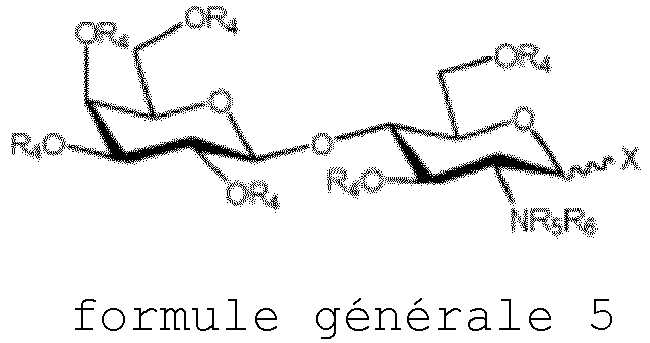 où R4 est un acyle éventuellement substitué,-NR5R6 est choisi parmi -NAc2, -NH-halogénoacyle, phtalimide, tétrachlorophtalimide, 2,3-diphénylmaléimide et 2,3-diméthylmaléimide,X est choisi parmi halogène, -OC(=NH)CCl3, - OAc, -OBz et -SR7, où R7 est choisi parmi alkyle et phényle éventuellement substitué,avec un accepteur de formule générale 6
 où R1 est un groupe pouvant être éliminé par hydrogénolyse catalytique,R2 est un acyle éventuellement substitué etR3 est choisi parmi un acyle éventuellement substitué ou H,pour donner un composé de formule générale 4
 b) conversion du composé de formule générale 4 en un composé de formule générale 1
 c) cristallisation du composé de formule générale 1, etd) par la suite soumission du composé de formule générale 1 à une hydrogénolyse catalytique pour obtenir LNnT.
Applications Claiming Priority (3)
| Application Number | Priority Date | Filing Date | Title |
|---|---|---|---|
| DKPA201070060 | 2010-02-19 | ||
| EP11744298.8A EP2536737B1 (fr) | 2010-02-19 | 2011-02-21 | Procédé pour la préparation du tétrasaccharide lacto-n-néotétraose (lnnt) contenant de la n-acétyllactosamine |
| PCT/DK2011/050053 WO2011100980A1 (fr) | 2010-02-19 | 2011-02-21 | Procédé pour la préparation du tétrasaccharide lacto-n-néotétraose (lnnt) contenant de la n-acétyllactosamine |
Related Parent Applications (1)
| Application Number | Title | Priority Date | Filing Date |
|---|---|---|---|
| EP11744298.8A Division EP2536737B1 (fr) | 2010-02-19 | 2011-02-21 | Procédé pour la préparation du tétrasaccharide lacto-n-néotétraose (lnnt) contenant de la n-acétyllactosamine |
Publications (3)
| Publication Number | Publication Date |
|---|---|
| EP3241836A1 EP3241836A1 (fr) | 2017-11-08 |
| EP3241836C0 EP3241836C0 (fr) | 2024-10-30 |
| EP3241836B1 true EP3241836B1 (fr) | 2024-10-30 |
Family
ID=44482456
Family Applications (2)
| Application Number | Title | Priority Date | Filing Date |
|---|---|---|---|
| EP17173284.5A Active EP3241836B1 (fr) | 2010-02-19 | 2011-02-21 | Polymorph d'un tétrasaccharide contenant du n-acétyllactosamine |
| EP11744298.8A Not-in-force EP2536737B1 (fr) | 2010-02-19 | 2011-02-21 | Procédé pour la préparation du tétrasaccharide lacto-n-néotétraose (lnnt) contenant de la n-acétyllactosamine |
Family Applications After (1)
| Application Number | Title | Priority Date | Filing Date |
|---|---|---|---|
| EP11744298.8A Not-in-force EP2536737B1 (fr) | 2010-02-19 | 2011-02-21 | Procédé pour la préparation du tétrasaccharide lacto-n-néotétraose (lnnt) contenant de la n-acétyllactosamine |
Country Status (5)
| Country | Link |
|---|---|
| US (2) | US8993740B2 (fr) |
| EP (2) | EP3241836B1 (fr) |
| CN (2) | CN105330705A (fr) |
| DE (1) | DE202011111124U1 (fr) |
| WO (1) | WO2011100980A1 (fr) |
Families Citing this family (64)
| Publication number | Priority date | Publication date | Assignee | Title |
|---|---|---|---|---|
| US9102966B2 (en) | 2010-07-16 | 2015-08-11 | Glycom A/S | Synthesis of sialooligosaccharide derivatives |
| KR20140036227A (ko) * | 2011-05-13 | 2014-03-25 | 글리콤 에이/에스 | 모유 올리고사카라이드(hmo) 또는 그의 전구체의 생성 방법 |
| CA2835989A1 (fr) | 2011-05-13 | 2012-11-22 | Glycom A/S | Diversification d'oligosaccharides du lait humain (hmo) ou de leurs precurseurs |
| CN103958537A (zh) * | 2011-09-30 | 2014-07-30 | 格礼卡姆股份公司 | Hmo核心结构的合成 |
| WO2013057049A1 (fr) * | 2011-10-18 | 2013-04-25 | Nestec S.A. | Composition destinée à être utilisée pour la croissance du cerveau et/ou le développement cognitif et/ou psychomoteur |
| WO2013182206A1 (fr) | 2012-06-08 | 2013-12-12 | Glycom A/S | Procédé de production d'oligosaccharides et d'oligosaccharide glycosides par fermentation |
| EP2861609A4 (fr) | 2012-06-14 | 2015-11-04 | Glycom As | Accroissement de la stabilité et de la pureté et augmentation de la biodisponibilité d'oligosaccharides de lait humain ou de précurseurs ou mélanges de ceux-ci |
| WO2013190531A1 (fr) * | 2012-06-22 | 2013-12-27 | Glycom A/S | Galactosyl disaccharides glycosylés, leurs procédés de production et leur utilisation dans des produits consommables |
| CN102942598B (zh) * | 2012-11-28 | 2015-07-01 | 济南圣泉唐和唐生物科技有限公司 | 一种乙酰糖卤代反应的后处理方法 |
| WO2014086373A1 (fr) * | 2012-12-07 | 2014-06-12 | Glycom A/S | Cristallisation d'oligosaccharides de lait humain |
| WO2014094783A1 (fr) * | 2012-12-18 | 2014-06-26 | Glycom A/S | Nouveaux polymorphes de lnnt |
| US20160113952A1 (en) | 2013-05-22 | 2016-04-28 | Glycom As | Synthetic Mixture of Oligosaccharides for Treating a Microbiota of a Mammal |
| CN104231009B (zh) * | 2013-06-08 | 2017-07-04 | 上海医药工业研究院 | 一种果聚糖、其中间体、制备方法及用途 |
| WO2015032413A1 (fr) | 2013-09-06 | 2015-03-12 | Glycom A/S | Production d'oligosaccharides par fermentation |
| WO2016063262A1 (fr) | 2014-10-24 | 2016-04-28 | Glycom A/S | Mélanges d'oligosaccharides de lait humain (hmo) |
| WO2016066175A1 (fr) | 2014-10-29 | 2016-05-06 | Glycom A/S | Composition synthétique et procédé de traitement de syndrome de l'intestin irritable |
| PL3212198T3 (pl) | 2014-10-29 | 2021-08-23 | Glycom A/S | Syntetyczna kompozycja i sposób promowania gojenia się błony śluzowej |
| US11040049B2 (en) | 2014-10-29 | 2021-06-22 | Glycom A/S | Composition comprising HMSs/HMOs and use thereof |
| US11040050B2 (en) | 2014-10-29 | 2021-06-22 | Glycom A/S | Composition comprising HMSs/HMOs and use thereof |
| EP3227309B1 (fr) | 2014-12-05 | 2025-09-24 | Glycom A/S | Difucosyllactose cristallin |
| US10881674B2 (en) | 2014-12-08 | 2021-01-05 | Glycom A/S | Synthetic composition for treating metabolic disorders |
| US10835544B2 (en) | 2014-12-08 | 2020-11-17 | Glycom A/S | Synthetic composition for regulating satiety |
| US10987368B2 (en) | 2014-12-08 | 2021-04-27 | Glycom A/S | Synthetic composition for preventing or treating CVD |
| CN107106584A (zh) | 2014-12-08 | 2017-08-29 | 格礼卡姆股份公司 | 用于治疗代谢障碍的合成组合物 |
| ES2960750T3 (es) | 2015-03-05 | 2024-03-06 | Glycom As | Oligosacáridos de la leche humana para el tratamiento de infecciones agudas del aparato respiratorio |
| MX378680B (es) | 2015-03-05 | 2025-03-11 | Soc Des Produits Nestle S A Star | Composiciones para usar en la prevencion o el tratamiento de infecciones/inflamaciones gastrointestinales en infantes o niños pequeños. |
| PL3277287T3 (pl) | 2015-03-31 | 2024-04-22 | Glycom A/S | Mieszaniny oligosacharydów mleka ludzkiego zawierające 3'-O-sialilolaktozę |
| PL3307752T3 (pl) | 2015-06-09 | 2021-11-02 | Glycom A/S | Mieszaniny trójskładnikowe 6’-sl, lnnt i lst c |
| US10751354B2 (en) | 2015-09-14 | 2020-08-25 | Glycom A/S | Synthetic composition for microbiota modulation |
| US10780103B2 (en) | 2015-10-28 | 2020-09-22 | Glycom A/S | Synthetic composition and method for modulating emotion and mood disorders |
| US10835545B2 (en) | 2015-10-28 | 2020-11-17 | Glycom A/S | Synthetic composition and method for modulating brain function and behaviour |
| PL3377071T3 (pl) | 2015-11-17 | 2024-06-24 | Glycom A/S | Oligosacharydy mleka ludzkiego do leczenia powikłań związanych z antybiotykami |
| EP3389404B1 (fr) | 2015-12-15 | 2019-10-02 | Société des Produits Nestlé S.A. | Mélange d'olh |
| WO2017144062A1 (fr) | 2016-02-24 | 2017-08-31 | Glycom A/S | Composition synthétique de modulation du microbiote |
| WO2017190755A1 (fr) | 2016-05-05 | 2017-11-09 | Glycom A/S | Composition comprenant du hmos destinée à être utilisée dans le traitement de l'hypersensibilité et/ou de la douleur viscérale médiée par les mastocytes |
| PL3452050T3 (pl) | 2016-05-05 | 2023-06-12 | Glycom A/S | Kompozycja zawierająca hmo do leczenia biegunki niezakaźnej |
| WO2017198276A1 (fr) | 2016-05-19 | 2017-11-23 | Glycom A/S | Composition synthétique |
| WO2017215722A1 (fr) * | 2016-06-15 | 2017-12-21 | Glycom A/S | Composition de synthèse comprenant hmo et procédé de modulation des troubles de l'émotion et de l'humeur |
| EP3474861A4 (fr) | 2016-06-24 | 2020-04-15 | Glycom A/S | Composés comprenant des hmos pour la prévention et/ou le traitement d'infections virales et/ou bactériennes. |
| EP3532787A4 (fr) * | 2016-10-31 | 2020-07-29 | Glycom A/S | Procédé d'élimination de solvant organique résiduel d'un oligosaccharide cristallin |
| US11278558B2 (en) | 2017-03-01 | 2022-03-22 | Glycom A/S | Synthetic composition for microbiota modulation |
| US11291677B2 (en) | 2017-05-09 | 2022-04-05 | Glycom A/S | Synthetic composition for microbiota modulation |
| US11541068B2 (en) | 2017-05-24 | 2023-01-03 | Glycom A/S | HMO compositions and methods for reducing autism spectrum disorder symptoms |
| EP3630123A4 (fr) | 2017-05-24 | 2020-10-28 | Glycom A/S | Composition synthétique comprenant un ou plusieurs oligosaccharides du lait humain (hmos) |
| CN119655445A (zh) | 2017-07-12 | 2025-03-21 | 格礼卡姆股份公司 | 包含中性单糖或寡糖和酸性非碳水化合物组分的无定形混合物 |
| EP3672600A4 (fr) | 2017-08-21 | 2021-05-19 | Glycom A/S | Composition synthétique pour réduire les symptômes d'allergie |
| CA3076920A1 (fr) | 2017-10-04 | 2019-04-11 | The Regents Of The University Of California | Oligosaccharides immunomodulateurs |
| CN111526879A (zh) | 2017-11-02 | 2020-08-11 | 格礼卡姆股份公司 | 用于减少或预防疲劳和/或改善注意力或专注力的一种或多种hmo |
| JP7327724B2 (ja) | 2017-11-30 | 2023-08-16 | グリコム・アクティーゼルスカブ | 小麦過敏症を処置するためのhmoの混合物 |
| WO2019111115A2 (fr) | 2017-12-05 | 2019-06-13 | Glycom A/S | Oligosaccharides du lait humain pour le traitement de la migraine |
| CN111683666A (zh) | 2017-12-22 | 2020-09-18 | 格礼卡姆股份公司 | 预防或减少伤害感受的包含hmo的组合物 |
| EP3801558A4 (fr) | 2018-05-31 | 2022-03-09 | Glycom A/S | Mélange de hmos pour le traitement de maladies auto-immunes |
| US12233079B2 (en) | 2018-12-19 | 2025-02-25 | Glycom A/S | Composition and method for treating humans using low-fodmap diets |
| CN111925403A (zh) * | 2019-05-13 | 2020-11-13 | 山东大学 | 一类氨基葡萄糖给体及其应用 |
| EP3750902A1 (fr) * | 2019-06-14 | 2020-12-16 | Jennewein Biotechnologie GmbH | Procede de purification de lacto-n-neotetraose |
| JP7833397B2 (ja) | 2019-11-29 | 2026-03-19 | グリコム・アクティーゼルスカブ | 妊婦の細菌叢を改善するためのhmoの混合物 |
| AU2021359711A1 (en) | 2020-10-16 | 2023-03-23 | Société des Produits Nestlé S. A. | Nutritional composition comprising human milk oligosaccharides |
| JP2023547175A (ja) | 2020-11-10 | 2023-11-09 | ソシエテ・デ・プロデュイ・ネスレ・エス・アー | 栄養組成物 |
| WO2022223430A1 (fr) | 2021-04-19 | 2022-10-27 | Dsm Ip Assets B.V. | Composition d'enzymes et d'oligosaccharides de lait humain |
| DK181566B1 (en) | 2021-12-21 | 2024-05-24 | Dsm Ip Assets Bv | Crystallization of LNnT |
| WO2023141513A2 (fr) * | 2022-01-19 | 2023-07-27 | The Regents Of The University Of California | Oligosaccharides de lait maternel fonctionnalisés et leurs procédés de production |
| CN121419685A (zh) | 2023-07-06 | 2026-01-27 | 雀巢产品有限公司 | 用于肠道健康的饮食管理的组合 |
| DK202430320A1 (en) | 2024-06-13 | 2026-01-07 | Dsm Ip Assets Bv | Synthesis of branched chain oligosaccharides |
| CN119351496B (zh) * | 2024-12-23 | 2025-06-27 | 山东大学 | 一种酶法合成血型抗原nor1五糖的方法 |
Family Cites Families (9)
| Publication number | Priority date | Publication date | Assignee | Title |
|---|---|---|---|---|
| KR100555161B1 (ko) | 1996-09-17 | 2006-11-30 | 교와 핫꼬 고교 가부시끼가이샤 | 당뉴클레오티드류및복합당질의제조법 |
| JP3100559B2 (ja) | 1997-02-26 | 2000-10-16 | ヤマサ醤油株式会社 | ラクト−n−ネオテトラオースの製造法 |
| CN1141309C (zh) * | 1999-11-25 | 2004-03-10 | 中国科学院生态环境研究中心 | 一种制备1→6连接的、具有1,2反式糖苷键吡喃寡糖的方法 |
| CN1129600C (zh) * | 1999-12-16 | 2003-12-03 | 中国科学院生态环境研究中心 | 香菇多糖核心片段三糖,四糖,六糖,七糖的合成 |
| EP1405856B1 (fr) | 2001-06-11 | 2018-09-26 | Kyowa Hakko Bio Co., Ltd. | Cristaux d'oligosaccharides et procedes de preparation correspondants |
| US6960654B2 (en) * | 2002-06-11 | 2005-11-01 | The Board Of Trustees Of The University Of Illinois | Method of forming glycosidic bonds from thioglycosides using an N,N-dialkylsulfinamide |
| FI115919B (fi) * | 2002-06-27 | 2005-08-15 | Danisco Sweeteners Oy | Menetelmä kiteytysinhibiittoreiden poistamiseksi monosakkaridisokeriliuoksista |
| CN101168550A (zh) * | 2006-10-25 | 2008-04-30 | 中国科学院大连化学物理研究所 | 一种氨基葡萄糖四糖的合成方法 |
| US8197872B2 (en) * | 2007-05-17 | 2012-06-12 | The Regents Of The University Of California | Human milk oligosaccharides to promote growth of beneficial gut bacteria |
-
2011
- 2011-02-21 EP EP17173284.5A patent/EP3241836B1/fr active Active
- 2011-02-21 CN CN201510751641.5A patent/CN105330705A/zh active Pending
- 2011-02-21 US US13/579,741 patent/US8993740B2/en active Active
- 2011-02-21 DE DE202011111124.9U patent/DE202011111124U1/de not_active Expired - Lifetime
- 2011-02-21 EP EP11744298.8A patent/EP2536737B1/fr not_active Not-in-force
- 2011-02-21 CN CN2011800097783A patent/CN102803282A/zh active Pending
- 2011-02-21 WO PCT/DK2011/050053 patent/WO2011100980A1/fr not_active Ceased
-
2015
- 2015-03-02 US US14/635,031 patent/US20150239923A1/en not_active Abandoned
Also Published As
| Publication number | Publication date |
|---|---|
| US20120309949A1 (en) | 2012-12-06 |
| EP2536737B1 (fr) | 2017-05-31 |
| DE202011111124U1 (de) | 2020-05-22 |
| HK1246302A1 (en) | 2018-09-07 |
| EP2536737A1 (fr) | 2012-12-26 |
| CN105330705A (zh) | 2016-02-17 |
| WO2011100980A1 (fr) | 2011-08-25 |
| US20150239923A1 (en) | 2015-08-27 |
| EP2536737A4 (fr) | 2013-10-02 |
| EP3241836A1 (fr) | 2017-11-08 |
| EP3241836C0 (fr) | 2024-10-30 |
| US8993740B2 (en) | 2015-03-31 |
| CN102803282A (zh) | 2012-11-28 |
Similar Documents
| Publication | Publication Date | Title |
|---|---|---|
| US8993740B2 (en) | Method for preparation of the tetrasaccharide lacto-N-neotetraose (LNnt) containing N-acetyllactosamine | |
| EP2536736B1 (fr) | Production de 6'-o-sialyllactose et intermédiaires | |
| EP2576578B1 (fr) | Formes polymorphiques du 2'-o-fucosyllactose et leurs procédés de production | |
| CA2827294A1 (fr) | Hydrogenolyse catalytique d'une composition d'un melange de precurseurs d'oligosaccharides et ses utilisations | |
| EP2943500B1 (fr) | 3-o-fucosyllactose cristallin | |
| EP3227309B1 (fr) | Difucosyllactose cristallin | |
| WO2013091660A1 (fr) | Procédé pour obtenir des précurseurs de lacto-n-tétraose et de lacto-n-neotétraose cristallin et des mélanges de ceux-ci | |
| WO2012155916A1 (fr) | Fabrication de lacto-n-tétraose | |
| EP2417145B2 (fr) | Sels de 6'-sialyllactose et procédé pour leur synthèse et pour la synthèse d'autres -sialyl-oligosaccharides | |
| EP2593465A1 (fr) | Dérivation d'oligosaccharides | |
| HK1246302B (en) | Polymorph of a tetrasaccharide containing nacetyl-lactosamine | |
| CN106795129A (zh) | 抗坏血酸衍生物及使用了该衍生物的糖苷的制造方法 | |
| Verma et al. | International Journal of Carbohydrate Research |
Legal Events
| Date | Code | Title | Description |
|---|---|---|---|
| PUAI | Public reference made under article 153(3) epc to a published international application that has entered the european phase |
Free format text: ORIGINAL CODE: 0009012 |
|
| STAA | Information on the status of an ep patent application or granted ep patent |
Free format text: STATUS: THE APPLICATION HAS BEEN PUBLISHED |
|
| AC | Divisional application: reference to earlier application |
Ref document number: 2536737 Country of ref document: EP Kind code of ref document: P |
|
| AK | Designated contracting states |
Kind code of ref document: A1 Designated state(s): AL AT BE BG CH CY CZ DE DK EE ES FI FR GB GR HR HU IE IS IT LI LT LU LV MC MK MT NL NO PL PT RO RS SE SI SK SM TR |
|
| STAA | Information on the status of an ep patent application or granted ep patent |
Free format text: STATUS: REQUEST FOR EXAMINATION WAS MADE |
|
| 17P | Request for examination filed |
Effective date: 20180508 |
|
| RBV | Designated contracting states (corrected) |
Designated state(s): AL AT BE BG CH CY CZ DE DK EE ES FI FR GB GR HR HU IE IS IT LI LT LU LV MC MK MT NL NO PL PT RO RS SE SI SK SM TR |
|
| REG | Reference to a national code |
Ref country code: HK Ref legal event code: DE Ref document number: 1246302 Country of ref document: HK |
|
| STAA | Information on the status of an ep patent application or granted ep patent |
Free format text: STATUS: EXAMINATION IS IN PROGRESS |
|
| 17Q | First examination report despatched |
Effective date: 20190531 |
|
| GRAP | Despatch of communication of intention to grant a patent |
Free format text: ORIGINAL CODE: EPIDOSNIGR1 |
|
| STAA | Information on the status of an ep patent application or granted ep patent |
Free format text: STATUS: GRANT OF PATENT IS INTENDED |
|
| INTG | Intention to grant announced |
Effective date: 20240612 |
|
| GRAS | Grant fee paid |
Free format text: ORIGINAL CODE: EPIDOSNIGR3 |
|
| GRAA | (expected) grant |
Free format text: ORIGINAL CODE: 0009210 |
|
| STAA | Information on the status of an ep patent application or granted ep patent |
Free format text: STATUS: THE PATENT HAS BEEN GRANTED |
|
| AC | Divisional application: reference to earlier application |
Ref document number: 2536737 Country of ref document: EP Kind code of ref document: P |
|
| AK | Designated contracting states |
Kind code of ref document: B1 Designated state(s): AL AT BE BG CH CY CZ DE DK EE ES FI FR GB GR HR HU IE IS IT LI LT LU LV MC MK MT NL NO PL PT RO RS SE SI SK SM TR |
|
| REG | Reference to a national code |
Ref country code: GB Ref legal event code: FG4D |
|
| REG | Reference to a national code |
Ref country code: CH Ref legal event code: EP |
|
| REG | Reference to a national code |
Ref country code: DE Ref legal event code: R096 Ref document number: 602011075071 Country of ref document: DE |
|
| REG | Reference to a national code |
Ref country code: IE Ref legal event code: FG4D |
|
| U01 | Request for unitary effect filed |
Effective date: 20241126 |
|
| U07 | Unitary effect registered |
Designated state(s): AT BE BG DE DK EE FI FR IT LT LU LV MT NL PT RO SE SI Effective date: 20241209 |
|
| U20 | Renewal fee for the european patent with unitary effect paid |
Year of fee payment: 15 Effective date: 20250107 |
|
| PG25 | Lapsed in a contracting state [announced via postgrant information from national office to epo] |
Ref country code: HR Free format text: LAPSE BECAUSE OF FAILURE TO SUBMIT A TRANSLATION OF THE DESCRIPTION OR TO PAY THE FEE WITHIN THE PRESCRIBED TIME-LIMIT Effective date: 20241030 Ref country code: IS Free format text: LAPSE BECAUSE OF FAILURE TO SUBMIT A TRANSLATION OF THE DESCRIPTION OR TO PAY THE FEE WITHIN THE PRESCRIBED TIME-LIMIT Effective date: 20250228 |
|
| PG25 | Lapsed in a contracting state [announced via postgrant information from national office to epo] |
Ref country code: ES Free format text: LAPSE BECAUSE OF FAILURE TO SUBMIT A TRANSLATION OF THE DESCRIPTION OR TO PAY THE FEE WITHIN THE PRESCRIBED TIME-LIMIT Effective date: 20241030 |
|
| PG25 | Lapsed in a contracting state [announced via postgrant information from national office to epo] |
Ref country code: NO Free format text: LAPSE BECAUSE OF FAILURE TO SUBMIT A TRANSLATION OF THE DESCRIPTION OR TO PAY THE FEE WITHIN THE PRESCRIBED TIME-LIMIT Effective date: 20250130 |
|
| PG25 | Lapsed in a contracting state [announced via postgrant information from national office to epo] |
Ref country code: GR Free format text: LAPSE BECAUSE OF FAILURE TO SUBMIT A TRANSLATION OF THE DESCRIPTION OR TO PAY THE FEE WITHIN THE PRESCRIBED TIME-LIMIT Effective date: 20250131 |
|
| PG25 | Lapsed in a contracting state [announced via postgrant information from national office to epo] |
Ref country code: PL Free format text: LAPSE BECAUSE OF FAILURE TO SUBMIT A TRANSLATION OF THE DESCRIPTION OR TO PAY THE FEE WITHIN THE PRESCRIBED TIME-LIMIT Effective date: 20241030 |
|
| PG25 | Lapsed in a contracting state [announced via postgrant information from national office to epo] |
Ref country code: RS Free format text: LAPSE BECAUSE OF FAILURE TO SUBMIT A TRANSLATION OF THE DESCRIPTION OR TO PAY THE FEE WITHIN THE PRESCRIBED TIME-LIMIT Effective date: 20250130 |
|
| PG25 | Lapsed in a contracting state [announced via postgrant information from national office to epo] |
Ref country code: SM Free format text: LAPSE BECAUSE OF FAILURE TO SUBMIT A TRANSLATION OF THE DESCRIPTION OR TO PAY THE FEE WITHIN THE PRESCRIBED TIME-LIMIT Effective date: 20241030 |
|
| PG25 | Lapsed in a contracting state [announced via postgrant information from national office to epo] |
Ref country code: SK Free format text: LAPSE BECAUSE OF FAILURE TO SUBMIT A TRANSLATION OF THE DESCRIPTION OR TO PAY THE FEE WITHIN THE PRESCRIBED TIME-LIMIT Effective date: 20241030 |
|
| PG25 | Lapsed in a contracting state [announced via postgrant information from national office to epo] |
Ref country code: CZ Free format text: LAPSE BECAUSE OF FAILURE TO SUBMIT A TRANSLATION OF THE DESCRIPTION OR TO PAY THE FEE WITHIN THE PRESCRIBED TIME-LIMIT Effective date: 20241030 |
|
| PLBE | No opposition filed within time limit |
Free format text: ORIGINAL CODE: 0009261 |
|
| STAA | Information on the status of an ep patent application or granted ep patent |
Free format text: STATUS: NO OPPOSITION FILED WITHIN TIME LIMIT |
|
| PG25 | Lapsed in a contracting state [announced via postgrant information from national office to epo] |
Ref country code: MC Free format text: LAPSE BECAUSE OF FAILURE TO SUBMIT A TRANSLATION OF THE DESCRIPTION OR TO PAY THE FEE WITHIN THE PRESCRIBED TIME-LIMIT Effective date: 20241030 |
|
| REG | Reference to a national code |
Ref country code: CH Ref legal event code: PL |
|
| 26N | No opposition filed |
Effective date: 20250731 |
|
| PG25 | Lapsed in a contracting state [announced via postgrant information from national office to epo] |
Ref country code: CH Free format text: LAPSE BECAUSE OF NON-PAYMENT OF DUE FEES Effective date: 20250228 |
|
| PG25 | Lapsed in a contracting state [announced via postgrant information from national office to epo] |
Ref country code: IE Free format text: LAPSE BECAUSE OF NON-PAYMENT OF DUE FEES Effective date: 20250221 |
|
| U20 | Renewal fee for the european patent with unitary effect paid |
Year of fee payment: 16 Effective date: 20260224 |
|
| PGFP | Annual fee paid to national office [announced via postgrant information from national office to epo] |
Ref country code: GB Payment date: 20260223 Year of fee payment: 16 |