EP3241854B1 - Polyethylencopolymer mit niedriger dichte mit hervorragender filmverarbeitbarkeit und transparenz - Google Patents
Polyethylencopolymer mit niedriger dichte mit hervorragender filmverarbeitbarkeit und transparenz Download PDFInfo
- Publication number
- EP3241854B1 EP3241854B1 EP16879419.6A EP16879419A EP3241854B1 EP 3241854 B1 EP3241854 B1 EP 3241854B1 EP 16879419 A EP16879419 A EP 16879419A EP 3241854 B1 EP3241854 B1 EP 3241854B1
- Authority
- EP
- European Patent Office
- Prior art keywords
- carbon atoms
- group
- density polyethylene
- low density
- polyethylene copolymer
- Prior art date
- Legal status (The legal status is an assumption and is not a legal conclusion. Google has not performed a legal analysis and makes no representation as to the accuracy of the status listed.)
- Revoked
Links
- 0 C*(*)(*CCN(C)*)I Chemical compound C*(*)(*CCN(C)*)I 0.000 description 2
Images

Classifications
-
- C—CHEMISTRY; METALLURGY
- C08—ORGANIC MACROMOLECULAR COMPOUNDS; THEIR PREPARATION OR CHEMICAL WORKING-UP; COMPOSITIONS BASED THEREON
- C08F—MACROMOLECULAR COMPOUNDS OBTAINED BY REACTIONS ONLY INVOLVING CARBON-TO-CARBON UNSATURATED BONDS
- C08F210/00—Copolymers of unsaturated aliphatic hydrocarbons having only one carbon-to-carbon double bond
- C08F210/16—Copolymers of ethene with alpha-alkenes, e.g. EP rubbers
-
- C—CHEMISTRY; METALLURGY
- C08—ORGANIC MACROMOLECULAR COMPOUNDS; THEIR PREPARATION OR CHEMICAL WORKING-UP; COMPOSITIONS BASED THEREON
- C08F—MACROMOLECULAR COMPOUNDS OBTAINED BY REACTIONS ONLY INVOLVING CARBON-TO-CARBON UNSATURATED BONDS
- C08F210/00—Copolymers of unsaturated aliphatic hydrocarbons having only one carbon-to-carbon double bond
- C08F210/02—Ethene
-
- C—CHEMISTRY; METALLURGY
- C08—ORGANIC MACROMOLECULAR COMPOUNDS; THEIR PREPARATION OR CHEMICAL WORKING-UP; COMPOSITIONS BASED THEREON
- C08F—MACROMOLECULAR COMPOUNDS OBTAINED BY REACTIONS ONLY INVOLVING CARBON-TO-CARBON UNSATURATED BONDS
- C08F4/00—Polymerisation catalysts
- C08F4/42—Metals; Metal hydrides; Metallo-organic compounds; Use thereof as catalyst precursors
- C08F4/44—Metals; Metal hydrides; Metallo-organic compounds; Use thereof as catalyst precursors selected from light metals, zinc, cadmium, mercury, copper, silver, gold, boron, gallium, indium, thallium, rare earths or actinides
- C08F4/60—Metals; Metal hydrides; Metallo-organic compounds; Use thereof as catalyst precursors selected from light metals, zinc, cadmium, mercury, copper, silver, gold, boron, gallium, indium, thallium, rare earths or actinides together with refractory metals, iron group metals, platinum group metals, manganese, rhenium technetium or compounds thereof
- C08F4/62—Refractory metals or compounds thereof
- C08F4/64—Titanium, zirconium, hafnium or compounds thereof
- C08F4/659—Component covered by group C08F4/64 containing a transition metal-carbon bond
- C08F4/6592—Component covered by group C08F4/64 containing a transition metal-carbon bond containing at least one cyclopentadienyl ring, condensed or not, e.g. an indenyl or a fluorenyl ring
-
- C—CHEMISTRY; METALLURGY
- C08—ORGANIC MACROMOLECULAR COMPOUNDS; THEIR PREPARATION OR CHEMICAL WORKING-UP; COMPOSITIONS BASED THEREON
- C08F—MACROMOLECULAR COMPOUNDS OBTAINED BY REACTIONS ONLY INVOLVING CARBON-TO-CARBON UNSATURATED BONDS
- C08F2500/00—Characteristics or properties of obtained polyolefins; Use thereof
- C08F2500/01—High molecular weight, e.g. >800,000 Da.
-
- C—CHEMISTRY; METALLURGY
- C08—ORGANIC MACROMOLECULAR COMPOUNDS; THEIR PREPARATION OR CHEMICAL WORKING-UP; COMPOSITIONS BASED THEREON
- C08F—MACROMOLECULAR COMPOUNDS OBTAINED BY REACTIONS ONLY INVOLVING CARBON-TO-CARBON UNSATURATED BONDS
- C08F2500/00—Characteristics or properties of obtained polyolefins; Use thereof
- C08F2500/08—Low density, i.e. < 0.91 g/cm3
-
- C—CHEMISTRY; METALLURGY
- C08—ORGANIC MACROMOLECULAR COMPOUNDS; THEIR PREPARATION OR CHEMICAL WORKING-UP; COMPOSITIONS BASED THEREON
- C08F—MACROMOLECULAR COMPOUNDS OBTAINED BY REACTIONS ONLY INVOLVING CARBON-TO-CARBON UNSATURATED BONDS
- C08F2500/00—Characteristics or properties of obtained polyolefins; Use thereof
- C08F2500/11—Melt tension or melt strength
-
- C—CHEMISTRY; METALLURGY
- C08—ORGANIC MACROMOLECULAR COMPOUNDS; THEIR PREPARATION OR CHEMICAL WORKING-UP; COMPOSITIONS BASED THEREON
- C08F—MACROMOLECULAR COMPOUNDS OBTAINED BY REACTIONS ONLY INVOLVING CARBON-TO-CARBON UNSATURATED BONDS
- C08F2500/00—Characteristics or properties of obtained polyolefins; Use thereof
- C08F2500/12—Melt flow index or melt flow ratio
-
- C—CHEMISTRY; METALLURGY
- C08—ORGANIC MACROMOLECULAR COMPOUNDS; THEIR PREPARATION OR CHEMICAL WORKING-UP; COMPOSITIONS BASED THEREON
- C08F—MACROMOLECULAR COMPOUNDS OBTAINED BY REACTIONS ONLY INVOLVING CARBON-TO-CARBON UNSATURATED BONDS
- C08F2500/00—Characteristics or properties of obtained polyolefins; Use thereof
- C08F2500/17—Viscosity
-
- C—CHEMISTRY; METALLURGY
- C08—ORGANIC MACROMOLECULAR COMPOUNDS; THEIR PREPARATION OR CHEMICAL WORKING-UP; COMPOSITIONS BASED THEREON
- C08F—MACROMOLECULAR COMPOUNDS OBTAINED BY REACTIONS ONLY INVOLVING CARBON-TO-CARBON UNSATURATED BONDS
- C08F4/00—Polymerisation catalysts
- C08F4/42—Metals; Metal hydrides; Metallo-organic compounds; Use thereof as catalyst precursors
- C08F4/44—Metals; Metal hydrides; Metallo-organic compounds; Use thereof as catalyst precursors selected from light metals, zinc, cadmium, mercury, copper, silver, gold, boron, gallium, indium, thallium, rare earths or actinides
- C08F4/60—Metals; Metal hydrides; Metallo-organic compounds; Use thereof as catalyst precursors selected from light metals, zinc, cadmium, mercury, copper, silver, gold, boron, gallium, indium, thallium, rare earths or actinides together with refractory metals, iron group metals, platinum group metals, manganese, rhenium technetium or compounds thereof
- C08F4/62—Refractory metals or compounds thereof
- C08F4/64—Titanium, zirconium, hafnium or compounds thereof
- C08F4/659—Component covered by group C08F4/64 containing a transition metal-carbon bond
- C08F4/65912—Component covered by group C08F4/64 containing a transition metal-carbon bond in combination with an organoaluminium compound
-
- C—CHEMISTRY; METALLURGY
- C08—ORGANIC MACROMOLECULAR COMPOUNDS; THEIR PREPARATION OR CHEMICAL WORKING-UP; COMPOSITIONS BASED THEREON
- C08F—MACROMOLECULAR COMPOUNDS OBTAINED BY REACTIONS ONLY INVOLVING CARBON-TO-CARBON UNSATURATED BONDS
- C08F4/00—Polymerisation catalysts
- C08F4/42—Metals; Metal hydrides; Metallo-organic compounds; Use thereof as catalyst precursors
- C08F4/44—Metals; Metal hydrides; Metallo-organic compounds; Use thereof as catalyst precursors selected from light metals, zinc, cadmium, mercury, copper, silver, gold, boron, gallium, indium, thallium, rare earths or actinides
- C08F4/60—Metals; Metal hydrides; Metallo-organic compounds; Use thereof as catalyst precursors selected from light metals, zinc, cadmium, mercury, copper, silver, gold, boron, gallium, indium, thallium, rare earths or actinides together with refractory metals, iron group metals, platinum group metals, manganese, rhenium technetium or compounds thereof
- C08F4/62—Refractory metals or compounds thereof
- C08F4/64—Titanium, zirconium, hafnium or compounds thereof
- C08F4/659—Component covered by group C08F4/64 containing a transition metal-carbon bond
- C08F4/65916—Component covered by group C08F4/64 containing a transition metal-carbon bond supported on a carrier, e.g. silica, MgCl2, polymer
Definitions
- the present invention relates to a low density polyethylene copolymer having excellent film processability and transparency.
- Olefin polymerization catalyst systems can be classified into Ziegler-Natta and metallocene catalyst systems.
- the metallocence catalyst comprises a combination of a main catalyst whose main component is a transition metal compound, and an organometallic compound cocatalyst whose main component is aluminum.
- Such a catalyst is a single-site catalyst which is a homogeneous complex catalyst, and offers a polymer having a narrow molecular weight distribution and a uniform composition distribution of comonomers, depending on the single site characteristics.
- the metallocence catalyst has characteristics which can control the stereoregularity, copolymerizing properties, molecular weight, crystallinity degree and the like of the resulting polymer by changing the ligand structure of the catalyst and the polymerization condition.
- a linear low density polyethylene is produced by copolymerizing ethylene and alpha olefin using a polymerization catalyst under low pressure.
- LLDPE linear low density polyethylene
- the LLDPE film has high strength and elongation at break in addition to the properties of a general polyethylene and exhibits excellent tear strength, falling weight impact strength or the like. This has led to an increase in the use of a stretch film, an overlapping film or the like which is difficult to apply existing low density polyethylene or high density polyethylene.
- a blown film is a film produced by a method of blowing air into a molten plastic and inflating it, which is also called an inflation film.
- bubble stability means a property that, when the film is produced by injecting air into the molten plastic, the produced film maintains its shape without being torn, which is associated with a melt strength (MS).
- the melt strength refers to a strength for maintaining a shape capable of withstanding the molding and processing in a softened and melted state.
- the melt strength of low density polyethylene (LDPE) is higher than that of LLDPE. This is because in the case of LDPE, branched chains are entangled with each other as compared to LLDPE, which is more advantageous in withstanding the molding and processing. Therefore, in order to complement the melt strength of LLDPE, a film is produced by blending LDPE, but there is a disadvantage that it is impossible to avoid degradation of physical properties due to blending of LDPE.
- WO 2013/188950 A1 describes ethylene copolymers having a relatively high melt flow ratio, a multimodal profile in a temperature rising elution fractionation (TREF) plot, a reverse comonomer distribution profile, and a composition distribution breadth index CDBI50 of from 35 wt% to 70 wt%, as determined by TREF.
- the copolymers can be made into films.
- US 2014/179873 A1 describes a polymer blend comprising first and second polyethylene copolymers which reportedly has good processability, and which can be made into films.
- the present invention provides a low density polyethylene copolymer which satisfies the following conditions:
- low density polyethylene copolymer as used herein means that LCB (Long Chain Branch) is introduced into a linear low density polyethylene copolymer.
- the low density polyethylene copolymer according to the present invention has ⁇ 0 (zero shear viscosity) of 14000 Pa ⁇ s (140,000 poise) or more, ⁇ 500 (viscosity measured at 500 rad/s) of 700 Pa ⁇ s (7,000 poise) or less.
- the shear viscosity was measured using an ARES instrument at 190°C at a frequency ( ⁇ [rad/s]) range from 0.05 to 500. Thereafter, the viscosity ⁇ 0 at a frequency of zero and the viscosity ( ⁇ 500 ) at the frequency of 500 can be obtained using an Ellis model fit.
- the ⁇ 0 is 15000 Pa ⁇ s (150,000 poise) or more, 15000 Pa ⁇ s (160,000 poise) or more, 17000 Pa ⁇ s (170,000 poise) or more, 18000 Pa ⁇ s (180,000 poise) or more, 19000 Pa ⁇ s (190,000 poise) or more, 20000 Pa ⁇ s (200,000 poise) or more, 21000 Pa s (210,000 poise) or more, or 22000 Pa s (220,000 poise) or more, and 30000 Pa ⁇ s (300,000 poise) or less, 29000 Pa ⁇ s (290,000 poise) or less, 28000 Pa ⁇ s (280,000 poise) or less, or 27000 Pa ⁇ s (270,000 poise) or less.
- the ⁇ 500 is 690 Pa ⁇ s (6900 poise) or less, 680 Pa ⁇ s (6800 poise) or less, 670 Pa ⁇ s (6700 poise) or less, or 660 Pa ⁇ s (6,600 poise) or less, and 400 Pa ⁇ s (4000 poise) or more, 450 Pa ⁇ s (4500 poise) or more, or 500 Pa ⁇ s (5000 poise) or more.
- the low density polyethylene copolymer according to the present invention has a weight average molecular weight of 92,000 or more, 93,000 or more, 94,000 or more, 95,000 or more, 96,000 or more, 97,000 or more, 98,000 or more, 99,000 or more, or 100,000 or more, and 129,000 or less, 128,000 or less, 127,000 or less, 126,000 or less, or 125,000 or less.
- the low density polyethylene copolymer according to the present invention has Mz (Z-average molecular weight) of 200,000 to 380,000. More preferably, the Mz is 210,000 or more, or 220,000 or more, and 370,000 or less, 360,000 or less, or 350,000 or less.
- the Mz/Mw is 2.0 to 3.0.
- the low density polyethylene copolymer according to the present invention has a molecular weight distribution (Mw/Mn) of 2.5 to 3.5.
- the low density polyethylene copolymer according to the present invention has an LCB (Long Chain Branch) introduced therein.
- the Mathematical Formula 1 means a ratio ⁇ 0 (LCB,exp)/ ⁇ 0 (LCB,cal)) between the actually measured zero shear viscosity and the theoretically calculated zero shear viscosity, wherein the content of LCB is quantified using the fact that the zero shear viscosity increases with the degree of introduction of LCB.
- the theoretically calculated zero shear viscosity is calculated as 3.4 ⁇ 10 -15 ⁇ Mw 3.6 ( J. Polym, Sci., Polym. Phys. Ed. 17, 1183-1195 (1979 )).
- the ratio ( ⁇ 0 (lin,exp)/ ⁇ 0 (lin,cal)) between the theoretically calculated zero shear viscosity and the actually measured zero shear viscosity for the linear low density polyethylene without LCB is corrected.
- it is based on the linear low density polyethylene (LG LUCENE SP 312) having a weight average molecular weight of 125,381, and the constant K is 1/(3.4 ⁇ 10 -2 ).
- ⁇ 0 and Mw are as described above, and take values excluding P and g / mol which are the respective units.
- the ⁇ M is 0.1 to 3.0.
- the low density polyethylene copolymer according to the present invention enhances the resistance to extension during film processing due to the introduction of LCB, and thereby increases the melt strength to be described later.
- the low density polyethylene copolymer according to the present invention satisfies the following Mathematical Formula 2: 1.6 ⁇ Mz / 10 5 2.8 + 26 ⁇ ⁇ M 0.25 ⁇ Ms ⁇ 2.1 ⁇ Mz / 10 5 2.8 + 28 ⁇ ⁇ M 0.25
- Ms, Mz and M are as described above, respectively, and take values excluding mN and g / mol which are the respective units.
- the Mathematical Formula 1 means the influence of Mz and ⁇ M on Ms.
- the low density polyethylene copolymer of the present invention satisfies the above mathematical formula, whereas those of the comparative examples do not satisfy the Mathematical Formula 1.
- the low density polyethylene copolymer according to the present invention preferably has an MI (melt index) of 0.9 to 1.1 g/10 min as measured according to ASTM D1238 (2.16 kg, 190°C). Further, preferably, the MFRR(MFR 21.6 /MFR 2.16 ) is 25 to 37. Within the above range, it is excellent in film processability, and is particularly suitable for producing a blown film.
- the low density polyethylene copolymer according to the present invention has a melt strength of 70 to 100 mN as measured at 190°C.
- the measurement conditions of the melt strength are as follows.
- a molten low density polyethylene copolymer was filled in a rheometer equipped with a capillary having an aspect ratio (30 mm in length / 2mm in diameter) of 15 and then applied to a shear rate of 72/s to prepare a strand, and then the melt strength was measured by a method of measuring the force (mN) at the time of breakage while uniaxially stretching it with an accelerating wheel at an initial speed of 18 mm/s and an acceleration of 12 mm/s 2 .
- the melt strength is 80 to 100 mN, or 90 to 100 mN.
- the low density polyethylene copolymer according to the present invention has a haze value of 20 or less as measured according to ISO 14782. More preferably, the haze value is 19 or less, 18 or less, 17 or less, 16 or less, 15 or less, 14 or less, 13 or less, 12 or less, 11 or less, or 10 or less, and more than 0.
- the low density polyethylene copolymer according to the present invention is a copolymer of ethylene and an alpha-olefin having 2 to 20 carbon atoms.
- the alpha-olefin one or more selected from the group consisting of 1-butene, 1-pentene, 1-hexene, 4-methyl-1-pentene, 1-octene, 1-decene, 1-dodecene, 1-tetradecene, 1-hexadecene, 1-octadecene, and 1-eicosene may be used.
- the content of the alpha-olefin may be about 0.5 to about 10% by weight, preferably about 1 to about 5% by weight, but is not limited thereto.
- the low density polyethylene copolymer according to the present invention can be produced using a metallocene catalyst.
- the usable metallocene catalyst may be a hybrid catalyst containing a metallocene catalyst represented by the following Chemical Formula 1, and a metallocene catalyst represented by the following Chemical Formula 2 or Chemical Formula 3: in Chemical Formula 1,
- the hybrid catalyst may be supported on a support together with a cocatalyst compound.
- the hybrid catalyst can induce the generation of LCB (Long Chain Branch) in the low density polyethylene copolymer to be produced.
- the cocatalyst to be supported on the support for activation of the metallocene compound is an organometallic compound containing a Group 13 metal, and it is not particularly limited as long as it can be used when polymerizing the olefin in the presence of a general metallocene catalyst.
- the cocatalyst compound may include at least one of an aluminum-containing primary cocatalyst of the following Chemical Formula 4 and a boron-containing secondary cocatalyst of the following Chemical Formula 5.
- Chemical Formula 4 [Chemical Formula 4] -[Al(R 18 )-O-] k - in Chemical Formula 4, R 18 is each independently a halogen, a halogen-substituted or unsubstituted hydrocarbyl group having 1 to 20 carbon atoms, and k is an integer of 2 or more, [Chemical Formula 5] T + [BG 4 ] - in Chemical Formula 5,
- the low density polyethylene copolymer finally prepared may have more uniform molecular weight distribution, while the polymerization activity can be enhanced.
- the first cocatalyst of Chemical Formula 4 may be an alkylaluminoxane-based compound wherein the repeating units are combined into a linear, circular or network form.
- Specific examples of the first cocatalyst may include methylaluminoxane (MAO), ethylaluminoxane, isobutylaluminoxane, butylaluminoxane, and the like.
- the second cocatalyst of Chemical Formula 5 may be a trisubstituted ammonium salt, or a dialkylammonium salt, or a tri-substituted phosphate type borate compound.
- Specific examples of the second cocatalyst may include a borate-based compound in the form of a trisubstituted ammonium salt, such as trimethylammonium tetraphenylborate, methyl dioctadecylammonium tetraphenylborate, triethylammonium tetraphenylborate, tripropylammonium tetraphenylborate, tri(n-butyl)ammonium tetraphenylborate, methyltetradecyloctadecylammonium tetraphenylborate, N,N-dimethylanilinium tetraphenylborate, N,N-diethylanilinium tetra
- the mass ratio between the whole transition metals contained in the metallocene compound represented by Chemical Formula 1 or the metallocene compound represented by Chemical Formulas 2 or 3 and the support may be 1 : 10 to 1 : 1,000.
- the mass ratio of the cocatalyst compound to the support may be 1 : 1 to 1 : 100.
- a support containing a hydroxy group on its surface can be used, and preferably a support having highly reactive hydroxy group and siloxane group, of which the surface is dried and removed of moisture can be used.
- silica, silica-alumina, silica-magnesia or the like which are dried at high temperature, can be used, and they may typically contain oxides, carbonates, sulfates, and nitrates such as Na 2 O, K 2 CO 3 , BaSO 4 and Mg(NO 3 ) 2 .
- the drying temperature of the support is preferably 200 to 800°C, more preferably 300 to 600°C, and most preferably 300 to 400°C. If the drying temperature of the support is lower than 200°C, it retains moisture too much so that moisture on the surface is reacted with the cocatalyst. If the drying temperature is higher than 800°C, pores on the surface of the support are combined with each other to reduce surface area, and many hydroxyl groups are lost on the surface to remain only siloxane groups. Thus, since the reactive sites with cocatalyst are reduced, it is not preferable.
- the amount of hydroxyl group on the surface of the support is preferably 0.1 to 10 mmol/g, and more preferably 0.5 to 5 mmol/g.
- the amount of hydroxyl group on the surface of the support may be controlled depending on the preparation method and conditions of the support, or drying conditions such as temperature, time, vacuum, spray drying, and the like.
- the amount of hydroxyl group is less than 0.1 mmol/g, the reactive sites with cocatalyst are reduced. If the amount of hydroxyl group is more than 10 mmol/g, it is not desirable because it may be caused by moisture besides the hydroxyl groups present on the surface of support particles.
- the low density polyethylene copolymer according to the present invention can be produced by polymerizing ethylene and alpha-olefin in the presence of the hybrid catalyst described above.
- the polymerization reaction may be carried out by copolymerizing ethylene and alpha-olefin, using a continuous slurry polymerization reactor, a loop slurry reactor, a gas phase reactor, or a solution reactor.
- the polymerization temperature may be about 25 to about 500°C, preferably about 25 to about 200°C, and more preferably about 50 to about 150°C.
- the polymerization pressure may be from about 1 to about 100 Kgf/cm 2 , preferably from about 1 to about 50 Kgf/cm 2 , more preferably from about 5 to about 30 Kgf/cm 2 .
- the hybrid catalyst can be injected after being dissolved or diluted in an aliphatic hydrocarbon solvent having 5 to 12 carbon atoms such as pentane, hexane, heptane, nonane, decane, and isomers thereof, an aromatic hydrocarbon solvent such as toluene and benzene, or a hydrocarbon solvent substituted with chlorine atom such as dichloromethane and chlorobenzene. It is preferable that the solvent is used after a small amount of water, air or the like acting as a catalyst poison is removed by treating with a small amount of alkyl aluminum. It may also be performed using an additional cocatalyst.
- an aliphatic hydrocarbon solvent having 5 to 12 carbon atoms such as pentane, hexane, heptane, nonane, decane, and isomers thereof, an aromatic hydrocarbon solvent such as toluene and benzene, or a hydrocarbon solvent substituted with chlorine atom such as dichloromethane and
- the low density polyethylene copolymer according to the present invention is characterized in that as LCB (Long Chain Branch) is introduced into LLDPE, the melt strength is remarkably high even without blending with LDPE, and thus it can be advantageously applied to blown film processing and the like.
- LCB Long Chain Branch
- FIG. 1 shows the results of measurement of the melt strength of the polyethylene of Examples and Comparative Examples of the present invention.
- a continuous polymerization reactor which is an isobutene slurry loop process, was used as a polymerization reactor.
- the reactor volume was 140 L and the reaction flow rate was operated at about 7 m/s.
- the concentration of all gas streams and comonomer 1-hexene were confirmed by on-line gas chromatography.
- the catalysts prepared in Examples 1 to 4 were used, respectively, and they were injected into isobutene slurry.
- the reactor pressure was maintained at 40 bar and the polymerization temperature was set to 84°C.
Landscapes
- Chemical & Material Sciences (AREA)
- Health & Medical Sciences (AREA)
- Chemical Kinetics & Catalysis (AREA)
- Medicinal Chemistry (AREA)
- Polymers & Plastics (AREA)
- Organic Chemistry (AREA)
- Crystallography & Structural Chemistry (AREA)
- Engineering & Computer Science (AREA)
- Materials Engineering (AREA)
- Transition And Organic Metals Composition Catalysts For Addition Polymerization (AREA)
- Addition Polymer Or Copolymer, Post-Treatments, Or Chemical Modifications (AREA)
Claims (12)
- Polyethylen-Copolymer niedriger Dichte, das die folgenden Bedingungen erfüllt:einen Schmelzindex (MI) von 0,5 bis 1,5 g/10 min, gemessen nach ASTM D1238 (2,16 kg, 190°C),eine Dichte von 0,910 bis 0,930 g/cm3, gemessen nach ASTM D792,ein gewichtsgemitteltes Molekulargewicht von 91.000 bis 150.000,eine Schmelzfestigkeit (MS) von 70 bis 100 mN bei 190°C,wobei die Schmelzfestigkeit wie folgt bestimmt wird:das geschmolzene Polyethylen-Copolymer niedriger Dichte wird in ein Rheometer gefüllt, das mit einer Kapillare (30 mm Länge; 2 mm Durchmesser) ausgestattet ist, und dann einer Scherrate von 72/s ausgesetzt, um einen Strang herzustellen;die Schmelzfestigkeit wird bestimmt, indem die Kraft (mN) zum Zeitpunkt des Bruchs gemessen wird, während der Strang mit einem Beschleunigungsrad mit einer Anfangsgeschwindigkeit von 18 mm/s und einer Beschleunigung von 12 mm/s2 entlang einer Achse gedehnt wird.
- Polyethylen-Copolymer niedriger Dichte gemäß Anspruch 1,
wobei das Polyethylen-Copolymer niedriger Dichte eine η0 (Null-Scher-Viskosität) von 14000 Pa·s (140.000 Poise) oder mehr und eine η500 (Viskosität gemessen bei 500 rad/s) von 700 Pa·s (7.000 Poise) oder weniger aufweist. - Polyethylen-Copolymer niedriger Dichte gemäß Anspruch 1,
wobei das Polyethylen-Copolymer niedriger Dichte ein Mz (Z-Mittel des Molekulargewichts) von 220.000 bis 380.000 aufweist. - Polyethylen-Copolymer niedriger Dichte gemäß Anspruch 1,
wobei ein LCB-Verschiebungsfaktor (αM) der folgenden mathematischen Formel 1-1 0,1 bis 3,0 beträgt:
η0 (Null-Scher-Viskosität) für eine Null-Scher-Viskosität (Einheit: P) des Polyethylen-Copolymers niedriger Dichte steht und Mw für ein gewichtsgemitteltes Molekulargewicht des Polyethylen-Copolymers niedriger Dichte steht. - Polyethylen-Copolymer niedriger Dichte gemäß Anspruch 4, das die folgende mathematische Formel 2 erfüllt:

Ms für die Schmelzfestigkeit (mN) des Polyethylen-Copolymers niedriger Dichte steht und Mz für das Z-Mittel des Molekulargewichts (g/mol) des Polyethylen-Copolymers niedriger Dichte steht. - Polyethylen-Copolymer niedriger Dichte gemäß Anspruch 1, wobei MFRR(MFR21,6/MFR2,16) 25 bis 37 ist.
- Polyethylen-Copolymer niedriger Dichte gemäß Anspruch 1, wobei Mz/Mw 2,0 bis 3,0 ist.
- Polyethylen-Copolymer niedriger Dichte gemäß Anspruch 1, wobei die Molekulargewichtsverteilung (Mw/Mn) 2,5 bis 3,5 beträgt.
- Polyethylen-Copolymer niedriger Dichte gemäß Anspruch 1,
wobei das Polyethylen-Copolymer niedriger Dichte einen Trübungswert von 20 oder weniger, gemessen nach ISO 14782, aufweist. - Polyethylen-Copolymer niedriger Dichte gemäß Anspruch 1,
wobei das Polyethylen-Copolymer niedriger Dichte ein Copolymer aus Ethylen und einem alpha-Olefin mit 2 bis 20 Kohlenstoffatomen ist. - Polyethylen-Copolymer niedriger Dichte gemäß Anspruch 10,
wobei das alpha-Olefin eines oder mehrere ist, ausgewählt aus der Gruppe bestehend aus 1-Buten, 1-Penten, 1-Hexen, 4-Methyl-1-penten, 1-Octen, 1-Decen, 1-Dodecen, 1-Tetradecen, 1-Hexadecen, 1-Octadecen und 1-Eicosen. - Polyethylen-Copolymer niedriger Dichte gemäß Anspruch 1,
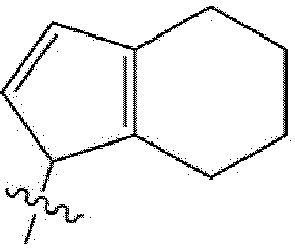
wobei das Polyethylen-Copolymer niedriger Dichte unter Verwendung i) eines Hybridkatalysators, der einen Metallocen-Katalysator der folgenden chemischen Formel 1 enthält, und ii) eines Metallocen-Katalysators der folgenden chemischen Formel 2 oder chemischen Formel 3 hergestellt wird: M für Ti, Zr oder Hf steht,X1 und X2 gleich oder verschieden voneinander sind und jeweils unabhängig voneinander ausgewählt sind aus Halogen, einer Nitrogruppe, einer Amidgruppe, einer Phosphingruppe, einer Phosphidgruppe, einer Alkylgruppe mit 1 bis 20 Kohlenstoffatomen, einer Alkoxygruppe mit 1 bis 20 Kohlenstoffatomen, einer Alkoxyalkylgruppe mit 2 bis 20 Kohlenstoffatomen, einer Silylgruppe mit 1 bis 20 Kohlenstoffatomen, einer Alkenylgruppe mit 2 bis 20 Kohlenstoffatomen, einer Arylgruppe mit 6 bis 20 Kohlenstoffatomen, einer Sulfonatgruppe mit 1 bis 20 Kohlenstoffatomen und einer Sulfongruppe mit 1 bis 20 Kohlenstoffatomen,T für C, Si, Ge, Sn oder Pb steht,Q1 und Q2 gleich oder verschieden voneinander sind und jeweils unabhängig voneinander ausgewählt sind aus Wasserstoff, Halogen, einer Alkylgruppe mit 1 bis 20 Kohlenstoffatomen, einer Heterocycloalkylgruppe mit 2 bis 20 Kohlenstoffatomen, einer Alkoxygruppe mit 1 bis 20 Kohlenstoffatomen, einer Alkoxyalkylgruppe mit 1 bis 20 Kohlenstoffatomen, einem Carboxylat mit 1 bis 20 Kohlenstoffatomen, einer Alkenylgruppe mit 2 bis 20 Kohlenstoffatomen, einer Arylgruppe mit 6 bis 20 Kohlenstoffatomen und einer Heteroarylgruppe mit 5 bis 20 Kohlenstoffatomen,R1 bis R6 gleich oder verschieden voneinander sind und jeweils unabhängig voneinander ausgewählt sind aus Wasserstoff, einer Alkylgruppe mit 1 bis 20 Kohlenstoffatomen, einer Alkoxygruppe mit 1 bis 20 Kohlenstoffatomen, einer Alkoxyalkylgruppe mit 2 bis 20 Kohlenstoffatomen, einer Silylgruppe mit 1 bis 20 Kohlenstoffatomen, einer Silylalkylgruppe mit 1 bis 20 Kohlenstoffatomen, einer Silyloxyalkylgruppe mit 1 bis 20 Kohlenstoffatomen, einer Alkenylgruppe mit 2 bis 20 Kohlenstoffatomen und einer Arylgruppe mit 6 bis 20 Kohlenstoffatomen,R7 bis R14 gleich oder verschieden voneinander sind und jeweils unabhängig voneinander ausgewählt sind aus Wasserstoff, einer Alkylgruppe mit 1 bis 20 Kohlenstoffatomen, einer Alkoxygruppe mit 1 bis 20 Kohlenstoffatomen, einer Alkoxyalkylgruppe mit 2 bis 20 Kohlenstoffatomen, einer Silylgruppe mit 2 bis 20 Kohlenstoffatomen, einer Silylalkylgruppe mit 1 bis 20 Kohlenstoffatomen, einer Silyloxyalkylgruppe mit 1 bis 20 Kohlenstoffatomen, einer Alkenylgruppe mit 2 bis 20 Kohlenstoffatomen und einer Arylgruppe mit 6 bis 20 Kohlenstoffatomen, oder mindestens ein Paar benachbarter Substituenten von R7 bis R14 unter Bildung eines substituierten oder unsubstituierten aliphatischen oder aromatischen Rings miteinander verbunden sind;
 M' für Ti, Zr oder Hf steht,X'1 und X'2 gleich oder verschieden voneinander sind und jeweils unabhängig voneinander ausgewählt sind aus Halogen, einer Nitrogruppe, einer Amidgruppe, einer Phosphingruppe, einer Phosphidgruppe, einer Alkylgruppe mit 1 bis 20 Kohlenstoffatomen, einer Alkoxygruppe mit 1 bis 20 Kohlenstoffatomen, einer Alkoxyalkylgruppe mit 2 bis 20 Kohlenstoffatomen, einer Silylgruppe mit 1 bis 20 Kohlenstoffatomen, einer Alkenylgruppe mit 2 bis 20 Kohlenstoffatomen, einer Arylgruppe mit 6 bis 20 Kohlenstoffatomen, einer Sulfonatgruppe mit 1 bis 20 Kohlenstoffatomen und einer Sulfongruppe mit 1 bis 20 Kohlenstoffatomen,T' für C, Si, Ge, Sn oder Pb steht,Q'1 und Q'2 gleich oder verschieden voneinander sind und jeweils unabhängig voneinander ausgewählt sind aus Wasserstoff, Halogen, einer Alkylgruppe mit 1 bis 20 Kohlenstoffatomen, einer Heterocycloalkylgruppe mit 2 bis 20 Kohlenstoffatomen, einer Alkoxygruppe mit 1 bis 20 Kohlenstoffatomen, einer Alkoxyalkylgruppe mit 1 bis 20 Kohlenstoffatomen, einem Carboxylat mit 1 bis 20 Kohlenstoffatomen, einer Alkenylgruppe mit 2 bis 20 Kohlenstoffatomen, einer Arylgruppe mit 6 bis 20 Kohlenstoffatomen und einer Heteroarylgruppe mit 5 bis 20 Kohlenstoffatomen,T1 und T2 jeweils unabhängig voneinander für

 M" für Ti, Zr oder Hf steht,X"1 und X"2 gleich oder verschieden voneinander sind und jeweils unabhängig voneinander ausgewählt sind aus Halogen, einer Nitrogruppe, einer Amidgruppe, einer Phosphingruppe, einer Phosphidgruppe, einer Alkylgruppe mit 1 bis 20 Kohlenstoffatomen, einer Alkoxygruppe mit 1 bis 20 Kohlenstoffatomen, einer Alkoxyalkylgruppe mit 2 bis 20 Kohlenstoffatomen, einer Silylgruppe mit 1 bis 20 Kohlenstoffatomen, einer Alkenylgruppe mit 2 bis 20 Kohlenstoffatomen, einer Arylgruppe mit 6 bis 20 Kohlenstoffatomen, einer Sulfonatgruppe mit 1 bis 20 Kohlenstoffatomen und einer Sulfongruppe mit 1 bis 20 Kohlenstoffatomen,T" für C, Si, Ge, Sn oder Pb steht,Q"1 und Q"2 gleich oder verschieden voneinander sind und jeweils unabhängig voneinander ausgewählt sind aus Wasserstoff, Halogen, einer Alkylgruppe mit 1 bis 20 Kohlenstoffatomen, einer Heterocycloalkylgruppe mit 2 bis 20 Kohlenstoffatomen, einer Alkoxygruppe mit 1 bis 20 Kohlenstoffatomen, einer Alkoxyalkylgruppe mit 1 bis 20 Kohlenstoffatomen, einem Carboxylat mit 1 bis 20 Kohlenstoffatomen, einer Alkenylgruppe mit 2 bis 20 Kohlenstoffatomen, einer Arylgruppe mit 6 bis 20 Kohlenstoffatomen und einer Heteroarylgruppe mit 5 bis 20 Kohlenstoffatomen, undT3 und T4 jeweils unabhängig voneinander für
Applications Claiming Priority (2)
| Application Number | Priority Date | Filing Date | Title |
|---|---|---|---|
| KR1020150184611A KR101924198B1 (ko) | 2015-12-23 | 2015-12-23 | 필름 가공성 및 투명도가 우수한 저밀도 폴리에틸렌 공중합체 |
| PCT/KR2016/015231 WO2017111552A1 (ko) | 2015-12-23 | 2016-12-23 | 필름 가공성 및 투명도가 우수한 저밀도 폴리에틸렌 공중합체 |
Publications (3)
| Publication Number | Publication Date |
|---|---|
| EP3241854A1 EP3241854A1 (de) | 2017-11-08 |
| EP3241854A4 EP3241854A4 (de) | 2018-04-18 |
| EP3241854B1 true EP3241854B1 (de) | 2021-04-14 |
Family
ID=59089627
Family Applications (1)
| Application Number | Title | Priority Date | Filing Date |
|---|---|---|---|
| EP16879419.6A Revoked EP3241854B1 (de) | 2015-12-23 | 2016-12-23 | Polyethylencopolymer mit niedriger dichte mit hervorragender filmverarbeitbarkeit und transparenz |
Country Status (6)
| Country | Link |
|---|---|
| US (1) | US10508164B2 (de) |
| EP (1) | EP3241854B1 (de) |
| JP (1) | JP6446137B2 (de) |
| KR (1) | KR101924198B1 (de) |
| CN (1) | CN107250175B (de) |
| WO (1) | WO2017111552A1 (de) |
Families Citing this family (11)
| Publication number | Priority date | Publication date | Assignee | Title |
|---|---|---|---|---|
| US10934370B2 (en) * | 2015-12-31 | 2021-03-02 | Hanwha Chemical Corporation | Hybrid supported metallogen catalyst, method for preparing olefin polymer by using same, and olefin polymer having improved melt strength |
| KR101711788B1 (ko) | 2016-03-09 | 2017-03-14 | 한화케미칼 주식회사 | 혼성 촉매 조성물, 이의 제조방법, 및 이를 이용하여 제조된 폴리올레핀 |
| KR101725004B1 (ko) * | 2016-04-27 | 2017-04-18 | 한화케미칼 주식회사 | 혼성 담지 메탈로센 촉매 및 이를 이용한 가공성이 우수한 폴리올레핀 수지 |
| KR102351569B1 (ko) * | 2017-12-18 | 2022-01-14 | 주식회사 엘지화학 | 폴리에틸렌 수지 필름 |
| US11952444B2 (en) | 2018-10-15 | 2024-04-09 | Total Research & Technology Feluy | Polyethylene resins |
| KR102272245B1 (ko) * | 2018-12-18 | 2021-07-02 | 한화솔루션 주식회사 | 올레핀 중합용 촉매 및 이를 이용하여 제조된 올레핀계 중합체 |
| JP7237407B2 (ja) | 2019-02-20 | 2023-03-13 | エルジー・ケム・リミテッド | 触媒組成物およびこれを用いたポリオレフィンの製造方法 |
| EP3936543A4 (de) | 2019-11-20 | 2022-08-31 | Lg Chem, Ltd. | Geträgerter hybridmetallocenkatalysator und verfahren zur herstellung eines polyethylencopolymers damit |
| KR102387101B1 (ko) * | 2020-04-16 | 2022-04-18 | 주식회사 엘지화학 | 에틸렌/알파-올레핀 공중합체를 포함하는 봉지재 필름용 조성물 및 이를 포함하는 봉지재 필름 |
| WO2021210749A1 (ko) | 2020-04-16 | 2021-10-21 | 주식회사 엘지화학 | 에틸렌/알파-올레핀 공중합체를 포함하는 봉지재 필름용 조성물 및 이를 포함하는 봉지재 필름 |
| KR102821818B1 (ko) * | 2021-04-15 | 2025-06-17 | 주식회사 엘지에너지솔루션 | 이차전지 |
Citations (17)
| Publication number | Priority date | Publication date | Assignee | Title |
|---|---|---|---|---|
| WO1999003902A1 (en) | 1997-07-21 | 1999-01-28 | The Dow Chemical Company | Broad mwd, compositionally uniform ethylene interpolymer compositions, process for making the same and article made therefrom |
| WO1999035174A1 (en) | 1998-01-07 | 1999-07-15 | Bp Chemicals Limited | Homopolymers and copolymers of ethylene |
| US6153549A (en) | 1996-10-31 | 2000-11-28 | Targor Gmbh | Metallocenes |
| WO2001040324A1 (en) | 1999-12-01 | 2001-06-07 | Univation Technologies Llc | Catalyst compounds, catalyst systems thereof and their use in a polymerization process |
| US6476166B1 (en) | 1998-07-16 | 2002-11-05 | Univation Technologies, Llc | Aluminum-based lewis acid cocatalysts for olefin polymerization |
| WO2003033554A1 (en) | 2001-09-27 | 2003-04-24 | Univation Technologies, Llc | Linear low density polyethylenes with high melt strength and high melt index ratio |
| US7132486B2 (en) | 2000-10-06 | 2006-11-07 | Univation Technologies, Llc | Linear low density polyethylenes with high melt strength and high melt index ratio |
| US7335710B2 (en) | 2001-11-20 | 2008-02-26 | Ineos Europe Limited | Polymerization process |
| US20110098422A1 (en) | 2007-10-22 | 2011-04-28 | Univation Technologies, Llc | Polyethylene compositions having improved properties |
| WO2011085375A1 (en) | 2010-01-11 | 2011-07-14 | Dow Global Technologies Llc | Polyethylene with high melt strength for use in films |
| US20120130019A1 (en) | 2009-08-10 | 2012-05-24 | Dow Global Technologies Llc | Ldpe for use as a blend component in shrinkage film applications |
| KR101197946B1 (ko) | 2010-05-20 | 2012-11-05 | 삼성토탈 주식회사 | 선형 저밀도 폴리에틸렌 수지 및 이의 제조 방법 |
| WO2013188950A1 (en) | 2012-06-21 | 2013-12-27 | Nova Chemicals (International) S.A. | Ethylene copolymers, film and polymerization process |
| WO2014058657A1 (en) | 2012-10-12 | 2014-04-17 | Dow Global Technologies Llc | Linear low density composition suitable for film applications and films made therefrom |
| US20140179873A1 (en) | 2012-12-24 | 2014-06-26 | Nova Chemicals (International) S.A. | Polyethylene blend compositions and film |
| WO2014186272A1 (en) | 2013-05-14 | 2014-11-20 | Chevron Phillips Chemical Company Lp | Peroxide treated metallocene-based polyolefins with improved melt strength |
| WO2015200740A2 (en) | 2014-06-26 | 2015-12-30 | Dow Global Technologies Llc | Ethylene-based polymer composition for films with improved toughness |
Family Cites Families (11)
| Publication number | Priority date | Publication date | Assignee | Title |
|---|---|---|---|---|
| KR100886681B1 (ko) | 2006-03-31 | 2009-03-04 | 주식회사 엘지화학 | 선형 저밀도 폴리에틸렌의 제조방법 |
| EA016790B1 (ru) * | 2006-04-13 | 2012-07-30 | Тотал Петрокемикалс Рисерч Фелюй | Разветвленный сополимер этилена низкой и средней плотности, способ его получения и применение |
| US9243087B2 (en) * | 2009-06-11 | 2016-01-26 | Dow Global Technologies Llc | LDPE enabling high output and good optics when blended with other polymers |
| US8067652B2 (en) | 2009-08-13 | 2011-11-29 | Chemtura Corporation | Processes for controlling the viscosity of polyalphaolefins |
| KR101094556B1 (ko) | 2009-08-21 | 2011-12-19 | 호남석유화학 주식회사 | 수가교 전선용 선형 저밀도 폴리에틸렌 중합체와 이를 이용한 전선용 수지 조성물 및 수가교 전선 |
| JP6279584B2 (ja) | 2012-09-28 | 2018-02-14 | ダウ グローバル テクノロジーズ エルエルシー | エチレン系ポリマーおよびその製造方法 |
| JP2015535011A (ja) * | 2012-10-12 | 2015-12-07 | ダウ グローバル テクノロジーズ エルエルシー | ポリオレフィンブレンド組成物および当該組成物から作製されるフィルム |
| JP6281252B2 (ja) | 2013-09-11 | 2018-02-21 | 東ソー株式会社 | 加工性に優れた高圧法低密度ポリエチレン及びエチレン系重合体組成物 |
| EP2905285B1 (de) * | 2013-10-16 | 2017-04-05 | LG Chem, Ltd. | Übergangsmetallverbindung mit einem heteroatom, katalysatorzusammensetzung damit und verfahren zur herstellung eines polymers damit |
| KR101792171B1 (ko) * | 2014-12-08 | 2017-10-31 | 주식회사 엘지화학 | 우수한 용융 강도를 갖는 올레핀계 중합체 및 이를 포함하는 필름 |
| EP4257639B1 (de) * | 2015-09-17 | 2025-03-12 | ExxonMobil Chemical Patents Inc. | Polyethylenpolymere und daraus hergestellte artikel |
-
2015
- 2015-12-23 KR KR1020150184611A patent/KR101924198B1/ko active Active
-
2016
- 2016-12-23 JP JP2017535072A patent/JP6446137B2/ja active Active
- 2016-12-23 CN CN201680010597.5A patent/CN107250175B/zh active Active
- 2016-12-23 US US15/546,474 patent/US10508164B2/en active Active
- 2016-12-23 WO PCT/KR2016/015231 patent/WO2017111552A1/ko not_active Ceased
- 2016-12-23 EP EP16879419.6A patent/EP3241854B1/de not_active Revoked
Patent Citations (19)
| Publication number | Priority date | Publication date | Assignee | Title |
|---|---|---|---|---|
| US6153549A (en) | 1996-10-31 | 2000-11-28 | Targor Gmbh | Metallocenes |
| WO1999003902A1 (en) | 1997-07-21 | 1999-01-28 | The Dow Chemical Company | Broad mwd, compositionally uniform ethylene interpolymer compositions, process for making the same and article made therefrom |
| WO1999035174A1 (en) | 1998-01-07 | 1999-07-15 | Bp Chemicals Limited | Homopolymers and copolymers of ethylene |
| US6476166B1 (en) | 1998-07-16 | 2002-11-05 | Univation Technologies, Llc | Aluminum-based lewis acid cocatalysts for olefin polymerization |
| WO2001040324A1 (en) | 1999-12-01 | 2001-06-07 | Univation Technologies Llc | Catalyst compounds, catalyst systems thereof and their use in a polymerization process |
| US7132486B2 (en) | 2000-10-06 | 2006-11-07 | Univation Technologies, Llc | Linear low density polyethylenes with high melt strength and high melt index ratio |
| WO2003033554A1 (en) | 2001-09-27 | 2003-04-24 | Univation Technologies, Llc | Linear low density polyethylenes with high melt strength and high melt index ratio |
| US7335710B2 (en) | 2001-11-20 | 2008-02-26 | Ineos Europe Limited | Polymerization process |
| US20110098422A1 (en) | 2007-10-22 | 2011-04-28 | Univation Technologies, Llc | Polyethylene compositions having improved properties |
| US20120130019A1 (en) | 2009-08-10 | 2012-05-24 | Dow Global Technologies Llc | Ldpe for use as a blend component in shrinkage film applications |
| WO2011085375A1 (en) | 2010-01-11 | 2011-07-14 | Dow Global Technologies Llc | Polyethylene with high melt strength for use in films |
| US20130035438A1 (en) | 2010-01-11 | 2013-02-07 | Dow Brasil S.A. | Method for preparing polyethylene with high melt strength |
| US8653196B2 (en) | 2010-01-11 | 2014-02-18 | Dow Global Technologies, Llc | Method for preparing polyethylene with high melt strength |
| KR101197946B1 (ko) | 2010-05-20 | 2012-11-05 | 삼성토탈 주식회사 | 선형 저밀도 폴리에틸렌 수지 및 이의 제조 방법 |
| WO2013188950A1 (en) | 2012-06-21 | 2013-12-27 | Nova Chemicals (International) S.A. | Ethylene copolymers, film and polymerization process |
| WO2014058657A1 (en) | 2012-10-12 | 2014-04-17 | Dow Global Technologies Llc | Linear low density composition suitable for film applications and films made therefrom |
| US20140179873A1 (en) | 2012-12-24 | 2014-06-26 | Nova Chemicals (International) S.A. | Polyethylene blend compositions and film |
| WO2014186272A1 (en) | 2013-05-14 | 2014-11-20 | Chevron Phillips Chemical Company Lp | Peroxide treated metallocene-based polyolefins with improved melt strength |
| WO2015200740A2 (en) | 2014-06-26 | 2015-12-30 | Dow Global Technologies Llc | Ethylene-based polymer composition for films with improved toughness |
Non-Patent Citations (13)
| Title |
|---|
| "ENABLE™ mPE ENABLE 20-10 Series", EXONMOBIL CHEMICAL, 17 February 2008 (2008-02-17), pages 1 - 2, XP055897948 |
| A J PEACOCK: "Handbook of polyethylene: Structure, Properties, and Applications", 1 January 2000, MARCEL DEKKER , ISBN: 978-0-8247-9546-7, article "Chapter 5 passage", pages: 226 - 229, XP055475151 |
| A J PEACOCK: "Handbook of polyethylene: Structure, Properties, and Applications", 1 January 2000, MARCEL DEKKER , ISBN: 978-0-8247-9546-7, article ANONYMOUS: "Passage ; Handbook of PolyethyleneStructures, Properties, and Applications", pages: 236 - 236, XP093133691 |
| ANKA BERNNAT: "Polymer Melt Rheology and the Rheotens Test.", 2001, XP055897952 |
| ANONYMOUS: "Enable 20-10 series metallocene polyethylene resin ", EXONMOBIL, 12 January 2012 (2012-01-12), XP055897949 |
| ANONYMOUS: "Enable™ 2010 Series Blown performance polymer ", EXXONMOBIL, 6 March 2020 (2020-03-06), XP055897950 |
| ANONYMOUS: "Plastics — Determination of dynamic mechanical properties —Part 10:Complex shear viscosity using a parallel-plate oscillatory rheometer", INTERNATIONAL STANDARD, ISO 6721-10, 15 September 2015 (2015-09-15), pages 1 - 24, XP055980300 |
| ANONYMOUS: "POLYETHYLENE ANTEO™ FK1828 - BORSTAR® BIMODAL TERPOLYMER LLDPE FOR HIGH PERFORMANCE FLEXIBLE PACKAGING ", PRODUCT DATA SHEET, BOROUGE, 1 January 2018 (2018-01-01), XP093124447 |
| ANONYMOUS: "Polyethylene FG5199 Linear Low Density Polyethylene for Film Extrusion", BOREALIS, 6 October 2010 (2010-10-06), pages 1 - 3, XP055884480 |
| ANONYMOUS: "Polyethylene FG5224 - Linear Low Density Polyethylene for Film Extrusion", PRODUCT DATA SHEET, BOREALIS, 6 October 2010 (2010-10-06), pages 1 - 3, XP093124441 |
| ANONYMOUS: "Total Lumicene Supertough 22ST05 Technical data sheet Polyethylene blown film produced in Europe", TOTAL REFINING & CHEMICALS POLYMERS, 1 October 2013 (2013-10-01), pages 1 - 2, XP055884484 |
| GUPTA ET AL.: "The Effect of Die Geometries and Extrusion Rates on Melt Strength of High Melt Strength Polypropylene", JOURNAL OF POLYMER ENGINEERING, vol. 27, no. 2, 2007, XP055897956 |
| INKSON N. J., GRAHAM R. S., MCLEISH T. C. B., GROVES D. J., FERNYHOUGH C. M.: "Viscoelasticity of Monodisperse Comb Polymer Melts", MACROMOLECULES, AMERICAN CHEMICAL SOCIETY, US, vol. 39, no. 12, 1 June 2006 (2006-06-01), US , pages 4217 - 4227, XP093124435, ISSN: 0024-9297, DOI: 10.1021/ma060018f |
Also Published As
| Publication number | Publication date |
|---|---|
| JP6446137B2 (ja) | 2018-12-26 |
| EP3241854A4 (de) | 2018-04-18 |
| JP2018513223A (ja) | 2018-05-24 |
| WO2017111552A1 (ko) | 2017-06-29 |
| CN107250175A (zh) | 2017-10-13 |
| US20180016372A1 (en) | 2018-01-18 |
| US10508164B2 (en) | 2019-12-17 |
| KR101924198B1 (ko) | 2018-11-30 |
| EP3241854A1 (de) | 2017-11-08 |
| KR20170075224A (ko) | 2017-07-03 |
| CN107250175B (zh) | 2020-09-11 |
Similar Documents
| Publication | Publication Date | Title |
|---|---|---|
| EP3241854B1 (de) | Polyethylencopolymer mit niedriger dichte mit hervorragender filmverarbeitbarkeit und transparenz | |
| EP3168243B1 (de) | Olefinbasiertes polymer mit ausgezeichneter verarbeitbarkeit | |
| KR102139364B1 (ko) | 올레핀 중합체 및 이의 제조 방법 | |
| KR102394383B1 (ko) | 폴리올레핀 | |
| EP3476871B1 (de) | Herstellungsverfahren eines olefinpolymers | |
| EP3339336B1 (de) | Olefinpolymer und herstellungsverfahren dafür | |
| EP3225638B1 (de) | Ethylen/-olefincopolymer mit ausgezeichneter verarbeitbarkeit und oberflächeneigenschaften | |
| KR102073253B1 (ko) | 혼성 담지 메탈로센 촉매 및 이를 이용한 폴리올레핀의 제조 방법 | |
| US20190161590A1 (en) | Polyolefin-based Film | |
| CN111511783A (zh) | 具有优异加工性的乙烯/1-丁烯共聚物 | |
| EP3476870B1 (de) | Verfahren zur herstellung eines olefinpolymers | |
| EP3418311B1 (de) | Hybrider trägerkatalysator | |
| KR102724460B1 (ko) | 혼성 담지 메탈로센 촉매 및 이를 이용한 폴리올레핀의 제조 방법 | |
| KR102602239B1 (ko) | 폴리올레핀 | |
| KR20170075530A (ko) | 메탈로센 담지 촉매 및 이를 이용하는 폴리올레핀의 제조방법 | |
| EP3611177B1 (de) | Neuartige übergangsmetallverbindung und verfahren zur herstellung davon | |
| KR102174389B1 (ko) | 내환경 응력 균열성이 우수한 에틸렌/알파-올레핀 공중합체 | |
| KR102673283B1 (ko) | 혼성 담지 메탈로센 촉매의 제조 방법 및 이를 이용한 올레핀 중합체의 제조 방법 | |
| KR102434450B1 (ko) | 폴리올레핀 | |
| KR102434451B1 (ko) | 폴리올레핀 | |
| KR102181557B1 (ko) | 올레핀 중합체의 제조방법 | |
| KR20260005640A (ko) | 폴리올레핀 및 이를 포함하는 필름 |
Legal Events
| Date | Code | Title | Description |
|---|---|---|---|
| STAA | Information on the status of an ep patent application or granted ep patent |
Free format text: STATUS: THE INTERNATIONAL PUBLICATION HAS BEEN MADE |
|
| PUAI | Public reference made under article 153(3) epc to a published international application that has entered the european phase |
Free format text: ORIGINAL CODE: 0009012 |
|
| STAA | Information on the status of an ep patent application or granted ep patent |
Free format text: STATUS: REQUEST FOR EXAMINATION WAS MADE |
|
| 17P | Request for examination filed |
Effective date: 20170801 |
|
| AK | Designated contracting states |
Kind code of ref document: A1 Designated state(s): AL AT BE BG CH CY CZ DE DK EE ES FI FR GB GR HR HU IE IS IT LI LT LU LV MC MK MT NL NO PL PT RO RS SE SI SK SM TR |
|
| AX | Request for extension of the european patent |
Extension state: BA ME |
|
| A4 | Supplementary search report drawn up and despatched |
Effective date: 20180315 |
|
| RIC1 | Information provided on ipc code assigned before grant |
Ipc: C08F 4/6592 20060101ALI20180309BHEP Ipc: C08F 210/16 20060101ALI20180309BHEP Ipc: C08F 210/02 20060101AFI20180309BHEP |
|
| DAV | Request for validation of the european patent (deleted) | ||
| DAX | Request for extension of the european patent (deleted) | ||
| STAA | Information on the status of an ep patent application or granted ep patent |
Free format text: STATUS: EXAMINATION IS IN PROGRESS |
|
| 17Q | First examination report despatched |
Effective date: 20201030 |
|
| GRAP | Despatch of communication of intention to grant a patent |
Free format text: ORIGINAL CODE: EPIDOSNIGR1 |
|
| STAA | Information on the status of an ep patent application or granted ep patent |
Free format text: STATUS: GRANT OF PATENT IS INTENDED |
|
| INTG | Intention to grant announced |
Effective date: 20201221 |
|
| GRAS | Grant fee paid |
Free format text: ORIGINAL CODE: EPIDOSNIGR3 |
|
| GRAA | (expected) grant |
Free format text: ORIGINAL CODE: 0009210 |
|
| STAA | Information on the status of an ep patent application or granted ep patent |
Free format text: STATUS: THE PATENT HAS BEEN GRANTED |
|
| AK | Designated contracting states |
Kind code of ref document: B1 Designated state(s): AL AT BE BG CH CY CZ DE DK EE ES FI FR GB GR HR HU IE IS IT LI LT LU LV MC MK MT NL NO PL PT RO RS SE SI SK SM TR |
|
| REG | Reference to a national code |
Ref country code: GB Ref legal event code: FG4D |
|
| REG | Reference to a national code |
Ref country code: CH Ref legal event code: EP |
|
| REG | Reference to a national code |
Ref country code: DE Ref legal event code: R096 Ref document number: 602016056276 Country of ref document: DE |
|
| REG | Reference to a national code |
Ref country code: IE Ref legal event code: FG4D |
|
| REG | Reference to a national code |
Ref country code: AT Ref legal event code: REF Ref document number: 1382325 Country of ref document: AT Kind code of ref document: T Effective date: 20210515 |
|
| REG | Reference to a national code |
Ref country code: LT Ref legal event code: MG9D |
|
| REG | Reference to a national code |
Ref country code: AT Ref legal event code: MK05 Ref document number: 1382325 Country of ref document: AT Kind code of ref document: T Effective date: 20210414 |
|
| REG | Reference to a national code |
Ref country code: NL Ref legal event code: MP Effective date: 20210414 |
|
| PG25 | Lapsed in a contracting state [announced via postgrant information from national office to epo] |
Ref country code: FI Free format text: LAPSE BECAUSE OF FAILURE TO SUBMIT A TRANSLATION OF THE DESCRIPTION OR TO PAY THE FEE WITHIN THE PRESCRIBED TIME-LIMIT Effective date: 20210414 Ref country code: LT Free format text: LAPSE BECAUSE OF FAILURE TO SUBMIT A TRANSLATION OF THE DESCRIPTION OR TO PAY THE FEE WITHIN THE PRESCRIBED TIME-LIMIT Effective date: 20210414 Ref country code: NL Free format text: LAPSE BECAUSE OF FAILURE TO SUBMIT A TRANSLATION OF THE DESCRIPTION OR TO PAY THE FEE WITHIN THE PRESCRIBED TIME-LIMIT Effective date: 20210414 Ref country code: AT Free format text: LAPSE BECAUSE OF FAILURE TO SUBMIT A TRANSLATION OF THE DESCRIPTION OR TO PAY THE FEE WITHIN THE PRESCRIBED TIME-LIMIT Effective date: 20210414 Ref country code: BG Free format text: LAPSE BECAUSE OF FAILURE TO SUBMIT A TRANSLATION OF THE DESCRIPTION OR TO PAY THE FEE WITHIN THE PRESCRIBED TIME-LIMIT Effective date: 20210714 Ref country code: HR Free format text: LAPSE BECAUSE OF FAILURE TO SUBMIT A TRANSLATION OF THE DESCRIPTION OR TO PAY THE FEE WITHIN THE PRESCRIBED TIME-LIMIT Effective date: 20210414 |
|
| PG25 | Lapsed in a contracting state [announced via postgrant information from national office to epo] |
Ref country code: GR Free format text: LAPSE BECAUSE OF FAILURE TO SUBMIT A TRANSLATION OF THE DESCRIPTION OR TO PAY THE FEE WITHIN THE PRESCRIBED TIME-LIMIT Effective date: 20210715 Ref country code: IS Free format text: LAPSE BECAUSE OF FAILURE TO SUBMIT A TRANSLATION OF THE DESCRIPTION OR TO PAY THE FEE WITHIN THE PRESCRIBED TIME-LIMIT Effective date: 20210814 Ref country code: LV Free format text: LAPSE BECAUSE OF FAILURE TO SUBMIT A TRANSLATION OF THE DESCRIPTION OR TO PAY THE FEE WITHIN THE PRESCRIBED TIME-LIMIT Effective date: 20210414 Ref country code: SE Free format text: LAPSE BECAUSE OF FAILURE TO SUBMIT A TRANSLATION OF THE DESCRIPTION OR TO PAY THE FEE WITHIN THE PRESCRIBED TIME-LIMIT Effective date: 20210414 Ref country code: RS Free format text: LAPSE BECAUSE OF FAILURE TO SUBMIT A TRANSLATION OF THE DESCRIPTION OR TO PAY THE FEE WITHIN THE PRESCRIBED TIME-LIMIT Effective date: 20210414 Ref country code: NO Free format text: LAPSE BECAUSE OF FAILURE TO SUBMIT A TRANSLATION OF THE DESCRIPTION OR TO PAY THE FEE WITHIN THE PRESCRIBED TIME-LIMIT Effective date: 20210714 Ref country code: PL Free format text: LAPSE BECAUSE OF FAILURE TO SUBMIT A TRANSLATION OF THE DESCRIPTION OR TO PAY THE FEE WITHIN THE PRESCRIBED TIME-LIMIT Effective date: 20210414 Ref country code: PT Free format text: LAPSE BECAUSE OF FAILURE TO SUBMIT A TRANSLATION OF THE DESCRIPTION OR TO PAY THE FEE WITHIN THE PRESCRIBED TIME-LIMIT Effective date: 20210816 |
|
| REG | Reference to a national code |
Ref country code: DE Ref legal event code: R026 Ref document number: 602016056276 Country of ref document: DE |
|
| PLBI | Opposition filed |
Free format text: ORIGINAL CODE: 0009260 |
|
| PLBI | Opposition filed |
Free format text: ORIGINAL CODE: 0009260 |
|
| PLAX | Notice of opposition and request to file observation + time limit sent |
Free format text: ORIGINAL CODE: EPIDOSNOBS2 |
|
| PG25 | Lapsed in a contracting state [announced via postgrant information from national office to epo] |
Ref country code: ES Free format text: LAPSE BECAUSE OF FAILURE TO SUBMIT A TRANSLATION OF THE DESCRIPTION OR TO PAY THE FEE WITHIN THE PRESCRIBED TIME-LIMIT Effective date: 20210414 Ref country code: RO Free format text: LAPSE BECAUSE OF FAILURE TO SUBMIT A TRANSLATION OF THE DESCRIPTION OR TO PAY THE FEE WITHIN THE PRESCRIBED TIME-LIMIT Effective date: 20210414 Ref country code: DK Free format text: LAPSE BECAUSE OF FAILURE TO SUBMIT A TRANSLATION OF THE DESCRIPTION OR TO PAY THE FEE WITHIN THE PRESCRIBED TIME-LIMIT Effective date: 20210414 Ref country code: EE Free format text: LAPSE BECAUSE OF FAILURE TO SUBMIT A TRANSLATION OF THE DESCRIPTION OR TO PAY THE FEE WITHIN THE PRESCRIBED TIME-LIMIT Effective date: 20210414 Ref country code: CZ Free format text: LAPSE BECAUSE OF FAILURE TO SUBMIT A TRANSLATION OF THE DESCRIPTION OR TO PAY THE FEE WITHIN THE PRESCRIBED TIME-LIMIT Effective date: 20210414 Ref country code: SK Free format text: LAPSE BECAUSE OF FAILURE TO SUBMIT A TRANSLATION OF THE DESCRIPTION OR TO PAY THE FEE WITHIN THE PRESCRIBED TIME-LIMIT Effective date: 20210414 Ref country code: SM Free format text: LAPSE BECAUSE OF FAILURE TO SUBMIT A TRANSLATION OF THE DESCRIPTION OR TO PAY THE FEE WITHIN THE PRESCRIBED TIME-LIMIT Effective date: 20210414 |
|
| 26 | Opposition filed |
Opponent name: BOREALIS AG Effective date: 20220113 |
|
| 26 | Opposition filed |
Opponent name: THE DOW CHEMICAL COMPANY Effective date: 20220114 |
|
| PG25 | Lapsed in a contracting state [announced via postgrant information from national office to epo] |
Ref country code: IS Free format text: LAPSE BECAUSE OF FAILURE TO SUBMIT A TRANSLATION OF THE DESCRIPTION OR TO PAY THE FEE WITHIN THE PRESCRIBED TIME-LIMIT Effective date: 20210814 Ref country code: AL Free format text: LAPSE BECAUSE OF FAILURE TO SUBMIT A TRANSLATION OF THE DESCRIPTION OR TO PAY THE FEE WITHIN THE PRESCRIBED TIME-LIMIT Effective date: 20210414 |
|
| PLBB | Reply of patent proprietor to notice(s) of opposition received |
Free format text: ORIGINAL CODE: EPIDOSNOBS3 |
|
| PG25 | Lapsed in a contracting state [announced via postgrant information from national office to epo] |
Ref country code: MC Free format text: LAPSE BECAUSE OF FAILURE TO SUBMIT A TRANSLATION OF THE DESCRIPTION OR TO PAY THE FEE WITHIN THE PRESCRIBED TIME-LIMIT Effective date: 20210414 |
|
| REG | Reference to a national code |
Ref country code: CH Ref legal event code: PL |
|
| REG | Reference to a national code |
Ref country code: BE Ref legal event code: MM Effective date: 20211231 |
|
| PG25 | Lapsed in a contracting state [announced via postgrant information from national office to epo] |
Ref country code: LU Free format text: LAPSE BECAUSE OF NON-PAYMENT OF DUE FEES Effective date: 20211223 Ref country code: IE Free format text: LAPSE BECAUSE OF NON-PAYMENT OF DUE FEES Effective date: 20211223 |
|
| PG25 | Lapsed in a contracting state [announced via postgrant information from national office to epo] |
Ref country code: BE Free format text: LAPSE BECAUSE OF NON-PAYMENT OF DUE FEES Effective date: 20211231 |
|
| PG25 | Lapsed in a contracting state [announced via postgrant information from national office to epo] |
Ref country code: LI Free format text: LAPSE BECAUSE OF NON-PAYMENT OF DUE FEES Effective date: 20211231 Ref country code: CH Free format text: LAPSE BECAUSE OF NON-PAYMENT OF DUE FEES Effective date: 20211231 |
|
| PG25 | Lapsed in a contracting state [announced via postgrant information from national office to epo] |
Ref country code: HU Free format text: LAPSE BECAUSE OF FAILURE TO SUBMIT A TRANSLATION OF THE DESCRIPTION OR TO PAY THE FEE WITHIN THE PRESCRIBED TIME-LIMIT; INVALID AB INITIO Effective date: 20161223 |
|
| P01 | Opt-out of the competence of the unified patent court (upc) registered |
Effective date: 20230523 |
|
| PG25 | Lapsed in a contracting state [announced via postgrant information from national office to epo] |
Ref country code: CY Free format text: LAPSE BECAUSE OF FAILURE TO SUBMIT A TRANSLATION OF THE DESCRIPTION OR TO PAY THE FEE WITHIN THE PRESCRIBED TIME-LIMIT Effective date: 20210414 |
|
| RDAF | Communication despatched that patent is revoked |
Free format text: ORIGINAL CODE: EPIDOSNREV1 |
|
| APAH | Appeal reference modified |
Free format text: ORIGINAL CODE: EPIDOSCREFNO |
|
| APBM | Appeal reference recorded |
Free format text: ORIGINAL CODE: EPIDOSNREFNO |
|
| APBP | Date of receipt of notice of appeal recorded |
Free format text: ORIGINAL CODE: EPIDOSNNOA2O |
|
| APBQ | Date of receipt of statement of grounds of appeal recorded |
Free format text: ORIGINAL CODE: EPIDOSNNOA3O |
|
| PG25 | Lapsed in a contracting state [announced via postgrant information from national office to epo] |
Ref country code: MK Free format text: LAPSE BECAUSE OF FAILURE TO SUBMIT A TRANSLATION OF THE DESCRIPTION OR TO PAY THE FEE WITHIN THE PRESCRIBED TIME-LIMIT Effective date: 20210414 |
|
| PG25 | Lapsed in a contracting state [announced via postgrant information from national office to epo] |
Ref country code: TR Free format text: LAPSE BECAUSE OF FAILURE TO SUBMIT A TRANSLATION OF THE DESCRIPTION OR TO PAY THE FEE WITHIN THE PRESCRIBED TIME-LIMIT Effective date: 20210414 |
|
| PG25 | Lapsed in a contracting state [announced via postgrant information from national office to epo] |
Ref country code: MT Free format text: LAPSE BECAUSE OF FAILURE TO SUBMIT A TRANSLATION OF THE DESCRIPTION OR TO PAY THE FEE WITHIN THE PRESCRIBED TIME-LIMIT Effective date: 20210414 |
|
| PGFP | Annual fee paid to national office [announced via postgrant information from national office to epo] |
Ref country code: DE Payment date: 20241121 Year of fee payment: 9 |
|
| PLAB | Opposition data, opponent's data or that of the opponent's representative modified |
Free format text: ORIGINAL CODE: 0009299OPPO |
|
| R26 | Opposition filed (corrected) |
Opponent name: BOREALIS GMBH Effective date: 20220113 |
|
| REG | Reference to a national code |
Ref country code: DE Ref legal event code: R064 Ref document number: 602016056276 Country of ref document: DE Ref country code: DE Ref legal event code: R103 Ref document number: 602016056276 Country of ref document: DE |
|
| APBU | Appeal procedure closed |
Free format text: ORIGINAL CODE: EPIDOSNNOA9O |
|
| RDAG | Patent revoked |
Free format text: ORIGINAL CODE: 0009271 |
|
| STAA | Information on the status of an ep patent application or granted ep patent |
Free format text: STATUS: PATENT REVOKED |
|
| REG | Reference to a national code |
Ref country code: CH Ref legal event code: N12 Free format text: ST27 STATUS EVENT CODE: U-0-0-N10-N12 (AS PROVIDED BY THE NATIONAL OFFICE) Effective date: 20251217 |
|
| PGFP | Annual fee paid to national office [announced via postgrant information from national office to epo] |
Ref country code: GB Payment date: 20251120 Year of fee payment: 10 |
|
| 27W | Patent revoked |
Effective date: 20250930 |
|
| GBPR | Gb: patent revoked under art. 102 of the ep convention designating the uk as contracting state |
Effective date: 20250930 |
|
| PGFP | Annual fee paid to national office [announced via postgrant information from national office to epo] |
Ref country code: IT Payment date: 20251121 Year of fee payment: 10 |
|
| PGFP | Annual fee paid to national office [announced via postgrant information from national office to epo] |
Ref country code: FR Payment date: 20251125 Year of fee payment: 10 |