EP3242442A2 - Procédé et appareil de traitement de compensation de perte de trame - Google Patents
Procédé et appareil de traitement de compensation de perte de trame Download PDFInfo
- Publication number
- EP3242442A2 EP3242442A2 EP17163596.4A EP17163596A EP3242442A2 EP 3242442 A2 EP3242442 A2 EP 3242442A2 EP 17163596 A EP17163596 A EP 17163596A EP 3242442 A2 EP3242442 A2 EP 3242442A2
- Authority
- EP
- European Patent Office
- Prior art keywords
- frame
- signal
- spectrum frequency
- excitation signal
- frequency parameter
- Prior art date
- Legal status (The legal status is an assumption and is not a legal conclusion. Google has not performed a legal analysis and makes no representation as to the accuracy of the status listed.)
- Withdrawn
Links
Images



Classifications
-
- G—PHYSICS
- G10—MUSICAL INSTRUMENTS; ACOUSTICS
- G10L—SPEECH ANALYSIS TECHNIQUES OR SPEECH SYNTHESIS; SPEECH RECOGNITION; SPEECH OR VOICE PROCESSING TECHNIQUES; SPEECH OR AUDIO CODING OR DECODING
- G10L19/00—Speech or audio signals analysis-synthesis techniques for redundancy reduction, e.g. in vocoders; Coding or decoding of speech or audio signals, using source filter models or psychoacoustic analysis
- G10L19/005—Correction of errors induced by the transmission channel, if related to the coding algorithm
-
- G—PHYSICS
- G10—MUSICAL INSTRUMENTS; ACOUSTICS
- G10L—SPEECH ANALYSIS TECHNIQUES OR SPEECH SYNTHESIS; SPEECH RECOGNITION; SPEECH OR VOICE PROCESSING TECHNIQUES; SPEECH OR AUDIO CODING OR DECODING
- G10L19/00—Speech or audio signals analysis-synthesis techniques for redundancy reduction, e.g. in vocoders; Coding or decoding of speech or audio signals, using source filter models or psychoacoustic analysis
- G10L19/02—Speech or audio signals analysis-synthesis techniques for redundancy reduction, e.g. in vocoders; Coding or decoding of speech or audio signals, using source filter models or psychoacoustic analysis using spectral analysis, e.g. transform vocoders or subband vocoders
-
- G—PHYSICS
- G10—MUSICAL INSTRUMENTS; ACOUSTICS
- G10L—SPEECH ANALYSIS TECHNIQUES OR SPEECH SYNTHESIS; SPEECH RECOGNITION; SPEECH OR VOICE PROCESSING TECHNIQUES; SPEECH OR AUDIO CODING OR DECODING
- G10L19/00—Speech or audio signals analysis-synthesis techniques for redundancy reduction, e.g. in vocoders; Coding or decoding of speech or audio signals, using source filter models or psychoacoustic analysis
- G10L19/02—Speech or audio signals analysis-synthesis techniques for redundancy reduction, e.g. in vocoders; Coding or decoding of speech or audio signals, using source filter models or psychoacoustic analysis using spectral analysis, e.g. transform vocoders or subband vocoders
- G10L19/0204—Speech or audio signals analysis-synthesis techniques for redundancy reduction, e.g. in vocoders; Coding or decoding of speech or audio signals, using source filter models or psychoacoustic analysis using spectral analysis, e.g. transform vocoders or subband vocoders using subband decomposition
- G10L19/0208—Subband vocoders
-
- G—PHYSICS
- G10—MUSICAL INSTRUMENTS; ACOUSTICS
- G10L—SPEECH ANALYSIS TECHNIQUES OR SPEECH SYNTHESIS; SPEECH RECOGNITION; SPEECH OR VOICE PROCESSING TECHNIQUES; SPEECH OR AUDIO CODING OR DECODING
- G10L19/00—Speech or audio signals analysis-synthesis techniques for redundancy reduction, e.g. in vocoders; Coding or decoding of speech or audio signals, using source filter models or psychoacoustic analysis
- G10L19/04—Speech or audio signals analysis-synthesis techniques for redundancy reduction, e.g. in vocoders; Coding or decoding of speech or audio signals, using source filter models or psychoacoustic analysis using predictive techniques
- G10L19/06—Determination or coding of the spectral characteristics, e.g. of the short-term prediction coefficients
-
- G—PHYSICS
- G10—MUSICAL INSTRUMENTS; ACOUSTICS
- G10L—SPEECH ANALYSIS TECHNIQUES OR SPEECH SYNTHESIS; SPEECH RECOGNITION; SPEECH OR VOICE PROCESSING TECHNIQUES; SPEECH OR AUDIO CODING OR DECODING
- G10L19/00—Speech or audio signals analysis-synthesis techniques for redundancy reduction, e.g. in vocoders; Coding or decoding of speech or audio signals, using source filter models or psychoacoustic analysis
- G10L19/04—Speech or audio signals analysis-synthesis techniques for redundancy reduction, e.g. in vocoders; Coding or decoding of speech or audio signals, using source filter models or psychoacoustic analysis using predictive techniques
- G10L19/08—Determination or coding of the excitation function; Determination or coding of the long-term prediction parameters
- G10L19/083—Determination or coding of the excitation function; Determination or coding of the long-term prediction parameters the excitation function being an excitation gain
-
- G—PHYSICS
- G10—MUSICAL INSTRUMENTS; ACOUSTICS
- G10L—SPEECH ANALYSIS TECHNIQUES OR SPEECH SYNTHESIS; SPEECH RECOGNITION; SPEECH OR VOICE PROCESSING TECHNIQUES; SPEECH OR AUDIO CODING OR DECODING
- G10L19/00—Speech or audio signals analysis-synthesis techniques for redundancy reduction, e.g. in vocoders; Coding or decoding of speech or audio signals, using source filter models or psychoacoustic analysis
- G10L19/04—Speech or audio signals analysis-synthesis techniques for redundancy reduction, e.g. in vocoders; Coding or decoding of speech or audio signals, using source filter models or psychoacoustic analysis using predictive techniques
- G10L19/08—Determination or coding of the excitation function; Determination or coding of the long-term prediction parameters
- G10L19/087—Determination or coding of the excitation function; Determination or coding of the long-term prediction parameters using mixed excitation models, e.g. MELP, MBE, split band LPC or HVXC
-
- G—PHYSICS
- G10—MUSICAL INSTRUMENTS; ACOUSTICS
- G10L—SPEECH ANALYSIS TECHNIQUES OR SPEECH SYNTHESIS; SPEECH RECOGNITION; SPEECH OR VOICE PROCESSING TECHNIQUES; SPEECH OR AUDIO CODING OR DECODING
- G10L19/00—Speech or audio signals analysis-synthesis techniques for redundancy reduction, e.g. in vocoders; Coding or decoding of speech or audio signals, using source filter models or psychoacoustic analysis
- G10L19/04—Speech or audio signals analysis-synthesis techniques for redundancy reduction, e.g. in vocoders; Coding or decoding of speech or audio signals, using source filter models or psychoacoustic analysis using predictive techniques
- G10L19/08—Determination or coding of the excitation function; Determination or coding of the long-term prediction parameters
- G10L19/10—Determination or coding of the excitation function; Determination or coding of the long-term prediction parameters the excitation function being a multipulse excitation
- G10L19/107—Sparse pulse excitation, e.g. by using algebraic codebook
-
- G—PHYSICS
- G10—MUSICAL INSTRUMENTS; ACOUSTICS
- G10L—SPEECH ANALYSIS TECHNIQUES OR SPEECH SYNTHESIS; SPEECH RECOGNITION; SPEECH OR VOICE PROCESSING TECHNIQUES; SPEECH OR AUDIO CODING OR DECODING
- G10L21/00—Speech or voice signal processing techniques to produce another audible or non-audible signal, e.g. visual or tactile, in order to modify its quality or its intelligibility
- G10L21/02—Speech enhancement, e.g. noise reduction or echo cancellation
-
- G—PHYSICS
- G10—MUSICAL INSTRUMENTS; ACOUSTICS
- G10L—SPEECH ANALYSIS TECHNIQUES OR SPEECH SYNTHESIS; SPEECH RECOGNITION; SPEECH OR VOICE PROCESSING TECHNIQUES; SPEECH OR AUDIO CODING OR DECODING
- G10L21/00—Speech or voice signal processing techniques to produce another audible or non-audible signal, e.g. visual or tactile, in order to modify its quality or its intelligibility
- G10L21/02—Speech enhancement, e.g. noise reduction or echo cancellation
- G10L21/0208—Noise filtering
- G10L21/0216—Noise filtering characterised by the method used for estimating noise
-
- G—PHYSICS
- G10—MUSICAL INSTRUMENTS; ACOUSTICS
- G10L—SPEECH ANALYSIS TECHNIQUES OR SPEECH SYNTHESIS; SPEECH RECOGNITION; SPEECH OR VOICE PROCESSING TECHNIQUES; SPEECH OR AUDIO CODING OR DECODING
- G10L25/00—Speech or voice analysis techniques not restricted to a single one of groups G10L15/00 - G10L21/00
- G10L25/03—Speech or voice analysis techniques not restricted to a single one of groups G10L15/00 - G10L21/00 characterised by the type of extracted parameters
- G10L25/06—Speech or voice analysis techniques not restricted to a single one of groups G10L15/00 - G10L21/00 characterised by the type of extracted parameters the extracted parameters being correlation coefficients
-
- G—PHYSICS
- G10—MUSICAL INSTRUMENTS; ACOUSTICS
- G10L—SPEECH ANALYSIS TECHNIQUES OR SPEECH SYNTHESIS; SPEECH RECOGNITION; SPEECH OR VOICE PROCESSING TECHNIQUES; SPEECH OR AUDIO CODING OR DECODING
- G10L25/00—Speech or voice analysis techniques not restricted to a single one of groups G10L15/00 - G10L21/00
- G10L25/78—Detection of presence or absence of voice signals
-
- G—PHYSICS
- G10—MUSICAL INSTRUMENTS; ACOUSTICS
- G10L—SPEECH ANALYSIS TECHNIQUES OR SPEECH SYNTHESIS; SPEECH RECOGNITION; SPEECH OR VOICE PROCESSING TECHNIQUES; SPEECH OR AUDIO CODING OR DECODING
- G10L19/00—Speech or audio signals analysis-synthesis techniques for redundancy reduction, e.g. in vocoders; Coding or decoding of speech or audio signals, using source filter models or psychoacoustic analysis
- G10L19/04—Speech or audio signals analysis-synthesis techniques for redundancy reduction, e.g. in vocoders; Coding or decoding of speech or audio signals, using source filter models or psychoacoustic analysis using predictive techniques
- G10L19/08—Determination or coding of the excitation function; Determination or coding of the long-term prediction parameters
- G10L19/09—Long term prediction, i.e. removing periodical redundancies, e.g. by using adaptive codebook or pitch predictor
-
- G—PHYSICS
- G10—MUSICAL INSTRUMENTS; ACOUSTICS
- G10L—SPEECH ANALYSIS TECHNIQUES OR SPEECH SYNTHESIS; SPEECH RECOGNITION; SPEECH OR VOICE PROCESSING TECHNIQUES; SPEECH OR AUDIO CODING OR DECODING
- G10L19/00—Speech or audio signals analysis-synthesis techniques for redundancy reduction, e.g. in vocoders; Coding or decoding of speech or audio signals, using source filter models or psychoacoustic analysis
- G10L2019/0001—Codebooks
- G10L2019/0002—Codebook adaptations
-
- G—PHYSICS
- G10—MUSICAL INSTRUMENTS; ACOUSTICS
- G10L—SPEECH ANALYSIS TECHNIQUES OR SPEECH SYNTHESIS; SPEECH RECOGNITION; SPEECH OR VOICE PROCESSING TECHNIQUES; SPEECH OR AUDIO CODING OR DECODING
- G10L19/00—Speech or audio signals analysis-synthesis techniques for redundancy reduction, e.g. in vocoders; Coding or decoding of speech or audio signals, using source filter models or psychoacoustic analysis
- G10L2019/0001—Codebooks
- G10L2019/0007—Codebook element generation
- G10L2019/0008—Algebraic codebooks
-
- G—PHYSICS
- G10—MUSICAL INSTRUMENTS; ACOUSTICS
- G10L—SPEECH ANALYSIS TECHNIQUES OR SPEECH SYNTHESIS; SPEECH RECOGNITION; SPEECH OR VOICE PROCESSING TECHNIQUES; SPEECH OR AUDIO CODING OR DECODING
- G10L19/00—Speech or audio signals analysis-synthesis techniques for redundancy reduction, e.g. in vocoders; Coding or decoding of speech or audio signals, using source filter models or psychoacoustic analysis
- G10L2019/0001—Codebooks
- G10L2019/0016—Codebook for LPC parameters
-
- G—PHYSICS
- G10—MUSICAL INSTRUMENTS; ACOUSTICS
- G10L—SPEECH ANALYSIS TECHNIQUES OR SPEECH SYNTHESIS; SPEECH RECOGNITION; SPEECH OR VOICE PROCESSING TECHNIQUES; SPEECH OR AUDIO CODING OR DECODING
- G10L25/00—Speech or voice analysis techniques not restricted to a single one of groups G10L15/00 - G10L21/00
- G10L25/78—Detection of presence or absence of voice signals
- G10L2025/783—Detection of presence or absence of voice signals based on threshold decision
Definitions
- Embodiments of the present invention relate to communications technologies, and in particular, to a frame loss compensation processing method and apparatus.
- problems such as a voice packet loss and a voice packet error frequently occur in a weak coverage scenario, an interference scenario, and a high-speed movement scenario. This inevitably causes poor user experience due to intermittence, noise, or the like.
- the determining a weight of a spectrum frequency parameter of an (i-1) th frame and a weight of a preset spectrum frequency parameter of the i th frame according to the correlation between the first N frames of the i th frame is specifically:
- the pitch period of the i th frame is obtained by means of estimation according to the correlation between the first N frames of the i th frame and the inter-subframe correlation between the first N frames of the i th frame.
- the correlation includes a value relationship between a fifth threshold and a normalized autocorrelation value of a signal of an (i-2) th frame, a value relationship between a fourth threshold and a deviation of a pitch period of the signal of the (i-2) th frame, and a value relationship between the fourth threshold and a deviation of a pitch period of a signal of an (i-1) th frame.
- the pitch period of the i th frame is obtained by means of estimation in the following manner:
- the gain of the i th frame is obtained by means of estimation according to the correlation between the first N frames of the i th frame and the energy stability between the first N frames of the i th frame, and the gain of the i th frame includes an adaptive codebook gain and an algebraic codebook gain.
- a first correction factor may be further determined according to an encoding and decoding rate, and the algebraic codebook gain of the (i-1) th frame is corrected by using the first correction factor.
- a weight of an algebraic codebook contribution of the i th frame further needs to be determined according to any one of a deviation of a pitch period of an (i-1) th frame, correlation of a signal of the (i-1) th frame, a spectrum tilt rate value of the (i-1) th frame, or a zero-crossing rate of an (i-1) th frame, or a weight of an algebraic codebook contribution of the i th frame is determined by performing a weighting operation on any combination of a deviation of a pitch period of the (i-1) th frame, correlation of a signal of the (i-1) th frame, a spectrum tilt rate value of the (i-1) th frame, or a zero-crossing rate of the (i-1)
- the algebraic codebook contribution of the i th frame is first determined according to a product obtained by multiplying the algebraic codebook of the i th frame by the algebraic codebook gain of the i th frame; an adaptive codebook contribution of the i th frame is determined according to a product obtained by multiplying the adaptive codebook of the i th frame by the adaptive codebook gain of the i th frame; and then a weighting operation is performed on the algebraic codebook contribution of the i th frame and the adaptive codebook contribution of the i th frame according to the weight of the algebraic codebook contribution of the i th frame and a weight of the adaptive codebook contribution of the i th frame, to determine the excitation signal of the i th frame, where a weight of the adaptive codebook is 1.
- the spectrum frequency parameter, the pitch period, the gain, and the algebraic codebook of the i th frame are obtained by means of decoding according to a received bitstream, and then the excitation signal of the i th frame and a status-updated excitation signal of the i th frame are generated according to the pitch period, the gain, and the algebraic codebook that are of the i th frame and that are obtained by means of decoding.
- whether to correct at least one of the spectrum frequency parameter, the excitation signal, or the status-updated excitation signal of the i th frame further needs to be determined according to at least one of inter-frame relationships or intra-frame relationships between the i th frame and the first N frames of the i th frame.
- the inter-frame relationship includes at least one of correlation between the i th frame and the first N frames of the i th frame or energy stability between the i th frame and the first N frames of the i th frame
- the intra-frame relationship includes at least one of inter-subframe correlation between the i th frame and the first N frames of the i th frame or inter-subframe energy stability between the i th frame and the first N frames of the i th frame.
- the at least one of the spectrum frequency parameter, the excitation signal, or the status-updated excitation signal of the i th frame is corrected according to the at least one of the inter-frame relationships or the intra-frame relationships between the i th frame and the first N frames of the i th frame; and the signal of the i th frame is synthesized according to a correction result of the at least one of the spectrum frequency parameter, the excitation signal, or the status-updated excitation signal of the i th frame.
- the signal of the i th frame is synthesized according to the spectrum frequency parameter, the excitation signal, and the status-updated excitation signal of the i th frame.
- the at least one of the spectrum frequency parameter, the excitation signal, or the status-updated excitation signal of the i th frame is corrected, so that smooth transition of both overall energy between adjacent frames and energy on a same frequency band can be implemented.
- whether to correct the spectrum frequency parameter of the i th frame may be determined according to correlation of the i th frame.
- the spectrum frequency parameter of the i th frame is corrected according to the spectrum frequency parameter of the i th frame and a spectrum frequency parameter of the (i-1) th frame, or the spectrum frequency parameter of the i th frame is corrected according to the spectrum frequency parameter of the i th frame and a preset spectrum frequency parameter of the i th frame.
- the correlation of the i th frame includes a value relationship between a sixth threshold and one of two spectrum frequency parameters corresponding to an index of a minimum value of a difference between adjacent spectrum frequency parameters of the i th frame, a value relationship between a seventh threshold and the minimum value of the difference between the adjacent spectrum frequency parameters of the i th frame, and a value relationship between an eighth threshold and the index of the minimum value of the difference between the adjacent spectrum frequency parameters of the i th frame.
- the difference between the adjacent spectrum frequency parameters of the i th frame is first determined, where each difference is corresponding to one index, and the spectrum frequency parameter includes an immittance spectral frequency (ISF) or a line spectral frequency (LSF); then whether the difference between the adjacent spectrum frequency parameters of the i th frame meets at least one of a fourth condition or a fifth condition is determined.
- the fourth condition includes: one of the two spectrum frequency parameters corresponding to the index of the minimum value of the difference between the adjacent spectrum frequency parameters of the i th frame is less than the sixth threshold.
- the fifth condition includes: an index value of the minimum value of the difference between the adjacent spectrum frequency parameters of the i th frame is less than the eighth threshold, and the minimum difference is less than the seventh threshold. If the difference between the adjacent spectrum frequency parameters of the i th frame meets the at least one of the fourth condition or the fifth condition, it is determined to correct the spectrum frequency parameter of the i th frame, or if the difference between the adjacent spectrum frequency parameters of the i th frame does not meet the fourth condition or the fifth condition, it is determined not to correct the spectrum frequency parameter of the i th frame.
- a corrected spectrum frequency parameter of the i th frame is determined according to a weighting operation performed on the spectrum frequency parameter of the (i-1) th frame and the spectrum frequency parameter of the i th frame; or a corrected spectrum frequency parameter of the i th frame is determined according to a weighting operation performed on the spectrum frequency parameter of the i th frame and the preset spectrum frequency parameter of the i th frame.
- whether to correct the spectrum frequency parameter of the i th frame may be determined according to correlation between the i th frame and the (i-1) th frame.
- the spectrum frequency parameter of the i th frame is corrected according to the spectrum frequency parameter of the i th frame and a spectrum frequency parameter of the (i-1) th frame, or the spectrum frequency parameter of the i th frame is corrected according to the spectrum frequency parameter of the i th frame and a preset spectrum frequency parameter of the i th frame.
- the correlation between the i th frame and the (i-1) th frame includes a value relationship between a ninth threshold and a sum of differences between spectrum frequency parameters corresponding to some or all same indexes of the (i-1) th frame and the i th frame.
- a difference between adjacent spectrum frequency parameters of the i th frame is first determined, where each difference is corresponding to one index, and the spectrum frequency parameter includes an immittance spectral frequency (ISF) or a line spectral frequency (LSF); then whether the spectrum frequency parameter of the i th frame and the spectrum frequency parameter of the (i-1) th frame meet a sixth condition is determined, where the sixth condition includes: the sum of the differences between the spectrum frequency parameters corresponding to some or all same indexes of the (i-1) th frame and the i th frame is greater than the ninth threshold; and if the spectrum frequency parameter of the i th frame and the spectrum frequency parameter of the (i-1) th frame meet the sixth condition, it is determined to correct the spectrum frequency parameter of the i th frame, or if the spectrum frequency parameter of the i th frame and the spectrum frequency parameter of the (i-1) th frame do not meet the sixth condition, it is determined not to correct the spectrum
- a corrected spectrum frequency parameter of the i th frame is determined according to a weighting operation performed on the spectrum frequency parameter of the (i-1) th frame and the spectrum frequency parameter of the i th frame; or a corrected spectrum frequency parameter of the i th frame is determined according to a weighting operation performed on the spectrum frequency parameter of the i th frame and the preset spectrum frequency parameter of the i th frame.
- whether to correct the excitation signal of the i th frame may be determined according to correlation between the i th frame and the (i-1) th frame and energy stability between the i th frame and the (i-1) th frame.
- the excitation signal of the i th frame is corrected according to the energy stability between the i th frame and the (i-1) th frame.
- a pre-synthesized signal of the i th frame is first determined according to the excitation signal of the i th frame and the spectrum frequency parameter of the i th frame.
- an absolute value of a difference between energy of the pre-synthesized signal of the i th frame and energy of a synthesized signal of the (i-1) th frame is greater than a tenth threshold is determined. If the absolute value of the difference between the energy of the pre-synthesized signal of the i th frame and the energy of the synthesized signal of the (i-1) th frame is greater than the tenth threshold, it is determined to correct the excitation signal of the i th frame, or if the absolute value of the difference between the energy of the pre-synthesized signal of the i th frame and the energy of the synthesized signal of the (i-1) th frame is less than or equal to the tenth threshold, it is determined not to correct the excitation signal of the i th frame.
- a ratio of energy of the pre-synthesized signal of the i th frame to energy of a synthesized signal of the (i-1) th frame is greater than an eleventh threshold is determined, where the eleventh threshold is greater than 1. If the ratio of the energy of the pre-synthesized signal of the i th frame to the energy of the synthesized signal of the (i-1) th frame is greater than the eleventh threshold, it is determined to correct the excitation signal of the i th frame, or if the ratio of the energy of the pre-synthesized signal of the i th frame to the energy of the synthesized signal of the (i-1) th frame is less than or equal to the eleventh threshold, it is determined not to correct the excitation signal of the i th frame.
- a ratio of energy of a pre-synthesized signal of the (i-1) th frame to energy of a synthesized signal of the i th frame is less than a twelfth threshold is determined, where the twelfth threshold is less than 1.
- the ratio of the energy of the pre-synthesized signal of the (i-1) th frame to the energy of the synthesized signal of the i th frame is less than the twelfth threshold, it is determined to correct the excitation signal of the i th frame, or if the ratio of the energy of the pre-synthesized signal of the (i-1) th frame to the energy of the synthesized signal of the i th frame is greater than or equal to the twelfth threshold, it is determined not to correct the excitation signal of the i th frame.
- a second correction factor is determined according to the energy stability between the i th frame and the (i-1) th frame, where the second correction factor is less than 1; and then the excitation signal of the i th frame is multiplied by the second correction factor to obtain a corrected excitation signal of the i th frame.
- the second correction factor is a ratio of energy of the (i-1) th frame to energy of the i th frame, or the second correction factor is a ratio of energy of a same quantity of sub frames of the (i-1) th frame and the i th frame.
- whether to correct the excitation signal of the i th frame may be determined according to correlation of a signal of the (i-1) th frame.
- the excitation signal of the i th frame is corrected according to energy stability between the i th frame and the (i-1) th frame.
- the correlation of the signal of the (i-1) th frame includes a value relationship between a thirteenth threshold and a correlation value of the signal of the (i-1) th frame, and a value relationship between a fourteenth threshold and a deviation of a pitch period of the signal of the (i-1) th frame.
- the signal of the (i-1) th frame meets a seventh condition is determined. If the signal of the (i-1) th frame meets the seventh condition, it is determined to correct the excitation signal of the i th frame, or if the signal of the (i-1) th frame does not meet the seventh condition, it is determined not to correct the excitation signal of the i th frame.
- the seventh condition is: the (i-1) th frame is a lost frame, the correlation value of the signal of the (i-1) th frame is greater than the thirteenth threshold, and the deviation of the pitch period of the signal of the (i-1) th frame is less than the fourteenth threshold.
- a third correction factor is first determined according to the energy stability between the i th frame and the (i-1) th frame, where the third correction factor is less than 1; and then the excitation signal of the i th frame is multiplied by the third correction factor to obtain a corrected excitation signal of the i th frame.
- whether to correct the excitation signal of the i th frame may be determined according to correlation between the signal of the i th frame and a signal of the (i-1) th frame.
- the excitation signal of the i th frame is corrected according to energy stability between the i th frame and the (i-1) th frame.
- the correlation between the signal of the i th frame and the signal of the (i-1) th frame includes a value relationship between a thirteenth threshold and a correlation value of the signal of the (i-1) th frame, and a value relationship between a fourteenth threshold and a deviation of a pitch period of the signal of the i th frame.
- whether to correct the excitation signal of the i th frame is determined, whether the signal of the (i-1) th frame and the signal of the i th frame meet an eighth condition is determined. If the signal of the (i-1) th frame and the signal of the i th frame meet the eighth condition, it is determined to correct the excitation signal of the i th frame, or if the signal of the (i-1) th frame and the signal of the i th frame do not meet the eighth condition, it is determined not to correct the excitation signal of the i th frame.
- the eighth condition includes: the (i-1) th frame is a lost frame, the correlation value of the signal of the (i-1) th frame is greater than the preset thirteenth threshold, and the deviation of the pitch period of the signal of the i th frame is less than the preset fourteenth threshold.
- a third correction factor is first determined according to the energy stability between the i th frame and the (i-1) th frame, where the third correction factor is less than 1; and then the excitation signal of the i th frame is multiplied by the third correction factor to obtain a corrected excitation signal of the i th frame.
- the third correction factor is a ratio of energy of the (i-1) th frame to energy of the i th frame, or the third correction factor is a ratio of energy of a same quantity of subframes of the (i-1) th frame and the i th frame.
- whether to correct the excitation signal of the i th frame may be determined according to correlation between a signal of the (i-1) th frame and a signal of the (i-2) th frame.
- the excitation signal of the i th frame is corrected according to energy stability between the i th frame and the (i-1) th frame.
- the correlation between the signal of the (i-1) th frame and the signal of the (i-2) th frame includes: a value relationship between a thirteenth threshold and a correlation value of the signal of the (i-2) th frame, and whether an excitation signal of the (i-1) th frame is corrected.
- a ninth condition is determined. If the signal of the (i-2) th frame and the signal of the (i-1) th frame meet the ninth condition, it is determined to correct the excitation signal of the i th frame, or if the signal of the (i-2) th frame and the signal of the (i-1) th frame do not meet the ninth condition, it is determined not to correct the excitation signal of the i th frame.
- the ninth condition includes: the (i-2) th frame is a lost frame, the correlation value of the signal of the (i-2) th frame is greater than the thirteenth threshold, and the excitation signal of the (i-1) th frame is corrected.
- a fourth correction factor is determined according to the energy stability between the i th frame and the (i-1) th frame, where the fourth correction factor is less than 1; and the excitation signal of the i th frame is multiplied by the fourth correction factor to obtain a corrected excitation signal of the i th frame.
- whether to correct the excitation signal of the i th frame may be determined according to correlation between a signal of the (i-1) th frame and a signal of the (i-2) th frame.
- the excitation signal of the i th frame is corrected according to energy stability between the i th frame and the (i-1) th frame.
- the correlation between the signal of the (i-1) th frame and the signal of the (i-2) th frame includes a value relationship between a thirteenth threshold and a correlation value of the signal of the (i-2) th frame, and a value relationship between a fifteenth threshold and an algebraic codebook contribution of an excitation signal of the (i-1) th frame.
- the tenth condition includes: the (i-2) th frame is a lost frame, the correlation value of the signal of the (i-2) th frame is greater than the thirteenth threshold, and the algebraic codebook contribution of the excitation signal of the (i-1) th frame is less than the fifteenth threshold.
- a fourth correction factor is determined according to the energy stability between the i th frame and the (i-1) th frame, where the fourth correction factor is less than 1; and the excitation signal of the i th frame is multiplied by the fourth correction factor to obtain a corrected excitation signal of the i th frame.
- whether to correct the status-updated excitation signal of the i th frame may be determined according to correlation between a signal of the (i-1) th frame and the signal of the i th frame.
- the status-updated excitation signal of the i th frame is corrected according to energy stability between the i th frame and the (i-1) th frame.
- the correlation between the signal of the (i-1) th frame and the signal of the i th frame includes: correlation between the (i-1) th frame and the i th frame, and whether an excitation signal of the (i-1) th frame is corrected.
- the signal of the i th frame and the signal of the (i-1) th frame meet an eleventh condition is determined. If the signal of the i th frame and the signal of the (i-1) th frame meet the eleventh condition, it is determined to correct the status-updated excitation signal of the i th frame, or if the signal of the i th frame and the signal of the (i-1) th frame do not meet the eleventh condition, it is determined not to correct the status-updated excitation signal of the i th frame.
- the eleventh condition includes: the i th frame or the (i-1) th frame is a highly-correlated frame, and the excitation signal of the (i-1) th frame is corrected.
- a fifth correction factor is determined according to the energy stability between the i th frame and the (i-1) th frame, where the fifth correction factor is less than 1; and the status-updated excitation signal of the i th frame is multiplied by the fifth correction factor to obtain a corrected status-updated excitation signal of the i th frame.
- the method further includes: processing a decoded signal of an i th frame to obtain a correlation value of the decoded signal of the i th frame; determining correlation of a signal of the i th frame according to any one or any combination of the correlation value of the decoded signal of the i th frame, a value relationship between pitch periods of all subframes of the i th frame, a spectrum tilt value of the i th frame, or a zero-crossing rate of the i th frame; determining energy of the i th frame according to the decoded signal of the i th frame; determining energy stability between the energy of the i th frame and that of an (i-1) th frame according to the energy of the i th frame and energy of the (i-1) th frame; determining energy of each subframe of the i th frame according to the decoded signal of the i th frame; and
- the correlation of the signal of the i th frame, energy stability between subframes of the i th frame, and the energy stability between the energy of the i th frame and that of the (i-1) th frame are determined.
- a second aspect of the present invention provides a frame loss compensation processing apparatus.
- the apparatus includes a lost-frame determining module, an estimation module, an obtaining module, a generation module, and a signal synthesis module.
- the lost-frame determining module is configured to determine, by using a lost-frame flag bit, whether an i th frame is a lost frame.
- the estimation module is configured to: when the i th frame is a lost frame, estimate a spectrum frequency parameter, a pitch period, and a gain of the i th frame according to at least one of an inter-frame relationship between first N frames of the i th frame or an intra-frame relationship between first N frames of the i th frame.
- the obtaining module is configured to obtain an algebraic codebook of the i th frame.
- the generation module is configured to generate an excitation signal of the i th frame according to the pitch period and the gain that are of the i th frame and that are obtained by the estimation module by means of estimation and the algebraic codebook that is of the i th frame and that is obtained by the obtaining module.
- the signal synthesis module is configured to synthesize a signal of the i th frame according to the spectrum frequency parameter that is of the i th frame and that is obtained by the estimation module by means of estimation and the excitation signal that is of the i th frame and that is generated by the generation module.
- the inter-frame relationship between the first N frames includes at least one of correlation between the first N frames or energy stability between the first N frames
- the intra-frame relationship between the first N frames includes at least one of inter-subframe correlation between the first N frames or inter-subframe energy stability between the first N frames, so as to obtain a more accurate parameter of the i th frame by means of estimation, and improve voice signal decoding quality.
- the spectrum frequency parameter of the i th frame is obtained by the estimation module by means of estimation according to the inter-frame relationship between the first N frames of the i th frame.
- the estimation module is specifically configured to: determine a weight of a spectrum frequency parameter of an (i-1) th frame and a weight of a preset spectrum frequency parameter of the i th frame according to the correlation between the first N frames of the i th frame; and perform a weighting operation on the spectrum frequency parameter of the (i-1) th frame and the preset spectrum frequency parameter of the i th frame according to the weight of the spectrum frequency parameter of the (i-1) th frame and the weight of the preset spectrum frequency parameter of the i th frame, to obtain the spectrum frequency parameter of the i th frame.
- the correlation between the first N frames of the i th frame includes a value relationship between a second threshold and a spectrum tilt parameter of a signal of the (i-1) th frame, a value relationship between a first threshold and a normalized autocorrelation value of the signal of the (i-1) th frame, and a value relationship between a third threshold and a deviation of a pitch period of the signal of the (i-1) th frame.
- the estimation module is specifically configured to: if the signal of the (i-1) th frame meets at least one of a first condition, a second condition, and a third condition, determine that the weight of the spectrum frequency parameter of the (i-1) th frame is a first weight, and that the weight of the preset spectrum frequency parameter of the i th frame is a second weight; or if the signal of the (i-1) th frame does not meet a first condition, a second condition, or a third condition, determine that the weight of the spectrum frequency parameter of the (i-1) th frame is a second weight, and that the weight of the preset spectrum frequency parameter of the i th frame is a first weight.
- the first weight is greater than the second weight.
- the first condition is: the normalized autocorrelation value of the signal of the (i-1) th frame is greater than the first threshold
- the second condition is: the spectrum tilt parameter of the signal of the (i-1) th frame is greater than the second threshold
- the third condition is: the deviation of the pitch period of the signal of the (i-1) th frame is less than the third threshold.
- the pitch period of the i th frame is obtained by the estimation module by means of estimation according to the correlation between the first N frames of the i th frame and the inter-subframe correlation between the first N frames of the i th frame.
- the correlation includes a value relationship between a fifth threshold and a normalized autocorrelation value of a signal of an (i-2) th frame, a value relationship between a fourth threshold and a deviation of a pitch period of the signal of the (i-2) th frame, and a value relationship between the fourth threshold and a deviation of a pitch period of a signal of an (i-1) th frame.
- the estimation module is specifically configured to: if the deviation of the pitch period of the signal of the (i-1) th frame is less than the fourth threshold, determine a pitch period deviation value of the signal of the (i-1) th frame according to the pitch period of the signal of the (i-1) th frame, and determine a pitch period of the signal of the i th frame according to the pitch period deviation value of the signal of the (i-1) th frame and the pitch period of the signal of the (i-1) th frame, where the pitch period of the signal of the i th frame includes a pitch period of each subframe of the i th frame, and the pitch period deviation value of the signal of the (i-1) th frame is an average value of differences between pitch periods of all adjacent subframes of the (i-1) th frame; or if the deviation of the pitch period of the signal of the (i-1) th frame is greater than or equal to the fourth threshold, the normalized autocorrelation value of the signal of the (i-2) th frame is
- the gain of the i th frame is obtained by the estimation module by means of estimation according to the correlation between the first N frames of the i th frame and the energy stability between the first N frames of the i th frame, and the gain of the i th frame includes an adaptive codebook gain and an algebraic codebook gain.
- the estimation module is specifically configured to: first determine the adaptive codebook gain of the i th frame according to an adaptive codebook gain of an (i-1) th frame or a preset fixed value, correlation of the (i-1) th frame, and a sequence number of the i th frame in multiple consecutive lost frames; then determine a weight of an algebraic codebook gain of the (i-1) th frame and a weight of a gain of a VAD frame according to energy stability of the (i-1) th frame; and finally perform a weighting operation on the algebraic codebook gain of the (i-1) th frame and the gain of the VAD frame according to the weight of the algebraic codebook gain of the (i-1) th frame and the weight of the gain of the VAD frame, to obtain the algebraic codebook gain of the i th frame.
- more stable energy of the (i-1) th frame indicates a larger weight of the algebraic codebook gain of the (i-1) th frame, or the weight of the gain of the VAD frame correspondingly
- the obtaining module may obtain the algebraic codebook in the following manner: obtaining the algebraic codebook of the i th frame by means of estimation according to random noise; or determining the algebraic codebook of the i th frame according to algebraic codebooks of the first N frames of the i th frame.
- the obtaining module is further configured to: determine a weight of an algebraic codebook contribution of the i th frame according to any one of a deviation of a pitch period of an (i-1) th frame, correlation of a signal of the (i-1) th frame, a spectrum tilt rate value of the (i-1) th frame, or a zero-crossing rate of the (i-1) th frame, or determine a weight of an algebraic codebook contribution of the i th frame by performing a weighting operation on any combination of a deviation of a pitch period of an (i-1) th frame, correlation of a signal of the (i-1) th frame, a spectrum tilt rate value of the (i-1) th frame, or a zero-crossing rate of the (i-1) th frame; and perform an interpolation operation on a status-updated excitation signal of the (i-1) th frame to determine an adaptive codebook of the i th frame.
- the generation module is specifically configured to: determine the algebraic codebook contribution of the i th frame according to a product obtained by multiplying the algebraic codebook of the i th frame by the algebraic codebook gain of the i th frame; determine an adaptive codebook contribution of the i th frame according to a product obtained by multiplying the adaptive codebook of the i th frame by the adaptive codebook gain of the i th frame; and perform a weighting operation on the algebraic codebook contribution of the i th frame and the adaptive codebook contribution of the i th frame according to the weight of the algebraic codebook contribution of the i th frame and a weight of the adaptive codebook contribution of the i th frame, to determine the excitation signal of the i th frame, where a weight of the adaptive codebook is 1.
- the judging module is configured to: when an (i-1) th frame or an (i-2) th frame is a lost frame, determine, according to at least one of inter-frame relationships or intra-frame relationships between the i th frame and the first N frames of the i th frame, whether to correct at least one of the spectrum frequency parameter, the excitation signal, or the status-updated excitation signal of the i th frame.
- the correction module is configured to: when the judging module determines to correct the at least one of the spectrum frequency parameter, the excitation signal, or the status-updated excitation signal of the i th frame, correct the at least one of the spectrum frequency parameter, the excitation signal, or the status-updated excitation signal of the i th frame according to the at least one of the inter-frame relationships or the intra-frame relationships between the i th frame and the first N frames of the i th frame.
- the signal synthesis module is further configured to: synthesize the signal of the i th frame according to a result of the correction performed by the correction module on the at least one of the spectrum frequency parameter, the excitation signal, or the status-updated excitation signal of the i th frame; or when the judging module determines not to correct the spectrum frequency parameter, the excitation signal, or the status-updated excitation signal of the i th frame, synthesize the signal of the i th frame according to the spectrum frequency parameter, the excitation signal, and the status-updated excitation signal of the i th frame.
- the inter-frame relationship includes at least one of correlation between the i th frame and the first N frames of the i th frame or energy stability between the i th frame and the first N frames of the i th frame
- the intra-frame relationship includes at least one of inter-subframe correlation between the i th frame and the first N frames of the i th frame or inter-subframe energy stability between the i th frame and the first N frames of the i th frame.
- the at least one of the spectrum frequency parameter, the excitation signal, or the status-updated excitation signal of the i th frame is corrected, so that smooth transition of both overall energy between adjacent frames and energy on a same frequency band can be implemented.
- the judging module is configured to determine, according to correlation of the i th frame, whether to correct the spectrum frequency parameter of the i th frame.
- the correction module is configured to: correct the spectrum frequency parameter of the i th frame according to the spectrum frequency parameter of the i th frame and a spectrum frequency parameter of the (i-1) th frame, or correct the spectrum frequency parameter of the i th frame according to the spectrum frequency parameter of the i th frame and a preset spectrum frequency parameter of the i th frame.
- the correlation of the i th frame includes a value relationship between a sixth threshold and one of two spectrum frequency parameters corresponding to an index of a minimum value of a difference between adjacent spectrum frequency parameters of the i th frame, a value relationship between a seventh threshold and the minimum value of the difference between the adjacent spectrum frequency parameters of the i th frame, and a value relationship between an eighth threshold and the index of the minimum value of the difference between the adjacent spectrum frequency parameters of the i th frame.
- the judging module is specifically configured to: first determine the difference between the adjacent spectrum frequency parameters of the i th frame, where each difference is corresponding to one index, and the spectrum frequency parameter includes an immittance spectral frequency (ISF) or a line spectral frequency (LSF); then determine whether the difference between the adjacent spectrum frequency parameters of the i th frame meets at least one of a fourth condition or a fifth condition; and if the difference between the adjacent spectrum frequency parameters of the i th frame meets the at least one of the fourth condition or the fifth condition, determine to correct the spectrum frequency parameter of the i th frame, or if the difference between the adjacent spectrum frequency parameters of the i th frame does not meet the fourth condition or the fifth condition, determine not to correct the spectrum frequency parameter of the i th frame.
- ISF immittance spectral frequency
- LSF line spectral frequency
- the fourth condition includes: one of the two spectrum frequency parameters corresponding to the index of the minimum value of the difference between the adjacent spectrum frequency parameters of the i th frame is less than the sixth threshold, and the fifth condition includes: an index value of the minimum value of the difference between the adjacent spectrum frequency parameters of the i th frame is less than the eighth threshold, and the minimum difference is less than the seventh threshold.
- the correction module is specifically configured to: determine a corrected spectrum frequency parameter of the i th frame according to a weighting operation performed on the spectrum frequency parameter of the (i-1) th frame and the spectrum frequency parameter of the i th frame; or determine a corrected spectrum frequency parameter of the i th frame according to a weighting operation performed on the spectrum frequency parameter of the i th frame and the preset spectrum frequency parameter of the i th frame.
- the correlation between the i th frame and the (i-1) th frame includes a value relationship between a ninth threshold and a sum of differences between spectrum frequency parameters corresponding to some or all same indexes of the (i-1) th frame and the i th frame.
- the judging module is specifically configured to: first determine a difference between adjacent spectrum frequency parameters of the i th frame, where each difference is corresponding to one index, and the spectrum frequency parameter includes an immittance spectral frequency (ISF) or a line spectral frequency (LSF); then determine whether the spectrum frequency parameter of the i th frame and the spectrum frequency parameter of the (i-1) th frame meet a sixth condition; and if the spectrum frequency parameter of the i th frame and the spectrum frequency parameter of the (i-1) th frame meet the sixth condition, determine to correct the spectrum frequency parameter of the i th frame, or if the spectrum frequency parameter of the i th frame and the spectrum frequency parameter of the (i-1) th frame do not meet the sixth condition, determine not to correct the spectrum frequency parameter of the i th frame.
- the sixth condition includes: the sum of the differences between the spectrum frequency parameters corresponding to some or all same indexes of the (i-1) th frame and the i th frame is greater than the ninth threshold.
- the correction module is specifically configured to: determine a corrected spectrum frequency parameter of the i th frame according to a weighting operation performed on the spectrum frequency parameter of the (i-1) th frame and the spectrum frequency parameter of the i th frame; or determine a corrected spectrum frequency parameter of the i th frame according to a weighting operation performed on the spectrum frequency parameter of the i th frame and the preset spectrum frequency parameter of the i th frame.
- the judging module is configured to determine, according to correlation between the i th frame and the (i-1) th frame and energy stability between the i th frame and the (i-1) th frame, whether to correct the excitation signal of the i th frame.
- the correction module is configured to correct the excitation signal of the i th frame according to the energy stability between the i th frame and the (i-1) th frame.
- the judging module is specifically configured to: first determine a pre-synthesized signal of the i th frame according to the excitation signal of the i th frame and the spectrum frequency parameter of the i th frame; and then determine whether an absolute value of a difference between energy of the pre-synthesized signal of the i th frame and energy of a synthesized signal of the (i-1) th frame is greater than a tenth threshold, and if the absolute value of the difference between the energy of the pre-synthesized signal of the i th frame and the energy of the synthesized signal of the (i-1) th frame is greater than the tenth threshold, determine to correct the excitation signal of the i th frame, or if the absolute value of the difference between the energy of the pre-synthesized signal of the i th frame and the energy of the synthesized signal of the (i-1) th frame is less than or equal to the tenth threshold, determine not to correct the excitation signal of the i
- the correction module is specifically configured to: determine a second correction factor according to the energy stability between the i th frame and the (i-1) th frame, where the second correction factor is less than 1; and multiply the excitation signal of the i th frame by the second correction factor to obtain a corrected excitation signal of the i th frame.
- the second correction factor is a ratio of energy of the (i-1) th frame to energy of the i th frame, or the second correction factor is a ratio of energy of a same quantity of subframes of the (i-1) th frame and the i th frame.
- the judging module is configured to determine, according to correlation of a signal of the (i-1) th frame, whether to correct the excitation signal of the i th frame.
- the correction module is configured to correct the excitation signal of the i th frame according to energy stability between the i th frame and the (i-1) th frame.
- the correlation of the signal of the (i-1) th frame includes a value relationship between a thirteenth threshold and a correlation value of the signal of the (i-1) th frame, and a value relationship between a fourteenth threshold and a deviation of a pitch period of the signal of the (i-1) th frame.
- the judging module is specifically configured to: determine whether the signal of the (i-1) th frame meets a seventh condition; and if the signal of the (i-1) th frame meets the seventh condition, determine to correct the excitation signal of the i th frame, or if the signal of the (i-1) th frame does not meet the seventh condition, determine not to correct the excitation signal of the i th frame.
- the seventh condition is: the (i-1) th frame is a lost frame, the correlation value of the signal of the (i-1) th frame is greater than the thirteenth threshold, and the deviation of the pitch period of the signal of the (i-1) th frame is less than the fourteenth threshold.
- the correction module is specifically configured to: determine a third correction factor according to the energy stability between the i th frame and the (i-1) th frame, where the third correction factor is less than 1; and multiply the excitation signal of the i th frame by the third correction factor to obtain a corrected excitation signal of the i th frame.
- the judging module is configured to determine, according to correlation between the signal of the i th frame and a signal of the (i-1) th frame, whether to correct the excitation signal of the i th frame.
- the correction module is configured to correct the excitation signal of the i th frame according to energy stability between the i th frame and the (i-1) th frame.
- the correlation between the signal of the i th frame and the signal of the (i-1) th frame includes a value relationship between a thirteenth threshold and a correlation value of the signal of the (i-1) th frame, and a value relationship between a fourteenth threshold and a deviation of a pitch period of the signal of the i th frame.
- the eighth condition includes: the (i-1) th frame is a lost frame, the correlation value of the signal of the (i-1) th frame is greater than the preset thirteenth threshold, and the deviation of the pitch period of the signal of the i th frame is less than the preset fourteenth threshold.
- the correction module is specifically configured to: determine a third correction factor according to the energy stability between the i th frame and the (i-1) th frame, where the third correction factor is less than 1; and multiply the excitation signal of the i th frame by the third correction factor to obtain a corrected excitation signal of the i th frame.
- the judging module is specifically configured to: determine whether the signal of the (i-2) th frame and the signal of the (i-1) th frame meet a ninth condition; and if the signal of the (i-2) th frame and the signal of the (i-1) th frame meet the ninth condition, determine to correct the excitation signal of the i th frame, or if the signal of the (i-2) th frame and the signal of the (i-1) th frame do not meet the ninth condition, determine not to correct the excitation signal of the i th frame.
- the ninth condition includes: the (i-2) th frame is a lost frame, the correlation value of the signal of the (i-2) th frame is greater than the thirteenth threshold, and the excitation signal of the (i-1) th frame is corrected.
- the judging module is specifically configured to: determine whether the signal of the (i-2) th frame and the signal of the (i-1) th frame meet a tenth condition; and if the signal of the (i-2) th frame and the signal of the (i-1) th frame meet the tenth condition, determine to correct the excitation signal of the i th frame, or if the signal of the (i-2) th frame and the signal of the (i-1) th frame do not meet the tenth condition, determine not to correct the excitation signal of the i th frame.
- whether an i th frame is a lost frame is determined by using a lost-frame flag bit.
- a spectrum frequency parameter, a pitch period, and a gain of the i th frame are estimated according to at least one of an inter-frame relationship between first N frames of the i th frame or an intra-frame relationship between first N frames of the i th frame.
- the inter-frame relationship between the first N frames includes at least one of correlation between the first N frames or energy stability between the first N frames
- the intra-frame relationship between the first N frames includes at least one of inter-subframe correlation between the first N frames or inter-subframe energy stability between the first N frames.
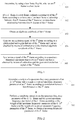
- Step 101 Determine, by using a lost-frame flag bit, whether an i th frame is a lost frame.
- the previous frame of the current frame refers to a frame that is adjacent to the current frame and that precedes the current frame in a time domain
- the next frame of the current frame refers to a frame that is adjacent to the current frame and that follows the current frame in a time domain.
- the inter-frame relationship between the first N frames includes at least one of correlation between the first N frames or energy stability between the first N frames
- the intra-frame relationship between the first N frames includes at least one of inter-subframe correlation between the first N frames or inter-subframe energy stability between the first N frames.
- Correlation includes a value relationship between spectrum frequency parameters of signals, a value relationship between correlation values of signals, a value relationship between spectrum tilt parameters of signals, a value relationship between pitch periods of signals, a relationship between excitation signals, and the like.
- the parameter of the i th frame includes a spectrum frequency parameter, a pitch period, a gain, and an algebraic codebook, and N is a positive integer greater than or equal to 1.
- the spectrum frequency parameter, the pitch period, and the gain may be obtained by means of estimation by using the at least one of the inter-frame relationship between the first N frames of the i th frame or the intra-frame relationship between the first N frames of the i th frame.
- Correlation of a signal may be represented by using a normalized autocorrelation value of the signal, and the normalized autocorrelation value of the signal is obtained by performing normalized autocorrelation processing on the signal.
- correlation of a signal may be represented by using an autocorrelation value, and the autocorrelation value may be obtained by means of autocorrelation processing, and is determined without normalized processing.
- the normalized autocorrelation value and the autocorrelation value may be mutually converted, and same correlation of the signal is finally obtained.
- the correlation of the signal may include the following several cases: low correlation, a low-correlation rising edge, a low-correlation falling edge, moderate correlation, high correlation, a high-correlation rising edge, and a high-correlation falling edge.
- a correlation threshold may be some critical values selected from the foregoing cases. For example, if the correlation threshold is the low-correlation falling edge, the correlation value of the signal is greater than the low-correlation falling edge, that is, the correlation is a value in the moderate correlation, the high correlation, the high-correlation rising edge, and the high-correlation falling edge.
- inter-frame energy stability of the first N frames refers to an energy relationship between adjacent frames of the first N frames, and the adjacent frames refer to two frames that are consecutive in a time domain during transmission.
- the energy stability may be represented by using a ratio of energy of one frame to energy of another frame.
- Energy of each frame may be obtained by determining a root mean square of average energy of a signal, or may be obtained by determining average amplitude of a signal.
- the spectrum frequency parameter includes an immittance spectral frequency (Immittance Spectral Frequency, ISF for short), a line spectral frequency (Line Spectral Frequency, LSF for short), and the like.
- the gain includes an adaptive codebook gain and an algebraic codebook gain.
- the pitch period is a periodicity feature caused due to vibration of vocal cords when a person utters a voiced sound, that is, a vibration period of vocal cords when a person makes a sound.
- the pitch period is in a reciprocal relationship with vibration frequency of vocal cords.
- the parameter of the i th frame is determined according to correlation between history frames (that is, the first N frames), energy stability between the history frames, correlation of each frame, and energy stability of each frame. A relationship between signals is considered, so as to obtain a more accurate parameter of the i th frame by means of estimation.
- Step 103 Obtain an algebraic codebook of the i th frame.
- the algebraic codebook of the i th frame may be obtained by means of estimation according to random noise, or the algebraic codebook of the i th frame may be obtained by weighting algebraic codebooks of the first N frames of the i th frame, or the algebraic codebook of the i th frame may be estimated by using an existing method.
- Step 104 Generate an excitation signal of the i th frame according to a pitch period and a gain that are of the i th frame and that are obtained by means of estimation and the obtained algebraic codebook of the i th frame.
- the adaptive codebook may be obtained by means of interpolation according to a status-updated excitation signal of the (i-1) th frame.
- the weight of the algebraic codebook contribution may be obtained by performing a weighting operation according to any one or any combination of a deviation of a pitch period of the (i-1) th frame, correlation of a signal of the (i-1) th frame, a spectrum tilt rate of the (i-1) th frame, or a zero-crossing rate of the (i-1) th frame.
- the gain of the i th frame includes an adaptive codebook gain and an algebraic codebook gain.
- the algebraic codebook contribution of the i th frame is obtained by multiplying the algebraic codebook of the i th frame by the algebraic codebook gain of the i th frame
- an adaptive codebook contribution of the i th frame is obtained by multiplying the adaptive codebook of the i th frame by the adaptive codebook gain of the i th frame.
- a weighting operation is performed on the algebraic codebook contribution of the i th frame and the adaptive codebook contribution of the i th frame according to the weight of the algebraic codebook contribution of the i th frame and a weight of the adaptive codebook contribution of the i th frame, to obtain the excitation signal of the i th frame, and a fixed value of a weight of the adaptive codebook is 1.
- Step 105 Synthesize a signal of the i th frame according to a spectrum frequency parameter that is of the i th frame and that is obtained by means of estimation and the generated excitation signal of the i th frame.
- step 105 may be an existing method or a simple transformation of an existing method, and details are not described herein.
- a parameter of the i th frame is estimated according to at least one of an inter-frame relationship between first N frames of the i th frame or an intra-frame relationship between first N frames of the i th frame.
- the inter-frame relationship between the first N frames includes at least one of correlation between the first N frames or energy stability between the first N frames
- the intra-frame relationship between the first N frames includes at least one of inter-subframe correlation between the first N frames or inter-subframe energy stability between the first N frames.
- the parameter of the i th frame is determined by using signal correlation between the first N frames, signal energy stability between the first N frames, intra-frame signal correlation of each frame, and intra-frame signal energy stability of each frame. A relationship between signals is considered, so as to obtain a more accurate parameter of the i th frame by means of estimation, and improve voice signal decoding quality.
- Embodiment 2 of the present invention provides a spectrum frequency parameter estimation method.
- a spectrum frequency parameter of an i th frame is obtained by means of estimation according to an inter-frame relationship between first N frames of the i th frame.
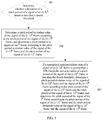
- FIG. 2 is a flowchart of a spectrum frequency parameter estimation method according to Embodiment 2 of the present invention. As shown in FIG. 2 , the method provided in this embodiment may include the following steps.
- a spectrum frequency parameter of the i th frame may be determined according to signal correlation and a spectrum frequency parameter that are of a previous frame of the i th frame (that is, the (i-1) th frame).
- the signal correlation and spectrum frequency parameter correlation that are of the (i-1) th frame are high, and when the spectrum frequency parameter of the i th frame is determined, the weight of the spectrum frequency parameter of the (i-1) th frame is large, and the weight of the preset spectrum frequency parameter of the i th frame is small.
- the signal correlation and spectrum frequency parameter correlation that are of the (i-1) th frame are low, the weight of the spectrum frequency parameter of the (i-1) th frame is small, and the weight of the preset spectrum frequency parameter of the i th frame is large.
- the weight of the spectrum frequency parameter of the (i-1) th frame is determined as a first weight
- the weight of the preset spectrum frequency parameter of the i th frame is determined as a second weight.
- the first weight is greater than the second weight.
- the first condition is: the normalized autocorrelation value of the signal of the (i-1) th frame is greater than the first threshold.
- the second condition is: the spectrum tilt parameter of the signal of the (i-1) th frame is greater than the second threshold.
- the third condition is: the deviation of the pitch period of the signal of the (i-1) th frame is less than the third threshold.
- the weight of the spectrum frequency parameter of the (i-1) th frame is determined as a second weight
- the weight of the preset spectrum frequency parameter of the i th frame is determined as a first weight.
- the first weight and the second weight may be preset, or may be determined according to inter-frame correlation between spectrum frequency parameters of the first N frames of the i th frame.
- the first weight and the second weight further need to be determined according to the inter-frame correlation between the spectrum frequency parameters of the first N frames of the i th frame.
- the normalized autocorrelation value of the signal of the (i-1) th frame may be determined by performing normalized autocorrelation processing on a decoded signal of the (i-1) th frame.
- the deviation of the pitch period of the signal of the (i-1) th frame is a sum of deviations of pitch periods of all subframes of the (i-1) th frame relative to an average value of the pitch periods of all the subframes.
- the average value of the pitch periods of all the subframes is first obtained by averaging a sum of the pitch periods of all the subframes of the (i-1) th frame; then a deviation of a pitch period of each subframe relative to the average value of the pitch periods is determined; finally, the deviation of the pitch period of the signal of the (i-1) th frame is obtained by calculating a sum of absolute values of the deviations of the pitch periods of all the subframes.
- the deviation of the pitch period of the signal of the (i-1) th frame is obtained by determining a sum of absolute values of differences between pitch periods of adjacent subframes.
- the first weight is 0.8
- the second weight is 0.2
- the first threshold is 0.8
- the second threshold is 0.6
- the third threshold is 0.2.
- the weight of the spectrum frequency parameter of the (i-1) th frame is 0.8
- the weight of the preset spectrum frequency parameter of the i th frame is 0.2; otherwise, the weight of the spectrum frequency parameter of the (i-1) th frame is 0.2, and the weight of the preset spectrum frequency parameter of the i th frame is 0.8.
- Step 202 Perform a weighting operation on the spectrum frequency parameter of the (i-1) th frame and the preset spectrum frequency parameter of the i th frame according to the weight of the spectrum frequency parameter of the (i-1) th frame and the weight of the preset spectrum frequency parameter of the i th frame, to obtain a spectrum frequency parameter of the i th frame.
- a decoder presets a spectrum frequency parameter for a lost frame, that is, a preset spectrum frequency parameter.
- a weighting operation is performed according to a spectrum frequency parameter of an (i-1) th frame and a preset spectrum frequency parameter of the i th frame, to obtain a spectrum frequency parameter of the i th frame.
- correlation of the (i-1) th frame is high, it is very likely that correlation between adjacent frames is high. Therefore, when a weight of the spectrum frequency parameter of the (i-1) th frame is large, a weight of the preset spectrum frequency parameter of the i th frame is correspondingly small. In this way, the spectrum frequency parameter of the i th frame is determined mainly according to the preset spectrum frequency parameter of the i th frame, and is more accurate.
- Embodiment 3 of the present invention provides a pitch period estimation method.
- a pitch period of an i th frame is obtained by means of estimation according to correlation between first N frames of the i th frame and inter-subframe correlation between the first N frames of the i th frame.
- the correlation includes a value relationship between a fifth threshold and a normalized autocorrelation value of a signal of an (i-2) th frame, a value relationship between a fourth threshold and a deviation of a pitch period of the signal of the (i-2) th frame, and a value relationship between the fourth threshold and a deviation of a pitch period of a signal of an (i-1) th frame.
- correlation values may be sequentially classified into low correlation, a low-correlation rising edge, a low-correlation falling edge, a high-correlation rising edge, high correlation, moderate correlation, a high-correlation falling edge, and the like according to magnitudes of the correlation values.
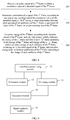
- FIG. 3 is a flowchart of a pitch period estimation method according to Embodiment 3 of the present invention. As shown in FIG. 3 , the method provided in this embodiment may include the following steps.
- Step 301 Determine whether a deviation of a pitch period of a signal of an (i-1) th frame is less than a fourth threshold.
- Each subframe includes multiple subframes
- the deviation of the pitch period of the signal of the (i-1) th frame is a sum of deviations of pitch periods of all subframes of the (i-1) th frame relative to an average value of the pitch periods of all the subframes.
- the deviation of the pitch period of the signal of the (i-1) th frame refer to the determining method in Embodiment 2.
- Step 302 Determine a pitch period deviation value of the signal of the (i-1) th frame according to the pitch period of the signal of the (i-1) th frame, and determine a pitch period of a signal of an i th frame according to the pitch period deviation value of the signal of the (i-1) th frame and the pitch period of the signal of the (i-1) th frame.
- Step 303 If a normalized autocorrelation value of a signal of an (i-2) th frame is greater than a fifth threshold, and a deviation of a pitch period of the signal of the (i-2) th frame is less than the fourth threshold, determine a pitch period deviation value of the signal of the (i-2) th frame and the signal of the (i-1) th frame according to the pitch period of the signal of the (i-2) th frame and the pitch period of the signal of the (i-1) th frame, and determine the pitch period of the signal of the i th frame according to the pitch period of the signal of the (i-1) th frame and the pitch period deviation value of the signal of the (i-2) th frame and the signal of the (i-1) th frame.
- the (i-2) th frame is a previous frame of the (i-1) th frame.
- p (-2) (3) and p (-2) (2) are last two subframes of the (i-2) th frame
- p (-1) (1) and p (-1) (0) are first two subframes of the (i-1) th frame.
- the pitch period deviation value of the signal of the (i-2) th frame and the signal of the (i-1) th frame may be determined by selecting six consecutive subframes including last three subframes of the (i-2) th frame and first three subframes of the (i-1) th frame, or the pitch period deviation value of the signal of the (i-2) th frame and the signal of the (i-1) th frame may be determined by selecting all subframes of the (i-2) th frame and all subframes of the (i-1) th frame, or the pitch period deviation value of the signal of the (i-2) th frame and the signal of the (i-1) th frame may be determined by selecting two consecutive subframes including the last sub frame of the (i-2) th frame and the first subframe of the (i-1) th frame.
- Embodiment 4 of the present invention provides a gain estimation method.
- FIG. 4 is a flowchart of a gain estimation method according to Embodiment 4 of the present invention.
- a gain of an i th frame includes an adaptive codebook gain and an algebraic codebook gain.
- the gain of the i th frame is obtained by means of estimation according to correlation between first N frames of the i th frame and energy stability between first N frames of the i th frame.
- the method provided in this embodiment may include the following steps.
- Step 401 Determine an adaptive codebook gain of an i th frame according to an adaptive codebook gain of an (i-1) th frame or a preset fixed value, correlation of the (i-1) th frame, and a sequence number of the i th frame in multiple consecutive lost frames.
- the adaptive codebook gain of the i th frame is determined according to an adaptive codebook gain corresponding to the first lost frame in the multiple consecutive lost frames, an attenuation factor, and the sequence number of the i th frame in the multiple consecutive lost frames.
- an adaptive codebook gain corresponding to the first lost frame of the consecutive lost frames is 1, and the attenuation factor is 0.8
- an adaptive codebook gain of the second lost frame of the consecutive lost frames is 1*0.8
- an adaptive codebook gain of the third lost frame of the consecutive lost frames is 1*(0.8) 2
- an adaptive codebook gain of the (m+1) th lost frame of the consecutive lost frames is 1*(0.8) m .
- an attenuation factor may be subtracted from an adaptive codebook gain.
- the adaptive codebook gain corresponding to the first lost frame of the consecutive lost frames is 1, and the attenuation factor is 0.1
- an adaptive codebook gain of the second lost frame of the consecutive lost frames is 1-0.1
- an adaptive codebook gain of the third lost frame of the consecutive lost frames is 1-2*0.1
- an adaptive codebook gain of the (m+1) th lost frame of the consecutive lost frames is 1- m *0.1.
- the attenuation factor may be a fixed value, or may vary with energy stability between frames. For example, the attenuation factor is smaller on an energy falling edge.
- the adaptive codebook gain of the i th frame is a fixed value. That is, when the first frame following a normal frame is lost, an adaptive codebook gain is set for the first lost frame, and if there are no consecutive lost frames following the first lost frame, adaptive codebook gains of these non-consecutive lost frames are all the same as the adaptive codebook gain of the first lost frame.
- Step 402 Determine a weight of an algebraic codebook gain of the (i-1) th frame and a weight of a gain of a voice activity detection (Voice Activity Detection, VAD for short) frame according to energy stability of the (i-1) th frame.
- VAD Voice Activity Detection
- step 402 may be performed before step 401, that is, there is no sequence of determining an algebraic codebook gain and determining an adaptive codebook gain.
- the gain of the voice activity detection VAD frame may be obtained by means of determining by using a root mean square of energy, average amplitude, and the like.
- a sum of the weight of the algebraic codebook gain of the (i-1) th frame and the weight of the gain of the VAD frame is a fixed value. More stable energy of the (i-1) th frame is corresponding to a larger weight of the algebraic codebook gain of the (i-1) th frame and a smaller weight of the gain of the VAD frame. Alternatively, as a quantity of consecutive lost frames increases, the weight of the gain of the VAD frame increases correspondingly, and the weight of the algebraic codebook gain decreases correspondingly.
- the decoder periodically performs VAD detection to obtain energy of the VAD frame.
- Step 403 Perform a weighting operation on the weight of the algebraic codebook gain of the (i-1) th frame and the weight of the gain of the VAD frame according to the algebraic codebook gain of the (i-1) th frame and the gain of the VAD frame, to obtain an algebraic codebook gain of the i th frame.
- the algebraic codebook gain is less than the gain of the VAD frame, as a quantity of frames increases, the weight of the algebraic codebook gain keeps unchanged or gradually increases on a basis of a previous frame.
- the method further includes: determining a first correction factor according to an encoding and decoding rate, and correcting the algebraic codebook gain of the (i-1) th frame by using the first correction factor.
- the algebraic codebook gain of the (i-1) th frame is corrected by multiplying the algebraic codebook gain of the (i-1) th frame by the first correction factor.
- Embodiment 1 to Embodiment 4 specifically describe how to determine a parameter of an i th frame according to at least one of an inter-frame relationship between first N frames of the i th frame or an intra-frame relationship between first N frames of the i th frame when the i th frame is a lost frame.
- Embodiment 5 of the present invention describes how to correct the parameter of the i th frame when the i th frame is a normal frame.
- FIG. 5 is a flowchart of a frame loss compensation processing method according to Embodiment 5 of the present invention. As shown in FIG. 5 , the method provided in this embodiment may include the following steps.
- Step 501 Obtain a parameter of an i th frame by means of decoding according to a received bitstream, where the parameter of the i th frame includes a spectrum frequency parameter, a pitch period, a gain, and an algebraic codebook.
- Step 502 Generate an excitation signal of the i th frame and a status-updated excitation signal of the i th frame according to the pitch period, the gain, and the algebraic codebook that are of the i th frame and that are obtained by means of decoding.
- the excitation signal includes an adaptive codebook contribution and an algebraic codebook contribution.
- the adaptive codebook contribution is obtained by multiplying an adaptive codebook by an adaptive codebook gain.
- the algebraic codebook contribution is obtained by multiplying an algebraic codebook by an algebraic codebook gain.
- the adaptive codebook is obtained by means of interpolation according to a pitch period and a status-updated excitation signal that are of a current frame.
- the algebraic codebook may be obtained by means of estimation by using an existing method.
- the excitation signal is used for signal synthesis of the i th frame, and the status-updated excitation signal is used to generate an adaptive codebook of a next frame.
- Step 503 If an (i-1) th frame or an (i-2) th frame is a lost frame, determine, according to at least one of inter-frame relationships or intra-frame relationships between the i th frame and first N frames of the i th frame, whether to correct at least one of the spectrum frequency parameter, the excitation signal, or the status-updated excitation signal of the i th frame.
- the inter-frame relationship includes at least one of correlation between the i th frame and the first N frames of the i th frame or energy stability between the i th frame and the first N frames of the i th frame
- the intra-frame relationship includes at least one of inter-subframe correlation between the i th frame and the first N frames of the i th frame or inter-subframe energy stability between the i th frame and the first N frames of the i th frame.
- Step 504 Correct the at least one of the spectrum frequency parameter, the excitation signal, or the status-updated excitation signal of the i th frame according to the at least one of the inter-frame relationships or the intra-frame relationships between the i th frame and the first N frames of the i th frame.
- Step 506 is performed after step 504.
- Step 505 Synthesize a signal of the i th frame according to the spectrum frequency parameter, the excitation signal, and the status-updated excitation signal of the i th frame.
- Step 506 Synthesize a signal of the i th frame according to a correction result of the at least one of the spectrum frequency parameter, the excitation signal, or the status-updated excitation signal of the i th frame.
- the signal of the i th frame is synthesized according to a corrected spectrum frequency parameter of the i th frame, the excitation signal that is of the i th frame and that is obtained by means of decoding, and the status-updated excitation signal that is of the i th frame and that is obtained by means of decoding. If only the excitation signal of the i th frame is corrected, the signal of the i th frame is synthesized according to a corrected excitation signal of the i th frame, the spectrum frequency parameter that is of the i th frame and that is obtained by means of decoding, and the status-updated excitation signal that is of the i th frame and that is obtained by means of decoding.
- the signal of the i th frame is synthesized according to the corrected status-updated excitation signal of the i th frame, the spectrum frequency parameter that is of the i th frame and that is obtained by means of decoding, and the excitation signal that is of the i th frame and that is obtained by means of decoding. If the spectrum frequency parameter and the excitation signal of the i th frame are corrected, the signal of the i th frame is synthesized according to the corrected spectrum frequency parameter of the i th frame, the corrected excitation signal of the i th frame, and the status-updated excitation signal that is of the i th frame and that is obtained by means of decoding.
- the signal of the i th frame is synthesized according to a corrected spectrum frequency parameter of the i th frame, a corrected status-updated excitation signal of the i th frame, and the excitation signal that is of the i th frame and that is obtained by means of decoding. If the excitation signal and the status-updated excitation signal of the i th frame are corrected, the signal of the i th frame is synthesized according to a corrected excitation signal of the i th frame, a corrected status-updated excitation signal of the i th frame, and the spectrum frequency parameter that is of the i th frame and that is obtained by means of decoding.
- the signal of the i th frame is synthesized according to a corrected spectrum frequency parameter of the i th frame, a corrected excitation signal of the i th frame, and a corrected status-updated excitation signal of the i th frame.
- the signal of the i th frame may be directly synthesized according to the parameter that is of the i th frame and that is obtained by means of decoding, with no need to correct the parameter of the i th frame. If the (i-1) th frame or the (i-2) th frame is a lost frame, there may be a particular deviation in a parameter that is of the (i-1) th frame or the (i-2) th frame and that is obtained by means of estimation, a relatively large change of inter-frame energy is subsequently caused, and a decoded voice signal is not stable from an overall perspective.
- a decoder corrects the at least one of the spectrum frequency parameter, the excitation signal, or the status-updated excitation signal of the i th frame according to the correlation between the i th frame and the first N frames of the i th frame and the energy stability between the i th frame and the first N frames of the i th frame, so that smooth transition of both overall energy between adjacent frames and energy on a same frequency band can be implemented.
- the spectrum frequency parameter includes an ISF or an LSF.
- An ISF parameter is used in an example.
- the ISF parameter is obtained by weighting and converting an ISP parameter of the i th frame and an ISP parameter of the (i-1) th frame.
- the (i-1) th frame or the (i-2) th frame is a lost frame, there may be a particular deviation between a determined ISF parameter of the i th frame and a normal ISF parameter (an ISF parameter obtained when the i th frame is not lost) of the i th frame. Therefore, determined energy at a low-frequency formant location is much greater than actual energy.
- whether to correct the spectrum frequency parameter of the i th frame may be determined according to correlation of the i th frame.
- the spectrum frequency parameter of the i th frame is corrected according to the spectrum frequency parameter of the i th frame and a spectrum frequency parameter of the (i-1) th frame, or the spectrum frequency parameter of the i th frame is corrected according to the spectrum frequency parameter of the i th frame and a preset spectrum frequency parameter of the i th frame.
- the correlation of the i th frame includes a value relationship between a sixth threshold and one of two spectrum frequency parameters corresponding to an index of a minimum value of a difference between adjacent spectrum frequency parameters of the i th frame, a value relationship between a seventh threshold and the minimum value of the difference between the adjacent spectrum frequency parameters of the i th frame, and a value relationship between an eighth threshold and the index of the minimum value of the difference between the adjacent spectrum frequency parameters of the i th frame.
- the sixth threshold may be selected from a numerical interval [500, 2000].
- the sixth threshold may be specifically 500, 1000, or 2000.
- the seventh threshold may be selected from a numerical interval [100, 1000].
- the seventh threshold may be specifically 100, 200, 300, or 1000.
- the eighth threshold may be selected from a numerical interval [1, 5].
- the eighth threshold may be specifically 1, 2, or 5.
- the determining, according to correlation of the i th frame, whether to correct the spectrum frequency parameter of the i th frame is specifically: first, determining the difference between the adjacent spectrum frequency parameters of the i th frame, where each difference is corresponding to one index, spectrum frequency parameters are arranged in ascending order, and index values are also arranged in ascending order; then determining whether the difference between the adjacent spectrum frequency parameters of the i th frame meets at least one of a fourth condition or a fifth condition, where the fourth condition includes: one of the two spectrum frequency parameters corresponding to the index of the minimum value of the difference between the adjacent spectrum frequency parameters of the i th frame is less than the sixth threshold, and the fifth condition includes: an index value of the minimum value of the difference between the adjacent spectrum frequency parameters of the i th frame is less than the preset eighth threshold, and the minimum difference is less than the preset seventh threshold; and if the difference between the adjacent spectrum frequency parameters of the i th frame meets the at least one of the fourth condition or the fifth condition, determining to
- whether to correct the spectrum frequency parameter of the i th frame is determined according to correlation between the i th frame and the (i-1) th frame.
- the spectrum frequency parameter of the i th frame is corrected according to the spectrum frequency parameter of the i th frame and a spectrum frequency parameter of the (i-1) th frame, or the spectrum frequency parameter of the i th frame is corrected according to the spectrum frequency parameter of the i th frame and a preset spectrum frequency parameter of the i th frame.
- the correlation between the i th frame and the (i-1) th frame includes a value relationship between a ninth threshold and a sum of differences between spectrum frequency parameters corresponding to some or all same indexes of the (i-1) th frame and the i th frame.
- the ninth threshold may be selected from a numerical interval [100, 2000].
- the ninth threshold may be specifically 100, 200, 300, or 2000.
- the determining, according to correlation between the i th frame and the (i-1) th frame, whether to correct the spectrum frequency parameter of the i th frame is specifically: first, determining a difference between adjacent spectrum frequency parameters of the i th frame, where each difference is corresponding to one index; then determining whether the spectrum frequency parameter of the i th frame and the spectrum frequency parameter of the (i-1) th frame meet a sixth condition, where the sixth condition includes: the sum of the differences between the spectrum frequency parameters corresponding to some or all same indexes of the (i-1) th frame and the i th frame is greater than the ninth threshold; and if the spectrum frequency parameter of the i th frame and the spectrum frequency parameter of the (i-1) th frame meet the sixth condition, determining to correct the spectrum frequency parameter of the i th frame, or if the spectrum frequency parameter of the i th frame and the spectrum frequency parameter of the (i-1) th frame do not meet the sixth condition, determining not to correct the spectrum frequency parameter of the
- the correcting the spectrum frequency parameter of the i th frame according to the spectrum frequency parameter of the i th frame and a spectrum frequency parameter of the (i-1) th frame is specifically: determining a corrected spectrum frequency parameter of the i th frame according to a weighting operation performed on the spectrum frequency parameter of the (i-1) th frame and the spectrum frequency parameter of the i th frame.
- the correcting the spectrum frequency parameter of the i th frame according to the spectrum frequency parameter of the i th frame and a preset spectrum frequency parameter of the i th frame is specifically: determining a corrected spectrum frequency parameter of the i th frame according to a weighting operation performed on the spectrum frequency parameter of the i th frame and the preset spectrum frequency parameter of the i th frame.
- an ISF parameter corresponding to an index of a minimum value of ISF_DIFF(i) of the i th frame is less than the sixth threshold (for example, 800), and the minimum value of ISF_DIFF(i) is less than the seventh threshold (for example, 200), or the sum of the differences between the spectrum frequency parameters corresponding to some or all same indexes of the (i-1) th frame and the i th frame is greater than the ninth threshold, an ISF parameter of the i th frame and an ISF parameter of the (i-1) th frame are weighted to determine and obtain the corrected ISF parameter of the i th frame; or an ISF parameter of the i th frame and a preset ISF parameter of the i th frame are weighted to obtain the corrected ISF parameter of the i th frame. That the sum of the differences between the spectrum frequency parameters corresponding to some or all same indexes of the (i-1) th frame and the i th frame is greater than the ninth threshold means that ISF parameter correlation between adjacent
- FIG. 6 is a before-correction and after-correction comparison diagram of a spectrogram of an i th frame.
- FIG. 6(a) is a spectrogram of an original signal, and the original signal is a signal sent by an encoder.
- FIG. 6(b) is a spectrogram of a synthesized signal in the prior art.
- FIG. 6(c) is a spectrogram of a synthesized signal according to the present invention. It can be learned by comparing FIG. 6(a) with FIG. 6(b) that a part in an ellipse in FIG. 6(b) is much brighter than a part in an ellipse of the original signal in FIG. 6(a) .
- recovered energy of a low-frequency formant of the i th frame is much more than energy obtained by correct recovery.
- an ISF parameter of the i th frame needs to be correspondingly corrected, so that energy at a formant location of the i th frame is closer to actual energy, to achieve an effect shown in FIG. 6(c) .
- this may affect a normal frame following a lost frame (sometimes one or two frames following the lost frame are affected, and sometimes more frames may be affected if periodicity of an excitation signal is excessively strong).
- an excitation signal and/or a status-updated excitation signal need/needs to be corrected to some extent, so that energy of a synthesized signal is close to actual energy.
- whether to correct the excitation signal of the i th frame is determined according to correlation between the i th frame and the (i-1) th frame and energy stability between the i th frame and the (i-1) th frame.
- the excitation signal of the i th frame is corrected according to the energy stability between the i th frame and the (i-1) th frame.
- a pre-synthesized signal of the i th frame is first determined according to the excitation signal of the i th frame and the spectrum frequency parameter of the i th frame. Then whether an absolute value of a difference between energy of the pre-synthesized signal of the i th frame and energy of a synthesized signal of the (i-1) th frame is greater than a tenth threshold is determined.
- the absolute value of the difference between the energy of the pre-synthesized signal of the i th frame and the energy of the synthesized signal of the (i-1) th frame is greater than the tenth threshold, it is determined to correct the excitation signal of the i th frame, or if the absolute value of the difference between the energy of the pre-synthesized signal of the i th frame and the energy of the synthesized signal of the (i-1) th frame is less than or equal to the tenth threshold, it is determined not to correct the excitation signal of the i th frame.
- the tenth threshold may be 0.2 to 1 times a smaller value in the energy of the pre-synthesized signal of the i th frame and the energy of the synthesized signal of the (i-1) th frame.
- the tenth threshold may be 0.2, 0.5, or 1 times the smaller value.
- the eleventh threshold may be selected from a numerical interval [1.1, 5].
- the eleventh threshold may be specifically 1.1, 1.25, 2, 2.5, or 5.
- a ratio of energy of a pre-synthesized signal of the (i-1) th frame to energy of a synthesized signal of the i th frame is less than a twelfth threshold, where the twelfth threshold is less than 1.
- the twelfth threshold may be selected from a numerical interval [0.1, 0.8].
- the twelfth threshold may be specifically 0.1, 0.3, 0.4, or 0.8.
- the correcting the excitation signal of the i th frame according to the energy stability between the i th frame and the (i-1) th frame is specifically: first, determining a second correction factor according to the energy stability between the i th frame and the (i-1) th frame, where the second correction factor is less than 1; and then multiplying the excitation signal of the i th frame by the second correction factor to obtain a corrected excitation signal of the i th frame.
- the determining a second correction factor according to the energy stability between the i th frame and the (i-1) th frame is specifically: determining that a ratio of energy of the (i-1) th frame to energy of the i th frame is the second correction factor; or determining that a ratio of energy of a same quantity of subframes of the (i-1) th frame and the i th frame is the second correction factor.
- the same quantity of subframes of the (i-1) th frame and the i th frame are consecutive. For example, last two subframes of the (i-1) th frame and first two subframes of the i th frame are selected to determine an energy ratio.
- selected subframes may be non-consecutive.
- whether to correct the excitation signal of the i th frame is determined according to correlation of a signal of the (i-1) th frame.
- the excitation signal of the i th frame is corrected according to energy stability between the i th frame and the (i-1) th frame.
- the correlation of the signal of the (i-1) th frame includes a value relationship between a thirteenth threshold and a correlation value of the signal of the (i-1) th frame, and a value relationship between a fourteenth threshold and a deviation of a pitch period of the signal of the (i-1) th frame.
- the determining, according to correlation of a signal of the (i-1) th frame, whether to correct the excitation signal of the i th frame is specifically: determining whether the signal of the (i-1) th frame meets a seventh condition, where the seventh condition is: the (i-1) th frame is a lost frame, the correlation value of the signal of the (i-1) th frame is greater than the thirteenth threshold, and the deviation of the pitch period of the signal of the (i-1) th frame is less than the fourteenth threshold; and if the signal of the (i-1) th frame meets the seventh condition, determining to correct the excitation signal of the i th frame, or if the signal of the (i-1) th frame does not meet the seventh condition, determining not to correct the excitation signal of the i th frame.
- the correcting the excitation signal of the i th frame according to energy stability between the i th frame and the (i-1) th frame is specifically: determining a third correction factor according to the energy stability between the i th frame and the (i-1) th frame, where the third correction factor is less than 1; and multiplying the excitation signal of the i th frame by the third correction factor to obtain a corrected excitation signal of the i th frame.
- the thirteenth threshold may be selected from a low-correlation falling edge to a high-correlation rising edge.
- the thirteenth threshold may be specifically the low-correlation falling edge or the high-correlation rising edge.
- the fourteenth threshold may be selected from a numerical interval [0.5, 20].
- the fourteenth threshold may be specifically 0.5, 2, 5, 10, or 20.
- whether to correct the excitation signal of the i th frame is determined according to correlation between the signal of the i th frame and a signal of the (i-1) th frame.
- the excitation signal of the i th frame is corrected according to energy stability between the i th frame and the (i-1) th frame.
- the correlation between the signal of the i th frame and the signal of the (i-1) th frame includes a value relationship between a thirteenth threshold and a correlation value of the signal of the (i-1) th frame, and a value relationship between a fourteenth threshold and a deviation of a pitch period of the signal of the i th frame.
- the determining, according to correlation between the signal of the i th frame and a signal of the (i-1) th frame, whether to correct the excitation signal of the i th frame is specifically: determining whether the signal of the (i-1) th frame and the signal of the i th frame meet an eighth condition, where the eighth condition includes: the (i-1) th frame is a lost frame, the correlation value of the signal of the (i-1) th frame is greater than the thirteenth threshold, and the deviation of the pitch period of the signal of the i th frame is less than the fourteenth threshold; and if the signal of the (i-1) th frame and the signal of the i th frame meet the eighth condition, determining to correct the excitation signal of the i th frame, or if the signal of the (i-1) th frame and the signal of the (i) th frame do not meet the eighth condition, determining not to correct the excitation signal of the i th frame.
- the correcting the excitation signal of the i th frame according to energy stability between the i th frame and the (i-1) th frame is specifically: determining a third correction factor according to the energy stability between the i th frame and the (i-1) th frame, where the third correction factor is less than 1; and then multiplying the excitation signal of the i th frame by the third correction factor to obtain a corrected excitation signal of the i th frame.
- the determining a third correction factor according to the energy stability between the i th frame and the (i-1) th frame may be specifically: determining that a ratio of energy of the (i-1) th frame to energy of the i th frame is a third correction factor; or determining that a ratio of energy of a same quantity of subframes of the (i-1) th frame and the i th frame is the third correction factor.
- whether to correct the excitation signal of the i th frame is determined according to correlation between a signal of the (i-1) th frame and a signal of the (i-2) th frame.
- the excitation signal of the i th frame is corrected according to energy stability between the i th frame and the (i-1) th frame.
- the correlation between the signal of the (i-1) th frame and the signal of the (i-2) th frame includes: a value relationship between a thirteenth threshold and a correlation value of the signal of the (i-2) th frame, and whether an excitation signal of the (i-1) th frame is corrected.
- the determining, according to correlation between a signal of the (i-1) th frame and a signal of the (i-2) th frame, whether to correct the excitation signal of the i th frame is specifically: determining whether the signal of the (i-2) th frame and the signal of the (i-1) th frame meet a ninth condition, where the ninth condition includes: the (i-2) th frame is a lost frame, the correlation value of the signal of the (i-2) th frame is greater than the preset thirteenth threshold, and the excitation signal of the (i-1) th frame is corrected; and if the signal of the (i-2) th frame and the signal of the (i-1) th frame meet the ninth condition, determining to correct the excitation signal of the i th frame, or if the signal of the (i-2) th frame and the signal of the (i-1) th frame do not meet the ninth condition, determining not to correct the excitation signal of the i th frame.
- the correcting the excitation signal of the i th frame according to energy stability between the i th frame and the (i-1) th frame is specifically: determining a fourth correction factor according to the energy stability between the i th frame and the (i-1) th frame, where the fourth correction factor is less than 1; and then multiplying the excitation signal of the i th frame by the fourth correction factor to obtain a corrected excitation signal of the i th frame.
- whether to correct the excitation signal of the i th frame is determined according to correlation between a signal of the (i-1) th frame and a signal of the (i-2) th frame.
- the excitation signal of the i th frame is corrected according to energy stability between the i th frame and the (i-1) th frame.
- the correlation between the signal of the (i-1) th frame and the signal of the (i-2) th frame includes a value relationship between a thirteenth threshold and a correlation value of the signal of the (i-2) th frame, and a value relationship between a fifteenth threshold and an algebraic codebook contribution of an excitation signal of the (i-1) th frame.
- the fifteenth threshold may be selected from 0.1 to 0.5 times the excitation signal of the (i-1) th frame.
- the fifteenth threshold may be specifically 0.1, 0.2, or 0.5 times the excitation signal of the (i-1) th frame.
- the correcting the excitation signal of the i th frame according to energy stability between the i th frame and the (i-1) th frame is specifically: determining a fourth correction factor according to the energy stability between the i th frame and the (i-1) th frame, where the fourth correction factor is less than 1; and then multiplying the excitation signal of the i th frame by the fourth correction factor to obtain a corrected excitation signal of the i th frame.
- FIG. 7 is a before-correction and after-correction comparison diagram of a time-domain signal of an i th frame.
- FIG. 7(a) shows an original time-domain signal, and the original time-domain signal is a time-domain signal sent by an encoder.
- FIG. 7(b) is a synthesized time-domain signal in the prior art.
- FIG. 7(c) is a synthesized time-domain signal according to the present invention. It can be learned by comparing FIG. 7(a) with FIG. 7(b) that energy in a part of an ellipse in FIG. 7(b) is much more than that in a part of an ellipse of the original signal in FIG. 7(a) .
- an excitation signal or a status-updated excitation signal of the i th frame needs to be corrected, so that energy of a recovered signal of the i th frame is closer to energy of the original signal, to achieve an effect shown in FIG. 7(c) .
- whether to correct the status-updated excitation signal of the i th frame may be determined according to correlation between a signal of the (i-1) th frame and the signal of the i th frame.
- the status-updated excitation signal of the i th frame is corrected according to energy stability between the i th frame and the (i-1) th frame.
- the correlation between the signal of the (i-1) th frame and the signal of the i th frame includes: correlation between the (i-1) th frame and the i th frame, and whether an excitation signal of the (i-1) th frame is corrected.
- the determining, according to correlation between a signal of the (i-1) th frame and the signal of the i th frame, whether to correct the status-updated excitation signal of the i th frame is specifically: determining whether the signal of the i th frame and the signal of the (i-1) th frame meet an eleventh condition, where the eleventh condition includes: the i th frame or the (i-1) th frame is a highly-correlated frame, and the excitation signal of the (i-1) th frame is corrected; and if the signal of the i th frame and the signal of the (i-1) th frame meet the eleventh condition, determining to correct the status-updated excitation signal of the i th frame, or if the signal of the i th frame and the signal of the (i-1) th frame do not meet the eleventh condition, determining not to correct the status-updated excitation signal of the i th frame.
- the correcting the status-updated excitation signal of the i th frame according to energy stability between the i th frame and the (i-1) th frame is specifically: determining a fifth correction factor according to the energy stability between the i th frame and the (i-1) th frame, where the fifth correction factor is less than 1; and multiplying the status-updated excitation signal of the i th frame by the fifth correction factor to obtain a corrected status-updated excitation signal of the i th frame.
- an i th frame is a normal frame
- a parameter of the i th frame is obtained by means of decoding according to a received bitstream
- an excitation signal and a status-updated excitation signal of the i th frame are generated according to a pitch period, a gain, and an algebraic codebook that are of the i th frame and that are obtained by means of decoding.
- At least one of a spectrum frequency parameter, the excitation signal, or the status-updated excitation signal of the i th frame is further corrected according to inter-frame relationships and intra-frame relationships between the i th frame and first N frames of the i th frame, and a signal of the i th frame is synthesized according to a corrected parameter.
- the at least one of the spectrum frequency parameter, the excitation signal, or the status-updated excitation signal of the i th frame is corrected, so that smooth transition of overall energy between adjacent frames can be implemented, and voice signal decoding quality can be improved.
- FIG. 8 is a flowchart of a frame loss compensation processing method according to Embodiment 6 of the present invention. As shown in FIG. 8 , based on Embodiment 5, the method in this embodiment may further include the following steps:
- normalized autocorrelation processing may be performed on the decoded signal of the i th frame.
- the decoded signal of the i th frame is normalized to a particular range by means of normalized autocorrelation processing, and may be processed by using an existing normalized autocorrelation function.
- autocorrelation processing rather than normalized processing is directly performed on the decoded signal of the i th frame. For example, 100 points are sampled from the decoded signal of the i th frame, and then autocorrelation processing is performed on points 0 to 98 and points 1 to 99 to obtain the correlation value of the decoded signal of the i th frame.
- 50 points may be selected from each of a signal of an (i-1) th frame and a signal of the i th frame, and there are 100 points in total. Then, autocorrelation processing is performed in the foregoing manner to obtain the correlation value of the decoded signal of the i th frame.
- Step 602 Determine correlation of a signal of the i th frame according to any one or any combination of the correlation value of the decoded signal of the i th frame, a value relationship between pitch periods of all subframes of the i th frame, a spectrum tilt value of the i th frame, or a zero-crossing rate of the i th frame.
- a threshold is usually set. If a correlation value of the decoded signal of the i th frame is greater than the threshold, it is determined that the correlation of the signal of the i th frame is high, or if a correlation value of the decoded signal of the i th frame is less than the threshold, it is determined that the correlation of the signal of the i th frame is low.
- Step 603 Determine energy of the i th frame according to the decoded signal of the i th frame, and determine energy stability between the energy of the i th frame and that of an (i-1) th frame according to the energy of the i th frame and energy of the (i-1) th frame, and/or determine energy of each subframe of the i th frame according to the decoded signal of the i th frame, and determine energy stability between subframes of the i th frame according to the energy of each subframe of the i th frame.
- signal correlation and energy stability between an i th frame and an (i-1) th frame and/or intra-frame energy stability of the i th frame are determined.
- correlation and energy stability that are of a previous frame are used.
- FIG. 9 is a schematic structural diagram of a frame loss compensation processing apparatus according to Embodiment 7 of the present invention.
- the frame loss compensation processing apparatus provided in this embodiment includes: a lost-frame determining module 11, an estimation module 12, an obtaining module 13, a generation module 14, and a signal synthesis module 15.
- the lost-frame determining module 11 is configured to determine, by using a lost-frame flag bit, whether an i th frame is a lost frame.
- the estimation module 12 is configured to: when the i th frame is a lost frame, estimate a parameter of the i th frame according to at least one of an inter-frame relationship between first N frames of the i th frame or an intra-frame relationship between first N frames of the i th frame.
- the inter-frame relationship between the first N frames includes at least one of correlation between the first N frames or energy stability between the first N frames.
- the intra-frame relationship between the first N frames includes at least one of inter-subframe correlation between the first N frames or inter-subframe energy stability between the first N frames.
- the parameter of the i th frame includes a spectrum frequency parameter, a pitch period, and a gain, and N is an integer greater than or equal to 1.
- the obtaining module 13 is configured to obtain an algebraic codebook of the i th frame.
- the generation module 14 is configured to generate an excitation signal of the i th frame according to the pitch period and the gain that are of the i th frame and that are obtained by the estimation module by means of estimation and the algebraic codebook that is of the i th frame and that is obtained by the obtaining module.
- the signal synthesis module 15 is configured to synthesize a signal of the i th frame according to the spectrum frequency parameter that is of the i th frame and that is obtained by the estimation module by means of estimation and the excitation signal that is of the i th frame and that is generated by the generation module.
- the spectrum frequency parameter of the i th frame is obtained by the estimation module 12 by means of estimation according to the inter-frame relationship between the first N frames of the i th frame.
- the estimation module is specifically configured to: determine a weight of a spectrum frequency parameter of an (i-1) th frame and a weight of a preset spectrum frequency parameter of the i th frame according to the correlation between the first N frames of the i th frame; and perform a weighting operation on the spectrum frequency parameter of the (i-1) th frame and the preset spectrum frequency parameter of the i th frame according to the weight of the spectrum frequency parameter of the (i-1) th frame and the weight of the preset spectrum frequency parameter of the i th frame, to obtain the spectrum frequency parameter of the i th frame.
- the correlation includes a value relationship between a second threshold and a spectrum tilt parameter of a signal of the (i-1) th frame, a value relationship between a first threshold and a normalized autocorrelation value of the signal of the (i-1) th frame, and a value relationship between a third threshold and a deviation of a pitch period of the signal of the (i-1) th frame.
- estimation module 12 is specifically configured to:
- the pitch period of the i th frame is obtained by the estimation module 12 by means of estimation according to the correlation between the first N frames of the i th frame and the inter-subframe correlation between the first N frames of the i th frame.
- the correlation includes a value relationship between a fifth threshold and a normalized autocorrelation value of a signal of an (i-2) th frame, a value relationship between a fourth threshold and a deviation of a pitch period of the signal of the (i-2) th frame, and a value relationship between the fourth threshold and a deviation of a pitch period of a signal of an (i-1) th frame.
- estimation module 12 is specifically configured to:
- More stable energy of the (i-1) th frame indicates a larger weight of the algebraic codebook gain of the (i-1) th frame, or the weight of the gain of the VAD frame correspondingly increases as a quantity of consecutive lost frames increases.
- the estimation module 12 is further configured to: determine a first correction factor according to an encoding and decoding rate; and correct the algebraic codebook gain of the (i-1) th frame by using the first correction factor.
- the obtaining module 12 is specifically configured to: obtain the algebraic codebook of the i th frame by means of estimation according to random noise; or determine the algebraic codebook of the i th frame according to algebraic codebooks of the first N frames of the i th frame.
- the apparatus in this embodiment may be configured to execute the methods in Embodiment 1 to Embodiment 4.
- specific implementation manners and technical effects in this embodiment are similar to those in Embodiment 1 to Embodiment 4, and details are not repeatedly described herein.
- the i th frame is a normal frame in this embodiment.
- the decoding module 16 is configured to obtain the parameter of the i th frame by means of decoding according to a received bitstream.
- the parameter of the i th frame includes the spectrum frequency parameter, the pitch period, the gain, and the algebraic codebook.
- the judging module 17 is specifically configured to:
- the correction module 18 is specifically configured to: determine a corrected spectrum frequency parameter of the i th frame according to a weighting operation performed on the spectrum frequency parameter of the (i-1) th frame and the spectrum frequency parameter of the i th frame; or determine a corrected spectrum frequency parameter of the i th frame according to a weighting operation performed on the spectrum frequency parameter of the i th frame and the preset spectrum frequency parameter of the i th frame.
- the judging module 17 is specifically configured to:
- the correction module 18 is specifically configured to: determine a corrected spectrum frequency parameter of the i th frame according to a weighting operation performed on the spectrum frequency parameter of the (i-1) th frame and the spectrum frequency parameter of the i th frame; or determine a corrected spectrum frequency parameter of the i th frame according to a weighting operation performed on the spectrum frequency parameter of the i th frame and the preset spectrum frequency parameter of the i th frame.
- the judging module 17 is specifically configured to:
- the correction module 18 is specifically configured to: determine a second correction factor according to the energy stability between the i th frame and the (i-1) th frame, where the second correction factor is less than 1; and multiply the excitation signal of the i th frame by the second correction factor to obtain a corrected excitation signal of the i th frame.
- the second correction factor may be a ratio of energy of the (i-1) th frame to energy of the i th frame, or the second correction factor is a ratio of energy of a same quantity of subframes of the (i-1) th frame and the i th frame.
- the judging module 17 is configured to determine, according to correlation of a signal of the (i-1) th frame, whether to correct the excitation signal of the i th frame.
- the correction module 18 is configured to correct the excitation signal of the i th frame according to energy stability between the i th frame and the (i-1) th frame.
- the correlation of the signal of the (i-1) th frame includes a value relationship between a thirteenth threshold and a correlation value of the signal of the (i-1) th frame, and a value relationship between a fourteenth threshold and a deviation of a pitch period of the signal of the (i-1) th frame.
- the judging module 17 is specifically configured to: determine whether the signal of the (i-1) th frame meets a seventh condition, where the seventh condition is: the (i-1) th frame is a lost frame, the correlation value of the signal of the (i-1) th frame is greater than the thirteenth threshold, and the deviation of the pitch period of the signal of the (i-1) th frame is less than the fourteenth threshold; and if the signal of the (i-1) th frame meets the seventh condition, determine to correct the excitation signal of the i th frame, or if the signal of the (i-1) th frame does not meet the seventh condition, determine not to correct the excitation signal of the i th frame.
- the judging module 17 is configured to determine, according to correlation between the signal of the i th frame and a signal of the (i-1) th frame, whether to correct the excitation signal of the i th frame.
- the correction module 18 is configured to correct the excitation signal of the i th frame according to energy stability between the i th frame and the (i-1) th frame.
- the judging module 17 is specifically configured to: determine whether the signal of the (i-1) th frame and the signal of the i th frame meet an eighth condition, where the eighth condition includes: the (i-1) th frame is a lost frame, the correlation value of the signal of the (i-1) th frame is greater than the preset thirteenth threshold, and the deviation of the pitch period of the signal of the i th frame is less than the preset fourteenth threshold; and if the signal of the (i-1) th frame and the signal of the i th frame meet the eighth condition, determine to correct the excitation signal of the i th frame, or if the signal of the (i-1) th frame and the signal of the i th frame do not meet the eighth condition, determine not to correct the excitation signal of the i th frame.
- the eighth condition includes: the (i-1) th frame is a lost frame, the correlation value of the signal of the (i-1) th frame is greater than the preset thirteenth threshold, and the deviation of the pitch period
- the correction module 18 is specifically configured to: determine a third correction factor according to the energy stability between the i th frame and the (i-1) th frame, where the third correction factor is less than 1; and multiply the excitation signal of the i th frame by the third correction factor to obtain a corrected excitation signal of the i th frame.
- the judging module 17 is configured to determine, according to correlation between a signal of the (i-1) th frame and a signal of the (i-2) th frame, whether to correct the excitation signal of the i th frame.
- the correction module 18 is configured to correct the excitation signal of the i th frame according to energy stability between the i th frame and the (i-1) th frame.
- the correlation between the signal of the (i-1) th frame and the signal of the (i-2) th frame includes: a value relationship between a thirteenth threshold and a correlation value of the signal of the (i-2) th frame, and whether an excitation signal of the (i-1) th frame is corrected.
- the judging module 17 is specifically configured to: determine whether the signal of the (i-2) th frame and the signal of the (i-1) th frame meet a ninth condition, where the ninth condition includes: the (i-2) th frame is a lost frame, the correlation value of the signal of the (i-2) th frame is greater than the thirteenth threshold, and the excitation signal of the (i-1) th frame is corrected; and if the signal of the (i-2) th frame and the signal of the (i-1) th frame meet the ninth condition, determine to correct the excitation signal of the i th frame, or if the signal of the (i-2) th frame and the signal of the (i-1) th frame do not meet the ninth condition, determine not to correct the excitation signal of the i th frame.
- the correction module 18 is specifically configured to: determine a fourth correction factor according to the energy stability between the i th frame and the (i-1) th frame, where the fourth correction factor is less than 1; and multiply the excitation signal of the i th frame by the fourth correction factor to obtain a corrected excitation signal of the i th frame.
- the judging module 17 is configured to determine, according to correlation between a signal of the (i-1) th frame and a signal of the (i-2) th frame, whether to correct the excitation signal of the i th frame.
- the correction module 18 is configured to correct the excitation signal of the i th frame according to energy stability between the i th frame and the (i-1) th frame.
- the correlation between the signal of the (i-1) th frame and the signal of the (i-2) th frame includes a value relationship between a thirteenth threshold and a correlation value of the signal of the (i-2) th frame, and a value relationship between a fifteenth threshold and an algebraic codebook contribution of an excitation signal of the (i-1) th frame.
- the judging module 17 is specifically configured to: determine whether the signal of the (i-2) th frame and the signal of the (i-1) th frame meet a tenth condition, where the tenth condition includes: the (i-2) th frame is a lost frame, the correlation value of the signal of the (i-2) th frame is greater than the thirteenth threshold, and the algebraic codebook contribution of the excitation signal of the (i-1) th frame is less than the fifteenth threshold; and if the signal of the (i-2) th frame and the signal of the (i-1) th frame meet the tenth condition, determine to correct the excitation signal of the i th frame, or if the signal of the (i-2) th frame and the signal of the (i-1) th frame do not meet the tenth condition, determine not to correct the excitation signal of the i th frame.
- the correction module 18 is specifically configured to: determine a fourth correction factor according to the energy stability between the i th frame and the (i-1) th frame, where the fourth correction factor is less than 1; and multiply the excitation signal of the i th frame by the fourth correction factor to obtain a corrected excitation signal of the i th frame.
- the judging module 17 is configured to determine, according to correlation between a signal of the (i-1) th frame and the signal of the i th frame, whether to correct the status-updated excitation signal of the i th frame.
- the correction module 18 is configured to correct the status-updated excitation signal of the i th frame according to energy stability between the i th frame and the (i-1) th frame.
- the correlation between the signal of the (i-1) th frame and the signal of the i th frame includes: correlation between the (i-1) th frame and the i th frame, and whether an excitation signal of the (i-1) th frame is corrected.
- the judging module 17 is specifically configured to: determine whether the signal of the i th frame and the signal of the (i-1) th frame meet an eleventh condition, where the eleventh condition includes: the i th frame or the (i-1) th frame is a highly-correlated frame, and the excitation signal of the (i-1) th frame is corrected; and if the signal of the i th frame and the signal of the (i-1) th frame meet the eleventh condition, determine to correct the status-updated excitation signal of the i th frame, or if the signal of the i th frame and the signal of the (i-1) th frame do not meet the eleventh condition, determine not to correct the status-updated excitation signal of the i th frame.
- the correction module 18 is specifically configured to: determine a fifth correction factor according to the energy stability between the i th frame and the (i-1) th frame, where the fifth correction factor is less than 1; and multiply the status-updated excitation signal of the i th frame by the fifth correction factor to obtain a corrected status-updated excitation signal of the i th frame.
- FIG. 11 is a schematic diagram of a physical structure of a frame loss compensation processing apparatus according to Embodiment 9 of the present invention.
- a frame loss compensation processing apparatus 200 includes a communications interface 21, a processor 22, a memory 23, and a bus 24.
- the communications interface 21, the processor 22, and the memory 23 are interconnected by using the bus 24.
- the bus 24 may be a peripheral component interconnect (peripheral component interconnect, PCI for short) bus, an extended industry standard architecture (extended industry standard architecture, EISA for short) bus, or the like.
- the bus may include an address bus, a data bus, a control bus, and the like. For ease of representation, the bus 24 is represented by using only one thick line in FIG. 11 .
- the communications interface 21 is configured to implement communication between a database access apparatus and another device (such as a client, a read/write database, or a read-only database).
- the memory 23 may include a random access memory (random access memory, RAM for short), and may further include a non-volatile memory (non-volatile memory), such as at least one magnetic disk memory.
- the memory 22 executes program code stored in the memory 23, to implement the methods in Embodiment 1 to Embodiment 6.
- the foregoing processor 22 may be a general processor, including a central processing unit (Central Processing Unit, CPU for short), a network processor (Network Processor, NP for short), and the like; or may be a digital signal processor (DSP), an application-specific integrated circuit (ASIC), a field programmable gate array (FPGA), or another programmable logical device, a discrete gate or a transistor logical device, or a discrete hardware component.
- CPU Central Processing Unit
- NP Network Processor
- DSP digital signal processor
- ASIC application-specific integrated circuit
- FPGA field programmable gate array
- the program may be stored in a computer-readable storage medium.
- the foregoing storage medium includes: any medium that can store program code, such as a ROM, a RAM, a magnetic disk, or an optical disc.
Landscapes
- Engineering & Computer Science (AREA)
- Physics & Mathematics (AREA)
- Signal Processing (AREA)
- Computational Linguistics (AREA)
- Health & Medical Sciences (AREA)
- Audiology, Speech & Language Pathology (AREA)
- Human Computer Interaction (AREA)
- Acoustics & Sound (AREA)
- Multimedia (AREA)
- Spectroscopy & Molecular Physics (AREA)
- General Physics & Mathematics (AREA)
- Theoretical Computer Science (AREA)
- Algebra (AREA)
- Mathematical Analysis (AREA)
- Mathematical Optimization (AREA)
- Mathematical Physics (AREA)
- Pure & Applied Mathematics (AREA)
- Quality & Reliability (AREA)
- Compression, Expansion, Code Conversion, And Decoders (AREA)
- Television Systems (AREA)
- Environmental & Geological Engineering (AREA)
- Computer Networks & Wireless Communication (AREA)
- Compression Or Coding Systems Of Tv Signals (AREA)
- Detection And Prevention Of Errors In Transmission (AREA)
- Mobile Radio Communication Systems (AREA)
Applications Claiming Priority (1)
| Application Number | Priority Date | Filing Date | Title |
|---|---|---|---|
| CN201610188140.5A CN107248411B (zh) | 2016-03-29 | 2016-03-29 | 丢帧补偿处理方法和装置 |
Publications (2)
| Publication Number | Publication Date |
|---|---|
| EP3242442A2 true EP3242442A2 (fr) | 2017-11-08 |
| EP3242442A3 EP3242442A3 (fr) | 2017-12-13 |
Family
ID=58672282
Family Applications (1)
| Application Number | Title | Priority Date | Filing Date |
|---|---|---|---|
| EP17163596.4A Withdrawn EP3242442A3 (fr) | 2016-03-29 | 2017-03-29 | Procédé et appareil de traitement de compensation de perte de trame |
Country Status (4)
| Country | Link |
|---|---|
| US (1) | US10354659B2 (fr) |
| EP (1) | EP3242442A3 (fr) |
| CN (1) | CN107248411B (fr) |
| WO (1) | WO2017166800A1 (fr) |
Families Citing this family (7)
| Publication number | Priority date | Publication date | Assignee | Title |
|---|---|---|---|---|
| CN113539278B (zh) * | 2020-04-09 | 2024-01-19 | 同响科技股份有限公司 | 音频数据重建方法及系统 |
| CN111554322B (zh) | 2020-05-15 | 2025-05-27 | 腾讯科技(深圳)有限公司 | 一种语音处理方法、装置、设备及存储介质 |
| CN114079535B (zh) * | 2020-08-20 | 2023-02-17 | 腾讯科技(深圳)有限公司 | 转码方法、装置、介质和电子设备 |
| CN112489665B (zh) * | 2020-11-11 | 2024-02-23 | 北京融讯科创技术有限公司 | 语音处理方法、装置以及电子设备 |
| CN113571079B (zh) * | 2021-02-08 | 2025-07-11 | 腾讯科技(深圳)有限公司 | 语音增强方法、装置、设备及存储介质 |
| CN112802485B (zh) * | 2021-04-12 | 2021-07-02 | 腾讯科技(深圳)有限公司 | 语音数据处理方法、装置、计算机设备及存储介质 |
| CN113763973B (zh) * | 2021-04-30 | 2026-02-27 | 腾讯科技(深圳)有限公司 | 音频信号增强方法、装置、计算机设备和存储介质 |
Citations (2)
| Publication number | Priority date | Publication date | Assignee | Title |
|---|---|---|---|---|
| EP1979895A1 (fr) * | 2005-12-28 | 2008-10-15 | Voiceage Corporation | Procede et dispositif de masquage efficace d'effacement de trames dans des codecs vocaux |
| EP2983171A1 (fr) * | 2013-07-16 | 2016-02-10 | Huawei Technologies Co., Ltd. | Procédé de décodage et dispositif de décodage |
Family Cites Families (5)
| Publication number | Priority date | Publication date | Assignee | Title |
|---|---|---|---|---|
| US6636829B1 (en) * | 1999-09-22 | 2003-10-21 | Mindspeed Technologies, Inc. | Speech communication system and method for handling lost frames |
| US6959274B1 (en) | 1999-09-22 | 2005-10-25 | Mindspeed Technologies, Inc. | Fixed rate speech compression system and method |
| US8428959B2 (en) * | 2010-01-29 | 2013-04-23 | Polycom, Inc. | Audio packet loss concealment by transform interpolation |
| JP6139685B2 (ja) | 2012-09-13 | 2017-05-31 | エルジー エレクトロニクス インコーポレイティド | 損失フレーム復元方法及びオーディオ復号化方法とそれを利用する装置 |
| PT3285254T (pt) * | 2013-10-31 | 2019-07-09 | Fraunhofer Ges Forschung | Descodificador de áudio e método para fornecer uma informação de áudio descodificada utilizando uma ocultação de erro com base num sinal de excitação no domínio de tempo |
-
2016
- 2016-03-29 CN CN201610188140.5A patent/CN107248411B/zh active Active
- 2016-10-27 WO PCT/CN2016/103481 patent/WO2017166800A1/fr not_active Ceased
-
2017
- 2017-03-29 US US15/472,730 patent/US10354659B2/en active Active
- 2017-03-29 EP EP17163596.4A patent/EP3242442A3/fr not_active Withdrawn
Patent Citations (2)
| Publication number | Priority date | Publication date | Assignee | Title |
|---|---|---|---|---|
| EP1979895A1 (fr) * | 2005-12-28 | 2008-10-15 | Voiceage Corporation | Procede et dispositif de masquage efficace d'effacement de trames dans des codecs vocaux |
| EP2983171A1 (fr) * | 2013-07-16 | 2016-02-10 | Huawei Technologies Co., Ltd. | Procédé de décodage et dispositif de décodage |
Non-Patent Citations (5)
| Title |
|---|
| "Digital cellular telecommunications system (Phase 2+); Universal Mobile Telecommunications System (UMTS); LTE; Speech codec speech processing functions; Adaptive Multi-Rate - Wideband (AMR-WB) speech codec; Transcoding functions (3GPP TS 26.190 version 9.0.0 Release 9)", TECHNICAL SPECIFICATION, EUROPEAN TELECOMMUNICATIONS STANDARDS INSTITUTE (ETSI), 650, ROUTE DES LUCIOLES ; F-06921 SOPHIA-ANTIPOLIS ; FRANCE, no. V9.0.0, 1 January 2010 (2010-01-01), XP014045514 * |
| "Wideband coding of speech at around 16 kbit/s using Adaptive Multi-Rate Wideband (AMR-WB); G.722.2 Appendix 1 (01/02); Error concealment of erroneous or lost frames", ITU-T STANDARD IN FORCE (I), INTERNATIONAL TELECOMMUNICATION UNION, GENEVA, CH, no. G.722.2 Appendix 1 (, 13 January 2002 (2002-01-13), XP017400860 * |
| G ITU-T: "Frame error robust narrow-band and wideband embedded variable bit-rate coding of speech and audio from 8-32 kbit/s", 1 June 2008 (2008-06-01), XP055755438, Retrieved from the Internet <URL:https://www.itu.int/rec/T-REC-G.718-200806-I/en> [retrieved on 20201201] * |
| W. DONE ET AL: "Speech zero-crossing rate compression for bandwidth compression", IEEE TRANSACTIONS ON ACOUSTICS, SPEECH AND SIGNAL PROCESSING., vol. 23, no. 5, 1 October 1975 (1975-10-01), USA, pages 433 - 438, XP055755458, ISSN: 0096-3518, DOI: 10.1109/TASSP.1975.1162721 * |
| ZHENG-HUA TAN ET AL: "Adaptive Multi-Frame-Rate Scheme for Distributed Speech Recognition Based on a Half Frame-Rate Front-End", MULTIMEDIA SIGNAL PROCESSING, 2005 IEEE 7TH WORKSHOP ON, IEEE, PI, 1 October 2005 (2005-10-01), pages 1 - 4, XP031018378, ISBN: 978-0-7803-9288-5, DOI: 10.1109/MMSP.2005.248553 * |
Also Published As
| Publication number | Publication date |
|---|---|
| US20170287493A1 (en) | 2017-10-05 |
| CN107248411A (zh) | 2017-10-13 |
| WO2017166800A1 (fr) | 2017-10-05 |
| EP3242442A3 (fr) | 2017-12-13 |
| CN107248411B (zh) | 2020-08-07 |
| US10354659B2 (en) | 2019-07-16 |
Similar Documents
| Publication | Publication Date | Title |
|---|---|---|
| US10354659B2 (en) | Frame loss compensation processing method and apparatus | |
| US8725499B2 (en) | Systems, methods, and apparatus for signal change detection | |
| US6931373B1 (en) | Prototype waveform phase modeling for a frequency domain interpolative speech codec system | |
| US6996523B1 (en) | Prototype waveform magnitude quantization for a frequency domain interpolative speech codec system | |
| US7877253B2 (en) | Systems, methods, and apparatus for frame erasure recovery | |
| RU2470385C2 (ru) | Система и способ улучшения декодированного тонального звукового сигнала | |
| US7013269B1 (en) | Voicing measure for a speech CODEC system | |
| US9978400B2 (en) | Method and apparatus for frame loss concealment in transform domain | |
| EP3686888B1 (fr) | Dispositif et procédé de quantification des gains des contributions adaptatives et fixes de l'excitation dans un codec celp | |
| JP6600337B2 (ja) | オーディオ信号における背景雑音の推定 | |
| EP3427257B1 (fr) | Unité de dissimulation d'erreur, décodeur audio, et procédé et programme informatique associés permettant d'atténuer une trame audio dissimulée en fonction de différents facteurs d'amortissement pour différentes bandes de fréquence | |
| EP1133767A1 (fr) | Modelisation et quantification d'amplitude spectrale dans un systeme codeur-decodeur de parole interpolatif a domaine de frequence | |
| US10529351B2 (en) | Method and apparatus for recovering lost frames | |
| JP2016530549A (ja) | 復号方法および復号装置 | |
| US10115408B2 (en) | Device and method for quantizing the gains of the adaptive and fixed contributions of the excitation in a CELP codec | |
| Stefanovic et al. | A 2.4/1.2 kb/s speech coder with noise pre-processor | |
| Kondoz et al. | The Turkish narrow band voice coding and noise pre-processing Nato Candidate | |
| HK40028306B (en) | Device and method for quantizing the gains of the adaptive and fixed contributions of the excitation in a celp codec | |
| BR102017006400A2 (pt) | Method and apparatus for compensation for loss of framework |
Legal Events
| Date | Code | Title | Description |
|---|---|---|---|
| PUAI | Public reference made under article 153(3) epc to a published international application that has entered the european phase |
Free format text: ORIGINAL CODE: 0009012 |
|
| STAA | Information on the status of an ep patent application or granted ep patent |
Free format text: STATUS: THE APPLICATION HAS BEEN PUBLISHED |
|
| AK | Designated contracting states |
Kind code of ref document: A2 Designated state(s): AL AT BE BG CH CY CZ DE DK EE ES FI FR GB GR HR HU IE IS IT LI LT LU LV MC MK MT NL NO PL PT RO RS SE SI SK SM TR |
|
| AX | Request for extension of the european patent |
Extension state: BA ME |
|
| PUAL | Search report despatched |
Free format text: ORIGINAL CODE: 0009013 |
|
| AK | Designated contracting states |
Kind code of ref document: A3 Designated state(s): AL AT BE BG CH CY CZ DE DK EE ES FI FR GB GR HR HU IE IS IT LI LT LU LV MC MK MT NL NO PL PT RO RS SE SI SK SM TR |
|
| AX | Request for extension of the european patent |
Extension state: BA ME |
|
| RIC1 | Information provided on ipc code assigned before grant |
Ipc: G10L 19/005 20130101ALI20171106BHEP Ipc: H04L 12/26 20060101AFI20171106BHEP Ipc: G10L 19/06 20130101ALI20171106BHEP Ipc: G10L 19/02 20130101ALI20171106BHEP Ipc: G10L 19/087 20130101ALI20171106BHEP Ipc: G10L 19/107 20130101ALI20171106BHEP Ipc: G10L 25/06 20130101ALI20171106BHEP Ipc: G10L 19/083 20130101ALI20171106BHEP Ipc: G10L 25/78 20130101ALI20171106BHEP Ipc: G10L 19/00 20130101ALI20171106BHEP |
|
| STAA | Information on the status of an ep patent application or granted ep patent |
Free format text: STATUS: REQUEST FOR EXAMINATION WAS MADE |
|
| 17P | Request for examination filed |
Effective date: 20180613 |
|
| RBV | Designated contracting states (corrected) |
Designated state(s): AL AT BE BG CH CY CZ DE DK EE ES FI FR GB GR HR HU IE IS IT LI LT LU LV MC MK MT NL NO PL PT RO RS SE SI SK SM TR |
|
| STAA | Information on the status of an ep patent application or granted ep patent |
Free format text: STATUS: EXAMINATION IS IN PROGRESS |
|
| 17Q | First examination report despatched |
Effective date: 20190624 |
|
| STAA | Information on the status of an ep patent application or granted ep patent |
Free format text: STATUS: THE APPLICATION HAS BEEN WITHDRAWN |
|
| 18W | Application withdrawn |
Effective date: 20210802 |