EP3242688B1 - Conjugués contenant du platine et ciblant cox-2, et utilisation de ces derniers dans le traitement de tumeurs et de cancers - Google Patents
Conjugués contenant du platine et ciblant cox-2, et utilisation de ces derniers dans le traitement de tumeurs et de cancers Download PDFInfo
- Publication number
- EP3242688B1 EP3242688B1 EP15877341.6A EP15877341A EP3242688B1 EP 3242688 B1 EP3242688 B1 EP 3242688B1 EP 15877341 A EP15877341 A EP 15877341A EP 3242688 B1 EP3242688 B1 EP 3242688B1
- Authority
- EP
- European Patent Office
- Prior art keywords
- cox
- platinum
- conjugate
- alkyl
- optionally substituted
- Prior art date
- Legal status (The legal status is an assumption and is not a legal conclusion. Google has not performed a legal analysis and makes no representation as to the accuracy of the status listed.)
- Active
Links
- 0 C*(C)C(*(C)C)=N*1(C)*CC*1 Chemical compound C*(C)C(*(C)C)=N*1(C)*CC*1 0.000 description 52
- VPVXHAANQNHFSF-UHFFFAOYSA-N O=C1OCCOC1 Chemical compound O=C1OCCOC1 VPVXHAANQNHFSF-UHFFFAOYSA-N 0.000 description 3
- RZJQGNCSTQAWON-UHFFFAOYSA-N CS(c(cc1)ccc1C(COC1=O)=C1c1ccccc1)(=O)=O Chemical compound CS(c(cc1)ccc1C(COC1=O)=C1c1ccccc1)(=O)=O RZJQGNCSTQAWON-UHFFFAOYSA-N 0.000 description 2
- UOXUZQILUGSYEM-UHFFFAOYSA-N O=C(C12CCC1)OCOC2=O Chemical compound O=C(C12CCC1)OCOC2=O UOXUZQILUGSYEM-UHFFFAOYSA-N 0.000 description 2
- XTUVJUMINZSXGF-UHFFFAOYSA-N CNC1CCCCC1 Chemical compound CNC1CCCCC1 XTUVJUMINZSXGF-UHFFFAOYSA-N 0.000 description 1
- LXXQAJCQZYXLPE-UHFFFAOYSA-N COc1ccc2[n](C(c(cc3)ccc3Cl)=O)c(C(C(F)(F)F)(F)F)c(CC=O)c2c1 Chemical compound COc1ccc2[n](C(c(cc3)ccc3Cl)=O)c(C(C(F)(F)F)(F)F)c(CC=O)c2c1 LXXQAJCQZYXLPE-UHFFFAOYSA-N 0.000 description 1
- ZDDWMWKQAQNCBL-UHFFFAOYSA-N Cc(cc1)cc(CC(O)=O)c1Nc(c(Cl)ccc1)c1Cl Chemical compound Cc(cc1)cc(CC(O)=O)c1Nc(c(Cl)ccc1)c1Cl ZDDWMWKQAQNCBL-UHFFFAOYSA-N 0.000 description 1
- BSKHPKMHTQYZBB-UHFFFAOYSA-N Cc1ccccn1 Chemical compound Cc1ccccn1 BSKHPKMHTQYZBB-UHFFFAOYSA-N 0.000 description 1
- DLCFBVIPGPNHMB-UHFFFAOYSA-N NS(c(cc1)ccc1-c1c[o]nc1-c1ccccc1)(=O)=O Chemical compound NS(c(cc1)ccc1-c1c[o]nc1-c1ccccc1)(=O)=O DLCFBVIPGPNHMB-UHFFFAOYSA-N 0.000 description 1
- VATYWCRQDJIRAI-UHFFFAOYSA-N Nc1ccc(C=O)cc1 Chemical compound Nc1ccc(C=O)cc1 VATYWCRQDJIRAI-UHFFFAOYSA-N 0.000 description 1
- ZNLAHAOCFKBYRH-UHFFFAOYSA-N O=C1OCCOC1=O Chemical compound O=C1OCCOC1=O ZNLAHAOCFKBYRH-UHFFFAOYSA-N 0.000 description 1
- HBOGMQBUCSNTJL-UHFFFAOYSA-N OC(Cc(c1c2)c(C(C(F)(F)F)(F)F)[n](C(c(cc3)ccc3Cl)=O)c1ccc2O)=O Chemical compound OC(Cc(c1c2)c(C(C(F)(F)F)(F)F)[n](C(c(cc3)ccc3Cl)=O)c1ccc2O)=O HBOGMQBUCSNTJL-UHFFFAOYSA-N 0.000 description 1
Images




Classifications
-
- C—CHEMISTRY; METALLURGY
- C07—ORGANIC CHEMISTRY
- C07F—ACYCLIC, CARBOCYCLIC OR HETEROCYCLIC COMPOUNDS CONTAINING ELEMENTS OTHER THAN CARBON, HYDROGEN, HALOGEN, OXYGEN, NITROGEN, SULFUR, SELENIUM OR TELLURIUM
- C07F15/00—Compounds containing elements of Groups 8, 9, 10 or 18 of the Periodic Table
- C07F15/0006—Compounds containing elements of Groups 8, 9, 10 or 18 of the Periodic Table compounds of the platinum group
- C07F15/0013—Compounds containing elements of Groups 8, 9, 10 or 18 of the Periodic Table compounds of the platinum group without a metal-carbon linkage
-
- A—HUMAN NECESSITIES
- A61—MEDICAL OR VETERINARY SCIENCE; HYGIENE
- A61K—PREPARATIONS FOR MEDICAL, DENTAL OR TOILETRY PURPOSES
- A61K47/00—Medicinal preparations characterised by the non-active ingredients used, e.g. carriers or inert additives; Targeting or modifying agents chemically bound to the active ingredient
- A61K47/50—Medicinal preparations characterised by the non-active ingredients used, e.g. carriers or inert additives; Targeting or modifying agents chemically bound to the active ingredient the non-active ingredient being chemically bound to the active ingredient, e.g. polymer-drug conjugates
- A61K47/51—Medicinal preparations characterised by the non-active ingredients used, e.g. carriers or inert additives; Targeting or modifying agents chemically bound to the active ingredient the non-active ingredient being chemically bound to the active ingredient, e.g. polymer-drug conjugates the non-active ingredient being a modifying agent
- A61K47/54—Medicinal preparations characterised by the non-active ingredients used, e.g. carriers or inert additives; Targeting or modifying agents chemically bound to the active ingredient the non-active ingredient being chemically bound to the active ingredient, e.g. polymer-drug conjugates the non-active ingredient being a modifying agent the modifying agent being an organic compound
- A61K47/55—Medicinal preparations characterised by the non-active ingredients used, e.g. carriers or inert additives; Targeting or modifying agents chemically bound to the active ingredient the non-active ingredient being chemically bound to the active ingredient, e.g. polymer-drug conjugates the non-active ingredient being a modifying agent the modifying agent being an organic compound the modifying agent being also a pharmacologically or therapeutically active agent, i.e. the entire conjugate being a codrug
Definitions
- Cancer is one of the principal causes of death in the world. Many potent drugs have been developed to treat cancer, but their utility has been limited because they kill normal cells as well as cancer cells.
- WO2007109843 A1 discloses platinum complexes comprising indomethacin ligands useful in the treatment of one or more of inflammation, cancer, diabetes, cardiovascular and other conditions.
- a first aspect of the invention is a conjugate comprising a moiety that targets cyclooxygenase II (COX-2), a platinum-containing antitumor agent, and a linker connecting the COX-2-targeting moiety to the platinum-containing antitumor agent, wherein the conjugate is selected from those recited in appended claim 1, and pharmaceutically acceptable salts thereof.
- COX-2 cyclooxygenase II
- a second aspect of the invention is a conjugate comprising a moiety that targets cyclooxygenase II (COX-2), a platinum-containing antitumor agent, and a linker connecting the COX-2-targeting moiety to the platinum-containing antitumor agent, wherein the conjugate is selected from those recited in appended claim 2, and pharmaceutically acceptable salts thereof.
- COX-2 cyclooxygenase II
- the conjugate is: or a pharmaceutically acceptable salt thereof.
- the conjugate is: or a pharmaceutically acceptable salt thereof.
- a third aspect of the invention is a pharmaceutical composition
- a pharmaceutical composition comprising a conjugate according to the first or second aspect and a pharmaceutically acceptable carrier or excipient.
- a fourth aspect of the invention is a conjugate according to the first or second aspect, or a pharmaceutical composition according to the third aspect, for use to treat a tumor or cancer.
- the tumor or cancer is characterized by overexpression of COX-2.
- the treatment further comprises administration of an additional antitumor agent.
- a fifth aspect of the invention is a conjugate according to the first or second aspect, or a pharmaceutical composition according to the third aspect, for use to inhibit cell growth or proliferation.
- the cell is a tumor or cancer cell that overexpresses COX-2.
- conjugates that selectively target and kill tumor/cancer cells.
- the expression of cyclooxygenase II (COX-2) is upregulated in many benign and malignant tumor/cancer cells.
- the conjugates comprise a COX-2-targeting moiety and a platinum-containing antitumor agent.
- antitumor agents includes antitumor agents and anticancer agents.
- the COX-2-targeting moiety comprises a non-steroidal anti-inflammatory drug (NSAID).
- NSAID non-steroidal anti-inflammatory drug
- the COX-2-targeting moiety comprises a COX-2-selective inhibitor.
- the platinum-containing antitumor agent is of Formula I: wherein X 1 , X 2 , X 3 , X 4 , NR 1 R 2 R 3 and NR 4 R 5 R 6 are as defined below.
- the conjugates further comprise a linker between the COX-2-targeting moiety and the platinum-containing antitumor agent. In some embodiments, the linker increases the selectivity of the conjugates for COX-2.
- compositions comprising the conjugates and methods of treating tumors/cancers with the conjugates in human and veterinary medicine.
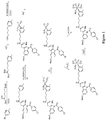
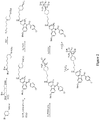
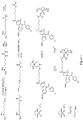
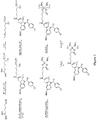
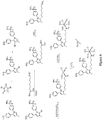
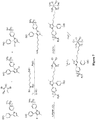
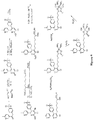
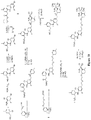
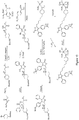
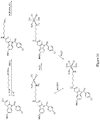
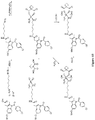
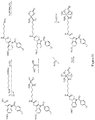
- Figures 1-16 describe exemplary synthesis of representative conjugates comprising a COX-2-targeting moiety, a linker and a platinum- [e.g., platinum(II)- or platinum(IV)-]containing antitumor agent.
- a platinum- e.g., platinum(II)- or platinum(IV)-
- Headings are included herein for reference and to aid in locating certain sections. Headings are not intended to limit the scope of the embodiments and concepts described in the sections under those headings, and those embodiments and concepts may have applicability in other sections throughout the entire disclosure.
- exemplary means "serving as an example, instance, or illustration”. Any embodiment characterized herein as “exemplary” is not necessarily to be construed as preferred or advantageous over other embodiments.
- the term “about” or “approximately” means an acceptable error for a particular value as determined by one of ordinary skill in the art, which depends in part on how the value is measured or determined. In certain embodiments, the term “about” or “approximately” means within one standard deviation. In some embodiments, when no particular margin of error (e.g., a standard deviation to a mean value given in a chart or table of data) is recited, the term “about” or “approximately” means that range which would encompass the recited value and the range which would be included by rounding up or down to the recited value as well, taking into account significant figures.
- the term “about” or “approximately” means within 20%, 15%, 10% or 5% of the specified value. Whenever the term “about” or “approximately” precedes the first numerical value in a series of two or more numerical values or in a series of two or more ranges of numerical values, the term “about” or “approximately” applies to each one of the numerical values in that series of numerical values or in that series of ranges of numerical values.
- pharmaceutically acceptable refers to a substance (e.g., an active ingredient or an excipient) that is suitable for use in contact with the tissues and organs of a subject without excessive irritation, allergic response, immunogenicity and toxicity, is commensurate with a reasonable benefit/risk ratio, and is effective for its intended use.
- a "pharmaceutically acceptable” carrier or excipient of a pharmaceutical composition is also compatible with the other ingredients of the composition.
- terapéuticaally effective amount refers to an amount of a compound that, when administered to a subject, is sufficient to prevent development of, or to alleviate to some extent, or to abrogate, the disease or disorder being treated.
- therapeutically effective amount also refers to an amount of a compound that is sufficient to elicit a biological or medical response of a cell, tissue, organ, system, animal or human which is sought by a researcher, veterinarian, medical doctor or clinician.
- treat include alleviating or abrogating a disease or disorder, and alleviating or eradicating one or more causes of the disease or disorder.
- Reference to “treatment” of a disease or disorder is intended to include prevention of the disease or disorder.
- the terms “prevent”, “preventing”, and “prevention” include delaying or precluding the onset of a disease or disorder, precluding a subject from acquiring a disease or disorder, and reducing a subject's risk of acquiring a disease or disorder.
- treatment refers to ameliorating a disease or disorder, or improving the condition of a patient having a disease or disorder.
- subject refers to an animal, including but not limited to a mammal, such as a primate (e.g., a human, a chimpanzee and a monkey), a rodent (e.g., a rat, a mouse, a gerbil and a hamster), a lagomorph (e.g., a rabbit), a swine (e.g., a pig), an equine (e.g., a horse), a canine (e.g., a dog) and a feline (e.g., a cat).
- a primate e.g., a human, a chimpanzee and a monkey
- rodent e.g., a rat, a mouse, a gerbil and a hamster
- lagomorph e.g., a rabbit
- a swine e.g., a pig
- an equine e.g.
- a “residue" of a non-steroidal anti-inflammatory drug (NSAID) is a portion of the NSAID that retains its ability to bind to cyclooxygenase.
- a residue of an NSAID refers to the portion of the compound remaining after removal of a hydrogen atom or a hydroxyl, methyl or methoxy group from the NSAID.
- the residue of the NSAID can be directly associated with a platinum-containing antitumor agent, or can be indirectly associated with such an antitumor agent (e.g., via a linker).
- halogen refers to fluoride, chloride, bromide, and iodide.
- alkyl refers to a linear or branched, saturated monovalent hydrocarbon radical, wherein the alkyl group may optionally be substituted with one or more substituents as described herein.
- an alkyl group is a linear saturated monovalent hydrocarbon radical that has 1 to 20 (C 1-20 ) or more, 1 to 10 (C 1-10 ) or more, or 1 to 6 (C 1-6 ) or more, carbon atoms, or is a branched saturated monovalent hydrocarbon radical that has 3 to 20 (C 3-20 ) or more, 3 to 10 (C 3-10 ) or more, or 3 to 6 (C 3-6 ) or more, carbon atoms.
- C 1-6 alkyl refers to a linear saturated monovalent hydrocarbon radical of 1 to 6 carbon atoms or a branched saturated monovalent hydrocarbon radical of 3 to 6 carbon atoms.
- Linear C 1-6 and branched C 3-6 alkyl groups may also be referred to as "lower alkyl”.
- Non-limiting examples of alkyl groups include methyl, ethyl, propyl (including all isomeric forms, such as n-propyl and isopropyl), butyl (including all isomeric forms, such as n-butyl, isobutyl, sec -butyl and tert -butyl), pentyl (including all isomeric forms, such as n-pentyl), and hexyl (including all isomeric forms, such as n-hexyl).
- alkylene and "-alkyl-" refer to a divalent alkyl group, which may optionally be substituted with one or more substituents as described herein.
- alkenyl refers to a linear or branched, unsaturated monovalent hydrocarbon radical that contains one or more carbon-carbon double bonds, wherein the alkenyl group may optionally be substituted with one or more substituents as described herein. In certain embodiments, an alkenyl group contains one, two, three or more carbon-carbon double bonds.
- an alkenyl group is a linear unsaturated monovalent hydrocarbon radical that has 2 to 20 (C 2-20 ) or more, 2 to 10 (C 2-10 ) or more, or 2 to 6 (C 2-6 ) or more, carbon atoms, or is a branched unsaturated monovalent hydrocarbon radical that has 3 to 20 (C 3-20 ) or more, 3 to 10 (C 3-10 ) or more, or 3 to 6 (C 3-6 ) or more, carbon atoms.
- alkynyl refers to a linear or branched, unsaturated monovalent hydrocarbon radical that contains one or more carbon-carbon triple bonds, wherein the alkynyl group may optionally be substituted with one or more substituents as described herein. In certain embodiments, an alkynyl group contains one, two, three or more carbon-carbon triple bonds.
- an alkynyl group is a linear unsaturated monovalent hydrocarbon radical that has 2 to 20 (C 2-20 ) or more, 2 to 10 (C 2-10 ) or more, or 2 to 6 (C 2-6 ) or more, carbon atoms, or is a branched unsaturated monovalent hydrocarbon radical that has 4 to 20 (C 4-20 ) or more, 4 to 10 (C 4-10 ) or more, or 4 to 6 (C 4-6 ) or more, carbon atoms.
- alkoxy refers to an -O-alkyl group, which may optionally be substituted with one or more substituents as described herein.
- haloalkyl refers to an alkyl group that is substituted with one or more halide atoms. In certain embodiments, a haloalkyl group is substituted with one, two, three, four, five, six or more halide atoms. A haloalkyl group may optionally be substituted with one or more additional substituents as described herein.
- hydroxyalkyl refers to an alkyl group that is substituted with one or more hydroxyl (-OH) groups. In certain embodiments, a hydroxyalkyl group is substituted with one, two, three, four, five or more -OH groups. A hydroxyalkyl group may optionally be substituted with one or more additional substituents as described herein.
- aminoalkyl refers to an alkyl group that is substituted with one or more -NH 2 groups. In certain embodiments, an aminoalkyl group is substituted with one, two, three, four, five or more -NH 2 groups. An aminoalkyl group may optionally be substituted with one or more additional substituents as described herein.
- -alkylcycloalkyl refers to an alkyl group that is substituted with one or more cycloalkyl groups. In certain embodiments, an -alkylcycloalkyl group is substituted with one, two, three or more cycloalkyl groups. An -alkylcycloalkyl group may optionally be substituted with one or more additional substituents as described herein.
- -alkylheterocyclyl refers to an alkyl group that is substituted with one or more heterocyclyl groups. In certain embodiments, an -alkylheterocyclyl group is substituted with one, two, three or more heterocyclyl groups. An -alkylheterocyclyl group may optionally be substituted with one or more additional substituents as described herein.
- -alkylaryl refers to an alkyl group that is substituted with one or more aryl groups. In certain embodiments, an -alkylaryl group is substituted with one, two, three or more aryl groups. An -alkylaryl group may optionally be substituted with one or more additional substituents as described herein.
- -alkylheteroaryl refers to an alkyl group that is substituted with one or more heteroaryl groups. In certain embodiments, an -alkylheteroaryl group is substituted with one, two, three or more heteroaryl groups. An -alkylheteroaryl group may optionally be substituted with one or more additional substituents as described herein.
- cycloalkyl refers to a cyclic saturated, bridged or non-bridged monovalent hydrocarbon radical, which may optionally be substituted with one or more substituents as described herein.
- a cycloalkyl group has from 3 to 10 (C 3-10 ) or more, or from 3 to 8 (C 3-8 ) or more, or from 3 to 6 (C 3-6 ) or more, carbon atoms.
- Non-limiting examples of cycloalkyl groups include cyclopropyl, cyclobutyl, cyclopentyl, cyclohexyl, cycloheptyl, cyclooctyl, norbornyl, decalinyl and adamantyl.
- heterocyclyl and “heterocyclic” refer to a monocyclic non-aromatic group or a multicyclic group that contains at least one non-aromatic ring, wherein at least one non-aromatic ring contains one or more heteroatoms independently selected from O, S and N.
- the non-aromatic ring containing one or more heteroatoms may be attached or fused to one or more saturated, partially unsaturated, or aromatic rings.
- a heterocyclyl or heterocyclic group has from 3 to 15 or more, or 3 to 12 or more, or 3 to 10 or more, or 3 to 8 or more, or 3 to 6 or more, ring atoms.
- a heterocyclyl or heterocyclic group is a monocyclic, bicyclic or tricyclic ring system, which may include a fused or bridged ring system, and in which nitrogen or sulfur atoms may optionally be oxidized, nitrogen atoms may optionally be quaternized, and one or more rings may be partially or fully saturated, or aromatic.
- a heterocyclyl or heterocyclic group may be attached to the main structure at any heteroatom or carbon atom which results in the creation of a stable compound.
- heterocyclyl or heterocyclic groups include without limitation azepinyl, azetidinyl, aziridinyl, benzodioxanyl, benzodioxolyl, benzofuranonyl, benzopyranonyl, benzopyranyl, benzotetrahydrofuranyl, benzotetrahydrothienyl, benzothiopyranyl, ⁇ -carbolinyl, chromanyl, decahydroisoquinolinyl, dihydrobenzisothiazinyl, dihydrobenzisoxazinyl, dihydrofuryl, dihydropyranyl, dihydropyrazinyl, dihydropyridinyl, dihydropyrazolyl, dihydropyrimidinyl, dihydropyrrolyl, dioxolanyl, dithianyl, furanonyl, imidazolidinyl, imidazolinyl, indolinyl
- aryl refers to a monocyclic aromatic hydrocarbon group or a multicyclic group that contains at least one aromatic hydrocarbon ring. In certain embodiments, an aryl group has from 6 to 15 or more, or 6 to 12 or more, or 6 to 10 or more, ring atoms. Non-limiting examples of aryl groups include phenyl, naphthyl, fluorenyl, azulenyl, anthryl, phenanthryl, biphenyl and terphenyl.
- aromatic hydrocarbon ring of an aryl group may be attached or fused to one or more saturated, partially unsaturated, or aromatic rings - e.g., dihydronaphthyl, indenyl, indanyl and tetrahydronaphthyl (tetralinyl).
- An aryl group may optionally be substituted with one or more substituents as described herein.
- heteroaryl refers to a monocyclic aromatic group or a multicyclic group that contains at least one aromatic ring, wherein at least one aromatic ring contains one or more heteroatoms independently selected from O, S and N.
- the heteroaromatic ring may be attached or fused to one or more saturated, partially unsaturated, or aromatic rings that may contain only carbon atoms or that may contain one or more heteroatoms.
- a heteroaryl group may be attached to the main structure at any heteroatom or carbon atom which results in the creation of a stable compound. In certain embodiments, a heteroaryl group has from 5 to 15 or more, or 5 to 12 or more, or 5 to 10 or more, ring atoms.
- Examples of monocyclic heteroaryl groups include without limitation pyrrolyl, pyrazolyl, pyrazolinyl, imidazolyl, oxazolyl, isoxazolyl, thiazolyl, thiadiazolyl, isothiazolyl, furanyl, thienyl (thiophenyl), oxadiazolyl, triazolyl, tetrazolyl, pyrazinyl, pyrimidinyl, pyridazinyl and triazinyl.
- Non-limiting examples of bicyclic heteroaryl groups include indolyl, benzothiazolyl, benzothiadiazolyl, benzoxazolyl, benzisoxazolyl, benzothienyl (benzothiophenyl), quinolinyl, tetrahydroisoquinolinyl, isoquinolinyl, benzimidazolyl, benzotriazolyl, indolizinyl, benzofuranyl, isobenzofuranyl, chromonyl, coumarinyl, cinnolinyl, quinazolinyl, quinoxalinyl, indazolyl, naphthyridinyl, phthalazinyl, quinazolinyl, purinyl, pyrrolopyridinyl, furopyridinyl, thienopyridinyl, dihydroisoindolyl and tetrahydroquinolinyl.
- tricyclic heteroaryl groups include without limitation carbazolyl, benzindolyl, dibenzofuranyl, phenanthrollinyl, acridinyl, phenanthridinyl and xanthenyl.
- a heteroaryl group may optionally be substituted with one or more substituents as described herein.
- hydrocarbyl refers to a monovalent hydrocarbon radical, whether aliphatic, partially or fully unsaturated, acyclic, cyclic or aromatic, or any combination of the preceding. In certain embodiments, a hydrocarbyl group has 1 to 40 or more, 1 to 30 or more, 1 to 20 or more, or 1 to 10 or more, carbon atoms.
- hydrocarbylene refers to a divalent hydrocarbyl group. A hydrocarbyl or hydrocarbylene group may optionally be substituted with one or more substituents as described herein.
- heterohydrocarbyl refers to a hydrocarbyl group in which one or more of the carbon atoms are independently replaced by a heteroatom selected from oxygen, sulfur, nitrogen and phosphorus.
- a heterohydrocarbyl group has 1 to 40 or more, 1 to 30 or more, 1 to 20 or more, or 1 to 10 or more, carbon atoms, and 1 to 10 or more, or 1 to 5 or more, heteroatoms.
- heterohydrocarbylene refers to a divalent hydrocarbyl group.
- heterohydrocarbyl and heterohydrocarbylene groups include without limitation ethylene glycol and polyethylene glycol moieties, such as (-CH 2 CH 2 O-) n H (a monovalent heterohydrocarbyl group) and (-CH 2 CH 2 O-) n (a divalent heterohydrocarbylene group) where n is an integer from 1 to 12 or more, and propylene glycol and polypropylene glycol moieties, such as (-CH 2 CH 2 CH 2 O-) n H and (-CH 2 CH(CH 3 )O-) n H (monovalent heterohydrocarbyl groups) and (-CH 2 CH 2 CH 2 O-) n and (-CH 2 CH(CH 3 )O-) n (divalent heterohydrocarbylene groups) where n is an integer from 1 to 12 or more.
- a heterohydrocarbyl or heterohydrocarbylene group may optionally be substituted with one or more substituents as described herein.
- conjugates that selectively target and deliver a lethal payload to tumor/cancer cells, a wide variety of which overexpress COX-2.
- the conjugates comprise a COX-2-targeting moiety and a platinum-containing antitumor agent.
- the conjugates further comprise a linker connecting the COX-2-targeting moiety to the platinum-containing antitumor agent.
- antitumor agents encompasses antitumor agents and anticancer agents.
- the COX-2-targeting moiety comprises a non-steroidal anti-inflammatory drug (NSAID), or an analog, derivative, residue or salt thereof.
- NSAID non-steroidal anti-inflammatory drug
- the NSAID is selected from the group consisting of acetic acid derivatives, anthranilic acid derivatives (fenamates), enolic acid derivatives (oxicams), propionic acid derivatives, salicylates, COX-2-selective inhibitors, other kinds of NSAIDs, and analogs, derivatives, residues and salts thereof.
- acetic acid derivatives include aceclofenac, diclofenac, etodolac, indomethacin, ketorolac, nabumetone, sulindac, sulindac sulfide, sulindac sulfone and tolmetin;
- anthranilic acid derivatives include flufenamic acid, meclofenamic acid, mefenamic acid and tolfenamic acid;
- enolic acid derivatives (oxicams) include droxicam, isoxicam, lornoxicam, meloxicam, piroxicam and tenoxicam;
- propionic acid derivatives include fenoprofen, flurbiprofen, ibuprofen, dexibuprofen, ketoprofen, dexketoprofen, loxoprofen, naproxen and oxaprozin;
- salicylates include diflun
- the COX-2-targeting moiety comprises: (1) an indole-based compound/NSAID disclosed generically or specifically in US Pat. 6,306,890 ; (2) a furan-, pyrrole- or thiophene-based compound/NSAID disclosed generically or specifically in US Pat. 6,492,413 ; or (3) an ester or secondary amide derivative of an NSAID as disclosed in US Pat. 6,762,182 ; or an analog, derivative, residue or salt thereof.
- the COX-2-targeting moiety comprises a COX-2-selective inhibitor, or an analog, derivative, residue or salt thereof.
- the COX-2-selective inhibitor can promote selective accumulation of the conjugate in COX-2-overexpressing tumor/cancer cells.
- the COX-2-targeting moiety comprises an indole-based NSAID, or an analog, derivative, residue or salt thereof.
- the COX-2-targeting moiety comprises a propionic acid derivative, or an analog, derivative, residue or salt thereof.
- the COX-2-targeting moiety comprises indomethacin, ketorolac, naproxen, ibuprofen, fenoprofen, flurbiprofen, ketoprofen, loxoprofen, oxaprozin, apricoxib, celecoxib, etoricoxib, lumiracoxib, rofecoxib or valdecoxib, or an analog, derivative, residue or salt thereof.
- the COX-2-targeting moiety is selected from the group consisting of: and and pharmaceutically acceptable salts thereof, wherein the methyl group of any methyl-containing COX-2-targeting moiety can optionally be replaced with -CF 3 , and an atom marked with an asterisk (*) is a site where the COX-2-targeting moiety is connected to the remainder of the conjugate.
- the COX-2-targeting moiety comprises indomethacin, or an analog, derivative, residue or salt thereof.
- the indomethacin compound is an ester or an amide (e.g., a secondary amide) of indomethacin, which can have enhanced selectivity for COX-2.
- the ester or amide portion of the indomethacin compound may or may not be part of a linker.
- the indomethacin compound is wherein:
- the COX-2-targeting moiety comprises apricoxib, or an analog, derivative, residue or salt thereof.
- the apricoxib compound has the formula: wherein:
- the platinum-containing antitumor agent is of Formula I or a pharmaceutically acceptable salt thereof: wherein:
- the platinum metal of the platinum-containing antitumor agent is Pt +2 [Pt(II)].
- the platinum metal of the antitumor agent is Pt +4 [Pt(IV)].
- Increased lipophilicity of the platinum-containing antitumor agent can increase the accumulation of the conjugate in tumor/cancer cells (e.g., by promoting passive permeation of the conjugate across the plasma membrane of tumor/cancer cells) and thereby can enhance the efficacy of the conjugate.
- Platinum(IV) complexes can be reduced to platinum(II) complexes without an axial ligand by a redox-active molecule (e.g., glutathione or ascorbic acid/ascorbate) inside tumor/cancer cells, and can overcome any tumor/cancer resistance to platin compounds, e.g., by being converted to antitumor-active platinum(II) complexes intracellularly.
- a redox-active molecule e.g., glutathione or ascorbic acid/ascorbate
- the platinum-containing antitumor agent is selected from the group consisting of cisplatin, carboplatin, dicycloplatin, enloplatin, eptaplatin (heptaplatin), ethacraplatin, iproplatin, kiteplatin, lobaplatin, miboplatin, miriplatin, nedaplatin, ormaplatin (tetraplatin), oxaliplatin, oxoplatin [cis-diamminedichloro-trans-dihydroxo-platinum(IV)], phenanthriplatin, picazoplatin, picoplatin (AMD473), pyriplatin, satraplatin (JM216), spiroplatin, triplatin, zeniplatin, cis-diamminedihydroxoplatinum(II), cis-diammine(2-aminomalonate)platinum(II), cis-diammine(2-hydroxymal
- the COX-2-targeting moiety and the platinum-containing antitumor agent are directly associated with each other.
- the targeting moiety and the antitumor agent can be directly associated with each other in any suitable manner, such as by covalent or non-covalent (e.g., ionic) bonding, complexation or coordination.
- the conjugates described herein further comprise a linker, and the COX-2-targeting moiety and the platinum-containing antitumor agent are associated with each other via the linker.
- the linker independently can be associated with the COX-2-targeting moiety and the platinum-containing antitumor agent in any suitable manner, such as by covalent or non-covalent (e.g., ionic) bonding, complexation or coordination (i.e., the nature of the association between the linker and the targeting moiety is independent of the nature of the association between the linker and the antitumor agent).
- a conjugate can comprise one or more COX-2-targeting moieties, one or more linkers, and one or more platinum-containing antitumor agents.
- a conjugate comprises a single COX-2-targeting moiety, a single linker, and a single platinum-containing antitumor agent.
- a conjugate comprises a plurality of COX-2-targeting moieties, a plurality of linkers, and a plurality of platinum-containing antitumor agents.
- a conjugate comprises a single COX-2-targeting moiety, a plurality of linkers, and a plurality of platinum-containing antitumor agents.
- a conjugate comprises a single platinum-containing antitumor agent, a plurality of linkers, and a plurality of COX-2-targeting moieties.
- a conjugate has the formula: [CTM-linker] n -PAA wherein CTM denotes COX-2-targeting moiety, PAA denotes platinum-containing antitumor agent, and n is an integer from 1 to 6 or more.
- COX-2-targeting moiety and the platinum-containing antitumor agent can be directly or indirectly (e.g., via a linker) associated with each other at any chemically possible location on the targeting moiety and the antitumor agent that results in a stable and biologically active conjugate.
- the COX-2-targeting moiety can be part of one or more equatorial ligands, and/or one or more axial ligands [if the platinum complex is, e.g., Pt(IV)], on the platinum metal of the platin agent. Furthermore, the COX-2-targeting moiety can be part of an equatorial or axial ligand by means of a linker or can directly coordinate to the platinum metal (e.g., a carboxylate group, a hydroxyl group or an amino [e.g., a primary or secondary amino] group of the targeting moiety coordinating to the platinum metal).
- the COX-2-targeting moiety is part of one or more axial ligands of a Pt(IV) complex that has a suitable reduction potential [e.g., carboxylato ligand(s)], reduction of the Pt(IV) complex by a redox-active molecule (e.g., glutathione or ascorbic acid/ascorbate) inside tumor/cancer cells converts Pt(IV) to Pt(II) and releases the axial ligand(s) containing the COX-2-targeting moiety.
- a suitable reduction potential e.g., carboxylato ligand(s)
- a redox-active molecule e.g., glutathione or ascorbic acid/ascorbate
- the linker(s) are selected from the group consisting of:
- linker(s) are selected from the group consisting of:
- the linker(s) are selected from the group consisting of:
- the linker(s) can have one or more sulfur atoms in place of one or more oxygen atoms of the linkers described herein, as appropriate. Furthermore, the linker(s) can have one or more carbon-carbon triple bonds, which can be incorporated to reduce the flexibility of the linker(s).
- one of the nitrogen atoms of a diamine linker can optionally coordinate to the platinum metal of a platinum-containing antitumor agent - e.g, in place of an ammine group on, e.g., cisplatin, carboplatin, nedaplatin, picoplatin or satraplatin.
- the COX-2-targeting moiety comprises indomethacin, or an analog, derivative, residue or salt thereof
- the linker(s) are -N(R 1 )(CH 2 ) n - or -N(R 1 )(CH 2 ) n N(R 2 )-, wherein R 1 and R 2 independently are -H or methyl, and n is an integer from 2 or 4 to 10 (e.g., n is 6).
- the COX-2-targeting moiety comprises the linker(s) are -NH(CH 2 ) n - or -NH(CH 2 ) n NH-, wherein n is an integer from 4 to 10 (e.g., n is 6), and the platinum-containing antitumor agent (PAA) can be any PAA described herein.
- PAA platinum-containing antitumor agent
- the present disclosure specifically discloses, e.g., conjugates comprising one or two units of or attached to each of the platinum-containing antitumor agents described herein.
- the conjugates are selected from the group consisting of: and pharmaceutically acceptable salts thereof, wherein PAA denotes platinum-containing antitumor agent and the COX-2-targeting moiety can be part of an equatorial ligand or an axial ligand on the platinum metal.
- conjugates are selected from the group consisting of: and pharmaceutically acceptable salts thereof, wherein:
- the conjugates described herein can bind to COX-2 with high affinity.
- the conjugates have a dissociation constant (K d ) with COX-2 of no more than about 100 nM, 50 nM, 10 nM or 1 nM.
- the conjugates inhibit COX-2.
- the conjugates have a half maximal inhibitory concentration (IC 50 ) of no more than about 1000 nM, 500 nM, 250 nM, 100 nM, 50 nM or 10 nM (e.g., no more than about 250 nM or 100 nM) for inhibition of COX-2 (e.g., in an enzyme assay or a cell-based assay).
- the conjugates whether comprising a linker or no linker, target COX-2 selectively or preferentially (e.g., target COX-2 selectively or preferentially over COX-1).
- the linker(s) increase the selectivity or preference of the conjugates for COX-2 (e.g., increase the selectivity or preference of the conjugates for COX-2 over COX-1).
- the present disclosure encompasses all possible stereoisomers and geometric isomers, including all possible diastereomers, enantiomers and geometric isomers of the COX-2-targeting moieties, platinum-containing antitumor agents, linkers and conjugates described herein, and not only the specific stereoisomers and geometric isomers as indicated by drawn structure or nomenclature. Some embodiments of the disclosure relate to the specific stereoisomers and geometric isomers indicated by drawn structure or nomenclature. The disclosure further encompasses all possible stereoisomers and geometric isomers of the conjugates described herein in substantially pure form or as mixtures thereof in any ratio (e.g., racemic mixtures).
- the conjugates described herein can exist or be used in the form of a pharmaceutically acceptable salt.
- the salt is an addition salt formed with an acid (e.g., a mineral acid [such as HCl, HBr, HI, nitric acid, phosphoric acid or sulfuric acid] or an organic acid [such as a carboxylic acid or a sulfonic acid]), e.g., if the conjugate has a basic nitrogen atom.
- an acid e.g., a mineral acid [such as HCl, HBr, HI, nitric acid, phosphoric acid or sulfuric acid] or an organic acid [such as a carboxylic acid or a sulfonic acid]
- Suitable acids for use in the preparation of pharmaceutically acceptable salts include without limitation acetic acid, 2,2-dichloroacetic acid, acylated amino acids, adipic acid, alginic acid, ascorbic acid, L-aspartic acid, benzenesulfonic acid, benzoic acid, 4-acetamidobenzoic acid, boric acid, (+)-camphoric acid, camphorsulfonic acid, (+)-(1S)-camphor-10-sulfonic acid, capric acid, caproic acid, caprylic acid, cinnamic acid, citric acid, cyclamic acid, cyclohexanesulfamic acid, dodecylsulfuric acid, ethane-1,2-disulfonic acid, ethanesulfonic acid, 2-hydroxyethanesulfonic acid, formic acid, fumaric acid, galactaric acid, gentisic acid, glucoheptonic acid, D-gluconic acid
- an addition salt can be formed with a base.
- Pharmaceutically acceptable base addition salts can be formed with, e.g., metals (e.g., alkali metals or alkaline earth metals) or amines (e.g., organic amines).
- metals useful as cations include alkali metals (e.g., lithium, sodium, potassium and cesium), alkaline earth metals (e.g., magnesium and calcium), aluminum and zinc.
- Metal cations can be provided by way of, e.g., inorganic bases, such as hydroxides, carbonates and hydrogen carbonates.
- Non-limiting examples of organic amines useful for forming base addition salts include chloroprocaine, choline, cyclohexylamine, dibenzylamine, N,N'-dibenzylethylenediamine, dicyclohexylamine, diethanolamine, ethylenediamine, N-ethylpiperidine, histidine, isopropylamine, N-methylglucamine, procaine, pyrazine, triethylamine and trimethylamine.
- Pharmaceutically acceptable salts are discussed in detail in Handbook of Pharmaceutical Salts, Properties, Selection and Use, P. Stahl and C. Wermuth, Eds., Wiley-VCH (2011 ).
- a pharmaceutical composition comprises a conjugate described herein and one or more pharmaceutically acceptable carriers or excipients.
- the composition can optionally contain an additional antitumor agent as described herein.
- Pharmaceutically acceptable carriers and excipients include pharmaceutically acceptable materials, vehicles and substances.
- excipients include liquid and solid fillers, diluents, binders, lubricants, glidants, surfactants, dispersing agents, disintegration agents, emulsifying agents, wetting agents, suspending agents, thickeners, solvents, isotonic agents, buffers, pH adjusters, absorption-delaying agents, sweetening agents, flavoring agents, coloring agents, stabilizers, preservatives, antioxidants, antimicrobial agents, antibacterial agents, antifungal agents, adjuvants, encapsulating materials and coating materials.
- the use of such excipients in pharmaceutical formulations is known in the art.
- the disclosure encompasses the use of conventional carriers and excipients in formulations containing the conjugates described herein. See, e.g., Remington: The Science and Practice of Pharmacy, 21st Ed., Lippincott Williams & Wilkins (Philadelphia, Pennsylvania [2005 ]); Handbook of Pharmaceutical Excipients, 5th Ed., Rowe et al., Eds., The Pharmaceutical Press and the American Pharmaceutical Association (2005 ); Handbook of Pharmaceutical Additives, 3rd Ed., Ash and Ash, Eds., Gower Publishing Co. (2007 ); and Pharmaceutical Preformulation and Formulation, Gibson, Ed., CRC Press LLC (Boca Raton, Florida [2004 ]).
- Proper formulation can depend on various factors, such as the route of administration chosen.
- Potential routes of administration of pharmaceutical compositions comprising the conjugates described herein include without limitation oral, parenteral (including intramuscular, subcutaneous, intradermal, intravascular, intravenous, intraarterial, intramedullary and intrathecal), intracavitary, intraperitoneal, and topical (including dermal/epicutaneous, transdermal, mucosal, transmucosal, intranasal [e.g., by nasal spray or drop], intraocular [e.g., by eye drop], pulmonary [e.g., by inhalation], buccal, sublingual, rectal and vaginal).
- parenteral including intramuscular, subcutaneous, intradermal, intravascular, intravenous, intraarterial, intramedullary and intrathecal
- intracavitary intraperitoneal
- topical including dermal/epicutaneous, transdermal, mucosal, transmucosal, intran
- formulations of the conjugates suitable for oral administration can be presented as, e.g., capsules (including push-fit capsules and soft capsules), cachets or tablets; as powders or granules; as boluses, electuaries or pastes; as solutions or suspensions in an aqueous liquid and/or a non-aqueous liquid; or as oil-in-water liquid emulsions or water-in-oil liquid emulsions.
- push-fit capsules can contain a conjugate in admixture with, e.g., a filler (e.g., lactose), a binder (e.g., a starch) and a lubricant (e.g., talc or magnesium stearate), and optionally a stabilizer.
- a conjugate can be dissolved or suspended in a suitable liquid (e.g., a fatty oil, liquid paraffin or liquid polyethylene glycol), and a stabilizer can be added.
- dispersible powder or granules of a conjugate can be mixed with any suitable combination of an aqueous liquid, an organic solvent and/or an oil and any suitable excipients (e.g., any combination of a dispersing agent, a wetting agent, a suspending agent, an emulsifying agent and/or a preservative) to form a solution, suspension or emulsion.
- any suitable excipients e.g., any combination of a dispersing agent, a wetting agent, a suspending agent, an emulsifying agent and/or a preservative
- the conjugates described herein can also be formulated for parenteral administration by injection or infusion.
- Formulations for injection or infusion can be in the form of, e.g., solutions, suspensions or emulsions in oily or aqueous vehicles, and can contain excipients such as suspending agents, dispersing agents and/or stabilizing agents.
- aqueous or non-aqueous (e.g., oily) sterile injection solutions can contain a conjugate along with excipients such as an antioxidant, a buffer, a bacteriostat and solutes that render the formulation isotonic with the blood of the subject.
- Aqueous or non-aqueous sterile suspensions can contain a conjugate along with excipients such as a suspending agent and a thickening agent, and optionally a stabilizer and an agent that increases the solubility of the conjugate to allow for the preparation of a more concentrated solution or suspension.
- excipients such as a suspending agent and a thickening agent, and optionally a stabilizer and an agent that increases the solubility of the conjugate to allow for the preparation of a more concentrated solution or suspension.
- compositions of the conjugates described herein can also be in the form of nanoparticles, microparticles or liposomes comprising one or more lipids and a conjugate.
- the nanoparticles, microparticles or liposomes are composed of one or more phospholipids.
- phospholipids include without limitation phosphatidic acids (e.g., DMPA, DPPA and DSPA), phosphatidylcholines (e.g., DDPC, DEPC, DLPC, DMPC, DOPC, DPPC, DSPC and POPC), phosphatidylethanolamines (e.g., DMPE, DOPE, DPPE and DSPE), phosphatidylglycerols (e.g., DMPG, DPPG, DSPG and POPG), and phosphatidylserines (e.g., DOPS).
- phosphatidic acids e.g., DMPA, DPPA and DSPA
- phosphatidylcholines e.g., DDPC, DEPC, DLPC, DMPC, DOPC, DPPC, DSPC and POPC
- phosphatidylethanolamines e.g., DMPE, DOPE, DPPE and DSPE
- Nanoparticles, microparticles or liposomes composed of a fusogenic lipid (e.g., DPPG) in the lipid bilayer can fuse with the plasma membrane of tumor/cancer cells and thereby deliver an antitumor conjugate inside those cells.
- a fusogenic lipid e.g., DPPG
- compositions can be manufactured in any suitable manner known in the art, e.g., by means of conventional mixing, dissolving, suspending, granulating, dragee-making, levigating, emulsifying, encapsulating, entrapping or compressing processes.
- compositions can be presented in unit dosage form as a single dose wherein all active and inactive ingredients are combined in a suitable system, and components do not need to be mixed to form the composition to be administered.
- the unit dosage form can contain an effective dose, or an appropriate fraction thereof, of a conjugate described herein.
- a representative example of a unit dosage form is a tablet, capsule, or pill for oral administration.
- compositions can be presented as a kit, wherein the active ingredient, excipients and carriers (e.g., solvents) are provided in two or more separate containers (e.g., ampules, vials, tubes, bottles or syringes) and need to be combined to form the composition to be administered.
- the kit can contain instructions for preparing and administering the composition (e.g., a solution to be injected intravenously).
- Figures 1-16 describe exemplary synthesis of representative conjugates comprising a COX-2-targeting moiety, a linker and a platinum- [e.g., platinum(II)- or platinum(IV)-]containing antitumor agent.
- a linker e.g., platinum(II)- or platinum(IV)-
- platinum- [e.g., platinum(II)- or platinum(IV)-]containing antitumor agent e.g., platinum(II)- or platinum(IV)-]containing antitumor agent.
- Other reactions, reagents and conditions can be employed in the synthesis of those conjugates as known in the art.
- other conjugates comprising other COX-2-targeting moieties, other platinum-containing antitumor agents, and other linkers or no linker can be prepared according to methodologies described herein and those known in the art.
- the conjugates described herein can be used to inhibit the growth or proliferation of cells characterized by abnormal growth or proliferation, or to kill such cells, such as tumor and cancer cells.
- the expression of COX-2 is upregulated in a wide variety of tumor/cancer cells, including many benign (tumor), in situ (potentially malignant), malignant, metastatic, primary and secondary tumor and cancer cells.
- the COX-2-targeting conjugates described herein can be used to selectively target tumor/cancer cells and treat the sites of tumor/cancer pathology in a subject, including benign, in situ, malignant, metastatic, primary and secondary tumors and cancers.
- some embodiments of the disclosure relate to compounds for use in a method of treating a tumor or cancer, comprising administering to a subject in need of treatment a therapeutically effective amount of a conjugate described herein.
- An additional antitumor agent can optionally be administered to treat the tumor or cancer.
- the conjugates have a half maximal effective concentration (EC 50 ), or a half maximal inhibitory concentration (IC 50 ), of no more than about 500 nM, 250 nM, 100 nM, 50 nM, 10 nM or 1 nM (e.g., no more than about 100 nM) for inhibition of cell growth or proliferation.
- the cells are tumor or cancer cells that overexpress COX-2.
- the COX-2-targeting conjugates can be employed to treat any kind of tumor or cancer characterized by overexpression of COX-2.
- the tumor or cancer is a tumor or cancer of the nervous system (e.g., myelin), central nervous system (e.g., brain and meninges), head or neck (e.g, mouth, tongue, nasal cavity, paranasal sinus, nasopharynx, hypopharynx, throat, parathyroid or thyroid), gastrointestinal tract (e.g., esophagus, stomach, duodenum, small or large intestine, colon or rectum), lung, pancreas, gallbladder, liver, kidney, bladder, breast, uterus (e.g., endometrium), cervix, ovary, prostate, testicle, skin (e.g., melanoma), smooth muscle (e.g., leiomyoma or leiomyosarcoma), epithelial tissue or cells (e.g.,
- COX-2-overexpressing tumors and cancers are selected from the group consisting of tumors and cancers of the nervous system (including nerve sheath tumors, such as peripheral nerve sheath tumors), central nervous system (including meningioma), brain (including glioblastoma), head and neck (including mouth, tongue, nasal cavity, paranasal sinuses, nasopharynx, hypopharynx, throat, parathyroid and thyroid), gastrointestinal tract (including esophagus, stomach, duodenum, small and large intestine, colon and rectum), lung, pancreas, gallbladder, liver, kidney, bladder, breast, uterus (including endometrium), cervix, ovary, prostate, skin (including melanoma), epithelial tissues and cells (including adenomas, adenocarcinomas and carcinomas of the head and neck [including mouth, nasopharynx, hypopharynx and thyroid], gastrointestinal tract
- the platinum-containing antitumor agent of the conjugates described herein exerts its antitumor/anticancer (e.g., cytotoxic or pro-apoptotic) effect while being directly or indirectly (e.g., via a linker) associated with the COX-2-targeting moiety.
- the platinum-containing antitumor agent exerts its antitumor/anticancer effect after being dissociated from the COX-2-targeting moiety.
- the platinum-containing antitumor agent exerts its antitumor/anticancer effect after being cleaved from the linker connecting the antitumor agent to the COX-2-targeting moiety.
- the platinum-containing antitumor agent can have an antitumor/anticancer effect regardless of whether or not the COX-2-targeting moiety or the conjugate has an effect (e.g., an inhibitory effect) on COX-2.
- the COX-2-targeting moiety may have an antitumor/anticancer (e.g., anti-proliferative, pro-apoptotic or anti-angiogenic) effect.
- COX-2 promotes malignancy, angiogenesis and metastasis. See, e.g., Bernard et al., Curr. Pharm. Des. (supra ) .
- the COX-2-targeting moiety may have an antitumor/anticancer effect regardless of whether or not the moiety has an inhibitory effect on COX-2.
- the COX-2-targeting moiety may have an antitumor/anticancer effect while being directly or indirectly (e.g., via a linker) associated with the platinum-containing antitumor agent, or after being dissociated from the platinum agent (e.g., after being cleaved from the linker connecting the targeting moiety to the platinum agent).
- the conjugates described herein can be administered by any suitable mode.
- Potential modes of administration include without limitation oral and parenteral (including intramuscular, subcutaneous, intradermal, intravascular, intravenous, intraarterial, intramedullary and intrathecal), intracavitary, intraperitoneal, and topical (including dermal/epicutaneous, transdermal, mucosal, transmucosal, intranasal [e.g., by nasal spray or drop], intraocular [e.g., by eye drop], pulmonary [e.g., by inhalation], buccal, sublingual, rectal and vaginal).
- the conjugates are administered orally.
- conjugates comprising a platinum(IV)-containing antitumor agent are administered orally. In other embodiments, the conjugates are administered intravenously. In certain embodiments, conjugates comprising a platinum(II)-containing antitumor agent are administered intravenously.
- the conjugates can be delivered into tumor/cancer cells by any suitable means.
- the conjugates can be taken up by tumor/cancer cells by passive permeation through the plasma membrane of the cells.
- the conjugates can be taken up by tumor/cancer cells by active transport, e.g., via an organic cation transporter (e.g., organic cation transporter 1, 2 or 3) or a copper transporter (e.g., CTR1).
- the conjugates can be delivered into tumor/cancer cells by fusion of nanoparticles, microparticles or liposomes containing the conjugates with the plasma membrane of tumor/cancer cells.
- an additional antitumor agent is administered in combination with a conjugate described herein to treat a tumor or cancer.
- Use of the conjugate could lower the dose of the additional antitumor agent that would otherwise be required, thereby reducing any side-effect caused by the additional antitumor agent.
- the additional antitumor agent can be administered concurrently with or sequentially to (before or after) administration of the conjugate. If administered concurrently with the conjugate, the additional antitumor agent can be contained in the same composition as the conjugate or in separate compositions.
- the additional antitumor agent is selected from the group consisting of:
- a particular antitumor agent may have more than one mechanism of action and may be classified in more than one category.
- the additional antitumor agent used in combination with a conjugate described herein can also be selected for more directed therapy of tumors and cancers.
- Table 1 lists non-limiting examples of antitumor agents employed in directed therapy of tumors and cancers.
- Table 1 Tumor/Cancer Directed Antitumor Therapeutics
- Breast cancer selective estrogen receptor antagonists e.g., tamoxifen, 4-hydroxytamoxifen, raloxifene, toremifene, fulvestrant
- Breast cancer (post-menopausal) aromatase inhibitors e.g., anastrozole, letrozole, exemestane, formestane, megestrol acetate
- Breast cancer androgens testosterone-like) (e.g., fluoxymesterone)
- Breast cancer anti-Her2/neu receptor monoclonal antibodies e.g., trastuzumab
- Breast cancer and other solid tumors dual inhibitors of Her2/neu receptor and epidermal growth
- EIA enzyme immunoassay
- reaction buffer solutions [960 ⁇ L 0.1 M Tris-HCl (pH 8.0) containing 5 mM EDTA and 2 mM phenol] with either COX-1 or COX-2 enzyme (10 ⁇ L) in the presence of heme (10 ⁇ L)
- 10 ⁇ L of various concentrations of test compound solutions is added.
- the resulting solutions are incubated at 37 °C for 15 min, and then 10 ⁇ L AA solution (100 ⁇ M) is added.
- the COX reaction is stopped by the addition of 30 ⁇ L stannous chloride after 2 min, which is mixed immediately, and supernatants are diluted 2000 fold.
- the produced PGF2 ⁇ is measured by EIA.
- This assay is based on the competition between PGs and a PG-acetylcholinesterase conjugate (PG tracer) for a limited amount of PG antiserum.
- the amount of PG tracer that is able to bind to the PG antiserum is inversely proportional to the concentration of PGs in the wells because the concentration of the PG tracer is held constant while the concentration of PGs varies.
- the specific antiserum-PG complex binds to a mouse anti-rabbit IgG previously attached to the well.
- the plate is washed to remove any unbound reagents and 200 ⁇ L Ellman's reagent [5,5'-dithiobis-(2-nitrobenzoic acid)], which contains the substrate of acetylcholine esterase, is added to the well.
- the product of this enzymatic reaction generates a distinct yellow color that absorbs at 406 nm.
- the intensity of this color determined by spectrophotometry, is proportional to the amount of PG tracer bound to the well, which is inversely proportional to the amount of PGs present in the well during the incubation. Percent inhibition is calculated by comparison of the compounds treated to various control incubations. Dose-response curves are generated using XLFit (IDBS, Surrey, UK) or Prism (GraphPad Software, La Jolla, California, USA) to calculate IC 50 values for each compound tested.
- HT29 and S/KS Two colon carcinoma cell lines, HT29 and S/KS, are used. It has been reported that according to Western immunoblotting analysis of crude cell lysates using a COX-2 antibody, HT29 cells constitutively express the COX-2 protein, whereas S/KS cells do not express levels of COX-2 detectable by this method.
- the cytotoxicity of conjugates described herein and a positive control is evaluated using two methodologies - SRB and colony-counting assays.
- the cells are grown in DMEM (GIBCO/BRL) supplemented with about 10% FBS, an antibiotic/antimycotic solution (GIBCO), and about 2 mM L-glutamine.
- HT29 and S/KS cells are grown in RPMI-1640 media (ATCC) containing about 10% FBS and 1x antibiotic/antimycotic solution. All cells are incubated at about 37 oC under about 5% CO2 atmosphere.
- HT29 and S/KS cells are seeded onto 96-well plates at a density of about 1,000 cells per well and allowed to grow for about 24 hours.
- Cisplatin and conjugates described herein are diluted to the following concentrations: about 0.001 (or lower), 0.01, 0.1, 1, 2, 5, 10, and 100 (or higher) ⁇ M.
- the cells are treated with cisplatin or the conjugates and incubated for about 4 hours.
- the cells are then fixed and permeabilized with about 25% acetic acid in methanol for about 10 min at room temperature, washed with PBS, and incubated with an approximately 1:100 dilution of anti-HMGBl polyclonal antibody at about 37 oC for about 1 hour.
- the cells are subsequently incubated with an approximately 1:200 dilution of goat anti-rabbit IgG conjugated to FITC at about 37 oC for about 1 hour.
- the cover slips are then placed on microscope slides, fixed with gelvatol, and incubated at about 4 oC for about 12 hours.
- HMGB1 levels are then visualized under a fluorescent light microscope equipped with a digital camera.
- HT29 and S/KS cells are seeded onto 6-well plates at a density of about 1,000 cells per well in about 2 mL media and allowed to grow at about 37 oC for about 24 hours. Cells are then treated for about 72 hours with cisplatin or the conjugates at the following concentrations: about 0.001 (or lower), 0.01, 0.1, 1, 2, 5, 10, and 100 (or higher) ⁇ M. After about 72 hours, cells are washed with PBS, and fresh medium is added. After about 7 days, the colonies are counted by staining with an about 1% methylene blue/50% ethanol (v/v) solution.
Landscapes
- Health & Medical Sciences (AREA)
- Chemical & Material Sciences (AREA)
- Engineering & Computer Science (AREA)
- Bioinformatics & Cheminformatics (AREA)
- Organic Chemistry (AREA)
- Pharmacology & Pharmacy (AREA)
- Medicinal Chemistry (AREA)
- Epidemiology (AREA)
- Life Sciences & Earth Sciences (AREA)
- Animal Behavior & Ethology (AREA)
- General Health & Medical Sciences (AREA)
- Public Health (AREA)
- Veterinary Medicine (AREA)
- Pharmaceuticals Containing Other Organic And Inorganic Compounds (AREA)
Claims (10)
- Conjugué comprenant un fragment qui cible la cyclooxygénase II (COX-2), un agent antitumoral contenant du platine, et un lieur connectant le fragment ciblant la COX-2 à l'agent antitumoral contenant du platine, lequel conjugué est choisi parmi :


où PAA désigne l'agent antitumoral contenant du platine et le fragment ciblant la COX-2 peut faire partie d'un ligand équatorial ou d'un ligand axial sur le platine métallique. - Conjugué comprenant un fragment qui cible la cyclooxygénase II (COX-2), un agent antitumoral contenant du platine, et un lieur connectant le fragment ciblant la COX-2 à l'agent antitumoral contenant du platine, lequel conjugué est choisi parmi :


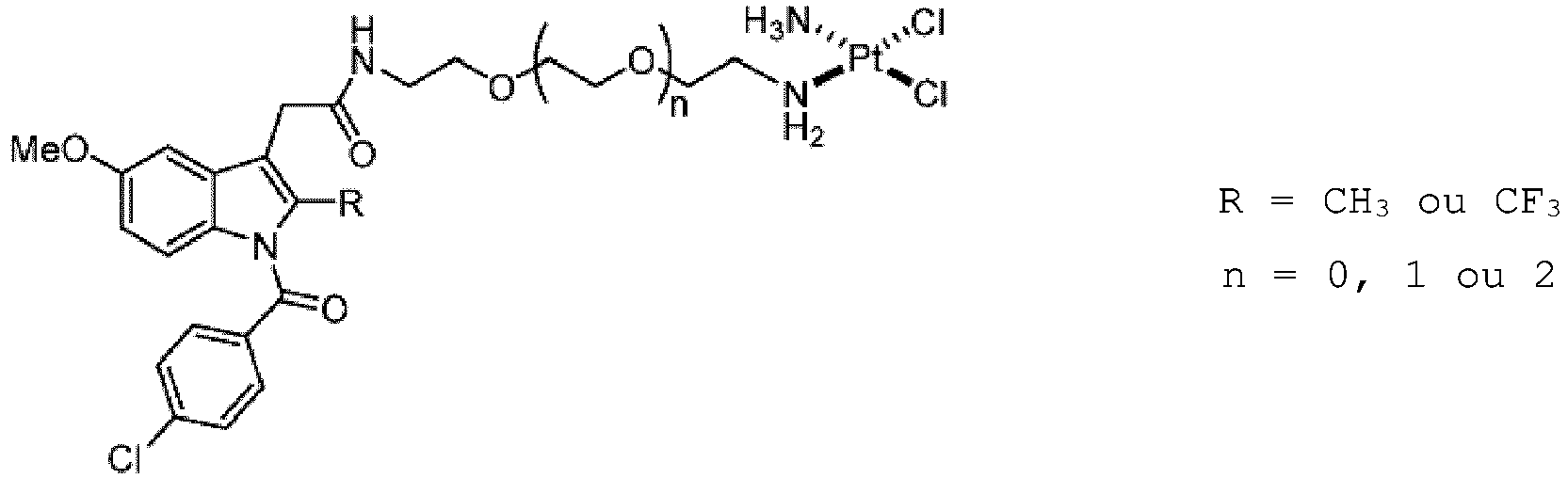


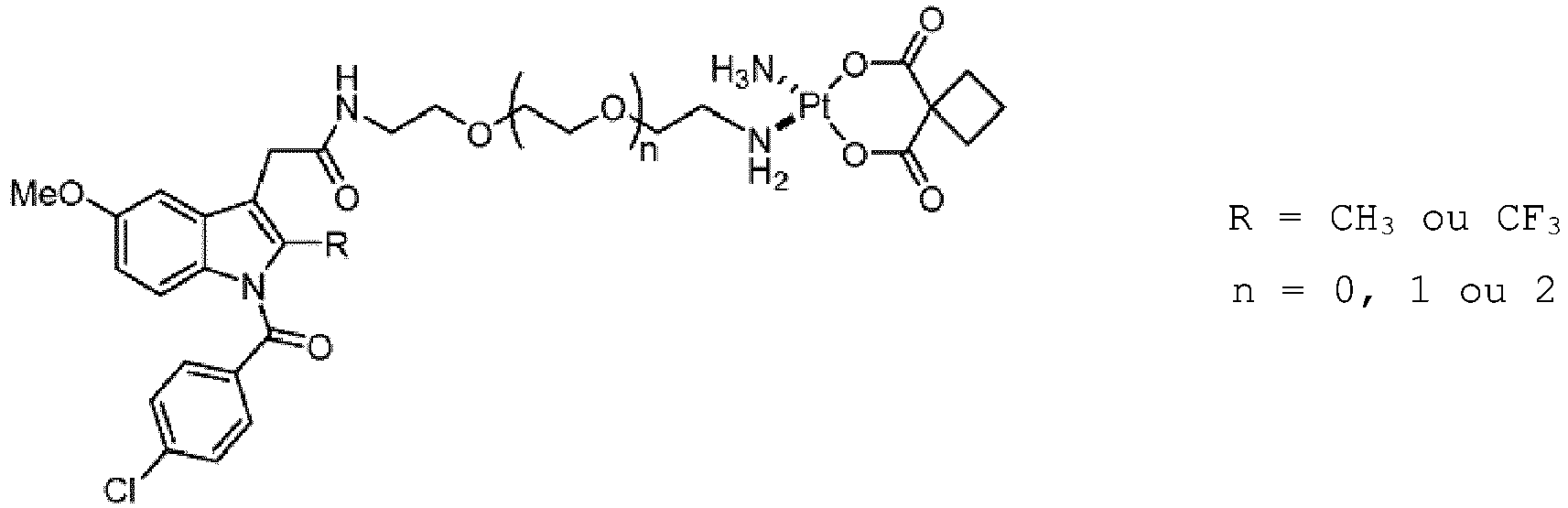
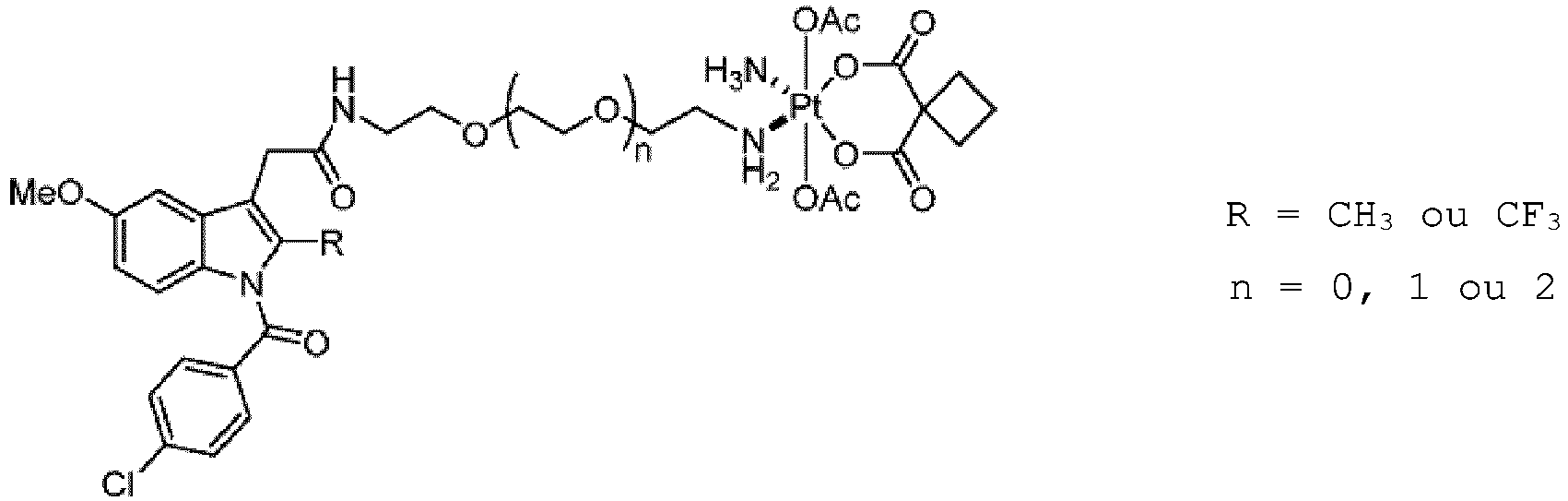


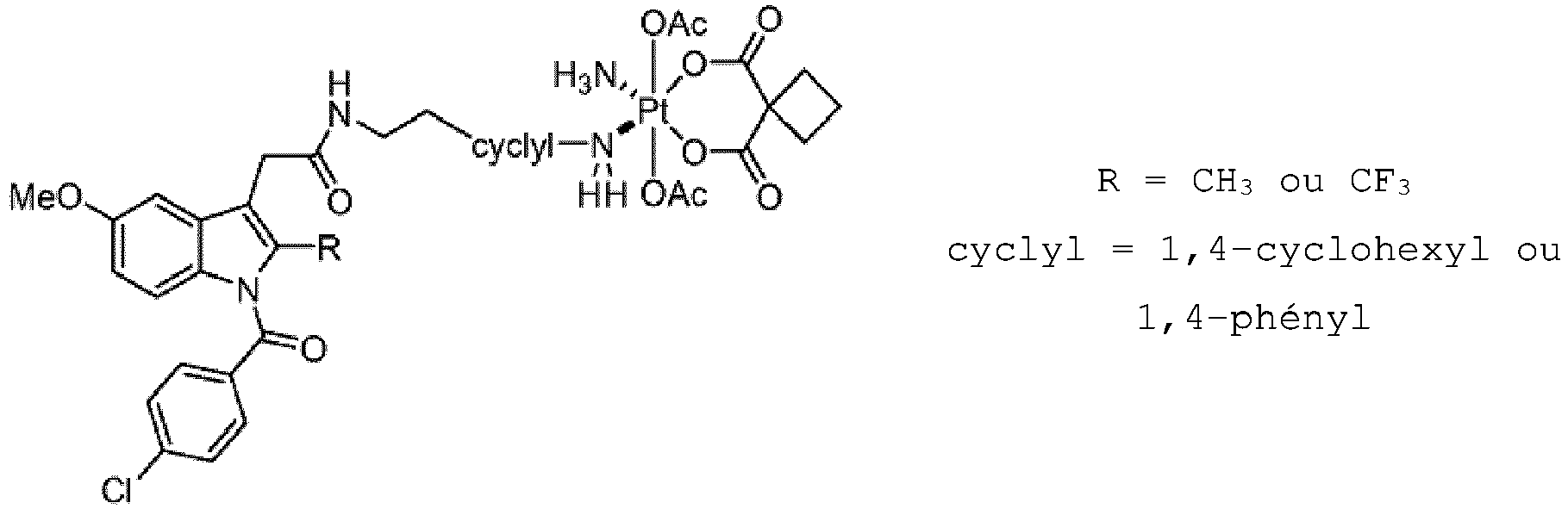
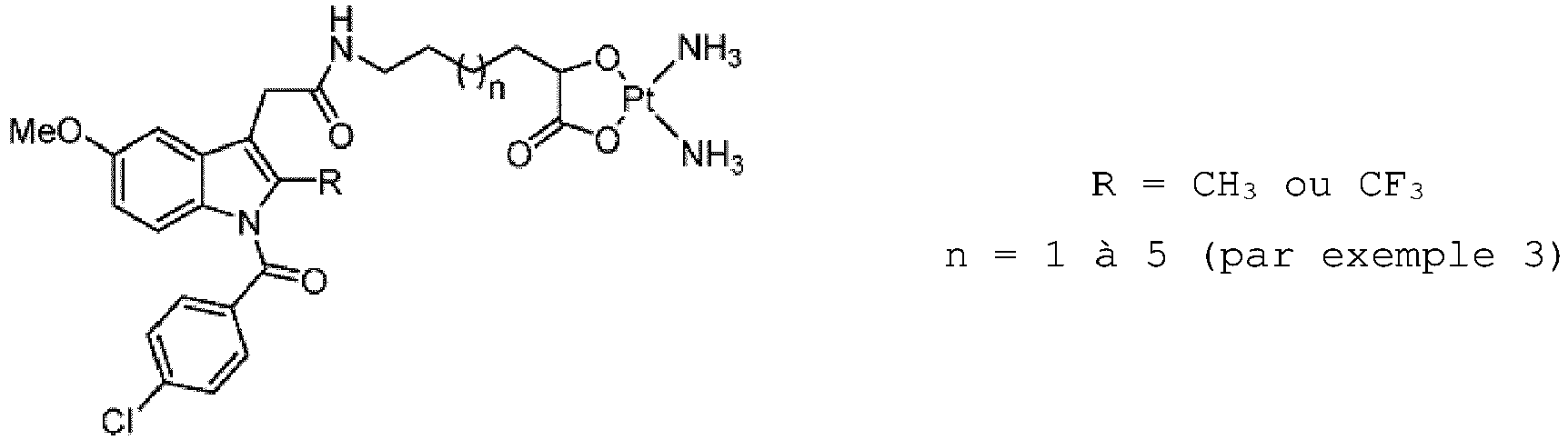


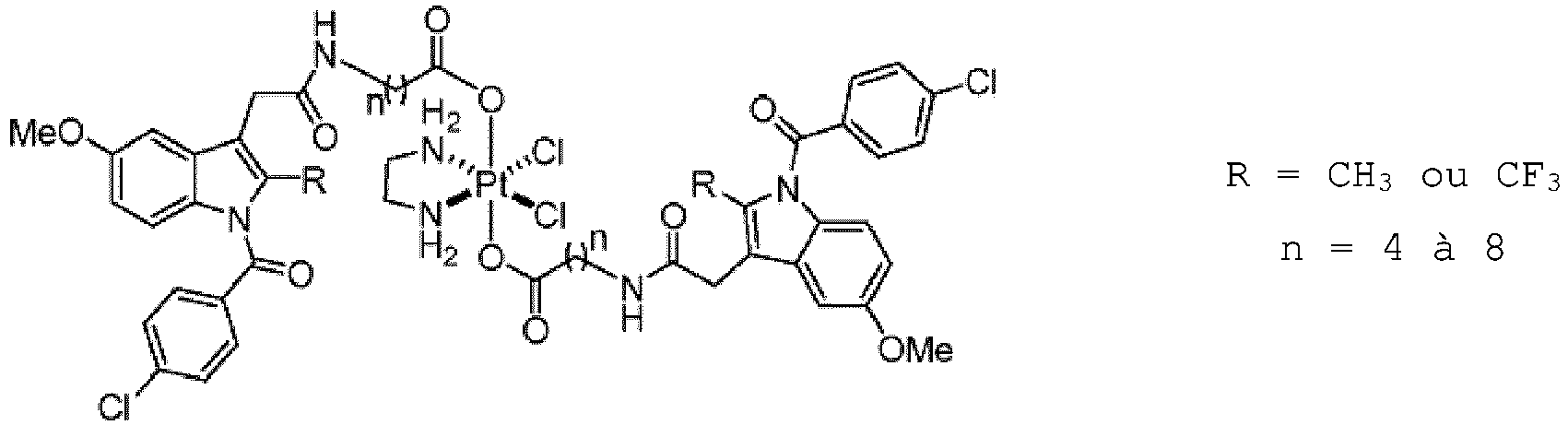


et ses sels pharmaceutiquement acceptables. - Conjugué selon la revendication 2, lequel conjugué est :

- Conjugué selon la revendication 3, lequel conjugué est :
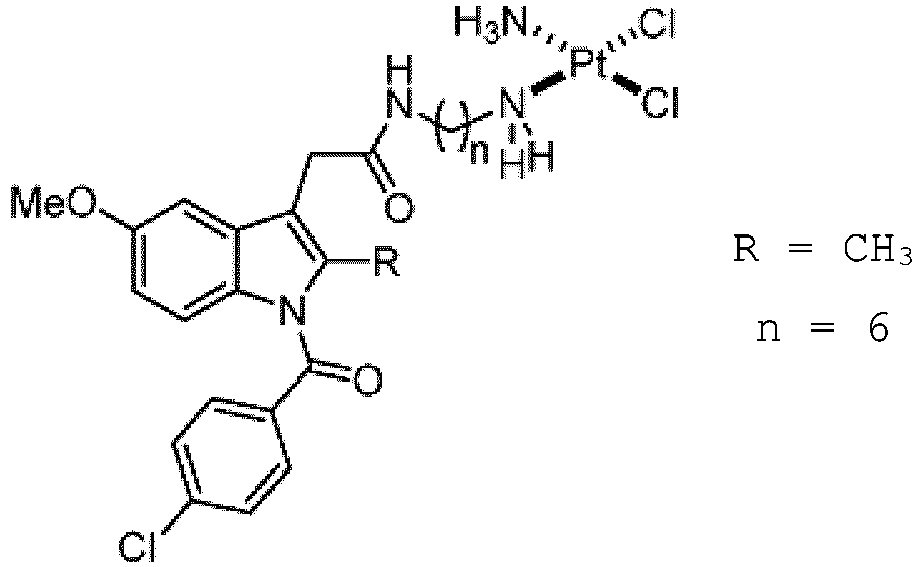
- Composition pharmaceutique comprenant un conjugué selon l'une quelconque des revendications 1 à 4 et un véhicule ou excipient pharmaceutiquement acceptable.
- Conjugué selon l'une quelconque des revendications 1 à 4 ou composition pharmaceutique selon la revendication 5, pour une utilisation dans le traitement d'une tumeur ou d'un cancer.
- Conjugué ou composition pharmaceutique pour une utilisation selon la revendication 6, dans lequel la tumeur ou le cancer est caractérisé par une surexpression de COX-2.
- Conjugué ou composition pharmaceutique pour une utilisation selon la revendication 6, dans lequel le traitement comprend en outre l'administration d'un agent antitumoral additionnel.
- Conjugué selon l'une quelconque des revendications 1 à 4 ou composition pharmaceutique selon la revendication 5, pour une utilisation dans l'inhibition de la croissance ou de la prolifération de cellules.
- Conjugué ou composition pharmaceutique pour une utilisation selon la revendication 9, dans lequel la cellule est une cellule tumorale ou cancéreuse qui surexprime COX-2.
Priority Applications (1)
| Application Number | Priority Date | Filing Date | Title |
|---|---|---|---|
| EP20153410.4A EP3693022A3 (fr) | 2015-01-09 | 2015-12-18 | Conjugués contenant du platine et ciblant cox-2 et leur utilisation dans le traitement de tumeurs et de cancers |
Applications Claiming Priority (3)
| Application Number | Priority Date | Filing Date | Title |
|---|---|---|---|
| US201562101849P | 2015-01-09 | 2015-01-09 | |
| US201562107626P | 2015-01-26 | 2015-01-26 | |
| PCT/US2015/066886 WO2016111834A1 (fr) | 2015-01-09 | 2015-12-18 | Conjugués contenant du platine et ciblant cox-2, et utilisation de ces derniers dans le traitement de tumeurs et de cancers |
Related Child Applications (1)
| Application Number | Title | Priority Date | Filing Date |
|---|---|---|---|
| EP20153410.4A Division EP3693022A3 (fr) | 2015-01-09 | 2015-12-18 | Conjugués contenant du platine et ciblant cox-2 et leur utilisation dans le traitement de tumeurs et de cancers |
Publications (3)
| Publication Number | Publication Date |
|---|---|
| EP3242688A1 EP3242688A1 (fr) | 2017-11-15 |
| EP3242688A4 EP3242688A4 (fr) | 2018-08-08 |
| EP3242688B1 true EP3242688B1 (fr) | 2020-01-29 |
Family
ID=56356309
Family Applications (2)
| Application Number | Title | Priority Date | Filing Date |
|---|---|---|---|
| EP15877341.6A Active EP3242688B1 (fr) | 2015-01-09 | 2015-12-18 | Conjugués contenant du platine et ciblant cox-2, et utilisation de ces derniers dans le traitement de tumeurs et de cancers |
| EP20153410.4A Withdrawn EP3693022A3 (fr) | 2015-01-09 | 2015-12-18 | Conjugués contenant du platine et ciblant cox-2 et leur utilisation dans le traitement de tumeurs et de cancers |
Family Applications After (1)
| Application Number | Title | Priority Date | Filing Date |
|---|---|---|---|
| EP20153410.4A Withdrawn EP3693022A3 (fr) | 2015-01-09 | 2015-12-18 | Conjugués contenant du platine et ciblant cox-2 et leur utilisation dans le traitement de tumeurs et de cancers |
Country Status (3)
| Country | Link |
|---|---|
| US (1) | US10053478B2 (fr) |
| EP (2) | EP3242688B1 (fr) |
| WO (1) | WO2016111834A1 (fr) |
Families Citing this family (9)
| Publication number | Priority date | Publication date | Assignee | Title |
|---|---|---|---|---|
| WO2015200187A1 (fr) | 2014-06-27 | 2015-12-30 | Reiley Pharmaceuticals, Inc. | Conjugues derives de medicaments anti-inflammatoires non steroidiens et procedes d'utilisation de ceux-ci dans l'imagerie |
| EP3242688B1 (fr) | 2015-01-09 | 2020-01-29 | Reiley Pharmaceuticals, Inc. | Conjugués contenant du platine et ciblant cox-2, et utilisation de ces derniers dans le traitement de tumeurs et de cancers |
| US20170129911A1 (en) * | 2015-11-10 | 2017-05-11 | Massachusetts Institute Of Technology | Complexes comprising a platinum compound and an immune checkpoint inhibitor and related methods |
| TWI808055B (zh) | 2016-05-11 | 2023-07-11 | 美商滬亞生物國際有限公司 | Hdac 抑制劑與 pd-1 抑制劑之組合治療 |
| TWI794171B (zh) | 2016-05-11 | 2023-03-01 | 美商滬亞生物國際有限公司 | Hdac抑制劑與pd-l1抑制劑之組合治療 |
| CN109293702B (zh) * | 2018-08-27 | 2020-05-29 | 河南大学 | 一种四价铂多胺配合物、其制备方法及应用 |
| KR20230106603A (ko) * | 2020-10-07 | 2023-07-13 | 레일리 파마슈티칼스, 인코포레이티드 | 콕시브 유도 접합체 화합물 및 이의 용도 |
| CN112940044B (zh) * | 2021-02-04 | 2023-07-04 | 厦门大学 | 一种黄连素偶联顺铂化合物及其制备方法和应用 |
| CN115785160A (zh) * | 2022-11-11 | 2023-03-14 | 中国科学院成都生物研究所 | 靶向ape1蛋白的四价铂分子及其应用 |
Citations (1)
| Publication number | Priority date | Publication date | Assignee | Title |
|---|---|---|---|---|
| WO2007109843A1 (fr) * | 2006-03-24 | 2007-10-04 | Medical Therapies Limited | Complexes métalliques ayant une activité anti-inflammatoire |
Family Cites Families (35)
| Publication number | Priority date | Publication date | Assignee | Title |
|---|---|---|---|---|
| US5279811A (en) | 1987-02-18 | 1994-01-18 | The Du Pont Merck Pharmaceutical Company | Ester-substituted diaminedithiols and radiolabeled complexes thereof |
| JP2860157B2 (ja) | 1990-10-31 | 1999-02-24 | 日本メジフィジックス株式会社 | 腎機能測定用の既放射能標識テクネチウムキレート注射剤の製造方法 |
| US6492413B2 (en) | 1993-01-15 | 2002-12-10 | G.D. Searle & Co. | 3.4-diaryl thiophenes and analogs thereof having use as antiinflammatory agents |
| JPH09503765A (ja) | 1993-10-04 | 1997-04-15 | マリンクロット・メディカル・インコーポレイテッド | 磁気共鳴イメージング、x線イメージング、および放射性医薬品用組成物および方法 |
| KR19990064310A (ko) | 1995-10-17 | 1999-07-26 | 윌리암스 로저 에이 | 시클로옥시게나제-2의 검출방법 |
| US6762182B1 (en) | 1999-01-07 | 2004-07-13 | Vanderbilt University | Converting cox inhibition compounds that are not COX-2 selective inhibitors to derivatives that are COX-2 selective inhibitors |
| CA2359573C (fr) | 1999-01-19 | 2010-04-20 | Biostream, Inc. | Conjugues de facteurs stimulant les colonies cellulaires pour cibler et visualiser des infections et des inflammations |
| US6306890B1 (en) | 1999-08-30 | 2001-10-23 | Vanderbilt University | Esters derived from indolealkanols and novel amides derived from indolealkylamides that are selective COX-2 inhibitors |
| US6692724B1 (en) | 1999-10-25 | 2004-02-17 | Board Of Regents, The University Of Texas System | Ethylenedicysteine (EC)-drug conjugates, compositions and methods for tissue specific disease imaging |
| US7067111B1 (en) | 1999-10-25 | 2006-06-27 | Board Of Regents, University Of Texas System | Ethylenedicysteine (EC)-drug conjugates, compositions and methods for tissue specific disease imaging |
| JP2003515541A (ja) | 1999-12-03 | 2003-05-07 | イェール ユニバーシティ | 遷移金属−シクロペンタジエニル−トロパン共役化合物 |
| DE60127951T2 (de) | 2000-04-28 | 2008-01-17 | President And Fellows Of Harvard College, Cambridge | Kleine technetium-99m und rhenium markierte mittel und verfahren zum tumor-imaging |
| AU2001275036A1 (en) * | 2000-06-02 | 2001-12-17 | Medinox, Inc. | Protected forms of a combination of pharmacologically active agents and uses therefor |
| PL367102A1 (en) | 2001-05-02 | 2005-02-21 | Purdue Research Foundation | Treatment and diagnosis of macrophage mediated disease |
| AU2003224747A1 (en) | 2002-04-08 | 2003-10-27 | Biostream, Inc. | Technetium-labeled rotenone derivatives, and methods of use thereof |
| EP2258401B1 (fr) | 2002-05-06 | 2014-07-09 | Endocyte, Inc. | Agents d'imagerie cibles pas le récepteur de la folate |
| IL153183A (en) | 2002-06-04 | 2010-05-17 | Aposense Ltd | Agents for imaging and diagnostic methods using them |
| CA2530408A1 (fr) | 2003-06-25 | 2005-01-06 | Vanderbilt University | Agents d'imagerie a cible de cox-2 |
| CA2533878A1 (fr) | 2003-07-29 | 2005-09-22 | Immunomedics, Inc. | Conjugues glucidiques fluores |
| US9050378B2 (en) | 2003-12-10 | 2015-06-09 | Board Of Regents, The University Of Texas System | N2S2 chelate-targeting ligand conjugates |
| US20080260650A1 (en) | 2004-10-28 | 2008-10-23 | The General Hospital Corporation | Methods of Detection and Therapy of Inflamed Tissues Using Immune Modulation |
| BRPI0606395A2 (pt) | 2005-01-05 | 2009-06-23 | Univ Texas | conjugados para ambas imagem e radioquimioterapia: composição, fabricação e aplicações |
| JP2009508970A (ja) | 2005-09-21 | 2009-03-05 | ザ リージェンツ オブ ザ ユニバーシティ オブ カリフォルニア | 疼痛の局所造影および治療のためのシステム、組成物並びに方法 |
| US7871623B2 (en) | 2005-12-21 | 2011-01-18 | The Board Of Trustees Of The Leland Stanford Junior University | Compositions and methods for imaging pain and stress in vivo |
| WO2007149456A2 (fr) | 2006-06-19 | 2007-12-27 | Vanderbilt University | Méthodes et compositions de diagnostic et de ciblage thérapeutique de cox-2 |
| US10925977B2 (en) | 2006-10-05 | 2021-02-23 | Ceil>Point, LLC | Efficient synthesis of chelators for nuclear imaging and radiotherapy: compositions and applications |
| CA2676413A1 (fr) | 2007-01-19 | 2008-07-31 | Mallinckrodt Inc. | Ligands de liaison a la cycloxygenase-2 diagnostiques et therapeutiques |
| US20080241256A1 (en) * | 2007-03-30 | 2008-10-02 | Liisa Kuhn | Targeted active agent delivery system based on calcium phosphate nanoparticles |
| WO2009076434A1 (fr) | 2007-12-12 | 2009-06-18 | Molecular Insight Pharmaceuticals, Inc. | Inhibiteurs d'integrine vla-4 |
| CN102105156B (zh) * | 2008-05-22 | 2016-05-25 | 特拉维夫大学拉莫特有限公司 | 连接有治疗活性剂和血管生成靶向部分的聚合物的新型缀合物及其在治疗血管生成相关疾病中的用途 |
| CU23844B1 (es) | 2009-04-17 | 2012-10-15 | Ct De Neurociencias De Cuba | Procedimiento de obtención de nuevos derivados de naftaleno para el diagnóstico in vivo de la enfermedad de alzheimer |
| WO2011008985A2 (fr) | 2009-07-15 | 2011-01-20 | Georgia Tech Research Corporation | Procédés et compositions pour administration améliorée d'agents thérapeutiques et de diagnostic |
| US8778298B2 (en) | 2009-08-03 | 2014-07-15 | Riken | Isotope labeled 2-arylpropionic acid compounds and process for production of same, and molecular probe for positron emission tomography and method for imaging of cyclooxygenase and the like using same |
| CA2931638A1 (fr) * | 2013-12-12 | 2015-06-18 | University Of Georgia Research Foundation, Inc. | Prodrogue pour liberation de cisplatine et d'un inhibiteur de cyclooxygenase |
| EP3242688B1 (fr) | 2015-01-09 | 2020-01-29 | Reiley Pharmaceuticals, Inc. | Conjugués contenant du platine et ciblant cox-2, et utilisation de ces derniers dans le traitement de tumeurs et de cancers |
-
2015
- 2015-12-18 EP EP15877341.6A patent/EP3242688B1/fr active Active
- 2015-12-18 WO PCT/US2015/066886 patent/WO2016111834A1/fr not_active Ceased
- 2015-12-18 US US14/975,504 patent/US10053478B2/en active Active
- 2015-12-18 EP EP20153410.4A patent/EP3693022A3/fr not_active Withdrawn
Patent Citations (1)
| Publication number | Priority date | Publication date | Assignee | Title |
|---|---|---|---|---|
| WO2007109843A1 (fr) * | 2006-03-24 | 2007-10-04 | Medical Therapies Limited | Complexes métalliques ayant une activité anti-inflammatoire |
Non-Patent Citations (1)
| Title |
|---|
| P LAY ET AL: "Anti-inflammatory metal complexes useful in treatment of inflammation, cancer, diabetes, cardiovascular and other conditions", WO 2007109844 A1, 1 January 2007 (2007-01-01), pages 1 - 3, XP055603009 * |
Also Published As
| Publication number | Publication date |
|---|---|
| WO2016111834A1 (fr) | 2016-07-14 |
| EP3693022A3 (fr) | 2020-09-16 |
| US10053478B2 (en) | 2018-08-21 |
| EP3693022A2 (fr) | 2020-08-12 |
| EP3242688A4 (fr) | 2018-08-08 |
| US20160200752A1 (en) | 2016-07-14 |
| EP3242688A1 (fr) | 2017-11-15 |
Similar Documents
| Publication | Publication Date | Title |
|---|---|---|
| EP3693022A2 (fr) | Conjugués contenant du platine et ciblant cox-2 et leur utilisation dans le traitement de tumeurs et de cancers | |
| ES2910928T3 (es) | Composiciones y métodos para inhibir la actividad de la arginasa | |
| CN109415360B (zh) | 用于抑制shp2活性的化合物和组合物 | |
| CN107787323B (zh) | 用于抑制shp2活性的化合物和组合物 | |
| JP2021511342A (ja) | 癌処置のためのbcl−2タンパク質分解剤 | |
| CN107922388A (zh) | 用于抑制shp2活性的化合物和组合物 | |
| CA2627923C (fr) | Inhibiteurs d'histone desacetylase (hdac) pour le traitement du cancer | |
| JP2019517564A (ja) | シラノール系治療的ペイロード | |
| RS58609B1 (sr) | Kombinovana terapija sa inhibitorom mitoze | |
| KR20190140957A (ko) | Erk1/2 억제제로서의 6-피리미딘-이소인돌 유도체 | |
| EP3713558B1 (fr) | Composés de nitrate d'aminoadamantyle et leur utilisation pour traiter des troubles du système nerveux central | |
| JP5929753B2 (ja) | 悪液質の治療又は予防剤 | |
| ES2795666T3 (es) | Una triazolopiridazina deuterada como un modulador de quinasa | |
| US9539237B2 (en) | Compositions and methods for drug-sensitization or inhibition of a cancer cell | |
| RS66620B1 (sr) | Heterociklična jedinjenja za upotrebu u lečenju kancera | |
| KR102823786B1 (ko) | 조합 의약으로서 사용되는 ezh1/2 이중 저해제를 함유하는 의약 조성물 | |
| AU2019200353A1 (en) | Sigma-2 receptor ligand drug conjugates as antitumor compounds, methods of synthesis and uses thereof | |
| KR20190133702A (ko) | 아이소인돌린 유도체와 sgi-110의 조합물 | |
| CN117157281B (zh) | 1,2,4,5-四噁烷化合物的靶向递送及其用途 | |
| JP2024512046A (ja) | プロテインキナーゼc(pkc)に対して作用するジテルペノイド化合物 | |
| WO2025158077A1 (fr) | Agents de dégradation lipidiques pour déclencher la ferroptose dans le cancer | |
| WO2025068461A1 (fr) | Dérivés de guanfacine et leur utilisation dans le traitement du cancer | |
| HK40038404B (en) | Bcl-2 proteins degraders for cancer treatment | |
| HK40038404A (en) | Bcl-2 proteins degraders for cancer treatment | |
| WO2015123392A1 (fr) | Compositions et procédés d'inhibition de l'angiogenèse et la lymphangiogenèse |
Legal Events
| Date | Code | Title | Description |
|---|---|---|---|
| STAA | Information on the status of an ep patent application or granted ep patent |
Free format text: STATUS: THE INTERNATIONAL PUBLICATION HAS BEEN MADE |
|
| PUAI | Public reference made under article 153(3) epc to a published international application that has entered the european phase |
Free format text: ORIGINAL CODE: 0009012 |
|
| STAA | Information on the status of an ep patent application or granted ep patent |
Free format text: STATUS: REQUEST FOR EXAMINATION WAS MADE |
|
| 17P | Request for examination filed |
Effective date: 20170727 |
|
| AK | Designated contracting states |
Kind code of ref document: A1 Designated state(s): AL AT BE BG CH CY CZ DE DK EE ES FI FR GB GR HR HU IE IS IT LI LT LU LV MC MK MT NL NO PL PT RO RS SE SI SK SM TR |
|
| AX | Request for extension of the european patent |
Extension state: BA ME |
|
| DAV | Request for validation of the european patent (deleted) | ||
| DAX | Request for extension of the european patent (deleted) | ||
| REG | Reference to a national code |
Ref country code: DE Ref legal event code: R079 Ref document number: 602015046290 Country of ref document: DE Free format text: PREVIOUS MAIN CLASS: A61K0047500000 Ipc: A61K0047550000 |
|
| A4 | Supplementary search report drawn up and despatched |
Effective date: 20180706 |
|
| RIC1 | Information provided on ipc code assigned before grant |
Ipc: A61K 47/55 20170101AFI20180702BHEP |
|
| STAA | Information on the status of an ep patent application or granted ep patent |
Free format text: STATUS: EXAMINATION IS IN PROGRESS |
|
| 17Q | First examination report despatched |
Effective date: 20190401 |
|
| GRAP | Despatch of communication of intention to grant a patent |
Free format text: ORIGINAL CODE: EPIDOSNIGR1 |
|
| STAA | Information on the status of an ep patent application or granted ep patent |
Free format text: STATUS: GRANT OF PATENT IS INTENDED |
|
| INTG | Intention to grant announced |
Effective date: 20190806 |
|
| GRAS | Grant fee paid |
Free format text: ORIGINAL CODE: EPIDOSNIGR3 |
|
| GRAA | (expected) grant |
Free format text: ORIGINAL CODE: 0009210 |
|
| STAA | Information on the status of an ep patent application or granted ep patent |
Free format text: STATUS: THE PATENT HAS BEEN GRANTED |
|
| AK | Designated contracting states |
Kind code of ref document: B1 Designated state(s): AL AT BE BG CH CY CZ DE DK EE ES FI FR GB GR HR HU IE IS IT LI LT LU LV MC MK MT NL NO PL PT RO RS SE SI SK SM TR |
|
| REG | Reference to a national code |
Ref country code: GB Ref legal event code: FG4D |
|
| REG | Reference to a national code |
Ref country code: CH Ref legal event code: EP |
|
| REG | Reference to a national code |
Ref country code: AT Ref legal event code: REF Ref document number: 1228026 Country of ref document: AT Kind code of ref document: T Effective date: 20200215 |
|
| REG | Reference to a national code |
Ref country code: IE Ref legal event code: FG4D |
|
| REG | Reference to a national code |
Ref country code: DE Ref legal event code: R096 Ref document number: 602015046290 Country of ref document: DE |
|
| REG | Reference to a national code |
Ref country code: NL Ref legal event code: MP Effective date: 20200129 |
|
| PG25 | Lapsed in a contracting state [announced via postgrant information from national office to epo] |
Ref country code: FI Free format text: LAPSE BECAUSE OF FAILURE TO SUBMIT A TRANSLATION OF THE DESCRIPTION OR TO PAY THE FEE WITHIN THE PRESCRIBED TIME-LIMIT Effective date: 20200129 Ref country code: RS Free format text: LAPSE BECAUSE OF FAILURE TO SUBMIT A TRANSLATION OF THE DESCRIPTION OR TO PAY THE FEE WITHIN THE PRESCRIBED TIME-LIMIT Effective date: 20200129 Ref country code: PT Free format text: LAPSE BECAUSE OF FAILURE TO SUBMIT A TRANSLATION OF THE DESCRIPTION OR TO PAY THE FEE WITHIN THE PRESCRIBED TIME-LIMIT Effective date: 20200621 Ref country code: NO Free format text: LAPSE BECAUSE OF FAILURE TO SUBMIT A TRANSLATION OF THE DESCRIPTION OR TO PAY THE FEE WITHIN THE PRESCRIBED TIME-LIMIT Effective date: 20200429 |
|
| REG | Reference to a national code |
Ref country code: LT Ref legal event code: MG4D |
|
| PG25 | Lapsed in a contracting state [announced via postgrant information from national office to epo] |
Ref country code: GR Free format text: LAPSE BECAUSE OF FAILURE TO SUBMIT A TRANSLATION OF THE DESCRIPTION OR TO PAY THE FEE WITHIN THE PRESCRIBED TIME-LIMIT Effective date: 20200430 Ref country code: BG Free format text: LAPSE BECAUSE OF FAILURE TO SUBMIT A TRANSLATION OF THE DESCRIPTION OR TO PAY THE FEE WITHIN THE PRESCRIBED TIME-LIMIT Effective date: 20200429 Ref country code: LV Free format text: LAPSE BECAUSE OF FAILURE TO SUBMIT A TRANSLATION OF THE DESCRIPTION OR TO PAY THE FEE WITHIN THE PRESCRIBED TIME-LIMIT Effective date: 20200129 Ref country code: SE Free format text: LAPSE BECAUSE OF FAILURE TO SUBMIT A TRANSLATION OF THE DESCRIPTION OR TO PAY THE FEE WITHIN THE PRESCRIBED TIME-LIMIT Effective date: 20200129 Ref country code: HR Free format text: LAPSE BECAUSE OF FAILURE TO SUBMIT A TRANSLATION OF THE DESCRIPTION OR TO PAY THE FEE WITHIN THE PRESCRIBED TIME-LIMIT Effective date: 20200129 Ref country code: IS Free format text: LAPSE BECAUSE OF FAILURE TO SUBMIT A TRANSLATION OF THE DESCRIPTION OR TO PAY THE FEE WITHIN THE PRESCRIBED TIME-LIMIT Effective date: 20200529 |
|
| PG25 | Lapsed in a contracting state [announced via postgrant information from national office to epo] |
Ref country code: NL Free format text: LAPSE BECAUSE OF FAILURE TO SUBMIT A TRANSLATION OF THE DESCRIPTION OR TO PAY THE FEE WITHIN THE PRESCRIBED TIME-LIMIT Effective date: 20200129 |
|
| PG25 | Lapsed in a contracting state [announced via postgrant information from national office to epo] |
Ref country code: SM Free format text: LAPSE BECAUSE OF FAILURE TO SUBMIT A TRANSLATION OF THE DESCRIPTION OR TO PAY THE FEE WITHIN THE PRESCRIBED TIME-LIMIT Effective date: 20200129 Ref country code: RO Free format text: LAPSE BECAUSE OF FAILURE TO SUBMIT A TRANSLATION OF THE DESCRIPTION OR TO PAY THE FEE WITHIN THE PRESCRIBED TIME-LIMIT Effective date: 20200129 Ref country code: SK Free format text: LAPSE BECAUSE OF FAILURE TO SUBMIT A TRANSLATION OF THE DESCRIPTION OR TO PAY THE FEE WITHIN THE PRESCRIBED TIME-LIMIT Effective date: 20200129 Ref country code: LT Free format text: LAPSE BECAUSE OF FAILURE TO SUBMIT A TRANSLATION OF THE DESCRIPTION OR TO PAY THE FEE WITHIN THE PRESCRIBED TIME-LIMIT Effective date: 20200129 Ref country code: ES Free format text: LAPSE BECAUSE OF FAILURE TO SUBMIT A TRANSLATION OF THE DESCRIPTION OR TO PAY THE FEE WITHIN THE PRESCRIBED TIME-LIMIT Effective date: 20200129 Ref country code: CZ Free format text: LAPSE BECAUSE OF FAILURE TO SUBMIT A TRANSLATION OF THE DESCRIPTION OR TO PAY THE FEE WITHIN THE PRESCRIBED TIME-LIMIT Effective date: 20200129 Ref country code: EE Free format text: LAPSE BECAUSE OF FAILURE TO SUBMIT A TRANSLATION OF THE DESCRIPTION OR TO PAY THE FEE WITHIN THE PRESCRIBED TIME-LIMIT Effective date: 20200129 Ref country code: DK Free format text: LAPSE BECAUSE OF FAILURE TO SUBMIT A TRANSLATION OF THE DESCRIPTION OR TO PAY THE FEE WITHIN THE PRESCRIBED TIME-LIMIT Effective date: 20200129 |
|
| REG | Reference to a national code |
Ref country code: DE Ref legal event code: R097 Ref document number: 602015046290 Country of ref document: DE |
|
| REG | Reference to a national code |
Ref country code: AT Ref legal event code: MK05 Ref document number: 1228026 Country of ref document: AT Kind code of ref document: T Effective date: 20200129 |
|
| PLBE | No opposition filed within time limit |
Free format text: ORIGINAL CODE: 0009261 |
|
| STAA | Information on the status of an ep patent application or granted ep patent |
Free format text: STATUS: NO OPPOSITION FILED WITHIN TIME LIMIT |
|
| 26N | No opposition filed |
Effective date: 20201030 |
|
| PG25 | Lapsed in a contracting state [announced via postgrant information from national office to epo] |
Ref country code: AT Free format text: LAPSE BECAUSE OF FAILURE TO SUBMIT A TRANSLATION OF THE DESCRIPTION OR TO PAY THE FEE WITHIN THE PRESCRIBED TIME-LIMIT Effective date: 20200129 Ref country code: IT Free format text: LAPSE BECAUSE OF FAILURE TO SUBMIT A TRANSLATION OF THE DESCRIPTION OR TO PAY THE FEE WITHIN THE PRESCRIBED TIME-LIMIT Effective date: 20200129 |
|
| PG25 | Lapsed in a contracting state [announced via postgrant information from national office to epo] |
Ref country code: SI Free format text: LAPSE BECAUSE OF FAILURE TO SUBMIT A TRANSLATION OF THE DESCRIPTION OR TO PAY THE FEE WITHIN THE PRESCRIBED TIME-LIMIT Effective date: 20200129 Ref country code: PL Free format text: LAPSE BECAUSE OF FAILURE TO SUBMIT A TRANSLATION OF THE DESCRIPTION OR TO PAY THE FEE WITHIN THE PRESCRIBED TIME-LIMIT Effective date: 20200129 |
|
| PG25 | Lapsed in a contracting state [announced via postgrant information from national office to epo] |
Ref country code: MC Free format text: LAPSE BECAUSE OF FAILURE TO SUBMIT A TRANSLATION OF THE DESCRIPTION OR TO PAY THE FEE WITHIN THE PRESCRIBED TIME-LIMIT Effective date: 20200129 |
|
| REG | Reference to a national code |
Ref country code: BE Ref legal event code: MM Effective date: 20201231 |
|
| PG25 | Lapsed in a contracting state [announced via postgrant information from national office to epo] |
Ref country code: IE Free format text: LAPSE BECAUSE OF NON-PAYMENT OF DUE FEES Effective date: 20201218 Ref country code: LU Free format text: LAPSE BECAUSE OF NON-PAYMENT OF DUE FEES Effective date: 20201218 |
|
| PG25 | Lapsed in a contracting state [announced via postgrant information from national office to epo] |
Ref country code: TR Free format text: LAPSE BECAUSE OF FAILURE TO SUBMIT A TRANSLATION OF THE DESCRIPTION OR TO PAY THE FEE WITHIN THE PRESCRIBED TIME-LIMIT Effective date: 20200129 Ref country code: MT Free format text: LAPSE BECAUSE OF FAILURE TO SUBMIT A TRANSLATION OF THE DESCRIPTION OR TO PAY THE FEE WITHIN THE PRESCRIBED TIME-LIMIT Effective date: 20200129 Ref country code: CY Free format text: LAPSE BECAUSE OF FAILURE TO SUBMIT A TRANSLATION OF THE DESCRIPTION OR TO PAY THE FEE WITHIN THE PRESCRIBED TIME-LIMIT Effective date: 20200129 |
|
| PG25 | Lapsed in a contracting state [announced via postgrant information from national office to epo] |
Ref country code: MK Free format text: LAPSE BECAUSE OF FAILURE TO SUBMIT A TRANSLATION OF THE DESCRIPTION OR TO PAY THE FEE WITHIN THE PRESCRIBED TIME-LIMIT Effective date: 20200129 Ref country code: AL Free format text: LAPSE BECAUSE OF FAILURE TO SUBMIT A TRANSLATION OF THE DESCRIPTION OR TO PAY THE FEE WITHIN THE PRESCRIBED TIME-LIMIT Effective date: 20200129 |
|
| PG25 | Lapsed in a contracting state [announced via postgrant information from national office to epo] |
Ref country code: BE Free format text: LAPSE BECAUSE OF NON-PAYMENT OF DUE FEES Effective date: 20201231 |
|
| PGFP | Annual fee paid to national office [announced via postgrant information from national office to epo] |
Ref country code: GB Payment date: 20221215 Year of fee payment: 8 Ref country code: FR Payment date: 20221221 Year of fee payment: 8 Ref country code: DE Payment date: 20221213 Year of fee payment: 8 |
|
| PGFP | Annual fee paid to national office [announced via postgrant information from national office to epo] |
Ref country code: CH Payment date: 20230106 Year of fee payment: 8 |
|
| REG | Reference to a national code |
Ref country code: DE Ref legal event code: R119 Ref document number: 602015046290 Country of ref document: DE |
|
| REG | Reference to a national code |
Ref country code: CH Ref legal event code: PL |
|
| GBPC | Gb: european patent ceased through non-payment of renewal fee |
Effective date: 20231218 |
|
| PG25 | Lapsed in a contracting state [announced via postgrant information from national office to epo] |
Ref country code: DE Free format text: LAPSE BECAUSE OF NON-PAYMENT OF DUE FEES Effective date: 20240702 |
|
| PG25 | Lapsed in a contracting state [announced via postgrant information from national office to epo] |
Ref country code: GB Free format text: LAPSE BECAUSE OF NON-PAYMENT OF DUE FEES Effective date: 20231218 |
|
| PG25 | Lapsed in a contracting state [announced via postgrant information from national office to epo] |
Ref country code: FR Free format text: LAPSE BECAUSE OF NON-PAYMENT OF DUE FEES Effective date: 20231231 |
|
| PG25 | Lapsed in a contracting state [announced via postgrant information from national office to epo] |
Ref country code: CH Free format text: LAPSE BECAUSE OF NON-PAYMENT OF DUE FEES Effective date: 20231231 |
|
| PG25 | Lapsed in a contracting state [announced via postgrant information from national office to epo] |
Ref country code: GB Free format text: LAPSE BECAUSE OF NON-PAYMENT OF DUE FEES Effective date: 20231218 Ref country code: FR Free format text: LAPSE BECAUSE OF NON-PAYMENT OF DUE FEES Effective date: 20231231 Ref country code: DE Free format text: LAPSE BECAUSE OF NON-PAYMENT OF DUE FEES Effective date: 20240702 Ref country code: CH Free format text: LAPSE BECAUSE OF NON-PAYMENT OF DUE FEES Effective date: 20231231 |